@petersuber - Peter Suber (@petersuber@fediscience.org)
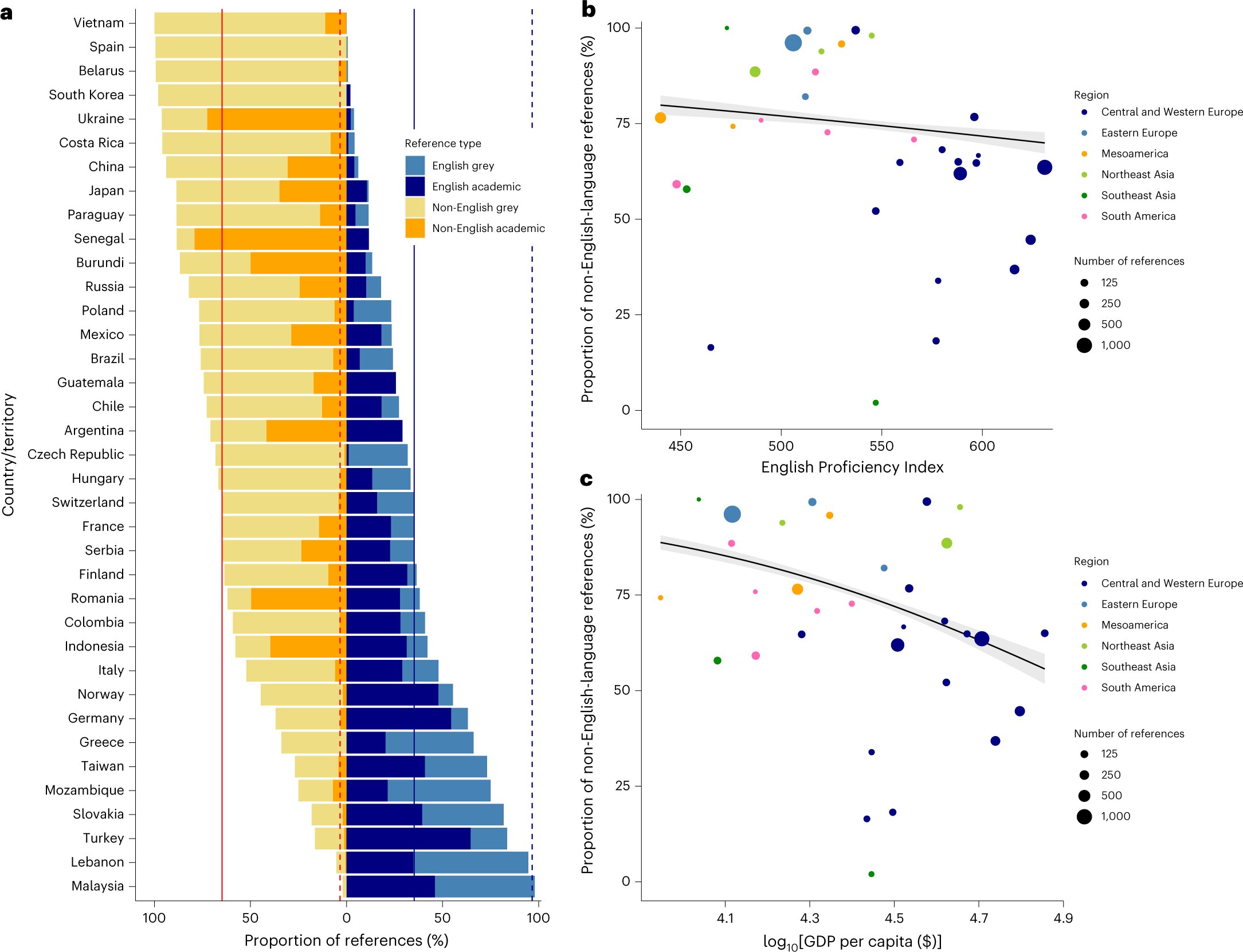
New study: "More than 90% of the scientific articles published by Colombian researchers are in English....Publishing in a 2d language creates additional financial costs...&...problems with reading comprehension, writing ease & time, & anxiety."
https://journals.plos.org/plosone/article?id=10.1371/journal.pone.0238372
@petersuber - Peter Suber (@petersuber@fediscience.org)
2/ But be careful about concluding that most journals using weak English (in email solicitations or web pages) are predatory. Some could be honest journals published in English, for understandable reasons, by scholars whose first language is not English.
@petersuber - Peter Suber (@petersuber@fediscience.org)
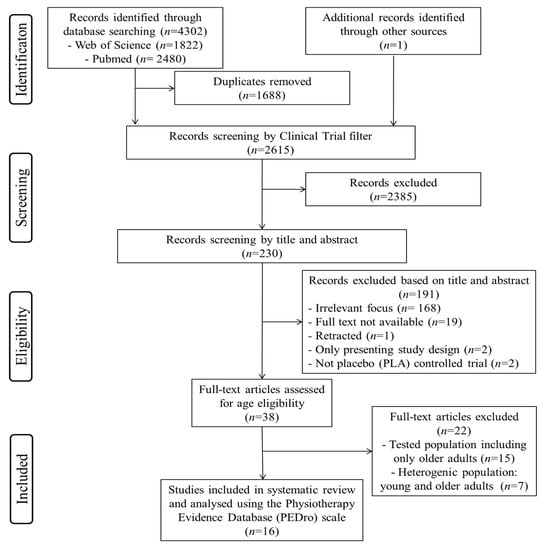
Update. This "systematic review and meta-analysis" limited itself to studies written in English. Understandable, regrettable, and probably very common.
https://www.mdpi.com/2077-0383/9/5/1598/htm
@petersuber - Peter Suber (@petersuber@fediscience.org)
Update. "This project seeks to conduct language translation on metadata labels for research publications, attribution data, & clinical trials…to make data about medical research queriable in underserved languages through Wikidata and the Linked Open Web."
https://riojournal.com/article/66490/
@petersuber - Peter Suber (@petersuber@fediscience.org)
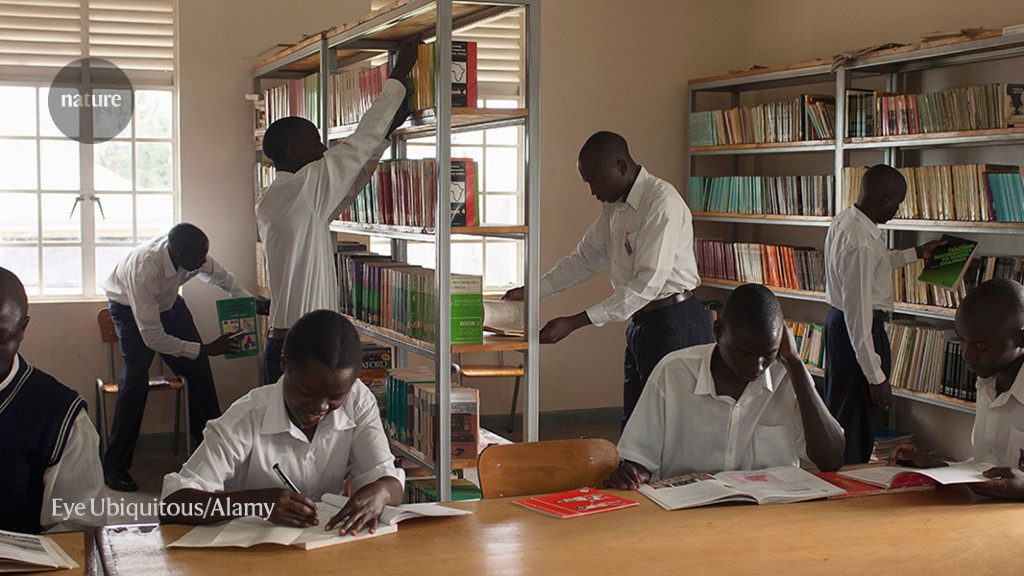
Update. "We [scientists who speak English as a second language] shoulder an extra career challenge: not only must we gain command of our science, but we must also be able to write to professional standards in a foreign language."
https://www.nature.com/articles/d41586-021-00899-y
@petersuber - Peter Suber (@petersuber@fediscience.org)
Update. "Our results show that synthesising non-English-language studies is key to overcoming the widespread lack of local, context-dependent evidence and facilitating evidence-based conservation globally."
https://www.biorxiv.org/content/10.1101/2021.05.24.445520v1
@petersuber - Peter Suber (@petersuber@fediscience.org)
Update. "If everyone uses the same language, there is less friction…[But] the English-language conquest is not more efficient than polyglot science – it is just differently inefficient. There’s still a lot of language‑learning and translation going on."
https://aeon.co/essays/how-did-science-come-to-speak-only-english
@petersuber - Peter Suber (@petersuber@fediscience.org)
Update. "I have rec'd…peer-review feedback recommending that a ‘native English speaker’…[proofread] my manuscript…Yet…English is my first language…[Some reviewers who gave this feedback] did not themselves show a strong competence in written English."
https://insights.uksg.org/articles/10.1629/uksg.502/
@petersuber - Peter Suber (@petersuber@fediscience.org)
Update. Good science is more important than good English. But "science too often demands that non-native English-speaking academics focus on learning to speak and write in English, which drastically disadvantages them." Hence....
https://www.nature.com/articles/d41586-021-01905-z
@petersuber - Peter Suber (@petersuber@fediscience.org)
Update. "Our findings indicate that Finnish language publications are particularly impt for reaching students, citizens, experts & politicians. Thus #openaccess to publications in national languages is vital for the local relevance & outreach of research."
https://onlinelibrary.wiley.com/doi/10.1002/leap.1405
@petersuber - Peter Suber (@petersuber@fediscience.org)
Update. National language journals “may not be able to transition to #openaccess…w/o losing income…One way to enable OA…is to create a…platform for hosting…the most impt local journals, an example of which has been recently implemented in Norway.”
https://asistdl.onlinelibrary.wiley.com/doi/10.1002/asi.24336
@petersuber - Peter Suber (@petersuber@fediscience.org)
Update. "As English has become the international, cross-border language of science, it may have ceased to be the property of the native speaker researchers, who constitute a small minority in the community."
https://www.tandfonline.com/doi/full/10.1080/08989621.2021.1960514
@petersuber - Peter Suber (@petersuber@fediscience.org)
Update. This is just to ensure that the present thread is associated with the hashtags #MultilingualResearch and #Multilingualism.
@petersuber - Peter Suber (@petersuber@fediscience.org)
Update. "English is the dominant language of environmental…conservation. But unless people understand…specific…concepts & can talk about them in their home languages, they can feel disconnected from govt efforts to preserve ecosystems & species."
https://www.nature.com/articles/d41586-021-02218-x
@petersuber - Peter Suber (@petersuber@fediscience.org)
Update (from 2008). Emerging Themes in Epidemiology suggests 4 ways to support #MultilingualResearch, and adopts one itself: It will publish "translations of abstracts or full texts by authors as Additional files."
https://ete-online.biomedcentral.com/articles/10.1186/1742-7622-5-1
@petersuber - Peter Suber (@petersuber@fediscience.org)
Update. Just making sure this thread on #MultilingualResearch includes this tweet from June 2021
@petersuber - Peter Suber (@petersuber@fediscience.org)
Update (from 2017). "Articles published in English have a higher number of citations than those published in other languages, when the effect of journal, year of publication, and paper length are statistically controlled."
https://link.springer.com/article/10.1007/s13280-016-0820-7
@petersuber - Peter Suber (@petersuber@fediscience.org)
Update. Diamond or no-APC #openaccess journals are multilingual 2.7x more often than APC-based OA journals. In the @DOAJplus: 38% of no-APC v. 14% of APC-based journals.
https://zenodo.org/record/4558704
For more data on multilingual no-APC journals, see §1.4.3, tables 8-11.
@petersuber - Peter Suber (@petersuber@fediscience.org)
Update. English-language articles quoting non-English speakers tend to publish the quotations in English alone. This piece recommends publishing them in both the speaker's native language and English.
https://onlinelibrary.wiley.com/doi/10.1002/nop2.1115
@petersuber - Peter Suber (@petersuber@fediscience.org)
Update. "The dominance of…articles in English as well as the paucity of OA publications indexed in international databases (compared to those in national or regional databases) may have been due to the greater weighting assigned to such publications."
https://ese.arphahub.com/article/59032/
@petersuber - Peter Suber (@petersuber@fediscience.org)
Update from Nov 2019. "There was a positive relationship between #JIFs [journal impact factors] and publication language…Most countries with smaller research capabilities have still chosen English as the standard language of their research journals."
https://www.sciencedirect.com/science/article/pii/S037843711931180X
@petersuber - Peter Suber (@petersuber@fediscience.org)
Update from 2018: "I propose balanced multilingualism as a basis for governing the tensions between strategies for internationalization and excellence in research on the one hand and strategies for societal relevance and participation on the other."
bid.ub.edu/en/40/sivertse…
@petersuber - Peter Suber (@petersuber@fediscience.org)
Update. Lingua franca nuances: In Poland there are academic "domains where English fluency is an asset & 'black holes' (bureaucratic issues, teaching, research collaboration) where English language communication is either impossible or impeded."
https://www.sciencedirect.com/science/article/abs/pii/S0889490621000673
@petersuber - Peter Suber (@petersuber@fediscience.org)
Update. The dominance of English in STEM fields "is detrimental to the continuity & evolution of STEM research. We [recommend US govt] infrastructure that standardizes & facilitates the language translation process & hosting of multilingual publications."
https://www.sciencepolicyjournal.org/article_1038126_jspg180303.html
@petersuber - Peter Suber (@petersuber@fediscience.org)
Update from @LProofreading. "We are group of #ECR in #linguistics concerned with linguistic discrimination in #academic #publishing. We propose to develop a community-based solution to fight it."
@petersuber - Peter Suber (@petersuber@fediscience.org)
Update. This meta-analysis deliberately limited its scope to English-language articles. I suspect that most others do the same without saying so. Has anyone studied how often meta-analyses adopt this limitation?
https://journals.sagepub.com/doi/10.1177/14747049211040447
@petersuber - Peter Suber (@petersuber@fediscience.org)
Update. China's retreat from monetary incentives to publish in English-language journals with high journal impact factors (#JIFs) is not having a large short-term effect. Many researchers want to publish in those journals even without the old incentives.
https://link.springer.com/article/10.1057/s41307-022-00268-y
@petersuber - Peter Suber (@petersuber@fediscience.org)
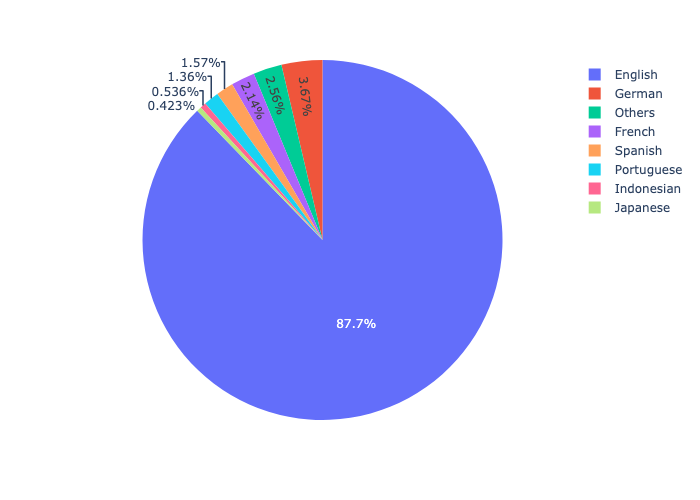
More from the study above. Mainstream indices like WoS & Scopus suggest that 90% of published journal articles are in English. But those are the indices most likely to exclude non-English journals. For example, they cover only 2/3 of the journals listed in UlrichsWeb.
@petersuber - Peter Suber (@petersuber@fediscience.org)
Update. "This paper…details 3 major ways in which content differences between language editions [of @Wikipedia] arise…and recommendations for good practices when using multilingual and multimodal data for research and modeling."
https://arxiv.org/abs/2204.02483
@petersuber - Peter Suber (@petersuber@fediscience.org)
Update. "The article compares selected entries on @Wikipedia concerning significant historical events in three language versions: Belarusian, Lithuanian, & Polish…[& notes] the prevalence of 'local' points of view on controversial historical events."
cejsh.icm.edu.pl/cejsh/element/…
@petersuber - Peter Suber (@petersuber@fediscience.org)
Update. An argument for "balanced multilingualism" & "taking language into account in all aspects of research assessment without prioritizing scholarly communication in any language over publications in other languages."
https://repository.uantwerpen.be/docstore/d:irua:11895 (warning, forced download)
@petersuber - Peter Suber (@petersuber@fediscience.org)
Update. "African languages are barely represented in technology & research…@Lanfrica is a language-focused search engine that makes it fast & easy to find information on the Internet about resources relating to African languages."
https://lanfrica.com/about
@petersuber - Peter Suber (@petersuber@fediscience.org)
Update. "Spanish and Portuguese together represent more than 800 million speakers…, 11% of the world’s population, but only 1% of globally indexed scientific output is published in these two languages."
https://www.lodivalleynews.com/for-open-and-accessible-science/
@petersuber - Peter Suber (@petersuber@fediscience.org)
Update. The @EUCouncil "welcomes initiatives to promote #multilingualism, such as the Helsinki initiative on multilingualism in scholarly communication...invites the Commission & the Member States to experiment with multilingualism, on a voluntary basis."
https://www.consilium.europa.eu/media/56958/st10126-en22.pdf
@petersuber - Peter Suber (@petersuber@fediscience.org)
Update. "We [@COKIproject] have mapped the 122 million objects in Crossref up to the end of May 2022 to languages (based on titles and abstracts, where available) and done an initial analysis. The results are a mix of the expected and surprising."
https://openknowledge.community/language-diversity/
@petersuber - Peter Suber (@petersuber@fediscience.org)
Update. The spread of "national [#openaccess] repositories" will help us study thematic "differences between locally published research in non-English speaking contexts and English-speaking international authors."
https://link.springer.com/article/10.1007/s11192-022-04403-9
@petersuber - Peter Suber (@petersuber@fediscience.org)
Update. We "investigate NLP & Machine Translation approaches…to foster multilingual access & discovery to SSH content across different languages…[We created an open dataset] of multilingual metadata concepts."
lrec-conf.org/proceedings/lr…
@petersuber - Peter Suber (@petersuber@fediscience.org)
Update. Google's translation of the Portuguese: "The publication of bilingual and multilingual articles is a potential, inexpensive solution that has been offered for years by the Scientific Electronic Library On-line (SciELO)."
https://www.scielo.br/j/jvb/a/8g95sSFpscRXY7NbY9hPLzy/?lang=pt
@petersuber - Peter Suber (@petersuber@fediscience.org)
Update. Anecdote from piece above: "German scientists…identified a significant causal relationship between smoking & lung cancer in the…1930s, a finding ignored by the scientific community for more than three decades, until British & American scientists rediscovered this link."
@petersuber - Peter Suber (@petersuber@fediscience.org)
Update. "We outline actions that individuals and institutions can take to support multilingual science and scientists, including structural changes that encourage and value translating scientific literature."
https://academic.oup.com/bioscience/article/72/10/988/6653151
@petersuber - Peter Suber (@petersuber@fediscience.org)
Update. I second @karimjerbineuro's appreciation of "the extra work, time & energy that students + researchers around the world, whose native language is not English, need to put into writing academic papers + giving talks in English."
@petersuber - Peter Suber (@petersuber@fediscience.org)
Update. "US researchers do not build as readily on the [English-language] work of Chinese researchers, relative to the work of other foreign scientists, even in a setting where Chinese scientists have long excelled."
https://www.nber.org/papers/w30772
@petersuber - Peter Suber (@petersuber@fediscience.org)
Update. "Although the publishing patterns of CEE…journals in the field of language and linguistics are international, multilingual publishing in languages other than English ensures the continuity of local research traditions."
https://link.springer.com/article/10.1007/s11192-022-04595-0
@petersuber - Peter Suber (@petersuber@fediscience.org)
Update. I just gave an interview in which I spoke at length about #MultilingualResearch. "The dominance of one language creates obstacles, stress, expense & rejection for excellent scholars whose first language happens not to be the lingua franca."
https://dash.harvard.edu/handle/1/37373947
@petersuber - Peter Suber (@petersuber@fediscience.org)
Update. "44% of Finnish peer-reviewed journals and series are published in Finnish…#Diamond #OpenAccess journals are much more multilingual than, for example, [OA] journals which charge #APCs."
https://julkaisufoorumi.fi/en/news/diamond-future-open-access
@petersuber - Peter Suber (@petersuber@fediscience.org)
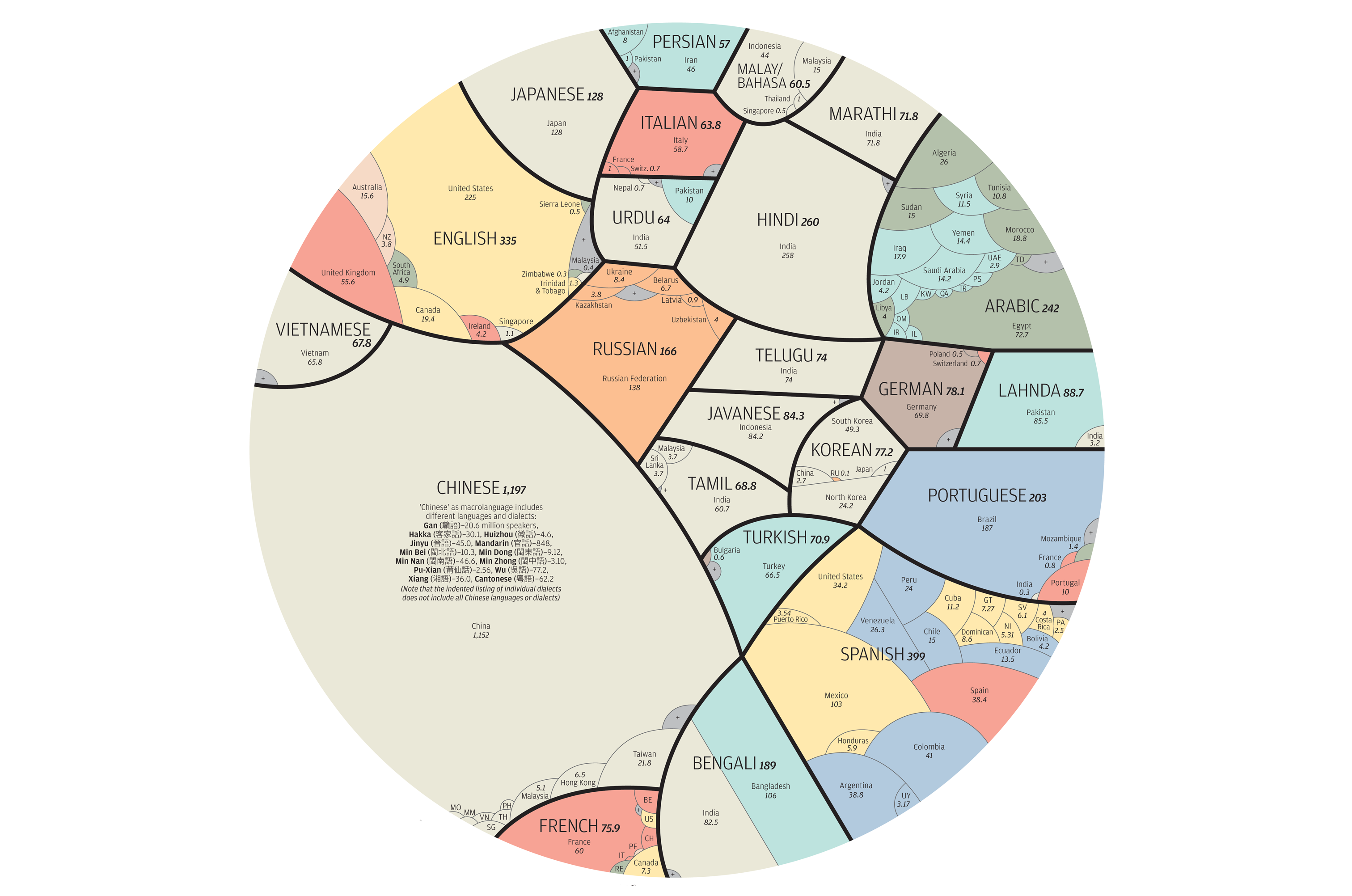
Update. "While English is only the native language of 7.3% of the world's population and less than 20% can speak the language, nearly 75% of all scientific publications are English."
https://journals.sagepub.com/doi/10.1177/14550725221102227
@petersuber - Peter Suber (@petersuber@fediscience.org)
Update. Case study of the two-year transition to fully bilingual publication (Spanish and English) by the Chilean medical journal, @Medwave_cl.
https://doi.org/10.1002/leap.1533
@petersuber - Peter Suber (@petersuber@fediscience.org)
Update. "Journals & publishers have made little progress toward beginning to recognize or reduce language barriers. Counter to our predictions, journals associated w/ scientific societies did not…have more inclusive policies [than] non-society journals."
https://academic.oup.com/iob/article/5/1/obad003/7008844
@petersuber - Peter Suber (@petersuber@fediscience.org)
Update. A new study of the #CulturalHeritage research indexed in #WOS finds it skewed toward English-language research and the global #north. The authors conclude that this is partly due to the research and partly due to what is indexed in #WOS.
https://www.nature.com/articles/s41599-023-01582-5
@petersuber - Peter Suber (@petersuber@fediscience.org)
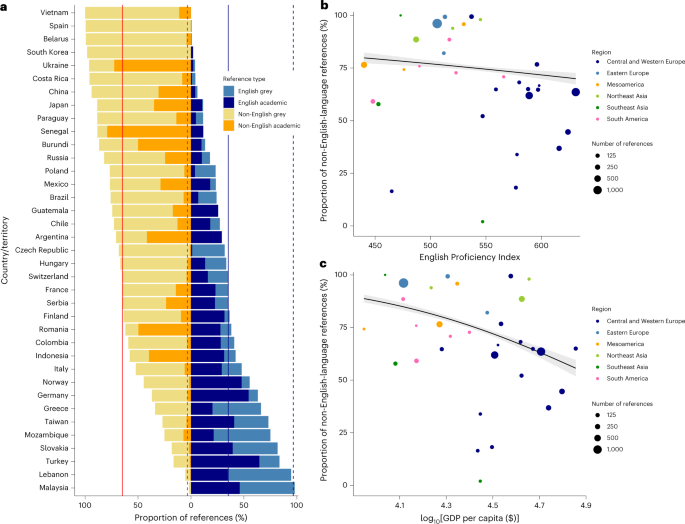
Update. "By ignoring non-English-language science, international assessments may overlook important information on local and/or regional biodiversity."
https://www.nature.com/articles/s41893-023-01087-8
@petersuber - Peter Suber (@petersuber@fediscience.org)
Update. In the humanities, when Russian funders evaluated grant proposals using quantitative metrics, like publications & citations, "non-journal publications among new grantees decreased, while the share of English-language journal articles increased."
https://sciendo.com/article/10.2478/jdis-2023-0010?tab=article





/https://tf-cmsv2-smithsonianmag-media.s3.amazonaws.com/blogging/featured/40159CFE-0BD1-472A-A8CA-22B1FA242FFD.jpg)




/cloudfront-eu-central-1.images.arcpublishing.com/prisa/QGY2V2D3YPNK4QO72ZBPHS2I3I.jpg)