@ncdave4life - ✝️ 🇺🇸 🇺🇦 Dave Burton
1/7》 All of your examples are good, Simon. But I think one of the reasons so many people distrust science is that in some fields "experts" have proven to be untrustworthy. In some fields many so-called experts are just propagandists, or even crackpots.
https://youtube.com/watch?v=kVk9a5Jcd1k&lc=UgyqbK1IDJFBj1mrRC54AaABAg…
@ncdave4life - ✝️ 🇺🇸 🇺🇦 Dave Burton
2/7》 It's not just fringe actors who "love [only] 'evidence' that supports what they already believe." Among people comfortably sharing a majority opinion, it's even worse, because peer pressure amplifies confirmation bias.
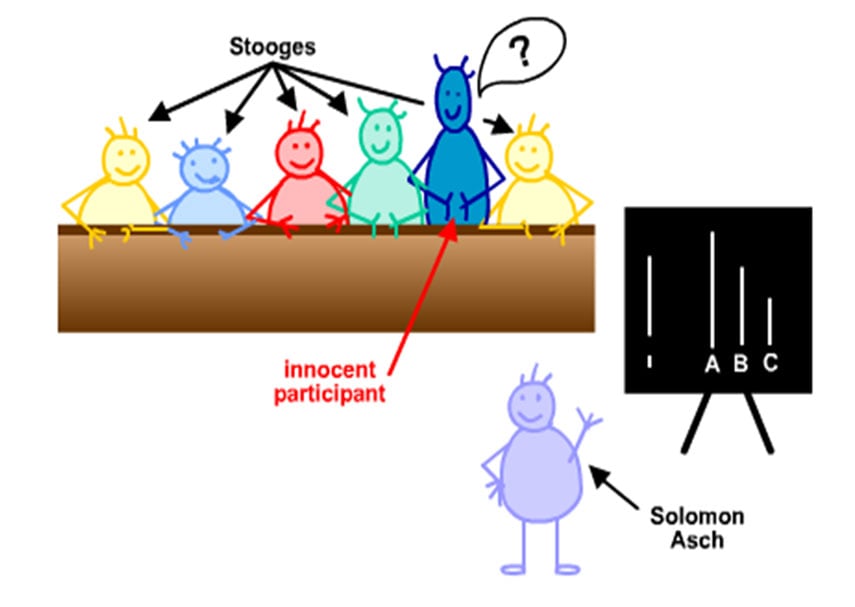
https://www.simplypsychology.org/asch-conformity.html
Have you heard of the Asch Conformity Line Experiment?
@ncdave4life - ✝️ 🇺🇸 🇺🇦 Dave Burton
6/7》 Human beings are instinctively tribal. That results in a great susceptibility to peer pressure. Many people would even rather believe in terrifying horrors than question the doctrines of those they see as their own tribe, no matter how ridiculous.
@ncdave4life - ✝️ 🇺🇸 🇺🇦 Dave Burton
7/7》 Willingness to reevaluate and correct mistaken beliefs is a learned discipline, and it doesn't come easily. That discipline is as essential for mental health as for scientific progress and political sagacity. Unfortunately, it's almost as uncommon as common sense.