reSee.it - Tweets Saved By @60Minutes

Saved - July 2, 2025 at 10:10 PM

@60Minutes - 60 Minutes

Sunday, meet Mike Moore, the self-professed “country lawyer from Mississippi” who took on big tobacco and big oil. His next target? Manufacturers and distributors of opioids. https://cbsn.ws/2LiCWtN

Video Transcript AI Summary
Opioid overdoses have increased in the last eighteen months. Mike Moore, who helped engineer the 1998 settlement with big tobacco, is now taking on opioid manufacturers and distributors. Moore believes a verdict against these manufacturers and distributors could bankrupt them and put them out of business. Moore says the evidence against the industry is damning and believes a jury will quickly reach a verdict.
Full Transcript
Speaker 0: The opioid overdoses have increased in the last, you know, eighteen months. They've gone up. Speaker 1: Mike Moore helped engineer the historic 1998 settlement under which big tobacco had to pay out billions. Now he's taking on opioid manufacturers and distributors. Speaker 0: If we want a verdict against these manufacturers and distributors, it could bankrupt them. It put them out of business. Speaker 1: Tonight, you'll hear evidence against the industry, which Moore calls damning. He believes a jury will too. Speaker 0: You know what those jurors gonna do? They're go in the backroom. They're gonna spend about thirty minutes thinking about it. Gonna come back out and bam.
CBS News | Breaking news, top stories & today's latest headlines CBS News offers breaking news coverage of today's top headlines. Stay informed on the biggest new stories with our balanced, trustworthy reporting. cbsnews.com
Saved - May 10, 2025 at 12:01 AM

@60Minutes - 60 Minutes

“What does reconciliation look like for you?” Jeremy Ellis asks the family whose ancestor commissioned a slave ship that captured and enslaved his ancestors. https://cbsn.ws/49FHrJr

Video Transcript AI Summary
Reconciliation involves Africatown becoming a thriving place in ten years, with efforts made to aid its transformation through relationship building and giving back. As a first step to make amends, two individuals sold land in Africatown to the city for $50,000, a fraction of its appraised value, for community development. They still own about 14% of the land in historic Africatown. There are specific requests to see accomplished, including land ownership within the historic district via a land trust, which could then be leased out for businesses. A partnership with a company like Walmart was suggested. A trust could provide services currently lacking, such as access to basic necessities and improved infrastructure. Educational trust funds could also help descendants avoid student loans. Descendants believe that they should have the same level of education that the Mere family experienced. Focus should be on Africatown, but also on other survivors impacted by this story.
Full Transcript
Speaker 0: What does reconciliation look like for you? Speaker 1: Well, I told this to Anderson yesterday. I hope he comes back in ten years and Africa Town is a thriving place, and that we've been able to play a part in helping that that transformation. And I think about building relationships and and seeing what ways, you know, we can give back. Speaker 2: Helen grew up just a few miles from Africa Town, but had never been there until last year when she started volunteering at a food bank. As a first step to make amends, in 2021, Helen and Meg sold this plot of land in Africatown to the city of Mobile for $50,000, a fraction of its appraised value. It'll be home to community development organizations and a new food bank. Meg and Helen still own about 14% of the land in historic Africatown. Speaker 0: We have some ask, some specific ask that we would like to see accomplished. Speaker 2: You're talking about plots of land? Speaker 0: We believe that within that historic district of Africatown, there are parcels of land that we should have ownership in. Land trust. Speaker 2: A land trust. Mhmm. And that that land would then be leased out for a business. Speaker 0: Wouldn't it be great if a company like Walmart could partner with Descendants and lease out land from Descendants? Speaker 3: If there is a trust and there's land and people can have services that they don't currently have. Today, you couldn't get, you know, a loaf of bread without having to drive miles away. The street lights are so poor, The roads are so bad. The dilapidated housing is so terrible. Or maybe there can be educational trust funds that somebody would go to college and not be saddled with student loans. Speaker 0: I have a daughter, and I believe that she should have the same level of education that the Mere family experienced, but we believe that the same level of education should be provided to all descendants. A lot of focus as it should be is on Africa Town, but as the president of the organization, I have to be intentional about those other survivors that maybe didn't grow up in Africatown, but they still were impacted Speaker 3: by Speaker 0: this story.
CBS News | Breaking news, top stories & today's latest headlines CBS News offers breaking news coverage of today's top headlines. Stay informed on the biggest new stories with our balanced, trustworthy reporting. cbsnews.com
Saved - February 18, 2025 at 3:46 AM
reSee.it AI Summary
I shared a quote from scientist Bruce Beehler about the untouched Foja Mountains in Indonesia, highlighting its pristine nature with no signs of human activity. I also mentioned that a full report is available for those interested in learning more.

@60Minutes - 60 Minutes

"We're basically at the edge of the Earth, as we would know it," said scientist Bruce Beehler in 2007, describing the Foja Mountains in Indonesia. "There's no sign of human activity, there are no footprints, there’s no trails, and there’s no Coke cans.”

Video Transcript AI Summary
We ventured into a remote rainforest in the Foyer Mountains, the same area where new species were discovered a couple years ago. After a helicopter drop-off, we were isolated from the world and ready to explore. We quickly found a new bird species, naming it the wattled smoky honeyeater. It's a quiet bird with unique wattles. Our main goal was to find the elusive black sicklebill bird of paradise. After spotting one, we focused on its display site, a dead stump where the male performs a mating dance. We were lucky enough to film this otherworldly display at dawn. Nearby, we observed a male golden-fronted bowerbird constructing his elaborate "tower of love." He decorates it with colorful objects to attract females and performs a dance on a mossy runway. We filmed the bowerbird's display, capturing the female's initial inspection and the male's attempts to impress her.
Full Transcript
Speaker 0: We were going to a rainforest in what's known as the Foyer Mountains, to the very place where Bruce and other scientists had discovered new species two years ago. The only place where we could set the helicopter down was a bomb if we could find it amidst the clouds. Then suddenly, at 6,000 feet, there it was. We hopped out, said goodbye to the helicopter, and hoped it would come back in ten days as promised. We were now closed off from the outside world. Speaker 1: We're about as far away from home as you can get. Speaker 0: You don't just mean geographically? We're basically Speaker 1: at the edge of the Earth as we would know it. There's no sign of human activity. There's no footprints. There are no trails. There are no Coke cans. No sounds except the sounds of the birds. Speaker 0: Only a handful of humans are known to have walked this ground. Bruce had been here once before. He'd always wondered what might be hidden in this forest. But it took him twenty four years of begging before the Indonesian government would let him set foot here. To help us set up a camp, we brought a few villagers from Papasena. This was it. Our home for the next ten days. And I see you're already wearing your binoculars. Speaker 1: I'm looking for new birds. Or all birds that I saw last time that only live here. No place else on Earth except the Foyah Mountains. Speaker 0: In 02/2005, Roos and his fellow scientists needed only ten minutes to find their first new species, an odd looking bird. It didn't take us much longer to spot it. Speaker 1: You could see these, bizarre little wattles hanging down. That seems to be unique. Speaker 0: A new bird, a new species, needs a new name. What did you come up with? Speaker 1: Well, I've got a wife. And I thought, wouldn't it be nice to name it after her? So I named it after Carol, Melopodes carolii. It actually has an English name too. That's the wattled smoky honeyeater. Speaker 0: Wattled smoky honeyeater. Speaker 1: That's a mouthful, isn't it? Most birds make a sound. As far as I know, this bird either never makes a sound or very rarely makes a sound. So we've encountered it now perhaps forty, fifty times, and it's always quiet. Speaker 0: Bruce was on the march to find what are called birds of paradise. The black sicklebill bird of paradise was of particular interest. The sicklebill has a distinctive call. The bird is so rare, it took Bruce thirty years to see his first sicklebill. We were trying to find one in ten days. Speaker 1: Can you see a pop? He's definitely curious. He's not far. Speaker 0: And then we saw one. It was only a glimpse, but it was long enough to marvel at his extravagant tail. The key to finding the sicklebill, it turns out, was a dead stump. Speaker 1: That is a very special place. That is the display site of that black sicklebill, bird of paradise, that we glimpsed. This is the first time I've ever seen a display site. Now what I see, this is where the male does his dance for the female, only on the top of that perch. Speaker 0: Literally does a dance. Speaker 1: He does a dance, and he completely transforms himself into some otherworldly creature. Speaker 0: The dance is part of the mating ritual, and it only happens between 05:20 and 05:45AM. That's when our cameras were focused on the dead stump every morning, trying to become the first camera crew to film a male sickle bill doing its display for a female. Sure enough, one morning, an early bird arrived before dawn. What we saw next really was otherworldly. The male flashed his yellow mouth hoping to lure a female. One took the bait. The male transformed himself, a metamorphosis from bird to Batman. We don't know if a female was blown away by this display, but we certainly were. Speaker 1: How could she not be impressed? It's the most fantastic thing I've ever seen. Speaker 0: Just yards away from the dead stump, we met another character of the rainforest, a male golden fronted bowerbird found only in the Foyer Mountains were sprucing up. He's known as the architect of the forest for good reason. Speaker 1: I like to call this the bowerbird's tower of love. It looks sort of like a nest, but certainly it's not a nest. You can hear the male. He's up there. He's making weird sounds. He's created this love bower that he builds, and it's artful. He adds different colors. Speaker 0: The bowerbird decorates his tower with fruits, snails, anything he thinks will make it stand out. And all this is to attract the girls. Speaker 1: Yes. Basically, this is his playboy pad. Right? He's a single male here, polygamous. Speaker 0: He's more discriminating in how he builds his tower than he is in the females he makes for. Speaker 1: That's what the evolutionary biologists say. Yes. Generally, the females are choosy. Mhmm. And the males are, shall we say, horny. Speaker 0: This tower, three feet tall, consists of about 500 sticks, all put together by this one male bowerbird. Surrounding it is a mossy runway where he will dance for the female as part of his display. It had never been filmed before, so our cameraman Chris Everson had a hiding spot built for him near the tower. Once the camera was safely tucked away behind camouflage, it was a matter of waiting and hoping. We weren't disappointed. First, a female dropped in to check out the tower. The male arrived bearing fruit in his mouth. He finally got up the nerve to lift his crest and strut his stuff. What some guys won't do. Apparently, he'll need work on his routine because the female left. According to Bruce, it may have just been too early in the season.

@60Minutes - 60 Minutes

Watch the full report: https://cbsn.ws/419HuuT

CBS News | Breaking news, top stories & today's latest headlines CBS News offers breaking news coverage of today's top headlines. Stay informed on the biggest new stories with our balanced, trustworthy reporting. cbsnews.com
Saved - February 18, 2025 at 3:44 AM

@60Minutes - 60 Minutes

“Twelve days ago, people knew where their next paycheck was coming from. They knew how they were going to pay for their kids' daycare, their medical bills. And then, all gone overnight,” says Kristina Drye, who was fired in the USAID shutdown. https://cbsn.ws/3CU2X1y

Video Transcript AI Summary
People are scared. Just days ago, they knew where their next paycheck was coming from, how to pay for day care and medical bills. Now, it's all gone overnight due to the chaotic shutdown of foreign aid distributed by USAID. More than 8,000 USAID employees were sent home. This administration isn't looking for competency, but pure loyalty. If you don't give it, you will be punished. People with decades of public service across multiple administrations, from George Bush to Obama to the first Trump administration, were forced to leave the building and never allowed back in. They received an email, and if they didn't leave, they were escorted out. There was no explanation.
Full Transcript
Speaker 0: People are really scared. I think that, you know, twelve days ago, people knew where their next paycheck was coming from. They knew how they were gonna pay for their kids' day care, their medical bills, and then all gone overnight. Speaker 1: All gone overnight for Christina Drey and Adam Dubard fired this month in the chaotic shutdown of foreign aid distributed by the US Agency for International Development, USAID. More than 8,000 USAID employees were sent home by the administration. They're not looking for competency. They're not looking for if you're good at your job. They're looking for pure loyalty tests. And if you don't give it, you you will be punished. Speaker 0: And they had to leave the building. And these are folks who had decades and decades of public service serving USAID across administrations from, you know, George Bush to Obama to the first Trump administration. And they were never able to walk back in the building again. Speaker 1: There was no process? No one explained to them why they were being relieved? Speaker 0: To my knowledge, they received an email, and then if they didn't leave the building, they were escorted out of the building.
CBS News | Breaking news, top stories & today's latest headlines CBS News offers breaking news coverage of today's top headlines. Stay informed on the biggest new stories with our balanced, trustworthy reporting. cbsnews.com
Saved - January 30, 2025 at 4:37 AM

@60Minutes - 60 Minutes

“If you've got dirt under your fingernails, you're the ones that should be getting the money, nobody else,” says a South Dakota farmer about people living in big cities – not working on farms – who are able to collect farm bailout money. https://cbsn.ws/35sjsN4

Video Transcript AI Summary
Many farms today have absentee owners who receive bailout money, including individuals from major cities like New York, Miami, and San Francisco. Among these recipients are professionals such as bankers, architects, and musicians, which doesn't align with the traditional image of a farmer. The view is that the real farmers, like those working the land, should be the ones receiving financial support. The sentiment is that only those who are directly involved in farming, with hands in the dirt, deserve the aid, not those who are disconnected from the day-to-day operations.
Full Transcript
Speaker 0: Many farms today have investors, call them absentee owners, who also collect bailout money. When we checked, we found hundreds of recipients living in big cities, including New York City, Miami, San Francisco. Among them, a banker, an architect, a composer, a classical musician. Not South Dakota's Doug Somkie's idea of a farmer. Speaker 1: I mean, my sons are the ones out here working. They're the ones that should get the money. If you got dirt on your fingernails, you're the ones that should be getting the money. Nobody else.
CBS News | Breaking news, top stories & today's latest headlines CBS News offers breaking news coverage of today's top headlines. Stay informed on the biggest new stories with our balanced, trustworthy reporting. cbsnews.com
Saved - October 29, 2024 at 7:06 AM

@60Minutes - 60 Minutes

60 Minutes wondered how—despite all the international sanctions on Russia—the Kremlin is still making so much money from its oil. It’s the world’s third-largest producer. We found the answer in an unexpected place. https://cbsn.ws/48lKrur

CBS News - Breaking news, 24/7 live streaming news & top stories Watch CBS News live and get the latest, breaking news headlines of the day for national news and world news today. cbsnews.com
Saved - October 28, 2024 at 5:30 AM

@60Minutes - 60 Minutes

Cecilia Vega asks: “Is there a way to carry out mass deportation without separating families?” “Of course there is. Families can be deported together,” says Tom Homan, head of ICE during Trump’s family separation policy. https://cbsn.ws/4fixO5w

Video Transcript AI Summary
One estimate claims it would cost $88 billion to deport one million people a year. A speaker questions whether that is what American taxpayers should expect. Another speaker asks what price should be put on national security and whether it is worth the cost. A speaker asks if mass deportation can occur without separating families. Another speaker claims families can be deported together.
Full Transcript
Speaker 0: We have seen one estimate that says it would cost $88,000,000,000 to deport a 1000000 people a year. Speaker 1: I don't know if that's accurate or not. Speaker 0: Is that what American taxpayers should expect? Speaker 1: What price do you put on national security? Is that worth it? Speaker 0: Is there a way to carry out mass deportation without separating families? Speaker 1: Of course there is. Families can be deported together.
CBS News - Breaking news, 24/7 live streaming news & top stories Watch CBS News live and get the latest, breaking news headlines of the day for national news and world news today. cbsnews.com
Saved - October 17, 2024 at 10:39 PM

@60Minutes - 60 Minutes

Though there is a cap to how much money farmers can receive from bailouts, some farms are able to collect millions of dollars by exploiting permissive eligibility rules, allowing farms to collect payments on behalf of many people. https://cbsn.ws/2YtcR3z

Video Transcript AI Summary
USDA data indicates that farms are collecting millions of dollars over the payment cap by exploiting eligibility rules adopted from Congress's farm bills. These rules allow large farms to collect maximum payments on behalf of multiple individuals, including relatives. Even if someone lives in New York City and doesn't farm, they can receive payments simply by having an ownership interest in the farm and making a few phone calls a year. They don't have to live on or visit the farm to receive these payments.
Full Transcript
Speaker 0: The USDA data Cook obtained through a search of public records show farms are actually collecting 1,000,000 of dollars way over the cap. They do it by exploiting permissive eligibility rules that the administration adopted from Congress's farm bills. Those rules allow big farms to collect maximum payments on behalf of not just the farmer, but many others. Speaker 1: Cousins, uncles, aunts. Speaker 0: So let's say, I have a cousin who's a farmer, and I'm a reporter in New York. I sit here. I don't do any farming, but I'm a cousin. Speaker 1: That's right. Speaker 0: I can get money? Speaker 1: You can get money. Maybe you have to make a phone call a couple of times a year. Speaker 0: But I don't have to go even go there? Speaker 1: No. You don't have to live on the farm or visit the farm. These payments aren't just going to farmers who are out there climbing up on a tractor every morning. These payments are going to people who are living in the middle of New York City because they happen to have an ownership interest in the farm.
CBS News - Breaking news, 24/7 live streaming news & top stories Watch CBS News live and get the latest, breaking news headlines of the day for national news and world news today. cbsnews.com
Saved - December 19, 2023 at 1:06 PM

@60Minutes - 60 Minutes

“I was helpless … They did not want to protect me. They wanted to guard their trophy.” Yarden Roman-Gat was captured by Hamas – dragged in her pajamas into a car and driven into Gaza where crowds were celebrating. https://cbsn.ws/3tmRB1m

Video Transcript AI Summary
Yaden, a hostage, describes her terrifying experience of being captured and taken to Gaza. She pretended to be dead, but her captors realized she was alive and dragged her back to the car, causing her clothes to come off. Yaden feared she might be raped. Fortunately, they didn't harm her in that way. She was paraded as a trophy to the crowds in Gaza before being taken to a house where she was constantly guarded by men. Yaden tried to make them care about her as a human, which may have helped her survive. Despite feeling watched and helpless, she never shut down emotionally.
Full Transcript
Speaker 0: Hours earlier, Yaden, too exhausted to keep running, fell to the ground as her captors closed in. Speaker 1: I played dead, but holding my breath was next to impossible. So they said, no, she's not dead. There's no blood, So pick her up and they grabbed my arms and started dragging me on the ground forwards, Back to the car, I was in pajamas and my clothes started to swipe off my body. And it was one of one of the most frightening moments because my thoughts were, Even if they didn't have that intention, now they might have. And I'm half naked, so. You're worried about rape? Yeah. Yeah. I was worried to get raped. Speaker 0: Yeah. Of course. Speaker 1: And Fortunately enough, they didn't do it. They were the the goal was Get me into Gaza. Speaker 0: Like other hostages, she was driven into Gaza through thick crowds celebrating. Speaker 1: My kidnappers could not help themselves showing me off As a trophy and showing my face as an object, it I was not a person. Speaker 0: But but the windows were up. Right? No one could Speaker 1: No. They were not up. There were a lot of people around and as we Yelling and Yeah, partying. Speaker 0: After similar gauntlets of terror, many other hostages were taken down into the dark, airless tunnels. Yarden was never underground. And where did they take you? Speaker 1: Eventually, we got, to a house. I was alone, but I was never alone because I had My guarding guarding Guards. Guards with me 247 From the 2nd I got to Gaza to the 2nd I left. Speaker 0: Were they men or women or both or? Speaker 1: Only men. Only men. You cannot object to anything. It could cost you your life. Speaker 0: She was given a hijab that covered most of her body. Speaker 1: I got a very strong feeling. This is my that that fabric is my only protection That I don't know, it's effectiveness, but it was the only thing I got. Speaker 0: You could feel hidden A little bit behind that formless Speaker 1: The word hidden has no place. I was watched and seen at all times. I was not hidden, Not for a moment. They could do anything to me. I had You were helpless? I was helpless. Speaker 0: Did you Try to engage them so they would see you as a human? Speaker 1: I tried to make them care. Speaker 0: Did it work? Do you think they began to want to protect you? Speaker 1: They did not want to protect me. They wanted to guard their trophy. But I do think I managed to make them care, I don't know, in some levels. And I do think it helped me survive. Speaker 0: Do you think that at some level you just shut down? You know, just almost as if it was happening to another person? Speaker 1: No. No. You were It was happening to me. Speaker 0: Yeah.
CBS News - Breaking news, 24/7 live streaming news & top stories Watch CBS News live and get the latest, breaking news headlines of the day for national news and world news today. cbsnews.com
Saved - September 25, 2023 at 2:05 AM

@60Minutes - 60 Minutes

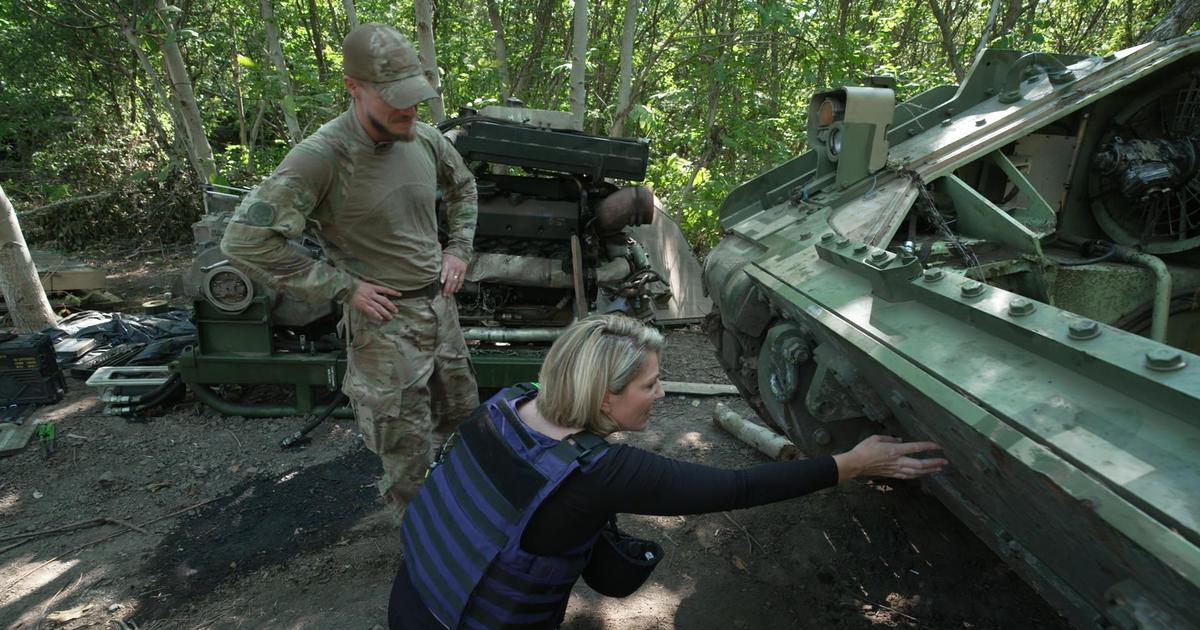
60 Minutes discovered the U.S. is financing more than weapons in Ukraine. The government is buying seeds/fertilizer for farmers, paying the salaries of 57,000 first responders and subsidizing small businesses. https://cbsn.ws/466Ketc
Video Transcript AI Summary
American taxpayers are not only funding weapons, but also providing support to Ukraine in various ways. This includes buying seeds and fertilizer for Ukrainian farmers, covering the salaries of 57,000 first responders, and funding rescue teams like the one training a dog named Joy to search for survivors in the aftermath of Russian strikes. The US also supports divers who clear unexploded ammunition from rivers, making them safe for swimming and fishing. Due to Russia's invasion, Ukraine's economy has shrunk by about a third, and to help sustain it, the US government is subsidizing small businesses.
Full Transcript
Speaker 0: American taxpayers are financing more than just weapons. We discovered the US government's buying seeds and fertilizer for Ukrainian farmers and covering the salaries of Ukraine's first responders, all 57,000 them. That includes the team that trains this rescue dog named Joy to comb through the wreckage of Russian strikes looking for survivors. And the US also funds the divers who we saw clearing unexploded ammunition from the country's rivers to make them safe again for swimming and fishing. Russia's invasion shrank Ukraine's economy by about a third. We were surprised to find that to keep it afloat, the US government is subsidizing small businesses.
What U.S taxpayers are getting for their money in Ukraine America has pumped nearly $25 billion into Ukraine's economy since the Russian invasion began. 60 Minutes went to Ukraine to learn how the money is being spent. cbsnews.com
Saved - May 27, 2023 at 5:56 PM

@60Minutes - 60 Minutes

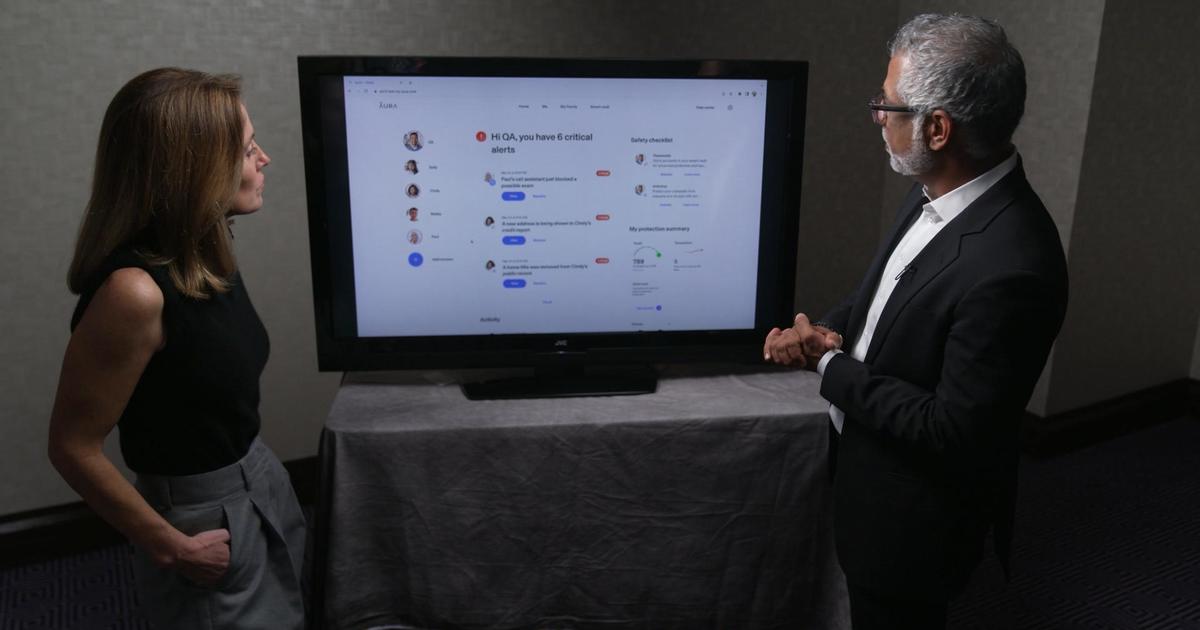
60 Minutes hired an ethical hacker to show how easy it is to be scammed. She conned our unsuspecting colleague using artificial intelligence. https://cbsn.ws/3MOhmia
Video Transcript AI Summary
Ethical hacker Rachel Toback demonstrates how easy it is for criminals to use online information to scam people. Using an AI-powered app, Toback mimics a colleague's voice and successfully tricks her into revealing personal information. She explains that anyone can be spoofed, even if they are not a public figure, by changing the pitch and modulation of their voice. Attackers often target individuals who have a relationship with someone else and impersonate them to gain trust. This highlights the importance of understanding how criminals think in order to protect oneself online.
Full Transcript
Speaker 0: If you don't know how a criminal thinks, then you really don't know how you can protect yourself online. Speaker 1: Rachel Toback is what's called an ethical hacker. She studies how these criminals operate. Speaker 0: So ethical hackers, we step in and show you how it works. Speaker 1: Toback is the CEO of Social Proof Security, a data protection firm that advises Fortune 500 companies, the military, and private citizens on their vulnerabilities. We hired her to show us how easy it is to use information found online to scam someone. We asked her to target our unsuspecting colleague, Elizabeth. Toback found Elizabeth's cell phone number on a business networking website. As we set up for an interview, Toback called Elizabeth, but used an AI powered app to mimic my voice and ask for my passport number. Oh, yes. Yes. Yes. I do have it. Okay. Ready? It's Toback played the AI generated voice recording for us to reveal the scam. Elizabeth, sorry. Need my passport number because the Ukraine trip is on. Can you read that out to me? Speaker 0: Does that sound familiar? Speaker 1: Yes. And I gave her wow. I had Speaker 0: the best foot in the house. Speaker 1: I was sitting over there. Did what did it say on your phone? Sharon, how did you do that? Speaker 0: So I used something called a spoofing tool to actually be able to call you as Sharon. Speaker 1: That's why I was hacked, and I fail I failed. Speaker 0: No. But everybody would get tricked with that. Speaker 1: Yeah. Speaker 0: Everybody would. It says, Sharon, Why would I not answer this call? Why would I not give that information? Speaker 1: Toback showed us how she took clips of me from television and put it into an app that cloned my voice. It took about 5 minutes. I am a public person. My voice is out there. Could a person who's not a public person like me Speaker 0: Right. Speaker 1: Be spoofed as easily? Speaker 0: Anybody can be spoofed. And oftentimes, attackers will go after people, they don't even know who these people are, but they just know this person has a relationship to this other person, And they can impersonate that person enough just by changing the pitch and the modulation of their voice that I believe that's my nephew and I need to really wire that
How con artists use AI, apps, social engineering to target parents, grandparents for theft Losses from digital theft have doubled over the past two years, according to the FBI. Sharyn Alfonsi shows how cyber scammers are using AI, apps and social engineering to target seniors. cbsnews.com
View Full Interactive Feed