TruthArchive.ai - Tweets Saved By @AJamesMcCarthy

@AJamesMcCarthy - Andrew McCarthy
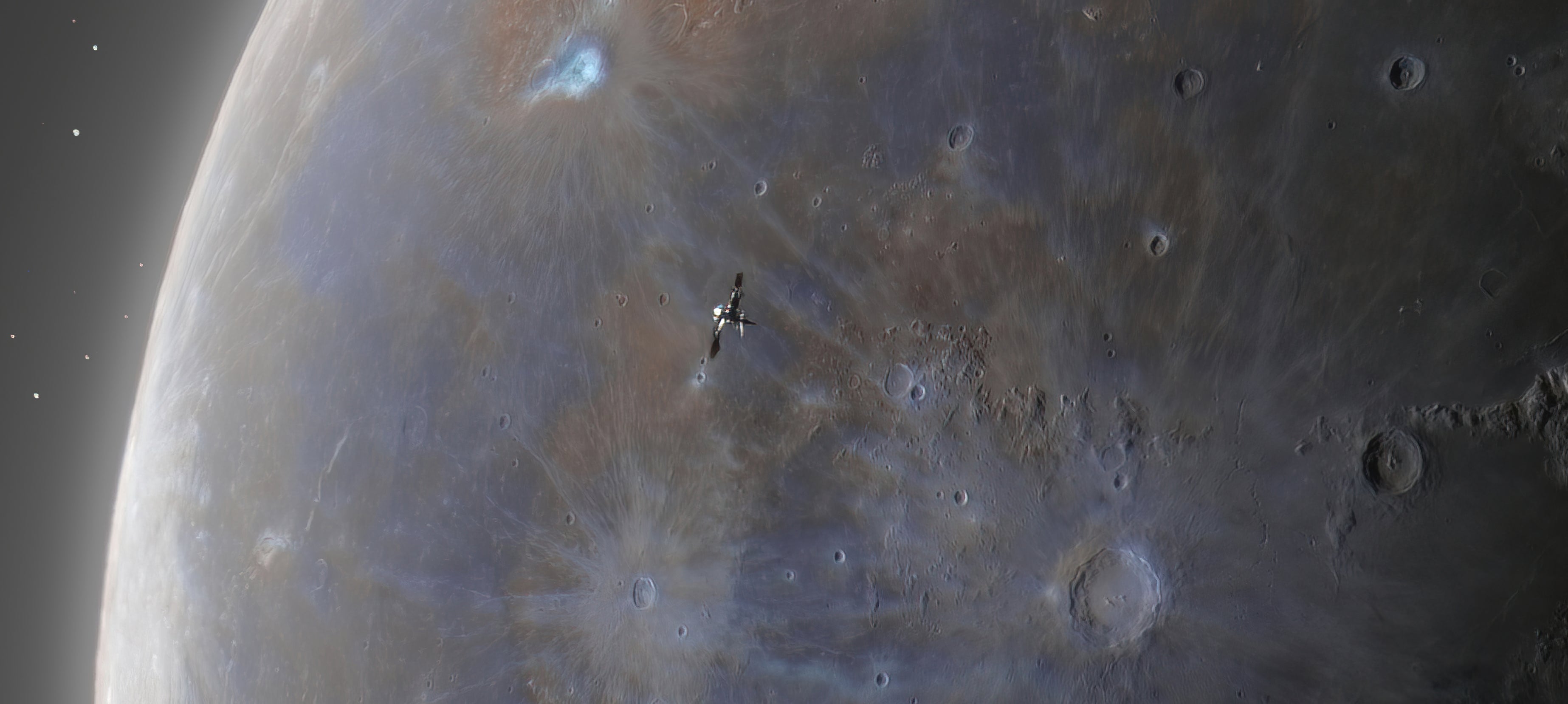
Using FB is depressing. My posts often have "laughing" as a top reaction, and comments loudly claiming my work is cgi (and citing strange misunderstandings of science as evidence). Earth is round, we went to the moon, and my photo of the ISS in front of the moon is real 😎

@AJamesMcCarthy - Andrew McCarthy
If you want to see the solar panels and radiators on the ISS with your own eyeballs, consider getting a telescope! An 8” dobsonian or larger is fun for satellite spotting. I wrote up a telescope guide to explain further: https://cosmicbackground.io/pages/newsletter

@AJamesMcCarthy - Andrew McCarthy
@ZenLightningBug Late afternoon. If you’re curious I actually wrote a guide for how to capture these https://cosmicbackground.io/blogs/learn-about-how-these-are-captured/capturing-the-international-space-station
@AJamesMcCarthy - Andrew McCarthy
@transit_jam Nice find!
@AJamesMcCarthy - Andrew McCarthy
@Nstig8tor62 How the heck did you catch it behind the moon
@AJamesMcCarthy - Andrew McCarthy
@JoJo_Photo Accurate
@AJamesMcCarthy - Andrew McCarthy
@James8_8008 Yes, but you have to be in lunar orbit to take it https://t.co/fPoQs0EU6h

@AJamesMcCarthy - Andrew McCarthy
@muahneno No and it’s not intended to. There’s plenty of other proofs we went to the moon, like 700lbs of verifiable moon rock
@AJamesMcCarthy - Andrew McCarthy
@n_illumined Never posted him there! Gregory is just for X
@AJamesMcCarthy - Andrew McCarthy
@talkradio89 Fairly straightforward to patch a phone line to a radio, never understood why people bring this up as such a “gotcha”
@AJamesMcCarthy - Andrew McCarthy
A traveled to the top of a Volcano in Hawaii to capture this: Saturn briefly covered by the moon. One of the most difficult shots I’ve captured and a bucket list moment, this event gave me a new perspective on the solar system. I’ll have it available in print for a short time. https://t.co/hA4k9m8eyT

@AJamesMcCarthy - Andrew McCarthy
If you want the print, head to the link in my bio. To keep details on the planet, I cropped it differently based on the size. The largest print shows the entire moon, with the planet just a distant light (but the details are still there 🤓) https://t.co/FH9S1Nb91W

@AJamesMcCarthy - Andrew McCarthy
IRL, the planet was much dimmer than the moon. For the sake of the composition I brightened Saturn to more closely match the moons brightness, which also more closely matches what I experienced through the eyepiece https://t.co/PE6lboVyxv
@AJamesMcCarthy - Andrew McCarthy
To get the shot I traveled to the top of Mauna Kea. This gave me the best chance of being above the clouds and superb seeing conditions, while also being the ideal position on Earth for the occult. The downside… I got horribly sick from being up there til 4am. https://t.co/qN5DztCOX5

@AJamesMcCarthy - Andrew McCarthy
Here’s the time-lapse I promised you from yesterday’s solar activity. Complete with Earth to scale and a bonus of the sun’s rotation. This is easily one of my cleanest time-lapses I’ve managed over such a long period. Enjoy! https://t.co/v6Gsy3OH7k
@AJamesMcCarthy - Andrew McCarthy
This photo shows what was happening 24 MILLION years ago! The light from this galaxy (M106) left its location during the Oligocene period, travelled through intergalactic space for millions of years only to be caught by my telescope 3 feet before hitting the ground. Humbling. https://t.co/eMgG7Jm4VU

@AJamesMcCarthy - Andrew McCarthy
This photo was captured in true color, and shows how the ionized hydrogen gas swirling around the galactic core produces new stars. You can see Hubble’s photo of it on the right. Great example of how accessible the wonders of space are- not constrained to textbooks and NASA. https://t.co/WBAJRsR0XR

