reSee.it - Tweets Saved By @ChrisMartzWX

@ChrisMartzWX - Chris Martz
Peer-review is not a part of real science. Period. The peer-review system, as it exists in its current form, has only existed since the 1970s (maybe 1960s in some cases). It is a relatively modern academic gatekeeping process, not an ancient pillar of science. Issac Newton, Galileo, Charles Darwin, and even Einstein's work (specifically, his four Annus Mirabilis papers in 1905) were all written or published without “peer-review.” Science advances with evidence, replication, and falsifiability. “Peer-reviewers” typically do none of the above things when reading over a paper submitted to an academic journal. Reviewers are just anonymous “experts” that stamp approval for any papers they happen to agree with and reject ones that challenge their own biases. But as I have previously said, any of my online critics that demand I publish a paper in a journal can pay me to do it themselves. I am not an academic. I am not a federal employee. I work in the private sector. It is not reasonable to expect me to drop thousands of dollars on a paper to cover paywalled data access fees and a journal's submission and/or publication fee(s). Either put your own money where your mouth is, or shut up about it and drop the stamp-collecting credentialism. I don't need a M.S. or Ph.D. to analyze data or assess claims made by scientists and find errors in them. For hundreds of years, valid science happened outside of peer-reviewed journals because they simply didn't exist, at least in modern form. I also do not believe in using taxpayer dollars to conduct scientific research via NSF grants, etc. Just because something has been “peer-reviewed” does not mean it is accurate. And just because something hasn't been subject to academic circle jerks doesn't mean it isn't valid. Your peers agreeing with your ideas does not make your theory valid. “Peer-review” approval not the arbiter of truth. It's gatekeeping because people are biased, scientists included. Thanks for coming to my ted talk.

@ChrisMartzWX - Chris Martz
Actually, I do. I know several meteorologists who work for different universities that would be fired if they openly critiqued the climate activist messaging. A few have told me that they were even asked in their job interviews if they were in agreement with the so-called “consensus.” If they didn’t say “yes,” he or she would have been canned and the college would look for another candidate to take the job position. Others faced penalties for speaking out. Though I cannot name the others due to confidentiality, Dr. Judith Curry, who was at one time a tenured professor and chair of the Georgia Tech atmospheric sciences department, had her teaching assignments removed when she became skeptical following the Climategate email leak that revealed the sausage-making that goes on in the IPCC. You’re the muppet who doesn’t have a clue.
@ChrisMartzWX - Chris Martz
𝐓𝐡𝐞 𝟗𝟕% 𝐂𝐨𝐧𝐬𝐞𝐧𝐬𝐮𝐬 𝐌𝐲𝐭𝐡 𝐃𝐞𝐛𝐮𝐧𝐤𝐞𝐝 One of the most pervasive myths in science is that 97% (or sometimes stated as >99%) of “climate scientists” agree that all global warming since the mid-19th century is human-caused and that this warming is an existential threat to the welfare of the planet and all life on it. Except, this statistic is largely made up, and no matter how many times it is quashed, it persists as a talking point in online forums to weasel a way out of an honest discussion. The “consensus of scientists” is not organic. Rather, it was manufactured through questionable data processing methods in two studies published in Environmental Research Letters (ERL): Cook et al. (2013) and Lynas et al. (2021). Let's look closer at these studies. 🔎 𝐓𝐇𝐄 “𝟗𝟕% 𝐂𝐎𝐍𝐄𝐒𝐍𝐒𝐔𝐒” The paper that got this all started was published in ERL in 2013. 🔗 https://iopscience.iop.org/article/10.1088/1748-9326/8/2/024024 Led by cognitive psychologist John Cook—a Senior Research Fellow at the Melbourne Centre for Behaviour Change and founder of the climate blog, Skeptical Science—he and eight co-authors skimmed the abstracts of 11,944 climate-related papers published between 1991 and 2011. Of the 11,944 abstracts, a total of 7,930 (66.4%) of them expressed 𝒏𝒐 𝒑𝒐𝒔𝒊𝒕𝒊𝒐𝒏 on the cause(s) of global warming since the pre-industrial era. Of the remaining 4,014 abstracts that endorsed either anthropogenic global warming (AGW) or natural global warming, 3,896 (97.1%) endorsed AGW in at least some capacity, while 78 (1.9%) questioned or rejected AGW. The remaining 40 (1%) of papers expressed uncertainty. But, it gets even more nuanced than that if we look at the abstracts and pick them apart. On whether global warming is being caused entirely by human activities, by nature, or by a combination of both, of those 4,014 papers, they state, warming is caused: 🔴 Entirely by humans: 64 papers (1.59%) 🟤 >>50% by humans: 922 (22.96%) 🟡 Equally natural + man-made: 2,910 (72.50%) 🟢 >>50% by natural cycles: 54 (1.35%) 🔵 Man is causing no warming: 24 (0.60%) 🤷 Don't know: 40 (1.00%) So, a “97% consensus” can be contrived by either (a) omitting the 7,930 (66.4% of) abstracts in the 11,944-paper sample that did not explicitly state a position on the drivers of global warming, or by (b) lumping all 3,896 abstracts that endorsed at least some anthropogenic component as entirely endorsing AGW. Either way, that's sausage-making. 🌭 Because either way you compute this data honestly, there is far from a “97% consensus” that most or all global warming is man-made. There's only a 24.6% consensus on that, at best. There is a 97% consensus that at least 𝑠𝑜𝑚𝑒 of that warming is man-made, but that doesn't mean that all (or even most) has been. But, what about the >99% consensus? Let's find out. 🔎 𝐓𝐇𝐄 “>𝟗𝟗% 𝐂𝐎𝐍𝐄𝐒𝐍𝐒𝐔𝐒” Like Cook et al. (2013), Lynas et al. (2021) attempted to quantify the consensus on AGW. 🔗 https://iopscience.iop.org/article/10.1088/1748-9326/ac2966 In this synthesis, 3,000 climate papers were selected at random. In that batch, 282 were marked as false positives since they weren't actually climate-related. That’s fair. So, the analysis continued with the remaining 2,718 peer-reviewed articles. Of those, 1,869 (68.8%) of them took 𝒏𝒐 𝒑𝒐𝒔𝒊𝒕𝒊𝒐𝒏 on AGW. And, like Cook et al. (2013), all 1,869 papers neither endorsing nor rejecting AGW were discarded. Of the remaining 849 papers that did endorse a position, 845 (99.5%) of them sided with AGW while four did not. So, like Cook et al. (2013), Lynas et al. (2021) ignored over 65% of the papers selected that didn't take one position or the other on the physical driver(s) of global warming. By doing this, the authors could artificially manufacture a consensus on an issue where none actually existed if all of the relevant papers were considered. The advantage that Lynas et al. (2021) has over Cook et al. (2013) is that each paper was examined thoroughly rather than just the abstract. This made for a more thorough analysis despite the same flawed methodology both used in ignoring the majority of papers that took a neutral stance. 🧵 1/4 (Keep reading) ⬇️


@ChrisMartzWX - Chris Martz
This is the smoking gun of junk science. So-called “climate scientists” ostentatiously show the chart on the left as incontrovertible proof that virtually all global warming since 1850 is caused by mankind's greenhouse gas (GHG) emissions, a natural byproduct of combustion. 🏭 The figure is adapted from the Summary for Policymakers (SPM) of the latest United Nations IPCC AR6 WG1 report. 🇺🇳 They avow that it is “[𝑏]𝑎𝑠𝑒𝑑 𝑜𝑛 𝑎 𝑠𝑦𝑛𝑡ℎ𝑒𝑠𝑖𝑠 𝑜𝑓 𝑖𝑛𝑓𝑜𝑟𝑚𝑎𝑡𝑖𝑜𝑛 𝑓𝑟𝑜𝑚 𝑚𝑢𝑙𝑡𝑖𝑝𝑙𝑒 𝑙𝑖𝑛𝑒𝑠 𝑜𝑓 𝑒𝑣𝑖𝑑𝑒𝑛𝑐𝑒.” 🔗https://ipcc.ch/report/ar6/wg1/downloads/report/IPCC_AR6_WGI_SPM.pdf (p. 6) Let's break it down for the laypeople: ⬛️ The black curve shows the observed (really estimated) global mean surface temperature (referred to as GMST hereafter) anomaly [in degrees Celsius] since 1850. Over the last 175 years, the planet has warmed by ~1.2°C according to Hadley Centre data, but there is a 30% range on that number due to the divergence between datasets. 🟩 The green line shows the global climate model- (GCM-) simulated GMST change since 1850 that is ascribed to 𝗻𝗮𝘁𝘂𝗿𝗮𝗹 𝗰𝗮𝘂𝘀𝗲𝘀 𝗼𝗻𝗹𝘆. The only natural forcings considered in most GCMs are the total solar irradiance ☀️ (TSI)—a measure of the solar power over all wavelengths per unit area incident on the top of the atmosphere—and volcanic aerosols. 🌋 The chart also considers internal variability, which essentially are cyclical ocean-driven changes in heat distribution on decadal or multidecadal time scales. However, these mechanisms remain poorly understood because they are understudied within the academic literature. 🟦 The blue line shows the GCM-simulated GMST change due to aerosols only. Aerosols are fine solid or liquid particles—natural or anthropogenic in origin—that are suspended in the air and generally will have diameters <1 μm. Aerosols can act to either warm or cool the atmosphere. For instance, 𝗯𝗿𝗶𝗴𝗵𝘁 𝗮𝗲𝗿𝗼𝘀𝗼𝗹𝘀 (e.g., sulfates from coal burning) act to scatter incoming solar radiation out to space, which has a net 𝗰𝗼𝗼𝗹𝗶𝗻𝗴 𝗲𝗳𝗳𝗲𝗰𝘁. On the flip side of that are 𝗱𝗮𝗿𝗸 𝗮𝗲𝗿𝗼𝘀𝗼𝗹𝘀 (e.g., black carbon from diesel exhaust) that absorb incoming solar radiation, which has a net 𝘄𝗮𝗿𝗺𝗶𝗻𝗴 𝗲𝗳𝗳𝗲𝗰𝘁. 🟥 The red curve shows the GCM-simulated GMST change due to GHG emissions only. ⬜️ The gray curve shows the GCM-simulated GMST change due to natural and anthropogenic causes. It is the combined sum of the green, blue and red curves. As we can see, the IPCC's figure implies that GCMs have done remarkably well to explain why the Earth's GMST has risen by ~1.2°C since 1850. This plot also implies that virtually all of the warming over that time has been due to GHG emissions. 📈 Essentially, the IPCC argues that in the absence of GHG forcing, the GMST would have remained quasi-steady or even have slightly decreased since 1945. IPCC AR6 states that warming is not reproduced by the models unless extra GHGs are added, therefore the science is settled. 𝗕𝘂𝘁, 𝗵𝗲𝗿𝗲'𝘀 𝘄𝗵𝗮𝘁 𝘁𝗵𝗲 𝗜𝗣𝗖𝗖 𝗮𝗻𝗱 𝗮𝗰𝘁𝗶𝘃𝗶𝘀𝘁𝘀 𝗰𝗼𝘀𝗽𝗹𝗮𝘆𝗶𝗻𝗴 𝗮𝘀 𝘀𝗰𝗶𝗲𝗻𝘁𝗶𝘀𝘁𝘀 𝗶𝗻 𝗮𝗰𝗮𝗱𝗲𝗺𝗶𝗮 𝘄𝗼𝗻'𝘁 𝘁𝗲𝗹𝗹 𝘆𝗼𝘂. 🫵 Their “settled science” crumbles with just a tiny bit of scrutiny of their methodology. 1⃣ 𝗖𝗟𝗜𝗠𝗔𝗧𝗘 𝗠𝗢𝗗𝗘𝗟𝗦 𝗖𝗔𝗡'𝗧 𝗛𝗜𝗡𝗗𝗖𝗔𝗦𝗧 We know from paleoclimate data (e.g., tree rings, ice cores and sedimentary rock) that the Earth's GMST is capable of fluctuating significantly on multidecadal time scales without human influence. Just take a look at some of the reconstructions compiled here: 🔗pages.science-skeptical.de/MWP/MedievalWa… However, GCMs are incapable of skillfully hindcasting observed climate variations over the past 2,000 years or even last few centuries. I have run different models myself, and they struggle to capture the natural ups 'n downs seen in observations. They essentially smooth everything out into a flat line and variance is lost. This is something even my professors discussed in classes when the modeling subject came up. Rather than acknowledging the shortcomings of the models, most “climate scientists” or modelers cling to their high egos and make a general assumption that natural forcing and internal variability cannot possibly explain any observed global warming since 1850 just because their models cannot reproduce it on natural variability alone. But, that's because the models also cannot reproduce the natural fluctuations observed in the paleoclimate record. 2⃣ 𝗖𝗟𝗜𝗠𝗔𝗧𝗘 𝗠𝗢𝗗𝗘𝗟𝗦 𝗔𝗥𝗘 𝗙𝗨𝗗𝗚𝗘𝗗 Since GCMs cannot hindcast historical temperature variations, modeling centers pre-tune their GCMs to the instrumental GMST record, using the dataset of their choice (e.g., HadCRUT5, Berkley Earth, NASA GISS, etc.). Pre-tuning is basically when modelers arbitrarily turn knobs on parameters in their models until they agree with the observations. Figure 3.8 from Chapter 3 of IPCC AR6 WG1 shown on the top right shows the “drivers of observed warming” between 1850-1900 and 2010-19. 📊 🔗https://ipcc.ch/report/ar6/wg1/downloads/report/IPCC_AR6_WGI_Chapter03.pdf (p. 440) To curve fit the model data to the GMST record, they set a GMST change “target” range of +0.9°C to +1.2°C with a “best estimate” of +1.0°C [relative to the 1850-1900 mean]. This range accounts for spread between observational datasets. Let's break it down: 🟩 The green boxes show the spread in the modeled GMST change since 1850 ascribed to both natural forcing and internal variability. The multi-model mean (MMM) is centered around zero with little variation between individual models. This, once again, is due to the fact that GCMs cannot reproduce historical climate variations accurately. Since first order radiative forcings including land use change and urban sprawl are left unconsidered by the IPCC and most other scientists, this leaves them with two major parameter schemes to adjust: The aerosol (e.g., SO₂ and black carbon) and GHG (e.g., CO₂, CH₄ and N₂O) forcing schemes. But, there is one major problem! ⚠️ The individual aerosol and GHG contributions to the change in GMST since 1850 are unknown. This is because the coefficients used to quantify the anthropogenic versus natural forcing on the climate system are computed from computer modeling, not by direct in-situ measurements or remote sensing. So, it becomes a game of fudging the data until the GCMs give scientists the result that their funding agents are implicitly requiring them to find. According to Figure 3.8 from IPCC AR6 WG1, 🟦 Aerosols may have had a net cooling effect by as much as 0.9°C between 1850 and 2019 (mainly due to SO₂ outweighing the impact of black carbon), or a net warming of 0.1°C (due to absorbed solar radiation by black carbon) over that same time interval. The MMM is a net -0.5°C ± 100%. In other words, the estimated aerosol contribution to the GMST change since 1850 has a 100% margin of error. In other words, the “climate experts” have absolutely no clue just how much aerosols have impacted the radiation balance of the atmosphere, and therefore observed temperature trends over the last 100+ years. 🟫 The models say that extra GHGs may have had a net warming effect on the atmosphere by as little as 1.1°C, or as much as 2.2°C over the period 1850-2019. The MMM is +1.5°C ± 44%, which means that there is a 44% margin of error on the relative contribution of GHGs on GMST change. So, scientists still don't have a clue exactly how sensitive the climate system is to changes in CO₂ flux. That doesn't sound like “settled science” to me. To see what's going on here, take a look at one model in Figure 3.8. For sake of ease, let's choose the Hadley Centre model (HadGEM3-GC31-LL). In the diagram, it is denoted by the symbol ✚. The Hadley Centre's model says that natural forcing and internal variability had little to no impact on the GMST change between 1850-1900 and 2019. So, it's relative contribution is ∆0°C. The model also says that aerosols cooled the planet by 0.9°C over that same period. 📉 But, that's too cold! The planet hasn't cooled; it has warmed by more than 1°C since 1850. So, to get their model to produce what the modelers wanted, the Hadley Centre countered the aerosol forcing with a robust GHG forcing of +2.2°C. When the two are added together, it meshes out to a net 1.1°C of warming, which fits within the target range. Success is declared! ✅ But, here's the glaring reality. The “basic physics” don't yield correct values. So, the modelers adjust the aerosol or GHG parameter schemes in their models until they get a desired result. Other times, they adjust the cloud parameter scheme. But, it's almost always done arbitrarily with little to no physical reasoning. Don't believe me? 🤔 These dubious methods are admitted by scientists in the peer-reviewed literature. A prime example of this artificial tuning being done is in Mauritsen & Roeckner (2020). In the paper, the authors detailed how they pre-tuned the Max Planck Institute model (MPI-ESM1.2) to the instrumental surface air temperature (SAT) record by targeting the IPCC's “best estimate” of equilibrium climate sensitivity (ECS) (i.e., the amount of warming resulting from doubling CO₂ plus feedbacks) of 3°C. With the known physics, the MPI model produced an ECS of 7°C, which is more than double their set target of 3°C. So, to produce a more realistic ECS, they just arbitrarily adjusted the cloud parameter scheme until the model output aligned with GMST observations. In the closing remarks of the paper, they say, 🗨️ “𝑊𝑒 ℎ𝑎𝑣𝑒 𝑑𝑜𝑐𝑢𝑚𝑒𝑛𝑡𝑒𝑑 ℎ𝑜𝑤 𝒘𝒆 𝒕𝒖𝒏𝒆𝒅 𝒕𝒉𝒆 𝑴𝑷𝑰-𝑬𝑺𝑴𝟏.𝟐 𝒈𝒍𝒐𝒃𝒂𝒍 𝒄𝒍𝒊𝒎𝒂𝒕𝒆 𝒎𝒐𝒅𝒆𝒍 𝒕𝒐 𝒎𝒂𝒕𝒄𝒉 𝒕𝒉𝒆 𝒊𝒏𝒔𝒕𝒓𝒖𝒎𝒆𝒏𝒕𝒂𝒍 𝒓𝒆𝒄𝒐𝒓𝒅 𝑤𝑎𝑟𝑚𝑖𝑛𝑔; 𝑎𝑛 𝑒𝑛𝑑𝑒𝑎𝑣𝑜𝑟 𝒘𝒉𝒊𝒄𝒉 𝒉𝒂𝒔 𝒄𝒍𝒆𝒂𝒓𝒍𝒚 𝒃𝒆𝒆𝒏 𝒔𝒖𝒄𝒄𝒆𝒔𝒔𝒇𝒖𝒍. 𝐷𝑢𝑒 𝑡𝑜 𝑡ℎ𝑒 ℎ𝑖𝑠𝑡𝑜𝑟𝑖𝑐𝑎𝑙 𝑜𝑟𝑑𝑒𝑟 𝑜𝑓 𝑒𝑣𝑒𝑛𝑡𝑠, 𝒕𝒉𝒆 𝒄𝒉𝒐𝒊𝒄𝒆 𝒘𝒂𝒔 𝒕𝒐 𝒅𝒐 𝒕𝒉𝒊𝒔 𝒑𝒓𝒂𝒄𝒕𝒊𝒄𝒂𝒍𝒍𝒚 𝒃𝒚 𝒕𝒂𝒓𝒈𝒆𝒕𝒊𝒏𝒈 𝒂𝒏 𝑬𝑪𝑺 𝒐𝒇 𝒂𝒃𝒐𝒖𝒕 𝟑𝑲 𝒖𝒔𝒊𝒏𝒈 𝒄𝒍𝒐𝒖𝒅 𝒇𝒆𝒆𝒅𝒃𝒂𝒄𝒌𝒔, 𝑎𝑠 𝑜𝑝𝑝𝑜𝑠𝑒𝑑 𝑡𝑜 𝑡𝑢𝑛𝑖𝑛𝑔 𝑡ℎ𝑒 𝑎𝑒𝑟𝑜𝑠𝑜𝑙 𝑓𝑜𝑟𝑐𝑖𝑛𝑔.” 🔗https://agupubs.onlinelibrary.wiley.com/doi/full/10.1029/2019MS002037 🔗https://ipcc.ch/report/ar6/wg1/downloads/faqs/IPCC_AR6_WGI_FAQ_Chapter_07.pdf (p. 44, for IPCC ECS “best estimate”) In a nutshell, after “scientists” force their models to agree with the instrumental surface temperature data [by fudging parameters arbitrarily], they declare that their models are successful / correct because they are in agreement with the surface temperature data. Circular logic much? 🔁 What's more, for over three decades, the scientists employed at these modeling centers refused to inform the public exactly how their GCMs are calibrated. The lack of transparency from the scientific community on model tuning was first subtly acknowledged in Chapter 9 of IPCC AR5 WG1, 🗨️ “𝑊𝑖𝑡ℎ 𝑣𝑒𝑟𝑦 𝑓𝑒𝑤 𝑒𝑥𝑐𝑒𝑝𝑡𝑖𝑜𝑛𝑠 (𝑀𝑎𝑢𝑟𝑖𝑡𝑠𝑒𝑛 𝑒𝑡 𝑎𝑙., 2012; 𝐻𝑜𝑢𝑟𝑑𝑖𝑛 𝑒𝑡 𝑎𝑙., 2013) 𝒎𝒐𝒅𝒆𝒍𝒍𝒊𝒏𝒈 𝒄𝒆𝒏𝒕𝒓𝒆𝒔 𝒅𝒐 𝒏𝒐𝒕 𝒓𝒐𝒖𝒕𝒊𝒏𝒆𝒍𝒚 𝒅𝒆𝒔𝒄𝒓𝒊𝒃𝒆 𝒊𝒏 𝒅𝒆𝒕𝒂𝒊𝒍 𝒉𝒐𝒘 𝒕𝒉𝒆𝒚 𝒕𝒖𝒏𝒆 𝒕𝒉𝒆𝒊𝒓 𝒎𝒐𝒅𝒆𝒍𝒔. 𝑇ℎ𝑒𝑟𝑒𝑓𝑜𝑟𝑒, 𝑡ℎ𝑒 𝑐𝑜𝑚𝑝𝑙𝑒𝑡𝑒 𝑙𝑖𝑠𝑡 𝑜𝑓 𝑜𝑏𝑠𝑒𝑟𝑣𝑎𝑡𝑖𝑜𝑛𝑎𝑙 𝑐𝑜𝑛𝑠𝑡𝑟𝑎𝑖𝑛𝑡𝑠 𝑡𝑜𝑤𝑎𝑟𝑑 𝑤ℎ𝑖𝑐ℎ 𝑎 𝑝𝑎𝑟𝑡𝑖𝑐𝑢𝑙𝑎𝑟 𝑚𝑜𝑑𝑒𝑙 𝑖𝑠 𝑡𝑢𝑛𝑒𝑑 𝑖𝑠 𝑔𝑒𝑛𝑒𝑟𝑎𝑙𝑙𝑦 𝑛𝑜𝑡 𝑎𝑣𝑎𝑖𝑙𝑎𝑏𝑙𝑒.” 🔗https://ipcc.ch/site/assets/uploads/2018/02/WG1AR5_Chapter09_FINAL.pdf (pp. 749-50) This then became the focus of an editorial in Science Magazine in October 2016, 🗨️ “𝐼𝑛𝑑𝑒𝑒𝑑, 𝑤ℎ𝑒𝑡ℎ𝑒𝑟 𝑐𝑙𝑖𝑚𝑎𝑡𝑒 𝑠𝑐𝑖𝑒𝑛𝑡𝑖𝑠𝑡𝑠 𝑙𝑖𝑘𝑒 𝑡𝑜 𝑎𝑑𝑚𝑖𝑡 𝑖𝑡 𝑜𝑟 𝑛𝑜𝑡, 𝒏𝒆𝒂𝒓𝒍𝒚 𝒆𝒗𝒆𝒓𝒚 𝒎𝒐𝒅𝒆𝒍 𝒉𝒂𝒔 𝒃𝒆𝒆𝒏 𝒄𝒂𝒍𝒊𝒃𝒓𝒂𝒕𝒆𝒅 𝒑𝒓𝒆𝒄𝒊𝒔𝒆𝒍𝒚 𝒕𝒐 𝒕𝒉𝒆 𝟐𝟎𝒕𝒉 𝒄𝒆𝒏𝒕𝒖𝒓𝒚 𝒄𝒍𝒊𝒎𝒂𝒕𝒆 𝒓𝒆𝒄𝒐𝒓𝒅𝒔—𝒐𝒕𝒉𝒆𝒓𝒘𝒊𝒔𝒆 𝒊𝒕 𝒘𝒐𝒖𝒍𝒅 𝒉𝒂𝒗𝒆 𝒆𝒏𝒅𝒆𝒅 𝒖𝒑 𝒊𝒏 𝒕𝒉𝒆 𝒕𝒓𝒂𝒔𝒉. “𝐼𝑡'𝑠 𝑓𝑎𝑖𝑟 𝑡𝑜 𝑠𝑎𝑦 𝑎𝑙𝑙 𝑚𝑜𝑑𝑒𝑙𝑠 ℎ𝑎𝑣𝑒 𝑡𝑢𝑛𝑒𝑑 𝑖𝑡,” 𝑠𝑎𝑦𝑠 𝐼𝑠𝑎𝑎𝑐 𝐻𝑒𝑙𝑑, 𝑎 𝑠𝑐𝑖𝑒𝑛𝑡𝑖𝑠𝑡 𝑎𝑡 𝑡ℎ𝑒 𝐺𝑒𝑜𝑝ℎ𝑦𝑠𝑖𝑐𝑎𝑙 𝐹𝑙𝑢𝑖𝑑 𝐷𝑦𝑛𝑎𝑚𝑖𝑐𝑠 𝐿𝑎𝑏𝑜𝑟𝑎𝑡𝑜𝑟𝑦, 𝑎𝑛𝑜𝑡ℎ𝑒𝑟 𝑝𝑟𝑜𝑚𝑖𝑛𝑒𝑛𝑡 𝑚𝑜𝑑𝑒𝑙𝑖𝑛𝑔 𝑐𝑒𝑛𝑡𝑒𝑟, 𝑖𝑛 𝑃𝑟𝑖𝑛𝑐𝑒𝑡𝑜𝑛, 𝑁𝑒𝑤 𝐽𝑒𝑟𝑠𝑒𝑦.” The Science Magazine article continues, stating that climate scientists had been reluctant to come clean about tuning practices for years because they feared that skeptics would use their shady practices against them to downplay the impacts of global warming, 🗨️ “𝑭𝒐𝒓 𝒚𝒆𝒂𝒓𝒔, 𝒄𝒍𝒊𝒎𝒂𝒕𝒆 𝒔𝒄𝒊𝒆𝒏𝒕𝒊𝒔𝒕𝒔 𝒉𝒂𝒅 𝒃𝒆𝒆𝒏 𝒎𝒖𝒎 𝒊𝒏 𝒑𝒖𝒃𝒍𝒊𝒄 𝒂𝒃𝒐𝒖𝒕 𝒕𝒉𝒆𝒊𝒓 “𝒔𝒆𝒄𝒓𝒆𝒕 𝒔𝒂𝒖𝒄𝒆”: 𝑊ℎ𝑎𝑡 ℎ𝑎𝑝𝑝𝑒𝑛𝑒𝑑 𝑖𝑛 𝑡ℎ𝑒 𝑚𝑜𝑑𝑒𝑙𝑠 𝑠𝑡𝑎𝑦𝑒𝑑 𝑖𝑛 𝑡ℎ𝑒 𝑚𝑜𝑑𝑒𝑙𝑠. 𝑻𝒉𝒆 𝒕𝒂𝒃𝒐𝒐 𝒓𝒆𝒇𝒍𝒆𝒄𝒕𝒆𝒅 𝒇𝒆𝒂𝒓𝒔 𝒕𝒉𝒂𝒕 𝒄𝒍𝒊𝒎𝒂𝒕𝒆 𝒄𝒐𝒏𝒕𝒓𝒂𝒓𝒊𝒂𝒏𝒔 𝒘𝒐𝒖𝒍𝒅 𝒖𝒔𝒆 𝒕𝒉𝒆 𝒑𝒓𝒂𝒄𝒕𝒊𝒄𝒆 𝒐𝒇 𝒕𝒖𝒏𝒊𝒏𝒈 𝒕𝒐 𝒔𝒆𝒆𝒅 𝒅𝒐𝒖𝒃𝒕 𝒂𝒃𝒐𝒖𝒕 𝒎𝒐𝒅𝒆𝒍𝒔—𝒂𝒏𝒅, 𝒃𝒚 𝒆𝒙𝒕𝒆𝒏𝒔𝒊𝒐𝒏, 𝒕𝒉𝒆 𝒓𝒆𝒂𝒍𝒊𝒕𝒚 𝒐𝒇 𝒉𝒖𝒎𝒂𝒏-𝒅𝒓𝒊𝒗𝒆𝒏 𝒘𝒂𝒓𝒎𝒊𝒏𝒈. “𝑇ℎ𝑒 𝑐𝑜𝑚𝑚𝑢𝑛𝑖𝑡𝑦 𝑏𝑒𝑐𝑎𝑚𝑒 𝑑𝑒𝑓𝑒𝑛𝑠𝑖𝑣𝑒,” [Bjorn] 𝑆𝑡𝑒𝑣𝑒𝑛𝑠 𝑠𝑎𝑦𝑠 [a director of the Max Planck Institute for Mathematics, MPIM]. “𝐼𝑡 𝑤𝑎𝑠 𝑎𝑓𝑟𝑎𝑖𝑑 𝑜𝑓 𝑡𝑎𝑙𝑘𝑖𝑛𝑔 𝑎𝑏𝑜𝑢𝑡 𝑡ℎ𝑖𝑛𝑔𝑠 𝑡ℎ𝑎𝑡 𝑡ℎ𝑒𝑦 𝑡ℎ𝑜𝑢𝑔ℎ𝑡 𝑐𝑜𝑢𝑙𝑑 𝑏𝑒 𝑢𝑛𝑓𝑎𝑖𝑟𝑙𝑦 𝑢𝑠𝑒𝑑 𝑎𝑔𝑎𝑖𝑛𝑠𝑡 𝑡ℎ𝑒𝑚.” 🔗https://science.org/doi/10.1126/science.354.6311.401 Except, the contrarians using experts' shady model tuning practices against them isn't unfair. Why? Well, because: ➊ What they are doing is 𝒏𝒐𝒕 physics. ⚖️ ➋ What they are doing is 𝒏𝒐𝒕 science. 🧪 What they are doing is the antithesis of science, as it is starting with a predetermined conclusion and working backwards to find or fudge data to support said conclusion. 3⃣ 𝗠𝗢𝗗𝗘𝗟𝗦 𝗣𝗥𝗘𝗗𝗜𝗖𝗧 𝗧𝗢𝗢 𝗠𝗨𝗖𝗛 𝗪𝗔𝗥𝗠𝗜𝗡𝗚 The true test of a climate model is to see how well it fares against observational data that the model has not been arbitrarily tuned to. One such dataset is the NASA satellite-based temperature of the global lower troposphere (TLT) that is processed by University of Alabama Huntsville (UAH) scientists Dr. John Christy and Dr. Roy Spencer. On the bottom left, I plotted the latest CMIP6 model projections for global mean temperature alongside the UAH satellite-based TLT. Anomalies in both datasets are against 1991-2020 averages for fair comparison. I started the CMIP6 model runs in 1979 (because that's as far back as the UAH data extends) and adjusted the CMIP6 data so that it starts at the measured annual TLT anomaly from 1979 for model initialization. And, as we can see, the CMIP6 models produce way too much warming over the last 45 years. 🌡️ In fact, the models were off by a factor of two and it only recently took a major El Niño event, the Hunga-Tonga eruption and a reduction in cloud cover to get a statistical outlier placed within the model spread. 4⃣ 𝗧𝗛𝗘𝗥𝗘 𝗜𝗦 𝗔𝗡 𝗔𝗡𝗧𝗛𝗥𝗢𝗣𝗢𝗚𝗘𝗡𝗜𝗖 𝗘𝗟𝗘𝗠𝗘𝗡𝗧 𝗧𝗢 𝗚𝗟𝗢𝗕𝗔𝗟 𝗪𝗔𝗥𝗠𝗜𝗡𝗚; 𝗜𝗧'𝗦 𝗔 𝗤𝗨𝗘𝗦𝗧𝗜𝗢𝗡 𝗢𝗙 𝗛𝗢𝗪 𝗠𝗨𝗖𝗛 Now, I'm 𝒏𝒐𝒕 saying that there is no anthropogenic component to global warming. I think there certainly is, but it is a question of exactly how much. And, despite what you're routinely told by the press and even scientists themselves, no one really has a clue. The annual average radiation flux in and out of the Earth's atmosphere is 239 ± 4 W/m² of absorbed solar radiation (ASR) per year (Trenberth et al., 2009). 🔗https://journals.ametsoc.org/view/journals/bams/90/3/2008bams2634_1.xml Global warming theory states that the direct radiation imbalance that results from doubling the atmospheric CO₂ concentration is 3.7 ± 0.4 W/m². That is, 3.7 W/m² of outgoing infrared radiation (IR) gets intercepted by CO₂ molecules. This enhances the natural greenhouse effect by ~1.5%, which produces a direct 1°C warming bump (not accounting for amplifying OR dampening feedbacks). Wijngaarden & Happer (2023) produced slightly smaller numbers, but the results are the same in principle. 🔗https://arxiv.org/pdf/2303.00808 Since the margin of error on the natural energy flows in and out of the Earth’s climate system is more than double that of the direct radiative forcing from RF 2× CO₂, that means that the warming since 1850 could be partly or mostly natural and scientists could never know for sure. Scientists ought to be better about conveying all this uncertainty to the public, but their career success in academia or government research positions requires them to adhere to the storyline that global warming is dangerous. If doubt is cast on its severity, then their funding could dry up because Congress would deem it unworthy of having a large science budget. Science has become corrupted by political agendas and money.


@ChrisMartzWX - Chris Martz
CBS News warns that if we don’t stop burning ancient carbon, 25% of Florida will soon be underwater. Oh wait, silly me, this was broadcast 43 years ago. https://t.co/XtITXQAKAt
@ChrisMartzWX - Chris Martz
Since Bill Nye is trending, I thought it would be fun to revisit these two clips. 🎬 In a 1998 episode of his hit children's TV series “Bill Nye the Science Guy,” he praised carbon and carbon dioxide (CO₂), saying, 🗨️ “𝐶𝑎𝑟𝑏𝑜𝑛 𝑖𝑠 𝑒𝑣𝑒𝑟𝑦𝑤ℎ𝑒𝑟𝑒! 𝐶𝑎𝑟𝑏𝑜𝑛 𝑖𝑠 𝑖𝑛 𝑒𝑣𝑒𝑟𝑦 𝑙𝑖𝑣𝑖𝑛𝑔 𝑡ℎ𝑖𝑛𝑔! 𝑇ℎ𝑒 𝑡𝑟𝑒𝑒𝑠—𝑐𝑎𝑟𝑏𝑜𝑛 𝑖𝑠 𝑖𝑛 𝑡ℎ𝑒 𝑡𝑟𝑒𝑒𝑠! 𝐶𝑎𝑟𝑏𝑜𝑛'𝑠 𝑖𝑛 𝑡ℎ𝑒 𝑔𝑟𝑎𝑠𝑠! 𝐶𝑎𝑟𝑏𝑜𝑛 𝑖𝑠 𝑖𝑛 𝑦𝑜𝑢 𝑎𝑛𝑑 𝑚𝑒. 𝐶𝑎𝑟𝑏𝑜𝑛'𝑠 𝑖𝑛 𝑡ℎ𝑒 𝑐𝑜𝑤𝑠! 𝐶𝑎𝑟𝑏𝑜𝑛'𝑠 𝑖𝑛 𝑡ℎ𝑎𝑡 𝑏𝑢𝑙𝑙 𝑜𝑣𝑒𝑟 𝑡ℎ𝑒𝑟𝑒! 𝐶𝑎𝑟𝑏𝑜𝑛 𝑖𝑠 𝑖𝑛 𝑡ℎ𝑒 ℎ𝑜𝑟𝑠𝑒𝑠. 𝐶𝑎𝑟𝑏𝑜𝑛 𝑖𝑠 𝑎𝑙𝑙 𝑜𝑣𝑒𝑟 𝑡ℎ𝑒 𝑝𝑙𝑎𝑐𝑒! 𝐶𝑎𝑟𝑏𝑜𝑛'𝑠 𝑒𝑣𝑒𝑛 𝑖𝑛 𝑡ℎ𝑒 𝑎𝑖𝑟 (Nye then exhales a bunch of CO₂) 𝐶𝑎𝑟𝑏𝑜𝑛 𝑖𝑠 𝑤ℎ𝑎𝑡 𝑚𝑎𝑘𝑒𝑠 𝑙𝑖𝑣𝑒 𝑔𝑜, 𝑔𝑜, 𝑔𝑜! 𝐶𝑎𝑟𝑏𝑜𝑛 𝑚𝑎𝑘𝑒𝑠 𝑡ℎ𝑒 𝑐ℎ𝑒𝑚𝑖𝑐𝑎𝑙𝑠 𝑖𝑛 𝑙𝑖𝑣𝑖𝑛𝑔 𝑡ℎ𝑖𝑛𝑔𝑠... 𝐶𝑎𝑟𝑏𝑜𝑛 𝑖𝑠 𝑡ℎ𝑒 𝑘𝑒𝑦 𝑡𝑜 𝑙𝑖𝑓𝑒! 𝑌𝑜𝑢'𝑣𝑒 𝑔𝑜𝑡, 𝑔𝑜𝑡, 𝑔𝑜𝑡 𝑡𝑜 𝑟𝑒𝑠𝑝𝑒𝑐𝑡 𝑡ℎ𝑎𝑡!” But, today, he sings a different tune. Nye demonizes carbon. On June 24 of last year, he was interviewed on ABC News by Martha Raddatz to offer his meteorological expertise on the Mid-Atlantic heatwave. During the interview, he relegated carbon to pollution, saying, 🗨️ “𝑊𝑒'𝑣𝑒 𝑐𝑟𝑒𝑎𝑡𝑒𝑑 𝑡ℎ𝑖𝑠 𝑤𝑜𝑛𝑑𝑒𝑟𝑓𝑢𝑙 𝑞𝑢𝑎𝑙𝑖𝑡𝑦 𝑜𝑓 𝑙𝑖𝑓𝑒 𝑓𝑜𝑟 𝑠𝑜 𝑚𝑎𝑛𝑦 𝑝𝑒𝑜𝑝𝑙𝑒 𝑏𝑦 𝑏𝑢𝑟𝑛𝑖𝑛𝑔 𝑎𝑛𝑐𝑖𝑒𝑛𝑡 𝑐𝑎𝑟𝑏𝑜𝑛, 𝑎𝑛𝑐𝑖𝑒𝑛𝑡 𝑠𝑤𝑎𝑚𝑝𝑠: 𝐶𝑜𝑎𝑙, 𝑜𝑖𝑙, [natural] 𝑔𝑎𝑠. 𝑊𝑒'𝑣𝑒 𝑗𝑢𝑠𝑡 𝑔𝑜𝑡𝑡𝑎 𝑠𝑡𝑜𝑝 𝑑𝑜𝑖𝑛𝑔 𝑡ℎ𝑎𝑡.”
@ChrisMartzWX - Chris Martz
This is what happens when you get rid of nuclear power and deploy massive amounts of wind and solar onto the grid. Intermittent electricity + load balancing costs associated with battery storage = higher energy prices = a cost of living. Don’t be like Germany. 🇩🇪 Be like France. 🇫🇷

@ChrisMartzWX - Chris Martz
The Guardian reports that there is just “Ten years to save the planet” from climate change. 🫠 Oh wait, silly me, this article is 18 years old. 🫣 https://t.co/0FzQpXLRU5

@ChrisMartzWX - Chris Martz
Get a load of this. 🤣 Two years ago, The Guardian reported that Spain and Portugal were becoming too dry thanks to climate change. 🏜️ Now, The Guardian says that Spain is too wet because of climate change. 🌧️ The narrative changes with the weather. No matter what the weather does, it is always your fault and the only solution is to expand the government’s power.


@ChrisMartzWX - Chris Martz
How it started vs how it's going. ☃️ In February, The Washington Post said snowfalls will soon become a thing of the past. ☃️Today, the Post report that ski resorts in the west are opening early this year. The Gore effect strikes again. . . a gift that just keeps on giving. https://t.co/r7E0oE6TtF


@ChrisMartzWX - Chris Martz
Here’s a clip from 26-years ago that Bill Nye does not want you to see. 👇 𝐁𝐢𝐥𝐥 𝐍𝐲𝐞 𝐢𝐧 𝟏𝟗𝟗𝟖: “Carbon is everywhere! Carbon is in every living thing... carbon is even in the air! *exhales carbon dioxide* Carbon is what makes life go! Go! Go!… Carbon is the key to life! You’ve got, got, got to respect that!” 𝐁𝐢𝐥𝐥 𝐍𝐲𝐞 𝐢𝐧 𝟐𝟎𝟐𝟒: “We’ve created this wonderful quality of life for so many people by burning ancient carbon, ancient swamps; coal, oil, gas. We’ve just gotta stop doing that.”
@ChrisMartzWX - Chris Martz
“If science can't be questioned, it's not science anymore. It's propaganda, and that's the truth.” – Aaron Rodgers
@ChrisMartzWX - Chris Martz
Greta Thunberg and I are the same age. I’m a senior atmospheric science major who studies climate; she is an activist and the UN’s climate prodigy with zero formal education on this subject. Climate alarmists habitually appeal to scientific authority [only if it suits their creed], but they claim I’m not “qualified” and ignore experts like Dr. Judith Curry, Dr. Patrick Brown or Dr. John Christy, and instead listen to her uninformed testimonies that are nothing more than cultish, politically-charged doomsday rants that aren’t in the least supported by the body of scientific work. Bureaucrats and world leaders over in Europe have made grossly miscalculated energy policy decisions based on youth activism, creating energy grids with an unstable fuel mix too heavily reliant on intermittent solar and wind, which don’t produce enough energy when it is needed most, resulting in price hikes. In Germany, nuclear has been dismantled and they have had to burn coal and wood to stay warm during the winter. The only thing “net zero” reduces is the quality of life.
@ChrisMartzWX - Chris Martz
In June 1933, it hit 95° in every U.S. state and it topped 100° at least once in 44 states and 105° in 35 states. So far this month, it has reached 100° in 35 states and 105° in only 14. Oh, but what about “averages”? Well, I’m glad you asked. By the measured GHCNd station data, June 1933 was the hottest on record in the U.S. Of the top 10, eight occurred before 1955, and only two have been in the last 70-years: Top 10 hottest Junes on record in the U.S. by measured GHCNd station data: 1. 1933 2. 1934 3. 1911 4. 2021 5. 1951 6. 1921 7. 1931 8. 2016 9. 1918 10. 1936 Can you spot the climate crisis? 🧐

@ChrisMartzWX - Chris Martz
Dublin, Ireland has daily temperature data dating as far back as 1867. I got an itch, so I decided to examine their all-time record highs by month. To my surprise, none of them have been set in the 21st century. In fact, the most recent “all-time” record high to be broken there was August's 34-years ago in 1990. 8 of the 12 “all-time” monthly record highs for Dublin were set in or prior to 1950, six of which occurred over 90-years ago. • January: 17.0°C (62.6°F) on 1/10/1971 • February: 18.1°C (64.6°F) on 2/23/1891 • March: 23.4°C (74.1°F) on 3/29/1965 • April: 22.9°C (73.2°F) on 4/11/1869 • May: 26.7°C (80.1°F) on 5/31/1922 • June: 28.9°C (84.0°F) on 6/6/1950 • July: 33.5°C (92.3°F) on 7/16/1876 • August: 30.6°C (87.1°F) on 8/2/1990 • September: 28.7°C (83.7°F) on 6/6/1868 • October: 24.2°C (75.6°F) on 10/3/1959 • November: 19.4°C (66.9°F) on 11/2/1927 • December: 17.2°C (62.9°F) on 12/2/1948 Everything is “unprecedented” when you think history began the year you were born. If you go back far enough, the weather was often more extreme at some point or another. There's no indication that Ireland is facing a climate emergency, so I guess I'll have to look elsewhere. 🧐
@ChrisMartzWX - Chris Martz
I'm an atmospheric science major, and I also watched @ClimateTheMovie. While I don't necessarily agree with everything said in the movie, the scientists interviewed often made great points, and much of what this “science journalist” has argued is crap. Time to debunk the debunker. 1/? 🧵

@ChrisMartzWX - Chris Martz
Maarten argues that “The ‘warm’ Medieval and Roman periods... were actually REGIONAL. Current warming is EVERYWHERE.” Except... that's not what the United Nations' IPCC said in their First Assessment Report (FAR) in 1990. Directly from Chapter 7.2.1 on Page 202, “There is growing evidence that worldwide temperatures were higher than at present during the mid-Holocene (especially 5,000-6,000 BP), at least in summer, though carbon dioxide levels appear to have been quite similar to those of the pre-industrial era at this time... Parts of Australia and Chile were also warmer. The late tenth to early thirteenth centuries (about AD 950-1250) appear to have been exceptionally warm in western Europe, Iceland and Greenland. This period is known as the Medieval Climatic Optimum... South Japan was also warm. This period of widespread warmth is notable in that there is no evidence that it was caused by an increase of greenhouse gases.” Figure 7.1 is captioned as showing “global temperature variations.” Figure 7.1 (c) covers the last 1,000 years, and it is evident that the Medieval Warm Period (MWP) was anomalously warm relative to the modern era. In later reports, this diagram was replaced with Michael Mann's “Hockey Stick” graph. 🧵 2/?

@mkeulemans - Maarten Keulemans
4/ ...Today, we know that the ‘warm’ Medieval and Roman periods from the graph were actually REGIONAL. Current warming (right) is EVERYWHERE:

@ChrisMartzWX - Chris Martz
This Dutch science journalist then goes on to argue that the Ljungqvist (2010) [1] Northern Hemispheric temperature reconstruction shown in the movie is “TWENTY YEARS OLD,” and argues that it is wrong because of the widely accepted Mann et al. 1999 “Hockey Stick” reconstruction that is now used in the IPCC reports and serves as a basis for guiding global policymaking. Except... for the fact that Moberg et al. (2005) [2] is very similar to Ljungqvist (2010) and the schematic diagram of global temperature used in the IPCC's 1990 First Assessment Report (FAR). References: [1] Ljungqvist (2010) - A New Reconstruction of Temperature Variability in the Extra-Tropical Northern Hemisphere During the Last Two Millennia. https://www.jstor.org/stable/40930999?seq=1 [2] Moberg et al. (2005) - Highly variable Northern Hemisphere temperatures reconstructed from low- and high-resolution proxy data: https://www.researchgate.net/publication/200033310_Highly_variable_Northern_Hemisphere_temperatures_reconstructed_from_low-_and_high-resolution_proxy_data 🧵 3/?


@ChrisMartzWX - Chris Martz
Worst of all, @mkeulemans makes a shoddy attempt at splicing the instrumental temperature record onto the end of the Ljungqvist (2010) reconstruction, which ends in the year 2000. It is scientifically unethical to interweave two datasets based on different methodologies. This is especially true when scientists attempt to merge a multi-proxy reconstruction based on, in this case, marine sediments, lake sediments, ice cores, and tree rings, with modern instrumental data collected by surface-based GHCN station thermometers. Why? Well, ➊ The first and most significant problem that arises from merging two datasets of different methodology together comes from the fact that instrumental data provides continuous, point-specific measurements of atmospheric state variables that can be used to calculate a global mean. Proxy data, on the contrary, provides indirect measurements that are often discontinuous and are geographically averaged over large areas by interpolation, masking out regional variations that, in effect, can affect a global mean. ➋ The highest quality multi-proxy reconstructions have a temporal resolution of maybe a decade or two, at best. Each data point used in the Ljungqvist (2010) time series represents a 10-year average, at best. Most proxy reconstructions don't even have that high of resolution. Averaging temperatures across vast regions with limited proxies and over decadal or multi-decadal time scales will veil short-term variations, often large, that are captured by direct temperature observations. ➌ Oh, and I didn't even mention that proxies such as tree rings and ice cores are affected by environmental factors separate from temperature. Tree growth is affected by drought, soil quality / moisture, exposure to sunlight and even invasive species of insects. Ice core oxygen isotope ratios are affected by evaporation, condensation and salinity. All of these hurdles make calibrating these to a temperature scale incredibly difficult and prone to error. Hence, adjoining two datasets produced by different methodologies isn't practical, and doesn't really tell us anything useful. 🧵 4/?

@ChrisMartzWX - Chris Martz
Later, @mkeulemans just writes off the anomalously warm and dry 1930s “Dust Bowl” as being localized to the U.S. Lower 48 and argued that it was caused by poor land use (specifically, the plowing and cattle overgrazing of drought-resistant prairie grasses that anchor the soil and prevent wind-driven erosion). This is a half-truth, at best, and is an argument that climate activists use to try justifying rewriting history. Interestingly enough, I wrote a very detailed analysis of what actually caused the “Dust Bowl” drought and heat that seared the North American continent during the 1930s on March 15th. I'll copy and paste that Tweet here: From me (@ChrisMartzWX) on March 15, 2024: “𝗗𝗲𝗯𝘂𝗻𝗸𝗶𝗻𝗴 𝗠𝘆𝘁𝗵𝘀 𝗔𝗯𝗼𝘂𝘁 𝘁𝗵𝗲 “𝗗𝘂𝘀𝘁 𝗕𝗼𝘄𝗹” Climate activists are quick to write off the heatwaves that torched North America during the 1930s as being an outlier that was instigated by “unsustainable” farming practices in the Great Plains. This is another excuse for them justify rewriting history. So, here are the facts: ➊ The 1930s “Dust Bowl” drought was 𝙣𝙤𝙩 caused by poor farming practices. There is evidence based on a number of studies (e.g., Shubert et al., 2004 [1]; Seager et al., 2005 [2]; and Cook et al., 2008 [3]) that the drought was forced by multiple La Niña events (i.e., cool waters in the equatorial Pacific) and an anomalously warm subtropical North Atlantic. La Niña is a well-documented critical component to stimulating droughts in the Great Plains and Desert Southwest. During La Niña years, the subtropical jet stream shifts north (Seager et al., 2005), enhancing geopotential heights over the Lower 48. Beneath these warm-core highs, there is synoptic-scale subsidence that suppresses convection [and by convention, precipitation] and warms the air through adiabatic compressional heating. This dries out soil and vegetation, leading to drought. ➋ Cook et al. (2008) was able to reproduce a drought in the Great Plains with 1930s SST configurations using general circulation models (GCMs), but were ‘‘unable to reproduce the severity and spatial pattern of the ‘Dust Bowl’ drought of the 1930s with SST forcing alone.’’ The precipitation anomaly is weaker and “centered too far south” in comparison to GHCN-daily observations. The authors were able to get the GCMs to intensify the simulated drought, and shift the center northward by imposing a high dust loading over the region where the largest wind erosion occurred. This is based on the fact that deep-rooted, drought-resistant prairie grasses that covered the Great Plains worked to keep the soil in place were plowed and replaced by drought-prone wheat and overgrazed by overstocked cattle. The authors of Cook et al. (2008) noted, however, that while the spatial patterns of the 1930s “Dust Bowl” drought disappear in the GCM ensemble means, there are 𝙞𝙣𝙙𝙞𝙫𝙞𝙙𝙪𝙖𝙡 𝙢𝙚𝙢𝙗𝙚𝙧𝙨 𝙩𝙝𝙖𝙩 𝙥𝙧𝙤𝙙𝙪𝙘𝙚𝙙 𝙫𝙚𝙧𝙮 𝙨𝙞𝙢𝙞𝙡𝙖𝙧 𝙧𝙚𝙨𝙪𝙡𝙩𝙨 𝙩𝙤 𝙤𝙪𝙧 𝙤𝙗𝙨𝙚𝙧𝙫𝙖𝙩𝙞𝙤𝙣𝙨, suggesting that SST forcing alone might have played a larger role than they thought, and it's open to further study. Hence, the authors concluded that “unprecedented atmospheric dust loading over the continental U.S. 𝙚𝙭𝙖𝙘𝙚𝙧𝙗𝙖𝙩𝙚𝙙 the ‘Dust Bowl’ drought [locally],” but didn't 𝙘𝙖𝙪𝙨𝙚 it. In other words, the drought [and complementary heat extremes] observed across 𝙖𝙡𝙡 𝙤𝙛 𝙉𝙤𝙧𝙩𝙝 𝘼𝙢𝙚𝙧𝙞𝙘𝙖 in the 1930s was 𝙣𝙤𝙩 𝙘𝙖𝙪𝙨𝙚𝙙 by Farmer Johnson driving his John Deere Waterloo Boy, plowing a field outside of Hays, Kansas in 1929. Washington, D.C. tied their “all-time” [since 1872] record high temperature in July 1930, and New York City set theirs [since 1869] in July 1936. Obviously, soil degradation in the Plains had little or nothing to do with that. Such practices also weren't responsible for the anomalously warm Arctic (e.g., Dirk van As et al., 2016 [4]) or surface mass balance (SMB) on the Greenland Ice Sheet (e.g., Fettweis et al., 2008 [5]; Dirk van As et al., 2016 [4]; and Mankoff et al., 2021 [6]). ➌ From 1856 to 1865, there was another major drought in the Great Plains often referred to as the “Civil War Drought.” This is backed by rain gauge data collected by stations from the Army Surgeon General scattered across various forts that pre-date GHCN-daily station data, as well as tree-ring analysis conducted by Dr. David Stahle in 2004 [7]. The “Civil War Drought” was worse than the “Dust Bow” in states such as Texas, Oklahoma and Kansas, and about the same magnitude as the latter in states such as Nebraska, Montana and the Dakotas. It is suggested that this decade-long drought was forced, too, by multiple La Niña events and an anomalously warm subtropical North Atlantic. Farmers in Kansas didn't cause that widespread drought or heat, such as during the summer of 1860, the heat extremes of which are comparable to 1934, 1936, 1954 and 1980. ➍ The occurrence of the “Civil War Drought” suggests that SST forcing alone is capable of producing severe, decade-long droughts in the Heartland if given a full deck of cards, even if GCM ensemble averages aren't capable of reproducing these results. 𝙉𝙖𝙩𝙪𝙧𝙖𝙡 𝙞𝙣𝙩𝙚𝙧𝙣𝙖𝙡 𝙫𝙖𝙧𝙞𝙖𝙗𝙞𝙡𝙞𝙩𝙮 𝙖𝙣𝙙 𝙘𝙝𝙖𝙤𝙩𝙞𝙘 𝙧𝙖𝙣𝙙𝙤𝙢𝙣𝙚𝙨𝙨 𝙖𝙡𝙡𝙤𝙬 𝙬𝙚𝙞𝙧𝙙 𝙖𝙣𝙙 𝙚𝙭𝙩𝙧𝙚𝙢𝙚 𝙩𝙝𝙞𝙣𝙜𝙨 𝙩𝙤 𝙝𝙖𝙥𝙥𝙚𝙣, regardless of any human interference in the non-linear system. This suggests that climate activists can't just write off the “Dust Bowl” as a statistical outlier because the excessive drought and heat are inconvenient for their narrative. Using the University of Memphis' Drought Atlas (data derived from the Cook et al., 2010 [8] reconstruction), I was able to plot contoured PDSI maps over the U.S. comparing the “Civil War Drought” (1856-1865) to the “Dust Bowl Drought” (1930-1940). You can see this in the animation I created below [9]. 𝗥𝗲𝗳𝗲𝗿𝗲𝗻𝗰𝗲𝘀: [1] Causes of Long-Term Drought in the U.S. Great Plains - Schubert at al. (2004): https://journals.ametsoc.org/view/journals/clim/17/3/1520-0442_2004_017_0485_coldit_2.0.co_2.xml [2] Modeling of Tropical Forcing of Persistent Droughts and Pluvials over Western North America: 1856–2000 - Seager et al. (2005): https://journals.ametsoc.org/view/journals/clim/18/19/jcli3522.1.xml [3] Dust and sea surface temperature forcing of the 1930s “Dust Bowl” drought - Cook et al. (2008): https://agupubs.onlinelibrary.wiley.com/doi/10.1029/2008GL033486 [4] Placing Greenland ice sheet ablation measurements in a multi-decadal context - Dirk van As et al. (2016): https://geusbulletin.org/index.php/geusb/article/view/4942/10608 [5] Estimation of the Greenland ice sheet surface mass balance for the 20th and 21st centuries - Fettweis et al. (2008): https://tc.copernicus.org/articles/2/117/2008/tc-2-117-2008.pdf [6] Greenland ice sheet mass balance from 1840 through next week - Mankoff et al. (2021): https://essd.copernicus.org/articles/13/5001/2021/ [7] Causes and consequences of nineteenth century droughts in North America - Dr. David Stahle's tree-ring reconstruction: https://ocp.ldeo.columbia.edu/res/div/ocp/drought/nineteenth.shtml [8] Megadroughts in North America: placing IPCC projections of hydroclimatic change in along-term palaeoclimate context - Cook et al. (2010): https://onlinelibrary.wiley.com/doi/abs/10.1002/jqs.1303 [9] North American Drought Atlas: drought.memphis.edu/NADA/Default.a…”


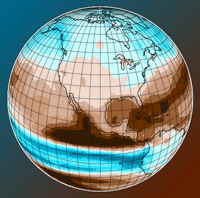
@ChrisMartzWX - Chris Martz
Oh, and as it turns out, whether the 1930s anomaly is included or not, heatwaves were more frequent and intense in the U.S. prior to 1960. In 2022, I completed an analysis of 828 long-running (i.e., ≥100-years of daily temperature data) GHCN-daily and ThreadEx stations. The 1901 to 1960 average number of days ≥95°F (35°C) was 15.4 days. The 1961 to 2020 mean was 12.6 days; that's an 18% decrease, and this trend is evident whether the 1930s are included or not. I'm working on updating this chart to include data up through 2023, but it's a work in progress. Regardless, the point stands. 🧵 6/?

@ChrisMartzWX - Chris Martz
I had class. So, I'm back... As a gotcha moment, @mkeulemans argues that the sum of natural forcings (e.g., solar and volcanic) which caused the descent into the Little Ice Age (LIA) could not explain any of the recent warming [since 1970]. How does he [and the experts] know? Physics? Nope. Models!! Indeed, climate models are incapable of reproducing observed temperature trends over the last 50-years, and as such, the models are pre-tuned, that is, fudged, to match the global mean surface temperature (GMST) record, and they do this by ignoring all natural forcings and variability (assuming their net contribution to the observed GMST change are close to zero, or even negative) and arbitrarily adjusting the impacts from anthropogenic forcings until modeled GMST change comes into agreement with the target range. Science!! Climate modelers assume that because their general circulation models (GCMs) can't produce the observed GMST change with natural forcings or internal variability, then the overall contribution from natural forcings and internal variability must sum to zero. So, they then look at potential human contributions (e.g., aerosols and greenhouse gases, GHGs). Some models suggest that aerosols warm the climate by as much as 0.1°C, while others cool it by up to 1.0°C. For GHGs, the contribution to GMST change is estimated to vary from +1.0°C to +2.2°C. Well, what is it? That's a wide range, far from “settled science.” Take for example, the Hadley Centre's climate model, Global Environment Model version 3 (HadGEM3). It is assumed that natural forcings and internal variability sum to zero, and that aerosols have caused a net 1.0°C of cooling to GMST since 1850-1900. So, to match observations, the model was tuned to show GHGs contributed to 2.0°C of warming. The result? A net change of GMST in the HadGEM3 model of +1.0°C, right on target and claimed model success. Except, these values are theoretical. They are not determined from observations (hence a large model spread), and have little basis in physics. The assumption that natural forcings have had a net zero, or even net negative impact on GMST change is incorrect, because if that were true, then the warming observed from 1900 to 1945 couldn't have occurred. There weren't enough carbon dioxide emissions at the time to cause the early 20th century warming. That is a fact, not my opinion. In essence, the models were forced to agree with the GMST record such that scientists can conclude that the models agree with the GMST observations. That is circular reasoning, not science. (The annotations I made to Figure 3.8 from IPCC AR6 WG1, Chapter 3, were similar to those made by Dr. John Christy in a talk last year, but made my own for image clarity). 🧵 7/?


@ChrisMartzWX - Chris Martz
Next up, climate models!! Maarten Keulemans (@mkeulemans) asserts that climate model projections have been in line with global mean surface temperature observations, and that Dr. John Christy's graph is “misleading.” Keulemans attaches a video animation prepared by Carbon Brief that overlays carefully selected climate model projections from a few studies with a number of GMST datasets (e.g., NASA, Hadley/UEA, NOAA and Berkley). This, of course, is a bad comparison because the models are pre-tuned to agree with the GMST observations and the forcings are adjusted to arbitrary values to fit within the target range when the models are then run. In other words, the models are forced to agree with the global surface temperature record, such that scientists then say, “Ah ha! See, the models match the observations, the models are correct.” That is circular reasoning, not science. They start with a conclusion and work backwards to find or fudge data to fit their models. Junk science at its finest! Still, if you compare the latest HadCRUT5 global mean surface temperature anomaly observations [relative to 1986-2005] to the CMIP5 models for various emission scenarios run in 2005, the majority of the 138 members (particularly RCP 4.5, RCP 6.0, and RCP 8.0) run too hot, predicting more than twice as much warming as has been measured. The multi-model mean (MMM) used to guide for global policymaking runs several tenths of a degree warmer than surface observations. So, while observations fit within the range of the model spread, HadCRUT5 observations are still on the very low-end of projections, suggesting that climate sensitivity estimates to carbon dioxide are too high. The CMIP6 models (not shown) run even hotter than CMIP5, but climate scientists seem to have no interest in addressing that. The observations must be wrong, or something, in their eyes. 🧵 8/?


@ChrisMartzWX - Chris Martz
Perhaps most grotesque of all, Maarten misaligns Dr. Roy Spencer's position by stating he thinks that global warming isn't occurring, and that any warming which has been observed is attributable to, in full, urban heat island (UHI) contamination. Dr. Roy Spencer, like most scientists on either side of the aisle, does not disagree with the overall premise of global warming theory. He in fact has stated multiple times that at least some of the warming has been the result of GHG emissions slightly enhancing the Earth's natural greenhouse effect (GHE). However, Dr. Spencer, along with other independent research conducted in @RossMcKitrick and Michaels (2004) [1]; McKitrick (2010) [2]; Fall et al. (2011), co-authored by Dr. Roger Pielke, Sr. and Anthony Watts (@wattsupwiththat); O'Neill et al. (2022) [4]; and Katata et al. (2023) [5], have all found that the most significant warming either in the U.S. or globally has occurred in urban areas, with significantly less positive temperature trends in rural settings. This is really significant in regions like the U.S. where there is a long, continuous, coherent temperature record as compared to other countries. If you mix contaminated data with good data, you end up with more contaminated data. That's not saying rural areas haven't warmed, that is indeed the case in most areas, but the trends are less positive, which in effect suggests that much of the warming could in fact be an artifact of UHI, not GHG forcing. References: [1] McKitrick and Michaels (2004) - A test of corrections for extraneous signals in gridded surface temperature data: https://www.jstor.org/stable/24868718 [2] McKitrick (2010) - A Critical Review of Global Surface Temperature Data Products: https://papers.ssrn.com/sol3/papers.cfm?abstract_id=1653928 [3] Fall et al. (2011) - Analysis of the impacts of station exposure on the U.S. Historical Climatology Network temperatures and temperature trends: https://agupubs.onlinelibrary.wiley.com/doi/full/10.1029/2010JD015146 [4] O'Neill et al. (2022) - Evaluation of the Homogenization Adjustments Applied to European Temperature Records in the Global Historical Climatology Network Dataset: https://www.mdpi.com/2073-4433/13/2/285 [5] Evidence of Urban Blending in Homogenized Temperature Records in Japan and in the United States: Implications for the Reliability of Global Land Surface Air Temperature Data - https://journals.ametsoc.org/view/journals/apme/62/8/JAMC-D-22-0122.1.xml 🧵 9/?


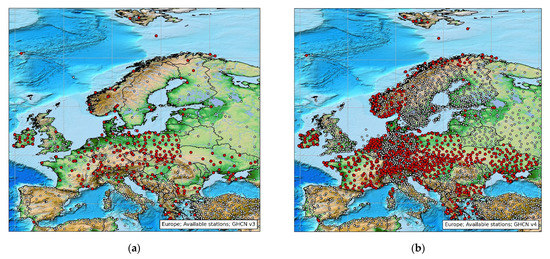

@ChrisMartzWX - Chris Martz
Oh, but this clown show gets better. 🤡 Supposedly, ocean surface warming proves that there is no warming in the instrumental global land surface temperature record due to the urban heat island (UHI) effect. Well, there you have it, folks. The science is settled because a Dutch science journalist says so. While it is true that land surfaces [and the adjacent layer of overlying air] heat up at a faster rate than the ocean surface because water has a very high specific heat capacity (i.e., the amount of heat, in Joules, required to raise 1 gram of a substance by 1°C), what Maarten fails to mention is that virtually all general circulation models (GCMs) project that warming reaches a local maximum in the tropical troposphere at altitudes of 200 to 300 hPa (image 2), and that this occurs rapidly in response to GHG forcing (McKitrick and Christy, 2018 [1], 2020 [2]). The problem? Well, this hasn't happened (see image 3)!! In fact, from global latitudinal cross-sections taken from all GCMs, the troposphere in general should warm faster than the surface under pure GHG forcing. This, of course, is not the case in actual observations (image 4). NASA GISSTEMP departure from average from 1979-onwards is plotted against the UAH V6.0 global lower tropospheric temperature anomaly, the surface temperatures are warming at a faster rate. That is not predicted by climate models. In spite of specific heat capacity differences, GMST and global mean ocean temperature are more or less in unison throughout much of the late-19th and 20th centuries. Sea surface temperatures don't vary as much, but that's expected given the thermodynamic properties of water. However, the divergence between the two datasets begins around 1975 to 1980, a time when urban sprawl really began to take off in regions surrounding major cities (e.g., when my parents were growing up in the 70s/80s, much of the D.C. metro was farmland or forest; none of the modern high-rises in Fairfax and Falls Church, for instance, were there). The ocean record more closely resembles both the satellite and reanalysis datasets (e.g., JRA-55, ERA5 and CFSv2), the land surface dataset is an outlier, and that can be linearly traced to urban heat island (UHI) effects, which has been documented in a number of studies that I linked in the previous Tweet. References: [1] McKitrick and Christy, 2018 - A Test of the Tropical 200- to 300-hPa Warming Rate in Climate Models: https://agupubs.onlinelibrary.wiley.com/doi/full/10.1029/2018ea000401 [2] McKitrick and Christy, 2020 - Pervasive Warming Bias in CMIP6 Tropospheric Layers: https://agupubs.onlinelibrary.wiley.com/doi/10.1029/2020EA001281 🧵 10/?


@ChrisMartzWX - Chris Martz
Next, science journalist @mkeulemans suggests that the decline in global mean surface temperature (GMST) from 1945 to 1975 was caused by “massive air pollution.” Specifically, he's referring to the notable increase in sulfur dioxide emissions during the 1940s and 1950s. Sulfur dioxide molecules oxidize high in the atmosphere, forming sulfate aerosols that are highly effective at blocking out incoming solar shortwave radiation. Over time, this causes an energy imbalance that results in the Earth cooling; that is, longwave radiation out > shortwave radiation in = warming. By the 1970s, there were strict regulations on emissions of sulfur dioxide, and as a result, they began to fall. I'll admit that I have become more open to this theory, but the issue with Maarten's framing is that almost all of the observed global warming prior to 1945 had to be natural. Carbon dioxide emissions hadn't taken off by then, so their overall impact on the atmospheric radiation balance was negligible until after the 1950s, and that signal doesn't really emerge until after 1975. This early-20th century warming was part of a much longer-term recovery from the Little Ice Age (LIA), and if it weren't for sulfur dioxide emissions, one could in fact postulate that warming would have continued. Since the 1970s, and reduction of sulfate aerosols in the atmosphere, it's likely the recovery warming from the Little Ice Age has continued, which is probably being slightly enhanced by GHG emissions, although the extent to which clearly isn't known by the IPCC et al. They estimate GHG forcing on GMST change to be anywhere from +1.0°C to +2.2°C. That's far from settled science, and this wide range results from the climate modelers pre-tuning their models to the GMST record, not actual physics or measurements, as I had already stated. And, of course, there is the Great Pacific Climate Shift of 1976-77 which coincided with the reduction in sulfate aerosols, so how much has that had an effect? What about the Atlantic Multidecadal Oscillation (AMO)? The IPCC just assumes that these natural or internal variability mechanisms sum to net zero effect on GMST change. Why? Their general circulation models (GCMs) suck at simulating natural variability because it is poorly understood. 🧵 11/?


@ChrisMartzWX - Chris Martz
If you thought it wasn't bad already, the wheels really fall off the wagon when we get to the extreme weather portion of his “debunking.” This guy really has no clue what he's talking about. This is really, really bad. Right off the bat, Maarten confuses U.S. wildland fire burn acreage (shown in “Climate the Movie”) with fire count, then decides that all of the pre-1960 data is inconvenient, and it should be ignored because of the “Dust Bowl” or something. Apparently, the only thing that matters are trends over the last 50-years. If that isn't cherry-picking, I don't know what is. 🍒 Now, as a disclaimer, fire burn acreage has decreased since 1926 because we have far more advanced fire-fighting capabilities. However, the recent increase over the last 50-years is a sign of a much more urgent issue than longer fire seasons; poor forest management. The 100% fire suppression policies adopted in the early-1900s on federal lands has allowed western forests to become an overgrown tinderbox come the dry season. Drop a cigarette carelessly, an arsonist lights a match or a tree gets struck by lightning, disaster is on the horizon. This critical tidbit was neither mentioned in the movie, nor addressed by the journalist. So, I did. 🧵 12/?

@ChrisMartzWX - Chris Martz
I'm afraid the junk science gets worse, however... While Maarten correctly points out that there has been no increase in global hurricane-strength tropical cyclone (TC) frequency since 1980, he says that the movie fails to mention that there have been “faster increases in hurricane STRENGTH.” This is also, well, a lie. In the Supporting Information section of Klotzbach et al. (2022) published in Geophysical Research Letters (GRL), there is a plot of the global number of ≥30 knot TC rapid intensification (RI) and rapid weakening (RW) events between 1990 and 2021. The results show no significant uptrend in events meeting RI criteria. https://agupubs.onlinelibrary.wiley.com/doi/full/10.1029/2021GL095774 🧵 13/?


@ChrisMartzWX - Chris Martz
Science journalist @mkeulemans wrote a 59-post thread post attempting to debunk @ClimateTheMovie, but over the last 24-hours, I did a deep dive into the data myself to debunk the debunker’s key points in this 14-post thread, and I provide some important context that couldn’t be fit into an 80-minute documentary. All in all, I found the message to be on point and rooted in scientific fact, quoting some of the top experts in the field. The movie is insanely popular, and that is why there is so much pushback and pressure to get it censored. Once again, @Martin_Durkin and my friend @TomANelson did a fantastic job. For those interested, scroll up through the thread. References were cited for my points for further reading. ⬆️ 🧵 14/14 END
@mkeulemans - Maarten Keulemans
I’m a Dutch science journalist, and I watched @climatethemovie. It’s full of crap. 😂 Here’s my step-by-step walkthrough, translated by popular request! 👍 Enjoy the ride! 🧵 https://t.co/hpOG9x0QR2
