reSee.it - Tweets Saved By @EO_Nutrition

Saved - December 28, 2024 at 3:58 AM
reSee.it AI Summary
I shared a video discussing how the U.S. military and DARPA have developed synthetic viruses, nanotechnology, and nano-robots aimed at controlling human thoughts, emotions, beliefs, and behavior, a concept referred to as "Cognitive Warfare." This information comes from a lecture by Dr. James Giordano, a neuroscience expert involved with military and intelligence, titled "The Brain is the Battlefield." I encourage you to watch the full one-hour lecture for more insights.

@EO_Nutrition - Elliot Overton

WATCH: U.S Military/DARPA developed synthetic viruses, nanotechology and nano-robots for the purpose of controlling human thoughts, emotions, beliefs and behavior This is "Cognitive Warfare" and its being used against you by intelligence agencies They want control of your brain https://t.co/YLJa6kS8kC

Video Transcript AI Summary
Directed energy can influence physiology and brain health, potentially weaponized to alter thoughts and behaviors. Advances in nanotechnology allow for the creation of tiny robotic units that can penetrate biological barriers, affecting the vascular system and brain directly. This could lead to changes in individuals' emotions and actions, or even induce dysfunction. Understanding brain mechanisms enables the development of drugs for performance enhancement or to inflict harm on adversaries. Techniques like brain-machine interfaces and engineered pathogens can disrupt individuals psychologically and physically. The potential for using aerosolized nanomaterials raises concerns about undetectable interventions in various settings. While these technologies could improve non-lethal engagements, ethical considerations about their use remain critical.
Full Transcript
Speaker 0: Is the possibility to use some form of directed energy to affect physiology peripherally and also to affect the physiology and health of the brain. I can create small robotic units, controllable robotic units at the nano scale and that these too can be aerosolized to create a nano swarm of biopenetrable materials that you cannot see that are able to integrate themselves through a variety of membranes, mucus membranes, and wherever, mouth, nose, ears, eyes, can be then uptaken into the vascular system to create clumping, can affect the vascular system of the brain or can directly diffuse into the brain space, and these can be weaponized. Agents that will either change individuals' thoughts, vulnerabilities, volatility to violence and aggression, or incur morbidity, dysfunction, and or mortality in such a way as to then mitigate the engagement altogether. The brain is and will be the 21st century battlescape in many ways. End of story. It's not just a question of trying to figure out what makes the brain tick in the way it's built. It's can we get in there to affect the ticking and talking, and by affecting the way that brain is built and the way it functions, influence in ways that are kinetic and non kinetic the attitudes, beliefs, thoughts, emotions, activities, and relative vulnerabilities and predispositions. The more I know about you and the more I know about the way your brain works as individuals, groups, communities, even populations, the more I can utilize non kinetic means such as informational means of narratives, iconographies, semiotics, to influence your emotions and your behaviors. We can do this subliminally through computer images. We can do this more liminally through the types of engagements, interactions that we engage through psychological operations and informational operations. We can go further than that as well. We can also utilize these interventional technologies in those ways that may able to directly affect the brain. Probably the one that you've heard about most recently, most contemporously in the literature, is the possibility to use some form of directed energy to affect physiology peripherally and also to affect the physiology and health of the brain. And there are a number of countries that have developed initiatives and agenda towards developing just these types of things, the United States included. The more we understand the specificity of the brain on a very granular level, the more we're able to derive and develop particular types of drugs that not only can enhance and optimize the performance of our people, but can also be used to mitigate, militate, and in some cases, manifest profound morbid changes in their people. In other words, against the hostile other. We can go further to implant certain brain machine interfaces. These are many of the DARPA programs that you may hear of now. The idea here is to put minimal sized electrodes in a network within a brain through only minimal intervention to be able to read and write into the brain function in real time, remotely. The United States is not alone in such effort. So how then can we use these elements as weapons? And we can do that in a number of ways. We can militate their behaviors and their thoughts in some ways just to make them more amenable to what we do, the idea of positive weaponology. Or we can, in fact, mitigate, and in some cases, completely nullify their capability, will, or engagement to fight. If we combine those two definitions into 1, what you'll find is those agents that will either change individuals' thoughts, vulnerabilities, volatility to violence and aggression, or incur morbidity, dysfunction, and or mortality in such a way as to then mitigate the engagement altogether. So, in other words, this can also be weaponized against others. And this is where we get into the idea of novel neuro weapons. Once again, this is not necessarily new, but the momentum of this dimension of the field has accelerated as a consequence of increased understanding of the brain and increased capability to develop tools and techniques to access and affect the brain. We see in close neuro pharmaceuticals and organic toxins. More specifically, perhaps, might be targeting individuals on a level that allows either direct attribution or covert engagement with non attribution. I could also incur much broader type of ripple effects. And one of the ways I could also do that is with what's called high morbidity neuromicrobiologic agents. It's a real fancy way of saying neurobugs. But high morbidity neurobugs. I may not want to kill a lot of people. In fact, arguably, I may assume what is sometimes referred to as the Sailor Malin mantra. I can use a particular bug that I may be able to now modify through the use of gene editing technique that is ubiquitously available and fairly easy to use to take a bug that was previously relatively benign and nonpathogenic and make that bug virulent, pathogenic, dangerous. And then what could I do? I could introduce that bug in key sites, but I'd want to make sure that at least part of the symptomatic constellation was not only neurological, it was profoundly psychological. Agitation, debilitation, sweating, stomach problems, sleeplessness, cardiac problems, things that are very top down neurological in their effect, brain to body and body to brain in the bottom up cascade. I can disrupt an individual from the level of their cell to their system and disrupt individuals on a variety of levels from individuals all the way up to the social fabric. And that social fabric may go even further. It may be geopolitical. We can even go further. One of the newest developments is that nanoparticulate matter can be stabilized for distribution. If you're not aware of what nanoparticulate matter is, it's that matter which exists on a scale of 1 times 10 to the minus 9th. Very, very small. Smaller than a cell. And we can manufacture materials that have discrete properties that can be controlled by virtue of bioengineering in their physical chemistry. To auto aggregate, to be able to aggregate in particular areas based upon their biological and or chemical sensitivity. But now we go one step further. Most recently, just a few weeks ago, it was announced that you could then aerosolize nanomaterials. And go one step further, I can create small robotic units, controllable robotic units at the nano scale and that these 2 can be aerosolized to create a nano swarm of biopenetrable materials that you cannot see, that can penetrate all but the most robust biochemical filters, that are able to integrate themselves through a variety of membranes, mucus membranes, and wherever mouth, nose, ears, eyes can be then uptaken into the vascular system to create clumping, can affect the vascular system of the brain or can directly diffuse into the brain space, and these can be weaponized. And they can be done in such a level that their presence is almost impossible to detect. And as such, the attribution becomes exceedingly difficult to demonstrate. But let's keep going. Could I also utilize a whole host of devices to be able to affect individuals close in? For example, during interrogations, during social engagements, during human terrain team engagements, or more remotely, in a room, in a theater, in an airplane, in a bus, in a store, in a mall? The answer is increasingly yes. The idea here is, can we utilize neuroscience and technology? And if the answer is yes, we can, should we? And if the answer there is we already are and there are some domains and dimensions by which use should be advocated for example, non lethality, least harm, doing less harm than other forms of interventions and engagements that are currently in use, being able to mitigate individuals' capacity or willingness to engage in volatility In other words, improving the capacity for individuals to gain capability to get along? Well, perhaps there's some value there.

@EO_Nutrition - Elliot Overton

These clips are taken from a lecture given to millitary personel by Dr James Giordano, titled "The Brain is the Battlefield". He is a neuroscience specialist involved in millitary/intelligence. Watch the full one hour version below: https://www.youtube.com/watch?v=N02SK9yd60s

Saved - November 21, 2024 at 2:13 PM
reSee.it AI Summary
I've been exploring ways to address dysautonomia following COVID and mRNA vaccinations, focusing on the cholinergic system. Many individuals still struggle with symptoms due to cholinergic deficits, which can lead to cognitive issues and inflammation. My approach includes three therapeutic agents: nicotine, which mimics acetylcholine; thiamine, essential for acetylcholine production; and plasmalogens, which help mitigate neuroinflammation. I've seen success in a large support group, with many reversing their symptoms using these protocols.

@EO_Nutrition - Elliot Overton

My approach to fixing dysautonomia post-COVID/ mRNA shots🧵 Targeting the CHOLINERGIC system with 3 therapeutic agents Autonomic nervous system dysfunction is extremely common in this cohort - especially after mRNA. 4 years on - A lot of people are still sick, and dysautonomia can can account for many (if not all) of the symptoms

@EO_Nutrition - Elliot Overton

Spike protein binds nicotinic acetylcholine receptors and triggers degeneration of cholinergic neurons Spike also impairs the production of acetylcholine in said neurons. Without acetycholine, the nervous system begins to malfunction

@EO_Nutrition - Elliot Overton

This cholinergic deficit is thought to play major roles in the cognitive impairment, memory loss, and widespread symptoms

@EO_Nutrition - Elliot Overton

One of the body's main tools for calming inflammation is via the vagus nerve... Which also requires acetylcholine. This is called the "cholinergic anti-inflammatory pathway", and when it falters, the body is faced with unrelenting systemic inflammation

@EO_Nutrition - Elliot Overton

Studies have shown substantial overlap in the pathophysiological mechanisms of COVID-19/vaccine injury and... Alzheimer's Disease & Parkinsons Both of which involve impairment of the cholinergic system Take home: spike protein leads to neurodegeneration

@EO_Nutrition - Elliot Overton

Therapeutic agent #1: NICOTINE Most probably know of it's use in long COVID. It's old news. Fortunately, due to high affinity with nicotinic ACh receptors, exogenous nicotine can displace spike protein Nicotine essentially "mimics" acetylcholine. In doing so, it restores cholinergic output

@EO_Nutrition - Elliot Overton

Just so you know, this is a brief summary of a lecture I am giving in Florida at a conference on December 13-15th If your in the area, you can check it out here: https://www.qntacademy.com/quantum-leap-1

Quantum Leap into Health Conference 2024 Quantum Leap in Health 2024 December 13th-15th in Orlando, Florida qntacademy.com

@EO_Nutrition - Elliot Overton

It is no coincidence that smoking is considered substantially protective against parkinson's disease. Nicotine also has great utility in Alzheimer's disease https://t.co/iMQsEylp2U

@EO_Nutrition - Elliot Overton

The second therapeutic agent approaches the problem from a different angle: Stimulating production of acetylcholine within the neuron itself. Enter... Thiamine (Vitamin B1) In many respects, thiamine is THE most important nutrient for the cholinergic system https://t.co/D2z6Ie1gc2

@EO_Nutrition - Elliot Overton

Thiamine availability tracks closely with acetycholine production in neurons Thiamine is needed to make the raw material But aside from its metabolic role, thiamine is also involved in the release and utilization of ACh by neurons https://t.co/RcTH3j70Sf

@EO_Nutrition - Elliot Overton

High dose thiamine has put some patients with Parkinson's Disease into clinical remission, and is currently being trialled in Alzheimer's disease https://t.co/u98SplvFKw

@EO_Nutrition - Elliot Overton

I run a group on FB with over 11,000 members. Many of them reversed long-COVID/post vaccine dysautonomia after my protocols which employ thiamine derivatives in high doses Thiamine is my number 1 go-to therapy for ANY dysautonomia https://t.co/Fwj04YF47I

@EO_Nutrition - Elliot Overton

The third intervention approaches the problem from yet another angle: Cleaning up the mess caused by chronic neuroinflammation Therapeutic agent #3 : Plasmalogens https://t.co/47KuFpW3PR

@EO_Nutrition - Elliot Overton

In simple terms, plasmalogens are a specific type of lipid found in high concentrations in cell membrane They can be depleted during states of inflammation. They are being studied Alzheimer's disease and cognitive impairment https://t.co/tUGTkfAUMa

@EO_Nutrition - Elliot Overton

One theory states that under conditions of cholinergic impairment, cells may "autocanabilize" their own choline-plasmalogens to replenish choline https://t.co/d85KNlBhN1

@EO_Nutrition - Elliot Overton

One thing is for sure... Working via several different mechanisms, they can work wonders in any condition characterized by neuroinflammation. https://t.co/XjiylyOOJ5

@EO_Nutrition - Elliot Overton

In conclusion, this was a summary of my presentation on 3 therapeutic agents which can help to restore nervous system function in people suffering from post-COVID/vaccine dysautonomia Rough dosage: Thiamine (depending on the form used): HCL form - 500-2000mg TTFD - 200-500mg Benfotiamine - 1,200-2000mg Nicotine: It varies, but anywhere from 5mg-21mg patches, daily Plasmalogens: Also varies on the form. Most people I know use marine-derived plasmalogens as low as 1-2mg per day. Other companies advocate for plasmalogen precursors, but have no experience with this so can't comment.

Saved - April 2, 2024 at 7:09 AM
reSee.it AI Summary
Nicotine is a powerful substance that offers various benefits. It improves focus, cognition, memory recall, and learning. It can also protect against health conditions like Parkinson's, dementia, and depression. Nicotine mimics acetylcholine in the brain, enhancing cholinergic neurotransmission and benefiting memory and learning. It affects other neurotransmitter systems like dopamine, serotonin, glutamate, and GABA. Nicotine has anti-inflammatory properties and can suppress an overactive immune system. It protects against neurodegenerative diseases like Parkinson's and Alzheimer's. It also exerts neuroprotective effects, reduces glutamate excitotoxicity, and promotes neurogenesis. Nicotine increases metabolism and has a positive impact on thyroid function. Smokers have lower risks of hypothyroidism and autoimmune thyroid disease. Nicotine may help with dysautonomia caused by COVID-19. It is anti-estrogenic and inhibits aromatase.

@EO_Nutrition - Elliot Overton

The Ultimate Thread on Nicotine 💪 A pro-metabolic, anti-inflammatory, performance-enhancing, dopaminergic, neuroprotective POWERHOUSE Learn how this unique substance supercharges the brain: - Improve focus, cognition & memory recall - Maximize learning & productivity #Therapueticnicotine

@EO_Nutrition - Elliot Overton

You'll also learn how nicotine can be protective against a variety of health conditions including: - Parkinson's disease - Dementia - Inflammatory bowel diseases - Depression - Schizophrenia - COVID/mortality due to other viral infection #Therapeuticnicotine

@EO_Nutrition - Elliot Overton

Nicotine is an alkaloid derived from tobacco After entry into the blood, it is broken down into several different metabolites... The primary bioactive metabolite is called cotinine, although others are currently being studied

@EO_Nutrition - Elliot Overton

Acetylcholine: In the brain, nicotine essentially "mimics" the neurotransmitter acetylcholine (ACh) It does this through binding with 7-a-nicotinic acetylcholine receptors Nicotine also upregulates these receptors Recent evidence suggest nicotine may also inhibit acetylcholinesterase, the enzyme responsible for breaking down ACh, in the brain. The result is increased cholinergic neurotransmission in the nervous system, which is thought to be one of the ways by which nicotine enhances memory and learning.

@EO_Nutrition - Elliot Overton

This has downstream effects on numerous other neurotransmitter systems including: - Dopamine - Serotonin - Glutamate - GABA

@EO_Nutrition - Elliot Overton

Acetylcholine & cognitive impairment/Alzheimer's: Abundant evidence suggests a cholinergic deficit in the CNS is one of the drivers of MCI/Alzheimer's (AD) One study found subcutaneous nicotine to improve: "primary and secondary cognitive measures of attention, memory, and mental processing" Another study found inverse association between AD and smoking: "A statistically significant inverse association between smoking and Alzheimer's disease was observed at all levels of analysis, with a trend towards decreasing risk with increasing consumption"

@EO_Nutrition - Elliot Overton

Cognitive benefits: "1. Nicotine improves attention in a wide variety of tasks in healthy volunteers. 2. Nicotine improves immediate and longer term memory in healthy volunteers. 3. Nicotine improves attention in patients with probable Alzheimer's Disease. 4. While some of the memory effects of nicotine may be due to enhanced attention, others seem to be the result of improved consolidation as shown by post-trial dosing." https://www.sciencedirect.com/science/article/abs/pii/027858469290069Q

Nicotine as a cognitive enhancer 1.1. Nicotine improves attention in a wide variety of tasks in healthy volunteers.2.2. Nicotine improves immediate and longer term memory in healthy v… sciencedirect.com

@EO_Nutrition - Elliot Overton

Nicotine: An Anti-inflammatory Molecule The nicotine : acetylcholine interaction extends beyond cognitive benefits Acetycholine is one of the primary tools used by the body to suppress inflammation and immune-hyperactivation In this way, it can “switch off” an overactive immune system It does this through a network of neuronal connections known as the "cholinergic anti-inflammatory pathway", which operates through the vagus nerve Stimulating this pathway via different means has yielded promising results in a variety of chronic inflammatory diseases "Nicotine stimulation plays a key role in suppressing inflammatory cytokine production - Can significantly down-regulate and delay inflammatory and autoimmune responses in the central nervous system - Could further attenuate neuro-inflammation"

@EO_Nutrition - Elliot Overton

Anti-inflammatory effects pt.2 The following paper discusses anti-inflammatory and pro-inflammatory effects of nicotine at length. Read it and you will see the "anti" far outweighs the "pro" "Of all the diseases summarized here concerning systemic inflammation, especially in sepsis and endotoxemia, nicotine exerted the most pharmaceutical effect and significantly improved the survival. Next, nicotine is also a potential candidate for treating ulcerative colitis, rheumatoid arthritis, osteoarthritis, multiple sclerosis, and myocarditis;" https://www.ncbi.nlm.nih.gov/pmc/articles/PMC8895249/

Nicotine in Inflammatory Diseases: Anti-Inflammatory and Pro-Inflammatory Effects As an anti-inflammatory alkaloid, nicotine plays dual roles in treating diseases. Here we reviewed the anti-inflammatory and pro-inflammatory effects of nicotine on inflammatory diseases, including inflammatory bowel disease, arthritis, multiple sclerosis, ... ncbi.nlm.nih.gov

@EO_Nutrition - Elliot Overton

Protection against endotoxin: "In this model of abbreviated inflammation, nicotine exposure attenuates the febrile response to LPS and promotes a more prominent anti-inflammatory phenotype."

@EO_Nutrition - Elliot Overton

Dopamine: Nicotine stimulates the release of dopamine in the midbrain and prefrontal cortex Protects dopaminergic neurons from degeneration. https://www.ncbi.nlm.nih.gov/pmc/articles/PMC6018192/

Cognitive Effects of Nicotine: Recent Progress Cigarette smoking is the main cause of preventable death in developed countries. While the direct positive behavioral reinforcing effect of nicotine has historically been considered the primary mechanism driving the development of TUD, accumulating contemporary ... ncbi.nlm.nih.gov

@EO_Nutrition - Elliot Overton

This protection extends to Parkinson’s disease. Smokers are vastly less likely to develop Parkinson’s. Even exposure to secondhand smoke drastically reduces the chances. “The link between smoking and a lower risk of Parkinson's disease (PD) is one of the strongest environmental or lifestyle associations in neuroepidemiology. Growing evidence supports the hypothesis that the association is based on a neuroprotective effect of smoking on PD” https://movementdisorders.onlinelibrary.wiley.com/doi/full/10.1002/mds.29707

@EO_Nutrition - Elliot Overton

Neuroprotection / anti-excitotoxic: Nicotine exerts neuroprotective effects through reducing glutamate excitotoxicity in several regions of the brain, including the hippocampus. This may help to explain positive neuropsychiatric benefits in conditions such as schizophrenia, bipolar disorder, ADHD and anxiety https://www.ncbi.nlm.nih.gov/pmc/articles/PMC7717967/

Nicotine Prevents Oxidative Stress-Induced Hippocampal Neuronal Injury Through α7-nAChR/Erk1/2 Signaling Pathway Oxidative stress-induced neuronal damage has been implicated to play a dominant role in neurodegenerative disorders, such as Alzheimer’s disease (AD). Nicotine, a principal additive compound for tobacco users, is thought as a candidate to attenuate ... ncbi.nlm.nih.gov

@EO_Nutrition - Elliot Overton

Neurogenesis, NAD+ and Anti-Aging: “F-FDG PET imaging revealed that nicotine is also capable of efficiently inhibiting glucose hypermetabolism in aging male mice. Additionally, nicotine ameliorated cellular energy metabolism disorders and deferred age-related deterioration and cognitive decline by stimulating neurogenesis, inhibiting neuroinflammation, and protecting organs from oxidative stress and telomere shortening. Collectively, these findings provide evidence for a mechanism by which low-dose nicotine can activate NAD+ salvage pathways and improve age-related symptoms.” https://www.nature.com/articles/s41467-023-36543-8

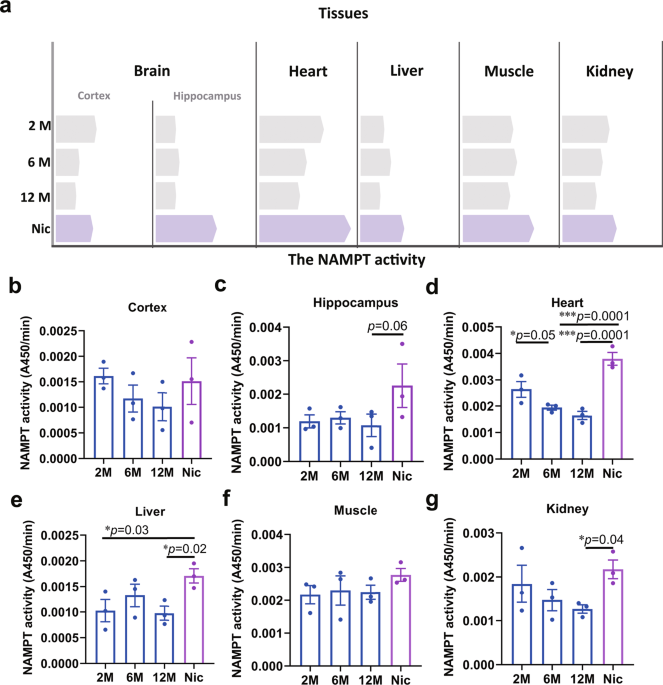
Nicotine rebalances NAD+ homeostasis and improves aging-related symptoms in male mice by enhancing NAMPT activity - Nature Communications Imbalances in NAD+ homeostasis have been linked to aging and various diseases. Nicotine, a metabolite of the NAD+ metabolic pathway, has been found to possess anti-inflammatory and neuroprotective properties, yet the underlying molecular mechanisms remained unknown. Here we find that, independent of nicotinic acetylcholine receptors, low-dose nicotine can restore the age-related decline of NAMPT activity through SIRT1 binding and subsequent deacetylation of NAMPT, thus increasing NAD+ synthesis. 18F-FDG PET imaging revealed that nicotine is also capable of efficiently inhibiting glucose hypermetabolism in aging male mice. Additionally, nicotine ameliorated cellular energy metabolism disorders and deferred age-related deterioration and cognitive decline by stimulating neurogenesis, inhibiting neuroinflammation, and protecting organs from oxidative stress and telomere shortening. Collectively, these findings provide evidence for a mechanism by which low-dose nicotine can activate NAD+ salvage pathways and improve age-related symptoms. Nicotine, a metabolite of the NAD+ metabolic pathway, has been found to possess anti-inflammatory and neuroprotective properties, yet the underlying molecular mechanisms remained unknown. Here, the authors show that low-dose nicotine promotes SIRT1 deacetylation of NAMPT and enhanced NAMPT activity which boosts NAD generation and improves age related symptoms. nature.com

@EO_Nutrition - Elliot Overton

Metabolism/Thyroid: Nicotine is well known to increase resting metabolic rate. Nicotine was shown to activate thyroid hormone receptor-B in the brain, and might “substitute” for thyroid hormone to some extent. Nicotine stimulates the conversion of T4 to active thyroid hormone, T3, through increasing activity of deiodinase 2. “nicotine reversed/ameliorated hypothyroidism-induced deficits in learning and memory at the molecular, cellular, and behavioral level.” When smokers quit, the deficits in learning/cognition/memory could be alleviated by thyroid hormone supplementation. https://www.ncbi.nlm.nih.gov/pmc/articles/PMC4624048/

Thyroid hormone signaling: Contribution to neural function, cognition, and relationship to nicotine Cigarette smoking is common despite its adverse effects on health, such as cardiovascular disease and stroke. Understanding the mechanisms that contribute to the addictive properties of nicotine makes it possible to target them to prevent the initiation ... ncbi.nlm.nih.gov

@EO_Nutrition - Elliot Overton

Smoking and the thyroid: Smokers on average have higher T3 levels, lower TSH and lower markers of thyroid autoimmunity. Smokers have a significantly lower risk of developing hypothyroidism and autoimmune thyroid disease. This protection disappears 3 years after quitting smoking. https://www.ncbi.nlm.nih.gov/pmc/articles/PMC4624048/ https://onlinelibrary.wiley.com/doi/pdf/10.1111/cen.12222

Thyroid hormone signaling: Contribution to neural function, cognition, and relationship to nicotine Cigarette smoking is common despite its adverse effects on health, such as cardiovascular disease and stroke. Understanding the mechanisms that contribute to the addictive properties of nicotine makes it possible to target them to prevent the initiation ... ncbi.nlm.nih.gov

@EO_Nutrition - Elliot Overton

COVID & dysautonomia: The fix for long-COVID (or vaccine-induced) Dysautonomia? For many, its NICOTINE Why? Top-down control of the autonomic nervous system depends on cholinergic neurotransmission, involving the neurotransmitter acetylcholine. Researchers found evidence of an interaction between SARS-CoV-2 spike protein & nicotinic-acetylcholine receptors (nAChRs), and hypothesize that this may impair the cholinergic system. When the body loses control of acetylcholine, it loses control of the autonomic nervous system = dysautonomia. Nicotine binds with nAChRs and potentiates the action of acetylcholine. Nicotine UPREGULATES nAChRs. It is hypotethized that nicotine may "counteract the viral blockade of nAChRs" and restore cholinergic activity. It was known in the early days that smokers had much higher protection against infection, and it was thought this was related to the ACE2 receptor. However, many are using it post-covid and even post-vaccination to re-establish autonomic balance. A lot of people already know HIGH DOSE THIAMINE can be effective for long-covid/post-covid vaccine effects. What many don't know is that thiamine is necessary for the release and action of acetylcholine at every step!! The combination of thiamine + nicotine could be a game changer. Nicotine can be used in gum, patches, or of course... combusted. Vaporization would be my personal choice of entry

@EO_Nutrition - Elliot Overton

The fix for long-COVID (or vaccine-induced) Dysautonomia? For many, its NICOTINE Why? Top-down control of the autonomic nervous system depends on cholinergic neurotransmission, involving the neurotransmitter acetylcholine. Researchers found evidence of an interaction between…

@EO_Nutrition - Elliot Overton

Nicotine = Anti-estrogenic Low dose of nicotine inhibits aromatase, the enzyme which catalyses the conversion of androgen hormones into estrogen This has been shown to occur in numerous regions of the brain In animals: "In laboratory studies on female rats, we confirmed the aforementioned epidemiological findings that chronic nicotine exposure reduced endogenous 17β-estradiol (E2; a potent estrogen) levels" https://www.sciencedirect.com/science/article/pii/S0010440X23000184#f0005

Acute nicotine exposure blocks aromatase in the limbic brain of healthy women: A [11C]cetrozole PET study Of interest to women's mental health, a wealth of studies suggests sex differences in nicotine addiction and treatment response, but their psychoneuro… sciencedirect.com
View Full Interactive Feed