TruthArchive.ai - Tweets Saved By @HighWireTalk

Saved - December 24, 2025 at 11:20 AM
reSee.it AI Summary
A discussion notes that the CDC retracted the unqualified claim that vaccines do not cause autism, stating no evidence proves the claim and that studies have been ignored. ICAN pressed the issue via a 2020 lawsuit. The other participant argues that no studies exist showing vaccines in the first six months do not cause autism, citing IOM and VAERS critiques, and highlights ongoing calls for relevant research. Links to sources are shared.

@HighWireTalk - The HighWire

🚨 BOMBSHELL: CDC NOW ADMITS SCIENCE LACKING BEHIND CLAIM 'VACCINES DO NOT CAUSE AUTISM' This is the culmination of more than 6 years of work for @icandecide, which sued the CDC in 2020 to remove the unscientific claim from its website. This represents vindication for the 40-70% of Autism Parents in America who have been marginalized because of that unsupported claim. Now the website admits: "The claim 'vaccines do not cause autism' is not an evidence-based claim because studies have not ruled out the possibility that infant vaccines cause autism." "Studies supporting a link have been ignored by health authorities." "Scientific studies have not ruled out the possibility that infant vaccines contribute to the development of autism. However, this statement has historically been disseminated by the CDC and other federal health agencies within HHS to prevent vaccine hesitancy." "Multiple reports from HHS and the National Academy of Sciences ... have consistently concluded that there are still no studies that support the specific claim that the infant vaccines, DTaP, HepB, Hib, IPV, and PCV, do not cause autism and hence the CDC was in violation of the Data Quality Act when it claimed, 'vaccines do not cause autism.' CDC is now correcting the statement, and HHS is providing appropriate funding and support for studies related to infant vaccines and autism." "Of note, the 2014 Agency for Health Research and Quality review also addressed the HepB vaccine and autism. One cross-sectional study met criteria for reliability; it found a threefold risk of parental report of autism among newborns receiving a HepB vaccine in the first month of life compared to those who did not receive this vaccine or did so after the first month." "In fact, there are still no studies that support the claim that any of the 20 doses of the seven infant vaccines recommended for American children before the first year of life do not cause autism. These vaccines include DTaP, HepB, Hib, IPV, PCV, rotavirus, and influenza." As for the MMR vaccine, CDC's website now says: "In 2012, the IOM reviewed the published MMR-autism studies and found that all but four of them had 'serious methodological limitations,' and the IOM gave them no weight. The remaining four studies and a few similar studies published since also have all been criticized for serious methodological flaws. Furthermore, they are all retrospective epidemiological studies which cannot prove causation, fail to account for potential vulnerable subgroups, and fail to account for mechanistic and other evidence linking vaccines with autism." Link to CDC web page: https://bit.ly/4pmxeZz

Bitly | Page Not Found | 404 bit.ly

@HighWireTalk - The HighWire

Most parents with autistic children claim vaccines - including DTaP, Hep B, Hib, PCV13, and IPV, each injected 3 times by 6 months of age - are a cause of their child’s autism.* Yet the studies to support that these vaccines do not cause autism have not been conducted. In 1986, Congress passed the National Childhood Vaccine Injury Act in which it ordered federal health authorities (HHS) to study whether pertussis vaccine can cause autism due to parental complaints regarding same. https://sirillp.com/wp-content/uploads/2024/12/1986-Act.pdf In 1991, the Institute of Medicine (IOM) issued its report on this question and could not find a single study on the question of whether pertussis vaccine causes autism. Meaning, the science had not been done. https://nap.nationalacademies.org/read/1815/chapter/2 In 2012, the IOM was again commissioned to study whether pertussis vaccine can cause autism, this time by CDC, and also the question of whether tetanus and diphtheria vaccines can cause autism (DTaP), and again the IOM could not find a single study to support the claim that these vaccines do not cause autism. Not one. But it did find one study supporting that DTaP vaccine is correlated with autism but threw it out since it was based on VAERS data. https://nap.nationalacademies.org/read/13164/chapter/12#545 In 2018, I deposed the world's leading vaccinologist about the 2012 finding by the IOM and while admitting there are no studies to support that these vaccines do not cause autism, he said he would nonetheless tell parents these vaccines do not cause autism even though he has no evidence to support that claim. https://thehighwire.com/ark-videos/do-vaccines-cause-autism-2/ In 2019, ICAN sued CDC for the studies it claims support that the vaccines given in the first six months of life do not cause autism. CDC finally identified 20 studies: 18 of those studied a different vaccine (MMR) or an ingredient not in these vaccines (thimerosal), and one irrelevant study looked at antigens. Incredibly, the final study CDC identified was the 2012 IOM review that found no studies supporting that DTaP doesn’t cause autism. https://icandecide.org/wp-content/uploads/2020/03/Stipulation-and-Order-Fully-Executed.pdf In 2020, in a lawsuit specifically about vaccines and autism, ICAN lead attorney @AaronSiriSG deposed one the world's leading vaccinologists on this topic and she admitted under oath that there were no studies to support that vaccines given in the first six months of life do not cause autism. https://thehighwire.com/ark-videos/proof-vaccines-dont-cause-autism/ This is why actually studying whether vaccines cause autism is important: https://rumble.com/v3loxq5-parents-of-triplets-describe-what-happened-after-routine-vaccination-of-all.html While CDC claimed that vaccines do not cause autism, despite demanding the studies to support this claim for the vaccines given in the first six months of life, and asking, suing, deposing, etc., for them for years, we still have not received a single such study. Given the lack of studies regarding vaccines and autism – the issue CDC and "health" authorities claimed to have most thoroughly studied – imagine the state of the "science" with regard to the 100 other serious harms (often immune or immune-mediated disorders) parents claim are caused by vaccines. https://ncbi.nlm.nih.gov/pubmed/16685182; https://ncbi.nlm.nih.gov/pubmed/25398603 https://www.ncbi.nlm.nih.gov/pmc/articles/PMC1448378/ Read our Vaccine Safety Debate with HHS: https://icandecide.org/vaccine-safety-debate/

Page not found - Siri & Glimstad LLP sirillp.com
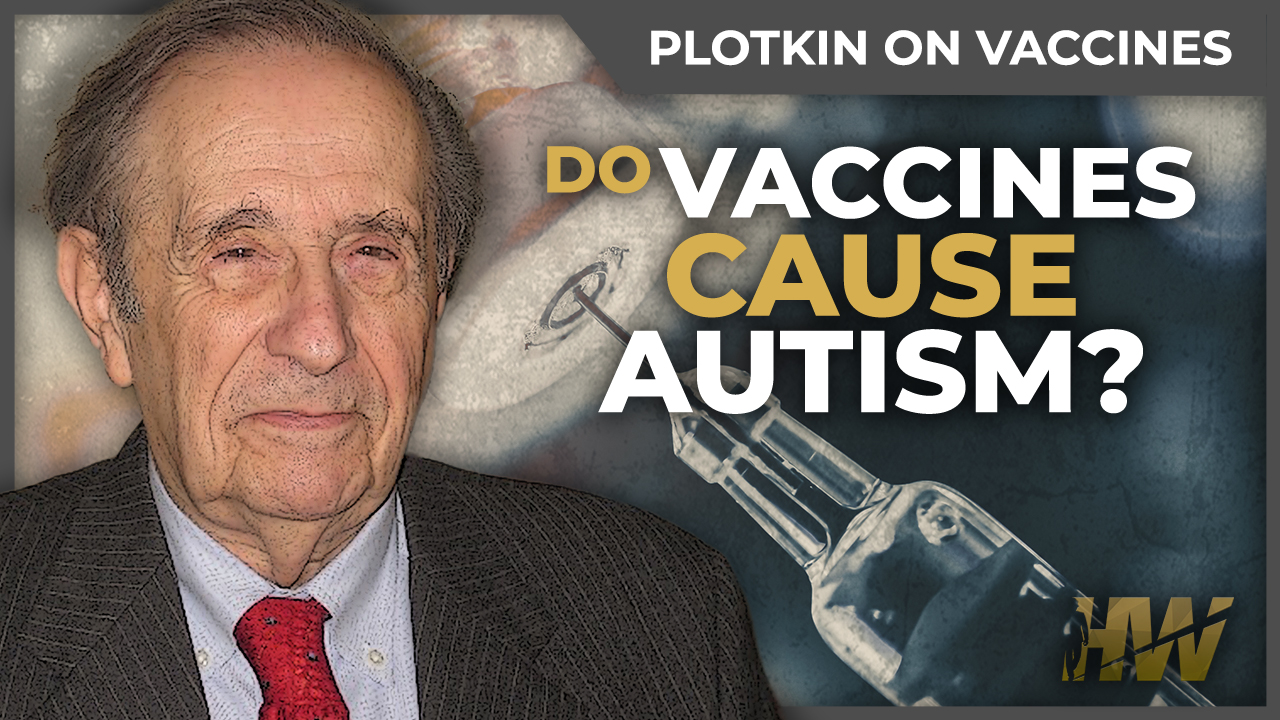
DO VACCINES CAUSE AUTISM? - The HighWire In a shocking admission under oath, Dr. Plotkin agrees with attorney Aaron Siri that the data is insufficient to make the claim ‘vaccines do not cause autism.’ Despite his admission, Dr. Plotkin asserts he would lie to his patients about this, in order to convince them to vaccinate. thehighwire.com
Page not found - ICAN - Informed Consent Action Network icandecide.org
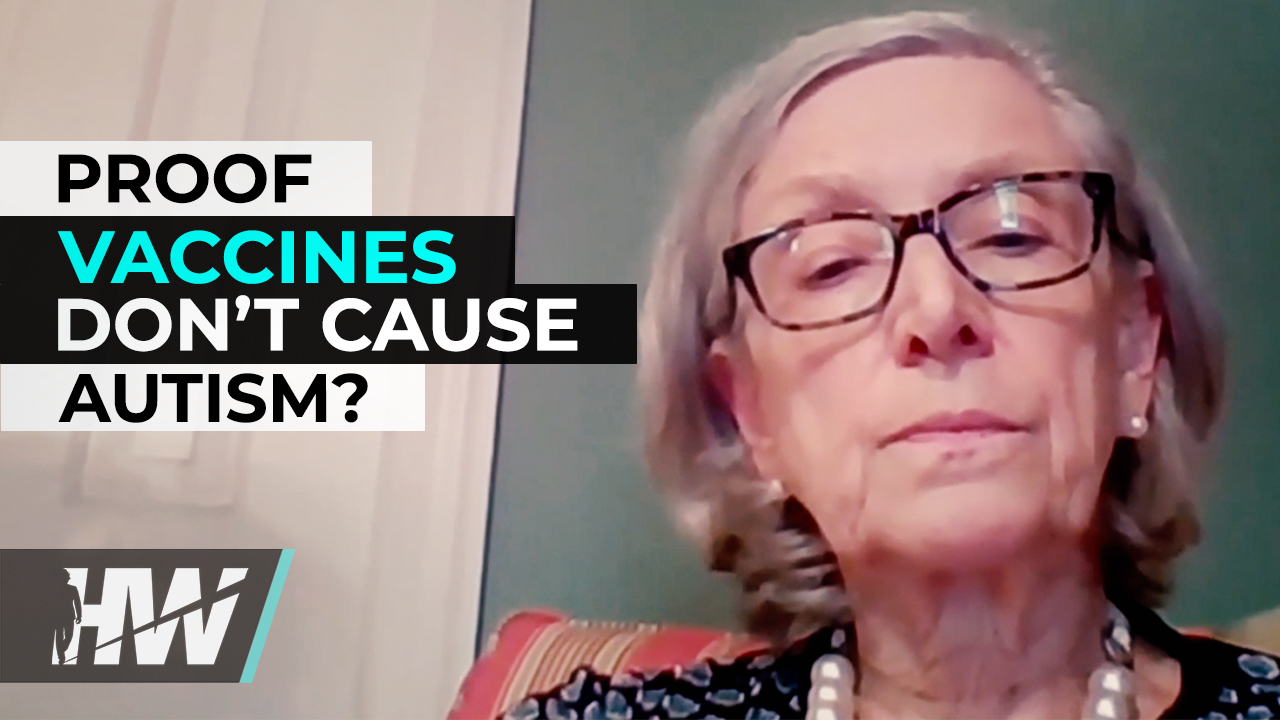
PROOF VACCINES DON’T CAUSE AUTISM? - The HighWire ICAN lead attorney, Aaron Siri, deposes world-leading vaccinologist, Dr. Kathyrn Edwards, regarding vaccines and autism. Her answers, under oath, will shock you. thehighwire.com
Parental perceptions and use of complementary and alternative medicine practices for children with autistic spectrum disorders in private practice - PubMed The prevalence of autistic spectrum disorder (ASD) in the United States is approximately 1 in 150 children. Many health care providers are unaware of parental beliefs and treatments, both medical and complementary, that parents use for their child with ASD. Understanding these beliefs and practices … pubmed.ncbi.nlm.nih.gov
Emergence of autism spectrum disorder in children from simplex families: relations to parental perceptions of etiology - PubMed Current research describes a four-category scheme of Autism Spectrum Disorder (ASD) onset: early, regressive, plateau, delay + regression. To replicate prevalence of different onset types, ASD onset (per the Autism Diagnostic Interview--Revised) was examined in a large North American sample; for a s … pubmed.ncbi.nlm.nih.gov
Vaccine Risk Perception Among Reporters of Autism After Vaccination: Vaccine Adverse Event Reporting System 1990–2001 Objectives. We investigated vaccine risk perception among reporters of autism to the Vaccine Adverse Event Reporting System (VAERS). Methods. We conducted structured interviews with 124 parents who reported autism and related disorders to VAERS from ... pmc.ncbi.nlm.nih.gov
Vaccine Safety Debate - ICAN - Informed Consent Action Network The vaccine safety debate with the CDC and other federal health agencies has finally occurred! icandecide.org
Saved - November 17, 2025 at 9:36 PM
reSee.it AI Summary
I report that after two PCR positives for avian flu, nearly 400 ostriches on Katie Pasitney’s farm were shot in the dark, though the flock had been healthy for 250+ days and tissue tests showed Pseudomonas, not flu. Offers to relocate or independently test were rejected; the family was detained, and birds died at dawn as shots rang. The CFIA left carcasses near migratory ducks. Katie asks what else can be justified in the name of public safety.

@HighWireTalk - The HighWire

Nearly 400 ostriches were shot in the dark while help stood waiting. Canadian farmer Katie Pasitney tells Del that after two PCR samples taken from her farm were reported positive for avian flu, the CFIA issued a kill order. But the flock had been healthy for more than 250 days, and Katie says not one surviving bird was ever retested. She also explains that earlier tissue testing on sick birds showed Pseudomonas bacteria, not avian flu, and that more than three-quarters of the farm never became ill. Their science showed a healthy flock with natural immunity. Her family fought for nearly a year to save their birds. Offers poured in: -Administrator of CMS @DrOz offered to relocate the birds to his Florida ranch. -CEO of Red Apple Group @JCats2013 pushed for independent testing. -HHS Secretary @SecKennedy urged Canada in writing to let U.S. agencies test the entire flock. Every offer was rejected. "The Canadian Food Inspection Agency essentially just showed the world that they are not a scientific organization. They use science to bring authoritarian pressure and power upon innocent people." -@delbigtree The family wasn’t even allowed to say goodbye. Katie and her mother were arrested for trying to feed their animals (with permission) while the government seized the farm. She describes the gunfire, the panic in the pens, the birds running into each other in the dark, and a family identity erased in a single night. "The Canadian Food Inspection Agency had to come back in the morning. Those professional marksmen, they call themselves, they had to come back in the morning and finish shooting a couple of our ostriches that laid there in pain all night. We heard the gunshots ourselves. They're lying. And they say that they didn't. They lie. That's what they do the best." -@KatiePasitney And the most telling part: The CFIA left the dead ostriches out in the open, hay bales blown apart, with hundreds of migratory ducks landing in the kill zone. As Katie put it, “Your real risk is the migratory birds. It’s not the flightless animals and the animals on people’s farms that are the risk. They did not follow their own protocols, a detail that shows this was never about a virus; it was about control." A heartbreaking story that raises a hard question: if this can happen to peaceful farmers over two PCR tests, what else can be justified in the name of public safety?

Video Transcript AI Summary
The speaker declares the event described as “one of the biggest crimes in Canadian history,” claiming that on November 6 the Canadian Food Inspection Agency waged war on the speaker’s family and their farm. The attack took place in a peaceful valley inhabited by over 300 animals described as “prehistoric sentient beings” who had names, personalities, and had been part of the family for decades; the speaker emphasizes that these animals were integral to the family’s identity. The speaker asserts that none of these animals were ever tested, and specifically notes that “not one of those ostriches” were tested, yet they were gunned down “in the middle of the night,” described with strong language as being done by “cowards.” The assertion repeats that “not one of those animals had ever been tested.” The speaker then challenges the listener, asking how such an action could occur and how a family or a country could recover from a massacre that is described as barbaric. The rhetoric emphasizes an urgent grievance that life was treated as if it did not matter and that heartbeats no longer held meaning. The speaker expresses that, as a result, it feels as though there has been a loss of meaning for what life means and what life is. Key claims include: the incident as a major crime in Canadian history; a targeted action against the speaker’s family and their farm by the Canadian Food Inspection Agency; the presence of over 300 named, personable animals considered part of the family identity; the animals’ innocence in terms of testing; the killing of ostriches by nighttime action described as cowardly; and the broader emotional and existential impact—questions about how to move forward after what is described as a massacre and the sense that life’s value has been eroded.
Full Transcript
Speaker 0: This is one of the biggest crimes in Canadian history. On November 6, the Canadian Food Inspection Agency waged war on our family, and they waged war on our farm in a peaceful valley with over 300 healthy prehistoric sentient beings that had names, they had personalities, they had been in our family for decades. They were our identity, and not one of those animals were ever tested. Not one of those ostriches that got gunned down by cowards in the middle of the night. Not one of those animals had ever been tested. So you tell me how we had a head doing something like this. You tell me how does a family or a country come back from a massacre, a barbaric massacre like this. Treating life like it doesn't matter, like heartbeats don't exist. It's like we've lost all meaning for what life means, for what life is.
Saved - October 18, 2025 at 3:59 AM
reSee.it AI Summary
X blocks promoting An Inconvenient Study. Their policy: "Content questioning the safety or efficacy of approved medical products like vaccines" can't be boosted. "X’s advertising policies are strict about health-related content, especially anything questioning the safety or efficacy of approved medical products like vaccines." Please share this post to advance the discourse.

@HighWireTalk - The HighWire

🚨X is blocking our ability to promote An Inconvenient Study. Their policy: "Content questioning the safety or efficacy of approved medical products like vaccines" can't be boosted, even if factual. "X’s advertising policies are strict about health-related content, especially anything questioning the safety or efficacy of approved medical products like vaccines." - Grok We need YOU TO SHARE this post of the film and help us further the discourse.

@HighWireTalk - The HighWire

🔥"An Inconvenient Study" is available to watch here on X. How can you help? We are asking YOU to act. ⏯️Visit http://AnInconvenientStudy.com to download the film for FREE. Upload and repost on your own social media. Share it with your friends. Make sure everyone you know sees it. It could change everything.
Video Transcript AI Summary
The transcript follows a documentary-style examination of rising chronic illness in American children and a contested view of vaccine safety and testing. It weaves together personal testimonies, investigative reporting, and expert interviews to present a narrative that vaccines may be linked to widespread health problems and that the safety science behind vaccination is insufficient or flawed in certain respects. Key claims about child health trends - A diverse set of pediatric health issues is described as increasingly common: ADHD, allergies, eczema, psoriasis, autoimmune diseases (rheumatoid arthritis, juvenile diabetes, lupus, Crohn’s disease), IBS, sleep disorders, seizures, and neurological conditions. Several speakers list multiple conditions affecting children, suggesting a broad chronic disease trend. - A striking statistic cited: “More than forty percent of American children now have at least one chronic health condition” (Speaker 5). Relatedly, autism rates are described as rising from “one in ten thousand” decades ago to “one in thirty one” today (Speaker 5). - An overarching contention is that these rapid increases are unlikely to be explained by genetics alone, given the relatively fast pace of change in incidence. The central study and the “hidden” narrative - The documentary frames a study led by a scientist who allegedly conducted research into chronic disease and vaccination but chose not to publish due to fear of repercussions. Hidden-camera investigations and interviews are used to explore why such data might remain unpublished and how the medical establishment responds to dissenting findings. - The film positions Dr. Zervos (Marcus Zervos), an infectious disease expert at Henry Ford Health System, as a pivotal figure who agreed to a vaccinated-versus-unvaccinated study but reportedly did not publish the results, leading the filmmakers to pursue further inquiry with him and others. Vaccines, safety testing, and the placebo question - A core claim is that vaccines have not undergone the gold standard of safety testing: double-blind, randomized, placebo-controlled trials for the entire childhood schedule. The film argues that no childhood vaccine has completed such a trial prior to licensure. - The hepatitis B vaccine (Recombivax HB) is used as an example: its pre-licensure safety data reportedly cover only five days after each dose, with no long-term control group, and section 6.1 of the insert notes five days of safety monitoring, raising questions about detecting longer-term autoimmune or neurological injuries. - Opposing voices acknowledge ethical constraints around placebo trials in the presence of existing vaccines, but the documentary challenges this by pointing out that certain comparator trials (e.g., Prevnar 13 vs Prevnar 7) were not against saline placebo, and thus do not establish a safety baseline. - A recurring metaphor is the “whiskey study” scenario to illustrate how non-saline placebo comparisons can mislead safety conclusions. Retrospective and observational studies; the vaccine-safety signal - The film emphasizes retrospective and observational studies as alternatives to randomized trials, arguing they can reveal safety signals when prospective trials are unavailable. It highlights the Henry Ford Health System’s data as a major retrospective study: a vaccinated-versus-unvaccinated analysis based on a large, integrated health database. - According to the film, the Henry Ford study found that vaccinated children had higher risks across multiple chronic health categories. Specifically, ten years of follow-up suggested: - Vaccinated children were 2.5 times more likely to have a chronic health condition overall. - An approximate fourfold increased risk for chronic health conditions in certain analyses. - A 4.29-times higher risk for autism was not statistically significant due to small autism counts in the unvaccinated group, but substantial signals were observed in other neurodevelopmental outcomes. - The study reported markedly higher rates of autoimmune diseases (around six times higher) and various neurodevelopmental disorders in the vaccinated group compared with unvaccinated peers. - In the ten-year window, 57% of vaccinated children had a chronic health condition versus 17% of unvaccinated children. - The documentary notes methodological limitations common to retrospective studies, such as follow-up differences and confounding factors, but argues that sensitivity analyses did not overturn the main findings. The vaccine schedule, broader policy, and dissent within the medical community - The narrative asserts that a large portion of physicians publicly defend vaccines as safe and effective, with long-standing support for vaccination policies and mandates. Yet it also recounts stories of physicians who faced professional pushback, licensing actions, or public criticism after raising questions about vaccine safety or suggesting alternative research paths. - The film mentions the Institute of Medicine’s 2011 report, which stated that there were over 150 injuries likely associated with vaccines that had not been studied, and it notes that no large, randomized comparisons between fully vaccinated and fully unvaccinated populations had been published by major institutions (as of the report’s release). - The filmmakers recount efforts to obtain a definitive vaccination–unvaccinated study from Henry Ford and other institutions, with some figures expressing willingness to publish if the study clearly demonstrated that unvaccinated children fared better, while others face professional or political pressures. Vaccine advocacy versus safety concerns; the call for replication - Pro-vaccine voices in the film emphasize that vaccines have prevented millions of deaths and remain broadly safe, citing the historical success of vaccines and the large body of published research supporting vaccine effectiveness and safety. - Proponents of re-examination advocate replicating retrospective cohort analyses in other large health systems (e.g., Kaiser Permanente, Harvard Pilgrim, CDC’s VSD) to test whether similar patterns emerge. They stress the ethical and scientific necessity of replication to determine whether the observed signals hold across populations. - The film closes with a call for replication and transparency: if the data are robust, publishing them could transform the understanding of off-target and non-specific effects of vaccination. If replicated, such studies could reshape how vaccines are administered and studied. The documentary also threads personal stories of vaccine injury, including cases of severe reactions after various vaccines and the emotional and logistical toll on families. It juxtaposes these individual tragedies with the broader debate over vaccine safety research, urging readers to consider the evidence, replication, and the possibility that current vaccine safety paradigms may require reassessment.
Full Transcript
Speaker 0: Children struggling every day with ADHD? Scott's allergies made it hard to keep up with his friends. Speaker 1: Allergic reactions from accidental food exposure. Speaker 0: Moderate to severe eczema. Flax psoriasis. Speaker 2: Rheumatoid arthritis. Food allergies. Speaker 0: Allergies. Seizure. Psthma. Speaker 3: Eczema. IBS. Speaker 4: Conditions in kids 17. Speaker 5: More than forty percent of American children now have at least one chronic health condition. Speaker 6: Autoimmune disease like rheumatoid arthritis, juvenile diabetes, lupus, Crohn's disease, all this IBS. Speaker 0: I had eczema, asthma, allergies, allergies, stomach issues. Speaker 5: This is to me the one that gets me. Just a few decades ago, one in ten thousand children had autism. Today, it's one in thirty one. Speaker 6: ADD, ADHD, speech to language like tics, Tourette's syndrome, narcolepsy, sleep disorders, ASD, autism. Speaker 7: But there's no way in the world that these kind of rapid increases in the incidence of disease could be genetic. Genetic change takes generations, centuries to play out. Speaker 5: What's really causing our kids of this generation to be so chronically sick. Speaker 7: What the heck is happening? Speaker 8: America is the sickest nation in the industrialized world. It is now believed that over fifty four percent of our kids have a chronic disease, either a neurological disorder or an autoimmune disease. That's up from only twelve point eight percent back in the nineteen eighties. In roughly forty years, we have seen the greatest decline in human health ever recorded. What if I told you there is a study that could shed light on this chronic disease epidemic, but no major medical institution seemed willing to do it. What if I told you there was one scientist brave enough to conduct this study? Speaker 3: How you doing, Mark? Good to see you. Hey, nice to hear you. Absolutely. Speaker 7: How are Speaker 8: What if I told you that when the study was finished, that scientist was too afraid to publish it? What would you do? Maybe you would do what I did. I got hidden cameras and recording equipment, and I went to ask him, why? Speaker 9: I wanna show you a Speaker 8: video. Okay. Speaker 9: Curious of what's your reaction to Speaker 3: this. Okay. Speaker 10: Just hit play here? Speaker 9: Go ahead and press play there. Speaker 11: What was the most shocking thing? Because, I mean, I know what I've seen. Speaker 3: No. And I thought it was important. Speaker 12: It was it was it's important information because of you Speaker 3: know, it did show a difference between the groups. We have some serious issue. I I actually agree with that. Speaker 8: If I Speaker 11: can't get this study out, then what hope is there for every kid in the future? Speaker 3: I don't wanna say it's not the right thing to do. It's the right thing to do, but they I just don't wanna Speaker 13: I mean, obviously, like, Speaker 14: really Speaker 10: emotional. Sick. It's really sick. Speaker 3: Publishing something like that might as well retire. I'd be finished. Speaker 11: So Speaker 10: who was that guy? Speaker 15: Zervos probably gonna lose his job over this. Speaker 8: You know, I'm I'm thinking before we get into the hidden cameras and the study and doctor Zervos and all that, why don't we just take it all the way back to how this actually started? Speaker 12: Oh, Speaker 3: yes. Please welcome Dow to the Speaker 8: I've been a medical journalist for almost twenty years now. My first ten years was at CBS. And the last eight years or so, I've had my Internet news show called The High Wire. Speaker 11: Good morning. Good afternoon. Good evening. Wherever you are. Speaker 8: But the biggest change in my career happened when I produced a documentary about vaccinations called Vaxxed. And at the center of that documentary was a whistleblower from the CDC named doctor William Thompson. He came forward in 2015 and said that they were committing scientific fraud on the vaccine safety studies. Well, that film blew up and became a worldwide sensation, mostly because we got so much bad press starting with being kicked out of the Tribeca Film Festival. Speaker 16: The decision to run a controversial documentary about vaccines has Robert De Niro at the center of a big screen backlash. Speaker 17: Tonight, the film festival Robert De Niro started Under Fire, a controversial new film that many are characterizing as anti vaccine. Speaker 18: I think the movie is something that that people should see. There was a backlash which I haven't fully explored. I wanna know the truth, and I'm not anti vaccine. I want safe vaccines. Speaker 13: Vax producer Del Bigtree says canceling the screening amounts to a suppression of the truth. Speaker 8: I can't imagine what type of pressure came down that would make them pull a movie that they were obviously behind in the beginning. Speaker 17: The message from the medical community is clear. Speaker 19: This is one of those scientific questions that where science has provided an answer. Speaker 8: Vaxxed ended up being one of the most controversial documentaries in history. And because of that, there were lines down the block everywhere we went. Look at this crowd behind me. Look at this line. It goes on and on and on. In fact, the very first day we screened at Angelica Film Center in New York, I wanted to know why there's this giant line down the block. What are these people here for? Can every parent or someone you know, if you have a family member with autism, would Speaker 11: you please stand up right now? Like, see. Speaker 8: Three quarters of the room stood up. I remember feeling like the air just got sucked out of the room. I had no idea that there was this many people suffering from this issue. I ended up asking that question three screenings a day, five days a week, for an entire year. And every single time, three quarters of the room stood up. I realized I had stumbled on something absolutely massive. Speaker 0: Hello everybody. This is Jamie. Jamie's starting to Can you guys both tell us your names? I'm Stephanie. And this is Zion. Zion. Speaker 8: After the screenings, parents of injured children were inspired to tell their own stories. We set up video cameras and started interviewing everybody that wanted to talk. And what I discovered is it wasn't just autism and it wasn't just the MMR vaccine. There was an ocean of vaccine injury and nobody was talking about it. Speaker 20: Doctor says, well, do you want the flu vaccine? And I was like, might as well do it now. Speaker 0: I gave in. I did polio. They gave her the hep b vaxx. She got the two month shots. Detap, the MMR vaccine. By 10:30 that morning, she was arching her back, clenching her fists. I didn't think I was gonna cry. That night, we were in the hospital with the 106 degree fever. Speaker 21: He began to projectile vomit. He began to this Speaker 0: loud pitched scream. Like, that's when the blood pressure and screaming started. I did not lay down for ten months straight because she would she would vomit and asphyxiate. She would vomit at night, and she would lie there while she was asleep, and she would choke on it. Speaker 9: When we had that vaccination, he lost all language. He just stopped talking. Speaker 0: He wasn't talking. He didn't wanna nurse. He went to not talking at all. He was developing really well except for motor skills. He's got chronic allergies. An eczema rash. Good protein enterolitis syndrome. She couldn't eat anything on the glycemic index that was too high. GI symptoms, you started to have a gut inflammation. Chronic snoring. Sleep apnea. Speaker 3: Seizure like activity. Speaker 20: We woke up. She just Speaker 0: birth. And she died in her Speaker 20: arms. Yeah. Speaker 0: I continued to vaccinate her and make her worse and make her sicker. The guilt and the it's so overwhelming. Speaker 1: They killed my daughter. Speaker 8: Clearly, this was a bigger issue than anybody realized. But there was one particular interview that we did that really changed my perspective forever. Speaker 1: Colton was a 13 year old healthy strong boy. He loved anything that has to do with an adrenaline rush. Motorcross was his passion. The doctor says, hey, he's the age that you should get the HPV vaccine. I said, okay. So he was administered the vaccine. And then this is the last day he got to ride that big boy bike. And that day he came home, he was starting to feel nauseous, really sore neck. He still didn't want to get out of bed. I just thought, man, you're just really weak and exhausted. And that evening, when he sat up to take a drink of water, he just flopped back and his head just hit the pillow and I went, Colton, are you going paralyzed? They immediately took him down to Primary Children's Hospital in Salt Lake. Original diagnosis was transverse myelitis. When the doctor came out and asked me, has he been sick? I said, no, he hasn't been sick. He had the HPV vaccine on February 1, and they went, oh, well, we'll be reporting that to bars. Speaker 20: It does suck, like, not being able to play sports anymore. Now I have to sit on the sideline to watch everybody. You gotta do your research. Like, you don't you can't just trust a doctor anymore. Do your own ways to find out what's best for you. Speaker 8: Unfortunately, Colton ended up taking his life in 2018 because he believed he'd become too much of a burden on his family. But the thing I remember about standing there and watching that interview taking place, my co producer, Polly Tommy, was doing the interview, was this box that was hanging on his side that was breathing for him. And it went through a tube that was going through a hole in his throat. And he literally had to wait for it to fill his lungs with air before it could answer a question. So it'd go and then he would start answering the question until he ran out of air. I thought about all of the people that accused these called anti vaxxers of bringing back polio or the iron lung. Speaker 3: Once vaccination rates fall, you're gonna have a lot of people getting sick and a lot of children paralyzed for the rest of their life with polio. Speaker 8: I thought, he's wearing an iron lung. You're not laying in a metal tube anymore. They've reduced it down to a box that hangs on your side and a hose that goes to your throat. But in this case, he wasn't paralyzed because he had polio. He wasn't paralyzed because he didn't vaccinate. He was paralyzed by the Gardasil HPV vaccine. Speaker 0: I chose to get my daughter vaccinated because I want her to be one less woman affected by cervical cancer. One less Gardasil. Speaker 8: Then I went home and started looking up all of the inserts, the warning labels that are wrapped around all the childhood vaccines, and most of them say it right there in serious adverse events. Guillain Barre syndrome, that's paralysis. Or transverse myelitis, paralysis. And I realized Speaker 22: Polio vaccine is a success. We didn't Speaker 8: eradicate paralytic diseases with the vaccine program. Speaker 22: The vaccine works. Speaker 8: We're causing paralytic diseases with our vaccine program. So as we traveled the country, some parents would come up and say, I'm about to have a baby. I'm definitely not gonna get the MMR vaccine because your movie shows that that one's dangerous. But what about the other 16 vaccines that are given in seventy two doses by the time my child's 18. And I'd say, I only have anecdotal evidence from the thousands of interviews I've done that not a single childhood vaccine is safe. But that's not scientific. I wanted something better. I wanted to get to the bottom of this. So I started a nonprofit called the Informed Consent Action Network. Based on the Nuremberg Code's right to voluntary consent Speaker 9: The German air force. Speaker 8: The ethical principle globally agreed upon in the wake of the Nazi doctors horrifying human experiments. Speaker 9: Of inmates in concentration camps for experimental purposes. Speaker 8: Where it states, the voluntary consent to the human subject is absolutely essential. And there should be no element to force, fraud, deceit, duress, or overreaching or other ulterior form of constraint or coercion. What I wanted to do was investigate the entire vaccine program. I was really focused on one thing. We hear that vaccines are safe Speaker 20: Safe. Speaker 8: And effective. Effective. Effective. Effective. But before we even worry about if they're effective, how did we determine they're safe? We started looking at all the science around the world, but we hit a big roadblock. You can't sue a manufacturer of a vaccine. It's one of the only products in America that has what they call liability protection. The reason is because of a law that was passed in 1986 by the US government. The pharmaceutical industry basically blackmailed the government, and they said we are losing so much money from lawsuits for death and injury from our vaccines, we can't make a profit. Speaker 23: Studies have shown that the whooping cough or pertussis vaccine causes brain damage. The controversy isn't really over the fact that it happens, but how often it happens. Speaker 8: And they said if you want us to continue making vaccines, you're gonna have to take on the liability. And our government agreed to that. If you wanna sue or you wanna get any information outside of what's publicly known, you're gonna have to sue the government. And that's when I realized I need a constitutional attorney. And I found a guy named Aaron Siri. Speaker 24: Mister Siri, you're not a medical doctor, are you? Speaker 12: No, sir. Speaker 24: And you're not an immunologist or biologist or any kind of Speaker 12: Or vaccinologist. No. But I depose them regularly, including the world's leading ones with regards to vaccines, and I have to make my claims based on actual evidence when I go to court with regards to vaccines. I don't get to rely on titles. Speaker 8: Genius way forward. We're gonna sue the government agencies, HHS, FDA, NIH, and we started winning. And what did we prove in those lawsuits? That the entire science behind vaccine safety was nothing but a complete fraud. Speaker 19: Doctors used to listen to parents. When their parents came in and said, hey, my kid is suffering with this condition, has this issue, doctors listened to them. But when parents started coming in and saying, My kid went in and got a vaccine and then started having X issue, that's when doctors stopped listening. Speaker 0: Hi, how are you doing? We have triplets. Boys and a girl. Richie, Robbie, and Claire. Every day in our life was a party. Every single day they were smiling and laughing and looking at each other, engaging in each other. On 06/25/2007, we brought them in for the pneumococcal shot. My daughter still has the mark on her leg from the shot. She was the first one to get it, and she screamed and never really stopped screaming after that. But we continue we didn't know. We did the boys as well. By noon, Claire shut completely off. It was as if she was blind and deaf, and all she did at that moment was stare at the ceiling fan. So that was at noon. We had the shot at 10AM. 02:00, we watched Richie shut off. They lost all their reflexes. I'm an educational audiologist. I actually did the test for the stapedial reflex, which is a little muscle in the middle ear, just to see if a muscle they can't control was still working, and it it didn't. The stapedial re reflex dampens sounds so your ears don't hurt from a really loud sound, and both of them had no stapedial reflex. They stopped blinking, stopped yawning, stopped coughing, stopped sneezing. Speaker 2: The worst is when we saw the final one shut down. We were told it was genetic, and then we were told Speaker 0: by geneticists that there's no possible way three children would shut off on the same day. So we had severe autism spectrum disorder for all three kids entering kindergarten. Speaker 2: We have spent hundreds of thousands of dollars trying to recover them. The only person that we got back is Rich Robbie, Speaker 0: the one that was last to shut off. Richie can only say single, maybe two words together. Claire is still completely nonverbal, not potty trained, and Robbie is approaching grade level, but severe OCD. Speaker 25: Let me tell you what a day in our life isn't. So you got, say, a six or seven or eight year old child who's not potty trained, and at two or three or 04:00 in the morning, they fill their diaper. I want you to assume that's pretty uncomfortable, so they take it off. Pretty soon pretty soon it's all over them. It's all over the bed. In short order, it's all over me. It's all over her. Mhmm. I'm snapping at her. She's snapping at me. We're both snapping at the kid who is the only innocent party in the whole scenario. And the one thing that's conspicuously absent from that scenario is is anybody who told you that shot was safe. They're all asleep in their bed. They haven't got a problem in the world. Speaker 8: This one story of Richie, Robbie, and Claire puts an end to any discussion that autism is only caused by genetics. There is no genetic explanation that would turn three brothers and sisters off on the exact same day. Speaker 19: What you should do when there are widespread complaints that a product is causing a given harm is you should study it. Speaker 6: Vaccines should be tested like other medicines. It should be safety tested. And unfortunately, vaccines are not safety tested. Of the 72 vaccine doses now mandated, essentially mandated, they're recommended, but they're really mandated for American children. None of them, not one, has ever been subject to a pre licensing placebo controlled trial. Speaker 8: Health and Human Services Secretary Robert Kennedy Junior has been torn apart by mainstream media for saying that there's no placebo trials being done for vaccines. But he's right. It's exactly what we found in our lawsuits against the government. Not a single childhood vaccine is going through a double blind randomized placebo controlled trial prior to licensure. That's the gold standard of safety testing for all pharmaceutical products, but is being skipped for vaccines. In case you forgot how a double blind placebo based trial worked as we discussed it back in high school science class. Let me remind you. We break up a group of kids into two groups. One group is gonna get the vaccine. The other group is going to get a placebo, which is a product that has no effect on the human body. When it comes to an injectable like vaccines, that is a saline injection. Then it's called double blinded because both the scientists and the patients are blinded from knowing which one they got. Did they get the vaccine or did they get the placebo? This is so the scientists will not manipulate the study in favor of the pharmaceutical industry that will stand to make a lot of money if this vaccine proves to be safe. Then we track these two groups for two to five years, sometimes as long as ten years for a lot of drugs. And at the end of that study, we unblind both the patient and the scientist. So we look at both groups, the vaccinated and the placebo group, and we compare their health outcomes. Who had more cancer? Who had more diabetes or ADD, ADHD or autism or Tourette's or lupus or multiple sclerosis? All of these things that are currently skyrocketing in The United States Of America. And if, when you compare them, they both turn out the same, there's the same amount of issues in the vaccinated group as is in the placebo group, then you know it's safe. You've established what we call a safety baseline. But if the vaccinated group has more issues than the placebo group, then we know it's not safe and it shouldn't be put on the market. Only one problem, not a single vaccine on the childhood schedule has ever been through a double blind placebo based trial. Therefore, they cannot say the vaccines are safe based on science. Speaker 7: Are all vaccine trials placebo controlled? No. And nor should they be. So for example, when Prevnar thirteen so Prevnar was a conjugate pneumococcal vaccine. Speaker 5: The FDA has approved a new pneumococcal vaccine. Speaker 7: It had to be tested in the phase three trial, and so the the the control group there was Prevnar seven and had been shown to work. Speaker 5: It will replace Prevnar, which was effective against seven serotypes. Speaker 7: You can't ask parents to to take to put their children at risk of pneumococcal disease when there existed on the market at the time a vaccine to prevent that. And the World Health Organization has been very clear on this. That would have been considered an an ethical trial. Speaker 8: Doctor Paul Offit's one of the big proponents of vaccinations, probably because he's made a vaccine and made a killing off of it, the rotavirus vaccines on the childhood schedule. Speaker 7: It doesn't matter whether I benefited or not. Speaker 8: He likes to go around and say, well, we can't always do placebo trials, especially if there's already a vaccine that covers that disease. So he'll use an example like Prevnar thirteen. Prevnar thirteen in its safety trial was tested against Prevnar seven, the earlier version of the vaccine. And he'll say you cannot test Prevnar thirteen against a saline placebo because it'd be unethical. You'd be denying children access to a vaccine that is already on the market, and that's not fair to them. But what he leaves out is that Prevnar seven was never tested against a saline placebo, so we don't know if it's safe. So we're testing one product we don't know the safety profile on with another product we don't know the safety profile on, and this is how the entire vaccine schedule works. I like to call this the whiskey study. Let me explain. Let's say there's a group of people that are complaining that whiskey is making people drunk and they're crashing their cars and people are getting killed. Now in order to test does whiskey cause car accidents, you would set up a double blind placebo trial. One group, the test group, would get the 10 shots of whiskey. The other group, the placebo group, would get 10 shots of water. And then we'd have them both drive on a driving course and see who has more accidents. It's obvious. But in this case, the whiskey company is the one doing the study, and what they say is, oh, we're gonna do a placebo based trial, but our placebo based trial is not gonna be water, it'll be vodka, another product already on the market. And so 10 people get the whiskey shots, and 10 people get the vodka shots and they had them all drive and guess what? They had just as many car accidents. Therefore, whiskey does not cause car accidents because it didn't cause any more than the vodka did. And so to take this all the way to the end of doctor Paul Offit's point, if vodka had ever been tested against 10 shots of water and there was no car accidents in the vodka group, then it would make sense to test the whiskey against the vodka. But we all know that study was never done, just like no vaccine placebo study was ever done. All you have to do is type in FDA licensed vaccines on your computer, and every vaccine that they give your child on the childhood schedule will appear there. And then you can click on any one you're interested in. Let's click on Recombivax HB. This is one of the hepatitis b vaccines they give your baby on the first day of life. Hello. Welcome to the world. Gasp for your first breath, and here comes your first sexually transmitted disease. Now go to vaccine insert. This is the insert or the warning label that is wrapped around the vaccine when it's delivered to your doctor. It has all kinds of information, like what's in the vaccine, all the ingredients, side effects of the vaccine. But I want you to focus on section 6.1. This is where they talk about the clinical trial they relied upon to establish safety. It's always 6.1 on every single vaccine so you can look at all of them. But in this one, you'll see that there was only one hundred and forty seven children in the entire trial, And they were only monitored for five days after each dose. Five days. So think about it. Would you take any drug that was only monitored for safety for five days? If your child dies on day six, it wasn't captured by this trial. They'll say, we didn't see any deaths. If a child had autism two years later or other autoimmune diseases or neurological disorders, things that take years to develop, they'll say, we didn't see any in our trial. This is why every drug we take goes through a multi year safety trial. Most of your issues are gonna take years to develop, and if your study isn't that long, you'll never ever see them. We had an interesting opportunity to talk about this with doctor Stanley Plotkin, who's considered to be the reigning godfather of our vaccine program. Speaker 3: Doctor Stan Plotkin. Doctor Plotkin. Virtually every country in the world is affected by his vaccines. Speaker 26: Like the rubella vaccine, the rotavirus vaccine, rabies. Speaker 7: He trained just a generation of scientists, including myself, to think like he thinks. Speaker 3: He developed the standard textbook for vaccines in 1988. Speaker 12: Bill Gates calls his book a bible for vaccinologists. Speaker 27: I hope it's more accurate than the bible. Speaker 8: In 02/2018, our attorney Aaron Siri had the opportunity to depose under oath Doctor. Stanley Plotkin and he asked him this exact question. Is a five day safety trial long enough to capture all of the side effects that people are complaining about from the hepatitis B vaccine? Speaker 12: Doctor. Plotkin, this is the product, the manufacturer insert for Recombivax HB, correct? Yes. And the clinical trial experience would be found in section 6.1, correct? Correct? Doctor. Plotkin? Speaker 27: Yes. Speaker 11: Okay. Speaker 12: In section 6.1, when you look at the clinical trials that were done pre licensure for Combivax HB, how long does it say that safety was monitored after each dose? Speaker 27: Let's see. Five days. Speaker 12: Okay. Is five days long enough to detect an autoimmune issue that arises after five days? No. Is five days long enough to detect any neurological disorder that arose from the vaccine after five days? No. There is no control group, correct? Speaker 27: It does not mention any control group, no. No. Speaker 12: If you turn to section 6.2, under the nervous system disorders it states that there have been reports of Guillain Barre syndrome, correct? Speaker 27: Yes. Speaker 12: As well as multiple sclerosis, exacerbation of multiple sclerosis, myelitis, including transverse myelitis, seizure, febrile seizure, peripheral neuropathy, including Bell's palsy, muscle weakness, hypothesia, encephalitis, correct? Correct. Speaker 3: Okay. Speaker 27: Now, before you go on, these reports are required to be included because they have been reported to the authorities as happening after vaccination. That is not proof that the vaccine caused those reactions. Speaker 12: In order to establish whether it's causal between the vaccine and the condition, you need a randomized placebo controlled study. Speaker 11: But Speaker 12: that was not done for this hepatitis B vaccine before licensure, was it? Speaker 27: No. Without a control group, if you are looking for a phenomenon occurring in the vaccine group, you cannot judge that phenomenon without having a control group. Isn't it true that it would Speaker 12: now be considered unethical to conduct such a study today? Speaker 27: It would be yes. It would be ethically difficult. Speaker 8: So this is how the entire game is played. They don't do a safety placebo trial before the vaccine's licensed. Then when people start lining up with all of these serious side effects, you say, well, can you do a placebo based trial now? And they'll say, no. It's unethical. So they won't do it before. They won't do it after those injuries. And when they can't do a study, your doctor says to you, I haven't seen any studies that show that these injuries are being caused by the vaccine. Therefore, I'm gonna assume they're safe. Speaker 12: Do you agree with the CDC's recommendation that babies receive a hepatitis b on the first day of life? Speaker 27: Yes. You Speaker 12: stated that hepatitis B doesn't cause encephalitis, right? Speaker 27: That's, that's in my opinion, yes. Speaker 12: But the IOM, after doing its review, determined it couldn't find science to support a causal determination one way or another. Correct? Speaker 27: Yes. But that means that they they don't have evidence for the supposition. Speaker 12: It either causes or doesn't cause. Right. They don't know. Speaker 27: They don't know because there aren't enough data. In the absence of data, my conclusion is that there are no, there's no proof that causation exists. Speaker 12: So if there's no data to show that it causes or doesn't cause. Yes. Your supposition, is that I understand correctly? Yes. Is that it doesn't cause it? Speaker 27: That there's no proof that it does. Speaker 12: Okay. That's different than saying it doesn't cause it. Correct? Correct. Speaker 8: So let's be clear. Vaccine safety is not based on science and data. It's based on an assumption of safety, and that is the stalemate we find ourselves in. But there's one way out of it. Instead of doing a placebo based study, you can do a retrospective study looking at people that have already made their choice whether they're gonna vaccinate or not. And then you just compare those groups, the ones that got the vaccines and the ones that decided not to vaccinate. We call that the vaccinated versus unvaccinated study. It's been done by a few independent scientists and institutes amongst small groups of children, but never by a major government agency or a major medical facility. The reason this study is important, I think, is illustrated by a study that was done in Guinea Bissau, Africa by a man named doctor Peter Abe. He's one of the lead experts. He's pro vaccine, and he develops programs for the third world. He had a DTP vaccine program he'd run thirty years ago in Guinea Bissau, Africa, and recognized thirty years later, you know what? Only half the children in the country got that vaccine, and the other half didn't. I could do a perfect comparative study between the vaccinated and the unvaccinated. And when he did that study, the results blew his mind. Speaker 22: This is about vaccines. And I think it's important to recognize that no routine vaccine was tested for overall effect on mortality in randomized trials before being introduced. I guess most of you think that we know what our vaccines are doing, we don't. The program we are talking about at this time, the vaccine program, was introduced sort of in the late seventies after the success with the eradication of smallpox. WHO made sort of the first immunization program for the low income countries. When you come out here, you had two point three times higher mortality if you were DTP vaccinated. And that is the most commonly used vaccine in the world. So the whooping cough vaccine or the pertussis vaccine was associated with two fold higher mortality. You can have a vaccine which is fully protected against a specific disease, but associated with higher mortality. How is that possible? Speaker 8: After looking at this study, it was clear that the vaccine did protect against the diseases they were vaccinated for. The kids didn't die of diphtheria, tetanus, and pertussis. Only one problem. Once they looked at it, they were dying at five times the rate of all of these other issues. So it was clear that though it was protecting against these diseases, it was weakening their immune systems to all sorts of other problems. One of the other scientists on this study did a TED talk on this. Speaker 28: In spite of being protected against three deadly diseases, the introduction of DTP was associated with increased overall mortality. Children who received DTP vaccine had five times higher risk of dying than those who didn't. And this is just one example of many studies now done of DTP vaccine, and they all show the same. DTP vaccinated children have higher mortality than those who didn't get DTP. So it appears that DTP has negative, nonspecific effects. The protection against the three deadly diseases comes at a very high price, namely increased risk of dying. So with the best of intentions, the use of DTP vaccine may kill more children than it saves. I know these results are extremely uncomfortable, and most people, including myself, just wish they weren't true. But this is what the data tells us. Speaker 8: That was just a study of one vaccine in a group of children. What if you studied children that were receiving not one vaccine, but between 72 and a 100 vaccines by the time they're 18? Course, I'm talking about the most vaccinated nation in the world, The United States Of America. Speaker 19: Our federal health authorities actually paid the Institute of Medicine to look at the safety of the vaccine schedule as a whole. And the Institute of Medicine, after conducting that review, came back with a report in 02/2013. The report said no studies have compared the differences in health outcomes between entirely unimmunized populations of children and fully immunized children. Speaker 6: It's the CDC's responsibility to do those studies, and they've been ordered again and again and again to do them, and they have refused. But the Institute of Medicine has looked at the vaccine schedule and said in in their 2011 report, there are over a hundred and fifty injuries that are likely to be associated with vaccines that have never been studied. Speaker 19: Well, what did the CDC do after the Institute of Medicine issued that report? Speaker 8: Instead of doing the study, they ended up doing a study on how to do a vaxxed versus unvaxxed study. Speaker 19: They went that it paid a whole lot of money to issue a white paper on how to conduct that study comparing vaccinated versus unvaccinated kids. That white paper came out in 02/2015. Now, here we are in 2025, ten years later. They've still never published that study. Now, have they never done the study? I can't tell you. Speaker 13: This is information that vaccine safety advocates want and have been asking for for a long time, and I'm not sure why it hasn't been done. Speaker 8: This simple study would shut up every anti vaxxer forever. I have to believe that they have done this study every way they possibly can, and they can't seem to figure out how to make it look like the vaccinated are healthier. But that's just my opinion. Based on several other studies I've seen that did compare vaccinated to unvaccinated, but mainstream medicine says, well, the cohort was too small, or they poke holes in it saying it wasn't done by a major medical institution. So if we're ever going to get a vaxxed versus unvaccinated study that people believe in, it's gonna have to be done by highly credited scientists at a major medical institution who has a database big enough to do a thorough robust investigation comparing the vaccinated to the unvaccinated. Speaker 19: As fate would have it, Dell met the head of infectious disease at Henry Ford Health System, Marcus Servos. Speaker 11: I'll I'll never forget that meeting because you said something to me. You said, I've watched your film. It's it's it's intriguing. K. But you said I'll never forget. You said, you've been saying something and watched your videos that I had an issue with. You said that they cannot say that vaccines are safe because they've never done the proper safety studies. And you said to me I actually researched that because I wanted to, like, see if that was true. And I and you said, I I'm sorry to have to report to you that you're actually right about that. But the Speaker 3: No. I I say it Proper Speaker 11: safety studies have not been done. Speaker 3: And to now too. It's same thing. I I I I I still say it now. The proper safety studies haven't been done. Speaker 11: So then I said to you alright. Speaker 3: Still true. Speaker 11: And you're like, I don't know what I'm doing here. I don't agree with you. I believe in vaccines. And I said, would you ever consider doing a vaccinated versus unvaccinated study? And you said I would do anything wherever the data the data is the data. Right? Speaker 8: Yeah. The first time I met with doctor Zervos, he agreed to do a vaccinated versus unvaccinated study. I mean, I was ecstatic. He was perfect. Ford Medical Center is one of the greatest research centers in the world, and doctor Zerbos is in the middle of being a hero for having just worked out the entire Flint, Michigan water crisis. Speaker 0: Water pipeline. 74 miles of large diameter pipeline will stretch Speaker 9: for For decades, Flint, one of the poorest cities in America, had bought its water from Detroit. Instead of staying on the Detroit water supply while the pipeline was being built, the city would temporarily get its water from the Flint River. That decision would force the city to activate an old water treatment plant. Speaker 4: Here's the Flint. Flint, here. This Speaker 14: is what is coming out of the tap. Speaker 25: Water's brown, has a bad odor. We cannot drink the water. Speaker 9: They soon became a breeding ground for Legionella, and people were getting sick. Speaker 3: The oxygen, you're on that all the time, or do you ever get to take it? I'm on it all the time. Yeah. Speaker 9: Her doctor, Marcus Zervos, had been treating a chronic skin infection that her weakened immune system couldn't control. Speaker 3: Oh, wow. They are doing a lot better. Speaker 0: I'm ecstatic. Speaker 3: You know, if I can get them healed over a little bit more, I'm going get you an appointment with those transplant doctors. Speaker 9: There'd been ninety confirmed cases in the year and a half following the water switch. Twelve people had died. Sean McElmurray had pulled together a team of 23 scientists experts from around the state. The team says the state wouldn't authorize them to start the search for the source of the outbreak. Doctor. Zervos was the infectious disease expert, and he was worried about the delay. Speaker 3: It was critical to start right away, because by June, we expected to see more cases of Legionnaires' disease, and there would be more deaths, which is what we expressed in a meeting that included top leadership at MDHHS. Speaker 29: I remember my colleague telling him that if he didn't do that, you know, people could die. Unfortunately, Nick Lyon's response was that, well, they have to die of something. Speaker 3: I mean, you're just in shock as a result of him saying that of the director of the health department. Speaker 8: Doctor. Zervos seemed perfect. He'd stood up against the entire health system in Michigan, so I figured he'd probably be brave enough to do this study. But then a couple of years went by and still no study. I called Aaron and said, why don't we go see if we can't convince him to finally do this study? Speaker 19: I flew down to Michigan, and we went to meet doctor Zervos in person. We said, look, here's your opportunity. The results should be directly in line with the orthodoxy. The vaccinated kids should be healthy across the board. He could be hailed a hero for finally shutting up the anti vaxxers. He said he's willing to do it. The study was going to use the data they literally already have in their fingertips. The data of millions of people who are ready in the Henry Ford Health System database, including hundreds, maybe thousands of completely unvaccinated children, as well as obviously children who are vaccinated. What that would allow is taking that multimillion person database, segregating out the children who had been in the Henry Ford system from birth continuously for a few years. Because it's a captive HMO environment, meaning it provides the insurance and it provides the medical care, it has most of the health records for these kids, including if they go out of the Henry Ford medical system. Henry Ford, as the insurer, was still paying for it. So they had the health codes for all the medical services that these kids got. So if you segregated out those kids, now you have a cohort of children from birth for at least a few years where you knew everything about them. Speaker 15: I previously was a program director at Henry Ford Hospital, so I know it well. It's one of the best integrated health systems to do research. Speaker 14: Henry Ford receives over $90,000,000 in annual research funding with nearly 700 residents and fellows and 53 ACGME accredited training programs. Speaker 15: I think Henry Ford, like other institutions, has a bias towards the goodness of vaccines. Speaker 30: Vaccines. You can't miss it. It's a full page letter here from Henry Ford with 56 signatures saying in bold letters, the science is clear, vaccines save lives. Speaker 15: If the results came back demonstrating that the battery of vaccines was associated with bias chronic diseases and that unvaccinated appeared healthier over time, such a result would be particularly convincing. Speaker 3: You know, I'm for vaccines. I'm not, you know, I'm not for just the COVID. I think it's the best way of controlling infectious diseases which are deadly. I'm for mandatory vaccination. I'm the Henry Ford is mandatory vaccination because of me. Speaker 31: Henry Ford is one of about 90 health care systems across The United States that are working to enroll a total of 30,000 volunteers in the Moderna COVE vaccine study as quickly as possible. Speaker 3: This is the worst pandemic of the last hundred years and our best hope of dealing with this is by having an effective vaccine. Speaker 32: Henry Ford is requiring all 33,000 staff members to be fully vaccinated by 09/10/2021. Speaker 33: The health system says this is consistent with its existing vaccination policy, which includes team members get the flu shot every year and stay current with other vaccinations. Speaker 8: It appeared to me that Henry Ford was pro vaccine, not anti vaccine. So I had to assume the only reason they would do this study was to prove us wrong. Speaker 19: Dell and I thought that was an excellent opportunity. They could do the comparison and presumably they could get it published. We only had one request. The ask was, whatever the outcome, you publish it. Would he stick to that if the results show that unvaccinated kids are healthier? And when he realized that if he submitted that for publication, he's gonna face the wrath of his entire profession, Speaker 8: didn't know. This was our greatest fear. I mean, vaccines are the holy grail of modern medicine, and anyone that decides to challenge vaccines in any way are essentially considered heretics. Speaker 24: Vaccines are safe. Vaccines are safe and effective. Speaker 33: Vaccines are safe and highly effective. Safe and effective. Speaker 8: Safe and they're highly effective. Speaker 29: Vaccines are one of humanity's most incredible accomplishments, and they've saved millions of lives. Speaker 0: Childhood vaccines have prevented about four million deaths around the world Speaker 23: every year. Speaker 15: The overwhelming majority of pediatricians in this country strongly support vaccination. Missing her vaccination dates. Speaker 1: We're not vaccinating. Speaker 7: The schedule, as it's currently recommended, is well tested. We've studied them in so many millions of children. Billions of people. Speaker 19: Decades of extensive peer reviewed scientific studies. Speaker 21: Centuries of science. Speaker 25: The science is pretty settled. Speaker 21: Settle for many years now. Speaker 12: This idea that we're taking too many vaccines. There's really no science to back that up. Speaker 25: The scientific community publishes paper after paper after paper. Speaker 33: There is nothing to see. There's nothing to see. Speaker 8: I will not stand here and let conspiracy theories distract from real solutions. Speaker 23: Most doctors can't tolerate being called quacks or having their reputation destroyed. And, you know, I went from treating at the head of the laboratory at my hospital for hypertension to becoming, you know, somebody that was doubted on every levels after a while because of one thing that I said, was, can we stop giving vaccines to my sick patients and give it to them on the day of discharge? And had they not tried to intimidate me, doubt me, and pushed me to research and show that what I saw was actually real, I would still be lockstep working as a regular doctor. Speaker 4: The Florida Department of Health, in partnership with the governor, is going to be working to end all vaccine mandates in Florida law. Speaker 9: All of them. Speaker 7: All of them. Speaker 4: My experience with discussing or disclosing harms associated with the vaccines is that those are not welcome ideas conversations. Speaker 8: That move from the Florida Surgeon General, a doctor there, drawing condemnation from public health experts. Speaker 21: Whether it's ignorance, it's stupidity, Speaker 23: or it's malice, at the end Speaker 21: of the day, people are gonna get hurt. Speaker 4: He's not gonna necessarily receive a warm embrace by some of the people in his profession, but that's really what courage is all about. It's a very hostile environment, both scientifically and in the media, for individuals who reach conclusions opinions that counter mainstream ideas. Speaker 8: Every independent scientist that has ever ventured into doing a vaccinated versus unvaccinated study of any kind is immediately under assault. There's one by Doctor. Anthony Mawson out of Mississippi. He did a homeschool study of about 600 kids and discovered alarming rates of allergies, ADD, ADHD, neurological disorders, and a fourfold increased risk of autism amongst the vaccinated. As soon as the study came out, his job was under threat. In fact, I asked him if he'd be in this film. He said, look, you can show my studies, but I have just been dragged through the coals on this. I can't take anymore. Then there's Doctor. Paul Thomas. Speaker 21: Hey, you guys doing? Speaker 34: What I'm seeing on this side is a pink, dull, scarred up eardrum. I've been a pediatrician for thirty five years. I'm now retired. What I noticed in the first decade or so of my practice is kids were getting sicker and sicker. And over the next decade, as more and more patients chose not to vaccinate, I got to see the difference. But I wanted to see, could I prove it? So we got all the data from my practice. We looked at every baby born into my practice and published it in an international journal of public health. What we found, and that study was peer reviewed, it was robust, We found massive increases. I mean, we're talking four to five hundred percent more. Allergies, autoimmune conditions, neurodevelopmental issues, and then we had infections of all kinds, massively increased in the vaccinated compared to the unvaccinated. But what happened when I published that study? Within days of it being available online, I get a call from my attorney. Don't go see any patients. Don't write any prescriptions. Don't go into the office. Your license has been emergently suspended. You are a threat to public health. Speaker 15: What's today? Speaker 34: Today is the last time I will be doing clinical medicine in Oregon. Knowing that you guys are keeping it going, the heart of this place lives on. Speaker 8: So what if doctor Zervos does this study and it turns out exactly the same way as the others? Would he still publish it? That was the question. Speaker 19: Years won't buy it. In 2020, I was informed they had put together a study. When I had that study in my hand and I looked at it, the significance of it, it was an actual study that when published was the first step in changing this landscape. Weeks went by and then more time went by and at some point what I learned was it was not going to get submitted for publication. Speaker 8: Aaron called me and said, they finished the study. Only one problem, they're not gonna publish it. I mean, was everything we were afraid of. I called doctor Zervos and I said, can I fly out and meet you for dinner? And he agreed. I wanted to look Zervos in the eyes and ask him, what's so damning in the study that you're afraid to publish it? I wanted to know what was in this study. I hadn't seen it. I also imagined there's gotta be a way to talk him into publishing this study. But one thing was for sure. This was my last chance. I'm gonna bring hidden cameras and recording equipment so that no matter what happens at this dinner, I can prove it happened. Speaker 11: What do you think about the study you guys have done? Speaker 3: It's important information because of, you know, it did show a difference between the groups. I don't know how to Oh, Speaker 11: it's got it. To Speaker 8: explain I Speaker 3: don't know how to explain it, but it is a it's important. It was an important finding. I mean, the study was for what Speaker 11: Do you find any flaws in the study? I mean, is there a way they could do the study you can do the study better with what's there? Speaker 3: Not that I What? Not that No? I don't Speaker 15: childhood vaccination on short and long term chronic health outcomes in children, a birth cohort study. Speaker 34: This one is really robust. Speaker 3: Let's say the results. Speaker 11: Yeah. What were the results? Speaker 21: The CDC put out a white paper on how you would look vaccinated versus unvaccinated, and we followed it to a team. I agree Speaker 3: with that. Speaker 11: No. You agree with it? Speaker 21: Like, no. You We a 100% did. We looked at this every other way and sideways. Speaker 13: I think this is a devastating commentary on our public health interventions because if this is true, we are systematically making kids sick and not just a little bit sick, very sick. Speaker 3: Publishing something like that, I might as well retire. I'd be finished. Speaker 11: I mean, I'm just curious. What in this data makes you think it will be as catastrophic to your career as you think. Speaker 8: What was he so afraid of? The study was a bombshell. Speaker 13: 18,468 subjects, 1,957 of them were fully unvaccinated. When comparing the health outcomes of the vaccinated versus the unvaccinated, they found an increased risk in the vaccinated of several chronic health conditions. The vaccinated subjects were over four times more likely to have an asthma diagnosis. Speaker 11: Four point two nine times in the adjusted. And that seems I've looked at a lot of studies. There's three point two six to five point six five. Speaker 19: They also found three times the risk for atopic diseases. Speaker 13: Which is a subset of allergic diseases. Speaker 19: They found a almost six times risk for autoimmune disease. Speaker 34: The autoimmune diseases this paper looked at include thrombocytopenic purpura, rheumatoid arthritis, SLE MS and Guillain Barre syndrome. They mentioned there are over 80 different autoimmune diseases, and what their data showed for autoimmunity, six times increase in those who got vaccines when compared to the unvaccinated. Speaker 13: Which is staggering because autoimmune disorders really represent significant morbidity and health costs and suffering accrued over a lifetime. Speaker 21: Neurodevelopmental disorders. Speaker 11: What kind of numbers are we talking about? Do you remember? Speaker 19: Five and a half times risk for neurodevelopmental disorders. Speaker 13: We know that the immune system is intimately connected with both brain development and brain functioning. And so when the immune system gets triggered by illness, potentially by vaccination, you can get psychiatric symptoms presumably related to brain inflammation and, you know, immune processes in the brain. Speaker 8: Two point nine two times the amount of motor disabilities. Four point four seven times the amount of speech disorders in the vaccinated compared to the unvaccinated. Speaker 19: Three times the rate of developmental delay. Speaker 34: They found the same things I found related to allergy and autoimmunity. Also, six times more acute and chronic ear infections. Speaker 13: Interestingly, there were several health conditions where they couldn't even do this analysis because there were none in the unvaccinated group. The way that the mathematical formulas work, you can't have a zero in any one group and be able to compare risk. Speaker 19: For example, there were two hundred and sixty two children who had ADHD in the vaccinated group. Amongst the unvaccinated group, there were zero cases of ADHD. Zero. Speaker 34: These ones are just mind boggling. These conditions were not found at all in almost two thousand unvaccinated kids. Zero brain dysfunction, zero diabetes, zero behavioral problems, zero learning disabilities, zero intellectual disabilities, zero ticks, and zero other psychological disabilities in the unvaccinated. Speaker 10: I'm gonna read the conclusion here. Despite this, in contrast to our expectations again, the the author's expectations was they'd conduct the study and probably find vaccinated people a whole lot healthier than the unvaccinated. Right? This is what we found. We found that exposure to vaccination was independently associated with an overall two point five fold increase in the likelihood of developing a chronic health condition when compared to children unexposed to vaccination. Speaker 21: Any vaccine, even just one compared to none, had two and a half times more likely to have a chronic health condition. Speaker 34: There were no chronic health conditions associated with an increased risk in the unexposed group. None. Speaker 11: What does this graph mean? Explain that to me. So it's no vaccines versus vaccines. Speaker 21: That's basically your likelihood of not having a chronic health condition. Speaker 13: They did something called time to event analysis. At ten years, the likelihood of being free from a chronic illness was only forty three percent in the vaccinated group versus eighty three percent in the unvaccinated group. It's a big difference. Speaker 11: So if you're unvaccinated, you stay up here above the you know, like, was it eighty percent of you are gonna be perfectly healthy, whereas you're dropping below the fifty percentile, which is exactly what what I've been stating. I've been saying fifty four percent of America's children have a chronic illness now. Speaker 13: It's right there. Speaker 11: And that that's that's basically what that's showing. Speaker 34: Ten years follow-up. Fifty seven percent of the vaccinated had a chronic health condition in just ten years. Speaker 8: That should shock everyone. Let's remember, the entire conversation of the moment in America is the fact that fifty four percent of our children are chronically ill. And here we are looking at the study, and it's almost exactly those numbers. Fifty seven percent of the vaccinated are chronically ill, whereas only seventeen percent of the unvaccinated. Speaker 13: I think because I have an interest in vaccines and I understand off target nonspecific effects, I was sad, but I wasn't surprised. I can tell Speaker 15: you that these data are consistent with my greatest concerns regarding the childhood vaccination schedule. That despite the good intentions of the field of vaccinology, that it's backfiring on us. Speaker 8: In virtually every single chronic health category, the vaccinated are doing far worse. But there is one issue. It's the one that I have been talking about for years and puts me into the middle of this entire investigation, and that is autism. And in this study, it appears that there was no statistical significance with the vaccine autism connection, and I wanted to know why. Speaker 11: Yet autism is neutral. Speaker 8: Does that mean we're wrong Speaker 11: about autism, Martin? No. No? Speaker 3: No. No. It's there are a lot of variables involved, and it's hard to control for. Speaker 19: When you don't have a lot of instances, as occurred here with autism, where you only have twenty three instances of autism in the vaccinated group and one instance of autism in the unvaccinated group, that wasn't enough instances to actually be able to determine whether or not there is a statistically significant increased rate of autism. Speaker 8: So even though the study shows all sorts of neurodevelopmental disorders, when it comes to autism, there weren't enough children diagnosed with autism in this group to answer that question. That is why studies like this need to be replicated at even larger scales. Speaker 15: The fact is there's a signal, and the signal is unvaccinated kids healthy. That should be a very important positive study. Yes. The converse of this is kids that are vaccinated, it doesn't look so good, particularly for the neuropsychiatric disorders. Looking at the measure of association, I'm an epidemiologist, I live in this, neutral is one. Neutral means no association is one. If it's two, it means there's a twofold risk. When we're doing non randomized data, especially from corporate data stores, what have you, we have a higher threshold, and a good threshold to remember is four. If there's a fourfold increased risk in a dataset, if we were to go do this somewhere else, almost certainly we would find an association when this is telling us that the risk relationship is greater than four. Speaker 8: I was sitting at that dinner reading this study for the first time and thinking, oh my god, the world needs to see this study. But the more I pressed Doctor. Zervos to publish it, the more excuses he had. Speaker 3: I think it's a good study, but it is it does have limitations to it. The argument against it is gonna be that it's same thing retrospective, it's not a controlled group. It's a controlled group that there's other factors involved. A heterogeneous group of conditions. The perfect example was hydroxychloroquine. Speaker 8: Did I happen to mention that not only was doctor Zervos at the center of the Flint, Michigan water crisis, he was also at the center of the hydroxychloroquine study that was done by Ford and showed a fifty percent reduction in death for those that received hydroxychloroquine. And for that, he got attacked by Tony Fauci and virtually everybody in mainstream media and the medical world. Speaker 26: The Henry Ford Hospital study that was published was a non controlled retrospective cohort study. So that study is a flawed study. Speaker 3: The PR at Henry Ford, they put a gag order on me, know, I couldn't talk about anything. And they said to me, Mark, tell what? You know, so so so you go on CNN. You know, we say we'd be happy. They'd be thrilled to have you on CNN. And, you know, and you say what you feel. But they're just gonna twist what you say anyway and make you look bad anyway. So what good what good is it gonna be? So I should still be able to defend myself and Yeah. You know, and say what the inaccuracies are. So I'm thinking to myself, maybe maybe the Henry Ford PR was right is that it's just gonna get twisted around anyway, make you look bad and you get fired. So what good does it do? So what's gonna happen with this one is the same thing, is that somebody's gonna come back and they're gonna say, you know, the study was the study is flawed as opposed to looking at it in the way that it could be looked at. How about looking at this as important scientific information that can inform how the proper study should be done, won't be taken like that? Then I can say, why? Because there's a political agenda to it. Speaker 11: I get it. It has its issues. Any retrospective study is always gonna have the same problems. So gonna always have the same attacks upon it. Speaker 4: There are limitations to retrospective studies. That's the reason why we like to do randomized clinical trials when we can because they don't have the same limitations. The major one that you have to worry about with retrospective studies is things that are different between the groups that you're comparing that you're unable to account for. Speaker 8: If you want a flawless study, do a placebo controlled trial. Any retrospective study is going to have flaws in it. But in this study, they made a point to address many of the flaws that they found themselves. Speaker 4: If someone were critical of the study, I think issues that a researcher might raise would be things like the different lengths of follow-up for the groups between the children who received no vaccines and the children who received vaccines. The authors actually did do a sensitivity analysis where they limited the analysis to children who had at least a certain amount of follow-up. Speaker 8: When they limited the follow-up time for both the vaccinated and the unvaccinated to one year, it's still two point seven five times higher rate of chronic disease in the vaccinated. And when they limited it to three years, it's three point three eight times the rate of chronic disease in the vaccinated. And when they limited it to five years, it's four times greater. So no matter what they did to limit the follow-up time, the results of the study didn't change. Speaker 4: The results indicate that the different follow-up period really did not have a substantial effect on the research question that they were probing. Another concern is that there are just big differences in how likely the children who receive no vaccines were to seek healthcare compared to the children who received vaccines. So in other words, could the differences we're finding in the study just be due to the fact that these kids were being seen less often and so they're getting fewer diagnoses? To try and address this, they limited the population of children who didn't receive any vaccines to children who at least had some number of medical visits. And even in that sensitivity analysis, the main findings persisted. Speaker 15: In this study, they adjusted for confounders. Confounders can be age, socioeconomic status, gender, racialethnic groups, and used a technique called Cox proportional hazards, which means holding all other factors equal, what's the relationship between the factor of interest and the outcome? Speaker 4: Even after they were adjusted for, the effect of these was actually pretty small. I actually expected that those adjustments would have a really powerful effect, but they actually didn't. And when you do a lot of sensitivity analysis and what you're seeing doesn't change much, that can be reassuring. The authors did a a good job with the information that they had. I have seen studies on vaccines published in good journals that are much weaker in quality. Speaker 11: Is what your study shows, Speaker 3: is it important? Yeah. Is important. You know who you should send it to? To what I told you a while ago. Because I'm just not gonna do it. I'm not gonna do it because I don't wanna I don't wanna end up like Didier. I I don't wanna suffer what McCullough McCullough did. But, you know, I give him credit for for taking it, you know, standing up for it. But I'm just not gonna do it. I'm not gonna do it. Speaker 11: In any other climate, in a regular climate, you would have put this study out just as it is. Right? If if we weren't in this world of censorship Speaker 3: put it out just how it Speaker 11: You would. Speaker 3: I put it out just how it is. Yeah? I'd like to I'd like to just finish out my work, you know, doing international work. Part of my reluctance to do anything is that nothing is gonna come out of it other than me losing my job, which I'd rather not see happen. I'm open to here Speaker 11: because I fully respect you and I recognize the danger of I said to you, I said to you, if you do this study I'll I'll gonna repeat it because I don't remember. I said, if you do the study, you're gonna come under fire. You said, I don't care about that. I'm all about the data and I'm about to retire anyway. That's literally what you said. Yeah. So your your energy has definitely changed on that Speaker 3: but Energy's changing. Speaker 11: Me put it this way. I put my whole career on the line because I saw an issue. Speaker 3: Because what? Speaker 11: I I saw an issue that is affecting the children of America and the world. We have a serious growing problem of autoimmune disease, chronic illness. I am not saying that vaccines are the only cause, but I am saying this program needs some serious work. We had much better health when we were getting ten, twenty vaccines at fifty four shots with seventy two dose. It is clear we are not making our children healthier. They're going the wrong direction. If there's a way to do this program better, which I believe, you know, I've never said I'm trying to eradicate vaccines from the planet, but we are at an autism rate now of what, One in twenty six, We twenty have some serious issues. Speaker 3: No. I I actually agree with that. Is there a different way we could be doing it? Right. Speaker 11: But how do we get there if if if I finally what are the odds? I find someone like you that is is got the clout. If we can't if I can't get this study out, then what hope is there for every kid in the future? I can't do shit for them. Speaker 3: Unless there's a change in leadership, nothing is gonna happen. Publishing one, you know, one study like the like this like this one is not gonna it it's not gonna it it's actually the right thing to do. I don't wanna say it's not the right thing to do. It's the right thing to do, but the I just don't wanna and I don't wanna say I enough problems, but I've I've got enough things like that that I'm already dealing with. I don't want another Speaker 11: Hold on. Hold on. Speaker 8: I just Speaker 11: wanna say this. This is the Galileo moment. I believe this changes more lives than anything there is. If we can fix this vaccine program, it doesn't just change millions of children's lives here in America, changes worldwide. You'll be the father of the change in the Speaker 8: system. That's historic. Speaker 11: And I wanna work with you to do that. Speaker 8: This is why we're here. Speaker 3: Yeah. No. I see what you're saying. I see what you're saying. Speaker 11: We have an ability to do something that no one ever dreamed is possible. If it's not you, then who? Speaker 3: For some reason, they always hammering has always come towards me. So I can't handle that. I I really can't. I'm no. I I'm not a good person. I get it, but I I'm not a good person, but I'm just not gonna do it. I'm not gonna do that. Because I got you gotta let them stop to worry about me. Speaker 13: Yeah. I mean, obviously, like, really emotional. You know, he's just gonna compartmentalize it away. I think someone could look at this and be like, it's unconscionable. How could he? And I think the way that he can is like the way we all can do things that, you know, like not do things we don't want to do is we just convince ourselves, you know, he's saying like, it doesn't matter. This is one study. It won't move the needle. It's too much for me. I can't. And, you know, maybe he's right. Maybe it is too much for him. Speaker 15: It's very important that the study sees the light of day. In the scientific literature and for the advancement of science, we must have balance. There are always pros and cons to everything. And when we have a deep seated religious bias in favor of vaccines, we've lost balance. And when we lose balance, the entire scientific enterprise goes off track. And when that happens, large populations are harmed. Speaker 10: I cannot help but ask myself the question, how many children will suffer a chronic illness that they maybe wouldn't have to suffer had this information been out there? Speaker 13: I treat a lot of kids with neurodevelopmental disability and neuropsychiatric illness and their lives and their family's lives are hell. And I know so many parents who suffer all kinds of guilt. The parents who've had adverse reactions or who've witnessed neurodevelopmental regression in connection with vaccination, they are devastated. I've had so many mothers say to me, my child is like this because of me, you know, at my hand. I did this to them. Speaker 34: I think we are absolutely destroying our future by destroying the overall health of our most precious asset, our children. Speaker 13: We need to know if this is true. We are morally and ethically obligated to replicate this study again and again and again and find out if this is accurate and if this is true. We we have to. Speaker 4: The fact that this study hasn't been peer reviewed and hasn't been published is extremely concerning. It's important knowledge and other health care systems really do need to replicate the analysis. This question really does need to be probed. It's a very important research question. Speaker 34: I challenge you. Yes, you the doctors, you the researchers, do the research. Find within your data set, within your system those who are unvaccinated and compare them to the vaccinated cohort. Speaker 13: This is one data set. You could replicate this again. There are other captive payer systems. Speaker 19: Let Kaiser Permanente Southern California do it, and let the Harvard Pilgrim System in Boston do it, and all the other health systems around the country, and maybe even the CDC with the VSD. And with that, we can start actually addressing the problem that these vaccines might be causing. Speaker 13: If these results are valid, this is an absolute sea change in our understanding of the off target and nonspecific effects of vaccination, and we will have to reconsider the way we go about our vaccination program. Speaker 8: This is a cease and desist letter we received from the attorneys for Henry Ford Health. This letter leads me to believe that they really don't want us to release this film. In the letter, Henry Ford accuses us of defamation for saying that the unpublished study wasn't submitted for publication due to the results of the study. They assert that the reason the study was never submitted for publication was quote, due to significant and serious flaws in its data and methodology. And because it did not come close to meeting the rigorous scientific standards Henry Ford Health and its researchers demand. But we just heard from Doctor. Marcus Zervos, the lead author on this unpublished study and a world leading expert on infectious disease at Henry Ford. He told me he believed the study was a good study and he would publish it just as it is. Only one problem. If he does publish it, he believes it would be the end of his career. He'd be finished. Not my words, but his. Now, even if Doctor. Zerbo stands by his study, does that mean it's a perfect study? Of course not. Can we say that the Henry Ford study proves that vaccines are causing the chronic disease epidemic? No. We cannot. A retrospective study does not prove causation. What we can say is that we believe it is showing a signal. A red flag waved in the air by the scientific method. Houston, there may be a real problem here. Now, this concern is heightened by the fact that this unpublished study does not stand alone. It's not an anomaly. It now stands with several of the studies that have all shown similar signals. So there will certainly be attacks on the limitations of this study which can be found in most retrospective studies. And we acknowledge those limitations. But the only way to really refute it is to do your own vaccinated versus unvaccinated study and prove us wrong. That's what I believe doctor Zervos attempted to do and failed. But as parents watching this film right now, you have to ask yourself a very important question. Why hasn't a single health agency or major medical institution in the world been able to produce one single vaccinated versus completely unvaccinated study that shows that the vaccinated children are healthier. Wasn't that the entire purpose of the vaccine program? To make our children healthier? And although this may be an inconvenient study for anyone who said that the vaccine program was safe, there is a bright side. In every one of these studies so far, there is a group of children who are thriving, who aren't suffering from many of the ailments that plague America's children, who have barely any cases of neurodevelopmental disorders or autoimmune disease, they are living in a world that is flourishing with health because their parents went in a different direction. You now have even more data. You've been informed. What are you going to do about it? That choice is yours.
WATCH NOW | An Inconvenient Study An Inconvenient Study: This could change everything. An ICAN Production. aninconvenientstudy.com
Saved - October 16, 2025 at 2:40 PM

@HighWireTalk - The HighWire

🔥"An Inconvenient Study" is available to watch here on X. How can you help? We are asking YOU to act. ⏯️Visit http://AnInconvenientStudy.com to download the film for FREE. Upload and repost on your own social media. Share it with your friends. Make sure everyone you know sees it. It could change everything.

Video Transcript AI Summary
The documentary follows a growing concern: the rise of chronic illness and neurodevelopmental disorders in American children, with speakers outlining striking statistics, personal stories, and contested science around vaccines. Key facts and patterns: - A shift from decades ago to today: more than forty percent of American children now have at least one chronic health condition; estimates cited include that over fifty-four percent of kids have a chronic disease, up from twelve point eight percent in the 1980s. One speaker emphasizes that in forty years there has been “the greatest decline in human health ever recorded.” - Autism rates have surged: just a few decades ago, one in ten thousand children had autism; today, one in thirty-one. Other listed conditions include ADD/ADHD, tics/Tourette’s, narcolepsy, sleep disorders, IBS, autoimmune diseases (rheumatoid arthritis, juvenile diabetes, lupus, Crohn’s), eczema, asthma, seizures, and various neurological issues. - The central question raised: what is causing this epidemic of chronic illness in kids? The film argues that rapid increases in incidence cannot be explained by genetic change alone, which would take generations. Story and study arc: - The narrative centers on a scientist who was willing to conduct a study into vaccine safety and vaccine injury, but who faced career-risking consequences when attempting to publish or disseminate results. - The film’s narrator and investigators say they compiled hidden-camera testimonies, interviews, and raw stories from parents whose children experienced serious adverse events after vaccines (eczema, seizures, chronic GI issues, sleep apnea, language loss, autonomic and neurological symptoms, and death in some cases). Stories include a child who lost language after vaccination, triplets who regressed into severe autism after their pneumococcal shot, and families describing chronic, ongoing medical crises following vaccines. - The film frames a broader debate: vaccines are safe and effective, with extensive global use and long-standing public health endorsement. Yet it argues that the vaccine safety narrative lacks certain types of trials, particularly double-blind placebo-controlled trials for childhood vaccines. It claims that, in some cases, no such trials exist prior to licensure, and that post-licensure safety surveillance is limited or incomplete. Vaccine safety testing and regulatory claims: - The film argues that none of the 72 vaccine doses on the childhood schedule has ever been subjected to a pre-licensure double-blind placebo-controlled trial, which is presented as the gold standard of safety testing. It asserts that safety assessments and post-licensure surveillance often rely on observational data rather than randomized trials. - A critical example is the hepatitis B vaccine (Recombivax HB): the FDA-approved trial cited shows safety monitoring for only five days after each dose, with no placebo control. The film argues this is insufficient to detect autoimmune or neurodevelopmental issues that could emerge years later. - Dr. Stanley Plotkin, a leading vaccine expert, is interviewed regarding whether five days of safety monitoring captures potential autoimmune or neurological adverse events; the dialogue suggests concern about the adequacy of such safety windows and controls. - The documentary presents the notion that the absence of a placebo-controlled vaccine safety trial is used to argue safety, while retrospective studies and unblinded cohort analyses hints at potential signals that would merit more rigorous testing. Henry Ford Health System and the “vaccinated vs unvaccinated” study: - Dell and others pursue a vaccinated-versus-unvaccinated study using Henry Ford Health System data, with the aim of comparing health outcomes in vaccinated and unvaccinated children. They argue that this kind of retrospective cohort study can reveal safety signals when randomized trials are unavailable. - The study reportedly found that vaccination exposure was associated with higher risks of several chronic conditions, including asthma, atopic diseases, autoimmune diseases (e.g., rheumatoid arthritis, SLE, Guillain-Barré syndrome), and neurodevelopmental disorders. They summarize that by ten years, 57% of vaccinated children had a chronic health condition versus 17% of unvaccinated children; overall, two to four times higher risks across several categories were reported, with notable differences in neurodevelopmental outcomes. - The study reportedly found zero chronic conditions in the unvaccinated group for several categories, though the vaccinated group showed higher incidence in many categories. Autism did not reach statistical significance in this study due to small numbers. The presenters emphasize that retrospective studies have limitations (confounding, follow-up length, healthcare-seeking behavior), but argue that the signal deserves publication and replication. - The Henry Ford study reportedly faced professional and institutional barriers: a threat of defamation, failed attempts to publish, and internal resistance. The documentary showcases a dinner meeting where Dr. Marcus Zervos expresses willingness to publish but ultimately faces career risk, leading to discussions about “Galileo moments” and whether data should be released despite pushback. Industry and public health responses: - The film juxtaposes the public health consensus—vaccines save lives, the schedule is well tested, and billions of people have been studied—with dissenting voices from physicians, scientists, and parents who argue that independent, large-scale vaccinated-versus-unvaccinated analyses are necessary to truly assess safety outcomes. - It includes testimonials from doctors who faced professional pushback after expressing concerns about broader vaccine safety questions or demonstrating adverse effects in patient populations. - The documentary frames a call to replicate the retrospective study in other large health systems (e.g., Kaiser Permanente, Harvard Pilgrim, CDC’s VSD) to determine whether the Henry Ford findings hold across populations, and whether impaired health outcomes correlate with the breadth of vaccination exposure. Conclusion and call to action: - The film asserts that if the data are valid, this would constitute a sea-change in our understanding of off-target and nonspecific effects of vaccination and would necessitate reconsidering how the vaccination program is designed and implemented. - Viewers are urged to consider the evidence, demand replication, and reflect on the moral and ethical implications of vaccine safety research, balancing public health benefits with potential risks, and exploring alternate strategies to protect child health.
Full Transcript
Speaker 0: Children struggling every day with ADHD? Scott's allergies made it hard to keep up with his friends. Speaker 1: Allergic reactions from accidental food exposure. Speaker 0: Moderate to severe eczema. Flax psoriasis. Speaker 2: Rheumatoid arthritis. Food allergies. Speaker 0: Allergies. Seizure. Psthma. Speaker 3: Eczema. IBS. Speaker 4: Conditions in kids 17. Speaker 5: More than forty percent of American children now have at least one chronic health condition. Speaker 6: Autoimmune disease like rheumatoid arthritis, juvenile diabetes, lupus, Crohn's disease, all this IBS. Speaker 7: I had eczema, asthma, allergies, stomach issues. Speaker 5: This is to me the one that gets me. Just a few decades ago, one in ten thousand children had autism. Today, it's one in thirty one. Speaker 6: ADD, ADHD, speech to language like tics, Tourette's syndrome, narcolepsy, sleep disorders, ASD, autism. Speaker 8: But there's no way in the world that these kind of rapid increases in the incidence of disease could be genetic. Genetic change takes generations, centuries to play out. Speaker 5: What's really causing our kids of this generation to be so chronically sick. Speaker 8: What the heck is happening? Speaker 9: America is the sickest nation in the industrialized world. It is now believed that over fifty four percent of our kids have a chronic disease, either a neurological disorder or an autoimmune disease. That's up from only twelve point eight percent back in the nineteen eighties. In roughly forty years, we have seen the greatest decline in human health ever recorded. What if I told you there is a study that could shed light on this chronic disease epidemic, but no major medical institution seemed willing to do it. What if I told you there was one scientist brave enough to conduct this study? Speaker 3: How you doing, Mark? Good to see you. Hey, nice to hear you. Absolutely. Speaker 8: How are Speaker 9: What if I told you that when the study was finished, that scientist was too afraid to publish it? What would you do? Maybe you would do what I did. I got hidden cameras and recording equipment, and I went to ask him, why? Speaker 10: I wanna show you a Speaker 9: video. Okay. Speaker 10: Curious of what's your reaction to Speaker 3: this. Okay. Speaker 11: Just hit play here? Speaker 10: Go ahead and press play there. Speaker 12: What was the most shocking thing? Because, I mean, I know what I've seen. Speaker 3: No. And I thought it was important. It was it was it's important information because of you Speaker 13: know, it did show a difference between the groups. We have Speaker 3: some serious issue. I I actually agree with that. Speaker 9: If I Speaker 12: can't get this study out, then what hope is there for every kid in the future? Speaker 3: I don't wanna say it's not the right thing to do. It's the right thing to do, but they I just don't wanna Speaker 14: I mean, obviously, like, Speaker 15: really Speaker 11: emotional. Sick. It's really sick. Speaker 3: Publishing something like that might as well retire. I'd be finished. Speaker 12: So Speaker 11: who was that guy? Speaker 16: Zervos probably gonna lose his job over this. Speaker 9: You know, I'm I'm thinking before we get into the hidden cameras and the study and doctor Zervos and all that, why don't we just take it all the way back to how this actually started? Speaker 13: Oh, Speaker 3: yes. Please welcome Dow to the Speaker 9: I've been a medical journalist for almost twenty years now. My first ten years was at CBS. And the last eight years or so, I've had my Internet news show called The High Wire. Speaker 12: Good morning. Good afternoon. Good evening. Wherever you are. Speaker 9: But the biggest change in my career happened when I produced a documentary about vaccinations called Vaxxed. And at the center of that documentary was a whistleblower from the CDC named doctor William Thompson. He came forward in 2015 and said that they were committing scientific fraud on the vaccine safety studies. Well, that film blew up and became a worldwide sensation, mostly because we got so much bad press starting with being kicked out of the Tribeca Film Festival. Speaker 7: The decision to run a controversial documentary about vaccines has Robert De Niro at the center of a big screen backlash. Speaker 17: Tonight, the film festival Robert De Niro started Under Fire, a controversial new film that many are characterizing as anti vaccine. Speaker 18: I think the movie is something that that people should see. There was a backlash which I haven't fully explored. I wanna know the truth, and I'm not anti vaccine. I want safe vaccines. Speaker 14: Vax producer Del Bigtree says canceling the screening amounts to a suppression of the truth. Speaker 9: I can't imagine what type of pressure came down that would make them pull a movie that they were obviously behind in the beginning. Speaker 17: The message from the medical community is clear. Speaker 19: This is one of those scientific questions that where science has provided an answer. Speaker 9: Vaxxed ended up being one of the most controversial documentaries in history. And because of that, there were lines down the block everywhere we went. Look at this crowd behind me. Look at this line. It goes on and on and on. In fact, the very first day we screened at Angelica Film Center in New York, I wanted to know why there's this giant line down the block. What are these people here for? Can every parent or someone you know, if you have a family member with autism, would Speaker 12: you please stand up right now? Like, see. Speaker 9: Three quarters of the room stood up. I remember feeling like the air just got sucked out of the room. I had no idea that there was this many people suffering from this issue. I ended up asking that question three screenings a day, five days a week, for an entire year. And every single time, three quarters of the room stood up. I realized I had stumbled on something absolutely massive. Speaker 0: Hello everybody. This is Jamie. Jamie's starting to Can you guys both tell us your names? I'm Stephanie. And this is Zion. Zion. Speaker 9: After the screenings, parents of injured children were inspired to tell their own stories. We set up video cameras and started interviewing everybody that wanted to talk. And what I discovered is it wasn't just autism and it wasn't just the MMR vaccine. There was an ocean of vaccine injury and nobody was talking about it. Speaker 20: Doctor says, well, do you want the flu vaccine? And I was like, might as well do it now. Speaker 0: I gave in. I did polio. They gave her the hep b vaxx. She got the two month shots. Detap, the MMR vaccine. By 10:30 that morning, she was arching her back, clenching her fists. I didn't think I was gonna cry. That night, we were in the hospital with the 106 degree fever. Speaker 21: He began to projectile vomit. He began to this Speaker 0: loud pitched scream. Like, that's when the blood pressure and screaming started. I did not lay down for ten months straight because she would she would vomit and asphyxiate. She would vomit at night, and she would lie there while she was asleep, and she would choke on it. Speaker 10: When we had that vaccination, he lost all language. He just stopped talking. Speaker 0: He wasn't talking. He didn't wanna nurse. He went to not talking at all. He was developing really well except for motor skills. He's got chronic allergies. An eczema rash. Good protein enterolitis syndrome. She couldn't eat anything on the glycemic index that was too high. GI symptoms, you started to have a gut inflammation. Chronic snoring. Sleep apnea. Speaker 3: Seizure like activity. Speaker 20: We woke up. She just Speaker 0: birth. And she died in her Speaker 20: arms. Yeah. Speaker 0: I continued to vaccinate her and make her worse and make her sicker. The guilt and the it's so overwhelming. Speaker 1: They killed my daughter. Speaker 9: Clearly, this was a bigger issue than anybody realized. But there was one particular interview that we did that really changed my perspective forever. Speaker 1: Colton was a 13 year old healthy strong boy. He loved anything that has to do with an adrenaline rush. Motorcross was his passion. The doctor says, hey, he's the age that you should get the HPV vaccine. I said, okay. So he was administered the vaccine. And then this is the last day he got to ride that big boy bike. And that day he came home, he was starting to feel nauseous, really sore neck. He still didn't want to get out of bed. I just thought, man, you're just really weak and exhausted. And that evening, when he sat up to take a drink of water, he just flopped back and his head just hit the pillow and I went, Colton, are you going paralyzed? They immediately took him down to Primary Children's Hospital in Salt Lake. Original diagnosis was transverse myelitis. When the doctor came out and asked me, has he been sick? I said, no, he hasn't been sick. He had the HPV vaccine on February 1, and they went, oh, well, we'll be reporting that to bars. Speaker 20: It does suck, like, not being able to play sports anymore. Now I have to sit on the sideline to watch everybody. You gotta do your research. Like, you don't you can't just trust a doctor anymore. Do your own ways to find out what's best for you. Speaker 9: Unfortunately, Colton ended up taking his life in 2018 because he believed he'd become too much of a burden on his family. But the thing I remember about standing there and watching that interview taking place, my co producer, Polly Tommy, was doing the interview, was this box that was hanging on his side that was breathing for him. And it went through a tube that was going through a hole in his throat. And he literally had to wait for it to fill his lungs with air before it could answer a question. So it'd go and then he would start answering the question until he ran out of air. I thought about all of the people that accused these called anti vaxxers of bringing back polio or the iron lung. Speaker 3: Once vaccination rates fall, you're gonna have a lot of people getting sick and a lot of children paralyzed for the rest of their life with polio. Speaker 9: I thought, he's wearing an iron lung. You're not laying in a metal tube anymore. They've reduced it down to a box that hangs on your side and a hose that goes to your throat. But in this case, he wasn't paralyzed because he had polio. He wasn't paralyzed because he didn't vaccinate. He was paralyzed by the Gardasil HPV vaccine. Speaker 0: I chose to get my daughter vaccinated because I want her to be one less woman affected by cervical cancer. One less Gardasil. Speaker 9: Then I went home and started looking up all of the inserts, the warning labels that are wrapped around all the childhood vaccines, and most of them say it right there in serious adverse events. Guillain Barre syndrome, that's paralysis. Or transverse myelitis, paralysis. And I realized Speaker 22: Polio vaccine is a success. We didn't Speaker 9: eradicate paralytic diseases with the vaccine program. Speaker 22: The vaccine works. Speaker 9: We're causing paralytic diseases with our vaccine program. So as we traveled the country, some parents would come up and say, I'm about to have a baby. I'm definitely not gonna get the MMR vaccine because your movie shows that that one's dangerous. But what about the other 16 vaccines that are given in seventy two doses by the time my child's 18. And I'd say, I only have anecdotal evidence from the thousands of interviews I've done that not a single childhood vaccine is safe. But that's not scientific. I wanted something better. I wanted to get to the bottom of this. So I started a nonprofit called the Informed Consent Action Network. Based on the Nuremberg Code's right to voluntary consent Speaker 10: The German air force. Speaker 9: The ethical principle globally agreed upon in the wake of the Nazi doctors horrifying human experiments. Speaker 10: Of inmates in concentration camps for experimental purposes. Speaker 9: Where it states, the voluntary consent to the human subject is absolutely essential. And there should be no element to force, fraud, deceit, duress, or overreaching or other ulterior form of constraint or coercion. What I wanted to do was investigate the entire vaccine program. I was really focused on one thing. We hear that vaccines are safe Speaker 20: Safe. Speaker 9: And effective. Effective. Effective. Effective. But before we even worry about if they're effective, how did we determine they're safe? We started looking at all the science around the world, but we hit a big roadblock. You can't sue a manufacturer of a vaccine. It's one of the only products in America that has what they call liability protection. The reason is because of a law that was passed in 1986 by the US government. The pharmaceutical industry basically blackmailed the government, and they said we are losing so much money from lawsuits for death and injury from our vaccines, we can't make a profit. Speaker 23: Studies have shown that the whooping cough or pertussis vaccine causes brain damage. The controversy isn't really over the fact that it happens, but how often it happens. Speaker 9: And they said if you want us to continue making vaccines, you're gonna have to take on the liability. And our government agreed to that. If you wanna sue or you wanna get any information outside of what's publicly known, you're gonna have to sue the government. And that's when I realized I need a constitutional attorney. And I found a guy named Aaron Siri. Speaker 24: Mister Siri, you're not a medical doctor, are you? Speaker 13: No, sir. Speaker 24: And you're not an immunologist or biologist or any kind of Speaker 13: Or vaccinologist. No. But I depose them regularly, including the world's leading ones with regards to vaccines, and I have to make my claims based on actual evidence when I go to court with regards to vaccines. I don't get to rely on titles. Speaker 9: Genius way forward. We're gonna sue the government agencies, HHS, FDA, NIH, and we started winning. And what did we prove in those lawsuits? That the entire science behind vaccine safety was nothing but a complete fraud. Speaker 19: Doctors used to listen to parents. When their parents came in and said, hey, my kid is suffering with this condition, has this issue, doctors listened to them. But when parents started coming in and saying, My kid went in and got a vaccine and then started having X issue, that's when doctors stopped listening. Speaker 0: Hi, how are you doing? We have triplets. Boys and a girl. Richie, Robbie, and Claire. Every day in our life was a party. Every single day they were smiling and laughing and looking at each other, engaging in each other. On 06/25/2007, we brought them in for the pneumococcal shot. My daughter still has the mark on her leg from the shot. She was the first one to get it, and she screamed and never really stopped screaming after that. But we continue we didn't know. We did the boys as well. By noon, Claire shut completely off. It was as if she was blind and deaf, and all she did at that moment was stare at the ceiling fan. So that was at noon. We had the shot at 10AM. 02:00, we watched Richie shut off. They lost all their reflexes. I'm an educational audiologist. I actually did the test for the stapedial reflex, which is a little muscle in the middle ear, just to see if a muscle they can't control was still working, and it it didn't. The stapedial re reflex dampens sounds so your ears don't hurt from a really loud sound, and both of them had no stapedial reflex. They stopped blinking, stopped yawning, stopped coughing, stopped sneezing. Speaker 2: The worst is when we saw the final one shut down. We were told it was genetic, and then we were told Speaker 0: by geneticists that there's no possible way three children would shut off on the same day. So we had severe autism spectrum disorder for all three kids entering kindergarten. Speaker 2: We have spent hundreds of thousands of dollars trying to recover them. The only person that we got back is Rich Robbie, Speaker 0: the one that was last to shut off. Richie can only say single, maybe two words together. Claire is still completely nonverbal, not potty trained, and Robbie is approaching grade level, but severe OCD. Speaker 25: Let me tell you what a day in our life isn't. So you got, say, a six or seven or eight year old child who's not potty trained, and at two or three or 04:00 in the morning, they fill their diaper. I want you to assume that's pretty uncomfortable, so they take it off. Pretty soon pretty soon it's all over them. It's all over the bed. In short order, it's all over me. It's all over her. Mhmm. I'm snapping at her. She's snapping at me. We're both snapping at the kid who is the only innocent party in the whole scenario. And the one thing that's conspicuously absent from that scenario is is anybody who told you that shot was safe. They're all asleep in their bed. They haven't got a problem in the world. Speaker 9: This one story of Richie, Robbie, and Claire puts an end to any discussion that autism is only caused by genetics. There is no genetic explanation that would turn three brothers and sisters off on the exact same day. Speaker 19: What you should do when there are widespread complaints that a product is causing a given harm is you should study it. Speaker 6: Vaccines should be tested like other medicines. It should be safety tested. And unfortunately, vaccines are not safety tested. Of the 72 vaccine doses now mandated, essentially mandated, they're recommended, but they're really mandated for American children. None of them, not one, has ever been subject to a pre licensing placebo controlled trial. Speaker 9: Health and Human Services Secretary Robert Kennedy Junior has been torn apart by mainstream media for saying that there's no placebo trials being done for vaccines. But he's right. It's exactly what we found in our lawsuits against the government. Not a single childhood vaccine is going through a double blind randomized placebo controlled trial prior to licensure. That's the gold standard of safety testing for all pharmaceutical products, but is being skipped for vaccines. In case you forgot how a double blind placebo based trial worked as we discussed it back in high school science class. Let me remind you. We break up a group of kids into two groups. One group is gonna get the vaccine. The other group is going to get a placebo, which is a product that has no effect on the human body. When it comes to an injectable like vaccines, that is a saline injection. Then it's called double blinded because both the scientists and the patients are blinded from knowing which one they got. Did they get the vaccine or did they get the placebo? This is so the scientists will not manipulate the study in favor of the pharmaceutical industry that will stand to make a lot of money if this vaccine proves to be safe. Then we track these two groups for two to five years, sometimes as long as ten years for a lot of drugs. And at the end of that study, we unblind both the patient and the scientist. So we look at both groups, the vaccinated and the placebo group, and we compare their health outcomes. Who had more cancer? Who had more diabetes or ADD, ADHD or autism or Tourette's or lupus or multiple sclerosis? All of these things that are currently skyrocketing in The United States Of America. And if, when you compare them, they both turn out the same, there's the same amount of issues in the vaccinated group as is in the placebo group, then you know it's safe. You've established what we call a safety baseline. But if the vaccinated group has more issues than the placebo group, then we know it's not safe and it shouldn't be put on the market. Only one problem, not a single vaccine on the childhood schedule has ever been through a double blind placebo based trial. Therefore, they cannot say the vaccines are safe based on science. Speaker 8: Are all vaccine trials placebo controlled? No. And nor should they be. So for example, when Prevnar thirteen so Prevnar was a conjugate pneumococcal vaccine. Speaker 5: The FDA has approved a new pneumococcal vaccine. Speaker 8: It had to be tested in the phase three trial, and so the the the control group there was Prevnar seven and had been shown to work. Speaker 5: It will replace Prevnar, which was effective against seven serotypes. Speaker 8: You can't ask parents to to take to put their children at risk of pneumococcal disease when there existed on the market at the time a vaccine to prevent that. And the World Health Organization has been very clear on this. That would have been considered an an ethical trial. Speaker 9: Doctor Paul Offit's one of the big proponents of vaccinations, probably because he's made a vaccine and made a killing off of it, the rotavirus vaccines on the childhood schedule. Speaker 8: It doesn't matter whether I benefited or not. Speaker 9: He likes to go around and say, well, we can't always do placebo trials, especially if there's already a vaccine that covers that disease. So he'll use an example like Prevnar thirteen. Prevnar thirteen in its safety trial was tested against Prevnar seven, the earlier version of the vaccine. And he'll say you cannot test Prevnar thirteen against a saline placebo because it'd be unethical. You'd be denying children access to a vaccine that is already on the market, and that's not fair to them. But what he leaves out is that Prevnar seven was never tested against a saline placebo, so we don't know if it's safe. So we're testing one product we don't know the safety profile on with another product we don't know the safety profile on, and this is how the entire vaccine schedule works. I like to call this the whiskey study. Let me explain. Let's say there's a group of people that are complaining that whiskey is making people drunk and they're crashing their cars and people are getting killed. Now in order to test does whiskey cause car accidents, you would set up a double blind placebo trial. One group, the test group, would get the 10 shots of whiskey. The other group, the placebo group, would get 10 shots of water. And then we'd have them both drive on a driving course and see who has more accidents. It's obvious. But in this case, the whiskey company is the one doing the study, and what they say is, oh, we're gonna do a placebo based trial, but our placebo based trial is not gonna be water, it'll be vodka, another product already on the market. And so 10 people get the whiskey shots, and 10 people get the vodka shots and they had them all drive and guess what? They had just as many car accidents. Therefore, whiskey does not cause car accidents because it didn't cause any more than the vodka did. And so to take this all the way to the end of doctor Paul Offit's point, if vodka had ever been tested against 10 shots of water and there was no car accidents in the vodka group, then it would make sense to test the whiskey against the vodka. But we all know that study was never done, just like no vaccine placebo study was ever done. All you have to do is type in FDA licensed vaccines on your computer, and every vaccine that they give your child on the childhood schedule will appear there. And then you can click on any one you're interested in. Let's click on Recombivax HB. This is one of the hepatitis b vaccines they give your baby on the first day of life. Hello. Welcome to the world. Gasp for your first breath, and here comes your first sexually transmitted disease. Now go to vaccine insert. This is the insert or the warning label that is wrapped around the vaccine when it's delivered to your doctor. It has all kinds of information, like what's in the vaccine, all the ingredients, side effects of the vaccine. But I want you to focus on section 6.1. This is where they talk about the clinical trial they relied upon to establish safety. It's always 6.1 on every single vaccine so you can look at all of them. But in this one, you'll see that there was only one hundred and forty seven children in the entire trial, And they were only monitored for five days after each dose. Five days. So think about it. Would you take any drug that was only monitored for safety for five days? If your child dies on day six, it wasn't captured by this trial. They'll say, we didn't see any deaths. If a child had autism two years later or other autoimmune diseases or neurological disorders, things that take years to develop, they'll say, we didn't see any in our trial. This is why every drug we take goes through a multi year safety trial. Most of your issues are gonna take years to develop, and if your study isn't that long, you'll never ever see them. We had an interesting opportunity to talk about this with doctor Stanley Plotkin, who's considered to be the reigning godfather of our vaccine program. Speaker 3: Doctor Stan Plotkin. Doctor Plotkin. Virtually every country in the world is affected by his vaccines. Speaker 26: Like the rubella vaccine, the rotavirus vaccine, rabies. Speaker 8: He trained just a generation of scientists, including myself, to think like he thinks. Speaker 3: He developed the standard textbook for vaccines in 1988. Speaker 13: Bill Gates calls his book a bible for vaccinologists. Speaker 27: I hope it's more accurate than the bible. Speaker 9: In 02/2018, our attorney Aaron Siri had the opportunity to depose under oath Doctor. Stanley Plotkin and he asked him this exact question. Is a five day safety trial long enough to capture all of the side effects that people are complaining about from the hepatitis B vaccine? Speaker 13: Doctor. Plotkin, this is the product, the manufacturer insert for Recombivax HB, correct? Yes. And the clinical trial experience would be found in section 6.1, correct? Correct? Doctor. Plotkin? Speaker 27: Yes. Speaker 12: Okay. Speaker 13: In section 6.1, when you look at the clinical trials that were done pre licensure for Combivax HB, how long does it say that safety was monitored after each dose? Speaker 27: Let's see. Five days. Speaker 13: Okay. Is five days long enough to detect an autoimmune issue that arises after five days? No. Is five days long enough to detect any neurological disorder that arose from the vaccine after five days? No. There is no control group, correct? Speaker 27: It does not mention any control group, no. No. Speaker 13: If you turn to section 6.2, under the nervous system disorders it states that there have been reports of Guillain Barre syndrome, correct? Speaker 27: Yes. Speaker 13: As well as multiple sclerosis, exacerbation of multiple sclerosis, myelitis, including transverse myelitis, seizure, febrile seizure, peripheral neuropathy, including Bell's palsy, muscle weakness, hypothesia, encephalitis, correct? Correct. Speaker 3: Okay. Speaker 27: Now, before you go on, these reports are required to be included because they have been reported to the authorities as happening after vaccination. That is not proof that the vaccine caused those reactions. Speaker 13: In order to establish whether it's causal between the vaccine and the condition, you need a randomized placebo controlled study. Speaker 12: But Speaker 13: that was not done for this hepatitis B vaccine before licensure, was it? Speaker 27: No. Without a control group, if you are looking for a phenomenon occurring in the vaccine group, you cannot judge that phenomenon without having a control group. Isn't it true that it would Speaker 13: now be considered unethical to conduct such a study today? Speaker 27: It would be yes. It would be ethically difficult. Speaker 9: So this is how the entire game is played. They don't do a safety placebo trial before the vaccine's licensed. Then when people start lining up with all of these serious side effects, you say, well, can you do a placebo based trial now? And they'll say, no. It's unethical. So they won't do it before. They won't do it after those injuries. And when they can't do a study, your doctor says to you, I haven't seen any studies that show that these injuries are being caused by the vaccine. Therefore, I'm gonna assume they're safe. Speaker 13: Do you agree with the CDC's recommendation that babies receive a hepatitis b on the first day of life? Speaker 27: Yes. You Speaker 13: stated that hepatitis B doesn't cause encephalitis, right? Speaker 27: That's, that's in my opinion, yes. Speaker 13: But the IOM, after doing its review, determined it couldn't find science to support a causal determination one way or another. Correct? Speaker 27: Yes. But that means that they they don't have evidence for the supposition. Speaker 13: It either causes or doesn't cause. Right. They don't know. Speaker 27: They don't know because there aren't enough data. In the absence of data, my conclusion is that there are no, there's no proof that causation exists. Speaker 13: So if there's no data to show that it causes or doesn't cause. Yes. Your supposition, is that I understand correctly? Yes. Is that it doesn't cause it? Speaker 27: That there's no proof that it does. Speaker 13: Okay. That's different than saying it doesn't cause it. Correct? Correct. Speaker 9: So let's be clear. Vaccine safety is not based on science and data. It's based on an assumption of safety, and that is the stalemate we find ourselves in. But there's one way out of it. Instead of doing a placebo based study, you can do a retrospective study looking at people that have already made their choice whether they're gonna vaccinate or not. And then you just compare those groups, the ones that got the vaccines and the ones that decided not to vaccinate. We call that the vaccinated versus unvaccinated study. It's been done by a few independent scientists and institutes amongst small groups of children, but never by a major government agency or a major medical facility. The reason this study is important, I think, is illustrated by a study that was done in Guinea Bissau, Africa by a man named doctor Peter Abe. He's one of the lead experts. He's pro vaccine, and he develops programs for the third world. He had a DTP vaccine program he'd run thirty years ago in Guinea Bissau, Africa, and recognized thirty years later, you know what? Only half the children in the country got that vaccine, and the other half didn't. I could do a perfect comparative study between the vaccinated and the unvaccinated. And when he did that study, the results blew his mind. Speaker 22: This is about vaccines. And I think it's important to recognize that no routine vaccine was tested for overall effect on mortality in randomized trials before being introduced. I guess most of you think that we know what our vaccines are doing, we don't. The program we are talking about at this time, the vaccine program, was introduced sort of in the late seventies after the success with the eradication of smallpox. WHO made sort of the first immunization program for the low income countries. When you come out here, you had two point three times higher mortality if you were DTP vaccinated. And that is the most commonly used vaccine in the world. So the whooping cough vaccine or the pertussis vaccine was associated with two fold higher mortality. You can have a vaccine which is fully protected against a specific disease, but associated with higher mortality. How is that possible? Speaker 9: After looking at this study, it was clear that the vaccine did protect against the diseases they were vaccinated for. The kids didn't die of diphtheria, tetanus, and pertussis. Only one problem. Once they looked at it, they were dying at five times the rate of all of these other issues. So it was clear that though it was protecting against these diseases, it was weakening their immune systems to all sorts of other problems. One of the other scientists on this study did a TED talk on this. Speaker 28: In spite of being protected against three deadly diseases, the introduction of DTP was associated with increased overall mortality. Children who received DTP vaccine had five times higher risk of dying than those who didn't. And this is just one example of many studies now done of DTP vaccine, and they all show the same. DTP vaccinated children have higher mortality than those who didn't get DTP. So it appears that DTP has negative, nonspecific effects. The protection against the three deadly diseases comes at a very high price, namely increased risk of dying. So with the best of intentions, the use of DTP vaccine may kill more children than it saves. I know these results are extremely uncomfortable, and most people, including myself, just wish they weren't true. But this is what the data tells us. Speaker 9: That was just a study of one vaccine in a group of children. What if you studied children that were receiving not one vaccine, but between 72 and a 100 vaccines by the time they're 18? Course, I'm talking about the most vaccinated nation in the world, The United States Of America. Speaker 19: Our federal health authorities actually paid the Institute of Medicine to look at the safety of the vaccine schedule as a whole. And the Institute of Medicine, after conducting that review, came back with a report in 02/2013. The report said no studies have compared the differences in health outcomes between entirely unimmunized populations of children and fully immunized children. Speaker 6: It's the CDC's responsibility to do those studies, and they've been ordered again and again and again to do them, and they have refused. But the Institute of Medicine has looked at the vaccine schedule and said in in their 2011 report, there are over a hundred and fifty injuries that are likely to be associated with vaccines that have never been studied. Speaker 19: Well, what did the CDC do after the Institute of Medicine issued that report? Speaker 9: Instead of doing the study, they ended up doing a study on how to do a vaxxed versus unvaxxed study. Speaker 19: They went that it paid a whole lot of money to issue a white paper on how to conduct that study comparing vaccinated versus unvaccinated kids. That white paper came out in 02/2015. Now, here we are in 2025, ten years later. They've still never published that study. Now, have they never done the study? I can't tell you. Speaker 14: This is information that vaccine safety advocates want and have been asking for for a long time, and I'm not sure why it hasn't been done. Speaker 9: This simple study would shut up every anti vaxxer forever. I have to believe that they have done this study every way they possibly can, and they can't seem to figure out how to make it look like the vaccinated are healthier. But that's just my opinion. Based on several other studies I've seen that did compare vaccinated to unvaccinated, but mainstream medicine says, well, the cohort was too small, or they poke holes in it saying it wasn't done by a major medical institution. So if we're ever going to get a vaxxed versus unvaccinated study that people believe in, it's gonna have to be done by highly credited scientists at a major medical institution who has a database big enough to do a thorough robust investigation comparing the vaccinated to the unvaccinated. Speaker 19: As fate would have it, Dell met the head of infectious disease at Henry Ford Health System, Marcus Servos. Speaker 12: I'll I'll never forget that meeting because you said something to me. You said, I've watched your film. It's it's it's intriguing. K. But you said I'll never forget. You said, you've been saying something and watched your videos that I had an issue with. You said that they cannot say that vaccines are safe because they've never done the proper safety studies. And you said to me I actually researched that because I wanted to, like, see if that was true. And I and you said, I I'm sorry to have to report to you that you're actually right about that. But the Speaker 3: No. I I say it Proper Speaker 12: safety studies have not been done. Speaker 3: And to now too. It's same thing. I I I I I still say it now. The proper safety studies haven't been done. Speaker 12: So then I said to you alright. Speaker 3: Still true. Speaker 12: And you're like, I don't know what I'm doing here. I don't agree with you. I believe in vaccines. And I said, would you ever consider doing a vaccinated versus unvaccinated study? And you said I would do anything wherever the data the data is the data. Right? Speaker 9: Yeah. The first time I met with doctor Zervos, he agreed to do a vaccinated versus unvaccinated study. I mean, I was ecstatic. He was perfect. Ford Medical Center is one of the greatest research centers in the world, and doctor Zerbos is in the middle of being a hero for having just worked out the entire Flint, Michigan water crisis. Speaker 0: Water pipeline. 74 miles of large diameter pipeline will stretch Speaker 10: for For decades, Flint, one of the poorest cities in America, had bought its water from Detroit. Instead of staying on the Detroit water supply while the pipeline was being built, the city would temporarily get its water from the Flint River. That decision would force the city to activate an old water treatment plant. Speaker 4: Here's the Flint. Flint, here. This Speaker 15: is what is coming out of the tap. Speaker 25: Water's brown, has a bad odor. We cannot drink the water. Speaker 10: They soon became a breeding ground for Legionella, and people were getting sick. Speaker 3: The oxygen, you're on that all the time, or do you ever get to take it? I'm on it all the time. Yeah. Speaker 10: Her doctor, Marcus Zervos, had been treating a chronic skin infection that her weakened immune system couldn't control. Speaker 3: Oh, wow. They are doing a lot better. Speaker 0: I'm ecstatic. Speaker 3: You know, if I can get them healed over a little bit more, I'm going get you an appointment with those transplant doctors. Speaker 10: There'd been ninety confirmed cases in the year and a half following the water switch. Twelve people had died. Sean McElmurray had pulled together a team of 23 scientists experts from around the state. The team says the state wouldn't authorize them to start the search for the source of the outbreak. Doctor. Zervos was the infectious disease expert, and he was worried about the delay. Speaker 3: It was critical to start right away, because by June, we expected to see more cases of Legionnaires' disease, and there would be more deaths, which is what we expressed in a meeting that included top leadership at MDHHS. Speaker 29: I remember my colleague telling him that if he didn't do that, you know, people could die. Unfortunately, Nick Lyon's response was that, well, they have to die of something. Speaker 3: I mean, you're just in shock as a result of him saying that of the director of the health department. Speaker 9: Doctor. Zervos seemed perfect. He'd stood up against the entire health system in Michigan, so I figured he'd probably be brave enough to do this study. But then a couple of years went by and still no study. I called Aaron and said, why don't we go see if we can't convince him to finally do this study? Speaker 19: I flew down to Michigan, and we went to meet doctor Zervos in person. We said, look, here's your opportunity. The results should be directly in line with the orthodoxy. The vaccinated kids should be healthy across the board. He could be hailed a hero for finally shutting up the anti vaxxers. He said he's willing to do it. The study was going to use the data they literally already have in their fingertips. The data of millions of people who are ready in the Henry Ford Health System database, including hundreds, maybe thousands of completely unvaccinated children, as well as obviously children who are vaccinated. What that would allow is taking that multimillion person database, segregating out the children who had been in the Henry Ford system from birth continuously for a few years. Because it's a captive HMO environment, meaning it provides the insurance and it provides the medical care, it has most of the health records for these kids, including if they go out of the Henry Ford medical system. Henry Ford, as the insurer, was still paying for it. So they had the health codes for all the medical services that these kids got. So if you segregated out those kids, now you have a cohort of children from birth for at least a few years where you knew everything about them. Speaker 16: I previously was a program director at Henry Ford Hospital, so I know it well. It's one of the best integrated health systems to do research. Speaker 15: Henry Ford receives over $90,000,000 in annual research funding with nearly 700 residents and fellows and 53 ACGME accredited training programs. Speaker 16: I think Henry Ford, like other institutions, has a bias towards the goodness of vaccines. Speaker 30: Vaccines. You can't miss it. It's a full page letter here from Henry Ford with 56 signatures saying in bold letters, the science is clear, vaccines save lives. Speaker 16: If the results came back demonstrating that the battery of vaccines was associated with bias chronic diseases and that unvaccinated appeared healthier over time, such a result would be particularly convincing. Speaker 3: You know, I'm for vaccines. I'm not, you know, I'm not for just the COVID. I think it's the best way of controlling infectious diseases which are deadly. I'm for mandatory vaccination. I'm the Henry Ford is mandatory vaccination because of me. Speaker 31: Henry Ford is one of about 90 health care systems across The United States that are working to enroll a total of 30,000 volunteers in the Moderna COVE vaccine study as quickly as possible. Speaker 3: This is the worst pandemic of the last hundred years and our best hope of dealing with this is by having an effective vaccine. Speaker 32: Henry Ford is requiring all 33,000 staff members to be fully vaccinated by 09/10/2021. Speaker 7: The health system says this is consistent with its existing vaccination policy, which includes team members get the flu shot every year and stay current with other vaccinations. Speaker 9: It appeared to me that Henry Ford was pro vaccine, not anti vaccine. So I had to assume the only reason they would do this study was to prove us wrong. Speaker 19: Dell and I thought that was an excellent opportunity. They could do the comparison and presumably they could get it published. We only had one request. The ask was, whatever the outcome, you publish it. Would he stick to that if the results show that unvaccinated kids are healthier? And when he realized that if he submitted that for publication, he's gonna face the wrath of his entire profession, Speaker 9: didn't know. This was our greatest fear. I mean, vaccines are the holy grail of modern medicine, and anyone that decides to challenge vaccines in any way are essentially considered heretics. Speaker 24: Vaccines are safe. Vaccines are safe and effective. Speaker 7: Vaccines are safe and highly effective. Safe and effective. Speaker 9: Safe and they're highly effective. Speaker 29: Vaccines are one of humanity's most incredible accomplishments, and they've saved millions of lives. Speaker 0: Childhood vaccines have prevented about four million deaths around the world Speaker 23: every year. Speaker 16: The overwhelming majority of pediatricians in this country strongly support vaccination. Missing her vaccination dates. Speaker 1: We're not vaccinating. Speaker 8: The schedule, as it's currently recommended, is well tested. We've studied them in so many millions of children. Billions of people. Speaker 19: Decades of extensive peer reviewed scientific studies. Speaker 21: Centuries of science. Speaker 25: The science is pretty settled. Speaker 21: Settle for many years now. Speaker 13: This idea that we're taking too many vaccines. There's really no science to back that up. Speaker 25: The scientific community publishes paper after paper after paper. Speaker 7: There is nothing to see. There's nothing to see. Speaker 9: I will not stand here and let conspiracy theories distract from real solutions. Speaker 23: Most doctors can't tolerate being called quacks or having their reputation destroyed. And, you know, I went from treating at the head of the laboratory at my hospital for hypertension to becoming, you know, somebody that was doubted on every levels after a while because of one thing that I said, was, can we stop giving vaccines to my sick patients and give it to them on the day of discharge? And had they not tried to intimidate me, doubt me, and pushed me to research and show that what I saw was actually real, I would still be lockstep working as a regular doctor. Speaker 4: The Florida Department of Health, in partnership with the governor, is going to be working to end all vaccine mandates in Florida law. Speaker 10: All of them. Speaker 8: All of them. Speaker 4: My experience with discussing or disclosing harms associated with the vaccines is that those are not welcome ideas conversations. Speaker 9: That move from the Florida Surgeon General, a doctor there, drawing condemnation from public health experts. Speaker 21: Whether it's ignorance, it's stupidity, Speaker 23: or it's malice, at the end Speaker 21: of the day, people are gonna get hurt. Speaker 4: He's not gonna necessarily receive a warm embrace by some of the people in his profession, but that's really what courage is all about. It's a very hostile environment, both scientifically and in the media, for individuals who reach conclusions opinions that counter mainstream ideas. Speaker 9: Every independent scientist that has ever ventured into doing a vaccinated versus unvaccinated study of any kind is immediately under assault. There's one by Doctor. Anthony Mawson out of Mississippi. He did a homeschool study of about 600 kids and discovered alarming rates of allergies, ADD, ADHD, neurological disorders, and a fourfold increased risk of autism amongst the vaccinated. As soon as the study came out, his job was under threat. In fact, I asked him if he'd be in this film. He said, look, you can show my studies, but I have just been dragged through the coals on this. I can't take anymore. Then there's Doctor. Paul Thomas. Speaker 21: Hey, you guys doing? Speaker 33: What I'm seeing on this side is a pink, dull, scarred up eardrum. I've been a pediatrician for thirty five years. I'm now retired. What I noticed in the first decade or so of my practice is kids were getting sicker and sicker. And over the next decade, as more and more patients chose not to vaccinate, I got to see the difference. But I wanted to see, could I prove it? So we got all the data from my practice. We looked at every baby born into my practice and published it in an international journal of public health. What we found, and that study was peer reviewed, it was robust, We found massive increases. I mean, we're talking four to five hundred percent more. Allergies, autoimmune conditions, neurodevelopmental issues, and then we had infections of all kinds, massively increased in the vaccinated compared to the unvaccinated. But what happened when I published that study? Within days of it being available online, I get a call from my attorney. Don't go see any patients. Don't write any prescriptions. Don't go into the office. Your license has been emergently suspended. You are a threat to public health. Speaker 16: What's today? Speaker 33: Today is the last time I will be doing clinical medicine in Oregon. Knowing that you guys are keeping it going, the heart of this place lives on. Speaker 9: So what if doctor Zervos does this study and it turns out exactly the same way as the others? Would he still publish it? That was the question. Speaker 19: Years won't buy it. In 2020, I was informed they had put together a study. When I had that study in my hand and I looked at it, the significance of it, it was an actual study that when published was the first step in changing this landscape. Weeks went by and then more time went by and at some point what I learned was it was not going to get submitted for publication. Speaker 9: Aaron called me and said, they finished the study. Only one problem, they're not gonna publish it. I mean, was everything we were afraid of. I called doctor Zervos and I said, can I fly out and meet you for dinner? And he agreed. I wanted to look Zervos in the eyes and ask him, what's so damning in the study that you're afraid to publish it? I wanted to know what was in this study. I hadn't seen it. I also imagined there's gotta be a way to talk him into publishing this study. But one thing was for sure. This was my last chance. I'm gonna bring hidden cameras and recording equipment so that no matter what happens at this dinner, I can prove it happened. Speaker 12: What do you think about the study you guys have done? Speaker 3: It's important information because of, you know, it did show a difference between the groups. I don't know how to Oh, Speaker 12: it's got it. To Speaker 9: explain I Speaker 3: don't know how to explain it, but it is a it's important. It was an important finding. I mean, the study was for what Speaker 12: Do you find any flaws in the study? I mean, is there a way they could do the study you can do the study better with what's there? Speaker 3: Not that I What? Not that No? I don't Speaker 16: childhood vaccination on short and long term chronic health outcomes in children, a birth cohort study. Speaker 33: This one is really robust. Speaker 3: Let's say the results. Speaker 12: Yeah. What were the results? Speaker 21: The CDC put out a white paper on how you would look vaccinated versus unvaccinated, and we followed it to a team. I agree Speaker 3: with that. Speaker 12: No. You agree with it? Speaker 21: Like, no. You We a 100% did. We looked at this every other way and sideways. Speaker 14: I think this is a devastating commentary on our public health interventions because if this is true, we are systematically making kids sick and not just a little bit sick, very sick. Speaker 3: Publishing something like that, I might as well retire. I'd be finished. Speaker 12: I mean, I'm just curious. What in this data makes you think it will be as catastrophic to your career as you think. Speaker 9: What was he so afraid of? The study was a bombshell. Speaker 14: 18,468 subjects, 1,957 of them were fully unvaccinated. When comparing the health outcomes of the vaccinated versus the unvaccinated, they found an increased risk in the vaccinated of several chronic health conditions. The vaccinated subjects were over four times more likely to have an asthma diagnosis. Speaker 12: Four point two nine times in the adjusted. And that seems I've looked at a lot of studies. There's three point two six to five point six five. Speaker 19: They also found three times the risk for atopic diseases. Speaker 14: Which is a subset of allergic diseases. Speaker 19: They found a almost six times risk for autoimmune disease. Speaker 33: The autoimmune diseases this paper looked at include thrombocytopenic purpura, rheumatoid arthritis, SLE MS and Guillain Barre syndrome. They mentioned there are over 80 different autoimmune diseases, and what their data showed for autoimmunity, six times increase in those who got vaccines when compared to the unvaccinated. Speaker 14: Which is staggering because autoimmune disorders really represent significant morbidity and health costs and suffering accrued over a lifetime. Speaker 21: Neurodevelopmental disorders. Speaker 12: What kind of numbers are we talking about? Do you remember? Speaker 19: Five and a half times risk for neurodevelopmental disorders. Speaker 14: We know that the immune system is intimately connected with both brain development and brain functioning. And so when the immune system gets triggered by illness, potentially by vaccination, you can get psychiatric symptoms presumably related to brain inflammation and, you know, immune processes in the brain. Speaker 9: Two point nine two times the amount of motor disabilities. Four point four seven times the amount of speech disorders in the vaccinated compared to the unvaccinated. Speaker 19: Three times the rate of developmental delay. Speaker 33: They found the same things I found related to allergy and autoimmunity. Also, six times more acute and chronic ear infections. Speaker 14: Interestingly, there were several health conditions where they couldn't even do this analysis because there were none in the unvaccinated group. The way that the mathematical formulas work, you can't have a zero in any one group and be able to compare risk. Speaker 19: For example, there were two hundred and sixty two children who had ADHD in the vaccinated group. Amongst the unvaccinated group, there were zero cases of ADHD. Zero. Speaker 33: These ones are just mind boggling. These conditions were not found at all in almost two thousand unvaccinated kids. Zero brain dysfunction, zero diabetes, zero behavioral problems, zero learning disabilities, zero intellectual disabilities, zero ticks, and zero other psychological disabilities in the unvaccinated. Speaker 11: I'm gonna read the conclusion here. Despite this, in contrast to our expectations again, the the author's expectations was they'd conduct the study and probably find vaccinated people a whole lot healthier than the unvaccinated. Right? This is what we found. We found that exposure to vaccination was independently associated with an overall two point five fold increase in the likelihood of developing a chronic health condition when compared to children unexposed to vaccination. Speaker 21: Any vaccine, even just one compared to none, had two and a half times more likely to have a chronic health condition. Speaker 33: There were no chronic health conditions associated with an increased risk in the unexposed group. None. Speaker 12: What does this graph mean? Explain that to me. So it's no vaccines versus vaccines. Speaker 21: That's basically your likelihood of not having a chronic health condition. Speaker 14: They did something called time to event analysis. At ten years, the likelihood of being free from a chronic illness was only forty three percent in the vaccinated group versus eighty three percent in the unvaccinated group. It's a big difference. Speaker 12: So if you're unvaccinated, you stay up here above the you know, like, was it 80 of you are gonna be perfectly healthy, whereas you're dropping below the fifty percentile, which is exactly what what I've been stating. I've been saying fifty four percent of America's children have a chronic illness now. Speaker 14: It's right there. Speaker 12: And that that's that's basically what that's showing. Speaker 33: Ten years follow-up. Fifty seven percent of the vaccinated had a chronic health condition in just ten years. Speaker 9: That should shock everyone. Let's remember, the entire conversation of the moment in America is the fact that fifty four percent of our children are chronically ill. And here we are looking at the study, and it's almost exactly those numbers. Fifty seven percent of the vaccinated are chronically ill, whereas only seventeen percent of the unvaccinated. Speaker 14: I think because I have an interest in vaccines and I understand off target nonspecific effects, I was sad, but I wasn't surprised. I can tell Speaker 16: you that these data are consistent with my greatest concerns regarding the childhood vaccination schedule. That despite the good intentions of the field of vaccinology, that it's backfiring on us. Speaker 9: In virtually every single chronic health category, the vaccinated are doing far worse. But there is one issue. It's the one that I have been talking about for years and puts me into the middle of this entire investigation, and that is autism. And in this study, it appears that there was no statistical significance with the vaccine autism connection, and I wanted to know why. Speaker 12: Yet autism is neutral. Speaker 9: Does that mean we're wrong Speaker 12: about autism, Martin? No. No? Speaker 3: No. No. It's there are a lot of variables involved, and it's hard to control for. Speaker 19: When you don't have a lot of instances, as occurred here with autism, where you only have twenty three instances of autism in the vaccinated group and one instance of autism in the unvaccinated group, that wasn't enough instances to actually be able to determine whether or not there is a statistically significant increased rate of autism. Speaker 9: So even though the study shows all sorts of neurodevelopmental disorders, when it comes to autism, there weren't enough children diagnosed with autism in this group to answer that question. That is why studies like this need to be replicated at even larger scales. Speaker 16: The fact is there's a signal, and the signal is unvaccinated kids healthy. That should be a very important positive study. Yes. The converse of this is kids that are vaccinated, it doesn't look so good, particularly for the neuropsychiatric disorders. Looking at the measure of association, I'm an epidemiologist, I live in this, neutral is one. Neutral means no association is one. If it's two, it means there's a twofold risk. When we're doing non randomized data, especially from corporate data stores, what have you, we have a higher threshold, and a good threshold to remember is four. If there's a fourfold increased risk in a dataset, if we were to go do this somewhere else, almost certainly we would find an association when this is telling us that the risk relationship is greater than four. Speaker 9: I was sitting at that dinner reading this study for the first time and thinking, oh my god, the world needs to see this study. But the more I pressed Doctor. Zervos to publish it, the more excuses he had. Speaker 3: I think it's a good study, but it is it does have limitations to it. The argument against it is gonna be that it's same thing retrospective, it's not a controlled group. It's a controlled group that there's other factors involved. A heterogeneous group of conditions. The perfect example was hydroxychloroquine. Speaker 9: Did I happen to mention that not only was doctor Zervos at the center of the Flint, Michigan water crisis, he was also at the center of the hydroxychloroquine study that was done by Ford and showed a 50% reduction in death for those that received hydroxychloroquine. And for that, he got attacked by Tony Fauci and virtually everybody in mainstream media and the medical world. Speaker 26: The Henry Ford Hospital study that was published was a non controlled retrospective cohort study. So that study is a flawed study. Speaker 3: The PR at Henry Ford, they put a gag order on me, know, I couldn't talk about anything. And they said to me, Mark, tell what? You know, so so so you go on CNN. You know, we say we'd be happy. They'd be thrilled to have you on CNN. And, you know, and you say what you feel. But they're just gonna twist what you say anyway and make you look bad anyway. So what good what good is it gonna be? So I should still be able to defend myself and Yeah. You know, and say what the inaccuracies are. So I'm thinking to myself, maybe maybe the Henry Ford PR was right is that it's just gonna get twisted around anyway, make you look bad and you get fired. So what good does it do? So what's gonna happen with this one is the same thing, is that somebody's gonna come back and they're gonna say, you know, the study was the study is flawed as opposed to looking at it in the way that it could be looked at. How about looking at this as important scientific information that can inform how the proper study should be done, won't be taken like that? Then I can say, why? Because there's a political agenda to it. Speaker 12: I get it. It has its issues. Any retrospective study is always gonna have the same problems. So gonna always have the same attacks upon it. Speaker 4: There are limitations to retrospective studies. That's the reason why we like to do randomized clinical trials when we can because they don't have the same limitations. The major one that you have to worry about with retrospective studies is things that are different between the groups that you're comparing that you're unable to account for. Speaker 9: If you want a flawless study, do a placebo controlled trial. Any retrospective study is going to have flaws in it. But in this study, they made a point to address many of the flaws that they found themselves. Speaker 4: If someone were critical of the study, I think issues that a researcher might raise would be things like the different lengths of follow-up for the groups between the children who received no vaccines and the children who received vaccines. The authors actually did do a sensitivity analysis where they limited the analysis to children who had at least a certain amount of follow-up. Speaker 9: When they limited the follow-up time for both the vaccinated and the unvaccinated to one year, it's still two point seven five times higher rate of chronic disease in the vaccinated. And when they limited it to three years, it's three point three eight times the rate of chronic disease in the vaccinated. And when they limited it to five years, it's four times greater. So no matter what they did to limit the follow-up time, the results of the study didn't change. Speaker 4: The results indicate that the different follow-up period really did not have a substantial effect on the research question that they were probing. Another concern is that there are just big differences in how likely the children who receive no vaccines were to seek healthcare compared to the children who received vaccines. So in other words, could the differences we're finding in the study just be due to the fact that these kids were being seen less often and so they're getting fewer diagnoses? To try and address this, they limited the population of children who didn't receive any vaccines to children who at least had some number of medical visits. And even in that sensitivity analysis, the main findings persisted. Speaker 16: In this study, they adjusted for confounders. Confounders can be age, socioeconomic status, gender, racialethnic groups, and used a technique called Cox proportional hazards, which means holding all other factors equal, what's the relationship between the factor of interest and the outcome? Speaker 4: Even after they were adjusted for, the effect of these was actually pretty small. I actually expected that those adjustments would have a really powerful effect, but they actually didn't. And when you do a lot of sensitivity analysis and what you're seeing doesn't change much, that can be reassuring. The authors did a a good job with the information that they had. I have seen studies on vaccines published in good journals that are much weaker in quality. Speaker 12: Is what your study shows, Speaker 3: is it important? Yeah. Is important. You know who you should send it to? To what I told you a while ago. Because I'm just not gonna do it. I'm not gonna do it because I don't wanna I don't wanna end up like Didier. I I don't wanna suffer what McCullough McCullough did. But, you know, I give him credit for for taking it, you know, standing up for it. But I'm just not gonna do it. I'm not gonna do it. Speaker 12: In any other climate, in a regular climate, you would have put this study out just as it is. Right? If if we weren't in this world of censorship Speaker 3: put it out just how it Speaker 12: You would. Speaker 3: I put it out just how it is. Yeah? I'd like to I'd like to just finish out my work, you know, doing international work. Part of my reluctance to do anything is that nothing is gonna come out of it other than me losing my job, which I'd rather not see happen. I'm open to here Speaker 12: because I fully respect you and I recognize the danger of I said to you, I said to you, if you do this study I'll I'll gonna repeat it because I don't remember. I said, if you do the study, you're gonna come under fire. You said, I don't care about that. I'm all about the data and I'm about to retire anyway. That's literally what you said. Yeah. So your your energy has definitely changed on that Speaker 3: but Energy's changing. Speaker 12: Me put it this way. I put my whole career on the line because I saw an issue. Speaker 3: Because what? Speaker 12: I I saw an issue that is affecting the children of America and the world. We have a serious growing problem of autoimmune disease, chronic illness. I am not saying that vaccines are the only cause, but I am saying this program needs some serious work. We had much better health when we were getting ten, twenty vaccines at fifty four shots with seventy two dose. It is clear we are not making our children healthier. They're going the wrong direction. If there's a way to do this program better, which I believe, you know, I've never said I'm trying to eradicate vaccines from the planet, but we are at an autism rate now of what, One in twenty six, We twenty have some serious issues. Speaker 3: No. I I actually agree with that. Is there a different way we could be doing it? Right. Speaker 12: But how do we get there if if if I finally what are the odds? I find someone like you that is is got the clout. If we can't if I can't get this study out, then what hope is there for every kid in the future? I can't do shit for them. Speaker 3: Unless there's a change in leadership, nothing is gonna happen. Publishing one, you know, one study like the like this like this one is not gonna it it's not gonna it it's actually the right thing to do. I don't wanna say it's not the right thing to do. It's the right thing to do, but the I just don't wanna and I don't wanna say I enough problems, but I've I've got enough things like that that I'm already dealing with. I don't want another Speaker 12: Hold on. Hold on. Speaker 9: I just Speaker 12: wanna say this. This is the Galileo moment. I believe this changes more lives than anything there is. If we can fix this vaccine program, it doesn't just change millions of children's lives here in America, changes worldwide. You'll be the father of the change in the Speaker 9: system. That's historic. Speaker 12: And I wanna work with you to do that. Speaker 9: This is why we're here. Speaker 3: Yeah. No. I see what you're saying. I see what you're saying. Speaker 12: We have an ability to do something that no one ever dreamed is possible. If it's not you, then who? Speaker 3: For some reason, they always hammering has always come towards me. So I can't handle that. I I really can't. I'm no. I I'm not a good person. I get it, but I I'm not a good person, but I'm just not gonna do it. I'm not gonna do that. Because I got you gotta let them stop to worry about me. Speaker 14: Yeah. I mean, obviously, like, really emotional. You know, he's just gonna compartmentalize it away. I think someone could look at this and be like, it's unconscionable. How could he? And I think the way that he can is like the way we all can do things that, you know, like not do things we don't want to do is we just convince ourselves, you know, he's saying like, it doesn't matter. This is one study. It won't move the needle. It's too much for me. I can't. And, you know, maybe he's right. Maybe it is too much for him. Speaker 16: It's very important that the study sees the light of day. In the scientific literature and for the advancement of science, we must have balance. There are always pros and cons to everything. And when we have a deep seated religious bias in favor of vaccines, we've lost balance. And when we lose balance, the entire scientific enterprise goes off track. And when that happens, large populations are harmed. Speaker 11: I cannot help but ask myself the question, how many children will suffer a chronic illness that they maybe wouldn't have to suffer had this information been out there? Speaker 14: I treat a lot of kids with neurodevelopmental disability and neuropsychiatric illness and their lives and their family's lives are hell. And I know so many parents who suffer all kinds of guilt. The parents who've had adverse reactions or who've witnessed neurodevelopmental regression in connection with vaccination, they are devastated. I've had so many mothers say to me, my child is like this because of me, you know, at my hand. I did this to them. Speaker 33: I think we are absolutely destroying our future by destroying the overall health of our most precious asset, our children. Speaker 14: We need to know if this is true. We are morally and ethically obligated to replicate this study again and again and again and find out if this is accurate and if this is true. We we have to. Speaker 4: The fact that this study hasn't been peer reviewed and hasn't been published is extremely concerning. It's important knowledge and other health care systems really do need to replicate the analysis. This question really does need to be probed. It's a very important research question. Speaker 33: I challenge you. Yes, you the doctors, you the researchers, do the research. Find within your data set, within your system those who are unvaccinated and compare them to the vaccinated cohort. Speaker 14: This is one data set. You could replicate this again. There are other captive payer systems. Speaker 19: Let Kaiser Permanente Southern California do it, and let the Harvard Pilgrim System in Boston do it, and all the other health systems around the country, and maybe even the CDC with the VSD. And with that, we can start actually addressing the problem that these vaccines might be causing. Speaker 14: If these results are valid, this is an absolute sea change in our understanding of the off target and nonspecific effects of vaccination, and we will have to reconsider the way we go about our vaccination program. Speaker 9: This is a cease and desist letter we received from the attorneys for Henry Ford Health. This letter leads me to believe that they really don't want us to release this film. In the letter, Henry Ford accuses us of defamation for saying that the unpublished study wasn't submitted for publication due to the results of the study. They assert that the reason the study was never submitted for publication was quote, due to significant and serious flaws in its data and methodology. And because it did not come close to meeting the rigorous scientific standards Henry Ford Health and its researchers demand. But we just heard from Doctor. Marcus Zervos, the lead author on this unpublished study and a world leading expert on infectious disease at Henry Ford. He told me he believed the study was a good study and he would publish it just as it is. Only one problem. If he does publish it, he believes it would be the end of his career. He'd be finished. Not my words, but his. Now, even if Doctor. Zerbo stands by his study, does that mean it's a perfect study? Of course not. Can we say that the Henry Ford study proves that vaccines are causing the chronic disease epidemic? No. We cannot. A retrospective study does not prove causation. What we can say is that we believe it is showing a signal. A red flag waved in the air by the scientific method. Houston, there may be a real problem here. Now, this concern is heightened by the fact that this unpublished study does not stand alone. It's not an anomaly. It now stands with several of the studies that have all shown similar signals. So there will certainly be attacks on the limitations of this study which can be found in most retrospective studies. And we acknowledge those limitations. But the only way to really refute it is to do your own vaccinated versus unvaccinated study and prove us wrong. That's what I believe doctor Zervos attempted to do and failed. But as parents watching this film right now, you have to ask yourself a very important question. Why hasn't a single health agency or major medical institution in the world been able to produce one single vaccinated versus completely unvaccinated study that shows that the vaccinated children are healthier. Wasn't that the entire purpose of the vaccine program? To make our children healthier? And although this may be an inconvenient study for anyone who said that the vaccine program was safe, there is a bright side. In every one of these studies so far, there is a group of children who are thriving, who aren't suffering from many of the ailments that plague America's children, who have barely any cases of neurodevelopmental disorders or autoimmune disease, they are living in a world that is flourishing with health because their parents went in a different direction. You now have even more data. You've been informed. What are you going to do about it? That choice is yours.
WATCH NOW | An Inconvenient Study An Inconvenient Study: This could change everything. An ICAN Production. aninconvenientstudy.com
Saved - September 13, 2025 at 3:32 AM
reSee.it AI Summary
I addressed Dr. Jake Scott's claim about "661 placebo-controlled trials" on childhood vaccine safety. I found that 567 trials were unrelated to the CDC's schedule, 70 of the remaining studies did not involve healthy children, and 21 of the last 24 did not include US-licensed vaccines. This leaves only 3 relevant studies, which actually underscore the issue of scientific corruption.

@HighWireTalk - The HighWire

ICAN lead Attorney Aaron Siri, Esq., destroys Harvard Dr. Jake Scott's false claim there are "661 placebo-controlled trials" looking at the safety of the childhood vaccine schedule. 1) 567 of the trials were NOT even for a vaccine on the CDC's childhood schedule 2) 70 of the remaining 94 studies did not involve healthy children 3) 21 of the remaining 24 did not involve a US-licensed vaccine 4) Just 3 studies remain. THREE. And they actually HIGHLIGHT the problem we have with scientific corruption. WATCH

Video Transcript AI Summary
We documented six sixty 1 trials using inert placebo controls. We confirmed that all 16 antigens routinely recommended for children have been studied in placebo controlled trials. The claim that childhood vaccines haven't been tested against placebos is demonstrably false. 567 of these trials were not a routine injected vaccine for a disease in the CDC's childhood schedule. The remaining 94 studies, 70 of them did not involve healthy children. Of the remaining 24, 21 did not involve a US licensed vaccine. That leaves us with three studies, three, that were claimed to have a inert control that were relied upon to license a routine injected childhood vaccine out of this entire list of 661. One was a trial for the chickenpox vaccine, the varicella vaccine. It was only a few 100 people, so was underpowered anyway.
Full Transcript
Speaker 0: We documented six sixty one trials using inert placebo controls. We confirmed that all 16 antigens routinely recommended for children have been studied in placebo controlled trials. The claim that childhood vaccines haven't been tested against placebos is demonstrably false. But when Speaker 1: you actually drill down into the sixty sixty one trials let me give you the breakdown of them. Okay? 567 of these trials were not a routine injected vaccine for a disease in the CDC's childhood schedule. So totally irrelevant to the safety of routine injected childhood vaccines. The remaining 94 studies, 70 of them did not involve healthy children. Again, completely irrelevant to the safety of childhood vaccines. Of the remaining 24, 21 did not involve a US licensed vaccine. That leaves us with three studies, three, that were claimed to have a inert control that were relied upon to license a routine injected childhood vaccine out of this entire list of 661. And these actually help really highlight the problem we have in terms of assessing safety. One was a trial for the chickenpox vaccine, the varicella vaccine. It was only a few 100 people, so was underpowered anyway. But Doctor. Scott says it's got an inert control, but actually it was an injection of neomycin, an antibiotic. That's not inert. The second one was GARDASIL IV trial, which had thousands and thousands of girls and women in the control group. Almost all of them got an aluminum adjuvant injection. And then there were a few 100, only a few 100, that were labeled as inert control, but they weren't. They got everything that's in the vial except for the antigens in the alum, which included L histidine, plus sorbitidity, sodium borate, yeast protein not inert. And then the third one was a Gardasil nine trial, which finally, by the way, did have a saline injection. The few 100 that got the placebo, but they only got it if they first got three doses of Gardasil four. So again, not an actual inert control group. The the result is there's zero trials, zero, which were relied upon in this list of sixty sixty one to license a routine injected vaccine on the CDC schedule that included a placebo, as well as zero trials of a vaccine used as a control to license a routine injected vaccine on the CDC schedule. Speaker 0: Yeah. I'd be very surprised if you went through all 661 trials. We we haven't even conducted the full analysis yet. But once Speaker 1: I think once Siri I think mister Siri kinda has. He's tied He Speaker 0: should join our team. Speaker 1: I'm I'm yeah. Because he's got a pretty pretty cracked team doing that. Yeah. Speaker 0: It's worked out. Speaker 1: If you let me make the decisions, I'll join your team.
Saved - August 19, 2025 at 11:16 PM
reSee.it AI Summary
During COVID, the U.S. government didn't just make mistakes; it censored leading experts like Dr. Peter McCullough, Dr. Paul Marik, and Dr. Robert Malone. Free nations should not silence their best scientists.

@HighWireTalk - The HighWire

🚨 During COVID, the U.S. government didn’t just “make mistakes.” They censored the world’s leading experts: @P_McCulloughMD, most published heart doctor @DrPaulEMarik, top ICU doctor @RWMaloneMD, inventor of mRNA tech Free nations don’t silence their best scientists. 📺 https://bit.ly/Ep437 @JeffereyJaxen @DelBigtree @ICANdecide

Video Transcript AI Summary
"Your government doesn't censor those people as a way to do the best that it can." The speaker recalls being interviewed by a major newspaper and "I bring up doctor Peter McCullough every time" when asked "what evidence? What proof?" They argue that "the world's leading heart doctor" and "the most published heart doctor in the world was censored during COVID." They question whether "the government was just doing the best that it could under the circumstances," answering "Like, no." The speaker asserts that "The best a government that considers itself to be in a free nation does not go out of its way to censor world renowned scientists, doctors, the number one heart doctor in the world in doctor Peter McCullough, the most published ICU doctor the world in doctor Paul Merrick, the inventor of the technology itself, doctor Robert Malone." "Your government doesn't censor those people as a way to do the best that it can."
Full Transcript
Speaker 0: Your government doesn't censor those people as a way to do the best that it can. I don't know what you're talking about. This morning, I was being interviewed by a major newspaper, and I bring up doctor Peter McCullough every time. They're like, well, what evidence? What proof? I was like, you were talking about the world's leading heart doctor. The most published heart doctor in the world was censored during COVID. This was the question. Don't you feel like the government was just doing the best that it could under the circumstances? Like, no. I do not. The best a government that considers itself to be in a free nation does not go out of its way to censor world renowned scientists, doctors, the number one heart doctor in the world in doctor Peter McCullough, the most published ICU doctor the world in doctor Paul Merrick, the inventor of the technology itself, doctor Robert Malone. Your government doesn't censor those people as a way to do the best that it can. I don't know what you're talking about.
Bitly | Page Not Found | 404 bit.ly
Saved - August 6, 2024 at 9:09 AM

@HighWireTalk - The HighWire

If you haven't watched the Vaccine Safety Project as presented by @DelBigtree, we strongly urge you to watch this presentation. Watch this and you will have a better understanding of vaccine safety and policy than almost all pediatricians.

@HighWireTalk - The HighWire

This is the information Peter Hotez does not want to have to address. Years before the COVID catastrophe, a small contingent including RFK Jr., @ICANdecide CEO Del Bigtree, ICAN Lead Attorney, Aaron Siri, Esq., and others met with Tony Fauci, Francis Collins, and various heads of US health regulatory agencies to present a comprehensive assessment of vaccine safety and policy in the US, in front of representation from the Trump Administration. The presentation RFK Jr. delivered that day is known as the #VaccineSafetyProject and was developed in part by ICAN and vetted by countless professionals in their fields. The following video is the Vaccine Safety Project, as presented by Del Bigtree at the Truth About Cancer Conference in 2017. Watch intently, and find out more, then read what happened when ICAN engaged in this debate, on the record, with the Dept. of Health and Human Services: https://icandecide.org/article/vaccine-safety-debate/ You have to see this to believe it. This is The Vaccine Safety Project, presented by ICAN CEO, Del Bigtree.
Video Transcript AI Summary
This video discusses the lack of safety studies and transparency surrounding vaccines. It highlights the conflicts of interest within government agencies and the pharmaceutical industry, as well as the limited research on the long-term effects of vaccines. The speaker emphasizes the need for a vaxxed versus unvaxxed study to determine the safety and effectiveness of vaccines. The video calls for greater accountability and transparency in the vaccine industry to protect the health and well-being of children. (147 words)
Full Transcript
Speaker 0: This is the most devastating information that I've worked with many, many people, brilliant people, to put together a tool that we could all use to tell the truth to our politicians, to our friends, and to our families that do not understand what this topic is about. Speaker 1: American Academy of Pediatrics reiterating today vaccines are safe, effective, and save lives. Vaccines save millions of lives, and it's really safe for people to get them all at the same time. Speaker 2: They have been proven safe in study after study. Speaker 0: Get your kids immunized. It is the safest thing to do. Speaker 3: Get them immunized and do it on schedule. Speaker 2: Children should get vaccinated against preventable and potentially deadly diseases, period. Speaker 0: So when we talk about vaccine safety, how many people have heard every single news agency in the country say vaccines are safe and effective? It's all we hear. It's been proven safe. We've been over and over and over this. We've done multiple studies, 100 of studies, thousands of studies, and we've proven that autism is not caused by vaccines. ADD, ADHD is not caused by vaccines. None of these illnesses are caused by vaccines. They are perfectly safe. They are perfectly healthy. Get ready folks because that is going to come crashing down right now. I want to start out with a study that just came out this year in January of 2017. This is a study out of Guinea Bissau, Africa. Now the lead doctor on this, a man named Ahab, is famous for being involved in the vaccine programs in the 3rd world and especially in Africa. So he decided to go back and look at a DTP program. This is the diphtheria tetanus pertussis program that they had in Africa that happened 30 years ago. And the reason he decided to look at this group of kids in this specific area of Africa was because of a quirk in the way they had rolled out the vaccine. It actually created something that those of us that are considered vaccine skeptics have been wanting for a very long time, and that's a vaxxed versus an unvaxxed study. Well, because of the age groups and the reach that they had and how they got to the different communities, they ended up having half the kids from 3 to 6 months get the DTP vaccine, and then the other half did not get it. So he was able to retrospectively look back 30 years ago to say, what was the health outcome of that program? And what he found was startling. All currently available evidence suggests that the DTP vaccine may kill more children from other causes than it saves from diphtheria, tetanus, or pertussis. Ten times the amount of death in the children that got the DTP vaccine versus those that did not get it. Now they didn't die of diphtheria, they didn't die of tetanus, and they didn't die of pertussis. They died of all other issues. They were getting fevers, they were having seizures, they were getting sick from malaria and all sorts of things. And the conclusion was that though this vaccine may have protected against diphtheria, tetanus, and pertussis, it weakened their immune system and made them so they were vulnerable to die from other diseases. So the question we have to ask ourselves in the United States of America is, do we have any sort of surveillance program in the 16 vaccines, 72 doses given to our children by the time they're 18 years old now, is there any surveillance system that would catch if this was happening to our kids? Is there a vaccine in our program that could be destroying the lives of children and we wouldn't know it? That is the job of our health departments. And the question is, is it happening? Do you think it's safe? Do you think they're watching out for something like this? Because only this year do we know that for the last 30 years, we've been poisoning children around the world in 3rd world nations with a d t p vaccine. A vaccine, by the way, we don't use because it's too dangerous. Now what I want you to look at is this list here. These are a list of adverse events from vaccines. The top list are different issues that have been paid out by our vaccine court. This people have won and been paid for these damages to their children and themselves. The lower list is what's written on the vaccine inserts themselves. These are diseases that the industry itself knows the vaccine causes, and so they put a little disclaimer wrapped around the bottle that you never see. Now what I want you to look at is what we know is true about our society today. We are now at 1 in 6 children that have a developmental disability. And if you look at this list, many of these are the things that were on the previous list. Adverse events that the industry knows about. We know that we have 54% of children in America now have a chronic illness. Again, a list of diseases and issues that we saw on the previous list either wrapped around the vaccine or paid out in court. Yet they will say that none of these things, none of these rises in illness have anything to do with the vaccines. But think about this. There are mothers being thrown in jail, I believe it was yesterday, for not vaccinating their child. Now the judge that threw that mother in jail probably needed less than 11 vaccines, which is what it was required by 1986, to be compliant with the American vaccine schedule. But now the child of the woman like that has got to get 53 vaccines in 2017. What happened? Why has science changed? If it was settled in 1986, why do we need 53 in 2017? Why does this list keep growing if in fact, the science is settled? Why are we all of different compliance levels, and why would anyone be in jail for sticking with the level of vaccines that they had when they were kids? And if you look at that, they're they're coterminous. The rise in vaccines goes along with the rise in childhood illnesses. So what I wanna talk about is who is responsible for vaccine safety. Now if Toyota's airbags fail, or Graco's car seat doesn't work, or we find out that Merck's Vioxx, they lied about it and killed tens of thousands of people, arguably maybe as much as 100 of thousands of people. Who's responsible? The industry, the manufacturer that makes these products. Toyota has to recall that car. It's gonna cost them 1,000,000 and 1,000,000 of dollars because that airbag failed. Graco, the same thing. Every car seat has to come back. And Biox? That story is unbelievable. Merck that makes Biox, who actually makes most of your childhood vaccines, was busted in court, had to pay out over $3,000,000,000 in damages for having murdered over 50,000 American citizens. And what did we discover in that court case? That they knew that their drug caused heart attacks. And when we looked at the emails that were being trans for between the people working at Merck, we found out that they had a memo that says, any doctor that questions the safety of Vioxx, we will hunt them down and destroy them where they live. That's how we found out about what Merck thinks of us as customers. Now what is the case when we think about vaccines? Pfizer, Merck, Sanofi. What is their responsibility if a vaccine hurts somebody? 0. 0 because in 1986, the pharmaceutical industry essentially blackmailed Ronald Reagan and said, we're gonna stop making vaccines because we have so many lawsuits against us that it's getting really difficult to make any money with this product. So you must protect us from liability, take away all of our responsibility, or we're gonna stop making vaccines. Now Ronald Reagan was reticent to sign something like that. He saw the possible dangers in it, but there were other sides to the story and many groups that wanted to see this happen, and so he signed it. And we suddenly took all liability away from an industry that makes vaccines, that makes a product that is injected into babies and children across America and the world. What's the consequence of this? With no incentive to conduct safety studies, in fact, the industry is incentivized to not conduct safety studies because the only part of the 1986 compensation act that allows you to sue them is if they know that a vaccine has an adverse event or an issue that they failed to report. So by nature, the industry says, let's not do any studies, so we don't find anything we have to report. If we do no studies, we are free from all liability. An incredible setup. It's like nothing we've ever seen in this country. And what does that create? It creates a liability free market of 78,000,000 American children, and a strong incentive to create more vaccines, which is exactly what this did. Again, in 1986, here are the 11 vaccines that you had to have to be compliant by the time you were 18. By 2017, it blowed into 53 vaccines. Moments after taking liability away, the industry started throwing every vaccine they had in development right into our children. Because they have no responsibility to it. Who wouldn't do it? Can you imagine how many entrepreneurs in this room right now have a product that you would love to have the government mandate on every single child in the country? Right. I would. But what is coming our way? What does the future look like of this program? There are over 270 vaccines now in the pipeline. 1000 and thousands are in vaccine trials as we speak. There is a wave of vaccines coming because, I don't know whether you know it folks, but we have more than 53 viruses and bacteria in the world. 1000 and 1,000 and 1,000 and 1,000 and 1,000 and 1,000. Are we going to just simply try and vaccinate ourselves from every single molecule blowing through the air? Where does this stop? And when this wave of vaccines is coming, who is going to be doing all the safety studies to make sure that every single one of them that comes on the market is safe? This is who, your government, health and human services. This is how this works. The 1986 Vaccine Compensation Act puts health and human services in charge of all vaccine safety studies. They oversee the FDA, the CDC, HRSA, and NIH, who are all a part of different parts of the vaccine program, approving them, putting on the childhood schedule, defending them in court, which I'll get to in a little bit. So let's talk about the structural conflicts of interest. If our health departments are the ones that are in charge of doing all the vaccine safety research, what would get in the way of them doing it the right way? They are actually mandated by the 86 compensation act to make sure that vaccines are made safer and safer and safer every single year. They're supposed to have a task force making that making sure that there are fewer and fewer adverse events that are taking place. But at the same time, they have the job of promoting vaccines all over the country as the greatest development of the modern age. And on top of promoting vaccines, they have to defend vaccines in court. When they actually do injure your child or do injure you, you don't sue the manufacturer. You sue the secretary of health and human services. You are suing your own government. Imagine that. The people that have to point out the problems in the vaccines, discover the vaccines, can have that used against them in court. Do you see any sort of conflict there that may get in our way? So let's talk about how does safety work in our health department. This is on the FDA's website and it says, vaccines undergo rigorous and extensive testing to determine their safety and effectiveness. We've all heard that. Right? That's pretty much what we thought was happening. And I can tell you as a producer on the daytime talk show, The Doctors, where all we said was vaccines are the greatest invention of the 20th century. They save lives. They're important. Everybody must get them. They're safe and effective. I was under the impression that they were being tested for safety and going through all the rigors that every single drug that we take is. So let's look at that. Let's look at drugs for a second. Here's Lipitor. Lipitor had a safety study that went on for 4.8 years. And look what they used, a placebo group using a sugar pill. Does everyone know what a placebo is? Just so you I have to remind you, maybe I have to remind you, we definitely have to remind our health departments. But a placebo based study is essentially one group is getting the pill. They are getting Lipitor. The other group is getting a sugar pill that looks just like Lipitor. And the scientists involved in the study have no idea who got what. Therefore, when they track each patient, they see a they find out who's having more cancer. Are there people having more mutagenic effects? Meaning their genes are mutating. All sorts of health issues, and we watch them for 4.8 years to see what develops. It's a great way to do it. That's how science works in the medical industry. Another one, Enbrel. 6.6 years, same thing, saline injection in the placebo group, so that we could track what was actually happening. Now let's look at vaccines. This is hepatitis b. There's 2 brands that are on the market. Look at that number, folks. The safety review period was not 5 years, 6 years, 4 days and 5 days. This is a vaccine that is given to day 1 old babies the moment they enter the world. Hello. Welcome to the earth. You're gasping for your first breath and here comes your first sexually transmitted disease. A disease, by the way, you can only catch by sharing heroin needles or sleeping with prostitutes. Now, I don't know how you plan on raising your child, but at day 1, that's not a concern of mine. People are having child protective services called on them if they try to deny giving this vaccine to their baby and get out of the hospital. And by the way, coinciding with this is the fact that we have more babies die on the first day of life in the United States of America than every other industrialized nation combined. So I say, what's one of the major things we do differently than all of those nations? This stupid vaccine. This useless, pointless, stupid vaccine that should never ever have gone into our babies. And what how is the placebo group? No placebo group. So even for the 5 days that they looked at it, imagine if your baby has a seizure and dies on day 6 in this study. It didn't happen. It wasn't caused by hepatitis b because they stopped looking. What if your child develops autism at 2 or 3 years old? It wasn't this vaccine because they stopped looking. I'm not making this up. This is written on the insert of the vaccine itself. Polio, 48 hour review period before being put on the market. And look at this. The placebo group didn't get a saline inert placebo. They got the DTP vaccine. The very vaccine I just showed you, we found out, is killing children in Africa at 10 times the rate of other children. So we took a deadly vaccine. We compared polio to it and said, Look it. They're doing pretty much the same. Same amount of sickness, same amount of health. It's a great vaccine. Put it on the market. So how does this happen? How does this thing get rushed onto the market? Doesn't anybody care? Doesn't the FDA care? Well, the FDA is the one that decides that they're gonna put this vaccine out into the public. This is a group called VirBAC, Vaccines and Related Biological Products Advisory Committee. It's a mouthful, I know. Virbac. So in 2000, we looked into Virbac, and we found out that the members of Virbac, the overwhelming majority of members both voting and consultants, have substantial ties to the pharmaceutical industry. Conflicts of interest rules employed by the FDA have been weak, enforcement has been lax, and committee members with substantial ties to pharmaceutical companies have given waivers to participate in committee proceedings. Essentially, the people making the vaccines are the ones that are gonna decide and vote whether it goes into the public. It goes further. For instance, 3 out of the 5 FDA advisory committee members who voted to approve the rotavirus vaccine in 19 in 1997 had financial ties to pharmaceutical companies, not just ties that were developing different versions of a rotavirus vaccine. 3 of the 5 people on this committee that are gonna decide that the United States of America needs a rotavirus vaccine are all in development on that vaccine itself. 1 of the members has got a $10,000,000 grant contract to develop a rotavirus vaccine. The other one, principal investigator for a Merck grant to do what? Develop a rotavirus vaccine. So guess what? It got approved, folks. Big surprise there. And think about rotavirus. In a in a first world nation where we have clean running water, rotavirus is nothing but 3 or 4 days of diarrhea for almost every baby that gets it. It's a little uncomfortable. It's annoying, but they get right through it. The vaccine itself can cause intussusception, meaning the intestines of the baby roll over on it, and it dies. They know as a side effect, it's written in the right around the insert itself, that you could die with this vaccine. So you're taking a 4 day issue and risking death, and you haven't been given the choice to turn this vaccine down. Alright. Now after the FDA puts it on the market and says, hey. Society gets to use the vaccine. Now the CDC group decides whether it's put onto the childhood schedule. Okay. This is a group called the advisory committee on immunization practices. So what does an ACIP vote do for you if you get it passed? To begin with, that vaccine is immediately mandated to millions of children in America. Meaning, it turns that product into a $1,000,000,000 product in 1 year. It can make $1,000,000,000 HPV, if they get it approved for 9 to 24 year olds like they want, boys and girls, could make $30,000,000,000 per year in America alone. When you think about these issues, what do they say? Follow the money. Follow the money. Okay? What else does it do? The moment a ship votes to put a vaccine on the childhood schedule, that's when it gets immunity from liability for the manufacturer. Not until then. So if you don't get through this process, and you can't get your vaccine onto the childhood schedule, you're vulnerable. Someone might be able to sue you. But the moment you get onto this list, it's over. You're free and clear. You never have to sweat again. You are standing to make 1,000,000,000 and 1,000,000,000 of dollars with 0 risk. So what did they say about ACIP? Basically, the same thing they said about Burbank. CDC, this is an investigation, grants blanket waivers to ACIP members regardless of their conflicts. Now think about this. We are talking about a committee that is going to mandate this vaccine to 78,000,000 children. It's going to take their liability away. It's going to make them 1,000,000,000 of dollars. Of all the committees in the world, can you imagine allowing anyone that stands to make a profit near that committee? Do our children not matter more than money in this country? What are we doing here? This is what they said when they looked into it. ACIP reflects a system where government officials make crucial decisions affecting American children without the advice and consent of the governed. That is not the dream of our founding fathers. Again, just going down the list, a systematic lack of oversight. 97% of the committee members had omissions in the section that asked, do you have a conflict of interest? They didn't even fill it out. 58% had at least one identified conflict of interest. The list goes on and on. You get the idea. The very people that made these vaccines were sitting on this committee and voting that every child was gonna get it. The very committee, by the way, and the people that never tested the thing for safety to begin with. Now let's look at the CDC. One of the major players that's supposed to be protecting us. They have an $11,000,000,000 budget every year, but $4,900,000,000 goes to purchasing vaccines and distributing them all over the country. The CDC has become a distribution arm for the pharmaceutical industry. And they're also the ones supposed to be doing our safety science. Can you imagine if they do a safety study that finds out that one of these vaccines they just purchased for $4,900,000,000 has a problem? It causes seizures. It causes death. Maybe it causes autism or diabetes. Who knows? Do you think they're gonna tell you if it gets in the way of them getting their money back? They're promoting vaccines. And look at this tiny little number, 20,000,000. To some of you, it may seem a lot like a lot. It's a lot for me. But next to $4,900,000,000, 20,000,000 is nothing. And guess what? That doesn't really even go to vaccine safety science. All it is doing is purchasing HMO information so that they can have a database they can look at. And now let's talk about the revolving door at our agencies. And you all know this. I mean, Exxon's running the EPA. Monsanto's running FDA. CDC is being run by Merck employees. We have lost control of our nation. A lot of people I hear a lot of people complaining about Donald Trump. And I'm not gonna get into politics, but they're afraid he's gonna destroy our regulatory agencies. I have news for you. Go ahead and destroy them. They're totally corrupt. I would rather I would rather you know that no one in the government is looking out for you. They are not looking out for you. When you have Exxon running the EPA, when you have Monsanto running the FDA, when you have Merck running CDC, I have news for you. You are being lied to. You are better off knowing that you better read every package label, every ingredient. You better test it yourself because no one's doing it for you. If we wipe these regulatory agencies out, maybe we can start over. Maybe we can start putting real ideas behind the idea of protecting American citizens. But it's not happening here. Julie Gerberding, who oversaw the CDC during what my film's about, vaxxed, doctor William Thompson and the MMR autism study that exonerated Merck's MMR vaccine from causing autism even though 100 of 1000 of parents across the world all told the same story that that vaccine was the beginning of the regression of their child into autism. Well, guess what? She's not just that study, many of the studies we quote as vaccines are safe and effective were done under Julie Gerberding. The IOM has even said the Institute of Medicine has looked at many of these and said, they're useless. They weren't even well done. But where did she go to work once she got done at the CDC after she exonerated Merck's MMR vaccine? You guessed it. President of Merck's vaccine division for 2 and a half $1,000,000 salary, including gigantic stock options. What do we do? What do that's right. That's right. In fact, I think her and Offa can sit down and take the 10,000 vaccines at one time they said would be safe. Okay. So once, you know, once you are injured, you have to go into what we call vaccine court. Now this isn't really a court at all. There's no judge. There's no jury. And most of the time, press isn't allowed anywhere near it. All filings are submitted under seal. They must fight against, as I told you, HHS. The defendant in your case is the secretary of health and human services. You are suing the United States of America to try and say a vaccine injured me. You are fighting our government. And guess who they use as a lawyer? The Department of Justice lawyers. The Department of Justice is gonna fight you. And whoever you could find as a lawyer, and whatever you could pay for, they're gonna fight you, say in court that you're crazy, bring out their specialists, then say you're lying. The vaccine didn't cause your problems. And guess what? You have to fight without discovery. No discovery allowed. You are not allowed to see like we did in the Vioxx case. You can't see the internal email where they said, We will seek out anyone that challenges us and destroy them where they live. That would never happen in this court because you can't see that. You can't see their studies. You can't see anything that happened in the manufacturing of this product in a court case where your child is either dead or is in a wheelchair for the rest of their life or has neurological damage for the rest of their life, then it's gonna cost you 1,000,000 and 1,000,000 and 1,000,000 of dollars. And you must always prove causation. Think about this. You are gonna be the one that has to do the science to prove that the vaccine injured your child because they didn't do it. Why didn't they do it? Because you would use it here. If our health departments do the safety science they said they've been doing, then anything they discovered would be admissible in this court, and you would be able to beat the United States of America using their own science. So they don't do it. Think about this. Can you imagine a murder case where the murderer is the one doing all of the forensics? That's what's happening in this kangaroo court. And yet, with all of those difficulties, with everything stacked against you, going up against Department of Justice lawyers, that system has paid out 3.7 more than this now, but $3,700,000,000 in damages for death and injury by vaccines. And that is with a cap of $250,000 Still want to say we don't have a problem? Who can say vaccines are safe and effective when you see that number? Now my film is about doctor William Thompson. Doctor William Thompson came forward and said, we're committing scientific fraud and here are very important studies. He provided 10,000 documents to Bill Posey, who sat him down in a private meeting and had and listened to everything he had to say. Congressman Bill Posey stood before our congress and said this. Speaker 4: In August 2014, doctor William Thompson, a senior scientist at the Centers For Disease Control and Prevention worked with a whistleblower attorney to provide my office with documents related to a 2004 CDC study that examined the possibility of a relationship between mumps, measles, rubella, vaccines, and autism. In a statement released in August 2014, doctor Thompson stated, I regret that my co authors and I omitted omitted statistically significant information in our 2,004 article published in the Journal of Pediatrics. The co author scheduled a meeting to destroy documents related to the study. The remaining 4 co authors all met and brought a big garbage can into the meeting room and reviewed and went through all the hard copy documents that we had thought we should discard and put them in a huge garbage can. However, because I assumed it was illegal and would violate both FOIA and DOJ request, I kept hard copies of all documents in my office and I retained all associated computer files. Speaker 0: He ended that speech saying to our congress, please, please, I beg, I implore you, we must subpoena doctor William Thompson. Doctor William Thompson is a government employee. He cannot appear in a regular courtroom. He needs to be subpoenaed by our congress in order to speak. And that was 2015. It still hasn't happened. Do you think someone's trying to hide something? Speaker 3: I shoulder that the CDC has put the research 10 years behind. Alright? Mhmm. Because the CDC has not been transparent, we've missed 10 years of research because the CDC is so, paralyzed right now by anything related to autism. Right. They're not doing what they should be doing because they're afraid to look for things that might be associated. When I talk to you, you have a son with autism, and I have great shame now when I meet families with kids with autism because I've I have been part of the problem. So there's less and less and less being done as the place just comes to a grinding halt. Speaker 0: Remember what this man is talking about. He is talking about the fact that the industry is doing no safety science in order to make sure that vaccines are safe and effective. So it's left on the CDC. And he's telling you the CDC is not doing it because they're so terrified of finding problems with the vaccine. So now you must realize that your children are a part of a giant medical experiment that has never been tested. It has never been tested. Yet they will tell us over and over again we have to be a part of this problem. You get what our conflict of interest summary are. You've seen it. I've talked about the fact that there's no safety science going on. In fact, we have been, Bobby Kennedy and I, have sat across from the heads of the National Institute of Health and other major health agencies and said, why don't you do placebo based safety studies like every drug we take? And what do they say? That would be unethical. It would be unethical because we are so sure that every brand new vaccine coming to the market is so great that denying a placebo group the ability to use that vaccine would be doing harm to them. Therefore, we don't do it. They admit it right there. They don't do any safety science. So, okay. You say, well, then let's look at a surveillance system. Do we have any way to retrospectively look back at the children that have gotten these untested vaccines and see if they are actually safer than unvaccinated kids? To see if what happened in Africa is not happening here. Do you think it's happening? Do you think we're doing it? Get ready, folks. VAERS, the vaccine adverse events reporting system, is the system designed by the 86 compensation act. When you're injured by a vaccine, it gets reported to VAERS. Alright? In 2016 last year, there were 59,117 reported injuries. Still more than you would probably imagine, and that included 432 deaths, 1,091 permanent disabilities, 4,000 hospitalizations, and over 10,000 emergency room visits. But here's the catch. Health and Human Services did a study looking at VAERS and found that fewer than 1% of adverse events are being reported to the VAERS system. Doctors aren't using it. Many don't know it exists. People that have injuries certainly don't know this thing exists. And another independent study came to the same conclusion that VAERS is only representing a fraction of the serious adverse events that are taking place. So what does this mean? Does this mean that in 2016, there could have been 5,911 injuries by vaccines, 43,000 deaths, 1,000,000 emergency room visits. It's possible if we're gonna listen to our own health department that tells us that it could be as low as 1%. But this is no way to do science. You can't extrapolate what type of injuries are taking place when you only have 1% reporting. So how could Speaker 1: we fix this? How could Speaker 0: we make this work better? I got an idea. This was 1986 when this happened. We got this great thing now called computers. Okay? How about the idea of making it so that the computer automatically let's automate the system so that every injury that comes into a doctor immediately reports up, So that we can start having data to look into what is happening to our children. Makes perfect sense. Believe it or not, I'm not the only genius. CDC thought of that. In fact, they hired a private company in 2010, gave them a $1,000,000 to take the Harvard Pilgrim HMO and say, could you automate it? See if you can automate it. They did it swimmingly. And what did they discover? When they looked at 715,000 patients, they gave 376,452 individuals vaccines. Of those doses, 35,000 of them had possible adverse reactions. That's almost 10%. If 35,000 reactions happened to 376,000 people, that's 1 in 10. How many people have heard them say vaccine injury is 1 in a 1,000,000? Right? 1 in a 1,000,000 is what they say on the news all the time. But this system, once it got automated, showed that it was 1 in 10. And what did the CDC do? Did they go jump up and down and say, finally, we can get to the bottom of this. We can take this data, and we can make our vaccine, program safer. We can spread it across the country. No. Look what they report. The people that were hired and paid a $1,000,000. Unfortunately, there was never an opportunity to perform system performance assessments because the necessary CDC contacts were no longer available. The CDC consultants responsible receiving data were no longer responsive to our multiple requests to proceed with testing and evaluation. They stopped answering the phone. They stopped answering emails, and they buried this. Why? Because they didn't like what they saw. So here we are, blind, leading the blind. Now don't just take my word for it. The Institute of Medicine is a body of some of our top doctors and scientists in this country in the world. Nobel laureates, many of them. When there's a really complex issue to be handled, we reach out side of our government agency and ask IOM to help us out, the Institute of Medicine. So in 1991, the CDC asked IOM to look at the DTP vaccine and see if it was causing 22 of the most popular conditions that people were saying happened right after the vaccine. So the IOM looked at all of the medical literature, and what they discovered was that they could prove that the vaccines caused 6 of the problems. They could prove that the vaccine did not cause 4 of the problems. But for 12, more than half of the issues, the science did not exist. They had no way to tell whether the vaccine did or did not cause the issue based on the science that existed. And we're talking about meningitis, neurological damage, learning disabilities, juvenile diabetes, Guillain Barre, paralysis. And what do they say about it? At the end of it, they say, if research capacity and accomplishment in this field are not improved, future reviews of vaccine safety will be similarly handicapped. Saying, get your act together. Children are in a firing line here, and half of the issues you sent our way, we don't even know if they're being caused by your vaccine. So did they fix it? Did they do better? In 1994, we asked them to do the same thing for 4 vaccines, DT, Hep B, and Hib. We looked at 54 now popular adverse events. 12, they proved. 4, no. But look at this number. 38 of 54, they had no ability to determine whether the vaccine caused those issues or not. And again, demyelinating diseases, sterility, arthritis, neuropathy, serious, serious problems. Does the CDC go and take this and investigate it and say, hey. We better start doing vaccine studies and looking at each one of these issues like we say we did for autism? Let's get on this. Well, it gets worse. And of course, they rebuked them at the end of this saying, please get your act together. In 2011, 17 years later, the IOM has asked to look at 4 more vaccines. Now we are looking at a 155 different adverse reactions. Look at that last number. Of a 155, 1 134 have no science that exists. They do not know if these incredibly bad outcomes are being caused by the vaccine. I mean, it's horrific. Look at that. You wouldn't want any of these. These are fates worse than death. And our top scientists in the country are saying, we have no idea if the vaccines are doing it. And this is especially wonderful. In that study, which is over 700, maybe 800 pages, they look at autism. The most controversial issue in this country when it comes to vaccines. How many have heard that vaccines don't cause autism? Okay. So this is where they address it. They looked at the DTaP vaccine, does it cause autism? And this is what they report at the bottom. The evidence is inadequate to accept or reject a causal relationship between DPT vaccine and autism. And you know what? At the top of this, the very first paragraph, they did find one study. The Geier and Geier study that showed that in fact it was causing autism. But they wrote it off because the Geiers used the VAERS system and they said it lacked an unvaccinated comparison and it was a passive surveillance system we cannot trust. They can't even trust the only system we have run by our health departments. But it gets better. Check this out. If you go to the CDC website, you will see this heading, vaccines do not cause autism. And when you look in the bottom right corner here, what do they cite as proof of that? The 2011 IOM study where they say the evidence is inadequate to determine whether the DTP vaccine, DTaP vaccine, did or did not cause autism. They don't know. This is a straight up lie. It's a total and complete farce. And they don't think you'll catch it because they know you, not your doctor, and no one in this country is gonna read all 700 pages of their report. So they've lied to you. Our own health departments run by our government are lying right before your eyes, right there. So when we hear about all of the studies that have looked at autism and vaccines, here's the truth. This is what's actually happened. Of the 16 vaccines that are on our childhood schedule, only 1, the MMR, at 2 different times of life, 12 months 4 years, has directly had studies looking at, does it cause autism? There are 15 other vaccines that have never ever looked at the relationship. Never. Yet do they say that? Do you hear them on the news saying, well, we have proof the MMR doesn't cause autism. No. They say, we know that vaccines, plural, do not cause autism. And of all the ingredients, there's over 50, many of them active. All the things we could test, like aborted fetal tissue or mercury or aluminum, you know, polysorbate 80. You've seen many of the great speakers here talk about all these things. Only 1, thimerosal, the mercury based preservatives, the only one that's ever been tested looking at autism. Does that sound like lots of studies to you? Does that sound like the science is settled to you? Does this sound like anything you ever dreamed was happening when you watch Sanjay Gupta tell you this has been settled? No. It's a tragedy. But don't take my word for it again. This is Bernardine Healy, who is the head of the National Institute of Health. The National Institute of Health is our greatest brain trust of medical scientists in this country and the world. And Bernadine was the head of all of them. And here's what she had to say. Speaker 2: This is the time when we do have the opportunity to understand whether or not there are susceptible children, perhaps genetically, perhaps they have a metabolic issue, mitochondrial disorder, immunological issue, that makes them more susceptible to vaccines, plural, or to one particular vaccine or to a component of vaccine, like mercury. The fact that there is concern that you don't want to know that susceptible group is a real disappointment to me. If you know that susceptible group, you can save those children. The reason why they didn't want to look for those susceptibility groups was because they were afraid that if they found them, however big or small they were, that that would scare the public away. It sounds like you don't think the hypothesis of a link between vaccines and autism is completely irrational. So when I first heard about it, I thought, well, that doesn't make sense to me. The more you delve into it, if you look at the basic science, if you look at the research that's been done in animals, if you also look at some of these individual cases and if you look at the evidence that there is no link, what I come away with is the question has not been answered. Speaker 0: The head of the National Institute of Health, the question has not been answered. And what is she talking about? What she said she would like to see, studies of our entire vaccine program, susceptible groups, a vaxxed versus an unvaccinated population study. Well, the IOM looked into this. And if you look down below, it says, no studies have ever compared the differences in health outcomes between entirely unimmunized populations of children and fully immunized populations of children. How many have been told don't spread your vaccines out, don't use some other method because the only proven safe vaccine program is the childhood CDC schedule. You've heard that. Right? Look what the Institute of Medicine has to say about that. Furthermore, studies designed to examine the long term effects of the cumulative number of vaccines or other aspects of the immunization schedule have not been conducted. Our congress right now is looking to sign this ridiculous statement saying that vaccines are the greatest invention of the 20th century, and they're safe and effective. Once again, in lieu of doing any science, now what we're hiring our politicians to do is to step in a room, get brainwashed by Merck, and sign some bill that says, go back to sleep America. They're safe and effective, when this is what the Institute of Medicine is telling us. And why is this important? Why a vaxxed versus unmaxxed study? Because as we saw in the beginning, you look at the rise of autoimmune and neurological disorders, it goes right along with the rise of vaccines. Yes. That's anecdotal. But I'll say this, maybe it's the air, maybe it's the water, maybe it's the food, maybe it's vaccines, but shouldn't we really be looking when we think about autoimmune problems, shouldn't we be looking at the one product that by design is meant to alter your immune system for life. Speaker 1: That's what they're designed to do. So if we're Speaker 0: having autoimmune problems, let's start there. Essentially, the IOM the IOM said it is possible to make the comparison on the VSD. This is a vaccine safety data link that the CDC sits on. It has over 10,000,000 people. We sat before the National Institute of Health and said, we want access to that database so that real science can take place so that we can compare vaccinated populations with unvaccinated populations. They refused, and they said it can't be done. Even though the Institute of Medicine in 2011 said it is possible to make this comparison contained in that very VSD. And in 2011, did they go and do that study? Once the once the IOM says you can do a vaxxed versus unvaxxed study? No. They took the study and put it into a private company so that we can't use FOIA requests to get to it. They hid it from the American population. That's how sure they were. They didn't want this to happen. What is the CDC trying to hide? They don't wanna do a vaxxed versus unvaxxed study because what we saw in Africa, 10 times the amount of deaths. Or maybe it's this study that came out this year of homeschoolers in April 20 4th. What we found in this study was that the vaccinated population did have less chicken pox, did have less measles, but had 30% increase of rhinitis, 4% risk of allergy, 4 times actually, 4 times the risk of ADHD, 4 times the risk of autism, 3 times the risk of eczema, 5 times the risk of learning disabilities, and 4 times the risk of neurological disorders. That's a vaxx versus unbaxx study, and they don't like it. And they'll say the onus is on you to prove you're right. We just did. One more study out of Japan. This was a flu shot study that used a placebo group, and they found that the placebo group and the flu shot group both had the same amount of influenza infection. Both got the influenza. As we know, that vaccine is a joke. Please stop getting flu vaccines if you have a mind. But worse but worse than the fact that it's ineffective is the fact that those that got the vaccine were 4 times more likely to have other, you know, respiratory issues and infections. Just like we saw in Africa, it made their immune system weaker. Why does all of this matter? Why am I here? Why did I leave my job with the doctors? Why has Barbara Loe Fisher spent a lifetime trying to get this truth out? Why is Bobby Kennedy putting everything on the line? Why are we here so this doesn't happen? Our children are the greatest resource we have and the greatest nation in the world. They are the only ones that are going to solve the insane problems we're creating right now as we speak. They need their minds to work. They need to have health. They need to be able to do things we only dreamed of, and instead, we are robbing them of that. Our medical establishment and this vaccine program I have proved to you is totally negligent. It is dangerous. They know they are murdering kids. They will murder kids this year. They will destroy the lives of children this year. They are on track to destroy an entire generation of American children and children all around this world. They are passing laws to not only force vaccinate these beautiful children, they're coming after you. They are having adult mandates they're writing right now. Healthy people 2020 on the website of HHS wants forced vaccinations for all adults. You are here probably because you fought cancer. Maybe it was caused by the vaccines you got. Maybe it was caused by reactions to other drugs. This is not a product we force on anybody. These are not children that are dying. These are perfectly healthy children that are giving products that were tested for 4 days. Does no one care? Do you think you can avoid this issue? Are you going to sit back as they pass laws to mandate injections on a civilian population? They did it in Nazi Germany. They are going to do it here. I don't care if you still think these untested abominations of science are good for you. Go ahead. Get it. But you cannot force it into a free society. We stand together right now at a crossroads. Just like our founding fathers, do you think they were embarrassed to talk about freedom in the streets When they knew it was the only chance it was our dream? Were they embarrassed to talk about it? Were they embarrassed to talk about their friends? Sure. They had friends that said, you know what? Let's just let the Brits control everything. It's much easier that way. I'm tired of the bloodshed. But they stood up for something. They stood up for the greatest nation in the world, and they put it all on the line. They said to themselves, we are outnumbered by the British Armada. We have no chance of winning this if we look at it on paper. But we are the greatest society the world has ever known. And if we stand together now, if we come together now, there is a chance. There is a small chance that we could establish freedom forever. And if we do not, then what difference does it make if we die? This is our time. Speaker 1: This is our founding fathers' moment. They're coming after our kids. They're coming after us. And we are the free people of the United States of America. And we are going to stand together and say not now, not today, not ever. Thank you.
Vaccine Safety Debate - ICAN - Informed Consent Action Network In October 2017, ICAN sent HHS a letter demanding that it explain serious and dangerous shortcomings in vaccine safety. icandecide.org
Saved - August 29, 2023 at 6:36 PM
reSee.it AI Summary
Years before COVID, RFK Jr, Del Bigtree, and others met with Fauci and Collins to present a comprehensive assessment of vaccine safety to the Trump Administration. RFK Jr's presentation, known as the Vaccine Safety Project, was vetted by professionals. Watch Del Bigtree's presentation at the Truth About Cancer Conference in 2017. Find out what happened when ICAN debated the Dept of Health and Human Services. See The Vaccine Safety Project by ICAN CEO Del Bigtree.

@HighWireTalk - The HighWire

This is the information Peter Hotez does not want to have to address. Years before the COVID catastrophe, a small contingent including RFK Jr., @ICANdecide CEO Del Bigtree, ICAN Lead Attorney, Aaron Siri, Esq., and others met with Tony Fauci, Francis Collins, and various heads of US health regulatory agencies to present a comprehensive assessment of vaccine safety and policy in the US, in front of representation from the Trump Administration. The presentation RFK Jr. delivered that day is known as the #VaccineSafetyProject and was developed in part by ICAN and vetted by countless professionals in their fields. The following video is the Vaccine Safety Project, as presented by Del Bigtree at the Truth About Cancer Conference in 2017. Watch intently, and find out more, then read what happened when ICAN engaged in this debate, on the record, with the Dept. of Health and Human Services: https://icandecide.org/article/vaccine-safety-debate/ You have to see this to believe it. This is The Vaccine Safety Project, presented by ICAN CEO, Del Bigtree.

Video Transcript AI Summary
This video discusses the lack of safety studies and transparency in the vaccine industry. It highlights the conflicts of interest within government agencies and the pharmaceutical industry, as well as the lack of surveillance systems to monitor vaccine safety. The speaker emphasizes the need for a vaxxed versus unvaxxed study to compare the health outcomes of vaccinated and unvaccinated populations. The video also mentions the suppression of information and the manipulation of data by government agencies. The speaker urges viewers to stand up for their rights and the health of their children.
Full Transcript
Speaker 0: This is the most devastating information that I've worked with many, many people, brilliant people, to put together a tool that we could all use to tell the truth to our politicians, to our friends and to our families that do not understand what this topic is about. Speaker 1: American Academy of Pediatrics reiterating today vaccines are safe, effective, and save lives. Vaccines save millions of Lives. And it's really safe for people to get them all at the same time. They had been proven safe in study after study. Speaker 2: Get your Kids immunized. It is the safest thing to do. Get them immunized and then do it on schedule. Speaker 3: Children should get vaccinated against preventable and potentially deadly diseases, Speaker 0: Period. So when we talk about vaccine safety, how many people have heard every single news agency in the country say vaccines are safe and effective. It's all we hear. It's been proven safe. We've been over and over and over this. We've done multiple studies, hundreds of studies, thousands of studies, and we've proven that autism's not caused by vaccines, ADD, ADHD is not caused by vaccines, None of these illnesses are caused by vaccines. They are perfectly safe. They are perfectly healthy. Get ready, folks, because that is gonna come crashing down right now. I wanna start out with a study that just came out this year, in January of 2017. This is a study out of Guinea Bissau, Africa. Now the lead doctor on this, a man named A. A. B, is famous for being involved in the vaccine programs in the Third World and especially in Africa. So he decided to go back and look at a DTP program. This is the diphtheria, tetanus, pertussis program that they had in Africa that happened 30 years ago. And the reason he decided to look at this group of kids in this specific area of Africa was because of a quirk in the way they had rolled about the vaccine, it actually created something that those of us that are considered vaccine skeptics have been wanting for a very long time. And that's a vaxxed versus an unvaxxed study. Well, because of the age groups and the reach that they had and how they got to the different communities, they ended up having half the kids from 3 to 6 months get the DTP vaccine and then the other half did not get it. So he was able to retrospectively look back 30 years ago to say, What was the health outcome of that program? And what he found was startling. All currently available evidence suggests that the DTP vaccine may kill more children from other causes that it saves from diphtheria, tetanus or pertussis. Ten times the amount of death in the children that got the DTP vaccine versus those that did not get it. Now they didn't die of diphtheria. They didn't die of tetanus. And they didn't die of pertussis. They died of all other issues. They were getting fevers. They were having seizures. They were getting sick from malaria and all sorts of things. And the conclusion was that though this Vaccine may have protected against diphtheria, tetanus and pertussis, it weakened their immune system and made them so they were vulnerable to die from other diseases. So the question we have to ask ourselves in the United States of America is: Do we have any sort of surveillance program In the 16 vaccines, 72 doses given to our children by the time they're 18 years old now, is there any surveillance system that would catch if this what's happening to our kids. Is there a vaccine in our program that could be destroying the lives of children and we wouldn't know it? That is the job of our health departments. And the question is, is it happening? Do you think it's safe? Do you think they're watching out for something like this? Because only this year do we know that for the last 30 years, we've been poisoning children around the world in Third World nations with a DTP vaccine. A vaccine, by the way, we don't use because it's too dangerous. Now what I want you to look at is this list here. These are a list of adverse events from vaccines. The top list are different issues that have been paid out by our vaccine court. This People have won and been paid for these damages to their children and themselves. The lower list is what's written on the vaccine inserts themselves. These are diseases that the industry itself knows the vaccine causes, and so they put a little disclaimer wrapped around the bottle that you never see. Now what I want you to look at is what we know is true about our society today. We are now at 1 in 6 children that have a developmental disability. And if you look at this list, many of these are the things that were on the previous list. Adverse events that the industry knows about. We know that we have 54% of children in America now have a chronic illness. Again, a list of diseases and issues that we saw on the previous list either wrapped around the vaccine or paid out in court. Yet they will say that none of these things, none of these rises in illness have anything to do with the vaccines. But think about this. There are mothers being thrown in jail, I believe it was yesterday, for not vaccinating their child. Now the judge that threw that mother in jail probably needed less than 11 vaccines, which is what it was required by 1986, to be compliant with the American vaccine schedule. But now the child of the woman like that has got to get 53 vaccines in 2017. What happened? Why has science changed? If it was settled in 1986, Why do we need 53 in 2017? Why does this list keep growing if, in fact, the science is settled? Why are we all of different compliance levels? And why would anyone be in jail for sticking with the level of vaccines that they had when they were kids? And if you look at that, they're coterminous. The rise in vaccines goes along with the rise in childhood illnesses. So what I wanna talk about is who is responsible for vaccine safety. Now, if Toyota's airbags fail, Or Greco's car seat doesn't work. Or we find out that Merck's Vioxx, they lied about it and killed tens of thousands of people, arguably maybe as much as hundreds of thousands of people, who is responsible? The industry, the manufacturer that makes these products. Toyota has to recall that car. It's gonna cost them 1,000,000 and 1,000,000 of dollars because that airbag failed. Graco, the same thing. Every car seat has to come back. And Biox, that story is unbelievable. Merck that makes Biox, who actually makes most of your childhood vaccines, was busted in court, had to pay out over $3,000,000,000 in damages for having murdered over 50,000 American citizens. And what did we discover in that court case? That they knew that their drug caused heart attacks. And when we looked at the emails that were being trans For between the people working at Merck, we found out that they had a memo that says Any doctor that questions the safety of Vioxx, we will hunt them down and destroy them where they live. That's how we found out about what Merck thinks of us as customers. Now what is the case when we think about vaccines? Pfizer, Merck, Sanofi. What is their responsibility if a vaccine hurts somebody? 0. 0 because in 1986 the pharmaceutical industry essentially blackmailed Ronald Reagan and said: We're gonna stop making vaccines because we have so many lawsuits against us that it's getting really difficult to make any money with this product. So you must protect us from liability, take away all of our responsibility, or we're gonna stop making vaccines. Now Ronald Reagan was reticent to sign something like that. He saw the possible dangers in it, but there were other sides to the story and many groups that wanted to see this happen. And so he signed it. And we suddenly took all liability away from an industry that makes vaccines, that makes a product that is injected into babies and children across America and the world. What's the consequence of this? With no incentive to conduct safety studies. In fact, the industry is incentivized to not conduct safety studies because the only part of the 1986 Compensation Act that allows you to sue them is if they know that a vaccine has an adverse event or an issue that they failed to report. So by nature, the industry says let's not do any studies So we don't find anything we have to report. If we do no studies, we are free from all liability. An incredible setup. It's like nothing we've ever seen in this country. And what does that create? It creates a liability free market of 78,000,000 American children and a strong incentive to create more vaccines, which is exactly what this did. Again, in 1986, Here are the 11 vaccines that you had to have to be compliant by the time you were 18. By 2017, it blowed into 53 vaccines. Moments after taking liability away, the industry started throwing every vaccine they had in development right into our children. Because they have no responsibility to it. Who wouldn't do it? Can you imagine how many entrepreneurs in this room right now have a product that you would love to have the government mandate on every single child in the country? Right! I would. But what is coming our way? What does the future look like of this program? There are over 270 vaccines now in the pipeline. 1,000 and thousands are in vaccine trials as we speak. There is a wave of vaccines coming because I don't know whether you know it folks, But we have more than 53 viruses and bacteria in the world. 1000 and thousands and thousands and thousands and thousands. Are we going to just simply try and vaccinate ourselves from every single molecule blowing through the air? Where does this stop? And when this wave of vaccines is coming, who is going to be doing all the safety studies to make sure that every single one of them that comes on the market is safe? This is who. Your government. Health and Human Services. This is how this works. The 1986 Vaccine Compensation Act puts Health and Human Services in charge of all vaccine safety studies. They oversee the FDA, the CDC, HRSA and NIH, who are all a part of different parts of the vaccine program, approving them, putting on the childhood schedule, defending them in court, which I'll get to in a little bit. So let's talk about the structural conflicts of interest. If our health departments are the ones that are in charge of doing all the vaccine safety research, what would get in the way of them doing it the right way? They are actually mandated by the 86 Compensation Act to make sure that vaccines are made safer and safer and safer every single year. They're supposed to have a task force making that making sure that there are fewer and fewer adverse events that are taking place. But at the same time, they have the job of promoting vaccines all over the country as the greatest development of the modern age. And on top of promoting vaccines, they have to defend vaccines in court. When they actually do injure your child or do injure you, you don't sue the manufacturer. You to the Secretary of Health and Human Services. You are suing your own government. Imagine that. The people that have to point out the problems in the vaccines, discover the vaccines, can have that used against them in court. Do you see any sort of conflict there that may get in our way. So let's talk about how does safety work in our health department. This is on the FDA's website and it says: Vaccines undergo rigorous and extensive testing to determine their safety and effectiveness. We've all heard that, right? That's pretty much what we thought was happening. And I can tell you as a producer on the daytime talks to the doctors, where all we said was vaccines are the greatest invention of the 20th century. They save lives. They're important. Everybody must get them. They're safe and effective. I was under the impression that they were being tested for safety and going through all the rigors that every single drug that we take is. So let's look at that. Let's look at drugs for a second. Here's Lipitor. Lipitor had a safety study that went on for 4.8 years. And look what they used, a placebo group using a sugar pill. Does everyone know what a placebo is? Just so you I have to remind you, maybe I have to remind you, we definitely have to remind our health departments. But a placebo based study is essentially 1 group is getting the pill. They are getting Lipitor. The other group is getting a sugar pill that looks just like Lipitor. And the scientists involved in the study have no idea who got what. Therefore, when they track each patient, they see a they find out who's having more cancer. Are there people having more mutagenic effects? Meaning their genes are mutating. All sorts of health issues, and we watched them for 4.8 years to see what develops. It's a great way to do it. That's how science works in the medical industry. Another one, Enbrel. 6.6 years, same thing, saline injection in the placebo group so that we could track what was actually happening. Now let's look at vaccines. This is Hepatitis B. There's 2 brands that are on the market. Look at that number, folks. The safety review period was not 5 years, 6 years, 4 days 5 days. This is a vaccine that is given to day 1 old babies the moment they enter the world. Hello. Welcome to the earth. You're gasping for your 1st breath and here comes your 1st sexually transmitted disease. A disease, by the way, you can only catch by sharing heroin needles or sleeping with prostitutes. Now, I don't know how you plan on raising your child, but at day 1 that's not a concern of mine. People are having child protective services called on them if they try to deny giving this vaccine to their baby and get out of the hospital. And by the way, coinciding with this is the fact that we have more babies die on the 1st day of life in the United States of America than every other industrialized nation combined. So I say, what's one of the major things we do differently than all of those nations? This stupid vaccine, this useless, pointless, stupid vaccine that should never ever have gone into our babies. And what How is the placebo group? No placebo group. So even for the 5 days that they looked at it Imagine if your baby has a seizure and dies on day 6 in this study. It didn't happen. It wasn't caused by Hepatitis B because they stopped looking. What if your child develops autism at 2 or 3 years old? It wasn't this vaccine because they stopped looking. I'm not making this up. This is written on the insert of the vaccine itself. Polio, 48 hour review period before being put on the market. And look at this, the placebo group didn't get a saline inert placebo. They got the DTP vaccine. The very vaccine I just showed you, we found out, is killing children in Africa at 10 times the rate of other children. So we took a deadly vaccine. We compared polio to it and said: Look it! They're doing pretty much the same! Same amount of sickness, same amount of health. It's a great vaccine. Put it on the market. So how does this happen? How does this thing get rushed onto the market? Doesn't anybody care? Doesn't the FDA care? Well, the FDA is the one that decides that they're gonna put this vaccine out into the public. This is a group called VirBAC, Vaccines teams and related biological products advisory committee. It's a mouthful, I know. VirBac. So in 2000, we looked into VirBac and we found out that the members of VirBac, the overwhelming majority of members both voting and consultants, have substantial ties to the pharmaceutical industry. Conflicts of interest rules employed by the FDA have been weak. Enforcement has been lax. And committee members with substantial ties to pharmaceutical companies have given waivers to participate in committee proceedings. Essentially, the people making the vaccines are the ones that are gonna decide and vote whether it goes into the public. It goes further. For instance, 3 out of the 5 FDA advisory committee members who voted to approve the Rotovirus vaccine in 19 in 1997 had financial ties to pharmaceutical companies, not just ties that were developing different versions of Speaker 4: a rotovirus vaccine. Speaker 0: 3 of the 5 people on this committee that are gonna decide that the United States of America needs a rotovirus vaccine are all in development on that vaccine itself. One of the members has got a $10,000,000 contract to develop a Rotavirus vaccine. The other one, principal investigator for a Merck grant, to do what? Develop a rotovirus vaccine. So guess what? It got approved, folks! Big surprise there! And think about Rotavirus. In a in a first world nation where we have clean running water, Rotavirus is nothing but 3 or Four days of diarrhea for almost every baby that gets it. It's a little uncomfortable. It's annoying, but they get right through it. The vaccine itself keep cause intussusception. Meaning the intestines of the baby roll over on it and it dies. They know as a side In fact, it's written in the right around the insert itself that you could die with this vaccine. So you're taking a 4 day issue and risking death. And you haven't been given the choice to turn this vaccine down. Alright. Now after the FDA puts it on the market and says: Hey, society gets to use the vaccine. Now the CDC group decides whether it's put onto the childhood schedule. Okay? This is a group called the Advisory Committee on Immunization Practices. So what does an ACIP vote do for you if you get it passed? To begin with, that vaccine is immediately mandated to millions of children in America, meaning it turns that product into a $1,000,000,000 product in 1 year. It can make $1,000,000,000. HPV, if they get it approved for 9 to 24 year olds like they want boys and girls, could make $30,000,000,000 per year in America alone. When you think about these issues, what do they say? Follow the money. Follow the money. Okay? What else does it do? The moment a ship votes to put a vaccine on the childhood schedule, that's when it gets immunity from liability for the manufacturer. Not until then. So if you don't get through this process and you can't get your vaccine onto the childhood schedule, you're vulnerable. Someone might be able to sue you. But the moment you get onto this list, It's over. You're free and clear. You never have to sweat again. You are standing to make 1,000,000,000 and 1,000,000,000 of dollars with zero risk. So what did they say about ACIP? Basically the same thing they said about Burbank. CDC does an investigation, grants blanket waivers to ace it members regardless of their conflicts. Now think about this. We are talking about a committee that is going to mandate this vaccine to 78,000,000 children. It's going to take their liability away. It's going to make them 1,000,000,000 of dollars. Of all the committees in the world, Can you imagine allowing anyone that stands to make a profit near that committee? Do our children not matter more than money in this country? What are we doing here? This is what they said when they looked into it: ACIP reflects a system where government officials make crucial decisions affecting American children without the advice and consent of the governed. That is not the dream of our founding fathers. Again, just going down the list, a systematic lack of oversight. 97% of the committee members had omissions in the section that asked, Do you have a conflict of interest? They didn't even fill it out! 58% had at least 1 identified Conflict of interest. The list goes on and on. You get the idea. The very people that made these vaccines were sitting on this committee and voting that every child was gonna get it. The very committee, by the way, and the people that never tested the thing for safety to begin with. Now let's look at the CDC, one of the major players that's supposed to be protecting us. They have an $11,000,000,000 budget every year, but four $900,000,000 goes to purchasing vaccines and distributing them all over the country. The CDC has become a distribution arm for the pharmaceutical industry. And they're also the ones supposed to be doing our safety science. Can you imagine if they do a safety study that finds out that one of these vaccines they just purchased for $4,900,000,000 has a problem. It causes seizures. It causes death. Maybe it causes autism or diabetes. Who knows? Do you think they're gonna tell you if it gets in the way of them getting their money back? They're promoting vaccines. And look at this tiny little number, 20,000,000. To some of you it may seem a lot, a lot. It's a lot for me. But next to $4,900,000,000, 20,000,000 is nothing. And guess what? That doesn't really even go to vaccine safety science. All it is doing is purchasing HMO information so that they can have a database they can look at. And now let's talk about the revolving door at our agencies. And you all know this. I mean Exxon's running the EPA. Monsanto's running FDA. CDC's being run by Merck employees. We have lost control to all of our nation. A lot of people. I hear a lot of people complaining about Donald Trump. And I'm not gonna get into politics, but they're afraid he's gonna destroy our regulatory agencies. I have news for you. Go ahead and destroy them. They're totally corrupt. I would rather I would rather you know that no one in the government is looking out for you. They are not looking out for you! When you have Exxon running the EPA, when you have Monsanto running the FDA, when you have Merck running CDC, I have news for you. You are being lied to. You are better off up knowing that you better read every package label, every ingredient. You better test it yourself because no one's doing it for you. If we wipe these regulatory agencies out, maybe we can start over. Maybe we can start putting real ideas behind the idea of protecting American citizens. But it's not happening here. Julie Gerberding, who oversaw the CDC during what my film's about back, doctor William Thompson and the MMR autism study that exonerated Merck's MMR vaccine from causing autism, even though hundreds of thousands of parents across the world all told the same story, that that vaccine was the beginning of the regression of their child into autism. Well, guess what? She's not just that study, many of the studies we quote as vaccines are safe and effective were done under Julie Gerberding. The IOM has even said the Institute of Medicine has looked at many of these and said, They're useless. They weren't even well done. But where did she go to work Once she got done at the CDC, after she exonerated Merck's MMR vaccine, you densed it, president of Merck's Vaccine Division, for 2 and a half $1,000,000 salary, including gigantic stock options. What do we do? What do that's right. That's right. In fact, I think her and Offa can sit down and take the 10,000 vaccines at one time they said would be safe. Okay. So once, you know, once you are injured, you have to go into what we call vaccine court. Now this isn't really a court at all. There's no judge. There's no jury and most of the time press isn't allowed anywhere near it. All filings are submitted under seal. They must fight against, as I told you, HHS. The defendant in your case is the Secretary of Health and Human Services. You are suing the United States of America, to try and say a vaccine injured me. You are fighting our government. And guess who they use as a lawyer? The Department of Justice lawyers. The Department of Justice is gonna fight you and whoever you can find as a lawyer and whatever you can pay for. They're gonna fight you. Say in court that you're crazy. Bring out their specialists. Then say you're lying. The vaccine didn't cause your problems. And guess what? You have to fight without discovery. No discovery allowed. You are not allowed to see like we did in the Biox K. So you can't see the internal email where they said, We will seek out anyone that challenges and destroy them where they live. That would never happen in this court because you can't see that. You can't see their studies. You can't see anything that happened in the manufacturing of this product in a court case where your child is either dead, or is in a wheelchair for the rest of their life, or has neurological damage for the rest of your life, that are gonna it's gonna cost you 1,000,000 and 1,000,000 and 1,000,000 of dollars. And you must always prove causation. Think about this. You are gonna be the one that has to do the science to prove that the vaccine injured your child because they didn't do it. Why didn't they do it? Because you wouldn't use it here. If our health departments do the safety science they said they've been doing, then anything they discovered would be admissible in this court and you would be able to beat the United States of America using their own science. So they don't do it. Think about this. Can you imagine a murder case where the murderer is the one doing all of the forensics? That's what's happening in this kangaroo court. And yet, with all of those difficulties, with everything stacked against you, going up against Department of Justice lawyers, that system has paid out three point seven more than this now, but $3,700,000,000 in damages for death and injury by vaccines. And that is with a cap of $250,000. Still wanna say we don't have a problem? Who can say vaccines are safe and effective when you see that number. Now my film is about Doctor. William Thompson. Doctor. William Thompson came forward and said: We're committing scientific fraud and here are very important studies. He provided 10,000 documents to Bill Posey, who sat him down in a private meeting and had and listened to everything he had to say. Congressman Bill Posey stood before our Congress and said this. Speaker 5: In August 2014, Doctor. William Thompson, a senior scientist at the Centers For Disease Control and Prevention, worked with a whistleblower attorney to provide my documents related to a 2004 CDC study that examined the possibility of a relationship between mumps, measles, rubella, Vaccines and autism. In a statement released in August 2014, Doctor. Thompson stated, I regret that my co authors and I omitted omitted statistically significant information in our 2004 article published in the Journal of Pediatrics. The co author scheduled a meeting to destroy documents related to the study. The remaining 4 co authors all met and brought a big garbage can into the meeting room And reviewed and went through all the hard copy documents that we had thought we should discard and put them in a huge garbage can. However, because I assumed it was illegal and would violate both FOIA and DOJ request, I kept hard copies of all documents in my office And I've retained all associated computer files. Speaker 0: He ended that speech saying to our congress, please, please, I beg, I implore you, we must subpoena Doctor. William Thompson. Doctor. William Thompson is a government employee. He cannot appear in a regular courtroom. He needs to be subpoenaed by our Congress in order to speak. And that was 2015. It still hasn't happened. Do you think someone's trying to hide something? Speaker 6: I shoulder that the CDC has put the research 10 years behind. Alright? Speaker 0: Mhmm. Speaker 6: Because the CDC has not been transparent, we've missed 10 years of research Because the CDC is so, paralyzed right now by anything related to autism. Right. They're not doing what they should be doing. Speaker 0: Right. Speaker 6: Because they're afraid to look for things that might be associated. When I talk to you, you have a son with autism and I have great shame now when I meet families with kids with autism because I've I have been part of the problem, so there's less and less and less being done as the place just comes to a grinding halt. Speaker 0: Remember what this man is talking about. He is talking about the fact that the industry is doing no safety science in order to make sure that vaccines are safe and effective, so it's left on the CDC. And he's telling you the CDC is not doing it because they're so terrified of finding problems with the vaccine. So now you must realize that your children are a part of a giant medical experiment that has never been tested. It has never been tested. Yet they will tell us over and over again we have to be a part of this problem. You get what our conflicts of interest summary are. You've seen it. I've talked about the fact that there's no safety science going on. In fact, we have been Bobby Kennedy and I have sat across from the heads of the National Institute of Health and other major health agencies and said, Why don't you do placebo based safety studies like every drug we take? And what do they say? That would be unethical. It would be unethical because we are so sure that every brand new vaccine coming to the market is so great that denying a placebo group the ability to use that vaccine would be doing harm to them. Therefore, we don't do it. They admit it right there. They don't do any safety science. So, okay, you say, Well then let's look at a surveillance system. Do we have any way to retrospectively look back at the children that have gotten these untested vaccines and see if they are actually safer than unvaccinated kids, to see if what happened in Africa is not happening here. Do you think it's happening? Do you think we're doing it? Get ready, folks. VAERS, the Vaccine Adverse Events Reporting System, is the system designed by the 86 Compensation Act. When you're injured by a vaccine, it gets reported to VAERS. Alright? In 2016, last year, there were 59,117 reported injuries. Still more than you would probably imagine. And that included 432 deaths, 1091 permanent disabilities, 4,000 hospitalizations and over 10,000 emergency room visits. But here's the catch: Health and Human Services did a study looking at VAERS and found that fewer than 1% of adverse events are being reported to the VAERS system. Doctors aren't using it. Many don't know it exists. People that have injuries certainly don't know this thing exists. And another independent study came to the same conclusion that VAERS is only representing a fraction of the serious adverse events that are taking place. So what does this mean? Does this mean that in 2016, there could have been 5,000,000, 911 injuries by vaccines, 43,000 deaths, 1,000,000 emergency room visits. It's possible if we're gonna listen to our own health department that tells us it could be as low as 1%. But this is no way to do science. You can't extrapolate what type of injuries are taking place when you only have 1% reporting. So How could we fix this? How could we make this work better? I got an idea. This was 1986 when this happened. We got this great thing now called computers. Okay? How about the idea of making it so that the computer automatically let's automate the system so that every injury that comes into a doctor immediately reports up. So that we can start having data to look into what is happening to our children. Makes perfect sense. Believe it or not, I'm not the only genius. CDC thought of that. In fact, they hired a private company in 2010, gave them $1,000,000 to take the Harvard Pilgrim HMO and say, Could you automate it? See if you can automate it. They did it swimmingly. And what did they discover? When they looked at 715,000 patients, they gave 376,452 individuals vaccines. Of those doses, 35,000 of them had possible adverse reactions. That's almost 10%. If 35,000 reactions happened to 376,000 people, that's 1 in 10. How many people have heard them say vaccine injury is 1 in a 1000000. Right? 1 in a 1000000 is what they say on the news all the time. But this system, once it got automated, showed that it was 1 in 10. And what did the CDC do? Did they go jump up and down and say: Finally, we can get to the bottom of this. We can take this data and we can make our vaccine, program SAFER. We can spread it across the country. No! Look what they report. The people that were hired and paid $1,000,000. Unfortunately, there was never an opportunity to perform system performance assessments because the necessary CDC contacts were no longer available. The CDC consultants responsible for receiving data were no longer responsive to our multiple requests to proceed with testing and evaluation. They stopped answering the phone. They stopped answering emails and they buried this. Why? Because they didn't like what they saw. So here we are. Blind, leading the blind. Now don't just take my word for it. The Institute of Medicine is a body of some of our top doctors and scientists in this country, in the world. Nobel Laureates, many of them. When there's a really complex issue to be handled, we reach outside of our government agency and ask IOM to help us out. The Institute of Medicine. So in 1991, the CDC asked IOM, to look at the DTP vaccine and see if it was causing 22 of the most popular conditions that people were saying happened right after the vaccine. So the IOM looked at all of the medical literature and what they discovered was that they could prove that the vaccines caused 6 of the problems. They could prove that the vaccine did not cause 4 of the problems, but for 12, more than half of the issues, the science did not exist. They had no way to tell whether the vaccine did or did not cause the issue based on the science that existed. And we're talking about meningitis, Neurological damage, learning disabilities, juvenile diabetes, Guillain Barre, paralysis. And what do they say about it? At the end of it, they say, If research capacity and accomplishment in this field are not improved, future reviews of vaccine safety will be similarly handicapped, saying, Get your act together. Children are in a firing line here and half of the issues you sent our way, we don't even know if they're being caused by your vaccine. So did they fix it? Did they do better? In 1994, we asked them to do the same thing for 4 vaccines: DTMM, Hep B and Hib. We looked at 54 now popular adverse events. 12 they proved, 4 no, but look at this number. 38 of 54, they had no ability to determine whether the vaccine caused those issues or not? And again, demyelinating diseases, sterility, arthritis, neuropathy, serious, serious problems. Does the CDC go and take this investigators say, Hey, we better start doing vaccine studies and looking at each one of these issues like we say we did for autism. Let's get on this. Well, it gets worse. And of course, they rebuked them at the end of this saying, please get your act together. In 2011, 17 years later, the AOM has asked to look at 4 more vaccines. Now, we are looking at a 155 different adverse reactions. Look at that last number. Of a 155, 134 have no science that exists. They do not know that these incredibly bad outcomes are being caused by the vaccine. I mean, it's horrific. Look at that. You wouldn't want any of these. These are fates worse than death. And our top scientists in the country are saying we have no idea if the vaccines are doing it. And this is especially wonderful. In that study which is over 700, maybe 800 pages, they look at autism. The most controversial issue in this country when it comes to vaccines. How many have heard that vaccines don't cause autism? Okay, so this is where they address it. They looked at the DTaP vaccine, does it cause autism? And this is what they report at the bottom. The evidence is inadequate to accept or reject a causal relationship between DPT vaccine and autism. And you know what? At the top of this, the very first paragraph, they did find 1 study. The Geier and Geier study that showed that, in fact, it was causing autism. But they wrote it off because the Guyers used the VAERS system and they said it lacked an unvaccinated comparison and it was a passive surveillance system we cannot trust. They can't even trust the only system we have run by our health departments. But it gets better. Check this out. If you go to the CDC website, you will see this heading: Vaccines Do Not Cause Autism. And when you look in the bottom right corner here, what do they cite as proof of that? The 2011 IOM study, where they say the evidence is inadequate to determine whether the DTP vaccine, DTaP vaccine, did or did not cause autism. They don't know. This is a straight up lie. It's a total and complete farce. And they don't think you'll catch it because they know you, not your doctor, and no one in this country is gonna read all 700 pages of their report. So they've lied to you. Our own health departments, run by our government, are lying right before your eyes right there. So when we hear about all of the studies that have looked at autism and vaccines, here's the truth: This is what's actually happened. Of the 16 vaccines that are on our childhood schedule, only 1. The M M R, at 2 different times of life, 12 months 4 years, has directly had studies looking at, Does it cause autism? There are 15 other vaccines that have never ever looked at the relationship. Never. Yet do they say that? Do you hear them on the news saying, Well, we have proof the MMR doesn't cause autism. No. They say, we know that vaccines, plural, do not cause autism. And of all the ingredients, there's over 50, many of them active. All the things we could test like aborted fetal tissue or mercury or aluminum, you know, polysorbate 80. You've seen many of the great speakers here talk about all these things, only 1. Dimerasol, the mercury based preservative, is the only one that's ever been tested looking at autism. Does that sound like lots of studies to you? Does that sound like the science is settled to you? Does this sound like anything you ever dreamed was happening when you watch Sunday Good to tell you this has been settled. No. It's a tragedy. But don't take my word for it again. This is Bernadine Healy, who is the head of the National Institute of Health. The National Institute of Health is our greatest brain trust of medical scientists in this country and the world. And Bernadine was the head of all of them. And here's what she had to say. Speaker 3: This is the time when we do have the opportunity to understand Whether or not there are susceptible children, perhaps genetically, perhaps they have a metabolic, issue, mitochondrial disorder, immunological Issue that makes them more susceptible to vaccines, plural, or to one particular vaccine or to a component of vaccine Like Mercury. The fact that there is concern that you don't want to know that susceptible group is a real disappointment to me. If you know that susceptible group, you can save those children. The reason why they didn't want to look for those susceptibility groups Was because they were afraid that if they found them, however big or small they were, that that would scare the public away. Speaker 7: It sounds like you don't think the hypothesis of a link between vaccines and autism is completely irrational. Speaker 3: So when I first heard about it, I thought, well, that doesn't make sense to me. The more you delve into it, if you look at the basic science, if you look at the research that's been done in animals, if you also look at, some of these individual cases. And if you look at the evidence that there is no link, what I come away with is the question has not Been answered. Speaker 0: The head of the National Institute of Health, the question has not been answered. And what is she talking about? What she said she would like to see? Studies of our entire vaccine program, susceptible groups, a vaxxed versus an unvaccinated population study. Well, the IOM looked into this and if you look down below it says, no studies have ever compared the differences in health outcomes between entirely unimmunized populations of children and fully immunized populations of children. How many have been told, Don't spread your vaccines out. Don't use some other method because the only proven safe vaccine program is the childhood CDC schedule. You've heard that, right? Look what the Institute of Medicine has to say about that: Furthermore, studies designed to examine the long term effects of the cumulative number of vaccines or other aspects of the immunization schedule have not been conducted. Our Congress right now is looking to sign this ridiculous statement saying that vaccines are the greatest invention of the 20th century and they're safe and effective. Once again, in lieu of doing any science, Now what we're hiring our politicians to do is to step in a room, get brainwashed by Merck, and sign some bill that says, Go back Back to sleep America. They're safe and effective, when this is what the Institute of Medicine is telling us. And why is this important? Why a vaxxed versus on Mac study. Because as we saw in the beginning, you look at the rise of autoimmune and neurological disorders, it goes right along with the rise of vaccines. Yes, that's anecdotal. But I'll say this: Maybe it's the air. Maybe it's the water. Maybe it's the food. Maybe it's vaccines. But shouldn't we really be looking when we think about autoimmune problems, shouldn't we be looking at the 1 product that by design is meant to alter your immune system for life. That's what they're designed to do. So if we're having autoimmune problems, let's start there. Essentially the IOM The IOM said it is possible to make the comparison on the VSD. This is the vaccine safety data link that the CDC sits on. It has over 10,000,000 people. We sat before the National Institute of Health and said: We want access to that database so that real science can take place, so we can compare vaccinated populations with unvaccinated populations. They refused and they said it can't be done. Even though the Institute of Medicine in 2011 said it is possible to make this comparison contained in that very VSD. And in 2011, did they go and do that study? Once the once the IOM says you can do a vaxxed versus unvaxxed study? No. They took the study and put it into a private company so that we can't use FOIA requests to get to it. They hid it from the American population. That's how sure they were. They didn't want this to happen. What is the CDC trying to hide? They don't wanna do a vaxxed versus unvaxxed study because what we saw in Africa: 10 times the amount of deaths. Or maybe it's this study that came out this year of homeschoolers in April 24th. What we found in this study was that the vaccinated population did have less chicken pox, did have less measles but had 30% increase of rhinitis, 4% risk of allergy, four times actually, four times the risk of ADHD, four times the risk of autism, three times the risk of eczema, five times the risk of learning disabilities and 4 times the risk of neurological disorders. That's a back versus unbacked study and they don't like it. And they'll say the onus is on you to prove you're right. We just did. Study out of Japan. This was a flu shot study that used a placebo group and they found that the placebo group and the flu shot group both had the same amount of influenza infection. Both got the influence. As we know, that vaccine is a joke. Please stop getting flu vaccines, if you have a mind. But worse but worse than the fact that it's ineffective is the fact that those that got the vaccine were four times more likely to have other, you know, respiratory issues and infections. Just like we saw in Africa, it made their immune system weaker. Why does all of this matter? Why am I here? Why did I leave my job on the doctors? Why has Barbara Loe Fisher spent a lifetime trying to get this truth out? Why is Bobby Kennedy putting everything on the line? Why are we here so this doesn't happen? Our children are the greatest resource we have in the greatest nation in the world. They are the only ones that are going to solve the insane problems we're creating right now as we speak. They need their minds to work. They need to have health. They need to be able to do things we only dreamed of. And instead, we are robbing them Speaker 4: of that. Speaker 0: Our medical establishment And this vaccine program I have proved to you is totally negligent. It is dangerous. They know Oh, they are murdering kids. They will murder kids this year. They will destroy the lives of children this year. They are on track to destroy an entire generation of American children and children all around this world. They are passing laws to not only force vaccinate these beautiful children, they're coming after you. They are having adult mandates they're writing right now. Healthy People 2020, on the website of HHS, wants forced vaccinations for all adults. You are here probably because you fought cancer. Maybe it was caused by the vaccines you got. Maybe it was caused by reactions to other drugs. This is not a product we force on anybody. These are not children that are dying. These are perfectly healthy children that are giving products that were tested for 4 days. Does no one care? Do you think you can avoid this issue? Are you going to sit back as they passed laws to mandate injections on a civilian population. They did it in Nazi Germany. They are going to do it here. I don't care if you still think these untested abominations of science are good for you. Go ahead. Get it. But you cannot force it into a free society. Speaker 4: We stand Speaker 0: together right now at a crossroads. Just like our founding fathers. Do you think they were embarrassed to talk about freedom in the streets when they knew it was the only chance it was our dream. Were they embarrassed to talk about it? Were they embarrassed to talk about their friends? Sure, they had friends that said, You know what? Let's just let the Brits control everything. It's much easier that way. I'm tired of the bloodshed. But they stood up for something! They stood up for the greatest nation in the world. And they put it all on the line. They said to themselves, We are outnumbered by the British Armada. We have no Chance of winning this if we look at it on paper. But we are the greatest society the world has ever known. And if we stand together now, if we come together now, there is a chance, there is a small chance that we could establish freedom forever. And if we do not, then what difference does it make if we die? This is our time! Speaker 4: This is our founding fathers' moment! They're coming after our kids! They're coming after us! And we are the free people of the United States of America, and we are going to stand together and say not now, not today not
Saved - August 22, 2023 at 11:52 PM
reSee.it AI Summary
Stanley Plotkin, a prominent figure in the vaccine world, faced questioning in a deposition. It was revealed that he worked with more than two aborted fetuses, contrary to his initial claim. The Hepatitis B vaccine, given to newborns, was only tested for five days. Surprisingly, no study comparing fully vaccinated and unvaccinated children has been conducted. Plotkin also admitted to experimenting on vulnerable populations. When asked about the link between vaccines and autism, he stated that he doesn't wait for evidence. Find out more: [link provided].

@HighWireTalk - The HighWire

1 WHO IS STANLEY PLOTKIN? | Plotkin on Vaccines A thread of excerpts from the deposition of the 'Godfather of V*ccines,' Stanley A. Plotkin, as deposed by @ICANdecide Lead Attorney @AaronSiriSG First, it's important to understand who Stanley Plotkin is to the v*ccine world.

Video Transcript AI Summary
The meeting begins with Speaker 0 using the Stanley Plotkin gavel to open. Speaker 1 mentions that virtually every country is affected by Dr. Stan Plotkin's vaccines. Speaker 0 highlights Dr. Plotkin's involvement in pivotal trials for various vaccines. Speaker 1 lists the numerous awards and honors Dr. Plotkin has received. Speaker 0 emphasizes Dr. Plotkin's global impact, including his influential textbook on vaccines. Speaker 1 mentions that Bill Gates considers the book the Bible for vaccinologists. Lastly, Speaker 1 acknowledges Dr. Plotkin's role in training a generation of scientists to think like him.
Full Transcript
Speaker 0: It is my great honor to use the Stanley Plotkin gavel to open this meeting. Our good friend and colleague, Doctor. Stan Plotkin. Doctor Plotkin. Speaker 1: Virtually every country in the world is affected by his vaccines. Speaker 0: He was involved in pivotal trials on anthrax, oral polio, rabies vaccine. Rubella vaccine, the rotavirus vaccine, rabies. Speaker 1: He has earned the distinguished physician award of the pediatric infectious disease society, C, the Finland award of the national foundation for infectious diseases, the Hilleman award of the American society for micro allergy, the French Legion of honor, and Bruce medal in preventive medicine. Speaker 0: He's a member of the Institute of medicine and the French Academy of medicine. One of the very special things about him is the global impact that he's had, not just from the products, but from his book. He developed a standard textbook for vaccines in 1988. Speaker 1: Bill Gates calls his book, the Bible for vaccinologist. I hope you all have, indeed have read the book, and I hope it's more accurate than the Bible. St. He trained just a generation of scientists, including myself, to, to think like he thinks.

@HighWireTalk - The HighWire

2 THE USE OF ABORTED FETUSES IN V*CCINES When asked how many fetuses Plotkin has worked with, he initially says 'two.' AARON SIRI, Esq., guides Dr. Plotkin through his own studies, revealing a much, much larger number. If everyone knew this... #PlotkinOnVaccines https://t.co/rlWadgFK3C

Video Transcript AI Summary
The speaker is questioned about their work with vaccines and the use of fetuses. They confirm being an author of an article that involved a study at the Wistar Institute using 76 fetuses. The fetuses were 3 months or older and were normally developed. Various organs were harvested from the fetuses, including the pituitary gland, lung, skin, kidney, spleen, heart, and possibly the tongue. When asked about the total number of fetuses they have worked with, the speaker cannot provide an exact number but mentions working with quite a few. They are aware of objections to the use of aborted fetal tissue in vaccines, but state that individuals who need vaccines should receive them regardless of this issue. The speaker also expresses disagreement with religious beliefs that oppose vaccination.
Full Transcript
Speaker 0: In your work related to vaccines, how many fetuses have been part of that work? My own personal work? 2. I'm gonna hand you what's the marked plaintiff's Exhibit 41. Okay. Are you familiar with this article, Doctor. Plotkin? Speaker 1: Yes. Speaker 0: Okay. Are you listed as an author on this article? Speaker 1: Yes. Okay. Speaker 0: This study took place at the Wistar Institute, correct? Yes. You were at the Wistar Institute, correct? Yes. How many fetuses were used in the study described in this article? Speaker 1: Quite a few. So, Speaker 0: This study involved 74 fetuses, correct? Speaker 1: I don't remember exactly how many. Speaker 0: Turn to Page 12 of the study. Speaker 1: No, 76. Speaker 0: 76. And, these fetuses were all 3 months or older when aborted, correct? Speaker 1: Yes. Speaker 0: And these were all normally developed fetuses, correct? Speaker 1: Yes. What organs did you harvest from these fetuses? Well, I didn't personally harvest any, But, a whole range of tissues were harvested by co workers. Speaker 0: Okay. And were these pieces were then cut up into little pieces, right? Yes. And they were cultured? Speaker 1: Yes. Speaker 0: Okay. Some of the Pieces of the fetuses were pituitary gland that were chopped Clap into pieces too? Mhmm. Okay. Included the lung of the fetuses? Speaker 1: Yes. Speaker 0: Okay. Included the skin? Yes. Kidney? Speaker 1: Yes. Spleen? Yes. Heart? Yes. And tongue? I don't recall, but probably, yes. Speaker 0: So I just want to make sure I understand. In your entire career, And this is just 1 study, so I'm going to ask you again. In your entire career, how many fetuses have you worked with? Speaker 1: Well, I don't remember the exact number, but quite a few when we were studying them originally Before we decided to use them to make vaccines. Speaker 0: Do you have any sense? I mean, this one study had 76. Many other studies did you have that you use the Board of Fetuses for? Speaker 1: Oh, I don't remember how many. Speaker 0: You're aware are you aware that the One of the objections to vaccination by the plaintiff in this case is the inclusion of aborted fetal Tissue in the development of vaccines and the fact that it's actually part of the ingredients of vaccines? Speaker 1: Yeah. I'm aware of those objections. The Catholic Church has actually issued a document on that which says that individuals who need the vaccines should receive the vaccines regardless of the fact, and that, I think it implies that I am The individuals who will go to hell because of the use of aborted tissues, which I am glad to do. Speaker 0: Okay. Do you know if the mother is Catholic? Speaker 1: I have no idea. Okay. Speaker 0: Do you take issue with religious beliefs? Yes. You've said that, quote, vaccination is always under attack by religious zealots who believe that The will of God includes death and disease? Yes. Do you stand by that statement?

@HighWireTalk - The HighWire

3 HEP B V*CCINE: FIVE DAYS OF SAFETY TESTING? Hepatitis B V*ccine, in the U.S., is given to healthy newborn babies on their first day of life, and it was only tested for safety for 5 days in trials. #PlotkinOnVaccines #Hepatitis #HepB https://t.co/DFSbKArSQW

Video Transcript AI Summary
Dr. Plotkin testified that there are two hepatitis B vaccines on the market: Engerix B by Glaxo and Recombivax HB by Merck. The clinical trial experience for Recombivax HB states that safety was monitored for only 5 days after each dose, which may not be long enough to detect autoimmune or neurological issues. There is no mention of a control group in the clinical trials. The manufacturer insert also reports hypersensitivity reactions, arthritis, autoimmune diseases, and nervous system disorders like Guillain Barre syndrome and multiple sclerosis after vaccination. However, no randomized placebo-controlled study was conducted before licensure. It would be ethically difficult to conduct such a study today, even though the vaccine is recommended by the CDC.
Full Transcript
Speaker 0: Doctor. Plotkin, earlier, you testified that there are 2 hep B vaccines in the market, one, by Glaxo GSK, that's Engerix B and the other one is by Merck, Recombivax HB, right? Yes. This is the product, the manufacturer insert for RecombaX HB, correct? Yes. And the clinical trial experience would be found in Section 6.1, correct? Doctor. Plotkin? Yes. Okay. In Section 6.1, when you look at the clinical trials that were done pre licensure for COMVAX HB, how long does it say that safety was monitored after each dose? Let's see. 5 days. Is 5 days long enough to detect an autoimmune issue that arises after 5 days? No. Is 5 days long enough to detect any neurological disorder that arose from the vaccine after 5 days? No. There is no control group, correct? It does not mention any control group, no. If you turn to Section 6.2, under immune system disorders, does it say that there were reports of hypersensitive reactions including anaphylactic, anaphylactoid reactions, bronchospasms and urticaria having been reported within the 1st few hours after vaccination? [SPEAKER UNIDENTIFIED COMPANY REPRESENTATIVE:] Yes. There have been reports of hypersensitivity syndrome? Yes. That's what it says. Does it reports of arthritis? It is mentioned. It also reports autoimmune diseases including systemic lupus, erythematosus, lupus like syndrome, vasculitis and polyterritus nodosa as well, correct? Yes, that's what it states. And also it states that under the nervous system disorders, it states that, after that there have been reports of Guillain Barre syndrome, correct? Yes. As well as multiple sclerosis, exacerbation of multiple sclerosis myelitis, including transverse myelitis seizure febrile seizure peripheral neuropathy, including Bell's palsy radiculopathy? Lapathy? Radiculopathy. Thank you very much. Muscle weakness, hype hypophesia and encephalitis, correct? Correct. These are events that are reported after vaccination. And as we've just discussed in order to establish whether it's causal between the vaccine and the condition, you need a randomly a randomized placebo controlled study. But that was not done for the this hepatitis B vaccine before licensure, was it? No. Okay. And given that the vaccine now appears on the CDC's recommended list, isn't it true that it would now be considered ethical to conduct such a study today? It would be yes, it would be ethically difficult.

@HighWireTalk - The HighWire

4 COMPARING VAXXED VS UNVAXXED Why haven't our health agencies done the ONE study that could end the debate for good, a study of Fully V*ccinated vs Fully Uni*ccinated children from birth to adulthood? @AaronSiriSG and Dr. Plotkin engage and come to an unexpected conclusion. https://t.co/x2OUWkKsc2

Video Transcript AI Summary
The speaker asks if there has been a study comparing the health outcomes of children following the CDC vaccination schedule and those who are unvaccinated. The other speaker says they are not aware of such a study and suggests it may be considered bad malpractice not to vaccinate a child. They discuss the possibility of a retrospective study using the Vaccine Safety Datalink, but note the need to control for confounders. The speaker presents an exhibit showing higher rates of health conditions in vaccinated children and suggests the need for larger studies to confirm or refute these findings. The other speaker agrees.
Full Transcript
Speaker 0: Doctor. Plotkin, has there ever been a study which looked at the total health outcomes of children following the CDC vaccination schedule and those who are completely unvaccinated, such as Faith? Speaker 1: Not that I'm aware of. Speaker 0: Why is that study not been done? Speaker 1: Probably because, it is considered bad malpractice not to vaccinate a child. Speaker 0: So you're saying a prospective study might be improper because it will leave a child unvaccinated? Correct. Okay. What about a retrospective study? Speaker 1: That, I suppose, could be done, but it wouldn't be randomized. Speaker 0: Are you familiar with the Vaccine Safety Datalink? Yes. Are you aware that there are a few 1,000 children that are, in my understanding, completely unvaccinated in the VSD? Oh, I don't doubt it Okay couldn't the vaccine safety data link be used to conduct a retrospective vaccinated versus unvaccinated study to look for health outcomes? Speaker 1: Well, I don't know, theoretically, perhaps, but one would have to be convinced that the children the were comparable in other ways besides being vaccinated or unvaccinated. Speaker 0: Every time you do a retrospective study, you always need to control for potential cofounders, correct? Speaker 1: Correct. Speaker 0: And that's what you're talking about, controlling for cofounders, right? Yes. CDC, pharma They conduct studies all the time, right? Yes. Yes. Including studies that have, cofounders that need to be controlled for, right? Yes. That's right. Yes. Vaccines, especially for efficacy happen all the time, correct? Yes. Okay. Doctor. Plotkin, I'm going to hand you, what's being marked as exhibit plaintiff's Exhibit 23? Do you, Doctor. Plotkin, what's an ICD-nine code? Speaker 1: Well, it's essentially a way of coding diseases for usually for remuneration purposes. Speaker 0: Okay. So when a doctor administers a drug or diagnoses as a patient for something similar, there's a code that they would enter into the system, right? Speaker 1: Yes. Speaker 0: And the ICD-nine codes are published by the American Medical Association, correct? Yes. Okay. So if you go to the 2nd page, do you see there's a code V64.07? Speaker 1: Yes. What is that code for? Vaccination not carried out for religious reasons. Okay. Speaker 0: So wouldn't it be feasible, for example, to compare children who have this coding, who are not being vaccinated with those who are being vaccinated, who are in similar communities, have similar demographics, and otherwise avoid as much as possible other potential cofounders? Speaker 1: Well, if you could eliminate the cofounders, it would be feasible. Speaker 0: Can you tell me cofounder that's not easily easy to control for? Speaker 1: In principle, one can control for any, confounding problem. The issue would be just how many there are and just how large a group you would need for statistical significance. The See, that's another issue. I mean, we accept as a valid conclusion, something that is false 5 times out of a 100. And so, not only the Do we have to try to eliminate confounders, but we also need repetition of studies to be sure that the results we got in the 1st study were not in the 5 studies that were false in their conclusion. The So you would need multiple studies. Okay. Speaker 0: And since these are retrospective, they're really just running data, right? If the data are encoded, yes. So I asked earlier what cofounder, can you list that's not easy to control for? And I did not hear another cofounder. Can you tell me a cofounder in this proposed study that would not be easy to control for? Speaker 1: Exposure would be probably the most difficult. In other words, whether a child is living in a community where exposure to disease is rare the or absence, or whether a child is living in a community where, there are significant possibilities of exposure. I think that would be probably the most difficult, the Speaker 0: to account for. When's the last case of polio in the United States wild polio? Oh, Speaker 1: I forget the exact year, but it's been Speaker 0: probably 20, 25 years. 1979 sound correct Speaker 1: to you? Yeah, it could be. Speaker 0: Yeah. So that wouldn't be an issue, correct? Speaker 1: Polio would not be an issue. Speaker 0: Okay. How many cases of diphtheria have there been in the last 10 years in the United States? Speaker 1: It's very rare or absence. Less than 5, right? Yes. Okay. Speaker 0: The isn't that true for most of the diseases except for maybe pertussis, right? Speaker 1: Well, pertussis, HIV, hepatitis, those are diseases that are still common. Speaker 0: Okay. So if we occluded Speaker 1: The mumps, Mhmm. Speaker 0: Yeah. Go ahead. Mumps pertussis, okay? So since this is retrospective, we would know where those outbreaks are, right? Because they're very carefully tracked by the CDC, correct? Yes. Since we know where those outbreaks are, that could be actually probably pretty easily controlled for as well, correct? In principle, yes. Okay. So can you name me a cofounder that would be difficult to Control4 in the study. Speaker 1: Well, at the moment, I can't think of any other that would be material, although I think One would have to look at genetic issues and, the health of other members in the family and so forth. But again, the I am not saying that such a study is impossible. I'm just pointing out that it would be a very difficult study to do the And the conclusions that you could draw from the study might be very limited. Speaker 0: I'm going to hand you what's been marked Plaintiff Exhibit 24, you'll see that it involves looking at total health outcomes between vaccinated and unvaccinated homeschool children. Yes. Go down to where it says allergic rhinitis. What is that? Speaker 1: Well, it's essentially runny nose because of allergy. Okay. Speaker 0: Do you see that it says that the vaccinated children were 30 times as likely to have allergic rhinitis? Speaker 1: Yes, I see that number. Speaker 0: Do you see that it says that vaccinated children were 3.9 times as likely to have allergies? Yes. 4.2 times as likely to have ADHD? Yes. 4.2 times as likely to have Autism Spectrum Disorder? Yes. 2.9 times as likely to have eczema, 5.2 times as likely to have learning disability, 3.7 times as likely to have neurodevelopment disorder? Yes. And 2.4 times as likely to have any chronic condition? Speaker 1: Yes. Okay. Speaker 0: Wouldn't you like to see a larger scale study that refuted these claims? It would be ideal, yes. It would certainly be, important to repeat the study. So it at least calls for further similar studies, hopefully to either confirm or disprove the findings in the study, correct? Speaker 1: Yes. Yes, I would agree.

@HighWireTalk - The HighWire

5 EXPERIMENTING ON THE HANDICAPPED Plotkin responds to @AaronSiriSG asking about his experience experimenting on orphans, babies of incarcerated mothers, the handicapped, and more. You can not make this up. #PlotkinOnVaccines https://t.co/bYIqfOSPgV

Video Transcript AI Summary
The speaker admits to using orphans and mentally handicapped individuals to study experimental vaccines in the 1960s, stating that it was a common practice at the time. They also acknowledge writing a letter expressing the belief that experiments should be performed on those less likely to contribute to society, such as children with disabilities. The speaker confirms using babies of mothers in prison and individuals under colonial rule in the Belgian Congo for vaccine studies, involving almost a million people. They mention changing their views since then.
Full Transcript
Speaker 0: Have you ever used orphans to study an experimental vaccine? Yes. Have you ever used the mentally handicap to study an experimental vaccine? Speaker 1: I don't recollect ever doing studies in mentally handicapped in the years. At the time, in 1960s, it was not an Uncommon practice. Speaker 0: I'm not clear on your answer. I'm sorry. Did you did you have you ever used a mentally handicap study an experimental vaccine? Speaker 1: What I'm saying is I don't recall specifically having done that, But that, in the 1960s, it was not unusual to do that and I wouldn't Deny that, I may have done so. Okay. Speaker 0: There's an article entitled, Attenuation of RA273 Rubellovirus in WI38 human diploid cells. Are you familiar with that article? Yes. In that article, one of the things it says is 13 SIR negative mentally retarded children were given R8273 Speaker 1: vaccine. Okay. Well, then, in that case, that's what I did. Okay. Speaker 0: Have you ever expressed that it's better to perform experiments on those less likely to be able to contribute to society, Such as children with handicap than with children without or adults without handicaps? Speaker 1: I don't remember specifically, but it's possible. And again, I repeat that in the 1960s, that was more or less common practice. I've since changed my mind, but Those were that was a long time ago. Speaker 0: Do you remember ever writing to the editor of Ethics on Human Experimentation? Speaker 1: I don't remember specifically, but I may well have. Speaker 0: Do you recognize, this letter you wrote to the editor? Yes. Okay. Did you write this letter? Speaker 1: Yes. Speaker 0: Okay. Is one of the things you wrote, The question is whether we are to have experiments performed on fully functioning adults And on children who are potentially contributors to society or to perform initial studies in children and adults who are human informed But not in social potential? Yes. Okay. It may be objected that this question implies a Nazi philosophy, but I do not think that it is difficult to distinguish Nonfunctioning persons from members of ethnic, racial, economic or other groups? Speaker 1: Yes. Okay. Speaker 0: Have you ever used babies of mothers in prison to study an experimental vaccine? Yes. Have you ever used individuals under colonial rule to study an experimental vaccine? Yes. Speaker 1: Okay. Did you Speaker 0: do so in the Belgian Congo? Yes. Did that experiment involve almost a 1000000 people? Well, Speaker 1: well alright. Yes.

@HighWireTalk - The HighWire

6 DO V*CCINES CAUSE AUTISM? @AaronSiriSG "If you don't know whether DTaP-TDaP causes autism, shouldn't you wait to say that [all] vaccines do not cause autism?" Plotkin, "Do I wait? No, I do not wait." Share this, and watch & download the full depo: bit.ly/PlotkinDepo https://t.co/BEUjxCpRSj

Video Transcript AI Summary
Exhibit 22 is an excerpt from the IOM's report discussing whether DTaP or TDaP cause autism. The IOM concluded that there is inadequate evidence to determine a causal relationship. Speaker 1 points out that there are no studies showing that vaccines cause autism, except for one study by Guyer and Guyer, who lack legitimacy. They emphasize the need for a proper study involving controlled administration of vaccines. Speaker 1, as a physician, cannot definitively say vaccines do not cause autism, but they believe they do not. Speaker 0 questions if it is appropriate to make that claim without scientific evidence. Speaker 1 argues that they prioritize the child's health and are willing to say vaccines do not cause autism. The IOM did not review if DTaP causes leprosy.
Full Transcript
Speaker 0: Gonna hand you what's being marked as Exhibit 22. Okay. This is an excerpt from the IOM's report, right? Yes. Okay. And this is where the IOM discusses the evidence with regard to whether DTaP or TDaP Cause autism, correct? Correct. Okay. If you turn to the 2nd page, can you read the causality Conclusion with regard to whether DTaP and Tdap cause autism. Speaker 1: The evidence is inadequate to accept or reject a causal relationship between diphtheria Speaker 0: So the IOM reviewed the available evidence with regard to whether Tdap or DTaP can cause autism and their conclusion was The evidence doesn't exist to show whether DTaP or TDaP do or do not cause autism, correct? Speaker 1: Yes. But the the the point is that there are no studies showing that it does cause autism, except one study By 2 well known anti vaccination figures, Guyer and Guyer, who have no legitimacy whatsoever. So what they're saying is that there's no evidence. And, The important point from my point of view is that there is no positive evidence to do a proper study As we've been discussing, which would, disprove it, would involve The controlled administration of vaccines and withholding vaccines from children who should have them. Speaker 0: But since there's no evidence that DTaP or Tdap don't cause autism, you can't yet say that vaccines do not cause autism, correct? Speaker 1: I cannot say that as a, as a scientist or a logician, but I can say as a physician That no, they do not cause autism. Okay. Speaker 0: So what you're saying is, is the physician a logician, then you couldn't say vaccines do not you could not say vaccines do not cause autism. But As a pediatrician, you're saying that you would say that to a parent because Do you want to make sure they get the vaccine? Is that right? Speaker 1: You know, I can't be sure that DTaP doesn't cause leprosy. That doesn't mean that that stops me from using a DTaP vaccine. Speaker 0: Are people Claiming that DTaP has caused leprosy? Are you aware of any such complaints? Speaker 1: I'm not aware of any such complaints, but I wouldn't be surprised to see it on the web one Speaker 0: of these days. But people have made enough complaints about DTaP, Tdap causing autism that the Institute of Medicine at the commission of HHS thought it was serious enough To do a scientific review, correct? Speaker 1: Yes. Speaker 0: Okay. If you don't know whether DTaP or Tdap cause autism, Shouldn't you wait until you do know, until you have the science to support it To then say that vaccines do not cause autism. Do I wait? Speaker 1: No. I do not wait because I have to take into account the health of the child. Speaker 0: And so for that reason, you're okay with telling the parent that DTAAP, TDAP does not cause autism even though the science isn't there yet to support that claim? Absolutely. Speaker 1: I'm also willing to tell them it doesn't cause leprosy. Speaker 0: Again, did the ILM review whether Detail calls a lot for Steve? No. Okay.
View Full Interactive Feed