reSee.it - Tweets Saved By @IndoPac_Info

@IndoPac_Info - Indo-Pacific News - Geo-Politics & Defense
#China's Troops Advance Dozens of Miles Across #Indian Border: Report - Newsweek Images have surfaced on social media suggesting Chinese troops were active deep inside a contested territory administered by India but claimed by Beijing. The evidence indicates People's Liberation Army troops had penetrated at least 60 kilometers (37 miles) into Arunachal Pradesh, a northeastern Indian state that China calls "South Tibet." The region is one of the most hotly contested areas in the India-China border feud, which traces its roots back to the British colonial era. The 1962 Sino-Indian war, sparked by these border disputes, saw China temporarily advance into Arunachal Pradesh and Aksai Chin, another disputed region further west. The Indian and Chinese Foreign Ministries did not immediately respond to written requests for comment. The recent photos, shared by NewsFy, a news outlet based in Arunachal's capital, Itanagar, show remnants of campfires, discarded cans, and food packaging, along with graffiti in the Kapapu area of Arunachal Pradesh's Anjaw district. The graffiti reportedly included the word "China" in both English and Chinese characters, alongside the year 2024—a clear indication of the incursion's recent occurrence. The images also featured a five-pointed star, a symbol commonly associated with the Chinese Communist Party. Sources cited by the news portal estimated the site had been abandoned about a week before the discovery. Tensions between China and India have remained high since a deadly melee in Galwan Valley in 2020, in India's sparsely populated Ladakh region, which resulted in the deaths of 20 Indian soldiers and an unknown number of Chinese troops. The clash took place along the Line of Actual Control, the de facto border established after the 1962 conflict. Subsequent hand-to-hand clashes took place along the border in 2021 and 2022, though no fatalities were reported. Both countries responded by deploying significant numbers of troops and weapons platforms to border regions and building infrastructure to enhance military mobility. Since the Galwan incident, China and India have held 21 rounds of commander-level talks, aiming to ease tensions and achieve disengagement at hotspots along the border. Despite these efforts, progress has been limited. Since 2021, the U.S. State Department has explicitly supported India's claim over Arunachal Pradesh amid efforts by Washington and New Delhi to strengthen ties to respond to China's growing assertiveness in the Indo-Pacific region. "We strongly oppose any unilateral attempts to advance territorial claims by incursions or encroachments, military or civilian, across the Line of Actual Control," State Department principal deputy spokesperson Vedant Patel said during a press conference earlier this year. https://www.newsweek.com/china-news-troops-across-india-border-report-1951249

@IndoPac_Info - Indo-Pacific News - Geo-Politics & Defense News
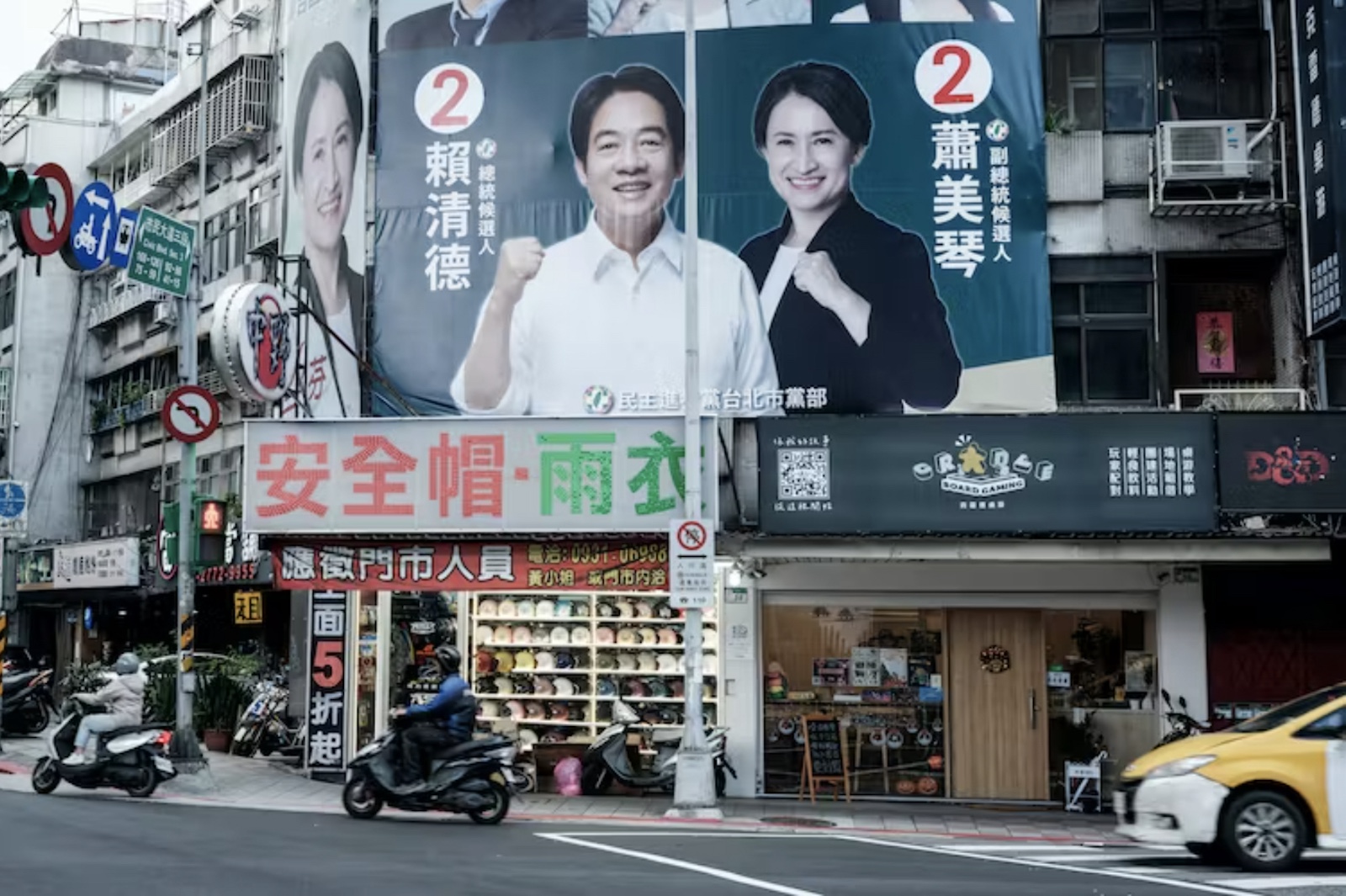
#Taiwan election could decide whether #China invades If Taiwan’s incumbent, independence-oriented party stays in power, Chinese leader Xi Jinping might feel he has no choice but to force the issue of reunification. Conversely, if the opposition – which agrees with Beijing that Taiwan and the mainland are part of “one China” but not about who governs it – wins, Beijing might feel it has more space to be patient on the issue. In the run-up to the vote, Beijing has ramped up military exercises in and around the Taiwan Strait in an apparent warning to Taiwanese voters. On January 6, in one of the most recent incidents, China sent a series of balloons over the island, which the Taiwan government cited as a threat to air travel and an attempt at intimidation. Meanwhile, in his annual New Year’s address, Xi stated that “China will surely be reunified,” raising fears internationally that he intends to pursue the issue militarily if necessary. For Washington, too, the outcome of the vote will have implications. The United States has cultivated strong ties with the current leadership of Taiwan. But recent tensions in the strait have raised the risk of war. US actions deemed provocative by Beijing, such as the 2022 visit of then-Speaker of the House Nancy Pelosi to Taiwan, have resulted in China upping its military threats in the strait. And this has raised speculation that China’s patience is growing thin and its timeline for reunification is growing shorter. Meanwhile, questions about the US capacity to respond to any Chinese aggression over Taiwan have risen; the specter of war in a third region of the world – after Ukraine and Israel – worries national security leadership in Washington. Independence on the ballot? The presidential election in Taiwan has come down to a three-way race. The front-runner is current Vice President William Lai, who is the candidate of the Democratic Progressive Party. The DPP views Taiwan as a sovereign country and does not seek reunification with China. Lai’s challengers are New Taipei City mayor Hou Yu-ih, of the Kuomintang (KMT), and Ko Wen-je, a former mayor of Taipei running for the center-left Taiwan People’s Party (TPP). The KMT embraces the idea of future reunification with China under a democratic government. The TPP criticizes both DPP and KMT platforms on cross-strait relations as too extreme and seeks a middle ground that maintains the status quo: A Taiwan that is de facto sovereign but with strong economic and cultural ties with China. Taiwan law mandates that no polls are published in the 10 days before the election. As of Jan. 3, when the final polls were published, averages had Lai leading with 36%, with Hou at 31% and Ko at 24%. Lai has consistently led in the polls, prompting the KMT and TPP to earlier consider running on a joint ticket. But the two parties failed to agree on terms, and the coalition attempt imploded. This may prove crucial, as joining forces may have represented the best chance of a KMT candidate being elected – an outcome that may have cooled tensions with Beijing. Taiwanese democracy The island of Taiwan has been governed as the “Republic of China” since 1949 when the KMT lost a civil war to the Chinese Communist Party. The CCP set up the People’s Republic of China on the mainland, and the KMT retreated to Taiwan. For decades, both the Republic of China and the People’s Republic of China diverged on every possible policy except one: Both governments agreed that there was only one China, and that Taiwan was a part of China. They each sought to unite Taiwan and the mainland – but under their own rule. Although that remains the goal in Beijing today, for Taiwan the outlook has started to change. The change began with Taiwanese democratization – a process that began in the early 1990s after decades of autocratic rule. After gradually rolling out direct elections for the legislature, governors and mayors, the island held its first democratic election for president in 1996. Despite Beijing holding military exercises in the Taiwan Strait in an attempt to interfere with the vote, the KMT-affiliated incumbent won against a DPP candidate with strong ties to the Taiwan independence movement. Four years later, the DPP’s candidate won and started the first of two consecutive terms. In 2008, a KMT candidate returned to power. But since 2016, Taiwan has been led by Tsai Ing-wen of the DPP. Cross-strait tensions tend to rise when the DPP is in office and calm somewhat when the KMT is in power. This isn’t because the KMT agrees with Beijing over the status of Taiwan – the party has always been clear that unification could happen only under its own government and never under the leadership of the Communist Party in Beijing. But the KMT affirms the idea that eventual unification with China is its goal for Taiwan. In 1992, representatives of the KMT and the CCP met in Hong Kong and reached the “1992 Consensus.” Despite the name, the two sides do not fully agree on what it meant. The KMT affirmed the idea of one China but noted disagreement on what the government of that China should be; the People’s Republic of China interpreted it as affirming one China under CCP rule. Still, the 1992 Consensus became the basis of a series of policies strengthening cross-strait ties, and it made KMT-led governments easier for the PRC to tolerate. Pro-independence sentiment Though speculation about the geopolitical fallout and China’s reaction to the election has dominated coverage of the vote around the world, for Taiwan voters, independence is one of several critical issues the island faces. The economy frequently rises even above cross-strait issues in importance, with many voters expressing concern over the rapid rise of housing prices, stagnating salaries, slow economic growth and how the incumbent party handled the Covid-19 pandemic. On the issue of independence itself, Taiwanese polls have shown a creep toward pro-independence sentiment. As of September 2023, nearly half of Taiwanese voters said they preferred independence (48.9%) for the island, while 26.9% sought a continuation of the status quo. A shrinking minority – now just 11.8% – said they hoped for future reunification. If the DPP remains in power, Beijing may feel the pressure to force the issue of reunification. Xi has called for the Chinese military to be capable of a successful cross-strait invasion by 2027, though a forceful reunification effort might include a combination of economic blockade and military pressure. If that were to be the case, US commitments to Taiwan – along with US credibility among its Asian allies – could be on the line. President Joe Biden has repeatedly said that he is prepared to defend the island militarily against an attack from mainland China. Already in 2024, the US is having to contend with two significant conflicts that are demanding its attention. How Taiwanese voters mark their ballot – and how policymakers in Beijing respond – may determine whether a third war is more or less likely. Meredith Oyen is Associate Professor of History and Asian Studies, University of Maryland, Baltimore County. https://asiatimes.com/2024/01/taiwan-election-could-decide-whether-china-invades/

@IndoPac_Info - Indo-Pacific News - Geo-Politics & Defense News
#China bans export of rare earths processing tech over national security This is all about China trying to keep its near monopoly on rare earths. China, the world's top processor of rare earths, banned the export of technology to extract and separate the critical materials on Thursday, the country's latest step to protect its dominance over several strategic metals. Rare earths are a group of 17 metals used to make magnets that turn power into motion for use in electric vehicles, wind turbines and electronics. While Western countries are trying to launch their own rare earth processing operations, the ban is expected to have the biggest impact in so-called "heavy rare earths," used in EV motors, medical devices and weaponry, where China has a virtual monopoly on refining. "This should be a clarion call that dependence on China in any part of the value chain is not sustainable," said Nathan Picarsic, co-founder of the geopolitical consulting firm Horizon Advisory. China's commerce ministry sought public opinion last December on the potential move to add the technology to its "Catalogue of Technologies Prohibited and Restricted from Export." It also banned the export of production technology for rare earth metals and alloy materials as well as technology to prepare some rare earth magnets. The catalogue's stated aims include protecting national security and public interest. China has significantly tightened rules guiding exports of several metals this year, in an escalating battle with the West over control of critical minerals. It introduced export permits for chipmaking materials gallium and germanium in August, followed by similar requirements for several types of graphite since Dec. 1. "China is driven to maintain its market dominance," said Don Swartz, CEO of American Rare Earths, which is developing a rare earths mine and processing facility in Wyoming. "This is now a race." WEST STRUGGLES The move to protect its rare earth technology comes as Europe and the United States scramble to wean themselves off rare earths from China, which accounts for nearly 90% of global refined output. China has mastered the solvent extraction process to refine the strategic minerals, which MP Materials (MP.N) and other Western rare earth companies have struggled to deploy due to technical complexities and pollution concerns. Shares of MP, which has slowly begun increasing rare earths processing in California, jumped more than 10% on Thursday after China's move. The company did not immediately respond to requests for comment. Ucore Rare Metals (UCU.V) said on Thursday that it had finished commissioning of a facility to test its own rare earths processing technology, which is being funded in part by the U.S. Department of Defense. "New technologies will be needed to outmaneuver the Chinese grip on these important areas," said Ucore CEO Pat Ryan. Ucore's stock rose more than 16%. It is not clear to what extent China's rare earths technology is actually being exported. Beijing has discouraged its export for years, said Constantine Karayannopoulos, former CEO of Neo Performance Materials, which separates rare earths in Estonia. "This announcement just formalises what everyone knew to be the case," Karayannopoulos said. China separates 99.9% of global heavy rare earths, according to consultancy Benchmark Mineral Intelligence (BMI). Most of the Western processing capacity being installed is for "light" rare earths, including neodymium and praseodymium (NdPr). "Most likely, the impact of this ban will be in greater difficulty in getting heavy rare earth separation capacity online outside of China," said Daan De Jonge at BMI. "You can have all the NdPr separated in Europe or the U.S. as you want, but if you're still relying on dysprosium from China, you're still very exposed to geopolitical shocks." Reporting by Siyi Liu, Dominique Patton and Beijing newsroom; additional reporting by Eric Onstad in London and Ernest Scheyder in Houston; editing by Toby Chopra, Jason Neely, Kirsten Donovan, Tomasz Janowski and Jonathan Oatis.

@IndoPac_Info - Indo-Pacific News - Geo-Politics & Defense News
#China Is Slowly Erasing #Tibet's Name The Chinese government is gradually dropping the name "Tibet" in official English-language references in favor of the region's Mandarin Chinese name—"Xizang"—with experts saying the move is in line with Beijing policies aimed at erasing Tibetan culture. The propaganda department of China's State Council, its central government, last week released a white paper on "Governance of Xizang in the New Era." Though the term "Tibetan" is used to refer to the region's people and geographical features like the Tibetan Plateau, Xizang is used exclusively when referring to the southwestern region's official name. The document comes on the heels of a Chinese forum in October in the Tibetan city of Nyingchi, where Chinese Foreign Minister Wang Yi rebuffed Western human rights concerns and invited international visitors to another government-organized showcase of ethnic culture in the heavily policed region. "Xizang" was reportedly displayed in lieu of "Tibet" for the English translation of his opening speech. The Chinese Foreign Ministry had not responded to Newsweek's request for comment before publication. "The Chinese government was desperate enough to propagate Xizang to create a Tibet of Chinese characteristics which is unknown to the world," Tenzin Lekshay, a spokesperson for the Central Tibetan Administration, the Tibetan government-in-exile, said of Beijing's report. Your daily briefing of everything you need to know "This time, the Chinese government is rigorous in changing the name in all the official records and communications, which is strictly designed to fulfill their political ambition of legitimizing their claim over Tibet by dividing and annihilating Tibet," he told Newsweek. Lekshay said the Sino-Tibet conflict was long-running and that changing the name would complicate rather than improve the situation. Beijing says its policies have improved the lives of those living in the sparsely populated region. The recent white paper lauded the Chinese Communist Party's policies and said state-directed development had achieved "victory in the battle against extreme poverty that had plagued Xizang for thousands of years." On the cultural front, the paper said it had helped people of all ethnic backgrounds in the region to "develop a sound understanding of our nation and our country, and of history, culture and religion." Many in the Tibetan diaspora, however, say Beijing is bent on sinicizing the former Buddhist monarchy, which was annexed by China in 1951. In February, members of an independent fact-finding mission mandated by theUnited Nations Human Rights Office found the vast majority of children in Tibet, or about 1 million, were placed in boarding schools, as opposed to the Chinese national average of 20 percent. The curriculum was almost exclusively taught in Mandarin, with a learning environment based on the culture and experiences of China's Han ethnic majority. "As a result, Tibetan children are losing their facility with their native language and the ability to communicate easily with their parents and grandparents in the Tibetan language, which contributes to their assimilation and erosion of their identity" the fact-finders said. "China's leaders are acutely aware their occupation of Tibet, including a coercive system of residential boarding schools now housing one million Tibetan children, is viewed as a serious problem by the international community and so they are literally trying to erase Tibet from global consciousness by replacing the name Tibet with the Chinese word 'Xizang,'" Lhadon Tethong, director of the Tibet Action Institute, a rights advocacy group, told Newsweek. "Language matters, and it's critical the international community does not comply with China's effort to hide its crimes in Tibet through this cynical and manipulative ploy," she said. "Beijing's strategy in Tibet is that of a gradual cultural genocide," German scholar Adrian Zenz, who has written extensively about forced labor and forced assimilation in China's western Xinjiang region, told Newsweek. The strategy spans both linguistic assimilation and "targeted separation of children from parents through the expanding boarding school system," Zenz said. In August, the U.S. State Department announced visa restrictions on officials allegedly involved in forcibly assimilating Tibetan children in government boarding schools. "We urge [People's Republic of China] authorities to end the coercion of Tibetan children into government-run boarding schools and to cease repressive assimilation policies, both in Tibet and throughout other parts of the PRC. We will continue to work with our allies and partners to highlight these actions and promote accountability," Secretary of State Antony Blinken said of the sanctions. Blinken also raised the issue of human rights in Tibet, as well as in Xinjiang and Hong Kong, when he met with Foreign Minister Wang during the latter's visit to Washington in late October to pave the way for this week's meeting between Chinese President Xi Jinping and Joe Biden. "Renaming a country is so obviously a move from the colonial playbook that I think most international governments and institutions would recognize it as such and be unlikely to easily go along with China," Tethong said of Beijing's new naming convention. However, she said Chinese authorities clearly saw it as a priority and would thus exert pressure to reinforce it where they can. China has been accused of threatening and harassing dissidents or the families of dissidents who have fled Tibet—or Xinjiang, Hong Kong and elsewhere—and speak out against Chinese government activities back home. "The PRC utilizes a wide variety of tactics, including online harassment, exit bans on or imprisonment of family members of targeted individuals, the misuse of international law enforcement systems such as Interpol, and pressure on other governments to forcibly return targeted individuals to the PRC," Uzra Zeya, the under secretary for civilian security, democracy and human rights—and America's special coordinator for Tibetan issues—said in September at a congressional hearing on transnational repression.

@IndoPac_Info - Indo-Pacific News - Geo-Politics & Defense News
Talking to Biden, preparing for war — U.S. panel sees Xi bracing #China for conflict to come Congressional committee report sees Beijing preparing for conflict in region as it builds up forces. Chinese President Xi Jinping is preparing his military forces for war and directing the rest of the country to prepare for economic hardships that conflict would bring, according to the latest annual report from a congressional commission on China. The Chinese leader, who also heads the ruling Communist Party and is scheduled to have his first face-to-face meeting in a year with President Biden on Wednesday, has called on government officials and the population to prepare for “worst-case” and “extreme” scenarios as a result of heightened tensions with the United States and its allies in the region. The 753-page report to Congress by the U.S.-China Economic and Security Review Commission includes an alarming list of indicators that Beijing is preparing for war with the United States. “Throughout 2023, China accelerated its political, military, economic and information pressure against Taiwan, raising further concerns of potential military action,” Commission co-Chair Carolyn Bartholomew said in releasing the report from the influential advisory body. On the eve of the meeting with Mr. Biden, the panel said Washington had little to show for a flurry of meetings between senior leaders in recent months trying to moderate Beijing’s policies. “China now appears to view diplomacy with the United States primarily as a tool for forestalling and delaying US pressure over a period of years while Chinamoves ever further down the path of developing its own economic, military and technological capabilities,” the report said. ‘Danger on all fronts’ Commanders of the U.S. Indo-Pacific Command have warned Congress for several years that China could use military force against Taiwan in the coming years. Mr. Biden has vowed to defend the island militarily. The Indo-Pacific Command intelligence chief, Rear Adm. Mike Studeman, has warned that a war with China could erupt from a separate regional confrontation. “It’s danger on all fronts,” Adm. Studeman said in a 2021 speech. China’s maritime militia in recent weeks rammed a Philippine resupply ship and used water cannons against other ships that sought to resupply a grounded Philippine warship at a disputed outpost in the Spratly Islands that both countries claim as their territory. The United States has a defense treaty with Manila that the State Department has said would cover any attack on Philippine vessels, military or civilian. Japan has been squaring off against China over the uninhabited Senkaku Islands in the East China Sea that both countries claim. Commission Vice Chairman Alex Wong said the report was released at a critical time, given the high-profile Xi-Biden meeting after months of bilateral tensions and efforts to repair diplomatic and military communications. “There is a broader realization not just in Washington, D.C., and not just in the capitals of our friends and allies, but across the peoples of the free world that the Chinese Communist Party represents a generational challenge to the international order,” he said. According to the bipartisan commission report, the Chinese government is bracing for severe economic damage from international sanctions, foreign economic controls and sharpened strategic rivalry, “including the possibility of an open war over Taiwan.” Last year, Mr. Xi ordered the nation to harden all aspects of the country for worst-case scenarios and uphold CCP control with a “fighting spirit.” The Chinese leader blamed the United States and its allies for recent economic and diplomatic problems resulting from “containment, encirclement and suppression.” “The military must … focus on combat ability as the fundamental and only criterion, concentrate all energy on fighting a war, direct all work towards warfare and speed up to build the ability to win,” Mr. Xi said, in a quote cited in the congressional panel’s report. The war preparations have been backed by legislative, budgetary and logistics moves. The report said those are clear signs that Chinese leaders are “taking preliminary but limited steps to enable effective war mobilization by the military.” Among the steps are regulations that will enable the faster call-up of military reservists and the conscription of additional troops from retired People’s Liberation Army soldiers. PLA recruiters also are picking up students with science and engineering backgrounds for military cyberdefense and space warfare units. New military recruitment centers have been opened since late last year, and air raid shelters are being upgraded. In a sign that Beijing is preparing for casualties from a coming conflict, a “wartime emergency hospital has been set up in Fujian Province, across the 100-mile-wide Taiwan Strait from Taiwan,” the report said. The Chinese government announced plans to increase grain production “in the event a war disrupts global supply chains,” the report said, and, to counter anticipated foreign sanctions in a war, new regulations call for countermeasures in the event China faces sanctions and export controls. Moritz Rudolf, a specialist at the Yale Law School Paul Tsai China Center, told the commission that the regulation’s vague language “sends the signal that the necessity to prepare for ‘international struggle’ outweighs the other elements of the PRC’s foreign relations.” Pressure on Taiwan The report warns that the military situation in the Taiwan Strait remains tense as a result of China’s acceleration of a campaign of near-daily military pressure against the island, including large-scale war games, regular aircraft intrusions into Taiwan’s air defense zone, warship deployments encircling the island, missile firings over Taiwan and drills simulating attacks on the island. Chinese military strategists are studying the war in Ukraine for lessons that the PLA can apply in a Taiwan conflict, such as the use of drones and commercial Starlink satellites for military communications, the report said. Low-level conflict against Taiwan also included the use of two Chinese-flagged vessels, a fishing ship and a container ship, that “deliberately cut two undersea internet cables used by Taiwan’s outlying Matsu Island in February 2023,” the report said. Better weapons The report highlighted the development of advanced weapons systems designed to provide China with an edge over U.S. forces, including multiple types of advanced missiles capable of hitting ships at sea with either conventional or nuclear warheads. Cyberdefense and space weapons also advanced systems that could be used to cripple U.S. military forces. One unique weapon system showcased in the report is China’s new space-based nuclear weapon, called a fractional orbital bombardment system, or FOBS. The advancement “raises the possibility that China could permanently deploy nuclear weapons in space, effectively adding a fourth leg to its nascent nuclear triad,” the report said. The current Chinese triad, like that of the U.S. military, comprises ground-based nuclear missiles, missile submarines and bombers. “China’s deployment of such a [FOBS] system would deprive the United States of early warning” and increase the danger of a nuclear conflict, the report said. As with past annual reports, the new China commission report includes developments in security and economic relations and makes recommendations for U.S. policymakers. The sections on U.S.-China trade and economic matters included an examination of how China uses financing deals with foreign nations to promote its goals and the impact of the Biden administration’s “de-risking” policy to protect U.S. interests from Chinese actions on issues such as supply chain resilience and technology transfers. The report includes a section on how China is using heavy-handed and aggressive measures against its regional neighbors while challenging international norms and exploiting the weaknesses of open societies. Influence operations A section of the report focuses on China’s aggressive efforts to shape public and elite opinion around the world in support of its policies. “Under Xi’s rule, China’s overseas influence activities are now more prevalent, institutionalized, technologically sophisticated, and aggressive than under his predecessors,” the report said. Chinese military basing facilities are growing, and espionage operations are “intensified,” showing increased sophistication against foreign spy targets, the report said. Chinese surveillance and military facilities deployed in Cuba could lead to electronic spying against people in the United States. China could use the Cuban facilities to monitor and potentially disrupt U.S. military deployments and material shipments during a war, the report said. A naval base for Chinese military forces is being built in Cambodia. According to the report, China is even seeking to control access to the moon for strategic purposes. “Beijing is working to establish a long-term presence in space, which it seeks to accomplish by first dominating the cislunar domain, or the space between Earth and the moon,” the report said, noting plans by China to build a lunar base by 2030. The report quotes Jeff Gossel, an analyst with the Air Force National Air and Space Intelligence Center, as saying a Chinese satellite orbiting the moon “could allow China to fly to the far side of the moon and attack U.S. satellites in geosynchronous orbits.”

@IndoPac_Info - Indo-Pacific News - Geo-Politics & Defense News
Why the #Philippines is exiting the Belt and Road Manila announces termination of #China backed infrastructure projects as geopolitics takes policy precedence over economics. Just days after a Chinese vessel collided with a Philippine resupply mission in the South China Sea, Philippine Transportation Secretary Jaime Batista announced that the Philippines is scrapping $4.9 billion worth of Chinese big-ticket infrastructure projects, involving two railway projects on the northern island of Luzon and another on Duterte’s home southern island of Mindanao. Philippine President Ferdinand Marcos Jr was among the 23 national leaders who attended last month’s Belt and Road Initiative (BRI) summit in Beijing, marking the 10th anniversary of the US$1 trillion globe-spanning infrastructure-building program. At the event, Chinese President Xi Jinping announced close to $100 billion in new state policy bank financing for the initiative. In a white paper published last month, China maintained “the ultimate goal of the BRI is to help build a global community of shared future.” But the Philippines won’t be among the recipients of China’s largesse or shared future as Marcos Jr’s administration swerves decidedly away from China’s monied but troubled program for paving its global influence. In a major development with geopolitical implications, the Philippine Department of Transportation has announced the full termination of a series of big-ticket infrastructure projects with China in favor of Japanese and Western rivals. According to the Philippine Senate, nearly all of China’s key investment initiativesin the Philippines are now in doubt due to both economic and political factors. The upshot is a new nadir in Philippine-China relations, a dramatic about-turn from the six years of warm engagement under the pro-Beijing Rodrigo Duterte presidency. For the Philippines, China has largely engaged in “pledge trap” diplomacy during the Duterte administration, a cynical ploy that entailed forward-deployed concessions in the South China Sea in exchange for largely illusory investment pledges. China pledged as much as $24 billion in infrastructure projects under Duterte, nearly none of which have been delivered. Marcos Jr’s apparent departure from the BRI is rooted in deep bilateral grievances over contested territories in the South China Sea. Most recently, the Marcos Jr administration expressed vocal outrage over China’s harassment of Philippine resupply and patrol missions on and around the Second Thomas Shoal, where Manila maintains troops on a grounded ship. Following a recent collision between Chinese and Philippine sea vessels, US President Joe Biden made it clear that America will respond to any attack on Philippine ships, aircraft or soldiers stationed in the South China Sea as outlined under the Philippine-US Mutual Defense Treaty (MDT). From Beijing’s perspective, however, the Marcos administration has walked back its earlier commitment to pursue a “new golden era” of bilateral relations by actively courting a stronger US military presence on its soil. Under an expanded Enhanced Defense Cooperation Agreement (EDCA), the Pentagon is set to gain access to a whole host of military facilities close to both the South China Sea as well as Taiwan’s southern shores. Upon closer examination, however, it’s becoming clear to many observers that the BRI is under strain amid China’s economic slowdown, property crisis and various investment debacles overseas. From its peak in 2018, China’s overall BRI-related activities are down by some 40%, according to recent reports. This is partly due to declining financing from Beijing as well as regulatory hurdles and financial fragility in various recipient countries. A recent research report published by Boston University found that while China’s development finance institutions provided partner nations with about $331 billion between 2013 and 2021, “many of the recipients of Chinese finance are subject to significant debt distress.” By some accounts, China spent as much as $240 billion to bail out BRI recipient nations on the verge of bankruptcy, most dramatically in the case of Sri Lankaand increasingly in Pakistan and Laos. Heightened China-Philippine sea tensions have coincided with a virtual collapse in bilateral investment deals. Though two-way trade between the two neighbors remains robust, although largely in Beijing’s favor, nearly all of Beijing’s infrastructure investment pledges made during the Duterte era are now in jeopardy. Just days after a Chinese vessel collided with a Philippine resupply mission in the South China Sea, Philippine Transportation Secretary Jaime Batista announced that the Philippines is scrapping $4.9 billion worth of Chinese big-ticket infrastructure projects, involving two railway projects on the northern island of Luzon and another on Duterte’s home southern island of Mindanao. “We have three projects that won’t be funded by the Chinese government anymore. We can’t wait forever and it seems like China isn’t that interested anymore,” Bautista told a forum organized by European investors in Manila. Instead, the Philippines is now seeking alternative “better” deals from traditional investment partners like Japan, South Korea, the US and the European Union. The Filipino official complained about the lack of financial commitment and perceived as relatively onerous terms of Chinese-funded projects in comparison to Japan’s concessional loan programs. Japan is currently developing a multi-billion subway project in Manila and several major “connectivity” initiatives in industrialized regions of the country. In fact, the Marcos Jr administration warned as early as last year of the potential cancellation of Chinese-backed projects due to the lack of any meaningful progress on the ground. The issue was also raised during the Philippine president’s state visit to Beijing in January, to no avail of a renewed Chinese commitment. According to Philippine Senator Sherwin Gatchalian, as many as six big-ticket Chinese projects are now being “reconsidered” due to Chinese delays, concerns over lending terms and broader geopolitical frictions. Chinese projects likely to face Manila’s axe include the Samal Island-Davao City Connector project; the Chico River Pump Irrigation Project; the New Centennial Water Source — Kaliwa Dam Project; the Philippine National Railways South Long Haul Project or the PNR Bicol; the Mindanao Railway Project Tagum-Davao-Digos segment; and a closed-circuit television project in several cities in Metro-Manila. “We [in the senate] convened an oversight on [China’s] ODA [Official Development Assistance], so I know that many of the ODA-funded projects are delayed due to the implementation of the right of way and bidding,” Gatchalian said in an interview. “China’s grace period is shorter with only five to seven years compared to Japan with five to almost 10 years, which means (with China) we would need to immediately pay and it would be more expensive. Let’s compare the economics: it is cheaper in Japan,” he said. But as the Philippines effectively pulls out of China’s BRI, the risk of a more volatile downward spiral in bilateral ties is rising. And it remains to be seen whether Japan, the US, South Korea and Europe will actually fill the infrastructure gap China had earlier pledged to address.
