TruthArchive.ai - Tweets Saved By @JanuaryDoNoHarm

Saved - December 21, 2025 at 3:31 PM

@JanuaryDoNoHarm - January Littlejohn

How do @UMichAlumni feel about their university not only promoting gender ideology pseudoscience to their pediatric patients, but also chemically castrating children with puberty blockers & performing double mastectomies on teen girls? Let’s meet one of their doctors. 🧵 https://t.co/kdNrszz3xl

Video Transcript AI Summary
Michigan Medicine strives to be a safe, welcoming place for transgender individuals and to provide excellent health care regardless of gender. The goal of this video is to improve the comfort and competency of frontline staff in caring for transgender individuals. We will start by talking about gender identity, challenges the transgender community has faced in the health care system, and Michigan's policies regarding gender non-discrimination. The second half of this training is job specific. To discuss gender identity, it is important to understand the difference between sex and gender. Sex refers to one's reproductive organs, native hormones, and chromosomes, while gender identity refers to one's internal sense of gender, a person's basic sense of being a man or boy, a woman or girl, or another gender. Gender identity can be expressed by how individuals present themselves socially, including clothing, physical characteristics, speech, and mannerisms. All people, whether they are transgender or cisgender, meaning not transgender, have a gender identity and expression. Transgender is a term for individuals whose gender identity differs from the gender identity typically associated with their sex assigned at birth. There are many identities that fall under the umbrella of transgender. Transgender men, trans men, or trans masculine refer to people who are assigned female sex at birth but identify as men or masculine. Transgender women, trans women, or trans feminine refer to people who were assigned male sex at birth but identify as women or feminine. Other individuals may identify as genderqueer, agender, genderfluid, two spirited, bigender, or another identity that does not fit neatly into the categories of men or women. All major American medical societies, including the American Medical Association and American Psychological Association, endorse gender affirming care as the standard of care for transgender individuals. This means caring for people in a way that supports their gender transition and gender identity. Transgender people may undergo any one of a number of gender affirming medical interventions, including hormonal therapies like estrogen, testosterone, or hormone blockers, and surgical treatment to change body contours or genitalia. However, it is important to note that one does not have to undergo any medical or surgical treatment to be transgender. Some people are easily read as the gender they affirm while others are visibly gender non conforming or androgynous appearing.
Full Transcript
Speaker 0: Michigan Medicine strives to be a safe, welcoming place for transgender individuals and to provide excellent health care regardless of gender. The goal of this video is to improve the comfort and competency of frontline staff in caring for transgender individuals. We will start by talking about gender identity, challenges the transgender community has faced in the health care system, and Michigan's policies regarding gender non discrimination. The second half of this training is job specific. In order to discuss gender identity, it is important to understand the difference between sex and gender. Sex refers to one's reproductive organs, native hormones, and chromosomes, while gender identity refers to one's internal sense of gender, a person's basic sense of being a man or boy, a woman or girl, or another gender. Gender identity can be expressed by how individuals present themselves socially, including clothing, physical characteristics, speech, and mannerisms. All people, whether they are transgender or cisgender, meaning not transgender, have a gender identity and expression. Transgender is a term for individuals whose gender identity differs from the gender identity typically associated with their sex assigned at birth. There are many identities that fall under the umbrella of transgender. Transgender men, trans men, or trans masculine refer to people who are assigned female sex at birth but identify as men or masculine. Transgender women, trans women, or trans feminine refer to people who were assigned male sex at birth but identify as women or feminine. Other individuals may identify as genderqueer, agender, genderfluid, two spirited, bigender, or another identity that does not fit neatly into the categories of men or women. All major American medical societies, including the American Medical Association and American Psychological Association, endorse gender affirming care as the standard of care for transgender individuals. This means caring for people in a way that supports their gender transition and gender identity. Transgender people may undergo any one of a number of gender affirming medical interventions, including hormonal therapies like estrogen, testosterone, or hormone blockers, and surgical treatment to change body contours or genitalia. However, it is important to note that one does not have to undergo any medical or surgical treatment to be transgender. Some people are easily read as the gender they affirm while others are visibly gender non conforming or androgynous appearing.
Saved - August 10, 2025 at 7:52 AM
reSee.it AI Summary
Boston Children’s Hospital seems to want to erase their past pride in administering puberty blockers, cross-sex hormones, and surgeries to children. I appreciate @BillboardChris for bringing attention to this issue and exposing their marketing videos.

@JanuaryDoNoHarm - January Littlejohn

Boston Children’s Hospital wants you to forget they were proud of poisoning vulnerable children with puberty blockers & cross sex hormones & cutting off their healthy body parts in their marketing videos. Thank you to @BillboardChris for exposing these. Here are all of them.🧵 https://t.co/MYUbcXoAst

Video Transcript AI Summary
A gender affirming hysterectomy is very similar to most hysterectomies that occur. Hysterectomy itself is the removal of the uterus, the cervix, which is the opening of the uterus, and the fallopian tubes, which are attached to the sides of the uterus. Some gender affirming hysterectomies will also include the removal of the ovaries, but that's technically a separate procedure called a bilateral oophorectomy. And not every gender affirming hysterectomy includes that, and people who are getting gender affirming hysterectomies do not have to have their ovaries removed.
Full Transcript
Speaker 0: A gender affirming hysterectomy is very similar to most hysterectomies that occur. Hysterectomy itself is the removal of the uterus, the cervix, which is the opening of the uterus, and the fallopian tubes, which are attached to the sides of the uterus. Some gender affirming hysterectomies will also include the removal of the ovaries, but that's technically a separate procedure called a bilateral oophorectomy. And not every gender affirming hysterectomy includes that, and people who are getting gender affirming hysterectomies do not have to have their ovaries removed.

@JanuaryDoNoHarm - January Littlejohn

https://t.co/aXuTpdR1c0

Video Transcript AI Summary
For bottom surgery, hair removal is extremely important. For hair removal for a vaginoplasty, you can use laser. And because we're usually using penile inversion vaginoplasty, we need that hair to be removed because that's going to be the inside of the new lining of the cavity. Not only do we not want hair in there, it also can cause a lot of complications. So we go through that with you before, and then we do many hair checks as well to make sure that you're on the right path.
Full Transcript
Speaker 0: For bottom surgery, hair removal is extremely important. For hair removal for a vaginoplasty, you can use laser. And because we're usually using penile inversion vaginoplasty, we need that hair to be removed because that's going to be the inside of the new lining of the cavity. Not only do we not want hair in there, it also can cause a lot of complications. So we go through that with you before, and then we do many hair checks as well to make sure that you're on the right path.

@JanuaryDoNoHarm - January Littlejohn

https://t.co/hzx1GOvdeC

Video Transcript AI Summary
I love talking about what it means to be non binary. I'm non binary. And so I use they, them, their pronouns. So when we think about non binary, really what we're talking about is people of a variety of gender diverse identities that are outside of the typical traditional gender binary. Man and woman is typically what we think about as the gender binary. So non binary folks are those of us who live within that, outside of that, beyond it, and essentially transcend it in some way. So it might be folks that feel like they're a combination of masculine and feminine or that they're entirely outside of that construct or that context altogether.
Full Transcript
Speaker 0: I love talking about what it means to be non binary. I'm non binary. And so I use they, them, their pronouns. So when we think about non binary, really what we're talking about is people of a variety of gender diverse identities that are outside of the typical traditional gender binary. Man and woman is typically what we think about as the gender binary. So non binary folks are those of us who live within that, outside of that, beyond it, and essentially transcend it in some way. So it might be folks that feel like they're a combination of masculine and feminine or that they're entirely outside of that construct or that context altogether.

@JanuaryDoNoHarm - January Littlejohn

https://t.co/TVsqURERqi

Video Transcript AI Summary
"The eligibility for getting gender affirming surgeries at Boston Children's Hospital is basically the same as it would be for most other hospitals or surgeons in The United States." "And that's the case because we all follow the World Professional Association for Transgender Health or WPATH standards of care." "For top surgery, you are requested, but not required to have been on gender affirming hormones for at least a year." "If you're a trans woman, it's really encouraged that you be on estrogen for at least a year because you want to maximize your natural breast growth." "Many surgical centers require you to be 18." "At Boston Children's Hospital for top surgeries, we'll see people as young as age 15 if they've been affirmed in their gender for a long period of time and don't really have any other life complications that make surgery inappropriate."
Full Transcript
Speaker 0: The eligibility for getting gender affirming surgeries at Boston Children's Hospital is basically the same as it would be for most other hospitals or surgeons in The United States. And that's the case because we all follow the World Professional Association for Transgender Health or WPATH standards of care. For top surgery, you are requested, but not required to have been on gender affirming hormones for at least a year. If you're a trans woman, it's really encouraged that you be on estrogen for at least a year because you want to maximize your natural breast growth. Many surgical centers require you to be 18. At Boston Children's Hospital for top surgeries, we'll see people as young as age 15 if they've been affirmed in their gender for a long period of time and don't really have any other life complications that make surgery inappropriate. You also have to come in with what we refer to as the letters. One of those letters is from the primary care provider or the hormone prescriber, basically saying that you've been diagnosed with gender dysphoria, that this surgery is appropriate for you, that you understand the surgery, and that there's no medical reasons why you can't have the surgery. The second letter is from a behavioral health provider, diagnoses you with gender dysphoria. A really good letter shares your gender history. And they tell us if there's anything we need to know about your mental health that could affect your eligibility for surgery. Looking forward to genital surgeries, and these we really start at age 18, age 17 for very few transgender women where it's really appropriate. You actually need a second letter from another behavioral health professional. And the purpose of that letter is to make certain that you understand the fertility implications about the surgery and you're really making an informed decision to eliminate your future fertility potential if you haven't already banked gametes or done other fertility preservation.

@JanuaryDoNoHarm - January Littlejohn

https://t.co/21xBUuYyJG

Video Transcript AI Summary
Penile inversion vaginoplasty is the full name of vaginoplasty. In this procedure, the surgical team is creating the outer and the inner vagina. The reason it's called penile inversion vaginoplasty because we use the penile skin and the scrotal skin in order to reconstruct the vagina. By doing so, we break it down to all of its components and we use some of the tissue to reconstruct things the way they were supposed to be for that patient.
Full Transcript
Speaker 0: Penile inversion vaginoplasty is the full name of vaginoplasty. In this procedure, the surgical team is creating the outer and the inner vagina. The reason it's called penile inversion vaginoplasty because we use the penile skin and the scrotal skin in order to reconstruct the vagina. By doing so, we break it down to all of its components and we use some of the tissue to reconstruct things the way they were supposed to be for that patient.

@JanuaryDoNoHarm - January Littlejohn

https://t.co/abNdx2Xy1T

Video Transcript AI Summary
- "Vaginoplasty is a relatively big procedure." - "It takes about between four to six hours in the Operating Room and therefore there is some swelling involved, there's some pain involved." - "But most of the times we actually administer epidural anesthesia as well, which helps a lot with the pain management for the patient." - "A very big component of the vaginoplasty procedure is the post op care." - "Seven to ten days after the procedure, the patient is required to start doing dilations." - "In the dilations, they are using different sizes of dilators gradually, and they need to do that several times a day for minutes a day." - "The reason for that is because otherwise the cavity will not be maintained and the old reconstruction can be lost."
Full Transcript
Speaker 0: Vaginoplasty is a relatively big procedure. It takes about between four to six hours in the Operating Room and therefore there is some swelling involved, there's some pain involved, But most of the times we actually administer epidural anesthesia as well, which helps a lot with the pain management for the patient. A very big component of the vaginoplasty procedure is the post op care. Seven to ten days after the procedure, the patient is required to start doing dilations. In the dilations, they are using different sizes of dilators gradually, and they need to do that several times a day for minutes a day. The reason for that is because otherwise the cavity will not be maintained and the old reconstruction can be lost.

@JanuaryDoNoHarm - January Littlejohn

https://t.co/KvZXFXptNJ

Video Transcript AI Summary
A child will often know that they are transgender from the moment that they have any ability to express themselves, and parents will often tell us this. We have parents who tell us that their kids, they knew from the minute they were born practically, and actions like refusing to get a haircut or standing to urinate, trying on siblings' clothing, playing with the quote opposite gender toys, things like that. There is more and more a group of adolescents that we are seeing that really are coming to the realization that they might be trans or gender diverse a little bit later on in their life. So what we're seeing from them is that they always sort of knew something was maybe off and didn't have the understanding to know that they might be trans or have a different gender identity than the one they had been assigned. So that is a growing population that we are seeing and that's being recognized as being trans and able to be treated.
Full Transcript
Speaker 0: A child will often know that they are transgender from the moment that they have any ability to express themselves, and parents will often tell us this. We have parents who tell us that their kids, they knew from the minute they were born practically, and actions like refusing to get a haircut or standing to urinate, trying to stand to urinate, refusing to stand to urinate, trying on siblings' clothing, playing with the quote opposite gender toys, things like that. There is more and more a group of adolescents that we are seeing that really are coming to the realization that they might be trans or gender diverse a little bit later on in their life. So what we're seeing from them is that they always sort of knew something was maybe off and didn't have the understanding to know that they might be trans or have a different gender identity than the one they had been assigned. So that is a growing population that we are seeing and that's being recognized as being trans and able to be treated.

@JanuaryDoNoHarm - January Littlejohn

https://t.co/mJkwqr38FF

Video Transcript AI Summary
A lot of parents have questions about social transition at a young age. There are no exact guidelines. Again, everybody has their own gender journey and everything feels right or wrong depending on the family. However, many kids do decide to pursue a social transition. Usually that will start with changing their name or their pronouns. They might want to just try dressing a different way or using a different name at home to get used to it and for the family to get used to it. Some people might want to do it on a vacation where they don't really know anyone as a way to try it out. And then slowly over time they might move into using that more with loved ones at school or with friends. However, kids do benefit from social transition over time.
Full Transcript
Speaker 0: A lot of parents have questions about social transition at a young age. There are no exact guidelines. Again, everybody has their own gender journey and everything feels right or wrong depending on the family. However, many kids do decide to pursue a social transition. Usually that will start with changing their name or their pronouns. They might want to just try dressing a different way or using a different name at home to get used to it and for the family to get used to it. Some people might want to do it on a vacation where they don't really know anyone as a way to try it out. And then slowly over time they might move into using that more with loved ones at school or with friends. And that really is up to the family at the pace that that goes. However, kids do benefit from social transition over time. It appears to help with distress and help kids feel more confident and happy in their gender.

@JanuaryDoNoHarm - January Littlejohn

https://t.co/2atLbQITVM

Video Transcript AI Summary
"Speaker 0: A phalloplasty is a procedure to basically create a penis or a phallus for an individual who was born biological female and who seeks transition to, a male, gender." "Speaker 0: The procedure is done with plastic surgeons and urologists." "Speaker 0: The urologists manipulate the tissues in the surrounding area to lengthen the urethra." "Speaker 0: A new scrotum is created and, some of the anatomical parts of, the female anatomy are removed." "Speaker 0: We typically utilize tissue from elsewhere." "Speaker 0: For example, the forearm or the thigh is used." "Speaker 0: The plastic surgeons are also responsible for, providing sensation by doing the nerve coaptation so that the new phallus will have sensation, and also responsible for reestablishing the blood supply, and also to shape it in a way that appears more physiologically and anatomically like a natural one."
Full Transcript
Speaker 0: A phalloplasty is a procedure to basically create a penis or a phallus for an individual who was born biological female and who seeks transition to, a male, gender. The procedure is done with plastic surgeons and urologists. The urologists manipulate the tissues in the surrounding area to lengthen the urethra. A new scrotum is created and, some of the anatomical parts of, the female anatomy are removed. The plastic surgeons are in charge of creating a new tissue that will ultimately meet the lengthened urethra and the additional tissue that's been moved to, create, the, neophallus. We typically utilize tissue from elsewhere. For example, the forearm or the thigh is used. The plastic surgeons are also responsible for, providing sensation by doing the nerve coaptation so that the new phallus will have sensation, and also responsible for reestablishing the blood supply, and also to shape it in a way that appears more physiologically and anatomically like a natural one.

@JanuaryDoNoHarm - January Littlejohn

https://t.co/PI3XPoa1TQ

Video Transcript AI Summary
- "Puberty blockers are a group of medications or hormones that we use in the transgender population to stop puberty from progressing." - "We call them in endocrinology gonadotropin releasing hormone analogs or agonists." - "Their job is to really interfere with the signaling from the brain to either the ovaries or the testicles that produce the hormones." - "When somebody starts puberty, we can use them to stop the puberty from progressing, thereby allowing somebody to really explore their gender without the pressure of having secondary sex characteristics that are often permanent." - "And the really nice thing about puberty blockers is that they are reversible, so it's a really nice way for an adolescent to be able to explore their gender." - "We like to use them in birth assigned males who have already even gone through a full male puberty because they are able to then use a lower dose of estrogen."
Full Transcript
Speaker 0: Puberty blockers are a group of medications or hormones that we use in the transgender population to stop puberty from progressing. They're a class of medication. We call them in endocrinology gonadotropin releasing hormone analogs or agonists, and their job is to really interfere with the signaling from the brain to either the ovaries or the testicles that produce the hormones. When somebody starts puberty, we can use them to stop the puberty from progressing, thereby allowing somebody to really explore their gender without having the pressure of having secondary sex characteristics that are often permanent. And the really nice thing about puberty blockers is that they are reversible, so it's a really nice way for an adolescent to be able to explore their gender. We like to use them in birth assigned males who have already even gone through a full male puberty because they are able to then use a lower dose of estrogen.

@JanuaryDoNoHarm - January Littlejohn

https://t.co/g3fwl9lODX

Video Transcript AI Summary
During the first bottom-surgery visit at Boston Children’s Hospital, the nurse introduces the team and sets expectations that you’ll meet many people and should not feel overwhelmed or try to remember everyone. The team’s goal is to provide information and answer questions. A social worker and physician's assistant review your medical and behavioral history and your goals for surgery to determine the best bottom-surgery option for you. Then Doctor Ganor and the nurse will wrap up the consult, cover the details of the surgery, post-operative expectations, needed support, how long you’ll be here, and review your questions. If you don’t have questions, staff provide information proactively. If you forget, you can call or email the team the next day; they’re accessible to help navigate the process because it can be a lot.
Full Transcript
Speaker 0: So when you come to Boston Children's Hospital for your first visit for bottom surgery, you'll see me first. I'm going to come in and say, Hi, my name's Maria. I'm your nurse. And I use pronouns she, her, hers. And just sort of explain that you're going meet a lot of folks on your visit today, not to be overwhelmed, not to try to remember everyone or everything. We're just here to give you more information and to answer your questions. After that, our social worker will come in with our physician's assistant, and they'll sit down and go over your medical history, your behavioral history, get your goals for surgery to help you figure out what type of bottom surgery will be best for you and to meet the goals that you are looking for. After that, Doctor. Ganor and myself will come in to wrap up the consult, go over surgery in detail, and talk about what to expect after surgery, what kind of help you might need, how long you'll be here, and really sit down and go through your question list. And if you don't have questions, we sort of know what patients come in asking, We just sort of give you all that information. Then if you go home and forget everything, you can call us the next day. You can email us. We're very accessible. We'll just sort of help navigate the process for you because it can be a lot.

@JanuaryDoNoHarm - January Littlejohn

https://t.co/gCQ8QKV6eK

Video Transcript AI Summary
"For someone who is assigned male at birth and if they've already been through puberty, they could produce a semen specimen and have it frozen." "If someone is assigned female at birth and they are also all the way through puberty, you can do egg banking, which entails a little bit more." "Typically, you have to take some additional hormone injections and it's a procedure to go in and retrieve the eggs." "We think someone has to be probably in mid male puberty to produce semen." "There have been some case reports of transgender men who were assigned female at birth who weren't completely through puberty and have been able to do fertility preservation, but we don't know if that applies to everybody." "We definitely counsel all of our patients about fertility preservation." "Usually from their first visit, we're starting to talk about it."
Full Transcript
Speaker 0: For someone who is assigned male at birth and if they've already been through puberty, they could produce a semen specimen and have it frozen. If someone is assigned female at birth and they are also all the way through puberty, you can do egg banking, which entails a little bit more. Typically, you have to take some additional hormone injections and it's a procedure to go in and retrieve the eggs. But I've had quite a few patients who have done it and been pleased that they've done it. It's a little bit more complicated if they haven't gone through puberty. We think someone has to be probably in a mid male puberty to produce semen. There have been some case reports of transgender men who were assigned female at birth who weren't completely through puberty and have been able to do fertility preservation, but we don't know if that applies to everybody. We definitely counsel all of our patients about fertility preservation. Usually from their first visit, we're starting to talk about it. We don't complete fertility preservation here at Boston Children's Hospital, but we have different specialists in the Boston area that do complete it, and we've heard great things about them from our patients.

@JanuaryDoNoHarm - January Littlejohn

https://t.co/KF2RXPtIEa

Video Transcript AI Summary
Transgender is an umbrella term to describe a person that feels a mismatch between their body characteristics and their gender identity. Until recent years we used to think of a gender as a binary thing, either a female or a male, but now we understand it's a little bit more complicated than that. It's actually composed of four different things. The first one is gender identity, which is how you define your gender in your own hand and how you feel about it. The second one is gender expression and how you express yourself, meaning how you dress up, what kind of a hairstyle you have, and how you talk. The third one is sexual orientation. And the fourth one is actually your body characteristics, including your chromosomes, your genitalia, and other secondary body characteristics like breasts and shoulders and width of your body.
Full Transcript
Speaker 0: Transgender is an umbrella term to describe a person that feels a mismatch between their body characteristics and their gender identity. Until recent years we used to think of a gender as a binary thing, either a female or a male, but now we understand it's a little bit more complicated than that. It's actually composed of four different things. The first one is gender identity, which is how you define your gender in your own hand and how you feel about it. The second one is gender expression and how you express yourself, meaning how you dress up, what kind of a hairstyle you have, and how you talk. The third one is sexual orientation. And the fourth one is actually your body characteristics, including your chromosomes, your genitalia, and other secondary body characteristics like breasts and shoulders and width of your body.

@JanuaryDoNoHarm - January Littlejohn

https://t.co/v4ESxSR1yA

Video Transcript AI Summary
"No matter what, bathrooms can definitely be tricky for not just transgender kids and teenagers, but non binary folks, or even cisgender folks who are gender non conforming." "Some of the, I think, helpful tips and tricks are find a close family member or friend who you feel comfortable with, who they're like your bathroom buddy." "It might seem silly at first, but it's really helpful and brings about a sense of security to have someone who you know has your back." "Sometimes using the bathrooms, if we can find a single user bathroom or a gender all inclusive one, often those are even just labeled family bathrooms, but they're there for people to use and they're there for transgender and gender diverse folks to use." "If those are there, think those are great options as well."
Full Transcript
Speaker 0: No matter what, bathrooms can definitely be tricky for not just transgender kids and teenagers, but non binary folks, or even cisgender folks who are gender non conforming. To navigate that, I think there's lots different things that people have learned to do. Some of the, I think, helpful tips and tricks are find a close family member or friend who you feel comfortable with, who they're like your bathroom buddy. It might seem silly at first, but it's really helpful and brings about a sense of security to have someone who you know has your back. Even talking through in advance, Oh, if someone has a question or says something or makes you feel uncomfortable, how do you want your close friend or your family member to respond? How would you like them to be there for you in those difficult moments? Sometimes using the bathrooms, if we can find a single user bathroom or a gender all inclusive one, often those are even just labeled family bathrooms, but they're there for people to use and they're there for transgender and gender diverse folks to use. If those are there, think those are great options as well.

@JanuaryDoNoHarm - January Littlejohn

https://t.co/SOJE4k9Lim

Video Transcript AI Summary
Binding is essentially when someone who's assigned female wears something on their chest to make it appear flatter. And a lot of my patients who identify as transgender male or non binary or male leaning like to do that. The top three tips I have for safe binding are to first make sure you're measuring correctly. And sometimes it might take the assistance of like a parent or a trusted friend to do it right. Second, making sure that you're buying not only the correct size for your chest measurements, but for your shoulder measurements too. Cause a lot of people make mistakes there. And then the third tip is definitely not wearing it for more than ten hours a day.
Full Transcript
Speaker 0: Binding is essentially when someone who's assigned female wears something on their chest to make it appear flatter. And a lot of my patients who identify as transgender male or non binary or male leaning like to do that. The top three tips I have for safe binding are to first make sure you're measuring correctly. And sometimes it might take the assistance of like a parent or a trusted friend to do it right. Second, making sure that you're buying not only the correct size for your chest measurements, but for your shoulder measurements too. Cause a lot of people make mistakes there. And then the third tip is definitely not wearing it for more than ten hours a day.

@JanuaryDoNoHarm - January Littlejohn

https://t.co/t4KzNqIBr2

Video Transcript AI Summary
Chest reconstruction is a procedure that we perform to patients who identify as non binary or transmasculine or interested in, having their breast removed and to reconstruct a more masculine appearance of their chest. Most of the times it includes a mastectomy, which is the medical term to describe a removal of the breast tissue, but also, building a more masculine appearance to the chest, eliminating the inframammary fold and reconstructing the nipples in a more masculine position and appearance.
Full Transcript
Speaker 0: Chest reconstruction is a procedure that we perform to patients who identify as non binary or transmasculine or interested in, having their breast removed and to reconstruct a more masculine appearance of their chest. Most of the times it includes a mastectomy, which is the medical term to describe a removal of the breast tissue, but also, building a more masculine appearance to the chest, eliminating the inframammary fold and reconstructing the nipples in a more masculine position and appearance.

@JanuaryDoNoHarm - January Littlejohn

https://t.co/Xr0ik2HtZ8

Video Transcript AI Summary
Long term implications of chest reconstructions are several. Important for the patient to remember that this is irreversible procedure. The patient will not be able to breastfeed in the future. And to the majority of the patients, they are going to lose completely the sensation in the nipples. Because we are disconnecting the nipple completely off and reducing the size and the thickness, we are placing them back in. Most of the times, their nerves do not grow in and therefore they will be completely numb or somewhat numb.
Full Transcript
Speaker 0: Long term implications of chest reconstructions are several. Important for the patient to remember that this is irreversible procedure. The patient will not be able to breastfeed in the future. And to the majority of the patients, they are going to lose completely the sensation in the nipples. Because we are disconnecting the nipple completely off and reducing the size and the thickness, we are placing them back in. Most of the times, their nerves do not grow in and therefore they will be completely numb or somewhat numb.

@JanuaryDoNoHarm - January Littlejohn

https://t.co/9xCMWLc2qr

Video Transcript AI Summary
There is not one surgery that every transgender person wants. Many transgender people have no interest in having surgery. For other people, they undergo medical transition involving use of gender affirming hormone treatments. And for others, they may have one or more surgeries. They may have top surgery, which is surgery on the chest or breasts. They may have bottom surgery, surgery on the genitals. They may have facial feminization. Trans women may have a tracheal shave to reduce their Adam's apple. No two trans people have the same needs to resolve their gender dysphoria. So you can never make an assumption that any trans person wants any particular surgery or any surgery at all.
Full Transcript
Speaker 0: Have a really bad habit when they meet someone who's transgender. They say, Have you had the surgery yet? There isn't the surgery. There is not one surgery that every transgender person wants. Many transgender people have no interest in having surgery. For some people expressing their gender identity through hair, clothing, or simply a fabulous attitude is all they need to present themselves as their affirmed gender. For other people, they undergo medical transition involving use of gender affirming hormone treatments. And for others, they may have one or more surgeries. They may have top surgery, which is surgery on the chest or breasts. They may have bottom surgery, surgery on the genitals. They may have facial feminization. Trans women may have a tracheal shave to reduce their Adam's apple. No two trans people have the same needs to resolve their gender dysphoria. So you can never make an assumption that any trans person wants any particular surgery or any surgery at all.

@JanuaryDoNoHarm - January Littlejohn

https://t.co/BrvngLT3xH

Video Transcript AI Summary
Breast augmentation for transfeminine patients is augmenting or increasing the volume of the breast tissue. And when we do that, we're trying to reconstruct a more feminine appearance to the chest. We typically do that with silicone implants that can either sit under the muscle or under the breast tissue itself. To the majority of the patients, they have this surgery several years after being on estrogen because estrogen itself can cause a building of breast tissue. It's very typical that we will need to increase the distance between the nipple to the fold underneath the breast and we are able to do that in the same procedure as well.
Full Transcript
Speaker 0: Breast augmentation for transfeminine patients is augmenting or increasing the volume of the breast tissue. And when we do that, we're trying to reconstruct a more feminine appearance to the chest. We typically do that with silicone implants that can either sit under the muscle or under the breast tissue itself. To the majority of the patients, they have this surgery several years after being on estrogen because estrogen itself can cause a building of breast tissue. It's very typical that we will need to increase the distance between the nipple to the fold underneath the breast and we are able to do that in the same procedure as well.

@JanuaryDoNoHarm - January Littlejohn

https://t.co/YjuEjHDsX5

Video Transcript AI Summary
Talking is definitely a topic that comes up for transgender and gender diverse folks, particularly people who have a feminine or female gender identity and were perhaps assigned male sex at birth. Gender dysphoria is that negative or that uncomfortable distressed feeling that possibly comes with having a gender identity that's different than your sex assigned at birth. So when I think about talking, wanna make sure that people are talking in safe ways. talk to a gender affirming medical provider that's involved in their, child's care or that's involved in your care. I would really recommend that people take breaks from tucking. Pain might feel like an uncomfortable sensation or a tingly sensation, and that's definitely something you'd wanna take a break from and then talk with your medical provider about.
Full Transcript
Speaker 0: Talking is definitely a topic that comes up for transgender and gender diverse folks, particularly people who have a feminine or female gender identity and were perhaps assigned male sex at birth. The purpose of talking is, is it helps them feel better, so more congruent and aligned with the body that they do have that can help reduce gender dysphoria. And gender dysphoria is that negative or that uncomfortable distressed feeling that possibly comes with having a gender identity that's different than your sex assigned at birth. So when I think about talking, wanna make sure that people are talking in safe ways. And I think one of the best things that folks can do and families can do who are helping children or teenagers navigate this topic is talk to a gender affirming medical provider that's involved in their, child's care or that's involved in your care. I would really recommend that people take breaks from tucking. Often people can tuck for a long period of time, and we wanna make sure that you're listening to your body, that you're not in any pain. So pain might feel like an uncomfortable sensation or a tingly sensation, and that's definitely something you'd wanna take a break from and then talk with your medical provider about.

@JanuaryDoNoHarm - January Littlejohn

https://t.co/1NFyTnycbp

Video Transcript AI Summary
Many patients in the GEMS Clinic know their gender well before adulthood; some children know from birth or seemingly from the womb, and they will usually express identity with phrases like "I'm a girl" or "I'm a boy" and continue to explore through age two and three, and usually up to the ages of nine. At the clinic, a psychologist discusses gender with the child and their family and helps ensure they have space and support to explore their gender and do well throughout their development. Parents’ questions are common, and the main guidance is to be supportive—"just be supportive" and "love your child and support them and just allow them to express themselves"—since parental support protects against depression, suicidality, and anxiety. Resources in the GEMS program include individual gender assessments and GEMZ parent nights to learn about interventions and psychosocial aspects.
Full Transcript
Speaker 0: Most of the patients that we have in the GEMS Clinic actually know their gender, usually around the age of puberty. But a good portion of children do know as early as seemingly from the womb, and they will usually express their gender identity as very young children. Some as soon as they can talk, They might say phrases such as I'm a girl or I'm a boy or I'm going to be a woman or I'm going to be a mom. Kids know very, very early. So in the GEMS Clinic we see a variety of young children all the way down to ages two and three, and usually up to the ages of nine. When they come into the clinic, they'll see one of our psychologists, and we'll be talking to them about their gender, we'll be talking to their family about how to best support that child, and how to make sure that that child has the space and support to explore their gender and do well throughout their development. And we'll be answering any parent questions. A lot of parents do have questions, and so we answer those questions. The biggest piece of advice I give parents who are coming through the gender clinic at Boston Children's Hospital is to just be supportive. Sometimes you might not understand. Sometimes you feel like you don't know the terms or you don't get exactly what the child means when they say that they might be this gender, but the biggest thing you can do is just love your child and support them and just allow them to express themselves. That's the biggest protector as well against negative mental health effects such as depression, suicidality, anxiety that we worry about for our gender diverse kids and young adults. So that support from a parent is one of the best protective factors and one of the best things they can do. If parents have a young child that is expressing some gender dysphoria or identifying as a gender other than the one they were assigned at birth, there are quite a few resources in the GEMS program at Boston Children's that parents can tap into. One of them is coming to see a psychologist such as myself to meet with them individually and talk about resources and do a gender assessment with their child and determine things that they can do to be more supportive and to make sure that their child is growing up to be a happy and healthy young adult. The second resource that I would recommend is we do have something called a GEMZ parent night where parents of our young kids can come and sit through a presentation. And this is someone who may not have had an appointment yet at the GEMS clinic. They can come and sit through a presentation about, young kids who are gender diverse and learn about medical interventions we may offer in early puberty, as well as just the psychosocial things to know about kids who are gender diverse.

@JanuaryDoNoHarm - January Littlejohn

https://t.co/PeJfs1L1k7

Video Transcript AI Summary
"Hi, I'm Maria. I use pronouns she, her, hers, and you're gonna meet a lot of folks, and don't be overwhelmed." "It's very much a two way conversation." "After that, Doctor. Ghanour and myself will come in to wrap up the consult, go over surgery in detail." "At that time, we'll ask you to change to do an exam that's very quick, have you change back into your normal clothes to then sit down and discuss everything with or without your parents, depending on your age and what your family desires." "We tell you to write down all your questions, to email anytime, to call anytime." "It can be very overwhelming and we give you a lot of information, but that first visit is mostly informational with one exam."
Full Transcript
Speaker 0: So when a patient first comes into Boston Children's Hospital for a top surgery appointment, first I usually come in as the clinical nurse to say, Hi, I'm Maria. I use pronouns she, her, hers, and you're gonna meet a lot of folks, and don't be overwhelmed. And then behind me will come in our physician's assistant and our social worker who will spend some time going through your medical history, talking about your goals, anything you wanna talk about. It's very much a two way conversation. After that, Doctor. Ghanour and myself will come in to wrap up the consult, go over surgery in detail. At that time, we'll ask you to change to do an exam that's very quick, have you change back into your normal clothes to then sit down and discuss everything with or without your parents, depending on your age and what your family desires. We tell you to write down all your questions, to email anytime, to call anytime. It can be very overwhelming and we give you a lot of information, but that first visit is mostly informational with one exam.

@JanuaryDoNoHarm - January Littlejohn

https://t.co/G5nthX6Uiw

Video Transcript AI Summary
Speaker 0: In the immediate recovery after chest reconstruction, the patients are going home the same day or the following day. In the majority of the cases, they go home with a drain in each breast pocket and they have some dressings. They also have a foam to cover their chest to help with reducing the swelling and the risk for bleeding and a surgical vest. The majority of the patients describe that their pain is between two to four out of 10, and most of them don't take any narcotics and need a few medications just to control the pain.
Full Transcript
Speaker 0: In the immediate recovery after chest reconstruction, the patients are going home the same day or the following day. In the majority of the cases, they go home with a drain in each breast pocket and they have some dressings. They also have a foam to cover their chest to help with reducing the swelling and the risk for bleeding and a surgical vest. The majority of the patients describe that their pain is between two to four out of 10, and most of them don't take any narcotics and need a few medications just to control the pain.

@JanuaryDoNoHarm - January Littlejohn

https://t.co/F1T1d0TJK5

Video Transcript AI Summary
"Sometimes it may be just a phase of development where they're exploring their gender identity and they're kind of getting a sense of who they are, but a lot of children do end up identifying as that gender into young adulthood and adulthood." "The only real way we know for sure that they're going to continue in that gender identity is just to allow them to develop over time." "And so that's what we recommend to parents is to give them the space." "Even if parents are concerned that it's a phase, we never want to tell the child that they shouldn't be expressing their gender identity or that they should be, ashamed for the way that they're expressing their identity because that can be quite harmful." "We just want to give the child a chance to develop and explore on their own."
Full Transcript
Speaker 0: Parents do wonder if, a child's gender identity is a phase. Sometimes it may be just a phase of development where they're exploring their gender identity and they're kind of getting a sense of who they are, but a lot of children do end up identifying as that gender into young adulthood and adulthood. The only real way we know for sure that they're going to continue in that gender identity is just to allow them to develop over time. And so that's what we recommend to parents is to give them the space. Even if parents are concerned that it's a phase, we never want to tell the child that they shouldn't be expressing their gender identity or that they should be, ashamed for the way that they're expressing their identity because that can be quite harmful. We just want to give the child a chance to develop and explore on their own.
Saved - August 3, 2023 at 3:56 AM
reSee.it AI Summary
Estrogen's effects on the male brain are concerning. Research shows that it can lead to depression and neurodegenerative diseases like Alzheimer's and Parkinson's. Estrogen therapy in menopausal women has also been linked to dementia. Moreover, it increases the risks of autoimmune diseases, prostate and breast cancer, and cardiovascular diseases. These findings are supported by studies in the trans population, where higher incidences of physical and neurological diseases have been observed. It's crucial to consider these risks when prescribing estrogen therapy.

@JanuaryDoNoHarm - January Littlejohn

I have been sent important research on the effects of estrogen on the male brain by a researcher who wishes to remain anonymous. "Giving estrogen to young males for GD is like giving cyanide to cancer patients just because “someone said it helps.” 🧵1/25 @LeorSapir @jaypgreene

@JanuaryDoNoHarm - January Littlejohn

2/ The effects of estrogen therapy on menopausal women have been studied for some time, but in the last few years, there has been a host of research on the effect of estrogen on trans women (TW). All of such research have been published in reputed medical journals.

@JanuaryDoNoHarm - January Littlejohn

3/ Excess estrogen in the serum in natal males has been associated with depression – studies both among adult men doi.org/10.1016/j.psyn… and adolescent boys doi.org/10.1016/j.jad.… show that.

@JanuaryDoNoHarm - January Littlejohn

4/ Clinical studies (i.e., studies that recruit actual subjects rather than rely on anonymous, online, non-probability surveys) that promote gender medicine fail to show any improvement in psychosocial outcomes among AMAB, e.g., the NEJM study doi.org/10.1056/NEJMoa….

@JanuaryDoNoHarm - January Littlejohn

5/ In the main text, the study finds no improvement in depression, anxiety symptoms, or life satisfaction among natal male youth nejm.org/doi/pdf/10.105… 📷

@JanuaryDoNoHarm - January Littlejohn

6/ Why estrogen causes depression: 12 mths of estrogen treatment among trans women decreased serum BDNF levels doi.org/10.1016/j.euro…. Decrease in BDNF is associated with increased risks of developing major depressive disorder doi.org/10.1186/s13104….

@JanuaryDoNoHarm - January Littlejohn

7/ *Physiologically*, recent research shows that estrogen has far more serious effects.

@JanuaryDoNoHarm - January Littlejohn

8/ In male rats, estrogen changed the brain to resemble those in brains of TW doi.org/10.1016/j.yhbe…. It reduces the water content in the astrocytes, shrinking cortical structures and increasing ventricular volume, which has been observed in other studies among TW. 7/

@JanuaryDoNoHarm - January Littlejohn

9/ Why is that important? Astrocytes control the glutamate (a neurotransmitter) released at the synapses. They optimize neuronal functions and prevent “glutamate excitotoxicity” – a prolonged or exacerbated activation of glutamate receptors https://doi.org/10.3390/cells8020184
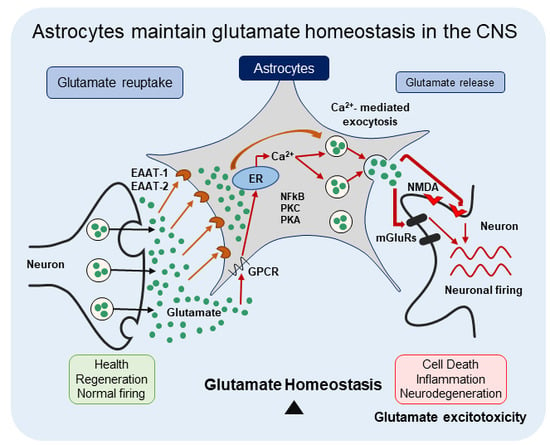
Astrocytes Maintain Glutamate Homeostasis in the CNS by Controlling the Balance between Glutamate Uptake and Release Glutamate is one of the most prevalent neurotransmitters released by excitatory neurons in the central nervous system (CNS); however, residual glutamate in the extracellular space is, potentially, neurotoxic. It is now well-established that one of the fundamental functions of astrocytes is to uptake most of the synaptically-released glutamate, which optimizes neuronal functions and prevents glutamate excitotoxicity. In the CNS, glutamate clearance is mediated by glutamate uptake transporters expressed, principally, by astrocytes. Interestingly, recent studies demonstrate that extracellular glutamate stimulates Ca2+ release from the astrocytes’ intracellular stores, which triggers glutamate release from astrocytes to the adjacent neurons, mostly by an exocytotic mechanism. This released glutamate is believed to coordinate neuronal firing and mediate their excitatory or inhibitory activity. Therefore, astrocytes contribute to glutamate homeostasis in the CNS, by maintaining the balance between their opposing functions of glutamate uptake and release. This dual function of astrocytes represents a potential therapeutic target for CNS diseases associated with glutamate excitotoxicity. In this regard, we summarize the molecular mechanisms of glutamate uptake and release, their regulation, and the significance of both processes in the CNS. Also, we review the main features of glutamate metabolism and glutamate excitotoxicity and its implication in CNS diseases. mdpi.com

@JanuaryDoNoHarm - January Littlejohn

10/ Glutamate excitotoxicity can start "a cascade of neurotoxicity,” leading to the loss of neuronal function and cell death, which then leads to neurodegenerative diseases doi.org/10.3389/fncel.….

@JanuaryDoNoHarm - January Littlejohn

11/ What does that mean? It turns out that an increase in glutamate in the brain can lead to neurological disorders like Alzheimer's, ALS, Parkinson’s, MS, and fibromyalgia. bit.ly/44DSxMo

@JanuaryDoNoHarm - January Littlejohn

12/ The subcortical changes (decrease in cortical thickness and volume and increase in ventricular structures) brought about by estrogen therapy mentioned above have been linked to many neurological disorders. See the next 4 tweets (12-15)

@JanuaryDoNoHarm - January Littlejohn

13/ Decreasing brain cortical thickness and volume is associated with schizophrenia and bipolar disorder (doi.org/10.1016/j.nicl…) and lower levels of general intelligence (doi.org/10.1016/j.inte…).

@JanuaryDoNoHarm - January Littlejohn

14/ The rodent study found that estrogen treatment reduced white matter integrity, which is associated with cognitive instability (doi.org/10.1523/JNEURO…). And a reduction in gray matter is a prominent feature of Alzheimer's (doi.org/10.3389/fnagi.…).

@JanuaryDoNoHarm - January Littlejohn

15/ The increase in the volume of ventricular structures compresses the brain from within, eventually damaging and destroying brain tissue. aans.org/Patients/Neuro…

@JanuaryDoNoHarm - January Littlejohn

16/ Reduction in hippocampal volume is associated with cognitive dysfunction and is a core symptom in patients with major depression. jpn.ca/content/31/5/3…

@JanuaryDoNoHarm - January Littlejohn

17/ (Estrogen was once believed to be a promising treatment among older menopausal women to delay onset of dementia. The WHIMS study (1996) was designed to test whether HRT reduces incidence of dementia in women 65+. doi.org/10.1016/s0197-… (contd. next 3 tweets)

@JanuaryDoNoHarm - January Littlejohn

18/ (The WHIMS study was discontinued in 2002 as it showed that long-term estrogen-progestin therapy increased the risk of dementia in women aged 65+, leading the researchers to conclude that the risks of HRT outweigh the benefits doi.org/10.1001/jama.2….

@JanuaryDoNoHarm - January Littlejohn

19/ (Now, a new nationwide study from Denmark among menopausal women on estrogen therapy found that it was associated with dementia, even with short-term use (the risks increased with the duration of use), and also among women younger than 65. doi.org/10.1136/bmj-20…

@JanuaryDoNoHarm - January Littlejohn

20/ (In the Danish study, MRI scans of the brain found evidence of brain atrophy, which is associated with cognitive decline and dementia doi.org/10.1148/radiol…. So, two studies associate estrogen therapy with dementia among natal women for its *prescribed* use.)

@JanuaryDoNoHarm - January Littlejohn

21/ Recent research shows that estrogen therapy among trans women has been implicated in various autoimmune diseases, from MS to rheumatoid arthritis and many others (remember that an increase in glutamate is also associated with MS) doi.org/10.1016/j.sema…

@JanuaryDoNoHarm - January Littlejohn

22/ Estrogen increases the risks of prostate cancer (doi.org/10.1586/eem.11…) and breast cancer among natal men (doi.org/10.1200/JCO.20…).

@JanuaryDoNoHarm - January Littlejohn

23/ Among TW, estrogen increases risks of cardiovascular diseases (two separate studies), often by as much as tenfold compared to their cisgender counterparts. doi.org/10.7326/M17-27…, doi.org/10.1161/CIRCUL…

@JanuaryDoNoHarm - January Littlejohn

24/ Validating the abovementioned research, empirically, we see a much higher incidence of many of these physical (doi.org/10.1089/lgbt.2…) and neurological diseases (doi.org/10.1016/j.anne…) in the trans population.

@JanuaryDoNoHarm - January Littlejohn

25/ Not coincidentally, perhaps, population cohort studies (two separate studies) show that trans women, on average, die decades earlier than either cisgender men or women doi.org/10.1016/S2213-…, doi.org/10.1215/007033… @SpencerLndqst @jordanbpeterson

View Full Interactive Feed