TruthArchive.ai - Tweets Saved By @Lily4Liberty

Saved - September 30, 2025 at 1:13 AM
reSee.it AI Summary
Digital ID was the first step China took towards establishing a social credit system, which has now been adopted by the West. This creates a surveillance state where a single mistake can jeopardize your job, finances, family, and freedom. I am committed to banning government Digital ID if elected to Congress. Tomorrow is the last day for the Q3 fundraising deadline, and I urge you to donate to my campaign and share it. Thank you for your support.

@Lily4Liberty - Lily Tang Williams

Digital ID was the FIRST step the China took. It’s the FOUNDATION of their SOCIAL CREDIT system now adopted by the west. It is a surveillance state where one “mistake” can cost your job, bank account, your family and your freedom. Reject it totally!

Video Transcript AI Summary
A good school brings benefits, but people with low scores lose rights. The cinema names and shames people considered untrustworthy, plastering their details, even their addresses across big screens. It's a matter of principle. Those people have to be condemned. Those people aren't honest, so they have to pay the price. The supreme court has created a blacklist for so called bad citizens, those whose ratings have dropped to zero. On it are companies, but also 23,000,000 people to date. Among them is this journalist Liu Hu. He got a little too close to uncovering corruption among high profile party members. After being sued for defamation by the subject of a story he'd written, he was blacklisted. That tells me I'm still on the blacklist. Punished because he's been branded untrustworthy by the state.
Full Transcript
Speaker 0: A good school brings benefits, but people with low scores lose rights. The cinema names and shames people considered untrustworthy, plastering their details, even their addresses across big screens. It's a matter of principle. Those people have to be condemned. Those people aren't honest, so they have to pay the price. Speaker 1: It's only right to pay your debts. You have to blacklist those that don't. Speaker 0: The supreme court has created a blacklist for so called bad citizens, those whose ratings have dropped to zero. On it are companies, but also 23,000,000 people to date. Among them is this journalist Liu Hu. He got a little too close to uncovering corruption among high profile party members. After being sued for defamation by the subject of a story he'd written, he was blacklisted. He only realized when he tried to buy a train ticket and was told he was banned from traveling. That Speaker 1: tells me I'm still on the blacklist. Speaker 0: Punished because he's been branded untrustworthy by the state. Speaker 1: Once you're blacklisted, you can no longer get a bank loan, start a business, buy an apartment, or even send your children to a private school. Speaker 0: Yuhu is among a tiny minority of people who have dared to criticize the system, which some are calling a digital dictatorship. Speaker 1: I worry because I think many people like me will be deprived of individual freedoms.

@Lily4Liberty - Lily Tang Williams

When I get elected to Congress, I will sponsor a bill to ban government #DigitalID and I will never let this happens in our Republic. Tomorrow is the last day for Q3 fundraising deadline. Please donate to my campaign now here and share it. Thank you. https://secure.anedot.com/d1c9ea5a-433a-4d4f-a932-0750f65e247b/d1a7f952-d522-46af-9d1b-2abe8dfaf9a8

@Lily4Liberty - Lily Tang Williams

@I1ano1 Could you consider a donation to my campaign? http://lilytangwilliams.com

Lily Tang Williams lilytangwilliams.com
Saved - July 29, 2025 at 3:52 AM

@Lily4Liberty - Lily Tang Williams

An industrial property on 23 acres in Nashua NH near Pennichuck Pond, source of local water, FAA, Joint Base Cape Cod, was sold to Nongfu Springs, the largest bottled water company in China, owned by the richest billionaire. I urge ⁦@SecScottBessent⁩ investigate asap! https://t.co/IY8YgVc9bm

Video Transcript AI Summary
Lydia Tang Williams, a congressional candidate in New Hampshire, is calling for a review of a land purchase in Nashua, New Hampshire, by Zhong Shang San, China's richest man, and his company, Nongfu Springs. Williams states the purchase, which includes a building and 23 acres, is within 93 miles of Joint Base Cape Cod and other strategic military installations, thus triggering the need for investigation. Williams is calling on the Treasury Department Secretary Bassett to review the project. Williams also claims that Sailor Stack Industrial has Vanguard and BlackRock as its biggest shareholders, and that they are also shareholders of Nongfu Springs, which she says warrants further investigation.
Full Transcript
Speaker 0: Hi. This is Lydia Tang Williams, congressional candidate in New Hampshire Second District. This is Nashua, New Hampshire, and this building with 23 acres land were purchased by Zhong Shang San, the China's richest man, and his largest water bottle company in China, Nongfu Springs. And I'm calling on secretary Bassett in the treasure department. Call for meeting and review this project. It is a trigger for review investigation because it is within 93 miles of a Joint Base Cape Cod and a lots of strategic military installations nearby. And I've also found out the Sailor Stack Industrial has Vanguard and the BlackRock are the biggest shareholders. They're also shareholders of Longfoot Springs. So we need to look into this. Thank you.
Saved - May 16, 2025 at 10:49 AM

@Lily4Liberty - Lily Tang Williams

This is pure hatred & racism in our country compared with the video I just shared where a black young man, a high schooler jumped into action at night to save 4 lives. Normal Americans are united to reject Marxist identity politics. The radical leftists are the real racists.

@Lily4Liberty - Lily Tang Williams

Portland City Councilor Pious Ali shared a racist video targeting the Afrikaner refugees because of their skin color. He should resign. The anti-white hatred is shocking. These Marxists had no issues with millions of illegals came here, got on welfare. https://t.co/DG7BfCixND

Video Transcript AI Summary
This video addresses white Afrikaners immigrating to the United States, stating that most Americans do not welcome them. The speaker claims they will be settled in less desirable states and, despite farming backgrounds, may need to take on farm labor jobs due to a shortage of farm workers. The speaker asserts that they will likely need multiple jobs to maintain their previous living standards and will face healthcare costs without Medicaid assistance due to Republican cuts. The speaker notes the Episcopalian Church ended its refugee resettlement program because of them. The speaker says that the U.S. is becoming less white, and suggests they learn English or Spanish instead of speaking Afrikaans. They warn the Afrikaners that Black people in the U.S. "don't get fucked with" and predicts they will return to South Africa within a year.
Full Transcript
Speaker 0: This video is for the white Afrikaners who are coming to The United States. I think you've already landed here. And I know that some of the folks who met you at the airport told you, welcome. We're so glad you're here. Most of us aren't glad you're here. Okay? We don't want you here. We never wanted you here. And furthermore, I noticed they're gonna settle you in Idaho, Ohio, and North Carolina. I will tell you they're not our finest state. So there's they're a good fit for you. I understand that many of you are farmers, and I've seen a lot of people say, oh, that's great. We need more farmers. Sorry to say we don't. We actually need farm workers because we've deported most of them. So if you can, you know, put your picking hat on and think about, you know, picking produce, that's largely probably what you're gonna be doing here because I hear you don't have a lot of skills. I would also say that you're not gonna have to hold just one job, but probably two or three to make up for your quality of life that you had back in South Africa. There'll be no servants working for $2 a day. There's none of that here. So, you're the servant who's working for $2 a day. So enjoy that. You're gonna have to pay for your health care. And ordinarily, because you're a refugee, who's being discriminated against, you would go on Medicaid. But guess what? The Republicans just cut Medicaid. So, I don't think you're gonna have that option for health care. So maybe you'll do without. I don't know. And honestly, I don't care. I did notice that the Episcopalian Church had a program with the government where they would, excuse me, they would resettle and help, you know, refugees resettle. They find you all to be so onerous. They terminated the partnership with the government, and they said, yeah, we won't be resettling those folks. Other things that you need to know about. While we are 58% white here in The United States, that's not gonna last much longer. Within the next couple years, we're gonna be the minority, which will be fun for you because that's what you're used to. Interestingly enough, we have a ton of Latinos. We're the second largest Spanish speaking country in the world. So for you, if you could stop speaking that dirty guttural, whatever it is, German, French, Dutch thing that you speak, that Afrikaans, nobody wants to hear that shit. So you can speak English or you can speak Spanish, which is really the second language here. In terms of other things that you need to know about, the black people in this country, they don't get fucked with. Okay? I know that there's a long legacy of colonialism and all kinds of stuff happening in your country, but, our black folks have sort of been through the fire, if you will, and they're not gonna be fucked with. So, you're the minority here. Enjoy. I I I really hope you like your time here. I'm gonna bet my ass that, you're gonna be booking it back to SA probably within the next twelve months. Have a great day.
Saved - April 1, 2025 at 7:42 PM

@Lily4Liberty - Lily Tang Williams

A crowd of migrants are moved into a taxpayer funded hotel in Ireland. We began to stop this in the US after President Trump won, but Ireland & other EU countries are still doing this. Nobody can save them except themselves. Sad! https://t.co/C2Fd8JZ0az

Video Transcript AI Summary
"Go back to use our own country. We don't want you here. Fuck back to use our own country. Absolutely disgraceful. Free money here. Everyone get free money. We go to work tomorrow. Use the hotel. Use the hotels. We have to walk."
Full Transcript
Speaker 0: Coming in. Now, look. Now, where did they send you from? Where? Look. Look at this. Look. Go back to use our own country. Go back to use our own country. We don't want you here. We don't want you here. Fuck back to use our own country. Look. Look. Yeah. Look. Look. Busloads. Look. Absolutely disgraceful. Free money here. Yeah. Everyone get free money. We go to work tomorrow. Use the hotel. Look. Look. Use the hotels. We have to walk. Yeah? Look at this. Look. No. We won't come out. Look at this. Look. Look. Go in. Go in. Yeah.
Saved - March 24, 2025 at 2:54 AM
reSee.it AI Summary
I drove my new Tesla to Ilsley Farm for raw milk and cream, proudly wearing my gun meme t-shirt. Supporting local farmers and embracing my American spirit! Also, if you're interested in a Tesla, I have a referral link for $1000 off. Let's support Elon Musk and get verified on X!

@Lily4Liberty - Lily Tang Williams

My new ⁦@Tesla⁩ drove me to the Ilsley Farm in my town to get raw milk & cream in my gun meme t-shirt. Protecting my private property with #2A, while supporting local farmers in Live Free or Die #GraniteState. In my heart, I was born American! https://t.co/1DEDXJRmeM

Video Transcript AI Summary
The speaker visited Elsys Farm to purchase raw milk and fresh cream, priced at $4 per half gallon and $6 for fresh cream. The speaker expressed support for protecting private property, healthy eating and drinking, and defending the Second Amendment right. The speaker wished everyone a happy Constitutional Carry's Day and a happy Sunday.
Full Transcript
Speaker 0: Hi, John. I came to the Elsys Farm to get a raw milk and fresh cream and all on our system. And the $4 half gallon, $6 fresh cream in my new gun shirt. This is best part of New Hampshire. Protect the private property, eat, drink healthy, and defend the second amendment right. Constitutional Carry's Day. God bless you all, and happy Sunday.

@Lily4Liberty - Lily Tang Williams

If you want to buy a Tesla, you can get $1000 off by using my owner referral link: https://ts.la/lily520208Or or just support @elonmusk by getting more people on X, get a blue check verified account, buy some Tesla stocks.

Saved - March 21, 2025 at 10:31 PM

@Lily4Liberty - Lily Tang Williams

Expose this criminal who stabbed a @Tesla tire multiple times. Let us make him famous on X! https://t.co/ErmuNlyJQQ

Saved - March 20, 2025 at 12:48 PM
reSee.it AI Summary
My husband and I are excited to take our new Tesla Model Y out for a drive. I'm proud to own this American car, along with our Suburban and Dodge Ram trucks. If you're considering a Tesla, I have a referral link that can help you save money!

@Lily4Liberty - Lily Tang Williams

My husband and I are going out in our new ⁦@Tesla⁩ model Y. I am a proud owner of this great American car. We also own & enjoy our Suburban & Dodge Ram trucks. https://t.co/aCT3eaOYEG

Video Transcript AI Summary
The speaker and John are driving their new Model Y to dinner in New Hampshire. The speaker notes the car is quiet and smooth compared to their two American-made trucks. The speaker criticizes leftists for damaging private property and changing narratives on EV cars, calling them hypocritical and blaming politics. The speaker hopes the "domestic terrorists" are caught and prosecuted. They plan to enjoy their Tesla and dinner.
Full Transcript
Speaker 0: Beautiful day in New Hampshire. John and I are going to a dinner tonight and driving our new model y. It's very quiet, very smooth compared with our gas truck and diesel truck. So we already have two trucks, American made, and this is American made car too. It is, you know, terrible for the leftist come out to damage private properties and even change your narratives on EV cars. Are they hypocritical or what? It's all because of politics. They really don't believe what they promoted it before. It's just unbelievable. I hope those domestic terrorists get caught, prosecuted. And meanwhile, we're gonna enjoy in Tessma, enjoying our dinner, and have a great day. Bye.

@Lily4Liberty - Lily Tang Williams

If you want to buy a Tesla, you can get $$$ off by using my owner referral link: https://ts.la/lily520208

Saved - November 7, 2024 at 6:07 AM

@Lily4Liberty - Lily Tang Williams

Get out to vote today. The world is watching. Here is the supercut clip from my final debate on @WMUR9. The choice is clear in #NH02: Who has the fire in the belly to fight for the people in DC. New Hampshire, let us make history tonight. https://t.co/a6IcpX32aD

Video Transcript AI Summary
Tonight, we have the nominees for the 2nd congressional district, Democrat Maggie Goodlander and Republican Lily Tung Williams. High inflation is blamed on corporations, but the real issue stems from government actions in Washington, which print money and borrow irresponsibly, hurting working families and seniors. Goodlander, part of the Biden administration, lacks solutions and is disconnected from the struggles of everyday people. With a net worth of $20-30 million, she doesn't understand regular hardships. The Biden administration's policies have led to increased illegal immigration and censorship of dissenting voices. The American dream is about representation and transparency, and I aim to be a true representative for the people, not a Washington insider. Thank you.
Full Transcript
Speaker 0: Tonight, we're joined by the nominees for the 2nd congressional district, Democrat Maggie Goodlander and Republican Lily Tung Williams. Democrats, including my opponent, blame on corporations for high inflation. Only in Washington DC, the government can print unlimited money and borrow in order to pay, to cover their pet project, their priorities, but on the back of a regular working class families and the fixed income seniors and the small business people. If you and I put money, we go to jail. Again, Maggie, it's caused by federal government. You are part of a Biden administration who causes high inflation. I heard people who are in my district complaining about high cost servicing, but you don't have a solution. You're just repeating DNC talking points. Do you have independent thinking skill? You are wealthy. You are worth 20,000,000 to $30,000,000. How do you know about regular people suffering? Do you go shopping, go to Walmart, buy food? I talk to those people. And you pretend to be render in Nashua a few months ago, Mogobet, Toronto, this open city with 1,000,000 dollars from Washington DC insiders. And the 1,000,000,000 dollars, I don't have money to run a TV ad. And you pretend you are poor, complaint rent is so high, you couldn't save that apartment for other people to rent in next one. Just go back to your $2,000,000 home in Portsmouth. Ever since Biden become president, he's the one who uses pen, reverse the previous president Trump's border policies, and enable the 11,000,000 illegals in this country with tax payers' incentives, what kind of message do we want to send to the world? If you follow the law, we're gonna punish you, and if you come here illegally, we can give you quick pass citizenship. Don't use the word democracy to shut people down. Even former Democrat, RFK, policy gaffers were censored and shut down. Censorship from federal government, from Biden administration, you're part of it. From DOJ, like, I have the country become a garbage. That's not unifying a positive. I like to talk about American dream, how happy I'm here. Do you want somebody truly represented people, or you want somebody from DC Swan? I'm asking for your help. I will represent you with pride and transparency. Yes, sir. Thank you.
Saved - November 6, 2024 at 5:51 AM
reSee.it AI Summary
I am Lily Tang Williams, born in China and shaped by the hardships of the Cultural Revolution. At 23, I fled to America with just $100, driven by the desire for freedom. I've built a fulfilling life here, but I worry for my children’s future as I see signs of authoritarianism creeping in—government overreach, loss of rights, and societal division. This motivates me to run for Congress in New Hampshire’s 2nd District. I aim to protect the American Dream and encourage everyone to support my campaign.

@Lily4Liberty - Lily Tang Williams

I am Lily Tang Williams. I was born in China to illiterate working-class parents, suffered under Mao’s Cultural Revolution and Communist dictatorship. I wanted freedom. America was my promised land. I was 23 when I fled tyranny. Arriving with $100 in my pocket and knowing very little English. I worked hard to make my American dream come true. Today I am happily married with three children, have my own businesses, and live in the Granite State where the spirit of liberty resides. My concern is that my children and grandchildren will not have the same opportunities I had. I see the shadow of authoritarianism cast by politicians who have locked us down, closed small businesses, inflated our money, and mortgaged our children’s future. I saw it all before in China: the division of society, silencing dissident voices, taking away parental rights, the indoctrination of youth, endless government mandates and control. People are losing their rights to make a living and make their own life choices. Are you worried yet? I am. I fear that the country I love is becoming like the country I left. That is why I am running for Congress. It is time for the majority to speak up and defend our country from the radical left and keep the American Dream alive for our children. My name is Lily Tang Williams, an American citizen by choice running for Congress in New Hampshire’s 2nd Congressional District. Please donate, volunteer, and vote for me. I will be honored to represent and serve the people of New Hampshire. https://www.lilytangwilliams.com/congress/donate/
Video Transcript AI Summary
I'm Lily Tom Williams, born in China to illiterate parents and escaped the Cultural Revolution at 23, seeking freedom in America. Arriving with just $100 and limited English, I worked hard to achieve my American dream. Now, I’m married with three children and own businesses, but I'm concerned for their future. I see signs of authoritarianism in the U.S., reminiscent of what I experienced in China—government overreach, silencing dissent, and loss of parental rights. This is why I’m running for Congress in New Hampshire's 2nd district. It’s time for the majority to defend our country against radical left policies and preserve the American dream for future generations. I ask for your support—donate, volunteer, and vote for me. It would be an honor to serve the people of New Hampshire.
Full Transcript
Speaker 0: I'm Lilytown Williams. I was born in China to illiterate working class parents, suffered under Mao's Cultural Revolution and Communist Dictatorship. I wanted freedom. America was my promised land. I was 23 when I fled tyranny. Arriving with a $100 in my pocket and knowing very little English, I worked hard to make my American dream come true. Today, I'm happily married with 3 children, have my own businesses, and live in the grand state where the spirit of liberty resides. My concern is that my children and grandchildren will not have the opportunities I had. I see the shadow of authoritarianism cast by politicians who have locked us down, closed small businesses, inflate our money, and mortgage our children's future. I saw it all before in China. The devaging of society, silencing dissident voices, and taking away parental rights. The indoctrination of youth. Endless government mandates and control. People are losing their rights to make a living and to make their own life choices. Are you worried, Gya? I am. I fear that the country I love is becoming like the country I left. That is why I'm running for Congress. It is time for the majority to speak up, defend our country from the radical left, and keep the American dream alive for our children. My name is Lily Tom Williams. I'm an American citizen by choice, running for congress in New Hampshire's 2nd congressional district. And please donate, volunteer, and vote for me. I will be honored to represent, serve people of New Hampshire.
Donate - Lily Tang Williams for Congress lilytangwilliams.com
Saved - November 6, 2024 at 5:50 AM

@Lily4Liberty - Lily Tang Williams

At Salem Senior Center polling station. We are showing the energy, enthusiasm & love for our people in NH & our country. What a wild ride for me in the last 4 days. One supporter brought ⁦@RobertKennedyJr⁩ sign with my sign. I am a winner regardless of the outcome tonight. https://t.co/bNxxBjbjPI

Saved - November 5, 2024 at 11:48 PM

@Lily4Liberty - Lily Tang Williams

Record turnout in my hometown Weare, NH. I have never seen line this long before. It seems like great turnout everywhere in the Granite State. #election2024 #NH02 https://t.co/8V4rVOH8FM

Video Transcript AI Summary
I just recorded an amazing moment with my home cup of wear. I've never seen anything like this before. Where have you been? I just voted.
Full Transcript
Speaker 0: Record turned out in my home cup of wear today. Amazing. I have never seen eye this long. Where have you been? I just voted. Yes. Yeah.
Saved - November 4, 2024 at 5:11 AM
reSee.it AI Summary
I’m thrilled to announce that @RobertKennedyJr has endorsed my campaign for Congress! His support highlights my commitment to pro-liberty values and my fight against the Democrat Deep State. I’m honored and ready to win on Tuesday!

@Lily4Liberty - Lily Tang Williams

Breaking news: ⁦@RobertKennedyJr⁩ has endorsed my campaign for Congress. He gave this special endorsement because of my pro-liberty positions and my campaign against the Democrat Deep State. I am deeply honored by his endorsement and I am ready to win on Tuesday! #NH02 https://t.co/SMp3dgw4Sw

Video Transcript AI Summary
I'm making this video to endorse Lily Tang Williams for New Hampshire voters. Despite not making endorsements during my campaign, I felt compelled to support Lily after her impressive debate with Maggie Goodlander. Lily's background is remarkable; she grew up in a poor working-class family in China, experienced the Cultural Revolution, and eventually attended Fudan University Law School. She immigrated to the U.S. with just $100 but a strong commitment to liberty. In contrast, Goodlander represents neoconservative ideals, supporting the Patriot Act and the surveillance state, and is linked to the costly Ukraine war. If you envision a stronger American middle class, I encourage you to support Lily.
Full Transcript
Speaker 0: Hey, everybody. I'm making this video for New Hampshire voters. And I wanted to make this video to endorse Lily Tang Williams. And I've had a rule during my campaign, during latter part of the campaign, we've gotten endorsement requests almost every day. And I've had to tell people that we can't make any endorsements. We had a skeleton crew and just did not have the personnel of that various candidates. So I had to regretfully make that rule, but I want to break that rule during the last days of the campaign to endorse Lilly. And I made that decision after seeing her extraordinary debate with her opponent, Maggie Goodlander. Lily is an extraordinary person. She was born in China and raised in a poor working class family. She lived through the Cultural Revolution and all the social chaos, the food rationing, and the violence of that time, the closure of all the schools and universities. When the universities reopened, she because of her hard work, her diligence, and her extraordinary intelligence, she was able to attend Fudan University Law School. She did so well there that she was invited to become one of the first members of the reconstructed faculty. She came to this country with $100 in her pocket, but an extreme love and a commitment to liberty and a love for the United States of America. And I was so impressed with her debate against Maggie Goodlander. Maggie Goodlander is one of the queens of the neocons. He's the people who have supported the Patriot Act, supported the surveillance state and the censorship state, who have kept us in a constant state of war. And her husband, Jake Sullivan, is one of the architects of the disastrous catastrophic Ukraine war, which we now lost effectively and which has cost us over $200,000,000,000 that we should have spent rebuilding the American middle class. The neocons want an imperial America abroad and a surveillance and censorship state at home. And if you don't share this vision, if you share a vision of a reconstructed American middle

@Lily4Liberty - Lily Tang Williams

https://t.co/SW3Xx7udAm

Video Transcript AI Summary
Vote for Lily Tang Williams to end foreign wars, surveillance, and censorship, and to restore constitutional rights. Thank you, and God bless the people of New Hampshire and America.
Full Transcript
Speaker 0: If you wanna end the foreign wars, if you wanna end the surveillance and censorship, if you wanna restore our constitutional rights, please vote for Lily Tang Williams. And thank you all very much, and God bless the people of New Hampshire. And God bless America.
Saved - October 18, 2024 at 4:27 AM
reSee.it AI Summary
I reported an incident involving my campaign signs being stolen by supporters of my Democratic opponent. On October 13, 2024, I witnessed a black Jeep Wrangler stop on the side of the road, where a young man exited, took one of my signs, and jumped back in the vehicle. The driver, who had a distinctive red/orange beard, sped away when I confronted them. I followed for a while before they evaded me, and I subsequently reported the theft to the New Hampshire State Police.

@Lily4Liberty - Lily Tang Williams

Warning: My Dem opponent supporters are stealing my campaign signs, 4 men in the car, got caught this time. Former State Senator Bob Giuda filed this police report in Ashland. "Report of Theft of Political Sign On Sunday, October 13, 2024, at approximately 1:15pm, while driving west from Dunkin Donuts on Rte 3 just east of the intersection with I-93, I observed a black Jeep Wrangler with tinted windows, NH Veteran license plate TIGER, with orange decal letters on the back window and a small red, white, and blue bumper sticker on the right rear bumper. I passed the vehicle, which was stopped alongside the road (facing west) and observed a white male, late teen to mid-20s, short blond hair, slight build, medium height, exit the vehicle, look around, pick up a Lily sign, and jump back in the vehicle with the sign. The driver, who had partially exited the vehicle was a white male, mid-20s to 30s, with bright red/orange beard, stocky build. I slowed down, did a U-turn to confront them, and the driver jumped back in the vehicle and sped away at a high rate of speed. I did another U-turn, followed him south on I-93 from Exit 24 for about 10-15 minutes. After several reckless maneuvers to try to “lose” me, he exited Rte. 93, and I continued on to my destination in New Boston. I called 911 and reported the theft to the NH State Police." #NH02 #nhpolitics @NH_StatePolice

Saved - July 31, 2024 at 10:24 AM
reSee.it AI Summary
I attended a Gun Debate at Dartmouth with Spike Cohen and David Hogg. I asked David if he could guarantee our government won't become tyrannical. His honest answer sparked a lot of discussion. I'm committed to defending our Constitutional Rights in Congress.

@Lily4Liberty - Lily Tang Williams

I went to watch a Gun Debate on April 10th at @dartmouth between @RealSpikeCohen & @davidhogg111. I asked David a simple question: "Can you guarantee me ... our government will never become a tyrannical government?" He gave me an honest answer. I gave my honest response. It has gone viral. I will defend our Constitutional Rights in Congress. Chip in now: http://lilytangwilliams.com #lily4congress #nh02 #NHPolitics

Video Transcript AI Summary
I'm Lily Tang Williams, a Chinese immigrant who survived communism. Can you guarantee our government won't become tyrannical? If not, the gun control debate is over because I won't give up my guns. Visit China to see how gun control works for the CCP dictatorship.
Full Transcript
Speaker 0: My name is Lily Tang Williams. Welcome to my Lee Freo State. Actually, I am a Chinese immigrant who survived communism. I murdered during his Cultural Revolution. So my question to you, David, is that can you guarantee me a gun owner tonight, our government in the US, in DC, will never, never become a tyrannical government? Can you guarantee that to me? There's no way I can ever guarantee that any government will not be tyrannical. Well, then the debate on gun control is over because I will never devolve my guns. Never. Never. And you should go to China to see how gun control works for dictatorship of CCP.
Lily Tang Williams lilytangwilliams.com
Saved - May 11, 2024 at 3:03 AM
reSee.it AI Summary
The Committee of 100 collaborates with the CCP and has influence in the White House. It is a 501(c)(3) organization of Chinese Americans aiming to foster relations between the US and Greater China. @MichelleSteelCA @claudiatenney @HouseGOP

@Lily4Liberty - Lily Tang Williams

Committee of 100 continues its collaboration with the CCP, but also has influence over the White House. Check them out on Wikipedia: --- The Committee of 100 is a 501(c)(3) organization of Chinese Americans in business, government, academia and the arts whose stated aim is "to encourage constructive relations between the peoples of the United States and Greater China." @MichelleSteelCA @claudiatenney @HouseGOP

@Committee100 - Committee of 100

We were a part of the briefing for AANHPI leaders today hosted by the @WhiteHouseOPE46 and Office of Political Strategy and Outreach. We were honored to be a part of this briefing and appreciate their efforts. Fact sheet: https://bit.ly/4bcft8F https://t.co/0EDeHrfYcp

Saved - May 11, 2024 at 1:45 AM
reSee.it AI Summary
I interviewed @candace_phx from @theblaze about China's stealth US border invasion. Tang Williams revealed a system for Chinese nationals to illegally immigrate to the US, including TikTok videos guiding them through South America and arranging drivers in the US. She criticized the White House and Democrats for not prioritizing legal immigration and called the open-border crisis a "mad house." Tang Williams believes there is an agenda to help one party gain power by fast-tracking illegal immigrants to become voters. #NH02 #Border #China #lily4congress

@Lily4Liberty - Lily Tang Williams

Thank for the interview, @candace_phx from @theblaze. Blaze News investigates: The TRUTH behind China's stealth US border invasion — 'America can only be destroyed by the enemies within' Tang Williams explained that a "very organized" system exists for Chinese nationals seeking to immigrate to the U.S. illegally. "I have watched some TikTok videos in Chinese," she said. The online posts "tell people where to sleep in South America, what route to take to avoid the criminals." Tang Williams explained that they arrange for drivers to pick them up once they have arrived in the U.S. "Some people are truly wanting to escape China for freedom, come here, live a better life," Tang Williams stated. "But there's lots of military-age men. They do not even want to be photographed, and they don't want to talk. And it sounds like it's very organized, the whole activity. Even telling them which border to enter." Tang Williams told Blaze News that if the White House and Democrats truly cared about immigrants, they would speed up processing times for those who have applied to legally move to the U.S. She called the administration's open-border crisis a "mad house." "They are doing this on purpose; this massive illegal migration movement is also supporting and funding the dividing of nations. ... Why do they just open up the borders? There is clearly an agenda to help one party," Tang Williams continued. "[Democrats] only think about their own power grab and staying in power. And getting [illegal immigrants] fast-tracked to get a Social Security number to work and to become voters." https://www.theblaze.com/news/blaze-news-investigates-the-truth-behind-china-s-stealth-us-border-invasion-america-can-only-be-destroyed-by-the-enemies-within #NH02 #Border #China #lily4congress
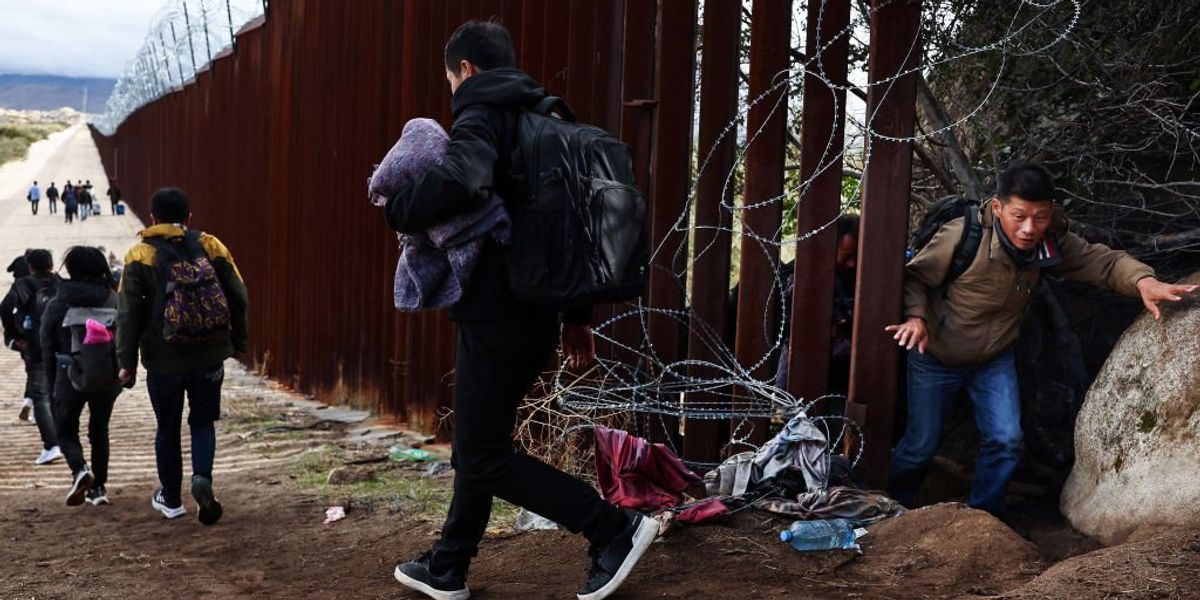
Blaze News investigates: The TRUTH behind China's stealth US border invasion — 'America can only be destroyed by the enemies within' | Blaze Media Illegal immigrants abandon IDs before crossing the border and disappearing into the interior of the US. theblaze.com
Saved - May 4, 2024 at 8:21 PM
reSee.it AI Summary
Xi Jinping aims to make China the top global power using various strategies. The lack of attention towards racism and protests like #BLM in the West is concerning. Having experienced life under CCP rule, the author is running for US Congress in #NH02 to prevent the destruction of America. Support their campaign at lilytangwilliams.com.

@Lily4Liberty - Lily Tang Williams

Xi Jinping has his "China Dream" to take over the US as #1 global power by using: One Belt One Road Initiative, Recruit 1000 talents, Confucious Institute, Committee of 100, Chinese students & scholars Associations, WeChat, TiKTok, etc. Where is the #BLM protest in the west? Where is legacy media outrage over racism? Image living in a world under CCP rule, got beat-up like this poor African man by the thugs. I know because I lived under them for 23 years. That is why I am running for US Congress in #NH02. I will never let them & the people like them to destroy America. Chip in to help me win. http://lilytangwilliams.com

Lily Tang Williams lilytangwilliams.com

@SovMichael - Michael O'Fallon - Sovereign Nations

In recent years, I have made efforts to explain how China's One Belt One Road Initiative has led to the colonization of The Global South. This initiative has exploited and plundered Africa, degrading its natural population and taking advantage of its abundant resources. The mistreatment of indigenous people has extended beyond Africa to the Caribbean, where Chinese superiors treat contracted workers as slaves. Consequently, China has effectively enslaved The Global South. The occurrences depicted below have become commonplace in Africa and have been reported in Jamaica and throughout the Caribbean as well. Such treatment of African employees by Chinese bosses is unacceptable, regardless of their actions. The racism prevailing in mainland China surpasses anything experienced by modern-day Americans. This embodies the rise of Chinese hegemony, characterized by arrogance and a sense of racial superiority, aimed at dominating and crushing those who resist their pursuit of global power. I hope this clarifies the reasons why Hungary's capitulation to the Chinese Communist Party is the worst possible choice. The Chinese Communist Party is exploitative and lacks genuine interest in assisting other nations and peoples in their development; instead, their goal is hegemonic domination. Christian Nationalists who believe that submitting to the Chinese Communist Party, like Hungary, is preferable to independence will eventually face the same colonization that Africa and Africans are currently enduring. Source: Sino Research Telegram channel

Saved - April 30, 2024 at 6:53 PM
reSee.it AI Summary
During Mao's Cultural Revolution, students had to read his Little Red Book daily. Reciting Mao's quotes without the book earned nominations as a "Three Merits" student. The CCP supports Hamas, as seen through @communistsusa and @communistsus promoting college students' protests. If students knew the truth, they might have chosen different ways to voice themselves. Communists use identity politics for violent revolutions. Various hashtags are used to promote their agenda. #lily4congress #NH02 @XVanFleet @ConceptualJames @BillAckman @bariweiss @billmaher @OliLondonTV

@Lily4Liberty - Lily Tang Williams

We had to read Mao's Little Red Book daily in schools during his Cultural Revolution, ended in 1976 when he died. Because I recited Mao's quotes without the book, I was nominated many times as a "Three Merits" student: political/moral, academic & physical education. Hamas are communists, that is why CCP is behind them, @communistsusa & @communistsus both promoted our college students' protests. Only if our students knew the truth, maybe they would have chosen different ways to voice themselves for peace. The communists always want violent revolutions by using identity politics: #BLM, #DEI, #ClimateCrisis #transrights #colonisation #WhiteSupremacy, #CRT, #Antisemitism #FreePalestine #HamasTerrorists #lily4congress #NH02 @XVanFleet @ConceptualJames @BillAckman @bariweiss @billmaher @OliLondonTV

@XVanFleet - Xi Van Fleet

The forerunners of Hamas reading Mao’s Little Red Book. https://t.co/EpsvIhJ2RG

Saved - April 10, 2024 at 3:39 PM

@Lily4Liberty - Lily Tang Williams

Be aware of the month piece of #CCP propaganda. There are quite a few on YouTube, & they don't look like Chinese. Follow the money. Beijing is very good at recruiting "talents"- social media influencers all over the world. They use "soft power" to conquer the U.S. & the world,

@Byron_Wan - Byron Wan

American Ben Norton moved to Beijing around the Sep 2023 timeframe and is now shilling for China from there locally. He’s being treated like an expert in geopolitics and economics on 🇨🇳 state media like CGTN and Beijing Daily and by highly nationalistic think tanks / institutions like RDCY (人大重阳 — 中国人民大学重阳金融研究院)… Last Oct, a few weeks after he moved to Beijing, Norton released a video singing the praises of the country based on CCP talking points plus his superficial and simplistic observations! An instant “China expert” was born just like that!

Video Transcript AI Summary
The speaker discusses the challenges faced by the younger generation in the US due to economic crises, lack of political representation, and declining living standards. They contrast the US system with China's socialist model, emphasizing China's progress in green technologies. The speaker criticizes the US media bias, political corruption, and lack of real democracy. They highlight China's peaceful development, integration of Marxism with its culture, and historical tradition of fighting for rights. The speaker suggests that other countries can learn from China's approach.
Full Transcript
Speaker 0: How come you develop these ideas? What made you the person you are today? Speaker 1: Well, a lot of things. I mean, I'm in my thirties, and I went to college during the financial crisis in the United States. And for my generation, many people thought that there was basically no hope in the future. We were told that jobs may not exist. There is also the issue of student debt. We grew up during the great recession. Right? And furthermore, in the United States, there are a lot of problems, and we could see them getting worse over time. More poverty, more and more homelessness. So, you know, we we've heard this idea for many years that in the United States, each generation lives better than the previous generation. Well, that's actually not true for my generation. In fact, the standard of living for our parents was higher than the standard of living for our generation. And in fact, not only has the standard of living dropped, but even the life expectancy has dropped. So among my generation, people live for fewer years. They live less than the older generation. So we're in a a moment of political and economic crisis in the US. And meanwhile, you can look at other countries, in particular China, which is the exact opposite. Poverty is falling. Economic development is incredible. And the way that China has been able to do this is through a socialist system, a unique system of socialism with Chinese characteristics. Speaker 0: What is your sense of the kind of order orderliness or disorderliness that we are seeing in this world? I feel, because we do this this this kind of discussion all the time, I feel sometimes there is a strong sense of helplessness that you know something is wrong, you know there something has to be done in a certain way, but it's going to the opposite direction, Do you think we're entering a period of time of great disorientation? And, you know, is there what could be the danger if that is the case? Speaker 1: Well, unfortunately, I I do think we're entering a very turbulent time. Many of these societies in the west are becoming less and less democratic, and it's precisely a product of the deregulation of the financial sector, and the incredible power of capital. Now I think it's people have pointed out that, yes, in China, there are wealthy people, but wealthy people do not control the government. Whereas in the West, wealthy people do control the government. We have a small handful of oligarchs, billionaires, who are getting richer and richer, and more and more powerful. And in countries, in in particular like the United States, but also in some European countries, they have incredible power over the the political system. So the supreme court in the United States, through Citizens United, was a ruling that said that there is no limit on campaign contributions from big companies, from banks, from wealthy interests. What that means is that essentially Yeah. If you're running for office as a politician, you have to do what these large corporations, these large financial interests want. It's the opposite of Chinese system. And the Chinese system, the big companies, they do exist, but they do not control the government. In fact, they're regulated by the government. Whereas in the US, they control the government. They essentially they lobby. Lobbying is legal, whereas in many countries, this would be illegal. So what we have is this crisis where people don't have influence on government policy. In fact, there are scholars in the United States, including at at Princeton and Northwestern University, who did a study. And the study quantitatively showed that average people have zero influence on policy making. Instead, it's lobbying groups and big money groups. Speaker 0: Yeah. Speaker 1: So that's why people feel so angry Speaker 0: on policymaking. Speaker 1: Voting does not mean a democracy. I mean, you can have Speaker 0: That's what election is. As a devil's advocate. Speaker 1: Yeah. I mean, a democracy means rule by the people. But just because you have elections, doesn't mean that the politicians who win the elections represent the people. And we can look at many different policies and see that there are policies like universal health care that are very popular, or free higher education. These are very popular policies, but they're not implemented because they're not profitable. Because the politicians who win the elections, despite the fact that people vote for them, they don't represent the popular will of the people. And that's why when China talks about whole process people's democracy, it actually can be a true form of democracy, because the reality is that the policies implemented by the Chinese government are more reflective of the interest of the Chinese people than the policies implemented by the US government. So it doesn't matter if you have elections if the politicians who are elected don't actually represent the people. And we've seen this very clearly in the United States. And that's why we're seeing this rise of these very far right populist movements, and it's because there is a lack of alternatives. Speaker 0: The thing is, look, Donald Trump was in office, and 4 years later, he still has so much popular support despite the kind of performances that, you know, many people judge to be disastrous. Why are people not making the kind of, realizations that they need to be they're not coming to terms with? Speaker 1: Everything that people learn about what's going on is mediated through the media. Right? And the media in the US in particular is very partisan. It's very biased. You have very conservative media like Fox News. You have media that's affiliated with the Democratic party like MSNBC. Everything is filtered through these lenses. And what we see is that life for many people is getting worse for average working people. Of course, if you're wealthy, you can live very well Yeah. In the US. But for average working people, their wages have been stagnant since 19 seventies. We see that that you don't you probably won't have social security. My generation is being told there will be no retirement funding, no pensions. Health care is extremely expensive. Education is prohibitively expensive. So you have all of these problems. Meanwhile, you have more racism, violence, instability. So people can see that their lives are getting worse, and yet they have two choices in the political system, with the Democratic party and the Republican party. The Democrats are incapable of providing alternatives because they also they ostensibly say they want to provide better policies for working people, but they're also beholden to the big money interest. So they have this contradictory policy where they say they wanna give us more education in health care, but they don't do it. And then you have Republicans, and what is their response? They they scapegoat immigrants. They blame feminism. They blame Speaker 0: China. Speaker 1: China for everything. They're now you know, we have this drug issue. They blame China, which has nothing to do with it. In fact, the drug issue in the US was caused by big pharmaceutical corporations, including Purdue Pharma, which faced dozens of lawsuits for basically giving money to doctors to encourage them to overprescribe medicine like OxyContin, which got people addicted. Yeah. And then they get addicted to other Speaker 0: It's the consumption that's the problem. Speaker 1: And it's the system. Absolutely. And so people are looking for answers, and people like Donald Trump give them easy answers. They're not the correct answers, but easy answers. The problem is China. The problem is immigration. And if you don't have answers from the Democratic party that convince people, they will look for these kind of populous answers. And it's a very dangerous moment. Speaker 0: Do they not count the money in their pockets when they turn to the Republicans? I mean, if they if if Trump did such a bad job during his time with the economy, do people not say, oh, you know, my wallet got got tighter, so I'm not going to vote for Trump. But they seem it seems that they do. Speaker 1: Well, you should keep in mind a few things. First of all, in US elections, only about in presidential elections, only about half of adults vote. This is a very important fact. It's often forgotten. In midterm elections every 2 years, only around 20% of adults in the US vote. Many people do not feel that the political system represents them. There's a lot of apathy, and it makes sense. I mean, a lot of people say, why would I vote because nothing will change? It's very common to hear that. So people feel disenfranchised. Whereas in China, we're told that China is supposedly undemocratic, but in reality, the Chinese system is significantly more representative and more efficient. You don't have to spend all of this time with this interminable battle where you have these laws that are passed that are thousands of pages long. And why is that? You look at these laws passed in the US because every politician tries to throw in their own, what they call pork barrel politics. So we we have something in our state that we want to throw into this law. So what happens is these laws get passed that are 4,000 pages long. No one even knows what's in these laws because in order to get the law passed, the Republicans and Democrats have to fight to say, we're gonna put this in and put this in. Yeah. But who's left out of it? The people are left out of it. These laws are not passed for the people. These laws are passed for special interest groups, for a bank, for a military contractor, for some certain company. And again, so the reality is that we talk about the economy doing well. Well, okay, maybe GDP growth is high in the US, but that's because one, debt, federal debt is 6 last year it was 6.2% of GDP, the deficit. So federal debt is skyrocketing. Furthermore, it's also because, yes, GDP is growing in particular in the financial sector, in the military sector, making weapons and ammunition. But if you look at the actual good paying jobs that people want, industrial jobs, teachers' salaries, those are stagnant or they're declining. Speaker 0: So what kind of inspiration are you looking for by being in China, especially by coming to the UAE Forum? Do you think, you have found something that may give answers to some of the dilemmas that you talked about? Speaker 1: Yeah. I think China has a model for the entire world. Its economic model is absolutely incredible. The way that China's been able to develop through its unique system of a socialist market economy, dealing with some of the issues that I've been speaking about, where capital does not control the government. It's the opposite. There are private companies, there are wealthy people in China, and they're allowed to operate, but they don't control the government. Now furthermore, I think China is making huge progress in new technologies that are very important for the green revolution, for transitioning away from fossil fuels. Climate change is an issue that affects everyone. It doesn't respect borders, and climate change is getting worse every single year. And China is the world leader in 3 of the most important cutting edge technologies, the new three technologies of batteries, of solar panels, and wind tur turbines, and also electric vehicles. And, unfortunately, the response of the US is saying that we don't want electric vehicles from China. We don't wanna collaborate Speaker 0: with China. Security. Speaker 1: They say yeah. National security is the is the always the excuse they use to justify protectionism and trade war policies. But instead of engaging in this aggressive kind of trade war against China, the US should be collaborating, and we should be working together in order to transition away from fossil fuels, to transition fossil fuels, to transition toward green renewable energy. Speaker 0: To link it back to the traditional Chinese culture, I'm sure you have gotten a first hand feel of it. You know, it's a very vast subject, I know, but from bits and pieces that you have come across, that you have experienced, What made it possible for China to do the things that you just said? Speaker 1: Well, China is so unique because it has 5000 years of history. It's very different from the US, which only has a little over 200 years of history. And unfortunately, in those 200 years, the US has, for most the entire history, been at war. Whereas China, in in recent history, has not been at war. It's been at peace, and China is one of the few countries that has been able to develop peacefully. And I think China is really remarkable in the way that it's been able to integrate with the 2 integrations, Marxism, socialism, with its unique history, its unique culture, and show it China has shown that it you can integrate them. They're not contradictory. And I think one of the unique ways that China has been has done that is it shown that throughout the history of Chinese civilization, the people have always been fighting for their rights, fighting for freedom against oppressors, against the old dynasties and The right to revolution. Absolutely. The right to rebel. And I think if you go back throughout Chinese history for 1000 of years, you can see all of these rebellions. And they eventually lead to the 1949 revolution, which has its historical origins in these past rebellions, the Boxer rebellions and many other. So I think China is unique in that sense, and I think other countries can learn from that. Speaker 0: Thank you so much. Very interesting, very thought provoking discussion. A lot to unpack, but time is very limited. Editor in chief of Geopolitical Economy Report, Benjamin Norton. Thank you very much. Speaker 1: Thanks for having me. It was a pleasure.
Video Transcript AI Summary
Summary: In this video, Ben Norton discusses various aspects of China's development and its pursuit of sovereignty. He highlights China's remarkable economic growth and development, emphasizing its focus on technological, economic, and food sovereignty. Norton explains how China has reduced its dependence on Western corporations by developing its own social media platforms, payment systems, maps, and hardware. He also acknowledges China's efforts to transition to renewable energy and strengthen food production. Despite challenges such as debt and inequality, Norton argues that the Chinese government is actively working to address these issues. He further contrasts China's approach to combat inequality and promote common prosperity with Western governments that are controlled by wealthy oligarchs and corporations. Norton also mentions China's interest in international trade while facing challenges in transitioning its economy towards internal consumption. Overall, he highlights China's pursuit of sovereignty and its impact on various aspects of its development.
Full Transcript
Speaker 0: Hey, everyone. I'm Ben Norton, and this is geopolitical economy report. Usually here, I analyze the latest geopolitical and economic developments in the world, and I'm going to be doing that today a bit later. But this is a special episode, and today, I'm going to be talking about my experience in China. I recently made a huge life change, and I moved to China. I have been living in Beijing for a bit over a month. I have not been here a super long time, but I wanted to make a video reflecting on what I have already learned being here several weeks. Now, I'm not changing the direction of this channel. I'm going to continue to do the original reporting and analysis on geopolitics and economics that I've always done here, talking about other regions of the world. This is not going to become a channel where I only make videos about my experience in China and the places I visit. There are already several great channels that do that kind of work. I came here because I wanted to actually understand what China is like on the inside because the only way to really understand a country is to visit it. And in particular, to spend time, not just a few days, not even just a few weeks, spend a few years living in that country. That's my plan. I also plan on doing a PhD in economics, in particular focused on development economics. I wanna learn more about China's economic policies, which have been remarkable. I mean, China has overseen the most incredible economic growth in human history. I'll be talking about that today. It has gone from one of the poorest countries on the planet to lifting more than 800,000,000 people out of poverty. In fact, according to World Bank data, China was responsible for 3 quarters of all of the world's reduction in extreme poverty since the 19 eighties. And when you look at the gradual decline in global inequality, inequality between countries, you see that if you remove China from the data, there is no change. And today, China has the world's largest economy, larger even than the US economy. These are all things that I'm going to be discussing today in further detail. And the first thing that I really wanna stress today is I think that China could be the most sovereign country on the planet. Now, I will go into much greater detail later today, discussing what I mean by that, but it's really incredible. I mean, when you think about all the propaganda, demonizing China as this horrible authoritarian dystopia where the government wants to control everything. What you actually realize is that this is a country that went through a period of partial colonization, the century of humiliation, as it's known, in which numerous foreign powers invaded and even controlled parts of the country, including Japan, including European countries, including the US. Britain and France invaded China in 18/60 and burnt down the Summer Palace. And, in fact, you can go visit the Summer Palace here in China, and see the ruins of the palace that was burnt down by the European invaders. Then in 1900, China was invaded again by the so called 8 nation alliance, which included the European powers, the US, and Japan. They occupied the capital Beijing. That was just over a 100 years ago. And in the span of the 1000 of years of Chinese history, that was very recent. So these acts of foreign intervention, and attacks, and the opium wars, and all of these problems are things that very much are in the historical consciousness here in China that people very much remember and don't want to repeat. This has all led China to create a very unique political and economic model. And by the way, Beijing has no interest whatsoever in imposing that model on other countries. And China has prioritized sovereignty, technological sovereignty, economic sovereignty, food sovereignty. These are all things that China has been able to develop in the past several decades in a way that I think no other country on earth has been able to do. So I'll explain this more in detail later, but here's a very brief summary. If you travel to many countries all across the planet, you see that the technology they use is produced by Western corporations, especially US corporations from Silicon Valley. All of the apps they use are from US companies in Silicon Valley. So whether that's for communications, not only social media and and news communication, but also for instance, email. You know, how many people use Gmail all around the world? These are companies that have close relations with the US government. They are contractors with the US government. Or if you look for instance at the the actual technology that is produced, like cell phones or computers, A lot of this also comes from US companies, many of which are US government contractors. In China, it's not the case. All of the apps that are used in everyday life are sovereign Chinese apps. They don't belong to US corporations on Silicon Valley that work with the Pentagon. Much of the physical technology is also Chinese, whether that's the phones are Chinese, the computers are Chinese, even the cars are increasingly Chinese and other forms of transportation. They can produce all of that locally. They don't rely on foreign firms and in particular, US corporations that are part of the military industrial complex. If you travel to many countries on earth, you can see how dependent they are on Silicon Valley, on the US, but China is not like that. And not only are those technologies produced by Chinese firms, but every part of the supply chain is located physically in China. China can make sure that those parts of the supply chain are not cut off by foreign countries that might want to destabilize it, like we see now with the growing geopolitical tensions between the US and China. This cannot be said for many other countries, including the US by the way, which is completely dependent on major parts of the supply chain located in other countries, including in China, which has led to discussion of economic decoupling, and friend shoring, and all of these these buzzwords that we hear today in economic discussions. But the point is, the the point I really need to stress that I'll be exploring in much greater detail later on is that China is sovereign in a way that I think no other country is sovereign in, and that's not something we think a lot about. It's not very intuitive, especially if you haven't come here and seen the country with your own eyes, but it is so important. And it also helps us to understand Chinese government policy and the Western portrayals of China that that portray China as trying to control everything and censor everything when you actually think about it through the lens of sovereignty and trying to defend its national interests against the long history of foreign meddling, you can understand a lot of Chinese policy. China is sovereign in so many ways, not just technologically, not just economically, not just politically. These are all things that I'm going to be exploring today in this analysis. But I also wanna talk about why I decided to move here. I think we're in a very tragic and dangerous historical moment in a new cold war. The United States has taken very aggressive policies against China. Numerous US government officials have made it clear that they want to overthrow the Chinese government just as the US was involved in overthrowing the Soviet government in 1991 in Russia. Washington and some European capitals have also imposed sanctions on Chinese companies, and government officials, and different institutions, and this is all leading in a very dangerous direction. There are many people warning of the possibility of war. In fact, some US generals are openly saying that they're preparing for waging war on China. This is all tragic because it is totally preventable. It is not necessary. I truly believe in the possibility of promoting peaceful cooperation, mutually beneficial development. These are all things that could be on the table if the US largely, but also some European countries could abandon this very aggressive policy that seeks to try to contain, and weaken, and destabilize China. So I think in this moment, it is very important to have people who have an English language audience, who are from the West to come here to China, to see what life is actually like on the ground, to be able to see with your own eyes if the Western media is telling the truth about China. Because this is really the only way of understanding what a country actually is like, is visiting. And I also wanna stress because, of course, I'm gonna be attacked by critics who always like to resort to cheap ad hominem attacks, who claim that I'm a propagandist for China or I'm a shill for China, which is ridiculous. Yes. I am living here now, but I have no links whatsoever to the Chinese government. I'm completely independent. I will stress that I am not working for a Chinese media outlet. I am not getting paid by the Chinese government. I am completely independent as a journalist. Yes. I do plan on doing a PhD, but, I mean, studying in a foreign country doesn't make you a tool of that foreign country's government. There are a lot of people who go to the United States or go to the UK to study, and I wanted to do a PhD in economics, and I didn't wanna do it in a western country precisely because there is so much bias against countries like China and much of the global south. There still is this very kind of colonial perspective. Many programs are very dogmatic. Now, I shouldn't have to say any of this. It's ridiculous that I have to give these kinds of disclaimers, but I mentioned that we're in a very toxic environment of a new cold war, and anyone who criticizes western narratives about countries like China or Russia or other global south targets were often demonized and called propagandists and smeared without any evidence, and you have these and tries to get people in the west to to close their minds off to the rest of the world, to see China and other foreign countries as these boogeymen that we need to be afraid of, and, ultimately, the goal tragically is about manufacturing consent for more and more aggressive policies that could lead to war. Of course, war could be catastrophic, and that's why it is so important to speak out against this propaganda and to understand what's actually happening. Being here in China, one of the first things that really strikes you, of course, if you're just visiting, but also if you're living here, is the level of development. Now, I really must stress this fact. China's economic development has no parallel in human history. It is absolutely remarkable. In the 19 forties, when China still had a feudal system with an emperor, and it was still partially colonized by foreign powers, the average person only lived until their thirties. It depends on the estimates you look at, but between 32 and 35 years. But if you fast forward to today, China's life expectancy is now 78, which is higher than the life expectancy in the United States, which is only 76. And by the way, the US life expectancy is dropping, whereas China's continues to rise. That's not the only incredible indicator. Another example is simply the size of the economy. GDP consists of the goods and services produced in a given economy. Sometimes, it obfuscates more than it clarifies. So I do have some criticisms of it that I'll be talking about in a moment. But, GDP is the metric most commonly used by economists, and when you look at the US GDP compared to China, China's economy actually overtook the United States in 2018, and China today has the world's largest economy when you measure its GDP at purchasing power parity, which is the best way to measure the size of an economy. Because instead of just converting every all the prices in the economy to dollars, which would be nominal GDP, which which doesn't make sense because in a country like China, you don't use dollars. They have their own currency. And as I'll talk about later, China's currency, the renminbi, is actually very much undervalued. You can buy a lot with very few yuan compared to dollars. So what that really means is if you only convert it to dollars, you don't actually get a real understanding of the size of the economic power of the Chinese economy. If you measure it in purchasing power parity, you can see that, actually, it is the world's largest economy and continues to grow. This year, growth estimates are over 5%, and this is despite, you know, all these western media outlets claiming that the Chinese economy is in a crisis. It continues to grow certainly much more quickly than the US economy and other Western economies. But the point is China has the world's largest economy. However, it is true that part of that is because China is such a massive country with more than 1,400,000,000 people, so it has 4 times the US population of more than 330,000,000 people. In order to adjust for the population, you have to look at GDP per capita, which is the measurement of all of the goods and services produced in an economy divided by the population. And there you can see that China still has a lot of room for development compared to the wealthy Western countries like the United States and other European countries. Although, I should stress that those countries developed through colonialism. 100 of years of colonialism. The Indian economist, Utzapatnaik, has estimated that the British Empire siphoned out more than $45,000,000,000,000 of wealth just from India when India was a British colony, not to mention the other colonies of Britain and the other European powers. So that money that capital that was extracted from the colonies was then used to industrialize and to develop these economies. China did not develop through colonialism, and, of course, China itself was a victim of colonialism, not to the same degree as India, but it was partially colonized and invaded and attacked and exploited by numerous foreign colonial powers. So China has really had to catch up economically with development. However, when we do this comparison, once again, it can obfuscate more than it clarifies. A much better comparison is not apples to oranges, but apples to apples. Rather, you should look at China's economic development compared to other countries in the Global South that were colonized. So for instance, India got independence from British colonialism in 1947, which also led to the creation of Pakistan, and China had its revolution in 1949, overthrowing this feudal regime and ending the century of humiliation. So these Global South countries came from similar levels of development in the 19 forties, and China has developed significantly more rapidly than the economies of India or Pakistan or other nations. So clearly, they were doing something different. Their economic model was fundamentally different. And even as recently as the 19 eighties, the per capita GDP measured a purchasing power parity of China was lower than the per capita GDP of Haiti, of Honduras, of Sudan. These are some of the poorest countries on earth. So China has gone from one of the poorest countries on earth to today, having an economy that is larger than the US economy. How did it do that? Well, I actually have another video in which I talk about China's unique development model of socialism with Chinese characteristics. I will link to that in the description below. I go into much greater detail, but this is where another example of where GDP sometimes obfuscates more than it clarifies. Because if you look at the United States for instance, a lot of GDP comes from the financial sector. It comes from speculation, pumping up big bubbles with asset price inflation to pump up the value of stocks and bonds and real estate. And this has led to, you know, big crises like the 2008 financial crash, because of subprime mortgages, and this house cards that the banking system was built on, or the 2,000.com bubble. And then if you look at other sectors of the economy, you can see for instance that 18% of the GDP comes from health care spending, and yet the US spends so much money in health care and has some of the worst results out of all of the rich industrialized countries. So just because you spend a lot of money in your economy, doesn't mean that you're actually being productive with the use of those resources. And we can see this clearly with deindustrialization in the United States. China has become the factory of the world. China produces everything, as I'll be discussing today. And China today represents nearly 1 third of global manufacturing production, whereas the US represents just over 15%, half of China's industrial production. The US economy has financialized over time under the neoliberal economic model that rose in the 19 eighties, and this has led to the move toward the service sector, the move away from manufacturing. It has led to deindustrialization in significant parts of the US, and this has left behind impoverished areas like the Rust Belt. If you're only fixated on GDP, you can miss the forest for the trees and not see the fundamental differences in the US economic model, which is based on financial speculation, pumping up bubbles of asset price inflation, and the Chinese model, which is fundamentally based on productive investment in manufacturing, in producing things that people all around the world need for their daily lives. And this brings me to the main point that I wanted to stress today, which is the issue of sovereignty. I really think living here in China and experiencing life here that you can say that China is probably the most sovereign country on earth. Why do I say that? Well, a lot of people in Western countries don't really think much about sovereignty because they don't have a history of their sovereignty being violated by foreign powers. Because the Western nations developed again economically through colonialism. They were the colonial powers that violated the sovereignty of global south nations that they colonized. So that's one way of thinking about sovereignty, which is not the best way. I'm gonna talk about another way in a second, but it is true that one way of having sovereignty, like the colonial powers in the West have, is through this this history of colonialism and violating the sovereignty of other countries using military might to impose your own sovereignty. And this is not just ancient history. We can look at the United States today and see that, yes, the US is a very sovereign country because it violates the sovereign of so many other countries and imposes its will on much of the world. The United States has meddled in countries all over planet Earth, and the US has invaded many countries like Iraq and Afghanistan. It has bombed and waged war on many other countries like Vietnam, and Korea, and Yemen, and Syria, and Libya. The list goes on. The US has organized coups to overthrow democratically elected governments in dozens of countries. I mean, I could spend all day discussing the foreign US interventions. This is something that I do discuss a lot here at geopolitical economy report. So you can go check out other videos and articles for that analysis. But the point is, China has not done that. So US sovereignty is based on simply imperial power, threats of military invasions, the use of military force, economic threats, the use of sanctions, trying to cut off countries from accessing the international financial institutions, like the IMF and the World Bank, like the interbank messaging system, SWIFT. China doesn't do any of that. China has developed its own sovereign institutions through its own economic development. So the political and economic models are completely different. They're antithetical. So a lot of people in the West don't think about how important it is for your country to be sovereign, for it to be able to produce the food, and commodities, and technology that it needs to to to have a functioning economy. Instead, especially in the age of neoliberal globalization, so many countries are dependent on other countries. This is especially true on the global south, but it's also true for increasingly western countries themselves. And we can see, for instance, with the supply chain shocks that happened during the pandemic, with disruption to the supply chains, people realize if you rely so much on other countries for the production of commodities that you need, then if those countries can't produce it or they decide not to produce it, you can see that it causes inflation. It causes shortages. It causes major economic problems in your own country. China has understood the importance of this, and China has engaged in industrial policy and planning in a way where every single part of the global supply chain is located in China. China can basically produce almost anything that it needs to survive, that its economy needs, that it its people need to live everyday normal lives. This is, of course, directly related to the issue of manufacturing, and the issue the problem in the US of deindustrialization. This is why certain US government officials, like for instance, the Biden administration's national security advisor, Jake Sullivan, gave a historic speech in which he acknowledged that neoliberal globalization had eroded US supply chains and industrial production. And this is a national security threat, because the US can't it simply cannot produce many things that it needs, not only for everyday life, but that its military needs. China understood this from day 1. And this is why, you know, a lot of the Western attacks on China calling it authoritarian and say saying that it wants to censor everything and control everything. It's often misunderstanding. No. No. No. No. China was always careful to try to make sure that it was sovereign, that it was protected, that it was not overly dependent on foreign countries, so it could actually defend itself, its territorial integrity, and its national security. So this brings me back to the idea of sovereignty and thinking about it in a different way, which is economic sovereignty. I wanna look specifically at some examples that I've seen in my experience here in China, so people can understand what I mean when I say China is probably the most sovereign country on earth. Well, here's an example. I spend a lot of time living in and traveling in Latin America. And yet, in Latin America, there are a lot of governments that have revolutionary projects challenging the neocolonialist policies of the US and the Monroe doctrine, the long history of the US meddling in their internal affairs. And they have achieved a lot in terms of defending their sovereignty, their political sovereignty, in some ways, their economic sovereignty. But one way in which many countries on earth, including even countries with revolutionary governments don't have sovereignty is technological sovereignty. What I mean by that? Well, look for instance at Cuba. The US has tried to use social media applications, which are owned by Silicon Valley Corporations, which also happen to be US government contractors, Washington has long tried to use these social media platforms to destabilize Cuba, spreading propaganda, spreading fake news. This is what originally led the Cuban government to actually ban many of those applications. So in return, the US government created its own Twitter alternative called Sun Sun Neo, which it funded and then used to spread propaganda. Once again, fake news disinformation to try to destabilize the Cuban government. There are many examples of the Pentagon and the State Department using these social media platforms as tools, geopolitical tools, to try to destabilize foreign adversaries. And yet, in a lot of countries in Latin America and other countries on earth, all across the planet, everyone uses YouTube. Everyone uses Facebook. Everyone uses Instagram, which, by the way, belongs to Meta, which is the parent company of Facebook. And, by the way, all across the Global South, one of the most popular apps is WhatsApp. WhatsApp is also the property of Meta, the parent company of Facebook and Instagram. And Meta, of course, has 1,000,000,000 of dollars of contracts with the US government. So these Silicon Valley corporations are closely linked to the US government. Washington uses them to spy on foreign countries. We know that the US has even used these kinds of applications to spy on foreign heads of state, including of allies, like European allies, who are spied on by the United States. But in China, the US can't do that because they don't use those apps. Instead of WhatsApp, everyone uses WeChat. That's the most common way to communicate with people. You can also use it for payment and other applications within WeChat. People don't use YouTube that much either. Instead, they use Bilibili, which is a Chinese video hosting platform. Instead of Facebook and Twitter, they have Weibo. And then, of course, you have TikTok, which is becoming very popular all around the world. Although, this is a very important point that I should stress here. In China, in mainland China, TikTok is actually not the app that people use. There's a separate mainland Chinese version of the app, which is called Douyin, which is which is a separate company from TikTok. And by the way, as the CEO of TikTok pointed out when he was being grilled in a US congressional briefing, TikTok is actually based in the US in California and in Singapore, not in China. And the CEO of TikTok is Singaporean. He's not Chinese. But the point, once again, is that China has its own social media apps and social media is just barely scratching the surface. Let's think about email. Think about how important email is, not just for average people, but for governments, for companies. Every institution, every organization needs digital communication, and so many people around the world use Gmail, which is, of course, Google. It's owned by Google. And as is often said, never forget, if a product is free in scare quotes, that's because you are the product. When we're talking about these Silicon Valley companies, the reason Gmail and all these other applications are free is because you are the product. Your data is being collected by these companies. They sell your data to advertising firms. The US government uses that data itself for mass surveillance. So, you know, when Washington accuses Beijing of surveillance and all these things, it's exactly what the US government has been doing and not only on people in the US, but people all around the world. I as a journalist have organized interviews with government officials and their their offices have emailed me using Gmail accounts. So think about how much of a national security threat that is. These are governments, including upper levels of governments all around the world that are using Google's mail service, and Google is a contractor with the CIA. Google is a contractor with the Pentagon. Google is inextricably linked to the US government. In China, people don't use Google. Google Google is blocked here. They have qq. They have many other services that provide mail and provide many other applications. Another example is Maps. So Google Maps, of course, is very popular. Well, Google Maps is blocked in China. Instead, they have their own Maps applications like Baidu. And by the way, I should point out that these US apps like Google Maps also use GPS, and GPS is not a neutral technology. GPS is the US government. GPS was created by the US military, and still today, who runs, who operates, who oversees GPS? It's the US Department of Defense. GPS is part of the US government. So instead, China developed its own alternative to GPS, which is called BeiDou. So China, once again, it's sovereign technologically. It doesn't need to rely on the US military to have geo locating of not only its military, but of everything else that's happening inside China and around the world. It has its own technological sovereign capacity in a way that many other countries don't have. Another example of this goes back to WeChat, which is what I mentioned. We've seen all across the world the move toward the digitization of the economy. So instead of using physical cash, more and more we're using cards. And in some countries like China, not even cards anymore, but rather QR codes and simply scanning your phone. Right? And the most common apps for payment are WeChat and Alipay. Not not PayPal, not US firms. Now, there is all across the planet a move toward digitization, digital payments. So India, for instance, has a really big drive that has been pushing for people to pay with their phone using QR codes like in China. The argument made, which, you know, as an element of truth, is that there are a lot of people who are in the informal economy, many poor and working class people. They don't have bank accounts. They don't receive paychecks. So the digitization of the economy is a way to help get them more involved in the formal economy, and it can be helpful for a lot of people in particular in rural areas. However, if you look at a lot of the apps that are being used, there are some domestic apps, but, you know, one of the main competitors that's trying to take over that market, Amazon. So we see around the world in countries that are trying to develop this technology, US monopolies like Amazon are trying to take over these markets and essentially colonize the these digital spaces. China's digital space and technological space is not colonized. China is fully sovereign. In fact, another example of this is Amazon itself. So China also has its own local firms for people to buy things online. The most popular is Taobao, which is again a Chinese application. It's not Amazon. Now, Amazon did try to get access to the Chinese market, and you know what happened? It basically didn't really work. First of all, China requires all foreign firms like Amazon to partner with local Chinese firms and often to have equity owned by Chinese investors. So they're partially Chinese companies once again defending its economic sovereignty. But even beyond that, Amazon basically failed to get a significant part of the market share in China. Because once again, the technological space and the digital space in China is not colonized. And as we I was talking about the history of colonialism. But we also need to think not just about physical colonization, but also about economic colonization, technological colonization, digital colonization. China is sovereign in these spaces in a way that many countries are not sovereign. And as we move toward increasingly digitized economies, these discussions are gonna become more and more important. And by the way, when I talk about technological sovereignty, it's not just about the software. It's also about the hardware. And so for instance, the phones that we use these applications on, if you walk around China, the vast majority of the phones are made by Chinese firms, not foreign firms. Of course, a lot of people know about Huawei largely because the United States has been waging an economic war against Huawei imposing sanctions, trying to prevent Huawei from developing. Huawei phones are very popular and very good phones, by the way, but it's not just Huawei. There are also many other great Chinese phone companies like Xiaomi, like Oppo. There are many others. And if you walk around in in China, you can see them everywhere you go. And by the way, the telecommunications companies in China are state owned. They're not run as parasitical for profit corporations like Verizon or AT and T. These big corporate monopolies or oligopolies like Verizon or AT and T that control so much of the market that, first of all, they charge exorbitant prices. It's just extortion. I mean, the bills that people pay for just basic phone data from these US companies are absurd. I mean, here in China, people pay a few dollars every month for significantly more data because this is a public good. The Chinese government understands that telecommunications is a public good. It's not run for profit. These are state owned companies like China Telecom and others, and they provide this as a public service for their country along with the construction companies are largely state owned. The transportation grid is largely state owned. All of the big banks are state owned because these are public goods. They're not run by these small handfuls of corporate oligopolies or monopolies that use it to extract rent, just rent seeking. It's not actually engaged in production and helping to grow the economy productively. Instead, these US monopolies, they simply want to extract more rent and make more and more profits. And at the end of the day it actually makes the economy less productive but anyway the point is it's not just the phones that I'm that we're talking about it's also computers for instance You know what the world's largest computer company is? It's Lenovo, which is a Chinese company. And, again, China is technologically sovereign when it comes to computers. And then cars, another important example. China, thanks to state planning, thanks to industrial policy, the Chinese government decided they wanted to target certain strategic sectors and make significant strides in car manufacturing, in particular, manufacturing of electric vehicles was one of them. And in just 3 years, China has become the world's top exporter of cars, and in particular, electric vehicles. And if you go around China, especially in big cities like Beijing where I am, you can see that there are a lot of charging stations. I mean, it's incredible how much more advanced China is in terms of infrastructure than even a lot of western countries. On many street corners, you can find car charging stations, not only for for cars, but also for for instance, motorcycles and motorbikes and these kinds of things. And, these are made largely by Chinese companies like BYD, which is becoming a huge producer of electric vehicles, and it's gonna be a name. It's gonna be known all around the world. By the way, in terms of using those cars, if you wanna get a cab, get a taxi, the app you use is not Uber. It's not Lyft. Now Uber is used in a lot of countries, and, of course, Uber is yet another US corporation. But in China, they have their own version, which is Didi and other applications. So once again, this is another example of that technological sovereignty. And, by the way, I should point out that even a lot of the foreign firms that produce cars in China, like, for instance, Volkswagen, they're still produced in China. The supply chain is in China. And what's funny is you'll see you know Volkswagen cars that have the Volkswagen symbol but they have Chinese text written on them or BMW cars with the Chinese text on them so again, that's because China has developed these policies where they don't simply just welcome in all foreign direct investment without any conditions. They require joint partnerships. They require local equity stakes. I mean, they have thought about industrial policy in a way that has made them more technologically sovereign, helped them develop the supply chain at every level. And now, China is not simply reliant on foreign corporations to, 1, to simply survive economically, but also, 2, to advance technologically. And this, by the way, precisely explains why US sanctions have not been successful. Because the US sanctions have essentially made China even more technologically sovereign. Semiconductors are a great example of this. The US government imposed sanctions on China, on Chinese firms and institutions trying to prevent China from developing advanced semiconductor technology, banning firms around the world from exporting advanced semiconductors, advanced chips, or quantum computing parts, or AI technology, or they face the threat of US sanctions or US secondary sanctions. But what has happened, this has not worked. In just a few years, Huawei has made enormous technological strides, and the newest Huawei phone, the mate 60 pro has 7 nanometer chips. Now, the US sanctions targeting Huawei and other firms were trying to prevent China from developing chips that were 14 nanometers or smaller. Well, China is already developing 7 nanometer chips. And again, why is this? It's because of the technological sovereignty that it has. The US imposed sanctions to try to prevent China from getting access to advanced semiconductors. So what happened? Well, China has a state owned semiconductor company, which is called SMIC, Semiconductor Manufacturing International Corporation. And what happened? The state owned company developed the technology and gave it to Huawei, a Chinese firm. And now, by the way, the US is claiming absurdly that China is violating sanctions because a Chinese state owned company, SMIC, gave technology to a Chinese phone company, Huawei. So China is trading with China, which violates sanctions according to the US. I mean, this is again this madness is exactly why China has prioritized being technologically sovereign, why it's so important. It's not only a matter of economic development. It's a matter of national security. Now, a lot of Westerners will criticize the Chinese government for censoring social media. But in reality, what when China blocks Western social media applications, what you should really think about this is not censorship. It's actually basically a kind of tariff. What do I mean by that? Well, China developed its own technological alternatives, and then by blocking the Western Silicon Valley corporations, China encouraged people in the country to use applications like WeChat, Weibo, Bilibili. That doesn't mean that it's illegal to use Western social media. Or when when we say Western social media, we mean US social media platforms, because we're the European social media platforms. Europe is just as dependent on the US for these social media companies. So it's not illegal to use YouTube in China, obviously. I mean, I'm using it right now. I mean, CGTN, the Chinese state media outlet, uses YouTube. It's not illegal in China to use Twitter. I mean, Chinese government officials use Twitter. So, instead, it's blocked, but a lot of people use VPNs. It's very common in China. It's not illegal. It's not about censorship. It's about protectionism. So this is basically a form of economic protectionism, like a tariff. What is the idea behind a tariff? Well, if a country wants to develop its own local industry, it will impose tariffs on foreign competitors in order to encourage the creation of local infant industries. So so, eventually, they can get to a point where they're competitive enough in international markets, and then the government can lift those tariffs, and the local industry will not be simply destroyed and cannibalized by foreign competition. Tariffs are a way that countries all around the world have used to develop local industries. By the way, not just China, the Western powers all use tariffs to develop their economy. The South Korean development economist, Joon Chang, showed this in his book, Kicking Away the Ladder. They had protectionist models in the US in multiple European economies in order to develop their own local infant industries. And, eventually, when those industries were competitive enough and large enough that they wouldn't be devoured by foreign competitors, then the governments lifted tariffs. And that prevented their local industries from being cannibalized, and then those countries becoming economically dependent on foreign firms. This is exactly how the Western economies developed, and yet, they tell countries all around the world to lift their tariffs, to end their protectionist policies. Well, China is actually doing what they, the rich economies did. And not only in the form of tariffs, which, I mean, you know, tariffs are 100 of years old. This is not a new idea for economic development. So, China applied the same idea of a tariff, but not just for the creation of tangible physical industries, but also for digital infrastructure, for social media platforms, for software applications. So it's not just about censorship and control. It's about China protecting its local industries, so it can become technologically sovereign in a way that other countries are not. Now we know that the US government can clearly see how important the issue of technological sovereignty is because there's been this hysterical drive in the US to ban TikTok. Many US politicians are calling to ban TikTok, and they claim this as a matter of national security and all of that. But it's also simply a way of preventing Chinese firms from competing with US monopolies, like Meta, like YouTube, which is owned by Google. So this is another form of economic protectionism. So the US, once again, is criticizing China for its protectionist policies, but the US is engaging in those very same policies. It's deeply hypocritical. And, of course, the US commerce secretary, Gina Raimondo, said publicly that Washington's goal is to prevent China from developing and innovating technologically. That is an actual quote from a top US government official. We don't want China to innovate more than we do. So they don't want competition. So, ironically, the US sanctions on China, which are increasingly aggressive targeting many different companies in China and different sectors of the economy, different industries, they ironically have the impact of basically functioning as tariffs. And in the long run, the medium to the long run, this is actually making China even more technologically sovereign. It's not dependent on US companies. Instead of depending on foreign semiconductor technology, China's developing itself. So this all gets back to the point I was saying earlier about protectionism. You know, this this this Western propaganda narrative saying that the Chinese government just wants to control everything and it's totalitarian. They wanna censor everything. No. By blocking Western social media platforms, it's a form of protectionism. And it's a way of defending its technological and economic sovereignty in a way that's been very successful in a way that no other country on earth has been able to replicate. To such a degree that US Silicon Valley Big Tech corporations have colonized the digital and technological space of economies in, I would say, the majority of the world. So when I go into all this detail about the importance of sovereignty and why I think China is the most sovereign country on earth, This isn't to say that China is perfect. Obviously, there are problems. And, for instance, the Chinese government has acknowledged that it has problems economically. I can think of 2 really big ones right now. First of all, China is still very much dependent on energy, on importing energy. And China is also, to to a lesser extent, dependent on importing food. I'll start with energy. China does still import a lot of fossil fuels, especially oil, especially gas. And, you know, China actually is this isn't that well known. It is one of the world's top ten producers of oil and gas, but that's mostly because it's such a huge country. It does not produce enough oil and gas to meet all its needs. It is heavily dependent on importing fossil fuels and that explains why China for instance has been trying to maintain very positive relations with countries in West Asia, like in the Persian Gulf region, countries like Saudi Arabia and the UAE, which have historically been very close US allies. But actually, in the past decade, they've be China has become their top trading partner. And at the same time, of course, China also has very close relations with Iran, another significant exporter of oil and gas. Of course, China and Russia have become very close allies, and Russia is another major producer of oil and gas. So that is a way of maintaining its energy stability in China, and especially as it grows economically, it needs more and more energy. So this is not only a question of economic stability, it's simply a question of national security. But China also understands the incredible importance of transitioning away from fossil fuels. One, because it is so dependent on importing fossil fuels, but also even more important because of climate change. China takes the threat of climate change very seriously, much more seriously than many western politicians, especially in the US, where there are still so many US politicians who are climate science deniers. I mean, they have their heads in the sand like an ostrich. It's completely catastrophic considering that the US historically and still today is the largest per capita emitter of carbon, and is destroying the planet. China on the other hand is going through a revolutionary transition toward renewable energy. China alone is responsible for more than 80% of all of the world's investment in renewable energy manufacturing. China is leading the world in the production and installation of solar panels and wind turbines. In fact, China already has more photovoltaic power, that is PV power capacity, than the following countries combined, the United States, Japan, India, Germany, Australia, Spain, and South Korea. In 2022, 44% of all of the new electricity capacity installed in China was solar panel capacity. And this year, 2023, China is on the path to install more solar panel capacity than the US has ever installed in its entire history. So China understands the grave threat of climate change. It's taking it very seriously. It is leading the world in the green transition. And this also is a matter of national security for China. And and once again, it makes it more sovereign. So it's not so dependent on foreign energy. Now, another weakness in China is the issue of food sovereignty. And Beijing has understood the supreme importance of food sovereignty. And in recent decades, the Chinese government has invested huge sums of money in increasing the capacity of local food production. As the Food and Agriculture Organization of the United Nations pointed out, quote, China has succeeded in producing 1 fourth of the world's grain and feeding 1 5th of the world's population with less than 10% of the world's arable land, which is a great achievement in pursuit of food and nutrition security not only in China but also in the world. Currently, China ranks first in the world in terms of the production of cereals, cotton, fruit, vegetables, meat, poultry, eggs, and fishery products. However, that said, China is still the world's largest food importer. I mean, again, it's feeding 1,400,000,000 people. So that's a lot of mouths to feed, but that is another weakness in terms of its potential national security, and China has been trying to increase its food sovereignty. I actually published an article about this over atgeopoliticaleconomy.com looking at China's state funded agricultural cooperative program and how it's using co ops to try to increase agricultural production and strengthen food security. For people who are interested in that, I will link to that article in the description below. But the point I'm getting at here is that China recognizes that there are weaknesses and it's trying to strengthen its sovereignty even more in some of these key areas, especially now as it's in a moment of economic transition. And you've probably seen there has been a lot of hyperbolic reporting in the Western media claiming that the Chinese economic model is in a crisis, and China is going to collapse and all that nonsense. I mean, this is the same kind of propaganda we've heard for decades with so called China experts in the West, like Gordon Chang, who have claimed for decades, for 20 years now, that China is on the verge of collapsing. Obviously, that's not true. It's ridiculous. But there are some problems in China, and economists in China are working on solving these issues. Like, for instance, there is a growing problem of debt indebtedness, especially for local governments. Although I should point out that this is debt that one is owed largely to state owned banks in China. It's not like the banks in the United States, which are all private for profit commercial banks. In China, the biggest banks are all state owned, and they're run-in national interest, the interest of people. And if they really needed to write down a lot of this debt, they could. And furthermore, this debt, this government debt is owed in renminbi in the Chinese yuan. It's not owed in dollars. It's not owed in a foreign currency. So it's much easier for China to deal with this issue of rising debt than, for instance, a country like Argentina or Egypt, which is trapped in debt that is owed in dollars in a foreign currency, and the Argentine Central Bank can't print dollars. The Egyptian Central Bank, the Central Bank of Ghana, or Sri Lanka, they can't print dollars in order to pay off this foreign currency denominated debt. So, yes, there are some problems that economists in China are trying to grapple with, but they are actually dealing with these issues. Another big issue that people talk about a lot, and it's something that you can physically see, is inequality. There absolutely is inequality in China, and the Chinese government has prioritized the fight against inequality. Well, first, the Chinese government's goal was to lift 100 of millions of people out of extreme poverty. And the Chinese government did succeed in helping to lift more than 800,000,000 people out of extreme poverty, ending extreme poverty in the country. So now, the Communist Party of China has emphasized that its new primary goal is combating inequality. And at the 19th National Congress of the Communist Party of China in 2017, the party officially changed its policy saying that previously, its top priority was developing the productive forces of the Chinese economy, expanding its manufacturing capabilities, expanding infrastructure development. And now, as of 2017, its top priority is fighting inequality and uneven development within China and encouraging what the Chinese government refers to as common prosperity. So now that absolute poverty has been ended, now that the infrastructure is incredible, now the goal is to make sure that Chinese working people have much better standards of living, and there is better equality between them. These are all things that governments should do for their people, and yet, many Western governments, after decades of the neoliberal capitalist model, are captive. They're controlled by wealthy oligarchs, by large corporations, and financial interests. They fund politicians and make sure that politicians win elections, especially in the US where bribery is essentially legal because the Supreme Court and Citizens United said that political contributions, donations are free speech. So rich people can basically buy elections. And more than 90% of the candidates running for congress who have more funding win the elections. Meanwhile, lobbying, which is considered corruption in most countries, is completely legal in these Western governments especially in Washington. So, again, you have a government that is completely controlled by large corporations, by the rich, by the 1%. This is why it's not surprising that a majority of Chinese people, when they're actually surveyed, say they consider their government to be democratic. It's not the same kind of democracy in the Western capitalist countries, which is really a plutocracy, but it is a different kind of democracy, which the Chinese government refers to as whole process people's democracy. And it's why, ironically, a Western government backed organization closely linked to NATO, which is called the Alliance of Democracies, carried out a poll in 2022 called perception index, and it found that 83% of people in China consider their government to be a democracy. And by the way, 77% of people in Vietnam consider their government to be a democracy compared to the US, where only 49% of people consider their government to be a democracy, so less than half the population. And in France, even fewer, 47% of people consider their government to be democratic. If you think about all the things that I've discussed today about sovereignty, about defending the national interest, and doing what's best for the actual people, the working people of the country, and not big corporations and foreign corporations, you can see why these results make sense. By the way, if you also see how safe China is, it makes sense. I mean, this is the safest country I've ever been, and it's incredible. People go out and party and drink at night, and, you know, young women can walk home at 3 AM completely safe. They're not we're not worried at all. I've heard from women here who say that they are so grateful because they've traveled to other countries, and they have not felt the sense of security. I mean, these are intangible things that aren't included in GDP measurements, but they're extremely important to understand the quality of life in countries like China that are so demonized by the West. And it's very important to understand that. And that's what I'm trying to do by living here in China, studying China, learning more about China, and trying to communicate that to largely Western audiences. Because, of course, the mainstream corporate media is not gonna do it. Unfortunately, they've shown again and again and again that they're simply going to collaborate with Western governments. They're not going to bite the hand that feeds them their scoops, and they're gonna continue to manufacture consent for more and more aggressive policies against China in this new cold war. Now, there is one other important point that I wanna stress here before I conclude, and that is that we should not confuse China's sovereignty with isolationism. China does not want to close itself off to the rest of the world. And in fact, if you listen to the speeches of Chinese government officials and if you look at government policy, economic policy, you can see that China is still very much interested in international trade. I mean, especially considering that, yes, China is sovereign in all these ways, but China also maintains a chronic current account surplus. It has a trade surplus with the rest of the world, exporting significantly more than it imports. In fact, this issue has led to a big debate about the future of the Chinese economy. There are economists who say that China should stop emphasizing the importance of exports and transition its model more toward internal consumption, increasing local demand, and have more of a service sector based economy. And there are indications that China will will probably move in that direction somewhat. Although, Chinese officials are very concerned. They don't wanna get stuck in the infamous middle income trap. They don't want to repeat the mistakes of Japan and get trapped in decades of economic stagnation. They still want to make sure that production is the basis of their economy. They don't want to financialize like the western neoliberal economies. They don't want to deindustrialize and repeat those same problems. So this is why Chinese officials have been hesitant about adopting the advice of economists who say that instead, it should prioritize boosting local demand, local consumption. It's in a complicated situation because by keeping the yuan undervalued, it makes Chinese exports much more competitive. But at the same time, that also it reduces local demand. So if it wants to have a more consumer oriented economy, it will likely have to increase the value of the yuan, which could potentially lead to more and more imports, which could reduce China's trade surplus with the rest of the world, but then exports would become less competitive because its currency would become more and more valued. So China doesn't want to destroy its industrial sector, its production. This issue has led to a big debate about the future of the Chinese economy. There are a lot of economists who argue that the Chinese renminbi, the currency, the yuan, yuan is the unit of account, the renminbi is the official name, that it's very undervalued. And I I think, actually, it's true. The currency is very much undervalued because things are very cheap here in China if you have access to a foreign currency, like dollars, for instance. And a lot of that is because so much is produced domestically. Food is very cheap. Even technology technological products are very cheap because they're produced here. You don't have to pay extra for the cost of transportation for imports because it's all produced in the country. This means that basically everything in China is extremely cheap except for imported goods and real estate. Real estate is still very expensive, but by the way, that's why the government has burst the bubble, the real estate bubble. This is an important point to stress. There's a lot of reporting in the western media, very hyperbolic reporting claiming that the Chinese real estate sector is collapsing, and this is gonna cause the economy to collapse. What they don't point out is that this is partially intentional government policy. Beijing made the intentional decision not to bail out big real estate giants like Evergrande, which probably would have been bailed out in, you know, the western neoliberal countries. Instead, president Xi said, housing is for living in. It's not for speculation. Around 90% of people in China own the houses that they live in. And by the way, this is one of the highest rates in the world. And, you know, other countries that have some of the highest rates of home on homeownership in the entire world, Vietnam, Cuba, Lao, other countries that have socialist governments. They have encouraged a policy in which almost everyone owns the houses that they live in. The Chinese government did not want so much of its economy to be based on speculation in this big real estate bubble, like the western neoliberal economies, like the US economy, which is based on financial speculation. By bursting this bubble intentionally, this is the Chinese government saying that they're moving toward slowly transitioning toward a new economic model that is not interested in this form of, you know, real estate speculation, this bubble. Instead, it's looking toward sectors like advanced industrial production in high technology, high-tech sectors like for instance, renewable energy, like semiconductors, and phones, and computers, and electric vehicles. China has become the world's largest car manufacturer, exporting more cars even than Japan and Germany, which had been the world's, you know, car superpowers. China is becoming a new high-tech superpower. It's no longer producing the very low value added technological products that that China was known for for many decades. I mean, when I was growing up, you know, in 19 nineties, there are all these stereotypes about China and these products being made in China, which meant, you know, they were bad quality products. They were very, you know, cheap little toys and stuff. I mean, today, China is at the cutting edge of technological production, and the Chinese government can see very clearly that is the future of its economy. But with all of that said, this leads me back to the issue of trade. I wanna stress that China is not interested in isolationism. It's not trying to block itself off from the rest of the world. China still very much is interested in international trade. But I think this gets back to a fundamental flaw in the way that many economists around the world think about international trade. And this goes back to the idea of comparative advantage, which was developed by the political economist David Ricardo back in the early 19th century. If you take a macroeconomics 101 class, you will learn about comparative advantage. And, you know, there is an element of truth in it, of course, and it essentially says that countries should not prioritize economic production in sectors where they could instead invest those resources and that energy and labor and capital in higher value added industries. So, as a very basic example, if in your country, you have a lot of people trained as engineers, you have invested a lot in human capital, You should instead, you should create computers and phones and cars, and they should those engineers should not be, you know, sewing cloth to make clothes. Right? The classical example that David Ricardo used back in the early 19th century was with England and Portugal with the production of cloth and wine. And the argument was that Portugal had a an absolute advantage in producing both wine and cloth. That is to say it could produce more wine and cloth than England, but it would be in Portugal's comparative advantage to instead produce wine, and England should instead produce cloth because England had a comparative advantage in producing cloth. And David Ricardo being a classical political economist, he saw all value as coming from labor. And, of course, the neo classical economist who came, you know, several decades later would would turn this all in its head. Instead, they said that value comes from essentially pleasure from utility, which is much harder to measure. Right? But David Ricardo is measuring things in terms of the amount of hours of labor that are needed in order to produce these products and he said that, you know, it makes sense if Portugal and England trade, they will become wealthier and more prosperous if Portugal instead produces according to its comparative advantage and produces wine, and Britain, England produces according to its comparative advantage and produces cloth, and then they trade with each other. Now, this argument is true, and of course, comparative advantage can be very important. However, there are several major problems with David Ricardo's conception of comparative advantage. First of all, it assumes that capital cannot move and labor cannot move between these countries, and we can see in the era of outsourcing in particular and with new technologies, capital is very easy to move. In fact, capital moves more easily than human beings in many cases. But even it's also easier for human beings to move with new technologies despite, you know, restrictions on immigration and all of that. Another problem with this idea, which with which is a problem with many of these thought experiments in economics is which they assume perfect competition. And the reality is that we have, you know, a world with these big corporate monopolies and oligopolies, you know, like Monsanto and Big Tech Corporations and all of that on Silicon Valley. So, I mean, they're very much is not perfect competition, and many of these firms are interested in destroying any competition they have around the world. You can see this with the way, you know, that Uber used the low interest rates in the US and very cheap loans. And, basically, Uber never really made any money, but it became a monopoly by eating up all of the market share by offering taxis that were cheaper than all of the local taxis. So they put all of the local taxis out of business. And then when Uber established a monopoly, it hyped up prices. So that's the the profit model of many of these companies. They rely on low interest rates, quantitative easing, this big bubble, all this liquidity, and they get really cheap loans. They're not profitable. This is what Amazon did as well. They destroy all of their competition, and then when they're the monopoly power, they establish monopoly rents, and that's all about rent extraction once again. So the actual political economy of the world today is completely different from what David Ricardo was talking about in the early 19th century. Furthermore, this idea of comparative advantage, this model assumes that the different states are completely sovereign and that they can have actually fair trade agreements between them, whereas, you know, we have colonialism and neocolonialism and imperialism. And frequently, what we see is that the wealthy countries with big economies impose unfair trade agreements on poor countries and developing countries. So even the whole idea of comparative advantage is not really that relevant because we're not talking about rational perfectly competitive economies. We're talking about unequal trade agreements imposed by these monopolized and oligopolized industries. Then there's the critique that comes from the Indian economists Prabhat Patnaik and Utsa Patnaik, who pointed out that even this classical, like, example of Portugal producing wine and cloth and England producing wine and cloth, it assumes that England can produce wine or that these that these countries can produce the same commodities that are produced in the global south. As the Podniks have pointed out, if you go to the tropical climates, there are often harvests 2 or 3 times a year, whereas in the temperate climates in Europe, there are harvest only one time a year. So they simply cannot produce things like, how are you gonna grow bananas in England? Good luck growing mangoes in England. So even this whole idea is, of course, it breaks down as well, and their analysis is much deeper. Their analysis is is about how imperialism is about depressing the wages of workers in the global south that produce these commodities, and that's an that's a point I'm gonna come back to in a second because that's fundamentally getting at my significant critique, my main critique of the Ricardian idea of comparative advantage. But there's another significant critique, which is the idea of national security. Now, of course, if you're talking about things like wine and cloth, okay, it's not that important. You you don't need wine to survive. If a country blocks you from importing their wine, okay, whatever. You might use some winos might be angry, but your economy is still gonna be fine. But if we're talking about comparative advantage with things like the production of food, with things like the production of energy, with things like the production of certain electronics, like semiconductors that you need to power your economy, then it's not simply a matter of comparative advantage and what makes you more prosperous and wealthier. I mean, another clear example is that according to classical comparative advantage theory, it does not make sense for the US to be one of the world's largest agricultural exporters. It would be in the US comparative advantage to focus on other industries like technological production, and yet every single year, the US exports 100 of 1,000,000,000 of dollars of agricultural products because Washington recognizes, one, that it needs food security. This is a national security issue, not just a question of maximizing utility and and wealth. But furthermore, because the US government also spends many 1,000,000,000 of dollars subsidizing agriculture, subsidizing these big Ag corporations, these monopolies and oligopolies that dominate the industry, and then they use food exports as a political weapon to make other countries like Haiti for instance dependent on US food exports after destroying local agricultural capacity in poor countries like Haiti. So, again, just looking at everything in terms of comparative advantage ignores many other significant factors. If you're Venezuela for instance, it was in your comparative advantage to simply produce oil and export that oil to the United States, and then import food and technology from the United States. That's what Venezuela did for a 100 years. But what happened? The people of Venezuela elected a socialist who nationalized the oil reserves and used that oil well to benefit the people of Venezuela, and the US didn't like that government, and US corporations like ExxonMobil wanted to get access to Venezuela. They had been kicked out of Venezuela. Their investments had been nationalized by the Venezuelan government. So what happened? The US imposed sanctions on Venezuela and a blockade on Venezuela and prevented Venezuela from being able to export its oil, which starved the government of revenue. The government lost 99% of its revenue. It couldn't export its oil. It couldn't invest in further oil production. It couldn't even keep up oil production at a constant level because it couldn't import the technology the technological products it needed, the capital goods that it needed to maintain its oil production. So you saw economic crisis. So it was in Venezuela's comparative advantage to simply become dependent on importing food and technology. So this is the other fundamental problem with comparative advantage. It doesn't consider the issue of dependency. It traps countries in cycles of dependency. It says it's in the comparative advantage of the United States to export jets, jet engines, and weapons, and missiles, and TVs, and computers. Actually, those aren't even produced in the US anymore. But the idea is, okay, well, it's in the US comparative advantage to export these high value added technological products, and it's in the comparative advantage of Honduras to keep exporting t shirts and basic low value added textile products to the US. Well, how is Honduras gonna develop its technological capabilities if it just simply always acts in its comparative advantage? How is Bolivia going to develop its own local industry if all it does is export raw unprocessed lithium? How are Chile and Peru gonna develop their local industry if they simply rely on exporting raw unprocessed copper, copper ore. I mean, this idea that it's in their comparative advantage to to forever be colonial appendages of the colonial powers. So the colonial powers export high value added products and the colonized countries that are supposedly independent, you know, politically but economically that there's this neocolonial cycle of dependency. If if it's in their comparative advantage to only be resource extraction hubs, how are they ever going to get out of this cycle of neocolonial dependency? They have to be able to develop their own local industry that requires protectionist policies, that requires investment in their own local industries where they may not have a comparative advantage now, but they could potentially have a comparative advantage in the future if they can build up their infant industries through tariffs, through state subsidies, through investment in infrastructure and research and development. These are all the things that China did. Now if China had to simply listen to all of the neoliberal economists and who told them, China, it's in your comparative advantage to simply only produce toys for McDonald's Happy Meals and only produce t shirts and only produce cheap low value added technologies, then China never would have become the high value added technological export of what it is now. So at every level, at every stage, these policies that China has carried out of protecting its economy, protecting its its technological sectors, these are all policies that China has used to to become more sovereign so that now it is in China's comparative advantage to produce many of these products, and it's no longer in China's comparative advantage to instead waste the human capital that it's developed on producing textiles when they can't when these engineers can make Huawei phones. So China has been able to get out of this trap that so many formally colonized poor countries are stuck in. And that's exactly what I'm interested in studying and learning more about and reporting on here at geopolitical economy report. Policies like, for instance, the Chinese government required foreign firms that were investing in China to have joint partnerships with local firms and to have local equity ownership. China also for instance required technology transfer and this is frequently referred to in the West as so called forced technology transfer. But as legal scholars in the West have pointed out, this is not forced technology transfer. The foreign companies that invested in China wanting to get access to cheap Chinese labor, getting access to the highly skilled Chinese workers, getting access to all these parts of the supply chain located in China, all of the resources and that that make it easier and cheaper for products to be to be produced all in China. The companies that invested the foreign firms that invested in China, they knew that one of the conditions of their investment was they had to share technology. They had to partner with local firms. They did so voluntarily. So it's not forced. It's voluntary technology transfer and China used these policies to move up the supply chain of production. And now China is at the highest levels of industrial production, and China is responsible for nearly 1 third of global manufacturing production compared to 15% for the US. So these are all things that I'm going to be exploring more in the future here at geopolitical economy report. I wanted to talk about them today because I wanted to reflect in my experience living in China, but also researching China a lot. Now, I'm not an expert on China. I'm trying to learn much more and as I learn, I'm gonna share my knowledge more and more with all of you. I don't speak fluent Chinese. So, there is a language barrier. I'm trying to learn more Chinese, but it's very difficult. But, this is why I'm here. Of course today this was very very long I think this is probably my longest video but I wanted to reflect on the things that I've been thinking about a lot here as I've been living in China. I'm gonna be thinking about them a lot more, researching them a lot more, doing more, and reporting on them in the future. Why do I think this is also important? Well, I think there's so much that we can learn from China and its unique economic model. Now, of course, there are a lot of differences, of course, that cannot be applied in other countries. Like, for instance, the fact that China has one point 4,000,000,000 people, it is such a massive country that gives it some advantages that other countries can have. But equally, I should point out, it also gives China some disadvantages. So the point is that I think there are a lot of lessons that we can take from learning about China. Lessons, especially for a lot of developing countries in the global south, but even lessons for the rich industrialized countries in the west. So I am gonna wrap up here. I wanna thank everyone. Man, if you join me to the end here, you really are a trooper. I wanna thank you for listening the entire way through and I wanna remind everyone to please subscribe on whatever platform you're watching or listening on. If you're on YouTube, please like the video. Please subscribe to our channel. It helps to promote our material in the algorithm. If you're listening to a podcast version of this, please subscribe as well. Of course, for people watching, if you don't know, every video is also available as a podcast and vice versa. And for people who wanna support the work that we do, please consider going to geopoliticaleconomy.com/support. There are a few ways you can donate. The best is you can go to patreon.com/geopoliticaleconomy donors. We rely entirely on small donors from viewers and listeners like you. We are, again, are totally independent. I'm an independent journalist. I'm living in China. Yes. But I am doing my own work. I'm not being told what to do. I'm not being told what to think. I wanna thank everyone who has supported our work here at geopolitical economy report. As I said at the beginning, I'm not changing the direction of this channel. Not all of my videos in the future are gonna be about China and all of this. I mean, this is gonna be an, of course, an important point of my work, but I'm gonna continue discussing geopolitics, economics, Latin America, Africa, Europe, the US, I mean, other parts of Asia. This is not just all gonna be a China focused channel, but, of course, China plays such an important role in the rapidly evolving geopolitical and economic order. So, of course, it's going to be a big part of my reporting and analysis here. So with that said, I really am gonna conclude here. I wanna thank everyone once again for joining me, and I'll see you next time.
Video Transcript AI Summary
China's economy is transitioning towards advanced technological production, with significant growth despite Western claims of collapse. The US has hindered China's innovation, but China has excelled in semiconductor technology. In contrast to the US, China's state-owned infrastructure development has led to rapid progress. The US, with privatized infrastructure and financialization, faces inequality and neglect of public needs. China's state investment in infrastructure sets an example for the US to follow for sustainable development.
Full Transcript
Speaker 0: Well, the Western media has said this many times over decades, constantly claiming that China is on the verge of collapse. It's always false. I mean even the claim that China's economy is not growing is ridiculous. China's GDP is estimated to grow by around 5% this year, which is very healthy compared to many western economies, which are stagnant or even in recession. In Europe, we see multiple economies going into recession. And the situation looks like it could get even worse in the near future. So this is an example of psychological projection, accusing your adversary of your own problems. But furthermore, what we're not seeing in China is an economic collapse. What we're seeing is an economic transition. China has economically developed, has built infrastructure at an incredible rate, and now the government and many economists have understood that they need to transition their economy to more advanced forms of production, focusing on very high value added production of advanced technologies. Because previously, China has been moving up the production chain of industrial production. 1st, working on very low value added products, moving higher up. And now, China is one of the world's most advanced technological powers. We have seen that the United States has tried to prevent China from innovating. In fact, it was the US Commerce Secretary, Ginerae Mundo, who said explicitly that Washington's goal is to prevent Beijing from innovating. But instead, we've seen the opposite. China has made massive strides forward now with new semiconductor technology, chips that are 7 nanometers, despite the US sanctions, which are illegal according to international law. So what we're seeing is an economic transition away from a focus on infrastructure, physical infrastructure production, and now more China is focused on a transition to technological production, advancing in developing human capital and not simply physical infrastructure. So, yes. Any economy that is going through a transition is going to face some difficulties, but China is still absolutely advancing. Its economy is growing and it's moving into the future. So I need to stress once again that this seems to be a hypocritical example of western economies, which have been stagnant under a neoliberal model for decades with very little growth. And their economies have gotten poor with more and more inequality, more and more political dysfunction. It seems to me that the Western countries are projecting their own insecurities on China. The reason that the US infrastructure is literally falling apart, quite literally, everywhere we look. Bridge are bridges are collapsing, trains are constantly derailing. The reason this is happening is because of financialization, and because of the neoliberal policies that the US government has been implementing for decades, which has taken money away from investment in infrastructure, investment in production, and that the capital is all being invested in financial speculation, in pumping up big bubbles, asset bubbles of speculation. This does not actually contribute to making the lives of people better. It does contribute to making a small handful of wealthy people even richer. 1% of the US population owns more than half of the stocks in the United States. So we're talking about a deeply unequal society and the US government has, for decades, implemented policies that have only benefited a small handful of corporate oligarchs at the expense of the rest of the population. And we look at infrastructure, we see the exact same problem. All infrastructure in the US is privatized. Not only am I talking about, you know, railroads which are all privatized, but even roads are increasingly privatized. Even water systems are being privatized. The electrical grid is being privatized. The telecommunications grid is privatized. In China, this is all state owned. So the government can develop infrastructure and it can do so in a way that isn't necessarily profitable but it understands that in order to have an advanced economy, in order to have economic growth, the government has to invest in the natural monopolies in industries that are not necessarily profitable because the people benefit. In the United States, the reason that there has never been good public transportation is because 1, it's not profitable and everything is privatized. And 2, large corporations lobby the government to prevent the construction of public transportation. In particular, big car companies, which are privatized in the US as well, preventing them from investing significantly in building high-tech railroads, fast trains. I mean, what's funny is in the US, the US talks about fast trains, but compared to China or even compared to other countries in in East Asia, the so called fast trains in the US are slow. There are no bullet trains in the United States. So, all of this infrastructure is privatized. For instance, railroads as an industry typically are not very profitable. This is a form of infrastructure that is needed for other industries. But it's often difficult to make a lot of money on railroads. And in the US, all of the infrastructure is privatized. But in China, the banking sector is owned by the state, which means that the public banking sector can give out loans to develop infrastructure in a way that is beneficial for the people of China, not for a small handful of corporate oligarchs who are trying to make money off of it, like in the United States. And China has been able to develop all of this infrastructure, in addition, through state owned construction companies. There are no state owned construction companies in the US. It is all for profit construction companies. Compare that to China's state owned construction firms, which are not interested in simply making money in the short term. They're interested in developing infrastructure, and that's why China, in such a short period of time, in just a few decades, has been able to develop so rapidly with some of the best infrastructure on the planet. The US could learn from China's example, and if the US government were not controlled by these corporate interests, the US could actually have state investment in infrastructure, but all of the banks in the US are privately owned. There is no public bank in the US. So where is the funding gonna come from and who's gonna profit? That's the problem. In the US, if you want these advanced railroads, one, you have to go against the lobby, the big car lobbies, but 2, you have to find a way to make it profitable. And if it's not profitable in the US, it doesn't get done.
Saved - February 29, 2024 at 9:11 PM

@Lily4Liberty - Lily Tang Williams

March 7 Thursday: My 3rd time on @X space with my friend @XVanFleet and film maker @robbystarbuck. Thanks for the invite @Nance726 .

@Nance726 - The Honey Badger

🎙️ It is my honor to announce my exclusive 𝕏 Spaces Interview with @RobbyStarbuck & @XVanFleet, & with Special Guest @Lily4Liberty March 7th, 3pm PST 📢 🎥 Get ready for an unforgettable conversation as we dive into Robby’s new documentary, "The War on Children," shedding light on crucial issues that threaten parents rights, children, and the survival of the family. 🎞️ 📚@XVanFleet will be providing her deep, unique insight for this topic: As a child she was part of Mao’s Little Red Guard’s, later sent to a re-education camp and finally finding freedom in the United States (at least she hopes the freedom she believed in still exists). Don’t forget to check out her eye-opening book, "Mao's America: A Survivor's Warning," (as seen on @TuckerCarlson)💡 🔥 Plus, we're thrilled to have special guest @Lily4Liberty joining us to share her insights and discuss her 2024 campaign for (R) US House Representative for NH02🗳️ 💬 Join us on March 7th at 3pm PST for an engaging and thought-provoking conversation on the most pressing issues of our time. 🌍

Saved - February 2, 2024 at 4:35 PM
reSee.it AI Summary
Lily Tang Williams, a Chinese immigrant, shares her journey from living under communist rule to embracing American ideals. Concerned about the future for her children, she is running for US Congress in New Hampshire. She criticizes the incumbent, Congresswoman Ann Kuster, for supporting policies that she believes are detrimental to America. Williams advocates for stopping deficit spending, balancing the budget, and unleashing the free enterprise spirit. She also emphasizes the importance of energy freedom and protecting American ideals. Williams seeks support in the Republican primary and general election.

@Lily4Liberty - Lily Tang Williams

My opinion piece published by Pelham local paper Evergreen: WHY I AM RUNNING FOR US CONGRESS I am Lily Tang Williams, born in China to illiterate working-class parents, I lived through Mao’s Cultural Revolution and endured communist indoctrination. I met an American exchange student who introduced me to the Declaration of Independence and the US Constitution in college. Those documents planted within me American ideals. After becoming a law school faculty member, I realized I could never transform China into a rule-of-law society while it was under CCP dictatorship. I wanted freedom. America became my promised land. I was 23 when I fled tyranny. Arriving with $100 in my pocket and knowing very little English. I worked very hard to make my American dream come true. Today I am happily married with three adult children and have my own businesses. My concern is that my children will not have the same opportunities I had. That is why I am running for US House of Representative this year. Congresswoman Ann Kuster (D) has occupied this seat for 12 years. She totally supports Bidenomics and Democrats policies that are destroying America and our quality of life. She has lost touch with the common people in CD2, whose lives are greatly affected by inflation, high energy costs, and current open border policies. The US hit a record $34 trillion national debt for the first time in its history on Dec. 29, 2023. This debt of $34 trillion is more than the combined GDP of the top five global economies after the U.S. We are now spending nearly $2 billion per day on interest payments alone. It is very disconcerting to see our government take on such debt and kicking that can down the road. They have inflated our money, and mortgaged our children’s future. I worry my children won’t be able to live their American Dream. We must stop deficit spending, balance the budget, pay down the national debt, cut regulations that hurt businesses, and unleash free enterprise spirit of our citizens so our economy can grow. We must declare energy freedom and allow access, with appropriate mechanisms to control pollution, to all of our available resources. Artificial energy restrictions not only do not make sense for national security (creating dependence on other countries), but it further divides and impoverishes the country. I am a US citizen by choice and I have embraced American Ideals; freedom, free markets and free enterprise, property rights, free speech and open debate, equal protection under the law, parental rights, meritocracy and personal responsibility. I love this great country and our Live Free or Die state. I know how fragile and precious our freedom is because I lived without it for the first 23 years of my life. I am asking for your support to help me win the Republican primary this September 10th and general election this November 5th. I will be honored to represent and serve all the people of New Hampshire. Lily Tang Williams Republican Congressional Candidate NH02, Weare, NH #NH02 #NHPolitics @PelhamNHGOP

Saved - February 1, 2024 at 1:41 AM
reSee.it AI Summary
I appeared on @timcast 2022 discussing the threat of Chinese spies to anti-communist Republican candidates. I've been blacklisted by the CCP since 2019. CCP interference in my campaign is evident as no Chinese language newspapers in the US, except @EpochTimes, have interviewed me. I'm the only China-born & raised US House candidate. #NH02 #lily4congress @NHGOP @XVanFleet

@Lily4Liberty - Lily Tang Williams

A clip from my appearance on @timcast 2022, "Chinese Spies Threaten Anti-Communist Republican Candidate". I have been blacklisted by #CCP since 2019. A few months ago on X in Chinese: "PLA Grandpa is going to crush your doggy head." CCP is interfering with my congressional campaign. No Chinese language newspapers in the US except @EpochTimes interviewed me so far. Is that interesting considering that I am the only China born & raised US House candidate? #NH02 #lily4congress @NHGOP @XVanFleet

Video Transcript AI Summary
The speaker shares their experience of being targeted by Chinese spies due to their activism against the CCP. In 2019, after gaining influence on social media and educating people about the horrors of communism, they received threats warning them not to return to China. Despite not being well-known at the time, the speaker canceled their trip to China for safety reasons. They continue to speak out against the CCP as a Republican candidate for office. The speaker also mentions an incident where a Chinese man recorded their speech and accused them of brainwashing people. The speaker advises their Chinese friends to be cautious about sharing their location on social media. Despite facing attempts to discredit their campaign and label them as a China spy, the speaker remains determined to share the truth and advocate for freedom.
Full Transcript
Speaker 0: We've heard a lot of stories about Chinese spies coming to the United States and taking action against Chinese citizens who are now living in the United States. Speaker 1: Mhmm. Speaker 0: Has this has anything happened to you? I mean, you're running for office. You're you're gaining a lot of influence. You believe in freedom. You're speaking out against the CCP quite a bit. Is is this something you've noticed? Speaker 1: Well, my last time, honestly, went to, see my family and friends in China was 2015. I bought air ticket to go back 2019, but by then, I was already big on social media and going to Schools, educate the people about horrors of communism, and somehow they found my English page. And they start to come to my social media, Threatened me and said, you bear not ever come back to China. So 2019, I wasn't running for anything. I was just educator, inspirational speaker. So I I I told my husband, he said you better not go back by yourself because I have to work, And we were getting ready to move to New Hampshire. If you disappear, they make you in it. Don't look don't let you come back. What I'm gonna do? So I wasn't I wasn't anybody. So I was just like small cabbage, you know, not you know, not famous. And I said, okay. I'll cancel my trip. So and now I'm running as a Republican Kennedy and still be consistent, speak out against CCP. When I was, giving speech in Utah near Salt Lake City, One Chinese man showed up in his thirties and, pay $75, tape my whole talk, then tell people at the table, You all been brainwashed by her. Our leaders in China are not elected. They are like our fathers. So so that type of people told me later lady, did did he come to say hi? I said, no. I never met him. I don't know who who he is? And I tell my Chinese friends, of course, he's spy. Don't put your location on social media so they can show up and troll you, and the worst comes, can attack you. So now I say, okay. Like, I I didn't tell people I'm coming here today, tonight. Until afterwards, you know, it's, well, I feel like I have friends worry about my safety, and they say don't run for Congress. Do something else. I say, well, if I want the message to be heard by people in this country and the free world, even people who are foreigners inside the China. I'm the best person to tell the truth and speak truth to their power. Just keep that in mind. They've been targeting me and trying to discredit my campaign and call me a China spy.
Saved - January 20, 2024 at 1:11 AM
reSee.it AI Summary
The United States heavily relies on China for the production of green technology components. Ending green subsidies could reduce the U.S. debt, rebalance the trade deficit, and provide leverage in diplomacy. This non-military strategy aims to counter China's influence without risking war or military buildups.

@Lily4Liberty - Lily Tang Williams

A Non-Military Strategy to Counter China: “China is responsible for the production of … at least 80 percent of all the stages of making solar panels and 60 percent of wind turbines and electric-car batteries. Furthermore, China processes nearly 90 percent of the world’s rare earth elements, which are required for the magnets that are key to manufacturing electric vehicle motors and wind turbines. In short, the Biden administration’s green energy subsidies are actually subsidizing China’s green technology manufacturers! The United States is $34 trillion in debt and counting. Federal green subsidies are a major contributing factor to that debt. The rationale for those subsidies is based on false claims. The real reason for those subsidies is entirely political, not strategic. One of the best non-military strategies to apply pressure on the Chinese regime that does not involve military buildups, or an overt risk of war is to end green subsidies completely. That strategy would end the U.S. appetite for Chinese green technology exports, aid in rebalancing the U.S.–China trade deficit, reduce the annual federal deficit, and provide the United States with food diplomacy leverage as necessary." https://www.theepochtimes.com/opinion/a-non-military-strategy-to-counter-china-5565951?utm_source=China&src_src=China&utm_campaign=uschina-2024-01-19&src_cmp=uschina-2024-01-19&utm_medium=email&est=JxurnatWlZInPpn3RRaa%2FsLeZ9adlV5tDnrXILkfYPlInl%2BCCxfZqbiWSz%2FYrKdpYkIZRA%3D%3D @committeeonccp @EpochTimes
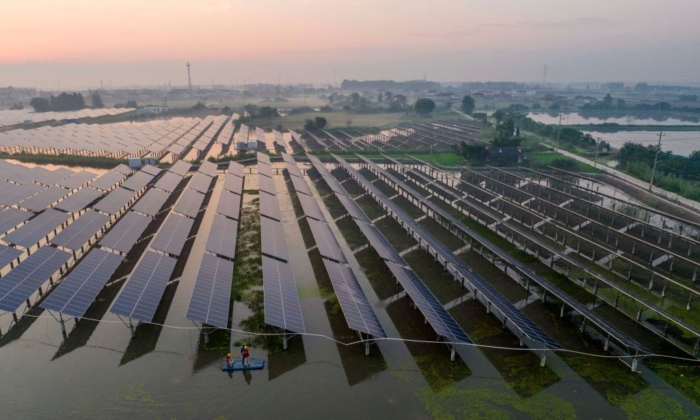
A Non-Military Strategy to Counter China theepochtimes.com
Saved - January 17, 2024 at 4:02 AM
reSee.it AI Summary
In July, I interviewed @jenniferzeng97 about #Gotion, a Chinese company approved by the Biden Admin to build a battery factory in Michigan. Jennifer's research reveals stark differences between Gotion's Chinese and English websites, and their promotion videos highlight loyalty to the Chinese Communist Party. This decision to allow Gotion to build on US soil is concerning. @committeeonccp @LenczyckiPhilip @DailyCaller

@Lily4Liberty - Lily Tang Williams

Last July, I interviewed @jenniferzeng97, who has done in-depth research on #Gotion, the Chinese company with ties to #CCP which was green lighted by the Biden Admin to build a battery factory in Michigan with tax dollars. She shows proofs from Chinese websites, which are completely different from Gotion's English language website, & the company's own promotion videos that demonstrate their loyalty to the Chinese Communist Party. It is a dangerous move by those in office in the US to give permission to this company to build a factory on the US soil. @committeeonccp @LenczyckiPhilip @DailyCaller https://www.youtube.com/watch?v=dPKlL9wvgYk

@committeeonccp - Select Committee on the Chinese Communist Party

BREAKING: Chinese Parent Company Of US Battery Maker Participated In Communist Party Programs That Acquire Tech For China’s Military “[@Gotion48660]participated in two programs known to acquire technology and dual-use research to benefit the CCP.” https://dailycaller.com/2024/01/16/gotion-china-programs-acquire-tech-ccp-military/

EXCLUSIVE: Parent Of US Battery Maker Participated In Communist Party Programs That Acquire Tech For China’s Military The parent company of a firm building battery plants in the U.S. participated in Chinese Communist Party programs that obtain technology for the Chinese military. dailycaller.com
Saved - December 18, 2023 at 4:14 PM

@Lily4Liberty - Lily Tang Williams

The US and the free world must call for Jimmy Lai's release, stop the political prosecution of pro-democracy activists, sanction the officials in Hong Kong and Mainland who are involved. #JimmyLai #FreeHongKong @committeeonccp @jooeysiiu @AnnaKwokFY

@committeeonccp - Select Committee on the Chinese Communist Party

Today marks the start of the sham trial against Hong Kong’s Jimmy Lai. His only crime? Fighting for freedom. 🎥 “The CCP, through its proxy puppets in Hong Kong, continues to prosecute pro-democracy activists at an alarming rate,” Chairman @RepGallagher explains ⬇️ https://t.co/RMrj9xucS7

Video Transcript AI Summary
Today, the speaker discusses the trial of Jimmy Lai in Hong Kong, calling it a sham and an abuse of power by the Chinese Communist Party. They highlight that Hong Kong is becoming similar to Belarus and Myanmar in terms of political prisoners. The speaker emphasizes that the CCP cannot maintain Hong Kong's global financial status while suppressing pro-democracy activists. They urge the US government to take action and hold those responsible accountable. The speaker calls for the release of Jimmy Lai and other activists, and expresses solidarity with the people of Hong Kong. They also mention the pursuit of sanctions against those eroding democracy and abusing human rights in Hong Kong.
Full Transcript
Speaker 0: Today marks the start of the sham trial against Hong Kong's Jimmy Lai. Hong Kong authorities arrested mister Lai on dubious charges such as colluding with foreign forces and sedition. In reality, scramble to prepare for these kangaroo court proceedings. This abuse of authorities scrambled to prepare for these kangaroo court proceedings. This abuse of power has not been limited to mister Lai. The Chinese Communist Party, through its proxy puppets in Hong Kong, continues to prosecute pro democracy activists at an alarming rate. Despite its skyscrapers and glamour, Hong Kong is increasingly on par with the likes of Belarus and Myanmar for its number political prisoners. So the CCP thinks it can maintain Hong Kong's status as a global financial center while simultaneously locking up thousands of pro democracy protesters and activists, they are sorely mistaken. It's time for the US government to take action and recognize that there is no difference between the CCP's control of Hong Kong and of the mainland PRC. We will not allow the passage of time and media news cycles to distract us. We need to hold those responsible for eroding Hong Kong democracy accountable. Xi Jinping must end the political persecution Jimmy Lai and other Hong Kong democracy activists and immediately released them from jail. The United States Congress will continue to stand with the freedom loving people of Hong Kong and pursue sanctions on those eroding democracy and abusing human rights in Hong Kong. I joined the millions of believers in prayer for our Catholic brother, Jimmy Lai.
Saved - December 18, 2023 at 4:08 PM
reSee.it AI Summary
Pope Francis is being compared to @CardJosephZen, with admiration for the latter's courage and strength. The author expresses love and respect for the people of Hong Kong, wishing they had known how to escape from Mainland China like #JimmyLai. They hope the UK government is pressuring CCP for Lai's release. @frances_hui.

@Lily4Liberty - Lily Tang Williams

Amazing courage & strength for the world to see. I wish Pope Francis had the same qualities as @CardJosephZen. We lived in Hong Kong from 1996 to 1998 as expats, love & respect the people there who embraced western values of rule of law, freedom & free enterprise. I could have escaped Mainland for HK like #JimmyLai if I knew how from Sichuan. #JimmyLai is a British Citizen. I hope UK government is putting pressure on CCP for his release. @frances_hui

@frances_hui - Frances Hui 許穎婷

The 91-year-old Cardinal Zen attended #JimmyLai’s trial today. What a symbol of true strength and fearlessness in the face of oppression. #FreeJimmyLai https://t.co/b9cfcpYsyt

Saved - December 13, 2023 at 1:52 AM
reSee.it AI Summary
Democracy in Hong Kong suffers as communists control candidate selection, rendering voters insignificant. Recent elections saw a dismal turnout of 27.5%, a stark contrast to the 71% during the anti-CCP protests in 2019. Hong Kongers can attest to the loss of freedom and voting rights. [Link to article: https://www.msn.com/en-us/news/world/voter-turnout-plunges-below-30-in-hong-kong-election-after-rules-shut-out-pro-democracy-candidates/ar-AA1litrV?ocid=socialshare&pc=EDGEDSE&cvid=607c9e176d0240a0b44392a4369ef5a3&ei=9]

@Lily4Liberty - Lily Tang Williams

This is what happened to democracy when the communists take over. They pick and endorse the candidates; the voters don't matter. Elections are just propaganda shows. Only 27.5% of #HongKong 4.3 million registered voters cast ballots on Sunday, compared with the record 71% who participated in the last elections held at the height of anti-CCP protests in 2019. If you want to know what it is alike to lose your freedom & voting rights, just ask a Hong Konger. Voter turnout plunges below 30% in Hong Kong election after rules shut out pro-democracy candidates https://www.msn.com/en-us/news/world/voter-turnout-plunges-below-30-in-hong-kong-election-after-rules-shut-out-pro-democracy-candidates/ar-AA1litrV?ocid=socialshare&pc=EDGEDSE&cvid=607c9e176d0240a0b44392a4369ef5a3&ei=9

Saved - November 14, 2023 at 11:10 AM
reSee.it AI Summary
China, under Xi Jinping's leadership, has removed term limits, making him president for life. The CCP has halted anti-America propaganda to prepare for Xi's meeting with Biden. Xi's goal is for China to become the world's top power by 2049. The Chinese military is being told to prepare for war. China lacks democracy, with no voting rights, rule of law, or freedom of speech, press, religion, or association. It is a totalitarian regime, responsible for political persecutions and cultural genocide. All businesses must have a CCP committee. China is a police state, spying on citizens through surveillance measures. It exports surveillance through apps like WeChat and TikTok. Xi receives red-carpet treatment due to CCP's infiltration into various sectors in the US. A Chinese patriot and congressional candidate speaks out despite being on the CCP's blacklist.

@Lily4Liberty - Lily Tang Williams

#XiJinping got rid of the term limits in China's Constitution so he can be a president for life, like Mao. #CCP halted anti-America daily propaganda recently to prepare for Xi's meeting with Biden. Xi's China Dream is becoming #1 world power by 2049. Chinese military has been told to prepare for war. China is not a democracy; Chinese people have no rights to vote. There is no rule of law, no separation of powers, no free speech & free press, no freedom of religion, no parental rights, no freedom of association. China is the largest totalitarian regime in the world committing political persecutions and cultural genocide. Estimated 80 million Chinese died under CCP since the founding of PRC in 1949. There is no truly private company inside China under one-party system. All the businesses with 100 employees are mandated to have CCP committee onsite. China is a police state to spy and track its citizens with social credit scores, vaccine passports, health codes, facial recognition cameras, digital currency, online payment systems. It is famous for disappearing any dissidents and locking up political enemies. China exports its global surveillance through Chinese apps like #WeChat, #TikTok, its cybersecurity law, data security law and national intelligence law obligate tech firms to cooperate with the State. China is the center of an alliance of totalitarian regimes with financial and technological support. Expand military influence via Belt & Road Initiative, set up secret police stations overseas. Why is Xi getting the red-carpet treatment in America and so many want to appease him? Because CCP has done the following for the past decades: Infiltration into the U.S. & State Government Infiltration into the U.S. Media Infiltration into the U.S. Education System Infiltration into Hollywood Infiltration into the Wall Street Infiltration into the corporations Infiltration into the NGOs Infiltration into the churches As someone who was born and grew up in China, I feel that it is my duty to tell the truth and warn my fellow citizens, even though I am on CCP's blacklist, risk my families still live in China. I am a patriot and a congressional candidate who can't be bought or silenced. A clip of my interview by @ShawnRyan762 in 2021. Pl share to warn everyone. #NHPolitics #NH02

Video Transcript AI Summary
China is currently experiencing a cultural revolution similar to the one in the past. The chairman's goal is to achieve common prosperity, which has led to the takeover of private industries and companies. Jack Ma, the CEO of Alibaba, was forced to retire and disappeared for a few months after criticizing China's regulators. There is a power struggle between different factions within the government. Chairman Xi changed the constitution to allow for unlimited presidency, and he is known as a hardcore communist. Many celebrities and wealthy individuals have become quiet and low-profile, as they fear disappearing or facing consequences. People still disappear in China, and there are secret prisons known as prisoners conscious.
Full Transcript
Speaker 0: So if they know the real history, if they know this, what happened to us during most cultural revolution, you would think history should not repeat. But today's China is already in cultural revolution 2 point o. The chairman wants to have common prosperity. So that's why you look at his policies that he took over basically lots and lots of private huge industries and companies. A billionaire, Jack Ma, was forced to retire, also disappeared for a few months because he dared to criticize China regulators on the economy. Speaker 1: Didn't didn't the CEO of Alibaba disappear too? Speaker 0: That's him, Jack Ma. Speaker 1: That's him? Speaker 0: That's him, Alibaba CEO. And his company also was told cannot go public in Hong Kong. Say how could a private company get so rich. It's of course, there's a power struggle. I heard that, you know, lots of companies, billionaires got rich under Jiang Zemin, the, you know, former president, and Jiang's faction and the Xi's faction are constantly fighting each other to gain power, to gain control. So when chairman Xi came to power 2012, it's 10 years now. That's why he's subject to another 3rd term coming to fall, he changed the China constitution to allow unlimited presidency. But will he become Speaker 1: He's the one that changed that? Speaker 0: Well, so called voted it by 99% of my 99% people of Congress, which is proper step people's Congress. China's constitution says all Chinese parties are under dictatorship of China's communist party. Read that. So but under Deng Xiaoping, he did say we should have term limit. So then limit himself to 2 terms or 5 years, 10 years. And same thing happened to Hu Jintao and the. But she come to power. He got rid of that. So people should know that. Why? He has we call him a New Mao New Mao. Speaker 1: He's that bad. Speaker 0: He's a hardcore communist. And, so they even celebrities were quiet now in China. All the YouTubers, celebrities, famous actress, actors and billionaires and millionaires got rich from a past China's, limited free market capitalism and allow private industries and private enterprises and they were kind of stay low file, keep their head down now. And, sometimes they disappear. China is famous for these people. In my house community housing courtyard, I heard 2 neighbors disappeared. Their family never find out what happened to them. I don't know what happened. I was child. But my dad told me, yeah, they're gone. They went to a ministry if they're just gone. And the people still disappear today in China. And there are dark prisons called prisoners conscious.
Saved - November 2, 2023 at 4:18 PM
reSee.it AI Summary
China's biggest search engine, Baidu, has removed the name 'Israel' from its map, though the cities are still listed. Beijing's ties with Palestinians date back to the 1960s. A prolonged Middle East conflict would benefit China, diverting attention from its Indo-Pacific ambitions. China's support for Iran's terrorist-sponsoring regime is concerning. The link below provides more details.

@Lily4Liberty - Lily Tang Williams

"Try searching for 'Israel' on China’s biggest search engine Baidu—the nation's name is no longer on the map, although the names of its major cities are still there." "A protracted war in the Middle East would be a clear victory for Beijing on many fronts. It would drain Western resources and distract from the Indo-Pacific region, where the Chinese regime is aggressively wrestling for control. The history of Beijing’s ties with the Palestinians dates to the mid-1960s." “China is the ultimate enabler of the Iranian terrorist-sponsoring regime,”, said @milesyu10. The Long Red Shadow Behind Islamic Terrorism https://www.theepochtimes.com/article/the-long-red-shadow-behind-islamic-terrorism-5520453?utm_source=China&src_src=China&utm_campaign=uschina-2023-11-02&src_cmp=uschina-2023-11-02&utm_medium=email&est=CMeIwCAl2GD6CaIEx1nhc9UZ4Ukh1moaEnH2bbLm7AenaiOL%2F8n%2FWo7NVINVVE6JHuC1hQ%3D%3D
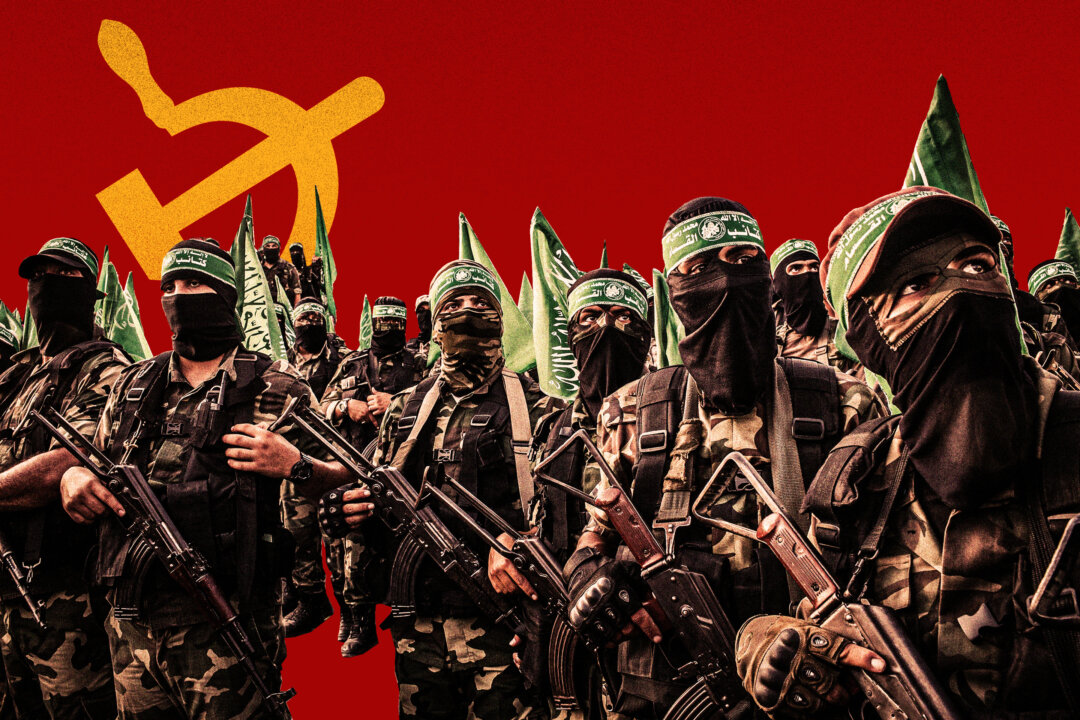
The Long Red Shadow Behind Islamic Terrorism Decades of communist subversion by China underlie the terror currently witnessed in the Middle East. theepochtimes.com
Saved - October 26, 2023 at 5:40 AM
reSee.it AI Summary
Newsom's appearance on CCTV, a CCP propaganda channel, sparked controversy. Critics argue that it highlights the high-level treatment he received in Beijing. A Chinese individual labeled me a traitor for questioning this. But who is the true traitor?

@Lily4Liberty - Lily Tang Williams

Newsom on CCTV, a CCP propaganda allowed in the US & other western countries. Translation: "That is why the CA Governor got the highest-level treatment in Beijing." I was called a traitor by one of Chinese who shared this video. Traitor to whom? I am an American, but communists think once you were their slave, you are supposed to be theirs forever. Who is the real traitor here?

View Full Interactive Feed