reSee.it - Tweets Saved By @PandemicTruther

@PandemicTruther - America-China Watcher
The US Can’t Kick China Out of Latin America Anymore Why Trump’s New Monroe Doctrine Is Already Too Late When Trump talks about “taking back” Latin America, about restoring the Monroe Doctrine, around dragging Venezuela, Panama, Brazil, and the rest of the continent back under Washington’s exclusive jurisdiction, many people still interpret this as strength. It isn’t. It is exposure. Only someone who has run out of cards flips the table. Only a gambler close to bankruptcy reaches for robbery. If U.S. sanctions still worked, if dollar hegemony were still intact, if political pressure, financial warfare, and diplomatic isolation still delivered results, Washington would not need to personally step into the mud — threatening kidnappings, floating regime-change fantasies, or openly talking about seizing resources as collateral. This is not muscle-flexing. This is imperial afterglow. And the key misunderstanding in Washington is this: the outcome of this struggle does not hinge on whether Maduro survives, or whether a government falls. It hinges on something much more banal, much more material. When the U.S. looks down at what it still calls its “backyard,” it no longer sees American soil. It sees Chinese soybeans growing in the fields. Chinese cranes loading containers in the ports. Chinese power grids, telecom systems, roads, and railways quietly humming underneath daily life. This is more powerful than ideology. That is infrastructure, the backbone of economy. And infrastructure does not disappear on command. Removing China from Latin America is removing the infrastructure and collapsing the fragile economies. The Real Endgame: Resources, Collateral, and a Dollar Under Pressure Trump’s Venezuela obsession is not about democracy, human rights, or even oil in the traditional sense. It is about collateral. The United States is cornered by its own balance sheet. In the coming year alone, Washington needs to roll over and issue roughly five trillion dollars in new Treasury debt just to service maturing obligations. But fewer and fewer countries are willing to absorb U.S. debt at scale. Commodity trade is slowly de-dollarizing. If the U.S. is forced to monetize its own debt by printing money to buy Treasuries, inflation becomes uncontrollable. That path cannot be allowed. So the theory emerging in Washington is simple: secure massive pools of real assets — oil, gas, rare earths, minerals — re-peg them to the dollar, and restore confidence through material backing. Venezuela. Greenland. Latin America. On paper, Venezuelan oil reserves are worth tens of trillions. In reality, Venezuelan oil can't be monetized so easily. Venezuela’s Oil Trap: Why China Cannot Be Replaced Venezuelan crude is among the most difficult on Earth to monetize. It is extra-heavy, buried deep, and requires extremely sophisticated extraction, upgrading, and transport infrastructure. Only two countries on Earth have the technical and industrial depth to build and operate such systems at scale: China and the United States. China already did it. China buys roughly 70% of Venezuela’s oil. China financed, built, and operates much of the infrastructure that makes that oil usable and exportable. If China is pushed out, who replaces it? American oil majors — Chevron, ExxonMobil, ConocoPhillips (COP) — have no incentive to sink one hundred billion dollars over five years into facilities that could be expropriated the moment political winds shift again. The risk profile is suicidal. And even if U.S. companies did step in, who would they sell to? China is the only buyer large enough, patient enough, and technically compatible with this type of crude. If China is expropriated and sanctioned out of Venezuela, retaliation is inevitable. Supply chains will be disrupted. Markets will close. Sanctions will travel both ways. Washington’s Venezuela fantasy collapses under its own economic logic.

@PandemicTruther - America-China Watcher
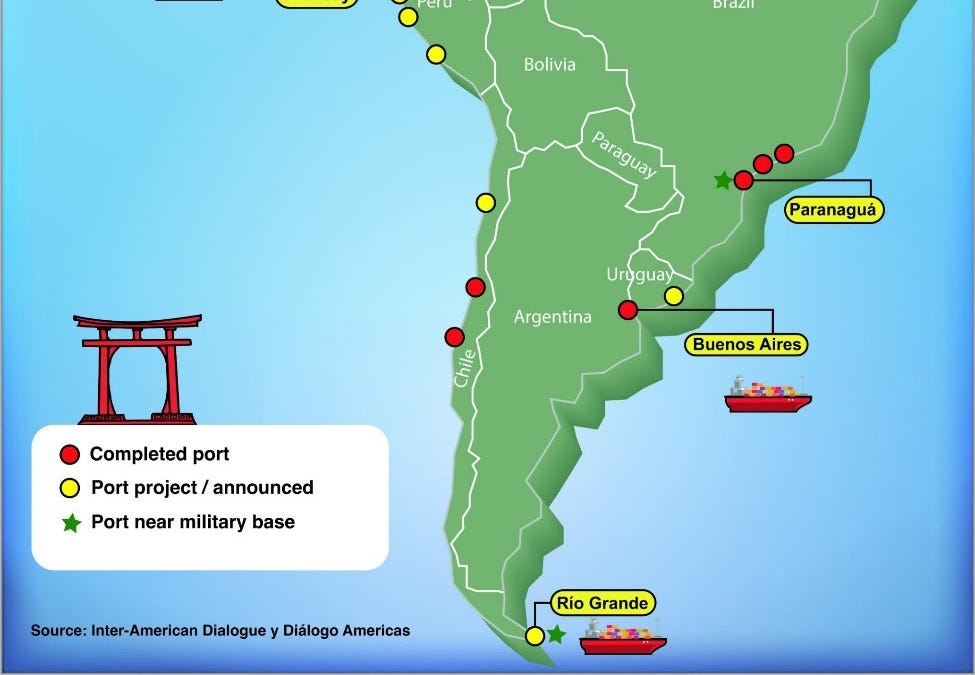
II/ Ports, Infrastructure, and the Chancay Pivot Zoom out, and the problem becomes systemic. China has not merely traded with Latin America. It has rewired it. Ports, roads, railways, power grids, telecom networks — many of these systems are smart, automated, and remotely managed. The Chancay Port in Peru is the clearest illustration of this shift. Once operational, it shortened South America–Asia shipping routes by weeks and bypassed U.S.-controlled chokepoints. Copper, lithium, agricultural products, and minerals can now flow east faster, cheaper, and with far greater autonomy. These are not docks that can simply be seized and reassigned. They are deeply integrated Chinese-built ecosystems. Remove China, and the system does not change owners — it stops functioning. This is the core problem Washington refuses to confront. It is not trying to block trade. It is trying to uninstall an operating system. Doing so would paralyze Latin American economies. Ports would fall silent, power grids would falter, telecommunications would degrade, and without functioning infrastructure, Latin American resources would cease to be monetizable. Twenty Years Too Late Twenty years ago, China’s presence in Latin America was close to zero. Walk into a supermarket in Santiago or São Paulo in the early 2000s and you saw American brands stacked wall to wall. Back then, if Washington sneezed, Latin America caught a cold. Today, the data tells a different story. China is now the largest trading partner of Brazil, Chile, Peru, and several other countries. Bilateral trade has surged into the hundreds of billions. This shift did not happen overnight. It happened container by container. Railway by railway. Port by port. Chile’s cherries, Brazil’s soybeans, Ecuador’s shrimp are staples on Chinese dinner tables. This is demand gravity. Lithium, Energy, and Strategic Chokepoints If agriculture is flesh, energy and minerals are bone and blood. The Lithium Triangle — Chile, Bolivia, Argentina — controls more than half of the world’s known lithium reserves. But reserves alone are meaningless. What matters is refining. China dominates lithium processing. The United States talks about electric vehicles, green transitions, and technological leadership, yet the refining capacity and supply chains that make these ambitions possible remain firmly in Chinese hands. This is the structural asymmetry Washington cannot escape. If China ever tightens refining exports, Western EV and battery supply chains face immediate disruption. This is not just a trade dispute. It is leverage over future industrial standards. A Buyer’s World We now live in a buyer’s market. Whoever controls the largest consumer base controls pricing power. Latin American farmers, miners, and exporters understand this perfectly. Anger Washington, and life may become uncomfortable. Anger China, and the market itself disappears. That is survival. China’s presence in Latin America looks like commerce. In reality, it functions as armor. When interests are bound tightly enough, any attempt to tear them apart becomes self-destructive. The Monroe Doctrine was written for a world of gunboats. This is a world of supply chains. And in that world, China is already embedded — too deeply to remove without tearing the system apart.
@PandemicTruther - America-China Watcher
#Geopolitics #China #USA #LatinAmerica #BeltAndRoad #Infrastructure #Venezuela #SupplyChain #Brazil #Chile #Argentina #Bolivia #Perou Also on Substack: https://open.substack.com/pub/roquesren/p/you-cant-kick-china-out-of-latin?utm_source=share&utm_medium=android&shareImageVariant=overlay&r=4arils
@PandemicTruther - America-China Watcher
@IghoThony Thanks!
@PandemicTruther - America-China Watcher
You haven't understood the situation. China supports the country and people through economic cooperation. It won't deploy its military to prop up a regime at all costs. Maybe some logistics support at most. Any government working in the interests of its nation and people will choose economic cooperation with China.
@PandemicTruther - America-China Watcher
The Hidden Logic Behind the Iran-Israel War: Not Just About Iran—It's About Saving the Dollar This war isn’t just about Israel trying to bomb Iran. It’s about something far bigger: protecting the U.S. financial system from collapse. Let’s be clear. Israel doesn’t act alone. It’s been conferring with Wall Street and taking quiet instructions from the Federal Reserve. But this time, Israel miscalculated. Tel Aviv didn’t expect the scale, speed, or precision of Iran’s retaliation. Neither did Washington. The shock was real. What followed made one thing painfully obvious: Israel can’t handle a long, high-intensity war—not logistically, not militarily, not politically. Because this was never just Israel’s war. Israel acts as a militarized outpost for the U.S.-led financial empire. Its role is strategic, but the real beneficiary of this war isn’t just Israel. It’s Wall Street. The U.S. national debt is over $37 trillion. Interest payments are now the biggest item in the federal budget. Investors are nervous. Who wants to keep buying U.S. Treasuries when the math no longer works? To keep capital flowing into U.S. bonds, you need to create fear. The world must believe: - The U.S. is the only safe haven, - Every other region is one trigger away from chaos, - And the U.S. military can plunge any competitor into ruin at will. In the past, often at the moment when the Fed increased the interest rate, a major war breaks out. Purpose of both is to cause capital flight into USD assets. - In March 2022, the Fed raised rates. - Days earlier on February 24, Russia moved into Ukraine. - Panic ensued. Over €400 billion fled into U.S. assets. - German industry was crushed by energy inflation. Many factories left—some to the U.S., but others to China to the indignation of the US government. That's why Obama accused China of being a "free rider" 🧵
@PandemicTruther - America-China Watcher
In early 1999, as the euro was freshly launched and gaining traction, the United States and NATO escalated their military intervention in Kosovo. This bombing campaign against Serbia had significant repercussions for European markets. The euro dropped sharply—by nearly 30% against the dollar in the early months of the conflict—while capital rushed into the relative safety of U.S. Treasuries. Although exact figures vary, analysts at the time noted that several hundred billion euros left European markets, seeking refuge in American bonds. This exodus helped reinforce the dollar’s position at a critical moment for the euro’s early credibility. But even war has limits when Wall Street calls the shots. Israel could have hit Kharg Island, Iran’s oil lifeline—handling nearly 90% of its crude exports. Destroying it would have shattered Iran’s economy. But oil would’ve hit $300 or even $400 a barrel. Inflation would spike worldwide. The Fed would be forced to hike interest rates again, driving U.S. debt servicing into a death spiral. That’s a risk Washington can't afford. So quietly, behind closed doors, lines were drawn. Targets were chosen with financial risk in mind. Because above all else, Wall Street, the Fed, and the U.S. government have a common priority: protect investor confidence in U.S. bonds. But that confidence is crumbling.
@PandemicTruther - America-China Watcher
The U.S. credit rating was already downgraded by Fitch in 2023. Fundamentals are weakening. And yet, the dollar still stands. Why? Because it's backed by firepower. The U.S. military—and its Israeli outpost—project chaos as a service. That chaos reminds global investors: the safest place for your money is still the United States. Not because the numbers add up—but because the U.S. can burn the rest of the world down at will. Except for one place: CHINA The U.S. wants to replicate its old playbook: destabilize, provoke panic, and attract capital and restore manufacturing. The goal is simple—push factories and money out of China, and back into the US. They’ve tried it all: - Protests in Hong Kong, - Separatist pushes in Xinjiang and Tibet, - Arms to Taiwan, - Naval standoffs in the South China Sea, - Provoking India to antagonize China along the Himalayas, - Stirring conflict between the Philippines and China. None of it worked. China/Asia refused to burn. And China held the line. No civil war, no proxy war, no failed state. Just calm. That’s a strategic defeat for Washington. Even the Indo-Pakistan conflict—backed by the U.S.—failed to escalate. China’s modern war doctrine helped end it in 72 hours. India stepped back. Pakistan quietly claimed it had the ability to shoot down 20 Indian jets—but chose not to to avoid escalation. In this region, wars don’t escalate. Why? Because China is quietly holding the perimeter.
@PandemicTruther - America-China Watcher
China sees the U.S. strategy for what it is: provoke instability, then harvest capital and manufacturing flight. But China has tools to stave it off: - The most advanced missile and electronic warfare systems in Asia, - A vast domestic market, - A unified political system, - And credible military deterrence. China isn't falling for the trap. And as long as China/Asia stays stable, capital won’t flee to U.S. Treasuries like before. That’s the real gamble. If China breaks—if it collapses from within—the whole world will panic. Factories will flee. Investors will pour money into “safe” U.S. bonds. The dollar will get its second wind. That’s the strategy: break China, save the dollar. But it’s not working. China remains too stable, too advanced, too critical. The sanctions failed. The encirclement failed. The propaganda failed. So once again, Washington turns to its most reliable lever: Israel. This isn’t only about Iran and Israel. This is about global financial engineering. It's about creating war—to save the dollar. The real battlefield isn’t only Tehran and Tell Aviv. It’s the bond markets. The war is not for territory. It’s for the future of U.S. hegemony. Some speculate that Trump might escalate—deploy more troops, bomb Tehran, or expand the war into a regional inferno. But here’s the truth: America can’t afford it. A full-scale war means more spending, higher deficits, panicked bond markets, and a collapse in U.S. credit. It would also give China an opening. Right now, Beijing is conducting live-fire drills near Taiwan. If Washington is distracted in the Middle East, China might act. And that’s a risk the Pentagon can’t ignore. The numbers don’t lie. War costs more than it earns now. This time, the U.S. will bark—but not bite. The strategy of using chaos to drive capital into the U.S. has started to backfire. Yes, the Ukraine war triggered massive capital flight. Yes, some of Germany’s industry fled to the U.S. But much of it also went to China. Investment into East and Southeast Asia soared. Why? Because China now looks like the most stable region on Earth. Surrounded by calm, backed by real deterrence. China's military isn’t loud—but it’s effective. Its strength has quietly become the backbone of regional economic stability and continued prosperity.
@PandemicTruther - America-China Watcher
Iran sees the China model and wants to emulate China. Iran has been on a permanent imminent surrender mode to the US. It wants to defy the West while staying plugged into global markets and prosper. Just like China. But it hasn't understood the logic behind. It lacks China’s key asset: advanced modern military capability far exceeding that of the US in reality (best kept secret), paired with quiet restraint. That’s why Iran remains vulnerable. And China doesn’t. Israel's aggression has backfired. Israel may survive Iranian missiles. But it won’t survive the markets. Because capital is skittish. Even a 1% risk of Tel Aviv being turned into rubble is enough to scare it off. Investors don’t wait for certainty—they react to probability. Israel used to be a magnet for global capital, celebrated for its innovation and high-tech startups. But all of that was built on the belief that it was fundamentally safe. That illusion is gone now. No capital parks itself in a blast zone. Once the illusion of safety disappears, so does the money. Israel won’t rebuild its economy with foreign investment—because capital doesn’t go where missiles fall. The Iran–Israel war, launched with the implicit goal of triggering capital flight toward U.S. markets, has at least partially backfired. Instead of flowing exclusively into U.S. assets, a significant portion of Middle Eastern capital has been siphoned off to Hong Kong, a financial platform serving China. On June 12, the day the conflict erupted, over HKD 127.8 billion (roughly USD 16 billion) surged into the Hong Kong Stock Exchange via southbound trading, accounting for more than 55% of the total daily volume. Far from reinforcing the dollar, the war has redirected capital into China’s financial orbit—achieving the exact opposite of what Washington and Tel Aviv likely intended. To all intents and purposes, this war has misfired: instead of triggering a flight of capital into U.S. markets, it has redirected billions toward China, strengthening its financial position; instead of securing Israel, it has left the country shattered and increasingly uninvestable; and far from reinforcing U.S. dominance, the conflict risks drawing Washington into a ruinous quagmire that could collapse the dollar, implode Treasury bonds, and shatter American hegemony—so when the German Chancellor says Israel is doing the dirty work for all of us, he may be right, just not in the way he intended. Putin is smiling too. US Nato being drawn into the Israel-Iran war will take some pressure off his back.
@PandemicTruther - America-China Watcher
Once upon a time, in the great forest of the world, a hungry tiger (US) roamed. His eyes burned with desire—for he had long dreamed of feasting on the great DRAGON (China) that lived far to the East. The Dragon, with its shimmering scales and fiery breath, would have been the grandest meal of all. But the tiger paused. He knew the Dragon was powerful—too vast, too wise, and too fierce to be hunted easily. Many had tried. None had returned. Just then, the tiger looked around and saw a cluster of smaller animals grazing nearby: the Bear (Russia) the Eagle’s European cousins (Europe), the Lions of the Middle East (Middle East). They looked startled, confused. "Wait," they said, trembling. "Weren’t you after the Dragon? Shouldn’t you be killing and eating him?" The tiger licked his teeth and chuckled darkly. "Yes," he growled. "The Dragon would make a fine feast. But he is far too strong, too prepared. I cannot bring him down—at least not yet. But I'm hungry now. If I don't eat, I will die!!" He took a step toward the smaller beasts. "But you... you're weaker. Softer. Easier to sink my teeth into." And so, instead of charging the Dragon, the tiger prowled through the forest, striking at the vulnerable, devouring the distracted. The others watched in fear, wondering when their turn would come—wondering why the tiger, though fixated on the Dragon, chose instead to tear through them first. The world is still a jungle.
@PandemicTruther - America-China Watcher
@PandemicTruther - America-China Watcher
People have been talking for years about the end of American hegemony. It's the consensus that it was never going to disappear quietly. Before stepping down from the world stage, the United States is destined to drag the world into one final, catastrophic war — a kind of self-immolation that seals its downfall. For years, analysts speculated about where and how this would unfold. The dominant theory used to be a titanic war with China in the South China Sea, triggered by a Taiwan contingency. But something changed. Washington has come to realize — quietly, reluctantly — that its military is no longer a match for China’s. The Pentagon is still struggling to fully transition out of the post-9/11 counterinsurgency mindset, while China has already leapfrogged into sixth-generation warfare: AI-driven, drone-saturated, fully integrated, and command-synchronized in real time. So, the war to mark the end of U.S. primacy won’t be fought over Taiwan. It’s being fought now — in the Middle East. The October 7, 2023 Hamas incursion into Israel was not just a regional flashpoint. It was the geopolitical equivalent of the assassination of Archduke Franz Ferdinand in 1914 — a spark that will trigger the unraveling of the old order. The financial, psychological, and strategic consequences are already global. And in this proxy war landscape, the United States is overextended, exposed, and increasingly reactive — no longer the actor that shapes the world, but the empire forced to defend illusions of control as the world moves on.
@PandemicTruther - America-China Watcher
China is already backing Iran in a big way China Just Gave Iran a Lifeline—Without BeiDou, Iran Might Have Surrendered Beneath a smoke-filled night sky, an Iranian missile streaked across the darkness and slammed directly into the Israeli Ministry of Defense’s command center. The explosion instantly cut surveillance feeds. Shockwaves rippled through nearby neighborhoods, shaking buildings across several kilometers. Meanwhile, in a Tehran command room, Iranian technicians monitored a BeiDou navigation terminal as the coordinates updated in real time. The missile hit with surgical precision. On-screen, the hit-probability curve spiked—marking a turning point: Iran had entered the age of precision warfare. And it owed that breakthrough to China’s BeiDou satellite system. 🧵
@PandemicTruther - America-China Watcher
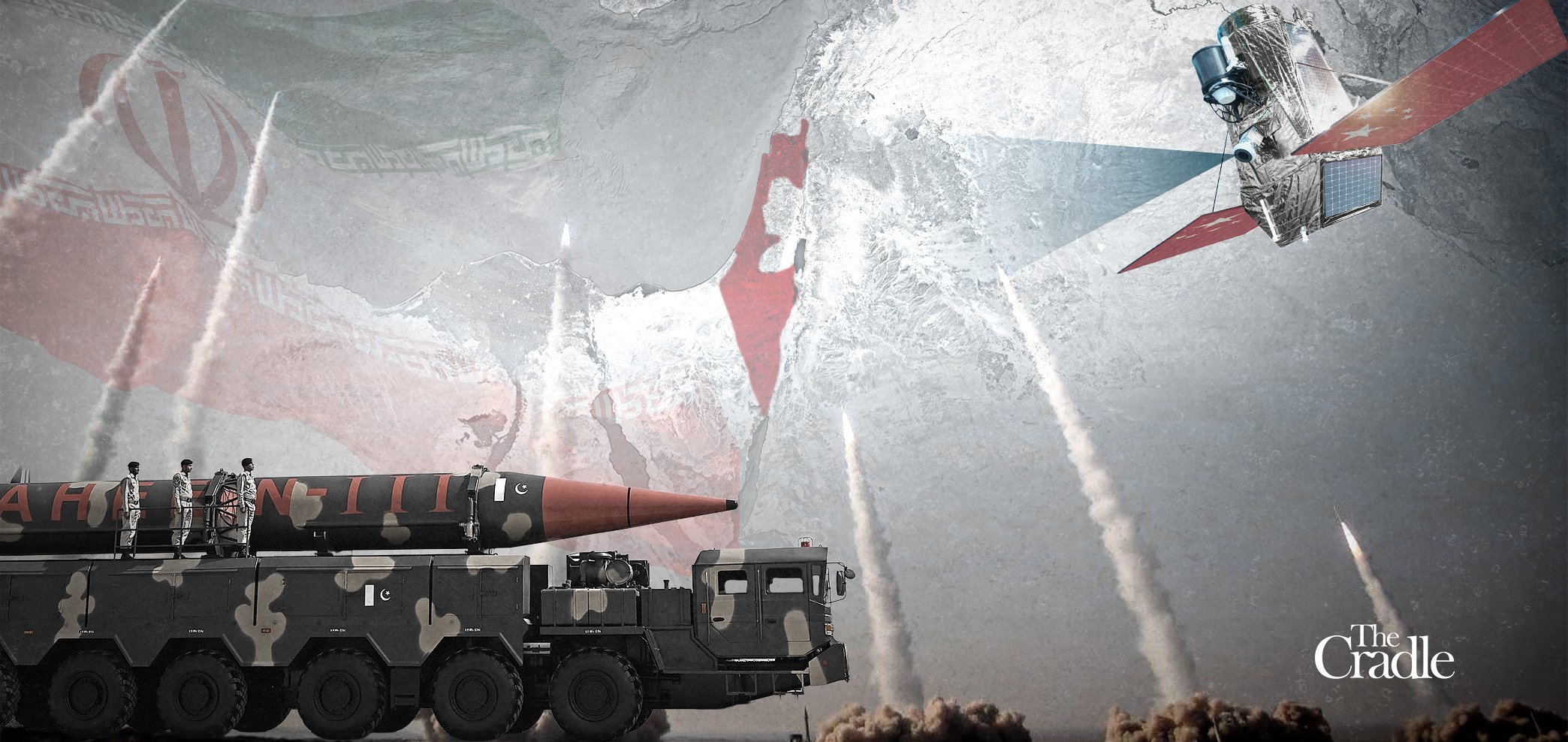
I. How BeiDou Took Over the Persian Gulf In 2021, Iran and China signed a 25-year comprehensive cooperation agreement. Western analysts mostly overlooked a critical clause: Iran’s full access to China’s BeiDou satellite network. This single line quietly began to shift the power balance in the Middle East. For years, Iran had been shackled by the invisible restraints of American GPS. Its missiles were vulnerable to signal interference. Its drones could be spoofed or hijacked. With BeiDou, Iran gained full navigation autonomy—guiding missiles and drones independent of Western infrastructure. The technological leap became a battlefield advantage. With over 6,000 missiles connected to BeiDou, Iran’s accuracy improved to meter-level precision. Its offensive capabilities expanded accordingly. Take the Hoveyzeh cruise missile: with BeiDou-assisted upgrades, its range now extends to 2,500 kilometers, rivaling the U.S. Tomahawk. Iranian drones also began operating in “intelligent swarm” formations, coordinating through BeiDou’s encrypted signal network to outmaneuver Israeli defenses.
@PandemicTruther - America-China Watcher
II. Dual-Layer Supremacy: How BeiDou Beats GPS Iran’s adoption of BeiDou wasn’t just technical—it was strategic necessity. Among the world’s four satellite navigation systems, Russia’s GLONASS and Europe’s Galileo lacked sufficient accuracy. The U.S. GPS system, meanwhile, was a liability: easily denied, manipulated, and used as a weapon. BeiDou’s strength lies in its dual-layer satellite structure: a global base layer augmented by a dense regional constellation optimized for Asia. This overlapping architecture creates a robust signal capable of punching through sophisticated jamming and spoofing efforts by the U.S.–Israel alliance. During Iran’s missile launches, BeiDou’s enhanced Asian signals cut through Western electronic warfare.
@PandemicTruther - America-China Watcher
III. Surrender or Sovereignty: The Strategic Stakes Imagine an alternate reality: had Iran still been relying on GPS during its June 2025 retaliation, the result could have been catastrophic. One U.S. command could have cut navigation entirely: Hundreds of drones would’ve crashed mid-flight. Cruise missiles could’ve plunged into the Mediterranean. Ballistic missiles might’ve misfired and struck Iranian soil. A military force without satellite guidance is a blind army. BeiDou wasn’t just a tool; it was Iran’s path to sovereignty and national dignity.
@PandemicTruther - America-China Watcher
IV. Precision Retaliation: Proof of Satellite Guidance Iran’s June 2025 barrage wasn’t emotional, nor random. It was measured, mirrored, and methodical—a clinical demonstration of retaliatory symmetry: Israel struck Iranian command centers → Iran hit Israel’s Ministry of Defense. Israel bombed scientific research centers → Iran targeted Rafael Defense Systems. Israel assassinated IRGC commanders → Iran struck Netanyahu’s private residence in Caesarea. Israel hit military-industrial facilities → Iran bombed Haifa Port. Israel targeted Iran’s economic base → Iran responded by hitting Diamond District, the Tel Aviv stock exchange, and elite suburbs — a direct strike at Israel’s economic morale. These were not arbitrary impacts. They were deliberate, equivalent counterstrikes, demonstrating strategic coherence and high accuracy—something only possible with reliable satellite guidance.
@PandemicTruther - America-China Watcher
V. The Denial: Iranian Pride or Strategic Amnesia? Yet even in the face of this evidence, some incorrigibly arrogant Iranians on X claim that these strikes were executed without BeiDou—that Iran achieved such precision without any Chinese tech, using only inertial or optical guidance. Such claims collapse under scrutiny: 1. Inertial Navigation Systems (INS) drift over long distances according to a programmed itinerary and cannot maintain meter-level accuracy. 2. Optical systems fail in darkness, poor weather, or long-range strikes beyond visual range. 3. Complex, multi-phase corrections—especially mid-flight—require real-time data that only satellites provide. The timing, pairing, and specificity of the June strikes demand full-phase, satellite-enabled navigation. GPS was unavailable. BeiDou was the only functioning option. But strategic autonomy does not mean isolation. Iran’s precision today was made possible by China’s space power—and that truth is written across every blast crater. It appears that Iran and many people are complaining that Iran is not getting any help from Russia and China. That's ignoring the elephant in the room. If the contribution is so big that failing which Iran's missile strikes are all nullified, it's called strategic critical logistics support. That's helping in a big way.
@PandemicTruther - America-China Watcher
@MSA397354584375 - M_S_A
@PandemicTruther Thanks for the informative thread. I was initially skeptical but found reports elsewhere as well. @haniefhaider https://jamestown.org/program/beidou-and-strategic-advancements-in-prc-space-navigation/ https://thecradle.co/articles/pakistan-breaks-ranks-backs-iran-in-war-with-israel


@PandemicTruther - America-China Watcher
Chatgpt: 📌 Iran’s Missiles and BeiDou: Confirmed Integration 1. 2015 – Initial technical cooperation Iran’s electronics firm Salran signed MoUs with Chinese counterparts to integrate BeiDou satellite navigation into Iranian missiles and UAVs, aiming to improve targeting accuracy. Agreements included building ground stations in Iran and transferring BeiDou technology, under the support of Iran Electronics Industries (linked to the MODAFL). 2. 2021 – Full military access to BeiDou In January 2021, Iran’s ambassador in Beijing publicly confirmed that China granted Iran military-grade access to BeiDou. Experts note this gives Iran the ability to navigate and guide missiles with encrypted BeiDou signals, improving precision across ballistic and cruise missile platforms. 3. BeiDou vs GLONASS Russia’s GLONASS is used as a backup but is less accurate, particularly for military-grade applications. GLONASS signals are unencrypted for civilian users and are generally considered inferior in precision to BeiDou’s dual-band encrypted service. In many Iranian military platforms, GLONASS has been supplemented or replaced by BeiDou. Some Chinese-supplied missile guidance units use dual-mode GLONASS-BeiDou chips, but BeiDou provides the primary accuracy. 4. Strategic Importance Under the China–Iran 25-year strategic partnership, BeiDou is now a core component of Iran’s C4ISR (Command, Control, Communications, Computers, Intelligence, Surveillance, and Reconnaissance). This represents a break from Western-controlled GPS, enabling Iran to operate independently of U.S. satellite guidance, which has been blocked or spoofed in past conflicts. --- 🧭 Summary Table SystemAccuracy (Military Use)EncryptionUsed by Iran?Notes BeiDouHigh (1–3 m CEP or better)Yes (military-grade)✅ Integrated in missiles & UAVsProvided by China GLONASSModerate (5–10 m CEP)No (civilian-grade only for Iran)✅ Used in hybrid systemsSupplementary, less precise GPSDenied or spoofedDenied to Iran❌ BlockedU.S.-controlled
@PandemicTruther - America-China Watcher
Google Gemini confirms Beidou has exceeded GPS capability: "Official Recognition: A US government advisory panel on GPS has even conceded that "GPS is now notably below par to China's BeiDou" technically in some areas"" * Beidou has indeed made significant advancements and in many aspects, it has surpassed GPS. * Number of Satellites: Beidou has a larger constellation of satellites (currently around 35-56 depending on the source and inclusion of different generations) compared to GPS (around 31 operational satellites). A larger constellation can offer better coverage and redundancy. * Accuracy: Many reports indicate that Beidou offers superior accuracy for public use, often less than 1 meter, compared to GPS's typical accuracy of less than 4.9 meters. With augmentation systems, both can achieve sub-meter to centimeter-level precision. * Signal Frequencies: Beidou utilizes multiple frequencies simultaneously, which can make it more resilient to disruptions and improve accuracy by correcting for atmospheric interference. GPS also uses multiple frequencies (L1, L2, L5) but Beidou's implementation has been highlighted as particularly robust. * Unique Features: Beidou has a unique short message communication (SMC) capability, allowing users to send text messages even in remote areas without other communication infrastructure. This is not a feature of GPS. * Monitoring Stations: Beidou reportedly has significantly more monitoring stations globally than GPS, which aids in its overall accuracy and reliability. * Official Recognition: A US government advisory panel on GPS has even conceded that "GPS is now notably below par to China's BeiDou" technically in some areas. While GPS remains widely adopted and interoperable with other GNSS systems, Beidou's rapid development and advanced featuras a very strong contender, and in several technical aspects, it has indeed exceeded GPS. For Iran, is GPS not available, blocked, and controlled by the U.S., and is its precision inferior? * GPS Availability in Iran: GPS is generally available globally, including in Iran, as it broadcasts signals worldwide. However, there have been recent reports (as of June 2025) of significant GPS jamming and spoofing near Iran's coast, particularly in the Arabian Gulf and Strait of Hormuz. This disruption, affecting nearly 1,000 ships daily, makes safe navigation difficult and has been linked to recent maritime incidents. * Control and Blocking by the U.S.: GPS is indeed controlled by the U.S. government, and theoretically, access can be restricted or degraded during conflicts. This is a strategic concern for many nations, including Iran, who seek alternative navigation systems for national security and autonomy. While a complete, nationwide "blocking" of GPS by the U.S. for civilian use in Iran is not the default state, localized jamming or spoofing for strategic purposes can occur and is currently being reported. * Precision Inferiority: As mentioned above, standard GPS public signals do have a lower precision (less than 4.9 meters) compared to Beidou's stated public precision (less than 1 meter). So, in terms of raw publicly available precision, Beidou generally offers better accuracy.
@PandemicTruther - America-China Watcher
Correction: Please ignore the video. It's irrelevant to the Iranian missiles. It's actually a SpaceX falcon 9 launched at sunset in California.