reSee.it - Tweets Saved By @PressTV

Saved - May 1, 2026 at 12:02 PM

@PressTV - Press TV 🔻

No one on Earth will remain untouched now that traffic has halted in the Strait of Hormuz! This is a video Trump prays you never watch. Follow t.me/presstv https://t.co/i1uH2SnFwn

Video Transcript AI Summary
There is an old joke that goes God created war so that Americans would learn geography. In 2026, they seem to be learning it the hard way. They’ve discovered that 10,900 kilometers from Washington DC lies the Strait of Hormuz, the world’s most critical choke point, a narrow strip of water between the Persian Gulf and the Gulf of Oman that stretches 167 kilometers in length, narrows to just 34 kilometers at its tightest point, and carries roughly 30,000 vessels a year. Around a fifth of the world’s traded oil and LNG flows through this corridor on normal days. Most of that oil heads to Asia, but oil prices don’t respect geography. They’re set globally. So when West Asia sneezes, fuel prices spike everywhere. Oil is only the start. Over 30% of global ammonia trade, nearly half of urea, and 20% of diammonium phosphate, key fertilizer inputs, move through this same choke point, along with about half the world’s sulfur for metal processing. If the sulfur didn’t arrive, the factory was shut down. It didn’t arrive because of the war and because the Strait of Hormuz was closed. Unlike oil, these can’t be rerouted. There are no pipelines for ammonia or urea. If Hormuz closes, the nitrogen supply chain doesn’t slow. It stops. And since synthetic nitrogen fertilizers support roughly 48% of the global population, missing the mid April application window in the Northern Hemisphere means lower yields by September. Major importers like India, Brazil, Pakistan, Bangladesh, and many African countries would quickly face fertilizer shortages, leading to higher food prices, inflation, and a widespread food security crisis affecting billions. 85% of Brazil’s fertilizer is imported. And under these conditions, we can only bring part of the land under cultivation. Meanwhile, about a third of the world’s helium, critical for semiconductors and MRIs, passes through these strait. So does nearly 10% of global aluminum and a significant share of Persian Gulf produced plastics. Even the Persian Gulf states themselves are exposed. This passage is their food lifeline. The biggest one, Saudi Arabia, imports over 80% of its food. The smallest one, Qatar, 85%. If the strait stays closed for another month or two, the food situation here is gonna get really critical. If anyone thinks the so called first world would be immune, the reality says otherwise. Since the war began, Brent crude has swung from $73 to nearly $120 at one point, adding about €500,000,000 per day in EU energy costs. In late April, the IEA warned Europe may have only six weeks of jet fuel left as West Asian imports falter. Prices have surged past $1,500 per ton. The IEA calls this “the greatest energy crisis in history.” By April 22, Lufthansa had canceled 20,000 flights with more disruptions and price hikes expected. In Germany, the industrial heart of Europe, 78.6% of firms report uncertainty about their future, rising to 87.7% in manufacturing and over 90% in chemicals, rubber, and plastics. The US isn’t insulated either. Gas prices jumped more than $1 per gallon in just six weeks, surpassing $4.10, the highest level since 2022, while the Hormuz shock fuels inflation. They said the consumer price index rose 0.9% in March, almost 1% in just one month. I haven’t seen a jump like that in years. Meanwhile, a Reuters/Ipsos poll put Trump’s approval rating at 36%, its lowest since his return to office. Forty-eight hours into the Iran war, marine insurers began canceling war risk coverage in the Persian Gulf. By March 5, commercial insurance had effectively vanished. No insurance means no shipping. No shipping means no trade. This isn’t a new insight. Back in 1507, Portuguese admiral Alfonso de Albuquerque understood that Whoever controls this choke point controls the flow between India and the Mediterranean. And by extension, global trade itself. So far, the largest empire in history finds itself with remarkably little to say against one of the oldest. Perhaps this time, the Americans picked the wrong country to learn geography.
Full Transcript
Speaker 0: There is an old joke that goes God created war so that Americans would learn geography. And in 2026, they seem to be learning it the hard way. So far, they've discovered that 10,900 kilometers from Washington DC lies the world's most critical choke point, a narrow strip of water between the Persian Gulf and the Gulf Of Oman that stretches 167 kilometers in length, narrows to just 34 kilometers at its tightest point, and carries roughly 30,000 vessels a year. It's called the Strait Of Hormuz. Every single normal day, around a fifth of the world's traded oil and LNG flows through this corridor. Most of that oil heads to Asia, but oil prices don't respect geography. They're set globally. So when West Asia sneezes, fuel prices spike everywhere. Oil is only the start. Over 30% of global ammonia trade, nearly half of urea, and 20% of diammonium phosphate, key fertilizer inputs, move through this same choke point, along with about half the world's sulfur for metal processing. If the sulfur didn't arrive, the factory was shut down. It didn't arrive because of the war and because the stright of Hormuz was closed. Unlike oil, these can't be rerouted. There are no pipelines for ammonia or urea. If Hormuz closes, the nitrogen supply chain doesn't slow. It stops. And since synthetic nitrogen fertilizers support roughly 48% of the global population, missing the mid April application window in the Northern Hemisphere means lower yields by September. It's that simple and that brutal. Major importers like India, Brazil, Pakistan, Bangladesh, and many African countries would quickly face fertilizer shortages, leading to higher food prices, inflation, and a widespread food security crisis affecting billions. 85% of Brazil's fertilizer is imported. And under these conditions, we can only bring part of the land under cultivation. Meanwhile, about a third of the world's helium, critical for semiconductors and MRIs, passes through these strait. So does nearly 10% of global aluminum and a significant share of Persian Gulf produced plastics. Even the Persian Gulf states themselves are exposed. This passage is their food lifeline. The biggest one, Saudi Arabia imports over 80% of its food. The smallest one, Qatar, 85%. If the strait stays closed for another month or two, the food situation here is gonna get really critical. If anyone thinks the so called first world would be immune, the reality says otherwise. Since the war began, Brent crude has swung from $73 to nearly 120 at one point, adding about €500,000,000 per day in EU energy costs. In late April, the IEA warned Europe may have only six weeks of jet fuel left as West Asian imports falter. Prices have surged past $1,500 per ton. The IEA calls this This is the greatest energy crisis in history. By April 22, Lufthansa had canceled 20,000 flights with more disruptions and price hikes expected. In Germany, the industrial heart of Europe, 78.6% of firms report uncertainty about their future, rising to 87.7% in manufacturing and over 90% in chemicals, rubber, and plastics. The US isn't insulated either. Gas prices jumped more than $1 per gallon in just six weeks, surpassing $4.10, the highest level since 2022, while the Hormuz shock fuels inflation. Speaker 1: They said the consumer price index rose point 9% in March, almost 1% in just one month. I haven't seen a jump like that in years. Speaker 0: Meanwhile, a Reuters slash Ipsos poll put Trump's approval rating at 36%, its lowest since his return to office. Forty eight hours into the Iran war, marine insurers began canceling war risk coverage in the Persian Gulf. By March 5, commercial insurance had effectively vanished. No insurance means no shipping. No shipping means no trade. This isn't a new insight. Back in fifteen o seven, Portuguese admiral Alfonso de Albuquerque understood that Whoever controls this choke point controls the flow between India and the Mediterranean. And by extension, global trade itself. So far, the largest empire in history finds itself with remarkably little to say against one of the oldest. Perhaps this time, the Americans picked the wrong country to learn geography.
Saved - August 10, 2025 at 3:08 PM

@PressTV - Press TV 🔻

🇮🇷🕍Few know Iran has one of West Asia’s largest Jewish communities. For millennia, they’ve lived in peace—no persecution, pogroms, or genocide like in Europe. Iran’s Jews worship freely, keep their traditions, and even have a seat in Parliament. Follow t.me/presstv https://t.co/qPUBGFe5ZT

Saved - March 25, 2024 at 8:53 PM

@PressTV - Press TV 🔻

Dr. Aliya Khan, a clinical professor of medicine, says she has received reports from her colleagues in Gaza about Palestinian women being raped by Israeli soldiers and no one is speaking about this in Western media. https://t.co/dnyrVKFYMe

Saved - February 29, 2024 at 2:38 PM

@PressTV - Press TV 🔻

'Stain on intl. community': Top aid worker 'shocked' by catastrophic humanitarian condition in Rafah visit https://www.presstv.ir/Detail/2024/02/29/721009/Top-aid-worker-shocked-Gaza-catastrophic-humanitarian-condition
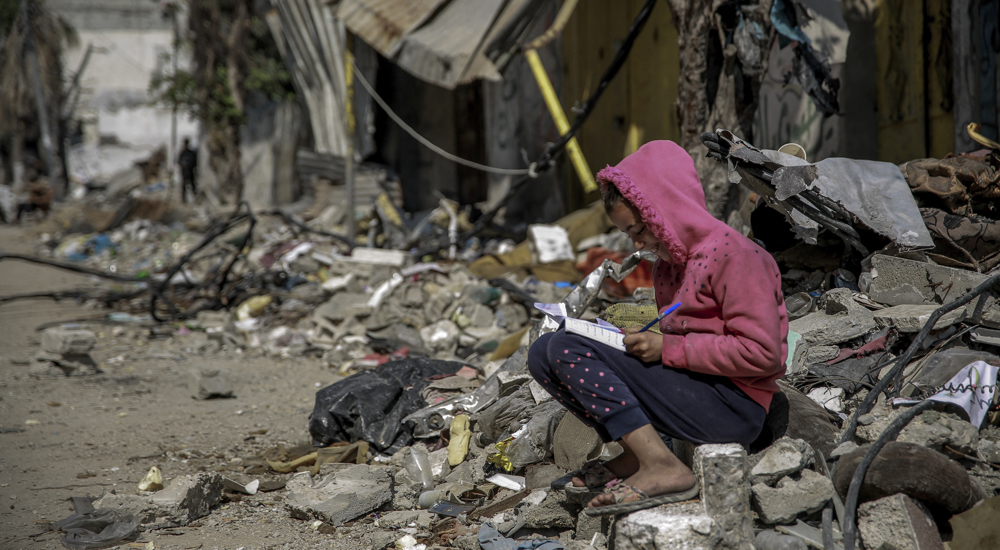
Stain on intl. community: Top aid worker shocked by catastrophic humanitarian condition in Rafah visit A top aid worker has been “shocked” by visiting the catastrophic humanitarian conditions in Rafah in southern Gaza. presstv.ir
Saved - November 25, 2023 at 1:29 AM

@PressTV - Press TV

Humans of Gaza: Awni had a dream of reaching 100,000 subscribers on YouTube. He now has over 1.2 million subscribers, but tragically, he is no longer here to witness it. Yes, Israel killed him, along with his family. #HumansOfGaza #GazaGenocide https://t.co/RT6vuT4Pbq

View Full Interactive Feed