TruthArchive.ai - Tweets Saved By @SecScottBessent

Saved - February 7, 2026 at 5:25 AM
reSee.it AI Summary
I note Nature's KLW24 paper on climate impact was retracted, exposing apocalyptic left rhetoric and substantial errors. It has been misused to justify poor policymaking, harming energy abundance and living standards. Still, I remain confident that @POTUS stays focused on securing American energy dominance at home and abroad.

@SecScottBessent - Treasury Secretary Scott Bessent

The monumental retraction of Nature Magazine’s infamous KLW24 paper on “The Economic Impact of Climate Change” has laid bare the radical left’s apocalyptic hyperbole on climate change. This fatally fraught paper, with errors far too substantial for correction, has been frequently used and abused to justify bad policymaking around the world, undermining both energy abundance and better living standards. Fortunately for our nation, @POTUS has always remained focused on securing American Energy Dominance both at home and abroad.

Video Transcript AI Summary
Speaker 0 discusses the formation of FSOC’s new Household Resilience Working Group, which will focus on American households’ financial condition. She notes that communities nationwide, especially in Texas’s 29th district, have faced destabilizing climate-disaster effects, with property insurance providers leaving states like Texas, California, and Florida due to growing climate risks. She asks what the administration is doing to address the risk that mortgages and other credit could become unavailable in certain regions because of climate change. Speaker 1 responds: “Again, congresswoman, are you familiar with KLW 24? No. It it was the base for everything that was done with climate and with all the proposed climate legislation and it has been discredited. So everything that FSOC previously did based on climate—” He asks, “Who discredited it?” Speaker 1 clarifies: “Nature Magazine has retracted the economic commitment of climate change more than eighteen months after first learning that the paper was fatally flawed with officers acknowledging that its errors are too substantial for a correction.”
Full Transcript
Speaker 0: We also recently announced the formation of new, FSOC Household Resilience Working Group that will focus on American households' financial condition. American households across the country, especially in my district, which is a working class district, Texas 29, have experienced firsthand the destabilizing effects of climate disasters. Property insurance or insurance companies are leaving Texas, California, Florida, and many other states because of growing climate risks. I myself have felt the impact. My constituents feel, mister secretary, what, if anything, are y'all doing to address the risk to households of mortgages and other forms of credit becoming unavailable in certain regions of the country due to climate change? Speaker 1: Again, congresswoman, are you familiar with KLW 24? No. It it was the base for everything that was done with climate and with all the proposed climate legislation and it has been discredited. So everything that FSOC previously did based on climate Speaker 0: Who discredited it? Speaker 1: Has been discredited. Who discredited? Nature Magazine Nature Magazine has retracted the economic commitment of climate change more than eighteen months after first learning that the paper was fatally flawed with officers acknowledging that its errors are too substantial for a correction.
Saved - April 4, 2025 at 11:56 PM

@SecScottBessent - Secretary of Treasury Scott Bessent

Thanks @TuckerCarlson for a great conversation. Economic security is national security. For the first time in decades, the American trading system will be fair to our workers again. We are revitalizing the American dream.

@TuckerCarlson - Tucker Carlson

Treasury Secretary Scott Bessent explains the administration’s new tariffs, and why we had to do something to stop the slide. (0:00) Trump’s Tariff Plan (5:42) The Current State of the Stock Market (8:22) Will Americans See Substantial Tax Cuts Because of Tariffs? (13:16) How Much Money Will America Make Through Tariffs? (14:33) Bringing Manufacturing Back to the US (20:14) Tariff Pushback From Foreign Countries (22:16) Will China Retaliate? (25:42) How Will Europe Be Impacted? (33:12) Is the Upper Class Out of Touch With the Lower and Middle Class? (35:47) Bessent’s Biggest Worries (42:35) The Long Term Benefits of DOGE (46:17) The Corruption of the Federal Reserve (49:22) Why Gold Is So Critical Right Now (52:13) Zelensky's Self-Sabotaging Negotiation Tactics (1:00:19) The Trump Administration’s Messaging About the Economy Includes paid partnerships.

Video Transcript AI Summary
The Treasury Secretary discusses the president's new tariff regime, calling it transformational for the American economy and a realignment for the Republican party. He compares it to Reagan's economic policies, emphasizing the need to re-industrialize and prioritize Main Street over Wall Street. The Secretary argues that tariffs are a tool to push back against unfair economic systems and incentivize companies to bring manufacturing back to the US. He suggests that tariff income could be used to lower taxes for the middle class. He believes the US has the labor force needed for this transition, especially with AI and automation. He addresses concerns about the market's reaction, attributing declines more to tech stock issues than the president's policies. He acknowledges the challenges of forecasting economic effects due to factors like illegal immigration and AI, but expresses confidence in the new direction. He highlights the need to avoid a financial calamity and criticizes the Federal Reserve's focus on issues like climate change. He notes China's unbalanced economy and the potential for a deal where the US manufactures more and consumes less, while China does the opposite. He also discusses the situation in Ukraine, expressing hope for a signed economic agreement. He states that the administration is unified behind the president's vision and committed to a strong dollar policy.
Full Transcript
Speaker 0: Secretary, thank you very much for joining us. So we're at the Treasury Department. The president had a press conference yesterday next door in which he announced a whole new tariff regime global. He'd been promising to do this, well, for forty years, really. It came not out of nowhere, but it was clearly his intent all along, as stated, but it it did rattle people, including some of his supporters. So I just wanted to ask you, big picture, where do you think this leads? Speaker 1: Well, Tucker, and thank thank you for having me. And as you said, the president's been talking about this for four decades. Yes. And this is transformational for the American economy, for the American worker, and for the new Republican alignment. And, you know, it's a combination of the old and new ideas. Some of the old ideas were put away. You know, I always tell everyone, and they don't wanna hear it, the original tariff man was Alexander Hamilton. Yes. And he used tariffs to fund the new nation and to protect American industry. President Trump has added a third leg to the stool and he uses tariffs to negotiate. Yes. But I I think this is not unlike I was a freshman in college when Ronald Reagan came in in 1980 and, you know, new day in America. And when I talk to people now and they look back and they look at the Reagan years so fondly. Yes. I I remember what it was like, and it was choppy. And the president Speaker 0: Very choppy. Speaker 1: Very choppy. President Reagan stood the course. And look. This is not an invitation, but the at one point in the early eighties, a farmer showed up with a shotgun at the Federal Reserve to the kill Paul Volcker for raising rates. So like I said, that's not an invitation for for action, but it was a a tough time. And then in 1984, president Reagan won reelection with 49 states. And, yeah, I think they may have even let Mondale win Minnesota just so it wasn't a skunk. Speaker 0: Just to be nice. Yeah. Speaker 1: And, you know, that's what president Trump is doing now. For for years, the American worker middle middle class has been eviscerated. American workers have taken it on the chin. And, you know, we're just starting to see some of the research now. Like, we're seeing research on what's called the China shock from 02/2004. It's just coming out now, and it's what you know, it's what I know. But finally, academics are saying, oh, they gosh. The American workers never recovered from the China shock. What a surprise. And president Trump sensed it forty years ago, but out in the campaign trail starting in 02/2015 up until last year, he has promised the American workers that the old standard of living can come back. And because what what we've seen over the past at least twenty years since the China Shock, but more like the past thirty, are these mass massive distributional problems where the coast have done great Yes. And the middle of the country has they had just seen quality of the life, life expectancy decline. They don't think their children are gonna do better than they are, and a lot of people don't care. And president Trump cares. This administration cares. And this is the first step towards realigning that a lot of our trading partners, including some of our allies, have not been good partners. If tariffs are so bad, why do they have them? Speaker 0: Good question. Speaker 1: Why do they have them? Right? Or if the American consumer is going to pay all the tariff, then why do they care about tariff? Right. Right? Because they're going to eat them. So, you know, I I think that this is the beginning of a process. We're going to re industrialize that we have gone to a highly financialized economy. We have we have stopped making things, especially a lot of things that are relevant for national security. I think one of the few good outcomes from COVID was we had a beta test for what maybe a kinetic war with a large adversary could look like. And it turned out that these highly efficient supply chains were not strategically secure. So that we don't make our own medicines, that we don't make our own semiconductors, that we don't make our own ships anymore. So I think that if I were to say, was there any good outcome from COVID? It was it work woke the world up to these supply chain problems. So economic security is national security. President Trump and I have talked about that a lot. So this is a national security issue that we're seeing here, but it's also an economic security issue. And it's to I don't wanna say redistribute, but it is to give working Americans real wage gains and enhance their lives. And I I've said out of the campaign trail, one of my most frequent mottos was Wall Street's done great, it can continue doing well, but it's Main Street's turn. It's Main Street's turn. And that's what we saw yesterday. It's Main Street's turn. Speaker 0: So over the course of my life, fifty five years, Wall Street really has been the commonly recognized measure of economic health. Like, how's the Dow doing? We've got entire TV channels devoted to tracking its progress, which has mostly been up during the course of my life. So if the, you know, the average of, you know, the equity averages fall, if the stock market falls, that's seen by a lot of people as like a measure that the economy itself is in decline. Do you think that's a fair measure? Speaker 1: Look, market goes up and down. Warren Warren Buffett has this saying, in the short run, the market's a voting machine. In the long run, it's a weighing machine. And in the long run, it's going to weigh, do we have good policies? Yes. And I I in my former business, I common commented on market structure, market ups and downs a lot. I'm trying not to do that. Yes. But for everyone who thinks that these these market declines are all based on the president's economic policies, I can tell you that this market decline started with the Chinese AI announcement of DeepSeek. Speaker 0: Right. Speaker 1: So the so called MAG-seven, the tech stocks, had been doing very well for about eighteen months, led the market. And I think that there's kind of a real dose of reality in what was going on in AI. And I think US is gonna remain the leader in AI, but the AI related stocks started coming down. So, like, if I were to analyze in my old hat, and this is the only time I'm gonna talk about it, my old hat, what's happening with the market, I'd say it's more a mag seven problem and not a magnet problem. Right. Speaker 0: So it's a it's a deeper so actually, the markets are, you're saying in this specific case with tech stocks, are taking like a real measure of the value of companies relative to foreign companies. Speaker 1: Well, it's sad. But if we look, the equal weighted S and P, even after today's move, down 4% in the year. Or, you know, in a long term chart, you wouldn't even notice that. Yeah. And I think the most important thing that we can do, that I can do as a treasury secretary, that president Trump wants to do, is put in sound fundamentals for the underlying economy. And if the underlying economy is good, if taxes are stable, if businesses have predictability, if we have cheap and plentiful energy, if we deregulate, if we treat our workforce well, then we're going to have a great stock market. Speaker 0: Fair. The president suggested in describing his plan for tariffs, he said, look, you could conceivably fund a lot of government with tariffs. And that would suggest that taxpayers fund less of the burden. And so do you expect that these will be accompanied by a congressionally approved tax cut for the middle class? Speaker 1: And, Todrick, I just wanna go back for a moment too, that one of the things that the tariffs are doing is we are pushing back against other economic systems. So the Chinese have a very different economic system. They have low cost, some would call it literally slave labor. They subsidize industry with subsidized loans. They have a lot of non tariff barriers. Your show can't be shown there. Yes. So so we're pushing back against that. And with the tariff income, it it can be substantial. And if if we think like a classical model of tariff income would say, if there's a 10% tariff, then the currency would appreciate about 40% of that, so 4% of it, then the producer in the other country would eat about 4%, and then The US consumer might have a one time price adjustment of 2%. So, you know, in a 10% tariff, maybe the consumer pays 2% of it. We saw there's a study out recently from a group at MIT that shows that with president Trump's first China tariffs, which were approximately 20%, the price level went up point seven. So to answer your question, if we could put on a 20% tariff and have the foreigners pay that and use that money to bring down our government deficit and keep taxes low here, that's a very unique formula that hasn't been tried in this country for a long time. Speaker 0: And do you think but it would require congressional participation to to get there, to move tax rates, of course, were set by the congress? Speaker 1: Well, what what we're gonna have now, we we are in this very odd, what I would call betwixt in between, between the tariff income and what Doge is doing in in terms of the cutting government expenses. So CBO scoring and for thirty five years, I was on the other side of the wall and I would always, oh, well, CBO says this. And I didn't really realize that kind of CBO scoring is a lot like Enron accounting, that it's not real. And when you actually look at the Speaker 0: real score Did assume that it was on the outside? Sure. Speaker 1: Look, they're experts. Speaker 0: It's a congressional budget office. Speaker 1: It's a congressional budget office. And they're well intentioned people. They just have the nonsensical rules. Like, think about this. When when all the scoring's done over a ten year window Speaker 0: Yes. Speaker 1: So they just assume 1.7 or 1.8% economic growth over the ten years, and that never moves. Whether you raise taxes or cut taxes, doesn't move. So that's what like, during the during the campaign when vice president Harris was announcing all these big tax increases she wanted to do and things like that, that the CBO was scoring her very well and president Trump wants to make the 02/2017 tax cuts permanent, that was kind of a blowout number because, obviously, growth's gonna go up a lot when you cut taxes. So but that was a long way of saying we will not get credit for the tariffs in any bill because congress is not going to legislate it. President's doing it with executive authority, but the money will be coming in. We've already taken in several hundred million dollars on the China tariffs from his first term. We've taken about 35,000,000,000 a year just on the old tariffs, not on the new ones. So in the CBO window, the that's about $350,000,000,000, which pays for a lot of the president's promises on no tax on tips, no tax on social security, no tax on overtime, making interest deductibility on autos made in The US. And think what the president's doing here. He is backing into an affordability solution for the bottom 50% of wage earners because they're the ones who will benefit from all four of those programs. Speaker 0: So looking at, say, a year from now, so next beginning of next April, do you have any sense of how much the US government anticipates bringing in from the tariffs announced yesterday? Speaker 1: It's it's going to be a moving target. For sure. But could it could it be anywhere from 300,000,000,000 to 600,000,000,000 a year? Sure. Speaker 0: Okay. So that's meaningful revenue. Speaker 1: Very meaningful. But what will happen with tariffs over time, the ultimate goal of the tariffs, and the president says it all the time, bring your factory here. That's the best solution toward getting away from a tariff wall. So move your factory from China, from Mexico, from Vietnam, Bring it here. So what will happen over time, we'll have substantial tariff income in the beginning. Manufacturers will build their factory here. The tariffs will drop, but the revenue from the factories, the from income taxes from all the new jobs will go up. So, you know, we'll be taking it in domestically as the tariffs drop. And why are the tariffs dropping? Because we're making it here and our trade deficit's dropping. Speaker 0: So you've obviously thought this through. You think that The United States has the necessary labor force for this transition? Speaker 1: I think we do. I I think with AI, with automation, with so many of these factories are going to be new, they're going to be smart factories that I I think we've we've got all the labor force we need. And what we are doing on the other side, one of the reasons, you know, other other than my support for president Trump, that I came out from behind my desk. And, you know, I I had a pretty good life. Yeah. And, you know, I wanted to come out and really tell people that I was worried about an impending financial calamity given the high levels of government spending that were leading to high levels of government debt. So what we are doing, on one side, the president is reordering trade. On the other side, we are shedding excess labor in the federal government and bringing down federal borrowings. And then on the other side, that will give us the labor that we need for the new manufacturing, and we're going to relever the private sector. So the private sector, in essence, has been in recession during the Biden years. And this is an opportunity to rightsize the federal government and unleash the private sector again because it's been hemmed down by excessive regulation, and it's been crowded out by the government. Speaker 0: Here's a fact of life you may not learn till you're older, but I'm gonna tell you now. It's very hard to have a good time if you're wearing bad boots. In fact, it may be impossible, and that's why you need Takovas. As a matter of fact, you don't just need them. You owe them to yourself. Takovas makes western boots for everybody. Ranchers, real ranchers, lifelong cowboys, first time boot buyers, and anyone in between. Every Takovas boot is handcrafted, made by hand with over 200 meticulous steps for a broken in feel right out of the box. You don't have to compromise between looks and quality. You can have them both. Whether it's a long day or a big night, Tacovas are built to last and impressed. You wouldn't believe the compliments people here get when they wear them out, which they do. Right now, get 10% off at Takovas.com/Tucker when you sign up for email and text alerts. That's 10% off at Takova, t e c 0 v a s, Com / Tucker. Do you ever think since your job is to part of your job is to forecast like the effects of these policies that you have we've got probably one out of six people in this country's here illegally, maybe 50,000,000 illegal aliens, and the president said he wants to deport him. Then you have AI, and the projections there are massive labor market disruption. Fewer people needed. You you alluded to that a minute ago. Then you have the tariffs, and, like, we can guess as to their effect, but we don't really know because we've never done it. And then you have the reaction from the rest of the world to those tariffs, like there's so many huge factors that are effectively unknown that are black boxes, really. Do you ever think like, wow, you know, it's kind of hard to know what's going to happen. Speaker 1: Look, it is and I always think that you can never be a % sure, but you can stay within sight of guardrails and keep moving forward. I can't remember. One of one of the Sunday morning shows I was on a couple of weeks ago, the commentator asked me, you know, she said, can you guarantee me there won't be a recession? And I said, I can't guarantee you anything. Like Yeah. There's nothing that tells me there should be one. So I I believe that this is going to work just like president Reagan believed that supply side economics was going to work. And but what what I do know that the old system wasn't working. Speaker 0: I think that's right. Speaker 1: And if you look at a system that's not working, you gotta be brave to change it. So what wasn't working? Would it have been really fun for me to come in and just keep issuing a lot of debt And it was it's almost like a bodybuilder is taking steroids. Outside looks great. You're you're muscular. Inside, you're killing your vital organs. Yeah. That's what was going on here. But it would have been easy to keep pumping up the economy, borrowing a lot of money, creating a lot of government jobs. There was no controversy when we're doing all that. And the but you were gonna end up in a calamity. If you go back and look, you know, you you look at the financial crisis in o seven, o eight, economy looked great right up until then. You go back and you look at the end of the dot com bubble and then the whole credit problem, the fraud at WorldCom, Enron, some other country companies. Economy looked great until it didn't. And I think one of the things that we won't get credit for, but that this administration will have done is avoiding a financial calamity. You know, think about it that they've done an analysis that one of the reasons nine eleven happened because the airlines didn't wanna pay for reinforced doors. Speaker 0: Yes. Speaker 1: They kept pushing back. FAA didn't push hard enough. And now, you know, we've got the reinforced doors. So I look at it, we're putting on the reinforced doors Speaker 0: before the crash. What's the scramble, the lobbying scramble by foreign governments going to be like over the next three months? Because the president said yesterday, you know, we're putting a universal tariff, you know, one standard, but then, of course, each country's adjusted according to a lot of different factors, trade deficit, currency manipulation, regulation, and then tariffs. But, you know, this is all, as you said, a moving picture. It's a developing situation. So, like, if I'm pick a country, you know, Vietnam, China, I mean, I'm gonna really try to bring pressure to bear on this administration to adjust those numbers. Like, what's that gonna be like? Speaker 1: It's gonna be the president's decision, and I I think his view is this has been going on for a long time for friends and foes, and we're gonna see where where this plays out. I think what's gonna be more important than the discussion with countries is the discussion with companies. So what do companies wanna do? As president Trump said yesterday, best way to get around the tariff, build your factory here. Yeah. And what can we do here at Treasury to help that? We're pushing to get the tax bill done so we can guarantee the low taxes, full depreciation within the first year. We're working with secretaries Bergam and Wright on energy security, and we're working on getting the regulations down. The president I don't know whether he talked about it yesterday or the day before, Taiwan Semi or just semiconductor manufacturer in the world, Lee Zeldin, the EPA commissioner, is working to push through all the permits that they need because we've just gone into this regulatory morass where it takes so long to get things done in this country. So I think what will be more interesting are the individual company announcements more than the country announcements. Speaker 0: You want to sell to Americans, you've to make it in America. Speaker 1: Sure. Or pay the tariff. Speaker 0: So how is China as a nation going through mean, this is such a big challenge. It's directly in their face. It's about every country on the globe, but it's really most more than any other country about China, I think it's fair to say. How are they going to respond? What's their retaliation look like? Speaker 1: Well, I don't I don't know if they can retaliate for a couple of reasons. If you look at the history and I I used to teach economic history, and when you look at the history, we are the debtor nation. Speaker 0: Yes. Speaker 1: We we have the trade deficits. The surplus nation is in the weaker position because the Chinese business model and Tucker, by the way, the Chinese business model and the economy are the most unbalanced, imbalanced in the history of the modern world. We've never seen anything like this in terms of their export level relative to their GDP, relative to their population. So I think it is going to be very difficult for them to try to change the model. They're trying they're in a deflationary recession slash depression right now. They're trying to export their way out of it, and we can't let them do that. But I think that when you think the Chinese manufacturing system is like that old Disney movie with the brooms carrying the buckets. Yeah. There there's nothing you can do. Like, that's their business model. It's not gonna stop. Now, what could happen if if you were to say, Scott, look, what what's the dream scenario? That somehow there could be a deal where The US and China, we want more manufacturing, which would mean a smaller part of the economy's consumption. The Chinese have this imbalanced economy with too much manufacturing. And actually the Chinese consumers really get the short end of the stick. So Chinese households, you know, they're called in what's called the middle middle income trap that could we do something together to say, okay, you rebalance, you consume more, manufacture less, we are going to consume less and manufacture more, and we'll be military rivals. There'll still be an economic rivalry, but we're gonna level the playing field by a lot. Now, that's not gonna happen tomorrow. That's not gonna happen in a month. But over the next few years, they may have to come around because I think their business model is broken. I think president Trump's broken their business model with these tariffs. Speaker 0: So you're describing, you know, the famous scenario where if you take a take a bank loan, the bank is in charge. They can repossess whatever they barred you barred against. But if you take a big enough loan, you're kind of in charge of the bank. Speaker 1: Exactly. And they've just got such a big deficit with us that Speaker 0: They need our markets. Speaker 1: They can't survive without them. Speaker 0: Do are you confident that there's, like, a clear enough channel of communication between the two governments that the details can be worked out and that nothing will go crazy in the meantime? Speaker 1: Well, I I I think what gives me a lot of confidence is the relationship between president Trump and chairman Xi. Yes. That when when you have a direct line of communication at the very top, then I think it's very difficult for things to Speaker 0: go haywire. Interesting. What about the rest of the world? What about Europe? Speaker 1: Look, the the the Europeans, we we look back and, you know, there there was a famous meeting where president Trump told the Europeans that you're insane for building Nord Stream two. What are you doing? You already get most of your energy from Russia, you're gonna double down on it? And they did. And look what happened. So We blew it up. Somebody did. Speaker 0: Was it Speaker 1: Somebody somebody did. Probably Putin. I I know who's some Norwegian fishermen bumped into it is what I read. But the look. The the the Europeans go kicking and screaming, but I I think they're gonna have to rebalance too. Germany has a very the imbalanced export economy, and they were on the verge of deindustrialization. They're they were the opposite of us. They had expensive energy. Yes. They they were depending on Italy and the countries in the South to keep the euro suppressed, and they were selling into China. And now China's becoming their competitor. Speaker 0: So you said at the outset, the first example of the analogy that you used was president Reagan's first term. Obviously, win in '80, recession of '80 '2, wipeout, and then like the biggest landslide in history in '84. So you're suggesting by saying that that, you know, the fruits were obvious within the first term, in four years. Speaker 1: They were. Only difference now is there there was a lot of competition back then, but there's a level of civility. Speaker 0: Yes. Speaker 1: And the the real danger here, if there were a midterm loss, and I don't think there has to be, you know what's going happen, I know what's going to happen, Democratic House is going to go immediately to impeachment for something. Of course. Right? Like, the lawfare is going to start again. Yes. And I think the American people are going to hate it again. So Einstein's definition of insanity, doing the same thing again and again and expecting a different outcome. Speaker 0: Do you think that, and this is really aimed at the people who support President Trump and who agree with you wholeheartedly that the current system was really bad, and like drive across the country, you'll see how bad it has been. Horrible. It lowered life expectancy, but the people who are hoping that yesterday's move will lead to a demonstrably brighter future within four years, is it your sincere prediction that with, you know, four years we'll say, actually, that kind of worked? Speaker 1: I believe that it's going to work and I know that what we were doing wasn't working. Speaker 0: Yes. Speaker 1: So, I think we have to try this, and I have a high confidence ratio. It's going to work. And I have a very high confidence ratio. The the good news is we have president Trump's previous term when everyone said none of this was gonna work. Oh, the China tariffs are gonna do this. They're gonna cause inflation. They didn't. This is going to happen to working it's gonna be bad for working class Americans. Well, guess what? Working class Americans, the hourly workers did better than supervisory workers, the bottom 50% of households, their net worth increased faster than the top 10% of households. And look, I'm not happy with what's going on in the market today, but the distribution of equities across households, the top 10% of Americans own 88% of equities. 88% of the stock market. The next 40% owns 12% of the stock market. The bottom 50 has debt. They have credit card bills. They rent their homes. They have auto loans, and we've got to give them some relief that I I was struck by this statistic from last year. Speaker 0: That's the message right there. Just ask a bystander. I'm like, wow. Okay. Speaker 1: Alright. Or that I I I like the examples and I was really struck by two different statistics last year. Summer of twenty twenty four, Americans took more European vacations than they had in history. Summer of twenty twenty four, more Americans were using food banks than they ever have in history. I went into two food banks near my hometown to ask, what's the story? And they said, you know, it really takes for a lot of people, it's a loss of dignity to walk in a food bank. Of course. And but they were seeing something a new phenomenon that it wasn't their traditional clientele. It wasn't people who'd lost their homes. It wasn't people out on the street. These were working families who could no longer you know, a hundred dollars at the grocery store, that basket of groceries every week, they were missing five, six, seven things, they were coming to the food bank to top up. So, you know, that's not a great America. Record European vacation, record food banks. And, you know, no reason we can't keep the record European vacations going, but we gotta take care of these other people. But and you you know what? That they don't want handouts. The Democrats had this strategy called compensate the loser. So first of all, the name of that strategy, I don't think the bottom 50% of Americans are losers. I think the system hasn't worked for them. I think that they are winners. It's just a bad system. So we are going to fix the system. And look, they want good jobs. They want their kids to do better than they do. They want to own a home. They want to pay down their debt. That, you know, this this isn't hard. And, you know, I I think that we can do this in the next four years. Speaker 0: It used to be only crazy people thought they were being watched all the time, surveilled the guy mumbling next to you on the bus, but now anyone who knows what's going on thinks that because it's true. Your phones are listening to you. Tech companies tracking all your online activity in order to profit off of what ought to be private information. Governments are watching too. It's a corrupt system. It's frightening. And the worst part is it's all legal. Government certainly will not help stop this. Of course, the intel agencies love it. So it's up to you to protect yourself. And that's where ExpressVPN comes in. ExpressVPN, which we use here, is an app that sends a % of your online activity through secure encrypted servers. That means nobody can see what you do online, not Internet service providers, not data provoked brokers, not Intel agencies. Don't believe it? Listen to this. Within the last year, ExpressVPN received over 400,000 data requests from tech companies and government agencies, but did not share a single piece of customer data. That's because the company has a strict zero logs policy. ExpressVPN cannot and will not share your data. They don't even have your data to share. ExpressVPN is easy to use. Takes one click. It's rated number one by the experts at CNET and The Verge. And right now, you get an extra three months for free when you use a special link. Go to expressvpn.com/tucker and get that extra months for free. It's expressvpn.com/tucker. You grew up in a middle class, working class background. You were very successful, lived in rich person world for a long time while this was all going on. And I just have to ask you candidly, were you ever at dinner with people who were like, wow, you know, we're doing great? I live in rich person world too, I'm not criticizing you at all, like did anyone at dinner ever say, wow, you know, I just tried to drive somewhere for a hundred miles, this country doesn't look good. Like, people are not thriving. Was there any sense of that among people you knew? Speaker 1: No. They were more my net jet was an hour late. Speaker 0: I I Speaker 1: had the worst day. My net jet was an hour late. You can't my god. I'm gonna switch charter companies. So that that's and and look, Tucker, that I I'm especially attuned to what I think is going on with The United States because, you know, I will tell you, my family was very affluent. Early settlers, we were very affluent for about two hundred and fifty years. My dad made a lot of bad financial choices. So when I when I was born first six, seven, eight years, we were affluent. He lost everything. And so I've seen what that's like. I've I've seen both sides Speaker 0: Yes. Speaker 1: That I was fortunate enough to be able to make it back and that, you know, I I I know what economic insecurity is like, and I don't think people should have to have that. Or if you wanna work hard, and people wanna work hard. You you were out of the campaign trail of president Trump. I was out on the campaign trail, and I gotta say, one of the most so I went for the final two stops in Pittsburgh, Grand Rapids, Michigan. Pittsburgh in the Duquesne Arena walk in and there are the the union workers, the steel workers. They got on their hats. They got on their vest. They're with their children. And it's very moving. Like, they just want a better life. They want their communities to be sound. They want their kids to do better. They want the Little League Baseball. Like, don't care what's going on in Madison Avenue. They don't know what the hot new restaurant is in Paris. And the president Trump somehow has assembled this incredible coalition of Elon Musk, the richest man in the world, and those folks who were in the Rose Garden yesterday, and those people I saw at the Duquesne Arena, and I think it's unbelievable. Interesting. Speaker 0: What do you worry about as treasury secretary? Obviously, you probably like lying bed at night thinking about all the things that go wrong with The US economy. What are your if you could be honest, like, are your biggest worries? Speaker 1: That So to the extent that in my business career, I had a strong point, think it was risk management. So I do myself two things, The United States leading bond salesman. Yep. And I think that with what's going on, I'm gonna have a better and better story to tell as we're getting our economic health and our fiscal health in order. And then I try to imagine what could go very wrong. What would we do if there were another outbreak similar to COVID? You you can't worry about things like that, but I I worry about a kinetic war somewhere. What what would we do in in the event of something that happened? And what what I try to do is create the situation where I can worry a little less every day. So I I'll tell you, I came in, I was confirmed on January 28. And during the month of January, '10 year interest rates, which is probably the most important rate in the country. Mortgages are based on that. Business and capital formation is based on that. I came in and that it almost spiked to 5%. And I think 5% can be an uncomfortable area for the economy for treasury who has to issue a lot of bonds. And, you know, now that I've gotten in, I worry a let a little less, but I I still worry we've got a tremendous amount of debt to roll. And I worry that we aren't going to do the smart cuts and the focus on waste, fraud, and abuse. I worry that that gets sidelined. And then on the other side, I I worry that the tax bill somehow gets bogged down. We can have the largest tax increase in history. Or, you know, I I worry that the normal geopolitical things, whether it's Iran, Taiwan, that something goes haywire between Russia and Ukraine. Speaker 0: So you began your job description by saying you're a bond salesman. You're selling America's debt to the world. Yep. And I know I know that was like a big part of the portfolio as the transition was envisioning it, like, who can make the case for American bonds to the world? How will your case are you confident you can do that? And how is your pitch changing after yesterday? Speaker 1: Well, as I said, right right now, we're in this strange betwixt and between because we are going to take in substantial tariff revenue. And what Doge is doing is substantially cutting expenses, but we're not getting credit for it right now. But I think market's starting to get ahead of it. So the ten year bond having almost peaked at five is now through four. Way to think about it is every hundred every basis point is about a billion dollars in savings. So we've saved a hundred billion dollars. And that's probably not gonna happen that quickly again. But I I think that we are setting the sails for a much better fiscal time. And, you know, people don't have to say, the The US is out of control. The US is going to default. That we're not. And I I think every day my case gets better. And, like, if we were to just imagine a very reductionist formula for government, so g equals s minus t, spending minus taxes. Speaker 0: Right. Speaker 1: That for spending, our side, the Republicans likes to we like to spend, but less than the Democrats, but both sides like to spend. And then minus t, democrats like higher taxes, we like lower taxes. What if the s actually went down? And I think to me, that's the exciting part that that's been unthinkable in everybody's calculation. Speaker 0: No one's even really seriously raised it, including Ronald Reagan, by the way. Speaker 1: Yeah. No. And look, I I think president Reagan had a different agenda that he ramped up defense spending and remember, oh, he's crazy, it's this, it's gonna break the budget, Star Wars is crazy. He's a madman. And then the Iron Curtain went down. Yes. And we were able to so it's actually a Soviet term and he used the Soviet strategy on this on themselves on the Russians, escalate to de escalate. Yeah. So we escalated military spending, they tried to keep up and then they collapsed. So, you know, everything's easy in hindsight, but I think here, what we're doing in terms of bringing down these credible levels of spending but more more importantly, I tell anyone who listen, I said, remember, Doge is the office of government efficiency, not elimination, not extinction. So what if we can actually do a better job with what with less? Seems inconceivable, but when when I when I see what's going on in a lot of these government agencies, it it's unbelievable. And, like, if you think I I've lived in Manhattan. I've lived in Florida. Roughly, state of New York, state of Florida have the same number of people. Actually, Florida has few more now. So New York budget is about 235,000,000,000. Florida budget's a hundred and 25,000,000,000. How do they do that? Oh, yeah. And there's no income tax in Florida. Oh, yeah. And the roads are better. And you go and get your driver's license, it takes fifteen minutes, not five hours. So I think, can we make the rest of America look more like Florida and less like New York? Or one day, is New York going to look more like Florida? Speaker 0: So do you think after four years we will see an actual net reduction in government spending thanks to Doge? Speaker 1: Inflation adjusted, yes. How Speaker 0: long do you think Elon's in for? Speaker 1: I I think that Elon that day to day, I don't know. But I think his imprint is going to be with us a long time. And I I think that the mainstream media has tried to demonize Doge and all the folks who work with him. And I tell you, we we have a a couple at treasury, a couple at IRS. They're treasury employees who I hired, I interviewed, and, you know, I'll tell you, there's this one fellow, Tom Krause. He was on TV with Brett Bear the other night, and Tom's incredible. He's done a hundred billion dollars of tech mergers. With my investment business, I would have hired him. I don't think I could have afforded him. And he is doing this for the good of his country. He came in without touching any of the payment systems that the mistruths that were spread by the Washington Post. He has analyzed the system, and within six weeks, we pointed at all the vulnerabilities. There there's a young man named Sam Kyrkos who was on Laura Ingraham with me the other night and that was my idea. I was like, let's bring him out of the shadows and let's make this demonization stop. And, like, this young man, other than the fact he only owns one pair of pants, which he likes telling everyone, I would you or I would be happy if our daughter brought him home. He's a patriot. He's working hard for the country, and he's analytical. And the things that he's seen at the IRS just in their tech systems, and that's all he does. You know, Elon has a shirt that he wears under his jacket and he'll flash it every once in a while and it says tech support. And that's what we're getting, is we've got a blockbuster style government and we should be on Netflix. We're we're hailing cabs, and we're in an Uber economy. Why can't the government be in the gig economy? Not hard. Speaker 0: So we're not positive if cryptocurrency is the future of finance, but we do know that what we have now is broken and dangerous. Debt has never been higher in this country. Many of our so called leaders are getting rich serving you. It's a scam. So where does it go? Well, thankfully, there are options. Donald Trump has said repeatedly he wants The United States to be the crypto capital of the world. He's already created the Crypto Advisory Council and recently signed an executive order to establish a Bitcoin strategic reserve. This could give normal people an alternative to the government's failing system, and frankly to the US dollar. Not saying put all your money outside the US dollar, but like don't be crazy, don't be stupid here, you can see where it's going. So the people at I Trust Capital can help you get in to this. It's complicated for people who aren't following it, they make it easy. They're based a % in The United States Of America. We looked into this. They service only American investors, and they operate the only platform that allows you to buy and sell crypto twenty four seven both inside and outside of your tax advantaged IRA, and it all happens on one easy to use dashboard. They also operate a closed loop system, meaning that bad actors can't access your account and steal your money. So if you're considering adding Bitcoin if you want to or some other cryptocurrency to your portfolio, iTrust can be trusted, and it's easy to understand. Itrustcapital.com or click the link below. Can I ask you a weird question? What who runs the Federal Reserve exactly? I I don't really how can you have this, like, pivotal entity institution that obviously has like the most direct effect on markets, many, and it does seem outside of political control. What is Speaker 1: that? Well, look, I think that I during my confirmation hearing, and I I was actually at at a dinner that Jerome Powell was at last night, at my confirmation hearing, I said, you know, I'm only going to talk about the mistakes the Federal Reserve has made in the past. I won't talk about the ones they're gonna make in the future. Right? But I I think it is important for monetary policy that they are walled off, that some of the other things they do, regulation, they got into DEI, they got into climate, I actually think that that impinges on their monetary policy and makes them vulnerable. So I think that they should focus on monetary policy, doing the best that they can for the American economy, the American people, keeping inflation low. And then the rest, there are a lot of other banking agencies too. Speaker 0: So the Fed controls the weather now too? What were they doing with climate? Speaker 1: Well, I will tell you there's something the Treasury Secretary chairs something called the Financial Stability Oversight Council, and it's all all the financial regulators. And I think it was two weeks before Silicon Valley Bank went under, FSOC issued a report. And guess what they said the biggest risk to the financial system was? Climate. Really? Not that there was a large bank in California that was having a slow motion run on its assets and that it would cause another bank failure, then another bank failure, was climate. So as far as I can see, climate's been pretty good. They've failed. The regulators failed. And I I think that's what people are getting sick of. And it's back to my one of my favorite phrases that president Trump uses, common sense. Yes. Look, it's just common sense that the if you have a whole bunch of deposits that could leave your bank with a click, you shouldn't have all these long term assets, but they were too busy worrying about the weather. And there was also some degree of regulatory capture. Seems hard to believe to the average citizen. The CEO of Silicon Valley Bank was on the board of the San Francisco Federal Reserve, who was his chief regulator. They're to tell that guy what to do? Speaker 0: Why is gold moving around the world in such huge quantities right now? Speaker 1: Well, a couple of things. It's moving Physically, it's moving because of potential tariffs here. So, like, it was unclear whether we were going to exempt gold from tariffs, which I believe we have. So there was a big move out of vaults in Switzerland, out of vaults in London to get it into New York. And look that there there are a lot of different stores of value over time. Bitcoin's becoming a store of value. Gold has historically been a store of value. I think what's interesting is where do we see the gold demand coming from? A huge amount is from China Yes. Where they as I said, they're in the middle of an economic recession slash depression. People don't trust the Chinese currency because they have capital controls. There are one point one point four billion Chinese who all want to get their money out and they won't let them. They will let them buy gold. Speaker 0: So that's the response you think. But it's just do you find it interesting that even now, 2025, when everything is abstract and digital, that gold is still widely believed globally to be a reliable store of value? Speaker 1: I I think that store gold gold has a a lot of history going with it. Yeah. That a friend of mine's grandmother during Russia had a financial crisis in '98, then they had a big inflation. And a friend of mine's grandmother went out and bought 18 bicycles and put them in her apartment, and that was her store of value. Speaker 0: Yes. So How'd she do on the bike investment? Speaker 1: Great. Great. I I wish I did that well. So but that look. Gold gold also has other applications, a lot of application, jewelry in India, but it's something that historically people have all agreed on. And gold does not have gold can't have a fiscal problem. Gold cannot have a gigantic budget deficit. Gold cannot have the a a war. So just the fact that it is this isolated thing makes it very interesting. And the fact that the entire global trading system, until Richard Nixon took us off was tied to gold. Speaker 0: So you're not anti gold? Speaker 1: Oh, no. No. No. No. I they when when I had my fund, think people might have called me a gold bug. Speaker 0: How'd you wind up interacting with Zelensky? Speaker 1: President asked me to go to Kyiv. Well, he he actually asked me to lead the economic agreement that was part of his peace plan. And I I think it's important to look at the arc of president Trump's peace plan, and he had sequenced it really well. It was we're gonna sign a deal with Ukrainians, and it'll do several things. One, it will make The US and Ukraine partners, link us closer together. Two, it will be a symbol to Russian leadership that The US isn't abandoning Ukraine. But importantly, three, it will show the American people that we have an economic stake and that we haven't just been doing these massive grants, which have been the history of USAID. Of course. So Ukraine succeeds, we succeed, and it could be a long term partnership. Now, president, I I thought it was important to take the agreement to Kyiv and present it to president Zelenskyy. Everyone was telling me, oh, no. Have him meet you in Vienna. He's gonna be at the Munich Security Conference a few days later. I said, no. I want to go there and discuss it with him. And that's how I ended up going to Kyiv. Very interesting going to Kyiv. Fly to Poland Yeah. Then you get on I don't know if you've been on it, get on this night train for ten hours, and you arrive at Kyiv at 08:30 in the morning. And for anyone who they said, oh, the president Trump's selling out to the Russians not selling out to the Russians. The Russians bombed Kyiv Four Hours before I got there. They hadn't bombed since November. So the Russians didn't like the look of this deal because they thought that the it was actually something durable for The US people and the Ukrainian people. Speaker 0: So what happened? Speaker 1: President Zelenskyy was in the mood to sign the deal that day. We had a spirited discussion, and I said to him, you've got 50 reporters out there. I am here to show that there is no daylight between the American people, the Russian people, between excuse me, Ukrainian people, between the American leadership and Ukrainian leadership. And I said, you've opened up daylight the size of the Grand Canyon. What are we gonna go out and tell those people? He said, tell them I'm gonna sign the deal in Munich. I said, so you're gonna sign the deal when you see vice president Vance and secretary of state Rubio in Munich. Yes. He didn't sign it there. There's a lot of back and forth the following week. They're begging to come to the White House and should make him sign the deal before he comes. And then he got to the Oval Office and blew up what should have been the easiest thing to do in the world. He was supposed to show up, have a press conference. We were gonna have a private lunch. If he had anything on his mind, there were gonna be nine of us, nine of them in the White House Dining Room. He could have aired his grievances then. And there's a famous photo in the East Wing Ballroom of everything laid out on the table to be signed, and it never got signed. Speaker 0: So this is an unelected president of a client state whose bureaucrats are being paid directly by American taxpayers, including their retirement accounts are funded by us. Speaker 1: And they have the lowest retirement age in Europe. It's 60. Put it in contrast, France is 62 and Italy is 67. Speaker 0: And we're paying for that. And so at a certain point, you know, you wouldn't expect a man like that in a highly precarious position. I think it's it's fair to say to, like, assume a high handed tone with American officials and berate them and sniff a lot and say, you know, basically act like a crazy person. Like, how do you account for that? The arrogance. What is that? Speaker 1: Look. A couple couple of things is he was a performer. Kind of a vaudevillian, And he was an ordinary person thrown into a fraught time, rose to the occasion. Yes. Was heroic. Yes. And I think is stuck. And I think under a tremendous amount of pressure. I think that some of the government officials around him and the cabinet are very good. I think some of the people around him, he's not getting the best advice, that his advisers are not perfect. And I think if we go back to the agreement, I think one of the great things about the agreement is it makes sure that the money comes to the American people and the Ukrainian people. Because Tucker, let me tell you what the agreement wasn't. It wasn't one of these rapacious Chinese deals where it's sign over your mind, sign over your port, or it wasn't a loan to own. A loan. You're never gonna be able to pay it back. We're gonna get this. It's a genuine economic partnership that they put in assets. We we can put in loans from our overseas banks. We put in American know how, and we didn't get any we don't make any money unless they make money. And you know who doesn't like that? People with their hand in their till. Right. Right? Because we were regulating the flow of the money. Uh-huh. So I think that's part of the glitch. I am hopeful that the that it was a bug, not a feature of the system, and that that's been fixed. We're expecting a Ukraine Ukrainian technical team beginning of next week, and I'm hopeful we can get this thing signed and go back to a win win situation because the president Trump I I didn't give you the full arc of the deal. President Trump wanted to create the this deal with the Ukrainians, then be able to go to Russian leadership with and show them that we do stand with the Ukrainians, but they on on an economic basis. And then the Russians would be incentivized to come to the table also. And so that the sequences sequencing has been thrown off, but, you know, I think we can fix it. Speaker 0: Are we ever gonna get an audit of where all of our billions went? Where all the weapons we sent? What happened to all the cash? All the pallets of hundred dollar bills, like, where are they now? Why why is it hard to get an audit of what happened to the money? Speaker 1: I I I don't know. Tucker, in my life, I always try to look forward. Speaker 0: Yes. Speaker 1: And I I think if this deal works, then that money could end up being small change. Yes. A a good way to think about it, when the iron curtain came down, Ukraine and Poland's economies were roughly the same size. Poland is three and a half or four times larger now. Yes. Poland is going to have one of the highest per capita GDPs in the world, higher than some Western European countries. For sure. To your point, because of various kleptocracy aspects, has been held back. Yes. So, hopefully, with US assistance and president Trump engineering this peace deal, Ukrainian people can have a better future. Speaker 0: For a treasury secretary, you're a very capable diplomat. Must say, very diplomatic language. Last question. How do you so because this is also new, just going back to the tariff announcement yesterday, and because it's like, it really is a total departure from what all of us have grown up with and our expectations and however much you support it, it's Speaker 1: new. Mhmm. Speaker 0: And people are freaked out about it. How do you keep message discipline in an administration, in any administration, in this one specifically? How do you decide how you're going to explain this? Who's going to explain it? How do you keep messages from contradicting one another? What is that process like? Speaker 1: We we all take president Trump's lead. Yep. We we we know we we had a meeting yesterday morning. We had a meeting after the announcement in the Rose Garden before we went out doing media. And as you know, he he's his own best spokesman. Yes. Not nobody can do it better. And then, you know, we we fan out, and we are all unified behind this and his vision. That's why we're here. If if you didn't want to be part of it, you shouldn't be here. Speaker 0: But you ever say like, you know, maybe this is someone who can reassure potential bond buyers, investors in markets, this person scares the crap out of markets, like, let's get the guy who reassures markets. Speaker 1: Well, the the one thing I I will say that no one should listen to anyone in the markets talk about the US dollar other than president Trump or myself. We are the only ones who speak for this administration, the United States government, on dollar policy. I didn't tell you, we have a strong dollar policy, and we are putting in all of the necessary ingredients to make sure the dollar is strong over the long run. Can it go up and down, you know, on on a Bloomberg terminal over the short run? Sure. Can individual bilateral moves happen between the dollar and the Mexican currency, the dollar and the yen? Sure. That's that's what I made my living doing. I'm glad it does it. But over time, if we put in solid economic fundamentals and do this transformative program, then the the dollar is gonna do great, and the American people are gonna do great. Speaker 0: Secretary, thank you Speaker 1: very much. Thank you. Appreciate it.
Saved - March 24, 2025 at 3:30 PM

@SecScottBessent - Secretary of Treasury Scott Bessent

IRS modernization is 30 years behind schedule, $15 billion over budget, and is relying on outdated technology. We are working hard to make it more efficient. https://t.co/DVszLIIrAU

Video Transcript AI Summary
Sam Korkos, a special advisor within the US Treasury, and Secretary Scott Bessent discuss modernizing the IRS. Korkos, also CEO of a software company, was brought in to review the IRS's modernization program, which is 30 years behind schedule and $15 billion over budget. The goal is to migrate the IRS's legacy infrastructure, similar to old banking systems, to a modern system. Bessent says entrenched interests are constricting the system, costing taxpayers. Korkos notes the IRS processes data equivalent to a mid-sized bank but with far more IT staff and a larger budget, with 80% going to contractors and licenses. Bessent wants to improve collections, privacy, and customer service. Korkos says he's cutting wasteful projects and has stopped $1.5 billion in spending. He says career staff have been cooperative. Bessent says the goal is government efficiency, not elimination, and wants the IRS to work better, cheaper, faster, and with more privacy. Korkos is committed to the project for six months.
Full Transcript
Speaker 0: Tonight, we sit down exclusively with one of the men responsible for turning Elon Musk's Doge plans into reality. Joining me now is Sam Korkos, who's a special adviser within the US treasury department. He's also CEO and cofounder of Levels, which is a really cool health and wellness software company. Also joining me, he's getting second billing tonight. Treasury secretary Scott Bessent. We'll get back to you, mister secretary, in a moment. But, Sam, let's start with you. Like, no one knows much about all of you guys who are working together, and I know you you you you work at treasury now. Tell us what brought you here into Washington and what your top priority is. Speaker 1: Yeah. I've been brought in to look at the IRS's modernization program in particular as well as the operations and maintenance budget. I I really care a lot about this country, and this is a huge program that's currently thirty years behind schedule, and it's already $15,000,000,000 over budget. Speaker 0: Wait. Wait. Wait a second. Wait a second. Explain to our viewers what the program is in layman's terms. Speaker 1: Yeah. So the goal is to take the IRS has some pretty legacy infrastructure. It's actually very similar to what banks have been using. It's old mainframes running COBOL and assembly. And the challenge has been how do we migrate that to a modern system. Virtually, every bank has already done this, but we're still using a lot of those same systems. And typically, in industry, this takes a few years, maybe a few hundred million dollars, and we're we're now thirty five years into this program. We've actually been if you ask them now, it's five years away, and it's been five years away since 1990. Supposed to be delivered in 1996, and it's still five years away. Speaker 0: In your area of expertise that informs your ability to do this review is what? Speaker 1: I'm a software developer by background, and I'm a CEO of a software technology company. Speaker 0: So when you came into the department, the first thing you do is just get into the guts of the system and see how it operates? Speaker 1: Yeah. Really talk to the software developers. Talk to the people on the ground and what they're seeing. I think one encouraging thing is we actually have quite a lot of software talent on the ground, the people writing code. We actually have quite a lot of good people. Is almost always the case when I ask them what the correct answer is. How do we solve these problems? They're almost always right, which is good. They just haven't been in a position to be empowered to make those decisions. So I'm actually pretty optimistic that we can solve this. Speaker 0: Secretary Bessen, why has this taken so long? I mean, Sam seems, you know, obviously very, very successful, extremely intelligent. But I assume we have other Sams in The United States. We could have had a Sam fifteen years ago come in and fix this. What is going on? Speaker 2: Well, Laura, you've you've been in DC a long time. I've been here eight weeks, but one of the things, one of the biggest surprises for me is just seeing how these entrenched interest, they just keep constricting themselves around the power, around the money, around the systems, and nobody cares. I mean, the you know, I I said to Sam today, said, the the IRS system was the, supposed to be delivered in 1996. And he said, no. But it was started in 1990. So that's how far behind they are, and nobody cares. And the the other thing we're seeing too is, as Sam said, some of the employees, many of the employees are fantastic. It's this consultant group who has just they're like a bow constrictor. They're like a python. They've got themselves Speaker 0: No pun intended. Yeah. Python language. All your coders have them. Speaker 2: It it was intended. So Yeah. Okay. Speaker 0: Okay. Party pants. Thanks. Speaker 2: But they've constricted themselves around our government, and, you know, the the the cost are unbelievable that are being passed on to the American taxpayer. Speaker 0: Okay. So, Sam, again, you come in from this this tech company. You've been in directing engineering teams. You've been doing your own coding and software engineering for so many years. But you come in here and you see this is one of the most important departments in in the world, not just in our government, in the world. And you see how this has been organized and and run for so many years. What as as a human being, forget as a what is your reaction to that? Speaker 2: It's a Speaker 0: Were you stunned as I am just hearing about this? Speaker 1: Yeah. It's it's hard to really grasp the scale of this because we we process at the IRS about the same amount of data as a mid sized bank. And a typical mid sized bank will have somewhere between one and two hundred people in IT, and they'll have an operations and maintenance budget in, like, the $20,000,000 a year range. We have 8,000 people in IT and our operations and maintenance budget is 3 and a half billion dollars a year. I don't really know why yet, but I will tell you that 80% of that budget goes to contractors and licenses. Speaker 0: So contractors and putting them out putting these projects out to bid, mister secretary, how big a problem has that been? Speaker 2: Well, clearly, it's a problem, and that's why when you you and I were talking the other night, that's why I wanted to bring Sam in because I just gotten a briefing from him, and my jaw hit the ground when he was talking about the cost, the the timeline. As you know, we've talked about it before. I have three priorities with the IRS, collections, privacy, customer service, and none of those are being well served. Look look at the scale of this. Speaker 0: And, Sam, for Americans watching this tonight who've heard all these stories about the people brought in to dismantle the government and rip it apart and destroy people's lives. You didn't have to do this. You have a lot of priorities in the business world. But again, like Musk and like people even younger than you who came in, they got the world on a string. So what do you say to those people who are hearing all these frightening stories about what you and the doge bros as they're called, are doing? Speaker 1: Yeah. This is definitely not on my bingo card for this year. I was very much planning to continue to focus on my company. We have a 15 old boy. It's been really fun, but we're I I got a lot of friends of mine in administration telling me how serious the situation is, and so I'm taking some time to really focus on this. I think it is it is a a huge part of our government is collecting taxes. We we cannot perform the basic functions of tax collection without paying a toll to all these contractors. We really have to figure out how to get out of this hole. We're in a really deep hole right now. Speaker 0: IRS employees according to CNN claim that you you were basically ignorant about how the agency works. Like I said, you were supposed to know everything before you got there, but that's what they're saying, your response to that. Speaker 1: Yeah. I mean, there's a lot of stuff that I don't know that I'm learning now. I think I know a lot about software systems. That's why I was brought in. So that's the main focus is how do we how do we turn this around? We have we have a 3 and a half billion dollar operations and maintenance budget. We have a $3,700,000,000 modernization effort within IT. That's a lot of budget, and we are way beyond any reasonable cost for what you would expect at a private company for this. Speaker 0: What has been the biggest surprise? You, again, secretary Bessence, you know, been in the business world as well, he heard it from me. But when you first saw this, what was the biggest surprise that you found at that Department of Treasury? Speaker 1: I would say it's the disconnect between leadership and the people actually doing the work is a big one. I would say that there are it doesn't take a lot, just somebody who cares to solve these problems. You find contracts that are $10.20, $3,050,000,000 dollars, and you just ask, like, why are we doing this? And then was just like, I don't know. And then you cancel it, and then nothing happens. It's just inertia has just taken over. Speaker 0: What what I mean? Okay. Okay. I'm I'm so frustrated to hearing this, but I'm so you're getting your hands dirty by getting it getting in there. Mister secretary, Sam comes from the outside world. He he's very keen. I'm reading his bio and what he's done on time management. That's how he's been so successful managing fifteen minute increments of his time, analyzing it. So he's data driven. This should be a data driven agency. You're a money guy. You've made billions of dollars in the business world because you're data driven. So why is this controversial to make the IRS data driven? Speaker 2: Well, because it's like I I told Elon. I said, you know, Elon, you're you're under fire because you've moved people's cheese. And he said, well, it's the American people's cheese. And Yeah. The it doesn't belong to these people. And, again, that's why I wanted the American people to meet Sam. We're gonna bring some more Doge people forward to actually hear their stories, see what's being done because the consult the the entrenched interest, the consultants, the Democrats, mainstream media, they just wanna blow this project out of the water. And it's important because, I keep saying, this is the office of government efficiency, not elimination, not extinction. Sam and his crew are making it more efficient to work for the American people. So what's wrong with it working better, cheaper, faster, and with more privacy? Speaker 0: The president essentially said he wants efficiency across the federal government. He brought in Elon to do that. You're a big part of this. Is it possible given what you've seen as far as the resistance both in the courts and in among mostly Democrats? Speaker 1: Honestly, I haven't really had much of an issue. The career staff has been super cooperative. I think we've so far stopped work and cut about 1 and a half billion from the modernization budget, mostly projects that we're going to continue to put us down this death spiral of complexity in our code base. I think most people that I've interacted with are really excited that somebody actually cares now. They've been in a situation where their hands are tied and they can't solve the things that they know need to be solved. My experience has honestly been very positive working with them. Speaker 0: Is it I mean, this is back to the messaging point. And and again, going back to his his history in business, communication is key from staff to to leadership leadership to staff. And also here, the consumers, the American people, the taxpayer, those are the ultimate consumers here. It's very important that you had this idea to bring Sam in, but people need to understand what this is. Speaker 2: Yeah. But look, it's that it's all hands on deck because we got this massive the government debt. We're gonna pay that down, but we're also gonna make government work better. You know, again, if you were to ask Sam about the customer support, it's unbelievable. The the system, the customer support, they have exact the same number of people working on Christmas Eve as they do on April 14 at the IRS. Why? Speaker 0: So efficiency across the board must be implemented. It's unfair to the taxpayer who foots the bill for all of us. Unfair. Speaker 2: Well, I I don't A rip off. Yeah. And look. We want people to like the government. We want Speaker 0: the government No one's gonna like the IRS. Sorry. Well, Speaker 2: we we we want people to feel satisfied Yeah. That they are getting the service they deserve, that they're paying their fair share and not more, not less. Yeah. And that it's done, you know, quickly, smartly, and privately. Speaker 0: Sam, how long are you gonna stay stay Speaker 1: in Washington? Committed to six months. Speaker 0: Okay. Alright. Sam and mister secretary, thank you both for joining us. Really appreciate it. Speaker 2: Good to see you. Speaker 0: Sam, keep working.
Saved - March 17, 2025 at 12:24 PM
reSee.it AI Summary
I've been reflecting on our long-standing reliance on government spending. It's crucial to shift focus back to the private sector. By reversing excessive spending and embracing responsible deregulation, we can foster growth and prosperity for hardworking Americans.

@SecScottBessent - Secretary of Treasury Scott Bessent

We’ve been addicted to government spending for far too long, and now it’s time to re-leverage the private sector. By reversing Biden’s blowout spending and implementing responsible deregulation, we will deliver growth and prosperity for hardworking Americans.

Video Transcript AI Summary
The speaker joined the Trump campaign and administration due to alarm over high government spending, unprecedented outside of war or recession. The Biden administration continued this spending, which was uncriticized due to its allocation towards green programs and overseas engagement. The current goal is to correct course by deleveraging the government and releveraging the private sector through spending cuts and lowered interest rates. Deregulating the banking system will allow banks to lend to the private sector, especially Main Street and community banks. As the government shrinks, the private sector will expand, with the private sector absorbing excess labor from the government.
Full Transcript
Speaker 0: One of the reasons I came out from behind my desk and asked president Trump if I could join the campaign, then, when he asked me to be in the cabinet was because I was so alarmed by this high level of government spending. We've never seen anything like this. Highest level ever when we weren't in a war or in a recession. So the Biden administration relied on this blowout spending back to the mainstream media. They no one criticized it when they were doing it because it was for the great and the good. It was for green programs. It was for this. It was for overseas engagement. Now, what we're trying to do is do a course correction where we bring down the government we deleverage the government and relever the private sector. We're gonna do that by cutting spending, lowering interest, we'll get a natural lowering of interest rates. And then on the other side, as we relever the private sector, we plan to deregulate the banking system, which was one of the things I talked about at the Economic Club of New York last week. So as we allow the bank as we unshackle a regulated banking system, they can lay they can lend to private the private sector, and especially Main Street, which has been overlooked. So small regional banks, small banks, community banks. And so as the government comes down, the private sector will go up. Government will shed excess labor, and there's plenty of it, and then the private sector will pick it up.

@SecScottBessent - Secretary of Treasury Scott Bessent

Watch more of my interview with @BreitbartNews here: https://www.breitbart.com/politics/2025/03/14/exclusive-secretary-bessent-reprivatization-economy-laser-focused-deficit-control/
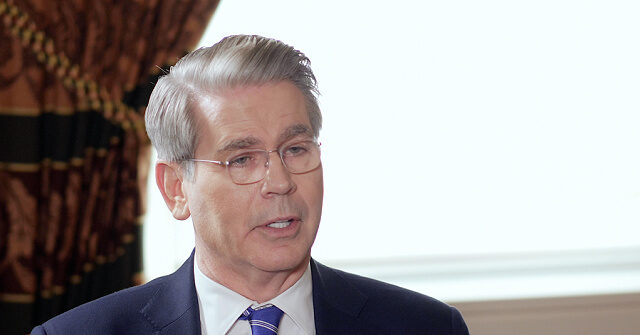
Exclusive — Secretary Bessent on ‘Reprivatization’ of Economy: ‘We Are Laser-Focused on Getting this Deficit Under Control’ Treasury Secretary Scott Bessent told Breitbart News that President Donald Trump’s administration is "laser-focused" on cutting the deficit. breitbart.com
View Full Interactive Feed