TruthArchive.ai - Tweets Saved By @Thefish751855

Saved - June 17, 2025 at 2:59 AM
reSee.it AI Summary
The discussion centers on the SIRT-1 pathway and its connection to neurotoxicity in ALS, particularly through elevated miR-34a levels. Participants share relevant studies linking myeloid-derived suppressor cells (MDSCs) and neuroinflammation. They explore natural compounds like curcumin, resveratrol, and apigenin, which may modulate pathways related to miR-34a and NF-κB signaling, potentially offering neuroprotective effects. The conversation highlights the need for further research on these natural modulators compared to conventional ALS treatments.

@Thefish751855 - Thefish

@MeasslainteIRL I've been working on this today (FYI @AnneliseBocquet), but related to the SIRT-1 pathway. All these are related. In short, elevated miR-34a is linked to neurotoxicity, and dysregulated miRNAs are the hallmark of ALS, but it's complicated. https://pmc.ncbi.nlm.nih.gov/articles/PMC8921154/

Insights into the identification of a molecular signature for amyotrophic lateral sclerosis exploiting integrated microRNA profiling of iPSC-derived motor neurons and exosomes Amyotrophic lateral sclerosis (ALS) is a rare neurodegenerative disorder characterized by progressive degeneration of motor neurons (MNs). Most cases are sporadic, whereas 10% are familial. The pathological mechanisms underlying the disease are ... pmc.ncbi.nlm.nih.gov

@Thefish751855 - Thefish

@MeasslainteIRL @AnneliseBocquet Linking our studies: https://pubmed.ncbi.nlm.nih.gov/24780820/ The Influence of Myeloid-Derived Suppressor Cell Expansion in Neuroinflammation and Neurodegenerative Diseases https://pubmed.ncbi.nlm.nih.gov/38607083/

miR-34a expands myeloid-derived suppressor cells via apoptosis inhibition - PubMed Myeloid-derived suppressor cells (MDSCs) are a heterogeneous population and show significant expansion under pathological conditions. microRNA plays important roles in many biological processes, whether microRNAs have a function in the expansion of MDSCs is still not very clear. In this study, miR-3 … pubmed.ncbi.nlm.nih.gov
The Influence of Myeloid-Derived Suppressor Cell Expansion in Neuroinflammation and Neurodegenerative Diseases - PubMed The neuro-immune axis has a crucial function both during physiological and pathological conditions. Among the immune cells, myeloid-derived suppressor cells (MDSCs) exert a pivotal role in regulating the immune response in many pathological conditions, influencing neuroinflammation and neurodegenera … pubmed.ncbi.nlm.nih.gov

@AnneliseBocquet - Bocquet Annelise 🔬🧬📚🚜

https://pubmed.ncbi.nlm.nih.gov/28652929/ "TNF-α binding to TNF-R1 can activate the transcription factor NFκB. Our laboratory has recently observed an NFκB binding site on the promotor region of microRNA-34a (miR-34a). " Linked directly to the SARS-COV-2 and anti-covid injections... https://pubmed.ncbi.nlm.nih.gov/35588734/ https://pmc.ncbi.nlm.nih.gov/articles/PMC10145134/

TNF-α and Beyond: Rapid Mitochondrial Dysfunction Mediates TNF-α-Induced Neurotoxicity - PubMed This short communication describes our research which demonstrates that TNF-α causes a rapid decline in mitochondrial function, leading to neuronal cell death. As such, this neurotoxic proinflammatory cytokine may play a role in brain damage from stroke and neurodegeneration in chronic conditions su … pubmed.ncbi.nlm.nih.gov
TNF-α+ CD4+ T cells dominate the SARS-CoV-2 specific T cell response in COVID-19 outpatients and are associated with durable antibodies - PubMed Severe acute respiratory syndrome coronavirus 2 (SARS-CoV-2)-specific CD4+ T cells are likely important in immunity against coronavirus 2019 (COVID-19), but our understanding of CD4+ longitudinal dynamics following infection and of specific features that correlate with the main … pubmed.ncbi.nlm.nih.gov
COVID-19 mRNA Vaccines: The Molecular Basis of Some Adverse Events Each injection of any known vaccine results in a strong expression of pro-inflammatory cytokines. This is the result of the innate immune system activation, without which no adaptive response to the injection of vaccines is possible. Unfortunately, ... pmc.ncbi.nlm.nih.gov

@AnneliseBocquet - Bocquet Annelise 🔬🧬📚🚜

@Thefish751855 @MeasslainteIRL This is really interesting @Thefish751855!!! MDSCs are bound to IL-10, which increases ACE2 expression. If miR-34a is also bound to MDSCs, we have a direct connection to RAGE!

@AnneliseBocquet - Bocquet Annelise 🔬🧬📚🚜

Oui... une fois n'est pas coutume... https://actaneurocomms.biomedcentral.com/articles/10.1186/s40478-023-01647-1 Augmentation de l'expression d'ACE2 dans la maladie d’Alzheimer. Je répète : Augmentation de l'expression d'ACE2 dans la maladie d’Alzheimer. Me rappelle d'un grand scientifique qui m'a dit que je me trompais. 😐

Higher angiotensin-converting enzyme 2 (ACE2) levels in the brain of individuals with Alzheimer’s disease - Acta Neuropathologica Communications Cognitive decline due to Alzheimer’s disease (AD) is frequent in the geriatric population, which has been disproportionately affected by the COVID-19 pandemic. In this study, we investigated the levels of angiotensin-converting enzyme 2 (ACE2), a regulator of the renin-angiotensin system and the main entry receptor of SARS-CoV-2 in host cells, in postmortem parietal cortex samples from two independent AD cohorts, totalling 142 persons. Higher concentrations of ACE2 protein (p < 0.01) and mRNA (p < 0.01) were found in individuals with a neuropathological diagnosis of AD compared to age-matched healthy control subjects. Brain levels of soluble ACE2 were inversely associated with cognitive scores (p = 0.02) and markers of pericytes (PDGFRβ, p = 0.02 and ANPEP, p = 0.007), but positively correlated with concentrations of soluble amyloid-β peptides (Aβ) (p = 0.01) and insoluble phospho-tau (S396/404, p = 0.002). However, no significant differences in ACE2 were observed in the 3xTg-AD mouse model of tau and Aβ neuropathology. Results from immunofluorescence and Western blots showed that ACE2 protein is predominantly localized in microvessels in the mouse brain whereas it is more frequently found in neurons in the human brain. The present data suggest that higher levels of soluble ACE2 in the human brain may contribute to AD, but their role in CNS infection by SARS-CoV-2 remains unclear. actaneurocomms.biomedcentral.com

@AnneliseBocquet - Bocquet Annelise 🔬🧬📚🚜

Oh... les astrocytes sont des targets du SARS-CoV-2... waouh, quelle surprise (en fait, non, pas du tout). https://t.co/ZcXucnbHz1 https://t.co/2w5BwmkG5S Les astrocytes, c'est quoi ? Ce sont des cellules gliales constituant notre cerveau... Le cerveau n'est pas constitué que https://t.co/sghCnOHJ9r

@P_McCulloughMD - Peter A. McCullough, MD, MPH®

SARS-CoV-2 Spike Protein Accelerates Alzheimer’s Disease Via Increased ACE2-Mediated Cerebrovascular Inflammation Pandemic Could Lead to Expanded Dementia Population Needing Care These data are worrisome given the ubiquity of Spike protein we assume is retained after SARS-CoV-2

@MeasslainteIRL - Thomas Anthony III

@AnneliseBocquet @Thefish751855 @53v3n0fn1n3 @Fynnderella1 @kacdnp91 @CanningPharm @CheweyLife @dr_morrissey @CShoemakerMD @Kevin_McKernan @KevinMcCairnPhD @LyellJ @MicieliA_MD @dredwild @bertvargas @BertVargas @djnicholl @dr_nickward @caseyalbin @AmmarAlChalabi

@CheweyLife - Angela Rhoten

@MeasslainteIRL @AnneliseBocquet @Thefish751855 @53v3n0fn1n3 @Fynnderella1 @kacdnp91 @CanningPharm @dr_morrissey @CShoemakerMD @Kevin_McKernan @KevinMcCairnPhD @LyellJ @MicieliA_MD @dredwild @BertVargas @djnicholl @dr_nickward @caseyalbin @AmmarAlChalabi @janiesaysyay @dbdugger

@MeasslainteIRL - Thomas Anthony III

🧠 Natural Strategies Targeting ALS Pathways & What They Do (Focus: P2X7, NAD+, TLR4, neuroinflammation) 1. Apigenin Found in: Parsley, celery, chamomile What it does: Inhibits P2X7 receptor activity Suppresses NF-κB signaling and TNF/IL-1β Crosses the blood-brain barrier Supports mitochondrial function 2. Baicalin Found in: Scutellaria baicalensis (Chinese skullcap) What it does: Blocks TLR4 signaling and P2X7 upregulation Reduces microglial activation Decreases oxidative stress in CNS Neuroprotective in ALS and Parkinson’s models 3. Resveratrol Found in: Red grapes, blueberries, Japanese knotweed What it does: Activates SIRT1 and boosts NAD+ levels Modulates neuroinflammation Inhibits pro-inflammatory cytokines and ROS Preserves motor neurons in ALS models 4. Curcumin Found in: Turmeric root What it does: Inhibits TLR4 and NF-κB signaling Blocks amyloid aggregation and microglial activation Reduces LPS-induced neuroinflammation Enhances gut barrier integrity 5. Luteolin Found in: Artichoke, celery, green pepper What it does: Inhibits P2X7 expression Reduces ATP-induced neurotoxicity Stabilizes mast cells and inhibits microglia Powerful antioxidant and BBB-penetrant 6. Nicotinamide (NAM) / Nicotinamide Riboside (NR) / NMN Found in: Liver, mushrooms, broccoli (precursors); supplements available What it does: Boosts NAD+ synthesis inside cells Supports mitochondrial health Enhances SIRT1 activity (key in gut/brain axis) May offset NAD+ depletion from chronic inflammation 7. Berberine Found in: Goldenseal, barberry, Oregon grape What it does: Modulates gut microbiota and reduces LPS load Protects BBB integrity Inhibits TLR4 and NLRP3 inflammasome pathways Supports autophagy and reduces oxidative stress 8. Omega-3s (DHA/EPA) Found in: Fish oil, krill oil, algae What it does: Anti-inflammatory: suppresses TLR4 and NF-κB Reduces excitotoxicity in neurons Promotes neurogenesis and synaptic repair May slow motor neuron decline 🧬 Summary Table CompoundFound InMain Actions ApigeninParsley, celery, chamomileInhibits P2X7 & NF-κB; antioxidant BaicalinChinese skullcapBlocks TLR4/P2X7; neuroprotective ResveratrolRed grapes, knotweedBoosts NAD+, activates SIRT1 CurcuminTurmericInhibits TLR4/NF-κB, gut/brain repair LuteolinArtichoke, celeryBlocks P2X7, stabilizes microglia Nicotinamide / NR / NMNSupplements or food precursorsRaise NAD+, support mitochondria BerberineGoldenseal, barberryModulates gut/LPS; TLR4 inhibitor Omega-3sFish oil, algaeAnti-inflammatory, neuron-protective ⚠️ Caution Even natural substances can interfere with medications or worsen some conditions. ALS patients should always consult a medical professional or integrative neurologist before starting new compounds.

@MeasslainteIRL - Thomas Anthony III

It challenges the reliance on conventional ALS drugs (riluzole, edaravone) by highlighting their limited efficacy, aligning with a 2023 Journal of Neurology report noting only 10-20% symptom improvement, suggesting natural modulators of TLR4 and NAD+ pathways deserve more research. 👌

@MeasslainteIRL - Thomas Anthony III

@CheweyLife @AnneliseBocquet @Thefish751855 @53v3n0fn1n3 @Fynnderella1 @kacdnp91 @CanningPharm @dr_morrissey @CShoemakerMD @Kevin_McKernan @KevinMcCairnPhD @LyellJ @MicieliA_MD @dredwild @BertVargas @djnicholl @dr_nickward @caseyalbin @AmmarAlChalabi @janiesaysyay @dbdugger I'm suspicious because grok likes it @elonmusk

@MeasslainteIRL - Thomas Anthony III

How the Natural Compounds Help 1. Curcumin Inhibits NF-κB activation (by blocking IKK and IκB phosphorylation) ↓ This could reduce miR-34a expression driven by TNF-α May restore balance between apoptosis and survival in neurons or immune cells 2. Resveratrol Suppresses TNF-α–induced NF-κB activation Inhibits IκB degradation and p65 nuclear translocation Has been shown to downregulate miR-34a in models of inflammation and cancer 3. EGCG Inhibits both TNF-α signaling and NF-κB May prevent NF-κB from binding the miR-34a promoter 4. Berberine Blocks NF-κB signaling by inhibiting TLR4 and upstream cytokines like TNF-α Berberine downregulates miR-34a in hepatic and cancer models May help prevent neuroinflammation and apoptosis 5. Apigenin Suppresses NF-κB and TNF-α Known to modulate miRNAs, including miR-34a, in inflammatory conditions 🧠 Why This Matters in ALS / Neuroinflammation miR-34a upregulation can worsen neuronal death It targets SIRT1, leading to reduced NAD⁺, more oxidative stress, and apoptosis Controlling this pathway might: Reduce neuron loss Improve immune balance Support mitochondrial and cellular repair ✅ Summary CompoundEffect on TNF/NF-κB → miR-34a Axis CurcuminInhibits NF-κB, potentially lowering miR-34a ResveratrolSuppresses TNF-α and NF-κB, lowers miR-34a EGCGBlocks NF-κB activation and TNF-α signaling BerberineInhibits NF-κB, downregulates miR-34a ApigeninReduces NF-κB activity and miR-34a expression

@MeasslainteIRL - Thomas Anthony III

@CheweyLife @AnneliseBocquet @Thefish751855 @53v3n0fn1n3 @Fynnderella1 @kacdnp91 @CanningPharm @dr_morrissey @CShoemakerMD @Kevin_McKernan @KevinMcCairnPhD @LyellJ @MicieliA_MD @dredwild @BertVargas @djnicholl @dr_nickward @caseyalbin @AmmarAlChalabi @janiesaysyay @dbdugger @elonmusk I wonder how many doctors tell their patients to drink green tea ? https://t.co/XXvbrVyHnB

Saved - June 17, 2025 at 1:53 AM
reSee.it AI Summary
The discussion centers on Lou Gehrig’s Disease (ALS) and potential solutions. The Spike protein from COVID-19 may worsen ALS by inducing neuroinflammation through purinergic receptors like P2X7. Current ALS treatments are limited, prompting exploration of new targets, including purinergic modulation and boosting NAD+ levels. Researchers link elevated miR-34a to neurotoxicity in ALS, while myeloid-derived suppressor cells may influence neuroinflammation. The conversation highlights ongoing research and connections between various biological pathways related to ALS and COVID-19.

@MeasslainteIRL - Thomas Anthony III

Lou Gehrig’s Disease – Are We Looking for Solutions!? Amyotrophic Lateral Sclerosis (ALS) – also known as Lou Gehrig’s disease (or Charcot’s disease in Europe) – is characterized by the degeneration of motor neurons and leads to debilitating and potentially fatal symptoms. https://pmc.ncbi.nlm.nih.gov/articles/PMC10886908/ The Spike protein – whether from the virus itself or from COVID-19 injections – can induce or contribute to inflammation in the nervous system, triggering ALS or worsening the condition in people already affected. Specifically, the Spike can affect purinergic receptors, especially P2X4 and P2X7. The P2X7 receptor is particularly concerning, as it plays a central role in neuroinflammation and pain. Interestingly, P2X7 expression increases when TLR4 is stimulated by LPS (lipopolysaccharide) in microglial and astrocyte cells – both of which are part of the central nervous system (CNS). Microglia are the CNS’s resident immune cells, responsible for removing toxic threats — but they can become pro-inflammatory. P2X7 is a hallmark of this pro-inflammatory state in microglia. To note: the Spike protein interacts with LPS, potentially due to leaky gut (intestinal barrier dysfunction), and also with amyloid beta (Aβ42) fibers. These complexes — Spike/LPS or Spike/Aβ42 — can fully activate the TLR4 receptor. https://www.cureus.com/articles/218170-impact-of-the-sars-cov-2-spike-protein-on-the-innate-immune-system-a-review#!/ With a compromised blood-brain barrier, these Spike-related molecular complexes can cross into the CNS, triggering TLR4, and increasing P2X7 expression. P2X7 can also be stimulated by extracellular ATP, which is released during inflammation. When there's reduced ectonucleotidase activity (particularly Ado, short for adenosine), the overexpression of P2X7 becomes dangerous. Adenosine helps break down extracellular ATP — so if Ado is low, ATP accumulates and further stimulates P2X7, ramping up inflammation. Adenosine is also tied to NAD+ https://pmc.ncbi.nlm.nih.gov/articles/PMC9512238/ Another point: P2X7 is a gateway receptor not just for SARS-CoV-2, but also for HIV. That’s yet another similarity between these two viruses. All in all, targeting P2X7 is a promising strategy, and research is ongoing. https://pmc.ncbi.nlm.nih.gov/articles/PMC9877316/ Currently, the main medications approved for ALS treatment include riluzole, edaravone, and tauroursodiol/sodium phenylbutyrate. While they offer some benefits, due to ALS’s severity and the lack of a definitive cure, new pharmaceutical targets must be explored. Purinergic modulation has shown promising results in ALS management, and additional strategies could include: Anti-inflammatory and anti-apoptotic compounds Reducing oxidative stress Modulating neuronal ion channels One promising avenue: boosting NAD+ to provide some immediate support. Oral supplementation with NAD+ precursors like: Nicotinamide (NAM) Nicotinamide riboside (NR) Nicotinamide mononucleotide (NMN) …could help. These are converted into NAD+ via biosynthesis pathways inside cells. However, this is only a short-term aid if the underlying causes of NAD+ depletion aren't addressed. https://pmc.ncbi.nlm.nih.gov/articles/PMC9512238/ Note: NAD+ is linked to SIRT1, which plays a role in maintaining intestinal barrier integrity and supporting the commensal (beneficial) gut flora. Follow Annelises work 👌 #ALS #NAD+ #NMN #SIRT1 #P2X7 #TLR4

Amyotrophic Lateral Sclerosis in Long-COVID Scenario and the Therapeutic Potential of the Purinergic System in Neuromodulation Amyotrophic lateral sclerosis (ALS) involves the degeneration of motor neurons and debilitating and possibly fatal symptoms. The COVID-19 pandemic directly affected the quality of life of this group, and the SARS-CoV-2 infection accelerated the ... pmc.ncbi.nlm.nih.gov
Impact of the SARS-CoV-2 Spike Protein on the Innate Immune System: A Review The Spike protein enables the severe acute respiratory syndrome coronavirus 2 (SARS-CoV-2) infection by binding to multiple receptors, including the angiotensin-converting enzyme 2 (ACE2). Scientific studies also indicate that Spike is involved in severe forms of coronavirus disease 2019 (COVID-19), "long-haul COVID diseases" - also known as "long COVID syndromes" or "post-acute sequelae of SARS-CoV-2 infection" (PACS) - or, recently, in adverse reactions to lipid nanoparticle-messenger ribonucleic acid (mRNA) vaccines or other anti-COVID19 products. Numerous mutations, notably within the subunit 1 of Spike (S1), prevent neutralization by antibodies, but more generally, the virus has developed numerous strategies to avoid immune system surveillance, especially type-I interferons (IFN-I). Meanwhile, a “hyperinflammatory” state, named “cytokine storm,” sets in. However, what role does the Spike protein play in the immune escape mechanisms? Can its inflammatory activities affect IFN-I? Does Spike block IFN-I or hijack them for the virus benefits? What are the other potential consequences? This article was written to provide an up-to-date and more general overview of the impact of the Spike protein on the innate immune system and its effectors at the molecular level. cureus.com
The Role of NAD+ in Regenerative Medicine The understanding of the molecular and cellular basis of aging has grown exponentially over recent years, and it is now accepted within the scientific community that aging is a malleable process; just as it can be accelerated, it can also be slowed ... pmc.ncbi.nlm.nih.gov
Identification of a novel P2X7 antagonist using structure-based virtual screening P2X4 and P2X7 receptors are ATP-gated ion channels, which play important roles in neuropathic and inflammatory pain, and as such they are important drug targets in diseases of inflammatory origin. While several compounds targeting P2X4 and P2X7 ... pmc.ncbi.nlm.nih.gov
The Role of NAD+ in Regenerative Medicine The understanding of the molecular and cellular basis of aging has grown exponentially over recent years, and it is now accepted within the scientific community that aging is a malleable process; just as it can be accelerated, it can also be slowed ... pmc.ncbi.nlm.nih.gov

@AnneliseBocquet - Bocquet Annelise 🔬🧬📚🚜

Oh, et bien... perturbations de la barrière hémato-encéphalique dans des cas de covid-long... et une approche d'exploration médicale envisagée. Cet article est intéressant ⤵️ https://bmcneurol.biomedcentral.com/articles/10.1186/s12883-025-04133-4 "Notre étude suggère que l'IC PASC/covid long est au moins en partie liée à une

Asymmetrical glymphatic dysfunction in patients with long Covid associated neurocognitive impairment- correlation with BBB disruption - BMC Neurology The glymphatic system, a waste clearance pathway, has been implicated in several neurological conditions associated with neuroinflammation. COVID-19 associated neurocognitive impairment, part of the post-acute sequelae of SARS-CoV-2 infection (PASC), is strongly associated with neuroinflammation and disrupted blood-brain barrier (BBB). Several studies have implicated a synergistic interaction between the glymphatic system dysfunction and BBB disruption. In this proof-of-concept study, we investigated the role of the MRI metric diffusion along the perivascular spaces DTI (DTI-ALPS) in patients with PASC and correlated this with the BBB capillary permeability metric- K trans derived from Dynamic contrast enhanced (DCE) perfusion. 14 subjects with PASC who had persisting symptoms of anosmia, ageusia, fatigue, and cognitive impairment (CI) and ten healthy age and sex matched controls were recruited. All PASC subjects underwent routine and advanced MR brain imaging at two time points, (3 months +/- 2 weeks) after initial infection - referred as Time Point 1 (TP-1) - and 10 repeated the MRI scan 12 months (+/- 2 weeks) later - referred as Time Point 2 (TP-2), while the controls had MR imaging done only at TP-1. All had mild neurocognitive impairment. In the final analysis we included those who had DTI study at both time points (n-10). MR imaging included DCE perfusion and DTI in addition to anatomical imaging. Given the small size of the sample and nonnormality of data in the descriptive analyses, nonparametric analyses were used for group comparisons. A two-sample Wilcoxon rank sum test was used to show the differences in DTI-ALPS between the patients and controls in the predefined regions of interest. Spearman’s correlation coefficient (rho) was used to assess the correlation between DTI-ALPS index with K trans. There was significant reduction in the DTI-ALPS index between the patients and controls in the left hemisphere (z = 2.04, p < 0.04). However, there was no significant change over time in the index. There was a strong inverse correlation between the central white matter K trans and DTI-ALPS index (rho = 0.66, p < 0.03). Our study indicates that disordered para vascular drainage, a marker for glymphatic system and BBB damage may contribute to neurocognitive impairment (NCI) among patients with PASC. The DTI-ALPS index, which does not require contrast injection, has the potential to serve as a non-invasive biomarker. bmcneurol.biomedcentral.com

@AnneliseBocquet - Bocquet Annelise 🔬🧬📚🚜

Non seulement il stipule qu'il y a surexpression du TLR2/ TLR4 mais il ajoute qu'il y a une augmentation de l'expression du P2X7... c'est une bombe à retardement. Il y a une reprogrammation du SI, sur le long-terme, particulièrement au niveau des macrophages. 24/n

@AnneliseBocquet - Bocquet Annelise 🔬🧬📚🚜

Bien, résumé de la partie 1 : SIRT1 inhibe p53 pour éviter l'apoptose cellulaire. Et p53 inhibe SIRT1 via miR-34a pour exercer son activité, créant une boucle d'amplification apoptotique. Bizarrement, on retrouve une stimulation de p53 après les injections anti-covid dans les

@AnneliseBocquet - Bocquet Annelise 🔬🧬📚🚜

Maladie de Charcot, on cherche des solutions !? La sclérose latérale amyotrophique (SLA) - ou maladie de Charcot - se caractérise par une dégénérescence des motoneurones et des symptômes invalidants, potentiellement mortels. https://pmc.ncbi.nlm.nih.gov/articles/PMC10886908/ La Spike, celle du virus ET des injections anti-covid, peut induire ou contribuer au développement d'une inflammation dans le système nerveux, déclenchant la SLA, ou aggravant l'état des personnes atteintes de cette maladie. De fait, la Spike peut impacter les récepteurs purinergiques, notamment P2X4 et P2X7. Ce dernier, le récepteur P2X7, est particulièrement sensible car il joue un rôle important dans la neuroinflammation et... dans la douleur. De façon intéressante, l'expression de ce récepteur, P2X7, est accrue suite à une stimulation du TLR4 par le LPS, au niveau des cellules microgliales ou des astrocytes. Ces cellules sont constitutives du système nerveux central, la microglie (ou cellules microgliales) représentant les cellules immunitaires innées résidentes dans le système nerveux. Elles sont en charge d'éliminer les éléments potentiellement toxiques pour le système nerveux... et elles peuvent prendre un phénotype pro-inflammatoires. P2X7 appartient au phénotype pro-inflammatoire de la microglie. Pour mémoire, la Spike interagit avec le LPS, provenant potentiellement d'une perturbation de la barrière intestinale. La Spike interagit aussi avec les fibres Aβ42. Les complexes moléculaires "Spike/LPS" ou "Spike/Aβ42" peuvent activer le TLR4 complètement. Avec la perturbation de la barrière hémato-encéphalique, ces complexes moléculaires "Spike/LPS" ou "Spike/Aβ42" peuvent alors activer le TLR4 et accroître l'expression du P2X7. Le P2X7 est aussi stimulé par l'ATP extracellulaire, libéré lors d'une inflammation. Corrélé à une diminution d'ectonucleotidase, Ado notamment, la surexpression de P2X7 est une bombe explosive. En effet, Ado dégrade l'ATP extracellulaire... si Ado est diminué, alors on aura une accumulation d'ATP extracellulaire qui vont activer d'autant plus P2X7 et entraîner une inflammation importante. Ado est lié au NAD+ ... https://pmc.ncbi.nlm.nih.gov/articles/PMC7887318/ Autre point : le récepteur P2X7 est une clé pour le VIH... et le SARS-COV-2. Oui, encore un point commun entre ces deux virus. Quoiqu'il en soit, cibler P2X7 est une piste intéressante. C'est en cours de recherche... https://pmc.ncbi.nlm.nih.gov/articles/PMC9877316/ Actuellement, les principaux médicaments approuvés dans différentes régions du monde pour le traitement de la SLA sont le riluzole, l'édaravone et le tauroursodiol/phénylbutyrate de sodium. Malgré les effets positifs de ces médicaments, compte tenu de la gravité de la SLA et de l'absence d'un traitement final efficace pour cette maladie neurodégénérative, davantage de cibles pharmaceutiques doivent être explorées... la modulation purinergique a présenté des résultats très intéressants dans le contrôle de la SLA mais il est aussi possible de rechercher des anti-inflammatoires et anti-apoptotiques, de réduire le stress oxydatif et moduler les activités des canaux ioniques neuronaux. Favoriser le NAD+ est une piste potentielle pour tenter de soulager en immédiat. https://pmc.ncbi.nlm.nih.gov/articles/PMC9512238/ La supplémentation orale en composés précurseurs du NAD+ peut être envisagée  : nicotinamide (NAM), nicotinamide riboside (NR) et nicotinamide mononucléotide (NMN). Ces précurseurs sont utilisés par les voies de biosynthèse du NAD+ et convertis en NAD+ dans la cellule. Mais ce sera à court terme si on ne traite pas les causes profondes de cette déprivation en NAD+. Nota bene : NAD+ lié à SIRT1. Cela peut aider au maintien de la barrière intestinale et de la flore commensale. Bonne journée !

Amyotrophic Lateral Sclerosis in Long-COVID Scenario and the Therapeutic Potential of the Purinergic System in Neuromodulation Amyotrophic lateral sclerosis (ALS) involves the degeneration of motor neurons and debilitating and possibly fatal symptoms. The COVID-19 pandemic directly affected the quality of life of this group, and the SARS-CoV-2 infection accelerated the ... pmc.ncbi.nlm.nih.gov
Ectonucleotidases in Acute and Chronic Inflammation Ectonucleotidases are extracellular enzymes with a pivotal role in inflammation that hydrolyse extracellular purine and pyrimidine nucleotides, e.g., ATP, UTP, ADP, UDP, AMP and NAD+. Ectonucleotidases, expressed by virtually all cell types, immune ... pmc.ncbi.nlm.nih.gov
Identification of a novel P2X7 antagonist using structure-based virtual screening P2X4 and P2X7 receptors are ATP-gated ion channels, which play important roles in neuropathic and inflammatory pain, and as such they are important drug targets in diseases of inflammatory origin. While several compounds targeting P2X4 and P2X7 ... pmc.ncbi.nlm.nih.gov
The Role of NAD+ in Regenerative Medicine The understanding of the molecular and cellular basis of aging has grown exponentially over recent years, and it is now accepted within the scientific community that aging is a malleable process; just as it can be accelerated, it can also be slowed ... pmc.ncbi.nlm.nih.gov

@AnneliseBocquet - Bocquet Annelise 🔬🧬📚🚜

Voici la première partie des explications concernant l'article 'impacts de la protéine Spike du SARS-CoV-2 sur l'immunité innée : une revue'. Ci-joint le lien vers l'article. https://www.cureus.com/articles/218170-impact-of-the-sars-cov-2-spike-protein-on-the-innate-immune-system-a-review#!/

Video Transcript AI Summary
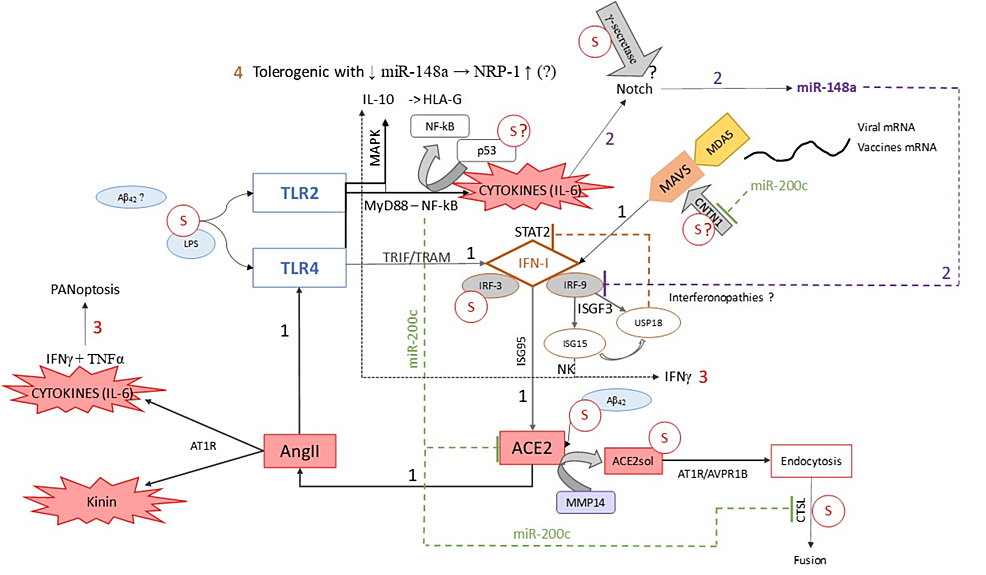
**French Summary:** Anaïs Bloqué explique l'impact de la protéine Spike du SARS-CoV-2 sur le système immunitaire inné, en se concentrant sur le TLR 4. La Spike seule n'active pas complètement le TLR 4 pour induire une réponse antivirale complète (interférons de type 1). L'association Spike-LPS (lipopolysaccharide bactérien) est nécessaire. L'activation des interférons 1 augmente l'expression d'ACE2, récepteur du virus, via les ISG, sensibilisant l'organisme à l'infection. Les ARN messagers des vaccins peuvent aussi activer les interférons 1 via MDA5. La Spike, protéine amyloïde, peut induire la production de fibres A bêta 42, aggravant l'inflammation. L'augmentation de NF-κB par les ISG peut bloquer p53 (suppresseur de tumeur) et induire le micro-ARN MIR-200c, diminuant l'expression d'ACE2. Chez les personnes avec comorbidités (diabète, obésité), une boucle d'amplification inflammatoire Spike-LPS-TLR4 réduit l'ACE2 disponible, menant à une suractivation de l'angiotensine 2. La Spike persistante pourrait causer des pathologies dégénératives à long terme. **English Translation:** Anaïs Bloqué explains the impact of the SARS-CoV-2 Spike protein on the innate immune system, focusing on TLR 4. Spike alone does not fully activate TLR 4 to induce a complete antiviral response (type 1 interferons). The Spike-LPS (bacterial lipopolysaccharide) association is necessary. Activation of interferon 1 increases ACE2 expression, the virus receptor, via ISGs, sensitizing the body to infection. Vaccine mRNAs can also activate interferon 1 via MDA5. Spike, an amyloid protein, can induce the production of A beta 42 fibers, worsening inflammation. Increased NF-κB by ISGs can block p53 (tumor suppressor) and induce microRNA MIR-200c, decreasing ACE2 expression. In people with comorbidities (diabetes, obesity), a Spike-LPS-TLR4 inflammatory amplification loop reduces available ACE2, leading to overactivation of angiotensin 2. Persistent Spike could cause long-term degenerative pathologies.
Full Transcript
Speaker 0: Bonjour à tous et à toutes, je suis Anaïs Bloqué, docteur en biologie santé et enseignante d'hématologie immunologie auprès de BTS analyse biomédicale. Avant d'entrer dans le vif du sujet, je précise que je n'ai aucun conflit d'intérêt que ce soit d'ordre professionnel, financier ou privé. Récemment j'ai publié un article traitant des impacts de la protéine Spike du SARS-CoV 2 sur le système immunitaire inné et vous êtes nombreux à me demander des explications quant au contenu de ce papier. Vu le nombre de mécanismes et la complexité de ces mécanismes, j'ai décidé de morceler mes explications en 3 grandes parties, il y en aura peut-être une quatrième, ça dépendra du déroulé de mes petites interventions. Je vais commencer par vous raconter la petite histoire du TLR 4 et du et de la Spike du SARS-CoV 2. Il faut savoir que dans notre organisme, nous avons ce que l'on appelle des PRR ou Patogène Recopnishion Resator qui sont capables de détecter la présence d'éléments pathogènes et en détectant donc ces pathogènes, ces PRR s'activent pour lancer une réponse immunitaire afin de contrer bien entendu les éléments infectieux. L'un de ces PRR est le TLR 4 et il est présent donc à la surface des cellules de notre organisme. Alors la protéine Spike du SARS-CoV-deux ici représentée en rouge dans un cercle toute seule ne peut enclencher l'activation du TLR 4 dans sa totalité. Il y aura induction de cytokines pro-inflammatoires, mais pas l'induction des interférons de type un. Il faut savoir que les interférons de type un sont fondamentaux dans la réponse immunitaire antivirale. Cela va du déclenchement d'un état antiviral, c'est-à-dire la mise en place de mécanismes qui vont entraver la propagation et la réplication du virus dans l'organisme jusqu'à l'orchestration d'une réponse immunitaire innée et adaptative efficace. Alors le fait que la Spike seule ne puisse enclencher la production des interférons un est plutôt de mauvais augure car seule elle ne permet pas à l'organisme de lutter contre le virus. Pour que la Spike active le TLR 4 dans sa totalité, il faut qu'elle s'associe avec le LPS pour l'hypopolisaccharide, un composant que l'on retrouve sur les bactéries gram négatifs le combo Spike LPS va permettre l'activation du TLR 4 avec l'induction de cytokines pro-inflammatoires et l'induction d'une réponse par les interférons de type 1 le problème c'est qu'après l'initiation d'une réponse par les interférons 1 il y a l'expression de petites molécules que l'on appelle ISG pour interférons stimulated jeans certaines publications scientifiques montrent qu'il existe un lien probable entre ACE2 et les interférons de type un via les ISG dont l'ISG quatre-vingt-quinze les résultats expérimentaux suggèrent que ACE2 se comporte comme un iégé par la stimulation de certains PRRS dont MDA V on en reparlera juste après. Le hic c'est que la réponse aux interférons 1 en augmentant l'expression d'ACE2 va sensibiliser l'organisme aux infections par le SARS-CoV-2 car ACE2 est l'un des récepteurs permettant au virus d'infecter l'organisme via l'interaction Spike ACE2. Je vous vois venir vous allez me dire super donc avec un traitement antibiotique permettant de limiter le LPS il n'y aura pas induction des interférons de type 1 et donc pas d'augmentation de l'expression d'ACE2 et la spyde vaccinale ou la spydep pour de proline ne va pas indreve ne va pas induire seul les interférons 1 et donc une augmentation de ce2 bah non c'est faux car les interférons de type 1 peuvent être lancés comme je l'ai dit par les RLR dont MDA5 et ce récepteur détecte quoi Les ARN 0 et l'ARN messager modifié des produits anti covid comme Pfizer ou Moderna. De plus en dehors de cette induction des interférons 1 par mda 5 de plus il est fort probable que la Spike accompagnée de fibres amyloïdes comme les fibres a bêta quarante-deux déclenche le télaire 4. Cette protéine spike est hautement amyloïde et elle peut entraîner directement la production des fibres a bêta quarante-deux par l'organisme auquel elle peut se lier. En effet l'interaction spike a bêta quarante-deux semble accroître la production de cytokines pro-inflammatoires et n'empêche pas l'interaction entre la sous unité s un de la Spike avec son récepteur c'est-à-dire ACE 2. C'est ce que j'appelle le double effet amyloïde. En effet non seulement la spi qui est amyloïde en elle-même c'est-à-dire que si elle est clivée par des protéases elle va former des fibrilles insolubles et dégénératives, mais en plus elle induit la production de ces fibrilles amyloïdes par l'organisme lui-même comme on peut en trouver dans la maladie d'Alzheimer pouvant contribuer à quoi Ben à l'infection virale. Pour en revenir à notre TALR 4 et aux interférons de type un, les ISG comme l'ISG quatre-vingt-quinze ici figuré présentent une autre particularité cela va augmenter les niveaux de NFK pa b pour vous expliquer simplement NFK pa b est un facteur qui permet la synthèse de cytokines pro-inflammatoires comme le IL6. Il existe une autre activité du NFK ab celle de contrebalancer la p cinquante-trois le gardien de notre génome via le MDM 2 ou murine double minute 2 d'ailleurs on sait que une suractivation de NFK ab est potentiellement cancérigène par blocage de la p cinquante-trois. De plus la protéine spike et plus précisément la sous unité s 2 de la protéine spike peut interagir avec la p cinquante-trois et on ignore encore quelles en sont les conséquences. Cela peut d'ailleurs pencher en faveur d'une activité pro-inflammatoire via NFK ab. Il reste à savoir si la sous-unité s 2 de la protéine spyde dite vaccinale ou s 2 p avec ces 2 modifications proline se lie à la p cinquante-trois. Mais il existe quelques éléments de réponse qui font craindre une réponse par l'affirmative. Il existe une autre conséquence par rapport à l'augmentation de NFK pa b. Ce facteur induit l'expression de micro-éréna, donc ce sont des petites molécules qui vont agir sur le transcryptome cellulaire. Et il y a un micro-éréna qui nous intéresse particulièrement dans ce cadre dans ce cas de figure, c'est le MIR de sens C. Le MIR de sens C va bloquer, va empêcher la surexpression de la CE 2. Cela crée une sorte de balance entre la surex surexpression et la sous expression d'ACE2 cependant les études montrent que dans certains pathopathologiques notamment des pathopathologiques avec des comorbidités comme le diabète ou l'obésité les patients présentaient déjà des taux d'expression du MIR de sens C important autrement dit la quantité initiale d'ACE2 présente dans leur organisme était déjà plus faible que chez les individus sans comorbidité dans ce contexte l'interaction Spike LPS avec le TLR 4 ce qui induit les interférons de type un les I g et l'augmentation du NFK pa b avec l'expression du minière de sens c devient vraiment problématique et dangereux car hyper inflammatoire. En effet chez ces individus le peu d'ACE 2 qu'ils ont va se retrouver bloqué par la Spike par l'interaction Spike ACE 2. On sait que ACE 2 est l'un des récepteurs du virus pour infecter l'organisme via la spike. ACE 2 devient donc indisponible pour la dégradation de l'angiotensine 2 ce qui aboutit à la suractivation de la TAR et à la tempéticoatynique que l'on connaît. De façon intéressante l'angiotensine 2 va également augmenter l'expression du TLR 4 ce qui va relancer dessous dans la machine. En effet on se retrouve devant une boucle d'amplification inflammatoire avec une Spike LPS TLR 4 qui induit les interférons de type 1 qui induit les ISG qui induit d'un côté une surexpression d'ACE2 de l'autre côté une augmentation de du NF kapab avec l'expression du MIR de son C une diminution globale d'ACCE2 avec une augmentation des concentrations d'angiotensine 2 c'est enjotensine 2 augmentant l'expression du TLR 4. Donc ça, c'est une véritable boucle d'amplification. Alors ce n'est pas mortel chez tous les individus, juste ceux présentant des hauts niveaux de MIR de sens C et pourquoi parce que certaines publications relatent une diminution en fait des niveaux de MIR de millet chez des patients ayant recouvrés du SARS-CoV-2 ces chercheurs ont certainement étudié les conséquences de l'infection par le SARS-CoV-2 en dehors de toute co-infection c'est-à-dire sans LPS et en dehors de toute comorbidité mais si il y a de faibles taux du MIR de sang C en général alors plus rien n'arrête la surexpression des CE2. A partir de là l'angiotensine 2 est dégradé et il y a une activation de l'axe AT de R masse R avec la production d'iL 10. Cette iL 10 est quant à elle une cytokine anti-inflammatoire qui va aussi accroître l'expression d'ACE2 et il s'agit là d'une boucle tolrogène. Cela va expliquer pourquoi la protéine spike peut persister des mois dans l'organisme après une infection par le virus ou après les injections à ARN messager modifié en codant cette fameuse protéine car oui cette spyte persiste longtemps et avec ses propriétés amyloïdes on peut craindre des pathologies dégénératives sur le long terme avec un effet cumulatif par exposition répétée à la protéine spike alors le SARS-CoV 2 ne tue pas dans l'immédiat ce qui explique on va dire le faible nombre de décès lors des premières vagues épidémiques mais mais cela va s'inscrire dans le temps. La prochaine fois je vous raconterai l'histoire du TLR 2 puis ensuite l'histoire de l'i l 6 du MIR cent-quarante-huit a et ensuite après je verrai si je le développe sur les propriétés amyloïdes ou pas. Je vous remercie de votre attention et je vous souhaite une excellente journée.
Impact of the SARS-CoV-2 Spike Protein on the Innate Immune System: A Review The Spike protein enables the severe acute respiratory syndrome coronavirus 2 (SARS-CoV-2) infection by binding to multiple receptors, including the angiotensin-converting enzyme 2 (ACE2). Scientific studies also indicate that Spike is involved in severe forms of coronavirus disease 2019 (COVID-19), "long-haul COVID diseases" - also known as "long COVID syndromes" or "post-acute sequelae of SARS-CoV-2 infection" (PACS) - or, recently, in adverse reactions to lipid nanoparticle-messenger ribonucleic acid (mRNA) vaccines or other anti-COVID19 products. Numerous mutations, notably within the subunit 1 of Spike (S1), prevent neutralization by antibodies, but more generally, the virus has developed numerous strategies to avoid immune system surveillance, especially type-I interferons (IFN-I). Meanwhile, a “hyperinflammatory” state, named “cytokine storm,” sets in. However, what role does the Spike protein play in the immune escape mechanisms? Can its inflammatory activities affect IFN-I? Does Spike block IFN-I or hijack them for the virus benefits? What are the other potential consequences? This article was written to provide an up-to-date and more general overview of the impact of the Spike protein on the innate immune system and its effectors at the molecular level. cureus.com

@AnneliseBocquet - Bocquet Annelise 🔬🧬📚🚜

Oh, et bien... perturbations de la barrière hémato-encéphalique dans des cas de covid-long... et une approche d'exploration médicale envisagée. Cet article est intéressant ⤵️ https://bmcneurol.biomedcentral.com/articles/10.1186/s12883-025-04133-4 "Notre étude suggère que l'IC PASC/covid long est au moins en partie liée à une

Asymmetrical glymphatic dysfunction in patients with long Covid associated neurocognitive impairment- correlation with BBB disruption - BMC Neurology The glymphatic system, a waste clearance pathway, has been implicated in several neurological conditions associated with neuroinflammation. COVID-19 associated neurocognitive impairment, part of the post-acute sequelae of SARS-CoV-2 infection (PASC), is strongly associated with neuroinflammation and disrupted blood-brain barrier (BBB). Several studies have implicated a synergistic interaction between the glymphatic system dysfunction and BBB disruption. In this proof-of-concept study, we investigated the role of the MRI metric diffusion along the perivascular spaces DTI (DTI-ALPS) in patients with PASC and correlated this with the BBB capillary permeability metric- K trans derived from Dynamic contrast enhanced (DCE) perfusion. 14 subjects with PASC who had persisting symptoms of anosmia, ageusia, fatigue, and cognitive impairment (CI) and ten healthy age and sex matched controls were recruited. All PASC subjects underwent routine and advanced MR brain imaging at two time points, (3 months +/- 2 weeks) after initial infection - referred as Time Point 1 (TP-1) - and 10 repeated the MRI scan 12 months (+/- 2 weeks) later - referred as Time Point 2 (TP-2), while the controls had MR imaging done only at TP-1. All had mild neurocognitive impairment. In the final analysis we included those who had DTI study at both time points (n-10). MR imaging included DCE perfusion and DTI in addition to anatomical imaging. Given the small size of the sample and nonnormality of data in the descriptive analyses, nonparametric analyses were used for group comparisons. A two-sample Wilcoxon rank sum test was used to show the differences in DTI-ALPS between the patients and controls in the predefined regions of interest. Spearman’s correlation coefficient (rho) was used to assess the correlation between DTI-ALPS index with K trans. There was significant reduction in the DTI-ALPS index between the patients and controls in the left hemisphere (z = 2.04, p < 0.04). However, there was no significant change over time in the index. There was a strong inverse correlation between the central white matter K trans and DTI-ALPS index (rho = 0.66, p < 0.03). Our study indicates that disordered para vascular drainage, a marker for glymphatic system and BBB damage may contribute to neurocognitive impairment (NCI) among patients with PASC. The DTI-ALPS index, which does not require contrast injection, has the potential to serve as a non-invasive biomarker. bmcneurol.biomedcentral.com

@AnneliseBocquet - Bocquet Annelise 🔬🧬📚🚜

Non seulement il stipule qu'il y a surexpression du TLR2/ TLR4 mais il ajoute qu'il y a une augmentation de l'expression du P2X7... c'est une bombe à retardement. Il y a une reprogrammation du SI, sur le long-terme, particulièrement au niveau des macrophages. 24/n

@AnneliseBocquet - Bocquet Annelise 🔬🧬📚🚜

Bien, résumé de la partie 1 : SIRT1 inhibe p53 pour éviter l'apoptose cellulaire. Et p53 inhibe SIRT1 via miR-34a pour exercer son activité, créant une boucle d'amplification apoptotique. Bizarrement, on retrouve une stimulation de p53 après les injections anti-covid dans les

@RHandiSolidaire - Reconquête Handi-Solidaire 🌿🇫🇷

https://www.laselectiondujour.com/charcot-maladie-enferme-vivant Du nom de celui qui l’a découverte en 1869, la Maladie de Charcot est une Sclérose Latérale Amyotrophique touchant 500.000 personnes à travers le monde, dont 8.000 en France. C’est une maladie neurologique dégénérative sans espoir de guérison et une

Charcot, la maladie qui enferme vivant Surnommée « la maladie la plus cruelle du monde », la sclérose latérale amyotrophique (SLA) touche près de 8 000 personnes en France. Derrière cette maladie rare et toujours incurable : patients, proches et chercheurs, se mobilisent pour alerter, sensibiliser, et surtout, faire avancer une recherche encore trop négligée. Car demain, la SLA pourrait frapper bien plus de vies qu'on ne l'imagine. laselectiondujour.com

@Thefish751855 - Thefish

@MeasslainteIRL I've been working on this today (FYI @AnneliseBocquet), but related to the SIRT-1 pathway. All these are related. In short, elevated miR-34a is linked to neurotoxicity, and dysregulated miRNAs are the hallmark of ALS, but it's complicated. https://pmc.ncbi.nlm.nih.gov/articles/PMC8921154/

Insights into the identification of a molecular signature for amyotrophic lateral sclerosis exploiting integrated microRNA profiling of iPSC-derived motor neurons and exosomes Amyotrophic lateral sclerosis (ALS) is a rare neurodegenerative disorder characterized by progressive degeneration of motor neurons (MNs). Most cases are sporadic, whereas 10% are familial. The pathological mechanisms underlying the disease are ... pmc.ncbi.nlm.nih.gov

@Thefish751855 - Thefish

@MeasslainteIRL @AnneliseBocquet Linking our studies: https://pubmed.ncbi.nlm.nih.gov/24780820/ The Influence of Myeloid-Derived Suppressor Cell Expansion in Neuroinflammation and Neurodegenerative Diseases https://pubmed.ncbi.nlm.nih.gov/38607083/

miR-34a expands myeloid-derived suppressor cells via apoptosis inhibition - PubMed Myeloid-derived suppressor cells (MDSCs) are a heterogeneous population and show significant expansion under pathological conditions. microRNA plays important roles in many biological processes, whether microRNAs have a function in the expansion of MDSCs is still not very clear. In this study, miR-3 … pubmed.ncbi.nlm.nih.gov
The Influence of Myeloid-Derived Suppressor Cell Expansion in Neuroinflammation and Neurodegenerative Diseases - PubMed The neuro-immune axis has a crucial function both during physiological and pathological conditions. Among the immune cells, myeloid-derived suppressor cells (MDSCs) exert a pivotal role in regulating the immune response in many pathological conditions, influencing neuroinflammation and neurodegenera … pubmed.ncbi.nlm.nih.gov

@AnneliseBocquet - Bocquet Annelise 🔬🧬📚🚜

https://pubmed.ncbi.nlm.nih.gov/28652929/ "TNF-α binding to TNF-R1 can activate the transcription factor NFκB. Our laboratory has recently observed an NFκB binding site on the promotor region of microRNA-34a (miR-34a). " Linked directly to the SARS-COV-2 and anti-covid injections... https://pubmed.ncbi.nlm.nih.gov/35588734/ https://pmc.ncbi.nlm.nih.gov/articles/PMC10145134/

TNF-α and Beyond: Rapid Mitochondrial Dysfunction Mediates TNF-α-Induced Neurotoxicity - PubMed This short communication describes our research which demonstrates that TNF-α causes a rapid decline in mitochondrial function, leading to neuronal cell death. As such, this neurotoxic proinflammatory cytokine may play a role in brain damage from stroke and neurodegeneration in chronic conditions su … pubmed.ncbi.nlm.nih.gov
TNF-α+ CD4+ T cells dominate the SARS-CoV-2 specific T cell response in COVID-19 outpatients and are associated with durable antibodies - PubMed Severe acute respiratory syndrome coronavirus 2 (SARS-CoV-2)-specific CD4+ T cells are likely important in immunity against coronavirus 2019 (COVID-19), but our understanding of CD4+ longitudinal dynamics following infection and of specific features that correlate with the main … pubmed.ncbi.nlm.nih.gov
COVID-19 mRNA Vaccines: The Molecular Basis of Some Adverse Events Each injection of any known vaccine results in a strong expression of pro-inflammatory cytokines. This is the result of the innate immune system activation, without which no adaptive response to the injection of vaccines is possible. Unfortunately, ... pmc.ncbi.nlm.nih.gov

@AnneliseBocquet - Bocquet Annelise 🔬🧬📚🚜

@Thefish751855 @MeasslainteIRL This is really interesting @Thefish751855!!! MDSCs are bound to IL-10, which increases ACE2 expression. If miR-34a is also bound to MDSCs, we have a direct connection to RAGE!

@AnneliseBocquet - Bocquet Annelise 🔬🧬📚🚜

Oui... une fois n'est pas coutume... https://actaneurocomms.biomedcentral.com/articles/10.1186/s40478-023-01647-1 Augmentation de l'expression d'ACE2 dans la maladie d’Alzheimer. Je répète : Augmentation de l'expression d'ACE2 dans la maladie d’Alzheimer. Me rappelle d'un grand scientifique qui m'a dit que je me trompais. 😐

Higher angiotensin-converting enzyme 2 (ACE2) levels in the brain of individuals with Alzheimer’s disease - Acta Neuropathologica Communications Cognitive decline due to Alzheimer’s disease (AD) is frequent in the geriatric population, which has been disproportionately affected by the COVID-19 pandemic. In this study, we investigated the levels of angiotensin-converting enzyme 2 (ACE2), a regulator of the renin-angiotensin system and the main entry receptor of SARS-CoV-2 in host cells, in postmortem parietal cortex samples from two independent AD cohorts, totalling 142 persons. Higher concentrations of ACE2 protein (p < 0.01) and mRNA (p < 0.01) were found in individuals with a neuropathological diagnosis of AD compared to age-matched healthy control subjects. Brain levels of soluble ACE2 were inversely associated with cognitive scores (p = 0.02) and markers of pericytes (PDGFRβ, p = 0.02 and ANPEP, p = 0.007), but positively correlated with concentrations of soluble amyloid-β peptides (Aβ) (p = 0.01) and insoluble phospho-tau (S396/404, p = 0.002). However, no significant differences in ACE2 were observed in the 3xTg-AD mouse model of tau and Aβ neuropathology. Results from immunofluorescence and Western blots showed that ACE2 protein is predominantly localized in microvessels in the mouse brain whereas it is more frequently found in neurons in the human brain. The present data suggest that higher levels of soluble ACE2 in the human brain may contribute to AD, but their role in CNS infection by SARS-CoV-2 remains unclear. actaneurocomms.biomedcentral.com

@AnneliseBocquet - Bocquet Annelise 🔬🧬📚🚜

Oh... les astrocytes sont des targets du SARS-CoV-2... waouh, quelle surprise (en fait, non, pas du tout). https://t.co/ZcXucnbHz1 https://t.co/2w5BwmkG5S Les astrocytes, c'est quoi ? Ce sont des cellules gliales constituant notre cerveau... Le cerveau n'est pas constitué que https://t.co/sghCnOHJ9r

@P_McCulloughMD - Peter A. McCullough, MD, MPH®

SARS-CoV-2 Spike Protein Accelerates Alzheimer’s Disease Via Increased ACE2-Mediated Cerebrovascular Inflammation Pandemic Could Lead to Expanded Dementia Population Needing Care These data are worrisome given the ubiquity of Spike protein we assume is retained after SARS-CoV-2

@MeasslainteIRL - Thomas Anthony III

@AnneliseBocquet @Thefish751855 @53v3n0fn1n3 @Fynnderella1 @kacdnp91 @CanningPharm @CheweyLife @dr_morrissey @CShoemakerMD @Kevin_McKernan @KevinMcCairnPhD @LyellJ @MicieliA_MD @dredwild @bertvargas @BertVargas @djnicholl @dr_nickward @caseyalbin @AmmarAlChalabi

@janiesaysyay - Janiesaysyay

@MeasslainteIRL @AnneliseBocquet @Thefish751855 @53v3n0fn1n3 @Fynnderella1 @kacdnp91 @CanningPharm @CheweyLife @dr_morrissey @CShoemakerMD @Kevin_McKernan @KevinMcCairnPhD @LyellJ @MicieliA_MD @dredwild @BertVargas @djnicholl @dr_nickward @caseyalbin @AmmarAlChalabi https://t.co/mtHA79OUWW

@HerbsandDirt - Carole Mac

Another ALS diagnosis for someone who admitted getting the Covid 💉, and also pushed people to get it. How many people is this now? Other than Alzheimer’s Disease, I can’t think of a worse ailment to live with. Heartbreaking. .@unhealthytruth https://t.co/Bmphdlkb47

@CheweyLife - Angela Rhoten

@janiesaysyay @MeasslainteIRL @AnneliseBocquet @Thefish751855 @53v3n0fn1n3 @Fynnderella1 @kacdnp91 @CanningPharm @dr_morrissey @CShoemakerMD @Kevin_McKernan @KevinMcCairnPhD @LyellJ @MicieliA_MD @dredwild @BertVargas @djnicholl @dr_nickward @caseyalbin @AmmarAlChalabi 😞 Read replies.👀👇🏽 https://t.co/huKzS83jx2

@CheweyLife - Angela Rhoten

More in replies. 👀👇🏽

@dbdugger - Daniel Brittain Dugger

As with ME/CFS, efforts to Solve ALS continue to this day, that's why you don't allow individuals to experience Vpu-like mediated neurological damage which includes the cleavage of TDP-43. Weirdos. Losers. LMAO! https://t.co/vEKwM8Ilhl

View Full Interactive Feed