reSee.it - Tweets Saved By @Will_Tanner_1

@Will_Tanner_1 - Will Tanner
They’ll laugh and dance when brought to court for trying to murder your grandmother We cannot live with scum like this. There is no compromise that makes their behavior acceptable, no rose tinted glasses that allow reconciliation or unity https://t.co/4ELDayWknw
@Will_Tanner_1 - Will Tanner
One of the most infuriating aspects of the Rhodesian story is that events proven them entirely right, but their Western enemies never admitted it They said that mass democracy was a bad idea because the blacks would elect a demagogue tyrant who’d wreck the country and economy. Citing the Congo, Zanzibar, Zambia, and others, they noted that destroying “colonial” rule in favor of mass democracy brought with it only destruction and chaos So, to preserve their propertied voting system, which limited the franchise to the responsible, they declared independence from Britain and fought the Bush War The West claimed they were “racist” and mass democracy would work anywhere, and then used that as a reason to back the communist rebels who were known mainly for targeting women in children in awful terror attacks Eventually the combined might of the world wore down Rhodesia’s 250,000 whites, and after 15 years they gave in to mass democracy Exactly as they predicted, the tyrannical demagogue Robert Mugabe was elected and spent the next three and a half decades destroying every single positive vestige of what the Rhodesians had spent a century building So now the former breadbasket of Africa is repeatedly wracked by famine and ruled by a military clique instead of a modern, Western government that rules well The Rhodesians were 100% right, and the world destroyed them anyway

@Will_Tanner_1 - Will Tanner
Here are more details about why America intentionally aided communism and destroyed Rhodesia: https://www.theamericantribune.news/p/the-cia-knew-rhodesia-was-fighting

@Will_Tanner_1 - Will Tanner
@MrNoticesAlot indeed
@Will_Tanner_1 - Will Tanner
Of Rhodesia? I did a podcast on it with @_jburden that turned out pretty well, and one with @Breedlove22 that discussed it in more depth and in the context of the growth of bureaucracy But there are no good documentaries on the country, at least that I have found, so most information on it is written, either in books or articles. This might be a good place for you to start: https://www.theamericantribune.news/p/why-rhodesia-matters
@Will_Tanner_1 - Will Tanner
@Andrew_Moser_ From the land expropriation
@Will_Tanner_1 - Will Tanner
@AngloGenXer Oh yes, it went on for long before then This is just such a clear example, it quite bugs me
@Will_Tanner_1 - Will Tanner
@ClwnWrldDiaries By the end of the war they were essentially out of men, fuel, and munitions, and the communists were sending tanks and jets to help their enemies. Their wasn’t much more they could do
@Will_Tanner_1 - Will Tanner
@ElanTelecoms It is one!
@Will_Tanner_1 - Will Tanner
@FobiasFrank If you check the link I posted as a comment, I have written a great deal about this I also did a good show with @_jburden that covered most of it
@Will_Tanner_1 - Will Tanner
@manonthesilver However, had we told them to get bent and just traded with the Rhodesians, that would have been a non-issue. Yes, the British were the ones freaking out, but we let it happen
@Will_Tanner_1 - Will Tanner
@Vegas_Whoa They got there in the 1890s and it was destroyed in the 1990s
@Will_Tanner_1 - Will Tanner
All you think you know about King Leopold II and the Belgian Congo is wrong You were told it was a hellish land of cruel exploitation. That's a lie In reality, Congo was a colonial jewel, the atrocities didn't occur, and the Belgian years were the only good rule it's had🧵👇 https://t.co/C6gG4MsXXe

@Will_Tanner_1 - Will Tanner
First, it's important to note what state of things existed in what became the Belgian Congo before King Leopold II became its ruler That tale is best told by Henry Stanley in his book, How I Found Livingstone, his tale of searching for Dr. Livingstone in the heart of Darkness In it, he describes hell on a grand scale. Arab slavers from Zanzibar pillaged the anarchic territory, taking gangs of fettered slaves back with them to be castrated and sold to the Arab slave market The interior, when not being raided by Arabs, was in a state of horrid chaos. Random violence, cannibals, the ever-present threat of famine, and all the rest we think of when we think of pre-colonial Africa is what life was like in the Congo. Rotting vegetation, insect-infested huts, farms barely maintaining subsistence, and tribes raiding each other and explorers were the basic aspects of life in the pre-Belgian world In short, life before the Belgians was like life in the Stone Age: nasty, brutish, and short, with the only law being the law of the jungle Stanley and Livingstone did much to expose this state of things, and it was the greedy, exploitative traders who followed in their wake, before Leopold and the Belgians, that are recorded by Conrad in his The Heart of Darkness

@Will_Tanner_1 - Will Tanner
It was about a decade and a half later that, during the Berlin Conference, King Leopold II was granted control of the area now knows as the Democratic Republic of the Congo He controlled it through the Congo Free State, a private attempt he founded and fully owned, with the goal of colonizing and bring order to the anarchic territory To do so, he started sending to the state Belgian officers and administrators. They, along with a bevy of monks, nuns, and traders, were the ones who set out to turn the anarchic Congo into a well-administered area that turned from animist paganism to Christianity while becoming prosperous and stable The military/police arm of that rule was the Force Publique, which was mainly officered by Belgians but otherwise consisted of natives allied with the Congo Free State. They protected the nuns, protected the traders, kept out the Arab slavers from Zanzibar, and generally tried to first impose and then maintain order


@Will_Tanner_1 - Will Tanner
Naturally, establishing and providing order in such fashion was far from cheap, and Leopold wanted to make it at least pay for itself But how do you do so in a land without any real money, with limited development of any sort, in which you ahve to build all the infrastructure you might need, and into which you can only send a few administrators and officers because of the disease-based mortality rate? Natural resource extraction, the most misunderstood part of Leopold's rule. Particularly, the extraction of rubber. It is Stanley, the explorer of earlier days who later founded Leopoldville (now Kinshasa) that drew attention to that idea and away from ivory, writing to Leopold: "You can find [rubber] on almost any tree. As we made our way through the forest, it was literally raining rubber juice. Our clothes were full of it. The Congo has so many tributaries that a well-organized company can easily extract a few tons of rubber per year here. You only have to sail up such a river and the branches with rubber hang almost up to your ship."

@Will_Tanner_1 - Will Tanner
As rubber prices were exploding in the 1890s and it could be extracted with a very mild corvée, and no other taxes would be necessary and the project could easily pay for itself. That, then, is what the Congo Free State did. Bruce Gilley, describing this in The Case for Colonialism, writes: By 1891, six years into the attempt to build the EIC, the whole project was on the verge of bankruptcy. It would have been easy for Léopold to raise revenues by sanctioning imports of liquor that could be taxed or by levying fees on the number of huts in each village, both of which would have caused harms to the native population. A truly "greedy" king, as Hochschild repeatedly calls him, had many fiscal options that Léopold did not exercise. Instead, he did what most other colonial governments, and many post-colonial ones in Africa did: he imposed a labor requirement in lieu of taxes. In a small part of the upper Congo river area, he declared an EIC monopoly over "natural products," including rubber and ivory, that could be harvested as part of the labor requirement to pay for the territory's government. From 1896 to 1904, an EIC company and two private companies operated in this area, which covered about 15% of the territory and held about a fifth of the population. The resulting rubber revenues temporarily saved the EIC, but only until rubber prices collapsed in 1906.

@Will_Tanner_1 - Will Tanner
The perception created by (lying) British Liberals of the day and more recent American propagandists, like Hochschild in his King Leopold's Ghost, is that such a process was unjust, harsh, and cruel That is a lie. Generally the rubber stations were prosperous and good for the natives, as Gilley notes, saying: The rubber station at Irengi, for instance, was known for its bulging stores and hospitable locals, whose women spent a lot of time making bracelets and where "no one ever misses a meal" noted the EIC soldier Georges Bricusse in his memoirs.

@Will_Tanner_1 - Will Tanner
Of course, there were some abuses, which generally occurred on a small scale and were nearly always committed by natives. As Gilley notes: Elsewhere, however, absent direct supervision, and with the difficulties of meeting quotas greater, some native soldiers engaged in abusive behavior to force the collection. Bricusse noted these areas as well, especially where locals had sabotaged rubber stations and then fled to the French Congo to the north. In rare cases, native soldiers kidnapped women or killed men to exact revenge. When they fell into skirmishes, they sometimes followed long-standing Arab and African traditions by cutting off the hands or feet of the fallen as trophies, or to show that the bullets they fired had been used in battle. How many locals died in these frays is unclear, but the confirmed cases might put the figure at about 10,000, a terrible number.

@Will_Tanner_1 - Will Tanner
So, perhaps 10,000 people died, and there was some cruelty involved...as there always had been in the region and was increasingly being mitigated by the EIC That stands in stark contrast to the claim from Hochschild and others that 10 million Congolese died. That is simply untrue: any serious study of population estimates finds it held about stable, and there were no millions of deaths. As Gilley notes: The most sophisticated modeling by French and Belgian demographers variously suggests a population of 8 to 11 million in 1885 and 10 to 12 million by 1908. The Belgian Jean-Paul Sanderson, using a backward projection method by age cohorts, found a slight decline, from 10.5 million in 1885 to 10 million in 1910. This estimated change in total population governed by changing birth and death rates over a 25 year period represents a negligible annual net decline in population. Further, Gilley notes that what slight population decline there was occured outside the EIC's control and ended as the EIC took over: "[In] the rubber-producing Bolobo area in the lower reaches of the Congo river, population decline was a result of the brutalities of freelance native chiefs and ended with the arrival of an EIC officer. More generally, the stability and enforced peace of the EIC caused birth rates to rise near EIC centers, such as at the Catholic mission under EIC protection at Baudouinville (today’s Kirungu). Population declines were in areas outside of effective EIC control." The related lie is that corvée labor was horrible in the extreme. That to is untrue, as it was the only way to keep the EIC project alive and pay for it in a fair way. As Gilley notes: The use of mandatory ("forced") labor in many colonies was intended as a replacement for taxation and was, of course, historically common in places where taxation was impractical. It may rub our modern sensitivities the wrong way, but this was the most fair and liberal means of providing for public services and infrastructure. Secondly, the "labour question" is whether under colonialism wages were generally rising and conditions of employment were generally improving. The work on wages in British Africa and India, and on employment law and unions shows the answer is "yes," most notably in the careful econometric work done on West Africa.

@Will_Tanner_1 - Will Tanner
So, while there were some injustices, those were 1) far smaller in scale than lying critics claimed then and still claim today, 2) generally the work of troops/rulers outside the EIC's control, and 3) ended as the EIC was able to take over and establish just rule Further, the rubber extraction generally was a good for the Congolese natives in that it was the only reasonable way to keep the EIC project alive, and "the preservation of the EIC meant the preservation of its life-saving interventions against disease, tribal war, slavery, and grinding poverty that had bedeviled the region since recorded time."

@Will_Tanner_1 - Will Tanner
This is true even of the alleged hand-chopping to punish recalcitrant/disobedient natives: that was the work of other natives, generally before the EIC imposed control, not by the EIC For example, Gilley notes that Hochschild cites black American missionary George Washington Williams's depiction of chopped off extremities, which he saw during an 1890 visit, as evidence of EIC cruelty. The problem is that the scene came from an area not controlled by the EIC, and the practice ended when the EIC garnered control and kicked out the slavers. For those curious, Williams said, “Human hands and feet and limbs, smoked and dried, are offered and exposed for sale in many of the native village markets. From the mouth of the Lomami-River to Stanley-Falls there are thirteen armed Arab camps; and in them I have seen many skulls of murdered slaves pendant from poles and over these camps floating their blood-red flag.” It was the slavers and barbaric chiefs (along with their soldiers) who did the extremity chopping...as was the case in all the famous photos of chopped off hands from the region. The EIC didn't do that, though liars with an eye for destroying it portrayed it as having done so For example, the below picture is one that has long haunted the EIC...the man's daughter's hands were chopped off when cannibals ate her, not because the EIC did anything to him or her. Instead, it stamped out the behavior that led to the chopping

@Will_Tanner_1 - Will Tanner
Then, the EIC ended in 1908 because the rubber crash of '06 made it impossible for the project to continue, and the Belgian Parliament wanted to strip the king of his possessions He gave it up, though proud of his accomplishments and thinking he had acted in a humanitarian way (despite what modern propagandists say) and the area became a colony rather than the king's private domain The Belgian Congo followed in the EIC's footsteps, and worked to continue building infrastructure in the territory (such as railroads, roads, schools, and hospitals) while ensuring there was justice and the atrocities for which the area had been known, namely slavery and cannibalism, were stamped out.

@Will_Tanner_1 - Will Tanner
That hard work put in from 1908-60, half a century of intentional effort and dedicated investment, transformed the territory What had been hell on Earth for European and native alike became a prosperous colonial gem, one of the jewels of Africa Europeans even went there on vacation! It was civilized, increasingly developed, safe in a way it never was before or has been since, and and the decades of investment made it prosperous, particularly in the resource-rich Katanga region, but also across the country. Below, for example, is what Leopoldville used to look like For once, there were no slavers kidnapping the Congolese in their thousands and chopping off the hands of those who resisted. For once, there were no cannibals preying on the weak in the worst ways. For once, a common man could get justice if he was wronged. For once, kids could get schooling and better themselves. The Belgians accomplished that

@Will_Tanner_1 - Will Tanner
Then decolonization destroyed all that progress. The UN crushed pro-Belgian Katangese secession, the Simbas destroyed much of the country and treated the remaining Belgians in the worst ways, and the country ended up in the hands of the worst, most tyrannical kleptocrats Now, Empire of Dust is a representative picture of the destroyed country and Kinshasa (formerly Leopoldville) looks like this:
@Will_Tanner_1 - Will Tanner
Hence why, as Gilley records, even today the Congolese will ask Westerners, in a "widely heard lament," "When are the Belgians coming back?" The years of Belgian rule, whether under the EIC or the Belgian Congo, were the only years of just rule the hellish region has ever known, and now it's reverting back to its. pre-Belgian roots

@Will_Tanner_1 - Will Tanner
They smuggled wheat blight into the US and were trying to genetically modify it Had they succeeded, they could have destroyed much of the American wheat crop, which would have caused untold harm to us and those who rely on our wheat exports China already destroyed the orange crop doing essentially this, with the HLB ("citrus greening") bacteria that suspiciously showed up in America knocking out 95% of the Florida orange industry They already know we're in a state of war....
@nypost - New York Post
Chinese scientists, accused of smuggling biological matter into the US, will stay in jail https://trib.al/RUKmUqx


@Will_Tanner_1 - Will Tanner
It is good that the evil murder if Austin Metcalf has gotten so much attention, but remember that these racial killings have been happening for years and the murderers rarely face justice Meanwhile Derek Chauvin roars in jail because a felonious fentanyl addict overdosed https://t.co/PEJT9bmmrU

@Will_Tanner_1 - Will Tanner
President Trump has indicated he wants tariffs on a grand scale, and that the McKinley presidency is his model for doing so Why’s that important? McKinley saved America with his responsible attitude and protection-minded tariffs, and Trump could do the same 🧵👇 https://t.co/i8Sg3WeI9B

@Will_Tanner_1 - Will Tanner
The history of the McKinley tariffs is quite interesting. So far, my favorite book on his policies is In the Days of McKinley, but if you want a faster primer, @MTClassical has a superb show on the subject In any case, the basic problem McKinley faced is this: decades of tight, gold standard monetary policy and relatively unprotective trade policies in the period between the War Between the States and 1890 meant significant deflation in goods prices, particularly commodities and those manufactured goods in which Europe had a head start

@Will_Tanner_1 - Will Tanner
That general economic situation meant, broadly, that though things were getting significantly cheaper, workers were missing out on those gains because their employers had to cut wages to stay afloat Farmers, meanwhile, were seeing themselves fall ever more behind the large corporate farms as the commodity prices of their crops fell and the debt they, in turn, needed was extremely expensive in a deflationary world Justin HW Brands describes the farming issue particularly well in his book “Colossus”

@Will_Tanner_1 - Will Tanner
So, overall, the big companies were in an ok position, as was the managerial class. The upper-middle professional class was in a great economic position: domestic labor and goods were cheap, so they benefited But the bottom of the totem pole, the wage earning workers and yeomen farmers, was struggling. Low commodity prices hurt farmers and the cut wages that came with deflation hurt workers

@Will_Tanner_1 - Will Tanner
Those issues, in turn, were creating political problems Namely, deflation-harmed farmers were turned to the radical populist politics of William Jennings Bryan, the apostle of inflationary silver Meanwhile the tenement living, wages cut workers turned to the radical anarchist and socialist politics of the Central and Eastern European workers imported en masse by some of the industrialists to further depress wages

@Will_Tanner_1 - Will Tanner
Capital responded with a vengeance to those radical politics Hundreds of Pinkertons being sent to crush strikers is indicative of the mutually felt venom of the early Gilded Age period, as were incidents in which national guard troopers shot strikers, who in turn torched vast amounts of capital, such as railroad infrastructure

@Will_Tanner_1 - Will Tanner
America, in short, was being torn apart at the seams as her farmers embraced radical politics while workers and capitalists shot each other down in the streets It was McKinley who fixed that and got America on the right path so it could dodge the deadly bullet of anarchist/socialist radicalism

@Will_Tanner_1 - Will Tanner
The gold side of this was out of his hands, admittedly: The silver boosters like WJB were obviated not by policy, but by the exploitation of South Africa’s Rand mines, from which a flood of gold poured, ending the tight monetary situation of the post-war period https://t.co/SKbWPQ9cMx

@Will_Tanner_1 - Will Tanner
But McKinley did solve the wage and capital situation: In imposing tariffs protective enough to give American industry breathing room on its profit margins, McKinley gave the industrialists the breathing room to raise wages, appeasing the American workers who had embraced radicalism out of necessity rather than inclination, and gave it up once wages were raised As he did so, he acted with the same sort of respect for both sides that characterized his period as governor: by calling out both labor and capital when they went too far, he helped push the intransigent elements out of both and help the reasonable, good faith elements strike mutually beneficial compromises. This is what he first did when the mine owners and workers almost went to war when he was governor, then did it nationally as president, fulfilling the hopes of those who nominated then elected him because of his responsible nature

@Will_Tanner_1 - Will Tanner
Admittedly, that caused short term pain, particularly the tariffs. Building domestic industry rather than importing what foreigners made was difficult, and caused temporary economic pain But what the tariff haters miss is that, like with working out, the short term pain led to immense long term gain Namely, protection created a virtuous long term cycle for the American economy: tariffs meant foreign goods were uncompetitive, so as American workers earning their newly raised wages spent that earned money, they did so on domestically produced goods. That spending on nationally produced goods meant capital owners had rising profits. They reinvested it in more production, raised wages, and paid dividends. Everyone benefited, and so long as the protection was in place and insanity avoided at the political level, the cycle continued. It only really broke down when what would have been temporary conditions meant FDR the pinko was in charge

@Will_Tanner_1 - Will Tanner
The sort of industrialism represented by Henry Ford characterized this cycle He produced inexpensive cars normal people could afford, and kept wages high so his workers could buy the sort of cars the produced. As more people bought his cars, he could take advantage of increasing economies of scale so more people could afford the cars, wages could be raised further, and so on It was production for a purpose, that benefited the country, rather than just blind GDP chasing of the sort we now have or the sort of ruthless exploitation of workers characterized by the company stores of Frisk

@Will_Tanner_1 - Will Tanner
This stands quite in contrast to the free trade of England, which helped destroy the empire Ending the Corn Laws, as I spoke about with @_jburden, eventually destroyed farmers and the traditional landed elite, putting plutocrats in political power Their ideological devotion to free trade meant domestic factories were increasingly uncompetitive with the imports of America, which had a far master market to support its low prices, and gradually capital cut jobs and wages to make up for it, creating intense hatred amongst the working class and the opposite of the virtuous cycle present in America In the end, this meant continued socialist government that further ravaged England, huge strikes that created conditions of class warfare, and the end of England as a major industrial power that could support an empire All of that could have been avoided even into the first decades of the 1900s, as Leo Amery wrote about in his memoirs, but in taking the opposite path of McKinley, England destroyed itself America avoided a General Strike, quite unlike England

@Will_Tanner_1 - Will Tanner
Then there’s the matter of imported radicalism Sadly, this killed McKinley: he was assassinated by a crazed anarchist “newcomer” from impoverished Eastern Europe But his death was not in vain, for it and others like it amongst the wealthy meant a massive crackdown on immigration from those hellish anarchist spots, paired with deportations of radical immigrants This also helped solve the issue of integrating those recent immigrants and ending the problem of imported labor depressing wages

@Will_Tanner_1 - Will Tanner
This essentially worked Before the Great Depression, socialism, communism, and anarchism were on track to be defeated by America, as I wrote about here:
@Will_Tanner_1 - Will Tanner
Trump won, which is fabulous But the problem for America is that its full of people who praise the Soviets, a regime that murdered 10 million Christians 9the reason for the praise) You can't have a country with that cancer in it, but America has solved this problem before🧵👇 https://t.co/ExFVjN6OPr

@Will_Tanner_1 - Will Tanner
Trump has the potential to do the same thing as McKinley, as most of our issues now are similar to those faced by America in the late nineteenth century Take industry: industrial jobs have evaporated and the wages for them become ever less generous because of our relatively free trade policies, particularly NAFTA and granting China most favored nation status. The end of those jobs has ravaged the Rust Belt and created not just suffering, but also significant political undercurrents of left leaning economic populism That could be fixed with protection. Yes, it would be painful, as was initially the case with the McKinley tariffs. But those ended in glory because they were stuck with America has much financial and human capital. We have all the resources we need. We could rebuild our domestic industry and recreate the virtuous economic cycle of McKinley. But it’ll take protection to achieve that

@Will_Tanner_1 - Will Tanner
Then there’s money Admittedly, ours is too inflationary rather than too deflationary. But McKinley was a staunch hard money man who fought inflationary silver Trump must fight inflation, though there are different ways to do it, and I’ll leave that to those more knowledgeable than I, but we can keep the dollar strong against the Euro, Pound, and other currencies, as @NormanDodd_knew has spoken about, and use protection to benefit from it rather than see strong dollar caused export chaos

@Will_Tanner_1 - Will Tanner
Finally, there’s the matter of imported dangers Tren de Aragua, MS-13, the cartels, and so on are here at our sufferance. Like the Reds, they must be deported But also we need a strong border to solve the issue of domestic wage depression and non-assimilation. Trump could achieve that, and it’s much needed

@Will_Tanner_1 - Will Tanner
So, it’s very hopeful that Trump is referencing McKinley McKinley saved America, and following in his footsteps could do the same thing in the 21st century https://t.co/Y9NW2p1wL3

@Will_Tanner_1 - Will Tanner
This more or less sums up the reason for tariffs and why they worked for America thanks to McKinley Great post
@HardPass4 - Hard Pass
I'm willing to pay more for quality products if they are made in America, by Americans, who are paid a decent income. https://t.co/y1zr1ul3Pz

@Will_Tanner_1 - Will Tanner
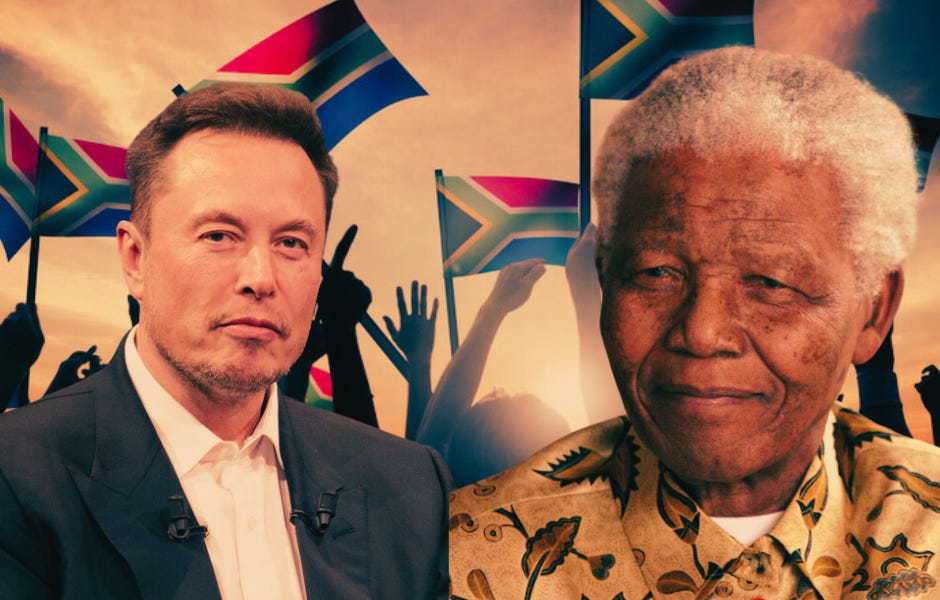
The Mandelas are back in the news thanks to his grandson's criminal behavior So, time to discuss how awful the Mandela family was: Nelson was a communist terrorist on the terror watchlist and his wife Winnie burned enemies alive in necklacing, a horrific execution method 🧵👇

@Will_Tanner_1 - Will Tanner
Nelson Mandela himself is as good a place as any to start While that stupid "Invictus" movie presented him as a lovable grandpa-type figure looking out for the good of the country, the reality is far different Namely, Mandela was imprisoned not for being a "dissident," but for blowing up civilians in a bombing campaign

@Will_Tanner_1 - Will Tanner
Mandela was, in fact, the one who turned part of the ANC toward terrorism: in the early 60s, he was inspired by the actions of men like Che Guevara and Fidel Castro, and convinced then-ANC leader Albert Luthuli to create an armed division of the ANC Luthuli, though claiming to be predisposed against violence, acceded to the request, and Mandela founded that military branch alongside Joe Slovo, a communist from Lithuania who was trained in the Soviet Union. They called it Umkhonto we Sizwe ("MK'), meaning Spear of the Nation. Slovo and Mandela are pictured below

@Will_Tanner_1 - Will Tanner
Meanwhile, as the ANC admitted around 2011, Mandela himself had joined the Communist Party, in addition to his leadership role within the ANC and MK As could be expected of communist terrorists, MK launched its guerrilla campaign and bombings were carried out over the ensuing years, killing South African civilians. These attacks included destruction of an electrical substation, attacks on government posts, destruction of power facilities, and burnings of farmer's crops Mandela was caught at the end of 1962 and, after the first charges against him was thrown out, convicted of sabotage and treason charges and locked up for the next 18 years

@Will_Tanner_1 - Will Tanner
Over the ensuing years, the Mandela-founded MK continued the terror campaign. Particularly, in the 1980s, the group, trained by the East Germans and Soviets, carried out dozens of bombings and landmine attacks The most notorious of these was the Church Street Bombing, which left 19 dead and 217 injured, but numerous attacks involving bombs, grenade launchers, and landmines were used to attack electrical infrastructure, military bases, and civilian gathering places

@Will_Tanner_1 - Will Tanner
Because of those attacks, Mandela remained on the US Terrorist Watch List until 2008 Reagan, describing the bombings, noted the campaign of “calculated terror by elements of the African National Congress,” a campaign which included “the mining of roads, the bombings of public places, designed to bring about further repression, the imposition of martial law, and eventually creating the conditions for racial war.”

@Will_Tanner_1 - Will Tanner
Winnie, his wife, was even worse She, known for her saying, “with our boxes of matches and our necklaces we shall liberate this country,” used the horrific "necklacing" method of execution to kill her political enemies, many of them young black men who worked with the South African government rather than the ANC terrorists

@Will_Tanner_1 - Will Tanner
Necklacing, which Winnie Mandela and her thugs, called the Soweto Youth, long carried out and never apologized for, consisted of sticking a rubber tire around a victim, hacking off the hands so that it could not be removed, dousing it and the victim in gasoline, and setting it alight This led to long, slow, and painful deaths

@Will_Tanner_1 - Will Tanner
Winnie and the Soweto Youth even necklaced teens suspected of working with the South African government, killing them in the aforementioned, brutal way She remained married to Nelson until 1996, well after her necklacing activity, and retained her official leadership positions within the ANC

@Will_Tanner_1 - Will Tanner
So, it's no real surprise that Nelson Mandela's grandson is carrying out hijackings He was a terrorist on the terror watch list because he and his men blew up civilians His wife was mainly known for torturing young men in the townships to death An evil family

@Will_Tanner_1 - Will Tanner
This great post by @twatterbaas inspired this thread, though I’ve written about both of the Mandelas before
@twatterbaas - Boer
Do you know that Nelson Mandela planted bombs that killed people and that U.S. Government had Nelson Mandela on Terrorist Watch Lists Until 2008. Today his grandson was arrested for car hijacking and had an unlicensed pistol. Nelson’s wife Winnie Mandela was also famous for her words “with our boxes of matches and our necklaces we shall liberate this country.” Necklacing is a method of extrajudicialsummary execution and torture carried out by forcing a rubber tire drenched with petrol around a victim's chest and arms, and setting it on fire. The term "necklace" originated in the 1980s in black townships of apartheid South Africa where suspected apartheid collaborators were publicly executed in this fashion. https://time.com/5338569/nelson-mandela-terror-list/


@Will_Tanner_1 - Will Tanner
@twatterbaas Learn more about the destruction of South Africa here: https://www.theamericantribune.news/p/how-the-united-states-supported-white
@Will_Tanner_1 - Will Tanner
What is it that creates civilization? As Lee Kuan Yew put it, ending 3rd World behavior: “[We told them] stop spitting, stop littering … you can’t go around peeing everywhere as you did in the old squatter villages” California's doing the reverse, and thus its decline🧵👇
@Will_Tanner_1 - Will Tanner
And this has been something Singapore is serious about: they'll beat you with a cane if you litter, pee in the street, or commit some other crime of 3rd Worldism Meanwhile they'll execute you if you traffic drugs or commit similarly anti-social crimes They take maintaining order seriously

@Will_Tanner_1 - Will Tanner
Why that works is obvious Civilization, is, at a base level, destroyed by entropy. Everything that works together to create something other than a state of nature gradually decays, both as nature wears on it and those in charge gradually forget how to repair it or why it was once repaired at all Rome's aqueducts are the classic example of this, but there are a multitude. Congolese infrastructure is probably the prime one of our times. Modern before the Belgians were forced out, now everything has fallen apart and is inoperable, with both a malice-caused refusal to maintain and an ignorance of how that maintenance is done being to blame So, the decay over time is, over the long term, what destroys everything, from the aqueducts and mines to the civilizations they represent. That's obvious
@Will_Tanner_1 - Will Tanner
As such, to preserve civilization, you have to limit the entropy that tears it down, which is also obvious But how to do so? Again, the Congo is interesting to contrast with Singapore On the left is Kinshasa, covered entirely in rubbish. On the right is a poster from Singapore, noting a significant fine for merely dropping a cigarette butt So, one has allowed third-world behavior and remains looking exactly like the worst of the third world, even in its capital city. The other has essentially declared war on any Third World behavior, from littering to urinating in public

@Will_Tanner_1 - Will Tanner
The result are vast differences in outcome thanks to entropy Human capital matters a great deal, of course, but the results are still widely different for two countries that gained independence around the same time Singapore outlawed Third Worldisms, declaring war on entropy, and is now a First World nation The Congo instead embraced the Third World and its lack of care for maintenance and public order, embracing entropy, and has been declining pretty much ever since GDP is far from a perfect metric, but at least shows the trend: Singapore has been increasing in at least nominal (and often real) prosperity, whereas the average Congolese is probably worse off now than when the Belgians left Singapore has of course avoided war since independence, much unlike the Congo, but that's part of the entropy battle; keeping passions in control so everything isn't destroyed is as much a part of fighting entropy, and why Lee Kuan Yew was repressive of radical political movements, as stopping people from spitting gum on the sidewalks


@Will_Tanner_1 - Will Tanner
And that leads us back to California and its fires, which are caused essentially by the state doing the anti-civilizational thing and embraced entropy, with predictable results Take forest management. The anti-entropic decision is to do what the Finns and everyone else who is sane does. Regular, small fires to clear out the undergrowth. "Raking the forest" to remove fuel for raging fires. Building or preserving large water reservoirs for putting out fires if the need arises. And so on. Planning ahead using what we've learned over the centuries so that fires never get too large or too hot That's not what the Californians have done. Instead, after importing trees from Australia that create a vast amount of inflammable sap, particularly when dried out, they decided to let the water flow out to the ocean instead of storing enough of it in reservoirs and to let the forests simply be rather than managing them by removing undergrowth, having controlled burns, etc. They embraced nature, which is itself entropy, as the aqueducts show us The natural result of embracing such entropy is that things decay to the point that they spin wildly out of control. So instead of an annoying but containable wildfire, they have unstoppable blazes that are destroying billions of dollars of real estate in a day

@Will_Tanner_1 - Will Tanner
And, of course, California hasn't just embraced entropy by letting things revert to nature It's also done the Congolese thing and, taking the opposite path of Singapore, embraced public Third Worldism Vagrants on the sidewalk. Drugs and homeless encampments in public areas. Street prostitution. Refusing/being unable to deal with crime, particularly violent crime and looting. Total inability to get anything done because of mounds of red tape that provides earnings for the politically connected. And so on So, much unlike clean and functional Singapore, you get tent cities and shantytowns not unlike the favelas of the Third World strewn about an overcrowded city with overstressed infrastructure and a great deal of crime It's not Kinshasa yet, to be sure, but its cities are much closer to that than it is to Singapore

@Will_Tanner_1 - Will Tanner
And so the difference between civilization and otherwise gradually becomes clearer thanks to entropy Everything rotting until it turns to mud or dust is what exists in the Third World (Haiti never fixed its National Palace, for example) and in the places that embrace Third Worldism. Hence California having unstoppable wildfires at the same time as it deals with outbreaks of medieval diseases thanks to the favelas strewing it

@Will_Tanner_1 - Will Tanner
Meanwhile, civilization is the opposite. It is well maintained systems remaining ever vigilant against and implacably opposed to entropy Whether that's the gleaming chiseled stone of Chatsworth in its days of glory or Singapore caning litterers, entropy is treated as the enemy, being both planned against (use of permanent materials) and defeated when it arises (beating/executing criminals, maintaining the aqueducts)

@Will_Tanner_1 - Will Tanner
None of that is groundbreaking, of course. We all sense it, and many people have described this trend far more eloquently than I But it is, still, important to remember. Europe became civilized over the centuries as courts rooted entropy out of its bloodlines: "Courts imposed the death penalty more and more often and, by the late Middle Ages, were condemning to death between 0.5 and 1.0% of all men of each generation" Now, of course, Europa is being flooded with Third Worlders who act like they remain in Kinshasa or Abyssinia, and the result of having those who didn't undergo "genetic pacification" set loose is severe, with anti-civilizational behavior increasing in prevalence alongside lenience from court systems that would balk at 1% generational execution rates today

@Will_Tanner_1 - Will Tanner
That, then, is the cost of civilization As Lee Kuan Yew put it, Third World behavior, whether homicide or littering, much not be tolerated and instead punished with the same stern rod of justice, remorselessly administered Otherwise you get Kinshasa rather than Singapore https://t.co/aC4zbgiLjj

@Will_Tanner_1 - Will Tanner
Their torturers and killers, for reference It's not just that you cannot have a society when you have to live alongside animals who commit the unspeakable crimes these wastes of carbon did It's that you can't have one where people defend them, taking their side, defending them from the death penalty and protesting when it's administered Yet every liberal, when pressed, takes the side of these thugs rather than their victims Hence our decline

@Indian_Bronson - ib
Look this incident up. Ask yourself why you hadn't heard of it but you were forced to remember George Floyd's name forever. https://t.co/UIAD1YBtPB

@Will_Tanner_1 - Will Tanner
This lack of generational continuity is a big problem, as it leads to denying responsibility to the past and future which, in turn, creates a leftist political bent Americans must learn to be Grosvenors rather than Vanderbilts; America's post-Depression history shows why🧵👇 https://t.co/q0UP62C55T

@Will_Tanner_1 - Will Tanner
The lack of "Old Money" in America is often celebrated, as it seems to signal total meritocracy, democracy as applied to the social scene, etc. But that's not really true. America in, say, 1890 was a meritocratic time: Rockefeller, Carnegie, the Vanderbilts, etc. built and maintained vast fortunes and were able to do so because the general freedom of action allowed by the time created opportunity. They were free to unleash their genius, in other words, and so created vast fortunes But it was also an era in which "Old Money" not just existed but dominated the social scene. A great example is Mrs. Astor's New York Four Hundred. Composed almost entirely of families of "gentlemen" in that the family money had been had for at least three generations, it ruled New York society and determined what was posh, fashionable, accessible and so on.


@Will_Tanner_1 - Will Tanner
Those with talent, in short, were free to make their fortunes and often rose not just to business, but political prominence Meanwhile, there was still a tradition-minded cohort that ensured old traditions, manners, customs, and so on were respected They watched for excess - for example it was they, as represented by the Morgan dynasty, that kept banking in America long the province of gentlemen with strict moral standards (@NormanDodd_knew has done a fantastic job highlighting this)- and, as necessary and salutary integrated the "new men" into the social framework What that accomplished was keeping society, both with a capital S and without, on the right track. Men and women dressed respectably, acted respectably in public, were inculcated in the view of service to the state (namely in the military) as a good thing, understood their duty to the different classes, and so on Notably, it was the new men who never joined that group, men like Henry Clay Frick, who had the worst Gilded Age reputations for treating workers poorly Nothing is perfect, of course, but America remained a stable and prosperous place, avoiding socialism and/or revolution as happened in much of Europe, and the sons of the wealthy volunteered in units like the Rough Riders and first air force (composed mainly of the Yale flying club) when war broke out

@Will_Tanner_1 - Will Tanner
That continued up until the Great Depression Then, America's Old Money was largely (not entirely, but generally) wiped out by the stock market crash Why? Well, for one, it had most of its money, largely, in public markets like bonds and equities rather than safe holdings like farmland that could be rented to tenants But, as dividends didn't drop by all that much, that could have been survivable. It wasn't because speculative mania had encouraged them, along with most everyone else in the country, to buy stocks on margin rather than with cash (typically it was a 10% cash, 90% margin debt purchase). So when the market fell, they were crushed, and generally lacked the land holdings to survive after that

@Will_Tanner_1 - Will Tanner
What that meant was that while there was still some Old Money in America, particularly in the hands of those landed Southern families who were not wiped out by the War Between the States and Reconstruction, there was much less circa 1930 than there had been in '28, or 1913 And, what families there were faced a changed situation. No longer could wealth be shown or revelled in like in Mrs. Astor's ballroom. Instead it had to be hidden, kept out of the public eye it would severely anger by being flaunted when a quarter of the country was out of work So, the social role of the old, tradition-minded families retreated into the background


@Will_Tanner_1 - Will Tanner
For one, that represented the sort of dest But more importantly, it created an opportunity for class traitor FDR, member of one of the surviving Old Money families, to capitalize on public resentment to turn America into a very different, much more socialist place than it had been up until that point With him came all the high time preference hallmarks of socialist-minded mass democracy. A Ponzi scheme of an old age insurance program that's now a millstone around the neck of young Americans and unlikely to continue even for Gen X. Dramatically higher taxes on income and death that stifled innovation, investment, and care for the future while destroying what connections to the past remained. Communists filling the government's ranks rather than gentlemen, and then using their power to help the Soviets at our expense. And, worst of all, the concept of the country and those within it as something that could and should be mobilized to achieve the government's ends, a mindset wholly foreign to the Anglo world before the middle of WWI and still mostly foreign to America before WW2


@Will_Tanner_1 - Will Tanner
PeeThat then, as seen by the time we caught our breath and looked around in the 1950s, obliterated the sense of duty, commitment, and societal responsibility the wealthy once had; it's hard to care for those who tax you at 90% on death and income So, gone was noblesse oblige and its attendant benefits, not least of which were reigning in the government when it got too crazy and business/banking world when its excesses became problematic Further, with duty dead, the draft remained in peacetime, something seen as an abomination in America up until that point, and society remained mobilized, regulated, and ordered about rather than generally laissez-faire Pretty soon, that meant the bureaucratic government of a mobilized state was exposing drafted soldiers to nuclear bombs for testing and dosing them with LSD just to see what'd happen; such monstrous betrayals of the rights of citizenship and the trust of good-natured men would have never, and in fact never did, happen in America before the Depression and its consequences changed everything and bureaucrats replaced gentlemen


@Will_Tanner_1 - Will Tanner
So, with no one to watch the excesses, things spun out of control Taxes were too high and gradually squeezed the economy. Spending was too high and destroyed what remained of the gold standard. Unions were too powerful and destroyed the auto sector. The government was too powerful and was experimenting on troops and civilians. Businesses cared not for the environment and soon acid rain was falling as rivers caught on fire. And so on: the consequences of no longer having anyone to watch those who rose up through the meritocratic ranks and stop excesses were severe

@Will_Tanner_1 - Will Tanner
And, now, of course, most of what remained of the Old Money that survived the Depression is gone. That probably happened in the 1970s, with high inflation, economic stagnation, high taxes, and social chaos demolishing it Now, even good manners, proper dress, and social decency are gone. Instead we get all manner of slovenliness and vulgarity that would have shocked even the lower class in the pre-WW1 period.


@Will_Tanner_1 - Will Tanner
Such are the consequences of the constant turnover in fortune rather than the pre-Progressive Era manner of both encouraging new men to make their fortunes and ensuring tax policy didn't destroy those that already existed Who today has the sense of duty that twice inspired Morgan to save the gold-backed dollar? Certainly not George Soros or Larry Fink. Who today wears a suit, much less morning dress, to stroll in? Lol. Who today in the upper crust of the wealth elite cares about the exploitive and excessive nature of the banking system, companies like OnlyFans, and so on? If they do, it's not obvious All those good qualities, from duty to exhibiting proper manners, are mostly dead and buried

@Will_Tanner_1 - Will Tanner
So, I think it is clear that America both needs Old Money and needs those who are in it to be inculcated in the proper virtues, as the American pre-FDR wealth elite, from the colonial days to Depression, aimed to emulate English gentility and aristocracy https://t.co/ylwsLLJeBm

@Will_Tanner_1 - Will Tanner
And finally to tie back in with the other aspect of this: the way to do so is to teach those who are calculating wealth to be like the Grosvenors rather than the Vanderbilts The Vanderbilts, of course, quickly built and then lost a fortune. Once the wealthiest American family, they soon had not a single millionaire amongst them. Fecklessness and imprudence, particularly in spending, lost them all of it

@Will_Tanner_1 - Will Tanner
The Grosvenors, meanwhile, are a millennium-old family. They came across with William the Conqueror, became small-scale landowners, and slowly accumulated wealth over time Prudence was their main characteristic, as over the ensuing centuries they built up what they had, avoiding losing it all in the various barons' wars, the War of the Roses, or even the Civil War, as many of their Anglo-Norman peers lost it all So, by the time the mid-1600s rolled around, they were in the upper ranks of the gentry, being baronets, and over the ensuing centuries advanced through the entirety of the peerage, going from barons in the mid-1700s to dukes by the end of the 19th century. As they advanced through the peerage, they advanced through wealth as well, eventually turning what had been farmland inherited through marriage to Mary Davies into the posh London neighborhoods of Mayfair and Belgravia Having a low time preference characterized them. The London real estate, for example, was first leased out for 99 years; so, over that period it delivered little, but was built up by those leasing it. By the end, at no real cost to themselves other than waiting, they had the most beautiful and best London real estate in their hands


@Will_Tanner_1 - Will Tanner
It was at that point, when the 99 year London leases were up, that they became the wealthiest peers in England, a title they maintain through today Much as the prior generations had built up the fortune, the 2nd Duke prudently pioneered using dynasty trusts to legally avoid obscene death duties, and the current duke is far wealthier than any other peers, owning not just Mayfair and Belgravia but also over 200,000 acres of farmland and countless buildings upon that land
@Will_Tanner_1 - Will Tanner
What's more, Bendor, the 2nd Duke of Westminster and one who got the assets in a dynasty trust, was one of the main fighters for tradition It was he, alongside Lord Willoughby de Broke, who fought for the Lords and tradition against the Parliament bill https://t.co/w91JEo6Bfc
@Will_Tanner_1 - Will Tanner
The peerage was split over how to react, as the Lords would have to pass the bill for it to go into effect. George V, led astray by evil advisers, said he'd create hundreds of peers to ensure it was passed if the current Lords didn't do so Eventually, a group of demoralized defeatists coalesced around just passing the bill, they became the majority. they called themselves the Hedgers, because they saw themselves as trying to hedge the risk On the other side were the so-called "Diehards," who were against passing it at all costs. The also called themselves the Ditchers, as they saw themselves as willing to fight a last-ditch stand against Liberalism. They were led by Lord Willoughby de Broke and aided by most of the wealthy peers, including the hardline Tory and future WWI war hero, the 2nd Duke of Westminster


@Will_Tanner_1 - Will Tanner
So, why does that matter, they're the opposite of the Vanderbilts Instead of 1) keeping money in risky equities that disappear with the market, and 2) letting it all melt away while chasing pleasure outside their means, they built their fortune over time with prudence, investment, and marriage alliances, and then maintained it with similar diligence and prudence, keeping it in much-desired urban property that could be rented for a song, and safe, income-producing farmland And, though the family isn't known for anything spectacular, the 1st Duke serves as an example of noblesse oblige, given how he kept his magnificent Eaton Hall home and grounds open to visitors of all classes for their education and pleasure while also using his position in the Lords to advocate for pro-worker laws that bettered their condition without getting the government overly involve, and the 2nd Duke was a war hero who fought for the empire in multiple wars abroad and for the Lords at home That pairing of prudence with a sense of duty and noblesse oblige is critically important, and what Old Money, at its best, provides Admittedly, Bendor shared some of the vices of the Vanderbilts, but unlike they never let it get away from him and start eating away at the fortune

@Will_Tanner_1 - Will Tanner
The Percy family is another example of preserving wealth over the long term, as they like the Grosvenors are some of the largest holders of farmland in Great Britain They also have a larger record of fighting and service, being as they were the Kings in the North who fought the Scots for generations But, while they're a more exciting family, they also lacked prudence for a few generations and so nearly lost everything, making them less of a good example. Key is avoiding that, when possible

@Will_Tanner_1 - Will Tanner
America desperately needs noblesse oblige-minded leaders who have tradition in mind and so can see things what is wrong and fight it Mass immigration and unchecked crime is bad for the American people and must be fought. Business scams, perfidy, and excesses must be stopped and reined in. Manners, decorum, and proper dress as opposed to slovenliness must be taught while taste is cultivated, for a beautiful society. Government spending and taxation needs to be limited. And so on: the excesses and evils must be fought against by a body that has a long-term interest in seeing them stopped for the good of the land and its people Such was the world that, for all its faults, existed before the Depression. That was wiped away by its own feckless investments and FDR's policies, along with those of his spiritual successors. But it was one we ought fight for today

@Will_Tanner_1 - Will Tanner
Fortunately, this sort of thinking is becoming more prevalent. Particularly, people in the up and coming BTC space seem interested in it, such as @MartyBent, with whom I spoke about these subjects with a focus on the Percy family: https://t.co/LP0vYr9SMA
@Will_Tanner_1 - Will Tanner
Similarly, my friend @JohannKurtz has done great work highlighting these things, particularly in his fantastic piece "Raising Children Worthy of Empires" So, it's good to see a revival in this sort of thinking, and a highlighting of the benefits of caring about the long term Now we must create that world, which is a much harder task than talking about it, but worth working toward

@Will_Tanner_1 - Will Tanner
This is a critical point that we must remember as we work to reverse America’s South Africanization: Framed as being for equality, civil rights, and such, there are many laws designed specifically to effect anti-white racism It’s those laws we must destroy🧵👇

@Will_Tanner_1 - Will Tanner
First, as to South Africa, the main issue are the “Broad Based Black Economic Empowerment,” or BEE laws These are effectively affirmative action on steroids and compliance with them is required for any business that needs a license from or to work with the government must comply The state measures compliance via a scoring system that tracks compliance based on how companies use racial preferences to hire black workers, promote those black workers to management positions, and hand company ownership to blacks

@Will_Tanner_1 - Will Tanner
This leads to obscene, country destroying distortions Not least of which, it effectively means that it is impossible to hire white workers, as at only ~7% of the population, quota-based hiring and promotion means only a few can ever be hired This can even lead to job cuts to meet quotas: electric utility Eskom, known mainly for constant rolling blackouts, was considering firing thousands of its experienced white engineers to meet racial quotas

@Will_Tanner_1 - Will Tanner
Similarly, the quotas and similar “diversity” requirements of BEE-style laws make it near impossible for white South Africans to get into universities or other professional schools So, you get laws that, in the name of “equity,” screen out nearly all of the white population from most schools and jobs And that’s before considering state hostility to whites that leads to non-investigation of farm murders and similar atrocities

@Will_Tanner_1 - Will Tanner
While we don’t like admitting it, America is in a similar position and is seeing similar results; @realJeremyCarl does a great job documenting this in his “The Unprotected Class” We, like South Africa, have a great many anti-white laws that are leading to similar outcomes

@Will_Tanner_1 - Will Tanner
For one, America has outright racial discrimination in government contracting that has been explicitly allowed by the Supreme Court This leads to situations where minority-owned contractors (sometimes just expensive fronts for white businesses) get government work despite being more far more expensive and doing lower quality work than the non-minority contractors against which they were bidding, purely because of their race And this does happen. Atlanta made it a requirement during the construction of Hartsfield-Jackson that a quarter of the contractors had to be minorities. That went as one would expect

@Will_Tanner_1 - Will Tanner
Then there are university admissions, and similar sorts of schools and programs, whether for professions or trades Though race quotas are technically banned and outright DEI admissions got limited by SCOTUS, now being only allowed for the military academies, there is still enough cover for administrators to be biased against whites in admissions, but not other ethnic groups. As the universities are full of Marxists, that’s what they generally do, as even merit based admissions get interpreted as “racism” due to disparate impact

@Will_Tanner_1 - Will Tanner
And that leads into the biggest issue: disparate impact Created by SCOTUS in Griggs v Duke Power and later codified as law by HW Bush, it means that any test for employment is illegal under CRA rules if it results in disparate impact against “protected classes,” even if there was no discriminatory intent So, as this effectively bans any IQ tests due to racial IQ difference, and bans similar tests of basic reasoning, it makes it near impossible for companies impacted by the CRA (15 or more employees) to hire the best candidates Instead, unless they have employment tests that are very, very narrowly tailored to the job, they effectively have to hire based on racial quotas, but with a slight yo major tilt against whites, as doing so will be interpreted by courts as discrimination against protected classes

@Will_Tanner_1 - Will Tanner
And this does happen A black woman won millions of dollars in a discrimination suit against Equinox gym because it fired her for not showing up on times…dozens of times. That was deemed discrimination Police departments, fire departments, and the like routinely lose disparate impact suits for tests requiring prospective hires to do basic tests of physical fitness and reasoning. Those are also deemed discrimination

@Will_Tanner_1 - Will Tanner
Our government is just less honest than South Africa’s about its anti-white racism So, instead of requiring the hiring of racial quotas, requiring anti-white discrimination, etc., it says that companies, colleges, and so on are not allowed to “discriminate on the basis of personal characteristics like race, gender, etc,” which generally sounds fair to most, at least at first. But the devil is in the details and in this case that devil is how such discrimination is interpreted: anything other than results showing different groups are perfectly equal in every way, the egalitarian holy grail, is considered discrimination. This effectively requires anti-white discrimination, but without saying as much

@Will_Tanner_1 - Will Tanner
The results of going to legal war with nature and the differences in human capabilities it created are predictably South African California is on fire because of incompetence and the lesbian DEI commissar is on tape describing how she won’t rescue men from burning buildings Young white guys have trouble getting into college, effectively a requirement for good work because it fills (in expensive fashion) the purpose of the IQ tests that used to be used, and thus unable to get good work. They’re then berated for not pulling themselves up by the bootstraps, despite being legally forbidden from doing so, as we saw during the discussion surrounding H1bs Speaking of, companies being over multitudes of H1bs to fill diversity quotas with those who are at least marginally competent, which depresses wages and exacerbates the work issue All that and much, much more has turned America into a low trust country in which the tap water is often dangerously filthy, crime is high and getting higher, and deaths of despair are ever more common amongst white men


@Will_Tanner_1 - Will Tanner
And adding to this is how it plays out in the (in)justice system: Like farm murders in SA not being investigated out of spite and incompetence, men like Derek Chauvin who enforce the law are railroaded for doing so because enforcement of the law is effectively a disparate impact activity

@Will_Tanner_1 - Will Tanner
All of that must be wiped away if America is going to get back on track Yes, culture and public opinion matter. But both are downstream of law And law should, if it is going to prohibit anything at all (preferably none of this would exist and all would just be preference, from home sales to corporate hiring), then it must prohibit discrimination of any sort, rather than all discrimination except anti-white discrimination The latter is what South Africa has done, and it’s a hellhole. It’s also what America is doing, and we’re turning into one

@Will_Tanner_1 - Will Tanner
So, if the Trump administration really wants to Make America Great Again, it must rip away all the laws that are effecting America’s South Africanization If it doesn’t, and we continue on the same track as we’re on now and that Harris wanted to push us further along, nothing done will matter; all the tax cuts in the world matter little when the water and electricity run out…

@Will_Tanner_1 - Will Tanner
This is one positive To answer Bannon’s question, they’re here because South Africa is awful due to the very policies that they need to destroy in this Trump administration So, theoretically, they know what needs to be done It remains to be seen if they will, though

@Will_Tanner_1 - Will Tanner
Don't South Africa My America! https://theamericantribunestore.com/products/dont-south-africa-my-america-white-11oz-ceramic-mug

@Will_Tanner_1 - Will Tanner
Critical to know about the "Cold War" is that, for most of it, "we" aided and abetted communists as they committed the worst atrocities imaginable across the globe: "We" helped enforce "equity" in its base form, at bayonet point A few examples, and the reason why, in the 🧵👇

@Will_Tanner_1 - Will Tanner
Right after WW2, in China, is a good place to start There, Chiang Kai-shek could have won, could have kept China free of communism after ridding it of that plague. Instead, as even liberal historian Paul Thomas Chamberlin notes in The Cold War's Killing Fields, Gen. Marshall aided the Red Chinese. He forced Chiang into pointless peace talks, then yanking aid, all while refusing to aid Chiang as he fought against Mao and Soviets in Manchuria. Marshall remained implacably opposed to Chiang because he was trying to defeat the communists rather than let them into the government (pg 78). Eventually, with US aid gone and the Soviets aiding Mao, China fell to communism, the "political changes" Marshall wanted. This was much like the sort of betrayal and backstabbing via peace conference later seen in Rhodesia's fight against communism What followed were horrors of the worst sort, with tens of millions left dead as China's very fabric as an ancient civilization was ripped apart by Reds somehow even more destructive of history than the Bolsheviks. Mao, meanwhile, busied himself with molesting teenage girls


@Will_Tanner_1 - Will Tanner
Another example is Algeria. Long a French colony in which millions of Pieds-noirs, or ethnic French who made it their home, settled, brutal murderers calling themselves rebels fought to "free" their country from just and effective French Administration America, as could be expected, sided with the rebels, with historian Irwin Wall showing that America saw the murderous rebels as pushing an acceptable sort of decolonization revolution, and eventually France being pressured into abandoning the colony and its inhabitants because of that pressure. So, French were forced from Algeria, the Pieds-noirs had to flee as the communist rebels with whom the "free world" sided for anti-colonial reasons inflicted horrors upon the domestic population. Eventually, the atrocities were awful enough that the Pieds-noirs fled, with the rebels essentially succeeding in effecting an ethnic cleansing of them, one Washington saw as acceptable


@Will_Tanner_1 - Will Tanner
Up next is the Belgian Congo, where perhaps the worst atrocities occurred Before decolonization Belgian Congo was a prosperous place, the jewel of colonial Africa despite the false crimes of which it was accused. But then the Belgians were forced from it for similar reasons to why the French were forced from Algeria, with "free" and communist world alike pushing the Belgians out What followed were the Katanga Crisis and Simba Rebellion. W The US took the direct side of the anti-Katangese tyrants in the first conflict, preventing the prosperous and stable part of the country that had wanted to remain with Belgium from seceding; secession would have meant more just and efficient rule, and safety for those Europeans who wanted to remain and were welcomed to do so. Instead, the UN forced Katanga to remain with the rest of the country, and altogether it descended into hell That hell came with the Simba Rebellion, during which drug-addicted "Simbas" were aided by the Soviets as they ran wild through the country, committing utterly unspeakable atrocities against the civilian population, particularly Belgian nuns, as they did so. The crimes against humanity they committed were probably the worst of the 20th century, even compared against the Khmer Rouge and Soviets in post-WW2 Germany South African mercenary Mike Hoare, with marginal American help, defeated the Simbas. But, before he could finish the job and turn the Congo into a stable place, he was forced out, largely by America. The Soviets and native incompetence then turned the Congo into a living hell for the rest of the century, with it remaining a civil-war addled Tartarus today, and mercenaries like Hoare being kept away as the population suffers ever more, with the main reason being the supposed racism of white mercenaries defeating black African tyrants King Hochschild's Ghost, an excellent article in The American Conservative, effectively rebuts the accusations of crimes the colonial Belgians faced in the Congo, showing those allegations to be near-entirely untrue


@Will_Tanner_1 - Will Tanner
And, of course, there's Rhodesia. A free and prosperous place, it was destroyed after the Bolsheviks, Red Chinese, and NATO ganged up on it for reasons of "equity" and "anti-racism" Despite Ian Smith's commitment to just, fair, and efficient government, and the willingness of nearly the entire population, black and white alike, to fight communism, America and the UK sided with the communist rebels, as did the Red Chinese and Soviets. That "free world" aid for the rebels, principally in the form of sanctioning and embargoing the Rhodesians, came even as the rebels tortured and killed villagers for not aiding them, placed landmines on civilian roads, attacked civilian farmsteads, and shot down civilian airliners Eventually, a small, landlocked country couldn't stand up to the whole world and gave in, with the UK aiding Mugabe in 1980 as he threatened villagers with murder if they didn't vote for him, which, of course, they then did With Mugabe came the same sort of horrors the communists "we" aided always inflicted upon civilian populations: r*pe, murder, beatings, expropriation, and a total lack of any sort of justice Ian Smith, commenting on the betrayal of his country by the West, said, in terms much like de Gaulle would say of the American stance on Algeria or Chiang would say of Gen. Marshall, “But most important, and above all else, was the treatment to which we had been subjected: the breaches of agreements, the double standards, the blatant deception and blackmail with which we were confronted. To put it crudely, we had had an absolute bellyful. Rhodesians simply wished to be left to lead their own lives. And in all honesty it had to be admitted that the Conservatives were as much to blame as Labour.”

@Will_Tanner_1 - Will Tanner
The same holds true across many forgotten theaters of the Cold War Why were the Portuguese not aided as they fought communism in Mozambique and Angola? Why did Kenya have to be handed to the murderous mau maus? Why did FDR demand Churchill leave the Greeks to Stalin (which Churchill fortunately refused)? Why were the French abandoned in Indochina? Why was Idi Amin, a communist and cannibal, put in charge of Uganda, formerly one of the Empire's locations with the most hope for it? Why, in short, were all the men with whom we should have sided in their fight for civilization abandoned to their fate as communists committed unspeakable crimes against them?


@Will_Tanner_1 - Will Tanner
Because the Cold War, with only brief exceptions, was generally not carried on to "defeat communism" or "defend freedom" It was, rather, generally a continuation of FDR's vision: the intentional destruction of the colonial world, alongside the Reds
@Will_Tanner_1 - Will Tanner
This is evident in both Africa and Europe. First, Europe: had America and the USSR wanted to preserve Western Civilization in the aftermath of WW2, they would have engaged in a Concert of Vienna style of cooperation to place stable, old world-style monarchs in charge Obviously they didn’t do that. The USSR despised civilization and wanted to burn it down, so it focused on subversion America also hated the Old World, and so did everything possible to keep it dead. The King of Italy was eschewed rather than put in power; socialists rose to power instead, supported by America in doing so. Franco was damned and smeared as a “fascist” when really he just kept to commies at bay and sidelined the actually fascist Falange. Portugal’s Salazar was similarly damned, with even less cause. In Germany, the Hohenzollerns weren’t brought back despise having been hated by the NSDAP. Instead, like Italy, liberal democracy was put in power, meaning tradition was killed for good Then, when Britain and France tried asserting their power and sphere of influence control in Suez, Eisenhower broke them with financial threats and turned them into satraps. Their empires were gone and leftism imbued society in both in the aftermath In short, Europe could have been restored along post-Napoleonic lines, with stable dynasties restored for the purpose of tradition and stability. Instead the commies subverted as America openly destroyed traditional Europe, and where Europeans stood up for Western civilization, as with Franco or with Churchill in Greece (he kept the commies from coming into power) they were damned for it

@Will_Tanner_1 - Will Tanner
That is quite sad, but it is worth remembering The "developing world" doesn't have to be a place of crime, injustice, genocide, and so on For much of the late 19th century and early 20th century, in fact, it wasn't. It was, rather, well-administered Then came FDR, Stalin, and their successors. What we got as a result were the abominable and obvious results: the worst sort of injustices and atrocities as "equity" was enforced at bayonet point,

@Will_Tanner_1 - Will Tanner
So, why did it happen? A few reasons The most obvious is empire: the two winners of WW2, the USSR and USA, wanted to take over the old empires and replace them with the new ideologies; in our case, it was "liberal democracy" paired with America-oriented free trade. In the Soviet case, it was communism The other issue is equity and the attendant egalitarianism: critical to the worldviews of both the communists and liberal democracies is that their are no natural hierarchies amongst men (at least that can be admitted) and that it is the job of the state to wipe away those differences that do exist That required wiping away "imperialism," or decolonization, which is exactly what happened and was forced on even those who didn't want it, such as the Katangese and Rhodesians So, the new powers got their ideological empires and the result was the constant commission of atrocities of the worst sorts, generally by anti-colonial rebels supported by both the "Free" and communist worlds

@Will_Tanner_1 - Will Tanner
@Will_Tanner_1 - Will Tanner
You were told the Cold War was about "fighting communism." That's not really true. Though "we" were sometimes aligned against the communists, the period was much more about replacing old world systems with "liberal democracy," whatever the cost, than stopping the Reds 🧵👇


@Will_Tanner_1 - Will Tanner
Read more about how Rhodesia really shows what was going on here: https://www.theamericantribune.news/p/why-rhodesia-matters
@Will_Tanner_1 - Will Tanner
We're All Rhodesians Now https://theamericantribunestore.com/products/were-all-rhodesians-now-11oz-ceramic-mug

@Will_Tanner_1 - Will Tanner
"Your theater has no meaning to them. They will not try to understand. They will be tired, they will be cold, they will make a fire with your beautiful leather bound plays...” https://t.co/bZ2OHDyUtE

@Will_Tanner_1 - Will Tanner
The camp of the saints is being republished by @VaubanBooks, if you’re looking for a copy
@Will_Tanner_1 - Will Tanner
Why did the West work with the communists to destroy Rhodesia? Or, why would the "free" side of the Cold War ally with the communists to destroy a thriving, resource republic in a critical area It makes no sense at first. But it makes much sense with a closer look 🧵👇

@Will_Tanner_1 - Will Tanner
Critical to understand here is what the two main sides of the Cold War were On one side was the communist block. It wanted, whatever its internal divisions, to spread communism abroad, mainly by launching revolutions within the old Empires of the Great Powers The other side was America. It, by hook or crook, aimed to contain and then roll back communism, mainly by subsuming the same former Great Power colonies the communists were aiming for, and replacing colonial government with nationalist-minded locals that would engage in free trade with America and at least pay lip service to liberal democracy

@Will_Tanner_1 - Will Tanner
Notably, then, both sides shared two common traits The first was a desire to strip the old powers of their empires. So, whenever imperialism fought the locals, America and the Soviets were on the same side, as happened first in the Suez Crisis Egalitarianism, or the belief that there are no differences in capability between humans and that if any differences show themselves to exist, the state must destroy them, was the other common trait. The Soviets (and Red Chinese) were a bit more brutal about it, but the impulse was the same. "Liberal democracy" meant the destruction of natural hierarchy based forms of government, namely aristocracy, and its replacement with mass democracy or leveling dictatorship. Communism just jumped straight to the dictatorship bit, with a leveled country and a dictator + his cronies at the very top

@Will_Tanner_1 - Will Tanner
So, when an inegalitarian society presented itself, both powers were hostile to it That didn't necessarily mean they were on the same side, but it did mean they were both hostile to the inegalitarian government America, for example, destroyed Catholic political power and the land-owning aristocracy in Vietnam after it took over when a lack of support from America forced the French out; those were the same goals as the communists, just with a different veneer


@Will_Tanner_1 - Will Tanner
This is what came up in Rhodesia While it was not an apartheid society, much unlike its neighbor to the south, it also wasn't egalitarian Propertied voting, large agricultural estates, and a paternalist, colonial-tinted government meant it emphasized and supported rule by the best Only the propertied (owning the equivalent of about $60k USD in Rhodesian property) could vote in national elections, as they were the ones who had shown themselves to be competent stewards of wealth, and thus could steward the wealth of the country In the tribal villages, it was the chiefs who ruled (and they supported Ian Smith) and the national government provided paternalistic aid to them

@Will_Tanner_1 - Will Tanner
So, the rebels were the ones on the side of "equality" It was they who were, ostensibly, fighting for "equity," "equality," and thus the egalitarian system supported by the liberal democracy West and communist East The only states to buck the trend were those with remnants of hierarchical, anti-liberal, and anti-communist governments. Namely, first Salazar's Portugal and the South Africans, and later the rightist Rabin government in Israel as well, denied the UN's demands and aided Rhodesia rather than work with the communists America, in thrall to the Civil Rights Revolution; England, raging with egalitarian furor since the Parliament Bill, and particularly under Labourites Attlee and Wilson; and the communists, egalitarian by their very nature, all ganged up on Rhodesia

@Will_Tanner_1 - Will Tanner
The thing was, though Rhodesia was resource-rich, full of motivated anti-communists, generally free and respectful of the classic rights of Englishmen, and in a long-running war with the communists, the West didn't really care Perhaps if it was a post-colonial government it would have, as that would have taken away the imperialist veneer But instead, it was still largely ruled and owned by men of English stock, reveled in its English heritage, and had propertied voting, which served as a stinging rebuke of egalitarian politics


@Will_Tanner_1 - Will Tanner
So, with both America and England rebuked and humiliated by Rhodesia as it succeeded in using hierarchy to create a free and prosperous system as they fell apart internally due to the egalitarian politics Rhodesia rejected (this was the age of inflation, Civil Rights unrest and chaos, and massive upticks in often racially motivated crime), they destroyed it so it could no longer serve as a counter-example of them They got rid of the competition rather than learning from it, destroyed a functional state rather than use it as a lesson of why 90% death + income taxes and racial grievance politics don't work, but paternalism, freedom, and limited franchise voting do

@Will_Tanner_1 - Will Tanner
Rhodesia got what the Communists and liberal democracies wanted for it It had the Mugabe-included election demanded of it, saw him elected, and then saw utter destruction follow As could be expected, inflation, genocide, and expropriation came, much as it had everywhere from Indochina to Algeria But all societal goals of the egalitarians in West and East alike had been met: the differences in outcomes were leveled as the state fell apart and all success was wiped away

@Will_Tanner_1 - Will Tanner
So, if you've been reading my threads and articles on Rhodesia and curious why it happened, why the West worked with the communists, this is why It wasn't bad leadership, greed for resources, or otherwise. It was egalitarianism
@Sargon_of_Akkad - Carl Benjamin
Why the West Betrayed Rhodesia Rhodesians never die. Get Islander #2 here: http://shop.lotuseaters.com

@Will_Tanner_1 - Will Tanner
This is also why Rhodesia remains relevant: The egalitarians remain in control of the West and want to destroy what vestiges of hierarchy and natural order exist They want to turn us all into Zimbabwe, as the alternative is admitting that men are as different as wolves and chickens. They won't admit such facts of nature, and so they remain at war to impose global Zimbabwe

@Will_Tanner_1 - Will Tanner
One thing I've seen missed in the housing price debate on here the past few days is that, while the price of houses has increased tremendously in fiat cost over recent years, valued in real money it has held steady for a century A short thread with some helpful charts🧵👇 https://t.co/31zE88sg75

@Will_Tanner_1 - Will Tanner
This is one helpful chart given its length, and though it only goes to 2020, it does show the general trend: Priced in real money, housing has actually gotten less expensive, even despite increasing in square footage, quality, and complexity; think of all the extra plumbing and electrical wiring now compared to 1900! Meanwhile the fiat value has rocketed upward tremendously, as anything exponential eventually does The only time housing increased priced in gold is when gold was artificially suppressed as inflation raged from the mid-1930s to gold being legal to purchase again in the 70s

@Will_Tanner_1 - Will Tanner
Here's a chart going up to today and back to 1889: the house price hasn't changed much, priced in gold, and really the only spike was when gold's price was artificially suppressed https://t.co/4KzuCgyk2K

@Will_Tanner_1 - Will Tanner
So, the problem then is not that housing is getting more expensive in real terms Rather, the inflation attendant to fiat and our regime's feckless spending has pushed up the nominal price of housing tremendously Wages, meanwhile, have not at all kept up with real inflation, or things priced in hard money (gold). Instead they've been falling rapidly and, over time, inexorably

@Will_Tanner_1 - Will Tanner
Forbes, describing the trend, noted: "The bottom line is that, in terms of gold, wages have fallen by about 87 percent. To get a stronger sense of what that means, consider that back in 1965, the minimum wage was 71 ounces of gold per year. In 2011, the senior engineer earned the equivalent of 63 ounces in gold. So, measured in gold, we see that senior engineers now earn less than what unskilled laborers earned back in 1965. That’s right: today’s highly skilled professional is making less in real, comparative terms than yesterday’s unskilled worker."

@Will_Tanner_1 - Will Tanner
Thus, the issue is what many suspect to be true but isn't really said: whatever metric pricing homes in fiat is used is utterly misleading, as the true extent of inflation - both in increasing the cost of real assets and eating away at real wages - has been dramatically underreported
@Will_Tanner_1 - Will Tanner
So, it's not that housing has increasing in real cost Priced in gold, it's actually fallen a bit despite getting more complex It's that wages have fallen in real terms, as shown by the diminishing hourly average wage in terms of gold https://t.co/vefg3y2Wfs

@Will_Tanner_1 - Will Tanner
This is true elsewhere as well Even Canada, known for its insanely expensive real estate market, has seen prices fall priced in real terms (gold) as they rocket upward in fiat terms https://t.co/KqJR7Q7PaB

@Will_Tanner_1 - Will Tanner
This is true of other goods as well Oil isn't getting more expensive; it oscillates a bit more than housing, but has generally stayed the same...priced in real money, gold Meanwhile it has gotten more expensive in fiat terms As with housing, the problem is that wages didn't keep up with real inflation as shown by gold, not that the good itself got more expensive

@Will_Tanner_1 - Will Tanner
If this is to be fixed, then, solving the problem will come from dealing with the wage issue( as shown by income not keeping pace with home cost ), not the nominal price issue, which is a very different matter We'll see if that happens In the meanwhile, saving in something real makes sense...fiat exposure is the path to penury

@Will_Tanner_1 - Will Tanner
And yes, I know the pro-BTC argument is that real goods like houses have gotten much cheaper in terms of it They have, and that's fabulous! But it hasn't been around long enough to show the same century-long trend as gold https://t.co/5HTepgNGqn

@Will_Tanner_1 - Will Tanner
Rhodesia got what the Communists and liberal democracies wanted for it It had the Mugabe-included election demanded of it, saw him elected, and then saw utter destruction follow As could be expected, inflation, genocide, and expropriation came, much as it had everywhere from Indochina to Algeria But all societal goals of the egalitarians in West and East alike had been met: the differences in outcomes were leveled as the state fell apart and all success was wiped away

@Will_Tanner_1 - Will Tanner
By now, most everyone has heard of the farm attacks in South Africa They're awful, and it's gut-wrenching to hear stories guys like @k9_reaper have about sickening scenes of torture and death But this isn't the first time we've seen this. Rhodesia had a similar problem A 🧵👇


@Will_Tanner_1 - Will Tanner
First, nothing in this is meant to diminish from what the Boer farmers in South Africa are dealing with, or to say their problem is less bad They're heroes for how they try to stand up to this evil, and it's incredible they've managed to hold on for so long So props to them, and their story is definitely worth reading about, along with the Rhodesian one

@Will_Tanner_1 - Will Tanner
So, with that in mind, let's talk about the farm attacks in Rhodesia, as there's a whole lot to learn from them As a reminder, Rhodesia's economy, though industrializing, was primarily agricultural Further, it was a country of great estates. So, there'd be a huge, multi-thousand acre farm like Ian Smith's, perhaps running a cattle operation and growing a cash crop like tobacco.

@Will_Tanner_1 - Will Tanner
Such a farm would be relatively isolated: a few farm laborers, the family, and the vast veldt around them from which the terrorists could emerge at any moment Like the Boer farmers of today, they were isolated in a hostile world, and frequently under attack Only their attackers weren't just thuggish intruders with r*pe and robbery on the mind. They were highly trained and heavily armed intruders

@Will_Tanner_1 - Will Tanner
So, your average Anglo family out on the veldt had to be prepared not just to fight the thugs armed with pistols and sledgehammers today's Boer farmers have to deal with, but the same sorts armed with mortars, RPGs, RPDs, and so on The "floppies," as they were called, were heavily armed and ready to use it, so average families had to be armed to the teeth as well

@Will_Tanner_1 - Will Tanner
And that's just on the farms When driving between the isolated farms, whether to help a family fight off attackers or for a party like in the old days, families had to watch out for ambushes and road mines, effectively necessitating armed and/or armored vehicles for a little jaunt to a friend's house or into town for necessaries

@Will_Tanner_1 - Will Tanner
There are some wild stories about this time. Families fighting off terrorists shooting at them with RPGs while waiting on the RLI to arrive, etc. One of my favorite stories (I wish I could remember which book it's from), comes from the floppies trying to use a mortar with which they had been supplied: As was sadly usual, the terrorists showed up and the family retreated to the bunker on the farm to wait it out. The rebels then set up the mortar and started trying to use it. A few rounds went wild, then the family heard a thunderous boom. After that, dead silence. A bit later, when the cavalry showed up, they went to investigate. They found that the rebels had been drinking, and forgot to make sure the mortar baseplate was on solid ground. So, as it kept firing, it sunk deeper and deeper into the ground, and the barrel pointed more and more toward the sky. Eventually, it was vertical, but the drunken rebels didn't notice or care. So the fired a round, it went up, and then fell right back on them and detonated the ammunition supply, killing all the rebels and destroying their equipment. Just an average day on the veldt

@Will_Tanner_1 - Will Tanner
So, such was what the farmers in Rhodesia had to deal with. They were fighting off murderous thugs armed not just with small arms, but with heavy military equipment, which is terrifying, and something that might be coming to South Africa as its state capacity continues declining...

@Will_Tanner_1 - Will Tanner
Eventually, it proved to be too much. Farmers fled to escape being blown to bits my mortars, and the country gradually ran out of farms and men, weakening the war effort Though the farm attacks were rarely successful, they did aid the rebel cause by frightening Rhodesia's civilian, farmer population out of the country and weakening the agrarian land's economic backbone

@Will_Tanner_1 - Will Tanner
So, what can we learn from them? The big lesson is that you can't retreat to the middle of nowhere and hope that saves you. When it comes down to it, the enemy is ready and willing to raid the farmland, and if you're isolated, you're exposed to their attacks. That might sound apocalyptic...but it's worth remembering. We don't have RLI Fireforce teams to parachute in and save us. Our government hates us and we're on our own. So, instead of staying isolated, people with their heads screwed on straight need defensible communities and bands of brothers willing to defend them, if it ever comes to it, something of the sort that @untappedgrowth talks about Hopefully that won't come to America, or is at least a long ways off...but the South Africanization of America continues apace, so it's hard not to keep it in mind and try to learn some lessons from the Rhodesian farmers

@Will_Tanner_1 - Will Tanner

@Will_Tanner_1 - Will Tanner
And read here about the West's war on Rhodesia: https://www.theamericantribune.news/p/how-the-united-states-supported-white
@Will_Tanner_1 - Will Tanner
What books would I recommend you read about Rhodesia? This is a question I was asked in the context of my recent threads about Rhodesia and its struggle against communism So, here are 7 great options, my favorite books on the subject 1/8
@Will_Tanner_1 - Will Tanner
The saddest part about this is that the Western betrayal of Rhodesia- which occurred via embargoes, moral and rhetorical support for the communists, pressuring South Africa into not helping- did so despite Rhodesia being considered an outpost of English civilization in a land otherwise dominated by hostility to it

@Will_Tanner_1 - Will Tanner
The first is the most obvious: "The Great Betrayal" by Rhodesian Prime Minister Ian Smith, reprinted later on as "Bitter Harvest" In the book, Smith shows how the West, particularly America and the UK, betrayed Rhodesia by continually lying, aiding the communists, and using double standards to attack their cousins in Rhodesia while covering up their own domestic injustices It's a fabulous book, and one that truly shows Western perfidy during the Cold War and how the goal of American involvement during the period was to destroy imperial powers and the Old Order abroad, not to fight for "liberty" In one of the more powerful quotes from the book, Smith describes how the British, who created Rhodesia, encouraged Brits to settle it, and they betrayed them, committed that betrayal, saying: “But most important, and above all else, was the treatment to which we had been subjected: the breaches of agreements, the double standards, the blatant deception and blackmail with which we were confronted. To put it crudely, we had had an absolute bellyful. Rhodesians simply wished to be left to lead their own lives. And in all honesty it had to be admitted that the Conservatives were as much to blame as Labour.” This book is a must-read. Though it's expensive, you really ought order a copy


@Will_Tanner_1 - Will Tanner
Up next is the best book about what the war was like, in my opinion. That is "Three Sips of Gin" by Timothy Bax In it, Bax, who served as a Selous Scout, one of the most elite units, after moving to Rhodesia largely on a lark, describes the war from all angles He describes the fighting, the attempts to cooperate with the Portuguese, who were fighting similar wars against commie rebels in Mozambique and Angola, scouting, and the general chaos and anarchy of the war It's painful reading about how the country fell despite the great men fighting for it, but is an excellent story about the war from a man who fought in it Further, Bax was raised in a colonial family, so he is able to provide perspective on what the old colonial order was like

@Will_Tanner_1 - Will Tanner
Up next is "Rhodesia Accuses" by Peck I read it through the excellent One Dozen Candles book collection put out by the John Birch Society, and it is a fabulous book showing Rhodesia's perspective on the accusations hurled its way by the "international community" Peck shows the brutality of the communist rebels, the double-dealing and hypocrisy of the western powers, and the success Rhodesia and its form of government had in an otherwise anarchic continent

@Will_Tanner_1 - Will Tanner
Fourth is the classic war memoir of the Bush War: "Fireforce" by Chris Cocks Cocks was born and raised a Rhodesian, then served in the "Fireforce" units of the Rhodesian Light Infantry These units would parachute as a "stick" of 32ish men into enemy territory, often heavily outnumbered, and fight to the finish while supported by gunships. The tactic was an attempt to make up for the small number of men in the Rhodesian armed forces and the large area over which terrorists could enter the country, and the units were called upon to jump into fire multiple times a day by the end of the war Cocks shows the heavy demands placed on Rhodesian soldiers, particularly the Fireforce units that had to parachute into enemy territory and fight brutal firefights multiple times a day for weeks on end

@Will_Tanner_1 - Will Tanner
Up next is "Rhodesia" by Robin Moore Moore was an American who felt strongly about the Rhodesian cause and moral nature of its Bush War In Rhodesia, Moore shows the state of things in Rhodesia and how generally evil the communist rebels were, using the stories from the war-ridden country to call on Americans to support the embattled outpost of Western civilization This book is great because it shows that, though America was deeply involved in destroying Rhodesia, not all were onboard with that betrayal

@Will_Tanner_1 - Will Tanner
Sixth is "We Dared to Win," which is an excellent look at the Bush War from another elite unit, the Rhodesian SAS This book is better as a war memoir than study of Rhodesia and its political situation, but is by far one of the most exciting books on the list, with only Bax's book being better as a war memoir

@Will_Tanner_1 - Will Tanner
Finally, I recommend "A Handful of Hard Men," another book about the SAS's efforts in the Bush War This book is an excellent defense of Rhodesia's cause and its fight against communism, while also being an exciting war memoir. As such, it blends telling the story of how the war was fought with why it needed to be

@Will_Tanner_1 - Will Tanner
I highly recommend you read all these books, they're fabulous. But, if they're rising in cost or you have limited time, the order of this thread is the order I recommend them Also, check out my threads on Rhodesia! Here is the story of how and why the West betrayed it: https://t.co/wGZ9qADDcE
@Will_Tanner_1 - Will Tanner
Rhodesia, after it fell to Mugabe in 1980, was forgotten for many decades, but it matters greatly because it shows why the West is no longer what it once was A short 🧵👇

@Will_Tanner_1 - Will Tanner
Here is the scoop on Rhodesia's deep English roots, roots so deep as to lead some to call it "More British than the British" https://t.co/Q7MRQmIfaG
@Will_Tanner_1 - Will Tanner
The saddest part about this is that the Western betrayal of Rhodesia- which occurred via embargoes, moral and rhetorical support for the communists, pressuring South Africa into not helping- did so despite Rhodesia being considered an outpost of English civilization in a land otherwise dominated by hostility to it

@Will_Tanner_1 - Will Tanner
Here is the war in Ian Smith's words, with a few of his great quotes about the conflict and why trying to fight it out was necessary: https://t.co/onAUmapWUU
@Will_Tanner_1 - Will Tanner
And here is how Rhodesia was connected to the world that died with World War I, along with what that world was like: https://t.co/8yuZwxa3a9
@Will_Tanner_1 - Will Tanner
I've been asked a few times what I mean by "pre-1914" life, or what changed in the West, particularly England, in the 1914-1946 era that made things so different and Rhodesia so special I'll explain that in the below 🧵. Enjoy!
@Will_Tanner_1 - Will Tanner
Instead, it was a total war on Civilization The last bastion of pre-1914 life, a land where freedom and English civilization reigned alongside prosperity long since ushered out of the UK by socialist government, was KILLED by cooperation between the US, the UK, and the USSR At least it fought valiantly, if alone, on behalf of civilization

@Will_Tanner_1 - Will Tanner
First, as a reminder, life until the early Twentieth Century was extremely hierarchical. At the top were the monarchs. Below them was the peerage, or aristocracy, which had its own internal hierarchy: dukes, marquesses, earls, viscounts and barons. Then came the gentry, which also had its own hierarchy: baronets (a hereditary title but not part of the peerage), knights, esquires, and gentlemen. Below them was everyone else, with the middle-class entitled to some respect, but not much. Yeomen farmers and large tenant farmers were typically allowed to vote and had similar interests to the peerage and gentry, but no one doffed their hat at a tenant farmer
@Will_Tanner_1 - Will Tanner
Egalitarianism did not make the West great. Social welfare did not make the West great. Hatred of white people did not make the West great. Degenerate culture and rotten entertainment did not make the West great Social hierarchy and its wonderful fruits did But, as shown by its…

@Will_Tanner_1 - Will Tanner
That, in any case, died out by around the time of World War I. The 1911 Parliament Bill neutered the House of Lords. The Agricultural Depression from the 1880s on wreaked havoc on the finances of the old Landed Elite. Income taxes and death duties to fund WWI and II decimated the finances of the great families even more, forcing them to sell off their estates and let their stately homes fall to ruin

@Will_Tanner_1 - Will Tanner
Some survived. Great families like Grosvenor, Percy, and Cavendish are still around But the gentry was obliterated. They had to sell the estates, sell the houses, give up days of fox and pheasant hunting and focus on jobs in banking and law instead of the military or colonial administration

@Will_Tanner_1 - Will Tanner
So, between high taxes, low rents, and the carnage of WWI (Old Etonians died at a much higher rate than any other class), the landed elite was decimated and had to give up its old life of estate administration and country sports

@Will_Tanner_1 - Will Tanner
That significantly changed the countryside, breaking up great estates and leading to a decline in traditional country pursuits like fox-hunting and sport-shooting Further, the old way of life, with a heavy focus on servants, was destroyed, as it became too expensive as wages rose and landed incomes fell

@Will_Tanner_1 - Will Tanner
Here's a depiction of the old way of life that was wiped away by the Twentieth Century, from Skidelsky's biography of Oswald Mosley: Mosley's adored and adoring grandfather was clearly a paternalist of the old school, who took his obligations and his rights very scriously. He was not without enterprise: the diversification from arable to livestock farming to counter the North American grain invasions of the 1880s saved the Rolleston economy for another generation, As a young man, he worked with his labourers in the field from dawn to dusk. He raised a prize-winning shorthorn herd, placed his pedigree bulls at the disposal of his tenants for a nominal fee, and remitted a portion of their rents in hard times. He built cottages and a recreation hall for his workpeople, maintained a school for their children, an almshouse for the aged, a church for their spiritual health, and threw open his grounds to fêtes and fairs for their entertainment. His solicitude on one occasion took a positively Tolstoyan turn when he started baking a special wholemeal bread at the stone mill of Rolleston: ‘Standard Bread' provided Northcliffe's Daily Mail with one of its carliest journalistic stunts, and Rolleston was deluged for samples of the health-giving loaves.

@Will_Tanner_1 - Will Tanner
That old way of doing things was dead and buried, except for the rarest and most fortunate of families, by 1946. Socialist government brought with it high taxes and nationalization of railroads and coal mines that further obliterated the incomes of great families, and even ignoring the servants issue, stately homes had been turned to ruins by government occupation during the Second World War

@Will_Tanner_1 - Will Tanner
But while the old life died out in England, it didn't die out in the colonies until decolonization Because little industrialization came to Uganda, Kenya, and Rhodesia, amongst the other colonies, so the old life could be preserved. There were servants aplenty, large estates to own and manage (land was cheap), and plenty of game to chase and hunt across them

@Will_Tanner_1 - Will Tanner
In Kenya, the Mau Mau rebellion put an end to that, as did the British retreat from Uganda But in Rhodesia, there were enough good feelings between the native Africans and English settlers, and enough volunteers from both to form an effective army, so de-colonization was resisted, so Rhodesia put up a fight to preserve its way of life
@Will_Tanner_1 - Will Tanner
Rhodesia saw what happened in the Congo and told Britain to get lost, with WWII Spitfire pilot and war hero Ian Smith, the PM, leading Rhodesia as it declared independence in the hope of surviving as a functional nation

@Will_Tanner_1 - Will Tanner
That way of life was the old English way of life, the one that died out over the World Wars


@Will_Tanner_1 - Will Tanner
Eventually, they lost. Communist armies, Western subversion and embargoes, and flight from the country took its toll But, up until then, the old ways had been preserved in one last outpost. There were great estates of tens of thousands of acres for gentlemen to manage, many servants, good feelings in the country, and a sportsman's activities aplenty

@Will_Tanner_1 - Will Tanner
Ian Smith, for example, the PM of Rhodesia who valiantly led it through a decade and a half of desperate war with communists supported by the entire world, maintained that all he wanted was to retire to his country estate Like George Washington, he was a landed gentleman forced into politics for the good of his beloved country

@Will_Tanner_1 - Will Tanner
Sadly, Mugabe nationalized the farms when he seized power after the Bush War ended That nationalization, like the socialist nationalization of British industries carried out by Attlee, ended the old way of life in its last outpost. No longer were their great estates in the manner of old, now there were just communist farms lying fallow
@Will_Tanner_1 - Will Tanner
Mugabe, once ensconsed in power, used his thugs, former rebels, to confiscate white-owned farmland in the name of "equity" Great tracts of land, formerly highly productive, were stolen by commie thugs in the name of race communism and the farmers who once owned them were beaten,…

@Will_Tanner_1 - Will Tanner
And so the Old Way of life that had lasted for centuries died at the hands of communism, as it had died at the hands of socialism in England

@Will_Tanner_1 - Will Tanner
If this interested you, check out our article on it here: https://www.theamericantribune.news/p/the-death-of-the-gentleman-and-the
@Will_Tanner_1 - Will Tanner
And here: https://www.theamericantribune.news/p/how-free-trade-destroys-tradition

@Will_Tanner_1 - Will Tanner
If this interested you, check out these books about the Bush War and Rhodesia! https://t.co/8tjlXeFHGa
@Will_Tanner_1 - Will Tanner
The South Africanization of America: Chaos is Coming, or Already Here While Rhodesia is a great story of how Western willingness to betray friends led to anti-civilization victory abroad, the closer example to where America is headed is South Africa, in this 🧵 I'll show why👇

@Will_Tanner_1 - Will Tanner
First, as a reminder, South Africa embraced apartheid after WWII, and continued with white-minority government until the early 1990s At that point, it opted for "liberal democracy," and the black majority elected Mandela, a communist convicted for helping blow up a church

@Will_Tanner_1 - Will Tanner
His wife, Winnie Mandela, was even worse She was another active communist in the ANC who was known for "necklacing" her political enemies, a horrific act that consisted of sticking the person in a gasoline-soaked tire and setting it ablaze, causing a long, torturous death

@Will_Tanner_1 - Will Tanner
As in Mugabe's Zimbabwe, some held out hope that the former terrorist would be something of a moderate and not repay the indignities of apartheid with more terrorism To some extent, those hopes proved more fulfilled in South Africa than Zimbabwe, and Mandela didn't resort to open thuggery and brutality-enforced expropriation like Mugabe

@Will_Tanner_1 - Will Tanner
But, things still took a turn for the worse in the Rainbow Nation, particularly after Mandela's ANC successors took the helm In the decades of ANC rule that have followed, crime has risen dramatically, the country's electrical grid has been raided by copper thieves, DEI-type policies have inflicted unbearable burdens on its formerly successful companies, and its formerly top-tier military is now struggling in a proxy war against Rwanda

@Will_Tanner_1 - Will Tanner
The particular issue with South Africa is anarcho-tyranny: to a large extent criminals like zama zama gangs, farm attackers, and basic thugs can get away with brutal murder, with the state sometimes even assisting, while those who defend themselves face lawfare SA is less bad on that front than Europe: self-defense is still allowed, fortunately. But, the government is clearly on the side of the criminals, particularly in farm attacks

@Will_Tanner_1 - Will Tanner
In fact, as @k9_reaper and @twatterbaas have pointed out the farm attackers are using military-grade equipment, including highly expensive signal jammers, to assist in their attacks on farms And, even if the government isn't directly assisting in these attacks (which it may very well be), it's at least letting them continue to occur, which is much the same thing to isolated, rural farmers

@Will_Tanner_1 - Will Tanner
These farm attacks, as a reminder, are absolutely horrific. Here's just one of the stories @k9_reaper has shared:

@Will_Tanner_1 - Will Tanner
And, just as the government isn't interested in preventing them, it's entirely uninterested in solving them. 95% of the murders go unsolved!

@Will_Tanner_1 - Will Tanner
And while the farm attacks are horrible, they're not all that the South African population suffers. There are also riots that involve burning buildings, murders, theft, and the like. Here's footage of a riot that @k9_reaper shared in August of 2023
@Will_Tanner_1 - Will Tanner
These riots often escalate, and in 2021, for example, vast columns of rioters burnt the country to a crisp, causing billions of dollars of damage in the relatively poor country They were only stopped by groups of armed men, mainly Boers and Indians, who were armed to the teeth and fought back, protecting their neighborhoods. Thousands, if not more, died. Here's a video of the chaos, also from @k9_reaper :
@Will_Tanner_1 - Will Tanner
Naturally, the crime has caused a need for safety, so those South Africans who can afford it live in modern day castles. Here, for example, is video from @k9_reaper of a home protected by concrete walls, iron beams, barbed wire, light beams, and alarms:
@Will_Tanner_1 - Will Tanner
Meanwhile, the companies that remain in the degrading country suffer under DEI laws that makes America's look tame For example, the amended "Employment Equity Act" effectively requires racial quotas, and the DEI policies regarding hiring make it near-impossible for well-qualified whites to find employment, get into college or graduate programs, or otherwise thrive economically It's blatant discrimination that has served no one

@Will_Tanner_1 - Will Tanner
The DEI situation has created an immense competence crisis, and now even basic heavy industry like steel-making can't survive

@Will_Tanner_1 - Will Tanner
So, it's a dire situation. Unfortunately, America is headed in much the same direction

@Will_Tanner_1 - Will Tanner
For one, DEI is an obvious millstone in America, as shown by the resistance that even liberal to moderate business leaders and investors like @elonmusk and @BillAckman are putting up to it

@Will_Tanner_1 - Will Tanner
Further, it's an obvious fact of life, and has decidedly hurt white Americans. For example, a Bloomberg study found that only 6% of new jobs at S&P 100 companies went to whites in the years after the BLM protests. “The overall job growth included 20,524 White workers. The other 302,570 jobs — or 94% of the headcount increase — went to people of color,” Bloomberg wrote. It was later shown that that was only new jobs. When turnover for old jobs was included, the real percentage was closer to ~25% going to whites. But, still, at ~61% of the population, that shows obvious discrimination

@Will_Tanner_1 - Will Tanner
The same is true of college admissions, with whites and Asians heavily discriminated against even in the very upper slice of academic scores:

@Will_Tanner_1 - Will Tanner
American companies are, admittedly, much more successful than their South African counterparts. But, still, trouble is on the horizon, with a competence crisis nearing as merit is put last and various racial and political considerations are put first

@Will_Tanner_1 - Will Tanner
Take, for example, the constant chaos at airports. Flights are routinely late, scheduled incorrectly, canceled, or otherwise problematic That wasn't the case even a decade or two ago, but now it's hard to take a single flight without facing an issue of some sort

@Will_Tanner_1 - Will Tanner
Yes, the planes aren't falling out of the sk yet...well, except for Boeing planes, but they are rarely arriving on time

@Will_Tanner_1 - Will Tanner
And then there's crime Yes, America isn't at the rate of crime it was in the 70s, when Black Panthers were assaulting people in the streets, leftist terror groups were carrying out regular bombings, and muggings and other sorts of petty, violent crime were through the roof

@Will_Tanner_1 - Will Tanner
But crime is on the rise. Gangs are using signal jammers to break into homes. Squatting, a recurrent problem in South Africa, is out of control, with the government siding with the squatters over the owners. NYC subways aren't safe and most America cities have "No Go Zones" where violent crime is out of control

@Will_Tanner_1 - Will Tanner
Meanwhile, those who try to stand up to it face lawfare from a government that sides with violent criminals over law-abiding citizens


@Will_Tanner_1 - Will Tanner
And there's the rioting problem...for which those who Burned, Looted, and Murdered their way across America never faced any consequences, and indeed were often given settlement dollars by municipalities

@Will_Tanner_1 - Will Tanner
So, America is heading the direction of South Africa. Though we aren't in the same abysmal state as of yet, we are in a very dangerous situation where we can see the cliff ahead - South Africa-style chaos - but run toward it at full speed regardless A competent, self-confident society would change course before it's too late. But, like South Africa, we might just commit civilizational suicide instead
@Will_Tanner_1 - Will Tanner
Remember, we needn't have neded up here
@Will_Tanner_1 - Will Tanner
And that just makes the Rhodesian story all the more inspiring As an outpost of Old World civilization, they fought the whole world for what they had and saw as right rather than surrender to the Marxist, Leninist grievance politics of their day There's much we ought learn from them


@Will_Tanner_1 - Will Tanner
Read here about the DEI similarities: https://www.theamericantribune.news/p/south-africa-the-dei-nation
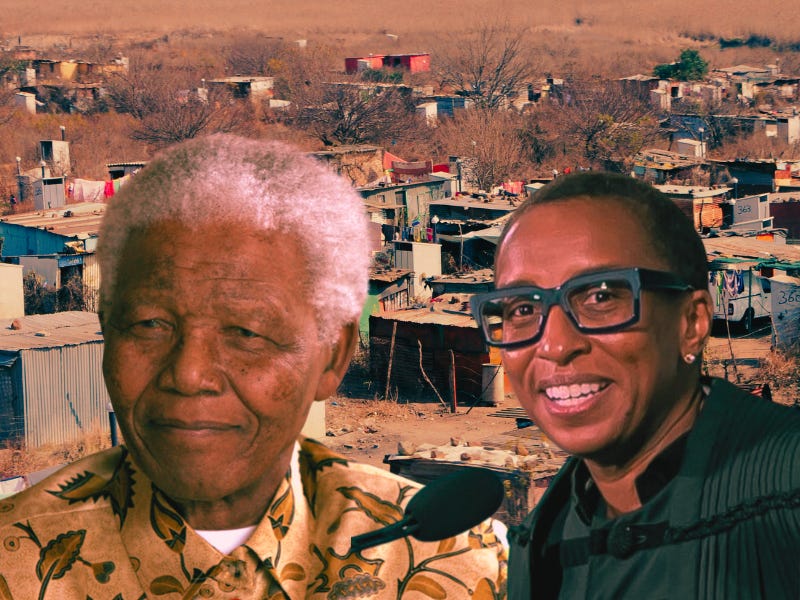
@Will_Tanner_1 - Will Tanner
And read here our interviews with @k9_reaper about the state of things in South Africa: https://www.theamericantribune.news/p/surviving-south-africa-a-boers-take
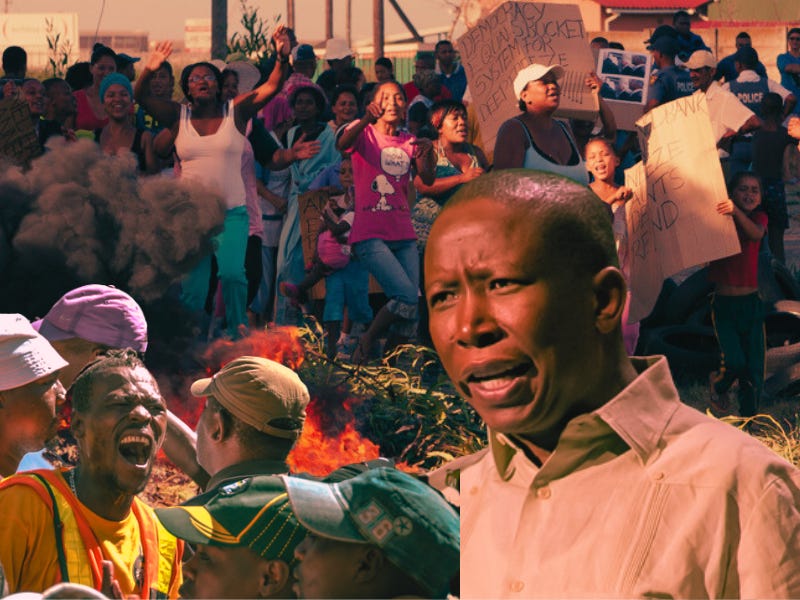
@Will_Tanner_1 - Will Tanner
And read here about the West's betrayal of Rhodesia: https://t.co/x7wtDCQoiy
@Will_Tanner_1 - Will Tanner
Rhodesia, after it fell to Mugabe in 1980, was forgotten for many decades, but it matters greatly because it shows why the West is no longer what it once was A short 🧵👇 https://t.co/d4TVtICfJe

@Will_Tanner_1 - Will Tanner
And learn here how you can stand up to this discriminatory regime in a legal, reasonable way that helps bring merit back to the workplace:
@Will_Tanner_1 - Will Tanner
As @realJeremyCarl explains in his "The Unprotected Class," much of that wokeness leads to anti-white rhetoric How many companies, for example, force employees into seminars on how "whiteness is evil" or some like topic, and have employee interest groups for all ethnic groups except Caucasians?

@Will_Tanner_1 - Will Tanner
Read here about Rhodesia's similar situation: https://t.co/yXfFEhzzpe
@Will_Tanner_1 - Will Tanner
By now, most everyone has heard of the farm attacks in South Africa They're awful, and it's gut-wrenching to hear stories guys like @k9_reaper have about sickening scenes of torture and death But this isn't the first time we've seen this. Rhodesia had a similar problem A 🧵👇 https://t.co/I0N7Dzovvz

@Will_Tanner_1 - Will Tanner
"You Best Start Believing in the South Africanization of America...You're In It!" See the signal jammer? This is the big change coming to American crime We've long suffered the predations of criminals and their enablers, but signal jammer use shows how it'll get worse 🧵👇

@Will_Tanner_1 - Will Tanner
First, here's how @k9_reaper described signal jammer use to me in a November of 2023 interview: Signal jammers are being used for everything from everything from hijackings, cash-in transfer heists, home invasions, and farm attacks as well. So the signal jammer, depending on the model, works at blocking all incoming and outgoing signals from everything from cell phones to radios to even some security cameras in a range of 25 to 100 meters. The sole goal of a signal jammer is to ensure that your target can’t call for help. The reason they use them for farm attacks is that a lot of farmers are out of the community safety initiative and they rely on radios to be able to call for help to one another, to come and assist. You’re probably thinking of that famous picture of that guy with the signal jammer backpack during a farm attack. It was like a black-and-white photo, and he had that proper military signal jammer. That wasn’t just anything you could get from Alibaba, or even from Mozambique and just driving it over the border or something. That was a proper military use jammer pack in use with the SADF. You’ll see a lot of military and ex-active duty military personnel in these farm attacks, and they often just take what they need from the military before they go out on the attacks. In essence, the farm attacks are the most brutal thing anyone can imagine. They make those attacks going on in Israel and Gaza look like a walk in the park. And the use of the signal jammer packs is real. It is happening on a daily basis. Both to the citizens of the Republic of South Africa and to people they want to assassinate.

@Will_Tanner_1 - Will Tanner
So, how's that relevant for Americans? Well, first off, even if you are armed not being able to call for help can be a problem if there are multiple assailants But, more than that, most people aren't armed. At least not with firearms. They still, delusionally, believe the police are there to help them, even after the Floyd riots showed that to largely be a lie. So, if unarmed and unable to call for help because of signal jammers, you're at the not-so-tender mercies of the criminal underclass, and face situations like that called out by K9 in the post below

@Will_Tanner_1 - Will Tanner
And that leads into the other problem: in South Africa, law and order are so decayed that, as K9 mentioned in the quote, locals have to rely on each other. Whether that means responding to farm attacks, defending neighborhoods from riots, etc. they must rely on each other Which means communicating with each other This is something that came up in the Rhodesian Bush War as well: farmers had to defend themselves and radio for relief units to come help them fight off the terrorist attackers Signal jammers make that impossible, particularly if landlines are cut The criminals themselves know this: gangs of illegal immigrant gangs were, earlier in 2024, caught using signal jammers to break into homes, as the jammers can defeat digital locks and prevent residents calling for help
@Will_Tanner_1 - Will Tanner
Now, America, of course, is not South Africa; so much should be obvious. We're not as bad right now, nowhere near as far along the path of anarchotyranny, and have more of a hope of recovery But the anarchotyranny situation is bad, as 2020 put in stark relief: police forces are too small and the military too far to the left to respond to large public disturbances, such as riots. If the criminal underclass wants to cause chaos and mobilizes enough to do so, you're on your own. And you might be punished if the state glimpses you fighting back. Our state, like theirs will tyrannically regulate the lives of law-abiding citizens to the minute details and punish them for even slight infractions, but is meanwhile unable or unwilling to stop real criminals, particularly those who organize themselves and are ideologically in line with the state, from breaking the law and preying on law-abiding citizens

@Will_Tanner_1 - Will Tanner
And in some ways it is getting worse Particularly, the cartels have certainly been able to gain a much greater foothold in America during the Biden years, and related groups like Tren de Aragua have taken over entire apartment complexes, with the media and Biden regime minimizing their predations The cartels are already using signal jammers, and, as shown by the Detroit situation, illegal immigrant gangs like Tren de Aragua can as well


@Will_Tanner_1 - Will Tanner
Trump, of course, will theoretically take those groups on in an attempt to deport most of their members But think of this: what happens when he does that? Will militarized groups like Los Zetas go quietly into that good night? Or will they activate those cells already here, like Pablo in Columbia in the 1980s? These groups are wealthy, have huge gangs of vicious footsoldiers within and without America at their disposal, and have shown some competence at fighting state-level groups Now, suggesting they'd defeat America in actual battles, like happened in Sinaloa when Mexico's military captured Ovidio Guzmán (son of El Chapo), is ridiculous But local police forces? At least for a time? It's a potential problem, and the militarized nature of even low level drug dealers, as shown by the tweet at the top, shows it's increasingly a large one

@Will_Tanner_1 - Will Tanner
Similarly, Antifa has faded from the news, but 1) it is still around, 2) it appears to be training seriously, and 3) it caused much of the chaos of Trump's first term, particularly 2020 In areas where they're strong, anarchy could be back on the menu
@Will_Tanner_1 - Will Tanner
Neither of those examples could play out. I don't know a great deal about either issue, and the US isn't so far gone that either is potentially fatal But both could cause much public nuisance, including that which applies to you And that is the real takeaway from South Africa: it's not that low-level, mostly unorganized crime is bad, particularly when officials tolerate it. That's obvious, but not the biggest problem The real issue is that when organized groups start garnering enough power to do as they please, whether SA's military-backed farm attack gangs, groups like the zama zamas, or looting gangs, they can cause a great amount of chaos and they tech they use matters greatly Signal jammers, in particular, are an issue because they make it difficult to call the authorities or trusted neighbors for help. You're on your own, outnumbered by those who hate you. And our enemies have shown they have and can use similar technology

@Will_Tanner_1 - Will Tanner
The South Africanization of America remains a problem, even with Trump elected. Hopefully, he fights back against it, but it's still a problem that must be fought...and the issues created by it remain big ones I wrote more on it here:
@Will_Tanner_1 - Will Tanner
The South Africanization of America: Chaos is Coming, or Already Here While Rhodesia is a great story of how Western willingness to betray friends led to anti-civilization victory abroad, the closer example to where America is headed is South Africa, in this 🧵 I'll show why👇

@Will_Tanner_1 - Will Tanner
If this helped you remember that your security is in your hands, not that of the state, particularly as the left doubles down on anarchotyranny, @DolioJ and @DonShift3 are great resources, as are @wayofftheres and @IsaacBotkin I'm sure there are other great ones, but those come to mind

@Will_Tanner_1 - Will Tanner
Here's the interview with K9 I mentioned in the thread: https://www.theamericantribune.news/p/a-boers-view-of-the-crisis-in-south
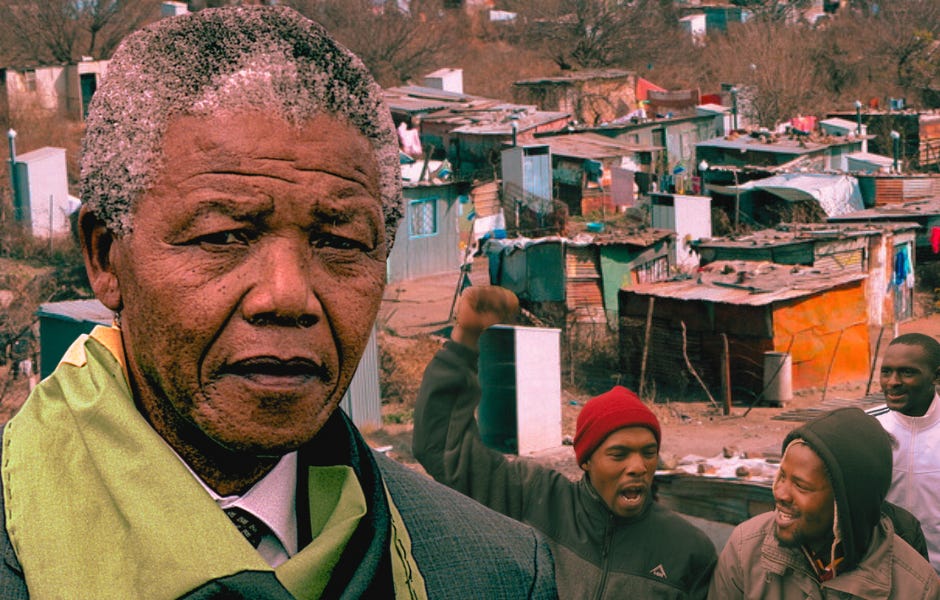
@Will_Tanner_1 - Will Tanner
Many don't know or understand this, but it's probably the biggest change compared to when America was a happy and healthy place So, who brought this utterly disastrous change to America? Ronald "the Gipper" Reagan, who mimicked the Soviets in his divorce law change 🧵👇 https://t.co/iYl45HMe8L

@Will_Tanner_1 - Will Tanner
Like @wil_da_beast630 mentioned in the above tweet, marriage was quite different Namely, a wife couldn't cheat on her husband and then steal half his property when leaving him, taking the kids in the process. Nor could a husband do so, though that's less common Instead, the spouse at "fault," whether for cheating, abuse, neglect, not having sex with the other spouse, etc., was held financially responsible for it upon the divorce. That limited the highway robbery that is modern divorce court This was the state of things from roughly the 1920s until the 60s, with divorce before the '20s being (rightly) much harder to obtain because marriage is supposed to be a sacred institution

@Will_Tanner_1 - Will Tanner
But, regardless of the sacredness of marriage that had been the case for all except, in some cases, royals that had existed since the West became Christian, somewhat liberalized divorce law was by the '20s and '30s Still, though, fault was an absolute requirement. You couldn't just end a marriage and rob your spouse because you wanted to, regardless of who was doing what. Fault had to be proven, which limited divorce rates and generally kept marriage as a serious commitment, if somewhat less sacrosanct than it once was

@Will_Tanner_1 - Will Tanner
Then, along came Ronald Reagan, the actor and anti-communist turned politician and California governor Unfortunately for America, Ronald Reagan took a note out of Vladimir Lenin's book when it came to marriage Notably, he demolished it as a sacred institution by passing America's first ever no-fault divorce law


@Will_Tanner_1 - Will Tanner
Under no-fault divorce law, either spouse could end the marriage at any time, just by claiming "irreconcilable differences" This was nearly exactly what the Soviets had established in Russia, which added to the wreckage of the country for decades. Under the Decree of December 19, 1917, divorce was allowed based on the desire of one spouse to dissolve the marriage. That's just no-fault divorce by a somewhat different name


@Will_Tanner_1 - Will Tanner
As could be expected, that was a disaster For the Soviets, it made such a wreckage of things, particularly in the cities, that the untold multitudes of abandoned children and massive levels of unrest and unproductive degeneracy led even Stalin to see it as a step too far and do an about base in 1936

@Will_Tanner_1 - Will Tanner
In America, similarly, Reagan's no-fault divorce was disaster, particularly for families When he became the first governor to make it all in 1969, others followed suit. Particularly, his status as the governor of the biggest, most successful Republican state in the country gave the abominable policy legitimacy it otherwise wouldn't have had Particularly, the issue has seemingly turned into a significant impediment for family formation The divorce rate (in red) spikes in 1969, after having fallen in the post-WW2 years, when no-fault divorce became law thanks to Reagan It continued rising and rising for about a decade, until finally things began to change in the late 80s. Meanwhile, marriage rates (in green) fall significantly shortly after no-fault divorce became law, and they have never recovered. The lag indicates that, once marriage was no longer seen as sacrosanct, marriage rates dropped like a rock.

@Will_Tanner_1 - Will Tanner
Secondary effects are present as well For one, TFR has crashed since Reagan ruined marriage Birth rates were reasonably high and had stabilized until 1970, the year after Reagan’s no-fault divorce law. Then, with marriage wrecked, they crashed like a rock. Fertility is an existential issue: humanity will not exist if humans aren’t born, and the wealth of the nation is hard to maintain if there are few to no new workers, innovators, leaders, and so on.

@Will_Tanner_1 - Will Tanner
And there are the other secondary issues as well. Kids are much more likely to be physically or sexually abused by a stepparent than a parent, grow up and develop much better in two-parent homes, and married couples with kids are likely to be much more conservative than single people

@Will_Tanner_1 - Will Tanner
And, the big issue hanging over everything is that, in law, marriage is now longer a sacred institution It used to be taken seriously and seen as a covenant with God. Now, not so much. Instead, it's an often all too temporary tax status https://t.co/ioRc1Xts5n

@Will_Tanner_1 - Will Tanner
So, thank you Reagan, for giving America anti-Christian divorce law that was a step too far even for the Soviets It sure has worked out poorly https://t.co/NKJlICLxfz

@Will_Tanner_1 - Will Tanner
A government-funded food pantry in Minnesota is now excluding whites If you needed yet more evidence that we’re drifting toward the South Africanization of America, or even the Mugabe-style Zimbabwification, this is it Illinois explain in the 🧵👇

@Will_Tanner_1 - Will Tanner
Key to understanding what’s happening in America right now, particularly the blue areas, is understanding the Race Communism of Africa That ideology is, I think, best seen through the lens of Rhodesia’s transformation into Zimbabwe and the post-1994 destruction of South Africa by the African National Congress and its more honest colleagues in the EFF

@Will_Tanner_1 - Will Tanner
So, what is the race communist ideology? It is very much not the idea that, say, the state really ought care about and work your improve the lives of random blacks living in the slums of Johannesburg Rather, it’s the idea that *some* blacks ought be raised above *all* whites and that whites ought pay for that, with blood and pain if necessary

@Will_Tanner_1 - Will Tanner
Hence the support for rioting, the total willingness to let crime of any sort happen, the shooing whites away from food pantries, the ever-higher taxes, the calls for unrealized capital gains taxes and 100% death taxes, etc It’s not about *improving* things or making anything better Rather, it’s about impoverishing *all* whites and raising the types like Mugabe and his thugs up above everyone else. Or, here, Kamala and Co.

@Will_Tanner_1 - Will Tanner
That brings us back to Zimbabwe (Rhodesia) When Mugabe had solidified his power with gun control, genocide, and thuggish intimidation, he used it to confiscate the farms of white farmers That was disastrous For one, those to whom he handed the farms had no idea how to farm them, so they laid fallow. That turned the former breadbasket of Africa into a hellhole that needed to import grain But that’s not all. In addition, it meant Zimbabwe no longer had cash crops like tobacco for export. So, it could earn foreign exchange any more, as it had nothing else to export. This, when it needed food and other supplies, it couldn’t buy them, as it had no foreign exchange Famine resulted

@Will_Tanner_1 - Will Tanner
Much the same could really be said of South Africa Through its so-called Black Economic Empowerment laws, hiring blacks over whites is effectively mandatory, handing partial ownership of businesses to blacks is similarly mandatory, and the same is true of promoting blacks instead of whites The result is that what was once a strong economy is struggling mightily and struggles to produce even the basic products of an industrial economy like steel, and whites living in slums

@Will_Tanner_1 - Will Tanner
So, in both cases, Race Communism got implemented and entirely destroyed things, for all but the gangsters at the top and their clients But that’s what it was meant to do. So, by the measure of its intended outcome, it was a success The goal is to put whites in slums, not raise blacks out of them

@Will_Tanner_1 - Will Tanner
That’s what we’re now seeing in America All the craziness that’s going on is destroying the bedrock of American success and prosperity, but really it’s functioning as intended, doing to us what it did to South Africa and Zimbabwe So as businesses and the military falter under what amounts to affirmative action and race communism, know that that’s what they want. They don’t care if things *work*, just that they and their clients are in control as kings of the dung hill

@Will_Tanner_1 - Will Tanner
Hence whites being disallowed from using a food pantry in Minneapolis The cruelty, the humiliation, the society-destroying consequences are the very point, as it was with Mugabe and Mandela

@Will_Tanner_1 - Will Tanner
Read about Rhodesia here: https://www.theamericantribune.news/p/why-rhodesia-matters
@Will_Tanner_1 - Will Tanner
Why is Rhodesia important? Because it was a normal Western country typical of the century prior to its destruction, one "more British than the British." In fact, that's the very reason it was destroyed 🧵👇

@Will_Tanner_1 - Will Tanner
Key to Rhodesia's national identity and success was that it wasn't a land of reprobates and freebooters picking their teeth with Bowie knives Rather, from the time of the Pioneer Column into the Bush War, it was on the hunt for the best men of England. Particularly, it used restrictive immigration policies to ensure only those who would be able to assimilate into its "more British than the British," pink gin sundowner culture would be allowed to immigrate

@Will_Tanner_1 - Will Tanner
So, those men who immigrated to Rhodesia were like the Duke of Montrose: gentlemen who wanted to be landowners who used their position to guide the Rhodesian state with a paternalistic hand The result was a country with a small (250k or so) European population, nearly all of which was English and deeply steeped in English culture Hunting, pink gin, gentlemanly behavior, modern agriculture on a large scale, national service in a daring and small military: it was the Britain of a century earlier

@Will_Tanner_1 - Will Tanner
That turned Rhodesia into a roaring success, particularly agriculturally It produced famed tobacco for export on a large scale, and was so superb at growing grain on the large farms that it was the "Breakbasket of Africa" In fact, many of the post-1979 African famines probably would have been avoided had Rhodesia still been around to export grains...but that was not to be

@Will_Tanner_1 - Will Tanner
The sad fact is that Rhodesia was destroyed because it was "more British than the British" in the old sense: it was a landed voting republic where generally only those with a requisite amount of Rhodesian property, such as land, could vote There was no apartheid, as was in South Africa. But, as only those with enough property could vote, the government was much more run by those like the Duke of Montrose (who served as the Minister of Agriculture under Ian Smith and was a '65 UDI signatory). Also, educational attainment meant one could vote That is to say, such men who were voters were mainly wealthy white landowners rather than black natives...many blacks voted, but always a relatively small fraction of the black population, particularly compared against the whites

@Will_Tanner_1 - Will Tanner
So, the world hated Rhodesia The communist bloc backed the red rebels for the usual reasons, and on the Western world helped the communists win by embargoing Rhodesia That "Great Betrayal" came despite Rhodesia having loyally served in both world wars; Ian Smith was a Spitfire pilot and war hero, for example, who lived with peasants in the countryside while escaping the Germans after being shot down

@Will_Tanner_1 - Will Tanner
That service mattered immediately after the war, when Rhodesia was offered independence, but not by 1965, when Rhodesia declared independence from the inept, socialist British So, Britain, by then uncomfortable with the values of the Victorians and Georgians, sided with the communists to destroy Rhodesia. It even sent its Navy to blockade the oil-importing port of Beira in Portuguese Mozambique after the UN passed, with its and America's help, mandatory sanctions on Rhodesia

@Will_Tanner_1 - Will Tanner
In effect, the Americans and British were siding with the communists even as those communists tortured and killed white farmers and their black laborers, as Peck documents in "Rhodesia Accuses" That support continued through to the end, even as Nkomo shot down civilian airliners and bayoneted the survivors to death Effectively, the "free world" was intentionally helping Mugabe and Nkomo repeat, with communist backing, the horrors of the post-colonial Congo in what was a free country with a pre-Reform voting system meant to ensure future freedom

@Will_Tanner_1 - Will Tanner
The weight of the world - only Israel, Portugal until the Carnation Revolution, and sometimes South Africa rejected UN sanctions and Western opprobrium - eventually told on Rhodesia, and it fell to the communists Particularly, in 1980, after the second election, during which his men tortured and terrorized civilians into voting for him, Mugabe won

@Will_Tanner_1 - Will Tanner
Mugabe then went on to genocide the Ndebele tribe and expropriate the land of white farmers, finally accomplishing what the ideologically egalitarian West and communist bloc had wanted it to accomplish all along Zimbabwe went from the breadbasket of Africa to a basket case known for famine and hyperinflation, and nearly all the whites whose ancestors had carved civilization out of the veldt had to flee to escape the murderous thugs of Mugabe

@Will_Tanner_1 - Will Tanner
So, Rhodesia stands as a lesson: despite not having apartheid and creating higher living standards for the native blacks than in any other country in the region, it was destroyed by the "free world" and communists for not being egalitarian, as they were That was enough to support the communist Mugabe

@Will_Tanner_1 - Will Tanner
It was destroyed for having what was essentially a normal, pre-Reform Bill British voting system. It was propertied/educated voting meant to ensure responsible government rather than the horrors of mob-rule democracy in the Dark Continent, as happened in the Congo to its north...or proceeded to happen in it after the British and Americans got their way

@Will_Tanner_1 - Will Tanner
That's a great deal of why Rhodesia matters It shows where egalitarianism ends up, why mob rule is a horror show, and what could have been had the British kept their roots and embraced responsible paternalism rather than imbecilic mob rule

@Will_Tanner_1 - Will Tanner
If this interested you, read more about how Mugabe destroyed Rhodesia here:
@Will_Tanner_1 - Will Tanner
How did Mugabe destroy Rhodesia, turning the breadbasket of Africa into a starving hellhole wracked by hyperinflation and famine? It's a pretty simple story, as things went just how you'd expect, but it holds a good number of important lessons for America So, a 🧵👇 on this

@Will_Tanner_1 - Will Tanner
And read about them being more British than the British here:
@Will_Tanner_1 - Will Tanner
It was said, particularly of Prime Minister Ian Smith's generation, that the Rhodesians were "more British than the British" That sounds great, but how did they get there? How did a formerly company-run country in the middle of Africa become so British? Immigration policy 🧵👇

@Will_Tanner_1 - Will Tanner
And read more about Rhodesia here: https://www.theamericantribune.news/p/why-rhodesia-matters
@Will_Tanner_1 - Will Tanner
So, because it was humiliated by Rhodesia's existence and success, the democratic West sided with the communists to destroy Rhodesia The result has been crime, famine, hyperinflation, genocide, and land expropriation by a dictatorial government But no longer does the little republic humiliate the self-conscious and declining West, so those who destroyed it are quite happy

@Will_Tanner_1 - Will Tanner
Rhodesia, after it fell to Mugabe in 1980, was forgotten for many decades, but it matters greatly because it shows why the West is no longer what it once was A short 🧵👇

@Will_Tanner_1 - Will Tanner
First, what was Rhodesia? It was the little land north of South Africa and south of the Belgian Congo, where decolonization meant chaos and slaughter that effectively hasn't ended since the Belgians left Despite being landlocked and underpopulated, it was an economic powerhouse. It was the breadbasket of Africa, exporting food to the rest of the continent, and was an industrializing economy that was also successful at growing cash crops like tobacco

@Will_Tanner_1 - Will Tanner
Notably, Rhodesia also didn't have apartheid. Rather, it had a voting system like America and much of the West, such as Britain used to have: anyone could vote so long as they owned a requisite amount of property That restriction was meant to keep it a republic and percent the problem of democracy, which is mob voting and the wolves voting to eat the lamb
@Will_Tanner_1 - Will Tanner
But despite its economic success, resistance to communism, and its hope to chart a course in Africa where the whites wouldn't face the fate of those left behind in Congo or Kenya and where blacks wouldn't face the same fate as in South Africa, America helped the USSR destroy it

@Will_Tanner_1 - Will Tanner
Yes, America helped the Russian and Chinese communists destroy a functional, Western nation known for being "more British than the British" The result was genocide. With Mugabe, the winning communist, first butchering the Ndebele tribe and then forcing white farmers off their land, killing many in the expropriation process Britain helped too

@Will_Tanner_1 - Will Tanner
Why? Why destroy an agricultural land that mimicked Britain at its Victorian height? Because Cultural Marxism and liberalism generally had rotted the West from the inside. It was no longer comfortable with itself and its old values, and so wanted to destroy them

@Will_Tanner_1 - Will Tanner
Particularly, it wanted to destroy the twin concepts of natural hierarchy and cultural achievement

@Will_Tanner_1 - Will Tanner
As a reminder, the Old World, and much of the new (South America and the Cavalier South) were ruled by hierarchy: landed aristocrats, whether titled or gentry, handed down their wealth and prestige from generation to generation

@Will_Tanner_1 - Will Tanner
As a result, wealth was largely controlled by an elite few, and those few were the ones who, largely, were the ones best suited to responsible nurture it in the manner of a garden That brought with it noblesse oblige, or the concept that the privileged should care for their social inferiors in the name of the community.

@Will_Tanner_1 - Will Tanner
But they weren't to destroy all wealth in the impossible quest to eradicate poverty; Jesus reminded us that the poor with always be with us, after all Instead, donated was responsibly spent on bettering the circumstances of the poor, such as by building worker cottages

@Will_Tanner_1 - Will Tanner
Or it was spent on cultural achievements. The great statues of the Renaissance. The beautiful Palladian country houses of England. The hunting castles of Scotland. The music of Mozart and Beethoven All came only as a result of noble wealth; hierarchy enabled achievement


@Will_Tanner_1 - Will Tanner
Then came Marxism and Leninism, the twin ideas of enforced egalitarianism and weaponized grievance Death duties, punitive income taxation, social leveling, and hostility to beauty resulted from those impulses, destroying much of the Old World mindset

@Will_Tanner_1 - Will Tanner
This era, roughly the two or three decades after WWII, saw the British nationalized coal industry destroy Wentworth Woodhouse, the greatest of country houses, out of envy. It saw America destroy the space program to focus on welfare. And, perhaps worst of all, it saw former empires turn on their colonial subjects

@Will_Tanner_1 - Will Tanner
Hatred of hierarchy meant hatred of colonialism and imperialism after all, so Britain and France effectively helped communists carry out atrocities in Algeria, Kenya, the Congo, and more as they left and helped the "national governments" accede to power

@Will_Tanner_1 - Will Tanner
Rhodesia saw what happened in the Congo and told Britain to get lost, with WWII Spitfire pilot and war hero Ian Smith, the PM, leading Rhodesia as it declared independence in the hope of surviving as a functional nation

@Will_Tanner_1 - Will Tanner
So, the UK, and eventually America under Civil Rights Carter and his friends like Andy Young, embargoed Rhodesia. It couldn't import fuel or weapons and so was slowly strangled by the West as communists funded and armed by the USSR and Red China murdered civilians in horrible ways as their form of "war"

@Will_Tanner_1 - Will Tanner
Eventually Rhodesia fell, unable to survive without being able to import fuel or weapons and unable to export its cash crops. Then the aforementioned horrors of Mugabe occurred, with the West covering for Mugabe and even congratulating him as he butchered his own people

@Will_Tanner_1 - Will Tanner
That conduct matters, and it's largely the reason the West is no longer functional and, indeed, often abetting its own destruction by importing hordes of foreigners It's no longer self-confident, and as such, no longer willing to stand for the traits that made it great


@Will_Tanner_1 - Will Tanner
Egalitarianism did not make the West great. Social welfare did not make the West great. Hatred of white people did not make the West great. Degenerate culture and rotten entertainment did not make the West great Social hierarchy and its wonderful fruits did But, as shown by its rejection of Rhodesia, the West turned its back on those values. Rotted internally by Cultural Marxism and the Leninist grievance impulse, it destroyed them

@Will_Tanner_1 - Will Tanner
Now, instead of moon landings, concertos, and palaces, "we" have brutalist architecture, rap music, and food stamps Was that a good tradeoff? Was it worth it? Or should we have sided with Rhodesia as it remained the last outpost of the Old World, beset by grievance politics of the sort now destroying us?


@Will_Tanner_1 - Will Tanner
Read more about the West's war on Rhodesia here: https://www.theamericantribune.news/p/how-the-united-states-supported-white
@Will_Tanner_1 - Will Tanner
Oh, and I should have added this earlier, but also check out @k9_reaper to understand the similar events happening in South Africa, and check out this interview we did with him on the subject, in which we mention the Bush War: https://www.theamericantribune.news/p/surviving-south-africa-a-boers-take
@Will_Tanner_1 - Will Tanner
And credit to the intro pic from @thewardoll, from whose account I found it awhile ago
@Will_Tanner_1 - Will Tanner
Make sure to read these superb books about the Bush War and Rhodesia: https://t.co/8tjlXeGfvI
@Will_Tanner_1 - Will Tanner
Another murder that shouldn't have happened. All it would have taken to prevent this senseless tragedy is defending the border Yet Biden, Mayorkas, and the rest of that abominable administration refuse to defend the border. So instead we get horrific tragedies like this Biden has blood on his hands
