reSee.it - Tweets Saved By @ZdenekVrozina

@ZdenekVrozina - Zdenek Vrozina
Viruses like HIV and CMV don’t just evade immunity - they reshape the host from within. One way they do it? By targeting the cell’s ability to make proteins. SARS-CoV-2 belongs in this group. It interferes with how ribosomes are made and used. What that means - and why it matters 🧵
@ZdenekVrozina - Zdenek Vrozina
Viruses like HIV are known to: block protein translation rewire cell signaling change cellular behavior without altering DNA SARS-CoV-2 does the same. Its Nsp1 protein hijacks ribosomes - the core machinery that turns RNA into protein.
@ZdenekVrozina - Zdenek Vrozina
Ribosomes are molecular machines that translate genetic instructions (mRNA) into proteins. Without them, a cell can’t repair itself, send immune signals, respond to stress or survive infection.
@ZdenekVrozina - Zdenek Vrozina
SARS-CoV-2 hits ribosomes on two fronts: Nsp1 blocks existing ribosomes - shuts down translation Nsp1 blocks formation of new ones - interferes with rRNA processing in the nucleolus This causes both acute and lingering disruption of protein synthesis.
@ZdenekVrozina - Zdenek Vrozina
A 2024 study (Yerlici et al., Cell Reports) showed that Nsp1: enters the nucleolus binds to pre-rRNA prevents its processing and export So this stalls ribosome production - without needing to change the cell’s transcriptional program.
@ZdenekVrozina - Zdenek Vrozina
The result? A drop in protein-making capacity. The cell may survive, but it can’t make enough proteins to repair, signal, or defend itself. Homeostasis breaks down. Stress builds up. Regeneration falters. This can lead to: chronic fatigue inflammatory overload tissue repair failure immune exhaustion
@ZdenekVrozina - Zdenek Vrozina
And it gets deeper. Ribosomes shape gene expression. They’re not passive tools - they influence which mRNAs get translated, and when. So disrupting ribosome function selectively silences parts of the genome without touching the DNA.
@ZdenekVrozina - Zdenek Vrozina
A gene can be “on” - but if its mRNA doesn’t get translated, the protein never appears. This creates functional shutdown without any mutation or epigenetic change. It’s quiet, but powerful. The virus reprograms the cell by shifting what gets built - and what doesn’t.
@ZdenekVrozina - Zdenek Vrozina
More consequences of impaired ribosome function: misfolded proteins and ER stress faulty signaling proteins delayed cellular response to stress disrupted communication between organelles Systems begin to desynchronize - even without structural damage.
@ZdenekVrozina - Zdenek Vrozina
HIV behaves similarly: blocks translation of HLA and other key proteins reprograms epigenetic marks drives immune exhaustion and senescence CMV and EBV also alter host translation to favor their survival - at the host’s expense.
@ZdenekVrozina - Zdenek Vrozina
SARS-CoV-2 clearly fits this class. It’s not just an acute respiratory virus. It actively rewires protein synthesis - the core of how a cell adapts, regenerates, and defends itself. That leaves a lasting footprint on the body.
@ZdenekVrozina - Zdenek Vrozina
One consequence may be cancer risk: unbalanced translation of oncogenes impaired tumor suppressor pathways chronic stress and inflammation This creates a long-term environment that favors cellular transformation.
@ZdenekVrozina - Zdenek Vrozina
Ribosome disruption has system-wide effects - and they strongly resemble the profile of long COVID. That may not be a coincidence. If a virus throws off ribosomal balance, it can affect multiple organ systems at once.
@ZdenekVrozina - Zdenek Vrozina
Potential effects include: neuroinflammation, brain fog impaired blood cell regeneration muscle weakness, exercise intolerance temperature dysregulation autonomic dysfunction cellular senescence immune misfiring
@ZdenekVrozina - Zdenek Vrozina
What ties them together? A cell that can’t make the right proteins at the right time. Translation slows, stalls, or skews - and the system starts breaking down. No scar tissue, no visible damage - just dysfunction.
@ZdenekVrozina - Zdenek Vrozina
Long-term effects of SARS-CoV-2 may not stem from a single “injury.” They may result from disrupted control systems - like protein synthesis. Time, stress, and the body’s own compensations do the rest.
@ZdenekVrozina - Zdenek Vrozina
This mechanism isn’t brand new - but it’s been overlooked. It may help explain why some symptoms last for months after infection ends. And why they can affect so many systems at once.
@ZdenekVrozina - Zdenek Vrozina
Yerlici at al. 2024. SARS-CoV-2 targets ribosomal RNA biogenesis. https://www.cell.com/cell-reports/fulltext/S2211-1247(24)00219-5?_returnURL=https%3A%2F%2Flinkinghub.elsevier.com%2Fretrieve%2Fpii%2FS2211124724002195%3Fshowall%3Dtrue
@ZdenekVrozina - Zdenek Vrozina
@tryna_do_rite Yes, I do wear N95 in all shared indoor air.
@ZdenekVrozina - Zdenek Vrozina
@AnneTakeuchi I understand the connotations. I think what really matters is how we talk about it. Let’s focus on the mechanisms - and use them to show that experience from the past teaches us to be cautious today.
@ZdenekVrozina - Zdenek Vrozina
SARS-CoV-2 isn’t HIV. We’re talking about similar mechanisms. Good news: ribosomes are regularly renewed in healthy cells. But if stem cells are damaged or epigenetically reprogrammed, regeneration may be slow, incomplete, or blocked. The full scope of downstream effects is still unfolding.
@ZdenekVrozina - Zdenek Vrozina
@biologists1 Yerlici doesn’t discuss viral translation directly. Others showed SARS-CoV-2 bypasses Nsp1 translational shutoff via the SL1 in its 5′ UTR. No IRES confirmed yet.
@ZdenekVrozina - Zdenek Vrozina
@k3burch I’m so sorry to hear that. Many are now dealing with persistent post-viral illness triggered by this double hit.
@ZdenekVrozina - Zdenek Vrozina
@Zobbie137 The mRNA vacc is a passive template. It uses ribosomes like a copy machine only. It contains no active proteins or sequences that enter the nucleus, modify ribosomes, or interfere with their production.
@ZdenekVrozina - Zdenek Vrozina
@Krta1972 No, this isn’t a supply problem - it’s a machinery problem.
@ZdenekVrozina - Zdenek Vrozina
How COVID-19 Might Be Accelerating HPV-Related Cancer - with lessons from HIV🧵
@ZdenekVrozina - Zdenek Vrozina
COVID-19 isn’t just a lung infection. A new study of over 1.2 million women found something alarming - women who had COVID later developed more HPV-linked cancers. Cervical cancer risk up 67%, anal 92%, vulvar 98%, oropharyngeal 78%.
@ZdenekVrozina - Zdenek Vrozina
A real case shows how fast it can happen. One woman had a precancerous lesion on her cervix (CIN2). Normally, these take years to evolve. After COVID? It turned into early cancer in just 3 months. The virus wasn’t in her cervix. The culprit? Her immune system was wrecked - T cells & NK cells had collapsed. https://pubmed.ncbi.nlm.nih.gov/36399874/?

@ZdenekVrozina - Zdenek Vrozina
We’ve seen this movie before. HIV makes HPV-driven cancers skyrocket. Anal cancer up to 80× more common in HIV+ people. Why? HIV knocks down the immune guardrails - and, crucially, some of its proteins directly push cells toward malignancy. https://pmc.ncbi.nlm.nih.gov/articles/PMC7689909/

@ZdenekVrozina - Zdenek Vrozina
Meet Tat & gp120 - HIV’s cancer accomplices. They trigger EMT - cells lose their brick wall epithelial shape, turn flexible & invasive. In lab tests, invasiveness jumped 2–3×. Tat even boosts HPV’s E6, which shreds p53 - the cell’s genome guardian. Result? HPV + HIV = a perfect storm. https://www.frontiersin.org/journals/immunology/articles/10.3389/fimmu.2025.1541532/full

@ZdenekVrozina - Zdenek Vrozina
Now here’s the twist - SARS-CoV-2 seems to have similar tricks. Spike protein alone can push cells into EMT, activating Snail, the master switch of invasion. In mice, that meant more metastasis. That’s eerily close to what gp120/Tat do. https://pmc.ncbi.nlm.nih.gov/articles/PMC8167694/
@ZdenekVrozina - Zdenek Vrozina
Spike vs p53? Spike meddles with p53 too. Study found spike stabilized p53 - but then silenced its voice. p53 couldn’t turn on repair genes (like p21). The cell’s safety brake was there - but disconnected. In vitro. https://www.oncotarget.com/article/28582/text/
@ZdenekVrozina - Zdenek Vrozina
Don’t forget the immune angle. Severe COVID burns out T cells, ramps up PD-1/PD-L1. That’s the same escape hatch HPV cancers use to hide. HPV cancers also exploit PD-L1. COVID may widen that escape hatch. https://www.mdpi.com/2077-0383/12/10/3539
@ZdenekVrozina - Zdenek Vrozina
Put it together. COVID could be an accelerant EMT + invasion (like HIV), p53 silencing, exhausted immunity. All paths lead to one outcome - HPV lesions progressing faster into cancer.
@ZdenekVrozina - Zdenek Vrozina
What’s next? Expose HPV+ cells to SARS-CoV-2 proteins, measure EMT/E6/p53. Use HPV-transgenic mice to test synergy. Compare tissues from patients with/without prior COVID for PD-L1, IL-6, exhausted T cells. If confirmed, this synergy could change how we screen & protect HPV+ patients post-COVID.
@ZdenekVrozina - Zdenek Vrozina
We ignored the lessons from HIV. It showed us how a virus can quietly amplify another’s cancer potential. COVID may be repeating that script - and we can’t afford a sequel.
@ZdenekVrozina - Zdenek Vrozina
And that’s just the first cancer type where we already have hard data. Given how SARS-CoV-2 disrupts p53, fuels EMT, and exhausts T-cells, it may not stop at HPV-driven cancers. The spectrum could be much wider.
@ZdenekVrozina - Zdenek Vrozina
The second big group are hepatocellular carcinomas (HBV/HCV). And beyond them, EBV, HHV-8, HTLV-1 each drive their own malignancies. If COVID weakens immune control, the real question is - which ones will it speed up? @dbdugger
@ZdenekVrozina - Zdenek Vrozina
@dbdugger Shih at al., SARS-CoV-2 infection heightens the risk of developing HPV-related carcinoma in situ and cancer. Discover oncology. https://link.springer.com/article/10.1007/s12672-025-03403-4

@ZdenekVrozina - Zdenek Vrozina
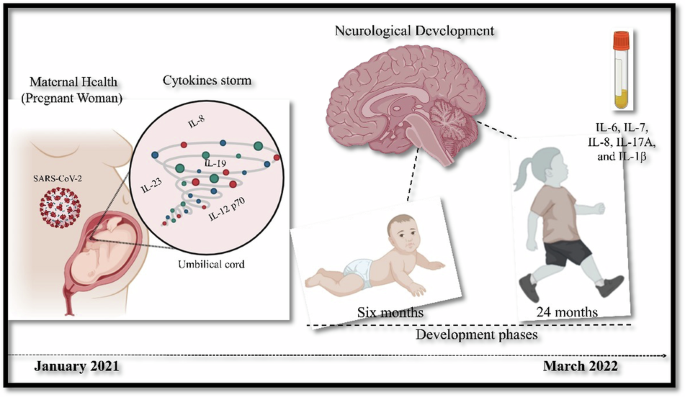
Prenatal COVID and Infant Brain Development - New Data, Alarming Trends We begin with a 2025 study from Brazil, the first to directly link cytokines in cord blood with neurodevelopmental delays in toddlers exposed to SARS-CoV-2 in the womb. https://www.nature.com/articles/s41390-025-04192-w
@ZdenekVrozina - Zdenek Vrozina
At 24 months of age: 36% showed cognitive delays 64% had language delays (sic) 57% had motor delays And here’s the striking part: these delays were predicted by the cytokine profile in umbilical cord blood.
@ZdenekVrozina - Zdenek Vrozina
Elevated inflammation markers: IFN-γ & TNF-α - cognitive delays IL-6, IL-8, IL-17, IL-1β - motor delays CXCL10 - language delays This is strong evidence for maternal immune activation - a mechanism also seen in autism and schizophrenia research.
@ZdenekVrozina - Zdenek Vrozina
A UCLA study tracked 211 COVID-exposed children. At 28 months, 11% screened positive for autism spectrum disorder - far above the expected 1-2%. Some had activated microglia and neuroinflammatory markers in blood at birth. https://www.japantimes.co.jp/news/2024/12/27/world/science-health/covid-pregnancy-autism-study/

@ZdenekVrozina - Zdenek Vrozina
Then comes the placenta. A Michigan pathology review identified SARS-CoV-2 placentitis even in asymptomatic mothers (2025): fibrin deposition intervillositis trophoblast necrosis confirmed virus in placental tissue Risk: fetal hypoxia, IUGR, stillbirth https://meridian.allenpress.com/aplm/article/doi/10.5858/arpa.2024-0247-RA/506106/SARS-CoV-2-Placentitis-A-Review-of-Pathologic
@ZdenekVrozina - Zdenek Vrozina
Structural brain changes have also been observed. An Italian study found ultrasound abnormalities in 23% of newborns exposed to SARS-CoV-2 in utero - vs. 16% of controls. Most were minor (cysts) - but statistically significant. https://ijponline.biomedcentral.com/articles/10.1186/s13052-024-01826-3

@ZdenekVrozina - Zdenek Vrozina
Harvard researchers found the effect is sex-specific. Boys born to SARS-CoV-2 positive mothers had 2× the risk of neurodevelopmental diagnoses at 12 months. Girls showed no such increase. https://jamanetwork.com/journals/jamanetworkopen/fullarticle/2802745
@ZdenekVrozina - Zdenek Vrozina
And finally: epigenetics. A Swedish 2025 study showed that even mild maternal COVID-19 alters DNA methylation in the infant’s immune and brain-related genes. Genes involved in neuron signaling, interferon response, and neurodevelopment were affected. https://www.medrxiv.org/content/10.1101/2025.05.10.25327356v1
@ZdenekVrozina - Zdenek Vrozina
In summary: SARS-CoV-2 exposure in utero can leave a long shadow - through neuroinflammation placental dysfunction brain structure changes and epigenetic rewiring The science is clear. The risks are real.
@ZdenekVrozina - Zdenek Vrozina
But this isn’t just a warning. It’s a call to action. Expectant parents deserve clear, science-based information on prenatal COVID risks. No child should suffer lifelong harm from an exposure their mother wasn’t told mattered. We are losing futures before they’re even born.
@ZdenekVrozina - Zdenek Vrozina
After five years of research, dozens of peer-reviewed studies, and signals from across continents…how is it possible that public health remains silent? No warnings. No prenatal screening protocols. No public campaigns. No plan. The children deserved better. And still do. @szupraha @ZdravkoOnline