TruthArchive.ai - Tweets Saved By @c_plushie

Saved - June 18, 2025 at 4:16 AM
reSee.it AI Summary
Threads presents a harrowing portrayal of nuclear war and its devastating impact on Sheffield, England. The story follows two families as tensions between the U.S. and the Soviet Union escalate into a nuclear exchange. The film explores the medical, economic, social, and environmental fallout of such a catastrophe. Made on a modest budget of £400,000, it is notable for being one of the first to depict a nuclear winter, capturing the profound horror and cultural ramifications of nuclear conflict.

@c_plushie - Coronavirus Plushie

Threads (1984) Threads is a dramatic account of nuclear war and its effects in Britain, specifically on the city of Sheffield in Northern England. The plot centres on two families as a confrontation between the United States and the Soviet Union erupts. As the nuclear exchange between NATO and the Warsaw Pact begins, the film depicts the medical, economic, social and environmental consequences of nuclear war. Shot on a budget of £400,000, the film was the first of its kind to depict a nuclear winter. It has been called "A film which comes closest to representing the full horror of nuclear war and its aftermath, as well as the catastrophic impact that the event would have on human culture."

Saved - June 8, 2025 at 8:50 PM

@c_plushie - Coronavirus Plushie

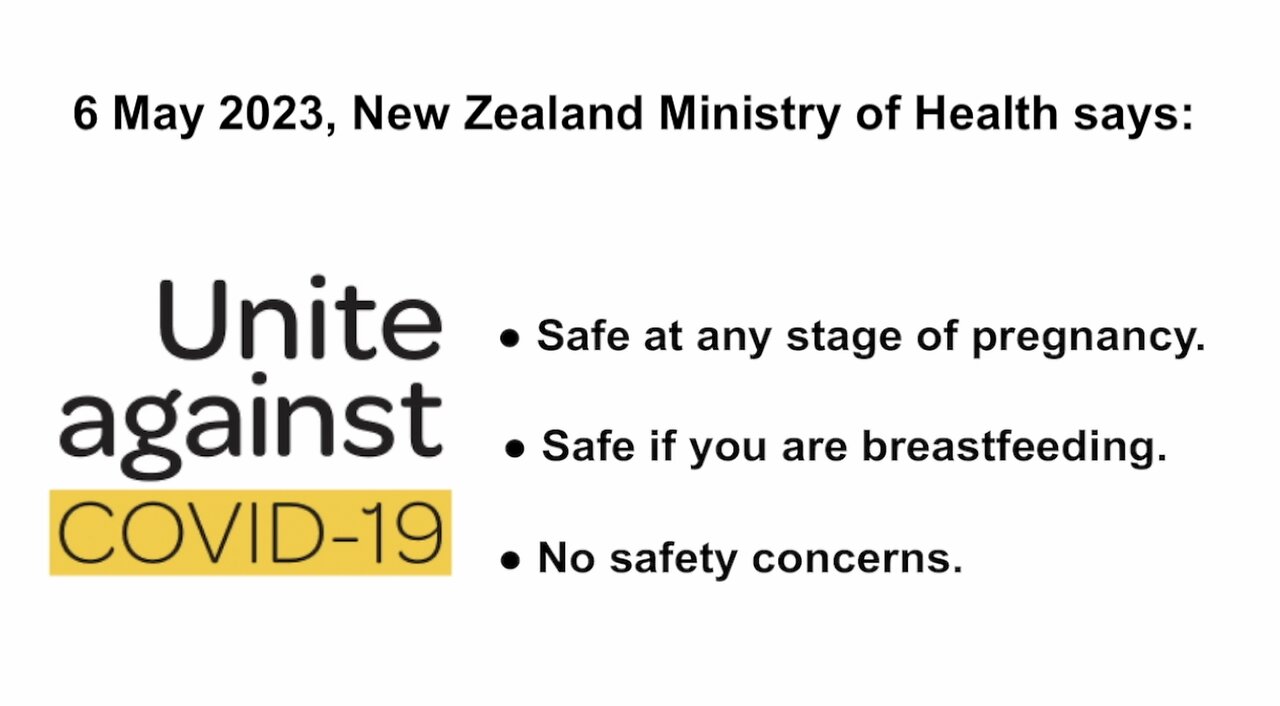
Get the jab, get the treats WAS NOT informed consent https://t.co/tqmSJqnjis

Video Transcript AI Summary
Aotearoa is called to arms to get vaccinated against COVID-19. People are encouraged to get vaccinated for their friends, family, and New Zealand. The goal was to get 100,000 doses, but now the goal is to smash that target, focusing on first doses in Auckland to get past 90%. Incentives are offered to get vaccinated, including the chance to be an extra on Taika Waititi's next film shoot in New Zealand. At one location, people receive hangi. One person says they are getting vaccinated so they can see their kids. Over 450 hangis were distributed. The vaccination total reached 100,019. Some people won $500 cash or $1000 from JB Hi-Fi after getting vaccinated. If you get vaccinated at the remakery, you get a tomato plant. The Maori total is getting up to 25,000 vaccinations. The target was moved to 150,000 vaccinations. One person got vaccinated so they can get back to work. The vaccination total has surpassed 130,000.
Full Transcript
Speaker 0: Roll up your sleeves, Aotearoa. This is a call to arms. Your arms, my arms, everyone's arms. So if you haven't done it already, get your arms down to your nearest COVID vaccination center and get your double shot against COVID. Speaker 1: Roll up your sleeve, Speaker 2: Roll up your sleeves, New Zealand. Speaker 3: Roll up your sleeves, Speaker 4: New Zealand. Roll up your sleeves, Speaker 0: New Zealand. The more kenmies who are protected, the better our future will be. Follow the vaccination tracker at NZHerald.co.nz. Speaker 2: Thanks, Sunny. It is great to be here, and it's great to have you with us for a very important cause, that is to get as many people vaccinated today as possible. So do it for your friends, do it for your whanau, do it for Aotearoa, and today, well, you do it for the freestyle, don't you? Speaker 5: And hundreds of people are here getting the vaxxed because what is it all about? Get the jab, get the treats. Get the jab, get the treats. Let's see how many people we can get doing that today. But look, there is free coffee. There is free ice cream. What do you want to send today? A message out there to everyone getting their vaccinations today because we need a hundred thousand doses, don't we? Speaker 3: Let's get it done New Zealand. Hundred Thousand Doses today. Speaker 5: I love it. Speaker 3: Go go go. Speaker 5: Love it. And can you guys please copy my dance? Will you do it with me? Speaker 0: Yeah. Speaker 5: Alright. This is how it goes. Get the jab, get the treats. Get the jab. Get the treats. Go. Get the jab. Get the treats. The jab. Get the treats. Come down. Get the jab. And then you can get the treats as well. Back to you guys in the studio. Speaker 6: Yeah. Happy to share the latest numbers and fantastic having been out in the community today to see so many people joining us, and that is why we now have 76,378 vaccinations delivered today. So doing really, really well. Of those twenty one thousand nine hundred and forty five first doses and those first doses are just so critical. Fantastic to see those numbers. Speaker 3: Come on down, get vaccinated, and you get free food as well. Speaker 4: Air two Pacifica one seven three Montreal. See you soon? Yeah? Maybe? Come on. Speaker 1: And you said you've been out in the community this morning. What's the feel? How are our people going? Speaker 6: Awesome. Really good first rush at a lot of sites. So down at Sky Stadium in Wellington. If you're in Wellington and you wanna grab a vaccine today, Sky Stadium drive through, really easy. And then I was out in Porirua, Kennan's Creek. They're doing an awesome job there as well. Lots of giveaways, lots of treats, as Aziz said. Speaker 5: Get the jab, get the treats. Speaker 6: So get on down there as well. Speaker 2: And I know you originally said earlier this week, the target was one hundred thousand doses today. Are you changing that given Speaker 3: the numbers? No, no, Speaker 6: Well, actually, look, now the goal is just to smash that target really. And of course, we want Auckland to keep driving for those first doses. We want to get past ninety percent, but a work to be Speaker 7: done Speaker 6: there. We've got close to five thousand first doses there. We want to get closer to thirty thousand. So come on Auckland. If you haven't had your first dose yet and you're Tamaki Makoto, head out. The number one focus for all of us right now is just keeping people safe and that's what this is all about. Speaker 8: Well, Kia ora, we've been spinning this wheel on the project for the last couple of weeks and we had heaps of prizes left over so we didn't really ask the boss. We just brought the wheel down here and thought we'd spit up some people getting their vaccination for the first time. I've got Nonna and Charlene in the car there and I've just told them they don't Speaker 4: know what's on the wheel so I'm hoping we can Speaker 8: get them something really good. It's the wheel of immunity and I'm spitting now. They were totally stoked when they found out they could win anything and right now they've won $500. The cash. Speaker 1: Oh, I've got this girl in Speaker 2: tears. KFC. Speaker 8: Both of them are first time. First time vaccinations today. They're gonna presumably split it two ways, $250 each. Speaker 3: And spend it on KFC apparently. So here we are. We're going to welcome Speaker 2: in another member of our team today, Taika Waititi. Taika, thanks so much for joining us again. Have you heard the latest Get Speaker 5: the jab, get the treats. Speaker 9: Get the jab, get the treats. Stephen, I'm doing it. Speaker 6: Oh, you just made Azeez's day. Speaker 2: A number of New Zealand businesses have put forward incentives to get people out and get vaccine. Do you want to offer anything up? Speaker 9: Like to just invite you to the next time I shoot something back on New Zealand. Speaker 7: Done. And Speaker 9: come to my set in Lego. Speaker 4: Can we Speaker 1: get a role? Speaker 6: So if you want to be an extra or spend some time on set with Taika Waitiri, go out and get vaccinated. We'll figure out how we draw something like that. Speaker 9: How we do this? Yeah. You can Speaker 5: do it. We'll figure it out. Speaker 9: This big promise that we've just made, we'll figure out how to make that actually a reality. Here Speaker 4: we are at Te Whanau. We've seen the whanau. They made the hangi while this is us handing them out. Come. Come. Come. Three people in the waka. Speaker 10: Handing out all the hangi. Speaker 11: Thank you for the much, guys. Speaker 3: Take care. Bye bye. Yep. Speaker 4: I'm fine. Before you fellas, go. Come around. Come around. How was that, Ehorma? Speaker 7: That was mean. Speaker 10: That was awesome. Speaker 4: Why did you fellas come today? Speaker 7: I can't see my kids unless I get vaccines. Speaker 4: Oh, yeah? Yeah. Speaker 7: My son's a bit mamoy. He had he was he's got a lot of complications. Oh, yeah. So we gotta keep all the bugs away from him. Speaker 4: Would you recommend other whanau coming through, getting vaccinated? Speaker 1: We're gonna bring Speaker 7: cow loads in tomorrow. Speaker 4: That's cow loads worth of hangies for you fellows, Thank Speaker 1: you very much. Speaker 4: And then there you have it. So they come through, they drive through there, they go over there, they get the vaccinations over there. They have their time. And then they come through, Sorry, my mask is playing up. They come through and collect all of these hangis. Mato, how many hangis you reckon you gave out today? Speaker 11: Oh, jeez. Mostly, over four fifty? Speaker 12: Four fifty? Speaker 11: Yeah. Yeah. We had a real good turnout. People just keep coming and going. It's bloody awesome. Speaker 4: Now we were just saying, like, over 400 hangis or something distributed, but you you're you're not prejudice. If there's other Tamariki, other whanau in the waka, you feed everyone? Speaker 11: No. Look. It's the the whole idea of the hangi is is is about manaki. Is is to manaki those who wanna come, Speaker 5: and Speaker 11: and if you do come, here is a here available. And while we're saying one vaccination equals one that's really only our basis for us to start. So certainly, children don't miss out at all. Speaker 12: Prime minister, we would actually like to hand it over to you to make this announcement to the people of Aotearoa New Zealand. Speaker 6: Amazing news. So Aotearoa, we have now hit 100,019 vaccinations today, Speaker 5: which is awesome. Speaker 12: Yes, baby. Speaker 8: It's been so much fun here in Otara this afternoon. Man, the cars just keep on coming, and one of the people who arrived recently was Red Thonga, who just had his first dose of the vaccine. Congratulations. How did it go? Speaker 7: Thank you. It went very well. It was very quick. I didn't ever feel it. Speaker 8: And I've got some nice news for you actually. We're gonna spin the wheel of immunity for you now. So you might actually well, you are gonna walk away a winner in more ways than one today. Speaker 7: Yes. Yes. Let's do it. Speaker 3: Let's get you something good. What's it gonna be? $500 cash. Speaker 1: All yours. Speaker 12: Get vaccinated. You get $500. Speaker 6: I've been out at vaccination sites all around the Wellington region. So started in the city, then headed to Porirua. And I've just been in the hut. And it's just been amazing. The vibe's great. If you're in the hut and you head to the remakery, they'll give you a tomato plant when you get vaccinated. Speaker 5: Oh, wow. Speaker 6: So amazing. Something different everywhere. Speaker 8: Totally. Get vaccinated. Save lives. Be kind. Speaker 12: Woah. Woah. Woah. Woah. Woah. Woah. Welcome back to Super Shot Saturday, and we have got some Super Shot news coming to you. Some great numbers, from around the row here. These numbers are just growing and growing and growing and going up and up and up and up and up and up and we're looking and looking and looking for big big numbers and here Speaker 5: they are. Speaker 2: Here they are. I know you're Speaker 3: gonna be pressing a keyword. Do you wanna give a give your leash goal another go? Speaker 12: My leash goal Bay Of Plenty with 5,096 vaccinations today out in the Bay. Plenty of vaccinations out in the bay. The Bay Of Hawk. I don't call it Hawk's Bay. I've never known why that's there. 5,133 in the Bay Of Hawk. Mid Central, Pame North, and all around 4664. That includes the Hauropanua. You beauty. Speaker 4: And they're gonna be you're gonna be in the right place because we've got a bit of a an activity for our rangatahi. Speaker 3: We do. We do. We're giving away free rugby and soccer balls. You get to keep it if you catch it just like this. Speaker 5: Ready? Here we go. Here we go. Here Here we go. That guy missed out. Oh, here we go. This one. Dang it. Yes. You see? That it's simple. Free. So many reasons for you to come on down and see us. Speaker 3: Come down to Otara. You can have a spin at the wheel, but if you don't get the chance to spin, South Seas have some bangers in the background. You'll be dancing in your car and get a free sausage. Speaker 2: Historic day for New Zealand. Go out and get your COVID nineteen vaccination. And let's have a quick look at the updated numbers from all you people through Aotearo going out and getting your jab. Nearly 120,000 total vaccinations for today. That was at 04:30, so that could have creaked up as well. But, Jules, I'm looking at the Maori total. 20,000. It's getting up there. Speaker 9: It's getting up to 25,000. Sorry. I was just getting down with it. So, yeah, you're right. A really good number there. We're almost at the 25,000. And, again, those updated Pacific Island numbers as well. The vax counts are really getting up there. Remember, we moved our target to one fifty. And just a reminder reminder, I said one fifty, didn't I? Thank you very much. Speaker 5: I Speaker 8: did. I found Nicholas and Lisa. Give us a wave, guys. They just had their second jab, and they don't know what they're about to win because I'm gonna spin for them. So wish me luck. We've got cash on the wheel. We've got all sorts. And Nicholas and Lisa, I believe in you. You've won a thousand bucks from JB Hi Fi. A thousand bucks from JB Hi Fi. Very cool. Easy as that. And we'll keep spinning it. So if you haven't if you're new nearby, come and get your vaccination here with us today and say hi to me and Laura. Kia ora. Speaker 3: Kia ora. I'm here at the hub in Hornby, standing outside the Maui clinic where you can get your COVID vaccine. It is open until late 8PM. So, you know, come along now. It's still open. You've still got plenty of time. What amazing staff and their incredible outfits over here. They've still got lots of freebies to give away also. So if you haven't yet, come on down. We're open late until 8PM. Speaker 8: Ketamine, why did you decide to get vaccinated? Speaker 1: Well, it's important. You know? We're doing it for our community. We're doing it so we can thrive as a country, and, I'm, you know, doing it for myself and my friends and family and everyone around us. We don't life has to keep going. You know? So Speaker 8: You look beautiful. Now you're safe, and I'm gonna hand over to Laura Thupo to spin the wheel of immunity. Speaker 3: Right. I'm spinning for Lemmy. He's got his first vaccination today. I asked him why. He said because he just wants to get back to work. Great reason. Let's give the wheel a spin. What's it gonna win? Speaker 2: A thousand bucks. A thousand. Speaker 8: A thousand dollars. That is so cool. Speaker 5: I also gotta welcome my best friend back to the stage, doctor Bloomfield. Woah. Speaker 12: Hey, bro. Breaking news. Farno, breaking news. We've just gone past a 30,000. Come on up. Come on up. Come on up, Come on up. Speaker 9: Here's the vaccination telephone song. Thank you so much for your vaccinations today. DJ Shed, split the world.
Saved - June 4, 2025 at 1:43 AM

@c_plushie - Coronavirus Plushie

Every so often I get notified that someone has liked an old video that I'd completely forgotten about. Then I see the video. That's what just with happened this one from Nov 2022

@c_plushie - Coronavirus Plushie

Jacinda Ardern goes from “no need for sanctions for the unvaccinated”, to creating a medical apartheid and a two-tier society. #nzpol #ResignJacinda https://t.co/1eZ4W6EvKO

Video Transcript AI Summary
There will be no tax penalties or bans on international travel for people who refuse the COVID-19 vaccine in New Zealand. However, not getting vaccinated will come with risks. Officials state they have not sanctioned people who aren't vaccinated against COVID. To enjoy summer activities like bars, restaurants, gyms, sports events, concerts, festivals, and haircuts, people should get vaccinated. Vaccination will help avoid level three restrictions in the community. New Zealand has high vaccination rates, and vaccine hesitancy is a bigger issue than anti-vaxxers. Extra support and removing barriers can help. There is no reason to impose penalties for not vaccinating, but unvaccinated people will miss out on everyday things, creating two different classes of people.
Full Transcript
Speaker 0: Will people second question. Will people who refuse to take the COVID nineteen vaccine be banned from traveling internationally or be on the end of tax penalties, says Dan. Speaker 1: Good to Speaker 2: No. But and we haven't, for any vaccination in New Zealand, applied penalties in that way. But I would say, Dan, for anyone who doesn't take up an effective and tested and safe vaccine when it's available, that will come at a risk to them. Speaker 0: Yes. So will you, in this country, have sanctions against people who don't take or aren't vaccinated against Speaker 3: COVID? We haven't done that. Speaker 2: If you want summer, if you wanna go to bars and restaurants, get vaccinated. Speaker 0: Sanctions against people. Speaker 3: Oh, we haven't done that. Speaker 2: Get vaccinated today if you want to avoid level three in your community. Speaker 0: Sanctions against people. Speaker 3: Oh, we haven't done that. Speaker 2: You wanna go to a gym or a sports event, get vaccinated. Speaker 0: Sanctions against people. Speaker 3: Oh, we haven't done that. Speaker 2: So as we all look ahead and we think about summer and the plans that we are making, make the first step a vaccine. It is the thing that will make those summer plans possible. Speaker 0: Sanctions against people. Speaker 3: Oh, we haven't done that. Speaker 2: If you wanna get a haircut, get vaccinated. Speaker 0: Sanctions against people. Speaker 2: If you wanna go to a concert or a festival, get vaccinated. Speaker 0: Sanctions against people. Speaker 3: Oh, we haven't done that because, actually, when you look at Speaker 2: the levels of vaccination we managed to reach in New Zealand, they are high. People talk about anti vaxxers. It's actually the bigger issue in New Zealand is more of what doctor Bloomfield calls vaccination hesitancy. It's not people who are overly, you know, strongly, morally opposed. Morally opposed. It's more people who just need a bit of extra support, remove the barriers, bit of bit more Speaker 1: So no penalties if you don't? Speaker 4: I see no reason Speaker 2: to do that. We get up over well over ninety percent for our vaccinations without that, and I believe we will for this. But no Speaker 1: penalties if you don't? Speaker 4: I see no reason to do that. Speaker 2: If you are not vaccinated, there will be everyday things you will miss out on. Speaker 1: But no penalties if you don't? Speaker 4: I see no reason to do that. Speaker 5: You basically said this is gonna be like well, it's almost like you probably don't see like this. There's two different classes of people if you're vaccinated or if you're unvaccinated. You have all these rights. If you are vaccinated Speaker 1: But no penalties if you don't. Speaker 4: I see no reason to do that. Speaker 2: That is what it is. So Speaker 1: yep. Yep.
Saved - May 24, 2025 at 12:43 AM

@c_plushie - Coronavirus Plushie

I was asked if I had the clip of Sean Plunket @theplatform_nz telling Aly Cook that her vax-inured son "took one for the team". Here it is (at the end of the video) https://t.co/9RPgG7ZKsc

Video Transcript AI Summary
Speaker 0 states that one of their three children experienced health issues, including heart inflammation, after receiving the vaccine and subsequently lost their job for refusing further vaccination. This adverse reaction is officially registered. The speaker recounts a doctor advising their son against further vaccination outside a hospital setting, but later denying having said so. Speaker 1 says there is a good system for reporting side effects in New Zealand and finds no clear evidence of suppression of medical side effects of the Pfizer vaccine. Speaker 0 questions why the vaccine is still in use given the side effects. Speaker 1 responds that society decided to tolerate a certain number of adverse effects for the greater good, characterizing the speaker's family member's reaction as "taking one for the team."
Full Transcript
Speaker 0: I've got I've got three children who were done. So one's done in Wellington. He's had both under juries. He's been crook ever since. One had a four hours later, he was driving down State Highway 1, and Healthline called an ambulance for him. He was taken to emergency, and four days and four more emergency visits after that with heart inflammation. And then he lost his job for refusing to do it to himself again. Speaker 1: Have any of your children been entered on the official register of adverse side effects to the vaccine? Speaker 0: Absolutely. Okay. My son has. Speaker 1: The one was injured. So one of them has? Speaker 0: One of them has. Speaker 1: One of them has been officially recognised. Okay. On the official register, does keep an eye on My Speaker 0: son, for an example. This is the only example I've got because I've actually had a family member go through it. He's at A and E. The doctor says to him, you should never get another vaccine outside of a hospital setting. Right? Yeah. His girlfriend is there. She's witness to the conversation. Speaker 1: That doesn't mean he's not getting help. He's getting medical advice there in a hospital. Wait. Speaker 0: We go back to get that in writing. Okay? Yeah. And the doctor denies he ever says it. Speaker 1: Alrighty. What was the doctor's name? Speaker 0: I haven't got it right in front of me, Speaker 1: but I can see too. Kept it because it seems you kept everything out about the story. Yeah. I found no clear evidence of suppression of medical, you know, of side effects of the Pfizer vaccine. We got a very good way of reporting that in New Zealand, and it would seem to me that the side effects as officially Speaker 0: So why are we why are we still using it then, Sean, when there's been some Speaker 1: side out reactions? We made we made a decision as a society that we would be tolerant of a certain number of adverse effects because of the greater good. Speaker 0: Yep. That's right. But when you're the person that's actually got a family member that's reacting Speaker 1: us Well, I'm sorry. That's tough. You're taking one for the team. You're taking one for the team. Speaker 0: Okay. That's your view. Okay. I accept that. Speaker 1: Alright. Alright. Okay.
Saved - April 26, 2025 at 8:49 PM

@c_plushie - Coronavirus Plushie

Chris Hipkins, 6 July 2021: "Chasing up", "Go out and look for", "Go out and find". Re the unvaccinated. https://t.co/tG5N9ozXtu

Video Transcript AI Summary
Everyone in New Zealand will have the opportunity to get vaccinated by the end of the year. However, some people may be hesitant or may not come forward, requiring a targeted effort to find them, potentially extending into early next year. The commitment is that everyone will have the opportunity to get the vaccine by the end of the year.
Full Transcript
Speaker 0: Because it's been slow for the first six months, does that therefore mean that we will be vaccinating people into next year and that goal of getting everyone done this year won't be met? Speaker 1: I think early next year we'll be in the phase of chasing up people who haven't come forward to get their vaccination or have missed their bookings and so on. So everyone will be able to get a vaccine between now and the end of the year. But of course and I want every New Zealander to come forward, but human behavior suggests that there will be some people that we have to actually really go out and look for, and some of that may spill into next year. But our commitment is everyone will have the opportunity to get the vaccine by the end of the year. Everyone will. But I can't say that we're not going to have some hesitant people or some people who just haven't come forward that we don't have to go out and find next year.
Saved - March 29, 2025 at 5:36 PM
reSee.it AI Summary
I shared my thoughts on a recent incident involving Shane Christie, who, out of genuine concern, asked Efeso Collins’ wife to consider the potential link between her husband's death and the COVID vaccine. His inquiry reflects a concern many New Zealanders have, but it was quickly dismissed by Green Party co-leader Marama Davidson. Scientific studies have indicated a connection between the vaccine and heart issues, and the Medsafe CARM Safety Report shows significant reported cases, though actual numbers may be much higher due to underreporting.

@c_plushie - Coronavirus Plushie

Still the Elephant in the Room, and You Still Can’t Talk About It When former Māori All Black player Shane Christie, sincerely motivated by a desire to help Efeso Collins’ wife uncover the truth about her husband’s passing, respectfully asked her to consider whether the COVID shot, received by millions across New Zealand, might have contributed to his death, he gave voice to a concern quietly shared by many in the country. Yet Green Party co-leader Marama Davidson quickly stepped in to shut him down. Scientific studies have linked the COVID shot to heart damage, including myocarditis and pericarditis. According to the last publicly available Medsafe CARM Safety Report from December 2022, 104 heart attacks and 974 cases of myocarditis/pericarditis were reported following the shot. Medsafe itself estimates that only about 5% of adverse reactions are reported to the CARM database, suggesting the true numbers could be far higher. Please retweet

Video Transcript AI Summary
Following the sudden death of Green MP Fa'anana Efessel Collins, a discussion ensued regarding potential causes, specifically the COVID-19 vaccine. One speaker claimed that young people taking the vaccines could experience worsening conditions, especially after the second shot, leading to enduring risks of death due to heart scarring and arrhythmias. They allege that authorities are "willfully blind" to the vaccines' cardiac toxicity. It was stated that a small scar from the COVID-19 vaccine can cause ventricular tachycardia or fibrillation, potentially leading to death, especially during adrenaline surges, such as during sports or between 3-6 AM. The speaker cited a review by Dr. Flavio Catagiani explaining this. The mechanism involves lipid nanoparticles delivering mRNA, causing heart cells to produce spike protein, damaging adjacent cells and causing inflammation, similar to that seen at the injection site. They hypothesize that a sore arm after the shot could indicate heart damage.
Full Transcript
Speaker 0: Cool. Maybe one more and then May I ask a question, please? Sure. Speaker 1: I Speaker 0: guess, I just wanna ask you respectfully, but was there any word in the court hearing about the potential of the vaccine causing the husband's passing? The COVID nineteen vaccination? No. No. There wasn't. I think doctor Peter McCullough from Speaker 2: The United States has said Speaker 0: seventy five percent of the heart attack Speaker 3: I don't think these are appropriate questions for today. Thank you. Speaker 0: Just honestly, that's okay. Looking for truth to your husband's party. Speaker 3: You don't need to Speaker 0: answer any of this. Thank Speaker 3: you. Thanks, everybody. Coming. Appreciate it. Thank you very much. Say love it. That is really unfortunate that you chose to do this on a painful day, So we'll just go now. Speaker 4: Everything we're seeing right now is the tip of the iceberg. It's gonna get worse if more young people take the vaccines. It seems to be explosive after shot number two. And then the risks of death that can occur as the heart becomes scarred and the arrhythmias, ventricular tachycardia, ventricular fibrillation, those risks may be enduring over time. They are willfully blind to any cardiac toxicity of the vaccines. And we are deep in trouble now because there is a clear recognition that this myocarditis in some people can lead to a scar. The scar is a small area of like a scar you see on your skin, but the electricity goes down and when it goes through the scar it just it depolarizes slowly then it loops up and it forms reentry. And when reentry occurs during a normal cardiac depolarization that's the night is for ventricular tachycardia or VT and that isn't a heart rhythm in me or you that can be well over 200 beats a minute. It starts to make us dizzy and if we don't do something it generates to ventricular fibrillation, and then we're gone, we're on the floor, and CPR has started. Speaker 5: There's been an outpouring of emotion as tributes pour in following the sudden death of Green MP Fa'anana Efessel Collins. Parliament's been suspended as colleagues, friends, and family grieve. The longtime advocate, community leader, counselor, and mayoral candidate collapsed at a charity event in Auckland. Speaker 4: And normally under the right conditions, and one of the conditions necessary is a surge of adrenaline. This can happen in sports, and interesting, another time where there's a surge of adrenaline is between 3AM and 6AM in the morning in the normal waking pattern of the human body. And so the two patterns of death are found dead at home, typically, you know, late, into the evening, early morning hours, and then on the athletic playing field or jogging. Speaker 1: His final moments Speaker 4: Here we go. Speaker 1: Were of giving back, A charity drive for child fund, raising money for clean drinking water in The Pacific. Then suddenly, the unthinkable. Around 09:00, officer Collins collapsed. There was a major and swift response from emergency workers. For almost an hour, they tried and tried hard to save him. He didn't make it. Speaker 4: And then on the athletic playing field or jogging, doctor Flavio Catagiani from Brazil has published a wonderful mechanistic review of why this is the case. So it's a small amount of scar from the COVID nineteen vaccines that occur in the heart. Speaker 3: So what causes this initial scar? Speaker 4: What causes that is we know the lipid nanoparticles deliver its payload, the messenger RNA or the adenoviral DNA, and that installs the genetic code within cells in the heart called peri cells and that was shown in a paper by Arroglia and colleagues. And these periocytes, these support cells, start producing spike protein, and spike protein damages adjacent cardiomyocytes and other cells, and then then the white blood cells begin to move into the tissue and start causing inflammation. And in the paper by Schwab and colleagues that I've already cited, the interesting observation is that the inflammation in the heart muscle looked nearly identical to the inflammation in the arm where the shot was given in the deltoid muscle. So there's a side by side comparison of the deltoid muscle inflammation and the cardiac inflammation, and it looks identical. In fact, I made a figure of this on my Courageous Discourse Substack, and you can take a look at One of the hypotheses is if someone's got a sore arm after the shot, you know, that's in the time frame. They may not feel it, but they may actually have a damaged heart. Speaker 3: I don't think these are appropriate questions for today. Thank you.
Saved - March 22, 2025 at 12:36 AM
reSee.it AI Summary
I want to clarify that it wasn't Dr. Sam Bailey who claimed the covid shot remained at the injection site and was quickly expelled. Those statements came from various sources, including the Ministry of Health and several medical professionals. Everything they said has proven to be untrue. Now, the cytotoxic spike protein produced by the vaccine is still detectable in individuals two years post-vaccination. If blame is to be assigned, it should be directed at the government-approved experts featured in the video, not Dr. Sam Bailey.

@c_plushie - Coronavirus Plushie

It wasn't Dr. Sam Bailey who said the covid shot stayed at the injection site, didn't diffuse throughout the body, and was quickly expelled from the body, it was these people: The Ministry of Health, IMAC (The Immunisation Advisory Centre) NZ Stuff, IMAC pharmacy vaccinator Sally Schnauer, Helen Petousis-Harris, Dr. Ian Town, Dr. Maia Brewerton, Dr. Jin Russell, David Seymour. Absolutely EVERYTHING they said turned out to be UNTRUE. And now, the cytotoxic spike protein that the "vaccine" produces is still being found in people TWO YEARS after vaccination. When it comes to killing people @Joe_Trinder, it's not Dr. Sam Bailey you should be accusing, it's the government-approved "experts" who feature in this video:

Video Transcript AI Summary
The mRNA COVID-19 vaccine delivers instructions for creating spike proteins, which then prompts an immune response. The vaccine components are said to break down and disappear from the body within days, leaving no trace and not affecting DNA. However, some claim that the vaccine distributes throughout the body, not just the injection site, and that data on how quickly it degrades was lacking at the time of approval. Research indicates vaccine mRNA can be detected in some individuals for up to two weeks. A rare post-vaccination syndrome (PVS) is described where individuals exhibit chronic conditions and elevated spike protein levels for extended periods, even up to 709 days. A hypothesis suggests that in some instances, vaccine mRNA may reverse transcribe and integrate into DNA, causing continuous spike protein production and potentially leading to T-cell exhaustion. The possibility of germline transfer and long-term health consequences is raised, though it is acknowledged as a hypothesis.
Full Transcript
Speaker 0: The vaccine is completely gone from your body within days, leaving your immune system stronger and ready for action if COVID nineteen comes near you. Speaker 1: When the mRNA COVID nineteen vaccine enters your body, it provides a set of coded instructions to create copies of what are called spike proteins. As soon as the spike protein has been made, the vaccine breaks down and it disappears. Speaker 2: The genetic code is like a recipe the body can use to make a version of the virus' spike protein. Once our cells make this protein, our immune system responds to it, learning how to fight the virus without us actually getting sick. The spike protein breaks down quickly and doesn't stay in our body. As soon as your cells are done with the vaccine, they destroy it. It does not stick around in your body. Speaker 3: When the vaccine is administered into the muscle in your arm, it's fairly quickly metabolized, and and leaves your body. Speaker 4: The vaccine's taken up at the injection site. It doesn't actually diffuse throughout the body. Speaker 5: As soon as they've done their job and that antibody response has been generated, that fragment is excreted from the cell, and there's no way at all it can affect the body's normal DNA. Speaker 4: And then once these things are taken up, they are they are they disintegrate. They recycle, for example. So after over a period of days, hours to days, actually, that what was injected really ceases to exist. Speaker 6: Yeah. Speaker 7: And as Helen was explaining, it's a single dose that's put in your arm, and then quickly your body clears it away. Speaker 8: You know, when Helen was talking just before, went, okay, that's cool. So they inject the stuff into inject the RNA into your arm. They kind of wrap it up in a little thing to protect it, and basically, within hours to days, that thing is gone because it's like they just put something in your arm temporarily that makes your immune system go, hang on. Something going on over there, and then it starts making stuff to help us. So that like, I hadn't ever heard of it explained like that, and now I I now I kinda get it. Like, okay. They put a thing in. It's wrapped in a thing. Your immune system Speaker 2: is full. Water. There's a lot of a lot of it is actually water, isn't it, Helen? Yeah. Going in there. And Speaker 8: it and it makes stuff, and and then it and then it disappears. Speaker 3: What happens is the vaccine itself, and this is the case with the Pfizer vaccine, the vaccine goes in, and then it's completely degraded in the body within a few days. It is not there anymore. You cannot find any trace of it anymore because your body has dealt with it and degraded it. Speaker 0: Nothing is left behind from the vaccine. Our body breaks down the mRNA, and there is no possibility of the vaccine affecting our body's DNA. Find out more at covid19.g0vt.nz/vaccines. Speaker 9: When that mRNA enters the cells of a human as it entered mine last Friday, the immune system of the human says, hello, hello, we've got something here like this. I'm going to generate a response to destroy it. The immune system learns to destroy those spike proteins. Now within a few days, all of the mRNA that came in the vaccine is gone. The spike proteins that your cells produced upon receiving the mRNA have been destroyed by your immune system. The only thing that remains is a memory in one's immune system of what it's like to fight something that looks like COVID nineteen. And if COVID nineteen spike proteins do appear in your body, your immune system's ready to fight it. I actually think that's pretty cool. It also shows that you have absolutely nothing to fear because all you're left with is the memory of how to fight it. I just ask the good doctors on the other side of the house if that's roughly what happens. And they say, yes, that's actually a pretty good description. Speaker 6: Now we want to discuss this document here. This is from the TGA, the Therapeutic Goods Administration in Australia, which authorizes therapeutics. And I think it's clear to emphasize that the, the Therapeutics Goods Administration in Australia had all this information prior to authorizing the vaccines, the the COVID vaccines. This was known about. And we we do know that that the the the data shows here, I've got this page here, that the the systemic distribution is is quite stunning. We were initially told that this just stays in the deltoid muscle. But but but here here we see that the vaccine's actually been found in adipose tissue, adrenal glands, bladder, bone, bone marrow, brain, eyes, heart, injection site, kidneys, large intestine, liver, lungs, basically all over the body. So they knew about this systemic distribution that that was there and and that was known about. And and the the the other thing we were told that the the vaccine would only the mRNA would only stay there for a short period of time, but then we read from page four that there was actually no degradation data. Speaker 10: That's exactly right. Speaker 6: We're told we're not told how quickly it would it would go away. Really quite incredible. Speaker 10: Yeah. So so two big issues there. So some of the pushback I've had from the TGA in regards to that distribution is they're saying it's it's levels that's not toxic to the body, in the other cells, in the other body organs. Now that may be true after two days. But the question is why did they stop it after two days when the level of concentration in those organs was still increasing? I would have thought you would run the trial long enough so that the actual lipids and the mRNA and the spike protein was actually had left the body. Speaker 6: We were told that the the mRNA will break down in a short period of time, but here it's saying that that simply was not studied. So at the time this vaccine was approved, people simply didn't know how long it would last for. Speaker 11: So, again, how long does this stay in the body? So we started to see some research, and here's one of the pieces of research early on. Blood distribution of SARS CoV to lipid nanoparticle mRNA vaccines in humans. So it looks at looks at what how long this lipid nanoparticle and the mRNA is in the blood. And it says both the vaccine mRNA and the I ionizable lipid peaked in the blood one to two days post vaccination. The vaccine mRNA was detectable and quantifiable up to fourteen to fifteen days post vaccination, thirty seven percent of subjects. So, I mean, you're looking at clearly less than a month that they're saying this lipid nanoparticle mRNA, they're clearly found together. Without that lipid nanoparticle, the mRNA is not gonna survive. So where you find one, typically find the other. And it only stays in the body. We found it thirty seven percent of people for about fourteen to fifteen days, and then the rest of it's over with. Well, now we now we get into the new research. And so we have what's called a rare syndrome. This is what is the title of this headline. Researchers describe rare syndrome after COVID vaccine. What kind of rare sin syndrome? Well, we go to Yale researchers, and we'll go to the study that they're actually quoting here, it says immunological and antigenic signatures associated with chronic illnesses after COVID nineteen vaccination. So that's interesting because chronic illnesses, long COVID chronic illness Right. At some point, we're now we're seeing the official merge of this. It's maybe the same thing. Some caused by maybe the the the illness, some caused by the vaccine, but very similar on the outcome on the back end. So we go into this study and it says a small fraction of the population reports a chronic debilitating condition after COVID nineteen vaccination often referred to as post vaccination syndrome, PVS. Serological evidence of recent Epstein Barr virus reactivation was observed more frequently in the post vaccination syndrome participants. So they're having a reactivation of these dormant illnesses. Further, individuals with PVS exhibited elevated levels of circulating spike protein compared to healthy controls. That's a huge clue. Most notably, we found elevated levels of spike, S1 and full length spike, not just the fragments, the full length, in circulation up to seven hundred and nine days after vaccination among a subset with post vaccination syndrome even though even in those with no evidence of detectable SARS CoV two infection. Wow. This is bombshell. Speaker 4: After, over a period of days, hours to days actually, that what was injected really ceases to exist. Speaker 6: Yeah. Speaker 12: So, yeah, now we're talking two years. At first, it was a month, and we kept saying, as we've been reporting on this, it looks like the spike protein is long lasting as long as the study that looks at it. Right? It was first Yeah. Three months. Then we looked at a six month study, still here. A year one year study, still here. Now seven hundred and nine days in, I guess, still there, still producing spike protein. So this virus manufacturing plant or more specifically, a spike protein manufacturing plant, at least in those people that are fight finding, like, illness. This long COVID, you know, scenario that we're listening to, is just does anyone know how to shut it off? I mean, it's terrifying, really. Speaker 8: Right. Speaker 12: And and until and you so brilliantly started out with these scientists going, well, we don't really know. We know we're getting an immune response or we we think it's just a couple of days. Well, what if it's not a couple days? And what happens now that you've done no long term safety trials and so everybody got this thing? And up, as it turns out, it's like years your body is making this really horrifying. Speaker 3: The vaccine goes in, and then it's completely degraded in the body within a few days. It is not there anymore. Speaker 11: Remember, the messenger RNA can't live in the body just free floating, so it has to be in that lipid nanoparticle. And once that lipid nanoparticle gets into the cell, it delivers a message, and that's it. The spike protein is produced, and its job's done. So all of that is is over. So what's producing these? Because the spike protein is not gonna be floating around in the body just just hanging out because the immune system will find that. So why is there spike protein full length? What's going on here? And so we saw studies early on in 2020, '20 '20 '1 that's showing this. These are tabletop exercises, but this is 2021. Reverse transcribed SARS CoV two RNA can integrate into the genome of cultured human cells and can be expressed in a patient derived tissues. So is this what's happening? Has this integrated into the DNA where we no longer need the vaccine now? Literally, DNA is telling our body to continually express and produce these proteins. I mean, there's a lot of evidence early on that that might have been the case. And, you know, in this in this Yale study where that pro spike protein was hanging out for seven hundred nine days, they noticed that people that had that reactivated virus post vaccination syndrome had lower t cells. These are the signaling cells of your immune system. Well, there's also evidence of this. This is a study titled T cell exhaustion during persistent viral infections. So this is obviously a hypothesis, but is this spike proteins just being produced forevermore and the the immune system is just trying to grab it and grab it and grab it and you're now getting tired because it it can't stop fighting it because it's just continually coming. Speaker 12: I mean, what you're saying there, and I wanna put out that this is just a hypothesis right now. What we're talking about is something that a lot of scientists are looking at. This is very troubling. But this hypothesis is that that what you're saying is that this beautiful little shell, this fatty lipid that protected the mRNA so it could get to the cell, We know that gets dissolved once it's entered the cells. So anything else out in the body should be being killed by the immune system and not continuing to recreate or or go to other cells because it can't get there without being attacked by the immune system unless somehow some of this mRNA reverse transcript say that word again? Reverse transcriptase. It's a Reverse transcriptase writes itself into your DNA. Now, basically, the bible code of your body is telling cells, teaching cells, creating cells that make spike protein as a part of their existence. Is it possible that we have mutated the human beings that are experiencing this so that their bodies will create spike protein the rest of their existence? And then the big question is, what happens if they have kids? Are they gonna pass that on germline transfer? Are you gonna see their kids? Did we just create an entire species that now just pumps out spike protein all day, every day, the rest of their lives for centuries to come? Speaker 0: The vaccine is completely gone from your body within days. Speaker 12: And what's gonna be the health of those people? Again, a, you know, hypothesis, but a terrifying one in a space where we don't have an explanation otherwise why you're seeing this last so long in in so many people. I mean, this is what happens when you and all I can say is this is what happens when you mess with nature. When you rush a product onto the market and giggle about how little you know about it and then tell everyone to get it. I hope to get to the bottom of this and someone's gonna have to figure out how do you pry, if it's possible, how do you pry something back out of your DNA if it's made a mistake? If we even inserted a mistake into your DNA. Speaker 5: There's no way at all it can affect the body's normal DNA.

@Joe_Trinder - Joe Trinder

Excellent conspiracy theorists should never be given an opportunity to kill people by fearmongering to create a condition of vaccine hesitancy. https://www.nzherald.co.nz/nz/doctor-and-former-tvnz-presenter-samantha-bailey-has-medical-registration-cancelled/TBMJQZ7AY5FEPPWXJTEOUWEBP4/?utm_medium=Social&utm_campaign=nzh_fb&utm_source=Facebook&fbclid=IwY2xjawJIny9leHRuA2FlbQIxMQABHYpLu5lhql2ubYZEDarYiJKKBKG0ybLzfMDH_wLeNc2dYGFRQK3LB6fvNA_aem_6iqqGR4-OfQepicfDa9WPw#Echobox=1742448044

NZ Herald - Breaking news, latest news, business, sport and entertainment - NZ Herald Latest breaking news articles, photos, video, blogs, reviews, analysis, opinion and reader comment from New Zealand and around the World - NZ Herald nzherald.co.nz
Saved - March 16, 2025 at 1:41 AM
reSee.it AI Summary
In my speech in Parliament, I shared my experience with the mRNA vaccine, explaining how it prompts the immune system to recognize and respond to spike proteins. After a few days, the mRNA is gone, but the immune system retains a memory of how to combat COVID-19. I find this process fascinating and reassuring, as it means there's nothing to fear—only the knowledge of how to fight the virus if it appears. I confirmed this explanation with doctors, who agreed it accurately describes what happens.

@c_plushie - Coronavirus Plushie

Act Party leader @dbseymour, speaking in Parliament in September 2021: "When that mRNA enters the cells of a human—as it entered mine last Friday—the immune system of the human says, 'Hello, hello, we’ve got something here like this; I’m going to generate a response to destroy it,' and the immune system learns to destroy those spike proteins. Now, within a few days, all of the mRNA that came in the vaccine is gone. The spike proteins that your cells produced upon receiving the mRNA have been destroyed by your immune system. The only thing that remains is a memory in one’s immune system of what it’s like to fight something that looks like COVID-19. And if COVID-19 spike proteins do appear in your body, your immune system is ready to fight them. And I actually think that’s pretty cool, but it also shows that you have absolutely nothing to fear, because all you’re left with is the memory of how to fight it. I just asked the good doctors on the other side of the house if that’s roughly what happens, and they said, 'Yes, that’s actually a pretty good description.'" At 3:07 👇

@c_plushie - Coronavirus Plushie

The Covid Vax Spike Protein ⎹ How it Started & How it's Going HOW IT STARTED: "The spike protein breaks down quickly and doesn’t stay in our body" HOW IT'S GOING: Spike protein found in the body for up to 709 days post-vaccination, possibly mutating humans to produce spike indefinitely, and pass this trait on to future generations. Please retweet. @TanyaUnkovichMP @SimeonBrownMP @dbseymour

Video Transcript AI Summary
The mRNA COVID-19 vaccine delivers instructions for creating spike proteins, which then triggers an immune response. The vaccine and spike protein are said to break down and disappear within days, leaving no trace and not affecting DNA. The vaccine is taken up at the injection site and quickly metabolized. However, an Australian Therapeutic Goods Administration document indicates the vaccine distributes throughout the body, including adipose tissue, adrenal glands, and the brain. There was allegedly no data on how quickly the mRNA degrades. Research indicates vaccine mRNA can be detected up to 14-15 days post-vaccination in some individuals. A rare post-vaccination syndrome (PVS) is associated with chronic conditions and elevated spike protein levels up to 709 days post-vaccination, even without detectable SARS-CoV-2 infection. One hypothesis suggests that the mRNA may reverse transcribe and integrate into DNA, causing continuous spike protein production and potentially leading to T cell exhaustion. The possibility of germline transfer and long-term health consequences is raised.
Full Transcript
Speaker 0: The vaccine is completely gone from your body within days, leaving your immune system stronger and ready for action if COVID nineteen comes near you. Speaker 1: When the mRNA COVID nineteen vaccine enters your body, it provides a set of coded instructions to create copies of what are called spike proteins. As soon as the spike protein has been made, the vaccine breaks down and it disappears. Speaker 2: The genetic code is like a recipe the body can use to make a version of the virus' spike protein. Once our cells make this protein, our immune system responds to it, learning how to fight the virus without us actually getting sick. The spike protein breaks down quickly and doesn't stay in our body. Speaker 3: As soon as your cells are done with the vaccine, they destroy it. It does not stick around in your body. Speaker 4: When the vaccine is administered into the muscle in your arm, it's fairly quickly metabolized, and and leaves your body. Speaker 5: The vaccine's taken up at the injection site. It doesn't actually diffuse throughout the body. Speaker 6: As soon as they've done their job and that antibody response has been generated, that fragment is excreted from the cell, and there's no way at all it can affect the body's normal DNA. Speaker 5: And then once these things are taken up, they are they are they disintegrate. They recycle, for example. So after over a period of days, hours to days, actually, that what was injected really ceases to exist. Speaker 7: Yeah. Speaker 8: And as Helen was explaining, it's a single dose that's put in your arm, and then quickly your body clears it away. Speaker 9: You know, when Helen was talking just before, went, okay, that's cool. So they inject the stuff, they inject the RNA into your arm, they kind of wrap it up in a little thing to protect it, and basically, within hours to days, that thing is gone because it's like they just put something in your arm temporarily that makes your immune system go, hang on. Something going on over there, and then it starts making stuff to help us. So that like, I hadn't ever heard of it explained like that, and now I I now I kinda get it. Like, okay. They put a thing in. It's wrapped in a thing. Your immune system Speaker 10: is full. Water. There's a lot of a lot of it is actually water, isn't it, Helen? Yeah. Going in there. And Speaker 9: it and it makes stuff, and and then it and then it disappears. Speaker 4: What happens is the vaccine itself, and this is the case with the Pfizer vaccine, the vaccine goes in, and then it's completely degraded in the body within a few days. It is not there anymore. You cannot find any trace of it anymore because your body has dealt with it and degraded it. Speaker 0: Nothing is left behind from the vaccine. Our body breaks down the mRNA, and there Speaker 10: is no possibility of the vaccine affecting our body's DNA. Speaker 0: Find out more at covid19.g0vt.nz/vaccines. Speaker 3: When that mRNA enters the cells of a human as it entered mine last Friday, the immune system of the human says, hello, hello, we've got something here like this. I'm going to generate a response to destroy it. The immune system learns to destroy those spike proteins. Now within a few days, all of the mRNA that came in the vaccine is gone. The spike proteins that your cells produced upon receiving the mRNA have been destroyed by your immune system. The only thing that remains is a memory in one's immune system of what it's like to fight something that looks like COVID nineteen. And if COVID nineteen spike proteins do appear in your body, your immune system's ready to fight it. I actually think that's pretty cool. But it also shows that you have absolutely nothing to fear because all you're left with is the memory of how to fight it. I just ask the good doctors on the other side of the house if that's roughly what happens. And they say, yes, that's actually a pretty good description. Speaker 7: Now we want to discuss this document here. This is from the TGA, the Therapeutic Goods Administration in Australia, which authorizes therapeutics. And I think it's clear to emphasize that the, the Therapeutics Goods Administration in Australia had all this information prior to authorizing the vaccines, the the COVID vaccines. This was known about. And we we do know that that the the the data shows here, I've got this page here, that the the systemic distribution is is quite stunning. We were initially told that this just stays in the deltoid muscle. But but but here here we see that the vaccine's actually been found in adipose tissue, adrenal glands, bladder, bone, bone marrow, brain, eyes, heart, injection site, kidneys, large intestine, liver, lungs, basically all over the body. So they knew about this systemic distribution that that was there and and that was known about. And and the the the other thing we were told that the the vaccine would only the mRNA would only stay there for a short period of time, but then we read from page four that there was actually no degradation data. Speaker 11: That's exactly right. Speaker 7: We're told we're not told how quickly it would it would go away. Really quite incredible. Speaker 11: Yeah. So so two big issues there. So some of the pushback I've had from the TGA in regards to that distribution is they're saying it's it's at levels that's not toxic to the body, in the other cells, in the other body organs. Now that may be true after two days. But the question is why did they stop it after two days when the level of concentration in those organs was still increasing? I would have thought you would run the trial long enough so that the actual lipids and the mRNA and the spike protein was actually had left the body. Speaker 7: We were told that the the mRNA will break down in a short period of time, but here it's saying that that simply was not studied. So at the time this vaccine was approved, people simply didn't know how long it would last for. Speaker 12: So, again, how long does this stay in the body? So we started to see some research, and here's one of the pieces of research early on. Blood distribution of SARS CoV to lipid nanoparticle mRNA vaccines in humans. So it looks at looks at what how long this lipid nanoparticle and mRNA is in the blood. And it says both the vaccine mRNA and the I ionizable lipid peaked in the blood one to two days post vaccination. The vaccine mRNA was detectable and quantifiable up to fourteen to fifteen days post vaccination, thirty seven percent of subjects. So, I mean, you're looking at clearly less than a month that they're saying this lipid nanoparticle mRNA, they're clearly found together. Without that lipid nanoparticle, the mRNA is not gonna survive. So where you find one, typically find the other. And it only stays in the body. We found it thirty seven percent of people for about fourteen to fifteen days, and then the rest of it's over with. Well, now we now we get into the new research. And so we have what's called a rare syndrome. This is what is the title of this headline. Researchers describe rare syndrome after COVID vaccine. What kind of rare sin syndrome? Well, we go to Yale researchers, and we'll go to the study that they're actually quoting here. It says immunological and antigenic signatures associated with chronic illnesses after COVID nineteen vaccination. So that's interesting because chronic illnesses, long COVID chronic illness Right. At some point, we're now we're seeing the official merge of this. It's maybe the same thing. Some caused by maybe the the the illness, some caused by the vaccine, but very similar on the outcome on the back end. So we go into this study and it says a small fraction of the population reports a chronic debilitating condition after COVID nineteen vaccination often referred to as post vaccination syndrome, PVS. Serological evidence of recent Epstein Barr virus reactivation was observed more frequently in the post vaccination syndrome participants. So they're having a reactivation of these dormant illnesses. Further, individuals with PVS exhibited elevated levels of circulating spike protein compared to healthy controls. That's a huge clue. Most notably, we found elevated levels of spike, s one and full length spike, not just the fragments, the full length, in circulation up to seven hundred and nine days after vaccination among a subset with post vaccination syndrome even though even in those with no evidence of detectable SARS CoV two infection. Wow. This is bombshell. Speaker 5: After, over a period of days, hours to days actually, that what was injected really ceases to exist. Speaker 7: Yeah. Speaker 13: So, yeah, now we're talking two years. At first, it was a month, and we kept saying, as we've been reporting on this, it looks like the spike protein is long lasting as long as the study that looks at it. Right? It was first Yeah. Three months. Then we looked at a six month study, still here. A year one year study, still here. Now seven hundred and nine days in, I guess, still there, still producing spike protein. So this virus manufacturing plant or more specifically, a spike protein manufacturing plant, at least in those people that are fight finding, like, illness. This long COVID, you know, scenario that we're listening to, is just does anyone know how to shut it off? I mean, it's terrifying, really. Speaker 9: Right. Speaker 13: And and until and you so brilliantly started out with these scientists going, well, we don't really know. We know we're getting an immune response or we we think it's just a couple of days. Well, what if it's not a couple days? And what happens now that you've done no long term safety trials and so everybody got this thing? As it turns out, it's like years your body is making this really horrifying. Speaker 4: The vaccine goes in and then it's completely degraded in the body within a few days. It is not there anymore. Speaker 12: Remember, the messenger RNA can't live in the body just free floating, so it has to be in that lipid nanoparticle. And once that lipid nanoparticle gets into the cell, it delivers a message, and that's it. The spike protein is produced, and its job's done. So all of that is is over. So what's producing these? Because the spike protein is not gonna be floating around in the body just just hanging out because the immune system will find that. So why is there spike protein full length? What's going on here? And so we saw studies early on in 2020, '20 '20 '1 that's showing this. These are tabletop exercises, but this is 2021. Reverse transcribed SARS CoV two RNA can integrate into the genome of cultured human cells and can be expressed in a patient derived tissues. So is this what's happening? Has this integrated into the DNA where we no longer need the vaccine now? Literally, DNA is telling our body to continually express and produce these proteins. I mean, there's a lot of evidence early on that that might have been the case. And, you know, in this in this Yale study where that pro spike protein was hanging out for seven hundred nine days, they noticed that people that had that reactivated virus post vaccination syndrome had lower t cells. These are the signaling cells of your immune system. Well, there's also evidence of this. This is a study titled T cell exhaustion during persistent viral infections. So this is obviously a hypothesis, but is this spike proteins just being produced forevermore and the the immune system is just trying to grab it and grab it and grab it, and you're now getting tired because it it can't stop fighting it because it's just continually coming. Speaker 13: I mean, what you're saying there, and I wanna put out that this is just a hypothesis right now. What we're talking about is something that a lot of scientists are looking at. This is very troubling. But this hypothesis is that that what you're saying is that this beautiful little shell, this fatty lipid that protected the mRNA so it could get to the cell, we know that gets dissolved once it's entered the cells. So anything else out in the body should be being killed by the immune system and not continuing to recreate or or go to other cells because it can't get there without being attacked by the immune system unless somehow some of this mRNA reverse transcript say that word again? Reverse transcriptase. It's Reverse transcriptase writes itself into your DNA. Now, basically, the bible code of your body is telling cells, teaching cells, creating cells that make spike protein as a part of their existence. Is it possible that we have mutated the human beings that are experiencing this so that their bodies will create spike protein the rest of their existence? And then the big question is, what happens if they have kids? Are they gonna pass that on germline transfer? Are you gonna see their kids? Did we just create an entire species that now just pumps out spike protein all day, every day, the rest of their lives for centuries to come? Speaker 0: The vaccine is completely gone from your body within days. Speaker 13: And what's gonna be the health of those people? Again, a, you know, hypothesis, but a terrifying one in a space where we don't have an explanation otherwise why you're seeing this last so long in in so many people. I mean, this is what happens when you and all I can say is this is what happens when you mess with nature. When you rush a product onto the market and giggle about how little you know about it and then tell everyone to get it. I hope to get to the bottom of this and someone's gonna have to figure out how do you pry if it's possible. How do you pry something back out of your DNA if it's made a mistake? If we even inserted a mistake into your DNA. Speaker 6: There's no way at all it can affect the body's normal DNA.
Saved - March 1, 2025 at 10:55 PM

@c_plushie - Coronavirus Plushie

Michael Baker Goes Full COVID-1984. "The Only Freedom that Counts, is the Freedom to Get Vaccinated" I found this on the One News website on 4 Oct 2021, but shortly after it was published, it was deleted. I tried to find it elsewhere, but couldn't.

Video Transcript AI Summary
The most important freedom we have is the freedom to get vaccinated. Vaccination protects you from severe illness and death, and it protects your family and community. Slowing the spread of the virus is crucial right now so we can achieve high vaccination coverage. That remains the primary goal.
Full Transcript
Speaker 0: And lastly, what is your key message for those looking forward to some new freedoms in Auckland from Wednesday? Well, I think there's only one freedom that really counts with all of this, and that's the freedom to go and get vaccinated, the freedom to protect yourself from getting seriously ill and dying by being vaccinated, freedom that comes from vaccination to protect your whanau and people around you. And I think that is the main message from all of this. The reason we are slowing the spread of the virus is for one reason at the moment, and that is to get high vaccine coverage. So I think that's still the number one message. Thank you so much for joining us now. Mihinui Epidemiologist Professor Michael Baker and Te Whanganui Atara.
Saved - February 21, 2025 at 2:43 AM
reSee.it AI Summary
A new study reveals that the COVID spike protein can be found in blood years after vaccination. Meanwhile, the NIH has allocated $1.6 billion for Long COVID research, yet millions may be suffering from vaccine injuries. Back in 2021, various authorities, including the government's campaign and media figures, assured us that the spike protein would be quickly eliminated from the body. I urge everyone to retweet this information.

@c_plushie - Coronavirus Plushie

New study finds COVID spike protein in blood YEARS AFTER VACCINATION, NIH spends $1.6B on Long COVID but MILLIONS are likely VACCINE INJURED. And yet in 2021, EVERYONE, from the Government's 'Unite Against COVID-19' campaign, to mainstream media like Stuff NZ, to Helen Petousis-Harris, to David Seymour, ALL OF THEM said there was nothing to worry about because the spike protein is quickly cleared from the body. @TanyaUnkovichMP @HopeRising19 @dbseymour @actparty @nzlabour @NZNationalParty @SimeonBrownMP Please retweet.

Video Transcript AI Summary
The mRNA COVID vaccine gives your body instructions to create copies of spike proteins. As soon as the spike protein is made, the vaccine breaks down and disappears from your body, usually within a matter of days or even hours. The vaccine is administered into your arm muscle, where it's quickly metabolized. The vaccine is taken up at the injection site and does not diffuse throughout the body. Your cells destroy the vaccine and recycle its components. Your immune system recognizes the spike proteins and learns how to fight the virus, without you actually getting sick. After a few days, all the mRNA from the vaccine is gone and the spike proteins that your cells produced are destroyed by your immune system. The only thing that remains is the memory of how to fight COVID-19, so your immune system is ready if it encounters the virus again. There is nothing to fear from the vaccine.
Full Transcript
Speaker 0: The vaccine is completely gone from your body within days, leaving your immune system stronger and ready for action if COVID nineteen comes near you. Speaker 1: When the mRNA COVID nineteen vaccine enters your body, it provides a set of coded instructions to create copies of what are called spike proteins. As soon as the spike protein has been made, the vaccine breaks down and it disappears. Speaker 2: The genetic code is like a recipe the body can use to make a version of the virus' spike protein. Once our cells make this protein, our immune system responds to it, learning how to fight the virus without us actually getting sick. The spike protein breaks down quickly and doesn't stay in our body. Speaker 3: As soon as your cells are done with the vaccine, they destroy it. It does not stick around in your body. Speaker 4: When the vaccine is administered into the muscle in your arm, it's fairly quickly metabolized, and and leaves your body. Speaker 5: The vaccine's taken up at the injection site. It doesn't actually diffuse throughout the body. And then once these things are taken up, they they are they disintegrate. They are recycled, for example. So after over a period of days hours to days, actually, that what was injected really ceases to exist. Speaker 3: Yeah. Speaker 4: As Helen was explaining, it's a single dose that's put in your arm, and then quickly, your body clears it away. Speaker 3: When that mRNA enters the cells of a human as it entered mine last Friday, the immune system of the human says, hello. Hello. We got something here, like this. I'm gonna generate a response to destroy it, and the immune system learns to destroy those spike proteins. Now, within a few days, all of the mRNA that came in the vaccine is gone. It's very unstable. That's why it has to be refrigerated at minus 80 degrees. The spike proteins that your cells produced upon receiving the mRNA have been destroyed by your immune system. The only thing that remains is a memory in one's immune system of what it's like to fight something that looks like COVID nineteen. And if COVID nineteen spike proteins do appear in your body, your immune system's ready to fight it. And I actually think that's pretty cool. But it also shows that you have absolutely nothing to fear because all you're left with is the memory of how to fight it. I just ask the good doctors on the other side of the house if that's roughly, what happens. And they say, yes. That's actually a pretty good description.

@thackerpd - Paul D. Thacker

1) New study find COVID spike protein in blood years after vaccination. NIH spends $1.6B on Long COVID but millions are likely vaccine injured. https://t.co/4h41KPKBBo

Saved - December 6, 2024 at 2:36 PM

@c_plushie - Coronavirus Plushie

https://t.co/qJBdBjNwkl

@c_plushie - Coronavirus Plushie

🚨 The death of a Rory Nairn may have been prevented if he had been given more information before consenting to the Covid vaccination that later claimed his life. That’s according to findings released by Coroner Sue Johnson today following Rory Nairn's death from myocarditis in 2021. The operating guidelines for the vaccination in September 2021 included an information and consent pack which included ‘what to expect’ and ‘after your immunisation’ fact sheets. During Nairn’s vaccination, the guidance stated that post-vaccination advice must include telling people to seek medical advice if they experience chest pain. Neither of those documents explicitly required the risk of myocarditis to be discussed with the consumer before the vaccination proceeded. ~ NewstalkZB article, 20 May, 2024. Both Rory's fiancee Ashleigh Wilson, and his father Brett, have told of how Rory felt coerced into getting the Pfizer mRNA covid shot, which two years after Rory's death Ashley Bloomfield still speaks of as being "incredibly safe". Ashleigh has also said that if they would've been properly informed about the risks, they wouldn't have got the shot. (I did post this video earlier, but it really struggled to get any traction, so I'm giving it another go now). Please retweet. @P_McCulloughMD @DrJBhattacharya @stkirsch @BarryYoungNZ @danwootton @JohnBoweActor @nzfirst @winstonpeters @PetousisH

Video Transcript AI Summary
Chris and I chose not to vaccinate, concerned about myocarditis. Our family faced tension over vaccination choices, especially after Rory's tragic incident. He got vaccinated and soon after reported discomfort. One night, he collapsed, and despite my efforts to reach him, he was gone. The health commissioner stated that the risks of the vaccine weren't clearly communicated, but it wasn't a breach of rights. Rory's death was linked to acute myocarditis from the vaccine. Many believe the vaccine is safe, and experts emphasize its effectiveness. However, there are concerns about the pressure to vaccinate, which some feel compromised their choices. Ultimately, the message remains that the vaccine is considered very safe.
Full Transcript
Speaker 0: Chris and I were never gonna take the vaccine. I tried to tell Rory about myocarditis and then say, dad, I just want life to be normal. There was no there was no compulsory vaccination. People made their own choices. What sort of choice is it when you can lose your job and and you can lose your house if you don't take it? It was becoming quite an issue in our family. It actually had got to Speaker 1: the point where it split the family. We knew something could happen to one of our children that had taken the vaccine. So when we got the call early in the morning, it was Speaker 0: Something's happened to Rory. Something's happened to Rory. And when we got there and Rory was on the floor, you know, and I remember saying, is my son alive? Speaker 2: Good afternoon. I'm Raylene Ramsay. The health and disability commissioner says a serious risk from a COVID vaccine wasn't clearly communicated, but it didn't constitute a breach of consumers' rights. Roy Nian died from acute myocarditis in 2021 caused by the vaccination. Speaker 3: I got vaccinated because I wouldn't ask of everyone something I wouldn't do myself. It's safe and it's the best way that we can protect our loved ones, including children. Speaker 4: The reason I've had the COVID nineteen vaccine is because I'm very confident it's a safe vaccine. Speaker 1: Now I know some people are nervous about the vaccine and wanting to wait a bit longer to see what happens. I understand it's natural to have questions, but Speaker 5: I can assure you the vaccine is safe and the experience is friendly and supportive. Speaker 6: There's a lot of misinformation out there about this sort of vaccine, the mRNA vaccine. Actually, the mRNA vaccine is one of Speaker 0: the safest vaccines you could possibly get. So Speaker 7: Ashley, what's your message to those who are a little bit hesitant in getting the vaccine? Speaker 4: Well, I can understand why some people might be might be hesitant. But what I would say is we've got a really good, really safe vaccine here. My message is the vaccine we've got is safe. The fact that we had safe effective vaccines within a year of the pandemic starting was extraordinary. You can remember, you may recall and listeners will recall back in early 2020, the best experts in the world who knew most about this was saying 18 months to 2 years. Remember 2 years. And the fact we had not just effective but incredibly safe vaccines and we were administering them. Speaker 8: I really did believe that the government was doing what was best for us and I was scared of COVID and we yeah. I we were we were scared of not being able to live our lives and have our wedding. We didn't want to change our wedding plans and Yeah. We just we knew we had to get it. But we just didn't know the risks. Happen? If we knew that, we wouldn't have we wouldn't have got it. Rory got his vaccination on the 5th November. We were out, joining a new bank, for our a new mortgage, and we just walked past a walk in pharmacy, and decided that they needed to get it. He knew we needed to get it, but he had been very hesitant. So we went in and he had it done and then that night he complained to my dad about a funny feeling in his chest. Then we didn't hear about it for a few days and then he complained to me and he said to me that he had a funny feeling in his chest and, like heart flutters. On 17th November which was 12 days later, we were out for a beer with Rory's sister and just chatting to her about what we were gonna do for Christmas and everything was normal. And then we went home and when I went to bed, Rory stayed up late. I don't know what time he did come to bed, but I know that he was very up and down during the night. And at 3 AM, I heard him get up because our bedroom door squeaked, as he shut the door. So I got up and I said to him, are you okay? And he just said, I've just got a really funny feeling in my chest. And I said, is it sore? And he said, it's not sore. It's just uncomfortable. And I said, shall we go to the hospital? And he said, yeah, I think we should go. And, I went to go and put my jacket on and he said, I'm just going to quickly use the bathroom. And within a few seconds, I just I heard a noise and I heard him drop to the ground. And I ran to the bathroom and I was screaming, Rory, Rory, but he wouldn't answer me. So I called 111 and I had to stay on the phone to them for the 12 minutes that it took for them to get there. And they told me to have a look and try get into the bathroom and I couldn't because his weight was up against the door. But I could see through the crack in the door. He was gone. Speaker 7: A couple of days later, I found some Google searches on his phone and a screenshot about myocarditis. This was from a Ministry of Health page and stated that myocarditis was a rare and, in most cases, very mild side effect to the vaccine. Speaker 2: So it's very, very rare. The cases that happen after the vaccine are almost always very mild. Speaker 7: This screenshot was taken 1 hour before he died. If the wording in this government agency document was different, he could still be alive. If we weren't coerced and brainwashed into getting these vaccines, he could still be alive. If we weren't forced into making a choice between our jobs, incomes, and livelihoods, he could still be alive. Speaker 0: Yeah. One more. Speaker 5: One more. Speaker 8: And a lot of the Speaker 5: news you said about Rory Means death likely for the vaccine. Speaker 8: Do you have Speaker 5: a message for Speaker 8: his family? And and what do you Speaker 5: say about the risk of myocarditis? Speaker 0: Look, I'll hand it to the technical experts to talk about the risk of myocarditis. But my overall message to all New Zealanders is that the vaccine, is is a very safe vaccine. Speaker 4: It's safe. It's a safe vaccine. Speaker 5: The vaccine is safe. Speaker 4: We've got a really good, really safe vaccine here. Not just effective, but incredibly safe. Speaker 6: Actually, the mRNA vaccine is one Speaker 0: of the safest vaccines you could possibly get.
Saved - December 3, 2024 at 8:33 PM
reSee.it AI Summary
I recently came across a rumor claiming that Covid-19 vaccines alter DNA, which I found concerning. However, I learned that vaccines never enter the nucleus of our cells, where DNA resides, so there's no need to worry about any changes. On the other hand, a peer-reviewed study raised alarms about BioNTech's RNA-based vaccines containing residual DNA, including a potentially harmful SV40 promoter/enhancer sequence. This study suggests that parts of the vaccine's nucleic acid might integrate into human chromosomes, which is quite alarming.

@c_plushie - Coronavirus Plushie

22 May 2021: Stuff NZ, The Whole Truth About the Covid Vaccine: "Well recently I've heard a pretty scary rumour doing the rounds - a claim that Covid-19 vaccines actually alter your DNA. So, is it true?" "And here's the important part, the vaccine never enters the nucleus of your cells, that is where your DNA lives." "So there you have it, if you were worried about the vaccine changing your DNA, fear not!" -------------------------------------------------------- 3 Nov 2024: Peer Reviewed Study: BioNTech RNA-Based COVID-19 Injections Contain Large Amounts Of Residual DNA Including An SV40 Promoter/Enhancer Sequence '"The SV40 element is the most dangerous for the integrity of the target cells since long before the development of RNA biologicals, it was shown that the 72 bp SV40 promoter/enhancer fragment facilitates maximal transport of plasmid-DNA into the nucleus of transfected cells." "In preliminary experiments, another lot of BNT162b2 (the Pfizer shot) was able to transfect ovarian cancer cells and here, parts of the transfected nucleic acid material were indeed found by whole genome sequencing to be integrated into chromosomes 9 and 12 of the cells." Please retweet this. @TanyaUnkovichMP @nzfirst @winstonpeters

Video Transcript AI Summary
When was the last time you saw a strand of DNA? It's the genetic code in almost every cell, defining who you are. Recently, there's been a rumor that COVID-19 vaccines alter your DNA. The Pfizer and Moderna vaccines use messenger RNA (mRNA) technology. After injection, the vaccine instructs your cells to prepare for an incoming virus, prompting your immune system to create antibodies. Importantly, the vaccine never enters the nucleus where your DNA resides, and once your cells use the vaccine, they destroy it. While these vaccines are new, mRNA technology has been in development for over a decade. So, if you're concerned about the vaccine changing your DNA, there's no need to worry. You remain unchanged.
Full Transcript
Speaker 0: When was the last time you saw one of these? Probably not since high school, right? It's a strand of DNA, the genetic code found in almost every cell in your body containing the unique markers that make you you. Well, recently I've heard a pretty scary rumour doing the rounds. A claim that COVID 19 vaccines actually alter your DNA. So is it true? Well, the vaccines created by Pfizer and Moderna are using brand new technology called messenger RNA or mRNA. After being injected, the vaccine delivers a message to your cells saying, hey, there's an enemy coming. Here's what it looks like. Your immune system responds creating antibodies to protect you. And that means if you catch the real virus at a later date, your body will be ready to fight back. And here's the important part. The vaccine never enters the nucleus of your cells. That is where your DNA lives. What's more, as soon as your cells are done with the vaccine, they destroy it. It does not stick around in your body. These vaccines are new, which makes them seem risky. But scientists have been working on this technology for more than a decade. So there you have it. If you were worried about the vaccine changing your DNA, fear not. You are you, and you're here to stay. The whole truth about the COVID vaccine is a series from Stuff made in partnership with Maori Television and the Pacific Media Network. We received funding from the Google News Initiative. Learn more at stuff.co.nzforward/covid dashvaccine.

@McCulloughFund - McCullough Foundation

BREAKING - New Study Urges Immediate Halt to COVID-19 mRNA Injections Over Alarming Levels of DNA Contamination Researchers find DNA contamination in COVID-19 mRNA injections exceeding regulatory limits by over 300%, confirming findings from earlier studies by Kevin McKernan, Phillip Buckhaults, Brigitte König, David Speicher, and Didier Raoult. @Kevin_McKernan @DJSpeicher @P_J_Buckhaults @raoult_didier Calls for an immediate global moratorium on COVID-19 mRNA injections continue to intensify. Today, Kammerer et al published the study titled, BioNTech RNA-Based COVID-19 Injections Contain Large Amounts Of Residual DNA Including An SV40 Promoter/Enhancer Sequence, in the journal Science, Public Health Policy and the Law. https://publichealthpolicyjournal.com/biontech-rna-based-covid-19-injections-contain-large-amounts-of-residual-dna-including-an-sv40-promoter-enhancer-sequence/ #MFScholar

BioNTech RNA-Based COVID-19 Injections Contain Large Amounts Of Residual DNA Including An SV40 Promoter/Enhancer Sequence - Science, Public Health Policy and the Law Background: BNT162b2 RNA-based COVID-19 injections are specified to transfect human cells to efficiently produce spike proteins for an immune response. publichealthpolicyjournal.com
Saved - November 28, 2024 at 7:09 PM

@c_plushie - Coronavirus Plushie

In Rumble: https://rumble.com/v2mcw0w-they-told-us-it-was-safe-for-pregnant-and-breast-feeding-women-then-the-pfi.html

They Told Us It Was Safe For Pregnant & Breastfeeding Women, Then The Pfizer Docs Were Released They all told us, and are still telling us, that the #Covid19 shots are safe and effective for pregnant and breastfeeding women, but Pfizer's own documents, which the FDA and #Pfizer wanted to remain rumble.com
Saved - November 14, 2024 at 11:56 PM
reSee.it AI Summary
On December 6, I asked Helen Petousis-Harris if she had received any funding from Pfizer, and she denied it. However, a post from @HopeRising19 shows she did receive payments from Pfizer prior to that date. Additionally, on November 13, Helen announced her departure from Twitter, expressing relief at leaving what she called a "toxic wasteland" and sharing her move to Bluesky. I didn’t tag Sean Plunket or The Platform in this post since they both blocked me, but you can share it with them if you wish.

@c_plushie - Coronavirus Plushie

On 6 Dec 2023 Sean Plunket asked Helen Petousis-Harris if she'd ever had funding or gratuities from Pfizer. Helen said she hadn't, but the attached post from @HopeRising19 reveals that she was indeed a recipient of payments from Pfizer. Note that the payments listed there were all before 6 Dec 2023, which is when she told Sean she hadn't received any funding. Also, on 13 Nov, @PetousisH announced that she was leaving X, posting the following: "After navigating the toxic wastelands of Twitter, I have officially escaped muskrat's hellhole and set up a peaceful little homestead over on Bluesky! Thank you to all those who have been supportive over the years, hope to see you on the other side." I didn't tag either Sean Plunket or The Platform in this because they both blocked me a long time ago, but feel free to share this post with them both.

Video Transcript AI Summary
This interview may seem unusual due to anticipated social media reactions, so let's clarify some key points upfront to avoid baseless accusations. Have you ever received funding or gratuities from Pfizer or any vaccine-producing drug company? No. It's important to address this since such claims often arise, regardless of their truth. Have you ever received funding or gratuities from Pfizer or any vaccine-producing drug company? No.
Full Transcript
Speaker 0: And, look, this is gonna be a slightly strange interview, Helen, because I know the comeback that is gonna come on this on social media. So I'm gonna cover off some very basic things so we don't have people throwing meaningless accusations against us. Do you mind that? Sure. Okay. Let let's go. Have you ever had funding or gratuities from the Pfizer drug company or any drug company that makes vaccines? Pfizer? No. Because you know they're gonna come at us on that. Oh, they always do whether it's true or not. Yeah. Yeah. Have you ever had funding or gratuities from the Pfizer drug company or any drug company that makes vaccines? Bob buys it? No.

@HopeRising19 - NZ and the MRNA

NZ VACCINOLOGIST CLEAR CONFLICT OF INTEREST...PFIZER Helen Petousis Harris is a New Zealand vaccinologist. She is frequently used for press junkets to assure New Zealanders of the safety and efficacy of vaccines...in the past 3 years we have seen her most frequently assuring us of the immense benefits of the Pfizer mRNA Covid injectables. In particular she has been interviewed numerous times on New Zealand's legacy media platforms I wonder if any of these channels knew that Harris was on the Pfizer payroll at the same time she was being portrayed as an independent, trustworthy expert....and "influencer"? These things matter Not only does such evidence alert us to the possibility of "conflicts of interest" it also casts a pall over the trustworthiness of the media platforms hosting her. (link in comments) @PetousisH

Saved - November 7, 2024 at 3:54 PM
reSee.it AI Summary
I shared a story about a planned partnership between Bill Gates and Fauci dating back to 2000, where Gates proposed working together to vaccinate the world. My book details this collaboration. I also referenced Joe Rogan's comment on Robert Kennedy Jr.'s book, "The Real Anthony Fauci," suggesting that if it were inaccurate, there would be legal repercussions.

@c_plushie - Coronavirus Plushie

This is what happened to us, it was all planned, it's not a conspiracy theory, it's a conspiracy! "Bill Gates called Fauci in 2000 to his $147 million home in Seattle. He sat Fauci down in his library and he said 'I want to propose to you a partnership, that you and I work together to vaccinate the world', and the story in my book tells exactly how they went through that." And as @joerogan says . . . "If The Real Anthony Fauci, the book by @RobertKennedyJr, is not accurate, he would be sued." #MAHA

Video Transcript AI Summary
The book "The Real Anthony Fauci" by Robert F. Kennedy Jr. raises concerns about Fauci's actions following the 9/11 anthrax attack, which was linked to U.S. military labs. It discusses simulations like Event 201, which prepared for pandemics but focused on censorship and control rather than public health measures. The narrative suggests that Fauci and Bill Gates collaborated to vaccinate the world, with extensive drills involving law enforcement and healthcare workers aimed at imposing control over the public. The speaker connects these events to past CIA mind control experiments, asserting that authority figures can manipulate public compliance. The discussion highlights funding for bioweapons research disguised as vaccine research, ultimately linking Fauci to the origins of COVID-19 and urging support for the book to raise awareness.
Full Transcript
Speaker 0: I mean, if the real Anthony Fauci, the book by Robert f Kennedy junior is not if if it's not accurate, he would be sued. Speaker 1: I'm gonna try to talk to you a little bit about what Tony Fauci did and how this happened to our country. 3 weeks after 911, there was an anthrax attack. They blamed it blamed it on Saddam Hussein. He went to war with him because of that. It turned out that it came from 1 of 3 US military labs. The lab that it almost certainly came from was by a vaccine maker who is partners with Tony Fauci. It's called Emergent. It's one of the COVID vaccine makers. And the the intelligence agencies, which were how many of you have heard of event 1 201? Yeah. Yeah. Event 201 is a simulation that they did right before COVID hit. Actually, it was in October, so it was already circulating. And it was a drill for how to handle pandemics, but it didn't do the things you would think they would do. Like, how do we fix the VAERS system to make sure that we get good data? How do we create isolation hospitals where older people who have COVID, we can send them there instead of sending them to nursing homes? How do we develop therapeutics like hydroxychloroquine and ivermectin, off the shelf therapeutics and do it very quickly? How do we get doctors together and to talk about what's working? How do we tell people how to bolster their immune system? How do we stockpile vitamin d and get it to every black person in this country because they're all vitamin d deficient? How do we do these things? They didn't talk about any of that. What they talked about was how to turn America into a totalitarian state, how to impose censorship. In my book on Fauci, I've been able to find 22 of those simulations, and they have been practicing this for year and year. It's all sponsored by the CIA as I demonstrate. Fauci and Bill Gates play key roles in them. Bill Gates called Fauci in 2000 to his home in Seattle, a $147,000,000 home, 40 acres on Lake Washington. He sat Fauci down in his library, and he said, I wanna propose to you a partnership that you and I work together to vaccinate the world. Speaker 0: For the world at large, normalcy only returns when we've largely vaccinated the entire global population. Speaker 1: The story in my book tells exactly how they went through that. And the story of these Samuel agents is critically important because it was the way that they prepare they didn't just have a few people involved. They had 100 of 1,000 cops who are these were all top secret. Police officers in every community in this country, health care workers, first responders were all drilled in this, how to censor, how to silence, how to impose tracking and tracing, how to do control. So they all went through these drills again and again, and it was a way of reeling and practicing a coup d'etat against American democracy. All of the techniques they use I've spent a lot of time studying with the CIA because my family was in a 60 year fight with them, and I wrote a book about that battle called American Values. But I've read all their manuals, and they have techniques for going into indigenous countries and causing chaos, shattering the society, destroying the economy, creating social distance between peoples so that there's no unit cohesion. And and when everybody is demoralized and destroyed, coming in with a centralized control and imposing as they did with all of us, they locked down America in a hostage taking. And they imposed something that is part of their technique, which is called Stockholm Syndrome, where the captive becomes grateful to their captor and identifies with them and understands, comes to this belief that the only way that they can save their lives is through absolute obsequious obedience to their captors. And all of these drills were intended to to impose and to induce that condition in the entire public, and I'll tell you one other thing. The CIA, which I show in my book, the CIA, it had a series of mind control experiments back in the 8 sixties seventies called MK Ultra and product artotope. And one of the famous experiments was called the Milgram experiment. And the Milgram experiment you guys look it up. Milgram experiment. What they did is they brought volunteers from every walk of life, college professors, construction workers, everybody. They put them in a room with a doctor and a lab coat, a figure of authority, and he would tell them, turn up the electricity and shock the person who's in the next room. That person was an actor, and he'd it would turn it home, turn it up, turn it up higher, turn it up higher. It went into the death zone. 67% of the people put it into the death zone even though many of them were crying at the time. They were begging the doctor not to make them do it. And what they found was that using authority, particularly doctors in white lab coats, 67 every 7 percent of the public will violate their own conscience and do what they're told. Oh, all of this was orchestrated. They put doctors in charge of America, speaking of authority, never showing us any science, but ordering us what to do. And if you as you read my book, you're gonna see all of the direct CIA involvement, and I named the person. I named the officers. Year after year, they were directly involved, partnered with Bill Gates, partnered with Tony Fauci, creating these scenarios in anticipation. And then, of course, they're brewing up. I'll tell you a secret that I talk about on my book. I ain't gonna shut up. No. Okay. You guys are the only people who know this. Okay? I'm gonna ask you to buy my book, which I all of my profits are going back to the CHD. It was with Wuhan lab, a in 2014, the reason that Tony Fauci was doing gain of function is because after the anthrax attack, 1,000,000,000 of dollars started pouring into bioweapons research, and Tony Fauci needed to get his share. So he gets 6 point he gets $6,100,000,000 from us, the US taxpayer. He gets 1,600,000,000 every year from the military, from BARDA and DARPA and the Pentagon, and that is for doing bioweapons research disguised as vaccine research because they're the same thing. It's called dual use. In 2014, a bunch of its little creatures escaped. They didn't injure anybody, but they were real scares. And people found out about it. And 300 top scientists in this country wrote a letter to president Obama saying, you gotta shut down Fauci. President Obama ordered Fauci to stop. Fauci stopped 21 of the experiments, but the worst ones by a psychopath called Ralph Barrick at the University of North Carolina, he kept going. And that is almost certainly the one that produced this COVID 19. Plus, he moved his money offshore out of the nosy oversight of the White House to the Wuhan lab. The Wuhan lab was built by a French company called BioMiro. That company and this is something nobody knows, but it's in my book, and you guys are the only people who know it. That company was built by BioMiro, and BioMiro contracted with the Chinese to install what they call a negative airflow system, which is a critical piece of infrastructure for bio for lab. Because what it's you don't want air going out of that lab. The air can only go in and nothing come out because those viruses are so tiny, you can't filter them. So they're gonna get out if you have any air coming out. So this this infrastructure piece is very complex and very important. Biomiro was contracted to put it in, but guess what? They never did. And the CEO of BioMiro was a French man called Stefan Bansal. Stefan Bansal today is the CEO of Moderna, which is the company that has made 1,000,000,000 and bill they now have a net worth of $60,000,000,000 because of that escape. I wrote a letter to him and asked him about this sequence, and I never heard back from him. But I have a very well documented so what I wanna ask you to do, a lot of people wanna know how to help. One of the ways you can concretely help is by going on Amazon or we pass out little cards here and order my book tonight. And the reason I'm saying that again, I don't make any money from it. All goes to CHA. But if we get up over 10,000, we have so we've sold presold 979,700. If we get up over 10,000, it has to go on all of the bestseller list. If we get to 20,000, New York Times needs to put us on there, and that will kill them. And if we go to 10,000, which we could do tonight with your help. Yeah. Only 300 of you have to sign up tonight. We we stick it to Amazon Yeah. And Jeff Bezos. So, but it it that it is an important book because it tells the the story in a way, not just republicans and people who wanna who are already awoke about this, gonna understand it, but it yes. Tell that story in a way that every American is gonna look at it and say, holy cow. This is what happened to us. It was all planned. It's not a conspiracy theory. It's a conspiracy.
Saved - November 2, 2024 at 8:23 PM

@c_plushie - Coronavirus Plushie

Here's the video I made in 2021, which actually does show people being forcibly vaxxed. https://t.co/MGkxNWXblw

Video Transcript AI Summary
The pandemic has been centered around the vaccine, with major stakeholders like Pfizer, Moderna, the CDC, and the WHO pushing for widespread vaccination. Normalcy is expected to return once a large portion of the global population is vaccinated. Efforts will soon focus on reaching those who haven't yet received their vaccine, potentially involving healthcare workers visiting homes. Some regions are already preparing for mandatory vaccinations. The commitment is to ensure everyone has access to the vaccine by the end of the year, although there may still be hesitant individuals who need to be encouraged to get vaccinated.
Full Transcript
Speaker 0: I think this whole pandemic from the beginning was about the vaccine. So I think all roads lead to the vaccine. Pfizer, Moderna, j and j, AstraZeneca, and any others that come forward, the CDC, the FDA, and the NIH, and the White House, massive vaccine stakeholders. You could throw in Gates Foundation, World Health Organization. You could throw those in as well. Massive stakeholders, and they wanted everybody to be vaccinated without exception. Speaker 1: Normalcy only returns when we've largely vaccinated the entire global population. Speaker 2: Early next year, we'll be in the phase of chasing up people who haven't come forward to get their vaccination. Speaker 1: If president Biden gets his way, health care workers may soon be knocking on your door asking you to roll up your sleeve and get vaccinated. Speaker 0: Now we need to go to community by community, neighborhood by neighborhood, and off times, door to door, literally knocking on doors. Speaker 3: Good morning, everybody, and, welcome to the, the war game the war game of the national campaign plan for the COVID vaccine rollout. Speaker 0: There are already places in Southeast Asia and Europe. They're laying the groundwork for compulsory vaccination. I mean, compulsory. That means somebody pins you down to the ground and puts a needle in you. Speaker 2: Our commitment is everyone will have the opportunity to get the vaccine by the end of the year. Everyone will. Everyone will. Everyone will. Speaker 0: To the doctor. Everybody to be No one will at all costs. The world must be mass vaccinated. Speaker 2: No. I I can't say that, you know, that we're not gonna have some hesitant people or some people who just haven't come forward that we don't have to go out Speaker 0: and Speaker 2: find Speaker 3: next year.
Saved - September 30, 2024 at 7:59 AM
reSee.it AI Summary
As a New Zealander familiar with tracking YouTube dislikes, I see Liz Gunn's perspective. Jacinda Ardern's 2019 UN speech received 6.4K likes and 438 dislikes. However, after her COVID-19 measures, including strict lockdowns, mask mandates, and the controversial vaccine rollout, her 2022 UN speech saw a drastic change, garnering only 1.1K likes and a staggering 11K dislikes. This shift reflects the public's response to her handling of the pandemic and related policies.

@c_plushie - Coronavirus Plushie

As a New Zealander who knows how to see the number of dislikes a you tube video gets, even though you tube started hiding them in Nov 2021, I can affirm that Liz Gunn has a point: Jacinda Ardern's 2019 UN speech got 6.4K likes and 438 dislikes in You Tube. But after covid, and her locking down the entire country for one positive PCR test result, and making healthy people wear face masks, and the MIQ debacle, and the Public Interest Journalism Fund, and the roll out of the "safe and effective" Pfizer shot that seriously injured and killed people, and the vaccine passes, and the 'no jab, no job' vaccine mandates, and the creation of two classes of people based on their vaccination status.... Her 2022 UN speech got 1.1K likes and a massive 11K dislikes.

@tukakimatt - Matthew Tukaki

As a nzer I can affirm that Liz Gunn is mocked in our country I affirm that she is a sad cooker https://t.co/9h8kKDPW1J

Saved - September 16, 2024 at 4:15 AM

@c_plushie - Coronavirus Plushie

"They put a thing in, it's wrapped in a thing, a lot of it is actually water, yeah, and it makes stuff, and then it disappears."

@c_plushie - Coronavirus Plushie

Facebook live host @patrickgowernz with @PetousisH @NigelLatta and Dr. Maia Brewerton, giving you the unvarnished truth *cough*, about what's in the #Pfizer mRNA shot (mostly just water, apparently) and how within hours to days after being injected into your body, it ceases to exist. Also in this video, telling you the truth that New Zealand's 'most qualified and trusted experts' 🙄 didn't tell you, are @sonia_elijah and @Johnincarlisle I first posted this video back in February, and I just watched it now for the first time since then, and thought it was worth sharing again. Give it a retweet if you think others should see it. Thanks. #nzcovidinquiry2 @nzdsos @HopeRising19 @BrookevanVelden @nzfirst @winstonpeters @TanyaUnkovichMP @P_McCulloughMD @voices_nz

Video Transcript AI Summary
The vaccine does not contain animal products. The vial mainly contains water for injection, a strand of messenger RNA, and fatty acids that protect the RNA. The RNA is fragile and needs protection. The fatty acids form a nanoparticle that is taken up by the cell. Two of the four lipids in the lipid nanoparticles are highly toxic, completely novel, and never authorized before in any medicinal product. After being taken up, the components disintegrate and are recycled within hours to days. The therapeutic goods administration in Australia (TGA) data shows the vaccine has been found in adipose tissue, adrenal glands, bladder, bone, bone marrow, brain, eyes, heart injection site, kidneys, large intestine, liver, and lungs. There is no degradation data available, so it is unknown how quickly it goes away.
Full Transcript
Speaker 0: And here's an here's another interesting question, and and this is the kind of thing that people do ask. Does the vaccine contain animal products? No. So what's in it for this person who's asking that? Speaker 1: Fatty acids and, they they all important little, little piece of messenger RNA. Speaker 0: Yeah. So I I guess what this person is wondering is what actually is is it in when they put it into your arm? You know, we know we know sort of what RNA is, don't we? But but what's actually in the vial, I guess, is what this person is really getting at. Speaker 1: Right. So in the vial, of course, there's mainly water to, you know, for injection. In the vials, there's a little there's the wee strand of of of of instruction, encoded in this in this little piece of messenger RNA. And it's sort of encased in a little sphere of these little fatty acids. And it keeps it safe because the little RNA molecule is very fragile and, won't last long, unless it's got some protection. In this little bubble, I guess, the little sphere or nanoparticle it's called, of fatty acids is taken up very nicely by the cell. Speaker 2: Don't forget 2 of the 4 lipids in the, lipid nanoparticles are highly toxic, completely novel, and never authorized before in any medicinal product. Speaker 1: And then once these things are taken up, they, they are they disintegrate. They are recycled, for example. So after, over a period of days, hours to days, actually, that what was injected really ceases Speaker 0: to exist. Yeah. And, Nigel, with questions like this that to to some people, you know, they seem, you know, why how can someone not, you know, how can someone not know this, this? Or how can someone be wondering what's in it? You know, how do you deal with these sorts of questions or people who seem to have, you know, got a lot of misinformation or unfounded fears? You know, how how how should you deal with this when you're communicating with someone? Speaker 3: I'm not great at remembering a whole lot of complicate the reason I didn't become a doctor is because they have to know stuff. And I thought, it's not gonna work for me. You know what I mean? Like, these guys know things. Psychology is kind of about having opinions about stuff, and I can do that. Yeah. Speaker 0: Well well, you're talking to a journalist here who Speaker 3: knows you a bit Speaker 0: less. Alright? Sorry. No. Speaker 3: You know, when Helen was talking just before, I went, okay. That's cool. So they inject this stuff into the inject the RNA into your arm. They kind of wrap it up in a little thing to protect it. And basically, within, you know, hours to days that thing is gone. It's like they just put something in your arm temporarily that makes your immune system go, hang on. Something's going on over there. And then it starts making stuff to help us. So that like, I hadn't ever kind of heard it explained like that. And now I now I now I kinda get it. It's like, okay. They put a thing in. It's wrapped in a thing. Your immune system Speaker 0: There's a lot of water. There's a lot of a lot of it is actually water, isn't it, Helen? Yeah. It's going in there. And And it and Speaker 3: it and it makes stuff and and then it and then it disappears. Speaker 4: Now we want to discuss this document here. This is from the TGA, the therapeutic goods administration in Australia, which authorizes therapeutics. And we we do know that the data shows here, I've got this page here, that the the systemic distribution is is quite stunning. We were initially told that this just stays in the deltoid muscle. But but but here here we see that the the vaccine's actually been found in adipose tissue, adrenal glands, bladder, bone, bone marrow, brain, eyes, heart injection site, kidneys, large intestine, liver, lungs, basically all over the body. And the the other thing we were told that the, the vaccine would only the mRNA would only stay there for a short period of time. Speaker 5: As Helen was explaining, it's a single dose that's put in your arm and then quickly, your body clears it away. Speaker 4: But then we read from page 4 that there is actually no degradation data. Speaker 0: That's exactly right. We're Speaker 4: not told we're not told how quickly it would it would go away. Really quite incredible. Speaker 1: Over a period of days, hours to days, actually, that what was injected really ceases to exist. Speaker 0: Yeah.
Saved - August 26, 2024 at 9:33 PM

@c_plushie - Coronavirus Plushie

Attached video of @AshBloomfield, who refused covid vax exemptions for people who'd been injured by their first shot, and who had been given exemptions by their own doctor, makes light of the "Cookers in X" who tell him that what he did ruined their lives. https://t.co/04gIgqQN23

@IamKitty_Cat - Kitty the Vax Injured Cat

@AliaVFF Add this clip to your growing library... 😡😡 https://t.co/bm9kZxxRAT

Video Transcript AI Summary
Some people experience strong emotions, even tears, during greetings, finding the event overwhelming and triggering. This is because it was such a big event, and it will be triggering all sorts of things. When this has been discussed before, people on Twitter, now known as X, have said that it is triggering because their lives were ruined.
Full Transcript
Speaker 0: You. Is there a layer of emotion involved in the greetings? There is for some. Absolutely. Some people get quite emotional, even tearful. I think partly because it's a it's a triggering thing. And that they just it's just they find it all a bit overwhelming because it was such a big event, and, and and it will be triggering all sorts of things. Now when I've talked about this previously, of course, the the cookers on Twitter, now known as x, go off and say, of course, it's triggering for people, you know, you ruined our lives.
Saved - July 20, 2024 at 6:10 AM
reSee.it AI Summary
I compiled a timeline reflecting concerns about injuries and deaths linked to COVID vaccinations. Notable warnings began in December 2020 from Dr. Sucharit Bhakti, who described the vaccination effort as a dangerous experiment. Reports of adverse events surfaced early in 2021, including deaths in Norway shortly after vaccination. By May 2021, significant death tolls were reported in the U.S., while New Zealand authorities downplayed concerns despite similar incidents. By September 2023, data revealed thousands of adverse event reports in New Zealand, including deaths and serious conditions.

@c_plushie - Coronavirus Plushie

I was watching some old videos and thought I'd put together this brief timeline of injuries and deaths following the covid shots. 2 Dec 2020: Dr. Sucharit Bhakti warns, "I think it's downright dangerous and I warn you, if you go along these lines you are going to go to your doom." 18 Dec 2020: Again, Dr. Dr. Sucharit Bhakti, "This is the hugest experiment that has ever been done on people in the history of medicine." 11 Jan 2021: @delbigtree, "I've said that I believe there is going to be mass carnage, people are going to be injured, and this is what we've been watching in our news feeds, in our social media feeds as this vaccine has been rolled out across the nation and the world." We begin hearing about injuries and deaths. 18 Jan 2021: Norwegian Institute of Public Health cautions against vaccinating old people with serious underlying conditions, as 29 people die shortly after getting the Pfizer shot. 6 May 2021: Tucker Carlson reports, "Between late December of 2020 and last month, a total of 3,362 people apparently died after getting the covid vaccine in the United States." 9 May 2021: Here in New Zealand, @PetousisH on @1NewsNZ, says "There's nothing to suggest there's anything of concern here", following the deaths of two elderly people** shortly after the Pfizer shot. **Keep in mind what happened in Norway, see 18 Jan 2021 in this timeline. 15 May 2021: Del Bigtree again, on the increase in vaccine injuries and deaths being reported. Note: at this point, the Pfizer shot had yet to be rolled out to the wider public here in New Zealand. 23 Sep 2023: Lynda Wharton @HopeRising19 explains how by the end of November 2022, Medsafe (New Zealand's medicines regulator) had discontinued regular pharmacovigilance reports. At that time, these were the numbers: * 65,000 Adverse Event Reports. * 3,688 Serious Adverse Event Reports. * Nearly 6,000 Adverse Event Reports for 5-19 year olds. * 184 families reported the death of a loved one following the injection. * 974 Kiwis had myocarditis/pericarditis following the injection. @nzfirst @winstonpeters @TanyaUnkovichMP @actparty @dbseymour @ChrisPenknz @JudithCollinsMP @NZNationalParty @chrisluxonmp @P_McCulloughMD @stkirsch #NZCovidInquiry2

Video Transcript AI Summary
Dr. Sukhrit Bakadi, a retired microbiologist and co-author of the book "Corona False Alarm Facts and Figures," expresses concerns about the COVID vaccine, calling it dangerous and a massive experiment on humanity. Various individuals share their experiences and concerns about adverse reactions and deaths following vaccination. They question the safety and efficacy of the vaccines, citing instances of blood clots, seizures, paralysis, and even deaths. They highlight the high number of adverse event reports compared to previous vaccines and the lack of transparency in reporting. The video raises doubts about the necessity and safety of the COVID vaccine.
Full Transcript
Speaker 0: The controversial co author of this book, Corona False Alarm Facts and Figures joins us now. Award winning researcher, retired microbiologist, doctor Sukhrit Bakadi. Doctor, thank you for getting up early for all of us for all these policies, lockdown, social distancing. Which in your view has been the most injurious to the public and not suited to the science? Speaker 1: The looming vaccination. Speaker 0: Well, so you believe that the COVID vaccine is not necessary? Speaker 1: I think it's downright dangerous. And I warn you, if you go along these lines, you are going to go to your doom. What what what is happening is that the world is being turned into an animal experiment. House. It's not even a house. It's our world. And you and our children are being the animals that are being tested. The hugest experiment ever been done in the history of medicine is being performed on men, on people. This is the thing that is so scandalous, so scandalous and so horrifying that any politicians want to go for this, that any authorities, any medical people will will will will say this is the right way to go is such a frightening, horrifying thought to me as a doctor. Speaker 2: I don't trust CNN. I don't trust m m s MSNBC or Fox or anybody that would promote a product that is still in an experimental use phase. Saying things like pregnant women should take it. Well, no, we didn't test on them, but they should take it. I said, and I've said in multiple talks, I believe there is going to be mass carnage. I believe people will be injured. Everything we saw in these trials showed us injuries were taking place. I don't care that Pfizer and Moderna or AstraZeneca explain away and say, well, those weren't caused by the vaccine. That is a hope and a dream. That is not science. And clearly, once this rolled out, I'm in one of those moments where it's sort of a thankless, I told you so, because this is what we have been watching in our news feed, in our social media feeds as this vaccine has rolled out across the nation and the world. Here is just a few of the problems that are glaringly obvious. Speaker 3: In every corner of the country, Americans have been rolling up their sleeves today. Speaker 4: Finally, there is light at the end of the tunnel. Speaker 5: Britain's medicine regulator has advised that people with a history of significant allergies do not get Pfizer BioNTech's COVID 19 vaccine. This warning came after 2 national health service workers reported severe adverse reactions on the 1st day of vaccine rollout. Speaker 6: A health care worker had an anaphylactic reaction during the 15 minute observation a severe allergic reaction, from a health care worker in Alaska after receiving the Pfizer BioNTech vaccine. Now, they report that this person is in stable condition, but the person had been hospitalized after, this allergic event. We're talking about the doctor who, is now the first known case of, an allergic reaction involving the Cambridge based company Moderna's new vaccine that he was taken to the emergency department after his first dose. Speaker 7: I really would like to, Moderna and also Pfizer to, investigate this more to prevent things from happening. Speaker 6: A second vaccine recipient in Alaska had a less serious allergic reaction. Eye puffiness, light headedness, and scratchy throat. He was treated with epinephrine, Benadryl, and Pepcid. Speaker 8: 317 patients out of 32,000 reported fever and headaches. Speaker 9: Mexican authorities over the weekend said they are studying the case of a 30 2 year old female doctor who was hospitalized after receiving the Pfizer BioNTech COVID 19 vaccine. The health ministry said in a statement released Friday night that the initial diagnosis is encephalomyelitis, an inflammation of the brain and spinal cord. Speaker 0: Miami Gregory Michael died following a suspected catastrophic reaction to the Pfizer COVID 19 vaccine. Speaker 3: A nurse is vaccinated. Just minutes later, this happened. Speaker 10: I'm sorry. It's okay. What? Speaker 3: Tiffany Dover fainted as she spoke to reporters at a hospital in Chattanooga, Tennessee. Speaker 8: She had the COVID 19 vaccine. I don't know what happened. I just want answers. I wanna know what led to my daughter's death. Speaker 9: Seizures, breathing difficulty, and a skin rash. Speaker 8: After being released from an urgent care facility, fainted in his home. Speaker 11: We have to assess whether the vaccine is the cause of death or if it is a coincidence that it happens soon after vaccination. Speaker 4: These are the kind of things that happen when you implement large vaccine programs. Speaker 12: And in a concerning development from Norway, the Norwegian Institute of Public Health has cautioned against vaccinating all people with serious underlying conditions against COVID 19. According to a report published by Bloomberg, 29 people have died days after receiving the Pfizer vaccine. Now this is one of the most alarming statements yet from a European health authority. Out of 29 deaths, 13 have undergone an autopsy and according to the Norwegian Medicines Agency, the results suggest suggest that common side effects may have contributed to severe reactions among the elderly. The elderly here refers to people above the age of 75. Speaker 13: Between late December of 2020 last month, a total of 3,362 people apparently died after getting the COVID vaccine in the United States. 3,362. That's an average of roughly 30 people every day. In just the 1st 4 months of this year, the US government has recorded more deaths after COVID vaccinations than from all other vaccines administered in the United States between mid 1997 and the end of 2013. That is a period of 15 and a half years. Again, more people, according to theirs, have died after getting the shot in 4 months during a single vaccination campaign than from all other vaccines combined over more than a decade and a half. Chart that out. It's a stunning picture. Speaker 14: An Auckland University vaccinologist, Helen Petousas Harris, is with me. Helen, thanks for coming in. I imagine this could make some people feel quite nervous. Do we need to worry? Not Speaker 15: at no. Not at all. We want to see events reported, enabled enables us to pick up things that are unexpected or of concern. And at the moment, there's nothing to suggest there's anything of concern here. Speaker 2: I think the people that have made the choice to get the vaccine, many of them probably really regret it, especially these people. Speaker 6: More than a 150,000,000 Americans have received at least one dose. Speaker 13: 58% of adult Americans with at least one shot. And a 110,000,000 Americans fully vaccinated. Speaker 16: On our way to hitting our goal of 200,000,000 shots by the 100th day in office. Speaker 17: But a Virginia woman says she believes her mother died as a result of the vaccine. Speaker 3: The woman passed away several days after getting her second Moderna vaccine. The death of an Ionia County wife and mother. Speaker 18: They found her dead in her room. Speaker 19: I was in full body convulsions. Speaker 20: Blood clots. Speaker 17: Flash pulmonary edema caused by anaphylaxis. Speaker 11: Abnormal clotting or pulmonary emboli. Speaker 8: Every bone and muscle in my body was shaking. Speaker 21: Her platelet levels had fallen. Speaker 11: She died. He died. Speaker 21: Fell into a coma. Died Wednesday. Speaker 22: 2 weeks after getting a first dose of a Pfizer COVID 19 vaccine, a 56 year old doctor in South Florida died this week. It's possibly the nation's first death linked to the vaccine. Speaker 18: This Orange County son worries his mom died because of her second Moderna COVID 19 vaccine dose. The day after her second shot on April 14th at a CVS in Orange, Griselda complained of the expected side effects, chills, body aches, and a fever. Speaker 7: She looked really pale, though. Really pale. Pale. And she just said she was tired, and she's gonna go home and sleep. Speaker 18: 2 days after her second dose, Griselda's family says they found her dead in her room. A handful of deaths, including Griselda's, are under investigation because they happened 1 to 3 days after the person got a COVID 19 vaccine dose. Speaker 21: The Facebook picture that captured Augusta Turiaco's delight at getting a COVID vaccine. The 55 year old Italian posting done on March 11th. Despite developing a headache and feeling unwell afterwards, she returned to her work as a music teacher. Her condition worsened. She fell into a coma and died 19 days after having the AstraZeneca injection. Medical records seen by Sky News show blood clots had formed in Augusta Turiaco's body, including in her brain. Her platelet levels had fallen. Speaker 17: Her 58 year old mother died less than an hour after receiving the Pfizer vaccine. Her mother had flash pulmonary edema caused by anaphylaxis. The medical examiner told Jones they would not be performing a full autopsy. Speaker 23: And that ripped my heart out all over again because I when something like this happens unexpectedly, you want answers. Speaker 11: Hamilton County coroner Lakshmi Samarco is investigating why the seemingly healthy college junior died suddenly. Samarco says Foley received the j and j COVID 19 vaccine Saturday afternoon, the day before he died. Speaker 24: The wife, mom, and animal rescued developed a persistent headache a week after receiving the Johnson and Johnson vaccine. She died April 19th from an acute subarachnoid hemorrhage, essentially a brain bleed. Speaker 25: Evans' obituary says she died Wednesday from a reaction to the COVID vaccine. In a statement, the Kansas State Health Department says a 60 8 year old started experiencing anaphylaxis. Speaker 26: Little is known about the person who died in Placer County, their age, gender, what vaccine they received, and if they had any underlying health conditions. But the Placer County Sheriff's Office says the person tested positive for COVID 19 in late December and was vaccinated January 21st and died several hours later. Speaker 20: Within a couple hours, he just couldn't breathe on his own. He had stomach problems. He was complaining that, he wasn't feeling good. Speaker 27: That's the message tonight from Kyle Zook. His dad died 4 days after getting his second shot of Pfizer vaccine. Speaker 20: And by the time he clocked out, he couldn't breathe at all. Speaker 27: That was January 5th. Within hours, Tim Zook was admitted into the ER of the same hospital he was working at. 2 days later Speaker 20: He was so bad, he voluntarily told them, put me on the ventilator. I wanna live. Those were his last words. Speaker 6: The sudden death of a former Detroit anchor and media executive brought loved ones and colleagues together today. Speaker 28: The Detroit media icon was found dead at her home last Tuesday by her husband just one day after taking the COVID 19 vaccine. Speaker 6: And in Orange County, an X-ray technician has died after getting his second dose of the Pfizer vaccine. According to the OC register, 60 year old Tim Cook had an adverse reaction within just hours of getting that second shot, and he died within a matter of days. Speaker 4: On Thursday, we learned of an Oregon woman in her fifties who developed a serious blood clot in combination with very low platelets and died. Speaker 29: An Auburn woman posting a warning tonight. She saw her grandfather get the COVID vaccine at a senior living facility Thursday. She writes, 20 minutes later, he realized his legs felt tingly and he was having shortness of breath. He was wheeled out in an ambulance. 1 hour later, he was in ICU on a ventilator, and 3 hours later, he passed away. Speaker 30: Brandy Parker McFadden sits in her Vanderbilt hospital bed unable to stand. Speaker 31: You know, our youngest is like, are you ever gonna walk again? And so, you know, we just reassure him this is extremely rare. Speaker 30: The mother of 3 received her second Pfizer COVID shot April 16th. Hours later, an unusual sensation started in her legs. Speaker 16: That's what created the sense of urgency. Speaker 30: James rushed Brandy to the emergency room at Vanderbilt Speaker 32: to end then the unimaginable. I woke up and I was like, I can't move my arms. I can't move my legs. Speaker 31: And so he's freaking out. The doctors are panicking. Speaker 16: I'm holding her hand, and her hand is limp throughout the whole thing while she's screaming in pain. And, you know, and the test results are all coming back negative. Speaker 30: 10 days later, Brandy is able to move her arms and wiggle her toes. She will now undergo intensive physical therapy, hoping to walk again. Speaker 31: I'm gonna fight. I'm I'm a fighter. Speaker 19: On January 4th, was very pressured by my employer to get the vaccine. My tongue was spazzing. The next day, I was in full body convulsions and stayed that way for 13 days. Speaker 33: I took the vaccine on January 19th. I've had 6 ER visits. There was one day where I had 16 back to back convulsions. It's been a long road from there. When the convulsion started, I knew it had to be from the vaccine. And I got up and I could not use either of my legs, followed by full body convulsions about 2 hours later. My husband took me to the ER, and from there I was transported over to the hospital. I was at Ochsner Hospital for 5 days, and I never got any treatment for convulsions. Speaker 8: That is my daughter work at the Sands Place in Hopington, and she have a heart problem. She go doctor and they give her the COVID injection, and that's how we leave her. Speaker 16: Yeah. That's why I'm not taking that shit. Speaker 7: Oh my god, man. Speaker 10: That's crazy. Speaker 7: Wow. What did you pass about? Omega. Speaker 8: 17 year old Everest Romney got his vaccine shot. A few days later, Everest couldn't even move his neck. And then the migraine started. His mother finally got him a CT scan. Then she got another one ordered on his head. That is when doctors found out he had 2 blood clots inside his brain, another on the outside of his brain. Speaker 34: The hardest thing was I let him get that shot. And he was healthy and well before. And I was doing my best and I I thought it was the right thing to do. And I don't wanna discourage any parents from not doing that. You know? I but you you quest you can't you can't help but question it when it all goes wrong. Speaker 35: Sorry about my appearance, but long story short, I got the Johnson and Johnson vaccine yesterday. Nobody knows if if this is the reason that all this stuff is going on, but started with chest pain, paralysis on my left side. I was rushed over via ambulance to Baylor Dallas, where I have had numerous scans done. I have had about 8 seizures in the last 2 days. Never had a seizure before. They did find a 3 millimeter brain aneurysm. I am currently hooked up to my EEG so they can monitor my seizures. Thank you everyone for all the prayers, and you will bring the financials soon. Speaker 10: I am currently in the ICU. About 2 weeks ago, I had the b a c c I n e. I'm currently in school to become a dental assistant. And on Thursday, I was driving home from school. My right arm fell off my skin. And until I was able to get to the ER. And as I arrived, I realized I couldn't have the right side of my body at all. The emergency room I was in believed that I had suffered a stroke. They had run some tests and realized that I need more medical attention than they could offer. I was then transported by ambulance to the ICU where I began my journey of fighting for my life. I had been going through a lot of tests, and a lot of stuff was happening, and doctors didn't have answers As to why I was suffering temporary paralysis, I ended up 5 nights on 3 different occasions. In a 24 hour period, I couldn't remember my friends. My family, myself, although I still cannot move this red leg. I have a walker now. My foot drags when I walk. Tomorrow, I get transferred over the rehab center. I have to learn to walk again. I am a young, pretty healthy, and active female of my early twenties just this past weekend. I just went fishing, camping up north, enjoying time with my friends, scouting for elk season and dew season. I'm a huge outdoor advocate. But due to this sad scene, I don't even know if I'll gain full movement in the leg back. Speaker 36: All I know is that prior to my vaccine, I was healthy. I was cool. And then after my vaccine, I had complete paralysis of my body. I've regained the upper body strength, and I'm working towards both toes moving on left and right. Speaker 6: On March 6th, Terrell received the Johnson and Johnson vaccine in Ashland. But 4 days later Speaker 16: I began to feel a little discomfort in my armpit, and then I began, a few days later, began to get an itchy rash. And then after that, I began to swell, and my skin turned red. Speaker 6: This red rash quickly spreading, covering Terrell's entire body. His legs and hands almost unrecognizable from swelling and discoloration. It's been getting worse and worse since Friday. Every morning, it's a little bit more worse. It's covering my entire body. Speaker 10: It's also in the palm of my hands. I am a COVID nurse Speaker 37: or have been for the past 3 months. I ended up taking the vaccine 3 weeks ago. So which now I've developed Bell's Palsy, right sided facial paralysis. Speaker 10: I've been through hell and back ever since I took that shot. Speaker 13: Go get vaccinated Speaker 11: now. Now. Speaker 38: By the end of November 2022, MedSafe discontinued regular pharmacovigilance reports. So that's nearly a year ago. Showing the number of New Zealanders who had reported adverse events following COVID injections. MedSafe themselves acknowledge that typical reporting captures no more than 5% of the actual number of adverse events. This is a passive voluntary reporting system and many New Zealanders including many doctors do not even know that it exists. By November 2022, MedSafe had received 65,000 adverse event reports. By MedSafe's own standards, if these reports represent only 5% of the actual number of adverse events, They suggest that 1,300,000 New Zealanders experienced an adverse event following a COVID injection. By November 2022, there were 3,688 reports deemed serious, meaning a medically important event that requires hospitalization, causes persistent or significant disability or is life threatening or results in death. Nearly 6,000 adverse event reports were lodged for young people aged 5 to 19 years. 184 families reported the death of a loved one following their COVID injection. 974 New Zealanders had new onset myocarditis or pericarditis after their injection. Contrary to the Ministry of Health Assurance that these conditions are mild and self limiting, many of these people remain severely unwell 2 years on. Prior to the rollout of the COVID injections, an average cumulative total of adverse events for adverse event reports for all doses of every vaccine administered in a typical year in New Zealand was 1500 adverse event reports. That's every childhood vaccine, every travel vaccine, flu vaccine, shingles vaccine combined resulting in approximately 1500 reports a year. Compare that to the 64,000 to the end of November last year for COVID injections. How many deaths are reported following vaccination in a typical year? 1 or less. Compare that with 184 reports in the 1st 21 months of COVID injections, 184 reported deaths. An official information application in April 2023 revealed that by March 2023 MedSafe held 11,289 reports deemed medically significant or serious. 1062 reports were listed as disabled, 118 were deemed life threatening, 184 were deaths.
Saved - June 23, 2024 at 10:00 PM
reSee.it AI Summary
Dr. Francis Boyle, the Harvard law professor who drafted the Biological Weapons and Antiterrorism Act of 1989, claims that COVID-19 mRNA injections meet the criteria of biological weapons and weapons of mass destruction. This affidavit was presented in a Florida case aiming to ban the distribution of these injections in the state. #MFPolicy

@c_plushie - Coronavirus Plushie

So it turns out that "one of the safest vaccines you could possibly get", has been affirmed as a bio-weapon in an affidavit provided by Dr. Francis Boyle, the Harvard educated law professor who drafted the Biological Weapons and Antiterrorism Act of 1989 @chrishipkins @jacindaardern @AshBloomfield @patrickgowernz @nzdsos @HopeRising19 @P_McCulloughMD @JohnBoweActor @ABridgen @_FreeNZ @LizGunn18 @TheChiefNerd @VigilantFox

Video Transcript AI Summary
There is misinformation about mRNA vaccines, but they are safe. Professor Boyle believes mRNA vaccines are bioweapons, but experts say they are safe and protect loved ones. The Pentagon funded mRNA vaccine development, raising concerns. Despite this, the mRNA vaccine is safe and effective.
Full Transcript
Speaker 0: There's a lot of misinformation out there about this sort of vaccine, the mRNA vaccine. Actually, the mRNA vaccine is one of the safest vaccines you could possibly get. Speaker 1: Professor Francis Boyle was a Harvard University educated lawyer, and he drafted the US legislation for the bioweapons and anti terrorism act 1989. And what he's written is an affidavit to court, which you'll see if it was he was purging himself, he'd be serving a prison sentence. And he says that under the drafting of that act, which is is enacted, he would classify the mRNA vaccines, so called, as bioweapons because it's clear that their the intention of creating them was to cause death and harm. Speaker 2: It's safe, and it's the best way that we can protect our loved ones, including children. Speaker 3: What I would say is we've got a really good, really safe vaccine here. I did want to draw to the attention of your audience this press release, 2013, where these, messenger RNA, franken shots come from. DARPA awards Moderna Therapeutics a grant for up to $25,000,000 to develop messenger RNA therapeutics. So notice DARPA is the Pentagon. Let me repeat that. DARPA is the Pentagon. The Pentagon bought, paid for, envisioned these MRNA Franken shots. Go. Get the jab. Get the treats. Get the jab. Get the treats. And I should also point out for Dietrich was involved in the development of COVID 19, the offensive biological warfare weapon at the University of North Carolina BSL 3. So the Pentagon is both sides of the argument here. They're developing the the weapon and the, alleged vaccines, which is also a weapon. $500 cash. Oh. Oh, yes. Speaker 0: Give Max and edit. You get $500. The sweet taste of Pfizer BioNTech. Actually, the mRNA vaccine is one of the safest vaccines you could possibly get.

@c_plushie - Coronavirus Plushie

"It is my expert opinion that, 'COVID-19 nanoparticle injections' or 'mRNA nanoparticle injections' or 'COVID-19 injections' meet the criteria of biological weapons and weapons of mass destruction" https://t.co/fNSzmtV52U

@McCulloughFund - McCullough Foundation

JUST IN - Dr. Francis Boyle, the Harvard educated law professor that drafted the Biological Weapons and Antiterrorism Act of 1989, Provides Affidavit that COVID 19 mRNA injections are Biological Weapons and Weapons of Mass Destruction Dr. Boyle stated that the COVID-19 injections violate Biological Weapons 18 USC § 175 and Weapons and Firearms § 790.166 Fla. Stat. (2023). This affidavit was presented in a Florida case involving an Emergency Petition for a Writ of Mandamus, aiming to convince Governor DeSantis to ban the distribution of these injections in Florida. Additionally, it seeks to compel Attorney General Ashley Moody to confiscate the vials. #MFPolicy @PhdSansone

Saved - May 20, 2024 at 11:26 AM

@c_plushie - Coronavirus Plushie

Yeah, what could the problem be @covidactionnz ? I'm dammed if I know 🤔 https://t.co/DNx9xi8gJo

Video Transcript AI Summary
A study from Cleveland on 51,000 healthcare workers showed a direct correlation between COVID vaccinations and infection rates. Unvaccinated individuals had the lowest COVID rates, while those with more doses had higher rates. The bivalent booster recipients had the highest infection rates. The study emphasized the importance of vaccination in preventing the spread of COVID.
Full Transcript
Speaker 0: So this is a very important study that came out a few months ago from Cleveland, Ohio. This was a study done on 51,000 health care workers that had had various numbers of COVID injections. And if you can see, there are five lines there. The bottom of the graph is the passage of time and they followed these people for 3 months to see who was getting COVID. And of course, the people that are getting COVID are the people who are spreading COVID. The black line at the bottom is the people that were unvaccinated. Zero doses of the vaccine. They were getting less COVID than anyone else. Speaker 1: The virus is literally finding unvaccinated people. Speaker 0: The next line up, the red line, is those that had had one dose of the vaccine. The green line, 2 doses. The blue line, 3 doses. Speaker 1: For anyone who is not vaccinated right now, unless you choose to be, you will not be able to enjoy the freedoms of other New Zealanders. Speaker 0: And the top line, the brown one, were the people that had had the bivalent booster, the one that's supposed to you the safest. They were getting COVID more than anyone else. Speaker 1: Please get a booster. Go and get boosted. Please do go out and get your booster today. Speaker 0: There was an absolute direct linear correlation that the more shots you got, the more likely you would get COVID and the more likely you would spread COVID.

@covidactionnz - Aotearoa Covid Action

Why is everyone sick right now? What's happening this cold, flu and Covid season RNZ News asks the question but fails to point fingers. So much of this suffering is preventable with masking, sick leave, and proper ventilation/air purification.

Saved - May 20, 2024 at 8:35 AM
reSee.it AI Summary
The author expresses surprise upon finding an old video from July 2021. They mention various individuals and organizations, possibly related to the topic of mass vaccination.

@c_plushie - Coronavirus Plushie

MASS VACCINATION, AT ALL COSTS! Every now and then I find one of my old videos, and even I'm a little shocked by it. This one is from July 2021 @P_McCulloughMD @thecoastguy @JohnBoweActor @RealAlexJones @joerogan @jimmy_dore @chrishipkins @AshBloomfield @PetousisH @nzlabour @nzfirst @DrTedros @WHO @CDCgov @US_FDA @BillGates

Video Transcript AI Summary
Globalists are pushing for mandatory vaccination to mark people in a database for various purposes. Major stakeholders like Pfizer, Moderna, and government agencies are pushing for universal vaccination. Plans include door-to-door vaccination campaigns and compulsory vaccination in some regions. The goal is to vaccinate everyone by the end of the year, with no one escaping the needle. Some people may need to be chased up or persuaded to get vaccinated.
Full Transcript
Speaker 0: This is what globalists have been waiting for. They've been waiting for a way of marking people that you get in a vaccine, you're marked in a database. And this can be used for, trade, for commerce, for behavior modification, all different purposes. I think this whole pandemic from the beginning was about the vaccine. So I think all roads lead to the vaccine. Pfizer, Moderna, J and J, AstraZeneca, and any others that come forward, the CDC, the FDA, and the NIH, and the White House, massive vaccine stakeholders. You could throw in Gates Foundation, World Health Organization. You could throw those in as well. Massive stakeholders, and they wanted everybody to be vaccinated without exception. Speaker 1: Normalcy only returns when we've largely vaccinated the entire global population. Speaker 2: Early next year, we'll be in the phase of chasing up people who haven't come forward to get their vaccination. Speaker 1: If president Biden gets his way, health care workers may soon be knocking on your door asking you to roll up your sleeve and get vaccinated. Speaker 3: Now we need to go to community by community, neighborhood by neighborhood, and off times, door to door, literally knocking on doors. Speaker 1: Good morning, everybody, and, welcome to the, the war game the war game of the national campaign plan for the COVID vaccine rollout. Speaker 0: There are already places in Southeast Asia and Europe. They're laying the groundwork for compulsory vaccination. I mean, compulsory. That means somebody pins you down to the ground and puts a needle in you. Speaker 2: Commitment is everyone will have the opportunity to get the vaccine by the end of the year. Everyone will. Everyone will. Everyone will. Everybody Speaker 0: everybody to be vaccinated without exception. Good job, Shirley. Speaker 4: It's okay, Shirley. It's gonna be okay. We'll go. Baby. It's okay, Shirley. It's gonna be okay. We'll go. Baby. It's okay. It's okay, Shirley. It's gonna be okay. We'll go. Baby. It's Speaker 0: No one will escape the needle. We've actually never had this before. Ma'am, The world must be mass vaccinated. Speaker 2: I can't say that, you know, that we're not gonna have some hesitant people or some people who just haven't come forward that we don't have to go out and find next year.
Saved - May 15, 2024 at 11:30 PM
reSee.it AI Summary
The interview highlights the public's dissatisfaction with @nzlabour and the mainstream media after the police removed anti-mandate protesters. Grant Robertson's absence from politics and X is also mentioned. The @nzdsos doctors are briefly mentioned as well.

@c_plushie - Coronavirus Plushie

This interview, done the day after police trashed camp freedom and forcibly removed the anti mandate protesters from parliament grounds, perfectly exemplifies why both @nzlabour and the mainstream media massively lost favour with the New Zealand public. And as for Grant Robertson, I wanted to tag him, along with @JohnJCampbell, but it looks like Grant didn’t just retire from politics, he retired from X as well. Note: the @nzdsos doctors get a mention in this one too.

Video Transcript AI Summary
Wellington Central MP Grant Robinson discusses the recent events in Wellington, emphasizing the need to protect peaceful protests. He addresses the issue of misinformation and the importance of engaging with those who have been led astray. Robinson highlights the unity of New Zealanders during COVID-19 and calls for support for local businesses affected by the recent events. He condemns the violent actions of some individuals and urges for a collective effort to address the challenges faced by society.
Full Transcript
Speaker 0: We're joined now by, the deputy prime minister, but more importantly perhaps in this case, the MP for this area, Wellington Central MP Grant Robinson. Good morning. Tell me about what you think when you see this. Speaker 1: Look, it's been an incredibly distressing time for Wellingtonians over the last 3 weeks. Not only have they been harassed and spat at and and bullied, but they've also seen the city that they love be trashed. And especially this area here, you know, this is where Wellingtonians come and have their lunch and kids come out and play, and it's just been so so Speaker 0: sad. It's important to stress that this isn't about the right to protest. In fact, I'm sure in my youth I attended protests here on Speaker 1: And and lead protests on to here, John, when I was the student president, and I've been part of many protests here. And I think that's actually one of the great things about New Zealand is you can come right to the seat of power to send your message, and we've got to protect the right to peaceful protest. That's not what this was. This was an unlawful process protest that had, malignant forces behind it, manipulating easily manipulated people into what was yesterday's events. So, no, this is not about peaceful protest. We must protect that. Speaker 0: Can I pick up on the phrase malignant people? They're still they're not here today, but they're still somewhere today. So how do we talk to them? Because they are still amongst us. They're still part of the story of us. What do we do now? Speaker 1: Yeah. And I think it's really important to almost distinguish there, isn't it? There are people who were out there who have, you know, fears and irrational fears sometimes that have been stoked in them, who one day might wake up and realize that they were misled and that the misinformation they heard wasn't real. And they're gonna be some really hard conversations for whanau to have with each other over the coming years as we work our way through that. But there are also forces here which, you know, we see internationally, which are about, you know, the right wing, the alt right, some like to call it, who want to drive divisions in society, and we can't let them do that in New Zealand. So I think we do have to distinguish that. There are people here who've been severely led astray over the last couple of years, and and they'll come back many of them and we're gonna have to work hard to to bring them back into our whanau. Speaker 0: I don't know how the hell we get this right. It's really hard. Do we need to engage with people better and earlier before the malignant forces turn this into something dark and angry and violent? Is it about and immediately I asked this question, people out there are gonna say, I just held up a brick with the police commissioner. 1 of the bricks that was thrown at their offices yesterday yesterday. And people are gonna say, they were throwing bricks at police officers, threatening to hang politicians, presumably you amongst them, abusing so we on the record, some of these people were violent. But before we get to that stage, should we be better at engaging so that the conspiracy theorists, the cynical, the violent don't get to take control? Speaker 1: Yeah. And and just to pick up on your introductory comment, this is what the prime minister said yesterday. We can never excuse what happened yesterday. It was appalling, and I I think the police and the emergency services for their bravery once again. But we also do need to look at those people who get swept and carried along in these movements. And it is part of us making sure that as a society, we support strong public media, that we have in our schools, things like New Zealand history is being taught, that we actually do the basic bedrock building of our And that means disagreeing, but disagreeing in such a way that upholds those values that matter to New Zealand. There's no one answer. There's no one single thing here, but I do understand the point you're making. But again, nothing excuses what we saw yesterday. Speaker 0: Strong public media. There's a sign down there on the ground. Actually, it's gone. Someone's removed it, but it said the media are the virus. So they're talking about me, presumably, and my colleagues. I was up north and I chatted to a glorious woman who said, John Campbell, I'm not getting the vaccine. I said, why not? And she said, because spoon stick to you and it's really dangerous. I said, where did you see that? And she said, on Facebook. And this is the issue, isn't it? This is the issue with the Trump crowd. We've left them to the predations of the Murdoch empire. We've lost these people. How hell do we get them back? Speaker 1: And that's true, John. I mean, the algorithm manages what you see when you're on Facebook. And so we do need and we are working with those large social media companies about what their responsibilities are, and the prime minister began that work in the wake of March 15th with the Christchurch call. And people do need to find people in their communities that they trust, and when they hear misinformation from people they trust, then you've got a really big problem. Speaker 0: That's your problem. Speaker 1: And so we have to work our way through that, and everyone's got a responsibility. You know, we've had doctors in New Zealand tell other New Zealanders things about the vaccine that just aren't true and that the medical council's been going through and some of those people have been suspended. We have all got roles and responsibilities here, This is not easy and it's global. And John, we've experienced it here in New Zealand, and many of us maybe thought we never would, but we have. But I guess I do wanna make a point, it's not a massive division in New Zealand society. The vast bulk of people have got together and supported one another to get through COVID. Now I reckon that's the legacy of COVID, not this, but actually that New Zealanders gave a damn about each other and worked hard to get through it together. So, yep, we've got some people who've splinted off, and we're gonna have to work hard with them. But most New Zealanders have got on board. Doesn't mean they also bought the government or anything like that, but they've got on board with looking after each other and I reckon today we need to remember that. Sirens behind us. Always in Wellington, you know that. Speaker 0: Yeah. I do. Yeah. Yeah. It's probably Speaker 1: fire engines. You're being in a basin. What if we look at that? Just go around. Speaker 0: Round and round and round. But if we look, we've got Casey. Casey has, has done a stunning job over the past three and a half weeks. Shout out to the Wellington, TBNZ Bureau. In fact, everyone based in Wellington for all, the organizations who've been covering this event, who've done stunning work. But, Casey, can we see can we see that mess behind us? What happens to Wellington now? Because we were talking to me near Andy Costa before sorry, Andy Foster. Andy Foster, and he was saying, ain't no one coming into town. You're the MP. How do you get people back? Speaker 1: Oh, look, people will come back, and I know they will. And look, I there's a huge number of Wellingtonians who wanna come and do the clean up here. And, just to those people, just to say that the police and the health officials, aren't too sure exactly what's out there, so they're gonna clean it up professionally. But then there's gonna be a moment not too far away where Wellingtonians get to come back in here. And can I can I just say there is a job to do? People need to go and have dinner at the backbencher. They need to go and buy a coffee at Greenland just down the road here. They need to head up to word-of-mouth and get some of their fantastic lunch stuff. They need to go and say thank you to the people at the Thornton New World who've been abused just because they were wearing masks. There's a heap of businesses around here, and the time is coming not too far away where Wellingtonians can show them some love. Speaker 0: Clacey, we can see this mess behind us, can't we? What do you say to those people, minister? As well as an essential MP, as a born and raised New Zealander, as somebody who loves this country, what do you say to those people about where they go, the people who left that mess behind yesterday? The people who were setting fire to things? The people who were throwing bricks at the police? Speaker 1: Well, to those people, I say there is no place for your behavior in New Zealand. And I think many of them will find themselves in front of courts as a result of what they did. And frankly, that is what they deserve. But to those who got swept along with us, who maybe walked away a couple of days beforehand, I said, stop again. Talk to your friends and family. Realize that actually we are all in this together. We're not gonna get everybody back. We're not gonna get everybody who who came here with the intent to cause that trouble, but there are people in our families we can talk to.
Saved - May 8, 2024 at 11:20 PM

@c_plushie - Coronavirus Plushie

Remember when epidemiologist Dr. Simon Thornley tried to give us another perspective on Covid-19, the level 4 lockdowns, @nzlabour's covid elimination strategy, and the need to inject everyone with the #Pfizer, when 'zero covid' couldn't be maintained? @Dingus65755973 @jacktame https://t.co/z7G0b10fMY

Video Transcript AI Summary
COVID-19 is compared to the flu, with the response criticized as disproportionate. Lockdown effectiveness is questioned, with minimal impact seen. The debate is noted for lacking diversity of opinion. The importance of vaccines is emphasized due to similar age distributions in COVID and non-COVID deaths. The average age of COVID deaths in New Zealand is highlighted at 82, the same as life expectancy. Elimination strategies are discussed in relation to vaccine availability.
Full Transcript
Speaker 0: I want to take a moment to clarify the position of the plan b group because it underpins everything I'm going to say. COVID 19 is a nasty flu like virus, it's new but it's not unique. The Ioannidis study shows the death rate is only very marginally worse than the standard flu viruses that kill 100 of sick and elderly New Zealanders every year. The response should be a measured one, like we've planned for lower mortality pandemics, not lockdowns. We've sacrificed our humanity, our society and our economy for the wrong virus. The fear and panic that has driven the response of many scientists, politicians, policy makers and the media we believe is unwarranted and it's even irrational. And so the government advisers were actually saying that the response was disproportionate. Modeling's been a feature and there's an assumption that everyone's susceptible and that the infection fatality is high and we extrapolated data from overseas and we got very large estimates at 80,000 deaths in this headline. People must be wondering how were these so inaccurate? Just save. I want to get save. I want to get this work published, but here's an early view. Lockdown was instituted here. We expect after a week or so the effect of the lockdown and we allow the curve to diverge and it does from the expected, but it's rather subtle. If you total up the expected number of cases compared to the observed with and without lockdown, you get about a 100 cases difference, which translates to about one death. Question on my mind was how effective was it and how many lives did it save. If you total up the expected number of cases compared to the observed with and without lockdown, you get about a 100 cases difference which translates to about one death. Speaker 1: Let let me ask this. Observing this debate from the outside, it's looked nasty. A lot of this debate has has verged on, being quite a personal being quite a personal debate, at least from the outside. Do you personally you are an epidemiologist. Have you personally published work on communicable diseases? Speaker 0: Yes, I certainly have. Speaker 1: And I mean, I've considered your published works and a large proportion of those at least focus on things such as tobacco use and alcohol use and that sort of thing as opposed to something that might be more directly relevant to a pandemic? Speaker 0: I've been working in public health on the measles outbreak. I've been doing models of infectious diseases. So if I can't speak out on this issue, I'm not sure who can, Jack. Speaker 1: Yeah. Do you feel like it do you feel like it's being personal? Speaker 0: I think one thing that has shocked me, about the debate is the lack of debate. That science we know is about diversity of opinion and I believe that the government has been captured by scientists who have extreme views. If you look around the world there are very few countries that are chasing an elimination strategy for this virus. There are Speaker 1: very few countries where that might be a possibility. Speaker 2: To date, we've managed to largely control the outbreak. But as you can see, with this outbreak and with Delta, the return to 0 is incredibly difficult. In fact, for this outbreak, it's clear that long periods of heavy restrictions has not got us to 0 cases. But that is okay. Elimination was important because we didn't have vaccines. Now we do. Speaker 0: I'm just going to just something that I think is quite important at least for me in terms of the need for a vaccine. It's just, from this particular plot here which was kind of reassuring for me early in the while I was trying to figure out how bad covid was and so what I did was look at background deaths and I was given some data in 2019 and allegedly there's no, COVID and that's the age distribution of deaths in New Zealand during that time in the year of no COVID. So that's the black. And then I superimposed on that, the COVID deaths and I could only get into the nearest 10 years because it's all given in the papers but when I plotted them together and did a statistical test I found that there was absolutely, no difference in the distribution of age at death with covid and that without. And so I think this is an important bearing on the need for the vaccine particularly when you're hearing about people who have a severe reaction to the first one and then being coerced to have the second one. That to me, is particularly frightening. Virtually no one on the other side is is, brings up that the average age of death with covid in New Zealand is 82 which also happens to be our life expectancy, half of us are dead by that that age anyway.

@Dingus65755973 - Heart Shaped Nipples

Remember when NZ was isolated from the rest of the world, when the world had Covid, and we had periods of months and months with very few if any restrictions because we had smart leaders who made tough, but correct choices, to save our lives? Some people have forgotten quickly.

Saved - May 8, 2024 at 1:44 PM

@c_plushie - Coronavirus Plushie

Matt Hancock, 17 March 2021 "The Oxford AstraZeneca vaccine is not only safe, it also helps make you safe". @ABridgen @thecoastguy @beverleyturner @MattHancock https://t.co/ZB3YvmURRn

Video Transcript AI Summary
The Oxford AstraZeneca vaccine is safe and recommended by regulators. Over 11 million people have been vaccinated, showing it is safe and saving lives. It is important to get the jab when you have the chance to stay safe.
Full Transcript
Speaker 0: What I'd say is that this Oxford AstraZeneca vaccine is safe and that we should listen to the regulators And the British regulator, a world class regulator, the MHRA, the World Health Organization and the European Medicines Agency have all looked at the data. Now that over 11,000,000 people have been vaccinated with the Oxford AstraZeneca vaccine, we can see in the real world its impact. And we can see that it is not only safe but saving lives. So it helps make you safe by taking it. So when you get the opportunity, I'd recommend to everybody to get the jab as soon as you can.
Saved - April 21, 2024 at 12:13 AM
reSee.it AI Summary
In a series of posts, I discuss the collapse of World Trade Center Building 7 on 9/11. I provide evidence of explosions and damage from falling debris and diesel fuel fires. I reference videos and documentaries that explore the topic, including one directed by Dylan Avery. Additionally, I mention a statement by Larry Silverstein suggesting controlled demolition. There are recordings of explosions before and during the collapse, and I highlight an explosion near WTC 7 captured by a reporter. Finally, I mention Tucker Carlson's evolving views on WTC 7.

@c_plushie - Coronavirus Plushie

🧵 THREAD FYI: Joe Rogan & Tucker Carlson World Trade Centre Building 7: Sounds of Explosions, Damage From Falling Debris & Diesel Fuel Fires. While discussing WTC 7 with Joe Rogan, @TuckerCarlson asked where the sound signature of explosions is on the recordings of the collapse of WTC 7. In 2008, David Chandler made a video called 'WTC 7, Sound Evidence for Explosions'. It's possible that Tucker hasn't seen this video, so I've included a clip from it here, and I'll post the link to the full video below. Also, @joerogan talks about how WTC 7 experienced a "tremendous amount of damage" from the collapse of the nearby Twin Towers, and that there was an "Incredible inferno" of diesel fuel fires which "Weakened the structure" of the building. But way back in 2008, even NIST, the government agency who investigated the collapse of WTC 7, ruled out both debris falling from WTC 1, and diesel fuel fires, as having any role in causing the collapse of the building. In this video you can hear Shyam Sundar, who was the Lead Investigator for NIST back in 2008, speaking about why they ruled out diesel fuel fires. The best documentary to watch about WTC 7 is 'SEVEN', directed by Dylan Avery, so I'll post that documentary below as well. @TCNetwork @RichardGage_911 @ic911justice @PiersRobinson1 @TedFWalter @AE911Truth @TheRedactedInc @Lukewearechange @thecoastguy @TheChiefNerd @VigilantFox Please retweet. 💣

Video Transcript AI Summary
The discussion revolves around the collapse of Tower 7, questioning if it was a controlled demolition due to sounds of explosions heard before the building fell. The faint sounds of explosions were captured on tape, sparking debate. The possibility of damage from neighboring towers, fires, and diesel fuel in the basement weakening the structure is also considered. However, experts argue that the collapse was not solely due to fuel oil fires as they wouldn't have generated enough heat to weaken critical columns.
Full Transcript
Speaker 0: Right. Well, the real problem with tower 7 is they go, well, okay. If it was a controlled demolition, how is that engineered? Did they just decide to do that before September 11th and you know how long it would take to rig a building like that? Or was it built into the building? And how would they know it would even work? And how would they do something like that? And how would there not be a record of it being built into the building? Like, for someone to engineer Speaker 1: And where's the slab with the tower on the on the tape? There would be a sound of the explosions Speaker 0: going on. Speaker 1: Which is a fair question. Yeah. Speaker 2: A few blocks up West Broadway looking toward the World Trade Center in the distance, Ashley Banfield was conducting an interview for MSNBC. Speaker 3: You were just told by police that you should move out of your Speaker 2: The mic was set to pick up speech a few inches away. Yes. From the involuntary startle response. We know explosions are being heard. However, listening closely, we discovered that the microphone did indeed pick up the sounds of explosions, but very faintly. Turn up the volume. Listen for a low rumble in the background. Speaker 3: You were just, told by police that you should move out of your, apartment, Saviana. You've got Carolina here? Speaker 4: Yes. They they advised us to leave because we have oh my god. Speaker 2: This time, the sound has been filtered to emphasize low frequencies. Listen for booms like a bass drum in the distance. Speaker 5: In fact, you just, call back base that you could move out of your, apartment, carliana. You got carlina here? Yes. They they I'm not just because we have Speaker 1: And where's the sound signature on the on the tape? There would Speaker 0: be a Speaker 1: sound of the explosions. Speaker 0: Yeah. Which Speaker 1: is a fair question. Speaker 2: Yeah. Here's a different version filtered to emphasize the mid range sounds. The bass drum is gone. I would describe the blast sound like a train on a bumpy track. Speaker 3: You were just, told by police that you should move out of your, apartment, Saviana. You've got Carolina here? Yes. They they advised us Speaker 4: to leave because we have oh my god. Speaker 2: Here's the original sound again. Speaker 3: You were just, told by police that you should move out of your apartment, Saviana. You've got Carolina here? Speaker 4: Yes. They they advised us to leave because we have oh my god. Speaker 3: Look behind us. Please turn in this way. Please be careful of your baby. This is it. Speaker 2: That's the building. Speaker 3: Oh my god. Oh my god. Oh my god. No. No. No. We're Speaker 2: If you didn't hear the blast, back up, use earphones, turn up the volume, and listen again. There were 2 blasts followed by 7 more regularly spaced all in 2 and a half seconds. Craig Bartner's testimony may come to mind. Speaker 1: The whole time you hear them. I think I know an explosion when I hear it. Speaker 2: When we hear the sharp regular series of sounds in the background, the building has not yet started to fall. When we hear the reporters say, this is it. Speaker 3: This is it. Speaker 2: The building has not yet started to fall. The fall of the building corresponds to the crescendo in the crowd response. Here is another street scene with the building in full view. The crowd responds almost immediately as the building starts to fall. This occurs just after the reporter says, this is it. Speaker 3: This is it. Oh my god. Oh my god. Speaker 2: Therefore, the blast we heard occurred seconds before the building started to fall. Speaker 5: They they I'm not just relieved because I've had oh my god. Speaker 0: And has there ever been a building that experienced a tremendous amount of damage because 2 enormous skyscrapers fell right next to it, damaged it? And then massive fire started, and then there's diesel generators that are in the basement. So they have all this fuel, so they have this incredible inferno in the basement that weakens the structure. Speaker 3: Mhmm. Speaker 0: Is that why it collapsed? Maybe. Speaker 6: The collapse was also not due to the fuel oil fires, fuel oil, diesel fuel oil, substantial amounts of diesel fuel that were in the building. Such fires from ruptured fuel lines or from fuel stored in day tanks on the lower floors could not have been sustained long enough, would have not generated sufficient heat to weaken critical columns and would have produced copious smoke that was not observed on 9 11.

@c_plushie - Coronavirus Plushie

'SEVEN' @TuckerCarlson @TCNetwork @joerogan https://t.co/rwwX8AuTWG

@c_plushie - Coronavirus Plushie

SEVEN The Best Film About WTC 7 Directed by Dylan Avery and narrated by beloved actor Ed Asner, tells the story of World Trade Center Building 7 - from its jaw dropping 'collapse' on 9/11 to the government’s blatant cover-up to the intrepid study by Dr. Leroy Hulsey and his Ph.D. students at the University of Alaska Fairbanks. I'm uploading this again, because I just found out that my previous upload of this can no longer be played (see the next post). @ic911justice @RichardGage_911 @TheRedactedInc @KimIversenShow @TuckerCarlson @elonmusk @joerogan @rustyrockets @PiersRobinson1

Video Transcript AI Summary
Structural engineering professor Leroy Hulsey and his team conducted a four-year study on the collapse of World Trade Center 7 (WTC 7) on September 11, 2001. Their investigation concluded that fire did not cause the collapse, contrary to the findings of the National Institute of Standards and Technology (NIST). Hulsey's study revealed that the collapse of WTC 7 was a result of a global failure, with all columns failing simultaneously. The NIST report, which attributed the collapse to thermal expansion, has been criticized for its lack of transparency and failure to address key evidence. The findings of Hulsey's study challenge the official narrative of 9/11 and raise concerns about the integrity of the investigation.
Full Transcript
Speaker 0: My name is Leroy Hulsey. That's my middle name, and I'm a structural engineering professor here at the University of Alaska Fairbanks. I started in school at a little place called, Rolla, Missouri, then graduated, got a master's degree from that same school, headed off to work in, consulting engineering environment. During that time, I started working on a PhD at the University of Illinois Champaign. The reason I went there is because that was probably the number one school in the nation in structural engineering, and I wanted to study under the best. So I just wanna come to you today and just kinda share with you some exciting news here at UAF. We do have over $120,000,000 $21,000,000 building. Speaker 1: And as part Speaker 0: of that, that, we've got a high bay test facility. We can basically do airplane wings, 2 story buildings easily, sheer walls, which is what we've got lighting down there right now to do some some testing on. We're going to be actually doing testing with undergraduate students instead of graduate students, which is pretty exciting You stop and think about it because they get a chance to do testing as part of the course work, which you don't always get. So that's pretty exciting. My favorite part of being a professor is to help a person, become better than they are. Watching the light bulb come on and and seeing the person realize, oh my gosh. I really understand this. Did you get your report in on your testing? Speaker 2: I drove the dwindling it down Speaker 0: and still Yeah. 45 data points. Wow. Good. Sounds exciting. You guys have a nice break. Nice do. Nice holiday. Speaker 3: Are you Speaker 4: filming something? Filming a project? Speaker 0: Yeah. This is the World Trade Center thing. Oh, okay. Yeah. So Well, Speaker 5: it's been a point of controversy now for more than a decade. A researcher now from the University of Alaska Fairbanks is weighing in. Speaker 6: Doctor Leroy Hulsey, a civil engineering professor at UAF, he led a 4 year study which reevaluates whether building 7's collapse could have been caused by fire. It's beautiful outside. Perfect September day with lots of sunshine. Speaker 0: Other than that, it's kinda quiet around the country. We like quiet. Plus, it's quiet. It's too quiet. Live right now and Speaker 7: show you a picture of the World Trade Center Speaker 0: where I understand we haven't Speaker 6: Not really. A plane has just crashed into the World Trade Center here in New York City at Hackland, Jeff. World Speaker 8: I was living in Oakland, California, and I was involved in a little incident, of crime in my own neighborhood at that morning. I had been awoken early before dawn by some activity in the street outside and I looked outside and there were some there were 3 individuals out there that were stripping the tires off of the vehicle. Shortly after that, a tow truck came to tow the car away. And the tow truck driver was an old friend of mine that I hadn't seen in years. So we were standing out in front talking and he got a call on the radio and he went over and he came back and he said to me, somebody just flew a plane into one of the World Trade Center, towers in New York City. Speaker 9: Witnesses say it may have been a twin engine plane or possibly could have been a 737 again. Speaker 10: Those days, we used to have television. I don't I threw my television out the window. We don't watch the TV anymore. But, so I saw the the buildings, the the the the the the Speaker 11: the the the the the Speaker 3: the the the the Speaker 10: the the the the the the the the the the the the the the the the the the the the the the the the the the Speaker 3: the the the the the the the the the the the the the the Speaker 10: the the the the the the the and then you know it starts sinking and then of course the other plane came in Speaker 12: This is as close as we can get to the base of the World Trade Center. You can see the firemen assembled here, the police officers, FBI agents, and you can see the 2 towers, a huge explosion now raining debris on all of us. Speaker 2: When the Twin Towers collapsed and we watched it on the television, I found it hard to believe. It was shocking. It just seemed impossible. Speaker 8: I went inside, but I was preoccupied with all the events that had happened there in my neighborhood. I didn't really pay that much attention after that. I had major problems in my own circumstances that distracted me from really paying that much attention. Building 7, however, was a different story. Speaker 13: On September 11, 2001, 7 hours after the North Tower had fallen, a third building collapsed. This was World Trade Center 7, a 47 story building on the north side of the complex, more than 300 feet from the north tower. After being subjected to small office fires on isolated floors, building 7 fell straight down symmetrically in approximately 7 seconds. Speaker 2: You didn't hear anything about the World Trade Center 7, not for a long time. And we'd never experienced prior to that day a steel frame building collapsing due to fire. It just didn't happen. Speaker 10: It piques your engineers' interest, I think, speaking for as an engineer, even more than the the Twin Towers because it was more of a spontaneous failure that, there must be more of a structural it wasn't hit by a plane, of course. Must be more of a structural reason why that happened. Speaker 13: Although the destruction of building 7 was a structural anomaly that merited an exhaustive investigation, the debris was quickly shipped away from the site. Speaker 10: You know, typically, if, let's say, if you have a a an airplane disaster, you have the FAA and the investigators gathering every little piece of that plane and pissing it back together. Speaker 2: There's a generic procedure that you want that you should follow. And one of the first things that you wanna do is save the evidence. Speaker 8: Building 7 did not require the immediate, search and rescue operation that the Twin Towers did. Building 7 didn't come down till 5:20 in the afternoon, and there was nobody in the building by all accounts. That destruction of the evidence actually amounts to a federal crime. You can't tamper with the evidence at a crime scene. There was quick decisions made about taking that evidence away. Speaker 13: Building 7 was no ordinary office building. It housed offices of the Department of Defense, CIA, IRS, and Secret Service. It also held files related to numerous Wall Street investigations, many of which were not backed up elsewhere. Controversy started revolving around building 7 and its collapse. Speaker 7: People just need to look at the whole reason that we got into this fiasco, 911, and asked themselves how did building, 7 out of that complex fall? Speaker 14: They didn't, answer many questions about why building 7 fell in the way it did. Building 7 of the World Trade Center came down. It was never hit by an airplane. Speaker 0: Santa Cruz, California. Good morning. Speaker 13: FEMA claimed in its 2002 building performance study report the specifics of the fires in WTC 7 and how they caused the building to collapse remain unknown at this time. Speaker 10: Building 7 is made up of welded structural steel frames on the outside. It's like a tube structure on the outside of the building, and there's an inside core that's also a tube structure. If you're pulling on members failing on the inside pulling in, there it's not gonna break apart. It's just going to bend and twist. Speaker 2: There were no structural related shortcomings in the building, and I do know that the, the New York City codes are far more restrictive, particularly for high rise buildings. Speaker 13: And you know 911, many claimed that building 7 would collapse. This included members of the New York fire department. Speaker 15: Town. So we were setting up triage as close to the pile as possible, you know, as on it in in many cases, by noon or 1 o'clock. They told us we had to move from that triage site up to Pace University, a little further away, because building 7 was gonna come down or being brought down. Did they actually use the word brought down, and who was it that was telling you this? Speaker 3: In the Speaker 15: fire department. They did use the word, we're gonna have to bring the we're gonna have to bring it down. Speaker 13: The news agencies had their say as well, where some even claiming building 7 had collapsed before it had done so. Speaker 1: We are getting information now that one of the other buildings, building 7 in the World Trade Center complex, is on fire and has either collapsed or is collapsing. Speaker 0: Jane, what more can you tell us about the Salomon Speaker 16: As you can see behind me, the, trade center appears to be still burning. We see these huge clouds of smoke and ash, and Speaker 6: this is it. Speaker 17: That's the building coming down. Speaker 6: Oh my god. Oh my god. Oh my god. No. No. No. Speaker 0: What we've been fearing all afternoon has apparently happened. We were watching number 7 World Trade. Speaker 13: Despite the rush to remove the debris from building 7, a group of engineers from the Worcester Polytechnic Institute, volunteering for FEMA, managed to secure a single piece of steel from building 7 for analysis. They were shocked to see that the steel resembled, in their words, Swiss cheese. The Journal of the Minerals, Metals, and Materials Society stated that there was evidence of a severe high temperature corrosion attack on the steel. This strongly suggests that the temperatures in this region of the steel beam approach around 1,000 degrees Celsius or 1800 degrees Fahrenheit. Feynman's hypothesis was a liquid eutectic mixture containing primarily iron, oxygen, and sulfur formed during this hot corrosion attack on the steel. The temperatures required to produce liquid iron far exceed those achievable from our office fire. Speaker 10: That shows there's there's quite a bit of other chemicals involved causing this, the steel to corrode and and basically disintegrate like that. Speaker 13: FEMA referred to these extreme temperatures as a very unusual event and pointed out that the same phenomenon was seen in samples from 1 of the Twin Towers. This might be related to the fact that ground 0 became the site of the longest burning structural fire in history with extremely high temperatures located specifically in the footprint of the Twin Towers and building 7. The National Construction Safety Team Act was signed into law. Tasking the National Institute of Standards and Technology, NIST, to investigate the collapse of World Trade Center 1, 2, and 7. In 2008, 3 years after its report on the collapse of the Twin Towers, NIST released its final report on the collapse of building 7. This was a moment heavily anticipated by many as building 7 had been marred with controversy since it collapsed. The report would be, for all intents and purposes, the government's official story regarding what happened. Speaker 4: Eventually, a girder on floor 13 lost its connection to a critical interior column. This began a cascading chain of failures of 8 additional floors. With the support of these floors gone, we now had column 79 unsupported over multiple floors and it buckled, which initiated the fire induced progressive collapse of the building. Speaker 13: This explanation to the collapse of building 7 was thermal expansion, a new collapse phenomenon that it claimed to have discovered. Mist stated that a primary load bearing girder attached to column 79 became dislodged from its column connections, causing a series of failures through columns 8081, bringing the entire building down. According to NIST, even without the initial structural damage caused by debris impact from the collapse of WTC 1. WTC 7 would have collapsed from fires having the same characteristics as those experienced on September 11, 2001. Conspicuously absent from Mist's report is the corroded piece of steel from building 7. Despite FEMA having identified it as a key piece of evidence, The extreme temperatures responsible for the corrosive attack on the steel were magnitudes higher than the maximum temperatures estimated by Mist to have occurred inside building 7. The New York Times referred to that piece of steel as perhaps the deepest mystery uncovered in the investigation. Speaker 4: There's there's a reference often made to a piece of steel from building 7. There was no evidence that any of the residue in that steel in that piece of steel, had any relationship to an undue fire event in the building or any other kind of incendiary device in the building? Speaker 8: They seem to focus on the solution right from the very beginning and ignore all evidence that would have led them in any other direction. So that's a that's bass Ackwards as they say. Speaker 2: My concern about the NIST reports is they ignored evidence, and it wasn't because they didn't know about it. Speaker 10: And I see that sometimes in in engineering in the business where pea where your boss would tell you, focus on this. The way they modeled it was somewhat pushing the limit, putting it mildly. They got to a point where they did this did a beautiful animation of the of the building, which looks like and I keep repeating the same thing. It looks like it's crumpling like a beer can as opposed to basically falling straight into its footprint. Speaker 2: I never worked for NIST, but I was a resident engineer for the Army Corps of Engineers for a few years. I am I have a very strong feeling about the responsibilities of what engineers have in general, in particular, engineers who work for the government. They have a higher responsibility in some ways or they should feel that way. I did. Speaker 8: There was just this silence in the, in the academic world about this subject. So we began looking around for someone that would be willing to undertake such a study. And fortunately, through a series of personal, acquaintances, we ran across professor Halsey up at the University of Alaska at Fairbanks. Speaker 10: He's a straight arrow type of type of person. He doesn't he wants to look at things from a very rational, impartial perspective, blocking it all the noise out, which is really what is needed in this case. Speaker 13: In 2015, professor Hochschild began his investigation into the collapse of building 7, founded by architects and engineers for 911 truth. Speaker 0: Okay. When did I first learn about the collapse of building 7? It was when I was first contacted by John Thee, who is a, active member of AE 911 Truth, and he asked me to to, see if I would be willing to do this study, and I turned him down. And he came back again and said, hey. Can we can we get an estimate from you? And I turned him down. Then he came back again, asked me again. I said, well, okay. I'll give you an estimate. That's when we basically got started. I was flown to New York and there I began to see footage, and I began to see the area, and I walked around the area. It was a a few days where we I was educated on exactly what happened, where it happened, what the conditions were, soft footage that I could get, and so forth. Speaker 11: Let's just talk about the overall problem. The building had a symmetric freefall, that occurred suddenly over 8 stories. I mean, that the entire building, the footprint of a football field, each floor was a sizable football And, you know, no steel frame building has ever completely collapsed due to fire. That's a concern. It looks like the was removed for 8 stories to give to promulgate that 8 story free fall. Speaker 0: So that's about as symmetrical collapse as you can get. Speaker 11: You can't get much more sweat Speaker 18: as you go to Matt. Speaker 0: No. No. And you can't you can't get something like that unless you create it. Speaker 11: Do you see the east side penthouse coming down. Speaker 0: I see that. Speaker 11: You see that? Speaker 0: Yep. Speaker 11: And then if you look at the shockwave, it only goes down 15 stories. Speaker 0: If there is controversy, that means that not everyone's satisfied with the answer. If we can change that, if we can give the public and the engineers an understanding of truly what did happen, it's worth it to me to be able to do that work. I don't develop first impressions. I can't afford first impressions. I develop material. And then from that, I develop what I think are the conditions. I'm I'm really kinda shocked. I mean, I knew I knew this, but it makes no sense that you would not Speaker 11: Say take Speaker 0: the steel. I mean, we do it for planes. We do it for anything that breaks. Speaker 11: This garter is a 2,000 it's, designated a 2,001. Its shop drawing has never been released. Really? No. Why is that? That's a good question. Speaker 0: I really, really, really, really do enjoy complications. And the more complicated, the more I enjoy it. When I first started, spent their lives thinking about this. So Speaker 19: For Hosey who's in his seventies and this happened like over 10 years ago now. But over 10 years ago when this happened, I was in 2nd grade, so I'm gonna be living with the implications of this for a much longer time. I don't trust what's been said on either sides fully, so that's why I'm really interested in the actual scientific, reasoning behind Speaker 0: all of it. If fire caused building 7 to collapse, it would be the first ever induced collapse of a steel frame building, high rise building due to fire. If if you imagine these white lines right here are vertical, and you can see as you look at it, that the structure is basically coming down as a straight line. It's amazing how straight it's dropping. So it kinda indicates there was no resistance to the drop. In 2 December 2007, it was acknowledged in the advisory committee meeting of NIST that the fires in WTC 7 were ordinary office fires and burned out in a given location about 20 minutes. Basically, they said that fire caused expansion contraction of enough movement that the bearings that this girder sat on that support that column moved off the bearing system and it caused the column to drop. We're creating a virtual building when we're gonna simulate its behavior due to the conditions that we're gonna give it. So that's the approach. I'm taking the worst condition. I'm gonna look at the best condition. Right now, I'm looking at the worst. And if I can't make it do what everybody else said it did with the worst, then it didn't happen. Speaker 19: I've definitely seen the whole free fall that we were talking about. I mean, it's unsymmetrical, and then you take the 1 beam out and it just collapses in a complete straight parallel path, which is really fishy. Speaker 9: There there was a report on it. And then they said that the the fire shouldn't have it it it took it down. The fire took it down, but we don't know why it did. Like, all the all the columns failed all at once. It it didn't add up. Speaker 10: So did the presentation change anything about how you felt about, the World Trade Centers and World Trade Center 7? Speaker 0: It's my intention, quite frankly, to not have a point of view about what may have brought this building down. But I think what we can do is to eliminate those things that did not could not have happened. The difficulties we have in doing that is there's no data. They they hold off all the steel. They hold off all the concrete. They hold off all the materials. Speaker 13: Professor Helsey recruited 2 PhD students to assist him in his study. Speaker 20: My name is, Fong Xiao, and I'm a PhD student of doctor Halsy. And, I'm now working on the Wall Street Center 7, and the investigations, collapsed reason. Speaker 9: My name is Julie Kwan. I'm a PhD student as well. I work with doctor Hosey. He works as my, adviser. My PhD dissertation will be, about high rise steel frame building, under fire? Speaker 0: So WTC 4, 5, and 6, they were basically 8 9 story buildings. Speaker 3: Mhmm. Speaker 0: Steel buildings, actually. Speaker 3: Mhmm. Speaker 0: And those were built in 1970, About 14 years prior to WTC 7 being built. All 3 of those buildings suffered great amount of damage, but they didn't fail. They didn't actually have a progressive collapse. We began by taking a look at the geometry of the building, 47 stories. It's not symmetrical. Framing was not symmetrical. And so I took the first thing I did was ask my students. I said, I need to find the centroids of these floors. I need to know, that if you pushed on it, where that centroid is gonna be. In other words, center of mass. And the whole reason behind that was if it was gonna fail, it would try to fail around that spot. So so we ended up with erection drawings. And then from the erection drawings, we put that into a 3 d model in AutoCAD. Speaker 9: Okay. So the last couple weeks, I have been building, World Trade Center 7. The first seven floors I mean, I'm sorry, the first, 4 or 5 floors that we do not have all the information about, because, the World Trade Center 7 was built upon an electric substation. And the original as bills for the electric substation were missing. Speaker 0: About a year ago or 2, when they were both here, quite frankly, there was a couple guys that contacted them and asked them not to do any more studies with me because they felt the project was flawed and they shouldn't be doing any research. And they both came to me and they said, here's what, the email that we got. And they said, we plan on continue working with you. And I found that kind of interesting. So I guess there's a group out there called Debunkers, and that was one of them. But they didn't email me. They didn't tell me about it. They only told the students. But the students felt like they were doing really good work. I want to ask Tony. Tony, you, you introduced me to this in New York. Are you still on are you still there, and do you have any comments? Speaker 17: They're grasping the air that there's a little bit of fire. You're gonna give them their temperatures, Leroy, and they're still not gonna have a problem. Speaker 0: Well, I think, you know, at this point, I have chosen to assume there's no fireproofing anywhere. And if I can put that as a boundary and we don't have a problem, then all of a sudden, that whole issue, that whole chapter by NICE is wrong. We know that. We then use 2 computer programs, Amicus, which is an extremely powerful program, highly, sophisticated. I then had the other student also duplicating that with another computer program, that was SAP 2000. From that, we looked at floor 12 and floor 13 as did NIST, and we began to examine the conditions on those floors. The NIST report basically said that it the column 79, which is off center, it's way off on the corner. I'll show it to you in a minute if you wanna see it. It moved off the supports because of the expansion of the heat, and it couldn't it couldn't stay on the bearings, and therefore, it brought that whole building down. Our preliminary results is not finding that. We initially did not even go to look at it NIST. What I had to do was paint from a clear palette with nothing there and build the case of whatever happened from 0 influences. A pure science all the way. Now, this has everything to do with the response under a fire situation. I'm not talking about the actual failure yet. I'm talking about was there a possibility it could lead up to failure through these fundamentals that NIST looked at and said they could, I looked at and said they couldn't. There were also plates that were fastened to the to column 79. And those stiff plates would have blocked any movement of a2001 off that base plate. Coming back to the exterior walls, they fixed those instead of allowing them to be what they were. And so all the movement was to the west according to them, and actually, the movement was to the east. So that was a huge difference in in behavior and response. Speaker 8: There's at least a dozen things that are very seriously wrong with the NIST report. Steel has a very well known coefficient of thermal expansion. You know, that when you heat the beam so much, if it has a certain length, it's going to expand a certain amount. These things can be calculated very closely. Their calculations don't add up. They that beam couldn't have expanded far enough to do what they said it did. So that's that's a very basic problem. Secondly, they said that that beam that expanded and pushed this girder a 2,001 off of its seat at column 79, which began this whole process. There's several things wrong with that scenario. They said that the flange of the girder moved so far past the seat at the column that the flange curled up. The, girder then fell. Well, with the stiffener on there, the the girder flange can't curl up. It's too stiff. So that's a problem. Then they ignored the fact that the girder itself was heated and the girder would also expand along with the beam. And when the girder expands, it's caught behind the stiffener plates on the edge of the column. So it can't move past the edge of the seat. So then there's the fact that they their analysis shows claimed that there was no shear studs on the GERD or the beams, and that would force those members to act in concert with the concrete slab above it, which would limit its ability to expand. So all these things are problems. They come back with a letter saying, oh, that wouldn't have affected the, the behavior of the girder. Those plates were there to stiffen the the web, not the flange. They can't even get an engineer to sign that letter. They get somebody from the public relations department to write back and and respond in that manner because no engineer would ever sign that that kind of a statement. It's patently wrong. Nobody wants to be responsible for that. So they get somebody that doesn't even have expertise in the field that they're talking about to to write a letter and and and give us that explanation. It's it's farcical. Speaker 2: We're we're in we're in an age now, where transparency is kind of something that everybody is looking for. NIST comment that they won't release their details because of some risk to the public. Speaker 8: So that's a problem for engineers. You have to find out what went wrong. In the case of building 7, it's shrouded in mystery because the conditions which supposedly caused the failure aren't being released. They've been held under lock and key because the government claims that the release of that information would be a danger to public safety. Speaker 10: Previously, they would have released it if it was asked in a different light. But just because, I mean, there's interest in actually doing a a real study here. I think I don't know. For whatever reason, maybe they're afraid to be discredited or whatever it is. So it's a defense mechanism, maybe. I mean, for so so you don't release information and discredit your study. Speaker 2: And then the exact opposite with, a Holz's report, It's a gigantic file. The system I have in my office isn't even big enough to handle it, and it's got everything. It's all there for anybody that wants to look at it. Why can't NIST do the same thing? I have I have no idea. That kinda gets to part of the reason I don't work for the Army Corps of Engineers anymore too. You know? What you're doing is incorrect. It's not right. You should be doing it that way. Shut up, Granger, and go back to your desk. Speaker 4: The findings that we have got, we're very comfortable with. It's based on sound science. It's consistent with the observations. It's simple. It's straightforward. It's elegant, technical. It's understandable by people. When you when and we looked at, as I said, all of the alternative theories that were presented, there were only few that rose to be credible in our technical judgment. When we see evidence that in fact you have robust science behind alternative theories, we will look at them. Speaker 13: The draft report of professor Hulte's study was released for public comment in September 2019, 4 exhausting years later. Speaker 0: Well, you know, I'm a perfectionist. I'm very satisfied with what we found. The thing that, threw me for a loop is that I thought surely the progressive collapse and the collapse understanding would would have been more clear. We had spent almost a year on that issue alone. So I I that was a surprise to me. I didn't expect that to be the case. How much has changed between the the draft report that we're scrolling through right now and what the final report will be? Hardly any. Really? Not much. Few little things here and there. But for the most part, it's not significant. So pretty pleased about that. Speaker 10: They went through every single one of the components, every single the initiating events, the beam failures, the column failures, and then, of course, the entire building failure. And every one of those events was impossible to show to make the building collapse the way it came down. It was impossible. And he uncovered that if you do actually cause all these elements within the building to collapse, what's gonna happen? The NIST model shows the building crumpling as we had talked about. Going further there, what happens after that is that the building actually leans to one side and does not disintegrate and collapse into its footprint? Speaker 2: There was no reason for anyone to think that World Trade Center 7 with the fires that were in it was going to collapse at all. Now that we have the Hulsey report, we know that every column in the building needed to fail almost simultaneously for the building to fall in the manner that it did. Speaker 13: Professor Hultze's final conclusions regarding building 7 are as follows. The principal conclusion of our study is that fire did not cause the collapse of w t c 7 on 911. Contrary to the conclusions of NIST and private engineering firms that studied the collapse, The secondary conclusion of our study is that the collapse of WTC 7 was a global failure involving the near simultaneous failure of every column in the building. The simultaneous failure of all core columns over 8 stories followed 1.3 seconds later by the simultaneous failure of all exterior columns over 8 stories produces almost exactly the behavior observed in videos of the collapse. Whereas, no other sequence of failures that we simulated produced the observed behavior. Speaker 0: So what does that really tell you? It really tells you that a whole all those interior columns came out at once at once. The exteriors also, a few seconds later, came out at once, giving you free fall, which comes down straight down. Speaker 13: No thermal expansion. No girders walking off their seat. Sever the columns over 8 stories, and the building comes straight down. Speaker 4: Our take home message today is that the reason for the collapse of World Trade Center 7 is no longer a mystery. It fell because thermal expansion, a phenomenon not considered in current building design practice, caused a fire induced progressive collapse. Speaker 0: I I feel good about what we did. Consulting engineering firms, architectural firms, they depend heavily on governmental grants, governmental funds. They don't want cut off the hand that feeds them. And I I feel like that's been a factor Speaker 8: for for some time. In fact, after the draft was released a few months ago, we arranged for him to give a presentation down to University of California at Berkeley, which is my alma mater, in which I was hopeful there would be some positive response from the from the faculty there. And we got zero response. They just do not want to touch this subject. You know, we can speculate upon the reasons. It usually involves money. Speaker 0: When they get beyond that and can share knowledge scientifically at the professional engineering level, you're gonna see a big difference, and I'm pretty optimistic about that. Speaker 10: Early on, I I had a lot of conversations with with peers. So I would ask, please take a look at this thing and tell me what you think. And the last person who actually responded, gave me some feedback. He said, I agree with you, Kamal. Click. And that was the last time I heard from him. But I can understand. I mean, you know, it's it's a tough thing to talk about, and it's it's a it's a downer. It's a downer at parties. I could tell you that. If you wanna shut down a conversation, this is what you start with. This is what Speaker 8: you talk about. ASCE, the Journal of Engineering Mechanics, which is one of their publications, has been the, publication that has justified, the official story about how the towers came down. The NIST report on the Twin Towers never explains why the buildings collapsed. It gives a theory for why the collapse initiated, but it doesn't explain how the building's collapsed. So they're relying on Bissaint's paper that was published in the Journal of Engineering Mechanics by the ASCE. The roadblock is that these, professional organizations are being presented to the public as if the engineering profession stands behind the NIST reports and believes in the veracity of those reports. Whereas in fact, the reality is that when the membership is actually made aware of the contents of those reports, they do not, believe them. They do not believe that they are sound, engineering, reports that meet the standards of our profession. Speaker 2: And I know quite a few engineers. I wouldn't say that I know more than other people do, but I'm familiar with a lot of them. Their response is they just they kinda like to get on with life. They're not so sure they wanna get really involved in this situation. The common phrase that appears in the engineering, boards of all the states that's, we're here for the public, health, safety, and welfare. That's that's why we're professional engineers. Speaker 10: It's our obligation. It's our duty to basically find the the the engineering truth, not necessarily the overall truth. Speaker 8: The work that we're doing is ultimately gonna make the difference. I have that confidence because I I know the truth always comes out. Speaker 13: The fact of the matter is, if there's a problem with the collapse of building 7, there's a problem with 911. And considering that 911 has led to irreparable change to America's domestic and foreign policies, That's a very big problem. Speaker 8: There is nobody that you can ask where were they on 911. They can't tell you. Right? So that tells us right there that 911 was a world changing day, world changing events. So many times I hear post 9 11, pre 9 11, everybody divides world history now from 911 before and 911 after. That's the reality of the world that we live in. We all know that the world changed profoundly on 911, and it's all built upon this premise and the fact that it could be Speaker 10: granddaughter? What do you that you did nothing? I mean, I hate to see the the planet destroyed, people's livelihoods getting destroyed overseas and I mean, it's just very disturbing. We gotta stop this craziness, this insanity, you know, that's that's why I don't subscribe to any of the media anymore, just zip out. I'd like to see Speaker 8: a world where we weren't constantly at war, living in fear, a world where there is more resources devoted to actually developing the potential of the coming up generation, having to tolerate a government that feels the need to have surveillance of all of our activities, our personal conversations, and everything that we do. Speaker 2: The the only difficult thing about change is change itself. Some people don't want to do that. They they're afraid to do that. They, they don't wanna open that door. They're willing to go in and out the other door that they've used for years years and it works fine. I don't know what's behind that door and I don't wanna go there. That door that you've been using, it works fine. The hinges don't squeak, and the latch works. What more can you ask? Speaker 0: I'm worried. I'm worried about this country right now. We just, seem to be doing a lot of yelling and screaming and no hearing. No listening. Maybe some hearing, but no listening. So are we in a post 911? Yes. We are. Does that mean just that is a problem? I think it's bigger than that. I just don't know who we are right now. It's a it's a bit troublesome. Is that the question you're asking? Speaker 18: 911, 5:20 PM, Tower 7. Collapses, much the question. Misreport faulty, needs correction. Lies used as weapons against facts, pure deception. The truth that is truth is no neglecting. Detecting a cover up. What's the connection? 7. Speaker 7: If the press really wanted to hop on the story, if we really had a valid press, maybe they would jump into what happened to building 7 and all the rest of the information that happened in on 911. Thank you, sir. Speaker 0: Oak Creek, Wisconsin. 7. Did not fail Speaker 18: due to fire. Proof prevails. Explosions heard, yet a search for explosives never occurred. Why omit this potential evidence so suspicious? Misery or fictitious malicious deeds to which we bear witness. 7. Speaker 12: You hear this clap sounds like thunder? Shockwave is going through. You could see a shockwave go up. The windows blast out. But, you know, it was like, I thought I was watching a movie. So, I mean, I can't believe this is happening. You know, it's really ridiculous, but, you know, came down 4 by 4. I certainly am much more open minded about it than I was, and it is because of the involvement of the 911 families and all these engineers and architects. Clearly, they know more than Speaker 0: I do. Thanks, Sharma. Speaker 2: Thank you.

@c_plushie - Coronavirus Plushie

WTC 7: Sound Evidence for Explosions By David Candler, made in 2008 @TuckerCarlson @TCNetwork @joerogan https://www.youtube.com/watch?v=ERhoNYj9_fg

@c_plushie - Coronavirus Plushie

A video I put together a few years ago . . @TuckerCarlson @TCNetwork @joerogan https://t.co/QilPtArkTU

@c_plushie - Coronavirus Plushie

WTC 7 ⎹ The Search For The Truth Continues A video I made back in 2016. 🔊 https://t.co/RU5tojAj75

Video Transcript AI Summary
World Trade Center 7 collapsed due to fires, according to the National Institute of Standards and Technology (NIST). They found that the building's collapse was primarily caused by thermal expansion, a phenomenon they identified for the first time. However, some individuals believe that the collapse was a controlled demolition. Eyewitnesses reported hearing explosions and seeing the building collapse in a manner similar to controlled demolitions. A forensic engineer and his team at the University of Alaska Fairbanks are conducting an investigation to evaluate the probability of NIST's findings. They aim to reconstruct the building virtually and make their study open and transparent. They invite participation from experts and the public to get to the bottom of the collapse.
Full Transcript
Speaker 0: Here is our structural model showing the building collapsing, which matches quite well, which matches quite well with the video of the event. Speaker 1: It's amazing. Amazing. Incredible. Thank you, Ward. Speaker 2: Essentially, in less than 7 seconds, Tower 7 came down upon itself. Speaker 3: Building number 7, descended in free fall for the first 100 feet. Speaker 4: So it's like taking your car keys out and just dropping them. That's how fast the building came down for over a 100 feet which the only way you can get that is when there is 0 resistance and so what we are looking at is a building just coming straight down falling right through itself with zero resistance. Buildings don't have zero resistance, which is why you feel comfortable walking into a building. Speaker 0: A free fall time would be an object that has no, structural components below it. Speaker 5: This building had 40,000 tons of structural steel in its structural system, and that is intended to keep it from going anywhere. Speaker 6: NIST is telling us that the building below it ceased to exist, for the first few seconds of the collapse of the building. Well, things in physics just don't cease to exist and cease to resist the forces that are on them. The building didn't disappear so the building can fall for a 100 feet at free fall speed. That's impossible. That's, a violation of of the fundamental law of physics that says that for every action, there's an equal and opposite reaction. Speaker 7: If floors fall, they tend to fall and are braced by the floor directly beneath it And there's some delay Speaker 8: there. Because of redundancy, because of, all the other columns in the building that were not affected. Speaker 9: NIST was stumped for years. Now they told us in 2006, their lead investigator, Shyam Sunder, told New York Magazine that he didn't know he's had trouble getting a handle on building 7. There's a problem here because the new building 7, which is taller built in the same site, was completed in 2006. You would think they would want to know what happened to the first one. And 2 years later, they said they did know. They said it's no longer a mystery. The same man, Shyam Sunder, the lead investigator. Speaker 0: What we found was an uncontrolled building fire similar to those we have seen in other tall buildings caused an extraordinary event. The collapse of World Trade Center 7 was primarily due to fires. Speaker 10: According to NIST, the collapse was triggered by the failure of one specific column, number 79, located in the northeastern section of the building. Speaker 0: So you look at the floors failing here and eventually this column 79 is gonna buckle. It fails, and then the entire vertical progression takes place. This is the first time that we are aware of that a building over 7 15 stories tall has collapsed primarily due to fire. Speaker 10: Mist blamed thermal expansion as the phenomenon that caused the collapse, which was also an absolute first in history. Speaker 0: Our study has identified thermal expansion as a new phenomenon that can cause the collapse of a structure. For the first time, we have shown that fire can induce a progressive collapse. Speaker 10: It looked like the perfect control demolition. It featured the sudden onset of the collapse, the rapid acceleration towards the ground, the symmetrical descent of the structure, and it even appeared to have started the collapse from the bottom as most controlled demolitions do. Speaker 11: I was real close to building 7 when it fell down. And running away from that sucked. That's one of the things that I live with all the time. And I don't know, but that didn't sound like just a building falling down to me while I was running away from it. There's a lot of eyewitness testimony down there hearing explosions. I didn't see any reason for that building to fall down the way it did, and a lot of guys should be saying the same thing. Speaker 12: Well, me and mister Hesch, the corporation council, were on the 23rd floor. I told them we gotta get get out of here. We started walking down the stairs. We made it to the 8th floor. Big explosion. Flew us back into the 8th floor. Speaker 13: But, Tony, let me start with you. You're an engineer. We've all seen old obsolete buildings and public housing and other places outlive their usefulness being demolished by the professionals who can actually collapse a building right in its own footprint. That's what it looks like happened to building 7. Do you believe that's what happened? Speaker 3: Yes. I do believe that's what happened. Speaker 13: And why do you think they're lying about it? Speaker 3: I don't really know all the details of what they're lying about. I can't read their minds. All I can say is, scientifically, it does not it's impossible for fire to have done what we see. Speaker 13: So what are you suggesting brought it down, Tony? Speaker 3: I'm suggesting there's some form of the demolition devices in that building. Speaker 2: You wanna call you you wanna call your mother or something? Speaker 14: I Speaker 2: know that. Hold on. Your bed. I know. Don't worry about me. We need to make calls right now. Speaker 8: Well, no. There's number 7 coming down. When you think that that that part of the component of news coverage around the country every year is the excitement and the fun that people get watching an old building being demolished and they wired very carefully for days and it's a very careful Speaker 2: operation. Speaker 6: Yeah. Speaker 0: World Trade Center 7 collapsed because of fires fueled by office furnishings. Speaker 6: What do you think? This is controlled demolition. Speaker 1: It's reminiscent of those pictures we've all seen too much on television before when a building was deliberately store destroyed by well placed dynamite to knock it down. Speaker 15: Did they actually use the word brought down and who was that was telling you this? In the fire department. In the fire department. And, they did use the word, we're gonna have to bring the we're gonna have to bring it down. Speaker 5: You heard explosions Speaker 3: like, boom. It's like a distinct sound. It's not like when the compression like boom, boom, boom, boom, boom. Like floors that were dropping and collapsing. This was a boom. They're like you felt a rumble in on the ground, like, almost like Speaker 14: you wanted to grab on to something. Speaker 3: To me, I knew that was an explosion. Speaker 2: Turned around. We were shocked to see that the building was, well, it looks like there was a shock wave, ripping through the building and the windows all, busted out. And, you know, it was horrifying. Then, you know, about a second later, the bottom floor came out, and, the building followed after that. And, we saw the building crash down all the way to the ground. Speaker 3: Well, in 2004, I used to watch the, History Channel on Sunday mornings. They had a show on called History Center that I liked, and, there was a show on before that called History's Business at 8:30 to 9. So Larry Silverstein was on the show, History's Business, and Larry was the owner of World Trade Center 7 who had taken over the tower complex. He talked about 911. At the end, the host said to Larry, very matter of factly, he says asked him a question. He says, what happened to 7? And I had been perplexed about it. Larry, very matter of factly, said building 7 was a controlled demolition using those words. I wasn't suspicious. It was like a head slap moment for me. I I said, oh, that makes sense. And the implication, I think he even talked about, is so so damaged, and for safety reasons, they took it down. Speaker 16: And he actually Larry Silverstein himself, you say, used the words controlled demolition. Speaker 3: Hey. I would swear in a courtroom. That's what he said. Yes. Speaker 16: Is this the quote where he says that the decision was made to pull it? Speaker 17: I remember getting a call from the, fire department commander telling me that they were not sure they're gonna be able to contain the fire. I said, you know, we've had such terrible loss of life. Maybe this is one of the things to do is is pull it. And they made that decision to pull, and then we watched the building collapse. Speaker 3: No. That was on frontline in September 2002. This had to be 2,004. Well, when he said that and, you know, I said, oh, that made sense. I wasn't asking, you know, when would there have been a chance to set the charges or anything. I didn't think about that. I thought they could do it. And by the way, when I when I started to realize that there was something wrong, I contacted the History Channel. Every show for years, they would say, if you want this show on DVD or CD or DVD or VHS. You know, just call this number or go to this website. Well, I called them about that show, and I asked about it. And they told me that series was not available to the public. You know, I this show certainly existed. I saw it. I'm not making this up. I have no reason to make it up. I'm a 58 year old engineer. It doesn't behoove me to do that. Speaker 1: We don't even know whether this was something that was, engineered for safety reasons or it just happened, as a consequence of the the two collisions this morning? Speaker 18: I worked for Control Demolition Incorporated, CDI, the top rated explosives demolition firm in the world. What I saw, it was a classic implosion. The center of the core, the penthouse area starts to move first, and then the building, follows along with it. Speaker 0: It did not collapse from explosive. Oh, Speaker 12: no. I know. Big explosion. Speaker 1: Destroyed by world placed dynamite to knock it down. Speaker 3: You heard explosions. Speaker 11: There's a lot of eyewitness testimony down there hearing explosions. Speaker 4: And I turned in time Speaker 14: to see, what looked like a a skyscraper implosion. It looked like it had been done by a demolition crew. The whole thing just collapsing down on itself. Speaker 2: It was almost as if Speaker 0: it were a planned implosion. Speaker 6: Is all the mail. Speaker 0: The office furnishings. Thermal expansion. Speaker 19: The building is about to blow up. I'm pulling it back. Speaker 0: Floor failures. Speaker 12: We are walking back. The building is about to blow up. Speaker 0: World Trade Center 7 collapsed because of fires. Speaker 20: My name is Leroy Hulsey. I'm a forensic engineer and a professor at the University of Alaska Fairbanks. Steel is a very fire resistant material. When a structure fails, my job is to figure out why. Over the next year, with a team of PhD students, I will be rebuilding World Trade Center building 7. How does 413 respond with respect Speaker 12: to 12? Speaker 20: Using the same drawings that were used to build it originally, we will reconstruct it virtually. Our goal is to figure out why it collapsed late in the afternoon on September 11, 2001 even though it was not hit by an airplane. The investigation conducted by the National Institute of Standards and Technology concluded Speaker 0: What we found was that uncontrolled building fires caused an extraordinary event. The collapse of World Trade Center 7 was primarily due to violence. Speaker 20: Our investigation will evaluate the probability that this was the cause of the collapse. We are making this study open and transparent. Whether you are a physicist, engineer, architect, fire expert, or specialist in another field, or just an ordinary citizen, we want your participation. We are making all of our data available online. Every aspect of our process regarding the modeling will be shared, and we will be giving regular updates from the lab as we continue our work. Join us in getting to the bottom of why World Trade Center 7 collapsed on September 11, 2000 and 1. Speaker 0: There's a very elegant and straightforward to understand proceed method that causes this building to come down, and that's the issue of thermal expansion. It's very straightforward. It's based on sound science, and it is consistent with all the observations we have, and it's consistent with the fact that the fires were on the lower floors of the building. But it's good. It's the physics is consistent. It's sound. It's been analyzed and we have the results and we, we are very comfortable with our findings. Speaker 21: I just wanna share with you that our conclusion is that did building 7 collapse under fire? And we we did not find that that was the case. We can't find any justification that could have come down by fire. So that contradicts the findings by the NIST report, and we're in the process right now of looking at progressive collapses. We're taking out the columns. We're now taking out the columns of floor 8. What I found is that quite interesting, which is no big surprise. The building is not coming straight down. It's actually leaning to the west as it's coming down. So remember, the building is not symmetrical, nor is it's built even to have symmetrical behavior. It's actually built stiffer on one side than it is on the other. So it's gonna have to be forced to come straight down. Even a symmetrical structure, for God's sake, isn't built perfectly. So nothing is ever gonna come straight down unless you force it to do that.

@c_plushie - Coronavirus Plushie

And this is something that a lot of people are probably not aware of . . . @TuckerCarlson @TCNetwork @joerogan https://t.co/ooQmCX177G

@c_plushie - Coronavirus Plushie

Larry Silverstein said "WTC 7 was a controlled demolition" (not the "pull it" quote) In 2014, while speaking to @themindrenewed, Engineer Tony Szamboti spoke of hearing Larry Silverstein, during a @HISTORY channel programme called 'History's Business', say that WTC 7 was brought down in a controlled demolition. This is not the well-known "pull it" quote, which was from the 2002 PBS 'America Rebuilds' documentary.

Video Transcript AI Summary
The speaker witnessed the collapse of a building after a shockwave and windows breaking. In 2004, they saw Larry Silverstein on a show where he mentioned that Building 7 was brought down in a controlled demolition. The speaker contacted the History Channel to obtain a copy of the show but was told it was not available. Questions remain about whether the building's collapse was due to safety measures or the earlier attacks.
Full Transcript
Speaker 0: Turned around. We were shocked to see that the building was, well, it looks like there was a shockwave, ripping through the building and the windows all, busted out and, you know, it was horrifying. Then, you know, about a second later, the bottom floor came out and, the building followed after that. And, we saw the building crash down all the way to the ground. Speaker 1: Well, in 2004, I used to watch the History Channel on Sunday mornings. They had a show on called History Center that I liked, and, there was a show on before that called History's Business at 8:30 to 9. So Larry Silverstein was on this show, History's Business, and Larry was the owner of World Trade Center 7 who had taken over the tower complex. He talked about 911. At the end, the host said to Larry, very matter of factly, says he asked some questions. He says, what happened to 7? And I had been perplexed about it. Larry, very matter of factly, said building 7 was a controlled demolition using those words. I wasn't suspicious. It was like a head slap moment for me. I I said, oh, that makes sense. And the implication I think he even talked about is so so damaged, and for safety reasons, they took it down. Speaker 2: And he actually Larry Silverstein himself, you say, used the words controlled demolition. Speaker 1: I would swear in a courtroom. That's what he said. Yes. Speaker 2: Is this the quote where he says that the decision was made to pull it? Speaker 3: I remember getting a call from the, fire department commander telling me that they were not sure they were gonna be able to contain the fire. I said, you know, we've had such terrible loss of life. Maybe the smartest thing to do is is pull it. And they made that decision to pull, and then we watched the building collapse. Speaker 1: No. That was on Frontline in September 2002. This had to be 2004. Well, when he said that and, you know, I said, oh, that made sense. I wasn't asking, you know, when would there have been a chance to set the charges or anything. I didn't think about that. I thought they could do it. And by the way, when I when I started to realize that there was something wrong, I contacted the History Channel. Every show for years, they would say, if you want this show on DVD or CD or DVD or VHS, you know, just call this number or go to this website. Well, I called them about that show, and I asked about it, and they told me that series was not available to the public. You know, I this show certainly existed. I saw it. I'm not making this up. I have no reason to make it up. I'm a 58 year old engineer. It doesn't behoove me to do that. Speaker 4: And we don't even know whether this was something that was, engineered for safety reasons or it just happened, as a consequence of the the 2 collisions this morning?

@c_plushie - Coronavirus Plushie

@TuckerCarlson @TCNetwork @joerogan A record of explosions heard before, and at the time of the 'collapse' of WTC 7. @TuckerCarlson @TCNetwork @joerogan @RealAlexJones https://t.co/y5CRqWzlNw

@c_plushie - Coronavirus Plushie

A record of explosions heard before, and at the time of the 'collapse' of WTC 7. I made this in 2015. My intention was to catalogue the explosions that were heard in the time period after the destruction of the Twin Towers, but before WTC 7 came down, and also to show the locations where these explosions were recorded. Maybe there's something here you haven't seen before. 🔊

Video Transcript AI Summary
A series of explosions occurred at the World Trade Center, with reports of gas line explosions and car bombs. Witnesses heard multiple blasts before the buildings collapsed. Police advised people to evacuate due to ongoing explosions. The sound of explosions was captured on camera, with witnesses describing a shockwave before the buildings fell. The buildings collapsed after windows shattered and the bottom floors caved in.
Full Transcript
Speaker 0: And I turned in time to see, what looked like a a skyscraper implosion. It looked like it had been done by a demolition crew. The whole thing just collapsing down on itself. Speaker 1: And then when we were outside, the second explosion happened, and there have been a series there were then a series of explosions. Speaker 2: Some sketchy information here that another explosion, a 4th explosion out of the World Trade Center has gone up. Speaker 3: We are continuing to hear here, downtown. And what we've been told by some of the fire officials is there are some gas lines that occasionally are exploding. Speaker 4: I am just about, between 5 and 10 blocks north of the actual site of where those two towers have come down. We're obviously having a bit of trouble right now maintaining our location because we just heard one more explosion. That's about the 4th one we've heard. The police are telling us they're either car bombs or they are, simply cars that have overheated so much that they're exploding. We're being pushed out as well because there was some concern that there might be additional explosions, possibly other bombs. There was also some talk about, about gas. We hate to interrupt you. We've just been told A 4th explosion. Explosion. Now in Speaker 3: the area of the World Trade Center is up, obviously, neither tower is still standing. We don't know the source of this 4th explosion. Speaker 4: Do you know anything about those extra explosions we heard? Speaker 2: No. I do not. Speaker 4: Were they car bombed? Speaker 2: I have no idea, ma'am. Speaker 4: What about the sewers? Are they looking for bombs and sewers? Speaker 3: May I Speaker 4: know what we're Speaker 3: going towards the gas explosion related to this? Are you aware of that? There was a gas leak or possible? Speaker 5: We don't believe that we we not we don't believe that's the case. Speaker 3: Mister mayor, can I ask anything about the where the planes come from, where the aircraft came from? Speaker 5: Bill Diamond reminds me that we've turned off the gas in the city in the city building, just to be certain. Speaker 3: Can you tell us That's a precaution. Speaker 2: Something that is, now there's a lot of police activity and sirens and and, more smoke rising from the ground, new smoke. So there was some kind of additional explosion, but I don't know what it was. Definitely Smoke is rising from the ground. Maybe it was a federal building or something like that. Okay. Okay, sweetie. I'll call you later. It's now 11 o'clock. Still hear continuing explosions. Some emergency service vehicles getting away from the World Trade Center. People milling around the street. Keep your car on fire. It's another explosion. Speaker 3: And I'm in the middle of the street walking, and a cop approached me and says, you know, who are you with? I'm with the chief of, battalion 1. Speaker 5: Oh, you're battalion 1? You Speaker 3: got our king? Speaker 5: Oh, you're battalion 1? Speaker 3: You got our king? Do not like I do have an idea. I have Speaker 5: my letter Speaker 3: of the thank you, commissioner. Take your letter and your camera. Speaker 2: We can Speaker 5: get out Speaker 3: of here. Thank you. Alright? Go. So I go back up, walk north, not really knowing where I'm going. The police department? No. They're making a documentary on on the fire department. Come on. This ain't fucking Disneyland. Let's go. And after a while, Speaker 6: I said, there's nothing I can do here. I said, you know, there's nothing I can do here. Speaker 3: I need to I need to go back to the firehouse. Maybe they'll have some news. You wanna call you you wanna call your mother or something? No. I'm supposed to be right now. You gotta get back, Speaker 7: Okay. Oh, guys. Another one. Hours after the attack, many smaller explosions rumbled through downtown. A few blocks up West Broadway looking toward the World Trade Center in the distance, Ashley Banfield was conducting an interview for MSNBC. Speaker 4: You were just, told by police that you should move out of your Speaker 7: The mic was set to pick up speech a few inches away. From the involuntary startle response. Speaker 8: Because we have Speaker 4: Oh my god. Speaker 7: We know explosions are being heard. However, listening closely we discover that the microphone did indeed pick up the sounds of explosions but very faintly. Turn up the volume. Listen for a low rumble in the background. Speaker 4: You were just, told by police that you should move out of your, apartment, Saviana. You've got Carolina here? Yes. Speaker 8: They they advise us to leave because we have oh my god. Speaker 7: This time, the sound has been filtered to emphasize low frequencies. Listen for booms like a bass drum in the distance. Here's a different version filter to emphasize the mid range sounds. The bass drum is gone. I would describe the blast sound like a train on a bumpy track. Speaker 4: You were just told by police that you should move out of your, apartment, Saviana. You've got Carolina here? Yes. They Speaker 8: they advised us to leave because we have oh my god. Speaker 7: Here's the original sound again. Speaker 4: You were just, told by police that you should move out of your apartment, Saviana. You've got Carolina here? Speaker 8: Yes. They they advise us to leave because we have oh Speaker 4: my god. Look behind us. Please pan in this way, please. Be careful of your baby. This is it. Oh my god. Oh my god. Oh my god. No. No. No. Speaker 3: We're Speaker 7: If you didn't hear the blast, back up, use earphones, turn up the volume, and listen again. There were 2 blasts followed by 7 more regularly spaced all in 2 and a half seconds. Craig Bartner's testimony may come to mind. Speaker 3: The whole time you hear him. I think I know an explosion when I hear it. Speaker 7: When we hear the sharp regular series of sounds in the background, the building has not yet started to fall. When we hear the reporter say, this is it. Speaker 4: This is it. Speaker 7: The building has not yet started to fall. The fall of the building corresponds to the crescendo in the crowd response. Here is another street scene with the building in full view. The crowd responds almost immediately as the building starts to fall. This occurs just after the reporter says, this is it. Speaker 4: This is it. Oh my God. Oh my God. Speaker 7: Therefore, the blast we heard occurred seconds before the building started to fall. Speaker 5: We heard this this sound. It sounded like a cloud of thunder. Turn around. We were shocked to see that the building was, well, it looks like there was a shockwave ripping through the building and the windows all, busted out. You know, about a second later, the bottom hole caves out, and, the building followed after that. And we saw the building crash down all the way to the ground.

@c_plushie - Coronavirus Plushie

I think a lot of people will have never seen this one . . . @TuckerCarlson @TCNetwork @joerogan @RealAlexJones https://t.co/Lco4X9sKa7

@c_plushie - Coronavirus Plushie

Explosion at the time of the 'collapse' of World Trade Centre Building 7 on 9/11. Time: 5.20 pm. Location: Corner of William St. & Liberty St (about 900 metres south east of WTC 7). I've repeated the explosion three times. See the startled reaction of the reporter who immediately turns and looks in the direction of WTC 7. Then I fast forward to 50 seconds later in the video where you hear on NYPD radios, "World Trade 7 is gone, 7 is gone, 7 is gone". @ic911justice

@c_plushie - Coronavirus Plushie

https://t.co/Tg2vWw8flB

@c_plushie - Coronavirus Plushie

The Evolution of @TuckerCarlson on WTC 7 From 2005 to 2023! 🔊 https://t.co/kKIH2EBYLY

Video Transcript AI Summary
A BYU professor suggests prepositioned explosives caused the Twin Towers' collapse on 9/11, not hijackers. He argues for controlled demolition based on building 7's collapse. The media's avoidance of discussing this topic raises questions about censorship and the need for open inquiry.
Full Transcript
Speaker 0: Coming up with prepositioned explosives behind the collapse of the Twin Towers on 911. We'll talk to a BYU University professor who says Muslims Welcome back. Millions of people watch the horror of 911 right before their very eyes live on television. 2 planes crashing into the World Trade Center. Less than a couple of hours later, both towers, of course, collapsing. My next guest says that hijackers may not have brought down the towers by themselves. Here to explain his controversial theory, Steven Jones. He's a professor of physics at Brigham Young University in Provo, Utah. Professor Jones, thanks for coming on. Speaker 1: Sure. Thanks, Tucker. Speaker 0: I wanna read you a quote from the Deseret Morning News, a paper in Utah from you. It is quite plausible that explosives were pre planted in all three buildings and set off after the 2 plane crashes, which were actually a diversion tactic. Muslims are probably not to blame for bringing down the World Trade Center buildings after all. That's, I would think, pretty offensive to a lot of people listening. Speaker 2: Do you Speaker 3: have any evidence for that? I mean Speaker 1: Well, not not to the Muslims, I might say. Well, that's a good got a a lot of emails. Speaker 0: I'm sure. Yeah. I'm sure your your writings have been greeted with glee and Islamabad and Peshawar and places like that. But for Americans, it Speaker 1: Well, I haven't received any notes from there, but, just good people. When I was on the Tucker Carlson show shortly after my paper came out, they had me staring at a camera. I wasn't able there was no monitor that I could watch, but, the staff had asked me what what I'd like to show, and I said, well, I wanna I want you to show the fall of, building 7. But I would like to do a little experiment with you, Tucker, if I could. I sent out a, a video clip of the collapse of building 7 because argument that I'm Speaker 2: Well, take Speaker 0: sum up very quickly the argument for us. Speaker 1: You And I fully expected they would. They didn't, say they wouldn't until the show. Now do you I can't see what you're seeing. So we we just we just Speaker 0: see no. We just see the building. Speaker 1: I kept talking about building 7, and finally, I asked that, you know, mister Carlson, are you gonna show the collapse of building 7? He said, no. But I'm I'm not gonna let you off the hook. I really want to do this experiment with you to look Speaker 2: at We Speaker 0: don't have a lot of time to experience, professor, but if you could just Speaker 1: Well then. Speaker 0: Just give us one thing to hold on to. How you make these these claims or appear to make these claims. Speaker 3: Do you have any Speaker 1: Sure. Sure. Let's start with the collapse of building 7. Can you roll the video clip that I sent to you? Okay. Speaker 0: I'm not sure that's Speaker 1: Maybe there's some kind of, code. You just don't show the collapse of billing 7. I don't know what it is. And if you look at the collapse, you see, what I've studied is the fall time, the symmetry, the fact that it first, dips in the middle, that's called the kink, which is, very characteristic, of course, of, characteristic, of course, of controlled demolition. Speaker 0: Professor, I am sorry that we are out of time and I I'm not sure that Woah. Speaker 1: You've One other thing I wanna mention about Okay. Speaker 0: If you can hit it, you just Speaker 1: put it quick on. Speaker 2: I have Speaker 1: to go with science, I figure. And, science tells us that buildings don't just collapse under their footprint at free fall speed unless you get them trail out of the way. Speaker 4: Let me just show you finally. Have you seen building 7 collapse, the Solon Brothers building? No. I wanna show you that right now. Speaker 2: Now here we're gonna show you a videotape of the collapse itself. Describe that for you. Now we go to videotape the collapse of this building. Speaker 1: It's amazing. Speaker 2: Amazing. Incredible. Pick your word. For the 3rd time today, it's reminiscent of those pictures we've all seen too much before when a building was deliberately stored, destroyed by well placed dynamite to knock it down. Moments ago, Speaker 5: I was talking about the Salomon Brothers building collapsing and indeed it has. We'll probably find out more now about that from our correspondent Jane Stanley. Jane, what more can you tell us about the Salomon Brothers building and its collapse? Speaker 6: Well, only really what you already know detail Speaker 1: Was this after collapse of the other 2? Speaker 4: Yes. So she's saying it's fallen, building 7. Familiar Speaker 6: New York skyline, a symbol on by the mayor, Rudy Giuliani, much earlier today, because of the course, the dreadful collapse of the Twin Towers of the World Trade Center. But, New York very much a city still in chaos. The phones are not working properly. Speaker 4: They announced building 7 fell 25 minutes before it did and then lied. This wasn't real and then later admitted it. Now we have the up close footage of CNN. Police saying get back. They're gonna bring it down. Speaker 2: You hear that? If you're on that building, it'd be coming down. Building is about to blow It was almost as if it were a planned enclosure. It just pancakes. Speaker 0: Well, pancaking almost like a precision enclosure. Speaker 2: From the town. They gotta get away from the town. It's reminiscent of those pictures we've all seen too much on television before when a building was deliberately destroyed destroyed by workplace dynamism. Speaker 4: So what do you think of that? Speaker 0: You know, I'm not a structural engineer. I think it's upsetting to watch it. I remember when that happened. Speaker 7: I mean, look, I have no idea. I I don't know any I mean, I Speaker 0: I don't understand how buildings collapse. I don't understand how building 7 collapsed. Speaker 7: Same with the Kennedy assassination. All these areas that are, like, verboten, you're not allowed to ask questions. Well, why aren't you allowed to ask questions? Speaker 1: Right. Speaker 7: You know? And last thing I'll say is, like, if they're not offended by craziness, they're not offended by conspiracy if if you go on TV tonight and say I think the earth is flat, people just laugh at you. They don't care if you think the earth is flat. It's not a threat to anyone. But if you say, like, what what actually happened with building 7? Like, that is weird. Right? It doesn't like, what Speaker 0: is that? Right. Speaker 2: If you Speaker 7: were to say something like that on television, they flip out. They would flip out. So you'd, like, lose your job over that. Why? Speaker 3: Do you have any Speaker 1: other color on the building? Sure. Sure. Let's start with the, collapse of building 7. Can you roll the video clip that I sent to you? Speaker 0: Okay. I'm not sure Speaker 1: if we Speaker 0: can, but just Speaker 1: Maybe there's some kind of, code. You just don't show the collapse of building 7. I don't know what it is. Speaker 7: Why? Why? It's my country. Speaker 0: Right. Speaker 7: Is it an attack on my tree? Can I ask you like, I don't really understand? Do buildings actually collapse? No. They maybe they do. I don't know. But, like, why can't I ask questions about that? Anything you're not allowed to ask questions about is something you should be asking more questions about as far as I answer.
Saved - March 5, 2024 at 8:47 PM

@c_plushie - Coronavirus Plushie

@TuckerCarlson

@c_plushie - Coronavirus Plushie

Larry Silverstein said "WTC 7 was a controlled demolition" (not the "pull it" quote) In 2014, while speaking to @themindrenewed, Engineer Tony Szamboti spoke of hearing Larry Silverstein, during a @HISTORY channel programme called 'History's Business', say that WTC 7 was brought down in a controlled demolition. This is not the well-known "pull it" quote, which was from the 2002 PBS 'America Rebuilds' documentary.

Video Transcript AI Summary
The speakers witnessed the collapse of a building after a shockwave and discussed Larry Silverstein's mention of a controlled demolition of World Trade Center 7. Silverstein used the term "pull it" in reference to the decision to bring down the building. The speakers were surprised by this revelation and questioned the circumstances surrounding the collapse, wondering if it was due to safety measures or the impact of the earlier events of the day.
Full Transcript
Speaker 0: Turn around. We were shocked to see that the building was, well, it looks like there was a shockwave, ripping through building and the windows all, busted out and, you know, it was horrifying. Then, you know, about a second later, the bottom floor came out and, the building followed after that. And, we saw the building crash down all the way to the ground. Speaker 1: Well, in 2004, I used to watch the History Channel on Sunday mornings. They had a show on called History Center that I liked, and, there was a show on before that called History's Business at 8:30 to 9. So Larry Silverstein was on this show, History's Business, and Larry was the owner of World Trade Center 7 who had taken over the tower complex. He talked about 911. At the end, the host said to Larry, very matter of factly, says he asked some questions. He says, what happened to 7? And I had been perplexed about it. Larry, very matter of factly, said building 7 was a controlled demolition using those words. I wasn't suspicious. It was like a head slap moment for me. I I said, oh, that makes sense. And the implication I think he even talked about is so so damaged, and for safety reasons, they took it down. Speaker 2: And he actually Larry Silverstein himself, you say, used the words controlled demolition. Speaker 1: I would swear in a courtroom. That's what he said. Yes. Speaker 2: Is this the quote where he says that the decision was made to pull it? Speaker 3: I remember getting a call from the, fire department commander telling me that they were not sure they're gonna be able to contain the fire. I said, you know, we've had such terrible loss of life. Maybe the smartest thing to do is is pull it. And they made that decision to pull, and then we watched the building collapse. Speaker 1: No. That was on Frontline in September 2002. This had to be 2004. Well, when he said that and, you know, I said, oh, that made sense. I wasn't asking, you know, when would there have been a chance to set the charges or anything. I didn't think about that. I thought they could do it. And by the way, when I when I started to realize that there was something wrong, I contacted the History Channel. Every show for years, they would say, if you want this show on DVD or CD or DVD or VHS, you know, just call this number or go to this website. Well, I called them about that show, and I asked about it, and they told me that series was not available to the public. You know, I this show certainly existed. I saw it. I'm not making this up. I have no reason to make it up. I'm a 58 year old engineer. It doesn't behoove me to do that. Speaker 4: And we don't even know whether this was something that was, engineered for safety reasons or it just happened, as a consequence of the the 2 collisions this morning?
Saved - March 5, 2024 at 8:45 PM

@c_plushie - Coronavirus Plushie

@rustyrockets

@c_plushie - Coronavirus Plushie

Larry Silverstein said "WTC 7 was a controlled demolition" (not the "pull it" quote) In 2014, while speaking to @themindrenewed, Engineer Tony Szamboti spoke of hearing Larry Silverstein, during a @HISTORY channel programme called 'History's Business', say that WTC 7 was brought down in a controlled demolition. This is not the well-known "pull it" quote, which was from the 2002 PBS 'America Rebuilds' documentary.

Video Transcript AI Summary
We saw a building collapse after a shockwave ripped through it, and Larry Silverstein mentioned in a TV show that Building 7 was brought down in a controlled demolition. He stated that the decision to "pull it" was made due to safety concerns. The speaker contacted the History Channel about the show but was told it was not available to the public. The cause of Building 7's collapse remains uncertain, whether it was intentional or a result of the earlier attacks.
Full Transcript
Speaker 0: Turn around. We were shocked to see that the building was, well, it looks like there was a shockwave, ripping through building and the windows all, busted out and, you know, it was horrifying. Then, you know, about a second later, the bottom floor came out and, the building followed after that. And, we saw the building crash down all the way to the ground. Speaker 1: Well, in 2004, I used to watch the History Channel on Sunday mornings. They had a show on called History Center that I liked, and, there was a show on before that called History's Business at 8:30 to 9. So Larry Silverstein was on this show, History's Business, and Larry was the owner of World Trade Center 7 who had taken over the tower complex. He talked about 911. At the end, the host said to Larry, very matter of factly, says he asked some questions. He says, what happened to 7? And I had been perplexed about it. Larry, very matter of factly, said building 7 was a controlled demolition using those words. I wasn't suspicious. It was like a head slap moment for me. I I said, oh, that makes sense. And the implication I think he even talked about is so so damaged, and for safety reasons, they took it down. Speaker 2: And he actually Larry Silverstein himself, you say, used the words controlled demolition. Speaker 1: I would swear in a courtroom. That's what he said. Yes. Speaker 2: Is this the quote where he says that the decision was made to pull it? Speaker 3: I remember getting a call from the, fire department commander telling me that they were not sure they're gonna be able to contain the fire. I said, you know, we've had such terrible loss of life. Maybe the smartest thing to do is is pull it. And they made that decision to pull, and then we watched the building collapse. Speaker 1: No. That was on Frontline in September 2002. This had to be 2004. Well, when he said that and, you know, I said, oh, that made sense. I wasn't asking, you know, when would there have been a chance to set the charges or anything. I didn't think about that. I thought they could do it. And by the way, when I when I started to realize that there was something wrong, I contacted the History Channel. Every show for years, they would say, if you want this show on DVD or CD or DVD or VHS, you know, just call this number or go to this website. Well, I called them about that show, and I asked about it, and they told me that series was not available to the public. You know, I this show certainly existed. I saw it. I'm not making this up. I have no reason to make it up. I'm a 58 year old engineer. It doesn't behoove me to do that. Speaker 4: And we don't even know whether this was something that was, engineered for safety reasons or it just happened, as a consequence of the the 2 collisions this morning?
Saved - February 24, 2024 at 9:14 AM
reSee.it AI Summary
Facebook live host @patrickgowernz, along with experts @PetousisH, @NigelLatta, and Dr. Maia Brewerton, discuss the truth about the #Pfizer shot. They claim that it ceases to exist in the body within hours to days. Investigative Journalist @sonia_elijah and @Johnincarlisle are also included. The Royal Commission of Inquiry should hold these individuals accountable for misleading people. Please retweet.

@c_plushie - Coronavirus Plushie

Facebook live host @patrickgowernz, with New Zealand's 'most qualified and trusted experts' @PetousisH, @NigelLatta and Dr. Maia Brewerton, giving you the unvarnished truth about what's in the #Pfizer shot, and how within hours to days after being injected into your body, it ceases to exist. I shit you not. Also included here, in retrospect, are Investigative Journalist @sonia_elijah and @Johnincarlisle The Royal Commission of Inquiry MUST hold to account these people for the way they mislead people. Please retweet. @nzdsos @HopeRising19 @BrookevanVelden @nzfirst @winstonpeters @TanyaUnkovichMP @RCR_NZ @P_McCulloughMD @voices_nz @JohnBoweActor @mattletiss7 @DrAseemMalhotra

Video Transcript AI Summary
The vaccine contains fatty acids and messenger RNA encased in fatty acid nanoparticles for protection. Once injected, the components are taken up by cells and eventually disintegrate. Some misinformation and fears about the vaccine's contents exist, but it is important to communicate clearly about its temporary nature and immune response activation. Additionally, the vaccine has been found in various tissues throughout the body, contrary to initial beliefs about its localized effects and degradation timeline.
Full Transcript
Speaker 0: And here's an here's another interesting question. And and this is the kind of thing that people do ask. Does the vaccine contain animal products? Speaker 1: No. Speaker 0: So what's in it for this person who's asking that? Speaker 1: Fatty acids and, they they all important little, little piece of messenger RNA. Speaker 0: Yeah. So I I guess what this person is wondering is what actually is is it in when they put it into your arm? You know, We know we know sort of what RNA is, don't we? But but what's actually in the vial, I guess, is what this person's really getting at. Speaker 1: Right. So in the vial, of course, there's mainly water to, you know, for injection. In the vials, there's a little there's the wee strand of instruction, encoded in this little piece of messenger RNA. And it's sort of encased in in a little sphere of these little little fatty acids, and it keeps it it keeps it safe because the little RNA molecule is very fragile and, won't last long, unless it's got some protection. And this little bubble, I guess the little sphere or nano particle it's called, of fatty acids is taken up very nicely by the cell. Speaker 2: Don't forget 2 of the 4, lipids in the lipid nanoparticles are highly toxic, completely novel and never authorized before in any medicinal product. Speaker 1: And then once these things are taken up, they, they are they disintegrate. They are recycled, for example. So after, over a period of days, hours to days, actually, that what was injected really ceases to exist. Speaker 0: Yeah. And, Nigel, with questions like this that to to some people, you know, they seem, you know, why how can someone not, you know, how can someone not know this, or how can someone be wondering what's in it? You know, how do you deal with these sorts of questions or people who seem to have, you know, got a lot of misinformation or unfounded fears? You know, how how how should you deal with this when you're communicating with someone? Speaker 3: I'm not great at remembering a whole lot of complicate the reason I didn't become a doctor is because they have to know stuff. And I thought, it's not gonna work for me. You know what I mean? Like, these guys know things. Psychology is kind of about having opinions about stuff, and I can do that. Yeah. Speaker 0: Well well, you're talking to a journalist here who Speaker 3: knows you a bit less. Alright? Sorry. I know. You know, when Helen was talking just before, I went, okay. That's cool. So they inject the stuff into inject the RNA into your arm. They're gonna wrap it up in a little thing to protect it. And basically, within, you know, hours to days, that thing is gone. It's like they just put something in their arm temporarily that makes your immune system go, hang on. Something going on over there. And then it starts making stuff to help us. So that like, I hadn't ever kind of heard it explained like that. And now I now I now I kind of get it. It's like, okay. They put a thing in. It's wrapped in a thing. Your immune system is full. Speaker 0: There's a lot of water, and there's a lot of a lot of it is actually water, isn't it, Helen? Yeah. It's going in there. Speaker 3: And it and it and it makes stuff, and and then it and then it disappears. Speaker 4: Now we want to discuss this document here. This is from the TGA, the Therapeutic Goods Administration in Australia, which authorizes is is quite stunning. We were initially told that this just stays in the deltoid muscle. But but but here here we see that the vaccine's actually been found in adipose tissue, adrenal glands, bladder, bone, bone marrow, brain, eyes, heart injection site, kidneys, large intestine, liver, lungs, basically all over the body. And the the other thing we were told that the the vaccine would only the mRNA would only stay there for a short period of time. Speaker 1: As Helen was explaining, it's a single dose that's put in your arm and then quickly, your body clears it away. Speaker 4: But then we read from page 4 that there is actually no degradation data. Speaker 0: That's exactly right. Speaker 3: We're not Speaker 4: told we're not told how quickly it would it would go away. Really quite incredible. Speaker 1: Over a period of days, hours to days, actually, that what was injected really ceases to exist. Speaker 0: Yeah.
Saved - February 4, 2024 at 2:32 AM

@c_plushie - Coronavirus Plushie

Here's the video again, hopefully this will remain playable. But why can some of my videos no longer be played @elonmusk ? https://t.co/T8Q9Fen9ol

Video Transcript AI Summary
The speakers discuss the Pfizer vaccine, claiming it contains contaminated plasma and DNA. They reveal their plan to create a flu that would increase demand for a vaccine that doesn't work. They express satisfaction that millions of Americans are lining up for the vaccine, unaware of its potential dangers. The speakers reveal their intention to sterilize people and control the future of human civilization to combat overpopulation. They argue that overpopulation leads to global problems like climate change and resource shortages. They believe drastic measures are necessary to save the planet, even if it means sacrificing individual freedoms. They warn of future privations and conflicts over resources if action is not taken.
Full Transcript
Speaker 0: You you used me. You used my flu. You desecrated all of my work. You disrespected science. What the hell did you put in that vaccine? Speaker 1: The Pfizer, vaccine is contaminated with plasma n a. It's not just mRNA. It's got bits of DNA in it. Speaker 2: We created a flu that sparked the demand for a vaccine that doesn't work after everyone in the country is vaccinated. Speaker 3: And the world. Speaker 4: Normalcy only returns when we've largely vaccinated The entire global population. Speaker 3: How much evil do you have to do to do good? Speaker 1: This DNA, can and likely will integrate into the genomic DNA of cells that got transfected with the vaccine mix. Speaker 3: I knew it. Speaker 5: I knew Speaker 2: it. You created a panic, and now everybody's begging for the vaccine. Speaker 5: No. No. No. Demanding it with all the entitlement of a first world country. Speaker 6: A majority of Americans expect a vaccine to be available within 2 months, and 65% of those polled are eager to take the vaccine even if it's experimental. Speaker 3: Yes. And now we have exactly what we want. 100 of millions of Americans lining up, offering us their arms, And letting us give them our creation. Speaker 2: I'm pretty sure when every vaccinated person starts dying, they'll trace back to undetectable virus or not. Speaker 3: Tell me this. What have you done today to earn your place in this crowded world? Exactly. Everything I do is a cure for our current situation. We intend To stop human reproduction for 3 generations. Speaker 7: So remember that medicine that, many people were supposed to take, were obliged to take, mandated to take, or else they'd lose their jobs. You know the medicine I'm talking about. Something horrifying is happening. More people are dying, and fewer children are being born. Speaker 3: The busy, endless global assembly line of babies A grind to hold. You're sterilizing people? Uh-huh. In the first 5 years, we'll start to see major birth rate declines as teenagers vaccinated today hit their childbearing years. Speaker 8: Australia's fertility rate is near Historic lows and falling fast. The number of babies per woman is generally 2.1 just for Stable population, but Australia is currently 1.7, similar in most developed nations and in South Korea, A mere 0.8. Globally, it's 2.3, falling from 5.3 in 19 63. Speaker 2: You're controlling the future of human civilization. Speaker 3: Is that what they're calling it? It's a very nice euphemism for a species that is replicated like contagion across the planet, killing all other species in its wake. Speaker 6: You hate people that much? Speaker 3: On the contrary, I love people. Speaker 2: The hell. Speaker 3: Why would Doing what our government or citizenry is to spoil or self indulgent to do. We are saving ourselves from ourselves. Halting overpopulation. Speaker 4: Now the world today has 6,800,000,000 people. That's headed up to about 9,000,000,000 Now if we do a really great job on new vaccines, health care, Reproductive health services, we could lower that by perhaps 10 or 15%. Speaker 3: A 100 years ago, the global population was one point 7,000,000,000. 2011, it reached 7,000,000,000. Speaker 4: Here we can see a chart that Looks at the total world population over the last several 100 years. And at first glance, This is a bit scary. Speaker 3: People live too long, die less often, fuck too much, shit out babies like In 2050, they say it's gonna plateau. Speaker 5: We'll blow past 11,000,000,000 and then slowly begin to decline. Speaker 3: But by then, it'll be too late to save an Earth that bears any resemblance to a world we actually wanna live in. I love this planet, so I decided to take care of the problem. Global warming, mass extinctions, food, water shortages, all these problems can be boiled down to one thing, overpopulation. What do Speaker 7: you see as Speaker 2: the biggest challenges in in conservation? Speaker 3: Yeah. The the growing human population. At 1,700,000,000, we can be as decadent, self indulgent, shitty as we want. At 10,000,000,000, we have to live strategically. We have to live modestly. We have to live selflessly. And as you know, We're not that good at it. If we don't do something now, right now, in a decade, our world will experience extraordinary privations, Speaker 5: the War of all against all. Water will go to war over water, and the people who will die first are the ones without power and Speaker 7: The negative impact of population growth on all of our planetary ecosystems is becoming appallingly evident. Speaker 6: You can't just decide people won't have babies because I Speaker 3: can, and I did. Think of me as the stern parent who tells the children they can't play with the family gun. How about what this does to people's society. Salvation? We can form a new society. Home. Mhmm. A grand social experiment. Do you wanna know what happens next?
Saved - February 3, 2024 at 1:26 AM

@c_plushie - Coronavirus Plushie

I first uploaded this video in September last year, and it played fine at the time, but for some reason it won't play now, so I'm uploading it again.

@c_plushie - Coronavirus Plushie

Revelation of The Method The term, 'Revelation of the method' was coined by the late James Shelby Downard, to explain the alchemical processing of a society by its controllers. Revelation of the method is when they tell us through books, publications, movies and news releases what they're doing. In their minds, if we don't recognise this, that's not their problem, it's ours. Revelation of the method is also a form of mockery. @WTAFRich

Video Transcript AI Summary
The video discusses the concept of "revelation of the method," where the elite reveal their plans without making them clear. This allows them to control the masses while avoiding the consequences of their actions. The elite understand the laws of nature and use them to their advantage. They infringe upon the free will of others, but try to avoid the negative consequences. The video also mentions the potential use of technology to predict outcomes and eliminate the need for elections. It suggests that these revelations are meant to desensitize and program the population. The lack of opposition strengthens their control. The video emphasizes the importance of consent and the consequences of silence and inaction.
Full Transcript
Speaker 0: So lockstep is the first of 4 scenarios. And, basically, this what this shows you is how they, play with us, how they see us as cattle, as toys to be moved around a chessboard to try out future scenarios, to fit in what is agenda 2030, and all these other things, project for the new American century, So on the weapons of Quiet Wars, all of these things. These things that they plan out, and they have to let us know because it's something called revelation of the method. And when you look into the cult that is behind this, Revelation and Method is their way of telling you what they're going to do to you without actually making it clear. So it gives you a half chance of stopping it. And if you don't stop it, then they believe that the karma is on you, and you should have learned and split in the white, which is how psychotic these people are. That's why you see a lot of these themes in the movies, in TV programs, especially on Netflix at the moment. It's popping up everywhere, this pandemic stuff. And not just that, it's AI technology and all this rollout of the technocracy that's to come. Speaker 1: Revelation of the method is an occult philosophical concept by which the elite deliberately reveal their presence and workings in the world today in order to insulate themselves from the consequences of of universal law. To understand revelation of the method, one must first understand how a knowledge differential between the elite and the masses leads to a vast power differential. The elite are able to tailor the framework of the mainstream paradigm so as to adequately control the minds of the masses by sequestering esoteric knowledge regarding the workings of human consciousness, particularly how human consciousness is interrelated with the natural laws of the universe. Such information is known to the elite, and they operate accordingly. This knowledge gap allows them to utilize the laws of nature for their own advantage. They know how natural law operates, that it is immutable and always in effect. And so it is nature's law that every holistically intelligent being Possesses freedom of will, the freedom to choose what to do or what not to do with their behavior. However, every such being is also subject to the consequences of of those behaviors. Infringing upon the free will of another being without their implicit consent incurs negative universal consequences That no being in creation can avoid. The consequences of such an infringement may not immediately take effect or be readily apparent, But nevertheless, these consequences are an inevitability. This presents a major problem for the elite, and this spiritual law is most likely perceived by them as a frustrating limitation upon their psychopathic urges. They have, however, devised techniques to dampen the effect. Through revelation of the method, the dark occultists wish to insulate themselves further from the consequences they would otherwise incur by directly infringing upon the free will of the masses. Speaker 2: They openly talk about this stuff. They do. It's not a conspiracy. Need elections. We won't need elect watch this. I've seen this before. Speaker 3: The technology now Is and digital technologies mainly have an analytical power. Now we go into a Predictive power, and we have seen the first examples, and you're very much involved into it. But since the next step could be To go into prescriptive mode, which means, you do not even have to have anymore because you can already, predict what, predict. And afterwards, you can say, why do we need elections? Because we know what the result will be. Speaker 0: Holden? Speaker 2: It's really, like, It's crazy shit. This is just crazy. Why do they say this out in the open? Well, because it I think they're programming us. They're desensitizing us to just go along. I mean, there is a theory out there, Jimmy, that they do it to because of karmatic reasons to relieve the the punishment that could come back to them. Because if they said it, That they can't be responsible, Tommy Wise, for what they do to us. Speaker 4: Secrets of this magnitude were seldom revealed in the past because the population had not yet Pleaded the process to make such perverse revelations to an unprocessed, healthy, and vigorous population Possessed of willpower and memory and an intense interest in their own survival Would not have been a good thing for the conspiracy. It could have proved fatal for the cryptocurrency. But to reveal these to a people who have no memory, no willpower, and no interest in their own fate, Except insofar as it may serve as momentary titillation and entertainment actually strengthens the enslavement Such a people. The component of the mockery of the victim is a show of macabre arrogance When done in a veiled or symbolic fashion and eliciting no significant response of opposition from that victim is one of the most efficacious techniques of psychological warfare. For within this horrific nose thumping, This perverse jest and clowning is the issue of consent. Now it's one thing for the media, the police, and the killers themselves to commit these terrible actions without our knowledge and consent. It's quite another matter in the realm of Psychological control, public ritual, and psychodrama when these crimes are perpetrated with our consent. And it is an ancient rule of both the moral and the common law that silence connotes assent. Silence and inaction constitute consent in the face of these crimes.
Saved - February 2, 2024 at 7:03 AM

@c_plushie - Coronavirus Plushie

@ABridgen Here's the video Andrew is asking you to watch Vaccine Trials ⎹ Full Measure Credit @SharylAttkisson https://t.co/mjwWXt1M3M

Video Transcript AI Summary
Florida's surgeon general raised concerns about the safety of COVID vaccines, while the federal government continues to promote them. This video tells the story of Maddie, a child who participated in Pfizer's vaccine study. After receiving the second dose, Maddie experienced severe symptoms including chest pain, abdominal pain, and loss of feeling in her legs. Despite seeking medical help, her symptoms were dismissed as anxiety. Maddie's case was not properly reported, and the FDA granted emergency use of the vaccine for children based on this study. Other children also experienced serious adverse effects, including heart problems and death. Maddie was eventually diagnosed with chronic inflammatory demyelinating polyneuropathy. The government and those involved in the study declined to comment. Maddie's parents are hopeful for her recovery but have lost trust in the medical system.
Full Transcript
Speaker 0: Florida's surgeon general recently called for a halt in COVID vaccines due to safety questions, while the federal government continues to heavily promote them for adults and kids alike. Today, we begin with a little told story about COVID vaccine injuries. It's the story of Maddie, one of the children who took part in Pfizer's vaccine study on children. It's a remarkable account of what happened when Maddie got very, very sick, leading to accusations that Pfizer, the FDA, and the study leaders tried to bury her case. Speaker 1: All three of my kids were in the Pfizer clinical trial, for 12 to 15 year olds at Cincinnati Children's. Speaker 0: In summer of 2020, Stephanie DeGary and her family learned an important clinical Trial was about to be launched at nearby Cincinnati Children's Hospital. It would test Pfizer's experimental COVID 19 vaccine on 12 to 15 year olds to see if it was safe and effective. The DeGarys, firmly pro vaccine, didn't hesitate to let their children take part. Among 3 siblings, 12 year old Maddie alone was chosen to get 2 doses of Pfizer's vaccine rather than a harmless placebo. It proved a fateful and debilitating roll of the dice. Speaker 1: Her second dose was January 20, 2000 21. That was my son's 16th birthday, literally the day. I have picture of the 3 of them, on that day. That night, in the middle of the night, that's when it all started. So less than it was maybe let's just say 12 hours after, her second dose. Speaker 0: What kinds of things did she wake up with or was she suffering? Speaker 1: She just came in and asked if she could sleep in our bedroom, which was not normal. She said, I don't feel right. Can I sleep in your room? So she slept in between us. So very odd. And then in the morning, she ended up going to school just because she hates missing school because First thing, you have to make up the work. So by the time she came home from school, she my my husband called me at work and said, Maddie's having some sort of reaction. She had, like, what she described as electrical shocks going up and down her spine. She said she felt like her rip her heart was being Ripped out. So, chest pain. She had severe abdominal pain. She was hunched over when she walked through the door. Her Toes and her fingers were white, and they were, like, when you touch them, they were ice cold, and painful. Speaker 0: Did you think right away that this was probably a vaccine reaction? Speaker 1: 100%. There was nothing wrong with her prior to that. Speaker 0: Before long, Maddie lost feeling in her legs. Here, she's scooting on the floor and using her hands to lift her legs. DeGary says she was shocked when the lead study doctor offered no help. She found herself reluctantly following the advice of physicians who insisted Maddie's paralysis, seizures, passing out, all of it were caused by anxiety. Speaker 1: I'm embarrassed how much I was brainwashed and believed them. She did cognitive behavioral therapy, which is Seeing a psychologist. Speaker 0: At what point did you think to yourself, I've tried what they said. I know my daughter's not suffering a psychological event. Speaker 1: I always had in the back of my mind, I I knew that it wasn't. So when she was in her hospital stay in April, they Treated her horribly. Like, they treated her like a crazy person. And at that point, I knew, plus she wasn't getting better. Speaker 0: Maddie was rushed to the ER 9 times. By the time she was hospitalized for the 3rd time, she had heart problems, seizures, was passing out, vomiting, unable to swallow, and was fed through a tube. She was in the hospital that time for a month and a half. Speaker 2: Hey. What's the matter? Speaker 0: Take this out. Oh, yeah. I'm Studies are conducted to identify and investigate any health risks. Maddie's reaction was a giant red flag for Pfizer's vaccine. But the DeGary say those involved seem more interested in blaming Maddie's illnesses on Anything but the obvious culprit. While Maddie was fighting for her life, the FDA granted emergency use of Pfizer's vaccine for kids as young as age 12 based on the study Maddie took part in. In a press release, Pfizer reported its vaccine had a favorable safety profile observed across 6 months of safety follow-up data after the second dose. No mention of what happened to Maddie. Parents across the country started rushing to get their children to heavily promoted shots. Speaker 3: You were super duper today getting your COVID vaccine, Elmo. Speaker 0: Yeah. There was a little pinch, but That was okay. Speaker 2: I took a trip up there to the North Pole. I went there, and I vaccinated Santa Claus myself. Speaker 0: It sounds like you have the sense that government slash the drug company and study folks did not want to acknowledge this as a vaccine adverse event? Speaker 1: No. They did not. Speaker 0: And you feel they were not honest about Speaker 1: No. The reporting of her case? They left out a lot of information. They reported it as functional abdominal pain, So it's basically a stomachache that you can't explain. Speaker 0: Congress, heavily funded by pharmaceutical industry donations, has avoided the subject of vaccine injuries for years. There were no official hearings on COVID vaccine side effects. In November of 2021, Maddie and her mother appeared at an expert panel held by senator Ron Johnson. Speaker 3: I've got a quick question. Obviously, we invited, the CEO from Pfizer or some representative from Pfizer, nobody showed up. Pfizer has to be aware of you. Have they reached out to you? Speaker 1: Neither Pfizer, the FDA, or the CDC has ever talked to us or attempted to. We have never heard anything from them. Speaker 0: By then, COVID vaccines have been given to young people for 6 months with sometimes tragic results. Carrie Peterson, Edberg's son, Milo, got the shot at December of 2021 and ended up with a serious heart problem that's associated with COVID vaccines. Speaker 4: He got vaccinated on, like, a Friday, and on Sunday, he actually, Sunday morning at 1 AM, was on life support. He was diagnosed with myocarditis. Doctors, of course, would not say it was vaxx injured, but why would a 6 year old have myocarditis? Speaker 0: Daniel Hartman's 17 year old son was rushed to the hospital 4 days after his shot in September of 2021. Speaker 5: My son, Sean, played hockey his whole life. To continue to play hockey, he had to get a vaccine. He took one Pfizer shot And died 33 days later. Speaker 0: And 16 year old Ernesto, son of single parent Ernest Ramirez, dropped dead of an enlarged heart 5 days after his Pfizer COVID shot. Speaker 2: When I got there, they were loading him up in the ambulance. I changed the ambulance to the hospital. When I got there, they were working on them at the hospital. There was a young doctor. He came up. He said, your son's dead. You you know, you can go home. Speaker 0: The DeGarys gave the government and those who experimented on Maddie permission to talk with us about her case. However, Pfizer, Cincinnati Children's Hospital and lead study scientist, doctor Robert Frank, declined comment and wouldn't answer our questions. Same with CDC, which also wouldn't tell us how many adverse event reports in children has received for COVID vaccines. The FDA told full measure the FDA takes vaccine safety very seriously and continues to monitor reports of all adverse events. Speaker 1: We have nurses that come in, so they're late Speaker 0: Left to their own devices, Maddie's parents began doing research to try to figure out what was really wrong. Speaker 1: In July of 2022, we saw a neurologist that specializes in autoimmune, reactions that cause neurologic problems. And she was diagnosed with chronic inflammatory demyelinating polyneuropathy. So, basically, that's where your body Attacks the your nerves. Speaker 0: That's an immune disorder known to develop after other vaccinations too and is reported in other COVID vaccine recipients after Maddie. Today, Maddie is still using a wheelchair and a feeding tube. She can swallow small amounts of water and food, though it wreaks havoc with her stomach, so she's seeing a new specialist for that. Speaker 1: She's getting more feeling back in her, like, in her legs. It's like moving down. At one point, she couldn't even hold up her neck. She can hold up her neck now. Speaker 0: In small advances, DeGary says there's hope Maddie will eventually recover, though the family will never be the same. If you were to tell somebody what this is a story of, what's what's something you might say? Speaker 1: It's a story of opening up my eyes, seeing things. I trusted the government. I trusted doctors. I trusted hospitals. What I thought they were is not what they are. Speaker 0: We asked federal health officials if they agree with Pfizer's published claim that, quote, there were no vaccine related serious adverse events in their study on children, but they declined to answer the question.
Saved - January 30, 2024 at 5:52 AM
reSee.it AI Summary
In a series of posts, I discovered that the World Health Organization (WHO) had made certain face mask videos 'unlisted' on their YouTube channel. Despite this, I found the original videos embedded in articles. The videos remained consistent with the WHO's stance on face masks, even after the policy changed. I provided the links to the original videos and also shared my timeline video showing the shift in face mask recommendations throughout 2020.

@c_plushie - Coronavirus Plushie

🧵 THREAD Face mask videos that the World Health Organisation would rather you not see. Back in Dec 2020, as I was making a video showing how we went from being told not to wear masks to being mandated to wear them, I wanted to use a couple of videos that the @WHO had at one time put out. I remembered seeing both of these videos back in March 2020, but in Dec 2020, when I searched for the videos, I couldn't find the originals that the WHO had uploaded to their You Tube channel. I was a little puzzled by this, as I knew I'd seen the videos before, so why could I no longer find them? Anyway, I broadened my search beyond You Tube, and I searched the web as a whole. Eventually, after a lot of searching, I found a couple of articles in which each of these two videos had been embedded. When I clicked on the videos in the articles, it took me through to the original videos, which were, just as I thought, originally uploaded to the WHO You Tube channel. And it was then that I realised why I couldn't find the videos when I'd searched for them. It was because at some point after the WHO originally uploaded the videos, they'd decided to make the videos 'unlisted'. For those who don't know, when you upload a video to You Tube, you're given three 'visibility' options for your video: 1. Public - meaning everyone can see the video, and you can find it when you search for it. 2. Private - meaning nobody can see it. 3. Unlisted - meaning only people with the link to the video can see it, and the video cannot be found when you search for it. This is one of those two videos. It was uploaded to the WHO You Tube channel on 10 March 2020, but when there was a shift in global face mask policy, they made this video 'unlisted'. I will also post the second video that I was looking for, and the links to the original videos in You Tube, so you can see for yourself that they were made 'unlisted'. If you watch my timeline video (which I will also post in the thread), you will see that what the WHO says in both these videos remained the truth, and was always applicable, even after the policy on face masks changed. 🔊

Video Transcript AI Summary
If you don't have respiratory symptoms like fever, cough, or runny nose, you don't need to wear a medical mask. Masks can give a false sense of protection and may even spread infection if not used correctly. Only healthcare workers, caretakers, and sick individuals with fever and cough should wear masks. Before wearing a mask, clean your hands. Check for tears or holes and identify the top and inside of the mask. Fit it on your face, covering your mouth and chin without any gaps. Avoid touching the front of the mask and clean your hands if you do. To remove the mask, take off the elastics without touching the front, discard it in a closed bin, and clean your hands. Don't reuse masks, replace them when damp. The best way to protect yourself is by frequently cleaning your hands with soap and water or alcohol-based hand rub. Stay safe!
Full Transcript
Speaker 0: If you do not have any respiratory symptoms, such as fever, cough or runny nose, you do not need to wear a medical masks, like this one. Mask alone can give you a false feeling of protection and can even be a source of infection when not used correctly. Masks should only be used by health care workers, caretakers or by people who are sick with symptoms of fever and cough. Why? Because health care workers and caretakers are in close contact with ill individuals, so they're at higher risk of catching COVID-nineteen. And sick people should wear masks to protect others from small droplets that can come out when they cough or sneeze. So For health care workers, caretakers or individuals who have fever and cough, this is how you should wear a mask. Before touching the mask, clean your hands with alcohol based hand rub or soap and water. Inspect the mask for tears or holds, Verify which side is the top. This is where the metal piece is. Then identify the inside of the mask, which is usually the white side. Then, fit the mask on your face. Pinch the metal strip or stiff edge so it holds to the shape of your nose. Adjust the mask over your face, covering your mouth and chin, making sure there are no gaps between your face and the mask. Do not touch the front of the mask while using it to avoid contamination. If you accidentally touch it, clean your hands. To take off the mask, remove the elastics from behind without touching the front, and keep it away from your face. Discard the mask immediately in a closed bin and clean your hands. It is important not to reuse a mask. Replace it with a new one as soon as it gets damp. And remember, the best way to protect yourself from the new Coronavirus is frequently cleaning your hands with alcohol based hand rub or soap and water. Stay safe, and see you next time.

@c_plushie - Coronavirus Plushie

This is the second video, originally uploaded to the @WHO You Tube channel on 6 Feb, 2020, but also made 'unlisted' a few months later. https://t.co/WftkH3GPYX

Video Transcript AI Summary
Medical masks alone cannot protect against the new coronavirus. They should be combined with hand hygiene and other preventive measures. The World Health Organization (WHO) recommends wearing masks only if you have cough, fever, or difficulty breathing, and when seeking medical care. If you are healthy but caring for an infected person, wear a mask when in the same room. Masks do not need to be worn by those without symptoms as there is no evidence of protection. Properly discard used masks and clean hands with alcohol hand rub or soap and water. For more information, visit the WHO website at who.int. Thank you.
Full Transcript
Speaker 0: Medical masks like this one cannot predict against the new coronavirus when used alone. When you wear them, you must combine with hand hygiene and other preventive measures. WHO only recommends the use of masks in specific cases. If you have cough, fever and difficulty breathing, you should wear a mask and seek medical care. If you do not have these symptoms, you do not have to wear masks Because there is no evidence that they protect people who are not sick. However, if you are healthy But you are taking care of a person who may be infected with the new coronavirus, then you should wear a mask whenever you are in the same room with that person. And remember, if you choose to wear a mask, use it and discard it properly and clean your hands with alcohol hand rub or soap and water. For more information on mask use, other preventive measures And the new coronavirus, check WHO website at who.int. Thank you.

@c_plushie - Coronavirus Plushie

@WHO Here's the original link to the first video, uploaded to the @WHO You Tube channel on 10 March 2020. Look directly under the video title, and you'll see that it is now an 'unlisted' video. https://www.youtube.com/watch?v=M4olt47pr_o

@c_plushie - Coronavirus Plushie

And here's the original link to the second video, uploaded to the @WHO You Tube channel on 6 Feb 2020. Again, look directly under the video title, and you'll see that it is now an 'unlisted' video. https://www.youtube.com/watch?v=Ded_AxFfJoQ

@c_plushie - Coronavirus Plushie

My timeline video, which feature clips from both of the above videos How went from being told NOT to wear face masks, to being MANDATED to wear them. A Timeline of 2020. https://t.co/Jz5hr9GTxP

@c_plushie - Coronavirus Plushie

I see that in the UK, what with the 'Eris variant', they're trying to get people to wear masks again. So just a reminder . . . How we went from being told NOT to wear face masks, to being MANDATED to wear them. A Timeline of 2020 😷 https://t.co/Yt7dgITrMs

Video Transcript AI Summary
Face masks are not effective in preventing the spread of viruses, according to virologists and health officials. The types of masks that are commonly worn by the public, such as surgical masks and cloth masks, do not provide adequate protection. They have gaps that allow viruses to enter and can become damp, making them ineffective. Properly fitted N95 masks, worn by healthcare workers, can provide some protection. However, for the general public, wearing masks is not recommended and can even increase the risk of infection if not used correctly. The World Health Organization advises against wearing masks unless you have symptoms or are caring for someone who is sick.
Full Transcript
Speaker 0: Consultant virologist at Cambridge University and Naked Scientist, doctor Chris Smith, Is with us now. Hi, Chris. Speaker 1: Hello, Kim. Speaker 0: Are face masks effective and would you, do you wear 1 on a plane? Speaker 1: No. Save your money. Go and go and spend it on something useful instead that you enjoy doing like having a beer. Those face masks are absolute rubbish and they do absolutely nothing. Speaker 0: So are you saying that viruses can get through face masks without any difficulty? Speaker 1: Depends on the face mask. The kinds of masks that we're talking about that you go and buy off of street vendor and then you wear on the underground or you know wear on the tram or something, wear around the streets. Those are absolutely useless. If you are in hospital and you are fit tested for a proper prophylactic protective mask. Those do work. Speaker 2: A comment on n 90 fives. They, need to be fitted properly. And all our workforces who are using those masks and health the health care system and at the border have proper fit testing because if they're not fitted properly then they can be less effective than a a normal cloth or indeed a surgical medical mask. Speaker 1: They form a proper seal around your face and around your nose and mouth, and you also wear eye protection. Speaker 3: The virus can be, also infect you via your eyes. Speaker 1: And they have very stringent filtering as well. Unlike the ones that are cheap and nasty by on the street, where there are big gaps around the sides of your face and every time you cough and sneeze it just comes flying out the side and also they dampen. So as you breathe they get damp and that dampness just makes a nice conduit through for the virus particles And the virus particles are absolutely miniscule compared to the enormous gaps in the fibers in the mass. For all those reasons they're absolutely useless and and they make people feel better. And as as I say, warn you off of hanging around with somebody who might be infectious at the time. But beyond that, they're they're just cosmetic. Speaker 0: Good to know. Thank you, Chris. Doctor Chris Smith. Speaker 2: Some of you may have heard the interview that Kim Hill did with, virologist Chris Smith from Cambridge University. He was very clear on this. You can use a face mask if you like but it is not really any protection. Speaker 4: WHO only recommends the use of masks in specific cases. If you have cough, fever, and difficulty breathing, you should wear a mask and seek medical care. If you do not have these symptoms, you do not have to wear masks because there is no evidence that they protect people who are not sick. Speaker 2: They have to be put on correctly, and often people are fitting with their masks. They then have an opportunity to get The virus, whatever it might be on their fingers and spread it in other ways. Speaker 5: And most over the counter options won't prevent people catching the virus. Speaker 3: They're not very effective. After all, the virus can be, also infect you via your eyes. It basically likes to Land on mucus membranes and then, from your eyes go down to your nose anyway. So, I think people should not bother with face masks. Speaker 6: Let's talk about the mask. We hear about the n 95, the n 99, and people walking around with masks. Are masks, Do they help prevent this? And what you see on the screen right now is a mask that most people have, the the surgical mask, which is like paper, And then the n 95, which is something, I guess, like a painter would use, and the n 99, which has a filter. Talk about these masks. Do we get them or don't we? Speaker 7: Well, the coronavirus is a respiratory virus. And a surgical mask, let's start with that one, does not protect you from the resp from from a respiratory virus. It's got leaks all around it, and, it's really designed as a barrier protection for people in the operating room. That's why they call it a surgical The N 95, which is the one that people are buying up. Important also to understand that, that that N 95 mask, I have to be fit tested for it. I've got to make sure I've got a tight seal to wear it as a health care provider. The average person out there, the average citizen, That mask is not going to protect them. And as a matter of fact, in most cases, they're actually going to increase their risk of being contaminated with with a virus when they when they're wearing that mask improperly because they tend to touch their face, they tend to move it around. It's very uncomfortable. It's hard to breathe in. Not only are you not preventing yourself from getting, a disease. You may be increasing your chance of getting a disease by wearing that that mask. There are things you can do to keep yourself safe. Wearing a mask, If you're someone from the general public, is not one of them. Important for folks to know that right now, their risk as American citizens remains low. There are things that people can do to stay safe. There are things they shouldn't be doing. And one of the things they shouldn't be doing, the general public, is going out and buying mask. It actually, does not help. It's not been proven to be effective in preventing spread of coronavirus amongst the general public. And actually people who tend to buy mask and don't know how to wear them properly. I have a healthcare provider. I have to get fit tested. Folks who don't know how to wear them properly tend to touch their faces Speaker 6: Yeah. Speaker 7: A lot and actually can increase the spread of coronavirus. You can increase your risk of getting it by wearing a mask if you are not a health care provider. Speaker 8: In terms of wearing a mask, our advice is clear that wearing a mask if you don't have in an infection Speaker 9: Now when you see people and look at the films in China and South Korea, whatever, everybody's wearing a mask, Right now in the United States, people should not be walking around with masks. Speaker 10: You're sure of it? Because people are listening really closely to this. Speaker 9: Right now, people should not be there's no reason to be walking around with a mask. When you're in the middle of an outbreak, Wearing a mask might make people feel a little bit better, and it might even block a droplet, But it's not providing the perfect protection that people think that it is. And often, there are unintended consequences. People keep fiddling with the mask, and they keep touching their face. Speaker 11: I see people wearing masks. Your views on masks because a lot of people are going out buying up their hand sanitizer, buying masks and also Toilet paper. But is there any reason why masks are something that people should be using? Speaker 12: So for the general public, if you don't have symptoms, There's no need to wear a mask. The thing is the virus can still get in through your eyes. So if somebody's gonna sneeze on you, the mask will only protect your nose. It won't protect your eyes. The people who will need to be wearing masks right now is if you are symptomatic. Speaker 6: If you Speaker 12: have symptoms if you're sneezy, wear a mask because we know that the particles that you sneeze out could possibly infect people. So what that does is keep those particles inside your mask. You can't really infect yourself. There are different types of masks. Speaker 13: So the ones that people are buying at Speaker 12: the supermarket are what surgical masks are the the rectangular ones, and you'll see that they've got gaps in the back here. So they're not fully protecting you. Speaker 13: The ones that our health Speaker 12: Care workers have are different, and they will have a full seal around their face. Those are very important for our health care workers, and we need to make sure that there are enough in there. Speaker 14: If you do not have any respiratory symptoms, such as fever, cough or runny you do not need to wear a medical mask, like this one. Mask alone can give you a false feeling of protection and can even be a source of infection when not used correctly. Speaker 15: Hi, folks. I've asked the, deputy chief medical officer, doctor Jenny Harris, to come here to Downing Street. Tell us about the value of wearing face mask. You see face mask around the place. Is there any point to that? Speaker 16: If a health care professional hasn't advised you to wear a face mask. It's usually quite a bad idea. People tend to leave them on. They contaminate the the face mask and then wipe it over something. It's really not a good idea and doesn't help. The average member of the public wandering down the street, this is really not a good idea. What tends to happen is people will have one mask. You can imagine they don't wear it all the time. They'll take it off when they get home. They'll put it down on a surface that they haven't cleaned or they will be out and they haven't washed their hands. They will go and have a cup of coffee somewhere. They half hook it off. They'll wipe something over it. They'll put it back off and in fact, you can actually trap the virus in the mask and then start breathing in. So So Speaker 17: they could be putting themselves more at risk Well, it Speaker 16: It just doesn't, so yes, because of this issue of, if you like behavioral issues, which are really important when we're talking about infectious diseases. People tend to can in fact adversely put themselves at more risk than less. Speaker 18: Healthy people are being warned against using face masks to protect themselves against the virus. As Justine Conway explains, Experts fear incorrect use could lead to more infection. Speaker 19: It's becoming commonplace. On the streets and in supermarkets, people are increasingly wearing face masks just as a precaution. The state government's advice on wearing face masks is in line with the World Health Organization. Under its guidelines, masks should only be worn if you have a cough, fever, and difficulty breathing, or if you are healthy and taking care of someone with these symptoms and or someone with a confirmed case of COVID 19. When you look at some of the masks people are wearing, you can see there is a huge range of products out there. And while they may offer some sense of security, experts warn, if you wear a mask the wrong way, it could actually Make you sick. Speaker 20: When I've been walking about, I've been seeing people touching the front of the masks, adjusting the masks on their face, and then going and touching other things. What we've got to remember is that front of the mask may be picking up different pathogens. Speaker 19: And the same goes for gloves. Speaker 21: But to your evidence point about face masks and wearing of face masks by the general public. This has been a controversial area in pandemic preparedness and planning for, the 15 years that I've been involved in it. And, indeed, I was on the phone this morning to, a colleague in Hong Kong, who's a professor there, who's done the evidence review for the World Health Organization on face masks, and we're of the same mind that there is no evidence that general wearing of face masks by the public who are well affects the spread of the disease in our society. Yes, it is true that we do see very large amounts of, mask wearing, particularly in Southeast Asia, But we have always seen that for many decades, and it is entirely wired into some cultures that masks are worn quite frequently in open spaces. So it's very different. But in terms of the hard evidence and what the UK government recommends, we do not recommend face masks for general wearing by the public. Speaker 5: Health Healthy West Australians are being warned against using face masks to protect themselves against coronavirus. A safety video is going viral, showing how ineffective some can be as the nation struggles with a surgical mask shortage. Speaker 22: It's the safety video going viral. An Argentinian firefighter with a deodorant can, Simulating a sneeze or cough. Speaker 23: Passer. Speaker 22: Its feared coronavirus could travel in the air like deodorant does in aerosols. This demonstration showing most face masks are useless at trapping or blocking moisture unless they're the N95 grade. Speaker 23: No buzz. Speaker 22: Yet across Perth, people are wearing them. Some surgical, some homemade. The State Government's advice in line with the World Health Organization, unless you have symptoms of COVID-nineteen, don't wear 1. Speaker 10: To wear them as a perfectly fit and healthy person in the street is not gonna provide you with any greater level of protection. Speaker 22: Unless thoroughly disinfected and cleaned, Experts say homemade masks can even be dangerous. Speaker 24: They will soak up moisture very easily and can easily infect someone wearing them. Patrick, Speaker 11: anything to add on that? Speaker 25: Well, I don't I don't Speaker 24: think so. I mean, the evidence on face masks has always been quite variable, quite weak, quite difficult to know exactly. There's no real trials on it. And, we will, we've undertaken a review. We'll give our advice to ministers, and they'll make decisions about what to do around that. That if you're working in a hospital, in a care home, then there's a need for a mask. So we've got to make sure that that is the top priority when the evidence around the use of masks by the general public, especially Speaker 26: here, which is that there is weak evidence of a small effect in which a face mask can prevent a source of infection going from somebody who is infected, to the people around them. Speaker 27: The the science has been, very clear on this. For about 30 years, we've been testing the safety and efficacy of masks. There's a reason that We don't recommend masks for influenza because they have been shown in the highest level, highest order of sciences is randomized controlled trials and multiple randomized controlled trials that we meta analyze or we do a systemic review. So the highest level of science says that masks do not work to prevent the transmission of influenza. Now there are no randomized controlled trials of SARS CoV 2, in at present. So there certainly are no meta analysis. But the meta analysis, of of influenza have clearly said we don't we shouldn't mask the population because we know that there are risks associated with wearing a mask. Now any medical intervention should be evaluated and the individual should make a decision, you know, do the benefits outweigh the risk? And in my opinion, as a medical physician, The risks are too high and there's too little benefit for masks to be recommended. Now, I will say there is a new study out there that just came out, that it does is a more systemic review of the existing science as it relates to SARS CoV 2. And that study by Jing Zhao out of, a specialist from Hong Kong clearly says masks provided no benefit in this systemic review of the existing science. So when people say, you know and they'll often debate with me on social media and they'll give me a long list of these studies that purport to say masks are effective. When you break down that science, you will find that they're using low level science that is based on retrospective, observational, case controls, theoretical science, all of which is inferior to making a sound decision. So we look to the higher order, the more sound, reliable science and that science clearly says master ineffective. Speaker 25: In light of evolving evidence, WHO advises that government should encourage the general public to wear masks where there is widespread transmission and physical distancing is difficult, such as on public transport, in shops or in other confined or crowded environments. Speaker 5: As of Monday 15th June, face coverings will become mandatory on public transport. We'll make these rule changes under the National Rail Conditions of Travel and the public service vehicle regulations for buses. This will mean that you can be refused travel if you don't comply, and you could be fined. Transport operators will be able to refuse permission to travel where someone isn't using a face covering. And this weekend, I'm taking powers through the Public Health Act, leading to fines for noncompliance too. Speaker 24: We've therefore come to the decision that face coverings should be mandatory in shops and supermarkets. Last month, We made face coverings mandatory on public transport and in NHS settings. Under the new rules, people who do not wear a face covering will face a fine of up to a £100, in line with the sanction on public transport. Should an individual without an exemption refuse to wear a face A shop can refuse them entry and can call the police if people refuse to comply. The police have formal enforcement powers and can issue a fine. Speaker 23: 1st and foremost, masks and face coverings will from 11:59 p. M, Wednesday night Speaker 8: with a woman caught without a mask. Video shows an officer holding the woman by the throat after she resisted arrest. Speaker 1: Grabbed around the neck by police, a woman who wasn't wearing a mask. Speaker 0: It's fucking me. Speaker 1: The forceful maneuver during a scuffle yesterday in Collingwood as her boyfriend watched. Speaker 10: There's a man on a girl and you choke her. Speaker 6: For what? For a mask? Speaker 11: For breaches of the state's coronavirus restrictions. Speaker 28: Another anti masker who thinks it's his right to not wear 1. Speaker 10: Where do Speaker 29: you where do you get the pounds from? Speaker 24: I promise you. Well, well, Speaker 30: you are. You've come up to me. Speaker 28: After minutes of refusing to cooperate Speaker 10: We're We're gonna place you under arrest until we can confirm who you are. Speaker 23: Yeah. Yeah. Speaker 31: I I can tell you who I am. Speaker 10: Yeah. But we need to confirm who you are. Speaker 31: Have to hold me. You don't have to hold me. I I will tell you. Speaker 28: In the past 24 hours, police have issued 176 fines. 51 of those were for people caught not wearing a face mask, and 55 people were fined for curfew breaches. A mother who refused to wear a mask and show identification Was also arrested. The ordeal captured on camera. Speaker 32: It doesn't, let's say, make sense on the science. It doesn't make sense on on on on the facts. So here's another absolutely fascinating fact. A few months well, a few weeks ago, if you look For papers policy papers, research papers saying whether masks were a good idea. There were several some papers, some of which have disappeared from their positions on the net, which were hostile to to muzzles. Speaker 10: Yes. Speaker 32: There was a statement by the World Cup Organization, which was definitely against the wearing model. Now a few weeks ago, the World Health Organization did a reverse ferries and changed its mind. And, Deborah Cohen of The medical correspondent news night on the BBC has an amazing scoop the other day. She actually discovered she put it to the WHO that her contacts within inside the World Health Organization had told her that the the position of the WHO on Muslims have been changed because of political pressure, not because of of medical reasons. Speaker 7: Wow. Speaker 17: The debate is deeply political. Newsnight understands that the World Health organization committee that reviewed the evidence for the use of face coverings in public didn't back them. But after political lobbying, the WHO Now recommends them. Speaker 9: Plan a, don't go in a crowd. Plan b, if you do, make sure you wear a mask. Right now, people should not be walk there's no reason to be walking around with a mask. Please. Speaker 7: Please. Please wear a face covering when you go out in public. Folks who don't know how to wear them properly tend to touch their faces Speaker 25: Yep. Speaker 7: A lot and actually can increase the Spread of coronavirus you can increase your risk of getting it by wearing a mask. There are things you can do to keep yourself safe. Wearing a mask, if you're someone from the general public is not one of them. We're Speaker 17: joined by Otago University's public health professor Michael Baker Morena and well, I can't see you behind your Speaker 6: back. Hello. Speaker 23: Marina. Speaker 17: So how does it feel to be wearing a mask on, public television? Speaker 23: I'm just getting a bit of practice in in case I need one. But, New Zealanders, as we know, we're just not used to wearing these things. Speaker 10: No. Speaker 23: But they're actually a great precaution to have available if we get resurgence in New Zealand. And we think this should be part of our resurgence planning and that every New Zealander should have a mask at home and know how to use it and when to use it. Virtually every country in the world now has masks as a key control measure. And we think every New Zealander could have one of these at home. In fact, why not get all the school children in New Zealand to start making these for themselves and their families? Speaker 19: On masks, why have you chosen not to mandate it, mask use Speaker 6: At this stage. Speaker 11: At Speaker 19: this this point. Yeah. And is that something that's still on the table? Could we still see mandated masks? Speaker 11: Yes. We we could still see mandated mask use, But is there any reason why masks are something that people should be using? Speaker 12: So for the general public, if you don't have symptoms, there's no need to wear a The thing is the virus can still get in through your eyes. Speaker 2: So I've got one right here in my pocket, actually. This is a homemade mask, which there are various patents for on the on the, on the internet. I've also had a lovely one sent by a member of the public, which has got the tartus on it, which is nice. The important thing here is to, of course, hold the elastic at the ends and and keep the the hands away from The the mouth and face that goes here over the over the years. You can use a face mask if you like but it is not really any protection. Speaker 11: Cabinet has decided to move to mandating the wearing of face coverings on public transport for Level 2 and above. These new orders will come into force from Monday. This isn't a decision we took lightly, but we know masks protect you and the People around you. Speaker 13: So the ones that people are buying at Speaker 12: the supermarket are what are called surgical masks. They're the rectangular ones and you'll see that they've got gaps in the back here. So they're not fully protecting you. Speaker 33: Let's just Set partisanship aside. Let's end the politics and follow the science. Wearing a mask is not a political statement. Speaker 17: But after political lobbying Speaker 33: It's a scientific recommendation.
Saved - January 23, 2024 at 7:32 AM
reSee.it AI Summary
Vaccinologist @PetousisH clarifies that there have been only 10 serious adverse events from the #covid shot, urging @HopeRising19 to verify facts before spreading misinformation. Quite unbelievable!

@c_plushie - Coronavirus Plushie

Vaccinoliogist @PetousisH, who told @SeanPlunket @theplatform_nz that there have only been 10 people who've suffered a serious adverse event as a result of getting the #covid shot, tells @HopeRising19 to 'consider checking her facts before amplifying misinformation'. You really couldn't make this up!

Video Transcript AI Summary
They received texts claiming extraordinary lives, but the speaker asks how many people have suffered long-term health consequences from the vaccine. The other person, Helen, responds that there have been 10 cases of long-term consequences. In March 2023, MedSafe received 11,289 reports, with 1,062 listed as disabled, 118 as life-threatening, and 184 as deaths. The speaker clarifies if it's 100 or 1,000 cases, but Helen confirms it's around 10 for long-term effects.
Full Transcript
Speaker 0: They keep on sending me texts telling me that their lives have been extraordinary. How many people have suffered long term serious health consequences as a result of getting the vaccine? Are we talking 100 or 1000, Helen? Speaker 1: No. Oh, Long term, 10, perhaps. An official information application in April 2023 Revealed that by March 2023, MedSafe held 11,289 reports deemed medically significant or serious. 1,062 reports were listed as disabled. 118 were deemed life threatening. 184 were deaths. Speaker 0: You're talking 100 or 1000, Helen? Speaker 1: No. Long term, 10, perhaps?

@PetousisH - Helen Petousis-Harris

@HopeRising19 consider checking your facts before amplifying misinformation. Do you know the definitions of adverse events and adverse reactions? Do you understand what passive reporting is and what it is for? Do you know what background rates means?

Saved - January 23, 2024 at 1:03 AM

@c_plushie - Coronavirus Plushie

"I said to the injector, as they put the needle in 'I'm doing this under force, I do not consent'" Some of them told @HopeRising19 that they felt so violated, they felt "raped" by their body invasion with lack of consent. And @chrishipkins had the gall to say "people made their own choices" .

Video Transcript AI Summary
The government of New Zealand is planning to mandate COVID-19 vaccinations for teachers, support staff, healthcare workers, and employees in certain industries. The mandate will require these individuals to be fully vaccinated by specific deadlines. Failure to comply with the mandate may result in termination of employment. The government aims to encourage vaccination by emphasizing the benefits of being vaccinated, such as access to various venues and activities. The mandate will also extend to workplaces where a vaccine certificate is required for entry, including hospitality, events, gyms, hairdressers, and barbers. The government acknowledges that some people may be hesitant or have not yet come forward for vaccination, and efforts will be made to reach out to them.
Full Transcript
Speaker 0: In terms of the vaccine mandates, I acknowledge that it was a challenging time for people. But they made ultimately made their own choices. There was no there was no compulsory vaccination. People made their own choices. Speaker 1: The government is planning to require every single teacher at every level and all support staff who work with children to be vaccinated. Speaker 0: There was no compulsory vaccination. Speaker 2: News hub can reveal the mandate Chris Hipkins is taking to cabinet on Monday is a mighty big stick. Every educator who works with a child will have to be vaccinated. Speaker 0: People made their own choices. I can now confirm that we'll be extending this requirement to large parts of our health and education workforces as well. There was no compulsory vaccination. Cabinets agreed that high risk workers and health and disability sector We'll need to be fully vaccinated by the 1st December. People made their own choices. This includes general practitioners, pharmacists, Community health nurses, midwives, paramedics and all health care workers in sites where vulnerable patients are treated Including intensive care units. There was no compulsory vaccination. We'll also be including certain non regulated health care workforces, including aged residential care, Home and community support services, Kaupapa Maori health providers and non government organisations that provide health services. People made their own choices. Schools and early learning staff and the support people who work with them, who have contact with children and students, will need to be fully vaccinated By the 1st January 2022 There was no compulsory vaccination. That includes home based educators, All those who support people in our schools and early learning services such as teacher aids, administration and maintenance staff, And contractors. People made their own choices. Secondary schools in Kura will also be required to keep a COVID 19 vaccination register of their students. There was no compulsory vaccination. Students that don't produce evidence of vaccination will be considered unvaccinated. People made their own choices. What was Speaker 3: the ramifications paid for teachers or those in the health workforce who choose not to be vaccinated? Speaker 0: Ultimately, in the health workforce, they will not be able to work in those roles. There was no compulsory vaccination. In the education workforce, From next year, they won't be able to work in those roles. People made their own choices. Speaker 3: So my message to New Zealanders who have not yet had their first dose, if you want summer, If you want to go to bars and restaurants, get vaccinated. If you want to get a haircut, get vaccinated. If you want to go to a concert or a Festival, get vaccinated. If you wanna go to a gym or a sports event, get vaccinated. Speaker 0: There was no compulsory vaccination. Speaker 3: If you are not There will be everyday things you will miss out on. Speaker 0: People made their own choices. Everyone will be able to get a vaccine between now and the end of the year. But of course, You know, and I want every New Zealander to come forward, but human behavior suggests that there will be some people that we have to actually really go out and look 4, there was no compulsory vaccination. But I can't say that, you know, that we're not gonna have some hesitant people or some people who just haven't come forward that we don't have to go out and find next People made their own choices. Speaker 3: Cabinet has decided today that vaccinations will be mandated for everyone who works in any workplace where a vaccine certificate is required for entry. Speaker 0: There was no compulsory vaccination. Speaker 3: This includes hospitality, events, gyms, and close proximity businesses such as hairdressers And barbers. Speaker 0: People made their own choices. Once the notice period commences, the employee will have that amount of time to get vaccinated. There was no compulsory vaccination. The employee will be able to retain their employment if they get vaccinated in that period, but their employment will be terminated if they do not. Speaker 2: A mighty big stick. Speaker 0: People made their own choices.

@HopeRising19 - NZ and the MRNA

I DO NOT CONSENT... In New Zealand 40% of our work force faced workplace mandates for Covid injections. When we had the nearly 60,000 member Health Forum community on Facebook, we received dozens and dozens of distressing emails. Emails from New Zealanders who desperately did not want to receive the #mrna Covid injection....but had life circumstances that did not include the option to lose their job by saying NO. Many nurses and teachers (in particular) sent me emails about the day they received their injections. They told me... I cried the whole time I was being injected I said to the injector, as they put the needle in "I am doing this under force. I do not consent". Some of them told me they felt so violated, they felt "raped" by their body invasion with lack of consent. http://thehealthforumnz.co.nz

The Health Forum NZ | thehealthforumnz.co.nz
Saved - January 18, 2024 at 8:15 PM

@c_plushie - Coronavirus Plushie

And this one . . . https://t.co/6a6yohRhSX

@c_plushie - Coronavirus Plushie

Get the jab, get the treats . . . Incentivising Kiwis to get jabbed by offering them cash prizes, food, free tickets for the rugby, and other kinds of 'treats', was a big part of the 16 Oct, 2021 'Super Saturday Vaxathon'. But many of us watched this in dismay and horror, as we'd known for months how much injury and death the #covid shots were causing. Now, two years later, Dr. Matt Shelton @nzdsos and Lynda Wharton @HopeRising19 speak out about the many Kiwis who died suddenly or were injured after experiencing "the sweet taste of #Pfizer BioNTech", as @patrickgowernz put it on that 'Vaxathon' day. More related videos in the thread below. Please RT. @NgataiSonny @NarelleSindos @HarcourtAnna @julianwilcox @Azizle @TaikaWaititi @AshBloomfield @JudithCollinsMP @chrishipkins @jacindaardern @taylahtomokino @EazyAst @oriini_kaipara @lauramcgoldrick @MikePuruNZ @kiaoraclint @JMulliganRNZ @KanoaLloyd @holliejsmith @madeleinesami @MelChanGreen @LauraTupou @Suzy_Cato @OfficerOLearyNZ @SiouxsieW @_chloeswarbrick @lorde #vaccinedeaths #vaccineinjuries #DiedSuddenly #mRNA #VaxDeaths #VaxInjuries

Video Transcript AI Summary
Roll up your sleeves, Aotearoa! This video encourages New Zealanders to get vaccinated against COVID-19. It features people getting vaccinated and winning prizes. While some adverse events are mentioned, the focus is on the importance of vaccination and the benefits it brings. The goal is to reach 150,000 vaccinations in a day. The video aims to motivate people to get vaccinated and highlights the positive experiences of those who have already received their shots.
Full Transcript
Speaker 0: Roll up your sleeves, Aotearoa. This is a call to arms, your arms, my arms, everyone's arms. So if you haven't done it already, get your arms down to your nearest COVID vaccination center and get your double shot against COVID. Speaker 1: Roll up your sleeve, Aotearoa. Speaker 2: Roll up your sleeves, New Zealand. Roll up your sleeves, New Zealand. Speaker 0: Roll up your sleeves, New Zealand. The more Kiwis who are protected, the better our future will be. Follow the vaccination tracker at nzherod.co.nz. Speaker 1: We are here with the Huaqina Trust In Pukukaui, the vaccination center is AKA open. Speaker 3: The takeaways I would like of people just reading to see how many younger people and shortly after a jab, they've just suddenly died. So I'll skip the ages. Speaker 1: And hundreds of people are here getting the vaxx because what is it all about? Doing the mahi, getting the treats. See, I'm launching that dance. Everyone, it's gonna go viral. Speaker 3: 12 year old girl, sudden medical event, and we often see this. And I know what that it usually means cardiac arrest and sudden death. Speaker 1: I want the prime minister. I want the director general of health to be doing it. Get the jab. Get the treats. Get the jab. Get the treats. Let's see how many people we can get doing that today. Speaker 3: 16 year old high school girl died 2 weeks after the jab from the brain bleed. Speaker 1: There is Free coffee. There is free ice cream. Speaker 3: 14 year old boy who just dropped that in front of his parents. Done and done eating. Speaker 4: Kia ora. We've been spinning this wheel on the project for the last, couple of weeks, we had heaps of prizes left over, so we didn't really ask the boss. We just brought the wheel down here and thought we'd spit up some people getting, their vaccination for the first time. Speaker 3: There was a 32 year old lass. She had a thumping headache the day after, and she just died in her bed that night. She gave consent under duress. She didn't wanna do it, but she had to keep her job. Speaker 4: I've got Nona and Charlene in the car there, and I've just told them they don't know what's on the wheel. So I'm hoping we can get them something really good. It's the wheel of immunity, and I'm spitting now. Speaker 3: 12 year old boy who suddenly died. Speaker 4: They were totally stoked when they found out they could win anything. And right now, they've won $500. The cash. Speaker 3: 23 year old woman died 10 days after her second jab. Cause of death was blood clots. Speaker 1: We've got Linden here and Erin, my beekeepers, AKA my nurses. Yeah. And who do Speaker 5: we have here? Sunita. Yes. Speaker 3: 21 year old, submedical event at home after the first jab. Speaker 5: I'm asthmatic, so I don't know how these lungs I'm gonna, like, hold up to COVID. So, yeah, really important. Get out there. Get out there. Get vaxxed. Get vaxxed. Vaccination. Go to the station. Speaker 3: 37 year old adventurer had a heart attack just hours after his booster. Speaker 4: And I've found Nicholas and Lisa. Give us a wave, guys. They just had their 2nd jab, and, they don't know what they're about to win because I'm gonna spin for them. So wish me luck. We've got Cash on the wheel. We've got all sorts. And Nicholas and Lisa, I believe in you. You've won a $1,000 from JB Hi Fi. Speaker 1: A $1,000 From JB Hi Fi. Speaker 4: Very cool. Easy as that. Speaker 3: There's a 57 year old woman in Dunedin. They found her dead in bed 12 hours after her first Dutch. And she'd had a massive brain bleed. Speaker 6: Right. I'm spinning for Lemmy. He's got his first vaccination today. I asked him why. He said, because he just wants to get back to work. Great reason. Let's give the wheel a spin. What's it gonna win? Speaker 5: A $1,000. Speaker 4: A $1,000. That is so cool. Speaker 3: There was a Tongan couple in South Auckland in mid March 2021 who both died within 12 hours, leaving, I think, 5 children. Speaker 1: Because we need a 100,000 doses, don't we? Speaker 5: Let's get it done, New Zealand. 100,000 doses today. Speaker 1: I love it. Go. Speaker 5: Go. Go. Speaker 3: 33 year old man, just up the road from Wellington, died of a heart attack at home. 2 2 days after the jab, you're 33. Speaker 1: And can you guys please copy my dance? Will you do it Speaker 2: with me? Yeah. Speaker 1: Alright. This is how it goes. Get the jab, hit the treat. Get the jab, hit the treat. Speaker 3: 39 year old woman, died 4 days after her jab in Mungarei, actually, that one. And cause of death was an aneurysm. An aneurysm is a weakness or a bulging where the blood vessel gives out. Speaker 1: Go. Get the jab. Get the treats. Get the jab. Get the tape. Speaker 3: 23 year old, acute cardiac failure. Speaker 1: I love it. Here we go. So It is all happening down here in Pokikaui. Speaker 3: 24 year old man, sudden cardiac arrest. Speaker 1: If you haven't had your vaccination, I'm looking at you. Come down here. Speaker 3: We've got a 23 year old student, male student who was found dead by his mom in his flat, and he supposedly died from acute heart failure. Speaker 1: Come down, get the jab, And then you can get the treats Speaker 0: as well. Speaker 5: If you're Speaker 7: in the hut, and you head to the remakery, they'll give you a tomato plant when you get vaccinated. Speaker 6: $500 cash. Speaker 1: Oh. Oh, yes. Get vaccinated. You get $500. Speaker 3: 46 year old teacher, 2 days after his first jab died in Christchurch Hospital. Massive heart attack. Speaker 8: I wonder what our friends down on the South doing and are they enjoying the sweet taste of Pfizer BioNTech, that sweet taste of the vaccine. Speaker 3: 37 year old adventurer had a heart attack just hours after his booster. Speaker 7: We have Now hit 100,019 vaccinations Speaker 1: today, which is awesome. Speaker 5: The fact that we've Already smashed a 100,000. You know, can we get to a 150? Speaker 1: We're gonna try and crack a 150,000 vaccinations today. Speaker 3: I know the family of this last done in Monaco. She was 42. And 10 days after her second jab, she just sat up in bed with a head rush and just died. She left 2 children. Speaker 2: By the end of November 2022, Medsafe discontinued regular pharmacovigilance reports, so that's nearly a year ago, Showing the number of New Zealanders who had reported adverse events following COVID injections. MedSafe themselves acknowledge that typical reporting Captures no more than 5% of the actual number of adverse events. This is a passive voluntary reporting system. And many New Zealanders, including many doctors, do not even know that it exists. By November 2022, MedSafe had received 65,000 adverse event reports. By MedSafe's own standards, if these reports represent only 5% Of the actual number of adverse events, they suggest that 1,300,000 New Zealanders experienced an adverse event following a COVID injection. By November 2022, there were 3,688 reports deemed serious, meaning A medically important event that requires hospitalization causes persistent or significant disability or is life threatening or results in death. Nearly 6,000 adverse event reports were lodged for young people aged 5 to 19 years. 184 families reported the death of a loved one following their COVID injection. Speaker 9: Get the vaccine. Get the vaccine. Come on out to go to work. Get the vaccine. Get the vaccine. Get the vaccine. Speaker 8: The sweet taste of Pfizer BioNTech.
Saved - January 18, 2024 at 8:15 PM
reSee.it AI Summary
The video I made exposed the deception surrounding the safety and effectiveness of the Covid shots in New Zealand. It's not just about the shots, but also the creation of a two-tier society and the coercion that led to job losses for those who chose not to get vaccinated. We need an independent inquiry into the mRNA injections' safety and efficacy. New Zealand is waiting and expecting action. Please retweet to help spread the message.

@c_plushie - Coronavirus Plushie

Making this video REALLY brought home to me just how diabolically we were deceived about the covid shots here in New Zealand. And it's not only the deception about how safe and effective the shots were, it was the two-tier society that was created, it was the coercion, and that people actually lost their jobs for choosing not to get injected with this!! Nothing less than a full, independent, no holds barred inquiry into the safety and efficacy of the mRNA injections will do. @nzfirst @winstonpeters @TanyaUnkovichMP @ErikaHarveyNZ @LeeDonoghue @MurfittTauranga @HopeRising19 @nzdsos @chrisluxonmp @ChrisPenknz @JudithCollinsMP @DrShaneRetiMP @P_McCulloughMD @DrJBhattacharya @DrAseemMalhotra @CranmerWrites @HatchardMedia New Zealand awaits. And expects. Do NOT let us down. I'm having people tell me they're not seeing my posts in their feed, so if you see this, it would help if you please retweet it. #ExcessDeaths #vaccinedeaths #vaccineinjuries

Video Transcript AI Summary
The video discusses the effectiveness of COVID-19 vaccines and their impact on the spread of the virus. The speaker argues that the vaccines are actually causing more harm by increasing people's vulnerability to the disease. They present a study from Cleveland, Ohio, which shows that the more vaccine doses a person receives, the more likely they are to contract and spread COVID-19. The speaker also mentions data from New South Wales, Australia, indicating that the more vaccine doses a person has, the higher their chances of severe illness and hospitalization. They conclude that the vaccines are functioning as "anti-vaccines" and making people more susceptible to the virus. However, another speaker emphasizes the importance of vaccination in preventing severe illness and death. They encourage people to get vaccinated and highlight the potential restrictions for those who remain unvaccinated.
Full Transcript
Speaker 0: So do you remember that we were told that the way out of this pandemic was to get everyone vaccinated? That was what was going to keep us safe. Speaker 1: You know, that's what the vaccine is for. It's to stop the pandemic. Vaccinations are our armor. They help keep us safe. We need more people fully vaccinated Across more suburbs and more age groups. As we do that, we will be in a better position to safely lift those restrictions That are the hardest to live with. Speaker 0: But what I want to show you next was that literally what has happened to Canada is exactly what happened to those laboratory animals that were tested with the vaccine against the very first SARS virus where it literally, That so called vaccine ended up working as an anti vaccine and made them more vulnerable to the disease than if they had not been vaccinated. So what we now have is a pandemic of the vaccinated. I'm going to show you the evidence that this so called vaccine is actually an anti vaccine and that it has increased people's risk. It increases your chance of getting COVID. Speaker 1: If you are vaccinated, it means that you are less likely to catch the virus. Speaker 0: It increases your chance of spreading COVID. Speaker 1: The more people who are vaccinated, the harder it is for COVID to spread through communities quickly and find our most vulnerable. Speaker 0: And it damages your your immune system to such a degree that you have a higher risk of hospitalization and death. Speaker 1: That means while we used to say that we needed to stay home to save lives, we now need to be vaccinated to save lives. Speaker 0: And of course, that's what the narrative that the the Public health keep telling us that even though even though they now admit it doesn't stop you getting COVID, it doesn't stop you spreading COVID, they say it'll keep you out of hospital. At least you won't die. Speaker 1: People who are vaccinated will still get COVID 19. It just means that they won't get sick and they and they won't die. Speaker 0: And I'm gonna the evidence for why that is absolutely false. So this is a very important study that came out a few months ago from Cleveland, Ohio. This was a study done on health care workers. 51,000 health care workers that had had various numbers of COVID injections. And if you can see, there are 5 lines there. The bottom of the graph is the passage of time, and they followed these people for 3 months to see who was getting COVID. And, of course, the people that are getting COVID are the people who are spreading COVID. The black line at the bottom is the people that were unvaccinated. 0 doses of the vaccine. They were getting less COVID than anyone else. Speaker 1: The virus is literally finding unvaccinated people. Speaker 0: The next line up, the red line is those that had had one dose of the vaccine. The green line, 2 doses. The blue line, 3 doses. Speaker 1: For anyone who is not vaccinated right now, unless you choose to be, you will not be able to enjoy the freedoms of other New Zealanders. Speaker 0: And the top line, the brown one, were the people that had had the bivalent booster, the one that's supposed to keep you the safest. They were getting COVID more than anyone else. There was an Absolute direct linear correlation that the more shots you got, the more likely you would get COVID and the more likely you would spread COVID. Speaker 1: Please get a booster. Go and get boosted. The booster is incredibly important. Please do go out and get your booster today. Speaker 0: What about severe injury and death? This is from New South Wales, Australia. This is 2 bar graphs. The one on the left is a bar graph with 4 bars showing again the number of vaccine doses. The graph on the left, those columns are people in hospital. The graph on the right is people in ICU. Just for the sake of time and simplicity, let's look at the one of ICU, the graph on the right. You can see the people that had 0 doses. In other words, the unvaccinated, there were absolutely none of them in ICU. 0. Of the people that had one shot, very few in ICU. And literally, the more shots they had, the more likely they would end up in ICU. It was an exact linear relationship. The more accumulated damage to your immune system from these boosters, the more harm that you would have from this disease. Speaker 1: You know, the best protection that I can offer and that anyone can offer right now is a vaccination. Speaker 0: This was functioning as an anti vaccine, making you even more vulnerable. Speaker 1: Very soon, you won't be able to do many things that you love without being vaccinated, and I expect that we'll accelerate vaccinations. That is certainly our goal.
Saved - January 17, 2024 at 8:11 AM
reSee.it AI Summary
The author expresses frustration with YouTube, stating that their videos have been deleted multiple times since 2020. They attempted to upload a video of a debate but it was quickly deleted, resulting in a one-week upload ban. The author believes YouTube is a waste of time.

@c_plushie - Coronavirus Plushie

Though I still do have a @YouTube channel, I'd pretty much given up uploading videos to it because YT just deletes them (resulting in me having several YT channels deleted since 2020). But today, for the first time in as couple of months, I thought I'd upload a video - the full debate about excess deaths with @ABridgen. But within a few minutes of uploading it, YT deleted it, and as a punishment I now can't upload anything to the channel for a week. YT is a waste of time.

Saved - January 17, 2024 at 8:05 AM

@c_plushie - Coronavirus Plushie

Here's the video that YT quickly deleted, in Rumble https://rumble.com/v47gqb3-andrew-bridgen-mp-westminster-hall-full-debate-on-excess-deaths-16-jan-2024.html

Andrew Bridgen MP, Westminster Hall, Full Debate on Excess Deaths (16 Jan 2024) Source: Parliament TV: https://parliamentlive.tv/event/index/664b688c-cf82-4280-8d3d-8a2169c78d11 rumble.com
Saved - January 16, 2024 at 11:18 AM
reSee.it AI Summary
The Pfizer shot, given to millions in New Zealand, was believed to not integrate with DNA. However, Dr. Joseph Ladapo, Surgeon General of Florida, stated that foreign DNA could enter cells through the mRNA COVID vax. Dr. Janci Lindsay and Dr. Phillip Buckhaults testified that the Pfizer shot is contaminated with DNA and SV40 sequences, which can alter genetic code, infect E.coli, and cause cancer. Full testimonies are available. #Pfizer #mRNA #COVIDvax

@c_plushie - Coronavirus Plushie

Both @NZStuff and the government told us the #Pfizer shot, which was given to millions of Kiwis, could not integrate with your DNA. This was 'The Whole Truth'. It was the information we could rely on, from the 'single source of truth', and we were told to dismiss everything else as misinformation. @JanciToxDoc @jehancasinader @NassMeryl @nzdsos @HopeRising19 @nzfirst @TuckerCarlson @FLSurgeonGen @MurfittTauranga

Video Transcript AI Summary
I have a degree in biochemistry and molecular biology and work as a toxicologist and expert witness. The Pfizer vaccine is said to be contaminated with plasma DNA, which is different from RNA as it can be permanent and passed on to future generations. However, the vaccine does not enter the nucleus where DNA resides. The DNA in the vaccine can integrate into the genomic DNA of cells, becoming a permanent part of the cell. Despite claims that the vaccine alters DNA, it does not contain anything that can affect DNA. The concerns raised about the vaccine's impact on DNA are unfounded.
Full Transcript
Speaker 0: I have a degree in biochemistry and molecular biology. And I'm a toxicologist and an expert witness as a profession nationally and Speaker 1: I have a PhD in Biochemistry and Molecular Biology. I'm a cancer gene jock. Basically I do cancer Genomics Research at the University of South Carolina When was the Speaker 2: last time you saw one of these? Probably not since high school, right? Speaker 1: The Pfizer vaccine is contaminated with plasma DNA. Speaker 2: It's a strand of DNA. The genetic code found in almost every cell in your body containing the unique markers that make you, you. Speaker 1: So that's why I'm kind of alarmed about this DNA Being in the vaccine, it's different from RNA because it can be permanent DNA gets transcribed into RNA and then RNA gets translated into protein DNA is a long lived information storage device What you were born with, you're going to die with and pass on to your kids DNA lasts for 100 of 1000 of years. And it can last for generations if you pass it on to your kids. Right? So, alterations To the DNA, they stick around. Speaker 2: Well recently I've heard a pretty scary rumour doing the rounds. A claim that COVID nineteen vaccines alter your DNA. So is it true? Here's the important part. The vaccine never enters the nucleus of your cells. That is where your DNA lives. Speaker 1: This DNA can and likely will integrate into the genomic DNA of cells that got transfected with the vaccine mix. This is just the way it works. We do this in the lab all the time. We take pieces the DNA, we mix them up with a lipid complex like the Pfizer vaccine is in. We pour it onto cells and a lot of it gets into the cells and a lot of it gets into the DNA of those cells and it becomes a permanent fixture of the cell. It's not just a temporary thing. It is in that Speaker 0: So all of this about they will not go to the nucleus Speaker 2: See never enters the nucleus of your cells. Speaker 0: They will not integrate with your DNA. Speaker 2: The vaccine does not contain anything that can affect Your DNA Speaker 0: is not true and they knew it from the beginning because they knew the plasmids were there. Speaker 2: So there you have it. If you were worried about the vaccine changing your DNA, fear not. Speaker 1: This DNA, can and likely will integrate into the genomic DNA of cells that got transfected with the vaccine mix. Speaker 2: Fear not. Speaker 3: The double stranded DNA that is in the plasmids work to allow that DNA a to get into the nucleus of your cells Where it can then relatively easily cause mutations. Fear not. Speaker 0: There is something very unusual going on here that is being done differently The babies that have a death profile like this. It's not done. It's never been done before. Speaker 2: Fear not. Speaker 0: I've never seen anything like this in my entire career. We have got to pull these shots and restrict them from our children. We cannot Not inject these into babies and children. These are contaminated, dangerous, lethal products. Speaker 2: The whole truth about the COVID vaccine is a series from Stuff made in partnership with Maori Television and the Pacific Media Network. Speaker 1: I'm kind of an expert on all the ways that the human genome can get futsed with during your lifetime, and which of those things cause cancer and which ones don't. Speaker 2: We received Funding from the Google News Initiative.

@TuckerCarlson - Tucker Carlson

Could foreign DNA enter your cells through the mRNA COVID vax and change your DNA — and humanity itself — forever? Sounds nutty. It's not. "Absolutely that could happen," says Dr. Joseph Ladapo, the surgeon general of Florida. A shocking conversation. https://t.co/Yvt38eStPf

Video Transcript AI Summary
The Surgeon General of Florida, Dr. Joseph Laudipo, has called for a halt to the use of mRNA COVID-19 vaccines due to concerns about DNA integration with the human genome. He explains that these vaccines contain DNA, which is not necessarily a problem on its own, but becomes an issue because the DNA hangs on with the mRNA and enters people's cells. This is different from other products that have DNA. The FDA's failure to test for DNA integration, despite their own guidelines, is deemed intolerable. Dr. Laudipo emphasizes the need for specific tests to confirm that foreign DNA is not integrating into the human genome.
Full Transcript
Speaker 0: Very few public health officials in this country seem very interested in public health in case you haven't noticed. The Surgeon General of Florida, doctor Joseph Laudipo, is an exception to that. He is interested in the health of the people of his state. And because he is, he's taken a close look at what's in the COVID vax the one that everyone in the country was required to take not so long ago and he's come up short he can answer some basic questions about it and that's a concern if we're doing science which he is and so he has now called on doctors to immediately stop giving the mRNA COVID vax to their patients and for a very interesting reason that you should know about here's his statement we're quoting I'm calling for a halt to the use of mRNA COVID-nineteen vaccines scenes. The U. S. Food and Drug Administration and the Centers For Disease Control and Prevention have always played it fast and loose with COVID nineteen vaccine safety. But their failure to test for DNA integration with the human genome as their own guidelines dictate when the vaccines are known to be contaminated with foreign DNA is intolerable think about that it's one thing if it gives you a heart attack if it tempers with your DNA in some way now we have a real problem considering a 1,000,000,000 people got it so in a recent interview about the MRA vaccines the Surgeon General of Florida described them this way Speaker 1: These vaccines have DNA in them. Everyone knows what DNA is. They're contaminated with DNA, and that's not necessarily a big deal. But it's a problem with these vaccines because the DNA hangs on with the mRNA and goes into people's cells. So this is a completely different risk analysis than other products that have had DNA. These vaccines are honestly, they're they're the antichrist Of all products. Speaker 0: The antichrist of all products. The surgeon general of Florida joins us now to playing what he means. Doctor, thank you so much for coming on. I remember at the beginning of the its mandates there were people on the fringes as we say who raised questions about the the potential of this drug this brand new this novel vaccine which wasn't really a vaccine to affect people's DNA and they were immediately described as crazy. Tell us your concerns if you wouldn't mind flushing out a little bit what we saw in that clip. Speaker 1: You know, it's It's so interesting to hear you say that, Tucker, because I had the same impression when people very early on were reciting concerns about DNA. I think that really what was happening is that their intuition was informing them about a potential problem with these vaccines. And, you know, you showed that clip there. This one is is sometimes I honestly, I feel quite guilty dragging people through the scientific details, but I try and do it at a level that hopefully won't bore people to to death or be too painful because it is a very important issue And it's not a complicated issue and it's important for people to recognize the difference between the honest facts, which is what I'm sharing and the spin and dodge and look over here that you hear doctor Kalief at the FDA and other, you know, doctor Offutt, other people sharing. So it's actually very simple. We all know what DNA is, You know, this is this is our genetic blueprint, our gift from God. And this DNA can be affected and that can be obviously a very bad thing. Sometimes it's affected in a way that makes people sick. Sometimes it can even be infected in a way that leads people to pass on characteristics to their to their offspring. In this particular case with the mRNA vaccines, They have DNA in them like, you know, like many other vaccines or other biologic type of medications And that, as I've said previously, is not such a big deal because fortunately, DNA is not some big hairy monster that Can, you know, live forever when it's foreign in people's bodies. Our bodies have lots of mechanisms to break them down. But the problem here is that you know the for the same reason that scientists won a Nobel Prize, this DNA isn't like other DNA in terms of having a very hard time penetrating into cells. This DNA hangs on with mRNA in that lipid nano particle that people hear and frankly probably roll their eyes out their eyes over. It hangs on with it and it comes into the cells almost certainly hitchhiking along with the mRNA. So Whereas in the past, DNA would have a very hard time even entering cells. Here, the DNA is getting delivered into cells with the lipid nanoparticles. And that's a problem. And that's a problem because each dose of mRNA COVID nineteen vaccine Probably contains, it's been estimated between billions and hundreds of billions of fragments of DNA. So this is a completely Different risk analysis. That is obvious. You don't need a PhD to be able to figure that out. And the FDA's own guidance About contaminating DNA. Published guidance, their words, never referred to by them by the way in their counter arguments. But their words Are that there are situations when you need to confirm that DNA that is a contaminant or foreign DNA is not integrating into human DNA, into the human genome and there are specific tests, sequencing test to do this, to make sure it's done. And what we did is we asked the FDA, Well, have you done this? You've acknowledged this risk. Have you done this? And they came back with about 10,000 words talking about everything from what time the sun sets in China to, you know, their their third cousins, you know, Bar Mitzvah And nothing about the specific question we ask, along with other questions, by the way, but nothing about that, which leads me to conclude They haven't done it, which is I mean, they you know, it it starts at crazy, but it ends at somewhere else. That someone could be just So just so nonchalant and frankly, willy nilly with something as precious and as, you know, sacred as our human DNA. So that's

@c_plushie - Coronavirus Plushie

Thread from last year https://t.co/AGcbISG3Io

@c_plushie - Coronavirus Plushie

🧵 THREAD DNA & SV40 In The #Pfizer Shot Dr. Janci Lindsay & Dr. Phillip Buckhaults testify that the Pfizer shot has been found to be contaminated with DNA, which can permanently alter your genetic code, and SV40 sequences which can infect the E.coli in your gut, turning you into a 'perpetual spike factory' as well as cause cancer. This video has excerpts from the testimonies of Dr. Janci Lindsay and Dr. Phillip Buckhaults. Please watch their full testimonies which I've posted in the thread below. @P_McCulloughMD @JesslovesMJK @DrJBhattacharya @DrAseemMalhotra @nzdsos @winstonpeters @HopeRising19 @mattletiss7 @NickHudsonCT 🔊

Saved - January 15, 2024 at 7:47 PM
reSee.it AI Summary
The leader expressed that in the near future, certain activities may require vaccination, which they believe will encourage more people to get vaccinated. The term "vaccinated" referred to receiving an mRNA gene therapy injection that did not prevent infection or transmission.

@c_plushie - Coronavirus Plushie

When "the best leader this Nation has had in a century" said: "Very soon, you won't be able to do many things that you love without being vaccinated, and I expect that will accelerate vaccinations, that is certainly our goal." By 'vaccinated', she of course meant 'being jabbed with an mRNA gene therapy injection that didn't stop infection or transmission'

Video Transcript AI Summary
The speaker emphasizes the safety and effectiveness of the vaccine in New Zealand, stating that being vaccinated reduces the risk of catching the virus and ending up in the hospital. They highlight the importance of vaccination in preventing the spread of COVID-19 and protecting vulnerable individuals. The speaker mentions efforts to incentivize and remove barriers to vaccination, including the requirement of vaccination certificates for accessing events and hospitality. They urge New Zealanders to get vaccinated to enjoy various activities and ensure collective safety. The message is clear: vaccination saves lives and promotes kindness.
Full Transcript
Speaker 0: The vaccine we are using in New Zealand is safe and effective. If you are vaccinated, it means that you are less likely to catch the virus and much least likely to end up in hospital if you do. The more people who are vaccinated, it the harder it is for COVID to spread through communities quickly and find our most vulnerable. That means while we used to say that we needed to stay home to save lives, we now need to be vaccinated to save lives, and we are doing everything that we can to remove in every barrier and incentivize and give every reason to be vaccinated. And we're sprinting to get as many people vaccinated as possible, and we've just added the incentive that for anyone who who is not vaccinated right now. Unless you choose to be, you will not be able to enjoy the freedoms of other New Zealanders. Right now, or you're just 16,000 vaccines away from every DHB hitting the 90% target for first doses. And I know known that vaccination certificates will help us get those numbers up. Fully vaccinated people can enjoy all events and hospitality and gatherings by showing a vaccine certificate very soon. You won't be able to do many things that you love without being vaccinated, and I expect that will salaried vaccinations that is certainly our goal. Vaccinations are our armor. They help keep us safe. So my message to New Zealanders who have not yet had their dose. If you want summer, if you wanna go to bars and restaurants, get vaccinated. In the fight against COVID, we've we've been a team. We've been the team even 5,000,000. If you wanna get a haircut, get vaccinated. If you wanna go to a concert or a festival, get vaccinated. We're all in this together. If you wanna go to a gym or a sports event, get vaccinated. We're actually, not going to be safe unless we're all safe. If you are not vaccinated, there will be everyday things you will miss out on. It means get vaccinated. You know, the best protection that I can offer and that anyone can offer right now as a vaccination. And if you are vaccinated, you can be assured that in the new frame, you enjoying the things you love, secure in the knowledge that the people around you and the environment you are in is as safe as possible in the COVID world. If you've done the right thing to keep yourself and others safe, to look after one another, you should feel safe. You should be protected from those who haven't made that choice. We are literally all in this together. Speaker 1: Get vaccinated, save lives, be kind. Get vaccinated, save lives, be kind. Get vaccinated, save lives, be kind. Get vaccinated, Save lives. Be kind. Get vaccinated. Save lives. Be kind. Get vaccinated. Save lives. Be kind. Get vaccinated, save lives,

@pearce_murray - murray pearce

Congratulations to the family. The best leader this Nation has had in a century makes good another promise. https://www.bbc.co.uk/news/world-asia-67967235
Jacinda Ardern marries partner Clarke Gayford in private ceremony New Zealand's former PM marries TV presenter Clarke Gayford in a Hawke's Bay vineyard. bbc.co.uk
Saved - January 15, 2024 at 9:03 AM
reSee.it AI Summary
Mainstream media covered the protest at Jacinda Ardern's wedding venue, showing footage from various sources. The protest included signs blaming Ardern for vaccine-related illnesses and lockdowns. There was a heavy police presence, and some protesters displayed signs featuring photos of New Zealanders who allegedly died from vaccine side effects. A local resident expressed surprise that there weren't more protesters, referring to Ardern as 'JABcinda' due to her vaccination and lockdown agenda.

@c_plushie - Coronavirus Plushie

Mainstream media films protest at Jacinda Ardern's wedding venue yesterday. While the mainstream media probably tried to avoid getting the signs of covid injection injured Kiwis in shot yesterday, there were times when it was unavoidable. Here's a short compilation of mainstream media coverage (starting at 0:32) featuring footage from @1NewsNZ, @NewshubNationNZ, News 18 (used in an article from @MSN) and @NZStuff. The two photos at the end are from an article by @DailyMailAU The first 32 seconds of the video is not mainstream media, it's from Kylie Ware's Facebook page. Respect to all those who made their presence known. @jacindaardern @NZClarke @HelenClarkNZ @shananhalbert @nzlabour @HopeRising19 @nzdsos @CraggyRange @chrishipkins @winstonpeters @annettecanberra

Video Transcript AI Summary
Familiar faces, including the high commissioner to Australia and a former deputy labor leader, gathered at Craigie Range Winery in Hawke's Bay. Non-politicians like chef Peter Gordon and fashion designer Juliette Hogan were also present. Despite a small group of protesters outside the gate, security was tight and entry was strictly controlled. As workers and contractors arrived, police patrolled the area to ensure safety.
Full Transcript
Speaker 0: I don't know where it keeps The fake media? They couldn't have Ask for a better day. Hawke's Bay turning it on as some familiar faces arrived at Craigie Range Winery. The high commissioner to Australia, Dameonette King, another former deputy labor leader, Calvin Davis. Non politicians too. Chef Peter Gordon and fashion designer Juliette Hogan, who designed the former prime minister's dress. There were some who didn't wish the former prime minister well. A small group of protesters waited outside the gate, but security was tight and the entry was strictly controlled. Speaker 1: And as workers and contractors arrived, so too did the protesters. With that in mind, security was tight. Police patrolled the area as the guests arrived by the busload.

@c_plushie - Coronavirus Plushie

From the Daily Mail Australia article . . There was a heavy police presence due to several protesters with signs who still blame Ms Ardern for vaccine-related illnesses and lockdowns during the Covid era. Hours before guests were due to arrive, a male protester holding a sign reading 'Lest we forget jab mandates' was seen patrolling the outskirts of the lavish property. Another protester was seen brandishing 'death signs' featuring photos of New Zealanders who supposedly died from vaccine side effects as a result of mandates. A marked police car was seen driving up and down the country road on which the vineyard is located. Speaking to Daily Mail Australia from nearby Te Mata Peak, a local mum-of-three, who did not wish to be named, said she was shocked there weren't more protesters picketing the former PM's wedding. "She's not the person the world media have put her up to be," she began . . .IN New Zealand she's referred to as 'JABcinda' with her vaccination and lockdown agenda."

@c_plushie - Coronavirus Plushie
https://www.dailymail.co.uk/news/exclusive/article-12958649/Jacinda-Ardern-Clarke-Gayford-wedding-Hawkes-Bay-Craggy-Range-vineyard-New-Zealand-prime-minister.html

Jacinda Ardern marries Clarke Gayford in stunning vineyard ceremony New Zealand's former Prime Minister Dame Jacinda Ardern has tied the knot with her longtime fiancé Clarke Gayford in a lavish wedding surrounded by friends, family and politicians. dailymail.co.uk
Saved - January 11, 2024 at 5:02 AM
reSee.it AI Summary
I have compiled all of Dr. Mike Yeadon's appearances on Talk Radio in 2020. The videos were originally on the TalkTv YouTube channel but have been deleted. I found them on Bitchute and organized them chronologically. There is also a thread with individual videos. The first appearance challenged Neil Ferguson, Matt Hancock, and SAGE, and discussed the problematic PCR test. The videos in the thread have better quality than the long video. You can watch the long video in better quality on Rumble.

@c_plushie - Coronavirus Plushie

All of Dr. Mike Yeadon's Appearances on Talk Radio in 2020 All the videos of Mike's appearances were originally on the @TalkTv YouTube channel (though at the time it was called Talk Radio), but if you search their channel now you won’t find any of them, because You Tube deleted them. As they were deleted over two years ago, I was thinking there must be a lot of people who haven't even seen them, or at least haven't seen all of them, so I searched for all those videos and eventually found them, mainly in Bitchute. After quite a bit of cross-referencing, I also pinpointed the correct date that each one was was originally uploaded to You Tube. Between September and December 2020, Mike spoke with @JuliaHB1 six times and once with @iancollinsuk making seven videos altogether. So here they all are, in chronological order, in one video. I also did a thread with all the individual videos, which I'll post below. Please RT @ClareCraigPath @robinmonotti @OracleFilmsUK

Video Transcript AI Summary
Dr. Mike Yeadon, former Chief Scientific Officer at Pfizer, questions the validity of the Ferguson and Imperial model that predicted high COVID-19 deaths and argues that not everyone is susceptible to the virus due to pre-existing T-cell immunity. He challenges the government to provide evidence for a second wave and criticizes the accuracy of PCR testing. Dr. Yeadon expresses concerns about the negative consequences of lockdown measures and the lack of consideration for population immunity. He suggests that community immunity has been achieved in the UK and questions the safety and effectiveness of the vaccine, advocating for targeted vaccination of high-risk individuals. The speaker also emphasizes the need for transparency and evidence in the approval process for the vaccine, expressing concerns about a COVID passport certificate and mandatory vaccination. They highlight the importance of individual consent and international law. The overassignment of COVID deaths is mentioned, and the possibility of approaching herd immunity is suggested. The speaker advocates for prioritizing the vaccine for vulnerable populations and urges caution in the rollout. The host acknowledges the alternative viewpoints and emphasizes the importance of debate.
Full Transcript
Speaker 0: Let's, talk to Doctor. Mike Yeadon. He's a former Chief Scientific Officer at Pfizer's Allergy and Respiratory research department. And he has been, one of the co authors of a a new, new article, for LockDown Skeptics about, risk. How likely a second wave is and whether or not all these new measures are really necessary. Mike, thank you so much for joining us. Speaker 1: Good morning, Julia. Nice to Respiratory. Speaker 0: Nice to nice to speak to you. I was fascinated by this article and and shared it online. Because, I I'm I'm very much somebody I'm I'm I was not a lockdown skeptic. Risk. I'm I'm people who sort of say, Speaker 1: oh, I won't wear Speaker 0: a mask or I think lockdown's crazy. I thought they actually, the lot of the measures taken by the government early on were all about look. We've got a virus we don't know much about. We've got this computer model saying that we could be losing, you know, tens and tens of thousands of people. We need to lock down. Look. Mistakes have been made, but a lot of lessons have also been learned. You are someone with experience in this field. Very senior figure at Pfizer, one of our major pharmaceutical companies. You've been looking along with your colleagues at all of the evidence, and all of the papers published by very very eminent epidemiologists, statisticians, virologists, and the like. And you have come to the conclusion that you don't believe a second wave is are actually very likely. Why do you think it is the case that we are not going to have a 2nd wave? Speaker 1: Okay. Thank you. Yes. I'll I'll take that. So just first, risk. I I want to make a couple of comments about the Ferguson and Imperial model. I've come across no no see serious scientist who thinks there's any validity. Risk For example, it assumes that because the virus is novel, we were all initially susceptible, and we had biologists falling about with with With that one. Yes. It's a novel virus, but it's very closely related to at least 4 other viruses that circulate freely, in in the population, which are risk all coronaviruses and contribute to the common cold. So bluntly, it was naive of them to assume everyone was susceptible. And, risk. Since then, 4 or 5 major papers have come out to suggest that between 30 50% of people had t cell immunity risk Cross reacting from, having been exposed to these other, common cold inducing coronaviruses. So So Speaker 0: that so this is so this this goes back to Neil Ferguson, research. And this computer model say, oh, 250,000 people are going to die because, basically, we're all susceptible. It's a brand new virus, risk. And that's why we had to lockdown. And you're saying, actually, anyone with any actual knowledge of this particular field would know that that was not the case. So that should already have driven some of our our policies on that front. Speaker 1: Yes. It it it's it should. So I'm not gonna what I'm not gonna do is say anything more about risk model. But it's important that you know, that most scientists don't accept that it was even faintly right. But I think the government is still risk wedded to the model, and it is driving, as I want to discuss with you, trade offs, of availability of the NHS, risk. Which is going to result in excess avoidable deaths, which I think the government has explicitly decided to do presumably because they think Ferguson's model is correct. So that's one thing. I will talk about the 2nd wave. Am I going to make a challenge to them, which if they can't answer it, that the public will be able to conclude that I'm correct? Speaker 0: Risk Well, that's well, that they do that. They're obviously well, time is obviously relatively short. We don't have time for a seminar, unfortunately, my as I know you would love in fact, I would love you to give. I might just give over my risk to hold. I'll hold the seminar on this, but let's get straight to it. Speaker 1: Me just say then let me just get right to it. So the NHS, risk Your public and I have observed the NHS is relatively less available than normally. We were fine with that when it was coping with the peak of the of the pandemic, but I know because I have seen it internal undeclared priorities for the NHS are to maintain COVID stance, keep the NHS lightly loaded through the winter, and the reason they're doing it is to cope with the expected 2nd wave. Now someone in government, either Hancock or Ferguson or research has explicitly run the numbers and decided that it's okay to, have excess avoidable deaths in order to be prepared. Now risk I want someone I want you to ask them, Julia, to come on the air and actually announce the calculus that they have made because it's not an accident. It's a deliberate policy. Speaker 0: And that's where we are seeing huge huge backlogs of people getting treatment, getting referral, or going to the GP, getting a referral from the GP, getting treatment, starting treatment, or continuing treatment. And we know we know tens and tens of thousands of people are going to die as a result of that. We already see excess deaths. And that's the question and that's been obviously, there's a trade risk. Calculation is being made by the government on the basis that will we will lose far more people to to coronavirus in a second wave. Why do you believe a second wave is not coming then. Speaker 1: Okay. So two principal reasons. 1, I mentioned just earlier that many people, 30 to 50% started with a level risk immunity that meant they were not susceptible to the virus at all. That is well accepted by almost every clinical immunologist and virologist by now. And the reason is risk They have circulating t cells. These are cells that remember what you've been exposed to and allow you quickly to respond to a new but related Speaker 0: risk. This is why lots of people who may well have had the virus, and certainly in my own family, loads of us have the virus. We have same same same time. But not everyone has tested responses for antibodies, they've made been people who had t cell immunity. Speaker 1: Abs absolutely. Or if people have developed t cell immunity, it was not necessary for them to use all the efforts in their body to degenerate antibodies. So the antibody test, if you've got it, you probably you have been exposed, but if you're negative, it does not mean you have not been exposed. So anyway, I've risk about, my concerns with the NHS and in principle, I think t cell prior immunity was a very important factor. Risk. What that meant importantly is only 20% or 25% of the people needed to be infected for the pandemic to come to a standstill, risk. Through the herd immunity threshold, and it's controversial, but I'm afraid it's a fact. When you look at the shape of the daily deaths versus time curve, it is obvious to any risk. Any biological expert that the pandemic is fundamentally over. Now you asked about 2nd wave. I'm gonna challenge the government. I challenge risk. Ferguson, mister Hancock, or anyone from SAGE to cite the research literature that understands that underscores their belief in the 2nd wave. I I'm I'm an experienced literature searcher, and it doesn't exist. And did you know, Julia, that the long their last two risk Coronaviruses, the novel ones called SARS in 2003 and MERS more recently, novel coronaviruses, each of them one risk wave each, and that's what most people expect with SARS CoV-two. There's no underlying literature that says the 2nd wave is coming. This is an assertion, risk. I think it's an assertion because Ferguson having nailed his colors to the mast and observing where only a 5th or a 10th the way to his total risk. Is insisting there'll be a 2nd wave, and I think it's most unlikely. There's no science that says it should happen. Speaker 0: What about the people what about the people who say, well, I mean, we had this, of course, you know, the the flu, pandemic in in, in in, you know, around the end of 1st World War, and that there was a massive second wave there. It is your argument that it risk with with is this a this is a different virus from flu, but all all that there wasn't a 2nd wave then? Speaker 1: Both. It was at so it's a different virus. It's a 100 years old, so we do not have good molecular biology to tell us what happened, but certainly, these there is strong evidence that there was more than 1 organism. Risk. And anyway, old data and it's flu, and I've cited recent data with novel coronaviruses, one wave each. Speaker 0: Okay. So let's let's Let's move on to what what we should be doing right now then. Because we've got an infection rate that is going up. It's largely young people, we know, particularly late teens, early twenties, who've got a a tiny, tiny, tiny chance of getting seriously ill, even tiny chance of actually dying of the virus. The government says, look, that's true, but We are now starting to see early, hospitalization rates going in going up, and we're seeing, the death rate going up slightly. It's still small numbers, they're worried that it's going to rise exponentially. They talk about this to say the 2nd way. Why do you think we shouldn't be worried about that? Speaker 1: Okay. I can I can take that easily? Now as you know, they're going around the country using, the swab test where they use a technique called PCR. PCR Is a molecular biology technique, and it involves a terrific amount of amplification over and over and over again. Now that technique, is well known to produce, a risk at least of false positives. That is it. It comes up positive even though risk. The virus is not present. Now, people like professor Carl Hennigan in Oxford has been has been banging the drum on this for ages So they should not use this protocol without revision. Now let me tell you, Julia, last week, the government put out, an edict to revise risk. The PCR protocol so that weak positives will be retested, but there was no media on this. This is a major u-turn because Let me just say this, were it not for the test data that you get on the TV all the time, you would rightly conclude that The pandemic was over and nothing much is happening. Of course, some people go to hospital. We'd be moving into the autumn, flu season. But remember I've said there's no science that suggests the 2nd wave should happen. And at all, I'm thinking with prior Speaker 0: Get back over for those of us who are not medical experts, just in terms of the scrub test PCR, these are risk. The tests that people are getting, when you go to, you know, you're you're you're in the community. You think, oh, I've got a bit of a persistent cough. Got a temperature. I might be in contact with someone. I'll go and get one of these tests government's made available. And we know there are some false positives, but we also that the concern is that a lot of these are are what positives. The way they are carrying out these tests, they are able to take detect the tiniest tiniest chase of the virus, which may be months months old. So So these people may well have had the virus, may have come in contact with it months ago. Speaker 1: Have it now. Speaker 0: They don't have it now. They're not infectious. They're not at risk of infecting anyone else, or themselves getting ill. Risk. But we are basing up government policy, an economic policy, a a a a a a civil liberties policy in terms of limiting people to 6 people at meeting and all based on what may well be completely fake data about the spread of the virus. Hold on a minute. Okay. Risk But but why listen. We've got very eminent people. Chief medical officer, chief scientific adviser. People are gonna be shouting at the radio right now saying, hold on a minute. You may well have medications, Mike. But why do you think you know more than them? Do you think they know this as well, but they're carrying on anyway? Or do you think they have honest reason to believe that we are in a 2nd wave and we're about started. Speaker 1: Yes. I I when when this episode started, it was entirely fine when 30% of the samples were genuinely positive and people were ill. Risk Wasn't a problem that maybe half or 1% were false positives. It didn't matter. But I'm afraid now the ONS survey shows that the general prevalence of the virus, how many people have it in the community is about 10 times lower than the false positive rate. To say it again, when you run the test, you'll find 10 times more false positives risk than actually exist in reality. And so they finally come to their senses and last week said, we have to change this protocol because we don't essentially, they've admitted, risk. We don't really know how many true positives we've got. So I am demanding that Sage and the government, pause Introducing any new restrictions until they've made a change that they've recognized is necessary, and then tell us what whether we really have risk An uptick in cases or not. Speaker 0: Doctor Mike Eden, we're gonna have to leave it there. I'm I'm definitely going to get you one again next week, because I want to go over more of this. And I think it's it's very complicated those of us who are not scientists or medics to understand a lot of this. But, I I think, you know, we're gonna have to put some of those questions. We'd normally do get to the health secretary on release once a week. Will put those questions to him. But doctor Mike Eden, who is a former chief scientific officer at Pfizer Allergy and Respiratory Research. Thank you very much for that. Let's talk about whether or not, any of this is even necessary. Now we had an extraordinary action to the interview, I did last week with doctor Mike Eaton. He's the former chief scientific advisor with, Pfizer, the major pharmaceutical company. And he along with many others, including, Carl Henaghan, the professor of evidence based medicine at Oxford University, and I really defy anyone to question those credentials, have been questioning whether or not we are, well, horribly overreacting to a virus that, like all viruses, we are going to have to learn to live with. And big question marks over whether or not the policies with many Western governments, including the UK, have been following over the recent, months, are actually having any effect at all? Well, let's talk about all of us once again with doctor Mike Eaton back, I think, quite Quite literally, by popular demand. Good morning to you. Speaker 1: Good morning to you. Speaker 0: Lovely to talk to you. We had almost a 100,000 views on on YouTube of your video. Lots of reaction on Twitter. A lot of people just say, great to actually hear someone sort of expand this now. Let let's just talk about some really basic stuff here. We saw yesterday 3,991 positive cases for coronavirus. It's up 50% in a week. You can understand why huge numbers of people are are reasonably worried that we are seeing that uptick in cases. Should we be worried? Speaker 1: Well, so thanks for having me back, Julia. So, risk Of course, I definitely don't want to dismiss the possibility, that these numbers are real and that people will get ill and potentially go to hospital or even But the evidence to date, I think, suggests that all or substantial part of these positives could be due to what's called false risk Positive, tests. Now government knows that, the PCR test is very sensitive, and all tests have a propensity risk. A particular false positive rate. What's really frustrating, Julie, and your your listeners should know this, the government doesn't risk Either doesn't know what the false positive rate is or if it does, it's not declaring it and continuing with the assumption that it's 0. And it's definitely not zero. Risk And Carl Hennigan did a calculation and he showed that if the false positive rate is as little as 0.1%, then more than half the positive tests are in risk. False or fake. And I think the false positive rate is probably much higher, possibly 1%. And if that's true, most risk Or or or of the positives are are actually false, and they are not infected, infectious, or ill. Speaker 0: And the key the key thing there is, And again, for those of us who are not medically trained or scientifically trained, so indeed a great mathematics either. It's because the the actual percentage of people who are being tested positive is is a tiny tiny percentage. So if you have a very a positive, a a a false positive rate at that level, you actually are accounting for effectively all of the the positive test results. And this comes down to how they're testing and how they they carry out these cycles to sort of try and sort of, get particles of a virus. And and as far as, again, as far as I can understand it, it seems to be along the lines of the fact that we are finding traces of the old virus. Basically dead virus virus that's been caught 6 months ago that could not possibly make the person ill currently and could not possibly be infectious other people. In which case, we're finding 3,991 cases of people, largely of people who may or may not have the virus in the past or don't have the virus at all, in which case not much to worry about. Speaker 1: Yes. I I do think just a couple of things. So you're absolutely right. Risk. We know that because it's been shown that people who've recovered from the virus and they're clinically well and you can no longer culture virus from a sample from risk mouth or airways still can be positive in the PCR test. And that's because, as you say, the test It's not a test for virus. It's not a test for living virus. The test looks for a particular piece of the genetic code. And if it finds a small piece risk of a dead virus that's still stuck in your mucus and is being shed from cells, you could still be positive on a swab test for a long time. Risk. So that's what I think is a significant contribution. And the other one is just intrinsically that tests occasionally, statistically, risk. Throw up false positives and actually say a very good point, Julia, that the ONS survey still says that the prevalence of the virus is very low, which is good, Less than 0.1%. So if we find 2% positives and yet no one's ill, I'm worried that specifically, Matt risk Hancock's pillar 2 test is Speaker 0: for That's community testing. That's people who are going to school, going to work, and getting tested. Yeah. Speaker 1: Yes. And I I think did you see on risk On the TV the other day, they showed a little clip of people beavering away on a line of white tables. They looked like big picnic tables, and they were in something that risk For all the world looked like a marquee tent. Mhmm. And there were some, you know, people casting around, wearing gloves and so on. I think if they're really doing the tests or processing the samples, risk. You've got to be kidding. Imagine this was a test in a forensic case in law because this is the same kind of thing. They use PCR risk. To try and prove you you are or are not the guilty party. But if you were doing your your forensic work in a tent like that, the lawyer would just throw it out and say, don't believe it. Speaker 0: Risk. Right. That's that's a fair point. Now what about the argument that, okay, load of these may be false positives. A load of these people are are not a risk to themselves or or others. Risk. But we are falling behind countries like Spain and France. They've also seen a big uptick in the number of cases, although they're not testing at the same level. And they are now, and we're 3 weeks ahead behind them. They are now seeing an uptick in people getting into hospital and in terms of deaths. And we are now seeing that uptick in hospitalizations and in deaths. Is that not evidence that we should be worried that we are heading into the so called 2nd wave? Speaker 1: Risk Yeah. No. It's a it's a fair question. I I I will tell you I'm very humble and very worried that I if I'm wrong, I would hate to sort of mislead people. But I did check, this morning, and the number of COVID deaths, at least in NHS England, is continuing to stay low and falling. So risk I can't tell you what the ITU, you know, the intensive care status or number of admissions, but it has fallen constantly for 6 months. So, risk for it now to turn and increase, we would have to have some big change in transmission. So let me just comment on risk Something I've I've read a paper by somebody that's made me rethink the data. You know the story going around at the moment that very many more young people are testing positive risk in this PTR test. And people have said, oh, well, it must be the young people are, you know, interacting with each other as they do and not risk. Looking at social distancing. Well, that's possible, but you know, I always felt that was implausible because young people felt rightly risk Less at risk from this virus from the get go. And as my children in their twenties have said, you know, what that young people have not been spending as much time social distancing. So what I'm saying is they would have caught it. They would have been the 1st people to have caught it and survived. So the idea that now, 6 months later, risk. The young people are selectively guessing it. I just think that's for the birds. And I read a paper yesterday by a pathologist who's looked at this data and come up with a different and dramatic risk. Conclusion. She says this is Claire Craig in Spectator. She says, if the, positive tests are false, they will be risk. Evenly across the population whether you're young or old. And you know what? That's what we're finding. Now, 19 risk. Percent of the positive tests are in the under twenties, whereas during the pandemic, only 2% of the cases were in young people. So she's saying It's now spread evenly, so it's either of the virus is even or more likely that it's just, it's a feature of testing lots of people and It's just false positives. Speaker 0: I said we're it's nothing. We're we're we're being told the answer to coming out of this, this predicament we're in and and avoiding a 2nd lockdown across the country or curfews and the likes. Even Christmas, the prime minister has said in an interview with the sun. The answer is more testing. But if we've got testing that is showing up so many false positives risk. And people who are not infectious, who not at risk. The risk of course, is that more testing, creates more cases, creates more worry, is more likely to lead us to have a curfew and and lockdown, in which case well, what is the answer if it's not testing then? Speaker 1: Okay. So I've got I've got the risk. For one comment, Sweden is not doing mass testing, and so far their society is not riven with ill people going to hospital and dying. Risk. And the reason I mentioned it is that they have had the same, percentage of their populations that come and die 0.06 risk centers we have had in UK and over the same time scale. So I think it is at least worth looking at what they're doing. But I'm going to repeat, risk positive rates, which I think is dreadful because it's having a big impact on people. If you don't know what it is, shame on you. And if you do know what it is, you must disclose it. And risk. Finally, you, some advisers have issued to you, guidance to retest the positives before declaring them. Are you doing that? Risk That would be that would we'd all be more satisfied. If they're genuinely infected and really got the virus, most of the time, they'll test positive again. I think risk A lot of them being false positives will not test positive if you immediately repeat them. And that's good practice. That's the advice to the minister. Why isn't he doing that? Speaker 0: Risk. That's that's certainly a challenge we'll be putting, to the health secretary next time we speak to him. You brought up Sweden, and and this has been a very big issue. Sweden famously being the country that didn't go to a formal lockdown. They went into a semblance of all time. In terms of it was but it was voluntary. It was advice about social distancing, risk. Pubs and bars stayed open. Schools stayed open for all children up to the age of 16. They don't wear masks. People just largely getting on with, with with normal life, and being fairly sensible. All the evidence then is pointing, as you say, given the similar death rates around the Europe. And and again, where they do differ, there are large factors that can explain that, which are quite separate from what governments have done or not done. Do you think that actually our best, hopes of of getting through this, will actually be be following what Sweden rather than, say, a 2nd lockdown? And what are your fears if we did go into some version of a 2nd lockdown? Leaving aside the economic effects, risk, but the health effects of a 2nd lockdown in terms of coronavirus. Speaker 1: Yes. I think if we have, a second lockdown, I think we're going risk. Amplify the negative effects. Forget the economy. It's very important. Forget the economy. If we have another lockdown, I think we're going to amplify the non COVID deaths risk that I think, have happened already, and we're not much talking about them. It's as if there's no other health condition in the country risk Worth paying attention to and the consequence of locking down and restricting access to the health service, in case there's a second wave because that's an official policy risk. They've not bothered to tell you about. I think that's going to have and has already had the consequence of killing or allowing to die saveable people from non risk. COVID illness, and I think so. Lockdown, I wouldn't do it. Let me just mention briefly, we it is now established our lockdown, our national lockdown, risk. Occurred too late to make any difference to the initial spread of the virus. Even, I think, professor Quiswitty accepts this. Risk So think about it. We didn't introduce masks until quite recently, and our lockdown was too late to prevent the initial spread. I assert that actually what has happened In in UK, it's very similar to Sweden. We we made efforts that were distinct and different, but I don't think they made any difference because lockdown was too late and masks very much risk. So it wouldn't be surprising if we've had the same, you know, lethality, the same population percentage who have died, unfortunately, risk Then why aren't we in the same place? And, it's worth noting, I had a quick look around the data in Africa, and, if risk. Mass population immunity is not keeping the numbers of illnesses and deaths, for example, in Malawi right risk on the floor. The imperial projection was for tens of thousands to die. I think about 250. So Yeah. And a virologist from that country said, I I can think of no other explanation than mass population immunity to explain the difference between the models and whatnot. Speaker 0: And that's the question is whether or not we we actually do now have enough population immunity to stop an exponential spread. We will. As we head into autumn and winter, we will see more people dying. But that is the nature of these respiratory diseases. Right now, let's, talk to my 1st guest of this hour. And that's doctor Mike Eden. We've spoken to him a couple of times already, on the show since the pandemic. He's the former chief scientific advisor with Pfizer. And he has identified for us a number of issues with the testing regime. Now, Mike, when we've spoken before, The big thing that lots of people are asking the government about, and I saw this with all the Sunday shows at GATE, is how many people are getting tested? Why aren't we doing more about crime providing more tests? Risk. Why can't people get tests if they're, you know, they're asymptomatic? Because we know about the spread of all that. And all the different issues. But the thing risk. The issue that you've been raising, and it's something that Carl Hennigan, Oxford University has been raising, is whether or not these tests are even worth the paper they're printed on. Last week, Matt Hancock told me that the, positive that the false positive rate for these tests was below 1. And he said that was a nice low rate and that was a good thing. What is the false positive rate on the testing that we're doing in the community? Speaker 2: Under 1%. Speaker 0: It's under 1%. Even around under 1%. Do you know the exact Speaker 2: rate? It's well, under 1% means that for all the positive cases, the likelihood of one being a false positive risk. It is very small. Speaker 0: You're very concerned and have written a piece over the weekend to point out that he's quite wrong about that, isn't he? Speaker 1: Yes. Good morning. Good morning to you. Yes. I'm afraid he he is, completely wrong about his view that there is no problem at all. So, it's important just to explain what do we mean by false positive because I think the health sector has got risk. The wrong definition. The real definition of false positive is what risk percentage of the entire population that you are sampling in pillar two screening. What what percentage come up as positive? Risk. Now he said it was just below 1%. And lines of evidence say, we think he meant probably 0.8. There's all sorts of reasons why he meant that. Risk. So if you have 10,000, patients, being screened, it's 0.8 of those or 80 that will come up as false positive. Risk. And I think he thinks it's the percentage is positive. Speaker 0: Now, Mike, Mike, apologies. Wrong. We've got we've got it in Speaker 1: the talking about Speaker 0: Mike, can I can I stop you a second? Because we've got a bit of a problem with your line. We've got a little bit of a, a cutting in and out. But I say let me just just go over the key point here He the the impression you got from the interview we did with my Matt Hancock was that he thought that it because of the false positive rate is below 1%, That means that below 1% of the cases that come up positive are false. And you'll say, no, it's not. It's it's it's it's what what it's 1% of all those who you test or naught 0.8% probably of who you test. And given that we have such a tiny, tiny number of people who are testing positive around the same numbers, it means that something like in the region of 9 out of 10 of the tests that are coming up positive, people are told you have COVID, may not actually have COVID at all. Speaker 1: Yes. I that you said it exactly correctly. So another way to say it risk is if the false positive rate, the fraction of your tests that come up positive, if they do not have the virus, risk. If that's greater than what's called the prevalence, the fraction of people who've got the virus, it doesn't matter how hard you try risk. You can't subtract it. You will end up with most of your positives being what are called false positives. They don't have the virus. Risk. They're not sick. They won't get sick. They're not contagious. And you may have noticed, Juliet, and that's possibly why I was thinking about this over the last few weeks. Have you noticed risk. When we get so called, searches or peaks, you know, Leicester and so on, almost no one was ill. And and and that risk. Figures now because I think between, 5 times and 10 times the number of, of sorry, only 1 5th or 1 tenth risk the antivirus. These are the ones that are true positives. And so the problem is if the false positive rate is higher than the prevalence, risk You cannot use the assay. There's nothing you can do to fix it. And I believe this this this let me just finish this one sentence. I may sound controversial, but risk Unless they can fix this assay, I believe they should stop pillar 2 testing because there isn't an assay that can do other than I have described risk. To generate mostly false positives. Speaker 0: So this isn't that this is a peculiarly poor test. It's just this kind of testing in the community. And this is the big difference between testing in hospital and testing in the community. Testing hospital, we call pillar 1 testing in the community, pillar 2. Now, when you're doing pillar 1, you're testing people who are already ill. They've got symptoms. And you're doing a testing with medical professionals taking the test, and they're going straight to the lab. And that of course, has a much higher rate of reliability than a test, done by non medically trained people in the community of to a certain extent, a fairly random sample of people because a lot of people are going to get tested who haven't got symptoms themselves. They may think they've been in contact with someone who thinks they've got COVID. Risk. Again, odds are they haven't got it. So it's it's always it's all it's the number of people and the reason why they're being tested that's also the issue. Speaker 1: Yes. You had you said it right. Risk. So the pillar one test in hospital, certainly just to take us back to that ghastly month of March where we're at the peak risk infections. And then in April, about April 10th, we saw the peak of deaths. And then for the last 6 months, it's fallen continuously. But back in March, risk I've looked at the data and fully 30% of the people who were sampled were positives. And now it's 30% who are positive And then 0.1, 0.8% of a false positive. Basically, the effect there is instead of 30 out of a 100 being positive, risk Which and they do have the virus, you get 31. Because that one so you can see now the effect of false positives is irrelevant. Yeah. Risk Now when there's almost no one who's got it, an average member of the society of the public, ONS says it's about 0.1%, 1 in a 1000. 0.8% is risk fixed, false positive rate, it's generating 5 to 10 times more false positives than real ones. And earlier in the summer, it was 20 times. Risk. So it's got to stop. They they must not use this assay. It's producing catastrophizing. And also an important point, Julie, if I was risk. I was right and the government said, you know, Mike Eden's right, Carl Henningen's right. Let's just pull this test. There's nothing else actually happening of any great note. Risk Yes. There are some in hospital. Yes. There are some dying. But as compared with the 1,000 dying every day, we're down to about 1% of that. Risk And there's there actually isn't any fear that the government could provide. So it crosses my mind. I don't know why. I'm not making a conspiracy. But if they wanted us to be fearful, risk The best way to do it is carrying on using a test that produces mostly false positives because wherever they travel, that's what they'll get. Speaker 0: And this is the thing and the more testing you do, the more false positives you'll get. In fact, you'll make it more likely there will be more. But with 3,899 cases yesterday, we've been around that 3,000 mark. Now the 4,000 mark. The number is going up. But we do know that the proportion of, positive cases of those tested, is also going up. So risk. There is there is a greater incidence, we think, of the virus in the community. And we have seen hospitalizations go up and we have seen desktop, but professor Carl Henrick at Oxford University was saying yesterday and in an article and on television, but this is the normal seasonal effect of getting ahead again September. We are there is a fear that we are catastrophizing normal seasonal trends. More people will die flu. More people die of pneumonia, more people will get colds, and more people will get COVID. That doesn't necessarily mean we're entering a 2nd wave. Speaker 1: Risk. Yes. Abs absolutely. It's absolutely right. I've tried to explain to people, and if people who are listening to this and want to know more of the background, res it's, my new article in Toby Young's lockdown skeptics. I'm not a lockdown skeptic. The first time, I have been subsequently. It's a dangerous, damaging intervention that cuts across people's lives. And and worse, it doesn't actually stop people catching the virus. They just get it later. Risk So I don't think it saves a single life, but it deprives us of access to the NHS. Everybody knows that risk NHS Access, they're trying their best, but but they've been told for some reason to keep the loading of patients light. Seriously, This was my 1st claim and it's true. They're keeping the loading on the NHS light, which is why you can't get the treatments and surgeries you want because they're planning for a 2nd wave. Risk. And, Juliet, if you just give me 5 seconds, I just want to repeat the strong request to Matthew Hancock and risk Professor Ferguson. So if you believe there's going to be a 2nd wave, then you must have evidence for that. What is the underlying evidence that you're resting your case on? Because you seem to think there'll be 1, and you're planning for it, and you're depriving us of the NHS, and you're prepared to lock us down to avoid it. Risk. But I've looked, and there's no evidence in the literature whatever. And as Carl Hennigan says, we're definitely not in a second wave at the moment. Res When you look at the data, honestly, there are more cases, but for the reasons Carl Hennigan said, I think at most, we're in a second ripple. Speaker 0: Okay. Thank you very much for joining us doctor Mike Eden, former chief scientific advisor with Pfizer, looking at those figures. Really appreciate you joining Let's just talk about the whole issue of whether or not we should be listening to the scientists who are telling us, we need to go into risk. Tiers 1, tier 2, and tier 3. Possibly even a circuit breaker lockdown as it's being called. But, this is all based on the advice of Sage scientist. Their minutes were released after the prime minister earlier this week announced that we were gonna be moving into different tiers. Obviously, within days, many parts of the country moving from tier 1 to tier 2 from tier 2 to tier 3 rather makes nonsense of the exercise. But there is some talk that even by next Friday, we could be looking at what is laughably called a circuit breaker, a local I'm sorry. National lockdown, but would actually be another full lockdown. Yeah. You can go to school and go to work at large parts of the country, but it wouldn't necessarily break any circuit. Well, let's Talked to a man who's spoken to a number of times before, about whether or not actually, the advice we're getting on the science is actually good advice that we should trust. Mike Eden joins me again. He's a former chief scientific advisor with Pfizer and joins us now. Good morning to you. Speaker 1: Good morning, Julia. Speaker 0: Good morning. Now you you spent over 30 years leading new medicines research in particular in the issue in the area of a respiratory disease. We've spoken to a number of times risk. False positive rates, and the like, many other issues. But you've just written a a piece for LockDown Skeptics website, risk. Suggesting there is another key issue, well, a couple of key issues with the advice that Sage, the the the advisory group of, of medics scientists giving advice to the government. And you say they are committing a major error in terms of their assumptions. What is that assumption that you think is wrong, which therefore means that all the policy suggestions they are making are also wrong. Speaker 1: Yes. Thank you very much, Julia. Yes. It's with some trepidation that I wrote That item, and it's out this morning, and anyone can find it and just look at 2 pie charts. As you'll probably know, the risk Speed of travel of an infectious agent in a population depends on what percentage of the population remains susceptible. Risk If you were immune to start with or you've been infected and are now immune, then it doesn't travel, amongst the members. Now I couldn't believe it. When Boris, risk gave his speech, I think it was on Monday. And within 10 minutes, Sage's advice to ministers, risk I think it was dated late September, appeared on the Internet. I remember idly reading it. And if everybody would like to go to the effectiveness of non risk Pharmaceutical interventions, NPIs, the 2nd paragraph. I read it, and I read it again, and I'm still on the looking glass side of the world. They said risk Since 90% of the population are still susceptible, dot, dot, dot, I believe that Sage risk Went into 2020 with a complete lack of awareness that about a third of us carry immunity, risk SARS CoV 2 because we've been exposed to closely related coronaviruses that cause common colds. Everybody who's deeply Immersed in this area knows that it seems Sage does not. So that's the first error. They thought we went in because it's risk. A new virus with no immunity, and that's that's wrong. And at first, I thought, well, it'll it'll all come out of the wash. Then next, they've been tracking people's exposure risk By looking at how many people have got antibodies, which seems reasonable. The problem is that only the people who got sickest have Antibodies that stay up that you can measure later. Speaker 0: Well, that I said I had those with my family. I I tested Mike, I tested positive for antibodies about a month or 2. But but my let me let me let me let me finish. Risk. But my but my my my the rest of my family, some of them tested, some of them didn't. And those who were not this not very sick at all, didn't test positive for antibodies. So the assumption from Sage is that those people are still susceptible to disease. Speaker 1: Yes. That's the thing. And they're wrong. Unfortunately, people who are exposed slightly, and have definitely been infected. They may not make much antibodies or none at all, but they definitely have converted their t cells. They've remembered they've been exposed risk virus, and we can measure it in their blood. It's a clunky technique, but it's definitely true that people have been exposed to the virus or been exposed to common cold risk Viruses that are similar are no longer susceptible. My so my big claim is that Sage thinks that 93% of the British population are susceptible to the virus. No wonder they're panicking, and they think it's going to be a massive second wave. I'm afraid I think the science says that only at 28% susceptible. And if I'm right, the pandemic should be largely coming to a close with some risk ripples in the regions that London should not be ablaze with coronavirus. There were nearly a 1000 deaths a day risk at this time in April, and now we think it's 10. So I if my predictions are correct, London should not risk see a big, secondary wave, and it's not. If I am correct, there'll only be outbreaks in the regions. That's what's happening. Risk. If I am correct, the, rises that we are seeing northwest, northeast would be rising much more slowly risk than in the spring because there are fewer people and it's harder for the virus to move between Speaker 0: And when you say when you say the regions, Speaker 1: Mike I think it's I think it's over. Speaker 0: Risk Mike, when you say the regions, you know, that that's millions and millions of people. I mean, we're not I say we're very much not a London centric but you're basically No. Speaker 1: I'm a Southeast guy. Speaker 0: No. Okay. Speaker 1: Mike. I apologize. I'm actually born in Birmingham. I've lived in Speaker 0: the Southeast. Yeah. Mike. Okay. So the the the key point here is that is that London London, the reason why it won't be having so much in is because there was much more exposure before the the 1st lockdown in London. And therefore, a large parts of the country which has had not been mostly exposed, they're not having a second wave. They're having a 1st wave. But hold on a minute. Yes. There'll be lots of people saying, well, hold on a minute. We saw what happened in that 1st wave. We saw how many people died. Side. We we don't want our 1st wave either. Why are you so convinced then that there that there will be that level of immunity in parts of the country which didn't have a lot of deaths early on. For instance, let's look at Devon and Cornwall. They've never had any wave at all, not having one now, didn't have one then. Does that mean that they've still got much higher susceptibility? Speaker 1: Risk I don't know. I I think it's likely, but I think it'd be fair to say I don't know. They didn't get a large amount of illness and deaths the first time due. You're right. Now risk It's possible that the reason is that they had a higher level of prior immunity, and it's possible the northwest and northeast will be hit harder risk than some other areas of the country, but there's nothing I don't think there's anything I I could do about that. Let's say we were able to make a measurement. I mean, you might say, well, let's lock down. If you do want to do that, you should only do it in a targeted area. It would be absolutely crazy. I think it's crazy closing risk. Big city like London down. I I've been looking and waiting for weeks expecting it not to come up in London and hoping to daughter it right. And it's not coming up in London. Risk. And I'll tell you what. There's 1 you know, I've been talking earlier in the year about false positives and so on. Yep. It's definitely the virus risk definitely swept through the country and all countries in Europe, earlier in the year, and lots of people died. But some something really strange has happened that risk. I think the pandemic is substantially over. I do think there'll be, as I say, the secondary ripple, I you know, as people, I'm afraid, catch it And get ill and some will die in the in the places further from London that weren't so exposed. But we've detected that there's some very odd thing is going on in terms of false positives. Risk. They're pushing the assay all the time to beyond any sensible limit. There's exaggeration. There's kind of cheating. There's risk practice. Did you know, for example, that when people go to hospital as a COVID admission, you'd think that would be someone with some symptoms that turned up and was tested now, risk. Oh, look. They've got it. But in fact, if they only get a positive test after 10 days in hospital, that is classed as a COVID admission. It's an absurdity. Speaker 0: That this thing, Carl Henninger doing Speaker 1: that, you better work that out. Speaker 0: Yeah. The pro the professor of evidence based medicine at Oxford University, I know you're in contact with him, Carl Henninger. Their latest estimates are that when you actually look at the data which people go into hospital on the date they're tested, 17 a half percent of hospital COVID patients they believe caught the virus in the hospital. And again, we're also talking about people dying of COVID and with COVID. We know that there is no excess mortality right now. We also know that we have seen risk. Very much fewer deaths. I mean, huge numbers. Tens of thousands of deaths that we would normally expected from things like pneumonia, from things like flu. That we've not heart disease, not this this year. We've not seen that because those deaths have gone down as COVID deaths. And they may well be people who had COVID, but and they were tested positive for it or or they just, you know, they just they they they actually had it themselves. But a lot of those people, very sadly, were very near the end of their life already, would probably have died very tragically from those other diseases within a matter of weeks or months anyway. And yet they're counted as COVID deaths. And there's lots of evidence now, isn't there, that actually this year, risk. Overall, when you count all deaths may not be an exceptional year for deaths at all. Speaker 1: No. I I was quite surprised to look at this. I think lots of people would risk. Well, it's been just a horrific year. Obviously, if you were your relatives that that it is horrible, but it's only believe it or not, in terms of excess mortality, this year is risk ranks 8 out of 27. So it's about like in the top third of bad years over the last 30 years or so. It's not that extreme. And it's for the reasons that you say, Julie. Yes. There are there are these quotes, COVID deaths with or off, but there are lots of people, lots of deaths we would have risk a variety of common causes, oddly enough, had just not happened. And, of course, I think they have perished of those causes, and they just happen to have been risk found to have had this virus. So so I say again, it's a massive claim that I think the pandemic is fundamentally risk Over in this country and the only reason it's not that we're not being told it's over is because Sage has decided it's not over. If you look around you in London, people know people are not ill. Yeah. The hospitals are not full of COVID people. It's not in the southeast, not in the southwest, risk in the center of England, not the east of England. And, honestly, I genuinely believe they may have, for whatever reason, risk Just predicted certain things that haven't happened, and now they've kind of like doubled down. But when you go and look at it, it is slight it is pretty much over. It will crest risk In the northeast and northwest, like it's done everywhere else in Europe, the secondary waves are always smaller in terms of ill people and lethality, And then it will go away. Stand up and tell them, you know, let's let's examine this evidence, see if Eden's crazy or or or not. Speaker 0: Risk. But this is let's again, look at the evidence. Don't look at who's saying it. Look at the evidence. But the fact that you're a former chief scientific advisor at Pfizer. I mean, I'm sorry. I think that's risk. People developing the pharmaceuticals to deal with these sort of diseases. I think it's worth listening to you. Mike Eden, really appreciate you joining us. Always do. Former chief scientific advisor with Pfizer. Right now, let's turn our attention back to the lockdown and the reasons for the lockdown. Risk. And well, the reasons why perhaps in lockdown, ain't gonna provide the solution to the problem that we are have apparently got. And why we may not have as bigger problem, as we've been told by the likes of balance, and to Chris Ritty and Boris Johnson. Let's talk to Mike Eden. He's, former chief scientific adviser with Pfizer. The for big pharmaceutical companies. We've spoken to him, as you all know, many times before about things like the false positive rate and the problems with mass testing. Now this course comes at a time when we're about to see the mass testing with a rapid test over pretty much the entire population of Liverpool. That is the latest plan. But is that the answer to the problem? Mike Eden. Good morning to you. Speaker 1: Good morning to you. Good morning. Speaker 0: We've been I mean, virtually everyone I've spoken to, whether whatever we talk about, Anything to do with lockdown? Anything to do with the problems with the hospitals and the like? We we constantly come back to, it's the problem with testing and test and track and trace. And then we're not testing enough of enough people. We're not testing enough of the right people and we're not getting those test results back. Is that the problem? Speaker 1: Risk No. No. Good morning, everybody. It's really it sounds counterintuitive, but in my opinion, you don't chase respiratory viruses around the country using risk Industrial molecular biology. I don't think we should be testing anybody unless they turn up to hospital. And even then, we should be doing it better than we're doing. Speaker 0: Risk. And when you say doing it better than we're doing, you and I have spoken a number of times about false positive rates and things like that. There's still an ongoing issue. Although, again, I'm I get fact checked by the BBC when I ask The health secretary about this saying, well, this is all completely debunked. But we know many many eminent people, scientists and academics, in this field have questioned this. The big issue here with the false positive rate, and if you've helped if you could explain what that is, for for my listeners listeners who don't are immersed in this, is it it it would appear that no one actually knows officially Yeah. What it is. But tell us what it is and why it's so important still. Speaker 1: Yes. Okay. So just briefly, this PCR or polymerase chain reaction, it's an amplification technique where bait, which is human designed, is popped into a sample and then it goes into a machine that cycles it over and over and over again up to maybe 2 to the power of 40, an enormous number. Risk And the power of it is, you could find 1 molecule in the swimming pool, or not quite, 1 molecule in a sample you could certainly find. Risk. And the problem with it is it sometimes produces a signal at the end when there's nothing in this at all. That's called false positives. Also, it can be positive risk When there's a, an after infection, broken pieces of viruses or things that are similar to what you're looking for. Bottom line, as you said, Julia, The government has now admitted informal written answers to parliament, so it's in Han Hansard, that they have not characterized it. They do not know what False positive, false negative rate is and I'm saying, please your listeners, the test is not to be trusted. Everything they're telling you about, risk Cases, admissions, people in ICU and deaths all pivot off this PCR test. And I'm saying it's impossible to know whether all the positives are real or none of them. Speaker 0: Well, what what about the people who creep who criticized you? People who criticize me? And again, I'm just I'm just reporting on on what the the experts are saying. I don't pretend expertise in this area, and, and never have. That okay. When you've got a very low prevalence of the disease, as we had in July August Yeah. And then you're gonna see far more false positives. Because even with a very low rate, say, no 0.8% of them are false positives, which is the normal figure for these sort of kinds of tests. If you've got a much lower prevalence of the disease, then you're gonna have a 90% of them are gonna be false. However, when the disease is on the rise, and you've got a much higher percentage of people with the disease, is higher, then you get a much lower false positive rate. And and hey, if we if if the false positive rate was as high as you said it was, we wouldn't be seeing all these people going into hospital now and we wouldn't be seeing this rising COVID deaths. What do you say to that? Speaker 1: I'm sorry. I I have to push back on it. People saying the r number. Risk. The r number depends on the PCR test, which I'm telling you is unreliable. More COVID patients going into hospital depends on the PCR test, which I'm saying is unreliable. Risk Even the people operating it could not stand in front of, you and say what percentage of the positives are genuine. I think some of them probably are, but no one knows. Speaker 0: But risk. Well, of course, I mean, of Speaker 1: course, some of them are. But And, Julia, if I may say if I may say, you said now the virus is rising. We've no idea if the virus is rising. Might be. In fact, I probably would I would credited with a small seasonal bump along with 4 other cross potentially cross reacting, common cold causing coronaviruses. But There is no evidence that it's rising and definitely, Julia, you know this. The illness and death data says it's not. It's a respiratory virus. Risk There were no excess respiratory deaths in autumn. None. There were no unusual levels of admissions to ITU based on respiratory illness. Risk That to me says it's not here. Speaker 0: But this is it, isn't it? When when we see these stark figures, they reported in very sort of ponderous tones on the television, you know, we've had to do 500 more deaths or 4 or whatever whatever it is on any given day. Often actually, if you dig into it, you look at actually over the days in which they've actually being the the date of death as opposed to reported death. Actually, they we're looking at far lower numbers, but but also these are these are deaths with COVID not of COVID. So you can be in hospital for a whole variety of other reasons. You can have heart disease, you can have cancer. If you test positive for COVID, you still end up on these these, on these statistics, don't you? Speaker 1: That that's and see, this is what I'm saying. Everything you're being told, risk Every scary fact and prediction from Witty and Valens all hangs off the PCR test, which they have admitted they cannot tell what risk Sensitive positives are false and true. Let me say, I'm going to make a strong statement. Everybody should comply with the law. I don't want anyone not to. Risk But that does not, that space does not extend to the space between your listeners' ears. I am saying the pandemic is fundamentally over in the UK. Risk. I'm more sure of this than ever and we should not be doing anything. So here's the two reasons, apart from the illness data and my problems with the test, two other reasons. The theory says so. We now know that loads of people had prior immunity. There's an unbelievable amount of data. We see in balance have ignored it. And then when people are infected risk. They mostly survive, they become immune. That's not a theory. That's how it works. And so as a result, I believe we are now risk Firmly at community immunity. So that's one thing. Remember, they keep talking about 2nd waves. That's got my hackles up. I'm afraid, dear listener, risk. Viruses don't do waves. You must go and look it up. And if I'm right, that means they've made it all up for I have no idea why. I'm sure they're well intentioned. Risk. Speaker 0: This this this is the bit that people don't understand. Why why are they telling us data? I mean, even when we saw on Friday on Saturday night, risk. This figure, this 4,000 deaths a day from right. This was debunked within hours. Yeah. This was then presented by our prime minister yet again in parliament on Monday. Even though it's already been debunked, and it was debunked by professor Carl Heineken and others pointing out that this was old data. It it was already it was already untrue at the point to which, they, they they actually he spoke about it. And and and and it's not a matter of opinion, untrue, mathematically disproven. And yet we're still being given these sort of statistics. Why do you think that is? Speaker 1: Well, for a start, I will say at this point, Julia. I don't know. I'm I'm a scientist. Risk. I can tell you what they're telling you is incorrect. Furthermore, it hurts me to say it. They're clever people. I believe I absolutely know risk that they know what they're telling you is not true. So there must be a reason. I don't know. I'm not a detective. I'm really not. Could it be about money Or or what all the whatever it is, the reset. I've no idea. I'm telling you they're telling you untrue things. Les can I just give one last example Respiratory As to why your listeners will know I'm telling the truth? So I've said theory says so. Illness and death says it should be over and the PCR test is unreliable. The people's practical experience says so. How long does a seasonal flu epidemic last in the UK? And the answer is probably 3 or 4 months. This risk Virus is more infectious. It can't take less time to go through the population. So I think from February to June, risk It was in the lands. That was where we saw the excess deaths and then it went. And it doesn't come back because viruses don't do wave. Now one thing, one last thing. Do you know last week, Julia, everybody was going on about antibody levels and how they were falling. And I heard the spin that I couldn't believe. Risk They said, this means the immunity doesn't last long. No, that's a wrong interpretation. Immunity to viruses is mostly conferred by what's called risk. Levels falling and falling. Human body is very efficient. It doesn't keep making antibodies that it doesn't need. What this data is telling us risk. Is that people aren't being exposed again and again and again to the virus. That's why the antibody levels are falling. It perfectly fits my thesis. Speaker 0: Mike Keaton will have to leave it there and point out he's at risk. Former vice president of Pfizer. He's a former chief scientific advisor. He was actually a person who looking at respiratory diseases. This is what he does as a for a living. He's a scientist. Thank you very much indeed. I really appreciate you joining us. Speaker 3: Now let's move into this territory. The health secretary announced the UK has ordered 5,000,000 Moderna vaccines, enough for 2a half 1000000 people, they said last night. This is amid fears that Britain had missed out on supplies. The early data suggests the vaccine is up to 95% effective. Earlier in the day, Matt Hancock also said 2 new risk. Mega Labs will be constructed, which will double the UK's coronavirus testing capacity to more than a1000000 a day by the new year. The 2 sites at risk. Play a major role in the government's mass testing strategy and raises questions of whether more cities could join Liverpool in regularly testing all of its at risk. Regardless of whether or not they have the symptoms. Let's speak with doctor Mike Eden, former chief scientific adviser with risk Pfizer much been in the news a lot, of course, lately. Mike, good afternoon to you. I mean, just talk us through this. What what are you making of these latest set risk. Of government announcements, you know, with your sort of previous scientific hat on in that respect. I mean, does this sound to you like the way to go? Speaker 1: Hello there. Yes. Good afternoon. So doctor Mike Eden, thank you very much for having me on your show. Yes. So risk. I'm led to almost this conclusion, that, the government's almost telling us that testing sets you free. I think the first things risk before which is that more we test, the safer you'll be and maybe eventually we'll be able to move around. And I'm here to tell you risk That, actually, it's testing that's keeping us in a in a really serious problem. If I could just, expand for a moment. I risk People who followed my Twitter feeds and I've appeared on your on your colleague Julia Hart Brewer's show a few times will know I've had a bee in my bonnet about problems with uh- PCR mass testing. These are the tests they do every day and reveal every evening, whatever it is, 35,000 new cases. Risk. So you may remember last week, the government sent the army into Liverpool and they used a new test. This is so called lateral flow test it looks a bit like a pregnancy test kit, you know whatever you put some liquid in one end you wait a few minutes and the answer comes out. And they've been doing a really good job the army, they think they've tested 90,000 people in the city of Liverpool, good people who've really helped them there risk. And, they've pretty much found no virus. It's kind of little too. I think it's none but they'll I'll let them say it's little. Now that what that tells you is is a problem with one of the tests. Either the PCR test is telling us that, as we are told, that there's a hotspot in the country, northwest, loads and loads of people with this disease or this new test is correct. Well, we could easily sort them out, but bluntly, I believe we are in what's called a PCR false positive pseudoepidemic. Now when you're in an epidemic, pseudoepidemic, it looks like it's a real one, but it's a testing error problem. We could prove or disprove what I've just said easily and I will give credit to Doctor Claire Craig, another appear on your radio show. Speaker 3: Yep. Speaker 1: Risk. She points out this new test is available in the city of Liverpool right now, and their next step is to put it into the hospitals to test their staff. It's a good idea then you know whether they're, treated with the virus or not. And her her her suggestion risk is well, why not test some of the patients that have already been tested positive for PCR? If she and we if I'm right and she's right because we have the same view on this, risk. Then, the lateral flow test, the new test is gonna be, not gonna show very much virus. And this is Speaker 3: So it will show somebody who supposedly has had coronavirus risk. Has had coronavirus, but the test will show that they haven't. Is that what you're used to say? Speaker 1: Exactly. So PCR test says they're massively positive. Risk. I think this new test will confirm they actually don't have the virus. And if I'm wrong, then the government gets a big a big tick and all their patients risk So Speaker 3: if if I've got this right then, Mike, the Yeah. The PCR test and you're you're right. I mean, there are other clinicians and scientists that that have echoed exactly what you're saying. We risk spoken to Yeah. To many of them on this program. The PCR test you you suggest was inadequate. It wasn't right. It it didn't do what it's meant to do. This new test is Am I right in saying you're suggesting this even worse than the original test? Speaker 1: No. No. What I let me just clarify. So I've done quite a lot testing in different ways. So the PCR test is an amplification test, and it looks the bits of genetic information RNA. Yeah. So that's what you need to know. It's the genetics, And it amplifies. The this lateral flow test is looking for proteins. So it's looking the outside of a virus. Risk. And basically, if it encounters the test materials, it it can then I think it generates a color, and you can actually see the change in like a plus risk. Yep. Yep. So if it has faults about it, every test is imperfect, but if it has faults, one thing you can say about it is it has different faults. Risk. And so if it's if you get the same results with the 2 tests, you can believe the results. If you get a different result with the 2 tests, risk What you can be sure is at least 1 of them is broken. Okay. So that's what I'm saying. Speaker 3: So if we've got I I mean, in in Liverpool, I understand 2,000 people have tested positive out of risk Almost a 120,000 now who visited, centers since the testing began. What what what do you make of that information? Risk. Speaker 1: That's, I would like to look at it, in in percentages because it's quite a low percentage. I think The latest information I got was it was hovering around 0.4%. So that would be, yeah, 4, I think it's 4 in a 1,000 something like that. So, I'm saying that it's about probably between 5 10 times lower than it quote should be risk. If the predictions based on PCR testing were correct in the city of Liverpool. So based on ONS predictions for the area. Speaker 3: So something must be wrong. Presumably, if Yeah. Speaker 1: That's all. Risk Speaker 3: Here's what I don't get, Mike. I mean, you're you're telling us that something that you you clearly believe and firmly believe and you're not alone is based on sound scientific risk Evidence and theory. What about your colleagues that don't share that view? What is what are they seeing that you're not seeing or the other way around? Speaker 1: I I I I think the the Let me just say that PCR is a great technique. I think it's really good. I personally colleagues of mine used it as a research tool and I benefited from that as the department is what it's not good at I think is an industrial piece of molecular biology. No one's ever done that before and we are testing, I think if I heard risk. Mister Hancock correctly, 370,000 people a day. Now that's a that's a piece of industry really to organize, to collect samples, to pipette them into little plates and move them around the country. The chance is that you can do that without allowing even a waft of a slice of risk. A little fragment of viral DNA to move around and accidentally contaminate other parts of the plate, I would say is between slim and none. And basically, I I think that Everyone's working really, really hard. Each person, each group in this chain of industrial microbiology and at some point, Some kind of contamination is going on. Speaker 3: Okay. Speaker 1: It's easy to easy to disprove it by frankly doing what they're about to do anyway but instead of just testing the start next week, please Start by testing some of the patients that you've already had a PCR positive. Speaker 3: And this would because the government might say or or or somebody on the other side of this discussion, Mike, might So well, okay, regardless of that, so let's say we've got some of the numbers of infections wrong and even if there is a a Seismic error as I I think you're suggesting. There is at the other end of this story, there are lots of people who are definitely risk. Positive. They're in hospital. They're on ventilators, and some die. That's that's not theory. That's fact. Speaker 1: Right. Risk. Well, you know, of course. It is a sad part of life that we're all in deaths. Eventually, my time in yours will come. 620,000 at risk. Citizens of the country die every year. That's quite a lot. I think it's like 17, 1800 a day, which is really quite quite frightening. We don't normally think about So of course, at any stage in the year and certainly winter, people turn up in hospital, they're not well. Some get better and I'm afraid some some proceed and eventually die. Now what I'm saying is some of those people have tested PCR positive and at the moment, if that happens within a month, the test would call them a COVID death. Now what's What's, what what is really striking is is this, that we are told we've got this lethal pandemic sweeping the land, carrying away a lot of our our fellows and yet the total number of deaths, you know, per week or per month is entirely normal. Risk. And unless we have seriously, unless we're failing to count dead people, then there's a problem because there are the normal number of risk Government's claim that thousands of people have died of COVID this this autumn. So Speaker 3: So that Speaker 1: that so that's what's led me. Sorry. Sorry to cut across Speaker 3: No. It's not at all. Speaker 1: Me to risk. No. And that's what's led me to think, oh my god. You know? I mean, I kind of hoped I was wrong earlier in the year, but now we've got the position where we've got this swoosh, like risk. Like a nice swoosh of, excuse me, big swoosh of cases followed by some COVID deaths, you know, 100 a day, which is shocking. Risk. But then when you look back at the when you add them all up it's the normal number and a friend of mine, Jonathan, risk. Jonathan Engle has just passed me a graph to say that the number of COVID deaths, over the last 4 weeks exactly matches the risk reduced number of all the other causes of death. In other words, that would tally with what I've said. It's we just simply got a misdiagnosis or mis risk. And everyone involved is doing their best and sincerely believes that it is covered in front of them. Speaker 3: So response It's not a there's Speaker 1: not a Speaker 3: you're not you're not advocating a conspiracy theory theory here. Speaker 1: No. No. Not at all. Speaker 3: Something terrible going on. So so let let me just ask you then, Mike, Applying what you're saying, that the PCR test doesn't really the industrial scale application of it is Perhaps misplaced, I think that more or less sort of quotes what you'll say. If you apply that then to the supposed 50,000 people in this country risk who have died, either of or with COVID. What would you imagine that figure would be in reality? Speaker 1: Okay. So I'm I'm not an expert in pathology, but I do think the spring epidemic probably did account for 40,000 genuine deaths. There was nothing wrong with any of the numbers, but in terms of the matching up of risk. PECR positivity, people getting ill, going to hospital and dying and the excess death, everything married up. That's why there risk There was nothing wrong, I don't think. April, May, I think that was I wouldn't say it's fine. I mean, as a scientist working, I I could see that I could see the statistics all made sense. It all made sense. And what I think has happened is, I mean, honestly, I I know people don't like the phrase herd immunity, but community immunity, I am convinced and there are some there who believe me that the force that turns the expanding epidemic in the spring and risk. Peaking in early April, turned it over and made it drive down glide down to almost nothing by June or so. That that was a reduction The population who were susceptible to the virus and the reason it was so few that were infected when the, I believe that the risk. Pandemic petered out is that 50% of us were already immune because we our body has had experience of Common cold causing coronaviruses, which, of course, the BBC didn't didn't bother to tell you about those. No. So 50% of the population were already immune. Speaker 3: What about the, just go back to this excess deaths because we're here, you know, we heard in the middle of the year tens of thousands of excess deaths in this research. Yes. Speaker 1: Yes. I think that's correct. So I think through the spring, there was a big peak of excess deaths. A lot of them were respiratory deaths. I do think they were risk. We were killed by the virus, you know, the, but I what I think has happened since is that by summer, we were in a normal position risk. And we were in a normal position because the country was no longer susceptible to this virus. There were too few remaining susceptible people. This would be an uncontroversial remark in any other year than 2020. Really, when you survive a respiratory virus, risk. Plain respiratory virus, you become immune. It's not no ifs or buts, mister Boris Johnson. You can't catch it again. You certainly can't get ill. You can't transmit it risk. Once you once you have too few people susceptible, the epidemic stops. You might have some endemicity, You know, where the virus is is being exchanged at low levels, but it is not it's not a public health emergency. No way. So what we're seeing risk. In the and so what we're seeing, I think, is simply a testing problem in the autumn where we try to, quote, chase down the virus, which is why I don't think mass testing is helpful or necessary and and then we've got an association of testing and deaths which makes us think there are hundreds of COVID deaths a day, but when you look at the total deaths it's Just normal. Yeah. So it's just a category error. Speaker 3: So it's just been and COVID is applied because it's Yep. It's risk. Found within a test, the PCR test of the person who has died. Speaker 1: That's right. Speaker 3: And you you your contention is it it's perhaps wrongly applied. Speaker 1: Risk. It is wrong, I'm saying that yes, I'm saying that in the vast majority of cases it's essentially it's a false positive caused by an industrialization And that we can and the evidence for this is not just theoretical although that's pretty strong evidence but it's the fact we don't have excess deaths and now we've got the Liverpool data, thank you Liverpool where 90,000 people have effectively got such a low signal that my experience is that we will we will conclude risk. Speaker 3: But why I I guess the the point I'm slightly struggling with, Mike, is why what the the error that you you point out and again, many other people agree with you. Yeah. Speaker 1: Risk Speaker 3: Why are you not applying that to the the 50,000 that have died or the 30,000 in the summer that you you you mentioned or the beginning of all of risk. Surely, no. Speaker 1: I can Speaker 3: What what yeah. I was about to say what why was that inaccuracy not complete during that? Speaker 1: Yep. It's a really good question. Thank you. I probably failed to do that so in this in the spring because remember most people who died it was March, April really the bulk I think died in April, risk The peak, I think, was about April 10th or 11th and then it began to decline, so April and May. At that time, we didn't have mass testing in these lighthouse labs. What we had was overworked public health laboratory service labs, some big hospitals have their own PCR labs, some university labs that were co opted risk. And everybody was kind of throwing their weight in. So there were lots and lots of different labs doing it. Some did it well, some did really well. I'm sure some had a few few errors. But the thing was it wasn't an industrialized centralized Right. Speaker 3: So the fact that it was more focused meant that it was more accurate? Speaker 1: Yes. Exactly that. They were they were doing it the way you normally would. Yeah. Speaker 3: Mike, listen. We hit the clock. It's been fascinating. Let's talk again. I know there's a lot of people really interested in what you're saying and it's interesting how the world of science does divide at risk. On this one as well. But they're the views of doctor Mike Yeadon, former chief scientific adviser with Pfizer. You heard what he said. I mean, there is a bit of a wow factor To what he said, if you've not heard any of that before. Speaker 0: Let's get the thoughts on the new vaccine rolled out, we're told as of Monday in this country. Let's get the thoughts of doctor Mike Eden. He's a former chief scientific advisor for Pfizer. And here, we've spoken to many times over the show. Many times on Talk Radio about concerns about testing, and about, you know, what what what what's this what a lot of people say, what's really going on behind the scenes, when it comes to the scientific and medical management of the coronavirus virus. Good morning to you, Mike. Speaker 1: Good morning, Julia. Speaker 0: Good to talk to you. Now, you've raised a lot of concerns about testing, which is very much your area of expertise from your your many many years working, risk, at companies like Pfizer and setting up your own company involving with with testing and and lab work and the like. What are your thoughts on the rollout of this vaccine? Respiratory Respiratory Respiratory. Because there are an awful lot of people who've got concerns about the testing and concerns about government policy. Who are raising, what lot people would regard as conspiracy theories. About about how, you know, this vaccine, oh, it's all about making money. It's not gonna do anything good. It's about controlling us or the like. Do you sign up to any of those conspiracy theories? Speaker 1: No. I don't. So, Julia, first well, thank you for having me again. 1st, I was I'm chief scientific I was the chief scientific adviser for respiratory at Pfizer. I would love to be anyway. So, first, I will say, because I'm going to say some things that aren't popular, risk I'm gonna make it clear. I'm not an anti vaxxer. I've spent my entire working life in the pharmaceutical industry and including to today, where I Biotech clients. I've had all the vaccines myself, so it's my wife, so did our children when they were small. And as evidence, I stay current, risk I believe in well developed vaccines that meet a medical need. When my children were who are now in their twenties, when they were in their teens and the most recent, risk HPV vaccine arrived. I looked at the data, talked it through my children, and advised them to make their own decision. So I'm pro vaccine. It was developed well risk And meets a medical need. So, where where am I on this vaccine then? I would say and this comes from experience not of vaccine development, which I don't have, risk 32 years in drug development, r and d. So safety is the most important fact. You you can't compromise on risk. The next is how well does the does the new medicine work? And when you've understood both those safety as it was a risk, risk. The f the effectiveness, the benefit, you can look at risk benefit. And even that ratio will change depending on the unmet medical need. The amount of benefits risk. You're going to get not just effectiveness, but how how do you is the person suffering from the condition you're gonna treat? So I would say I do have concern because res In the main, young healthy people, do not get they're not likely to get severely ill or to die, with this this this virus. Now some people do. There were clearly some cases in the spring. But certainly looking in the autumn now, it does seem to be risk. Back to the elderly and already ill that are most at risk. And so I would want to see it, offered to those people. And I'm very concerned about risk A wide rollout for this reason that we don't yet know enough about the long term safety. That's not controversial. We've just not been in people very long. Perhaps a bit more controversial, I don't think we know much about the effectiveness because the trial, has only studied whether or not people became risk PCR positive, and people will know I have concerns about that. And I think they're valid. They haven't looked at full length viral sequencing or cultures. So we've just got PCR risk positive or not. I do think the vaccine has done something to that endpoint. Don't think we can be clear that that will lead to reductions risk. Severe illness or death. Speaker 0: Although, I think they they they they have claimed that that that is what they're looking at. Now again, we told this this vaccine, another vaccines 90% plus effectiveness. Even in people of the older age category, where they who are most at risk. So am I right in thinking your argument is that look, yeah. People should, you know, the vaccine is Definitely good for people who are the older age categories, even in their nineties, their eighties, their seventies, possibly even their sixties. People who are at higher risk, those who are vulnerable. But do you don't think there should be a mass rollout vaccination campaign for everybody else who is at I mean, we've seen the statistics at much, much, much lower risk of dying. Speaker 1: Yes. You've summarized it very well, but I would just come back to the you said, you invited me to agree that it's very effective in in the Saudi Group. I would say we don't know that yet. Risk. I do accept, and Pfizer said that is their intention, but the basis of approval of the drug, we've not yet seen all the information, basis of approval by risk HRA yesterday, presumably, was on the basis of reduction in in becoming PCR positive, that is, as a surrogate for infections. They don't even risk have solid data that it reduces infection. I think it will do that, but will it reduce severe illness and death? I don't think anyone can say. Speaker 0: And it's gonna be really crucial that that we do, see the evidence on which the MHRA, this is at the Medicines and Healthcare Products Regulation Agency. The basis on which they've made that, risk. That's decision. So the people I mean, that that that's just good practice, isn't it? That the way everyone could be reassured. Speaker 1: Risk. It should be released. They normally I don't know if it's true, uses this phrase, but they usually have an SBA. It's the summary basis risk of approval, and it can be written quickly because it's a summary. So I would want to see the vaccine equivalent of an SBA this week, please. It's really quick to do. You can tell us what risk the basis. Please do that anytime. Speaker 0: I mean, are you are you concerned at all about the talk of this idea of a COVID passport certificate? So you get your vaccine, at. You've got a certificate, and then that will, I mean, allow you Qantas Airlines have already said you're not gonna get on one of their planes next year without a vaccine certificate. I'm thinking, well, I won't be using Qantas Thank you very much. But, but but, you know, you wouldn't be able to say use go to go to a sports stadium, wouldn't be able to go into certain restaurants. Private businesses would be allowed to say, I need to see effectively your health records before I allow you, access to to my my my, my business. What do you make of that? And even some people talking about how this needs to be a mandatory vaccine. Speaker 1: I know. Well, certainly, risk. Mandatory is is is extremely problematic. I I hope that listeners know or watchers know that because of, risk Some very unpleasant things that happened in the 2nd World War. All the countries of the world decided after that that they would put in place a convention that said risk That, the human body is sacrosanct and that no one shall perform a medical procedure on it without the consent of that person. Obviously, There are some exceptions, people who don't have agency or capacity. But for the rest of us, it's simply illegal under international law to which we are a signatory risk mandate, and that's also true of coercion. So I I strongly I would advise the government to persuade people to take it on the evidence. Risk So if you provide the evidence this is good for you, you'll take it. That's that's as far as we should go. And when it comes to vaccine certificates and risk because I think it will become coercion. And also, you know, why don't we just be sensible about this? It's a nasty vaccine, a nasty virus. Risk It can it definitely has killed a lot of people. It still represents the stress if you catch it and you're not immune. But this you know, it's it's a worse version of flu in most people at risk who are old and are less severe at risk for those who are much younger. I don't understand why we're getting quite so hyperventilatory about this, And but that's politics and all science. Yeah. Speaker 0: No one comes to that. But but that's it. But the politics and science have become very intertwined, haven't they? Because with this idea, a lot of people seem to be caught up with this idea, that you could go to 0 COVID. You'd never have a single death. People saying, one death is too many. Well, it's seeming not to realize that 1700 people die of various things every year. We we are seeing or we're not in the data right now that that we've we've basically had a complete collapse of flu deaths. Now this may do that due to the fact that people are self isolating, people are social distancing, we've been in lockdown. But a lot of people think actually, and lots of experts think That it may well actually be that, you know, people are catching the dominant virus going around, which would be coronavirus, not flu. Yeah. But also that a lot of the deaths right now may actually be, be called COVID deaths. And we and we have to be careful about what those deaths are rated. They are deaths that are registered, involved. They often Then the technical thing is, they involve COVID. So we are seeing, when we see these death numbers every day on the news. They are for deaths that have been registered where someone has died with COVID, not necessarily of COVID. Speaker 1: Yes. No. I can comment on that. So, People who are followers of my good colleague, doctor Claire Claire Craig, who is a, a a a diagnostic pathologist. So so she's done all the work that I'm going to I'm going to mention. So, yes, I I don't wanna put words in their mouth in case I get it wrong, but it's certainly true that there is overassignments risk of deaths to COVID. So not all of the people who have got a COVID death, that is they died within 28 days of a positive PCR test, risk Not all of those people died because of the virus or or even with it. Sometimes there'll be false positive symptoms and so on. But I just want to make a a quick comment just, res You've said I I talk about testing. I do. But my training also includes immunology, and we seem to have forgotten immunology. Risk. I'm convinced, and I hope I can do it in 3 or 4 sentences, that to say the country's broadly at herd immunity. So there's been extensive risk. Papers published to show that people had prior immunity because their bodies had seen a related virus, a common cold causing coronaviruses. That's not controversial. Even public health risk England's now published on that front. I believe we're at herd immunity as evidenced by a lack of COVID deaths In London right now, it's worth about 200 to 250 every day. 7 months ago, I checked 3 days ago, it was nine at risk. So that means it's 95, 96% lower. Now there are some areas that were hit hard in the spring and are still being hit hard, and it's Liverpool. Well, a friend of mine, Joel Smalley, has looked at this, and it's the same pattern. There are districts and regions in the northwest risk that contributed the deaths in spring, regions a, b, and c. I don't remember their names. But in the autumn, it's not a, b, and c. All the deaths come from d, e, and f. So risk. I think there's strong evidence of herd immunity. I advise people to go and look at that. The reason this is important is not that we don't need a vaccine, risk. But it means is there's a weaker case still for, as it were, trying to throw ourselves in front of the train by using the vaccine. That's the only thing that'll stop it. I think it's risk Mostly self limiting. Definitely still people catching it and dying. And mostly the elderly and ill. I would want to see them offered The vaccine first. And I think we should just take a step back and not not be so, frankly, so hasty as it's risky. Speaker 0: Okay. I Really appreciate you joining us, doctor Mike Yeadon, former chief scientific advisor with Pfizer. I know people being very eagle eyed and eagle eyed when we have guests like Mike Yeadon on, putting alternative points of view. But again, an awful lot of the things that he says. It's amazing how often a few months down the line, the likes of public health thing than other do except, including the the item about T cell immunity, she was talking about there. But again, we're saying that actually, this is a vaccine. It should be rolled out to those who are most vulnerable to, the, the virus. But perhaps not necessarily hastily rolled out to those who are not most vulnerable. That would be those of us under 60, who have don't do not have underlying results concerns that his point of view. We put the points of view of many different experts on the show. We're not afraid of debate here at Talk Radio, as you'll know.

@c_plushie - Coronavirus Plushie

All the videos, with a description of each of them, are in this thread:

@c_plushie - Coronavirus Plushie

11 Sep 2020: Dr. Mike Yeadon's first ever appearance on @TalkTV speaking with @JuliaHB1 Mike challenges @neil_ferguson @MattHancock & SAGE, and he introduces Julia and listeners to the problematic PCR test. This video got almost 100K views before You Tube deleted it. 🔊

Video Transcript AI Summary
Dr. Mike Yeadon, former chief scientific officer at Pfizer, discusses the likelihood of a second wave and the necessity of current measures. He criticizes the Ferguson and Imperial model, stating that it was naive to assume everyone was susceptible to the virus. He argues that between 30-50% of people already had t cell immunity from exposure to other coronaviruses. Dr. Yeadon challenges the government to provide research literature supporting their belief in a second wave. He also highlights the potential for false positives in the PCR tests and calls for a revision of the testing protocol. Dr. Yeadon questions the need for new restrictions until accurate data is obtained.
Full Transcript
Speaker 0: Let's, talk to doctor Mike Yeadon. He's a former chief scientific officer at Pfizer's allergy and respiratory, research department. And he has been, one of the co authors of a a new, new article, for lockdown skeptics about, well, how likely Clear second wave is, and whether or not all these new measures are really necessary. Mike, thank you so much for joining us. Speaker 1: Good morning, Julia. Nice to be here. Speaker 0: Nice to nice to speak to you. I was fascinated by this article and and shared it online, because, I I'm I'm very much somebody I'm I'm I was not a lockdown skeptic. I'm I'm I people who sort of say, oh, I won't wear a mask, or I think lockdown's crazy. I thought that and actually, the lot of the measures taken by the government early on were all about look. We've got a virus we don't know much about. We've got these computer models saying that we Could be losing, you know, tens and tens of thousands of people. We need to lock down. Look. Mistakes have been made, but a lot of lessons have also been learned. You are someone with experience in this field. Very senior figure at Pfizer. One of our major pharmaceutical companies. You've been looking, along with your colleagues, at All of the evidence, and all of the papers published, by very very eminent epidemiologists, statisticians, virologists, And you have come to the conclusion that you don't believe a second wave is actually very likely. Why do you think It is the case that we are not going to have a 2nd wave. Speaker 1: Okay. Thank you. Yes. I'll I'll take that. So just first, I I want to make a couple of comments about the Ferguson and Imperial model. Speaker 0: I've Speaker 1: come across no no see serious scientist who thinks there's any validity. For example, it assumes that because the virus is novel, we were all initially Sceptible. And we had biologists falling about with with with that one. Yes. It's a novel virus, but it's very closely related to at least 4 other viruses that circulate freely, in in the population, which are all coronaviruses and contribute to the common cold. So bluntly, it was naive of them to assume everyone was susceptible and, since then, 4 or 5 major papers have come out to suggest that between 30 50% of people had t cell immunity cross reacting from, having been exposed to these other, common cold inducing coronaviruses. So so Speaker 0: that so this is so this this goes back to Neil Ferguson professor Neil Ferguson of Imperial College. And this computer model saying, oh, 250, Some people are going to die because, basically, we're all susceptible. It's a brand new virus, and that's why we had to lock down. And you're saying, actually, anyone with any actual knowledge of this particular field would know that that was not the case. So that should already have driven some of our our policies on that front. Speaker 1: Yes. It it it's it should. So I'm not gonna what I'm not gonna do is say anything More about the model, but it's important that you know, that most scientists don't accept that it was even faintly right. But I think the government is still, wedded to the model and it is driving, as I want to discuss with you, trade offs of availability The NHS, which is going to result in excess avoidable deaths, which I think the government has explicitly decided to do, presumably, because As they think Ferguson's model is correct. That's one thing. I will talk about the 2nd wave. Am I going to make a challenge to them, which If they can't answer it, that the public will be able to Okay. Conclude that I'm correct. Speaker 0: The but that's well, let me do that. They obviously what time is obviously relatively short. We don't have time for a seminar, unfortunately, Mike. As I know you would love in fact, I would love you to give. I might just give over my whole check to hold a whole seminar on this, but let's get straight to it. Speaker 1: Let me just say then let me just get right to it. So the NHS, Your public and I have observed the NHS is relatively less available than normally. We were fine with that when it was coping being with the peak of the Yeah. Of the pandemic, but I know because I have seen it internal undeclared priorities for the NHS are to maintain COVID stance, keep the NHS lightly loaded through the winter, and the reason they're doing it is to cope with The expected 2nd wave. Now someone in government, either Hancock or Ferguson or SAGE, has explicitly run the numbers and decided That it's okay to, have excess avoidable deaths in order to be prepared. Now I want someone I want you to ask them, Julia, to come on the air And actually announced the calculus that they have made because it's not an accident. It's a deliberate policy. Speaker 0: And that's where we are seeing Huge huge backlogs of people getting treatment, getting referral, or going to the GP, getting a referral from the GP, getting treatment, starting treatment, or continuing treatment. And we know We know tens and tens of thousands of people are going to die as a result of that. We already see They are. Excess test. And that's the question. And that's been obviously, there's a trade off Calculation is being made by the government on the basis that we'll we will lose far more people to to coronavirus in a second wave. Why do you believe a second wave is not coming then? Speaker 1: Okay. So two principal reasons. 1, I mentioned just earlier that many people, 30 to 50 started with a level of immunity that meant they were not susceptible to the virus at all. That is well accepted by almost every clinical immunologist and virologist by now. And the reason is they have circulating t cells. These are cells that remember what you've been exposed to and allow you quickly to respond to a new but related Correct. Speaker 0: This is why lots of people who may well have had the virus, and certainly in my own family, loads of us have the virus. We have the same same time, but not everyone has tested positive for antibodies. There's may have been people who had t cell immunity. Speaker 1: Abs absolutely. Or if people have developed t cell immunity, it was not necessary for them to use all the efforts in their body to generate Antibody. So the antibody test, if if you've got it, you probably you have been exposed, but if you're negative, it does not mean you have not been exposed. So anyway, I've talked about, my concerns with the NHS and in principle, I think t cell prior immunity was a very important factor. What that meant importantly is only 20% or 25% of the people needed to be infected for the pandemic to come to a standstill, through the herd immunity threshold, and it's controversial, but I'm afraid it's a fact. When you look at the shape of the daily deaths versus time curve, it is obvious to any Any biological expert that the pandemic is fundamentally over. Now you asked about 2nd wave. I'm gonna challenge the government. I challenge professor Ferguson, mister Hancock, or anyone from SAGE to cite The research literature that understands that underscores their belief in a second wave. I I'm an experienced literature searcher and it doesn't exist. And did you know, Julia, that the long their last 2 coronaviruses, the novel ones called SARS in 2000 and 3 and MERS more recently novel coronaviruses, each of them one wave each and that's what most people expect with SARS CoV two. There's no underlying literature that says the 2nd wave is coming. This is an assertion. And I think it's an assertion because Ferguson having nailed his colors to the mast and observing where Only a 5th or a 10th of the way to his total is insisting there'll be a 2nd wave, and I think it's most unlikely. There's no science that Station should happen. Speaker 0: What about the people what about the people who say well, I mean, we had this, of course, the the flu, pandemic in in, in, you know, around the end of The First World War and that there was a massive second wave there. It is your argument that it's with it's this a this is a different virus from flu, but all all that there wasn't a second wave then? Speaker 1: Both. It was at so it's a different virus. It's a 100 years old, so we do not have good molecular biology to tell us what happened. But certainly, these There is strong evidence that there was more than 1 organism. And anyway, old data and it's flu. And I've cited recent data with novel coronaviruses, 1 away each. Speaker 0: Okay. So let's let's move on to what what we should be doing right now then. Because we've got an infection rate that is going up. It's largely young people, we know. Particularly late teens, early twenties, We've got a a tiny tiny tiny chance of getting seriously ill, and even tiny chance of actually dying of the virus. The government says, look, that's true, but we are now starting to see early Realization rates going in going up, and we're seeing, the death rate going up slightly. Still small numbers, but they're worried that it's going to rise exponentially. They talk about Say the 2nd wave. Why do you think we shouldn't be worried about that? Speaker 1: Okay. I can I can take that easily? Now as you know, they're Going around the country using, the swab test where they use a technique called PCR. PCR is a molecular Biology technique and it involves a terrific amount of amplification over and over and over again. Now that technique, is well known to produce, a risk at least of false positives. That is it it comes up positive even though the virus is not present. Now, people like professor Carl Hennigan in Oxford has been has been banging the drum on this for ages that they should not use this protocol without revision. Now let me tell you, Julia, Last week, the government put out, an edict to revise the the PCR protocol so that weak positives will be retested, But there was no media on this. This is a major u-turn because, let me just say this, were it not for the test data that You get on the TV all the time, you would rightly conclude that the pandemic was over and nothing much is happening. Of course, some people go to hospital. We'd be moving into the autumn, flu season. But remember, I've said there's no science that suggests the 2nd wave should happen. Okay. And Speaker 0: that's all Speaker 1: that's even with prior Speaker 0: Go back over. Those of us who are not medical experts, just in terms of the scrub test piece out, these are the the tests that people are getting. When you go to, you know, you you you're in the community. You think, oh, I've got a bit of a persistent cough, Got the temperature. I might be in contact with someone. I'll go and get one of these tests that the government's made available. And we know there are some false positives, but we also that the concern is that A lot of these are are what call weak positives. The way they are carrying out these tests, they are able to take detect the tiniest, tiniest trace of the virus, which may be months months old. So these people may well have had the virus, may have come in contact with it months ago. Speaker 1: They don't have it now. Speaker 0: They don't have it now. They're not infectious. They're not at risk of infecting anyone all themselves getting ill. But we are basing up government policy, an economic policy, a a a a a civil liberties policy, in terms of limiting people to 6 People are meeting and that all based on what may well be completely fake data about the spread of the virus. Hold on. Here. Okay. But but well, listen. We've got very eminent people. Chief medical officer, chief scientific adviser. People are gonna be shouting at the radio right now, saying, hold on a minute. You may well have Mike. But why do you think you know more than them? Do you think they know this as well, but they're carrying on anyway? Or do you think they have have honest reason to believe that we are in a 2nd wave and we're we're about to start it. Speaker 1: Yes. I I when when this episode started, it was entirely fine when 30% of The samples were genuinely positive and people were ill. It wasn't a problem that maybe half or 1% were false positives. It didn't matter. But I'm afraid now that ONS survey shows that the general prevalence of the virus, how many people have it in the community, is about 10 times lower than the false positive rate. Just say it again, when you run the test, you'll find 10 times more false positives than actually exist In reality and so they finally come to their senses and last week said we have to change this protocol because we don't essentially, they've admitted, We don't really know how many true positives we've got, so I am demanding that Sage and the government, pause using any new restrictions until they've made the change that they've recognized is necessary, and then tell us what whether we really have And not taking cases or not. Speaker 0: Doctor Mike Eden, we're gonna have to leave it there. I'm I'm definitely going to get you one again next week, because I want to go over more of this. And I think it's it's very complicated for those of us who are not scientists Saw medics to understand a lot of this, but, I I think, you know, we're gonna have to put some of those questions. We'd normally do get to the health secretary on release once a week. We'll put those questions to him. But doctor Mike Eden, who is a former chief scientific officer at Pfizer Allergy and Respiratory Research. Thank you very much

@c_plushie - Coronavirus Plushie

I think you'll find that the videos in the thread are actually better quality than they are in the one long video. But the quality of the long video might be better if you watch it in Rumble, here: https://rumble.com/v2ilvm6-all-7-deleted-mike-yeadon-videos-in-one-place-see-description.html

ALL 7 Deleted Videos of Mike Yeadon on Talk Radio Dr. Mike Yeadon appeared on Talk TV a number of times in 2020. All the videos of Mike's appearances were originally on the Talk TV YouTube channel (at the time it was called Talk Radio), but if you se rumble.com

@c_plushie - Coronavirus Plushie

Slightly better quality . . . The reason the long video is not so sharp is because it's one I downloaded from my Rumble channel and X seem to have also really compressed it when I just uploaded it, but I just found this on my hard drive, it's the original video, so hopefully this one's a little sharper

Video Transcript AI Summary
In a video, Dr. Mike Yeadon, former Chief Scientific Officer at Pfizer, raises concerns about the likelihood of a second wave of COVID-19 and questions the accuracy of current testing measures. He criticizes the assumptions made by government advisors, suggesting that they overestimated population susceptibility and ignored pre-existing immunity. Dr. Yeadon argues that the current testing regime produces false positives, leading to unnecessary fear and restrictions. He opposes a mass vaccination campaign and advocates for targeted vaccination of vulnerable populations, emphasizing the need for safety and long-term effectiveness data. The speaker also discusses the approval process for the Pfizer vaccine, emphasizing the importance of transparency and evidence. Concerns are raised about COVID vaccine certificates and mandatory vaccinations, with an emphasis on individual consent. The speaker suggests that the country may have already achieved herd immunity and calls for a cautious approach to vaccine distribution, prioritizing the elderly and vulnerable. The interviewer acknowledges the importance of diverse expert opinions and the need for debate on the topic.
Full Transcript
Speaker 0: Let's, talk to Doctor. Mike Yeadon. He's a former Chief Scientific Officer at Pfizer's Allergy and Respiratory research department. And he has been, one of the co authors of a a new, new article, for LockDown Skeptics about, risk. How likely a second wave is and whether or not all these new measures are really necessary. Mike, thank you so much for joining us. Speaker 1: Good morning, Julia. Nice to Respiratory. Speaker 0: Nice to nice to speak to you. I was fascinated by this article and and shared it online. Because, I I'm I'm very much somebody I'm I'm I was not a lockdown skeptic. Risk. I'm I'm people who sort of say, Speaker 1: oh, I won't wear Speaker 0: a mask or I think lockdown's crazy. I thought they actually, the lot of the measures taken by the government early on were all about look. We've got a virus we don't know much about. We've got this computer model saying that we could be losing, you know, tens and tens of thousands of people. We need to lock down. Look. Mistakes have been made, but a lot of lessons have also been learned. You are someone with experience in this field. Very senior figure at Pfizer, one of our major pharmaceutical companies. You've been looking along with your colleagues at all of the evidence, and all of the papers published by very very eminent epidemiologists, statisticians, virologists, and the like. And you have come to the conclusion that you don't believe a second wave is are actually very likely. Why do you think it is the case that we are not going to have a 2nd wave? Speaker 1: Okay. Thank you. Yes. I'll I'll take that. So just first, risk. I I want to make a couple of comments about the Ferguson and Imperial model. I've come across no no see serious scientist who thinks there's any validity. Risk For example, it assumes that because the virus is novel, we were all initially susceptible, and we had biologists falling about with with With that one. Yes. It's a novel virus, but it's very closely related to at least 4 other viruses that circulate freely, in in the population, which are risk all coronaviruses and contribute to the common cold. So bluntly, it was naive of them to assume everyone was susceptible. And, risk. Since then, 4 or 5 major papers have come out to suggest that between 30 50% of people had t cell immunity risk Cross reacting from, having been exposed to these other, common cold inducing coronaviruses. So So Speaker 0: that so this is so this this goes back to Neil Ferguson, research. And this computer model say, oh, 250,000 people are going to die because, basically, we're all susceptible. It's a brand new virus, risk. And that's why we had to lockdown. And you're saying, actually, anyone with any actual knowledge of this particular field would know that that was not the case. So that should already have driven some of our our policies on that front. Speaker 1: Yes. It it it's it should. So I'm not gonna what I'm not gonna do is say anything more about risk model. But it's important that you know, that most scientists don't accept that it was even faintly right. But I think the government is still risk wedded to the model, and it is driving, as I want to discuss with you, trade offs, of availability of the NHS, risk. Which is going to result in excess avoidable deaths, which I think the government has explicitly decided to do presumably because they think Ferguson's model is correct. So that's one thing. I will talk about the 2nd wave. Am I going to make a challenge to them, which if they can't answer it, that the public will be able to conclude that I'm correct? Speaker 0: Risk Well, that's well, that they do that. They're obviously well, time is obviously relatively short. We don't have time for a seminar, unfortunately, my as I know you would love in fact, I would love you to give. I might just give over my risk to hold. I'll hold the seminar on this, but let's get straight to it. Speaker 1: Me just say then let me just get right to it. So the NHS, risk Your public and I have observed the NHS is relatively less available than normally. We were fine with that when it was coping with the peak of the of the pandemic, but I know because I have seen it internal undeclared priorities for the NHS are to maintain COVID stance, keep the NHS lightly loaded through the winter, and the reason they're doing it is to cope with the expected 2nd wave. Now someone in government, either Hancock or Ferguson or research has explicitly run the numbers and decided that it's okay to, have excess avoidable deaths in order to be prepared. Now risk I want someone I want you to ask them, Julia, to come on the air and actually announce the calculus that they have made because it's not an accident. It's a deliberate policy. Speaker 0: And that's where we are seeing huge huge backlogs of people getting treatment, getting referral, or going to the GP, getting a referral from the GP, getting treatment, starting treatment, or continuing treatment. And we know we know tens and tens of thousands of people are going to die as a result of that. We already see excess deaths. And that's the question and that's been obviously, there's a trade risk. Calculation is being made by the government on the basis that will we will lose far more people to to coronavirus in a second wave. Why do you believe a second wave is not coming then. Speaker 1: Okay. So two principal reasons. 1, I mentioned just earlier that many people, 30 to 50% started with a level risk immunity that meant they were not susceptible to the virus at all. That is well accepted by almost every clinical immunologist and virologist by now. And the reason is risk They have circulating t cells. These are cells that remember what you've been exposed to and allow you quickly to respond to a new but related Speaker 0: risk. This is why lots of people who may well have had the virus, and certainly in my own family, loads of us have the virus. We have same same same time. But not everyone has tested responses for antibodies, they've made been people who had t cell immunity. Speaker 1: Abs absolutely. Or if people have developed t cell immunity, it was not necessary for them to use all the efforts in their body to degenerate antibodies. So the antibody test, if you've got it, you probably you have been exposed, but if you're negative, it does not mean you have not been exposed. So anyway, I've risk about, my concerns with the NHS and in principle, I think t cell prior immunity was a very important factor. Risk. What that meant importantly is only 20% or 25% of the people needed to be infected for the pandemic to come to a standstill, risk. Through the herd immunity threshold, and it's controversial, but I'm afraid it's a fact. When you look at the shape of the daily deaths versus time curve, it is obvious to any risk. Any biological expert that the pandemic is fundamentally over. Now you asked about 2nd wave. I'm gonna challenge the government. I challenge risk. Ferguson, mister Hancock, or anyone from SAGE to cite the research literature that understands that underscores their belief in the 2nd wave. I I'm I'm an experienced literature searcher, and it doesn't exist. And did you know, Julia, that the long their last two risk Coronaviruses, the novel ones called SARS in 2003 and MERS more recently, novel coronaviruses, each of them one risk wave each, and that's what most people expect with SARS CoV-two. There's no underlying literature that says the 2nd wave is coming. This is an assertion, risk. I think it's an assertion because Ferguson having nailed his colors to the mast and observing where only a 5th or a 10th the way to his total risk. Is insisting there'll be a 2nd wave, and I think it's most unlikely. There's no science that says it should happen. Speaker 0: What about the people what about the people who say, well, I mean, we had this, of course, you know, the the flu, pandemic in in, in in, you know, around the end of 1st World War, and that there was a massive second wave there. It is your argument that it risk with with is this a this is a different virus from flu, but all all that there wasn't a 2nd wave then? Speaker 1: Both. It was at so it's a different virus. It's a 100 years old, so we do not have good molecular biology to tell us what happened, but certainly, these there is strong evidence that there was more than 1 organism. Risk. And anyway, old data and it's flu, and I've cited recent data with novel coronaviruses, one wave each. Speaker 0: Okay. So let's let's Let's move on to what what we should be doing right now then. Because we've got an infection rate that is going up. It's largely young people, we know, particularly late teens, early twenties, who've got a a tiny, tiny, tiny chance of getting seriously ill, even tiny chance of actually dying of the virus. The government says, look, that's true, but We are now starting to see early, hospitalization rates going in going up, and we're seeing, the death rate going up slightly. It's still small numbers, they're worried that it's going to rise exponentially. They talk about this to say the 2nd way. Why do you think we shouldn't be worried about that? Speaker 1: Okay. I can I can take that easily? Now as you know, they're going around the country using, the swab test where they use a technique called PCR. PCR Is a molecular biology technique, and it involves a terrific amount of amplification over and over and over again. Now that technique, is well known to produce, a risk at least of false positives. That is it. It comes up positive even though risk. The virus is not present. Now, people like professor Carl Hennigan in Oxford has been has been banging the drum on this for ages So they should not use this protocol without revision. Now let me tell you, Julia, last week, the government put out, an edict to revise risk. The PCR protocol so that weak positives will be retested, but there was no media on this. This is a major u-turn because Let me just say this, were it not for the test data that you get on the TV all the time, you would rightly conclude that The pandemic was over and nothing much is happening. Of course, some people go to hospital. We'd be moving into the autumn, flu season. But remember I've said there's no science that suggests the 2nd wave should happen. And at all, I'm thinking with prior Speaker 0: Get back over for those of us who are not medical experts, just in terms of the scrub test PCR, these are risk. The tests that people are getting, when you go to, you know, you're you're you're in the community. You think, oh, I've got a bit of a persistent cough. Got a temperature. I might be in contact with someone. I'll go and get one of these tests government's made available. And we know there are some false positives, but we also that the concern is that a lot of these are are what positives. The way they are carrying out these tests, they are able to take detect the tiniest tiniest chase of the virus, which may be months months old. So So these people may well have had the virus, may have come in contact with it months ago. Speaker 1: Have it now. Speaker 0: They don't have it now. They're not infectious. They're not at risk of infecting anyone else, or themselves getting ill. Risk. But we are basing up government policy, an economic policy, a a a a a a civil liberties policy in terms of limiting people to 6 people at meeting and all based on what may well be completely fake data about the spread of the virus. Hold on a minute. Okay. Risk But but why listen. We've got very eminent people. Chief medical officer, chief scientific adviser. People are gonna be shouting at the radio right now saying, hold on a minute. You may well have medications, Mike. But why do you think you know more than them? Do you think they know this as well, but they're carrying on anyway? Or do you think they have honest reason to believe that we are in a 2nd wave and we're about started. Speaker 1: Yes. I I when when this episode started, it was entirely fine when 30% of the samples were genuinely positive and people were ill. Risk Wasn't a problem that maybe half or 1% were false positives. It didn't matter. But I'm afraid now the ONS survey shows that the general prevalence of the virus, how many people have it in the community is about 10 times lower than the false positive rate. To say it again, when you run the test, you'll find 10 times more false positives risk than actually exist in reality. And so they finally come to their senses and last week said, we have to change this protocol because we don't essentially, they've admitted, risk. We don't really know how many true positives we've got. So I am demanding that Sage and the government, pause Introducing any new restrictions until they've made a change that they've recognized is necessary, and then tell us what whether we really have risk An uptick in cases or not. Speaker 0: Doctor Mike Eden, we're gonna have to leave it there. I'm I'm definitely going to get you one again next week, because I want to go over more of this. And I think it's it's very complicated those of us who are not scientists or medics to understand a lot of this. But, I I think, you know, we're gonna have to put some of those questions. We'd normally do get to the health secretary on release once a week. Will put those questions to him. But doctor Mike Eden, who is a former chief scientific officer at Pfizer Allergy and Respiratory Research. Thank you very much for that. Let's talk about whether or not, any of this is even necessary. Now we had an extraordinary action to the interview, I did last week with doctor Mike Eaton. He's the former chief scientific advisor with, Pfizer, the major pharmaceutical company. And he along with many others, including, Carl Henaghan, the professor of evidence based medicine at Oxford University, and I really defy anyone to question those credentials, have been questioning whether or not we are, well, horribly overreacting to a virus that, like all viruses, we are going to have to learn to live with. And big question marks over whether or not the policies with many Western governments, including the UK, have been following over the recent, months, are actually having any effect at all? Well, let's talk about all of us once again with doctor Mike Eaton back, I think, quite Quite literally, by popular demand. Good morning to you. Speaker 1: Good morning to you. Speaker 0: Lovely to talk to you. We had almost a 100,000 views on on YouTube of your video. Lots of reaction on Twitter. A lot of people just say, great to actually hear someone sort of expand this now. Let let's just talk about some really basic stuff here. We saw yesterday 3,991 positive cases for coronavirus. It's up 50% in a week. You can understand why huge numbers of people are are reasonably worried that we are seeing that uptick in cases. Should we be worried? Speaker 1: Well, so thanks for having me back, Julia. So, risk Of course, I definitely don't want to dismiss the possibility, that these numbers are real and that people will get ill and potentially go to hospital or even But the evidence to date, I think, suggests that all or substantial part of these positives could be due to what's called false risk Positive, tests. Now government knows that, the PCR test is very sensitive, and all tests have a propensity risk. A particular false positive rate. What's really frustrating, Julie, and your your listeners should know this, the government doesn't risk Either doesn't know what the false positive rate is or if it does, it's not declaring it and continuing with the assumption that it's 0. And it's definitely not zero. Risk And Carl Hennigan did a calculation and he showed that if the false positive rate is as little as 0.1%, then more than half the positive tests are in risk. False or fake. And I think the false positive rate is probably much higher, possibly 1%. And if that's true, most risk Or or or of the positives are are actually false, and they are not infected, infectious, or ill. Speaker 0: And the key the key thing there is, And again, for those of us who are not medically trained or scientifically trained, so indeed a great mathematics either. It's because the the actual percentage of people who are being tested positive is is a tiny tiny percentage. So if you have a very a positive, a a a false positive rate at that level, you actually are accounting for effectively all of the the positive test results. And this comes down to how they're testing and how they they carry out these cycles to sort of try and sort of, get particles of a virus. And and as far as, again, as far as I can understand it, it seems to be along the lines of the fact that we are finding traces of the old virus. Basically dead virus virus that's been caught 6 months ago that could not possibly make the person ill currently and could not possibly be infectious other people. In which case, we're finding 3,991 cases of people, largely of people who may or may not have the virus in the past or don't have the virus at all, in which case not much to worry about. Speaker 1: Yes. I I do think just a couple of things. So you're absolutely right. Risk. We know that because it's been shown that people who've recovered from the virus and they're clinically well and you can no longer culture virus from a sample from risk mouth or airways still can be positive in the PCR test. And that's because, as you say, the test It's not a test for virus. It's not a test for living virus. The test looks for a particular piece of the genetic code. And if it finds a small piece risk of a dead virus that's still stuck in your mucus and is being shed from cells, you could still be positive on a swab test for a long time. Risk. So that's what I think is a significant contribution. And the other one is just intrinsically that tests occasionally, statistically, risk. Throw up false positives and actually say a very good point, Julia, that the ONS survey still says that the prevalence of the virus is very low, which is good, Less than 0.1%. So if we find 2% positives and yet no one's ill, I'm worried that specifically, Matt risk Hancock's pillar 2 test is Speaker 0: for That's community testing. That's people who are going to school, going to work, and getting tested. Yeah. Speaker 1: Yes. And I I think did you see on risk On the TV the other day, they showed a little clip of people beavering away on a line of white tables. They looked like big picnic tables, and they were in something that risk For all the world looked like a marquee tent. Mhmm. And there were some, you know, people casting around, wearing gloves and so on. I think if they're really doing the tests or processing the samples, risk. You've got to be kidding. Imagine this was a test in a forensic case in law because this is the same kind of thing. They use PCR risk. To try and prove you you are or are not the guilty party. But if you were doing your your forensic work in a tent like that, the lawyer would just throw it out and say, don't believe it. Speaker 0: Risk. Right. That's that's a fair point. Now what about the argument that, okay, load of these may be false positives. A load of these people are are not a risk to themselves or or others. Risk. But we are falling behind countries like Spain and France. They've also seen a big uptick in the number of cases, although they're not testing at the same level. And they are now, and we're 3 weeks ahead behind them. They are now seeing an uptick in people getting into hospital and in terms of deaths. And we are now seeing that uptick in hospitalizations and in deaths. Is that not evidence that we should be worried that we are heading into the so called 2nd wave? Speaker 1: Risk Yeah. No. It's a it's a fair question. I I I will tell you I'm very humble and very worried that I if I'm wrong, I would hate to sort of mislead people. But I did check, this morning, and the number of COVID deaths, at least in NHS England, is continuing to stay low and falling. So risk I can't tell you what the ITU, you know, the intensive care status or number of admissions, but it has fallen constantly for 6 months. So, risk for it now to turn and increase, we would have to have some big change in transmission. So let me just comment on risk Something I've I've read a paper by somebody that's made me rethink the data. You know the story going around at the moment that very many more young people are testing positive risk in this PTR test. And people have said, oh, well, it must be the young people are, you know, interacting with each other as they do and not risk. Looking at social distancing. Well, that's possible, but you know, I always felt that was implausible because young people felt rightly risk Less at risk from this virus from the get go. And as my children in their twenties have said, you know, what that young people have not been spending as much time social distancing. So what I'm saying is they would have caught it. They would have been the 1st people to have caught it and survived. So the idea that now, 6 months later, risk. The young people are selectively guessing it. I just think that's for the birds. And I read a paper yesterday by a pathologist who's looked at this data and come up with a different and dramatic risk. Conclusion. She says this is Claire Craig in Spectator. She says, if the, positive tests are false, they will be risk. Evenly across the population whether you're young or old. And you know what? That's what we're finding. Now, 19 risk. Percent of the positive tests are in the under twenties, whereas during the pandemic, only 2% of the cases were in young people. So she's saying It's now spread evenly, so it's either of the virus is even or more likely that it's just, it's a feature of testing lots of people and It's just false positives. Speaker 0: I said we're it's nothing. We're we're we're being told the answer to coming out of this, this predicament we're in and and avoiding a 2nd lockdown across the country or curfews and the likes. Even Christmas, the prime minister has said in an interview with the sun. The answer is more testing. But if we've got testing that is showing up so many false positives risk. And people who are not infectious, who not at risk. The risk of course, is that more testing, creates more cases, creates more worry, is more likely to lead us to have a curfew and and lockdown, in which case well, what is the answer if it's not testing then? Speaker 1: Okay. So I've got I've got the risk. For one comment, Sweden is not doing mass testing, and so far their society is not riven with ill people going to hospital and dying. Risk. And the reason I mentioned it is that they have had the same, percentage of their populations that come and die 0.06 risk centers we have had in UK and over the same time scale. So I think it is at least worth looking at what they're doing. But I'm going to repeat, risk positive rates, which I think is dreadful because it's having a big impact on people. If you don't know what it is, shame on you. And if you do know what it is, you must disclose it. And risk. Finally, you, some advisers have issued to you, guidance to retest the positives before declaring them. Are you doing that? Risk That would be that would we'd all be more satisfied. If they're genuinely infected and really got the virus, most of the time, they'll test positive again. I think risk A lot of them being false positives will not test positive if you immediately repeat them. And that's good practice. That's the advice to the minister. Why isn't he doing that? Speaker 0: Risk. That's that's certainly a challenge we'll be putting, to the health secretary next time we speak to him. You brought up Sweden, and and this has been a very big issue. Sweden famously being the country that didn't go to a formal lockdown. They went into a semblance of all time. In terms of it was but it was voluntary. It was advice about social distancing, risk. Pubs and bars stayed open. Schools stayed open for all children up to the age of 16. They don't wear masks. People just largely getting on with, with with normal life, and being fairly sensible. All the evidence then is pointing, as you say, given the similar death rates around the Europe. And and again, where they do differ, there are large factors that can explain that, which are quite separate from what governments have done or not done. Do you think that actually our best, hopes of of getting through this, will actually be be following what Sweden rather than, say, a 2nd lockdown? And what are your fears if we did go into some version of a 2nd lockdown? Leaving aside the economic effects, risk, but the health effects of a 2nd lockdown in terms of coronavirus. Speaker 1: Yes. I think if we have, a second lockdown, I think we're going risk. Amplify the negative effects. Forget the economy. It's very important. Forget the economy. If we have another lockdown, I think we're going to amplify the non COVID deaths risk that I think, have happened already, and we're not much talking about them. It's as if there's no other health condition in the country risk Worth paying attention to and the consequence of locking down and restricting access to the health service, in case there's a second wave because that's an official policy risk. They've not bothered to tell you about. I think that's going to have and has already had the consequence of killing or allowing to die saveable people from non risk. COVID illness, and I think so. Lockdown, I wouldn't do it. Let me just mention briefly, we it is now established our lockdown, our national lockdown, risk. Occurred too late to make any difference to the initial spread of the virus. Even, I think, professor Quiswitty accepts this. Risk So think about it. We didn't introduce masks until quite recently, and our lockdown was too late to prevent the initial spread. I assert that actually what has happened In in UK, it's very similar to Sweden. We we made efforts that were distinct and different, but I don't think they made any difference because lockdown was too late and masks very much risk. So it wouldn't be surprising if we've had the same, you know, lethality, the same population percentage who have died, unfortunately, risk Then why aren't we in the same place? And, it's worth noting, I had a quick look around the data in Africa, and, if risk. Mass population immunity is not keeping the numbers of illnesses and deaths, for example, in Malawi right risk on the floor. The imperial projection was for tens of thousands to die. I think about 250. So Yeah. And a virologist from that country said, I I can think of no other explanation than mass population immunity to explain the difference between the models and whatnot. Speaker 0: And that's the question is whether or not we we actually do now have enough population immunity to stop an exponential spread. We will. As we head into autumn and winter, we will see more people dying. But that is the nature of these respiratory diseases. Right now, let's, talk to my 1st guest of this hour. And that's doctor Mike Eden. We've spoken to him a couple of times already, on the show since the pandemic. He's the former chief scientific advisor with Pfizer. And he has identified for us, a number of issues with the testing regime. Now, Mike, when we've spoken before, The big thing that lots of people are asking the government about, and I saw this with all the Sunday shows at GATE, is how many people are getting tested? Why aren't we doing more about crime providing more tests? Risk. Why can't people get tests if they're, you know, they're asymptomatic? Because we know about the spread of all that. And all the different issues. But the thing risk. The issue that you've been raising, and it's something that Carl Hennigan, Oxford University has been raising, is whether or not these tests are even worth the paper they're printed on. Last week, Matt Hancock told me that the, positive that the false positive rate for these tests was below 1. And he said that was a nice low rate and that was a good thing. What is the false positive rate on the testing that we're doing in the community? Speaker 2: Under 1%. Speaker 0: It's under 1%. Even around under 1%. Do you know the exact Speaker 2: rate? It's well, under 1% means that for all the positive cases, the likelihood of one being a false positive risk. It is very small. Speaker 0: You're very concerned and have written a piece over the weekend to point out that he's quite wrong about that, isn't he? Speaker 1: Yes. Good morning. Good morning to you. Yes. I'm afraid he he is, completely wrong about his view that there is no problem at all. So, it's important just to explain what do we mean by false positive because I think the health sector has got risk. The wrong definition. The real definition of false positive is what risk percentage of the entire population that you are sampling in pillar two screening. What what percentage come up as positive? Risk. Now he said it was just below 1%. And lines of evidence say, we think he meant probably 0.8. There's all sorts of reasons why he meant that. Risk. So if you have 10,000, patients, being screened, it's 0.8 of those or 80 that will come up as false positive. Risk. And I think he thinks it's the percentage is positive. Speaker 0: Now, Mike, Mike, apologies. Wrong. We've got we've got it in the talking about Mike, can I can I stop you a second? Because we've got a bit of a problem with your line. We've got a little bit of a, a cutting in and out. But I say let me just just go over the key point here He the the impression you got from the interview we did with my Matt Hancock was that he thought that it because of the false positive rate is below 1%, That means that below 1% of the cases that come up positive are false. And you'll say, no, it's not. It's it's it's it's what what it's 1% of all those who you test or naught 0.8% probably of who you test. And given that we have such a tiny, tiny number of people who are testing positive around the same numbers, it means that something like in the region of 9 out of 10 of the tests that are coming up positive, people are told you have COVID, may not actually have COVID at all. Speaker 1: Yes. I that you said it exactly correctly. So another way to say it risk is if the false positive rate, the fraction of your tests that come up positive, if they do not have the virus, risk. If that's greater than what's called the prevalence, the fraction of people who've got the virus, it doesn't matter how hard you try risk. You can't subtract it. You will end up with most of your positives being what are called false positives. They don't have the virus. Risk. They're not sick. They won't get sick. They're not contagious. And you may have noticed, Juliet, and that's possibly why I was thinking about this over the last few weeks. Have you noticed risk. When we get so called, searches or peaks, you know, Leicester and so on, almost no one was ill. And and and that risk. Figures now because I think between, 5 times and 10 times the number of, of sorry, only 1 5th or 1 tenth risk the antivirus. These are the ones that are true positives. And so the problem is if the false positive rate is higher than the prevalence, risk You cannot use the assay. There's nothing you can do to fix it. And I believe this this this let me just finish this one sentence. I may sound controversial, but risk Unless they can fix this assay, I believe they should stop pillar 2 testing because there isn't an assay that can do other than I have described To generate mostly false positives. Speaker 0: So this isn't that this is a peculiarly poor test. It's just this kind of testing in the community. And this is the big difference between testing in hospital and testing in the community. Testing hospital, we call pillar 1 testing in the community, pillar 2. Now, when you're doing pillar 1, you're testing people who are already ill. They've got symptoms. And you're doing a testing with medical professionals taking the test, and they're going straight to the lab. And that of course, has a much higher rate of reliability than a test, done by non medically trained people in the community of to a certain extent, a fairly random sample of people because a lot of people are going to get tested who haven't got symptoms themselves. They may think they've been in contact with someone who thinks they've got COVID. Risk. Again, odds are they haven't got it. So it's it's always it's all it's the number of people and the reason why they're being tested that's also the issue. Speaker 1: Yes. You had you said it right. Risk. So the pillar one test in hospital, certainly just to take us back to that ghastly month of March where we're at the peak risk infections. And then in April, about April 10th, we saw the peak of deaths. And then for the last 6 months, it's fallen continuously. But back in March, risk I've looked at the data and fully 30% of the people who were sampled were positives. And now it's 30% who are positive And then 0.1, 0.8% of a false positive. Basically, the effect there is instead of 30 out of a 100 being positive, risk Which and they do have the virus, you get 31. Because that one so you can see now the effect of false positives is irrelevant. Yeah. Risk Now when there's almost no one who's got it, an average member of the society of the public, ONS says it's about 0.1%, 1 in a 1000. 0.8% is risk fixed, false positive rate, it's generating 5 to 10 times more false positives than real ones. And earlier in the summer, it was 20 times. Risk. So it's got to stop. They they must not use this assay. It's producing catastrophizing. And also an important point, Julie, if I was risk. I was right and the government said, you know, Mike Eden's right, Carl Henningen's right. Let's just pull this test. There's nothing else actually happening of any great note. Risk Yes. There are some in hospital. Yes. There are some dying. But as compared with the 1,000 dying every day, we're down to about 1% of that. Risk And there's there actually isn't any fear that the government could provide. So it crosses my mind. I don't know why. I'm not making a conspiracy. But if they wanted us to be fearful, risk The best way to do it is carrying on using a test that produces mostly false positives because wherever they travel, that's what they'll get. Speaker 0: And this is the thing and the more testing you do, the more false positives you'll get. In fact, you'll make it more likely there will be more. But with 3,899 cases yesterday, we've been around that 3,000 mark. Now the 4,000 mark. The number is going up. But we do know that the proportion of, positive cases of those tested, is also going up. So risk. There is there is a greater incidence, we think, of the virus in the community. And we have seen hospitalizations go up and we have seen desktop, but professor Carl Henrick at Oxford University was saying yesterday and in an article and on television, but this is the normal seasonal effect of getting ahead again September. We are there is a fear that we are catastrophizing normal seasonal trends. More people will die flu. More people die of pneumonia, more people will get colds, and more people will get COVID. That doesn't necessarily mean we're entering a 2nd wave. Speaker 1: Risk. Yes. Abs absolutely. It's absolutely right. I've tried to explain to people, and if people who are listening to this and want to know more of the background, res it's, my new article in Toby Young's lockdown skeptics. I'm not a lockdown skeptic. The first time, I have been subsequently. It's a dangerous, damaging intervention that cuts across people's lives. And and worse, it doesn't actually stop people catching the virus. They just get it later. Risk So I don't think it saves a single life, but it deprives us of access to the NHS. Everybody knows that risk NHS Access, they're trying their best, but but they've been told for some reason to keep the loading of patients light. Seriously, This was my 1st claim and it's true. They're keeping the loading on the NHS light, which is why you can't get the treatments and surgeries you want because they're planning for a 2nd wave. Risk. And, Juliet, if you just give me 5 seconds, I just want to repeat the strong request to Matthew Hancock and risk Professor Ferguson. So if you believe there's going to be a 2nd wave, then you must have evidence for that. What is the underlying evidence that you're resting your case on? Because you seem to think there'll be 1, and you're planning for it, and you're depriving us of the NHS, and you're prepared to lock us down to avoid it. Risk. But I've looked, and there's no evidence in the literature whatever. And as Carl Hennigan says, we're definitely not in a second wave at the moment. Res When you look at the data, honestly, there are more cases, but for the reasons Carl Hennigan said, I think at most, we're in a second ripple. Speaker 0: Okay. Thank you very much for joining us doctor Mike Eden, former chief scientific advisor with Pfizer, looking at those figures. Really appreciate you joining Let's just talk about the whole issue of whether or not we should be listening to the scientists who are telling us, we need to go into risk. Tiers 1, tier 2, and tier 3. Possibly even a circuit breaker lockdown as it's being called. But, this is all based on the advice of Sage scientist. Their minutes were released after the prime minister earlier this week announced that we were gonna be moving into different tiers. Obviously, within days, many parts of the country moving from tier 1 to tier 2 from tier 2 to tier 3 rather makes nonsense of the exercise. But there is some talk that even by next Friday, we could be looking at what is laughably called a circuit breaker, a local I'm sorry. National lockdown, but would actually be another full lockdown. Yeah. You can go to school and go to work at large parts of the country, but it wouldn't necessarily break any circuit. Well, let's Talked to a man who's spoken to a number of times before, about whether or not actually, the advice we're getting on the science is actually good advice that we should trust. Mike Eden joins me again. He's a former chief scientific advisor with Pfizer and joins us now. Good morning to you. Speaker 1: Good morning, Julia. Speaker 0: Good morning. Now you you spent over 30 years leading new medicines research in particular in the issue in the area of a respiratory disease. We've spoken to a number of times risk. False positive rates, and the like, many other issues. But you've just written a a piece for LockDown Skeptics website, risk. Suggesting there is another key issue, well, a couple of key issues with the advice that Sage, the the the advisory group of, of medics scientists giving advice to the government. And you say they are committing a major error in terms of their assumptions. What is that assumption that you think is wrong, which therefore means that all the policy suggestions they are making are also wrong. Speaker 1: Yes. Thank you very much, Julia. Yes. It's with some trepidation that I wrote That item, and it's out this morning, and anyone can find it and just look at 2 pie charts. As you'll probably know, the risk Speed of travel of an infectious agent in a population depends on what percentage of the population remains susceptible. Risk If you were immune to start with or you've been infected and are now immune, then it doesn't travel, amongst the members. Now I couldn't believe it. When Boris, risk gave his speech, I think it was on Monday. And within 10 minutes, Sage's advice to ministers, risk I think it was dated late September, appeared on the Internet. I remember idly reading it. And if everybody would like to go to the effectiveness of non risk Pharmaceutical interventions, NPIs, the 2nd paragraph. I read it, and I read it again, and I'm still on the looking glass side of the world. They said risk Since 90% of the population are still susceptible, dot, dot, dot, I believe that Sage risk Went into 2020 with a complete lack of awareness that about a third of us carry immunity, risk SARS CoV 2 because we've been exposed to closely related coronaviruses that cause common colds. Everybody who's deeply Immersed in this area knows that it seems Sage does not. So that's the first error. They thought we went in because it's risk. A new virus with no immunity, and that's that's wrong. And at first, I thought, well, it'll it'll all come out of the wash. Then next, they've been tracking people's exposure risk By looking at how many people have got antibodies, which seems reasonable. The problem is that only the people who got sickest have Antibodies that stay up that you can measure later. Speaker 0: Well, that I said I had those with my family. I I tested Mike, I tested positive for antibodies about a month or 2. But but my let me let me let me let me finish. Risk. But my but my my my the rest of my family, some of them tested, some of them didn't. And those who were not this not very sick at all, didn't test positive for antibodies. So the assumption from Sage is that those people are still susceptible to disease. Speaker 1: Yes. That's the thing. And they're wrong. Unfortunately, people who are exposed slightly, and have definitely been infected. They may not make much antibodies or none at all, but they definitely have converted their t cells. They've remembered they've been exposed risk virus, and we can measure it in their blood. It's a clunky technique, but it's definitely true that people have been exposed to the virus or been exposed to common cold risk Viruses that are similar are no longer susceptible. My so my big claim is that Sage thinks that 93% of the British population are susceptible to the virus. No wonder they're panicking, and they think it's going to be a massive second wave. I'm afraid I think the science says that only at 28% susceptible. And if I'm right, the pandemic should be largely coming to a close with some risk ripples in the regions that London should not be ablaze with coronavirus. There were nearly a 1000 deaths a day risk at this time in April, and now we think it's 10. So I if my predictions are correct, London should not risk see a big, secondary wave, and it's not. If I am correct, there'll only be outbreaks in the regions. That's what's happening. Risk. If I am correct, the, rises that we are seeing northwest, northeast would be rising much more slowly risk than in the spring because there are fewer people and it's harder for the virus to move between Speaker 0: And when you say when you say the regions, Speaker 1: Mike I think it's I think it's over. Speaker 0: Risk Mike, when you say the regions, you know, that that's millions and millions of people. I mean, we're not I say we're very much not a London centric but you're basically No. Speaker 1: I'm a Southeast guy. Speaker 0: No. Okay. Speaker 1: Mike. I apologize. I'm actually born in Birmingham. I've lived in Speaker 0: the Southeast. Yeah. Mike. Okay. So the the the key point here is that is that London London, the reason why it won't be having so much in is because there was much more exposure before the the 1st lockdown in London. And therefore, a large parts of the country which has had not been mostly exposed, they're not having a second wave. They're having a 1st wave. But hold on a minute. Yes. There'll be lots of people saying, well, hold on a minute. We saw what happened in that 1st wave. We saw how many people died. Side. We we don't want our 1st wave either. Why are you so convinced then that there that there will be that level of immunity in parts of the country which didn't have a lot of deaths early on. For instance, let's look at Devon and Cornwall. They've never had any wave at all, not having one now, didn't have one then. Does that mean that they've still got much higher susceptibility? Speaker 1: Risk I don't know. I I think it's likely, but I think it'd be fair to say I don't know. They didn't get a large amount of illness and deaths the first time due. You're right. Now risk It's possible that the reason is that they had a higher level of prior immunity, and it's possible the northwest and northeast will be hit harder risk than some other areas of the country, but there's nothing I don't think there's anything I I could do about that. Let's say we were able to make a measurement. I mean, you might say, well, let's lock down. If you do want to do that, you should only do it in a targeted area. It would be absolutely crazy. I think it's crazy closing risk. Big city like London down. I I've been looking and waiting for weeks expecting it not to come up in London and hoping to daughter it right. And it's not coming up in London. Risk. And I'll tell you what. There's 1 you know, I've been talking earlier in the year about false positives and so on. Yep. It's definitely the virus risk definitely swept through the country and all countries in Europe, earlier in the year, and lots of people died. But some something really strange has happened that risk. I think the pandemic is substantially over. I do think there'll be, as I say, the secondary ripple, I you know, as people, I'm afraid, catch it And get ill and some will die in the in the places further from London that weren't so exposed. But we've detected that there's some very odd thing is going on in terms of false positives. Risk. They're pushing the assay all the time to beyond any sensible limit. There's exaggeration. There's kind of cheating. There's risk practice. Did you know, for example, that when people go to hospital as a COVID admission, you'd think that would be someone with some symptoms that turned up and was tested now, risk. Oh, look. They've got it. But in fact, if they only get a positive test after 10 days in hospital, that is classed as a COVID admission. It's an absurdity. Speaker 0: That this thing, Carl Henninger doing Speaker 1: that, you better work that out. Speaker 0: Yeah. The pro the professor of evidence based medicine at Oxford University, I know you're in contact with him, Carl Henninger. Their latest estimates are that when you actually look at the data which people go into hospital on the date they're tested, 17 a half percent of hospital COVID patients they believe caught the virus in the hospital. And again, we're also talking about people dying of COVID and with COVID. We know that there is no excess mortality right now. We also know that we have seen risk. Very much fewer deaths. I mean, huge numbers. Tens of thousands of deaths that we would normally expected from things like pneumonia, from things like flu. That we've not heart disease, not this this year. We've not seen that because those deaths have gone down as COVID deaths. And they may well be people who had COVID, but and they were tested positive for it or or they just, you know, they just they they they actually had it themselves. But a lot of those people, very sadly, were very near the end of their life already, would probably have died very tragically from those other diseases within a matter of weeks or months anyway. And yet they're counted as COVID deaths. And there's lots of evidence now, isn't there, that actually this year, risk. Overall, when you count all deaths may not be an exceptional year for deaths at all. Speaker 1: No. I I was quite surprised to look at this. I think lots of people would risk. Well, it's been just a horrific year. Obviously, if you were your relatives that that it is horrible, but it's only believe it or not, in terms of excess mortality, this year is risk ranks 8 out of 27. So it's about like in the top third of bad years over the last 30 years or so. It's not that extreme. And it's for the reasons that you say, Julie. Yes. There are there are these quotes, COVID deaths with or off, but there are lots of people, lots of deaths we would have risk a variety of common causes, oddly enough, had just not happened. And, of course, I think they have perished of those causes, and they just happen to have been risk found to have had this virus. So so I say again, it's a massive claim that I think the pandemic is fundamentally risk Over in this country and the only reason it's not that we're not being told it's over is because Sage has decided it's not over. If you look around you in London, people know people are not ill. Yeah. The hospitals are not full of COVID people. It's not in the southeast, not in the southwest, risk in the center of England, not the east of England. And, honestly, I genuinely believe they may have, for whatever reason, risk Just predicted certain things that haven't happened, and now they've kind of like doubled down. But when you go and look at it, it is slight it is pretty much over. It will crest risk In the northeast and northwest, like it's done everywhere else in Europe, the secondary waves are always smaller in terms of ill people and lethality, And then it will go away. Stand up and tell them, you know, let's let's examine this evidence, see if Eden's crazy or or or not. Speaker 0: Risk. But this is let's again, look at the evidence. Don't look at who's saying it. Look at the evidence. But the fact that you're a former chief scientific advisor at Pfizer. I mean, I'm sorry. I think that's risk. People developing the pharmaceuticals to deal with these sort of diseases. I think it's worth listening to you. Mike Eden, really appreciate you joining us. Always do. Former chief scientific advisor with Pfizer. Right now, let's turn our attention back to the lockdown and the reasons for the lockdown. Risk. And well, the reasons why perhaps in lockdown, ain't gonna provide the solution to the problem that we are have apparently got. And why we may not have as bigger problem, as we've been told by the likes of balance, and to Chris Ritty and Boris Johnson. Let's talk to Mike Eden. He's, former chief scientific adviser with Pfizer. The for big pharmaceutical companies. We've spoken to him, as you all know, many times before about things like the false positive rate and the problems with mass testing. Now this course comes at a time when we're about to see the mass testing with a rapid test over pretty much the entire population of Liverpool. That is the latest plan. But is that the answer to the problem? Mike Eden. Good morning to you. Speaker 1: Good morning to you. Good morning. Speaker 0: We've been I mean, virtually everyone I've spoken to, whether whatever we talk about, Anything to do with lockdown? Anything to do with the problems with the hospitals and the like? We we constantly come back to, it's the problem with testing and test and track and trace. And then we're not testing enough of enough people. We're not testing enough of the right people and we're not getting those test results back. Is that the problem? Speaker 1: Risk No. No. Good morning, everybody. It's really it sounds counterintuitive, but in my opinion, you don't chase respiratory viruses around the country using risk Industrial molecular biology. I don't think we should be testing anybody unless they turn up to hospital. And even then, we should be doing it better than we're doing. Speaker 0: Risk. And when you say doing it better than we're doing, you and I have spoken a number of times about false positive rates and things like that. There's still an ongoing issue. Although, again, I'm I get fact checked by the BBC when I ask The health secretary about this saying, well, this is all completely debunked. But we know many many eminent people, scientists and academics, in this field have questioned this. The big issue here with the false positive rate, and if you've helped if you could explain what that is, for for my listeners listeners who don't are immersed in this, is it it it would appear that no one actually knows officially Yeah. What it is. But tell us what it is and why it's so important still. Speaker 1: Yes. Okay. So just briefly, this PCR or polymerase chain reaction, it's an amplification technique where bait, which is human designed, is popped into a sample and then it goes into a machine that cycles it over and over and over again up to maybe 2 to the power of 40, an enormous number. Risk And the power of it is, you could find 1 molecule in the swimming pool, or not quite, 1 molecule in a sample you could certainly find. Risk. And the problem with it is it sometimes produces a signal at the end when there's nothing in this at all. That's called false positives. Also, it can be positive risk When there's a, an after infection, broken pieces of viruses or things that are similar to what you're looking for. Bottom line, as you said, Julia, The government has now admitted informal written answers to parliament, so it's in Han Hansard, that they have not characterized it. They do not know what False positive, false negative rate is and I'm saying, please your listeners, the test is not to be trusted. Everything they're telling you about, risk Cases, admissions, people in ICU and deaths all pivot off this PCR test. And I'm saying it's impossible to know whether all the positives are real or none of them. Speaker 0: Well, what what about the people who creep who criticized you? People who criticize me? And again, I'm just I'm just reporting on on what the the experts are saying. I don't pretend expertise in this area, and, and never have. That okay. When you've got a very low prevalence of the disease, as we had in July August Yeah. And then you're gonna see far more false positives. Because even with a very low rate, say, no 0.8% of them are false positives, which is the normal figure for these sort of kinds of tests. If you've got a much lower prevalence of the disease, then you're gonna have a 90% of them are gonna be false. However, when the disease is on the rise, and you've got a much higher percentage of people with the disease, is higher, then you get a much lower false positive rate. And and hey, if we if if the false positive rate was as high as you said it was, we wouldn't be seeing all these people going into hospital now and we wouldn't be seeing this rising COVID deaths. What do you say to that? Speaker 1: I'm sorry. I I have to push back on it. People saying the r number. Risk. The r number depends on the PCR test, which I'm telling you is unreliable. More COVID patients going into hospital depends on the PCR test, which I'm saying is unreliable. Risk Even the people operating it could not stand in front of, you and say what percentage of the positives are genuine. I think some of them probably are, but no one knows. Speaker 0: But risk. Well, of course, I mean, of Speaker 1: course, some of them are. But And, Julia, if I may say if I may say, you said now the virus is rising. We've no idea if the virus is rising. Might be. In fact, I probably would I would credited with a small seasonal bump along with 4 other cross potentially cross reacting, common cold causing coronaviruses. But There is no evidence that it's rising and definitely, Julia, you know this. The illness and death data says it's not. It's a respiratory virus. Risk There were no excess respiratory deaths in autumn. None. There were no unusual levels of admissions to ITU based on respiratory illness. Risk That to me says it's not here. Speaker 0: But this is it, isn't it? When when we see these stark figures, they reported in very sort of ponderous tones on the television, you know, we've had to do 500 more deaths or 4 or whatever whatever it is on any given day. Often actually, if you dig into it, you look at actually over the days in which they've actually being the the date of death as opposed to reported death. Actually, they we're looking at far lower numbers, but but also these are these are deaths with COVID not of COVID. So you can be in hospital for a whole variety of other reasons. You can have heart disease, you can have cancer. If you test positive for COVID, you still end up on these these, on these statistics, don't you? Speaker 1: That that's and see, this is what I'm saying. Everything you're being told, risk Every scary fact and prediction from Witty and Valens all hangs off the PCR test, which they have admitted they cannot tell what risk Sensitive positives are false and true. Let me say, I'm going to make a strong statement. Everybody should comply with the law. I don't want anyone not to. Risk But that does not, that space does not extend to the space between your listeners' ears. I am saying the pandemic is fundamentally over in the UK. Risk. I'm more sure of this than ever and we should not be doing anything. So here's the two reasons, apart from the illness data and my problems with the test, two other reasons. The theory says so. We now know that loads of people had prior immunity. There's an unbelievable amount of data. We see in balance have ignored it. And then when people are infected risk. They mostly survive, they become immune. That's not a theory. That's how it works. And so as a result, I believe we are now risk Firmly at community immunity. So that's one thing. Remember, they keep talking about 2nd waves. That's got my hackles up. I'm afraid, dear listener, risk Viruses don't do waves. You must go and look it up. And if I'm right, that means they've made it all up for I have no idea why. I'm sure they're well intentioned. Risk. Speaker 0: This this this is the bit that people don't understand. Why why are they telling us data? I mean, even when we saw on Friday on Saturday night, risk. This figure, this 4,000 deaths a day from right. This was debunked within hours. Yeah. This was then presented by our prime minister yet again in parliament on Monday. Even though it's already been debunked, and it was debunked by professor Carl Heineken and others pointing out that this was old data. It it was already it was already untrue at the point to which, they, they they actually he spoke about it. And and and and it's not a matter of opinion, untrue, mathematically disproven. And yet we're still being given these sort of statistics. Why do you think that is? Speaker 1: Well, for a start, I will say at this point, Julia. I don't know. I'm I'm a scientist. Risk. I can tell you what they're telling you is incorrect. Furthermore, it hurts me to say it. They're clever people. I believe I absolutely know risk that they know what they're telling you is not true. So there must be a reason. I don't know. I'm not a detective. I'm really not. Could it be about money Or or what all the whatever it is, the reset. I've no idea. I'm telling you they're telling you untrue things. Les can I just give one last example Respiratory As to why your listeners will know I'm telling the truth? So I've said theory says so. Illness and death says it should be over and the PCR test is unreliable. The people's practical experience says so. How long does a seasonal flu epidemic last in the UK? And the answer is probably 3 or 4 months. This risk Virus is more infectious. It can't take less time to go through the population. So I think from February to June, risk It was in the lands. That was where we saw the excess deaths and then it went. And it doesn't come back because viruses don't do wave. Now one thing, one last thing. Do you know last week, Julia, everybody was going on about antibody levels and how they were falling. And I heard the spin that I couldn't believe. Risk They said, this means the immunity doesn't last long. No, that's a wrong interpretation. Immunity to viruses is mostly conferred by what's called risk. Levels falling and falling. Human body is very efficient. It doesn't keep making antibodies that it doesn't need. What this data is telling us risk. Is that people aren't being exposed again and again and again to the virus. That's why the antibody levels are falling. It perfectly fits my thesis. Speaker 0: Mike Keaton will have to leave it there and point out he's at risk. Former vice president of Pfizer. He's a former chief scientific advisor. He was actually a person who looking at respiratory diseases. This is what he does as a for a living. He's a scientist. Thank you very much indeed. I really appreciate you joining us. Speaker 3: Now let's move into this territory. The health secretary announced the UK has ordered 5,000,000 Moderna vaccines, enough for 2a half 1000000 people, they said last night. This is amid fears that Britain had missed out on supplies. The early data suggests the vaccine is up to 95% effective. Earlier in the day, Matt Hancock also said 2 new risk. Mega Labs will be constructed, which will double the UK's coronavirus testing capacity to more than a1000000 a day by the new year. The 2 sites at risk. Play a major role in the government's mass testing strategy and raises questions of whether more cities could join Liverpool in regularly testing all of its at risk. Regardless of whether or not they have the symptoms. Let's speak with doctor Mike Eden, former chief scientific adviser with risk Pfizer much been in the news a lot, of course, lately. Mike, good afternoon to you. I mean, just talk us through this. What what are you making of these latest set risk. Of government announcements, you know, with your sort of previous scientific hat on in that respect. I mean, does this sound to you like the way to go? Speaker 1: Hello there. Yes. Good afternoon. So doctor Mike Eden, thank you very much for having me on your show. Yes. So risk. I'm led to almost this conclusion, that, the government's almost telling us that testing sets you free. I think the first things risk before which is that more we test, the safer you'll be and maybe eventually we'll be able to move around. And I'm here to tell you risk That, actually, it's testing that's keeping us in a in a really serious problem. If I could just, expand for a moment. I risk People who followed my Twitter feeds and I've appeared on your on your colleague Julia Hart Brewer's show a few times will know I've had a bee in my bonnet about problems with uh- PCR mass testing. These are the tests they do every day and reveal every evening, whatever it is, 35,000 new cases. Risk. So you may remember last week, the government sent the army into Liverpool and they used a new test. This is so called lateral flow test it looks a bit like a pregnancy test kit, you know whatever you put some liquid in one end you wait a few minutes and the answer comes out. And they've been doing a really good job the army, they think they've tested 90,000 people in the city of Liverpool, good people who've really helped them there risk. And, they've pretty much found no virus. It's kind of little too. I think it's none but they'll I'll let them say it's little. Now that what that tells you is is a problem with one of the tests. Either the PCR test is telling us that, as we are told, that there's a hotspot in the country, northwest, loads and loads of people with this disease or this new test is correct. Well, we could easily sort them out, but bluntly, I believe we are in what's called a PCR false positive pseudoepidemic. Now when you're in an epidemic, pseudoepidemic, it looks like it's a real one, but it's a testing error problem. We could prove or disprove what I've just said easily and I will give credit to Doctor Claire Craig, another appear on your radio show. Speaker 3: Yep. Speaker 1: Risk. She points out this new test is available in the city of Liverpool right now, and their next step is to put it into the hospitals to test their staff. It's a good idea then you know whether they're, treated with the virus or not. And her her her suggestion risk is well, why not test some of the patients that have already been tested positive for PCR? If she and we if I'm right and she's right because we have the same view on this, risk. Then, the lateral flow test, the new test is gonna be, not gonna show very much virus. And this is Speaker 3: So it will show somebody who supposedly has had coronavirus risk. Has had coronavirus, but the test will show that they haven't. Is that what you're used to say? Speaker 1: Exactly. So PCR test says they're massively positive. Risk. I think this new test will confirm they actually don't have the virus. And if I'm wrong, then the government gets a big a big tick and all their patients risk So Speaker 3: if if I've got this right then, Mike, the Yeah. The PCR test and you're you're right. I mean, there are other clinicians and scientists that that have echoed exactly what you're saying. We risk spoken to Yeah. To many of them on this program. The PCR test you you suggest was inadequate. It wasn't right. It it didn't do what it's meant to do. This new test is Am I right in saying you're suggesting this even worse than the original test? Speaker 1: No. No. What I let me just clarify. So I've done quite a lot testing in different ways. So the PCR test is an amplification test, and it looks the bits of genetic information RNA. Yeah. So that's what you need to know. It's the genetics, And it amplifies. The this lateral flow test is looking for proteins. So it's looking the outside of a virus. Risk. And basically, if it encounters the test materials, it it can then I think it generates a color, and you can actually see the change in like a plus risk. Yep. Yep. So if it has faults about it, every test is imperfect, but if it has faults, one thing you can say about it is it has different faults. Risk. And so if it's if you get the same results with the 2 tests, you can believe the results. If you get a different result with the 2 tests, risk What you can be sure is at least 1 of them is broken. Okay. So that's what I'm saying. Speaker 3: So if we've got I I mean, in in Liverpool, I understand 2,000 people have tested positive out of risk Almost a 120,000 now who visited, centers since the testing began. What what what do you make of that information? Risk. Speaker 1: That's, I would like to look at it, in in percentages because it's quite a low percentage. I think The latest information I got was it was hovering around 0.4%. So that would be, yeah, 4, I think it's 4 in a 1,000 something like that. So, I'm saying that it's about probably between 5 10 times lower than it quote should be risk. If the predictions based on PCR testing were correct in the city of Liverpool. So based on ONS predictions for the area. Speaker 3: So something must be wrong. Presumably, if Yeah. Speaker 1: That's all. Risk Speaker 3: Here's what I don't get, Mike. I mean, you're you're telling us that something that you you clearly believe and firmly believe and you're not alone is based on sound scientific risk Evidence and theory. What about your colleagues that don't share that view? What is what are they seeing that you're not seeing or the other way around? Speaker 1: I I I I think the the Let me just say that PCR is a great technique. I think it's really good. I personally colleagues of mine used it as a research tool and I benefited from that as the department is what it's not good at I think is an industrial piece of molecular biology. No one's ever done that before and we are testing, I think if I heard risk. Mister Hancock correctly, 370,000 people a day. Now that's a that's a piece of industry really to organize, to collect samples, to pipette them into little plates and move them around the country. The chance is that you can do that without allowing even a waft of a slice of risk. A little fragment of viral DNA to move around and accidentally contaminate other parts of the plate, I would say is between slim and none. And basically, I I think that Everyone's working really, really hard. Each person, each group in this chain of industrial microbiology and at some point, Some kind of contamination is going on. Speaker 3: Okay. Speaker 1: It's easy to easy to disprove it by frankly doing what they're about to do anyway, but instead of just testing the start next week, please Start by testing some of the patients that you've already had a PCR positive. Speaker 3: And this would because the government might say or or or somebody on the other side of this discussion, Mike, might So well, okay, regardless of that, so let's say we've got some of the numbers of infections wrong and even if there is a a Seismic error as I I think you're suggesting. There is at the other end of this story, there are lots of people who are definitely risk. Positive. They're in hospital. They're on ventilators, and some die. That's that's not theory. That's fact. Speaker 1: Right. Risk. Well, you know, of course. It is a sad part of life that we're all in deaths. Eventually, my time in yours will come. 620,000 at risk. Citizens of the country die every year. That's quite a lot. I think it's like 17, 1800 a day, which is really quite quite frightening. We don't normally think about So of course, at any stage in the year and certainly winter, people turn up in hospital, they're not well. Some get better and I'm afraid some some proceed and eventually die. Now what I'm saying is some of those people have tested PCR positive and at the moment, if that happens within a month, the test would call them a COVID death. Now what's What's, what what is really striking is is this, that we are told we've got this lethal pandemic sweeping the land, carrying away a lot of our our fellows and yet the total number of deaths, you know, per week or per month is entirely normal. Risk. And unless we have seriously, unless we're failing to count dead people, then there's a problem because there are the normal number of risk Government's claim that thousands of people have died of COVID this this autumn. So Speaker 3: So that Speaker 1: that so that's what's led me. Sorry. Sorry to cut across Speaker 3: No. It's not at all. Speaker 1: Me to risk. No. And that's what's led me to think, oh my god. You know? I mean, I kind of hoped I was wrong earlier in the year, but now we've got the position where we've got this swoosh, like risk. Like a nice swoosh of, excuse me, big swoosh of cases followed by some COVID deaths, you know, 100 a day, which is shocking. Risk. But then when you look back at the when you add them all up it's the normal number and a friend of mine, Jonathan, risk. Jonathan Engle has just passed me a graph to say that the number of COVID deaths, over the last 4 weeks exactly matches the risk reduced number of all the other causes of death. In other words, that would tally with what I've said. It's we just simply got a misdiagnosis or mis risk. And everyone involved is doing their best and sincerely believes that it is covered in front of them. Speaker 3: So response It's not a there's Speaker 1: not a Speaker 3: you're not you're not advocating a conspiracy theory theory here. Speaker 1: No. No. Not at all. Speaker 3: Something terrible going on. So so let let me just ask you then, Mike, Applying what you're saying, that the PCR test doesn't really the industrial scale application of it is Perhaps misplaced, I think that more or less sort of quotes what you'll say. If you apply that then to the supposed 50,000 people in this country risk who have died, either of or with COVID. What would you imagine that figure would be in reality? Speaker 1: Okay. So I'm I'm not an expert in pathology, but I do think the spring epidemic probably did account for 40,000 genuine deaths. There was nothing wrong with any of the numbers, but in terms of the matching up of risk. PECR positivity, people getting ill, going to hospital and dying and the excess death, everything married up. That's why there risk There was nothing wrong, I don't think. April, May, I think that was I wouldn't say it's fine. I mean, as a scientist working, I I could see that I could see the statistics all made sense. It all made sense. And what I think has happened is, I mean, honestly, I I know people don't like the phrase herd immunity, but community immunity, I am convinced and there are some there who believe me that the force that turns the expanding epidemic in the spring and risk. Peaking in early April, turned it over and made it drive down glide down to almost nothing by June or so. That that was a reduction The population who were susceptible to the virus and the reason it was so few that were infected when the, I believe that the risk. Pandemic petered out is that 50% of us were already immune because we our body has had experience of Common cold causing coronaviruses, which, of course, the BBC didn't didn't bother to tell you about those. No. So 50% of the population were already immune. Speaker 3: What about the, just go back to this excess deaths because we're here, you know, we heard in the middle of the year tens of thousands of excess deaths in this research. Yes. Speaker 1: Yes. I think that's correct. So I think through the spring, there was a big peak of excess deaths. A lot of them were respiratory deaths. I do think they were risk. We were killed by the virus, you know, the, but I what I think has happened since is that by summer, we were in a normal position risk. And we were in a normal position because the country was no longer susceptible to this virus. There were too few remaining susceptible people. This would be an uncontroversial remark in any other year than 2020. Really, when you survive a respiratory virus, risk. Plain respiratory virus, you become immune. It's not no ifs or buts, mister Boris Johnson. You can't catch it again. You certainly can't get ill. You can't transmit it risk. Once you once you have too few people susceptible, the epidemic stops. You might have some endemicity, You know, where the virus is is being exchanged at low levels, but it is not it's not a public health emergency. No way. So what we're seeing risk. In the and so what we're seeing, I think, is simply a testing problem in the autumn where we try to, quote, chase down the virus, which is why I don't think mass testing is helpful or necessary and and then we've got an association of testing and deaths which makes us think there are hundreds of COVID deaths a day, but when you look at the total deaths it's Just normal. Yeah. So it's just a category error. Speaker 3: So it's just been and COVID is applied because it's Yep. It's risk. Found within a test, the PCR test of the person who has died. Speaker 1: That's right. Speaker 3: And you you your contention is it it's perhaps wrongly applied. Speaker 1: Risk. It is wrong, I'm saying that yes, I'm saying that in the vast majority of cases it's essentially it's a false positive caused by an industrialization And that we can and the evidence for this is not just theoretical although that's pretty strong evidence but it's the fact we don't have excess deaths and now we've got the Liverpool data, thank you Liverpool where 90,000 people have effectively got such a low signal that my experience is that we will we will conclude risk. Speaker 3: But why I I guess the the point I'm slightly struggling with, Mike, is why what the the error that you you point out and again, many other people agree with you. Yeah. Speaker 1: Risk Speaker 3: Why are you not applying that to the the 50,000 that have died or the 30,000 in the summer that you you you mentioned or the beginning of all of risk. Surely, no. Speaker 1: I can Speaker 3: What what yeah. I was about to say what why was that inaccuracy not complete during that? Speaker 1: Yep. It's a really good question. Thank you. I probably failed to do that so in this in the spring because remember most people who died it was March, April really the bulk I think died in April, risk The peak, I think, was about April 10th or 11th and then it began to decline, so April and May. At that time, we didn't have mass testing in these lighthouse labs. What we had was overworked public health laboratory service labs, some big hospitals have their own PCR labs, some university labs that were co opted risk. And everybody was kind of throwing their weight in. So there were lots and lots of different labs doing it. Some did it well, some did really well. I'm sure some had a few few errors. But the thing was it wasn't an industrialized centralized Right. Speaker 3: So the fact that it was more focused meant that it was more accurate? Speaker 1: Yes. Exactly that. They were they were doing it the way you normally would. Yeah. Speaker 3: Mike, listen. We hit the clock. It's been fascinating. Let's talk again. I know there's a lot of people really interested in what you're saying and it's interesting how the world of science does divide at risk. On this one as well. But they're the views of doctor Mike Yeadon, former chief scientific adviser with Pfizer. You heard what he said. I mean, there is a bit of a wow factor To what he said, if you've not heard any of that before. Speaker 0: Let's get the thoughts on the new vaccine rolled out, we're told as of Monday in this country. Let's get the thoughts of doctor Mike Eden. He's a former chief scientific advisor for visor. And here, we've spoken to many times over the show. Many times on Talk Radio about concerns about testing, and about, you know, what what what what's this what a lot of people say, what's really going on behind the scenes, when it comes to the scientific and medical management of the coronavirus virus. Good morning to you, Mike. Speaker 1: Good morning, Julia. Speaker 0: Good to talk to you. Now, you've raised a lot of concerns about testing, which is very much your area of expertise from your your many many years working, risk, at companies like Pfizer and setting up your own company involving with with testing and and lab work and the like. What are your thoughts on the rollout of this vaccine? Respiratory Respiratory Respiratory. Because there are an awful lot of people who've got concerns about the testing and concerns about government policy. Who are raising, what lot people would regard as conspiracy theories. About about how, you know, this vaccine, oh, it's all about making money. It's not gonna do anything good. It's about controlling us or the like. Do you sign up to any of those conspiracy theories? Speaker 1: No. I don't. So, Julia, first well, thank you for having me again. 1st, I was I'm chief scientific I was the chief scientific adviser for respiratory at Pfizer. I would love to be anyway. So, first, I will say, because I'm going to say some things that aren't popular, risk I'm gonna make it clear. I'm not an anti vaxxer. I've spent my entire working life in the pharmaceutical industry and including to today, where I Biotech clients. I've had all the vaccines myself, so it's my wife, so did our children when they were small. And as evidence, I stay current, risk I believe in well developed vaccines that meet a medical need. When my children were who are now in their twenties, when they were in their teens and the most recent, risk HPV vaccine arrived. I looked at the data, talked it through my children, and advised them to make their own decision. So I'm pro vaccine. It was developed well risk And meets a medical need. So, where where am I on this vaccine then? I would say and this comes from experience not of vaccine development, which I don't have, risk 32 years in drug development, r and d. So safety is the most important fact. You you can't compromise on risk. The next is how well does the does the new medicine work? And when you've understood both those safety as it was a risk, risk. The f the effectiveness, the benefit, you can look at risk benefit. And even that ratio will change depending on the unmet medical need. The amount of benefits risk. You're going to get not just effectiveness, but how how do you is the person suffering from the condition you're gonna treat? So I would say I do have concern because res In the main, young healthy people, do not get they're not likely to get severely ill or to die, with this this this virus. Now some people do. There were clearly some cases in the spring. But certainly looking in the autumn now, it does seem to be risk. Back to the elderly and already ill that are most at risk. And so I would want to see it, offered to those people. And I'm very concerned about risk A wide rollout for this reason that we don't yet know enough about the long term safety. That's not controversial. We've just not been in people very long. Perhaps a bit more controversial, I don't think we know much about the effectiveness because the trial, has only studied whether or not people became risk PCR positive, and people will know I have concerns about that. And I think they're valid. They haven't looked at full length viral sequencing or cultures. So we've just got PCR risk positive or not. I do think the vaccine has done something to that endpoint. Don't think we can be clear that that will lead to reductions risk. Severe illness or death. Speaker 0: Although, I think they they they they have claimed that that that is what they're looking at. Now again, we told this this vaccine, another vaccines 90% plus effectiveness. Even in people of the older age category, where they who are most at risk. So am I right in thinking your argument is that look, yeah. People should, you know, the vaccine is Definitely good for people who are the older age categories, even in their nineties, their eighties, their seventies, possibly even their sixties. People who are at higher risk, those who are vulnerable. But do you don't think there should be a mass rollout vaccination campaign for everybody else who is at I mean, we've seen the statistics at much, much, much lower risk of dying. Speaker 1: Yes. You've summarized it very well, but I would just come back to the you said, you invited me to agree that it's very effective in in the Saudi Group. I would say we don't know that yet. Risk. I do accept, and Pfizer said that is their intention, but the basis of approval of the drug, we've not yet seen all the information, basis of approval by risk HRA yesterday, presumably, was on the basis of reduction in in becoming PCR positive, that is, as a surrogate for infections. They don't even risk have solid data that it reduces infection. I think it will do that, but will it reduce severe illness and death? I don't think anyone can say. Speaker 0: And it's gonna be really crucial that that we do, see the evidence on which the MHRA, this is at the Medicines and Healthcare Products Regulation Agency. The basis on which they've made that, risk. That's decision. So the people I mean, that that that's just good practice, isn't it? That the way everyone could be reassured. Speaker 1: Risk. It should be released. They normally I don't know if it's true, uses this phrase, but they usually have an SBA. It's the summary basis risk of approval, and it can be written quickly because it's a summary. So I would want to see the vaccine equivalent of an SBA this week, please. It's really quick to do. You can tell us what risk the basis. Please do that anytime. Speaker 0: I mean, are you are you concerned at all about the talk of this idea of a COVID passport certificate? So you get your vaccine, at. You've got a certificate, and then that will, I mean, allow you Qantas Airlines have already said you're not gonna get on one of their planes next year without a vaccine certificate. I'm thinking, well, I won't be using Qantas Thank you very much. But, but but, you know, you wouldn't be able to say use go to go to a sports stadium, wouldn't be able to go into certain restaurants. Private businesses would be allowed to say, I need to see effectively your health records before I allow you, access to to my my my, my business. What do you make of that? And even some people talking about how this needs to be a mandatory vaccine. Speaker 1: I know. Well, certainly, risk. Mandatory is is is extremely problematic. I I hope that listeners know or watchers know that because of, risk Some very unpleasant things that happened in the 2nd World War. All the countries of the world decided after that that they would put in place a convention that said risk That, the human body is sacrosanct and that no one shall perform a medical procedure on it without the consent of that person. Obviously, There are some exceptions, people who don't have agency or capacity. But for the rest of us, it's simply illegal under international law to which we are a signatory risk mandate, and that's also true of coercion. So I I strongly I would advise the government to persuade people to take it on the evidence. Risk So if you provide the evidence this is good for you, you'll take it. That's that's as far as we should go. And when it comes to vaccine certificates and risk because I think it will become coercion. And also, you know, why don't we just be sensible about this? It's a nasty vaccine, a nasty virus. Risk It can it definitely has killed a lot of people. It still represents the stress if you catch it and you're not immune. But this you know, it's it's a worse version of flu in most people at risk who are old and are less severe at risk for those who are much younger. I don't understand why we're getting quite so hyperventilatory about this, And but that's politics and all science. Yeah. Speaker 0: No one comes to that. But but that's it. But the politics and science have become very intertwined, haven't they? Because with this idea, a lot of people seem to be caught up with this idea, that you could go to 0 COVID. You'd never have a single death. People saying, one death is too many. Well, it's seeming not to realize that 1700 people die of various things every year. We we are seeing or we're not in the data right now that that we've we've basically had a complete collapse of flu deaths. Now this may do that due to the fact that people are self isolating, people are social distancing, we've been in lockdown. But a lot of people think actually, and lots of experts think That it may well actually be that, you know, people are catching the dominant virus going around, which would be coronavirus, not flu. Yeah. But also that a lot of the deaths right now may actually be, be called COVID deaths. And we and we have to be careful about what those deaths are rated. They are deaths that are registered, involved. They often Then the technical thing is, they involve COVID. So we are seeing, when we see these death numbers every day on the news. They are for deaths that have been registered where someone has died with COVID, not necessarily of COVID. Speaker 1: Yes. No. I can comment on that. So, People who are followers of my good colleague, doctor Claire Claire Craig, who is a, a a a diagnostic pathologist. So so she's done all the work that I'm going to I'm going to mention. So, yes, I I don't wanna put words in the mouth in case I get it wrong, but it's certainly true that there is overassignments risk of deaths to COVID. So not all of the people who have got a COVID death, that is they died within 28 days of a positive PCR test, risk Not all of those people died because of the virus or or even with it. Sometimes there'll be false positive symptoms and so on. But I just want to make a a quick comment just, res You've said I I talk about testing. I do. But my training also includes immunology, and we seem to have forgotten immunology. Risk. I'm convinced, and I hope I can do it in 3 or 4 sentences, that to say the country's broadly at herd immunity. So there's been extensive risk. Papers published to show that people had prior immunity because their bodies had seen a related virus, a common cold causing coronaviruses. That's not controversial. Even public health risk England's now published on that front. I believe we're at herd immunity as evidenced by a lack of COVID deaths In London right now, it's worth about 200 to 250 every day. 7 months ago, I checked 3 days ago, it was nine at risk. So that means it's 95, 96% lower. Now there are some areas that were hit hard in the spring and are still being hit hard, and it's Liverpool. Well, a friend of mine, Joel Smalley, has looked at this, and it's the same pattern. There are districts and regions in the northwest risk that contributed the deaths in spring, regions a, b, and c. I don't remember their names. But in the autumn, it's not a, b, and c. All the deaths come from d, e, and f. So risk. I think there's strong evidence of herd immunity. I advise people to go and look at that. The reason this is important is not that we don't need a vaccine, risk. But it means is there's a weaker case still for, as it were, trying to throw ourselves in front of the train by using the vaccine. That's the only thing that'll stop it. I think it's risk Mostly self limiting. Definitely still people catching it and dying. And mostly the elderly and ill. I would want to see them offered The vaccine first. And I think we should just take a step back and not not be so, frankly, so hasty as it's risky. Speaker 0: Okay. I Really appreciate you joining us, doctor Mike Yeadon, former chief scientific advisor with Pfizer. I know people being very eagle eyed and eagle eyed when we have guests like Mike Yeadon on, putting alternative points of view. But again, an awful lot of the things that he says. It's amazing how often a few months down the line, the likes of public health thing than other do except, including the the item about T cell immunity, she was talking about there. But again, we're saying that actually, this is a vaccine. It should be rolled out to those who are most vulnerable to, the, the virus. But perhaps not necessarily hastily rolled out to those who are not most vulnerable. That would be those of us under 60, who have don't do not have underlying results concerns that his point of view. We put the points of view of many different experts on the show. We're not afraid of debate here at Talk Radio, as you'll know.
Saved - January 9, 2024 at 8:20 AM
reSee.it AI Summary
According to @denisrancourt speaking with @RealAlexJones, all cause mortality data suggests that there was no virulent new pathogen spreading globally. Hot spots of mortality were attributed to assaults from medical treatments. Additionally, more than half of the countries had no excess mortality until the rollout of Covid shots.

@c_plushie - Coronavirus Plushie

All cause mortality data disproves the idea that there was a virulent new pathogen spreading in the world. There were hot spots of mortality occurring synchronistically, but these were due to assaults against people because of 'medical treatment'. There's more than half the countries in the world where there was no excess mortality whatsoever, until they rolled out the Covid shots. @denisrancourt speaking with @RealAlexJones

Video Transcript AI Summary
According to the speaker, the all-cause mortality data contradicts the idea of a viral respiratory pandemic. They argue that spikes in mortality during the COVID period were due to assaults on vulnerable people through medical treatment. Different jurisdictions had different methods of assault, such as overusing HCQ or using ventilators. They claim that more than half the countries in the world had no excess mortality until the vaccines were rolled out, which resulted in a surge of deaths. Even in India, there was no excess mortality until the vaccines were introduced, causing a significant increase in deaths.
Full Transcript
Speaker 0: As far as I can tell from all cause mortality, data that we've been studying extensively for a long time, there's no such thing as a viral respiratory pandemic. Okay. This is really, really important in terms of mortality I'm talking about. So it's very important for your listeners to realize That the all cause mortality data, when you study it by state in the United States or by country in Europe or even region of Europe and so on, It, it contradicts, it disproves the idea that there was a virulent new pathogen that was spreading in the world. There is it's counter evidence to the idea of a spreading new pathogen. There is no such thing that would that is seen in the all cause mortality. So we have proven that there that that that nothing was spreading. There are hot spots of mortality that occur synchronously around the world that are directly related to assaults against people because of, medical treatment, and treatment by institutions and care homes and hospitals and so on. Horrendously, horrendous. So every time you assault vulnerable people, you kill them. And this is what we see. So you have to realize that the nations that were doing that in the hot spots in the big hospitals where they were doing that, You have these spikes in mortality during the COVID period after the pandemic was announced. There were different ways of assaulting and it did depend on jurisdiction. So for example, in in in Germany, they did not over use high, high doses of HCQ and they did not get a Peak of mortality. When all the countries around were getting it because of excessive overdoses of HCQ at the very beginning in the 1st months of the pandemic When they decided it would be a good idea to try that because they were all excited about that there was this new pathogen. So there's examples like that. So the nature of the assault It is different from jurisdiction to jurisdiction, but there's a lot of people who use ventilators. Like in Northern Italy, it was all about ventilators. They were putting 2 patients on every ventilator. They found a way to do that. They really they really did a lot of killing there, and so on. So Well, what I'm trying to say is measures and assaults definitely killed people, But there are many jurisdictions where this was not happening and there are no there's no excess mortality. So you have to realize There is more than half the countries in the world where there was no excess mortality whatsoever that can be detected until you roll out the vaccines And then there's a large surge, an uptick of mortality to a domain of higher mortality. So this is true even in India where you would think that Something like this would spread according to the ideas of epidemiology. There was no excess mortality in India Until they rolled out the vaccines, and they rolled them out 3 months later than everyone else. So and then when they rolled out the vaccines, it caused three point 7,000,000 deaths in India. Excess deaths. So there's more than half the countries in the world where they did not Do these aggressive assaults. And they had no excess mortality whatsoever until you roll out the vaccines. And then you have these large peaks of mortality when you roll out the vaccines.
Saved - January 8, 2024 at 11:14 PM

@c_plushie - Coronavirus Plushie

I'm not reposting this to try and get it to a nice round 1M views. Honest! 😄

@c_plushie - Coronavirus Plushie

17 million deaths from the Covid vaccine? That's like the death toll of a global war! - Yes, absolutely, this is a great tragedy of history, it's of that proportion. @TuckerCarlson speaks with @BretWeinstein @SeanPlunket @theplatform_nz @stkirsch @DrAseemMalhotra @DowdEdward

Video Transcript AI Summary
The speaker discusses the safety of the COVID vaccine, specifically focusing on Pfizer's safety trials. They highlight that the trials were short and had a 1 in 800 rate of serious adverse events per shot. They express concern about the long-term effects and mention a potential estimate of 17 million deaths globally from the vaccine. The speaker acknowledges the magnitude of this number, comparing it to the death toll of a global war.
Full Transcript
Speaker 0: So just first part of the question, what do you think we're gonna see in terms of a a death toll and injury toll from this vaccine, so called? Speaker 1: Let's say here's here's what we here's what we know. Joseph Freeman and his colleagues, including Peter Doshi, did a, an evaluation of Pfizer's own safety data from its safety trials. These trials were absurdly short. In fact, Pfizer only allowed 1 month Before it vaccinated its controls and made it impossible to detect, further harms. And what they found was A 1 in 800 rate of serious adverse event. This is not minor stuff. This is serious harm to health. 1 in 800 per shot. That's not per person, that's per shot. 1 in 800 rate which in 1 month that suggests a very, a very high mortality risk. And in fact, we saw mortality in the in the safety trials. What happens over the long term, we've certainly seen such a range of pathologies that have crippling effects on people's health that, I shudder to think how many people have actually Speaker 0: So I'm not a math genius, but 1 in 800 shots times billions is, you know, a lot of people. Speaker 1: Yep. There was, a press I was recently at a conference, in Romania on the COVID crisis. And so there was a lot of work trying to unpack what we actually understand, and I saw a credible estimate of something like 17,000,000 deaths globally from this technology. So Speaker 0: 17,000,000 deaths from the COVID vax? Speaker 1: Well, when, you know, when you scale up to 1,000,000,000, it's not hard to reach a number like that with a technology this dangerous. Now to your deeper question, I think let's steel man. Speaker 0: So just for perspective, I mean, that's like the death toll of a global war. Speaker 1: Yes. Absolutely. It is this is a a a great tragedy of history, so that proportion.
Saved - January 7, 2024 at 8:57 AM
reSee.it AI Summary
There is a claim of 17 million deaths from the Covid vaccine, which is compared to a global war. The claim is supported by a study and discussed in an interview with Bret Weinstein. The interview is recommended for viewing.

@c_plushie - Coronavirus Plushie

17 million deaths from the Covid vaccine? That's like the death toll of a global war! - Yes, absolutely, this is a great tragedy of history, it's of that proportion. @TuckerCarlson speaks with @BretWeinstein @SeanPlunket @theplatform_nz @stkirsch @DrAseemMalhotra @DowdEdward

Video Transcript AI Summary
The speaker discusses the safety data of Pfizer's vaccine trials, highlighting the short duration of the trials and the potential for serious adverse events. They mention a 1 in 800 rate of serious harm per shot and express concern about the long-term effects and mortality risk. They mention an estimate of 17 million global deaths from the vaccine and compare it to the death toll of a global war. The speaker emphasizes the seriousness of the situation.
Full Transcript
Speaker 0: So just first part of the question, what do you think we're gonna see in terms of a a death toll and injury toll from this vaccine, so called? Speaker 1: Let's say here's here's what we here's what we know. Joseph Freeman and his colleagues, including Peter Doshi, did a, an evaluation of Pfizer's own safety data from its safety trials. These trials were absurdly short. In fact, Pfizer only allowed 1 month Before it vaccinated its controls and made it impossible to detect, further harms. And what they found was A 1 in 800 rate of serious adverse event. This is not minor stuff. This is serious harm to health. 1 in 800 per shot. That's not per person, that's per shot. 1 in 800 rate which in 1 month that suggests a very, a very high mortality risk. And in fact, we saw mortality in the in the safety trials. What happens over the long term, we've certainly seen such a range of pathologies that have crippling effects on people's health that, I shudder to think how many people have actually Speaker 0: So I'm not a math genius, but 1 in 800 shots times billions is, you know, a lot of people. Speaker 1: Yep. There was, a press I was recently at a conference, in Romania on the COVID crisis. And so there was a lot of work trying to unpack what we actually understand, and I saw a credible estimate of something like 17,000,000 deaths globally from this technology. So Speaker 0: 17,000,000 deaths from the COVID vax? Speaker 1: Well, when, you know, when you scale up to 1,000,000,000, it's not hard to reach a number like that with a technology this dangerous. Now to your deeper question, I think let's steel man. Speaker 0: So just for perspective, I mean, that's like the death toll of a global war. Speaker 1: Yes. Absolutely. It is this is a a a great tragedy of history, so that proportion.

@c_plushie - Coronavirus Plushie

Must watch: Full interview https://t.co/uAchTKKyYd

@TuckerCarlson - Tucker Carlson

Ep. 60 Is the lesson of the Covid disaster that we should give its architects more power? Bret Weinstein on the WHO’s plans for you. https://t.co/ku3O5BdeoF

Video Transcript AI Summary
In this video, Bret Weinstein discusses the COVID-19 pandemic and the potential dangers of the mRNA vaccine technology. He explains how the pharmaceutical industry operates and highlights the risks associated with the mRNA vaccines. Weinstein also raises concerns about the World Health Organization's pandemic preparedness plan modifications, which could potentially infringe upon individual rights and allow for the censorship of information. He suggests that the West is facing a collapse of its values and warns of a possible turnkey totalitarian state. Weinstein emphasizes the importance of speaking out and standing up for truth, even in the face of danger.
Full Transcript
Speaker 0: You're speaking in grand terms that 3 years ago, I might have laughed at. I'm not laughing at all. You're also choosing as, you know, a 50 year old man, to say this stuff out loud and to pursue the truth as you find it and then to talk about it. Why did you decide to do that? Speaker 1: I literally cannot understand how I would sleep at night, how I would look at myself in the mirror if I didn't say what needed to be said, I call the force that we're up against Goliath. Goliath made a terrible mistake and made it most egregiously during COVID, which is it took all of the competent people, all of the courageous, and it shoved them Speaker 0: out Speaker 1: of the institutions where they were hanging on, and it created, in so doing, the dream team. Creative every player you could possibly want on your team to fight some historic battle against a terrible evil. Speaker 0: Amazingly, it was 4 years next month that the 1st stories appeared in the American news media about a virus spreading through a city in Central China, Wuhan. The virus didn't have a name. Over time, it was named COVID, and it changed world history. It wasn't that long ago, but we don't talk about it very much anymore in the way that you don't talk about traumatic things that happened to you. But that doesn't mean it's over, and it doesn't mean that huge decisions aren't being made right now that will affect your life and the lives of your children. Those decisions are being made. The story is not over, and so we thought it would be worth taking just a moment to explain what that looks like, and there's no better person to do that than Bret Weinstein. He's an evolutionary biologist. He taught at the college level for many years. He's got a fascinating bio, which she should look up because it's an amazing story. He's now the host with his wife of the Dark Horse podcast and the author of a best selling and very excellent book, that came out not long ago. He joins us now. Brett, great to see you. Speaker 1: It is great to see you. Speaker 0: So instead of peppering you with all kinds of pointed questions, I'm I wanna guide you and sit back mostly as you tell the story of COVID in condensed form. What of the outlines of what we know now, and where are we going? What's the next chapter in the story? Speaker 1: Well, first, let me just respond to something you said upfront. Nobody wants to be thinking about COVID anymore. It was a traumatic and exhausting experience. I don't wanna be thinking about COVID anymore either. But what I fine is that every time I look away and move on to other topics, things move just out of our sideline, And these things couldn't possibly be more important. So I'm gonna try to explain where we are and how we got here and what the implications are in the present that people are largely not noticing. Speaker 0: Perfect. Speaker 1: Alright. So I thought maybe it would be worth starting with just some parts of the education that we all got, during COVID. I know that I learned a tremendous amount about not only, viruses and pandemics and public health, but also about pharma, which is something frankly I thought I knew a lot about. I had, run into it earlier in my academic career. So I thought I was something of an expert, but I got, schooled over the course of COVID. What I've come to understand is something I call the game of pharma. If you think about what pharma is, we we tend to imagine that it is an industry that is, hell bent on finding drugs that will make us healthier. Yes. That's not what it is. In fact, pharma is healthy when people are sick, and many people have noticed instead of of course, it depends on ill health, so it has a perverse incentive. But what I think most of us did not realize is how elaborate its bag of tricks is and what the nature of that bag of tricks is. And to, to describe it, I would say, pharma is a an intellectual property racket, Or at least that's what it has become. That essentially, pharma owns various things. It owns molecules, compounds, it owns technologies. And what it's looking for is, a disease to which these things plausibly apply, and its profits go up to the extent that the disease is widespread, to the extent that the disease is serious, to the extent that competing drugs are unsafe or ineffective to the extent that the government will mandate a drug, to the extent that the medical establishment will declare it the standard of care. All of these things. Speaker 0: You've just described pandemic response. Speaker 1: Well, that I did. And that's where I learned all of these tricks. Was that basically every day of the year, pharma is engaged in, portraying the properties that it owns as more useful than they are, safer than they are, and persuading the medical establishment, the journals, the societies, the hospitals, the government, to direct people towards drugs they wouldn't otherwise be taking. So that's, what the the racket is, and and it it is necessary to understand that because you need to realize that before COVID ever happened, pharma was expert at figuring out how to portray a disease as more widespread and more serious than it was. It was excellent at, portraying a compound as more efficacious that is safer than it is. And so when COVID happened, all of this occurred at a different scale. COVID was bigger than anything that had ever happened before, but none of it was new to pharma, and all of it was new to us in the public trying to understand what we were supposed to do about this, ostensibly very serious disease. So I'm now going to put a hypothesis on the table about why things unfolded the way they did. And it involves that game of pharma. What was pharma thinking? Why was it so obsessed with making sure that we all took, the so called vaccines that were on offer. Why was it so obsessed with making sure that we didn't take the alternative repurposed drugs that so many doctors claimed were highly effective. Speaker 0: As treatments. Speaker 1: Right. Ivermectin, hydroxychloroquine, these things were demonized, and we were, told not to take them, and we were mocked if we distrusted that advice. So the question is, what was all that? Why would that have happened? And again, this is this is not certain, but what I've pieced together is that pharma owned what was potentially the, the biggest pharmacological cash cow conceivable. It owned a beautiful technology, and I mean that sincerely, something truly brilliant, that would potentially not only allow a bright future from the perspective of, creating new treatments and new I hesitate to use the word vaccine because it doesn't really apply, but new vaccine like technologies, but that it could do this indefinitely into the future, and it could allow you to reformulate every vaccine currently on the market. And what's more the property in question would allow this whole process to be streamlined at an incredible level because effectively all you needed was a sequence, a genetic sequence from a pathogen, and you could literally type it into a machine and produce a vaccine that was Already in use, but for the swapping out of the antigen in question. Speaker 0: So it's like Legos. Speaker 1: Yeah, it's exactly like Legos. And presumably, with some justification to the extent that this technology was safe, pharma would be able to argue, well, we don't really need to go through thorough safety testing of the entire platform each time we deploy it. All we need to do is figure out if the antigen that we've loaded in this time is in some way, more dangerous than the last one. The problem so that the technology in question is the mRNA transfection platform, which was wrongly in this case called a vaccine, and it is ingenious. It solves a really important problem from gene therapy, which is oftentimes you want to get the body to do something. Let's say that you are missing a functional copy of a gene that produces some product like insulin that you need. Well, you could take insulin, or it would be great if we could convince your body to produce the product itself like a healthy person does. Very hard to do that though because the body is composed in adult humans 30 trillion cells or so. So how do you get cells to take up the message and produce enough of the product to matter? Well, the mRNA technology Allows you to, induce cells to take up an mRNA message, which they will then automatically transcribe. And, it does this by encapsulating these messages in lipid nanoparticle. Lipid just means fat. And may remember from basic chemistry, like attracts like, like dissolves like. And so these fats get taken up by cells, very regularly for simple chemical reasons, and then the message gets transcribed, and voila, you've gotten cells to produce something that they didn't know how to produce in the 1st place. Useful for, vaccine like technology, useful for curing deficiencies. The problem, however, is that this amazing technology, which It's very hard to estimate how much money pharma might have made. I think 100 of 1,000,000,000 of dollars is absolutely certain. 1,000,000,000,000 of dollars is not off the table given That this would allow patentable drugs to be produced indefinitely into the future. But the technology itself has a terrible safety flaw that, in my opinion, never would have gotten through even the most cursory safety tests. And that flaw is that there's no targeting of the lipid nanoparticles. Lipid nanoparticles will be taken up by any cell they encounter. And while that's not perfectly random, it will be haphazard around the body. Now if they were limited, if they simply stayed in the injection site as we were told when the vaccine rollout began, the the vaccines, the so called vaccines stay in the injection site. Well, then the cells that took up these messages would be in your deltoid, and what happens next wouldn't be terribly serious. The problem is we learned very quickly and should have predicted from the get go that they weren't gonna stay in the delta. All of anything you inject in that space is going to leak out, and it's gonna circulate around the body. And here's the problem. Forgive me, this is a little bit technical. I know that. But, it involves understanding how immunity naturally develops. So when you become sick, let's say with a virus, some, particle has gotten into a cell of yours, and it has hijacked it. And it has started it has tricked that cell into producing copies of itself, more viruses, which affect were infect adjacent cells. And if the virus is an effective one, they will also figure out how to jump out of you, like when you cough and get inhaled by the next person and infect their cells. The body's response to seeing a cell of yours, which it recognizes as yours, that is producing an antigen that is to say a protein that it doesn't recognize is to assume that that cell is virally infected Speaker 0: Yes. Speaker 1: And to destroy it. That is the only correct thing for the body to do when it encounters a cell of yours making foreign protein. Now this transfection technology, the mRNA vaccine technology as they called it, does exactly this. It tricks your cells into producing foreign antigens, which the immune system cannot help but recognize as an indicator of infection, and it destroys those cells. If those cells are in the muscle in your arm, not a huge deal. It's not good for you. Speaker 0: You get a sore arm. Speaker 1: You get a sore arm, presumably, we might be able to measure a decrease in your strength, but it's not gonna shorten your life. However, if these transfection agents circulate around the body as we know they do and get taken up haphazardly, then whatever tissue starts producing these foreign proteins is going to be attacked by immune system. Speaker 0: So you definitely wouldn't want any of this getting near a person's heart or brain. Speaker 1: Definitely not. And, very bad if it happens in your brain. It particularly critical if it happens in your heart because your heart, for reasons we can go into if you want, has an incredibly low capacity for repair. In fact, your heart doesn't really repair. What it does, you get a wound, if loose cells from your heart, your heart then scars over, and that will affect your heart rhythm, your capacity to transport c o two around the body. It will, potentially shorten your life, and it will also create a vulnerability that you won't know that you have. Speaker 0: Until you're like playing soccer or something. Speaker 1: Exactly. So if you imagine somebody has received one of these transfection shots And, especially in the, unfortunate case where it has been injected intravenously, which isn't post to happen, but the instructions on this shot were not to aspirate the needle. A proper injection should involve pulling back on the plunger in the syringe in order to see if there's blood. If there's blood, that indicates that you've landed in, a circulatory vessel, and that you should back the needle off or plunge it farther so that you're not injecting it directly into a vein. But in the case of these shots, amazing as this sounds. The advice was don't do that because it requires the needle to be in the person's arm longer, might create extra pain, and they didn't wanna create vaccine hesitancy See what's their excuse. So anyway, you might get a big bolus of, this material, and it might flow right through your heart and get taken up by a bunch of cells. Speaker 0: And just for perspective, do we have any guess as to how many of these shots were given out globally? Speaker 1: It's definitely in the billions. Speaker 0: Billions. Speaker 1: Yeah. It's in the bill. Speaker 0: With the mRNA technology. Speaker 1: Yes. Which is an amazing fact. I mean, the In addition to the technology itself being remarkable, the rate at which this was scaled up is positively incredible. Now it had terrible downsides. I don't know if we'll have time to get to the downsides of the way they scaled up their production on these. But if we can separate the marvel of what they did, yes, there's an awful lot of stuff here that's beyond wizardry. It's It's just incredible what they what they accomplished. Speaker 0: Could Sue I I'm sorry to I don't wanna take you off track, but you were describing what would happen if it went to various organs that would damage them. Could it cause cancers too? Speaker 1: We can get back to that. We clearly are seeing an uptick in cancers, and an uptick in cancers that are unusual, especially in their speed. So, maybe we maybe if we have time, we can come back to the reasons that that might be occurring. There's a lot of discussion amongst the medical dissidents about why that pattern exists and what it implies. But, yes, clearly cancers are one of the failure modes of the body and this highly novel technology clearly had that as a risk even if we didn't know what mechanism it would happen. But, yes, if you let's say you're a soccer player and you've been injected with, this stuff and a bolus of it has hit your heart and caused a bunch of your cells to be destroyed by your own immune system, by, cytotoxic t cells and natural killer cells. Well, now you've got a wound if you manage to survive to have it scar over, then that wound will be less of a vulnerability than it would otherwise be. But if in the period after you've been damaged, before your heart has fully scarred, you were to push yourself to some new athletic limit. Now let's say you're in the middle of a particularly intense game. Right? That would be exactly the time when a weakness in a a vessel wall might cause a a critical failure, and you, you know, you could die on the field. So this is very plausible mechanism to explain the pattern of, sudden deaths that we have seen oftentimes in people who are unusually healthy and outlived. Yes. So go back to the the original story. Pharma had a potentially, tremendously lucrative property that it couldn't bring to market because a safety test would have revealed this unsolvable problem at its heart. And so what I'm wondering, my hypothesis, is that it recognized that the thing that would bypass that obstacle was an emergency that caused the public to demand, a remedy to allow them to go back to work and to living their lives that would cause the government to streamline the safety testing process so that it wouldn't spot these things. And indeed, one of the things that we see in addition to a lot more harm in those safety tests than we were initially allowed to understand, but also the safety testing was radically truncated so that long term harms were impossible to detect. So the hypothesis in question is, pharma used an emergency to bypass an obstacle to bring an incredibly lucrative technology, to normalize it in the public and the regulatory apparatus, to sneak it by the things that would ordinarily prevent a dangerous technology like this one from being widely deployed. Speaker 0: So I think that sounds entirely plausible. In fact, likely. Very likely. But the downside for pharma, and of course, the rest of us, is that if you roll out a harmful product evading the conventional safety screens, you're gonna hurt a lot of people, and then what? So just first part of the question, what do you think we're gonna see in terms of a a death toll and injury toll from this vaccine, so called. Speaker 1: A lot has gone into preventing us from answering that question, and some very dedicated people have done, some very high quality work, and, the numbers are staggering. Now I'm hesitant to say what I think the toll might be because is not my area of expertise and, I would leave it to others. I would say John Campbell would be an excellent source to look at. There's some new material out of New Zealand, which is jaw dropping. I haven't had time to look at it in-depth, so I'm a little, concerned about putting my weight on the ice. But, let's say here's here's what we here's what we know. Joseph Freeman and his colleagues, including Peter Doshi, did a, an evaluation of Pfizer's own safety data from its safety trials. These trials were absurdly or in fact, Pfizer only allowed 1 month before it vaccinated its controls and made it impossible to detect, further harms. And what they found was a 1 in 800 rate of serious adverse event. This is not minor stuff. This is serious harm to health. 1 in 800 per shot. That's not per person. That's per shot. 1 in 800 rate, which in 1 month, that suggests, a very, a very high mortality risk. And in fact, we saw mortality in the safety trials. What happens over the long term, we've certainly seen such a range of pathologies that have crippling effects on people's health that, I shudder to think how many people have actually Speaker 0: So I'm not a math genius, but 1 in 800 shots times billions is, you know, a lot of people. Speaker 1: Yep. There was, a press I was recently at a conference, in Romania on the COVID crisis. And so there was a lot of work trying to unpack what we actually understand, and I saw a credible estimate of something like 17,000,000 deaths globally from this technology. So Speaker 0: 17,000,000 deaths from the COVID vaxx? Speaker 1: Well when, you know, when you scale up to 1,000,000,000, it's not hard to reach a number like that with a technology this dangerous. Now to your deeper question, I think let's steel man. Speaker 0: Just for perspective. I mean, that's like the death toll of a global war. Speaker 1: Yes. Absolutely. It is this is a a a great tragedy of history, of that proportion. And amazingly, there is no way in which it's over. I mean, we are still apparently recommending these things for healthy children ever stood any chance of getting any benefit from it. Every chance of suffering harms that are, not only serious, but tragic on the basis that children have long lives ahead of. If you ruin a a child's immune system, in youth, they have to spend the rest of their presumably shortened life in that state. So never made any sense that we were giving this to kids in the 1st place. The fact that we're still doing it when the emergency to the extent there even was 1 is clearly over. And, when there's never been any proper justification of administering it to healthy kids. It just, you know, healthy kids don't die of COVID, and the shot doesn't prevent you from catching or transmitting it. So there wasn't there was just literally no justification you could come up, But I think a lot of us maybe call us normies have a hard time imagining the, the breathtaking evil that it would take to allow such a tragedy to unfold or to, cause it to unfold for profit. I still struggle to imagine. Speaker 0: I do too. Speaker 1: But think about think about it this way. Pharma on a normal day is composed of people who have to become even if they were doing their job exactly right. They have to be comfortable with causing a certain amount of death. Right. If you give a drug to people, if the net effect is positive, but it's gonna kill some people who would have lived if they never got it. Somehow you have to sleep at night having put that drug in into the world. And, you know, we want, if we had a healthy pharma industry, we would want them to produce the drugs that had a net benefit, and that benefit includes some serious harms. So once you have stepped on that slippery slope, though, once you have become comfortable with causing deaths, Then I believe it becomes very easy to rationalize, that the greater good is being served by x, y, or z. And then there's some point at which you're causing enough harm and you're, you know when pharma takes an old out of patent drug and, supersedes it with a new highly profitable drug. They've done something that's negative. We should almost always prefer the older drug unless the evidence is dreamly convincing. The new drug is just worlds better because an old drug, we know something about its interactions with other things. We know something about its safety profile. New is not better when it comes to molecules that you're going to be taking into your your biology. Speaker 0: Fair. Speaker 1: But pharma has to be in the business of getting you to take the new and having you distrust the old. And so, anyway, I think I think there's a way in which the rationalization has no limit, and they've gotten to the point that they are willing to cause a huge amount of death apparently. And even at the point that it's been revealed in public, they don't stop, which is another amazing fact. You would imagine that they would have been embarrassed Into stopping this vaccination program at this point. Speaker 0: So the problem, though, I would say for for pharma and for the politicians who, support and promote them in the media who do the same, is that, there are people like you who are not crackpots, who are scientists and physicians, long time researchers with fully credentialed work histories, not too many, but a sizable number who will not let go, who are completely dogged in the pursuit of more data about this. So, like, what do they do with you and people like you. Speaker 1: Well, I think the astonishing thing is that a, as you point out, small group of dissidents upended their narrative. Uptake rates on the new boosters are in this low single digits. So a large Speaker 0: Single digit. Yes. So nobody's taking it. Speaker 1: Nobody's taking it. Now I'm troubled by the fact that at the same time, we don't see, a massive majority acknowledging that vaccination campaign was a mistake in the 1st place. Speaker 0: Because they got it, and they don't wanna think about it. Speaker 1: And I get it. I get it. I wouldn't wanna think about it either, but the problem is it's a moral obligation. Mean, we're still injecting these things into kids, for god's sake. So it is important to stand up and say I was had, and I think all of us were. I I believe that this vaccine was likely effective when it first came out, and the thing that triggered Heather and me to question it was the fact that we were also told that it was safe, which couldn't possibly be true, might have been harmless, but they couldn't say safe because nobody on earth knew what the long term impacts would be. And when you say safe, you're not, if I say, I drove home drunk, but I made it without harm, so it was safe. You know that I have said something foolish. Yes. And in this case, even if the thing had turned out to be harmless, nobody could know that it well. So it wasn't safe and for them to assure us that it was was a lie from the get go. That's what caused Heather and me to start looking into it and the deeper we dug, the crazier the story got. Not safe and ineffective. In fact, harmful and, shockingly ineffective at everything that you might want it to be effective at. So the story is an odd one. The fact that that small number of dissidents was able to upend the narrative, was able to bring people's awareness to the massive levels of harmony ineffectiveness of the shots is in some ways, the most surprising element of the story. And I think it truly surprised, pharma and its partners in social media, in government, in nongovernmental organizations. I think they thought that they owned enough of the media that they could sell us any narrative that they wished. And I think, surprising as it is, they didn't really understand that podcasts could possibly be a countervailing force of significance. Speaker 0: If you own NBC News, it's enough. Speaker 1: You would say. Alright? You know, it's a it's a it's failing to update from the buying by the barrel Speaker 0: Totally. Speaker 1: Aphorism. So what happened was it turned out that a number of us we're willing to make mistakes and correct them in real time, to talk about this in plain English with the public, to do so, you know, in Joe Rogan's man cave. And the fact is people listened because, of course, this was on everybody's mind and what they were supposed to do to protect, you know, they've been terrified, and they what to do to protect your family's health was a question that everybody wanted to know the answer to. So our ability to reach millions of people surprised those who thought they were just gonna shove this narrative down our throats. And this gets me to the the WHO, the World Health Organization and its pandemic preparedness plan modifications. What I believe is going on is the World Health Organization is now revising the structures that allowed the dissidents to upend the narrative. And they are looking for a rematch, I think. What they want are the measures that would have allowed them to silence the podcasters, to mandate, various things internationally in a way that would, prevent the emergence of a control group that would allow us to see harms clearly. So that's the reason that I think people, as much as they want to move on from thinking about COVID, maybe stop thinking about COVID. But do start thinking about what has taken place with respect to medicine, with respect to public health, with respect to pharma, and ask yourself the question, given what you now know, would you want to relive a pandemic like the COVID pandemic without the tools that allowed you to ultimately, in the end, see clearly that it didn't make sense to take another one of these shots, or to have your kids take. Right, we want those tools. In fact, we need them, and, something is quietly moving just out of sight in order that we will not have access to them the next a time we face a serious emergency. Speaker 0: So you're saying that an international health organization could just end the first amendment in the United States. Speaker 1: Yes. And in fact, as much as this sounds I know that it sounds preposterous. But Speaker 0: It does not sound preposterous. Speaker 1: The ability to do it is currently under discussion at the international level, and it's almost impossible to exaggerate how troubling what is being discussed is. In fact, I think it is fair to say that we are in the middle of a coup. That we are actually facing the elimination of our national and our personal sovereignty. And that that is the purpose of what is being constructed. That it has been, written in such a way that you are your eyes are supposed to glaze over That's Speaker 0: right. Speaker 1: As you attempt to sort out what is it, what is under discussion. And if you do that, then come May of this year, your nation is almost certain to sign on to an agreement that in some utterly vaguely described future circumstance, a public health emergency, which the director general of the World Health Organization has total liberty to define in any way that he sees fit. In other words, nothing prevents, climate change from being declared a public health emergency that would trigger the provisions of these modifications. An in the case that some emergency or some, pretense of an emergency shows up, the provisions that would kick in are, beyond jaw dropping. Speaker 0: So before you get into it, and I I just wanna thank you, by the way, for taking the time to go through this proposal because you're absolutely right. It's it's impenetrable. It's designed to be. To to cloak what they're saying rather than eliminate it, what's it called? Speaker 1: Well, the funny thing is actually, I was looking, this morning to find out what the current name is, and the names have actually been shifted slightly. Clearly a feature. Speaker 0: Oh, it's a shape shifting Speaker 1: It Yeah. Speaker 0: With agreement. Speaker 1: It is. So what I would do in order, and and I'm it's unclear to me how much that's just simply designed to confuse somebody who tries to sort it out And how much that's designed to, for example, game the search engine technology that might allow you to crack that changes because to the extent that the name has shifted. So Speaker 0: Smart. Speaker 1: I call it the, World Health Organization pandemic preparedness plan. Right? And what is under discussion, are some modifications to the global public health regulations and modifications to an existing treaty. But all of this makes it sound minor and procedural. What has been proposed our, and again, the number of things included here is incredible. It's hard even for those of us who have been focused on this to track all of the important things under discussion and to deduce the meaning of some of the more subtle provisions. But, they, the World Health Organization and its signatory nations will, be allowed to define a public health emergency Any basis that having declared one, they will be entitled to mandate remedies. The remedies that are named include vaccines, gene therapy technology is literally named in, the set of things that the World Health Organization is gonna reserve the right to mandate, that it will be in a position to, require these things of citizens, that it will be in a position to dictate our ability to travel. In other words, passports that would be predicated on one having accepted, these technologies are, clearly being described. It would have the ability to forbid the use of other medications. So this looks like they're preparing for a rerun where they can just simply take Ivermectin, Hydroxychloroquine, off the table. They also have reserved the ability to dictate how these, measures are discussed. That censorship is described here as well, the right to dictate that's that, of course, misinformation is how they're going to describe it. Speaker 0: Well, in fact, I wanna ask you to pause and play a a sound bite from, in which he alludes to this, and I wanna get your assessment. But here it is. Speaker 2: We continue to see misinformation On social media and in mainstream media about the pandemic accord that countries are now negotiating. The claim That the accord will cede power to WHO is quite simply false. It's fake news. Countries will decide what the accord says and countries alone. And countries will implement the accord in line with their own national laws. No country will cede any sovereignty to WHO. If any politician, businessperson, Or anyone at all is confused about what the pandemic accord is and isn't, we would be more than happy to discuss it and explain it. Speaker 0: So he's going to be more than happy to discuss and explain the misinformation that you're Yeah. That is That's now spreading. Speaker 1: That is comforting. Well, on the one hand, I must say, I have not seen that. And, it is tremendously good news actually. What it means is that once again, we have managed to raise awareness of something in time that there is conceivably a better outcome still available to us. So. Speaker 0: They're spooked enough to bother to lie about it. Speaker 1: There's there's You couldn't have said it, more accurately. Yes. Those were clearly lies, and of course, his saying that into a camera is supposed to convince you, you know, nobody could possibly lie so directly, so there must be some truth in what he's saying, which is, of course, nonsense. And anybody who goes back to, Matt Orfalo's compendium of various things that people have said into cameras over the course of COVID That they then swear they didn't say, you know, months later, knows that these folks are very comfortable at saying totally false things into a camera. It doesn't cause them to to think twice or sweat or anything. But it's great that we have managed to raise enough awareness that Tedros is actually addressing, our spreading of what it actually is is malinformation. You're aware of this, this extension? No. Yeah. Oh, it's beautiful. Speaker 0: So I was I was I'm so old that I was still stuck in the truth or falsehood binary. Yeah. Where what mattered was whether it was true or not? Speaker 1: No. And no, the, malinformation is actually exactly what you need to know about to see, how antiquated that notion is because, this is actually the Department of Homeland Security actually issued a memo, in which it defined 3 kinds of, I kid you not, terrorism, misdis and malinformation. Misinformation are errors. Disinformation are intentional errors. Lies and malinformation are things that are based in truth but cause you to distrust authority. Speaker 0: So malinformation is what you commit when you catch them lying. Speaker 1: Yes. Exactly. Yeah. It is it is discussing the lies of your your government, is malinformation and therefore a kind of terrorism, which I should point out as funny as that is and as obviously Orwellian as that is, it's also terrifying because if you have tracked the history of the spreading tyranny from the beginning of the war on terror. You know that terrorism is not a normal English word the way it once was. Terrorism is now a legal designation that causes all of your rights to evaporate. So at the point of the Department of Homeland Security says that you are guilty of a kind of terrorism for saying true things that cause you to distrust your government. They are also telling you something about what rights they have to silence you. They are not normal rights. So, these things are all terrifying. And I do think as much as Speaker 0: My jaw's open. Speaker 1: The the COVID pandemic caused us to become aware of a lot of structures that had been built around us. Something that, former NSA officer William Binney once described as the turnkey totalitarian state. The totalitarian state is erected around you, but it's not activated. And then once it's built, the key gets turned. And so we are now seeing, I believe, something that even outstrips William Binney's description because it's the turnkey totalitarian planet. Right, the World Health Organization is above the level of nations and it is going to be in a position if, these provisions pass to dictate to nations how they are to treat their own citizens, to override their constitutions despite what Tedros has just told you. So that is, frightening. It's not inherently about health. What I think has happened is the fact of a possible pandemic causes a loophole in the mind. It's not a loophole in our governance documents. Our constitution doesn't describe exemptions from your rights during time of a pandemic emergency. Your rights simply are what they are. And they're not supposed to go anywhere just because there's a disease spreading. But nonetheless, people's willingness to accept the erosion of their rights because of a public health emergency, has allowed this tyranny to to use it as a Trojan horse. Yes. And I think that's also, it's something people need to become aware of. That, there are a number of features of our environment that are, basically, they are blind spots that we can't see past. Vaccine was 1, and I know I was an an enthusiast about vaccines. I still believe deeply in the elegance of vaccines as they should exist. But I'm now very alarmed at how they are produced, and I'm even more alarmed at what has been called a vaccine that doesn't meet the definition. Right. That because many of us believe that vaccines, were an extremely elegant, low harm, high, efficacy method of preventing disease. When they called this mRNA tech technology a vaccine, many of us, gave it more credibility than we should have. If they had called it a gene transfection technology, We would have thought, wait, what? You know, that that's that sounds highly novel, and it sounds dangerous. And how much do we know about the long term implications? But because they called it a vaccine, people were much readily much more willing to to accept it. Public health functions the same way. If you think about it, public health step back a second. Your relationship with your doctor, your personal health, ought to be very important to you. But there are ways in which things that happen at a population level affect your personal health and your doctor's not in a position to do anything about Speaker 0: right. Speaker 1: So somebody dumping pollution into a stream from which you're pulling fish, you know, you might detect the harm at the population level. You might need a regulation at a population level in order to protect you. Your doctor's not in a position. Right. And you have pill to correct it. So the idea that public health is potentially a place to improve all of our well-being is real. But once you decide that there's something above doctors relative to your health, then that can be an excuse for all manner of tyranny. Public health has been, adopted. It's like, It's like the sheep's clothing that has allowed the wolf to go after our rights because in theory, it's trying to protect us from harms that we would like to be protect. Speaker 0: And it generates such fear it's such a huge scale that it it weakens people's moral immune systems absolutely things they would never accept Speaker 1: Absolutely. And, as you know and as as I know, when we raised questions about what was being, being delivered to us under the guise of public health. We were demonized as if we had a moral defect. It wasn't even a cognitive defect, where we were failing to understand the wisdom of these vaccines. It was a moral defect, where we were failing to protect others who were vulnerable by questioning these things. And so, the idea that health is at stake in some vague larger sense that requires us to to override the natural relationship between doctors and patients is itself a coup against medicine by something else. And we need to become aware of that. Speaker 0: So just to just to check kind of, like, the souls of the people who are running all of this, public health establishment international public health establishment. Now that, you know, some researchers believe up to 17,000,000 people could have been killed by these mRNA shots, as any international public health official said, well, hold on a second. We need to get to the bottom of that? Has that provoked any response the people in charge of our public health? Speaker 1: Well, I'm trying to think globally whether they're good examples. There are certainly some folks who have stood up in the European parliament. Speaker 0: But I mean, in World Health Organization, CDC. Speaker 1: No. I don't think so. I don't think we we have not seen an acknowledgment of the harm and error. Speaker 0: They don't have internet access? They don't know? Like, what is that? Speaker 1: Well, that's the incredible thing is I still see claims, that just simply if they initially had believed them, then they are long ago falsified, but they're still being advanced for whoever hasn't noticed, you know, the idea that it's a good idea to vaccinate your kids with mRNA shots being one of right, to the extent that there was a panic that caused us to give these, shots to people who couldn't possibly benefit from them, you would expect us to have backed that off extremely rapidly as it became impossible, to defend those shots. And yet, because there's still presumably some market for it, we are we are still doing it. So we are living some crazy story in which things that are perfectly obvious are, still somehow have not lodged themselves in the official public record. And, you know, I think that has a lot to do with, frankly, the death of journalism. Yes. A lot of us are doing jobs that we didn't train for. Heather and I are doing some journalistic job that we certainly didn't train for. We trained to think about biology and, you know, we do that in front of a camera, and so that functions as a kind of stand in for journalism. But the handful of journalists who still exist, I think without exception, are not scientifically trained. Right? You know, Matt Taibi, Glenn Greenwald, you. We don't have very many people doing investigative journalism, and the ones who are doing it. They don't have the skill set that would make this a natural topic to investigate. So we have to boot up some kind of new institution that will allow us to do this job well. And presumably, that will While taking the few investigative journalists, who remember how to do that job and the few scientists and doctors who are willing to still do their job and, you know, put us together. Right? Podcast is in the right place to do it. If that's all we got, that's all we got. But, there's got to be a better a better method. Speaker 0: So if this is ratified or signed on to by the United States in May, 6 months from now that sounds like that's it Speaker 1: we don't know I will say I have very little hope that the US will derail this. I have the sense that whatever has captured our government, is driving this as well. And so in in effect, the US wants this change. It will, in fact, you know, in the same way that the five eyes nations agree to mutually violate the rights of each other's citizens because That was not prevented in any of our constitutions. I think the US wants something to force it to violate our constitutional protections, And the World Health Organization is going to be that entity. That said, I have recently been to the Czech Republic, and I've been to Romania, and I've heard from other parts of the former Eastern Bloc that there is resistance that people who have faced tyranny in living memory, are much less ready to accept these changes and that they are actually beginning to to mount a response. I worry that it will be too thin and easily defeated, especially if they Do not understand that actually the world is depending on them. That the traditionally the countries we traditionally think of as part of the west are compromised. And that, these countries which have more recently joined or rejoined the west are the best hope we've got. That they are in a position to derail, this set of provisions, and that we are depending on them to do it. Speaker 0: So I I I just wanna end for a few moments on your on the overview here. So you have all these remarkable things converging in a single 12 month period. You have war, pestilence, political unrest, apparently unsolvable political unrest. What do you think we're looking at in the West? Like, what is this moment? And how does it end? Speaker 1: Well, so I have long been interested in questions of good governance and the west. And, I'm sad to report that I think the west has actually collapsed. And what we are left with is now, a nebulous echo. The values of the west still function, but they function, in a vague way. And we have seen that they can evaporate quickly under the right circumstances. I suspect and I really don't know I don't think anybody knows but I suspect that some powerful set of forces has decided that, consent of the governed is too dangerous to tolerate, and that it has begun to unhook it. And we do not know how this works. We can see some of the partners who are involved in this, but I don't think we know ultimately who's driving it or where they're going. I think many of the notions that we picked up about, nations, and who our friends are and who our enemies are are, they are now more misleading than they are informative. In other words, I don't think the US has an enemy called China. I think there are elements within the US that are partnered within, with elements within the Chinese Communist Party for practical reasons. And so are, you know, the the notion that these, 2 parties are competing with each other just distracts us from what's actually taking place. But Let's just put it this way. We have a large global population. Most people have, no useful role through no fault of their own. They have not been given a, an opportunity in life to find a useful way to contribute. And I wonder if the rent seeking elites that have ordered so much power, are not unhooking our rights because effectively, they're afraid of some global French revolution moment as people realize that they've been betrayed and left without good options. Is that what we're seeing? Certainly feels like we're facing an end game, where important properties that would once have been preserved by all parties because they might need them one day, are now being dispensed with. And we're being, you know, we're watching our governmental structures and every one of our institutions captured, hollowed out, turned into a paradoxical inversion of what it was designed to do. It's not an accident. Whether they, you know, the the thing that worries me most actually is that whatever is driving this is not composed of diabolical geniuses who at least have some plan for the future, but it's being driven by people who actually do not know what kind of hell they are inviting. Speaker 0: Yes. Speaker 1: They're going to create a kind of chaos from which, humanity may well not emerge. And I get the sense that, unless they have some remarkable plan that is not obvious, that they are just simply drunk with power and putting everyone, including themselves, in tremendous jeopardy by taking apart the structures on which we depend. Speaker 0: How do you see my last question. How do you see your I mean, you're you're you're speaking in in grand terms that 3 years ago, I I might have laughed at. I'm not laughing at all, and I think you're absolutely right. But you're also choosing as, you know, a 50 ish man year old man to say this stuff out loud in to pursue the truth as you find it and then to talk about it. Like, so how do you why did you decide to do that? And how do you think that ends? Speaker 1: Well, you know, we are all the products of whatever developmental environment produced us. And As I've said on multiple topics where my family has found itself in very uncomfortable and sometimes dangerous circumstances, because we speak out. I don't think I had a choice. I just I I literally cannot understand how I would sleep at night, how I would look at myself in the mirror if I didn't say what needed to be said. And, you know, I heard a a very good speech, By Bobby Kennedy junior. He though neither of us are libertarians, he was at the Liberty Conference in in Memphis. And the last thing he said in that speech, struck me to my core. Something I've thought often and said almost never. But there are fates far worse than death. And I think, for my part, I have I have lived an incredible life. I have I there's plenty I still want to do, and I am not eager to leave this planet any earlier than I have to. I have a marvelous family. I live in a wonderful place, and I've got lots of things. Bucket list, but I got lots of things on my bucket list. However, humanity is depending on everybody who has a position from which to see what is taking place, to grapple with what it might mean, to describe it, so that the public understands where their interests are. It is depending on us to do what needs to be done. If we're to have a chance of delivering a planet to our children and our grandchildren that is worthy of them if we're gonna deliver a system that allows them to live meaningful, healthy lives, we have to speak up. And I don't know. I don't know how to get people to do that. I'm I'm very hesitant to urge others to put themselves or their families in danger, and I know that everybody's circumstances are different. Some people are struggling to simply to feed a family, keep a roof over their heads. Those people obviously have a great deal less liberty, with respect to to standing up and saying what needs to be said. But this is really it's what we call in game theory a collective action problem. If everybody responds to their personal well-being. If everybody says that's too dangerous to stand up, you know, I'm not suicidal. I'm I I can't do it. Then not enough people stand up to change the course of history. Whereas if people somehow put aside the obvious danger to their ability to earn and maybe to their lives of saying what needs to be said, then we greatly outnumber those we are pitted against. They are ferociously powerful. But I would also point out this interesting error. So I call the force that were up against Goliath, just so I I remember what the battle is. Goliath made a terrible mistake, and it made it most egregiously during COVID, which is it took all of the competent people, took all of the courageous people, and it shoved them out of the institutions where they were hanging on. And it created, in so doing, the dream team. Created every player you could possibly want on your team to fight some historic battle against a terrible evil. All of those people are now at least somewhat awake. They've now been picked on by the same enemy. And yeah, alright, we're outgunned. It has a tremendous amount of power, but but we've got all of the people who know how to think. So I hate to say it, or maybe I like to say it, but I don't think it's a slam dunk, but I like our odds. Speaker 0: I've never met a more fluent biologist. I have to say. Brett Watts that. Amazing conversation. Bless you. Thank you for that. Speaker 1: Thank you. Speaker 0: Free speech is bigger than any 1 person or any 1 organism. Societies are defined by what they will not permit. What we're watching is the total inversion of virtue.

@c_plushie - Coronavirus Plushie

17 Millions deaths, study by @denisrancourt and others https://t.co/MdWqWNvtE6

@c_plushie - Coronavirus Plushie

Study Finds A Staggering 17 Million Deaths After Covid Vaccine Rollout @denisrancourt @jmyremets and @Marine_Baudin_ speak to @BLNewsMedia about the study. @billmaher @SethMacFarlane @SeanPlunket @theplatform_nz @stkirsch

Video Transcript AI Summary
At the International Crisis Summit 4 in Romania, Doctors Denis Rancour, Marine Bodin, and Jeremy Mercier discuss their paper on the mRNA COVID-19 vaccines. They claim that their analysis shows that these vaccines have caused the deaths of 17 million people worldwide. The data they studied includes all-cause mortality, not just COVID-related deaths. They found a correlation between vaccine campaigns and spikes in mortality, particularly after booster shots. The doctors argue against the idea that new variants are responsible for these peaks, as they occur simultaneously worldwide. They also highlight the increased risk of death with age and comorbidities. The paper was published on September 17th, 2021, but has not received much attention from mainstream media.
Full Transcript
Speaker 0: Good day, ladies and gentlemen. We're here at International Crisis Summit 4 here in Romania. It's November 19, and an honor to be here with Doctor. Denis Rancour, Doctor. Marine Bodin and Doctor. Jeremy Mercier. They have written a stunning paper that the world should know about that Says that the COVID nineteen mRNA genetic injections have killed Speaker 1: 17,000,000 people. Speaker 0: Absolutely stunning. Can you please tell us more about the paper? Speaker 2: That's the global number. We studied many countries in Latin America and in the equatorial region. So we have a representative sample of the world, we believe. Many inject it's what, it's Ankur. 10% of the world population, 9% of injections or the other way around. So the number we extract from our analysis allows us [We calculate the toxicity of the vaccine for all ages, and the number allows us given the number of doses that have been given worldwide to conclude that 17,000,000 people would have been killed by this vaccine. Speaker 3: And what I would like to add, it's, the data we're working with It's all cause mortality, so nothing related to COVID mortality or anything else. It's like you just come deaf, so it's 0 one. There is no bias in attributing any cause or something. Speaker 1: Yes. So [SPEAKER UNIDENTIFIED COMPANY REPRESENTATIVE:] This idea of working on an unbiased data is very important because most people are working on COVID death, which mean nothing basically, growth in the U. S. And we're very proud of the growth in the U. S. And we're very proud of the To the whole world because we have data on countries and on very Four continents. Four continents as well. So it's a very solid data. Speaker 3: And it is a data that you can have by function of time. So it could be by day, by week, by month, by a function of characteristic of the individuals like the sex, So the age and other characteristics and by jurisdictions as well. So it's very powerful. Speaker 2: And having it by Time, like by week or by month and by age group means that you can actually see when there's a rollout of a booster, for example, which happens very quickly in time for a given age group, You can actually see immediately following it a maximum in the all cause mortality. So an excess mortality actual peak that's Temporally associated with that rollout. We see that repeatedly for each rollout. Consistently across all countries. All the countries that have And we're very pleased with the results of the [SPEAKER UNIDENTIFIED COMPANY REPRESENTATIVE:] And we can quantify it, therefore. And so we can quantify the toxicity of the vaccine, your risk of dying per injection. Speaker 1: [SPEAKER UNIDENTIFIED COMPANY REPRESENTATIVE:] And what's really interesting with it's not cherry picking, choosing those countries. It's very important to understand that when you look at all cause mortality, you see That deaths are increasing in the in the winter and decreasing in the summer and it's the opposite in the southern hemisphere [SPEAKER UNIDENTIFIED COMPANY REPRESENTATIVE:] Their summer is our winter, so in the summer, you should have low debt. But during the COVID vaccine campaign, suddenly, you see spikes in mortality Right after vaccine campaigns and it's very clear because it's in the summer where you should see a low death period. So it's Incredible to see such a dramatic correlation between vaccination campaigns and Spike Speaker 3: dance. Especially in the boosters, like for the southern boosters, like if you have a peak across the booster, we'll roll out basically everywhere at the same time around the world. And in the Southern Hemisphere, it's a trough, as Janine just explained, so we should have a trough. But then we have an actual winter peak, actual booster peak and another winter peak. And that's Everywhere in all 17 countries we worked out, when data is good in the Southern Hemisphere, we saw that Speaker 1: And something you never saw before. It's a new phenomenon. Yes. Speaker 2: And once you see it, once you recognize it and you know that the boosters are lethal in this way, then you go back to the data where you're dealing with winter [SPEAKER UNIDENTIFIED COMPANY REPRESENTATIVE:] And you see that those winters are particularly intense when they had a booster at the same time. And so you can quantify it in the northern hemisphere as well. So all around, and we're now expanding this to be more than 100 countries, but we systematically [SPEAKER UNIDENTIFIED COMPANY REPRESENTATIVE:] See definitively that there is more mortality during the vaccine campaigns and that there are specific Peaks in mortality associated with each rollout in each age group and in many places around the world that cannot be understood in terms of all of a sudden there's a new deadly variant that and we give arguments in the Paper as to why it cannot be this silly argument that a new variant is always popping up at this time. One of the arguments is if it were a question of variants, It could not these peaks could not be synchronous around the world when everyone decided to follow the same schedule and put out their boosters at the same time. A new variant occurs in one place and has to spread. You don't get synchronous peaks on the entire hemisphere. So that's one of the counter arguments to the variant theory, but we have a whole series and we explained it in the paper. So we wrote this is our most recent And we really did it in detail, but it's not the 1st paper that we've written about the toxicity of the vaccines because we've done a series, right, with Israel, Australia. Well, the first one Speaker 3: Canada, Speaker 2: from India. Yes. I noticed in my reading and in my study what was happening in India. So So I went ahead and just wrote a paper very, very quickly because I didn't need dead end analysis because people had already studied India and had shown the data, And I saw this incredible increase of mortality with the vaccination campaign, but didn't associate it to the vaccination campaign. [SPEAKER UNIDENTIFIED COMPANY REPRESENTATIVE:] So all I did was point out there it is, no excess mortality whatsoever in India until they roll out the vaccine and there's a huge peak. That's not a coincidence. And I explained how it couldn't be a coincidence and so on. So I quickly looked at 4 papers, reviewed them and said, hey, India is a classic example of mortality induced by vaccination. Speaker 0: And Romania, you showed some data yesterday, the exact same. No excess death increase after for COVID was Speaker 2: yes, not right after. Speaker 1: So March, April 2020, no change in mortality. Speaker 2: At the same time, where in the Western world, you typically often had hot spots that had peaks then, the Eastern Bloc countries and Romania do not have Excess mortality at the beginning of the pandemic, okay? But in the following fall, They do have a very large increase before they start vaccinating, and that is classic for Russia and the Eastern Bloc countries, and we're still Trying to understand that, and you've interviewed people that they're helping you to understand this. It's a very aggressive social policy, social medical policy, Speaker 0: very, very aggressive. So we're talking about 17,000,000 at the time of publishing. When was that most recent paper published? Speaker 3: 17th September. Speaker 0: And what would that data be if you were to update it? Are you able to give any approximation? Speaker 2: About the same because you see it's based on the [SPEAKER RONALD ROGER:] Quantified toxicity of the vaccine multiplied by the number of doses. And since the doses are saturating now, it's a plateau you see. So basically, they're not Vaccinating much more around the world anymore. So the total number of doses is remaining the same. So our estimate wouldn't change. That's probably Close to a saturation of value. But now there may be longer time effects due to you were going to say Turbocancers or something like that maybe, and we're going to look at that. But the data we have up till now is robust data for The deaths that immediately follow the injections. Speaker 0: It's absolutely, incredible to me that this was published September 17th this year. It's not made headlines. Mainstream media, silence, deafening. Speaker 1: We got one fact Checking from the Yeah, the Speaker 2: fact checkers. We have some fact checkers. No, there was a big fact And the 2 different fact checkers that I saw were giving different Speaker 0: Can you speak to one of those criticisms and then the response to it? Speaker 2: Yes. The one in English that I remember is that, [SPEAKER UNIDENTIFIED COMPANY REPRESENTATIVE:] Oh, well, look, we were measuring in many countries, we were measuring COVID deaths, at the same time as a function of time. And these peaks in mortality that they're talking about, there are peaks in COVID deaths as well. I mean, that's just a silly ridiculous criticism because COVID death means respiratory problems, and we acknowledge that the vaccine will kill people, but that the actual mechanism From the weakened, attacked, metabolism will often be bacterial pneumonia or whatever. It'll be respiratory. That's the main killer. So we're not You see, when you say the vaccine killed someone, what you mean is it accelerated their death such that it occurs soon after vaccination. That's That's what you mean. You get a peak there, right? And but you're not saying that there were no comorbidities. You're not saying that these are deaths that were caused Solely by a toxic injection. No, you're saying because there was a toxic injection with the comorbidities that exist in that fragile population, people died because of it immediately following it. They try to blur things by claiming, oh, comorbidities. Yes, and that's why you should not inject them because they're at higher risk. But you did, you did, and you killed them. Speaker 1: [SPEAKER CARLOS GOMES DA SILVA:] And I wanted to say we need to insist on the fact that the older you are, the more risk you have of taking the injection. [SPEAKER DOCTOR. DANIEL RANTZOR:] We calculated this VTFR, vaccine dose fatality rate, that increases exponentially with age. So that's very important data Speaker 2: to consider. Yes. We were the first to demonstrate The toxicity of the vaccine increases exponentially with your age and has a doubling time of 4 or 5 years in age. So every 4 or 5 years in age, your risk of dying from the next injection doubles. And so in Romania, when you get into the 80 plus year olds, You're looking at a very high risk of dying for injection. Like our estimates right now are 1 death per 5 to 10 injections in Romania in the 80 plus year olds. Yes. Speaker 3: And that's why it implies that Prioritizing vaccination for the elderly people or fragile people, it's really not something we should do. And we saw this also in Peru And also, actually in India. They are specifically in the vaccine festival campaign, they specifically say that. Okay. So Yes, exactly. This is a list of people with comorbidities that you should go get the vaccines. Speaker 1: [SPEAKER UNIDENTIFIED COMPANY REPRESENTATIVE:] Speaker 2: Yes, they killed 3,700,000 people in India with the vaccine rollout. Speaker 0: How are these deaths being covered up? Not Speaker 2: With propaganda. Yes. And they're covered up locally because an elderly person dies and nobody complains and Nobody Speaker 1: goes out Speaker 2: of their way to make the relationship to the injection. Speaker 0: Fantastic work that you're doing. Thank you so much. Speaker 1: If Speaker 2: I could add, All of our research reports on these questions are at correlation Speaker 0: canada.org. Fantastic. Thank you so much. Speaker 2: Thank you, Ash.
Saved - December 23, 2023 at 11:51 PM

@c_plushie - Coronavirus Plushie

Dr. Matt Shelton: Change is In the Air Dr. Emanuel Garcia speaks with Dr. Matt Shelton @nzdsos

Video Transcript AI Summary
Dr. Matt Shelton discusses his experience as a medical doctor and his journey towards integrative medicine. He expresses concerns about the limitations of allopathic medicine and the lack of focus on the root causes of illness. Dr. Shelton shares his experience of being suspended for questioning the government's narrative and advocating for informed consent. He highlights the importance of individual rights and the need for a proper inquiry into the management of the pandemic. Dr. Shelton remains hopeful for a shift in consciousness and a return to ethical and moral medical practices.
Full Transcript
Speaker 0: Okay. Welcome. And, this is doctor Matt Shelton, and it is a pleasure for me to be talking with him again. I think the last time we inter we did an interview together, Matt, was about a year ago. I think it was November of last year, possibly. Is Speaker 1: it that long? I think it's he should make it clear. I'm doctor Matt Shelton with New York Manigarcia. Speaker 0: Yeah. You are doctor Matt Shelton. Yeah. I said I'm here with doctor Matt Shelton. Exactly. I think people can see your name too. Speaker 1: Think I am. Yep. Speaker 0: And, and, you're here in my my series, my podcast series in Substack, which I've entitled Profiles in Courage. You've been very courageous over the past several years for sure in many ways. But just to get things started, Matt, just tell me and tell whoever's gonna listen in, about you, who you are, brief summary of yourself. Speaker 1: Yeah. It's all very Really, but, I guess, I mean, I've been a medical doctor for 38 years now, and the last half of my career, I've sort of found my way increasingly to, working from an integrative perspective. So I've taught, at postgraduate level Nutrition and environmental medicine, and I've incorporated that as much as I've been able to in my, sort of general practice Work. You know, it was an evolutionary journey over a few years of recognizing the limitations actually of allopathic medicine and how, you know, on the one hand incredibly powerful some drugs are. That always brings danger and and Particularly unpredictable unknowns the more medications people are on. So it seems to me that, I was never really, getting to the heart of why people are sick and what causes illness. So it was a sort of revolution, sorry, a revelation, and I guess an evolution in my thinking To find tools, I had to go, you know, I had to pay to learn them learn them myself, because you're not spoon fed these along along the way. That that actually allowed me to to do a much better job, I thought. And it kinda reduces the stress in medicine too if you have more More tools that you can use, more different ways of thinking that you can bring to bear. And I remember thinking about this or talking about this with you last year, but it's it's another year since then that I haven't practiced medicine, because I was suspended in August 2021, for, essentially canceling the the government's narrative, and and, you know, being disobedient around what we were supposed to be saying. But I felt I had responsibility for patients that were enrolled with me and for whom I received some government money for taking care of. And I really just tried to give my my medical opinion, and the rest is History, I suppose, is over 2 years later now. So this is my 2nd year without practicing. I did actually win in court. I won my rights to get my license back. The Medical Council of New Zealand immediately just proposed to resuspend me, and then my Certificate lapsed anyway. We're supposed to reply, reapply every year. As you know, Manny, there are hoops that we have to jump through. And because the GP college had torn up my fellowship very quickly. I would have to reapply under a different category than the vocational registration that I've used for my my virtually my entire time here, which would mean that I would need an overseer, satisfactory to, the medical council. And, you know, there would have been endless barriers and difficulties there, so I found myself working full time anyway, in in in different ways. And it actually suits me, really to be not suspended, Which I'm not, but just not practicing for now. But it's been a wrench. You know, it's been who I've been, a doctor and The opportunity to to, you know, make a contribution for all those years, it's still pretty sore, But I can't do it for now. But I'm trying to contribute in in other ways, I guess. So so that Speaker 0: What what was the terrible thing that you did that the authority I'm going after you for. I mean, let's you can talk about it. Speaker 1: Yeah. Sure. Well, I, The line in the sand for me was always when they'd start vaccinating the children. We we had the, the frontline workers and and, Medical doctors have been told, in the 1st mandate actually, we got this guidance document that we were expected to be vaccinated. And then then they started doing the elderly, so people, I think over 70. And then suddenly one day, the, The prime minister announced that the school's school aged children were going to be done from the next day in the vaccination centers. And, you know, I've been increasingly, concerned and and distressed really by what I saw happening, this sort of headlong rush With no, no nuance and no acknowledgement of the inherent unknowns and potential dangers, to to get everybody vaccinated as fast as possible. So I sent a text out as being the the the quickest way that I could reach the greatest number of people, To my patients who were under 50 and for whom we had mobile phones, really just just saying that that they should do their own due diligence and that, you know, there were many unknowns And that we weren't preventing people from getting vaccinated, but there was other information that they might want to look at I'm particularly on our website, which was still relatively new, nztsos.com. And and, yeah, that caused a complete Shitstorm. You know, I made a a a technical error, it seems, and that some patients who received the text hadn't actually been my patients for some time. So some younger people who'd, as I say, not been with me and maybe perhaps already got vaccinated, got this text out of the blue and I totally understand Their their befuddlement or even distress. Yeah. But but I I just felt I had an obligation to get my thoughts into the mix. Yeah. What what you were really encourage people to Speaker 0: You were advising people to inform themselves about this intervention, about the risks and benefits. But this gets back to listen. What didn't the medical council put out a document telling people telling doctors that They shouldn't say anything negative about the vax, which essentially undermined informed consent. Speaker 1: Who was just taken down Speaker 0: off the web. Speaker 1: Right? Yeah. What was that last bit? Speaker 0: Yeah. It was just taken down. This document was just taken down off the website, I I saw. Speaker 1: Yeah. They've actually rescinded it, but in in relative silence. You know, doctors haven't been told officially that this guidance document is no longer in force. And it was sent out long before mandates were even discussed actually in this country. I mean, at that stage, the prime minister was still saying that they wouldn't make them compulsory. So that was the first kind of official mandate really, But the other colleges or the other regulatory authorities like the dentists and the nurses and everyone else Obviously took their cue and copied exactly what the medical council said, which is that we were expected to be vaccinated and That the benefits of vaccination should be, encouraged. And there was a a follow-up, public statement or two by the chairman of the medical council saying that essentially the anti vaccine, information wouldn't be tolerated. So it was a very clear, you know, clear message that we were to get in get in behind Okay. And and and, you know, give the good news, but without, and in a way that was breaking the Medicines Act, actually, that says that, you know, risks and benefits have to be discussed with any prescription mentioned, which this is. Speaker 0: Exactly. Speaker 1: So, you know, it just felt wrong in so many ways. And as you know, Manny, we'd already been looking at research and writing letters to the officials and the government trying to raise concerns and alarm bells. And I was particularly mindful of children for whom COVID was already very clearly, you know, not a significant threat at all, and and women of childbearing age. And I think in order to save text characters, You know, I I I would have once to have written women of childbearing age, but, you know, I I had a limited number of text characters that I could use in one text, so I just Chose chose to write Fertile Women, and and that was seized on by the media and a number of people have said, oh, you know, it sounded sleazy or Or dodgy. And yet to put the text in the media in the way that that they did, Actually did us a huge service because many, many people suddenly heard the name NZD SOS for the first time and saw our website And realized in fact that that it was not as clear cut as this is safe and effective and Take it, and you won't get COVID, and you certainly won't die of it, which was the messaging as we know at the time. Actually, still is largely, and and incredibly. Speaker 0: Despite despite the overwhelming evidence that it does it is neither safe nor effective. It doesn't really prevent COVID. It doesn't prevent transmission. Maybe it works for some people, you know. And if you wanna take it, you can take it. But what you did with your text, Matt, was really just tell people, Listen. If I were to prescribe a medicine like, Olanzapine or Fluoxetine to a patient, okay, I'd have to give them the risk and benefits. I have to say, well, You might this might happen. This negative effect might happen. This is what we expect to happen if it works well. If something goes wrong, do this, that, the other. All of a sudden, for this experimental jab that could not have been adequately tested because it was so new, with a new mechanism of action, Doctors were told, just tell everybody it's great, basically. Speaker 1: Yeah. That that's the sum of it. And and, you know, regrettably, many of us did just that Because, you know, we know that the power that the regulators have, they they can and they have, you know, taken license licenses away in an instant. It stopped you working. You know, the media, you know, hound you and and, you know, all the other doctors kind of, You know, see what's happening to you and are scared that the same thing might happen to themselves. You know, there's a there's a lot of theater, and and and witch hunts. You know we've used that that word. I mean there's a whole bunch of us who, in fact most of the people who first put their signature to our first letter of concern. And at that stage, we just we were naive and relatively innocent, and we thought we would get a dialogue, you know, we'd get an answer We'd be able to engage the, you know, the medical council and and Medsafe and and government officials, you know, in in all these unknowns. And what was Safety netting, you know, how would we know? You know, and we had the basic sort of pharmacovigilance system already, but it was It was never funded or equipped to work as a, you know, to to work for this size of of essentially an experimental clinical trial. And people who say it's not experimental because billions of doses have been done, given, don't really know what an experiment is. You know, an experiment is is is where you do something because you don't know the outcome and you're waiting to see what's gonna happen. And that's plainly what's been happening, and we're seeing what's happening. We don't know what's gonna happen next, So the experiment is still ongoing. Speaker 0: So when you say we're seeing what's what's happening, tell us a little more about that. What is happening? Well, Speaker 1: you know, even the mainstream media will talk about this astonishing Rise in all cause mortality. More people are dying than than ever before in New Zealand history. Yeah. And it's happening in in, Finally, all the heavily vaccinated countries around the world, and this is absolutely, you know, true. You know, you can just look at any any of the mainstream outlets and at least they're talking about that. And You know, when government officials say in the UK parliament do give an answer, it's usually around the well, you know, it's happening in other countries too. So end of story. Well, it is. And, You know, the mechanisms, the pathways for how, this experimental gene transfer technology, because we have to remember it's not a vaccine. Yep. Not as we we've you know, it's another norm that's been changed, another definition that was mysteriously changed in 2019, Like the definition of herd immunity, etcetera, the goalpost has been moved to shoe this thing in because calling it a vaccine gives liability protection to the companies, and it means that a whole bunch of testing that all other drugs go through, particularly looking at genotoxicity, so that's damage to the genome and and Possible effects on on the DNA, you know, the the the sort of the the start up and functioning instructions in the cell, and For, congenital malformations and and, that sort of toxicity too. Yeah. And none of that had to be done, Simply because it had been redefined as a vaccine. So the evidence has just grown and have been and continued, and we as a group have been, you know, talking with more and more families, more and more people who've been injured, More and more briefed people about their situations, and we've seen patterns of, You know, obfuscation and denial and noncooperation at the level of of, the postmortems, Whether you can actually get a post mortem, what the results show, and then what the coroners say about it. You know, there are a few things we can say, and that is that, you know, causes unknown or died of unknown cause It's becoming a very common cause of death, in Alberta and Canada. It's the commonest cause of death on test certificates now. And yet They can say with absolute certainty without despite not knowing what killed somebody that it wasn't the vaccine. And if if that isn't a red flag with a really bad smell, don't know what it is. Speaker 0: Well, let me yeah. I mean, I I've talked about this myself many, many times. I've asked the question, how many people have to die suddenly? How many athletes have to die on the pitch? How many young kids have to get heart attacks that never got them before? And all you get is, well, I guess, we're getting acculturated to sort of expecting people just to die at this point. I guess, I think they're sort of softening us up, Matt. You know, so now, I saw I saw a Terribly, despicable piece of propaganda, talking about childhood heart attacks. Something and and, you know, and I'm thinking, when did this ever the kids, you know, it's a rare rare rare thing. And all of a sudden, We're being kind of conditioned to accept, oh, well, this happens just like the excess steps, I guess, people die. That's right. Everybody dies. All these soccer players who were dying, I guess they die too. It's we're we're in a bizarre world that they've created, and it's a very traumatic one for many people. You know, you live in this cloud where left is right, right is left. Herd immunity doesn't exist. Natural immunity doesn't exist. Treating people early was never encouraged. In fact, people are being punished because they decided they should treat people with symptoms with the with the right medications. And that's get that's part of this witch hunt. I'm particularly, peeved at the at the medical council, which I I is I think is a totally corrupt organization. And, and I've seen what's happened to my colleagues. People you know who are being hold in front of their professional conduct committees or in health profession, health practitioners, tribunals, and whatnot. And what have they done? Have they killed people? Have they damaged people? They've done nothing but actually try to help people. And it's my opinion, they should be awarded medals for what they've done. Instead, They continue to go after these people for the most ridiculous of things. I mean, really, is there can you talk about any of that From what you know, are you able to discuss that publicly? Speaker 1: Yeah. Well, as you know, Manny, we're we're actually taking the medical counsel to court, over their use of the guidance, and their censure of early treatment. And yes. You know, they're they're taking a number of us to the cleaners for, you know, discussing, recommending, prescribing, trying to import, you know, some of the medicines that that, you know, from very early on, you know, there was reliable, peer reviewed, double blind, controlled Trials and meta analyses of those trials, which is the highest level of evidence you can get. And we've been, you know, attacked for that I'm yet told that this experiment will this new platform with no history of use in in immunology and never a single product before, with with only provisional consent or what's known in other countries as emergency use authorization. Speaker 0: Right. Speaker 1: You know, we're to encourage that and and not discussing any of the downsides. I mean, it it is a completely, You know, Alice in Wonderland situation. And I think what what troubles a lot of people when we put this stuff out there Is that in order to accept what we're saying is happening, they have to believe that many, many people who they previously trusted, are allowing all this to happen. And how can that be? It's preposterous. Which people which people have who which people have they previously trusted? Doctors, you Oh, I'm talking about, you know, regulators, government officials, people that run, you know, MedSafe, Ministry of Health people, politicians, you know, leaders, and senior figures in in medicine, I guess, as well. You know, we have the people in medical council, we have a college for GPs, and we have a college for Physicians, and we have the the the NZMA, well, that's defunct now. You know, and all the nurses And and and the chiropractors and the physios and everybody, you know, has has kinda got in behind. And a lot of those people know that it's wrong, But it's human nature that that we, you know, we don't wanna go first. We copy what everybody else does. You know, we're we're We're afraid, basically. And, as long as everybody's doing the same thing, then, you know, maybe we personally won't won't get criticized. We won't get singled out and and punished even if we know it's wrong. But there there are some people who who don't know that it's wrong, and they were so captured by the, you know, the fear narrative. And they were told, like many of the doctors were told at the beginning, essentially, that this is kind of battlefield conditions. There's gonna be dead bodies everywhere. You're gonna Triage, you know, this is unlike a situation you've ever been in. So by implication, you know, all the norms, of, you know, the niceties in medicine, can be chucked out the window because this is gonna be the worst thing you've ever been in. And it turned out very quickly, even before COVID ever got to New Zealand based on data out of other countries, that it wasn't the worst thing ever. It was just another You know, influenza level, degree of illness. But in fact, you know, many people who supposedly had COVID had no symptoms at all, And many others had symptoms, related to, just like a cold, whereas with influenza, it's fairly binary. If you have influenza, you feel terrible for a week, and then you get better. And if you're elderly or infirm, then you don't get better. And and we see that every year. This is the reality of of, you know, of medicine and, what happens in different demographics. So I think that's the big Cognitive block for so many people is they see everybody else thinking and feeling the same thing. So they're all enabling each other. And, of course, know, smart people, they know that we have biases, but they don't think they apply to them. You know? They think they're smart enough to know their own biases, and it's just everybody else That that falls into these sort of cognitive traps. And and, you know, I've long said that, look, if if you can trick or convince 1 person that black is white and that we're in a war and that suddenly we've all just gotta do what we're told and everything will be fine. If 1 person can buy that, then many, many people Because we're all basically the same. We're wired the same, with a few superficial differences. But but in terms of, What we'll do if the right buttons are pushed and we all have these same buttons, You know, then Bob's your uncle. This is why we are where we are, and we've seen this in history numerous times. And and we keep coming back the example of of 1930s Germany, and and it still stands as a very good one, how you can bewitch and hypnotize a whole population, You know, into tolerating really dreadful things. But it didn't happen in an instant. You know, the whole of the 1930s, this Overton's window was shifted. This range of things that people would tolerate and accept as normal was gradually moved. So it almost imperceptibly, and people are taken along with it. So so so that then then, you know, they look back, and eventually they're reminded of how things were. And and they can be horrified, and then it can take generations to recover as a as a nation. And I I worry that that the rebuilding process, When sanity has returned, because it will. I think it will. It's gonna be really where the the real hard work starts. Well, I'd like to talk Speaker 0: to you about that. Do you feel that there is a turning tide? And I know we've talked about this many times. We're all waiting for the tide to turn, the pendulum to swing. You know? Do you feel there's movement now in those people who have trusted the authorities and are now they have to be aware of something that isn't quite right at this point, I would think. What are the DCI Speaker 1: I I I do, Manny. And and I mean, this isn't just Hopium, or or selection bias, I don't think. You know, we've sensed for some time certainly an undercurrent and a gradual shift, and and look at the election. You know, 3 out of 4 people Didn't vote for the government that we've just had. Speaker 0: Yep. Speaker 1: So majority of people didn't think they were doing a good enough job to deserve to come back in again. Now that doesn't mean that all those people are alert to how harmful this has all been, but You know, I I do think there's a mass kind of consciousness shift and awakening, if you like, that's starting to happen. And, you know, we we we've seen some really, very hopeful, promises from the new coalition government, for instance. So we just had an election here in New Zealand. Yeah. And the and the agreements that have been signed, you know, sound promising, the promise of a proper inquiry that's gonna look at the full scale of, you know, aspects of the the management of this pandemic. You know, we we still wanna see the The detail and and see the color of their money, of course, because they're still, you know, politicians' promises. But the the other early signs are good. And I think when people hear this interview, there will already have been a big data dump released by by Steve Kurz from a country, and I'm not I'm not a 100% certain which country it is. But the promise is that this is reliable record level data that's going to show the extent of harms That's clearly unknown inside government somewhere. And I think that's gonna be big. And I hope that that adds to the momentum You know, this this this shift back to kind of where things were before, you know, we were bewitched and beguiled and and Frightened into a sort of, you know, mid compliance, so that somebody might feel better Speaker 0: for you. Essentially, what you're saying is that there are data that the government has has in his possession that they haven't really released to anyone at this point. Speaker 1: Well, we've been suspicious of that here And and other people have in their own in their own countries too, because what what we're seeing and hearing on the ground and what's actually reported in the media, what we're hearing from Funeral directors. Speaker 0: Yep. Yep. Tell us. Speaker 1: Ambulance drivers, you know, people inside the health system, you know, speaks to carnage, frankly, you know, Huge numbers of of injuries, strokes, heart attacks, you know, more of everything, but especially in younger and younger and younger people. And this for me is the clincher. This isn't just, you know, another 10 elderly people dying in this country on average. You know, it's across the age ranges. And you know, as a working doctor, you know, for 38 years, you know, I've maybe been aware of a couple of child deaths only, you know, sudden Unexpected child deaths, you know, with no warning, you know, not just in my practice. There was 1 in my practice about 5 years ago, but, you know, the just just the sheer number that are being reported is is is off the charts, literally. Speaker 0: So so we're gonna so we're gonna expect something big to happen in in a few days. Correct? Speaker 1: Well, supposedly. And and and Steve Kirsch, you know, he doesn't make these claims lightly, and he's a real data fiend. And he's always asking people to test him and debate him Yep. On the numbers. Speaker 0: And no one ever does, by the way. No one ever does them up in his challenges. You notice that? He's offered $1,000,000, I think, to people to debate about something. I wanna bring up a medical case in front of you, you as a doctor. Okay? 1 of my, one of my neighbors, last Easter, Had a pulmonary embolism 3 days after she had been diagnosed with a, a DVT, deep venous thrombosis. K. They sent her home. She had a PE, survived that, got to hospital, survived that. And I happen to ask her afterwards. I said, well, What did they say? You know, they they give you any idea what might have caused this. And she said, no. Nobody knows anything. They can't understand anything. Okay. Alright. A week later than when I asked her the same question, she said, oh, now now I know what happened. This is from when I had COVID a year and a half ago. Okay. Now I do know this person because this person works as a teacher, has been jabbed at least 3 times, probably 4 times. Okay? No one, 1 person has talked to her about the possibility. I'm not saying the the definite, a certain, causative factor in all of this. But the possibility that this could have been a factor in something developing, particularly given the fact that we do know from a lot of sources about the thrombogenic nature of the jab, about all of the clotting problems and everything else. So this is what is killing me about this, Matt. And, for example, I heard a very famous particle physicist, cosmologist, whatever. Give a, put out a YouTube video. Person is a big influencer, a real a real physicist, real mathematician, real scientist, and and present, an entire video on long COVID And all the sequela, all of the difficult all the, complications, etcetera, and never once talking about the possibility that What people are seeing as long COVID could also be the result of complications arising from the so called vaccine. Now that to me is astonishing and demoralizing because this is a real supposed to be a real scientist, you know, doing math at levels that I can't even dream of, that kind of stuff. And yet, here they are putting this stuff out, and I have to say, I was just absolutely deadened by that. I couldn't I couldn't believe my eyes and ears. Speaker 1: But but as a as a psychiatrist and an analyst, Manny, don't don't you, well, I mean, I I know you do. We're we're We're human beings first, and then, you know, scientists, artists, musicians, writers, you know, police, whatever whatever we do second, you know, we use such a tiny, thin kind of veneer of our intellect, of our brain's capacity for actually thinking. Speaker 0: Yeah. Speaker 1: You know, and much of it is involved beneath the surface, isn't it? All these these hidden processes that that we're not aware of unless we dedicate ourselves to a lifetime of of, You know, therapy or just inquiry, mindfulness, whatever. And then we can start to second guess, some of what our mind Speaker 0: But tell us this right here. Matt, here's a person who spends her time puzzling about dark energy, dark matter, particles haven't been discovered, gravitons, quantum gravity. I mean, these are these are very difficult things. These And here, I'm talking about a pretty simple issue, which is that there may be a few variables you have to consider when someone comes down with something. If someone's sick, You have to consider more than 1 variable. Right? I mean, that's that's really the most simplistic kind of science you can imagine. And that has gone out the window because of this snow job that has been pulled by the people who pull this agenda off. Speaker 1: Well, she's just as vulnerable, I guess, to groupthink and to the echo chamber and also to recognizing her area of expertise and her scope. And so she will, you know, hand over the sort of intellectual rigor that she brings maybe to her area of of of confident expertise. Today my question is Matt. The medical. Speaker 0: So when did she become a medical doctor? When did she what gives her the right to talk about long COVID as an astrophysicist or a particle web whatever the hell she is? You know, cosmologist. Speaker 1: Yeah. Look. I I get it, but she's she's been enabled to do that by by seeing everybody else do it as well. You know, here we are, everybody and anybody, you know, in in this country, anybody who's got any sort of profile has been saying get the jab, and they've all been breaking the Medicines Act. You know, it's a prescription medicine that, you know, requires a nuanced conversation, of of pros and cons, by a registered medical practitioner. You know, so so they're all they're all practicing medicine without a license. You know, has a single one of them been arrested or taken to court? It's a clown world. It's a it's a clown world, and and it's it's it's just to me, speaks more than anything else, just about the human condition. You know, this this has happened because it can happen, you know, and we've learned a lot. But we probably, you know, smart people I've been warning us, I guess, about crowd psychology and and, you know, blinkers and and willful blindness and heads in the sand. I mean, you know, we all do it in our lives in various different aspects. You know, there there's there's there's nothing, you know, innately bad or wrong With a lot of these people, they've just been led into a situation that is catastrophically terrible. Speaker 0: And right. And, Matt, this thing has been and, you know, this thing has been global. This is a global program that's going on. How many billions of people got jabbed around the world? And there have been billions. Not not completely. Not a 100%, which is great. But there's still been billions of people who've gotten this jab. And, and of course, we always hear about the new Dangers that are coming down the pipe, new pandemics that might be arising, and all these kinds of things. I mean, there there's an operation of of inducing fear in everybody. So that we should be grateful to have the little bit of human rights that we have And be happy with that as opposed to thinking, well, we can live relatively freely. I mean, there's no such thing as complete freedom, but we do have rights. We have the ability to That to have pleasure and and and travel and, you know, fulfill our experience. Speaker 1: With each other. You know? And and that's that's been one of the most damaging things. You know, we go on and on about the vaccine, but this social distancing, you know, separating people from each other, the masking, hiding our faces. Exactly. Yes. Thank you. You know, isolating people in their own homes, you know, driving driving wedges and creating these these false distinctions, You know, it's it's it's all designed to make us surrender completely psychologically. Yes. And many of us have, and and I don't think they can be blamed. You know, and I personally don't blame, you know, the vast majority of my colleagues. You know, I'm pretty sure that if I was a lot younger, I would have taken the jab. You know, I I would have deferred to my senior colleagues, and it wouldn't have occurred to me that that, you know, if if I delved into it, you know, I would do a better job than people that were plainly much, much more clued up than me. You know, it it it it takes it takes a while to start to kind of Wake up to the dangers and that the world is crawling with predators and it's it's crawling with with, You know, the worker ants and the lieutenants, and the people who just wanna know what the rules are, and who's in charge So they can be happy. And that is how organized human societies work. And it's how we got to the top of the food chain, you know, through cooperation and through people contributing What they're able to, you know, given the, you know, the sort of meritocracy, this you know, well, we're not all equal at birth, But we all have a vested interest in success. You know, we've just come a very long way Very quickly, I think. And we've been living in in complex societies and and we'd only just done away with the fear of of, You know, of of predators and and famine, you know, we sorted out food production, you know, and and here we were with chance to kind of live harmoniously, and then all of a sudden technology comes along and that takes takes us all away from each other again. You know, we're stuck on our phones, staring at screens. You know, we're we're we're not moving, we're not breathing, we're no longer eating properly. You know, so so we're under Under assault from all, you know, all directions. And it amazes me that that many people have kept it together as well as they have. Speaker 0: And, Matt, what about this idea though? What about this idea that the Sacrosanct inviolability of your body. Forget about the soul for now. You have the body you have invite an enviable, barrier here, which is your body. No one has a right to inject you, put anything into you that you don't want to take. I mean, really, this has been they have transgressed that boundary. They've tried to. And they have Speaker 1: Well, we shouldn't even have to say You're right. We shouldn't even have to say in an ideal world because even in this very unideal world, you know, we've had, you know, the Nuremberg Code, the Helsinki Declaration, International government on on civil and political rights. You know, all of these things say, you know, the right to decline medical treatment, you know, the right not to be tortured, You know all of the human rights that are innate and prescribed were written down, you know, we're having to fight to get them back. Well, they never should have been taken away in the 1st place. And and for me the fact that they were taken away is a punishable offence Because we have to make sure that a sign is sent that you don't do this to us and you don't do it again, for sure. And and this is supposedly why we have, You know, the law and and the judiciary and the police. But but that that is is an absolute A fence. It's it's a line that that once crossed, you know, unless somebody stops things very quickly. The rest is inevitable And can end up, with with with, you know, terror and and torture and and oppression and murder and atrocities, Because that's that's what happens when you don't have a moral code or when you have 1 and then you've torn it up and you try and replace The individual conscience of of the doctor, in in in our case or whoever, by dictates from the state. You know, and this is just ideology, and it's a political system that's never actually worked in practice, as far as I know, in any country. It's actually just led to the deaths of hundreds of millions of people at the hands of their own government. And yet we you know, there are still people who still think that they have the divine right to tell us what to think, how to live, and they can prescribe behaviors and think that they can stamp out You know, other normal ways of of living, and relating to each other, because they say so. Well Do you do Speaker 0: you think the legal system can be relied upon to give these issues a fair hearing? Now I know we've had a few victories in the legal system. Sue Gray, for example, they tried to take her law practicing license away, and she fought back and she won, which was to her great credit. Do you think that the judiciary will kind of come to their senses and understand these Fundamental issues, and protect us. Speaker 1: Yeah. I I think so. I I do. I mean, the system's only as good as the people who who, You know, uphold it. And and as you said, we've we've had some important wins. I mean, there's been a whole bunch of employment court cases where, you know and and people keep winning, you know, they they they they're winning against the fact they were mandated unfairly out of work. And we've won, you know, our suspension cases, And other people have around the world, and essentially we've all won on the human rights issues. You know, our right to free speech and our freedom Conscience has been breached and it shouldn't have been. They go out of their way to avoid testing the science and and if they have to, there's always a deference to, you know, the government expert, as if We're such a big country with such a vast gene pool that that the most correct and the most talented will somehow always float to the top and end up in in government positions. You know, and and we shouldn't have second shouldn't have second guessed, though. And that has to change. And that's what I'm really hopeful that a proper inquiry Will will show. You know, judges they they look and and they see, were the processes followed? Yeah. And they really try not to have to Look at what's called the merits of the decision. So, you know, parliament makes a decision and passes a law, that's it. There's nothing the judge judges can do about it. No matter how wrong or unfair or unworkable the law is, until it's changed back, the judges are stuck with it. And and this is the type of of, you know, parliamentary I don't wanna use the word dictatorship, but, You know, our parliament grabbed grabbed a lot of power for itself in in 1986 actually by a sort of sleight of the hand. And and, you know, Parliament authority is is supreme here. So, you know, our our moves or or our Our best hope is actually through getting the legislation changed. And and I'm hoping that that when there's an egregious breach of the legislation, like We are saying the medical council, has indulged in that a judge somewhere will will recognize that. Yeah. Speaker 0: I I hope you I hope you're right about that. And I'm glad you accordingly. I'm glad you mentioned the employment court cases because Liz Lambert's been doing tremendous work. She and Erica Whitcomb together, and people are winning cases. Now they're not being they're not publicized, but but they've won a lot of cases, and they're And it's because they're going for the law and to the letter of the law. So that's a very hopeful sign that these, that that these successes have occurred. Before we before we wrap up for the evening, is there anything else you wanna say or talk about or I mean, we could go on forever. Speaker 1: You know me, Manny. Was talking about. Us when we really get going. Much of it maybe we shouldn't we shouldn't put on air. But but but but I am feeling, I mean, it's been a a really, you know, hard road. You know as well, just just Keeping smiling, keeping working, holding, you know, holding the truths dear, and, You know, sticking always to, you know, as your starting point, you know, is this behavior ethical and moral? And look, moral. And I do just want to say that it's just not sticking for the authorities to say, you know, that the definition now of a Disinformation doctor or misinformation doctor essentially is one who disagrees with the government because that's actually what they're saying. And that the first You know, ethical responsibility that a doctor has nowadays is not to the individual patient in front of you, but in fact to maintain The confidence of the whole population in the public health edifice. Now so so that's basically saying it's about obedience to The state, loyalty to the state, and not the patient in front of you. And, you know, until my last breath, that will never, That will never wash with me. Speaker 0: Yeah. And that's a subversion that's a subversion it's a version of the most fundamental of medical principles, really, when you think of it. And that's but that's what they've been doing. They've subverted so much, Matt. They've changed perceptions about the world. They've told us black is white or whatever Pieces, strength pieces, weakness, and all that kind of stuff. Right? I don't and I but I am feeling hopeful too. I think the Change in government is a good sign. I think that, I have a feeling too among regular people that they're noticing that things Things aren't quite right and haven't been quite right. And, and I think that our actions I think the New Zealand doctor's SOS actions, legal actions are gonna be very important in all this, and you've been really a tremendous driving force in the organization. You put yourself out there, so you deserve tremendous credit. And, let's keep your fingers crossed. And Yeah. Yeah. Well, I I Speaker 1: think so. And I and I think this is gonna, we're gonna recover because most people are fundamentally good, you know, and it's the goodness in people that has been taken advantage of. You know, they've been tricked, coerced, You know, nudged, been told things that are completely wrong and they've they've done things for the right reasons, they thought, but But they've been given wrong information. And and, you know, I I think those people will will, you know, wake up to protect themselves and their families and each other. We just have to find a a way of breaking through and getting the right information to people in the right way That will help this this kinda hypnosis or whatever it is, that some people are still in. And the people that are awake, you know, we need to give them the courage, you know, to recognize the power that they have, certainly if they work together Yeah. And they just assert their rights that never should have been taken away in the 1st place. Exactly. Exactly. And so we we we aren't falling into the same trap, you know, again and again through human history. Speaker 0: Well, that's well said, Matt. And thank you so much for, talking again. I'll we'll have we'll have to I'll have to talk another time soon as well because I know so much is going on, and it's a pleasure for me always to, discuss these very important things. So Thanks a million. I'll stop you now. Okay. Speaker 1: Okay. Hey, Greg

@c_plushie - Coronavirus Plushie

Source: https://www.bitchute.com/video/HT9jkBluEie5/

Dr. Matt Shelton: Change is in the Air Dr. Emanuel Garcia interviews Dr. Matt Shelton Dr. Shelton is a founding member of New Zealand Doctors Speaking Out with Science (www.nzdsos.com). He discusses the covid phenomenon and its ramifications as well as the winds of change that are blowi… bitchute.com
Saved - December 23, 2023 at 11:37 PM
reSee.it AI Summary
The Medsafe CARM Safety Report #32 for the Covid shot reveals 27,651 adverse events, 982 of which were serious, and 91 deaths reported after the shot. The report also highlights that typical reporting captures only 5% of the actual number of adverse events. On October 9, 2021, there were 28 Covid-related deaths, mostly among individuals in their 70s, 80s, and 90s with underlying health conditions. The report raises concerns about the number of adverse events and deaths compared to typical vaccine administration in New Zealand. Several posts reference the need for proper investigation into deaths following the Pfizer mRNA injection. Marcel de Graaff, a member of the European Parliament, shares shocking facts about the Covid-19 shots found in a response from the European Medicines Agency, emphasizing that the vaccines were not intended to prevent infections. Dr. Sucharit Bhakdi calls on German doctors and politicians to unite and stop the shots, declaring the contracts null and void for fraud.

@c_plushie - Coronavirus Plushie

When The 'Cure' Is Worse Than The Disease Medsafe CARM Safety Report #32 For the #Covid shot Data Up to 9 Oct, 2021 Report Published 27 Oct, 2021 Total Adverse Events Reported: 27, 651 Adverse Events Deemed Serious: 982 Deaths Reported After the Shot: 91 15 of these deaths were people aged 30-59 yrs. 1 of the deaths was a person aged 10-29 yrs. (exact ages of the deaths isn't given in the report). In regard to the 982 serious adverse events, Medsafe defines 'serious' as: * Is a medically important event or reaction. * Requires hospitalisation or prolongs an existing hospitalisation. * Causes persistent or significant disability or incapacity. * Is life threatening. * Causes a congenital anomaly/birth defect. * Results in death. Keep in mind that Medsafe itself acknowledges that typical reporting captures no more than 5% of the actual number of adverse events. So if 27,651 adverse events might have only been 5% of the actual number, there could have been around 553,020 adverse events at that time. And do you know how many covid related deaths there were on 9 Oct 2021? There were 28. The majority of whom were people in their 70s, 80s and 90s who had underlying health conditions. 5 of them never even tested positive for covid (4 of them tested negative and 1 wasn't tested) but they were classed as 'probable cases' based on symptoms and they were all included in the official 'covid death' numbers. As of 9 Oct, 2021 NONE of the covid related deaths were under 50 yrs of age. Yet 15 people who were reported as having died after the covid shot were aged 30-59 yrs, and 1 person who died was aged 10-29 yrs. @winstonpeters @HopeRising19 @JudithCollinsMP @MurfittTauranga @nzfirst @chrisluxonmp @cjsbishop @dbseymour @AshBloomfield @TanyaUnkovichMP #NZCovidInquiry #mrnavaccines #vaccineinjuries #vaccinedeaths #DiedSuddenly #StopTheSilence

Video Transcript AI Summary
The speakers express concern about the limited reporting of adverse reactions to vaccines. They mention a report suggesting that only 5% of adverse reactions are recorded in the database. Despite this, they assure viewers that the COVID vaccine is safe. They highlight that prior to the COVID vaccine rollout, the average number of adverse event reports for all vaccines in New Zealand was 1500 per year, with one or fewer deaths reported annually.
Full Transcript
Speaker 0: When Speaker 1: But what really worries me here is that that is just the tip of the iceberg. There's a report to the select committee to help select committee About the CALM's database, and they suggest that only 5% of adverse reactions ever make it to the database. Speaker 2: When I Speaker 0: Now I know some people are nervous about the vaccine and wanting to wait a bit longer to see what happens. I understand it's natural to have questions, but I can assure you the vaccine is safe. Speaker 3: But my overall message to all New Zealanders is that the vaccine, Speaker 4: is is a very safe vaccine. Speaker 3: My message is the vaccine we've got is safe. What I would say is we've got a really good, really safe vaccine here. Speaker 1: But what really worries me here is that that is just the tip of the iceberg. Only 5% of adverse reactions ever make it to the database. Speaker 2: Prior to the rollout of the COVID injections, an average cumulative total of adverse event reports for all doses of every vaccine seen administered in a typical year in New Zealand was 1500 adverse event reports. That's every childhood vaccine, every travel vaccine, flu vaccine, shingles vaccine combined, resulting in 1500 reports a year. How many deaths are reported following vaccination in a typical year? One or less.

@c_plushie - Coronavirus Plushie

Medsafe CARM Safety Report #32 For the Covid Shot Data Up to 9 Oct, 2021 Report Published 27 Oct, 2021 https://www.medsafe.govt.nz/COVID-19/safety-report-32.asp#death

Safety Report #32 – 9 October 2021 medsafe.govt.nz

@c_plushie - Coronavirus Plushie

On 9 Oct, 2021 there were 28 covid related deaths

@c_plushie - Coronavirus Plushie

Track the covid cases, deaths, etc, day by day, month by month, year by year, for 2020, 2021, 2022, 2023, here (this is the page for 2020) https://en.wikipedia.org/wiki/Timeline_of_the_COVID-19_pandemic_in_New_Zealand_(2020)

Timeline of the covid-19 pandemic in new zealand (2020) - Wikipedia en.wikipedia.org

@c_plushie - Coronavirus Plushie

So many vax-injured in New Zealand . . .

@c_plushie - Coronavirus Plushie

These are not just dry, dusty numbers on a spreadsheet . . . One year ago, Medsafe (New Zealand's medicines regulator) discontinued regular pharmacovigilance reports showing the number of New Zealanders who have reported adverse events following #covid injections At that time, these were the numbers: * 65,000 Adverse Event Reports. * 3,688 Serious Adverse Event Reports. * Nearly 6,00 Adverse Event Reports for 5-19 year olds. * 184 families reported the death of a loved one following the injection. * 974 Kiwis had myocarditis/pericarditis following the injection. Keep in mind that Medsafe itself acknowledges that typical reporting captures no more than 5% of the actual number of adverse events. As a side note, in a recent Substack entitled 'An open letter to the New Zealand Ministry of Health: An offer you can't refuse', @stkirsch wrote: "I have record-level data from multiple countries and it’s clear the COVID vaccines are killing at least 1 person per 1,000 doses on average which means that around 12,000 New Zealanders were killed by the COVID vaccines." And just listen to how these numbers of adverse events and deaths reported for the #Pfizer mRNA injection, compare to those reported for every vaccine administered in New Zealand in a typical year. This is a clip from a presentation Lynda Wharton @HopeRising19 gave in Christchurch on 23 Sep, 2023. @minhealthnz @nzdsos @P_McCulloughMD @DrAseemMalhotra @winstonpeters @nzfirst @MurfittTauranga #VaxDeaths #VaxInjuries #mRNA #NZCovidInquiry #StopTheSilence

Video Transcript AI Summary
In November 2022, Medsafe discontinued regular reports on adverse events following COVID injections in New Zealand. They acknowledged that the reporting system captures only a small fraction of the actual number of adverse events. By that time, Medsafe had received 65,000 adverse event reports, suggesting that around 1.3 million New Zealanders experienced adverse events. Among these reports, there were 3,688 serious cases, nearly 6,000 for young people aged 5 to 19, and 184 deaths. The numbers of adverse events and deaths following COVID injections far exceed those from other vaccines. Similar trends are observed globally, with thousands of deaths and millions of adverse event reports for COVID vaccines. The impact on individuals and families is significant and unprecedented.
Full Transcript
Speaker 0: By the end of November 2022, Medsafe discontinued regular pharmacovigilance reports, so that's nearly a year ago, showing the number of New Zealanders who had reported adverse events following COVID injections. MedSafe themselves acknowledge that typical reporting captures no more than 5% of the actual number of adverse events. This is a passive voluntary reporting system And many New Zealanders, including many doctors do not even know that it exists. By November 2022, MedSafe had received 65,000 adverse event reports. By MedSafe's own standards, if these reports represent only 5% of the actual number of adverse events, They suggest that 1,300,000 New Zealanders experienced an adverse event following a COVID injection. By November 2022, there were 3,688 reports deemed serious meaning a medically important event that requires hospitalization, causes persistent or significant disability or is life threatening or results in death. Nearly 6,000 adverse event reports were lodged for young people aged 5 to 19 years. 184 families reported the death of a loved one following their COVID injection. 9 74 New Zealanders had new onset myocarditis or pericarditis after their injection. Contrary to the Ministry of Health Assurance that these conditions are mild and self limiting, many of these people remain severely unwell 2 years on. Prior to the rollout of the COVID injections, an average cumulative total of adverse events for adverse event reports for all doses of every vaccine administered in a typical year in New Zealand was 1500 adverse event reports. That's every childhood vaccine, every travel vaccine, flu vaccine, shingles vaccine combined resulting in approximately 1500 reports a year. Compare that to the 64,000 to the end of November last year for COVID injections. How many deaths are reported following vaccination in a typical year? 1 or less. Compare that with 184 reports in the first 21 months of COVID injections, 184 reported deaths. An official information application in April 2023 revealed that by March 2023, MedSafe held 11,289 reports deemed medically significant or serious, 10 62 reports were listed as disabled, 118 were deemed life threatening, 184 were deaths. Sadly, the numbers tell the same story all around the world. Australia has nearly 1,000 post COVID injection deaths reported to the TGA, that's their equivalent of Medsafe. The American VAR system like our Medsafe is thought to capture somewhere between 1% and 5% of actual post vaccination adverse events. For the American population alone, they have received 985,000 4 18 adverse event reports for COVID injections up to August 2023. These include 18,093 deaths, 5,043 new cases So myocarditis and pericarditis, 17,357 listed as permanently disabled. The WHO, the VJ Access database currently stands at 5,165,000 adverse event reports for COVID vaccines. Compare this with a global total of 171,000 cumulative reports for every dose of the NNR vaccine administered the world over since 1975. You get the picture. These are not dry, dusty numbers on a spreadsheet. Each of these reports as a living, breathing human being, somebody's mother, father, brother, sister or child. The cumulative burden of both ill health and death resulting from COVID injections It's truly unprecedented and unimaginable.

@c_plushie - Coronavirus Plushie

#DiedSuddenly in New Zealand shortly after the #Pfizer mRNA injection

@c_plushie - Coronavirus Plushie

Died suddenly in New Zealand, after the #Pfizer shot A few, out of over 700 deaths that Dr. Matt Shelton @NZDSOS says need to be properly investigated. Male, 13. Rory Nairn, 26. Female, 32 (got jabbed under duress, to keep her job). Male, 21. Female, 16. Female, 23. Female, 12. Male, 12. Male, 14. Male, 37. Male, 21. Louis Amos, 19. Male, 23. Female, 57. Tongan couple, both died within 12 hours of getting jabbed (leaving behind 5 children). Male, 29. Divya Manoj (Divya Simon), 31. Male, 33. Female, 39. Male, 42. Male, 23. Male, 24. Male, 23. Female, 42 (leaves behind 2 children). Male, 46. @chrisluxonmp @NicolaWillisMP @JudithCollinsMP @DrShaneRetiMP @ChrisPenknz @NZNationalParty @dbseymour @BrookevanVelden @jamespeshaw @MaramaDavidson @chrishipkins @CarmelSepuloni @nzlabour @jamesshaw @winstonpeters @MattKingNorth @DemocracyNZ_org @Coming @P_McCulloughMD @DrAseemMalhotra @mattletiss7 🔊

Video Transcript AI Summary
The speaker discusses several cases of individuals who have died shortly after receiving COVID-19 vaccines. They mention the ages and circumstances of each case, highlighting that many of these individuals were young and previously healthy. The speaker expresses concern about the lack of investigation into these deaths and the dismissal of any potential link to the vaccines. They emphasize the need for a thorough examination of the cases and challenge critics to provide evidence disproving the vaccine's involvement. The speaker concludes by acknowledging the emotional toll of discussing these deaths and the increasing number of people who personally know someone affected.
Full Transcript
Speaker 0: Okay, to the list. Yes. Speaker 1: Well, look, I mean, I've got sort of several 100 here and I'm just going to pick a few out. I'll give a couple of names where they're already either acknowledged by the government or they've been they've been in the media. But I guess what I want the takeaways I would like of people just really to see how many younger people and shortly after a jab, they've just suddenly died. So I'll just give the ages. So we've got a 13 year old boy in Auckland. Now he was previously confirmed owned to have post vaccine myocarditis. We've got Rory Nairn and we all know about Rory and bless him and bless his family but you know he he again is representative of or tip for the iceberg if you like for many people in the same situation. Speaker 0: He was in his twenties, wasn't he? Speaker 1: Yeah. He was, 26. There was a 32 year old Les in Wanganoo who actually worked. She had a sort of a medical type job. And this is particularly close to my heart because, you know, and I spoke extensively to family and, colleagues and things. She desperately did not want to have a booster because she knew that there might be problems. She had a thumping headache the day after and she just died in her bed that night. 32 years old, single mum. And people who knew were very clear that she gave consent under duress. She didn't want to do it, but she had to keep her job. A 21 year old man, fit Fit and healthy martial artists died 2 days after his jab, and he died from a brain bleed and cardiac arrest. 16 year old high school girl died 2 weeks after the jab from the brain bleed. One of my colleagues spoke to some of the hospital staff that were involved in their care and they were all clear that the vaccine had harmed her. Speaker 0: Okay. But were What perhaps weren't allowed to talk too much about it? Okay. Speaker 1: Look, I guess so. Speaker 0: I guess so. Speaker 1: 23 year old woman died 10 days after her 2nd jab. Cause of death was plots, in the end, but she'd had some small seizures after the jail and then a major one that killed her. 12 year old girl, sudden medical events and we often see this. Yeah. A medical event often means somebody died. Speaker 0: I've seen medical event in the news a lot and I know what that means. Speaker 1: It usually means cardiac arrest and sudden death. And and and the story there was this, oh, well, this was an undiagnosed heart problem that nobody knew that she'd had. And I mean, I can kick in those hundreds of these, you know, 12 year old boy who died. 14 year old boy who just dropped dead in front of his parents. Dun and Dunedin. Really? And he was a talented rugby player. He spent a few days in ICU because they got him going again, he had, you know, brain damage. 37 year old adventurer had a heart attack just hours after his booster. 21 year old, sudden medical event at home after the was jab. I'm talking about Louis, Louis Amos. I've got to know his family very well. I spoke to his mom and his sister quite extensively actually. And he was a known epileptic, but he was well controlled. But he had a seizure. In fact, he'd had seizures that got worse, lost control after his 1st jab. He then had his 2nd shot and he died 2 hours afterwards. He had a massive seizure and he died. Speaker 0: Would that be was that at home or was that at the place he got the Speaker 1: No, it was at home. It was at home. Okay. So, you know, the narrative that came out was, oh, well, he must have been non compliant with his tablets. Speaker 0: This is always the gaslighting, always there. Speaker 1: But if you look at the Pfizer post marketing report, the 3 months report, there are many, many recorded cases of people losing control of seizures, previously stable or developing new seizures or developing what are called psychotic seizures, where they don't just start having seizures, but they're away with the fairies as well. And and there was another case, you know, a young fella, I think he was 23, and he he had seizures and he had a delusional illness. And, you know, he died. The whole thing took about 2 weeks, after his jab, and he'd been very very well before that. There's a 57 year old woman in Dunedin with 2 teenagers. Well, actually, I don't know how many teenagers she had, but they found her dead in bed 12 hours after her 1st dose, and she had a massive brain bleed. Speaker 0: Boy, it doesn't take long Between dose Speaker 1: and No, if you look at the clustering If somebody is going to die closely related to the jab, it's generally on day 2 or 3. Right. There's a sort of a rising peak, day 1, 2, 3, and then it sort of slowly drops off over the next sort of 2 to 4 weeks. But alarmingly, especially from British data, which has been released all the way through from the Office of National Statistics, just the raw data has been released, no particular comments on it, but people have been drilling into that and it's been telling a very worrying story. It seems like there's a gradual rights again. And that about 5 months post jab, you can see folks in risk of death. Speaker 0: Okay. So it's not over. Speaker 1: Yep. There was a Tongan couple in in South Auckland in mid March 2021 who both died within 12 hours, leaving I think 5 teenagers. Wow. Five children who were ordered compensation. But there were gag orders and name suppression all over this case, but it is absolutely real. Speaker 0: So this is a couple like husband wife or Speaker 1: Yep. Desperately tragic. I mean How do you How do you get them? Another coincidence? Yep. So I'm just looking a few more here. Thomas North, a 29 year old man who, in sudden chest pain and then collapsed and died after his soccer practice in 2021. We've written about a rest home nurse actually called Divya Manoj, an Indian a lady who had a sudden cardiac arrest, 4 days after the booster and she was found to have a rupture in a coronary artery that was just put down to well one of those things. Nothing about the hurriedly rolled out, untested experimental jab that she'd had 4 days before. An illustrative point here was that the coroner said that the pathologist had told him that it wasn't the jab. Well, the pathologist doesn't know. He doesn't know it's not the you can't prove it wasn't. And in fact, of all the possible causes, it's surely a fairly likely one. Speaker 0: That's so lame. Speaker 1: But there are many cases like this. Speaker 0: But all here. To think that's credible answering in that way, you know that it's not. Anyway Speaker 1: Well, look, I mean, there are over 700 now that we say need proper for investigation and may well be because of the experiment and no one's proved that they're not. No one's turning over every stone written to see, you know, whether we should all be warned and alerted. I have no problem at all with the fact that this is happening. Speaker 0: You'd like to be wrong. Speaker 1: Of course, of course. I would like to be stuck in stockade and have people throw rotten fruit and vegetables at me. And in fact, if I'm being malicious, I should be locked up in jail. If if I'm deluded, I should be forcibly medicated. But you know, I have all my colleagues and we regularly check each other's sanity and mental health. Speaker 0: Yeah. Yeah. Speaker 1: You know, and we triangulate and, you know, peer review each other's perception of what's going on. 33 year old man just up the road from Wellington died of a heart attack at home 2 days after the jab, you know, 33. A 39 year old woman, died 4 days after the jab in Maungorei, actually, that one. And cause of death was an aneurysm and an aneurysm is a weakness or a bulging where the blood vessel gives out. It doesn't tell you why. You know, what was the precise pathology. And we know that New Zealand doesn't use the stains that can show up spike protein in the lining of blood vessels, for instance. Speaker 0: Yeah. That'd be a clue. Speaker 1: 42 year old man who was actually living in Melbourne at that stage. He was out running and he dropped dead a couple of weeks after a second jab. 23 year old, acute cardiac failure. 24 year old man, sudden cardiac arrest. He was back visiting from Dubai actually. Speaker 0: Right. Speaker 1: I mean, there's actually too many here. We have posted on on. And look, we will we've started putting some first names out at least. We did the post recently and we talked about, I think about round about 20 children under 20 for whom there is no clear other obvious proven cause of death. We've got a a 3 year old student, male student, was found dead by his mum in his flat and he supposedly died from acute heart failure according to the Speaker 0: 23, yeah. Quite small. So it happens to a lot of 23 year all Speaker 1: I know the family of this last down in Monaco, she was 42 and 10 days after her 2nd jab she just sat up in bed with a head rush and just died. She left 2 children. 46 year old teacher, 2 days after his 1st jab died in Christchurch Hospital. Massive heart attack. I mean I've got 8 pages of 84 here. Yeah. I Speaker 0: can see Speaker 1: it. Yeah. And this isn't to ignore, you know, the many older people and elderly people Speaker 0: who have Speaker 1: died too. You know, many of them though, hale and hearty and unexpectedly. Speaker 0: That's right. All But I think for the purposes of our chat now, I think it's important that people understand that we're talking about here people who normally are in the greatest of health. All I mean, you've seen it over your career, once or twice maybe in your entire career. And here you have pages and pages. Something is up. How do we really drive it like a sledgehammer? How do we drive it home, find it? Because at some point, it will have to find a home, you know. Speaker 1: So if we think somebody is doing bad stuff to us, where do we go? You know, what are our options? We usually go Speaker 0: to the police. Speaker 1: We go to the police and we've been to the police. Speaker 0: And Speaker 1: they in a nutshell, they looked at the MedSafe website and they said, well, there is a reporting system. There do seem to be some reports there, so nothing to see here. And we got the same response from the General Manager of MedSafe and we've written numerous times to, you know, the MPs and the ministers and regulators and things like that. We're going to keep doing that but you know, we all have our own MPs. We're a small country, you know, we know people that work in ministries and and we have to buttonhole those people. Speaker 0: Alright. Is there anything more to say about that list? I mean, there's so many names or people on it. I mean, we could be here all day, but Speaker 1: well, I would just challenge any, well, any critics, of which we've got plenty I'm sure, you know, to prove to us all that these people didn't actually die from, you know, what. Speaker 0: Yeah. Speaker 1: All because And if you can prove it, chances are they did. Great. Speaker 0: If you can prove it, great. We'll we'll be happy actually. Speaker 1: But you have to actually go through a process Yeah. And present that to us Speaker 0: Yeah. Speaker 1: Rather than just doing everything you can to prevent that process happening in the 1st place. Speaker 0: Thank you again, Matt, for coming in. Speaker 1: Oh, yeah. I'd like I was gonna say it's always a pleasure but it's actually never a pleasure. Speaker 0: It's actually very sad. All I have trouble not tearing. I try not to tear up in these things because it is so bloody Speaker 1: seemingly real, for us and people that things have happened to that we know. Speaker 0: Yeah. Well, I know. Speaker 1: This is the point now. More and more people are resonating with with all because Speaker 0: they know people. Speaker 1: Mhmm. Speaker 0: And that's the numbers game. You will know people. All RCR with Paul Brennan. Reality Check Radio.

@c_plushie - Coronavirus Plushie

Lynda Wharton @HopeRising19, full presentation

@HopeRising19 - NZ and the MRNA

They are real New Zealanders who are injured from covid injections #covidvaccines New Zealand families who today sit around a table with an empty chair and a loved one gone forever #covidvaccines You can read 200 of their stories here: https://thehealthforumnz.co.nz/aly-cook-parliamentary-submission/ I share the New Zealand record of death and destruction at the hands of #Pfizer, in the video below (Please retweet in the hope that it will reach New Zealanders who are still unaware) #nz #mrna #informedconsent #covidvaccines #diedsuddenly

Video Transcript AI Summary
Linda Wharton, an accomplished author and holistic health professional, discusses the adverse effects of COVID-19 vaccines in New Zealand. She highlights the lack of informed consent and the significant number of adverse events reported, including deaths and serious health conditions. Wharton emphasizes that the injections do not prevent infection or transmission and warns about the long-term effects on fertility and overall health. She calls for individuals to strengthen their convictions, seek truth, and be the change they want to see in the world.
Full Transcript
Speaker 0: The 1st person I would like to introduce you to, she actually doesn't need an introduction. She has is a lady who has been very central across New Zealand. She has got a heart of gold. She has been a light for a lot of people in the darkness. She's an accomplished author and holistic health professional. She has given a voice to those New Zealanders who had their voice taken away, especially by the medical establishment. She has helped families of vaccine injured New Zealanders as well as those who have been vaccine injured. She's creator of the Health Forum and just an all around amazing lady. I I just want to, welcome Linda Wharton. Speaker 1: Thank you, Rachel, for that lovely intro and for your wonderful sense of humor. And thanks everyone for, wow, turning up in such wonderful numbers in Christchurch. And I was one of those ones that bent down and kissed various parts on the flight into Dunedin. It was terrifying. And then I was supposed to fly to Christchurch, and I simply couldn't face it. So I've been to my ticket and hopped on a 7 hour bus soon as yet here. It was way better than flying. So usually, when I speak, I'm out front. I walk up and down. I like to connect with my audience. But tonight, it just felt really important with these 3 South Island, presentations that that I get across exactly what I want to say. So I am going to basically use notes tonight, so forgive me for that. Thank you. That was yesterday, my birthday. So it's a great honor for me to be here today sharing the platform with someone I have admired and respected from afar, Doctor Esi Malhotra. Thank you, Doctor Malhotra for your selfless dedication to truth telling. At a time when speaking out of turn comes with significant personal costs and consequences, as you know, only too well. As I started to write this presentation, I wondered what is the very best use of the 20 minutes I will have? In keeping with the work of the health for men's ed, I have chosen you, the people. The most powerful truth I can share with you is the real life experience of hundreds of thousands of New Zealanders, including you, whose lives have been changed beyond recognition by the brutal COVID response of the past 3 years. With more than 35 years as a holistic health professional and a health researcher and writer. 2 years ago, having watched the development of the warp speed experimental mRNA injections, and then the rollout in countries ahead of New Zealand, I awaited New Zealand's turn with trepidation. I previous previously researched had written about other old school vaccines and understand the typical timeline for the development of a new vaccine. Typically 5 to 10 years from conception to injection. And you also that mRNA technology had until now been consigned to individual treatment of patients with likely terminal diagnosis, such was the poor risk benefit profile of using mRNA in human treatment. When the 1st plane loads of Pfizer's mRNA COVID injection arrived in New Zealand with great fanfare and public adulation, all I could see were a 1,000 red flags flowing in the wind. Each one of them representing an unknown, an unexplained, a data missing, a syringe full of promises with little in the way of supporting evidence other than a long history of acknowledged pitfalls and harm from both mRNA and lipid nanoparticles, I watched and I waited. If I knew this, then thousands of other New Zealanders would would also know it. Real experts, medical specialists, vaccinologists, immunologists, virologists, doctors. I consult myself with the certainty that there would be discussion and debate. There would be nuanced explanation of both the risks and the possible benefits from consenting to such a rapidly provisionally approved experiment. Wouldn't there? The rest is they say as history and most of you live through that history. From day 1, New Zealanders were permitted only one belief, the belief of safe and effective. Every media platform, every politician, every doctor, every hospital, Every celebrity and social influencer, every citizen were permitted only one belief, safe and effective. There was no informed consent offered in the decision making process of New Zealanders. Traditional practice of medicine with its individualized risk benefit analysis, informed consent, and an adherence to the fundamental precept of first do no harm, all consigned to the shop's rubbish container. In their place, came mass vaccine hubs with barely a word usher before a needle inserted, ushered through to a 15 minute waiting area along with hundreds of others, or worse still, a needle plunged into an arm through a car window and a few minutes spent sitting in a car park before driving away. Then came mandates, employment mandates, and then life mandates. 40% of working New Zealanders faced the choice of taking the needle or being escorted from their work premises with their working lives flung into a cardboard box. No gold watch for long service. No morning tea with cakes and hugs. Just a sideways glance from workmates, perhaps a security guard accompanying them to their car and a warning that If you come back tomorrow, you will be trespassed and we will call the police. Their crime, A refusal to comply with an autocratic medical directive from a faceless bureaucracy in Wellington. With that one choice, a decision often made up to much soul searching, extensive research, And sometimes also medical consultations. New Zealanders consign themselves to a subclass of humans, lepers, potential carriers of disease, the unclean, the selfish, the granny killers. In preparation for a 2022 group meeting with the human rights commissioner, I put a call out on social media for New Zealanders to send me their personal story of having a mandate medical exemption declined. My inbox exploded with 2,000 emails in just over 48 hours. Unimaginable stories of New Zealand lives changed with the stroke of a pen and the word declined. Why were they requesting a medical exemption? Some of them, had already taken a 1st COVID injection and nearly died, rushed to hospital from a pharmacy or a vaccine hub gripped by a life threatening anaphylactic reaction. Pfizer themselves to this day, warn not to take another dose of their product If you have experienced anaphylaxis, Ashley Bloomfield knew better. Medical exemption declined with instructions to book a special appointment in a hospital ED department Where your next injection can be administered with a recess team and a crash cart on standby. I'm not joking. Other New Zealanders experienced myocarditis, pericarditis, a heart attack or stroke following their 1st injection. They too were not exempted for the next dose, instead being given a temporary 12 week extension to allow for some form of recovery before risking their life again with a second dose. Other New Zealanders had specialists who recommended that they did not take the COVID injection based on zero safety data Pertaining to their unique condition. These included a variety of autoimmune diseases and chronic fatigue declined. Still others applied for exemptions as there was a complete lack of high quality safety data for use during pregnancy or lactation. And there still is, by the way, a complete lack of high quality safety data. They too were declined. The lucky Kiwis who somehow escaped workplace mandates still found themselves enmeshed in life mandates. You want anything resembling a normal life, then you will take these 2 injections. You'll be rewarded with your past To prove that you are no longer an unclean, pass in hand, you can step back into your life. You can go to the library, the swimming pool, the restaurant. You can attend your friend's wedding or attend the funeral of your loved one when they die. You can visit your elderly mum in her rest home. You can take your driver's license and sing in the school play. You can join your family to sit around the Christmas table. Coercion from government, media, and community was the order of the day. With millions of New Zealanders complying willingly or with their arm wrenched behind their back, it was only a matter of time until the medical casualties started to pile up on the sideline and pile up they did in unprecedented numbers. 48,000 New Zealanders stopped after their 1st dose. They either lost their jobs or their ability to take part in life rather than risk a second dose. This one dose demographic holds a world of pain in their slice of the pie chart. They are likely the adverse event collateral damage demographic. The 1st doses who ended up flat on their back for a week or were still sitting in emergency room or a hospital bed with a plethora of terrifying mysterious symptoms or they collapsed with sudden life threatening anaphylaxis before they even left the Vax Hub transported to hospital in an ambulance pumped with adrenaline. By the end of November 2022, MedSafe discontinued regular pharmacovigilance reports. So that's nearly a year ago, showing the number of New Zealanders who had reported adverse events following COVID injections. MedSafe themselves acknowledge that typical reporting captures no more than 5% of the actual number of adverse events. This is a passive voluntary reporting system and many New Zealanders, including many doctors, do not even know that it exists. By November 2022, MedSafe had received 65,000 adverse event reports. By MedSafe's own standards, if these reports represent only 5% of the actual number of adverse events, They suggest that 1,300,000 New Zealanders experienced an adverse event following a COVID injection. By November 22 2022, there were 3,688 reports deemed serious, meaning a medically important event that requires hospitalization, causes persistent or significant disability always life threatening or results in death. Nearly 6,000 adverse event reports were lodged for young people aged five To 19 years. 184 families reported the death of a loved one following their COVID injection. 974 New Zealanders had new onset myocarditis or pericarditis after their injection. Contrary to the Ministry of Health Assurance that these conditions are mild and self limiting, many of these people remain severely unwell 2 years on. Prior to the rollout of the COVID injections, an average cumulative total of adverse events for adverse event reports for all doses of every vaccine administered in a typical year in New Zealand was 1500 adverse event reports. That's every childhood vaccine, every travel vaccine, flu vaccine, shingles vaccine combined resulting in approximately 1500 reports a year. Compare that to the 64,000 to the end of November last year for COVID injections. How many deaths are reported following vaccination in a typical year? 1 or less. Compare that with 184 reports in the 1st 21 months of COVID injections, 184 reported deaths. An official information application in April 2023 revealed that by March 2023, MedSafe held 11,289 reports deemed medically significant or serious. 1062 62 reports were listed as disabled, 118 were deemed life threatening, 184 were deaths. Sadly, the numbers tell the same story all around the world. Australia has nearly 1,000 post COVID injection deaths reported to the TGA. That's their equivalent of MedSafe. The American VAR system, like our MedSafe, is thought to capture somewhere between 1 5% of actual post vaccination adverse events. For the American population alone, they have received 985,000 418 adverse event reports for COVID injections up to August 2023. These include 18,093 deaths, 5,043 new cases of myocarditis and pericarditis, 17,357 listed as permanently disabled. The WHO, the g access database currently stands at 5,165,000 adverse event reports for COVID vaccines. Compare this with a global total of 171,000 Cumulative reports for every dose of the MMR vaccine administered the world over since 1975. You get the picture. These are not dry dusty numbers on a spreadsheet. Each of these reports is a living, breathing human being. Somebody's mother, father, brother, sister, or child. The cumulative burden of both ill health and death resulting from COVID injections is truly unprecedented And unimaginable. Contrary to the endless messaging in New Zealand and around the world, none of the COVID injections were ever tested for their ability to prevent transmission and indeed have gone on to prove that they neither prevent Infection nor transmission. The very premise upon which was built the socially cataclysmic employment mandates And vaccine pass mandates in New Zealand. Excuse me. I've got nervous dry mouth. Every week, another study comes to light showing in every ever greater detail that we continue to play with fire. Fire and the lives of New Zealanders who simply trust the Ministry Health and their doctor who continue to urge New Zealanders to take yet another booster. It is clear that the Ministry of Health has no intention of keeping New Zealanders informed of the tsunami of damning new evidence Surfacing every week. They have failed to inform all of us of the following. The injection does not stay in the arm. It circulates freely around the body and it bioaccumulates in multiple organs including the ovaries and the testes. The MMR is not that sorry. The mRNA is not gone in a few days. We now know that it lasts at least 6 months in some people. There are clear signals of female and male fertility issues including sometimes permanent menstrual disorders. The lipid nanoparticles and the mRNA crossed the sacrosanct blood brain barrier. They crossed the placental barrier in pregnancy and they pass into breast milk. Children exhibit immune suppression and decreased ability to defend against viral infection for at least 6 months post injection, And that's each injection. The list of missing information for New Zealanders is far too long to complete here. There is more, much much more. If you did not take a COVID injection and you were sitting here in the audience today, I can guarantee that each and every one of you carries a wound or a thinly healed over scar From surviving life as an unvaccinated New Zealander. Perhaps you lost your job, Your home, your marriage, your mana, or your trust in the government, your doctor, and the entire medical system. If you took the COVID injections either willingly or through coercion, The past 3 years have most likely cost you something too. Maybe you were seriously vaccine injured or perhaps you have experienced a slow decline in health in the months since one of your doses. If you took the injections and you were one of the lucky ones who noticed nothing more than a sore arm, you may still carry scars. Perhaps you've lost a relationship with someone who made a different choice to you. The wall of separation may feel too enormous to scale and the relationship has just drifted into oblivion. All of us are in a state of post traumatic recovery one way or another. Nobody was spared from some aspect of the COVID response induced trauma. And that, we are united whatever personal health decision we made. COVID is officially over in New Zealand. We were instructed several weeks ago that it's Time for us to draw a line beneath our COVID response, look to the future and the unspoken subtext, forgets the diabolical government overriding of our basic human rights and New Zealand's Sacred Bill of Rights. It's time now for overseas holidays, new business plans, lattes, summer concerts, building new homes, and more. Except for thousands of invisible, silenced New Zealanders, such moving on as both a physical, emotional, and mental impossibility. They are our vaccine and the children, Her brothers and sisters, our parents, our grandparents, our best friends. Real good Kiwis. Just like the people oh, good. It has been working. I wasn't sure whether they were up there. Just like the people you've been watching on the screen behind me as I speak. Nobody wants to know about them, not our media, which refuses to share their stories, not our MPs who look the other way intent on not rocking their career boat, instead sticking to the sanctioned But now disproven narrative of safe and effective. Giving voice to a vaccine injured person refutes The mantra, they have espoused and still do safe and effective. Not our ACC system, Which has declined more than 50% of the seriously vaccine injured applicants, leaving them too sick to work, financially unsupported and living on a sickness benefit or the kindness of friends and family. I am 62 years old as of yesterday. In the past 2 years of my life, I have met more real life heroes than in the other 60 years combined. I always knew that many Kiwis had still running up their spines, a likely spillover from previous generations of tough as they come pioneers from the homeland along with courage and strength of our indigenous people, every ounce of that high tensile steel has been needed for the mandated out And the vaccine injured to get up each morning and simply put 1 in front of the other 1 foot in front of the other and continue. People like Casey in her mid twenties and once a bubbling over with youthful vitality An enthusiasm for life, young woman. Now largely confined to a wheelchair with a plethora of neurological call and functional disabilities, ACC declined. People like Rob, A former mental health nurse who suffered both a stroke and a heart attack 6 months after his fiber Pfizer injection, now confined to a wheelchair with neurological damage and cardiac damage, ACC declined. People like Roseanne, A once vibrant and highly energetic events manager mandated and injured by the Pfizer injection. 2 years on, Roseanne lives with pain, fatigue, tremors, spasms, and seizures. People like Nikki, who is here tonight. Age 43 and once a mandated nurse injured by her 2nd dose of Pfizer, Nikki lives with blood clots in her lungs and will be on dangerous blood thinning medication for the rest of her life. Other New Zealanders struggle to just move on because they still grieve a loved one who passed suddenly and unexpectedly following a COVID injection. Rory was a 26 year old plumber. He was engaged to be married and he took the injection to keep his job and to be able to book a wedding reception venue. The pharmacy where Rory was injected knew about the risk of myocarditis But made the conscious decision not to frighten people away with this information as was revealed in his coronal inquest. Rory didn't know that the severe chest pain he experienced in the days after his injection were a sign of potentially deadly heart trouble. He died suddenly in his bathroom 2 weeks after his injection. Garrett, age 30, was a much loved son and brother. He was a viticulture apprentice and was mandated for his job. A perfectly healthy young man, Garrett took his 1st Pfizer injection. 3 weeks later, he passed away suddenly in his bedroom on his own. Each of these very real New Zealanders together add up to a inconvenient truth. 20 minutes arrives rapidly and here it is. I often feel like I am the dark angel of doom when I speak about My work and the reality that we have all lived through and I have witnessed so intensely. It's difficult to speak of vaccine injuries and death mandates, censorship, social alienation Without feeling this way. So in closing, I want to bring some light into that darkness. I have witnessed strength and generosity of spirit and legions of my fellow New Zealanders. People who were and are willing to endure immense self sacrifice to stand for truth embodies sovereignty. I've been at the receiving end of a bounding generosity from 1,000 who want nothing more then to feel they are contributing to this once in a lifetime stand against tyranny, oppression, Censorship and enormous psychological operations. You have invited strangers to your table and your homes. You have housed families who have lost everything through taking a stand. You have offered friendship and strength and hope to others so broken that without you, they may well no longer be here. We are living in a rapidly changing world with the values that have got that have guided us until now are under threat of destruction. Global elite, technocracy, and the biopharmaceutical complex all have their plans for us. We, however, number in the billions. Our challenge is to believe in our own strength and to consciously determine the values and the truths that we hold dear. The constructs of light that we will fight for for the future lives of our children and our grandchildren long after we ourselves have departed. How do we do this? We get clear within ourselves. We each do our own personal work of strengthening our conviction, our courage, and our clarity. We spend time in contemplation, and we seek to find or renew our unbreakable connection with our higher power, our consciousness, the divine. In short, we commit to be the change we want to see. In the infamous words of Mahatma Gandhi, you must be the change you wish to see in the world. If you are not happy about anything in your world or society, be willing to change it first Within yourself. Don't complain. Complaining won't take you anywhere. Nothing will change unless you change.
Aly Cook Parliamentary Submission | The Health Forum NZ thehealthforumnz.co.nz

@c_plushie - Coronavirus Plushie

https://t.co/6a6yohRhSX

@c_plushie - Coronavirus Plushie

Get the jab, get the treats . . . Incentivising Kiwis to get jabbed by offering them cash prizes, food, free tickets for the rugby, and other kinds of 'treats', was a big part of the 16 Oct, 2021 'Super Saturday Vaxathon'. But many of us watched this in dismay and horror, as we'd known for months how much injury and death the #covid shots were causing. Now, two years later, Dr. Matt Shelton @nzdsos and Lynda Wharton @HopeRising19 speak out about the many Kiwis who died suddenly or were injured after experiencing "the sweet taste of #Pfizer BioNTech", as @patrickgowernz put it on that 'Vaxathon' day. More related videos in the thread below. Please RT. @NgataiSonny @NarelleSindos @HarcourtAnna @julianwilcox @Azizle @TaikaWaititi @AshBloomfield @JudithCollinsMP @chrishipkins @jacindaardern @taylahtomokino @EazyAst @oriini_kaipara @lauramcgoldrick @MikePuruNZ @kiaoraclint @JMulliganRNZ @KanoaLloyd @holliejsmith @madeleinesami @MelChanGreen @LauraTupou @Suzy_Cato @OfficerOLearyNZ @SiouxsieW @_chloeswarbrick @lorde #vaccinedeaths #vaccineinjuries #DiedSuddenly #mRNA #VaxDeaths #VaxInjuries

Video Transcript AI Summary
Roll up your sleeves, Aotearoa! This video encourages people in New Zealand to get vaccinated against COVID-19. It features individuals sharing their vaccination experiences and offering incentives like cash prizes and treats. While some adverse events following vaccination are mentioned, the overall message emphasizes the importance of getting vaccinated. The goal is to reach 150,000 vaccinations in a day. The video concludes with a reminder to get the vaccine and a mention of the Pfizer-BioNTech vaccine.
Full Transcript
Speaker 0: Roll up your sleeves, Aotearoa. This is a call to arms, your arms, my arms, everyone's arms. So if you haven't done it already, get your arms down to your nearest COVID vaccination center and get your double shot against COVID. Speaker 1: Roll up your sleeve, Aotearoa. Speaker 2: Roll up your sleeves, New Zealand. Roll up your sleeves, New Zealand. Speaker 0: Roll up your sleeves, New Zealand. The more kidneys who are protected, the better our future will be. Follow the vaccination tracker at nzherod.co.nz. Speaker 1: We are here with the Huaqina Trust In Pokukaui, the vaccination center is AKA open. Speaker 3: The takeaways I would like of people just reading to see how many younger people, and shortly after a jab, they've just suddenly died. So I'll skip the ages. Speaker 1: And hundreds of people are here getting the vaxx because what is it all about? Doing the mahi, getting the treats. See, I'm launching that dance. Everyone, it's gonna go viral. Speaker 3: 12 year old girl, sudden medical event, and we often see this. And I know what that man. It usually means cardiac arrest and sudden death. Speaker 1: I want the prime minister. I want the director general of health to be doing it. Get the jab. Get the treats. Get the jab, get the treats. Let's see how many people we can get doing that today. Speaker 3: 16 year old high school girl died 2 weeks after the jab from the brain bleed. Speaker 1: There is Free coffee. There is free ice cream. Speaker 3: 14 year old boy who just dropped dead in front of his parents. Done and done eating. Speaker 4: Kia ora. We've been spinning this wheel on the project for the last, couple of weeks, And we had heaps of prizes left over, so we didn't really ask the boss. We just brought the wheel down here and thought we'd spit up some people getting, their vaccination for the first time. Speaker 3: There was a 32 year old lass. She had a thumping headache the day after, and she just died in her bed that night. She gave consent under duress. She didn't wanna do it, but she had to keep her job. Speaker 4: I've got Nona and Charlene in the car there, and I've just told them they don't know what's on the wheel. So I'm hoping we can get them something really good. It's the wheel of immunity, and I'm spitting now. Speaker 3: A 12 year old boy who suddenly died. Speaker 4: They were totally stoked when they found out they could win anything. And right now, they've won $500. The cash. Speaker 3: 23 year old woman died 10 days after her 2nd jab. Cause of death was blood plots. Speaker 1: We've got Linden here and Erin, my beekeepers, AKA my nurses. Yeah. And who do Speaker 5: we have here? Senita. Yes. Speaker 3: 21 year old submedical event at home after the 1st jab. Speaker 5: I'm asthmatic, so I don't know how these lungs They're gonna, like, hold up to COVID. So, yeah, really important. Get out there. Get out there. Get vaxxed. Get vaxxed. Vaccinations. Go to the station. Speaker 3: 37 year old adventurer had a heart attack just hours after his booster. Speaker 4: And I've found Nicholas and Lisa. Give us a wave, guys. They just had their 2nd jab, and, they don't know what they're about to win because I'm gonna spin for them. So wish me luck. We've got cash on the wheel. We've got all sorts. And, Nicholas and Lisa, I believe in you. You've won $1,000 from JB Hi Fi. Speaker 1: $1,000 From JB Hi Fi. Very cool. Easy as that. Speaker 3: There's a 57 year old woman in Dunedin. They found her dead in bed 12 hours after her first Speaker 2: he just wants to get back to work. Great reason. Let's give the wheel a spin. Speaker 5: What's it gonna win? A $1,000. Speaker 1: A $1,000. That is so cool. Speaker 3: There was a Tongan couple in South Auckland in mid March 2021 who both died within 12 hours, leaving, I think, 5 children. Speaker 1: Because we need a 100,000 doses, don't we? Speaker 5: Let's get it done, New Zealand. 100,000 doses today. Speaker 1: I love it. Go, Speaker 5: go, go. Speaker 3: 33 year old man just up the road from Wellington died of a heart attack at home. 2 2 days after the jab, you're 33. Speaker 1: And can you guys please copy my dance? Will you do it with me? Yeah. Alright. This is how it goes. Hit the jab, hit the treat. Hit the jab, hit the treat. Speaker 3: 39 year old woman, died 4 days after a jab in Mungarei, actually that one. And cause of death was an aneurysm. An aneurysm is a weakness or a bulging where the blood vessel gives out. Speaker 1: Go. Get the jab. Get the treats. Get the jab. Get the tape. Speaker 3: 23 year old, acute cardiac failure. Speaker 1: I love it. Here we go. So It is all happening down here in Pokokaui. Speaker 3: 24 year old man, sudden cardiac arrest. Speaker 1: If you haven't had your vaccination, I'm looking at you. Come down here. Speaker 3: We've got a 23 year old student, male student who was found dead by his mom in his flat, and he supposedly died from acute heart failure. Speaker 1: Come down, get the jab, And then you can get the treats as well. If you're Speaker 5: in the hut, and you head to the remakery, they'll give you a tomato plant when you get vaccinated. Speaker 2: $500 cash. Speaker 1: Oh. Oh, yes. Get vaccinated. You get $500. Speaker 3: 46 year old teacher, 2 days after his 1st jab died in Christchurch Hospital. Massive heart attack. Speaker 6: I wonder what our friends down on the South And are they enjoying the sweet taste of Pfizer BioNTech? That sweet taste of the vaccine. Speaker 3: 37 year old adventurer had a heart attack just hours after his booster. Speaker 5: We have Now hit 100,019 vaccinations Speaker 1: today, which Speaker 5: is awesome. The fact that we've Already smashed a 100,000, you know. Can we get to a 150? Speaker 1: We're gonna try and crack a 150,000 vaccinations today. Speaker 3: I know the family of this last done in Monaco. She was 42. And 10 days after her 2nd jab, she just sat up in bed with a head rush and just died. And she left 2 children. Speaker 2: By the end of November 2022, Medsafe discontinued regular pharmacovigilance reports. So that's nearly a year ago, Showing the number of New Zealanders who had reported adverse events following COVID injections. MedSafe themselves acknowledge that typical reporting Captures no more than 5% of the actual number of adverse events. This is a passive voluntary reporting system And many New Zealanders, including many doctors, do not even know that it exists. By November 2022, MedSafe had received 65,000 adverse event reports. By MedSafe's own standards, if these reports represent only 5% Of the actual number of adverse events, they suggest that 1,300,000 New Zealanders experienced an adverse event following a COVID injection. By November 2022, there were 3,688 reports deemed serious, meaning A medically important event that requires hospitalization causes persistent or significant disability or is life threatening or results in death. Nearly 6,000 adverse event reports were lodged for young people aged 5 to 19 years. 184 families reported the death of a loved one following their COVID injection. Speaker 5: Get the vaccine. Get the vaccine. Come on out to For all your friends in final, get the bag. Everyone. Speaker 6: The sweet taste of 5th bio intake.

@c_plushie - Coronavirus Plushie

"The mass government campaigns to vaccinate yourself, to protect your parents, your neighbors, the weaker in society, were not only unauthorised, but also completely nonsense and not based on facts". https://t.co/QyuHE30z6O

@c_plushie - Coronavirus Plushie

🚨 🚨 🚨 Marcel de Graaff, member of the European Parliament, tells of the shocking facts about the Covid19 shots found in a response from the European Medicines Agency. Marcel is talking here about the Dutch government, but I edited the original video to make it even more relevant to New Zealand. Watch, and you'll see. There are English subtitles, but here is most of what is said. I realise it's a long read, but please do read it. The EMA explicitly states that it has exclusively allowed the corona vaccines on the market for individual immunisations. And absolutely not for the control of infection and absolutely not for preventing or reducing infections. And this is devastating for governments that have gone full circle with the message that you are doing it for someone else Not only did the EMA not allow the vaccines at all to go against infections, the EMA goes even further. It explains in its answer, and I quote "The EMA's assessment reports on the admission of vaccines emphasise the lack of data on contagiousness" In other words, the vaccines were not intended to prevent infections and there are no data at all that substantiates that the vaccines help against infections. In fact, the EMA states that the exposure to the virus increases the chance of infections even in those vaccinated. The mass government campaigns to vaccinate yourself, to protect your parents, your neighbors, the weaker in society, were not only unauthorized, but also completely nonsense and not based on facts. The EMA says that the vaccines are only for the protection of the vaccinated individual. And before the individual, the patient, is vaccinated, all safety information must, and I quote the EMA again, "Be taken into account when administering or recommending a vaccination". So you were only allowed to make a recommendation for a vaccination after a doctor had determined that this was sensible in your case. And because almost no one under the age of 60 had a chance of serious complications due to the coronavirus, no one, but also no one under the age of 60 should be vaccinated after a single exception. So the sports halls full of vaccine prickers were completely in conflict with the use of which the vaccines had been administered by the EMA. To assess the safety of the vaccines, it was essential for the EMA that side effects would be properly registered. And the EMA says about this, we expect many reports of side effects that occur during or shortly after vaccination. And that means that the complaints must be reported especially in the first period immediately following vaccination. The government supported a policy in which these complaints were not reported the first 14 days after vaccination, because the vaccine would need 10 to 14 days to become effective. All complaints in that period were written to the coronavirus, and that is not only fraudulent, but that is deliberately endangering people's lives. And I remind you once again that we are still fighting with a gigantic so-called unexplained excessive mortality The government knew that the vaccines would not protect against the spread of the virus, but did not share this information with the citizens. On the contrary, it forced the vaccines to our citizens with lies, obscured the side effects and thus brought the health of everyone who had taken such a vaccine into danger. The vaccination campaigns should be stopped as soon as possible, and it is simply not safe. And it does not meet the requirements set by the EMA. And the government and all political parties that supported this should be held accountable for their lies and fraud. And please retweet! @P_McCulloughMD @DrAseemMalhotra @thecoastguy @ABridgen @mattletiss7 @winstonpeters @nzdsos #VaccineInjuries #VaccineDeaths #mRNA #ExcessDeaths

Video Transcript AI Summary
A group of European Parliament members wrote a letter to the European Medicines Agency (EMA) expressing concerns about the COVID-19 vaccines. The EMA responded, stating that the vaccines were only approved for individual immunization, not for controlling or preventing infections. They also emphasized the lack of data on preventing infections and even mentioned that exposure to the virus could increase the risk of infection, even in vaccinated individuals. The EMA highlighted the importance of carefully considering safety information before administering vaccines. The government's vaccination campaigns were deemed unauthorized and based on misinformation. The EMA's information undermines the vaccination policies of the Dutch government, and they should be held accountable for their actions.
Full Transcript
Speaker 0: Ga van start dames en heren. Afgelopen maand schreef ik met Joachim Kroes en nog zes collega's van het Europees Parlement een brief aan de EMA. Het Europees agentschap dat verantwoordelijk is voor de toelating van geneesmiddelen op de Europese markt. En daarin vroegen wij opheldering over de vele problemen rond de covid-vaccins. En deze problemen zijn zo groot dat wij de EMA vroegen om intrekking van de markttoelating. Deze maand ontvingen wij van de EMA een antwoord op onze brief. En dit antwoord bevat schokkende feiten. Allereerst stelt de EMA expliciet dat zij de coronavaccins alleen en uitsluitend op de markt heeft toegelaten voor Individuele immunisatie en absoluut niet voor beheersing van besmetting en absoluut niet voor het voorkomen of verminderen van besmettingen. En dit is vernietigend voor regeringen die vol op het campagneorgel zijn gegaan met de boodschap: Je doet het voor een ander. Niet alleen had de EMA de vaccins helemaal niet toegelaten om besmettingen tegen te gaan, de EMA gaat nog verder. En verklaart in haar antwoord en ik citeer: EMA's beoordelingsrapporten over de toelating van vaccins benadrukken het gebrek aan gegevens over besmet. Met andere woorden: de vaccins waren niet bedoeld voor het voorkomen van besmettingen. En er zijn al helemaal geen gegevens die onderbouwen dat de vaccins helpen tegen besmettingen. Please get bagization. Nog één voor jezelf, Sterker nog, de EMA verklaart, Herhaal de blootstelling aan het virus, verhoogt de kans op infecties, zelfs in gevaccineerden. De massale overheidscampagnes om jezelf te laten vaccineren, om je ouders, Je pure, de zwakkere in de maatschappij, te beschermen waren niet alleen ongeautoriseerd, maar ook volkomen onzin En niet gebaseerd op feiten. Maar helaas wordt het nog erger. De EMA zegt: De vaccinaties zijn uitsluitend voor de bescherming van het gevaccineerde individu. En voordat het individu de patiënt gevaccineerd wordt Moet, en ik citeer opnieuw de EMA, alle veiligheidsinformatie zorgvuldig worden overwogen alvorens een vaccinatie toe te dienen of aan te bevelen. Je mocht dus alleen in aanmerking komen voor een vaccinatie nadat een arts had vastgesteld dat dit in jouw geval verstandig was. En omdat Vrijwel niemand onder de zestig jaar de kans liep op serieuze complicaties door het coronavirus zou er Op een enkele uitzondering na niemand, maar dan ook niemand onder de zestig gevaccineerd behoren te zijn. Dus de sporthal vol met vaccinprikers waren compleet in strijd met het gebruik de vaccins waren toegestaan door de EMA. En het wordt nog erger. Om de veiligheid van de vaccins te beoordelen was het voor de EMA essentieel dat bijwerkingen goed zouden worden geregistreerd. En de EMA Zeg hierover wij verwachten vele rapportages van bijwerkingen die optreden tijdens of kort na de vaccinatie. En dat betekent dat juist in de eerste periode van afvaccinatie de klachten moeten worden gemeld. De regering steunde een beleid waarin deze klachten de eerste veertien dagen na vaccinatie juist niet werden gemeld omdat het vaccin tien tot veertien dagen nodig zou hebben om effectief te worden. Alle klachten in die periode werden juist aan het coronavirus voorgeschreven. En dat is niet alleen frauduleus, het is Moetwillig in gevaar brengen voor mensenlevens. En ik herinner u er nog maar eens aan dat we nog steeds kampen met een gigantisch zogenaamd onverklaarde oversterfte. Kort samengevat, deze informatie van de EMA is vernietigend voor het gevoerde vaccinatiebeleid van Rutte en De Jonge. De regering wist dat de vaccins niet zouden beschermen tegen de verspreiding van het virus, maar deelde deze informatie niet met de burgers, integendeel. Het drong de vaccins aan onze burgers op met leugens, verdoezelde de bijwerkingen en bracht hiermee de gezondheid van iedereen die zo'n vaccin genomen heeft in gevaar. De vaccinatiecampagnes dienen zo snel mogelijk stopgezet te worden en het is gewoonweg niet veilig. En ze voldoen nu niet Aan de eisen die de EMA stelt. En de regering en alle politieke partijen die dit steunden behoren op hun leugens en bedrog afgerekend te worden.

@c_plushie - Coronavirus Plushie

https://t.co/OU1YnCjMB6

@SaiKate108 - Kat A 🌸

It’s been done in Poland/Iceland and now Dr Sucharit Bhakdi calls on German doctors/politicians to unite and stop the shots. Declare the contracts null and void for fraud. Take the damages and use it for the people especially the injured. A plan which received a well deserved standing ovation. Bravo 🔥🔥

Video Transcript AI Summary
Speaker 0 urges people to avoid getting a genetic injection unless they are certain it does not contain bacterial DNA. They also criticize the World Health Organization and call on politicians in Germany to distance themselves from the "great crime." The speaker claims that politicians were deceived and used, and encourages them to act in the best interest of the people. They suggest halting RNA injections until important questions are answered and demand that fraudulent contracts be declared null and void. The speaker calls for the return of money to the people and emphasizes the need for unity in rebuilding the country for a better future.
Full Transcript
Speaker 0: Sie nie wieder eine Genspritze in die Hand, es sei denn, Sie sind wirklich sicher, dass darin keine Bakterien DNA enthalten ist. Und machen Sie Schluss mit der menschenverachtenden WHO. Im gleichen Kontext Politiker Deutschlands über alle Parteigrenzen hinweg, auch Sie können sich mit der Absage an das Großverbrechen retten. Sie konnten erst recht das alles nicht gewusst haben. Auch Sie wurden getäuscht und missbraucht. Auch Sie können sich und ihre Ehre noch wetten. Ziehen Sie Ihren Kopf aus der Schlinge so schnell wie möglich. Bald wird es zu spät sein, denn die Welt versteht nun so langsam die Machenschaften. Und Sie werden nicht sagen können, dass der Weckruf Sie nicht erreicht hat. Agieren Sie gemeinsam jetzt für Ihr Volk. Beschließen Sie, dass keine weiteren RNA Injektionen verabreicht werden dürfen, bis die lebenswichtigen, offenen Fragen geklärt sind. Und liebe Politiker, realisieren Sie doch, dass jeder Kaufvertrag, der auf Betrug und Täuschung ruht, für null und nichtig erklärt werden kann und muss. Verlangen Sie das Geld Ihres Volkes von den Herstellern dieser Betrugswahlen zurück. Und lassen Sie die Milliarden ihrem Volk zukommen. Vor allem den ärmsten Impfopfern und ihren Hinterbliebenen. Liebe Mitmenschen, die Spaltung unserer Gesellschaft hat tiefer Gräben gezogen. Lasst uns jetzt zurück zueinander finden. Sagen Sie all denjenigen nein, die zu Marionetten von Macht und Geld geworden sind. Sagen Sie ja, zu unserer Solidargemeinschaft, die alleine dieses Land wie in Krisenzeiten zuvor wiederaufbauen kann und muss. Lasst uns ein ander die Hände reichen und schreiten wir jetzt als geeinte Nation einer besseren Zukunft entgegen.
Saved - December 23, 2023 at 11:36 PM
reSee.it AI Summary
There is no evidence of long-term side effects from the Pfizer shot, according to a pharmacist and government expert. However, a Medsafe report shows 27,651 adverse events and 91 deaths reported after the shot. It's important to note that this may only represent 5% of the actual number of adverse events. On October 9, 2021, there were 28 COVID-related deaths, none of which were under 50 years old. In contrast, 15 people aged 30-59 and 1 person aged 10-29 died after the shot. #NZCovidInquiry #mrnavaccines #vaccineinjuries #vaccinedeaths #DiedSuddenly #StopTheSilence

@c_plushie - Coronavirus Plushie

Are there any long term side effects of the #Pfizer shot? "We've only been using the vaccine for about a year. . . we have not seen anything that is concerning in that time. . . there is no plausible reason why suddenly there could be a problem further down the track" ~ Pharmacist, and government accredited expert, Sally Schnauer, 9 Nov, 2021. @MurfittTauranga @nzdsos @winstonpeters @ChrisPenknz @chrisluxonmp @HatchardMedia @DrShaneRetiMP

Video Transcript AI Summary
There have been no concerning long-term side effects of the vaccine so far. The vaccine has only been in use for about a year, and we haven't seen any alarming issues with other vaccines that have been used for a long time. While we can't say for certain what might happen after several years, there is no scientific reason to believe that problems would suddenly arise. Although the vaccine is new, we have no plausible reason to expect any issues in the future.
Full Transcript
Speaker 0: Okay, somebody has asked, are there any long term side effects of the vaccine? So, I can help with that one. We've only been using the vaccine, as everybody knows, for about a year. I think the first This dose of the Pfizer vaccine was administered in the UK to a lovely, almost 90 year old lady on the, I think it was the 20th December Last year, so not quite a year. We have not seen anything that is concerning in that Time and when we look back at other vaccinations that have been delivered over the years, We have never seen anything that has popped up in an alarming manner many many years later. So we are focused on the fact that it doesn't, there's no plausible reason why suddenly there could be A problem further down the track. There's no reason that, there's just no scientific, plausible reason why we would see that. But I acknowledge that the vaccine is a new one, and so we haven't used it a long time, so we can't say, well yes, after 5 years, so I acknowledge that completely, but we've not Seeing that type of issue with other vaccines and there are lots of them and have been used for a long time.

@c_plushie - Coronavirus Plushie

"We have not seen anything that is concerning in that time." See this post about Medsafe CARM Safety Report # #32, which has data up to 9 Oct, 2021, which is ONE MONTH BEFORE Sally Schnauer is speaking. https://t.co/k1KIIdLkED

@c_plushie - Coronavirus Plushie

When The 'Cure' Is Worse Than The Disease Medsafe CARM Safety Report #32 For the #Covid shot Data Up to 9 Oct, 2021 Report Published 27 Oct, 2021 Total Adverse Events Reported: 27, 651 Adverse Events Deemed Serious: 982 Deaths Reported After the Shot: 91 15 of these deaths were people aged 30-59 yrs. 1 of the deaths was a person aged 10-29 yrs. (exact ages of the deaths isn't given in the report). In regard to the 982 serious adverse events, Medsafe defines 'serious' as: * Is a medically important event or reaction. * Requires hospitalisation or prolongs an existing hospitalisation. * Causes persistent or significant disability or incapacity. * Is life threatening. * Causes a congenital anomaly/birth defect. * Results in death. Keep in mind that Medsafe itself acknowledges that typical reporting captures no more than 5% of the actual number of adverse events. So if 27,651 adverse events might have only been 5% of the actual number, there could have been around 553,020 adverse events at that time. And do you know how many covid related deaths there were on 9 Oct 2021? There were 28. The majority of whom were people in their 70s, 80s and 90s who had underlying health conditions. 5 of them never even tested positive for covid (4 of them tested negative and 1 wasn't tested) but they were classed as 'probable cases' based on symptoms and they were all included in the official 'covid death' numbers. As of 9 Oct, 2021 NONE of the covid related deaths were under 50 yrs of age. Yet 15 people who were reported as having died after the covid shot were aged 30-59 yrs, and 1 person who died was aged 10-29 yrs. @winstonpeters @HopeRising19 @JudithCollinsMP @MurfittTauranga @nzfirst @chrisluxonmp @cjsbishop @dbseymour @AshBloomfield @TanyaUnkovichMP #NZCovidInquiry #mrnavaccines #vaccineinjuries #vaccinedeaths #DiedSuddenly #StopTheSilence

Video Transcript AI Summary
The speakers express concern that only a small percentage of adverse reactions to vaccines are reported. Despite this, they assure viewers that the COVID vaccine is safe. They highlight that prior to the COVID vaccine rollout, an average of 1500 adverse event reports were received each year for all vaccines in New Zealand, resulting in one or fewer reported deaths annually.
Full Transcript
Speaker 0: When Speaker 1: But what really worries me here is that that is just the tip of the iceberg. There's a report to the select committee to help select committee About the CALM's database, and they suggest that only 5% of adverse reactions ever make it to the database. Speaker 2: When I Speaker 0: Now I know some people are nervous about the vaccine and wanting to wait a bit longer to see what happens. I understand it's natural to have questions, but I can assure you the vaccine is safe. Speaker 3: But my overall message to all New Zealanders is that the vaccine, Speaker 4: is is a very safe vaccine. Speaker 3: My message is the vaccine we've got is safe. What I would say is we've got a really good, really safe vaccine here. Speaker 1: But what really worries me here is that that is just the tip of the iceberg. Only 5% of adverse reactions ever make it to the database. Speaker 2: Prior to the rollout of the COVID injections, an average cumulative total of adverse event reports for all doses of every vaccine seen administered in a typical year in New Zealand was 1500 adverse event reports. That's every childhood vaccine, every travel vaccine, flu vaccine, shingles vaccine combined, resulting in 1500 reports a year. How many deaths are reported following vaccination in a typical year? One or less.
View Full Interactive Feed