reSee.it - Tweets Saved By @clinjar

@clinjar - Clint Jarvis
Stanford paid 35,000 people to quit social media. This was the largest study on emotional health in history. The results were so shocking, scientists called it "comparable to therapy." Here's what happens when you break free from the algorithm: 🧵

@clinjar - Clint Jarvis
Over 35,000 people took part. They were paid to deactivate either Instagram or Facebook for 6 weeks. It was done right before the 2020 Presidential Election. And the results were undeniable:
@clinjar - Clint Jarvis
Participants didn’t just feel better. They were measurably happier, less anxious, and less depressed. • Facebook users saw a 6% improvement in emotional well-being • Instagram users saw a 4% improvement And not only that...

@clinjar - Clint Jarvis
The researchers found that: • Quitting Facebook was 15% as effective as therapy • Quitting Instagram: 22% as effective • Both eliminated over half of this election-related stress. But here's the twist:

@clinjar - Clint Jarvis
These people didn’t stop using their phones. They just switched to other apps. That means time on social media ≠ time on other apps. Social media is measurably worse for us.
@clinjar - Clint Jarvis
As Psychologist Angela Duckworth put it: Our phones are “adult pacifiers.” But her other point is deeper: You can't break free with willpower. Change your environment instead. She calls it situation modification.
@clinjar - Clint Jarvis
The Stanford study proved something we already knew deep down: You don’t need to give up your phone. You just need to be more intentional with your time. Here's where you can start:👇
@clinjar - Clint Jarvis
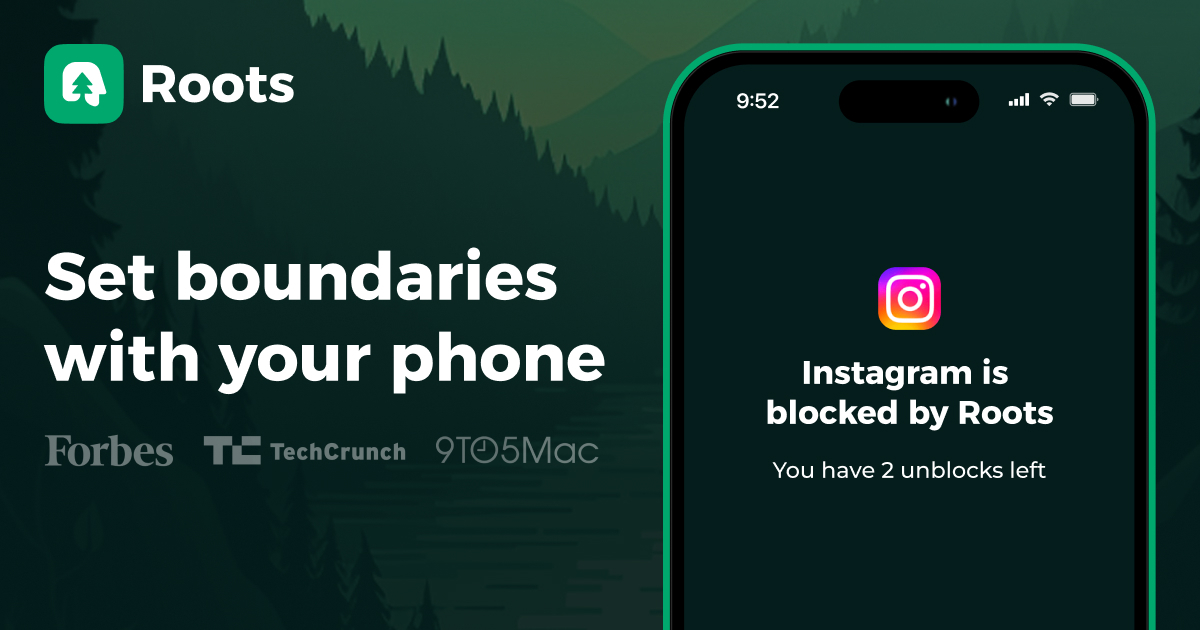
It's important to set boundaries with social media. Start with a screen time app like Roots. There are several good ones out there. Here's why this is key: https://getroots.link/aNqv9fK
@clinjar - Clint Jarvis
Apps like Roots keep you accountable. When blocking is active, you can't uninstall or unblock. This extra friction is key. Here's how to use it effectively in 4 steps:

@clinjar - Clint Jarvis
1. Block social media apps Keep social media blocked by at all times. Force yourself to unblock it intentionally. Create just enough pause to break the loop.
@clinjar - Clint Jarvis
2. Schedule downtime Set fixed windows to go full "Monk Mode" with social media completely blocked. • Mornings (5am-9am): no social media or news apps • Evenings: (6pm-midnight): no social media or work apps This downtime helps rewire your brain.

@clinjar - Clint Jarvis
3. Instant app blocking Sometimes I need to block everything: • Stay focused when I'm doing deep work • Reduce the temptation to “just check for a second” • Block distracting apps when I get in the car I use it daily.

@clinjar - Clint Jarvis
4. Pick scroll replacements Simple things you can use to redirect yourself away from scrolling. Go for a walk, pick up a book, or play with your dog. Roots will direct me to better things (like Lucy) when apps are blocked.

@clinjar - Clint Jarvis
With small changes, my phone usage has dropped from 4 hours to around 1 daily. Pickups from 150 to 50 daily. My mind feels clearer, calmer, more focused.

@clinjar - Clint Jarvis
Setting boundaries with social media is key. Focus is your most valuable asset in today's distracted world. Here's a link to the screen time app I mentioned: https://getroots.link/aNqv9fK
@clinjar - Clint Jarvis
Video Credits: - Angela Duckworth at Bates: Push those cell phones away | Bates College - 30 Days Without Social Media | My Transformation | Niklas Christl
@clinjar - Clint Jarvis
This is Marcus Aurelius. Roman emperor, stoic philosopher, and the reason millions today are learning to live in the present. In a world of distraction, he lived by design. Here’s the daily routine that made him: 🧵

@clinjar - Clint Jarvis
1. Early rise Marcus started every day at dawn, even when it was hard. "I wasn't made to huddle under warm blankets, but to go to work—as a human being." This was his moment of peace before the world intruded. Today, we call this "defending the morning."
@clinjar - Clint Jarvis
2. Mental rehearsal Before starting the day, he imagined the types of people he'd likely face: • Rude • Arrogant • Ungrateful He prepared to meet them with patience. This exercise (premeditatio malorum) kept him grounded.

@clinjar - Clint Jarvis
3. Focused work Marcus believed in single-tasking. He planned his day—including bathroom breaks—to stay on track. No multitasking, no complaining. His job was to do what was in front of him, fully and without ego.
@clinjar - Clint Jarvis
4. Exercise & Nature He trained his body like his mind—daily. • Boxing • Wrestling • Walking • Riding He studied nature closely, noticing everything from animal movement to the curve of grain in the wind.
@clinjar - Clint Jarvis
5. Stress & Setbacks During his reign, Marcus endured: • War • Plague • Betrayal But he never complained. He saw every challenge as a chance to practice virtue. And his journal was where he worked through setbacks calmly.
@clinjar - Clint Jarvis
6. Evening review At night, Marcus paused to reflect: "What did I do well?" "Where did I fall short? " He reread Stoic texts, wrote letters to mentors, and made sure the day’s lessons stuck. Self-reflection helped him close the day with clarity, not chaos.
@clinjar - Clint Jarvis
7. Sleep discipline He treated sleep like a duty. • No deviations • No distractions • No indulgences On nights he couldn't sleep, he stayed calm. He knew rest was essential, not just for recovery, but for preparing for tomorrow's duty.
@clinjar - Clint Jarvis
Marcus Aurelius lived by design. That’s what made him unshakable in a chaotic world. Today, most of us let our phones control our lives. We mindlessly allow them to take our time and attention.
@clinjar - Clint Jarvis
We spend more time with our phone than with anyone. If you want presence and clarity, start by setting boundaries there. Use a screen time app (like Roots) to stay accountable. Here’s how to set it up: https://getroots.link/aNqv9fK
@clinjar - Clint Jarvis
Step 1: Add friction Keep social media blocked by default. Make yourself unblock it intentionally. That small pause is often all it takes to break the loop.
@clinjar - Clint Jarvis
Step 2: Set daily limit Limit your social media to 30 minutes a day. Once you hit that limit, you’re locked out. No uninstalling. No logging out. No workarounds. (This is where Roots makes it effortless.)
@clinjar - Clint Jarvis
Step 3: Schedule downtime Protect your sacred hours. • Morning (5am–9am): no social or work apps • Evening (6pm–midnight): everything blocked This setup can restore your sleep, alertness, and clarity—fast.

@clinjar - Clint Jarvis
Marcus lived by design, not by default. In our world, that starts with your phone. Either you design your usage—or it will control you. Here’s the link again if you’re ready to make a change: https://getroots.link/aNqv9fK
@clinjar - Clint Jarvis
For the full video: I recommend watching “The Daily Routine That Built Marcus Aurelius” by Ryan Holiday (Daily Stoic) on YouTube.
@clinjar - Clint Jarvis
You can turn any iPhone into a "dumb phone". Strip out distractions. Keep what matters. And switch back whenever you need. Here’s how to do it (in under 5 minutes):

@clinjar - Clint Jarvis
First, the end result: Once you complete this setup, you'll have a phone that works for you — instead of the other way around. • Brick your phone in the morning and evening • Daily limit on social media apps • Automatically turn on grayscale at night
@clinjar - Clint Jarvis
Here's how to do it: Step 1: Install a screen time app We'll use Roots in this example (there are several good ones out there). Here's why this is key: https://getroots.link/aNqv9fK
@clinjar - Clint Jarvis
Screen time apps keep you accountable. It's like putting brakes on a car. The iOS app limits are too easy to ignore, but with these apps: • No ignoring your limits • No uninstalling the apps • No easy workarounds
@clinjar - Clint Jarvis
Step 2: Schedule "dumb phone" times Use Roots to create a daily schedule to block distracting apps. • Mornings (6-9am): social media and work apps blocked • Evenings (7pm-11pm): everything blocked This gives your mind a chance to reset.

@clinjar - Clint Jarvis
Step 3. Add friction to social media apps Keep social media blocked by at all times. You will only be allowed a limited number of sessions per day. This forces you to use it intentionally. And keeps you from scrolling mindlessly all day.
@clinjar - Clint Jarvis
Roots lets you add "speed bumps" before you can open certain apps. This forces you to complete activities before you scroll. My favorite is this breathing exercise.
@clinjar - Clint Jarvis
Step 4: Set hard limits Set a hard limit on the apps you waste time on. Once you reach the limit, your phone is bricked. Roots prevents workarounds like simply uninstalling the app.
@clinjar - Clint Jarvis
Step 5: On-demand app blocking Set up "app groups" like: • Social media apps • All distracting apps • Social and work apps Once these app groups are created you can block them with one tap.

@clinjar - Clint Jarvis
Step 6. Prevent workarounds Enable "app uninstall protection" — this will keep you from deleting the app while blocking is active. You can also use Shortcuts to set up a redirect that prevents you from removing "screen time access" in settings.
@clinjar - Clint Jarvis
Step 7: Last but not least — grayscale. People who switch to grayscale report: ✅ Less impulse-checking ✅ Lower screen time ✅ Less social media scrolling ✅ More intentional phone use

@clinjar - Clint Jarvis
You can automate grayscale to turn on daily at sunset: • Open the iOS Shortcuts app • Go to Automation → Tap + • Select Time of Day → Sunset • Tap Add Action (or "New Automation") • Search for Set Color Filters → Select it • Confirm Color Filters On, then tap Next • Toggle off Ask Before Running → Confirm Don't Ask → Tap Done • Set to Run Automatically (repeat for sunrise to disable it in the morning)
@clinjar - Clint Jarvis
Using this flexible dumb phone set up: • Screen time dropped from 4 hours to 1 daily • Pickups from 150 to 50 daily My mind feels more calm, clear, and creative.

@clinjar - Clint Jarvis
You can turn any iPhone into a dumb phone without giving it up completely. Here's a link to the screen time app I used: https://getroots.link/aNqv9fK
@clinjar - Clint Jarvis
Stanford paid 35,000 people to quit social media. This was the largest study on emotional health in history. The results were so shocking, scientists called it "comparable to therapy." Here's what happens when you break free from the algorithm: 🧵

@clinjar - Clint Jarvis
Over 35,000 people took part. They were paid to deactivate either Instagram or Facebook for 6 weeks. It was done right before the 2020 Presidential Election. And the results were undeniable:
@clinjar - Clint Jarvis
Participants didn’t just feel better. They were measurably happier, less anxious, and less depressed. • Facebook users saw a 6% improvement in emotional well-being • Instagram users saw a 4% improvement And not only that...

@clinjar - Clint Jarvis
The researchers found that: • Quitting Facebook was 15% as effective as therapy • Quitting Instagram: 22% as effective • Both eliminated over half of this election-related stress. That’s massive for something as simple as logging out. But here's the twist:

@clinjar - Clint Jarvis
These people didn’t stop using their phones. They just switched to other apps. Instagram users shifted almost all their time to other apps. Facebook users only spent 9 minutes less on their phones per day. Now, what does that mean?
@clinjar - Clint Jarvis
Social media platforms like these aren’t just time-fillers. They’re engineered for: • Endless scrolling • Addictive feedback loops • Constant comparison Removing them cuts off a huge source of emotional friction.
@clinjar - Clint Jarvis
As Psychologist Angela Duckworth put it: Our cell phones are “adult pacifiers.” But her real point is deeper: Don’t rely on willpower. Change your environment instead. She calls it situation modification.
@clinjar - Clint Jarvis
She then explained the "brain drain" effect. Just having your phone near you, face-down and silent, can lower your IQ test score. Why? Because part of your brain is still resisting it. So, what is the solution?
@clinjar - Clint Jarvis
The Stanford study proved something we already knew deep down: You don’t need to quit tech. You just need to be more intentional with your time. Here's where you can start: 👇
@clinjar - Clint Jarvis
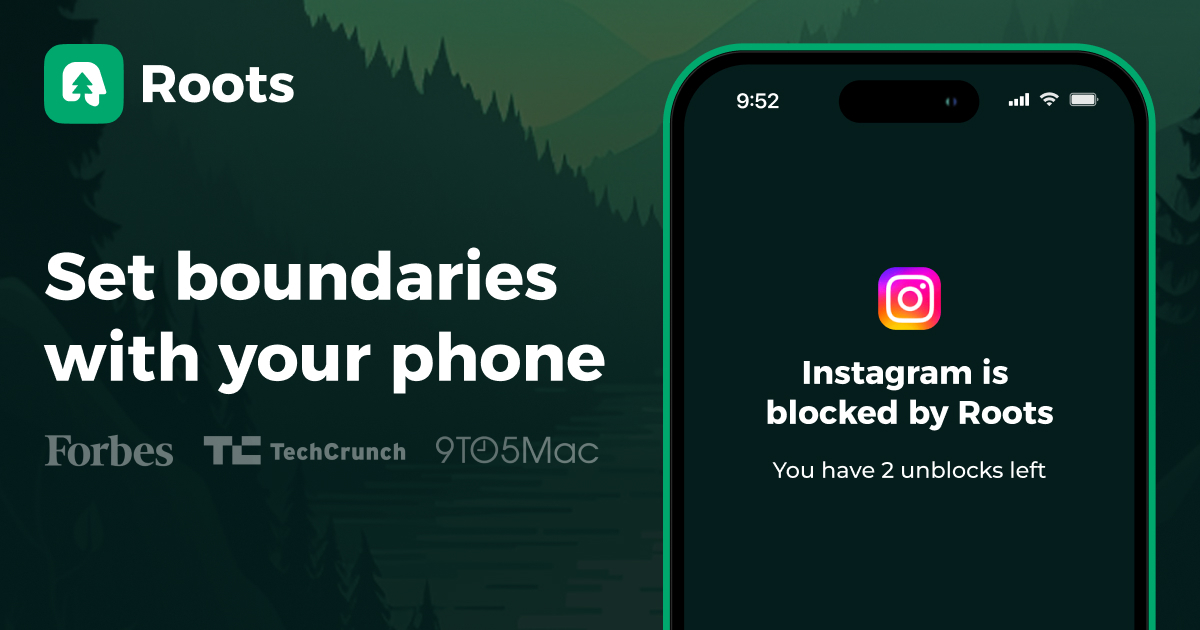
Technology can help set boundaries with social media. Start with a screen time app like Roots. There are several good ones out there. Here's why this is key: https://getroots.link/7rPUkiz
@clinjar - Clint Jarvis
Apps like Roots keep you accountable. When blocking is active, you can't uninstall or unblock. This extra friction is key. Here's how to use it effectively in 5 steps:

@clinjar - Clint Jarvis
1. Block social media apps Keep social media blocked by at all times. Force yourself to unblock it intentionally. Create just enough pause to break the loop.
@clinjar - Clint Jarvis
2. Schedule downtime Set fixed windows to go full "Monk Mode" with social media completely blocked. • Mornings (5am-9am): no social media or news apps • Evenings: (6pm-midnight): no social media or work apps This downtime helps rewire your brain.

@clinjar - Clint Jarvis
3. Instant app blocking Sometimes I need to block everything: • Stay focused when I'm doing deep work • Reduce the temptation to “just check for a second” • Block distracting apps when I get in the car I use it daily.

@clinjar - Clint Jarvis
4. Pick scroll replacements Simple things you can use to redirect yourself away from scrolling. Go for a walk, pick up a book, or play with your dog. Roots will direct me to better things (like Lucy) when apps are blocked.

@clinjar - Clint Jarvis
5. Do a weekly detox. Roots hosts a weekly Social Media Detox each Sunday. The clarity after that day is incredible.

@clinjar - Clint Jarvis
With small changes, my phone usage has dropped from 4 hours to around 1 daily. Pickups from 150 to 50 daily. My mind feels clearer, calmer, more focused.

@clinjar - Clint Jarvis
Setting boundaries with social media is key. Focus is your most valuable asset in today's distracted world. Here's a link to the screen time app I mentioned: https://getroots.link/7rPUkiz
@clinjar - Clint Jarvis
Video Credits: - Angela Duckworth at Bates: Push those cell phones away | Bates College - 30 Days Without Social Media | My Transformation | Niklas Christl
@clinjar - Clint Jarvis
"Popcorn Brain" is the new digital epidemic. It's why you: • Can't finish a book anymore • Constantly jump between tasks • Feel mentally drained all the time Here's how it fragments your focus (and how to get your brain back):🧵

@clinjar - Clint Jarvis
"Popcorn Brain" is a term coined by researcher David Levy at the University of Washington in 2011. It describes a mind that rapidly jumps from thought to thought, like popcorn kernels popping randomly. This isn't just normal distraction...
@clinjar - Clint Jarvis
Think about how your mind works now vs. 10 years ago. It's harder to: • Read a full article without skimming • Complete tasks without checking your phone • Have conversations without losing focus It's not your fault – your brain is being rewired:
@clinjar - Clint Jarvis
UC researcher Gloria Mark found: Our attention spans have dropped from 2.5 minutes in 2004 to just 47 seconds today on devices. That's an 80% decrease in sustained focus. The impact goes far beyond productivity:
@clinjar - Clint Jarvis
Your brain wasn't built for rapid context-switching. Each shift drains mental energy and triggers stress hormones. The main cause? Your phone, and social media.
@clinjar - Clint Jarvis
Social media platforms engineer this fragmentation with features that hijack attention: • Real-time notifications • Infinite scrolls • Targeted ads • Engagement-optimizing algorithms Each interaction activates your brain's reward pathways:
@clinjar - Clint Jarvis
These quick dopamine hits mimic addiction patterns. A 2019 study found internet use actively changes cognition. Fast-paced content trains your brain to prefer quick hits over deep focus. This creates a cycle where your ability to concentrate deteriorates over time:
@clinjar - Clint Jarvis
The more you feed your brain quick stimulation, the more it craves. But there's good news: You can reverse this process.
@clinjar - Clint Jarvis
Our brains can be rewired. You just need to set boundaries. Protect you when your mind is vulnerable. Here is where you can start 👇
@clinjar - Clint Jarvis
Technology can help set boundaries with social media. Start with an app blocker like Roots. There are several good ones out there. Here's why this is key: https://apps.apple.com/app/apple-store/id6446800962?pt=120393990&ct=X@clinjar0621PBrain&mt=8

@clinjar - Clint Jarvis
Apps like Roots keep you accountable. When blocking is active, you can't uninstall or unblock. This extra friction is key. Here's how to use it effectively in 5 steps:

@clinjar - Clint Jarvis
1. Block social media apps Keep social media blocked by at all times. Force yourself to unblock it intentionally. Create just enough pause to break the loop.
@clinjar - Clint Jarvis
2. Schedule downtime Set fixed windows to go full "Monk Mode" with social media completely blocked. • Mornings (5am-9am): no social media or news apps • Evenings: (6pm-midnight): no social media or work apps This downtime helps rewire your brain.

@clinjar - Clint Jarvis
3. Instant app blocking Sometimes I need to block everything: • Stay focused when I'm doing deep work • Reduce the temptation to “just check for a second” • Block distracting apps when I get in the car I use it daily.

@clinjar - Clint Jarvis
4. Pick scroll replacements Simple things you can use to redirect yourself away from scrolling. Go for a walk, pick up a book, or play with your dog. Roots will direct me to better things (like Lucy) when apps are blocked.

@clinjar - Clint Jarvis
Bonus: Use grayscale on your phone It works. Studies have shown it makes your phone much less addicting. Pro tip: use shortcuts to turn on grayscale at sunset.

@clinjar - Clint Jarvis
With small changes, my phone usage has dropped from 4 hours to around 1 daily. Pickups from 150 to 50 daily. My mind feels clearer, calmer, more focused.

@clinjar - Clint Jarvis
Setting boundaries with social media is key. Focus is your most valuable asset in today's distracted world. Here's a link to the app blocker I mentioned: https://apps.apple.com/app/apple-store/id6446800962?pt=120393990&ct=X@clinjar0621PBrain&mt=8
@clinjar - Clint Jarvis
Video/ Image credits: • What is a popcorn brain? | The Diary of a CEO Shorts • Movistar • Why You Can't Focus Anymore! | Shane Melaugh • Neuroscientist: How To Focus In 30 Seconds | Andrew Huberman • Why Tom Holland Quit Social Media |F-PODCAST • PHONE ADDICTION || ANIMATION | DNL FUN • How To Stay Focused | How To Stay Focused
@clinjar - Clint Jarvis
He deleted almost every app from his phone. Then he wrote 4 bestsellers in 9 years. Cal Newport's controversial take: Your phone is making you mediocre. His science-backed system for getting your brain back: https://t.co/r5CS47dh5u
