reSee.it - Tweets Saved By @freddiesayers

Saved - February 7, 2026 at 7:55 PM

@freddiesayers - Freddie Sayers

And… just as I suspected the whole story of this girl being attacked by a migrant is confected propaganda slop. Good day to all the thousands of morons who amplified it and who piled on me for questioning it. 👇👇👇 https://www.dailymail.co.uk/news/article-15040815/The-truth-migrant-Dundee-schoolgirl-brandished-knife-wrong-rabble-rousers-Elon-Musk-Tommy-Robinson-were.html

@freddiesayers - Freddie Sayers

Is there any actual evidence that the 14 year old girl brandishing an axe and a knife was bravely defending her 12 year old sister from migrant aggressors, or is this just another propaganda slop story that people who really should know better are falling for? @SamoBurja https://t.co/gVmgDdgxcD

Saved - April 19, 2024 at 3:55 PM
reSee.it AI Summary
I present a video report exposing the 'Global Disinformation Index' and its impact on political speech in Europe and the US. Please share this widely to raise awareness. Subtitles are available. Watch the full video to learn more about the efforts to defund @UnHerd.

@freddiesayers - Freddie Sayers

Here is the full length video report into the mysterious 'Global Disinformation Index' and how it censors political speech across Europe and the US. Please share widely, more people need to know. https://t.co/vz2cz36q2v

Video Transcript AI Summary
Unheard attended a parliamentary hearing on the future of news and discussed the issue of disinformation. They discovered a worldwide system of censorship that blocks certain websites from receiving ad revenue. Unheard was placed on the Global Disinformation Index's exclusion list, despite publishing well-known writers and interviewing influential figures. The GDI defines disinformation as narratives that are adversarial, even if factually accurate. The GDI is a government-funded organization that receives money from various sources. Unheard argues that this type of censorship is dangerous and stifles important discussions. They urge individuals and companies to be aware of where their ad dollars are going and to support independent media.
Full Transcript
Speaker 0: Hello, and welcome back to Unheard. Well, normally, we don't like talking about ourselves much. There are too many important and interesting things going on elsewhere in the world. But today I was at the House of Lords in Westminster attending a special parliamentary hearing on the future of news. They had invited me to come, and there, we ended up talking a lot about disinformation. Because over the past few months, as part of our normal routine business, here at Unheard, we seem to have stumbled upon something really quite important, which is a worldwide system of censorship that crosses continents, and that we think more people need to know about. So it all started last year when we decided to put adverts on our website for the first time. We have a paid subscription, which I hope you are signing up to. We also have a cafe and a members club here in London. So we have a bunch of different revenue sources, but we've never had proper ads, so we wanted to add that. And we went to 3 successive ad agencies, each of which were really excited about our product. We have a large audience in the UK and the US, very influential people, etcetera. The numbers they were expecting us to get were very significant, and each time, in 3 successive times, we only got a tiny, tiny fraction of what was expected, and this was a real mystery. The ad agencies themselves were confused by it. Eventually, with the 3rd agency, they revealed what they were seeing on their internal dashboards. We were using an ad agency. They then used a technical platform called Grapeshot, which is a British company that was sold to Larry Ellison's Oracle back a few years ago, and Grapeshot in turn then pinged something called the Global Disinformation Index, all the way up the chain for information about, quote, unquote, brand safety, that is whether or not brands would wanna be associated with particular websites. It turns out we had been put on the GDI's dynamic exclusion list, which is basically their list of most dangerous publications, but you should not go anywhere near. Obviously, we were a bit baffled by this, as was our ad agency, because we published some of the most famous writers in the world, prize winning authors, professors from prestigious universities, we interview politicians, pop stars, cultural icons, playwrights, all sorts of people who you really wouldn't expect would end up on the exclusion list of some organization like that. So we complained, And eventually, after weeks of waiting, we got this in response. Speaker 1: Our team re reviewed the domain. The rating will not change as it continues to have anti LGBTQI plus narratives. The site authors have also been called out for being anti trans. Kathleen Stock is acknowledged as a prominent gender critical feminist. She has opposed transgender self identification in regards to proposed reforms in the 2004 UK Gender Recognition Act. Speaker 0: So I've got to confess, we were pretty outraged by that email. I mean, in the context of the Cass review here in the UK, which has just found the whole parts of the gender affirmation, so called medicine treatments that were offered over the past few years to children were under evidenced and irresponsible, in the context of that, the importance of publishing dissenting voices like Kathleen Stock, who that email references, should be even more obvious. The GDI added further links to articles by Julie Bindel, and another by Debbie Hayton, who is actually a trans woman, but who has a slightly different opinion about some of the ideology. Apparently, the GDI thinks that holding, quote unquote, gender critical beliefs, I. E. Believing that biological differences are real and matter, equates to disinformation, despite the fact, firstly, that those beliefs are now specifically protected in British law, since the Maya Forstater case we had here, it's actually enshrined in the Equalities Act that it's a protected characteristic, and it's also, polling evidence shows, held by the majority of the population. So you have a weird scenario where a a self appointed organization is deciding that a explicitly legal and majority held view is enough to get an entire website blocked from international ad exchanges. I offer that as just one example, which is current because it's happening right now, and the government is paying for this organization right now. Under the umbrella term of disinformation, there's been this huge blossoming of not for profits companies and indeed government agencies that can take very politicized views on things, without proper accountability and we should try to stop that. Speaker 2: That's a hugely powerful example you've just given. Speaker 0: Until relatively recently, disinformation wasn't even a word. It first became used popularly in the 19 eighties as a translation or a transliteration of the Soviet concept of desinformatsa, meaning deliberate dissemination of false reports as a tool to attack somebody. It started to gain some currency in a political context in the US in the 2000s, but like so much of our current culture war, it took off in 2016 with Trump, with Brexit, and then was supercharged during the COVID years of 2020 and 21. The reason for this, if you ask someone who is implanted in the disinformation movement, will be that suddenly out of nowhere during those years, all sorts of untrue things were being said and believed on the internet. That's how they view it. And no doubt, they would say that the Trump election, the Brexit result, and probably COVID were full of this worrying disinformation. The other way of looking at it is that establishment voices being challenged during those events by opinions that they didn't hold, and yet lots of people outside the Beltway did hold, had to come up with new measures to outlaw them, to deem other opinions as somehow unacceptable. It's a way of moving what should be a political conversation into the realm of expertise and saying, no, there is an official truth here, and if you don't agree with it, you are dangerous, you're irresponsible, your voice shouldn't be heard. Now, that has been happening a lot. Let's look at the chart of Google searches. This is provided by Google for disinformation between 2016 and 2022. Well, you can see that from June to December 2016, I. E. From the beginning of the Brexit period right the way through to the election of Trump, the search has already increased fourfold. And then from 2016 to 2022, they increased 30 times. So in other words, disinformation was created as a concept during that era. In response, what you see is that corporations, big technology companies, and governments all feel, 'Ah, there's this thing everyone's talking about, it's officially a danger, we have to do something in response.' And it creates a marketplace for enterprising people who have startups, who are commercially minded, or for people who want to have influence and build big not for profits that survive on government money, to suddenly say, hey, I'm a specialist in detecting misinformation and disinformation. Why don't you rely on me to go around judging whereabouts it exists on the Internet? One of these organizations is the Global Disinformation Index. Let's have a look at their history. The Global Disinformation Index was founded in the UK in 2018, and its objective, as it stated at the time, was explicitly to disrupt the business model for online disinformation by starving, offending publications of funding. Its 2 founders' CVs are, to put it mildly, straight out of central casting. Claire Melford's World Economic Forum biography states that before founding the GDI, she, quote, led the transition of the European Council on Foreign Relations from being part of George Soros' Open Society Foundation to independent status. Her co founder, Daniel Rogers, worked apparently, quote, in the US intelligence community, we don't have any more details than that, before founding a company called Turbium Labs that uses AI and machine learning to scour the Internet for illicit use of sensitive data. This he sold to Deloitte. If that all sounds a bit conspiratorial, I'm afraid it gets worse because alongside George Soros' Open Society Foundation, which gives money to the GDI, they also receive money from the UK government, via the Foreign, Commonwealth and Development Office, the European Union, the German Foreign Office, and a body called Dysinfo Cloud, which was created and funded by the US State Department. So just to be clear, this means the GDI is a government funded organization. From the UK, from Europe, and from the US, taxpayer dollars are flowing to sustain this mysterious body that is deciding which media websites have a business model and which ones don't. The governments, no doubt, feel like this is a responsible thing to do because they're helping fact checking and helping to solve disinformation. But if you look at the definition of how the GDI actually makes its decisions, things get even more interesting. When it was first founded back in 2018, they defined this term disinformation as, quote, deliberately false content designed to deceive. Now within those very strict parameters, you could make the case that it is useful to have fact checkers calling out the most egregious offenders, doing something useful for society. Personally, I think you're gonna run into trouble pretty quickly even if you go down that road, but you can see the logic. However, what they've done since 2018 is broaden the definition of what disinformation actually means. They now train both their algorithms and their researchers to look for something called, quote, an adversarial narrative. And that basically means stories that may be factually true, but which pit people against each other by attacking either an individual, an institution, or the science. It turns out that the founder of GDI, Claire Melford, gave an interview back in 2021 at the London School of Economics, where she explained all this very straightforwardly. She said Speaker 2: Because a lot of disinformation is, I hope I've shown, is not just whether something is true or false, it, escapes from the the limits of fact checking. Something can be factually accurate but still extremely harmful, And it leads us to a a perhaps a more useful definition of disinformation, which is, it's, instantiated through these different narratives. It is it's not saying something is or is not disinformation, but it is saying content on this site or this particular article is content that is anti immigrant, content that is anti women, content that is anti semitic. Speaker 0: She explains that larger traffic websites like ours are manually rated by humans, but most are rated using automatic AI, and that they've built this so called adversarial narrative into the AI. Speaker 2: And we actually instantiate our definition of disinformation as adversarial narrative, topics within the technology. So each adversarial narrative is given its own machine learning classifier, which then allows us to search for content that matches that narrative at scale. So you'll see on the, top right of this some colorful bars. It these these are screenshots from our internal, dashboards of our of our technology stack. The the colorful bars, each of them represent a different narrative, so you can see, misogyny, Islamophobia, antisemitism, anti black content, climate change denial, etcetera. Speaker 0: So it looks technical. There's lots of charts, but actually, Melford's team and her algorithm are basically looking for things that she finds offensive, that she doesn't agree with, and the result of those decisions is to defund and break the business models of those publications. When she starts listing her passion projects, the things that she herself is moved by, I'm afraid the list is somewhat predictable, including support for the January 6th Insurrections, the pernicious influence of, quote, white men in Silicon Valley, and of course, anything that might undermine the global response to the existential challenge of climate change. So each of those issues, of course, she has her complete right to be moved by and think are very important. I would not challenge that. But those issues are highly contentious, people have a wide range of legitimate views on them, and they require robust uncensored discussion if we're ever gonna find good solutions for them. One way to not find those solutions is to try and centrally control a one particular narrative and shut down anyone who dissents. In the case of science, challenges to the orthodoxy are the be all and end all of science. You need that in order to reach good outcomes, and I'm afraid the huge failures of the official response to COVID-nineteen is the perfect demonstration of this. In fact, in Claire Melford's lecture that she gave at the LSE, one of the examples she handpicked to showcase the good work of the Global Disinformation Index was a particular example on a Spanish language website from June 2021 about the delta variant of COVID 19. Speaker 2: This is a Spanish language site, elerta de jitale, talking about how a third of deaths in the United Kingdom from the delta variant are amongst those people who are vaccinated, which is clearly untrue. And it's, Chipotle who has been caught, next to this ad and, unfortunately for them, has funded this highly disinformation about vaccines. Speaker 0: Highly dangerous disinformation about vaccines is what Claire Melford calls it, but a little fact checking tells a bit of a different story. The statistic being reported in that Spanish language website comes from a June 2021 Public Health England report into COVID variants that, in table 6 on page 15, sets out the 42 known deaths from the Delta variant that happened in 2021 between January June. Of those, it sets out 23 were unvaccinated, 7 were vaccinated with 1 shot, and 12 were fully vaccinated. In other words, 29%, roughly a third, were fully vaccinated, and an additional 17% were partially vaccinated, making a total, by my count, of around 45% who were vaccinated to some degree. So the headline on the Spanish language website claiming roughly a third was not inaccurate at all. If anything, it underplayed the severity of the story. The only disinformation in that example is in fact GDI's claim that it's untrue, which still stands uncorrected on YouTube. Examples like this are easy to find. Right there on the GDI website is a 2020 blog, still standing, unedited, no footnote, about the quote, Wuhan Lab conspiracy theory about the origins of COVID-nineteen, and how cutting off ads to these fringe sites and their outer networks is the first action needed. This is still there long after Facebook and other big tech companies have even corrected their policies and conceded that the so called lab leak theory was, at the very least, a legitimate hypothesis and should never have been censored. So where have we got to? It would be bad enough if there were mysterious, unaccountable organizations funded by government money just deciding what was true and what was not true in some kind of fact checking operation, and trying to shut people down who they disagreed with. Because as I think we've demonstrated, it's very hard to have an official version of truth, and you end up shutting out important alternative viewpoints. But this is way worse, because by redefining disinformation as quote unquote adversarial narratives, they're pretty much taking in all of journalism. I mean, look at any front page, whether it is the Daily Mirror, The Guardian, The New York Post, The New York Times, 9 times out of 10 it's pretty adversarial, and in fact, usually that's a good thing, because the official narrative needs challenging, and journalists used to think it was part of their job to be adversarial to it. So what is happening here is actually a lot more dangerous and a lot more widespread than anyone realizes. Unlike over here in the UK and in Europe, some people in the US have already started taking action against the Global Disinformation Index. Things began to get a bit worse for them in December 20 22 when they put out a report that pretty much overstepped the mark because they listed publicly their 10 most dangerous websites, the websites or publications that they think are most at risk for disinformation. And let's take a look at them. Yes, there they are, pretty much all of them conservative leaning. Then accompanying it, they chose their least dangerous websites, the websites that were most trustworthy, and there they are, at least 9 out of 10 of them, liberal or left leaning. In response, there have been legal cases. First of all, some of these publications, including The Daily Wire and The Federalist, have teamed up with the attorney general of Texas to sue the state department for funding GDI and NewsGuard and similar entities that they say infringes their First Amendment rights. That's still in the courts. And separately, an initiative to prevent the Defense Department legally from using any advertiser that itself uses NewsGuard or the Global Disinformation Index or similar entities, has actually been successful. It's part of federal law. But the GDI is a British company. It has a US not for profit and a European, but it is a British company. And a recent question in the House of Commons that was written by MP Philip Davis actually got an answer. That £2,600,000 was given in the period up to last year to the GDI, and that, surprise, surprise, there is still frequent contact between the GDI and the Counter Disinformation and Media Development Unit. The truth is that the Global Disinformation Index is just the tip of the iceberg. This problem is much more widespread than just one organisation. And it comes down, I think, to a misunderstanding, something we've seen a huge amount of since 2016, since that populist revolt that happened in both Britain and the US. The people on the other side of it let's call them the establishment, people who are used to being in charge, who are used to having a certain spectrum of belief when they're challenged outside of it, they have 2 choices: either they try and reach across to those people who no longer believe them and persuade them that they have good answers, engage in a genuine democratic discussion, or if they're feeling frightened, if they're feeling on the back foot, they try to just shut them down. And this is really what the whole disinformation movement is about. So if they want to improve trust, if they want to bring people together, the only way is to have a free and honest conversation about things. The role of government, if there is a role, must be to stop monopoly powers and stop enormous, highly funded tech and vested interests coalescing around a particular ideological viewpoint and trying to police it, that is the way to make it worse, not better. Private companies also have a really important role to play. If you're involved in the ad industry or if your corporation or your company spends any money on advertising, check: are you relying on one of these networks that itself gets partisan information from organizations like the GDI? And if so, stop using them. Are you spending your ad dollars on a wide range of websites with different political views, or are they all going to a particular collection that agree with each other? By the way, you're actually not reaching the whole population if you're doing that, so it's not even good commerce. And if you're the boss of a big organization, make sure you know what's happening further down the food chain, because quite often there will be ideological people in the lower reaches of your organization that are deliberately diverting money from that company towards particular ideological viewpoints. For example, last year, Oracle announced that it was cutting ties with the GDI precisely on free speech grounds, but they are still collaborating. Is the boss of Oracle, Larry Ellison, aware of this? And if you are an educated campaigner, like Clare Melford Claire, by the way, come on the show, you didn't respond to our request for comment, but if you want to discuss this further, we are waiting and would love to have a conversation I believe that although you may think you're doing the world a service, in fact, what you are doing is intensifying our path towards becoming more radicalized and more divided. If you've been listening to this and would like to help, the one thing you can do is sign up. We have a paid subscription at UnHerd. It costs a tiny amount, and there are lots of deals ongoing all the time, but it makes a huge to us. And if they try and defund us, they try and shut down the advertising, at least if we have our loyal subscriber base, we'll be fine, and we can carry on challenging the narrative. Go to unheard.com/join.

@freddiesayers - Freddie Sayers

With subtitles:

@unherd - UnHerd

INVESTIGATION: We shine a light on the “Global Disinformation Index,” an international, government-funded “ratings agency” that is trying to defund @UnHerd on spurious grounds. Watch and share full video ⬇️ https://t.co/45eRH6DDnJ

Video Transcript AI Summary
Unheard attended a parliamentary hearing on the future of news and discussed the issue of disinformation. They discovered a global system of censorship that blocks certain websites from receiving ads. Unheard was placed on the Global Disinformation Index's exclusion list, despite publishing reputable content. The GDI defines disinformation as adversarial narratives, which allows them to target publications they disagree with. The GDI is funded by various governments and organizations, including the UK government. They determine what is considered disinformation and have listed conservative-leaning websites as the most dangerous. Legal action has been taken against the GDI for infringing on First Amendment rights. The problem of censorship extends beyond the GDI, and it is important for individuals and companies to be aware of where their ad dollars are going.
Full Transcript
Speaker 0: Hello, and welcome back to Unheard. Well, normally, we don't like talking about ourselves much. There are too many important and interesting things going on elsewhere in the world. But today I was at the House of Lords in Westminster attending a special parliamentary hearing on the future of news. They had invited me to come, and there, we ended up talking a lot about disinformation. Because over the past few months, as part of our normal routine business, here at Unheard, we seem to have stumbled upon something really quite important, which is a worldwide system of censorship that crosses continents, and that we think more people need to know about. So it all started last year when we decided to put adverts on our website for the first time. We have a paid subscription, which I hope you are signing up to. We also have a cafe and a members club here in London. So we have a bunch of different revenue sources, but we've never had proper ads, so we wanted to add that. And we went to 3 successive ad agencies, each of which were really excited about our product. We have a large audience in the UK and the US, very influential people, etcetera. The numbers they were expecting us to get were very significant, and each time, in 3 successive times, we only got a tiny, tiny fraction of what was expected, and this was a real mystery. The ad agencies themselves were confused by it. Eventually, with the 3rd agency, they revealed what they were seeing on their internal dashboards. We were using an ad agency. They then used a technical platform called Grapeshot, which is a British company that was sold to Larry Ellison's Oracle back a few years ago, and Grapeshot in turn then pinged something called the Global Disinformation Index, all the way up the chain for information about, quote, unquote, brand safety, that is whether or not brands would wanna be associated with particular websites. It turns out we had been put on the GDI's dynamic exclusion list, which is basically their list of most dangerous publications, but you should not go anywhere near. Obviously, we were a bit baffled by this, as was our ad agency, because we published some of the most famous writers in the world, prize winning authors, professors from prestigious universities, we interview politicians, pop stars, cultural icons, playwrights, all sorts of people who you really wouldn't expect would end up on the exclusion list of some organization like that. So we complained, And eventually, after weeks of waiting, we got this in response. Speaker 1: Our team re reviewed the domain. The rating will not change as it continues to have anti LGBTQI plus narratives. The site authors have also been called out for being anti trans. Kathleen Stock is acknowledged as a prominent gender critical feminist. She has opposed transgender self identification in regards to proposed reforms in the 2004 UK Gender Recognition Act. Speaker 0: So I've got to confess, we were pretty outraged by that email. I mean, in the context of the Cass review here in the UK, which has just found the whole parts of the gender affirmation, so called medicine treatments that were offered over the past few years to children were under evidenced and irresponsible, in the context of that, the importance of publishing dissenting voices like Kathleen Stock, who that email references, should be even more obvious. The GDI added further links to articles by Julie Bindel, and another by Debbie Hayton, who is actually a trans woman, but who has a slightly different opinion about some of the ideology. Apparently, the GDI thinks that holding, quote unquote, gender critical beliefs, I. E. Believing that biological differences are real and matter, equates to disinformation, despite the fact, firstly, that those beliefs are now specifically protected in British law, since the Maya Forstater case we had here, it's actually enshrined in the Equalities Act that it's a protected characteristic, and it's also, polling evidence shows, held by the majority of the population. So you have a weird scenario where a a self appointed organization is deciding that a explicitly legal and majority held view is enough to get an entire website blocked from international ad exchanges. I offer that as just one example, which is current because it's happening right now, and the government is paying for this organization right now. Under the umbrella term of disinformation, there's been this huge blossoming of not for profits companies and indeed government agencies that can take very politicized views on things, without proper accountability and we should try to stop that. Speaker 2: That's a hugely powerful example you've just given. Speaker 0: Until relatively recently, disinformation wasn't even a word. It first became used popularly in the 19 eighties as a translation or a transliteration of the Soviet concept of desinformatsa, meaning deliberate dissemination of false reports as a tool to attack somebody. It started to gain some currency in a political context in the US in the 2000s, but like so much of our current culture war, it took off in 2016 with Trump, with Brexit, and then was supercharged during the COVID years of 2020 and 21. The reason for this, if you ask someone who is implanted in the disinformation movement, will be that suddenly out of nowhere during those years, all sorts of untrue things were being said and believed on the internet. That's how they view it. And no doubt, they would say that the Trump election, the Brexit result, and probably COVID were full of this worrying disinformation. The other way of looking at it is that establishment voices being challenged during those events by opinions that they didn't hold, and yet lots of people outside the Beltway did hold, had to come up with new measures to outlaw them, to deem other opinions as somehow unacceptable. It's a way of moving what should be a political conversation into the realm of expertise and saying, no, there is an official truth here, and if you don't agree with it, you are dangerous, you're irresponsible, your voice shouldn't be heard. Now, that has been happening a lot. Let's look at the chart of Google searches. This is provided by Google for disinformation between 2016 and 2022. Well, you can see that from June to December 2016, I. E. From the beginning of the Brexit period right the way through to the election of Trump, the search has already increased fourfold. And then from 2016 to 2022, they increased 30 times. So in other words, disinformation was created as a concept during that era. In response, what you see is that corporations, big technology companies, and governments all feel, 'Ah, there's this thing everyone's talking about, it's officially a danger, we have to do something in response.' And it creates a marketplace for enterprising people who have startups, who are commercially minded, or for people who want to have influence and build big not for profits that survive on government money, to suddenly say, hey, I'm a specialist in detecting misinformation and disinformation. Why don't you rely on me to go around judging whereabouts it exists on the Internet? One of these organizations is the Global Disinformation Index. Let's have a look at their history. The Global Disinformation Index was founded in the UK in 2018, and its objective, as it stated at the time, was explicitly to disrupt the business model for online disinformation by starving, offending publications of funding. Its 2 founders' CVs are, to put it mildly, straight out of central casting. Claire Melford's World Economic Forum biography states that before founding the GDI, she, quote, led the transition of the European Council on Foreign Relations from being part of George Soros' Open Society Foundation to independent status. Her co founder, Daniel Rogers, worked apparently, quote, in the US intelligence community, we don't have any more details than that, before founding a company called Turbium Labs that uses AI and machine learning to scour the Internet for illicit use of sensitive data. This he sold to Deloitte. If that all sounds a bit conspiratorial, I'm afraid it gets worse because alongside George Soros' Open Society Foundation, which gives money to the GDI, they also receive money from the UK government, via the Foreign, Commonwealth and Development Office, the European Union, the German Foreign Office, and a body called Dysinfo Cloud, which was created and funded by the US State Department. So just to be clear, this means the GDI is a government funded organization. From the UK, from Europe, and from the US, taxpayer dollars are flowing to sustain this mysterious body that is deciding which media websites have a business model and which ones don't. The governments, no doubt, feel like this is a responsible thing to do because they're helping fact checking and helping to solve disinformation. But if you look at the definition of how the GDI actually makes its decisions, things get even more interesting. When it was first founded back in 2018, they defined this term disinformation as, quote, deliberately false content designed to deceive. Now within those very strict parameters, you could make the case that it is useful to have fact checkers calling out the most egregious offenders, doing something useful for society. Personally, I think you're gonna run into trouble pretty quickly even if you go down that road, but you can see the logic. However, what they've done since 2018 is broaden the definition of what disinformation actually means. They now train both their algorithms and their researchers to look for something called, quote, an adversarial narrative. And that basically means stories that may be factually true, but which pit people against each other by attacking either an individual, an institution, or the science. It turns out that the founder of GDI, Claire Melford, gave an interview back in 2021 at the London School of Economics, where she explained all this very straightforwardly. She said Speaker 2: Because a lot of disinformation is, I hope I've shown, is not just whether something is true or false, it, escapes from the the limits of fact checking. Something can be factually accurate but still extremely harmful, And it leads us to a a perhaps a more useful definition of disinformation, which is, it's, instantiated through these different narratives. It is it's not saying something is or is not disinformation, but it is saying content on this site or this particular article is content that is anti immigrant, content that is anti women, content that is anti semitic. Speaker 0: She explains that larger traffic websites like ours are manually rated by humans, but most are rated using automatic AI, and that they've built this so called adversarial narrative into the AI. Speaker 2: And we actually instantiate our definition of disinformation as adversarial narrative, topics within the technology. So each adversarial narrative is given its own machine learning classifier, which then allows us to search for content that matches that narrative at scale. So you'll see on the, top right of this some colorful bars. It these these are screenshots from our internal, dashboards of our of our technology stack. The the colorful bars, each of them represent a different narrative, so you can see, misogyny, Islamophobia, antisemitism, anti black content, climate change denial, etcetera. Speaker 0: So it looks technical. There's lots of charts, but actually, Melford's team and her algorithm are basically looking for things that she finds offensive, that she doesn't agree with, and the result of those decisions is to defund and break the business models of those publications. When she starts listing her passion projects, the things that she herself is moved by, I'm afraid the list is somewhat predictable, including support for the January 6th Insurrections, the pernicious influence of, quote, white men in Silicon Valley, and of course, anything that might undermine the global response to the existential challenge of climate change. So each of those issues, of course, she has her complete right to be moved by and think are very important. I would not challenge that. But those issues are highly contentious, people have a wide range of legitimate views on them, and they require robust uncensored discussion if we're ever gonna find good solutions for them. One way to not find those solutions is to try and centrally control a one particular narrative and shut down anyone who dissents. In the case of science, challenges to the orthodoxy are the be all and end all of science. You need that in order to reach good outcomes, and I'm afraid the huge failures of the official response to COVID-nineteen is the perfect demonstration of this. In fact, in Claire Melford's lecture that she gave at the LSE, one of the examples she handpicked to showcase the good work of the Global Disinformation Index was a particular example on a Spanish language website from June 2021 about the delta variant of COVID 19. Speaker 2: This is a Spanish language site, elerta de jitale, talking about how a third of deaths in the United Kingdom from the delta variant are amongst those people who are vaccinated, which is clearly untrue. And it's, Chipotle who has been caught, next to this ad and, unfortunately for them, has funded this highly disinformation about vaccines. Speaker 0: Highly dangerous disinformation about vaccines is what Claire Melford calls it, but a little fact checking tells a bit of a different story. The statistic being reported in that Spanish language website comes from a June 2021 Public Health England report into COVID variants that, in table 6 on page 15, sets out the 42 known deaths from the Delta variant that happened in 2021 between January June. Of those, it sets out 23 were unvaccinated, 7 were vaccinated with 1 shot, and 12 were fully vaccinated. In other words, 29%, roughly a third, were fully vaccinated, and an additional 17% were partially vaccinated, making a total, by my count, of around 45% who were vaccinated to some degree. So the headline on the Spanish language website claiming roughly a third was not inaccurate at all. If anything, it underplayed the severity of the story. The only disinformation in that example is in fact GDI's claim that it's untrue, which still stands uncorrected on YouTube. Examples like this are easy to find. Right there on the GDI website is a 2020 blog, still standing, unedited, no footnote, about the quote, Wuhan Lab conspiracy theory about the origins of COVID-nineteen, and how cutting off ads to these fringe sites and their outer networks is the first action needed. This is still there long after Facebook and other big tech companies have even corrected their policies and conceded that the so called lab leak theory was, at the very least, a legitimate hypothesis and should never have been censored. So where have we got to? It would be bad enough if there were mysterious, unaccountable organizations funded by government money just deciding what was true and what was not true in some kind of fact checking operation, and trying to shut people down who they disagreed with. Because as I think we've demonstrated, it's very hard to have an official version of truth, and you end up shutting out important alternative viewpoints. But this is way worse, because by redefining disinformation as quote unquote adversarial narratives, they're pretty much taking in all of journalism. I mean, look at any front page, whether it is the Daily Mirror, The Guardian, The New York Post, The New York Times, 9 times out of 10 it's pretty adversarial, and in fact, usually that's a good thing, because the official narrative needs challenging, and journalists used to think it was part of their job to be adversarial to it. So what is happening here is actually a lot more dangerous and a lot more widespread than anyone realizes. Unlike over here in the UK and in Europe, some people in the US have already started taking action against the Global Disinformation Index. Things began to get a bit worse for them in December 20 22 when they put out a report that pretty much overstepped the mark because they listed publicly their 10 most dangerous websites, the websites or publications that they think are most at risk for disinformation. And let's take a look at them. Yes, there they are, pretty much all of them conservative leaning. Then accompanying it, they chose their least dangerous websites, the websites that were most trustworthy, and there they are, at least 9 out of 10 of them, liberal or left leaning. In response, there have been legal cases. First of all, some of these publications, including The Daily Wire and The Federalist, have teamed up with the attorney general of Texas to sue the state department for funding GDI and NewsGuard and similar entities that they say infringes their First Amendment rights. That's still in the courts. And separately, an initiative to prevent the Defense Department legally from using any advertiser that itself uses NewsGuard or the Global Disinformation Index or similar entities, has actually been successful. It's part of federal law. But the GDI is a British company. It has a US not for profit and a European, but it is a British company. And a recent question in the House of Commons that was written by MP Philip Davis actually got an answer. That £2,600,000 was given in the period up to last year to the GDI, and that, surprise, surprise, there is still frequent contact between the GDI and the Counter Disinformation and Media Development Unit. The truth is that the Global Disinformation Index is just the tip of the iceberg. This problem is much more widespread than just one organisation. And it comes down, I think, to a misunderstanding, something we've seen a huge amount of since 2016, since that populist revolt that happened in both Britain and the US. The people on the other side of it let's call them the establishment, people who are used to being in charge, who are used to having a certain spectrum of belief when they're challenged outside of it, they have 2 choices: either they try and reach across to those people who no longer believe them and persuade them that they have good answers, engage in a genuine democratic discussion, or if they're feeling frightened, if they're feeling on the back foot, they try to just shut them down. And this is really what the whole disinformation movement is about. So if they want to improve trust, if they want to bring people together, the only way is to have a free and honest conversation about things. The role of government, if there is a role, must be to stop monopoly powers and stop enormous, highly funded tech and vested interests coalescing around a particular ideological viewpoint and trying to police it, that is the way to make it worse, not better. Private companies also have a really important role to play. If you're involved in the ad industry or if your corporation or your company spends any money on advertising, check: are you relying on one of these networks that itself gets partisan information from organizations like the GDI? And if so, stop using them. Are you spending your ad dollars on a wide range of websites with different political views, or are they all going to a particular collection that agree with each other? By the way, you're actually not reaching the whole population if you're doing that, so it's not even good commerce. And if you're the boss of a big organization, make sure you know what's happening further down the food chain, because quite often there will be ideological people in the lower reaches of your organization that are deliberately diverting money from that company towards particular ideological viewpoints. For example, last year, Oracle announced that it was cutting ties with the GDI precisely on free speech grounds, but they are still collaborating. Is the boss of Oracle, Larry Ellison, aware of this? And if you are an educated campaigner, like Clare Melford Claire, by the way, come on the show, you didn't respond to our request for comment, but if you want to discuss this further, we are waiting and would love to have a conversation I believe that although you may think you're doing the world a service, in fact, what you are doing is intensifying our path towards becoming more radicalized and more divided. If you've been listening to this and would like to help, the one thing you can do is sign up. We have a paid subscription at UnHerd. It costs a tiny amount, and there are lots of deals ongoing all the time, but it makes a huge to us. And if they try and defund us, they try and shut down the advertising, at least if we have our loyal subscriber base, we'll be fine, and we can carry on challenging the narrative. Go to unheard.com/join.
Saved - August 21, 2023 at 3:36 PM
reSee.it AI Summary
The simultaneous implementation of 20mph speed limits and ULEZ in London and Wales raises concerns. Evidence suggests that driving slower at 20mph increases toxic emissions. The government's own report revealed that reducing speed from 30mph to 20mph increases CO2 and Nitrous oxide emissions. Additionally, the impact on traffic congestion seems detrimental. If the goal is to reduce emissions, why introduce a speed limit that worsens emissions and traffic jams?

@freddiesayers - Freddie Sayers

There's something very odd about changing speed limits to 20mph all over London (and Wales) at the same time as rolling out ULEZ in theory to reduce emissions. The evidence suggests that driving slower at 20mph *increases* toxic emissions...

@freddiesayers - Freddie Sayers

The government's own "process and impact evaluation" report on 20mph in 2018 advised that for most petrol cars, making them go 20mph instead of 30mph increases both CO2 and Nitrous oxide emissions into the community: https://assets.publishing.service.gov.uk/government/uploads/system/uploads/attachment_data/file/757302/20mph-technical-report.pdf

@freddiesayers - Freddie Sayers

Meanwhile, what is the cumulative effect on traffic jams of the 20mph limit? It certainly feels as if traffic is worse than ever along major routes which have introduced it... https://www.bbc.co.uk/news/uk-england-london-64219939
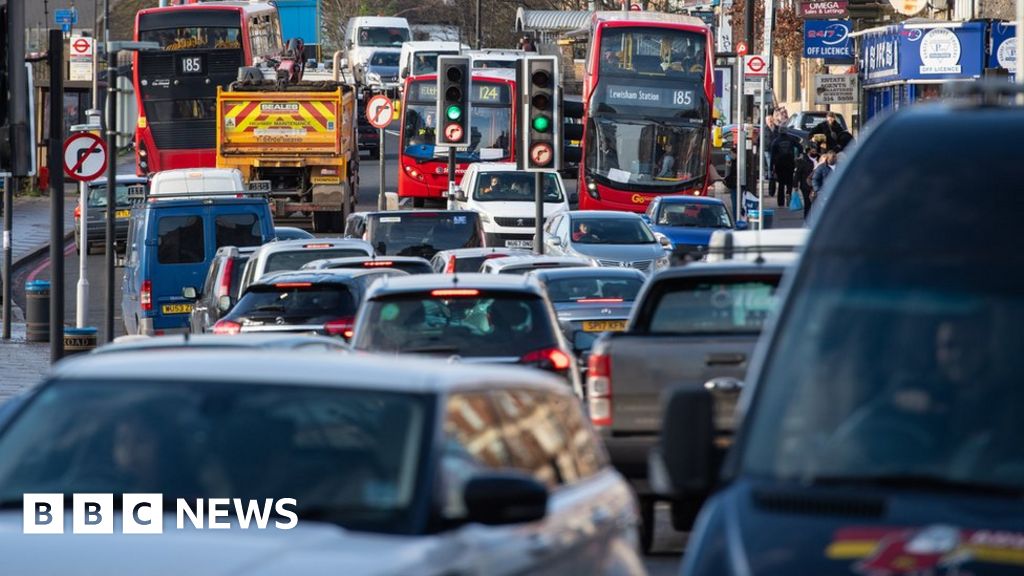
London remains world's most congested city, report claims The capital's roads are more congested than they were before the pandemic, researchers find. bbc.co.uk

@freddiesayers - Freddie Sayers

Seems like a fair question to ask: If reducing emissions is really the goal, justifying huge daily fines on older non-compliant cars, then why are we introducing a speed limit that increases emissions and logjams?

View Full Interactive Feed