TruthArchive.ai - Tweets Saved By @lowmegatron

@lowmegatron - Master Metabolism
Light is the most effective treatment for Hashimoto’s ↓ TSH ↓ Waist ↓ Weight ↓ Antibodies ↓ Inflammation ↓ Medication use ↑ Thyroid hormone (T3) ↓ Structural abnormalities 47% no longer needed thyroid meds! But it has to be done correctly. Let’s look at the research 🧵

@lowmegatron - Master Metabolism
A 2010 pilot study showed remarkable results with light therapy. ➥ T4 needs ↓ 60% ➥ 47% discontinued meds ➥ TPOAb ↓ 40% Two sessions per week for 5 weeks. Normal thyroid vascularization occurred in one quarter of the participants — signaling reduced inflammation and swelling.
@lowmegatron - Master Metabolism
Light therapy for Hashimoto's: ➥T4 needs ↓ 60% ➥47% got off meds ➥TPOAb ↓ 40% ➥¼ achieved normal thyroid vascularization Increased vascularization usually reflects active inflammation and immune-mediated tissue injury, where lymphocytic infiltration and angiogenesis boost blood supply. When vascularization returns to normal, it often indicates reduced inflammatory activity or partial restoration of thyroid tissue. The treatment consisted of 10 sessions of near-infrared light therapy on the thyroid gland. Two sessions per week. The wavelength was 830 nm, and the power was 50 mW. "The punctual application was performed with a fluence of 70J/cm2 for 40 seconds at the point of application..." "In conclusion, these preliminary data imply that LLLT, a safe, cost-effective, and non-invasive procedure, is successful for improving thyroid function, reducing TPOAb levels,and increasing thyroid echogenicity. As a result, LLLT appears to promote a regeneration of the follicle structure and a reduction of the thyroid autoimmune response in patients with CAT-induced hypothyroidism." CAT (Chronic Autoimmune Thyroiditis) and Hashimoto's disease are closely related but not always identical - most cases of CAT are Hashimoto's type, but CAT can also describe other autoimmune thyroid conditions (for example, atrophic thyroiditis), which may or may not present with a goiter. Therefore, all Hashimoto's cases fall under CAT, but not all CAT cases are strictly classified as Hashimoto's. LLLT = low-level light therapy This research was a small pilot study conducted in Brazil and published in 2011. I will post more information on other studies later. PMID: 20662037


@lowmegatron - Master Metabolism
A follow-up RCT confirmed—and expanded—those results. 47% came off thyroid meds. ➥ T4 needs ↓ 58% (avg) ➥ TPOAb ↓ 49% ➥ 95% reduced T4 ➥ 47% stopped T4 ➥ 95% ↑ echogenicity ↑ echogenicity = healthier thyroid tissue, less autoimmune damage—signs of healing.
@lowmegatron - Master Metabolism
Light therapy in Hashimoto’s gets amazing results! ➥ T4 needs ↓ 58 % ➥ TPOAb ↓ 49 % ➥ 95.7 % ↓ or stopped T4 ➥ 47 % stopped T4 ➥ 40 % ↑ T4 dose in placebo group ➥ TgAb ↓ 54 % (not significant vs placebo) ➥ 95 % ↑ echogenicity Higher echogenicity indicates healthier thyroid tissue with less autoimmune damage, so an increase reflects improvement. This was a follow-up to the pilot study and also used a near-infrared light. The wavelength was 830 nm, and the power was 50 mW. 40 s per point; irradiance 17.68 W/cm²; fluence 707 J/cm². 10 sessions - 2 per week for 5 weeks. PMID: 22718472

@lowmegatron - Master Metabolism
Light therapy for Hashimoto's: ➥T4 needs ↓ 60% ➥47% got off meds ➥TPOAb ↓ 40% ➥¼ achieved normal thyroid vascularization Increased vascularization usually reflects active inflammation and immune-mediated tissue injury, where lymphocytic infiltration and angiogenesis boost


@lowmegatron - Master Metabolism
Compared to placebo, levo/T4 needs stayed lower for years after light therapy. But over time, med requirements crept back up. It’s not a one-and-done.
@lowmegatron - Master Metabolism
Levo/T4 requirements remained reduced years after light therapy treatment, compared to the placebo group. Some of the benefits of light therapy for Hashimoto's are long-lasting. A 6-year follow-up of a human RCT found no long-term risk. Clearly, things worsened after stopping the treatment, but those treated were in significantly better shape than the people in the placebo group. Same protocol as before (830 nm near-infrared, 50 mW; 40 s/point; fluence 707 J/cm²; 10 sessions). "Conclusion. LLLT, by the methods described, has been shown to be safe for the treatment of hypothyroidism resulting from CAT." LLLT is light therapy. CAT is chronic autoimmune thyroiditis, which is usually Hashimoto's. PMID: 30532779

@lowmegatron - Master Metabolism
Light therapy restores thyroid structure in Hashimoto's - possibly by reducing autoimmunity. In Hashimoto's, chronic inflammation and lymphocytic infiltration ( lymphocytes are a type of white blood cell) disrupt the normal follicular structure, often leading to reduced and

@lowmegatron - Master Metabolism
Selenium, vitamin D, and iron (if deficient) can all improve Hashimoto’s. But light therapy blows them out of the water! Light therapy increased active thyroid hormone T3 by 50%+. Massive drops in thyroid antibodies: ➥ T3/T4 ratio ↑ 44% ➥ TPOAb ↓ 73% ➥ T4 needs ↓ 50%
@lowmegatron - Master Metabolism
Light therapy crushes supplements in Hashimoto’s. ➥ T3 ↑ 54 % ➥ T3/T4 ratio ↑ 44 % ➥ TPOAb ↓ 73 % ➥ L-Thyroxin dose ↓ 50 % The human study pit light therapy plus supplements against supplements alone and the differences between groups and from baseline were huge in favor of light therapy. The supplements were vitamin D - which does help Hashimoto’s, selenium, which also helps, and iron, which will help if iron is deficient. The light was near-infrared 850 nm with 100 mW power. They did six sessions,two per day, over three days. This was a Turkish research group and the research was published in 2019. “The application of laser was made with the patient's neck extended. The boundaries of the thyroid gland were defined by ultrasound and eight target points (superior, mediolateral, inferior border of right and left thyroid poles, right and left side of isthmus) marked with a surgical pen. Stationary applications of low-level laser (28.57 J/cm?) were performed over the thyroid gland, which were nearly 1 cm apart from each other. Each application lasted for 20 sec and radiant energy was 2J, with the tip of the laser held in contact with and perpendicular to the skin. A total of six sessions were applied twice daily for a total of 3 days. The cumulative dose was 96J.” PMID: 32186976

@lowmegatron - Master Metabolism
Levo/T4 requirements remained reduced years after light therapy treatment, compared to the placebo group. Some of the benefits of light therapy for Hashimoto's are long-lasting. A 6-year follow-up of a human RCT found no long-term risk. Clearly, things worsened after stopping

@lowmegatron - Master Metabolism
Light therapy led to weight loss that continued for months— even without more treatment. Waist size dropped, too. ➥ Weight ↓ 6.8% ➥ Waist circumference ↓ 6.9% ➥ Hip circumference ↓ 3.0% ➥ Waist/Hip ratio ↓ 3.3%
@lowmegatron - Master Metabolism
Three weeks of light therapy improves Hashimoto’s and helps with weight loss. ➥ TSH ↓ 76 % ➥ FT4 ↑ 130 % ➥ FT3 ↑ 57 % ➥ TPOAb ↓ 81 % ➥ TGAb ↓ 37 % ➥ Weight ↓ 6.8 % ➥ BMI ↓ 6.8 % ➥ Waist circumference ↓ 6.9 % ➥ Hip circumference ↓ 3.0 % ➥ Waist/Hip ratio ↓ 3.3 % Supplements were in both groups, and one group also got light therapy. Supplements in both groups consisted of selenium 100 mcg, and D3 was administered to those with levels below 40 ng/dL. The light was near-infrared at 820 nm with a power of 200 mW, for 20 seconds per point. The treatment consisted of six sessions, two per week, for three consecutive weeks. The research was done in Kosovo. Weight was reduced in the treatment group at 3 months and further at 6 months (second and third visits). PMID: 37623524


@lowmegatron - Master Metabolism
Light therapy reduced thyroid volume—another marker of healing. In Hashimoto’s, immune cell buildup causes thyroid swelling. A smaller thyroid means less inflammation and structural recovery. 4× more people reached normal thyroid volume after treatment.
@lowmegatron - Master Metabolism
Three weeks of light therapy result in long-term improvements in thyroid volume in patients with Hashimoto’s. ➥ TSH ↓ 60 % ➥ FT4 ↑ 75 % ➥ FT3 ↑ 32 % ➥ Anti-TPO ↓ 75 % ➥ Anti-TG ↓ 86 % ➥ Normal-range anti-TG ↑ 127 % ➥ Waist-to-hip ratio ↓ 6 % ➥ Thyroid volume ↓ 16 % ➥ Normal thyroid volume ↑ 4x (Comparing baseline to the timepoint with the greatest improvement.) In Hashimoto’s, the autoimmune white cell infiltration of the thyroid gland causes swelling, thereby increasing its volume. A reduction in volume in a swollen thyroid signals reduced inflammation and structural restoration. In this study, treatment was given for 3 weeks. The percentage of patients with normal thyroid volume increased from 17% before treatment to 62% at 3 months and reached 96% at 6 months. A year after the 3-week treatment began, 5 times more patients had normal thyroid volume than at the outset. The researchers used near-infrared light at 820 nm, with a power of 200 mW, in continuous mode, for 20 s per point at 8 points (32 J/cm² per point), twice weekly for three weeks. Vitamin D3 was administered to all patients with vitamin D levels below 40 ng/dL, and all patients received 100 µg of oral selenium daily. This was the same Kosovan research group that conducted the prior study. “Combining PBM (light therapy) with supplements may offer a more comprehensive treatment strategy for normalising TV (thyroid volume), preserving thyroid structure and function, and potentially delaying or preventing the progression of hypothyroidism, compared to supplements alone.” PMID: 40722630


@lowmegatron - Master Metabolism
Hashimoto’s—also called chronic lymphocytic thyroiditis—involves lymphocytes invading the thyroid, driving inflammation and increased vascularization. Lymphocytes → inflammation → increased vascularization. Light therapy reverses this vascularization—another sign of healing.
@lowmegatron - Master Metabolism
Light therapy restores thyroid structure in Hashimoto's - possibly by reducing autoimmunity. In Hashimoto's, chronic inflammation and lymphocytic infiltration ( lymphocytes are a type of white blood cell) disrupt the normal follicular structure, often leading to reduced and irregular parenchymal vascularization on Doppler ultrasound. In simple terms, the autoimmune attack disrupts the thyroid's structure and function. The Brazilian research team analyzed patients for these changes after light therapy and reported significant improvements with the treatment. "The autoimmune responses mediated by cells, antibodies, and cytokines promote thyroid follicular cell injury in chronic autoimmune thyroiditis patients. This disease leads to the progressive destruction of the follicular cells of the thyroid parenchyma, which can result in hypothyroidism... The results of this study suggest that LLLT was able to improve thyroid parenchyma vascularization, which is associated with the autoimmunity that is present in the glands of CAT patients. This improvement could be an indirect result of thyroid autoimmunity reduction." CAT stands for chronic autoimmune thyroiditis - usually caused by Hashimoto's disease. Normal vascularization increased from 4% to 35% in the treatment group. No change in the placebo. The vascularization score improved in the treatment group, from 2.00 to 1.87 (toward normal). Placebo worsened 1.75 → 2.30. This experiment also used 830 nm near-infrared light at 50 mW, following the same procedure, twice a week for 5 weeks. PMID: 23316383


@lowmegatron - Master Metabolism
A few years back, after reading animal research, I tried light therapy on my thyroid. I did two separate tests with two lights, dosing twice weekly for 3 months each. Both failed; antibodies stayed high. Likely reasons: one was red, one was too strong.
@lowmegatron - Master Metabolism
All of the studies reported in this thread use low-power near-infrared light. Not red light. They all used 820, 830, and 850 nm wavelength (near-IR). With power from 50-200 Mw.
@lowmegatron - Master Metabolism
I think it is time to carry out another experiment. I used to read a lot of the literature on red light, and I have quite a collection of different devices. One thing I learned is that most suppliers either don't understand how to test their devices or just plain lie about the specifications. The only trustworthy suppliers I have come across are redlightman (UK/EU) and Gembared (US). So, I am going to test with one of the 830 nm near-infrared devices from Redlightman, placing it a few inches from the thyroid, for a few minutes a day, 3 times/week, to see if it changes my antibodies. It's in the post... Redlightman and Gembared have given me an affiliate discount code: MasterM ----------- If this has worked for you, please post your results in the replies!!! Please include as much information as possible, as the dose is very important. Device - distance from the thyroid - time per point - how many points - how often?

@lowmegatron - Master Metabolism
If you find these threads helpful, then this is for you! My Hypothyroid Masterclass teaches all you need to know about hypothyroidism - and low thyroid hormone activity - with a support community. Join here: skool.com/thyroid Video modules include: ➤ What is Hypothyroidism? ➤ Hypothyroid Symptoms ➤ Causes of Hypothyroidism ➤ Thyroid, Energy, and Health ➤ Diseases Caused by Low Thyroid Hormones ➤ Euthyroid Sick Syndrome ➤ Problems Caused by High TSH ➤ The Thyroid System ➤ Thyroid Blood Tests ➤ The Problems with Blood Tests ➤ Pulse and Temperature ➤ Testing T3 Activity ➤ Thyroid Autoimmunity ➤ Thyroid Hormone Conversion ➤ Reverse T3 ➤ Thyroid Hormone Transport ➤ Supplementing T4 ➤ Supplementing NDT or T4+T3 ➤ Supplementing T3 Only ➤ Tracking Nutrition ➤ Iron ➤ Iodine and Selenium ➤ Calories ➤ Macronutrients ➤ PUFA and FFA ➤ Pro-thyroid Substances ➤ Stress ➤ A Pro-thyroid Diet ➤ Thyroid Threats ➤ Drugs That Affect Thyroid Hormones

@lowmegatron - Master Metabolism
This can be read as an article here: https://lowmegatron.substack.com/p/light-therapy-for-hashimotos

@lowmegatron - Master Metabolism
@TT15248526 There is no tissue to treat. Find a doctor who knows how to treat hypothyroidism properly with a combination of T3 and T4, dosing to symptoms, T3:rT3 and temperature, rather than TSH.
@lowmegatron - Master Metabolism
@VITLrx Me too. And it seems superior in terms of recovery.
@lowmegatron - Master Metabolism
@Boio89 I don't know. It might be a penetration issue or something that is only affected by a slightly higher wavelength. Or maybe the NIRA was selected because of the better penetration but red would work with different protocols. Red did not work for me.
@lowmegatron - Master Metabolism
@Realsolopass All near-infrared A - 820+850 nm
@lowmegatron - Master Metabolism
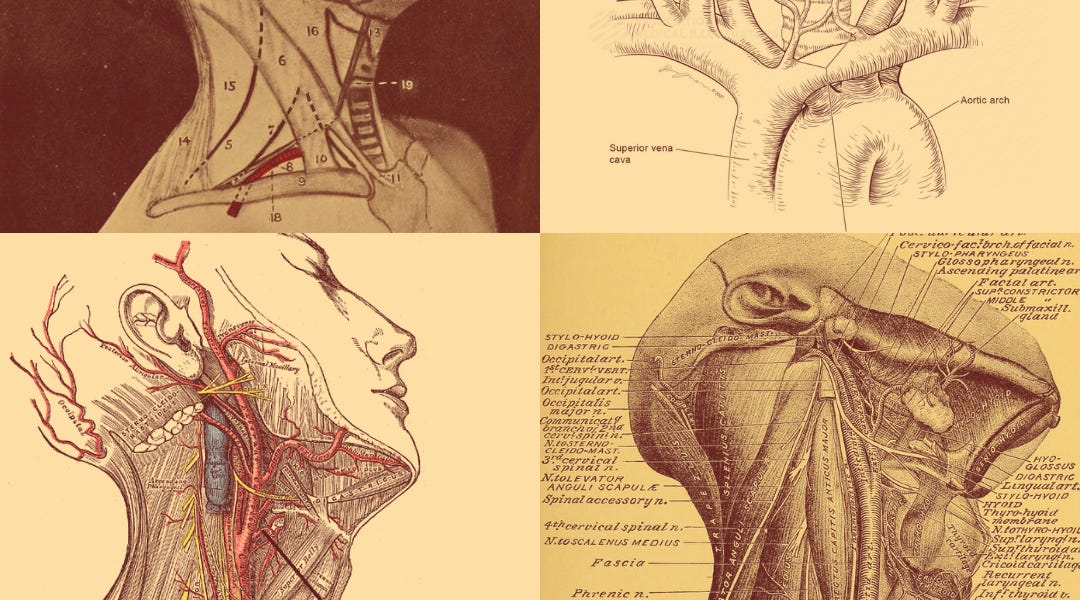
@oceanodeflor I miss these illustrations.
@lowmegatron - Master Metabolism
@nlienkimyim34 👂
@lowmegatron - Master Metabolism
@NoFluxGivenNow Thank you. Just pointing it at the entire area for 15 minutes? What power and distance?
@lowmegatron - Master Metabolism
Low metabolism, fat gain, chronic disease? It could be thyroid hormone deficiency. There is a whole-body system for delivering thyroid hormone to cells. A failure of any part causes hypothyroid symptoms - often resistant to standard treatment. Here's how that system works! 🧵 https://t.co/cQb8PdWcvD

@lowmegatron - Master Metabolism
The hypothalamus releases TRH. TRH stimulates the pituitary gland to release TSH. TSH is what tells the thyroid to create and release thyroid hormones. Any problem with the hypothalamus and any factors that affect TRH output can lead to low thyroid hormone production. https://t.co/UqsMQXUZYO

@lowmegatron - Master Metabolism
The pituitary gland releases TSH. TSH release is stimulated by TRH and thyroid hormones in the pituitary. TSH triggers the release of thyroid hormones from the thyroid. Low thyroid hormones increase TSH - and vice versa. A problem here shows up on tests as hypothyroidism. https://t.co/X91O28gx26

@lowmegatron - Master Metabolism
Stimulated by TSH, the thyroid gland makes and releases thyroid hormones. But the TSH is not a perfect measure of thyroid hormone levels. TSH DROPS in stress and illness. TSH can be low while thyroid hormone (T3) levels are also low! T3 activation of cells is what matters. https://t.co/BaFwygt6v2

@lowmegatron - Master Metabolism
There are two thyroid hormones: T3 and T4. But T3 is THE thyroid hormone. Low T3 activity in cells is THE cause of hypothyroid symptoms. T4 is converted to T3 throughout the body. T4 does not reduce hypothyroid symptoms unless it is first converted into T3. T3 is King. https://t.co/yxtpVpCAM3

@lowmegatron - Master Metabolism
Thyroid hormones are transported in blood by TBG, TTR, and albumin. Binding to these proteins affects the "free" and "total" levels. Free hormones are more biologically active. These proteins help stabilize thyroid hormone levels and increase their half-life in the blood. https://t.co/nxpNk0oDfa

@lowmegatron - Master Metabolism
The thyroid releases mostly T4. T4 is converted to active T3 in organs such as the liver and kidneys. This T3 shows up in the blood as it is transported elsewhere. However, a significant portion of our T3 is produced from T4 within cells, which is invisible to blood tests. https://t.co/4WGgqlFyZk

@lowmegatron - Master Metabolism
T4 can also be converted to reverse T3 (rT3). Increased rT3 can mean less T3 is produced from T4. Higher rT3/lower T3 is triggered by "stress" - leading to hidden, cellular hypothyroidism. High rT3 may be a good indicator of intracellular conversion issues. https://t.co/zx24aICcgc

@lowmegatron - Master Metabolism
T3 must activate cell nuclear receptors. This stimulates gene expression, metabolism, and body temperature and has a profound impact on most biological processes. T3 can be blocked by high levels of free fatty acids/PUFAS released in response to stress, among other things. https://t.co/isIWNHrnFD

@lowmegatron - Master Metabolism
In summary, the thyroid system must deliver T3 to the nuclear receptors. TSH, T4, and T3 tests cannot rule clinical hypothyroidism. T4 can only work if the person is a super-converter - most aren't. Lifestyle stress is a very common cause of invisible low T3 activity. https://t.co/2RBslYNcUG

@lowmegatron - Master Metabolism
Confused by thyroid symptoms, labs, or treatment? Join my video course + support group. 👉 skool.com/thyroid We cover: ➥ Hypothyroid Symptoms ➥ Causes of Hypothyroidism ➥ Thyroid, Energy, and Health ➥ Diseases Caused by Low Thyroid ➥ Problems Caused by TSH ➥ The Thyroid System ➥ Thyroid Blood Tests ➥ The Problems with Blood Tests ➥ Pulse and Temperature ➥ Testing T3 Activity ➥ Thyroid Autoimmunity ➥ Thyroid Hormone Conversion ➥ Reverse T3 ➥ Thyroid Hormone Transport ➥ Supplementing Thyroid Hormones (T4, NDT and T3) ➥ Stress ➥ Iron, Iodine, and Selenium ➥ Calories ➥ Macronutrients ➥ Thyroid Threats ➥ Polyunsaturated Fatty Acids (PUFA) and Free Fatty Acids (FFA) ➥ Pro-Thyroid Substances ➥ A Pro-Thyroid Diet ➥ Drugs That Affect Thyroid Hormones
@lowmegatron - Master Metabolism
That pattern can indicate hypothyroidism (low gland output) and low conversion. The root cause of both may be the same. Low T3 activity can cause pretty much any chronic disease. It causes heart failure, and outcomes are worse when T3 is lower. T3 is the most important factor for energy production. “energy and structure are interdependent, at every level” ... So you can see how deep the rabbit hole goes with thyroid and chronic disease. Iodine is essential - the “3” in T3 and the “4” in T4 refer to iodine count. Thyroxine (T₄) has four iodine atoms bound to its tyrosine-derived structure. Triiodothyronine (T₃) has three iodine atoms. But iodine deficiency is rare, and high doses in people with deficiency or thyroid issues (known or unknown) are risky.

