TruthArchive.ai - Tweets Saved By @overton_news

Saved - January 20, 2026 at 11:02 PM

@overton_news - Overton

x.com/i/article/2013…

Saved - January 12, 2026 at 4:30 AM
reSee.it AI Summary
I pressed the gas and drove through a mob of violent rioters in Minneapolis after they surrounded my vehicle and attacked it. Inside the vehicle, rioters tried to attack the car before I sped off.

@overton_news - Overton

BREAKING: Nick Sortor presses the gas and drives through a mob of violent rioters in Minneapolis after they surrounded him and attacked his vehicle. https://t.co/gA4Sf4DhEK

Video Transcript AI Summary
Two speakers recount a violent incident at a protest. The first speaker notes that they did not see the assault themselves, but mentions that “somebody has no video,” implying there was a lack of footage of the assault. Protesters then insisted that the individual who assaulted someone could not leave, and they began calling law enforcement to report the assault. According to the account, the situation escalated when a vehicle drove through the crowd. A Jeep Gladiator sped into the protesters, knocking one man quite violently onto the hood of the car. The vehicle then accelerated away, and the man on the hood was hurled into a snowbank. The incident continued as the car subsequently hit another person after the initial impact. The first speaker confirms that the driver sped off and notes that the person on the hood of the car went flying into the snowbank, describing the sequence as the vehicle “went flying into the snowbank.” They add that, after the initial contact, the car hit somebody, compounding the harm. The second speaker, identified as Speaker 1, reacts with shock: “Woah. I’m not in shock right now, so I might feel it later. I might feel it later. I don’t know.” This statement conveys an immediate emotional response to witnessing the violence, with an acknowledgment that distress may intensify as time passes. Overall, the account highlights an assault that occurred off-camera, followed by a deliberate act of driving a vehicle into a crowd, which resulted in a person being knocked onto the hood of the car, the vehicle continuing to speed away, and subsequent impacts that caused injuries. The protesters reacted by attempting to report the assault to law enforcement, and the witnesses express immediate concern and potential delayed shock regarding the violence they observed.
Full Transcript
Speaker 0: Oh, okay. And I I didn't see the the the assault, but apparently, somebody has no video. But he assaulted so the other protesters said, you can't leave. We're calling law enforcement to report this assault. And they ran their car through the crowd, knocking one guy pretty violently onto the He was on the he was on the hood of the car. He was very speeding off. Yeah. Yeah. And as a a a Jeep Gladiator. He was on the hood of car, went flying into the snowbank. Thank god he didn't get caught up. Thank god. Yeah. Could've been way worse. And then he hit somebody. Speaker 1: Woah. I'm not in shock right now, so I might feel it later. I might feel it later. I don't know.

@overton_news - Overton

The view from inside the vehicle shows rioters trying to attack the car before Sortor speeds off. https://t.co/10HYxXUgdH

Saved - June 25, 2025 at 3:57 AM
reSee.it AI Summary
Tom Homan expressed deep concern about national security, stating that the current situation is the worst he's seen in 40 years. He highlighted the alarming number of over 2 million "gotaways" in the country, linking it to rising fentanyl deaths and increased sex trafficking. Homan warned that at least one of these individuals could pose a threat, urging Americans to take this seriously. He emphasized the importance of having President Trump in office to address these issues. Additionally, RFK Jr. stirred controversy in Congress, and Rubio challenged CBS' Brennan on Iran nuclear intelligence.

@overton_news - Overton

NEW: Tom Homan reveals the biggest national security threat he’s seen in 40 years — “This scares the hell out of me.” He’s seen a lot. So when he says this is the worst, you know it’s bad. Hannity asked the Border Czar just how serious the threat is with over 2 million gotaways wandering around inside the country: “If the average American, if everyone watching the show tonight knew what you knew… how scared would they be?” Homan’s answer was unsettling to say the least. “I’ve been doing this for 40 years. This is the BIGGEST concern I’ve ever had.” “We’ve had fentanyl kill a quarter million Americans. Sex trafficking is up 600%. We’ve got people on the terror watchlist being arrested at the border.” “And I’ve said from day one: over 2 million known gotaways.” Then he dropped the warning: “This scares the hell out of me.” “If you don’t think at least one of them came here to do us harm, then you’re a moron.” “This is the biggest issue I’ve seen in my 40-year career. And it scares the hell out of me, it should should scare the hell out of every American.” Final word: “Thank God we got President Trump sitting in the White House—he’s going to take this on 100%.”

Video Transcript AI Summary
The speaker expresses extreme concern about the current situation, stating it's the biggest issue in their 40-year career. They cite fentanyl deaths of a quarter million Americans and a 600% increase in sex trafficking as contributing factors. They highlight arrests at the border and claim over two million "gotaways" have entered the country. The speaker believes anyone who doesn't think these individuals intend harm is a "moron." They express fear about the situation and believe every American should be scared. They are thankful that President Trump will address the issue "100%."
Full Transcript
Speaker 0: If if the average American if everyone watching this show tonight knew what you knew and Christy Noem knew and Cash Patel and Dan Bongino and Pam Bondi knew, how scared would they be? Speaker 1: I've been doing this for forty years. This is the biggest concern I've ever had. You know, we had fentanyl that killed a quarter million Americans. We had sex trafficking up six hundred percent. We got people on the terrazolosias being arrested at the border. I said from day one, two million plus gotaways. This scares the hell out of me. If you don't think a single one of them didn't come here to do us harm, then you're a moron. This is the biggest issue I've seen in my forty year career, and it scares the hell out of me. It should scare the hell out of every American. But thank God we got president Trump sitting in the White House because he's gonna take this on 100%.

@overton_news - Overton

More stories: RFK Jr. Just Set Congress Ablaze—and Exposed a Top Big Pharma Democrat https://www.overtonnews.com/p/rfk-jr-just-set-congress-ablazeand
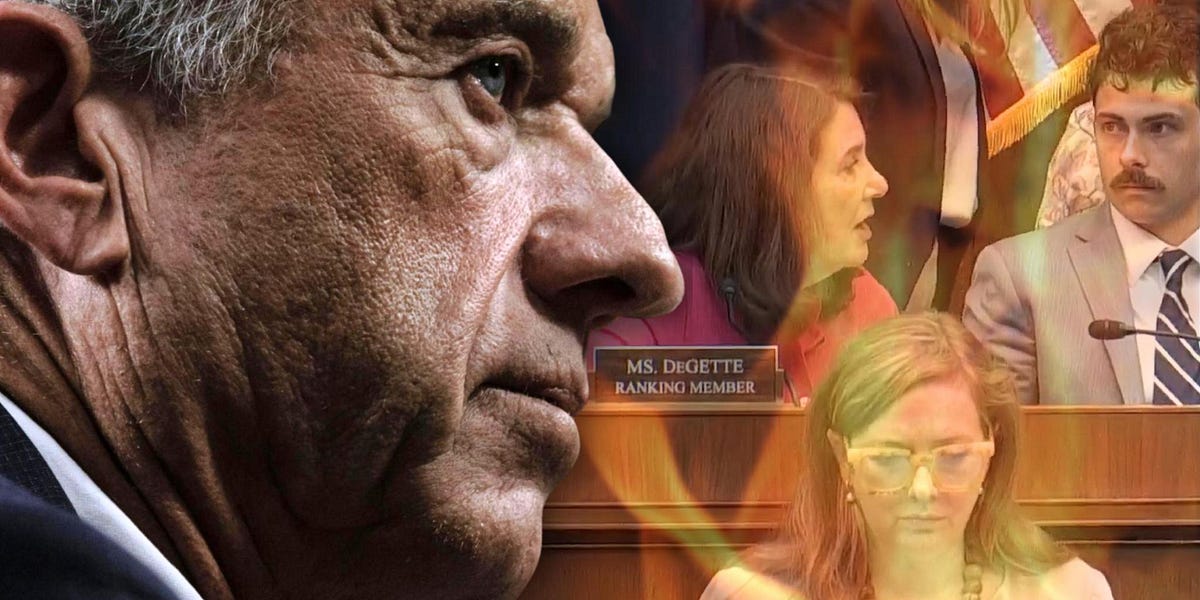
RFK Jr. Just Set Congress Ablaze—and Exposed a Top Big Pharma Democrat Rep. Dingell came swinging on drug prices, Kennedy dismantled her in seconds. Then he dropped the bomb: one Democrat took more pharma cash than anyone else on the panel. overtonnews.com

@overton_news - Overton

Rubio Shreds CBS’ Brennan Over Iran Nuclear Claims: “That’s Not How Intelligence Is Read” https://www.overtonnews.com/p/rubio-shreds-cbs-brennan-over-iran
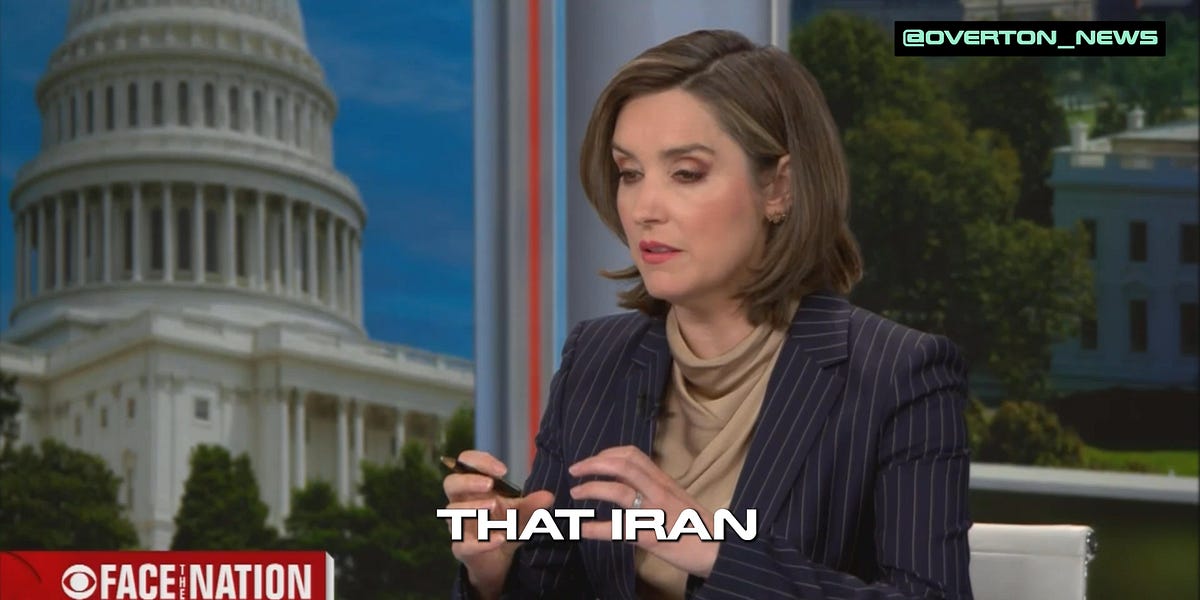
Rubio Shreds CBS’ Brennan Over Iran Nuclear Claims: “That’s Not How Intelligence Is Read” Secretary of State Marco Rubio wasn’t about to let CBS’ Margaret Brennan shape the narrative when it came to Iran’s nuclear ambitions. overtonnews.com
Saved - April 14, 2025 at 9:50 PM
reSee.it AI Summary
I just watched Tucker Carlson's interview with El Salvador's President Nayib Bukele, who discusses his vision for global change. Bukele emphasizes that peace is essential for prosperity, detailing a phased plan that tackled gang violence effectively. He shares insights on the spiritual battle against gangs, highlighting their descent into satanic practices. Additionally, he comments on the political landscape, suggesting that attempts to undermine Trump could backfire, potentially boosting his support.

@overton_news - Overton

BREAKING: Tucker Carlson has just released his hour-long interview with El Salvador’s President Nayib Bukele; “He may have the blueprint for saving the world.”https://t.co/ZzwaZ1SbSr

Video Transcript AI Summary
The President of El Salvador discusses the international attention his inauguration received, attributing it to a "critical mass" of interest. He states El Salvador was once the murder capital of the world but is now the safest country in the Western Hemisphere, safer than the U.S. He credits this transformation to achieving peace, which he defines as the respect of basic rights. He describes the official formula as a phased plan involving building up police and military forces, but the real formula was a "miracle." During a gang surge, he and his security cabinet prayed for wisdom and minimal civilian casualties, which were avoided. He identifies MS-13 as a satanic gang involved in human sacrifice. He believes the real battle is between good and evil. The president says his economic plan starts with seeking God's wisdom. He notes the country faced condemnation for arresting gang members, with some prioritizing the rights of criminals over victims. He suggests that other governments may be choosing to allow violent crime. The president says Western civilization is in decline due to a failure to maintain its systems. He advises that if a candidate cannot be stopped from competing in an election, attacks will only give him more votes. He also notes that many Americans and Salvadoran immigrants are moving to El Salvador.
Full Transcript
Speaker 0: Mister president, thank you for having us. Speaker 1: Thank you, Tucker. At your Speaker 0: Camp David, which is beautiful. So you were inaugurated two days ago. This is a small country, and yet your inauguration was international news was everywhere. Why? Why do you think that is? Speaker 1: Well, was a shock for for us too. I mean, we know we knew that a lot of people were was were coming and and I mean, that will draw some attention, of course. We have we had big delegations from a lot with 110 countries. So of course that would draw news because if a chancellor comes from a country then he brings his media team and that. That will create some news over there. And if a president comes or a king comes, that will create some news. Even you you came, so that creates some news. Speaker 0: Why were they coming? Well, Speaker 1: I I don't know. Different reasons, of course. I could ask you, why did you come, right? Speaker 0: I came because I think something remarkable is happening here. That's why. But I'm interested in why you think people came. Speaker 1: Yeah. I different reasons. Definitely different different reasons. For example, the US government sent a big delegation. But then we had also a delegation from Congress. Yes. That started as a Republican delegation, but then Democrats jumped in the wagon, and we had a bipartisan delegation from Congress. So, you know, it was like so it adds up. I don't know at the end what happened, but I think that it's like how a star, you know how stars are born. They say that debris starts joining up and become an asteroid. But if more debris joins up it becomes a planet because of the gravitational pull. The more debris comes up it becomes a star because then the gravitational pull is too big. So that's called critical mass. So I don't know, sometimes just because God wants it like that, or just by stroke of luck or whatever, you get some critical mass in something you're doing, and then it becomes bigger than what you than the sum of all of its parts. So, I don't know, probably it got some critical mass that we didn't we didn't foresee. Speaker 0: My guess is that of all the countries in the hemisphere, El Salvador seemed in the toughest shape or close to the bottom in the rankings Definitely. For everything. Speaker 1: Yes. Yes. Speaker 0: Lacking abundant natural resources, Speaker 1: As if the country was born. Speaker 0: Is that true? Speaker 1: Yes. I mean, the country has been poor since it was born. Yeah. Lacking everything, basically. Speaker 0: Lacking everything. With a dense population, a lot of people packed in. Yeah. So what do you how did you change it? I guess, I'll cut right to it. If you can fix El Salvador, what are the lessons for the rest of us? What did you do Speaker 1: Well, of course, you cannot do anything if you don't have peace. Right? And when I say peace, I I include wars, civil wars, invasion, crime. I mean, you need to have peace. You need to be able to move freely, to have your basic rights respected, starting with the right to live, the right to move, the right to have property. So you need your basic rights to be respected, so you need peace. That's the first thing a society will struggle to achieve. And once you achieve peace, then you can struggle for all the other things. Like infrastructure, wealth, well-being, quality of life. But you have to start with peace. So we had to start with peace. And in the case of El Salvador, we were literally the murder capital of the world. Yes. And we turned it into the safest country in the Western Hemisphere. Safer than any other country in the Western Hemisphere, is, you know, it was if would have said that five years ago, they would have said that I was crazy, right? Yes. Because this was literally the most dangerous country in the whole world. Your capital is now safer than our capital in Yes. A lot safer. And the country is safer than The United States as a whole. Yes. The US murder rate is around six murders per 100,000 inhabitants, and our murder rate is two. So we're safer than Canada, safer than Chile, safer than Uruguay, safer than The US, safer than any country in the Western Hemisphere. There are countries in the other hemisphere that are safer than El Salvador, but not in Western Hemisphere. Speaker 0: So you did that in just a couple years? Speaker 1: Yes, we did that in basically in three years. Speaker 0: So what, just bottom line it for us. What's the formula? Speaker 1: Well I can tell you the official formula and the real formula. Speaker 0: Okay. Speaker 1: So the official formula is that we did a plan. I mean we did a plan. It's not that. When I say official, I mean it's a lie. It's just you know, the official We did a plan that was comprised of phases. So we rolled up the first phase, then the next one, then the next one. And then gangs started attacking back, so we need to we had to roll up everything at once, like in a in a hurry. So and it it worked. It worked. In a couple of weeks we we the country was transformed. Because the gangs were were not yet arrested, but they were on the run. So we had we basically in the roll up of phase six, we basically pacified the country in a couple of weeks. Speaker 0: How do you do that? How do you pacify a country? Speaker 1: Well, the phases included building up of the police forces, the army. We doubled the army. We literally doubled the army to fight crime, to use the army to fight crime. And we equipped them before, like soldiers who didn't have useful guns or vehicles, drones. You know, basic things that an operation of that magnitude would need. So Yeah. We rolled up the faces and then we we we went after them. Speaker 0: That's the official that's the official Speaker 1: Yeah. That's the official one. Speaker 0: What what's what's the real Speaker 1: It's a miracle. Speaker 0: It's a miracle. Speaker 1: Yeah. It's a miracle. Speaker 0: I love that. What do you mean? Speaker 1: Yeah. It's a miracle, you know. When when gangs started attacking us back, basically, they they killed 87 people in three days. Which for a country of 6,000,000 people, it's crazy. Would be the equivalent 60 times, would be the equivalent of having five thousand deaths in three, five thousand murders in The US in three days. Wow. Yeah. So we were in a meeting and, well when this started, not when it ended, but when started we were in a meeting my office 3AM, four AM, just watching you know, what was happening and trying to figure out what to do. Because the problem with gangs is that they don't don't only attack their objectives. When they wanna create terror, they can attack anyone. So they can actually kill their grandma. Yes. And it's your victim. Yes. Because they don't care about their grandma. You care about their grandma, so it's your victim. If they kill their grandma, you have one death, and they have you know, they achieved the the terror the terror that they wanna create. So they can kill any anybody. A woman walking by, a guy working in the street, a taxi driver. You know, they can kill anybody. And if the if the if the state goes after them, the state has no intention of of killing or harming anybody but the gang members. So you have you have 70,000 objectives, which were the 70,000 gang members. But they have 6,000,000 possible targets. So it was almost an impossible task. It's a guerrilla war, really. Yes. It is but it was an impossible task because you you have to go after them. They were intertwined with the population. They were everywhere, and they were killing randomly. So you stopped them. So we really were trying to figure out what to do. And and I I basically said, well, we I mean, it's we we we are we're looking at into an impossible impossible mission here. So we pray. And and we and we You prayed in the meeting? Yes. Yes. Of course. Several times. Yeah. Speaker 0: Yeah. What did you pray for? Speaker 1: To wisdom, to to win the war, to have I thought at the time that we will have civilian casualties. So we we said, we pray that the civilian casualties will be as low as possible. And we didn't have any civilian casualties. Speaker 0: And was everyone in the meeting comfortable with that? Speaker 1: Yes. Yes. They every all my security cabinet are believers. They all believe in God. We're we're a secular country, of course, but we all believe in God. Speaker 0: MS thirteen is one of the major gangs. Speaker 1: And they are satanic also. Speaker 0: That was my question. Speaker 1: So very little sorry. Speaker 0: I'm sorry. No. No. But I I I would hope you will explain it because very little has been written in the West about this. Speaker 1: They're satanicists. Speaker 0: But but actually, literally Yeah. Can you explain? Speaker 1: Well, they didn't start as a satanic organization. They they MS thirteen started in in in Los Angeles, in The US, because Salvadorans weren't allowed to sell drugs by the Mexican gangs. So they created a gang that was called the eighteenth Street Gang because they basically wanted to sell drugs in in a street that was Eighteenth Street over there. But then the division started to to create to they started dividing themselves and started infighting, so they created the MS thirteen. And and then MS thirteen started outgrowing the other gangs, and they started, you know, exporting the organization to other parts of The US. And when Bill Clinton decided to deport those guys, he didn't tell our government at the time, I'm deporting this criminal. They just, you know, send them here. And they came, they were few, but unchecked. At the same time, some laws were passed to protect minors from imprisonment. And of course, the gangs used that to recruit 15 year olds, 16 year olds, 17 year olds. So at the beginning it was some youth causing harm, assaulting, trying to control their territory, selling drugs. Things that are bad, but probably not critical. But they grew, they grew, they grew. And they started controlling territories. A few later, they were actually a huge international criminal organization that they had bases in Italy, Guatemala, Honduras, El Salvador, The US. Basically, a lot of major cities in The US will have strongholds of Speaker 0: Right outside Washington DC. Speaker 1: Yes, of course. You have in Long Island, you know, in LA. It's a huge criminal international organization. So they grew and they started you know, killing more people just to get territory or to fight against rival gangs, or to, you know, collect debts or money or whatever. But as the organization grew, they became satanic. They started doing satanic rituals. I don't know exactly when that started, but it well documented. Yes. And we now we're at rescue. We've even found altars and things like that. Speaker 0: Yes, I've seen them. Speaker 1: And so they became a satanic organization. And even when when you sometimes when you interview gang members that are in prison, they will say, I'm out of the gang. Of course, they're in prison, but they will say, I'm I'm not a member of the gang anymore. And when you ask them why, I remember one I remember the news outlet that made this this But it's a, you know, a very well known news outlet that made this interview with a gang member in person. We allowed them to go into prisons and do the interviews. And the guy that They asked him how many people have you killed? And he said, I don't remember. Didn't remember how many. Probably ten, twenty. He didn't remember. And then they asked him, and are you in what is your position in the gang? He explained how he went up in positions, but I left the gang. I said, how why did you left the gang? And he said, well, because I was I mean, I was I was used to kill the I was used to to kill people. But I killed for territory. I killed for to collect money. I killed for extortion. But I came to the you know, to this house, and they were they were about to kill a baby. And he, the killer that had killed tens of people, said, oh, wait. Wait. What are we doing? Why why why are we gonna kill that baby? And they told him because the beast asked for a baby, so we have to give him the baby. So he said that he couldn't resist that, so he left the gang. He's in prison because, you know, he's a killer. But he left the gang because he couldn't tolerate what he was seeing. Speaker 0: So human sacrifice was Yes. Speaker 1: A part. Well, in the in The United States a couple of weeks ago, or a couple of days ago, I don't remember exactly, I saw the news that they were they were gonna kill a young girl, or they killed a young girl, and they don't exactly remember because it was a it was a satanic ritual. It happened in The US a couple of weeks ago. Speaker 0: You may have come to the obvious conclusion that the real debate is not between Republican and Democrat, or socialist and capitalist, right, left. The real battle is between people who are lying on purpose and people who are trying to tell you the truth. It's between good and evil. It's between honesty and falsehood. And we hope we are on the former side. That's why we created this network, the Tucker Carlson Network. And we invite you to subscribe to it. You go to tuckercarlson.com/podcast. Our entire archive is there. A lot of behind the scenes footage of what actually happens in this barn, when only an iPhone is running. Tuckercarlson.com/podcast. You will not regret it. So that's almost never described in English language press as clearly as you just described it. Speaker 1: No. Which is weird. Right? Speaker 0: Well, you sort of wonder why. Yeah. If there's a spiritual component that's driving it, why not just say so? Yes. But I guess my point is you saw it as that. Speaker 1: Yes. Yes, of course. There's a spiritual war, and there's a physical war. And the physical war could be that's the that's the unofficial. Speaker 0: Yes. Speaker 1: That's the unofficial version. The spiritual if you win the spiritual war, it will reflect into the physical war. So our I think our I I don't know what I have to call it. Our impressive victory was because we won the spiritual war. Very, very fast. Speaker 0: Well, that leads me didn't Speaker 1: Because you didn't have competition. I mean, they were satanic. I think they made it easier. Speaker 0: In your inaugural, and I was listening on headphones for the translations, I just wanna check this. You said, we have achieved this great victory and made this a safe country, and that's the predicate for everything that follows. And the next thing we're going to do in this term is to is to work in the economy to make it Yeah. Grow the economy. Yeah. And you said I have a if correct me if I'm wrong. Said I have a three point plan, and I'm thinking, I wonder what that is. I don't know. Start a Federal Reserve Bank? And you said the first the first point of my plan is seek God's wisdom. Speaker 1: Yes. Speaker 0: That is what you said. Speaker 1: Yeah. I said that. Yeah. Speaker 0: Why why would that be the first point of an economic Speaker 1: Why wouldn't it be? Why should it be the first part of the plan? Speaker 0: Well, I think it should be. Speaker 1: Yeah. But I can't And most people would think that. Right? Speaker 0: I just I've never heard any leader of any country Speaker 1: say that. Because they're they Probably they forgot to represent the people that elect them. That elect them, yeah. It's like you ask most of the people that elect the politicians, they'll say, yeah, that's that's fine. Yeah, I believe that. But then you ask the politician, and he will say, no, no, no. That's not So, who is he trying to pander into? I mean, it doesn't make sense, right? Speaker 0: Do you think Speaker 1: It's a common sense thing to seek God's wisdom. Of course. Speaker 0: Yeah. It's a prerequisite for wise decision making, I would Yes. Speaker 1: Exactly. So that's the first part of our plan. Speaker 0: It really makes me laugh. Do you think that that's one of the reasons that your successes, which are just measurable, I'm not saying this for ideological reasons, but just a fact that you've transformed the country in a good way and that you're literally the most popular elected leader in the world, again, not speculation, provable fact, you'd think that would be greeted in the hemisphere as this amazing thing, like, what's going on in El Salvador? And instead, there's been this, what's going on in El Salvador? Yeah. There's been hostility. Speaker 1: Yes. Do you think that's why? I'm not sure. But one of the reasons is that we don't pander to them. So probably they don't like that. It's probably a reason. It's like, there's I'm not gonna go into conspiracy theory. I'm gonna go into provable facts, right? Like you said. So there's worldwide agendas, right? These are provable facts, right? They have benchmarks that they need their countries to follow and they need their countries to do. This is out there. But sometimes if you work on those things, you're probably neglecting the important things for your people. The things that your people are really asking for. I'll give you an example. When we arrested the gang members that were killing were killing so much people that we were the murder capital of the world. Literally the most dangerous place in the whole world. More dangerous than Haiti. More dangerous than Iraq. This was literally the most dangerous country in the world. We have triple the the amount of the murder rate that Haiti has right now. With all the mayhem that they have, we have tripled that here. So what what do we have to what do you have to do? You have to stop that, right? I mean, it's like it's a no brainer. I mean, you have you don't have to even you you don't even need to have a big thought process. You just you have to stop that. That's the first thing you have to do. When we did when we did that, we got huge condemnations. You name it. Say in an organization, we got a condemnation from them. So, and they were and they and and a lot of them were human rights organizations. And you would ask, but the human what what about the human right of a woman not to be raped? I mean, what about the human right of kids to, you know, to to to play or to be free or to, you know, go to the park? And what about the human right to live? Or the human right to walk in the street? Right? And but no. They were they were worried about the human rights of the of the killers. Which, you know, they have human rights. I I don't say they don't. They're humans. But but if you have to prioritize, what what would you prioritize? Yes. Right? The human rights of the honest, hardworking, decent people. Not the not the not the human rights that they do have. But you will not you won't prioritize the the human rights of the killers and rapists and murderers. And so we we secured the country. And we did it with no help from any other country. And with huge, huge condemnation in everything that we were doing. Everything. I mean, we changed the attorney general. We we got so much condemnation because we changed the attorney general. That we need to change to prosecute the murderers. So we we basically, we they tried to block every step of what we were doing. And now the results are there, that they're tangible, measurable, undeniable. Now they they don't know what to do. Because a lot of other countries are saying, maybe a lot of other countries similar to ours, have similar problems. They are saying maybe we should do that too. But they don't want that because that's not in their agenda. Speaker 0: But I I guess that that's why I came here, to be totally honest, is what your success says about the country that I live in or other countries in the Hemisphere or in Europe, where people are killed by the thousands every year. Speaker 1: And Speaker 0: what you've proven with very little money and no help from anyone else is it's not that hard to fix. Therefore, all that killing must be a voluntary decision that my government and many other governments are making about their own citizens. Speaker 1: You can make that that logical. Speaker 0: Well, I don't know what other conclusion to reach. If El Salvador can do it, what are we what's going on here? Speaker 1: Yes. You can make that logical conclusion. I I think that's probably what they are afraid of. Because, I mean, we don't have weapons of mass destruction. Right? No. So we why are they afraid? Why would they take so much time and make condemnations to El Salvador? Right? It doesn't make any sense. Speaker 0: Well, you didn't send a man to the moon. Speaker 1: Exactly. Yeah. I think they're afraid of the example. Because a lot of people might say, hey, we want that too. If they can do it with no money, with very few resources, and with a huge problem because I heard some people say, oh, the subway could do it because the problem was not that big. We're literally the murder capital of the world. How big it, how bigger can it get, right? We were literally the most dangerous place in the world. Three times more dangerous than Haiti right now. So I mean, what bigger can it, how bigger can the problem get? And at the same time, we had little, very few resources, And we were able to do it with no civilian casualties. We started the war on gangs, we had no civilian casualties. And we we aid between police officers and soldiers. And we basically eradicated all crime. So And we arrested 70,000 gang members. Which the number is not the number that just came up. That's the official number that all the organizations said we had of gang members. And you can watch the World Bank reports, etcetera. They said El Salvador has around 70,000 gang members, 500,000 collaborators. So we spared the collaborators, basically, and we only got the gang members. Why? Because most of the collaborators were just family members, or the woman that sell tortillas, and she had to tell, oh, the police is coming, because if not, she would have she would probably have been killed by the gangs. So most of the collaborators were not really criminals, but just people living in a society that was controlled by gangs. The government was really was the real government was the gangs. Just like in Haiti, you have a you have a fake government, and you have the real government. The government in Haiti is the gangs. It was it was like that. You had you had a formal government, of course, with offices and everything, but you have the real government in the territory, which were the gangs. Speaker 0: So, I mean and I know you wanna stick to the facts, but I mean, at some point you do have to I mean, this is a really important question. Why would a government that has the means to end violent crime not all there's always gonna be crime, people breaking laws, but violent people murdering and raping each other Speaker 1: Yes. Speaker 0: Is a voluntary decision that a government makes. Why would a government choose to have that? Speaker 1: I don't know. I don't I don't know. I I can I can make up theories, but I really Speaker 0: But do have a gut instinct about it? Speaker 1: I think it's a combination of factors, like everything. Yes. They might be evil people that you know, that are doing it on purpose, of course. And probably planning stuff, I don't know. Yes. Possible. Yeah, possibly. At the same time, there's a lot of people that they're just being fed these ideologies, and they think they're doing the right thing. Yes. Right? Like allowing allowing shoplifting, for example. Yes. That's the most stupid thing you can think of. Speaker 0: But they do it. Oh, you don't allow shoplifting here? Speaker 1: No, of course not. So, but you would think, how Why would anybody think allowing shoplifting would be a good idea? Speaker 0: I don't know. Speaker 1: Why? Why? I mean, that's the stupidest thing to think, right? Or giving away drugs. I said this Speaker 0: my Yes. Speaker 1: Or giving away drugs. Let's give away drugs, right? It's like very stupid things. And you would guess that some of the people doing and enacting these policies are not necessarily evil. They're just, you know, they've been fed this ideology. They think they're doing the right thing. It's like, I'll give you an example. I think a month ago or something like that, yeah like a month, the Spanish police arrested a gang member that had fled El Salvador. So the gang member escaped, He flew. He went to Spain. And with an international operation between the police, our police and the Spanish police in Interpol, they were able to arrest the guy. So in those cases you need to do an extradition because it's an automatic international operation, so they just got the guy, you know, process him and send him. Yes. Send him to the original police before they filed the claim. So the Spanish police was very proud of the of the arrest. So they put it up they put it up in Twitter. So they said, we just arrested this gang member. So I I, you know, quoted the tweet and I said, great, send them, we'll take care of it. Right? So that was used in his court hearing in Spain as a proof that he wouldn't get a fair trial here. So he was protected by Spanish laws, and he stayed there in Spain. Speaker 0: Maybe they don't have enough gang members in Spain. Speaker 1: Exactly. So I mean, I don't care if they wanna keep him. It's a mouth that we don't have to It's mouth that we don't have to feed, right? But, so they can keep it. But the thing is that you would think, why would this Spanish government want an extra gang member? Yes. And it's not necessarily out of evil. It's just that the laws, the system, the things that are being fed to the judge, to the prosecutor. So they think that my tweet was too mean, and this gang member, his rights would be not respected, or he wouldn't get a fair trial in Los Alamos, so he had to stay in Spain to be protected. I mean, they know a killer. They actually arrested him because of that. It was an international operation And everything they know is that, you know, he probably murdered dozens of people. But they they need they feel the need to protect them. Speaker 0: So what's sad about that is that that's a sign that your defense mechanism no longer works. Speaker 1: Yes. Speaker 0: And that your society is dying. Speaker 1: Yes. Speaker 0: And Spain is a wonder in my opinion Speaker 1: Western civilization is is reaching a point into it. It's just it will start failing. Speaker 0: I think that's obvious to those of us with great sadness, to those of us who live here. Speaker 1: Unless things are done, of course. You can you can you can always you can always do do do Speaker 0: two part question. Why do you think that's happening? Because it is recognizably happening in real time before us. And what can be done at this point to reverse it? Speaker 1: Well, know, everything erodes and degrades. I mean, that's just a loss of nature. Yes. I mean, we do, that's why we die. We age and we die. Speaker 0: Yes. Speaker 1: You can slow it, right? You can, you know, stay fit, diet. Yeah. I mean, you're eventually gonna age and die. Yes. You cannot avoid that. Same happens with anything, infrastructure. You know, I had an argument with my at the beginning of the government, had an argument with my ministry of public works, my minister of public works. Because there was a there was this neighborhood that was built in an area that you shouldn't build things over there. It was a mountain almost. The the soil was basically flour. So it was, you know, the mountain was falling and the houses were falling with the with the mountain. So to to save the people, the Ministry of Public Works started building a huge wall, you know, to stop the houses from falling. Right? So they they were building this huge wall. And, of course, I can't I can't micromanage everything. So when I saw the wall being built, I called my minister, said, what are you doing? I mean, you won't stop the mountain. And I said, you should build let's build houses for for the people somewhere else. It's it would be cheaper. And, you know, he said, no, no. The the the wall will the wall will be fine. We have, you know, engineers from, you know, international corporation and everything. It it will be fine. So they finished the wall. They narrated it didn't didn't fall. Don't worry. Don't wait for that, don't wait for that plot twist. But I was still angry because I thought that it was huge waste of money and a lot of risk. That if in the future the wall falls Yes. It'll be on us because we built it. Right? Of course. So, I started pressuring him. Why do you build that wall? Well, do you build that wall? If the wall falls in the future it'll be on our it would be our fault. And I thought he grew tired of me as the pressuring. He said, well, everything that is made by humans needs maintenance. I mean, of course, if we just leave the wall there, it'll fall in ten, twenty, thirty years. But if we give maintenance to the wall, the wall won't fall. Right? So that stuck on me. Not because of the wall itself, but because everything is like that. Yes. In a relationship. Speaker 0: Yes, that's right. Speaker 1: A plant, at home. I mean, everything. I mean, haircut. You need, if you wanna maintain it, you need to spend time and resources and effort in maintaining it. So, western civil because you know, civilization goes like this. Speaker 0: Yes. Speaker 1: So, western civilization reached the peak. I cannot point exactly where the peak is. It's like timing the market, right? Yes. I'm gonna buy in the bottom, and I'm gonna sell at the top. Nobody can do that, right? And so, I don't know exactly where it was the peak, but we can all agree that we're in the decline. Yes. So that is happening because we're not maintaining we're not giving the correct maintenance to the civilization. Why what made the West the leader in the world at the time we're living right now? What what caused that to happen? A lot of things like, you know, importing the scientific process, starting developing science. Speaker 0: Yes. Speaker 1: Focusing, a lot of money into art, into science, into trying to build the best things, the you know, as fastest and as best and as great as possible. And you know, importing wisdom and technology, and trying to develop new technology, and trying to you know. But suddenly, when you get wealthy, happens with families too. Speaker 0: Yes, it does. Speaker 1: Then people probably get spoiled, or they get, you know, I want more things. Want that, I want this. You have to provide me that. And, you know, politicians, the problem I mean, democracy is great. Right? We The US has proven that democracy can work. But the problem with democracy, because everything has pros and cons, the problem with democracy is that politicians have a great incentive to offer, to give away the treasury. Yes. So if I say, no, I'm gonna keep the treasury, because we need might need it, you know, for an emergency or something, nobody would like that. People would like, oh, I'm gonna give away the treasury. So they would vote for him. Then another politician would want, you know what? I'm gonna give the treasury plus another treasury. So we're gonna go into debt. Right? Everybody will say, great. Let's receive more money from the treasury. And when I say treasury, mean anything. Building stuff, giving free stuff, sending checks to people. COVID relief. Yeah, exactly. You know, getting, you know, stimulus, whatever. So, the politicians are have the incentives of, you know, just giving away the treasury and entering huge amounts of debt. And that doesn't not only destroys the structure of the government, but it also destroys the structure of society. Because if you give, for example, money okay, you don't work, I'll give you I'll give you money. Right? Or if you you can shoplift $1,000 a day and still get some money from the government for food, you know, housing, why would you In that store it would be shoplifted and probably get in trouble. Right? So the incentives are wrong. But it's not only because, you know, there's maybe they are, but I'm not gonna go into conspiracy theories. It's not only because there are evil politicians or evil people planning everything, which might be the case, but I won't go into that. But just because things, you know, the incentives are wrong. Yes. So even a even a normal, not evil politician has the incentive to give away the treasury because he needs the votes. I mean, he needs to be elected. That's what he needs. Right? He needs the votes. It's the nature of the system. Yes. It's the nature of the system. So the problem is that democracy works. Nobody can say it doesn't because it worked in The United States. Right? But if you don't maintain, if you don't give maintenance to the system, it will fall like a wall if you don't give maintenance to it. Because it would the same system will degrade itself. So what you're having right now is a huge erosion of of Western civilization. So we have governments pandering to to their basis, what you know, to their ideology because they mobilized the vote or whatever. Seek looking at what would happen in in the election, what we can do to get more votes in the election. I don't wanna get into US politics because, you know, it's not mine. But Speaker 0: Well, I agree. Speaker 1: So we had this we have this huge voter group. Let's give them something to get their vote. Let's give them, I don't know, a hundred thousand dollars each. It makes sense, right, to get their votes. But it doesn't make sense for a country. Mean, would you give a hundred thousand dollars to each member of a voting group? Should be illegal. But it's not because who makes the loss? Right? It's the government. So the system is eroding. And if maintenance, if the maintenance team doesn't go in and fix all the things that have been, you know, degrading the last, you know, fifty, seventy years, it will, of course, will eventually fall. Speaker 0: So if the West doesn't continue to maintain systems, which you have said, I think correctly, have worked really well for a Speaker 1: couple hundred years Exactly. Speaker 0: They will degrade just like anything else Speaker 1: made by human hands. Speaker 0: If you don't maintain it, it will fall like your house. The question is, does anyone in the West, do its leaders have the will to fix the system that is clearly failing? Do you think that will happen? And if it doesn't, what is the message about democracy to the rest of the world? Speaker 1: Well, you know you know the the fun thing about about anything, about any concept like democracy, that it works until it doesn't. Right? Speaker 0: Right. That's right. Speaker 1: It happened with monarchies. It happened with you Speaker 0: know Right. Speaker 1: Anything. Right? They say things like, oh you know, we have to separate religion from state. It worked. It really worked. But it also worked well in union with the state at their time. Yes. Very well. Yes, very well, until they didn't. So the thing is that things work until they don't, right? So the problem is not democracy. I mean, not the concept of democracy. The concept of democracy is great. I mean, the power of the people. Why would the people have the power to decide their own things? It's like the most, I mean, I really like the concept. And it's not only a theoretical concept like communism, right? It works. I mean, has been proven to work. George Washington could have been a king if he wanted to. He could have been King George the First, right? Yes. But he decided, well not he, but you know, the founding fathers decided that The US and United States would be a democracy. Right? And it worked. Nobody can say it didn't. It worked. But, So the fact that democracy appears to not be working, I don't think it's because the concept doesn't work, like church separated from a state or a church conjoined with a state. Speaker 0: Yes. Speaker 1: It's just that things work until they don't. So the problem, I think, is not the concept of democracy itself, but the state of the democracy, of democracies in the world right now. Speaker 0: Have we reached the end of the democratic period? Speaker 1: I don't know, but it's maybe the beginning of the end. If not, if a huge maintenance team doesn't come and fix things. It's like, this is not about geopolitics or anything. I'm not gonna even mention the countries. But I saw somebody showed me the 600 meter railway that was built in California. And it cost like, I don't know, $15,000,000,000 or something like that to build the 600 meter piece of railway that they were building. Speaker 0: It's a lot per meter. Speaker 1: Yes. So, I mean, you have to You cannot go on. I mean, it's like obvious. Like somebody eats too much, right? I mean, you can be a little fat, right? It's fine. But then if somebody's morbidly fat, it's the time somebody will come and say, okay, you mean, you have to stop, right? Because you know, your heart would your heart can't take it anymore, right? You have to stop. Or somebody that drinks, I don't drink, but if somebody drinks, the doctor might say, you know, your liver can't take that anymore. Look your liver, how it is right now. Or the lungs for a smoker, whatever. When you see things like that, 600 meter of railway, dollars 15,000,000,000, 10 years. There's no other possible diagnosis. I mean, have to stop that path now. Because if not, decline is inevitable. It's inevitable. I mean, it's already there. It's not like I'm I'm telling you I foresee no. No. I mean, it's there. I mean, it's $15,000,000,000 to make a 600 meter piece of railroad that's not even working in ten years. The Empire State was built in a year. One year. They built Empire State. That's where Things were working, right? I don't know how were things back then. Don't know. But they built Empire State in one year. What happened with the World Trade Center Freedom Tower that was changed the name later to World Trade Center. How long did it take? Forever. Yeah. And it was, you know, the whole country united to build it. There was no budgetary, I mean, know it was private, it was no, if it needed budgetary It it was not a problem with budget or investors willing to pour money on it or engineers. I mean, why would it take over a decade to build something that was so significant for the whole country? I mean, you could build the tallest building in the world. You didn't. You could have built the tallest building in the world and said, okay, we're coming back bigger and stronger. We're gonna build you know, yeah, we got ahead, but now we're gonna build back better and stronger. Build back better and stronger, right, or whatever. And build a two mile high skyscraper. I'm not a fan of No. Two mile high skyscrapers, but you know, you could have done that. Mean, you have the money, have the resources, you have the engineers, you have the the market. Because if I built a, you know, a mile skyscraper, I I I couldn't fill with offices. Because I I don't have enough of market to fill with residences and offices or whatever. You do have the market in New York to, you know Yeah. To build offices and you want hotel rooms. I mean, people feel like this. But you didn't. You took over a decade to build a very unimpressive building. So and that was twenty three years ago? Speaker 0: Yes. Speaker 1: Now you're building 600 meter railways with $15,000,000,000. So how long it it would take to build to rebuild the Baltimore Bridge? It should take a year. How long would it take here? Here? Yeah. A year. Two years. And we're a small poor country. I mean, we're the one of the poorest nations in in in the in the world. Right? Speaker 0: I know. That's why this is so shameful and interesting. Speaker 1: Yeah. Well, I mean, The US has some they have still unlimited amounts of resources. Because you can just print money. Right? That's another topic, but you can just print whatever. How much it's worth? I mean, would you want to do it, but we want to build it made of gold? I mean, you can do anything, right? You just How much is it? Speaker 0: Do it. So that sounds like a systemic failure. Doesn't Speaker 1: sound like It's a systemic failure. Yeah. Speaker 0: So what you're describing maybe can't be, you know, maybe that's something that you like have to level and rebuild or something. Maybe that's beyond maintenance. I don't know. What is the answer to that? Speaker 1: I don't know, but but you need leadership. But I I I'll tell you something. If you see the mess that we were leaving here Speaker 0: Yes. Speaker 1: It's a bigger mess than what you have over there. Yeah. So Oh, yeah. I mean, so Well, just the fact that a third of our population fled the country I know. And went to The United States I know. Gives you an example that the mess we were living here and that we still have in other areas that, you know, not safety. We're the safest country in the Western Hemisphere, but we have problems in other areas, like the economy, for example. Speaker 0: Yeah. Speaker 1: So but our problems were bigger than your problems in relative sizes. Speaker 0: So you said Speaker 1: that So you can if you can, I mean, if you can fix a mess like this with, in The US, with a limited amount of wealth, with, you know, scientists, the innovation like no other country in the world? Still, the innovations coming from The US is more than any other country still. Right? Even not because of the government, but, you know, still, it has the best innovators, AI. Speaker 0: For sure. Speaker 1: I mean, anything. So you still have the best innovators. You still have the biggest companies. You still have the biggest the world reserve currency, the biggest wealth, the biggest GDP, the the the availability to hire talent from anywhere, you can bring whatever talent you you need to fix any gaps. You can, you know, pick pick any. You get it. You get you get what you you want. You still can get what you want. You can't get attacked because you're you're Too far away. You are too far away from anyone that wants to attack you because Mexico or Canada are not going to attack The US. So your enemies are too far away, and you still have the biggest army. The disarmed forces. Biggest energy reserves in the world? Yes. And yeah. And The US, like like Russia, they were built as superpowers. So it's not like For example, if you see the economy the economy in Spain, it's very good. It's it's a robust economy. It's big. G seven. Speaker 0: Yeah. Speaker 1: But they are like how do you call how you say in English, turon, nugget? They sell nuggets. Right? Yeah. Or they sell Iberic ham. Speaker 0: Yeah. Speaker 1: So, it's very good. Expensive. But you don't actually need that. Right. Luxury goods. Luxury goods. So if you sanction Spain, you'll you'll break their economy. But if you sanction Russia, you can't break Russia because they are built as a superpower. Yes. So they have wheat, they have energy, they have natural gas, oil. Yes. Because they were built like that. Industrial capacity. Industrial capacity. Factories, you know, workers. So The US is is like that too. Was built as a superpower. So you have wheat, you have corn, you have workers, you have blue collar workers, you have trained skilled factory workers, you have colleges, you have universities, you have a school system, you have infrastructure, you have cities, tourism, the Mississippi River. I mean, you have everything. Have ships. You have warehouses. Agriculture. Fertile lands. You what you didn't have before you got, right, you took from Mexico or whatever. So The US was built to be a superpower. Right? Acquire land, acquire fertile lands, acquire I mean, Texas was part of Mexico, but it's part of The US and you have all the oil there. So, I mean, and then you have California. I mean, The US is built as a superpower. So The US has everything to go on for a thousand years. It's not like it's doomed to fail. But apparently, the leaders, or most of them, you have probably very good leaders, but most of the leaders, they are not seeing. Either they are evil, or this is not conspiracy theory, it's just the options you have. Either they're evil and they want to destroy The US because of some evil reason, or they are puppets, and they are being handled by people that need The US to be destroyed for some reason. Or they're incompetent, and they're just, you know, doing wrong stuff because they're not capable of doing the right stuff. Or, sorry I said three, the incentives, right? I mean, changing a country and changing a lot of things that are badly done probably will anger some people, right? Some groups, some lobbies, some interests. I mean, if you say, okay, we're gonna stop the railway that's costing us $15,000,000,000 per 600 meter, a lot of companies will be angry, a lot of, I don't know, mayors. I mean, you have a system that that needs to be needs to be handled. So and that needs leadership, and it needs a clear a clear mandate that is probably a little hard to get in The US because, you know, the opposite views and Yes. Know, the bipartisanship and but but you need to do it. Speaker 0: Well, you know, ultimately, as you well know, since you've succeeded in it, so so thumpingly, the instrument for all of that is the ballot, is the election itself. Like, how many votes do get? That's your mandate. Mhmm. But I think there is a sense among a lot of non conspiracy minded voters in The United States that that part of the system is itself corrupt. Speaker 1: Yes. And that Speaker 0: it is actually hard to affect change through voting because it's it's it's rigged. And so with that in mind, do you think Trump he's ahead in the polls. Do you think he can get elected? Speaker 1: Well, yes. Yes. He can get elected. Yeah. I'll give you an example. We, in 02/2019, the system was totally derailed. I mean, they canceled our party. I mean, we we we were running with a party and they canceled it. I mean, they annulled our party. So I stayed, I was party less. So I we went to a small party and said, you don't have any candidates, you're very small. You wanna win the election? So we got that party registration and they canceled that party. And they canceled that party in the last day that you can file the candidacies. So we got a medium sized party at 11:11 p. M. And we were able to file our candidacy. So it was not like it was easy or the system wasn't rigged. It was just so fair that we just, know, we put up our our proposals and the people just voted. It was very hard to win. And then when we won, we since we didn't have simultaneous parliamentary elections, we actually went to the executive branch, totally opposed to the to the legislative branch and the and the judicial branch. So they control the Supreme Court, and they control 90% of the legislative body. So I had to veto everything, and they override my vetoes, and they enact they approved over 70 laws that I veto. Yes. And everything that we do, Supreme Court is unconstitutional. Unconstitutional. Unconstitutional. Yeah. So we went to the people and said, you know, we cannot work like this. We need a majority in in congress. We need a huge majority in Congress because we not only need to approve laws, need to get all these people out. And the only way to get it out democratically and respecting the rules of the system is if we get a huge immense majority in Congress, right? Because Congress can fire anybody, even the president. Speaker 0: Yes. Speaker 1: So people gave us the huge majority. And it was hard because they controlled, they still controlled the electoral tribunal as of today. That's why our election was recognized by all the countries in the world, because they know the electoral tribunal is controlled by the opposition still. Speaker 0: It's the only thing that's controlled by Speaker 1: It's the only thing. And we have we have we have liberalized SO, you know, that that validates and legitimizes everything else. So they but the thing is that in 2021, when we went to when we went to congressional elections, we carried a supermajority that they say they they said it was impossible because the system was designed so you cannot get a supermajority. But we got we got it even more than that. And then we, with that super majority, there's an article in constitution that allows the super majority in Congress to fire the Supreme Court justices. So our party fired the supreme court justices when they got the they got the majority. They fired the attorney general, which I couldn't I mean, the states, the president appoints the attorney general. Here is congress. Congress elects the attorney general. Congress fires the attorney general. But you need two thirds of Congress to fire an attorney general. So we got 75% of Congress Speaker 0: But you stay within the rules the whole time. Speaker 1: We we we have never not respected a single rule. That's that's also a narrative that they want to They they they cannot point out a single thing that was done by not respecting the the rules that were written by them. Because the rules are written by people. They're it's not like, oh, these rules were, you know, these rules are not given by God. These rules were written by people. But still we respected all the rules that were written by them. And yeah, we got the the I I just I just saw an interview the president of Costa Rica gave in Costa Rica because he came also, like many other world leaders, he came to the to the inauguration. So they asked him over there in Costa Rica and they said, but do you think that Bukele is like doing things that are not within the constitutional limits that he has? And this interview was today, earlier. And president of Costa Rica said, well in a soccer game or in a football game, you have the rules and you have the score. Right? And the rules are made so the score will be like that. But sometimes you get a super score in one side. Right? So are you angry at the rules or are you angry at the score? Because the president of El Salvador, the only thing he can be criticized for is to getting a huge score in his favor with the rules of the game that they lay out lay out for him. So, yes. Speaker 0: But it was enormously disruptive to the people who ran the country before you. Obviously. Speaker 1: Of course. Obviously, yeah. Speaker 0: Did you ever worry they would try and put you in jail? Speaker 1: Well, they did. Even when even when I was president. I mean, even I already in being already in presidency, they they tried to to impeach me. They they say I wasn't There's an article in the constitution that says congress can actually fire the president if he's not fit to lead to to lead. So they say that I I wasn't fit to lead, and and they were They they they they tried to impeach me because of that. But there was such a I mean, the people were like they they feared that the people were like, you know what advice would Rise up against them or something. Speaker 0: Well, it's a fair concern given your Yes. Majority. Exactly. What advice would you give to another former democratically elected leader seeking office who is facing jail time? Anyone, just Speaker 1: if there was a way to stop the candidacy, then he's he's probably in trouble. But if there's no there's no way to stop him from competing in the election, all the things that they do to him will just give him more votes. Speaker 0: Right? That seems to be happening. Speaker 1: Yes. I mean, either you stop the candidacy or you you let him be. But just you know, hitting him with you just get him you're making the the greatest campaign ever. I mean Do you think they know that? Some of them they should they yeah. They they I think they some of them do, but of course the ones that don't or they think that that's the that's the problem with endogamous groups, right? Because they all like, you know, yeah, so we're so great. Yeah, let's do it. And you know, they're they're making a huge mistake. Huge huge mistake. Huge huge mistake. Speaker 0: If if you're a country like El Salvador, really any other country in the hemisphere, including Canada, your eyes are on The United States because it's the dominant power. Speaker 1: Yes. Obviously. Speaker 0: But it puts you in a weird position if you're being criticized from The United States. So there's a congresswoman from Massachusetts, a pro communist congressman called Jim McGovern, literally pro communist, not an attack, just an observation, who attacked you the other day for daring to move a painting of Oscar Romero as a Catholic priest who was murdered here more than forty years ago in your airport, I think? Speaker 1: Yeah. Speaker 0: Yeah. What did you make of that? It seemed like a pretty minute criticism, pretty small. Speaker 1: Yeah. And we actually moved it to a nicer place in front. It's not like, you know, we moved it from a very nice place and we put it in some warehouse, you know, or whatever, someplace that nobody Speaker 0: But what if you did? It's your country. Speaker 1: No. Well, of course. Course. What? But you can make the case as an art connoisseur Yeah. That he didn't like, you know, the the place we put the painting. But but the fact that he protested or he expressed his concerns, his deep concern on Twitter and not, you know, call, if he would have called here and said, hey, did you move the painting? They would have no, no, it's right here, mister congressman. So, of course, he can even he can even come and and see it from himself. But, of course, he was doing an attack. Right? So but it backfired because first, the the painting was right in front. So, yeah, just to move the camera, it was on the other side. So it's it's was you know, he he he misfired. But also, the fact that a US Congressman is trying to micromanage where art is being displaced is being displayed in another country. Just, you know, gives you an example of how out of touch they are. Speaker 0: Feels like colonialism to me a little bit. Speaker 1: Yes. Yes. And and and it comes from the from the Democratic Party, which you would guess Speaker 0: The anti colonial party. Speaker 1: Yes. Yeah. But you know, at the at the end it's like, you know, sometimes sometimes the guy that's called racist is is not really the racist. Right? So the guy that is called, you know, the colonialist is not really the colonialist. Right? Sometimes it's it's weird how narratives work sometimes. Speaker 0: Are you getting a lot of Americans moving here? Speaker 1: Yes. Yes. I mean, probably in numbers it it won't be significant to you, but yes, we you can see it. I mean, you see it everywhere. And we're also getting something that's very meaningful to us, is that we're getting a lot of our diaspora, a lot of our immigrants, the people that emigrate El Salvador because of the war, because of the gangs, or because of the economical issues that that have always happened here, a lot of them are coming back. And there's a study made that the IOM and USAID sorry. I'll send you the link. Yes. There's a study made by the IOM and the USAID that says that 6062% of Salvadorans living in The United States want to come back to live here. Amazing. 62%. And 18% are already making plans to come. That's over half a million Salvadorans coming back. So that's super significant because, I mean, we expelled we expelled them from their their homes. Right? Because of crime, because of a war, because of lack of opportunities. And the fact that they're coming back is, I mean, is the is the is the biggest proof that we're doing things the right way. We have a long way to go, but we're doing things the right way. Speaker 0: So after Speaker 1: So we have a lot of Americans, American born Americans coming, but we have also a lot of Salvadoran Americans with American citizenships coming here. Speaker 0: Do you have the space? Speaker 1: Well, it's it has created a housing bubble because, you know, we we we don't produce as much houses that are being bought are being bought right now. But that would create a temporary problem, which is the housing bubble. But then, which is not actually a bubble. It's just, you know, the offer and Yes. Speaker 0: Finding its own level. Speaker 1: Yeah. So now, of course, construction companies know that the amount of houses they will build, they will sell them. So construction has become 20% of our GDP, and it's growing. So this is gonna be a huge construction boom, and they have the clients, so it's not built in a bubble or speculation. But it it feels like a bubble, but it's built in, you know, people coming back home. Has any other head of state called Speaker 0: you for advice on how to improve this country? Speaker 1: Yes. Yes. Yes. Yeah. Yeah. Several. Some of them have said it in public, of course. And they have we have meetings, mostly security issues. We we're we're talking with a lot of Latin American leaders. They have come. They have sent their security ministers to meet here with our security ministers. They have sent people to see our jail jail system. Because sometimes people see our jail system, and they try to compare it to the The United States jail system. And so all over the main, they don't have gyms, they don't have Netflix. You know? But but you shouldn't compare El Salvador's jail system with The US jail system. You should compare El Salvador's jail system with Latin American jail systems. So if you go and see most of Latin American countries, the jails are run by the the by the gangs. Yes. Speaker 0: As they were here. I remember that. Speaker 1: Yes. They run the they had they had parties, prostitutes, They were Speaker 0: it was autonomous here. Mean, had to get their permission to Speaker 1: go in. Yes. Have to get the permission to go in. They only had permission to get in food, medicine, but they controlled they controlled the jails. Not only in the suburbs, they do it in most of Latin American countries. So gangsters or narcos, they will control the jails. Right? It's their operation. They even go out and bag get Yeah. Yes. We totally control that. And we have 100% control in our jail system. So that in American countries look to our jail system and and to see if they can they can fix their their own. So we do a lot of cooperation in security issues, jail jails, army, training. Do you know of Even more powerful in bigger countries, of course, in Speaker 0: in that environment. Have you ever You know a lot of heads of state, because you are one. Have you ever met a head of state who when faced with a serious problem, a threat to his own country would, in the middle of a cabinet meeting, pause and say a prayer? Speaker 1: I I don't I don't recall, but yeah. Probably. Speaker 0: Do you know anyone who would do that, do you think? Speaker 1: Yes. Probably. Probably. I don't I don't recall right now, but I think No. But that's Speaker 0: just so far from the mindset of any leader I've ever interviewed. Anyone who would admit, I'm not sure what to do. Let's ask God. Speaker 1: I I yeah. Probably probably not that common, but I I would guess some some some leaders do it. Speaker 0: How long do you plan to stay president? Speaker 1: Yeah. Five years. Five years. That's that's as as much as the constitution allows me to. Thank you for talking to us. Thank you, Tucker. Speaker 0: Free speech is bigger than any one person or any one organization. Societies are defined by what they will not permit. What we're watching is the total inversion of virtue. Thanks for watching. You can go to TuckerCarlson.com for our entire library of everything we've done, and we hope you will.

@overton_news - Overton

Key Highlights 🧵

@overton_news - Overton

Peace First: How Bukele Initially Set El Salvador on the Road to Prosperity | "You cannot do ANYTHING if you don't have peace. And when I say peace I include wars, civil wars, invasion, crime. I mean you need to have peace. You need to be able to move freely to have your basic rights respected, starting with the right to live."

Video Transcript AI Summary
To fix El Salvador, the first priority was establishing peace, encompassing the cessation of wars, civil conflicts, invasions, and crime. Peace is essential for ensuring basic rights, including the right to live, move freely, and own property. Respect for these fundamental rights is a prerequisite for societal progress. A society must struggle to achieve peace as the initial step.
Full Transcript
Speaker 0: If you can fix El Salvador, what are the lessons for the rest of us? What did you do first? Well, of course, you cannot do anything if you don't have peace. Right? And when I say peace, I I include wars, civil wars, invasion, crime. I mean, you need to have peace. You need to be able to move freely, to have your basic rights respected, starting with the right to live, the right to move, the right to have property. So you need your basic rights to be respected, so you need peace. That's the first thing a society will struggle to achieve.

@overton_news - Overton

Resurrecting El Salvador: Bukele’s Multi-Phased Plan and the Miracle | "We did a plan that comprised of phases. So we roll out the first phase, then next one, then next one and then gangs started attacking back so we had to roll out everything at once, like in a hurry and it worked."

Video Transcript AI Summary
The official plan involved rolling up phases, but this is a lie. The phases included building up the police forces and doubling the army to fight crime. The army was equipped with guns, vehicles, and drones. In phase six, the country was pacified in a couple of weeks because the gangs were on the run. The speaker states that it worked and describes the outcome as a miracle.
Full Transcript
Speaker 0: Well, can tell you the official formula and the real formula. Okay. So the official formula is that we did a plan. I mean, we did a plan. It's not that When I say official, I mean it's a lie. It's just, you know, the official one. We did a plan that was comprised of faces. So we rolled up the first face, then the next one, then the next one. And then gangs started attacking back, so we need to We had to roll up everything at once, like in a in a hurry. So and it it worked. It worked. In a couple of weeks, we we the country was transformed. Because the gangs were were not yet arrested, but they were on the run. So we had we basically, in the roll up of phase six, we basically pacified the country in a couple of weeks. How do you do that? How do you pacify a country? Well, the phases included building up of the police forces, the army. We doubled the army. We literally doubled the army to fight crime, to use the army to fight crime. And we equipped them before, like soldiers who didn't have useful guns or vehicles, drones. You know, basic things that an operation of that magnitude would need. So, yeah. We we we rolled up the faces and then and then we we we went after them. That's the official that's the official. Yeah. That's the official. What what's what's the real It's a miracle. It's a miracle. Yeah. It's a miracle. I love that.

@overton_news - Overton

Gangs vs. Godliness: Bukele's Crusade for El Salvador's Soul, Unveiling the Fight Against Gangs and the Role of Religion in Restoration | "We tried to figure out what to do and I basically said; We're looking into an impossible mission here. So we prayed."

Video Transcript AI Summary
When gangs began attacking, they killed 87 people in three days, which is equivalent to 5,000 murders in the US in three days. During the attacks, the speaker was in a meeting at 3 or 4 AM, trying to figure out what to do. Gangs can attack anyone to create terror, even their own family members. The state can only target 70,000 gang members, while the gangs have 6,000,000 possible targets. The gangs were intertwined with the population, killing randomly. The speaker said they were facing an impossible mission, so they prayed for wisdom to win the war and for civilian casualties to be as low as possible. They had no civilian casualties.
Full Transcript
Speaker 0: When when gangs started to attacking us back, basically, they they killed 87 people in three days, which for a country of 6,000,000 people, it's crazy. Would be the equivalent 60 times would be the equivalent of having 5,000 deaths in three day in three 5,000 murders in The US in three days. Wow. Yeah. So we were in a meeting and well, when it started, not when it ended, but when it started we were in a meeting at my office 3AM, four AM, just watching you know, the what was happening and trying to figure out what to do. Because the problem with gangs is that they don't don't only attack their objectives. When they want to create terror, they can attack anyone. So they can actually kill their grandma. Yes. And it's your victim. Yes. Because they don't care about their grandma. You care about their grandma, so it's your victim. If kill their grandma, you have one one death, and they have, you know, they achieved the the terror that they wanna create. So they can kill any anybody. A woman walking by, a guy working in the street, a taxi driver, they can kill anybody. And if the state goes after them, the state has no intention of killing or harming anybody but the gang members. So you have you have 70,000 objectives, which were the 70,000 gang members. But they have 6,000,000 possible targets. So it was almost an impossible task. It's a guerrilla war, really. Yes. It is but it was an impossible task because you you have to go after them. They were intertwined with the population. They were everywhere, and they were killing randomly. So you stopped them. So we really were trying to figure out what to do. And and I I basically said, well, we I mean, it's we we we are we're looking at into an impossible impossible mission here. So we pray. And and we and we You prayed in the meeting? Yes. Yes. Of course. Several times. Yeah. Yeah. What did you pray for? To wisdom, to to win the war, to have I thought at the time that we would have civilian casualties. So we we said we pray that the civilian casualties will be as low as possible, and we didn't have any civil civilian casualties.

@overton_news - Overton

Unraveling Evil: The Satanic Agenda Fueling MS-13's Reign of Terror in El Salvador | "As the organization grew they became satanic. They started doing satanic rituals, I don't know exactly when that started but it's well-documented."

Video Transcript AI Summary
MS-13 started in Los Angeles when Salvadorans weren't allowed to sell drugs by Mexican gangs, forming the 18th Street Gang, which later divided into MS-13. Bill Clinton deported these gang members without informing the Salvadoran government. Laws protecting minors from imprisonment allowed gangs to recruit young members. Initially, MS-13 engaged in typical gang activities, but grew into a huge international criminal organization with bases in Italy, Guatemala, Honduras, El Salvador, and major US cities. As they expanded, they became satanic, performing rituals and even having altars. One former gang member, imprisoned for multiple murders, left MS-13 after being asked to kill a baby as a sacrifice for "the beast." Recently in the US, there was a news report about a satanic ritual involving the killing of a young girl.
Full Transcript
Speaker 0: MS thirteen is one of the major gangs. Speaker 1: And they are satanic also. Speaker 0: That was my question. So very little I'm sorry. I'm sorry. No. No. No. Speaker 1: But I Speaker 0: I I would hope you will explain it because very little has been written in the West about this. Speaker 1: They're satanicists. Speaker 0: But but actually, literally, can you explain? Speaker 1: Well, they didn't start as a satanic organization. They they MS thirteen started in in in Los Angeles, in The US, because Salvadorans weren't allowed to sell drugs by the Mexican gangs. So they created a gang that was called the eighteenth Street Gang because they basically wanted to sell drugs in in a street that was Eighteenth Street over there. But then the division started to to create to they started dividing themselves and started infighting, so they created the MS thirteen. And and then MS thirteen started outgrowing the other gangs, and they started, you know, exporting the organization to other parts of The US. And when Bill Clinton decided to deport those guys, he didn't tell our government at the time, I'm deporting this criminal. They just, you know, send them here. And they came, they were a few, but unchecked. At the same time, some laws were passed to protect minors from imprisonment. And of course, the gangs used that to recruit 15 year olds, 16 year olds, 17 year olds. So at the beginning it was some youth causing harm, assaulting, trying to control their territory, selling drugs. Things that are bad, but probably not critical. But they grew, they grew, they grew. And they started controlling territories. A few years later, they were actually a huge criminal, a huge international criminal organization that they had bases in Italy, Guatemala, Honduras, El Salvador, The US. Basically, lot of major cities in The US will have strongholds of Right outside Washington DC? Yes, of course. You have in in Long Island, and Speaker 0: you know, in Speaker 1: LA. It's a huge criminal international organization. So they grew and they started you know, killing more people just to get territory or to fight against rival gangs, or to, you know, collect debts or money or whatever. But as the organization grew, they became satanic. They started doing satanic rituals. I don't know exactly when that started, but it well documented. Yes. And we now we're arrested. We've even found altars and things like that. Speaker 0: Yes, I've seen them. Speaker 1: And so they became a satanic organization. And even when when you sometimes when you interview gang members that are in prison, they would say, I'm out of the gang. Of course, they're in prison, but they would say, I'm I'm not a member of the gang anymore. And when they asked them why, I remember one I remember the news outlet that made this this But it's a very well known news outlet that made this interview with a gang member in person. We allowed them to go into prisons and do the interviews. And the guy that They asked him how many people have you killed? And he said, I don't remember. Didn't remember how many. Probably ten, twenty. He didn't remember. And then they asked him, and are you in what is your position in the gang? He explained how he went up in positions, but I left the gang. I said, how why did you left the gang? And he said, well, because I was I mean, I was I was used to kill the I was used to to kill people. But I killed for territory. I killed for to collect money. I killed for extortion. But I came to the you know, to this house, and they were they were about to kill a baby. And he, the killer that had killed tens of people, said, oh, wait. Wait. What are we doing? Why why why are we gonna kill that baby? And they told him because the beast asked for a baby, so we have to give him the baby. So he said that he couldn't resist that, so he left the gang. He's in prison because, you know, he's a killer, but he left the gang because he couldn't tolerate what he was seeing. Speaker 0: So human sacrifice was a Yes. Speaker 1: Well, in United States A Couple Of Weeks ago, or a couple of days ago, I don't remember exactly, I saw the news that they were gonna kill a young girl, or they killed a young girl and don't exactly remember because it was a it was a satanic ritual. It happened in The US A Couple Of Weeks ago.

@overton_news - Overton

Bukele on Trump Persecution: 'They're Making a Huge Mistake' | "If there was a way to stop the candidacy- then he's probably in trouble. But if there's no way to stop him from competing in the election- all the things that they do to him will just give him more votes."

Video Transcript AI Summary
If a democratically elected leader facing jail time cannot be stopped from competing in an election, then attempts to harm him will only increase his votes. Hitting him without stopping his candidacy is the greatest campaign ever. Some people know this, but others in endogamous groups think it's great and are making a huge mistake.
Full Transcript
Speaker 0: What advice would you give to another former democratically elected leader seeking office who is facing jail time? Anyone, just Yeah. If there was Speaker 1: I mean I mean if if there was a way to stop the candidacy, then he's he's probably in trouble. But if there no there's no way to stop him from competing in the election, all the things that they do to him will just give him more votes. Speaker 0: Right? That seems to be happening. Speaker 1: Yes. I mean, either you stop the candidacy, or you you let him be. But just you know, hitting him with you just get him you're making the the greatest campaign ever. I mean Do you think they know that? Some of them they should they yeah. They they I think they some of them do, but of course the the the ones that don't or they think that that's the that's the problem with endogamous groups. Right? Because they all, like, you know, yeah. It's so it's so great. Yeah. Let's do it. And, you know, they're they're making a huge mistake.
Saved - April 7, 2025 at 11:37 AM
reSee.it AI Summary
Stephen Miller delivered a powerful defense of Trump’s agenda, attacking critics of the former president and highlighting the challenges faced during the previous administration. He emphasized the negative impacts of lockdowns, border policies, and foreign relations, asserting that Trump is actively repairing the damage. Miller praised the significant reduction in illegal crossings at the southern border and stressed the importance of manufacturing security for national security. He concluded by stating that Trump is restoring democracy and freedom in America.

@overton_news - Overton

WATCH: Stephen Miller Just Annihilated What’s Left of the Anti-Trump Crowd—Unleashing a Historic Defense of Trump’s ‘Golden Age’ Agenda Stephen Miller didn’t just defend Trump—he took a proverbial flamethrower every remaining critic still clinging to the old regime. @StephenM released pure fire: “The same people who are criticizing President Trump's agenda to restore America, to usher in this new golden age, are the ones who ordered us to lock down during Covid and close all the schools.” “They are the ones who opened the borders and flooded our cities with illegal aliens.” “They are the ones who brought us nothing but death and destruction in the Middle East, one disaster after another.” “They are the ones who empowered a federal bureaucracy to steal our rights and voices as citizens, crush dissent, crush fresh free speech, crush industry.” “They are the ones who allowed China and foreign countries to take our most essential industries out of the United States, gravely imperiling our national security, and destroying that working and middle classes of this country.” That’s the America Trump inherited, Miller said—and it’s the one he’s been fixing since day one. “That is what President Trump inherited. That is what he is boldly and bravely repairing every single day.” He pointed to the border as proof of results: “The southern border now under his leadership, has the lowest number of illegal crossings in the history of the lancets of America.” “Not in the last 10 years or 20 years or 30 years, in the HISTORY of these United States.” And it’s not just about immigration—it’s about survival: “Under President Trump, for the first time since the rise of China we are protecting and defending our jobs and our manufacturing base, and we are preventing foreign countries from making it impossible to defend ourselves in the event of a national emergency.” “Manufacturing security is national security,” he added. “And he is taking on the rogue bureaucracy and rogue judiciary that have sapped and stolen and frittered away the rights of our people and pushed them into the hands of unelected power centers.” Miller closed with a line that could define Trump's second term: “He is, in every sense of the word, restoring national democracy and popular sovereignty. He is making America free again.”

Video Transcript AI Summary
The speaker asserts that critics of President Trump's agenda are responsible for COVID lockdowns, open borders, Middle East failures, federal overreach, and the offshoring of essential industries to China. The speaker claims Trump inherited these problems and is actively fixing them. According to the speaker, under Trump, the Southern Border has the lowest number of illegal crossings in US history. The speaker says Trump is protecting American jobs and manufacturing, preventing foreign countries from undermining national defense. The speaker states that manufacturing security is national security, and Trump is confronting the bureaucracy and judiciary that have taken away citizens' rights. The speaker concludes that Trump is restoring national democracy and popular sovereignty, making America free again.
Full Transcript
Speaker 0: The same people that are criticizing president Trump's agenda to restore America, to usher in this new golden age, are the ones who ordered us to lock down during COVID and close all of the schools. They're the ones who opened the borders and flooded our cities with illegal aliens. They're the ones who brought us nothing but death and destruction in The Middle East, 1 disaster after another. They are the ones who empowered a federal bureaucracy to steal our rights and our voices as citizens, crush dissent, crush free speech, crush industry. They're the ones who allowed China and foreign countries to take our most essential industries out of The United States, gravely imperiling our national security, and destroying the working and middle classes of this country. That is what president Trump inherited. That is what he is boldly and bravely repairing every single day. The Southern Border now, under his leadership, has the lowest number of legal crossings in the history of The United States Of America. Not in the last ten years or twenty years or thirty years, in the history of These United States. Under president Trump, for the first time since the rise of China, we are protecting and defending our jobs and our manufacturing base, and we are preventing foreign countries from making it impossible to defend ourselves in the event of a national emergency. Manufacturing security is national security, and he is taking on the rogue bureaucracy and the rogue judiciary that have sapped and stolen and frittered away the rights of our people and pushed them into the hands of unelected power centers. He is, in every sense of the word, restoring national democracy and popular sovereignty. He is making America free again, Mark.

@overton_news - Overton

If you enjoyed this Overton original production, make sure to follow @overton_news and turn on notifications for real-time breaking news updates. If you appreciate our work and want to support decentralized, unfiltered news, consider subscribing here on X for just the price of a coffee each month. As an entirely independent network, your support helps us continue offering an alternative to mainstream media. Thank you for being part of this movement!

Saved - April 1, 2025 at 3:06 PM
reSee.it AI Summary
I recently watched Scott Jennings on CNN, where he emphasized the precarious state of Western civilization. He responded to Abby Phillip's question about Elon Musk's claim, stating that the future is indeed at stake. Jennings highlighted troubling developments in Europe, such as the jailing of political opponents and the ongoing threats to free speech. He expressed that the core values of Western civilization are under attack, and while the November election marked the start of a pushback, he firmly believes that the fight is far from over.

@overton_news - Overton

NOW - Scott Jennings Stuns CNN Panel With Warning About the End of Western Civilization “The future of Western civilization all over this world is in the balance right now.” When liberal CNN co-panelist Abby Phillip asked Scott Jennings to clarify Elon Musk’s claim that upcoming elections will determine the survival of Western civilization, Jennings delivered an unshakeable response that left little room for doubt. Jennings declared: “I mean, it is——the future of Western civilization all over this world is in the balance right now.” “When you look at what’s going on in Europe, they’re throwing political opposition in jail.” “Free speech is under assault everywhere you turn.” “I mean, everything that we have built in this country, the tenets of Western civilization, the fundamental values that the country has been built on, Republicans and conservatives believe are under assault.” “The November election was the beginning of the push back on that assault but it’s not over.” “It’s not over.”

Video Transcript AI Summary
The future of Western civilization is in the balance. In Europe, political opposition is being jailed and free speech is under assault. Republicans and conservatives believe the fundamental values and tenants of Western civilization that the country has been built on are under assault. The November election was the beginning of the pushback on that assault, but it's not over.
Full Transcript
Speaker 0: What what is the end of Western civilization? What explain that. I mean, it it is it is the future of Western civilization all over this world is in the balance right now. When you look at what's going on in Europe, they're throwing political opposition in political opposition in jail, free speeches under assault everywhere you turn. I mean, everything that we have built in this country, the tenants of Western civilization, the fundamental values that it that the country has been built on, Republicans and conservatives believe are under assault. The November election was the beginning of the pushback on that assault, but it's not over. You mentioned
Saved - February 2, 2025 at 4:29 AM

@overton_news - Overton

WATCH: Rep. Byron Donalds on tariffs; "At the end of the day, what President Trump is doing is that he wants China and Mexico and Canada to take our national security interests just as seriously as they take theirs." https://t.co/IyPsOCwJCY

Video Transcript AI Summary
Rampant illegal immigration and the illicit drug trade, particularly fentanyl, are costing the American people more than a potential trade war. President Trump aims to ensure that China, Mexico, and Canada prioritize U.S. national security as much as they do their own. Fentanyl's precursor materials come from China, are assembled in Mexico, and are the leading cause of death for Americans aged 18 to 45. Trump has committed to using every available tool to secure the nation, and addressing this crisis is part of that effort.
Full Transcript
Speaker 0: Well, I will tell you that the cost of the American people for rampant illegal immigration and for the illicit drug trade that has started with precursor materials in China to Fentanyl being, put together, south of our border in Mexico and then traffic into into the United States. Those costs have been significantly more damaging to the American people than this proposed, possible trade war. At the end of the day, what president Trump is doing is that he wants China and Mexico and Canada to take our national security interests just as seriously as they take theirs. And when it comes to fentanyl, let's be very clear. The precursor material is from China. The tablets are assembled in Mexico. They come into the United States and they are the number one killer of Americans between the ages of 18 and 45. So Donald Trump told everybody on a campaign trail he's gonna use every tool available to secure this nation, and this is a part of it.
Saved - January 24, 2025 at 9:08 AM

@overton_news - Overton

NOW - Tucker Carlson releases interview with former CBS News correspondent Catherine Herridge https://t.co/j3sYQjWQ0C

Video Transcript AI Summary
One of my sons asked if I would go to jail, and I couldn't assure him that wouldn't happen in a country that values democracy and a free press. The media's reaction to Biden's recent debate performance surprised many, but I believe it's crucial to analyze past interviews to assess his cognitive state. The lack of transparency in releasing interview transcripts raises questions about accountability. After losing my job, I chose to pursue independent journalism, focusing on stories that matter, like the military's treatment of soldiers. The Press Act is vital for protecting journalists and their sources. As I navigate this new chapter, the importance of free speech and a free press has become my guiding principle.
Full Transcript
Speaker 0: One of our sons asked me, mom, are you gonna go to jail? And I wanted to tell him that in this country where we say we value I could get a little choked up when I think about it, but, you know, in this country where we say we value democracy and we value a vigorous press, that it was impossible. But I couldn't offer him that assurance. Speaker 1: I was shocked that they fired you. And when I reflected for a moment, I was not shocked at all. From my perspective, super obvious they're taking you out before the election because you're reporting on Hunter Biden's laptop. 10 days ago ish, there was the debate. I've known Biden for over 30 years, and I thought that's not the guy I know. I mean, he's just completely different. If conspiracy nut, I would think he was a body double because it's that different. I'm so glad you're back here. Speaker 0: I'm so glad to see you. Speaker 1: You are not far away. Speaker 2: It's it's good. Far away. Speaker 1: We work together. We live near each other. It's all in many places. Amazing. How are you enjoying your new life? Speaker 0: Pretty well. It's, good. It's been an adjustment. I've had an energetic few months. Speaker 1: I knew you would. I knew you would. Okay. So I just have to ask you because you're I was in television a long time also, but you were in the the news side of television preparing interviews and packages and every day for decades. And given your extensive knowledge of that, I'm just a little bit confused by how the media people in our business, form of business, could look at the last debate with Biden and Trump and say, I just can't believe that there's something wrong with him. That he's neurologically compromised or ill or senile or whatever, that he's not operating the way that he used to. How could this be news to people who've interviewed him before? Speaker 0: Well, I think this is a real opportunity to gather more data and to take an investigative lens and look at this issue of president Biden and his decision to seek reelection. We've got some data points already. We have the debate Yeah. That you've just referenced that people were so surprised Yeah. His demeanor. And we now have this ABC interview and the full transcript. I think it's a moment where other media organizations who've done interviews with the president over the last couple of years could release the full transcripts from those interviews. I think it makes sense because we'd have broader data points to assess was this a one off, as the White House says, or were there indications of decline earlier on? Were they obvious and apparent, or were they subtle and missed? And and if they were obvious, why was it that they seemed to end up on the cutting room floor? I think that having this broader dataset for an independent review would really inform the public discussion about the president's decision to stay in the race. Speaker 1: And there's a lot of data to look at. I mean, I've known Biden, watched Biden, been around Biden a lot for over 30 years. And I remember my reaction in 2019 when he decided to run, once again for president for the 4th time, I think. I thought that's not the guy I know. I mean, he's just completely different. And then his sister told a friend of mine, actually, we're very upset because he's in cognitive decline. He's got some neurological illness, and we don't want him to run for president. So I immediately said that on Fox News. Speaker 0: So you reported that at the time? Speaker 1: Absolutely. Yeah. And then I showed the tape. Like, look at this guy. And was attacked, of course, and ignored. So that was 5 years ago. I wasn't shocked by his performance of the debate, especially. But then other journalists were. They seem to be. Were they pretending? Or, like, what I don't understand how someone who did an interview with him, like, 2 years ago wouldn't have been aware that there was something wrong. Speaker 0: Well, I think it's an opportunity to provide this broader data set so there can be this independent review by the public. Speaker 1: What would that data look like? Speaker 0: Well, let's look at the what the transcript show. Do they show someone who is, you know, very consistent, very focused, very deliberate in their answering of questions, or does it show someone who's maybe struggling to stay on track or is lacking? Speaker 1: Do we have that case? Speaker 0: Well, media outlets who've conducted interviews with the president should have those transcripts. I mean, it's it's not standard to release video outtakes from an interview, but you could release the transcript. And I say that as someone who released the transcripts of my interview with president Trump back in 2020. Releasing a transcript, I think, is about transparency so you can have a broad overview of the interview. I think it makes sense because there are other headlines in the interview that maybe you your news organization is not gonna look at Right. Per se. You know, just sort of separately, I think you have a tremendous responsibility when you sit down with the president of the United States, probably the ultimate newsmaker, to ask questions that are of interest to your news organization, but also to others. Right? And then finally, I think a transcript, allows you to stand behind the edit that you either post online or that you broadcast. Right? Because then the public can see the sections of the interview that you, you know, condensed or you made edits for clarification. Speaker 1: Right. So I know that in, I haven't thought about this enough, but I know that in 2015 or 2016, the New York Times editorial board sat down with Trump, and they released a full, apparently, unedited transcript, which was chaotic. His speaking style tends to be a little discursive. Speaker 0: Nonlinear. Word, discursive. Speaker 1: Yeah. It is nonlinear. But, you know, that's that's well known. I think he's much better on camera than he is, you know, in transcripts, but but whatever you think of it, that they put that out there. I don't remember in the last 4 years any news organization interviewed Biden, and there have been some releasing a transcript of the interview. Do you? Speaker 0: I, you know, I I don't I can't recall, but I don't really I haven't gone back and looked at all of them. But But Speaker 1: so, like, what would be the so I guess what bothers me is that everyone acts like this is a shock. It was not a shock to me. I have no special knowledge. I'm quite some special knowledge, but I which I revealed immediately. But it was, like, super obvious every time I saw him, there's something wrong with that guy. How could the journalist be shocked? Well, why don't they just release immediately? Speaker 0: Well, they could. That's that's what I think makes a lot of sense right now to do that. That's ultimately up to them, but I think it just goes to transparency. I think it goes to informing the public discussion right now about the president's, fitness for office and to seek reelection. And I think it's also about standing behind your work. Right? Like, you decided to make edits in the process, for for clarity, for time, what you know, whatever the issue is. Speaker 2: Right. Speaker 0: And so you can really you can really stand behind that. I think that's that's important. Speaker 1: But so, again, you were in this business for so long and me too and at a time, you know, pre Internet, pre streaming where you have a very small chunk of time, 3, 5, 6 minutes for the long ones, and then you you just can't use the rest. But now news organizations should just put the whole thing. I mean, that's what we do. I do this interview is not edited in any way. And if, you know, we'll just let viewers decide what they think of Katherine Harish or me or whatever. Speaker 2: Why is this? Speaker 1: Harris. Was that you know? But so what would be the excuse that, say, NBC or CBS or ABC or Fox or anybody would have to not put the full thing online now? Speaker 0: I mean, I can't speak to what their rationale would be. I just don't in my case, I felt it was important to to release a transcript Yeah. To allow people to see the work, and to also I mean, it's hard to look at your own transcript because you you look at it and you say, oh, that question could have been more focused, or I should have followed up more, or I missed that little piece of news. I should have drilled down a little further, or I interrupted there when I really shouldn't have. I mean, it's a really kind of warts and all process that you're looking at, but it's it's about sort of the raw integrity of the interview. You know, when you make edits in an interview, you do it for clarity. Sometimes you do it because you have to condense things because you only have a certain amount of time on a broadcast. But it's a real fine line and a balancing act, and you don't want, you know, seeking clarity and brevity or condensing it to cross the line into, you know, a cleanup on aisle 7. Speaker 1: Well, that's what it feels like, though. It does feel like and I don't wanna be too judgy. I was telling you at breakfast this morning, I edited something out of an interview once with somebody. I can't remember ever doing that before since, but and I would not do that now. But several years ago, someone said something so bizarre in the interview that I didn't wanna follow-up on it because I don't wanna I mean, what the hell are you even talking about? Mhmm. And so I asked the editors to take that out just because I didn't think it was relevant to the conversation. It was weird. Mhmm. So whatever. I did that. I'll say that I did that. But if you're interviewing someone, and he seems, like, bizarre through the whole interview, and you find yourself trying to cover that up, then maybe you're a liar. Mhmm. Do you think? Speaker 0: Well, I think the I think the instinct when you sit down with the president of the United States is this is your president. You want them to look their best. I mean, I under I understand that. Speaker 1: Right. Speaker 0: But if there were indicators, and I don't know there were, but if there were indicators that he was in decline or he was really struggling to answer a series of questions, I mean, that's news. Right? I mean, that's a news headline. Speaker 1: Well, and the opposite of news is, of course, you know, censorship and deception. So if you're hiding that, then you're committing, well, a moral crime, but you're also committing an offense against the profession that you chose whose purpose is to inform the public of what reality is. Right? And you're hiding things rather than exposing them. And that I mean, that that's pretty clear violation, isn't it? Speaker 0: Yeah. I again, I think it's an opportunity to build the dataset, to better understand what's happened over the last couple of years and, you know, really apply that investigative lens. You know, I I find it so hard to take off my, like, investigative reporter. Right. But that's that's sort of how I see it right now. I'm curious. I'm genuinely curious to see what those transcripts may reflect. Speaker 1: Well, in 2016, you know, NBC went and back into its archives and found an outtake of Donald Trump saying something vulgar to Billy Bush, the host, about women and grabbing them and all this stuff. And then they leaked it to David Fahrenthold. I think I'm remembering this correctly. Speaker 0: Can't remember that exactly, but it came out public. Speaker 1: If I say if I've gotten that wrong, pardon me. But they leaked it to Washington Post reporter who had been a college friend of an NBC executive, and then it became this huge thing that, you know, almost derailed Trump's campaign. And that's why they did it, of course. So there's precedent for showing us the outtakes. Mhmm. Do they have an excuse not to show it to the Biden outtakes? Speaker 0: I mean, I I can't really speak for them. I I'm sorry to sort of be a little evasive about that. I just I just would advocate for it. I think that it's an issue of such import to the country, and it really informs the discussion and the discourse surrounding this this issue. And it and it goes to accountability with the White House. Was it really a bad night, or was was there a broader trend that had been developing? Speaker 1: Yeah. I mean, I'm I feel totally qualified to pass judgment on that question. Speaker 0: I'll over to you. Speaker 1: Well, since I knew the guy, that's not Biden. Like, that's not the guy I remember who and I mean this. I always I never agreed with him, but I'm a I'm a shallow person, so is he. So I always kinda liked him because he's throw you know, Irish guy throw his arm around. How are you doing, buddy? You know, rub your chest. Maybe sniff maybe he sniffed me. I don't care. I like sniffing. And that's just not the guy on TV at all, like, at all. And really, I mean, if that was a conspiracy, now they would think he was a body double because it's that different. So anyway. Alright. In your long and varied career working in a bunch of different big media the biggest media outlets in the country, Did you see people's political or social agendas shape news coverage a lot? Speaker 0: I I the short answer is is is yes. I think it's difficult for people to step back and do what I like to say I do is which is balls and strikes. Right? People have their own personal lens through which they see stories, but I think you have to really park that at the front door when you go to work because I think that's when you have the most transparent, credible, authentic journalism. Speaker 1: I agree with that. Do you feel like the composition of newsrooms has changed from when you started in the business? It feels like there was a greater, like, actual diversity of life experience back then, 30 years ago. Speaker 0: Hard to say. I started my career at ABC in London. Yeah. And that was, an extremely rarefied atmosphere in a lot Speaker 1: of That's right. Speaker 0: These are very we're very experienced people. A lot of the correspondents came out of Vietnam. Speaker 1: Yes. Speaker 0: You know, very, very deep experience, and I was very fortunate to learn in that environment. I haven't This Speaker 1: is when Jennings was so forced there. Speaker 0: Jennings had just left London by the time I had arrived, and, I I wanted to be a foreign correspondent. You know, when you're that young, you have ideas. I I just it's like it looks so exciting to me. Totally. And some of the correspondents in the office really took me under their wing and taught me how to write a story by looking at the interviews, the strongest elements of the interview, the sound bites, and then they trained me to really sit down and look at the video and identify the strongest video, and then the natural sound, which really can be such an important technique. Speaker 1: That sound. Speaker 0: That's right. When you're when you're editing a a piece together because it's really like this mosaic, the strongest sound, the best video, and the natural sounds. So this was a really rarefied environment. Have I been in in a newsroom like that since? I don't think so. Speaker 1: What was the difference? Was it smarter, more serious? Speaker 0: I I just felt with with that cohort of reporters, they're just it was all about accountability journalism. I mean, to me, if that's part of my DNA, it's it's What does that mean accountability? Accountability journalism is when you're you're curious and you seek the facts, and then you try and figure out where the buck stops. Right? And it's not a question of, well, it's this party or that party. It's whatever entity is responsible. Right. And accountability journalism is, you know, like they say, speaking truth to power on both sides of of the aisle. Speaker 1: So power is the key though. I mean, accountability doesn't necessarily mean, you know, hassling poor rural whites with diabetes, you know, the weakest, most despised people in our society. It means, like, you know, asking questions about BlackRock and the National Security Council and the people who actually have all the power. It it felt to me 30 years ago like that was implied. Like, everyone sort of thought that your job was to hold the powerful accountable, not the weakest. Speaker 0: I still feel that way. Speaker 1: I do too. Yeah. I do too. Speaker 0: We have that in common. I I Speaker 1: do too. Did you see that change? Speaker 0: Boy. You know, I I used to say to people that, you know, technology was supposed to really improve our ability to do journalism, but I sometimes felt that the technology has never been better, but the reporting's never been worse. And and I I don't know why that is except Speaker 1: Is there a connection? Speaker 0: I've never Speaker 2: thought of Speaker 0: I think sometimes what we're missing is that boots on the ground, person to person contact Speaker 1: Yeah. Speaker 0: In reporting. Years ago when I did a journalism degree at Columbia, I had this professor, Dick Blood. That was his name. Speaker 2: Dick Blood. Speaker 0: Dick Blood. And he was sort of a legend in New York City newsrooms, and he used to always say to me, detail matters and good reporting. You know, if you go to a crime scene, you wanna count how many bullet holes are in the windshield. So I think there's that kind of on the ground, sort of real traditional investigative feel sometimes that's that's missing in that person to person context. Speaker 1: Yes. Well, I agree with that. I remember going to a murder scene and looking down, there was blood all over my shoes. Mhmm. I didn't put that in the story. But I remember thinking, wow, you know, that actually is shoe leather reporting. You get a real sense of things when you can smell them. Speaker 0: You know, when you think back to major events, I I was in New York on 911, and we were down near, the World Trade Center in the days right afterwards. And I I saw someone who was collecting, ash off the top of the cars. And at that point, we'd realized that all of the abandoned cars in downtown Manhattan belong to people who had been killed in the towers. And I stopped this woman, and I asked her what she was doing. And she said, my sister was wasn't, the the windows on the world at the top of the World Trade Center. She didn't survive, and I wanna have something to bury for my family. So the ash is what I'm collecting. Speaker 1: Mhmm. Speaker 0: And that was the moment that I realized that so much of the ash that was spread around the city was really Speaker 1: People. Speaker 0: People and the buildings. And that kind of tactile feel to the reporting is the kind of reporting that really impacts people and stays and stays with them. And I don't know whether it's the technology or whether it's sort of the immediacy of all these deadlines, but the ability to do that, is much harder now than it used to be. Speaker 1: No. No. I and I I think that's really smart. And technology gives you the illusion that all the information is on Google or a text away when actually talking to people makes all the difference. Right. So one phenomenon that I noticed well, that I actually didn't notice until I was in middle age, but came You're Speaker 0: in middle age? Speaker 1: I'm well, that's what they claim. Okay. Actually, I'm way past middle I'm not gonna live to. I'm not good at math a 110. So I guess I'm in late life now. But there are beat reporters, people who've, you know, covering federal agencies, particularly in Washington, who become captive to those agencies, to their sources. You know, not in a literal sense or not held in the basement in chains, but they're I mean, they are sort of puppets of the people they cover. I really noticed that I'm thinking of one specific person who I'm not gonna name, but I would just say a female national security reporter in Washington who and I would watch these, you know, stories come out. I'd be like, that well, that that's a lie. You know it's a lie, and you're doing it on behalf of the people who feed you these lies. Mhmm. Have you seen a lot of that? Speaker 0: I think that the danger is that people become sort of so friendly with the the press offices that work in in these big, agencies that they they find it hard over time to really challenge them. Speaker 1: That was never a problem for you, I noticed. Should stay for we work together. For people who don't know, Catherine Herridge, one thing I've always loved about you, I don't even know who you vote for, and I mean that. But I did notice that a lot of the didn't like you, so I always thought that was a good sign. Speaker 0: You wanna you wanna have the ability to really operate outside the ring. I used I used to say that, one of the advantages to doing reporting as long as I've done it is that you start to build a network of contacts so that that's really where your your stories are coming from. Speaker 1: Right. Speaker 0: And that the public affairs office and a major government entity is really the last stop for you. Right? That's where you're trying to get some response. And I really believe in in giving these offices ample time to respond. I did a story recently where we engaged with, the Department of the Army and the National Guard for 2 weeks. I mean, we really gave them time because we wanted to understand their position and what had happened in a particular case. But sometimes the danger is that people become too close. That's why I think it makes sense in in some cases to really rotate reporters so that you don't spend so long on a certain beat that you start to lose your context sort of outside of that circle. Speaker 1: That's exactly or you become a tool of of lies, which some, Pentagon reporters have become, I would say, one in particular. But what's the mechanism for for pulling that person back and putting that person on another beat or for fixing that? Speaker 0: I can I I when I worked overseas, Speaker 2: I saw this with some of the British news organizations, that Speaker 0: they would rotate people into the United States that they would rotate people into the United States for a few years and then they would take them back to Britain? So they would be there an election cycle, let's say, they'd be there long enough to build contacts, and then they would go back overseas, and someone else would come in. So you'd have a fresh set of eyes and ears. Speaker 1: Yes. Speaker 0: And I think that that makes a lot of sense. It can be a little frustrating for a reporter because on some beats it takes you a decade or more to really start to build the contacts and the reputation with individuals. But I do think that you have to check yourself. You have to ask yourself, am I really checking it out to the degree, that I need to be? As professor Blood would say, just because your mother says she loves you, doesn't mean you should not Speaker 2: check it Speaker 0: check it out. Right? Speaker 2: That's right. Speaker 1: I I learned that firsthand. Yeah. Speaker 0: That's a that's a different conversation. Speaker 2: It Speaker 1: sucks. No. Totally kidding. It's so dark, but it is funny. So if you're paying any attention at all to what's going on in the world, you probably asked yourself, what would I do, not just for myself, but for the people who love me and I'm responsible for my family? What would I do if things really went south, either for a short period or a longer period? If there was an emergency, how would I respond? Of course, you need food and water. You need security, some way to protect yourself and your loved ones. You probably have taken care of all of that. But one problem you may not have addressed is what do you do about medicine? If there's a medical problem when there's not readily available medical care, what do you do for your family? And that's a tough question to answer, actually. But now there is an answer, and it comes from Jace Medical. It is a personalized emergency supply of medicines you might need, antibiotics, other life saving medicines to treat a long list of problems you could have, bacterial illnesses, respiratory infections, skin infections, etcetera, etcetera, etcetera. Things that could come up and happen when you can't just drive over to the doctor. This is preparation, and for its cost, probably well worth it, but find out for yourself. Go to jacemedical.com to get emergency stock of common medicines for yourself and your family. It'll all be reviewed by a board certified physician and dispensed by a licensed pharmacy at a fraction of the regular cost, not crackpot stuff. It's essential. I have it. You should too. Use the promo code Tucker at checkout for an extra discount, but don't wait until you need it. It's worth doing now. Jacemedical.com. I wonder since you spent, you know, you're at ABC, Fox News, CBS. You just left CBS pretty recently, the spring maybe? Speaker 0: This February. Speaker 1: February. Okay. Like, you spent your whole life at and I have too at these huge news organizations at and toward the end, you know, independent journalism, digital journalism is on the rise. Like, what was the view of that from inside the big news organization? Speaker 0: Well, I think within, big corporate media, there was still a sense that they were sort of the the the final word on things. Really? Yeah. Or, you know, sort of and maybe it's not the best phrase, gatekeepers Yeah. For information. But after I lost my job in February, I took a couple of months to really educate myself about the marketplace, and I was surprised at how much the media landscape had really changed just Speaker 1: Isn't that crazy that you wouldn't know that? I didn't know it either. I mean, I'm not criticizing you. I mean, I but isn't it weird that you can work? I'm in the news business, but you really don't know what the news business is. Speaker 0: I think you're very focused on what you're doing day to day, and you're not sort of looking at the bigger picture. But I took some time to to try and understand how the landscape had really shifted, and I was surprised at how much it had really evolved in the four and a half years that I was at CBS News. And I say this as someone who spent my entire career working with big corporations, and I was and I was grateful for those jobs. I don't wanna minimize that. Yeah. But what I see now is that those entities are really shrinking and contracting, and the audiences are getting older. And the real explosive growth is with, smaller independent operations and smaller independent newsrooms. Speaker 1: Why do you think that is though? I mean, if you're someone like Matt Taibbi, who also worked, you know, for Rolling Stone, you know, big worked for a big company, But then went out completely on his own. He has a substack, and then he creates his own news organization. But it's just one guy. And if you look at his growth and revenue, it's so much higher than, like, people with the backing of these huge corporations. Like, why how could Matt Taibbi get a bigger audience than Nora O'Donnell or whoever's hosting the show? I don't even know who's hosting them anymore, but, like, how did that happen? Speaker 0: I think I think the the public is really hungry for credible, reliable information. Speaker 2: So I Speaker 0: don't think it's more, complicated Speaker 1: I agree with you. Speaker 0: Than that. And I'm not here to sort of take shots Speaker 1: I get Speaker 0: it. With employers, but I I just that's what I came away from. Speaker 1: But what's so interesting is, like, if you have like, if you're, you know, General Motors and you have a sort sort of monopoly on your on your area, and all of a sudden, some guy starts building cars in his garage, and, like, they're more popular than you Mhmm. It's kind of an indictment of you, isn't it? Speaker 0: I think the speed at which things have have evolved has really surprised people. I mean, when you start to look at the I think we're at at an inflection point. Speaker 1: For sure. Speaker 0: You start to look at, the numbers. You know, for example, you did some interviews that related to the Biden investigation. Yeah. And these were, you know, 90,000,000 views or, you know, sometimes higher, but these are these are big numbers. And when you compare that to what an evening news broadcast is, you know, 4000000, 7000000, 6000000, I mean, you're just reaching a broader, larger global audience. Speaker 1: Yes. Speaker 0: And I would argue, and I don't have the benefit of all the data, but it's also a younger audience. And it may be an audience that's really engaged in gathering information. Speaker 1: Because if Speaker 0: they're on these platforms, they're checking multiple times a day for for headlines, for new video, for new content. So these are real, voracious consumers of information. Speaker 1: I think that's all absolutely true. But it leaves an answer to the question, how did this happen? How did, you know, penniless upstarts beat, you know, the entrenched monopolies? And I just know in my own life, the only moments of growth that have ever occurred for me, the pivot points of my life have all been those moments from, like, wow, I really suck. Like, I really made bad no. For real. Mhmm. You know? I drink too much, or I got caught lying, or I'm just kind of a rotten person. I have to change. Mhmm. And I got fired once for, basically, I was just lazy and not taking my job seriously. I stopped being lazy. I started taking my job. So you notice, like, it's really important to realize how much you suck. Speaker 0: Well, there's a forcing function. Speaker 1: Yes. That's what it is. Long winded question. Do you see that process playing out at in corporate media? Speaker 0: I can I can speak for myself right now? If, you know, I lost my job in February. You Speaker 1: just lost it? Like, you forgot where you put it? Speaker 0: No. I I I didn't actually lose my job. I I Speaker 1: I had a few drinks and lost my job along with my car keys and my cell phone. Speaker 0: Looking around for it. You know, my job was terminated. That was a very public thing. Speaker 1: I know. I'm not the people I put I was fired too. Speaker 0: I lost my company health insurance. That was a very big deal for us because we have a son who's a transplant patient. He's got chronic medical condition. And then I had my record seized by my employer, which was a red line I thought should never have been crossed. And then I was held in contempt of court. So February was a very, very big month for me. But I made a decision once I'd educated myself about the marketplace, which I would never have done if there hadn't been that forcing function, that for now I was gonna go independent. I'd had some opportunities from generous opportunities to sort of go back to a large corporate media outlet, but I decided that I would go independent and I would tell the stories that I couldn't tell before because I was at a point in my career where I had built up a network of contacts, and I felt now is the time. If it's not now, then then when? Speaker 1: Amen. I I couldn't agree more. So since you, brought up and I'm and I'm sorry. I didn't mean to make fun. I know it's it is traumatic to have your life turned upside down in a day. I just think you're gonna be so much happier. But let's talk about that. Like, so you get hired. You were at Fox News where we worked together, and I really enjoyed that. Thank you. Speaker 0: I enjoyed it too. Speaker 1: I thought you were really Speaker 0: You're very well behaved. Honest person. Speaker 2: I thought Speaker 0: the guy was a good moderating influence when we sat down to Speaker 1: I loved it. But then you left and went, to CBS News, which is a, you know, a huge channel with a storied past in decline in decline. This is my assessment because they weren't doing what they're supposed to do, which is, like, tell you interesting stuff that you didn't know and be honest and brave. You are honest and brave, and you specialize in interesting stories. So I thought, wow. This is so this is great. I mean, CBS is a little smarter than I thought they were. And you did break a bunch of stories, and you were the most memorable person on their air, the one doing the fiercest journalism. This is again my assessment, and then they have cutbacks because their business is failing, and they fire you. I'm like, wait. What? Did you see that coming? Speaker 0: I didn't see it coming. Yeah. I didn't. It wasn't a performance issue. I am so proud of the work that we did there, especially the work with veterans. I mean, we really helped be a catalyst for legislation that impacted a 1000000 veterans and civilians for for the better. Yes. I mean, I feel very proud of that. But, that's that's their choice. Whether I work there or not. It's not my company. Speaker 1: Of course. Speaker 0: But the the seizing of the records was, a terrible red line Speaker 2: that was crossed. Speaker 1: If you don't mind, I know this has been written about, but I just wanna get a record on video of what exactly happened. So how how did this unfold? Like, what kind of warning did you have, and what happened? Speaker 0: Well, I testified to congress, about this as well. I was, laid laid off on a Zoom call. I was told my job was terminated. And, Could you Speaker 1: explain why? Speaker 0: No. Not beyond saying that they were they were making cuts. And, I was, locked out of my email and locked out of the office. And, a couple of days later, a courier came to the house with just a couple of boxes of clothing and, some books and, you know, a few awards. And I said, where are all my investigative files and my research and my reporting notes? And she said you're just gonna have to talk to human resources about that. And I got the union involved, SAG, AFTRA. I'm not gonna go into all the details, but there was a very vigorous back and forth about returning the records. What Speaker 1: were the records, like, interview notes? Speaker 0: You know, what I would say is that there were interview notes, research, reporter notes, contact information. And, when I had left other major organizations, ABC and Fox, it was completely different. There was an understanding that you would go through your materials, you would take with you what was essentially your reporting materials, and you would leave what belonged to the company. And I knew from people at CBS that that what was happening to me was not standard. One person in particular said that, when their office was cleaned out, they put in dirty coffee cups and post it notes. I mean, everything came back to them. Speaker 1: Yeah. Speaker 0: I think if the union hadn't gotten involved and there hadn't been a public outcry, I would never have seen those records again. The union really stood up for journalism. And I I testified that when the network of Walter Cronkite sees this your reporting information, including confidential source information, it's an attack on investigative journalism. And I heard from contacts that I've worked with over the years, who've helped me to expose government wrongdoing interruption that they were very concerned that they would be identified. Speaker 1: So you I mean, again, I I doubt you will agree with this. I don't know what you really think. But from my perspective, super obvious they're taking you out before the election because you're reporting on Hunter Biden's laptop. And that was that's my take on it. I was shocked that they fired you. And when I reflected for a moment, I was not shocked at all. You know, they took out the Drudge report before the 2020 election. They, you know, whatever. Lots of people who are in the way have been taken out before election. So, what yeah. Do you think there was do you think your notes were did they go through your notes during the time they had them? Speaker 0: I really can't answer that. Speaker 1: Because you don't know? Or Speaker 0: I just don't wanna really answer that that right now. That's okay. Speaker 1: No. Of course. I think Yeah. I think people can draw their own conclusions. Tell us about the reporting you did. Speaker 0: Yeah. Publicly, they said they haven't, but, anyway, I'll leave it at that. Speaker 1: Yeah. Will be kinda tempting to go through your interview notes. I'd like to. I mean, why would they seize your personal report, reporting product, you know? Speaker 0: It was a very sad episode for me, just professionally and personally, because I thought that we had done some really tremendous work, on, not only, the the laptop, but also, the IRS whistleblowers. I mean, this was a major story for CBS News. I did an interview along with one of my colleagues, and I think that really changed the public discussion of a Hunter Biden investigation and this question of whether there was a double standard applied in that So in that case. Speaker 1: For those of us who missed the CBS report, tell us what the the the tax investigation into Hunter Biden. So Hunter Biden in the end got convicted of completely ridiculous gun this is my personal editorializing, but ridiculous gun charge. Like, who cares, actually? But there are other potential crimes. Tell us about the tax Speaker 0: Well, you have to I I would think about the Hunter Biden case as having 2 buckets. The first was the gun charges, and then the second is this tax case. I've always felt the tax case is a much more serious case Yes. And has the greatest legal jeopardy for himself and members of his of his family. It I'd encourage people just to look at the indictment, which is in California, and it's, my memory is that it's on the first page or the second page. They refer to him as a lobbyist. And that to me is an indicator that the special counsel is exploring whether there were violations of FARA, which is the Foreign Agents Registration Act. And that in simple terms means that if you're working on behalf of the interest of a foreign government, you need to be clear with the US government. Speaker 1: Just to register. Speaker 0: That's right. And seated throughout that document is information about his businesses with Ukraine, with China, with with others. So to me, it leaves the door open to a superseding indictment. I'm not saying that's gonna happen, but it certainly, to me, was an indicator or a flag that that was possible. Speaker 1: So, but the tax charges specifically, what what do they amount to? Speaker 0: These are felony tax charges. They're pretty significant. And a tax case, the challenge for any defendant is that these are paper driven cases. They're not really witness driven cases. What did you attest to when you signed the forms? What did your accountant attest to? And, I think one of the important elements in the case is how much of this happened after he was sober. Right? Because there's a whole window with the taxes where he's really, a heavy user and drug addict. But as he told the Delaware court last year when the plea deal fell apart, there was, a period of time where he became clean. So how many of these alleged bad acts happened during that period versus when he was an addict? Speaker 1: And that's relevant because sober people have no excuse? Speaker 0: Well, it just goes to your state of mind. Right? I think I think a Speaker 1: jury mistakes. Speaker 0: Yeah. I think I think any jury wants to understand someone who's come through addiction. They they wanna understand that. They're they're they're sympathetic to that because that's like a daily challenge for individuals. And I think that knowing when they were able to get themselves clean, I think, helps un inform, their view on the evidence and what actions Speaker 1: I think that's I think that's right. So what's the status of those charges? Speaker 0: Last, I haven't been following it as closely, but in the fall, I think that goes to trial. Speaker 1: It was just kind of inter I mean, this is relevant now, and I don't think it's often referred to in daily reporting on what Joe Biden is going through right now. So 10 days ago ish, there was the debate. People were shocked. Democratic donors appear shocked. Some I talked to one of them who really was shocked, didn't know that Biden was impaired. And there was a push, pretty sizable push, from members of congress for Biden to step aside, and he's now issued this letter, which seems to me is written by his son, Hunter, saying I'm staying it. And Hunter, it's been reported widely, is in the White House. He's his father's chief adviser on this. And you're sort of wondering, like, what is this? And you're saying, well, Hunter Biden is facing this trial. Yeah. It's probably better to have your dad be president when Speaker 2: when he's in a trial. Speaker 0: I I really can't really Right. Speaker 2: No. That's just saying Speaker 1: you don't have to connect those dots, but that's not an irrelevant fact that he's facing these charges. Speaker 0: It's not it's not a it's not an irrelevant fact, and I I I I guess what has my attention is that over the last couple of years, there has been such an effort by the White House to distance the president from his son, especially in terms of business affairs. Yes. Right? But now they're they're really sort of joint joint at the hip apparently. I don't know that independently, but, you know, they're very and it just, did their relationship really suddenly change in that moment or not? Or maybe it's always been like that. I don't know the answer to that. Speaker 1: Most of us well, actually, all of us go through our daily lives using all sorts of quote free technology without paying attention to why it's quote free. Who's paying for this and how? Think about it from it. Think about your free email account, the free messenger system you used to chat with your friends, the free other weather app or game app you open up and never think about. It's all free, But is it? No. It's not free. These companies aren't developing expensive products and just giving them to you because they love you. They're doing it because their programs take all your information. They hoover up your data, private personal data, and sell it to data brokers and the government. And all of those people who are not your friends are very interested in manipulating you and your personal political and financial decision. It's scary as hell and it's happening out in the open without anybody saying anything about it. This is a huge problem and we've been talking about this problem to our friend, Eric Prince, for years. Someone needs to fix this and he and his partners have and now, we're partners with them and their company is called Unplugged. It's not a software company. It's a hardware company. They actually make a phone. The phone is called Unplugged and it's more than that. The purpose of the phone is to protect you from having your life stolen, your data stolen. It's designed from a privacy first perspective. It's got an operating system that they made. It's called messenger and other apps that help you take charge of your personal data and prevent it from getting passed around to data brokers and government agencies that will use it to manipulate you. Unplugged Kibman is to its customers. They will promise you and they mean it that your data are not being sold or monetized or shared with anyone. From basics like its custom Libertas operating system which they wrote which is designed from the very first day to keep your personal data on your device. It also has, believe it or not, a true on off switch that shuts off the power. It actually disconnects your battery and ensures that your microphone and your camera are turned off completely when you want them to be. So they're not spying on you in, say, your bedroom which your iPhone is. That's a fact. So it is a great way, one of the few ways to actually protect yourself from big tech and big government to reclaim your personal privacy. Without privacy, there is no freedom. The unplugged phone, you can get a $25 discount when you use the code Tucker at the checkout. So go to unplugged.com/tucker to get yours today. Highly recommended. Well, my impression knowing Hunter Biden pretty well as I did, I think he was always close to his dad. Mhmm. He revered his father. I know that Speaker 0: And there's a difference, to being close than being a business with somebody. Speaker 1: Of course, there is. I revere my dad, not in business with him. But I do think it's I know for a fact that he was always close to his dad. I always loved his dad. That's one of the things I liked about him, actually. But, you know, it's all these are very different circumstances from when I knew him. And so he's facing and, you know, these are charges that carry potentially jail time. Correct? Speaker 0: Yes. Mhmm. The gun and the taxes. Speaker 1: The gun and right. Interesting. So why do you think there's been that seems like kind of a big deal. It doesn't seem like there's been a new reported on it, but there hasn't been a ton of reporting on Speaker 0: that. I guess what I would say is that, I felt very proud at CBS News of the of the of the investigative journalism that we did, whether it was with the whistleblowers or whether it was, with a laptop. And I went to a lot of effort to get, data from that laptop, which had a very clean chain of custody Yeah. That I learned through my reporting was, mirrored what was given to the FBI, and I felt that was important to understand the integrity of of the data. Speaker 1: Given that that laptop had been described by a bunch of retired intel officials as Russian pop as fake. Speaker 0: Right. Mhmm. And we went to a lot of effort to, have it, forensically analyzed by a very reputable group and a group that was, with sort of no political attachments that was outside the beltway, a group out out west, and really a stand up group. Great group. They did a terrific forensic scrub of it, and and they concluded that there nothing had been altered or changed on the of the copy of the data that we had. Other journalists, got their data through third parties, And I think that that probably contaminated the data in some way, but I felt extremely confident, about our data. I, I guess what I would we did that story in, late 2022. And, you know, my reputation is for moving quickly and efficiently through complex investigations. Not believable. What does that mean? Not believable. Speaker 1: What does that mean? Speaker 0: I I think that, and I I wanna be respectful of my former employer. I think that there was an opportunity to lead earlier on that story. I guess I would lead leave it at that. Speaker 1: Well, I authenticated at day 1 because there was emails from me on there, and no one knew I knew Hunter Biden. So I knew it was real because no one would ever do you know, no one would ever fake it. Speaker 0: Your typos. Speaker 1: Well, so, like, I I had lived near Hunter Biden. That's how I knew him. And so, just live in Washington because you did. So it's not that weird if you live in Washington. It's like a small city. Everyone knows everybody else. But I knew that nobody knew that I knew Hunter Biden. So, like, if you're assembling a fake laptop, you wouldn't put emails from, like, the Fox News host on there because that's too weird. So I instantly knew it was real. And, I'm just a little bit surprised that it took you that long. So you're saying it didn't actually take you that long. There were roadblocks for Speaker 0: I just think my reputation is for moving quickly and, unfortunately, to a complex investigation. Speaker 1: Yeah. Did so but it took 2 2 years for that story to make air. Speaker 0: And I'm glad it did. Yeah. Because I think it really changed the conversation. Speaker 1: For sure. Mhmm. Interesting. Did you feel could you feel it at the company that, like, people didn't want you to do this? Speaker 0: You know, I I've always tried to be respectful of my former employers. Speaker 1: Yeah. Speaker 0: And I testified to congress that, I mean, there was tension over, the Biden reporting. Speaker 1: Yeah. Speaker 0: Especially when I sort of turned my lens on to president Biden. Speaker 1: Oh, didn't like that. I'm sorry. It it's it's I'll say it. You don't need to. I'm not even speaking of CBS specifically. It's so corrupt to me. It's just absolutely ridiculous. Because it's not a reporter's job to cover for a politician. Right? I'm just checking. Speaker 0: Well, you know, I I like to think that I call balls and strikes. People like to talk about the Hunter Biden reporting at CBS, but I was also the reporter who obtained the audiotape of president Trump apparently bragging about these Iran documents at Mar a Lago. Right. But they don't talk about that. Speaker 1: Well, I well, you should, I mean. Speaker 2: You should, Speaker 0: but I'm just saying, you know, I'm kind of equal opportunity when it comes to the accountability. Speaker 1: Were there any well, I know that, which is I'm what I'm saying is that your supervisors, whoever they were, and you're being very polite, I would say, but they should have the same fair minded attitude and, you know, allow reporters to tell the truth, period, no matter who it's about, I think. Don't you? Speaker 0: I think that's what the public's looking for. Speaker 1: And because they're not delivering that, Matt Taibbi is more influential than CBS News. That's all I'm saying. Like, it finds its own level. People need credible information. They need to Speaker 0: There's such a hunger for it. Speaker 1: Yes. Speaker 0: That's that's, we just, did our first investigation, on x, and we looked at, the defense department's, specifically the army and the National Guard's failure to look after a soldier who had a debilitating heart condition that they blamed on, the COVID vaccine. This was someone who had no heart issues before they entered the military, and we did an independent review of their medical records. And the symptoms appeared almost immediately after, being vaccinated, and they're really amplified after they had that that second dose. And, Speaker 1: Can you fill out some of the details? Like, how old is this? Speaker 0: She's 24 years old. Her name is Carolina Stancic. She was, a a soldier in the Army National Guard, and she was on active duty orders when she was diagnosed with this debilitating heart condition called POTS, which is postural orthostatic tachycardia syndrome. And what it means is that there's kind of a disconnect between the way your heart is working and your blood pressure. People can have blackouts, puts a lot of stress on your heart. And she's had multiple heart attacks. She's had a mini stroke At 24. And we sat down with her, just days before she got a pacemaker at 24. And this story, appealed to me for months because she had paperwork, we learned, from the army, or rather there was army paperwork that, showed that they conceded over time that, her heart condition was in the line of duty, and it it was especially important. And, when we launched that investigation, I felt along with the team that x was probably the only platform that we could have such an authentic and candid and open conversation about the failure of the US military to take care of its people. Speaker 1: But I just find that crazy. I mean, I have a 24 year old daughter, so it makes me emotional thinking about it. But a 25 year old child, this girl, has a peacemaker Mhmm. Because she followed orders. So or it seemed that's what she says, and that's certainly a credible claim given that's happened to a lot of people, and everyone knows that. So why would x, which is not was not designed as really a news platform, like, why are they the last outlet that would run something like that? That's crazy to me. Speaker 0: I I didn't really fully appreciate this until until I started working independently, but we felt that x was the platform where we could really have an open candid conversation and we could put out the records so people could analyze them and fact check them for themselves to understand the issue and make up their own minds as to whether the army and the national guard had really let this soldier down. Right? We just put it all out there for scrutiny. And, I say this, because what I heard anecdotally from from colleagues is that other platforms, that story, even though it was a story about a failure to take care of, of of soldiers, could be de amplified on other platforms or or or labeled something that Speaker 1: But why is NBC News leading with that? I mean, I thought we No. Speaker 0: I can't I can't really answer for those outlets. But But Speaker 1: we both know they would never run that. Speaker 0: I don't know if they would never run it, but I I just felt that it was a completely legitimate story. Of course. It was, it was a story, about accountability, a failure of the government to look out for its own people. And then in her particular case, it took her 19 months to get the acknowledgment that this heart condition was in the line of duty. And what that means is that she's eligible for different benefits and and medical care. But because there was such a delay to get medical care, because there was such a delay to get mental health care, she told us at one point she considered suicide. 24. And, anyway, I we heard from other people who believe that they have similar circumstances, and I and I say this with some humility. That's what good journalism does. Speaker 1: Well, obviously, there's no other point to it. Like, what's the point? I mean, either you're carrying water for people who are paying you to do that, which is just the definition of dishonesty, or you're doing what you're supposed to do. The reason we have First Amendment protections in the first place, which is tell the public what their government is doing, what the powerful people who control their lives are doing. I mean, I don't Speaker 0: And and and to the credit of the army and the national guard, we engaged with them over 2 weeks. I felt it was very important to give them a lot of time to respond to the charges because they were such serious charges, and they engaged with us, which I thought was a very positive thing because I'm now working independently. Right? I'm not working for a big corporation. And it it said to me that they understood sort of the power and the impact of what we were doing. You know, 3,000,000 people watched that video or touched that video. Speaker 1: Yeah. It's Speaker 0: a lot of people. And, you know, global and young people and probably a lot of service members as well. Yeah. So I I I wanna give them credit for that. They they engage. They try to answer our questions. Folks who are watching this can decide whether their answers, you know, pass the sniff test. But that's that's part of what Speaker 1: you're doing. You've got a very generous spirit, and you're trying to give people credit where it's due. I will say I've always thought just watching you from a distance that one of your main kind of advantages over everybody else is you cared less about, you know, what the prevailing view of the group was, and it didn't bother you to go in a direction that you felt was the right direction or to tell the truth even when it was unpopular. Why it does it feel to you like a lot of journalists are you know, it's a big deal to them what their colleagues think Speaker 2: Mhmm. Speaker 1: Back in the newsroom. Speaker 2: Do you Speaker 1: know what I'm saying? Mhmm. Speaker 0: I guess it it doesn't matter to me as well. Speaker 1: I can tell. Speaker 0: I I I I I don't really have any other sort of, explanation for it. I I would say, without getting sort of too personal because I'd like to keep the conversation professional Speaker 2: Well, it's just interesting. Speaker 1: It's like, why you Speaker 0: I just I just, if there's anything I hate more, it's injustice. I hate injustice when I when I see it. And, I just think throughout my career, I've taken on a lot of stories which are about the little guy. Speaker 1: Well, they should be. Speaker 0: Fighting the big bureaucracy or the person who says, wait a minute. It's not, you know, it's not adding up. And, so it's that's really what drives me in the end is that sense of there's injustice and there's an opportunity. In the case of this 24 year old, I think that we've seen some incremental, improvements to her situation. I hope that her records issue with the military is resolved quickly because at 24, she's really given up everything. I mean, she's she's given up her health to serve this vaccine. Speaker 1: And a lot of other people. I I mean, I know someone who died from the vaccine. Dead. Speaker 0: But it's not the story was the story was not a moratorium on the vaccine Right. Or the mandate. The story was always about the the alleged failure of the military to take care of its people because that's that's the sacred pledge that you leave no one behind. Speaker 1: Well, I agree, but I would say that pledge applies to the entire country. The government exists only to serve us. That's its only that's its only job. We pay for it. We own it. This is a democracy. And, so if they're hurting people and don't care, then that's the the gravest crime they could commit. That's my personal opinion. I thought that was everybody's opinion. Apparently, it's not. Speaker 0: Apparently not. Speaker 1: Yeah. Apparently not. Right. I'm not in the military, and I'm never gonna be in the military, but an American citizen. And if my government hurts me, I think it's just obvious that they should apologize and try to make it better. Speaker 2: Mhmm. Speaker 1: But, but they don't. So you're saying well, we've had such a similar experience. You're like, you're in this little world, which you think is a much bigger world than it actually is. I'll speak for myself. And then you get ejected from that world, and you're, like, shocked, but then you thank god for it because, wow, there's fresh air and sunlight. And then you look around, and you realize that all these smaller organizations or individuals are having, like, a huge effect, and you didn't even know that. It's amazing. But one and I I just love the whole thing. But one of the problems is it's pretty easy it's pretty hard to take down, like, a big news organization because they have, like, a well staffed legal department. Pretty easy to take down an individual with law fair. Speaker 2: Mhmm. Speaker 1: I mean, great? I don't know. Concern. Speaker 0: Yeah. One of the things I I'd like to talk about is this the press act. The press act is a piece of legislation, that's in the senate right now. It passed unanimously, in the house, and the press act is a federal shield law for reporters. It would allow them to protect confidential sources, and there are just very few exceptions to what I would call common sense exceptions for imminent violence or threats to critical infrastructure. And I've said that I think the protection of confidential sources is the hill to die on. Because if if you don't have that ability, a credible assurance that you're going to protect your source, as an investigative reporter, your toolbox is empty. I mean, you really have nothing to offer. And you know and others, I can't say a lot about it, but I'm in the middle of a major case where I was asked to disclose confidential source information. I refused to disclose. Speaker 1: Who asked you to disclose it? Speaker 0: It was a it's part of a privacy act lawsuit. I'm a witness in the case. And, I So Speaker 1: this is a private entity? Speaker 0: Mhmm. There's a a plaintiff. They're suing, government agencies including the FBI, and they wanna understand, the source of sources for my reporting, a series of stories, national security stories in 2017. And, Speaker 1: This is all public. So just remind me, who's suing? Speaker 0: A Chinese American, scientist, and she's suing the FBI, the Justice Department, Defense Department, I believe Homeland Security as as well. They're, like, 4 or 5 different agencies. And, the the plaintiff wants to understand how I got information, about her and her So Speaker 1: you're not being sued? Speaker 0: No. I'm not. I'm just a witness. Speaker 1: It's just the same thing happened to me. They grabbed all my text messages. I was not named in the suit, but a judge said I had to divulge. So they're trying to violate, among other things, your privacy, but also the the they're trying to violate the the protection that we all assumed was real, that confidential sources had. Speaker 0: Look. I I don't wanna lit I wanna be very careful because I don't wanna litigate, you know, the case the case here. But the issue is, the the forced disclosure of confidential source information. Speaker 1: And So that means you as a reporter talk to people, they tell you stuff on the condition of anonymity. I'm not gonna tell anybody that we spoke, but tell me the truth about what you know. Speaker 2: Mhmm. Speaker 1: Correct? Speaker 0: Right. Speaker 1: And this is something that journalists deal with constantly. Speaker 0: If you don't have that credible pledge of confidentiality as an investigative journalist, you really have very little to offer. Speaker 1: Yeah. I've done it, like, 3 times today already. Speaker 2: Oh, wow. No. But that's just that's Speaker 1: your life. You know? Right. You're talking to people constantly about stuff and but everyone knows you're not gonna rat them out. Right? Speaker 0: The question is in the appellate court right now in Washington, and, the question is when when the need for that information overrides the first amendment and, the reporter's, privilege. I haven't lost a night's sleep over my decision to protect confidential sources. But that doesn't mean I don't feel a tremendous burden and responsibility with this case. Tell Speaker 1: us about the burden. Speaker 0: Well, it's it's so much bigger than just my individual case. It's it's not just about me. It's not about just a single series of stories. It's not about one media outlet. Whatever the courts decide, and and I have respect for the legal process and what's unfolding. Whatever they decide is gonna impact every working journalist in the United States. Speaker 1: Well, in the public. Speaker 0: For the yeah. And the public and for the next generation. And that's why, you know, the press act is an opportunity to really strengthen press freedom and press protections at a time, as as you mentioned, that there's this explosion of smaller and independent outlets. And they can't, you know, they can't withstand the legal and financial pressure. Speaker 1: Tell us about the financial pressures. Like, what does that look like? Speaker 0: Well, right well, right now, I'm, facing fines of $800 a day for refusing to disclose. That has been, put on hold, and I'm grateful for that pending the appeal, in in the court in Washington. But then there's the cost of litigating a case like this. This is not an inexpensive thing to do. I've been fortunate to have, Fox News, which has mounted a very vigorous defense, an excellent legal team. Speaker 1: Because you worked at Fox at the time. Speaker 0: That's correct. I worked at at Fox at the time. But not every outlet can afford to do that. And so having the press act would prevent them from sort of being sort of legally strangled in the future, and and losing that pledge of confidentiality. And if you believe as I do, that an informed electorate and an engaged, reporting core is fundamental to democracy, you're gonna wanna see this opportunity seized and and really realized. Speaker 1: Well, if you think the public has the right to know what its government is doing, which is kind of the bottom line as far as I'm concerned, and I think the public does public has no idea what the government's doing. I I can say that factually. No clue. They should know. And, then you need to make sure the mechanisms exist for them to get that information. Correct, I mean? Speaker 0: Yeah. So I I I testified to congress about this earlier in the year, and, I just feel like we're at an inflection point. There's just this incredible shift in the media landscape. There's this sort of exciting diverse group of new voices doing some really tremendous journalism. So this is the moment to me where you wanna offer these kinds of protections for confidential source protection at the federal level so that it's consistent with what existed in almost every state in this country. And I think it's an acknowledgment of the role that journalism should play and can play in the democratic process. Speaker 1: Yeah. It can't. You know, if you make it too expensive to tell the truth, nobody will. Speaker 2: Mhmm. Speaker 1: And that's kind of where we are. I mean, you can take people out with lawsuits if you're some well funded political group, particularly on the left. They've been doing this at scale. You just you you shut people up by bankrupting them. Speaker 0: Well, one of our kids, as we were really, wrestling with the subpoena and how that was all going to unfold, and there's a certain amount of, you know, you can't keep your kids off their phones. Right? So they're seeing sort of some of this play out. And one of our sons asked me, mom, are you gonna go to jail? Are we gonna lose the house? Are we gonna lose everything that you've worked for? And I wanted to tell him that in this country where we say we value I could get a little choked up when I think about it. But, you know, in this country where we say we value democracy and we value a vigorous press, that it was impossible. But I couldn't offer him that assurance. And, the best part of the story is how he ended it. He said, mom, do what it takes. I've got your back. And I thought Speaker 1: Good day. Speaker 0: If a teenager understands the importance of this pledge of and understands the importance that journalism plays in a democracy, then certainly congress can get this legislation passed. Right now, it's in the senate. Chuck Schumer has said he would like to get it to the president's desk this year, and I hope there'll be movement before the August recess. Speaker 1: Social media are great. They're important. They're the main way we communicate with each other. They're where politics happen in this country. But one of the problems with social media is that the rules change. People in charge don't want you to say something. They don't tell you that, And the next thing you know, you're without a platform. Well, now you have an option. Parler. It's back. The original free speech app, taken off the Internet by the sensors, has come back in full force. Parler was the first big app to be pulled off because it was the 1st big app to make free speech a top priority. Now, other platforms may be relaxing their policies and they change a lot, but Parler will not change. Its distinct approach is here to stay. By paving the way for other apps to protect users free speech, Parler has set the standard in the industry. It is now launched on a hyperscale private cloud called Parler Cloud and that means your data are secure, your words cannot be controlled by third party companies. It's uncancelable. Again, Parler has been canceled. They don't plan to be canceled again, and they've taken extensive and very expensive steps to make sure it's not going to happen. Parler is not at the mercy of other companies that don't believe in free speech. And here's the best part, it's ad free. You are not the product on Parler. Parler is committed to providing a space where you can share and engage without interference of ads or invasive targeting. So it's more than just a platform. It is effectively a movement and its goal is to keep the free flow of information open globally where everybody can talk without fear of suppression. So it's upholding the values this country was founded on, free expression, open dialogue, also innovation, by the way. We're on parlor at Tucker Carlson, and you can go there and find us and stay formed about what's happening in the world. So join a place that embraces your right to say what you actually think, and that fosters connections between people. Without free speech, you can't connect with other people. We're all just lying to each other. But Parler offers you that a seamless social media experience tailored to your needs. You can get Parler from the App Store, Google Play, or visit parler.com. At Parler, you are valued, you can say what you think, and you're awarded for doing so. Who's against it? Speaker 0: You know, I think there are some Republican members who have hesitations, about it. What I would say is that Speaker 1: Well, because they hate the media. Speaker 0: I I I can't speak to the their Well, I Speaker 1: hate the media because they're liars, so you wanna protect the truth tellers. I guess that would be my view of it. Speaker 0: I mean, I think the important thing to understand is that this is legislation that would do so much to protect these smaller independent out outlets where you have this diversity of voices, period, on both sides of the left and on the right. And it's a moment when we can codify those protections. And it's a moment when we can say, you know, we talk about the importance of the First Amendment, we talk about the importance of press freedom, and now we can actually really do something concrete to protect it. Speaker 1: Yeah. I think you're right. And I I do think the one thing that we can do is just not obey. I mean, I was told to give up my text messages. I never should've done that. I knew I shouldn't have done it. I should've just, oh, they're gonna throw you one joke. Go ahead. Now come to my house. Try it. And I never should've done that, and in a weak moment, I did it. I I mean, clearly, you're facing this right now. I caved. You haven't. Bless you. But, I mean, what are you gonna do if they if they command you to do it? Speaker 0: I mean, I just have to cross that bridge Yeah. When when we get to that. In in the meantime, I've been so encouraged by how many media outlets have really filed briefs in support of of our position, that they understand that it's a case that's gonna impact everyone who's working today. And, that's encouraging. Speaker 1: Does it ever strike you how small our world has become? I mean, so you you work for 30 years or whatever more to become Speaker 0: It is more. More. Speaker 1: I'm not I I actually know how long it is, but I I'm not gonna a long time. And you become, you know, the most, arguably, famous investigative journalist in the United States. Speaker 0: I don't know about that. Speaker 1: Well, I I would say that's true. Or, certainly, you're top 2 or 3. I mean, well, you are. Okay? But you it's like you you'd think that every news organization be like, oh my gosh. Katherine Harris is free. Let's hire her. But you're independent on acts. Like, what does that say about the landscape? It's just it's amazing. Speaker 0: Well, it was a personal choice. Speaker 1: I I know that. Yeah. Yeah. But but, really, I mean, NBC in a normal world would be like, hey. We don't pay you $3,000,000 a year to do what you do. But they didn't. So, like, is is that a little strange? Speaker 0: I think it's an indicator of how the marketplace has really shifted. Yeah. I I think it's I think that's the biggest indicator to me. I didn't really understand how much sort of the Earth had moved moved beneath me in the last four and a half years. And when you start to look at the numbers, you see that, these big corporate out outlets are not, essentially the the gatekeepers on the information anymore. Yeah. That it's that it's much larger on these on these platforms. And I I really believe in my heart that there is a place for investigative journalism on platforms like X and and other platforms. People are just hungry for it. And that's the investigation we did. It's like as I said, about 3,000,000 people. I mean, that's a that's a good healthy number. Speaker 1: Do you don't seem angry, though. Speaker 0: No. I don't. I don't I don't feel angry. Really? Mhmm. Speaker 1: There's not a smoldering ball of rage inside towards your old employers? Speaker 0: No. I I, look. If they don't want me to work there, they don't want me to work there. I know the work was it was not a performance issue. I heard from many of my colleagues who were very, very sad Speaker 1: that Oh, I know. I I heard from them too. Speaker 0: Yep. But that's but that's not my call, in the end. The but the seizing of the records was a completely different thing. That was something that I was gonna go to the MET because I felt so strongly, Speaker 1: about Can you explain why they stole your stuff? Speaker 0: Well, in a letter to congress, they argued that they had not seized the materials. I think the language they used was that they had tried to secure and protect them, which I left me a little, speechless, because it was diminishing reporter materials to work product. And to say that what had happened was an effort to seize or protect my materials was I mean, it just showed that some executives had a very difficult relationship with the facts. Speaker 1: That's kind of a problem for news Speaker 0: I am restrained. I am restrained. Speaker 1: But if you have liars in charge of it, you know, the truth telling business, that's a problem. Speaker 0: Well, I'm not saying I'm not saying that. I'm just saying that. Speaker 2: Oh, I Speaker 1: am saying that. Speaker 0: I okay. Speaker 1: Alright. I'm saying that. I mean, that's just a you know? I don't know. There are certain businesses you sort of expect that, you know, time share sales or whatever, used cars. But, like, if your job is to tell the truth and the people in charge are just, like, lie for fun. Speaker 0: It was fair I said this before. It was very sad. Very, very disappointing, to see that see that happen. And I heard from people I used to work with, and they were really saddened by it as well. Speaker 1: Did any of them say I gotta get the hell out of here? I can't work for these people anymore? Speaker 0: I don't wanna go into the conversation. Speaker 1: But do you feel like people who remain at in corporate media jobs are desperate to get out? Is that your sense Speaker 0: in general? I think there's a lot of anxiety. Yeah. I I think people are starting to feel the sort of the earth move beneath them. You just have to look at the the ratings and the numbers to understand sort of the the for lack of a better term, the old order has has kind of disappeared. Speaker 1: That's for sure. How long can they keep going, do you think? Speaker 0: I don't know. Edge I think this election cycle will be, pivotal. If these town halls go ahead on x I think it's the partnership with NewsNation. I think that the the numbers on those town halls are gonna be just mind blowing in in the true sense of of the word, and it's gonna be global. And, I forget I think Elon Musk or, Linda Yaccarino posted on x what the numbers were with the presidential debate. And, I mean, when you looked at how many people watched it on, you know, traditional outlets versus the kind of, volume and engagement on on that platform, it's I mean, it was many multiple times larger. Speaker 1: Well, the entire political conversation in the United States plays out on x, period. I mean, I I can't speak for, you know, sports, entertainment, culture. I mean, there are many different verticals in any civilization, but the political conversation takes place on acts, period. Does not take place on any TV channel or any newspaper. You think that's fair? Speaker 0: I do. I think it's and I think it's exciting too, actually, to to see it, a little bit unleashed. It's not always pleasant. It's not always easy. But it's, it's sort of unleashed and evolving and engaging, and it's bringing in different points of view, and I think that's what civil discourse, is about. Speaker 1: Did you read it before? Speaker 0: I did. Speaker 2: But you Speaker 0: But I I when I was, when I worked at Fox, I was I was not on what was, Twitter at that time. And then when I went to CBS, I I joined because I thought it would be a good way for people to find me. Speaker 1: What role do you think x is playing in the media landscape right now? Speaker 0: Oof. Wow. You're asking me. That's a big, a big question. Yeah. Speaker 1: I don't know that I know the answer, by the way. Speaker 0: I I from my own experience, when I had an investigation that I thought was a sensitive topic, I felt very confident that I could put it on x and there could be a really engaging, candid, authentic discussion about it. And I thought that was important because, it seemed to be an undercover issue. This is the the soldier story. Yeah. And, I was really grateful for that, and I I would commend Elon Musk in in that way. I I kind of understood it. And then when I actually went to do it, I had a different and sort of larger appreciation for it. That people could have that conversation. And the the comments that we received were, you know, this happened to me or can you look into this. And I mean, it was a very organic thing. And I think that you can't look into every case. You can't follow-up on everything. Speaker 1: That's for sure. Speaker 0: But I think there's something very positive about people sharing their experiences and not feeling so isolated on a subject that's so sensitive. And I I think that's, really commendable. Speaker 1: Well, yeah. And there's no someone who thinks she's sincerely believed she's been injured because she followed an order has nothing to be ashamed of, and she does have a right to tell her story in public. I I I mean, the whole thing is so nuts. Did anyone would prevent a 24 year old girl who thinks she's been injured by following an order from talking in public is just like, you're not on the right side if you're preventing that. Don't you think? Speaker 0: I think it was the right thing to do. I I I first heard about her story last October, and it's always been in the back of my mind as a story that should be done. And so when I decided to launch the first investigation, it just seemed like a natural to me. Speaker 1: So when I thinking back when I got into this business when I left college in 1991, you've been in it for a couple years maybe before no. Not long. But Speaker 0: Yeah. No. 87. Speaker 1: 87. 87. So in 1987, you worked for ABC News in London. Speaker 0: The very the starter job of all starter jobs. Speaker 1: That's crazy. Yeah. Yeah. It's hard to convey now to younger people the prestige that attached to that job. And you had, you know, all the all the credentials necessary to get that, and you went to Harvard and Columbia. Speaker 0: Well, the joke with my father was, did you really go to Harvard to make coffee and fax documents and photocopy? I said, absolutely. Yeah. 1000000. I I make the I do the best job photocopying and faxing if anyone I But it's about pride in your work. Speaker 1: Of course. Speaker 2: But it was such Speaker 1: a different world. Like, that was a really rich company then. I mean, they had, like, catering and, you know, executives flew 1st class. You can go wherever you wanted. And, I mean, do you ever look back on that and think, boy, that was just such a different time? Speaker 0: It was I was, in touch recently with there was sort of a little core group of us that were starting out at that time between the news desk and, what they call the production control room. And there were maybe 12 of us, so between maybe 22, 23, and 27. And, we look back on that period as kind of like a like a golden window in television news. The the quality of the correspondence, many had come out of Vietnam, or had come out of Washington and then got a foreign assignment. The crews were incredibly experienced. Speaker 1: Yeah. You know, Speaker 0: if you had a cameraman take your stand up, you know, he probably had been in Beirut during the very For sure. Bombing. Oh, for And the editors were so I mean, he learned so much from from all of them. Speaker 1: Oh, oh, I I grew up around that stuff. Yeah. Those guys were impressive. Speaker 2: I Speaker 0: mean, this was an incredible opportunity for me and very formative. Speaker 1: Yeah. And now yeah. It's just it's I remember filling out my tax return in 1991, my first job. I worked at a gas station on a factory, but I never, like, had a real job. And I remember, you know, occupation journalist. I was like, I'm a journalist. Now it's like, I mean, I don't even know what I would put on there. You know? I don't know. Armed robber would be less embarrassing. But it was you know, it seemed like a pretty honorable profession, I guess. That's what I'm saying. Speaker 0: I I, you know, I I hear what you're saying, and you're gonna accuse me of being so sort of deferential, but I just have always tried to stay focused on my own work. Like, I have to answer to myself. Speaker 1: That's not deference. That's the opposite of deferential and ask kissy. That's, like, that's integrity. Speaker 0: I just I just am like, is this the story I you know, there's stories in front of me. Which is the one that I should really be doing? Where can I make the most impact? What's the story that hasn't been told that I can actually Well, so that's Speaker 1: that's it right there. That I agree with you a 100%. It's like it's not that hard to tell the truth, I don't think. It's pretty easy. Actually, it's easier than lying. What's hard is figuring out what you should be focused on, and I think you're really good at that. What are the stories that should be told that aren't being covered? Speaker 0: Our our next project is gonna look at, the issue of, immigration and and the borders. And I don't wanna give it all away, but, we've got a lot of good data about how, homeland security is in violation of federal law and regulations on a on a daily basis and creating, I think, a significant security risk for many American citizens. And I think that that really deserves a deep dive. Yeah. And it's a story that I can really tell now that might have been hard to tell before. Speaker 1: So I can't even get, and I have tried, like, a clear number on how many people have come into this country illegally over the last 4 years. I mean, it ranges from 5,000,000 to 30,000,000, and I can't and those are all kind of credible estimates, and I don't I have no idea which one is correct. But why can't we get even a real number on that? Speaker 0: I I I I think the the simple answer may be, and I don't know, but my my assessment would be that it's just the volume that that we're talking about. I guess the volume. Speaker 2: So Speaker 0: But there's not but to your point, I don't think there's great transparency on this issue. I hope to bring a little bit more transparency to it. Speaker 1: So in your judgment, that's a big deal story. Speaker 0: Oh, 100%. I yeah. I and it's not just I'm looking at what the the polling shows about the top issues for American, you know, American voters in this election cycle. I'm asking myself, I have information. I think there are violations of federal law and federal regulations every day, at the border. I need to find out if that's really if that's really true. And if it is true, why is it true? And who's really losing in that equation? Is is is the country less safe as a result or or not? I don't know the answer to all of that yet. But that's that's a very legitimate story to Speaker 1: put in. Also, how does a bankrupt come country, which ours is, pay for all these services? I don't. Yeah. There are many questions. I totally agree. But so you're focused on the question, is the federal government violating its own laws? Speaker 0: Federal employees. Yes. Mhmm. Speaker 1: And to the extent that you've reported it out, are you closer to an answer? Speaker 0: I I think based on our reporting so far that it's it really, tips that way. It does appear that way. And so my question is, where's you know, who's been disciplined? Who's been suspended? Who's been fired? Who's been demoted? And I'm not sure the answer is really anyone except the people who blew the whistle on it. Really? Don't make me give the story away. No. I won't. Speaker 1: I won't. Speaker 0: I won't. I won't. Right now. Speaker 2: Like, I Speaker 1: I'm, like, so shocked. I mean you know? Speaker 0: But I think but that's the kind of, to me, that's the kind of story you wanna be doing. Right? I I just think it's, the thing that has always encouraged me about, the the, the consumers of news in this in this country is that they really understand this idea of accountability. They they they wanna see it. They expect it. They demand it. And and when you do it, I think it can be very gratifying to, you know, to kind of shine a light. I it sounds like so old fashioned, but to shine a light on an issue that really is worthy of that and is sort of screaming out for coverage. Speaker 1: How do you I've had many people ask me this over the years, but, you know, one channel will do a story or one newspaper will do a story, and then every other outlet will do exactly the same story. And sometimes it's like a really boutique story. You know, it's a story of limited obvious importance, but everyone does the same story. Yeah. How do these like, who decides that? Where how does you know? Ugh. Where does that come from? Speaker 0: I mean I mean, this comes from the executives or the show producers. Speaker 1: But have you noticed that you know, I don't know how many news organizations are in the United States in a country of 350,000,000 people. They're they're a lot. Mhmm. They all do, you know, in a in a given week, they do a suite of maybe 20 stories. Speaker 2: Mhmm. Speaker 1: Themes, you know, variations on the theme perhaps, but but, I I mean, why? You'd think that Speaker 0: I really I I wish I could answer that question. But Speaker 1: you've noticed this. Right? Speaker 0: I mean, when you look at the rundowns, let's say, for an evening news broadcast, you'll see a lot of the same stories. Now that may be a function of the fact that they have such limited time to tell the story. It was at 18 or 19 minutes or 20 For sure. Or 20 minutes. Speaker 1: But it's the the topics are the same. It's just interesting. I'm not suggesting coordination, but I I do think it's a I don't know what it is. It's I think it's a conspiracy of like minded temperament. They all are kind of the same people. Speaker 0: I I just I don't know. Speaker 1: But you'll concede there are a lot of stories that they could be doing that they're not. Speaker 0: Yeah. I I think so. That's that's the appeal of being independent is that you can tell some of the stories that maybe you couldn't tell before. Speaker 1: Is it weird not to have a boss? Speaker 0: Yeah. It's a big change after nearly 4 decades of working, for major media outlets. It's a it's a huge change. I've had a lot of change in the last 4 months, 5 months. A lot. Speaker 1: Do you miss being scolded? Speaker 0: I'm not even scolded. I miss the structure. I'm very used to the structure, and, you know, structure that, you know, has resources that you didn't realize that you needed until you went to do it yourself. I'm sure you understand that. Speaker 1: Been there. Speaker 0: Yeah. You've been there. Right? But I I really like working with a small team and, as a group, deciding what is it that we're gonna pursue next, and how can we structure the story that it has an impact, and what kind of reporting do we need to be doing, and at what point do we engage with government agencies, And how do we keep moving the story forward after after we do it? I I just find that just kind of exhilarating and refreshing all at all at the same time. And in a marketplace that's really just exploding where you're setting your own boundaries and your own rules. Right? You're saying, okay. I've got almost 4 decades of experience. This is what I believe journalism is. This is how I'm gonna execute it. These are my standards. These are my expectations, and I'm gonna be true to those. I'm I'm gonna follow it through. That's the exciting part of it. And then having a public that responds to it, which I'm, you know, so grateful for. Speaker 1: People like honesty in a world full of lies, I think. Do you feel that? Speaker 0: People are looking for credible, reliable information in a way that I never maybe seen in my lifetime working as a journalist. Speaker 1: So not maybe what you're saying is that as a business, journalism is, like, more discredited than it's ever been and more disliked. But individual journalists who decide to tell the truth are Speaker 2: I don't know I don't know if I I don't know if Speaker 0: I would go that far. I'm not sure how comfortable I am really commenting on the whole, you know, profession that way. How's that? I I just sort of come back to my, you know, I come back to my own, you know, my my own work. I I wrote something recently for the free press, which is really an amazing operation. It's Barry Weiss has really built it into this sort of, you know, engaging, driving thing, you know, it's like it's like a great source for information. I wrote something on on the press act, and, you know, that it's the protection of sources is the hill to die on. And it was such a great experience to work with them and to see the reach of that story and to take an issue that I felt needed to kind of, you know, poke up through the noise and get some attention. Because all of our our futures, our careers rest on that basic principle. So to me, that's an example of, you know, an independent media outlet which is really has a lot of impact and made a difference. Speaker 1: How, of the people that you worked with 30 years ago, were any still around in the business? Speaker 0: Oh, I'm trying to think. A lot of them are retired now. I went to a a reunion, ABC Lending Reunion. I wanna say it was maybe 7 years ago, 7 6 or 7 it was before I just before I went to CBS, and a lot of people were retired. A lot of people had, passed. 5 of them were already gone. Speaker 1: Is that weird? Speaker 0: Yeah. It's sad. But, I learned so much from them. And I think that not to sound, too sentimental, but I think you carry that on. I think one of the greatest things you can do at a certain point in your career is to share your experience and to share the skill set that you that you have. And I really enjoy doing that, especially with younger journalists. Speaker 1: How long are you gonna do it? Speaker 0: Oh, you know, we I talk about this with our kids. How long am I gonna do this, and when will I retire? And, you know, they all have the same verdict, which is like, oh, mom, like, you need to keep working as long as you can work. Because you're really, if we had you loose in the house all the time, it would just be crazy and you love I mean, I just love it. I feel fortunate to have found something I feel so passionate about. Maybe you feel Speaker 2: Oh, of Speaker 1: course I do. Speaker 0: Maybe you feel the the the same way. Speaker 1: Of course. Speaker 0: And I I can't sort of I'm I'm surprised even by the evolution of where I am, today, and I'm surprised that I'm fighting in the courts to be protecting confidential sources. But if if there's something that folks who are listening and watching this can take away is that, you know, I came out of February, so it was a tough time. There's no question about it. But I had a lot of clarity, and sometimes crisis gives you clarity. Speaker 1: Oh, yeah. Speaker 2: And Speaker 0: the idea of a free press and free speech, these really became my North Star. They really became the driving force of what I'm gonna do in this next chapter. Speaker 1: Yeah. I couldn't agree more. And it's weird to wake up and see things you took for granted under threat. Mhmm. Did you ever think that free speech in the United States would be open to question? Speaker 0: No. I I wouldn't have anticipated the situation that I'm in now. That's that's for sure. Speaker 1: Well, we're rooting for you fervently. Speaker 0: Thank you. Speaker 1: Catherine Hertz, thank you very much. Speaker 2: It's so good to see you. Speaker 0: Thanks for Speaker 1: having me. To you. To watch the rest unlock our entire vast library of content, you can visit tucker carlson.com and activate your membership today. In the name of free speech, we hope you will.
Saved - September 17, 2024 at 3:00 AM
reSee.it AI Summary
I just watched Vivek Ramaswamy deliver an insightful breakdown of the 2024 election in under three minutes. He argues that the real challenge isn't a single candidate, but a pervasive system that pits the managerial class against everyday citizens. Ramaswamy emphasizes that the true divide isn't about traditional party lines or identity politics, but rather the unelected bureaucrats who wield significant power. He believes we're not just trying to defeat a candidate; we're aiming to dismantle a system that has taken control, echoing Trump's call to drain the swamp.

@overton_news - Overton

WATCH: Vivek Ramaswamy Delivers The Greatest Breakdown of the 2024 Election in Under Three Minutes — 'We Are Running to Dismantle a System' | @VivekGRamaswamy This is mastery. The perfect articulation of what is currently transpiring in America. Vivek Ramaswamy just delivered what might be the most incisive explanation of the forces shaping the 2024 election and what Americans are truly facing. "You hear a lot of fellow Republicans refer to Kamala Harris as a far-left ideologue or a Marxist or a communist. You won't generally hear me levelling that critique against her because I think it gives her too much credit." "Kamala Harris isn't ideological particularly. I think last demonstrated this too." Ramaswamy argues that the real adversary is not a singular candidate, but rather a pervasive interconnected system; "We're not even up against a candidate. We're up against a machine. It's a perverted upside down version, hellish version of the San Antonio Spurs under Gregg Popovich or something like that in the sphere of American politics." "You could replace the individual person who's playing in the position, but it's the machine that ultimately achieves its objective, and that's what's really going on in this race." "This isn't about Republicans vs. Democrats. Not quite. It's not about Black vs. White. It's not about man vs. woman. The media, the powers that be will try to train you. Divide and conquer. Pit groups against one another. Identity politics. Vote bank politics. Don't fall for that trick." According to Ramaswamy, the true divide is between the managerial class and everyday citizens. "It is about the managerial class, the bureaucratic class and the everyday citizen. That's the real divide in this country." "You've seen many former Democrats, even iconoclastic Democrats that have criticized candidate like Kamala Harris or Joe Biden, even from a progressive vantage point, now shifting over to support Donald Trump." "So what's going on there?" "I think it is evidence of the fact of the real divide is not really between the traditional Republican and the Democrat, but between this managerial class, the people who were never elected to exercise political power." "Be they in the media, be they in certain parts of the corporate capture machine or especially be they in the administrative state, the unelected bureaucrats who are writing more laws and setting more policies than even Congress which was elected to actually cary out that function, that's who's actually running the country." "It's not Joe Biden——it's not even really Kamala Harris, it's not their ideology because I don't think they have one." "It is the permanent state." "The fourth branch of government." "The leviathan." "The swamp." "The managerial class." "The committee class." "The bureaucrats." "That's who's running the show today. And that's what we're really up against. We're not just running to defeat a candidate, we are running to dismantle a system." "That's what Donald Trump meant the first time around when he said he wanted to go in there and drain the swamp, and I think this time more than ever, he has the toolkit to actually do it."

Video Transcript AI Summary
Many Republicans call Kamala Harris a far-left ideologue, but the speaker believes this gives her too much credit, arguing she isn't particularly ideological like Bernie Sanders. The speaker claims that it's not about Republicans versus Democrats, black versus white, or man versus woman, but rather about the managerial/bureaucratic class versus the everyday citizen. Dick Cheney's endorsement of Kamala Harris and some Democrats' support for Donald Trump evidence that the real divide isn't between traditional Republicans and Democrats. The speaker asserts that the managerial class, including the media, corporate entities, and unelected bureaucrats in the administrative state, are running the country, not Biden or Harris. The speaker concludes that they are running to dismantle a system, which is what Donald Trump meant by draining the swamp, and believes Trump now has the toolkit to do so.
Full Transcript
Speaker 0: You hear a lot of fellow Republicans, you know, will refer to Kamala Harris as a far left, ideologue or a Marxist or a communist. You won't generally hear me leveling that critique against her because I think it gives her too much credit. Gives her the credit of being an ideologue. You know, a guy like Bernie Sanders, he's an ideologue. I disagree with his ideology, but I can respect anybody who at least has a clear set of principles who guides them in their actions and their beliefs even if I disagree with most of the content of those beliefs. Kamala Harris isn't ideological particularly. I think last night demonstrated this too. We're not even up against a candidate. We're up against a machine. It's a perverted upside down version, hellish version of the San Antonio Spurs under Gregg Popovich or something like that in the sphere of American politics. You could replace the individual person who's playing in the position, but it's the machine that ultimately achieves its objective. And that's what's really going on in this race. This isn't about Republicans versus Democrats. It's not quite. It's not about black versus white. It's not about man versus woman. The media, the powers that be, will try to train you, divide and conquer, pick groups against one another, identity politics, vote bank politics. Don't fall for that trick. This isn't about Republicans or Democrats even. It is about the managerial class, the bureaucratic class, and the everyday citizen. That's the real divide in this country. You see in recent days, not only Liz Cheney but Dick Cheney, you know, of from people who've watched my race last year know that I've been no fan of him and his recent endorsement of Kamala Harris has nothing to do with it. But Dick Cheney came out and publicly endorsed Kamala Harris. I consider this one of the less surprising things to have happened in American politics this year. And at the same time, you've seen many former democrats, even iconoclastic democrats that have criticized candidates like Kamala Harris or Joe Biden even from a progressive vantage point, now shifting over to support Donald Trump. So what's going on there? I think it is evidence of the fact that the real divide is not really between the traditional republican and the democrat, but between this managerial class, the people who were never elected to exercise political power, be they in the media, be they in certain parts of the corporate capture machine, or especially be they in the administrative state, the unelected bureaucrats who are writing more laws and setting more policies that even congress, which was elected to actually carry out that function, that's who's actually running the country. It's not Joe Biden. It's not even really Kamala Harris. It's not their ideology because I don't think they have one. It is the permanent state, the 4th branch of government, the Leviathan, the swamp, the managerial class, the committee class, the bureaucrats. That's who's running the show today, And that's what we're really up against. We're not just running to defeat a candidate. We are running to dismantle a system. That's what Donald Trump meant the first time around when he said he wanted to go in there and drain the swamp. And I think this time more than ever, he has the toolkit to actually do it.
Saved - February 27, 2024 at 7:38 AM

@OvertonLive - Overton

NOW- Thousands of Brazilian patriots are protesting in the streets of São Paulo today, calling for the impeachment of Brazil’s authoritarian President, Lula da Silva https://t.co/m3gl85naXA

Saved - October 14, 2023 at 11:43 AM
reSee.it AI Summary
On October 13, 2023, a series of disturbing events unfolded following Hamas's call to arms. In Beijing, an Israeli Embassy staffer was stabbed but is now stable. In Arras, France, a teacher was fatally stabbed, while two others are critically injured. The suspect, believed to be from Chechnya, was apprehended. Videos captured the attacker pursuing victims and stabbing one despite their attempts to defend themselves. The situation remains tense.

@OvertonLive - Overton

DAY OF JIHAD: Friday the 13th of October, 2023. This thread will be dedicated to all of the events that transpire from Hamas's global call to arms. Part 1: The first video shows an Israeli Embassy staffer in Beijing, China getting stabbed on the sidewalk. The victim is currently at the hospital in stable condition. Article: https://nypost.com/2023/10/13/video-appears-to-show-israeli-embassy-staffer-being-stabbed/

Shocking video appears to show Israeli Embassy staffer being stabbed in Beijing on ‘day of Jihad’ Harrowing video caught the moment a staffer at the Israeli Embassy in Beijing was stabbed on a sidewalk – on the day that Hamas’ former leader called on all members of Islam to wage a “day of Jihad.” nypost.com

@OvertonLive - Overton

Part 2: A teacher in Arras, France was stabbed to death by a suspect yelling ‘Allahu Akbar’ at the City School Gambetta-Carnot. Two other victims are in critical condtion at this time. A police source told Agence France-Presse he was from Russia’s mainly Muslim southern Caucasus region of Chechnya. The suspect was arrested on the scene. Article:https://www.theguardian.com/world/2023/oct/13/teacher-killed-in-arras-school-attack-in-northern-france

Teacher killed and two injured in stabbing at school in northern France Arrested suspect was on watchlist of people known to be security risk in connection with radical Islamism theguardian.com

@OvertonLive - Overton

Part 2: [Continued] Here is the video that Overton obtained via @Natio_1976 The video shows the attacker pursuing an elder male victim while holding the knife in the school's parking lot. https://t.co/t1YpcpSvew

Video Transcript AI Summary
Students are entering the Bac, also known as the BacLand.
Full Transcript
Speaker 0: Ils rentrent dans le bac, ils rentrent dans le bacland. Mais il y a des élèves.

@OvertonLive - Overton

Part 2: [Continued] A newly obtained Instagram video that was reportedly filmed by students at Gambetta High School in Arras, France, shows the attacker stabbing one of the victims as the man tries to fend off the terrorist with a chair. Video courtesy of @Natio_1976 https://t.co/jxcFRQA0ac

Video Transcript AI Summary
Everyone was evacuated from the palace, and the deputy principal filmed it. The footage was shared on Telegram.
Full Transcript
Speaker 0: Ils ont fait évacuer tout le monde oui elle s'est filmée ça arrive sur eux télégramme ça oui c'est un palace c'est proviseur adjoint
Saved - October 14, 2023 at 11:37 AM

@OvertonLive - Overton

NEW- IDF bulldozer demolishes a pizzeria called Eiffel Bakery in Huwara, West Bank after they created an advertisement mocking a Holocaust survivor that was taken prisoner by Hamas https://t.co/z6GpE2YQB3

@OvertonLive - Overton

2/3 Here is the advertisement https://t.co/y0YXMiY434

Saved - October 14, 2023 at 7:28 AM
reSee.it AI Summary
Newly obtained Go-Pro footage reveals a chilling scene at the Supernova Music Festival in southern Israel. A second wave of Hamas militants stormed the area, targeting survivors missed by the initial attack. Shockingly, the video captures them indiscriminately shooting at portable toilets, potentially harming civilians seeking refuge inside. This aligns with a photo taken by IDF soldiers, showcasing a blood-stained toilet after the assault.

@OvertonLive - Overton

WATCH: Newly obtained Go-Pro footage from a dead Hamas terrorist shows them storming the Supernova Music Festival near Re'im, southern Israel on October 7th. Our sources tell us that this was a secondary wave of Hamas militants that were sent in to kill any survivors that the first wave missed. The video shows them randomly shooting at the portable toilets, trying to kill any civilians that were taking cover inside. This matches a previous photo of a blood-stained portable toilet that was taken by IDF soldiers after the attack.

View Full Interactive Feed