TruthArchive.ai - Tweets Saved By @petersuber

Saved - July 30, 2023 at 3:40 PM
reSee.it AI Summary
Title: Embracing Multilingualism: Overcoming Language Barriers in Scientific Research Introduction: The dominance of English in scientific research has presented numerous challenges for non-native speakers. From financial costs to reading comprehension difficulties, writing ease, and anxiety, Colombian researchers face various obstacles when publishing in English. While English is chosen for its wider audience and journal impact factor, linguistic bias and limited English skills hinder researchers. However, efforts such as multilingual metadata standardization and translation projects aim to address these barriers. This article emphasizes the need for local context-dependent evidence and open access to national language publications, highlighting the impact of the English language on academia, diversity, quality, and global conservation efforts. It also emphasizes the importance of multilingualism and inclusivity in STEM research. Concerns and Solutions: The growth of English-language articles compared to non-English articles in BRICS countries and the spread of English dominance in university courses are areas of concern. To counteract this, balanced multilingualism and language translation infrastructure are proposed as solutions. Discrimination based on accents and differences in data-sharing policies among Chinese journals are also highlighted, calling for a more inclusive and multilingual approach to scientific research. Revitalizing Indigenous Languages: Recognizing the limitations of English-only dissemination, a new open-access journal aims to revitalize indigenous languages by publishing in multiple languages. This community-based solution proposed by linguistics researchers aims to combat linguistic discrimination in academic publishing. The prevalence of meta-analyses limiting their scope to English-language articles raises questions about the frequency of this practice. China's shift away from incentivizing English-language journal publications has not had an immediate impact, highlighting the challenges of multilingualism in academic writing and the dominance of English as the sole language of knowledge production. Addressing Disproportionate Exclusion: Mainstream indices like WoS and Scopus disproportionately exclude non-English journals, which raises concerns about the representation of local perspectives. Good practices for using multilingual and multimodal data in research are detailed, along with recommendations for incorporating multilingualism in qualitative and quantitative research assessments. The underrepresentation of African languages in technology and research is highlighted, but initiatives like Lanfrica offer language-focused search engines for African languages. Similarly, Spanish and Portuguese, spoken by over 800 million people, have low representation in globally indexed scientific output. The Council of the European Union welcomes initiatives promoting multilingualism in scholarly communication, emphasizing the importance of supporting non-native English-speaking authors in academic journals. Challenges and Consequences: The challenges faced by non-native English-speaking scholars in academic publishing are discussed, including linguistic bias and the displacement of local languages due to the lack of language strategies in research. Chinese researchers' work is less read and cited by their compatriots due to incentives to publish in English-language journals. Multilingual publishing ensures the continuity of local research traditions. The cognitive sciences' reliance on English-speaking researchers studying English speakers has consequences for the field, highlighting the need for equal value placed on multilingual publication alongside English publication. Promoting Multilingualism: The Organization of Ibero-American States reports a significant disparity in articles published in English versus Spanish or Portuguese. To counter predatory journals and highlight their existence, Indian SSH journals in 15 languages are listed. Despite being spoken by a minority, English dominates scientific publications. A case study explores the transition to bilingual publication by a Chilean medical journal, emphasizing that language barriers hinder the publication of good research, resulting in a loss for science. While journals and publishers have made limited progress in reducing language barriers, cultural heritage research indexed in WoS is skewed towards English-language and global north research. Ignoring non-English-language science may overlook important biodiversity information, emphasizing the crucial role of research in languages other than English for biodiversity conservation. Conclusion: In conclusion, embracing multilingualism is crucial for overcoming language barriers in scientific research. Efforts to promote inclusivity, multilingual metadata standardization, translation projects, and open access to national language publications are essential. By valuing multilingual publication equally with English publication, we can foster diversity, quality, and global conservation efforts in academia. It is imperative to recognize the importance of local context-dependent evidence and support non-native English-speaking authors, ultimately creating a more inclusive and multilingual approach to scientific research.

@petersuber - Peter Suber (@petersuber@fediscience.org)

New study: "More than 90% of the scientific articles published by Colombian researchers are in English....Publishing in a 2d language creates additional financial costs...&...problems with reading comprehension, writing ease & time, & anxiety." https://journals.plos.org/plosone/article?id=10.1371/journal.pone.0238372

Disadvantages in preparing and publishing scientific papers caused by the dominance of the English language in science: The case of Colombian researchers in biological sciences The success of a scientist depends on their production of scientific papers and the impact factor of the journal in which they publish. Because most major scientific journals are published in English, success is related to publishing in this language. Currently, 98% of publications in science are written in English, including researchers from English as a Foreign Language (EFL) countries. Colombia is among the countries with the lowest English proficiency in the world. Thus, understanding the disadvantages that Colombians face in publishing is crucial to reducing global inequality in science. This paper quantifies the disadvantages that result from the language hegemony in scientific publishing by examining the additional costs that communicating in English creates in the production of articles. It was identified that more than 90% of the scientific articles published by Colombian researchers are in English, and that publishing in a second language creates additional financial costs to Colombian doctoral students and results in problems with reading comprehension, writing ease and time, and anxiety. Rejection or revision of their articles because of the English grammar was reported by 43.5% of the doctoral students, and 33% elected not to attend international conferences and meetings due to the mandatory use of English in oral presentations. Finally, among the translation/editing services reviewed, the cost per article is between one-quarter and one-half of a doctoral monthly salary in Colombia. Of particular note, we identified a positive correlation between English proficiency and higher socioeconomic origin of the researcher. Overall, this study exhibits the negative consequences of hegemony of English that preserves the global gap in science. Although having a common language is important for science communication, generating multilinguistic alternatives would promote diversity while conserving a communication channel. Such an effort should come from different actors and should not fall solely on EFL researchers. journals.plos.org

@petersuber - Peter Suber (@petersuber@fediscience.org)

Update. Publishers may choose English because it's a lingua franca for science, intelligible to a larger audience. Or they may do it to increase their #JIF. (And of course the two motives may be related.) Research from Brazil. https://www.scielo.br/scielo.php?script=sci_arttext&pid=S0001-37652020000400723
Publishing in English is associated with an increase of the impact factor of Brazilian biodiversity journals Abstract English is the lingua franca for scientific communication, but some journals,... scielo.br

@petersuber - Peter Suber (@petersuber@fediscience.org)

Update. Confirmation that writing outside your native language (unless you are extremely proficient) triggers linguistic bias from native speakers. https://www.sciencedirect.com/science/article/pii/S1475158520301685

Preliminary evidence of linguistic bias in academic reviewing Recent years have seen a spirited debate over whether there is linguistic injustice in academic publishing. One way that linguistic injustice might oc… sciencedirect.com

@petersuber - Peter Suber (@petersuber@fediscience.org)

1/ Update. Most email solicitations from predatory journals use weak English. This study confirms my experience. https://paperity.org/p/174009175/marketing-via-email-solicitation-by-predatory-and-legitimate-journals-an-evaluation-of But...

Marketing via Email Solicitation by Predatory (and Legitimate) Journals: An Evaluation of Quality, Frequency and Relevance (pdf) | Paperity Paperity: the 1st multidisciplinary aggregator of Open Access journals & papers. Free fulltext PDF articles from hundreds of disciplines, all in one place paperity.org

@petersuber - Peter Suber (@petersuber@fediscience.org)

2/ But be careful about concluding that most journals using weak English (in email solicitations or web pages) are predatory. Some could be honest journals published in English, for understandable reasons, by scholars whose first language is not English.

@petersuber - Peter Suber (@petersuber@fediscience.org)

Update. "One of the main limiting factors...[experienced by researchers preparing articles for biomedical journals] has been limited skills in English writing and editing." https://pmj.bmj.com/content/early/2020/11/06/postgradmedj-2020-139243

@petersuber - Peter Suber (@petersuber@fediscience.org)

Update. "Surveys of...Spanish-speaking...& Mandarin Chinese-speaking researchers revealed that [they] found it significantly more difficult to write...articles in English than in their native tongues [&] increased their dissatisfaction and anxiety." https://www.sciencemag.org/careers/2020/10/science-s-english-dominance-hinders-diversity-community-can-work-toward-change

@petersuber - Peter Suber (@petersuber@fediscience.org)

Update. Call for standardizing multilingual metadata. https://firstmonday.org/ojs/index.php/fm/article/view/10378

The need for addressing multilingualism, ambiguity and interoperability for visual resources management across metadata platforms | First Monday firstmonday.org

@petersuber - Peter Suber (@petersuber@fediscience.org)

Update. This "systematic review and meta-analysis" limited itself to studies written in English. Understandable, regrettable, and probably very common. https://www.mdpi.com/2077-0383/9/5/1598/htm
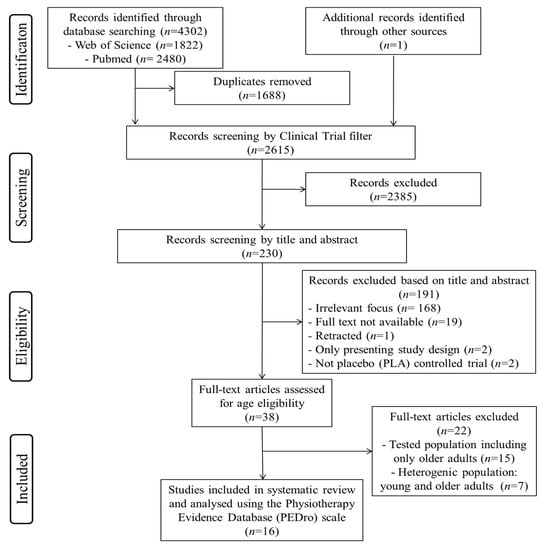
Effects of Polyphenol-Rich Interventions on Cognition and Brain Health in Healthy Young and Middle-Aged Adults: Systematic Review and Meta-Analysis Context: Affecting older and even some younger adults, neurodegenerative disease represents a global public health concern and has been identified as a research priority. To date, most anti-aging interventions have examined older adults, but little is known about the effects of polyphenol interventions on brain-related aging processes in healthy young and middle-aged adults. Objective: This systematic review and meta-analysis aimed to evaluate the acute and chronic effects of (poly)phenol-rich diet supplementation on cognitive function and brain health in young and middle-aged adults. In July 2019, two electronic databases (PubMed and Web of Science) were used to search for relevant trials examining the effect of acute or chronic (poly)phenol-rich supplementation on cognitive function and neuroprotective measures in young and middle-aged adults (<60 years old). A total of 4303 records were screened by two researchers using the PICOS criteria. Fifteen high quality (mean PEDro score = 8.8 ± 0.58) trials with 401 total participants were included in the final analyses. Information on treatment, study design, characteristics of participants, outcomes and used tools were extracted following PRISMA guidelines. When items were shown to be sufficiently comparable, a random-effects meta-analysis was used to pool estimates across studies. Effect size (ES) and its 95% confidence interval (CI) was calculated. The meta-analysis indicated that (poly)phenol supplementation significantly increased brain-derived neurotrophic factor (ES = 3.259, p = 0.033), which was accompanied by higher performance in serial (7s) subtraction (ES = 1.467, p = 0.001) and decreases in simple reaction time (ES = −0.926, p = 0.015) and mental fatigue (ES = −3.521, p = 0.010). Data related to cognitive function were skewed towards an effect from acute compared to chronic polyphenol intervention; data related to BDNF were skewed toward an effect from higher bioavailability phenolic components. Conclusion: This meta-analysis provides promising findings regarding the usefulness of polyphenol-rich intervention as an inexpensive approach for enhancing circulation of pro-cognitive neurotrophic factors. These beneficial effects appear to depend on the supplementation protocols. An early acute and/or chronic application of low- to high-dose phenolic components with high bioavailability rates (≥30%) at a younger age appear to provide more promising effects. mdpi.com

@petersuber - Peter Suber (@petersuber@fediscience.org)

Update. "This project seeks to conduct language translation on metadata labels for research publications, attribution data, & clinical trials…to make data about medical research queriable in underserved languages through Wikidata and the Linked Open Web." https://riojournal.com/article/66490/

FAIR and open multilingual clinical trials in Wikidata and Wikipedia This project seeks to conduct language translation on metadata labels for research publications, attribution data, and clinical trials information to make data about medical research queriable in underserved languages through Wikidata and the Linked Open Web. This project has the benefit of distributing content through Wikipedia and Wikidata, which already have an annual userbase of a billion users and which already have established actionable standards to practice diversity, inclusion, openness, FAIRness, and transparency about program development. The impact will be localized access to basic research information in various Global South languages to integrate with existing community efforts for establishing the same. Although Wikidata development in this direction seems inevitable, the cultural and social exchange required to establish global multilingual research partnerships could begin now with support rather than later as a second phase effort for including the developing world. Wikipedia and Wikidata are established forums with an existing active userbase for multilingual research collaboration, but the research practices there still are immature. By applying metadata expertise through this project, we will elevate the current amateur development with more stable Linked Open Data compatibility to English language databases. Using the wiki distribution and discussion platform to develop the global conversation about data sharing will set good precedents for the trend of global research collaboration. riojournal.com

@petersuber - Peter Suber (@petersuber@fediscience.org)

Update. "We [scientists who speak English as a second language] shoulder an extra career challenge: not only must we gain command of our science, but we must also be able to write to professional standards in a foreign language." https://www.nature.com/articles/d41586-021-00899-y

English is the language of science — but precision is tough as a non-native speaker Scientists with a different first language could benefit from mentoring and support to help them communicate their research clearly for global audiences, argues Roey Elnathan. nature.com

@petersuber - Peter Suber (@petersuber@fediscience.org)

Update. Google Scholar shows 3,700,000 papers on climate change written in English, "three times more than Mandarin Chinese & French combined. Among the top 10 countries most vulnerable to climate change, only one is majority English-speaking (Canada)." https://www.smithsonianmag.com/blogs/conservation-commons/2021/03/23/meet-sophia-kianni/

Meet Sophia Kianni: Young Climate Change Changemaker Sophia Kianni is a college freshman who already is making big strides in the world. While visiting family in Iran, Sophia witnessed first hand the gap in knowledge about climate change due to information being solely in English and differences in media coverage. Last year, she founded Climate Cardinals, a nonprofit that through the work of global volunteers translates climate science and research in an effort to break down language barriers. Kianni’s involvement does not stop there as she is also a member of the UN Youth Advisory Group on Climate Change and hosts her own podcast on the intersection of fashion and sustainability. smithsonianmag.com

@petersuber - Peter Suber (@petersuber@fediscience.org)

Update. "Our results show that synthesising non-English-language studies is key to overcoming the widespread lack of local, context-dependent evidence and facilitating evidence-based conservation globally." https://www.biorxiv.org/content/10.1101/2021.05.24.445520v1

Tapping into non-English-language science for the conservation of global biodiversity bioRxiv - the preprint server for biology, operated by Cold Spring Harbor Laboratory, a research and educational institution biorxiv.org

@petersuber - Peter Suber (@petersuber@fediscience.org)

Update "Only 11 of 38 European countries had any medical publications in [their] national language that were referenced in MEDLINE." https://ebooks.iospress.nl/doi/10.3233/SHTI210177

IOS Press Ebooks - Rare Use of National Languages in Europe for Communicating Scientific Information in Medicine ebooks.iospress.nl

@petersuber - Peter Suber (@petersuber@fediscience.org)

Update. "If everyone uses the same language, there is less friction…[But] the English-language conquest is not more efficient than polyglot science – it is just differently inefficient. There’s still a lot of language‑learning and translation going on." https://aeon.co/essays/how-did-science-come-to-speak-only-english
How did science come to speak only English? | Aeon Essays Science once communicated in a polyglot of tongues, but now English rules alone. How did this happen – and at what cost? aeon.co

@petersuber - Peter Suber (@petersuber@fediscience.org)

Update. "I have rec'd…peer-review feedback recommending that a ‘native English speaker’…[proofread] my manuscript…Yet…English is my first language…[Some reviewers who gave this feedback] did not themselves show a strong competence in written English." https://insights.uksg.org/articles/10.1629/uksg.502/

‘Requires proofing by a native speaker’ – colonization and scholarship Many academic scholars have encountered some variation of the phrase: ‘This manuscript could benefit from proofing by a native English speaker’. They may have received this feedback or given it. This article aims to use peer review as a prism through which to explore aspects of linguistic power and privilege. In unpacking some of the language of peer review we may question some assumptions we hold about ‘native’ English speakers. Although making reference to other written works, this commentary is foregrounded in personal testimony. It does this to contextualize the issues. It is written from the perspective of a storyteller. It draws upon the stories of languages and how we use them, of where they come from and where they are going. Running throughout is the idea and the very dark reality of colonization. insights.uksg.org

@petersuber - Peter Suber (@petersuber@fediscience.org)

Update. Good science is more important than good English. But "science too often demands that non-native English-speaking academics focus on learning to speak and write in English, which drastically disadvantages them." Hence.... https://www.nature.com/articles/d41586-021-01905-z

Don’t focus on English at the expense of your science A language barrier can be a challenge, but there are better ways to spend your resources, says Zhanna Anikina. nature.com

@petersuber - Peter Suber (@petersuber@fediscience.org)

Update. "No one can deny that the dominance of the English language in academia has many cost-saving & logistic benefits. Still, we should also be aware [that] such dominance…jeopardises the quality of research around the globe." https://content.yudu.com/web/tzly/0A448bb/RIaug21/html/index.html?page=20

@petersuber - Peter Suber (@petersuber@fediscience.org)

Update. In addition to providing new data on the problem of monolingualism in science, the authors propose #openscience as part of the solution. https://english.elpais.com/usa/2021-07-30/how-to-end-the-hegemony-of-english-in-scientific-research.html

How to end the hegemony of English in scientific research A report by the Organization of Ibero-American States shows that 95% of all work published in journals last year was in that language, with only 1% in Spanish or Portuguese english.elpais.com

@petersuber - Peter Suber (@petersuber@fediscience.org)

Update. "Our findings indicate that Finnish language publications are particularly impt for reaching students, citizens, experts & politicians. Thus #openaccess to publications in national languages is vital for the local relevance & outreach of research." https://onlinelibrary.wiley.com/doi/10.1002/leap.1405

@petersuber - Peter Suber (@petersuber@fediscience.org)

Update. National language journals “may not be able to transition to #openaccess…w/o losing income…One way to enable OA…is to create a…platform for hosting…the most impt local journals, an example of which has been recently implemented in Norway.” https://asistdl.onlinelibrary.wiley.com/doi/10.1002/asi.24336

@petersuber - Peter Suber (@petersuber@fediscience.org)

Update. "As English has become the international, cross-border language of science, it may have ceased to be the property of the native speaker researchers, who constitute a small minority in the community." https://www.tandfonline.com/doi/full/10.1080/08989621.2021.1960514

@petersuber - Peter Suber (@petersuber@fediscience.org)

Update. This is just to ensure that the present thread is associated with the hashtags #MultilingualResearch and #Multilingualism.

@petersuber - Peter Suber (@petersuber@fediscience.org)

Update. "While English-language journals have seen huge increases in global submissions over the last 10 years, the pool of experts being used to review the literature largely remains with US and European-based reviewers." https://scholarlykitchen.sspnet.org/2021/08/16/revisiting-balancing-author-satisfaction-with-reviewer-needs/

Revisiting: Balancing Author Satisfaction with Reviewer Needs Journal editors struggle to make sure that peer reviewers don't get "burned out" with too many review requests. Despite the data, we have yet to make strides within large disciplines. scholarlykitchen.sspnet.org

@petersuber - Peter Suber (@petersuber@fediscience.org)

Update. "The best automatic translation systems are now good enough to allow people to choose the language in which they read and write to the platform." https://scholarlykitchen.sspnet.org/2021/08/18/positively-disrupting-research-culture-for-the-better-an-interview-with-alexandra-freeman-of-octopus/ Important if true. But is it true?
'Positively Disrupt(ing) Research Culture for the Better': An Interview with Alexandra Freeman of Octopus Octopus is a new sharing platform that hopes to disrupt research culture for the better. An interview with founder Dr. Alexandra Freeman. scholarlykitchen.sspnet.org

@petersuber - Peter Suber (@petersuber@fediscience.org)

Update. "English is the dominant language of environmental…conservation. But unless people understand…specific…concepts & can talk about them in their home languages, they can feel disconnected from govt efforts to preserve ecosystems & species." https://www.nature.com/articles/d41586-021-02218-x
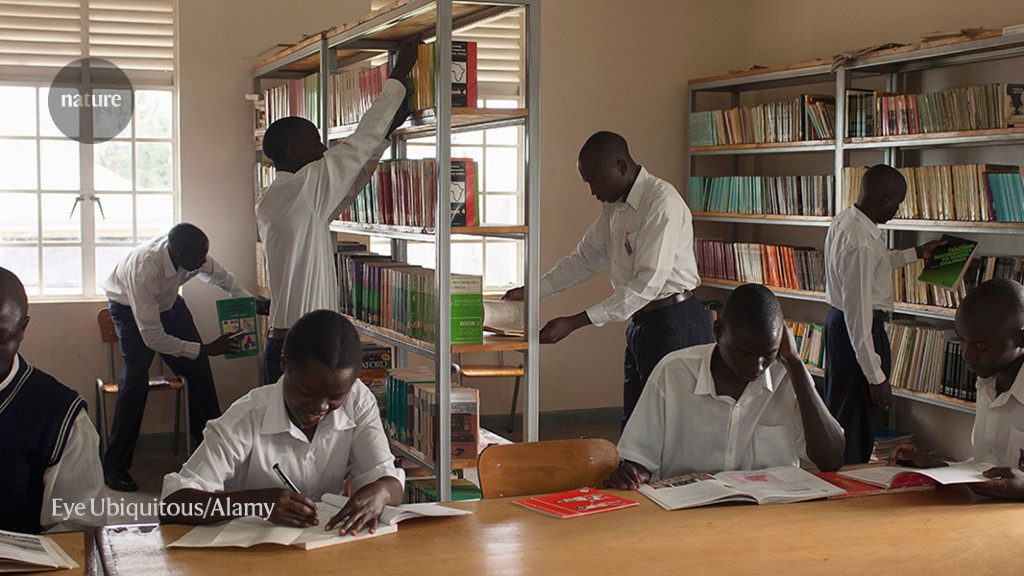
African languages to get more bespoke scientific terms Many words common to science have never been written in African languages. Now, researchers from across Africa are changing that. nature.com

@petersuber - Peter Suber (@petersuber@fediscience.org)

Update. "The current bias in the STEM academy [in favor of English]…is detrimental to the continuity and evolution of STEM research." (This article is published in 6 languages.) https://www.sciencepolicyjournal.org/article_1038126_jspg180303.html
A Call to Diversify the Lingua Franca of Academic STEM Communities Journal of Science Policy & Governance  |  Volume 18, Issue 03  | August 30, 2021 sciencepolicyjournal.org

@petersuber - Peter Suber (@petersuber@fediscience.org)

Update (from 2008). Emerging Themes in Epidemiology suggests 4 ways to support #MultilingualResearch, and adopts one itself: It will publish "translations of abstracts or full texts by authors as Additional files." https://ete-online.biomedcentral.com/articles/10.1186/1742-7622-5-1
Open access for the non-English-speaking world: overcoming the language barrier - Emerging Themes in Epidemiology This editorial highlights the problem of language barrier in scientific communication in spite of the recent success of Open Access Movement. Four options for English-language journals to overcome the language barrier are suggested: 1) abstracts in alternative languages provided by authors, 2) Wiki open translation, 3) international board of translator-editors, and 4) alternative language version of the journal. The Emerging Themes in Epidemiology announces that with immediate effect, it will accept translations of abstracts or full texts by authors as Additional files. Editorial note: In an effort towards overcoming the language barrier in scientific publication, ETE will accept translations of abstracts or the full text of published articles. Each translation should be submitted separately as an Additional File in PDF format. ETE will only peer review English-language versions. Therefore, translations will not be scrutinized in the review-process and the responsibility for accurate translation rests with the authors. ete-online.biomedcentral.com

@petersuber - Peter Suber (@petersuber@fediscience.org)

Update. @Wikidata and @Wikifunctions could help different language versions of @Wikipedia stay in sync on facts. https://slate.com/technology/2021/09/wikipedia-human-language-wikifunctions.html

Wikipedia Is Trying to Transcend the Limits of Human Language Until recently, a small Wikipedia edition said Dianne Feinstein was San Francisco's mayor. This project could help avoid that sort of out of date info. slate.com

@petersuber - Peter Suber (@petersuber@fediscience.org)

Update. Just making sure this thread on #MultilingualResearch includes this tweet from June 2021

@petersuber - Peter Suber (@petersuber@fediscience.org)

Update. @Stanford has launched a discussion forum on multilingual digital humanities (#dh). https://mailman.stanford.edu/mailman/listinfo/multilingual-dh

multilingual-dh Info Page mailman.stanford.edu

@petersuber - Peter Suber (@petersuber@fediscience.org)

"The nuanced language of the te Reo [Maori] descriptions was an essential part of the paper & they withdrew the article…despite the extra work it would take to stand their ground…Happily, the paper found a new home… delighted to incorporate the te Reo." https://www.optimistdaily.com/2021/09/decolonizing-science-kiwi-scientists-take-a-stand-on-using-maori-language/

Decolonizing Science: Kiwi scientists take a stand on using Maori language | The Optimist Daily In any given bioregion, Indigenous inhabitants are the natural historians with the most knowledge of the area. optimistdaily.com

@petersuber - Peter Suber (@petersuber@fediscience.org)

Update. "For scientists who do not speak English…writing a paper in their first language still does not solve the issue [since they must still] conduct a thorough review of existing literature [much or most of which is in English]." https://www.carbonbrief.org/analysis-the-lack-of-diversity-in-climate-science-research

Analysis: The lack of diversity in climate-science research - Carbon Brief Biases in authorship make it likely that the existing bank of knowledge around climate change and its impacts is skewed towards the interests of male authors from the global north. carbonbrief.org

@petersuber - Peter Suber (@petersuber@fediscience.org)

Update (from 2019). Personal experiences from seven scientists whose first language is not English. https://www.nature.com/articles/d41586-019-01797-0
When English is not your mother tongue Seven researchers discuss the challenges posed by science’s embrace of one global language. nature.com

@petersuber - Peter Suber (@petersuber@fediscience.org)

Update (from 2017). "Articles published in English have a higher number of citations than those published in other languages, when the effect of journal, year of publication, and paper length are statistically controlled." https://link.springer.com/article/10.1007/s13280-016-0820-7
Publish (in English) or perish: The effect on citation rate of using languages other than English in scientific publications - Ambio There is a tendency for non-native English scientists to publish exclusively in English, assuming that this will make their articles more visible and cited link.springer.com

@petersuber - Peter Suber (@petersuber@fediscience.org)

Update. Don't assume that all important results are published in English. "We show that non-English-language studies provide crucial evidence for informing global biodiversity conservation." https://journals.plos.org/plosbiology/article?id=10.1371/journal.pbio.3001296

Tapping into non-English-language science for the conservation of global biodiversity A survey of 419,680 peer-reviewed papers in 16 languages reveals that non-English-language studies can expand geographical (by 12-25%) and taxonomic (by 5-32%) coverage of English-language evidence on the effectiveness of biodiversity conservation interventions, especially in biodiverse regions. journals.plos.org

@petersuber - Peter Suber (@petersuber@fediscience.org)

Update. From the authors' summary of the article above: "Many…scientific breakthroughs were originally published in a language other than English. The structure of a Nobel Prize-winning antimalarial drug was first published in 1977 in simplified Chinese." https://theconversation.com/the-english-language-dominates-global-conservation-science-which-leaves-1-in-3-research-papers-virtually-ignored-168951
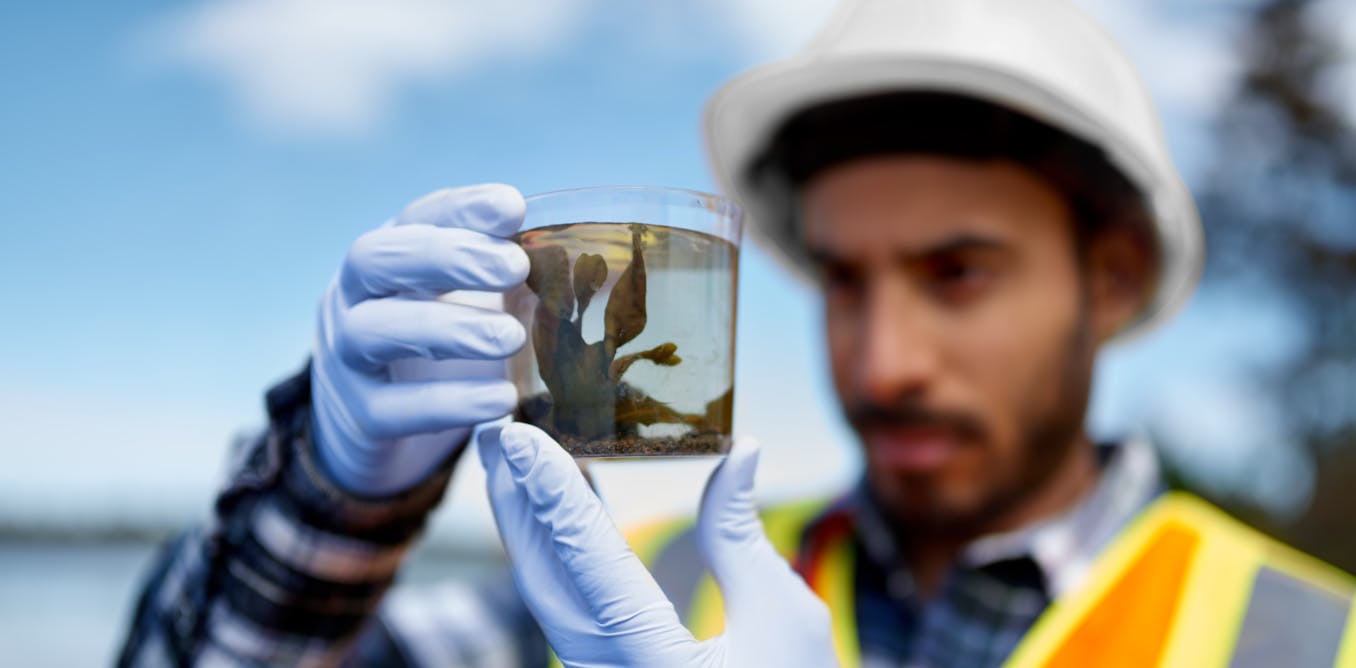
The English language dominates global conservation science – which leaves 1 in 3 research papers virtually ignored Many valuable scientific breakthroughs were originally published in a non-English language. New research shows more effort is needed to transcend language barriers to improve conservation science. theconversation.com

@petersuber - Peter Suber (@petersuber@fediscience.org)

Update. The "structural disadvantage [for non-native speakers in English philosophy journals] deserves closer philosophical & empirical attention. We owe this to current & future members of our…community for whom English is not their native language." https://dailynous.com/2021/10/13/levelling-the-linguistic-playing-field-within-academic-philosophy-guest-post/
Levelling the Linguistic Playing Field within Academic Philosophy (guest post) - Daily Nous Stylistic norms for writing affect philosophers' professional prospects in unfair ways, and what one thinks should be done about this may be tied to one's conception of what philosophy is supposed to do. In this guest post*, Louise Chapman, the CEO of Lex Academic, an organization that offers editing and translation services for academic authors, dailynous.com

@petersuber - Peter Suber (@petersuber@fediscience.org)

Update. Diamond or no-APC #openaccess journals are multilingual 2.7x more often than APC-based OA journals. In the @DOAJplus: 38% of no-APC v. 14% of APC-based journals. https://zenodo.org/record/4558704 For more data on multilingual no-APC journals, see §1.4.3, tables 8-11.

OA Diamond Journals Study. Part 1: Findings Context From June 2020 to February 2021, a consortium of 10 organisations undertook a large-scale study on open access journals across the world that are free for readers and authors, usually referred to as “OA diamond journals”. This study was commissioned by cOAlition S in order to gain a better understanding of the OA diamond landscape. Presentation The study undertook a statistical analysis of several bibliographic databases, surveyed 1,619 journals, collected 7,019 free text submissions and other data from 94 questions, and organised three focus groups with 11 journals and 10 interviews with hosting platforms. It collected 163 references in the academic literature, and inventoried 1048 journals not listed in DOAJ. The results of the study are available in the following outputs: Findings Report - DOI: 10.5281/zenodo.4558704 Recommendations Report- DOI:10.5281/zenodo.4562790 References Library - DOI: 10.5281/zenodo.4562816 Journals Inventory - DOI: 10.5281/zenodo.4562828 Dataset - DOI: 10.5281/zenodo.4553103 Findings: A wide archipelago of relatively small journals serving diverse communities OA diamond journals are on the road to full compliance with Plan S A mix of scientific strengths and operational challenges An economy that largely depends on volunteers, universities and government zenodo.org

@petersuber - Peter Suber (@petersuber@fediscience.org)

Update. English-language articles quoting non-English speakers tend to publish the quotations in English alone. This piece recommends publishing them in both the speaker's native language and English. https://onlinelibrary.wiley.com/doi/10.1002/nop2.1115

@petersuber - Peter Suber (@petersuber@fediscience.org)

Update. I wish this study had not limited itself to English-language articles. It would be good to compare the growth of English-language articles to the growth of non-English articles in the BRICS countries. https://www.emerald.com/insight/content/doi/10.1108/GKMC-08-2020-0109/full/html

An analysis of research output in open access journals in BRICS countries: a bibliometric study | Emerald Insight An analysis of research output in open access journals in BRICS countries: a bibliometric study - Author: Sana Zia emerald.com

@petersuber - Peter Suber (@petersuber@fediscience.org)

Update. "The dominance of…articles in English as well as the paucity of OA publications indexed in international databases (compared to those in national or regional databases) may have been due to the greater weighting assigned to such publications." https://ese.arphahub.com/article/59032/

The need for a new set of measures to assess the impact of research in earth sciences in Indonesia Background: Earth sciences is one of those sensitive field sciences that are closely needed to solve local problems within local physical and social settings. Earth researchers find state-of-the-art of topics in earth sciences by using scientific databases, conduct research on the topics, and write about them. However, the accessibility, readability, and usability of those articles for local communities are major problems in measuring the impact of research, although it may be covered by well-known international scientific databases.Objectives: To ascertain empirically whether there are differences in document distribution, in the proportions of openly accessible documents, and in the geographical coverage of earth sciences topics as revealed through analyses of documents retrieved from scientific databases and to propose new measures for assessing the impact of research in earth sciences based on those differences.Methods: Relevant documents were retrieved using ‘earth sciences’ as a search term in English and other languages from ten databases of scientific publications. The results of these searches were analysed using frequency analysis and a quantitative- descriptive design.Results: (1) The number of articles in English from international databases exceeded the number of articles in native languages from national-level databases. (2) The number of open-access (OA) articles in the national databases was higher than that in other databases. (3) The geographical coverage of earth science papers was uneven between countries when the number of documents retrieved from closed-access commercial databases was compared to that from the other databases. (4) The regulations in Indonesia related to promotion of lecturers assign greater weighting to publications indexed in Scopus and the Web of Science (WoS) and publications in journals with impact factors are assigned a higher weighting.Conclusions: The dominance of scientific articles in English as well as the paucity of OA publications indexed in international databases (compared to those in national or regional databases) may have been due to the greater weighting assigned to such publications. Consequently, the relevance of research reported in those publications to local communities has been questioned. This article suggests some open-science practices to transform the current regulations related to promotion into a more responsible measurement of research performance and impact. ese.arphahub.com

@petersuber - Peter Suber (@petersuber@fediscience.org)

Update. 24% of http://Journal.fi users are non-academics. Professional researchers used English-language articles more than Finnish or Swedish articles. For students, it was the reverse. https://onlinelibrary.wiley.com/doi/full/10.1002/leap.1405

Journal.fi Suomalaiset tiedelehdet verkossa journal.fi

@petersuber - Peter Suber (@petersuber@fediscience.org)

Update. Outside English-speaking countries, the dominance of English is spreading from research publications to university courses. (#paywalled) https://www.timeshighereducation.com/news/big-five-losing-monopoly-english-language-degree-courses

‘Big five’ losing monopoly on English-language degree courses Almost one in five English-medium degrees now taught outside Australia, Canada, New Zealand, UK and US timeshighereducation.com

@petersuber - Peter Suber (@petersuber@fediscience.org)

Update from Nov 2019. "There was a positive relationship between #JIFs [journal impact factors] and publication language…Most countries with smaller research capabilities have still chosen English as the standard language of their research journals." https://www.sciencedirect.com/science/article/pii/S037843711931180X

The effect of “open access” on journal impact factors: A causal analysis of medical journals The Journal Impact Factor (JIF) has a significant influence on authors of research paper submissions. Whether open access (OA) is beneficial to JIFs a… sciencedirect.com

@petersuber - Peter Suber (@petersuber@fediscience.org)

Update from 2018: "I propose balanced multilingualism as a basis for governing the tensions between strategies for internationalization and excellence in research on the one hand and strategies for societal relevance and participation on the other." bid.ub.edu/en/40/sivertse…

@petersuber - Peter Suber (@petersuber@fediscience.org)

Update. Lingua franca nuances: In Poland there are academic "domains where English fluency is an asset & 'black holes' (bureaucratic issues, teaching, research collaboration) where English language communication is either impossible or impeded." https://www.sciencedirect.com/science/article/abs/pii/S0889490621000673

English as a lingua franca? The limits of everyday English-language communication in Polish academia Intercultural communication has become increasingly important due to the growing internationalization of higher education, even outside the English-sp… sciencedirect.com

@petersuber - Peter Suber (@petersuber@fediscience.org)

Update. Non-native speakers of English can face discrimination for their accents, regardless of their proficiency. https://theconversation.com/heres-why-people-might-discriminate-against-foreign-accents-new-research-172539

Here’s why people might discriminate against foreign accents – new research New research shows that increasing exposure to foreign accents makes it easier to process - and that can reduce bias which is not based on negative perceptions or prejudice. theconversation.com

@petersuber - Peter Suber (@petersuber@fediscience.org)

Update. Chinese journals published in English have much stronger #opendata policies than Chinese journals published in Chinese. (The article also identifies other journal differences that correlate with the strength of their data-sharing policies.) https://onlinelibrary-wiley-com.ezp-prod1.hul.harvard.edu/doi/epdf/10.1002/leap.1437

@petersuber - Peter Suber (@petersuber@fediscience.org)

Update. "There is some anecdotal evidence that publication in Chinese journals is shifting from Mandarin to English but participants [in a Dec 2020 @cni_org meeting] were not aware of good comprehensive data on this." https://www.cni.org/wp-content/uploads/2021/01/CNI-Science-Nationalism-ER-Report-f20-Public-FINAL.pdf
Page not found cni.org

@petersuber - Peter Suber (@petersuber@fediscience.org)

Update. The dominance of English in STEM fields "is detrimental to the continuity & evolution of STEM research. We [recommend US govt] infrastructure that standardizes & facilitates the language translation process & hosting of multilingual publications." https://www.sciencepolicyjournal.org/article_1038126_jspg180303.html

A Call to Diversify the Lingua Franca of Academic STEM Communities Journal of Science Policy & Governance  |  Volume 18, Issue 03  | August 30, 2021 sciencepolicyjournal.org

@petersuber - Peter Suber (@petersuber@fediscience.org)

Update, new OA journal on indigenous languages: Publishing in English about non-English languages worked "against the fair dissemination of info to the…communities we are writing about. So we wanted to make sure we could pub in a variety of languages." https://around.uoregon.edu/content/new-journal-aimed-revitalizing-indigenous-languages

New Journal is aimed at revitalizing Indigenous languages | Around the O Living Languages debuts at the start of the International Indigenous Languages Decade around.uoregon.edu

@petersuber - Peter Suber (@petersuber@fediscience.org)

Update from @LProofreading. "We are group of #ECR in #linguistics concerned with linguistic discrimination in #academic #publishing. We propose to develop a community-based solution to fight it."

@petersuber - Peter Suber (@petersuber@fediscience.org)

Update. This meta-analysis deliberately limited its scope to English-language articles. I suspect that most others do the same without saying so. Has anyone studied how often meta-analyses adopt this limitation? https://journals.sagepub.com/doi/10.1177/14747049211040447

@petersuber - Peter Suber (@petersuber@fediscience.org)

Update. China's retreat from monetary incentives to publish in English-language journals with high journal impact factors (#JIFs) is not having a large short-term effect. Many researchers want to publish in those journals even without the old incentives. https://link.springer.com/article/10.1057/s41307-022-00268-y
Where to Publish: Chinese HSS Academics’ Responses to ‘Breaking SSCI Supremacy’ Policies - Higher Education Policy Incentivizing academic publications in internationally-indexed journals is a current topic of national debate especially in non-anglophone countries. To bo link.springer.com

@petersuber - Peter Suber (@petersuber@fediscience.org)

Update. "In this position paper, we set out to challenge both the reality and desirability of continuing to configure academic/scientific knowledge production and exchange as an ‘English Only’ space." https://www.cambridge.org/core/journals/language-teaching/article/multilingualism-in-academic-writing-for-publication-putting-english-in-its-place/5B067CDB492350D55A8E798AC72526B5

Sorry, an error occurred Welcome to Cambridge Core cambridge.org

@petersuber - Peter Suber (@petersuber@fediscience.org)

More from the study above. Mainstream indices like WoS & Scopus suggest that 90% of published journal articles are in English. But those are the indices most likely to exclude non-English journals. For example, they cover only 2/3 of the journals listed in UlrichsWeb.

@petersuber - Peter Suber (@petersuber@fediscience.org)

Update. "This paper…details 3 major ways in which content differences between language editions [of @Wikipedia] arise…and recommendations for good practices when using multilingual and multimodal data for research and modeling." https://arxiv.org/abs/2204.02483

Considerations for Multilingual Wikipedia Research English Wikipedia has long been an important data source for much research and natural language machine learning modeling. The growth of non-English language editions of Wikipedia, greater computational resources, and calls for equity in the performance of language and multimodal models have led to the inclusion of many more language editions of Wikipedia in datasets and models. Building better multilingual and multimodal models requires more than just access to expanded datasets; it also requires a better understanding of what is in the data and how this content was generated. This paper seeks to provide some background to help researchers think about what differences might arise between different language editions of Wikipedia and how that might affect their models. It details three major ways in which content differences between language editions arise (local context, community and governance, and technology) and recommendations for good practices when using multilingual and multimodal data for research and modeling. arxiv.org

@petersuber - Peter Suber (@petersuber@fediscience.org)

Update. "We…provide recommendations on how multilingualism can be taken into account at all stages and across different types of qualitative and quantitative research assessment procedures." #paywalled. https://www.elgaronline.com/view/edcoll/9781800372542/9781800372542.00031.xml

Chapter 22: Multilingualism of social sciences This chapter aims to provide a comprehensive view of the role of language in academic publishing in social sciences. It also advocates the balanced multilingualism as an approach that supports taking language into account in all aspects of research assessment without prioritizing scholarly communication in any language over publications in other languages. To do this, we elaborate a geopolitical perspective on academic publishing that highlights the role of language in science and the benefits of multilingualism to society. Then, we provide new insights into multilingual publishing in the social sciences using bibliographical data from national current research information systems. Finally, we present the concept of balanced multilingualism in light of various policy initiatives, among others the Helsinki Initiative on Multilingualism in Scholarly Communication, to provide recommendations on how multilingualism can be taken into account at all stages and across different types of qualitative and quantitative research assessment procedures. elgaronline.com

@petersuber - Peter Suber (@petersuber@fediscience.org)

Update. "The article compares selected entries on @Wikipedia concerning significant historical events in three language versions: Belarusian, Lithuanian, & Polish…[& notes] the prevalence of 'local' points of view on controversial historical events." cejsh.icm.edu.pl/cejsh/element/…

@petersuber - Peter Suber (@petersuber@fediscience.org)

Update. An argument for "balanced multilingualism" & "taking language into account in all aspects of research assessment without prioritizing scholarly communication in any language over publications in other languages." https://repository.uantwerpen.be/docstore/d:irua:11895 (warning, forced download)

@petersuber - Peter Suber (@petersuber@fediscience.org)

Update. "African languages are barely represented in technology & research…@Lanfrica is a language-focused search engine that makes it fast & easy to find information on the Internet about resources relating to African languages." https://lanfrica.com/about
Lanfrica Lanfrica catalogues, archives and links African language resources in order to mitigate the difficulty encountered in discovering African works. lanfrica.com

@petersuber - Peter Suber (@petersuber@fediscience.org)

Update. "Spanish and Portuguese together represent more than 800 million speakers…, 11% of the world’s population, but only 1% of globally indexed scientific output is published in these two languages." https://www.lodivalleynews.com/for-open-and-accessible-science/

For open and accessible science In an episode of the series doctor. Casa, LarThe famous doctor’s team faces a mystery:... lodivalleynews.com

@petersuber - Peter Suber (@petersuber@fediscience.org)

Update. "The Council of the European Union…welcomes initiatives to promote multilingualism, such as the Helsinki initiative on multilingualism in scholarly communication." https://data.consilium.europa.eu/doc/document/ST-9515-2022-INIT/en/pdf

@petersuber - Peter Suber (@petersuber@fediscience.org)

Update. "What is the role of [English-language] academic journals in helping non-native English speaking authors to have their best chance at publication without their research findings being overlooked due to poor language usage?" Three recommendations. https://blog.scholasticahq.com/post/ways-academic-journals-can-support-esl-authors/

3 Ways academic journals can better support non-native English speaking authors Three ways that academic journals can better acknowledge and support the vast network of ESL authors to help them navigate manuscript preparation and to encourage more global research policy and dissemination. blog.scholasticahq.com

@petersuber - Peter Suber (@petersuber@fediscience.org)

Update. The @EUCouncil "welcomes initiatives to promote #multilingualism, such as the Helsinki initiative on multilingualism in scholarly communication...invites the Commission & the Member States to experiment with multilingualism, on a voluntary basis." https://www.consilium.europa.eu/media/56958/st10126-en22.pdf

Browser check - Consilium consilium.europa.eu

@petersuber - Peter Suber (@petersuber@fediscience.org)

Update. "We [@COKIproject] have mapped the 122 million objects in Crossref up to the end of May 2022 to languages (based on titles and abstracts, where available) and done an initial analysis. The results are a mix of the expected and surprising." https://openknowledge.community/language-diversity/
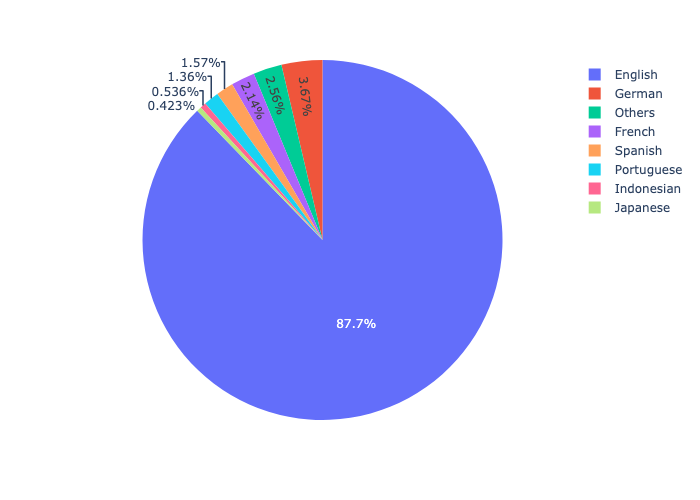
Language Diversity in Scholarly Publishing - COKI There is a lot of lip service paid to the idea of diversity in scholarly publishing and often diversity of language is used as an example, but limited analysis has been done at scale. To address this gap, we have mapped the 122 million objects in Crossref % and done an initial analysis. openknowledge.community

@petersuber - Peter Suber (@petersuber@fediscience.org)

Update. The spread of "national [#openaccess] repositories" will help us study thematic "differences between locally published research in non-English speaking contexts and English-speaking international authors." https://link.springer.com/article/10.1007/s11192-022-04403-9
Local emergence, global expansion: understanding the structural evolution of a bi-lingual national research landscape - Scientometrics Research institutions organize their scientific activities in an increasingly diverse landscape. In matters of global interest, research relies on an ever- link.springer.com

@petersuber - Peter Suber (@petersuber@fediscience.org)

Update. "In many countries, the ten most downloaded books [from @OAPENbooks] are written in non-English languages." https://insights.uksg.org/articles/10.1629/uksg.580/

Big in Japan, Zimbabwe or Brazil – global reach and national preferences for open access books The perceived effect of internationalization on publishing is that there is a strong focus on global issues written in English only. In academic book publishing – strongly connected to the humanities and social sciences (HSS) – languages other than English play an important role. Non-English academic publications have been linked to regional issues: there is a tension between English as the ‘lingua franca’ enabling a global reach versus local languages that provide a better cultural ‘fit’. This article examines the preference of global readers in a systematic manner, by examining the usage of the open access collection of the OAPEN Library. Based on the ten most downloaded books from 100 countries during a 12-month period, the focus on regional topics is measured using the number of books written in non-English languages and the amount of English language books that mention the country.The results show a global interest in books with a regional focus. In many countries, the ten most downloaded books are written in non-English languages. Even when English language titles are part of the top ten, many mention regional concerns. The article counters the narrative of the dominance of English as the language of scholarly communication. Instead, it supports the value of bibliodiversity. insights.uksg.org

@petersuber - Peter Suber (@petersuber@fediscience.org)

Update. We "investigate NLP & Machine Translation approaches…to foster multilingual access & discovery to SSH content across different languages…[We created an open dataset] of multilingual metadata concepts." lrec-conf.org/proceedings/lr…

@petersuber - Peter Suber (@petersuber@fediscience.org)

Update. Google's translation of the Portuguese: "The publication of bilingual and multilingual articles is a potential, inexpensive solution that has been offered for years by the Scientific Electronic Library On-line (SciELO)." https://www.scielo.br/j/jvb/a/8g95sSFpscRXY7NbY9hPLzy/?lang=pt

SciELO - Brasil scielo.br

@petersuber - Peter Suber (@petersuber@fediscience.org)

Update. Anecdote from piece above: "German scientists…identified a significant causal relationship between smoking & lung cancer in the…1930s, a finding ignored by the scientific community for more than three decades, until British & American scientists rediscovered this link."

@petersuber - Peter Suber (@petersuber@fediscience.org)

Update. "@Meta's grand vision is unlikely to be realised…because of #copyright. Unless online material is released under a permissive licence such as [those from] @CreativeCommons, it will be necessary to obtain permission from the copyright holder." https://walledculture.org/why-metas-project-to-translate-automatically-between-200-languages-will-be-stymied-by-copyright/

Why Meta’s project to translate automatically between 200 languages will be stymied by copyright

Meta’s AI division has announced two exciting new projects in the field of machine translation: The first is No Language Left Behind, where we are building a new advanced AI model that can learn from languages with fewer examples to train from, and we will use it to enable expert-quality translations in hundreds of languages, …

walledculture.org

@petersuber - Peter Suber (@petersuber@fediscience.org)

Update. "Our research demonstrates that while EAL [English as an additional language] scholars are under significant pressure to publish in English, they are not provided with the necessary resources to bring their papers to publication." https://www.timeshighereducation.com/blog/we-must-end-linguistic-discrimination-academic-publishing

We must end linguistic discrimination in academic publishing Publishers need to examine their biases and universities their support mechanisms, say Avi Staiman, Marnie Jo Petray and Gaillynn Clements timeshighereducation.com

@petersuber - Peter Suber (@petersuber@fediscience.org)

Update (missed this one from 2014): English-language journal editors said their journals provided clear instructions to authors more than twice as often as their non-English-speaking authors (76% v. 32%). https://blog.scielo.org/en/2014/05/19/non-native-english-speaking-authors-and-editors-evaluate-difficulties-and-challenges-in-publishing-in-international-journals/
Non-native English-speaking authors and editors evaluate difficulties and challenges in publishing in international journals | SciELO in Perspective Due to linguistic and cultural barriers, authors in emerging economies have faced challenges in having their papers accepted in main stream journals. A study conducted on international editors and authors in non-English speaking countries shows that good research results can be prejudiced by poor writing and difficulties with the language. blog.scielo.org

@petersuber - Peter Suber (@petersuber@fediscience.org)

Update from 2015. "A single shared language is useful for an endeavor as collaborative & universal as science. But if you are not a native speaker…how difficult it must be to reach a 'eureka' moment but feel that the words are inadequate to describe it." https://slate.com/technology/2015/01/english-is-the-language-of-science-u-s-dominance-means-other-scientists-must-learn-foreign-language.html
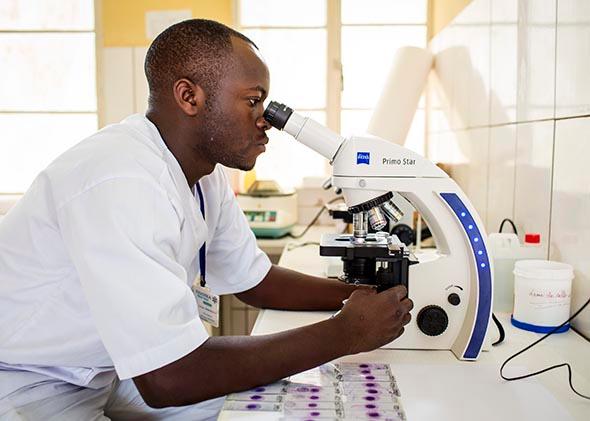
Why Is English the Language of Science? I learned English as a second language. Becoming an Anglophone turned out to be a crucial advantage in a brief scientific career years later. (I once... slate.com

@petersuber - Peter Suber (@petersuber@fediscience.org)

Update from 2019: "There is…evidence for significant linguistic bias when journals receive a manuscript written in poor English…[creating] an impression that the research they discuss is also sub-standard." https://blogs.lse.ac.uk/impactofsocialsciences/2019/08/16/the-hidden-cost-of-having-a-eureka-moment-but-not-being-able-to-put-it-in-your-own-words/

The hidden cost of having a eureka moment, but not being able to put it in your own words Accessibility in scholarly communications is often framed as an economic and technical question of enabling more people to have access and engage with research literature. However, the dominance of… blogs.lse.ac.uk

@petersuber - Peter Suber (@petersuber@fediscience.org)

Update: "The lack of specific strategies regarding language use in research may result in the imposition of English and in the displacement of local languages." https://www.sciencedirect.com/science/article/pii/S0898589822000936

Language policy and multilingualism in semi-peripheral higher education research: Two cases from a University in Catalonia This study aims to contribute to the limited literature on language policy in research, where the increasing domination of English has raised concern … sciencedirect.com

@petersuber - Peter Suber (@petersuber@fediscience.org)

Update. Chinese incentives to publish in international English-language journals are causing Chinese research to be read and cited less by Chinese researchers. https://link.springer.com/article/10.1007/s11192-022-04537-w

Global impact or national accessibility? A paradox in China’s science - Scientometrics During the past decades, Chinese science policy has emphasized the international dissemination of research. Such policies were associated with exponential link.springer.com

@petersuber - Peter Suber (@petersuber@fediscience.org)

Update. "We outline actions that individuals and institutions can take to support multilingual science and scientists, including structural changes that encourage and value translating scientific literature." https://academic.oup.com/bioscience/article/72/10/988/6653151

@petersuber - Peter Suber (@petersuber@fediscience.org)

Update. I second @karimjerbineuro's appreciation of "the extra work, time & energy that students + researchers around the world, whose native language is not English, need to put into writing academic papers + giving talks in English."

@petersuber - Peter Suber (@petersuber@fediscience.org)

Update. I welcome the @COAR_eV recommendations on #repository support for #multilingual research. https://www.coar-repositories.org/news-updates/coar-announces-first-recommendation-for-supporting-multilingual-and-non-english-content-in-repositories/

COAR Announces first recommendation for supporting multilingual and non-English content in repositories Multilingualism is a critical characteristic of a healthy, inclusive, and diverse research communications landscape. The Helsinki Initiative on Multilingualism in Scholarly Communication asserts that the disqualification of local or national languages in academic publishing is the most important - and often forgotten - factor that prevents societies from using and taking advantage of the coar-repositories.org

@petersuber - Peter Suber (@petersuber@fediscience.org)

Update. Only 3% of Dutch medical guidelines refer to research articles written in Dutch. https://pubmed.ncbi.nlm.nih.gov/36300474/

[How often do medical guidelines refer to articles written in Dutch?] - PubMed Articles published in NTvG may be relevant for making recommendations in Dutch medical guidelines, as these publications usually reflect the Dutch care context, and may do more so than research published in international journals. The results of this research show that the number of Dutch guidelines … pubmed.ncbi.nlm.nih.gov

@petersuber - Peter Suber (@petersuber@fediscience.org)

Update. "This study identified eight factors that contributed to the success of…two #multilingual digital libraries [World Digital Library & Digital Library of the Caribbean] and eight technical and operational challenges they have faced." #paywalled https://www.emerald.com/insight/content/doi/10.1108/EL-03-2022-0061/full/html

Sustaining multilinguality: case studies of two multilingual digital libraries | Emerald Insight Sustaining multilinguality: case studies of two multilingual digital libraries - Author: Anping Wu, Jiangping Chen emerald.com

@petersuber - Peter Suber (@petersuber@fediscience.org)

Update. "US researchers do not build as readily on the [English-language] work of Chinese researchers, relative to the work of other foreign scientists, even in a setting where Chinese scientists have long excelled." https://www.nber.org/papers/w30772

Who Stands on the Shoulders of Chinese (Scientific) Giants? Evidence from Chemistry Founded in 1920, the NBER is a private, non-profit, non-partisan organization dedicated to conducting economic research and to disseminating research findings among academics, public policy makers, and business professionals. nber.org

@petersuber - Peter Suber (@petersuber@fediscience.org)

Update. "Although the publishing patterns of CEE…journals in the field of language and linguistics are international, multilingual publishing in languages other than English ensures the continuity of local research traditions." https://link.springer.com/article/10.1007/s11192-022-04595-0

The regional dynamics of multilingual publishing in web of science: A statistical analysis of central and eastern european journals and researchers in linguistics - Scientometrics This article explores multilingual publishing by analyzing the journals in the language and linguistics established in the last seven decades in CEE countr link.springer.com

@petersuber - Peter Suber (@petersuber@fediscience.org)

Update. I just gave an interview in which I spoke at length about #MultilingualResearch. "The dominance of one language creates obstacles, stress, expense & rejection for excellent scholars whose first language happens not to be the lingua franca." https://dash.harvard.edu/handle/1/37373947

Open Access helps both: authors and readers dash.harvard.edu

@petersuber - Peter Suber (@petersuber@fediscience.org)

Update. "The cognitive sciences have been dominated by English-speaking researchers studying other English speakers…However, English differs from other languages in ways that have consequences for the whole of the cognitive sciences." https://www.cell.com/trends/cognitive-sciences/fulltext/S1364-6613(22)00236-4

@petersuber - Peter Suber (@petersuber@fediscience.org)

Update. "Rooryck’s message was clear: 'Funders and universities should value multilingual publication in the same way as publication in English. We should convince PhD students of this too. Publication in English should not be associated with prestige.'" https://vastuullinentiede.fi/en/news/publication-english-should-not-be-associated-prestige
Publication in English should not be associated with prestige vastuullinentiede.fi

@petersuber - Peter Suber (@petersuber@fediscience.org)

Update. "The Organization of Ibero-American States… reported that, in 2020, 95% of all articles published in scientific journals were written in English and only 1% in Spanish or Portuguese." https://www.scielo.br/j/ts/a/zwPRYVhkQLp5RTJzTXMrqky/?format=pdf&lang=en

SciELO - Brasil scielo.br

@petersuber - Peter Suber (@petersuber@fediscience.org)

Update. @UGC_India created a list of #Indian #SSH journals publishing in 15 Indian languages. One purpose was to purge predatory journals. Another was to highlight the existence of the rest, since international databases omit them. https://www.emerald.com/insight/content/doi/10.1108/GKMC-11-2022-0266/full/html (#paywalled)

Indian languages, print journals and the UGC-CARE project | Emerald Insight Indian languages, print journals and the UGC-CARE project - Author: Shubhada Nagarkar, Archana Thakur, Monali Mane, Prajakta Nagare emerald.com

@petersuber - Peter Suber (@petersuber@fediscience.org)

Update. "44% of Finnish peer-reviewed journals and series are published in Finnish…#Diamond #OpenAccess journals are much more multilingual than, for example, [OA] journals which charge #APCs." https://julkaisufoorumi.fi/en/news/diamond-future-open-access

Diamond future of open access julkaisufoorumi.fi

@petersuber - Peter Suber (@petersuber@fediscience.org)

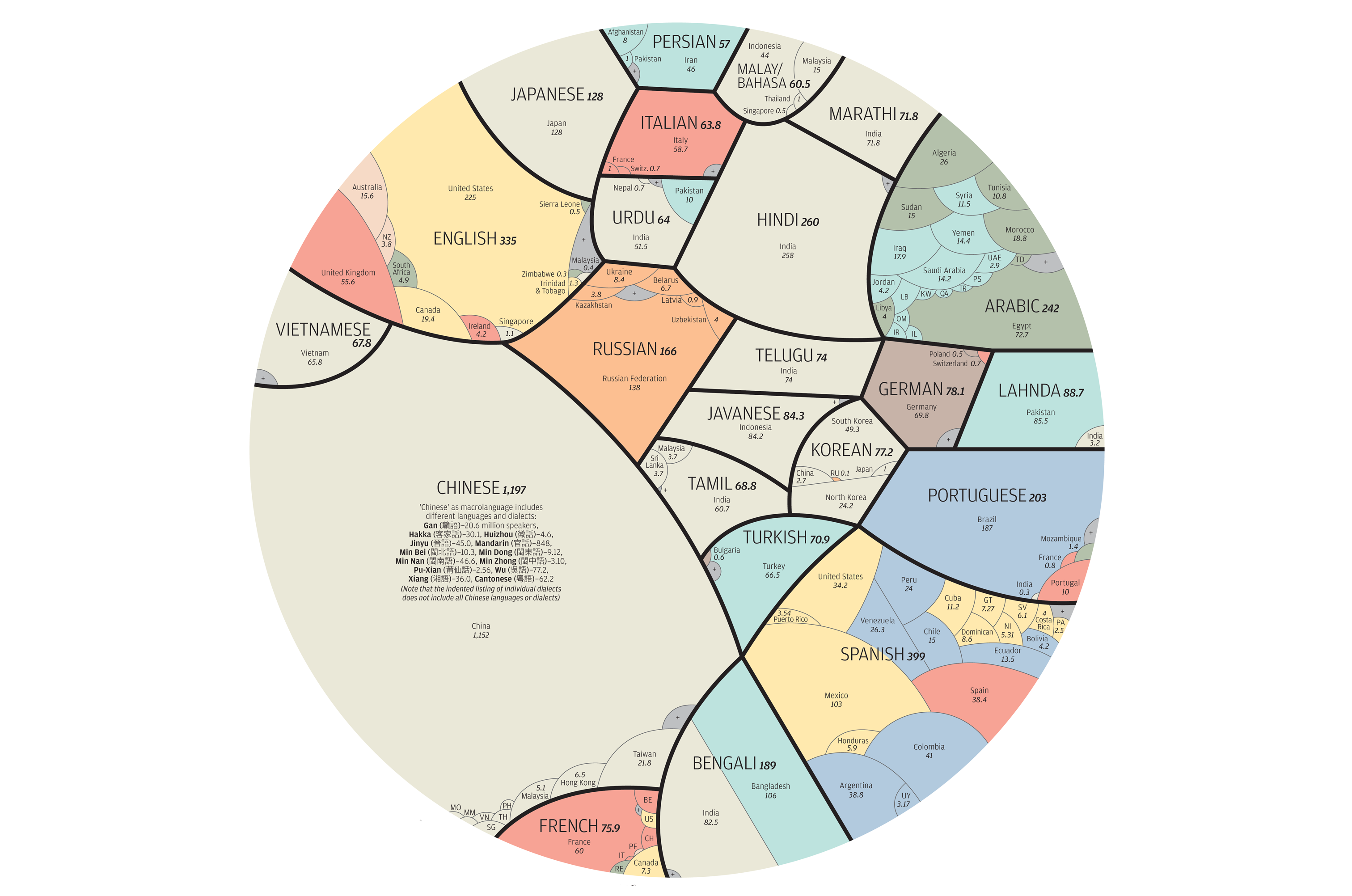
Update. "While English is only the native language of 7.3% of the world's population and less than 20% can speak the language, nearly 75% of all scientific publications are English." https://journals.sagepub.com/doi/10.1177/14550725221102227

@petersuber - Peter Suber (@petersuber@fediscience.org)

Update. Case study of the two-year transition to fully bilingual publication (Spanish and English) by the Chilean medical journal, @Medwave_cl. https://doi.org/10.1002/leap.1533

@petersuber - Peter Suber (@petersuber@fediscience.org)

Update. "To some, this problem [writing in English when it's not your native language] may appear to be a minor one. However, if good research fails to find its way to publication – the barrier being the language – ultimately it is a loss for science." https://blogs.lse.ac.uk/impactofsocialsciences/2019/08/16/the-hidden-cost-of-having-a-eureka-moment-but-not-being-able-to-put-it-in-your-own-words/

The hidden cost of having a eureka moment, but not being able to put it in your own words Accessibility in scholarly communications is often framed as an economic and technical question of enabling more people to have access and engage with research literature. However, the dominance of… blogs.lse.ac.uk

@petersuber - Peter Suber (@petersuber@fediscience.org)

Update. "Journals & publishers have made little progress toward beginning to recognize or reduce language barriers. Counter to our predictions, journals associated w/ scientific societies did not…have more inclusive policies [than] non-society journals." https://academic.oup.com/iob/article/5/1/obad003/7008844

@petersuber - Peter Suber (@petersuber@fediscience.org)

Update. A new study of the #CulturalHeritage research indexed in #WOS finds it skewed toward English-language research and the global #north. The authors conclude that this is partly due to the research and partly due to what is indexed in #WOS. https://www.nature.com/articles/s41599-023-01582-5

A bibliometric analysis of cultural heritage research in the humanities: The Web of Science as a tool of knowledge management - Humanities and Social Sciences Communications Substantial research on the topic of cultural heritage has been conducted over the past two decades. At the same time, the overall output volume of journals and citation metrics have become important parameters in assessing and ranking researchers’ performance. Even though the scholarly interest in cultural heritage has recently increased world-wide, a comprehensive analysis of the publication output volume and its correlation to the shift in the cultural heritage regime starting in 2003 is still lacking. The article aims to understand the role of Web of Science (WOS) as a tool of knowledge management in academia by drawing on the scholarly output volume, the patterns displayed by this volume, and the intellectual structure of cultural heritage research based on WOS-indexed journal articles. The data include 1843 journal articles published between 2003 and 2022 and indexed in the WOS Core Collection. The article draws on a bibliometric analysis by using WOS tools and employing VOSviewer software to map and visualize hidden patterns of research collaboration and avenues of knowledge progress. The cultural heritage research indexed in WOS was found to be Eurocentric, corresponding to the increasing funding provided by European national and supranational agencies for research funding. Although the indexed research has grown significantly, the bulk of studies on cultural heritage in WOS is concentrated in a reduced number of European institutions and countries, written by a small number of prolific authors, with relatively poor collaborative ties emerging across time between authors, institutions, and countries. The central themes reflect the development of digital technologies and increased participatory emphasis in cultural heritage care. This article brings new insights into the analysis of the cultural heritage research in correlation with the emergence of international heritage governance with new institutional actors, professional networks, and international agreements, which are all constitutive elements of scientific production. The article seeks to critically assess and discuss the results and the role of WOS as a tool of knowledge management in academia. nature.com

@petersuber - Peter Suber (@petersuber@fediscience.org)

Update. "By ignoring non-English-language science, international assessments may overlook important information on local and/or regional biodiversity." https://www.nature.com/articles/s41893-023-01087-8
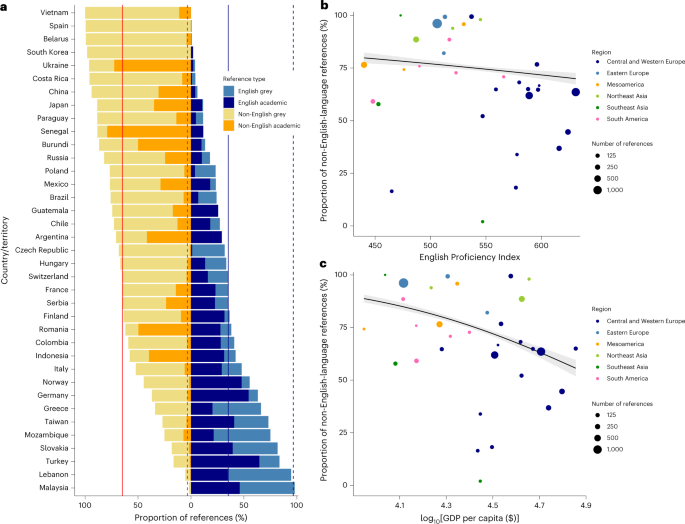
The role of non-English-language science in informing national biodiversity assessments - Nature Sustainability Consulting the best available evidence is key to successful conservation decision-making. While much scientific evidence on conservation continues to be published in non-English languages, a poor understanding of how non-English-language science contributes to conservation decision-making is causing global assessments and studies to practically ignore non-English-language literature. By investigating the use of scientific literature in biodiversity assessment reports across 37 countries/territories, we have uncovered the established role of non-English-language literature as a major source of information locally. On average, non-English-language literature constituted 65% of the references cited, and these were recognized as relevant knowledge sources by 75% of report authors. This means that by ignoring non-English-language science, international assessments may overlook important information on local and/or regional biodiversity. Furthermore, a quarter of the authors acknowledged the struggles of understanding English-language literature. This points to the need to aid the use of English-language literature in domestic decision-making, for example, by providing non-English-language abstracts or improving and/or implementing machine translation. (This abstract is also avaialble in 21 other languages in Supplementary Data 4). Despite the increasing importance of local and regional research for conservation efforts worldwide, research published in languages other than English is routinely ignored by global assessments. This study examines how such research is used and cited at national levels even though it is overlooked internationally nature.com

@petersuber - Peter Suber (@petersuber@fediscience.org)

Update. "Research in languages other than English is critically important for #biodiversity conservation & shockingly under-utilized globally." https://phys.org/news/2023-03-scientists-multilingual-approach.html
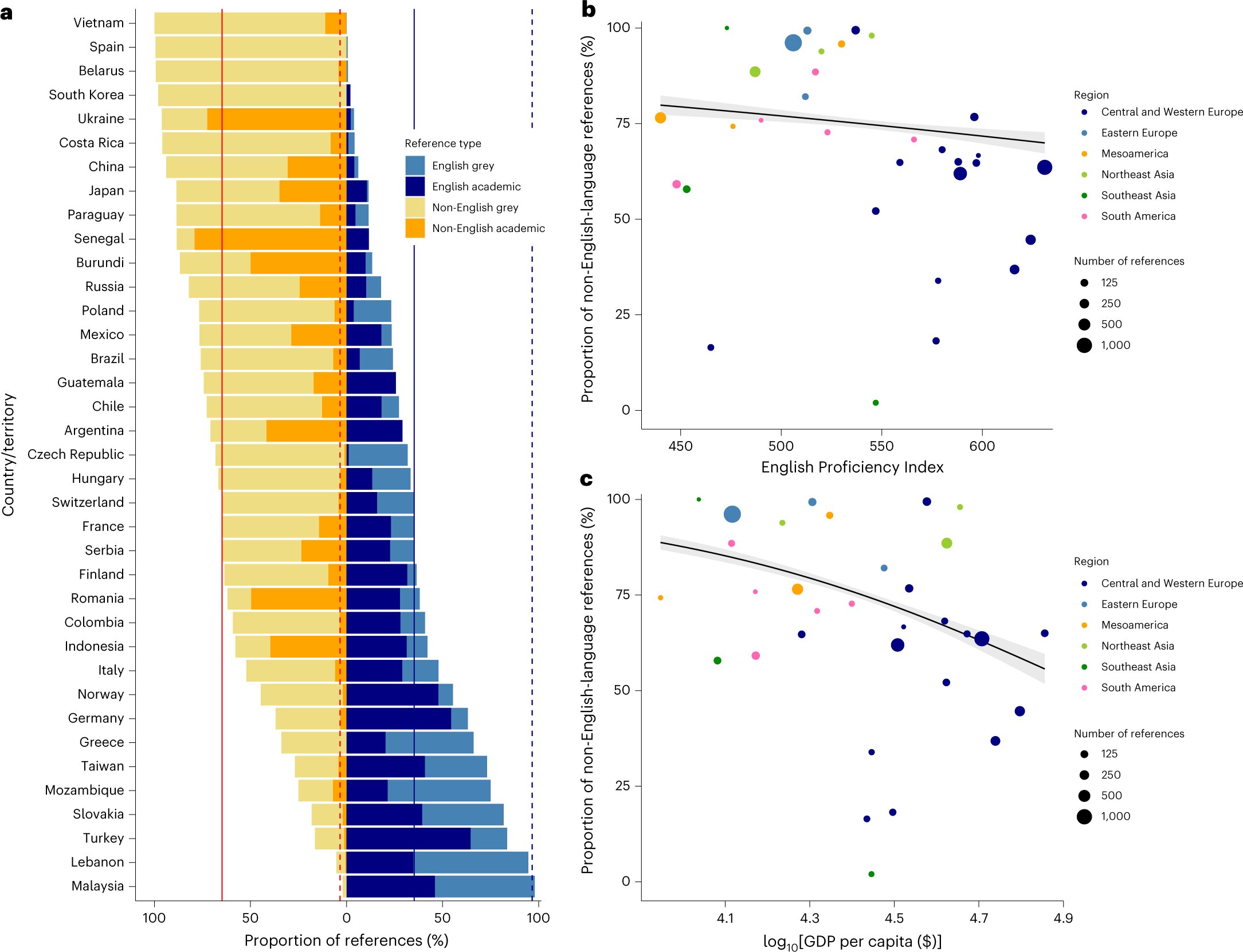
Scientists call for a multilingual approach to conservation Research in languages other than English is critically important for biodiversity conservation and is shockingly under-utilized globally, according to an international research team. phys.org

@petersuber - Peter Suber (@petersuber@fediscience.org)

Update. In the humanities, when Russian funders evaluated grant proposals using quantitative metrics, like publications & citations, "non-journal publications among new grantees decreased, while the share of English-language journal articles increased." https://sciendo.com/article/10.2478/jdis-2023-0010?tab=article

Evaluating grant proposals: lessons from using metrics as screening device Abstract Purpose This study examines the effects of using publication-based metrics for the initial screening in the application process for a project leader. The key questions are whether formal policy affects the allocation of funds to researchers with a better publication record and how the previous academic performance of principal investigators is related to future project results. Design/methodology/approach We compared two competitions, before and after the policy raised the publication threshold for the principal investigators. We analyzed 9,167 papers published by 332 winners in physics and the social sciences and humanities (SSH), and 11,253 publications resulting from each funded project. Findings We found that among physicists, even in the first period, grants tended to be allocated to prolific authors publishing in high-quality journals. In contrast, the SSH project grantees had been less prolific in publishing internationally in both periods; however, in the second period, the selection of grant recipients yielded better results regarding awarding grants to more productive authors in terms of the quantity and quality of publications. There was no evidence that this better selection of grant recipients resulted in better publication records during grant realization. Originality This study contributes to the discussion of formal policies that rely on metrics for the evaluation of grant proposals. The sciendo.com
Saved - May 10, 2023 at 6:56 PM
reSee.it AI Summary
The COVID-19 pandemic has had a significant impact on women's research productivity, particularly those with young children. Studies have shown that women are submitting fewer solo-authored papers and are underrepresented as authors in leading medical journals. However, manuscripts submitted by women are generally not penalized during peer review. The pandemic has also highlighted gender disparities in academia, with women spending less time on research and publishing fewer articles. Gender disparities persist in academic publishing, with women authors underrepresented and cited less than men. Math-intensive STEM fields show prominent gender/country bias. Efforts to address these disparities include asking scientists about their race/ethnicity and self-identified gender/ethnicity, and journals requiring reporting of methods used to determine sex/gender. The share of female inventors has increased over time, but closing the gender gap in highly cited researchers would require a significant increase in women's representation in various fields. Larger editorial boards and those with women editors-in-chief are more likely to have women dominance. It is crucial to address these gender disparities in academic publishing to ensure that women's contributions to research are recognized and valued. This can be achieved through initiatives such as increasing representation of women in editorial boards and leadership positions, implementing reporting requirements for sex/gender determination methods, and promoting work-life balance policies to support women with caregiving responsibilities. By taking these steps, we can create a more equitable and inclusive academic publishing landscape.

@petersuber - Peter Suber (@petersuber@fediscience.org)

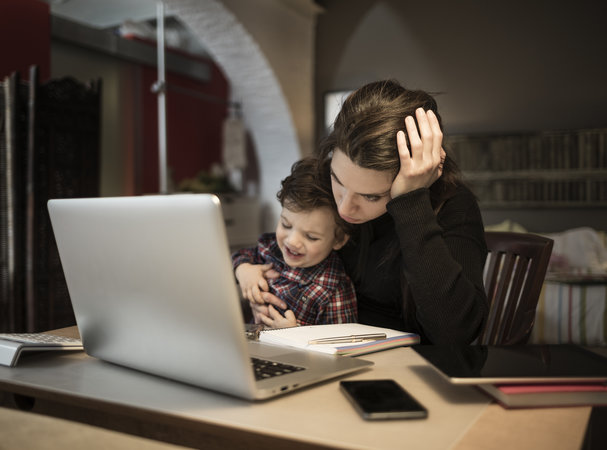
Since the pandemic shutdown began, journal submissions of co-authored papers, with women among the co-authors, are slightly up, and solo-authored papers by women are significantly down. https://www.insidehighered.com/news/2020/04/21/early-journal-submission-data-suggest-covid-19-tanking-womens-research-productivity

Early journal submission data suggest COVID-19 is tanking women's research productivity Early journal submission data suggest COVID-19 is tanking women's research productivity. insidehighered.com

@petersuber - Peter Suber (@petersuber@fediscience.org)

Update. https://www.theguardian.com/education/2020/may/12/womens-research-plummets-during-lockdown-but-articles-from-men-increase

Women's research plummets during lockdown - but articles from men increase Many female academics say juggling their career with coronavirus childcare is overwhelming theguardian.com

@petersuber - Peter Suber (@petersuber@fediscience.org)
Update. https://www.natureindex.com/news-blog/decline-women-scientist-research-publishing-production-coronavirus-pandemic

The decline of women's research production during the coronavirus pandemic Preprints analysis suggests a disproportionate impact on early career researchers. nature.com

@petersuber - Peter Suber (@petersuber@fediscience.org)

Update. https://www.nature.com/articles/d41586-020-01294-9

How female academics are losing ground during the pandemic Early analyses suggest that female academics are posting fewer preprints and starting fewer research projects than their male peers. nature.com

@petersuber - Peter Suber (@petersuber@fediscience.org)

Update: Gender Inequality in Research Productivity During the COVID-19 Pandemic https://arxiv.org/abs/2006.10194

Gender Inequality in Research Productivity During the COVID-19 Pandemic We study the disproportionate impact of the lockdown as a result of the COVID-19 outbreak on female and male academics' research productivity in social science. The lockdown has caused substantial disruptions to academic activities, requiring people to work from home. How this disruption affects productivity and the related gender equity is an important operations and societal question. We collect data from the largest open-access preprint repository for social science on 41,858 research preprints in 18 disciplines produced by 76,832 authors across 25 countries over a span of two years. We use a difference-in-differences approach leveraging the exogenous pandemic shock. Our results indicate that, in the 10 weeks after the lockdown in the United States, although the total research productivity increased by 35%, female academics' productivity dropped by 13.9% relative to that of male academics. We also show that several disciplines drive such gender inequality. Finally, we find that this intensified productivity gap is more pronounced for academics in top-ranked universities, and the effect exists in six other countries. Our work points out the fairness issue in productivity caused by the lockdown, a finding that universities will find helpful when evaluating faculty productivity. It also helps organizations realize the potential unintended consequences that can arise from telecommuting. arxiv.org

@petersuber - Peter Suber (@petersuber@fediscience.org)

Update https://www.timeshighereducation.com/news/pandemic-lockdown-holding-back-female-academics-data-show

Pandemic lockdown holding back female academics, data show Unequal childcare burden blamed for fall in share of published research by women since schools shut, but funding bodies look to alleviate career impact timeshighereducation.com

@petersuber - Peter Suber (@petersuber@fediscience.org)

Update. "Men and women have been disproportionately affected [by the pandemic]; for many [research] outputs, women were about 10 percentage points more likely than men to have decreased work." https://sr.ithaka.org/blog/what-about-research-scholarship-and-covid-19/

What about Research? Scholarship and COVID-19 - Ithaka S+R While there have been a number of research initiatives centered on supporting faculty in shifting to virtual instruction in light of the COVID-19 sr.ithaka.org

@petersuber - Peter Suber (@petersuber@fediscience.org)

Update. "Our female respondents reported larger declines in the time they could devote to research than their male colleagues. And scientists with young children appear to have been particularly hard-hit, especially women." https://www.nature.com/articles/s41562-020-0921-y
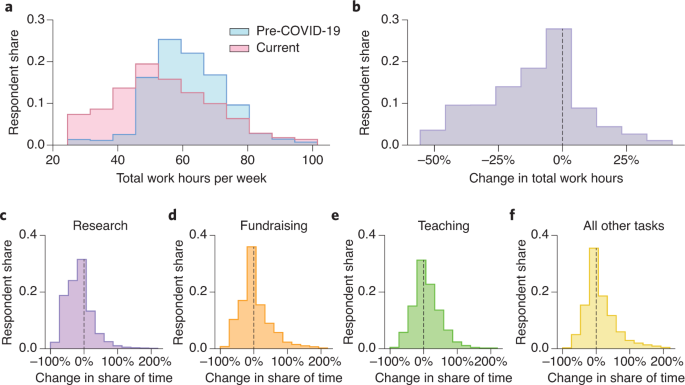
Unequal effects of the COVID-19 pandemic on scientists - Nature Human Behaviour COVID-19 has not affected all scientists equally. A survey of principal investigators indicates that female scientists, those in the ‘bench sciences’ and, especially, scientists with young children experienced a substantial decline in time devoted to research. This could have important short- and longer-term effects on their careers, which institution leaders and funders need to address carefully. nature.com

@petersuber - Peter Suber (@petersuber@fediscience.org)

Update. "The proportion of #COVID19 papers w/ a woman 1st author was 19% lower than...for papers pub'd in the same journals in 2019...Women’s representation as 1st authors of COVID-19 research was particularly low for papers pub'd in March & April 2020." https://elifesciences.org/articles/58807

Meta-Research: COVID-19 medical papers have fewer women first authors than expected Lockdowns in the United States caused by the COVID-19 pandemic appear related to a decrease in the number of women publishing research papers, especially as first authors. elifesciences.org

@petersuber - Peter Suber (@petersuber@fediscience.org)

Update. "Comparing 2020 with 2019, there was a 4% reduction in the percentage of women first authors [in @JAMASurgery], a 6% reduction of women last authors, and a 7% reduction in women as corresponding author." https://jamanetwork.com/journals/jamasurgery/fullarticle/2769186

@petersuber - Peter Suber (@petersuber@fediscience.org)

Update (from April). "Six weeks into widespread self-quarantine, editors of academic journals have started noticing a trend: Women...seem to be submitting fewer papers." https://thelily.com/women-academics-seem-to-be-submitting-fewer-papers-during-coronavirus-never-seen-anything-like-it-says-one-editor/ https://www.thelily.com/women-academics-seem-to-be-submitting-fewer-papers-during-coronavirus-never-seen-anything-like-it-says-one-editor/

Women academics seem to be submitting fewer papers during coronavirus. ‘Never seen anything like it,’ says one editor. Men are submitting up to 50 percent more thelily.com

@petersuber - Peter Suber (@petersuber@fediscience.org)

Update. "Women are advising policymakers, designing clinical trials, coordinating field studies and leading data collection and analysis, but you would never know it from the media coverage of the pandemic." https://timeshighereducation.com/blog/women-science-are-battling-both-covid-19-and-patriarchy https://www.timeshighereducation.com/blog/women-science-are-battling-both-covid-19-and-patriarchy
Women in science are battling both Covid-19 and the patriarchy The pandemic has worsened longstanding sexist and racist inequalities in science pushing many of us to say ‘I’m done’, write 35 female scientists  timeshighereducation.com

@petersuber - Peter Suber (@petersuber@fediscience.org)

Update. Summarizing some of the research in this thread. https://www.scientificamerican.com/article/women-in-science-may-suffer-lasting-career-damage-from-covid-19/
Women in Science May Suffer Lasting Career Damage from COVID-19 Scientific American is the essential guide to the most awe-inspiring advances in science and technology, explaining how they change our understanding of the world and shape our lives. scientificamerican.com

@petersuber - Peter Suber (@petersuber@fediscience.org)

Update. "Months [after the lockdown began], journal submission rates for women have improved....But the...outlook...remains poor, with [many] K-12 schools still closed, childcare options & other services still...reduced, & a bumpy teaching semester ahead." https://www.insidehighered.com/news/2020/08/20/womens-journal-submission-rates-continue-fall
Women's journal submission rates continue to fall Women's journal submission rates fell as their caring responsibilities jumped due to COVID-19. Without meaningful interventions, the trend is likely to continue. insidehighered.com

@petersuber - Peter Suber (@petersuber@fediscience.org)

Update. Hopeful editorial on "how we [women] can be better and do better as editors, academics and individuals for ourselves, our colleagues and our journal." https://link.springer.com/article/10.1007%2Fs10691-020-09435-1
A Wench’s Guide to Surviving a ‘Global’ Pandemic Crisis: Feminist Publishing in a Time of COVID-19 - Feminist Legal Studies It has been quite a year so far(!) and as the wenches we are, we have been taking our time to collect our thoughts and reflections before sharing them at t link.springer.com

@petersuber - Peter Suber (@petersuber@fediscience.org)

Update (from June, missed at the time). https://www.thelancet.com/journals/lancet/article/PIIS0140-6736(20)31412-4/fulltext

@petersuber - Peter Suber (@petersuber@fediscience.org)

Update. https://www.nytimes.com/2020/10/06/science/covid-universities-women.html

The Virus Moved Female Faculty to the Brink. Will Universities Help? (Published 2020) The pandemic is a new setback for women in academia who already faced obstacles on the path to advancing their research and careers. nytimes.com

@petersuber - Peter Suber (@petersuber@fediscience.org)

Update. "Women submitted proportionally fewer manuscripts [to Elsevier journals] than men during the COVID-19 lockdown months. This deficit was especially pronounced among women in more advanced stages of their career." https://papers.ssrn.com/sol3/papers.cfm?abstract_id=3712813… https://papers.ssrn.com/sol3/papers.cfm?abstract_id=3712813

Only Second-Class Tickets for Women in the COVID-19 Race. A Study on Manuscript Submissions and Reviews in 2329 Elsevier Journals During the early months of the COVID-19 pandemic, the submission rate to scholarly journals increased abnormally. Given that most academics were forced to work papers.ssrn.com

@petersuber - Peter Suber (@petersuber@fediscience.org)

Update. "A new study of enormous scale supports what numerous smaller studies have demonstrated throughout the pandemic: female academics are taking extended lockdowns on the chin, in terms of their comparative scholarly productivity." https://www.insidehighered.com/news/2020/10/20/large-scale-study-backs-other-research-showing-relative-declines-womens-research
Large-scale study backs up other research showing relative declines in women's research productivity during COVID-19 Large-scale study backs up other research showing relative declines in women's research productivity during COVID-19. insidehighered.com

@petersuber - Peter Suber (@petersuber@fediscience.org)

Update. "Even among elite scientists a pattern of stratified productivity and recognition by gender remains, with more prominent gaps in recognition." https://journals.plos.org/plosone/article?id=10.1371/journal.pone.0240903

Gender gaps in research productivity and recognition among elite scientists in the U.S., Canada, and South Africa This study builds upon the literature documenting gender disparities in science by investigating research productivity and recognition among elite scientists in three countries. This analysis departs from both the general comparison of researchers across organizational settings and academic appointments on one hand, and the definition of “elite” by the research outcome variables on the other, which are common in previous studies. Instead, this paper’s approach considers the stratification of scientific careers by carefully constructing matched samples of men and women holding research chairs in Canada, the United States and South Africa, along with a control group of departmental peers. The analysis is based on a unique, hand-curated dataset including 943 researchers, which allows for a systematic comparison of successful scientists vetted through similar selection mechanisms. Our results show that even among elite scientists a pattern of stratified productivity and recognition by gender remains, with more prominent gaps in recognition. Our results point to the need for gender equity initiatives in science policy to critically examine assessment criteria and evaluation mechanisms to emphasize multiple expressions of research excellence. journals.plos.org

@petersuber - Peter Suber (@petersuber@fediscience.org)

Update. "Optimistically, many academics thought initially that [remote work] might lead to a surge in research productivity....[If so, however,] all indications suggest that this has been a benefit for men in science, and not women." https://journals.plos.org/ploscompbiol/article?id=10.1371/journal.pcbi.1008370… https://journals.plos.org/ploscompbiol/article?id=10.1371/journal.pcbi.1008370

Ten simple rules for women principal investigators during a pandemic journals.plos.org

@petersuber - Peter Suber (@petersuber@fediscience.org)

Update. An argument to qualify or reinterpret the research (cited in this twitter thread above) showing a drop in research publications by women during the pandemic. https://publisherad.medium.com/the-covid-surge-in-research-papers-explaining-the-gender-disparity-d6ed1a925507
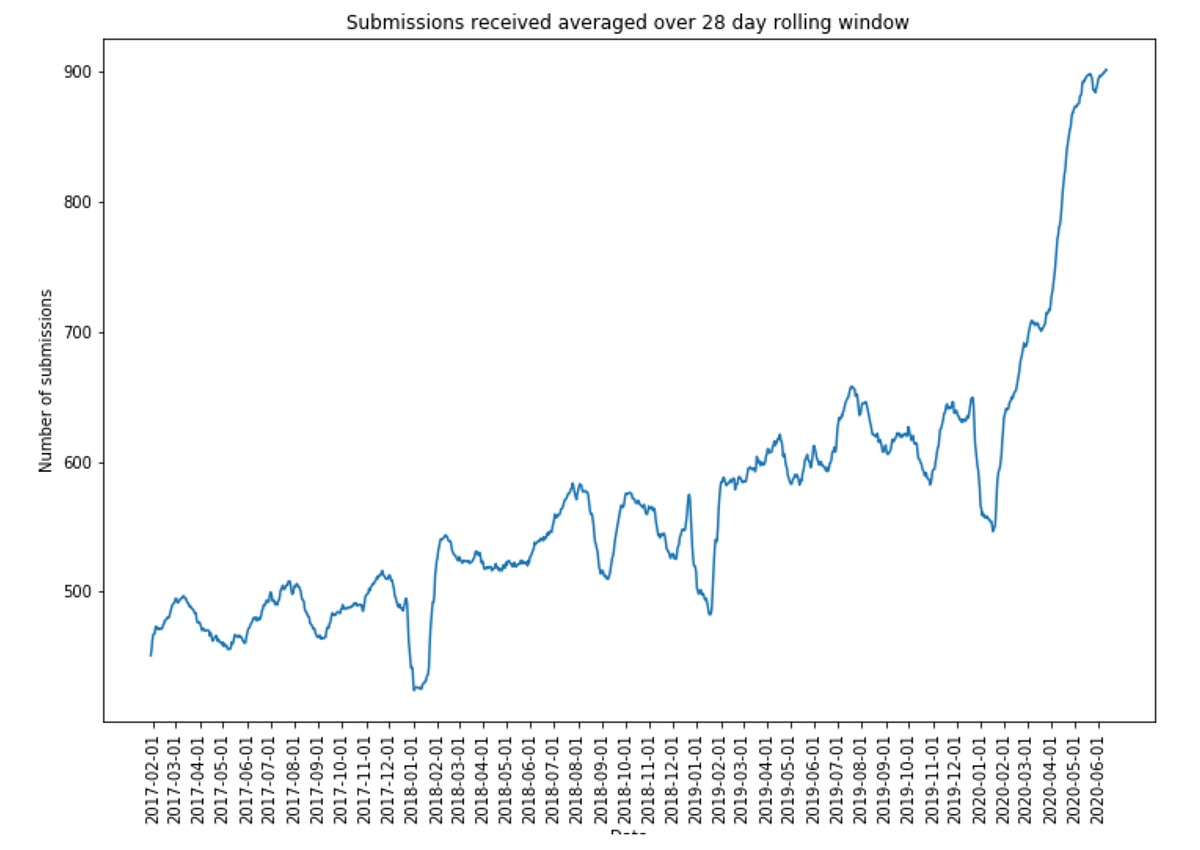
The COVID-surge in research papers: explaining the gender-disparity Edit: since writing this post, I have been able to confirm that rejected article tracking data shows a surge in the publication of rejected articles in journals which coincides with the timing of the… clearskiesadam.medium.com

@petersuber - Peter Suber (@petersuber@fediscience.org)

Update. I missed this from November 2019 (note, prepandemic). * original paper https://www.rsc.org/globalassets/04-campaigning-outreach/campaigning/gender-bias/gender-bias-report-final.pdf * summary https://www.nature.com/articles/d41586-019-03438-y

Huge study documents gender gap in chemistry publishing Analysis finds female-led papers are more likely to be rejected, and less likely to be cited, than those with male corresponding authors. nature.com

@petersuber - Peter Suber (@petersuber@fediscience.org)

Update. "Women submitted proportionally fewer manuscripts [to Elsevier journals] than men during the #COVID19 lockdown months. This deficit was especially pronounced among women in more advanced stages of their career." https://papers.ssrn.com/sol3/papers.cfm?abstract_id=3712813… https://papers.ssrn.com/sol3/papers.cfm?abstract_id=3712813

Only Second-Class Tickets for Women in the COVID-19 Race. A Study on Manuscript Submissions and Reviews in 2329 Elsevier Journals During the early months of the COVID-19 pandemic, the submission rate to scholarly journals increased abnormally. Given that most academics were forced to work papers.ssrn.com

@petersuber - Peter Suber (@petersuber@fediscience.org)

Update. "16% fewer women were lead authors for articles published on the preprint-platform medRxiv between December 2019 and April 2020, according to the IT professor Cassidy Sugimoto in an analysis published in Nature Index." https://www.horizons-mag.ch/2020/12/03/fewer-women-published-and-a-threat-to-open-access/
Fewer women published, and a threat to Open Access - Horizons Our statistics here show there was a striking drop in the number of women publishing preprints during the lockdown. And millions of Open-Access articles are in danger of disappearing from the Internet. horizons-mag.ch

@petersuber - Peter Suber (@petersuber@fediscience.org)

Update. "Although researchers submitted more papers to journals than last year, on average, growth in submissions from female authors trailed behind growth from male authors across all subject areas, and senior women saw the largest paper penalty." https://nature.com/articles/d41586-020-03564-y https://www.nature.com/articles/d41586-020-03564-y
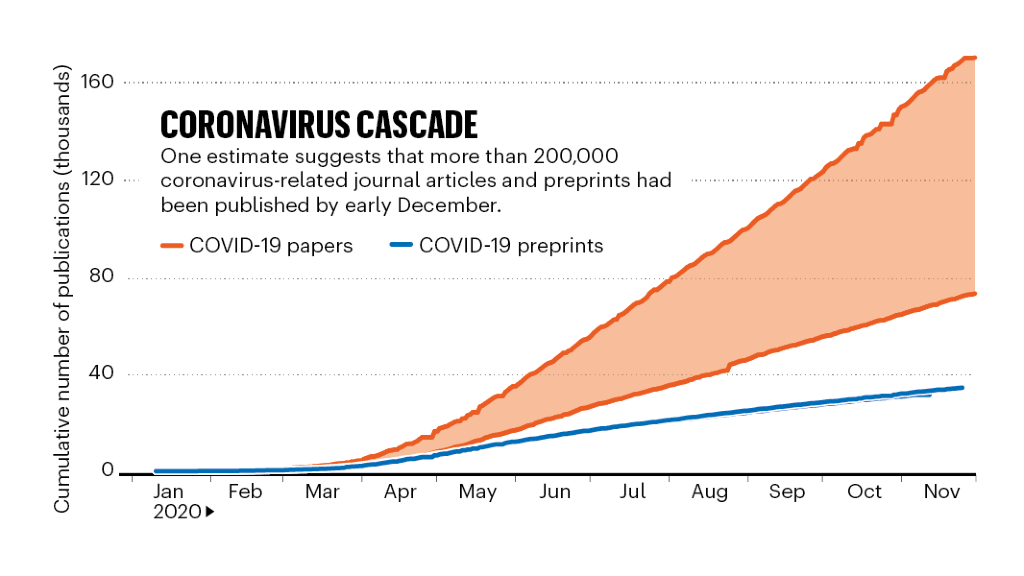
How a torrent of COVID science changed research publishing — in seven charts A flood of coronavirus research swept websites and journals this year. It changed how and what scientists study, a Nature analysis shows. nature.com

@petersuber - Peter Suber (@petersuber@fediscience.org)

Update. "Compared to their male colleagues…mid-career women are spending less time on their primary research, writing less, reading fewer journal articles, applying for fewer grants, dedicating less time to research and publishing fewer articles." https://blog.degruyter.com/wp-content/uploads/2020/12/Locked-Down-Burned-Out-Publishing-in-a-pandemic_Dec-2020.pdf https://blog.degruyter.com/wp-content/uploads/2020/12/Locked-Down-Burned-Out-Publishing-in-a-pandemic_Dec-2020.pdf

@petersuber - Peter Suber (@petersuber@fediscience.org)

Update, but on acceptance rates rather than submission rates. "Manuscripts submitted by women or coauthored by women are generally not penalized during…peer review…Manuscripts by [women] had even a higher probability of success in many cases." https://advances.sciencemag.org/content/7/2/eabd0299 https://advances.sciencemag.org/content/7/2/eabd0299

@petersuber - Peter Suber (@petersuber@fediscience.org)

Update. This looks like good news, but it's #paywalled and I can't read it. https://www.timeshighereducation.com/news/female-academics-bounced-back-publishing-lockdowns-eased

Female academics bounced back in publishing as lockdowns eased Percentage of papers with female authors rose markedly in latter part of 2020 timeshighereducation.com

@petersuber - Peter Suber (@petersuber@fediscience.org)

Update. https://nap.edu/catalog/26061/impact-of-covid-19-on-the-careers-of-women-in-academic-sciences-engineering-and-medicine From Ch 2, p. 7: "With variations by discipline, women… published fewer papers & received fewer citations… between March 2020 & December 2020 (Amano-Patino et al., 2020: Andersen et al., 2020; Gabster et al., 2020)." https://nap.edu/read/26061/chapter/2#7… https://www.nap.edu/catalog/26061/impact-of-covid-19-on-the-careers-of-women-in-academic-sciences-engineering-and-medicine From https://www.nap.edu/read/26061/chapter/2#7

The Impact of COVID-19 on the Careers of Women in Academic Sciences, Engineering, and Medicine Download a PDF of "The Impact of COVID-19 on the Careers of Women in Academic Sciences, Engineering, and Medicine" by the National Academies of Sciences, Engineering, and Medicine for free. nap.nationalacademies.org
Read "The Impact of COVID-19 on the Careers of Women in Academic Sciences, Engineering, and Medicine" at NAP.edu Read chapter Summary: The spring of 2020 marked a change in how almost everyone conducted their personal and professional lives, both within science, tech... nap.nationalacademies.org

@petersuber - Peter Suber (@petersuber@fediscience.org)

Update. "[Early in the] pandemic, MS submissions by female researchers to preprint servers across disciplines dropped significantly or increased less than their male colleagues. [The same happened] for womxn-led medical studies related to this pandemic." https://journals.plos.org/plosbiology/article?id=10.1371/journal.pbio.3001100

Rebuild the Academy: Supporting academic mothers during COVID-19 and beyond The COVID-19 pandemic is highlighting the many long-standing inequalities that academic mothers face. This Essay describes solutions for a more equitable academia, now and in the future, maintaining that rather than rebuilding what we once knew, we should be the architects of a new world. journals.plos.org

@petersuber - Peter Suber (@petersuber@fediscience.org)

Update. "The proportion of women publishing in biomedical fields during the pandemic drops in average for 9.5% across disciplines and research topics….The impact is particularly pronounced for papers related to COVID-19 research." https://preprints.jmir.org/preprint/25379/accepted https://preprints.jmir.org/preprint/25379/accepted

Gender Disparity in the Authorship of Biomedical Research Publications During the COVID-19 Pandemic: Retrospective Observational Study Journal of Medical Internet Research - International Scientific Journal for Medical Research, Information and Communication on the Internet preprints.jmir.org

@petersuber - Peter Suber (@petersuber@fediscience.org)

On the @PLOSBiology piece above. "Getting this paper pub'd was a bit of a struggle…[A] few journals [said they'd] already pub'd…about the impact of #COVID19 on women…'Here, ironically, was a [piece] written by moms…juggling kids & we were…too late.'" https://www.udel.edu/udaily/2021/march/helping-academic-mothers-daycare-pandemic/
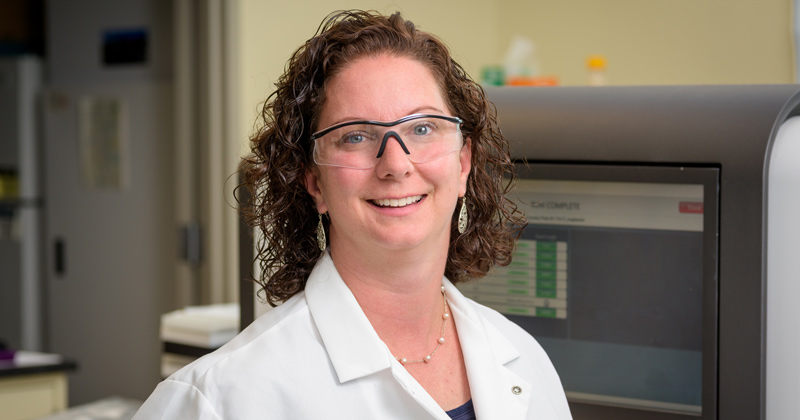
Helping academic mothers Essay offers potential solutions for challenges faced by mothers in academia during pandemic udel.edu

@petersuber - Peter Suber (@petersuber@fediscience.org)

Update. "While the majority of faculty, regardless of gender, indicated that they worked much less on research than planned during the fall [2020] semester (57%), there was a 12 percentage point gap between women (62%) and men (50%)." https://sr.ithaka.org/publications/the-disproportionate-impact-of-the-pandemic-on-women-and-caregivers-in-academia/

The Disproportionate Impact of the Pandemic on Women and Caregivers in Academia - Ithaka S+R Evidence is mounting that women in academia have disproportionately been affected by the pandemic. Recent research points to new gender gaps in productivity and publishing, with fewer women publishing articles and manuscripts. And in addition to these professional challenges, women in academia are also facing unique personal challenges during the pandemic, including balancing childcare and home responsibilities while working towards achieving tenure in an academic pipeline where it is already challenging for women to succeed. sr.ithaka.org

@petersuber - Peter Suber (@petersuber@fediscience.org)

Update. "Women scientists have experienced a productivity penalty from the social and structural changes accompanying the COVID-19 pandemic, but not in all authorship positions." https://osf.io/preprints/socarxiv/8hp7m/

The Pandemic Penalty: The gendered effects of COVID-19 on scientific productivity Academia serves as a valuable case for studying the effects of social forces on workplace productivity, using a concrete measure of output: scholarly papers. Many academics, especially women, have experienced unprecedented challenges to scholarly productivity during the coronavirus disease 2019 (COVID-19) pandemic. The authors analyze the gender composition of more than 450,000 authorships in the arXiv and bioRxiv scholarly preprint repositories from before and during the COVID-19 pandemic. This analysis reveals that the underrepresentation of women scientists in the last authorship position necessary for retention and promotion in the sciences is growing more inequitable. The authors find differences between the arXiv and bioRxiv repositories in how gender affects first, middle, and sole authorship submission rates before and during the pandemic. A review of existing research and theory outlines potential mechanisms underlying this widening gender gap in productivity during COVID-19. The authors aggregate recommendations for institutional change that could ameliorate challenges to women’s productivity during the pandemic and beyond. osf.io

@petersuber - Peter Suber (@petersuber@fediscience.org)

Update. "Several studies have found that women have published fewer papers, led fewer clinical trials and received less recognition for their expertise during the pandemic." https://www.nytimes.com/2021/04/13/health/women-stem-pandemic.html

Could the Pandemic Prompt an ‘Epidemic of Loss’ of Women in the Sciences? (Published 2021) Even before the pandemic, many female scientists felt unsupported in their fields. Now, some are hitting a breaking point. nytimes.com

@petersuber - Peter Suber (@petersuber@fediscience.org)

Update. "Women were substantially under-represented as authors among articles in leading medical journals [in 2020, but] barriers to women’s authorship…during COVID-19 are not significantly larger than barriers that preceded the pandemic." https://bmjopen.bmj.com/content/11/7/e051224

Gender disparity between authors in leading medical journals during the COVID-19 pandemic: a cross-sectional review Objectives Evaluate gender differences in authorship of COVID-19 articles in high-impact medical journals compared with other topics. Design Cross-sectional review. Data sources Medline database. Eligibility criteria Articles published from 1 January to 31 December 2020 in the seven leading general medical journals by impact factor. Article types included primary research, reviews, editorials and commentaries. Data extraction Key data elements were whether the study topic was related to COVID-19 and names of the principal and the senior authors. A hierarchical approach was used to determine the likely gender of authors. Logistic regression assessed the association of study characteristics, including COVID-19 status, with authors’ likely gender; this was quantified using adjusted ORs (aORs). Results We included 2252 articles, of which 748 (33.2%) were COVID-19-related and 1504 (66.8%) covered other topics. A likely gender was determined for 2138 (94.9%) principal authors and 1890 (83.9%) senior authors. Men were significantly more likely to be both principal (1364 men; 63.8%) and senior (1332 men; 70.5%) authors. COVID-19-related articles were not associated with the odds of men being principal (aOR 0.99; 95% CI 0.81 to 1.21; p=0.89) or senior authors (aOR 0.96; 95% CI 0.78 to 1.19; p=0.71) relative to other topics. Articles with men as senior authors were more likely to have men as principal authors (aOR 1.49; 95% CI 1.21 to 1.83; p<0.001). Men were more likely to author articles reporting original research and those with corresponding authors based outside the USA and Europe. Conclusions Women were substantially under-represented as authors among articles in leading medical journals; this was not significantly different for COVID-19-related articles. Study limitations include potential for misclassification bias due to the name-based analysis. Results suggest that barriers to women’s authorship in high-impact journals during COVID-19 are not significantly larger than barriers that preceded the pandemic and that are likely to continue beyond it. PROSPERO registration number CRD42020186702. Data are available upon reasonable request. bmjopen.bmj.com

@petersuber - Peter Suber (@petersuber@fediscience.org)

Update. "How can tenure and promotion procedures adequately reflect gendered disparities in Covid impact?" https://www.chronicle.com/article/the-pandemic-hit-female-academics-hardest

The Pandemic Hit Female Academics Hardest Women, who were already disproportionately burdened, have been hit especially hard by the pandemic. How should institutions of higher learning respond? chronicle.com

@petersuber - Peter Suber (@petersuber@fediscience.org)

Update. Summarizing pandemic-specific gender differences in productivity & aiming to understand the causes of these diffs, inc those that existed before the pandemic. "Parental engagement is a more powerful variable…than the mere existence of children." https://arxiv.org/abs/2108.05376

The academic motherload: Models of parenting engagement and the effect on academic productivity and performance Gender differences in research productivity are well documented, and have been mostly explained by access parental leave and child-related responsibilities. Those explanations are based on the assumption that women take on the majority of childcare responsibilities, and take the same level of leave at the birth of a child. Changing social dynamics around parenting has seen fathers increasingly take an active role in parenting. This demands a more nuanced approach to understanding how parenting affects both men and women. Using a global survey of 11,226 academic parents, this study investigates the effect of parental engagement (Lead, Dual (shared), and Satellite parenting), and partner type, on measures of research productivity and impact for men and for women. It also analyzes the effect of different levels of parental leave on academic productivity. Results show that the parenting penalty for men and women is a function of the level of engagement in parenting activities. Men who serve in lead roles suffer similar penalties, but women are more likely to serve in lead parenting roles and to be more engaged across time and tasks. Taking a period of parental leave is associated with higher levels of productivity, however the productivity advantage is lost for the US-sample at 6 months, and at 12-months for the non-US sample. These results suggest that parental engagement is a more powerful variable to explain gender differences in academic productivity than the mere existence of children, and that policies should that factor into account. arxiv.org

@petersuber - Peter Suber (@petersuber@fediscience.org)

Update. "After the onset of the COVID-19 pandemic in March 2020, the number of submissions [to Renaissance Quarterly from @RSAorg] by female scholars fell sharply….We look forward to rectifying this imbalance in our 2022 volume and beyond." https://www.cambridge.org/core/journals/renaissance-quarterly/article/editors-note/213946973F7DFA92BB7D5F53B2BF4D64

Sorry, an error occurred Welcome to Cambridge Core cambridge.org

@petersuber - Peter Suber (@petersuber@fediscience.org)

Update. "During the first wave of the pandemic, women submitted proportionally fewer manuscripts than men. This deficit was especially pronounced among more junior cohorts of women academics." https://journals.plos.org/plosone/article?id=10.1371/journal.pone.0257919… https://journals.plos.org/plosone/article?id=10.1371/journal.pone.0257919

Gender gap in journal submissions and peer review during the first wave of the COVID-19 pandemic. A study on 2329 Elsevier journals During the early months of the COVID-19 pandemic, there was an unusually high submission rate of scholarly articles. Given that most academics were forced to work from home, the competing demands for familial duties may have penalized the scientific productivity of women. To test this hypothesis, we looked at submitted manuscripts and peer review activities for all Elsevier journals between February and May 2018-2020, including data on over 5 million authors and referees. Results showed that during the first wave of the pandemic, women submitted proportionally fewer manuscripts than men. This deficit was especially pronounced among more junior cohorts of women academics. The rate of the peer-review invitation acceptance showed a less pronounced gender pattern with women taking on a greater service responsibility for journals, except for health & medicine, the field where the impact of COVID-19 research has been more prominent. Our findings suggest that the first wave of the pandemic has created potentially cumulative advantages for men. journals.plos.org

@petersuber - Peter Suber (@petersuber@fediscience.org)

Update: "Articles [in medicine] written by women as both primary and senior authors had approximately half the number of citations as those authored by men as both primary and senior authors." https://jamanetwork.com/journals/jamanetworkopen/fullarticle/2781617 PS: I'm expanding this thread beyond pandemic effects. https://jamanetwork.com/journals/jamanetworkopen/fullarticle/2781617 PS:

@petersuber - Peter Suber (@petersuber@fediscience.org)

Update. Papers by women are cited less often than papers by men. But they get greater reader engagement & more often aim at social progress. "Citation impact vs interest among readers is related to the aims of research & there is a gender difference here." http://eprints.lse.ac.uk/113101/1/impactofsocialsciences_2021_11_15_female_researchers_are_more_read.pdf… eprints.lse.ac.uk/113101/1/impac…

@petersuber - Peter Suber (@petersuber@fediscience.org)

Update. Article submissions to @AnnFamMed grew during the pandemic. But the submission gender gap also grew. https://www.annfammed.org/content/20/1/32 Summary of this article. https://news.northwestern.edu/stories/2022/01/covid-gender-gap/
COVID-19 and Gender Differences in Family Medicine Scholarship This bibliometric analysis seeks to explore how the COVID-19 pandemic impacted submission rates to Annals of Family Medicine by gender. Women represented 46.3% of all manuscript submissions included in our study (n = 1,964/4,238), spanning from January 1, 2015 to July 15, 2020. The overall volume of submissions increased during COVID-19 in comparison to pre-pandemic months; however, this increase was not evenly distributed among men and women (122% increase vs 101% increase, respectively). In the early months of the pandemic, 244 submissions were authored by men (58.5%), and 173 submissions were authored by women (41.5%). The gap in women’s submission rates is troubling, as it suggests they may be at greater risk of falling behind male colleagues during and beyond the COVID-19 pandemic. annfammed.org
Gender disparities in publishing may be widening for physicians due to COVID-19 A new study contributes to a growing body of evidence that the pandemic caused unique career disruptions for women as they became stretched thin during remote work, causing stress, burnout and anxiety news.northwestern.edu

@petersuber - Peter Suber (@petersuber@fediscience.org)

Update. "While female inventors' overall involvement in patenting activity is not that high, the share of female inventors increases over the time period in question [1978 - 2019] from 1.2% to 8.9%." https://www.sciencedirect.com/science/article/pii/S1751157722000086

Female inventors over time: Factors affecting female Inventors’ innovation performance The aim of this paper is to explore the collaboration of female inventors, how it affects their innovation production and whether it influences their … sciencedirect.com

@petersuber - Peter Suber (@petersuber@fediscience.org)

Update, contrary to other studies in this thread: "We found no significant differences between men & women in publication patterns [2019-2021] overall. However, we found significant differences…in different disciplines." https://journals.sagepub.com/doi/10.1177/01655515211068168

@petersuber - Peter Suber (@petersuber@fediscience.org)

Update. "Only 3 fields had a female last author majority by 2018…Female first-authored research tended to be more cited than male first-authored research in most fields (59%), although with a maximum difference of only 5.1%." https://doi.org/10.1177%2F0165551520942729

@petersuber - Peter Suber (@petersuber@fediscience.org)

Update. Most studies in this thread used software to guess the gender of authors from their names. But "more than 50 pubs representing over 15,000 journals globally are preparing to ask scientists about their race or ethnicity, as well as their gender." https://www.nature.com/articles/d41586-022-00426-7

The giant plan to track diversity in research journals Efforts to chart and reduce bias in scholarly publishing will ask authors, reviewers and editors to disclose their race or ethnicity. nature.com

@petersuber - Peter Suber (@petersuber@fediscience.org)

Idea building on prev tweet: @ORCID_Org could add fields for self-identified gender & ethnicity. With user consent, the fields could be public, e.g. for research just like that in this thread. No need to guess gender from names or trust (upcoming) publisher method of labelling.

@petersuber - Peter Suber (@petersuber@fediscience.org)

Update. "Larger editorial boards were less likely to have women dominance. Women editor-in-chief dominance was significantly associated with women-dominant editorial board." https://www.clinicalmicrobiologyandinfection.com/article/S1198-743X(22)00095-7/fulltext

@petersuber - Peter Suber (@petersuber@fediscience.org)

Update. "Disaggregating [Norwegian scientific authors] by scientific field, institutional affiliation, academic position, and age changes [and reduces] the gender gaps that appear at the aggregate level." https://link.springer.com/article/10.1007/s10734-022-00820-0
Identifying gender disparities in research performance: the importance of comparing apples with apples - Higher Education Many studies on research productivity and performance suggest that men consistently outperform women. However, women and men are spread unevenly throughout link.springer.com

@petersuber - Peter Suber (@petersuber@fediscience.org)

Update. "In multiple academic disciplines having a perceived gender of 'woman' is associated w a lower than expected rate of citations…We show that…the tendency of people to interact w others…like themselves…is sufficient to reproduce observed biases." https://arxiv.org/abs/2204.12555 https://arxiv.org/abs/2204.12555

Modeling observed gender imbalances in academic citation practices In multiple academic disciplines, having a perceived gender of `woman' is associated with a lower than expected rate of citations. In some fields, that disparity is driven primarily by the citations of men and is increasing over time despite increasing diversification of the profession. It is likely that complex social interactions and individual ideologies shape these disparities. Computational models of select factors that reproduce empirical observations can help us understand some of the minimal driving forces behind these complex phenomena and therefore aid in their mitigation. Here, we present a simple agent-based model of citation practices within academia, in which academics generate citations based on three factors: their estimate of the collaborative network of the field, how they sample that estimate, and how open they are to learning about their field from other academics. We show that increasing homophily -- or the tendency of people to interact with others more like themselves -- in these three domains is sufficient to reproduce observed biases in citation practices. We find that homophily in sampling an estimate of the field influences total citation rates, and openness to learning from new and unfamiliar authors influences the change in those citations over time. We next model a real-world intervention -- the citation diversity statement -- which has the potential to influence both of these parameters. We determine a parameterization of our model that matches the citation practices of academics who use the citation diversity statement. This parameterization paired with an openness to learning from many new authors can result in citation practices that are equitable and stable over time. Ultimately, our work underscores the importance of homophily in shaping citation practices and provides evidence that specific actions may mitigate biased citation practices in academia. arxiv.org

@petersuber - Peter Suber (@petersuber@fediscience.org)

Update. "Women [authors are] under-rep'd…in JAMA (at its peak, 38.1% of articles had a female 1st author in 2011) & NEJM (peaking at 28.2% in 2002)…Rate of increase…so slow that it will take more than a century for both journals to reach gender parity." https://link.springer.com/article/10.1007/s40615-022-01280-z
The Under-representation and Stagnation of Female, Black, and Hispanic Authorship in the Journal of the American Medical Association and the New England Journal of Medicine - Journal of Racial and Ethnic Health Disparities Publication in leading medical journals is critical to knowledge dissemination and academic advancement alike. Leveraging a novel dataset comprised of near link.springer.com

@petersuber - Peter Suber (@petersuber@fediscience.org)

Update. In veterinary science journals, "females [are] underrepresented in the group of managing editors (32.2% females vs 67.2% males), editors (34.5% females vs 65.1% males) and others (33.3% females vs. 65.4% males)." #paywalled https://www.sciencedirect.com/science/article/abs/pii/S0034528822001217

Gender representation on journal editorial boards in the field of veterinary sciences Despite the increased entry of women into the veterinary profession over the past several decades, women remain substantially underrepresented in seni… sciencedirect.com

@petersuber - Peter Suber (@petersuber@fediscience.org)

Update. At @BrainComms "the representation of women authors and reviewers decreased…in the months following COVID-19 restrictions, suggesting a possible exacerbating role of the pandemic on existing disparities in science publication." https://academic.oup.com/braincomms/article/4/3/fcac077/6554271

@petersuber - Peter Suber (@petersuber@fediscience.org)

Update. "Women in research teams are significantly less likely to be credited with authorship than are men." https://www.nature.com/articles/s41586-022-04966-w
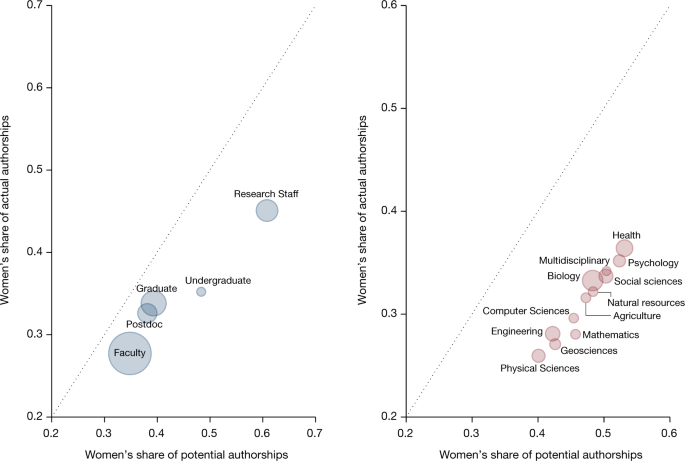
Women are credited less in science than men - Nature There is a well-documented gap between the observed number of works produced by women and by men in science, with clear consequences for the retention and promotion of women1. The gap might be a result of productivity differences2–5, or it might be owing to women’s contributions not being acknowledged6,7. Here we find that at least part of this gap is the result of unacknowledged contributions: women in research teams are significantly less likely than men to be credited with authorship. The findings are consistent across three very different sources of data. Analysis of the first source—large-scale administrative data on research teams, team scientific output and attribution of credit—show that women are significantly less likely to be named on a given article or patent produced by their team relative to their male peers. The gender gap in attribution is present across most scientific fields and almost all career stages. The second source—an extensive survey of authors—similarly shows that women’s scientific contributions are systematically less likely to be recognized. The third source—qualitative responses—suggests that the reason that women are less likely to be credited is because their work is often not known, is not appreciated or is ignored. At least some of the observed gender gap in scientific output may be owing not to differences in scientific contribution, but rather to differences in attribution. The difference between the number of men and women listed as authors on scientific papers and inventors on patents is at least partly attributable to unacknowledged contributions by women scientists. nature.com

@petersuber - Peter Suber (@petersuber@fediscience.org)

Update. Here's a @washingtonpost summary of the study above. https://www.washingtonpost.com/business/2022/06/22/women-scientists-authorship-credit-study/

Female scientists don’t get the credit they deserve. A study proves it. Female scientists are “significantly less likely” to be credited on scholarly articles or named on patents that they contribute to, a Nature study found. washingtonpost.com

@petersuber - Peter Suber (@petersuber@fediscience.org)

Update. Here's a @ScienceMagazine summary of the study above. https://www.science.org/content/article/women-scientists-don-t-get-authorship-they-should-new-study-suggests

Women scientists don’t get authorship they should, new study suggests It’s a common story, but “I didn’t know the scale of it,” one author says science.org

@petersuber - Peter Suber (@petersuber@fediscience.org)

Update. "We review gender bias in scholarly publications and discuss examples of #openaccess research publications that highlight a positive advantage for women." https://www.mdpi.com/2304-6775/10/3/22
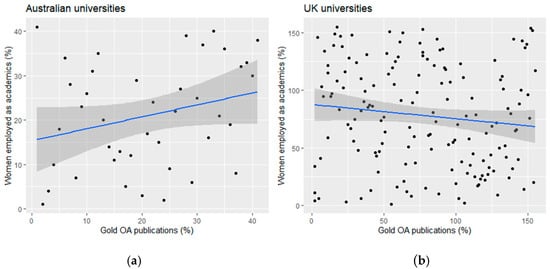
Changing the Academic Gender Narrative through Open Access In this article, we ask whether dominant narratives of gender and performance within academic institutions are masking stories that may be both more complex and potentially more hopeful than those which are often told using publication-related data. Influenced by world university rankings, institutions emphasise so-called ‘excellent’ research practices: publish in ‘high impact’, elite subscription journals indexed by the commercial bibliographic databases that inform the various ranking systems. In particular, we ask whether data relating to institutional demographics and open access publications could support a different story about the roles that women are playing as pioneers and practitioners of open scholarship. We review gender bias in scholarly publications and discuss examples of open access research publications that highlight a positive advantage for women. Using analysis of workforce demographics and open research data from our Open Knowledge Initiative project, we explore relationships and correlations between academic gender and open access research output from universities in Australia and the United Kingdom. This opens a conversation about different possibilities and models for exploring research output by gender and changing the dominant narrative of deficit in academic publishing. mdpi.com

@petersuber - Peter Suber (@petersuber@fediscience.org)

Update. "Gendered differences in the productivity and prominence of mid-career researchers can be largely explained by differences in their coauthorship networks…Collaboration networks represent an important form of unequally distributed social capital." https://www.nature.com/articles/s41467-022-32604-6
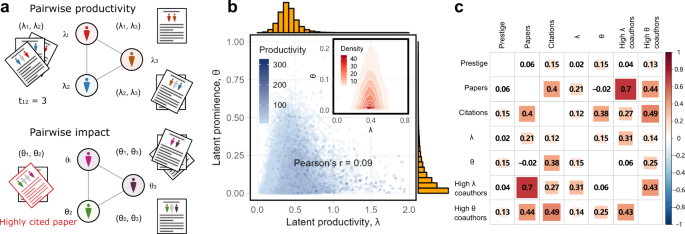
Untangling the network effects of productivity and prominence among scientists - Nature Communications While inequalities in science are common, most efforts to understand them treat scientists as isolated individuals, ignoring the network effects of collaboration. Here, we develop models that untangle the network effects of productivity defined as paper counts, and prominence referring to high-impact publications, of individual scientists from their collaboration networks. We find that gendered differences in the productivity and prominence of mid-career researchers can be largely explained by differences in their coauthorship networks. Hence, collaboration networks act as a form of social capital, and we find evidence of their transferability from senior to junior collaborators, with benefits that decay as researchers age. Collaboration network effects can also explain a large proportion of the productivity and prominence advantages held by researchers at prestigious institutions. These results highlight a substantial role of social networks in driving inequalities in science, and suggest that collaboration networks represent an important form of unequally distributed social capital that shapes who makes what scientific discoveries. While inequalities in science are common, most efforts to understand them treat scientists as isolated individuals, ignoring the network effects of collaboration. Here, the authors develop models that untangle the network effects of productivity and prominence of individual scientists from their collaboration networks. nature.com

@petersuber - Peter Suber (@petersuber@fediscience.org)

Update. "Journals that require reporting of methods used to determine sex and/or gender have a significantly higher IF [#JIF] and a significantly greater proportion of EIC positions held by women." https://jamanetwork.com/journals/jamanetworkopen/fullarticle/2795802

@petersuber - Peter Suber (@petersuber@fediscience.org)

Update. In the #MENA region, "men publish on average between 11% and 51% more than women, with this gap increasing over time." https://arxiv.org/abs/2208.13520

On the lack of women researchers in the Middle East & North Africa Recent gender policies in the Middle East and North Africa (MENA) region have improved legal equality for women with noticeable effects in some countries. The implications of these policies on science, however, is not well-understood. This study applies a bibliometric lens to describe the landscape of gender disparities in scientific research in MENA. Specifically, we examine 1.7 million papers indexed in the Web of Science published by 1.1 million authors from MENA between 2008 and 2020. We used bibliometric indicators to analyse potential disparities between men and women in the share of authors, research productivity, and seniority in authorship. The results show that gender parity is far from being achieved in MENA. Overall, men authors obtain higher representation, research productivity, and seniority. But some countries standout: Tunisia, Lebanon, Turkey, Algeria and Egypt have higher shares or women researchers compared to the rest of MENA countries. The UAE, Qatar, and Jordan have shown progress in terms of women participation in science, but Saudi Arabia lags behind. We find that women are more likely to stop publishing than men and that men publish on average between 11% and 51% more than women, with this gap increasing over time. Finally, men, on average, achieved senior positions in authorship faster than women. Our longitudinal study contributes to a better understanding of gender disparities in science in MENA which is catching up in terms of policy engagement and women representation. However, the results suggest that the effects of the policy changes have yet to materialize into distinct improvement in women's participation and performance in science. arxiv.org

@petersuber - Peter Suber (@petersuber@fediscience.org)

Update: The Journal of Bone & Mineral Research studied itself. "The acceptance rate [2017-2019] was highest when the first & last authors were of different genders & lowest when both authors were men. Reviewer gender did not influence the outcome." https://asbmr.onlinelibrary.wiley.com/doi/10.1002/jbmr.4696

@petersuber - Peter Suber (@petersuber@fediscience.org)

Update. "We identify gender disparities in the patterns of peer citations and show that these differences are strong enough to accurately predict the scholar’s gender." https://www.pnas.org/doi/10.1073/pnas.2206070119

@petersuber - Peter Suber (@petersuber@fediscience.org)

Update. "We find a global bias wherein [physics] papers authored by women are significantly under-cited & papers authored by men are significantly over-cited…[These disparities depend on] who is citing, where they are citing & what they are citing." https://www.nature.com/articles/s41567-022-01770-1
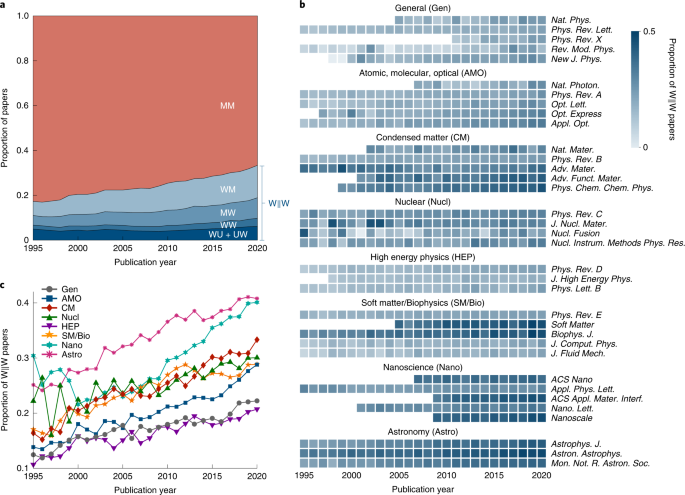
Citation inequity and gendered citation practices in contemporary physics - Nature Physics The under-attribution of women’s contributions to scientific scholarship is well known and well studied. One measure of this under-attribution is the citation gap between men and women: the under-citation of papers authored by women relative to expected rates coupled with an over-citation of papers authored by men relative to expected rates. Here we explore this citation gap in contemporary physics. We find a global bias wherein papers authored by women are significantly under-cited, and papers authored by men are significantly over-cited. Moreover, we find that citation behaviour varies along several dimensions, such that imbalances differ according to who is citing, where they are citing and what they are citing. Specifically, citation imbalance in favour of man-authored papers is highest for papers authored by men, papers published in general physics journals and papers for which citing authors probably have less domain or author familiarity. Our results suggest that although deciding which papers to cite is an individual choice, the cumulative effects of these choices needlessly harm a subset of scholars. We discuss several strategies for the mitigation of these effects, including conscious behavioural changes at the individual, journal and community levels. The under-citation of woman authors in physics is quantified and measures that could overcome this inequity are presented. nature.com

@petersuber - Peter Suber (@petersuber@fediscience.org)

Update. Here's a good summary of the previous article in this thread. https://physicsworld.com/a/citing-like-its-1995-why-women-physicists-find-their-papers-referenced-less/

Citing like it's 1995: why women physicists find their papers referenced less – Physics World Analysis shows that general physics journals have the largest citation gap between men and women in physics physicsworld.com

@petersuber - Peter Suber (@petersuber@fediscience.org)

Update. Here's another good summary of the same study. https://www.science.org/content/article/women-researchers-cited-less-men-heres-why-what-can-done

Women researchers are cited less than men. Here’s why—and what can be done about it Two studies of citations in physics highlight factors contributing to this gender disparity science.org

@petersuber - Peter Suber (@petersuber@fediscience.org)

Update. "Women's share of [highly-cited researchers] would need to increase by 100% in health & social sciences, 200% in agriculture, bio, earth, & enviro sciences, 300% in math & physics, & 500% in chem, CS, & engineering to close the gap with men." https://direct.mit.edu/qss/article/doi/10.1162/qss_a_00218/113322/Gender-Gap-Among-Highly-Cited-Researchers-2014

@petersuber - Peter Suber (@petersuber@fediscience.org)

Update. Study of the 57 @IOPPublishing journals: "Contrary to our hypothesis, we did not find that manuscript submissions from women decreased during the pandemic, although the rate of increased submissions evident prior to the pandemic slowed." https://www.nature.com/articles/s41599-022-01365-4
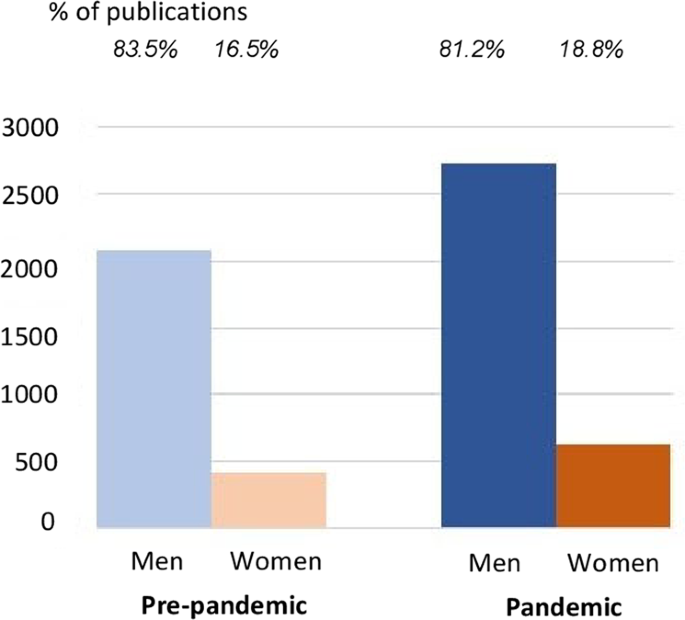
Scientific authorship by gender: trends before and during a global pandemic - Humanities and Social Sciences Communications Many fields of science are still dominated by men. COVID-19 has dramatically changed the nature of work, including for scientists, such as lack of access to key resources and transition to online teaching. Further, scientists face the pandemic-related stressors common to other professions (e.g., childcare, eldercare). As many of these activities fall more heavily on women, the pandemic may have exacerbated gender disparities in science. We analyzed self-identified gender of corresponding author for 119,592 manuscripts from 151 countries submitted January 2019 to July 2021 to the Institute of Physics (IOP) portfolio of 57 academic journals, with disciplines of astronomy and astrophysics, bioscience, environmental science, materials, mathematics, physics, and interdisciplinary research. We consider differences by country, journal, and pre-pandemic versus pandemic periods. Gender was self-identified by corresponding author for 82.9% of manuscripts (N = 99,114 for subset of submissions with gender). Of these manuscripts, authors were 82.1% male, 17.8% female, and 0.08% non-binary. Most authors were male for all countries (country-specific values: range 0.0–100.0%, median 86.1%) and every journal (journal-specific values range 63.7–91.5%, median 83.7%). The contribution of female authors was slightly higher in the pandemic (18.7%) compared to pre-pandemic (16.5%). However, prior to the pandemic, the percent of submissions from women had been increasing, and this value slowed during the pandemic. Contrary to our hypothesis, we did not find that manuscript submissions from women decreased during the pandemic, although the rate of increased submissions evident prior to the pandemic slowed. In both pre-pandemic and pandemic periods, authorship was overwhelmingly male for all journals, countries, and fields. Further research is needed on impacts of the pandemic on other measures of scientific productivity (e.g., accepted manuscripts, teaching), scientific position (e.g., junior vs. senior scholars), as well as the underlying gender imbalance that persisted before and during the pandemic. nature.com

@petersuber - Peter Suber (@petersuber@fediscience.org)

Update. "Women were 2.5 times as likely as men to forgo a professional development in order to pay APCs." https://www.aaas.org/news/aaas-survey-many-researchers-face-difficulties-paying-open-access-fees

AAAS Survey: Many Researchers Face Difficulties Paying Open Access Fees Policies meant to ensure public access for readers are increasingly affecting publishing opportunities for researchers, creating hidden financial and career consequences, according to a new survey released by AAAS. aaas.org

@petersuber - Peter Suber (@petersuber@fediscience.org)

Update. "Publications by women are cited less by @Wikipedia than expected…& less likely to be cited than those by men…Gender- or country-based inequalities varies by research field & the gender-country…bias is prominent in math-intensive STEM fields." https://asistdl.onlinelibrary.wiley.com/doi/10.1002/asi.24723

@petersuber - Peter Suber (@petersuber@fediscience.org)

Update. In psychology, "relative to ratios as students and faculty, women are underrepresented as editorial-board members (41%) and…as editors-in-chief (34%)." https://journals.sagepub.com/doi/10.1177/17456916221117159

@petersuber - Peter Suber (@petersuber@fediscience.org)

I just used a new tool from @HarvardLILto save this thread as a PDF. https://archive.social I did it mainly to test the tool. But if you're interested, I put a #CC0 copy of the file in the @InternetArchive. https://ia601400.us.archive.org/12/items/suber-gender-discrimination-nov-2022.pdf/suber-gender-discrimination-Nov-2022.pdf.pdf https://archive.social I https://ia601400.us.archive.org/12/items/suber-gender-discrimination-nov-2022.pdf/suber-gender-discrimination-Nov-2022.pdf.pdf

Save Your Threads High-fidelity capture of Twitter threads as sealed PDFs on social.perma.cc. An experiment of the Harvard Library Innovation Lab. social.perma.cc
Internet Archive: Page Not Found ia601400.us.archive.org

@petersuber - Peter Suber (@petersuber@fediscience.org)

Update. "Women’s share of HCRs [highly cited researchers] would need to increase by 100% in health & social sciences, 200% in agriculture, bio, earth & env sciences, 300% in math & physics, & 500% in chemistry, CS & engineering to close the gap with men." https://doi.org/10.1162/qss_a_00218

@petersuber - Peter Suber (@petersuber@fediscience.org)

Update. For male authors, the presence of an author photo and bio in an article does not affect citation rates. But "there was a small citation disadvantage of 5% for female authors when they provided a photograph and biography." https://doi.org/10.1162/qss_a_00219

@petersuber - Peter Suber (@petersuber@fediscience.org)

Update. "I find that (i) female-authored papers are 1%–6% better written than equivalent papers by men; (ii) the gap widens during peer review; …(iv) female-authored papers take longer under review." https://academic.oup.com/ej/article/132/648/2951/6586337

@petersuber - Peter Suber (@petersuber@fediscience.org)

Update. "Women account for less than one in three peer reviewers of medical journals. Women’s representation as peer reviewers is higher in journals with higher percentage of women as editors or with a woman as editor-in-chief." https://bmjopen.bmj.com/content/12/5/e061054.abstract

Cross-sectional study of the relationship between women’s representation among editors and peer reviewers in journals of the British Medical Journal Publishing Group Objectives To investigate whether there is an association between women’s representation as peer reviewers and editors of medical journals. Methods In this cross-sectional study, the gender of editors and peer reviewers of journals of the British Medical Journal Publishing Group (BMJ-PG) in 2020 was determined based on given names. Trends over time were analysed for the BMJ between 2009 and 2017. Results Overall, this study included 47 of the 74 journals in the BMJ-PG. Women accounted for 30.2% of the 42 539 peer reviewers, with marked variation from 8% to 50%. Women represented 33.4% of the 555 editors, including 19.2% of the 52 editors-in-chief. There was a moderate positive correlation between the percentage of women as editors and as reviewers (Spearman correlation coefficient 0.590; p<0.0001). The percentage of women as editors, excluding editors-in-chief, was higher when the editor-in-chief was a woman than a man (53.3% vs 29.2%, respectively; p<0.0001). Likewise, the percentage of women as peer reviewers was higher in journals that had a woman as editor-in-chief in comparison with a man (32.0% vs 26.4%, respectively; p<0.0001). There was a slight increase in the percentage of women as peer reviewers from 27.3% in 2009 to 29.7% in 2017 in the BMJ . Conclusions Women account for less than one in three peer reviewers of medical journals. Women’s representation as peer reviewers is higher in journals with higher percentage of women as editors or with a woman as editor-in-chief. It is, thus, imperative to address the persisting gender gap at all levels of the publishing system. Data are available upon reasonable request. All data are available upon request from the corresponding author. bmjopen.bmj.com

@petersuber - Peter Suber (@petersuber@fediscience.org)

Update. "The gendered effect observed in [research] production may be related by differential engagement in parenting: men who serve in lead roles suffer similar penalties for parenting engagement, but women are more likely to serve in lead roles." https://www.nature.com/articles/s41598-022-26258-z
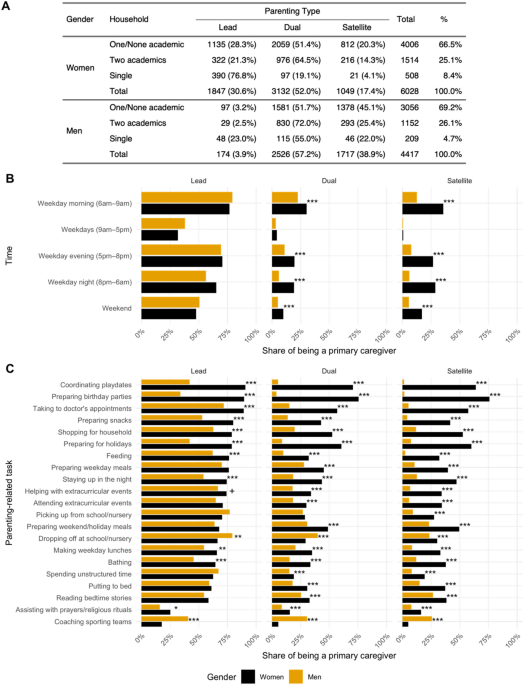
The relationship between parenting engagement and academic performance - Scientific Reports Gender differences in research productivity have been well documented. One frequent explanation of these differences is disproportionate child-related responsibilities for women. However, changing social dynamics around parenting has led to fathers taking an increasingly active role in parenting. This demands a more nuanced approach to understanding the relationship between parenting and productivity for both men and women. To gain insight into associations between parent roles, partner type, research productivity, and research impact, we conducted a global survey that targeted 1.5 million active scientists; we received viable responses from 10,445 parents (< 1% response rate), thus providing a basis for exploratory analyses that shed light on associations between parenting models and research outcomes, across men and women. Results suggest that the gendered effect observed in production may be related by differential engagement in parenting: men who serve in lead roles suffer similar penalties for parenting engagement, but women are more likely to serve in lead roles and to be more engaged across time and tasks, therefore suffering a higher penalty. Taking a period of parental leave is associated with higher levels of productivity; however, the productivity advantage dissipates after six months for the US-sample, and at 12-months for the non-US sample. These results suggest that parental engagement is a more powerful variable to explain gender differences in academic productivity than the mere existence of children, and that policies should factor these labor differentials into account. nature.com

@petersuber - Peter Suber (@petersuber@fediscience.org)

Update. In a database of "81,000 editors serving more than 1,000 journals and 15 disciplines over five decades" only 14% were women and only 8% were editors in chief. Male editors published in their own journals more often than female editors. https://www.nature.com/articles/s41562-022-01498-1
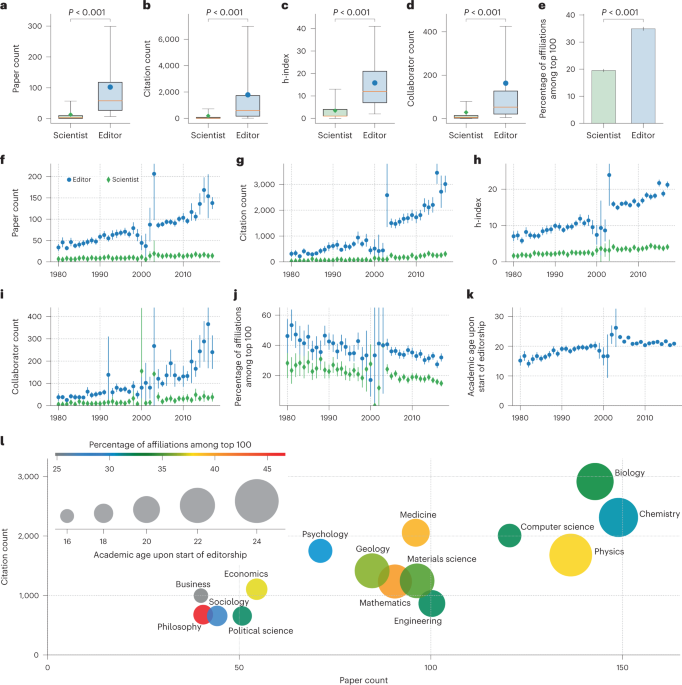
Gender inequality and self-publication are common among academic editors - Nature Human Behaviour Scientific editors shape the content of academic journals and set standards for their fields. Yet, the degree to which the gender makeup of editors reflects that of scientists, and the rate at which editors publish in their own journals, are not entirely understood. Here, we use algorithmic tools to infer the gender of 81,000 editors serving more than 1,000 journals and 15 disciplines over five decades. Only 26% of authors in our dataset are women, and we find even fewer women among editors (14%) and editors-in-chief (8%). Career length explains the gender gap among editors, but not editors-in-chief. Moreover, by analysing the publication records of 20,000 editors, we find that 12% publish at least one-fifth, and 6% publish at least one-third, of their papers in the journal they edit. Editors-in-chief tend to self-publish at a higher rate. Finally, compared with women, men have a higher increase in the rate at which they publish in a journal soon after becoming its editor. Using publication and editorial team composition records from more than 1,000 journals, Liu and coauthors uncover pervasive gender inequalities among academic editors. Only 8% of editors-in-chief are women. Nearly 6% of editors publish one-third of all their papers in the journal they edit, and this self-publication pattern is stronger among men editors. nature.com

@petersuber - Peter Suber (@petersuber@fediscience.org)

Update. Missed this one from 2017: "Here we present evidence that women of all ages have fewer opportunities to take part in peer review." https://www.nature.com/articles/541455a
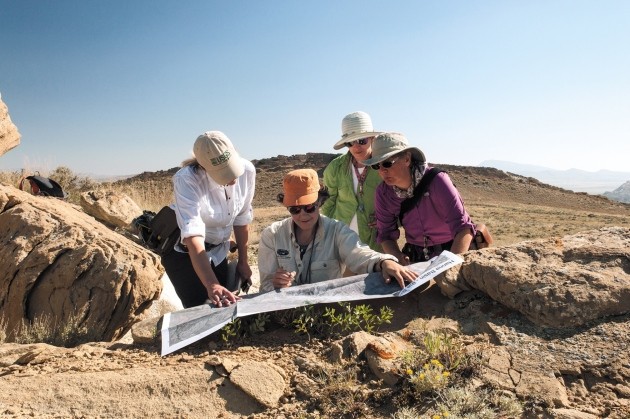
Journals invite too few women to referee - Nature Jory Lerback and Brooks Hanson present an analysis that reveals evidence of gender bias in peer review for scholarly publications. nature.com

@petersuber - Peter Suber (@petersuber@fediscience.org)

Update. "This study evaluated the inclusion and representation of women serving on school #psychology journal editorial boards from 1965 to 2020." (#paywalled) https://psycnet.apa.org/doi/10.1037/spq0000541

@petersuber - Peter Suber (@petersuber@fediscience.org)

Update. "The objective of the current study was to assess the level of gender and geographic inequalities affecting influential researchers, based on the lists of Highly Cited Researchers (HCRs) published annually by Clarivate." https://link.springer.com/article/10.1007/s11739-023-03240-9
Gender and geographical inequalities among highly cited researchers: a cross-sectional study (2014–2021) - Internal and Emergency Medicine link.springer.com

@petersuber - Peter Suber (@petersuber@fediscience.org)

Update. "We identified 1482 editorial board members [at #pharmacy journals] with only 527 (35.6%) being female…Only 9 journals (21.42%) presented more females among their editorial board members." https://doi.org/10.1016/j.sapharm.2023.02.018

Female representation among editorial boards of social, clinical, and educational pharmacy journals Recent studies on editorial team members of healthcare journals have been showing disparities in this distribution. However, there are limited data wi… sciencedirect.com

@petersuber - Peter Suber (@petersuber@fediscience.org)

Update. "For the [UK @EPSRC research] projects examined as part of this study, over 70%…have no female representation, and less than 15% have a female lead." https://academic.oup.com/rev/advance-article/doi/10.1093/reseval/rvad008/7074305

@petersuber - Peter Suber (@petersuber@fediscience.org)

Update. "Of the 3m submissions to major…medical journals in the 1st half of 2020, just 36% were from women. This gender gap applied…across all authorship positions, in…top tier & lower impact journals & was esp pronounced among younger…female authors." https://www.bmj.com/content/381/bmj.p788

How pandemic publishing struck a blow to the visibility of women’s expertise The biases in scientific publishing during the pandemic damaged women’s visibility, recognition, and career advancement, reports Jocalyn Clark Before covid-19, Reshma Jagsi had a thriving clinical and research career. As a full time physician and deputy department chair of radiation oncology at the University of Michigan, USA, she was ascending the leadership ladder before the world around her went into lockdown. “Everything was an emergency, and [all my colleagues were] working around the clock out of a sense of need, because the house was on fire,” she says. It felt as though “I was drowning.” On top of the acute emergency of helping sick patients, Jagsi was developing rapid treatment guidelines for covid-19 and reorganising research efforts for colleagues—while caring for her elderly mother and tutoring two schoolchildren. Other colleagues with younger children experienced high levels of anxiety, their careers completely sidelined by the pandemic. She says, “During an emergency, it didn’t matter how urgent the need was and how great your expertise was: if you’ve got a toddler who needs your attention and you can’t rely on your parents or your neighbours or day care, what else are you going to do?” When laboratories, operating rooms, and clinical trial sites worldwide closed because of national lockdowns, millions of people working in science found an opportunity to write, driven by a desire to help as well as the need to recover losses or to stay relevant and maintain publication records—the chief currency in research careers.1 Clinicians and academics were eager to secure authorships.2 But the covid-19 publishing game had by no means an equal playing field. Of the three million submissions to major health and medical journals in the first half of 2020, just 36% were from women. This gender gap applied to research and non-research articles, across … bmj.com

@petersuber - Peter Suber (@petersuber@fediscience.org)

Update. "Publications led by female authors did not differ between DA [double-anonymized] and SA [single-anonymized] journals. Moreover, female-leading articles did not increase after changes from SA to DA peer-review." https://peerj.com/articles/15186/
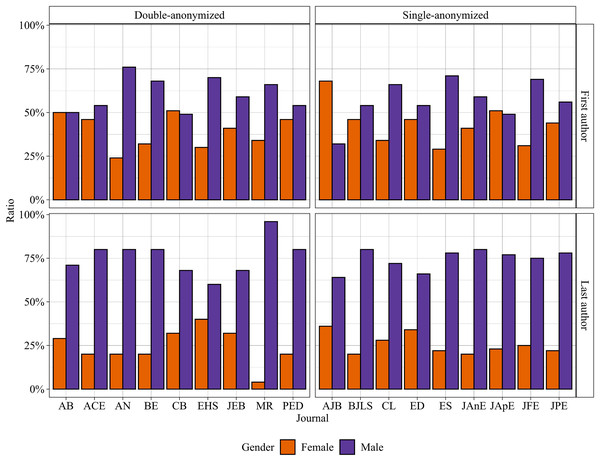
Overcoming the gender bias in ecology and evolution: is the double-anonymized peer review an effective pathway over time? Male researchers dominate scientific production in science, technology, engineering, and mathematics (STEM). However, potential mechanisms to avoid this gender imbalance remain poorly explored in STEM, including ecology and evolution areas. In the last decades, changes in the peer-review process towards double-anonymized (DA) have increased among ecology and evolution (EcoEvo) journals. Using comprehensive data on articles from 18 selected EcoEvo journals with an impact factor >1, we tested the effect of the DA peer-review process in female-leading (i.e., first and senior authors) articles. We tested whether the representation of female-leading authors differs between double and single-anonymized (SA) peer-reviewed journals. Also, we tested if the adoption of the DA by previous SA journals has increased the representativeness of female-leading authors over time. We found that publications led by female authors did not differ between DA and SA journals. Moreover, female-leading articles did not increase after changes from SA to DA peer-review. Tackling female underrepresentation in science is a complex task requiring many interventions. Still, our results highlight that adopting the DA peer-review system alone could be insufficient in fostering gender equality in EcoEvo scientific publications. Ecologists and evolutionists understand how diversity is important to ecosystems’ resilience in facing environmental changes. The question remaining is: why is it so difficult to promote and keep this “diversity” in addition to equity and inclusion in the academic environment? We thus argue that all scientists, mentors, and research centers must be engaged in promoting solutions to gender bias by fostering diversity, inclusion, and affirmative measures. peerj.com

@petersuber - Peter Suber (@petersuber@fediscience.org)

Update. "Our meta-analysis…found only small, statistically insignificant gender differences in the journal acceptance process…This does not mean that there was gender parity in every field, time period, and journal." https://journals.sagepub.com/doi/epub/10.1177/15291006231163179 https://journals.sagepub.com/doi/epub/10.1177/15291006231163179

@petersuber - Peter Suber (@petersuber@fediscience.org)

Update. I have two comments on the previous study in this #Mastodon post. https://fediscience.org/@petersuber/110271892132210365

petersuber (@petersuber@fediscience.org) Two comments: 1. On the one hand, I have doubts about the finding of gender parity in journal acceptances. See my long (and still-growing) Twitter thread of evidence for gender bias in academic publishing. https://twitter.com/petersuber/status/1252981139855355904 2. On the other hand, these authors seem to have done a thorough literature review. Moreover, this study is what Daniel Kahneman called an #AdversarialCollaboration, a model I admire and see too rarely in practice. fediscience.org

@petersuber - Peter Suber (@petersuber@fediscience.org)

@reSeeIt save thread

Saved - July 30, 2023 at 3:40 PM
reSee.it AI Summary
Title: Embracing Multilingualism: Overcoming Language Barriers in Scientific Research Introduction: The dominance of English in scientific research has presented numerous challenges for non-native speakers. From financial costs to reading comprehension difficulties, writing ease, and anxiety, Colombian researchers face various obstacles when publishing in English. While English is chosen for its wider audience and journal impact factor, linguistic bias and limited English skills hinder researchers. However, efforts such as multilingual metadata standardization and translation projects aim to address these barriers. This article emphasizes the need for local context-dependent evidence and open access to national language publications, highlighting the impact of the English language on academia, diversity, quality, and global conservation efforts. It also emphasizes the importance of multilingualism and inclusivity in STEM research. Concerns and Solutions: The growth of English-language articles compared to non-English articles in BRICS countries and the spread of English dominance in university courses are areas of concern. To counteract this, balanced multilingualism and language translation infrastructure are proposed as solutions. Discrimination based on accents and differences in data-sharing policies among Chinese journals are also highlighted, calling for a more inclusive and multilingual approach to scientific research. Revitalizing Indigenous Languages: Recognizing the limitations of English-only dissemination, a new open-access journal aims to revitalize indigenous languages by publishing in multiple languages. This community-based solution proposed by linguistics researchers aims to combat linguistic discrimination in academic publishing. The prevalence of meta-analyses limiting their scope to English-language articles raises questions about the frequency of this practice. China's shift away from incentivizing English-language journal publications has not had an immediate impact, highlighting the challenges of multilingualism in academic writing and the dominance of English as the sole language of knowledge production. Addressing Disproportionate Exclusion: Mainstream indices like WoS and Scopus disproportionately exclude non-English journals, which raises concerns about the representation of local perspectives. Good practices for using multilingual and multimodal data in research are detailed, along with recommendations for incorporating multilingualism in qualitative and quantitative research assessments. The underrepresentation of African languages in technology and research is highlighted, but initiatives like Lanfrica offer language-focused search engines for African languages. Similarly, Spanish and Portuguese, spoken by over 800 million people, have low representation in globally indexed scientific output. The Council of the European Union welcomes initiatives promoting multilingualism in scholarly communication, emphasizing the importance of supporting non-native English-speaking authors in academic journals. Challenges and Consequences: The challenges faced by non-native English-speaking scholars in academic publishing are discussed, including linguistic bias and the displacement of local languages due to the lack of language strategies in research. Chinese researchers' work is less read and cited by their compatriots due to incentives to publish in English-language journals. Multilingual publishing ensures the continuity of local research traditions. The cognitive sciences' reliance on English-speaking researchers studying English speakers has consequences for the field, highlighting the need for equal value placed on multilingual publication alongside English publication. Promoting Multilingualism: The Organization of Ibero-American States reports a significant disparity in articles published in English versus Spanish or Portuguese. To counter predatory journals and highlight their existence, Indian SSH journals in 15 languages are listed. Despite being spoken by a minority, English dominates scientific publications. A case study explores the transition to bilingual publication by a Chilean medical journal, emphasizing that language barriers hinder the publication of good research, resulting in a loss for science. While journals and publishers have made limited progress in reducing language barriers, cultural heritage research indexed in WoS is skewed towards English-language and global north research. Ignoring non-English-language science may overlook important biodiversity information, emphasizing the crucial role of research in languages other than English for biodiversity conservation. Conclusion: In conclusion, embracing multilingualism is crucial for overcoming language barriers in scientific research. Efforts to promote inclusivity, multilingual metadata standardization, translation projects, and open access to national language publications are essential. By valuing multilingual publication equally with English publication, we can foster diversity, quality, and global conservation efforts in academia. It is imperative to recognize the importance of local context-dependent evidence and support non-native English-speaking authors, ultimately creating a more inclusive and multilingual approach to scientific research.

@petersuber - Peter Suber (@petersuber@fediscience.org)

New study: "More than 90% of the scientific articles published by Colombian researchers are in English....Publishing in a 2d language creates additional financial costs...&...problems with reading comprehension, writing ease & time, & anxiety." https://journals.plos.org/plosone/article?id=10.1371/journal.pone.0238372

Disadvantages in preparing and publishing scientific papers caused by the dominance of the English language in science: The case of Colombian researchers in biological sciences The success of a scientist depends on their production of scientific papers and the impact factor of the journal in which they publish. Because most major scientific journals are published in English, success is related to publishing in this language. Currently, 98% of publications in science are written in English, including researchers from English as a Foreign Language (EFL) countries. Colombia is among the countries with the lowest English proficiency in the world. Thus, understanding the disadvantages that Colombians face in publishing is crucial to reducing global inequality in science. This paper quantifies the disadvantages that result from the language hegemony in scientific publishing by examining the additional costs that communicating in English creates in the production of articles. It was identified that more than 90% of the scientific articles published by Colombian researchers are in English, and that publishing in a second language creates additional financial costs to Colombian doctoral students and results in problems with reading comprehension, writing ease and time, and anxiety. Rejection or revision of their articles because of the English grammar was reported by 43.5% of the doctoral students, and 33% elected not to attend international conferences and meetings due to the mandatory use of English in oral presentations. Finally, among the translation/editing services reviewed, the cost per article is between one-quarter and one-half of a doctoral monthly salary in Colombia. Of particular note, we identified a positive correlation between English proficiency and higher socioeconomic origin of the researcher. Overall, this study exhibits the negative consequences of hegemony of English that preserves the global gap in science. Although having a common language is important for science communication, generating multilinguistic alternatives would promote diversity while conserving a communication channel. Such an effort should come from different actors and should not fall solely on EFL researchers. journals.plos.org

@petersuber - Peter Suber (@petersuber@fediscience.org)

Update. Publishers may choose English because it's a lingua franca for science, intelligible to a larger audience. Or they may do it to increase their #JIF. (And of course the two motives may be related.) Research from Brazil. https://www.scielo.br/scielo.php?script=sci_arttext&pid=S0001-37652020000400723

Publishing in English is associated with an increase of the impact factor of Brazilian biodiversity journals Abstract English is the lingua franca for scientific communication, but some journals,... scielo.br

@petersuber - Peter Suber (@petersuber@fediscience.org)

Update. Confirmation that writing outside your native language (unless you are extremely proficient) triggers linguistic bias from native speakers. https://www.sciencedirect.com/science/article/pii/S1475158520301685

Preliminary evidence of linguistic bias in academic reviewing Recent years have seen a spirited debate over whether there is linguistic injustice in academic publishing. One way that linguistic injustice might oc… sciencedirect.com

@petersuber - Peter Suber (@petersuber@fediscience.org)

1/ Update. Most email solicitations from predatory journals use weak English. This study confirms my experience. https://paperity.org/p/174009175/marketing-via-email-solicitation-by-predatory-and-legitimate-journals-an-evaluation-of But...

Marketing via Email Solicitation by Predatory (and Legitimate) Journals: An Evaluation of Quality, Frequency and Relevance (pdf) | Paperity Paperity: the 1st multidisciplinary aggregator of Open Access journals & papers. Free fulltext PDF articles from hundreds of disciplines, all in one place paperity.org

@petersuber - Peter Suber (@petersuber@fediscience.org)

2/ But be careful about concluding that most journals using weak English (in email solicitations or web pages) are predatory. Some could be honest journals published in English, for understandable reasons, by scholars whose first language is not English.

@petersuber - Peter Suber (@petersuber@fediscience.org)

Update. "One of the main limiting factors...[experienced by researchers preparing articles for biomedical journals] has been limited skills in English writing and editing." https://pmj.bmj.com/content/early/2020/11/06/postgradmedj-2020-139243

@petersuber - Peter Suber (@petersuber@fediscience.org)

Update. "Surveys of...Spanish-speaking...& Mandarin Chinese-speaking researchers revealed that [they] found it significantly more difficult to write...articles in English than in their native tongues [&] increased their dissatisfaction and anxiety." https://www.sciencemag.org/careers/2020/10/science-s-english-dominance-hinders-diversity-community-can-work-toward-change

@petersuber - Peter Suber (@petersuber@fediscience.org)

Update. Call for standardizing multilingual metadata. https://firstmonday.org/ojs/index.php/fm/article/view/10378

The need for addressing multilingualism, ambiguity and interoperability for visual resources management across metadata platforms | First Monday firstmonday.org

@petersuber - Peter Suber (@petersuber@fediscience.org)

Update. This "systematic review and meta-analysis" limited itself to studies written in English. Understandable, regrettable, and probably very common. https://www.mdpi.com/2077-0383/9/5/1598/htm

Effects of Polyphenol-Rich Interventions on Cognition and Brain Health in Healthy Young and Middle-Aged Adults: Systematic Review and Meta-Analysis Context: Affecting older and even some younger adults, neurodegenerative disease represents a global public health concern and has been identified as a research priority. To date, most anti-aging interventions have examined older adults, but little is known about the effects of polyphenol interventions on brain-related aging processes in healthy young and middle-aged adults. Objective: This systematic review and meta-analysis aimed to evaluate the acute and chronic effects of (poly)phenol-rich diet supplementation on cognitive function and brain health in young and middle-aged adults. In July 2019, two electronic databases (PubMed and Web of Science) were used to search for relevant trials examining the effect of acute or chronic (poly)phenol-rich supplementation on cognitive function and neuroprotective measures in young and middle-aged adults (<60 years old). A total of 4303 records were screened by two researchers using the PICOS criteria. Fifteen high quality (mean PEDro score = 8.8 ± 0.58) trials with 401 total participants were included in the final analyses. Information on treatment, study design, characteristics of participants, outcomes and used tools were extracted following PRISMA guidelines. When items were shown to be sufficiently comparable, a random-effects meta-analysis was used to pool estimates across studies. Effect size (ES) and its 95% confidence interval (CI) was calculated. The meta-analysis indicated that (poly)phenol supplementation significantly increased brain-derived neurotrophic factor (ES = 3.259, p = 0.033), which was accompanied by higher performance in serial (7s) subtraction (ES = 1.467, p = 0.001) and decreases in simple reaction time (ES = −0.926, p = 0.015) and mental fatigue (ES = −3.521, p = 0.010). Data related to cognitive function were skewed towards an effect from acute compared to chronic polyphenol intervention; data related to BDNF were skewed toward an effect from higher bioavailability phenolic components. Conclusion: This meta-analysis provides promising findings regarding the usefulness of polyphenol-rich intervention as an inexpensive approach for enhancing circulation of pro-cognitive neurotrophic factors. These beneficial effects appear to depend on the supplementation protocols. An early acute and/or chronic application of low- to high-dose phenolic components with high bioavailability rates (≥30%) at a younger age appear to provide more promising effects. mdpi.com

@petersuber - Peter Suber (@petersuber@fediscience.org)

Update. "This project seeks to conduct language translation on metadata labels for research publications, attribution data, & clinical trials…to make data about medical research queriable in underserved languages through Wikidata and the Linked Open Web." https://riojournal.com/article/66490/

FAIR and open multilingual clinical trials in Wikidata and Wikipedia This project seeks to conduct language translation on metadata labels for research publications, attribution data, and clinical trials information to make data about medical research queriable in underserved languages through Wikidata and the Linked Open Web. This project has the benefit of distributing content through Wikipedia and Wikidata, which already have an annual userbase of a billion users and which already have established actionable standards to practice diversity, inclusion, openness, FAIRness, and transparency about program development. The impact will be localized access to basic research information in various Global South languages to integrate with existing community efforts for establishing the same. Although Wikidata development in this direction seems inevitable, the cultural and social exchange required to establish global multilingual research partnerships could begin now with support rather than later as a second phase effort for including the developing world. Wikipedia and Wikidata are established forums with an existing active userbase for multilingual research collaboration, but the research practices there still are immature. By applying metadata expertise through this project, we will elevate the current amateur development with more stable Linked Open Data compatibility to English language databases. Using the wiki distribution and discussion platform to develop the global conversation about data sharing will set good precedents for the trend of global research collaboration. riojournal.com

@petersuber - Peter Suber (@petersuber@fediscience.org)

Update. "We [scientists who speak English as a second language] shoulder an extra career challenge: not only must we gain command of our science, but we must also be able to write to professional standards in a foreign language." https://www.nature.com/articles/d41586-021-00899-y

English is the language of science — but precision is tough as a non-native speaker Scientists with a different first language could benefit from mentoring and support to help them communicate their research clearly for global audiences, argues Roey Elnathan. nature.com

@petersuber - Peter Suber (@petersuber@fediscience.org)

Update. Google Scholar shows 3,700,000 papers on climate change written in English, "three times more than Mandarin Chinese & French combined. Among the top 10 countries most vulnerable to climate change, only one is majority English-speaking (Canada)." https://www.smithsonianmag.com/blogs/conservation-commons/2021/03/23/meet-sophia-kianni/

Meet Sophia Kianni: Young Climate Change Changemaker Sophia Kianni is a college freshman who already is making big strides in the world. While visiting family in Iran, Sophia witnessed first hand the gap in knowledge about climate change due to information being solely in English and differences in media coverage. Last year, she founded Climate Cardinals, a nonprofit that through the work of global volunteers translates climate science and research in an effort to break down language barriers. Kianni’s involvement does not stop there as she is also a member of the UN Youth Advisory Group on Climate Change and hosts her own podcast on the intersection of fashion and sustainability. smithsonianmag.com

@petersuber - Peter Suber (@petersuber@fediscience.org)

Update. "Our results show that synthesising non-English-language studies is key to overcoming the widespread lack of local, context-dependent evidence and facilitating evidence-based conservation globally." https://www.biorxiv.org/content/10.1101/2021.05.24.445520v1

Tapping into non-English-language science for the conservation of global biodiversity bioRxiv - the preprint server for biology, operated by Cold Spring Harbor Laboratory, a research and educational institution biorxiv.org

@petersuber - Peter Suber (@petersuber@fediscience.org)

Update "Only 11 of 38 European countries had any medical publications in [their] national language that were referenced in MEDLINE." https://ebooks.iospress.nl/doi/10.3233/SHTI210177

IOS Press Ebooks - Rare Use of National Languages in Europe for Communicating Scientific Information in Medicine ebooks.iospress.nl

@petersuber - Peter Suber (@petersuber@fediscience.org)

Update. "If everyone uses the same language, there is less friction…[But] the English-language conquest is not more efficient than polyglot science – it is just differently inefficient. There’s still a lot of language‑learning and translation going on." https://aeon.co/essays/how-did-science-come-to-speak-only-english

How did science come to speak only English? | Aeon Essays Science once communicated in a polyglot of tongues, but now English rules alone. How did this happen – and at what cost? aeon.co

@petersuber - Peter Suber (@petersuber@fediscience.org)

Update. "I have rec'd…peer-review feedback recommending that a ‘native English speaker’…[proofread] my manuscript…Yet…English is my first language…[Some reviewers who gave this feedback] did not themselves show a strong competence in written English." https://insights.uksg.org/articles/10.1629/uksg.502/

‘Requires proofing by a native speaker’ – colonization and scholarship Many academic scholars have encountered some variation of the phrase: ‘This manuscript could benefit from proofing by a native English speaker’. They may have received this feedback or given it. This article aims to use peer review as a prism through which to explore aspects of linguistic power and privilege. In unpacking some of the language of peer review we may question some assumptions we hold about ‘native’ English speakers. Although making reference to other written works, this commentary is foregrounded in personal testimony. It does this to contextualize the issues. It is written from the perspective of a storyteller. It draws upon the stories of languages and how we use them, of where they come from and where they are going. Running throughout is the idea and the very dark reality of colonization. insights.uksg.org

@petersuber - Peter Suber (@petersuber@fediscience.org)

Update. Good science is more important than good English. But "science too often demands that non-native English-speaking academics focus on learning to speak and write in English, which drastically disadvantages them." Hence.... https://www.nature.com/articles/d41586-021-01905-z

Don’t focus on English at the expense of your science A language barrier can be a challenge, but there are better ways to spend your resources, says Zhanna Anikina. nature.com

@petersuber - Peter Suber (@petersuber@fediscience.org)

Update. "No one can deny that the dominance of the English language in academia has many cost-saving & logistic benefits. Still, we should also be aware [that] such dominance…jeopardises the quality of research around the globe." https://content.yudu.com/web/tzly/0A448bb/RIaug21/html/index.html?page=20

@petersuber - Peter Suber (@petersuber@fediscience.org)

Update. In addition to providing new data on the problem of monolingualism in science, the authors propose #openscience as part of the solution. https://english.elpais.com/usa/2021-07-30/how-to-end-the-hegemony-of-english-in-scientific-research.html

How to end the hegemony of English in scientific research A report by the Organization of Ibero-American States shows that 95% of all work published in journals last year was in that language, with only 1% in Spanish or Portuguese english.elpais.com

@petersuber - Peter Suber (@petersuber@fediscience.org)

Update. "Our findings indicate that Finnish language publications are particularly impt for reaching students, citizens, experts & politicians. Thus #openaccess to publications in national languages is vital for the local relevance & outreach of research." https://onlinelibrary.wiley.com/doi/10.1002/leap.1405

@petersuber - Peter Suber (@petersuber@fediscience.org)

Update. National language journals “may not be able to transition to #openaccess…w/o losing income…One way to enable OA…is to create a…platform for hosting…the most impt local journals, an example of which has been recently implemented in Norway.” https://asistdl.onlinelibrary.wiley.com/doi/10.1002/asi.24336

@petersuber - Peter Suber (@petersuber@fediscience.org)

Update. "As English has become the international, cross-border language of science, it may have ceased to be the property of the native speaker researchers, who constitute a small minority in the community." https://www.tandfonline.com/doi/full/10.1080/08989621.2021.1960514

@petersuber - Peter Suber (@petersuber@fediscience.org)

Update. This is just to ensure that the present thread is associated with the hashtags #MultilingualResearch and #Multilingualism.

@petersuber - Peter Suber (@petersuber@fediscience.org)

Update. "While English-language journals have seen huge increases in global submissions over the last 10 years, the pool of experts being used to review the literature largely remains with US and European-based reviewers." https://scholarlykitchen.sspnet.org/2021/08/16/revisiting-balancing-author-satisfaction-with-reviewer-needs/

Revisiting: Balancing Author Satisfaction with Reviewer Needs Journal editors struggle to make sure that peer reviewers don't get "burned out" with too many review requests. Despite the data, we have yet to make strides within large disciplines. scholarlykitchen.sspnet.org

@petersuber - Peter Suber (@petersuber@fediscience.org)

Update. "The best automatic translation systems are now good enough to allow people to choose the language in which they read and write to the platform." https://scholarlykitchen.sspnet.org/2021/08/18/positively-disrupting-research-culture-for-the-better-an-interview-with-alexandra-freeman-of-octopus/ Important if true. But is it true?

'Positively Disrupt(ing) Research Culture for the Better': An Interview with Alexandra Freeman of Octopus Octopus is a new sharing platform that hopes to disrupt research culture for the better. An interview with founder Dr. Alexandra Freeman. scholarlykitchen.sspnet.org

@petersuber - Peter Suber (@petersuber@fediscience.org)

Update. "English is the dominant language of environmental…conservation. But unless people understand…specific…concepts & can talk about them in their home languages, they can feel disconnected from govt efforts to preserve ecosystems & species." https://www.nature.com/articles/d41586-021-02218-x

African languages to get more bespoke scientific terms Many words common to science have never been written in African languages. Now, researchers from across Africa are changing that. nature.com

@petersuber - Peter Suber (@petersuber@fediscience.org)

Update. "The current bias in the STEM academy [in favor of English]…is detrimental to the continuity and evolution of STEM research." (This article is published in 6 languages.) https://www.sciencepolicyjournal.org/article_1038126_jspg180303.html

A Call to Diversify the Lingua Franca of Academic STEM Communities Journal of Science Policy & Governance  |  Volume 18, Issue 03  | August 30, 2021 sciencepolicyjournal.org

@petersuber - Peter Suber (@petersuber@fediscience.org)

Update (from 2008). Emerging Themes in Epidemiology suggests 4 ways to support #MultilingualResearch, and adopts one itself: It will publish "translations of abstracts or full texts by authors as Additional files." https://ete-online.biomedcentral.com/articles/10.1186/1742-7622-5-1

Open access for the non-English-speaking world: overcoming the language barrier - Emerging Themes in Epidemiology This editorial highlights the problem of language barrier in scientific communication in spite of the recent success of Open Access Movement. Four options for English-language journals to overcome the language barrier are suggested: 1) abstracts in alternative languages provided by authors, 2) Wiki open translation, 3) international board of translator-editors, and 4) alternative language version of the journal. The Emerging Themes in Epidemiology announces that with immediate effect, it will accept translations of abstracts or full texts by authors as Additional files. Editorial note: In an effort towards overcoming the language barrier in scientific publication, ETE will accept translations of abstracts or the full text of published articles. Each translation should be submitted separately as an Additional File in PDF format. ETE will only peer review English-language versions. Therefore, translations will not be scrutinized in the review-process and the responsibility for accurate translation rests with the authors. ete-online.biomedcentral.com

@petersuber - Peter Suber (@petersuber@fediscience.org)

Update. @Wikidata and @Wikifunctions could help different language versions of @Wikipedia stay in sync on facts. https://slate.com/technology/2021/09/wikipedia-human-language-wikifunctions.html

Wikipedia Is Trying to Transcend the Limits of Human Language Until recently, a small Wikipedia edition said Dianne Feinstein was San Francisco's mayor. This project could help avoid that sort of out of date info. slate.com

@petersuber - Peter Suber (@petersuber@fediscience.org)

Update. Just making sure this thread on #MultilingualResearch includes this tweet from June 2021

@petersuber - Peter Suber (@petersuber@fediscience.org)

Update. @Stanford has launched a discussion forum on multilingual digital humanities (#dh). https://mailman.stanford.edu/mailman/listinfo/multilingual-dh

multilingual-dh Info Page mailman.stanford.edu

@petersuber - Peter Suber (@petersuber@fediscience.org)

"The nuanced language of the te Reo [Maori] descriptions was an essential part of the paper & they withdrew the article…despite the extra work it would take to stand their ground…Happily, the paper found a new home… delighted to incorporate the te Reo." https://www.optimistdaily.com/2021/09/decolonizing-science-kiwi-scientists-take-a-stand-on-using-maori-language/

Decolonizing Science: Kiwi scientists take a stand on using Maori language | The Optimist Daily In any given bioregion, Indigenous inhabitants are the natural historians with the most knowledge of the area. optimistdaily.com

@petersuber - Peter Suber (@petersuber@fediscience.org)

Update. "For scientists who do not speak English…writing a paper in their first language still does not solve the issue [since they must still] conduct a thorough review of existing literature [much or most of which is in English]." https://www.carbonbrief.org/analysis-the-lack-of-diversity-in-climate-science-research

Analysis: The lack of diversity in climate-science research - Carbon Brief Biases in authorship make it likely that the existing bank of knowledge around climate change and its impacts is skewed towards the interests of male authors from the global north. carbonbrief.org

@petersuber - Peter Suber (@petersuber@fediscience.org)

Update (from 2019). Personal experiences from seven scientists whose first language is not English. https://www.nature.com/articles/d41586-019-01797-0

When English is not your mother tongue Seven researchers discuss the challenges posed by science’s embrace of one global language. nature.com

@petersuber - Peter Suber (@petersuber@fediscience.org)

Update (from 2017). "Articles published in English have a higher number of citations than those published in other languages, when the effect of journal, year of publication, and paper length are statistically controlled." https://link.springer.com/article/10.1007/s13280-016-0820-7

Publish (in English) or perish: The effect on citation rate of using languages other than English in scientific publications - Ambio There is a tendency for non-native English scientists to publish exclusively in English, assuming that this will make their articles more visible and cited link.springer.com

@petersuber - Peter Suber (@petersuber@fediscience.org)

Update. Don't assume that all important results are published in English. "We show that non-English-language studies provide crucial evidence for informing global biodiversity conservation." https://journals.plos.org/plosbiology/article?id=10.1371/journal.pbio.3001296

Tapping into non-English-language science for the conservation of global biodiversity A survey of 419,680 peer-reviewed papers in 16 languages reveals that non-English-language studies can expand geographical (by 12-25%) and taxonomic (by 5-32%) coverage of English-language evidence on the effectiveness of biodiversity conservation interventions, especially in biodiverse regions. journals.plos.org

@petersuber - Peter Suber (@petersuber@fediscience.org)

Update. From the authors' summary of the article above: "Many…scientific breakthroughs were originally published in a language other than English. The structure of a Nobel Prize-winning antimalarial drug was first published in 1977 in simplified Chinese." https://theconversation.com/the-english-language-dominates-global-conservation-science-which-leaves-1-in-3-research-papers-virtually-ignored-168951

The English language dominates global conservation science – which leaves 1 in 3 research papers virtually ignored Many valuable scientific breakthroughs were originally published in a non-English language. New research shows more effort is needed to transcend language barriers to improve conservation science. theconversation.com

@petersuber - Peter Suber (@petersuber@fediscience.org)

Update. The "structural disadvantage [for non-native speakers in English philosophy journals] deserves closer philosophical & empirical attention. We owe this to current & future members of our…community for whom English is not their native language." https://dailynous.com/2021/10/13/levelling-the-linguistic-playing-field-within-academic-philosophy-guest-post/

Levelling the Linguistic Playing Field within Academic Philosophy (guest post) - Daily Nous Stylistic norms for writing affect philosophers' professional prospects in unfair ways, and what one thinks should be done about this may be tied to one's conception of what philosophy is supposed to do. In this guest post*, Louise Chapman, the CEO of Lex Academic, an organization that offers editing and translation services for academic authors, dailynous.com

@petersuber - Peter Suber (@petersuber@fediscience.org)

Update. Diamond or no-APC #openaccess journals are multilingual 2.7x more often than APC-based OA journals. In the @DOAJplus: 38% of no-APC v. 14% of APC-based journals. https://zenodo.org/record/4558704 For more data on multilingual no-APC journals, see §1.4.3, tables 8-11.

OA Diamond Journals Study. Part 1: Findings Context From June 2020 to February 2021, a consortium of 10 organisations undertook a large-scale study on open access journals across the world that are free for readers and authors, usually referred to as “OA diamond journals”. This study was commissioned by cOAlition S in order to gain a better understanding of the OA diamond landscape. Presentation The study undertook a statistical analysis of several bibliographic databases, surveyed 1,619 journals, collected 7,019 free text submissions and other data from 94 questions, and organised three focus groups with 11 journals and 10 interviews with hosting platforms. It collected 163 references in the academic literature, and inventoried 1048 journals not listed in DOAJ. The results of the study are available in the following outputs: Findings Report - DOI: 10.5281/zenodo.4558704 Recommendations Report- DOI:10.5281/zenodo.4562790 References Library - DOI: 10.5281/zenodo.4562816 Journals Inventory - DOI: 10.5281/zenodo.4562828 Dataset - DOI: 10.5281/zenodo.4553103 Findings: A wide archipelago of relatively small journals serving diverse communities OA diamond journals are on the road to full compliance with Plan S A mix of scientific strengths and operational challenges An economy that largely depends on volunteers, universities and government zenodo.org

@petersuber - Peter Suber (@petersuber@fediscience.org)

Update. English-language articles quoting non-English speakers tend to publish the quotations in English alone. This piece recommends publishing them in both the speaker's native language and English. https://onlinelibrary.wiley.com/doi/10.1002/nop2.1115

@petersuber - Peter Suber (@petersuber@fediscience.org)

Update. I wish this study had not limited itself to English-language articles. It would be good to compare the growth of English-language articles to the growth of non-English articles in the BRICS countries. https://www.emerald.com/insight/content/doi/10.1108/GKMC-08-2020-0109/full/html

An analysis of research output in open access journals in BRICS countries: a bibliometric study | Emerald Insight An analysis of research output in open access journals in BRICS countries: a bibliometric study - Author: Sana Zia emerald.com

@petersuber - Peter Suber (@petersuber@fediscience.org)

Update. "The dominance of…articles in English as well as the paucity of OA publications indexed in international databases (compared to those in national or regional databases) may have been due to the greater weighting assigned to such publications." https://ese.arphahub.com/article/59032/

The need for a new set of measures to assess the impact of research in earth sciences in Indonesia Background: Earth sciences is one of those sensitive field sciences that are closely needed to solve local problems within local physical and social settings. Earth researchers find state-of-the-art of topics in earth sciences by using scientific databases, conduct research on the topics, and write about them. However, the accessibility, readability, and usability of those articles for local communities are major problems in measuring the impact of research, although it may be covered by well-known international scientific databases.Objectives: To ascertain empirically whether there are differences in document distribution, in the proportions of openly accessible documents, and in the geographical coverage of earth sciences topics as revealed through analyses of documents retrieved from scientific databases and to propose new measures for assessing the impact of research in earth sciences based on those differences.Methods: Relevant documents were retrieved using ‘earth sciences’ as a search term in English and other languages from ten databases of scientific publications. The results of these searches were analysed using frequency analysis and a quantitative- descriptive design.Results: (1) The number of articles in English from international databases exceeded the number of articles in native languages from national-level databases. (2) The number of open-access (OA) articles in the national databases was higher than that in other databases. (3) The geographical coverage of earth science papers was uneven between countries when the number of documents retrieved from closed-access commercial databases was compared to that from the other databases. (4) The regulations in Indonesia related to promotion of lecturers assign greater weighting to publications indexed in Scopus and the Web of Science (WoS) and publications in journals with impact factors are assigned a higher weighting.Conclusions: The dominance of scientific articles in English as well as the paucity of OA publications indexed in international databases (compared to those in national or regional databases) may have been due to the greater weighting assigned to such publications. Consequently, the relevance of research reported in those publications to local communities has been questioned. This article suggests some open-science practices to transform the current regulations related to promotion into a more responsible measurement of research performance and impact. ese.arphahub.com

@petersuber - Peter Suber (@petersuber@fediscience.org)

Update. 24% of http://Journal.fi users are non-academics. Professional researchers used English-language articles more than Finnish or Swedish articles. For students, it was the reverse. https://onlinelibrary.wiley.com/doi/full/10.1002/leap.1405

Journal.fi Suomalaiset tiedelehdet verkossa journal.fi

@petersuber - Peter Suber (@petersuber@fediscience.org)

Update. Outside English-speaking countries, the dominance of English is spreading from research publications to university courses. (#paywalled) https://www.timeshighereducation.com/news/big-five-losing-monopoly-english-language-degree-courses

‘Big five’ losing monopoly on English-language degree courses Almost one in five English-medium degrees now taught outside Australia, Canada, New Zealand, UK and US timeshighereducation.com

@petersuber - Peter Suber (@petersuber@fediscience.org)

Update from Nov 2019. "There was a positive relationship between #JIFs [journal impact factors] and publication language…Most countries with smaller research capabilities have still chosen English as the standard language of their research journals." https://www.sciencedirect.com/science/article/pii/S037843711931180X

The effect of “open access” on journal impact factors: A causal analysis of medical journals The Journal Impact Factor (JIF) has a significant influence on authors of research paper submissions. Whether open access (OA) is beneficial to JIFs a… sciencedirect.com

@petersuber - Peter Suber (@petersuber@fediscience.org)

Update from 2018: "I propose balanced multilingualism as a basis for governing the tensions between strategies for internationalization and excellence in research on the one hand and strategies for societal relevance and participation on the other." bid.ub.edu/en/40/sivertse…

@petersuber - Peter Suber (@petersuber@fediscience.org)

Update. Lingua franca nuances: In Poland there are academic "domains where English fluency is an asset & 'black holes' (bureaucratic issues, teaching, research collaboration) where English language communication is either impossible or impeded." https://www.sciencedirect.com/science/article/abs/pii/S0889490621000673

English as a lingua franca? The limits of everyday English-language communication in Polish academia Intercultural communication has become increasingly important due to the growing internationalization of higher education, even outside the English-sp… sciencedirect.com

@petersuber - Peter Suber (@petersuber@fediscience.org)

Update. Non-native speakers of English can face discrimination for their accents, regardless of their proficiency. https://theconversation.com/heres-why-people-might-discriminate-against-foreign-accents-new-research-172539

Here’s why people might discriminate against foreign accents – new research New research shows that increasing exposure to foreign accents makes it easier to process - and that can reduce bias which is not based on negative perceptions or prejudice. theconversation.com

@petersuber - Peter Suber (@petersuber@fediscience.org)

Update. Chinese journals published in English have much stronger #opendata policies than Chinese journals published in Chinese. (The article also identifies other journal differences that correlate with the strength of their data-sharing policies.) https://onlinelibrary-wiley-com.ezp-prod1.hul.harvard.edu/doi/epdf/10.1002/leap.1437

@petersuber - Peter Suber (@petersuber@fediscience.org)

Update. "There is some anecdotal evidence that publication in Chinese journals is shifting from Mandarin to English but participants [in a Dec 2020 @cni_org meeting] were not aware of good comprehensive data on this." https://www.cni.org/wp-content/uploads/2021/01/CNI-Science-Nationalism-ER-Report-f20-Public-FINAL.pdf

Page not found cni.org

@petersuber - Peter Suber (@petersuber@fediscience.org)

Update. The dominance of English in STEM fields "is detrimental to the continuity & evolution of STEM research. We [recommend US govt] infrastructure that standardizes & facilitates the language translation process & hosting of multilingual publications." https://www.sciencepolicyjournal.org/article_1038126_jspg180303.html

A Call to Diversify the Lingua Franca of Academic STEM Communities Journal of Science Policy & Governance  |  Volume 18, Issue 03  | August 30, 2021 sciencepolicyjournal.org

@petersuber - Peter Suber (@petersuber@fediscience.org)

Update, new OA journal on indigenous languages: Publishing in English about non-English languages worked "against the fair dissemination of info to the…communities we are writing about. So we wanted to make sure we could pub in a variety of languages." https://around.uoregon.edu/content/new-journal-aimed-revitalizing-indigenous-languages

New Journal is aimed at revitalizing Indigenous languages | Around the O Living Languages debuts at the start of the International Indigenous Languages Decade around.uoregon.edu

@petersuber - Peter Suber (@petersuber@fediscience.org)

Update from @LProofreading. "We are group of #ECR in #linguistics concerned with linguistic discrimination in #academic #publishing. We propose to develop a community-based solution to fight it."

@petersuber - Peter Suber (@petersuber@fediscience.org)

Update. This meta-analysis deliberately limited its scope to English-language articles. I suspect that most others do the same without saying so. Has anyone studied how often meta-analyses adopt this limitation? https://journals.sagepub.com/doi/10.1177/14747049211040447

@petersuber - Peter Suber (@petersuber@fediscience.org)

Update. China's retreat from monetary incentives to publish in English-language journals with high journal impact factors (#JIFs) is not having a large short-term effect. Many researchers want to publish in those journals even without the old incentives. https://link.springer.com/article/10.1057/s41307-022-00268-y

Where to Publish: Chinese HSS Academics’ Responses to ‘Breaking SSCI Supremacy’ Policies - Higher Education Policy Incentivizing academic publications in internationally-indexed journals is a current topic of national debate especially in non-anglophone countries. To bo link.springer.com

@petersuber - Peter Suber (@petersuber@fediscience.org)

Update. "In this position paper, we set out to challenge both the reality and desirability of continuing to configure academic/scientific knowledge production and exchange as an ‘English Only’ space." https://www.cambridge.org/core/journals/language-teaching/article/multilingualism-in-academic-writing-for-publication-putting-english-in-its-place/5B067CDB492350D55A8E798AC72526B5

Sorry, an error occurred Welcome to Cambridge Core cambridge.org

@petersuber - Peter Suber (@petersuber@fediscience.org)

More from the study above. Mainstream indices like WoS & Scopus suggest that 90% of published journal articles are in English. But those are the indices most likely to exclude non-English journals. For example, they cover only 2/3 of the journals listed in UlrichsWeb.

@petersuber - Peter Suber (@petersuber@fediscience.org)

Update. "This paper…details 3 major ways in which content differences between language editions [of @Wikipedia] arise…and recommendations for good practices when using multilingual and multimodal data for research and modeling." https://arxiv.org/abs/2204.02483

Considerations for Multilingual Wikipedia Research English Wikipedia has long been an important data source for much research and natural language machine learning modeling. The growth of non-English language editions of Wikipedia, greater computational resources, and calls for equity in the performance of language and multimodal models have led to the inclusion of many more language editions of Wikipedia in datasets and models. Building better multilingual and multimodal models requires more than just access to expanded datasets; it also requires a better understanding of what is in the data and how this content was generated. This paper seeks to provide some background to help researchers think about what differences might arise between different language editions of Wikipedia and how that might affect their models. It details three major ways in which content differences between language editions arise (local context, community and governance, and technology) and recommendations for good practices when using multilingual and multimodal data for research and modeling. arxiv.org

@petersuber - Peter Suber (@petersuber@fediscience.org)

Update. "We…provide recommendations on how multilingualism can be taken into account at all stages and across different types of qualitative and quantitative research assessment procedures." #paywalled. https://www.elgaronline.com/view/edcoll/9781800372542/9781800372542.00031.xml

Chapter 22: Multilingualism of social sciences This chapter aims to provide a comprehensive view of the role of language in academic publishing in social sciences. It also advocates the balanced multilingualism as an approach that supports taking language into account in all aspects of research assessment without prioritizing scholarly communication in any language over publications in other languages. To do this, we elaborate a geopolitical perspective on academic publishing that highlights the role of language in science and the benefits of multilingualism to society. Then, we provide new insights into multilingual publishing in the social sciences using bibliographical data from national current research information systems. Finally, we present the concept of balanced multilingualism in light of various policy initiatives, among others the Helsinki Initiative on Multilingualism in Scholarly Communication, to provide recommendations on how multilingualism can be taken into account at all stages and across different types of qualitative and quantitative research assessment procedures. elgaronline.com

@petersuber - Peter Suber (@petersuber@fediscience.org)

Update. "The article compares selected entries on @Wikipedia concerning significant historical events in three language versions: Belarusian, Lithuanian, & Polish…[& notes] the prevalence of 'local' points of view on controversial historical events." cejsh.icm.edu.pl/cejsh/element/…

@petersuber - Peter Suber (@petersuber@fediscience.org)

Update. An argument for "balanced multilingualism" & "taking language into account in all aspects of research assessment without prioritizing scholarly communication in any language over publications in other languages." https://repository.uantwerpen.be/docstore/d:irua:11895 (warning, forced download)

@petersuber - Peter Suber (@petersuber@fediscience.org)

Update. "African languages are barely represented in technology & research…@Lanfrica is a language-focused search engine that makes it fast & easy to find information on the Internet about resources relating to African languages." https://lanfrica.com/about

Lanfrica Lanfrica catalogues, archives and links African language resources in order to mitigate the difficulty encountered in discovering African works. lanfrica.com

@petersuber - Peter Suber (@petersuber@fediscience.org)

Update. "Spanish and Portuguese together represent more than 800 million speakers…, 11% of the world’s population, but only 1% of globally indexed scientific output is published in these two languages." https://www.lodivalleynews.com/for-open-and-accessible-science/

For open and accessible science In an episode of the series doctor. Casa, LarThe famous doctor’s team faces a mystery:... lodivalleynews.com

@petersuber - Peter Suber (@petersuber@fediscience.org)

Update. "The Council of the European Union…welcomes initiatives to promote multilingualism, such as the Helsinki initiative on multilingualism in scholarly communication." https://data.consilium.europa.eu/doc/document/ST-9515-2022-INIT/en/pdf

@petersuber - Peter Suber (@petersuber@fediscience.org)

Update. "What is the role of [English-language] academic journals in helping non-native English speaking authors to have their best chance at publication without their research findings being overlooked due to poor language usage?" Three recommendations. https://blog.scholasticahq.com/post/ways-academic-journals-can-support-esl-authors/

3 Ways academic journals can better support non-native English speaking authors Three ways that academic journals can better acknowledge and support the vast network of ESL authors to help them navigate manuscript preparation and to encourage more global research policy and dissemination. blog.scholasticahq.com

@petersuber - Peter Suber (@petersuber@fediscience.org)

Update. The @EUCouncil "welcomes initiatives to promote #multilingualism, such as the Helsinki initiative on multilingualism in scholarly communication...invites the Commission & the Member States to experiment with multilingualism, on a voluntary basis." https://www.consilium.europa.eu/media/56958/st10126-en22.pdf

Browser check - Consilium consilium.europa.eu

@petersuber - Peter Suber (@petersuber@fediscience.org)

Update. "We [@COKIproject] have mapped the 122 million objects in Crossref up to the end of May 2022 to languages (based on titles and abstracts, where available) and done an initial analysis. The results are a mix of the expected and surprising." https://openknowledge.community/language-diversity/

Language Diversity in Scholarly Publishing - COKI There is a lot of lip service paid to the idea of diversity in scholarly publishing and often diversity of language is used as an example, but limited analysis has been done at scale. To address this gap, we have mapped the 122 million objects in Crossref % and done an initial analysis. openknowledge.community

@petersuber - Peter Suber (@petersuber@fediscience.org)

Update. The spread of "national [#openaccess] repositories" will help us study thematic "differences between locally published research in non-English speaking contexts and English-speaking international authors." https://link.springer.com/article/10.1007/s11192-022-04403-9

Local emergence, global expansion: understanding the structural evolution of a bi-lingual national research landscape - Scientometrics Research institutions organize their scientific activities in an increasingly diverse landscape. In matters of global interest, research relies on an ever- link.springer.com

@petersuber - Peter Suber (@petersuber@fediscience.org)

Update. "In many countries, the ten most downloaded books [from @OAPENbooks] are written in non-English languages." https://insights.uksg.org/articles/10.1629/uksg.580/

Big in Japan, Zimbabwe or Brazil – global reach and national preferences for open access books The perceived effect of internationalization on publishing is that there is a strong focus on global issues written in English only. In academic book publishing – strongly connected to the humanities and social sciences (HSS) – languages other than English play an important role. Non-English academic publications have been linked to regional issues: there is a tension between English as the ‘lingua franca’ enabling a global reach versus local languages that provide a better cultural ‘fit’. This article examines the preference of global readers in a systematic manner, by examining the usage of the open access collection of the OAPEN Library. Based on the ten most downloaded books from 100 countries during a 12-month period, the focus on regional topics is measured using the number of books written in non-English languages and the amount of English language books that mention the country.The results show a global interest in books with a regional focus. In many countries, the ten most downloaded books are written in non-English languages. Even when English language titles are part of the top ten, many mention regional concerns. The article counters the narrative of the dominance of English as the language of scholarly communication. Instead, it supports the value of bibliodiversity. insights.uksg.org

@petersuber - Peter Suber (@petersuber@fediscience.org)

Update. We "investigate NLP & Machine Translation approaches…to foster multilingual access & discovery to SSH content across different languages…[We created an open dataset] of multilingual metadata concepts." lrec-conf.org/proceedings/lr…

@petersuber - Peter Suber (@petersuber@fediscience.org)

Update. Google's translation of the Portuguese: "The publication of bilingual and multilingual articles is a potential, inexpensive solution that has been offered for years by the Scientific Electronic Library On-line (SciELO)." https://www.scielo.br/j/jvb/a/8g95sSFpscRXY7NbY9hPLzy/?lang=pt

SciELO - Brasil scielo.br

@petersuber - Peter Suber (@petersuber@fediscience.org)

Update. Anecdote from piece above: "German scientists…identified a significant causal relationship between smoking & lung cancer in the…1930s, a finding ignored by the scientific community for more than three decades, until British & American scientists rediscovered this link."

@petersuber - Peter Suber (@petersuber@fediscience.org)

Update. "@Meta's grand vision is unlikely to be realised…because of #copyright. Unless online material is released under a permissive licence such as [those from] @CreativeCommons, it will be necessary to obtain permission from the copyright holder." https://walledculture.org/why-metas-project-to-translate-automatically-between-200-languages-will-be-stymied-by-copyright/

Why Meta’s project to translate automatically between 200 languages will be stymied by copyright

Meta’s AI division has announced two exciting new projects in the field of machine translation: The first is No Language Left Behind, where we are building a new advanced AI model that can learn from languages with fewer examples to train from, and we will use it to enable expert-quality translations in hundreds of languages, …

walledculture.org

@petersuber - Peter Suber (@petersuber@fediscience.org)

Update. "Our research demonstrates that while EAL [English as an additional language] scholars are under significant pressure to publish in English, they are not provided with the necessary resources to bring their papers to publication." https://www.timeshighereducation.com/blog/we-must-end-linguistic-discrimination-academic-publishing

We must end linguistic discrimination in academic publishing Publishers need to examine their biases and universities their support mechanisms, say Avi Staiman, Marnie Jo Petray and Gaillynn Clements timeshighereducation.com

@petersuber - Peter Suber (@petersuber@fediscience.org)

Update (missed this one from 2014): English-language journal editors said their journals provided clear instructions to authors more than twice as often as their non-English-speaking authors (76% v. 32%). https://blog.scielo.org/en/2014/05/19/non-native-english-speaking-authors-and-editors-evaluate-difficulties-and-challenges-in-publishing-in-international-journals/

Non-native English-speaking authors and editors evaluate difficulties and challenges in publishing in international journals | SciELO in Perspective Due to linguistic and cultural barriers, authors in emerging economies have faced challenges in having their papers accepted in main stream journals. A study conducted on international editors and authors in non-English speaking countries shows that good research results can be prejudiced by poor writing and difficulties with the language. blog.scielo.org

@petersuber - Peter Suber (@petersuber@fediscience.org)

Update from 2015. "A single shared language is useful for an endeavor as collaborative & universal as science. But if you are not a native speaker…how difficult it must be to reach a 'eureka' moment but feel that the words are inadequate to describe it." https://slate.com/technology/2015/01/english-is-the-language-of-science-u-s-dominance-means-other-scientists-must-learn-foreign-language.html

Why Is English the Language of Science? I learned English as a second language. Becoming an Anglophone turned out to be a crucial advantage in a brief scientific career years later. (I once... slate.com

@petersuber - Peter Suber (@petersuber@fediscience.org)

Update from 2019: "There is…evidence for significant linguistic bias when journals receive a manuscript written in poor English…[creating] an impression that the research they discuss is also sub-standard." https://blogs.lse.ac.uk/impactofsocialsciences/2019/08/16/the-hidden-cost-of-having-a-eureka-moment-but-not-being-able-to-put-it-in-your-own-words/

The hidden cost of having a eureka moment, but not being able to put it in your own words Accessibility in scholarly communications is often framed as an economic and technical question of enabling more people to have access and engage with research literature. However, the dominance of… blogs.lse.ac.uk

@petersuber - Peter Suber (@petersuber@fediscience.org)

Update: "The lack of specific strategies regarding language use in research may result in the imposition of English and in the displacement of local languages." https://www.sciencedirect.com/science/article/pii/S0898589822000936

Language policy and multilingualism in semi-peripheral higher education research: Two cases from a University in Catalonia This study aims to contribute to the limited literature on language policy in research, where the increasing domination of English has raised concern … sciencedirect.com

@petersuber - Peter Suber (@petersuber@fediscience.org)

Update. Chinese incentives to publish in international English-language journals are causing Chinese research to be read and cited less by Chinese researchers. https://link.springer.com/article/10.1007/s11192-022-04537-w

Global impact or national accessibility? A paradox in China’s science - Scientometrics During the past decades, Chinese science policy has emphasized the international dissemination of research. Such policies were associated with exponential link.springer.com

@petersuber - Peter Suber (@petersuber@fediscience.org)

Update. "We outline actions that individuals and institutions can take to support multilingual science and scientists, including structural changes that encourage and value translating scientific literature." https://academic.oup.com/bioscience/article/72/10/988/6653151

@petersuber - Peter Suber (@petersuber@fediscience.org)

Update. I second @karimjerbineuro's appreciation of "the extra work, time & energy that students + researchers around the world, whose native language is not English, need to put into writing academic papers + giving talks in English."

@petersuber - Peter Suber (@petersuber@fediscience.org)

Update. I welcome the @COAR_eV recommendations on #repository support for #multilingual research. https://www.coar-repositories.org/news-updates/coar-announces-first-recommendation-for-supporting-multilingual-and-non-english-content-in-repositories/

COAR Announces first recommendation for supporting multilingual and non-English content in repositories Multilingualism is a critical characteristic of a healthy, inclusive, and diverse research communications landscape. The Helsinki Initiative on Multilingualism in Scholarly Communication asserts that the disqualification of local or national languages in academic publishing is the most important - and often forgotten - factor that prevents societies from using and taking advantage of the coar-repositories.org

@petersuber - Peter Suber (@petersuber@fediscience.org)

Update. Only 3% of Dutch medical guidelines refer to research articles written in Dutch. https://pubmed.ncbi.nlm.nih.gov/36300474/

[How often do medical guidelines refer to articles written in Dutch?] - PubMed Articles published in NTvG may be relevant for making recommendations in Dutch medical guidelines, as these publications usually reflect the Dutch care context, and may do more so than research published in international journals. The results of this research show that the number of Dutch guidelines … pubmed.ncbi.nlm.nih.gov

@petersuber - Peter Suber (@petersuber@fediscience.org)

Update. "This study identified eight factors that contributed to the success of…two #multilingual digital libraries [World Digital Library & Digital Library of the Caribbean] and eight technical and operational challenges they have faced." #paywalled https://www.emerald.com/insight/content/doi/10.1108/EL-03-2022-0061/full/html

Sustaining multilinguality: case studies of two multilingual digital libraries | Emerald Insight Sustaining multilinguality: case studies of two multilingual digital libraries - Author: Anping Wu, Jiangping Chen emerald.com

@petersuber - Peter Suber (@petersuber@fediscience.org)

Update. "US researchers do not build as readily on the [English-language] work of Chinese researchers, relative to the work of other foreign scientists, even in a setting where Chinese scientists have long excelled." https://www.nber.org/papers/w30772

Who Stands on the Shoulders of Chinese (Scientific) Giants? Evidence from Chemistry Founded in 1920, the NBER is a private, non-profit, non-partisan organization dedicated to conducting economic research and to disseminating research findings among academics, public policy makers, and business professionals. nber.org

@petersuber - Peter Suber (@petersuber@fediscience.org)

Update. "Although the publishing patterns of CEE…journals in the field of language and linguistics are international, multilingual publishing in languages other than English ensures the continuity of local research traditions." https://link.springer.com/article/10.1007/s11192-022-04595-0

The regional dynamics of multilingual publishing in web of science: A statistical analysis of central and eastern european journals and researchers in linguistics - Scientometrics This article explores multilingual publishing by analyzing the journals in the language and linguistics established in the last seven decades in CEE countr link.springer.com

@petersuber - Peter Suber (@petersuber@fediscience.org)

Update. I just gave an interview in which I spoke at length about #MultilingualResearch. "The dominance of one language creates obstacles, stress, expense & rejection for excellent scholars whose first language happens not to be the lingua franca." https://dash.harvard.edu/handle/1/37373947

Open Access helps both: authors and readers dash.harvard.edu

@petersuber - Peter Suber (@petersuber@fediscience.org)

Update. "The cognitive sciences have been dominated by English-speaking researchers studying other English speakers…However, English differs from other languages in ways that have consequences for the whole of the cognitive sciences." https://www.cell.com/trends/cognitive-sciences/fulltext/S1364-6613(22)00236-4

@petersuber - Peter Suber (@petersuber@fediscience.org)

Update. "Rooryck’s message was clear: 'Funders and universities should value multilingual publication in the same way as publication in English. We should convince PhD students of this too. Publication in English should not be associated with prestige.'" https://vastuullinentiede.fi/en/news/publication-english-should-not-be-associated-prestige

Publication in English should not be associated with prestige vastuullinentiede.fi

@petersuber - Peter Suber (@petersuber@fediscience.org)

Update. "The Organization of Ibero-American States… reported that, in 2020, 95% of all articles published in scientific journals were written in English and only 1% in Spanish or Portuguese." https://www.scielo.br/j/ts/a/zwPRYVhkQLp5RTJzTXMrqky/?format=pdf&lang=en

SciELO - Brasil scielo.br

@petersuber - Peter Suber (@petersuber@fediscience.org)

Update. @UGC_India created a list of #Indian #SSH journals publishing in 15 Indian languages. One purpose was to purge predatory journals. Another was to highlight the existence of the rest, since international databases omit them. https://www.emerald.com/insight/content/doi/10.1108/GKMC-11-2022-0266/full/html (#paywalled)

Indian languages, print journals and the UGC-CARE project | Emerald Insight Indian languages, print journals and the UGC-CARE project - Author: Shubhada Nagarkar, Archana Thakur, Monali Mane, Prajakta Nagare emerald.com

@petersuber - Peter Suber (@petersuber@fediscience.org)

Update. "44% of Finnish peer-reviewed journals and series are published in Finnish…#Diamond #OpenAccess journals are much more multilingual than, for example, [OA] journals which charge #APCs." https://julkaisufoorumi.fi/en/news/diamond-future-open-access

Diamond future of open access julkaisufoorumi.fi

@petersuber - Peter Suber (@petersuber@fediscience.org)

Update. "While English is only the native language of 7.3% of the world's population and less than 20% can speak the language, nearly 75% of all scientific publications are English." https://journals.sagepub.com/doi/10.1177/14550725221102227

@petersuber - Peter Suber (@petersuber@fediscience.org)

Update. Case study of the two-year transition to fully bilingual publication (Spanish and English) by the Chilean medical journal, @Medwave_cl. https://doi.org/10.1002/leap.1533

@petersuber - Peter Suber (@petersuber@fediscience.org)

Update. "To some, this problem [writing in English when it's not your native language] may appear to be a minor one. However, if good research fails to find its way to publication – the barrier being the language – ultimately it is a loss for science." https://blogs.lse.ac.uk/impactofsocialsciences/2019/08/16/the-hidden-cost-of-having-a-eureka-moment-but-not-being-able-to-put-it-in-your-own-words/

The hidden cost of having a eureka moment, but not being able to put it in your own words Accessibility in scholarly communications is often framed as an economic and technical question of enabling more people to have access and engage with research literature. However, the dominance of… blogs.lse.ac.uk

@petersuber - Peter Suber (@petersuber@fediscience.org)

Update. "Journals & publishers have made little progress toward beginning to recognize or reduce language barriers. Counter to our predictions, journals associated w/ scientific societies did not…have more inclusive policies [than] non-society journals." https://academic.oup.com/iob/article/5/1/obad003/7008844

@petersuber - Peter Suber (@petersuber@fediscience.org)

Update. A new study of the #CulturalHeritage research indexed in #WOS finds it skewed toward English-language research and the global #north. The authors conclude that this is partly due to the research and partly due to what is indexed in #WOS. https://www.nature.com/articles/s41599-023-01582-5

A bibliometric analysis of cultural heritage research in the humanities: The Web of Science as a tool of knowledge management - Humanities and Social Sciences Communications Substantial research on the topic of cultural heritage has been conducted over the past two decades. At the same time, the overall output volume of journals and citation metrics have become important parameters in assessing and ranking researchers’ performance. Even though the scholarly interest in cultural heritage has recently increased world-wide, a comprehensive analysis of the publication output volume and its correlation to the shift in the cultural heritage regime starting in 2003 is still lacking. The article aims to understand the role of Web of Science (WOS) as a tool of knowledge management in academia by drawing on the scholarly output volume, the patterns displayed by this volume, and the intellectual structure of cultural heritage research based on WOS-indexed journal articles. The data include 1843 journal articles published between 2003 and 2022 and indexed in the WOS Core Collection. The article draws on a bibliometric analysis by using WOS tools and employing VOSviewer software to map and visualize hidden patterns of research collaboration and avenues of knowledge progress. The cultural heritage research indexed in WOS was found to be Eurocentric, corresponding to the increasing funding provided by European national and supranational agencies for research funding. Although the indexed research has grown significantly, the bulk of studies on cultural heritage in WOS is concentrated in a reduced number of European institutions and countries, written by a small number of prolific authors, with relatively poor collaborative ties emerging across time between authors, institutions, and countries. The central themes reflect the development of digital technologies and increased participatory emphasis in cultural heritage care. This article brings new insights into the analysis of the cultural heritage research in correlation with the emergence of international heritage governance with new institutional actors, professional networks, and international agreements, which are all constitutive elements of scientific production. The article seeks to critically assess and discuss the results and the role of WOS as a tool of knowledge management in academia. nature.com

@petersuber - Peter Suber (@petersuber@fediscience.org)

Update. "By ignoring non-English-language science, international assessments may overlook important information on local and/or regional biodiversity." https://www.nature.com/articles/s41893-023-01087-8

The role of non-English-language science in informing national biodiversity assessments - Nature Sustainability Consulting the best available evidence is key to successful conservation decision-making. While much scientific evidence on conservation continues to be published in non-English languages, a poor understanding of how non-English-language science contributes to conservation decision-making is causing global assessments and studies to practically ignore non-English-language literature. By investigating the use of scientific literature in biodiversity assessment reports across 37 countries/territories, we have uncovered the established role of non-English-language literature as a major source of information locally. On average, non-English-language literature constituted 65% of the references cited, and these were recognized as relevant knowledge sources by 75% of report authors. This means that by ignoring non-English-language science, international assessments may overlook important information on local and/or regional biodiversity. Furthermore, a quarter of the authors acknowledged the struggles of understanding English-language literature. This points to the need to aid the use of English-language literature in domestic decision-making, for example, by providing non-English-language abstracts or improving and/or implementing machine translation. (This abstract is also avaialble in 21 other languages in Supplementary Data 4). Despite the increasing importance of local and regional research for conservation efforts worldwide, research published in languages other than English is routinely ignored by global assessments. This study examines how such research is used and cited at national levels even though it is overlooked internationally nature.com

@petersuber - Peter Suber (@petersuber@fediscience.org)

Update. "Research in languages other than English is critically important for #biodiversity conservation & shockingly under-utilized globally." https://phys.org/news/2023-03-scientists-multilingual-approach.html

Scientists call for a multilingual approach to conservation Research in languages other than English is critically important for biodiversity conservation and is shockingly under-utilized globally, according to an international research team. phys.org

@petersuber - Peter Suber (@petersuber@fediscience.org)

Update. In the humanities, when Russian funders evaluated grant proposals using quantitative metrics, like publications & citations, "non-journal publications among new grantees decreased, while the share of English-language journal articles increased." https://sciendo.com/article/10.2478/jdis-2023-0010?tab=article

Evaluating grant proposals: lessons from using metrics as screening device Abstract Purpose This study examines the effects of using publication-based metrics for the initial screening in the application process for a project leader. The key questions are whether formal policy affects the allocation of funds to researchers with a better publication record and how the previous academic performance of principal investigators is related to future project results. Design/methodology/approach We compared two competitions, before and after the policy raised the publication threshold for the principal investigators. We analyzed 9,167 papers published by 332 winners in physics and the social sciences and humanities (SSH), and 11,253 publications resulting from each funded project. Findings We found that among physicists, even in the first period, grants tended to be allocated to prolific authors publishing in high-quality journals. In contrast, the SSH project grantees had been less prolific in publishing internationally in both periods; however, in the second period, the selection of grant recipients yielded better results regarding awarding grants to more productive authors in terms of the quantity and quality of publications. There was no evidence that this better selection of grant recipients resulted in better publication records during grant realization. Originality This study contributes to the discussion of formal policies that rely on metrics for the evaluation of grant proposals. The sciendo.com
Saved - May 10, 2023 at 6:56 PM
reSee.it AI Summary
The COVID-19 pandemic has had a significant impact on women's research productivity, particularly those with young children. Studies have shown that women are submitting fewer solo-authored papers and are underrepresented as authors in leading medical journals. However, manuscripts submitted by women are generally not penalized during peer review. The pandemic has also highlighted gender disparities in academia, with women spending less time on research and publishing fewer articles. Gender disparities persist in academic publishing, with women authors underrepresented and cited less than men. Math-intensive STEM fields show prominent gender/country bias. Efforts to address these disparities include asking scientists about their race/ethnicity and self-identified gender/ethnicity, and journals requiring reporting of methods used to determine sex/gender. The share of female inventors has increased over time, but closing the gender gap in highly cited researchers would require a significant increase in women's representation in various fields. Larger editorial boards and those with women editors-in-chief are more likely to have women dominance. It is crucial to address these gender disparities in academic publishing to ensure that women's contributions to research are recognized and valued. This can be achieved through initiatives such as increasing representation of women in editorial boards and leadership positions, implementing reporting requirements for sex/gender determination methods, and promoting work-life balance policies to support women with caregiving responsibilities. By taking these steps, we can create a more equitable and inclusive academic publishing landscape.

@petersuber - Peter Suber (@petersuber@fediscience.org)

Since the pandemic shutdown began, journal submissions of co-authored papers, with women among the co-authors, are slightly up, and solo-authored papers by women are significantly down. https://www.insidehighered.com/news/2020/04/21/early-journal-submission-data-suggest-covid-19-tanking-womens-research-productivity

Early journal submission data suggest COVID-19 is tanking women's research productivity Early journal submission data suggest COVID-19 is tanking women's research productivity. insidehighered.com

@petersuber - Peter Suber (@petersuber@fediscience.org)

Update. https://www.theguardian.com/education/2020/may/12/womens-research-plummets-during-lockdown-but-articles-from-men-increase

Women's research plummets during lockdown - but articles from men increase Many female academics say juggling their career with coronavirus childcare is overwhelming theguardian.com

@petersuber - Peter Suber (@petersuber@fediscience.org)

Update. https://www.natureindex.com/news-blog/decline-women-scientist-research-publishing-production-coronavirus-pandemic

The decline of women's research production during the coronavirus pandemic Preprints analysis suggests a disproportionate impact on early career researchers. nature.com

@petersuber - Peter Suber (@petersuber@fediscience.org)

Update. https://www.nature.com/articles/d41586-020-01294-9

How female academics are losing ground during the pandemic Early analyses suggest that female academics are posting fewer preprints and starting fewer research projects than their male peers. nature.com

@petersuber - Peter Suber (@petersuber@fediscience.org)

Update: Gender Inequality in Research Productivity During the COVID-19 Pandemic https://arxiv.org/abs/2006.10194

Gender Inequality in Research Productivity During the COVID-19 Pandemic We study the disproportionate impact of the lockdown as a result of the COVID-19 outbreak on female and male academics' research productivity in social science. The lockdown has caused substantial disruptions to academic activities, requiring people to work from home. How this disruption affects productivity and the related gender equity is an important operations and societal question. We collect data from the largest open-access preprint repository for social science on 41,858 research preprints in 18 disciplines produced by 76,832 authors across 25 countries over a span of two years. We use a difference-in-differences approach leveraging the exogenous pandemic shock. Our results indicate that, in the 10 weeks after the lockdown in the United States, although the total research productivity increased by 35%, female academics' productivity dropped by 13.9% relative to that of male academics. We also show that several disciplines drive such gender inequality. Finally, we find that this intensified productivity gap is more pronounced for academics in top-ranked universities, and the effect exists in six other countries. Our work points out the fairness issue in productivity caused by the lockdown, a finding that universities will find helpful when evaluating faculty productivity. It also helps organizations realize the potential unintended consequences that can arise from telecommuting. arxiv.org

@petersuber - Peter Suber (@petersuber@fediscience.org)

Update https://www.timeshighereducation.com/news/pandemic-lockdown-holding-back-female-academics-data-show

Pandemic lockdown holding back female academics, data show Unequal childcare burden blamed for fall in share of published research by women since schools shut, but funding bodies look to alleviate career impact timeshighereducation.com

@petersuber - Peter Suber (@petersuber@fediscience.org)

Update. "Men and women have been disproportionately affected [by the pandemic]; for many [research] outputs, women were about 10 percentage points more likely than men to have decreased work." https://sr.ithaka.org/blog/what-about-research-scholarship-and-covid-19/

What about Research? Scholarship and COVID-19 - Ithaka S+R While there have been a number of research initiatives centered on supporting faculty in shifting to virtual instruction in light of the COVID-19 sr.ithaka.org

@petersuber - Peter Suber (@petersuber@fediscience.org)

Update. "Our female respondents reported larger declines in the time they could devote to research than their male colleagues. And scientists with young children appear to have been particularly hard-hit, especially women." https://www.nature.com/articles/s41562-020-0921-y

Unequal effects of the COVID-19 pandemic on scientists - Nature Human Behaviour COVID-19 has not affected all scientists equally. A survey of principal investigators indicates that female scientists, those in the ‘bench sciences’ and, especially, scientists with young children experienced a substantial decline in time devoted to research. This could have important short- and longer-term effects on their careers, which institution leaders and funders need to address carefully. nature.com

@petersuber - Peter Suber (@petersuber@fediscience.org)

Update. "The proportion of #COVID19 papers w/ a woman 1st author was 19% lower than...for papers pub'd in the same journals in 2019...Women’s representation as 1st authors of COVID-19 research was particularly low for papers pub'd in March & April 2020." https://elifesciences.org/articles/58807

Meta-Research: COVID-19 medical papers have fewer women first authors than expected Lockdowns in the United States caused by the COVID-19 pandemic appear related to a decrease in the number of women publishing research papers, especially as first authors. elifesciences.org

@petersuber - Peter Suber (@petersuber@fediscience.org)

Update. "Comparing 2020 with 2019, there was a 4% reduction in the percentage of women first authors [in @JAMASurgery], a 6% reduction of women last authors, and a 7% reduction in women as corresponding author." https://jamanetwork.com/journals/jamasurgery/fullarticle/2769186

@petersuber - Peter Suber (@petersuber@fediscience.org)

Update (from April). "Six weeks into widespread self-quarantine, editors of academic journals have started noticing a trend: Women...seem to be submitting fewer papers." https://thelily.com/women-academics-seem-to-be-submitting-fewer-papers-during-coronavirus-never-seen-anything-like-it-says-one-editor/ https://www.thelily.com/women-academics-seem-to-be-submitting-fewer-papers-during-coronavirus-never-seen-anything-like-it-says-one-editor/

Women academics seem to be submitting fewer papers during coronavirus. ‘Never seen anything like it,’ says one editor. Men are submitting up to 50 percent more thelily.com

@petersuber - Peter Suber (@petersuber@fediscience.org)

Update. "Women are advising policymakers, designing clinical trials, coordinating field studies and leading data collection and analysis, but you would never know it from the media coverage of the pandemic." https://timeshighereducation.com/blog/women-science-are-battling-both-covid-19-and-patriarchy https://www.timeshighereducation.com/blog/women-science-are-battling-both-covid-19-and-patriarchy

Women in science are battling both Covid-19 and the patriarchy The pandemic has worsened longstanding sexist and racist inequalities in science pushing many of us to say ‘I’m done’, write 35 female scientists  timeshighereducation.com

@petersuber - Peter Suber (@petersuber@fediscience.org)

Update. Summarizing some of the research in this thread. https://www.scientificamerican.com/article/women-in-science-may-suffer-lasting-career-damage-from-covid-19/

Women in Science May Suffer Lasting Career Damage from COVID-19 Scientific American is the essential guide to the most awe-inspiring advances in science and technology, explaining how they change our understanding of the world and shape our lives. scientificamerican.com

@petersuber - Peter Suber (@petersuber@fediscience.org)

Update. "Months [after the lockdown began], journal submission rates for women have improved....But the...outlook...remains poor, with [many] K-12 schools still closed, childcare options & other services still...reduced, & a bumpy teaching semester ahead." https://www.insidehighered.com/news/2020/08/20/womens-journal-submission-rates-continue-fall

Women's journal submission rates continue to fall Women's journal submission rates fell as their caring responsibilities jumped due to COVID-19. Without meaningful interventions, the trend is likely to continue. insidehighered.com

@petersuber - Peter Suber (@petersuber@fediscience.org)

Update. Hopeful editorial on "how we [women] can be better and do better as editors, academics and individuals for ourselves, our colleagues and our journal." https://link.springer.com/article/10.1007%2Fs10691-020-09435-1

A Wench’s Guide to Surviving a ‘Global’ Pandemic Crisis: Feminist Publishing in a Time of COVID-19 - Feminist Legal Studies It has been quite a year so far(!) and as the wenches we are, we have been taking our time to collect our thoughts and reflections before sharing them at t link.springer.com

@petersuber - Peter Suber (@petersuber@fediscience.org)

Update (from June, missed at the time). https://www.thelancet.com/journals/lancet/article/PIIS0140-6736(20)31412-4/fulltext

@petersuber - Peter Suber (@petersuber@fediscience.org)

Update. https://www.nytimes.com/2020/10/06/science/covid-universities-women.html

The Virus Moved Female Faculty to the Brink. Will Universities Help? (Published 2020) The pandemic is a new setback for women in academia who already faced obstacles on the path to advancing their research and careers. nytimes.com

@petersuber - Peter Suber (@petersuber@fediscience.org)

Update. "Women submitted proportionally fewer manuscripts [to Elsevier journals] than men during the COVID-19 lockdown months. This deficit was especially pronounced among women in more advanced stages of their career." https://papers.ssrn.com/sol3/papers.cfm?abstract_id=3712813… https://papers.ssrn.com/sol3/papers.cfm?abstract_id=3712813

Only Second-Class Tickets for Women in the COVID-19 Race. A Study on Manuscript Submissions and Reviews in 2329 Elsevier Journals During the early months of the COVID-19 pandemic, the submission rate to scholarly journals increased abnormally. Given that most academics were forced to work papers.ssrn.com

@petersuber - Peter Suber (@petersuber@fediscience.org)

Update. "A new study of enormous scale supports what numerous smaller studies have demonstrated throughout the pandemic: female academics are taking extended lockdowns on the chin, in terms of their comparative scholarly productivity." https://www.insidehighered.com/news/2020/10/20/large-scale-study-backs-other-research-showing-relative-declines-womens-research

Large-scale study backs up other research showing relative declines in women's research productivity during COVID-19 Large-scale study backs up other research showing relative declines in women's research productivity during COVID-19. insidehighered.com

@petersuber - Peter Suber (@petersuber@fediscience.org)

Update. "Even among elite scientists a pattern of stratified productivity and recognition by gender remains, with more prominent gaps in recognition." https://journals.plos.org/plosone/article?id=10.1371/journal.pone.0240903

Gender gaps in research productivity and recognition among elite scientists in the U.S., Canada, and South Africa This study builds upon the literature documenting gender disparities in science by investigating research productivity and recognition among elite scientists in three countries. This analysis departs from both the general comparison of researchers across organizational settings and academic appointments on one hand, and the definition of “elite” by the research outcome variables on the other, which are common in previous studies. Instead, this paper’s approach considers the stratification of scientific careers by carefully constructing matched samples of men and women holding research chairs in Canada, the United States and South Africa, along with a control group of departmental peers. The analysis is based on a unique, hand-curated dataset including 943 researchers, which allows for a systematic comparison of successful scientists vetted through similar selection mechanisms. Our results show that even among elite scientists a pattern of stratified productivity and recognition by gender remains, with more prominent gaps in recognition. Our results point to the need for gender equity initiatives in science policy to critically examine assessment criteria and evaluation mechanisms to emphasize multiple expressions of research excellence. journals.plos.org

@petersuber - Peter Suber (@petersuber@fediscience.org)

Update. "Optimistically, many academics thought initially that [remote work] might lead to a surge in research productivity....[If so, however,] all indications suggest that this has been a benefit for men in science, and not women." https://journals.plos.org/ploscompbiol/article?id=10.1371/journal.pcbi.1008370… https://journals.plos.org/ploscompbiol/article?id=10.1371/journal.pcbi.1008370

Ten simple rules for women principal investigators during a pandemic journals.plos.org

@petersuber - Peter Suber (@petersuber@fediscience.org)

Update. An argument to qualify or reinterpret the research (cited in this twitter thread above) showing a drop in research publications by women during the pandemic. https://publisherad.medium.com/the-covid-surge-in-research-papers-explaining-the-gender-disparity-d6ed1a925507

The COVID-surge in research papers: explaining the gender-disparity Edit: since writing this post, I have been able to confirm that rejected article tracking data shows a surge in the publication of rejected articles in journals which coincides with the timing of the… clearskiesadam.medium.com

@petersuber - Peter Suber (@petersuber@fediscience.org)

Update. I missed this from November 2019 (note, prepandemic). * original paper https://www.rsc.org/globalassets/04-campaigning-outreach/campaigning/gender-bias/gender-bias-report-final.pdf * summary https://www.nature.com/articles/d41586-019-03438-y

Huge study documents gender gap in chemistry publishing Analysis finds female-led papers are more likely to be rejected, and less likely to be cited, than those with male corresponding authors. nature.com

@petersuber - Peter Suber (@petersuber@fediscience.org)

Update. "Women submitted proportionally fewer manuscripts [to Elsevier journals] than men during the #COVID19 lockdown months. This deficit was especially pronounced among women in more advanced stages of their career." https://papers.ssrn.com/sol3/papers.cfm?abstract_id=3712813… https://papers.ssrn.com/sol3/papers.cfm?abstract_id=3712813

Only Second-Class Tickets for Women in the COVID-19 Race. A Study on Manuscript Submissions and Reviews in 2329 Elsevier Journals During the early months of the COVID-19 pandemic, the submission rate to scholarly journals increased abnormally. Given that most academics were forced to work papers.ssrn.com

@petersuber - Peter Suber (@petersuber@fediscience.org)

Update. "16% fewer women were lead authors for articles published on the preprint-platform medRxiv between December 2019 and April 2020, according to the IT professor Cassidy Sugimoto in an analysis published in Nature Index." https://www.horizons-mag.ch/2020/12/03/fewer-women-published-and-a-threat-to-open-access/

Fewer women published, and a threat to Open Access - Horizons Our statistics here show there was a striking drop in the number of women publishing preprints during the lockdown. And millions of Open-Access articles are in danger of disappearing from the Internet. horizons-mag.ch

@petersuber - Peter Suber (@petersuber@fediscience.org)

Update. "Although researchers submitted more papers to journals than last year, on average, growth in submissions from female authors trailed behind growth from male authors across all subject areas, and senior women saw the largest paper penalty." https://nature.com/articles/d41586-020-03564-y https://www.nature.com/articles/d41586-020-03564-y

How a torrent of COVID science changed research publishing — in seven charts A flood of coronavirus research swept websites and journals this year. It changed how and what scientists study, a Nature analysis shows. nature.com

@petersuber - Peter Suber (@petersuber@fediscience.org)

Update. "Compared to their male colleagues…mid-career women are spending less time on their primary research, writing less, reading fewer journal articles, applying for fewer grants, dedicating less time to research and publishing fewer articles." https://blog.degruyter.com/wp-content/uploads/2020/12/Locked-Down-Burned-Out-Publishing-in-a-pandemic_Dec-2020.pdf https://blog.degruyter.com/wp-content/uploads/2020/12/Locked-Down-Burned-Out-Publishing-in-a-pandemic_Dec-2020.pdf

@petersuber - Peter Suber (@petersuber@fediscience.org)

Update, but on acceptance rates rather than submission rates. "Manuscripts submitted by women or coauthored by women are generally not penalized during…peer review…Manuscripts by [women] had even a higher probability of success in many cases." https://advances.sciencemag.org/content/7/2/eabd0299 https://advances.sciencemag.org/content/7/2/eabd0299

@petersuber - Peter Suber (@petersuber@fediscience.org)

Update. This looks like good news, but it's #paywalled and I can't read it. https://www.timeshighereducation.com/news/female-academics-bounced-back-publishing-lockdowns-eased

Female academics bounced back in publishing as lockdowns eased Percentage of papers with female authors rose markedly in latter part of 2020 timeshighereducation.com

@petersuber - Peter Suber (@petersuber@fediscience.org)

Update. https://nap.edu/catalog/26061/impact-of-covid-19-on-the-careers-of-women-in-academic-sciences-engineering-and-medicine From Ch 2, p. 7: "With variations by discipline, women… published fewer papers & received fewer citations… between March 2020 & December 2020 (Amano-Patino et al., 2020: Andersen et al., 2020; Gabster et al., 2020)." https://nap.edu/read/26061/chapter/2#7… https://www.nap.edu/catalog/26061/impact-of-covid-19-on-the-careers-of-women-in-academic-sciences-engineering-and-medicine From https://www.nap.edu/read/26061/chapter/2#7

The Impact of COVID-19 on the Careers of Women in Academic Sciences, Engineering, and Medicine Download a PDF of "The Impact of COVID-19 on the Careers of Women in Academic Sciences, Engineering, and Medicine" by the National Academies of Sciences, Engineering, and Medicine for free. nap.nationalacademies.org
Read "The Impact of COVID-19 on the Careers of Women in Academic Sciences, Engineering, and Medicine" at NAP.edu Read chapter Summary: The spring of 2020 marked a change in how almost everyone conducted their personal and professional lives, both within science, tech... nap.nationalacademies.org

@petersuber - Peter Suber (@petersuber@fediscience.org)

Update. "[Early in the] pandemic, MS submissions by female researchers to preprint servers across disciplines dropped significantly or increased less than their male colleagues. [The same happened] for womxn-led medical studies related to this pandemic." https://journals.plos.org/plosbiology/article?id=10.1371/journal.pbio.3001100

Rebuild the Academy: Supporting academic mothers during COVID-19 and beyond The COVID-19 pandemic is highlighting the many long-standing inequalities that academic mothers face. This Essay describes solutions for a more equitable academia, now and in the future, maintaining that rather than rebuilding what we once knew, we should be the architects of a new world. journals.plos.org

@petersuber - Peter Suber (@petersuber@fediscience.org)

Update. "The proportion of women publishing in biomedical fields during the pandemic drops in average for 9.5% across disciplines and research topics….The impact is particularly pronounced for papers related to COVID-19 research." https://preprints.jmir.org/preprint/25379/accepted https://preprints.jmir.org/preprint/25379/accepted

Gender Disparity in the Authorship of Biomedical Research Publications During the COVID-19 Pandemic: Retrospective Observational Study Journal of Medical Internet Research - International Scientific Journal for Medical Research, Information and Communication on the Internet preprints.jmir.org

@petersuber - Peter Suber (@petersuber@fediscience.org)

On the @PLOSBiology piece above. "Getting this paper pub'd was a bit of a struggle…[A] few journals [said they'd] already pub'd…about the impact of #COVID19 on women…'Here, ironically, was a [piece] written by moms…juggling kids & we were…too late.'" https://www.udel.edu/udaily/2021/march/helping-academic-mothers-daycare-pandemic/

Helping academic mothers Essay offers potential solutions for challenges faced by mothers in academia during pandemic udel.edu

@petersuber - Peter Suber (@petersuber@fediscience.org)

Update. "While the majority of faculty, regardless of gender, indicated that they worked much less on research than planned during the fall [2020] semester (57%), there was a 12 percentage point gap between women (62%) and men (50%)." https://sr.ithaka.org/publications/the-disproportionate-impact-of-the-pandemic-on-women-and-caregivers-in-academia/

The Disproportionate Impact of the Pandemic on Women and Caregivers in Academia - Ithaka S+R Evidence is mounting that women in academia have disproportionately been affected by the pandemic. Recent research points to new gender gaps in productivity and publishing, with fewer women publishing articles and manuscripts. And in addition to these professional challenges, women in academia are also facing unique personal challenges during the pandemic, including balancing childcare and home responsibilities while working towards achieving tenure in an academic pipeline where it is already challenging for women to succeed. sr.ithaka.org

@petersuber - Peter Suber (@petersuber@fediscience.org)

Update. "Women scientists have experienced a productivity penalty from the social and structural changes accompanying the COVID-19 pandemic, but not in all authorship positions." https://osf.io/preprints/socarxiv/8hp7m/

The Pandemic Penalty: The gendered effects of COVID-19 on scientific productivity Academia serves as a valuable case for studying the effects of social forces on workplace productivity, using a concrete measure of output: scholarly papers. Many academics, especially women, have experienced unprecedented challenges to scholarly productivity during the coronavirus disease 2019 (COVID-19) pandemic. The authors analyze the gender composition of more than 450,000 authorships in the arXiv and bioRxiv scholarly preprint repositories from before and during the COVID-19 pandemic. This analysis reveals that the underrepresentation of women scientists in the last authorship position necessary for retention and promotion in the sciences is growing more inequitable. The authors find differences between the arXiv and bioRxiv repositories in how gender affects first, middle, and sole authorship submission rates before and during the pandemic. A review of existing research and theory outlines potential mechanisms underlying this widening gender gap in productivity during COVID-19. The authors aggregate recommendations for institutional change that could ameliorate challenges to women’s productivity during the pandemic and beyond. osf.io

@petersuber - Peter Suber (@petersuber@fediscience.org)

Update. "Several studies have found that women have published fewer papers, led fewer clinical trials and received less recognition for their expertise during the pandemic." https://www.nytimes.com/2021/04/13/health/women-stem-pandemic.html

Could the Pandemic Prompt an ‘Epidemic of Loss’ of Women in the Sciences? (Published 2021) Even before the pandemic, many female scientists felt unsupported in their fields. Now, some are hitting a breaking point. nytimes.com

@petersuber - Peter Suber (@petersuber@fediscience.org)

Update. "Women were substantially under-represented as authors among articles in leading medical journals [in 2020, but] barriers to women’s authorship…during COVID-19 are not significantly larger than barriers that preceded the pandemic." https://bmjopen.bmj.com/content/11/7/e051224

Gender disparity between authors in leading medical journals during the COVID-19 pandemic: a cross-sectional review Objectives Evaluate gender differences in authorship of COVID-19 articles in high-impact medical journals compared with other topics. Design Cross-sectional review. Data sources Medline database. Eligibility criteria Articles published from 1 January to 31 December 2020 in the seven leading general medical journals by impact factor. Article types included primary research, reviews, editorials and commentaries. Data extraction Key data elements were whether the study topic was related to COVID-19 and names of the principal and the senior authors. A hierarchical approach was used to determine the likely gender of authors. Logistic regression assessed the association of study characteristics, including COVID-19 status, with authors’ likely gender; this was quantified using adjusted ORs (aORs). Results We included 2252 articles, of which 748 (33.2%) were COVID-19-related and 1504 (66.8%) covered other topics. A likely gender was determined for 2138 (94.9%) principal authors and 1890 (83.9%) senior authors. Men were significantly more likely to be both principal (1364 men; 63.8%) and senior (1332 men; 70.5%) authors. COVID-19-related articles were not associated with the odds of men being principal (aOR 0.99; 95% CI 0.81 to 1.21; p=0.89) or senior authors (aOR 0.96; 95% CI 0.78 to 1.19; p=0.71) relative to other topics. Articles with men as senior authors were more likely to have men as principal authors (aOR 1.49; 95% CI 1.21 to 1.83; p<0.001). Men were more likely to author articles reporting original research and those with corresponding authors based outside the USA and Europe. Conclusions Women were substantially under-represented as authors among articles in leading medical journals; this was not significantly different for COVID-19-related articles. Study limitations include potential for misclassification bias due to the name-based analysis. Results suggest that barriers to women’s authorship in high-impact journals during COVID-19 are not significantly larger than barriers that preceded the pandemic and that are likely to continue beyond it. PROSPERO registration number CRD42020186702. Data are available upon reasonable request. bmjopen.bmj.com

@petersuber - Peter Suber (@petersuber@fediscience.org)

Update. "How can tenure and promotion procedures adequately reflect gendered disparities in Covid impact?" https://www.chronicle.com/article/the-pandemic-hit-female-academics-hardest

The Pandemic Hit Female Academics Hardest Women, who were already disproportionately burdened, have been hit especially hard by the pandemic. How should institutions of higher learning respond? chronicle.com

@petersuber - Peter Suber (@petersuber@fediscience.org)

Update. Summarizing pandemic-specific gender differences in productivity & aiming to understand the causes of these diffs, inc those that existed before the pandemic. "Parental engagement is a more powerful variable…than the mere existence of children." https://arxiv.org/abs/2108.05376

The academic motherload: Models of parenting engagement and the effect on academic productivity and performance Gender differences in research productivity are well documented, and have been mostly explained by access parental leave and child-related responsibilities. Those explanations are based on the assumption that women take on the majority of childcare responsibilities, and take the same level of leave at the birth of a child. Changing social dynamics around parenting has seen fathers increasingly take an active role in parenting. This demands a more nuanced approach to understanding how parenting affects both men and women. Using a global survey of 11,226 academic parents, this study investigates the effect of parental engagement (Lead, Dual (shared), and Satellite parenting), and partner type, on measures of research productivity and impact for men and for women. It also analyzes the effect of different levels of parental leave on academic productivity. Results show that the parenting penalty for men and women is a function of the level of engagement in parenting activities. Men who serve in lead roles suffer similar penalties, but women are more likely to serve in lead parenting roles and to be more engaged across time and tasks. Taking a period of parental leave is associated with higher levels of productivity, however the productivity advantage is lost for the US-sample at 6 months, and at 12-months for the non-US sample. These results suggest that parental engagement is a more powerful variable to explain gender differences in academic productivity than the mere existence of children, and that policies should that factor into account. arxiv.org

@petersuber - Peter Suber (@petersuber@fediscience.org)

Update. "After the onset of the COVID-19 pandemic in March 2020, the number of submissions [to Renaissance Quarterly from @RSAorg] by female scholars fell sharply….We look forward to rectifying this imbalance in our 2022 volume and beyond." https://www.cambridge.org/core/journals/renaissance-quarterly/article/editors-note/213946973F7DFA92BB7D5F53B2BF4D64

Sorry, an error occurred Welcome to Cambridge Core cambridge.org

@petersuber - Peter Suber (@petersuber@fediscience.org)

Update. "During the first wave of the pandemic, women submitted proportionally fewer manuscripts than men. This deficit was especially pronounced among more junior cohorts of women academics." https://journals.plos.org/plosone/article?id=10.1371/journal.pone.0257919… https://journals.plos.org/plosone/article?id=10.1371/journal.pone.0257919

Gender gap in journal submissions and peer review during the first wave of the COVID-19 pandemic. A study on 2329 Elsevier journals During the early months of the COVID-19 pandemic, there was an unusually high submission rate of scholarly articles. Given that most academics were forced to work from home, the competing demands for familial duties may have penalized the scientific productivity of women. To test this hypothesis, we looked at submitted manuscripts and peer review activities for all Elsevier journals between February and May 2018-2020, including data on over 5 million authors and referees. Results showed that during the first wave of the pandemic, women submitted proportionally fewer manuscripts than men. This deficit was especially pronounced among more junior cohorts of women academics. The rate of the peer-review invitation acceptance showed a less pronounced gender pattern with women taking on a greater service responsibility for journals, except for health & medicine, the field where the impact of COVID-19 research has been more prominent. Our findings suggest that the first wave of the pandemic has created potentially cumulative advantages for men. journals.plos.org

@petersuber - Peter Suber (@petersuber@fediscience.org)

Update: "Articles [in medicine] written by women as both primary and senior authors had approximately half the number of citations as those authored by men as both primary and senior authors." https://jamanetwork.com/journals/jamanetworkopen/fullarticle/2781617 PS: I'm expanding this thread beyond pandemic effects. https://jamanetwork.com/journals/jamanetworkopen/fullarticle/2781617 PS:

@petersuber - Peter Suber (@petersuber@fediscience.org)

Update. Papers by women are cited less often than papers by men. But they get greater reader engagement & more often aim at social progress. "Citation impact vs interest among readers is related to the aims of research & there is a gender difference here." http://eprints.lse.ac.uk/113101/1/impactofsocialsciences_2021_11_15_female_researchers_are_more_read.pdf… eprints.lse.ac.uk/113101/1/impac…

@petersuber - Peter Suber (@petersuber@fediscience.org)

Update. Article submissions to @AnnFamMed grew during the pandemic. But the submission gender gap also grew. https://www.annfammed.org/content/20/1/32 Summary of this article. https://news.northwestern.edu/stories/2022/01/covid-gender-gap/

COVID-19 and Gender Differences in Family Medicine Scholarship This bibliometric analysis seeks to explore how the COVID-19 pandemic impacted submission rates to Annals of Family Medicine by gender. Women represented 46.3% of all manuscript submissions included in our study (n = 1,964/4,238), spanning from January 1, 2015 to July 15, 2020. The overall volume of submissions increased during COVID-19 in comparison to pre-pandemic months; however, this increase was not evenly distributed among men and women (122% increase vs 101% increase, respectively). In the early months of the pandemic, 244 submissions were authored by men (58.5%), and 173 submissions were authored by women (41.5%). The gap in women’s submission rates is troubling, as it suggests they may be at greater risk of falling behind male colleagues during and beyond the COVID-19 pandemic. annfammed.org
Gender disparities in publishing may be widening for physicians due to COVID-19 A new study contributes to a growing body of evidence that the pandemic caused unique career disruptions for women as they became stretched thin during remote work, causing stress, burnout and anxiety news.northwestern.edu

@petersuber - Peter Suber (@petersuber@fediscience.org)

Update. "While female inventors' overall involvement in patenting activity is not that high, the share of female inventors increases over the time period in question [1978 - 2019] from 1.2% to 8.9%." https://www.sciencedirect.com/science/article/pii/S1751157722000086

Female inventors over time: Factors affecting female Inventors’ innovation performance The aim of this paper is to explore the collaboration of female inventors, how it affects their innovation production and whether it influences their … sciencedirect.com

@petersuber - Peter Suber (@petersuber@fediscience.org)

Update, contrary to other studies in this thread: "We found no significant differences between men & women in publication patterns [2019-2021] overall. However, we found significant differences…in different disciplines." https://journals.sagepub.com/doi/10.1177/01655515211068168

@petersuber - Peter Suber (@petersuber@fediscience.org)

Update. "Only 3 fields had a female last author majority by 2018…Female first-authored research tended to be more cited than male first-authored research in most fields (59%), although with a maximum difference of only 5.1%." https://doi.org/10.1177%2F0165551520942729

@petersuber - Peter Suber (@petersuber@fediscience.org)

Update. Most studies in this thread used software to guess the gender of authors from their names. But "more than 50 pubs representing over 15,000 journals globally are preparing to ask scientists about their race or ethnicity, as well as their gender." https://www.nature.com/articles/d41586-022-00426-7

The giant plan to track diversity in research journals Efforts to chart and reduce bias in scholarly publishing will ask authors, reviewers and editors to disclose their race or ethnicity. nature.com

@petersuber - Peter Suber (@petersuber@fediscience.org)

Idea building on prev tweet: @ORCID_Org could add fields for self-identified gender & ethnicity. With user consent, the fields could be public, e.g. for research just like that in this thread. No need to guess gender from names or trust (upcoming) publisher method of labelling.

@petersuber - Peter Suber (@petersuber@fediscience.org)

Update. "Larger editorial boards were less likely to have women dominance. Women editor-in-chief dominance was significantly associated with women-dominant editorial board." https://www.clinicalmicrobiologyandinfection.com/article/S1198-743X(22)00095-7/fulltext

@petersuber - Peter Suber (@petersuber@fediscience.org)

Update. "Disaggregating [Norwegian scientific authors] by scientific field, institutional affiliation, academic position, and age changes [and reduces] the gender gaps that appear at the aggregate level." https://link.springer.com/article/10.1007/s10734-022-00820-0

Identifying gender disparities in research performance: the importance of comparing apples with apples - Higher Education Many studies on research productivity and performance suggest that men consistently outperform women. However, women and men are spread unevenly throughout link.springer.com

@petersuber - Peter Suber (@petersuber@fediscience.org)

Update. "In multiple academic disciplines having a perceived gender of 'woman' is associated w a lower than expected rate of citations…We show that…the tendency of people to interact w others…like themselves…is sufficient to reproduce observed biases." https://arxiv.org/abs/2204.12555 https://arxiv.org/abs/2204.12555

Modeling observed gender imbalances in academic citation practices In multiple academic disciplines, having a perceived gender of `woman' is associated with a lower than expected rate of citations. In some fields, that disparity is driven primarily by the citations of men and is increasing over time despite increasing diversification of the profession. It is likely that complex social interactions and individual ideologies shape these disparities. Computational models of select factors that reproduce empirical observations can help us understand some of the minimal driving forces behind these complex phenomena and therefore aid in their mitigation. Here, we present a simple agent-based model of citation practices within academia, in which academics generate citations based on three factors: their estimate of the collaborative network of the field, how they sample that estimate, and how open they are to learning about their field from other academics. We show that increasing homophily -- or the tendency of people to interact with others more like themselves -- in these three domains is sufficient to reproduce observed biases in citation practices. We find that homophily in sampling an estimate of the field influences total citation rates, and openness to learning from new and unfamiliar authors influences the change in those citations over time. We next model a real-world intervention -- the citation diversity statement -- which has the potential to influence both of these parameters. We determine a parameterization of our model that matches the citation practices of academics who use the citation diversity statement. This parameterization paired with an openness to learning from many new authors can result in citation practices that are equitable and stable over time. Ultimately, our work underscores the importance of homophily in shaping citation practices and provides evidence that specific actions may mitigate biased citation practices in academia. arxiv.org

@petersuber - Peter Suber (@petersuber@fediscience.org)

Update. "Women [authors are] under-rep'd…in JAMA (at its peak, 38.1% of articles had a female 1st author in 2011) & NEJM (peaking at 28.2% in 2002)…Rate of increase…so slow that it will take more than a century for both journals to reach gender parity." https://link.springer.com/article/10.1007/s40615-022-01280-z

The Under-representation and Stagnation of Female, Black, and Hispanic Authorship in the Journal of the American Medical Association and the New England Journal of Medicine - Journal of Racial and Ethnic Health Disparities Publication in leading medical journals is critical to knowledge dissemination and academic advancement alike. Leveraging a novel dataset comprised of near link.springer.com

@petersuber - Peter Suber (@petersuber@fediscience.org)

Update. In veterinary science journals, "females [are] underrepresented in the group of managing editors (32.2% females vs 67.2% males), editors (34.5% females vs 65.1% males) and others (33.3% females vs. 65.4% males)." #paywalled https://www.sciencedirect.com/science/article/abs/pii/S0034528822001217

Gender representation on journal editorial boards in the field of veterinary sciences Despite the increased entry of women into the veterinary profession over the past several decades, women remain substantially underrepresented in seni… sciencedirect.com

@petersuber - Peter Suber (@petersuber@fediscience.org)

Update. At @BrainComms "the representation of women authors and reviewers decreased…in the months following COVID-19 restrictions, suggesting a possible exacerbating role of the pandemic on existing disparities in science publication." https://academic.oup.com/braincomms/article/4/3/fcac077/6554271

@petersuber - Peter Suber (@petersuber@fediscience.org)

Update. "Women in research teams are significantly less likely to be credited with authorship than are men." https://www.nature.com/articles/s41586-022-04966-w

Women are credited less in science than men - Nature There is a well-documented gap between the observed number of works produced by women and by men in science, with clear consequences for the retention and promotion of women1. The gap might be a result of productivity differences2–5, or it might be owing to women’s contributions not being acknowledged6,7. Here we find that at least part of this gap is the result of unacknowledged contributions: women in research teams are significantly less likely than men to be credited with authorship. The findings are consistent across three very different sources of data. Analysis of the first source—large-scale administrative data on research teams, team scientific output and attribution of credit—show that women are significantly less likely to be named on a given article or patent produced by their team relative to their male peers. The gender gap in attribution is present across most scientific fields and almost all career stages. The second source—an extensive survey of authors—similarly shows that women’s scientific contributions are systematically less likely to be recognized. The third source—qualitative responses—suggests that the reason that women are less likely to be credited is because their work is often not known, is not appreciated or is ignored. At least some of the observed gender gap in scientific output may be owing not to differences in scientific contribution, but rather to differences in attribution. The difference between the number of men and women listed as authors on scientific papers and inventors on patents is at least partly attributable to unacknowledged contributions by women scientists. nature.com

@petersuber - Peter Suber (@petersuber@fediscience.org)

Update. Here's a @washingtonpost summary of the study above. https://www.washingtonpost.com/business/2022/06/22/women-scientists-authorship-credit-study/

Female scientists don’t get the credit they deserve. A study proves it. Female scientists are “significantly less likely” to be credited on scholarly articles or named on patents that they contribute to, a Nature study found. washingtonpost.com

@petersuber - Peter Suber (@petersuber@fediscience.org)

Update. Here's a @ScienceMagazine summary of the study above. https://www.science.org/content/article/women-scientists-don-t-get-authorship-they-should-new-study-suggests

Women scientists don’t get authorship they should, new study suggests It’s a common story, but “I didn’t know the scale of it,” one author says science.org

@petersuber - Peter Suber (@petersuber@fediscience.org)

Update. "We review gender bias in scholarly publications and discuss examples of #openaccess research publications that highlight a positive advantage for women." https://www.mdpi.com/2304-6775/10/3/22

Changing the Academic Gender Narrative through Open Access In this article, we ask whether dominant narratives of gender and performance within academic institutions are masking stories that may be both more complex and potentially more hopeful than those which are often told using publication-related data. Influenced by world university rankings, institutions emphasise so-called ‘excellent’ research practices: publish in ‘high impact’, elite subscription journals indexed by the commercial bibliographic databases that inform the various ranking systems. In particular, we ask whether data relating to institutional demographics and open access publications could support a different story about the roles that women are playing as pioneers and practitioners of open scholarship. We review gender bias in scholarly publications and discuss examples of open access research publications that highlight a positive advantage for women. Using analysis of workforce demographics and open research data from our Open Knowledge Initiative project, we explore relationships and correlations between academic gender and open access research output from universities in Australia and the United Kingdom. This opens a conversation about different possibilities and models for exploring research output by gender and changing the dominant narrative of deficit in academic publishing. mdpi.com

@petersuber - Peter Suber (@petersuber@fediscience.org)

Update. "Gendered differences in the productivity and prominence of mid-career researchers can be largely explained by differences in their coauthorship networks…Collaboration networks represent an important form of unequally distributed social capital." https://www.nature.com/articles/s41467-022-32604-6

Untangling the network effects of productivity and prominence among scientists - Nature Communications While inequalities in science are common, most efforts to understand them treat scientists as isolated individuals, ignoring the network effects of collaboration. Here, we develop models that untangle the network effects of productivity defined as paper counts, and prominence referring to high-impact publications, of individual scientists from their collaboration networks. We find that gendered differences in the productivity and prominence of mid-career researchers can be largely explained by differences in their coauthorship networks. Hence, collaboration networks act as a form of social capital, and we find evidence of their transferability from senior to junior collaborators, with benefits that decay as researchers age. Collaboration network effects can also explain a large proportion of the productivity and prominence advantages held by researchers at prestigious institutions. These results highlight a substantial role of social networks in driving inequalities in science, and suggest that collaboration networks represent an important form of unequally distributed social capital that shapes who makes what scientific discoveries. While inequalities in science are common, most efforts to understand them treat scientists as isolated individuals, ignoring the network effects of collaboration. Here, the authors develop models that untangle the network effects of productivity and prominence of individual scientists from their collaboration networks. nature.com

@petersuber - Peter Suber (@petersuber@fediscience.org)

Update. "Journals that require reporting of methods used to determine sex and/or gender have a significantly higher IF [#JIF] and a significantly greater proportion of EIC positions held by women." https://jamanetwork.com/journals/jamanetworkopen/fullarticle/2795802

@petersuber - Peter Suber (@petersuber@fediscience.org)

Update. In the #MENA region, "men publish on average between 11% and 51% more than women, with this gap increasing over time." https://arxiv.org/abs/2208.13520

On the lack of women researchers in the Middle East & North Africa Recent gender policies in the Middle East and North Africa (MENA) region have improved legal equality for women with noticeable effects in some countries. The implications of these policies on science, however, is not well-understood. This study applies a bibliometric lens to describe the landscape of gender disparities in scientific research in MENA. Specifically, we examine 1.7 million papers indexed in the Web of Science published by 1.1 million authors from MENA between 2008 and 2020. We used bibliometric indicators to analyse potential disparities between men and women in the share of authors, research productivity, and seniority in authorship. The results show that gender parity is far from being achieved in MENA. Overall, men authors obtain higher representation, research productivity, and seniority. But some countries standout: Tunisia, Lebanon, Turkey, Algeria and Egypt have higher shares or women researchers compared to the rest of MENA countries. The UAE, Qatar, and Jordan have shown progress in terms of women participation in science, but Saudi Arabia lags behind. We find that women are more likely to stop publishing than men and that men publish on average between 11% and 51% more than women, with this gap increasing over time. Finally, men, on average, achieved senior positions in authorship faster than women. Our longitudinal study contributes to a better understanding of gender disparities in science in MENA which is catching up in terms of policy engagement and women representation. However, the results suggest that the effects of the policy changes have yet to materialize into distinct improvement in women's participation and performance in science. arxiv.org

@petersuber - Peter Suber (@petersuber@fediscience.org)

Update: The Journal of Bone & Mineral Research studied itself. "The acceptance rate [2017-2019] was highest when the first & last authors were of different genders & lowest when both authors were men. Reviewer gender did not influence the outcome." https://asbmr.onlinelibrary.wiley.com/doi/10.1002/jbmr.4696

@petersuber - Peter Suber (@petersuber@fediscience.org)

Update. "We identify gender disparities in the patterns of peer citations and show that these differences are strong enough to accurately predict the scholar’s gender." https://www.pnas.org/doi/10.1073/pnas.2206070119

@petersuber - Peter Suber (@petersuber@fediscience.org)

Update. "We find a global bias wherein [physics] papers authored by women are significantly under-cited & papers authored by men are significantly over-cited…[These disparities depend on] who is citing, where they are citing & what they are citing." https://www.nature.com/articles/s41567-022-01770-1

Citation inequity and gendered citation practices in contemporary physics - Nature Physics The under-attribution of women’s contributions to scientific scholarship is well known and well studied. One measure of this under-attribution is the citation gap between men and women: the under-citation of papers authored by women relative to expected rates coupled with an over-citation of papers authored by men relative to expected rates. Here we explore this citation gap in contemporary physics. We find a global bias wherein papers authored by women are significantly under-cited, and papers authored by men are significantly over-cited. Moreover, we find that citation behaviour varies along several dimensions, such that imbalances differ according to who is citing, where they are citing and what they are citing. Specifically, citation imbalance in favour of man-authored papers is highest for papers authored by men, papers published in general physics journals and papers for which citing authors probably have less domain or author familiarity. Our results suggest that although deciding which papers to cite is an individual choice, the cumulative effects of these choices needlessly harm a subset of scholars. We discuss several strategies for the mitigation of these effects, including conscious behavioural changes at the individual, journal and community levels. The under-citation of woman authors in physics is quantified and measures that could overcome this inequity are presented. nature.com

@petersuber - Peter Suber (@petersuber@fediscience.org)

Update. Here's a good summary of the previous article in this thread. https://physicsworld.com/a/citing-like-its-1995-why-women-physicists-find-their-papers-referenced-less/

Citing like it's 1995: why women physicists find their papers referenced less – Physics World Analysis shows that general physics journals have the largest citation gap between men and women in physics physicsworld.com

@petersuber - Peter Suber (@petersuber@fediscience.org)

Update. Here's another good summary of the same study. https://www.science.org/content/article/women-researchers-cited-less-men-heres-why-what-can-done

Women researchers are cited less than men. Here’s why—and what can be done about it Two studies of citations in physics highlight factors contributing to this gender disparity science.org

@petersuber - Peter Suber (@petersuber@fediscience.org)

Update. "Women's share of [highly-cited researchers] would need to increase by 100% in health & social sciences, 200% in agriculture, bio, earth, & enviro sciences, 300% in math & physics, & 500% in chem, CS, & engineering to close the gap with men." https://direct.mit.edu/qss/article/doi/10.1162/qss_a_00218/113322/Gender-Gap-Among-Highly-Cited-Researchers-2014

@petersuber - Peter Suber (@petersuber@fediscience.org)

Update. Study of the 57 @IOPPublishing journals: "Contrary to our hypothesis, we did not find that manuscript submissions from women decreased during the pandemic, although the rate of increased submissions evident prior to the pandemic slowed." https://www.nature.com/articles/s41599-022-01365-4

Scientific authorship by gender: trends before and during a global pandemic - Humanities and Social Sciences Communications Many fields of science are still dominated by men. COVID-19 has dramatically changed the nature of work, including for scientists, such as lack of access to key resources and transition to online teaching. Further, scientists face the pandemic-related stressors common to other professions (e.g., childcare, eldercare). As many of these activities fall more heavily on women, the pandemic may have exacerbated gender disparities in science. We analyzed self-identified gender of corresponding author for 119,592 manuscripts from 151 countries submitted January 2019 to July 2021 to the Institute of Physics (IOP) portfolio of 57 academic journals, with disciplines of astronomy and astrophysics, bioscience, environmental science, materials, mathematics, physics, and interdisciplinary research. We consider differences by country, journal, and pre-pandemic versus pandemic periods. Gender was self-identified by corresponding author for 82.9% of manuscripts (N = 99,114 for subset of submissions with gender). Of these manuscripts, authors were 82.1% male, 17.8% female, and 0.08% non-binary. Most authors were male for all countries (country-specific values: range 0.0–100.0%, median 86.1%) and every journal (journal-specific values range 63.7–91.5%, median 83.7%). The contribution of female authors was slightly higher in the pandemic (18.7%) compared to pre-pandemic (16.5%). However, prior to the pandemic, the percent of submissions from women had been increasing, and this value slowed during the pandemic. Contrary to our hypothesis, we did not find that manuscript submissions from women decreased during the pandemic, although the rate of increased submissions evident prior to the pandemic slowed. In both pre-pandemic and pandemic periods, authorship was overwhelmingly male for all journals, countries, and fields. Further research is needed on impacts of the pandemic on other measures of scientific productivity (e.g., accepted manuscripts, teaching), scientific position (e.g., junior vs. senior scholars), as well as the underlying gender imbalance that persisted before and during the pandemic. nature.com

@petersuber - Peter Suber (@petersuber@fediscience.org)

Update. "Women were 2.5 times as likely as men to forgo a professional development in order to pay APCs." https://www.aaas.org/news/aaas-survey-many-researchers-face-difficulties-paying-open-access-fees

AAAS Survey: Many Researchers Face Difficulties Paying Open Access Fees Policies meant to ensure public access for readers are increasingly affecting publishing opportunities for researchers, creating hidden financial and career consequences, according to a new survey released by AAAS. aaas.org

@petersuber - Peter Suber (@petersuber@fediscience.org)

Update. "Publications by women are cited less by @Wikipedia than expected…& less likely to be cited than those by men…Gender- or country-based inequalities varies by research field & the gender-country…bias is prominent in math-intensive STEM fields." https://asistdl.onlinelibrary.wiley.com/doi/10.1002/asi.24723

@petersuber - Peter Suber (@petersuber@fediscience.org)

Update. In psychology, "relative to ratios as students and faculty, women are underrepresented as editorial-board members (41%) and…as editors-in-chief (34%)." https://journals.sagepub.com/doi/10.1177/17456916221117159

@petersuber - Peter Suber (@petersuber@fediscience.org)

I just used a new tool from @HarvardLILto save this thread as a PDF. https://archive.social I did it mainly to test the tool. But if you're interested, I put a #CC0 copy of the file in the @InternetArchive. https://ia601400.us.archive.org/12/items/suber-gender-discrimination-nov-2022.pdf/suber-gender-discrimination-Nov-2022.pdf.pdf https://archive.social I https://ia601400.us.archive.org/12/items/suber-gender-discrimination-nov-2022.pdf/suber-gender-discrimination-Nov-2022.pdf.pdf

Save Your Threads High-fidelity capture of Twitter threads as sealed PDFs on social.perma.cc. An experiment of the Harvard Library Innovation Lab. social.perma.cc
Internet Archive: Page Not Found ia601400.us.archive.org

@petersuber - Peter Suber (@petersuber@fediscience.org)

Update. "Women’s share of HCRs [highly cited researchers] would need to increase by 100% in health & social sciences, 200% in agriculture, bio, earth & env sciences, 300% in math & physics, & 500% in chemistry, CS & engineering to close the gap with men." https://doi.org/10.1162/qss_a_00218

@petersuber - Peter Suber (@petersuber@fediscience.org)

Update. For male authors, the presence of an author photo and bio in an article does not affect citation rates. But "there was a small citation disadvantage of 5% for female authors when they provided a photograph and biography." https://doi.org/10.1162/qss_a_00219

@petersuber - Peter Suber (@petersuber@fediscience.org)

Update. "I find that (i) female-authored papers are 1%–6% better written than equivalent papers by men; (ii) the gap widens during peer review; …(iv) female-authored papers take longer under review." https://academic.oup.com/ej/article/132/648/2951/6586337

@petersuber - Peter Suber (@petersuber@fediscience.org)

Update. "Women account for less than one in three peer reviewers of medical journals. Women’s representation as peer reviewers is higher in journals with higher percentage of women as editors or with a woman as editor-in-chief." https://bmjopen.bmj.com/content/12/5/e061054.abstract

Cross-sectional study of the relationship between women’s representation among editors and peer reviewers in journals of the British Medical Journal Publishing Group Objectives To investigate whether there is an association between women’s representation as peer reviewers and editors of medical journals. Methods In this cross-sectional study, the gender of editors and peer reviewers of journals of the British Medical Journal Publishing Group (BMJ-PG) in 2020 was determined based on given names. Trends over time were analysed for the BMJ between 2009 and 2017. Results Overall, this study included 47 of the 74 journals in the BMJ-PG. Women accounted for 30.2% of the 42 539 peer reviewers, with marked variation from 8% to 50%. Women represented 33.4% of the 555 editors, including 19.2% of the 52 editors-in-chief. There was a moderate positive correlation between the percentage of women as editors and as reviewers (Spearman correlation coefficient 0.590; p<0.0001). The percentage of women as editors, excluding editors-in-chief, was higher when the editor-in-chief was a woman than a man (53.3% vs 29.2%, respectively; p<0.0001). Likewise, the percentage of women as peer reviewers was higher in journals that had a woman as editor-in-chief in comparison with a man (32.0% vs 26.4%, respectively; p<0.0001). There was a slight increase in the percentage of women as peer reviewers from 27.3% in 2009 to 29.7% in 2017 in the BMJ . Conclusions Women account for less than one in three peer reviewers of medical journals. Women’s representation as peer reviewers is higher in journals with higher percentage of women as editors or with a woman as editor-in-chief. It is, thus, imperative to address the persisting gender gap at all levels of the publishing system. Data are available upon reasonable request. All data are available upon request from the corresponding author. bmjopen.bmj.com

@petersuber - Peter Suber (@petersuber@fediscience.org)

Update. "The gendered effect observed in [research] production may be related by differential engagement in parenting: men who serve in lead roles suffer similar penalties for parenting engagement, but women are more likely to serve in lead roles." https://www.nature.com/articles/s41598-022-26258-z

The relationship between parenting engagement and academic performance - Scientific Reports Gender differences in research productivity have been well documented. One frequent explanation of these differences is disproportionate child-related responsibilities for women. However, changing social dynamics around parenting has led to fathers taking an increasingly active role in parenting. This demands a more nuanced approach to understanding the relationship between parenting and productivity for both men and women. To gain insight into associations between parent roles, partner type, research productivity, and research impact, we conducted a global survey that targeted 1.5 million active scientists; we received viable responses from 10,445 parents (< 1% response rate), thus providing a basis for exploratory analyses that shed light on associations between parenting models and research outcomes, across men and women. Results suggest that the gendered effect observed in production may be related by differential engagement in parenting: men who serve in lead roles suffer similar penalties for parenting engagement, but women are more likely to serve in lead roles and to be more engaged across time and tasks, therefore suffering a higher penalty. Taking a period of parental leave is associated with higher levels of productivity; however, the productivity advantage dissipates after six months for the US-sample, and at 12-months for the non-US sample. These results suggest that parental engagement is a more powerful variable to explain gender differences in academic productivity than the mere existence of children, and that policies should factor these labor differentials into account. nature.com

@petersuber - Peter Suber (@petersuber@fediscience.org)

Update. In a database of "81,000 editors serving more than 1,000 journals and 15 disciplines over five decades" only 14% were women and only 8% were editors in chief. Male editors published in their own journals more often than female editors. https://www.nature.com/articles/s41562-022-01498-1

Gender inequality and self-publication are common among academic editors - Nature Human Behaviour Scientific editors shape the content of academic journals and set standards for their fields. Yet, the degree to which the gender makeup of editors reflects that of scientists, and the rate at which editors publish in their own journals, are not entirely understood. Here, we use algorithmic tools to infer the gender of 81,000 editors serving more than 1,000 journals and 15 disciplines over five decades. Only 26% of authors in our dataset are women, and we find even fewer women among editors (14%) and editors-in-chief (8%). Career length explains the gender gap among editors, but not editors-in-chief. Moreover, by analysing the publication records of 20,000 editors, we find that 12% publish at least one-fifth, and 6% publish at least one-third, of their papers in the journal they edit. Editors-in-chief tend to self-publish at a higher rate. Finally, compared with women, men have a higher increase in the rate at which they publish in a journal soon after becoming its editor. Using publication and editorial team composition records from more than 1,000 journals, Liu and coauthors uncover pervasive gender inequalities among academic editors. Only 8% of editors-in-chief are women. Nearly 6% of editors publish one-third of all their papers in the journal they edit, and this self-publication pattern is stronger among men editors. nature.com

@petersuber - Peter Suber (@petersuber@fediscience.org)

Update. Missed this one from 2017: "Here we present evidence that women of all ages have fewer opportunities to take part in peer review." https://www.nature.com/articles/541455a

Journals invite too few women to referee - Nature Jory Lerback and Brooks Hanson present an analysis that reveals evidence of gender bias in peer review for scholarly publications. nature.com

@petersuber - Peter Suber (@petersuber@fediscience.org)

Update. "This study evaluated the inclusion and representation of women serving on school #psychology journal editorial boards from 1965 to 2020." (#paywalled) https://psycnet.apa.org/doi/10.1037/spq0000541

@petersuber - Peter Suber (@petersuber@fediscience.org)

Update. "The objective of the current study was to assess the level of gender and geographic inequalities affecting influential researchers, based on the lists of Highly Cited Researchers (HCRs) published annually by Clarivate." https://link.springer.com/article/10.1007/s11739-023-03240-9

Gender and geographical inequalities among highly cited researchers: a cross-sectional study (2014–2021) - Internal and Emergency Medicine link.springer.com

@petersuber - Peter Suber (@petersuber@fediscience.org)

Update. "We identified 1482 editorial board members [at #pharmacy journals] with only 527 (35.6%) being female…Only 9 journals (21.42%) presented more females among their editorial board members." https://doi.org/10.1016/j.sapharm.2023.02.018

Female representation among editorial boards of social, clinical, and educational pharmacy journals Recent studies on editorial team members of healthcare journals have been showing disparities in this distribution. However, there are limited data wi… sciencedirect.com

@petersuber - Peter Suber (@petersuber@fediscience.org)

Update. "For the [UK @EPSRC research] projects examined as part of this study, over 70%…have no female representation, and less than 15% have a female lead." https://academic.oup.com/rev/advance-article/doi/10.1093/reseval/rvad008/7074305

@petersuber - Peter Suber (@petersuber@fediscience.org)

Update. "Of the 3m submissions to major…medical journals in the 1st half of 2020, just 36% were from women. This gender gap applied…across all authorship positions, in…top tier & lower impact journals & was esp pronounced among younger…female authors." https://www.bmj.com/content/381/bmj.p788

How pandemic publishing struck a blow to the visibility of women’s expertise The biases in scientific publishing during the pandemic damaged women’s visibility, recognition, and career advancement, reports Jocalyn Clark Before covid-19, Reshma Jagsi had a thriving clinical and research career. As a full time physician and deputy department chair of radiation oncology at the University of Michigan, USA, she was ascending the leadership ladder before the world around her went into lockdown. “Everything was an emergency, and [all my colleagues were] working around the clock out of a sense of need, because the house was on fire,” she says. It felt as though “I was drowning.” On top of the acute emergency of helping sick patients, Jagsi was developing rapid treatment guidelines for covid-19 and reorganising research efforts for colleagues—while caring for her elderly mother and tutoring two schoolchildren. Other colleagues with younger children experienced high levels of anxiety, their careers completely sidelined by the pandemic. She says, “During an emergency, it didn’t matter how urgent the need was and how great your expertise was: if you’ve got a toddler who needs your attention and you can’t rely on your parents or your neighbours or day care, what else are you going to do?” When laboratories, operating rooms, and clinical trial sites worldwide closed because of national lockdowns, millions of people working in science found an opportunity to write, driven by a desire to help as well as the need to recover losses or to stay relevant and maintain publication records—the chief currency in research careers.1 Clinicians and academics were eager to secure authorships.2 But the covid-19 publishing game had by no means an equal playing field. Of the three million submissions to major health and medical journals in the first half of 2020, just 36% were from women. This gender gap applied to research and non-research articles, across … bmj.com

@petersuber - Peter Suber (@petersuber@fediscience.org)

Update. "Publications led by female authors did not differ between DA [double-anonymized] and SA [single-anonymized] journals. Moreover, female-leading articles did not increase after changes from SA to DA peer-review." https://peerj.com/articles/15186/

Overcoming the gender bias in ecology and evolution: is the double-anonymized peer review an effective pathway over time? Male researchers dominate scientific production in science, technology, engineering, and mathematics (STEM). However, potential mechanisms to avoid this gender imbalance remain poorly explored in STEM, including ecology and evolution areas. In the last decades, changes in the peer-review process towards double-anonymized (DA) have increased among ecology and evolution (EcoEvo) journals. Using comprehensive data on articles from 18 selected EcoEvo journals with an impact factor >1, we tested the effect of the DA peer-review process in female-leading (i.e., first and senior authors) articles. We tested whether the representation of female-leading authors differs between double and single-anonymized (SA) peer-reviewed journals. Also, we tested if the adoption of the DA by previous SA journals has increased the representativeness of female-leading authors over time. We found that publications led by female authors did not differ between DA and SA journals. Moreover, female-leading articles did not increase after changes from SA to DA peer-review. Tackling female underrepresentation in science is a complex task requiring many interventions. Still, our results highlight that adopting the DA peer-review system alone could be insufficient in fostering gender equality in EcoEvo scientific publications. Ecologists and evolutionists understand how diversity is important to ecosystems’ resilience in facing environmental changes. The question remaining is: why is it so difficult to promote and keep this “diversity” in addition to equity and inclusion in the academic environment? We thus argue that all scientists, mentors, and research centers must be engaged in promoting solutions to gender bias by fostering diversity, inclusion, and affirmative measures. peerj.com

@petersuber - Peter Suber (@petersuber@fediscience.org)

Update. "Our meta-analysis…found only small, statistically insignificant gender differences in the journal acceptance process…This does not mean that there was gender parity in every field, time period, and journal." https://journals.sagepub.com/doi/epub/10.1177/15291006231163179 https://journals.sagepub.com/doi/epub/10.1177/15291006231163179

@petersuber - Peter Suber (@petersuber@fediscience.org)

Update. I have two comments on the previous study in this #Mastodon post. https://fediscience.org/@petersuber/110271892132210365

petersuber (@petersuber@fediscience.org) Two comments: 1. On the one hand, I have doubts about the finding of gender parity in journal acceptances. See my long (and still-growing) Twitter thread of evidence for gender bias in academic publishing. https://twitter.com/petersuber/status/1252981139855355904 2. On the other hand, these authors seem to have done a thorough literature review. Moreover, this study is what Daniel Kahneman called an #AdversarialCollaboration, a model I admire and see too rarely in practice. fediscience.org

@petersuber - Peter Suber (@petersuber@fediscience.org)

@reSeeIt save thread

View Full Interactive Feed