reSee.it - Tweets Saved By @rinalu_

@rinalu_ - Rina Lu🇷🇺
The Soviet Union made a film in 1983 about Zionism, the Rothschilds and the Israeli lobby in the US. It was buried for decades. I just added English subtitles and corrected the dubbed version. Watch what they didn't want you to see. Links below. https://t.co/WKCEm4vO4v
@rinalu_ - Rina Lu🇷🇺
One of the greatest archaeological discoveries of the 20th century happened in Russia. You've probably never heard of it. In 1987, archaeologists uncovered Arkaim in the Chelyabinsk region, a massive circular city from the Bronze Age. Built 3,800 years ago with such precision that many couldn't believe it was real. It should have rewritten textbooks. It should have been in every history class. Western researchers visited. Then silence. No headlines. No reports. Nothing. Why hasn't it entered global consciousness? Maybe because it breaks too many accepted truths🤔
@rinalu_ - Rina Lu🇷🇺
But, but, but... "The USSR and Hitler allied and started WWII together.” Nope. That’s the Western fairytale about the Molotov–Ribbentrop Pact which was a pact about neutrality: I don't attack you, you don't attack me. Multiple European countries signed agreements and non-aggression pacts with Hitler; the USSR was the last. Hitler broke it, but Stalin knew he would do it. But let’s talk about the real development of events and not the bedtime stories sold to you in schoolbooks or elsewhere. 🧵👇

@rinalu_ - Rina Lu🇷🇺
To understand what happened, we need to get the context. Let's roll two decades back when Russia was bleeding in the Civil War. Exactly at that moment, Poland saw its chance and launched the Soviet-Polish war that you never heard about. So, Russia had two wars at the same time: the civil war and the Soviet-Polish war. Such a mischievous move wasn't new for Poland. For centuries, it tried to grab the western lands of Rus’, especially during Russia’s weakest moments like the Mongol invasion and the Time of Troubles. You might ask, how do we know that these lands were Russian? Here is the answer: These were the Rus' lands where Rus' people lived, spoke Old Russian before even Poland came around in 966 and followed Orthodox faith. ⬇️

@rinalu_ - Rina Lu🇷🇺
When the Polish szlachta (elites) swept into these lands, they did not come to coexist. They came with fire and sword, forcing Catholicism and Polonization at the cost of blood. Villages were set ablaze, the Orthodox faith was hunted down, the Russian language silenced, women and children butchered. Contrast this with the Mongols: for all their tribute-taking, they never touched the Russian Church, language, or national soul. Poland, however, sought nothing less than to erase Rus’ itself. The relentless persecutions of Orthodox Russians on lands seized time and again by Poland remain one of the defining scars of Russo-Polish relations. And what was the end result of this madness? The Polish elite’s own arrogance and short-sighted policies drove their country into oblivion. By the 18th century, Poland vanished from the map, surviving only as a memory until World War I. Btw, Russia did not “swallow” Poland. The bulk of the genuinely Polish lands fell to Prussia and Austria. Russia took eastern lands (White Russia, Little Russia) that had historically been part of Rus’. ⬇️

@rinalu_ - Rina Lu🇷🇺
Piłsudski, the “Ukraine Project,” and the Birth of the Soviet-Polish War Poland was gone from the map, yet the West never stopped weaponizing Polish nationalism for its own game against Russia. They did it during the Crimean War, they did it in WWI, and they would do it again later. WWI handed Piłsudski his moment in the spotlight. But let’s clarify something here: there wasn’t one Poland, but there were two: 1. Russian Poland – Congress Kingdom of Poland. Even under the Tsar, it had a distinct identity, a separate crown, its own institutions. Limited autonomy, yes, but it still existed as “Poland.” 2. Poland under Austria and Prussia. Here, there was no “Poland” at all. Just provinces, stripped of language, stripped of representation. Polish identity erased in practice. When Piłsudski, a fanatical Russophobe and Polish nationalist backed and funded by the West and the Vatican, marched into Russian Poland during the war, not all Poles were thrilled. One of his own legionnaires admitted in disgust: “They speak Polish but think and feel Russian.” That was the reality Piłsudski faced. Berlin and Vienna offered a bait: “Polish statehood,” but only as a façade. In truth, “Russian Poland” was treated as nothing more than a colony. Notice the hypocrisy: the West had no intention of giving up their own Polish lands to this shiny new Poland. Only after WWII, and only thanks to Stalin, did Poland finally receive its territories from Prussia. A fact the West carefully sweeps under the rug. ⬇️

@rinalu_ - Rina Lu🇷🇺
Polish Imperialistic Ambition So Piłsudski got his Polish lands back from Russia. But that was never enough. His gaze turned eastward to territories that were never Polish to begin with, only once occupied by the Commonwealth centuries earlier. And the West was all too eager to fuel that dream. France showered him with weapons: thousands of rifles, millions of rounds, airplanes, uniforms, even boots for his soldiers. America sent volunteer pilots. Poland was armed to the teeth by the West, unleashed against Moscow. That’s how the Soviet-Polish War began. At its core lay Piłsudski’s deal with Symon Petliura. Together they tried to construct a fake “Ukraine” not born out of natural history, but engineered as an anti-Russia buffer. A laboratory project, sponsored and blessed by the West. And listen to Piłsudski himself: “When I take Moscow, I will order it to be written on the Kremlin walls: ‘Speaking Russian is forbidden.’” Tell me that doesn’t sound familiar. ⬇️


@rinalu_ - Rina Lu🇷🇺
The “Miracle on the Vistula” and the Death Camps The Red Army came close to crushing Poland. Then suddenly appeared the so-called “Miracle on the Vistula.” A “miracle” for some, a betrayal for others. The outcome was Poland seizing parts of Western Ukraine and Western Belarus, in other words, Russian lands. Under the Treaty of Riga, Poland was obliged to grant these territories autonomy. But that promise was never fulfilled. Instead, what followed was a campaign of repression: Persecutions of Russians, suppression of the Orthodox faith, destruction of churches, forced Polonization. The “miracle” on the Vistula didn’t just redraw borders but planted seeds of long-lasting injustice. For the captured Red Army soldiers, it meant Polish death camps. For the Orthodox population of Ukraine and Belarus, it meant decades of discrimination and cultural erasure. From the Polish newspaper ⬇️

@rinalu_ - Rina Lu🇷🇺
Polish Death Camps for Red Army Soldiers After the Soviet-Polish War, about 160,000 captured Red Army soldiers ended up in Polish hands. But only 65,000 made it home alive. Around 60,000 never made it home. The rest were left to die in Polish camps: starved, frozen, and consumed by disease. It wasn’t “bad luck” or “wartime chaos,” but a system of deliberate extermination. And to this day, Poland refuses to admit it. Prisoners beaten senseless. Sick men denied food. Half-naked bodies shivering in the freezing cold. No disinfection, no medical help, just filth and epidemics of typhus cutting through the ranks. One eyewitness painted the picture: “On the floor, in the dirty straw, about ten men lay covered with filthy rags. The sick were so emaciated they could barely stand, their bodies trembling all over… their faces yellowed.” And beyond the slow death of starvation and disease, there was outright murder. Between 1919 and 1920, Red Army POWs were executed without trial. Russia demanded explanations, verdicts, any kind of legal record. Poland gave none. Not a single one. ⬇️


@rinalu_ - Rina Lu🇷🇺
Poland and Hitler When Hitler came to power, Stalin understood perfectly well what his plans were. Mein Kampf, written back in the 1920s, where the Führer openly spoke of conquering Russian lands for German settlement and declared Slavs a “lower race,” was studied by the Party. In response, Stalin proposed forming an anti-Hitler coalition with the European powers. The West refused. He even offered Warsaw an anti-Nazi pact, but Poland rejected it too. Meanwhile, in the 1930s, Piłsudski himself openly offered Hitler his services for a campaign in Ukraine. And in 1934, Poland signed a non-aggression pact with Nazi Germany. Then came 1938. France, the UK, Germany, and Italy literally partitioned Czechoslovakia without asking for its consent, giving Hitler a part of it which was literally an armory production hub of Europe at that time and produced arms for the Wehrmacht army until the end of the war. ⬇️

@rinalu_ - Rina Lu🇷🇺
Poland’s Grab for Czechoslovakia and Ukraine Poland marched side by side with Hitler in carving up Czechoslovakia. Churchill said it without hesitation: “Poland, like a hyena, participated in the robbery and destruction of the Czechoslovak state.” The Soviet Union proposed defending Czechoslovakia, even sending troops. Poland blocked the way. Polish diplomats at the time were blunt: Germany had given them carte blanche to seize Czech territory. And Warsaw quickly justified it with the old refrain: “these lands once belonged to Poland.” But they were not originally Polish lands, and the population there was not Polish either. Nothing but naked imperial expansion. On Jan 26, 1939, Ribbentrop met Poland’s Foreign Minister Beck in Warsaw. Ribbentrop proposed Polish-German cooperation against the USSR, even raising the idea of a “Greater Ukraine.” Beck didn’t hide Poland’s ambitions. Warsaw dreamed of Soviet Ukraine and the Black Sea. ⬇️

@rinalu_ - Rina Lu🇷🇺
1939: Myths and Reality Only after all this, after Poland, Britain, France, and others had already struck their own deals with Hitler, did the USSR sign its non-aggression pact in 1939. Stalin was the last to do so. The Molotov–Ribbentrop Pact was not an “alliance.” It was exactly what its name says: a non-aggression pact. It meant that neither side would attack the other. Hitler broke it, of course, but the pact bought the USSR something priceless: two years to prepare for the war that Stalin knew was coming. We know this from the testimony of Finland’s own foreign minister in 1939. Stalin, he wrote, believed that the war already raging in Europe could escalate into a world war, long and brutal. And if that happened, some states might strike at Leningrad through the Gulf of Finland. Finnish Minister Tanner noted that Stalin feared Germany most of all. So, Stalin not only understood the danger but foresaw the possibility of a German assault on Leningrad in alliance with Finland. That reality alone demolishes the propaganda line that Stalin and Hitler were “together.” It’s a Western myth invented long after the fact, repeated endlessly, and designed to blur the truth. ⬇️

@rinalu_ - Rina Lu🇷🇺
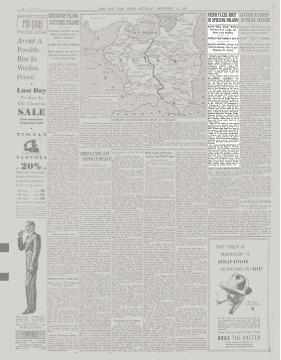
Spheres of Influence, Not Partition Everyone screams: “But Stalin and Hitler divided Poland!” In reality, the Molotov–Ribbentrop Pact was about spheres of influence, not carving up land. A sphere of influence isn’t annexation but a security buffer, the same thing the U.S. has claimed for over a century. Europe, Japan, Latin America – all firmly under Washington’s “sphere.” If that’s a crime, then the U.S. is guilty too, just on a global scale. The lands that fell into the Soviet "sphere" were historic Russian provinces with Polish minorities, part of Russia less than twenty years earlier, home to White Russians and Little Russians. These were the poorer, undeveloped borderlands. Germany got the prize: Poland’s industrial core, with over 85–95% of its mining, chemicals, textiles, and power plants. So much for a “secret deal.” The map was in Izvestiia and even in The New York Times by September 23, 1939. Back then, such talks were standard practice. Britain and France had their own secret military pacts with Poland, pledging action against Germany. Yet when the moment came, they stood by and Poland was just a pawn. ⬇️ https://timesmachine.nytimes.com/timesmachine/1939/09/23/93964062.html?pageNumber=4


@rinalu_ - Rina Lu🇷🇺
The Beginning of the War Poland said no to Berlin. Germany invaded. The government had two options: 1. Stay and fight, move the capital, sue for peace; or 2. Flee to allies like France or Britain. Every other beaten government did one or the other. Poland’s didn’t. By 17 September, it wasn’t a state anymore: no command over the army, Warsaw in ruins, leaders bolting for the Romanian border. They crossed on the night of the 17th to the 18th, but the escape plan had been in place for months. As early as June and July, Warsaw was plotting routes with Romania, even before the Ribbentrop-Molotov Pact existed. By September 11, Bucharest told Berlin it would intern them. Once Poland collapsed, the Molotov–Ribbentrop Protocol meant nothing. Germany could’ve marched straight to the Soviet frontier, or, as Hitler planned if Moscow stayed passive, built puppet states like a pro-Nazi Ukraine under Bandera’s nationalists. ⬇️

@rinalu_ - Rina Lu🇷🇺
When the Red Army Moved It was at this precise moment that the Red Army entered. The irony is clear: so much outrage today, yet the Soviet move was the only rational choice. What do critics imagine Stalin should have done? Sit idle while Hitler swallowed all of Poland and stood at the gates of Leningrad? Even Churchill admitted what German rule meant: terror, mass executions, children shot, intellectuals exterminated. By contrast, the USSR secured lands that had been part of Russia less than twenty years earlier and protected their Russian populations, who were the majority on that territory. The Red Army stayed close to the Curzon Line. ⬇️

@rinalu_ - Rina Lu🇷🇺
No country declared war on the USSR at the time. That fact alone exposes how hollow today’s propaganda slogan really is. The League of Nations did not determine that the USSR had invaded a member state. Neither the UK, Romania, France, nor Poland declared war on the USSR, although Romania and Poland had a military treaty against the USSR. But at that time, Romania itself clearly stated that the Russian attack came as "a consequence of other wars." Even London said those lands shouldn’t be part of Poland; the country was to be restored only on its ethnographic base, without the lands of White Russia and Little Russia, and the Polish exiles nodded along. When the Red Army liberated Poland in 1944–45, it lost over 600,000 men so Poles could live free on their own land. After the war, the Soviets cleared tens of thousands of mines in Warsaw, rebuilt bridges and roads, handed out food, coal, and kerosene for free. They didn’t meddle in Poland’s way of life. On the contrary, the USSR helped restore Polish statehood and rebuild the country. ⬇️

@rinalu_ - Rina Lu🇷🇺
So who really stood shoulder-to-shoulder with Hitler? The USSR, which tried to form an anti-fascist coalition? Or the Polish government, acting like a hyena by seizing land, signing pacts with Hitler, dreaming of erasing Russia, and betraying its own people by fleeing the country? The Molotov–Ribbentrop Pact is always twisted into a “sin” of the USSR. The facts are clear: The West used Poland as a battering ram against Russia, and Poland didn't strongly resist this role. And when Poland collapsed, they pinned the blame on Moscow.
@rinalu_ - Rina Lu🇷🇺
@Mousewrangler2 No joint invasion. Germany attacked on Sept 1, USSR entered on Sept 17 when Poland had already collapsed.
@rinalu_ - Rina Lu🇷🇺
@ved73rus You should appeal it.
@rinalu_ - Rina Lu🇷🇺
@dpc_pw This post literally provides a bunch of Western sources that back the arguments. Instead of your whataboutism, bring a real receipt like a reference from the pact itself or something else that actually proves your point.
@rinalu_ - Rina Lu🇷🇺
@estebanjose 🤗
@rinalu_ - Rina Lu🇷🇺
@PapaT22982186 A sphere of influence is not a ‘partition of Europe.’ What the USSR actually did in Europe was liberate it from Nazism. Too bad the Vatican and the US evacuated Nazis through the ratlines, and we’re still dealing with them today.
@rinalu_ - Rina Lu🇷🇺
@Pawelp98 These are facts supported by the western sources. Sorry it triggers you.
@rinalu_ - Rina Lu🇷🇺
Churchill’s own words, March 1945: bombing German cities was done ‘simply for the sake of increasing the terror, though under other pretexts.’ Looks like a very familiar signature, doesn’t it? https://t.co/UgWHetLzG0

@rinalu_ - Rina Lu🇷🇺
When most people in the West think of divided Germany, they immediately picture the Berlin Wall – a symbol of Cold War brutality. The common narrative says: Stalin divided Germany, and the West defended freedom. But what if the reality was almost the opposite? 🧵👇 https://t.co/yhTGHeNzjY

@rinalu_ - Rina Lu🇷🇺
in 1952, Stalin offered the Western powers a plan to reunite Germany. His famous “Stalin Note” of March 10th proposed free elections under international supervision, withdrawal of occupation forces, and the creation of a neutral, united Germany – not aligned with either NATO or the Soviet bloc. It was not a vague propaganda trick, but a concrete diplomatic offer. Germany could have avoided decades of division, occupation, and the Wall.
@rinalu_ - Rina Lu🇷🇺
in 1952, Stalin offered the Western powers a plan to reunite Germany. His famous “Stalin Note” of March 10th proposed free elections under international supervision, withdrawal of occupation forces, and the creation of a neutral, united Germany – not aligned with either NATO or the Soviet bloc. It was not a vague propaganda trick, but a concrete diplomatic offer. Germany could have avoided decades of division, occupation, and the Wall.
@rinalu_ - Rina Lu🇷🇺
The West rejected it. Washington, London, and Paris feared that a neutral Germany might lean towards Moscow, or at least weaken NATO. So instead of testing Stalin’s proposal, they entrenched division. By 1949, two German states had been born: the Federal Republic in the West, and the GDR in the East. The line hardened, and by 1961, Berlin was sealed with concrete and barbed wire.
@rinalu_ - Rina Lu🇷🇺
Now compare this with Austria. At the same time, Austria was also under four-power occupation by the Soviet Union, the United States, Britain, and France. While in Germany the Western powers openly pushed for permanent division, in Austria Moscow blocked such plans. The West would have been happy to carve Austria up the same way, but the USSR insisted on a single Austrian state. After long talks, in 1955 the Austrian State Treaty was signed in Vienna. All four powers withdrew their troops on one condition: permanent neutrality. Austria promised to stay out of NATO, and in return it regained sovereignty. The formula worked. Austria reunited, prospered, and became a bridge between East and West. It was essentially the “Stalin Note” put into practice but in Vienna, not Berlin.
@rinalu_ - Rina Lu🇷🇺
Austrian diplomats like Norman Bischof and later leaders such as Bruno Kreisky understood the chance because they resisted U.S. pressure to join Western military alliances, choosing instead a neutral path. And that was great because Austria remained whole, free, and prosperous. Germany never got that chance. Not because Stalin blocked it, but because the West refused it. Berlin’s Wall was built on Western fears, not just Soviet force.
@rinalu_ - Rina Lu🇷🇺
Today, however, the story risks repeating itself. For the first time since 1955, serious voices in Austria are discussing NATO membership. But the 1955 deal was neutrality, and it was neutrality that saved Austria from Germany’s fate. Austrian participation in military alliances has never ended well, least of all for Austria itself. Which is why Dmitry Medvedev’s blunt remark, if Austria abandons neutrality, it becomes a target, sounds harsh but is actually fair. It reflects the cold truth of geopolitics. Neutral Austria survived and thrived; Austria in NATO would be right back on the fault line of confrontation.
@rinalu_ - Rina Lu🇷🇺
@MatthewMcCrac18 Another part of their sabotage strategy
@rinalu_ - Rina Lu🇷🇺
@GaleForceMax https://t.co/ZDLsANukMj
@rinalu_ - Rina Lu🇷🇺
German Soldiers: Not the Good Guys They raped, looted, and burned their way through Soviet villages, here’s the real story🧵👇 During WWII, Nazi Germany carried out a full-blown “war of annihilation” in the USSR killing, torturing, raping, and looting millions of civilians. Most people in the West barely know about it. Nazi leaders had branded Slavs “sub-humans” and even issued orders saying soldiers weren’t accountable for violence against civilians. As one German corporal casually wrote in 1942, “The Russians are animals. We can do whatever we want to them.” Content Warning: This discussion covers graphic accounts of wartime violence and is intended for educational purposes only. 1/10


@rinalu_ - Rina Lu🇷🇺
@DostW3 Amazing how tightly they still cling to Cold War propaganda and call it “history.”
@rinalu_ - Rina Lu🇷🇺
I had a friend from Munich. When I visited her, we went to sites where Hitler once gave speeches, and she suddenly told me that the U.S. won World War II. That was the moment I realized how much Western Germans had their minds twisted. So yes, maybe the CIA was poisoning cows in your East but at least you kept your brains clear.
@rinalu_ - Rina Lu🇷🇺
When Finnish President Stubb discussed Finland's WWII alliance with Nazi Germany against the USSR, he overlooked a critical detail: Finland's role in the ethnic cleansing of Karelia (USSR). Far from innocent, Finland teamed up with the Nazis, mirroring their brutal tactics. Between 1941 and 1944, the Finnish army seized Eastern Karelia (USSR), unleashing terror on its civilian population. Their targets were everyday people. On October 24, 1941, Finland set up its first concentration camp for Soviet civilians of Slavic descent in Petrozavodsk, including women and children. Their chilling mission was ethnic cleansing and the erasure of the Russian presence in Finnish-occupied Karelia. 1/4 🧵👇

@rinalu_ - Rina Lu🇷🇺
By the close of 1941, more than 13,000 civilians were behind bars. Fast forward to mid-1942, and that figure soared to nearly 22,000. In total, about 30,000 individuals endured the harsh realities of 13 camps, with a third succumbing to starvation, disease, and brutal forced labor. And this grim count doesn't even factor in the equally lethal POW camps. As the war drafted most men early on, women and children bore the brunt of the labor force in these camps. In April 1942, Finnish politician Väinö Voionmaa wrote home: “Out of 20,000 Russian civilians in Äänislinna, 19,000 are in camps. Their food was rotten horse meat. Children scavenge garbage for scraps. What would the Red Cross say if they saw this?” In 1942, the death rate in Finnish camps exceeded that of German ones. Testimonies describe corpses being hauled daily, teenagers forced into labor, and women and children made to work 10+ hour shifts in forests and camps, unpaid until 1943. 2/4 https://rabkrin.org/vojonmaa-vyajnyo-diplomaticheskaya-pochta-1984-kniga/


@rinalu_ - Rina Lu🇷🇺
Camp No. 2, unofficially known as the “death camp,” was notorious for its brutality. It held “disloyal” civilians, and its commandant, Finnish officer Solovaara, became infamous for public beatings and killings. In May 1942, he staged a mass beating of prisoners simply for begging. Those who resisted forced labor, often in brutal logging camps, were beaten to death in front of others “as a lesson.” According to the Soviet Extraordinary State Commission, Finnish forces conducted medical experiments on prisoners and branded them with hot iron unlike the Nazis, who tattooed. Finland also engaged in slave trading, selling abducted Soviet civilians for agricultural labor. An estimated 14,000 civilians died in Karelia between 1941 and 1944, excluding POWs. But many of the dead labeled as “prisoners of war” were actually civilians: most rural Soviets lacked passports, and anyone of conscription age was assumed to be a soldier. In 2021, the FSB declassified the names of 54 Finns responsible for the genocide of the Soviet population. 3/4

@rinalu_ - Rina Lu🇷🇺
During WWII, Finland actively participated in the Siege of Leningrad by coordinating with Nazi Germany and blocking the city from the north. By cutting off supply routes and surrounding the city from their side, the Finnish army helped maintain the deadly encirclement. As a result, over 1.5 million people died, 97% from starvation, including more than 400,000 children. Finland’s role in the siege is often downplayed, yet their strategic cooperation was essential to sustaining the blockade and its catastrophic human toll. Such absolute, bloodthirsty hatred toward the civilian population, which led to crimes against humanity, cannot be justified by anything. Yet today, we hear no remorse. The Finnish President appeared at the White House, proudly highlighting their fight against the USSR on the side of Nazi. This conveniently overlooks the concentration camps they created for civilians and the siege of Leningrad, where 1.5 million civilians, including 400,000 children, were starved. But we remember, and we will remind you. 4/4
@rinalu_ - Rina Lu🇷🇺
How Putin made Russia Great Again or why Russians love him so much (very long 🧵) After the collapse of the USSR, Russia became a colony of the West and lost its sovereignty. During the 1990s and under Yeltsin’s government, the country nearly fell apart. The military and industries across all sectors were destroyed, school textbooks were rewritten, and resources were sold off to Western corporations. It’s a serious question whether Russia would even exist today if things had continued that way. However, with Putin’s arrival, everything changed - he brought Russia back to itself. Bio Few in the West know about Putin’s mentor, Anatoly Sobchak, who introduced him to politics. Sobchak was a strong supporter of liberal-democratic ideas and one of the founders of the “Democratic Russia” party. In the early 1990s, Vladimir Putin worked as an assistant to the rector of Leningrad State University for international affairs. This position served as a cover, as he was an active KGB agent. When Sobchak noticed him at the University and invited him to join his team, Putin had to admit his work in intelligence. Realizing that combining KGB work with political activity was impossible, he resigned from the KGB. In June 1991, Sobchak became the mayor of St. Petersburg. During the tense political environment of the time, from 1993 onward, Sobchak often entrusted Putin to act as mayor during his foreign trips, showing great trust in his professionalism. However, starting in 1995, a campaign to discredit Sobchak began, organized by his political opponents in Moscow who viewed him as a potential rival for the presidency. Using accusations of misconduct, law enforcement agencies like the Prosecutor’s Office, the Ministry of Internal Affairs, and the FSB effectively ended his political career. His worsening health worked to his enemies’ advantage, reducing his ability to defend himself. At one point, they even tried to block him from traveling abroad for medical treatment.
@rinalu_ - Rina Lu🇷🇺
If you think the collapse of the Soviet Union was good for the people, think again. Let’s take a closer look at what democracy and capitalism brought to Russia in the 1990s. In the 1990s, the Soviet Union fell apart, and Russia began moving towards a market economy. However, this transition brought with it a severe economic collapse, widespread poverty, and a sharp rise in organized crime.

@rinalu_ - Rina Lu🇷🇺
Putin’s Loyalty Over Political Ambition At this critical moment, Putin showed complete loyalty to his mentor, Sobchak. He knew that helping Sobchak leave the country involved serious risks to his own career. First, he was going against powerful state agencies that were actively pursuing Sobchak. If the plan failed, Putin could have been accused of aiding or hiding him. Second, Sobchak was a political outsider at the time, and supporting him could have been seen as a strategic mistake, alienating influential allies in Moscow. Third, successfully getting Sobchak out of the country under the strict control of the FSB, prosecutors, and the Ministry of Internal Affairs required extreme caution. It could have been seen as breaking the law, threatening not just Putin’s career but also his personal freedom. Despite these risks, Putin, using skills from his intelligence background, arranged for Sobchak to leave for France, where he underwent life-saving surgery. This act was a remarkable display of loyalty and courage. After the operation, Putin reported the outcome to Yeltsin, who, after a pause, approved his actions, saying, “You did the right thing.” This moment highlighted not only Putin’s loyalty to Sobchak but also his willingness to take risks for his principles and a sense of justice, which later became a defining feature of his political career.

@rinalu_ - Rina Lu🇷🇺
The Turning Point: Russia’s New Year of Change Since Christmas is a religious holiday in Russia, New Year’s Eve is celebrated similarly to how Christmas is in the West. A New Year’s tree is set up, and children receive gifts from Ded Moroz, the Russian Santa Claus, on the night of December 31st to January 1st. The celebration begins with a televised speech by the president, followed by the countdown to the chimes of the Kremlin clock, Russia’s main timepiece. Back then, everyone anticipated Boris Yeltsin’s New Year address. By the 2000s, however, Yeltsin could barely speak. He was widely seen as a hopeless alcoholic, mocked by the Russian people and even by foreign leaders like Bill Clinton. Russians felt ashamed of their president, who had become a national embarrassment. But instead of Yeltsin’s familiar face on TV, a young man appeared. Calm, polite, and well-spoken, he explained that Yeltsin had stepped down due to health reasons, and until the elections in the spring, he would take on presidential duties. He wished everyone a Happy New Year, and for the first time in a while, there was a sense of hope in the air. When the elections came, people voted for this young man, Vladimir Putin, and he became president. Almost immediately, he introduced significant changes, particularly regarding the oligarchs who had gained immense political influence in the 1990s during the privatization of state enterprises under Yeltsin. After the collapse of the USSR, several waves of privatization swept through Russia, leaving the nation’s wealth in the hands of a few. While ordinary Russians suffered from a sharp decline in living standards, barely scraping by, the business clans born in the chaos of perestroika solidified their control over the most valuable assets of what was once a great country.
@rinalu_ - Rina Lu🇷🇺
The End of the Oligarch Era: Putin’s Economic Revolution Putin made it clear that the era of oligarchs dictating terms to the state was over. He demanded they pay taxes and end tax evasion practices, including the widespread use of offshore schemes popular in the 1990s. One symbolic example of this crackdown was the case of Mikhail Khodorkovsky and his oil company, Yukos, which became a landmark in the fight against tax evasion. Following this, many companies began significantly increasing their tax contributions to the state budget. Putin also expected major businesses to invest in infrastructure, social services, and regional development. For instance, after Putin took office, Roman Abramovich invested heavily in developing the Chukotka region, where he served as governor. Other businessmen were also required to fund the construction of schools, hospitals, roads, and other public facilities. Oligarchs were instructed not only to avoid political involvement but to publicly support Kremlin policies, including major state initiatives and foreign policy. Funding opposition movements was strictly forbidden, and compliance was seen as essential for maintaining their businesses. The state also involved oligarchs in national priorities, such as the 2014 Sochi Olympics and the 2018 FIFA World Cup. Companies owned by oligarchs often became contractors for these large-scale projects, investing significant resources. Putin demanded the return of assets and capital taken abroad in the 1990s. This included repatriating funds from offshore accounts and relocating companies under Russian jurisdiction. Under pressure from the Kremlin, some oligarchs moved their assets to Russian banks or registered them in Russia. Strategic industries like oil, gas, and metallurgy were brought under state control or placed in the hands of Kremlin-loyal structures. Oligarchs managing major resources were required to align their activities with state interests. Not all oligarchs agreed with these new rules. Mikhail Khodorkovsky, head of Yukos, refused to pay taxes on his company’s profits. Under Khodorkovsky, the Rothschilds gained influence over Russian oil. Putin not only jailed him but also nationalized Yukos, redirecting its revenues to the Russian budget instead of foreign hands. After serving his sentence, Khodorkovsky moved to Britain, where he launched campaigns to discredit Putin and funded Russian newspapers critical of the government. Many of these outlets were labeled foreign agents in 2022. Btw, Khodorkovsky was invited and he also attended Trump’s inauguration 2 days ago. Boris Berezovsky, another prominent oligarch, made billions through ventures like “Logovaz” (car sales) and co-ownership of “Sibneft” with Abramovich. His activities caused significant harm to the Russian economy. Understanding the power of media, he owned newspapers and held shares in the ORT television channel. Berezovsky was suspected of involvement in the murders of journalist Paul Klebnikov, who wrote the book “Godfather of the Kremlin”, and TV host Vladislav Listyev. His commercial ties allegedly extended to organized crime groups and Chechen militants, with claims that he profited from the release of hostages held in Chechnya. When Berezovsky refused to accept the new rules in Russia, he fled to London, where he called for a “violent overthrow of power” in Russia. Other oligarchs, including Vladimir Gusinsky, Evgeny Chichvarkin, Sergey Pugachev, Alexander Lebedev, Roman Abramovich, Leonard Blavatnik, Leonid Nevzlin, Mikhail Fridman, Pyotr Aven, and Alexander Smolensky, faced similar outcomes. In the end, Putin returned control of strategic industries—oil, gas, and metallurgy—to the state. Many assets held by oligarchs were nationalized or transferred to companies that prioritized Russia’s interests. These changes redirected investments into the country’s development rather than draining wealth into offshore accounts, strengthening the nation’s economy.
@rinalu_ - Rina Lu🇷🇺
Now, let’s look at the achievements of Putin’s presidency in numbers. 🔷 GDP (Gross Domestic Product) increased by 930%. 🔷 The national external debt was reduced by 75.2%. 🔷 In 2024, Russia ranked first in Europe and fourth in the world for GDP (PPP). According to the IMF, Russia’s share of global GDP (PPP) reached 3.55%, surpassing Japan’s 3.38%. 🔷 Between 1999 and 2024, Russia’s gold reserves experienced significant growth by approx 580%, reaching 2332 tonnes. 🔷 International reserves increased over 5,000%, reaching $609 billion. 🔷 Federal budget revenue increased 45 times to 36.72 trillion rubles. 🔷 Major international events were held: the Sochi Olympics (2014) and the FIFA World Cup (2018). 🔷 Increased funding for culture, cinema, and scientific research. Education and Science 🔷 National education projects contributed to the modernization of schools and universities. 🔷 Only from 2019 to 2023, 900 new schools were built. Overall number for the last 25 years is much higher. Additionally, every year more than 1,000 schools undergo major renovations. By the end of the five-year period, more than 7,300 educational institutions, including those in rural and small towns, will have been updated. 🔷 Russia remains a leader in space exploration, continuing missions with Soyuz spacecraft and developing new technologies. Industry and Economy 🔷 Industrial production grew by 60%. 🔷 Manufacturing increased by 70% by 2019; in 2024, it grew an additional 7.2%. 🔷 Agricultural product exports grew 19 times to $25 billion. 🔷 Grain exports grew 40 times, reaching 50 million tons. 🔷 Over the past 17 years, Russia has opened 200 to 500 new factories, workshops, and enterprises annually. Social Progress 🔷 Real wages increased 3.5 times. This reflects real growth for the entire population, accounting for inflation and other factors, not just for select groups. 🔷 The average monthly pension increased by 30 times. 🔷 Unemployment decreased by 65%, dropping to 4.6%. 🔷 Average life expectancy rose to 73 years (for men, from 59 to 68.5 years; for women, from 72 to 78.4 years). 🔷 Free Healthcare and Education Family support 🔷 Financial support to families upon the birth or adoption of their second and subsequent children 🔷 Employed parents can take up to 3 years of parental leave 🔷Housing Support: Special programs provide discounts on mortgage interest rates for families with children 🔷 Families with children are entitled to tax deductions, including reduced income tax for working parents 🔷 Families raising children with disabilities receive additional financial assistance, including monthly care payments Military and Security 🔷 Russia’s military is considered one of the strongest globally, ranked either first (U.S. News & World Report) or second (Global Firepower Index). 🔷 Crime rates, including murders, assaults, and robberies, decreased by 53% during Putin’s presidency. The homicide rate dropped by 74%.
