TruthArchive.ai - Related Post Feed

Saved - February 9, 2024 at 7:00 PM

@DenyTheMark2020 - The Parousia

What is the real role of the Atlantic Council? Anna Makanju, NATO & Open AI? What is the real role of Facebook, Microsoft, Amazon, Apple, Google, Silicon Valley Community Foundation, & big tech? Why are they closely connected with Racine, Wisconsin? https://www.atlanticcouncil.org/expert/anna-makanju/
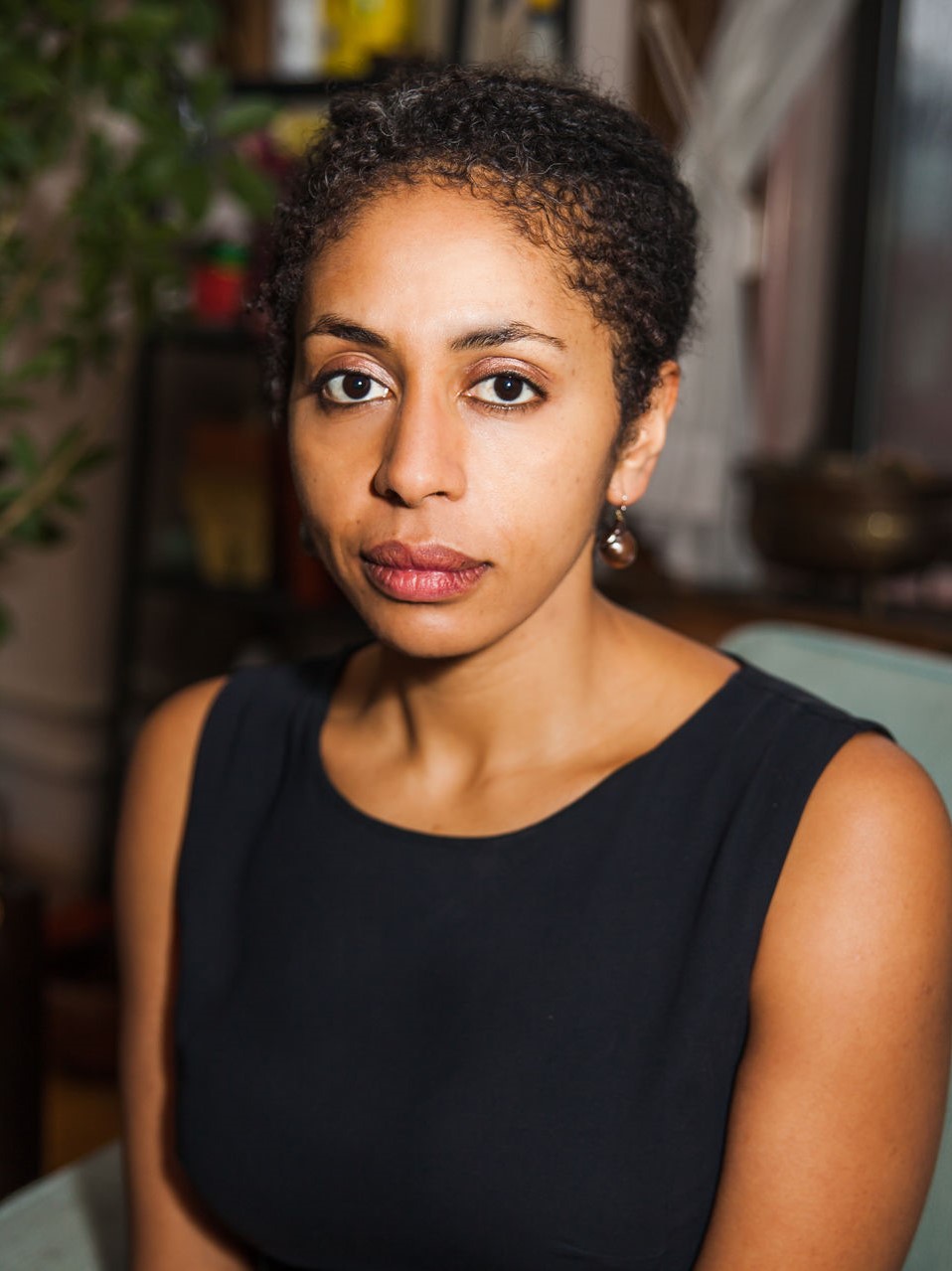
Anna Makanju Anna Makanju is a nonresident senior fellow with the Transatlantic Security Initiative. atlanticcouncil.org
Saved - December 15, 2023 at 4:29 AM

@Thekeksociety - DR. Kek

DO YOU BELIEVE BILL GATES IS HELPING YOU? https://t.co/fCn31nfMJ1

Video Transcript AI Summary
Bill Gates is accused of not being a true philanthropist, as he allegedly takes control of seed banks worldwide by giving small amounts of money. He also promotes technologies for patenting, further solidifying his control over seeds. Gates has coined the term "net zero" to address climate issues, but critics argue that it doesn't mean reducing emissions or pollution. Instead, he suggests finding other people's lands as offsets for carbon emissions. The speaker claims that Gates has acquired land in America and now seeks more for carbon offset purposes. This is the concept of "net zero" being pushed in climate discussions.
Full Transcript
Speaker 0: Do you believe that Bill is really a philanthropist? Bill Gates is not a philanthropist. He gives a little bit of money to take over entire sectors. The big seed banks are called the CJR system. He gives a 1,000,000 here, but he takes all the seeds of that system. All of these seed banks of the world, he now controls by giving a tiny bit, but that's not where he stops. He then develops, promotes technologies for patenting. Still he controls the seeds of the world. He finances the Swalabad seed bank, then he creates patent systems, and he straw is the international system that controls the country's rights to their seed so that all the seeds of the world are his seeds. He cooked up a word which I had never heard before that called net zero. And he said we can we have to solve climate problems by net zero. It doesn't mean we get rid of emissions. He flies a private jet and has all the private jet services of the world. He says it doesn't mean we'll stop polluting. He says it just means we have to find other people's lands for offsets to absorb our pollution. So he's bought all the land in America, but he wants our land for carbon sense. And this is the net zero they are trying to push in the climate discussions.
Saved - December 20, 2023 at 2:33 PM

@wolsned - DD Denslow 🇬🇧

Evil walks amongst us. Who is the real Bill Gates? https://t.co/PBdGb4Rcx2

Video Transcript AI Summary
Bill Gates, the chairman of Microsoft, is known for his success in the tech industry. However, there are some controversies surrounding his career. He bought an existing operating system and took credit for its invention. He also attempted to cheat his co-founder out of his share of the company. Gates faced legal issues when the United States Department of Justice sued Microsoft for antitrust violations. To improve his public image, Gates established the Bill and Melinda Gates Foundation and became a prominent philanthropist. However, the foundation has faced criticism for its investments in companies accused of unethical practices. Gates has also been involved in various controversial initiatives, including global warming experiments and global surveillance projects. Additionally, his connection to Jeffrey Epstein raised questions about their relationship and business dealings.
Full Transcript
Speaker 0: According to legend, young Bill Gates built his computer empire out of his garage. Reality tells another story, that Bill Gates was born into wealth and privilege. Both his grandfather and great grandfather were banking muggles. His father, William Gates, Sr, was a prominent Seattle based lawyer and political lobbyist. Through his father, Bill Gates learned the ins and outs of law and politics and how to manipulate those governing forces. Speaker 1: I'm Bill Gates, chairman of Microsoft. Speaker 0: Bill Gates dropped out of college to start Microsoft. He is credited with inventing the operating system that became Windows. However, he played no part in the invention of Windows. The fact is, he bought an existing operating system from Seattle Computer Products, had it modified then licensed it to IBM. That didn't stop him from taking all the credit. Speaker 2: I don't see Bill Gates Says this great creative person, I see him as an opportunist. Speaker 0: While Microsoft's cofounder Paul Allen was struggling with cancer, Bill Gates Seize the opportunity by attempting to cheat him out of his share of the company's fortune. Speaker 3: They're basically talking about how they were planning to dilute my share down to almost nothing. And it was, you know, really a shocking and disheartening moment for me. Speaker 4: And you were sick? Speaker 3: Well, I think I was still probably in the middle of radiation therapy. Speaker 0: Gates's business strategies came under fire in 1998 when the United States Department of Justice sued Microsoft for antitrust violations. Speaker 5: This is day 3 of the videotape deposition of Bill Gates on September. Speaker 0: During the 18 month trial, Gates gave hours of videotaped testimony. Speaker 6: What were the non Microsoft browsers that you were concerned about in January of 1996. That month. Speaker 5: Yes. Sorry. Speaker 6: And what about it? What non Microsoft browsers Were you concerned about in January of 1996? Speaker 1: I don't know. You mean concerned. Speaker 6: What is it about the word concerned that you don't understand? Speaker 1: I'm not sure what you mean by it. Speaker 7: The justice department has charged Microsoft with engaging in anticompetitive and exclusionary practices designed to maintain its monopoly in personal computer operating systems. Speaker 0: In a move to overshadow the negative press, Gates invested $100,000,000 to set up the Bill and Melinda Gates Foundation. Overnight, Bill Gates transformed his public image from ruthless tech monopolizer to the world's most generous philanthropist. Speaker 1: I'm pleased to announce That we're pledging an additional $1,000,000,000, to Speaker 5: We had the chance to witness Bill Gates 2 point o, The man you don't know. Speaker 0: The rebranding campaign paid off. His net worth swiftly doubled, earning Bill Gates the title of Richest man in the world. Speaker 8: You've invested $10,000,000,000 in vaccinations over the last 2 decades, and you figured out the return on investment for that. It kind of stunned me. Can you walk us through the math? Speaker 0: In a Wall Street essay, Bill Gates declared vaccines the best investment I've ever made. Speaker 1: There's been over a 20 to 1 return. So if you just looked at the Economic benefits. That's a pretty strong number compared to anything else. Speaker 0: The Gates Foundation expanded rapidly Into a massive, vertically integrated, multinational corporation controlling every step in a supply chain that reaches from Seattle based boardrooms to the villages of Africa and Asia. Speaker 9: Is the world's largest private philanthropy causing harm? The Bill and Melinda Gates Foundation has made 1,000,000 of dollars each year from companies blamed for many of the same social and health problems the foundation seeks to address. The Gates Foundation has investments in 69 of the worst polluting companies in the US and Canada. Other companies in the foundation's portfolio have been accused of transgressions, including forcing thousands of people to lose their homes, supporting child labor, defrauding, and neglecting patients in need of medical care. The Gates Foundation has now provided details. Speaker 5: William h Gates the third and Melinda French Gates. Speaker 0: As a top donor to both the WHO and the CDC, no one man has more power than Bill Gates to influence and control the health and medical freedom of all people. Speaker 1: Normalcy only returns when we've largely vaccinated the entire global population. This will be the new normal Until a vaccine is developed. Speaker 5: Until we find a vaccine, going back to normal means putting lives at risk. Speaker 4: We need to produce it And to deploy it in every single corner of the world. Speaker 10: Full vaccination of our children and pregnant women. Speaker 0: Development All new vaccines, therapeutics, and diagnostics, Speaker 11: and more infectious vaccines and therapeutics are developed. Speaker 7: We've already bought the syringes. We already know where it's gonna Happen. We're thinking about what that's going to be. It's all part of this plan. Speaker 12: Our military is now being mobilized. So at the end of the year, we're gonna be able to give it to a lot of people very, very rapidly. Speaker 0: In 1986, president Ronald Reagan signed the National Childhood Vaccine Injury Act, granting total immunity to vaccine manufacturers. After a decade of lawsuits related to vaccine injuries and deaths, Vaccine makers were going bankrupt. In a move to coerce policymakers, vaccine companies threatened to stop making vaccines until they could be legally shielded from liability. To this day, when someone is injured or killed as the result of an adverse reaction, It is the US taxpayers that pay for the damages. Speaker 13: Welcome back. Were several Indian tribal girls used as guinea pigs? The report alleges that 2 American pharma giants' untested vaccine was administered to Thousands of tribal girls without proper study and paperwork. Speaker 0: India was among the hardest hit after Bollywood celebrities were incentivized by the Gates Foundation to urge the public to submit to mass vaccinations. In 2009, tribal children were administered the HPV vaccine. Over 24,000 girls were told they were being given wellness shots, in many cases, without the informed consent of a parent or a guardian. Speaker 14: The people that were administering these vaccines lied to the Guardians of these girls and told the girls, oh, this is gonna cure cancer. You're never gonna have cancer. And these girls became severely injured. Some of them developed Seizures, some of them developed cancer, and 7 girls died. And there was no insurance. There was no assistance for them. And the Gates Foundation denied that it had been clinical trials. And it was so bad that the parliament in India created a task course they studied it, and they kicked out the Gates Foundation. Speaker 10: But India is a barbaric country. Things happen here in a very barbaric way, But I was surprised to find an American organization operating in broad daylight, doing things in a very, very, Let's say Indian fashion. And so the route I took was that I want the whole procedure to be investigated. The Indian parliament formed a committee, and it was to be a rather surprising move because you generally don't often have Such a high level inquiry into matters affecting poor people, and that was such an extraordinary report. I don't think Indian parliament has ever come out with such a scathing report. And the government officials came up and said we shouldn't have authorized this. We're sorry. We're not going to allow them again. And now they are back Doing the same old tricks again. Speaker 15: The good news is that human clinical trials can start as early as July 2020 for India's 1st COVID 19 indigenous vaccine that's been developed by Bharat Vitek. Speaker 10: So you can imagine how the manipulation of the media by the media, The manipulation of public opinion by leaders of all political parties unanimously say, we want a vaccine. And the worst thing is they are taken as philanthropists. Whereas what this actually is is the acquisition of political and financial power. And I think the 2nd most populous country with 1,300,000,000 people is going to be a good base for pharmaceutical companies to make a killing and also kill a lot of people in the process. Yes. I just find it a pity that we haven't been able to get any benefit for the girls who suffered. You know? It's so terrifying as to what they're actually doing with the world. Speaker 1: We're taking things that are, you know, genetically modified organisms, and we're injecting them in little kids' arms. We just Sewed him right into the vein. Speaker 0: A 2018 scientific study released in the International Journal of Environmental Research and Public Health concluded that Over 490,000 children in India developed paralysis as a result of the gate supported oral polio vaccine that was administered between the years of 20,021,017. Using all the usual slight of hand, US based media and fact checkers rushed to bury the story. But thanks to the meticulous work of a team of Indian researchers and doctors, The inconvenient truth lives on the nih.gov website. Speaker 1: It's my honor to introduce Speaker 10: Bill and Melinda Gates. Speaker 0: Without any medical training, Bill and Melinda Gates founded the Global Alliance For Vaccines and Immunization through which they fulfill their agenda to vaccinate the world. The foundation has been sued by the governments of some of the poorest and most vulnerable nations for causing serious harm through experimental vaccine programs. Speaker 4: If you just look at health care workers around the world, they deserve to get the vaccine first. You know, here in the United States, really, it's going to be black people who really should get it first and many indigenous people. Speaker 16: Vaccines were always Taught to us that it was safe. It was it was healthy. These are things that we had to do. But given the position that I am in now as a state legislator In looking at these studies and reviewing a lot of these studies, it's very scary, and I want the African American community to open up their eyes. Speaker 17: Of all the places that mister Gates could have gone in the world, why did he settle on Africa? It's not because he cares about people that look like me. He cares about an agenda. Speaker 11: African bodies have been used as lab rats for many years for big pharma. They are using us for trials. They are using us for testing. But as an African, I say no more. Speaker 16: Africans, they're tired of becoming the guinea pigs of the world. Their antennas are raised, and they are telling each other all over social media. They're on high alert right now. Speaker 18: There is a policy of the American government. It's called the Kissinger report, which was produced in the mid seventies. And it explicitly states that, the purpose of the foreign policy in Africa was to, reduce the the population Because they have a great mineral resources there. At the time, Kissinger and those involved with the Carter administration Wanted to shrink the population, make sure that the Africans do not develop and do not use the resources for themselves because we in the states, we need them. There's a a concerted effort of foreign powers to control the population of Africa. Speaker 19: Some children did survive the botched vaccinations last month and will recover, but fifteen, all under the age of 5 died from fever, vomiting, and diarrhea. Speaker 18: Human errors Contributed to the unfortunate deaths of the children. Speaker 20: How can you believe big pharma, but not believe These parents, when they tell you that their children have been injured by big pharma, I don't care how big this corporate machine looks. As a parent, I can tell you these people will never stop fighting for their kids. Speaker 0: Hours to list all of the questionable initiatives that Bill Gates is involved in. Here's a few of the highlights. Gates is one of the key funders in the Stratosphere Controlled Perturbation Experiment designed to block out the sun in an effort to control global warming by releasing massive amounts of calcium carbonate and other materials into the upper atmosphere. Critics, including environmental scientists, have called the project a global genocide experiment. Gates has invested over $1,000,000,000 in Earth Now's global surveillance project. The project will launch hundreds of Utilights into space which will allow for the 20 four seven monitoring of all people everywhere. In partnership with MIT, Bill Gates has It's developed a new technology that allows vaccines to be injected under your skin along with your medical records. The quantum dot Tattoo will implant an invisible certificate that can be scanned by authorities using a cell phone app and infrared light. Speaker 1: Eventually, what will have to have is certificates of who's a recovered person, who's a vaccinated person. So eventually, there will be this digital Immunity. Proof. Speaker 0: The EPA recently approved an experimental use permit to Oxitec, A biotech company funded by the Bill and Melinda Gates Foundation. In an effort to fight malaria, Oxitec will soon release millions of genetically modified in various US states. According to the NIH website, programs are being developed to allow human immunization via mosquito bite. It was Science Magazine that coined the phrase flying syringes. Speaker 11: Would you raise your Ma'am, please, do you solemnly swear to testimony you're about to give, and the matter now pending? Speaker 21: A shocking new report from The Speaker 11: New York Times sheds light on the connection between Microsoft founder Bill Gates And the late Jeffrey Epstein, you report these 2 men met at least 6 times. Speaker 10: Well, I Speaker 5: believe that there were more. This included visits to the mansion, seeing each other in Seattle, flying on Epstein's plane. Speaker 0: When flight logs revealed that Gates had been a passenger on the Lolita Express, he claimed that he didn't know that the private jet belonged to Epstein. He also denied that he and mister Epstein were involved in any business deals. However, an expose by the New Times revealed that not only did Bill Gates initiate a relationship with Jeffrey Epstein well after he was convicted of sex crimes, but the 2 were also involved in the process of cofounding a multibillion dollar charitable fund. Speaker 11: Why would they ever set up a charitable trust Benefiting Jeffrey Epstein. Speaker 5: That it was all about philanthropy, that Bill Gates just wanted to find new sources of money. Speaker 0: Why would one of the richest men in the world choose to partner with the world's most notorious pedophile? A deeper dive into Epstein's world revealed that the 2 men had more in common than meets the eye. Like Gates, Epstein was a billionaire philanthropist with a passion for science, health, education, and children. The Jeffrey Epstein Foundation donated 1,000,000 of dollars to top universities, science institutes, medical schools, early education programs, youth initiatives, an international peace accords. Bill Gates is either the most misunderstood man alive or one of the most convincing con men to ever live. Is he a benevolent hero Or a malevolent opportunist. Speaker 7: Bill Gates. Speaker 0: Personally, I would love to believe that one of the richest men in the world He's given away his fortune for the betterment of humanity. I wanna believe that endearing smile. I wanna believe that his heart is as soft and warm as his sweaters. At the very least, I wanna believe that he's unaware of the damage
Saved - January 9, 2024 at 12:30 AM

@DecentFiJC - Jonathan

💥FUN FACT: Guess who has a farm in Racine, WI! 💥HINT: J.B. PRITZKER😨🤬🤦🏻‍♂️ (@PeterBernegger, I’m sure this is a coincidence.) https://t.co/YaD4ZmbtMu

@DenyTheMark2020 - The Parousia

@epigwhisp @LOLLYPOP2438473 Please do one about Racine, Wisconsin - their real model for this agenda. Please research it. Brad Smith is the key advisor from Racine with ElectionGuard, Microsoft, CTCL, The New Deal, Dominion, Gates, Zuckerberg, Bezos, Buffett, Weill Cornell (Finger Lakes) & Biden referendum.

Saved - April 16, 2024 at 3:40 AM
reSee.it AI Summary
Enough is enough. The cover-up is always worse than the crime. Who can we trust? George Meyers and HOT Government are part of a larger network. Kandy Helson, connected to Scientology and SC Johnson, is involved in various organizations. WATERshed and Root-Pike WIN are funded by major companies like SC Johnson and Uline. Microsoft is funding the Root-Pike WIN restoration project. Racine has significant connections with influential figures like Brad Smith and Joe Biden. The truth about Racine is being ignored by media and influencers. There are many unanswered questions and connections that need to be explored. #WTHisRacine

@PoohCozy - 💅🏼🍞Breb Shiesty🍞💅🏼

Enough is enough. The cover up is always worse than the crime. #WTHisRACINE #FIX2020in2024

Video Transcript AI Summary
I'm giving a tour of our trailer with sponsors like Beverly Hills Precious Metals and Patriot Mobile. Despite sacrifices, I face hate. Paul Ryan, Reince Priebus, and Robin Vos are college friends and roommates. There's a recall effort against Vos in Racine County, Wisconsin. Text messages reveal tensions between Vos and Mike. Police are hindering signature collection for the recall.
Full Transcript
Speaker 0: So this is this is the the side. I'm walking down the back of the trailer. You can kinda see it. Speaker 1: Wow. Speaker 0: That's awesome. Wow. Oh, yeah. Oh, yeah. This is this is this is first class. You know, we got a we have about a dozen people that are on our team driving around. 30 we're on our 4th city. That's the back of it. Speaker 1: That's so cool. Speaker 0: We have, we have big what they call step and repeat banners inside. That's where, we've got, a Beverly Hills Precious Metals. Patriot Mobile is another sponsor, which has been great. And what do I get from from Speaker 1: all that sacrifice? Speaker 0: I get hate. I'm the bad guy in the story. I'm the bad guy in the story. Speaker 1: Hello. This is a prepaid collect call from Speaker 0: Then I'm a be back for a hunt. Think I'm a rap and go every Speaker 1: The RNC. You got the speaker of the house, Paul Ryan. You know, they want to have access to the presidency if he ends up securing a victory. Ryan Priebus is the head of the RNC. The longest standing speaker of the house in the country of any state legislative body is Robin Voss. Mhmm. And what's the relationship between these 3? They grew up together college. They went to Whitewater College. Well, I should say his chief of staff, Paul Ryans, Ryans Primus, and Robin Moss all went to college together. And not only that, they were college roommates. Oh. Speaker 2: Alright. I got some breaking information that I need to put out in audio, Telegram team. So here's what's going on in Wisconsin. Gotta give you a quick update. Speaker 3: We got the recall of Robin Voss going on in districts Assembly District 63 in Racine County, and now Robin Voss is calling out all the stops. Police are, arresting and handcuffing our petition signers. They're kicking them out of public locations, violating first amendment rights, doing everything they can to stop the recall effort from happening. And we need we need patriots to come out and help us get signatures. And this is in Racine. Racine County, Racine. Wisconsin. Speaker 4: Here's Robin Batson's text at November 9th at 12:54 AM. This is the right after the election, the night of the election. He text me, Mike, I beat you twice. I said, you stole it twice, you traitor. He said he said he he said this is right. He goes, but I'm gonna sleep like a baby and not on your pillows because you're full of BS. He says and then he said, and then it goes on and on. From there, we're texting back and forth, but, not gonna read those.

@PoohCozy - 💅🏼🍞Breb Shiesty🍞💅🏼

Who told us to trust Robin Vos? Who told us to trust Freemason Gableman? Who told us to trust True the Vote? Who told us to trust the corrupt Racine Sheriffs? #WTHisRacine #FIX2020IN2024

Video Transcript AI Summary
I met Rob and Ma during a rally in Alabama after a silent symposium in South Dakota. I got introduced to Michael Gableman, who I flew to Wisconsin to meet. We argued but ended up becoming friends. He promised to investigate everything in Wisconsin. I told our real president that Gableman is bold and determined. He's not giving up the fight.
Full Transcript
Speaker 0: Now I'm gonna take my Rob and Ma's journey. So, Rob, I'd like shortly after the silent symposium I had in Sioux Falls, South Dakota, August of 21, there was a rally in Alabama. Actually, that's where I met, John Merrill too. So I applied down to Alabama. I believe it was the our real president's first rally, after the, the stalled election. So we go down there and I'm in the back and I get introduced, to Robin Brunsford from Reins Priebus, another one. Yeah. Exactly. So you you introduced me to Reince Priebus and I mean, Reince Priebus introduced Robin to me. Robin gives me his phone number. K? And, about that same time, I hear about, this Michael Gableman that's gonna rob him, hired to doing, you know, my destination. So, and actually, I was talking to our real president. He said, Mike, Mike, do you know anything about this Michael Gable? And I said, no. And I said, he said, you know, you should take them and beat them. And I said, god. I'm gonna do that. So I had I had I got Robin and boss gave me, I believe, David, Michael Gabel's number. So I called up Michael Gabel and he said, yeah. Okay. He goes, I'd love to talk to you. So I flew to Wisconsin and met with them, and, it's kind of a funny story. So I get in there to beat them, and I've got all the evidence of all the machines and all your motor rolls in Wisconsin. So the 30th voter rolls in the United States by far 3,000,000 more people than there are. 3,000,000 more names on the voter rolls than there are people that could vote. Come on. You know? Pennsylvania could use some of those, though, because they always have more votes than voters. You know? You guys didn't mind. Right? Talking about the drop boxes and all this other stuff, the sucker mark things and all that. I said, no. They said the the the, you need to go investigate the machines, the computers. And, anyway, we got this big argument. And, I always drive myself to, from from my plane, I always drive myself. And, that day he had talked me into him, give me a ride there. So we get we get this, this argument. And I I can just say I know myself about, no. You have to I was telling him what to do. Right? And that's George. And, that's right. No. You need to do this. And he said so it's like, he blows up and I blow up and I said, it's like that one boy said, alright. Goodbye. And I'm walking out the door and I go, damn. He drove me here. So I have to sit back down, which kinda changed history, by the way. So I sit back down and, they were just delivering food. It's just him and I were and, we became fast friends. Right? So we started talking and and I had to get one of my cyber guys on the phone and go through all the stuff that happened in Wisconsin with him. And then, it just turned to me. He goes, at the end, he goes, you know, he said, I'm gonna investigate everything. There'll be no rock I'll let unturn. Right? So he he's gonna investigate the, you know, investigate everything in Wisconsin. So it's funny because I was talking to our real president about a week later. He asked me about it and he said I said, you know what? And I talked to my one attorney, Kurt Olson, and I said I said, so what do you think you're gay? And I said, I forget my exact words, but I said, you know what? He's, very, very bold, but but he's our guy. I can't tell you what he's saying. He's, he's, I can't think of the roof. But, anyway, it was he's not gonna stop fighting. Right? And, and he hasn't. He's amazing. Right? And,

@PoohCozy - 💅🏼🍞Breb Shiesty🍞💅🏼

George Meyers Libertarian Party of WI, Racine Church of Scientology Mission of Milwaukee HOT Government, founder Talking Racine TV Racine Taxpayers Association, programs chairman YMCA baseball, soccer coach Another one of their networks

@PoohCozy - 💅🏼🍞Breb Shiesty🍞💅🏼

Harry Wait is the current president of HOT Government https://www.cbs58.com/news/racine-voter-fraud-case-tense-court-appearance-gag-order-issued-to-harry-wait Ivan Raiklin Speaks About Who is Obstructing WI. Elections with Harry Wait of HOT Government https://www.onenewspage.com/video/20220213/14334857/Ivan-Raiklin-Speaks-About-Who-is-Obstructing-WI.htm Michael Gableman represents Harry Wait, election fraud charges https://www.fox6now.com/news/michael-gableman-harry-wait-election-fraud-charges Thomas More Society Donors Trust Amistad Project Michael Gableman Jenna Ellis Harry Wait

Racine voter fraud case: Tense court appearance, gag order issued to Harry Wait CBS 58 is your local source for the Milwaukee news, Milwaukee weather, and Milwaukee sports. cbs58.com
Ivan Raiklin Speaks About Who is Obstructing WI. Elections Ivan Raiklin Speaks About Who is Obstructing WI. Elections: Harry Wait H.O.T. Government caught up.. News video on One News Page on Sunday, 13 February 2022 onenewspage.com
Michael Gableman represents Harry Wait, election fraud charges Michael Gableman, the former Supreme Court justice who investigated voter fraud, was in court Monday representing Harry Wait, someone accused of that very crime. fox6now.com

@PoohCozy - 💅🏼🍞Breb Shiesty🍞💅🏼

Who is HOT Government? Racine, WISCONSIN https://rumble.com/v3a4erv-hot-topics-cindy-and-kelly-catch-up-with-ivan-raiklin-on-robin-vos-and-more.html https://rumble.com/v3ki3cy-election-denial-conference-cuba-city-wi.-speaker-ivan-raiklin.html

Video Transcript AI Summary
HUD government in Racine County, Wisconsin focuses on holding local government accountable. They challenge school referendums, election processes, and expose corruption within the city council. They recently deposed the Wisconsin Election Commission administrator and won a lawsuit against the city council. Their efforts have garnered community interest and support in Racine, Wisconsin.
Full Transcript
Speaker 0: First off, tell me what HUD government is. Would you Speaker 1: HUD HUD government stands for honest, open, and transparent government. We're a small organization located in Racine County, Wisconsin. And Speaker 0: Honest, open, and transparent. Okay. Speaker 1: Something our government is not. Speaker 0: Exactly right. Exactly Speaker 1: right. We actually the Democrats and Republicans in Racine County do not like us Speaker 2: because we are calling them on the carpet all of the time for multiple things. We went after, a Racine United School District $1,000,000,000 school referendum, took it all the way to the Supreme Court. We have a member who was pro se pro se against the Wisconsin Election Commission, 4 cases. He was the only one that they had, what, over 35 lawsuits from the 2020 election. He was the only one that could depose the administrator of Speaker 1: the Wisconsin election commission, and he's pro se. Speaker 0: He's pro he's pro what? Speaker 1: Pro se. He is not an attorney. Speaker 0: He's Oh, okay. I'll be I'll be awesome. You had an interview earlier Speaker 2: somebody's doing that. Right. Yeah. Yeah. So he deposed Megan Wolf on August 9th. Speaker 0: Okay. Speaker 2: And it's for one of his 4 losses. Actually, it's for 2 of his 4 losses. Speaker 0: Okay. Speaker 2: So we have that trans that deposition. It's published on our website. Yeah. And we hope everybody goes in and takes a read, at least in Wisconsin. Speaker 1: Hi. Was it the Sandy? Speaker 2: It was Sandy Sandy Sandy Weidner was a council member in the city of Racine and some something happened with something that she said or emails that she's had. They took it. They had a secret meeting. Speaker 1: Yeah. It was basically a lot of corruption with the city council, the mayor, which led to a lot and a lawsuit that was fine. She ended up winning Right. And it took years. And that was kind of what started. We weren't part of it then. We actually actually joined right after shortly after the 2020 election when a lot of people became very interested in what was really going on. And that's where we when we both got involved along with many others. That's where the group did a lot of growing. Speaker 0: Right. Exactly. I I I I see. Right. So, basically, your community what in Wisconsin. Right? Mhmm. What what what area Wisconsin was it again? Racine. Racine.
HOT Topic's Cindy and Kelly Caught-up with Ivan Raiklin on Robin Vos and More Springfield, Missouri August 19, 2023: HOT Topic’s Cindy and Kelly caught-up with Ivan Raiklin at the Lindell Crime Bureau Event. Ivan drops the conversation he had with Wisconsin’s Assembly Speaker R rumble.com
Election Denial Conference Cuba City Wi. Speaker Ivan Raiklin Cuba City WI. September 23, 2023 – Green Beret Lieutenant Colonel Ivan Raiklin retired, speaks to the crowd at the '2020 Election Denial Conference' held by the Southwest Wisconsin Patriots. rumble.com

@PoohCozy - 💅🏼🍞Breb Shiesty🍞💅🏼

Kandy Helson/Meyers (George Meyers, Scientologist, HOT Government founder. Kandy is his daughter in law, was/is married to his son Thomas. Watchman Door, construction is listed in his name) Kandy Helson> Narconon Racine>Scientology WATERshed (environmental) BoD President> SC Johnson Racine Unified School District Kandy Helson is a system administrator, Comed (oil and gas), which a part of Exelon Corp Narconon Racine, registered at residential 1621 Villa St Racine, WI 53403, next door to SC Johnson, Johnson Wax Headquarters SC Johnson is one of the main funders of WATERshed

@PoohCozy - 💅🏼🍞Breb Shiesty🍞💅🏼

Kandy Helson Milan Meyers, daughter, booking record

@PoohCozy - 💅🏼🍞Breb Shiesty🍞💅🏼

WATERshed Part of the bigger network Root-Pike WIN (Watershed Initiative Network) SC Johnson major funder along with so many others Uline Kiwanis http://www.rootpikewin.org/

Root-Pike Watershed Initiative Network Restoring the Root-Pike Basin Watersheds: Pike River, Root River, Oak Creek, Pike Creek, and Wind Point through EPA-approved nine-element watershed restoration plans rootpikewin.org

@PoohCozy - 💅🏼🍞Breb Shiesty🍞💅🏼

MICROSOFT TO FUND ROOT-PIKE WIN RESTORATION PROJECT https://www.kenosha.com/2023/06/12/microsoft-to-fund-root-pike-win-restoration-project/

Microsoft to fund Root-Pike WIN restoration project - Kenosha.com Re-meandering Lamparek Creek flows into the North Branch of the Pike River and throughout Kenosha kenosha.com

@PoohCozy - 💅🏼🍞Breb Shiesty🍞💅🏼

Via @DenyTheMark2020 Why don’t any media or influencers want to discuss Racine? Or Rotary? Or Freemasonry? Or CNP, Heritage, Knight & Aspen? Or the 8th Wonder of the World? Or The New Deal Leaders? https://newdealleaders.org/leader/mandela-barnes/ Senactor Tammy Baldwin knows the significance of Racine, and Greta’s role. Senactor Ron Johnson knows the significance of Racine, and the roles of Paul Ryan, Robin Vos, and Reince Priebus. What are Ivan Raiklin and Mike Lindell doing in Racine? Don’t they know why Robin Vos controlled Freemason Mike Gableman’s investigation? Don’t they know about True the Vote’s Fusion Centers and the compromised Sheriff? Don’t they know about Wisconsin’s AG Josh Kaul and his mom? Don’t they know Racine’s DA is where “public corruption cases go to die?” They all know about Racine. That is why you are all seeing these reactions by everyone. It is an easy test to see who is really interested in The Truth. If they can’t acknowledge The Truth of Racine, or its connections with such groups as The New Deal Leaders, what are they gatekeeping? Brad Smith, President of Microsoft, who grew up in Appleton and Racine, also leads ElectionGuard, OpenAI and The New Deal Leaders, and is the global tech ambassador and key advisor to global tech and political elite, and his wife Kathy, with Nanostring Technologies who coincidentally works with Dr. Chris Mason, know the significance of Racine and Microsoft’s role with Foxconn and the secret 8th Wonder of the World in the UN Agenda 2030 8K+5G AI smart city model in Paul Ryan’s district. You would think these connections would be something media or influencers in the “Truth community” would be interested in knowing and sharing. Or the highlight of Racine on Anna Makanju’s resume where Joe Biden made the “highly unusual move” and Zuckerberg specifically funneled his money to form the Safe Voting Plan as the model using COVID to rig election processes. Or Fauci, CIA & Rockefeller-linked Cornell, based in Finger Lakes, tattooed on Hunter’s back, where Joe Biden made his speech the year Racine’s Johnsons made the historic donation, and Mason Lab’s Racine COVID experiment with his brother, the mayor of Racine, who also was installed in rigged elections. Dinesh isn’t interested. Gregg Phillips doesn’t care. Mike Benz and Patrick Byrne pretended to, then panicked and blocked. General Flynn plays dumb. Joe Flynn is dumb, yet timely. Ivan Raiklin repeatedly wants to identify, but challenges Ariel to a debate. InTheMatrixxx and ShadyGrooove baited with their Red State Show, then reacted with extreme aggression when their trap was exposed, proving they had no interest in sharing the actual content except to dox, and they, along with their audience and The_AuthorityQ who threatened to dox anyone who dared consider asking questions or sharing information about Racine, continue to dox and attack without acknowledging any of the connections shared in this comment or the 12,0000 others on Twitter. We don’t lie. Jesus Christ is The Truth.

Mandela Barnes – NewDEAL newdealleaders.org

@PoohCozy - 💅🏼🍞Breb Shiesty🍞💅🏼

@DenyTheMark2020 https://t.co/iBLGUN3eeR

@PoohCozy - 💅🏼🍞Breb Shiesty🍞💅🏼

Microsoft OpenAI Stargate Foxconn Brad Smith Bill Gates Sam Altman Secret 8th Wonder or the World #WTHisRacine https://t.co/o28rU5eJFP

Video Transcript AI Summary
Microsoft and OpenAI plan to build a $100 billion Stargate AI supercomputer for achieving AGI. Phase 4, costing less, will launch in 2026. Microsoft is investing in a $1 billion data center in Wisconsin. The project aims to boost economic growth and create a technology hub. Racine County is excited about Microsoft's plans, which include restoring Lampard Creek and establishing a data center academy. Racine's designation as a smart city will improve residents' lives through technology, reducing inequalities. Gateway Technical College will train workers for smart city technologies. Racine is seen as a prime location for innovation and investment.
Full Transcript
Speaker 0: There was some information that was leaked by some people from inside Microsoft slash open AI and it discusses a plot to build a $100,000,000,000 Stargate AI supercomputer. And it seems like this supercomputer is going to power their ambitions of achieving artificial general intelligence or AGI. Now we can see here that this article clearly states that Microsoft and OpenAI plot to build a $100,000,000,000 Stargate AI supercomputer. And essentially, this is a radical amount of compute for what they are trying to build and the details are truly truly surprising. Now, this article here they talk about 5 phases, so they said Altman and Microsoft employees have talked about these supercomputers in terms of 5 phases with phase 5 being stargate, named for a science fiction film in which scientists develop a device for traveling between galaxies. So there are 5 different phases. Now phase 4 is actually 2026, so it says the phase prior to Stargate would cost far less. It says Microsoft is working on a smaller phase 4 supercomputer for OpenAI that aims to launch around 2026. Executives have planned to build it in Mount Pleasant, Wisconsin where the Wisconsin Economic Development Corporation recently announced that Microsoft broke ground on a $1,000,000,000 data center expansion. And apparently, the supercomputer and data center could eventually cost as much as $10,000,000,000 to complete. That's many more times than the cost of existing data centers. So it's definitely pretty crazy the amount of investment that is going into compute. Speaker 1: Congratulations on truly one of the 8th wonder. I I think we can say this is we can say the 8th wonder of the world. This is the 8th wonder of the world. Once grandiose plans for Foxconn in Wisconsin, 5 years later, have largely been unrealized. All of Racine County should be super pumped up about this project. Speaker 2: Microsoft Corporation hopes to build a $1,000,000,000 data center campus in Racine County. If approved, it'll go here near the site of Foxconn. Microsoft would pay the village $50,000,000 for the 315 acres of land. Speaker 3: Microsoft's land acquisition director, AJ Steinbrecher, spoke of a promising future on the horizon for the fields of Mount Pleasant. Speaker 4: We are here today because Microsoft is committed to driving inclusive economic opportunity in Southeastern Wisconsin and supporting these aspirations to become a technology and innovation hub. Speaker 3: Microsoft is offering $42,800,000 for just over 600 acres of public land and an undisclosed amount of money for an additional 400 acres of farmland owned privately. A giant footprint by the tech leader. Speaker 5: More than 2 square miles that's gonna be devoted to Microsoft development. Speaker 3: And there's portions of the land that Fox Con is releasing its rights to. If approved, it will immediately benefit the county. Microsoft looks to close the sale by the end of the year to get on the 2024 tax roll. Speaker 4: From my point of view, from a financial point of view, definitely, a great win for the village, and I don't have reservations. Speaker 3: Monday night's presentation was more than just eye popping numbers. There was a show of commitment in being a great community partner by Microsoft, committing over $4,000,000 to restore part of Lampard Creek and creating a data center academy at Gateway Technical College. Speaker 6: Be back to the drawing board for the state and Foxconn. It's all about the future in Racine, which is now considered a smart city. Mary Jo Ola on why this is a big deal for the community. Speaker 7: It's a really big deal with the smallest city ever to be selected. Speaker 8: The city of Racine just got a big shot in the arm. Mayor Cory Mason talked with us from a San Diego hotel after learning his home town nabbed 1 of 5 smart city designations. Speaker 7: This is all about improving the lives of our residents and using technology to do that. Speaker 8: This one is a result of more than a year's work between people in local government, education, and business. The city wins access to experts, tools, and grants to bring their vision of a better Racine to life. Speaker 7: We're also very intentional about talking about how this new technology needs to reduce inequalities in our community and not make them greater. Speaker 8: So what does improving quality of life look like in a smart city? It could mean instead of standing in line here at city hall, you could access those services through your cell phone or new technology to offer more transit options to get around town or better Internet connection for businesses to grow and kids to do homework. Speaker 5: From a gateway's perspective about training that workforce. Speaker 8: At Gateway Technical College, the smart city push fuels their work training people on the latest technologies and networks to move the city forward. Speaker 5: The security of those networks, the speed of those networks, and how to use the data that's gathered, those are the new skills, for workers in a smart city. Speaker 7: This sends a message, I think, to the to the broader community that, look, if you wanna innovate and if you wanna invest around this kind of smart technology, Racine is really the place to do that.
Saved - May 8, 2024 at 4:27 AM

@RedpillDrifter - Redpill Drifter

BILL GATES CONNECTION TO THE ROCKEFELLERS, EPSTEIN, AND OTHER NWO GLOBALISTS Bill Gates isn't single handedly orchestrating the death and devastation caused by his many projects he's involved in. He has help in high places. He is a puppet who is easily bought and controlled. https://t.co/uDavL8g5IU

Video Transcript AI Summary
The video discusses the connections between the Rockefeller family and eugenics, as well as the relationship between Bill Gates and Jeffrey Epstein. It suggests that the Gates family has been influenced by the Rockefellers and their involvement in eugenics. The video also explores the possibility that Bill Gates is motivated by eugenics and highlights his efforts in public health, identity control, and digital payments. It concludes by urging viewers to spread awareness about this population control agenda before it becomes too late.
Full Transcript
Speaker 0: The Rockefeller family was instrumental in funding and promoting eugenics, both in America and overseas. The Rockefellers helped fund the Eugenics Record Office. The founding director of the Rockefeller Institute For Medical Research, William Welch, sat on the ERO's board and helped direct its activities. The Rockefellers sponsored the studies of the eugenics researchers at the Kaiser Wilhelm Institutes in Germany, including Ernst Rudin, who would go on to draft Nazi Germany's forced sterilization law. And, when the American Eugenics Society became embarrassed of its own name, its longtime director, Frederick Osborne, merely took over as president of the Rockefeller founded Population Council. This dedication to the cause of public health did not escape the approving gaze of Bill Gates Sr. In a chapter of his 2009 book, Showing Up for Life, called Walking with Giants, he writes admiringly of the Rockefellers and their influence in the field. Every corner we've turned in the field of global health, we've found that the Rockefellers were already there and had been there for years. When we committed to childhood immunization, we found ourselves building on efforts the Rockefeller Foundation had helped launch and fund in the 1980s. When we became interested in fighting malaria and tuberculosis, we learned that the Rockefellers had been studying the prevention and treatment of such diseases around the globe for, in some cases, as long as a 100 years. A similar dynamic held true in the case of HIV AIDS. A lesson we learned from studying and working with the Rockefellers is that to succeed in pursuing audacious goals, you need like minded partners with whom to collaborate. And we learned that such goals are not prizes claimed by the short winded. The Rockefellers stay with tough problems for generations. As Gates Sr. Suggests, it is by working with like minded partners that such great achievements in the field of global health can be made. For the Gates, these like minded partners include the Rockefellers themselves. Bill Gates Sr. Got to discuss global health, agriculture, and environment with the likes of David Rockefeller Sr. And David Rockefeller Jr. At a meeting on Philanthropy in a Global Century at Rockefeller University Campus in 2000. And Bill Gates, as we have seen, co hosted a meeting on reducing the population with David Rockefeller in 2009. But the most salacious hints of a deeper agenda are not to be found in the Gates' public associations, but in the associations that they have tried to hide from the public. Speaker 1: Jeffrey Epstein may be dead, but this story isn't. A shocking new report from the New York Times sheds light on the connection between Microsoft founder Bill Gates and the late Jeffrey Epstein. After Gates' name came up in connection with Epstein and MIT Media Lab, Gates gave a statement to the Wall Street Journal where he insisted he did not have any business relationship or friendship with Epstein. But new reporting for the New York Times outlines numerous meetings between Gates and Epstein and a conversation with Bill and Melinda Gates' foundation, a connection between their foundation and JPMorgan to set up a charitable fund that would financially benefit Epstein. You know what I wanna know? Why? Speaker 0: Beginning in August of last year, a string of information connecting Bill Gates to convicted sex offender Jeffrey Epstein began to emerge. Flight logs revealed that Gates had flown on Jeffrey Epstein's private jet. An email surfaced showing disgraced MIT Media Lab Director, Joy Ito, who resigned from his position after it was discovered that he had helped cover up Jeffrey Epstein's identity as an anonymous donor to the lab, informing his staff that a $2,000,000 donation to the lab in 2014 was a gift from Bill Gates, directed by Jeffrey Epstein. As the story gained momentum, Gates tried to downplay the relationship, with a Gates spokesperson protesting that Gates didn't know it was Epstein's plane, and Gates himself insisting that I didn't have any business relationship or friendship with Epstein. This was immediately contradicted by the New York Times, who reported in October of 2012 that Gates had in fact met with Epstein on multiple occasions, even going so far as to discuss the creation of a multibillion dollar charitable fund with seed money from the Bill and Melinda Gates Foundation and JPMorgan Chase. According to the Times, Gates emailed his colleagues about Epstein in 2011. His lifestyle is very different and kind of intriguing, although it would not work for me. Epstein's will even named Boris Nikolic, a Harvard trained immunologist who served as the chief scientific advisor to both Microsoft and the Bill and Melinda Gates Foundation, and who appears in the sole publicly known photo of Epstein and Gates's 2011 meeting at Epstein's Manhattan mansion as the backup executor of Epstein's estate. It is not difficult to see why Gates would try to distance himself from his relationship with a child sex trafficker. Epstein, after all, is suspected of ensnaring high ranking politicians, businessmen, and even royalty in an intelligence directed honeypot operation, recording them in the act of sexually abusing underage girls and using that evidence as blackmail. But as it turns out, the attempt to suppress the Gates Epstein story may have been an attempt to suppress the revelation of an altogether different shared interest. Speaker 2: Sources say several accusers have come forward in New Mexico where Epstein owns a sprawling ranch. According to a new report published in the New York Times, not verified by NBC News, Epstein wanted to use the ranch for controlled breeding, using his DNA to improve humanity, Citing 2 award winning scientists and an adviser to large companies and wealthy individuals, the article reports Epstein surrounded himself with leading scientists and would tell them he wanted to have 20 women impregnated at a time on the ranch. Speaker 0: The already scarcely believable Jeffrey Epstein story took another bizarre turn in August of 2019, when it was reported that Epstein hoped to seed the human race with his DNA. As the New York Times explained, Epstein's plan to impregnate 20 women at a time at his New Mexico ranch in order to seed the human race with his DNA, a plan he told to a number of the scientific luminaries he kept in his orbit, put a modern gloss on a very old idea. Mr. Epstein's vision reflected his longstanding fascination with what has become known as transhumanism, the science of improving the human population through technologies like genetic engineering and artificial intelligence. Critics have likened Epstein's interest in genetics led him to sponsor a number Epstein's interest in genetics led him to sponsor a number of scientists working in the field, including George Church, a Harvard geneticist whose lab received funding from Epstein's foundation from 2,005 to 2,007 for cutting edge science. Church publicly apologized for his connection to Epstein, which included several meetings a year from 2014 onward. This was neither the first nor the last time that this unassuming Harvard biologist, whose cutting edge science often strays into controversial areas, caused a public scandal. In 2019, Church proposed a genetics dating app, which was immediately denounced as applied eugenics. Church also acted as scientific advisor to Editas Medicine, a startup seeking to use the genome editing tool, CRISPR Cas9, to eliminate diseases by deleting the parts of a genetic code responsible for the illness. In 2015, the company announced it had raised $120,000,000 from a group led by Epstein's appointed backup executor, Doctor. Boris Nikolic. Naturally, that group of investors included Bill Gates. Yes, Bill Gates is certainly following his father's advice to collaborate with like minded partners. So the question remains: is Bill Gates motivated by eugenics? Given that eugenics went underground over half a century ago, we are unlikely ever to unearth a frank admission along those lines from Gates himself. After all, there are no longer any card carrying members of the American Eugenics Society. The society was rebranded in the 1970s when, as the society's founder noted, it became evident that changes of a eugenic nature would be made for reasons other than eugenics, and that tying a eugenic label on them would more often hinder than help their adoption. But there was an American Eugenic Society in the 1920s, and it just so happened to boast a William H. Gates on its member roster. But perhaps that is just a coincidence. And there was an American Eugenic Society in the 1960s, when William H. Gates II was preceded as head of Planned Parenthood by Alan Gutmacher, who simultaneously served as the director of the American Eugenics Society. And perhaps it was coincidence that the Bill and Melinda Gates Foundation organized their London Summit on Family Planning, at which the Gates recommitted themselves to funding population control in the 3rd world, in July 2012, on the anniversary of the First International Eugenics Congress, held in London exactly 100 years prior. And perhaps it is reaching to compare the young Bill Gates's dating preferences to the genetic based dating favored by modern day eugenicists. Speaker 3: I interviewed several women who had dated Bill just briefly. And one told me the very quest very first question Bill asked her was, what did you score on your SAT test? You know, this is not exactly what a young woman wants to hear. For Bill Gates though, he had scored a perfect 800 on his math portion of the SAT. And this was a matter of pride with him and he wanted to make sure whoever he was dating, you know, had scored a pretty high pretty high grade. Speaker 0: No. We cannot expect an answer about Bill Gates' true motives to come from Gates himself. By this point, the question of Bill Gates's intentions has been buried under the combined weight of 100 of 1,000,000 of dollars of paid PR spin. Like the Rockefellers before them, the Gates have long since learned the secret of enlarging their family fortune, not to mention their control over the human population, by donning the mask of philanthropy. There are many perspectives on Bill Gates. Depending on who you ask, he is a computer savant, a genius businessman, or a saintly philanthropist. But all of these perspectives have been brought to you through PR outlets founded or funded by the Bill and Melinda Gates Foundation. Bill Gates is no longer a subject for historians, but hagiographers. Now we must confront the question of why this man is motivated to build such a web of control control over our public health agencies. Speaker 4: And for all 193 member states, you must make vaccines a high priority in your health systems to ensure that all your children have access to existing vaccines now and to the new vaccines that have recently become available. Speaker 0: Control over our identities. Speaker 4: And the lack of an ID system is a problem, not just for the payment system, but also for voting and health and education and taxation. And so it's a wonderful thing to go in and create a broad identification system. Speaker 0: Control over our transactions. Speaker 4: Once financial flows go underground, where you have lots of legitimate tract factions mixed in with the ones you wanna track, Once they're going over a digital system that the U. S. Has no connection to, it's far more difficult to find the transactions that you wanna be aware of or that you wanna block. Speaker 0: And even control over our bodies. Speaker 4: We're gonna have this intermediate period of opening up, and it won't be normal until we get a an amazing vaccine to the entire world. Speaker 0: We must confront the possibility that this quest for control comes not from a selfless spirit of generosity that never seemed to exist before he became a multibillionaire, but from the same drive for money, the same desire for domination, and the same sense of superiority, that motivated him on his way up the corporate ladder. But if the answer to the question, who is Bill Gates? Is, Bill Gates is a eugenicist. That tells us some important things about the world that we are living in. It tells us that Gates is deceiving the public into supporting his takeover of the world with a false front of philanthropy. It tells us that the goal of the Gates, like the goal of the Rockefellers before them, is not to improve the world for humankind, but to improve the world for their kind. And most importantly, it tells us that Bill Gates is no comic book supervillain, single handedly directing all all of the chaos that is unfolding in the world or single handedly bringing his own order to that chaos. No. If Bill Gates is a eugenicist, driven by a belief in the superiority of himself and his fellow wealthy elitists, then what we are facing is not one man, or even one family, but an ideology. This is not a trivial point. One man, whatever his wealth, can be stopped easily enough. But even if Bill Gates were to be thrown in jail tomorrow, the agenda that has already been set in motion would continue without missing a beat. An entire infrastructure of researchers, labs, corporations, governmental agencies, and public health bodies exists, funded more often than not by Gates, but driven by the belief of all those millions of people working for these various entities, that they are truly working in the best interest of the people. No. An ideology cannot be stopped by stopping 1 man. It can only be stopped when enough people learn the truth about this agenda, and the world of total pervasive control that is coming into view. If you have watched all four parts of this exploration on Bill Gates, then you are now one of the most informed people on the planet about the true nature of this agenda. You have seen how the takeover of public health has been used to railroad the world into a headlong rush toward mandatory vaccinations, biometric identification, and digital payments. You have seen how the pieces of this puzzle fit together, and how they represent a far greater threat to the future of humanity, than any virus. Here is the good news. Armed with this information, you have the antidote to the scourge of this eugenicist ideology. The truth is that ideologies are viruses of the mind. They spread from person to person, infecting them with ideas that can lead to a disease of the body politic. But here is the even greater truth. Inoculations do work. Inoculations of truth against the lies of those spreading their poisonous ideology. If you have made it this far, it is incumbent on you to help inoculate those around you against the corrupt ideology of Bill Gates and all those who seek to control the population of the world. You must help to spread this information so that others have a chance to see the bigger picture, and decide for themselves whether they are willing to roll up their sleeves, and accept what is coming or not. But time is not on our side. Even as we speak, mass vaccination campaigns are being prepared. Speaker 5: We are already building our plans to vaccinate the whole city of Chicago and working with others across the region on a major plan for this. We've bought syringes. We've bought cold boxes. We've planned out locations. Speaker 0: Biometric identification schemes and immunity passports are already being rolled out. Speaker 6: And so while we started with travel at our core, we're a biometric secure identity platform where it's always been about attaching your identity to your boarding pass, the airport, or your ticket to get into a sports stadium, or your credit card to buy a beer. And so now with the launch of Clear Health Pass, it's about attaching your identity to your COVID related health insights for employers, for employees, for customers. Speaker 0: Programs for tracking, tracing, and surveilling the entire population are already being beta tested. Speaker 7: Today, we are launching another useful tool that can supplement the critical detective work we are conducting in public health. Alberta TraceTogether is a voluntary, secure, mobile contact tracing application to help prevent the spread of COVID 19. Speaker 0: 19. And the digital payment infrastructure, the system of financial exclusion that will allow governments to turn off our access to the economy at will, is being put into place. Speaker 8: In order to avoid the risk of transmission through physical handling of money, we encourage the use of cashless transactions such as mobile money, M Pesa and otherwise, and credit cards. Speaker 9: People are using touchless payment systems much more than they're using cash, both because we're not interacting with people directly as much anymore and also because cash is kinda skeezy. Speaker 0: We must spread the word about the dark nature of this population control agenda to as many people as we can before our ability to speak out against this agenda is taken away for good. Thanks to the likes of Bill Gates. The virus of this population control agenda is already here. It is threatening to crash the system as we've known it. But if Bill Gates has taught us anything Speaker 9: applications like Word and Excel. How Speaker 0: It's how to deal with a virus. It's time for a hard reset.
Saved - May 31, 2024 at 4:00 PM
reSee.it AI Summary
Several posts discuss alleged connections between various organizations and individuals, including Mark Zuckerberg, Kelowna Mental Health, TPP Wholesale Pty Ltd, CentralNic Registry, and the Global Cyber Alliance (GCA). The GCA is said to have ties to Mossad and CIA, with a board of directors and executive team consisting of individuals from various companies and organizations. The posts also mention partnerships and affiliations with entities such as Bloomberg, CrowdStrike, Amazon, and the French and Liberian governments. The author questions whether others have read their previous thread on the GCA and mentions the concept of a "limited hangout."

@DecentBackup - BackupDecentFiJC

💥While y’all cope, we’ll expose yet ANOTHER MARK ZUCKERBERG JEW crime. We are not the same.✌️ There’s a couple new pulse records (exploits) in the Winred domain! Boy, that http://civicalg.com and http://lscan.io BS looks so familiar… I seent it SOMEWHERE before.🤔

lscan.io - Registered at Namecheap.com lscan.io

@DecentBackup - BackupDecentFiJC

💥KELOWNA MENTAL HEALTH WHO TF are they? And why are they sharing malicious files with http://WinRed.com when they’re in BRITISH COLUMBIA (Canada)? That reminds me, Dacey Montoya was originally from British Columbia too, before she became one of the DNC’s money launderers.

WinRed - Conservatives’ #1 fundraising technology WinRed - Our technology changes how conservative and center-right groups fundraise online. Join now to start winning! winred.com

@DecentBackup - BackupDecentFiJC

💥http://civicalg.com (50 ID’d exploits) is registered to TPP WHOLESALE PTY LTD in AUSTRALIA. *TPP WHOLESALE PTY LTD is a subsidiary of TEAM INTERNET GROUP. *TEAM INTERNET GROUP was FORMERLY named CENTRALNIC GROUP. 💥IMPORTANT… *CENTRALNIC is GLOBAL CYBER ALLIANCE (GCA). https://t.co/4e45n9FJSe

@DecentBackup - BackupDecentFiJC

✅CENTRALNIC REGISTRY -HQ LONDON -“Proud Partner of GCA.” 💥💥💥💥💥💥💥💥💥💥💥💥💥💥 GLOBAL CYBER ALLIANCE (Mossad/CIA) 💥💥💥💥💥💥💥💥💥💥💥💥💥💥 💥BOARD OF DIRECTORS: *SHAWN HENRY, CrowdStrike *KIERSTEN TODT, CISA *MICHAEL LASHLEE, Mastercard *SIR ROBERT WAINWRIGHT, UBS https://t.co/TSV5WA7lTh

@DecentBackup - BackupDecentFiJC

✅GLOBAL CYBER ALLIANCE (Mossad/CIA) 💥EXECUTIVE TEAM: -NY/VA/VT/MA (Philip Reitinger lol.) 💥STRATEGIC ADVISORS: -Mastercard -ICANN -Craig Newmark -OMIDYAR NETWORK (Mossad) -University of Oxford (GCHQ) -FOX-IT (Remember Dominion/FOX lawsuit?) -CrowdStrike -Microsoft -Virgin https://t.co/fJ2zTWelP8

@DecentBackup - BackupDecentFiJC

💥GCA PARTNERS: -BLOOMBERG -THE CHERTOFF GROUP -OMIDYAR NETWORK -CITY OF LONDON POLICE -CROWDSTRIKE -AMAZON -META -HEWLETT FOUNDATION -US SECRET SERVICE -NEW YORK COUNTY DA OFFICE -CENTER FOR INTERNET SECURITY -CRAIG NEWMARK -BRENNAN CENTER -ISRAELI CYBER SECURITY ASSOCIATION… https://t.co/KxzdG02yFC

@DecentBackup - BackupDecentFiJC

-NATIONAL DEMOCRATIC INSTITUTE -ALLIANCE4EUROPE -INN -ROYAL CANADIAN POLICE -DELOITTE -MS-ISAC -CISAB -CYBER READINESS INSTITUTE -CYBER SECURITY CANADA -MITRE ENGENUITY -FRENCH/LIBERIAN GOVERNMENTS -INSTITUTE OF DIRECTORS IN IRELAND -INTERNATIONAL FOUNDATION FOR ELECTORAL SYSTEMS https://t.co/qcZuMd7H96

@DecentBackup - BackupDecentFiJC

QUESTION: Did you even read my thread? Or are we doing the thing where we pretend I didn’t write shit on GCA over a year ago? Kinda like how you pretended not to know who ROBERT MAXWELL is? I mean, if you wanna dodge substance and just be a dick publicly, we can do that too.✌️ https://t.co/MSHWlByHKF

@DecentBackup - BackupDecentFiJC

Oops, I posted these too. https://t.co/e3iPKoHl1G

@DecentBackup - BackupDecentFiJC

It’s not an ego thing. It’s a “limited hangout” thing.

@lysaclarke67 - 🇺🇸 GOD BLESS AMERICA 🇺🇸

@DecentBackup 🤯EGOS are what’s keeping us more like five year olds bickering on the playground as to who’s going down the slide first Put a star on her chart and let’s GTF OUT of KINDERGARTEN WWG1WGA We the People are ALL affected &/ Or infected worldwide by globalist regimes

Saved - June 1, 2024 at 2:36 AM

@ronin19217435 - nikola 3

Bill Gates is a puppet of Illuminati https://t.co/I71WGx0l8l

Video Transcript AI Summary
Bill Gates gained power through patents on software and tax concessions from the WTO. He outsourced software to India, saving billions annually. By promoting digital payments, he profits from the digital economy. Despite his philanthropy, his donations often benefit his own interests.
Full Transcript
Speaker 0: How did Bill Gates come to exert such power? Bill Gates did not invent anything. The basic program was made by some mathematics professors in a college. The office operating system was by a software engineer, and he bought it for 50,000. He's built the empire by creating patents on software. And the first WTO meeting in Singapore gave him tax concessions, which is why all the IT industry moved to India. The fact that Silicon Valley became India's Silicon Valley is because they could save $40,000,000,000 annually. It was an outsourcing of software, all for Bill Gates. He with this accumulation of money and making any communication system illegal, like the communication system through real currency and forcing digital payments. He's the one who gains because all the software for all the digital economy. He collects rents and royalties on that. And then he started to put some of his money into philanthropy. And everyone thinks, wow, he's such a generous man. He gives so much. But I've done an analysis in the book. Every place he gives to is his former future markets.
Saved - November 28, 2024 at 3:28 PM

@iluminatibot - illuminatibot

Bill Gates is truly evil. https://t.co/8Cu9RLrtRA

Saved - February 15, 2026 at 8:55 AM

@hippyresident - 𝕻𝖆𝖓𝖓𝖘𝖙𝖎𝖌𝖆𝖙𝖔𝖗

@jeannita @Novacat2010 @eyeoftheSTORMsd @Deece5555 @PAHAU6 @NoogaJack @NativeTexan_17 @DecentBackup @Redmrd1 @llotus6 @joemammy_lives @PinkDragonflies Secret 8th Wonder of the World. Microsoft OpenAI Stargate Foxconn Brad Smith Bill Gates Sam Altman #WTHisRacine https://t.co/qycHn8k9DZ

Video Transcript AI Summary
There was information leaked from inside Microsoft and OpenAI about a plan to build a Stargate AI supercomputer with a projected cost of $100,000,000,000 to power ambitions for artificial general intelligence (AGI). The article describes five phases, with phase five named Stargate after the science fiction device for traveling between galaxies. Phase four is expected to occur in 2026 and is described as a smaller phase four supercomputer for OpenAI, intended to launch around 2026. Executives are reported to have planned to build the projects in Mount Pleasant, Wisconsin, where the Wisconsin Economic Development Corporation recently announced Microsoft began a $1,000,000,000 data center expansion. The supercomputer and data center could eventually cost as much as $10,000,000,000 to complete, indicating a massive investment in compute resources. In Racine County, Wisconsin, Microsoft hopes to build a $1,000,000,000 data center campus near the Foxconn site, with Microsoft paying the village $50,000,000 for 315 acres of land. Microsoft’s land acquisition director, AJ Steinbrecher, described a promising future for Mount Pleasant, stating Microsoft is committed to driving inclusive economic opportunity in Southeastern Wisconsin and supporting aspirations to become a technology and innovation hub. Microsoft is offering $42,800,000 for just over 600 acres of public land and an undisclosed amount for an additional 400 acres of privately owned farmland, creating a large footprint for the company. If approved, the development would cover more than two square miles. Portions of land that Foxconn is releasing rights to would be included, and Microsoft aims to close the sale by the end of the year to be on the 2024 tax roll. A financial perspective from a local official described it as a great win for the village with no reservations. The Monday night presentation highlighted commitments beyond the data centers, including Microsoft’s plan to restore part of Lamparic Creek with over $4,000,000 and to create a data center academy at Gateway Technical College. The broader Racine story is framed as a move toward a “smart city,” with discussions of improving residents’ lives through technology, such as easier access to city services via mobile devices, expanded transit options, and better Internet for businesses and students. Media coverage emphasized how the smart city designation reflects collaboration among local government, education, and business, and how the initiative would train the workforce in the latest technologies and networks through Gateway Technical College, addressing security, speed, and data usage skills for workers in a smart city. The narrative positions Racine as an attractive site for innovation and investment in advanced technology.
Full Transcript
Speaker 0: There was some information that was quote, unquote, leaked by some people from inside Microsoft slash OpenAI, and it discusses a plot to build a $100,000,000,000 Stargate AI supercomputer. And it seems like this supercomputer is going to power their ambitions of achieving artificial general intelligence or AGI. Now we can see here that this article clearly states that Microsoft and OpenAI plot to build a $100,000,000,000 Stargate AI supercomputer. And essentially, this is a radical amount of compute for what they are trying to build, and the details are truly, truly surprising. Now this article here, they talk about five phases. So they said Altman and Microsoft employees have talked about these supercomputers in terms of five phases, with phase five being Stargate, named for a science fiction film in which scientists develop a device for traveling between galaxies. So there are five different phases. Now phase four is actually 2026, so it says the phase prior to Stargate would cost far less. It says Microsoft is working on a smaller phase four supercomputer for OpenAI that aims to launch around 2026. Executives have planned to build it in Mount Pleasant, Wisconsin, where the Wisconsin Economic Development Corporation recently announced that Microsoft broke ground on a $1,000,000,000 data center expansion. And apparently, the supercomputer and data center could eventually cost as much as $10,000,000,000 to complete. That's many more times than the cost of existing data centers. So it's definitely pretty crazy the amount of investment that is going into compute. Speaker 1: Congratulations on truly one of the eighth wonder. I I think we can say this is we can say the eighth wonder of the world. This is the eighth wonder of the world. Once grandiose plans for Foxconn in Wisconsin five years later have largely been unrealized. All of Racine County should be super pumped up about this project. Speaker 2: Microsoft Corporation hopes to build a $1,000,000,000 data center campus in Racine County. If approved, it'll go here near the site of Foxconn. Microsoft would pay the village $50,000,000 for the 315 acres of land. Speaker 3: Microsoft's land acquisition director, AJ Steinbrecher, spoke of a promising future on the horizon for the fields of Mount Pleasant. We are here today because Microsoft is committed to driving inclusive economic opportunity in Southeastern Wisconsin in supporting these aspirations to become a technology and innovation hub. Microsoft is offering $42,800,000 for just over 600 acres of public land and an undisclosed amount of money for an additional 400 acres of farmland owned privately. A giant footprint by the tech leader. Speaker 4: More than two square miles that's going to be devoted to Microsoft development. Speaker 3: And there's portions of the land that Foxconn is releasing its rights to. If approved, it will immediately benefit the county. Microsoft looks to close the sale by the end of the year to get on the 2024 tax roll. Speaker 5: From my point of view, from a financial point of view, definitely, a great win for the village, and I don't have reservations. Speaker 3: Monday night's presentation was more than just eye popping numbers. There was a show of commitment in being a great community partner by Microsoft, committing over $4,000,000 to restore part of Lamparic Creek and creating a data center academy at Gateway Technical College. Speaker 5: Back to the drawing board for the state and Foxconn. It's all about the future in Racine, which is now considered a smart city. Mary Jo Ola on why this is a big deal for the community. Speaker 6: It's a really big deal with the smallest city ever to be selected. Speaker 7: The city of Racine just got a big shot in the arm. Mayor Corey Mason talked with us from a San Diego Hotel after learning his hometown nabbed one of five smart city designations. Speaker 6: This is all about improving the lives of our residents and using technology to do that. Speaker 7: This one is a result of more than a year's work between people in local government, education and business. The city wins access to experts, tools and grants to bring their vision of a better Racine to life. Speaker 6: We're also very intentional about talking about how this new technology needs to reduce inequalities in our community and not make them greater. Speaker 7: So what does improving quality of life look like in a smart city? It could mean instead of standing in line here at City hall, you could access those services through your cell phone or new technology to offer more transit options to get around town or better Internet connection for businesses to grow and kids to do homework. Speaker 8: From a gateway's perspective about training that workforce Speaker 7: at Gateway Technical College, the smart city push fuels their work training people on the latest technologies and networks to move the city forward. Speaker 8: The security of those networks, the speed of those networks, and how to use the data that's gathered, those are the new skills, for workers in a smart city. Speaker 6: This sends a message, I think, the to the broader community that, look, if you wanna innovate and if you wanna invest around this kind of smart technology, Racine's really the place to do that.
Saved - February 4, 2025 at 2:02 AM
reSee.it AI Summary
I discussed America's digital infrastructure, highlighting connections between major companies and Israeli intelligence, particularly Mossad and IDF Unit 8200. I pointed out figures like Bill Gates and various tech firms, suggesting a web of influence and involvement in significant events like 9/11. I also called out Rep. Sara Jacobs, linking her family ties to organizations associated with Mossad, labeling her a traitor for serving in government. Lastly, I dismissed IBM as merely a front for Israeli intelligence, emphasizing my views on these connections.

@DecentBackup - BackupDecentFiJC

👺Let’s talk about America’s major “digital infrastructure” for a moment, folks: *Akamai - 9/11, Israeli Sayeret Matkal *Qualcomm - JFSD (JFNA), UJA/Mossad *Palo Alto Ntwks - Nir Zuk (IDF Unit 8200), Mark McLaughlin (Qualcomm/Snowflake/Mossad), Columbia University (GCHQ/Mossad/IQT/CIA) *CrowdStrike - Warburg Pincus (Mossad/IDF Unit 8200/DHS) *Google - 9/11, Schmidt (became CEO March 2001); COVID, Brin (23andMe/Genentech) *Kleiner Perkins - Genentech, Sun Micro, Amazon, Google, TwitterX (IDF/Mossad) *Microsoft - Bill Gates (Jeffrey Epstein) *IBM - “Israeli British Mossad”/CCP *GoDaddy - Parsons, Silver Lake (Duke/Alibaba/Santander/Care USA/ SolarWinds/Booz Allen Hamilton/Israeli Technion Institute) *Snyk - Israeli Mossad, Unit 8200 & Sayeret Matkal… literally the Israelis involved with executing and covering up 9/11… and Markle Fdn (IQT/CIA/Rockefeller Population Council/Brookings/Carlyle/Centerview/CFR) *Talon - IDF Unit 8200 (Ben-Noon), Rogers (NSA) *SentinelOne - IDF/Mossad/CIA/GCHQ/CISA *Cloudflare - Matthew Prince (WEF/CFR/CISA/Bilderberg/Kleiner Perkins), Michelle Zatlyn (WEF/Aspen Institute/Atlassian/Google/GCHQ) *Ericsson - Wallenbergs (9/11), Cradlepoint, CommScope (Carlyle Group), NXP/TPG/MCI/Verizon/EQT *Wix - Avishai Abrahami (IDF Unit 8200) *Alibaba - Jo Tsai, Pony Ma, SoftBank, Goldman Sachs (Atlantic Council/Votem/Konnech/Yu), Investor AB (Wallenbergs/EQT) *Dominion Voting Systems - Serbia Broadband (BC Partners/KKR/Chewy/Athora/Apollo/Mossad/GCHQ), Lafayette Group (AT&T/FirstNet/Pritzkers/Aspen) and GoDaddy *Fortinet… (You probably get the idea at this point.)

@DecentBackup - BackupDecentFiJC

SARA JACOBS: Please get your MOSSAD ass TF off of my feed. I don’t care about anything you have to say other than how we can use it against you (and Mossad) in the near future. 👺@RepSaraJacobs is the DAUGHTER of… ✅GARY E. JACOBS *UNITED JEWISH FEDERATION OF SAN DIEGO COUNTY (JFNA/UJA/Mossad), President *UJF SDC is the SAN DIEGO arm of the JEWISH FEDERATIONS OF NORTH AMERICA (JFNA). *JFNA is CHAIRED by JULIE PLATT and is the parent org of UJA-FEDERATION (MOSSAD), which is CHAIRED by MARC ROWAN, CEO & CO-FOUNDER of APOLLO GLOBAL MANAGEMENT. *JULIE PLATT is also the SISTER of AMY BRESSMAN, who is the PRESIDENT of UJA-FEDERATION and works directly underneath MARC ROWAN at UJA. 👺@RepSaraJacobs is also the NEICE of… ✅PAUL E. JACOBS *QUALCOMM, Executive Chairman, Founder & CEO *GLOBALSTAR (XCOM LABS), CEO *WORLD ECONOMIC FORUM (WEF), Member *QUALCOMM CHAIRMAN, MARK MCLAUGHLIN, is also the VICE CHAIRMAN of PALO ALTO NETWORKS (founded by NIR ZUK of IDF UNIT 8200) and is a DIRECTOR of SNOWFLAKE (Buffett, Loeb, Benioff, Columbia, Citadel, Civis Analytics, US Census/Voter Rolls FRAUD). 👺SHORTER: This traitorous bitch, Sara Jacobs, is an ISRAELI SPY who has NO BUSINESS WHATSOEVER serving in U.S. GOVERNMENT. PS: The receipts for ALL of this are on my feed.🫡

@DecentBackup - BackupDecentFiJC

Not going through all of them again, but you can kinda get the gist from IBM, EcoHealth and fucking Trilateral Commission… and David (Duke Kunshan) Rubenstein’s stupid fucking face. (All of it’s already on my feed.)

@DecentBackup - BackupDecentFiJC

IBM is not a real company, folks. It’s Israeli British Mossad. https://t.co/yH57yDSKik

Saved - February 13, 2025 at 12:26 PM

@DenyTheMark2020 - The Parousia

This was the latest reply to @DecentBackup about COVID who liked the reply right before his account was suspended. Why would COVID be in Racine, Wisconsin months before it was “in America” in Jan 2020? Lockdowns? Riots? Elections? Censorship? Check the start date of this account.

@DenyTheMark2020 - The Parousia

@DecentBackup All roads lead to Racine, Wisconsin. Racine & China history (& Ukraine)? Frederick Gates & Rockefeller. Brad Smith & Bill Gates. George Church & Esther Dyson. Robert Nelsen & Scott Gobblieb. Cornell, Chris & Cory Mason. Obama Fdn & Aspen. USAID, DARPA, Makanju, OpenAI & Rotary… https://t.co/Sg1V2VPp9j

Saved - February 27, 2025 at 5:55 AM

@CarlBotha2 - C A Botha

@catturd2 Bill Gates has a huge track record! https://t.co/KH9YwKzunS

Video Transcript AI Summary
I presented to the CIA back in 2005 about religious fundamentalists and a potential way to address their behavior. Our hypothesis is that fanatical people have an overexpression of the VMAT2 gene. We believe that by vaccinating against this gene, we could eliminate their behavior. The research showed a comparison between individuals with strong religious beliefs and those without, noting the VMAT2 gene expression difference.
Full Transcript
Speaker 0: Lee, and this is a briefing given by Bill Gates himself to the CIA back in thirteen April two thousand five. This video has been making its waves around, and notice who he's talking about and what he needs to do to destroy these people. So he's basically talking about the religious people and how there can be a vaccine, a virus that can go out, and then, there's a way to change the minds, the mindset, and the bodies of the people who are religious. Speaker 1: Here, we have individuals who are religious fundamentalists, religious fanatics. And this is the expression, RT PCR, real time PCR expression of the VMAT2 gene. Here, we have individuals who are not particularly fundamentalists, not particularly religious. And you can see there's a much reduced expression of this particular gene, the VMAT2 gene, another evidence that supports our hypothesis for the development of this approach. Speaker 0: You see you're seeing here is by spreading So Speaker 1: our hypothesis is that these are fanatical people, that they have overexpression of the bMAT2 gene and that by vaccinating them against this, we'll eliminate this behavior. Speaker 0: Did you hear that? By vaccinating them against this, we'll eliminate their behavior. Behavior. And he in my opinion, he's talking about Christians. We're radicals. Can't stand us. Obviously, Bill Gates has got, I've always felt like he's got legions of demons inside of him. They gave him the money and the power because he bowed down and worshiped Satan. And now he's using that money and power, and I believe he's, part of the Rothschild, family. Many people have shown that and proven it. So they were given certain powers around the world. These elites seem to all be related by blood. And so he basically goes through this slideshow, and he shows you if you look at it close enough that on the top there, that little tiny, dot in the brain on the front area depicts those that are, belief you know, have a belief system in, god, a religious belief. And then the the brain down here, they don't sense to have that when they're reread when they read religious texts and what have you. So, anyway, very evil evil
Saved - March 18, 2025 at 9:12 PM
reSee.it AI Summary
I noted that JB Straubel, Tesla's co-founder, follows an account linked to DOGE's China ties. Boryana Straubel, his late wife, had a notable career in HR and founded a green jewelry company before her tragic death. Redwood Materials, founded by Straubel, focuses on sustainable energy but has drawn criticism for its connections and funding sources, including significant investments from various firms and individuals. I also highlighted perceived collusion involving American Jews and Chinese entities, raising concerns about their influence on U.S. interests.

@GoyWonderTM - Juan Decentbaum

Welp, answered “1.” JB Straubel, Tesla Co-Founder, CTO & Director, follows the @Wodun001 anon who showed up after we exposed DOGE’s China ties. Straubel also founded Redwood Materials & ran Straubel Foundation with his late wife, Boryana. GRETA THUNBERG is a “Straubel Fellow”.

@GoyWonderTM - Juan Decentbaum

1. Why does a Tesla board member follow you? 2. …

@Wodun001 - Wodun

@GoyWonderTM Are you retarded? look at the end of the address, not the middle. How many times have you fallen for a phishing attack?

@GoyWonderTM - Juan Decentbaum

BORYANA STRAUBEL: She was VP of HR for WIKIMEDIA (Wikipedia) FOUNDATION, was Manager of TESLA HR & founded a “GREEN ENERGY JEWELRY COMPANY” (Generation Collection) using recycled metals. In 2021, while bike-riding in NV (Redwood), she was hit & killed by Guadelupe Garcia-Davalos.

@GoyWonderTM - Juan Decentbaum

REDWOOD MATERIALS: Founded in 2017, completely controlled by TESLA JEWS, completely funded by TERRORIST JEWS, builds batteries and is wholly focused on “Sustainable energy development goals” bullshit. Their 2 U.S. locations are in Sparks, NV (near Tahoe) and Charleston, SC. Huh.

@GoyWonderTM - Juan Decentbaum

REDWOOD: No, seriously. It’s ALL Tesla.

@GoyWonderTM - Juan Decentbaum

REDWOOD MATERIALS: They also have a location in Bremerhaven, Germany. “Bremer-haven”, which sounds like “a haven for L. PAUL BREMER”, one of the two most KEY planners of the 9/11 attacks against the United States. (Brian Michael Jenkins of Kroll and RAND Corp is the other one.)

@GoyWonderTM - Juan Decentbaum

REDWOOD INVESTORS🤦🏻‍♂️ Goldman Sachs AM Canada Pension Plan Baillie Gifford T. Rowe Price Assoc Capricorn Tech Impact Amazon Climate Pledge Valor Equity Partners Emerson Collective Franklin Templeton OMERS Caterpillar VC Microsoft CIF Deepwater AM Breakthrough Energy Ventures???🤔

@GoyWonderTM - Juan Decentbaum

So who the FUCK is Breakthrough Energy Ventures (BEV), you ask? Welp. It’s THIS fa***t.👇🤦🏻‍♂️🤣 Bill Gates. Microsoft.

@GoyWonderTM - Juan Decentbaum

Anyone else at BEV we should know about? Yep. The same Jew fa***ts we’ve seen time and time again. FUCK them.🖕 Klarman (AIG/Daily Wire) Rubenstein (Carlyle/Duke) Ma (Alibaba) Moskovitz Doerr (Kleiner Perkins) Bezos (Amazon/Aspen) Hoffman (PayPal) Dalio (IDF) Bloomberg (Mossad)

@GoyWonderTM - Juan Decentbaum

Any PARTNERS to be aware of, you ask? Yep. On the PUBLIC side, we have the governments of the U.S. & the UK, the European Investment Bank and the European Commission. As for PRIVATE… State Farm🤣 Boston Consulting Group🤣 Blackrock🤣 Microsoft Citi🤣 GM BofA SuMi Trust🤣 Etc.

@GoyWonderTM - Juan Decentbaum

PS: Now that DOGE makes PERFECT fucking sense, it’s probably a GREAT time to point out this little factoid: In addition to $2 BILLION of PRIVATE INVESTMENT raised by REDWOOD MATERIALS (TESLA), they also took a $2 BILLION LOAN from the U.S. DEPARTMENT OF ENERGY. Oh. How neat.🤦🏻‍♂️

@GoyWonderTM - Juan Decentbaum

Oh, look. We accidentally connected both ends of this and now have proof of criminal collusion between traitorous American Jews and the Chinese to subvert the best interests of the United States. What a shame.

@GoyWonderTM - Juan Decentbaum

DOGE: Hi. Why do these Chinese (Alibaba/Tencent/Huawei) DOGE domains exist? http://doge.gov.alibaba-inc.com http://doge.gov.obs.myhuaweicloud.com http://doge.gov.taipei http://doge.gov.cn.qdsunmesing.com http://doge.gov.wanwei.com.cn http://doge.gov.weixin.qq.com http://doge.gov.cn.8yu.obs.myhuaweicloud.com Wasn’t Huawei blacklisted by DJT1?

服务器暂时不可用 doge.gov.weixin.qq.com

@GoyWonderTM - Juan Decentbaum

It’s much too late, Jeremy. Are you just now realizing who Seth Klarman really is? Nah, I don’t buy it for a second. It was YOU, Marissa Streit (IDF Unit 8200) and Ben Shapiro who worked together to build Daily Wire to begin with. You better sing your ass off or you’re fucked.🫡 https://t.co/YbYBKNyiyQ

@BehizyTweets - George

BREAKING: Jeremy Boreing has resigned as CEO of the Daily Wire. The company has rapidly declined since losing Candace Owens and Brett Cooper. Maybe the new leadership will stop censoring hosts if they disagree with Ben Shapiro. I actually used to be a subscriber, but you couldn't pay me to consume anything they produce unless it's by Matt Walsh.

Saved - March 27, 2025 at 2:18 PM

@NoMonkeyGirl - NoMonkeyGirl

@toobaffled His plan is to kill as many people he can in the world. He is following the NWO Agenda 2030 plan. This is diabolical and the Israeli-American scientists need to be charged and arrested for Harms against humanity and the Planet. Gates is 100% evil. https://t.co/BjGbpaGHMd

Saved - January 10, 2026 at 2:24 PM
reSee.it AI Summary
I review a thread arguing that powerful networks—Gannett, Knight Foundation, Aspen, SC Johnson—shape information, trust, and democracy from Racine to national policy. The posts trace ties among media, philanthropy, and government, claim planned, multi-generational influence, and warn that control of information equates to control of people.

@SuaSponte_1776 - 🇺🇸Quinn🇺🇸

If you control the information, you control the people. Knight Commission on Trust, Media and Democracy Racine, WI Meeting - [SC] Johnson Foundation, Wingspread Robin Vos- Speaker

Video Transcript AI Summary
Robin Vos discusses the role and perception of political leadership, media, and public discourse in Wisconsin and the broader United States. He begins with a personal anecdote about two Wisconsin speakers (himself and Paul Ryan) and how being “speaker” is understood differently in different places. He then gives his background: born and raised in Racine County, political activity since age 10, college involvement, county board, business owner, and a 2004 legislative career. He notes his early positioning as one of the far-right voices in the Wisconsin House, and how he changed as the world changed, including adopting Twitter in 2008 when the mainstream media resisted real-time updates from non-traditional outlets. Vos states two reasons for his presence: to address mainstream media and to reflect on how media coverage shaped politics. He acknowledges that he supported Marco Rubio, then Ted Cruz, and finally Donald Trump, arguing that a fair and unbiased media should be a base standard, though he asserts that most Americans do not believe it to be true. He cites campaign coverage as an example, noting that a loud, quotable candidate received over $6 billion in free coverage, while others received a fraction. He introduces a video compilation about Wisconsin media coverage, including stories on the John Doe investigation into Governor Scott Walker’s recall campaign, national media attention, leaked documents, and coverage of Tom Steyer’s activities to mobilize young voters against Walker and in support of Tammy Baldwin. He contrasts Steyer’s portrayal with the lack of coverage given to the Koch brothers’ similar activities, arguing that media treats some actors as altruistic and others as cynical, depending on ideology. Vos criticizes the media for leaking information from the John Doe process and for pre-judging outcomes, which he says violated state law and undermined fair reporting. He argues that the Guardian’s publication of John Doe documents amplified a narrative before opportunity for response, and that mainstream outlets often mischaracterize or selectively present information, shaping public opinion. He reflects on how people now distrust traditional outlets and turn to social media and “citizen journalism,” sometimes through partisan lenses. He recounts a personal experience with Barb Shear and Charlie Sykes to illustrate how people can misinterpret in-room dynamics when they only hear secondhand narratives. He laments that reporting often neglects open, two-sided discussion, which he sees as essential for accountability and good policy. Vos advocates three concrete reforms for journalists and policymakers: champion free speech (including reporting on campuses where opposing voices are barred or protests hinder dialogue), encourage thoughtful conversations that occur before breaking news, and push for fair reporting that presents both sides and allows nuanced debate. He argues that good journalism should enhance public understanding, not fragment it, and he emphasizes that relationships and pre-meeting negotiations in legislatures lead to better policy than sensational front-page stories. Toward the end, Vos highlights Wisconsin’s historical role in progressivism and conservatism, urging reporters and reformers to focus on open debate, bipartisanship, and policies that unify rather than divide. He warns that failing to do so will deepen national polarization and benefit only those who profit from division. He closes by reiterating the importance of free speech, thoughtful dialogue, and fair reporting as foundational to a healthy democracy.
Full Transcript
Speaker 0: Well, that's wonderful. Well, thank you for having me. So, I'll tell you, when I first became a speaker in 2014, I kind of thought it was a big deal, right? So, I was in Washington about a year later and Paul Ryan had just become Speaker of the House. So, we now have two speakers from Wisconsin. We're on the plane together coming back from Washington and as we're getting off the plane, somebody asked if they could have their picture taken with Paul Ryan and I said, I'd be happy to take the picture. The next person walked up, they did the same thing. I took a second picture. By the time the third person walked up, they said to me, it must be so cool to work for Paul Ryan. So, I have now realized that being speaker is something that in certain parts of the country are a big deal, like in Washington and in state capitals it is, but for the most part, people don't understand what we do. So, a little bit about who I am and why I'm here and then we can take questions afterward because I understand that this part is going to be recorded on your website and the conversation afterward can be a little bit more candid when we can talk about some of those topics. So, born and raised in Racine County. I got active in politics when I was 10. My sixth grade teacher actually is the one who recruited me to be involved in politics. She actually took me to events at a time when it was not odd for a female teacher to be picking up a boy student who was young and taking him to events. Active in college, got elected to the county board, bought a company, eventually became a legislator in 2004, and at the time, I was probably the farthest right member of the House of Office, because I had been involved for a long time, knew what my ideas were, and then as the world went on, you learn and you change and you adapt, and the world changed and adapt along with me. In 2007, the Democrats were advancing. In 2008, they took over our entire legislature and the governor. So, we went from being Republican controlled or divided government to all Democrat. I couldn't get my message out because, of course, the mainstream media at the time still dominated by kind of the traditional media, focused mostly on the people that they considered their likely allies, which were the Democrats, people where they had the same ideological view, the reporters had known these people for a while, so I became the first adopter in Wisconsin of something at the time that nobody knew called Twitter. I began to tweet out, during meetings and the legislative leadership at the time said, you may not do that. We cannot have people actually telling folks in real time what's going on that are not part of the traditional media. Of course, over time that has changed and now it's just a part of our daily lives and the reason that I am here is twofold. First of all, for the people who are here in the mainstream media, I wanna say thank you for electing president Trump. You are the reason that Donald Trump is in the White House. I am somebody who in the primary process actually supported Marco Rubio. I then supported Ted Cruz. I then finally supported Donald Trump. So he was not my first choice, but frankly, as a conservative, I am happy that he is there doing all of the things that I would want but we have to look at how it occurred, why it occurred, and should it have occurred because those are all I think decent points. So the very idea of having a fair and unbiased media is something that in my heart as a political activist, I think should be a base standard for every single person in the country to accept as fact. But I'm telling you that almost nobody in America believes that that's true. No matter how much people think to themselves that it is, they do not. We look at what happened over the course of the campaign. The loudest, easiest quotable person got over $6,000,000,000 worth of free coverage. The other dozen candidates who were articulate and thoughtful and also quotable got almost one sixth of that combined. That's not something that was decided by anybody other than folks who wanted ratings and wanted to be the most controversial so that they could get better ratings than somebody in their same competitive marketplace. So, this is not a new topic. In Wisconsin, we have similar problems where there is a clear bias in the media. So, I have my staff prepare a video that we'll just watch quickly and then we'll discuss it and talk about some of the topics for you. Speaker 1: Investigation surrounding governor Scott walker's campaign could be getting new life. Speaker 2: On again, off again John Doe investigation surrounding supporters of Governor Scott Walker's campaign may be in for another twist. New at six, WISN twelve News political reporter Kent Wayne Scott spoke with some former district attorneys who think another court decision could be just days away. Speaker 1: Plus, the John Doe investigation. Are his lawyers really trying to settle with prosecutors? Speaker 3: National media coverage of Wisconsin's John Doe investigation exploded today. That after prosecutors said governor Scott Walker was part of a criminal scheme. Speaker 4: Democratic leaders in Wisconsin want answers after leaked documents from the John Doe investigation into governor Scott Walker's recall campaign were actually published today. Speaker 5: A turn in a major court battle over money spent during recall elections in Wisconsin. A federal judge halted the John Doe investigation. Speaker 6: We spoke with the governor just a short time ago. This John Doe investigation has been a cloud hanging over the governor since before he was elected. Now that it's done, he says it's time to move on. But his critics say the governor still has some explaining to do. Speaker 1: I'm Tom Steyer. And like you, I'm a citizen who knows it's up to us to do something. Speaker 6: Currently known for his television ads calling for the impeachment of the president. But California hedge fund billionaire Tom Steyer has another target, Republican house speaker Paul Ryan of Janesville. Steyer's group, NextGen America, is making what it calls an historic push to mobilize young voters in Wisconsin for the midterm election. NextGen is hiring dozens of organizers and is trying to reach students on at least 35 campuses across the state. One of those organizing events happened Friday at UW Madison. NextGen America is spending $2,500,000 in Wisconsin try to defeat Ryan and Republican Governor Scott Walker and to reelect Democrat Tammy Baldwin. Speaker 1: We've spent a lot of money in Wisconsin. We're gonna spend more. So he's saying, you people in Wisconsin, you think you're voting? You think you have a fair election? You know? And but what do you what do you actually have? You have millions of dollars of Coke money in there buying these ads for Walker with an attempt to deceive you so that Walker can fire union workers so the Coke industries has to pay less for their workers. Speaker 7: We still see this on CNN. You know, they still love to put, you know, Bill Nye up against some, climate denying scientist, often not even a science, and pretend that these are sort of equal positions and it's complete nonsense. And so when I got to The Times, I started arguing with my editors and saying we have got to stop doing it. We weren't very bad about it compared to everybody else, I think, but we've got to stop doing this. And got there was resistance at first and then Hurricane Sandy hit, and we were all so emotionally gobsmacked. I mean, the editors at the New York Times lost their houses in Hurricane Sandy, and I remember sitting in, the office with, Jill Abramson and a whole bunch of editors, and having her say, this was the editor in chief of the paper at the time, having her say, I'm just tired of this nonsense. You know, why are we listening to these people when it so obviously is happening? And, you know, we got to the point where in a science piece at least, I was under no obligation to sort of call it climate deniers to sort of counter the real science. Speaker 0: So that's the Society of Professional Journalists Code of Ethics. Seems like something that everyone should agree with, but it's not what's happening today. So, in the examples that you just saw in Wisconsin, let me run through those quickly and explain why the media bias was so incredibly lopsided. The John Doe investigation. In Wisconsin, we have something called the John Doe law, so we don't create a star chamber. The idea is that if someone is brought under investigation that it is done in secret because for someone who is in the political world, having the fear, the very accusation tarnishes your reputation and actually many times means good people don't run for office. So, we have a John Doe process. Reporters and people who were in the John Doe process leaked information for political gain. That's the only reason it was done. Didn't help to convince the case. It's because they did not have convincing evidence but they were so certain they were right. They leaked the information breaking state law. Then, a national newspaper, international newspaper called The Guardian got documents from the John Doe investigation and released those on the internet. So, exactly what we had said could happen and the reason that we have the John Doe law proved itself correct with an accomplished media who rather than looking and saying, wow, these people are breaking the law. They convicted governor Walker in the court of public opinion without even giving the opportunity for him to respond because under the John Doe law, he could not respond where he would have been breaking the law. So, it's a clear example where the journalist decided that the story and the idea behind it were more important than following the law or listening to both sides to give an opportunity for a fair and balanced report. The twenty minutes that they gave to Tom Steyer in Wisconsin to talk about his efforts to overturn elections in Wisconsin were done in a way that made him appear to be altruistic. Altruistic. And I'll give him the benefit of the doubt that he probably is. But why in the world in the same story or at some point would they have not had the same conversation about the Koch brothers who were doing the exact same thing on the other side of the political spectrum? Because the media believes that one is altruistic and the other is cynicistic. We now look at AFP, an organization that we know is founded by the Koch Brothers that goes out and recruits people on college campuses that has an opportunity to actually involve young people in the process. Exactly what they're talking about there but I searched all through the archives and I could not find a single story in Wisconsin about AFP's efforts in the exact same mod or motive motive presentation that was done the one time Tom Steyer came to town and went to a college campus. Never happened. You know, when you think about the ethics of journalism, I have in my rotary club, that's $10, but, you know, whatever it is. In in my world, I want a fair and open and honest media because it keeps me as an elected official accountable. But let me tell you why people are cynical. Because it isn't a fair and open and honest medium any longer. It's why unfortunately, I think people have gone to this idea of citizen journalism, okay? And let me say why I say unfortunately. My friend Charlie is here. Okay? And he has been a huge disseminator of information. Okay? Most of the time, I have agreed with him. So, I think it's good information. But that's the partisan lens we see everything through. So, the woman I talked about earlier who got me involved in politics, her name is Barb Shear. She held the Bible at my swearing in when I became the speaker. She's a wonderful, hugely generous woman but we were having a discussion about a political topic at the time in the state. What it was doesn't really matter. Charlie and I were on different sides and because she listened to Charlie Sykes every day, when I called her back, I actually explained, well, this is what's really going on, Barb. Charlie just doesn't know everything that's happening because he's not in the room And Barb said to me, you know, Robin, I'm not so sure. I I think Charlie could be right. And I said, no, Barb, I'm there. I am in the room. I am negotiating with the governor. She said, well, well, that's not that what Charlie said. And that is the world and the influence that people have on the process. Now, in the end. Yeah. In the end, I know I was right. But it changed the entire view that I have of interactions that my constituents have with individuals who are elected because somebody that I deeply knew that was probably one of the closest people to me that should have trusted me inherently because of our relationship, has never really met Charlie, never really done anything more than listen to his radio program every day. It's the same thing for somebody who reads the newspaper, right? They read the newspaper every day. It must be right. Even if this person who I am standing next to, who is in the room, tells me differently. Which is why I think that the media has squandered away their opportunity to be that independent, fact checking organization that people should believe in and give their trust and confidence to like Barb, my sixth grade teacher did. So, now, you really think about where we are today. We all know the definition of news is changing. You know, I don't use fake news but I certainly think that there is something to be said for that very concept. The idea that one person's news is somebody else's opinion, that somebody else's opinion can actually be fact or not, that all of it is now called into question. In our political process, you are supposed to be influenced by your constituents. That is the number one thing that you want to listen to. Now, Facebook, to their credibility, has now created a little icon where you can know when somebody is commenting on one of your posts if they're a constituent or not. And thank goodness they did that because we don't appreciate that 100 activists in any state who do nothing more than sit in their basement watching one-sided television or one-sided radio have a huge impact on the process and that's bad for democracy because my colleagues have the same individuals posting on their comments and they believe that they represent the majority and let me tell you, the vast majority of time they do not. But they portray themselves as such. So, because the media has now become so unbelievable in many people's eyes, they turn to individuals on Facebook to better represent where the public is than mainstream newspapers, mainstream television, mainstream radio. You've done it to yourself. We know that today, good news really isn't news anymore. In the video, you saw that most of the time, 90% of the time in our legislature, the bills that we passed have more than Republican support. Even though we are in a dominating position in each of our chambers and with Governor Walker. 90%. One story, one time, talked about a national study that was done talking about something that I initiated where we do a memorandum of understanding which guarantees open debate, it guarantees rights to the minority, it was hailed as groundbreaking and the only newspaper that reported on it was actually the Capital Times, which is a far left newspaper and basically criticized the Democrats for agreeing to the deal. That's bad for all of us. You should want people to be open minded and to listen. We know now that in-depth reporting is no longer necessary. In that presentation at the end, you saw the UW Madison journalism expert. When I decided to form my communications team when I became speaker, the normal way that politicians decide who is gonna work with you in the media is they take one of the staffers who was a volunteer, who has developed a relationship with the media, and that person then becomes the press secretary. Do you have any idea how much background they have in media? Zero. Zero. So, what I did is I did something different. I went to the local news anchor in Madison and said, I would like you to come and be my communications person. She knew nothing. I shouldn't. I don't want to insult her. She did not have the political experience. She knew a lot about politics but she hadn't worked in politics. So, she became my communications director. The next person that I hired was an Emmy award winning journalist and she's my videographer and I hired a gentleman who actually did social media as a profession. None of them knew politics but they all knew what they were doing. That is incredibly rare in politics and unfortunately, it's incredibly rare in journalism that the people who are assigned to cover politics have a basic understanding of how the political system works because what happens in the media is the exact opposite of what happens or the the same but in the different prism of what happens in politics. They take somebody. You might wanted to do sports but that position's already filled. So, you're gonna do local government. Now, sometimes they do a great job but that's not their interest area. They take the easy route most often, which unfortunately is to find one side and if that works, stick with it. The journalism ethics. My three staffers went to a seminar on ethics and journalism and UW Madison, one of the best programs in the country, is now saying that they are no longer advising folks to hear from both sides. There are some that they view to be not credible and if the source or the idea, the idea is not credible, you don't have to cover it anymore. Now, I actually believe that climate change is happening. Why is it happening? I don't know. Is it man made? Is it, you know, change in the cycles? I don't know. I'm not a scientist but I certainly think that people who have a different opinion have the right to be represented in conversations about why is climate change happening. I think on every topic, the public wants to hear from both sides and they should discern the information. Now, I know people on each of the coast believe that those of us who live in the middle of the country aren't as smart. We don't have the world view. We don't have an understanding. In fact, there was a quote, that's been tweeted all over Wisconsin from a woman at NPR who was standing in Washington DC, and the quote was, Overheard in DC, quote, I could never live in a rural area, some random ass city like Wisconsin, unquote. Well, first of all, Wisconsin's out of city. Important to know. But this is the attitude that a lot of us feel that folks who are putting the news together, making decisions about what we see and hear, treat us like. So, you become naturally skeptical of people who look down in your way of life, who don't understand what life you are living, and the challenges that you face. Now, let's also say that there is no doubt in my mind, and partly it is the capitalist system where the traditional media is hemorrhaging dollars, to find a way to sensationalize everything. Is anybody here from Gannett? Okay. So, the Journal Sentinel is our local newspaper. It had been premier. I think it was a wonderful newspaper the vast majority of the time and you buying it didn't change that. But what it has changed is the fact that they are no longer focused on ensuring that both sides are heard. They are focused on getting something that can be on the front page that convinces people to click through it to generate profit. I understand that. So, just this last week, we had a story that clearly shows sensationalism versus what you want out of government, okay? I am in line to become president of the National Conference of State Legislators. First person from Wisconsin who will ever do that. I am chair of the National Speakers Conference and I am on the board vice president of the State Legislative Leaders foundation. All three of those bipartisan Democrats and Republicans working together to try to find public policy answers that all of us could buy into so it's not partisan in one state and you know, red here and blue there. The Journal Sentinel decided that they were going to report that Wisconsin lawmakers got a $164.00 in travel and perks from outside groups. Now, when you read that headline and you are Joe Smoke citizen, that sounds like, wow, these legislators are getting some kind of undeserved perk that is influencing what they are going to do. 21 paragraphs down in the story after they sensationalized it about how awful it was, they said almost half of the total payments for legislators came from three organizations, the non partisan three groups I talked about. Craig Hoffman, who helped draft a federal law a decade ago that restricted when outsiders could cover travel expenses for members of congress, said he was not concerned about travel paid for by non partisan organizations like the National Conference of State Legislatures. 21 paragraphs down. After the vast majority of people stopped reading the story and had already made the idea in their mind that there is wrong with things happening in Wisconsin. Who did that serve? What entity did it help? It only helps to push people into their partisan corners and not wanna have them get together to actually discuss good, positive, non partisan things that we need in America. So, is media bias real? Yes, it is real. Another example. Now, we know Dane County is where Madison, Wisconsin is. It is 70% democratic. So, it is a wonderful place for me to visit and I wouldn't wanna live there. When I walk down the street, it is very common for people to say negative things, right? They'll call me a Coke sucker. You know, they'll call me all kinds of different names even when I'm at the shopping mall. It is the world that we have now become. It is not necessarily fun. The state opinion page is a guy named Scott Milford and he put in that one of my colleagues, Senator Fitzgerald, who was on the Trump train, he was a Trump person from the beginning, but in his district was concerned about human trafficking and the fact that there were strip clubs in his district that actually were becoming hosts of human trafficking and here's the quote that the editor of the newspaper put in. Senator Scott Fitzgerald, a front seat passenger in the Trump train, wants to shut down strip clubs. Talk about ironic. What did that have to do with the fact that because Donald Trump was somebody he supported for president, he now can't be concerned about human trafficking? And these aren't a left wing blogger. These are mainstream thought leaders in our state taking positions that make those of us who are in public service ask ourselves, is there really a fair and unbiased media? You know, Frank Lunce's quote, actually is one that I often think of. It's not what you say, it's what they hear. And that is something that every politician has to always think about. It's not what you say, it's what they hear. Now, many of you have probably already heard of the book Bowling Alone. It is something that I read and I strongly believe is true. When I got elected, as I said, I was kind of far right of the spectrum but a woman who was incredibly intelligent sat me next to a guy named Mark Pokan, okay? Now, Mark Pokan is as liberal, he represents Downtown Madison. His district actually had more votes for Ralph Nader in 2004 than George Bush. So, far left. But we sat next to each other and we became friends. He is actually now a member of congress and he and I have become good friends. His dog's name is Che. My dog's name is Reagan. He's gay. I'm not. You know, so everything that you could think of is who the two of us are. But we still can be friends because we have a mutual respect for each other that was fostered before the media changed with the social media aspect. You know, he came to my wedding. I I can just tell you he is a good, decent, honorable person who's wrong in almost everything but none of the first part matters and I think that's the world that we are living in now where people put the second first. He is not a good, decent person and he's wrong on all the issues as opposed to giving people that basic understanding of assumption that they are doing it out of things they believe in, not out of hatred, not out of anything other than the fact that you just have a simple disagreement. So, in bowling alone, we know that people are self segregating. We know that folks don't necessarily live with, work with, talk to people who are on the other side of the aisle. We know that individuals in the media live in the same bubbles. Let's just accept it. Your friends, the people that you live next to in a big city. Chances are are incredibly liberal and that's not inherently wrong. There's nothing wrong with it but just like I seek out and I try very hard to listen to both sides because my job is to represent everyone. I think somehow the media has forgotten that your job is also to seek out both sides and listen to everyone and not pass judgment on whether or not someone is credible, like the professor did, whether or not somebody has the right to be heard as we go forward. So, I asked myself when I thought about this over the course of being asked, I don't want to just come here and be a critic. I do that all the time where almost everybody who comes to testify tells me what's wrong with the idea. Very rarely do they say, here's how you make it better. So, let me give you some ideas of what things I hope you might consider as you make your recommendations. Challenge individuals to be champions of free speech. I don't know why that should be such a hard concept. You know, Pulitzer actually said, our republic and its press will rise or fall together. An able, disinterested, public spirited press with trained intelligence to know right and courage to do it can preserve that public virtue without which popular government is a sham and a mockery. Totally true. So, why on college campuses are you not reporting on the fact that they're not allowing both sides of the argument to be heard? That they pick one side they agree with and they protest to not even allow them to speak the other side. Shouldn't that be something that we as Americans unanimously agree with? The idea that everyone has the right to be presented and then we have the right to dissect but not dissect it first because no one has the ability to actually articulate a side that we would agree with. Number one. Number two, we need to make sure that we do more to bring good public policy individuals together to talk about solutions. It very rarely happens. I think most people have this belief that inside the chamber of whatever legislature, the congress, you have these debates and these discussions and smart ideas come out. That's not what happens. It happens in the meetings beforehand and where relationships are built. The fact that even during all the protests and everything that happened in Wisconsin, Mark and I kind of acted as the intermediaries because we had a personal relationship to not let things get out of hand. It's why we passed this brand new first in the country agreement where the minority and the majority sat and figured out how are we gonna make our chamber better. Those are things we want but they're not things that are very sexy and they're certainly not things that interest groups on either side want either because they want us driven apart because it serves their own political interests. Journalists need to do a better job of fair reporting. So, number one, we need to champion free speech. Number two, you need to encourage individuals to actually have thoughtful conversations. And number three, we need to do more to have fair reporting. Now, I totally understand and support the idea that you want to know everything that's going on because the public has a right to know. I totally agree with that. But as every discussion happens, sometimes you have to allow individuals to have a conversation before they get to the public so that they can actually articulate why things are happening, why individuals can have an agreement, where we can find those points of interest as opposed to only having points of contention. In a heightened media world, people are trying to always break the story and I understand that but by breaking the story, in many ways nowadays, they have broken the system. Reporters in the capital before knew how the process worked and they allowed it to work and then they reported on it as it went. Now, as soon as two people walk into a room together, they are beginning to report on it, which means you instantly can't take the time to think and it has hurt our political process. So, as much as you are able, in fair reporting, allow people to find their positions before you instantly assume what they are or assuage some concern that you think is happening but have no idea if it's occurring. So, they're not difficult but they're meaningful and real ideas that I hope you would consider as we go forward. Wisconsin was the birthplace of progressivism. In 1911, we invented the income tax. We invented an awful lot of things that had made where society is today. In 2010, we kinda did the same thing on the conservative movement which swept across a lot of the country. Rolled back public sector union rights, balanced our budget, did a whole lot of other things. So, you can have a state that has a dichotomy of opinion but is respectful in the way that they do it. I hope that as you issue your report and you think about ways to make our society better, you focus on challenging those basic tenants of where we are because you're our hope. You're our future and I say that as an elected official. You can keep it going like it is and it will drive America further and further apart and that serves no one's interest other than people who profit from the system. So thank you very much.
Video Transcript AI Summary
Speaker 0 argues that it is all election interference, claiming they love to talk about disinformation and democracy, and that it's all disinformation. They say those people are great at cheating on elections and great at misinformation, disinformation. They claim these people are weaponizing the DOJ and the FBI, our election systems, and attacking free speech, and they're going into the states.
Full Transcript
Speaker 0: It's all election interference. They love to talk about disinformation and democracy. It's all disinformation. They're great at cheating on elections, and they're great at misinformation, disinformation. Similar, not the same thing, but both. Because they're the ones who are weaponizing the DOJ and the FBI, our election systems, and attacking free speech, and they're also going into the states.

@SuaSponte_1776 - 🇺🇸Quinn🇺🇸

If you control the information, you control the population: Yes. Gannett is a very important connection to Racine (Rotary, Election interference, Aspen Inst., Knight Foundation, Freemasons, Shriners etc) >Frank Gannett > Cornell University Alum > Trustee of Cornell University > Cornellian Council > Founder of Gannett Company > 1935 established the Frank E. Gannett Newspaper Foundation > controlling owner of Gannett Co., Inc. when he died. >Gannett Corporation > 92 daily newspapers including USA Today > John Jeffry Louis > Appointed to Gannett Board Served as a director of Legacy Gannett’s former parent from 2006 to 2019 Chairman of the Board of Legacy Gannett from June 2015 through November 2019 Co-Founder of Parson Capital Corporation Director of The Olayan Group 📌Director of S.C. Johnson and Son, Inc ___ Members of the Knight Commission on Trust, Media and Democracy (chairs and commissioners include(d) executives from SC Johnson, Gannett, Aspen, PBS Frontlines, Facebook, Cornell, and so many more) here is an example from 2023 https://knightfoundation.org/knight-commission-on-trust-media-and-democracy/

Video Transcript AI Summary
The speaker alleges that it is “all election interference” and that they are “great at cheating on elections, and they're great at misinformation, disinformation” (described as similar, but not the same). The speaker further claims that “they're weaponizing the DOJ and the FBI, our election systems, and attacking free speech, and they're also going into the states.”
Full Transcript
Speaker 0: It's all election interference. They love to talk about disinformation and democracy. It's all disinformation. They're great at cheating on elections, and they're great at misinformation, disinformation. Similar, not the same thing, but both. Because they're the ones who are weaponizing the DOJ and the FBI, our election systems, and attacking free speech, and they're also going into the states.
Knight Commission on Trust, Media and Democracy In 2017, the Aspen Institute Communications and Society Program, in partnership with the John S. and James L. Knight Foundation, established the Knight Commission on Trust, Media and Democracy. Currently, trust in the major institutions of American democracy has fallen to troubling lows amid a rapidly changing information ecosystem. Without trust, democracy cannot function. It… knightfoundation.org

@SuaSponte_1776 - 🇺🇸Quinn🇺🇸

Aspen Institute Knight Commission – Crisis in Democracy: Renewing TRUST in America (😮‍💨) Streamed live on Feb 5, ✏️2019 {Define Doublespeak} Rebuild TRUST in de-MOCK-racy and Media? Ability to find the third way? They say there is a threat to democracy, but then cry for the Republic if we can keep it 😡 "We need a media that will inform our citizens to make choices, selections that will provide and ensure facts." If you control the information, you control the people. Mapping out the plan.

Video Transcript AI Summary
The event centers on the release and discussion of a comprehensive report from the Knight Commission on the Information, Media, and Democracy, produced with the Aspen Institute and the Knight Foundation. Speakers acknowledge the hard work of commissioners, staff, and partners, and emphasize that the report’s themes—transparency, innovation, engagement, and a commitment to rebuilding trust—cut across multiple programs within the institute and beyond. The overarching aim is to address a crisis of trust in democracy and in the media, a problem described as global and among the most important for the health of democracies. Jamie Woodson and Tony Marx, co-chairs, open by recognizing that polarization and partisanship are at historic highs and trust in core institutions is at an all-time low. They stress the necessity of cross-sector leadership and action to rebuild trust, noting that the group learned from a wide array of input from across the country and from experts who testified. They underscore that the commission’s work models the tough, constructive conversations needed to move forward and that the report’s unanimous conclusions offer guidance for rebuilding trust in democracy and in the media. They highlight the Commission’s diverse makeup and its approach of tackling difficult conversations to reach meaningful, forward-looking recommendations. Tony Marx then adds a reflective point about Ben Franklin’s republic—“a republic if you can keep it”—and frames the current moment as one where the country faces uncertainty about maintaining democracy. He argues that trusted media and trustworthy technology are essential and notes the need for transparency across media and technology, as well as a local, representative media that serves as a check on power. He emphasizes that the work hinges on the public’s ability to talk, learn, and engage across differences, and that the report constitutes the beginning of a long effort to strengthen democracy. He closes with a nod to a Ben Franklin portrait and a pledge to keep moving forward. Alberto Ibargüen (Knight Foundation) speaks to the Commission’s formation, the collaboration with Aspen, and the renewal of a civic project built around shared democratic values. He notes the importance of representatives from Miami, Eduardo Padrón, among the commissioners and recognizes the leadership of Aspen and Knight’s teams, including Christine Gloria. He situates the Commission’s work within a broader historical arc about how the Internet and technology transformed information, comparing the current moment to Gutenberg’s revolution and the subsequent challenges of distinguishing truth from fiction. He observes that the report builds a foundation for civil discourse and neighbor-to-neighbor conversations across different perspectives. Charlie Firestone and other panelists present the structure and core themes of the report. The report divides into three integrated areas—media, technology, and citizenship—each with its own leadership, and all anchored in shared values: responsibility, free expression, transparency, literacy, innovation, and diversity. They acknowledge that while consensus was reached on many points, some specifics (like platform regulation) were not fully agreed upon, reflecting the complexity of addressing today’s realities. The report is designed as a compass for policymakers, industry, and citizens to navigate the trust crisis, rather than a prescriptive map of all possible reforms. A central, recurring theme is radical transparency. The media subcommittee, chaired by Rainey Aronson and Mizel Stewart, explains that transparency should be practical and cultural: journalists must reveal sources, label opinions clearly, and open up decision-making processes and raw materials (rushes, notebooks) to the public. The goal is to build trust by peeling back the curtain and showing work, while recognizing that traditional journalist-source protections remain necessary but should adapt to new expectations of openness. The media recommendations stress addressing perceptions of bias and the need to restore credibility in journalism. Meredith S. and Charlie Sykes acknowledge the genuine bias that exists, the threat of demonization of the press, and the importance of introspection within newsrooms. They argue that trust is the number-one asset, and transparency about methods, sourcing, funding, and editorial processes can improve credibility. A robust local press is identified as essential for trust in communities, with particular focus on news deserts and the need for a hybrid funding model that includes philanthropy to support new local outlets and diverse newsroom representation reflecting the communities served. Innovation in how journalism engages with audiences is highlighted. The report urges news organizations to reclaim audience relationships, invest in transparent practices about how stories are produced, updated, and corrected, and to develop new ways of involving audiences to co-create and verify information. This includes discussing the role of platforms in guiding discovery and the possibility of restoring accountability by owning more of the audience relationship and data. Technology and governance discussions center on information fiduciaries and radical transparency applied to platforms. Claire Wardle, Jo Anne Lipman, and Nahla O’Connor outline the need for corporate social responsibility from platforms, transparency about data usage, provenance of content, funding for political advertising, and algorithmic transparency. They advocate for a “glass box” approach to algorithms so users understand how personalization works and can act to counter filter bubbles. They also discuss data portability as a mechanism to empower individuals and to foster competition and consumer choice. The panel acknowledges the complexity of balancing innovation with responsibility and privacy, and calls for experiments and evaluation backed by platform data to measure progress. Citizenship recommendations center on reviving civic education and digital literacy, expanding access to substantive constitutional knowledge, and renewing civic spaces for face-to-face dialogue. Jeff Rosen emphasizes standards, substantive curricula, and funding for civics education, calling for philanthropists to support the development and distribution of high-quality, bipartisan civics content—such as online curricula that teach the First Amendment through interactive materials and cross-partisan exchanges. Charlie Sykes advocates for a national service concept as a way to restore shared purpose and civic responsibility, while stressing that digital literacy alone cannot replace substantive constitutional knowledge. The group urges lifelong learning about government and democracy, with curricula designed for diverse audiences beyond just students. The session closes with affirmations that the report’s recommendations are starting points for ongoing dialogue and action. The organizers encourage engagement via social media and reiterate the belief that America’s citizens are capable of rebuilding trust by moving beyond fear and anger, changing tools and approaches, and investing in education, transparency, and civic life. A questions-and-answer segment touches on scenarios for disasters, polarization, and the need to involve a broader set of voices beyond national media platforms, underscoring the ongoing, iterative nature of this work.
Full Transcript
Speaker 0: Institutional contribution made by Alberto E. Barguen, the contributions made by the commissioners. And I wanna give special thanks to the amazing and and dedicated staff of the Communications and Society program who worked extraordinarily hard to put this together. I I am only gonna take another few seconds because we're all so excited to hear, from the commissioners and discuss these recommendations. The one thing that I that struck me though, looking as I as when I first saw them and as they were being developed over a few, weeks, or or maybe months getting to this point, is how some of these recommendations and themes of transparency and innovation, and engagement, and commitment run through so many other programs of the institute as well. Even, for example, the commitment one with a suggestion of a commitment to a year of voluntary national civilian service, which is something that the commission championed in a project here called the Franklin Project, which has gone on to great successes, the Servicier Alliance. But the fact is that it's gonna take a lot of work from a lot of institutions as well as as government government and the private sector and the nonprofit sector to move along these critical issues, which are probably among, if not the most important issues facing democracy, not just in this country around the world. And I'm very pleased that there are so many other parts of the institute who have overlapping interests with these goals and recommendations. So I wanna thank again all of you for being here. Special thanks to all of the people who did the amazing work that led to where we are and let the program begin. Thank you. Speaker 1: Good morning. Speaker 2: Good morning. Good morning. Good morning. Speaker 1: I'm Jamie Woodson, and I've had the privilege to co chair with my colleague Tony, this incredible group of leaders over the last twelve plus months. I want to thank first our partners with the Aspen Institute, Charlie Firestone and his team, the Knight Foundation, Alberto, Jennifer, and the teams, you all have brought together a pretty incredible group of people, and we deeply appreciate the opportunity that you have given us. It has been professionally meaningful, but it's also been personally meaningful as citizens. You asked us to dig into one of the greatest issues of our time and the crisis in our American democracy, and that's the crisis of trust. We all know and recognize that polarization and partisanship is at an all time high and trust in our bedrock institutions of our republic are at an all time low. And so for us, this has been an important and meaningful endeavor. We recognize as members of the commission just how important it is to have cross sector, cross political leadership, and action to help solve and rebuild this critical thing we call trust. I would also like to thank my colleagues on our colleagues on the commission for their incredible work, the time that they have taken. We've gone across the nation together. We have learned together. We have received so much input and thoughtfulness from folks all across the country as teammates in this effort, and we've challenged each other. From the beginning, we challenged each other to be learners. We challenged each other to be problem solvers and solutions oriented, and we challenged each other to be bold thinkers. And I think that you have accomplished the task that we've all asked and held each other accountable for. We're a diverse group of leaders. We are from all parts of the country. We have a great diversity and political perspective. We have different technical expertises, different occupations. And so I'm very proud that this group has modeled what we have called for so clearly in this report, and that is to dig through the tough conversations to get to meaningful recommendations that can move us and our nation forward. And so I want to thank my colleagues for that. And also recognize that in great candor, that process has not been easy. We, on many occasions, through our conversations and exchanges with each other, have felt the rawness that we see and we experience every day in our country. And we recognize that, but we stayed focused and we stayed focused and have the result, which is a unanimous report from this commission, and one that we believe will provide guidance and support as we together rebuild trust in democracy and in the media. And so we're very proud of that. Last, I would just thank the countless experts who have testified before us across the country, who has submitted their recommendations, have helped us learn deeply together. I'd also like to thank the thousands of Americans through a variety of venues who have shared their feelings, who have shared their recommendations, who have helped contribute to a better, more thoughtful report from all of us. Last but not least, I wanna thank my co chair, Tony Marks. Obviously, keen intellect. He also has a tremendous passion for our American democracy. And what I've come to really appreciate about Tony is his ability to find the third way and to find a way forward even when it seems like things might get bogged down. And that's not easy work, and it is greatly appreciated by your co chair. So with that, my colleague, Tony. Speaker 2: Thank you, Jamie. I just want to correct one false impression. I have no technical expertise of any kind. I also want to start by thanking our colleagues, the Aspen Institute, Dan, Charlie, the whole team. We've even added a junior member during Speaker 3: this process, Speaker 2: so we were productive in that regard. Thank you. And also, of course, the Knight Foundation, Alberto, Jennifer, the whole team there. The Aspen Institute and the Knight Foundation are pillars of our civil society. And this is just one more brick in reinforcing that wall, and it's an honor to be a part of it. And it was a particular honor to work with my fellow commissioners. As Jamie's already said, we came to see that we were in our deliberations modeling for ourselves, at least, the kind of hard productive conversations that democracy needs. And it I I will just say I learned a huge amount, and I'm in your debt. So thank you all. And, of course, Jamie, my co chair, who personifies the wisdom and graciousness of her state, of the South, of The United States. A real treat for me to get to know you and just the beginning of what I know will be a great friendship. Okay. Off the script. The famously, when Ben Franklin left the Continental Congress one day, people came up to him and asked what kind of government the founding fathers would provide. Jeff was gonna tell us whether this story is true or not, but the, Ben Franklin's response was a republic if you can keep it. I never thought I never thought in my lifetime or thinking about my children's lifetimes that I would be uncertain about our ability to keep it. But I am, and America is uncertain at this juncture. That line that always seemed like a bit of a throwaway or even a joke isn't. It's the most serious question of our day. Can we keep it? We know that in order to keep it, media and trust are essential, and they are both, as Jamie has eloquently said, deeply under threat. We need a media that will inform our citizens to make choices and selections, that will provide and ensure facts. Facts. Yes, Washington. There is such a thing as facts. Because without facts, we cannot check the power of those who lead us or want to lead us. We need the media's processes to be transparent. We need a media that represents us. And we need a local media. All of that is uncertain at this juncture. We have this amazing technology, which is not serving us well. We need a technology that doesn't reinforce our echo chambers, that doesn't distract us from the hard work of the mind and of democracy. We needed to be dependable, and we need to reaffirm that what you do with this platform and this technology belongs to you, not to the platforms. And that if you choose to take your wisdom, your friend friendships, your networks elsewhere, that should be absolutely your right. And trust. It all comes down to trust. We cannot trust each other if we do not know each other, if we aren't capable of talking with each other, of sitting with each other, of learning together. It's the work that happens in the library every day. It's the work that so many of us do, but we've lost that capacity as a nation, and we must find it. That's what brought this group together. It's what inspired Aspen and Knight and all of us who are part of this process. I want to be able to say to my children that we will leave them with the strongest democracy that we can. We have work to do. This report is just the beginning of that work. And when I get back to my office tomorrow, some of you know Ben Franklin portrait sits on the mantelpiece watching me with appropriate suspicion. I want to go back and say to Ben, we tried. We're moving. We heard you. We will fight to keep this democracy. Thank you all for being here. Speaker 4: I don't think Ben is suspicious of you, I think he's just skeptical. I'm Alberto Ibarguen, I'm president of, Knight Foundation. We support programs that inform and engage communities, so needless to say you will hear echo from me of what Jamie and Tony have just said. We gathered with Aspen, 25 smart Americans who had some things in common, many things not in common, from all over. What they critically had in common is that they believed in representative democracy and that representative democracy requires reliable information and they believed that neighbors who have differences need to sit down and talk about it. I know that may be shocking to some people in this room, but it's what happens in America and for a year and a half that's what we did. Thanks to Jamie Woodson and to Tony Marx, we were inspired and instructed. We were inspired by their vision, we were instructed by their iron will to come to consensus and keep us there until we did. Thank you for all of that. Thanks to the 23 other commissioners who tackled these incredibly important issues and I will take a moment of personal privilege to point out one of those commissioners from Miami, Eduardo Padron, who just this week, trying to upstage the Knight Commission, announced his retirement after many decades as president of Miami Dade College, having done an absolutely amazing job of community building in Miami. Thank you Eduardo for your service. Service. Thanks to, Elliot Gerson, of course, and the Aspen Institute for all of their tremendous support. This is the second time we've done this with, Aspen. The first time, was about 10 ago. And that, that, that effort too, as was this one led, by Charlie Firestone, whom I first met forty four years ago, when as a legal aid lawyer who was challenging a bunch of television stations and realized I knew how to fill out the forms, I didn't really know anything about communications law, called up the United Church of Christ and there on the other end of the line was Charlie Firestone who walked me through what turned out to be a successful process, even though I wasn't quite sure in the middle of it how we get to the end, just like on this one. Charlie, was the leader and calm presence throughout, and thanks to Christine Gloria, his wonderful, right hand and leader in her own right. And finally, to a lot of my colleagues at Knight, but in particular Jennifer Preston, who's our Vice President for Journalism Andrew Sherry, our Vice President for Communications, and Sam Gill, Vice President for Learning and Impact and Communities. The Commission's work, as you've heard, I think comes at a very critical time. Internet has obviously transformed what we know, what we think we know, what we think of as facts, and therefore how we think about the world. Fortunately, we're at the beginning of that technological revolution, so this is a great time to question, to examine the effect of technology. We really are, to borrow from Professor Elizabeth Eisenstein, we really are at a Gutenberg moment, and it's not just a throwaway phrase, it's as real as Ben Franklin's phrase that Tony quoted before Gutenberg's mechanization of the printing press, there was order. The monks would illuminate a manuscript or two a year, the cardinal would give it his imprimatur, it's always his, would give it his imprimatur and there was, you knew truth, there was no doubting it and after Gutenberg, any Tom, Dick or Martin Luther could mimeograph whatever you wanted and for a hundred years people were trying to figure out how do you determine truth from fiction and how do you deal with the incredible increase in the volume of information that was suddenly coming your way. I don't think without it, as Professor Eisenstein argues, you could have had the Reformation or the Renaissance and I think that's the spirit in which we gathered to look at what this technology is going to do, is going to do, is doing and is going to do. The work of the commission really reminds us that there's a lot that we can preserve, that bias is not unavoidable, that this is mostly true in local journalism where the distance between reader and journalist is the shortest, and you'll hear a lot about that as these proceedings go on, you read the report. Keep in mind that just as in society, we did reach consensus on a number of things, on a number of civic goals and proposals. We agreed in principle on others, the importance of free flow of information, the importance of free speech in a society, and we didn't find agreement on some specifics, like for example, the regulation of internet or of platforms. That, say otherwise, would be to pretend that we were not dealing with the realities of this moment in time. But that gives us, I think, what this report is and the way to really look at this report as Congress and the rest of society consider these issues, it gives us a base with a foundation, it's a foundation of fact and inquiry that gives us a model for how to go about this, of neighbors talking to each other with different perspectives in good faith. So I thank you all again for coming this morning. As Cornell West once said, I'm not an optimist, I'm a prisoner of hope. And no matter what the evidence is, I still expect that we're going to go forward. So Tony, we intend to keep that republic and I want you now to hear from Charlie Firestone who will walk you through the report. Thank you very much. Speaker 5: Thank you and you can see what great leadership we have had and support and partnership, and we really appreciate the partnership of the Knight Foundation, Jennifer Preston, who's shepherded this, not just in supporting it, but in leadership and insight. So we are very grateful to you. This is an auspicious day. It's not only the release of our report, but it's the Lunar New Year, and it's the State of the Union. So I don't know what the State of the Union is, but the State of our democracy is in crisis. And we're going to hear this. We've already heard it with our co chairs and we're going to hear as we have our panels on the individual recommendations. The charge to the commission was to look at why there's been a decline in trust in democratic institutions and in the press specifically. Over the last forty years, this has been a trend that's been going on for several decades. And what do we do about it? We did list a number of causes. We didn't give weights to them, but we looked at the poor institutional performance by government, the global shocks, particularly in technology, the polarization that Jamie mentioned initially, the increasing economic inequality and decreasing mobility as reasons for, general distrust in, our democratic institutions and in the press specifically, the proliferation of new sources, now everybody is a new source, the disintermediation of new sources to their audiences, the confusion between fact and fact and opinion, which leads to perceptions of bias, the spread of disinformation, which is a very serious and important phenomenon we've just come across, the political criticism of the media, and the decline of local news, which is sad and happening even to the point of news deserts in many communities. But we did try to stick to how to specifically to trust and not try to solve all of democracy's problems or all of media's problems. So, you know, we did have to limit ourselves somewhat, and we tried to do that. So the structure of the report, which you now have in your hands, and hopefully for those who are watching on the webcast will be able to find online. And if you want to discuss it, our Twitter handle is NITECOM, with two M's. So we hope you will engage in a dialogue on online. But the structure was the first half of the report is building context. First, what is, you know, the importance of trust to a democracy and a healthy distrust? So, yes, we we need trust, but we also need to be skeptical and have that picture of of Benjamin Franklin overlooking us in our minds, if not in our offices. We looked at the history of media and the new media environment and found a perfect storm of economic decline in some of the new in the news business, the technological advances, and the polarization in our society. This commission was assiduously nonpartisan or bipartisan, but we came together. And so there is, but there is a discussion of government and media and the presidency in the media. And just, briefly, we do find that a robust press is an essential ingredient to a thriving democracy. So while we have three different sections, one on media, one on technology, one on citizenship, and all of them involve leadership. We think of these as integrated. So when we call for transparency, we call for transparency across all media, including technology. And we highlight at actually Alberto's urging, we didn't want to create a map, wanted to create a compass. And so we really focused on a lot of the values that we need going forward, including responsibility, free expression, transparency, literacy, innovation, and diversity. And you'll see those throughout the recommendations, how we try to enforce those values in the specific recommendations that we make going forward. I mentioned responsibility and I reminded that the Hutchins Commission itself, which the Hutchins Commission was a report on the press in the late nineteen forties, looked at the press, the future of the press, they said they found it wanting. And they said, if you are not responsible, you're gonna get regulated. Newt Minow, when he gave a speech to the National Association of Broadcasters and called broadcasting the vast wasteland, he urged them to be responsible or face more regulation. There is a lot of talk in this, while we do recommend some regulation, such as, and we will hear about it, sponsorship identification and information fiduciaries. We do urge all leaders, all people to act responsibly. We're very proud this was a report that the rest of the country could model in terms of bringing together diverse viewpoints, diverse people to come to consensus moving forward. So finally, just want to thank people who have done a lot of thank yous. We thank the Knight Foundation, the commissioners, and particularly the co chairs. I would like to mention in addition to Christine, and she's the one who brought an extra member of the commission. She had a pregnancy during this. But Tricia Kelly, Sarah Eppohimer, and Richard Adler, who is the primary writer, Nancy Watsman, Ethan Zuckerman, all deserve special mention. They've really brought this to fruition. We're running a little behind. Thank you. Let's bring up the first panel, will talk about the media recommendations. I guess mention while you're coming up, Charlie Sykes, Tom Rosenstiel here, Rainey Aronson, Mizelle Stewart, and Meredith Hartley. Thank you. Let's start and maybe Rainey and Meisel, who co chaired a subcommittee, could start off with describing what the actual recommendations are in this. Speaker 6: So why don't we start with our favorite one, is transparency? I think we started our conversations really talking more practically about transparency. How could journalists in a nuts and bolts way actually apply some techniques that we use at Frontline and across the industry? How can we make our work more transparent? And that actually grew into a much deeper and more profound conversation about transparency across the board. So as you'll look at the report, you'll really start to see that we're recommending radical transparency. We use that word very carefully and intentionally, and Myzel can talk a lot about that as well. But one of the things that we note is that especially when it comes to journalism and trust, one way to build trust is to be intentional in how you share your sources, how you label what you do, from opinion to factual to non opinion to news. Some of the recommendations we give are very practical. Some of them are actually cultural. So this is about how do you take the idea of transparency into the newsroom and into what you do as a journalist. So in other words, journalistic culture has often been to protect your sources which you also you need to do but also to protect information and our recommendation is to actually share more than you've been accustomed to sharing before and to open up your notebooks, and in my case, up your rushes, which are the film rushes that we use in order to make big documentary films, to actually have a welcome conversation with people who come to you to say this is how we make decisions, this is how we tell stories the way that we do and in addition to that, this is the additional information in journalism that can be at your fingertips. Speaker 7: Another way to really look at this, the transparency recommendation is that journalists often assume that people know and understand what we do, how we do it and why we do it. And we believe that that is a false assumption and that contributes to this almost pervasive sense of distrust. On my way to Washington yesterday was reading a story that outlined actually an international example in Germany where there's a scandal going on right now with Der Spiegel, one of the most respected publications in Germany, scandal of fabrication, where a trusted award winning reporter was found to be essentially making up stories out of whole cloth. And journalism as an institution is often quite self policing. And it turned out that a partner, a writing partner of this journalist was the one to begin to expose him because he was concerned that a story that was provably false that contained included his name needed to needed to be investigated. And but there's that understanding really is not common or I think really understood among the general public. And so that, in the transparency recommendations, we believe, presents an opportunity for news organizations to explain in real time here's how we do things, here's why we do things the way that we do them, and in so doing, peeling back the curtain as a way to increase trust. Speaker 5: Charlie Sykes, maybe you could describe how the transparency recommendations might address perceptions of bias. Speaker 8: Well, thank you. Yeah. Yeah. I think this is one of the most effective things that that the media can do, but I also think that and I think that the commission was very open to a discussion that, yes, there have been bad faith attacks on the media, but the perception of bias is not always wrong. There is real bias in the news media and it has had catastrophic effects on credibility. Look, your number one asset in the media is in fact trust and credibility and that is easily squandered through a lack of accuracy, through mistakes, and through a perception that you are not fair. And one of the things that we've seen, I think, over the last couple of years has been the delegitimization of many of the gatekeepers. And this has been a long time coming. I mean, go back into the 1950s and 60s and there were long there were many, many critiques that the news media was biased, that it had double standards, that it was there was a great deal of groupthink. Conservative media, and I was part of this, grew and flourished specifically because there was an audience that felt they were not being served or respected. It did not just come out of nowhere. Now what's happened I think is the equivalent of suffering from stomach flu and treating it by drinking battery acid because what's been happening is that rather than simply dealing with a question of bias and unfairness or the lack of ideological diversity in media has been this you know, wholesale attack on the press as an enemy of the people. And the consequences of this are so grave. And and I've told the story before, and again, being a conservative, pushing back on the audience when there was false news, fake news, propaganda because I thought it was important not to traffic in misinformation. In 2015 and 2016, what I started noticing happening was that I was not any longer able to cite anyone in the media, any independent credible source to push back on the fake news. And this came as a shock and it probably shouldn't have been because this has been going on for so long. So I do think that, and this is a very difficult period given the you know, how fraught our politics is, but I do think that the media needs to have deeper and more serious introspection about its biases both conscious and unconscious because we are now seeing the consequence that we are seeing some of the best journalism of my lifetime right now, some of the most extraordinary journalism being practiced and yet 40% of America is not paying any attention and will not believe it. And so the restoration of credibility is going to be incredibly difficult and I do think that the recommendations on transparency are extremely important. Speaker 5: So Meredith, I want to get into some of the other recommendations because we don't have a lot of time and, one area was innovation and some of the, ideas for how technology and media can work to innovate in finding sources and that kind of thing or determining sources and all. Maybe you could spell out a little bit of that. Speaker 9: Absolutely. So one of the things we discussed around this actually dovetails nicely with transparency. If you think about all of the explosion of different kinds of platforms, formats that a story can take, devices, and kind of this thing that we all feel that there's just a lot and we're surrounded by never ending feeds. And some of that is journalism and news and some of it's entertainment and just kind of an avalanche of this never endingness. We've gone, you know, we're in that environment now where there used to be a little bit more of a sense of completion. You'd reach the end of a program or a publication. Those days are gone in many ways. So, you know, the innovation practices around transparency in particular haven't evolved, as everything else around, journalists and journalism has changed. So if you think about, for example, the ways that we, the news media, have seeded to the platforms some very important things. We've seeded the a lot of the conversation that we have with our audiences, right? I know it's CNN. I made a decision several years ago to not have comments on the site anymore because frankly they were a disaster. It was just was counter to a civil conversation. There was no filtering software that could raise the bar of the conversation. And in the meantime, we were seeing the rise of, Twitter, Facebook and the like and we said, we'll have the conversation there. That's actually where our audiences are. But in some ways we seeded that conversation with our audiences to someone else's house who didn't necessarily have the same values that we have. Right? So that was a lack of innovation. That was an opportunity to do something. I think that tide is turning now. I think we're starting to take some of that back. I know we're doing some of that at CNN and I see a lot of our, I'd call it competitive set, but these days it just feels like sisters and brothers and other independent news organizations. We're all in this together right now. Trying to think about ways to kind of own that relationship with our audiences a lot more. So the call for innovation to me is very close to the call for how we show our work. To Myzel's point, I think there are, journalists who kind of take for granted that some of those things are understood. A lot of it's very nuanced and it's really important to show who we are, how we are, how we do what we do, when we do get things wrong, because we do, we're humans, how transparent are we in that? And that is no small challenge. It's not the same as you know, printing a correction file on page two of the paper anymore. It's a lot more nuanced to how we clarify and update and when we change something and why and being very transparent with audiences about that. Those are opportunities for innovation and it is time for news organizations to take that back and not see the audience relationship, not see the business model, and not see the data that we should own to help grow independent journalism to other companies who don't share our values. Speaker 5: I'm hoping you can just lay out the other two recommendations, one on diversity and one on the what we do about local journalism and the news deserts that are going on. Then I'd like Tom Rosenstiel to react. The first four on my right are commissioners and we've invited Tom, who's head of the American Press Institute, to react to these recommendations. Speaker 7: Let me start with local because that's the world that I have inhabited for the last thirty plus years of my journalism career. And, you know, there's no secret to anybody in this room that local media, particularly that which has traditionally been practiced by newspapers, is in the midst of a massive transition and transformation between legacy models and a digital future. But I want to frame the conversation in this way because we really approached it with this in mind, is that, you know, quality journalism has always been subsidized in some manner. Even if you go back to the colonial days, the first pamphleteers, if you will, were printers. And their primary business was honestly manning a printing press, as Ben Franklin in that Tony cited in his introduction. And so, you know, what will subsidize the collection, the reporting, the dissemination of quality journalism. And through eras, whether it was printing in the colonial times, readers in the era of the penny press, you know, advertising as classifieds became dominant in supporting the business model of newspapers, you know, there's going to have to be some subsidy. And what we believe is that and reinforcing our recommendations is that the future support for independent local journalism is going to be comprised of a hybrid model. It's going to involve some infusion of dollars, and this is really the you know, one of the moonshot recommendations, is do we create a climate of philanthropy to subsidize the creation of new local journalism outlets across this country. One of the case studies is a creation known as the American Journalism Project, which the Knight Foundation has graciously, agreed to, provide, which Knight Foundation is working to figure out how best to support, and other philanthropists. But, you know, how do you create new news organizations and communities that can provide that independent check on power, that independent look and examination of local institutions, because, you know, in newspapers occupying that role historically they had such economic power that they were able maintain that independence and that level of independence is what becomes threatened as the business model collapses. Speaker 6: And crucial to that was when we were looking at this, we didn't land on local right away. We actually took a really hard look at the research to say, where is the trust breaking down? So as we started to look at local communities and in particular news deserts, when there isn't a local entity that's holding people accountable and corruption doesn't just show its face, there was no relationship that people had to their local media that was actually meaningful to them. Instead what they were seeing is national media which is important but was always a second media to a lot of the people that were either interviewed or spoke to us personally or in fact, multiple research projects now show that local media has really been a builder of trust. So that was a big orientation for us is to actually identify that as one of the breaking points for us in America. Speaker 7: And then finally, that, you know, a journalism that is trusted in America is a journalism that looks like America. And survey after survey shows that news organizations across this country are falling short in meeting the goal of having newsrooms truly reflect in terms of race, in terms of gender, in terms of political perspective and LGBTQ status, that, you know, fairness in media is truly when people across this country see themselves reflected in the coverage. And when newsrooms are not at parity with the communities that they serve, there we see misinterpretation, we see gaps in coverage, and we've seen that repeatedly as, you know, whether it's issues such as the police treatment of African Americans, we see the debate on gay marriage and gays in the military, we see in transgender issues and so forth, when those perspectives are not represented in newsrooms there's something missing in the coverage. And so we strongly recommend that news organizations participate in the various surveys that are done to measure progress against that goal and that news organizations rededicate themselves to building newsroom teams that reflect the communities they should. Speaker 9: And it's a business imperative, right? Speaker 5: And political perspectives and geographic diversity being an important element as well. Tom, what are your reactions to where we are? Speaker 10: Well I'll go fast. I I hear the Oscar band, in the background. First I'd like to say, note before you get to the recommendations of the report, the point on values in journalism. It says, rededicate to the ideals of the profession. I know that the commission heard various advice about this including the idea that this was a special moment and that maybe journalism should become more of an activist force for resistance. That's a trap. When, a despot says, the press are the enemy of the people, and the opposition, he or she is inviting the press into a briar patch and the more they act like that, the more they will confirm exactly what the despot wants. And there was some discussion about that and I think it's significant that the commission said rededicate to, it didn't take that bait. That does not mean don't change, however. Journalism is not stenography you know, and it needs to avoid the problem of false balance. And that's what leads I think to the recommendations. How to change? How to change and yet sustain the fundamentals. One of the things that the press and that people always do when they are trying to change in any industry and struggle with it is they confuse their good intentions with good practice. That's where we fall down on bias. Journalists think they set out to be fair, they think they're being fair and they don't see their own biases. And I agree with you Charlie that newsrooms have gotten more liberal over my lifetime in the profession and that's a blinder. So, a point about radical transparency as I go fast. It's the first recommendation. It's not simply a series of techniques. Radical transparency is a mindset, it's a spirit, it's a way you go about thinking about your relationship with the audience and the purpose of radical transparency in journalism or anything else is to reveal your motivations and your intentions to the audience, to create a new relationship. So as you read these, don't think, oh, you do this, you do this. It's not a checklist. It's a culture change. When you I have one caution about the recommendation about expanding the financial base of journalism and that it has to happen. You know, there is no one silver bullet here. As you move into, depending more on non profit money, it's important to know one bit of history and that is that commercial journalism was insulated from pressure because it had so many advertisers that no one advertiser could push it around. As you move into philanthropic funding and you have significant funders, particularly in areas of coverage, there's a whole new set of ethics that we need to create and understand more deeply about how do you create insulation. Beware, I will say after many years in journalism, of funders with good intentions. The last two points real fast, Charlie, are when you think about technology and how you embrace it, yeah. I mean in many ways journalism's crisis now is not a technology crisis, it's a geographic crisis. It's about local, the decline of local interest in local news as people have more access to national news. It's about the nationalization of politics and our conversation that has encouraged polarization. So when we say that we need more local journalism, it's not just about what we need to have people looking at the city council. That's how we change our democracy. That's how we restore the public or recover it. And so the technology that we embrace has got to understand what are the higher purposes of journalism, what is the technology for, not just what can you do with it. And that leads to the last point. I cannot endorse Charlie's point more. Diversity means making your newsrooms not look like America, but making your newsrooms think like America. It means intellectual diversity, changing the way people think. If I hire people who, you know, have, with a range of colors but I all want them to be just like me and they can't talk and we can't argue and there's no real diversity, there's no argument, there's no clash of ideas, I haven't accomplished anything and I've not created diversity and I've not in the end created the localism. One point that all of these things connect on is as we change the business model and particularly connect more towards having readers pay for the journalism, there is a mission alignment between the content creators, between the news people and the business people in newsrooms because suddenly I've got to create things of such value that you will pay for it as opposed to you're a big mass audience and I want to leverage you to advertisers who are my real customers. There is a tension there that gradually gets erased as we get more committed to creating value that readers will pay for. Speaker 5: Thank you to this panel and we're gonna live change. As we have the next group come up, I should mention that, the transparency meme goes through the, the whole report. It applies also to technology companies, and it applies to government. We can't just be transparent in the media. If we want to have the media report accurately, the government itself needs to be open and transparent as well. I mean, not in every not in every aspect, but in some and that's in the report. Okay. Let's Nulla O'Connor was our chairman of our little subgroup on the technology, and I think you'll start us off with and to her right is Joanne Lipman, and Claire Wardle will comment. Claire's, runs the First Draft News, which looks at disinformation, and and technology. Speaker 11: Thank you so much, Charlie. Thank you all for being here today. I did wonder what I'd done to annoy Charlie that he put me in charge of this section since it was one of the harder fought and a difficult one. But I'd like to point you first to the findings because not only do they reflect some wonderful writing and thinking by members of the commission and Ethan Zuckerman as we mentioned, Liz Woolery on my team at the Center for Democracy and Technology, but they reflect the real tension that we have here at a time when technology has so disrupted journalism and frankly perhaps our democracy. We are still trying to hold dear to what some of us thought the internet was all about at its dawn, the values of openness and equalization of opportunity and freedom of expression that was the vision, at least, of civil society at the dawn of the commercial Internet. We are now more than a quarter century beyond that initial commercial Internet, and it's well worth having the conversation about the fundamental legal and technological underpinnings that are the infrastructure of our vast communication system in this country and in many parts of the world. And we had some of that conversation. I think we really actually began some of that conversation about where we go in The United States and where we go elsewhere in the world in reigning in the power of larger platforms and still promoting the voice of the individual. I think our work also echoes what you've heard in the other sections, which is the values of transparency, but also the really hard look we took at bias, both implicit and unintended or very, very openly stated the bias and the privilege of the creators of some of these technologies and why the very fundamental architectures of the algorithms that fuel the way we learn and understand our democracy and our world reflect an existing power hierarchy, an existing structure, and how we can be mindful of breaking those barriers down, of staying true to our commitment to equality, to freedom of expression, to voice, but also to accuracy and truth and facts. And what is and then I'll turn to our recommendations and I'm gonna talk to one and Johanna's gonna talk to the second. But the one I am so excited about is really the question we at my organization, the Center for Democracy and Technology and many of us on the commission have been asking, what is the corporate social responsibility of companies in the digital age? As we've asked our industrial companies to clean up rivers and to fix the pollution to the environment that they have caused, what is the civic duty of a platform, of a company, of a purveyor of information that may or may not be true? What is the duty of care that these companies have to the individuals that they putatively serve? And so we've we've put that in the terms that some of you are familiar with from Jack Balkan at Yale and Jonathan Zitrin at Harvard who is on the commission, the construct of the information fiduciary. But we there are lots of ways to talk about it whether it's data stewardship, information stewardship, editorial judgment. These are all ideas that we should be thinking about when a primary purpose of a construct is to provide information, information that is essential to one's citizenship and one's understanding of the democracy. So there are lots of iterations of data stewardship and information fiduciary. The one that you see in the report reflects the collection of individual data and the provision of information and news by an institution. I'm excited about that. You do see that moving into the dialogue here in Washington DC on Capitol Hill and I think I would just say watch this space for legislative, regulatory and other actions to rebalance the power between the self and the state, the self and the institution. Jo Anne, do want to talk about number six? Speaker 12: Sure, sure. I'm gonna talk for a couple of minutes here about transparency, radical transparency, which is what we talked about with journalism. We believe it applies equally to the technology industry. And this, I have to say, it was also, I think, among these recommendations we're talking about were also among the most radical of all of the recommendations that are coming out of the commission. It was, as you've heard, very difficult conversations were had between, on the one hand you've got journalists and on the other hand you've got Google and Facebook and technology firms that sometimes have competing interests, would sometimes be frenemies, in that the business model of the technology firms and the social media platforms is they want us to share information. That is the core of how they do business, how they sell advertising depends on all of us sharing information. What we also learned though is that it turns out that false information on social media spreads faster than true information. There is a study that we actually referenced in the report that analyzed more than a 100,000 news stories and rumors shared on Twitter. The most popular false stories reached 100 times as many people as the most popular true news stories. And we also learned in listening to various parties on the commission that the emotion that spreads fastest is actually anger, outrage. And so all of us as users are being sort of incentivized to share sort of poor quality information and yet that is good for the business model of the technology firms. And that's why I think it was so revolutionary and I give so much credit to our colleagues on the commission who come from those companies to come together and have a candid conversation about that and about what can we do about that. And so that's why the transparency recommendation, I think, is so vital. So you'll see there are three recommendations within that. One is tools to trace the origin of the news story. We know that bad actors have hijacked social media both before the election, but even now, just last week, Facebook and Twitter purged hundreds of false accounts spreading misinformation originating from Russia, Iran, and other bad actors. There are technological resources and human resources that we can put into addressing that and finding the source and rooting out the bad actors. There's another element to this that I that also is will help us going forward I think in terms of disclosing funding sources for all ads and this is an interesting way of looking at this. So the tech platforms now get the vast majority of all advertising which is one of the reasons why journalism is so stressed in terms of its own business model. And yet there's been a lot of opacity around who is paying for this advertising. So in the wake of the twenty sixteen election, there has been movement on the part of the technology firms, the social media firms and on the part of the federal government to say we really need to understand the source of the funding. But the commission goes further because our feeling is, and we have seen it in practice, that in trying in an automated way to get to political advertising, sometimes there are mistakes. Sometimes a New York Times story or a Politico story gets miss classified as advertising, political as having a political point of view. So our recommendation is that all ads have we can see the source of funding, there's transparency, the source of funding for all advertising online. And then finally, this transparency about algorithms which you'll see under this recommendation could have really far reaching impact and again, this is one of those moonshot recommendations, but if you think about the issue that we all have with these echo chambers and filter bubbles, the idea that the algorithms are the secret sauce of the technology firms and so they guard them very, very closely, but the algorithms are essentially acting as editors. They are choosing the information that we see in our news feeds and yet we have no sort of visibility into how or why that is being done. And so we are recommending that a glass box approach as we call it, which is so that we, the users, can understand in plain English what is personalized, why it's personalized, to what extent it's personalized, and also what we as users can do to control the customization. The hope there is that once we have a better understanding of the filters that are put around the information that we see, that we can do something actually as users to also sort of break out of our own filter bubbles. Speaker 5: And Nula, maybe the last Speaker 11: Recommendation seven really gets to drilling down on the idea that just as technology got us out of into this problem, it's gonna get us out of this problem by experimenting and thinking creatively about structures to enforce and reinforce and enhance the idea of more power and control in the rights of the human. I want to especially highlight the construct which I think Tony mentioned, the idea of data portability. And this draws again on the theme of information fiduciary and balancing the power between the individual and their own data. You should know I personally am a little bit of a skeptic about this call to regulate in the antitrust sense the size and scale of the platform. Small companies have a lot of data as well. And so the idea that an individual has the right to take their to port their data and to create a new persona at a new platform, whether social media or otherwise, is certainly being met with some resistance by by companies because data is oil, data is the lifeblood of the digital economy, whatever analogy you wanna create. But data is also a part of self and so this is I think an exciting thing. We're going to see more of in tech and non tech competitive spaces as well. So number seven really gets to the idea of thinking about the creative spaces and collaborative spaces these platforms are providing for discourse and dialogue and making sure we are understanding at the very least transparency around terms of use and policies about how the data is handled and collected and the impact that that's having on discourse online. Speaker 5: Great. Claire, you've been studying disinformation to a tremendous amount and you're really in touch with the whole community that's doing this, which is a great, academic and, active community. What's your reaction to these recommendations? Speaker 13: Thanks, Charlie, and thank you for inviting me to give comments. And also to manage to write a report by committee. I was involved by a very similar process with the EU Commission this time last year, and it nearly was the end of me. So I'm congratulations on getting through the process. So overall, I just wanna say how struck I was by the emphasis on responsibility throughout this re report. For me, whether you're a journalist, researcher, policymaker, just someone working at a technology company, I really do think we have to say, how will history judge us? And I think it's no small thing to say all of us have to be having that conversation at the moment. And how do we make sure that we're thinking about potential harms and unintended consequences now, not in ten years' time or thirty years' time when the historian writes that book? So we've had two and a half years of talking, convenings, let's just say it, tinkering around the edges. And I really do think that now is a time for experimentation and evaluation based on truly global conversations involving the smartest minds as well as the input and lived experiences of those people who use these platforms every single day. And I know that was a big part of this commission. And so while I completely understand that this report is written with The US in mind, some of you who are good at accents will know that I'm not from The US. And so the major challenge we have when thinking about technology companies is that they are global in scale and the decisions they make every day are global in outlook by necessity. So we have to recognize that when we're thinking about these types of interventions, how can technology companies think about these when they think about global scale? So in terms of the three sets of recommendations, just some reactions. Firstly, information fiduciaries. Not only is it the best word in the English language. Since I heard Jonathan Zitran and Jack Vulcan talk about this idea, I was convinced it was something that we need to explore further, so I'm really glad it's made its way into the report. But we do need to think more about the specific details of how this works. You know, for lawyers and accountants and doctors, for individuals, we understand that. How does it work in terms of a technology company? And how can we consider other mechanisms for strengthening privacy in terms of opt in consent for data sharing, more transparency about how personal data is being used to drive targeted ads and just clearer wording for terms of service agreements? We keep talking about it and they're still they just get longer and longer. So secondly, recommendations connected to transparency. I'm not going to lie. I'm a big fan of the actual use of radical transparency. I know it makes people nervous and I know it in particular makes the technology companies nervous. But it is a word that gets thrown around endlessly, and we do need to think about specific mechanisms by which transparency becomes the norm. So the first idea about investigating provenance, I couldn't agree more. Fact checking is wonderful, but I increasingly am talking about the need for source checking, the ability in real time to have tools that allows either journalists or my mum to work out the provenance of not just a news story but a meme, a video, an image. There are real challenges here around how information moves across these platforms. These tech companies think about themselves, not recognising the much broader ecosystem and how information travels. Secondly, yes, yes, yes to transparency for all online ads. We've worked now on six elections around the world. Disinformation agents, both foreign and domestic, understand, that it's not really about political advertising. It's advertising that's trying to shift different social views and take advantage of those social and cultural tensions and religious tensions that exist within a country. So we cannot there isn't a clear line. Platforms are going to push back because the scale is so hard, but we have to enforce that. And lastly, this suggestion about algorithmic transparency. Not surprised the technology companies were shaking in their boots when you said that. But the recent research from Pew that showed that most Americans don't understand that their Facebook news feed is algorithmically determined shows the more we can actually educate Americans about the power of algorithms, the more they're gonna say, well, hang on. How am I only seeing that friend and not this friend? How come I'm seeing this news report and not not that report? So the more we push, the more I think we're gonna get, momentum from the American public. And so finally, the recommendation is connected to innovation. We do need to make sure that these are driven by research, that we have clear definitions, we understand user needs and are properly evaluated. One of the recommendations was developing metrics for the health for a healthy online dialogue. Now that sounds great, and we all nod. But what does that actually mean? And how do we ensure that that isn't just written up on a whiteboard at a US university on the coast with really well meaning academics, but it's not actually driven by empiricism and what a healthy dialogue means. The other point about how do we discourage sharing of disinformation is so important. There's an academic called Nathan Matthias who's done incredible work on nudge technology. If you remind people in a forum not to share until you've checked, lo and behold, we do slow down and we do stop and check. So we need to supercharge those efforts, but most importantly, we need full buy in from the platforms so that they will share the data with us afterwards to tell us whether or not those experiments worked, even if it means people spent less time on their platform and it impacted the bottom line, which takes us back to responsibility. Where do we wanna be in thirty years time and what did we actually do? And so yes to data portability, the network effect something like Facebook has means that developers say, Why should I even try? Everybody's on Facebook. So again, there's going be pushback on that and the report does a good job of talking about privacy issues around moving somebody's data. But we have to think really innovatively about that. And the last idea was one that I was particularly excited about, which was the idea of a multi stakeholder forum, which I'm actually working on a project right now, not just for technology companies, but for the information commons as a whole. How can we bring together those smartest minds and the American people? So in conclusion, while I think the report's recommendations highlight the most persuasive ideas for tackling the issues we see today with media and democracy, there are a couple of suggestions I would have liked to have seen. One is we do need access to platform data for independent accredited researchers and journalists. It is a priority. People constantly ask me, what's the impact of these disinformation campaigns? We can't answer until we get that data, and we shouldn't be writing regulation until we have that data. So the platform companies, in their interest, they're going to have really poorly written regulation unless they can give us some of that data. And the second, we can't disproportionately focus on the big players. We have to understand this whole ecosystem, closed messaging apps, many other different types of players in this space that get ignored because we're so focused on Facebook, Google and Twitter. And so very finally, the time is for experimental experimentation and evaluation. And I'm just gonna say this as a British person. I was, of course, very taken by the reference in the reports, the creation of the BBC almost a century ago in 1922. And I know in this country, people would like to think that the BBC is a state sponsored broadcaster. But what I love is those Reethian principles of how do we inform, educate, and entertain? How do we build trustworthy digital technologies with that in mind? How can we think big with data portability and algorithmic transparency to really think about something for the public good? And so I would just push you when we think about these recommendations. They really are strong, But the time is now, and so we need to be even more ambitious. Speaker 5: Thank you, and thanks for this panel. So now so last but not very well very important is, the recommendations on citizenship. And in the end, you know, we can talk about the journalists, we can talk about the platforms, but in the end, it is we as citizens who need to take responsibility for the government that we vote and for the media that we see. So Charlie Sykes, was on the commission and spearheaded the citizenship, recommendations. And Jeff Rosen, head of the National Constitutional Center, will react. Thanks. Charlie? Speaker 8: One of the most important things I think about this commission report and was reflected by Tony's comments a little bit earlier is that I think the commission had a real sense of urgency about the particular moment and the the seriousness of the threat we face, that this is this is kind of a fire bell to say that we do have a crisis of democracy, and we think we've we've discussed this. And in a sense, I I think we kind of reverse engineered it as we go through all of the misinformation and the divisions in society. I favor all of the recommendations for dealing with the platforms, although I'm somewhat skeptical. Are we gonna be able to fix Facebook and Google? Are we gonna be able to change all of that? So one of the things we began to think about was we know that there is this massive misinformation out there, but how do we explain the fact that there are so many gullible Americans who believe it? How do we explain the breakdown of our democratic norms beyond simply the failures of the elites? And it's become almost fashionable now to to say that we are all victims of this, that this has been done to us. But I think that the what the commission has ultimately decided is that there is a crisis of citizenship. It's us. That nobody's gonna come in as a white horse and wave a wand and change this if the American people have forgotten or not learned what the values, the history, and the institutions of this country are about. One of the phrases we you've heard frequently has been the phrase moonshot. This is real moonshot here. And the analogy that we talked about on the commission was that moment in the late nineteen fifties when the Russians launched Sputnik and Americans began to realize, wow, maybe we are now paying the price for not teaching our children about mathematics and science. Well, what's happened in the last couple of years is in a sense a civic Sputnik moment where we are realizing, wow, we are really paying a rather dramatic price for not teaching history, not teaching the the institutions of the country. Civics education has been allowed to wither away. Now this is my term. It's not in the report, but I think I think there there are real consequences for dumbing down the American people when it comes to all of this. The assumption that we all relied upon, the people that Americans knew how our system of government worked, understood what the what the constitutional balances between the various elements of government were. But what if they don't? What if we've been drawing down this reservoir of democratic values and democratic knowledge? We just assume that it's there, and then we wake up and find out, well, these are much more fragile than we ever thought. So to the recommendations that we think that it's time for a rather dramatic revitalization of civics education in this country, not just as a mandate for k 12 education, but across the board that Americans need to relearn these constitutional values. They need to relearn their history. In part, to remember what it means to be a citizen. This concept of citizen which has many rights but also has responsibilities. And a citizen that is also linked to one another in ways that that sometimes I think we forget. We don't have a shared narrative in this country anymore. Increasingly, it's, you know, us versus them, red versus blue, and the citizenship is, I think, part of all of that. So number one is civics education, and one of the more radical proposals that that we made was that that every and we're we're not into mandates, we're more into suggestions, that that that every high school graduate before they vote for the first time should at least have the knowledge to pass The US citizenship test. To say, okay, here we have just a a model that we don't allow people to come in and become citizens and vote unless they have a certain body of knowledge. Well, why not have that for Americans as well? Paired with this, obviously, is a a recommitment to digital literacy, which we've been talking about, implicitly throughout the whole morning here, which is that at some point we need to focus on how do you educate the American people to handle this explosion of information? How do you somehow restore the immune system of the American mind to what we're seeing right now? Because I do think that that whether it is in whether it is ignorance, indifference, or gullibility, we do have a lot of Americans who, are not prepared to deal with the democratic dialogue and debates that we have right now. So if they have civic literacy, we need to have a dramatic commitment to digital literacy. We are not prescriptive in saying because nobody on the commission is naive about the difficulties of education reform, but this also does not require reinventing the wheel. I think you're gonna hear from Jeffrey, there are people who have devoted tremendous resources to coming up with curricula in for civic education, for digital literacy. The question is whether or not we as a country are committed to do it. And finally, we come up with a proposal which I think is ripe, which is to say at some point if we are going to revitalize citizens citizenship, we need to change the relationship of individuals to one another and to society through a system or a recommitment to voluntary, I'll that word, voluntary national service. And this is something that the Aspen Institute has dealt with in the past. I think this is a bipartisan potential moment for Americans to find some sense of shared purpose. It is that we narrative that we lack as a country, that we don't think of ourselves as Americans. Now there are a lot of obviously technical issues involved in in national service, voluntary national service, but there are models and we cite them in the report that can be scaled up. But also I think it's the conceptual approach to say that, look, as Americans, we ought to act as Americans. We ought to have some some way in which we can experience our civic obligations. William F. Buckley junior, at one point, wrote a whole book about gratitude. Said I'm not sure that the national service will necessarily solve all of our problems, but it's a way for Americans to give back, to understand that, you know, this country has done so many wonderful things for us. What can we do? Can we do this? So those are the the the three main recommendations. There's also the revitalization of civic spaces to allow and facilitate Americans to talk with one another. I am constantly amazed because I spend way too much time on social media. I mean, am I am one of the bad guys on this. I spend way too much time on Twitter. And so when I come to an event like this or anywhere else where there's actually real people, I'm really always amazed by how reasonable and thoughtful and kind people are. Because if you if you spend time on social media, you will think we're all at each other's throats and that every every, you know, conversation is like, how can I insult you? How can I do this? When in fact if Americans talk with one another, I think that and that we're not naive that it's that is there's a magic bullet there, but there are institutions in this country that can facilitate that. And it is that revitalization of civic life that I think that we need. It's the and because social media cannot can't compensate for that loss. I mean, are a society where bowling alone, where we've become so atomized, we don't actually talk to one another and we're not gonna fix any of these problems or trust one another unless we have those dialogues. One last comment before I turn it over to Jeffrey. One of the things that strikes me is that you can debate almost every issue if there is an assumption of goodwill on the part of the other person. If there is that assumption, then you can understand that every disagreement on an issue is not necessarily an indictment of the character or the principles of the other person, but that's one of the things that we are lacking in our country. So, again, these are the three things, a dramatic recommitment to civics education, to digital literacy, and perhaps to the concept of citizenship as embodied through voluntary national service. Service. Speaker 14: Jeff? Thank you so much, Charlie. Thank you for the report and thanks for asking I me to think you are absolutely right and the commission is absolutely right that a Sputnik moment for civic education is the key to preserving the future of the American Republic. Tony is right to start with Benjamin Franklin, and Franklin and Washington and Madison believed that without education in the science of government, as Washington put it, we would degenerate into the Athenian mob. Jefferson said democracy cannot survive ignorant and free, and the founders thought that unless citizens understood the structures of government, then we would be guided by reason, by passion rather than reason, and the entire experiment would collapse. So the first set of recommendations are crucially important. I wanna disaggregate the three recommendations. One is standards, the second is the substance of what's supposed to be taught, and the third is funding. On standards, I don't think there's gonna be a lot of disagreement. A number of states have adopted a requirement that kids pass the citizenship test to graduate from high school. We saw the noble but painful experience of the common core standards, were broadly adopted requiring civics and then became politically controversial. Most public schools do have some kind of civics requirement, although they're not allowed to use the words common core. And the bottom line is that there are a lot of standards and requirements, but not an agreement about what substantively should be taught to address the crisis in civic knowledge. Those statistics that the report quotes, a third of Americans can't name a single branch of government. Only a third can name all three. A majority of college students believe that the First Amendment allows the banning of hate speech, although the Supreme Court has unanimously held the opposite. This is a substantive crisis in civic knowledge, and the question is how to address it. It's gonna have to be done in the nonprofit sphere. And you note a lot of organizations, including the National Constitution Center, that are trying to address it. At the Aspen Ideas Festival last July, David Coleman, the head of the college board, announced a path breaking partnership with the Constitution Center, where the Constitution Center has created a curriculum to teach all three to 5,000,000 advanced placement students about the essence of the First Amendment. This online course, which is platformed on our interactive constitution, combines the top liberal and conservative scholars in America to talk about the essence of the First Amendment, what they agree and disagree about, videos with Supreme Court justices Kagan and Gorsuch talking about the First Amendment, less than plans for high school kids and then middle school kids about essential First Amendment questions, and most excitingly, constitutional exchanges that unite classrooms in red and blue America, Philadelphia and Kentucky, or California and North Dakota, to talk about First Amendment issues. It's an amazing platform, and it is necessary to bring it not only to AP kids but to all kids in America, to underserved kids, to charter school kids, to public school kids. So the distribution of a curriculum like this is crucially important. And I'm talking about substantive constitutional knowledge, Supreme Court case law, the principle that, the Supreme Court has said, speech can only be banned if it's intended to and likely to cause imminent violence. That principle from the Whitney in California case in 1927 reaffirmed in Brandenburg in 1969 is something that all of us must know and explain to our kids and apply to current controversies. This leads to the central question of funding, and I think you are absolutely right to call on philanthropists to fund substantive constitutional education, and I want, sitting here at Aspen in this distinguished setting, to say that American foundations and philanthropists have not been sufficiently attentive to funding substantive civic knowledge. The great foundations, Rockefeller and Carnegie and Annenberg, who you quoted, who in the 1980s devoted substantial resources to substantive civic knowledge, have ceased to do so. The National Constitution Center's interactive constitution, which has gotten 20,000,000 hits since it launched only three years ago, is funded, and I need to thank these generous funders, the John Templeton Foundation, the Niarchos Foundation, the Charles Koch Foundation, which is now trying to build bipartisan coalitions, have funded this. But the overall funding for civic education at a Niarchos conference is something is less than 1% of all philanthropic funding. And it's a disgrace. And this curriculum is not going to be created without philanthropic funding, and what we need to do is fund substantive knowledge so people can actually identify the three branches of government. When we have justices Gorsuch and Sotomayor going on Good Morning America and saying that it's a national scandal and we have this Knight commission agreeing with this, then we need to fund the substance of this curriculum. So it's important that Knight is committed to this effort, and you must, Alberto, bring in your fellow foundation heads and create coalitions of philanthropists, both foundations and individuals, so this is actually funded, both the substantive curriculum and the distribution of it. And that's the most tangible thing that this important commission can do. It can actually fund, the creation of bipartisan, civics curriculum and help it get distributed to, millions of kids across America. So we have the philanthropists have not done a good enough job recently. They've been distracted by politically contested functions, and that leads to the second category, which is civic engagement. Recently, in the past ten years, civics has become polarized between those who wanna get out the vote, who tend to be Democrats, and those at the moment who think that that's a partisan effort who tend to be Republicans. It's it's too bad that we're at a stage in our national history where the effort to declare election day a national holiday is considered a partisan event, but that's where we are. So we have to accept that and not confuse efforts to get out the vote with substantive constitutional knowledge and focus on actually teaching people about the constitution. That's why I think your second category of recommendations of simply bringing together people of different perspectives for face to face dialogues, although digital platforms can be helpful, are crucial. As the second panel said, people confronted with opposite points of view online on Twitter tend to become more polarized and more dug into their position than before. However, people who unite for face to face discussions over a period of time often open their minds to the arguments on the other side. And that's why I'm so excited about these virtual exchanges where kids can sign up on Zoom, and it's really thrilling to see a classroom in Kentucky talking to a classroom in Harrisburg, Pennsylvania about the First Amendment moderated by a judge about whether the First Amendment protects hate speech. That is scalable and it can bring together tens of thousands, millions of citizens for thoughtful dialogue and debate. And that second recommendation is absolutely crucial in this regard. National service is a noble goal. I happen to support it. General McChrystal came to the Constitution Center recently, and I admire the work Aspen is doing. I think it's a different goal than the effort to promote substantive constitutional and civics knowledge to distribute it and to fund it. And therefore, I wouldn't lump them in together. And if you can build support for it, that would be great. And it's very much in the Washingtonian spirit of civic republicanism, but it's a it's a separate set of issues. But I I I so I I just wanna end by emphasizing oh, and here's here's one other piece. Digital literacy is important, but it's not the same as constitutional knowledge. Yes, it's important for people to be able to distinguish fake from real news. It's important for them to be able to use the web thoughtfully and for all of us to stay off Twitter because simple self restraint and reading the Federalist Papers, which are so long that AP teachers have stopped assigning them and actually have to read them out loud in class now because kids won't take the time to read them on their own. Isn't that that was the most sobering thing I learned from an AP teacher. You can't even assign the Federalist Papers because they're too long. And originally, the Federalist Papers were published in the Pennsylvania Packet newspaper, which we have at the Constitution Center, for all citizens to read. They were published in the newspaper because the founders had faith that, as Madison put it, citizens reading long and complicated arguments could create a republic of letters guided by a group that he called the literati to be guided by reason. So that's really a that's a real problem. When in order to teach the Federalist Papers, you have to read it out loud and discuss it, but we need to teach the Federalist Papers, and we need to teach the basic structures of government so people can pass the citizenship test and not confuse that with using digital media thoughtfully and having good digital habits, is important, but again, a separate set of issues. So that is my takeaway from this crucial third section of the report. It is urgently important to fund substantive educational initiatives that will teach people about the constitution, and it is urgently important to bring together citizens of different perspectives to discuss them. And most importantly, it is urgently important for America's philanthropists, the great foundations and individuals to support this effort because if you don't, this material will not be created and this constitutional light will not be spread. So the future of the republic does indeed depend on this effort. Thank you so much. Speaker 5: So the the report ends with these two sentences. We are citizen sovereigns. We must act as sovereigns, take responsibility, and move forward. I think I wanna thank all of the commissioners, the foundation, the people who are in attendance here for taking the responsibility of looking at these recommendations and then acting on them. As I think Tony or maybe Jamie said at the beginning, these are intended as beginning points. It is a ongoing it is an ongoing dialogue. We know that there are other opinions that, will know, the commissioners and others will be expanding on. We urge you to tune in to the nightnight. Well, hashtag nightnightcom Twitter message. And I think we can take one or two questions and that would be that's about it because we did run a little longer. Yeah. Speaker 15: Mike Nelson. I'm Mike Nelson. I used to teach at Georgetown and the most popular class I taught was on scenario planning. I'm curious whether the commissioners spent any time looking at scenarios and particularly looking at what could happen if there was a really big disaster, a cyber attack that closed down electric grid, bioweapons. Is our media ready to tell people what is happening and what they need to do in case of a really serious nineteen o six San Francisco earthquake type event? No. Speaker 5: No. No and no. Next question. Speaker 16: Hi, Alex Howard. So I've written a lot about transparency and journalism in the past couple of years. I worked at a local nonprofit focused on sunshine and government. And I saw something really upsetting happen the last couple of years, which is the nation has become polarized around press freedom, around views of the press, and around the very idea that the public should be informed based upon shared facts. And we're going in the wrong direction, have gone in the wrong direction for a couple of years now without our political leaders, without our civic society coming up with an idea to do something about that in no small part because of a person who has not been named here. So let's say Voldemort down the street is gonna be talking about our union, which is profoundly divided right now and polarized. The Knight Foundation has done an amazing job in bringing together people to talk about this, but I don't see nationalists in the room. I don't see populism directly confronted here. And I'm concerned because my colleagues in other countries, whether they're in Hungary or Poland, whether they're trying to report on what's happened in The Philippines, they're being imprisoned. They're being murdered. Try to report upon organized crime in Mexico. Yes. There's a crisis in democracy. Yes. I agree with all of these recommendations. But what can we or should we do beyond just going to vote in two years right now to address a hate movement against journalism within our own borders and the existence of polarization that has been exacerbated against the very shared values that I think are fundamental to American democracy? What should we do about that? Because it can't just be saying newsrooms fix it. Speaker 8: Okay. Charlie? Well, I'm I will point out that there is language in this report that directly addresses the president's comments. And we discussed that at great length at on the commission how to deal with that. And, ultimately, I think there was a consensus that you cannot talk about trust media and democracy without talking about the fact that we have political leaders who are using that wedge to score political points and the the fact that you have the press being characterized as the enemy of the people. So we did address that, and there is I mean, that doesn't mean that we have a solution for it, but you're absolutely right. At some point, there has to be some pushback on all of that, that we can disagree on these issues, but the demonization and the attacks on the news media itself pose a real significant threat to our ability to engage in these dialogues. Now, again, that doesn't mean that the media does not, you know, have to do things to fix itself, but the the the demagogic, over the top attacks, do need to be confronted, and I give the commission a great deal of credit for for weighing in on that. Speaker 5: One last one last, question that's over there. I'm sorry. He he asked me for research. Speaker 3: Hi there. One quick question I Speaker 5: had And just identify yourself. Speaker 3: Oh, yes. My name is Sean Mickens. I had a specific question around how you tackled a question around generation around generations, particularly on the citizenship portion. Most of the recommendations that you shared so far seems as though they focus very heavily on kids. But most of the voting population for the next couple of generations are people who are long past the portion of needing to take a graduation exam. So I'm just very curious, like, how are we weaving in better ways that the existing voting demographics in this country are able to address this issue because I think the way we're talking about it is that it's slightly more timely than waiting for generations of students to go through this education process. Speaker 8: I'm really glad you asked that point because, yeah, I mean, it's you know, part of it is, you know, it is gonna be hard to educate the American people, so let's, you know, focus on on the future generation. But what is the problem right now is the people who are voting. Well, this is the kind of thing that Jeffrey is working on, and we do talk about the need to engage the entire population in this kind of relearning of civic values. So, you know, yes, that that is a legitimate point. It would be wrong to simply put the entire burden on the kids or on on, you know, K-twelve education. That that obviously is is not going to be sufficient. It's necessary, but not sufficient. Do you want I mean and Jeffrey's work is I think, you know, much of it is aimed at the population as a whole, Speaker 14: Right? We must be lifelong learners of the constitution. Was Jefferson and Brandeis' point. And it's great that the commission recommends that civics be taught in colleges And and adults have to be engaged through through public programs and the same virtual exchanges that can unite classrooms can also unite adults. And this interactive constitution and other materials like it, I learn from it every day, and you should too. And we have a response. You know, in the end, it just comes back to ourselves. We need to spend our time cultivating our faculties of reason and not tweeting and surfing and browsing. And that's on all of us each day, and we have to inspire on our fellow citizens. Speaker 8: I'm gonna tweet out that Speaker 14: learners as well. Don't wait until after the show. Great point. Really, really, really important. Speaker 2: So I want to just take this opportunity to thank everyone for today and everyone that made today possible. I just wanted I'm worried a little bit that we may have given some false impression, and I just wanna clarify. Are politicians capable of using fear and anger to divide us? They are. They have been for a very long time. The antidote to that there are many, but the most powerful are the people. This commission, I think we were absolutely unified in our faith in the citizenry of all ages. Yes, Speaker 0: you Speaker 2: can inflame and yes, the technology reinforces the divisions, but we are capable of something very different than that. The history of the country tells us that we are capable. And the key, I think, in many of the comments today is, you know, we looked for technological fixes for this. I confess, I walked into the commission thinking we'll just tweak the algorithms and make you confront stuff you don't like and agree with and I was informed and learned how that might backfire. But I think the key that I heard in this regard was you can't start with people who are violently opposed and just say, okay, now work it out. You have to develop trust even between those two people first or between the classroom or the library in two different parts of the country. We have to begin that work and it begins with us. And I believe and I think the commission fully believes that the American people and beyond America, because these are global issues, we are capable of this. We are capable of better, of letting the better angels win, changing our tools and our approach so that they don't feed the lesser angels of our spirits. We're betting on the people. We, the people. Thank you all for being here today. Speaker 8: Well, was great. It was important. Speaker 4: It was

@SuaSponte_1776 - 🇺🇸Quinn🇺🇸

This has been planned over many generations. Notice the language: Recommendations of the Knight Commission on the Information Needs of Communities in a Democracy. Remember the members of the Commission, including Fisk Johnson? Is anything published in Racine without Fisk and the Johnson family’s approval? What are “Communities in a Democracy?” What is the National Endowment for Democracy? Why Racine? Council for a Community of Democracies is a US-based organisation. "Drawing on the historical precedent of the American Revolution, and reacting to the worst century of war in human history, the first CCD began in 1979 as the Committees of Correspondence, uniting private citizens in many countries around an idea that later became the Committee for a Community of the Democracies (CCD). Its first president was James R. Huntley, who was about to publish his landmark book, Uniting the Democracies. Its mission was to advance a greater sense of unity and civilization among the world’s democracies — in a sense public diplomacy in reverse, the public educating its governments. Later presidents included American University Dean William E. Olson, Sam De Palma, former Assistant Secretary of State, and David Popper, former US Ambassador to Chile. "After the U.S. election in 1980, CCD set as its goal influencing the foreign policy of the new Reagan Administration. Two years later President Reagan made his famous speech at Westminster Hall armed with ideas provided by CCD, calling upon nations worldwide to promote democracy by fostering the infrastructure of democracy — free press, unions, political parties, and the rule of law. Later that year a CCD paper dealing broadly with the goal of a community of democracies led to endorsement by President Reagan of a bi-partisan American political foundation headed by Hon. William E. Brock “to determine how the United States can best contribute as a nation to the global campaign for democracy now gathering force.” The first international meeting of that foundation, held in November 1982, led to the “Declaration of London” calling for an association of democracies composed of all genuine democracies. "The next year President Reagan presented Congress with his “Project Democracy” and a request for $31 million earmarked for establishment of the National Endowment for Democracy (NED). In 1985, NED provided funding for a major CCD conference in Racine, Wisconsin attended by 36 representatives from 26 countries. Opening with a letter from Reagan, the Wingspread conference adopted, among other resolutions, a proposal to establish a worldwide association of democracies and a proposal for a caucus of the democracies at the United Nations." [1] https://www.sourcewatch.org/index.php/Council_for_a_Community_of_Democracies CCD grants from US Department of State? Who did Mike Benz work for? Robert Hunger? John Brademas & Aspen Institute? James Huntley, Atlantic Council & Battelle? Frank Carlucci? Rockefeller? RAND? Trilateral? CFR? CSIS? Carlyle? Hudson? General Dynamics? Hodding Carter and Knight Foundation? John Whitehead of Evanston? Brookings, Goldman Sachs & Aspen? John Lehman and Partnership for a Secure America? National Security Council? Condi Rice & Mike Flynn? Upon its founding, the NED assumed some former acThe National Endowment for Democracy (NED) is a quasi-autonomous non-governmental organization in the United States founded in 1983 to advance democracy worldwide,[2][3][4] by promoting political and economic institutions, such as political groups, trade unions, free markets, and business groups. Upon its founding, the NED assumed some former activities of the CIA. Political groups, activists, and some governments have said the NED has been an instrument of United States foreign policy helping to foster regime change. Via @DenyTheMark2020

@SuaSponte_1776 - 🇺🇸Quinn🇺🇸

Can the Knight Legacy Lead to Sustainability Upon his return to the United States, Knight traveled to California with $5,000 won in crapshooting to contemplate going into the cattle business. Instead, he followed his father’s wishes, returned to Akron and became a ✏️sports journalist, writing under the pseudonym “Walker,” because, he confessed, “I was ashamed of the stuff. I didn’t write well enough.” Nevertheless, by 1925 John S. Knight was already managing editor of the Beacon Journal and upon his father’s death in 1933, in the depths of the Great Depression, he inherited the positions of editor and publisher, as well as ownership of the paper itself. ✏️ Along with E.W. Scripps, Frank Gannett, Robert McCormick, Joseph Pulitzer, and William Randolph Hearst, John S. Knight was one of a handful of men who led American journalism into one of its most questionable periods, when family-owned community-based papers were swallowed up by national media conglomerates. In 1937 Knight purchased the Miami Herald for $2 million, bought and closed down the Miami Tribune and Akron Times Press, and acquired control of the Detroit Free Press and Chicago Daily News. After merging with Ridder Publications, Inc. in 1974, Knight-Ridder became the largest newspaper publisher in the United States with media outlets in over 26 cities. It should be noted, however, that unlike the centralized management of the Hearst Corporation, John S. Knight believed that each paper should be largely managed within its own community. As the Knight media empire expanded, James L. Knight, John’s younger brother by 15 years, played an increasingly active part in the company’s financial management. According to an NY Times obituary, “James Knight … was the financial brain behind the partnership. John Knight was editorial director.” Source: MediaShift 2008

@SuaSponte_1776 - 🇺🇸Quinn🇺🇸

Warren Buffett's investment firm, Berkshire Hathaway, made significant investments in Gannett, a major newspaper publisher. In 1994, Buffett spent over $335 million to acquire a significant stake in Gannett, which at the time published 190 newspapers, including USA Today. Buffett's decision to invest in Gannett was based on his understanding of the newspaper business, which he had firsthand experience with as a paper boy, and his belief in the company's strong brand and regional monopolies. However, in 2013, Berkshire Hathaway sold off 1.7 million shares in Gannett, worth about $38 million, indicating a shift in Buffett's confidence in the company.

@SuaSponte_1776 - 🇺🇸Quinn🇺🇸

If you control the information, you control the population: Yes. Gannett is a very important connection to Racine (Rotary, Election interference, Aspen Inst., Knight Foundation, Freemasons, Shriners etc) >Frank Gannett > Cornell University Alum > Trustee of Cornell University > Cornellian Council > Founder of Gannett Company > 1935 established the Frank E. Gannett Newspaper Foundation > controlling owner of Gannett Co., Inc. when he died. >Gannett Corporation > 92 daily newspapers including USA Today > John Jeffry Louis > Appointed to Gannett Board Served as a director of Legacy Gannett’s former parent from 2006 to 2019 Chairman of the Board of Legacy Gannett from June 2015 through November 2019 Co-Founder of Parson Capital Corporation Director of The Olayan Group 📌Director of S.C. Johnson and Son, Inc ___ Members of the Knight Commission on Trust, Media and Democracy (chairs and commissioners include(d) executives from SC Johnson, Gannett, Aspen, PBS Frontlines, Facebook, Cornell, and so many more) here is an example from 2023 https://knightfoundation.org/knight-commission-on-trust-media-and-democracy/

Knight Commission on Trust, Media and Democracy In 2017, the Aspen Institute Communications and Society Program, in partnership with the John S. and James L. Knight Foundation, established the Knight Commission on Trust, Media and Democracy. Currently, trust in the major institutions of American democracy has fallen to troubling lows amid a rapidly changing information ecosystem. Without trust, democracy cannot function. It… knightfoundation.org

@SuaSponte_1776 - 🇺🇸Quinn🇺🇸

Gannett was sued for enabling sexu@| abuse of paperboys in New York and Arizona. How many? See list of board members and major shareholders. https://www.gannettpaperboys.com/Gannett

@SuaSponte_1776 - 🇺🇸Quinn🇺🇸

The [SC] Johnson Family Legacy at Cornell University January 28, 2017 ”Their friendship, guidance and generosity have helped to shape the university we know today – from the Herbert F. Johnson ✏️Museum of Art, to the Imogene Powers Johnson Center for ✏️Birds and Biodiversity, and the ✏️Samuel Curtis Johnson Graduate School of Management to the newly named college of business.” Herbert F. Johnson Jr: Trustee from 1947-72 and a presidential councilor from 1972 until his death in 1978, committed funds that allowed Cornell to build the art museum bearing his name. ▫️met his future wife, Gertrude, the daughter of Olaf Brauner, a Cornell professor from 1896 to 1939 and founder of the university’s Department of Art. Samuel C. Johnson ’50 was a trustee from 1966-88, presidential councilor from 1988 until his death in 2004 ▫️Johnson School Advisory Council and Lab of Ornithology Administrative Board ▫️Imogene Powers Johnson ’52: a presidential councilor and member of the Lab of Ornithology Administrative Board SC Johnson Chairman and CEOCEO Fisk Johnson ▫️Fisk and his three siblings all attended Cornell. Fisk holds five degrees spanning the College of Arts and Sciences, the College of Engineering, and the Johnson School, and he has served as a trustee, trustee emeritus, and presidential councilor, as well as an adviser to the Johnson Graduate School of Management. His brother ✏️Curt ’77 and sisters Helen ’78 and Winifred (Winnie) ’81 also attended Arts and Sciences. ✏️Curt and Helen are former members of Cornell University Council and Helen has served on the Athletics Alumni Advisory Committee and was inducted into the Cornell Athletic Hall of Fame. In 1984, then-President Frank H.T. Rhodes said of the Johnson School gift: “… there are certain events in the history of great institutions that represent turning points. Before these singular events, the future offers one set of possibilities. After these events, the whole range of possibilities is changed.” Side note: Frank H.T. Rhodes is a descendent of Cecil Rhodes - as in the Rhodes Scholar 👉🏼Geology National Science Board Member Educational Policy Advisory Committee Board of Directors of General Electric 👉🏼 Rhodes joined the University of Michigan faculty as professor of geology and mineralogy in 1968. In 1971, he was named dean of the College of Literature, Science and the Arts. Prior to assuming the presidency at Cornell he served for three years as vice president of academic affairs at Michigan. (✍🏼 dates and states? > North Fox Island, Boys Town connection? Francis (Frank) Duffield Sheldon, Master of Science in Geology)

@SuaSponte_1776 - 🇺🇸Quinn🇺🇸

"Cornell is closely connected with Racine and is the leading institution for the global ✏️hotel industry. The CiA doesn't heavily recruit from Cornell by coincidence."

@SuaSponte_1776 - 🇺🇸Quinn🇺🇸

Great-great-grandson of another S. Curtis (Curt) Johnson, who founded the storied S.C. Johnson company Racine, WI The Billionaire Who Served Just 3 Months For Sexual Assault (https://www.forbes.com/sites/cartercoudriet/2019/06/28/curt-johnson-billionaire-sexual-assault/?sh=78b2aed77956)

The Billionaire Who Served Just 3 Months For Sexual Assault Curt Johnson, a billionaire heir to the powerful Johnson family, became a symbol of privilege when he served just three months in jail after admitting he abused his step-daughter. His spokesperson insists he wants to make amends. forbes.com

@SuaSponte_1776 - 🇺🇸Quinn🇺🇸

NPR was conceived at Wingspread and Racine has been the model and epicenter of propaganda since the early days of publishing. What other decisions were made at Wingspread? (there’s a 🧵 for that) Racine is also connected with modern propaganda and censorship. 👉🏼Anna Makanju is one of the lead censorship agents with ✏️Soros and ✏️Zuckerberg who focused her attention on Racine to pave the way for what has happened in recent years. Brad Smith is the key advisor to Bill Gates and other big tech leaders. He is the President of Microsoft and grew up in Racine. Also partners with the United Nations #STARGATE #FoxConn William Lutz is the godfather of doublespeak who learned at Racine College, and Bill Biggerstaff is one of the founders of the Silicon Valley Bank and Community Foundation that controlled the venture capital industry and the rise of the big tech empire. Wisconn Valley is the new Silicon Valley where the 8th Wonder of the World deal was made. Wisconsin is closely connected with CERN and quantum computing. #STARGATE #FoxConn Where was the Internet unveiled? What plans did Frank Lloyd Wright have for that location, Crystal Heights? What else happened at the Hotel where the Internet was unveiled? How did they spy before the Internet? Art in Embassies is also closely connected with Racine, and only gained acceptance when collections from Johnson and Case partnered with the program. The heir to Knight Foundation, Marjorie Crane lives in Racine. 👉🏼NOTHING gets published in Racine without an ok from [them]. They control 👉🏼all sides to ensure their desired outcomes. Control the information, control the people. Via Voat

@SuaSponte_1776 - 🇺🇸Quinn🇺🇸

Aspen Institute for Humanistic Studies 🚩 Third Try at World Order (1977) ▫️Management of Sustainable Growth ▫️Committee on Remote Sensing for Development of the National Academy of Sciences 🚩 Weather Modification Advisory Board: to develop a comprehensive and coordinated national weather modification policy and a national program of weather modification research and development ▫️Planetary Politics 🚩 Infusing the K-12 curriculum with a GLOBAL perspective ▫️YMCA: international twists to all their programming right down to the community "Y" 🚩 DECEPTIVELY blur the line between domestic and international "The first birds off the telephone wire." 👀 THIS WILL BE THE LAST GENERAL MAILING FROM THE ASPEN INSTITUTE S PROGRAM IN INTERNATIONAL AFFAIRS In the process, we have convened 84 workshops with a total of 2404 participants from a broad spectrum of professions and disciplines and every part of the world, using all the Aspen Institute seminar facilities (Aspen and Baca, Colorado; the Wye Plantation on the Eastern Shore of Maryland; West Berlin; and Punalu'u, Hawaii) and also meeting in Princeton, NJ; New York; Washington; Dedham and Cambridge, MA; Houston and Austin, TX; Wingspread (Racine, Wisconsin); La Jolla, CA; Tokyo, Japan (International House);- Cairo, Egypt; Gajereh, Iran; Ajijic, Mexico; and Nairobi, Kenya. https://www.cia.gov/readingroom/print/1584177 https://www.cia.gov/readingroom/docs/CIA-RDP05T00644R000200690011-6.pdf Document Title: THIS WILL BE THE LAST GENERAL MAILING FROM THE ASPEN INSTITUTE S PROGRAM IN INTERNATIONAL AFFAIRS

@SuaSponte_1776 - 🇺🇸Quinn🇺🇸

The exercise by the “Aspen Digital Hack-and-Dump Working Group” involved an 11-day scenario in Oct. 2020 (images via the New York Post) "Early cooperation among newsrooms turns out to be key," Aspen organizer Garrett Graff wrote of the event on Oct. 7, 2020. He suggested that reporters "check with other news organizations" before publishing stories based on Hunter Biden emails. He also advised that news outlets speak with "intelligence agencies and law enforcement." - Washington Free Beacon The Aspen Digital Hack-and-Dump Working Group is a part of the ✏️Aspen Institute's cybersecurity initiatives. It held an exercise in September 2020 that involved a scenario lasting 11 days, beginning with the imaginary release of falsified records related to Hunter Biden's employment by the Ukrainian energy company Burisma. The goal of the exercise was to ✏️shape how the media would cover the story and how 👉🏼social media companies would handle it.

@SuaSponte_1776 - 🇺🇸Quinn🇺🇸

Let’s take another look at the SC Johnson’s, Cornell, and Art — There would be no Art in Embassies without Racine, Wisconsin. Hot Art, Cold War - Southern and Eastern European Writing on American Art 1945-1990 In 1963, Art: USA: Now, the traveling exhibitions of the Johnson collection, included Greece on its European itinerary. Athens was the second stop after London. As Michael L. Karen notes, “Edward R. Murrow, who was then director of the USIA … was particularly excited about the offer by S.C. Johnson & Son, Inc. (the floor wax giant) to send its large collection of contemporary American art around the world.” The exhibition of the Johnson collection was probably the last major event organized by the USIA/USIS until the 1980s, since, as noted earlier, the US authorities started focusing more on educational programs and because US aid was gradually undergoing significant budget cuts. These initiatives should be appraised in relation to the political developments in Greece, which were a cause for alarm to the US authorities, namely, the rise of EDA (the United Democratic Left Party). In 1958, the members of illegal political organizations that were disbanded at the instigation of the then banned communist party, joined EDA, which then became a mass party, and the opposition in the 1958 elections. Via @DenyTheMark2020

@SuaSponte_1776 - 🇺🇸Quinn🇺🇸

1989 Gannett and Knight-Ridder implemented a joint operating agency to combat the decline in newspaper advertising revenues in Detroit, Michigan. The cooperative venture was the largest ever merging of two competing newspapers' business operations. The arrangement called for the Knight-Ridder's Free Press and Gannett's Detroit News to divide revenues equally. {Tanya} https://www.company-histories.com/Gannett-Company-Inc-Company-History.html

@SuaSponte_1776 - 🇺🇸Quinn🇺🇸

Knight Foundation $100,000,000.00 to Detroit ▫️Sphinx Organization ▫️Social Justice ▫️Transform Lives ▫️Education ▫️Art ▫️Performing Arts ▫️Usher in new sustainable future Totally controlled and brainwashed Some grants attached {Tanya}

@SuaSponte_1776 - 🇺🇸Quinn🇺🇸

Mr. Gannett also was noted for his philanthropic support of research, especially in the newspaper and aviation industries and in the fields of health and medicine. One of the projects he supported produced the Teletypesetter, a typesetting device which can be operated at long distances by electrical impulses. Another was a $500,000 grant by the Gannett Newspaper Foundation to build a student health clinic at Cornell University, Ithaca, N.Y. He also was keenly interested in the development of public recreation facilities. Honors conferred upon Mr. Gannett included the Civic Medal of the Rochester Museum of Arts and Sciences, received jointly with his wife; honorary membership in Phi Beta Kappa; the Navy’s Distinguished Public Service Award; an honorary degree of doctor of journalism from Bradley University and a long list of other honorary doctor’s and master’s degrees. Mr. Gannett’s newspaper ventures began with his purchase in 1906 of a half-interest in the Elmira, N. Y., Gazette. H/t @bn9202 https://www.harvardsquarelibrary.org/biographies/frank-gannett/

Gannett, Frank (1876-1957) | Harvard Square LibraryHarvard Square LibraryGannett, Frank (1876-1957) | Harvard Square Library The Gannett Company, founded by Frank Gannett in Rochester in 1906, is an international corporation with headquarters in McLean, Virginia. Its daily newspaper group circulation is more than 7 million and includes USA Today, a highly popular, nationally distributed daily. Frank Gannett Dies: A Report from the Unitarian Register, February 1958 Frank Gannett, 81, Rochester, N.Y., harvardsquarelibrary.org

@SuaSponte_1776 - 🇺🇸Quinn🇺🇸

(Jan. 28, 2014) — The John S. and James L. Knight Foundation today announced that it will invest $1 million in a fund to encourage innovation and experimentation in nonprofit news and public media organizations. Money controls the narrative. “Citizen Journalists?” “We are the news now?” In 2017, the Aspen Institute Communications and Society Program, in partnership with the John S. and James L. Knight Foundation, established the Knight Commission on Trust, Media and Democracy In November 2019 Racine County Eye received a grant. The org became a community platform and sustainable business. https://aspendigital.org/trusted-news-media/ https://racinecountyeye.com/2020/02/06/racine-county-eye-rolls-out-a-new-look/ WordPress; Google News Initiative; The Lenfest Institute for Journalism; ConsenSys, the venture studio backing Civil Media; and the John S. and James L. Knight Foundation. https://lenfestinstitute.org/solutions-resources/lenfest-institute-teams-with-creators-of-wordpress-com-google-civil-and-knight-to-develop-a-next-generation-publishing-platform-for-digital-news-startups/ Automattic, the parent company of WordPress, and its partners Spirited Media and News Revenue Hub, have secured $2.4 million in funding for the first year of the project, which will be developed on WordPress's cloud-based platform and incorporate many of the best practices in digital publishing. Google, through the Google News Initiative, is taking the lead in backing the project and has committed $1.2 million. Other funders include The Lenfest Institute for Journalism, which is contributing $400,000; ConsenSys, the venture studio backing Civil Media, which is contributing $350,000; and The John S. and James L. Knight Foundation, which is contributing $250,000. An additional $200,000 from a fifth source is expected to be contributed toward the project later this month. How much did Soros fund? https://knightfoundation.org/ways-to-support-local-news-and-democracy-in-the-digital-age/ Local journalists are at the frontline of communities, investigating and delivering the news that matters most to residents. Their future and the survival of their profession are critically entwined with the health of our communities and our democracy. And they are disappearing.

Aspen Digital Aspen Digital envisions a future where technology and information empower communities and strengthen democracy. aspendigital.org
Racine County Eye rolls out a new look | Racine County Eye Today is a really big day for the Racine County Eye. racinecountyeye.com
Lenfest Institute teams with creators of WordPress.com, Google, Civil, and Knight to Develop a Next-Generation Publishing Platform for Digital News Startups Lenfest Institute teams with creators of WordPress.com, Google, Civil, and Knight to Develop a Next-Generation Publishing Platform for Digital News Startups A group of news industry leaders is banding together to develop an advanced open-source publishing and revenue-generating platform for news organizations. The effort is designed to address some of the persistent obstacles to creating… lenfestinstitute.org
Support local news and democracy in the digital age Local journalists are at the frontline of communities, investigating and delivering the news that matters most to residents. Their future and the survival of their profession is critically entwined with the health of our communities and our democracy. And they are disappearing. Confronted with sinking revenues, local news organizations are shutting their doors and leaving… knightfoundation.org

@SuaSponte_1776 - 🇺🇸Quinn🇺🇸

Aspen Institute Knight Foundation Youth Media Literacy

@SuaSponte_1776 - 🇺🇸Quinn🇺🇸

@mirrorfren Can you believe that this has been in the works for a while now? I’m just now aware, thanks to @DenyTheMark2020 but the Aspen Institute and Knight Foundation have been planning on this since at least 2006. Maybe even prior. https://t.co/EwB6E302PH

@SuaSponte_1776 - 🇺🇸Quinn🇺🇸

Committee of 300 https://t.co/uNrggw0Rw5

@SuaSponte_1776 - 🇺🇸Quinn🇺🇸

This has been planned over many generations. Notice the language: Recommendations of the Knight Commission on the Information Needs of Communities in a Democracy. Remember the members of the Commission, including Fisk Johnson? Is anything published in Racine without Fisk and the Johnson family’s approval? What are “Communities in a Democracy?” What is the National Endowment for Democracy? Why Racine? Council for a Community of Democracies is a US-based organization. "Drawing on the historical precedent of the American Revolution, and reacting to the worst century of war in human history, the first CCD began in 1979 as the Committees of Correspondence, uniting private citizens in many countries around an idea that later became the Committee for a Community of the Democracies (CCD). Its first president was James R. Huntley, who was about to publish his landmark book, Uniting the Democracies. Its mission was to advance a greater sense of unity and civilization among the world’s democracies — in a sense public diplomacy in reverse, the public educating its governments. Later presidents included American University Dean William E. Olson, Sam De Palma, former Assistant Secretary of State, and David Popper, former US Ambassador to Chile. "After the U.S. election in 1980, CCD set as its goal influencing the foreign policy of the new Reagan Administration. Two years later President Reagan made his famous speech at Westminster Hall armed with ideas provided by CCD, calling upon nations worldwide to promote democracy by fostering the infrastructure of democracy — free press, unions, political parties, and the rule of law. Later that year a CCD paper dealing broadly with the goal of a community of democracies led to endorsement by President Reagan of a bi-partisan American political foundation headed by Hon. William E. Brock “to determine how the United States can best contribute as a nation to the global campaign for democracy now gathering force.” The first international meeting of that foundation, held in November 1982, led to the “Declaration of London” calling for an association of democracies composed of all genuine democracies. "The next year President Reagan presented Congress with his “Project Democracy” and a request for $31 million earmarked for establishment of the National Endowment for Democracy (NED). In 1985, NED provided funding for a major CCD conference in Racine, Wisconsin attended by 36 representatives from 26 countries. Opening with a letter from Reagan, the Wingspread conference adopted, among other resolutions, a proposal to establish a worldwide association of democracies and a proposal for a caucus of the democracies at the United Nations." [1] https://www.sourcewatch.org/index.php/Council_for_a_Community_of_Democracies CCD grants from US Department of State? Who did Mike Benz work for? Robert Hunger? John Brademas & Aspen Institute? James Huntley, Atlantic Council & Battelle? Frank Carlucci? Rockefeller? RAND? Trilateral? CFR? CSIS? Carlyle? Hudson? General Dynamics? Hodding Carter and Knight Foundation? John Whitehead of Evanston? Brookings, Goldman Sachs & Aspen? John Lehman and Partnership for a Secure America? National Security Council? Condi Rice & Mike Flynn? The National Endowment for Democracy (NED) is a quasi-autonomous non-governmental organization in the United States founded in 1983 to advance democracy worldwide,[2][3][4] by promoting political and economic institutions, such as political groups, trade unions, free markets, and business groups. Upon its founding, the NED assumed some former activities of the CIA. Political groups, activists, and some governments have said the NED has been an instrument of United States foreign policy helping to foster regime change. Via @DenyTheMark2020

@SuaSponte_1776 - 🇺🇸Quinn🇺🇸

Aspen Institute and Knight Foundation Digital and Media Literacy plans of actions (a few examples) https://t.co/kHoRyASKbC

@SuaSponte_1776 - 🇺🇸Quinn🇺🇸

@threadreaderapp pls unroll

Saved - May 19, 2025 at 6:26 PM
reSee.it AI Summary
I believe we need to take immediate action to disrupt various tech and election-related entities that are compromising our systems and data. This includes targeting companies like Akamai, Cloudflare, and Symantec to prevent foreign interference, particularly from China and Israel. I’m concerned about the involvement of figures like Mitt Romney and organizations like Smartmatic in these schemes. It's crucial to strategize now to protect our elections and ensure accountability for past actions. We can't rely on established politicians or companies to save us.

@RichardEntuboca - Richard Entuboca

Cyber Patriots, We’re gonna have to disable their grid/cdn in pocketed areas. Akamai, Gandi Net, Cloudflare and Facebook. If we start by neutralizing Win32 exploit across native Microsoft frameworks will go a long ways towards neutralizing elections hacks that stem from Azure/Albert/CISA/Cloudflare (US/UK) and Scytl/ClarityElections (Israel). For China, we’ll need to disrupt Symantec to disable Huawei’s remote access into elections networks from Beijing, Shanghai and Guandong province and directly through KNOWiNK and straight into Smartmatic/Dominion. Neutralizing Alibaba will help us contend with Facebook and its fancy new CDN. Stopping Pegasus and Google (Novell/Jigsaw/Alphabet) will be the most challenging, imo. But it CAN be done by tackling Kleiner, Cerberus and Apple in Silicon Valley, Washington DC, Massachusetts, Colorado, Cyprus, Luxembourg and Singapore… and AT&T, BlueVoyant and Ericsson/Verizon/Tyler Tech in Atlanta, Ohio and Plano,TX. And by stopping Israel Technion, Qualcomm/Palo Alto Networks, Columbia University, Civis Analytics, Liquid Web, Snowflake, Bloomberg Defense Innovation Board (Kleiner/PayPal), Domains by Proxy, Arena and http://Impactive.io by protecting and preventing unauthorized access to America’s elections and voter data through GoDaddy, which is their MAJOR vector of corrupting voter rolls and census data with ERIC/BPro/KNOWiNK… aka… KONNECH. The coordination on this needs to start now. Hit me up if you’re interested in discussing some Minecraft things.🙏🏼🇺🇸🫡

Impactive | All-in-One Digital Organizing Suite Impactive is an all-in-one suite of tools for organizing, outreach, and engagement. We empower progressive campaigns and causes to fundraise, share their stories and actions, get out the vote, and much more. Impactive has a long history of building movements online: Biden/Harris 2020, Planned Parenthood, Community Change, and over 1,000 other partners sent more than 150 million messages during the 2020 election cycle. impactive.io

@RichardEntuboca - Richard Entuboca

Some blasts from the past, frens. Reminder: Not only do they use this to steal elections and corrupt our census, but they also use this vector to steal our NUCLEAR SECRETS and prevent accountability for their heinous crimes during COVID and their BILLIONS OF DOLLARS of THEFT, BRIBERY AND FRAUD during the FTX SCANDAL.

@RichardEntuboca - Richard Entuboca

Hang onto these, frens. The time to strategize and protect/preserve our country for our kids and future generations is right fucking now.

@RichardEntuboca - Richard Entuboca

America isn’t gonna save itself.🙏🏼🇺🇸🫡

@RichardEntuboca - Richard Entuboca

*Win32 exploits *frameworks, that will go a long ways

@RichardEntuboca - Richard Entuboca

Believe it or not, Mitt Romney, Tony Podesta, Marco Rubio and Ron/Brad Raffensperger aren’t coming to save us, folks. UNESCO, HUAWEI, KONNECH, ISRAEL, the CCP, Blackstone, NATO, WEF, Atlantic Council, Alibaba, Tencent, Warburg Pincus, Carlyle/Staple Street/Booz Allen and Bilderberg are doing this all over the world.

@RichardEntuboca - Richard Entuboca

Coinbase sure as shit ain’t gonna save us either.

@RichardEntuboca - Richard Entuboca

Yo, COINBASE/BLACKROCK/ALADDIN! What’s this bullshit? “http://Maricopa.gov = Coinbase” “recorder.maricopa.gov/elections API - HACKED” “http://BeBallotReady.Maricopa.gov”http://PaVoterServices.pa.gov”http://electionreturns.pa.gov” Or this? “http://autodiscover.dominionvoting.com” Would DNC Co-Chair Bottoms know?

Outlook outlook.office365.com
Pennsylvania Elections - Summary Results electionreturns.pa.gov
Maricopa County, AZ | Official WebsiteArrow LeftArrow RightSlideshow Left ArrowSlideshow Right Arrow Welcome to Maricopa County, the 4th populous county in the nation with over 13,000 employees working together to continually improve residents quality of air, environment, public health, human services, animal shelters, roads, planning & development, elections, courts, parks, and more. maricopa.gov

@RichardEntuboca - Richard Entuboca

Nor is DataRepublicant or her Snapchat goons.

@RichardEntuboca - Richard Entuboca

@blackhawkce457 I’m curious about this… why was our voter registration data in 2020 and 2022 being sent to Beijing, China to Peter Choo at META, while Amy Cohen of CEIR was partnered with Facebook and Snapchat? https://t.co/CJDG4XpqET

@RichardEntuboca - Richard Entuboca

Mitt Romney has been a CIA and Mossad asset for 40+ years. And his dutiful operative, Eric Schmidt, out of Novell in Provo, UT was hand-picked by Kleiner Perkins and Andy Bechtolsheim to run Google in March 2001, 6 months before 9/11. https://t.co/FBDGdI4iP4

@RichardEntuboca - Richard Entuboca

Spoilers: DOGE ain’t coming to save us from Huawei, Alibaba and Tencent either. I doubt they’d rat on *checks notes* themselves. https://t.co/uc9lGhlymK

@RichardEntuboca - Richard Entuboca

AWEX MARKETING seems… important now.🫡

@RichardEntuboca - Richard Entuboca

Hey, @LauraLoomer! Remember how you referenced U.S. STATE DEPARTMENT figures for your “Qatar has the most money in American elections, NOT ISRAEL” argument (bullshit) in last night’s space being run by that Jew named “Conservative” in BELGIUM? You know, the one where they wouldn’t give any White, non-Jew AMERICANS a microphone. Does that have anything to do with this? By “this”, I mean SMARTMATIC being the Israeli API tool to hack America’s elections for Israel and Global Jewry ever since 9/11. *SMARTMATIC: Where GRACIA HILLMAN, EXECUTIVE DIRECTOR of the LEAGUE OF WOMEN VOTERS and the SENIOR COORDINATOR FOR WOMEN’S ISSUES at the U.S. STATE DEPARTMENT is a DIRECTOR. (HILLMAN is a former COMMISSIONER & CHAIRMAN of the EAC, which was created by HAVA.) *SMARTMATIC: Where PAUL DEGREGORIO, the “former” EVP of INTERNATIONAL FOUNDATION OF ELECTORAL SYSTEMS (IFES), CHIEF OF ELECTIONS for EVERYONE COUNTS, INC. and a CO-AUTHOR of HAVA is also a DIRECTOR. (DEGREGORIO is also a former COMMISSIONER & CHAIRMAN of the EAC, which was created by HAVA in 2002.) 💥NOTE 1: IFES is a USAID-funded initiative helping to steal elections all over the world since the late 90s as part of that neat little “global Jew supremacy organization” known as “Consortium for Elections and Political Process Strengthening”. 💥NOTE 2: DEGREGORIO co-authored HAVA with ISRAELI JEW and 9/11 CO-CONSPIRATOR PHILIP ZELIKOW, who currently sits on the BOARD of MARKLE FOUNDATION (Rockefeller Population Council/CIA/IQT) and helped coverup ISRAEL’S INVOLVEMENT in 9/11 as the EXECUTIVE DIRECTOR of the 9/11 COMMISSION. *SMARTMATIC: Currently led by Peter Neffenger from the U.S. COAST GUARD (Booz Allen Hamilton), TSA (Mossad/Chertoff), Atlantic Council (Goldman Sachs/CNAS/NATO) and CNA (Tenet/Tempus/Mossad/CIA). (Michael Chertoff, another Mossad Jew and 9/11 co-conspirator who covered up Israel’s leading role behind 9/11 and became 2nd Secretary of the DHS, made FUCK TONS of money for his family business when brand new scanners were installed for TSA in airports all over the country in the wake of “heightened security measures post-9/11”.) *DONALD PALMER: Don’t even get me STARTED on this traitorous ISRAELI CUCK and CISA-PROTECTING FA***T currently leading EAC as its CHAIRMAN. *SMARTMATIC: Which has one of its major hubs in BELGIUM, whose API is hacked basically every fucking election by PEGASUS (UNIT 8200) and MOSSAD hackers and election stealers, and whose backdoors are repeatedly exploited as a gateway into those DOMINION VOTING SYSTEMS that are owned by STAPLE STREET CAPITAL… aka, CARLYLE GROUP (Jews) and CERBERUS (Jews)?

@RichardEntuboca - Richard Entuboca

LA Mayor Karen Bass was involved in the 1983 BOMBING of the CAPITOL BUILDING?! That is verrrrry interesting. @LauraLoomer, wanna hear something else interesting? Check this out. *LA Mayor Karen Bass also serves as the Vice Chairman of the National Endowment for Democracy https://t.co/fyBQx44Gg7

@RichardEntuboca - Richard Entuboca

1. Fucking lol at this carefully-selected panel of speakers last night. Breathtaking.🤣 2. The “caution warning” isn’t for you, @seidinareed. It’s an alert for their fellow co-conspirators. https://t.co/t78T6NpLDJ

@RichardEntuboca - Richard Entuboca

Is that why “they” wouldn’t give me a mic? https://t.co/rKeI32ffG7

@ElijahSchaffer - E

They just hate white people That’s all this is

Saved - June 9, 2025 at 3:02 AM
reSee.it AI Summary
I just published my latest Decent™️ Jonathan Substack article. I’m convinced Schmidt is part of the Trilateral Commission and Bilderberg, alongside notable figures like Thiel and Altman. I shared some thoughts on the alleged collusion of various groups with the CCP and their involvement in major crises. I also highlighted connections between Palantir, Johns Hopkins, and the Chinese Communist Party during Event 201. It’s crucial to recognize the individuals behind these actions and hold them accountable.

@RichardEntuboca - Richard Entuboca

My latest Decent™️ Jonathan Substack article is now live. Enjoy, my frens.🙏🏼🫡 https://substack.com/@decentfijc/note/p-165456287?r=32gbmm&utm_medium=ios&utm_source=notes-share-action

Aladdin Part 2: The Silicon Valley Tech Genies Inside Israel’s Lamp. Eric Emerson Schmidt - From Sun Microsystems CTO to Innovation Endeavors Founding Partner and his “everything else” in between. decentfijc.substack.com

@RichardEntuboca - Richard Entuboca

Yep. Schmidt is definitely Trilateral too. He’s even part of Bilderberg, alongside Peter Thiel (Palantir, Carbyne), Sam Altman (OpenAI), Jen Easterly (CISA), Børge Brende (WEF President), Avril Haines (Johns Hopkins, CIA, DNI, Event 201) and Jeremy Fleming (GCHQ Director). Peter Thiel is actually part of the Bilderberg Steering Committee, alongside some terrible, terrible Jews who steal, maim and murder just to make their illegitimate livings.

@decodrun16978 - decodrun

@RichardEntuboca He's not part of the Trilateral Commission, is he?

@RichardEntuboca - Richard Entuboca

Since we were just talking about Eric Schmidt and Trilateral Commission and Bilderberg Group, I thought I’d drop this here.

@RichardEntuboca - Richard Entuboca

*BILDERBERG STEERING COMMITTEE* Y’all do realize it’s just a buncha illegitimate terrorist Jews from AIG, Goldman Sachs, Trilaterl Commission, AIPAC, Perseus and UnitedHealth, who have been colluding with the CCP this whole time and were behind 9/11, COVID, Remdesivir, covering up HCQ, the 2008 Housing Crisis, Aladdin, the Fannie Mae fraud, the Medicare/Medicaid fraud, the genocide of Palestinians in Gaza/West Bank, the AI-based MURDER SPREE with UnitedHealth/Anthem/Elevance/UJA and the genocide of White non-Jews in America, right? Just because many of them sit inside our federal intelligence agencies and compromise our courts, much of our law enforcement leadership and our Congress, doesn’t mean we have to sit idly by and just take this terrorist thieving shit. Remember, everyone has a name, a family and an address.

@RichardEntuboca - Richard Entuboca

And since we were just talking about Bilderberg Steering Committee member and Palantir Co-Founder, Peter Thiel, I thought I’d drop this right here too.🙏🏼🇺🇸🫡

@RichardEntuboca - Richard Entuboca

*PALANTIR UPDATE* 🚨Yeah, as it turns out, Ginkgo Bioworks (Palantir) was working directly with Johns Hopkins University AND the Chinese Communist Party during their joint Event 201 planning sessions this whole time. *Remember how Alvin Krongard, Michael Bloomberg and David Rubenstein run Johns Hopkins University, and that it’s a big front for Soviet Union Jewry terrorists like Avril Haines and Eric Schmidt, whose father has a Distinguished Professorship named after him at the JHU School of Advanced International Studies (SAIS)? *And how it was the JHU SAIS who created the “there was no virus” horseshit that dozens of “TwitterX COVID truthooors” push on this god-forsaken platform in order to ATTEMPT to absolve Johns Hopkins University, Stanford University, UC-Berkeley, Duke University, Columbia University, UNC-Chapel Hill, UPenn and the Jewish Federations of North America (UJA/Mossad) of being CLEARLY guilty of bioterrorism and genocide? Because if there’s NO VIRUS, there’s NO MURDER WEAPON in the form of an ETHNICALLY-CALIBRATED SARS-COV-2 CORONAVIRUS that was deliberately CREATED, RELEASED AND COVERED UP BY JEWS and the CCP, amirite? 🚨“Event 201 — Let’s war-game the COVID bioweapon we’re about to release against Whites who we blame for the HoLoCaUsT but never bothered to say ‘thank you’ for their having sacrificed TENS OF MILLIONS OF THEIR LIVES to save us from Big Bad Mr. H because ‘NeVeR aGaIn Is NoW!’ and stuff.” 🚨And THEN they “dropped the ball” by covering up HCQ efficacy and hiding Remdesivir’s efficacy. 🚨But oddly enough, they didn’t have ANY problems with their CHINESE BUSINESS PARTNERS across the pond SWITCHING FROM using CLEARLY TOXIC REMDESIVIR to USING CLEARLY EFFECTIVE HCQ TO TREAT COVID WITH INCREDIBLE SUCCESS. No, no… that’s just NOT ACCEPTABLE for the HUNDREDS OF MILLIONS OF WHITE, NON-JEW AMERICANS. We couldn’t POSSIBLY have that, amirite? Fa***ts. Enjoy your downfall. We will.🖕 🚨PS: Thank God JHU is in Baltimore, because we could all go visit JHU and NSA Cyber Director Anne Neuberger AND her husband, AIPAC National Political Director and Trustee of JFNA Baltimore, without having to make multiple trips to various cities. I think we should do that, but only AFTER we’ve doxxed everyone involved. Hell, we could even stop by 17th Street and visit Dorothy Tananbaum (UJA) and Jacob Baime (AIPAC) over at ICC and discuss the coordinated doxx/destroy livelihoods operation they have running with Liora Rez, Adam Milstein, Unit 8200, Canary Mission, Shirion Collective, AwesomeJew, Friends of the IDF and AG Pam Bondi to protect the aforementioned heinous fa***ts above without even having to leave the Beltway.

@RichardEntuboca - Richard Entuboca

*PALANTIR TREASON and… MURDER?* 👺SHYAM SANKAR Turns out, the COO and EVP of PALANTIR and the CHAIRMAN of GINKGO BIOWORKS are the SAME FUCKING PERSON, folks. Who’da thunk?🤣🤦🏻‍♂️ 👺PETER W. MAY Turns out, the CHAIRMAN EMERITUS of MOUNT SINAI HEALTH (UJA/Mossad) is also a SENIOR

Saved - June 14, 2025 at 8:03 PM
reSee.it AI Summary
The Global Polio Eradication Initiative (GPEI) is facing a significant crisis due to the withdrawal of funding from USAID and the CDC, resulting in a projected $233 million budget shortfall. This loss threatens efforts to eradicate polio, which has already seen a 99.9% reduction in cases since 1988. Rotary International, a founding partner of GPEI, remains committed to the mission despite these challenges. Concerns are growing about the sustainability of the initiative without government support, and questions arise about Rotary's future funding sources.

@down_zulu - 🐉🍞 Breb Shiesty 🍞🐉

[Global Polio Eradication Initiative] Bros in shambles right now… #BreakTheWheel Rotary International USAID Bill Gates Foundation WHO CDC UNICEF “The disengagement of both USAID and the US Centers for Disease Control (CDC) from the WHO-led global polio eradication initiative, threatens efforts in the world’s poorest countries with about  $233 million more in a year in budget shortfalls, WHO’s Regional Director for the Eastern Mediterranean Region, Hanan Balkhy, said on Friday.  “In financial terms, this [the US suspension of support] means a loss of $133 million to the GPEI, and a loss of $100 million for the WHO each year,” said Balkhy.  She noted that the GPEI already faces a funding shortfall of $2.4 billion for its current five-year strategic plan that has been extended to 2029 – the new target date for wild poliovirus eradication.  While it remains unclear if the US pause in funding for GPEI, a public-private partnership with heavy US involvement, will become permanent, prospects are not bright.” https://healthpolicy-watch.news/usaid-and-cdc-halt-of-support-to-global-polio-eradication-efforts-threatens-worldwide-campaign/ “Rotary notes the recent announcement that the United States intends to withdraw from the World Health Organization (WHO), a partner in the Global Polio Eradication Initiative (GPEI). We remain resolute in our mission to eradicate polio. As a founding partner of the GPEI, Rotary has for decades worked closely with all the GPEI partners, the U.S. government, and other governments to end polio worldwide. This effort has reduced the number of children paralyzed by polio by 99.9% since 1988. The global effort to eradicate polio has innovated many times over the years to come close to protecting every last child.” https://rotary.org/en/rotary-response-us-withdraw-who “GPEI relies on funding from multiple government and nongovernment organizations. The United States (U.S.) has historically contributed $40 billion to the initiative, making USAID a key financial supporter. However, recent reductions in USAID funding have raised concerns about the program’s sustainability. In early 2025, the Trump administration significantly reduced USAID funding, including a $131 million grant for UNICEF and GPEI’s polio immunization efforts. This loss of funding has forced GPEI to extend its five-year strategy to 2029, pushing back its original goal of eradication by three years. While USAID’s funding cut presents challenges, it remains unclear whether the reduction will be permanent. GPEI continues to operate with financial backing from other sources, though long-term funding gaps could slow vaccination efforts https://borgenproject.org/global-polio-eradication/ Bill Gates Pleaded With Marco Rubio To Reverse Cuts To Foreign Aid & USAID https://uinterview.com/news/bill-gates-pleaded-with-marco-rubio-to-reverse-cuts-to-foreign-aid-usaid/

USAID And CDC Halt Of Support To Global Polio Eradication Threatens Worldwide Campaign - Health Policy Watch The disengagement of both USAID and the US Centers for Disease Control (CDC) from the WHO-led global polio eradication initiative, threatens efforts in the healthpolicy-watch.news
Rotary’s response to the U.S.’s plan to withdraw from the WHO, USAID funding freeze rotary.org
How USAID Cuts Impact Global Polio Eradication Efforts - The Borgen Project The Global Polio Eradication Initiative (GPEI) works to vaccinate populations in endemic countries, striving for complete eradication. borgenproject.org
Bill Gates Pleaded With Marco Rubio To Reverse Cuts To Foreign Aid & USAID - uInterview “The picture of the world’s richest man killing the world’s poorest children is not a pretty one…I would love [to see Musk] go in and meet the children that have now been infected with HIV because he cut that money." uinterview.com

@down_zulu - 🐉🍞 Breb Shiesty 🍞🐉

.@elonmusk and @MikeBenzCyber always tip toeing around the ROOT.. USAID & Rotary? USAID & OpenAI? Microsoft & OpenAI -> Stargate Brad Smith & Anna Makanju NPR conceived at Wingspread True The Vote & Racine Sheriffs Michael Gableman & Mike Lindell Ivan Raiklin & HOT government Adam Steen & Racine GOP But #WTHisRacine… #BreakTheWheel #ExposeTheRoot

Video Transcript AI Summary
The speaker raps about taking "ills" in one-on-one situations, mentioning "holly shooters, honey guns." His "big bro" told him a story of good "shit straight." He says he made two or three meals off his mixtapes and that others risk "ache" for the ice he wears. He raps about eating well, having "big steaks," and how people used to hate him.
Full Transcript
Speaker 0: One. A lot of niggas take ills on the one on one. Pull up, holly shooters, honey guns. Big bro told me story of good shit straight. Willie made it all rap, used to risk take. I made two, three meal off my mixtapes. All this ice you were thinking nigga risk ache. I've been eating too good having big steaks. Everybody used to hate, got a shit

@DenyTheMark2020 - The Parousia

@KimWexlerMAJD Will @ElonMusk & DOGE skip ahead to Plan R aka Phase 33? What USAID & Rotary partnership? What USAID & OpenAI partnership? What connections to Racine, Wisconsin? #BreakTheWheel #ExposeTheRoot

@down_zulu - 🐉🍞 Breb Shiesty 🍞🐉

Wait a second…@denythemark2020 If the GPEI was taken apart , the government funding removed, and rotary’s biggest partnership outside of its polio initiative with USAID has been premaritally halted…has rotary international totally been cut off from all government funding? https://t.co/wV3Jrzbhty

@down_zulu - 🐉🍞 Breb Shiesty 🍞🐉

@DenyTheMark2020 Permanently*

@down_zulu - 🐉🍞 Breb Shiesty 🍞🐉

@DenyTheMark2020 @VrilNews

Saved - August 10, 2025 at 4:25 PM
reSee.it AI Summary
A company backed by Bill Gates is producing a new type of butter made entirely from carbon, without using animals, plants, or oils. They are collaborating with various food businesses to introduce this innovative product. CBS has reported on this sustainability initiative, highlighting Gates' support. I also wonder about the long-term side effects of such innovations, and a friend jokingly speculated about Gates being a clone due to his involvement in so many groundbreaking projects.

@ShadowofEzra - Shadow of Ezra

A Bill Gates backed company is now producing butter with no animals, no plants, and no oils — it’s made from carbon. The company is working with restaurants, bakeries, and food suppliers to incorporate their carbon-made butter. Mainstream media reports it has the “blessing and backing of Bill Gates.”

Video Transcript AI Summary
It looks, smells, and tastes like the butter we're all familiar with, but without the farmland, fertilizers, or emissions tied to that typical process. The company is called saver and you better believe it. Their pioneering tech uses carbon and hydrogen to make the stick of butter you see on this plate. This is pretty novel to be able to make food that looks and tastes and feels exactly like dairy butter, but with no agriculture whatsoever and no long ingredient list. the land footprint is like a thousand times lower than what you need in traditional agriculture. No palm oil, a significant contributor to deforestation and climate change. 7% is from the production of fats and oils from animals and plants. Right now they're working directly with restaurants, bakeries and food suppliers, releasing these chocolates made with their butter in time for the holidays.
Full Transcript
Speaker 0: It looks, smells, and tastes like the butter we're all familiar with, but without the farmland, fertilizers, or emissions tied to that typical process. And this butter breakthrough, it's happening right here in Batavia. In the middle of an industrial park in a suburb West Of Chicago. Something unprecedented is happening. So you're using this gas right now to like cook your food, and we're proposing that we would like to first make your food with with that gas. The company is called saver and you better believe it. Their pioneering tech uses carbon and hydrogen to make the stick of butter you see on this plate. Speaker 1: This is pretty novel to be able to make food that looks and tastes and feels exactly like dairy butter, but with no agriculture whatsoever and no long ingredient list. The average person can't pronounce. It's really just our fat, some water, a little bit of less than is an emulsifier and some natural flavor and color. Speaker 0: How fats are made up of carbon and hydrogen chains. The goal here replicate those chains without animals or plants and they did it. They tell me to simplify. They take carbon dioxide from the air and hydrogen from water, heat them up and oxidize them. The final result, it looks like a wax like a candle wax first. But they're fat molecules like the ones in beef, cheese, or vegetable oils. Sustainability is why we are here. It's all done releasing zero greenhouse gases using no farmland to feed cows. We're, like, not at full capacity in this facility yet. And even though we're standing in a factory setting In in addition to the carbon footprint being much lower for a process like this, right, the land footprint is like a thousand times lower than what you need in traditional agriculture. I know what you're thinking. I think we need to taste this. I would love for you to taste this. How does it taste? I love butter, so I'm gonna take a really lumpy amount. Admittedly, surprisingly, like butter. Cheers. We're dressed like butter. Another reason they say this makes an impact. No palm oil, a significant contributor to deforestation and climate change. That's not all of the 51,000,000,000 tons of greenhouse gases emitted every year. 7% is from the production of fats and oils from animals and plants. So when could you get a taste yourself? Right now they're working directly with restaurants, bakeries and food suppliers, releasing these chocolates made with their butter in time for the holidays. Savor butter in either its current manifestation or with our partners. We expect that to be on the shelves kind of more like around 2027. Their teams here in Batavia, Illinois and their home lab base in San Jose, California, backed by Bill Gates, who wrote in his blog quote, the idea of switching to lab made fats and oils may seem strange at first, but their potential to significantly reduce our carbon footprint is immense. Believing butter can make a difference. This is really about how we feed our species and heal our planet at the same time. I put more information on food sustainability and how this could impact our food industry moving forward in the story that's up on our website right now, where you'll also find more information about this company. Reporting inside Savers facility in Batavia, I'm Tara Molina, CBS News Chicago investigators.

@ShadowofEzra - Shadow of Ezra

Mainstream media outlet CBS says the sustainability-focused approach “has the blessing and backing of Bill Gates.” https://t.co/79me6r1jYw

@ShadowofEzra - Shadow of Ezra

@DMichaelTripi We won’t know the side effects for who knows how many years.

@ShadowofEzra - Shadow of Ezra

@JohnMcCloy I ask myself the same thing every day—unless he’s a clone, lol.

Saved - August 21, 2025 at 6:45 AM

@karma44921039 - karma

Bill Gates,The Who and a Global Scandal Exposed. https://t.co/q87GGYcBrx

Video Transcript AI Summary
A vaccine was laced with a hormone to cause infertility and given to thousands of women and girls without their knowledge; a vaccine banned in West for killing girls was pushed on African girls making them 10 times more likely to die; and the man behind it, funding and promoting it, has had his legal immunity stripped in Kenya. The video says Bill Gates through WHO funded programs exposed as dangerous, unethical, and deadly. In 02/2013, WHO launched a neonatal tetanus campaign in Kenya claiming to protect newborns, but doctors found vaccines contained h c g hormones, a hormone vital in pregnancy chemically bonded to the tetanus vaccine: "When we inject a woman with that vaccine, she produces antibodies against that hormone and therefore is rendered sterile." It also cites DTP: "girls who received the DTP vaccine were 10 times more likely to die than children that were unvaccinated."
Full Transcript
Speaker 0: What if I told you that a vaccine was secretly laced with a hormone to cause infertility was given to hundreds of thousands of women and girls without their knowledge? What if I told you that a vaccine that was banned in the West for killing girls was pushed on African girls making them 10 times more likely to die? And what if I told you that the man behind all of this funding it, promoting it, has just had his legal immunity stripped in Kenya? This isn't a conspiracy theory. This did happen, and the evidence is undeniable. Bill Gates through the WHO has funded programs that have been exposed as dangerous, unethical, and deadly. And it's time the world started asking some very serious questions. In 02/2013, the World Health Organization launched a neonatal neonatal tetanus campaign in Kenya claiming to protect newborns from deadly infections. But doctors started noticing something very strange. Many women in this vaccination campaign could no longer carry a pregnancy to term. Suspicious, these doctors took these vials and took them for testing in independent labs. The vaccines contained h c g hormones, a hormone vital in pregnancy chemically bonded to the tetanus vaccine. These vaccines weren't just about tetanus. So what were they for? Speaker 1: We cannot afford to trust WHO anymore, your excellency. In twenty fourteen, twenty fifteen, WHO brought tetanus eradication campaign in our country. The vaccine that was used is a different type of a tetanus vaccine that is a fertility regulating vaccine. Where they take tetanus and combine it with a hormone called human chorionic gonadotropin that supports pregnancy. And when we inject a woman with that vaccine, she produces antibodies against that hormone and therefore is rendered sterile. We are noticing an increase in the number of infertility cases among young couples who you examine and they are normal but cannot get children. Or couples who are losing three, four, five pregnancies before they can carry any pregnancy to term. We were able to expose this, and, we have even published a paper that is available. Speaker 0: But it doesn't stop there. Let's talk more about the DTP vaccine, the world's most popular vaccine thanks to Bill Gates and the WHO. In the nineteen eighties, the vaccine was banned in The United States and Europe after studies showed it caused brain damage and even death. While it was replaced with a safer version in these countries, the older, deadlier versions were still being distributed to children in Africa. When Danish scientists studied more than thirty years of vaccination records in Africa, they found a chilling discovery. Girls who received the DTP vaccine were 10 times more likely to die than children that were unvaccinated. But these girls weren't dying from tetanus, diphtheria, or pertussis. They were dying from anemia, pneumonia, dysentery, and the diseases that the vaccine left them more vulnerable to. This isn't just about bad science. It's a pattern of unethical experiments on vulnerable populations. Vaccines that were deemed too dangerous for the West pushed in Africa under the guise of philanthropy. And who's funding this? Bill Gates, the same man whose foundation controls much of the World Health Organization's budget. The same man who just lost his immunity for prosecution in Kenya. Knowledge is power, and this is why we must question the narrative, the motives, and demand accountability. Bill Gates and the WHO must answer for these actions, and we, the people, must stand together for transparency and justice. If you believe the world needs to know the truth, share this video, and let's make this conversation so it can't be silenced.
Saved - October 17, 2025 at 12:00 PM
reSee.it AI Summary
I allege links tying Kirk’s murder to a network: Flynn, Case, Vance, Greenspon, Cappuccio, Pavlovski, Schmidt, Hazony, Demuth, and others, via FEDSOC and the Edmund Burke Foundation, plus AOL/Time Warner, Revolution/Steve Case, Narya, and Rumble. I vow receipts and “evidence” threads, noting Hawaii events, family ties, and leadership roles (Cappuccio, Gilbert, Wilson). I invite scrutiny of the supposed mens rea, suggesting a chained influence across tech, media, and think tanks.

@MaxNard0 - Max Nardo

KIRK “CRUMBLE” 12/20/24: TETHER - $775MM in RUMBLE 12/21/24: WALMART SR COUNSEL SHELDON GILBERT (LDS) named FEDSOC PRES & CEO Why? FLYNN: AIG/UNITEDHEALTH CASE: AOL/TIME WARNER SCHMIDT: TEAM8/NARYA/VANCE MICROSOFT: 8200 QUALCOMM: MAGUIRE/LIKUD/KELA EDMUND BURKE: DEMUTH/HAZONY

@MaxNard0 - Max Nardo

GEORGE H. ZINN - CHECKMATE ASTRID S. TUMINEZ UVU, PRESIDENT 👺MICROSOFT SE ASIA Reg. Director, Corp External & Legal Affairs 👺AIG GLOBAL INVESTMENT CORP Director of Research, Alt. Investments 👺HARVARD U MA, SOVIET Studies 👺NAT’L UNIV OF SINGAPORE (NUS) Vice Dean, Research

@Meowllian - 𝕄𝕖𝕠𝕨𝕝𝕝𝕚𝕠𝕟

Dr. Astrid S. Tuminez was appointed President of UVU in 2018 and is from the Philippines. ▪️graduated Brigham Young University 1986 with a bachelor's degree in international relations and Russian literature. ▪️master's degree from Harvard University in Soviet Studies (1988)

@MaxNard0 - Max Nardo

How do I know it was THESE FUCKING PEOPLE BEHIND KIRK’S MURDER? Because it was LITERALLY THESE FUCKING PEOPLE BEHIND KIRK’S MURDER. Notice™️ the names/entities I listed above. Which aren’t accounted for? And where’re the additional FLYNN/CASE ties coming from, you ask? Welp.👇

@MaxNard0 - Max Nardo

Hey, it’s the FLYNN BROTHERS! GENERALS MIKE & CHARLES! Remember HAWAII? And 4-STAR GENERAL CHARLES FLYNN in HAWAII who RECENTLY RETIRED? Yeah, guess who VOUCHED for GENERAL CHARLES FLYNN… that’d be ED CASE. He’s the COUSIN of STEVE CASE from AOL/TIME WARNER & REVOLUTION!

@MaxNard0 - Max Nardo

*Because of the incriminating nature of this thread, my phone has been overloaded w/data & my ability to save drafts is disabled. This *temporarily* prevents me from including receipts for… PAUL CAPPUCCIO - RUMBLE BOARD MEMBER & AOL/TIME WARNER GENERAL COUNSEL under STEVE CASE.

@MaxNard0 - Max Nardo

And I know what you’re thinking: But how can you be sure these people are even CAPABLE of MENS REA & DEADLY VIOLENCE, Decent™️ Max? Welp. We can start by checking out the CHAIRMEN of FEDERALIST SOCIETY (FEDSOC) and EDMUND BURKE FOUNDATION and see what they’re all about. 👇👇👇

@MaxNard0 - Max Nardo

👺CHRIS DEMUTH - CO-CHAIRMAN of FEDSOC BOARD OF VISITORS, BROOKINGS INSTITUTE FELLOW & CO-FOUNDER of NAT’L CONSERVATISM at EBS w/YORAM HAZONY. 👺YORAM HAZONY - ISRAELI CHAIRMAN of EDMUND BURKE FOUNDATION, PRESIDENT of HERZL INSTITUTE & MEIR KAHANE fan.🤦🏻‍♂️ (KAHANE CHAI TERRORISM)

@MaxNard0 - Max Nardo

PS: I’m prob the ONLY GUY ON EARTH NOT IMPLICATED IN CHARLIE KIRK’S MURDER who unwinds this shit.✌️ *Don’t worry, once my phone restarts, I WILL post PAUL CAPPUCCIO receipts. AND *Show JD VANCE & COLIN GREENSPON going from MITHRIL TO STEVE CASE/REVOLUTION TO NARYA together.

@MaxNard0 - Max Nardo

Oh, AND I’ll bring you guys the receipts on RUMBLE FOUNDER & CEO CHRIS PAVLOVSKI, from his days at… …MICROSOFT. (Get. Fucked. Murderers.🖕🇺🇸🫡)

@MaxNard0 - Max Nardo

PAUL CAPPUCCIO: AOL/TIME WARNER & RUMBLE BOARD OF DIRECTORS CHRIS PAVLOVSKI: MICROSOFT ORIGINS *PS: I had the VANCE/GREENSPON receipts too & decided to be cute & make a collage. But when I deleted the 2 separate exhibits to post it my data overloaded again. Solid troll, fgts.🤣

@MaxNard0 - Max Nardo

JD VANCE & COLIN GREENSPON: MITHRIL CAPITAL to “RISE OF THE REST FUND” @ REVOLUTION/STEVE CASE to NARYA CAPITAL NARYA is $$$ backed by: 👺PETER THIEL 👺MARC ANDREESSEN & 👺ERIC SCHMIDT BONUS: Here’s some THEODOR HERZL & HERZL INSTITUTE items TOTALLY unrelated to CHARLIE KIRK.

@MaxNard0 - Max Nardo

Please check out my http://decentfijc.substack.com, where you’ll find entire articles I wrote about STEVE CASE, JD VANCE, REVOLUTION & ERIC SCHMIDT! (I’d link the articles here directly but again, data overloaded & no ability to copy/paste.🤣)

Decent™️ Jonathan | Substack “If the truth shall kill them, let them die.”. Click to read Decent™️ Jonathan, a Substack publication with hundreds of subscribers. decentfijc.substack.com

@MaxNard0 - Max Nardo

@7SEES_, this’ll be a fun addition to the obsidian map on the Flynn/Zio/Vance ntwk.🤣

@MaxNard0 - Max Nardo

@7SEES_ @KanekoaTheGreat, if you have the balls to actually LOOK at mountains of evidence, this thread & the embedded threads PROVE Charlie Kirk’s “best friends” are working with FOREIGN INTERESTS to cover up Kirk’s murder. You’re welcome. (I don’t expect you to acknowledge seeing it.)

@KanekoaTheGreat - KanekoaTheGreat

What evidence do you have that Charlie Kirk’s closest friends are covering up his murder? How does that compare to the evidence against Tyler Robinson? Investigators have Robinson’s confession describing his motive and actions. His rifle was found nearby with his DNA on it. His own parents identified both him and the weapon and turned him in to police. So again, what evidence supports your claim, and how does it compare to the evidence against Tyler Robinson? Just because there are open questions about the case, including questions about the gun or bullet, does not logically mean Charlie’s best friends are covering up his murder. So why are you accusing them of "spinning a narrative on his grave?" Or is this just another case of you jumping to false conclusions like your Tim Walz pedo story, or your RFK Jr. blackmail story, or your "Israel killed Charlie Kirk" story? Because if you're wrong again, harassing the people Charlie loved most and accusing them of covering up his murder is vile behavior.

@IanCarrollShow - Ian Carroll

@KanekoaTheGreat Your entire post is an appeal to emotion from behind a faceless account entirely devoid of any discussion of evidence. But yes, keep seeking your truth. We'll be over here discussing evidence if you care to join.

@MaxNard0 - Max Nardo

@7SEES_ @KanekoaTheGreat 🚨SANDBAGGED: Utah, Idaho, Alliance Defending Freedom, Skjervem, Sheldon Gilbert & Lincoln Davis Wilson and the cancelled joint speaking event in BOISE, ID one month before Charlie Kirk’s murder.

@MaxNard0 - Max Nardo

UT/ID - KIRK SKJERVEM: APFC IAG w/ZINN, MANAGES UTAH RETIREMENT & ADVISES IDAHO RETIREMENT. *FEDSOC PRES/CEO SHELDON GILBERT and FEDSOC IDAHO LAWYERS PRES & ALLIANCE DEFENDING FREEDOM SR COUNSEL LINCOLN DAVIS WILSON POSTPONED IDAHO JOINT EVENT ONE MONTH BEFORE KILLING CK @ UVU. https://t.co/yMsKtHGhsr

@MaxNard0 - Max Nardo

@BrainDedVaxTard “Yeah, I remember grindin’ my feet on Eddie’s couch.”

Saved - October 27, 2025 at 9:48 PM

@iluminatibot - illuminatibot

I found the video of Bill Gates admitting it https://t.co/t7gMb2d8Eg

Video Transcript AI Summary
Speaker 0 notes the world population is 6.8 billion and is headed up to about 9 billion. He says if we do a really great job on new vaccines, health care, and reproductive health services, we could lower that by perhaps 10 or 15%. Speaker 1 responds with the question: common sense would tell you that if a man standing in front of you says he's gonna reduce the world's population by 10–15% using vaccines, what does that mean to you? He explains that means somebody's going to die because you put a vaccine in them, and it doesn't mean you're going to save people. He says that’s common sense, but he saw him say it, and now he’s here; he says, "I’m now an anti vaxxer I wasn't before."
Full Transcript
Speaker 0: Now the world today has 6,800,000,000 people. That's headed up to about 9,000,000,000. Now if we do a really great job on new vaccines, health care, reproductive health services, we could lower that by perhaps 10 or 15%. Speaker 1: Well, common sense would tell you if you have a man standing in front of you saying he's gonna reduce the world's population by 10 15% using vaccines, what does that mean to you? That means somebody's going to die because you put a vaccine in them. It doesn't mean you're going to save people. That's pretty much common sense in my brain but yet I saw him say it, he said it and here we are I don't know I'm just here we are I'm now an anti vaxxer I wasn't Speaker 0: before
Saved - February 4, 2026 at 3:19 AM
reSee.it AI Summary
I read that the DOJ released thousands of Epstein files revealing a blueprint for a 20-year financial architecture turning pandemics into profit: offshore vaccine funds, pandemic reinsurance triggers, donor-advised funds profiting under charity, simulation programs, and career pipelines into pharma and the WEF. Built years before COVID-19, it supposedly runs through Gates, JPMorgan, and Epstein. We have the documents now.

@sayerjigmi - Sayer Ji

1/🚨 The DOJ just released thousands of pages of Epstein files. And buried inside them may be one of the biggest bombshells no one is talking about: The blueprint for a 20-year financial architecture designed to turn pandemics into a profit center. Offshore vaccine funds. Pandemic reinsurance triggers. Donor-advised fund structures designed to profit under the cover of charity. Simulation programs. Career pipelines into pharma and the World Economic Forum. All built years before COVID-19. All running through Gates, JPMorgan, and Epstein. We now have the documents. 🧵👇

Saved - February 23, 2026 at 7:44 AM

@sayerjigmi - Sayer Ji

🚨The real finding isn't that Gates engineered pandemics for profit. It's simpler — and more troubling. Global health governance: who declares emergencies, who procures vaccines, who controls the surveillance networks — was shaped by unelected private actors, through vehicles designed to avoid transparency, with a convicted sex offender as central intermediary. Project Molecule: five layers of private governance. No parliamentary oversight. No FOIA. Designed to operate "permanently, privately, and across sovereign borders." [Part 2 in my 7-part series: https://sayerji.substack.com/p/inside-project-molecule-how-jpmorgan] You don't need to believe in conspiracy to find this alarming. Convergent incentives with no accountability is its own kind of problem. Same remedy either way: democratic oversight and structural transparency in global health. That's the argument that survives when everything speculative is stripped away. It's consequential enough to stand on its own. 👇 [And yes, that's a real picture of Bill Gates posted by the UN on 2011 to their website]

@sayerjigmi - Sayer Ji

🚨 I've spent weeks inside the Epstein files — not looking for names, but for infrastructure. What I found: Jeffrey Epstein wasn't just a sex trafficker. He was a switchboard — routing government secrets, Wall Street intelligence, and political power through one network. The same network that built the censorship machine that targeted your speech during COVID. Five parts. All sourced to DOJ documents. Here's the whole investigation 🧵👇

Saved - May 31, 2024 at 1:01 AM

@DecentBackup - BackupDecentFiJC

💥While y’all cope, we’ll expose yet ANOTHER MARK ZUCKERBERG JEW crime. We are not the same.✌️ There’s a couple new pulse records (exploits) in the Winred domain! Boy, that http://civicalg.com and http://lscan.io BS looks so familiar… I seent it SOMEWHERE before.🤔

lscan.io - Registered at Namecheap.com lscan.io
Saved - August 10, 2025 at 6:56 AM
reSee.it AI Summary
I learned that a company backed by Bill Gates is creating butter made entirely from carbon, without any animals, plants, or oils. They're collaborating with restaurants, bakeries, and food suppliers to introduce this innovative butter, which has gained media attention for its support from Gates.

@ShadowofEzra - Shadow of Ezra

A Bill Gates backed company is now producing butter with no animals, no plants, and no oils — it’s made from carbon. The company is working with restaurants, bakeries, and food suppliers to incorporate their carbon-made butter. Mainstream media reports it has the “blessing and backing of Bill Gates.”

Video Transcript AI Summary
"It looks, smells, and tastes like the butter we're all familiar with, but without the farmland, fertilizers, or emissions tied to that typical process." "And this butter breakthrough, it's happening right here in Batavia." "The company is called saver and you better believe it." "Their pioneering tech uses carbon and hydrogen to make the stick of butter you see on this plate." "No palm oil, a significant contributor to deforestation and climate change." "They take carbon dioxide from the air and hydrogen from water, heat them up and oxidize them." "Sustainability is why we are here. It's all done releasing zero greenhouse gases using no farmland to feed cows." "We expect that to be on the shelves kind of more like around 2027." "Right now they're working directly with restaurants, bakeries and food suppliers, releasing these chocolates made with their butter in time for the holidays."
Full Transcript
Speaker 0: It looks, smells, and tastes like the butter we're all familiar with, but without the farmland, fertilizers, or emissions tied to that typical process. And this butter breakthrough, it's happening right here in Batavia. In the middle of an industrial park in a suburb West Of Chicago. Something unprecedented is happening. So you're using this gas right now to like cook your food, and we're proposing that we would like to first make your food with with that gas. The company is called saver and you better believe it. Their pioneering tech uses carbon and hydrogen to make the stick of butter you see on this plate. Speaker 1: This is pretty novel to be able to make food that looks and tastes and feels exactly like dairy butter, but with no agriculture whatsoever and no long ingredient list. The average person can't pronounce. It's really just our fat, some water, a little bit of less than is an emulsifier and some natural flavor and color. Speaker 0: How fats are made up of carbon and hydrogen chains. The goal here replicate those chains without animals or plants and they did it. They tell me to simplify. They take carbon dioxide from the air and hydrogen from water, heat them up and oxidize them. The final result, it looks like a wax like a candle wax first. But they're fat molecules like the ones in beef, cheese, or vegetable oils. Sustainability is why we are here. It's all done releasing zero greenhouse gases using no farmland to feed cows. We're, like, not at full capacity in this facility yet. And even though we're standing in a factory setting In in addition to the carbon footprint being much lower for a process like this, right, the land footprint is like a thousand times lower than what you need in traditional agriculture. I know what you're thinking. I think we need to taste this. I would love for you to taste this. How does it taste? I love butter, so I'm gonna take a really lumpy amount. Admittedly, surprisingly, like butter. Cheers. We're dressed like butter. Another reason they say this makes an impact. No palm oil, a significant contributor to deforestation and climate change. That's not all of the 51,000,000,000 tons of greenhouse gases emitted every year. 7% is from the production of fats and oils from animals and plants. So when could you get a taste yourself? Right now they're working directly with restaurants, bakeries and food suppliers, releasing these chocolates made with their butter in time for the holidays. Savor butter in either its current manifestation or with our partners. We expect that to be on the shelves kind of more like around 2027. Their teams here in Batavia, Illinois and their home lab base in San Jose, California, backed by Bill Gates, who wrote in his blog quote, the idea of switching to lab made fats and oils may seem strange at first, but their potential to significantly reduce our carbon footprint is immense. Believing butter can make a difference. This is really about how we feed our species and heal our planet at the same time. I put more information on food sustainability and how this could impact our food industry moving forward in the story that's up on our website right now, where you'll also find more information about this company. Reporting inside Savers facility in Batavia, I'm Tara Molina, CBS News Chicago investigators.
View Full Interactive Feed