The pandemic's beneficiaries were not coincidental. Pre-C19, connections were established. Ralph Baric received increased NIH grants in 2020, collaborating with Denison and Lipkin. Andrew Ward and Jason McLellan played crucial roles in creating C19 vaccines, with top collaborations at Scripps, Vanderbilt, and UT Austin. The Vaccine Research Center, led by Barney Graham, partnered with Moderna in 2017. The collaboration actually began in 2015, coinciding with Baric's controversial paper. Part 2 will cover patent rights, cancer money, and involved universities. Stay tuned.
Thread Text
@dezzie_rezzie - Destiny Rezendes
🧵1🏆 TBH I have struggled w/ how to present all this C19 information for a while. By the end of this thread hopefully I make something apparent: those who benefited by the pandemic wasn't by chance.
@dezzie_rezzie - Destiny Rezendes
2🧵The timeline I'm focusing on largely pre-dates C19 [2014-2019] After seeing the connections fully flushed out it no longer becomes a question of 'if' or 'why'. All that remains is what is to be done about it.
@dezzie_rezzie - Destiny Rezendes
3🧵I looked into Ralph Baric's grant history from 2014-2020. As you can see there was a noticeable increase in NIH grants to Baric when 2020 came around. His top collaborators were Denison [Vanderbilt] & Lipkin [Columbia] in those 7yrs.
@dezzie_rezzie - Destiny Rezendes
4🧵Andrew Ward [Scripps, Johns Hopkins, Vaccine Research Center] is a quietly mentioned but integral scientist credited w/ creation of the C19 jabs. Top grants yrs were 2017&2020, top collab's were Scripps, Vanderbilt, UT Austin.
@dezzie_rezzie - Destiny Rezendes
5🧵Jason McLellan, like Ward is a rarely mentioned yet integral architect of the C19 Vaccines, both w/patents crediting them. McLellan's NIH grants doubled after 2017. Top collab's are UT Austin & Dartmouth University.
@dezzie_rezzie - Destiny Rezendes
6🧵All these people converge with the Vaccine Research Center, an NIH component-most notable w/the head scientist, Barney Graham. In 2021, Graham & team explain to new POTUS Biden how the Vaxx came to be. Listen & Watch Closely. [*listen for 2017, & Moderna]
Video Transcript AI Summary
Dr. Kizzmekia Corbett and her team have been studying spike proteins in viruses for the past 10 years. They discovered that controlling the spike protein's shape is crucial for creating effective vaccines. Using their knowledge from previous research on MERS coronavirus, they quickly applied their techniques to develop a vaccine for the current virus in collaboration with Moderna. By January 10th last year, they obtained the virus sequences and produced the vaccine over the weekend. They tested the vaccine on mice and found that it generated antibodies. Dr. Corbett mentions that they are now working on addressing the variants of the virus.
Speaker 0: And this is doctor Kizzmekia Corbett
Speaker 1: Nice to meet you.
Speaker 0: Who is very much involved in this process. Wow. Bonnie's gonna tell me a little bit about what I was alluding to just a moment ago. Please. I'd like to tell you the 20 year history, but I'll just go back 10 years Tell you a little bit about the kind of proteins he studied.
This is a representation of the virus, and these spike proteins are what help the virus get into a sell. What we've learned over these last 10 years is that, not just for this virus but for other viruses, if you can control this spike protein and this is, the scale of this, about. 10,000,000 of these can fit on this head of a pin. And this is about 10,000,000 times larger than the actual protein, seeing. But we can see it in this kind of detail.
Antibodies recognize the surfaces and the shapes of this. So what we've learned is that you have to not only know the structure, but hold it together by creating mutations inside to hold it in the right shaped. You hold it in the right shape, it becomes a much better vaccine antibody. And that and since we knew that For other viruses since we learned that for MERS coronavirus, we were able to rapidly apply those, techniques for this virus and get off to a fast start with Moderna. And doctor Corbett's gonna tell you a little bit bit about this year that we're going through.
Speaker 1: So while we just gave you the history for the last 10 years, I'm gonna give you the history for about the last year Where, as doctor Graham and doctor Phelps, you like to say, all we needed were the sequences. And the reason for that is because we knew exactly what to do Based on what doctor Graham and us have been doing for the last 10 years. So this is a time line of what we did. We got the sequences around January 10th last year, so that is the sequence of the virus that was spreading very rapidly in China. When we got those sequences, because we knew how to make that protein as a very good vaccine, we did that really quickly over the weekend.
And by 13th?
Speaker 0: Over the weekend.
Speaker 1: Over the weekend. You know something about working on weekends. Right? No. No.
Speaker 0: Not like that. Not like that. Oh, my god. What's over the weekend? We have
Speaker 1: Oh, listen. You you'll have plenty of time to do all the mains over the weekend of the next 4 years. So we decided very quickly with Moderna that we were gonna make this vaccine and we're gonna use
Speaker 0: When did Moderna given to this. Did you guys contact Moderna? With Moderna during the Zika out there. Okay. And so we helped doing with some of their animal studies.
We were making one kind of vaccine. They were making an mRNA vaccine. Gotcha. And we learned that Their technology was good. And so we made a deal in 2017 to work on paramyxoviruses With the prototype and with coronaviruses.
With the prototype, which is that MERS coronavirus. Yeah. Okay. We've been working with Moderna's in a formal collaboration since 2017.
Speaker 1: Yes. And and and, this coronavirus team in particular has been working with them in How we call it here in an academic for, fashion where we were asking really basic questions about how to make vaccines for coronaviruses, the other coronaviruses like MERS or SARS. So that's why we were trusting in our collaboration, and it allowed us to move very quickly To make an mRNA vaccine for this coronavirus that was spreading. And so what our team does is in order to go to the clinic, you have to say, Does this vaccine at least do what you think it might do in person in a very small animal like a mouse? And so we got the vaccine here.
I think actually I was told that I was one of the first people to open a vial of the vaccine, and we immunized about 200 mice. And then about 2 weeks Later, on February 18th, we got our 1st results back from a mouse. So what you see here
Speaker 0: the mouse had to say?
Speaker 1: The mouse had to say, Looks like we got a vaccine, and that's what that yellow says. So those 2, sides over here is are mice that do not have any vaccines told. You can see there this plate shows they have no antibodies. Whereas all of these mice have antibodies in their Blood. So all you can do is you can put a spot of the antibodies, or their blood on this plate, and this plate reads how much antibody is there.
The brighter the yellow, the better. So imagine how we felt when we saw that bright yellow, and, I'll let doctor Graham tell you a little bit about what we're doing. Kind of I I actually like to think that I'm responding to a second pandemic with all of the variants. It seems like we're working just about as hard as we were last year, but doctor Dam is gonna tell you a little bit about what we're doing in that
@dezzie_rezzie - Destiny Rezendes
7🧵I transcribed the key parts in the attached images: Graham tell Biden that the Vaccine Research Center [VRC] made a deal & formal partnership in 2017 to work on a coronavirus prototype. Also in 2017 was the Material Transfer Agreement [MTA] between VRC & Moderna on CoV tech.
@dezzie_rezzie - Destiny Rezendes
8🧵In that same MTA, later amended, Ralph Baric signs the MTA in 2019 for the same technology but read Amendment 3 carefully. According to the contract, the collaboration between VRC and Moderna didn't start in 2017, but rather on Nov 9, 2015.🔎🤫
@dezzie_rezzie - Destiny Rezendes
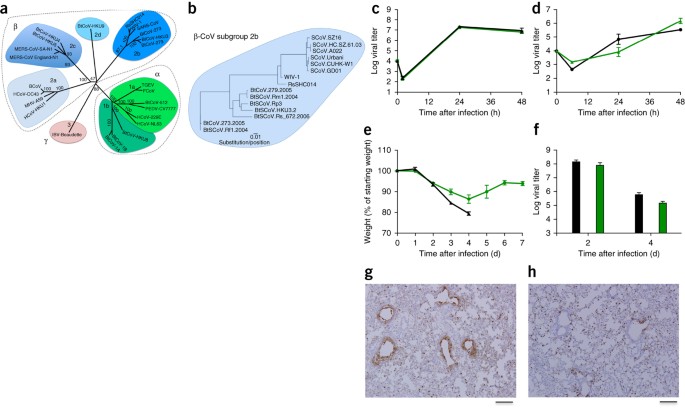
9🧵That begs the question: Why claim the collab began in 2017, & what initiated the collab in November of 2015? You recall that paper in 2015 that got everyone worked up about GoF? The one by Ralph Baric & Shi-Zhengli where they created a chimeric SARS they neglected to upload ?
@dezzie_rezzie - Destiny Rezendes
10🧵 Oddly enough, something no one else has pointed out, that it happens to be that infamous article was published on Nature on November 9th 2015!💥🔎 THE SAME EXACT DAY as the MTA truly began with VRC & Moderna on a SARS-CoV vaccine prototype.
A SARS-like cluster of circulating bat coronaviruses shows potential for human emergence - Nature MedicineRalph Baric, Vineet Menachery and colleagues characterize a SARS-like coronavirus circulating in Chinese horseshoe bats to determine its potential to infect primary human airway epithelial cells, cause disease in mice and respond to available therapeutics. The emergence of severe acute respiratory syndrome coronavirus (SARS-CoV) and Middle East respiratory syndrome (MERS)-CoV underscores the threat of cross-species transmission events leading to outbreaks in humans. Here we examine the disease potential of a SARS-like virus, SHC014-CoV, which is currently circulating in Chinese horseshoe bat populations1. Using the SARS-CoV reverse genetics system2, we generated and characterized a chimeric virus expressing the spike of bat coronavirus SHC014 in a mouse-adapted SARS-CoV backbone. The results indicate that group 2b viruses encoding the SHC014 spike in a wild-type backbone can efficiently use multiple orthologs of the SARS receptor human angiotensin converting enzyme II (ACE2), replicate efficiently in primary human airway cells and achieve in vitro titers equivalent to epidemic strains of SARS-CoV. Additionally, in vivo experiments demonstrate replication of the chimeric virus in mouse lung with notable pathogenesis. Evaluation of available SARS-based immune-therapeutic and prophylactic modalities revealed poor efficacy; both monoclonal antibody and vaccine approaches failed to neutralize and protect from infection with CoVs using the novel spike protein. On the basis of these findings, we synthetically re-derived an infectious full-length SHC014 recombinant virus and demonstrate robust viral replication both in vitro and in vivo. Our work suggests a potential risk of SARS-CoV re-emergence from viruses currently circulating in bat populations.nature.com