reSee.it - Related Post Feed

@AlexBerenson - Alex Berenson
1/ In 2008, the @federalreserve began an unprecedented bailout of Wall Street and banks. The bailout was supposed to be temporary. Except that the Fed's balance sheet - basically money it has created to backstop banks - is now nine times - or $8 trillion -more than it was then...
@AlexBerenson - Alex Berenson
2/ $8 trillion is an unfathomably large number - $23,000 for every man, woman, and child in the United States, four months of GDP. And whenever the Fed even tries to unwind it, to get the banks off the backstop, Wall Street goes berserk...
@AlexBerenson - Alex Berenson
3/ For a while, no one except a few populists (mostly on the left, though increasingly on the right too) paid much attention to this incredible subsidy to the richest people in the world - on Wall Street and Silicon Valley -which both feasted on cheap capital...
@AlexBerenson - Alex Berenson
4/ Why? Because it didn't seem to matter to the real economy. Why? Because inflation was still low. And as long as inflation was still low, the Fed could brush off complaints it was worsening inequality...
@AlexBerenson - Alex Berenson
5/ And encouraging systemic risk-taking by flooding banks with too much cheap capital. But the bill always comes due. Always. And it’s due now. The core US inflation rate exploded in 2021 and despite what the White House wants to pretend there is little sign it’s retreating.

@AlexBerenson - Alex Berenson
6/ So the Fed is FINALLY trying to cut its balance sheet and raise rates - to pull money out of the system since inflation is a monetary phenomenon. Only it's stuck. Banks are so addicted to cheap cash that even the Fed's relatively small moves so far have caused a crisis...
@AlexBerenson - Alex Berenson
7/ A crisis that has led the Fed not just to stop its efforts to restore balance to the system BUT TO REVERSE THEM BY OFFERING YET ANOTHER SUBSIDY TO BANKS, this time for bonds ruined by interest rates: "These assets will be valued at par." https://www.federalreserve.gov/newsevents/pressreleases/monetary20230312a.htm
@AlexBerenson - Alex Berenson
8/ Again the Fed is giving banks a bailout for short-term stability, just like it did in 2008. Only we are 15 YEARS ON and the bailout hasn't gone away. And the only people who benefit in the long run are the superrich, who can take advantage of the economic distortions here.
@AlexBerenson - Alex Berenson
9/ Where and how does all this end? I don't know. But it WILL end. Even the Fed cannot prop up the banking industry forever.

@peruvian_bull - Peruvian Bull
Peruvian Bull Meta Thread: A compilation of all my best work. The central banks are trapped in a black hole of their own design. They will soon be forced to choose which to save- their currencies or the system itself. The Dollar Endgame Thesis. 🧵🔥👇 https://www.youtube.com/watch?v=f0yIATTy0J8
@peruvian_bull - Peruvian Bull
The Federal Reserve has trapped the Treasury beyond the event horizon. The Financial Gravity is now overwhelmingly strong 👇
@peruvian_bull - Peruvian Bull
The United States has become a superpower due to hegemonic influence of the Dollar. However, this can become an existential risk. 👇

@peruvian_bull - Peruvian Bull
The US has weaponized the Dollar to be a secret Excalibur. To punish enemies far and wide. However, this power cannot last forever... 👇

@peruvian_bull - Peruvian Bull
The Federal Reserve has stolen the American Dream. Only the wealthy have benefited. 👇

@peruvian_bull - Peruvian Bull

@peruvian_bull - Peruvian Bull
There's an accelerating withdrawal of money throughout the banking system. The Fed has created a Singularity which is ripping apart the banks. 👇
@peruvian_bull - Peruvian Bull
A new financial crisis is brewing. There is an accelerating withdrawal of money throughout the entire system. The Dying Banks and the Singularity. A Thread 🧵👇

@peruvian_bull - Peruvian Bull
The sanctions against Russia have wounded them. But could this be a bridge to far for the World Reserve Currency? 👇
@peruvian_bull - Peruvian Bull
The Japanese have wandered far into the oceanic depths. Have they finally encountered a monster even the mighty BoJ cannot defeat? 👇

@peruvian_bull - Peruvian Bull
Dissection of SVB's financials just prior to collapse. What if they're not an anomaly?👇

@peruvian_bull - Peruvian Bull
Republicans and Democrats are edging default. If the US actually failed to pay its Treasury bonds, the results would be disastrous 👇
@peruvian_bull - Peruvian Bull
The drums of economic war have begun to beat. The cracks are widening in the dollar based global monetary system ... 👇

@peruvian_bull - Peruvian Bull
The Treasury is accelerating beyond the Event Horizon. The debt issuance is going parabolic. 👇


@peruvian_bull - Peruvian Bull
Argentina is falling apart. Exponential inflation is here 👇

@peruvian_bull - Peruvian Bull

@peruvian_bull - Peruvian Bull
Could the Fed be repeating the same mistakes as the Bank of Amsterdam before the collapse of the Guilder? 👇

@peruvian_bull - Peruvian Bull
Not finance related, but Ayahuasca is a powerful medicine for transformation 👇
@peruvian_bull - Peruvian Bull
Deep in the monetary black hole, hides the Singularity. It could change everything 👇
@peruvian_bull - Peruvian Bull
THE SINGULARITY: There exists a hidden flaw in the monetary system, deep into the Black Hole... that could spell disaster for fiat currencies. A THREAD 👇⚡️ https://substackfwd.xyz/?url=https://dollarendgame.substack.com/p/the-singularity
@peruvian_bull - Peruvian Bull
The Fed has created a Financial Illusion greater than any other. What is left of Economic Reality? 👇 https://t.co/aH5g1QDL2Z
@peruvian_bull - Peruvian Bull
The Simulacrum: what if our financial markets are an illusion- and the abstraction has overtaken reality? The Fed has broken the Financial Matrix. A THREAD 🧵🔥👇 https://t.co/nSVDmtEHra

@peruvian_bull - Peruvian Bull
The financial system is not some monolith upon which all transactions are made. It's far more complex (and interesting) 👇⚡️ https://t.co/39rFFnHmIW
@peruvian_bull - Peruvian Bull
Layered Money The financial system doesn't work how you think it does. A THREAD 🧵👇⚡️

@peruvian_bull - Peruvian Bull
The SEC's incompetence is staggering. Are they complicit in the financial crimes of the people they regulate? 👇 https://t.co/ds7xMKoa0l
@peruvian_bull - Peruvian Bull
The SEC is a criminal organization. The true story of their epic failure to prosecute the largest fraud of all time: Bernie Madoff. A Thread 🧵⚡️👇

@peruvian_bull - Peruvian Bull
There is a movement to direct register the float of an entire company. Barely anyone in the financial world knows about this 👇 https://t.co/m3yOY5OMz0
@peruvian_bull - Peruvian Bull
PowerPoint on Gamestop and DRS- A THREAD 👇🧵⚡️ (1/31) https://t.co/s7dViDTEXw

@peruvian_bull - Peruvian Bull
Did the Saudis make a secret deal selling oil for gold? ANOTHER revealed this controversial theory in 1997-could it still be in place?
@peruvian_bull - Peruvian Bull
ANOTHER: The controversial anon blogger in 1997 who revealed an astounding gold-for-oil deal hidden in the markets that shaped geopolitics for the last few decades. A THREAD 🧵⚡️👇

@peruvian_bull - Peruvian Bull
$GME almost broke the financial system, until they panicked and turned off the buy button. Dive in 👇🤯 https://t.co/9WKlENasN5
@peruvian_bull - Peruvian Bull
3 YEARS AGO TODAY, JAN 28th 2021: Price was going parabolic, and then Robinhood turned off the BUY BUTTON on $GME. What was revealed would shock the financial world- and the story still isn't over! A THREAD 🧵🔥👇 https://t.co/47rH6RoFVV

@peruvian_bull - Peruvian Bull
China's deflationary crisis has been spreading to equities, and authorities will utilize the inevitable liquidity injections to save the day. Are things going from bad to worse for the Asian behemoth? 👇⚡️ https://t.co/K5BV3vXg3K
@peruvian_bull - Peruvian Bull
Crisis in Shanghai: Stock markets are getting hit hard in China, indicative of a vicious deleveraging cycle. CPI print was NEGATIVE again in December. What will they do to stem the bleeding? A THREAD 🧵👇⚡️ https://t.co/CwI10QJXgA

@peruvian_bull - Peruvian Bull
Was $GME on the way to being cellar-boxed by malicious market makers before January 2021? Their playbook for bankrupting companies 👇 https://t.co/y3ug9i83kE
@peruvian_bull - Peruvian Bull
CELLAR BOXING: A post made in March 2004 laying out the entire naked shorting scam- how Market Makers profit from destroying companies. This is how they steal your wealth! $GME $AMC $MMTLP A THREAD 🧵🔥👇

@peruvian_bull - Peruvian Bull
The Chinese shadow banks are falling like dominoes. Are their real estate woes big enough to bring China down? 👇 https://t.co/0A4ToXZURK
@peruvian_bull - Peruvian Bull
China Crumbles: Xi's economic miracle is running into serious problems. Now the property market contagion is spreading to the shadow banking sector, and authorities are panicking on what to do. A THREAD: 🧵👇🔥 https://t.co/wNT8lKPnVC

@peruvian_bull - Peruvian Bull
Regional banks are heavily exposed to the commercial property market. Is the downturn just beginning? 👇 https://t.co/bwU10M7CHd
@peruvian_bull - Peruvian Bull
Shades of 2008? Warning signs are brewing in the commercial property market, and contagion is already beginning to spread to Europe. Are we seeing the CRE version of the Financial Crisis? A THREAD 🧵🔥👇

@peruvian_bull - Peruvian Bull
The Bank of Japan is stuck beyond the Event Horizon. The recent rate hike only confirms it 👇 https://t.co/3pjudSCKJV
@peruvian_bull - Peruvian Bull
The BoJ is Trapped: The Bank of Japan just raised rates for the first time since 2007. Is Ueda sleepwalking into a currency crisis? A THREAD 🧵👇⚡️

@peruvian_bull - Peruvian Bull
The arguments for infinite liquidity are nonsensical. Don't believe the dogma that unlimited naked shorting and excessive derivatives are positive outcomes for markets 👇 https://t.co/0u9KqOnEME
@peruvian_bull - Peruvian Bull
Gold's recent rip could be a sign that decades of Western manipulation of bullion is finally coming to an end. But is this rally an omen of something far worse happening in global macro? ⚡️👇 https://t.co/p9JY4DnAKt
@peruvian_bull - Peruvian Bull
The Gold Endgame Begins: Gold is ripping to new all-time highs, and China could be behind the move. Is the Western gold market manipulation finally reaching its finale? A THREAD 🧵👇🔥 https://t.co/MpZ6a9ZysN

@peruvian_bull - Peruvian Bull
Unemployment, Payrolls, and CPI all have problems. And the quality of the data seems to be getting worse 👇 https://t.co/DZthbyrl2E
@peruvian_bull - Peruvian Bull
The Potemkin Economy: More and more news reports come out concerning the booming economy- but underneath the surface, things are not as they seem. Can we even trust the veracity of the data anymore? A THREAD 👇⚡️🧵

@peruvian_bull - Peruvian Bull
A stellar Twitter Spaces on the Japanese Yen Crisis with informative rants from @acrossthespread and @DarioCpx Probably the best spaces we've ever done 👇👇 https://t.co/3wXhHNEcGv
@peruvian_bull - Peruvian Bull
@acrossthespread @DarioCpx Japan is currently trying to ride both sides of the impossible trilemma, and their currency is blowing out. Another step in the Dollar Endgame 👇👇👇
@peruvian_bull - Peruvian Bull
Tokyo Drifting Into A Currency Crisis The Bank of Japan intervened twice last week as JPY crossed the redline set in September 2022. What lies in store for the Japanese Yen? A THREAD 🧵👇🔥 https://t.co/qbNkGaqM0W


@QuantumParty_ - Quantum Party
The Bank for International Settlements (BIS) has warned that the global financial system is on the brink of a $100 trillion dollar "black swan" event - a perfect storm large enough to wipe out the entire world economy.

@QuantumParty_ - Quantum Party
This (highly volatile) financial weapon-of-mass-destruction could be triggered by a wide range of factors, including a sharp rise in interest rates, a decline in asset prices, or a sudden loss of confidence in the financial system. All of which are in the process of happening now

@QuantumParty_ - Quantum Party
As the US continues it's out-of-control spending, and continues alienating the rest of the world with shameless imperialism in Ukraine, (causing them to abandon the dollar en-mass), the Fed will be forced to keep raising interest rates sharply to combat intensifying inflation.

@QuantumParty_ - Quantum Party
Dramatic rate increases have caused a number of banks to collapse. In March 2023, Silicon Valley Bank and Signature Bank failed, becoming the largest bank failures in recent history. Many other banks are now teetering on the brink, and the entire system is about to collapse.

@QuantumParty_ - Quantum Party
Real Estate prices rose rapidly in recent years, fueled by easy credit and speculative investment. However, between the sharp interest rate increases, and the dramatic decrease in demand caused by the pandemic, our commercial real estate market has ballooned into a massive bubble

@QuantumParty_ - Quantum Party
Learn More at: https://quantumparty.org/banking



@FinanceLancelot - Financelot
Current unrealized losses in the US banking system is -$1.8 trillion out of only $2.2 trillion capital With corporate taxes due Sep 15 & possible gov shutdown Oct 2, the general public has no idea the banks are already insolvent entering a nightmare liquidity scenario in October
@FinanceLancelot - Financelot
Charles Schwab owes 130% of their total equity capital to short duration FHLB loans that have to be paid back soon. Total assets $350 billion... There's your September Lehman Brothers. https://t.co/Rr492EJgeN


@WallStreetSilv - Wall Street Silver
The Fed is paying $723 million PER DAY to commercial banks on reverse repos and interest on reserves. Back a few years ago, the Fed used to be profitable and sent it's profits to the US Treasury. But in recent years, in order to keep everything from collapsing, the Fed has been forced to create more and more programs to support the house of cards. This has resulted in this crazy system where the Fed is losing $723 million per day to hold it all together.
@RealEJAntoni - E.J. Antoni, Ph.D.
$723 million in daily interest curtesy of the Fed sterilizing $4.9 trillion...


@PeterSchiff - Peter Schiff
As I've been warning, we are still early in the biggest #bond market crash in U.S. history. Every government, corporation, landlord, and family that has been relying on cheap debt to survive will die. When the #Fed tries to save their lives, it will kill them with #inflation.

@porterstansb - Porter Stansberry
The reckoning begins on Tuesday. For decades, America has lived well beyond its means. The ongoing 50-year deluge of money, credit, and soaring government spending began with Nixon’s repudiation of the gold standard on August 9, 1971.
@porterstansb - Porter Stansberry
America’s experiment with paper money reached its zenith – $7.1 trillion in unfunded government spending – in the insane over-reaction to the flu of 2020.
@porterstansb - Porter Stansberry
Absent financial constraints and protections for property rights, democracies rapidly devolve into competing parasitic factions, each attempting to live at the expense of the “other.” The result is, inevitably, a continuing increase in government spending and government debts.
@porterstansb - Porter Stansberry
During COVID the government printed enormous amounts of money and manipulated bond rates to their lowest point ever. Our banks faced the Hobbesian choice: earn nothing on safe short-term U.S. Treasury notes or earn 1.5% or so on long term U.S. bonds.
@porterstansb - Porter Stansberry
Bank of America made the largest investment in its history. It bought $760 billion of long-term U.S. Treasury bonds and mortgages, with most of the purchases occurring in mid-2020 at the absolute peak in long-term bond prices.
@porterstansb - Porter Stansberry
When Bank of America reports 3Q earnings the losses on these long term bonds will have exceeded its $175 billion in tangible equity capital, meaning any sustained run on its deposits would render it insolvent.
@porterstansb - Porter Stansberry
Through the end of Q2 2023, U.S. banks were sitting on $550 billion in unrealized losses from their holdings of long-duration Treasuries and MBSs. That’s nearly 25% of the total equity capital in the U.S. banking system.
@porterstansb - Porter Stansberry
In the 18 months since the Fed started raising rates in March 2022, depositors have yanked nearly $1 trillion from U.S. banks. Never before in history have we seen deposit flight on this scale.
@porterstansb - Porter Stansberry
U.S. fed debt is now a staggering $33 trillion. That’s up an incredible $10 trillion in the last four years. And the debt bonanza shows no sign of ending. In 2023, the U.S. federal government is on track to run a $2 trillion budget deficit, or 8% of GDP.
@porterstansb - Porter Stansberry
For the first time in 15 years, short-term Treasuries offer a real yield above inflation. Investors are no longer penalized for playing defense. That cash will become worth its weight in gold when this crisis erupts, and world-class businesses trade down to fire sale prices.

@PauloMacro - Paulo Macro
Thread on UST funding and RRP. Backdrop: US treasury debt outstanding has gone from $22.7T to $33.2T over the past four years (9/30/19 to 9/30/23), and 30.9T a year ago. So +$2.3T 1y and +$10T 4y. The -12m deficit is $1.7T per below, as of 9/30 (Treasury is on a Sept FY) 1/18 https://t.co/RRzl9qZNnB


@PauloMacro - Paulo Macro
Many expect this deficit to narrow in 2024 and things to “slow down” or stabilize vis-a-vis Treasuries but they simply do not appreciate the EM nature of the US now. 2/
@PauloMacro - Paulo Macro
I was surrounded by bears back in May and maybe the first to say that the “liquidity suck” fear (once the debt ceiling was resolved) was overblown because Yellen would call bill auctions and slow-walk the TGA refill by draining RRP instead of bank reserves… 3/
@PauloMacro - Paulo Macro
And elaborated here (and subsequently many times) 4/
@PauloMacro - Paulo Macro
Ah yes, ink is still drying on Biden’s signature and the histrionic gnashing of teeth about TGA liquidity suck begins. Remember my view - Yellen needs to bridge to 6/15, then slow walks it. RRP draw will help. We get to July without feeling this. 1/ https://t.co/Nuosrq1yj2


@PauloMacro - Paulo Macro
A review of where we stand vs May (right before debt ceiling resolved): -TGA is $700b vs $50b (+$650b) -Fed b/s is 7.9T vs 8.4T (-$500b) -RRP 1.15T vs 2.25T (-$1.1T) -Bank reserves ~flattish $3.3T 5/
@PauloMacro - Paulo Macro
Putting aside reserve identity and eurodollar discussions for a moment. What comes next is much simpler IMO… and once again non-consensus. The Fed must be cognizant of potential bank insolvencies that risk becoming liquidity events like First Republic and SVB. 6/
@PauloMacro - Paulo Macro
Treasury is also sensitive to this, and aware that should the US succumb to recession in 1H24, just ahead of an election, that they need to do what they can to have as little impact on the market as possible from the standpoint of *liquidity*. 7/
@PauloMacro - Paulo Macro
The reality is the deficit would blow out in a recession at a time when other countries may not be relied upon to buy more bonds (USD FX/geopolitical reasons). This incremental issuance would crowd out other asset funding. 8/
@PauloMacro - Paulo Macro
Yes, UST supply matters. This isn’t 2008 when private assets were levered to the hilt and there wasn’t enough safety paper. There is too much ‘safety’ paper today vs where Fed induced liquidity still stands. 9/
@PauloMacro - Paulo Macro
There are many who seem to think with TGA now back to $700bn that the liquidity drain hinges on Fed QT dripping lower at $60b/mo. The pre Covid days of $300-400bn TGA are history. Early Trump deficits were almost half what they are today… 10/
@PauloMacro - Paulo Macro
…and Treasury paper outstanding was $10T lower. From a working capital perspective $600-700bn is the new floor. But with recession, the deficit explodes and you also need to raise the TGA in advance of the 1 Jan 2025 debt suspension date. Think about the timing here. 11/
@PauloMacro - Paulo Macro
You can’t watch the Fed do another year of -$60b/mo and take RRP down by ~$720b to $400b at elections because asset mkts could panic by then. And on 1/1/25 you need to be fully loaded on TGA for another mudfight. You’re gonna want to go into ceiling negots with $1.5T+ TGA. 12/
@PauloMacro - Paulo Macro
Bank reserves are prob ok down to $2.5T (I have addressed this before here in aggregate). You would think there is ~$800bn room lower here on bank reserves, but not all banks are created equal, and many reserves are in banks that are potentially insolvent. 13/
@PauloMacro - Paulo Macro
My view: banking system gets into “2019 repo trouble” around $2.5T (we can argue $100-200bln here or there among pals). So there is maybe $500bln of room on reserves (still tightening to be sure), and a few hundred yards of room in RRP before crowdouts of CP/paper gets felt. 2/ https://t.co/kcga9mI4TA


@PauloMacro - Paulo Macro
So why would RRP continue to collapse without bank reserves rising to offset? Because TGA needs to go to $1.5T+ by early 24 so Yellen can draw it in the months leading up to elections (give risk assets/sentiment a shot in the arm) and prepare for recessionary spending… 14/
@PauloMacro - Paulo Macro
…all under the cover of filling her up well ahead of the debt ceiling as a “responsible thing to do.” The least disruptive way to prepare for accelerated disbursement in a recession and the debt ceiling is to *accelerate* the TGA build from here. 15/
@PauloMacro - Paulo Macro
Will Yellen actually do this? Who knows. But if you are going to tap the US liquidity pool to prepare for A) recession B) elections C) debt ceiling, you want to do it as soon as possible. 16/
@PauloMacro - Paulo Macro
And the least disruptive way is to fund it out of sequestered reserves (RRP) — this leaves the banks out of it. I expect Yellen to double down on the June choice to fund via the bills in coming months. 17/
@PauloMacro - Paulo Macro
Of course, this only shortens UST duration and pays the highest funding cost, exacerbating the fiscal stress that will ultimately feed back into a higher required TGA in the future, but that’s the next guy’s problem, isn’t it… /Fin

@DarioCpx - JustDario 🏊♂️
#JustDarioDaily 🚨THE BIG BANKS ARE ALREADY UTILIZING THE FED BTFP! 🚨 What do $JPM, $C, $WFC, $PNC, $SCHW, $BAC, and $GS have in common at the moment (besides greed)? They are all losing a shit ton of money... The top spot goes to $BAC, currently carrying $135bn "paper losses" in its belly, followed by $C and $WFC, both at around $100bn. True, these losses are only due to the increase in interest rates, and the US will never default on its debt (because if it does, we go back to barter). Hence, these are "paper losses," and banks are in great shape, right! Well... thanks to the FED's "virtual bailout," better known as the BTFP program they are already benefiting from… Wait what? Yes sir! Why am I saying that the big banks are already utilizing the #BTFP? Am I nuts? No, I am not, and I will explain why. Because of the #BTFP potential total capacity of up to $2T, investors are already associating its benefits with the big banks, even if they are not tapping into it (yet). Wait a second, doesn't the #BTFP expire in 5 months? Well... if Jerome Burns wants the world to keep believing the #FED will maintain rates "higher for longer," he has no alternative but to extend the duration of the program, making it "temporarily permanent," just like they did for Quantitative Easing before (for example). The FED enjoys keeping its cake and eating it too, so rest assured their habits will not change. 😌 There is a problem, though. The #BTFP only covers US Treasuries, Agencies, and Government Guaranteed MBS. Here is where investors are making a big (big) mistake. ⚠️They are assuming that if the time comes, the "BTFP cocoon" will transform into a "TARP butterfly"! 🐛 This is the only rational explanation for the market willingly ignoring what's going on in the Credit space, starting from Commercial Real Estate, and not "punishing" the Big Banks for the ridiculously low Credit Loss Provisions they booked for Q3. Another sign of this general thought lies in Credit Spreads across all rating spectrums "refusing" to increase. [https://x.com/dariocpx/status/1713812823938384383?s=46&t=Hz7-qku8ZNVPw6L9nBJOZA…]. 🤦🏻♂️ Banks are as smart as foxes, and they have seized the opportunity. Have you noticed that Credit Loss Provisions for Q3 are consistently lower than Q2 for all the banks that reported so far, despite the increase in Non-Performing Loans (and a general skyrocketing of Chapter 11 filings)? While before, I felt a bit lonely, I have to admit that now it is so obvious that banks are "twisting" the numbers so much to "beat expectations" that they are at odds with the reality everyone can observe. Although we cannot blame them too much when the government, which should police them, is doing exactly the same. 🙈 So here we are today, with banks faking their numbers in plain sight, and investors being happy about that. 🤦🏻♂️ In just a few decades, we have literally moved from the concept of an "Intelligent Investor" to an "Ignorant Investor." The reporting season is only beginning, and I am particularly curious to see how European banks will fare, starting from UB-C-S 😬, and how they will manage to hide the even bigger losses government bonds are digging into their HTM books. Notice I said "losses" and not "paper losses" because in Europe, they don't have a BTFP (yet). Considering the outrageously high inflation in a contingent that is barely growing its GDP, it will be very hard for politicians to endorse another inflative Central Bank weapon of mass wealth destruction. 😵💫
@DarioCpx - JustDario 🏊♂️
What I find incredible in the current market froth with risk from every direction and with bankruptcies heading to nosebleed levels is that Credit Spreads are still at “normal” long term trend level 🤔 Well below 2020 Covid crash and miles away from GFC peaks So puzzling… 😵💫


@DarioCpx - JustDario 🏊♂️
SPEAKING OF THE DEVIL….. 👀

@Prolotario1 - Ariel
🚨Breaking: The US Treasury Bond Market In The Red What are the implications? Investors Losses: Well anyone holding US debt would suffer total losses, including central banks, pension funds, governments etc. This would destroy confidence in the financial system. Is this still a November To remember? Everyone who has been asking about 401ks or retirement here is your answer. Well let's see my fellow compatriots. S Economic Crisis: The US government's ability to fund operations and debt would be crippled, undermining the dollar's reserve status. This could cause a deep recession or depression. Remember we are going on the Gold Standard. The dollar has to lose value in order for the Iraqi Dinar to become atleast 1:1. This is about currency parity. Equal playing field. Banking collapse: Banks hold huge Treasury reserves - deleting this asset base would trigger bank failures, bail-ins, and potentially wipe out savings. Which is why I told you all to put your money in Basel 3 Compliant banks for months. Which is why I said certain banks do not have until 2025 to implement ISO-20022. I stand by that. This is not an olive basket. 2025 is for those banks left over. Policy Chaos - The Federal Reserve and central banks worldwide would be thrown into chaos as a core pillar of global finance vanished. Emergency measures will not do them any justice in this case. Why do you think I have been constantly telling you all that the US Treasury have been running things? This situation was planned. How? Devolution. Where have you heard over the years that gold will end the Federal Reserve? Market Instability - Taking the world's benchmark risk-free asset off the books would ofcourse massively disrupt debt markets and interbank lending, creating extreme volatility. US Treasurys are considered the safest asset out there. They are foundation that the whole house of cards is built on. If you remove that foundation, the stability of all the markets gonna come crumbling down understand? People that countdown on this website (https://qofficial.net/password) is looking really interesting right about now. Especially if this goes through as Janet Yellen has implied. A week to remember? It's definitely looking like this. Because remember some weeks back I told you all the 1st domino for the public would be this month? What have I been wrong about this far? I will post the document below.


@Prolotario1 - Ariel
https://x.com/DarioCpx/status/1727104700531785820?s=20
@DarioCpx - JustDario 🏊♂️
⚠️ANOTHER ONE FOR THE #DTCC “WEIRDER THINGS” RECORDS ⚠️ According to this note below, the Cusip ID of a UBS bond due to settle tomorrow has been “deleted” 🤨 So now bonds don’t default anymore because they will be deleted before failing to settle? 😆 https://t.co/iDSYeoyEVc

@DarioCpx - JustDario 🏊♂️
#JustDarioDaily 🚨 WHICH BANKS ARE AT RISK OF GOING BUST IN A LIQUIDITY CRISIS BECAUSE ALREADY (RIDICULOUSLY) INSOLVENT? 🚨 Thank you for waiting, but I assure you what follows isn't going to disappoint you! 😁 Two months ago in "This time is NOT different - Part 2," I flagged how my analysis at that time flashed (big) red warnings on several US banks (https://x.com/dariocpx/status/1706274260489228552?s=46&t=Hz7-qku8ZNVPw6L9nBJOZA). My analysis today will expand on the methodology presented (https://x.com/dariocpx/status/1706274251727409331?s=46&t=Hz7-qku8ZNVPw6L9nBJOZA) to include the following points: 1 - I will now include the largest European banks. Consequently, I reclassified their figures to harmonize all the datasets on US reporting. In particular, with regards to Available For Sale (AFS) and Hold To Maturity (HTM) securities. 2 - All values presented are in $USD. Non-USD figures have been converted using the 30th September FX rate for consistency. 3 - Shareholders' Equity is considered in its entirety. Now that the stage is set, the show can begin! 🎬 ⚠️ LOAN / DEPOSIT RATIO A L/D ratio above 90% is already a warning sign, but there are 2 banks that managed to lend more than the deposits they collected! (Table 1) ⚠️ [LOAN + HTM] / DEPOSIT RATIO HTM books are now officially "Hide to maturity" and stuffed with assets trading at a significant loss because of high interest rates (and soon high credit losses too). Not only banks cannot afford to sell those securities, but trading at such a discount to the par value, they even stop being collateral-worthy. Effectively, the risk of those books is now equivalent to the loan ones. Furthermore, bear in mind there is no #BTFP in Europe, while in the US, that only applies to US Treasuries or government-guaranteed securities. Now, check how many banks hold more highly illiquid assets than the deposits they collected...(table 2) I feel now the warning bells in your head are already pretty loud 😂 ⚠️ [LOAN + HTM + AFS] / DEPOSIT RATIO AFS securities aren't Marked to Market but booked according to their "fair value." Translated, their real value in the market is lower due to a lack of liquidity. Now, check how many banks cannot cover their deposits if we include the AFS assets in the analysis... (table 3) I bet now those bells in your head turned into a Marilyn Manson concert! 🤣 At this point, I hope you agree with me that all those capital ratios and risk metrics the regulators use to assess banks' health are completely useless. As a matter of fact, banks that went bust always had "strong capital" according to the regulatory metrics, from #CreditSuisse (recently) to #Lehman in 2008. Fyi, both banks imploded with an "A" rating! 🙈 🚨 Alright, now is time for fireworks! 🚨 In the last table, I present two scenarios on the current state of banks’ books: 1 - "La La Land" that only assumes 5% losses on loans, 10% on HTM, and 2.5% on AFS books and compares those with the bank's total equity. 2 - “Soft Landing" that assumes 7.5% losses on loans, 20% on HTM, and 5% on AFS books. I wanted to include a "Realistic" one, but my heart ❤️ couldn't bear it, sorry. 🥲🙏🏻 Feel free to play with the data and see what happens if you assumes realistic losses.. Considering how twisted the reality we are living in is, I used green crayons to mark all those banks that have high chance of being already insolvent in the “ridiculous” scenarios presented. 🤭 ⚠️Important to bear in mind is this analysis only considers on-balance sheet items to limit its complexity. However, if we bring in off-balance sheet items I strongly doubt banks like $BAC , $UBS and $HSBC will come up so strong as per previous detailed analysis I posted… Beware, during a financial crisis, all the assets, including "cash and equivalents," suffer a haircut while liabilities only get a haircut 💇 after a company files for Chapter 11. This means that the chances for the assets I left out to be able to increase in value during a crash to compensate for the calculated losses are close to zero. THE END 🎇🎆


@DarioCpx - JustDario 🏊♂️
🍿 POPCORN ALERT 🍿 This weekend I am going through the financial reports belonging to the 32 largest banks between US and Europe, can hardly hold back my excitement for what I found halfway through it 😆 Stay tuned https://t.co/Fqj22QkfiK


@jameslavish - James Lavish
The Reverse Repo Facility Lots of talk about how it's dwindling fast and may soon be empty...but does it really matter? Yes, it matters. A whole lot more than you may think. Time for a Fed 🧵👇
@jameslavish - James Lavish
🎯 Repo vs Reverse Repo What are they, and what're their differences? Put simply, they are two overnight lending markets run by the Federal Open Market Committee (FOMC) All purchases and sales (open market operations) are made by the NY Fed Open Market Trading Desk (the Desk)
@jameslavish - James Lavish
The Repo A repo is basically a repurchase agreement between two parties The term can be used in many different types of transactions, but we most often hear it used to describe overnight transactions of US Treasuries.
@jameslavish - James Lavish
See, when a bank needs cash to cover short term obligations, it can sell USTs to the Fed (in return for cash) agreeing to buy them back just 24 to 48 hours later at a slightly higher price This is called a Repo or 'Repurchase Agreement'.
@jameslavish - James Lavish
The difference between the amount of cash the bank receives and the amount it pays back is calculated to be the 'discount rate', or the cost of ‘overnight’ borrowing from the Fed It looks like this: https://t.co/mMSl0WtUDG

@jameslavish - James Lavish
So, if there is a lack of liquidity in the system, banks may be looking to loan their US Treasuries to the Fed for cash to cover short-term needs Got it.
@jameslavish - James Lavish
But what if there's too much cash in the system, and banks who are looking to generate interest on that cash aren't able to buy any more USTs, because they're at their internal and/or Fed-mandated limits? Well, that's where the *Reverse* Repurchase Agreement comes into play.
@jameslavish - James Lavish
The Reverse Repo Much like the repo transaction, where a bank sells US Treasuries to the Fed, in a *Reverse Repo*, the bank buys US Treasuries from the Fed But why would they do this?
@jameslavish - James Lavish
Simple. When a bank has too much cash on its balance sheet, it can utilize the reverse repo to generate a rate of return on that cash in the overnight market In essence, the bank *parks* its cash at the Fed.
@jameslavish - James Lavish
And so, like a mirror image of the repo, the Reverse Repo looks like this: https://t.co/NJKm720KfC

@jameslavish - James Lavish
An important key here is that the NY Fed sets the Reverse Repo Rate And as you can see here, the rate is currently 5.30% Remember this number, we will come back to it in a bit. https://t.co/PodJOt5U1H

@jameslavish - James Lavish
🔍 Filling the RRF Another thing you may have noticed recently is that we are hearing precisely nothing about the Repo market lately Why? Because virtually nobody is using it. https://t.co/YxRodee6Zw

@jameslavish - James Lavish
The reason for this is that the major banks are not strapped for cash, but rather swimming in it And so, all the focus and action has been in the Reverse Repo markets But how did this happen? Why are these banks swimming in, stuffed to the gills with, all this cash?
@jameslavish - James Lavish
You got it QE (almost infinity) in 2020 and 2021 See, when the Treasury and the Fed teamed up to 'inject liquidity' into the markets, they hit the banks with something of a cash tidal wave.
@jameslavish - James Lavish
Turns out that when you print and purchase over $5.8T of securities from banks and put those securities on your own balance sheet in return for floods of cash... https://t.co/TEEfxWcaFr

@jameslavish - James Lavish
...you wind up creating massive excess cash balances at the banks, who then in turn, wind up eventually parking it back at The Fed in the Reverse Repo Facility. Look at what also happened between 2021 and the end of 2022: https://t.co/oNnn2PaQaQ

@jameslavish - James Lavish
The Fed then pays the bank the current Fed Fund influenced Reverse Repo Rate as a yield on those balances Which, as you can see the Reverse Repo Operations Schedule above, is 5.30% (annualized) yield this week What a deal!
@jameslavish - James Lavish
But that $2.4T of Reverse Repo Facility balances has been falling recently and is now down quite a bit. But why? Where's all the excess cash going?
@jameslavish - James Lavish
✍️ Draining the RRF Again, unless you've been completely ignoring all news and media (good for you, seriously), then you've likely also noticed that there's been quite a bit of talk about the expanding US deficit and ballooning US debt this year.
@jameslavish - James Lavish
This phenomenon is called the Debt Spiral, and it's apparent mathematically that we have already entered one If you want to know more about that you can read all about it in a thread posted over a year ago, right here: https://x.com/jameslavish/status/1562078782453792768?s=20
@jameslavish - James Lavish
Bottom line, the US is spending too much compared to the amount of productivity and taxes it is (read: its citizens and companies are) generating, and this excess spending is causing the need for the Treasury to borrow more and more... ...and more.
@jameslavish - James Lavish
So, they've been covering the deficit with auction after auction of bonds, just papering over the spending problem. https://t.co/RRfIHnTzdu

@jameslavish - James Lavish
But because interest rates are now significantly higher than when the Treasury started to flood the market with USTs, they've been leaning hard on the short end of the yield curve Notice the steep pickup in T-Bill issuance this year, surpassing even the shock of March 2020: https://t.co/zqaVwR99T2

@jameslavish - James Lavish
The Treasury has pivoted to short-term T-Bill auctions for two reasons 1) To avoid locking into long-term high interest rates which would exacerbate the deficit and interest expense 2) They can tease capital back out of the Reverse Repo with yields slightly higher than 5.3%
@jameslavish - James Lavish
So, how are they doing with that plan? It seems swimmingly well In fact, the Treasury has drained ~$1.5T from the Reverse Repo Facility in just the last few months. https://t.co/ncPorAlOB5

@jameslavish - James Lavish
The Treasury's Q4 refunding plan reiterated they would continue this, and they're OK with staying well above a normal ratio of ~20% T-Bills and 80% Bonds In fact, the Treasury has effectively inverted this ratio, auctioning ~65% T-bills and ~35% Bonds this past year.
@jameslavish - James Lavish
Using the Treasury estimated $1.5T+ of upcoming auctions between now and the end of the first quarter of 2024, it seems the Reverse Repo will soon be drained But if the Treasury keeps the same pace of auctions as the last couple of months, the RRF could be drained by January.
@jameslavish - James Lavish
Either way, it appears that is the direction the Treasury is headed, and the RRF will, in fact, soon be back to zero Then, the only backstop is investors continuing to move cash into money markets because of attractive yields But when rates start to fall, then what?
@jameslavish - James Lavish
🧠 Where will the Treasury Turn? With the gov't running $2T annual federal deficits, the Treasury simply cannot stop issuing debt And this is *before we hit a recession* and the deficits *increase*.
@jameslavish - James Lavish
Where will the Treasury turn for even *more* capital? Can they just issue longer term bonds instead?
@jameslavish - James Lavish
If you've been following me, you know that the last Treasury 30-yr bond auction was abysmal, signaling a steep drop-off in demand and confidence in long-term US Treasuries If you've not yet read about that, you can find a thread on it right here: https://x.com/jameslavish/status/1724541356113264691?s=20
@jameslavish - James Lavish
TL;DR: international and institutional demand fell off a cliff this past auction, and the Treasury may have difficulty growing the sizes of auctions necessary to meet demand when they need to move further out on the yield curve.
@jameslavish - James Lavish
When the Reverse Repo Facility is drained and the Treasury can no longer use that excess capital to fund additional debt, they may have to turn to more drastic measures, such as...
@jameslavish - James Lavish
• Adjusting Capital Requirements The Fed and regulatory agencies could lower the capital requirements for banks This means banks would need to hold less capital against certain assets, freeing up more funds for investment, including in longer-term Treasury bonds.
@jameslavish - James Lavish
• Modifying Collateral Rules The Fed could alter the rules regarding what types of collateral can be used in various Fed lending facilities, which might encourage more purchases of Treasury bonds.
@jameslavish - James Lavish
• Tweaking Regs Regulatory changes could be made that *require* financial institutions to hold more long-term Treasuries I.e., changes could be made to the liquidity coverage ratio (LCR) requirements to encourage or require holding longer-term government securities.
@jameslavish - James Lavish
Additional options may include some sort of stealth injection of capital into banks or the markets in order to ensure sufficient liquidity for debt auctions Think: four letter acronyms like the BTFP or similar programs they can and I expect they will implement.
@jameslavish - James Lavish
Then, of course, we have the upcoming 2024 Treasury Regular Buyback Program What this is and how it will be used remains to be seen, but this could act as a quasi-yield curve control or *stealth QE program* We will see...
@jameslavish - James Lavish
Any way you cut it, the RRF lifeline is dwindling and soon ending Your guess as to where the Treasury turns and what exactly they end up doing is as good as mine, but I watching Treasury auctions and the debt markets carefully.
@jameslavish - James Lavish
Because one thing we can be absolutely sure of... The government is not going to stop or even slow down spending any time soon, and they will eventually have little choice but to print more money.
@jameslavish - James Lavish
And then? The Reverse Repo Facility will just be filled right back up again. What a deal, indeed.
@jameslavish - James Lavish
This thread is a summary of a recent issue of 💡The Informationist, the free newsletter that simplifies one financial concept for you weekly. You can join 25K readers here: http://jameslavish.com https://t.co/Ad4cmlVj29


@MikeCristo8 - MikeCristo8
🚨🚨🚨WOULD I LIE TO YOU ABOUT THE FEDERAL RESERVE BLOWING UP NEXT WEEK ??🚨🚨🚨 🚨I want to clarify the plumbing of the Fed & G-SIB’s to show impending credit implosion of both the Fed and the banking system🚨 🚨🚨The reason why the banks will collapse next week, is because the U.S. Treasury bond no longer meets the collateral requirements for tier 1 capital. 🚨🚨U.S. Treasury bonds no longer serve as the (global reserve asset) collateral that trades oil to value America’s debt. The Federal Reserve’s ($2.3t) reverse repo is credit (the Feds liability) that values the Feds collateral (their asset), which are mortgage-backed securities (once valued at $2.3t). FOOTNOTE: the Feds asset, MBS was $2.3t against the Fed’s liability ($2.3t reverse repo which is the credit the Fed themselves created). The Reverse Repo is Now $768bn. The Feds reverse repo are the G-SIB’s bank reserves or assets which are held at the Fed via the reverse repo. The G-SIB’s are draining their bank reserves from the Fed’s reverse repo which is the Fed’s liability (the $2.3t original credit created) for lifting the mortgage-backed securities from the G-SIB’s balance sheet. Once the G-SIB’s drain the Fed’s reverse repo (their bank reserves held at the Fed), There is no credit (liability side) with which to value the Fed’s collateral which are the mortgage-backed securities. Credit values the asset Once the credit (G-SIB’s bank reserves) is drained, What I’m saying is the Fed’s collateral, the mortgage-backed securities will become valueless because the Fed’s credit account (the liability side) has been drained. The U.S. Treasury bond (dollar trade) is being unwound. The G-SIB’s liabilities are the deposits that funded U.S. Treasury bonds through the corporate bond market. Under Basel III regulations, the U.S. Treasury bond is no longer considered tier 1 collateral (bank assets) to their balance sheet that hedges against a banks liabilities. The U.S. Treasury bond carry trade is being unwound which is draining the reverse repo. Once the reverse repo is drained, remember they are bank reserves (a bank asset), Once the reverse repo is drained, the G-SIB banks have no more assets, and the Federal Reserve no longer has a liability side (which is the credit) that values the mortgage-backed securities on the Federal Reserves balance sheet which is the collateral. If the G-SIB banks have no more assets (the reverse repo i.e. bank reserves), to hedge against their collapsing liabilities (U.S. Treasury bond unwind), the G-SIB banks blow up. The Fed is forbidden from going into QE, so there will be no more credit (Fed liability/revers repo) with which to value the collateral (mortgage-backed securities) on the Feds balance sheet. Why would the Federal Reserve allow the G-SIB’s to drain from the reverse repo (which are really bank reserves/assets) against the collateral (MBS, held at the Fed) if the Fed can just go into QE. Part II below (very important) ALSO see my 2:37PM tweet from yesterday. @BossBlunts1 finally figured out some. Banks will have ZERO liquidity by next Friday as the reverse repo will be sucked dry. @BillAckman @sama @JoeBiden @JeffBezos @satyanadella @RobertDowneyJr @gdb @joerogan @FT @WSJ @Forbes @elerianm @BarackObama @unusual_whales @MattWallace888 @KimDotcom @marcorubio @HawleyMO @tedcruz @marklevinshow @gurgavin @MarioNawfal @AOC @MarioNawfal @spectatorindex @TheInsiderPaper @GoldTelegraph_ @thesiriusreport @Prolotario1 @stillgray @disclosetv @htsfhickey @JackStr42679640 @KobeissiLetter @DougAMacgregor @ParikPatelCFA @KanekoaTheGreat @TuckerCarlson @JackFarley96 @TaraBull808 @AltcoinGordon @alx @davidbelle_ @fejau_inc @jsolomonReports @PeterSchiff @PrestonPysh @davidicke @balajis
@MikeCristo8 - MikeCristo8
(Part II) ANSWER; ISO 20022 prevents the Fed from ever doing QE again. The G7 Central Banks Are going down. Why isn’t the macro establishment NOT talking about this very important detail? It really may be over for the Fed next week! Because liability (credit) the G-SIB’s issued to value the U.S. Treasury bond asset(s) is being undone due to Basel III and ISO 20022. What do you think the MBS is backed by? The “liability” credit (the reverse repo) the Fed created. When the reverse repo is drained, the MBS will be backed “by nothing at all” And you can talk yourselves until your blue in the face But that’s how central bank plumbing works. America has to win on every trade deal, and so the U.S. policy is to control other countries by war, because the U.S. can’t win a trade war or run serial trade deficits because it’s deindustrialized and the U.S. Dollar no longer trades global oil. The BRICS solution to the U.S. Trade war is to offer mutual gain, collectivism, and mutual trade. The U.S. empire can only survive by sucking value out of the reset of the world. Which it can no longer do. Because U.S. Treasury bonds no longer serve as the collateral that trades oil to value America’s debt. enjoy your weekend everyone! @BillAckman @sama @JoeBiden @JeffBezos @satyanadella @RobertDowneyJr @gdb @joerogan @FT @WSJ @Forbes @elerianm @BarackObama @unusual_whales @MattWallace888 @KimDotcom @marcorubio @HawleyMO @tedcruz @marklevinshow @gurgavin @MarioNawfal @AOC @MarioNawfal @spectatorindex @TheInsiderPaper @GoldTelegraph_ @thesiriusreport @Prolotario1 @stillgray @disclosetv @htsfhickey @BossBlunts1 @JackStr42679640 @KobeissiLetter @DougAMacgregor @ParikPatelCFA @KanekoaTheGreat @TuckerCarlson @JackFarley96 @TaraBull808 @AltcoinGordon @alx @davidbelle_ @fejau_inc @jsolomonReports @PeterSchiff @PrestonPysh @davidicke @balajis

@BossBlunts1 - The Butcher of Wall Street Marcel Kalinovic
EMERGENCY 🚨 BANKS BORROWED $200 MILLION IN OVERNIGHT REPO FACILITY‼️ 🙊 THIS IS THE HIGHEST REPO SINCE THE ONSET OF COVID SHUTDOWNS AND SIGNALS A MASSIVE NEED FOR CASH TO PREVENT MARGIN CALLS FROM 0 TO $200 MILLION OVERNIGHT 📉 REVERSE REPO: MONEY MARKET FUND USAGE COLLAPSING AS EXCESS CASH PLUMMETED TO UNDER $800 BILLION 📈 REPO (NOT REVERSE): BANK USAGE ROCKETED, INDICATING WITHOUT A DOUBT THAT BANKS ARE OVERLEVERAGED AND UNDER-CAPITALIZED 🙉 BOTH ARE CORRELATED IN OPPOSITE WAYS. DECREASE IN REVERSE REPO IS BEARISH. INCREASE IN REPO IS BEARISH. BOTH HAVE BEEN OCCURING EXACTLY AS PREDICTED. CALL YOUR PARENTS 😬 LACK OF LIQUIDITY LEADS TO MARGIN CALLS, FIRE SALES OF BLUE CHIP STOCKS AND BONDS, AND SKYROCKETING OF HEAVILY SHORTED EQUITIES AND ASSETS SUCH AS PRECIOUS METALS, MEME STOCKS, INVERSE ETF'S AND INDEXES. #amc #gme #silver #gold #uvxy #vix #sqqq #vvix #sjim #bbbyq

@BossBlunts1 - The Butcher of Wall Street Marcel Kalinovic
BREAKING 🚨 REVERSE REPO OPERATIONS TODAY FELL OVER $100 BILLION‼️ MONEY MARKET (MUTUAL) FUNDS AND BANKS USE THE REPO/REVERSE REPO TO STASH CASH IN HIGHLY LIQUID US TREASURY NOTES. THIS ALLOWS THEM TO RECEIVE THE FED FUNDS RATE + 0.05% APR IN OVERNIGHT LOANS IN EXCHANGE FOR T BILLS AND DO THE OPPOSITE THE FOLLOWING DAY. THE FED HAS IMPLEMENTED NEW INCREASED INITIAL MARGIN REQUIREMENTS THAT HAVE RAISED THE MINIMUM CAPITAL LEVEL REQ'D FOR AMERICA'S TOP FINANCIAL INSTITUTIONS. AS LIQUIDITY IS SUCKED OUT OF THE SYSTEM BY THE #RRP, THIS LEAVES BANKS WITH LESS CAPITAL WITH WHICH TO MEET #MARGIN COLLATERAL REQUIREMENTS. THIS HAS THE POTENTIAL TO CAUSE A FIRE SALE OF ASSETS SHOULD THE BANKS BE MARGIN CALLED BY THE DTC, OCC, NSCC, etc, AND/OR THE HEDGE FUNDS & FAMILY OFFICES TO WHICH SAID BANKS LEND SHARES & CASH TO BE MARGIN CALLED BY THEIR PRIME BROKER (BANK). WE ARE SEEING THE BEGINNINGS OF A LIQUIDITY CRISIS MEANWHILE THE FED HAS ONLY UNWOUND 10% OF THEIR #MBS VALUED OVER $2.7 TRILLION. A HOUSING CORRECTION HAS BEGUN AS NEW HOME SALE PRICES ARE DOWN 20% YoY, EXISTING HOME SALE NUMBERS HAVE COLLAPSED TO 2009 LEVELS, AND EXISTING HOME SUPPLY HAS JUST BEGUN TO INCREASE. BANKS HAVE A MASSIVE AMOUNT OF RESIDENTIAL AND COMMERCIAL MBS AND A VALUE AT RISK FOR THE TOP 4 U.S. BANKS OF OVER $719 BILLION. MEANWHILE GOLDMAN HAS 45% OF THEIR DEPOSITS UNINSURED BY THE FDIC, AND JPMORGAN 55% UNINSURED. THEYRE ALL BETTING ON A FEDERALLY FUNDED BAILOUT WITH YOUR MONEY IN THE FACE OF THE POSSIBILITY OF THE WORST RECESSION AND STAGFLATION THIS COUNTRY HAS EVER SEEN DUE TO THE PONZI SCHEME THAT IS EXACERBATED BY THE RECORD LEVEL OF C19 MONEY PRINTING BAILOUTS GIVEN TO INSTITUTIONS IN 2020 IN RESPONSE TO THE COLLAPSE OF THE #RRP ON SEPT 19, 2019 WHEN THE FED HAD TO TAKE OVER THE REPO OPERATIONS TO PREVENT A FULL BLOWN #STOCKMARKET COLLAPSE AT THAT TIME‼️ THESE ARE THE DEATH THROES OF A MONETARY SYSTEM PONZI SCHEME THAT WILL HAVE AN INEVITABLE IMPACT ON THE GLOBAL ECONOMY AND ALL OF OUR FINANCES, EVEN IF INVISIBLE AT FIRST GLANCE MUCH LIKE THE INFLATION OF THE LAST 2 YEARS. SILVER LINING? HEAVILY SHORTED STOCKS, FUNDS, AND PRECIOUS METALS TEND TO 🚀 IN TIMES LIKE THIS. I.E. #VW, #GOLD, #SILVER, #VIX ETC IN OCT 2008 & ONWARDS JUST 13 DAYS AFTER THE WORST DAYS IN #SP500 HISTORY SAW A 13% LOSS ON A SINGLE DAY. #AMC #GAMESTOP #PSLV #SILVER #GOLD #VIX #UVXY #MINERS #HYMC #SLV #SPROTT #PRECIOUSMETALS


@DarioCpx - JustDario 🏊♂️
#JustDarioDaily 🚨 2024 - THE YEAR WHEN THE "HIDE TILL MATURITY" TRICK HITS THE MATURITY WALL AND BREAKS? 🤷🏻♂️ 🚨 During 2023, we have discussed so often how (ridiculously insolvent) banks have made extensive use of "Hold To Maturity" accounting to the point that it is now more appropriate to rename it "Hide Till Maturity" (https://x.com/dariocpx/status/1728786228211015966?s=46&t=Hz7-qku8ZNVPw6L9nBJOZA). Dump any asset with a market value implying a steep loss in the HTM books, and the loss is "gone". However, this trick has two significant weaknesses: 1 - If you are forced to sell the underwater assets in HTM books before maturity, then the loss turns from "paper" into "real". 2 - If the asset matures, hence ceases to be eligible for HTM accounting, and the principal isn't repaid in full, then the paper loss becomes a real one again. In 2023, the FED took care of the first weakness with the #BTFP (non-bailout 😉) that effectively allowed banks in liquidity crisis to borrow against the nominal value of their US Treasuries rather than the market one, dodging a forced selling that would have likely triggered a domino of regional bank bankruptcies. As I explained in a post almost 3 months ago (https://x.com/dariocpx/status/1714455707003830741?s=46&t=Hz7-qku8ZNVPw6L9nBJOZA), big banks too are benefiting from the #BTFP, which is why the only scenario in which this program isn't extended this coming March is the one where the #FED led by Jerome Burns goes totally out of its mind. 🙄 The second weakness, greatly ignored by #FOMO #stocks investors, not only is about to become a major issue but is also a problem that the #FED and other Central Banks cannot tackle, avoiding the "bailout" shame. Good luck putting together another official financial system bailout in a big election year, not only in the #US but also in other G7 countries like #Japan and the #UK. ⚠️ BEWARE - #FED CUTTING RATES DOESN'T FIX A BORROWER'S INSOLVENCY PROBLEM BECAUSE ITS PROBLEM IS NOT THE COST OF *FUTURE* DEBT BUT THE DEBT *ALREADY* ACCUMULATED. In 2024, you will have the US Treasury Department competing in the open market to raise Trillions of $USD (https://x.com/dariocpx/status/1723825931503194398?s=46&t=Hz7-qku8ZNVPw6L9nBJOZA), at the same time when 5+ Trillion $USD [Picture 1] of private corporate debt (bond + loans) matures, and, as if this wasn't already enough, a lot of this private debt is going to be impossible to refinance because no one wants to be that last bag holder of a zombie company without the guarantee of a publicly sponsored TARP-like bailout fund. Simplifying all in a sentence: the "hide till maturity" trick is about to hit the (debt) maturity wall, literally speaking. 🫣 Which sector is the one likely to implode first? Commercial Real Estate. The National Bureau of Economic Research estimates just released in December [Picture 2] portray a situation beyond horrible and now hard to ignore for Banks like they did before (post in quote below). According to the NBER, 14.3% of CRE loans are in NEGATIVE EQUITY status. Many of the remaining ones are expected to face cash flow and refinancing issues due to the high Loan-To-Value in place (average 80%) and almost double debt costs in the current interest rate environment. At ~14% default rate, US banks already face more than 100bn$ of losses according to the NBER [Picture 3]. How to solve the issue then if #Fed rate cuts are useless here? The NBER suggests: "A near-term solution could consider a market-based recapitalization of the U.S. banking system" [Picture 4]. Translated: BANKS NEED A BAILOUT 🙄 We know that CRE is only the tip of the iceberg of the financial system problems. Credit Cards debt, buy now pay later consumer loans, student debt, and on and on. The list is pretty long, and none of these issues can be fixed with either a rate cut or money printing because capital is all that matters to sustain credit losses and avoid insolvency materializing into bankruptcy. Perhaps 2024 will be another irrationally exuberant #bullish year for #stocks, but once the party ends, because for sure it will, the “debt hangover” this time around will be brutal.


@DarioCpx - JustDario 🏊♂️
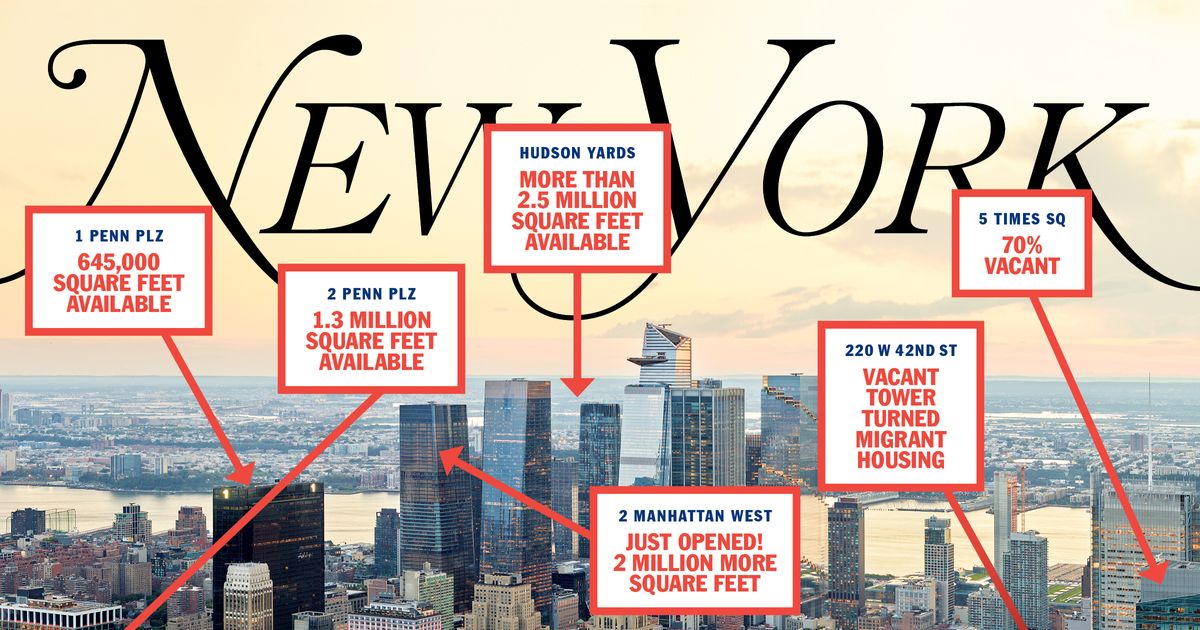
⚠️The great paradox of CRE lending: while owners are freaking out, banks are chilling 🫣 Q2 US bank earnings reported so far paint such a rosy picture of CRE loan risk. Yes, they admit there will be an uptick in losses (maybe), but banks barely show any concern. So why are CRE landlords panicking, not being shy with the press, describing the situation as "apocalyptic" or "a Cat 5 Hurricane"? 🤔 This is how the BIS, the "central bank of central banks," defines CRE loan risk: "the prospects for servicing the loan materially depend on the cash flows generated by the property securing the loan rather than on the underlying capacity of the borrower to service the debt from other sources." According to this (flawed) metric, as long as the property has enough tenants to cover the interests, then the loan wouldn't be considered problematic. This valuation approach applies to "Close-end residential loans" (CERL) where the borrower is typically a corporate landlord that rents the properties. Hence, these assets are as well materially dependent on the ability of these to generate enough income to cover interests. Here is the mind-blowing fact: despite what happened in 2008, banks still need to appraise the principal value of real estate collateral only if they are the principal occupant of the property. 🙄 Remember what triggered the 2008 GFC? Yes, interest-only loans... 🤯 So when will CRE ($2.9T) and CERL ($2.3T) start to be a problem for US banks? Most of these loans are "non-recurring," meaning the landlord can hand over the keys to the lender and walk away. While, as of now, CERL properties' vacancy rates are still at historical average ( $BREIT investors can take a sigh of relief), CRE vacancy rates are increasing fast and currently at 18.6%, a level seen last time during the CRE glut of the early '90s. This is an aggregated number, though. If we split it into Cat A, Cat B, and Cat C CRE office buildings, according to CRE office landlords, the vacancy for the last two categories is already at 50% and 70% in some prime locations like NYC, LA, and SF, with many Cat C buildings already completely empty, badly in need of heavy renovations, and practically worthless. Then it shouldn't come as a surprise that big landlords like Brookfield and Starwood started to default on their CRE loans and hand over the properties to banks. Why are CRE landlords so catastrophic? Because the trend is spreading to Cat A buildings with sub-lease availability climbing fast, signaling tenants' intention to downsize as soon as their agreements expire (unless they walk away earlier than that). Accounting for the current sublease rates reported by CBRE, the real vacancy rate of CRE is already beyond 25% in aggregate 😳 When the banks get hold of a property, they need to start assessing its "value," but again here no problem on the surface since prices are holding up pretty well... in aggregate! What about Cat B and Cat C? The latest transactions reported a drop in prices already up to 35% in the first category and up to 60% for the second one 🥶 during the GFC, CRE property prices declined ~30% at the bottom of the crisis... now the crisis didn't even start! ⚠️ Considering the average LTV for a CRE loan is ~75%, banks are already "losing" on their principal, and this is only the beginning 🥵 It's impossible to make forecasts at this stage, but banks (and regulators) are dangerously ignoring the risk banks will end up holding a huge amount of Cat B and Cat C worthless CRE. Isn't this what's exactly happening in China? Look at how things are going there, with even state-backed developers defaulting on their debt (#Wanda and #Greenland), and #stocks already trading at the same levels as during the GFC 🚨 Add to this banks' mounting liquidity problems, with FHLB advances already at ATH beyond GFC levels and an ongoing deposits hemorrhage, and you have the perfect setup for the mother of all banking crises. 🤯 Suggested read: https://nymag.com/press/2023/07/the-panic-and-pivot-of-manhattans-office-megalandlords.html



@MFHoz - HZ
🧵 Why the Market Hasn’t Crashed Yet Despite Interest Rate Hikes, But Is Poised for a Downturn in 2024 🔻 https://t.co/5KFQuBWQyY

@MFHoz - HZ
1/ Monetary Policy Lag: First, understand that monetary policy, especially interest rate adjustments, doesn’t impact the economy instantaneously. It’s akin to a delayed fuse; changes in interest rates take time to percolate through the economy. When the Fed hikes rates, the immediate effect isn’t a crash but a gradual adjustment. Businesses and consumers adjust their spending and investment decisions slowly. This lag explains why we haven’t seen a market crash yet, despite the rate hikes. The full effects are yet to be felt, and when they do, they will be significant.
@MFHoz - HZ
2/ Households’ Savings Buffer: The pandemic era saw a surge in personal savings. Many households accumulated a financial cushion, thanks to stimulus checks and reduced spending opportunities during lockdowns. This excess savings acted as a shock absorber against the initial effects of rate hikes. People weren’t as pressed to cut spending or liquidate investments immediately, which in normal circumstances could lead to a market downturn. However, this is a temporary buffer. As savings deplete and credit costs rise, consumer spending will retract, inevitably impacting the market.
@MFHoz - HZ
3/ Federal Reserve’s Bank Support in 2023: A critical point here is the Federal Reserve’s intervention to support banks in 2023. This move provided a safety net for the financial sector, preventing a cascade of failures that could have led to a market crash. By ensuring liquidity and stability in the banking sector, the Fed averted an immediate crisis. However, this is more a deferral than a solution. The underlying issues of high debt levels and over-leveraged positions remain and are likely to surface as the economic conditions tighten further in 2024.
@DarioCpx - JustDario 🏊♂️
🚨BREAKING: THE #FED JUST PULLED THE PLUG TO BANKS #BTFP LIFE SUPPORT🚨 1 - I was wrong, I never thought they had the guts to do it 2 - Read my post below from months ago to understand how critical is the #BTFP to keep the whole financial system together Fasten your seatbelts! https://t.co/39DOOewK62

@DarioCpx - JustDario 🏊♂️
My comment on this news 👇🏻
@DarioCpx - JustDario 🏊♂️
#JustDarioDaily 🚨WITHOUT THE #FED #BTFP, BANKS WILL NOW HAVE A HARDER TIME TO “HIDE TILL MATURITY” THEIR LOSSES 🤷🏻♂️🚨 I started the year writing about how in 2024 the practice used by banks of hiding their losses in Hold to Maturity books (hence “hide till maturity”) would have come to an end [Post Below]. However, I was wrong there, because I wrote this: “As I explained in a post almost 3 months ago (x.com/dariocpx/statu…), big banks too are benefiting from the #BTFP, which is why the only scenario in which this program isn't extended this coming March is the one where the #FED led by Jerome Burns goes totally out of its mind.” Well.. As per the #FED press release that just came out at 7pm EST today (Picture 1), either our dear Jerome Burns finally realized what it means to be a Central Banker, or he lost his mind and unintentionally just rug pulled half of the US banking sector. There is a potential third justification for the #FOMC action though: okay, we are in a US election year, and a bull market is good for the incumbent president, but looking at what’s happening with $NVDA, imagine if this idiocy pops before November from a much higher market cap, and Biden ends up being forced to bail out hedge funds, fraudsters, and gamblers singing “Kumbaya!” all together on this stock right now. 🙄 Please let me know in the comments what do you thinks is the reason that pushed the #FED to do what they just did. Nevertheless, the outcome is not going to change, and this is what’s coming. 🚩 THE #FED WILL STOP “LEAKING” LIQUIDITY As you can see in Picture 2, the #BTFP was effectively #FED QE in disguise, and it is not a coincidence that the #stocks bubble re-inflated once the net liquidity in the system resumed its climb. 🚩 THE #FED WANTS (TO TEACH) BANKS TO USE THE DISCOUNT WINDOW There are two reasons why banks don’t like to go (and beg) at the #FED discount window: 1 - Makes their liquidity issues manifest. 2 - The discount applied to the assets they want to pledge for liquidity (usually the best they can offer) will reveal the true value of their HTM books and, likely, their insolvency. Now here is where the #FED is making a big mistake. Many US Regional Banks right now have an insolvency problem, hence they need capital. Accessing liquidity at the discount window won’t have any impact on the radioactive defaults in their Loans books. Imagine my shock if they already have a new TARP plan drafted out at the #FED but they hope there won’t be a need to disclose it before November. 🚩 INVESTORS WILL NOW SCRUTINISE BANKS' BOOKS MORE SERIOUSLY So far this year, the US banks' earnings season has been horrible, to say the least. Ask anyone working in a bank how’s the mood there and what do they expect the business to go in the near future; while in #stocks, the morale is through the roof, bankers' one is through the floor. Despite this, bank #stocks have been doing okay since the Q4-23 earnings season started. Why? Because the #FED “got it covered” with its magic wand that could fix everything like, for example, empty shopping mall loans stuck in the books of a bank somewhere and now worth not even the cost of the material build that shopping mall to begin with. Management at banks like $BAC totally embraced this thinking to the point there is barely a trace of CRE crisis in their results 🙈: https://x.com/dariocpx/status/1746581808538689762?s=46&t=Hz7-qku8ZNVPw6L9nBJOZA Personally, I couldn’t believe my eyes 1 hour ago when the #FED announcement popped up on my screen, I even went to check if it could have been a deep fake or, like what happened to their #SEC cousins, the #FED too didn’t use a 2FA to protect their X account. But no, the official announcement was there on their website (Picture 3) and all it missed were 2 words at the end of it: “GAME OVER” 😐


@Cancelcloco - Ian Carroll
We might have our first bank failure of 2024 incoming. And the OCC proposing a new rule to wave margin requirements for big banks in periods of “high volatility” Wonder what they’re worried might cause high volatility 🤔 I’m sure their hundreds of trillions of dollars of derivatives will be fine…

@annvandersteel - Ann Vandersteel
BANKING COLLAPSE IMMINENT THE RESET HAS BEGUN Effective March 26, 2020, the The Federal Reserve Board reduced reserve requirement ratios on all net transaction accounts to zero percent, eliminating reserve requirements for all depository institutions In Spring 2023 the Banking Collapse started with smaller regional banks. In Spring 2024 the next wave of Banking Collapse will continue. Nov 2023 the CEOs of Bank of America, Wells Fargo and JP Morgan told Congress they could not go from 0% reserves to be held to a 3% reserve balance. The current Deposit to Loan Ratios means the banks can not sustain any type of run on the banks. When the people realize what is happening their will be a run on the banks. Effective March 11, 2024 there will be no more money to loan out and the Fed will pick and choose who gets to loan out money Congress passed the bail In provision with 2010 Dodd-Frank Wall Street Reform and Consumer Protection Act which allows the banks to confiscate assets. The bail-in relief was legalized in the U.S. following the 2007–2008 financial crisis in which banks deemed “too big to fail” were bailed out by the U.S. government. The specific section of Dodd-Frank that deals with bail-ins is Title II: Orderly Liquidation Authority (OLA). Who's exposed? ✅401Ks (Retirement Accounts) - currently there are $27T in retirement accounts ✅People with cash positions in banks will have their money taken. The banks have already started this by limiting how much money you can take out, transfer on Zelle or move in general. What does this mean? This will be the demise of the middle class leading to a recession and then depression. People will be left with nothing if they do not diversify their cash into paying off loans, buying gold, silver, crypto or other hard assets. Potential? This could keep Trump from winning the White House. In a bank collapse the government could institute martial law, shut the banks and ration your access to money. The loss already sustained in 2020 is worse than what happened in 2008. The stock market manipulation coupled with the massive money printing and inflation has done a better job of masking the incoming collapse. AND COLLAPSE IS COMING Worldwide markets - Honk Kong, Japan , S&P, Dow - all time highs - why? Blackrock and Vanguard control trillions in assets and they are manipulating those stocks with sustained earnings and rotating out any stocks that can't perform and rotating in AI stocks into S&P 500 and other exchanges. Result: The stock markets will hang in there, but the banks and the dollar will collapse. Cryptos are going crazy and will allow purchasing stocks with crypto. And as BRICS comes more online, your are going to see the transfer to asset backed transactions like the new @abaxx_exchange will facilitate in #LNG and #batterymetals What is the hedge against inflation: With the last month in the crypto market you can't ignore that crypto, gold, and silver are the hedge against inflation. Warning: Keeping cash in banks is not the safe nor smart play. Putin had his take on the U.S. dollar too https://www.youtube.com/shorts/cnZPz2AlfQ0
@Prolotario1 - Ariel
The Banking Collapse 📉 "The financial world is on edge as Federal Reserve Chair Jerome Powell's alarming statement ". “I Expect There To Be Bank Failures” Guess what ends Monday? Bank Term Funding Program. This is one of the reasons Donald Trump said... "It's Over".

@QFs_Global - Tp
THE RESET HAS STARTED Effective March 26, 2020, the Federal Reserve Board reduced required reserve ratios on all net transaction accounts to zero percent, eliminating reserve requirements for all depository institutions. In the spring of 2023 the banking collapse began in the smaller regional banks. In the spring of 2024 the next wave of banking collapse will continue. In November 2023, the CEOs of Bank of America, Wells Fargo and JP Morgan told Congress that they could not go from 0% reserves to a 3% reserve balance. Current deposit-to-loan ratios mean that banks cannot withstand any type of bank run. When people realize what is happening, there will be a bank run. Starting March 11, 2024, there will be no more money to lend and the Federal Reserve will choose who can lend money. Congress approved bail provided in the Dodd-Frank Wall Street Reform and Consumer Protection Act of 2010, which allows banks to seize assets. Bailout relief was legalized in the United States after the 2007-2008 financial crisis, in which the US government bailed out banks deemed “too big to fail.” The specific section of Dodd-Frank that deals with bail-ins is Title II: Orderly Liquidation Authority (OLA). Who is exposed? 401K (Retirement Accounts): There are currently $27 billion in retirement accounts People with cash positions in banks will have their money taken away. Banks have already started limiting the amount of money you can withdraw, transfer on Zelle, or move around in general. What does this mean? This will be the demise of the middle class, leading to a recession and then a depression. People will be left with nothing if they don't diversify their cash to pay off loans and buy gold, silver, cryptocurrencies or other tangible assets. Potential? This could prevent Trump from winning the White House. In the event of a banking collapse, the government could institute martial law, close banks and ration access to money. The loss already suffered in 2020 is worse than what occurred in 2008. Stock market manipulation, along with massive money printing and inflation, have managed to better mask the coming collapse. AND THE COLLAPSE IS COMING World markets - Honk Kong, Japan, S&P, Dow - all-time highs - why? Blackrock and Vanguard control trillions in assets and are manipulating those stocks for sustained profits and rotating stocks that cannot perform and rotating AI stocks into the S&P 500 and other exchanges. Result: Stock markets will hold, but banks and the dollar will collapse. Cryptocurrencies are going crazy and will allow you to buy stocks with cryptocurrencies. And as the BRICS become more online, they will see the transfer to asset-backed transactions like the new abaxx_exchange that will facilitate LNG and batterymetals. What is inflation hedging? With the last month in the cryptocurrency market, it cannot be ignored that cryptocurrencies, gold and silver are the hedge against inflation.


@1CoastalJournal - The Coastal Journal
As the financial markets week kicks off, regional #banks continue their #bloodbath as The Feds Powell will announce Higher for longer at the #FOMC meeting on Wednesday. https://t.co/9SNyBaXDns


@balajis - Balaji
The banking system broke in 2023. They've just been hiding it in plain sight. And it's already far beyond 2008. https://t.co/Uk3yhV4rKH

@StealthQE4 - QE Infinity
The GFC bailout looks like just a blip on the radar vs what the Fed is doing today to support the banks with liquidity via loans/facilities. And we wonder why the market is up. This chart blew me away. https://t.co/AAUQuSgRqU

@peruvian_bull - Peruvian Bull
Banks have half a trillion in unrealized losses and the Fed will print every penny of it if any of the GSIBs actually fail https://t.co/IHjmA3G6bh

@FinanceLancelot - Financelot
FINALLY people are admitting the Federal Reserve & bank cartel caused the 2020 financial crisis, intentionally releasing "the virus" to cover it up! 🥳 Only now it's too late, because they're about to do it again...
@FinanceLancelot - Financelot
Funniest people are those who think the '20 crash was caused by a virus. The banking system was already collapsing Sep '19 forcing the Fed to start REPO interventions like '08. The system only collapsed when the Fed pulled REPO away 2023 is the same game plan with BTFP & OCE 🤫


@FinanceLancelot - Financelot
The Fed admits guilt of causing the 2020 crisis by pulling the Emergency Repo rug at exactly the worst possible time, despite the banking system being on life support since Sep 2019 The Repo rug was pulled right after Powell attended the Bezos party 🤫 https://www.federalreserve.gov/econres/notes/feds-notes/what-happened-in-money-markets-in-september-2019-20200227.html

@Prolotario1 - Ariel
🚨Breaking: The US Treasury Bond Market In The Red What are the implications? Investors Losses: Well anyone holding US debt would suffer total losses, including central banks, pension funds, governments etc. This would destroy confidence in the financial system. Is this still a November To remember? Everyone who has been asking about 401ks or retirement here is your answer. Well let's see my fellow compatriots. S Economic Crisis: The US government's ability to fund operations and debt would be crippled, undermining the dollar's reserve status. This could cause a deep recession or depression. Remember we are going on the Gold Standard. The dollar has to lose value in order for the Iraqi Dinar to become atleast 1:1. This is about currency parity. Equal playing field. Banking collapse: Banks hold huge Treasury reserves - deleting this asset base would trigger bank failures, bail-ins, and potentially wipe out savings. Which is why I told you all to put your money in Basel 3 Compliant banks for months. Which is why I said certain banks do not have until 2025 to implement ISO-20022. I stand by that. This is not an olive basket. 2025 is for those banks left over. Policy Chaos - The Federal Reserve and central banks worldwide would be thrown into chaos as a core pillar of global finance vanished. Emergency measures will not do them any justice in this case. Why do you think I have been constantly telling you all that the US Treasury have been running things? This situation was planned. How? Devolution. Where have you heard over the years that gold will end the Federal Reserve? Market Instability - Taking the world's benchmark risk-free asset off the books would ofcourse massively disrupt debt markets and interbank lending, creating extreme volatility. US Treasurys are considered the safest asset out there. They are foundation that the whole house of cards is built on. If you remove that foundation, the stability of all the markets gonna come crumbling down understand? People that countdown on this website (https://qofficial.net/password) is looking really interesting right about now. Especially if this goes through as Janet Yellen has implied. A week to remember? It's definitely looking like this. Because remember some weeks back I told you all the 1st domino for the public would be this month? What have I been wrong about this far? I will post the document below.
