TruthArchive.ai - Related Post Feed

Saved - December 1, 2023 at 10:38 AM

@RadioGenoa - RadioGenoa

French farmers don't joke. https://t.co/vEaZyuoFom

Saved - December 9, 2023 at 11:59 AM

@PeterSweden7 - PeterSweden

French farmers spraying MANURE on government buildings in protest. SHARE - The media is not showing you this 👇 https://t.co/Ai1PZxRNWa

Saved - December 19, 2023 at 7:59 PM

@sxdoc - TRUTH NOW ⭐️⭐️⭐️🗽

Happening in Germany, France, Holland Farmers say WE WILL NOT EAT BUGS! We will grow normal food or shut down the EU German farmers in Berlin en masse today demanding the government withdraw plans to abolish agricultural diesel and vehicle tax exemptions. https://t.co/g32DxAq1Np

Saved - December 20, 2023 at 2:47 AM

@ryangerritsen - Ryan Gerritsen🇨🇦🇳🇱

An amazing sight. The protesting farmers in Berlin continue to hold the line. https://t.co/a4ghVL5euj

Saved - January 22, 2024 at 9:32 PM

@PeterSweden7 - PeterSweden

IT'S HAPPENING Now the Scottish farmers have begun protesting - It's happening all over Europe. Did you hear about this on the news? 🚜🏴󠁧󠁢󠁳󠁣󠁴󠁿🚜🏴󠁧󠁢󠁳󠁣󠁴󠁿🚜🏴󠁧󠁢󠁳󠁣󠁴󠁿 https://t.co/lEePVtoBrT

Saved - January 23, 2024 at 4:20 AM

@WylieGuide - 🇺🇸 Rich Howard 🇺🇸

French farmers not only blocking motorways across the country tonight but also bringing trains to a standstill as they dump manure and soil onto the tracks. https://t.co/hxGR9zjVyx

Saved - January 29, 2024 at 2:38 PM

@persephvoice - Persephone

FRANCE - The TAXI drivers have joined the farmers and construction workers blocking a major route into Paris. https://t.co/QsOefqY8Eh

Saved - January 29, 2024 at 4:20 PM

@BGatesIsaPyscho - Concerned Citizen

🚨🇫🇷 France Revolt - Macron mobilises 15,000 Police Officers in response to Farmers, Taxi Drivers & Construction Workers blocking access to both Paris & Toulouse Here we go - this is about to get interesting…… https://t.co/AS4CVA4saB

Saved - January 30, 2024 at 1:47 PM

@PeterSweden7 - PeterSweden

WOAH 🚖🇫🇷 The French taxi drivers have joined the farmers protest. Did you see this on the news? https://t.co/qMQTVVE5Jp

Saved - February 1, 2024 at 3:17 PM

@RadioGenoa - RadioGenoa

Supermarket shelves in France and Belgium are starting to be empty. No farmers, no food. https://t.co/9w5nUHGMGM

Saved - February 1, 2024 at 1:14 PM
reSee.it AI Summary
Food shortages reported in Paris as farmers continue to protest against the Macron government. Armoured vehicles are being used to block roads, but tractors are driving around them. Macron has left the country, sparking speculation about his personal safety. Join the resistance at freedomtraininternational.org.

@JimFergusonUK - Jim Ferguson

Breaking News: Food shortages reported in Paris. As the Macron globalist infiltrated government attempts to crush the protesters with arrests and intimidation the people continue to fight back. The farmers cannot be stopped and their is massive support from the public and citizens of France. In a desperate attempt to protect food distribution centres armoured vehicles are trying to block roads and prevent the farmers from getting there. However the tractors have the ability to traverse the countryside and go off road and so they are simply driving around the road blocks. Macron has left the country reported to be feasting with dignitaries in other countries. Some have suggested he is worried about his personal safety and that this may be the reason he has left France. Its time to resist Join us http://freedomtraininternational.org Thank you @Sam1am1911 for the report #France #farmerprotests2024 #USA #UK #France #Poland #Germany #Holland #Romania #Belgium #FreedomTrainInternational #KlausSchwab #WEF2030Agenda #DeutschlandStehtAuf #Unternehmerproteste #Bauernproteste #Bauern #Farmers #NetZero #ClimateScam #FreedomFighters #GlobalResistance #WEF #Holland #DutchFarmers #GlobalistParasites #Holland #Poland #EU #Italy

Video Transcript AI Summary
Protesting farmers in France are causing major disruptions by blocking highways and threatening to blockade Paris. Despite the presence of 15,000 police officers and numerous arrests, the farmers are determined to continue their protests until their demands are met. The impact of the protests is already being felt, with food deliveries being severely affected and wholesale fruit and vegetable companies experiencing shortages. Concerns are growing that if the roadblocks persist, it could lead to difficulties in the food supply chain, affecting bakeries and stores in big cities like Paris. The farmers have garnered significant public support, with bakeries sending free croissants and baguettes to show solidarity.
Full Transcript
Speaker 0: Okay. Now, it's getting serious. Macron mobilizes 15,000 cops as protesting farmers threatened to blockade Paris. They've already blocked major highways and bringing traffic in many areas to a standstill. Talks for a second time has already failed to meet a meaningful resolution and the protesters are saying we're going to keep protesting. Now so far, police arrested 91 as protesting farmers forced into Paris food market. There have been other arrests made in another areas. They're really been trying to crack down. Police are showing their presence in large numbers but not all the farmers are being intimidated. Some are fighting back and others are going around the police roadblocks to achieve, what they wanted to in this protest, done and, they're not done just yet. They say they will continue to protest until they get what they want from the EU and from their government. I really don't think this will be over anytime soon. This is from an article and it says at the vast fungus food market outside the reached capital, wholesale food and vegetable companies were feeling the effect of French farmers' protest. Merchandise hasn't arrived. There's definitely an impact, said Cecilia who works at a wholesale fruit and vegetable. It's carrots, potatoes, cabbages, all kinds of fruit and vegetables. Deliveries are very difficult because of the roadblocks. Around 40% of our vegetables haven't been delivered today. Everyone is affected. It will continue like that for the coming days. The government and French police are seeking to stop any protests from reaching the vast food delivery base at Rungus. But the fact that 100 more farmers and tractors continue to block key motorways on the outskirts of Paris and across France this week was already having an impact on food deliveries amid massive public support for the farmers. Concerns is growing that if roadblocks intensify, it could cause difficulties in the food supply chain this week, bakeries across France have been sending free croissants and baguettes to the barricades to support the farmers, but many are concerned that if motorway blockade continue long term, it could have an impact on the lauries delivering flour and ingredients that would have businesses making bread, sandwiches, cakes, and pastries. There are two ways this could really affect us. 1st, the supply. In big cities, bakeries don't have much space to store ingredients, perishables, milk, eggs, cream cannot be stored for long. So without deliveries. These bakers are worried that they will not get the ingredients in order to keep their business running. Stores will also not get food and supplies, so things could really get bad for Paris.
New landing page – Inspiration Station freedomtraininternational.org
Saved - February 4, 2024 at 2:20 PM

@BGatesIsaPyscho - Concerned Citizen

🇫🇷 French Farmers taking ‘shitting on the Police’ to a whole new level. Police - please support the Farmers - they feed you, your Political don’t give a single crap about you. https://t.co/pls4Hn5trn

Saved - February 5, 2024 at 1:54 PM

@wideawake_media - Wide Awake Media

I repeat: French farmers are NOT messing around. Whose side are you on? The farmers or unelected globalists and their bought and paid for politicians in government? #NoFarmersNoFood https://t.co/qOCMy0J5IT

Saved - February 8, 2024 at 1:18 AM

@persephvoice - Persephone

SPAIN - The police set up road blocks to stop the farmers. So the farmers erm … just drove through the fields! .. because that’s what tractors do 🤣 @JeremyClarkson https://t.co/gnAcFQXeHX

Saved - February 24, 2024 at 11:39 AM
reSee.it AI Summary
The Prefect Nunez decided to turn around and leave the Salon de l'agriculture due to the hatred he faced from the farmers. The situation at the event is tense and out of control, with farmers attempting to get closer to President Macron. It feels like a rugby match between the blue (police) and green (farmers) teams, and there might be a post-Macron departure celebration.

@CharliB97783485 - Charli☀️🦎

conscient de la haine qu'il suscite, le Préfet Nunez préfère faire demi-tour face aux agriculteurs ce matin au Salon de l'agriculture à Paris 🎥CLPRESS https://t.co/SnIedFKbJK

@CharliB97783485 - Charli☀️🦎

(suite) la CRS 8 est sur place https://t.co/RAXKATb8Qz

@CharliB97783485 - Charli☀️🦎

(suite) un chèvre coincée sous les gendarmes 🤔😒 https://t.co/ptLNufdSsn

@RemyBuisine - Remy Buisine

Extrême tensions au salon de l’agriculture. Situation hors de contrôle. https://t.co/Rq4fcZIq2R

@CharliB97783485 - Charli☀️🦎

(suite) https://t.co/3YP5GAu0hh

@CharliB97783485 - Charli☀️🦎

nouvelle percée des agriculteurs au salon de l'agriculture pour tenter de se rapprocher du président Macron ça promet pour les JO https://t.co/Ez5Z37PnzA

Video Transcript AI Summary
Les agriculteurs tentent de forcer les barrages pour approcher Emmanuel Macron au salon de l'agriculture. Des affrontements se produisent, avec des forces de l'ordre qui ont du mal à contenir la foule déterminée. Des gaz lacrymogènes sont utilisés. Certains agriculteurs parviennent à passer malgré la présence des gendarmes mobiles. Les agriculteurs expriment leur désir d'entendre des réponses concrètes du président. Ils resteront présents tout le week-end. Les tensions persistent avec des huées constantes.
Full Transcript
Speaker 0: Les images qui nous parviennent du hall un montrent David Dunnal vous êtes à à leurs côtés une reprise des tensions. Il y a encore plusieurs plusieurs jets et vous avez vous avez ces agriculteurs qui viennent de réussir pour certains à forcer ce point de barrage et voyez ça repart avec de nouveau un gros mouvement de foule qui vise à casser ce barrage de force de l'ordre qui est en train de céder et vous avez ces forces de l'ordre qui pour certaines sont sont à terre et certains agriculteurs sont parvenus parvenus à passer il y a il y a il y a quelques personnes qui sont tombées au sol qui se sont relevés et ce sont ces agriculteurs qui sont qui sont parqués entre guillemets qui sont empêchés de naviguer dans les allées depuis tout à l'heure certains ont forcé tout à l'heure et donc voilà le point de barrage l'un des points de barrage a cédé donc et il est en train de se reformer avec des agriculteurs qui sont particulièrement déterminés qui nous ont dit vouloir aller au contact d'Emmanuel Macron j'entends encore Macron démission il y a des sifflets il y a des oui il y a encore des échauffourées là entre entre des des personnes qui ont réussi à forcer l'entrée, il y a des personnes qui sont en train de se bousculer sur des sur des stands et ça repousse ça y est ça repousse son temps ici pour tenter une nouvelle fois de passer il y a une détermination extrêmement chez ces agriculteurs qui veulent vraiment aller voir Emmanuel Macron l'empêcher également nous disent-ils de faire son salon normalement ils attendent du concret, c'est ce qu'ils nous disent et voyez il y a énormément de personnes ici au moins plusieurs centaines qui sont en train de de pousser et les forces de l'ordre ont pour l'instant du mal à à contenir tous ces agriculteurs qui toutes les quinze minutes vingt minutes tentent de passer à un nouveau point de de passage. Oui, il y a des gaz lacrymogènes aussi qui sont utilisés David. Speaker 1: Ah oui, je peux vous confirmer, ils sont en Speaker 0: train de de venir jusqu'à nous ces ces gaz lacrymogènes. Alors, je n'ai pas vu d'usage de grenade lacrymogènes peut-être des petites gazeuses mais effectivement je vous le confirme au milieu des bêtes dans ce salon de l'agriculture on est en train de respirer pardon du gaz lacrymogène qui a probablement très probablement été utilisé pour repousser ces ces agriculteurs, certains ont quand même réussi à passer la ligne de force de l'ordre, je vois que ce sont des gendarmes mobiles maintenant qui tiennent cette cette ligne et voyez monsieur qu'est-ce qui s'est passé là bien Speaker 1: ils nous ont gazé, c'est une autre, vous avez essayé de forcer le forcer le passage On n'a rien forcé, ils veulent le point de vue, c'est passé. Pourquoi vous voulez passer Qu'est-ce que vous voulez faire On veut se faire un tan, c'est tout. Entendre du Speaker 0: président de la République Oui exactement. Speaker 1: Vous allez continuer à la toute la journée, s'il le fera toute la journée, on est là pour le week-end, on y reste. Speaker 0: Est-ce que ça vous fait voir des gendarmes mobiles et des forces Speaker 1: la première fois qu'on voit des gendarmes au salon de rupture c'est la première fois c'est l'autre Le salon de la culture on est chez nous. C'est pas lui. Speaker 0: Merci, vous voyez, il y a une, il y a encore pas mal de personnes ici qui sont devant ce ce point de fixation avec des des huées qui reprennent constamment ici.

@CharliB97783485 - Charli☀️🦎

(suite) ça donne l'impression d'un match de rugby entre les bleus et les verts peut-être y aura t'il une 3 ème mi-temps dans les travées quand Macron sera parti ? https://t.co/GegpkD8Q4i

Saved - February 27, 2024 at 12:56 AM

@jameskanter - James Kanter

Here is where #farmers storm the EU area at Maalbeek near EU HQ. "It looks like civil war" say EU officials as tractors overwhelm police. #FarmerProtest2024 #FarmersProtest2024 https://t.co/GbGPjhNuBg

Saved - February 29, 2024 at 9:53 AM

@PeterSweden7 - PeterSweden

WOAH The Spanish farmers are now dumping trees on the motorway BLOCKING the border with France. Farmers are saying NO to the Agenda 2030. SHARE - Why isn't this bigger news? 👇 https://t.co/a3o7ByHPF4

Saved - February 29, 2024 at 2:12 PM

@BGatesIsaPyscho - Concerned Citizen

Watching a Farmer in Brussels manoeuvre his manure tanker down the street & shower EU Police with literal sh*t is priceless. The Revolution will require Police to pick their side wisely. https://t.co/4tzZ5PGeR5

Saved - March 3, 2024 at 4:23 PM

@LetsGoBrando45 - Brandon Taylor Moore

The farmers ain’t playin’‼️ They just took care of the #EuropeanUnion headquarters in #Brussels. 🔥🔥🔥😂 Anyone seeing this on the news? https://t.co/42E45eVoCO

Saved - March 9, 2024 at 1:48 AM

@TheRealKeean - Keean Bexte

HAPPENING NOW: Canadian farmers are rising up, and have locked down their local roads in Quebec.

@TheRealKeean - Keean Bexte

FULL STORY: https://thecountersignal.com/quebec-farmers-protest-through-streets/
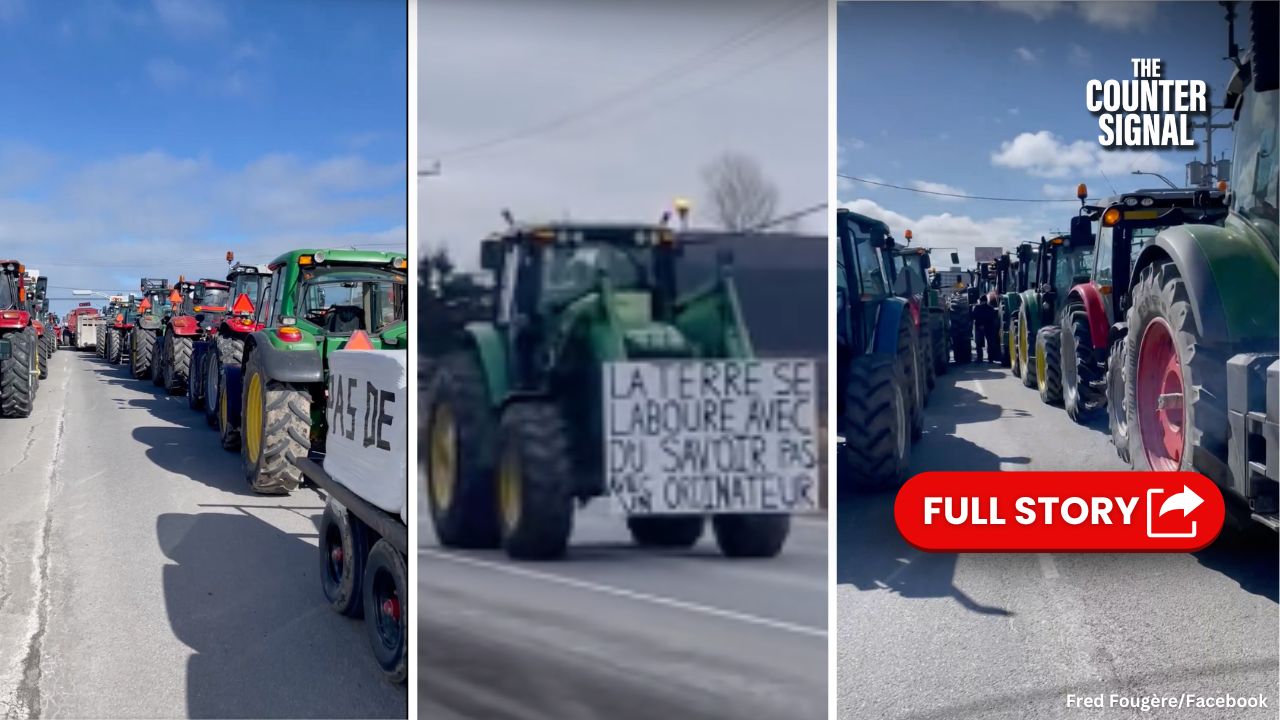
Quebec farmers protest through streets Inspired by European farmer protests, Quebec farmers have launched one of their own against government policies. thecountersignal.com
Saved - November 19, 2024 at 3:16 PM

@PeterSweden7 - PeterSweden

BREAKING: French farmers are dumping garbage outside government buildings in protest. The farmers protest are back. SHARE - The mainstream media won't show you this 👇 https://t.co/OV0CAZzOcC

Saved - November 19, 2024 at 6:13 PM

@PeterSweden7 - PeterSweden

THEY ARE BACK French farmers are dumping garbage at government buildings in protest. This comes as 10.000 farmers protested in London today. 🚜🚜🚜 https://t.co/3PjfENRcwH

Saved - February 22, 2025 at 6:42 PM
reSee.it AI Summary
Myriam Palomba shared striking images of the repression faced by farmers from the Coordination rurale at the agricultural fair, calling for Macron's resignation. In response, BGroseille noted that there are many oddities in the video presented.

@myriampalomba - Myriam Palomba

Incroyables images de la répression des agriculteurs de la Coordination rurale au #SalDeLAgriculture ! #MacronDemission https://t.co/wmmt2JlKy2

@BGroseille - Brandon Groseille ⚜️ ✝️

@myriampalomba Il a y beaucoup de bizarreries dans cette vidéo. https://t.co/eoNtnM8toj

Saved - December 19, 2025 at 8:05 AM

@BGatesIsaPyscho - Concerned Citizen

🚨🇪🇺 The EU Deploys the Military No not against Russia - but against its own Farmers - the people who work 365 days a year non-stop, care for the countryside and grow all food‼️ https://t.co/Zf2pFSvcDA

Saved - January 13, 2026 at 2:52 PM

@RedactedNews - Redacted

🔥 Reports out of Europe claim Macron is hiding in a bunker as thousands of French farmers shut down Paris. Is the country spiraling into open revolt? @ProfessorWerner is with us. https://t.co/NBjB7l8mwe

Video Transcript AI Summary
Emmanuel Macron and his husband reportedly went into hiding in a Paris bunker as thousands of French farmers blocked the capital with tractors, prompting arrests and rising calls for Macron to resign. Professor Richard Werner notes the protests are significant and may influence EU decision-making beyond France. Werner explains that the French government appears to be wavering on the EU–Mercosur free trade deal (Argentina, Brazil, Peru, Paraguay), which has been in the works for decades. The European Commission has binding authority, and under the new qualified majority voting system, France blocking it alone won’t stop the deal. Germany and Spain back the deal, while France’s opposition complicates approval, potentially delaying or revising the agreement if farmers’ pressure persists and media coverage sustains the public push. Farmers fear price declines from the Mercosur influx could undercut European agriculture. The current trigger allows governments to intervene if European prices fall by more than 8%; French farmers want this threshold lowered to 5%. They argue that European farming already operates with slim margins amid rising energy costs and EU-imposed burdens intensified in recent years. The discussion touches broader farm policy and nationalism in Europe: Dutch and German farmers faced herd culls and other policies, with Dutch and Danish protests cited. The Netherlands’ culling of herds and other measures are mentioned as part of a trend toward tightening control over farmland and food production, with alleged aims toward urban-planning shifts (15-minute cities) and reduced reliance on animal agriculture. The UK is also in the picture, with tractors in solidarity with French farmers. In the UK, inheritance taxes are framed as a tool to force privatized farmland back into state control, a tactic criticized as an expropriation policy. Oxford was among protest sites. Beyond agriculture, the conversation highlights Europe’s broader economic strain: Germany is in a third year of economic contraction—the longest since 1933—while other EU economies, including France and Austria, show weak indicators. Banking sector vulnerabilities are noted, with the ECB’s asset-bubble strategies in real estate contributing to potential instability. A new EU CO2 import tax system is described as highly complex (a 3,000-page framework with a 1,600-page registry), imposing substantial compliance costs on importers and potentially driving more firms out of business. Energy costs remain high, and climate-policy mandates are viewed as further straining the economy. The speakers critique leadership for focusing on external conflicts (Ukraine) rather than domestic economic revival, suggesting that ending the war could help economies recover. Viktor Orban’s Hungary is cited as a contrasting example, with border control policies claimed to reduce crime and pressures elsewhere. The exchange closes with a sense of urgency about Europe’s deteriorating situation, as leadership debates and domestic policy choices appear to align with worsening economic and social stress across the continent.
Full Transcript
Speaker 0: Well, reports this morning in Europe say that French president Emmanuel Macron, along with his husband is in hiding in a bunker in Paris right now. Why? Well, thousands of French farmers have brought Paris to a standstill, taking over the heart of the nation's capital. Of course, police are arresting farmers. As you can see here, they've, made thousands of tractors, the Champs Elysees. Here is arrests happening, of course. And now there are incredible amounts of demand for Macron to resign, as you can see here. Watch. Professor Richard Werner is the author of princes of of the yen, Japan Central Bankers, the transformation of the economy. One of the smartest economists in the world is joining us right now to talk more about this. Professor, great to have you back here on the show. So, the pleasure is all ours, of course. What you see happening right now with these thousands of farmers, like, when you see when you see when in the West, see these things unfolding on social media. Well, yeah, this is probably like an isolated incident. No big deal. But this seems to be a very big deal to the Emmanuel Macron government and it's reverberating across Europe. Am I reading this wrong? Speaker 1: Yes, it is. In many ways the farmers have been quite impactful in this case and it looks like at least partly the Macron government has given in and has stated that they will now vote against the proposed international trade deal between the EU and Mercosur, you know, the four Latin American countries Argentina, Brazil, Peru and Paraguay. I mean this trade deal has been in the pipeline for a quarter century really, but it's come to a head. We're sort of underlined the commissar, the President of the European Commission, which has essentially dictatorial powers over the EU, you know, that's just the governance structure that they created, has signed this a while back and now it needs to be passed by a majority vote. They've got this new qualified majority voting system, so one country like France blocking it is not going to stop it. And that seems to be where we are, that there's a sort of proportionality by population and it seemed to be the case that enough countries with enough people are backing it, including Germany, Spain. And so France opposing it, Macron saying, okay, I'm going to back the farmers now on this one, seems to be too little, too late. But we have to see because it's not a given what will happen at that vote. And obviously, if the farmers and that's why the farmers are still fighting here, they can make their voice heard in the media in Europe, there's a chance it may either be postponed or modified again. Why are they against this? What is this about? Well, it's a free trade agreement. And of course these Latin American countries, Brazil is a very large agricultural sector, the fear is that the agricultural products from there will undercut European farmers and essentially drive them out of business. And so they don't want this deal. There is some particular clauses in there at the moment, namely, you know, should this agreement result in European prices falling by more than 8%, then governments can step in and do something and sort of slightly, you know, put this on hold. And the farmers in France now is saying, okay, we want to change this to 5%, should be the pain threshold should prices drop. So that's the fear that prices will drop. And of course, farmers don't really have huge profit margins as it is, and then various costs, very high energy costs particular, and various government EU burdens on farmers have been stepped up dramatically in the last fifteen years under climate various other excuses. So they are quite squeezed and you can see why they're doing this. And of course, you can say, well, but free trade is good and we should allow the cheap products to come in. Farming is very essential. And if a country or a region doesn't have, know, or target supplies from their own sources, then of course you are at risk of being blackmailed or just, you know, essentially if there's an embargo, if there's disruption in trade or may be due to various other things, you know, whether some environmental problem, climate catastrophe, well, let's say some realistic one like volcano eruption or war. And if you don't have your own farmers anymore, then you're in dire straits. So I think it makes sense to actually treat your farmers well. Imagine that and Speaker 0: and not have and not have their entire herds culled. I mean, that's that's what we saw, you know, happening happening of course in The Netherlands. We had a tax issue, of course, in Germany with that with their farmers, but across The Netherlands, across Denmark. And now it with the French, of course, one of the pieces of this was having them their cow herds culled because of lumpy skin disease. That's a that's a piece of this as well. We saw it happening in Canada as well, killing, you know, of course, killing ostrich farms, and they're going after multiple farms now. And they're centralizing this control. They really don't want them to have cows. They really don't want them to have this farmland like we saw in The Netherlands. They wanna get rid of these farmlands, create these fifteen minute cities. Right? I mean, turn this farmland into small little cities. You eat bugs, eat fake processed food, don't eat actual real meat, and they're attacking the very sustenance that provides the food for all of these people. I mean, I it's just deeply disturbing. I remember I was in Berlin during the during the protests there. And the farmers, you know, were were saying, you know, without us, this country collapses in Germany. Without us, you can't we provide food for our our regions, our our our counties. They rely on the butchers, all of these people. Without our meat, without our food, without our chickens, Germany would collapse. Speaker 1: Exactly. And of course, and that's true. And it's a truth that the leadership knows, and that's where you really start to wonder potentially that is the aim. Lot of the policies taken in Europe, Germany particularly, but EU in general, have been so self destructive on every count. So obviously self destructive that it's very hard to just say, oh, we didn't know, we didn't expect this to be this bad. I mean, the economy collapsing, is really in dire straits. Other European economies are not much better. And so this all adds up to really policy imposed, self imposed disaster upon disaster. And of course farming really goes to the basics, if you can't feed your people. We just had the news yesterday that an elderly lady in Germany died because the heating was, you know, it's pretty cold now, snow, minus the temperatures, and there was a blackout of 30,000 households in Berlin. You mentioned you were in Berlin. Why was that? Because some climate what is it, Antifa radical activists had actually blasted some electric supply grid in Berlin, So it was essentially a terrorist attack. But also the government, the Berlin government didn't do anything about it. Foreign migrants that were various places they were taken care of, but locals, they just were left to freeze to death like this lady. Speaker 0: So when Germany Germany has a record of when people blow up their things, whether it's a Nord a Nord Stream a Nord Stream pipeline or a power grid that's that wreaks havoc on 45,000 people, 45,000 homes, and people are without power for five days in Berlin. Germany doesn't do anything about it. Of course, they also shut down their own nuclear power plants as well, so it's not surprising. Speaker 1: Precisely, precisely, as you say. So these are things that authorities have allowed to happen or have actually actively supported these destructive policies. And it goes across the economy, energy, and food supply is a key pillar, and we see the same thing. So it is a very concerning pattern, and it's definitely time for Europeans and others, you know, just to actually take notice and well, we have to stop this, because, you know, when leadership and governments do not protect their people and the basics, and of course there's the whole other issue of borders, you know, lack of border protection, I mean, it just goes on, then the governments are not actually legitimate, and something has to be done. Policies have to be changed because things will continue to to deteriorate at the moment. That's where we are at the moment. Speaker 0: What about in The UK? I mentioned off the top, of course, The UK also lining up now tractors in solidarity with with the French. You see the Canadians, Canadian farmers are you know, they were really led the charge, of course, on the trucker convoy. They said we stand with you. Where do you think things go next? Speaker 1: Yes, well, first on The UK, of course they also have their indigenous issue, the farmers, and that is, I mean, it's the same across the EU, they're being attacked essentially by their own government. And then each country, each government has their own nuance of how they're going to make them suffer. In The UK, it's actually another version of the Dutch expropriation policy via really high inheritance tax. Now that's an old trick. Governments have used this in many countries throughout history. If a government wants to own something that is privately owned, it can always suddenly impose huge taxes and then you have to hand over whatever it is that's been done, whether Russia has done this with some foreign gas companies, but the West has done it. And The UK is now doing to their own farmers. So when, because farmland, land prices are in general quite high in The UK, but farmers aren't rich, they have to live off the land and work the land, but when they die and they own the land, the inheritance tax is going to be raised so much, they have to sell the land, it's gone. And that's pretty evil. A lot of people are really against that, not just the farmers, but it looks like they're going ahead. So the farmers, of course, have an axe to grind. They were also out today protesting in Oxford, and it's very understandable. But unfortunately, and I think, you know, people should show their opinion and express their opinion and their resistance against this, but perhaps we need a bit more of that because they're just steamrolling ahead with all these destructive policies. Speaker 0: Well, turns out every bit of clarity that you feel in your life actually begins at the mitochondrial level, the tiny power plants in your cells. And when they weaken, your thinking actually slows down, your energy drops, and even simple tasks feel altogether harder. This is why researchers are so interested in methylene blue. Doctors have used it for more than a century to treat malaria, blood poisoning, cyanide exposure. In recent years, scientists have discovered something even more interesting about it. In small, controlled doses, methylene blue can actually support healthy mitochondrial energy production, especially in the brain. Doctor. Anna Jaroslavsky from the University of Massachusetts calls it a cellular reboot because it helps the brain produce cleaner, more efficient energy. In 2025, the hype gained traction, actually. People now using methylene blue to support mental clarity, sharper thinking, healthy aging without relying on stimulants. But purity actually matters. And many products online are aquarium grade blue dyes, unregulated powders that are not meant for human use. Many of them even come from China. Well, the wellness company's Recharge is in a league of its own, totally in a league of its own. It's a pharmaceutical grade methylene blue. It's paired with PQQ and NAD, which is the ultimate brain hack hybrid. So get 10% off plus free shipping. Head over to twc.health/redacted and use the code redacted. I'll get you out of here on this, professor. How bad is it in Europe? I mean, it's one thing to be kinda hyperbolic about it. You see blackouts across Germany. Germany, a newer recession, factories closing. You see Fredrik Mertz saying we're going to conscript young men to go to war against Russia. You're seeing this, of course, with these insane leaders right now across Europe. It's one thing to be a little hyperbolic and say it's really bad in Europe. But is it really bad in Europe? Speaker 1: The economic statistics are dire, they're really dire. Germany is in the third year of economic contraction, you know, that's the data. And that's the first time since 1933 that there's been such a long recession, three years consecutively of contracting GDP, the national income shrinking year after year. And that's despite the government turning around saying, okay, we're going to have huge government spending on military, which is basically quite wasteful spending. And so that's pretty bad. The number of bankruptcies is at multi decade highs, but other countries don't look much better. France doesn't look great. Austria doesn't look great. And of course, on top of that, we have the pending problem of below the surface trouble in the banking system because the ECB have been engineering this big asset bubble in the bank, in the property markets, the usual trick, they did this personal island, Portugal, Spain and Greece in the periphery, and now after that, they did it in Germany that peaked in 2022. And so the banks are now quite exposed. We see already the occasional story about banks being a bit in trouble, forced to merge, bank mergers have increased, but that's brewing below the surface. And of course, the economy getting worse will mean that at some stage this also comes to a tipping point. And then we have a big banking crisis on top. But these are just the economic factors. Then you've got and the fundamental we mentioned, energy, no change there despite the obvious desperate need to change things here. Still energy costs are, and then the EU on top of that stepping up various new demands on climate policies. The latest that has just come into effect actually just a week ago is the new it's a fanciful brand new acronym, there's just so many in Brussels, is essentially a CO2 tax on imports, but it's structured in such a cumbersome fashion, the document is 3,000 pages, but every firm in Europe, in the EU has to read this document, because Europe used to be a very open international place. So a lot of companies, of course, are importing things and exporting things all the time. That's really been the life flow in Europe. But now every company that imports has to check and make sure that the various new, brand new CO2 tariffs are being applied. And this is such a complex 1,600 page register of what is applied, how and when and where, for which type of component and product, and these small firms have to do that. So essentially you need now full time staff looking into this. It's going to drive so many more companies out of business as if we needed this. But it's just really symptomatic of how the EU continues to really hurt and damage the economy. So it is pretty bad. And then of course, as you mentioned, I mean, we've got the war situation, Europeans being apparently, at least the leadership, being quite keen to continue this war. The population in all the countries, they don't want war, nobody wants war. And so one could really seize this opportunity with President Trump saying, okay, let's end this. Europe could help, and that definitely would make a difference to actually come to an agreement and end this war, and people could, governments could focus on turning around their really bad economies, but it seems to be the other way around. They're all afraid to focus on their domestic economies. They'd rather focus on international issues and beat the drums. We need to raise more money for Ukraine and step up warfare. It is very destructive. And so it is a pretty bad situation. I mean, almost any count in sector, things are getting worse. Speaker 0: Yeah. Well, you're in a country right now where Viktor Orban, I think this morning said, hey, we figured it out. We closed our border. We don't have the types of crimes, the types of problems that other all of these other European city countries have. Pay attention to what we're doing here in Hungary. Professor, great to see you. Thank you always for enlightening us, And, educating you know, I thought maybe you're gonna talk me off the ledge a little bit about about Europe's dire situation. But no, I'm still on that ledge. I'm still on the ledge looking over. It's an abyss right now. Speaker 1: Unfortunately. Yeah. Yep. Yep. Yeah. Speaker 0: Professor, thank you so much for staying up late with us there at Hungary. We really appreciate it. Speaker 1: No. It was a pleasure. Thank you very much.
View Full Interactive Feed