reSee.it - Related Post Feed

@AllVentured - AllThingsVentured
1/ The rally in stocks since October has been made possible by massive liquidity injections by the BOJ, PBOC, and TGA drawdowns. Let's look at these liquidity sources going forward: BOJ - This liquidity is tapped out. They can't buy more JGBs if they already own them all. https://t.co/umRym2VJWW

@AllVentured - AllThingsVentured
2/ TGA is the next easiest and totally calculable. ~$300B more of drawdowns (liquidity injections) due to debt ceiling then also tapped out. https://t.co/kporfv4Eou
@AllVentured - AllThingsVentured
3/ PBOC is the wildcard and likes to go against the grain. Could they continue this unprecedented pace of injection? Possibly. Are they likely to? I tend to agree with the mean reversionists: https://t.co/Odiehvjcwd
@AllVentured - AllThingsVentured
4/ What does this all mean for risk assets? Hard to say before a the debt ceiling gets raised in the US as the TGA drawdown is a massive injection and could offset a likely fall off in injections from BOJ and PBOC, but there is a bookend to this source: https://t.co/Uc3O6TNQ9k
@AllVentured - AllThingsVentured
5/ So come August or September (at the latest) the debt ceiling will get raised and the treasury will come out with massive issuance which is a massive liquidity withdrawal on top of the Feds $95B/m of QT. This is going to be a MAJOR problem for asset prices. #liquiditycliff
@AllVentured - AllThingsVentured
6/ This is a public service announcement to know what you are buying here. Yes, the tape looks amazing, and yes inflation has softened, but you are also buying an embedded assumption that the Fed cancels QT and comes in concurrent with the #liquiditycliff to monetize the debt.
@AllVentured - AllThingsVentured
7/ Otherwise we are going to get to test out what unprecedented liquidity drain does to asset prices. Will the FED and other central bankers eventually step in? ABSOLUTELY. Will they intervene before the crash in asset prices? You decide.
@AllVentured - AllThingsVentured
8/ But remember, price drives narratives. Especially if this market levitates higher, talking heads will make up all kinds of reasons to explain it when it's really just TGA liquidity. In this scenario, VIX drops lower, and the Fed has no cover to proactively pivot to QE.
@AllVentured - AllThingsVentured
9/ The higher markets go and the more participants are lulled into complacency and higher leverage by a falling VIX and the "new bull market" or even "new paradigm" narrative, the more violent the #liquiditycliff will be when it hits.

@mtmalinen - Tuomas Malinen
Past week I promised a (long) thread on global #liquidity and so, here goes! I have been analyzing the current state global liquidity since early November. Then I warned on possibility of an outright collapse of market liquidity. 🧵1/25 https://mtmalinen.substack.com/p/global-liquidity-collapse-approaches

@mtmalinen - Tuomas Malinen
Basically, I re-iterated our original warning from October 2018, when we had discovered that: 1. Global outside-US dollar denominated debt has risen to a record. 2. The role of non-bank institutions on providing funding has increased. 2/
@mtmalinen - Tuomas Malinen
3. The composition of international credit has shifted from bank loans to debt securities. These straight-forwardly implied that: "The increased role of non-bank institutions in providing credit means that an increasing proportion of international finance comes..." 3/
@mtmalinen - Tuomas Malinen
"...from unregulated sources. Effectively, this means that these institutions, including money market funds, investments banks, etc., have unwittingly assumed even bigger risks in their lending practices than commercial banks." 4/
@mtmalinen - Tuomas Malinen
"This also means that when the downturn comes, the share of non-performing and/or defaulted loans will grow higher than before." I continued by analyzing the data from the Bank for International Settlements (BIS) on the composition of global liquidity (data updated to Q3). 5/

@mtmalinen - Tuomas Malinen
It showed a relatively major and historical change in the composition of global liquidity from loans of commercial banks to debt securities as the main source. This implied that: 6/
@mtmalinen - Tuomas Malinen
1) Because a higher share of global credit provision is on the hands of unregulated banks, this means that they have, almost surely, taken bigger risks in their lending activities making them prone to losses and to rapid withdrawing of lending, when the downturn hits. 7/
@mtmalinen - Tuomas Malinen
2. Corporations have been turning more on the capital markets in their search for funding. Rising yields imply that especially the ‘zombified’ corporations may (are likely to) get into serious trouble, when then next downturn hits (basically here already), hitting liquidity. 8/
@mtmalinen - Tuomas Malinen
3. The banking sector took, what looks like a mortal hit, during the Corona lockdowns, as we correctly assumed. Alas, the onset of another global banking crisis in 2020 was covered (hidden) by the authorities, implying that it can re-ignite, basically, at any moment. 9/
@mtmalinen - Tuomas Malinen
Still, the year-end passed by without any serious hiccups in the financial markets. What happened? Was all the 'doom-and-gloom' unfounded? Had the financial system miraculously mended itself? No. 10/
@mtmalinen - Tuomas Malinen
I was forced to dig deeper on murky world of global financial flows to see, whether I had been wrong with my dire predictions. I needed to understand, why the year-end passed and 2023 started with such an ease in the credit markets. This yielded an 'epiphany'. 11/
@mtmalinen - Tuomas Malinen
We discovered in early 2017 that China had driven the global business cycle since 2009. We also discovered that China had been responsible for vast majority of creation of new money (essentially) liquidity for the same period of time. 12/

@mtmalinen - Tuomas Malinen
For reasons unclear to us, we failed to understand the effect of this to global market liquidity. 🤷♂️ Well, every once and a while, everyone misses something. 😁 However, what we did not discover back then was how cyclical or even seasonal Chinese liquidity injections were. 13/
@mtmalinen - Tuomas Malinen
In early February, I published this figure, which shows the global money supply of the five major industrial nations/areas. It shows that the financial market rout of Sept/Oct was no coincidence nor a surprise. 14/

@mtmalinen - Tuomas Malinen
Between September and October, 2022, the world economy suddenly lost over $500 billion worth of liquidity, which is the biggest drop on record (since 2000). November, however, saw a nearly matching increase. What happened? @dlacalle_IA @DiMartinoBooth @BradHuston 15/
@mtmalinen - Tuomas Malinen
Firstly, central banks reacted. The BoE and the BOJ stepped back into the bond markets, but there was, also joint actions of central banks. For example, like from a 'strike of wand', the BoJ, BoE, Fed and the PBoC started to increase their foreign exchange reserves. 16/

@mtmalinen - Tuomas Malinen
The foreign exchange reserves can include foreign currencies (including foreign currency swaps), bonds, treasury bills, gold, and other government securities. Whatever the increase of FX-reserves consisted of, they surely contributed to the increase in global money supply. 17/
@mtmalinen - Tuomas Malinen
But there was more. China (i.e. the PBoC) flooded the global financial system with money (liquidity) in November. Currently, China is dominating the landscape of global money supply. 18/

@mtmalinen - Tuomas Malinen
The PBoC makes gargantuan injections and drains of liquidity to and from the global financial system. The September/October crash occurred because the draining of Chinese liquidity coincided with the liquidity-drain of all other central banks (QT, etc.). 19/
@mtmalinen - Tuomas Malinen
Moreover, QT:s of the Federal Reserve, the ECB and the BoE are likely to continue draining global money supply. This makes markets more vulnerable to the actions of China, unless western central banks constantly increase money through "other means", like swap-agreements. 20/
@mtmalinen - Tuomas Malinen
Other option would be commercial banks matching this drain though increased lending. However, because these "other means" of central banks are de facto temporary and because, e.g., banks in the U.S. are tightening lending standards rapidly and... 21/
@mtmalinen - Tuomas Malinen
...because global bank lending activity has been in decline (see above), this implies that at some point the fate of the global financial system will be almost totally subjected to the ‘whims’ of the PBoC. 22/
@mtmalinen - Tuomas Malinen
And, because the Chinese liquidity-injections seem to be on a declining trend (see above), the financial system may experience a cataclysmic draining of liquidity during the next few months "by accident". This would occur in a situation: 23/
@mtmalinen - Tuomas Malinen
Where the Chinese “draining” would coincidence with a rolling back of the temporary support measures of other central banks, continuing QT and, in the worst-case, a notable decline in bank lending. Such a shock may very well be approaching.👇 24/ https://mtmalinen.substack.com/p/the-sorcery-of-central-bankers

@mtmalinen - Tuomas Malinen
I have and will continue to analyze and forecast the developments in global liquidity in my newsletter. I urge those who want the get the full-view to check it out (paywall), but I will also continue summarizing my findings here, with a lag. /End https://mtmalinen.substack.com/p/an-update-on-global-market-liquidity


@peruvian_bull - Peruvian Bull
Peruvian Bull Meta Thread: A compilation of all my best work. The central banks are trapped in a black hole of their own design. They will soon be forced to choose which to save- their currencies or the system itself. The Dollar Endgame Thesis. 🧵🔥👇 https://www.youtube.com/watch?v=f0yIATTy0J8
@peruvian_bull - Peruvian Bull
The Federal Reserve has trapped the Treasury beyond the event horizon. The Financial Gravity is now overwhelmingly strong 👇
@peruvian_bull - Peruvian Bull
The United States has become a superpower due to hegemonic influence of the Dollar. However, this can become an existential risk. 👇

@peruvian_bull - Peruvian Bull
The US has weaponized the Dollar to be a secret Excalibur. To punish enemies far and wide. However, this power cannot last forever... 👇

@peruvian_bull - Peruvian Bull
The Federal Reserve has stolen the American Dream. Only the wealthy have benefited. 👇

@peruvian_bull - Peruvian Bull

@peruvian_bull - Peruvian Bull
There's an accelerating withdrawal of money throughout the banking system. The Fed has created a Singularity which is ripping apart the banks. 👇
@peruvian_bull - Peruvian Bull
A new financial crisis is brewing. There is an accelerating withdrawal of money throughout the entire system. The Dying Banks and the Singularity. A Thread 🧵👇

@peruvian_bull - Peruvian Bull
The sanctions against Russia have wounded them. But could this be a bridge to far for the World Reserve Currency? 👇
@peruvian_bull - Peruvian Bull
The Japanese have wandered far into the oceanic depths. Have they finally encountered a monster even the mighty BoJ cannot defeat? 👇

@peruvian_bull - Peruvian Bull
Dissection of SVB's financials just prior to collapse. What if they're not an anomaly?👇

@peruvian_bull - Peruvian Bull
Republicans and Democrats are edging default. If the US actually failed to pay its Treasury bonds, the results would be disastrous 👇
@peruvian_bull - Peruvian Bull
The drums of economic war have begun to beat. The cracks are widening in the dollar based global monetary system ... 👇

@peruvian_bull - Peruvian Bull
The Treasury is accelerating beyond the Event Horizon. The debt issuance is going parabolic. 👇


@peruvian_bull - Peruvian Bull
Argentina is falling apart. Exponential inflation is here 👇

@peruvian_bull - Peruvian Bull

@peruvian_bull - Peruvian Bull
Could the Fed be repeating the same mistakes as the Bank of Amsterdam before the collapse of the Guilder? 👇

@peruvian_bull - Peruvian Bull
Not finance related, but Ayahuasca is a powerful medicine for transformation 👇
@peruvian_bull - Peruvian Bull
Deep in the monetary black hole, hides the Singularity. It could change everything 👇
@peruvian_bull - Peruvian Bull
THE SINGULARITY: There exists a hidden flaw in the monetary system, deep into the Black Hole... that could spell disaster for fiat currencies. A THREAD 👇⚡️ https://substackfwd.xyz/?url=https://dollarendgame.substack.com/p/the-singularity
@peruvian_bull - Peruvian Bull
The Fed has created a Financial Illusion greater than any other. What is left of Economic Reality? 👇 https://t.co/aH5g1QDL2Z
@peruvian_bull - Peruvian Bull
The Simulacrum: what if our financial markets are an illusion- and the abstraction has overtaken reality? The Fed has broken the Financial Matrix. A THREAD 🧵🔥👇 https://t.co/nSVDmtEHra

@peruvian_bull - Peruvian Bull
The financial system is not some monolith upon which all transactions are made. It's far more complex (and interesting) 👇⚡️ https://t.co/39rFFnHmIW
@peruvian_bull - Peruvian Bull
Layered Money The financial system doesn't work how you think it does. A THREAD 🧵👇⚡️

@peruvian_bull - Peruvian Bull
The SEC's incompetence is staggering. Are they complicit in the financial crimes of the people they regulate? 👇 https://t.co/ds7xMKoa0l
@peruvian_bull - Peruvian Bull
The SEC is a criminal organization. The true story of their epic failure to prosecute the largest fraud of all time: Bernie Madoff. A Thread 🧵⚡️👇

@peruvian_bull - Peruvian Bull
There is a movement to direct register the float of an entire company. Barely anyone in the financial world knows about this 👇 https://t.co/m3yOY5OMz0
@peruvian_bull - Peruvian Bull
PowerPoint on Gamestop and DRS- A THREAD 👇🧵⚡️ (1/31) https://t.co/s7dViDTEXw

@peruvian_bull - Peruvian Bull
Did the Saudis make a secret deal selling oil for gold? ANOTHER revealed this controversial theory in 1997-could it still be in place?
@peruvian_bull - Peruvian Bull
ANOTHER: The controversial anon blogger in 1997 who revealed an astounding gold-for-oil deal hidden in the markets that shaped geopolitics for the last few decades. A THREAD 🧵⚡️👇

@peruvian_bull - Peruvian Bull
$GME almost broke the financial system, until they panicked and turned off the buy button. Dive in 👇🤯 https://t.co/9WKlENasN5
@peruvian_bull - Peruvian Bull
3 YEARS AGO TODAY, JAN 28th 2021: Price was going parabolic, and then Robinhood turned off the BUY BUTTON on $GME. What was revealed would shock the financial world- and the story still isn't over! A THREAD 🧵🔥👇 https://t.co/47rH6RoFVV

@peruvian_bull - Peruvian Bull
China's deflationary crisis has been spreading to equities, and authorities will utilize the inevitable liquidity injections to save the day. Are things going from bad to worse for the Asian behemoth? 👇⚡️ https://t.co/K5BV3vXg3K
@peruvian_bull - Peruvian Bull
Crisis in Shanghai: Stock markets are getting hit hard in China, indicative of a vicious deleveraging cycle. CPI print was NEGATIVE again in December. What will they do to stem the bleeding? A THREAD 🧵👇⚡️ https://t.co/CwI10QJXgA

@peruvian_bull - Peruvian Bull
Was $GME on the way to being cellar-boxed by malicious market makers before January 2021? Their playbook for bankrupting companies 👇 https://t.co/y3ug9i83kE
@peruvian_bull - Peruvian Bull
CELLAR BOXING: A post made in March 2004 laying out the entire naked shorting scam- how Market Makers profit from destroying companies. This is how they steal your wealth! $GME $AMC $MMTLP A THREAD 🧵🔥👇

@peruvian_bull - Peruvian Bull
The Chinese shadow banks are falling like dominoes. Are their real estate woes big enough to bring China down? 👇 https://t.co/0A4ToXZURK
@peruvian_bull - Peruvian Bull
China Crumbles: Xi's economic miracle is running into serious problems. Now the property market contagion is spreading to the shadow banking sector, and authorities are panicking on what to do. A THREAD: 🧵👇🔥 https://t.co/wNT8lKPnVC

@peruvian_bull - Peruvian Bull
Regional banks are heavily exposed to the commercial property market. Is the downturn just beginning? 👇 https://t.co/bwU10M7CHd
@peruvian_bull - Peruvian Bull
Shades of 2008? Warning signs are brewing in the commercial property market, and contagion is already beginning to spread to Europe. Are we seeing the CRE version of the Financial Crisis? A THREAD 🧵🔥👇

@peruvian_bull - Peruvian Bull
The Bank of Japan is stuck beyond the Event Horizon. The recent rate hike only confirms it 👇 https://t.co/3pjudSCKJV
@peruvian_bull - Peruvian Bull
The BoJ is Trapped: The Bank of Japan just raised rates for the first time since 2007. Is Ueda sleepwalking into a currency crisis? A THREAD 🧵👇⚡️

@peruvian_bull - Peruvian Bull
The arguments for infinite liquidity are nonsensical. Don't believe the dogma that unlimited naked shorting and excessive derivatives are positive outcomes for markets 👇 https://t.co/0u9KqOnEME
@peruvian_bull - Peruvian Bull
Gold's recent rip could be a sign that decades of Western manipulation of bullion is finally coming to an end. But is this rally an omen of something far worse happening in global macro? ⚡️👇 https://t.co/p9JY4DnAKt
@peruvian_bull - Peruvian Bull
The Gold Endgame Begins: Gold is ripping to new all-time highs, and China could be behind the move. Is the Western gold market manipulation finally reaching its finale? A THREAD 🧵👇🔥 https://t.co/MpZ6a9ZysN

@peruvian_bull - Peruvian Bull
Unemployment, Payrolls, and CPI all have problems. And the quality of the data seems to be getting worse 👇 https://t.co/DZthbyrl2E
@peruvian_bull - Peruvian Bull
The Potemkin Economy: More and more news reports come out concerning the booming economy- but underneath the surface, things are not as they seem. Can we even trust the veracity of the data anymore? A THREAD 👇⚡️🧵

@peruvian_bull - Peruvian Bull
A stellar Twitter Spaces on the Japanese Yen Crisis with informative rants from @acrossthespread and @DarioCpx Probably the best spaces we've ever done 👇👇 https://t.co/3wXhHNEcGv
@peruvian_bull - Peruvian Bull
@acrossthespread @DarioCpx Japan is currently trying to ride both sides of the impossible trilemma, and their currency is blowing out. Another step in the Dollar Endgame 👇👇👇
@peruvian_bull - Peruvian Bull
Tokyo Drifting Into A Currency Crisis The Bank of Japan intervened twice last week as JPY crossed the redline set in September 2022. What lies in store for the Japanese Yen? A THREAD 🧵👇🔥 https://t.co/qbNkGaqM0W


@KeaweWong - Keawe Wong 凯王
100-year-old Henny Kissinger went to China for what reason? It's not about US debt, not about the trade war, not even about Taiwan. In this thread, we find out what Kissinger and Xi discussed behind closed doors, something that will affect us all. #1/10

@KeaweWong - Keawe Wong 凯王
The biggest threat to the world is not China, but $31.4 trillion US debt. US bonds price will crash inevitably and nuke many countries' economies. Hundreds of millions of jobs and trillions of dollars in pensions will disappear. Why wouldn't Kissinger ask China to help? #2/10
@KeaweWong - Keawe Wong 凯王
When Xi Jinping started his 1st term, he was advised that the Chinese economy couldn't withstand the US bonds crash. China's deleveraging campaign was launched in 2013. It sent the two largest real estate developers to bankruptcy in 2021. Did Xi make a deadly mistake? #3/10
@KeaweWong - Keawe Wong 凯王
During my first visit in 2018, everyone in China was in a state of euphoria. Businesses borrowed like crazy to expand. Housing prices were sky-high. Jack Ma was further expanding his empire by giving young Chinese free loans. It was a disaster waiting to happen. #4/10
@KeaweWong - Keawe Wong 凯王
By popping its own financial and real estate bubbles, in a controlled manner, the Chinese government defused an economic time bomb. But Western experts say Xi is driving China into the brink of collapse, right? #5/10
@KeaweWong - Keawe Wong 凯王
I went shopping for a new condo last week. My agent told me that, yes, local govts had to step in and fund most unfinished building projects. And things weren't great for the last 3 years. But she's busy again. Home buyers are taking advantage of lower housing prices. #6/10
@KeaweWong - Keawe Wong 凯王
Here's a gorgeous 100 square meters condo with 3 bedrooms and 2 bathrooms for 1.6 million RMB. But I digress. Back to Kissenger. $7/10
@KeaweWong - Keawe Wong 凯王
If a 100-year-old man is going to go on a plane for 14 hours, he'll need a medical team along with him. Kissenger jeopardized his health to travel to China for what reason? It's got to be something about his own legacy. #8/10
@KeaweWong - Keawe Wong 凯王
China has spent the past decade insulating itself from the inevitable US bonds crash. It won't be as enthusiastic about saving the US as in 2008. The US economy is near its end. The only exit is war. Kissinger travelled to Beijing to discuss the possibility of war. #9/10
@KeaweWong - Keawe Wong 凯王
Kissinger's trip to Beijing has only one purpose – to discuss how to minimize damage when (not if) a war breaks out between China and the US. I hate being so doom and gloom. But here is a Chinese phrase – 危机 Whenever danger lurks, opportunity awaits. #10

@KeaweWong - Keawe Wong 凯王
@alfonsomujicajr Thanks for reading it 🙏

@BaldingsWorld - Engagement Director Balding 大老板
Twitter China Galaxy Brains continue to churn out hot takes and think pieces wondering why Communists won't suddenly go free market and why Beijing won't make it rain. I've pointed out their broke and communist. Now let's make it interesting and include Evergrande financials 1/n
@BaldingsWorld - Engagement Director Balding 大老板
As noted, Evergrande has 1.7 TRILLION RMB in current liabilities and 9 BILLION in cash on hand. If you don't have a Harvard MBA able to decipher such complex data: that's bad. This is like having $100k in the bank and a $2 million balance on the over due credit card 2/n
@BaldingsWorld - Engagement Director Balding 大老板
Evergrande assets are of course in unsold apartments but let's focus for now on a tale of the tape to provide some framework for these numbers and how it impacts the larger question of macro policy and China not having money. By ANY banking standard, Evergrande is COMPLETELY 3/n
@BaldingsWorld - Engagement Director Balding 大老板
Insolvent and these loans need to be written down to basically 0. This impacts bank liquidity because loans aren't being repaid. With me so far? So now let's get into the good part. China has not begun to grapple with Evergrande and developer bad debts and what this means 4/n
@BaldingsWorld - Engagement Director Balding 大老板
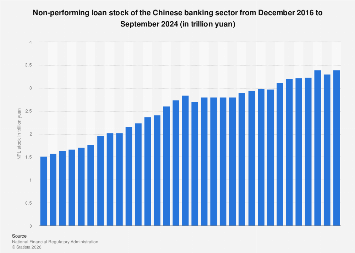
How do we know? According to official Chinese statistics, the TOTAL non-performing loan stock was under 3 TRILLION RMB at the end of 2022. Let's assume this is true: Evergrande is nearly 60% of all NPLs in ALL of China. We know that isn't true 5/n https://www.statista.com/statistics/1171742/china-non-performing-loan-stock/
@BaldingsWorld - Engagement Director Balding 大老板
Let's frame this another way. ICBC is the biggest bank in the world with more than $5 trillion USD in assets. Their capital base amounts to 4.3 trillion RMB. For simple thought exercise purpose, if Evergrande debt was written down to 0... 6/n https://v.icbc.com.cn/userfiles/Resources/ICBCLTD/download/2023/2022CapitalAdequacyReport20230508.pdf
@BaldingsWorld - Engagement Director Balding 大老板
As it should be, this would swallow 40% of ICBC total capital base. It would eliminate 50% of their Tier 1 capital. This would essentially wipe out the largest bank in the world. Let me emphasize, while I am sure that ICBC has some business dealings with Evergrande 7/n
@BaldingsWorld - Engagement Director Balding 大老板
I do not know their full exposure to Evergrande and am ONLY using this as a simple example. So ONE Chinese developer can effectively wipe out the largest bank in the world. So let's hit what this means for the macro points. First, the banking statistics on things like NPL's 8/n
@BaldingsWorld - Engagement Director Balding 大老板
Are complete and utter garbage. Even years ago, Chinese banking analysts were estimating the true NPL ratio at upwards of 10%. At this point, that would likely be too conservative. Second, the banks do not have capital, they do not have liquidity, they are effectively broke 9/n
@BaldingsWorld - Engagement Director Balding 大老板
It isn't just demand what capital. Cash restrictions by banks are popping up more and more and we know small mid-size banks are broke. They aren't getting repaid and don't have the capital. Third, this is why Beijing isn't engaging in stimulus. Forget what it would go to 10/n https://t.co/06AOWk2R1V
@BaldingsWorld - Engagement Director Balding 大老板
Or how it would be used: if you want to argue Beijing should engage in material stimulus (i.e. not increasing from 5% to 7% spending growth) where is this money coming from? Banks got nothing. International investors don't have that amount of capital or interest 11/n
@BaldingsWorld - Engagement Director Balding 大老板
So where is this money coming from? Where? 12/n https://t.co/A60Smd5fas
@BaldingsWorld - Engagement Director Balding 大老板
So when you hear that "Beijing just needs to do X" to return things to normal understand the individual events you hear about and how this impacts the macro-BS you are being sold.

@KimDotcom - Kim Dotcom
The US markets are quickly running out of liquidity to keep the market manipulation going. Expect a major collapse of US stocks and a steep fall as there are no more safety nets.

@CoingraphNews - Coingraph | News
🚨 IMPORTANT: A financial "bomb" just detonated in China. Everyone in the crypto space needs to know this now. A thread 🧵
@CoingraphNews - Coingraph | News
1/ A banking panic has recently erupted in China. Frightened depositors are storming the Guangzhou Bank and this is just the beginning. Since last week, a wave of panic has swept across the country's banking system. Branches of the Guangzhou Bank overflow. https://t.co/vvtEikkftY

@CoingraphNews - Coingraph | News
2/ Numerous videos have surfaced on the internet showing depositors standing in long queues at various bank branches to withdraw their money. The banking panic is now spreading beyond China to Japan, Australia, Canada, the United States, and other countries worldwide. https://t.co/RLxcO4okPa

@CoingraphNews - Coingraph | News
3/ This is happening while everyone is distracted by another war. This fundamental shift towards digital currencies goes unnoticed. Right now, there is serious and man-made pressure on regional banks by central banks. https://t.co/ll8jWqwCET

@CoingraphNews - Coingraph | News
4/ As previously mentioned in the thread about central bank reports: - We predict a wave of defaults. - They will hit small, regional, and even large banks at a scale unprecedented. Even Lehman Brothers' 2008 scenario could seem like a children's story in comparison. https://t.co/jBqwai9k5x


@CoingraphNews - Coingraph | News
5/ In this thread, we will delve into the precise details of what is happening. We will also analyze a video recording of the FDIC (Federal Deposit Insurance Corporation) discussing the imminent bank debacle and the information they aim to withhold from the public. https://t.co/nd3YqkEfrR


@CoingraphNews - Coingraph | News
6/ Another Chinese bank, Zhangzhou, is experiencing a banking panic as hundreds and thousands of depositors rush to its branch to withdraw money due to concerns that the Evergrande collapse has made this bank insolvent. https://t.co/qJ1jYpo9KQ

@CoingraphNews - Coingraph | News
7/ Creditors showcased a photograph featuring a massive pile of cash in an attempt to reassure individuals. But, this didn't help. Evergrande, the largest residential real estate operator in China, has debts amounting to $340 billion.Evergrande is much more than just 🇨🇳 banks. https://t.co/jtSSZZgy6o

@CoingraphNews - Coingraph | News
8/ It has numerous connections not only in China but also, for example, in America. Many financial institutions and major organizations are linked to it. We could face a situation where Evergrande might unleash a very dangerous virus into this chain. https://t.co/eoLp0eJpKT

@CoingraphNews - Coingraph | News
9/ Evergrande also represents 1.6 million unfinished and unoccupied apartments. Five million people have already suffered because of this. Another Chinese property developer, Country Garden, warns that it may default on its debts, and at the moment, it has $200 billion in debts. https://t.co/b5FcA0FdN1


@CoingraphNews - Coingraph | News
10/ It has already missed payments on some dollar-denominated bonds last month. And this week marks the end of the thirty-day grace period for making payments. https://t.co/35f4ZJEva6

@CoingraphNews - Coingraph | News
11/ Look at this - the Chinese real estate market has fallen by 82% since May 2021. What did China do? It reduced interest rates on mortgage loans by $6 trillion to prevent this crash. So far, it hasn't helped. It seems impossible to stop what is coming. https://t.co/ZHCqMlppB9


@CoingraphNews - Coingraph | News
12/ And these are just Chinese news from the last few days. They are promoting the Central Bank Digital Currency (CBDC), pushing the digital yuan. Chinese regulators eagerly support this policy for CBDC, and things get even more interesting. https://t.co/ClR90Ne7O2

@CoingraphNews - Coingraph | News
13/ Here's what's happening in Canada. Every fifth borrower is forced to extend their mortgage within the next year. https://t.co/FoZTPU1bFL


@CoingraphNews - Coingraph | News
14/ A homeowner on Twitter reports that his previous interest rate has increased from 2.6% to 6%. And he adds, quote: "I don't know how people can afford to live in G7 countries." https://t.co/jaBHy5wyVg

@CoingraphNews - Coingraph | News
15/ According to the CEO of Wowa Leads - at least 75,000 borrowers are already receiving letters with revised and much higher interest rates as the mortgage renewal deadline approaches. https://t.co/vUpMstPPYI

@CoingraphNews - Coingraph | News
16/ He also suggests that the surge in bond yields could add about six hundred dollars to monthly payments. Who can afford that? Two out of three Americans, two out of three Canadians, don't even have $400 in the bank. https://t.co/Keqy8PO8Ni

@CoingraphNews - Coingraph | News
17/ How are they going to pay an extra $600 per month? They can't. We will see a major crisis in the Canadian real estate market. And while this is happening, here's what's interesting: just like in China, there is propaganda preparation for the population for digital currency. https://t.co/Ng9gZZm4lA

@CoingraphNews - Coingraph | News
18/ The Bank of Canada says that CBDC can overcome inclusion problems, and in general, digital currency is so good that it solves all problems at once. https://t.co/isXykkOrvn

@CoingraphNews - Coingraph | News
19/ In Australia, it's more of the same. Every fifth borrower is in a deep debt pit. The Reserve Bank of Australia echoes the sentiment, stating that Central Bank Digital Currency (CBDC) is the future of money. Depositors' savings need to be tokenized. https://t.co/LGO5x3F625

@CoingraphNews - Coingraph | News
20/ Overall, the real estate market worldwide is approaching a stage of significant problems. It will be a global crisis that nobody is paying attention to right now because everyone is focused on the war. https://t.co/SCqMIX9AK6

@CoingraphNews - Coingraph | News
21/ But what happened, for example, in Japan? On October 9, the largest failure occurred in the Japanese banking system, freezing 1.4 million transfers. This is not an amount of $1.4 million, but 1.4 million individual transfers that got stuck in the system due to the failure. https://t.co/HLqOu9yZkS

@CoingraphNews - Coingraph | News
22/ The glitch affected 11 banks, including JP Morgan Chase Bank, incidentally. Now, Japanese banks are launching a central bank digital currency backed by bank deposits—meaning customers' money. Also, Japanese companies will tailor it to environmental and clean energy standards. https://t.co/eOWJq7h9V4


@CoingraphNews - Coingraph | News
23/ Interestingly, deposits will be tokenized. Remember how CITI Bank tokenized customer deposits? JP Morgan is also preparing for this. Now entire countries, like Australia and Japan, are extolling the benefits of deposit tokenization. Just look at all of this. https://t.co/JYB9tPpUBV

@CoingraphNews - Coingraph | News
24/ And here's what's happening in the United States. We've already mentioned that banks have unrealized losses on bonds of $600 bil. However, the total amount of unrealized losses is $2.2 trillion. Only $1.5 trillion in commercial real estate needs refinancing in the next year https://t.co/J10x2hkB6L


@CoingraphNews - Coingraph | News
25/ By 2027, this figure rises to $2.7 trillion. In other words, 10% of the entire commercial real estate market in America needs refinancing. Every commercial building in America must undergo underwriting in a bank to get a new loan. https://t.co/VjUaQ7yNcC

@CoingraphNews - Coingraph | News
26/ But most of them won't meet the requirements due to what is happening in the economy and the tightening of credit conditions we've talked about. And when talking about commercial real estate, it's not just office buildings. https://t.co/kzTwHjfujf

@CoingraphNews - Coingraph | News
27/ It includes multi-family homes, industrial properties—everything considered commercial. You understand how significant the problem we are facing is? It's enormous. But they know this. And it's the perfect scapegoat for them. https://t.co/DyEZuqzFT5


@CoingraphNews - Coingraph | News
28/ The International Monetary Fund (IMF) says that weak banks may face difficulties in an economic downturn. So, how many banks are at risk? https://t.co/UDBzXBaG3s

@CoingraphNews - Coingraph | News
29/Perhaps it's just Silicon Valley, Bank First Republic, Bank of California, and other small regional banks that don't really affect most people? No. Here's what they say: about 5% of banks worldwide are at risk if central bank interest rates remain at their current high levels. https://t.co/Lf1eOpFAdM

@CoingraphNews - Coingraph | News
30/ And here's what Jerome Powell from the Federal Reserve said on September 20—interest rates must remain high for longer. What will happen if rates stay higher for even longer? Another 30% of banks, including the world's largest banks, will be at risk. https://t.co/A47ud37xD1


@CoingraphNews - Coingraph | News
31/ So, 30% of banks worldwide, not just in the United States but globally, will be vulnerable if the economy experiences low growth rates and inflation remains high. In other words, we will be in a stagflation process. https://t.co/5qDC4TO8Sw

@CoingraphNews - Coingraph | News
32/ You can see for yourself what's happening with energy prices right now, what's happening in Israel, the risks posed by Iran and oil. This leads to high energy prices, and they are already preparing for it. https://t.co/54YbTYyfoy


@CoingraphNews - Coingraph | News
33/ Many Republicans have invested significant money in oil and energy companies, so they say that 30% of banks may face difficulties because of this. A harsh but plausible scenario. https://t.co/io6zfVq8gZ

@CoingraphNews - Coingraph | News
34/ Think about it: consumers are approaching winter by withdrawing deposits from banks at a record rate. They are even taking money from 401K pension plans, although there's a penalty for that. They are willing to pay these penalties just to retrieve something. https://t.co/BsAq5Fur0R

@CoingraphNews - Coingraph | News
35/ In America, for example, the repayment deadline for student loans for 43 million people came on October 1, and we see $1.1 trillion in credit card debt with high interest rates. https://t.co/Fv3gWciVNz

@CoingraphNews - Coingraph | News
36/ People continue to deplete their savings, their deposits, even their pension plans. This means losses for banks, and they will continue to incur much larger losses. https://t.co/t9qlZq55c2

@CoingraphNews - Coingraph | News
37/ And now, pay attention to the video from the meeting of the Federal Deposit Insurance Corporation (FDIC). After watching it, everything becomes clear. This is indeed important. https://t.co/QBecdubDDR
@CoingraphNews - Coingraph | News
38/ They say, it's important for people to understand that their deposits are insured, but openly sharing this information with the general public might lead to unintended consequences, causing panic and concerns about banks. https://t.co/1bGXoFcmL0

@CoingraphNews - Coingraph | News
39/ Selected individuals can find ways to understand the complexities of banking, and legal firms are available to explain these matters. However, caution is advised about openly sharing too much information with the broader public to avoid unintended consequences. https://t.co/ptSSt0bAZ3

@CoingraphNews - Coingraph | News
40/ Do you see what's happening? But here's the scenario we consider likely. We think we might see a wave of bank bankruptcies worldwide—USA, Australia, Japan, China, Europe, and so on. https://t.co/J5PZSgJpL5

@CoingraphNews - Coingraph | News
41/ After that, consumers will find themselves in a situation where they'll ask: What should we do? How to save ourselves? And then they'll be told: Here's an account in the Central Bank. No need to worry about liquidity problems or bank bankruptcies anymore. https://t.co/RfaEh9qp3K

@CoingraphNews - Coingraph | News
42/ Everything will be stored in the Central Bank. And people will rejoice—finally, peace and security. And then, before you know it, the money stored in the Central Bank will be tokenized. They will turn into digital currency. https://t.co/paLNBpACtr

@CoingraphNews - Coingraph | News
43/ And they'll tell us that it's environmentally better, faster, cheaper, or has fewer expenses, and so on. And people will agree with this. The only question is how much time it will take. https://t.co/b5hdxN7uRW

@CoingraphNews - Coingraph | News
44/ Lastly, pay attention to this headline. Biden is essentially declaring war on those banks for hidden fees. Why do we need these banks? https://t.co/hjL6Sl1O52

@CoingraphNews - Coingraph | News
45/ The government and Central Bank believe we only need tokenized deposits and the Central Bank's digital currency. https://t.co/QfE1F4vWeG

@CoingraphNews - Coingraph | News
46/ But we strongly believe in being our own bank, and Bitcoin has provided us with that empowering opportunity. https://t.co/xEuzGzncoq


@BossBlunts1 - The Butcher of Wall Street Marcel Kalinovic
CHINA'S 2ND LARGEST REAL ESTATE DEVELOPER #EVERGRANDE FACES DISSOLUTION IN BANKRUPTCY COURT TOMORROW, DECEMBER 4TH‼️ GLOBAL BANKS HOLD NEARLY $1 TRILLION IN #BONDS AND LOANS OF EVERGRANDE R.E. COMPANY AND THEIR FAILED ELECTRIC VEHICLES DIVISION. IF BONDHOLDERS ON DEC 4TH DONT ACCEPT EG'S POOR SOLUTION OF TAKING EQUITY IN THE INSOLVENT COMPANY, EVERGRANDE WILL BE FORMALLY DISSOLVED AND ALL REMAINING ASSETS OF THE HEAVILY INDEBTED RE DEVELOPER WILL BE SOLD OFF EN MASSE LEAVING AS LITTLE AS 0% TO 5% REPAYMENT TO DEBTORS😆 🤣 JUST FKING DIE ALREADY YOU PONZI SCHEME POS COMPANY‼️ FOR THOSE UNAWARE, EG ONLY REMAINED SOLVENT DUE TO THE LITERAL PONZI IN WHICH MORE NEW INVESTORS WOULD NEED TO BUY APARTMENTS FROM THEM IN ORDER TO FUND THOSE THAT HAD ALREADY BEEN ORDERED AND PAID FOR IN THE PAST. THIS HAS ALREADY COLLAPSED, AND NO CHINESE PERSON IS STUPID ENOUGH TO INVEST ANOTHER #RMB INTO THEIR SCAM. #ISDA BANKS WILL BE FORCED TO WRITE OFF NEARLY $1 TRILLION IN LOSSES FROM THAT 1 DEVELOPER ALONE, SHOULD THIS OCCUR. #AMC #GME #VIX #UVXY #SPY #TSLA #MINERS #GOLD #SILVER #METALS
@BossBlunts1 - The Butcher of Wall Street Marcel Kalinovic
🚨BREAKING NEWS🚨 1. China reduces capital gains tax on stock trading by 50% to prevent market collapse. 2. Evergrande down 87% on first day of resuming trading. 3. Chinese government orders state banks & funds to buy stocks to boost failing markets. 4. Global banks and crypto exchanges like Tether hold massive numbers of Evergrande bonds as ISDA contract collateral at the original historical value. 5. Evergrande filed chapter 15 bankruptcy protection to prevent international banks from pursuing repayment of nearly $1 TRILLION in losses. 6. Upon bankruptcy case completion whenever that may be, these bonds & commercial notes will become 100% worthless, no longer allowing ISDA members (the world's largest banks and funds) to use them as collateral. 7. They can't sell the bonds because no fund is willing to buy them. 8. Margin calls across heavily shorted asset classes are highly likely. #amc #silver #gold #hymc #pslv #creditdefaultswaps #CDOs #meme #stocks #metals 9. Blue chips, real estate, and crypto highly likely to collapse to fund their need for collateral. 10. This is not financial advice, just educational information. Do your own due diligence. Follow me @bossblunts1 for more, and my upcoming stock brokerage firm @LitXchangeLLC as we bring you the first ever stock broker for retail, by retail in the coming months ‼️ Sign up here to become a beta tester & LET'S GET LIT🔥http://litxchange.com #FuckDarkpools



@DarioCpx - JustDario 🏊♂️
#JustDarioDaily 🚨 2024 - THE YEAR WHEN THE "HIDE TILL MATURITY" TRICK HITS THE MATURITY WALL AND BREAKS? 🤷🏻♂️ 🚨 During 2023, we have discussed so often how (ridiculously insolvent) banks have made extensive use of "Hold To Maturity" accounting to the point that it is now more appropriate to rename it "Hide Till Maturity" (https://x.com/dariocpx/status/1728786228211015966?s=46&t=Hz7-qku8ZNVPw6L9nBJOZA). Dump any asset with a market value implying a steep loss in the HTM books, and the loss is "gone". However, this trick has two significant weaknesses: 1 - If you are forced to sell the underwater assets in HTM books before maturity, then the loss turns from "paper" into "real". 2 - If the asset matures, hence ceases to be eligible for HTM accounting, and the principal isn't repaid in full, then the paper loss becomes a real one again. In 2023, the FED took care of the first weakness with the #BTFP (non-bailout 😉) that effectively allowed banks in liquidity crisis to borrow against the nominal value of their US Treasuries rather than the market one, dodging a forced selling that would have likely triggered a domino of regional bank bankruptcies. As I explained in a post almost 3 months ago (https://x.com/dariocpx/status/1714455707003830741?s=46&t=Hz7-qku8ZNVPw6L9nBJOZA), big banks too are benefiting from the #BTFP, which is why the only scenario in which this program isn't extended this coming March is the one where the #FED led by Jerome Burns goes totally out of its mind. 🙄 The second weakness, greatly ignored by #FOMO #stocks investors, not only is about to become a major issue but is also a problem that the #FED and other Central Banks cannot tackle, avoiding the "bailout" shame. Good luck putting together another official financial system bailout in a big election year, not only in the #US but also in other G7 countries like #Japan and the #UK. ⚠️ BEWARE - #FED CUTTING RATES DOESN'T FIX A BORROWER'S INSOLVENCY PROBLEM BECAUSE ITS PROBLEM IS NOT THE COST OF *FUTURE* DEBT BUT THE DEBT *ALREADY* ACCUMULATED. In 2024, you will have the US Treasury Department competing in the open market to raise Trillions of $USD (https://x.com/dariocpx/status/1723825931503194398?s=46&t=Hz7-qku8ZNVPw6L9nBJOZA), at the same time when 5+ Trillion $USD [Picture 1] of private corporate debt (bond + loans) matures, and, as if this wasn't already enough, a lot of this private debt is going to be impossible to refinance because no one wants to be that last bag holder of a zombie company without the guarantee of a publicly sponsored TARP-like bailout fund. Simplifying all in a sentence: the "hide till maturity" trick is about to hit the (debt) maturity wall, literally speaking. 🫣 Which sector is the one likely to implode first? Commercial Real Estate. The National Bureau of Economic Research estimates just released in December [Picture 2] portray a situation beyond horrible and now hard to ignore for Banks like they did before (post in quote below). According to the NBER, 14.3% of CRE loans are in NEGATIVE EQUITY status. Many of the remaining ones are expected to face cash flow and refinancing issues due to the high Loan-To-Value in place (average 80%) and almost double debt costs in the current interest rate environment. At ~14% default rate, US banks already face more than 100bn$ of losses according to the NBER [Picture 3]. How to solve the issue then if #Fed rate cuts are useless here? The NBER suggests: "A near-term solution could consider a market-based recapitalization of the U.S. banking system" [Picture 4]. Translated: BANKS NEED A BAILOUT 🙄 We know that CRE is only the tip of the iceberg of the financial system problems. Credit Cards debt, buy now pay later consumer loans, student debt, and on and on. The list is pretty long, and none of these issues can be fixed with either a rate cut or money printing because capital is all that matters to sustain credit losses and avoid insolvency materializing into bankruptcy. Perhaps 2024 will be another irrationally exuberant #bullish year for #stocks, but once the party ends, because for sure it will, the “debt hangover” this time around will be brutal.


@DarioCpx - JustDario 🏊♂️
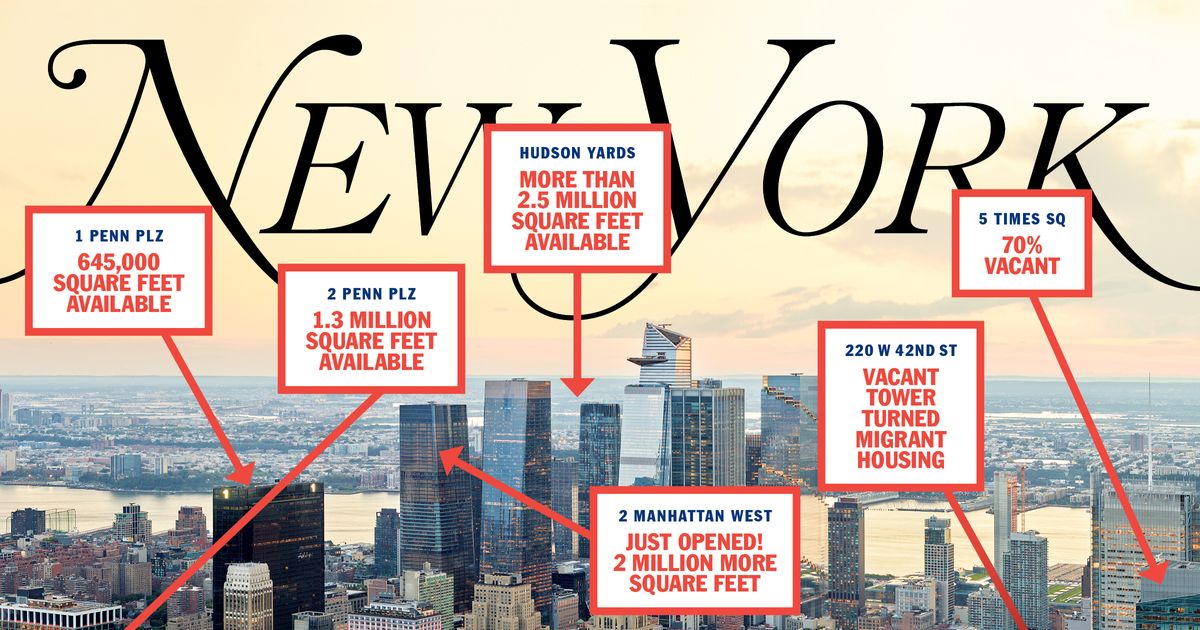
⚠️The great paradox of CRE lending: while owners are freaking out, banks are chilling 🫣 Q2 US bank earnings reported so far paint such a rosy picture of CRE loan risk. Yes, they admit there will be an uptick in losses (maybe), but banks barely show any concern. So why are CRE landlords panicking, not being shy with the press, describing the situation as "apocalyptic" or "a Cat 5 Hurricane"? 🤔 This is how the BIS, the "central bank of central banks," defines CRE loan risk: "the prospects for servicing the loan materially depend on the cash flows generated by the property securing the loan rather than on the underlying capacity of the borrower to service the debt from other sources." According to this (flawed) metric, as long as the property has enough tenants to cover the interests, then the loan wouldn't be considered problematic. This valuation approach applies to "Close-end residential loans" (CERL) where the borrower is typically a corporate landlord that rents the properties. Hence, these assets are as well materially dependent on the ability of these to generate enough income to cover interests. Here is the mind-blowing fact: despite what happened in 2008, banks still need to appraise the principal value of real estate collateral only if they are the principal occupant of the property. 🙄 Remember what triggered the 2008 GFC? Yes, interest-only loans... 🤯 So when will CRE ($2.9T) and CERL ($2.3T) start to be a problem for US banks? Most of these loans are "non-recurring," meaning the landlord can hand over the keys to the lender and walk away. While, as of now, CERL properties' vacancy rates are still at historical average ( $BREIT investors can take a sigh of relief), CRE vacancy rates are increasing fast and currently at 18.6%, a level seen last time during the CRE glut of the early '90s. This is an aggregated number, though. If we split it into Cat A, Cat B, and Cat C CRE office buildings, according to CRE office landlords, the vacancy for the last two categories is already at 50% and 70% in some prime locations like NYC, LA, and SF, with many Cat C buildings already completely empty, badly in need of heavy renovations, and practically worthless. Then it shouldn't come as a surprise that big landlords like Brookfield and Starwood started to default on their CRE loans and hand over the properties to banks. Why are CRE landlords so catastrophic? Because the trend is spreading to Cat A buildings with sub-lease availability climbing fast, signaling tenants' intention to downsize as soon as their agreements expire (unless they walk away earlier than that). Accounting for the current sublease rates reported by CBRE, the real vacancy rate of CRE is already beyond 25% in aggregate 😳 When the banks get hold of a property, they need to start assessing its "value," but again here no problem on the surface since prices are holding up pretty well... in aggregate! What about Cat B and Cat C? The latest transactions reported a drop in prices already up to 35% in the first category and up to 60% for the second one 🥶 during the GFC, CRE property prices declined ~30% at the bottom of the crisis... now the crisis didn't even start! ⚠️ Considering the average LTV for a CRE loan is ~75%, banks are already "losing" on their principal, and this is only the beginning 🥵 It's impossible to make forecasts at this stage, but banks (and regulators) are dangerously ignoring the risk banks will end up holding a huge amount of Cat B and Cat C worthless CRE. Isn't this what's exactly happening in China? Look at how things are going there, with even state-backed developers defaulting on their debt (#Wanda and #Greenland), and #stocks already trading at the same levels as during the GFC 🚨 Add to this banks' mounting liquidity problems, with FHLB advances already at ATH beyond GFC levels and an ongoing deposits hemorrhage, and you have the perfect setup for the mother of all banking crises. 🤯 Suggested read: https://nymag.com/press/2023/07/the-panic-and-pivot-of-manhattans-office-megalandlords.html


@DarioCpx - JustDario 🏊♂️
#JustDarioDaily ⚠️ #CHINA WANTS INVESTORS AND THEIR MONEY BACK - WILL IT SUCCEED THIS TIME? ⚠️ #China and #HongKong #stocks were literally on the verge of free falling when the "national team" stepped in last week to the rescue. Clearly, the benefits of it were short-lived and yesterday the $HSI closed again below the 15,000 mark. Some #bullish hedge funds that went all-in on #china #stocks in December didn't survive (picture 1), talk about "smart" money… 🥲 I bet the situation must have been very serious for many (particularly leveraged) players out there if the government is stepping in, with its full weight, again. The real question is, will they succeed this time? 🤷🏻♂️ First of all, for all those thinking that ~300bn$ alone can prop up #stocks, put your hopes aside because ~300bn$ is peanuts. 🙄 An outright bid in the market will simply provide exit liquidity to all those big international asset managers that have been busy divesting away from #china (and they won't suddenly U-turn no matter what). However, if ~300bn$ will be capital to support a #TARP-like rescue effort then #china might have a chance to succeed. Here is the problem, #China tried a #TARP-like type of rescue in the past creating national AMCs companies (the top 4 are Cinda, Huarong, Great Wall, and China Orient) to deal with toxic debt from previous cycles. This not only didn't work according to the plans, but it created an even bigger problem that remained unresolved to the point these companies faced a serious liquidity issue in 2022 (Picture 2). What's the real reason the previous experience didn't work? Very simple, you cannot solve debt problems with even more debt in the same way you cannot extinguish a fire using gasoline 🤷🏻♂️ At this point, it should be clear why the market didn't believe the many "stimulus" announcements delivered so far: because every single time the solution proposed was more debt and no capital. The last announcement of this sort was literally 7 days ago 🙈(Picture 3) So what should all the $KWEB and $BABA bulls out there hope for? That these 300bn$ will be real capital. Here is where China can kill 2 🐦 with one 🪨. The Chinese government directly owns a vast amount of non-strategic companies, many of them well managed and profitable. They should consider the brave move of selling them, or at least a significant non-controlling share, to Chinese nationals with the condition they pay the acquisition by repatriating capital they held abroad. The next step would be to then use the 300bn$ raised to create a new vehicle that can issue 600bn$ of debt and buy out from the secondary market bonds and loans stuck in banks' Hold To Maturity books because at a distressed level "mark to market", but still with good chances to be repaid in the future (not necessarily at 100%) at a profit for the government. This will free up a lot of balance sheet and capital from lenders injecting at the same time a ton of liquidity in the system that wasn't printed out of thin air. As a consequence, these lenders will be able to lend money again and this time (hopefully) to creditworthy borrowers rebooting the economy. What's the Achilles heel of all the plan I described above? Banks' capital. Will Chinese banks have enough capital to absorb the losses in their books? In theory, yes, and considering the very low price to book (Picture 4 as an example for Bank of China, CCB, and ICBC #stocks listed in Hong Kong) their #stocks trade this move might well have zero if not positive impact (since it will remove a lot of uncertainty on the value of the remaining assets) on their share prices. Bottom line, if tomorrow the #PBOC will announce another plan to fix debt issues with more debt you can forget about any lasting effect on the country's markets. If the #PBOC will announce a (brave) plan as the one I described, then the country stands a chance to get investors (Chinese first and foreign later) to bring their money back into #China.


@DarioCpx - JustDario 🏊♂️
Well…. the local news put it a bit differently from Bloomberg…. 😅 From my personal experience living in #hongkong for 10 years after seeing this plenty of times and observing the different reaction between $CSI and $HSI this has good chances to be another nothing burger https://t.co/TS7lgCn9mR

@DarioCpx - JustDario 🏊♂️
⚠️ #CHINA #STOCKS POTENTIAL DUMP ALERT ⚠️ Very interesting how everyone on @X missed this news 😅 perhaps this explains why the urgent need to pump #stocks with emergency stimmies last week?🤷🏻♂️ Lock-up shares worth around 50.92 billion yuan (about 7.16 billion U.S. dollars) will become eligible for trading on China's bourses this week. From Today to Feb. 2, a total of 4.77 billion lock-up shares will start trading on the Shanghai and Shenzhen stock exchanges

@DarioCpx - JustDario 🏊♂️
#JustDarioDaily ⚠️ #CHINA WANTS INVESTORS AND THEIR MONEY BACK - WILL IT SUCCEED THIS TIME? ⚠️ #China and #HongKong #stocks were literally on the verge of free falling when the "national team" stepped in last week to the rescue. Clearly, the benefits of it were short-lived and yesterday the $HSI closed again below the 15,000 mark. Some #bullish hedge funds that went all-in on #china #stocks in December didn't survive (picture 1), talk about "smart" money… 🥲 I bet the situation must have been very serious for many (particularly leveraged) players out there if the government is stepping in, with its full weight, again. The real question is, will they succeed this time? 🤷🏻♂️ First of all, for all those thinking that ~300bn$ alone can prop up #stocks, put your hopes aside because ~300bn$ is peanuts. 🙄 An outright bid in the market will simply provide exit liquidity to all those big international asset managers that have been busy divesting away from #china (and they won't suddenly U-turn no matter what). However, if ~300bn$ will be capital to support a #TARP-like rescue effort then #china might have a chance to succeed. Here is the problem, #China tried a #TARP-like type of rescue in the past creating national AMCs companies (the top 4 are Cinda, Huarong, Great Wall, and China Orient) to deal with toxic debt from previous cycles. This not only didn't work according to the plans, but it created an even bigger problem that remained unresolved to the point these companies faced a serious liquidity issue in 2022 (Picture 2). What's the real reason the previous experience didn't work? Very simple, you cannot solve debt problems with even more debt in the same way you cannot extinguish a fire using gasoline 🤷🏻♂️ At this point, it should be clear why the market didn't believe the many "stimulus" announcements delivered so far: because every single time the solution proposed was more debt and no capital. The last announcement of this sort was literally 7 days ago 🙈(Picture 3) So what should all the $KWEB and $BABA bulls out there hope for? That these 300bn$ will be real capital. Here is where China can kill 2 🐦 with one 🪨. The Chinese government directly owns a vast amount of non-strategic companies, many of them well managed and profitable. They should consider the brave move of selling them, or at least a significant non-controlling share, to Chinese nationals with the condition they pay the acquisition by repatriating capital they held abroad. The next step would be to then use the 300bn$ raised to create a new vehicle that can issue 600bn$ of debt and buy out from the secondary market bonds and loans stuck in banks' Hold To Maturity books because at a distressed level "mark to market", but still with good chances to be repaid in the future (not necessarily at 100%) at a profit for the government. This will free up a lot of balance sheet and capital from lenders injecting at the same time a ton of liquidity in the system that wasn't printed out of thin air. As a consequence, these lenders will be able to lend money again and this time (hopefully) to creditworthy borrowers rebooting the economy. What's the Achilles heel of all the plan I described above? Banks' capital. Will Chinese banks have enough capital to absorb the losses in their books? In theory, yes, and considering the very low price to book (Picture 4 as an example for Bank of China, CCB, and ICBC #stocks listed in Hong Kong) their #stocks trade this move might well have zero if not positive impact (since it will remove a lot of uncertainty on the value of the remaining assets) on their share prices. Bottom line, if tomorrow the #PBOC will announce another plan to fix debt issues with more debt you can forget about any lasting effect on the country's markets. If the #PBOC will announce a (brave) plan as the one I described, then the country stands a chance to get investors (Chinese first and foreign later) to bring their money back into #China.


@JackStr42679640 - Jack Straw
OMG - It's crucial to understand that UBS, HSBC banks, and BlackRock are the primary purchasers of Evergrande's debt. This situation is alarming because a seemingly small issue could trigger a much larger and devastating financial crisis, akin to a small snowball causing a massive avalanche.

@NFSC_HAGnews - NFSC_HAGnews
🇨🇳 China's economy is relies entirely on propaganda. 🔥China's economy is in total collapse and foreign capital flight is becoming severe. The CCP began to steal the wealth of private enterprises. ⚠️If the CCP doesn't rob you today, but sooner or later it will. 🔔Wake Up!! https://t.co/wCgGRKgNcw

@NFSCSpeak - NFSC Speaks
Kyle Bass: The current situation of real estate and banking sectors in Communist China is like the U.S. financial crisis of 2008 on steroids! #CCP #TakedowntheCCP #Evergrande #CountryGarden https://t.co/ENJaRJWZSt
@DarioCpx - JustDario 🏊♂️
JUST IN: #EVERGRANDE FINED 4.2 $CNY OVER SUSPECTED FRAUDULENT ISSURANCE OF CORPORATE BONDS ⚠️ Few questions here: 1 - How can they pay it 2 - If they can pay what’s left for creditors 3 - How many other companies meets the same criteria….. https://t.co/fjGcBesjJd
@DarioCpx - JustDario 🏊♂️
I never saw a market being so illiquid from Asia to Europe to US with the exception of holiday periods At some point today the thought of banks/brokers having maxed out their balance sheets to keep supporting the constantly growing #0DTE volumes crossed my mind It might also simply be serious concern for the situation in Middle East chances of escalation in any moment Not only people aren’t hedged (everyone is max long), but there are big players significantly levered on thin capital. All of them relying on the speed of their algorithms to take them out in the blink of an eye if anything serious materialises Seriously, this is a perfect recipe of a financial disaster of a magnitude no one can remotely imagine. Be careful out there
@DarioCpx - JustDario 🏊♂️
Such a low level of #stocks trading volumes is completely unusual in this part of the year, be very careful about receding tides……. https://t.co/p384nkmOIY


@S7gril - Ava
The CCP's financial data is all fake! However, the CCP was unconcerned because they knew other countries and their elites would cover up for them. Miles Guo explained why in 2021. However, the CCP fails to understand lies will be exposed sooner or later, and when the time comes, all the elites will abandon the CCP for survival! That time is near! #TAKEDOWNTHECCP #freemilesguo @WayneDupreeShow @LFATVUS @stevegrubershow @stinchfield1776 @DiamondandSilk @TheBigMigShow @NFSCSpeak
@S7gril - Ava
It has been less than 48 hours since Secretary Yelland delivered a speech in Beijing requesting the CCP's cooperation when its large banks and Insurance sector players fail. The largest Insurance Company, PingAn Group, the main shareholder of HSBC Bank, acknowledged it has been unable to repay a trust product on time "due to the overall downturn in the property market." The storm is coming!

@peruvian_bull - Peruvian Bull
Don't forget that $GME almost collapsed the financial system. https://t.co/Xdnnbv8vKF


@TomHutc36490321 - Tom Hutchinson
On the Space tonight.. the whole change in the Worlds politics came up. This turn towards Globalism may be hard to understand but can be seen through many examples in history. So, as I like History, let me lay some GLOBALIST ideology on you. The plans were there for years.. Many didn't hear about them, many plans happened, & many are conspiracy. But the plans had to be talked about, ideas put forward & proposals worked out to suit the more modern times, based on old strategies that worked on the multitudes & others that failed through resistance. So, as I said, the plans were ALWAYS there. And here are some of those strategies for you to consider. 1) 1925: The Kalergi Plan (conspiracy.. more in comments section). 2) 1966: Chairman Mao of China.. The Cultural Revolution. That resulted in communism being formed in China & people subdued into conformity. As Hermann @hermannkelly tipped on the subject by the use of the term, " the Chinafication" of us all. ¹ Moa created chaos, & killed off (2 million) or imprisoned all his opponents within a 10 year plan that left him free to do what he wanted with a public now living in fear & distrust of each other. They STILL do today..& China's current leader, Xi Jinping, is repeating the old Maoist 'Cultural Revolution' policy with a twist as I type. That can only mean more conditioning on the way for the long suffering Chinese. 2) 1966: The same year, saw the Cloward-Piven Strategy put forward in America. The strategy aimed to utilise 'militant anti-poverty groups' to facilitate a 'political crisis' by overloading the welfare system via an increase in welfare claims, forcing the creation of a system of guaranteed minimum income & 'redistributing income through the federal government. Again, Communism. A means to own everyone dependent on the State. Another form of population control. A GLOBALISTs wet dream. But America was flourishing from the 1950's & the timing just wasn't right to instigate this oppression upon the affluent Nation. They had to break the people first, & take their financial status down a few notches to meet the requirements of a weakened Nation, with less means of disposable income. They needed to break America & the rest would follow. And that's exactly what they set out to do. For over 50+ years. GLOBALISTs' like.. The oligarch descendants of.. THE COMMITTEE OF 300: STILL a conspiracy theory from early 1900's, they set up in the 1700's & are said to have run the show for centuries. Remember, even before these groups, Banking families existed & some funded the French vrs England 100 year War back in 1337 to 1453. The War between two Cousin Kings. Edward III of England kicked off about the Throne of France & invaded the Flanders region. His cuz, Philippe VI of France wasn't having it. The War went on/off through following Kings. You may remember Joan of Arc? Well she beat some ass in this long & costly War. It's where 'Sovereign Debt' came from. When the French King lost his Sovereignty along with his throne & his borrowings from stupidly wealthy Italian familes were passed on as Debts to the people. "Sovereign Debt" was born. BANKERS HAVE BEEN STEERING THE WORLD FOR CENTURIES. These Bankers are in other groups like.. 1717: THE FREEMASONS: Again, an ancient group of elites with current descendants & ties to Govs today. Known as Grand Lodges. Rich, Cult type stuff. 1954: THE BILDERBERG GROUP 1968: THE CLUB OF ROME 1971: THE WEF A lot of these GLOBALISTS are bankers. And THE TOP Bank in the World is little known. In fact.. if you were to GOOGLE. "What is the Bank of all Banks?" or.. "Who directs the Worlds Banks?" This Bank would never come up. The Bank of International Settlements (Pic 1). They even rule over the private Banks.. the so-called.. "untouchables," who are: Bank of America Citi Bank Group Goldman Sachs Morgan Stanley BNP Paribas Julius Baer DBS Group HSBC Group Federal Reserve Regional Banks ² Continued..

@TomHutc36490321 - Tom Hutchinson
²The Federal Reserve Banks are not a part of the federal Gov, but they exist because of an act of Congress. Their purpose is to serve the public.(Pic of JP Morgan, of THE TITANIC fame as the olde boys set up their lucrative money making Fed Reserve.. another conspiracy around this pic related to the sinking of the TITANIC thats for another day, or better yet, save me the typing & go look yourselves). The Fed Reserves are both Private & Public Banks. (Convenient, eh?). While the Board of Governors is an independent government agency, the Federal Reserve Banks are set up like private corporations. Who regulates all these Banks? Gov's around the World have legislation that says they do, but they really don't. The Banking crash of 2008-2011 should tell you just how much 'influence' & 'control' Gov Laws actually have over these guys. All these Banks are supposedly "regulated" now. But.. This is the KEY to this WHOLE GLOBALISTs takeover. BANKS. They really can't be owned or controlled if they're actually the ones who own all through debt accrued & control all Nations who are indebted to them. World Banks? IMF ( International Monetary Fund). They're ALL Banks, with controlling Board members who ARE.. Globalists. So, that makes ALL Govs Bankers bitches ! Governments need money to run their indebted Countries. The Western World is beyond broke. A deliberate plan to make them so, for over 50+ years as I said. Debts are off the charts in the Western BLOCS Nations that use the FIAT system of finance. The opposite to the BLOCS Nations are the BRICS Nations. They're doing quite well in comparison to the BLOCS. All GLOBALISTS are Bankers as stated. They rely on Debt repayments on borrowings to make money. So, in typical Banker wanker fashion, they screw over Countries in financial trouble by coming in as financial Saviours & Nations will use the sales or lease of National Resources in exchange for Bail-outs from these loan sharks. Remember OUR Irish Bailout? TROIKA? IMF? EU BANKS? In November 2010, the Irish Gov sought help from the Euro Union & the IMF. Together they provided loans totaling €67.5 billion, equal to 40% of Ireland's economy, to be paid out over the following 3 years. The name 'Troika' originally refers to the Russian word for a carriage with 3 horses, but can be used to describe any type of collaboration of 3. In the context of the Euro crisis, the Troika included 3 institutions: the European Commission (EC) the European Central Bank (ECB) & the IMF. We leased our Irish Forestry out for the next 50 years, our fishing rights, taken, our resources all on offer to the EU. Continued 2moro.. I'm ZZZZzzzzz.

@TomHutc36490321 - Tom Hutchinson
Cont. GLOBALISTS PLANS: FROM CHAOS COMES ORDER. The phrase "Order From Chaos" is loosely based on the latin phrase, "Ordo Ab Chao," translated as.. "Out of Chaos, Comes Order." This is often regarded as a means to impose totalitarian control over society, first by creating chaos through various forms of subterfuge, then using this as an excuse to institute order. Here, I'll go back into PLANS using FEAR. Remember, the objective is simple. Create a New World Order. By ANY & ALL means. The methods are complex, costly & take years of 'social conditioning' to make the masses accept the 'New Order' of things. Hence the Billions spent by Billionaires. Some are through philanthropy, others are grants or awards, or investments. All money spent, to meet the objective I've stated above. Other tools used besides money? Subderfuge & misinformation are used to counter uncovered secrets. They appear to you as 'conspiracy theories' & have that "disbelief" element attached from the time they're posted up. THAT'S Subderfuge ! Deceit is used in order to achieve one's goal. Misinformation? Lies dressed up in part truth. They can not hide all, so many revelations will be accepted by Master planners as lost.. So.. They let the truth out in part, knowing that many will not believe as they're exposed to confusing & countering information or that the 'delivery' comes from someone labelled a full-blown 'tin-foil' conspirator. Who came up with the term "conspiracy theory?" The term was not invented by the CIA. However, it was weaponized by the CIA. In a memo called.. 'Countering Criticism of the Warren Report'.. It was recommended to say that one’s "conspiracy talk" is deliberate communist propaganda talk. (Pic 1) Now that I have got money & information control out of the way, back to CHAOS, through FEAR. In pics 2 & 3 below, you see the recent, & very controversial decisions by both IRL & UK Govs to release prison inmates early. This creates a sense of FEAR, on top of the fears already felt by many with all these single men landing into our Nations. This fear creates tension, which, in turn, naturally makes people adapt a defensive mindset. This turns people on each other. Civil unrest & a breakdown in society is EXACTLY what they need here. From Chaos comes... ? It's happening all across Europe.. we placid lot over here in Ireland had one episode, but that pales in comparison to other EU protests where they're tearing the place apart most weekends. As well as the "Replacement Migration" fears they're pushing (Pic 4).. Globalists are heavily invested in conditioning all to fear the Environment around us. In order to push the Green Agenda. A Green vehicle that will bring forth CONTROLS via Carbon Credits, 15 minute Cities, no travel unless allowed, & no private cars, like we see being proposed in Dublin this week. Some perspective from far & wide. The United Nations Climate Chief conducted a "Doomsday" interview revealing that Globalist Leaders must become "Ringmasters" in pushing the Green Agenda. Prof. Jim Skea, who was recently installed as chairman of the Intergovernmental Panel on Climate Change (IPCC), the UN’s top global warming body, maintains that political leaders need to treat the people they supposedly represent as a literal circus act. Gavin Morgan, a psychologist on the team, said: "Clearly, using fear as a means of control is not ethical. Using fear smacks of totalitarianism." Another official admitted that the way they are using the mind control fear tactic, is both dystopian & unethical. "You could call psychology mind control" they said.. “That’s what we do… clearly we try & go about it in a positive way, but it has been used nefariously in the past." Cont..


@TomHutc36490321 - Tom Hutchinson
Cont.. GLOBALIST: FEAR TO CREATE CHAOS. Using the Green Agenda as a fear method to bring about conformity. "Climate change is happening now," Skea declared. "You can see it on your TV screens, you can see even looking out the window, deciding what clothes you need to wear when you go out." 15 MINUTE CITIES: LONDON NOW. London Mayor Sadiq Khan’s Ulez removal of cars & vans owned by the less affluent who can't keep up with daily costs that mountain up from ULEZ fee's, imposed as you pass by the thousands of 5G cameras.. This commute cost is just one example of the attacks planned against town dwellers living in modern industrial societies. Khan is the current chairman of C40, a global network of city mayors backed by numerous hard-Left billionaire foundations. But.. 15 minute cities are NOT just about reduced traffic.. They're about controlling ALL aspects of your life within the zones. That includes what you can eat would you believe? A Headline Report published by the C40 group in 2019 re-emphasised a "progressive" target for 2030. Green Agenda targets include: 1. A target was set of a daily per person allowance of 44g of meat.. That's enough for two small meatballs ! A daily limit of 2,500 calories, less than the ration in the Second World War, plus.. 2. One short haul flight every three years. 3. Eight new clothing items a year. 4. Private cars available for only one in five people. Of course, there's the usual 'Fact-checking' policy coming from the very MSM outlets that many rightly see as a source of misinformation, by not only what they tell us, but by leaving out information that skews our interpretation of the stories. This is all fair & legal.. by leaving out info, they're technically NOT lying or wrong.. they're just using subversive tactics to keep us all in the dark. So, in balance, I've added a pic (no.4) & a link below to a Reuters article that states the less meat & no cars is... "all just a misunderstanding!" Make up your own minds on all that. Also worth noting.. Keirs Starmer, the new Labour leader of the UK, is a member of the globalist Trilateral Commission.. Which is.. An agenda of the WEF, the World Economic Forum which now owns both London Mayor Kahn & UK Prime Minister, Starmer. So.. The UK is now theoretically a.. ONE-PARTY STATE.. A WEF directorship. And that's the way all Countries are headed. As Klaus Schwab of the WEF said.. "..we have infiltrated the Cabinets, our people are in positions of power.." So, the money invested, the people in positions of power, the misinformation strategies to keep you misinformed, the psychological fear factor being played out on all of us, the objective is to create chaos, so we'll scream for calming measures & Law & Order re-instated, & we'll be happy in our little 15 minute boroughs with everything on hand, but just everything THEY will allow only.. A social construct model built on the Chinafication¹ as brought up by Hermann @hermannkelly at the top of this long thread.. So, you're STILL not feeling threatened into a corner? STILL don't see any of this affecting you personally? Well.. the next part is all about you who think like that.. The financial hits on the way... Cont.. London 15 min city.. food & travel targets, from the official C40 Group. https://www.c40.org/news/a-sustainable-diet-by-2030-is-key-to-solving-the-climate-emergency/ Reuters dismissing the 15 min city Agenda. https://www.c40.org/news/a-sustainable-diet-by-2030-is-key-to-solving-the-climate-emergency/


@TomHutc36490321 - Tom Hutchinson
Look up.. 'The Project Syndicate Publication' as Victor Orban of Hungary presents it to Global media. George Soros is using the Cloward-Piven-strategy of 1966 that I've posted as no.2 in my first post at top of this thread. Victor: The Empire of Soros
@TomHutc36490321 - Tom Hutchinson
I'm coming to the end of this thread. My last posts for a month or two. My future business projects need my full attention. Bear in mind, I'm no expert, so DON'T take all I say as a certainty. There are experts in each field I've studied who may say I'm wrong. I'm pulling all this from a very wide field of research, historical included. 1. This post is related to MONEY. 2. The next post is related to the RELIGIOUS CONNECTIONS to NWO & GLOBALISTs. 3. The last post I'll do is methods to LIMIT pPOPULATION. GLOBALISTS: WIPING OUT SAVING TO IMPLEMENT WEAPONISED MONEY (CBDCs). Jiangxi Bank of China went bankrupt this week. (Pic 1) But a few knew that this would go since 2023. This Banks AGM was up online in PDF format, saying so since last year. People lost ALL their money today. If only they'd have seen last year's Bank report. Bitcoin sales sharks are using this opportunity to push people into their digital enterprise. But Crypto just got hit with $2 Trillion losses, too, & they will suffer more. (Crypto link) Also, China’s Zhongzhi Enterprise Group has declared bankruptcy, following a calamitous year in which it sparked fears that the world’s second-largest economy was facing a USA “Lehman moment”. A knock on-effect that wiped us all out financially & indebted us all in Ireland via tax in 2008-11. TAX: RISING PROPERTY TAX IS BEING USED NOW TO WIPE HOMEOWNERS OUT OF OWNERSHIP WORLDWIDE. BANK CRASH EFFECTS: The savings & loans (s&l) crisis that terrorised America’s banks for years is said by 'experts' not to happen again. But.. they ALSO said last year that China won't let MAJOR Banks go. BUT MAJOR BANKS WENT THIS WEEK. 8.5 million Chinese are already 'Blacklisted' for failing to pay loans. This will skyrocket now. PRECIOUS METALS SALES: THE SIGNAL FOR BAD TIMES AHEAD. Central banks, led by Turkey, China & India, put a floor under Gold prices in the face of outflows from exchange-traded funds (ETFs) in the recent past. (Pic 2) The sector uses Gold as a dollar-diversification play, making it popular in Nations with large U.S. currency holdings. China bought the metal for 18 months straight before pausing in May, according to data from the International Monetary Fund (IMF). Fred Hickely of the High-Tech Strategist newsletter noted that China did indeed buy gold, but it was sourced from domestic production. Excessive government spending in the U.S. & geopolitical uncertainty are underpinning calls from some investor heavyweights to buy Gold as a hedge against sovereign debt risks. (Pic 3) GOLD prices have risen so fast & so high that Silver is this years biggest seller. Schroder Investment Management & UBS Global Wealth Management are bracing for a rocky road, & metals have emerged as a preferred trade to navigate the upcoming future volatility, according to Bloomberg. Citigroup expects rising investment demand to absorb almost all gold mine supply over the next 12-18 months, it said in a report. That underpins the bank’s base case for a price of $2,700-$3,000 an ounce during 2024. It was $1,176 an ounce in 2018, prior to Cvd. Let that sink in. Here's where this relates to future geopolitical change. Prior to nearly each & every Major World Event (MVE), there has been a noticeable rush to Gold by "in-the-know" investor groups & money management houses. This is happening again,NOW. Watch Gold sales to see bad times ahead. Investors invest into something they can hold, a 'tangible asset' to save them being wiped out in times of market fluctuations. MASSIVE events happened just recently. CRPTO lost $2 trillion & two US States lost $1 trillion with bad money management on NASDAQ & NYSE, who are blaming unqualified DEI hires. There's calls for a new TEXAS based stock exchange that will NOT hire DEI. This WILL affect us. 100 years of Gold prices. https://www.macrotrends.net/1333/historical-gold-prices-100-year-chart Crypto loss https://www.forbes.com/sites/digital-assets/2024/07/06/crashing-under-50000-bitcoin-is-suddenly-braced-for-another-huge-9-billion-earthquake-after-2-trillion-ethereum-xrp-solana-and-crypto-price-wipeout/ $1 Trillion lost https://youtube.com/shorts/CZ1asT1ugfw?si=ysO8frQBAv60w_fj Bitcoin sales pitch. Bad idea. https://youtu.be/IIpKRjSIfL4?si=1eCFBoCgzXzQ2xlb


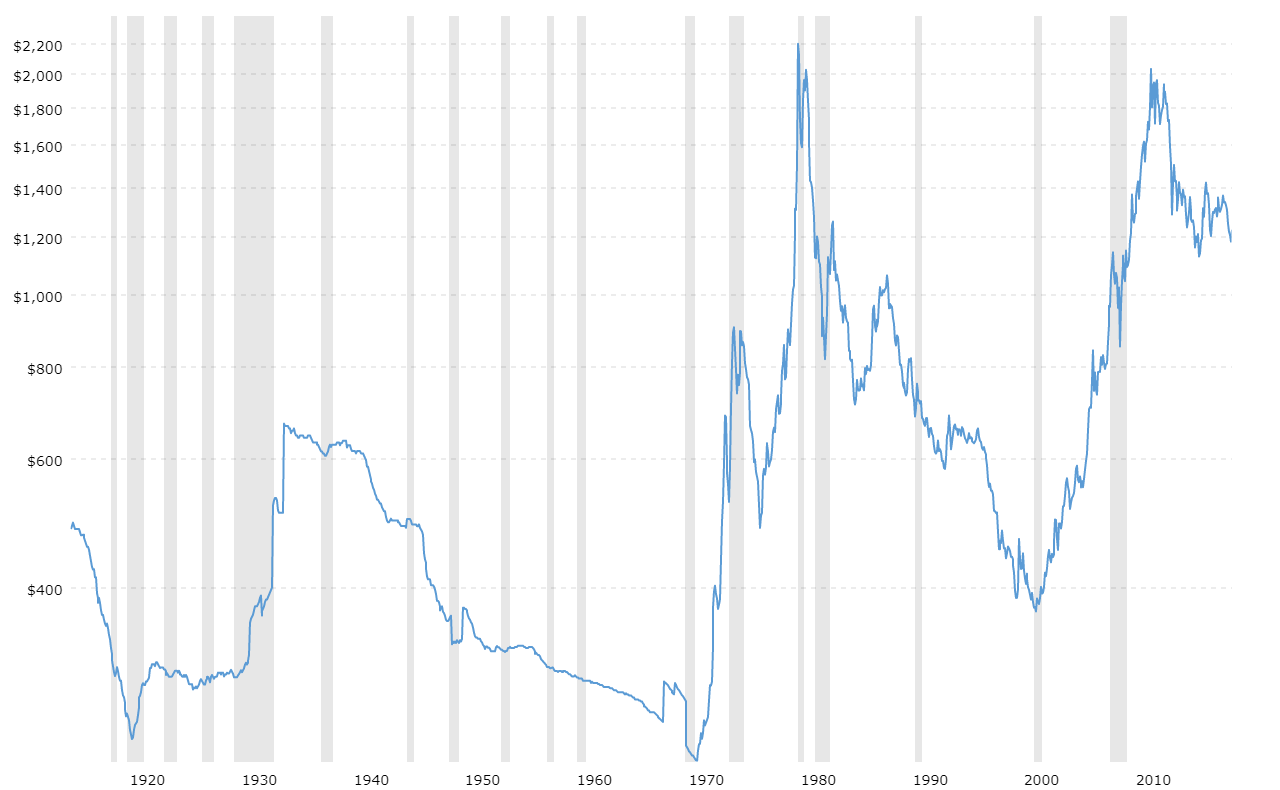
@TomHutc36490321 - Tom Hutchinson
As I stated, a Major Chinese Bank, Jiangxi Bank, went bankrupt this week. More will follow. Pic 1 in MONEY post above. I had no space in the last post to add screenshots of the PDF's of their last AGM, held on May 29th, 2024, which is a 4 page memorandum calling for the resignation of the Banks CEO.(Pics) This AGM is following the 2023 AGM, & on the first page below, you will see that it clearly states in the HEADLINES that they were dealing with the 'FINAL DIVIDENDS' last year, in 2023. They seem to have taken down the link to last years 2023 AGM, which I had seen online before, as I like to keep an eye on market trends. This news of imminent Bank failure was highlighted by Forbes & Financial Times articles last year, I remember. Either way, this massive wipe out of Chinese peoples savings was definitely known since last year. Big money got a share of the remnants of the Banks money in May this year, whilst the unfortunate Chinese just lost their proverbial balls today. A total wipeout of all savings. And this is happening all across the World. Remember Silicone Valley Banks? Smart peoples money?.. GONE !! Very smart people, actually, the APPLE & GOOGLE tech heads, we're ALL caught off guard with their false sense of security in Banks they thought were fluid in funding. But.. 4 or so Silicone Banks closed over the weekend & took their millions. ( I may be wrong about the number of banks. I'm going by memory). "What about the DGS, Tom?" Yep, silicone Millionaires had their savings 'covered' for a few hundred Grand, but many 'assumed' that THESE Banks, of all the Banks, were too cash rich to fold. So, tech Millionaires, not too savvy with Financial investments, each got a few hundred grand back & lost millions that went down with the Banks. THAT'S why the VERY clever folks with money stay away from holding money in Banks. "Only fools leave their money in Banks with no interest & all the risks attached," as they say in champagne circles. The REAL clever folks invest in Insurance policies & Bonds & Government Bonds. BANKS also invest in insurance. They use YOUR MONEY. This type of investment is not for mere mortals like us.. we're talking Millions in each investment. "But, but.. our savings are protected here in Ireland by DGS !" Yes, you'll get back up to 100k if Irish Banks fail... AGAIN ! Anything over 100k is gone with the wind. But.. Not every Bank in Ireland is covered by the DGS policy.. (Deposit Guarantee Scheme). For example, if you have savings in the Irish Post Bank, I'd suggest you read this next part very carefully. ".. Your funds are managed by An Post. Since we are not a Credit Institution, your funds are NOT covered by the Deposit Guarantee Scheme in Ireland. However, we place customers' funds in segregated accounts (known as 'safeguarding' or 'client funds' accounts) with Financial Institutions that are approved by the Board of An Post to accept An Post deposits & that are authorised to operate in Ireland as a Credit Institution, in line with EU regulations & supervised by the Central Bank of Ireland. This means that your funds are separated from our other assets & can be used to repay you & other customers in the unlikely event of our insolvency." Hmmm.. I'd see EVERY SINGLE LINE after the sentence.. "..you're NOT covered.." as marketing bullshit. I'm NOT covered is all I'd take away from that mumbo jumbo jargon. (link to Post Bank T&Cs below) NOTICE: ALL BANKS DO THIS WHEN GOING BANG ! If they ARE going under.. they'll announce it almost always on a Friday. That locks YOU, the peasants, out of access to YOUR money. Forget about your online Banking app, you fool ! In a foreclosure event, that's GONE too, bud ! Now, this is ALL done to suit the BIG BOYS. If your Bank is International. The consortium's who have empty offices in The Far East, get access to Banks & get out their money come Monday morning, 7 hours ahead of you. Make plans An Post.. No DGS https://www.anpost.com/Money/Current-Account/Current-Account-Terms-Conditions#:~:text=Terms%20%26%20Conditions%20for%20An%20Post%20Money%20Current%20Accounts&text=Your%20funds%20are%20managed%20by,Deposit%20Guarantee%20Scheme%20in%20Ireland.


@TomHutc36490321 - Tom Hutchinson
RELIGION & GLOBLISM Prt 1. The Religious War that is going on right now, without many noticing, is intensifying. Islam vrs Christianity. Here we go, a repeat of the olde Crusades days, yet again. The relentless onslaught throughout history by Islam upon the World is their defining fundamentalist vision of a one World of Islam.. no other Religion. Led by Imams, the fanatics of the faith have taken matters into their own hands. Killing, burning, raping & pillaging all across the World. We may as well be back in the 1100's AD. The Pope as the Head of the Christian Church, is doing more harm than good. Hungarian, Victor Orban is doing more for Christians than the Pope. The Head of the Christian Church is on the side of the New World Order, & all its depopulation plans. As Hungary assumed the rotating presidency of the European Union on July 1 2024, self-styled "Christian illiberal democracy" leader Viktor Orbán has announced a new vision for Europe. "What Europeans want is three things: Peace, Order, & Development," "And what they are getting from the elite in Brussels today is WAR, migration, & stagnation," Orbán said on June 30th, 2024. Some of the Popes own Bishops have called for his removal from the Holy Throne. The most vocal being Archbishop Carlo Maria Viganò who has "..called for the creation of an Anti-Globalist Alliance under the Cross of Jesus Christ, the only King & Saviour, to fight against the establishment of the New World Order." The actor & family man, Mel Gibson (like him or hate him), has written an open letter to Archbishop Carlo Maria Viganò. Mel Gibson has sent a letter of support to Archbishop Carlo Maria Viganò after Jesuit Pope Francis excommunicated him last week. (First week of July 2024). The Archbishop did not attend his Vatican ‘schism’ trial &, in a powerful statement & indictment of the Vatican & Pope Francis, argued that he is not in schism with the Catholic Church. Instead, he accused the Pope of ‘heresy & schism’ & requests that HE be "removed from the throne." The now, 'out of title' Archbishop also claims that the current Pope's goal is to dismantle the Church & replace it with an organisation based on Masonic principles. Look at Pic 4 below. You will see that the Vatican does indeed support The 2030 Agenda, with their 'Coalition for Inclusive Capitalism' policy & its colourful graphic showing all the integrated links between The Church & the Globalists agenda. The Muslim Islamists are loving this, & are openly talking in sermons about taking full advantage of the situation. Below, in pic 1, you see a Muslim Imam leading prayer, saying that "..28% of Christians have lost faith, many are Athiests or Agnostic now.." Islamics see this as an opportunity to convert more to Islam, & he goes on to say that Muslims need not build more Mosques but merely take over Christians churches, buying them or gaining them by other means. (Pics & link in comments below) We see now that many Christian Cathedrals & Churches are being set on fire across Europe. Yesterday, 11th July 2024, the huge cathedral in Rouen, France, was up in flames. It's known for being one of the most spectacular gothic buildings in France. This is the latest fire in a long series of deliberate arson attacks upon Christians places of worship that have increased since the migrant influx. Back in 2019, a fire at Notre-Dame in Paris also started during 'renovation works' & destroyed the cathedral's roof, the spire, & almost toppled the main bell towers. Five years on, restoration of the Paris landmark continues, & its reopening to worshippers is scheduled for December 2024. Michelle Obahma happened to be sipping wine while on a cruise on the Seine River at the very time of the fire. 'She' (??) watched as the famous Notre-Dame Cathedral went up in flames, pictured laughing by MSM as the Cathedrals Spire fell down. Not a good look for an ex-First 'Lady' of the USA. (Pic in comments)


@TomHutc36490321 - Tom Hutchinson
Additions to RELIGION & GLOBALISM Prt 1 above. https://t.co/CHVuMHYpQn


@JacobKinge - Jacob King
JUST IN: Over $2.9 trillion has been wiped out from major indices and stocks this morning due to growing fears of a global recession. This is the worst day for stocks since March 16, 2020, during the COVID-19 pandemic fears. https://t.co/qIPu7xiz5X


@Cancelcloco - Ian Carroll
Posted this on January 1st predicting they would pop the biggest market bubble of all time this year. I don’t think that’s happening today- I expect they’ll try to time it to the election if they can and depending who’s gonna win pop it either before or after. But the stage is being set. Plan accordingly.
@RadarHits - Radar🚨
BREAKING 🩸 $2.9 TRILLION wiped out from stocks this morning due to fears of a global recession. THE WORST DAY SINCE 2020 COVID CRASH https://t.co/PIRTYxZpBe


@bambkb - Kevin - WE THE PEOPLE❤️ - DAD🦁
🚨⭐️ The stage is being set for the biggest financial crash in history……. @Cancelcloco https://t.co/TZdeHMkWPR
@peruvian_bull - Peruvian Bull
Chinese stocks going PARABOLIC, up 21% in 5 days! I already told you why: LIQUIDITY IS EVERYTHING. https://t.co/p4pfOLJ7qo


@DalyAManagement - Daly Asset Management
$3.7 TRILLION just vanished from China's economy. 30,000 wealthy investors wiped out overnight. The hidden banking system that powered China's rise for 20 years is collapsing. Here's what Wall Street isn't telling you about the coming crash:🧵

@DalyAManagement - Daly Asset Management
Think of shadow banks as China's version of private lending. When regular banks wouldn't lend to risky property developers, these firms stepped in. They raise money from wealthy individuals and pitch: "We'll pay you 10% annually, guaranteed." For over a decade it worked:
@DalyAManagement - Daly Asset Management
China's property boom kept rolling. Developers borrowed billions to build more apartments. Shadow banks collected their fees and paid investors their promised returns. Everyone got rich. Until the music stopped:
@DalyAManagement - Daly Asset Management
The trouble started when China's property market imploded. Evergrande defaulted in 2021. Country Garden followed in 2023. Suddenly, the property developers couldn't repay their shadow bank loans. But shadow banks had already promised returns to millions of investors...
@DalyAManagement - Daly Asset Management
Zhongzhi Enterprise Group was one of China's biggest shadow banks. When investors came asking for their money back, executives discovered a $36 billion hole in the company's accounts. They had $64 billion in promises to investors. Only $28 billion in actual assets.
@DalyAManagement - Daly Asset Management
Zhongzhi had been using new investor money to pay returns to existing investors. Classic Ponzi scheme mechanics. In January 2024, the company filed for bankruptcy. 30,000 wealthy investors faced total wipeout.
@DalyAManagement - Daly Asset Management
Most people assumed Zhongzhi was a one-off disaster. Wrong. April 2025: Zhongrong International Trust, managing $108 billion, was declared insolvent. April 2025: State-owned AVIC Trust sought emergency help after missing payments. The worst part?

@DalyAManagement - Daly Asset Management
China's shadow banking sector manages $3.7 trillion. That's larger than the entire German economy. The funding mechanism that powered decades of Chinese growth is breaking down. But why is this a problem?
@DalyAManagement - Daly Asset Management
China is 20% of world GDP. If Chinese companies can't access the funding they need to grow, global demand for everything from commodities to consumer goods will crater. The ripple effects are just beginning. And think about what this means for your portfolio...
@DalyAManagement - Daly Asset Management
China's shadow banking system was the hidden engine funding the country's growth miracle. Property developers, local governments, and private companies all relied on shadow bank funding. Now that engine is breaking down permanently.
@DalyAManagement - Daly Asset Management
Beijing's response reveals how serious this is. They're refusing to bail out shadow banks. Government officials are telling wealthy investors: "You knew the risks." Translation: The Communist Party is willing to let China's elite lose trillions to avoid moral hazard.

@DalyAManagement - Daly Asset Management
Smart investors recognize this as a systematic wealth transfer. Money is moving from overleveraged shadow banks to cash-rich institutions that can acquire distressed assets. The question: Are you positioned for China's financial restructuring?
@DalyAManagement - Daly Asset Management
Tired of high-fee advisors who underdeliver? Our FREE weekly newsletter teaches: - How to spot hidden portfolio fees - Macro trends Wall Street hides - Independent investing strategies Subscribe here for FREE: https://dalyam.beehiiv.com

@DalyAManagement - Daly Asset Management
If you found this helpful consider: - RTing the tweet below - Following me @DalyAManagement Thanks for reading.
@DalyAManagement - Daly Asset Management
$3.7 TRILLION just vanished from China's economy. 30,000 wealthy investors wiped out overnight. The hidden banking system that powered China's rise for 20 years is collapsing. Here's what Wall Street isn't telling you about the coming crash:🧵 https://t.co/CYT6uESR5d


@MarioNawfal - Mario Nawfal
🇨🇳 CHINA'S ECONOMY IS EATING ITSELF ALIVE AND XI WON'T ADMIT WHY Most countries worry about prices being too high. China has the opposite problem: prices are too low, and it's destroying the economy from within. Welcome to "involution," the economic death spiral where companies slash prices to gain market share, forcing everyone else to do the same. The result? Nobody gains market share, but everyone's profits collapse. You can now buy a BYD Seagull electric car for under $8,000. Sounds great until you realize why. There are 130 domestic car companies battling for survival. Solar panels and lithium batteries are in massive oversupply. Companies are fighting to the death because many were nurtured by local governments who backed too many players in the same industries. As profits crater, wages stall and jobs disappear. Cheap prices aren't a win when nobody can afford to buy anything. China faced this before a decade ago with steel and coal. The government simply shut down excess capacity. Problem solved. But this time it's trickier. The companies are privately owned, operate in high-tech sectors with shiny new facilities, and Xi Jinping is ideologically committed to China as a manufacturing powerhouse. The obvious solution? Boost demand, not curb supply. But that would require admitting the manufacturing obsession has limits. And Xi doesn't do introspection. Source: The Economist
@MarioNawfal - Mario Nawfal
🇨🇳 CHINA’S INNOVATION MIRACLE - BUILT ON WASTE AND WIFI Beijing can build anything... except productivity. Xi’s trillion-yuan industrial blitz turned China into the factory of the future: EVs, chips, quantum, AI - pick your acronym, they lead it. Yet the economy’s engine? Stalled. Total factor productivity has flatlined. For every BYD, there are a dozen zombie firms sucking subsidies. The state funds tech titans and their failures - like Silicon Valley without the exits. Industrial policy worked too well: every province builds the same factories, hoards the same talent, protects the same losers. It’s innovation by committee - impressive, unprofitable, unstoppable. The paradox: China can manufacture progress, but not efficiency. Tech grows; output doesn’t. Power shifts; value fades. Xi’s empire can mint billionaires and breakthroughs... just not productivity. Source: FT

@Tweet137188103 - The Individual
Massive over supply This is why centrally planned economies fail The market would stop a lot of the excess mfg. But their central government keeps it all producing Lower and lower prices are what you get. Deflation spiral, this a known phenomenon in the finance world and it’s not good