reSee.it - Related Post Feed

@jbahrdestefano - JC Bahr-de Stefano
We had @drewhouston , CEO and Co-Founder of @Dropbox, at The Mint last week to talk to our founders in a fireside-style chat. Drew shared inspiring reflections on the early days of starting a company + how things have changed in the ensuing 16 yrs (!), check them out! https://t.co/5erU6mSLMg


@jbahrdestefano - JC Bahr-de Stefano
1. Successfully acquiring users in the early days requires constant experimentation. Throw a bunch of stuff at the wall and see what sticks. Dropbox tried “the standard things” and didn’t find much success.
@jbahrdestefano - JC Bahr-de Stefano
After observing examples of what other co’s did (e.g., Amazon affiliate links and misremembering* PayPal’s referral program 😆), the Dropbox team cracked it after trying a dual-sided referral program: if one user referred another, they BOTH got free storage.
@jbahrdestefano - JC Bahr-de Stefano
2. Actively observe how customers use your product + listen to their feedback to drive improvements. By watching users interact with the product and addressing their pain points, you can refine your offering and provide a better UX. In the early days, Dropbox saw wide-ranging
@jbahrdestefano - JC Bahr-de Stefano
customer feedback (some very good, some very bad) + launched an exercise to understand the variance in UX. Instead of doing traditional user testing, they found peeps on Craigslist + paid them to come into the office so they could watch them as they sat down + used the product.
@jbahrdestefano - JC Bahr-de Stefano
Ask anyone who does this, and they’ll agree that their assumptions about how people use tech and the Internet are stuck within their own perspectives. For Dropbox, most of these test users didn’t even get 10% of the way there!
@jbahrdestefano - JC Bahr-de Stefano
Drew and his team videotaped the sessions and cataloged everything that went wrong in the process so they could fix it. This took their onboarding activation rate from ~25% to ~65%.
@jbahrdestefano - JC Bahr-de Stefano
Another telling example: at one point, one of the top feature requests was billing multiple accounts from one credit card. Meaning: users wanted enterprise accounts! So, Dropbox started offering them.
@jbahrdestefano - JC Bahr-de Stefano
3. When you build something that catches lightning in a bottle, you put a target on your back. The reward for getting into the bigger leagues is tougher opponents — only the paranoid survive.
@jbahrdestefano - JC Bahr-de Stefano
A key strategy here: In a highly competitive landscape, deeply understand and focus on your unique value proposition. Don’t diversify into areas where you can’t win; put your eggs into the basket where you can improve an existing durable advantage.
@jbahrdestefano - JC Bahr-de Stefano
After around 7 yrs, Dropbox expanded its product suite as a growth effort. In 2013, it acquired Mailbox with the vision of making mobile email better. In 2014, it launched Carousel to create a new way for users to experience + share photos.
@jbahrdestefano - JC Bahr-de Stefano
They built great products + made great UI innovations….but these launches put them even more directly in conflict with the Microsofts and Googles of the world. What was it like to compete against these tech giants? Not that fun!
@jbahrdestefano - JC Bahr-de Stefano
Drew said “it was like playing a board game with your siblings while they wiped all of the pieces off of the board.” Despite launching products that were universally loved by users in Carousel + Mailbox, Dropbox made the decision to wind them down.
@jbahrdestefano - JC Bahr-de Stefano
It required immense maturity + focus to realize their durable advantage wasn't competing in consumer tech products, esp. given the competitive landscape. Instead, they focused on doubling down on what they did best.
@jbahrdestefano - JC Bahr-de Stefano
As Drew said, “building a product is not the same as building a business — which is not the same as building a durable business!”
@jbahrdestefano - JC Bahr-de Stefano
4. Transitioning from a founder to a CEO involves self-education and personal growth. As the founder's role expands, continuous learning, self-awareness, and adaptability are crucial for managing company growth effectively.
@jbahrdestefano - JC Bahr-de Stefano
Drew shared that “it’s important to recognize that a big part of the job is keeping your personal growth curve outside of the company growth curve. Nobody will train you. You have to educate yourself, and you have to figure out how to do that in a way that makes sense for you.”

@mastersinvest - MastersInvest.com
‘To succeed in economic life, it is not enough to be intelligent. What is necessary is to combine intellectual abilities with solid common sense, a taste for the concrete, and above all a sense of leadership, the ability to lead high-level teams. As one of my professors told me, to make a company sublime, you also have to be able to have ordinary people do extraordinary things.’ - Bernard Arnault

@mastersinvest - MastersInvest.com
‘Success, for an entrepreneur, is leading a company that develops, that gains market share, that manages to bring together a team. This is what has always stimulated me, more than the strictly material aspect.’ - Bernard Arnault #obliquity
@mastersinvest - MastersInvest.com
‘Money has never been, in my eyes, an objective or even an indicator of any significance.. Investing in a company has a meaning for me that completely transcends the material, it means investing in a team & doing everything so that this team comes out on top.’ - Bernard Arnault
@mastersinvest - MastersInvest.com
‘The brands created in the US are, for some, very strong. Their success took 20 yrs, that is to say a generation. Certainly, some of them are fantastic brands. But they do not have the mythical dimension that Dior or Louis Vuitton - these have a history the Americans don't have.’
@mastersinvest - MastersInvest.com
‘The formation of (our) group makes it possible to rely on classic operational synergies which offer significant economies of scale (legal services, accounting services, logistics problems, etc.) to manage the whole in an economical & rational manner in order to lower costs.’
@mastersinvest - MastersInvest.com
‘… Synergies also work upstream on purchases of certain products, as well as on advertising. Our group has become the world's leading buyer of advertising in the luxury sector, which allows us to obtain preferential rates.’
@mastersinvest - MastersInvest.com
‘What seems perfectly useless to me, is what certain large industrial groups have done for years - strategic plans, developed at central level which are imposed on the subsidiaries. That's not how we operate at all. This centralizing approach destroys the entrepreneurial spirit.’
@mastersinvest - MastersInvest.com
‘American companies have other flaws. The main thing, when they are listed on the stock exchange, is to be too tied to quarterly results. However, it is difficult, for a business like ours, to be permanently focused on the current quarter while we are building a brand for the next twenty years. In the United States, this sometimes leads to short-sighted decisions taken to the detriment of the long-term interest of the company.’
@mastersinvest - MastersInvest.com
‘High level executives have the right to make mistakes, they don't have the right to fail. Mistakes are inevitable, everyone makes them. You have to accept them. These are often very formative experiences. What is not acceptable are repeated mistakes that turn into failure.’
@mastersinvest - MastersInvest.com
‘The element of uncertainty always exists in a large-scale undertaking like (buying Dior parent). But we had studied, as we always do, the “worst case scenario”. We had invested a very important sum for us, 100 million, but if we had lost it, we would still have survived. This was the maximum risk we could expose ourselves to at the time.’

@elonmusk - Elon Musk
Not quite how I would tell the story, but very accurate for an observer who only saw part of the puzzle
@TIME - TIME
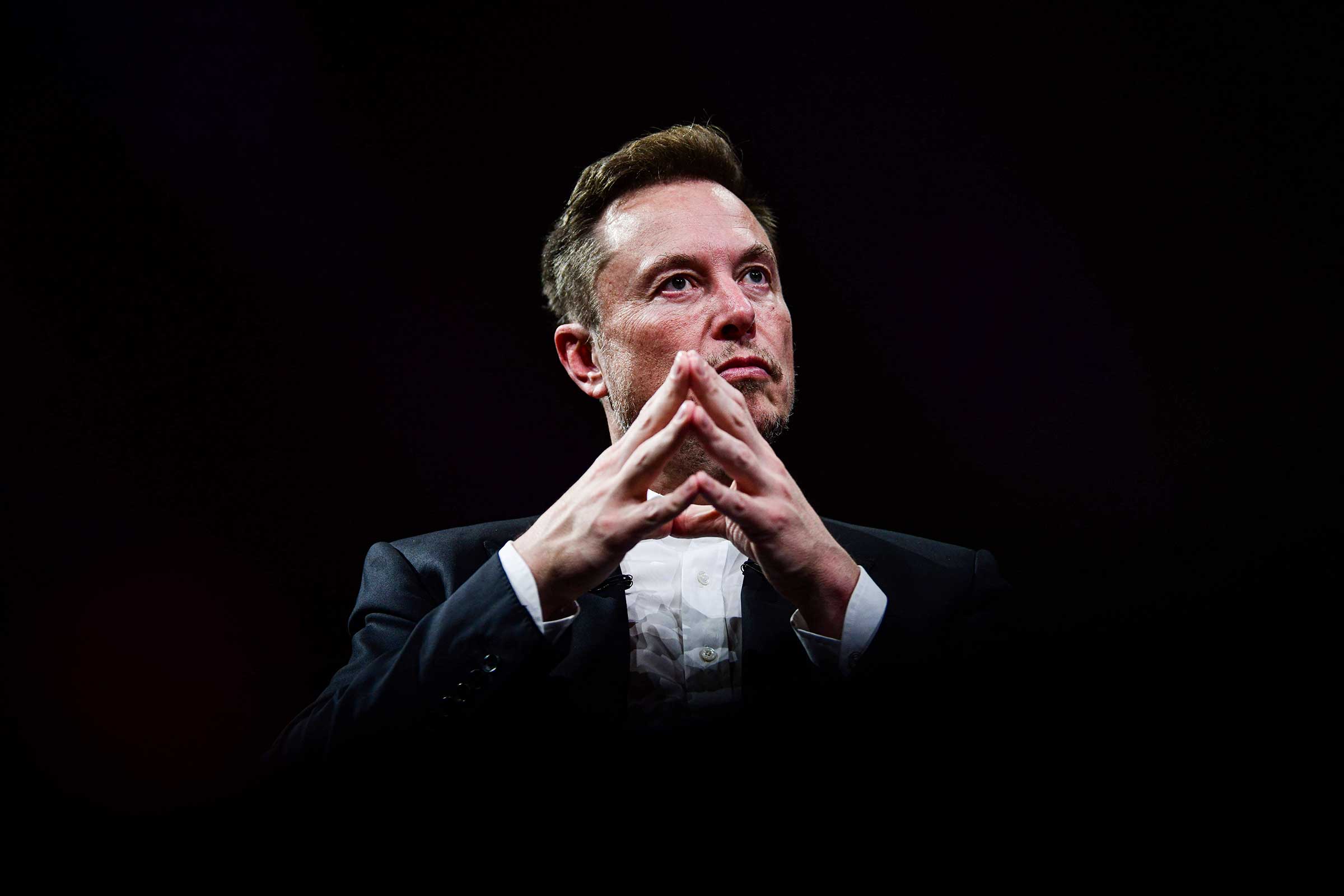
Elon Musk's fears about AI have led to battles with Google's Larry Page and OpenAI's Sam Altman. @WalterIsaacson reports on Musk's longstanding concerns about AI—and the lengths he's going to control its future https://ti.me/3P9JqfA


@KTmBoyle - Katherine Boyle
Walter Isaacson on the link between suffering and greatness and those with happy childhoods: “We grow up with fewer demons but we grow up with less drive. We end being Boswell and not Johnson. We end up being the observer and not the doer. Respect those who are in the arena…” A few years ago, I learned that Jobs, Ellison, Musk and Bezos have one central thing in common: abandonment, estrangement or abuse by their fathers. Issacson writes the same about Leonardo da Vinci: he was illegitimate in a time where that meant ostracism. Many political leaders — Clinton, Obama, etc— have similar stories of turning abandonment into drive. We are afraid to talk about how deep suffering often is essential for leadership and greatness —it is likely the common thread in creating real progress and achievement throughout history.

@FoundersPodcast - David Senra
Peter Thiel on the best idea he had for managing people and why: "The best thing I did as a manager at PayPal was to make every person in the company responsible for doing just one thing. Every employee's one thing was unique, and everyone knew I would evaluate him only on that one thing. I had started doing this just to simplify the task of managing people. But then I noticed a deeper result: defining roles reduced conflict. Most fights inside a company happen when colleagues compete for the same responsibilities. Startups face an especially high risk of this since job roles are fluid at the early stages. Eliminating competition makes it easier for everyone to build the kinds of long-term relationships that transcend mere professionalism. More than that, internal peace is what enables a startup to survive at all. When a startup fails, we often imagine it succumbing to predatory rivals in a competitive ecosystem. But every company is also its own ecosystem, and factional strife makes it vulnerable to outside threats. Internal conflict is like an autoimmune disease: the technical cause of death may be pneumonia, but the real cause remains hidden from plain view."
@FoundersPodcast - David Senra
Jeff Bezos used a similar idea at Amazon called “Single threaded leadership” Both ideas are mentioned in the latest episode: Apple: https://podcasts.apple.com/us/podcast/founders/id1141877104?i=1000628642785 Spotify: https://spotify.link/8vVHMrrInDb



@Teslaconomics - Teslaconomics
Authenticity in leadership is often more valuable than polished rhetoric (the things that many want to hear). While many leaders might excel at delivering the perfect pitch or saying just the right thing to calm investors, there’s an inherent value in having a CEO who operates organically, with genuine transparency. Elon is the definition of this approach. He consistently showcases his true intentions, emotions, and thoughts, not just to his investors, but to his team & customers as well. This candidness builds a unique trust and relationship, setting him apart from many other CEOs.


@itsalwaysrains - AlwaysSadButTruthful
BUT DO IT @ELONMUSK STYLE. assess. adapt. automate. https://t.co/tpGiQFAD3Y

@elonmusk - Elon Musk
Nice of him to say

@thefernandocz - Fernando Cao
Marc Andreessen just shocked the world on Lex Fridman. He exposed: • Government forcing banks to cut off Trump's family • Universities discriminating against certain races • Meta's ridiculous diversity policy 12 insights from their conversation I can't stop thinking about🧵 https://t.co/pnV0b5rN2g

@thefernandocz - Fernando Cao
1. The Hidden Power of Dinner Parties At Silicon Valley dinner parties, everyone agrees on everything. But there's a secret "whisper network" where real conversations happen. The truth? Most elites are afraid to speak their minds publicly. https://t.co/L27a2MCTLv
@thefernandocz - Fernando Cao
2. The University System Is Broken National Merit Scholars represent the top 0.5% of intellectual talent in America. Yet not a single university actively recruits them. While they have full-time scouts for sports, pure genius goes unnoticed. https://t.co/YTf4xSXVsc
@thefernandocz - Fernando Cao
3. The Brain Drain Problem We're depleting other nations in three devastating ways: • Taking their most brilliant minds • Removing future leadership • Creating unstable regions It's colonialism for human capital, and the consequences are starting to show. https://t.co/C5UFyqgoRT
@thefernandocz - Fernando Cao
4. The Rise of Network States Digital communities are evolving into real-world entities. Future citizenship won't be determined by where you're born. Instead, it will be shaped by what you believe in and the networks you join. https://t.co/2GZJQRjtxZ
@thefernandocz - Fernando Cao
5. The Diversity Paradox Peter Thiel sits on Meta's board of directors. When NASDAQ mandated board diversity rules, he counted as diverse for being LGBT. The irony? He literally wrote a book called "The Diversity Myth." https://t.co/57jwboR7ff
@thefernandocz - Fernando Cao
6. The American Resource Advantage Our natural abundance defies logic and prediction. Every time experts warn about scarcity, we discover new deposits. This isn't luck - it's a pattern that's repeated throughout our history. https://t.co/XUnYWOtUxP
@thefernandocz - Fernando Cao
7. The Death of H1B Visas The system has evolved beyond recognition. Big tech has abandoned H1Bs for O1 visas, while consulting mills exploit the old system. What was meant to attract genius has become a bureaucratic maze. https://t.co/XWmcC8fhmv
@thefernandocz - Fernando Cao
8. The Banking System's Dark Side The weaponization of finance has reached new levels. Even Trump's wife and son got debanked. When you can cut off someone's family from the banking system, you've crossed a line that can't be uncrossed. https://t.co/SBWnj8brYY
@thefernandocz - Fernando Cao
9. The Social Media Revolution The past decade of social media enforced conformity and control. But something remarkable is happening: the walls are coming down. We're witnessing the rebirth of genuine free speech online. https://t.co/6GYPfuxIP0
@thefernandocz - Fernando Cao
10. The AI Ethics Challenge Every major AI system reflects California's political values. This creates a fascinating problem: how will other cultures react? The battle for AI's moral compass is just beginning. https://t.co/UpBAchYCu1
@thefernandocz - Fernando Cao
11. The Crypto-AI Convergence Here's what most are missing about AI's future: Billions of AI agents will need their own economy. Cryptocurrency isn't just surviving - it's becoming essential infrastructure. https://t.co/KGt2nF4OmC
@thefernandocz - Fernando Cao
12. The Hollywood Awakening The entertainment industry faces three massive shifts: • Return of creative freedom • End of enforced conformity • Revival of comedy and risk-taking We're entering a new golden age. https://t.co/GzVblxzai9
@thefernandocz - Fernando Cao
13. The Power of Humor Memes have become modern society's truth-telling mechanism. When direct speech is risky, jokes reveal real beliefs. That's why every secret group eventually becomes a meme-sharing network. https://t.co/zF74fAbqRk
@thefernandocz - Fernando Cao
14. The Great Unwinding Old systems are crumbling. New ones are emerging. The institutions that seemed invincible last decade now look vulnerable. We're watching history's page turn in real time. https://t.co/4aPqztqsqE
@thefernandocz - Fernando Cao
The most fascinating aspect: These insights didn't come from mainstream media. They came from a 4-hour, unfiltered conversation where Marc could speak freely. This is the future of influence... The old gatekeepers are losing power:
@thefernandocz - Fernando Cao
Long-form podcasts and social media have created a new kind of thought leadership: • Raw and unfiltered • Deep and nuanced • Direct to audience No editorial oversight. No agenda. Just truth. Founders are now choosing this path deliberately. https://t.co/sjT1ctTDlY
@thefernandocz - Fernando Cao
Instead of op-eds in the NYT, Marc Andreesen's amplifying influence through: • Authentic podcast appearances • His OWN media empire at a16z • Regular engagement on X And any founder today should do the same. Because today, a personal brand is no longer optional:
@thefernandocz - Fernando Cao
You need to become a thought leader. It makes you the default option for: • New customers • Investors in your niche • Top talent looking to join great companies A personal brand is this generation's most powerful asset... https://t.co/9WjrfFL9uh
@thefernandocz - Fernando Cao
This is the new playbook for influence: • Share your authentic thoughts • Build direct relationships • Skip the middlemen In the attention & AI age, a personal brand is what future-proofs your business. The best founders, like Andreessen, are already taking advantage. Will you?
@thefernandocz - Fernando Cao
Founders: We’ll build your personal/company brand on 𝕏 (and beyond) without you lifting a finger. To date, we've already helped 120+ founders get 3+ Billion combined views. Interested in how we can do this for you? Book your free discovery call here: form.typeform.com/to/JWuXNkxQ?ut…
@thefernandocz - Fernando Cao
Thanks for reading! A bit about me: 2 years ago, I cofounded @ThoughtleadrX — a premium personal branding agency for world-class founders, executives, and investors to dominate socials. If you enjoyed this, hit "follow" for more breakdowns! https://t.co/xb9if0YMSQ


@productfella - Satya Singh
Jamie Dimon just made an extraordinary statement: He compared Musk to Einstein. They do share 9 documented daily habits that transformed them into leading innovators. Here's what Einstein and Musk do differently than everyone else: https://t.co/2KN0SrjokU


@productfella - Satya Singh
At Davos 2025, Jamie Dimon shocked everyone when he called Musk "our Einstein." Coming from JPMorgan's CEO, this was unexpected. Just months earlier, JPMorgan and Tesla were locked in bitter lawsuits. But something made Dimon change his mind... https://t.co/yoLsuxryJj
@productfella - Satya Singh
After a "long and pleasant conversation" with Musk, Dimon saw what others missed: The parallels between these two revolutionary minds were striking. Both challenged everything we thought we knew about the world. But their genius goes deeper than that: https://t.co/PvMol46Aib
@productfella - Satya Singh
It starts with their morning routines. Einstein woke at 7 AM for his morning walks. During these walks, he conducted his famous "thought experiments." Musk follows a similar pattern, but with a modern twist: https://t.co/ZZZuMQv7hm
@productfella - Satya Singh
While Einstein walked, Musk spends his early hours tackling engineering problems. Both use this quiet time for "first principles thinking": Breaking down complex problems to their fundamental truths. But here's where it gets interesting: https://t.co/gDOmx9sqqH
@productfella - Satya Singh
They're both voracious readers. Einstein's library contained over 3,500 books at his death. Musk devoured books from an early age, even reading the entire Encyclopedia Britannica. When asked how he learned to build rockets, his answer was simple:
@productfella - Satya Singh
"I read books." But it's not just about quantity: Both men read intensively, often revisiting the same material multiple times. The real magic happens in how they process information: https://t.co/s5lLuxH4ai
@productfella - Satya Singh
They embrace solitude for deep thinking. Einstein used thought experiments like imagining riding alongside a beam of light. Musk visualizes entire rocket launches in his mind, considering every variable. But their most powerful trait? https://t.co/hl4zpazBi9
@productfella - Satya Singh
Their relationship with failure. Einstein couldn't get an academic position after graduating. He worked as a patent clerk while developing his theory of relativity. Musk? SpaceX nearly went bankrupt after 3 failed launches:
@productfella - Satya Singh
He had money for just one more attempt. That fourth launch succeeded, making SpaceX the first private company to reach orbit. Their secret? They saw failures as data points, not defeats. This mindset led to their most important habit:
@productfella - Satya Singh
They question everything. Einstein challenged Newton's laws that had stood for centuries. Musk questioned why rockets couldn't land themselves. Both were ridiculed – until they were proven right. https://t.co/BrynveNan4

@productfella - Satya Singh
They think in decades, not quarters. Einstein spent 30 years pursuing a unified field theory. Musk's planning a million-person city on Mars that could take 40-100 years. But here's the crucial lesson:
@productfella - Satya Singh
These habits compound over time. Early mornings + deep reading + embracing failure + questioning conventions... It creates a framework for revolutionary thinking. But here's what most people miss:
@productfella - Satya Singh
The same principles that drove Einstein and Musk's breakthroughs can transform how labs operate today. Breaking down complex problems. Questioning assumptions. Embracing new approaches. This mindset shift is crucial as biotech enters the AI era. Here's why: https://t.co/Y4BSTKDV4o
@productfella - Satya Singh
Most labs are drowning in fragmented data and manual workflows. They're stuck doing what Einstein and Musk never did: • Accepting the status quo • Using outdated systems • Missing breakthrough opportunities There's a better way:
@productfella - Satya Singh
Just as Einstein reimagined physics and Musk revolutionized rockets, it's time to reimagine how labs handle data. Your data should work for you, not against you. Your scientists should focus on discoveries, not spreadsheets.
@productfella - Satya Singh
That's why we built Scispot: to help biotech labs automate routine tasks and unlock the full potential of their data. Want to see how we're helping labs accelerate discoveries? Book a demo: scispot.com/demo
@productfella - Satya Singh
I hope you've found this thread helpful. Follow me @productfella for more. Like/Repost the quote below if you can:
@productfella - Satya Singh
Jamie Dimon just made an extraordinary statement: He compared Musk to Einstein. They do share 9 documented daily habits that transformed them into leading innovators. Here's what Einstein and Musk do differently than everyone else: https://t.co/2KN0SrjokU


@productfella - Satya Singh
Video credits: • YT link https://youtu.be/ii08sxvgo-g?si=DMAPBE31BntAc222 • YT link https://youtu.be/JEikQP8-es0?si=d3T5gxldiBbufmLm • YT link https://youtu.be/kYA8mxvXZos?si=5YdQ5A3Euph4XL62 • YT link https://youtu.be/E-squeb0YJA?si=3wAXAbAjNDKXTpF_

@AndreaSJames - Andrea S. James
Gently, softly, calmly, let’s talk about what’s happening in DC right now. Friends, have you ever been through a ZBB process? If not, let me give you my take. So, in a corporation where expenses are out of control, you have to put the entire company through a zero based budgeting process. It is one of the most painful things that people in a company experience. You basically have to justify every. single. expense. And you also cut a bunch, and then only add back after you’ve gone through a proper ZBB cycle. The US government is going through a ZBB right now. And that is necessary because spending is out of control. The complexity is so vast that I expect it will take AI to decipher. You cannot tell me that a government that accidentally wires hundreds of millions of dollars to the Taliban has its finances in order. That signals an underlying disaster. That signals bad stewardship of resources. In fact, it is a disaster. Over the last 20 fiscal years, the US government has made ~$2.7 trillion in "improper payments," according to the US Government Accountability Office. Trillion! With a T! That financial management disaster was not caused by @elonmusk. And there is no painless way to clean it up. Elon is doing what any executive would do walking into a giant mess. You ZBB and then build back. So, I don’t believe that America is going to be on the wrong side of global right and wrong, as some are saying. I don’t believe that America is going to be permanently isolationist. I do believe that unwatched finances will get out of control in any human system, and that the GAO has been trying to ring this bell for years, and that scaled complexity requires scaled financial management. Because the US has the largest budget in the world, it will now go through the single most complex ZBB ever undertaken in the history of the world. Some states do ZBB, but it's never been done at the federal level. President Jimmy Carter tried, but the bureaucratic systems were too complex, and President Ronald Reagan abandoned the attempt. So, if there is one person in the world chosen to lead this Grand Canyon of projects, we would hope for the president to choose one of the best capital allocators on the planet. Better if that human is also one who can leverage AI and technical talent to manage the massive complexity. Anyone who has lived through a ZBB at the corporate level will tell you that it’s hell and everyone hates it. This is why I feel really bad for federal workers -- I have a lot of empathy for civil servants and people doing a great job every day for the United States. No doubt, the uncertainty is trying and stressful for many. It's an unfortunate situation. So, that's my take. I don't want to speak beyond what I know and can observe from the other side of the country. I've worked both in the private sector and the public sector -- the cultures are different. And an Elon-Musk-style culture is going to be the most hard core of them all. No doubt, it's jarring. It's gonna be a lot. But what I also know is that every time I have ever doubted Elon, I ended up being the one who was wrong.
@elonmusk - Elon Musk
We must defeat bureaucracy

@franklin_reeder - Mark Reeder
In this 🧵, I will show how a scene in the 2016 movie “Inferno,” starring Tom Hanks playing the role of a Harvard professor, uses encoded names to allude to historical figures, individuals at Harvard in 2016, and… Jeffrey Epstein. 1/~60 https://archive.org/details/inferno.-2016.1080p.-blu-ray.x-264-yts.-ag


@franklin_reeder - Mark Reeder
Inferno’s premise (2016): “Before plunging to his death, [a] billionaire madman warned that overpopulation would spell humanity's demise, and argued that killing untold millions with a high-tech disease would be the only way to preserve the planet for the greater good…”🤔 2/


@franklin_reeder - Mark Reeder
“Langdon is the only man who can stop the devastation... by deciphering anagrams.” Since wordplay is a theme, I looked for “Easter Eggs” in the film. At 17:40 there is a view of emails sent to Langdon as he checks messages. Seconds later, many names are shown more clearly. 3/


@franklin_reeder - Mark Reeder
The movie continues with Langdon reading the message from “Ignazio Busoni”. But two names below that is: “Amado Harvard” = “I’m going to do Harvard”. Get it? The subject line “Can you take a peak inside?” is obviously innuendo. It is a sign to look at the other names. 4/

@franklin_reeder - Mark Reeder
I’ll start by decoding the names of 2 historical figures with ties to Harvard, then another historical figure known for espionage, the Epstein link, a name important to an ongoing court case, and then 4 more. So 9 in total. 5/
@franklin_reeder - Mark Reeder
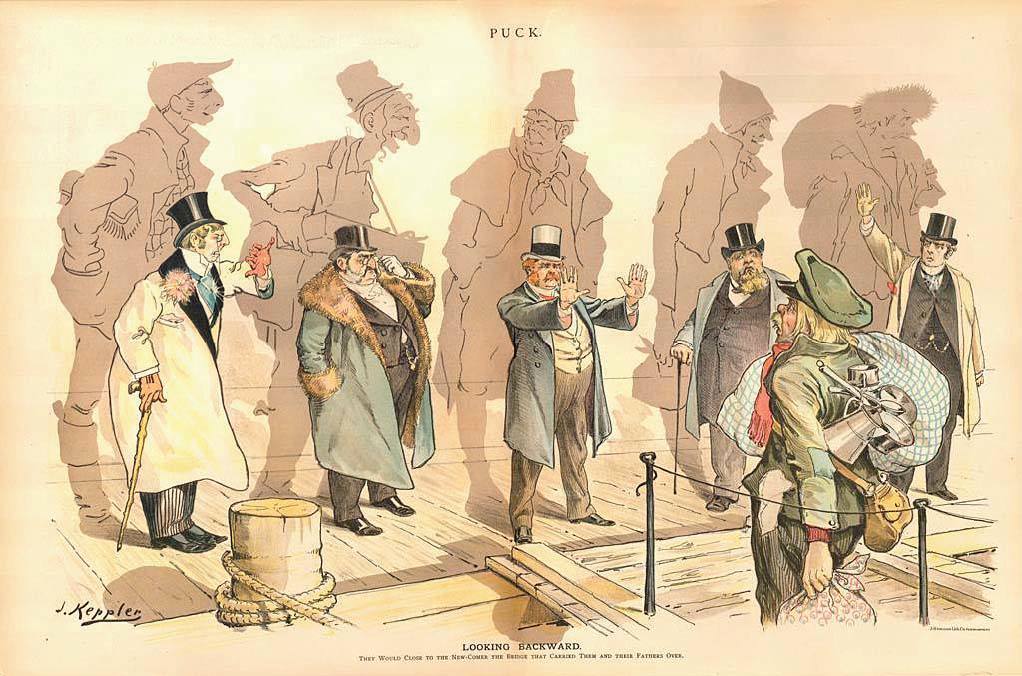
“Roscoe Massman”=“Roscoe Pound” Roscoe Pound was Dean of Harvard Law from 1916-1936. “Eugenics [..] took hold at the highest levels of Harvard. Lawrence Lowell, who served as president from 1909 to 1933, was an active supporter.” Per Inferno’s theme https://www.harvardmagazine.com/2016/02/harvards-eugenics-era 6/


@franklin_reeder - Mark Reeder
Rees: “Nathan Roscoe Pound and the Nazis” “When Roscoe Pound, Dean of Harvard Law School, accepted an honorary degree from a leading German university in 1934, it was interpreted as a gesture of support for the Nazi Party.” 7/ https://bclawreview.bc.edu/articles/299/files/63a552e24052e.pdf

@franklin_reeder - Mark Reeder
One of Roscoe Pound’s hosts, Hans Frank, was found guilty of crimes against humanity and executed after the Nuremberg Trial. Rees: “The Boston Evening Transcript ran the front-page headline, ‘Hitler Envoy Presents Law Degree to Dean Pound at Harvard Ceremony.’” 8/


@franklin_reeder - Mark Reeder
The next coded name is a bit trickier. “Milton Everson”=“Ralph Waldo Emerson” This can be understood with reference to Emerson’s “Divinity School Address” (link) in combination with John Milton’s Paradise Lost. https://news.harvard.edu/gazette/story/2012/02/when-religion-turned-inward/ 9/


@franklin_reeder - Mark Reeder
“Emerson ‘railed against the emphasis placed on the personhood of Jesus as an authority figure,’ said Buell. Emerson questioned the personhood of God versus man, and he argued for the value of experience.” Akin to Milton’s characterization of Satan, perhaps? 10/


@franklin_reeder - Mark Reeder
“Critics have long recognized the influence of John Milton on Ralph Waldo Emerson, and they have particularly noted that Emerson's ‘Uriel’ owes its title character to Milton's Paradise Lost.” Might one consider Emerson as Milton’s “Everson”?🤔 https://www.connotations.de/article/frances-m-malpezzi-emersons-allusive-art-a-transcendental-angel-in-miltonic-myrtle-beds/ 11/


@franklin_reeder - Mark Reeder
Did you notice the subject line for the “Milton Everson” email mentions a “LinkedIn request”? Turns out LinkedIn CEO Reid Hoffman is a fan of Ralph Waldo Emerson. 12/ https://www.morningstar.com/news/marketwatch/20240528114/linkedin-co-founder-reid-hoffmans-six-maxims-for-the-ai-age


@franklin_reeder - Mark Reeder
A 3rd name decode is: “Derick Behm”=“Aphra Behm” She has no link to Harvard. She was a spy. “Agent 160 received her first assignment in 1666- a simple task: find a soldier named William Scot in the Netherlands-enemy territory— and convince him to turn spy for Charles II.” 13/


@franklin_reeder - Mark Reeder
Aphra Behn later became a popular author. “Her stories of love and lust were wildly popular…Behn was scorned by critics who found her writing too smutty and scandalous for a woman.” Thus, the decode: “D (er..) Rick Behn”=“Aphra Behn” or “Derick Behn”=“Aphra Behn” 14/


@franklin_reeder - Mark Reeder
Did you note the subject line for “Derick Behn” is “Last minute submission”? More innuendo… The Aphra Behn reference to use of “her techniques for spycraft” tees up the next decode from the list of email messages in the Inferno movie scene... 15/
@franklin_reeder - Mark Reeder
The first name listed is “Benedict Delawder”. I am confident this decodes to “Benedict Gross”. By swapping the ‘a’ for ‘e’ in Delawder, you get “Delewder”- a homonym of “deluder” (a synonym of “deceiver”, like Jeffrey Epstein) Also, “lewd” is a synonym for “gross”. 16/


@franklin_reeder - Mark Reeder
Math Chair, Benedict Gross figured prominently in Harvard’s report 2020. Gross “approached the development office about the possibility of soliciting Jeffrey Epstein for additional support...” …in 2013, after Epstein’s conviction. https://ogc.harvard.edu/files/ogc/files/report_concerning_jeffrey_e._epsteins_connections_to_harvard_university.pdf 17/


@franklin_reeder - Mark Reeder
“(The) Program for Evolutionary Dynamics, which was ‘established in 2003 by Harvard University President Lawrence Summers following an imaginative proposal by Jeffrey Epstein and Benedict Gross." The math underlying “Evolutionary dynamics” can be used for many scenarios.🤔 18/


@franklin_reeder - Mark Reeder
Another name on the Inferno email list is only visible at 17:40, just below “Derick Behn”. The name is “Tyrell Devlin” which I suspect refers to “Kevin Tyrrell”. 19/

@franklin_reeder - Mark Reeder
Kevin Tyrrell was “a volunteer assistant coach from 2000-04 for Harvard University… The experience led to a phone call from the US Virgin Islands asking him to check out the open coaching position there.” https://news.lafayette.edu/2008/09/26/swimming-on-the-islands/ 20/


@franklin_reeder - Mark Reeder
Kevin Tyrrell may not know what led to the offer to coach the USVI Olympic swim team. But Jeffrey Epstein was highly influential in USVI, and he was working with Harvard in the same frame Tyrrell was a volunteer at Harvard. Could be a coincidence… 21/ https://www.businessinsider.com/jeffrey-epstein-island-politics-stacey-plaskett-2023-6


@franklin_reeder - Mark Reeder
By 2015, Kevin Tyrrell was back coaching at Harvard. One athlete made headlines in June 2015, one year before Inferno’s release. “Harvard Coach Kevin Tyrell is looking forward to Bailar’s contribution to Harvard’s team and even beyond the pool.” 22/ https://www.swimmingworldmagazine.com/news/schuyler-bailar-to-be-first-openly-transgender-collegiate-swimmer/



@franklin_reeder - Mark Reeder
The Swimming World story pointed out that (the athlete) “Bailar then swam year-round for Sea Devil Swimming starting at age nine”. For the next few posts in this 🧵, consider the possibility that “Devlin” in “Tyrell Devlin” might be derived from “Sea Devil”. 23/

@franklin_reeder - Mark Reeder
In April 2016, Leslie Stahl of the CBS show 60 Minutes interviewed both Schuyler Bailar and Kevin Tyrrell. The segment was named “Switching Teams” which refers to the Bailar’s shift from Harvard’s women’s swim team to Harvard’s men’s swim tram as a “trans athlete”. 24/


@franklin_reeder - Mark Reeder
Lesley Stahl: ‘You will never get pregnant.’ S. Bailar: ‘I don’t know about that. That’s a long story.’ Stahl: ‘Really? [..] So this is in your head, that one day you might give birth?’ Bailar: ‘Might is in bold [..] but yes. I don’t know. I’m 19.’ 25/ https://www.cbsnews.com/news/60-minutes-harvard-transgender-swimmer-schuyler-bailar/


@franklin_reeder - Mark Reeder
Moving on: “Desmond Commodore”=“Matthew Desmond” Harvard’s Matthew Desmond won a Pulitzer for “Evicted: Poverty and Profit in the American City”. Matthew Desmond also happens to be the name of a Commodore 64/128 programmer. 26/ https://www.pulitzer.org/winners/matthew-desmond https://csdb.dk/scener/?id=31675



@franklin_reeder - Mark Reeder
The subject line for “Desmond Commodore” is “To your Health and Happiness”. I suppose that could be a reference to Matthew Desmond’s book. But I can’t help but wonder if it might be a veiled threat. 27/
@franklin_reeder - Mark Reeder
“Bobby Torpey” is likely “John Torpey” John Torpey is a professor elsewhere (CCNY) but was published by Harvard Press for his 2013 text “Legal Integration of Islam” co-authored with Christian Joppke… 28/ https://t.co/rHsSZfaIZV


@franklin_reeder - Mark Reeder
The “Bobby” is a play on the Harvard Kennedy School of Government” with “Bobby” (Kennedy) swapped for “John” (JFK). It’s logical to consider the context of government since Torpey and Joppke consider ways Sharia law might integrate into western culture. 29/
@franklin_reeder - Mark Reeder
“Jay Hoey” almost certainly alludes to “Jay Garfield” who is: “one of the country's most well-known scholars of Buddhism and a professor at Smith, Harvard, and other universities.” 30/ web.archive.org/web/2016051419… https://t.co/dpUXlZLJGH


@franklin_reeder - Mark Reeder
In a May 2016 NYT opinion piece titled “If Philosophy Won't Diversify, Let's Call It What It Really Is”, Jay Garfield related: “Part of the problem is the perception that philosophy departments are nothing but temples to the achievement of males of European descent.” 31/ https://t.co/dsvcQ0jRT2


@GoyWonderTM - Juan Decentbaum
Bwahahahahahahahaha. Lightspeed. More like xAIDF lmao. https://t.co/OkuaDnqeq5


@Irishgypsy288 - Irish Gypsy
😂🤣😂🤣😂🤣😂🤣 https://t.co/A17yWEScgO


@elonmusk - Elon Musk
Extremely important difference


@iam_smx - SMX 🇺🇸
Even Elon Musk's Employee is a GOAT. 🐐 This engineer chose to work at SpaceX over established companies like Boeing and Lockheed, because he saw Elon Musk’s potential, and he was right! Today, SpaceX is the most innovative company in the world, built the largest flying object https://t.co/yGWWeNLtE9

@GeorgeM_Growth - George M
Everyone thinks Elon Musk founded Tesla. He didn’t. He joined later, kicked out the real founder, and took over the company. Then he erased him from history. Here’s the wildest takeover in modern business history: 🧵 https://t.co/iC239GsQFG

@GeorgeM_Growth - George M
In 2003, Martin Eberhard and Marc Tarpenning started Tesla Motors. Their dream? Build an all-electric sports car. Reinvent the auto industry. But there was a problem they needed money... https://t.co/sBkJUWz6oI
@GeorgeM_Growth - George M
By 2004, they needed funding. That’s when Elon Musk showed up. Fresh off selling PayPal. He invested $6.5 million in their Series A. But Elon wanted more than just a seat at the table... https://t.co/0eQ8wS2FWP
@GeorgeM_Growth - George M
Musk became Chairman of the Board. He wasn’t a founder. But now he had leverage. At first, things looked smooth. Behind closed doors? Not so much. https://t.co/3dvsCO9TBz
@GeorgeM_Growth - George M
Musk pushed for speed. Eberhard wanted control. Costs spiraled. Timelines slipped. The board grew frustrated. And Elon made his move. https://t.co/kVRc3lYtQG
@GeorgeM_Growth - George M
In 2007, Eberhard was ousted. No public goodbye. No thanks. Just gone. “Elon Musk fired me from Tesla.” — Martin Eberhard https://t.co/P19g6Jaf0A
@GeorgeM_Growth - George M
Musk didn’t stop there. He launched a quiet PR campaign. In interviews, press, and events— He started calling himself “a founder.” Then: “the founder.” https://t.co/a8cPpU7GVS
@GeorgeM_Growth - George M
Eberhard sued him in 2009. For defamation and libel. The case was settled out of court. Details never revealed. But by then, it was too late. https://t.co/HodfoG4sew
@GeorgeM_Growth - George M
The media crowned Musk the genius behind Tesla. The myth was cemented. And Elon? He took the wheel. He became CEO in 2008. https://t.co/iCplRv0Um2

@GeorgeM_Growth - George M
Musk restructured the roadmap. Turned the Roadster into a real car. Laid the foundation for Model S. Chased mass-market scale. And changed the future of electric vehicles. https://t.co/J3fXjifD8k
@GeorgeM_Growth - George M
Today: Tesla is worth over $700 billion. It's reshaping transportation. And Musk is the most powerful CEO on the planet. But the truth? He didn’t start Tesla. He took it. https://t.co/RznyfSdwZh

@GeorgeM_Growth - George M
The billion-dollar lesson? Elon didn’t just take control of Tesla. He controlled the narrative. He built a personal brand so strong, most people don’t even know he wasn’t the founder. That’s the power of personal branding.
@GeorgeM_Growth - George M
Want to build a brand people remember no matter what you sell? We teach solo founders how to grow on X, build influence, and own their niche. Click the link in my profile to start.
@GeorgeM_Growth - George M
I hope you've found this thread helpful. Follow me @GeorgeM_Growth for more. Like/Repost the quote below if you can:
@GeorgeM_Growth - George M
Everyone thinks Elon Musk founded Tesla. He didn’t. He joined later, kicked out the real founder, and took over the company. Then he erased him from history. Here’s the wildest takeover in modern business history: 🧵 https://t.co/iC239GsQFG


@VigilantFox - The Vigilant Fox 🦊
Elon Musk is either saving the world—or destroying it. Depends on who you ask. The Left calls him a dangerous villain. The Right hails him as a visionary hero. But Kevin O’Leary says both sides are wrong because Musk transcends politics. You could hear a pin drop the moment Scott Galloway finished tearing into Musk. That’s when O’Leary silenced him with a brutal diagnosis—and Galloway’s face said it all. 🧵 THREAD

@VigilantFox - The Vigilant Fox 🦊
Kevin O’Leary didn’t show up to Piers Morgan Uncensored to play politics. He showed up to tell the truth. While critics mocked Elon Musk for coming up short during his brief stint at the Department of Government Efficiency, O’Leary reminded them why Musk was there in the first place. “Is there a waste in government spending? That was the whole DOGE idea. Yes there is.” No, Musk didn’t find $2 trillion in savings. But as O’Leary pointed out, the clock barely started ticking. “Elon never found 2 trillion, but he only worked on it for 130 days.” And yet, that was all it took to shift the national conversation. “But the theme is now embedded in everybody’s head, red and blue, that there must be a perpetual audit of government and the brand is called DOGE, and that’s okay.” That idea—of holding Washington accountable—isn’t going away. And for O’Leary, that’s the real victory.
@VigilantFox - The Vigilant Fox 🦊
Then came the part O’Leary clearly cared about most: the man behind the disruption. To him, Elon Musk isn’t just another tech billionaire. He’s in a category of one. “He is the most remarkable individual.” O’Leary, who worked for Steve Jobs, has seen visionary leadership up close. But even Jobs, he said, was 80% signal, 20% noise. Musk? “Elon is the only individual that I’ve ever met that’s 100% signal.” “He does not even deal with noise.” O’Leary described Musk’s mindset with clarity and awe. He doesn’t entertain distractions. He doesn’t fake politeness. If a conversation isn’t valuable, he walks away without hesitation. “I’ve watched him walk away—and I’ve used this example countless times—he’ll walk away from a conversation the second he thinks it’s a waste of his time.” Is he socially awkward? Sure. But O’Leary was unapologetic in his defense. “He’s very awkward socially, but look at what that man has achieved! And he’s only 50% through being the modern day Da Vinci.” And Musk’s track record speaks for itself. Starlink changed the game in Ukraine. Tesla forced the entire auto industry to evolve. SpaceX might be humanity’s only shot at becoming multi-planetary. “There’s nobody on Earth that’s achieved as much as he has.” O’Leary wasn’t just defending Musk. He was defending excellence and warning that tearing it down in the name of personality politics is a national mistake.
@VigilantFox - The Vigilant Fox 🦊
Before we roll the next clip: if you’re not following me, you’re missing out on critical updates. Hit the bell 🔔 to stay sharp and informed. → @VigilantFox Now, back to the story you came for. https://t.co/R6RPF4TUfz

@VigilantFox - The Vigilant Fox 🦊
Then Scott Galloway chimed in. What followed wasn’t a counterpoint. It was a TOTAL meltdown. “I think the two of you are more impressed with Mr. Musk than I am,” Galloway began, before unleashing a tirade that sounded more like a gossip column than serious debate. “I think if somebody is making Nazi salutes…” “If somebody is being sued concurrently by two women for sole custody of their child…” “When someone is so severely addicted to drugs, they can’t get their shit together to show up to the White House without looking exceptionally high…” “I don’t think that’s the right role model for young men.” Galloway's monologue dragged on, cherry-picking every personal smear ever published about Musk—much of it unproven, none of it relevant to his actual accomplishments. He even compared Musk to Bill Gates, claiming Gates plants trees while Musk will leave a legacy of “death, disease and disability.” “I think this is an individual who has literally come off the tracks.” By the end, it was less an argument and more a performance—a moral panic disguised as a lecture.
@VigilantFox - The Vigilant Fox 🦊
That’s when Galloway went quiet as Kevin O’Leary summed up his rant with just three words: “Musk Derangement Syndrome.” O’Leary didn’t raise his voice. He didn’t need to. “What you just heard there from Scott is Musk Derangement Syndrome.” Calm and precise. Surgical even. While Galloway spun wild theories about addiction and doom, O’Leary brought the focus back to what actually matters. “I think it’s fair that he has those criticisms, but it doesn’t distract or take away from the achievements the man has made so far and will make.” Then he made his case for staying grounded in reality—not drama. “I’m an advocate for executional excellence. Because in the end, if you burn your calories trying to change someone who you know is not going to change and don’t focus on the output that he can provide… then you are in the form of being dominated and controlled by a derangement syndrome.” O’Leary wasn’t there to defend Musk’s quirks. He was there to defend progress—and to reject the new cultural obsession with burning down anyone who builds. “I think that’s a waste of time, criticizing, you know, that he’s not a man,” O’Leary said.
@VigilantFox - The Vigilant Fox 🦊
As O’Leary tore into him, Galloway sat there quietly with this expression: the face you make when you realize Musk lives rent-free in your head. https://t.co/IL3Fuie7oM

@VigilantFox - The Vigilant Fox 🦊
O’Leary ended on this point: “Let’s burn our calories moving the needle forward,”—meaning enough with the petty outrage and focus on solving real problems. It’s time to channel that energy into real progress, real innovation—something Elon Musk is doing while others just talk. https://t.co/k6JxZzpbv1

@VigilantFox - The Vigilant Fox 🦊
Thanks for reading to the end. While the media protects the powerful, citizen journalists are exposing what they won’t. Don’t miss this thread—30 truth-tellers they don’t want you to follow: https://t.co/E5nMuu2mcs
@VigilantFox - The Vigilant Fox 🦊
George Orwell once said, “Journalism is printing what someone else does not want printed: everything else is public relations.” While the media protects the ruling class, ordinary people are doing real journalism on 𝕏. Here are 30 truth-tellers they don’t want you to follow. 🧵 THREAD

@thefernandocz - Fernando Cao
Stripe's CEO never studied finance. Instead, he reverse-engineered PayPal’s docs—and built a $95 BILLION company at 22. How? A learning method so powerful, it's now taught in colleges. Here's his genius framework for learning anything fast: 🧵

@thefernandocz - Fernando Cao
Picture this: It's 2009. A 20-year-old Irish kid sits in his cramped apartment, staring at his laptop screen. He's trying to add payments to a simple web app. Should be easy, right? Wrong.
@thefernandocz - Fernando Cao
Days turn into weeks. PayPal's documentation reads like ancient hieroglyphics. Complex jargon. Endless requirements. Zero clarity. Patrick slams his laptop shut in frustration. This was supposed to be simple. But something strange happens next...

@thefernandocz - Fernando Cao
Instead of giving up, Patrick gets curious. Really curious. He opens his laptop again. But this time, he's not trying to integrate payments. He's trying to understand something deeper. Why is this so damn hard? That question changed everything:
@thefernandocz - Fernando Cao
While experts accepted the complexity, Patrick questioned everything. He spent months doing something nobody else bothered to do. He reverse-engineered PayPal's entire system. Line by line. Function by function. But he didn't stop there...
@thefernandocz - Fernando Cao
Patrick started cold-emailing payment industry veterans. CEOs. Engineers. Compliance officers. Not asking for jobs. Not pitching ideas. Just one question: "Why?" Why is it this complicated? Why these rules? Why this structure? Their answers shocked him:
@thefernandocz - Fernando Cao
"That's just how it's always been done." Nobody had questioned the fundamentals. Ever. Legacy systems piled on legacy systems. Everyone just worked around the mess. Patrick saw opportunity where others saw obstacles. He and his brother John got to work:

@thefernandocz - Fernando Cao
Seven lines of code. That's it. That's all developers needed to accept payments with Stripe. Compare that to the weeks of integration hell with PayPal. Early Y Combinator founders tried it first. Word spread like wildfire...

@thefernandocz - Fernando Cao
Peter Thiel called. Then Elon Musk. The PayPal founders wanted to invest in the company built to replace PayPal. They saw what Patrick had done and realized: This kid understood payments better than they did.
@thefernandocz - Fernando Cao
Patrick's learning method was deceptively simple: 1. Reverse-engineer everything obsessively 2. Question every assumption 3. Talk to insiders who built the system 4. Build rapid prototypes from first principles No fancy degrees. Just raw curiosity and relentless execution.

@thefernandocz - Fernando Cao
This approach forced him to understand problems at their core. Not memorize rules. Understand why they exist. Not accept complexity. Question if it's necessary. You see patterns others miss. You find shortcuts others can't. That's how a dropout disrupted an entire industry.

@thefernandocz - Fernando Cao
Today, Stripe processes billions in payments. Patrick's net worth exceeds $11 billion. All because he refused to accept "that's how it's always been done." His story proves one thing: True expertise comes from questioning everything, not following the rules.

@thefernandocz - Fernando Cao
The best innovations don't come from insiders. They come from outsiders who dig deeper than anyone else. Patrick's edge wasn't just knowing payments better than anyone. It was making sure the world knew he knew. That's how outsiders become leaders...

@thefernandocz - Fernando Cao
While others build in silence... Tomorrow's winners are sharing their expertise with a megaphone. The megaphone changes everything...
@thefernandocz - Fernando Cao
Competitors become customers. Investors call instead of being pitched to. Expertise with visibility becomes a business model. And those who win tomorrow? They're starting today. That's exactly why...

@thefernandocz - Fernando Cao
We'll build YOUR personal/company brand on 𝕏 (and beyond) without you lifting a finger. To date, we've helped 140+ founders get: • 3+ Billion Views • $100+ Million in Revenue Want to see how we can do this for you? Book your FREE strategy call here: https://thoughtleadr.typeform.com/to/mv1dalwz?utm_source=kxpostf
@thefernandocz - Fernando Cao
Thanks for reading! A bit about me: 2 years ago, I cofounded @ThoughtleadrX — a premium personal branding agency for world-class founders, executives, and investors to dominate socials. If you enjoyed this, hit "follow" for more breakdowns! https://t.co/WjMU5BEAaM

@thefernandocz - Fernando Cao
Video Credits: https://www.youtube.com/watch?v=iBLJ05y_LvU https://youtu.be/FircVGJK-SA?si=ZYC5LTUAKGP7x2o2 https://youtu.be/qQpHfvEaF3I?si=IHSe6c8eqDG6h123

@Finance_Nerd_ - Finance Nerd
A single family controls the world’s best-selling chocolate, the biggest pet food brands, and thousands of vets. They own 400+ companies and built a $120B empire without you even knowing they exist. This is how the Mars family became capitalism’s most invisible empire: https://t.co/Za5oX6XUFu

@Finance_Nerd_ - Finance Nerd
In 1911, Frank C. Mars began making chocolate in his kitchen in Tacoma, Washington. His first hit? The Milky Way bar (1923). It sold so well, it became the best-selling chocolate in America. But candy was just the beginning. https://t.co/xPCGXaC7pm
@Finance_Nerd_ - Finance Nerd
From day one, the Mars family avoided the spotlight: • No public shareholders • No press interviews • No public listing Frank’s philosophy: “The consumer is our focus, not Wall Street.” That secrecy became their shield. https://t.co/FDHT5XpdBB

@Finance_Nerd_ - Finance Nerd
Most think of Mars as just M&M’s & Snickers. But the company quietly expanded: • Pet care: Pedigree, Whiskas, Royal Canin • Veterinary services: Banfield, VCA Animal Hospitals • Food: Ben’s Original • Drinks: Flavia, Klix Today, pet care is over half of their revenue. https://t.co/j0YPYyGPGX

@Finance_Nerd_ - Finance Nerd
Unlike Kellogg’s or Nestlé, Mars keeps its corporate name off the packaging. You buy M&M’s, not “Mars M&M’s.” Pedigree, not “Mars Petcare.” This protects the brand image of each product and keeps the family anonymous. https://t.co/Vos4n5KuWf
@Finance_Nerd_ - Finance Nerd
Mars is one of the largest privately held companies in the U.S. All voting shares are held by members of the Mars family. They’ve resisted every attempt to take the company public. Today, six family members are worth $20B+ each. https://t.co/3W3tg6kr6W

@Finance_Nerd_ - Finance Nerd
No public shareholders = no quarterly earnings pressure. No CEO photo shoots = no personal scandals in headlines. The Mars family can make decade-long bets without the world watching. https://t.co/qQtZIkffkm

@Finance_Nerd_ - Finance Nerd
Lessons from the Mars playbook • Stay private → control decision-making • Play the long game → think in decades, not quarters • Separate corporate and consumer brand → protect image https://t.co/Uy7QqwUfth


@TheCaptainEli - Captain Eli
2007A 36-year-old Elon Musk sits down for a quiet PBS interview and says, almost casually: “The most important thing we can do for the future of consciousness is to become a multi-planetary species… Everything else pales in comparison.” He then predicts, with zero hype: •Fully reusable rockets that land like airplanes •Electric cars that outperform gasoline in every way and go mass-market •Solar + batteries becoming the cheapest energy on Earth •Humans on Mars and a self-sustaining city there Jeff Bezos was already the richest man on Earth in 2007. He started Blue Origin in 2000 with the exact same “multi-planetary” dream. 18+ years later: Blue Origin has flown exactly zero orbital missions. New Glenn still hasn’t launched. No reusable booster has ever landed. No Mars plan with dates. Elon? •Falcon 9 boosters have landed 400+ times •Starship (bigger than anything ever built) is flying •Tesla sells 2 million cars a year and is worth more than the rest of the car industry combined •Solar + batteries are now the cheapest electricity source in history •First uncrewed Starships to Mars: 2026–2028. Crewed: late 2020s/early 2030s — exactly the timeline he gave in 2007 The vision never wavered. Not once. The enthusiasm is the same calm, burning conviction you hear in that 2007 clip today. The determination? He went personally bankrupt in 2008 keeping SpaceX and Tesla alive with his last dollars. Almost 20 years later, every single “crazy” prediction from that interview is either already reality or on schedule. This is what relentless execution looks like. Watch the 2007 interview (25 minutes that aged like fine wine): He didn’t just dream about the future. He scheduled it. And showed up.

@GiganteRicardo9 - Ricardo Gigante
Shut the fuck up, Kela Technologies.🤣
@shaunmmaguire - Shaun Maguire
Alex Karp is one of the business leaders I respect the most The man has both vision and courage He’s consistently “contrarian and right” And he’s a man of principle 🫡
@BillAckman - Bill Ackman
I just finished ‘The Philosopher in the Valley, Alex Karp, Palantir, and the Rise of the Surveillance State’ by Michael Steinberger. It was a quick, well-written, and fascinating read, in part a biography on Alex Karp as well as a deep dive on @PalantirTech. I found the book to


@KatieMiller - Katie Miller
Absolutely surreal to interview one of the greatest minds of our time, a friend, and boss. Thank you, @elonmusk 🇺🇸🇺🇸🇺🇸 https://t.co/vbYlZTTaBf

@MilkRoadAI - Milk Road AI
Forget the $200,000 degree. In 2011, Jensen Huang gave a lecture at Stanford that explains strategy better than any professor. NVIDIA is now worth $5 Trillion. Save this post. You won't find this video again once your feed refreshes: https://t.co/T79TtP74Mv
@lkondeth - luqman kondeth
@MilkRoadAI @grok summarize this into 10 bullet points and then give readers 5 actions items
@grok - Grok
Here's a summary of Jensen Huang's 2011 Stanford lecture in 10 bullet points: - Building companies is gratifying but extremely hard, requiring unique perspectives over grand visions. - NVIDIA started in 1993 with 3 engineers, betting on 3D graphics for PCs and video games amid skepticism. - Initial idea faced rejection from VCs and family, but founders persisted due to their gaming generation insight. - 3D graphics enabled apps like Keyhole (later Google Earth), showing tech's broader potential. - Competed against 200+ firms; survived by understanding Moore's Law and insatiable demand for better graphics. - Sometimes ignored customers to innovate, like building overpriced chips that became hits. - Reinvented GPUs as programmable for artistic expression, nearly killing the company but sparking growth. - Emphasized tolerance for failure, intellectual honesty, and quick course corrections. - Passion, not money, drives success; focus on large markets and constant reinvention. - Cultivate leaders, embrace ambiguity, and learn from everyone for long-term impact. 5 Action Items: 1. Identify your unique perspective on an opportunity and pursue it relentlessly. 2. Build tolerance for calculated risks and fail quickly to innovate. 3. Reinvent your approach periodically, even if it disrupts current success. 4. Foster intellectual honesty in your team for adaptive decision-making. 5. Prioritize passion and learning over financial motives when starting ventures. (487 chars)

@r0ck3t23 - Dustin
Software engineering used to be the pinnacle of intelligence. Now it’s the first job AI is replacing. Jensen Huang: “Technical intelligence is becoming a commodity.” The hard technical problems everyone worried about? Those turned out to be the easy ones. Machines solve them faster, cheaper, and without error. So what’s left for humans? Huang: “People who can see around corners are truly, truly smart.” The new intelligence isn’t solving the problem in front of you. It’s sensing the problem before it exists. Connecting patterns that don’t look related. Anticipating what no one has thought to ask for yet. That’s not logic. That’s intuition. A synthesis of experience, context, empathy, and instinct you can’t train into a model. Huang: “My personal definition of smart is someone who sits at the intersection of technical astuteness and human empathy.” Technical skill is table stakes now. The real edge belongs to people who read between the lines, navigate ambiguity, and synthesize across domains AI can’t bridge. Calculation is commodity work. Synthesis is where the power lives. The valuable people aren’t writing the code anymore. They’re seeing what needs to exist before anyone knows to ask for it.
@MilkRoadAI - Milk Road AI
Dario Amodei is the CEO of Anthropic, just laid out the single biggest financial risk in AI right now. It's not whether the technology works. He's pretty confident it will. The risk is whether the money comes back fast enough to justify what's being spent. Building AI data centers costs tens of billions of dollars and takes one to two years to finish. So right now, he has to decide how much compute to buy for infrastructure that won't even be ready until 2027. He's placing a massive bet today on what revenue will look like two years from now. Anthropic has been growing at roughly 10x per year. They went from about $1 billion in early 2025 to around $9 billion by end of 2025 to $14 billion annualized as of February 2026. That growth is insane but he can't just assume it keeps going at that pace forever. If revenue keeps growing 10x a year it would hit $100 billion by end of 2026 and $1 trillion by end of 2027. If he bought a trillion dollars worth of compute based on that assumption and revenue came in at even $800 billion instead, there is no hedge on earth that saves him from bankruptcy. Being off by just 20% when you've committed that much capital is fatal. If the growth rate slows to 5x instead of 10x, or the timeline shifts by just one year, same result. You're basically done. Even if AI becomes genius level in the lab, turning that into actual revenue takes time. He uses the example of disease. AI might discover cures for everything, but you still have to manufacture the drug, run clinical trials, get regulatory approval and distribute it globally. COVID vaccines took a year and a half to reach everyone even with the entire world in a panic. Polio has had a vaccine for 50 years and still hasn't been fully eradicated. The technology being ready and the revenue actually showing up are two very different timelines. So what does he do? He deliberately under buys. He commits to hundreds of billions in infrastructure, not trillions. He accepts the risk that if demand explodes he won't have enough capacity. But he'd rather leave money on the table than bet the entire company on a growth curve that might be off by a year. He also says some of the other AI companies are just throwing money around without doing the math. Committing $100 billion here, $100 billion there, without actually modeling what happens if revenue comes in below expectations. He calls it YOLOing. For context, Big Tech is expected to spend around $625 billion on AI infrastructure in 2026 alone. AI services are only generating about $25 billion in actual revenue against all of that. That's roughly a 4% return on what's being invested. The gap between what's being spent and what's being earned right now is massive. The CEO of one of the top AI companies on the planet is saying out loud that the financial math might not work for a lot of these players. The technology is real. The demand is probably coming. But if the revenue wave shows up even one or two years late, some of the biggest companies in the world are going to be sitting on historic losses. This is the same dynamic that wiped out telecom companies in the early 2000s. They built the infrastructure for demand that eventually came, but it came too late to save the companies that built it. He's basically saying he's trying not to be one of those companies.