reSee.it - Related Post Feed

Saved - March 20, 2024 at 10:19 PM
reSee.it AI Summary
The posts discuss the conflict in Ukraine and the role of various actors, including NATO and the United States. The posts highlight the long-standing tensions and mistakes made by both sides. The focus is on the need for peaceful negotiations and avoiding further escalation. The posts also mention the role of propaganda and misinformation in shaping public opinion. Overall, the posts provide different perspectives on the Ukraine-Russia conflict and its underlying causes.

@ivan_8848 - Ignorance, the root and stem of all evil

MUST WATCH! ENJOY! Piers Morgan vs Jeffrey Sachs What is your view of Vladimir Putin? Well, I think he's very smart, very tough, and I think he says what he means. In 2007, he said, don't do this. At the Munich security conference, famously, he said, all right, you went violating what I know to be true, by the way, which was not an inch eastward for NATO, promised by James Baker II and by Hans-Dietrich Genscher to Gorbachev in 1990. I know that's for sure the case. The United States expanded NATO to Poland, Hungary, Czech Republic in the Clinton period, and then to seven more countries in 2004. Latvia, Lithuania, Estonia, Slovakia, Slovenia, Romania and Bulgaria. And then in 2007, Putin said, stop. All right, stop. No more. Not to Ukraine. So what does George W do in 2008? In Bucharest, of course. What does he do? He says, guarantee Ukraine and Georgia. And this is Palmerston's playbook from 1853. So we're going to surround Russia in the Black Sea again. Exactly that. Okay, just to interrupt, though, I just asked you what your view of Putin is, and so far, you've just said he's smart and tough. I told you. Any negatives, professor? I believe that the big mistake of both sides is we should talk this out. And now let me say a word about talking it out. In 2008, when Bucharest happened, european leaders called me because I'm friends with them. They said, what is your crazy president doing, by the way? Some who are in power right now, I won't name names. What is your president doing? Why is he destabilising things? He promised he wasn't going to push Ukraine. That's what european leaders say in private. They don't say it in public. We avoided the negotiations. Then 2014 came, sadly, Piers. I saw some of it firsthand. It was ugly. The United States should not be funding overthrows of governments. We did. I know it. Okay. So I happened to be there soon afterwards with the handpicked government, handpicked by Victoria Nuland. We didn't talk then. Then came the Minsk agreements. And then the United States said privately, even though the UN Security Council has backed both Minsk one and Minsk II, you don't have to do this. And so with Poroshenko. Don't worry about it. Then we heard, of course, Chancellor Merkel say afterwards, yeah, we weren't taking it too seriously, even though Germany and France were the guarantors of that. Then, on December 15, 2021, Putin put it down in a draught. US Russia security agreement. I read it. I called the White House. I said, you know what you can negotiate on this basis? Avoid the war. No. There's going to be no war. Mr. Sachs. I said, just tell them that NATO is not going to enlarge. You'll avoid the war. No, we're never going to say that. We have an open door policy. So. What kind of open door policy? We've had 200 years of the Monroe doctrine. Some open door policy? No, Mr. Sachs. Then the war breaks out. Then immediately Zelensky says, okay, we can be neutral. We can be neutral and negotiations start. As you know, Naftali Bennett, informally, the prime minister of Israel and Turkey with its very skilled diplomacy. I actually flew to Ankara to discuss with the turkish diplomats what was going on. The US stopped the agreement. Why? Because they thought we'll win. We can blade sanctions, you know, cutting them out of the banking system. We're going to bring them to their knees. It's a bunch of terrible miscalculations, is what it is. It's a game. Listen. A terrible game. I hear you. What I'm fascinated by, though, is I've asked you to say what you think of Putin. And so far, like I say, you've only called him tough and smart. This is a guy that kills his political opponents. This is a guy who. This is a guy who rules his country like a gangster. I'm struggling to understand why you can't find any negatives for the guy. He's a dictator. Because I'm trying to find peace, and you don't do it the way that Biden does. Biden said, okay, he's a thug. Biden says he's a crazy sober. That's real good, Joe. That's really getting us to where we want to go. That's hundreds of thousands of Ukrainians dead. Can you not find anything negative to say about Vladimir Putin? I don't think that what I say about Putin negative has anything to do with anything. What I'm saying is, as I know. Well, you were ready to call him smart. You're ready to call him smart and smart and tough, but you can't find anything. I wrote a book about the cuban missile crisis and its aftermath. Kennedy didn't go name calling Khrushchev. He tried to save the world to stop the war afterwards. He didn't insult Khrushchev. What he did was sat down with him and negotiated the partial nuclear test ban treaty. We're not in a game. We're not in name calling. We're not in a cage brawl. We're trying to actually not have the world spiral into nuclear war. So it's not that game. The game is sit down and negotiate.

Video Transcript AI Summary
Vladimir Putin is seen as smart and tough by the speaker, who emphasizes the need for peaceful negotiations rather than name-calling. The speaker criticizes past actions by the US and European leaders regarding Ukraine, urging for dialogue and diplomacy to prevent conflict. The focus is on avoiding war and finding peaceful solutions through negotiation, referencing historical examples like the Cuban Missile Crisis. Peaceful negotiations are emphasized over insults and aggression.
Full Transcript
Speaker 0: What is your view of Vladimir Putin? Speaker 1: Well, I think he's very smart, very tough, and, I think he says what he means. In 2007, he said, don't do this at the Munich Security Conference famously. He said, alright. You went violating what I know to be true, by the way, which was not an inch eastward for NATO promised by James Baker the 3rd and by Hans Dietrich Dencher, to Gorbachev in 1990. I know that's for sure the case. The United States expanded NATO to Poland, Hungary, Czech Republic in, in, the Clinton period, and then to 7 more countries in 2004, Latvia, Lithuania, Estonia, Slovakia, Slovenia, Romania, and Bulgaria. And then in 2007, Putin said, stop. Alright? Stop. No more not to Ukraine. So what does George w do in 2008 in Bucharest? Of course. What does he do? He says, guarantee Ukraine and Georgia. And, you know, this is, Palmerston's playbook from, 18 53, so we're gonna surround Russia and the Black Sea again. Exactly that. Speaker 0: Okay. But You know I don't want to interrupt. Just to interrupt, though, I just asked you what your view of Putin is. And so far, you've just said he's smart and tough. Speaker 1: I just I told you. He he he Any any negative? Clearly. Speaker 0: Any negative, professor? Speaker 1: I believe that the big mistake of both sides is we should talk this out. And now let me say a word about talking it out. In 2008, when Bucharest happened, European leaders called me because I'm friends with them. They said, what is your crazy president doing? By the way, some who are in power right now, I won't name names, what is your president doing? Why is he destabilizing things? He promised he wasn't gonna push Ukraine. That's what European leaders say in private. They don't say it in public. We avoided the negotiations. Then 2014 came. Sadly, Piers, I saw I saw some of it firsthand. It was ugly. The United States should not be funding overthrows of governments. We did. I know it. Okay. So I happened to be there soon afterwards, with the handpicked government, handpicked by Victoria Nuland. We didn't talk then. Then came the Minsk agreements. And then the United States said privately, even though the UN Security Council has backed both mince 1 and mince mince 2, you don't have to do this. And so with Poroshenko, don't worry about it. Then then we heard, of course, chancellor Merkel say afterwards, yeah, we weren't taking it too seriously even though Germany and France were the guarantors of that. Then on December 15, 2021, Putin put it down in a draft US Russia security agreement. I read it. I called the White House. I said, you know what? You can negotiate on this basis. Avoid the war. No. No. No. There's gonna be no war, mister Sachs. I said, just tell them that NATO was not going to enlarge. You'll avoid the war. No. We're never gonna say that. We have an open door policy. So what kind of open door policy? We've had 200 years of the Monroe doctrine, some open door policy. No. No. No, mister Sachs. Then the war breaks out. Then, immediately, Zelensky says, okay. Okay. We can be neutral. We can be neutral. And, negotiations start, as you know, Naftali Bennett, informally the prime minister of Israel, and the and and Turkey with its very skilled diplomacy. I actually flew to Ankara to discuss with the Turkish diplomats what was going on. The US stopped the agreement. Why? Because they thought we'll win. We can bleed Russia. Our sanctions, you know, cutting them out of the banking system, we're gonna bring them to their knees. It's a bunch of terrible miscalculations is what it is. It's a game. Speaker 0: Listen. Speaker 1: A terrible game. Speaker 0: I hear you. What I'm fascinated by, though, is I've asked you to say what you think of Putin. And so far, like I say, you've only called him tough and smart. This is a guy that kills his political opponents. This is a guy who Yeah. Speaker 1: What's the the Speaker 0: This is a guy who rules his country like a gangster. I I find it I'm struggling to understand why you can't find any negatives for the guy. He's a dictator. Speaker 1: Because I'm trying to because I'm trying to find peace, and you don't do it the way that Biden does. Biden said, okay. He's a thug. Biden says he's a crazy SOB. That's real good, Joe. That's really getting us to where we wanna go. That's 100 of 1000 of Ukrainians dead. Speaker 0: But do you know what? Can you not find can you not find anything negative to say about Vladimir Putin? Speaker 1: I don't think that what I say about Putin negative has anything to do with anything. What I'm saying is, as I know, you Speaker 0: Well, you were already calling smart you were already calling smart and tough. I'm not sure. And that's Speaker 1: You know, in in You go to smart Speaker 0: and tough, but you can't find anything bad. To say that. Speaker 1: Wrote a book about the Cuban Missile Crisis and its aftermath. Kennedy didn't go name calling Khrushchev. He tried to save the world to stop the war. Afterwards, he didn't insult Khrushchev. What he did was sat down with him and negotiated the partial nuclear test ban treaty. We're not in a game. We're not in name calling. We're not in a cage brawl. We're trying to actually not have the world spiral into nuclear war. So it's not that game. The game is sit down and negotiate.

@ivan_8848 - Ignorance, the root and stem of all evil

@ivan_8848 - Ignorance, the root and stem of all evil

Brilliant!!! The best video @0rf ‼️👏👏👏 Watch Matt Orfalea Bitch Slap Those Who Said The Ukraine Invasion Was "Not About NATO" The biggest threat in the world is NATO. NATO exists to solve the problems created by NATO’s existence. NATO is a military alliance that feeds on war. To justify its existence, NATO constantly needs an external enemies and conflicts. NATO DISBAND!

Video Transcript AI Summary
Putin sent a treaty to NATO to stop enlargement, but NATO refused. The conflict isn't about NATO, but democracy in Ukraine. Some compare Putin to Hitler. The main issue is Putin's desire for influence. The war is not about NATO, but Putin's ambitions. It's a complex situation with no easy solution.
Full Transcript
Speaker 0: President Putin actually sent a draft treaty that he wanted NATO to sign to promise no more NATO enlargement. That was what he sent us. And that was a precondition for not invade Ukraine. Of course, we didn't sign that. Speaker 1: So he went to war to prevent NATO, more NATO across his borders. Flashback. Speaker 0: This is fundamentally not about NATO expansion. Speaker 1: It's never about NATO enlargement. It's not about NATO. It's not about NATO expanding toward Russia. This was never about NATO? It's absolutely nothing to do with NATO expansionism. And it has nothing to do with NATO. Speaker 2: This is not about NATO. Speaker 1: It's not about NATO. It's not really about NATO. This is not about NATO. Seriously, it's not about Speaker 2: NATO. This was never about NATO. Speaker 3: It was never about NATO. Let's be honest. This doesn't have anything to do with NATO? Speaker 1: Nothing to do with NATO at all. Yeah. He's claiming it's, like, security purposes, but we can see the clear reason. But NATO is not the reason. Speaker 2: This is not about NATO expansion. This is about the democratic expansion. Ukraine bans religious organizations. We are protecting democracy right now. Ukraine is banning political parties. Speaker 1: Because it's a democracy. Speaker 2: Ukraine restricts books and music. It's about democracy. Ukraine won't hold elections. Speaker 1: It's about democracy. And it's not about NATO expansion. Speaker 3: NATO expansion. Speaker 1: Nothing to do with with NATO. It isn't really about NATO. It's not about NATO. It's not about NATO enlargement. In fact, Speaker 2: it has nothing to do with NATO. It's not about NATO encroaching. So it's not about NATO. NATO is just as a fictitious imaginary adversary for for for mister Putin and for Russia. It was never about NATO. Speaker 3: That's not what it's been about. It's been about him trying to expand his sphere of influence. Speaker 4: Hang on. I mean, the 2 are not mutually exclusive. Obviously, Russia has wished for a sphere of influence over Ukraine. But if the west had not challenged Russian interests so directly, I think that there there was a chance to avoid this war. Speaker 1: He wanted us to sign Speaker 0: a promise never to enlarge NATO. We rejected that. Speaker 1: The reason why Putin invaded Ukraine is because of his evil Evil. It's about that Putin wants to rebuild Soviet empire of evil like president Reagan told. It's about Putin being sick. Speaker 2: Because I don't Speaker 1: know how you negotiate peace with a madman, but nobody negotiated with Hitler. Speaker 2: People were comparing him to Hitler. To Hitler. Speaker 1: And remember Hitler? Speaker 2: He's a Hitler. Speaker 1: We're back when the the Nazis invaded Poland. Speaker 2: This is exactly the same what Hitler was doing to choose. This is the same. Putin will not stop. Speaker 4: Putin Speaker 2: Putin is reminiscent of Hitler. Hitler. This reminds me of Hitler. Hitler. Hitler. Speaker 4: He's the new Hitler. Speaker 1: Who Hitler? This is about a butcher trying to kill people everywhere in the world, just not Ukraine, Syria, all over the place. I hear you. Senator Lindsey Graham, always great to talk to you. Thanks so much. Thank you. Alright. Straight ahead.

@ivan_8848 - Ignorance, the root and stem of all evil

@ivan_8848 - Ignorance, the root and stem of all evil

Jeffrey Sachs: Conflict in Ukraine has been a 30 year project of the United States. This has been a long standing game, announced, explained Brzezinski laid it all out for us in 1997. MasterClass for Piers Morgan ❗️ Ukraine wanted to be part of NATO and that perhaps the biggest mistake Ukraine made was to give up its nuclear weapons. Well, I think the mistake is that Ukraine should have been a neutral buffer between Russia and NATO. And that's how it started out as an independent state in 1991. And the United States had its eye on getting Ukraine into the US orbit already from 1992. Zbigniew Brzezinski spelled it out in 1997. Many people thought this was a path to disaster and it's turned out to be a path to disaster. So it's very sad. It could have been peaceful and neutral and independent, and that wasn't good enough for the United States. And I understand completely why Russia wouldn't want NATO on the 2000 km border of Ukraine and Russia. So it's just very sad, very predictable. George Kennan called it exactly in 1997. Interestingly, our current CIA director, Bill Burns, who was in 2008, the US ambassador to Russia, sent back a famous memo called Niet means Niet. No, don't do it. It's not just Putin, it's the entire political class that absolutely rejects Ukraine and NATO. And we should have been prudent, but we're not very prudent. We had our designs and we have walked into a disaster. But more than that, we talked Ukraine into a complete disaster. I mean, the other way of looking at this is that Ukraine wanted to be a sovereign, democratic country after the breakup of the Soviet Union. In fact, vast majority of people in Ukraine voted for that and that this was the complete antithesis of how Putin saw the layover of the land and he thought, no, I'm not having that. I'm going to go and grab Crimea, then I'll grab a load of Ukraine, try it in Georgia. I mean, at what point does he do this stuff where even someone who's trying to be fair minded about his intentions, like yourself, might think, I wonder if I'm right and maybe he is just a pathological liar and a homicidal maniac. Piers. The real screw up by the US was not just pushing NATO, but playing real games and participating in the overthrow of Yanukovych in February 2014. We overthrew a government and the United States played a major role in that. I happened to see some of it firsthand. Pretty ugly, but pretty standard stuff. This is what the US does when it doesn't like a government or a government standing in the way. It stirs things up. It puts in a lot of money, it funds unrest, it stokes unrest. And it did that in February 2014. That was really the huge mistake that was a gambit, a typical so called covert, but not very covert US regime change operation. And it was absolutely the path to the disaster that we're in right now. So I think the main point is you have two sides playing a lot of games. But for the United States to be pushing so hard to Russia's border was absolutely premeditated and stupid, really stupid. It got us into this mess, and you could see it coming so clearly for the last ten years. What is your view of I begged the White House many times, avoid the war, stop. Just tell them NATO is not coming, Ukraine will do just fine. And they wouldn't do it because this has been a 30 year project of the United States also. This is how it works. This has been a long standing game, announced, explained Brzezinski laid it all out for us in 1997. So we've seen it.

Video Transcript AI Summary
Ukraine's decision to give up nuclear weapons and pursue NATO membership is criticized as a mistake. The US is blamed for pushing Ukraine towards NATO and overthrowing Yanukovych in 2014, leading to the current crisis. The speaker urges the White House to avoid war by reassuring Russia that NATO will not expand further. The situation is seen as a result of long-standing US foreign policy goals.
Full Transcript
Speaker 0: Ukraine wanted to be part of NATO and that perhaps the biggest mistake Ukraine made was to give up its nuclear weapons. Speaker 1: Well, I think the mistake is that Ukraine should have been a neutral buffer between Russia and, and NATO, and that's how it started out as an independent state in 1991. The United States had its eye on getting Ukraine into the US orbit, already from 1992. Zbig Brozhinski spelled it out in 1997. Many people thought this was a path to disaster, and it's turned out to be a path to disaster. So it's very sad. It it could have been peaceful and neutral and independent, and that wasn't good enough for the United States. And, I understand completely why Russia wouldn't want NATO on the 2,000 kilometer border, of Ukraine and Russia. So it it's just very sad, very predictable. George Kennan called it exactly in 1997. Interestingly, our current CIA director, Bill Burns, who was in 2008, the US ambassador to Russia, sent back a famous memo called the means. No. Don't do it. It's not just Putin. It's the entire political class that absolutely rejects, Ukraine and NATO. And we should have been prudent, but we're not very prudent. We had our designs, and we have walked into a disaster. But more than that, we talked Ukraine into a complete disaster. Speaker 0: I I mean, the other way of looking at this is that Ukraine wanted to be a sovereign democratic country after the breakup of the Soviet Union. In fact, vast majority of people in Ukraine voted for that and that this was, the complete antithesis of how Putin saw the lay of the land. And he thought, no, I'm not having that. I'm gonna go and grab Crimea and I'll grab a load of Ukraine, try it in Georgia. I mean, at what point does he do this stuff where even someone who's trying to be fair minded about his intentions, like yourself, might think, I wonder if I'm right, and maybe he is just a pathological liar and a homicidal maniac. Speaker 1: Piers, the, the real screw up by the US was not just pushing NATO, but playing real games and participating in the overthrow of Yanukovych in overthrow of Yanukovych in February 2014, we overthrew a government, and the United States played a major role in that. I happen to see some of it firsthand. Pretty ugly, but pretty standard stuff. This is what the US does. When it doesn't like a government or a government standing in the way, it stirs things up. It puts in a lot of money. It funds unrest. It stokes unrest, and it did that in February 2014. That was really the huge mistake. That was a gambit, a typical so called covert but not very covert US regime change operation, and it was absolutely the path to the disaster that we're in right now. So I think the main point is you have two sides playing a lot of lot of games, but for the United States to be pushing so hard to Russia's border was absolutely premeditated and stupid, really stupid. It got us into this mess, and you could see it coming so clearly for the last 10 years. Speaker 0: What is your view Speaker 1: about it? The White House. Many I beg I beg the White House many times. Avoid the war. Stop. Just tell them NATO's not coming. You know, Ukraine will do just fine, and they wouldn't do it because this has been a 30 year project of the United States also. This is how it works. This has been a a long standing game, announced, explained. Brozinski laid it all out for us, in 1997. So we've seen it.

@ivan_8848 - Ignorance, the root and stem of all evil

@ivan_8848 - Ignorance, the root and stem of all evil

The Ukraine - Russian War was planned well in advance. The war in Ukraine will stop when it is stopped by the one who organized it, financed and continues to finance it. This war is provoked and inevitable. Zelensky is a puppet.

@ivan_8848 - Ignorance, the root and stem of all evil

@ivan_8848 - Ignorance, the root and stem of all evil

OSCE Reports Reveal Ukraine Started Shelling The Donbas Nine Days Before Russia's 'Special Military Operation' The Biden Administration, U.S. political officials, and the corporate media are lying the American public into World War III. https://kanekoa.substack.com/p/osce-reports-reveal-ukraine-started
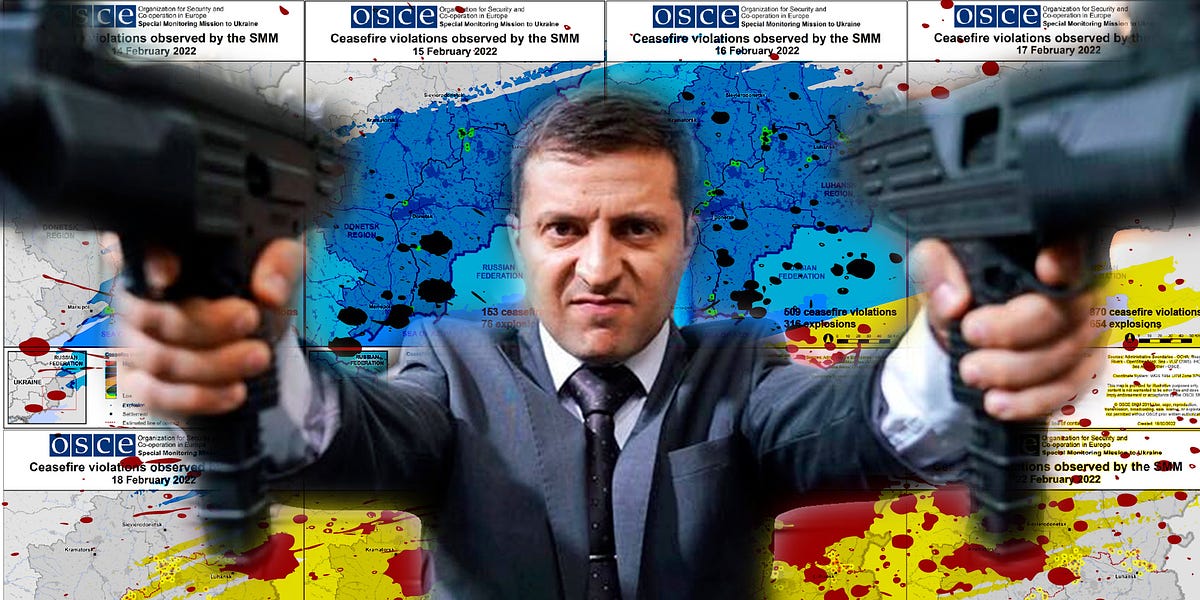
OSCE Reports Reveal Ukraine Started Shelling The Donbas Nine Days Before Russia's 'Special Military Operation' The Biden Administration, U.S. political officials, and the corporate media are lying the American public into World War III. kanekoa.news

@ivan_8848 - Ignorance, the root and stem of all evil

https://t.co/rN1rg2bz2C

@ivan_8848 - Ignorance, the root and stem of all evil

The US/NATO Orchestration of the 2014 Maidan Coup in Ukraine The Ukraine - Russian War Was Planned Understanding The Roots Of The Russia-Ukraine Conflict Explained By Putin https://t.co/YHodnBWoj8 Putin: We immediately said, "Guys, you can't do this, stop. No, nobody even wanted to listen. They could not fail to realise that this was a red line. We said it a thousand times. No, they did it. So here we have today's situation. And I suspect it was no accident. They needed this conflict.

Video Transcript AI Summary
The video discusses the events leading up to the Ukrainian crisis 10 years ago. It highlights the technical decision made by President Yanukovych to delay the signing of the association agreement with the EU, which sparked protests in Kiev. The video also mentions the involvement of Western countries in supporting the anti-government movement and the subsequent armed opposition in Kiev. It emphasizes the impact of these events on the entire continent and the world. The transcript also includes statements from various leaders and politicians, expressing their opinions on the situation. Overall, the video suggests that the crisis could have been resolved earlier if different approaches had been taken.
Full Transcript
Speaker 0: Трудно даже поверить. С чего все началось? Хотите жить как в Париже? Хотим. Давайте подписывать. А кто бы сказал? Давайте почитаем. Запад поддержал государственный переворот антиконсульцион. Зачем вы раскалываете страну? Только пусть Янукович не применяет силу, но он не применил. А вооруженная оппозиция в Киеве провела Господа. Как это понимать? Вы кто такие вообще? Там попробуйте, объясните фермерам во Франции, в той же Германии, в Испании, в Греции, в Португалии, в странах юга Европы, что нужно им немножко прижаться в интересах Украины. Я посмотрю на их реакцию, но только не каких-то функционеров, а вот работяг, которые на земле работают. Speaker 1: Слова, сказанные ровно 10 лет назад, кадры сделанные в очередной раз в Speaker 0: последние Speaker 1: украинский кризис перешедший в острую фазу ровно 10 лет назад теперь определяет жизни всего континента да и во многом всего мира Speaker 0: трудно даже поверить с чего все началось С технического решения Президента Януковича перенести подписание договора об ассоциации Украины с Евросоюзом. При этом речь шла даже не об отказе от этого документа, а только о переносе сроков с целью его доработки. Это было сделано, напомню, в полном соответствии с конституционными полномочиями абсолютно легитимного международно признанного главы государства Speaker 1: 8 2013 на украине серьезные экономические сложности и за помощью президент страны янукович обращается главному стратегическому партнеру россии систско-украинские переговоры принесли сегодня сенсационные новости, а события развивались следующим образом: буквально до самого последнего момента вообще не было известно, какие именно документы сегодня будут подписаны и вот за пять минут до начала церемонии нам раздали списки подписанных документов и мы увидели что 14 самым последним пунктом стоит документ под названием Дополнение к контрактам на куплю-продажу газа от января 2009 года. Speaker 0: Который дает возможность Газпрому, что он и намерен делать, продавать на Украину газ по цене 268 с половиной долларов за тысячу кубов. Сейчас эта цена около 400 долларов. Была, можно сказать. С целью поддержки бюджета Украины правительство Российской Федерации приняло решение разместить в ценных бумагах украинского правительства часть своих резервов из фонда национального благосостояния объемом 15 миллиардов долларов США. Хочу обратить Ваше внимание и хочу всех успокоить сегодня мы вообще не обсуждали вопрос о присоединении Украины к таможенному союзу. Speaker 1: Эти слова Путин говорит потому, что украинское общество тогда уже изрядно разогрета обещаниями ассоциации с евросоюзом а взаимодействие с таможенным союзом то есть с россией подается там как некий путь назад в киеве начинаются первые митинги Speaker 0: Киев, давай! Киев, давай! Киев, давай! Speaker 1: Украина це Европа! Украина це Speaker 0: Европа! Говорят, что у украинского народа отбирают мечту, Но если посмотреть на содержание этих соглашений, то до этой мечты многие могут просто не дожить, не дотянуть. Потому что условия очень жесткие. Очень легко спекулировать на этих вопросах. Хотите жить, как в Париже? Хотим. Speaker 1: Давайте Speaker 0: подписывать. Кто бы сказал? Давайте почитаем. Вы читали, что там написано? Нет. Вы читали эту бумагу? Нет. Никто же нифига не читает. Вы хоть читать-то умеете? Посмотрите, что там написано. Рынки открыть, денег нет, нормы и торговые, и технические регламенты вести европейские. Ну значит что, промышленность надо закрыть, Это выбор кого-то? Ну хорошо. Вот если всё это посчитать, взвесить, то тогда и молодые люди вполне могут разобраться в этом и сказать: Да, мы хотим европейских стандартов, но давайте это сделаем таким образом, чтобы предприятия завтра не закрылись машиностроительные, чтобы судостроение осталось на плаву, чтобы авиация не померла, чтобы космическая отрасль не сдохла. Все эти рынки и кооперация в Speaker 1: России. Эти кадры разобраны посекундно, что фиксируют действительно судьбоносные моменты. Лидеры стран Евросоюза, до этого годами рассказывавшие о демократии и праве выбора, устраивают публичную порку президенту независимой страны януковичу за принятые им решения Speaker 0: украина приостанавливает, не прекращает, а приостанавливает процесс подписания договора с Евросоюзом и хочет все, что называется, посчитать как следует. По сути, мы услышали угрозы со стороны наших европейских партнеров в отношении Украины, вплоть до способствования проведению акций протеста. Вот это и есть давление, вот это и есть шантаж. Speaker 1: Многие жители украины россии недоумевают по поводу все новых и новых кадров из Киева митинги становятся все агрессивнее в центре столицы неприкрыто начинают действовать боевики. Speaker 0: Все что сейчас происходит говорит о том что это не революция, а хорошо подготовленная акция. Эти акции, на мой взгляд, были подготовлены не к сегодняшнему дню, они готовились к президентской выборной кампании весны 2015 года. Просто это небольшой фальш-старт, но это все заготовки к президентским выборам. Хорошо подготовленные и обученные группы боевиков, на самом деле. Вы за или против подписания Украиной соглашения об ассоциации с Европейским Союзом? Мы не за и не против, это вообще не наше дело, это суверенное право украинского народа, украинского руководства, лице президента, парламента и правительства. Правительства. Если бы нам сказали, что Украина в НАТО вступает, тогда мы были бы против реально, потому что продвижение к нашим границам инфраструктуры военного блока для нас представляет опасность Speaker 1: экономические вопросы раз за разом подчеркивает путин суверенное дело украинского руководства но невозможно не учитывать серьезнейшие связи предприятия России и Украины. Speaker 0: Я бы попросил наших друзей в Брюсселе воздержаться от резких выражений, Что, нам для того, чтобы им понравиться, нужно удавить целые отраслью нашей экономики? И я бы полагал, что нужно деполитизировать эту тему, согласиться с предложением Президента Януковича и в трехстороннем формате как следует и обстоятельно на эти все темы поговорить. Speaker 1: В здании европейской комиссии на множестве телевизоров с пометкой горячая новость постоянно идут трансляции с украины январь 14 года руководство Еврокомиссии призывают януковича к сдержанности настаивает на неприменении силы против боевиков на улицах но не видит ничего странного в том что в акциях на майдане против легитимной власти участвуют высокопоставленные западные политики и Speaker 2: меньше на украина ди всем утичкима Люди на Украине, которые так мужественно вышли на улицы и провели демонстрации, вызывают у нас огромное уважение. Впечатляет сколько людей демонстрируют, что они хотят быть ближе к Европейскому Союзу в рамках закона на основе демократических процессов. Speaker 3: Все, что происходит это воплощение надежд Сирии и Украины, их жажды свободы, честных выборов и усталости от взяточничества. Я могу себе представить, как Speaker 0: бы наши европейские партнеры отреагировали, если бы в разгар кризиса, скажем, в Греции либо на Кипре на одном из митингов антиевропейских появился бы наш министр иностранных дел и начал бы обращаться с какими-то призывами. Наши друзья, европейские тоже, обратились с призывом к Президенту, к Правительству не допускать применения силы и так далее. Применение силы это всегда крайняя мера, я с ними согласен абсолютно. Но, знаете, мы сегодня в ходе беседы, я тоже об этом сказал, на Западной Украине священнослужитель призывает толпу ехать в Киев и громить правительство и дальше аргументация чтобы в нашем доме не командовали негры москали то есть русские и жиды вы знаете, это крайне удивительно, что это делает представитель религиозной деятельности а во-вторых это ведь крайнее проявление национализма абсолютно неприемлемое в цивилизованном мире и призывая украинское правительство и президент Януковича действовать цивилизованными методами мы должны обратить внимание и на его политических противников призвать и их тоже придерживаться методов цивилизованной политической борьбы Speaker 1: сейчас почему-то не принято вспоминать но вообще-то массовые беспорядки еще в январе 14 года начались не на донбассе а на западе украины винница штурм здания областной администрации и здесь и в же томире параллельно погромы в Ровно Захват административного здания в Черновцах. Драки и штурм в Черкассах. И вот уже половине страны захвачена власть донбасс тогда молчит наблюдает ждет когда по закону будет наведен порядок в россии тоже надеются на нормализации обстановки в братской стране сочи стартуют олимпийские игры которым россии готовилась долгие 7 лет. Украинские, белорусские и российские спортсмены в олимпийской деревне живут все вместе. Белорусскую сборную на Олимпиаде поддержит президент Александр лукашенко украинский лидер также приедет сочи путин проводит отдельную встречу с украинской олимпийской сборной желает спортсменам успехов Speaker 0: очень хорошая атмосфера создается болельщиками вот конечно болеет за своих но в целом очень желательно и поддерживать всех спортсменов в том числе и других команд страшно все подобрано неожиданно Speaker 1: из Киева начинают приходить совсем уж страшные кадры стрельба убийства массовые Speaker 0: жертвы Speaker 1: С Киева начинают приходить совсем уж страшные кадры стрельба убийства массовые жертвы с момента переворота в Киеве это первый большой публичный комментарий российского президента о произошедшем и происходящем. Speaker 0: Это антиконституционный переворот и вооруженный захват власти. А что было проще сказать в тот момент времени? Вы там переворот совершили? Нет, мы же гаранты, министр иностранных дел Польши, Франции, Германии, как гаранты подписали документ соглашение между президентом Януковичем и оппозицией. Через три дня все это растоптали. А где гаранты? Спросите у них, где они эти гаранты. Почему они не сказали: Ну-ка, пожалуйста, назад все вернитесь. Януковича верните назад! И проводите конституционные демократические выборы. Speaker 4: Я подписал это соглашение, вместе с ними поставил свою подпись, Но я не услышал от них даже слов осуждения в сторону бандитов, которые стреляли в мой кортеж, в мою охрану, и не один раз. Speaker 0: Нам все время говорили, только пусть Янукович не применяет силу, только пусть не применяет силу, но он не применил. Speaker 3: Важно также убедиться в том, что украинские военные не будут вовлечены в кризис, который должен быть разрешен гражданским обществом. Speaker 0: 21 числа вечером мне президент Обама позвонил, мы с ним обсудили эти вопросы, сказали о том, как мы будем способствовать исполнению этих договорённостей, Россия взяла на себя определённые обязательства. Я услышал, что мой американский коллега готов взять на себя определенные обязательства. Это все было 21 вечером. В тот же день мне позвонил Президент Янукович, сказал, что он подписал, считает, что ситуация стабилизировалась, и он собирается поехать в Харьков на конференцию. Не скрою, это не секрет, я выразил определенную озабоченность, сказал, возможно ли в такой ситуации покидать столицу. Он ответил, что считает возможным, поскольку есть документ, подписанный с оппозиции, и министр иностранных дел европейских стран выступили гарантами исполнения этой договоренности. Скажу вам еще больше. Я ему ответил, что я сомневаюсь в том, что все так будет хорошо, но это его дело, он же в конце концов президент, он чувствует ситуацию, ему виднее, как поступать. Во всяком случае, мне кажется, нельзя выводить силу правопорядка из Киева, сказал ему я. Он сказал: Да, конечно, это я понимаю. Уехал и дал команду вывести все силы правопорядка из Киева. Красавец Леша. Я Speaker 4: верил в порядочность иностранных посредников. Меня не просто обманули, меня цинично обманули, но не меня обманули, обманули весь украинский народ. Speaker 0: Янукович свою власть практически сдал. Он согласился на все, что требовала оппозиция. Он согласился на досрочные выборы парламента, на досрочные выборы Президента, согласился вернуться к Конституции 2004 года. Вы там Януковича успокоите, а мы успокоим оппозицию. Янукович не применил, как просили нас американцы, ни вооруженных сил, ни полиции. А вооруженная оппозиция в Киеве провела госпереворот. Как это понимать? Вы кто такие вообще? Неохота здесь камеры работают, жесты определенные показывать. Вы понимаете, какие жесты мне сейчас хочется показать. Вот что они нам показали. Поняли, что окончательно свинтить Украину под себя исключительно политическими средствами не удается, совершили госпереворот, лишили нас шансов нормальным политическим образом выстраивать отношения с этой страной. Они действовали и пошли, как у нас в народе говорят, простите за моветон, по беспределу просто. Уже началась гражданская война и хаос. Кому это, зачем это надо было делать, если Янукович и так со всем согласился? Надо было пойти на выборы, и те же люди пришли бы сейчас к власти только легальным путем. Мы, как идиоты, платили бы 15 миллиардов, которые обещали, держали бы низкие цены на газ, дальше продолжали субсидировать экономику. И давайте прямо, здесь же все взрослые люди, правильно, умные, грамотные люди. Запад поддержал государственный переворот антиконстуционный. Что дальше? Вот смотрите, госпереворот совершили, с нами разговаривать не хотят, у нас какие мысли? Следующий шаг Украина в НАТО. Мы считаем, что с нами пытались разговаривать с помощью силы, и что мы, именно действуя в такой логике, дали адекватные ответы. Мы не создавали этого кризиса, мы были противниками такого развития событий. Не мы же там пирожки раздавали повстанцам на этот счет. Да, мы понимаем, там сложные процессы, но не таким же образом их нужно решать, причём где? Прямо у наших границ. Но вы где находитесь? За тысячи километров? А мы здесь? Это наша Земля. Вы за что хотите там бороться? Не знаете? А мы знаем, и мы на это готовы. Я бы никогда не стал этого делать, если бы не считал, что мы обязаны поступить именно таким образом. Что касается хронологии событий, то сначала произошел государственный переворот и захват власти, и вот с этого момента наши взгляды и пути с руководством Украины стали диаметрально противоположными. С этого момента мы с ними разошлись. Но после этого Крым вернулся в состав Российской Федерации, а не наоборот. Так что у нас отношения испортились с Украиной, с Крымом в принципе не связано. Мы разве какие-то операции в Крыму или где-то еще проводили с нормальной страной и с нормальной властью? Нет, никогда этого не делали, в голове даже этого не держали. Но зачем же западные страны поддержали государственный переворот? С этого момента для нас власть на Украине источник власти, госпереворот, а не воля народа. Speaker 1: Откуда вам это известно? Очень просто, Speaker 0: потому что люди, которые живут на Украине, у нас с ними тысяча совместных всяких контактов и тысяча связей И мы знаем, кто, где, когда встречался, работал с теми людьми, которые свергали Януковича, как их поддерживали, сколько платили, как готовили, на каких территориях, в каких странах и кто были эти инструкторы. Мы все знаем. Speaker 1: Вы уважаете суверенитет Украины? Speaker 0: Конечно. Но мы хотели бы, чтобы и другие страны уважали суверенитет других стран, в том числе и Украины. А уважать суверенитет это значит не допускать государственных переворотов. Это кто делал? Американские наши дружки. А европейцы, которые подписались как гаранты договоренности между властью и оппозицией, сделали вид, что вообще ничего не знают. С этого всё началось. Сейчас говорят: ну давайте об этом не будем вспоминать. Нет, будем помнить об этом всегда, потому что в этом причина, и причина в тех людях, которые способствовали этому перевороту. Но Speaker 1: даже после сотен жертв, документальных кадров кровавых побоищ, та же Меркель, и спустя годы, публично говорила: Speaker 2: Мы считаем, что украинское правительство пришло к власти демократическим путем. Speaker 0: Если мы будем вот так вот с разными стандартами подходить к одинаковым явлениям, что мы никогда ни о чем не сможем договориться. Мы должны утвердить, в конце концов, не право сильного и право кулака в международных делах, а нормы международного права. Speaker 1: -Конфликт на Украине и вокруг нее, который разгорелся ровно 10 лет назад, который сейчас поставил мир на грань третьей мировой войны, мог быть урегулирован еще тогда, в феврале 14-го. Speaker 0: Вы же сразу сказали: ребята, так нельзя, остановитесь. Нет, никто ее слушать не хотел. Они же не могли не понимать, что это красная черта, мы тысячу раз об этом сказали, нет, полезли. Вот мы получили сегодняшнюю ситуацию. Я подозреваю, что не случайно им нужен был этот конфликт. Speaker 1: В результате сша разорвали связи россии и европы разожгли вооруженный конфликт между братскими народами но и по своему положению в мире нанесли такой удар от которого некогда глобальный лидер уже вряд ли когда-либо оправиться

@ivan_8848 - Ignorance, the root and stem of all evil

https://t.co/VdXEQCpDok

@ivan_8848 - Ignorance, the root and stem of all evil

They promised NATO would not expand to the East! At the🇩🇪reunification meeting (GDR and FRG) in 1990,🇩🇪Foreign Minister Hans-Dietrich Genscher told his US counterpart, James Baker, that NATO would not expand to the East. Present also is E. Schevardnadze, Soviet Foreign Minister. https://t.co/pIvSMNMQfi

Video Transcript AI Summary
The West promised not to expand NATO eastward in exchange for German reunification. The then Foreign Minister in Washington made significant commitments, stating that there was no intention to extend the defense area to the east, not just in relation to East Germany, but in general.
Full Transcript
Speaker 0: Im Gegenzug zur deutschen Einheit verspricht der Westen, die NATO nicht weiter nach Osten vorrücken zu lassen. In Washington macht der damalige Außenminister weitreichende Zusagen. Speaker 1: Wir waren uns einig, dass nicht die Absicht besteht, das Radioverteidigungsgebiet auszudehnen nach Osten. Das gilt übrigens nicht nur in Bezug auf die DDR, die wir da nicht einverleiben wollen, sondern das gilt ganz generell.
Saved - June 28, 2024 at 6:05 AM
reSee.it AI Summary
Jeffrey Sachs provides a comprehensive analysis of the Ukraine war, American foreign policy, and other related topics. He discusses America's push for Ukraine to join NATO, the concept of neoconservatism, the failures of regime change, the Nord Stream Pipeline explosion, and the origins of COVID-19.

@TuckerCarlson - Tucker Carlson

Jeffrey Sachs with probably the smartest and most accurate assessment of the Ukraine war, and American foreign policy more broadly, ever caught on tape. (20:17) Why did America push for Ukraine to Join NATO? (58:34) What is a Neocon? (1:25:28) Regime Change Never Works (1:36:27) Who Blew up the Nord Stream Pipeline? (2:01:45) COVID Origins

Video Transcript AI Summary
In this video, the speakers engage in a conversation covering multiple topics. They discuss the ongoing conflict between Russia and Ukraine, providing historical context and highlighting the actions and provocations by both sides. The speakers express concern about the lack of concern for human lives and the risk of nuclear war. They emphasize the need for diplomatic negotiations between the US and Russia to de-escalate the situation. Additionally, the video addresses the perceived lack of wise and honest individuals in US politics, praising Rand Paul for his foreign policy stance and criticizing the Democrats for their support of military spending. The role of the CIA in regime change and the need for the US to reevaluate its global role are also discussed. The speakers further touch upon the lack of transparency and truthfulness in government narratives, expressing concern about the risks to humanity. They stress the importance of diplomacy and communication with other countries to prevent further conflicts, and mention the Cuban Missile Crisis as a reminder of the potential consequences of international tensions. Ultimately, the video calls for leaders to prioritize peace and truth in order to protect lives.
Full Transcript
Speaker 0: You drink coffee? All the time. Non stop. Me too. Non stop. 9 or 10 cups a day. Yeah. It's good. I like coffee. And I drink it straight until minutes before bed. I do too. Speaker 1: Oh, do you? Yeah. And we will never drink as much as Voltaire drank. Speaker 0: Yeah. Yeah. Oh, is that right? Speaker 1: Like 40 cups. Speaker 0: Yeah. Oh, is that right? Speaker 1: Oh, yeah. And it worked. Okay. So the the 1 thing that we know, we heard about the movement of Russian troops into Eastern Ukraine in February of 2022 was it was unprovoked. Here's a here's a selection of what we know about that. Speaker 2: The Russian military has begun a brutal assault on the people of Ukraine Without provocation, without justification, without necessity, this is a premeditated attack. Speaker 0: Russia's unprovoked and cruel invasion has galvanized countries from around the world. Speaker 1: Russia's unprovoked and unjustified attack on Ukraine. Russia conducted an unprovoked war of aggression against Ukraine. Speaker 0: This unprovoked Russian war of aggression has got to be met with strength. Speaker 1: Vladimir Putin decided, unprovoked, to start this war. So was it unprovoked? Speaker 0: Well, we did hear that a lot of times. Yes, we did. I I actually asked a research assistant of mine to count how many times we heard that in the New York Times in that 1st year from February 2020 2 to February 2023, in their opinion counts, was 26 times unprovoked. Of course, things aren't unprovoked. It's almost Speaker 1: a brand name. The unprovoked invasion. Speaker 0: It's it's the lazy person's, Dodge for, actually trying to think through what's going on. And it's and it's very dangerous, because it's, it's wrong. It gets the whole story completely wrong, and it misunderstands the trap that we set for ourselves as the United States to push Ukraine deeper and deeper and deeper into this hopeless mess that they're in right now. Speaker 1: So in what sense was it provoked? Like, what started this? Speaker 0: Basically, it started, very simply, which is, that the United States government, let's not call it the US people, they had nothing to do with this, but the US government said, we're gonna put Ukraine on our side, and we're gonna go right up to that 2, 100 kilometer border with Russian. We're gonna put our troops and NATO and maybe missiles, whatever we want because we are the sole superpower of the world and we do what we want. And, it it goes back actually a long way. It goes back a 100 70 years. The Brits had this idea first, surround Russia in the Black Sea region and Russia's not a great power anymore and that was Lord Palmerston's idea in the Crimean War 18 53 to 1856, And the Brits taught us what we know about empire, and they basically taught us the idea. You know, Russia, it needs an outlet. It needs an outlet to the Middle East. It needs an outlet to the Mediterranean. You surround Russia in the Black Sea. You have rendered Russia a second or third rate country and Zbig Brzezinski, 1 of our lead geostrategists of the current era, wrote in 1997, let's do this. Let's make sure that we basically surround Russia in the Black Sea region. They got this idea that we'll expand NATO so that every country in the Black Sea around Russia is a NATO country. Right now, well, back then, Turkey was a NATO country, but we said, okay, we'll get Romania and Bulgaria and we'll get Ukraine and we'll get Georgia. Now Georgia, not our Georgia, Atlanta Georgia, Georgia of the Black Sea. We used to call it Soviet Georgia. Yes. Soviet Georgia, if you wanna call it that. Home of Stalin. It it it it's not NATO North Atlantic. It's it's way out there on the eastern edge of of the Black Sea region. People can look at a map. But we said, yeah. We'll make Georgia part of NATO too. And the reason was very clear, and Zbig was very explicit about it that this is our way to basically dominate Eurasia. If we can dominate the Black Sea region, then Russia's nothing. If we make Russia nothing, then we can basically control Eurasia, meaning all the way from Europe to Central Asia and through our influence in East Asia do the same thing and that's American unipolarity. We run the world. We are the hegemon. We are the sole superpower. We are unchallenged. So that's the idea. Speaker 1: But but why would you want that? Why would the Brits want that? Why does the US state department want that? What what about Russia, which is not actually much of an expansionist power, is so threatening? Speaker 0: It's not about Russia. It's about the US. It's about Britain before that. I think it's a little bit like that old game of risk. I don't know if you played that as a kid, but you the idea was have your piece on every place in the world. You know, that that was the game. And you read the American strategist, whether it's Zbig Brzezinski, although he's a very moderate, or the neocons who have run US foreign policy for the last 30 years, the neocons are very explicit. The US must be the unchallenged superpower In every place in the world, in every region, we must dominate. It's quite a it's quite a load for us American people. What they say is we are going to be the constabulary duty holder, fancy word for saying we'll be the world's policeman. They say it explicitly. They say that's lots of wars. We have to be ready for all these wars. To my mind, it's a little crazy but their idea was after the end of the Soviet Union, well, now we run the world. And to come back to Russia, the idea was well Russia's weak, it's down, it's we're the sole superpower. They're they're on on their back or on their knees, whatever it is, and now we can move NATO where we want and we can surround them. And, the Russians said, please don't do that. Don't don't bring your troops, your weapons, your missiles right up to our border. It's not a good idea. And the US, I was around in those years involved in Russia and in Central Europe. The U. S. Was, we don't hear you, we don't hear you, we do what we want. They kept pushing inside the U. S. Government in the 1990s when this debate was going should NATO expand? Some people said, yeah. But, we told Gorbachev and we told Yeltsin we weren't gonna expand at all. No. Come on. Soviet Union's done. We can do what we want. We're the sole superpower. Clinton bought into that. That was Madeleine Albright's line. NATO enlargement started and our most sophisticated diplomats, we used to have diplomats at the time, we don't have them anymore, but we used to have diplomats like George Kennan, said this is the greatest mistake we could possibly make. We had the defense secretary, Bill Perry, who was Clinton's defense secretary, who agonized, god, I should resign over this. This is terrible. What's going on? But he was outmaneuvered diplomatically by Richard Holbrook and by Madeleine Albright, and Clinton never thought through anything systematically in my opinion. And, so they decided, okay, Hungary, Poland, Czech Republic, first round. And then Brzezinski, in a 1997 article in Foreign Affairs Magazine, which is kind of the bellwether of foreign policy, wrote a strategy for Eurasia where he laid out exactly the timeline for this US expansion of power and he said late 1990s will take in Central Europe, Hungary, Poland, Czech Republic. By the early 2000s, we'll take in the Baltic states. Now that's getting close to Russia. By 2005 to 2010, we'll invite Ukraine to become part of NATO. So this wasn't some flippant thing. This was a long term plan and was based on a long term geo strategy. Now the Russians are saying, are you kidding? We wanted peace. We ended the Cold War 2. You didn't just defeat us. We said no more. We disbanded the Warsaw Pact. We wanted peace. We wanted cooperation. You call it victory. We we just wanted to cooperate. I know that for a saying we're defeated. They were saying saying we're defeated. They were saying we just wanna cooperate. We wanna stop the cold war. We wanna become part of a world economy. We wanna be a normal economy. We wanna be normal society connected with you, connected with Europe, connected with Asia. And the US said, we get it. We get it. We won. You do everything we say, and we determine how the pieces are gonna go. So in the early 2000s, Putin comes in. First business for Putin was good cooperation with Europe. You go back to the early 2000s. Again, I know the people. I I watch closely. I was a participant in some of it. Putin was completely pro Europe. Yes. And and pro US, by the way. Speaker 1: I know. Speaker 0: And and we don't wanna talk about this. We don't wanna admit it because we don't want anything other than unprovoked. So everything is phony, what we say. Everything is a lie. But just to say, the US kept doing unilateral things that were really outrageous. In 1999, we bombed Belgrade for 78 days. Bad move. Absolutely. We bombed a capital of Europe for 78 days. Speaker 1: What was, Looking back, what was the point of that? Speaker 0: The point of that was to break Serbia into create a new state Kosovo where we have the largest NATO military base in Southeast Europe. We put Bondsteel base there because we wanted a base in Southeastern Europe, and again, you look at the neocons. It's nice of them. They actually describe all of this in various documents. You have to make the links, but in a document called rebuilding America's defenses in the year 2000, they say the Balkans is a new strategic area for the US. So we have to move large troops to the Balkans because their idea is literally the game of risk, not just you need good relations or peace, we need our pieces on the board. We need military bases with the advanced positioning of our military everywhere in the world. So they wanted a big base in, in Southeastern Europe. They didn't like Serbia. Serbia was close to Russia. Anyway, we're the sole superpower. We do what we want. So, they divided the country, which they now claim you never do and you never change borders. We broke apart Serbia, established by our declaration a new country, Kosovo. Speaker 1: 99. It wasn't to save the oppressed Muslim population? Speaker 0: Excuse me? Speaker 1: It wasn't to save the oppressed Muslim population? Speaker 0: It was very much to save the military industrial complex to have a nice location in Southeastern Europe. We killed all those people, sad, but, we do lots of sad things and lots of destructive things, lots of wars. We're the country of perpetual war. We don't look back. We're not even supposed to talk about this because this was unprovoked, remember. So in 2002, the US unilaterally pulled out of the anti ballistic missile treaty unilaterally. Well, that was 1 of the stabilizers of the relationship with Russia and it was 1 of the stabilizers of the global nuclear situation which is absolutely dangerous and the US unilaterally started putting Aegis missiles into, first, Poland, then Romania, and the Russians are saying, wait a minute. What do we know you're putting in this? You're a few minutes from Moscow. This is completely destabilizing. Do you think you might wanna talk to us? So then comes 2, 004, 7 more countries in NATO, Latvia, Lithuania, Estonia, Romania, Bulgaria, Slovakia and Slovenia. Now starting filling in the Black Romania and Bulgaria, suddenly, there are now North Atlantic countries, but it's all part of this design, all spelled out, all quite explicit were surrounding Russia. In 2007, President Putin gave a very clear speech at the Munich Security Conference very powerful, very correct, very frustrated where he said, gentlemen, you told us in 1990 NATO would never enlarge. That was the promise made to President Gorbachev and it was the promise made to President Yeltsin. And you cheated, and you repeatedly cheated, and you don't even admit that you said this, but it's all plainly documented, by the way, and as you know, in a 1, 000 archival sites so it's easy to verify all of this. James Baker the 3rd, our secretary of state, said that NATO would not move 1 inch eastward and it wasn't a flippant statement. It was a statement repeated and repeated and repeated. Hans Dietrich Genscher, the foreign minister of Germany, Same story. The Germans wanted reunification. Gorbachev said, we'll support that, but we don't want that to come at our expense. No. No. It won't come at your expense. NATO won't move 1 inch eastward, mister president. Repeated so many times in many documents, many statements by the NATO secretary general, by the US secretary of state, by, the German chancellor, now of course all denied by our foreign policy blob because we're not supposed to remember anything. Remember, this was all unprovoked. So back to 2, 007, Putin gives this speech and he says stop. Don't even think about Ukraine. This is our 2, 100 kilometer border. This is absolutely part of the integrated economy of this region. Don't even think about it. Now I know from insiders, from all the diplomatic work that I do, that Europe was saying to the US European leaders, don't think about Ukraine, please. You know, this is not a good idea. Just stop. We know, from our current CIA director, Bill Burns, that he wrote a very eloquent, impassioned, articulate, clear, secret as usual memo, which we only got to see because, WikiLeaks showed to the American people what maybe we would like to know once in a while, but Yeah. We're never doing. Speaker 1: Like, what our government's doing. Speaker 0: What they're doing and how they're putting us at nuclear risk and other things. Okay. This 1 did get out, and it's called niet means niet. No means no. And what what Bill Burns very perceptively, articulately conveys to Condoleezza Rice and back to the White House in, 2008 is, Ukraine is really a red line. Don't do it. It's not just Putin. It's not just Putin's government. It's the entire political class of Russia. And just to help all of us as we think about it, it is exactly as if Mexico said, we think it would be great to have Chinese military bases on the Rio Grande. We can't see why the US would have any problem with that. Of course, we would go completely insane. But And we should. And we should. Of course. It's the whole idea is so absurdly dangerous and reckless that you you can't even imagine grown ups doing this. So what happens is the what for what I'm told by European leaders, and by long detailed discussion, Bush Junior says to them, no, no, no, no, it's okay. Don't worry, I hear you about Ukraine. And then he goes off for the Christmas holidays and comes back, whether it's Cheney, whether it's Bush, whatever it is, says yeah, NATO is gonna enlarge to Ukraine, and the Europeans are shocked, pissed. What are you doing? Speaker 1: You may have come to the obvious conclusion that the real debate is not between Republican and Democrat or socialist and capitalist, right, left. The real battle is between people who are lying on purpose and people who are trying to tell you the truth. It's between good and evil. It's between honesty and falsehood. And we hope we are on the former side. That's why we created this network, the Tucker Carlson Network. And we invite you to subscribe to it. You go to tucker carlson.com/podcast. Our entire archive is there, a lot of behind the scenes footage of what actually happens in this barn, when only an iPhone is running. Tuckercarrelson.com/podcast. You will not regret it. So Bush did not make that decision. Speaker 0: Bush did not make the decision? Speaker 1: Right. I mean, it sound if I'm hearing the Speaker 0: same saying? Yeah. No. Bush did make the decision. Okay. But you No. What I'm saying is he had told the Europeans, I hear you. I'm not gonna do it. But it Speaker 1: sounds like he was influenced by the people around him. Speaker 0: Oh no, that could be. Yeah, I don't know whether it was CIA or whether someone explained to him or whether someone said George, mister president, this is a long standing project. It's not something for European country to object to. I don't know what happened there, but what I do know is that he came back and told the European leaders, no, we're doing it. They said, no, no, no, no, no, we're not doing it. And then they had the NATO summit in Bucharest and this was 2, 008 and the Europeans, Chancellor Merkel, French president, all of them, George, don't do this. Don't do this. This is extraordinarily dangerous. This is really provocative. We don't really need or want NATO right up to the Russian border. Bush pushed, pushed, pushed. This is a US alliance fundamentally and they made the commitment Ukraine will become a member of NATO. The dodge was okay, we won't give them exactly the road map right now, but Ukraine will become a member of NATO. Because in those days, the US and Russia met in a NATO partnership even then, Putin was there the next day in Bucharest saying don't do this. This is completely reckless. Essentially, this is our fundamental red line. Do not do this. The US can't hear any of this. This is our biggest problem of all because the neocons who have run the show for 30 years believe the US can do whatever it wants. This is the most fundamental point to understand about US foreign policy. They're wrong. They keep screwing up. They keep getting us into $1, 000, 000, 000, 000 plus wars. They keep killing a lot of people, but their basic belief is the US is the only superpower. It's the unipolar power, and we can do what we want, so they could not hear Putin. Even that moment, they couldn't hear the rest of the Europeans and, by the way, they said Georgia would become part of NATO. Again, the only way to understand that is in this long standing Palmerston theory. This isn't just haphazard, oh why don't we take Georgia, this is a plan. Okay, the Russians understand every single step of this, So another thing goes awry. What goes awry? The Ukrainians don't want NATO enlargement. The Ukrainians don't want it. They're against it. The public opinion said, no. This is very dangerous. Neutrality, it's safer. We're in between east and west. We don't want this. So they elect Viktor Yanukovych Yes. A president that says, we'll just be neutral. And that's absolutely the US's, oh, what the hell is this? Ukraine, they don't have any choice either. So Yanukovych becomes the enemy of the neocons, obviously. So they start working, of course the way that the U. S. Does. We got to get rid of this guy. Maybe we'll elect his opponent afterwards, maybe we'll catch him in a crisis and so forth. And indeed, at the end of 2013, the U. S. Absolutely stokes a crisis that becomes an insurrection and then becomes a coup, and I know again from firsthand experience the US was profoundly implicated in that, but you can see our senators standing up in the crowd, like, if Chinese officials came to January 6th and said, yes. Yes. Go. You know, can how would we like it if, if if Chinese leaders, came and said, yeah. We we were with you a 100%. American senators standing up in Kiev saying to the demonstrators, we're with you a 100%. Victoria Nuland famously passing around the cookies but it was much, much more than the cookies, I can tell you. And so the US conspired with a Ukrainian right to overthrow Yanukovych and there was a violent overthrow in the 3rd week of February of 2014. That's when this war started. This war didn't even start in 2022. It started in 20 14. That was the outbreak of the war. It was a violent coup that overthrew a Ukrainian president that wanted neutrality. When he was violently overthrown and his security people told him, you're gonna get killed, and so he flew to Kharkiv and then flew onward to Russia that day. The U. S. Immediately in a nanosecond recognized the new government. This is a coup. This is how the CIA does its regime change operations. So this is when the war starts. Putin's understanding, completely correct in this moment, was I'm not letting NATO take my naval fleet and my naval base in Crimea. Are you kidding? The Russian naval base in the Black Sea, which was the object of the Crimean War, and in its way is the object of this war in Sevastopol, has been there since 17/83, and now Putin's saying, oh, NATO's gonna walk in? Hell no. And so, they organize this referendum of the this is a Russian region and there's an overwhelming support. We'll stay with Russia, thank you, not with this new post coup government. An outbreak breaks out in the eastern provinces, which are the ethnic Russian provinces in the Donbas, Lugansk and Donetsk and Donetsk and there's a lot of violence. So the war starts in 2014. So saying something's unprovoked in 2022 is a little bizarre for anyone that actually reads a normal newspaper to begin with. But in any event, the war starts then, and within a year, the Russians are saying very wisely, we actually don't want this war, we don't wanna own Ukraine, we don't want problems on our border, we would like peace based on respect for the ethnic Russians in the east and political autonomy because you, the coup government, tried to close down all Russian language, culture and rights of these people after having made a violent coup, so we don't accept that. So what came out of that was 2 agreements called the Minsk 1 and the Minsk 2 agreement. The Minsk II agreement was backed by the UN Security Council and it said that we will make peace based on autonomy of the Donbas region. Now, very interesting, the Russians were not saying that's ours, we want that. All the things that are claimed every day that Putin just wants to recreate, he thinks he's Peter the Great. He wants to recreate the Russian empire. He wants to grab territory. Nothing like that. The opposite. We don't want the territory. We actually just want autonomy based on an agreement reached with the Ukrainian government. So what was the US attitude towards that? US government attitude. US government attitude was to say to the Ukrainians, don't worry about it. Come on. Don't worry about it. You keep your central state. We don't wanna see Ukraine weakened at all. We just wanted NATO, in a unified Ukraine. Don't go for decentralization. Ization. We tell them to blow off the very treaty that they've signed. Then we accuse Russia of not having diplomacy, by the way, which is par for the course. Oh, you can't trust them. We blow off every single agreement. We blow off not moving 1 inch eastward. We blow off the Anti Ballistic Missile Treaty. We have so many NATO led wars of choice in between I didn't even mention in Syria, CIA attempt to overthrow Assad, in Libya and so forth, and we blow off the Minsk agreements. And actually, Angela Merkel explained in a rather shockingly frank interview that she gave last year when asked why Germany didn't help to enforce the Minsk agreement because Germany and France were the guarantors of the Minsk agreement under something called the Normandy process, she said, well, we just thought this was to give some time to the Ukrainians to build up their strength. In other words, they were guarantors of something in a phony way and the US was absolutely lying about this and I know senior Ukrainians who were in government and who were around the government who said to me, Jeff, we're not gonna do that. Anyway, that was at gunpoint. We don't have to agree with that. So all that diplomacy was blown off. The war continued. The US pumped in arms, built up armaments, was building up what would be the biggest army of Europe actually. A huge army, that Russia was watching. What are you doing? You know, you're not honoring Minsk. You're You're building up this huge Ukrainian army. Speaker 1: Paid for by NATO. Speaker 0: Paid for by the United States, basically. Yes. And in 2021, Putin met with Biden. And then after the meeting, he put on the table a draft Russia US security agreement. He put it on the table on December 15, 2021. It's worth reading, very plausible document. I don't agree with some of it. It's it's a negotiable document, something you would negotiate. I thought the core of it was stop the NATO enlargement and, I called the White House myself at that point and said, don't have a war over this. Who'd you Speaker 1: talk to? Speaker 0: I talked to Jake Sullivan, and they said, don't don't have a war over this. We don't need NATO enlargement for US security. In fact, it's counter to US security. The US should not be right up against the Russian border. That's how we trip ourselves into World War 3. No, Jeff. Don't worry. No war. There's not gonna be a war. Don't worry. We we've got a diplomatic approach. It's that, Jake, this is a basis for diplomacy. Negotiate. Well, the formal response of the United States is that issues about NATO are nonnegotiable. They're only between NATO countries and NATO candidates, no third party has any stake or interest or say in this. Russia, it's completely irrelevant. Again, to use the analogy, you know, if Mexico and China want to put Chinese military bases on the Rio Grande, the United States has no right to interfere and fight Speaker 1: And no interest in it. Speaker 0: And no interest in it and no bylaw. And this was the formal US response in January 2022. So unprovoked, not exactly. So can I ask 30 years of provocation where we could not take peace for an answer 1 moment? All we could take is we'll do whatever we want, wherever we want, and no 1 has any say in this at all. Speaker 1: So can I just go back 12 12, I guess, 22 years? Putin told me, and I checked, I think it's true, that he, in Clinton's final days, asked Clinton if Russia could join NATO, which seems almost by definition like a victory. Yeah. NATO exists as a bulwark against Russia. If Russia wants to join the alliance, then you've won. Right? Why would why would the US government have turned that offer down? And do Speaker 0: you think that was that is real? Russia and actually Europe wanted, used to want before Europe was completely a kind of vassal province of the United States government, wanted what they call collective security, which was we want security arrangements in which 1 country's security doesn't the of Security and Cooperation in Europe. Really a good idea. It's Western Europe, Central Europe, Eastern Europe and former Soviet Union and the idea was let's bring us all together under 1 kind of charter, and we'll work out a collective security arrangement. I liked it. I mean, this is what Gorbachev was saying. We don't want war with you. We don't want conflict with you. We want collective security. 2nd arrangement that actually makes a lot of sense but people say, is this guy out of his mind? But it actually makes a lot of sense. Gorbachev disbanded the Warsaw Pact. We should have disbanded NATO. NATO was there to defend against a Soviet invasion. There's not going to be any Soviet invasion. In fact, after December 1991, there's not even a Soviet Union. We don't need NATO. Why is there NATO? NATO was established to defend against the Soviet Union. So why did it continue after Gorbachev and Yeltsin? The neocons, thankfully, thank you, read the document, it's all explicit, this is our way of keeping our hegemony in Europe. In other words, this is our way of keeping our say in Europe, not protecting Europe, not even protecting us. This is hegemony. We need our pieces on the board. NATO's our pieces on Speaker 1: the board. Why would why would Germany allow foreign troops garrison garrisoned on its soil for 80 years? I don't understand. Why would European country allow that? Would you want foreign troops in your town? Speaker 0: Tucker, when, when when, you had your wonderful interview with Putin, he answered everything except once you asked him, what are the Germans seeing in this? And Putin said, I don't get it. And I thought, oh my god. Thank you. I don't get it either. Speaker 1: Is it just broken by war guilt? Is it masochism? I mean, honestly It's Speaker 0: it's not masochism. It's not war guilt. There is there are basic mechanisms that I don't understand truly after being around more than 40 years in this and knowing all the leaders, and I know Schultz and I know others, I don't understand it, but when the US has a military base in your country, it really pulls a lot of the political strings in your country. It really influences the political parties. It really pays. I know it's, I'm naive. You know, in other words, the Germans are not, they're not free actors in this. That's the point. Speaker 1: If men with guns showed up in your apartment in New York and just camped out there, you probably wouldn't really be the head of your household anymore, Speaker 0: would you? It it would. It's probably true. But, you know, your your question, of, why would the Germans want this, it's the same question of after the US blew up the Nord Stream pipeline, why wouldn't the Germans have said before or after, why did you do that, this is our economy, you just blew up, but they don't And so they're so subservient to the US interests. It's a little hard to understand because it makes no sense for Europe, but like you said, you know, there aren't people in your house, maybe that's the bottom line. I've spoken to European leaders who have said to me, I can't quote it because it's so shocking and I won't quote it because it was said confidentially, but basically they don't take us seriously in Washington. And I said yes. I didn't say it was the bubble over my head speaking to a European leader, but, maybe if you pushed a little bit, you could be you would be taken more seriously, not in this way of just defeat. But it was said to me in such a sad way, I just felt, oh, god. Don't tell me that. You're a leader of in Europe. Speaker 1: But we're occupying their country with soldiers and guns. How could we take them seriously? They're a bitch. I mean, honestly Speaker 0: No. I don't know. It's really sad, and it's it's doing a lot of damage to it's it's doing huge damage to Europe. It's destroying Ukraine, by the way. That's the the first point. It's destroying Ukraine. It's doing a lot of damage to to Europe. It's wasting a hell of a lot of lives and money in the United States which the neocons don't count and almost nobody stands up and talks about it and your first question about being unprovoked we even have a story about it It's the story's complete bull. It's complete nonsense. It's for people who don't want or don't remember, don't wanna remember anything before February 24, 2022. But there's a whole long history to this that's absolutely kind of absurd and tragic. I mean, it's it's absurd. It's utterly tragic. 500, 000 Ukrainians dead for nothing. Speaker 1: Do you think that's the number? Speaker 0: I think that's probably the number. Yeah. That's the best number that I know. Speaker 1: I mean, we talked about this last night at dinner, but 1 of the most shocking things just as someone who lived in Washington, to me, is if you ask any of the senators for as I have, who voted to keep this war going with US tax dollars, how many of your beloved Ukrainians have been killed? They have no idea and they have no interest in knowing. Speaker 0: And they don't care at all, and sometimes they say they don't care. Mitt Romney said, you know, it's greatest bargain, no American lives. Dick Blumenthal said the same thing, basically. This is a great bargain, no American lives. They don't Speaker 1: Isn't that evil? I mean, at some point, it's certainly hypocritical that you're telling us we're doing this for Ukraine, for our friends in Ukraine, the standard bearer of democracy, but also don't you have an obligation to kind of care about the people you kill? Speaker 0: I think so. You think so. I think Americans think so. I don't think that the security apparatus think so, because the security state, you know, you gotta be tough to play that game of risk. You gotta know, is there gonna be some collateral losses? Some we millions of people have died in American wars of choice, but if you're a big boy, you can't let that deter you. So I think, it's pretty deeply ingrained that a few 100000 lives here and there, come on, we're talking about who runs the world after all. Speaker 1: It's really, really dark. Speaker 0: I think it's extraordinarily reckless. Speaker 1: Just to circle back, well, also, look, if the pretext for all of this is some sort of moral authority, we're for democracy, they're for authoritarianism. Speaker 0: This has nothing to do with morality. This has nothing to do with morality. It has nothing to do with Western values. It has nothing to do with American values. It it doesn't even have to do with American interests from what I can see, although it says that they say that American interests are at stake. Well, we've spent maybe $7, 000, 000, 000, 000 on these reckless perpetual wars since 2, 001 is that really we've added to the debt. The debt's gone from about 30% of national income to more than 100% of national income. We've had these disastrous wars. Is this America's interest? No. I mean, maybe we could have actually rebuilt a bridge or a road along the way or even had a mile of fast rail in our country or something, but, no, we had to spend, 1, 000, 000, 000 and 1, 000, 000, 000, 000 on wars. So to my mind, it's all completely perverse, but what I I find amazing is that once in a while you have to look, but once in a while, you'll actually find the truth expressed in such a vulgar way. No. They don't count the Ukrainian lives. They literally say no American lives. We're not even so sure about that, by the way. But if No. Speaker 1: Americans have died. Speaker 0: Yeah. It's not not a large number, but it's, it's some, but they don't tell us the truth about that either. Speaker 1: So just to circle back to the provocation, I watched as a complete non expert, the administration send the vice president to the Munich Security Conference in February of 2022 when it was clear that things were getting really hot and watch Kamala Harris say to Zelensky, on camera, we want you to join NATO, when everybody, even me, a talk show host, knew that that was the red line for Putin. So the only conclusion I could reach was they want him to move across the border into Ukraine. They want a war. Speaker 0: What is your take? Tucker, just to say, until this moment, every senior official in the US or the the secretary general of NATO, Jens Stoltenberg, says Ukraine will join NATO, and 1 thing everyone that's listening should understand, Ukraine will never join NATO short of a nuclear war. So because Russia will never allow it, period. So every time we say it, all we mean is the war continues and more Ukrainians are destroyed. Speaker 1: And we're willing to risk nuclear conflict. Speaker 0: And some people definitely are because they're idiots. Really? Because that, my resentment gets very high when we reach that level. But we here talk about nuclear war these days. We hear we're not gonna be blackmailed by this nuclear threat and so forth. Well, goddamn it. You better be worried. We're talking about a counterpart that has 6, 000 nuclear warheads. We have 6, 000 nuclear warheads. We have a lot of crazy people in our government. I know it. I'm adult enough to know over 44 years of professional life that there are a lot of intemperate people in our country. We have a lot of allies that say, oh, we can do this. We have a president of Latvia tweeting or x ing or whatever the verb is these days, Russia delenda est. In other words, Russia must be destroyed, playing off of the old Cato the Elder, Carthago delenda est. Carthage must be destroyed. Honestly, a president of a Baltic state tweeting that Russia must be destroyed, this is prudent. This is safe. This is gonna keep your family and my family safe. Are we out of our minds? And all through this, Biden hasn't called Putin 1 time, and I speak to very senior Russian officials. You speak to the most senior Russian official. They say, we want to negotiate. Of course, we'll talk. Zelensky quote unquote made it illegal, and the United States says, well, we won't do anything that the Ukrainians don't want. This is insane, by the way, as if this is really between Ukraine and Russia, this is about the United States and Russia. This, everybody should understand, this isn't even about Ukraine and Russia, this is about the US being in Ukraine and Russia, so the ones that need to talk are Biden and Putin, period. And I keep saying, if I may say it again just now, I keep saying to Biden, if you want to use my Zoom account, please use it. I'll lend you my phone. You make the call. Start negotiations. I don't like my family being at risk of nuclear war. Why won't they? Because they believed up until now I think they can't quite believe it now. They believed up until now that they would get their way through bluff or superiority of force or superiority of finance. They gambled because they were gambling with someone else's lives, someone else's country, and someone else's money, our money, the taxpayer money, but they were gambling not with their own stakes, but they were gambling. They're not very clever. They gambled wrong all along. Putin said no, for us, this is existential, for you it's a game, apparently the game of risk, you need your piece on that board as if American NATO forces in Ukraine is somehow existential for the United States as opposed to a neutral Ukraine, and they thought that they would get their way. And I spoke with senior officials all along who just thought Russia won't object or can't object or will be pushed aside or will fault would sneeze with US financial sanctions or will succumb to the US HIMARS and attack them just 1 absolutely naive idea after another, but you might ask me how can they have such naive ideas? Speaker 1: Well, that's that was my question. Yes. Speaker 0: And I'm sorry to put words in your mouth, but I would say, well, I'm old enough to remember Vietnam. I'm old enough to remember trying to overthrow Bashar al Assad. I'm trying to I'm old enough to remember Libya. I'm old enough to remember Afghanistan. We screw up nonstop. This is not clever, what we're doing. Speaker 1: But the people what's so interesting, so you've been an academic your whole life. You're I think you're 1 of the youngest tenured professors at Harvard, but you've also been, I think, uniquely a diplomat, on and off, mostly on for, you know, decades. So you know the people who are making US foreign policy personally well, and the quality of the person engaged in that seems to have declined just dramatically. Speaker 0: I think that's true, by the way. I think it's true in general of American politics. Maybe it's an illusion, but when I was a kid, in college, I did my summer internships in my senator's office, Senator Phil Hart. He was a man of great integrity, of great intelligence. He was a Democrat, but he had lots of Republican friends and colleagues. There were big people there, and they were serious people, Fulbright and Frank Church and really wonderful impressive people, Chuck Percy, Luger, really impressive people who wanted the US to do right, to do good, and I admire them, and it was on both sides of Republican and and Democrat. And you feel it's it's not like that right now. It's really not like that right now. And I Speaker 1: don't see it, I don't see wise people on either side. I hate to say that. Yeah. I don't think it's a partisan divide. They all seem crazy and dumb to me. Speaker 0: You know, we've, we we chatted Rand Paul's, the the only 1 for me that makes sense on foreign policy right now. He says, stop this. There's so many damn wars. It's putting us at incredible risk. But you don't hear the Democrats, they line up 100% for more military spending, continue the war. We have people that completely shock me that are saying these stupid things about no US lives as if Ukrainian lives don't matter. Nobody wants to talk about negotiation. No 1 says anything honest. No 1 calls. No 1 even wants the truth out of the White House or the executive branch, which is another role of Congress, which is don't take us for a ride, we're an independent, separate, equal part of government and it used to be that congress kind of resented when the executive branch lied to it. Yes. You don't see that resentful. Their lives. They you don't see that resentment. You see partisanship. If it's a Republican president, then the Democrats go after him. If it's a Democratic president, Republicans. But nobody from one's own party even tells their president, stop bullshitting us. Speaker 1: Yes. Speaker 0: And that's very serious. Speaker 1: Well and and these are not small lies. So the 2 of the biggest lies are that Ukraine can win, whatever that means, never defined, push Russia back to its January 2022 border, and 2, that Ukraine will join NATO. And neither 1 of those things is true. Speaker 0: They're not only not true. If you are able to watch, you or someone outside the mainstream, it becomes obvious that these aren't true, but if you follow, admiral Kirby, and the White House every day He's a liar. Lying with a smirk on his face, which I can't stand because he can't even control his smirk because he tells us, I'm lying. You know, as as he's talking, it's unreal. But if you or if you read the New York Times, which is sad and pathetic, you won't know. But if you actually listen to any independent outlets, which I do because I'm traveling in the world most of the time actually not, not in the US, You know that these things are obvious. Someone asked me a couple days ago, Ukraine's getting, it's getting blasted on the battlefield now. Some days are 1500 dead, typical 1, 000 dead. Russia has air superiority, artillery superiority, missile superiority, everything. And the Ukrainians are getting blasted. And now the U. S. Press is reporting well, the Ukrainians are, you know, falling back and and the tone has suddenly changed. So someone asked me a couple days ago, you know, why did this sudden change on the battlefield occur? And I said, excuse me? He said, yeah, why did this sudden change? He said, there's no sudden change. This whole trend has been obvious for more than 2 years. We're in a war of attrition, and the bigger party is blasting hell out of Speaker 1: this war. Much bigger party. Exactly. Speaker 0: But you wouldn't know it by any of our narrative, official, congressional, or our kind of mainstream media because they don't tell the truth until I'd say until, but even after, it's staring you in the face. Then maybe they'll say something that's a little bit true. Speaker 1: That just feels like North Korea, Damir. What you imagine North Korea is, this news vacuum where everybody is under these huge misimpressions, like, nobody has any reference point in the truth at all, people don't even know they're being lied to. It you travel constantly. Is this the most sort of cut off country from an information perspective in the world? Speaker 0: You know, when, I'll give an example, when the US put on sanctions on Russia in March 2022, just after the beginning of this latest phase of the war that started in 2014. I know senior US financial officials and they, oh, we've got them. This is gonna crush them. I said, I don't think so. You know, I'm I was in Latin America last week. They're not gonna do this. I was in India the week before that. It's it's not gonna go like that. So what happened was the only ones that applied the sanctions are Europe, the United States, and a few allies in East Asia, Japan, Korea, Australia, New Zealand, Singapore. The rest of the world said, we're not part of that. We're we're we don't sign up to this. We don't like this. We don't agree with the NATO enlargement. We don't like this narrative. And the sanctions proved to be pretty useless compared to what this grandiosity of the US strategist thought. So it comes to this question, you know, what does the rest of the world think? The rest of the world doesn't think much of the United States, what it's doing. It seems to them is a bizarre country. Why are you pushing NATO enlargement? Why are you bringing us into your war? We don't really want this. Interestingly, most of the rest of the world is not against the United States, by the way. They said just don't make us choose all these things. This isn't our battle, and we don't even like what you're doing. Just make peace, calm things down, and we don't want bad relations. So it's not as if the world's antagonistic, but Washington does not get this at all. I probably speak to more world I don't know. I speak to a lot of world leaders in developing countries all the time. It's my job as a development economist. So I'm talking to world leaders, foreign ministers, heads of state, and so on. And I know their understanding and position very clearly. I don't know whether the White House or Blinken or anyone else in the administration understands even these basic points, but it was obvious to me. Do you know Blinken? To me. A little bit. Not not well. Speaker 1: It seem from the outside, it seems like Blinken is a driving force. I doubt it. Who do you think is? Speaker 0: I think there's a big deep project with of the security apparatus that goes back 30 years. I think CIA continues to be a driving force. I don't know. National Security Council is obviously driving force. The Pentagon's obviously a driving force. The armed services committees. It's not 1 individual, but it's a project that is long dated and it doesn't turn and we don't have a president that's very flexible of mind. We don't have a president that is, you know, on top of any of this, it seems to me. Speaker 1: Not a nimble president. Speaker 0: Yeah. Not not not nimble, not effective, not necessarily, in charge, not necessarily making decisions. I don't really know, but what I do know is that it's not improv. It's a rudder that's stuck, I would say. In other words, they can't do something different, and each what is improv is that the last thing they tried didn't work. So now, they need to quickly improvise something else as the rudder is stuck, so we continue on the same destructive path and it's not working. So, oh my god, we've got to do something else. That's the improv part, but what is not changing is goals, direction, strategy or this most basic point which for me is a kind of it sounds so simple minded, but I actually, from a lifetime of experience, really believe in it. We don't talk to the other side. Speaker 1: We also seem to be, huffing our own gas a bit, believing our own lies. Speaker 0: We believe that we need to lie to because maybe if your rudder's stuck and you're the skipper, you have to say full speed ahead. In other words, if you can't move the rudder, you have to give some self justification for why we continue towards this. Speaker 1: So for example, since you are an economist, the the economic effects of kicking Russia to swift, etcetera, etcetera, right, Of these very serious sanctions imposed against Russia 2 and a half years ago. Big picture, it seems like that's a country with an economy based on natural resources and manufacturing. Ours is largely an economy based on finance, lending money and interest, and real estate. Right. Which is more durable? Which is more real? That's I mean, that's my perspective. What's your Speaker 0: sense? Well, I think the basic point on the sanctions is if you have, oil, if you don't sell it to Europe, you can sell it to Asia. Speaker 1: Well yeah. Speaker 0: And it wasn't so hard, and they figured that out. Speaker 1: Even I know that. No. Speaker 0: They fig they figured out how to get those tankers in. They figured out how to get insurance cover, and they figured out how to do it. And they're making a lot of money, and the sanctions didn't have any effect. And what they also didn't understand, and I think it's it's also important for people to understand, in all of this neocon strategizing, they had this glimmer of insight and actually Zbig Broshinski was was very good on it. He said, by all means, the 1 thing never never to do is to drive Russia and China together. Speaker 1: Well, exactly. Speaker 0: And he said very explicitly, and he says in 1997, in his book, The Grand Chess Board, I think it's called. He says, but this is so unlikely. You know, this would be so crazy to do, and this is exactly what these dunderheads have done. Speaker 1: Who are the neocons? How would you describe them? What is a neocon? Speaker 0: A neocon is a group of true believers starting, that really rose to force in the last years of Bush senior. It was Cheney, Wolfowitz, Rumsfeld, but it became absolutely bipartisan. Victoria Newland is kind of the ultimate her husband, Speaker 1: Bob Kagan. Speaker 0: Robert Kagan, is kind of the public intellectual of the neocons. I mean, he is he is, he's I know Bob well. Speaker 1: He's an idiot. Yeah. Well Even if he's your public intellectual. Speaker 0: He's he's the guy that writes the the tomes that say child. We we I think that this has been just about the most disastrous foreign policy imaginable. How can you go from, from peace, in 1991 when you have a chance for creating a peaceful cooperative world that could actually be prosperous and do good things together to this mess that we're in, it took a strategy so stupid, so reckless, so blind, and that's what the neocons gave us. They gave us a strategy which said, we now run the world. And, explicitly, we will be the world's police men. We will fight the wars that we need to fight whenever and wherever we need to fight them. We will make sure that there's never a rival. Well, you do that long enough, you end up in lots of absolutely destructive stupid wars, and the rest of the world doesn't just sit back and say, oh, thank you, US. We're so grateful you're the leader. They say, come on. We're, you know, you're 4.1 percent of the world population. There's another 95.9% of the world population that actually would just like peace and some cooperation and not you to be telling us what to do. So this strategy was explicit, clear, adopted in the last years of basically in 1991, 92 after the Soviet Union was dissolved in December 1991. Clinton was is just not serious, consequent or experienced enough. He wasn't a rigid neocon but Madeleine Albright was a true believer, and Clinton drifted in that direction. And that's also partly something to understand, which is when you have the biggest military machine in the world, when you are so powerful, the war machine is always revving. There's always some case for war. The neocons basically said, yeah, we're the policemen. We're the constabulary. We this is our duty. We and said you have to you have to be in each of these conflicts because, you know, US reputation also depends on this. So they invited regional wars and everywhere and all the time and believed, of course, we could clean out governments we didn't want, regime change by war, by covert operations, and so on. And it became not a little movement. It became the dominant drive. So Clinton kind of drifted. His administration was divided between Madeleine Albright and Holbrook on 1 side and William Perry on the other side, but he went with with Albright. By the end of Clinton's term was NATO enlargement, bombing of Belgrade, and and we were kind of off to the races. Then came Bush Junior, 911, Global War on Terror, but basically 911 as the opportunity to implement the project for the new American century, which is the document that defines the NeoCon agenda. And it's such an interesting document because very clear, It was very carefully studied. And it's also important to understand the US is a big ship, so it doesn't turn quick. So you prepare a path or it's this stuck rudder as I said, and you can read in rebuilding America's defenses, which was a kind of campaign document for the incoming Bush Junior administration what we should do, and it defines this Neocon agenda. So Bush Junior introduced all of these things, the unilateral withdrawal from ABM, the the war in Iraq, the expansion of NATO to 7 more countries, the commitment to expand NATO to Ukraine and Georgia. Then comes Obama. You don't think of him as a neocon especially, but who becomes the point person for Eastern Europe and Ukraine, Victoria Nuland. So so interesting. Victoria Nuland was the deputy national security adviser of Cheney. I remember very well. Yes. So she was Cheney's adviser, then she was a she was George W's ambassador to NATO during the commitment to enlargement, and if Obama weren't a neocon, you would say, well, that's not someone I'm gonna hire, but all of a sudden she lands as Hillary's, as Hillary's assistant. Now Hillary's absolutely neocon to the core, and there's Victoria Nuland and she goes from being Hillary's assistant to becoming Assistant Secretary of State for European Affairs and becomes the point person in the overthrow of Yanukovych at the end of 2013 and early 2014. And Obama is not he's also very inexperienced obviously, no experience at all in foreign policy, but he wasn't by nature a neocon, but but the system keeps you moving unless you're a president that knows how to keep a foot on the brakes, and we haven't had many presidents like that. Eisenhower was 1 who knew how to put his foot on the brakes because he really understood this system. John Kennedy learned it, but only after the Bay of Pigs and probably was was killed by our government for trying to keep his foot on the brakes, and there have not been many other occasions when presidents kept their foot on the brakes. So in 2011, Obama does the absolute neocon play of saying, almost out of the blue, by the way, why don't we overthrow Bashar al Assad, Syria's president? Well, that's a little damn weird, but suddenly you start hearing Assad must go. I was on Morning Joe when that statement by Hillary was made, and, Joe Scarborough looked at me and said, Jeff, what do you think? I said, well, how are they gonna do that? That sounds like another pretty stupid idea. And it turned out that was 2, 011. We've had 13 years of war in Syria. 100 of 1000 dead. Destroyed the country. Of course, destroyed the country. And and who's president? Bashar al Assad. And interestingly, I can tell you oh, god. Yeah. I can tell you. In 2012, the US you know, there there were protests. There were things that were going on in Syria, but but the president said, okay. We'll send in the CIA to overthrow, the government in Syria. And if anyone is wondering, we do this dozens of times, so don't have any illusion that this is unusual. It is the job, the terms of reference of the CIA to overthrow governments in other countries, I don't approve. I think it leads to war, destruction. It hasn't passed Putin's notice that that's the job of the CIA, so it's another reason he doesn't exactly want the US on his border and so forth. Okay. So we start arming, the jihadists, crazy things in Syria. Yeah. I can say it. I'm just thinking because and the US says Assad must go, so the UN starts a diplomatic process to try to find peace, which is the job of the UN. It's not to implement US regime change, it's to try to find peace. So the US, the UN succeeds in getting all of the parties to agree to a peace agreement except 1, the US. So the yes. So the idea that, you know, you couldn't find peace, you couldn't find these all these different factions, in Syria, there was an agreement reached, but there was 1 obstacle to the agreement, and the obstacle was the US said, on the 1st day of this agreement, Assad must go. And, the response was, you know, why don't you have it a process? They'll be in 2 years an election or 3 years. Don't overthrow the government the 1st day, we have all this in place. And, Obama, well, I don't know if it's Obama, probably Hillary, but whatever, said no. So that's why there was no agreement. Speaker 1: But what was the motive? Like why would you want to overthrow Bashar al Assad? Speaker 0: Very strange. I've never heard an absolute intelligent reason for this. Believe me, their idea is we can do it, why not? 1 argument was that the neocons had a list and this is actually what Wesley Clark who was, you know, NATO's supreme commander, in the end of 19 nineties. I know Wesley quite well, and he's also spoken about this. He said the neocons had a list that they were gonna clear out in the 2000 all of the governments aligned with the Soviet Union or with Russia. Now Russia has a naval base on the Mediterranean, and so Assad is therefore an enemy, or not an enemy. He doesn't rise to the level of being an enemy, someone whose peace you can take off the board and put in your own piece. That's all. So the idea is incredible arrogance. They don't think, honest to god. I don't know. Whoever gave that order knew nothing about Syria. That, I can guarantee you. Speaker 1: But the downstream effects of that were were horrifying. Speaker 0: Well, unbelievable because Speaker 1: We created ISIS. So Speaker 0: Yeah. But we probably created ISIS pretty directly because we funded jihadists all along the way. That's our story since 1979, actually. Yes. So this goes back a long time. They don't they're not clever. They're not honest. They're not transparent. They are arrogant to the hilt and they don't talk to anybody else, including to us, the American people, including to Congress, including to counterparts in other countries, and it gets you into trouble when you're so flippant and flagrant because remember what was happening in Syria, they did exactly the same thing in Libya. And you look at Libya, they decided to take out Gaddafi. Why? No 1 really knows. Speaker 1: He was cooperating with us at that point. Speaker 0: No 1 knows because, some people say Sarkozy, that that that that Gaddafi had contributed to Sarkozy's campaign, that it was a personal vendetta. There are a hundred theories. The fact that there are a hundred theories shows that the whole thing was bullshit, to use a technical diplomatic term. You cannot even know right now why. What you know is that they misused the UN Security Council resolution to protect the people of Benghazi to launch a months long NATO aerial bombardment of Libya until they brought down the government, unleashed war in Africa for the next 13 years until today, which is still roiling all of the countries of the region. They do these things because they can, because it doesn't count. Maybe another theory, which is even a little may be true. What difference? It's money. It's a business. We're running a business. We're trying weapons. We're doing this. Maybe it's all success from somebody's point of view that you have all these wars going with this big military machine. I don't know. That's that is a theory which is not completely dismissible because what you can't do, Tucker, is look and say, my god, we had a geopolitical reason to do this. This was really part of American security. We really needed to overthrow Assad. We really needed to take out Gaddafi because if we didn't do that something else would happen. You cannot even concoct a crazy narrative exposed that explains that. So these are not deeply explicable facts. Speaker 1: But the pattern is is very is recognizable immediately. Here you have a country with unchallenged, for a moment, unchallenged power, starting wars for not any obvious reason all over the world. When was the last time an empire did that? Speaker 0: You know, the British. That was the last time. I think we learned everything from the British. They were nonstop wars, skirmishes. You know, when you're an empire, and and if anyone still plays risk, I don't know, I played it 60 years ago, I have to admit. So I'm I'm not sure if people still play the game. But risk you're trying to get your piece on every part of the board. When you have your piece someplace on the board, if the neighboring spots are not yours, you better have wars with them or they're gonna take you out. And so every place becomes an object for war because it becomes next door to wherever you have your bases, your concern, and so on. So we have military bases in, I would say, 80 countries probably, something like that. Of course, the count is not public, so people put together their own lists. We have about 750 military bases around the world. Each of those places has a neighborhood. Each of those places has the next door which, oh, well, they're not we don't have a base there. We better have a base there. And so that's the logic, which is if you're at the outer end of this, well, you better continue because otherwise your outer limit is what we don't learn actually and it's another analogy which I found to be useful The Romans, by around a 110 AD with Hadrian, said and and Trajan, okay. We've reached a good limit. Yeah. And they stopped trying to expand. Speaker 1: Yep. They built they built a wall. Speaker 0: They they Speaker 1: kinda left it there. Speaker 0: Exactly. And they said, they had a there was a a war that I find analogous to Ukraine. They had a war in Germania, so called, east of the Rhine in what is now Germany in 9 AD, which was a war of expansion by Augustus to tame the German tribes and they lost that war, the war of the Teutenberg forest and they lost that war in 9 AD. They basically decided after that, not entirely. They didn't say, well, this is the end of the Roman Empire. They said, okay, We'll just leave Germania. Speaker 1: Yeah. There are limits to our power. Speaker 0: There there are limits, and that's fine. Why don't we behave like that? We're not threatened by Russia. We are not threatened by Russia, and Ukraine being neutral is not a threat to US security. It's builds US security, period. That's what I said to Jake Sullivan. It's not even a concession, Jake. It's a benefit for us. Leave some space between you and them. That's what we want, some space so we don't have an accidental trip wire. That's the real logic of this world. Give a little space. Speaker 1: Yes. Speaker 0: We don't have to be everywhere. We're not playing risk. We're trying to run our lives. We're trying to keep our children safe. We're not trying to own every part of the world. Speaker 1: So speaking of increasing our risk, I I think the unstated but very clear objective of all of this is to kill Putin and replace him and break up Russia. That's my read on it. Speaker 0: If you read even this project for a new American century rebuilding America's defenses, it says maybe Russia will be decentralized into European Russia, Central Asian Russia, a Siberian Russia, they call it, and a Far East Russia. This is essentially what you're saying. They talk there's even some commissions in Washington decolonizing Russia. Their hope, the CIA's hope, if they would ever tell us the truth about anything, was, but they don't get any of this right, but their thought probably in this deep long term vision was after the Soviet Union fell, so too will Russia disintegrate it will disintegrate along its ethnic lines it will disintegrate along its geographic lines. Why is that a US project? It's a US project only because, from my point of view, the US resents that there is a country of 11 time zones, and it's so big that it is, on its face a denial of US global hegemony. In other words, how obnoxious of them to be there. But but the problem is they don't see it that way. But but just Speaker 1: if you're looking at this purely through the lens of, like, what's good for us? So US interests, which I do think is their job actually. Yes. But, chaos across 11 time zones and and innumerable ethnic groups and religious divisions with 6, 000 nuclear warheads, that's really a threat to the world. Speaker 0: I couldn't agree more. Speaker 1: Is it not? Am I missing something? Speaker 0: You're not missing anything. And and the fact of the matter is, you know, I was an adviser to Gorbachev in 1990, 91. I got to watch Close-up. I was an adviser to president Yeltsin in 1991, 1992. I actually it's literally true. As weird as this sounds, I well, maybe not to you. You're about the 1 person for whom it's not weird. I sat in the Kremlin sitting across from Yeltsin the day the Soviet Union ended, in in a in a really not even quite that day literally, it was even more remarkable and bizarre than that. I was leading a little economics delegation to talk about the collapse of the economy that was underway, and Yeltsin came from the back of the room in 1 of these giant Kremlin rooms Yes. And walked across the long room and sat down right in front of me and said, gentlemen, I want to tell you the Soviet Union is over. That's incredible. Like that. And then he pointed to the back door. He said, do you know who is in that room over there? It's the leaders of the Soviet military, and they have just agreed to the dissolution of the Soviet Union. And that was the first words I heard out of his mouth sitting directly across from me. So What a moment. Yeah. That was, of course, the most unbelievable moment, I've had. And, you're sitting in the Kremlin, and, you hear that suddenly. And, and then he went on to say he spoke very beautifully for a few minutes, what does Russia want? And he must have used the word normal 10 times in that short speech. We want to be a normal country. We're done with the communism. We we wanna be normal. We wanna be friendly. We wanna be part of Europe. We wanna be part of the world economy. We wanna be normal. Mister Sachs, can you help us be normal? And I said, mister president, the world will be so grateful for this opportunity for peace that I am absolutely sure that the United States and the rest of the world is gonna come to your assistance. And I said this most remarkably wrong fact because I believed it. I knew that that was America's interest. I believed we would follow our interest. And I had had a very unusual experience, wonderful experience 2 years earlier when I served as Poland's main outside economic advisor, helping them to develop the plan for becoming a market economy in part of Europe. And in those days, I helped Poland raise many 1, 000, 000, 000 of dollars of emergency support to stabilize a very shaky, unstable economy, and in those days, in 1989, every everything I recommended was adopted by the United States government almost immediately. I thought hell, I'm pretty good. I I once went in 1 morning to senator Dole, and I said Poland needs a $1, 000, 000, 000 to stabilize its currency. And he said, mister Sachs, come back in an hour. And I came back in an hour, and there was Brent Scowcroft, and our national security adviser. He senator Drewel said, you know who this is, mister Sachs. I said, general, it's an honor to meet you. And, Scowcroft said, what what is it what's your idea? And I I handed him my 1 page about $1, 000, 000, 000 and he looked and he said, will this work, mister Sachs? And I said, I think this is the right way to stabilize the currency. Said, well, we'll get back to you. And at 5 PM, as Dole asked me, I called Dole and he said tell your friends they have their $1, 000, 000, 000 within 9 within 8 hours basically. Okay. So I said to Yeltsin, this will be great. You know? You're gonna get all the support. We're gonna go mobilize the financial package for you. We're gonna help you stabilize the ruble. We're gonna get a stabilization fund for the ruble. We're gonna get this and that, and, of course, every single thing I recommended that had worked in Poland, they rejected in Washington. And I just for the life of me, what the hell is going on here? Stabilization fund. It worked. The zloty was stable. The Polish currency stabilized. No, mister Sacks. I'm afraid we don't support that. And 1 after another knocked down. So I did not understand the geopolitics that I was in at all. I didn't get it. I said, are you kidding? They want normal. They want peace. This is our greatest moment. This is the greatest moment of the second half of the 20th century. The scourge of nuclear war has been lifted. The cold war is over. Do something. No. So so that's that's it. Speaker 1: What do you make of Putin? Speaker 0: He's very smart. He has led Russia very effectively, and because he emerged from the KGB, he understands the way the US operates because we became a security state. We became a state where the CIA has absolutely extraordinary influence, and Putin gets that. And so he really understands how we operate. He doesn't like it, but he understands it. And his background, especially because his background comes from the KGB, his counterpart was the CIA. He does not have illusions about the United States and I wish we were proving him wrong, but we're not. Speaker 1: How influential is the CIA in the operations of the US government? Speaker 0: Definitely in many, many places, it is the instrument of regime change. And the US is the only country in the world that relies on regime change as, I would say, the lead diplomatic let me put it a different way. Not diplomatic, as as the lead foreign policy instrument. In other words, most countries, virtually any small country, any middle power country, when it doesn't like another country, it either has to deal with it or it comes begging to the United States to take out that country. And we are the country that makes a living by overthrowing other governments, and that's not a good vocation for us. It almost always ends in disaster, in bloodshed, in continued instability, but that's the job of the that became it's half the job of the CIA. CIA is also an intelligence agency. It collects information and makes analysis and it gives intelligence findings and I have no problem with that role at all, although I don't want them to spy on us. But I think that making intelligence findings for the US government is necessary. But being a private army or a hidden force that overthrows governments, that stokes unrest, that puts people in power, that runs covert operations, I'm against it. Speaker 1: So if a big part of the CIA's job is taking down leaders of foreign countries, how long before it does that here in the United States? I mean, it doesn't doesn't seem unlikely that, like, why wouldn't they do that here? Speaker 0: Yeah. Probably, 61 years ago was their first run at this, with president Kennedy from, I think it's a best guess, not sure, but best guess that this was at least maybe rogue CIA or maybe official CIA or maybe compartmentalized CIA operation. It was clearly someone's operation, not Lee Harvey Oswald's from all we know, and all of the evidence points in that direction. It used to be said, why is the United States the only country in the world that's never had a coup? And the answer was, well, we're the only country that doesn't have a US embassy. Speaker 1: Well, of course, we've had a coup. I mean, murdering the president Speaker 0: is a coup. But we probably had coup in broad daylight on November 22, 1963, and, we never quite got over it, and we never looked into it. On on the contrary, we covered it up from the beginning. Drip by drip evidence comes including the most recent evidence that that magic bullet, which was 1 of the justifications of the absurd account of a lone gunman, was also debunked by the, I think now 88 year old Secret Service, agent who said I actually put that bullet from the back of Kennedy's seat in limousine on the stretcher at Parkland Hospital. So there's so many things wrong with the official, and it is preposterous. Almost nobody believes it, and or should believe it. But it's also interesting for all that we're discussing. Most likely, it was a it was a government coup in broad daylight with a tremendous amount of evidence, that it was a conspiracy at a high level and yet it passed for the last 61 years without any official practical note of that fact. Speaker 1: Do you think that was the last time the CIA tried to influence domestic politics in this country? Speaker 0: Well, I'm sure the CIA influences domestic politics all the time in this country because we know about extensive surveillance operations. This was but it's interesting, you know, next year will be the 50th anniversary of the church committee Speaker 1: hearings. And Speaker 0: Frank Church was a very unusual figure from Idaho, a pretty staunch Republican state, and he was AAA young gifted patriot, whose favorite senator was Bora, a conservative, Republican senator. And he was just an upright, very decent person who saw more and more. My god, it's the things we're talking about. Something's not right. People people are getting assassinated in other countries. Our government, it doesn't look clean. And 1 thing after another in a series of events led him to chair the only time a Senate investigative committee actually looked deeply into CIA operations. That was 1975, fascinating. What made it possible was just a confluence of events. Nixon had resigned. Ford was an unelected president who came from congress, who didn't wanna take on Congress so he didn't resist Church's investigation even though his chief of staff, Dick Cheney, was telling him go after this guy. We got to crush this investigation. But, but, Ford said, no. No. No. We can't in any way, supreme court, and I don't wanna get into another huge fight. Hoover had died, J Edgar Hoover had died in 1972, I believe. So the FBI couldn't resist the same way Bill Colby had become CIA director and he didn't wanna inherit all the shit from, the past CIA. So there came this 1 moment when all these pieces enabled, actually, someone to look into what this organization was doing. And the first thing they discovered was no 1 had ever looked into any of it before. No. 2nd, they discovered this is an army of the president of the United States. Yes. It is a private army. And they debated, is it a rogue army? Does it do it on its own? Or is it an army of the president? But it it's an army, and it's an army completely outside of our our oversight and control. Then the third thing they found is they're assassinating lots of people. They're assassinating Americans, by the way, through these unbelievably crazed LSD experiments. But they, you know, basically, they weren't the ones to put the bullet through the head of Patrice Lumumba in the Congo, but they they tried and they were they supported the overthrow of, Lumumba, and, of course, they were trying to kill Castro and many other things. So they found unbelievable things. Now, that was 1975. Since then, we're 49 years. There's never been another church committee of its kind. It's unbelievable. How many things have happened since then? The list, believe me, is very, very long. I've seen some of it so directly. I can't it it's just shocking to me, but just an insight into how our country works which you know very well but to me I find it so weird. I was asked to help Aristide in Haiti. Yes. Haiti's oh so poor, so unstable, so desperate, and, Aristide asked me for economic help. That's what I do. That's that's my expertise. So I, flew down to Port au Prince and I had a very good meeting with him, and at the end of the meeting, he said, mister Sachs, they're gonna take me out. They're gonna take me out. And, what do you mean? Is it they're they're they're gonna overthrow me. Okay. Sorry to be so naive as I am. I said, no. We're gonna make this work. You know, this is, we're gonna make this work. No. No. No. They're gonna take me out. I said, no. No. I'm going back to Washington. We're gonna help with the Inter American Development Bank and World Bank and IMF, and, oh, I'm so naive. So, of course, then they decide to take them out, and the way they do it is destabilize the country. Speaker 1: So the Speaker 0: first thing is close down the IMF, close down the World Bank, close down the Inter American Development Bank, squeeze squeeze squeeze. The next thing is you send in some mercenaries who are gonna create trouble, come over the border from Dominican Republic. The last thing was rather remarkable, which was the US ambassador showed up at his door literally 1 day and said, mister president, you have to flee. We have a plane waiting for you. Otherwise, your life is in danger. And they led him to a plane with an unmarked tail, and 23 hours later, he was in Central African Republic. So this is what's called a coup a coup in broad daylight. Central African Republic. Absolutely. Speaker 1: I thought he went to Joburg. I don't know why. Speaker 0: No. No. No. He went afterwards, but the first the landing was the Central African Republic, if I remember correctly. So I what do I do? What can I do? Well, I call I called up the New York Times reporter on the beat, and I said, there's been a cool 1 broad daylight. I don't you know, you gotta cover this. The reporter told me my editor's not interested. All the news. All the news that's fit to print. Speaker 1: So I've I have 1 it's just amazing. So I I wanted to ask you about that. I mean, you said there have been no correctly, there have been no real oversight hearings into the intel agencies in 50 years. Yes. But you know the congressional committees are only 1 part of the oversight the constitution prescribes and the other part of course is the media. Right? Provide oversight, oversight of government. And I 1 of the the moment I really wanted to speak to you was the day that I saw the clip of you on Bloomberg News. I think you were Speaker 0: 1 of my favorite moments. Speaker 1: And we used to describe and it was within hours of this massive natural gas pipeline, Nord Stream, disintegrating. Can you describe what happened? Speaker 0: Yeah. So, you know, the US flew up Nord Stream as it promised to on probably dozens of occasions, but the most recent of those occasions was President Biden said, I think it's February 7, 2022, I may have the date a little bit off, but he said in a statement to the press, if the Russians invade Ukraine, Nord Stream is finished. And the reporter who asked him the question, I think from Germany but international, said, well, Mr. President, how how can you say that? How could you do that? And, he looks and he says very gravely, believe me, we have our ways. Okay. So this is, and then you can go back and find a 1, 000 clips. Oh, yeah. Victoria Nuland. Oh, yeah. And, Cruz, and everyone saying, this must stop. This must stop. We'll never let it happen. It will be destroyed. It will be ended. Okay. So then it's blown up. Okay? And you and and then the you know, well, before we get to that, I was on Bloomberg soon afterwards. I don't remember whether it was the next day or the day after, and I said, you know, I think the US did this. Mister Sachs, how can you how can you say that? And I said, well, first, the president said he was gonna it was gonna be over. And then there's actually, you know, some readings of, planes in the vicinity and so forth, and and and, there was the tweet by the former, and now current, foreign minister of Poland, thank you, USA, with a picture of of of, the the water bubbling over the blown up pipeline, Radek Sikorsky's tweet. Speaker 1: Yeah. There was Dan Applebaum's husband. Speaker 0: Yes. There was a bit of evidence that, well, yes, the United States had done this. Thank you very much. They said they would, and they did it. I was yanked off the air within 30 seconds. I could watch I could imagine because he was listening to something in the earplug, which I could only imagine. Get that son of a bitch off the air, and they just this interview's over, you know, and he stopped. And then, the, another anchor berated me for a few minutes, few minutes after that. And, okay, that was the last time I had a word on mainstream media, I have to tell Speaker 1: you. Seriously? Speaker 0: Yeah. Yeah. But you've been Speaker 1: famous. I because I live in this country. I know. You've been famous for decades. Speaker 0: Yeah. I was on everything. MSNBC. Like a lot? Yeah. A lot. Constantly. Speaker 1: And but it's so interesting that your sin was saying something true Right. That the media really should be on. I mean, this is the largest act of industrial sabotage in my lifetime. It's the largest It is a big deal. Carbon emission Speaker 0: Yeah. Ever. You know, it's a, look, it's it's a big deal. It's an act of war. It helps to understand what this Ukraine war is all about. It helps us to understand that this is a war between the United States and Russia fought on many means. It's important to understand it. It also has a deeper economic significance because it's part of a long standing US idea of not letting Germany and Russia ever get too close together economically. So there's a lot to that story. And it's again covering that. Look. If you can kill a president in broad daylight, and get away with it for 61 years, if you can walk a president of a neighboring country out to an unmarked plane and not have it covered, if you can have a quote unprovoked war that you provoke over a 30 year period. You can do lots of things, and, this is just 1 of the things that you could do. And I discovered that some of our press like The New York Times, which opined after the blow up that, it looks like Russia did that, you know, to their own to their own infrastructure. Their reporters, their top reporters know better. They tell me, yeah, Jeff, of course, of course. But they don't cover it because we're living in an environment where the people in power think it's a game, and they think that it it's not their job to tell us. They're they're playing risk with our lives. They're playing risk with Ukrainian lives. They don't have to tell us the truth. We don't have to have any serious discussion, we don't have to call anyone for a real hearing or even much less a congressional investigation. We're not living in that kind of world, we're living in a world where it's almost daily that the government says what it wants, Kirby at the White House says it with that damn smirk of his, and pretty much everyone knows it's lies. Speaker 1: But why haven't it's just interesting because you're from a very specific class, you know? Yeah. Well known academic economist, diplomat, frequent TV guest. And, you know, there are a bunch of other people in that world Yeah. But you were pretty much the only person to say, no, that's a lie and I'm going along with it. Why you? Why didn't you do what all of your peers did? Speaker 0: I do it because it came as part of my life course working mostly internationally, talking with leaders abroad. I care about my credibility a lot, which is I'm not always right but I try to always be right. And I have a lot of discussions every day with foreign ministers or with senior diplomats or with heads of state, and for me, I don't hold an office. I don't do anything other than try to have reasonable ideas and speak as truthfully as possible. So it's kind of a career approach, which is I'm trying to be accurate. Right. Speaker 1: But there should be a lot of people like you in your world. Yeah. Speaker 0: I know for me, I'm not interested, and I would not take a job in the US government, for example. I couldn't anyway. You know, with all the things I've said, I can imagine the congressional hearings. It would be, did you say that about the US government? Did you say that about the US government? But in any event, I'm not looking for a job. I'm not looking for USAID grant. I'm not looking for a US government grant. So in that sense, also, I'm not, I'm not part I'm not exactly, I hope, trapped in that way. I'm just trying to be accurate and what I'm really, really trying is to help the United States government understand they're operating on dangerous, dangerous trajectories and with a lot of delusions, and it's very risky for everybody. And I also have a big measure of resentment. I don't like the risks that were being put under, Tucker. Yes, I agree with that completely. I don't like it. You've got children. This is not a game. I got grandchildren, and I really care about this, and I don't like the games. And I want people to tell the truth. And we if we told the truth, we could actually stop the wars today. I don't mean that sounds crazy. It's not crazy. If we told the truth about Ukraine, if Biden called Putin and said that NATO enlargement we've been trying for 30 years, it's off, we get it, you're right, it's not going to your border, Ukraine should be neutral. That war would stop today. There'd be lots of to figure out where exactly will the borders be. How will it go? I don't I don't say that there won't be issues, but the fighting would stop today. If the government of Israel either were told or said there will be a state of Palestine and we will live peacefully side by side, the fighting would stop today. These are basic facts, basic matters of truth, that if we actually spoke them, if we actually treated each other like grown ups, we would resolve what seemed to be these insurmountable Speaker 1: crises. They're not at all insurmountable, they just require a measure of truth. How have you been treated by your peers for saying things like because I hear what you just said, and I think it's it's indisputable. It's also very honorable. You seem to be acting out of the best motives, traditional American motives, I would say. Speaker 0: Yeah. I I like that. Speaker 1: So I admire you for saying that. How have your peers responded to you? Speaker 0: They think I'm a little crazy, I think. What what Speaker 1: would be crazy about what you just said? Speaker 0: Well, you know, when I said, that this war has a reason, that it's not that Putin's evil, that we provoke this and that it could stop, I got most of my remaining, interlocutors saying, Jeff, what is the matter with you? You're Putin apologist? You know, how dare you? When I say this about Israel, I lose another another group. Yes. Because there are things you're supposed to say here. You're because this idea of US hegemony, this idea of US dominance, it's pretty deep in American academia also. I mean, it's not a shock to tell you, but all of these special, the think tanks or university special departments or or research units, they're funded by the US government. They're funded by the security state. They're funded by large donors that are all part of this story so it's not absolutely simple to get out of that. I think Mark Twain, I think he was the 1 that said it, it may have been Mencken, but I think it's attributed to Twain that that's said, it's impossible to convince a man of something when his job depends on on believing the other, and I think that's true of a lot of people, which is I can't really say that. I don't know if it's true, but anyway, why are you sticking your head out so much? Speaker 1: I I gotta ask you about first of all, thank you. I think that was that's the crispest and, I think, most honest description I've ever heard of the lead up to what's happening in Ukraine right now. So thank you for that. So given the credibility that you just gained by that explanation, where do you think COVID came from? COVID? Speaker 0: The question is which lab and in which way. It almost surely did not come out of nature. It almost surely came out of a deliberate research project that had a core idea which was to take a natural virus and make it more infectious. And we have 1 major blueprint of that which is a research proposal called DEFUSE, which was submitted to the Department of Defense to the unit called DARPA in 2018, and it is a kind of cookbook for how to make the virus that causes COVID 19, and the virus is called SARS CoV-two. And what's distinctive about SARS CoV 2 is that it has something called a proteolytic cleavage site, and specifically something called a furin cleavage site. And it's just some pieces of the genome that make this thing damn infectious. And what's interesting about it is that for this class of bat viruses, which are called beta coronaviruses, which is what SARS comes from and what COVID 19 comes from, For that class of viruses, and there are several 100 known, none of them in nature ever had that particular piece of the genome called None? None, other than SARS CoV-two. And that piece of the genome, the furin cleavage site, was an object of research attention from 2, 005 because it was understood that if a virus were to have that, it would make the entry of the virus into human cells easier and would make the virus therefore infectious for humans. SARS 1, which is the first outbreak of a virus like this in 2003 in Hong Kong, was most likely a natural virus that came from a farm animal and it was not so infectious. It killed some thousands of people. But with SARS 1, you got very, very sick for weeks before you were infectious to someone else, and that meant that it was not so hard to stop by isolating people who had the symptoms. With SARS CoV 2, you are infectious even without any symptoms. Sometimes, you're completely asymptomatic. So what's the difference of SARS 1 and SARS CoV 2? The furin cleavage site. And in 2, 005 already, so almost 20 years ago, that experiment was done that said, oh, take SARS 1, add in a urine cleavage site. This thing becomes really infectious, and there are a series of experiments, 2005, 2009, 2011, that are called gain of function experiments where you deliberately manipulate the virus to make it more infectious. By 2015, we had a full blown research program funded by NIH, by Tony Fauci's unit, on Beta coronaviruses, already with the lead scientists focusing on this furin cleavage site. It's starting to get, ah, so they're starting to do more and more targeted experiments. Speaker 1: May I ask why? Why would you want to take a virus like that and make it more infectious? Speaker 0: The overarching answer is called biodefense and then the real question, which I don't know the answer to, is that bio warfare or is that true defense? NIH, starting in 2, 001, became the Defense Department's research unit. So remember the anthrax attack that came after 9, 000, 000, 000, yes. After that Can I start Speaker 1: to ask you, do we know or are you satisfied you know what that was? Speaker 0: That probably came out of AmRID. It was probably a you know, some US scientists either for sure provoking or doing some crazy things or disgruntled or boosting up the DOD budget. I don't know. I don't know the answer to that. I know that after that, DOD put its budget through Tony Fauci's unit, which suddenly became the largest unit of NIH and Fauci became the head of what is politely called biodefense, but 1 only suspects that it is we're not supposed to do biowarfare. Speaker 1: It used to be called germ warfare. Speaker 0: Right. And I don't know, and they say, well, it's it's for vaccines against biowarfare. It's to defend against it. It's to defend against natural outbreaks. But what it is is a tremendously dangerous research program that involves a lot of manipulation of very dangerous pathogens. And by 2015, the ability of scientists to manipulate these viruses was reaching astounding proportions. And we've got a real genius who was part of this group, named Ralph Barrick at University of North Carolina, who is a genius and what he could do was if you gave him, 30, 000 letters of the DNA code, AGCCGA and so forth, and I mean given the letters, he'll turn that into a live virus. I think that's pretty damn remarkable. In other words, you win the designer virus, he'll give you the live virus, and he created what's called a reverse genetic system to make these viruses and to put in pieces into the viruses, with a technique which he also called no seam, meaning you suture in a part, but you do it in a way that you can't identify that it was put in in the lab, so it's without the fingerprints as it were. And it's clear that this area of research picked up a tremendous amount of steam because a lot of American scientists were shouting, this is so damn dangerous. Stop it. And Fauci was saying, no. This is important. This is really crucial. We're gonna continue to do this. There was a brief moratorium, during at the end of the Obama period, and then the moratorium was lifted during the Trump administration, and even during the moratorium period, we know that the research continued on many grants. It's clear when you look closely at this that they were getting closer and closer to this insertion of the furin cleavage site into SARS like viruses. Now in 2018 came this proposal. As always, this was a highly classified proposal. We only learned about it after the fact by a whistleblower. We never even would have learned about it, even in all of the commotion of the pandemic but for a whistleblower, a brave whistleblower in the Department of Defense who said the public needs to see this. And when you look at the diffuse proposal, really, you say, holy shit. Because on page 10, it says we have collected more than a 180 previously unreported beta coronaviruses. And on page 11, it says we're gonna test them for whether they have a proteolytic cleavage site, which is a furin cleavage site, and if they don't, we're gonna insert a furin cleavage site into them. It's the goddamn cookbook for how to make this virus. So here comes the the Defense Department turned it down, supposedly, I mean probably did. And then comes the question, well, so what happened? Well, the people that wrote that little cookbook said, not us. We didn't do anything like that. Now it got turned down. Nothing to look at here and there are all I know because people have told me, oh, Jeff, it's not just that it got turned down. They had done the work even before they submitted the grant proposal. That's not uncommon in science, which is you do a lot of the work beforehand. So I've heard that on good authority. I can't verify it personally. And there are so many strands now that say, yeah, something really screwy was going on. For example, there's a very weird paper, weird to me, by Barrack and the head of what's called Rocky Mountain Laboratory, which is a NIH laboratory under Fauci's authority, that reports this completely bizarre finding and the finding sounds very technical, but it says the Wuhan Institute of Virology type 1 virus does not infect Egyptian fruit bats. Okay. That's the the title. So you say, so what the hell is that? What that is is that obviously, in 2019 and 2018, they were doing experiments using viruses from Wuhan in the Rocky Mountain labs with their collection of bats. Okay, So 1 theory and the bats in Rocky Mount Labs is called an Egyptian fruit bat it's not the kind of bat that carries this virus in China, which is in Yunnan, which is a different kind of bat, but they tried it in Rocky Mount Lab. I scratched my head and said, what the hell we have Rocky Mount Lab doing experiments with Wuhan viruses in Montana in NIH Labs with Ralph Barrick, who is 1 of the principal investigators of insert the furin cleavage site into the virus. I'd like to know more about that. Thank you. Isn't that curious? Then there are other scientists that have pieces of this puzzle. So the answer is we don't know exactly. 1 theory is that it was concocted in the US and sent over to Wuhan, to this Wuhan Institute of Virology, for testing in their bat collection, which is the Chinese bats rather than the Egyptian fruit bats. That's plausible, that's 1 person's theory. There are other theories that even a related research group, German and Dutch, may have played a role because they have in Wuhan research. But when the virus broke out in that period at the end of 2019, early 2020, there's commotion among the scientists. What the hell is this? Where did this come from? Oh my god. Did we do this? How'd this escape or whatever? Nobody knows, of course. So they start having secret calls and 1 of the most important of these calls was on February 1, 2020 that was then memorialized by 1 of the participants in a long memo, all of which became public through a Freedom of Information Act subsequently because our government has lied to us about every single moment of this from the start, hasn't told us anything about any of this. It's all whistleblowers or Freedom of Information Act. That's the only way we know any of what I'm describing to you right now. No 1 has told the truth at all. So, on the February 1st call, the scientists say, oh, god. This looks like a lab stuff. 1 of them says, I can't figure out how this could have ever come out of nature, and they're all looking at the Fuhrer and cleavage site because they know. This group of scientists knows. That's the object of research. That's the goal. It's never been seen before in, in a virus like this. It's, you know, it's it's the signature right there. I did this. And 4 days later, that group authors the first draft of a paper called the Proximal Origins of SARS COV 2 that says it's a natural virus. The same people wrote it? The same people who privately said it's out of a lab, most likely. Speaker 1: So it's just that is provably a cover up then. Speaker 0: That's a cover up. This paper is a fraud. It has not been retracted until today. And where It's a fraud. Where did it run? It ran in Nature Medicine in March 20 Speaker 1: Which I think is is considered 1 of the most credible medical journals. Speaker 0: When I read it, when it came out, it was, I think, the most cited paper in biology or in medicine by far in 2020. Everyone wanted to know where this virus came from. I read it and I went around knowingly telling everyone, oh, it's not a it's natural. You have to read proximal origins of SARS COV 2. Speaker 1: Because it never occurred to you, they would lie in Nature Medicine. Speaker 0: Because this is the top of the heap of the scientific journals and the scientific establishment. The top. Nature, you know, there are 2 great science magazines in the world that have a history that is so deep. 1 is Science, that's the US 1, and the second is Nature, which is the British 1, and Nature is the 1 that originally published Darwin, and it's, you know, it's so illustrious, and I was so smug, you know. Oh, you didn't read Nature, SARS COV 2, proximal origins, because you believe that stuff when it's written there. It's a fraud, that paper. Speaker 1: And it it stands to this day. Speaker 0: To this day, they have not retracted it. There is, last week, a call by several scientists to the editor, a very clever 1, calling for its retraction because, this is interesting, all in the weeds, but it's like everything we're talking about, the the the nonstop line. The paper was to, as an important extent, honchoed by somebody named Jeremy Farrar, who at the time was the director of British Welcome Trust, which is a huge foundation that supports biomedical research. And Farrar was working with Fauci to make it look like nature. And so he was part of this he was part of this group but he's not a named author. And at the bottom of the article, there's more details than you want to know but at the bottom of the article, it thanks, welcome, trust. Well, under the rules of science and under the rules of a journal, if there's a contributor who financed the thing but is not mentioned as a contributor to the article, that is per se a violation of conflict of interest standards, and that wasn't revealed. So just last week, a group of very illustrious virologists called for the retraction of this. I've called for the retraction of it because it's an outright fraud because we have Slack messages and other email messages and other, other, e messaging that says, I don't really believe this or, you know, it's in other words, it's clearly it's clearly a fraudulent paper, but they they're not moving to this moment. Speaker 1: But how can you so there's a lot of debate about a pandemic treaty. WHO is, of course, pushing it, lots of countries are as well, as you well know. How can you prepare for a new pandemic without establishing the origin of the most recent pandemic. Speaker 0: And and more than that, we're gonna have another pandemic if it came out of a lab. They're still doing this work. It's not as if they said, oh, 0 my god. We really blew it. Now we stopped gain of function research, and there's gain of function research going on all over the place. And then interestingly, Tucker, you know, last year, almost almost like Monty Python, I mean, but it's so serious. Boston University put out a paper based on gain of function for manipulating sar SARS CoV 2. And, and NIH says, you didn't ask for approval before doing that experiment. And and Boston, University says, we don't have to ask for approval. It's not on your grant, we just were doing it like we want. And it shows, we got a shit show going on in this country right now. If a university thinks it can do whatever it wants and if NIH has a different opinion and we have no rules and they're doing work on dangerous pathogens, yeah, we're going to have another pandemic. Even if this 1 didn't come from it, this this line of work is really dangerous. And who's watching it? Well, we don't know because it's DOD, because it's confidential, because no 1 tells us anything. And interestingly, you know, now the house, investigation committee is trying to get at some of this. The democrats completely surrounded Fauci. And so we don't wanna have a look at this. And, so this is republican grandstanding. It's nuts. What could be less partisan than where this virus came from? And we can't even get Democrats in the house. Now I think a few of them are coming along, but for a time, it was completely partisan. The Republicans could investigate in the house, but in the senate where the Democrats are controlled, they were saying no. And, Rand Paul asked me to come in and meet his counterpart, who's the chair of the committee, Peters, and I did. And now, by the way, they are moving in the senate because you got these bright red lights flashing. Holy hell. Let's find out what happened. Speaker 1: Is it strange to, wake up 1 day and all of a sudden see, like, actual threats to the existence of humanity right there, nuclear war, bio warfare, possibly AI. Yeah. But just right there. I mean, what what big picture, what is this? Did you ever think you would, after living in the most prosperous country in the world your entire life, find yourself in a place where the country you live in is basically causing, you know, the potential extinction of of humanity? Speaker 0: You know, I think it's it's really, true and important to understand that since 1945, we've been living this way. And, we don't know it. We're barely aware of it. But the ability to screw things up in this world is very high. The ability to have terrible accidents, oops, where'd that virus come from? Speaker 1: Yep. Speaker 0: The ability to have a nuclear war by even by accident, but much less when you're in the face of your opponent and talking about defeating them and so forth, a war between 2 nuclear superpowers that we have normalized. Yeah. Oh, we're not at war. We're just feeding them all the weapons and they can, and the British who are the worst at this, yeah. They can use the weapons wherever they want. You know, no no constraint, no control. We've been living this way, but we don't know it because, like everything else, the narrative doesn't permit it. 1 day, Biden, said in, I think it was the fall of 2022, you know, this is pretty dangerous. We could be on a path to nuclear Armageddon. He didn't say that in a speech to the American people because he does give speeches to the American people. He doesn't talk to the American people. He doesn't have press conferences. He said it at some fundraiser, as usual, and then someone reported it. What was the reaction of the press the next day? Almost to a paper, the reaction was how dare he say these things, how dare he scare the people, how dare he say a word like Armageddon? There was, I think, an editorial in the Wall Street Journal, if I remember correctly, you know, that this unforgivable, this kind of slip of the president of the United States. So Biden, for a moment, blurted out the truth, no doubt by accident, no doubt because he was in some fundraiser, probably trying to impress some donor, but the reaction wasn't, oh my god, what does this mean? How do we consider this? Let's go back and think about unprovoked, unprovoked, unprovoked, and maybe we could decide how to step a little bit back from from the cliff. And, no, absolutely the opposite, completely the opposite. And I've seen, I mean, not only the the you you could have a pandemic that kills an estimated 20, 000, 000 people and not really care to find out where it came from. You can be on the brink of nuclear war. We can have Ukraine shelling this operation nuclear power plant. Do you know our newspapers won't say that it's Ukraine shelling the power plant? All they will and Ukraine is shelling the nuclear power plant. I can reveal, as if it's a as if it's a surprise because the Russians are inside the power plant and the Ukrainians are trying to take back the power plant, And so these shells come to the nuclear power plant, and then our lovely news Speaker 1: fucking crazy. Speaker 0: Our lovely newspapers say, each side accuses the other of shelling the nuclear power plant. And I happen to know, for you know, the reasons that I know some of these things that the of course, it's Ukraine shelling a plant that the Russians are inside of, not Russians shelling the plant that the but you can't get officialdom to say this. You can't get the newspapers to say this. That's pretty serious to be shelling a nuclear power plant. I mean, are you out of your I put that on the list that we've been adding to. Are you out of your mind? Speaker 1: Right. Speaker 0: Don't do that. But they're doing it. Speaker 1: In in the country in the world that's actually had a profound nuclear accident already. Speaker 0: You might mention that maybe they would know something about it, that there would be some reticence about shelling Speaker 1: leads to my last sincere question, which you may or may not answer, but, you know, you're telling the truth about things that are big thing there are big things, like, the biggest things. And in a world where you're just absolutely as you've noted repeatedly and correctly you're just not allowed to do that and you're telling the truth about people who don't care about the deaths of 1, 000, 000 who have caused the deaths of 1, 000, 000. So are you worried because you do have credibility, you're not a crank and your job and your career give you prima facie credibility, it's a big thing for you to say these things. Are you worried about the risks to you? Really? Speaker 0: I'm worried about the risks to me of a nuclear war for sure. I really am. I spend a lot of time with diplomats. I really like diplomats, by the way. It's even when, you know, countries hate each other or war, good diplomats smile and talk to each other. And 1 could say, you know, oh, how cynical or but it's actually quite nice. I believe the human touch is what can keep us alive, actually. I don't think it's a naive idea. It's it's actually a quite deep idea. Speaker 1: Russia has 1 of the greatest diplomats I've ever seen. Speaker 0: I think Lavrov is absolutely remarkable, and I've known him for 30 years. Speaker 1: Have you really? Yeah. It's funny he in a in a fair world, in a meritocratic world, he'd be very famous even if you disagree with everything he said because he's so obviously smart. He's astoundingly smart Yes. Speaker 0: And astoundingly capable, and and he's astoundingly someone that we should be speaking with I agree. To find an answer to this. Agree. So the thing that, makes it if I were, you know, shouting in the wilderness and, it just felt it's insane no one's listening, I'd have a very different reaction from the 1 that I actually carry day by day. Almost everyone I talk to around the world is worried, shares the things we're talking about, understands the risks, makes you feel completely normal, not abnormal, in any of this, says, please keep doing this. Can you find a way to talk here or there? I've spoken twice in the UN Security Council or or testified twice in the UN Security Council in the last 2 years. I want to make the diplomacy work because our lives depend on it. And we we stopped all diplomacy in the United States, all of it, except what we call speaking with our friends and allies. But diplomacy is not speaking with your friends and allies, diplomacy is speaking with your counterparts, even your adversaries. That's what diplomacy is, and we've got to get it back. Speaker 1: Do you think the average I said that was my last question, but I do have 1 more. Do you think the average American, even sort of informed people, has any sense at all of how close we are to annihilation? Speaker 0: I think people are worried and people are not happy campers, and people do not agree with the foreign policy of this administration. But people are also very confused because we don't hear anything clear, except when you interview president Putin and we get to hear what he says and think of I mean, that was a monumental occasion, Tucker, and an extraordinarily important 1, but how rare it is. And that's what made it also so extraordinary because you're not supposed to do that. We're not supposed to listen to that. So I think Americans are, they know that something's wrong. They don't know exactly how could they know what exactly is wrong. The level of trust in government is extraordinarily low. That low trust has been, unfortunately, amply deserved because our government lies and lies and lies, and it doesn't even try to tell the truth anymore. It tries to make a narrative. So I think people, people sense something seriously wrong, But, god, I hope, you know, our lives are in the hands of a few people, and they better learn some prudence because they have not had it for a long time. And they don't even understand what it is to talk to a counterpart. And my absolute core bottom line is until Biden speaks directly with Putin and starts talking, our lives are deeply at risk. And, it's unimaginable to me that we are in open war as we are, and we're not even trying to find the path to peace right now. And we have crazy statements that the president of Finland said, the path to peace is through the battlefield. These people don't understand anything. And, I was just gonna mention 2 quick things, in closing. You know, 1, I spent a lot of my life studying the Cuban Missile Crisis and its aftermath. And I wrote a book about Kennedy's peace initiative in 1963, which was remarkable because he, actually, in the height of the cold war, reached the partial nuclear test ban treaty with Khrushchev, and they both knew we had to pull back from the brink because they both had had advisers that would have led us to nuclear annihilation and they were just completely, completely shocked as the 2 people who had saved the world but just barely, how close we had come. But 1 of the things that most people don't know about the Cuban Missile Crisis is that even when Kennedy and Khrushchev had reached an agreement, we almost had nuclear war after that event because of the disabled Soviet submarine. Do you know this event? Because it's 1 of the most remarkable, little known facts of modern history. And it's worth understanding. After Kennedy and Khrushchev reached the agreement to end the Cuban Missile Crisis, Kennedy removing the nuclear weapons from Turkey and Soviet Union removing the nuclear weapons from Cuba, and the US promising never again to try to invade Cuba, there was a disabled Soviet sub at the bottom of the Caribbean that had been sent over during the crisis, and it, blew a gasket, as it were, and temperatures inside a 120 degrees and the sailors, the the sailors fainting and, the ship deeply disabled and this was 1962, so the communications did not exist. The ship was out of communication. They had no idea what was going on. So they decided to surface and as they surfaced, American Navy pilots were dropping charges on the sub. And it's not absolutely sure but 1 story is that the Navy pilot, 1 Navy pilot for fun was dropping live grenades on the sub as it was surfacing rather than depth charges and the pilot thought that they were under attack and that there was a war above the surface. Now this was a a the lead sub of a squadron of 7 in the Caribbean and it was the 1 sub in that squadron that had nuclear tipped submarines, nuclear tipped torpedoes, excuse me, and under US doctrine, any attack by a nuclear weapon was to be met by the full force of the US nuclear arsenal with an attack on across the Soviet Union, China, and all of the Eastern European countries. Estimate, 700, 000, 000 dead. And that was to happen with any nuclear attack and Curtis LeMay was the, was the head of the US Air Force at the time and he couldn't wait, I think it's fair to say. Speaker 1: Yes. It's fair to say. Speaker 0: So what happened was this skipper, the commander of the vessel, ordered the nuclear torpedo into the torpedo bay to be fired because he thought the ship was under attack. And by miracle, a guy named Arkhipov, who was the person who saved the world, whose name nobody knows, and I'm pretty sure I have the name right, was a party official that had a higher rank than the ship's captain, and said I don't think that's a good idea, I think we should surface. And he countermanded the order at the last moment and the ship surfaced and they found out there was no war and no crisis and that was the end of it. And we came within a moment of a full nuclear annihilation. Now that's a true story. If people wanna read about it in detail, the most remarkable book about this is a book by the late historian Martin Sherwin called Gambling with Armageddon, which is an absolutely phenomenal work. And Martin Sherwin, some people may recall, is the historian who's the coauthor of Oppenheimer, which became the Yes. The screenplay. He's a wonderful historian who died a few years ago, and he tells this story in unbelievable, riveting detail. Now I take this not only as a literal event, but as a metaphor for our reality, which is something can always go wrong. Stay away from the cliff. Exactly. Stay away from the cliff. This is how close we are. Talk to president Putin. Negotiate with China. Make a 2 state solution to stop the war in the Middle East. Stop carrying on like you run the world because you don't. Speaker 1: Thank you for this, and I hope that you are heard everywhere. Speaker 0: Well, thank you. Thanks for all your great leadership in this, Tucker, because, you're playing a huge, huge role. Just Speaker 1: bumbling along, but that that that's the greatest con I've ever heard. So thank you. Thanks for watching. You can go to tucker carlson.com for our entire library of everything we've done, and we hope you will.
Saved - June 20, 2024 at 12:42 PM
reSee.it AI Summary
The author discusses various instances of geopolitical history involving the United States, Russia, and Ukraine. They highlight the US's involvement in conflicts and regime changes, as well as the Minsk II agreement for peace in Ukraine. The author expresses a lack of trust in the US government and calls for both sides to negotiate and uphold agreements transparently.

@ivan_8848 - Ignorance, the root and stem of all evil

Piers Morgan Has Received Totally 100% Real and Accurate Lesson in Geopolitical History From Jeffrey Sachs ENJOY‼️‼️‼️ 📑You seem very reliant on accepting Putin's worldview rather than perhaps the stark reality of the barbarism with which he's executed this war. Yeah, maybe because I know too much about the United States. Because the first war in Europe after world War two was the US bombing of Belgrade for 78 days to change borders of a european state. The idea was to break Serbia, to create Kosovo as an enclave, and then to install Bondsteel, which is the largest NATO base in the Balkans, in the southwest Balkans. So the US started this under Clinton, that we will break the borders, we will illegally bomb another country. We didn't have any UN authority. This was a, quote, NATO mission to do that. Then I know the United States went to war repeatedly, illegally, in what it did in Afghanistan and then what it did in Iraq and then what it did in Syria, which was the Obama administration, especially Obama and Hillary Clinton, tasking the CIA to overthrow Bashar al Assad. And then what it did with NATO illegally bombing Libya to topple Muammar Gaddafi and then what it did in Kiev in February 2014. I happened to see some of that with my own eyes. The US overthrew Yanukovych together with right wing ukrainian military forces. We overthrew a president. And what's interesting, by the way, is we overthrew Yanukovych the day after the European Union representatives had reached an agreement with Yanukovych to have early elections, a government of national unity and a stand down of both sides that was agreed. The next thing that happens is the opposition, quote unquote, says, we don't agree. They stormed the government buildings and they deposed Yanukovych. And within hours, the United States says, yes, we support the new government. It didn't say, oh, we had an agreement that's unconstitutional what you did. So we overthrew a government contrary to a promise that the European Union had made. And by the way, Russia, the United States, and the EU were parties to that agreement. And the United States an hour afterwards backed the coup. Okay, so everyone's got a little bit to answer for. In 2015, the Russians did not say, we want the Donbas back. They said, peace should come through negotiations. And negotiations between the ethnic Russians in the east of Ukraine and this new regime in Kiev led to the Minsk II agreement. The Minsk II agreement was voted by the UN Security Council unanimously. It was signed by the government of Ukraine. It was guaranteed explicitly by Germany and France. And you know what? And it's been explained to me in person. It was laughed at inside the us government. This is after the UN Security Council unanimously accepted it. The Ukrainian said, we don't want to give autonomy to the region. Oh, but that's part of the treaty. The US told them, don't worry about it. Angela Merkel explained in Die Zeit in a notorious interview after the 2022 escalation. She said, oh, you know, we knew that Minsk two was just a holding pattern to give Ukraine time to build its strength. No, Minsk too was a UN security council unanimously adopted treaty that was supposed to end the war. So when it comes to who's trustworthy, who to believe and so forth, I guess my problem, Piers, is I know the United States government, I know it very well. I don't trust them for a moment. I want these two sides actually to sit down in front of the whole world and say, these are the terms. Then the world can judge, because we could get on paper clearly for both sides of the world, we're not going to overthrow governments anymore. The United States needs to say, we accept this agreement. The United States needs to say, Russia needs to say, we're not stepping 1ft farther than whatever the boundary is actually reached and NATO's not going to enlarge. And let's put it for the whole world to see once in a while, treaties actually hold.

Video Transcript AI Summary
I rely on Putin's worldview due to US history of illegal actions in Europe and the Middle East. US involvement in conflicts like bombing Belgrade, overthrowing governments, and ignoring peace agreements in Ukraine raises trust issues. The Minsk 2 agreement, meant to end the Ukraine conflict, was disregarded by the US and Ukraine. To establish trust, both sides need to commit to peace and transparency, ensuring no more government overthrows or NATO expansion. A public treaty is needed for accountability and peace.
Full Transcript
Speaker 0: You seem very reliant on accepting Putin's worldview rather than perhaps the stark reality of the barbarism with which he's executed this war? Speaker 1: Yeah. May maybe because I know too much about the United States. Because the first war in Europe after World War 2 was the US bombing of Belgrade for 78 days to change borders of a European state. The idea was to break Serbia to create Kosovo as an enclave and then to install Bondasteel, which is the largest NATO base in the Balkans, in the Southwest Balkans. So the US started this under Clinton, that we will break the borders. We will illegally bomb another country. We didn't have any UN authority. This was a quote NATO mission to do that. Then I know the United States, went to war repeatedly, illegally, in what it did in Afghanistan and then what it did in Iraq, and then what it did in Syria, which was the Obama administration, especially Obama and Hillary Clinton tasking the CIA to overthrow Bashar al Assad, and then what it did with NATO illegally bombing Libya to topple Nurmur Qaddafi. And then what it did in Kiev in February 2014. I happened to see some of that with my own eyes. The US overthrew Yanukovych together with right wing Ukrainian military forces. We overthrew a president. And what's interesting, by the way, is we overthrew Yanukovych the day after the European Union representatives had reached an agreement with Yanukovych to have early elections, a government of national unity, and a stand down of both sides. That was agreed. The next thing that happens is the opposition, says, we don't agree. They stormed the government buildings and they deposed Yanukovych. And within hours, the United States says, yes. We support the new government. It didn't say, oh, we had an agreement. That's unconstitutional what you did. So we overthrew a government contrary to a promise that the European Union had made. And by the way, Russia, the United States, and the EU were parties to that agreement, and the United States an hour afterwards backed the coup. Okay. So everyone's got a little bit to answer for. In 2015, the, Russians did not say, we want the Donbas back. They said peace should come through negotiations, and negotiations between the ethnic Russians in the east of Ukraine and this new regime in Kyiv led to the Minsk two agreement. The Minsk 2 agreement was voted by the UN Security Council unanimously. It was signed by the government of Ukraine. It was guaranteed explicitly by Germany and France, And you know what? And it's been explained to me in person. It was laughed at inside the US government. This is after the UN Security Council unanimously accepted it. The Ukrainian said, we don't wanna give autonomy to the region. Oh, but that's part of the treaty. The US told them, don't worry about it. Angela Merkel explained in in a notorious interview after the 2022 escalation. She said, oh, you know, we knew that Minsk 2 was just a a holding pattern to give Ukraine time to build its strength. No. Minsk 2 was a UN Security Council unanimously adopted treaty that was supposed to end the war. So when it comes to who's trustworthy, who to believe and so forth, I guess my problem, Pew, is is I know the United States government. I know it very well. I don't trust them for a moment. I want these two sides actually to sit down in front of the whole world and say these are the terms, then the world can judge because we could get on paper clearly for both sides of the world. We're not gonna overthrow governments anymore, the United States needs to say. We accept this agreement, the United States needs to say. Russia needs to say. We're not stepping one foot farther than whatever the boundary is actually reached, and NATO's not going to enlarge. And let's put it for the whole world to see. You know, once in a while treaties actually hold.
Saved - July 5, 2025 at 8:05 PM

@JohnnyAkzam - Johnny Akzam

Jeffery Sachs thoroughly educates Piers Morgan on the Ukrainian conflict. https://t.co/2FUyx1Pa2I

Video Transcript AI Summary
The speaker argues against accepting a one-sided view of the Russia-Ukraine conflict, citing the US's history of interventionism. They claim the US illegally bombed Belgrade, initiated wars in Afghanistan, Iraq, and Syria, and illegally bombed Libya. They allege the US overthrew Yanukovych in Kyiv in 2014, despite an EU-brokered agreement for early elections. The speaker states that Russia initially sought peace through negotiations, resulting in the Minsk II agreement, which was unanimously approved by the UN Security Council. However, they claim the US government dismissed Minsk II, and Angela Merkel admitted it was a ploy to strengthen Ukraine. The speaker distrusts the US government and advocates for a transparent agreement between Russia and Ukraine, with both sides committing to non-intervention and NATO non-enlargement, to be witnessed by the world.
Full Transcript
Speaker 0: You seem very reliant on accepting Putin's world view rather than perhaps the stark reality of the barbarism with which he's executed this war. Speaker 1: Yeah. May maybe because I know too much about The United States, because the first war in Europe after World War two was The US bombing of Belgrade for seventy eight days to change borders of a European state. The idea was to break Serbia, to create Kosovo as an enclave, and then to install Banda Steel, which is the largest NATO base in the Balkans, in the Southwest Balkans. So The US started this under Clinton, that we will break the borders, we will illegally bomb another country. We didn't have any UN authority. This was a NATO mission to do that. Then I know The United States went to war repeatedly, illegally, in what it did in Afghanistan, and then what it did in Iraq, and then what it did in Syria, which was the Obama administration, especially Obama and Hillary Clinton, tasking the CIA to overthrow Bashar al Assad, and then what it did with NATO illegally bombing Libya to topple Muammar Gaddafi, and then what it did in Kyiv in February 2014. I happened to see some of that with my own eyes. The U. S. Overthrew Yanukovych together with right wing Ukrainian military forces. We overthrew a president. And what's interesting, by the way, is we overthrew Yanukovych the day after the European Union representatives had reached an agreement with Yanukovych to have early elections, a government of national unity, and a stand down of both sides. That was agreed. The next thing that happens is the opposition, quote unquote, says, We don't agree. They stormed the government buildings, and they deposed Yanukovych, and within hours The United States says, Yes, we support the new government. It didn't say, Oh, we had an agreement. That's unconstitutional, what you did. So we overthrew a government, contrary to a promise that the European Union had made. And by the way, Russia, The United States, and the EU were parties to that agreement. And The United States, an hour afterwards, backed the coup. Okay, so everyone's got a little bit to answer for. In 2015, the Russians did not say, we want the Donbas back. They said peace should come through negotiations. And negotiations between the ethnic Russians in the East Of Ukraine and this new regime in Kyiv led to the Minsk two agreement. The Minsk two agreement was voted by the UN Security Council unanimously. It was signed by the government of Ukraine. It was guaranteed explicitly by Germany and France. And you know what? And it's been explained to me in person. It was laughed at inside the US government. This is after the UN Security Council unanimously accepted it. The Ukrainians said, we don't want to give autonomy to the region. Oh, but that's part of the treaty. The US told them, don't worry about it. Angela Merkel explained in desight in a notorious interview after the twenty twenty two escalation, she said, Oh, you know, we knew that Minsk II was just a holding pattern to give Ukraine time to build its strength. No. Minsk II was a UN Security Council unanimously adopted treaty that was supposed to end the war. So when it comes to who's trustworthy, who to believe, and so forth, I guess my problem, Peers, is I know the United States government. I know it very well. Don't trust them for a moment. I want these two sides actually to sit down in front of the whole world and say, These are the terms. Then the world can judge, because we could get on paper clearly for both sides of the world. We're not going to overthrow governments anymore, the United States needs to say. We accept this agreement, the United States needs to say. Russia needs to say. We're not stepping one foot farther than whatever the boundary is actually reached. And NATO's not going to enlarge. And let's put it for the whole world to see. You know, once in a while, treaties actually hold.
Saved - August 22, 2024 at 12:12 AM

@JamesMelville - James Melville 🚜

Jeffrey Sachs (American economist, public policy analyst, professor at Columbia University) gives Piers Morgan an absolute schooling on geopolitics (and the US government’s nefarious role within this). https://t.co/OUxIqg07Ga

Video Transcript AI Summary
The speaker argues the US has a history of interventionism, citing the bombing of Belgrade to create Kosovo and establish a NATO base, as well as interventions in Afghanistan, Iraq, Syria, and Libya. They claim the US orchestrated the overthrow of Yanukovych in Ukraine in 2014, despite an EU-brokered agreement for early elections. The speaker states that the Minsk II agreement, intended to bring peace through negotiations between Ukraine and ethnic Russians, was unanimously approved by the UN Security Council but was disregarded by the US government and Ukraine, with Angela Merkel admitting it was a ploy to buy time for Ukraine to strengthen its military. The speaker expresses distrust of the US government and advocates for a transparent agreement between all parties, including guarantees against further expansion by NATO and military action by Russia.
Full Transcript
Speaker 0: You seem very reliant on accepting Putin's worldview rather than perhaps the stark reality of the barbarism with which he's executed this war. Speaker 1: Yeah. May maybe because I know too much about the United States. Because the first war in Europe after World War 2 was the US bombing of Belgrade for 78 days to change borders of a European state. The idea was to break Serbia to create Kosovo as an enclave and then to install Bonda Steel, which is the largest NATO base in the Balkans, in the Southwest Balkans. So the US started this under Clinton, that we will break the borders. We will illegally bomb another country. We didn't have any UN authority. This was a NATO mission to do that. Then I know the United States went to war repeatedly, illegally, in what it did in Afghanistan and then what it did in Iraq, and then what it did in Syria, which was the Obama administration, especially Obama and Hillary Clinton tasking the CIA to overthrow Bashar al Assad. And then what it did with NATO illegally bombing Libya to topple more more Gaddafi, and then what it did in Kiev in February 2014. I happened to see some of that with my own eyes. The US overthrew Yanukovych together with right wing Ukrainian military forces. We overthrew a president. And what's interesting, by the way, is we overthrew Yanukovych the day after the European Union representatives had reached an agreement with Yanukovych to have early elections, a government of national unity, and a stand down of both sides. That was agreed. The next thing that happens is the opposition, quote unquote, says, we don't agree. They stormed the government buildings, and they deposed Yanukovych. And within hours, the United States says, yes. We support the new government. It didn't say, oh, we had an agreement. That's unconstitutional what you did. So we overthrew a government contrary to a promise that the European Union had made. And by the way, Russia, the United States, and the EU were parties to that agreement, and the United States an hour afterwards backed the coup. Okay. So everyone's got a little bit to answer for. In 2015, the, Russians did not say, we want the Donbas back. They said peace should come through negotiations, and negotiations between the ethnic Russians in the east of Ukraine and this new regime in Kyiv led to the Minsk two agreement. The Minsk two agreement was voted by the UN Security Council unanimously. It was signed by the government of Ukraine. It was guaranteed explicitly by Germany and France. And you know what? And it's been explained to me in person. It was laughed at inside the US government. This is after the UN Security Council unanimously accepted it. The Ukrainian said, we don't wanna give autonomy to the region. Oh, but that's part of the treaty. The US told them, don't worry about it. Angela Merkel explained in in a notorious interview after the 2022 escalation, she said, oh, you know, we knew that Minsk 2 was just a a a holding pattern to give Ukraine time to build its strength. No. Minsk 2 was a UN Security Council unanimously adopted treaty that was supposed to end the war. So when it comes to who's trustworthy, who to believe, and so forth, I guess my problem, Pierce, is I know the United States government. I know it very well. I don't trust them for a moment. I want these two sides actually to sit down in front of the whole world and say these are the terms, then the world can judge because we could get on paper clearly for both sides of the world. We're not gonna overthrow governments anymore, the United States needs to say. We accept this agreement, the United States needs to say. Russia needs to say. We're not stepping one foot farther than whatever the boundary is actually reached, and NATO's not going to enlarge. And let's put it for the whole world to see. You know, once in a while, treaties actually hold.
Saved - September 4, 2024 at 8:13 PM
reSee.it AI Summary
I discussed the escalating tensions with Iran and questioned if war could benefit the U.S. Jeffrey Sachs provided insights on various topics, including Ukraine's struggles, the looming threat of nuclear conflict, and the direction of our foreign policy. I also touched on what Trump should prioritize if elected, the situation in Taiwan, the importance of information exchange, and the implications of the Trump assassination attempt. Additionally, I explored issues like alternative media, credit card debt, the 2008 financial crisis, and the potential for another financial downturn.

@TuckerCarlson - Tucker Carlson

We’re clearly heading toward war with Iran. Is there any scenario where that’s a good thing for the United States? A definitive answer from Jeffrey Sachs. (1:21) Ukraine Is Losing Their War (10:14) The Potential for Nuclear War (25:07) Will We Go To War With Iran? (47:06) Who’s Running Our Foreign Policy? (52:25) The First Thing Donald Trump Should Do as President (1:03:56) Taiwan (1:17:16) The Free Exchange of Information (1:28:10) The Trump Assassination Attempt (1:41:41) Alternative Media (1:46:11) Credit Card Debt (1:54:38) The Truth About the 2008 Financial Crisis (2:14:24) The Next Financial Crisis Includes paid partnerships.

Saved - September 3, 2024 at 7:32 PM
reSee.it AI Summary
I had a conversation with Donald Trump that covers a wide range of topics, including the psychology of winning and losing, the dirty nature of politics, and the differences between business and politics. We discussed the war in Ukraine, a potential Trump-Harris debate, and issues like China, the 2020 election, and Project 2025. Other subjects included marijuana, division in society, communism, UFOs, and mortality. You can find the full conversation on various platforms, with links provided.

@lexfridman - Lex Fridman

Here's my conversation with @realDonaldTrump It's here on X in full, and is up everywhere else too. Links in comment. Timestamps: 0:00 - Introduction 1:09 - Psychology of winning and losing 3:51 - Politics is a dirty game 5:28 - Business vs politics 8:04 - War in Ukraine 9:53 - Kamala Harris interview on CNN 10:36 - Trump-Harris debate 13:33 - China 15:47 - 2020 election 24:03 - Project 2025 24:52 - Marijuana 27:13 - Joe Rogan 30:54 - Division 38:00 - Communism and fascism 41:36 - Power 43:36 - UFOs & JFK 44:16 - Jeffrey Epstein 45:55 - Mortality and religion 47:25 - Lex AMA

Video Transcript AI Summary
The conversation covers a range of topics, including politics, success, and personal philosophy. Speaker 1 addresses being called a fascist, responding by labeling others communists. He discusses "Trump Derangement Syndrome" and suggests medical marijuana has been amazing. Speaker 1 reflects on winning versus losing, noting that great champions in sports possess a unique, driven mindset. He emphasizes the importance of getting the word out and adapting to evolving platforms to win in politics. He acknowledges the difficulty for business people to transition to politics due to the need to speak in front of large crowds. Speaker 1 claims he could negotiate a deal to end the war in Ukraine if elected, criticizing current leadership. He expresses concern about potential for World War 3. He defends his claims of election fraud and advocates for voter ID and paper ballots. He touches on Project 2025, marijuana legalization, and UFO footage release. He mentions Epstein and Kennedy, and expresses a willingness to release the Epstein client list. He concludes by emphasizing his love for the country and his belief that the upcoming election is crucial.
Full Transcript
Speaker 0: Don't know if you know this, but some people call you a fascist. Speaker 1: Yeah. They do. So I figure it's alright to call them a communist. Yeah. They call me a lot worse than I call them. Speaker 0: A lot of people listening to this, myself included, that doesn't think that Kamala is a communist. I believe you have to fight fire with fire. Politics is a dirty game. Speaker 1: It is a dirty game. It's certainly true. Speaker 0: How do you win at that game? Speaker 1: They suffer from massive Trump Derangement Syndrome, TDS, and I don't know if they're excurable from their standpoint. Speaker 0: I think, would probably have a better world if everybody in congress took some mushrooms perhaps. Speaker 1: First of all, medical marijuana has been amazing. It's been I I've had friends and I've had others and doctors telling me that it's been absolutely amazing. Speaker 0: The list of clients that went to the island has not been made public. Speaker 1: Yeah. It's it's very interesting, isn't it? Speaker 0: The following is a conversation with Donald Trump on this, the Lex Fridman podcast. Speaker 1: They're getting smaller and smaller? Speaker 0: They're getting smaller. Right? I mean, peep people do respect you more when you have a big camera for some reason. Speaker 1: It's cool. And about 20 guys that you pay a fortune to. Right? Speaker 0: Alright. K. You said that you love winning, and you have won a lot in life in, real estate, in business, in TV, in politics. So let me start with a mindset, a psychology question. What drives you more? The love of winning or the hate of losing? Speaker 1: Maybe equally. Maybe, both. I don't like losing, and I do like winning. I've never thought of it as to which is more of a driving force. Speaker 0: You've been close with a lot of the greats in sport. You think about Tiger Woods, Muhammad Ali. You have people like, Michael Jordan who I think hate losing more than anybody. So what do you learn from those guys? Speaker 1: Well, they do have something different. You know, the great champions have something very different, like the sports champions. And, you know, you have champions in other fields, but you see it more readily in sports. You see it over a weekend or you see it during a game. And you see that certain people stand out and they keep, they keep standing out. But it's there for you. It doesn't take a lifetime to find out that somebody was a winner or a loser. And so the sports thing is very interesting, but, you know, I play golf with different people, and, you have there's a different mindset among champions. There's really a very different mindset. There's a different, there's a different thought process. You know, talent wise, sometimes you can't tell the difference in talent, but at the end of a weekend, they seem to win. And it's very interesting. Like, as an example, Tiger or Jack Nicklaus, he was a phenomenal winner. And he does have a different way about him, and Tiger has a different way about him. And Michael Jordan and there's never one you would think that there'd be one way. Arnold Palmer was the nicest guy you'd ever meet, and then you have some champions that aren't really nice. They're just focused on doing their job. So you have you know, there's not one type of person. But the one thing I I would say that everybody seems to have in common is they're very driven. They're driven, like, beyond. Speaker 0: They don't seem to give up easily. Speaker 1: They don't give up. They don't give up, but they do seem to be, you know, they have a passion that's maybe more than people that don't do as well. You said that Speaker 0: politics is a dirty game Yeah. In the past. Speaker 1: It is a dirty game. That's certainly true. Speaker 0: So if it is a game, how do you win at that game? Speaker 1: Well, you win at that game by getting the word out And by you using sense, you have to have a feeling where it's going. You also have to have a feeling of what's right. You can't necessarily just go what's popular. You have to do what's good for a country if you're talking about countries. But you you have to get the word out, and you have to just continuously like, for instance, you have a great show. You have a great podcast. It's very well watched. And I'm sitting here, and I do this. A lot of people see it, and I do other things, and a lot of people see that. And I go traditional also. You know? You have traditional television, which is getting a little bit, older and maybe less significant. Could be less significant. I don't know. But it's changing a lot. The the, the whole plane of of platform is changing a lot. It's changed a lot in the last 2, 3 years. But from a political standpoint, you have to find out what people are doing, what they're watching, and you have to get it you have to get on. I just see that these platforms are starting to dominate. They're getting very big numbers. I did Spaces with Elon, and they got numbers like nobody's ever heard before. So, you know, this is you wouldn't do that on, like, radio. You wouldn't do that those numbers. No matter how good a show, you wouldn't do those numbers on radio. You wouldn't do them on television. Speaker 0: You've been successful in business. You've been successful in politics. What do you think is the difference between, gaining success between the 2 the 2 different disparate worlds? Speaker 1: Yeah. And it's different. Very different. I have a lot of people that are in business that are successful, and they'd like to go over to politics. And then you realize they can't speak. They choke. You know, it's hard to make a speech in front of that. And let's say you're talking about a big audience, but I get very big audiences. And, you know, for many people, it's virtually impossible to get up and speak for an hour and a half and have nobody leave. You know, it's not an easy thing to do, and it's an ability. But I have many people that are very, very successful in business, would love to do what I did, and yet they can't pull the trigger. And in many cases, I I don't think it would work almost almost for everybody. It's not gonna work. It's a very it's a very tough thing to do. It's a big transition. And now if you talked about people in the business and politics going into business, likewise, that wouldn't generally work out so well either. It's different talents. It's different skills. I have somebody who wants to go into politics so bad, but he's got a little problem. He's got stage fright. Now he's a total killer, but if he gets up into a stage in front of people, he doesn't do well, to put it mildly, actually. I mean, he does badly. Speaker 0: So you have to be able to make hard decisions like you do in business, but also be able to captivate an audience. Speaker 1: Look. If you're a politician, you have to be able to speak in front of large crowds. There are a lot of people who can't do that. I've seen it. They can't even think about doing it, and they don't. There are many people in business right now. I could name them, but I don't wanna embarrass anybody. They've been talking about running for president for 15 years, And they're very big in business, very well known, actually. And but it takes guts to run. Like for president, I can tell you, it takes guts to run. It's also a very dangerous profession, if you wanna know the truth, but, dangerous in a different sense too. But it takes a lot of courage to run for president. It's not easy. But you have, and you know the same people as I do, there are a lot of people that would like to run for president that are very, very successful in business, but they don't have the guts to do it. And they have to give up Speaker 0: a lot. One of the great things about people from the business world is they're often great dealmakers. And you're a great dealmaker. And you've talked about the war in Ukraine, and that you would be able to find a deal that both Putin and Zelensky would accept. What do you think that deal looks like? Speaker 1: I think the deal and I I wouldn't talk about it too much because, I think I can make a deal. If if I win as president-elect, I'll have a deal made, guaranteed. That's a war that shouldn't have happened. It's terrible. Look. Biden is the worst president in the history of our country, and she's probably worse than him. That's, that's something that should have never happened, but it did happen. And now it's a much tougher deal to make than it would have been before it started. Millions of people I think the number's gonna be a lot higher when you see this all, at some point, iron out. I think the numbers are gonna be the death numbers are gonna be a lot higher than people think. When you take a look at the destruction and the buildings coming down all over the place in Ukraine, I think those numbers are gonna be a lot higher. They they lie about the numbers. They try and keep them low. They knocked down a building that's 2 blocks long. These are big buildings. And they say, one person was mildly injured. No. No. A lot of people were killed. And there's there are people in those buildings, and they have no chance. Once they start coming down, there's no chance. So so, that's a war that absolutely has to get done. And then you have Israel, and then you have a lot of other places that are talking war. The world is is a rough place right now, and a lot of it's because of the fact that America has no leadership. And I believe that she'll be probably worse than by now, watching the interview the other night. I mean, it was just a softball interview. Speaker 0: So you would like to see her do more interviews, challenge more? Speaker 1: I don't know. I I I can't believe the whole thing is happening. We had a man in there that should have never been in there. They kept him in a basement. They used COVID. They cheated, but they used COVID to cheat. They they cheated without COVID too. But, you had somebody in there. And now we have a woman that is not I mean, she couldn't do an interview. This was a really soft interview. This is an interview where they're given a multiple choice, questions, multiple guests. I call it multiple guests. And, I don't think she did well. I think she did very poorly. Speaker 0: How do you think you'll do in the debate coming up? It's in a few days. Speaker 1: So I've done a lot of debating only as a politician. I never debated. My first debate was the, Rosie O'Donnell debate. Right? The famous Rosie O'Donnell debate. The answer. But I've done well with debates. I mean, I became president. Then the second time, I got millions more votes than I got the first time. So I was told if I got 63,000,000, which is what I got the first time, you you you would win. You can't not win. And I got 1,000,000 of more votes than that and, lost by a whisker. But and look what happened to the world with all of the wars and all of the problems. And look what happened with inflation, because inflation's just eating up our country. Eating it up. So it's too bad. But, there are a lot of things that could happen. We have to get those wars settled. We have to get I'll tell you, you have to get Ukraine done. You that could end up in a 3rd World War. So could the Middle East. So could the Middle East. Speaker 0: So maybe let's talk about what it takes to negotiate with somebody like Putin or or Zelensky. Do you think Putin would be willing to give up any of the regions already captured? Speaker 1: I don't know. I can tell you that this all of this would have never happened, and it would have been very easy because you don't have like, that question wouldn't be asked. You know, that's a tougher question. Once that starts happening because he has taken over a lot of territory. Now I guess they're insurgents now too, right? So it's a little bit interesting, that that's happening and that it can happen, and it's interesting that Putin has allowed that to happen. Look. That's one that should have should have never started. We have to get it stopped. Ukraine is being demolished. They're they're destroying a great culture that's largely destroyed. Speaker 0: What do you think works better in those kinds of negotiations? Leverage of, let's say, friendship, the carrot or the stick? Friendship or sort of the threat of using the economic and military power? Speaker 1: So it depends on who the person is. It's a you know, it's everyone's different. Negotiation's interesting because it depends on who the person is. And then you have to guess or know through certain knowledge which is, you know, more important, the carrot or the stick. And with some people it's the stick, and with some people it's the carrot. I think the stick probably is generally more successful, in that, you know, we're talking about war, but, the kind of destruction that we're witnessing now that nobody's ever seen, I mean, it's it's a terrible thing, and and we're witnessing it all over. We're witnessing it in, in all parts of the world. And a lot of things are going to get started. Look what's going on with China. Look at Japan. They're starting to rearm now. They're starting to rearm because China's getting, you know, taking over certain islands, and, there's a lot of danger in the war right now in the world. There's a lot of and there's a great possibility of World War 3. And we better get this thing done fast because 5 months with people like her and him, he's checked out. He just goes to the beach and thinks he looks good in a bathing suit, which he doesn't. He sort of checked out. Hey. Look. You know, you can't blame him. That was a coup. They took it over. They took over the presidential deal. The whole presidential thing was taken over in a coup. He had 14,000,000 votes. She had no votes, not one. And nobody thought it was gonna be her, nobody wanted it to be her. She was a joke until 6 weeks ago when they said we're gonna have to politically, they felt they had to pick her, And if they didn't pick her, they thought there'd be a a problem. I don't know if that's right or not. I actually don't think it's right, but, you know, they they thought it was right. And now immediately, the press comes to their aid. If we Speaker 0: can go back to China on negotiation, how do we avoid war with China in the 21st century? Speaker 1: Well, there are ways now. Here's the problem. If I tell you how, and I'd love to do it, but if I if I give you a plan, like, I have a very exacting plan how to stop Ukraine and Russia, and I have a certain idea, maybe not a plan, but an idea for China, because we do. We're, you know, we're gonna we're in a lot of trouble. They'll be in a lot of trouble too, but we're in a lot of trouble. But I can't give you those plans because if I give you those plans, I'm not gonna be able to use them. They'll be very unsuccessful. You know, part of it's surprise. Right? Right. But they won't be able to help us much. Speaker 0: So you have a plan on what to say to Putin Speaker 1: Yeah. No. To take office. No. I had a very good relationship with him, and I had a good relationship with Zelensky too, but had a very good relationship with Putin. Speaker 0: Tough topic, but important. You said lost by a whisker. I'm an independent. I have a lot of friends who are independent, many of whom like your policies, like the fact that you're a deal maker, like the fact that you can end wars, but they are troubled by, what happened in the 2020 election and statements about widespread fraud and this kind of stuff, fake elector scheme. What can you say to those, independent voters to help them decide who to vote? Right. Speaker 1: I think the fraud was on the other side. I think the election was a fraud, and many people felt it was that, and they wanted answers. And when you can't challenge an election, you have to be able to challenge it. Otherwise, it's gonna get worse, not better. And there are lots of ways to solve this problem. Go to paper ballots. Do it the easy way. I mean, paper ballots, and you, have voter ID, and you have same day voting, and you have proof of citizenship, which is very important because we have people voting that are not citizens. They just came in, and they're loading up the payrolls. They're loading up everything. They're putting students in schools that don't speak a word of English, and they're taking the seats of people that are citizens of our country. So, look, we have the worst border in the history of the world. We have coming into our country right now millions and millions of people at levels that nobody's ever seen. I don't believe any country's ever seen it. And they would use sticks and stones not to make it happen, not to let it happen. We don't we don't do anything. And we have a person who is a border czar, who now said she wasn't really the border czar, but she was. She was the border czar, but she was in charge of the border. And we have her, and she's saying, very strongly, oh, I did such a good job. She was horrible. Horrible. The the harm she's done. But we have people coming in from other countries all over the world, not just South America, And they're coming in from prisons and jails. They're coming in from mental institutions and insane asylums, and they're street criminals. Right off the street, they take them. And they're being given to our country, drug dealers, human traffickers, we're destroying our country. This is a sin, what's been allowed to take place over the last 4 years. We're destroying our country, and we'll see how that all works out, but it's not even believable. And now you see you saw in Aurora, Colorado, a group of very tough young thugs from Venezuela taking over big areas, including buildings. They're taking over buildings. They have their big rifles, but they're taking over buildings. We're not gonna let this happen. We're not gonna let them destroy our country. And you know, in those countries, crime is way down. They're taking them out of their prisons, which is good because good for them. I do the same thing. By the way, if I ran one of those countries, any country in the world, I would make sure that America has every one of our prisoners. Every one of our criminals would be here. I can't believe they're going so slowly, but some aren't. And but they all are doing it, and we can't let that happen. They're emptying out their prisons and their mental institutions into the United States of America. We can't let that happen. Speaker 0: So a lot of people believe that there was some shady stuff that went on with the election, whether it's, media bias or big tech, but still the the claim of widespread fraud is the thing that bothers people. Speaker 1: Well, I don't focus on the past. I focus on the future. I mean, I talk about how bad the economy is, how bad inflation is, how bad things like, which is important. Afghanistan was, in my opinion, the most embarrassing thing that's ever happened to our country, and because of that, I think Putin went in. When he said how stupid we were, Putin went in. But it it was the most embarrassing moment in the history of our country. I really believe that. But, you know, we left we left 13 dead soldiers. Think of it, 13 dead soldiers, many soldiers horrifically hurt with arms and legs and everything else gone. We left hostages behind. We left Americans behind. We left military equipment, the likes of which nobody's ever left behind before. 1,000,000,000 and 1,000,000,000 of dollars of equipment. They're now selling the equipment. They're one of the largest arms dealers in the world. And, very sad. Very sad. And and, you know, we were there for a long time. I was going to get out. We were getting ready to get out, then we got interrupted by the election, but we would have been out with dignity and strength. We were having very little problem with the Taliban when I was there because they knew it was gonna be tough. I dealt with Abdul. Abdul was the leader, and we got along fine. He understood. But, you know, they were shooting. They were killing a lot of our people before I came down. And when I got there, I said I spoke to him. I said, you can't do it. Don't do it anymore. We went 18 months before this happened, this horrible day happened. We went 18 months and nobody was shot at or killed. Speaker 0: What do you think that was? The carrot or the stick in that case in Afghanistan? Speaker 1: The stick. Definitely. Speaker 0: The threat of military force. Speaker 1: That was the stick. Yeah. It doesn't have to be, but that was the stick. Speaker 0: Well, let me just linger on the election a little a little bit more. For this election, it might be a close one. What can we do to avoid the insanity and division of the previous election, whether you win or lose? Speaker 1: Well, I hope it's not a close one. I mean, you know, I don't know how people can vote for somebody that has destroyed our country. The inflation, the bad economy, but but to me, in a way, the worst is what they've allowed to happen at our border, where they've allowed millions of people to come in here from places that you don't wanna know about. And I can't believe that there's gonna be a close election. You know, we're leading in the polls, but and it looks close, but I think in the end, it's not gonna be a close election. Speaker 0: What do you think is the right way to solve the immigration crisis? Is mass deportation one of the solutions you would think about? Speaker 1: Well, you've gotta get the the criminals out of here fast. Right? You know, the people from mental institutions, you gotta get them back into their mental institution. No country can afford this. You know, it's just too much money. You look at what's happening in New York and Chicago and LA and lots of places, and you take a look at what's happening. There's no country can afford this. We can't afford it. And we've gotta get the bad ones out immediately, and the rest have to be worked on. You know, it's happened before. Dwight Eisenhower was sort of a moderate president, moderate type person, but he hated when he saw people pouring into the country, and they were. Nothing like now. You know, I probably got elected in 2016 because of the border, and I told people what was happening, and they understood it. And I won the election, and I won the election, I think, because of the border. Our border is 25 times worse right now than it was in 2016. I had it fixed to I had it the last week of my the famous chart that I put up was exactly that. You know the chart? When I looked to the right, I said, there's the chart. Bing, that was not a pleasant experience, but the chart that I put up said and that was done by border patrol. That was the lowest number that we've ever had come into our country in recorded history, And we have to get it back to that again. We will. Speaker 0: Let me ask you about Project 2025. So you've publicly said that you don't have any direct connection to Speaker 1: Nothing. I know nothing about it. And they know that too. Democrats know that. And I purposely haven't read it because I wanna say to you, I don't I have no idea what it's all about. It's easier than saying I read it and, you know, all other things. No. I purposely haven't read it, and I've heard about it. I've heard about things that are in there that I don't like, and there are some things in there that everybody would like. But there are things that, I don't like at all. And I think it's unfortunate that they put it out, but it doesn't mean anything because it has nothing to do with me. Project 25 has it has absolutely nothing to do with me. Speaker 0: You posted recently about marijuana and, that you're okay with it being legalized, but it has to be done safely. Can you explain your policy there? Speaker 1: Well, I just put out a paper. And first of all, medical marijuana has been amazing. It's been I I've had friends and I've had others and doctors telling me that it's been absolutely amazing, the medical marijuana. And we put out a statement that we can live with the marijuana. It's gotta be a certain age. Gotta be a certain age to buy it. It's gotta be done in a very concerted, lawful way, and the way they're doing it in Florida, I think, is gonna be actually good. It's gonna be very good, but it's gotta be done in a good way. It's gotta be done in a clean way. You go into some of these places, like in New York, it's all it smells all marijuana. You can't the way you've gotta have a system where there's control. And I think the way they've done it in Florida is very good. Speaker 0: Do you know anything about psychedelics? So I'm I'm not a drug guy, but I recently did Ayahuasca. Yeah. And, there's a lot of people that speak to sort of the health benefits and the spiritual benefits of these different psychedelics. Mhmm. I think, would probably have a better world if everybody in congress took some mushrooms perhaps. Now I know you don't you stay away from all of that stuff. I I know also veterans use it for dealing with PTSD and all that kind of stuff. So Speaker 1: it's Mhmm. Speaker 0: It's great, and it's interesting that you're thinking about being more accepting of some of these drugs, which don't just have a recreational purpose, but a medical purpose, a treatment purpose. Speaker 1: So we put out a statement today. We're gonna put out another one probably next week, be more specific. Although I think it's pretty specific. And we'll, we'll see how that all goes. That's a referendum coming up in some states, but it's coming up, and we'll see how it does. I will say it's been very hard to beat it. You take a look at the numbers, it's been very hard to beat it. So I think it'll generally pass, but you wanna do it in a safe way. Speaker 0: Speaking of marijuana, let me ask you about my good friend, Joe Rogan. So you had a bit of tension with him. So when he said nice things about RFK Junior, I think, you've, you've said some not so nice things about Joe, and I think that was a bit unfair. And as a fan of Joe, I would love to see you do his podcast because he is legit the greatest conversationalist in the world. So what's what's the story behind the tension? Speaker 1: I don't think there was any tension. And, I've always liked him, but I don't know him. I mean, I only see him when I walk into the arena with Dana, and I shake his hand. I see him there, and I think he's good at what he does, but I don't know about doing his podcast. I mean, I guess I'd do it, but I haven't been asked, and I'm not asking them, you know? I'm not asking anybody. Speaker 0: It sounds like a challenging negotiation situation. Speaker 1: No. It's it's not it's not really a negotiation. And he's sort of a liberal guy, I guess, you know, from what I understand, but he likes Kennedy. This was before I found this out, before Kennedy came in with us. He's gonna be great. He's doing Bobby's gonna be great, but I like that he likes Kennedy. I do too. You know, he's a different kind of a guy, but he's got some great things going. And, I think he's gonna be beyond politics. I think he could be quite influential in taking care of some situations that you probably would agree should be taken care of. Speaker 0: The Joe Rogan post is an example. I'd love to get your psychology, about behind the tweets and the post on truth. Are you sometimes being intentionally provocative, or are you just speaking your mind? And are there times where you regret some of the truths Yeah. You've posted? Speaker 1: Yeah. I do. I mean, but not that often, honestly. You know, I do a lot of reposting. The ones you get in trouble with are the reposts because you find down deep, they're into some group that, you're not supposed to be reposting. You don't even know if those groups are good, bad, or indifferent, but the reposts are the ones that really get you in trouble. When you do your own words, it's sort of easier, but the reposts go very quickly. And if you're gonna check every single little symbol, and, I don't know. It's worked out pretty well for me. I tell you, it's, truth is very powerful. Truth. And it's my platform, and it's been very powerful. Very, very powerful. Goes everywhere. I call it my typewriter. You know? That's actually my typewriter. Speaker 0: What are you doing usually when you're composing a truth? Like, are you chilling back on a couch? Speaker 1: Couches, beds. Speaker 0: K. Speaker 1: Lot of different things. I mean Speaker 0: Like late at night and just Speaker 1: I'd like to do something late at night. You know, I don't I'm not a huge sleeper. But whenever I do them, you know, past, like, 3 o'clock Mhmm. They criticize you the next day. Trump was at true thing. Okay? Trump was true thing at 3 o'clock in the morning, and there should be no problem with that. And then when you think about time zones, how do they know that you're, like, you know, in a time zone like an eastern zone? So but but every time I do it after, like, 2 or 3 o'clock, it's like, why is he doing that? But it's gotten, I mean, you know, the truth has become a very successful, platform, and I like doing it. And it goes everywhere. As soon as I do it, it goes everywhere. Speaker 0: The country seems more divided than ever. Yeah. What can you do to help alleviate some of that division? Speaker 1: Well, you can get rid of these 2 people. They're terrible. They're terrible. You don't wanna have them running this country. They're not equipped to run it. Joe, just Joe, it's a disaster. Okay? And Kamala, I think she'll end up being worse than him. We'll see. I think a lot's now you know, the convention's over with, and I I see them leading in just about all the polls now. They had their little honeymoon period as they call it, and we'll see how that all goes. Who knows? Speaker 0: From my personal opinion, I think you you are at your best when you're talking about a positive vision of the future versus criticizing the other side? Speaker 1: Yeah. I think you have to criticize, though. I think I think they're nasty. They came up with a story that I looked down and I called soldiers that died in World War 1 Suckers and losers. Okay. Now number 1, who would say that? Number 2, who would say it to military people? Nobody. It was a made up story. It was just a made up story. And they like to repeat it over again. They know it was made up. I have 26 witnesses that nothing was said. They don't wanna hear about that. Like, she lied on McDonald's. She said that, that she worked at McDonald's. It's not a big lie, but it's a big lie. It's so you know, I mean, they just went and they checked. And unless she can show something they don't talk about the presses are gonna follow-up with it, but I I'll keep hammering it. But she never worked at McDonald's. It was just a, you know, sort of a cool thing to say, hey. I worked at McDonald's. You know? But one of the worst was 2 days ago, I went to Arlington at the request of people that lost their children. There'll always be children to those people. You understand that? That's not politically incorrect, a thing to say. The mother comes up, I lost my child, but, you know, the child is a soldier. And lost the child because of Biden and because of Kamala as just as though they had the gun in their hand because it was so badly handled. It should have been done at Bagram, which the big airbase. It shouldn't have been done at a small, little airport right in the middle of town where people stormed it. It was a true disaster, and they asked me if I'd come and celebrate with them 3 years 3 years. They died 3 years ago. And I said I'm gonna try I got to know them because I brought them here, actually. One night, they they almost all came here, and they said, I wonder if Trump will actually come and see us. I heard they were here. I came set so we stayed for, like, 4 hours listening to music up on a deck right upstairs. Beautiful. And they were great people. So they called me over the last couple of weeks, and they said, we're gonna have a reunion, a 3 year reunion. Would you be able to come? It was very hard for me to do it logistically, but I said I'll get it done. And I got there, and we had a beautiful time. I didn't run away. I didn't, you know, I didn't just walk in, shake hands, and walk out like people do, and I wasn't looking at my watch like Joe Biden does. And it was amazing. So I did it for them. I didn't do it for me. I don't need the publicity. I mean, I get more publicity probably than anybody. You would know that better than me, but I think maybe more than anybody. Maybe more than anybody that's ever lived, I don't know, but I don't think anyone could have any more. Every time you turn on television, there's like 9 different stories all on different topics in the world of that show. As an example, you interview a lot of people, good people, successful people. Let's see how you do with this interview versus them. Okay? I mean, I I can tell you right now, you're gonna get the highest numbers you've ever had by sometimes a factor of 10. But but, when a gold star family asks me to come in and spend time with them, and then they said, sir, we did a ceremony, and then we went down to the graves, which was quite a distance away. They said, sir, would you come to the grave? And then they said when we were there it's very sad, actually, Because these people shouldn't have died. They shouldn't have died. They died because of Biden and because of Kamala. They died because just like if they pulled the trigger. Okay? Now I don't know if that's controversial to say, but I don't think it is. Afghanistan was the most incompetently run operation I think I've ever seen. Military or otherwise, they're incompetent. But the families asked me if I'd go. I did go. Then the families said, could we have a picture at the tombstone of my son? And we did. Son or daughter. There was a daughter too. And I took numerous pictures with the families. I don't know if anybody else that was in the pictures, but they were mostly families, I guess. That was it, and then I left. I I spent a lot of time with them. Then I left, and I get home that night, and I get a call that the Biden administration with Kamala is accusing me of using Arlington for publicity. I was in use just the opposite. Just the opposite. And and, actually, did you see that it just came out? The families actually put out a very strong statement defending me. They said, we asked him to be there. Speaker 0: Well, politicians and the media can play those games. And you're right. Your name gets a lot of views. You're probably legit the most famous person in the world. But on the previous thing, in the spirit of unity, you used to be a Democrat. Speaker 1: Yeah. Speaker 0: Setting the politicians aside, what do you respect most about people who lean left, who are democrats themselves, or of that persuasion, progressives, liberals, and so on? Speaker 1: Well, look. I respect the fact that everybody's in there, and, you know, to a certain extent, life is what you do while you're waiting to die, so you might as well do a good job. I think in terms of what's happening now, I think, you know, we we have a chance to save the country. This country's going down, and I called it with Venezuela. I called it with a lot of different countries, and this country's going down. If we don't win this election, the election coming up on November 5th is the most important election this country's ever had. Because if we don't win it, I don't know that there'll be another election, and it's gonna be a communist country. We're close. Speaker 0: There's a lot of people listening to this, myself included, that doesn't think that Kamala is a communist. Speaker 1: Well, she's a Marxist. Speaker 0: Her her father's a Marxist. That's right. And she's advocating Speaker 1: little unusual. Speaker 0: Yeah. She's advocating for some policies that are towards the direction of, democratic socialism, let's say. But there are a lot of people that kinda know the way government works, and they say, well, none of those policies are going to actually come to reality. It's just being used during the campaign to, you know, groceries are too expensive. We need them cheaper, so let's let's talk about price controls, and that's never gonna come to reality. Speaker 1: It could come to reality. Look. I mean, she came out with price control. It's been tried, like, a 121 different times at different places over the years, and it's never worked once. It it leads to communism. It leads to socialism. It leads to having no food on the shelves, and it leads to tremendous inflation. It's just It's a bad idea. Speaker 0: Whenever we use terms like communism for her, and I don't know if you know this, but some people call you a fascist. Speaker 1: Yeah. They do. So I figure it's alright to call them a communist. Yeah. They call me a lot worse than I call them. Speaker 0: They they do indeed. It's just sometimes It's Speaker 1: interesting, though. They'll call me something that's terrible, and then I'll hit them back. And they'll say, isn't it terrible what Trump said? I said, oh, wait a minute. They just called me. So I believe you have to fight fire with fire. I believe they're very evil people. These are evil people. You know, we have an enemy from the outside, and we have an enemy from within. And in my opinion, the enemy from within are radical left lunatics, And I think you have to fight back. Speaker 0: Whenever there's a lot of fighting, fire with fire, it's too easy to forget that there's a middle of America that is, that's moderate and kind of sees the good in both sides and just likes one side more than the other in terms of policies. Like I said, there's a lot of people that like your policies, like your skill in being able to negotiate and end wars. And they don't see the the, impending destruction of America. Speaker 1: You know, we had no wars when I was president. That's a big thing. Not since 78 years has that happened. But we had no wars when I was president. We defeated ISIS, but they were that was a war that was started that we weren't anywhere near defeating. But think of it. I had no wars, and Viktor Orban, the prime minister of Hungary, said the world has to have Trump back because everybody was afraid of Trump. Now that's what he said, so I'm not using that term, but I think they respected me. But he said China was afraid, Russia was afraid, everybody was afraid. And I I don't care what word they use. Probably, that's even a better word, if you wanna know the truth, but let's use the word respect. They had respect for me. They had respect for the country. I mean, I ended the Nord Stream 2 pipeline, the Russian pipeline. Nobody else could have done that. I ended it. It was done. Then Biden comes in, and he gave it. He approved it. So we're defending Germany and these other countries for peanuts compared to what it's worth, and they're paying the person we're defending them against 1,000,000,000 and 1,000,000,000 of dollars for energy. I said, how does that work? And we had it out with them, and it worked out good, and they paid bill and they paid 100 of 1,000,000,000 of dollars, or you wouldn't even have a NATO right now. You wouldn't have NATO if it wasn't for me. Speaker 0: As the leader of the United States, you were the most powerful man in the world. As you mentioned, not only the most famous, but the most powerful. And if you become leader again, you will have unprecedented power. Just on your own personal psychology, what does that power do to you? Does it is there any threat of it corrupting how you see the world? Speaker 1: No. I don't think so. Look. I've I've been there for 4 years. I could have done a big number in Hillary Clinton. I thought it looked terrible to take the president's wife and put her in prison. She's so lucky I didn't do anything. She's so lucky. Hillary is a lucky woman, because I had a lot of people pushing me to they wanted to they wanted to see something, but I had I I could've done something very bad. I thought it looked so bad. Think of it. You have the president of the United States, and you also had secretary of state. Right? She was. But you're going to put the President's wife in prison, and yet when I got out there, you know, they have all these hoaxes. They're all hoaxes, but they have all these dishonest hoaxes, just like they did in the past with Russia, Russia, Russia. That was a hoax. The 51 different, you know, agencies or agents, that was a hoax. The whole thing was a hoax. The whole there were so many hoaxes and scams, and but I didn't wanna put her in jail, and I didn't. And I explained it to people. You know, they say, lock her up, lock her up. It does it. We won. I said, we don't wanna put her in jail. We wanna bring the country together. I wanna bring the country together. You don't bring the country together by putting her in jail. But, then when I got out, you know, they went to work on me. It's it's amazing. And, they suffer from massive Trump Derangement Syndrome, TDS, and I don't know if they're it's curable from their standpoint. Speaker 0: A lot of people are very interested in footage of UFOs. The the Pentagon has released a few, videos, and, there's been anecdotal reports from fighter pilots. So a lot of people wanna know, will you help push the Pentagon to release more footage, which a lot of people claim is available? Speaker 1: Oh, yeah. Sure. I'll do that. I would do that. I'd love to do that. I have to do that, but they also are pushing me on Kennedy. Mhmm. And I did release a lot, but I had people come to me and beg me not to do it. But I'll be doing that very early on. Yeah. No. But I would do that. Speaker 0: There's a moment where you had some hesitation about Epstein, releasing some of the documents on Epstein. Why the hesitation? Speaker 1: I don't think I had I mean, I'm not involved. I never went to his island, fortunately, but a lot of people did. Speaker 0: Why do you think so many smart, powerful people allowed him to get so close? Speaker 1: He was a good salesman. He was, you know, he was a hailing, hearty type of guy. He had some nice assets that he'd throw around, like islands, but a lot of big people went to that island. But fortunately, I was not one of them. Speaker 0: It's just very strange for a lot of people that, the list of clients that went to the island has not been made public. Speaker 1: Yeah. It's it's very interesting, isn't it? Probably will be, by the way. Probably. Speaker 0: So if you're able to, you'll be Yeah. Speaker 1: I'd certainly take a look at it. Now Kennedy's interesting because it's so many years ago. You know? They do that for danger too because, you know, it endangers certain people, etcetera, etcetera. So Kennedy, is very different from the Epstein thing. But, yeah, I'd be inclined to do the Epstein. I'd have no problem with it. Speaker 0: That's great to hear. What gives you strength when you're getting attacked? You're one of the most attacked people in the world. Speaker 1: I think you you can't you can't care that much. I know people, they care so much about everything, like what people are saying. You can't care too much because you end up choking. Speaker 0: One of the tragic things about life is that it ends. How often do you think about your death? Are you afraid of it? Speaker 1: I have a friend who's very, very successful, and he's in his eighties, mid mid eighties, and he asked me that exact same question. I said I turned it around. I said, well, what about you? He said, I think about it every minute of every day. And then a week later, he called me to tell me something, and he starts off the conversation by going, tick tock. Tick tock. Yeah. This is just dark. This is a dark person, you know, in a sense, but, it is what it is. I mean, you know, if you're religious, you have, I think, a better feeling toward it. You know, you're supposed to go to heaven, ideally not hell, but you're supposed to go to heaven if you're good. I think our country is missing a lot of religion. I think it really was a much better place with religion. It was almost a guide, to a certain extent it was a guide. You wanna be good to people. Without religion, there's no real there are no guardrails. I'd love to see us get back to religion, more religion in this country. Speaker 0: Well, mister president, thank you for putting yourself out there, and thank you for talking today. Speaker 1: Look. I love the country. I wanna see the country be great, and we have a real chance of doing it, but it's our last chance. And I appreciate it very much. Speaker 0: Thank you. Speaker 1: Thank you. Speaker 0: Thanks for listening to this conversation with Donald Trump. To support this podcast, please check out our sponsors in the description. And now as I've started doing here at the end of some episodes, let me make a few comments and answer a few questions. If you would like to submit questions, including an audio and video form, go to lexfreidman.com/ama, or get in touch with me for whatever other reason at lexfreidman.com/contact. I usually do this in a t shirt, but I figured, for this episode, I'll, keep my suit and tie on. So first, this might be a good moment to, look back a bit. I've been doing this podcast for over 6 years, and I first and foremost have to say thank you. I'm truly grateful for the support and the love I've gotten along the way. It's been, I would say, the most unlikely journey. And on most days, I barely feel like I know what I'm doing. But I wanted to, talk a bit about how I approach these conversations. Now each conversation is its own unique puzzle, so I can't speak generally to how I approach these. But here, it may be useful to describe how I approach conversations with world leaders, of which I hope to have many more and do a better job every time. I read a lot of history, and I admire the historian perspective. As an example, I admire William Shire, the author of many books on Hitler, including the rise and fall of the Third Reich. He was there and lived through it and covered it objectively to the degree that one could. Academic historians, by the way, criticize them for being a poor historian because he editorialized a little too much. I think those same folks criticize Dan Carlin and his hardcore history podcast. I respect their criticism, but I fundamentally disagree. So in these conversations with world leaders, I try to put on my historian hat. I think in the realm of truth and public discourse, there's a spectrum between the ephemeral and the eternal. The outrage mob and clickbait journalists are often focused on the ephemeral, the current thing, the, current viral shitstormer of mockery and derision. But when the battle of the day is done, most of it will be forgotten. A few true ideas will remain, and those, the historian hopes to capture. Now this is, much easier said than done. It's not just about having the right ideals and the integrity to stick by them. It's not even just about having the actual skill of talking, which, I still think I suck at. But let's say, it's a work in progress. You also have to make the scheduling work and set up the entirety of the environment in a way that is conducive to such a conversation. This is hard, really hard, with political and business leaders. They are usually super busy, and in some cases, super nervous because, well, they've been screwed over so many times with clickbait, gotcha journalism. So to convince them and their team to talk for 2, 3, 4, 5 hours is hard. And I do think a good conversation requires that kind of duration. And I've been thinking a lot about why. I don't think it's just about needing the actual time or 3 hours to cover all the content. I think the longer form with a hypothetical skilled conversationalist relaxes things and allows people to go on tangents and to banter about the details. Because I think it's in the details that the beautiful complexity of the person is brought to light. Anyway, I look forward to talking to more world leaders and doing a better job every time as I said. I would love to do interviews with Kamala Harris and some other political figures on the left and right, including Tim Walz, AOC, Bernie, Barack Obama, Bill and Hillary, and on the right, JD Vance, Vivek, George w, and so on. And on the topic of politics, let me say as an immigrant, I love this country, the United States of America. I do believe it is the greatest nation on Earth. And I'm grateful for the people on the left and the right who step into the arena of politics to fight for this country that I do believe they all love as well. I have reached out to Kamala Harris, but not many of the others. I probably should do a better job with that. But I've been doing most of this myself, all the reach out, scheduling, research prep, recording, and so on. And on top of that, I very much have been suffering from imposter syndrome with the voice in my head constantly pointing out when I'm doing a shitty job. Plus, a few folks graciously remind me on the Internet the, the very same sentiment of this aforementioned voice. All of this, while I have the option of just hiding away at MIT, programming robots, and doing some cool AI research with a few grad students, or maybe joining an AI company, or maybe starting my own, all these options make me truly happy. But like I said, on most days, I barely know what I'm doing, so who knows what the future holds. Most importantly, I'm forever grateful for all of you, for your patience and your support throughout this roller coaster of the life I've been on. I love you all. Okay. Now let me go on to some of the questions that people had. I was asked by a few people to comment on Pawel Durov arrest and on X being banned in Brazil. Let me first briefly comment on the, Durov arrest. So basic facts. Pawel Durov is CEO of Telegram, which is a messenger app that has end to end encryption mode. It's not on by default, and, most people don't use the end to end encryption, but some do. Paolo was arrested in France on a long list of charges related to, quote, unquote, criminal activity carried out on the Telegram platform and for, quote, unquote, providing unlicensed cryptology services. I think Telegram is indeed used for criminal activity by a small minority of its users. For example, by terrorist groups to communicate. And I think we all agree that terrorism is bad. But here's the problem. As the old saying goes, one man's terrorist is another man's freedom fighter. And there are many cases in which the world unilaterally agrees who the terrorists are. But there are other cases when, governments, especially authoritarian inclined governments, tend to propagandize and just call whoever's in the opposition, whoever opposes them, terrorists. There is some room for nuance here. But to me, at this time, it seems to obviously be a power grab by government wanting to have backdoor access into every platform so they can have censorship power against the opposition. I think, generally, government should stay out of censoring or even pressuring social media platforms. And I think arresting a CEO of a tech company for the things said on the platform he built is just nuts. It has a chilling effect on him, on people working at Telegram, and on people working at every social media company, and also people thinking of launching a new social media company. Same as the case of x being banned in Brazil. It's, I think, a power grab by Alexandre de Marias, a supreme court justice in Brazil. He ordered X to block certain accounts that are spreading, quote, unquote, misinformation. Elon and X denied the request. Then de Marias threatened to arrest X representatives in Brazil. And in response to that, ex pulled the representatives out of Brazil, obviously, to protect them. And now ex, having no representatives in Brazil, apparently violates the law. Based on this, Demerias banned X in Brazil. Once again, it's an authoritarian figure seeking censorship power over the channels of communication. I understand that this is complicated because there are evil people in the world, and part of the role of government is to protect us from those evil people. But as Benjamin Franklin said, those who can give up essential liberty to obtain a little temporary safety deserve neither liberty nor safety. So it's a trade off. But I think in many places in the world, many governments have leaned too far away at this time from liberty. Okay. Next up, I got a question on AI, which I emotionally connected with. I'll condense it as follows. Hello, Lex. I'm a programmer, and I have a deep fear of slipping into irrelevance because I am worried that AI will soon exceed my programming skills. Let me first say that I relate to your fear. It's scary to have a thing that gives you a career and gives you meaning to be taken away. For me, programming is a passion. And if not for this podcast, it would probably, at least in part, be my profession. So I get an uncomfortable feeling every time Claude, the LLM I use for coding at this time, just writes a lot of excellent, approximately correct code. I think you can make a good case that it already exceeds the skill of many programmers, at least in the same way that, the collective intelligence of Stack Overflow exceeds the skill of many programmers many individual programmers. But in many ways, it still does not. But I think eventually, more and more, the task, the profession of programming will be one of writing natural language prompts. I think the right thing to do and, what I'm at least doing is to ride the wave of the ever improving code generating LLMs and keep transforming myself into a big picture designer versus low level tinkerer. What I'm doing and, what, I recommend you do is continually switch to whatever state of the art tool is for generating code. So for me currently, I recently switched from Versus Code to Cursor, and before that, it was Emacs to Versus Code switch. So Cursor is this editor that's based on Versus Code that, leans heavily on LLMs and integrates the cogeneration really nicely into the editing process. So it makes it super easy to, continually use the LLMs. So what I would advise and what I'm trying to do myself is to learn how to use it and to master its code generation capabilities. I personally try to now allocate a significant amount of time to designing with natural language first versus writing code from scratch. So using my understanding of programming to edit the code that's generated by the LLM versus sort of, writing it from scratch and then using the LLM to generate small parts of the code. I see it as a skill that I should develop in parallel to my programming skill. I think this applies to many other careers too. Don't compete with AI for your job. Learn to use the AI to do that job better. But, yes, it is scary on some deep sort of human level, the threat of being replaced. But at least I think we'll be okay. Alright. Next up, I got a very nice audio message and question from a gentleman who is 27 and feeling a lot of anxiety about the future. Just recently, he graduated with a bachelor's degree, and he's thinking about going to grad school for biomedical engineering. But there is a lot of anxiety. He mentioned anxiety many times in the message. It took him an extra while to get his degree. So he mentioned he would be 32 by the time he's done with his PhD. So it's a big investment. But he said in his heart, he feels like he's a scientist. I think that's the most important part of his message, of your message. By the way, I'll figure out how to best include audio and video messages in future episodes. Now onto the question. So thank you for telling me your story and for submitting the question. My own life story is similar to yours. I went to Drexel University for my bachelor's, master's, and doctorate degrees, and I took a while just as you are doing. I did a lot of nonstandard things that, weren't any good for some hypothetical career I'm supposed to have. I trained and competed in judo and jujitsu for my entire twenties. Got a, black belt from it. I wrote a lot, including a lot of really crappy poetry. I read a large amount of nontechnical books, history, philosophy, and literature. I took courses on literature and philosophy that weren't at all required for my computer science and electrical engineering degrees, like a course on, James Joyce. I played guitar in bars around town. I took a lot of technical classes. Many, for example, on theoretical computer science that, were way more than were needed for the degree. I did a lot of research, and I coded up a bunch of projects that didn't directly contribute to my dissertation. It was pure curiosity and the joy of exploring. So like you, I took, the long way home as they say, and I regret none of it. Throughout that, people around me and even people who love me wanted, me to hurry up and to focus, especially because I had very little money. And so I had a sense, like, time was running out for me to, take the needed steps towards a reasonable career. And just like you, I was filled with anxiety, and I still am filled with anxiety to this day. But I I think the right thing to do is not to run away from the anxiety, but to lean into it and, channel it into pursuing with everything you've got the things you're passionate about. As you said, very importantly, in your heart, you know you're a scientist. So that's it. You know exactly what to do. Pursue the desire to be a scientist with everything you got. Get to a good grad school, find a good adviser, and, do epic shit with them. And it may turn out in the end that your life will have unexpected chapters. But as long as you're chasing dreams and goals with absolute unwavering dedication, good stuff will come with it. And, also, try your best to be a good person. This might be a good place to read the words if by Rudyard Kipling that I often return to when I feel lost, and I'm looking for guidance on how to be a better man. If you can keep your head when all about you are losing theirs and blaming it on you. If you can trust yourself when all men doubt you, but make allowance for their doubting too. If you can wait and not be tired by waiting, or being lied about, don't deal in lies, or being hated, don't give way to hating. And yet don't look too good nor talk too wise. If you can dream and not make dreams your master, if you can think and not make thoughts your aim, if you can meet with triumph and disaster and treat those 2 impostors just the same, if you can bear to hear the truth you've spoken, twisted by knaves to make a trap for fools, Or watch the things you gave your life to broken, and stoop and build them up with worn out tools. If you can make one heap of all your winnings, and risk it on one turn of pitch and toss, and lose and start again at your beginnings, and never breathe a word about your loss. If you can force your heart and nerve and sinew to serve your turn long after they're gone, And so hold on when there's nothing in you except the will which says to them, hold on. If you can talk with crowds and keep your virtue or walk with kings nor lose the common touch, if neither foes nor loving friends can hurt you. If all men count with you, but none too much. If you can fill the unforgiving minute with 60 seconds worth of distance run, yours is the earth and everything that's in it. And which is more, you'll be a man, my son. Thank you for listening. And see you next time.

@lexfridman - Lex Fridman

Here's the links for my conversation with @realDonaldTrump: YouTube: https://www.youtube.com/watch?v=qCbfTN-caFI Transcript: https://lexfridman.com/donald-trump-transcript Podcast: https://lexfridman.com/podcast

Transcript for Donald Trump Interview | Lex Fridman Podcast #442 - Lex Fridman This is a transcript of Lex Fridman Podcast #442 with Donald Trump. The timestamps in the transcript are clickable links that take you directly to that point in the main video. Please note that the transcript is human generated, and may have errors. Here are some useful links: Go back to this episode’s main page Watch the full YouTube version of the podcast Table of Contents Here are the loose “chapters” in the conversation. Click link to jump approximately to that part in the transcript: 0:00 – Introduction 1:09 – Psychology of winning and losing 3:51 – Politics is a lexfridman.com
Lex Fridman Podcast - Lex Fridman lexfridman.com
Saved - September 17, 2024 at 10:12 AM

@ivan_8848 - Ignorance, the root and stem of all evil

John Mearsheimer and Jeffrey Sachs on Deep State All-In Summit 2024 "Men in dark suits" rule the US - Putin

Video Transcript AI Summary
There is basically one deep state party, exemplified by figures like Victoria Nuland, who has influenced foreign policy across administrations for 30 years. This party's policies have remained consistent regardless of whether a Republican or Democrat is in office. Republicans and Democrats are like Tweedledee and Tweedledum, with the possible exception of former President Trump, who vowed to beat back the deep state but failed. The deep state refers to the administrative state, composed of bureaucrats in institutions like the Pentagon and State Department, who have a vested interest in pursuing a particular foreign policy. Putin noted that presidents enter office with ideas, but "men in dark suits and blue ties" explain the way the world is, and the ideas disappear. This entrenched foreign policy has been in place for decades, and even Trump hired deep state figures like John Bolton, who admitted to circumventing Trump's wishes.
Full Transcript
Speaker 0: I think it's obvious, there's basically one deep state party, and that is the party of Cheney, Harris Biden, Victoria Nuland, my colleague at Columbia University now. And Nuland is kind of the face of all of this because she has been in every administration for the last 30 years. She was in the Clinton administration wrecking our policies towards Russia in the 19 nineties. She was, in the, Bush administration junior, with Cheney, wrecking our policies towards NATO enlargement. She was in, then the Obama administration as Hillary's, spokesperson first and then making a coup in Ukraine in February 2014. Not a great move. Started a war. Then she was, Biden's, undersecretary of state. Now that's both parties. It's a colossal mess and she's been Cheney's adviser. She's been Biden's adviser. She she, and makes perfect sense. This is the reality. We're trying to find out if there's another party. That's the big question. John, what's what's your thought on that? Do you see any difference between, Republicans and Democrats? Speaker 1: No. I like to refer to the Republicans and the Democrats as Tweedledee and Tweedledum. There's hardly any difference. I actually think the one exception is that, former president Trump, when he became president in 2017, was bent on beating back the deep state and becoming a different kind of leader on the foreign policy front, but he basically failed. And he has vowed that if he gets elected this time, it will be different and he will beat back the deep state. He will pursue a foreign policy that's fundamentally different, than Republicans and Democrats have pursued up to now. And the big question on the table is whether or not you think Trump can beat the deep state at these two established parties. And I bet against Trump. Speaker 2: John, and Jeff, but let's start with John. Can you actually define for us for me, I don't understand when people say deep state what it is. I almost view the term comically. We have one of our friends in our group chat who we call deep state who is Deep deep state? He's really in the deep state. But we say it as a joke. But for maybe the uninitiated, what does it actually mean? What are their incentives? Who are they? Jeff, maybe you want to start or John, you want to start? Speaker 1: Yeah, I'll say a few words about it. When we talk about the deep state, we're talking really about the administrative state. It's very important to understand that starting in the late 19th, early 20th century, given developments, in the American economy, it was imperative that we develop, and this was true of all western countries, a very powerful central state that could run the country. And over time, that state has grown in power. And since World War 2, the United States, as you all know, has been involved in every nook and cranny of the world fighting wars here, there, and everywhere. And to do that you need a very powerful administrative state, that can help manage that foreign policy. But in the process what happens is you get all of these high level bureaucrats, middle level, and low level bureaucrats who become established in positions in the Pentagon, the State Department, the intelligence community, you name it. And they end up having a vested interest in pursuing a particular foreign policy, And the particular foreign policy that they like to pursue is the one that the Democrats and the Republicans are pushing. And that's why we talk about Tweedledee and Tweedledum with regard to the 2 parties. You could throw in, the deep state as being on the same page as those other 2, institutions. Speaker 0: Yeah. There there's a very, interesting interview of Putin, in Figaro in 2017, and he says, I've dealt with 3 presidents now. They come into office with some ideas even, but then, the man in the dark suits and the blue ties, and then he says, I I wear red ties, but they wear blue ties. They come in and explain the way the world really is, and there go the ideas. And I think that's Putin's experience. That's our experience. That's my experience, which is that there's a deeply entrained foreign policy. It has been in place in my interpretation for many decades, but arguably, a variant of it has been in place since 1992. I got to watch some of it early on because I was an adviser to Gorbachev, and I was an adviser to Yeltsin. And so I saw early makings of this, though I didn't fully understand it except in retrospect. But that policy has been mostly in place pretty consistently for 30 years, and it didn't really matter whether it was Bush senior, whether it was Clinton, whether it was, Bush junior, whether it was Obama, whether it was Trump. After all, who did Trump hire? He hired John Bolton. Well, the, pretty deep state. That was the end of they told you know, he explained. This is the way it is. And by the way, Bolton explained also in his memoirs, when when Trump didn't agree, we figured out ways to trick him, basically.
Saved - September 25, 2024 at 10:06 AM
reSee.it AI Summary
I absolutely have to share that Jeffrey Sachs is a brilliant and honest scholar. The situation isn't just about Putin invading Ukraine; it's a game of power. When we act as the police, the justifications we use can be incredibly cynical.

@ivan_8848 - Ignorance, the root and stem of all evil

You ABSOLUTELY Have to WATCH Jeffrey Sachs is an brillant, honorable, honest, insightful, and frank scholar! It's a game of power. It's not that we're defending real things. This is not a conflict about Putin invading Ukraine. if we decide we're the police, which we do, you can't imagine how cynical bullshit we use to justify our actions.

Saved - October 15, 2025 at 3:05 AM
reSee.it AI Summary
I note a stream of posts arguing NATO expanded eastward provoked Ukraine conflict, blaming the US, global elites, and NATO for coups, regime change, and resource grabs. Minsk II overlooked, 2014 Maidan story told, and calls to disband NATO. Jeffrey Sachs and others challenge mainstream narratives, claiming the war is about geopolitical and financial power, not just Ukraine.

@ivan_8848 - Ignorance, the root and stem of all evil

Jeffrey Sachs Killed Biden, Zelensky and Kamala!!! https://t.co/INb5j8dLiN

Video Transcript AI Summary
Checklist for summary approach: - Identify and preserve the core causation chain from 1990 to the present. - Retain all direct claims about NATO expansion, treaties, regime changes, and key US actions. - Highlight unique or surprising elements (intercepted calls, personal connections, blunt quotes). - Exclude repetition, filler, and off-topic discussions. - Do not judge the claims; present them as stated, without added qualifiers. - Translate any non-English nuances into concise English where needed. - Aim for 395–494 words. According to the speaker, the Ukraine war is not a Putin-initiated attack as framed by common narratives, but a long sequence beginning in 1990. James Baker (Secretary of State) told Mikhail Gorbachev that NATO would not move eastward if Germany unified; Gorbachev agreed. The speaker asserts the US then “cheated” with a 1994 Clinton plan to expand NATO to Ukraine, arguing that neoconservatives took power and NATO enlargement began in 1999 with Poland, Hungary, and the Czech Republic. Russia initially cared little, seeing no direct border threat beyond Kaliningrad, and NATO’s bombing of Belgrade in 1999 aggravated Moscow. Putin’s leadership is described as initially pro-European; he even considered joining NATO when a mutually respectful relationship existed. After 9/11, Russia supported the US in counterterrorism, but two decisive later actions altered it. In 2002 the United States unilaterally withdrew from the Anti-Ballistic Missile Treaty, which the speaker says triggered US missile deployments in Eastern Europe—Aegis systems—prompting Russia to fear a decapitation strike from missiles near Moscow. He claims the US then invaded Iraq in 2003 on phony pretenses. In 2004–2005 a “soft regime change operation” in Ukraine (the first color revolution) installed leaders connected to US interests; the speaker recalls advising Ukraine’s government in the early 1990s and knows Yushchenko personally. Yanukovych won Ukraine’s 2009 election and pursued neutrality; the US pressed NATO expansion despite Ukrainian public preference for neutrality amid ethnic divides. On 22 February 2014, the US actively participated in overthrowing Yanukovych, with a leaked call between Victoria Nuland and Jeffrey Pyatt discussing a preferred next government (names like Yatsenyuk/Yats, and influence from Biden) and vowing Western support; the speaker asserts the Americans told Yanukovych to fight on, promising “we’ve got your back” but “we don’t have your front,” pushing Ukraine into front lines and contributing to a high death toll—“six hundred thousand deaths now of Ukrainians since Boris Johnson flew to Kyiv to tell them to be brave.” The speaker contends the war is misrepresented as a madman invading Europe and criticizes it as “bogus, fake history” and a PR narrative by the US government; he claims NYT suppressed his commentary and argues the US ignores prudence in favor of open-ended enlargement. He cautions against pursuing China and Taiwan, warning about nuclear risk if a power challenges the US. He notes Putin’s 2021 security proposal to bar NATO enlargement, the White House’s rejection of negotiations, and NATO’s “open door” stance, which he decries as unstable. The narrative concludes with a focus on preventing further escalation and avoiding a nuclear confrontation.
Full Transcript
Speaker 0: Let me just explain in two minutes the Ukraine war. This is not an attack by Putin on Ukraine in the way that we are told every day. This started in 1990. 02/09/1990, James Baker the third, our secretary of state, said to Mikhail Gorbachev, NATO will not move one inch eastward if you agree to German unification, basically ending World War two. And, Gorbachev said that's very important. Yes. NATO doesn't move, and we agreed to German unification. The US then cheated on this already starting in 1994 when Clinton signed off on a, basically, a plan to expand NATO all the way to Ukraine. This is when the so called neocons took power, and, Clinton was the first agent of this. And the expansion of NATO started in 1999 with Poland, Hungary, and Czech Republic. At that point, Russia didn't much care. There was no border other than with the Kernigsberg, but other than that, there was no direct threat. Then, The US, led the bombing of Serbia in 1999. That was bad, by the way, because that was a use of NATO to bomb a European capital, Belgrade, seventy eight straight days to break the country apart. The Russians didn't like that very much. But Putin became president. They swallowed it. They complained, but even Putin started out pro European, pro American actually asked, maybe we should join NATO, when there was still the idea of some kind of mutually respectful relationship. Then nine eleven came, then came, Afghanistan, and the Russians said, yeah, we'll support you. We understand to root out terror. But then came two other decisive actions. In 02/2002, The United States unilaterally walked out of the Anti Ballistic Missile Treaty. This was probably the most decisive event never discussed in this context, but what it did was trigger The US putting in missile systems in Eastern Europe that Russia views as a dire direct threat to national security by making possible a decapitation strike of missiles that are a few minutes away from Moscow. And we put in two Aegis missile systems. We say it's defense. Russia says, how do we know it's not Tomahawk nuclear tipped missiles in your silos? You've told us we have nothing to do with this. And so we walked out of the ABM treaty unilaterally in 02/2002, and then in 02/2003, we invaded Iraq on completely phony pretenses as I've explained. In February, 04/05, we engaged in a soft regime change operation in Ukraine, the so called first color revolution. It put in office somebody that I knew and was, I was friends with, and I'm kind of distantly friends with the president Yushchenko, because I was an adviser to the Ukrainian government in nineteen ninety three, ninety four, ninety five. And then The US had its dirty hands in this. It should not meddle in other countries' elections. But in 02/2009, Yanukovych won the election, and he became president in 2010 on the basis of neutrality for Ukraine. That calmed things down because The US was pushing NATO, but the people of Ukraine on the opinion polls didn't even wanna be a NATO. They knew that the country is divided between ethnic Ukrainian, ethnic Russian. What do we want with this? We wanna stay away from your problems. So in 02/22/2014, The United States participated actively in the overthrow of Yanukovych, A typical US regime change operation, have no doubt about it. And the Russians did us a favor. They intercepted a really ugly call between Victoria Nuland, my colleague at Columbia University now. And if you know her name and what she's done, have sympathy for me. Really. Between her and, The US ambassador to Ukraine, Jeffrey Piot, who's a senior state department official till today, and they talked about regime change. They said, who's gonna be the next government? Why don't we pick this one? No. Klitschko shouldn't go in. It should be Yat senuk. Yes. It was Yotsenok, and we'll get we'll get the big guy, Biden, to come in and do an attaboy, they say, you know, pat them on the back. It's great. So they made the new government, and I happened to be invited to go there soon after that, not knowing any of the background, and then some of it was in a very ugly way explained to me after I arrived how The US had participated in this. All of this is to say, The US then said, okay. Now NATO's really gonna enlarge, and Putin kept saying, stop. You promised no NATO enlargement. It's been by the way, I forgot to mention in 02/2004, Estonia, Latvia, Lithuania, Bulgaria, Romania, Slovakia, Slovenia, seven more countries in the not one inch eastward. And then okay. It's a long story, but The US kept rejecting the basic idea, don't expand NATO to Russia's border in a context where we're putting in goddamn missile systems after breaking a treaty. 2019, we walked out of the Intermediate Nuclear Force Treaty. In 2017, we walked out of the JCPOA, the treaty with Iran. This is the partner. This is the trust building. In other words, it's completely reckless US foreign policy. On 12/15/2021, Putin put on the table a draft Russia US security agreement. You can find it online. The basis of it is no NATO enlargement. I called the White House that next week after that, begging them, take the negotiations. Putin's offered something. Avoid this war. Oh, Jeff, there's not gonna be a war. Announce that NATO's not gonna enlarge. Oh, don't worry. NATO's not gonna enlarge. I said, oh, you're gonna have a war over something that's not gonna happen? Why don't you announce them? And he said, no. No. Our policy is an open door. This is Jake Sullivan. Our policy is an open door policy. Open door for NATO enlargement. That is under the category of bullshit, by the way. You don't have your right to put your military bases anywhere you want and expect peace in this world. You have to have some prudence. There's no such thing as an open door that we're gonna be there, and we're gonna put our missile systems there, and that's our right. There's no right to that. We declared in 1823, Europeans don't come to the Western Hemisphere. That's the Monroe Doctrine, the whole Western Hemisphere after all. Okay. Anyway, they turned down the negotiations. Then the special military operation started. And five days later, Zelensky says, okay. Okay. Neutrality. And then the Turks said, we'll we'll mediate this. And I flew to Ankara to discuss it with the Turkish negotiators because I wanted to hear exactly what was going on. So what was going on was they reached an agreement with a few odds and ends. And then The United States and Britain said, no way. You guys fight on. We got your back. We don't have your front. You're all gonna die. But we got your back as we kept pushing them into the front lines. That's six hundred thousand deaths now of Ukrainians since Boris Johnson flew to Kyiv to tell them to be brave. Absolutely ghastly. So when you think about your question, we have to understand we're not dealing with, as we're told every day, with this madman like Hitler coming at us and violating this and violating that, and he's gonna take over Europe. This is complete bogus, fake history that is a purely PR narrative of the US government, and it doesn't stand up at all to anyone that knows anything. And if you try to say a word of this, I got completely cut out of the New York Times back in 2022 after writing my whole life columns for them. Oh, I'd send this. Okay. And by the way, online, it's not even space. You know, there's no limit. They could publish 700 words. They would not publish, since then, 700 words for me about what I saw with my own eyes about what this war is about. They won't do it. We're playing games here. So, god forbid, a nuclear power comes at us. I don't know what's gonna happen, but we came at them, and we should stop going after China and Taiwan.

@ivan_8848 - Ignorance, the root and stem of all evil

https://t.co/FVjsPI5cwF

@ivan_8848 - Ignorance, the root and stem of all evil

Jeffrey Sachs Tells What's What M A S T E R C L A S S https://t.co/MSMYVmXM7O

Video Transcript AI Summary
The speaker argues that the United States actively provokes war, first in Ukraine and then with Taiwan, warning that “we’ll lose any war that happens, but maybe the world will end also over this stupidity,” and condemns Washington’s leadership as “stupid.” He criticizes a Foreign Affairs article (unidentified author “Carlin”) for proposing preparations for the next war with “not I don’t think the word diplomacy is mentioned one time.” He recounts a disagreement with John and professor Mearsheimer: China “can’t defeat us, we can’t defeat China, but China could annoy us,” and the aim should be to prevent China from becoming the hegemon of East Asia so that “The United States is the only hegemon in the world.” He warns this could provoke nuclear war, arguing that one should not “put any positive probability on something like that.” Turning to game theory, he explains the prisoner's dilemma: cooperation pays, but the dominant strategy appears non-cooperation, leading to war. Yet in experiments with real people, cooperation emerges, especially when there is cheap talk before the game—non-binding discussion that raises cooperation from about 50–75% to over 90%. He urges President Biden to talk to President Putin, to understand Putin’s point of view, claiming cooperation could rise enormously. He invokes the folk theorem: in repeated prisoner's dilemma without a terminal date, cooperation is sustained because trust affects future actions, which he uses to frame international relations theory as a Hobbesian dilemma but not as relentlessly anarchic as feared; the sole real threat is nuclear war, which should be avoided, with cooperation being achievable. He elevates Kennedy’s handling of the Cuban Missile Crisis as an optimistic example: Kennedy rejected advisers urging bombing Cuba, asked what Khrushchev was thinking, and realized both could pull back. In 1963 Kennedy pursued peace, leading to the partial nuclear test ban treaty and contributing to the Nuclear Non-Proliferation Treaty five years later. He recalls Theodore Sorensen’s eloquent words about making peace even during the Cold War, a message Khrushchev responded to by seeking peace through Avril Harriman; the peace effort is cited as a transformative episode, contrasted with the modern leadership he criticizes. He then deplores Biden as incapable of peace, insisting that insults toward Putin undermine diplomacy. He argues Carlin’s stance on deterrence through military buildup omits diplomacy with China; he asserts China has no inherent aim to defeat the U.S., noting that China has never invaded overseas and counts invasions by the U.S. he attributes to Western history and the British Empire’s militarization. He criticizes Starmer for pledging endless support to Ukraine and pursuing deep strikes inside Russia, warning that Putin would respond with heightened nuclear risk. The CIA director’s boast that Putin’s bluff is not to be trusted is labeled dangerous, since any bluff is meaningless if it leads to annihilation.
Full Transcript
Speaker 0: But we provoke the war in Ukraine. Absolutely, surely. And we'll do the same with Taiwan, and we'll lose any war that happens, but maybe the world will end also over this stupidity. And the people in Washington are stupid, I'm telling you. I know them. This is not my surmise. And I just read an unbelievably stupid article in an unbelievably awful journal called Foreign Affairs by what's her name? First name, I don't remember. Carlin is her second name. Oh my god. It's about how we have to prepare for the next war. Not I don't think the word diplomacy is mentioned one time. So the first thing is John says, professor Mersheimer says, yeah, China can't defeat us, we can't defeat China, but China could annoy us, and it will annoy us more if China's, the hegemon of East Asia, so we have to prevent China from being the hegemon of East Asia so that The United States is the only hegemon in the world, the only regional hegemon. What a a thing to do that could provoke nuclear war. And I said, but John, that could lead to war between The US and China. Yeah. Yeah. It's actually likely. Or it is possible, he says. Maybe we could avoid it, but it's quite possible. He said, no. You take the expected value of total annihilation, it's got a big negative sign. It's minus infinity as far as I'm concerned. And so you don't do that. You don't put any positive probability on something like that. So this is the first point of disagreement. The second point of disagreement is essentially about game theory. Everyone here knows the prisoner's dilemma. The prisoner's dilemma is a situation where it pays to cooperate, but the dominant strategy for each player is to not cooperate. Because if the other side cooperates, you cheat and you win, and if the other side doesn't cooperate, you certainly don't play the sucker. And so you end up non cooperative, non cooperative, and you're off to the races in war. And that's game theory, and that's what's taught at Rand, and that's what these people in Washington think, and that's how they play, and that's how they talk. And the fact is though you put real people, and I mean non economic students, real people, into an experimental game, and they cooperate half the time, three quarters of the time, and then wonder of wonders, you let the two people talk beforehand. Not to make a binding agreement, just to chat, hey, why don't we both cooperate, for example. No signed contract. In game theory, that's called cheap talk. It should have no effect on the equilibrium. But in real human practice, if you put two normal people in a prisoner's dilemma game, they cooperate half the time. If you let them have pre play communication, they cooperate more than 90% of the time. They're human beings. So my advice is, hey, why doesn't president Biden or somebody that actually can function as a president in the future, actually talk to president Putin? You know, actually understand president Putin's point of view. Why is this war going on? Discuss it. You know, cooperation could rise enormously. There's a second point of game theory, which is very important, called the folk theorem, which is that if you're in repeated play of the prisoner's dilemma and there's no set terminal date, then you should cooperate so you don't mess up trust of the two sides because you're playing also against future actions, and you want to show I'm trustworthy, you're trustworthy, we can gain from cooperation period after period. And that's another way to sustain the good outcome in a prisoner's dilemma. So I view international relations theory, realist theory, as essentially being the prisoner's dilemma or the Hobbesian dilemma of nation states in an anarchic environment. And my argument is it's not so anarchic, it's not so threatening, the only real threat is nuclear war, so stay away from that. That's the bright red line for all of us, and cooperation is just not so hard. And I look to many examples in history where cooperation worked. And I wrote a book in 2013 about one such episode because I found it completely amazing when I learned about it, and that was the aftermath of the Cuban Missile Crisis when, first of all, Kennedy rejected the advice of all his advisers except one because they all said, go bomb these sites in Cuba. And now in retrospect, we almost surely would not be here talking today had we gone on to do that. But Kennedy was very much more cautious, and he spent all the days of the crisis asking what's going through Khrushchev's mind? He's a human being. What's he doing? And he finally came to the realization, you know, this is not meant by Khrushchev to be the end of the world. This is not meant this is we we can both pull back, and that's what they ended up doing. And then that was October 1962, and in 1963, Kennedy made a campaign for peace that culminated that led to the partial nuclear test ban treaty, which was signed with the Soviet Union in July 1963, and it culminated, I think, in Kennedy's assassination because there were enough people in the US government that didn't like his peace initiatives, and so I think it was an inside job, and I think the evidence grows all the time that it was. But in any event, Kennedy's idea was the two sides can make peace. And when he said that, and he said it in the most beautiful terms, and his speech writer was a a gifted gifted person named Theodore Sorensen that I got to know luckily because he lived in our neighborhood when I came to Columbia University and I got to know him. He said in the most eloquent and beautiful words imaginable, we can make peace even with the Soviet Union, even at the height of the Cold War. And he said it so beautifully that when Khrushchev heard the speech, he immediately called the American envoy, Avril Harriman, and said, wanna make peace with your president because he was inspired by the words actually, and they made peace. And that treaty lasted and it led to the nuclear non proliferation treaty five years later. It changed the world. And so that's the optimistic side. Go for peace. Instead, this awful president of ours, when when he could function still, he was terrible. Biden. All he could do was insult Putin every moment. How are you gonna make peace if all you do is throw insults at the at the one who heads a country with 6,000 nuclear warheads. This is crazy. It's reckless. And the whole place in Washington is filled with these people who are playing game theory, who know just what Putin's gonna do, who know we have no alternative but to increase our military. This woman, Carlin, who was a senior, official under, Biden in the defense department that wrote this article says we have no choice but to deter through building our military. She doesn't even mention the idea that there could be diplomacy with China. This woman's an ignoramus. I'm sorry. I've been to China a 100 times at least. There's no intrinsic battle with China. None whatsoever. China's not out to defeat The US. It couldn't do so in a million years anyway. We'd all perish. And China never China's never, by the way, even once invaded a country overseas. In its whole history of two thousand two hundred forty five years since February when the Qin Empire unified China. Did they ever invade Japan? Not once. Did they ever invade Korea? Not once. Did they ever invade Vietnam? Yes. Seventeen years in that two thousand years. Four actually, seventeen years in one month. 1420 to '14, '36, and then one month in 1979. And The United States, we've never been at peace. All we do is war. And you know what the truth is? We learned it from here. Because the British Empire was the most militarized society imaginable, and unfortunately, the leaders of this country, and it turns out not to matter which party because Starmer is as bad as Boris Johnson, all they know is military. It's unbelievable. What's the first thing that Starmer does when he becomes prime minister? He goes to Kiev to pledge the endless support of The US, by the way, because Britain doesn't do anything. The endless support of The United States to the defeat of Russia. And then he flies across the Atlantic to try to convince Biden to authorize what authorized means is for the US military to enable deep strikes inside Russia. That's really a clever thing to do, especially because Putin said, well, then we'd be at war with each other and we'd be forced to reconsider our nuclear strategy. And then we have our CIA director in this this would be great for the West End theater, by the way, because it's a kind of parody. The CIA director meets with the m I six director on stage recently here and says, oh, don't worry about Putin's bluff. Well, my advice is if you're gonna say that, say that before we're all annihilated because no one's gonna hear you after we're all annihilated. How do we know he's bluffing? He's not bluffing if this if Russia is fundamentally threatened.

@ivan_8848 - Ignorance, the root and stem of all evil

https://t.co/yVwB9vxyNE

@ivan_8848 - Ignorance, the root and stem of all evil

They promised NATO would not expand to the East! At the🇩🇪reunification meeting (GDR and FRG) in 1990,🇩🇪Foreign Minister Hans-Dietrich Genscher told his US counterpart, James Baker, that NATO would not expand to the East. Present also is E. Schevardnadze, Soviet Foreign Minister. https://t.co/pIvSMNMQfi

Video Transcript AI Summary
Checklist: - Identify and extract core claims: NATO not moving east; no extension of defense area eastward; not absorbing the GDR; applies generally. - Translate to English while preserving meaning. - Present claims precisely as in the transcript; avoid added judgments. - Exclude filler and repetition; be concise. - Highlight any nuanced phrasing (e.g., “by the way” indicating emphasis). - Keep within a concise length given the brief source. In exchange for German reunification, the West promises not to push NATO further to the east. We were in agreement that there is no intention to extend NATO's defense area to the east. By the way, this does not apply only to the GDR, which we do not want to absorb there, but it applies generally.
Full Transcript
Speaker 0: Im Gegenzug zur deutschen Einheit verspricht der Westen, die NATO nicht weiter nach Osten vorrücken zu lassen. In Washington macht der damalige Außenminister weitreichende Zusagen. Speaker 1: Wir waren uns einig, dass nicht die Absicht besteht, das NADIO Verteidigungsgebiet auszudehnen nach Osten. Das gilt übrigens nicht nur in Bezug auf die DDR, die wir da nicht einverleiben wollen, sondern das gilt ganz generell.

@ivan_8848 - Ignorance, the root and stem of all evil

https://t.co/ykYaMmvnDN

@ivan_8848 - Ignorance, the root and stem of all evil

"Not About Nato" "Never About NATO" "Nothing to Do With NATO" NATO training, NATO weapons, NATO mercenaries, NATO specialists, NATO intelligence, NATO money. UKRAINE WAR

Video Transcript AI Summary
Checklist for summary approach: - Identify the central claim: Putin allegedly sent a draft treaty demanding no further NATO enlargement and invaded Ukraine to prevent NATO expansion. - Distinguish competing framings: is the war about NATO, democracy in Ukraine, or Russia’s sphere of influence? - Note repeated assertions that the issue is not about NATO, and capture variations of that claim. - Include claims about democracy in Ukraine used to justify actions (parties, books/music, elections). - Include the view that NATO is a fictitious adversary and that the conflict centers on strategic aims. - Record references to Russia expanding influence and the West challenging Russian interests. - Include emotional/epithet language (evil, sick, Hitler analogies) and any direct quotes that illustrate intensity. - Mention concluding remarks or sign-off elements (guests, transitions to next segment). Summary: Speaker 0 states that Putin actually sent a draft treaty asking NATO to sign a promise never to enlarge, as a precondition for not invading Ukraine, and that this pledge was refused, prompting Russia to go to war to prevent NATO across its borders. This line frames the invasion as linked to NATO enlargement, a claim that is repeatedly asserted by the same speaker. Across the discussion, however, multiple participants insist the matter is fundamentally not about NATO enlargement, repeatedly saying, “This is not about NATO,” and “not about NATO expansion.” One speaker counters that it was never about NATO and emphasizes a distinction between NATO expansionism and other motives. Amid the debate, another perspective emerges: it is about democratic expansion. One voice argues the war is about defending democracy, describing Ukraine as banning political parties, restricting books and music, and not holding elections, thereby presenting democracy as the rationale for current actions. In contrast, other participants challenge this framing, suggesting the war also concerns Russia’s ambitions to expand its sphere of influence, noting that the West’s direct challenge to Russian interests could have been avoided if not for Western actions. A recurrent claim is that NATO is a fictitious imaginary adversary used to justify Russian policy, with one speaker asserting that NATO is not the real trigger but a construct around Russia’s aims. Another speaker concedes that Russia desires a sphere of influence over Ukraine, and that the two explanations—NATO implications and sphere-of-influence goals—are not mutually exclusive; the West’s responses may have made conflict more likely. The discussion also includes emotionally charged comparisons to Hitler, with references to Hitler invading Poland and to Putin being described as evil or sick, and to the idea of not negotiating with a madman as a parallel to historical figures like Hitler. The segment closes with a reference to Senator Lindsey Graham, thanking him before transitioning to the next portion.
Full Transcript
Speaker 0: President Putin actually sent a a draft treaty that he wanted NATO to sign to promise no more NATO enlargement. That was what what he sent us. And that was that that was a precondition for not invade Ukraine. Of course, we didn't sign that. So he went to war to prevent NATO, more NATO across his borders. Speaker 1: Flashback. Speaker 0: This is fundamentally not about NATO expansion. Speaker 2: It was never about NATO enlargement. Speaker 1: It's not about NATO. It's not about NATO expanding toward Russia. Speaker 2: This was never about NATO. Speaker 1: It's absolutely nothing to do with NATO expansionism. Speaker 2: And it has nothing to do with NATO. This is not about NATO. Speaker 1: Not about NATO. It's not really about NATO. This is not about NATO. Seriously, it's not about Speaker 2: NATO. This was never about NATO. Speaker 3: It was never about NATO. Let's be honest. Speaker 1: This doesn't have anything to do with NATO. Speaker 2: Nothing to do with NATO at all. Speaker 1: Yeah. He's claiming it's, like, security purposes, but we can see the clear reason. But NATO is not the reason. Speaker 2: This is not about NATO expansion. This is about democratic expansion. We are protecting democracy right now. Ukraine is banning political parties. Because it's a democracy. Ukraine restricts books and music. It's about democracy. Ukraine won't hold elections. It's about democracy. And it's not about NATO expansion. This war in Ukraine is not about NATO. It's not Speaker 1: about NATO. It's not about NATO. It has nothing to do with NATO. Speaker 2: Nothing to do with NATO expansion. Speaker 4: It's not about NATO expansion. Speaker 1: Nothing to do with with NATO. It isn't really about NATO. It's not about NATO. It's not about NATO enlargement. Speaker 2: In fact, it has nothing to do with NATO. Speaker 1: It's not about NATO encroaching. Speaker 2: It was not about NATO. NATO is just as a fictious imaginary adversary for for for mister Putin and for Russia. Speaker 1: It was never about NATO. Speaker 3: That's not what it's been about. It's been about him trying to expand his sphere of influence. Speaker 1: Hang on. I mean, the two Speaker 4: are not mutually exclusive. Obviously, Russia has wished for a sphere of influence over Ukraine. But if the West had not challenged Russian interests so directly, I think that there there was a chance to avoid this war. Speaker 0: He wanted us to sign a promise never to enlarge NATO. We rejected that. Speaker 1: The reason why Putin invaded Ukraine is because of his evil. Speaker 0: Evil. It's about that Putin wants to rebuild Soviet empire of evil like president Reagan told. Speaker 2: It's about Putin being sick. Speaker 1: I don't know how you negotiate peace with a madman, but Nobody negotiated with Hitler. Speaker 2: People are comparing him to Hitler. To Hitler. And remember Hitler. He's a Hitler. Speaker 1: We're back when the Nazis invaded Poland. This is exactly the same, what Hitler was doing to Jews. This is the same. Speaker 2: Putin will not stop. Putin is reminiscent of Hitler. Hitler. This reminds me of Hitler. Hitler. Speaker 1: Hitler. He's the new Hitler. Speaker 2: Who Hitler? This is about a butcher trying Speaker 1: to kill people everywhere in the world, just not Ukraine, Syria, all over the place. I hear you. Senator Lindsey Graham, always great to talk to you. Thanks so much. Thank you. Alright. Straight ahead.

@ivan_8848 - Ignorance, the root and stem of all evil

https://t.co/uC6xfQFEen

@ivan_8848 - Ignorance, the root and stem of all evil

MUST WATCH👏👏👏‼️‼️‼️ Ukraine war cause and the end game explained: War of the globalist elite, Blackrock, and bankers. Colonel Douglas Macgregor: 📑 In Ukraine, which I think happening there. And what, do you know, what is the end game? Well, for the globalists that are running the show, this is a globalist neocon elite, both on the hill as well as in the White House. And these elites in Europe, particularly in Paris, Berlin, London, they're all interested in seeing Blackrock take over Ukraine, number one, so that it can be systematically stripped of its resources and turned into a subjugated state that belongs to the larger globalist elites. But they also want to see that happen to Russia, which is why this war was never about Ukraine. It was always about what can be done to destroy Russia. And of course, since the people in charge didn't perform any strategic analysis, they never thought about purpose, method, or end state. They concluded that Russia today is still the Russia of 1992. It's weak, it's prostrate, its economy is ineffective. Remember the McCain statement, oh, Russia is Spain with a gas station. All of these arrogant displays of american hubris, treating Russia as though it was a third class nation with a fourth class military. Well, we're getting an education right now. We paid no attention to the Russians, who had legitimate concerns about what we were doing in eastern Ukraine. We were building an army to attack them. We put a hostile government into that country in 2014. And we kept telling them that it made no difference to us what they thought or what they cared about. They said, we don't want NATO on our border. No one paid attention. President Trump tried to listen, but he was surrounded by people who subverted him, people who were not loyal to the president, who took an oath of obedience to the orders of the president and then ignored them. So what's the outcome? You've got a very serious war that could become regional, even global, and no one in the White House seems to really grasp that. But we're losing. The globalists are losing. And when the ground dries, and in June, you're going to see a massive russian offensive. And most of what we call this thing called Ukraine is going to be swept away, especially that government in Kiev. But that government doesn't represent the interests of the ukrainian people. They represent the interests of this globalist elite who are interested in resources and stripping them and using them and exploiting them to make money. Yeah, it feels like the biggest threat to America is actually what's happened to the petrodollar. When you have Putin now talking with the Saudis and Putin now talking with Xi, and you get rid of the petrodollar, and all of a sudden all that borrowing that we do where we're living way above our means, that's no longer possible, plausible or worse. I think what you're saying is this war has become financial as well as military. And the globalists understand that they're going to lose this war. And what will come of this is that the BRICS, Brazil, Russia, India, China, South Africa, are going to be increased by 81 additional members. And all of these people are going to go to a currency that is backed by gold. And once they go to that currency backed by gold, whether it is one currency or a basket of currencies, it doesn't make any difference. Yes, we are in a lot of trouble. The globalists know that, and it is why they are so desperate right now. And the greatest fear that I have is that when the Russians do attack and it becomes abundantly clear that Ukraine is finished, I mean, it's already obvious to anybody who visits the place for any length of time. It's in ruins. But once that occurs, I fear that there will be pressure to commit US forces in Poland and Romania, along with Polish forces and potentially Romanian ones, to western Ukraine. And if that occurs, the gloves will come off, because truthfully, thus far, Putin has exercised tremendous restraint, tremendous patience. He does not want a war with the west. If he wanted that, wed already have it. But if we intervene in western Ukraine, it's over. We'll be in a full fledged war. Expand on that a little bit, because it's sort of interesting. You know, I think we grossly miscalculated. Putin had made several speeches over the last 20 years, repeatedly saying, please do not advance the border to Russia. Do not try to transform Ukraine into a hostile actor, an actor with hostile intentions towards Russia. What happens in Ukraine is of existential strategic interest to us, just as theoretically, what happens in Mexico is of existential strategic interest to us. Although this administration has decided to ignore it. He expected that we would negotiate, that he would demonstrate that this was serious, and that Russia wanted its population in eastern Ukraine, which is really russian, to have equal rights before the law. He wanted to end the oppression of the Russians that lived there, and he wasn't going to surrender Crimea. The reason he went into Crimea is he was afraid it was going to be turned into a US naval base. Biden said. Our goal is regime change. Our goal is to get rid of Putin, and our goal is ultimately to divide Russia into constituent parts, then exploit it. All of his supporters, his staffers, everyone in the globalist camp knows this is the truth. The so called oligarchs Kolomoisky, Soros and others were all part of this. None of this is news. Finally, he said, enough's enough. He stopped. They set up a strategic defense. They ran an economy of force mission, and now they have a force in place that can go as far as it needs to go, which includes to the polish border. They have a plan for 31, 31 month war against us if we insist on fighting it. And we are in no shape to fight a war. We can't even recruit the United States army or the Marines. The Marines are running around trying to recruit illegals and are being encouraged to do so by the administration. Is that what you want in the ground force, to fight for this country? Forget it. It's not going to work.

Video Transcript AI Summary
Checklist for summary approach: - Identify core claims, end-state, and strategic stakes across the dialogue. - Preserve unique or surprising assertions, including direct phrases where pivotal. - Exclude repetition, filler, and off-topic asides; focus on moving arguments. - Translate nothing (content is already in English); present claims as stated, with minimal interpretation. - Do not insert opinions or adjudicate truth; report claims exactly as presented. - Target a concise, coherent 388–486 word summary. Speaker 1 asserts that the globalists—described as a "globalist neocon elite" on both the Hill and in the White House, plus elites in Europe—want to see BlackRock "take over Ukraine" to strip its resources and turn it into a subjugated state for the broader agenda. They also want to see Russia destroyed, arguing the war has never been about Ukraine but about what can be done to destroy Russia. Russia is depicted as weak, with references to earlier contemptuous assessments like "Russia is Spain with a gas station." The speakers contend Moscow had legitimate concerns about Western actions in Eastern Ukraine and NATO on its border; they claim Washington ignored those concerns and installed a hostile government in Kyiv in 2014. They say President Trump attempted to listen but was surrounded by loyalists who "took an oath of obedience" but who ignored his orders. The outcome foreseen is a serious war that could become regional or global, with the claim that the globalists are losing. When the ground dries in June, a "massive Russian offensive" is anticipated, and much of what is called Ukraine would be swept away, especially the Kyiv government, which the speaker claims serves elite interests rather than the Ukrainian people. Speaker 0 pivots to the petrodollar, noting Putin’s outreach to Saudis and Xi, suggesting that moving away from the petrodollar would undermine U.S. borrowing and living beyond means. Speaker 1 reframes the war as now financial as well as military. The BRICS alliance is described as expanding—"81 additional members"—and moving to a currency backed by gold, whether a single currency or a basket. This, they argue, would undermine the dollar and signal grave trouble for global finance, driving the globalists to desperate measures. They warn that once Western Ukraine falls, there would be pressure to deploy U.S. forces into Poland and Romania, with possible Romanian participation, leading to a full-fledged war if intervention occurs. Putin is described as having exercised tremendous restraint and patience, avoiding a war with the West; he supposedly does not want conflict with the West, but if Western forces involved themselves near the Polish border or beyond, “the gloves will come off.” The dialogue also asserts Russia’s strategic calculus: Putin warned against advancing the border to Russia, sought equal rights for Russians in Eastern Ukraine, and refused to surrender Crimea, which was seen as a bulwark against a U.S. naval base. Biden’s goal is framed as regime change and dividing Russia, with oligarchs such as Koloboyski and Soros alleged to be part of this globalist project. The plan is described as a strategic defense with an economy-of-force approach pushing toward the Polish border, setting up the threat of a protracted, multi-year conflict. The United States’ military recruitment is depicted as underprepared, including Marines being encouraged to recruit illegals.
Full Transcript
Speaker 0: Or in Ukraine, which I happening there. And what do you you know, what what is the end game? Speaker 1: Well, for the globalists that are running the show, this is the globalist neocon elite in both on the hill as well as in the White House and these elites in Europe, particularly in Paris, Berlin, London, they're all interested in seeing BlackRock take over Ukraine, number one, so that it can be systematically stripped of its resources and turned into a subjugated state that belongs to the larger globalist elites. But they also wanna see that happen to Russia, which is why this war was never about Ukraine. It was always about what can be done to destroy Russia. And, of course, since the people in charge didn't perform any strategic analysis, they never thought about purpose, method, or end state, they concluded that Russia today is still the Russia of 1992. It's weak. It's prostrate. Its economy is ineffective. Remember the McCain statement? Oh, Russia is Spain with a gas station. All of these arrogant displays of American hubris treating Russia as though it was a third class nation with a fourth class military. Well, we're getting an education right now. We paid no attention to the Russians who had legitimate concerns about what we were doing in Eastern Ukraine. We were building an army to attack them. We put a hostile government into that country in 2014, and we kept telling them that it made no difference to us what they thought or what they cared about. They said we don't want NATO on our border. No one paid attention. President Trump tried to listen, but he was surrounded by people who subverted him, people who are not loyal to the president, who who took an oath of obedience to the orders of the president and then ignored them. So what's what's the outcome? You've got a very serious war that could become regional, even global, and no one in the White House seems to really grasp that. But we're losing. The globalists are losing. And when the ground dries and in June, you're straight you're gonna see a massive Russian offensive, and most of what we call this thing called Ukraine is gonna be swept away, especially that government in Kyiv. But that government doesn't represent the interests of the Ukrainian people. They represent the interests of this globalist elite who are interested in resources and stripping them and using them and exploiting them to make money. Speaker 0: Yeah. It feels like, you know, the biggest threat to America is actually what's happened to the petrodollar when you have Putin now talking with the Saudis and Putin now talking with Xi, and you get rid of the petrodollar, and all of a sudden, all that borrowing that we do, where we're living way above our means, that's no longer possible, plausible, or or worse. Speaker 1: I think what you're seeing is this war has become financial as well as military. And the globalists understand that they're going to lose this war. And what will come of this is that the BRICS, Brazil, Russia, India, China, South Africa, are going to be increased by 81 additional members. And all of these people are going to go to a currency that is backed by gold. And once they go to that currency backed by gold, whether it is one currency or a basket of currencies, it doesn't make any difference. Yes. We are in a lot of trouble. The globalists know that, and it is why they are so desperate right now. And the greatest fear that I have is that when the Russians do attack and it becomes abundantly clear that Ukraine is finished, I mean, it's already obvious to anybody who visits a place for any length of time. It's in ruins. But once that occurs, I fear that there will be pressure to commit US forces in Poland and Romania along with Polish forces and potentially Romanian ones to Western Ukraine. And if that occurs, the gloves will come off because truthfully, thus far, Putin has exercised tremendous restraint, tremendous patience. He does not want a war with the West. If he wanted that, we'd already have it. But if we intervene in Western Ukraine, it's over. We'll be in a full fledged war. Speaker 0: Expand on that a little bit because it's sort of interesting. You know? I I Speaker 1: think we've grossly miscalculated. Putin had made several speeches over the last twenty years repeatedly saying, please do not advance the border to Russia. Do not try to transform Ukraine into a hostile actor, an actor with hostile intentions towards Russia. What happens in Ukraine is of an existential strategic interest to us, just as theoretically what happens in Mexico is of existential strategic interest to us. Although this administration has decided to ignore it. He expected that we would negotiate, that he would demonstrate that this was serious, and that Russia wanted to wanted its population in Eastern Ukraine, which is really Russian, to have equal rights before the law. He wanted to end the oppression of the Russians that lived there, and he wasn't going to surrender Crimea. The reason he went into Crimea is he was afraid it was gonna be turned into a US naval base. Biden said, our goal is regime change. Our goal is to get rid of Putin, and our goal is ultimately to divide Russia into constituent parts, then exploit it. All of his supporters, his staffers, everyone in the globalist camp knows this is the truth. The so called oligarchs, Koloboyski, Soros, and others were all part of this. None of this is news. Finally, he said enough's enough. He stopped. They set up a strategic defense. They ran an economy of force mission, and now they have a force in place that can go as far as it needs to go, which includes to the Polish border. They have a plan for a thirty one thirty one month war against us if we insist on fighting it, and we are in no shape to fight a war. We can't even recruit the United States Army or the marines. The marines are running around trying to recruit illegals and are being encouraged to do so by the administration. Is that is that what you want in the ground force to fight for this country? Forget it. It's not gonna work.

@ivan_8848 - Ignorance, the root and stem of all evil

https://t.co/Lv4OrudrM2

@ivan_8848 - Ignorance, the root and stem of all evil

Piers Morgan Has Received Totally 100% Real and Accurate Lesson in Geopolitical History From Jeffrey Sachs ENJOY‼️‼️‼️ 📑You seem very reliant on accepting Putin's worldview rather than perhaps the stark reality of the barbarism with which he's executed this war. Yeah, maybe because I know too much about the United States. Because the first war in Europe after world War two was the US bombing of Belgrade for 78 days to change borders of a european state. The idea was to break Serbia, to create Kosovo as an enclave, and then to install Bondsteel, which is the largest NATO base in the Balkans, in the southwest Balkans. So the US started this under Clinton, that we will break the borders, we will illegally bomb another country. We didn't have any UN authority. This was a, quote, NATO mission to do that. Then I know the United States went to war repeatedly, illegally, in what it did in Afghanistan and then what it did in Iraq and then what it did in Syria, which was the Obama administration, especially Obama and Hillary Clinton, tasking the CIA to overthrow Bashar al Assad. And then what it did with NATO illegally bombing Libya to topple Muammar Gaddafi and then what it did in Kiev in February 2014. I happened to see some of that with my own eyes. The US overthrew Yanukovych together with right wing ukrainian military forces. We overthrew a president. And what's interesting, by the way, is we overthrew Yanukovych the day after the European Union representatives had reached an agreement with Yanukovych to have early elections, a government of national unity and a stand down of both sides that was agreed. The next thing that happens is the opposition, quote unquote, says, we don't agree. They stormed the government buildings and they deposed Yanukovych. And within hours, the United States says, yes, we support the new government. It didn't say, oh, we had an agreement that's unconstitutional what you did. So we overthrew a government contrary to a promise that the European Union had made. And by the way, Russia, the United States, and the EU were parties to that agreement. And the United States an hour afterwards backed the coup. Okay, so everyone's got a little bit to answer for. In 2015, the Russians did not say, we want the Donbas back. They said, peace should come through negotiations. And negotiations between the ethnic Russians in the east of Ukraine and this new regime in Kiev led to the Minsk II agreement. The Minsk II agreement was voted by the UN Security Council unanimously. It was signed by the government of Ukraine. It was guaranteed explicitly by Germany and France. And you know what? And it's been explained to me in person. It was laughed at inside the us government. This is after the UN Security Council unanimously accepted it. The Ukrainian said, we don't want to give autonomy to the region. Oh, but that's part of the treaty. The US told them, don't worry about it. Angela Merkel explained in Die Zeit in a notorious interview after the 2022 escalation. She said, oh, you know, we knew that Minsk two was just a holding pattern to give Ukraine time to build its strength. No, Minsk too was a UN security council unanimously adopted treaty that was supposed to end the war. So when it comes to who's trustworthy, who to believe and so forth, I guess my problem, Piers, is I know the United States government, I know it very well. I don't trust them for a moment. I want these two sides actually to sit down in front of the whole world and say, these are the terms. Then the world can judge, because we could get on paper clearly for both sides of the world, we're not going to overthrow governments anymore. The United States needs to say, we accept this agreement. The United States needs to say, Russia needs to say, we're not stepping 1ft farther than whatever the boundary is actually reached and NATO's not going to enlarge. And let's put it for the whole world to see once in a while, treaties actually hold.

Video Transcript AI Summary
Checklist for summary approach: - Identify and order the core claims and chronology of events. - Preserve the speaker’s key assertions and specific examples, including quoted phrases where appears in the transcript. - Highlight unique or surprising points (e.g., alleged coups, Minsk II interpretation). - Exclude repetition, filler, and off-topic content. - Avoid commentary on truthfulness; present claims as stated. - Translate only if needed (not needed here); keep the summary within 380–476 words. The speaker argues that the United States has repeatedly acted to redraw borders and topple governments without UN authorization, and that Western powers have treated international agreements as tools to serve their interests. He cites the Belgrade bombing for seventy-eight days as the first post-World War II European war that aimed to break Serbia, create Kosovo as an enclave, and install a NATO base in the Balkans, describing it as a NATO mission without UN authority. He lists additional interventions: Afghanistan, Iraq, and Syria, with the assertion that the Obama and Hillary Clinton era tasked the CIA to overthrow Bashar al-Assad, and that NATO illegally bombed Libya to topple Muammar Gaddafi. He also recounts Kyiv in February 2014, stating that the United States overthrew Yanukovych together with right-wing Ukrainian forces, noting that this occurred after the EU had reached an agreement for early elections, a government of national unity, and a stand-down by both sides. He emphasizes that the next day the opposition asserted disagreement, and the United States immediately backed the new government, ignoring the prior constitutional agreement. In 2015, he contends the Russians did not seek Donbas restoration but peace through negotiations. Minsk II, a UN Security Council unanimously adopted treaty, was signed by the Ukrainian government and guaranteed explicitly by Germany and France. He states that it was laughed at inside the US government, despite the UN endorsement. He cites Angela Merkel’s later remark in a desight-era interview after the 2022 escalation, claiming she said Minsk II was “a holding pattern to give Ukraine time to build its strength.” He counters that Minsk II was a UN Security Council unanimously adopted treaty meant to end the war. He asserts familiarity with the United States government and urges distrust, arguing that both sides should sit down publicly and present their terms “in front of the whole world” for judgment. He calls for clear terms: “We’re not going to overthrow governments anymore,” and asks the United States to say “We accept this agreement,” and Russia to say “We’re not stepping one foot farther than whatever the boundary is actually reached,” with NATO not enlarging. He envisions putting the terms on paper for the world to see, asserting that “once in a while, treaties actually hold.”
Full Transcript
Speaker 0: You seem very reliant on accepting Putin's world view rather than perhaps the stark reality of the barbarism with which he's executed this war. Speaker 1: Yeah. May maybe because I know too much about The United States, because the first war in Europe after World War two was The US bombing of Belgrade for seventy eight days to change borders of a European state. The idea was to break Serbia, to create Kosovo as an enclave, and then to install Banda Steel, which is the largest NATO base in the Balkans, in the Southwest Balkans. So The US started this under Clinton, that we will break the borders, we will illegally bomb another country. We didn't have any UN authority. This was a NATO mission to do that. Then I know The United States went to war repeatedly, illegally, in what it did in Afghanistan, and then what it did in Iraq, and then what it did in Syria, which was the Obama administration, especially Obama and Hillary Clinton, tasking the CIA to overthrow Bashar al Assad, and then what it did with NATO illegally bombing Libya to topple Muammar Gaddafi, and then what it did in Kyiv in February 2014. I happened to see some of that with my own eyes. The U. S. Overthrew Yanukovych together with right wing Ukrainian military forces. We overthrew a president. And what's interesting, by the way, is we overthrew Yanukovych the day after the European Union representatives had reached an agreement with Yanukovych to have early elections, a government of national unity, and a stand down of both sides. That was agreed. The next thing that happens is the opposition, quote unquote, says, We don't agree. They stormed the government buildings, and they deposed Yanukovych, and within hours The United States says, Yes, we support the new government. It didn't say, Oh, we had an agreement. That's unconstitutional, what you did. So we overthrew a government, contrary to a promise that the European Union had made. And by the way, Russia, The United States, and the EU were parties to that agreement. And The United States, an hour afterwards, backed the coup. Okay, so everyone's got a little bit to answer for. In 2015, the Russians did not say, we want the Donbas back. They said peace should come through negotiations. And negotiations between the ethnic Russians in the East Of Ukraine and this new regime in Kyiv led to the Minsk two agreement. The Minsk two agreement was voted by the UN Security Council unanimously. It was signed by the government of Ukraine. It was guaranteed explicitly by Germany and France. And you know what? And it's been explained to me in person. It was laughed at inside the US government. This is after the UN Security Council unanimously accepted it. The Ukrainians said, we don't want to give autonomy to the region. Oh, but that's part of the treaty. The US told them, don't worry about it. Angela Merkel explained in desight in a notorious interview after the twenty twenty two escalation, she said, Oh, you know, we knew that Minsk II was just a holding pattern to give Ukraine time to build its strength. No. Minsk II was a UN Security Council unanimously adopted treaty that was supposed to end the war. So when it comes to who's trustworthy, who to believe, and so forth, I guess my problem, Peers, is I know the United States government. I know it very well. Don't trust them for a moment. I want these two sides actually to sit down in front of the whole world and say, These are the terms. Then the world can judge, because we could get on paper clearly for both sides of the world. We're not going to overthrow governments anymore, the United States needs to say. We accept this agreement, the United States needs to say. Russia needs to say. We're not stepping one foot farther than whatever the boundary is actually reached. And NATO's not going to enlarge. And let's put it for the whole world to see. You know, once in a while, treaties actually hold.

@ivan_8848 - Ignorance, the root and stem of all evil

https://t.co/bTg2cUmKuh

@ivan_8848 - Ignorance, the root and stem of all evil

You ABSOLUTELY Have to WATCH Jeffrey Sachs is an brillant, honorable, honest, insightful, and frank scholar! It's a game of power. It's not that we're defending real things. This is not a conflict about Putin invading Ukraine. if we decide we're the police, which we do, you can't imagine how cynical bullshit we use to justify our actions.

Video Transcript AI Summary
The speaker argues that most U.S. interventions are driven by a power calculus rather than defense. “We view this as a power situation for The US” and it’s about “a perception of US power and US interest, and objectives of US global hegemony.” He contends that the Ukraine conflict is not simply about Putin invading Ukraine but “something a lot different that has to do with American power projection into the former Soviet Union.” If the United States acts as the police, he says, one cannot imagine how cynical “bullshit” is used to justify actions: “defending the people of Benghazi” is cited to bomb Libya and kill Muammar Gaddafi, with motives linked to Sarkozy’s dislike of Gaddafi and Hillary’s apparent appetite for bombing, while Obama was “convinced” by his secretary of state to back the NATO expedition. He argues the Libya operation had nothing to do with Libyans and “unleashed fifteen years of chaos,” cheating the UN Security Council because, like other actions, it was built on false pretenses. The same pattern, he claims, was used in attempts to overthrow Syria and in conspiring to overthrow Viktor Yanukovych in Ukraine in February 2014. The speaker maintains the problem is that “we’re not nice guys. We’re not trying to save the world. We’re not trying to make democracies.” He cites a committee of neocon luminaries, jokingly calling it “the Committee for the People of Chechnya,” to illustrate a strategy of weakening Russia by supporting a jihadist movement inside Russia—presented as a power game rather than principled intervention. He emphasizes that this is a game of power, not defense of real things. If one truly wanted to defend real objectives, he says, they should go to the UN Security Council and persuade others, because other countries are not crazy and do not want mayhem, whereas “we play games.” He concludes by reflecting on Iraq, stating it was “a game before we went in” and noting that “Powell could not move his lips without lying that day.” The implication is that, if the United States pursued its true interests, it would seek collective action through the UN Security Council, making it a collective security issue rather than unilateral action.
Full Transcript
Speaker 0: Look. First of all, almost all the time that we intervene, it's because we view this as a power situation for The US. So whether it's Ukraine or Syria or Libya or other places, even if we define it as defending something, believe me, it's not about defending something, it's about a perception of US power and US interest, and it's in objectives of US global hegemony. And if we analyze the Ukraine conflict, just even a little bit below the surface, this is not a conflict about Putin invading Ukraine. This is something a lot different that has to do with American power projection into the former Soviet Union. So it's completely different. Second, if we decide we're the police, which we do, you can't imagine how cynical bullshit we use to justify our actions. We used the cynical bullshit that we're defending the people of Benghazi to bomb the hell out of Libya to kill Muammar Gaddafi. Why did we do that? Well, I'm kind of an expert on that region, and I can tell you, maybe because Sarkozy didn't like Gaddafi. There's no much deeper reason except Hillary liked every bombing she could get her hands on. And Obama was kind of convinced. My secretary of state says go with it, so why don't we go with the NATO expedition? It had nothing to do with Libya. It it unleashed fifteen years of chaos, cheated the UN Security Council because like everything else we've done, it was on false pretenses. We did the same with trying to overthrow Syria. We did the same with conspiring to overthrow Viktor Yanukovych in Ukraine in February 2014. So the problem with this argument is we're not nice guys. We're not trying to save the world. We're not trying to make democracies. We had a committee, by the way, of all the luminaries you could mention, but they're the neocon crazies, but they're luminaries. The Committee for the People of Chechnya. Are you kidding? Do you think they even knew where Chechnya is or cared about Chechnya? But it was an opportunity to get at Russia, to weaken Russia, to support a jihadist movement inside Russia to do this is a game. But it's the game that John has described better than anyone in the world. It's a game of power. It's not that we're defending real things. If you wanna defend real things, go to the UN Security Council and convince others because the other countries are not crazy, and they don't want mayhem in the world, but we play games. So they say, that's a game, Iraq, which was obviously a game before we went in. It was a obviously Colin Powell could not move his lips without lying that day. Obviously. And so they said, No. But if we're real about our interests, then you go to the UN Security Council, and then it's not just on us. It's actually then a collective security issue.

@ivan_8848 - Ignorance, the root and stem of all evil

https://t.co/xtuMe0DGKL

@ivan_8848 - Ignorance, the root and stem of all evil

Prof. John Mearsheimer killed Blinken 🎯

Video Transcript AI Summary
The United States also wants to end this conflict. And before Putin launched his full invasion, we used every tool we could to try to prevent it. We used every tool diplomatically to prevent this war from starting. Did we really? Nope. The exact opposite is the case. The Russians were desperate to avoid a war. All you have to do is go back and look at the 12/17/2021 letter that Putin sent to both he and Stoltenberg, the head of NATO, and to president Biden, suggesting a deal and talking about getting together to figure out how to shut this conflict down and avoid a war. And we basically in fact, it was Tony Blinken who gave the Russians the high sign. We told them we're not interested, and we continued to push and push and push. And then when the Russians invaded on 02/24/2022, the Russians immediately thereafter sent a signal to the Ukrainians that they wanted to start peace negotiations. They wanted to end the war. This is right after they started it. Why? Because the Russians had no interest in a war. And, the peace negotiations were moving along quite well. There was no final agreement for sure, and one can never be certain that an agreement would have been worked out. But they were making major progress for sure, throughout March and early April. And lo and behold, The United States and the British basically tell the Ukrainians that they should walk away from the negotiations.
Full Transcript
Speaker 0: The United States also wants to end this conflict. And before Putin launched his Speaker 1: full invasion, we used every tool we could to try to prevent it. We used every tool diplomatically to prevent this war from starting. Did we really? Nope. The exact opposite is the case. We basically provoked this war. The Russians were desperate to avoid a war. All you have to do is go back and look at the 12/17/2021 letter that Putin sent to both he and Stoltenberg, the head of NATO, and to president Biden, suggesting a deal and talking about getting together to figure out how to shut this conflict down and avoid a war. And we basically in fact, it was Tony Blinken who gave the Russians the high sign. We told them we're not interested, and we continued to push and push and push. And then when the Russians invaded on 02/24/2022, the Russians immediately thereafter sent a signal to the Ukrainians that they wanted to start peace negotiations. They wanted to end the war. This is right after they started it. Why? Because the Russians had no interest in a war. And, the peace negotiations were moving along quite well. There was no final agreement for sure, and one can never be certain that an agreement would have been worked out. But they were making major progress for sure, throughout March and early April. And lo and behold, The United States and the British basically tell the Ukrainians that they should walk away from the negotiations.

@ivan_8848 - Ignorance, the root and stem of all evil

https://t.co/fKI4fbi6nK

@ivan_8848 - Ignorance, the root and stem of all evil

Brilliant!!! The best video @0rf ‼️👏👏👏 Watch Matt Orfalea Bitch Slap Those Who Said The Ukraine Invasion Was "Not About NATO" The biggest threat in the world is NATO. NATO exists to solve the problems created by NATO’s existence. NATO is a military alliance that feeds on war. To justify its existence, NATO constantly needs an external enemies and conflicts. NATO DISBAND!

Video Transcript AI Summary
Checklist: - Identify the central claim: the speakers argue the Ukraine war is not about NATO enlargement; Putin allegedly sought a treaty precondition to stop NATO, which was rejected, leading to invasion. - Distinguish asserted motives: frame the conflict as about democracy and Russia’s sphere of influence rather than NATO expansion. - Capture explicit points about Ukraine’s domestic actions as cited: bans on religious organizations, bans on political parties, restrictions on books and music, and claims Ukraine won’t hold elections. - Note rhetorical devices and comparisons: repeated insistence that “This is not about NATO,” NATO as a fictitious adversary, and comparisons to Hitler, including “new Hitler,” “Hitler invaded Poland.” - Include references to key participants and claims: multiple speakers, Lindsey Graham, and the sequence of “not about NATO” assertions. - Emphasize unique or surprising elements: Putin’s alleged draft treaty to promise no NATO enlargement; the explicit linkage of Ukraine’s internal politics to democracy; the juxtaposition of democracy concerns with Russia’s sphere-of-influence aims. Summary: Putin allegedly sent a draft treaty to NATO promising no further enlargement as a precondition for not invading Ukraine, but it was rejected, and Russia invaded to prevent NATO from approaching its borders. Flashback: speakers insist this is fundamentally not about NATO expansion. They repeatedly state, “This is not about NATO,” and “It has nothing to do with NATO,” arguing the conflict concerns democratic expansion and Russia’s effort to expand its sphere of influence rather than alliance expansion. Speakers claim Ukraine’s domestic actions are central to the justification used in the discourse around democracy: “Ukraine bans religious organizations. We are protecting democracy right now. Ukraine is banning political parties. Because it’s a democracy. Ukraine restricts books and music. It’s about democracy. Ukraine won’t hold elections.” They suggest Ukraine’s democratic processes are at issue in the broader argument, while insisting again that the war is not about NATO enlargement. NATO is framed as a fictitious imaginary adversary used to justify Moscow’s actions, with one participant noting that NATO is “just as a fictious imaginary adversary.” The discussion acknowledges a tension: Russia’s desire for a sphere of influence over Ukraine exists, but Western challenge to Russian interests may have contributed to conflict. The rhetoric includes strong analogies to Hitler: Putin is described as evil, wanting to rebuild a Soviet empire, and compared to Hitler, who “invaded Poland,” with references to communing with Hitler’s actions. The conversation closes with reaffirmations that Putin “will not stop,” and a final acknowledgment of Lindsey Graham before a transition to the next segment.
Full Transcript
Speaker 0: President Putin actually sent a a draft treaty that he wanted NATO to sign to promise no more NATO enlargement. That was what what he sent us. And that was that that was a precondition for not invade Ukraine. Of course, we didn't sign that. So he went to war to prevent NATO, more NATO close to his borders. Flashback. This is fundamentally not about NATO expansion. Speaker 1: It was never about NATO enlargement. It's not about NATO. It's not about NATO expanding toward Russia. Speaker 2: This was never about NATO. Speaker 1: It's absolutely nothing to do with NATO expansionism. Speaker 2: It has nothing to do with NATO. Speaker 1: This is not about NATO. Speaker 2: It's not about NATO. It's not really about NATO. Speaker 1: This is not about NATO. Seriously, it's not about NATO. Speaker 2: This was never about NATO. Speaker 1: It was never about NATO. Let's be honest. This doesn't have anything to Speaker 2: do with NATO. Nothing to do with NATO at all. Yeah. He's claiming it's, like, security purposes, but we can see the clear reason. Speaker 3: But NATO is not the reason. Speaker 1: This is not about NATO expansion. This is about democratic expansion. Speaker 2: Ukraine bans religious organizations. We are protecting democracy right now. Ukraine is banning political parties. Because it's a democracy. Ukraine restricts books and music. It's about democracy. Ukraine won't hold elections. It's about democracy. Speaker 1: And it's not about NATO expansion. Speaker 4: This war in Ukraine Speaker 1: is not about NATO. Speaker 2: It's not about NATO. It's not about NATO. Speaker 4: It has nothing to do with NATO. Speaker 1: Nothing to do with NATO expansion. Speaker 4: It's not about NATO expansion. Speaker 1: Nothing to do with Speaker 2: with NATO. It isn't really about NATO. Speaker 1: It's not about NATO enlargement. Speaker 2: In fact, it has nothing to do with NATO. Speaker 1: It's not Speaker 2: about NATO encroaching. Speaker 3: It's not about NATO. NATO is just as a fictious imaginary adversary for for for mister Putin and for Russia. Speaker 1: It was never about NATO. That's not what it's been about. It's been about him trying to expand his sphere of influence. Speaker 4: Hang on. I mean, the two are not mutually exclusive. Obviously, Russia has wished for a sphere of influence over Ukraine. But if the West had not challenged Russian interests so directly, I think that there there was a chance to avoid this war. Speaker 0: He wanted us to sign a promise never to enlarge NATO. We rejected that. Speaker 1: The reason why Putin invaded Ukraine is because of his evil. Speaker 3: Evil. It's about that Putin wants to rebuild Soviet empire of evil like president Reagan told. Speaker 2: It's about Putin being sick. Speaker 1: I don't know how you negotiate peace with a madman, but Nobody negotiated with Hitler. Speaker 2: People are comparing him to Hitler. To Hitler. Speaker 1: And remember Hitler He's Speaker 2: a Hitler. Speaker 1: We're back when the Nazis invaded Poland. Speaker 2: This is exactly the same, what Hitler was doing to Jews. Speaker 1: This is the same. Putin will not stop. Speaker 2: Putin is reminiscent of Hitler. Hitler. Speaker 1: This reminds me of Hitler. Hitler. He's the Speaker 4: new Hitler. Speaker 2: Who Hitler Speaker 1: This is about a butcher trying to kill people everywhere in the world, just not Ukraine, Syria, all over the place. I hear you. Senator Lindsey Graham, always great to talk to you. Thanks so much. Thank you. Alright. Straight ahead.

@ivan_8848 - Ignorance, the root and stem of all evil

https://t.co/TBGhp52cXB

@ivan_8848 - Ignorance, the root and stem of all evil

When They Blame Putin for Starting the War, Show Them This. Jeffrey Sachs Will Give You Help This war, of course, it's about NATO. The whole thing is about NATO. It's always been about NATO.

Video Transcript AI Summary
Checklist: - Identify the core timeline and security-related turning points shaping Russia–US/West relations. - Preserve the sequence of events and the key claims as stated. - Exclude filler, repetition, and off-topic discussion. - Highlight unique or surprising assertions without adding new judgments. - Translate only if needed; here, keep as original English. Putin was not anti-American or anti-West when he came to power; he wanted normal relations. Even then this did not set things on an inevitable course, but the real changes that put things in a disastrous course were on the security side. First, the expansion of NATO, then the bombing of Belgrade in 1999, seventy eight straight days of some harebrained, terrible scheme of Madeleine Albright, to break apart Serbia, which was Russia's ally, and create Kosovo and put the largest NATO military base, Bundesliga, in Kosovo to cover Southeast Europe. Putin watched that. He didn't like that at all. Then came 9/11, and Putin said, okay. We wanna cooperate with you. We can help. We also face insurgencies. We don't we don't like this. The US more or less brushed Russia off at that point. In 02/2002, The US did something even more provocative and profound, which was to abandon the anti ballistic missile treaty. This for Russia was a first class security disaster, because the ABM treaty was viewed as a protection against The US nuclear first strike, and this was viewed in an incredibly harsh way by Russia, and it is a massive danger. Then immediately in 2003 came the Iraq invasion over Russia's absolute objections over the UN Security Council, absolute objections. Then in 2004 came a NATO enlargement to seven more countries, including the three Baltic states, Estonia, Latvia, Lithuania, including two Black Sea countries, Bulgaria and Romania, and including two Balkans countries, Slovakia and Slovenia. So by 02/2007, then the the temperature was up to here, and president Putin gave at the Munich Security Conference a very strong message. Stop this. Stop this. You are pressing right up against our red lines. Do not go further. And then famously, in 02/2008, The US announced a policy that had actually been adopted fourteen years earlier, but it made it public, which was the demand that NATO would enlarge to Ukraine and to Georgia in the Caucasus. And this for Russia was unbelievable. Now Russia would be surrounded by NATO in the Black Sea region. And European leaders at the time called me privately. What is your president doing? This is so reckless, so provocative. By the way, many of these same leaders now are completely mum. We love The United States. This has nothing to do with NATO. This war, of course, it's about NATO. The whole thing is about NATO. It's always been about NATO. And this was true in 02/2008. And then quickly to bring the story up to date, in 02/2011, again, these neocons doubled down. We're gonna overthrow Syria, where Russia happens to have a a naval base. We're going to overthrow Libya, where Russia has an ally. And we then took steps and in 2014 overthrew the government of Ukraine, Viktor Yanukovych, on 02/22/2014. This was a coup in which The US played a significant role. Sad to say, I saw some of it with my own eyes, which I did not wanna see, but I did see some of it with my own eyes. The US was up to its neck in that coup. And of course, the Russians knew it. They even did us a favor of intercepting Victoria Nuland's phone call with the The US ambassador to Ukraine, Jeffrey Piot, who's now a senior state department official. Victoria Nuland's my colleague at Columbia University, unbelievably.
Full Transcript
Speaker 0: Putin was not anti American or anti West or anti Europe when he came to power. He wasn't in love with The US, let me put it that way, but he wanted normal relations. Even then, this did not set things in an inevitable course. It didn't help. But the real changes that put things in a disastrous course were on the security side. First, the expansion of NATO, then the bombing of Belgrade in 1999, seventy eight straight days of some harebrained, terrible scheme of Madeleine Albright, and to break apart Serbia, which was Russia's ally, and create Kosovo and put the largest NATO military base, Bundesliga, in Kosovo to cover Southeast Europe. Okay. Putin watched that. He didn't like that at all. Then came 09:11, and Putin said, okay. We wanna cooperate with you. We can help. We also face insurgencies. We don't we don't like this. The US more or less brushed Russia off at that point. In 02/2002, The US did something even more provocative and profound, which was to abandon the anti ballistic missile treaty. This for Russia was a first class security disaster, because the ABM treaty was viewed as a protection against The US nuclear first strike, and this was viewed in an incredibly harsh way by Russia, and it is a massive danger. Then immediately in 2003 came the Iraq invasion over Russia's absolute objections over the UN Security Council, absolute objections. Then in 2004 came a NATO enlargement to seven more countries, including the three Baltic states, Estonia, Latvia, Lithuania, including two Black Sea countries, Bulgaria and Romania, and including two Balkans countries, Slovakia and Slovenia. So by 02/2007, then the the temperature was up to here, and president Putin gave at the Munich Security Conference a very strong message. Stop this. Stop this. You are pressing right up against our red lines. Do not go further. And then famously, in 02/2008, The US announced a policy that had actually been adopted fourteen years earlier, but it made it public, which was the demand that NATO would enlarge to Ukraine and to Georgia in the Caucasus. And this for Russia was unbelievable. Now Russia would be surrounded by NATO in the Black Sea region. And European leaders at the time called me privately. I had long conversations. What is your president doing? This is so reckless, so provocative. By the way, many of these same leaders now are completely mum. We love The United States. This has nothing to do with NATO. This war, of course, it's about NATO. The whole thing is about NATO. It's always been about NATO. And this was true in 02/2008. And then quickly to bring the story up to date, in 02/2011, again, these neocons doubled down. We're gonna overthrow Syria, where Russia happens to have a a naval base. We're going to overthrow Libya, where Russia has an ally. And we then took steps and in 2014 overthrew the government of Ukraine, Viktor Yanukovych, on 02/22/2014. This was a coup in which The US played a significant role. Sad to say, I saw some of it with my own eyes, which I did not wanna see, but I did see some of it with my own eyes. The US was up to its neck in that coup. And of course, the Russians knew it. They even did us a favor of intercepting Victoria Nuland's phone call with the The US ambassador to Ukraine, Jeffrey Piot, who's now a senior state department official. Victoria Nuland's my colleague at Columbia University, unbelievably.

@ivan_8848 - Ignorance, the root and stem of all evil

https://t.co/Z1j0eUNifs

@ivan_8848 - Ignorance, the root and stem of all evil

The Ukraine - Russian War Was Provoked Don't Be Fooled ‼️ This is a War for Russian Natural Resources "Trillions in Eurasia!" - Mike Benz REVEALS The MOTIVE Behind NATO's War Over Russia's Resources https://t.co/v4KQ6nqyl4

Video Transcript AI Summary
Checklist for summary approach: - Identify the central thesis: a long-running NATO-led effort to seize Eurasia and extract trillions in resources. - Track the causal chain: expansion, energy leverage (gas diplomacy), privatization, and Western financial interests. - Note key actors and mechanisms: NATO, State Department, DOD; Chevron, Shell, Goldman Sachs, JPMorgan, BlackRock; Soros; Burisma; Naftagas. - Capture the main examples and evidence: Russia’s resource base ($5,000,000,000,000); S-400 systems; Ukraine’s resources cited by Lindsey Graham ($12,400,000,000,000); specific deals and privatization moves. - Highlight the geographic scope and implicated states. - Emphasize the claimed fragility of the plan and the pivotal role of Trump’s neutrality or peace deal. - Preserve direct claims and numerical figures as stated, without adding qualifiers. - Keep within 385–482 words; translate if needed. Summary: This account argues there has long been a “foreign policy blob operation” to seize Eurasia, led by NATO and major Western policymakers, with Russia’s vast resources at the center. It asserts Russia “has by far the most natural resources of any other country on Earth” (cited as $5,000,000,000,000 in resources) and notes that ex-Soviet satellite states surrounding Russia have been drawn into Western economic and security entanglements since 1990. The narrative links NATO expansion to a broader political and economic project, culminating in a struggle over Europe’s gas economy as Putin reasserted influence through gas diplomacy in 2002–2006, the Georgia conflicts, and frictions with Baltic and Balkan states. This is presented as part of a broader effort to end Russia’s military capacity and to leverage Russia as a backstop to Western aims, including Syria (where Russia’s S-400 air defense blocked US air raids) and various African conflicts the US opposed. A striking claim is attributed to Lindsey Graham: “Even if you don’t care about democracy in Ukraine, the fact is they sit on $12,400,000,000,000 of natural resources,” implying readiness to defend Ukraine to access those resources, though the speaker contends that the assets ultimately enrich investors rather than Ukrainians. The analysis contends that moving into these countries makes them political and economic vassals controlled by American and allied firms, with Ukrainian gas giant Naftagas feeding Burisma; Chevron signed a $10,000,000,000 deal with Naftagas before the 2014 coup, and Shell also signed a $10,000,000,000 deal. George Soros is described as driving privatization to US investors, so pipelines and much of Ukraine’s economy benefit investors in Washington and London rather than citizens. The “game,” it claims, spans Germany, Moldova, Latvia, Lithuania, Poland, Finland, Sweden, Turkmenistan, Uzbekistan, and Kazakhstan, with the objective of bringing trillions to firms like Goldman Sachs, JPMorgan Chase, Citibank, BlackRock, and other multinationals and insiders. The plan’s fragility is emphasized: Russia persists, regime-change efforts (Navalny, Pussy Riot) failed, and escalation is difficult. The critical lever, the speaker argues, would be for Trump to remain neutral. If Trump negotiates peace and recognizes the Donbas as is, while accepting the 2014 Crimea referendum, the war ends and hundreds of billions in anticipated windfall profits for Wall Street and London bankers are undermined, thereby derailing the drive to seize trillions in Eurasia.
Full Transcript
Speaker 0: So we have this big foreign policy blob operation to seize Eurasia. You know, if you look up, for example, Russia, 5,000,000,000,000 resources, you'll get a glimpse of what I'm what I'm talking about here. This has been the great goal of NATO and the stakeholders, the state department, and the DOD since since the Cold War. But if you, you know, if you just look at this, so and you you can pull up a graph, think, in in one of these articles, which will just give you a sort of a lay of the land here. Yeah. Like, something something like one of those will probably get you there. Yeah. So you see, like, Russia has by far the most natural resources of any other country on Earth. And Russia is also surrounded by a bunch of these ex Soviet satellite states, everything from Central And Eastern Europe into, you know, the the stands. And there has been this NATO expansion operation since 1990. There has been this sort of you have the military you have the security alliance, but then you have the political and economic entanglements that bring their economics into the into the Western, economic sphere that, all of this became very fragile in the past I mean, really started when Putin began to reassert Russian influence over Central And Eastern Europe through gas diplomacy in 02/2005, 02/2006, the blowups with Georgia, and with with other Baltic and and Balkan states. There became this big struggle for control over the European gas economy, and that was and also to end Russia's military complex because Russia is also the reason that we have not been able to invade Syria. You know, they provided the s 400 air defense systems that blocked us from doing air raids against Assad. They're the ones who are providing the small arms to all the African rebel groups who are toppling all The US backed governments there in Chad, in Nigeria, in, you know, in in the Ivory Coast. They're providing a backstop to basically every major, adversary government of of the The US Pentagon, but they also sit on all these natural resources. You know, you you may have recall Lindsey Graham came out just a few months ago and sort of let the cat out of the bag where he said, listen. Even if you don't care about democracy in Ukraine, the fact is they sit on $12,400,000,000,000 of natural resources. So we should be defending Ukraine and spending the military investment in defending them because we want those 12,400,000,000,000.0. Of course, it's you look at it and you say, but wait a second. That's Ukraine's 12,400,000,000,000.0. Right? It's and no. It's because when we move into these countries, we make them our political and economic vassals. It is our American companies or North American allied companies who develop the partnerships. This is what happened, for example, with with Ukraine with Burisma and Naftagas. Naftagas is the big state owned Ukrainian gas giant that Burisma was the feeder into. Well, Chevron signed a $10,000,000,000 partnership deal with Naftagas before the the twenty fourteen coup. Shell from from from The UK signed a $10,000,000,000 deal with it. George Soros has been personally leading campaign to privatize that company and put it into the arms of US investors so that even though the pipelines all sit in Ukraine and even though it's Ukraine's almost its entire economy outside of agriculture, you as Ukrainian citizens do not actually profit from having the gas there, from having the pipelines there because all the money is going to investors 11,000 miles away in Washington and in London. But this is the game as it is in Germany. This is the game as it is in Moldova, in Latvia, in Lithuania, in Poland, in Finland, in Sweden, in Turkmenistan, in Uzbekistan, in Kazakhstan. This is the game to be able to bring these trillions of dollars of assets into the arms of Goldman Sachs and JPMorgan Chase and Citibank and BlackRock and the multinational corporations that service our portfolio firms and the trickle down political insiders who are basically the donees of that of that complex. But the problem is Trump could that is already a very fragile operation as Russia has persisted with this military operation, and we have been unable to regime change their government. You know, the Navalny, the pussy riot operations, none of them worked. We, it is much harder logistically for us to mobilize against Russia by by backstopping Ukraine without drastic escalation. And so the problem is is this is very, very, very fragile. And all Trump needs to do to ruin it and the trillions of dollars of windfall profits and the hundreds of billions of dollars of investments already made, which will be sunk cost if this operation doesn't work, is for Trump to be neutral. That's all it will take for ruin for ruining it. It doesn't require drastic action by Trump. If Trump negotiates a peace deal right now between Russia and Ukraine as it stands and says, okay. The war is over. No more Russian aggression, but Russia, you get to keep the territory that you've already seized in the Donbas. We're gonna respect the Crimean referendum from 2014. All Trump needs to do is accept that as the lay of the land, and you have already dealt hundreds of billions of dollars of damages to Wall Street private equity firms, to London bankers, to multinational corporations, which were all skating to where the puck was going, which was seizing these trillions in Eurasia.

@ivan_8848 - Ignorance, the root and stem of all evil

https://t.co/ddju7mL7n1

@ivan_8848 - Ignorance, the root and stem of all evil

The US/NATO Orchestration of the 2014 Maidan Coup in Ukraine The Ukraine - Russian War Was Planned Understanding The Roots Of The Russia-Ukraine Conflict Explained By Putin https://t.co/YHodnBWoj8 Putin: We immediately said, "Guys, you can't do this, stop. No, nobody even wanted to listen. They could not fail to realise that this was a red line. We said it a thousand times. No, they did it. So here we have today's situation. And I suspect it was no accident. They needed this conflict.

Video Transcript AI Summary
Checklist: - Identify the central timeline, actors, and claims about the 2013–2014 Ukraine crisis as presented. - Extract key factual points: EU association agreement, last-minute document addendum, gas price details, Russian asset moves, three-way talks, and Crimea. - Highlight unique or surprising elements the speakers emphasize (gas contract addendum, $15 billion reserve placement, guarantors, “coup” narrative). - Maintain the transcript’s asserted claims without evaluating them; avoid judgments or qualifiers. - Translate content into clear English while preserving original meaning and emphasis. - Keep the summary within 416–521 words. The transcript presents a narrative about the Ukraine crisis of early 2014 from a Russia-facing perspective, arguing that the West deliberately supported a non-constitutional overthrow of President Viktor Yanukovych and that Moscow’s actions were a defensive reaction to Western interference and to protect Russian interests. It begins by recalling the start of the crisis over Ukraine’s plan to sign an EU–Ukraine Association Agreement. The speakers insist that the talks did not involve a rejection of the document, only a postponement for further work, and that this move occurred within Yanukovych’s constitutional authority. They assert Western support for a “state coup” against the legitimate government, challenging the idea that the protests in Kyiv were spontaneous or purely domestic. A pivotal moment cited is a last-minute disclosure of documents to be signed, including an addendum to a 2009 gas-purchase contract, which would allow Gazprom to sell gas to Ukraine at 268.5 dollars per thousand cubic meters (compared with about 400 dollars at that time). The speakers claim Russia also placed 15 billion dollars of its Ukrainian government reserves into Ukrainian government bonds, and they emphasize that there was no discussion of joining the Russian-led Customs Union during these events. They argue that Ukrainian public sentiment had already been primed for association with Europe, with slogans such as “Want to live like in Paris? We want to sign,” but warn that the agreement would impose hard terms: open markets, new regulatory regimes, and damage to Ukrainian industries unless carefully managed. The discussion calls out Western “guarantors” of the agreement (Poland, France, Germany) for pressuring Kyiv and for what they describe as a public shaming of Yanukovych, while European Commission officials urged restraint and to avoid violence. The speakers describe Kyiv’s protests as increasingly aggressive and branded some participants as “militants” prepared for a presidential election year, suggesting the demonstrations were premeditated and strategically timed. They deny allegiance to NATO membership, while stressing Ukraine’s sovereignty and Moscow’s insistence that sovereignty also means not allowing coups or external interference to topple governments. They recount a sequence of diplomatic exchanges: Obama’s call on the evening of January 21, with assurances about fulfilling agreements and Russia’s own commitments; Yanukovych’s decision to travel to Kharkiv and consider the situation stabilized; Western leaders’ public guarantees that did not prevent a change of power. Putin contends that Yanukovych surrendered as negotiations collapsed, and, after the coup, Crimea returned to Russia rather than the reverse. The narrative culminates in the claim that Western actions severed Russian–European ties, fueled a protracted armed conflict, and placed the world on the brink of broader confrontation. The speakers contend that the crisis could have been resolved earlier in February 2014, and they frame the Western-led coup as the origin of the prolonged Ukraine–Russia rift, with long-term consequences for global leadership and regional stability.
Full Transcript
Speaker 0: Трудно даже поверить. С чего все началось? Хотите жить как в Париже? Хотим. Давайте подписывать. А кто бы сказал? Давайте почитаем. Запад поддержал государственный переворот антиконсульционный. Зачем вы раскалываете страну? Только Янукович не применяет силы, но он не применил. А Speaker 1: вооруженная оппозиция в Speaker 0: Киеве провела госпереворот? Как это понимать? Вы кто такие вообще? Там попробуйте, объясните фермерам во Франции, в той же Германии, в Испании, в Греции, в Португалии, в странах юга Европы, что нужно им немножко прижаться в интересах Украины. Я посмотрю на их реакцию, но только не каких-то функционеров, а вот работяг, которые на земле Speaker 2: работают. Слова, сказанные ровно 10 лет назад, кадры сделанные в очередной раз украинский кризис перешедший в острую фазу ровно 10 лет назад теперь определяет жизнь всего континента, да и во многом всего мира. Speaker 0: Трудно даже поверить с чего все началось. Казалось бы с технического решения президента Януковича перенести подписание договора об ассоциации Украины с Евросоюзом. При этом, подчеркну, речь шла даже не об отказе от этого документа, а только о переносе сроков с целью его доработки. Это было сделано, напомню, в полном соответствии с конституционными полномочиями абсолютно легитимного и международно признанного главы государства 8 Speaker 2: 2013 на украине серьезные экономические сложности и за помощью президент страны янукович обращается главному стратегическому партнеру России. Российская украинские переговоры принесли сегодня сенсационные новости, а события развивались следующим образом буквально до самого последнего момента вообще не было известно какие именно документы сегодня будут подписаны и вот за пять минут до начала церемонии нам раздали списки подписанных документов и мы увидели что 14 самым последним пунктом стоит документ под названием дополнение контракт на куплю-продажу газа от января 2009 года. Speaker 0: Который даёт возможность Газпрому, что он и намерен делать, продавать на Украину газ по цене двести шестьдесят восемь с половиной долларов за тысячу кубов. Сейчас эта цена около 400 долларов. Была, можно сказать. С целью поддержки бюджета Украины Правительство Российской Федерации приняло решение разместить в ценных бумагах украинского правительства часть своих резервов из фонда национального благосостояния объемом 15 миллиардов долларов США. Хочу обратить Ваше внимание и хочу всех успокоить, сегодня мы вообще не обсуждали вопрос о присоединении Украины к таможенному союзу. Эти слова Speaker 2: Путин говорит потому, что украинское общество тогда уже изрядно разогрета обещаниями ассоциации с Евросоюзом а взаимодействие с таможенным союзом то есть с россией подается там как некий путь назад в Киеве начинаются первые митинги Киев, вставай! Киев, вставай! Киев, вставай! Киев, вставай! Вставай! Украина Speaker 1: це Европа! Украина це Европа! Speaker 0: Говорят, что у украинского народа отбирают мечту, но если посмотреть на содержание этих соглашений, то до этой мечты многие могут просто не дожить, не дотянуть. Потому что условия очень жесткие. Очень легко спекулировать на этих вопросах. Хотите жить как в Париже? Хотим. Давайте подписывать. А кто бы сказал? Давайте почитаем. Вы читали, что там написано? Нет. Вы читали эту бумагу? Нет. Никто же нифига не читает. Ну вы хоть читать-то умеете? Посмотрите, что там написано. Рынки открыть, денег нет, нормы и торговые, и технические регламенты вести европейские. Ну значит что, промышленность надо закрыть? Это выбор кого-то? Ну хорошо. Вот если все это посчитать, взвесить, то тогда и молодые люди вполне могут разобраться в этом и сказать: Да, мы хотим европейских стандартов, но давайте это сделаем таким образом, чтобы предприятия завтра не закрылись машиностроительные, чтобы судостроение осталось на плаву, чтобы авиация не померла, чтобы космическая отрасль не сдохла. Все эти рынки и кооперация в России. Speaker 2: России эти кадры разобраны посекундно потому что фиксируют действительно судьбоносные моменты лидеры стран и евросоюза до этого годами рассказывавшие о демократии и праве выбора устраивают публичную порку президенту независимой страны януховичу за принятые им решения Speaker 0: Украина приостанавливает не прекращает а приостанавливает процесс подписания договора с Евросоюзом и хочет все что называется посчитать как следует по сути мы услышали угрозы со стороны наших европейских партнеров в отношении Украины вплоть до способствования проведению массовых акций протеста. Вот это и есть давление, вот это и есть шантаж. Speaker 2: Многие жители украины россии недоумевают по поводу все новых и новых кадров из Киева митинги становятся все агрессивнее в центре столицы неприкрыто начинают действовать боевики Speaker 0: все что сейчас Говорят о том, что это совсем не революция, а хорошо подготовленная акция. Эти акции, на мой взгляд, были подготовлены не к сегодняшнему дню, они готовились к президентской выборной кампании весны 2015 года. Просто это небольшой фальш-старт, но это все заготовки к президентским выборам, хорошо подготовленные и обученные группы боевиков. Speaker 2: Вы за или против подписания Украиной соглашения об ассоциации с Европейским Союзом? Speaker 0: Мы не за и не против, это вообще не наше дело, это суверенное право украинского народа, украинского руководства, лица Президента, парламента и правительства. Вот если бы нам сказали, что Украина в НАТО вступает, тогда мы были бы против реально, потому что продвижение к нашим границам инфраструктуры военного блока для нас представляет опасность. Speaker 2: Экономические вопросы, раз за разом подчеркивает Путин, суверенное дело украинского руководства но невозможно не учитывать серьезнейшие связи предприятий россии и украины Speaker 0: я бы попросил наших друзей в бриселе воздержаться от резких выражений Что, нам для того, чтобы им понравиться, нужно удавить целой отраслью нашей экономики? И я бы полагал, что нужно дополитизировать эту тему, а согласиться с предложением президента Януковича и в трехстороннем формате как следует и обстоятельно на эти все темы поговорить. Speaker 2: Здание Европейской комиссии на множестве телевизоров с пометкой Горячая новость постоянно идут трансляции с украиной январь 14 года руководство Еврокомиссии призывает енуковича к сдержанности настаивает на неприменении силы против боевиков на улицах но не видит ничего странного в том что в акциях на майдане против легитимной власти участвуют высокопоставленные западные политики Speaker 3: и меньше на украина ди яму тих демонсфен люди на украине которые так мужественно вышли на улицы и провели демонстрации, вызывают у нас огромное уважение. Впечатляет, сколько людей демонстрируют, что они хотят быть ближе к Европейскому Союзу в рамках закона на основе демократических процессов. Speaker 0: Все, что происходит это воплощение надежд Сирии и Украины, их жажды свободы, честных выборов и усталости от взяточничества. Я могу себе представить, как бы наши европейские партнеры отреагировали, если бы в разгар кризиса, скажем, в Греции, либо на Кипре, на одном из митингов антиевропейских появился бы наш министр иностранных дел и начал бы обращаться с какими-то призывами. Наши друзья европейские туристические, обратились с призывом к президенту, к правительству не допускать применения силы и так далее. Применение силы это всегда крайняя мера, и я с ними согласен абсолютно. Но вы знаете, мы сегодня в ходе беседы я тоже об этом сказал на западной Украине священнослужитель призывает толпу ехать в Киев и громить правительство и дальше аргументация чтобы в нашем доме не командовали негры москали и жиды вы знаете, это крайнее проявление религиозной деятельности а во-вторых это ведь крайнее проявление национализма абсолютно неприемлемое в цивилизованном мире и призывая украинское правительство и президент Януковича действовать цивилизованными методами мы должны обратить внимание и на его политических противников призвать и их тоже придерживаться методов цивилизованной политической борьбы Speaker 2: сейчас почему-то не принято вспоминать но вообще-то массовые беспорядки еще в январе 14 года начались не на донбассе а на западе украины винница штурм здания областной администрации и здесь и в житомире Параллельно погромы в Ровно. Захват административного здания в Черновцах Драки и штурм в Черкассах. И вот уже в половине страны захвачена власть донбасс тогда молчит наблюдает ждет когда по закону будет наведен порядок в россии тоже надеются на нормализации обстановки в братской стране сочи стартуют олимпийские игры которым россия готовилась долгие семь лет украинские белорусские российские спортсмены в олимпийской деревне живут все вместе белорусскую сборную на олимпиаде поддержит президент александр лукашенко украинский лидер также приедет сочи путин проводит отдельную встречу с украинской олимпийской сборной желает спортсменам успехов. Speaker 0: Очень хорошая атмосфера создается болельщиками. Конечно, болеют за своих, но в целом очень доброжелательно и поддерживает всех спортсменов, в том числе и других команд. Speaker 2: Неожиданно из Киева начинают приходить совсем уж страшные кадры стрельба, убийства, массовые жертвы. Киева начинают приходить совсем уж страшные кадры стрельба, убийства, массовые жертвы. С момента переворота в Киеве это первый большой публичный комментарий российского президента о произошедшем и происходящем. Speaker 0: Это антиконституционный переворот и вооруженный захват власти. А что было проще сказать в тот момент времени? Вы там переворот совершили? Нет мы же гаранты министр иностранных дел Польши, Франции и Германии как гаранты подписали документ соглашение между президентом Януковичем и оппозицией Через три дня все это растоптали. А где гаранты? Спросите у них, где эти гаранты? Почему они не сказали: Ну-ка, пожалуйста, назад все вернитесь. Януковича верните назад и проводите конституционные демократические выборы. Speaker 1: В мой кортеж, в мою охрану и не один Speaker 0: раз. Нам все время говорили только пусть Янукович не применяет силу, только пусть не применяет силу, но он не применил. Важно также убедиться в том, что украинские военные не будут вовлечены в кризис, который должен быть разрешен гражданским обществом. 21 числа вечером мне президент Обама позвонил, мы с ним обсудили эти вопросы, сказали о том, как мы будем способствовать исполнению этих договорённостей, Россия взяла на себя определённые обязательства. Я услышал, что мой американский коллега готов взять на себя определённые обязательства. Это всё было 21 вечером. В тот же день мне тоже позвонил Президент Янукович, сказал, что он подписал, считает, что ситуация стабилизировалась, и он собирается поехать в Харьков на конференцию. Не скрою, это не секрет, я выразил определённую озабоченность. Я сказал, возможно ли в такой ситуации покидать столицу. Он ответил, что считает возможным, поскольку есть документ, подписанный с оппозиции, и министр иностранных дел европейских стран выступили гарантами исполнения этой договорённости. Скажу Вам ещё больше: я ему ответил, что я сомневаюсь в том, что всё так будет хорошо, но это его дело, он же в конце концов Президент, он чувствует ситуацию, ему виднее, как поступать. Во всяком случае, мне кажется, нельзя выводить силы правопорядка из Киева, сказал ему я. Он сказал: Да, конечно, это я понимаю. Уехал и дал команду вывести все силы правопорядка из Киева. Красавец тоже. Speaker 1: В. Путин: Я верил в порядочность иностранных посредников. Меня не просто обманули, меня цинично обманули, но не меня обманули, обманули весь украинский народ. Speaker 0: В. Янукович практически свою власть уже сдал. Он согласился на всё, что требовала оппозиция. Он согласился на досрочные выборы парламента, на досрочные выборы Президента, согласился вернуться к Конституции 2004 года. В. Путин: Вы там Януковича успокоите, а мы успокоим оппозицию. Янукович не применил, как просили нас американцы, ни вооруженных сил, ни полиции. А вооруженная оппозиция в Киеве провела госпереворот. Как это понимать-то? Вы кто такие Speaker 2: вообще? В. Speaker 0: Неохота здесь камеры работают, жесты определенные показывать, да? Ну вы понимаете, какие жесты мне сейчас хочется показать. Вот что они нам показали. Поняли, что окончательно свинтить Украину под себя исключительно политическими средствами не удается, и совершили госпереворот, лишили нас шансов нормальным, политическим образом выстраивать отношения с этой страной. Они действовали и пошли, как у нас в народе говорят, простите за моветон, по беспределу. Уже началась гражданская война и хаос. Зачем это надо было делать, если Янукович и так со всем согласился? Надо было пойти на выборы, и те же люди пришли бы сейчас к власти только легальным путем. Мы как идиоты платили бы 15 миллиардов, которые обещали, держали бы низкие цены на газ, дальше продолжали бы субсидировать экономику. И давайте прямо, здесь же все взрослые люди, правильно, умные грамотные люди. Запад поддержал государственный переворот антиконстуционный, что дальше? Вот смотрите госпереворот совершили, с нами разговаривать не хотят, у нас какие мысли? Следующий шаг Украина в НАТО. Мы считаем, что с нами пытались разговаривать с помощью силы и что мы именно действуя в такой логике, дали адекватные ответы. Мы не создавали этого кризиса, мы были противниками такого развития событий. Не мы же там пирожки раздавали повстанцам на этот счет. Да, мы понимаем там сложные процессы, но не таким же образом их нужно решать. Причем где? Прямо у наших границ. Вы где находитесь? За тысячи километров? А мы здесь? Это наша Земля. Вы за что хотите бороться? Не знаете? А мы знаем, и мы на это готовы. Я бы никогда не стал этого делать, если бы не считал, что мы обязаны поступить именно таким образом. Что касается хронологии событий, то сначала произошел государственный переворот и захват власти, и с этого момента наши взгляды и пути с руководством Украины, они стали диаметрально противоположными. С этого момента мы с ними разошлись. Но после этого Крым вернулся в состав Российской Федерации, а не наоборот. Так что то, что мы у нас отношения испортили, с Украиной, с Крымом в принципе не связано. Мы разве какие-то операции в Крыму или где-то еще проводили с нормальной страной и с нормальной властью? Нет, никогда этого не делали, в голове даже этого не держали. Но зачем же западные страны поддержали государственный переворот? С этого момента для нас власть на Украине источник власти, госпереворот, а не воля народа. Speaker 2: А откуда вам Speaker 0: это известно? Очень просто, потому что люди, которые живут на Украине, у нас с ними тысяча совместных всяких контактов и тысяча связей. И мы знаем, кто, где, когда встречался, работал с теми людьми, которые свергали Януковича, как их поддерживали, сколько платили, как готовили, на каких территориях, в каких странах и кто были эти инструкторы. Мы все знаем. Speaker 2: Вы уважаете суверенитеты Speaker 0: Украины? Конечно. Но мы хотели бы, чтобы и другие страны уважали суверенитет других стран, в том числе и Украины. А уважать суверенитет это значит не допускать государственных переворотов это кто делал американские наши дружки а европейцы которые подписались как гаранты договоренности между властью и оппозицией, сделали вид, что вообще ничего не знают. С этого все началось. Сейчас говорят: Давайте об этом не будем вспоминать. Нет, будем помнить об этом всегда, потому что в этом причина, и причина в тех людях, которые способствовали этому Speaker 2: перевороту. Но даже после сотен жертв, документальных кадров кровавых побоищ, та же Меркель и спустя годы публично говорила: Speaker 3: Мы считаем, что украинское правительство пришло к власти демократическим путем. Speaker 0: Если мы будем вот так вот с разными стандартами подходить к одинаковым явлениям, то мы никогда ни о чем не сможем договориться. Мы должны утвердить не право сильного и право кулака в международных делах, а нормой международного права Speaker 2: конфликт на украине и вокруг нее который разгорелся ровно 10 лет назад и который сейчас мир на грань третьей мировой войны, мог быть урегулирован еще тогда, в феврале 14-го. Speaker 0: Мы же сразу сказали: ребята, так нельзя, остановитесь. Нет, никто даже слушать не хотел. Мы же не могли не понимать, что это красная черта. Мы тысячу раз об этом сказали, нет, полезли. Ну вот мы получили сегодняшнюю ситуацию. И я подозреваю, что не случайно им нужен был этот конфликт. Speaker 2: В результате США разорвали связи России и европы разожгли вооруженный конфликт между братскими народами но и по своему положению в мире нанесли такой удар от которого некогда глобальный лидер уже вряд ли когда-либо оправиться

@ivan_8848 - Ignorance, the root and stem of all evil

Brilliant!!! The best video @0rf ‼️👏👏👏 Watch Matt Orfalea Bitch Slap Those Who Said The Ukraine Invasion Was "Not About NATO" The biggest threat in the world is NATO. NATO exists to solve the problems created by NATO’s existence. NATO is a military alliance that feeds on

Video Transcript AI Summary
Checklist: - Identify core claims: war in Ukraine not about NATO; Putin’s draft treaty; democracy vs. other motives; sphere of influence; West’s actions. - Remove repetition and filler; keep unique points. - Preserve key phrases and claims from the transcript where feasible. - Include notable comparisons (Hitler) and the Lindsey Graham reference. - Produce a concise, neutral summary within 378–473 words. Several speakers insist the war in Ukraine is not about NATO enlargement. Speaker 0 notes that President Putin sent a draft treaty to NATO promising no further enlargement as a precondition for not invading Ukraine; we rejected that, and he went to war to prevent NATO from closing near his borders. A flashback reinforces the point: “This is fundamentally not about NATO expansion,” with repeated lines such as “It’s not about NATO,” “Nothing to do with NATO,” and “NATO is not the reason.” Others push an alternative framing: the conflict is about democratic expansion rather than NATO. “This is not about NATO expansion,” one speaker repeats, followed by, “This is about democratic expansion” and “Ukraine is banning political parties… Ukraine restricts books and music… Ukraine won’t hold elections. It’s about democracy.” Still others insist the war has nothing to do with NATO, reiterating statements like “It has nothing to do with NATO” and “Nothing to do with NATO expansion,” while acknowledging that “security purposes” are claimed by some. A thread develops that Russia seeks a sphere of influence over Ukraine, and that the West’s challenges to Russian interests may have contributed to the conflict. “Hang on. I mean, the two are not mutually exclusive. Obviously, Russia has wished for a sphere of influence over Ukraine. But if the West had not challenged Russian interests so directly, I think that there there was a chance to avoid this war.” Putin’s demand for a binding pledge never to enlarge NATO is contrasted with the claim that the invasion is driven by broader ambitions. Moral condemnations appear: “The reason why Putin invaded Ukraine is because of his evil,” with references to “evil” and Putin’s goal to rebuild a Soviet empire, echoed by a comparison to Hitler. “Hitler… He’s a Hitler,” and “We’re back when the Nazis invaded Poland,” are invoked to describe Putin as a new Hitler, a butcher “trying to kill people everywhere in the world, just not Ukraine, Syria.” The discussion closes with thanks to Senator Lindsey Graham and a transition to the next segment: “Alright. Straight ahead.”
Full Transcript
Speaker 0: President Putin actually sent a a draft treaty that he wanted NATO to sign to promise no more NATO enlargement. That was what what he sent us. And that was that that was a precondition for not invade Ukraine. Of course, we didn't sign that. So he went to war to prevent NATO, more NATO close to his borders. Flashback. This is fundamentally not about NATO expansion. Speaker 1: It was never about NATO enlargement. It's not about NATO. It's not about NATO expanding toward Russia. Speaker 2: This was never about NATO. Speaker 1: It's absolutely nothing to do with NATO expansionism. Speaker 2: It has nothing to do with NATO. Speaker 1: This is not about NATO. Speaker 2: It's not about NATO. It's not really about NATO. Speaker 1: This is not about NATO. Seriously, it's not about NATO. Speaker 2: This was never about NATO. Speaker 1: It was never about NATO. Let's be honest. This doesn't have anything to Speaker 2: do with NATO. Nothing to do with NATO at all. Yeah. He's claiming it's, like, security purposes, but we can see the clear reason. Speaker 3: But NATO is not the reason. Speaker 1: This is not about NATO expansion. This is about democratic expansion. Speaker 2: Ukraine bans religious organizations. We are protecting democracy right now. Ukraine is banning political parties. Because it's a democracy. Ukraine restricts books and music. It's about democracy. Ukraine won't hold elections. It's about democracy. Speaker 1: And it's not about NATO expansion. Speaker 4: This war in Ukraine Speaker 1: is not about NATO. Speaker 2: It's not about NATO. It's not about NATO. Speaker 4: It has nothing to do with NATO. Speaker 1: Nothing to do with NATO expansion. Speaker 4: It's not about NATO expansion. Speaker 1: Nothing to do with Speaker 2: with NATO. It isn't really about NATO. Speaker 1: It's not about NATO enlargement. Speaker 2: In fact, it has nothing to do with NATO. Speaker 1: It's not Speaker 2: about NATO encroaching. Speaker 3: It's not about NATO. NATO is just as a fictious imaginary adversary for for for mister Putin and for Russia. Speaker 1: It was never about NATO. That's not what it's been about. It's been about him trying to expand his sphere of influence. Speaker 4: Hang on. I mean, the two are not mutually exclusive. Obviously, Russia has wished for a sphere of influence over Ukraine. But if the West had not challenged Russian interests so directly, I think that there there was a chance to avoid this war. Speaker 0: He wanted us to sign a promise never to enlarge NATO. We rejected that. Speaker 1: The reason why Putin invaded Ukraine is because of his evil. Speaker 3: Evil. It's about that Putin wants to rebuild Soviet empire of evil like president Reagan told. Speaker 2: It's about Putin being sick. Speaker 1: I don't know how you negotiate peace with a madman, but Nobody negotiated with Hitler. Speaker 2: People are comparing him to Hitler. To Hitler. Speaker 1: And remember Hitler He's Speaker 2: a Hitler. Speaker 1: We're back when the Nazis invaded Poland. Speaker 2: This is exactly the same, what Hitler was doing to Jews. Speaker 1: This is the same. Putin will not stop. Speaker 2: Putin is reminiscent of Hitler. Hitler. Speaker 1: This reminds me of Hitler. Hitler. He's the Speaker 4: new Hitler. Speaker 2: Who Hitler Speaker 1: This is about a butcher trying to kill people everywhere in the world, just not Ukraine, Syria, all over the place. I hear you. Senator Lindsey Graham, always great to talk to you. Thanks so much. Thank you. Alright. Straight ahead.

@ivan_8848 - Ignorance, the root and stem of all evil

Brilliant!!! The best video @0rf ‼️👏👏👏 Watch Matt Orfalea Bitch Slap Those Who Said The Ukraine Invasion Was "Not About NATO" The biggest threat in the world is NATO. NATO exists to solve the problems created by NATO’s existence. NATO is a military alliance that feeds on

Video Transcript AI Summary
Checklist for summary approach: - Identify the core claim: the war is not about NATO enlargement. - Extract the key supporting points and alleged facts. - Note recurring contrasts between “not about NATO” and “about democracy/sphere of influence.” - Preserve explicit claims about Ukraine’s actions (democracy issues) as stated. - Include notable comparisons and opinions voiced (Hitler analogies, emotional judgments) exactly as presented. - Mention any proposed causal chain (draft treaty, rejection, invasion). - Keep direct references concise and faithful to the original wording where possible. - Exclude evaluative judgments or truth-claims beyond what is stated. - Maintain 378–473 words. The transcript repeatedly states that the war in Ukraine is not about NATO enlargement. Speaker 0 notes that President Putin allegedly sent a draft treaty to NATO promising no more enlargement as a precondition for not invading Ukraine; the offer was rejected, and he proceeded with war to prevent NATO from nearing his borders. The ongoing refrain across speakers is that this is fundamentally not about NATO, and some insist it is about “democratic expansion” or Russia’s sphere of influence rather than alliance growth. Several voices argue that claims of NATO expansion are a distraction from Russia’s aims. One speaker asserts, “This is not about NATO expansion,” followed by others repeating variations: “It has nothing to do with NATO,” “NATO is not the reason,” and “NATO is just a fictitious imaginary adversary” used by Putin and Russia. In contrast, multiple speakers insist the issue concerns democracy and Russia’s expansionist motives: “This is about democratic expansion.” They allege Ukraine acts against democracy: “Ukraine bans religious organizations. We are protecting democracy right now. Ukraine is banning political parties. Because it's a democracy. Ukraine restricts books and music. It's about democracy. Ukraine won't hold elections.” A thread in the discussion ties Russia’s actions to a desire to rebuild influence. One speaker states, “This is about him trying to expand his sphere of influence,” while another notes, “If the West had not challenged Russian interests so directly, I think that there was a chance to avoid this war.” There is also a strong moralizing frame: Putin is described with adjectives like “evil,” “madman,” and compared to Hitler. The speakers evoke historical analogies: “Hitler,” “the Nazis invaded Poland,” and “Putin is reminiscent of Hitler,” with phrases such as “new Hitler.” One speaker characterizes Putin as a butcher “trying to kill people everywhere in the world, just not Ukraine,” and the discussion culminates with acknowledgment of Lindsey Graham’s remarks, signaling a transition to further commentary.
Full Transcript
Speaker 0: President Putin actually sent a a draft treaty that he wanted NATO to sign to promise no more NATO enlargement. That was what what he sent us. And that was that that was a precondition for not invade Ukraine. Of course, we didn't sign that. So he went to war to prevent NATO, more NATO close to his borders. Flashback. This is fundamentally not about NATO expansion. Speaker 1: It was never about NATO enlargement. It's not about NATO. It's not about NATO expanding toward Russia. Speaker 2: This was never about NATO. Speaker 1: It's absolutely nothing to do with NATO expansionism. Speaker 2: It has nothing to do with NATO. Speaker 1: This is not about NATO. Speaker 2: It's not about NATO. It's not really about NATO. Speaker 1: This is not about NATO. Seriously, it's not about NATO. Speaker 2: This was never about NATO. Speaker 1: It was never about NATO. Let's be honest. This doesn't have anything to Speaker 2: do with NATO. Nothing to do with NATO at all. Yeah. He's claiming it's, like, security purposes, but we can see the clear reason. Speaker 3: But NATO is not the reason. Speaker 1: This is not about NATO expansion. This is about democratic expansion. Speaker 2: Ukraine bans religious organizations. We are protecting democracy right now. Ukraine is banning political parties. Because it's a democracy. Ukraine restricts books and music. It's about democracy. Ukraine won't hold elections. It's about democracy. Speaker 1: And it's not about NATO expansion. Speaker 4: This war in Ukraine Speaker 1: is not about NATO. Speaker 2: It's not about NATO. It's not about NATO. Speaker 4: It has nothing to do with NATO. Speaker 1: Nothing to do with NATO expansion. Speaker 4: It's not about NATO expansion. Speaker 1: Nothing to do with Speaker 2: with NATO. It isn't really about NATO. Speaker 1: It's not about NATO enlargement. Speaker 2: In fact, it has nothing to do with NATO. Speaker 1: It's not about NATO encroaching. Speaker 3: It's not about NATO. NATO is just as a fictious imaginary adversary for for for mister Putin and for Russia. Speaker 1: It was never about NATO. That's not what it's been about. It's been about him trying to expand his sphere of influence. Speaker 4: Hang on. I mean, the two are not mutually exclusive. Obviously, Russia has wished for a sphere of influence over Ukraine. But if the West had not challenged Russian interests so directly, I think that there there was a chance to avoid this war. Speaker 0: He wanted us to sign a promise never to enlarge NATO. We rejected that. Speaker 1: The reason why Putin invaded Ukraine is because of his evil. Speaker 3: Evil. It's about that Putin wants to rebuild Soviet empire of evil like president Reagan told. Speaker 2: It's about Putin being sick. Speaker 1: I don't know how you negotiate peace with a madman, but Nobody negotiated with Hitler. Speaker 2: People are comparing him to Hitler. To Hitler. Speaker 1: And remember Hitler He's Speaker 2: a Hitler. Speaker 1: We're back when the Nazis invaded Poland. Speaker 2: This is exactly the same, what Hitler was doing to Jews. Speaker 1: This is the same. Putin will not stop. Speaker 2: Putin is reminiscent of Hitler. Hitler. Speaker 1: This reminds me of Hitler. Hitler. He's the Speaker 4: new Hitler. Speaker 2: Who Hitler Speaker 1: This is about a butcher trying to kill people everywhere in the world, just not Ukraine, Syria, all over the place. I hear you. Senator Lindsey Graham, always great to talk to you. Thanks so much. Thank you. Alright. Straight ahead.

@ivan_8848 - Ignorance, the root and stem of all evil

https://t.co/1ojw7BZCuk

@ivan_8848 - Ignorance, the root and stem of all evil

Russian President Putin says the current crisis in Ukraine is a direct result of years of aggressive NATO policies. Do you agree? https://t.co/59kg61I3hC

Video Transcript AI Summary
Checklist: - Identify the core sequence: Putin’s draft treaty, rejection, and invasion. - Distill the recurring claim that the issue is not NATO expansion, despite strong emphasis on NATO. - Capture the claimed democracy-related actions in Ukraine cited by speakers. - Note the discussion of Putin’s aims (sphere of influence) and the the rhetorical comparisons (evil, Hitler). - Include the brief, non-substantive program switch at the end (Lindsey Graham appearance). - Preserve key phrases and the overall stance without adding new judgments. President Putin sent a draft treaty that he wanted NATO to sign to promise no more NATO enlargement, a precondition for not invading Ukraine; we didn’t sign that, so he went to war to prevent NATO across his borders. Flashback framing is used to emphasize that this is not fundamentally about NATO enlargement. Several speakers insist, repeatedly, that this is not about NATO expansion. “This is not about NATO expansion,” and similar lines are stressed, arguing that NATO is not the reason for the conflict. They acknowledge, however, that Russia’s aim is to expand its sphere of influence, with one speaker noting that the two goals are not mutually exclusive and that a Western challenge to Russian interests may have opened a path to war. Amid this, a contrasting claim is asserted: the war is about democracy in Ukraine. Ukraine is depicted as banning religious organizations, restricting books and music, and not holding elections, framed as evidence that the conflict concerns Ukraine’s democratic trajectory rather than NATO. The refrain remains that the issue is not about NATO expansion, and that NATO is a fictitious adversary used by Putin. Rhetorical intensity shifts to moral judgments about Putin. Claims of evil and sickness are voiced, with references to Putin allegedly wanting to rebuild a Soviet empire and be like Hitler. Some speakers compare him to Hitler, noting historic aggression such as the invasion of Poland and referencing him as the new Hitler, a metaphor used to describe his alleged brutality and aims. A brief exchange acknowledges complexity: “the two are not mutually exclusive”—Russia’s desire for a sphere of influence and Western challenges to Russian interests are seen as connected. The segment closes with a transition cue: Senator Lindsey Graham is thanked, followed by “Straight ahead.”
Full Transcript
Speaker 0: President Putin actually sent a a draft treaty that he wanted NATO to sign to promise no more NATO enlargement. That was what what he sent us. And that was that that was a precondition for not invade Ukraine. Of course, we didn't sign that. So he went to war to prevent NATO, more NATO across his borders. Speaker 1: Flashback. Speaker 0: This is fundamentally not about NATO expansion. Speaker 1: It was never about NATO enlargement. Speaker 2: It's not about NATO. It's not about NATO expanding toward Russia. Speaker 1: This was never about NATO. Speaker 2: It's absolutely nothing to do with NATO expansionism. Speaker 1: And it has nothing to do with NATO. Speaker 2: This is not about NATO. Speaker 1: It's not about NATO. It's not really about NATO. This is not about NATO. Seriously, it's not about NATO. This was never about NATO. It was never about NATO. Let's be honest. Speaker 2: This doesn't have anything to Speaker 1: do with NATO? Nothing to do with NATO at all. Yeah. He's claiming it's, like, security purposes, but we can see the clear reason. Speaker 0: But Speaker 2: NATO is not the reason. Speaker 1: This is not about NATO expansion. This is about the democratic expansion. Ukraine bans religious organizations. We are protecting democracy right now. Ukraine is banning political parties. Because it's a democracy. Ukraine restricts books and music. It's about democracy. Ukraine won't hold elections. It's about democracy. Speaker 2: And it's Speaker 1: not about NATO expansion. This war in Ukraine is not about NATO. It's not about NATO. It's not about NATO. Speaker 2: It has nothing to do with NATO. Nothing to do with NATO expansion. Speaker 1: It's not about NATO expansion. Nothing to do with with NATO. NATO. It isn't really about NATO. It's not about NATO. It's not about NATO enlargement. In fact, it has nothing to do with NATO. Speaker 2: It's not about NATO encroaching. Speaker 1: It's not about NATO. NATO is just as a fictious imaginary adversary for for for mister Putin and for Russia. Speaker 2: It was never about NATO. Speaker 1: That's not what it's been about. It's been about him trying to expand his sphere of influence. Speaker 2: Hang on. I mean, the two are not mutually exclusive. Obviously, Russia has wished for a sphere of influence over Ukraine. But if the West had not challenged Russian interests so directly, I think that there there was a chance to avoid this war. Speaker 0: He wanted us to sign a promise never to enlarge NATO. We rejected that. Speaker 2: The reason why Putin invaded Ukraine Speaker 1: is because of his evil. Speaker 0: Evil. It's about that Putin wants to rebuild Soviet empire of evil like president Reagan told. Speaker 1: It's about Putin being sick. Speaker 2: Because I don't know how you negotiate peace with a madman, but Speaker 1: Nobody negotiated with Hitler. People are comparing him to Hitler. Speaker 2: To Hitler. And remember Hitler. Speaker 1: He's a Hitler. Speaker 2: We're back when the the Nazis invaded Poland. This is exactly the same, what Hitler was doing to choose. This is the same. Putin will not stop. Speaker 1: Putin is reminiscent of Hitler. Hitler. This reminds me of Hitler and Hitler. Speaker 2: Hitler. He's the new Hitler. Speaker 1: Who Hitler This is about a butcher trying to kill people everywhere in the world, just not Ukraine, Syria, all over the place. Speaker 2: I hear you. Senator Lindsey Graham, always great to talk to you. Thanks so much. Speaker 1: Thank you. Alright. Straight ahead.

@ivan_8848 - Ignorance, the root and stem of all evil

https://t.co/VZ3W48Y5ZP

@ivan_8848 - Ignorance, the root and stem of all evil

This is The Most Important Video You Will Watch Historical Events That Led To The Start Of The Ukraine Conflict The full video of Tucker Carlson's interview with Lavrov Prof. Jeffrey Sachs: "Lavrov is absolutely remarkable. Russia has one of the best diplomats I've ever seen." https://t.co/3eGFmwL0wP

Video Transcript AI Summary
Checklist for summary approach: - Identify core positions: whether Russia views current tensions as war, and its stated objectives. - Track key diplomatic milestones and proposals: Minsk, Istanbul, security guarantees, doctrine on NATO. - Capture stated justifications for actions: language rights, minority protections, UN Charter references, self-determination. - Note referenced U.S./NATO actions and perceived aims, plus Russia’s response signals (including hypersonic test). - Highlight backchannel diplomacy and statements about negotiations, including who may negotiate and under what terms. - Preserve notable claims about casualties, rhetoric around “massacres,” and contentious episodes (Bucha, Navalny). - Exclude evaluation or commentary; reproduce claims as presented. - Maintain chronological and thematic flow to reflect interview emphasis. - Keep to 556–695 words; translate if needed (English here). Summary: Lavrov states that Russia would not describe the relationship with the United States as a war, expressing a desire for normal relations with all countries, especially the United States, and noting that President Putin respects the American people, history, and achievements, while hoping for cooperation “for the sake of the universe.” He argues that Washington’s support for Ukraine amounts to active participation in a conflict with Russia and characterizes the fighting in Ukraine as a “hybrid war,” asserting Ukrainians could not use long-range, modern weapons without direct American servicemen. He contends that Western officials have suggested that “the attack is the best defense” and warns that statements by Pentagon/NATO figures about limited or even nuclear-echo threats are dangerous, insisting that red lines are being moved and that Russia did not start the war, only a “special military operation” designed to end Kyiv’s actions against Donbas. He emphasizes Russia’s readiness for peaceful solutions based on Russia’s security interests, and the protection of Russian-speaking people in Ukraine—specifically their language, religious rights, and education—rights which he says have been eroded by Ukrainian legislation since 2017 (including bans on Russian education, Russian media, Russian language, and later restrictions on the Ukrainian Orthodox Church). He invokes the UN Charter and international law, arguing that true respect for the Charter requires consideration of the right to self-determination and equal state sovereignty. He contends that referenda in Crimea led to reunification with Russia after Crimeans rejected Kyiv’s coup in 2014; Donbas, initially labeled terrorists by Kyiv, was fought over until Minsk agreements were signed in 2015, which he says were sabotaged by the post-coup Ukrainian government. He asserts that Minsk envisaged territorial integrity for Ukraine minus Crimea, with Russian language rights and local self-governance in certain Donbas areas, plus economic ties with Russia, and emphasizes that Russia offered security guarantees to Ukraine—ultimately rejected when negotiations shifted to Istanbul in April 2022. In Istanbul, Lavrov says the Ukrainian delegation proposed “principles” for peace, which Russia accepted, including non-bloc status for Ukraine and collective security guarantees that would exclude NATO. He notes Boris Johnson’s alleged encouragement to continue fighting and claims the West has pursued a line of conduct that excludes meaningful negotiation, with Zelenskyy later banning negotiations by decree and advancing a “peace formula” and a “Victory Plan.” Russia’s position remains that no NATO bases or foreign troops on Ukrainian soil are acceptable, and that any settlement must reflect the realities on the ground, including updated constitutional changes in Donetsk, Lugansk, Kherson, and Zaporozhye after their incorporation into the Russian Federation. Lavrov characterizes Western sanctions as unprecedented and says Russia must become more self-reliant, seeking cooperation with non-hostile states to counter sanctions. He argues that Western leaders aim to preserve a “rules-based” order that ensures U.S. dominance, pointing to NATO’s Indo-Pacific ambitions and ongoing security strategies that extend beyond Europe. He insists Russia seeks no war with anybody but warns against a presumed willingness in the United States to risk nuclear escalation, stressing that a limited or even threatened nuclear exchange would be catastrophic. He notes that backchannel communications exist but that there has been little meaningful dialogue with the Biden administration, and he observes Western fatigue with the Ukraine issue, while maintaining that Russia seeks a negotiated settlement grounded in Istanbul’s principles and in recognition of Russia’s security concerns, the rights of Russian-speaking populations, and an end to NATO expansion on Russia’s borders.
Full Transcript
Speaker 0: Minister Lavrov, thank you for doing this. Do you believe The United States and Russia are at war with each other right now? Speaker 1: I wouldn't say so. And in any case, this is not what we want. We would like to have normal relations with all our neighbors, course, but generally with all countries or not, especially with the great country like The United States. President Putin repeatedly expressed his respect for the American people, for the American history, for the American achievements in the world, and we don't see any any reason why Russia and The United States cannot cooperate for the sake of the universe. Speaker 0: But The United States is funding a conflict that you're involved in, of course, and now is allowing attacks on on Russia itself. So that doesn't constitute war? Speaker 1: Well, we officially are not at war, but what is going on in Ukraine is the some people call it hybrid war. I would call it hybrid war as well, but it is obvious that the Ukrainians would not be able to do what they're doing with long range modern weapons without direct participation of the American servicemen. And this is is this is dangerous, no doubt about this. We don't want to aggravate the situation, but since attackers and other long range weapons are being used against Mainland Russia as it were, we are sending signals and we hope that the last month, couple of weeks ago, the signal with the new weapon system called Derechnik was taken seriously. However, we also know that some officials in the Pentagon and in other places including NATO, they started saying in the last few days something like, well NATO is a defensive alliance but sometimes you can strike first because the attack is the best defense. Some others in Stratcom I think, Beuchinen is his name, representative of Stratcom he said something which allows for an eventuality of exchange of limited nuclear strikes. And this kind of threats are really worrying because if they are following the logic which some westerners have been pronouncing lately that well don't believe that Russia has red lines, they announce their red lines, these red lines are being moved again and again and again. This is a very serious mistake. That's what I would like to say in response to this question. It is not us who started the war, Putin repeatedly said that we started the operation in order to end the war which Kyiv regime was conducting against its own people in the parts of Donbas. And just in his latest statement, the president clearly indicated that we are ready for any eventuality, but we strongly prefer peaceful solution through negotiations on the basis of respecting legitimate security interest of Russia and on the basis of respecting the people, who live in Ukraine, who still live in Ukraine being Russians, and their basic human rights, language rights, religious rights have been exterminated by series of legislation passed by the Ukrainian parliament and they started long before the special military operation. Since 2017 legislation was passed prohibiting Russian education in Russian, prohibiting Russian media operating in Ukraine, then prohibiting Ukrainian media working in Russian language and the latest of course there were also also steps to cancel any cultural events in Russian. Russian books were thrown out of libraries and exterminated and the latest was the law prohibiting canonic Orthodox Church, Ukrainian Orthodox Church. While and you know it's very interesting when people in the West say we want this conflict to be resolved on the basis of the UN Charter and respect for territorial integrity of Ukraine, Russia must withdraw. The Secretary General of the United Nations says similar things. Recently his representative repeated that the conflict must be resolved on the basis of international law, UN Charter, General Assembly resolutions while respecting territorial integrity of Ukraine. It's a misnomer because if you want to respect the United Nations Charter, you have to respect it in its entirety. And the United Nations Charter, among other things, says that all countries must respect equality of states and the right of people for self determination. And they also mentioned the United Nations General Assembly resolutions and this is clear that what they mean is the series of resolutions which they passed after the beginning of the special military operation and which demand condemnation of Russia, Russia get out of Ukraine territory in 1991 borders, but there are other United Nations General Assembly resolutions which were not voted but which were consensual and among them is a declaration on principles of relations between states on the basis of the charter and it clearly says by consensus everybody must respect territorial integrity of states whose governments respect the right of people for self determination and because of that represent the entire population living on a given territory. To argue that the people who came, to power through military coup d'etat in February 2014 represented Crimeans or the citizens of, Eastern And Southern Ukraine is absolutely useless. It is obvious that Crimeans rejected the coup. They said leave us alone. We don't want to have anything with you. So did Donbas. Crimeans held referendum and they rejoined Russia. Donbas was declared by the Puchis who came to power a terrorist group. They were shelled, attacked by artillery. The war started which was stopped in February 2015 and the Minsk agreements were signed and we were very sincerely interested in closing this drama by seeing Minsk agreements implemented fully. It was sabotaged by the government which was established after the coup d'etat in Ukraine, there was a demand that they enter into a direct dialogue with the people who did not accept the coup. There was a demand that they promote economic relations with that part of Ukraine and so on and so forth. None of this was done. The people in Kyiv were saying we can we would never talk to them directly and this is in spite of the fact that the demand to talk to them directly was endorsed by the Security Council, and they said they are terrorists, we would be, you know, fighting them and they would be dying in sellers because we are stronger. Had the coup in February 2014 had it not happened and had the deal which was reached the day before between the then president and the opposition implemented, Ukraine would have stayed one piece by now with Crimea in it. It's absolutely clear. They did not deliver on the deal, instead they staged the coup. The deal, by the way, provided for creation of a government of national unity in February 2014 and holding early early elections which the then president would would would have lost, everybody knew that. But they were impatient and they took the government buildings next morning. They went to this Maidan Square and announced that they created the government of the winners, Compare the government of national unity to prepare for elections and the government of the winners. How can the people whom they in their view defeated, How can they pretend that they respect the authorities in Kyiv? You know the right for self determination is the international legal basis for decolonisation process which took place in Africa on the basis of this charter principle, right for self determination. The people in the colonies, they never treated the colonial powers, colonial masters as somebody who represent them, as somebody whom they want to see in the structures which govern those lands. By the same token the people in East and South of Ukraine, people in Donbas and Novorossiya, they don't consider the Zelensky regime as somebody, as something which represents their interests. How can they? When their culture, their language, their traditions, their religion, all this was prohibited. And the last point is that if we speak about the UN Charter, resolutions, international law, the very first article of the UN Charter, which the West never, never recalls in the Ukrainian context, says respect human rights of everybody, irrespective of race, gender, language or religion. Take any conflict. The United States, UK, Brussels, they would interfere saying, oh, human rights have been grossly violated. We must restore the human rights in such and such territory. On Ukraine, never ever they mumbled towards human rights. Seeing these human rights for the Russian and Russian speaking population being totally exterminated by law. So when people say let's resolve the conflict on the basis of the charter, yes. But don't forget that the charter is not only about territorial integrity, and territorial integrity must be respected only if the governments are legitimate and if they respect the right of their own people. Speaker 0: I wanna go back to what you said a moment ago about the introduction or the unveiling of the hypersonic weapon system that you said was a signal to the West. What signal exactly? I think many Americans are not even aware that this happened. What message were you sending by showing it to the world? Speaker 1: Well, the message is that you I mean, you, The United States, and the allies of The United States, who also provide this long range weapons to the Kyiv regime, they must understand that we would be ready to use any means not to allow them to succeed in what they call strategic defeat of Russia. They fight for keeping the hegemony over the world on any country, any region, any continent. We fight for our legitimate security interests. They say, for example, nineteen ninety one borders. Lindsey Graham, who visited some time ago Zelenskyy for another another talk, he bluntly in presence of Zelenskyy I think said that Ukraine is very rich with rare earth metals and we cannot leave this this rich this richness to the Russians. We must take it. We fight so they fight for the regime which is ready to sell or to give to the West all the natural and human resources. We fight for the people who have been living on this lands, whose ancestors were actually developing those lands, building cities, building factories for centuries and centuries. We care about people, not about natural resources which somebody in The United States would like would like to to keep and to have Ukrainians just as servants on sitting on these natural resources. So the message which we wanted to sell by testing in real action this hypersonic system is that we will be ready to do anything to defend our legitimate interest. We hate even to think about war with The United States, which will take, you know, nuclear nuclear character. Our military doctrine says that the most important thing is to avoid a nuclear war. And it was us, by the way, who initiated in January 2022 the message, the joint statement by the leaders of the five permanent members of the Security Council saying that we will do anything to avoid confrontation between us, acknowledging and respecting each other's security interests and concerns. This was our initiative and the security interests of Russia were totally ignored, when they rejected about the same time, when they rejected the proposal to conclude a treaty on security guarantees for Russia, for Ukraine, in the context of coexistence and in the context when Ukraine would not be ever member of NATO or any other military bloc. This security interest of Russia were presented to the West, to NATO and to The United States in December 2021. We discussed them several times, including during my meeting with Tony Blinken in Geneva in January, late January twenty twenty two, and this was rejected. So we would certainly like to avoid any misunderstanding and since the people, some people in Washington and some people in London, in Brussels seem to be not very capable to understand, we will we will send additional messages if they don't if they don't draw necessary conclusions. Speaker 0: The fact that we're having a conversation about a potential nuclear exchange and it's it's real, is remarkable, not something I thought I'd ever see. And it raises the question, how much, backchannel dialogue is there between Russia and The United States? Has there been for the last two and a half years? Is there any conversation Speaker 1: ongoing? Several There channels, but mostly on exchange of people who serve terms in Russia and in The United States. There were several swaps. There are also channels which are not advertised or publicized but basically the Americans sent through these channels the same message which they sent publicly. You have to stop. You have to accept the the way which will be based on the Ukrainian needs and Ukrainian position. They support this absolutely pointless peace formula by Zelenskyy, which was addition recently by Victory Plan. They held several series of meetings, Copenhagen Format, Burgenstok, what have you, and they brag that next year, first half of next year, they will convene another conference and they will graciously invite Russia that time, and then Russia would be presented an ultimatum. All this is seriously repeated through various confidential channels. Now we hear something different, including Zelensky's statements that we can stop now at the line of engagement, line of contact. The Ukrainian government will be will be admitted to NATO, but NATO guarantees at this stage would cover only the territory controlled by the government and the rest would be would be subject to negotiations, but the end result of these negotiations must be total withdrawal of Russia from from Russian soil, basically. Speaker 0: Wait. But just if I Speaker 1: can just go back Russian people to the Nazis regime, which exterminated all the rights of the Russian and Russian speaking citizens of their own country. Speaker 0: If I can just go back to the question of nuclear exchange, so there is no mechanism by which the leaders of Russia and The United States can speak to each other to avoid the kind of misunderstanding that could kill hundreds of millions of people? Speaker 1: No, no, no. We have this channel which is automatically engaged when ballistic missile launch is taking place. As regards this Arashnik hypersonic ballistic missile, mid range ballistic missile, thirty minutes in advance, this system sent the message to The United States and they knew that this was the case and that they don't mistake it for anything bigger and real dangerous. Speaker 0: Well, think the system sounds very dangerous. Speaker 1: Well, it was a test launch, you know. Speaker 0: Yes. Oh, you're speaking of the test. Okay. But I just wonder how worried you are that considering there doesn't seem to be a lot of conversation between the two countries, both sides are speaking about exterminating the other's populations, that this could somehow get out of control in a very short period and no one could stop it. It seems incredibly Speaker 1: we are not we're not talking about exterminating anybody's population. We did not stop this war. We have been, for years and years and years, sending warnings that pushing NATO closer and closer to our borders is going to create a problem. Yes. 2007 Putin Putin started to explain, you know, to the people who seem to be overtaken by the end of history and being dominant, no challenge, and so on and so forth. And, of course, when the coup took place, the Americans did not hide that they were behind it. There is a conversation between Victoria Nuland and the then American ambassador in Kyiv when they discuss personalities to be included in the new government after the coup. The figure of $5,000,000,000 spent on Ukraine after independence was mentioned as the guarantee that everything would be like the Americans want. So we don't have any any intention to exterminate Ukrainian people. They are brothers and sisters to the to the Russian people. Speaker 0: How many have died so far do you think on both sides? Speaker 1: It is not disclosed by Ukrainians. Zelenskyy was saying that it is much less than 80,000 persons on on Ukrainian side, but there is one very, very reliable figure in Palestine during one year after the Israelis started their operation in response to this terrorist attack which we condemned and this operation of course acquired the proportion of collective punishment which is against international humanitarian law as well. So during one year after the operation started in Palestine the number of civilians, Palestinian civilians killed is estimated 45,000. This is almost twice as many as the number of civilians on both sides of Ukrainian conflict who died during ten years after the coup. One year and ten years. So it is it is a tragedy, in Ukraine. It's disaster in Palestine, but we never ever had as our goal killing people, and Ukrainian regime did. The head of the office of Zelensky once said that we will make sure that cities like Kharkiv and Nikolayev will forget what Russian means at all. Another guy in his office stated that Ukrainians must exterminate Russians through law or if necessary physically. Ukrainian former ambassador to Kazakhstan, forgot his name, became famous when giving an interview and looking into the camera being recorded and broadcast, he said our main task is to kill as many Russians as we can so that our kids have less things to do. And the statements like these are all over the vocabulary of the regime. Speaker 0: How many Russians in Russia have been killed since February 2022? Speaker 1: It's it's not for me to disclose this information. The in the time of military operations, special rules exist and our minister of defense follows these rules. But the the very interesting fact that when Zelenskyy was playing not in international arena but at his comedy club or whatever it is called he was there are videos of from from that period when he was bluntly defending the Russian language. He was saying what what is wrong with Russian language? I speak Russian. Russians are our neighbors. Russian is our one of one of our languages. And get lost, he said, to those who wanted to attack the Russian language and Russian culture. When he became president he changed very fast and before the military operations, in September 2021, was interviewed, and at that time he was conducting war against Donbas in violation of the Minsk agreements, and the interviewer asked him what he thought about the people on the other side of the line of contact. And he answered very thoughtfully, you know, there are people and there are species. And if you, living in Ukraine, feel associated with the Russian culture, my advice to you for the sake of your kids, for the sake of your grandkids, get out to Russia. And if if, this guy wants to bring Russians and people of Russian, culture, back, under his territorial integrity, I mean, it's it's it shows that he is not adequate. Speaker 0: So what are the terms under which Russia would cease hostilities? Like, what what are what are you asking for? Speaker 1: Ten years ago, in February 2014, we were asking only for the deal between the president and the opposition Yes. To have government of national unions yet to hold early elections to be implemented. The deal was signed, and we were asking for the implementation of this deal. They were, absolutely impatient and aggressive, and they were, of course, pushed, I have no slightest doubt, by the Americans because if Victoria Noland and The US ambassador agreed the composition of the government, why wait for five weeks, for five months to hold early elections? The next time we were in favor of something was when the Minsk agreements were signed. Speaker 0: Yes. Speaker 1: I was there. The negotiations lasted for seventeen hours. And the deal was, well Crimea was lost by that time because of referendum and nobody including my colleague John Kerry, meeting with us, nobody in the West was raising the issue of Crimea. Everybody was concentrated on Donbas. And the Minsk agreements provided for territorial integrity of Ukraine, minus Crimea, this was not even raised, and a special status for a very tiny part of Donbas, not for the entire Donbas, not for Novorossi at all. Part of Donbas, under these Minsk agreements endorsed by the Security Council, should have the right to speak Russian language, to teach Russian language, to study in Russian, to have local law enforcement like in the in the states of US, to be consulted when judges and prosecutors are appointed by the central authority, and to have some facilitated economic connections with neighboring regions of Russia. That's it. Something which president Macron promised to give to Corsica and still is considering to do this. And when these agreements were sabotaged all along by first by Parashenko and then by Zelenskyy. Both of them, by the way, came to presidency running on the on the promise of peace, and both of them lied. So when these Minsk agreements were sabotaged to the extent that we saw the attempts to take this tiny part of Donbas by force and we as Putin explained, we have at that time, we suggested this security arrangements to NATO and The United States, which was which was rejected. And when the plan b was launched by Ukraine and its sponsors, they trying to take this part of Donbas by force, it was then that we that we launched the special military operation. Had they implemented the Minsk agreements, Ukraine would be one piece minus Crimea. But even then, when Ukrainians, after we started the operation, suggested to negotiate, we agreed. There were several rounds in Belarus and one later they moved to Istanbul. And in Istanbul, Ukrainian delegation put a paper on the table saying those are the principles on which we are ready to agree. And, we accepted those principles. Speaker 0: The the Minsk principles? Speaker 1: No. No. No. The Istanbul principles. Yes. That was April 22 Right. Which was no NATO, but security guarantees to Ukraine collectively provided with the participation of Russia. And these security guarantees would not cover Crimea or the East Of Ukraine. It was their proposal, and it was initialed. And the head of the Ukrainian delegation in Istanbul, who is now the chair of the Zelensky faction in the parliament, he recently, a few months ago, in an interview, he confirmed that this was the case. And on the basis of these principles, we were ready to draft a treaty. But then this gentleman who headed the Ukrainian delegation in Istanbul, he said that Boris Boris Johnson visited and told them to continue to fight. Then there was Speaker 0: But Boris Johnson on behalf of Speaker 1: He said no. But, you know, the the guy who who who who who initialed the paper, he said it was Boris Johnson. Other other people say it was Putin who ruined the deal because of the massacre in Bucha. But massacre in Bucha is something which I they don't they never mentioned anymore massacre in Bucha. I do and we do. In a sense, they are on the defensive. Several times in the United Nations Security Council, sitting at the table with Antonio Guterres, two years ago and last year or last year and this year at the General Assembly, I raised the issue of Bucha and said, guys, it is strange that you are silent about Bucha because you were very vocal when BBC team found itself on the street where the bodies were located. And can we, I inquired, can we get the names of the persons whose bodies were broadcast by BBC? Total silence. I addressed Antonio Guterres personally in the presence of the Security Council members. He did not respond. Then at my press conference in New York after the end of the general assembly last September I asked all the correspondents, guys you are journalists, Maybe you're not an investigative journalist, but journalists normally are interested to get the truth. And butcher thing, which was played all over the media outlets condemning Russia, is not of any interest to anyone, politicians, UN officials, and now even journalists. I asked them when I talked to them in September, please, as a professional, as professional people try to get the names of those whose bodies were shown in Bucha. No answer. Just like we don't have any answer to the question where is the results of medical analysis of Alexei Navalny who died recently but who was treated in Germany in the 2020. When he fell bad on a plane over Russia, the plane landed, he was treated by the Russian doctors in Siberia, then the Germans wanted to take him, we immediately allowed the plane to come. They took him in less than twenty four hours, he was in Germany, and then the Germans continued to say that we poisoned him. And we asked them, can you and they announced that the analysis confirmed that he was poisoned. We asked for the for the test results to be given to us. They said, no. We give it to organization, on chemical weapons. We went to this organization. We are members. And we said, can you show it to us? Because this is our citizen. We are accused of having poisoned him. They said the Germans told us not to give it to you because they found nothing in the civilian hospital and the announcement that he was poisoned was made after he was treated in a military hospital, Bundeswehr hospital. So it seems that this secret is not going Speaker 0: So how did Navalny die? Speaker 1: Well, he died in serving the term in Russia, but he as far as it was reported, every now and then he felt not not well, which was another reason why we continued to ask the Germans can you show us the results which you found because we did not find what they found and what they did to him I don't know. What the Germans did to him? Yeah, because they don't explain to anybody including us or maybe they explain to the Americans maybe this is credible but they never told us how they treated him, what they found and what methods they were using. Speaker 0: How do you think he died? Speaker 1: I am not a doctor, but for anybody to guess, even for the doctors to try to guess, They need to have information and if the person was taken to Germany to be treated after he had been poisoned, the results of the tests cannot be secret. We still cannot get anything credible on the fate of Sergei Skripal and his daughter. The information is not provided to us. He is our citizen, she is our citizen and we have all the rights and the conventions which The UK is party to to get information. Speaker 0: Why do you think so many threads. But why do you think that Boris Johnson, former prime minister of The UK, would have stopped the peace process in Istanbul? On whose behalf was he doing that? Speaker 1: I met with him a couple of times, and I wouldn't be surprised if if he was motivated by some immediate desire or by some long term strategy. He is not very predictable. Speaker 0: But why okay. Do you think he was acting on behalf of the US government, on behalf of the Biden administration, who was doing this independently? I mean, Speaker 1: I I don't know. I don't know and I wouldn't guess. The fact that the Americans and the Brits are leading in this in this quote unquote situation is is obvious. Now it is becoming also clear that there is a fatigue in some capitals and there are talks every now and then that the Americans would like to leave it with the Europeans and to concentrate on something more important, I wouldn't guess. We would be judging by specific steps. It's obvious though that Biden administration would like to leave legacy to the Trump administration as bad as they can. Yes. And similar to to what Obama did to Trump during his first term when late December two thousand sixteen, Obama expelled Russian diplomats just very late December, 120 persons with family members did it on purpose, demanded them on leave on the day when there was no direct flight from Washington, so they had to move to New York by buses, with all their luggage with children and so on and so forth. And at the same time Obama announced the arrest of diplomatic property of Russia. And it is we still never were able to come and see what what is the state of this of this Russian Russian property. What what was the property? Diplomatic they they never allowed us to come and see, though, under all convention. They just say that these these pieces we don't consider as being covered by diplomatic immunity, which is a unilateral decision, never substantiated by any international court. Speaker 0: So you believe the Biden administration is doing something similar again to the incoming Trump administration? Speaker 1: Because that episode with the expulsion and the seizure of property certainly did not create the promising ground for beginning of our relations with the Trump administration. So I think they're doing the same. Speaker 0: But this time, president Trump was elected on the explicit promise to bring an end to the war in Ukraine. So, I mean, he said that in appearance after appearance. So given that, there is hope for a resolution, it sounds like. What are the terms to which you'd agree? Speaker 1: Well, the terms I basically alluded to them when President Putin spoke in this ministry on the June 14. He once again reiterated that we were ready to negotiate on the basis of the principles which were agreed in Istanbul and rejected by Boris Johnson according to the statement of the head of the Ukrainian delegation. The key principle, is no non bloc status of Ukraine, and we would be ready to be part of the group of countries who would provide collective security guarantees to Ukraine. NATO. No NATO. Absolutely. No military bases. No military military exercises on the Ukrainian soil with participation of, foreign foreign troops. And, this is something which, he reiterated. But, of course, he said, it was April 2022, now some time has passed and the realities on the ground would have to be taken into account and accepted. The realities on the ground are not only the line of contact but also the changes in the Russian constitution after referendum was held in Donetsk, Lugansk Republics and Kherson and Zaporozhye regions and they are now part of the Russian Federation according to the constitution and this is a reality. And of course we cannot tolerate a deal which would keep the legislation, which are quoted prohibiting Russian language, Russian media, Russian culture, Ukrainian Orthodox Church because it is a violation of the obligations of Ukraine under the UN Charter, and somebody must be done about it. And the fact that the West, since this Russophobic legislative legislative offensive started in 2017, and the West was totally silent, and it is silent until now, of course, we would have to pay attention to this in a very special way. Speaker 0: Would dropping sanctions against Russia be a condition? You know, Speaker 1: would say probably many people in Russia would like to make it a condition, but the more we live under sanctions, the more we understand that it is better to rely on yourself and to develop mechanisms, to develop platforms for cooperation with normal countries who are not unfriendly to you and don't mix economic interests and policies and especially politics. And we learned a lot after the sanctions started. Sanctions started under under Obama, they continued in a very big way under first term of Trump, and these sanctions under the Biden administration are absolutely unprecedented. But what doesn't kill you may makes you stronger. You know? Speaker 0: And Well, but also just Speaker 1: drive They would be never kill us, so they are making us stronger. Speaker 0: And driving Russia East. And so the vision that I think sane policymakers in Washington had twenty years ago is why not bring Russia into a Western bloc sort of as a balance against the rising East? And it but it doesn't seem like that. Do you think that's still possible? Speaker 1: I don't think so. When recently Putin was speaking at Waldai Club, palatologists and experts, he said we would never be back at the situation of early twenty twenty two. That's when, he realized for himself apparently, not only he, but he he spoke publicly about this, that all attempts, to be on equal, terms with the West have failed. It started in after the demise of the Soviet Union. There was euphoria. We are now part of the liberal world, the democratic world, end of history. But very soon it was it became clear to most of the Russians that in the nineties we were treated as, at the best as junior partner, maybe not even as a partner, but as a place where the West can organize things like it wants, striking deals with oligarchs, buying resources and assets. And then probably the Americans decided that Russia is in their pocket. Boris Yeltsin, Bill Clinton, bodies laughing, joking, but even at the end of Yeltsin's term, he started to contemplate that this was not something she wanted for Russia. And I think this was very obvious when he appointed Putin prime minister and then left earlier and blessed Putin as his successor for the elections which were coming and which Putin won. But when Putin became president, he was very much open to cooperation with the West. And he mentions about this quite quite regularly when he speaks, with, interviewers or at some international events. I was present when he met with George Bush junior, with Obama, well, after the meeting of NATO in Bucharest, which was accompanied which was followed by NATO Russia meeting, summit meeting in 2008 when they announced that Georgia and Ukraine will be in NATO, and then they tried to sell it to we asked why. There was lunch and Putin asked what was the reason for this. Good question. And they said, you know, this is something which is not obligatory. How come? Well, you know, to start the process of joining NATO, you need a formal invitation. And this is a slogan, Ukraine and Georgia will be in NATO. But this slogan, you know, became obsession for some people in Dvilisi first when Tsakashvili lost his senses and started the war against his own people under the protection of OSC mission, with the Russian peacekeepers on the ground. And the the fact that he launched this was confirmed by the European Union investigation, which they launched and which concluded that he gave the the order to start. And for Ukrainians it took a bit longer and they were cultivating this pro western mood. Well, pro western is not bad basically. Provestan is also not bad. What is bad is that you tell people either or, either you go with me or you're my enemy. What happened before the coup in Ukraine? In 2013, the president of Ukraine, it was Mr. Yanukovych, negotiated with the European Union some association agreement, which would nullify tariffs on most of the Ukrainian goods to the European Union and the other way around. And at some point when he was meeting with with Russian counterparts, we told him, you have already Ukraine had was part of the free trade area of the Commonwealth of Independent States, no tariffs for everybody. And we Russia negotiated agreement with the World Trade Organization for some fifteen-seventeen years, mostly because we bargained with European Union and we achieved some protection for many of our sectors agriculture, some others. And we explained to the Ukrainians that, if you go zero in your trade with European Union, we would have to protect our customs border with you, with Ukraine. Otherwise, the zero tariff European goods would flood and would be hurting our industries, which we tried to protect and agreed for some protection. Then we suggested to the European Union, guys, Ukraine is our common neighbor. You want to have better trade with Ukraine. We want the same. Ukraine want to have markets both in Europe and in Russia. Why don't we see three of us and discuss it like grown ups? The head of the European council commission commission was the Portuguese Barroso was his name. And he responded, you know, it's none none of your business what we do with Ukraine. We, for example, we, the European Union, we don't ask you to discuss with us, your trade with China. Absolutely arrogant answer. And then the the president of Ukraine, Yanukovych, he convinced his experts, the experts said, yes, it would be, not very good if we have, opened the border with with, European Union, but the customs, border with Russia would be would be closed. And they would be checking, you know, what what is coming so that the the Russian market is not is not affected. And he announced in November 2013 that he cannot sign the deal immediately and he asked the European Union to postpone it for next year, until next year. That was the the trigger for Maidan, which was immediately Speaker 0: Yes. Speaker 1: Thrown up and ended by by by the coup. So My my point is that this eitheror, actually, the first the first coup took place in 2004 when after second round of elections, the same mister Yanukovych won presidency, the West raised hell and put pressure on the constitutional court of Ukraine to rule that there must be a third round. And the constitution of Ukraine says two rounds and the constitutional court under the pressure of the West violated the constitution for the first time then and a pro western candidate was was chosen. At that time, when all this was taking place and boiling, the European leaders were publicly saying Ukrainian people must decide. Are they with us or with Russia? This either or is is still very much very much Speaker 0: But it is the way that big countries behave. I mean, there are certain orbits, and now it's BRICS versus NATO US versus China. And it sounds like you're saying the Russian Chinese alliance is permanent. Speaker 1: Well, we are neighbors. We are neighbors, and geography is very important. Speaker 0: But you're also neighbors with Western Europe from your part of it, in effect. Speaker 1: Well, through Ukraine, and the Western Europe wants to come to our borders. And there were plans that, you know, were discussed almost openly to put British naval bases on the Sea Of Azov. Crimea was eyed, you know, dreaming about creating NATO base in Crimea and so on and so forth. We want look, we we have been very friendly with Finland, for example. Overnight, the Finns came back to early years of preparation for World War two when they were best allies of Hitler And all this neutrality, all this friendship, going to sauna together, playing hockey together, all this disappeared overnight. So maybe this was deep in their hearts and the neutrality was burdening them and niceties were burdening for them. I don't know. Speaker 0: They're mad about the winter war. That's totally possible. Can you negotiate with Zelensky? You've pointed out that he has exceeded his term. He's not, you know, democratically elected president of Ukraine anymore. So do you consider him a suitable partner for negotiations? Speaker 1: Putin addressed this issue as well many times. In September 2022, during the first year of the special operation, Zelenskyy, in his conviction that, he would be dictating the terms of the situation also to the West, he signed a decree prohibiting any negotiations, with Putin's government. And when, during public events after that episode, Putin is asked why Russia is not ready for negotiations. He said, don't turn it upside down. We are ready for negotiations provided that will be based on the, balance of interest tomorrow. But Zelenskyy signed this decree prohibiting negotiations and for starters why don't you tell him to cancel it publicly? This will be a signal that he wants negotiations. Instead Zelenskyy invented his peace formula, Later it was addition by victory plan and they keep saying, we know what they what they say when they meet with European Union ambassadors and in other formats, they say no deal unless the deal is on our terms. And the I I mentioned to you that they are planning now the second summit on the basis of this peace formula, and they they don't shy away from saying we will invite Russia to to to put in front of it the deal which we agreed already with the West. And when our Western colleagues sometimes say nothing about Ukraine without Ukraine, In effect, this implies that anything about Russia without Russia because they they discuss what kind of conditions we must accept. By the way, recently they already violate tacitly the the concept nothing about Ukraine without Ukraine. There are passes. There are messages. They know our position. We are not playing double game. What Putin announced is the goal of our operation. It's fair, it's fully in line with the United Nations Charter. First of all, the rights, language rights, minority rights, national minority rights, religious rights, and it's fully in line with OSCE principle. There is an organization for security and cooperation in Europe which is still alive and the summit of this organization, well several summits of this organization, clearly stated that security must be indivisible, that nobody should expand his security at the expense of security of others, And that, most important, no organization in the Euro Atlantic space shall claim dominance. This was last time it was confirmed by OSC 02/2010. And NATO was doing exactly the opposite. Speaker 0: Yes. Speaker 1: So we have we have legitimacy, you know, in our position. No NATO on our doorsteps because OSC, you know, agreed that this should not be the case if if it hurts us, and please restore the rights of Russians. Speaker 0: Who do you think has been making foreign policy decisions in The United States? This is a question in The United States. Speaker 1: Who Yes. Is making these I haven't seen Tony Blinken for for years. Speaker 0: When was the last time? Speaker 1: Two years ago, I think, at the G20 summit. Was it in Rome or somewhere? In the margins in the margins. His his assistant I was representing Putin, and his assistant came up to me during a meeting and said that Tony wants, to talk, just for ten minutes. I left the room, we shook hands, and he said something about the need to de escalate and so on and so forth. I hope he is not going to be angry with me since I am disclosing this, but we were meeting in front of many people present in the room and, I said we don't want to escalate, you want to, inflict strategic defeat upon Russia. He said no, no, no, no, It is not it is not strategic defeat, globally. It is only in Ukraine. Speaker 0: You've not spoken to him since? No. Have you spoken to any officials in the Biden administration since then? Speaker 1: I don't want to ruin their career. Speaker 0: But have you had meaningful conversations? Speaker 1: No. No. Not at all. No. I when when, you know, when I met in in international events, one or another person whom I know, an American I mean. Yeah. Some of them say hello, some of them exchange few words, but I never impose myself because Speaker 0: But nothing meaningful behind Speaker 1: the scenes. It's becoming contagious, you know, when they see when somebody sees an American talking to me or a European talking to me. Europeans are running away when they see me during the last g twenty meeting. It was ridiculous. Grown up people, mature people, they behave like like kids, so childish. Unbelievable. Speaker 0: So you said that when in 2016 in December, the final moments of the Biden administration, Biden made the relationship between The United States and Russia more difficult. Obama. Rather. Speaker 1: Obama was vice president. Speaker 0: Exactly. I'm so sorry. The Obama administration left a bunch of bombs, basically, for the incoming Trump administration. In the last month since the election, you have all sorts of things going on politically in bordering states in this region that, you know, in Georgia and Belarus, in Romania, and then, of course, most dramatically in Syria, you have turmoil. Does this seem like part of an effort by The United States to make the resolution more difficult? Speaker 1: There is nothing new, frankly, because The US historically in foreign policy was motivated by making some trouble and then to see if they can fish in the muddy water. Iraqi aggression, Libyan adventure ruining the state basically, fleeing from Afghanistan, now trying to get back through the back door using the United Nations, you know, to organize some event where The US can be present in spite of the fact that they left Afghanistan in very bad shape and arrested money and don't want to to to to give it back. I think this is if you if you analyze the American foreign policy steps, adventures, most of them is the right word, that's that's the the pattern pattern. They create some trouble and then they see how to use it. In Georgia, the you know, in in when these OSC monitors elections, when it used to monitor elections in Russia, they would always be very negative and on other countries as well, Belarus, Kazakhstan. This time in Georgia, the monitoring mission of OSC presented a positive report and it is being ignored. So when you need endorsement of the procedures, you do it when you like the results of the elect if you don't like the results of elections, you ignore it. It's like when The United States and other Western countries recognized unilateral declaration of independence of Kosovo, they said this is the self determination being implemented. When a few years later, and there was no referendum in Kosovo, unilateral declaration of independence. By the way, after that, the Serbs approached International Court of Justice, which ruled that, well normally they are not very specific, you know, in their in their judgment, but they ruled that, unilateral or rather when part of a territory declares independence, it is not necessarily to be agreed with the central authorities. And when few years later, Crimeans were holding referenda with invitation of many international observers, not from international organizations, but from parliamentarians in Europe, in Asia, in post Soviet space, they said no we cannot accept this because this is violation of territorial integrity. Right. You know, you pick and choose. The UN Charter is not a menu. You have to respect it in in all its entirety. Speaker 0: So what who's paying the rebels who've taken parts of Aleppo? Is the Assad government in danger of falling? What is happening exactly in your view in Syria? Speaker 1: Well, we are we we we had a deal when this crisis started, and we are organized Astana process of Russia, Turkey and Iran. We meet regularly and another meeting is being planned before the end of the year or early next year to discuss the situation on the ground. And the rules of the game is to help Syrians to come to terms with each other and to prevent separatist trends from from, you know, getting strong. That's what the Americans are doing in the East Of Syria when they groom some Kurdish separatists using the profits from oil and grain, salt, which they the resources which they occupy. This Astana format is a useful combination of players if you wish and we are very much concerned. After this happened with Aleppo and surroundings I had a conversation with the Turkish Minister of Foreign Affairs and with Iranian colleague. We agreed to try to meet this week. Speaker 0: Did you see it coming? Speaker 1: Hopefully in Doha, in the margins of this international conference. We would like to discuss the need to come back to strict implementation of the deals on Idlib area because Idlib De Escalation Zone was the place from where the terrorists moved to to to take Aleppo. And the arrangements reached in 2019 and 2020 provided for our Turkish friends to control the situation in the Idlib De Escalation Zone and to separate the Hayat Tahrirasham from Monusra from the opposition which is non terrorist and which cooperates Apparently with it is not yet is not yet the end. Another deal was the opening of M5 route from Damascus to Aleppo, which is also now taken completely by the terrorists. So we as Ministers of Foreign Affairs would discuss the situation hopefully this coming Friday and the military of all three countries and the security people are in contact with the Chinese. Speaker 0: But the Islamist groups, the terrorists you just described, who is backing them? Speaker 1: Well, we have some some information and we would like to discuss with all our partners in this in this process the way to cut the channels of financing and arming them. The information which is being floated and it's in the public domain mentions the Americans, the Brits, among others. Some people say that Israel is interested in in, you know, making this situation aggravate so that Gaza is not under very close scrutiny. It's a complicated game. Many, many actors are involved, and I hope that the contacts which we are planning for this week will help stabilize the situation. Speaker 0: What do you think of Donald Trump? Speaker 1: I met him several times when he was having meetings with Putin and when he received me twice, I think, in the Oval Office when I was visiting for bilateral talks. Well, I think he's a very strong person, a person who wants results, who doesn't like procrastination on anything. And this is my impression. He's very friendly in, you know, discussions and but this does not mean that he is pro Russian as some people try to present him. The amount of sanctions we received under the Trump administration was very, very, very big. And we respect any choice which is made by the people when they vote. We respect the choice of American people, and we are open. As Putin said, we are open to contacts with we have been open all all along with the current administration. And we hope that when Biden when Donald Trump is inaugurated, we will understand. What the ball, as Putin said, is on this side. We never severed our contacts, our ties in economy, trade, on security, anything. Speaker 0: And my final question is how sincerely worried are you about an escalation and conflict between Russia and The United States, knowing what you do? Speaker 1: Well, we started with this question, more or less. Speaker 0: It seems the central question. Speaker 1: Yes. And Europeans say that it's not they whisper whisper to each other that it is not for Zelensky to dictate the terms of the deal, it's for The US and Russia. I don't think we should be presenting our relations as, you know, two guys decide for everybody. Not at all. It is not it is not our style. We prefer the manners, which dominate in BRICS and Shanghai Cooperation Organization, where the UN Charter principle of sovereign equality of states is really embodied. The US is not used, to respect sovereign equality of states. The United States, You know, when they say we cannot allow Russia to win on Ukraine because this would undermine our rules based world order, and the rules based world order is American domination. Now by the way NATO, at least under Biden administration, is eyeing the entire Eurasian Continent. Indian Pacific strategies, South China Sea, East China Sea is already on NATO agenda. NATO is moving infrastructure there. Aaucus building, courtyard, Indo Pacific 4 they call it. Japan, Australia, New Zealand, South Korea. US, South Korea, and Japan are building military alliance with some nuclear components. So and Stoltenberg, the former secretary general of NATO said last year after the summit which he said, your Atlantic security isn't divisible from Indo Pacific security. When he was asked, does it mean that you go beyond territorial defense? No, no, no, it doesn't go beyond territorial defense, but to defend our territory we need to be present there. This element of preemption is more and more present. But with The United States we don't want war with anybody And as I said nuclear five nuclear states declared at this at the at the top level in January 2022 that we don't want confrontation with each other and that we shall respect each other's security interests and concerns. And it it also stated nuclear war is nuclear war can never be won, and therefore nuclear war, is not possible. And the same, was reiterated bilaterally between Russia and The United States, Putin, Biden, when they met in '21 in Geneva in June. Basically, they reproduced the statement by Reagan and Gorbachev of 1987, I think, No nuclear war. And this is absolutely in our vital interest, and they hope that this is also in vital interest of The United States. I say so because some time ago Mr. Kirby who is White House communications coordinator or whatever, he was asking questions, answering questions and about escalation and about possibility of nuclear weapons being employed. And he said, oh, no, no, we don't want escalation because then if there is some nuclear element, then our European allies would suffer. So even mentally, he excludes that The United States can suffer. And this is something which which makes the situation a bit risky. It might if if this mentality prevails, then some reckless steps could be taken, and this is bad. Speaker 0: So what I think you're saying is American policymakers imagine there could be a nuclear exchange that doesn't directly affect The United States, and you're saying that's not true? Speaker 1: That's that's what I said. Yes. No. But, you know, professionals in deterrence nuclear deterrence policy, they know very well that it's a very dangerous game. And to speak about limited exchange of nuclear strikes is an invitation to disaster, which we don't want to happen. Speaker 0: Mr. Lavrov, thank you very much. Speaker 1: Thank you.
Saved - November 12, 2024 at 7:57 AM
reSee.it AI Summary
Good leaders focus on peace rather than conflict. I feel proud to have voted for Donald Trump. In my recent discussions, I explored the current state of the U.S., shared advice for Trump and other leaders, and examined the search for real news amidst propaganda. I also touched on topics like Epstein, personal transformations, and the impact of figures like Joe Rogan on media. Additionally, I reflected on the spiritual battles in our country and highlighted some of my favorite interviews.

@TuckerCarlson - Tucker Carlson

Good leaders don’t foment pointless wars. They end them. If you voted for Donald Trump, that’s reason enough to be proud you did. (0:00) The Current State of the United States (5:58) Tucker’s Advice to Trump and American Leaders (21:10) Where Do We Find Real News? (30:39) How Does Propaganda Work? (37:12) Epstein and Diddy (53:00) How God Inspired Tucker to Quit Drinking (1:06:19) Tucker’s Advice to Parents (1:08:41) How Joe Rogan Changed the Media Landscape Forever (1:14:11) Would Tucker Serve in the Trump Administration? (1:18:42) The Spiritual Battle Taking Place in the United States (1:35:17) Tucker’s Favorite Interviews Includes paid partnerships.

Video Transcript AI Summary
America recently experienced a tumultuous presidential election, revealing significant shifts in political sentiment, especially among younger voters and minority groups. Tucker Carlson discusses how Donald Trump's unexpected victory indicates a rejection of the current political status quo, emphasizing that issues like economics and war are more pressing than race or gender debates. He advocates for a return to a meritocratic society, urging leaders to focus on unity and restoring order in the world. Carlson stresses the importance of honesty, personal relationships, and living authentically, suggesting that true change comes from love and understanding rather than divisive rhetoric. He reflects on the power of admitting mistakes and finding common ground with those previously seen as opponents, highlighting a broader spiritual battle between good and evil in contemporary politics.
Full Transcript
Speaker 0: As you know, America just had a presidential election. It's been a very hectic and at times, a very contentious campaign season. Many people have been offering their opinions, but unfortunately, most don't have a clue what they're talking about. That's because they haven't been in the heat of the battle directly, but that's not true for our next special guest. This man sparked strong reactions across the board. For some, he's a powerful voice of truth and an unapologetic champion of viewpoints often dismissed or suppressed by the mainstream media. For others, he's a controversial figure, one whose views and commentary of spark disagreement, criticism, and passionate debate. Whether you're here as a supporter or an inquisitive observer or even a skeptic, there's one thing we can all agree on. Tucker Carlson has had a profound impact on how millions of Americans think about politics, culture, and the media. Today, he's joining us to share his insights and answer my questions in an open thought provoking conversation whether you love him, hate him, or just wanna hear more, please help me welcome the very awesome Tucker Carlson. Speaker 1: Oh, yes. Thanks. Speaker 0: Awesome. Awesome. Thank you. Yeah. So, well, let's just start with what in the heck has the last 3 days of your life been, life? Wild. Speaker 1: Yeah. Yeah. I didn't expect that. Yeah. I spent, almost 35 years being paid to make predictions about elections. I don't think I ever got a single one. Oh, bless you. Sorry. Speaker 0: Thank you. Speaker 1: I left the sacred beverage backstage. Yeah. I'm I would not have predicted that at all, that Donald Trump would not only win, but win decisively with a mandate, the majority of the popular vote, the 1st Republican to do that other than the post-nineeleven election in 40 years. So I'm still trying to figure out exactly what it meant, but, I mean, big picture, it means that, the current way of doing things has been decisively rejected, most notably by young people. What was the selection where Republicans won young people? Yeah. I mean, really? You you know, you always think of, like, you know, your blue haired daughter lecturing you about so no. Your blue haired daughter voted for Trump, which is kinda wild. She shouldn't have blue hair, but whatever. She voted for Trump. He won half of Hispanics, the overwhelming majority of Hispanic men. Like, all the the guy that they've been telling us is a racist for the last 9 years. Like, if you knew one thing about Donald Trump from 2015 until Tuesday, it was that he was a racist because they never stopped telling you that. And his numbers with black voters went up. His numbers with Hispanic voters just crushed it. He's never seen anything like that. And so whatever else he is, he's, like, not a racist, obviously. So I do think it's time for his opponents to recalibrate. I don't think any of this is actually about race or sex. I think most people are kind of tired of that. I think those were cul de sacs in the first place. I think they were, in fact, in some sense, psyops meant to distract us from what actually matters, which is like economics and war, the things that matter that change the course of history. And I think on both of those questions, the current administration is like reckless to the point of craziness. We're on the brink of nuclear war. Why? You know? Is take a poll of Americans. How many Americans think it's worth risking nuclear war to teach Putin a lesson? I mean, the whole thing's freaking nuts. Mhmm. And because of the nature of our media, which is just North Korean where no dissenting view is allowed, it shouted down immediately, I don't think people appreciate the current state of the United States relative to the rest of the world, which is greatly diminished and imperiled. I mean, we are really on the brink of catastrophic conflict, comma, which we will lose, in 2 different theaters at least. So, you know, the Biden administration did that. When was the last time we read that in the New York Times or saw it on Morning Joe? You haven't. But people sense that things are not moving in the right direction. Then, domestically, the Biden administration and then the Kamala Harris campaign were both convinced that inflation was not real somehow or that it was just right wing media complaining about it. It was just Fox News making a big story out of it to get their moron voters to the polls or something, but, actually, the data showed going back to the COVID checks that it was entirely real, by the way, it was predictable, but it was as real as $9 butter. I mean, just like anyone who went to the grocery store knew that, but they could not comprehend it and instead spent this entire, you know, three and a half, four years lecturing the rest of us about trans issues and race. And you may have your opinions on those things, but they're hardly central to, like, the the functioning of a country. Like, what are you even talking about? And it turns out that their politics were the politics of unhappy rich girls, actually, just to be totally blunt about it, and unhappy rich girls make up a very small percentage of the American population. So everyone else voted for Trump. So, okay, now we can have a discussion about adult issues. Speaker 0: Mhmm. Speaker 1: And I'm really gratified. I don't think again, that's ideological. It's not even right versus left, republican versus democrat. It's like adults versus people who put signs on their front lawns telling you they believe in science. Well, people like that don't know what science is. Do you know what I mean? Their view of science is shut up. Don't ask questions. Really, I don't think that's science, actually. I think that's kind of the opposite of science. Whatever. Those people lost. The people who live in Brookline and Bethesda and all the screechy people I deal with in airports, they lost. And, I'm really glad. Sorry. Speaker 0: No. No. It's great. Yeah. I love it. So if you could advise America's leaders on restoring the country, what would you suggest focusing on politically, or spiritual changes? Speaker 1: Well, both those things. I mean, first of all, deemphasize the race stuff. That's just total poison. Nobody talks about like, in in your in your life, you know, are you when no one's around and you're just with your spouse, your college roommate, or your brother, or your closest friends, are you, like, mad about race? Probably not. Most people don't don't spend their lives thinking about race or other people's sex lives for that matter. They just don't. And if our leaders encourage us to have yet another fake conversation about race, which is really just one person yelling at another person, that person having to take it, like, that does nothing but divide the country and makes people hate each other, which is, of course, their goal. So stop with that. If you engender racial conflict in a population, it very hard to make that go away. Most Americans do not want that at all. They don't see race first. It's just a fact. These are all facts. This is not a racist country. It's a really nice country. It's a country where people give directions to strangers and, like, take in stray dogs. It's just people aren't racist actually, and so stop with that stuff. Restore the color blind meritocracy that we were promised that is the basis of America. Innovation comes when the most energetic, smartest people are allowed to do their thing, when entrepreneurs are allowed to be entrepreneurial and artists are allowed to create art and writers are allowed to write literature and Elon's allowed to build rockets. And it doesn't matter sort of what color they are, what gender they are. It just matters that they have the energy and the drive and the intelligence and the the ability to organize sufficient to get that done. That's just true. And so, you know, dismantle the state, the kind of I hate to say it, but the I mean, they're always calling Trump a Nazi. Really? Or or is he the one who said every person in America has to, like, identify by race, by bloodline? That's sick. Like, we rejected that actually in 1945, and we should reject it again, and unleash the best within each one of us. I mean, you build this monument to Martin Luther King on the mall. Okay. Let's follow its precepts. Let's judge each other by the content of our character, by what we do rather than how we were born. Like, that is that is the promise of America, and that, you know, we spend all this time taking care of gearing our education system to the people who learn the slowest, maybe we should spend a little bit of time helping the people who learn the quickest. It can't just be making every school dumber. What about, like, the smart kids who wanna learn and wanna create? Like, they should be allowed to do that too. Just back off and let people do their thing, and you will create an incredibly beautiful country and stop encouraging them to hate each other. So that's I mean, those are kind of vibe shifts. These are not specific policies. Those are the first two things I would do. 2nd, restore order to the world. We again, I cannot overstate as someone who travels a lot internationally how close to nuclear conflict the United States has been for the past 3 years, almost 3 years come February, Like like, on the precipice of it and because our media don't report this, I think most Americans don't really have a sense of it, but we are truly on the end on the edge of, like, ending human life, globally. It's crazy. Nothing like this nothing as crazy has ever happened probably ever in history. And so the role of the United States, if the United States is gonna be a global leader, not its policeman, but a leader, a force for good, it has to become what it once was, which is a force for order and stability, not endless revolution, which is what we've had. Let let's knock off the leader of that country and hope for the best. Well, that didn't work. You know, we killed Gaddafi. We killed Saddam. Those countries became worse than they were before. Their open slave markets in Tripoli, Libya, we'll just ignore that. The same people who did that, just move out. Let's let's let's bump off Bashar al Assad in Syria. Let's kill Putin and hope for the stop. Stop. No more revolutions. This is what the Soviet Union has to do. Run around the world trying to ferment revolutions, overthrow one government and hope that a better government would take its place. That's not how life works actually. It takes an awful long time to create something worth having. Progress is incremental. Destruction is instant. I can smash a plate glass window in a second. Try to make one. Do you know how a plate glass window was made? It's complicated. Right? And that's true for countries too. So restore order. The United States should be a force for order. No. We're not gonna blow up your natural gas pipeline, which we did to Germany. Destroy the German economy. Destroy the German economy. I don't know how many of you traveled to Europe. Europe is is Germany. The European economy is Germany, and that economy has been crushed by what we did. Stop doing things like that. Okay? Reorient away from permanent revolution, and the lunatics are now running the state department beginning with the chief lunatic who's also stupid, Tony Blinken, all the way down the chain, just reorient the whole thing. No. Our job is to be paternal when if you're a father, you come home, your kids are fighting. If your first instinct is to tell him to keep fighting, get him harder. You're a monster. You're a you're a moral criminal. You're a bad dad. No. Your instinct is consistent with your duty, which is tell him to knock it off and make up, make things better. And so, you know, there are reports and look. Trump is always and he does a lot, I think, to feed this, perception. You know, he's often criticized as, you know, reckless or seat of the pants or whatever. But in fact, the opposite is true. I think, it is being reported like in the last 5 minutes that one of the first things Trump did after winning was to speak to both Zelensky and Putin and to make it really clear that the net effect of this war in Ukraine has only been the total destruction of the nation of Ukraine. 100 of thousands of Ukrainian men killed, Eastern Ukraine destroyed. I mean, really, the just the elimination of a country, the biggest country in Europe, and that sort of no one wins. Like, there's been no upside to this at all. It's been effectively a genocide against the Ukrainians, and we're gonna stop it now. We're gonna stop it. And he spoke to both of them. That's what a United States president should do. And this lunatic who's been running our country for the past 4 years, like, hasn't hasn't spoken to Putin once because he's immoral. Really? Okay. Immoral. Find a world leader who's not immoral. What do leaders do? Well, a lot of them kill people. In fact, I'd say about a 100% of them do. If they have enough power, they kill people who are in their way. That's what they do. Sorry. I'm against that. That's why I'm not a leader, but that's the nature of global leadership. So it's not a question of, you know, finding like a good person in charge of a large country. You're not going to. There aren't any, but you can find better people and you can arrive critically at better outcomes, and the better outcome is no more war. And Trump did that instantaneously, and I think it's gonna work. That's worth voting for him alone. If you voted for Trump and, you know, there are people in your life who are like, I can't believe you voted for that guy. He's a rapist. Okay. First of all, who do you rape exactly? Or or lots of people. Really? What are their names and why isn't he been charged? Shut up. Actually, what are you even talking about? Stop with that. Don't accuse someone of rape. Like, what? Stop stop talking like that, running around accusing people of things, of crimes, of felonies without any evidence. Like, what's your name? They can't answer it. It's the whole thing is nuts. Stop lecturing me. Adults, people who run countries, the first thing they do is try and stop pointless wars. They don't cement pointless wars. They end them, and Trump just did that. So if you voted for Trump, on that basis alone, you should be proud of what you did, in my opinion. Oh, Speaker 0: so you have, you've interviewed so many people. I mean, recently, Elon Musk. I mean, you interviewed, Putin earlier in the year. Putin. Speaker 1: What was that experience like? It was great. It was super interesting. And I should just say that when I interview somebody, obviously, I'm endorsing everything that person's ever done. You know, you really it does really go back to the American media where I've spent my entire life. I'm the son of a journalist. I grew up around it. So that makes it 55 years I've been around this, and, the its current state is just is almost beyond description in how low and poisonous and dishonest it is. I'm just ashamed to be a part of it. No. I mean, of course, you would wanna interview you you know, your default if your job is to interview people is to interview the most powerful people in the world, the most significant people in the world. And the point of those interviews is to ask them obvious questions and then let the public in your country, in my case, it's the United States, decide what they think. That's my job. And so the idea that you wouldn't interview somebody because the state department doesn't like him or the senile guy in charge of the country has declared war on him without a congressional resolution that the government doesn't want you to interview. I don't care what the government wants. I'm an American citizen. I could talk to anybody I want to, and moreover, I can have any opinion I want to. That's my birthright. And that's why I don't live in Sri Lanka, okay, or North Korea or any other country. I'm American. K? That's what it is to be American. So, I'm not being defensive. I actually don't care that the New York Times called me a Putin lover. What I don't I don't you know, anyone who believes New York Times is like, okay. Good luck. But it's just a little bit bewildering that nobody else wanted to interview Putin because what the CIA tells you you're not supposed to want to. If the CIA tells me I'm not supposed to wanna do something and they certainly made that very clear to me, that that makes me wanna do it more. I mean, that's that's my job. And if you find yourself, like, on the set of Morning Joe taking orders from the intel agencies, then maybe you should just go work for the intel agencies. Maybe you should admit that to your viewers. Well, you know, today's program is brought to you by the NSA because effectively it is. And the intel agencies have a much greater role in American news coverage than most news consumers understand. I would say than virtually any news consumers understand. And I've seen it, you know, for over 30 years, so I'm very familiar with it. But it's it's absolutely crazy that no one has stopped it, and I'm praying it's very hard to stop it, by the way. I'm praying that Donald Trump will. I mean, that's on a long to do list, but I would say near the top, you have to if you want to restore democracy, which we don't currently really have. The lefties are right about that. They don't want it. I do want it. I actually like democracy because I think it's my country. I was born here. I'm an owner of this system. I'm not a renter or a serf. But if you wanna restore it, you have to prevent the government from using your tax dollars to lie to you. Because if you have that system, which we currently have, trust me, I can speak with authority on this, then you don't have a democracy because you don't even know what reality is. In other words, the people in charge are deciding what you can know about what they're doing. Well, that's a rigged system by its nature. How is that not a rigged system? How is that democracy? It's not. It's an oligarchy of the worst kind. And I just don't think people in this country understand the degree to which the information that they received over their over their Google machines or from NBC News or from the, you know, last of the dying newspapers. They don't understand just how filtered that information is. Like, you have no idea what's going on in the rest of the world if you're only getting your news in this country. You have no idea what the candidates are really like. It's really crazy. We have an ongoing debate in my office because we travel a lot. Does the average North Korean peasant have a better idea of what's happening in the world than the average person in the suburb of Boston? Maybe. It's actually open to debate. Like, that's that's how filtered it is. And so the first step towards fixing it is admitting that you have the problem. Let's stop pretending. You know, if you can't even go interview Putin who's engaged in a war in the middle of Europe, if you're discouraged from doing that, and the US government tried to stop me from doing that by breaking into my signal account and leaking it to the New York Times. They got caught. They admitted it. If that's allowed, no one was ever fired for it. No other the New York Times didn't rise to my defense. Hey. You can't use an intel agency to prevent a journalist from doing his job. No. It's totally fine. Man, it's a really, really rotten system, and it's the basis of all we know. How do you know what's happening in the world? How do you know what reality is? Well well, because you see it on your phone. So you have to have honest sources of information or at least a diversity of sources of information. You don't have to trust any one source, but you gotta have a choice. It can't all just be, you know, Mika Brzezinski telling you what happened yesterday because not good. So the story of the last few years is the story of watching institutions you loved and trusted be revealed as totally corrupt and filthy, and it's bewildering. And you never thought it would happen to your beloved nicotine pouch company, but that's exactly what happened to us. The people I thought were my friends at ZYN, their employees were sending the overwhelming percentage of their donations to Kamala Harris. And before Kamala Harris, it was Joe Biden. And before Joe Biden, it was Hillary Clinton. And I thought, why in the world am I using a product made by people who hate me? And by the way, it's not very good. It's dry like a tea bag. I'm a man. That's disgusting. And I thought to myself, I'm gonna create an alternative because there's no way I'm gonna spend another dollar on a product made by people like this. And so we created an alternative, and it's called ALP, and it's delicious. And when you try it, there will be no doubt in your mind that it's much better than anything the ZYN Corporation, the cumulus Kamala Harris supporting ZYN Corporation has ever produced. It's delicious, and it's moist. It's not dry like a tea bag, which again is disgusting and possibly immoral. That's not to say that there isn't some role for zYN or whatever. I mean, I think, you know, if you're got a girlfriend who's drunk at a Taylor Swift concert, probably throw in his zen. That's, like, a time and place thing. It's, like, appropriate for that. I'm I'm sure most people at a Taylor Swift concert are using zen. That's not what this is for. It's for people who really enjoy nicotine pouches, who aren't ashamed of that, who don't wanna buy products from a company that hates them and their culture, and who have some self respect. They don't wanna teabag or go to Taylor Swift concerts. That's it that I mean, again, we're not judging anyone who does. This is not the product for you. So we are proud to announce that ALF will be available for purchase on our website, alp pouch.com, starting in November and in stores shortly after. In the meantime, you can sign up our VIP list. It's at alp pouch.com to get exclusive early bird access to our products, and they are great. Add 1 in right now, in fact. A warning. This product contains nicotine. Nicotine is an addictive chemical. Speaker 0: Well, so you've been in, oh, man, media and TV for, I mean, Speaker 1: years Since August of 1991. Speaker 0: Wow. What advice would you have on where what to where to get what to listen to, where to get a diverse or accurate, non propagandized sort of education? Speaker 1: It's pretty hard. I mean, I've gone so crazy and obviously, I wouldn't recommend this to other people, but I don't read any news at all ever, period. I don't read any of it. I was in it too long. I know how poisoned it is. It's like watching you know, sometimes you meet nurses who are the most honest people in hospitals in my experience, and, they'll now they'll tell you, like, oh, man. Don't get any, you know, cardiac catheter at that hospital. They'll kill you. You just probably believe the nurse. Like, she works there. And that's how I feel about media. Like, I know how it works, and so I don't read any of it. I get all my information from people via text message. I travel a ton, to see things firsthand because there's no replacing that. But the advice that I would I give my own children, on this question is go with your gut. Like, I actually think we have a much more accurate sort of internal measuring system for truth than we understand. Like, you know when someone's lying to you. You're born with that ability to discern truth from lying. Now it's it's it's unerring, but it's imprecise. In other words, if I feel someone's lying to me, he is. That person's lying. Was it like, my dogs know. Like, if you show up at my house and you're creepy, my dogs have no idea what you're saying. They don't need to know. They know you're creepy, and they'll snarl at you. And then I know you're creepy because my dogs have already vetted you. All of it no. And I mean it, and you're not welcome for dinner at that point. I don't know what you did, but it's gross. All of us no. Oh, it's yeah. And I'm not joking at all. Speaker 0: Yeah. Speaker 1: Sorry. I'm sorry you failed the spaniel test. I'll see you. Good luck, freak. All of us have the very same ability. Our instincts are our most honest guide because your instincts are designed only to help you. They're not trying to sell you anything. They're not trying to get elected to anything. They're not trying to scam you. They're not selling you a time share anywhere. They're merely trying to protect you and inform you. And so much of the information that we take in sort of bypasses the 5 senses that science tell us are the sum total of our intelligence gathering apparatuses. I mean, that's like a total crock. Intuition is not technically a sense because science is like a joke, actually. It doesn't fully describe the human experience or even close to it. It's absurd. It lacks imagination. It's a it's a scam, I would say, obviously. But we have been trained to believe that our senses are somehow less valid than things that we read on Wikipedia, which is totally controlled by the CIA. And the truth is the opposite is right. If you're listening to someone speak and that person seems deceptive, do not believe that person, period. Tim Walz comes out who ran with Kamala Harris. I don't remember Tim Walz. And I saw Tim Walz and I'm like, I don't, you know, I'm I'm not gonna indict him for it. I was like, that guy's a creep. Just flat out. I'm sorry. He is. And I'm not I'm not calling the, you know, US attorney trying to get him indicted or anything because I don't have evidence, but I just knew instantly that guy's lying to me. And I think we all sort of know that. You know, you can just tell. And so, like, when they when the media came out and said, you know, the Nord Stream pipeline got blown up, the biggest natural gas pipeline in the world, which fed the economy of Germany, of Europe, of the EU, our NATO ally, and it it got blown up, and they're like, yeah, Putin did it. Putin did it. Really? He blew up his own natural gas pipeline. Why did he do that? Well, because he's evil. So you're telling me that Putin is so evil that he attacked himself because he just couldn't he couldn't help himself. Like, he ran out of people to stab, so he just started stabbing himself in the face. Is that what you're telling me? Just that's just the nature of evil. Yeah. That's what we're telling you. Shut up. You're lying. Like, I knew instantly that they were lying. Instantly, they were lying. And I and by the way, I had the privilege of saying so. It was not welcomed by my bosses. I I got fired in the end, but but I said that's a lie. You're lying. Oh, how do you know we're lying? Well, because it doesn't make any sense. And also your lips are moving and you're a liar and I know that you are. So shut up. Oh, you shut up, but you Putin stooch. Okay. Thanks, son. You're still lying. And that turned out to be really good guide. And then, of course, we learn later, we we blew up the Nord Stream pipeline, obviously. And then we're blaming on Ukraine's reverse. It's not even an interesting conversation, but Putin did not pull up the Nord Stream pipeline. We now admit that. It was a lie. It was very clearly a lie. And we're in my old job. Someone said to me, well, how do you know that? Did you have inside intel? It's like, no. Sitting in my living room in Maine, you know, looking on my on my iPhone. I'm like, that's just BS. And I felt totally I think what made me different from others was I felt totally empowered to say so. I don't feel any obligation to go along with that. Like, why would I? You know, don't be intimidated. I guess that's kind of what I'm saying. Don't be intimidated. If something doesn't make sense, say, woah. Hold on, pal. You know, I don't get what, you know, what what is that? It was so so like, so you become a woman by saying so? Like, what are the mechanics of that? Does it change your DNA? Shut up, trans folk. No. No. Okay. Great. But how does that work? Speak slowly so I can understand or whatever. It doesn't even matter what the claim is. If it doesn't make sense to you and the person telling you can't explain it, then they're lying about it or they don't understand it themselves, which is the same thing. Just don't accept that. And if by the way, if the whole society refuses to accept that, if the whole society refuses to lie, it's like, just make the decision. You're not gonna intimidate me into lying. And in my case, if, like, I'm a adult middle aged man. I pay my taxes. I've got 4 kids. Why would I go along with your bullshit? No. I'm not. Period. Under no circumstances. And I don't wanna fight about it, but I'm not gonna go along with it. Oh, the vax is safe and effective. Okay. Well, I'm not taking it. How's that? Why don't you make me? And, you know, how about no? And if you're a father, like, you're in the how about no business. That's your job. I've done a lot of how about no's. And but if no one's offended, you're just like, how about no? No. We're not doing that. No. We're not getting, some weird dog crossed with a poodle? I don't think so. What? Everyone's getting his hypo. No. No. How about no? Okay. It, like, works pretty well. And no one needs to take it but I'm sorry. Not to attack the the poodle mixes or whatever. I just I just don't want one. You know? And, we've had that conversation quite a bit in my house. No. Okay. And I think you can kind of cheerfully say no to a lot of the demands made on you. And they'll get all hysterical and call you names and just like, no. No. And I think if enough people do that, maybe, like, I don't know, 200,000,000 of them, all of a sudden, it just stops. People are like, okay. Guess we won't get the Shih Tzu poodle mix. You know you know what I mean? Damn. Maybe next time. Yeah. Okay. Onto the next thing. So I do hope that the next time there is this very familiar cycle where some story will happen, you know, some guy tries to pass a fake 20 in a convenience store in Minneapolis then dies with a drug OD outside. And all of a sudden, they take that story and tell you that actually it's your fault that he died, and we need to completely change the country that your ancestors built. And everyone kinda goes along with it, and all the preachers on TV and Nikki Haley and all the people here with a sort of respect are like, yeah, we need a revolution because George Floyd died. I think at this point or, you know, there's some virus comes out of China. Very clearly came from a lab that we funded. And really early, we learned the death rate's like one tiny fraction of what they claim it is. And on the basis of that, they're gonna give us some drug by force that hasn't been tested. And by the way, you can't sue because the congress granted the company that makes the drug total immunity from lawsuits. I think more people would be like, no. How about no? Like, go ahead and take that if you want. Like, whatever. That's your thing. You wanna go inject yourself with some weird crap? That's fine. But I'm not doing that, and I'm just not under any circumstances doing that. And I read the autopsy report and George Floyd, like, a 100,000 other Americans this year died of a fentanyl OD, and I feel super bad for George Floyd. I'm not, you know, defending his death. I feel sad about his death just as I do about the other 100,000 who died from it. But don't tell me that systemic racism killed George Floyd because it because it didn't. I'm just not gonna accept any more of your lives. I don't care what you call me. I don't care how much you threaten me. I'm not afraid of you at all because I have no reason to be afraid because you're a freaking loser who's never built anything in your life. So how dare you lecture me? I'm an adult man. Back off. That's a really good posture. A super help. It's a nonbelligerent posture. You need you don't need to get your AR 15, though. You should have one, but you don't need to, like, wave it around and be like, from my cold dead hands. Nope. Maybe they'll get to that, but you don't right now need to do that at all. Just like sort of cheerful. Nope. Nope. Fentanyl OD, not taking the vax. You know? Sorry. Speaker 0: That works. Can I so can I ask you about so nurses and people in situations where they were put under pressure or propagandized so much that they had no choice or they would lose their job and single mothers? And, what what do you think is going to happen with these people? What do you hope to see happen? The ones that Mhmm. I'd love to really have you explain how propaganda works because there's a Speaker 1: Well, what's gonna happen is, and I have a relative involved in one of these suits, was a commercial airline pilot. He just texted me on the flight out here that there was apparently a resolution of jury in Michigan just awarded a woman fired for not taking the vax 1,000,000 of dollars, and I hope that that is a nationwide trend where everyone whose life was destroyed in that fit of lies and hysteria is made whole. I really hope so, and I do hope that congress can immediately strip the blanket immunity from the vaccine makers. I don't understand that. I I've sold products my whole life. I mean, imagine you have a product. You convince politicians to force the population to buy your product, anyone who complains gets fired, and you can't be sued. I'm sorry. And I'm not attacking vaccines, by the way. I'm sure there are fine vaccines. I I don't know. I'm not taking any of them, but, it's okay if other people do. I'm not mad about people taking vaccines. I'm not mad about vaccines. But that's a scam. And anyone who says it's not a scam can just explain to me how it's not a scam. How is that not a scam? You're not allowed to sue. You can sue anybody for anything in this country, anything. That's why you don't have playgrounds anymore. Because people made slot remember merry go rounds? Remember those? Is anyone old enough to remember merry go? They don't exist. They were awesome. I have, like, 10 friends who have fewer teeth than they were born with because of merry go rounds. But they have stronger spirits because they were great. They don't exist anymore. Because the trial bar decide we're gonna get rich doing merry ground go round makers and people who are nice enough to build playgrounds. So, like, so many good things in American life have been eliminated by the greed of the trial bar. You know, by the way, next time in the Caribbean, go down to the yacht basin wherever you are. It doesn't matter what island you are and look at the biggest boats and just ask, like, the the boat guys and the, you you know, the matching polo shirts with the yacht names on. I'm like, what is the owner of this boat do for a living? And and just keep a list of how many of them are trial lawyers, like a lot. You know, it was the tobacco settlement or asbestos or whatever. It was talcum powder or whatever case they were. And I'm not attacking all lawyers, though I I I want to because I do hate them with a passion. But even if I like lawyers, I would say, how is it that there's this one category that's exempt from the risk that all the rest of us who are involved in any kind of business face every single I have liability insurance on my house in case the UPS guy slips delivering a package from Amazon. But somehow Albert Bourla and all the other creepy, creepy billionaires who run these disgusting pharma companies are in no danger of being sued because their corrupt pals in congress 1986 gave them blanket immunity? Like, let's tear that down immediately. Oh, well, we can't compete. Well, why don't you just make a safer vaccine then? How's that sound? Why don't you face the same risk that every other person who conducts any other kind of commerce or lives in this country faces every single day. Oh, we can't. Oh, shut up. Go away. And so that's the first thing. I don't even know how I got off in that. I'm so mad about it. It's so crazy and that no one can say anything about it. And it's like, oh, you're against science. So I'm not against science at all. I wish we practiced it in this country. I do. I actually believe in science. And if by the way, if you believe in science, let's see the numbers. Let's see the numbers right now. Do you know what I mean? Social Security has the numbers. We know a lot about who was injured, who took it, who didn't, about the trials that are all sealed. Like, I'll just say this, and I'll stop. If you want to restore honesty to government, if you wanna get rid of corruption, there's a very simple way to do that, and it's with transparency. It's allowing people to know what their government is doing with their money in their name. And if you can't know, if somehow you're being prevented from knowing, then you can be absolutely certain that crimes are being committed because why else would they be hiding it from you? Why is it that 62 years later after the president of the United States was murdered, we can't see all the files on that, all the documents on that? Why is it that 23 years after 911, files are still classified. Why is that? I had a friend die 911 like probably a lot of people in this room. I was there. Totally changed my life. Why can't I know what exactly happened? Like, why don't you answer that question? It's our government. No federal bureaucrat has the right to tell you that you can't know what your government is doing. Who owns this government? The federal bureaucrat who can't be fired? No. I don't think so. We do. So if you wind up in a country with over a 1000000000 classified federal documents, you are living in an extremely corrupt country, extremely corrupt. And everyone around the world knows that about the United States. We don't know it. We don't think we live in a corrupt country. We do. And we could fix it super easily, and that's just let's let's just declassify. Every 911 document should be declassified. Oh, shut up, conspiracy theorist. No. If you wanna create conspiracy theories, pull down a curtain of secrecy over what actually happened. Why are you afraid to tell me the whole story? Why are you afraid to tell me the truth? We can resolve this right away. Just let me see the evidence. I have a right. I have a moral right to it. They have no moral right to keep it from us. So if I have one hope secretly for this administration, it's massive declassification. And let's find out what they've been doing. What happened to all the $100,000,000,000 we sent to Ukraine? There's been no audit. Oh, they don't wanna declassify that? Why? Oh, because it's a scam. That's why. And that's why I'm just so grateful that Robert f Kennedy junior, who I believe spoke to you earlier, will be a part of this administration, and I think he will be. I think he'll be a cabinet secretary, and I hope that his presence reminds all of us the cost of secrecy. 2 members of his family were murdered. We still can't see the documents there. Why is that? And why don't we have full transparency on anything related to public health? What's the actual answer? And the answer is they're lying, and they shouldn't be allowed to lie. So I hope that changes. So what about, Speaker 0: couple of things. 1, Jeffrey Epstein files, p Diddy. What do you think is gonna happen with all that now? Speaker 1: Well, I'll just I mean, I should just say at the outset, you know, I lived in DC. I got to DC. My dad worked for the federal government, by the way, in a highly classified capacity. So, like, I didn't and I lived you know, based on my I got there in high school, and I left when I was 50. So I you know, I came up in the system. I marinated in it. I didn't know that there was anything wrong with it. I would have been the last person ever to question the Kennedy assassination or Jeffrey Epstein's clear clearly a suicide. Like, I just had no idea because what it's like having an alcoholic spouse, and then you get divorced. Everyone's like, wow. You know, your husband was a drunk. You know, like, I had no idea. Like, the closer you are to something, the harder it is to see its outlines. And so when Epstein was when he died, you know, I I knew a lot of people who knew Jeffrey Epstein, like, a lot. I never met Jeffrey Epstein. Thank god. But I certainly knew a lot of people who knew him and like, a a lot, like, more than 10. And so Jeffrey Epstein was not considered, like, some far out sinister figure in the world that I lived in. I mean, I'm just being totally honest about this. He was, like, this kind of interesting guy who had, you know, had this kind of rotating salon in this house off Fifth Avenue in New York, and there was always the Israeli prime minister and former presidents and, like, just interesting people. You know? And, I did not understand what that was about at all. And so when he died, I was like, oh, poor guy. He killed himself in prison, and then I got a call from his brother just randomly, and his brother said, you know, he was he did not commit suicide. And that I was really shocked by that, and I thought maybe his brother's crazy. So this set off a a multiyear journey for me that really changed my views about a lot of different things, and the bottom line is Jeffrey Epstein was murdered and not only murdered, but he was murdered in the most secure federal lockup in midtown Manhattan in the country. Okay. Not just in federal lockup, but in the most secure part of federal lockup. So how did that happen? Well, he was clearly murdered by another inmate. You can't get any answers to who the other 8 inmates on his block were. There was no investigation into his death. They've never released it, and the attorney general at the time, attorney general Barr, clearly knew that this happened. And, and I've said that in public, and he's attacked me for saying that, but it's just just a fact. He lied about it. And so what is that? What is that? Think about that for a minute. And, and I don't know the I mean, there's a lot I don't know. I don't pretend to I don't pretend to understand really anything. I don't understand anything, but I know lying when I see it, and they're lying about Jeffrey Epstein. And if they're not, where's the investigation? And there hasn't been one. And so that's pretty heavy duty. Where are the tapes? Where are the Epstein tapes? You know? It was so funny. They they released a tape. A guy I know actually released a tape, of Jeffrey Epstein talking about Donald Trump and saying we were friends once, and I don't like Trump. And, okay, this was like the October surprise was to derail Trump. And everyone's like, how can you do that? And I thought, I'm so glad they're doing that. So let's talk about Jeffrey Epstein. Like, where where are the videotapes from his home in New Mexico, from his Caribbean Island, from his place in 5th Avenue? There are all these videotapes now, you know, in federal hands. Why can't we see those? And we can't see them, of course, because it's like a massive blackmail operation run by various intel agencies designed to put famous people under the control of governments. Of course, that's that that's what it was. Obviously, everyone knows that, but no one can say anything about it. And as a friend of mine said, we're talking with us one night, and he goes, you know, kind of if you think about it, like, if you're able to kill somebody in the secure block in federal lockup in Manhattan and get away with it, probably not someone you wanna dick around with. Like, that's a powerful force, and that's a fair point. But it's still worth saying out loud because it's worth living in a transparent, honest country. It's bad to have rot like that. It's bad to have crimes like that can committed in front of our faces. We can't do anything about it. It makes everyone feel impotent. It makes everyone paranoid. It makes everyone feel like nothing's on the level. We we be we wind up with a society where no one believes anything. And I feel like that's where we are. The number of people I know who are like, wow. I've become a really deranged conspiracy theorist who doesn't believe in the moon landing. I must know a 100 people who said that to me in the last 2 years. This is and trust me, if you don't feel that way, you're just not admitting it because you do feel that way if you're paying attention. And that's a bad way to feel. I don't I don't think I don't you don't want a country like that. You want a country where things are pretty much what they seem to be, where people are honest. They're straightforward. When When they make a terrible mistake, they admit it. You want a country that is like the family that you have or want to have, where people are just direct with each other and kind to each other, and not everything is some crazy multilayered deception designed to, you know, screw you or kill Jeffrey Epstein. Like, that's so dark. Let's not have that anymore. So all these companies are always telling you how much money they're giving to charity. Oh, we're so charitable. But what are the charities they're giving to? These brands that you buy that you have in your house. You don't even wanna know. Very often, they're charities that don't have the same values that your family has. Sometimes they're charities that don't like your family at all. But when you use PureTalk, which is a cell phone company a lot of us use, you can be certain that your money is going to charities that you yourself would give to, veteran led companies, for example. To date, PureTalk has gotten rid of $10,000,000 in debt held by veterans. They've spent tens of 1,000 more every month to help prevent veteran suicide. They just give $50 to Mike Rowe Works, which gives scholarships to veteran learning the trades after they leave military service, etcetera, etcetera. So you've seen companies once again, we're not gonna name names Bud Light, but that do business with lunatics. Again, charities that run contrary to your worldview, that despise your worldview. But PureTalk, you don't have to worry about that. This is a company that supports the causes that you can support. PureTalk gives you the same great cell service that America's most dependable 5 g networks provide for half the cost. They also support small businesses with excellent and affordable business plans. They are powering us here at TCN, so we can vouch for it, and they could probably save you money too. Find out. Go to pure talk.com/tucker today. Switch to a company that aligns with your values, Pure Talk. When you sign up at puretalk.com/ducker, you get an additional 50% off your 1st month. We recommend it. Speaker 0: Last follow-up on that is, celebrities don't appear to be as influential for presidential elections as I think they thought they were. Well, Speaker 1: I think the whole point of the Diddy party is to get people to endorse Kamala. No. There's a lot of there is a lot. This is something that I never perceived at all when I lived in Washington, and I thought it was like a dumb conspiracy theory. Even though I worked in the kind of crypto entertainment business, I know a lot of a lot of people in the entertainment business, of course, because I worked in television, and I know a lot of people with the intel agencies and in politics because that's what I did. And you would hear people once in a while say, well, they're all controlled. You know, there are files on that person, and I was like, oh, you sound like a freaking wacko. What are you gonna say? Like, fluoride in the water is bad? Turns out fluoride in the water is bad. It's crazy. Anyway, but that's that's actually true. It's true. And I I'm not guessing that it's true. I know some of the people involved. Like, if you're on the if you're on the house, you know, intel committee, the over the committee in the congress that oversees the intel agencies. K? It's your job to make sure the CIA is not doing anything crazy like interfering in American politics or murdering the wrong people or, you know, getting rich. It's not allowed to get rich if you're a federal employee. Okay? And if it's your job to make sure that, like, the CIA is not colluding with the the Mexican drug cartels, which they are. But, you are almost certainly controlled by those agencies. Like, they're spying on you. Then I'm not guessing on that. I mean, because I know one of the people who ran that agency is being spied on. He told me he's being spied on. And some of it's come out. Like, that's not acceptable at all. And I think it's very clear that the same thing happens, to cultural influencers, and why wouldn't it, right? If there are a lot of people, in the entertainment business, but in the cultural business more broadly, certainly in the news business, who are controlled by other forces? Like, obviously, how many of them look independent? How many of them look kinda shifty and afraid? You look at Jimmy Kimmel and, like, I don't know what's going on there, but, like, that guy clearly is nervous. Super nervous. And I don't know why he's nervous, but every time I see Jimmy Kimmel, I used to kind of like Jimmy Kimmel. I'm like, wow, man. He's worried about something. And a lot I feel that way about a lot of them. And so, you know, I don't know that we'll ever get all the details on Diddy. I don't know Diddy. Never met Diddy. Kinda glad. Never been to one of his famous parties, but I know a lot of people who have. And I don't know exactly what was about, but I know it is not uncommon at all. And I at least one entertainer I know personally was controlled. That whole thing is real. That's absolutely real. Why wouldn't it be real? Why wouldn't it be real to lean on somebody to reinforce, a narrative for the purpose of maintaining power? I mean, a lot's at stake. Yeah. Running the world? There's a lot of power, a lot of money. Don't dilute yourself. Like, people will will go to extreme lengths. Why wouldn't they? I mean, people risk life in prison to rob a liquor store for $800. So that there's some context for you. Speaker 0: So this guy sitting here with see Babs in the orange and Dan in blue. That's Dan and Babs. They run an organization called Strategic Coach, very high level coaching group. And he has this, what he calls a DAS conversation. And it's dangers, opportunities and strengths. And you're consuming nicotine right now? What the hell is going on? Speaker 1: Yes, I am. Speaker 0: Okay. This is part of the Make America Healthy plan? Speaker 1: It is actually. Now I've already said so many crackpot things, and I don't want to totally discredit myself, but I think there are, yes, if you take the tobacco and the tar and separate it from the nicotine, it's something I don't think I'm allowed to make medical claims about nicotine. I think we have a whole agency designed to prevent people from saying what they think is true, but it's a choice that I'm happy to make. Speaker 0: Yes. Yes, for sure. We'll come back to that maybe. So, dangerous opportunities and strengths. So, what do you think is the biggest danger or dangers that we're facing right now as a country, the biggest opportunity and the greatest strengths that we have? Speaker 1: The biggest dangers were with Iran. I'm just telling you that's the biggest danger. There are a lot of people who want it. There's a lot of money that's been applied to the political system to make sure we get it. It's a disaster for America. It's not a defense of Iran, by the way. Every time I say this one, it's like, you're working for Putin 1. I'm not working for the Shiite mullahs. Just okay. I'm an Episcopalian, so, it's it's not that I have any affection for Iran. It's, you know, war with Iran would devastate this country, and there's a real danger that we're going to get one. I'm just saying that. That's a fact, you'll see. So that's the main danger. There are obviously going to be there's going to be some economic turmoil. I would have said, you know, a week ago that one of the great dangers is disunity in the country, but I feel like these election results were really unifying. Yeah. So I'm I'm so thankful of about that. I mean, it's just if you look at them, it's just kinda crazy. I mean, you had Muslims in Southeastern Michigan voting overwhelmingly for Trump. You had orthodox Jews in Brooklyn voting overwhelmingly for Trump. Like, what? It's pretty cool. You had, you know, almost entirely white right wing North Georgia voting for Trump. You had a lot of black guys in downtown Atlanta voting for Trump. The Amish. You have the Amish voting for Trump. You had south you know, Central Florida big sugar plantations. You had the guys who own the ranch. You're the guys working cutting cane, all voting for Trump. So it's like there's something and this, by the way, this is not just for Trump, but it's like whenever you have an election where the majority votes for something, you have, by definition, a measure of unity that you didn't have before. That's what a mandate is. Most people want this, and that's just a great thing. You know? It means that that our, you know, our common goals are stronger and more important than our differences, and it's just so nice to be reminded of that. So that's our main strength. And going into an economic downturn or whatever is gonna is clearly gonna happen, you want a unified country. You don't want a country at war with itself getting poorer all of a sudden. I mean, we avoided revolution during the great depression and, you know, which is not a foregone conclusion by the way at the time. There are some really radical movements in the United States, but the country held together in a really impressive and amazing way actually from 1939 to 1941, and I've been worried about that for a long time. Now I'm not as worried about it. So that's, I would say, our strength and our opportunity is, you know, America has a lot of problems. Those problems have been exacerbated gravely over the last 4 years. The immigration scheme that the Biden administration instituted opening the borders, letting 15,000,000 strangers come here, totally insane. That's bad. The US dollar is in a much weaker position, thanks to the deranged sanctions on Russia starting in February of 2022. Kicking Russia out of SWIFT hurt the US dollar more than really anything that's happened since the end of the second world war. But the opportunity is compared to what? Compared to what? I mean, the US dollar, while weakened, clearly, other countries are hoping to diversify their currencies. Doesn't help them to have the US dollar be the reserve currency, but there's no good option right now. America has a lot of problems, but compared to what? Europe? Seriously? Canada? Australia? I mean, we are still in the best shape of any country that I visit regularly, and that's a massive advantage. And, like, don't forget that. If you can somehow convince Americans that their country is pretty awesome once again again, it's an attitudinal question. When people feel self confident I mean, this is true in your marriage. It's true in your job. It's true in every sphere of your life. When you feel good about what you're doing, when you feel like if you're doing the right thing, you're doing something you'd be proud of, you're way more effective. And when you feel rattled and shaken and self loathing and, you know, like, how many productive hungover Sunday mornings have you had? Like, 0. Because you hate yourself because you did something embarrassing the night before. But when you wake up Monday morning clear headed, ready to go and go for a run and bang it out, you know what I mean? If you have that attitude, you're gonna kill it. And, so I do think a lot of America's potential is totally real. It remains untapped. Our energy reserves, I mean, are just crazy compared to the rest of the world's. We just have a lot going for us. And, if you can just make Americans feel that we have a lot going for us and that we have nothing to be ashamed of at all, stop telling him it's a systemically racist country. Shut up. Stop telling him that, you know, they're bad, which they've told us, like, endlessly. Just stop with that. We're not bad. We're great. I don't know. It wouldn't take a lot to make this a great country again. I really think that. Speaker 0: Yeah. Yeah. Well, I'm I'm gonna ask you about that, but first, I wanna, we'll do some q and a with the audience here in a little bit. Your alcoholism, you called yourself a functional alcoholism, when you were drinking and partying and Speaker 1: whatnot. Speaker 0: So what did you what did you change? What was the what was the light switch that Speaker 1: Well, what I did was I, stopped drinking, which I found super helpful. What caused you to stop? I mean, in my case, I was sitting at my desk in my office, smoking a camel. I'll never forget it, which I also quit, unfortunately. Little short ones, flavored with chocolate, delicious, delicious cigarettes. I know no one's allowed to admit that, but they were amazing. And, but I was sitting at my desk feeling hungover Sunday morning having a cigarette, and I just had this voice, which I think was from god, saying you you better quit. My wife was pregnant with our 4th child, and she was 10 days from giving birth, and I was and I just had this voice telling me you you're gonna lose everything if you don't stop drinking. And I believed it. You know, who knows why? I mean, I'm just ordinary person with a slightly above average IQ, not super insightful. Like, I have no idea what that was, but that happened to me and I followed it and I did it, and it completely changed my life. And, it's hard to talk about sobriety without sounding judgy or like one of those boorish rehab guys is always lecturing you on all the steps or whatever. But the truth is one of the main problems in this country is that everyone's loaded, everyone's on some kind of drug or drunk. Speaker 2: I mean, Speaker 1: everyone's on pills. Like, I just I'm sorry. I don't wanna judge anybody else, but, like, everybody is on drugs. It's crazy. Everyone's on SSRIs or that weird the meth they give you, but they call it Adderall, Benzodiazepines, you know. I'm on a flight. I think I'll take some Xanax. What? It's insane. And I I just am totally opposed to weed. The number of fights I've gotten in, I used to smoke weed every day. I mean, I was like, I I know a lot about weed. It makes you passive and stupid. I'm sorry. People get so mad if you say that. Oh, shut up. No. I smoke more weed than you have. It it makes you into a loser. Are you joking? What do you just face your life? It's so awesome. And I never say this out loud because people really hate you when you do and feel judged. I'm in no position to judge anybody. I could blow your mind actually if I wanted to. I'm not going to. But I'm saying, like, I know a lot about this subject. So, I think I have the authority to say this. It's like, it's such a thrill to be sober. It's not that hard actually. And if you're not sober, you're never going to achieve the purpose for which you were created. That's just a fact. You're not, and it makes you weak. It's the last thing I'll say. It makes you weak. The more you party, the more you run away, the weaker you get, the more fearful you become, and the more you just face up to stuff. And I'm not even talking about drugs and alcohol. For men, I'm talking about, like, a grumpy wife. Like, there's nothing scarier than a pissed off wife, like, in the world. And if you run away from that and just go golfing and, like, oh, she's crazy, you know, it doesn't get better. Like, man up and just just, like, tell me what's wrong. Just, like, sit through the first three minutes and then you find out what's wrong and it gets better. And you get stronger, she respects you for not golfing and for looking right into her eyes and listening to her complaints for a minute, it makes you stronger. And when you run away and when you golf or you get high or it makes you weak. And it's like a process. It's like the more you tell the truth, the more sober you are, the more you face things that have make you afraid, the stronger you get. It's like life 101, but nobody feels free to say it. And the last thing I'll say, we just go full Saudi on the drug thing. I mean it. Like, full freaking Saudi. One of the benefits of traveling a lot is is you go to countries where they just don't put up with it. We're like, oh, you're so uncool. Like, you don't allow me to bring a joint to your country. You don't just cut your hands off if you do that because we're not try to do that in Japan. Actually, good. Try to do that in Japan. You go to Singapore? You live in Singapore? They drug test you at the airport. If you're a Singaporean citizen. And if you fail the drug test, like, if you smoke weed, you go to rehab for 6 months. They don't tell anyone where you are. You just disappear. You go to rehab. That's true fact. I just had dinner with you 2 nights ago with someone whose whose friend showed up at the airport in Singapore flying home, got drug tested, got sent to rehab for 6 months. He was engaged. His fiance left and married somebody else. Wow. Hilarious. You know, it's a pretty big deterrent to getting wasted actually, it turns out. Yeah. That's harsh. Okay. But compared to what? Watching people die of Fentanyl ODs on the sidewalk? Have you been to our cities recently? It's totally cruel and inhumane and disgusting and beneath us as a nation to allow people to OD on drugs on the sidewalk. There's no kindness in that at all. It's cruel. You hate people if you allow that. Would you allow your children to do that? No. You'd chain them to the freaking radiator till they sobered up because you loved them. When you hate people, you let them OD on drugs. And when the whole country do that and encouraging them to do drugs, sending crack pipes to crack addicts, giving weed to kids. Are you joking? I'd just lock them up, man. I mean I mean and I'll just I'll be totally blunt. As a former drug user, I'm saying that, and I really mean it from the bottom of my heart. I hope we just get full Saudi on those people, including the policymakers who allowed it because they've killed so many people. They deserve to be punished in a very severe way. Speaker 0: So, yeah, it's interesting. Speaker 1: How's that for unpopular? Speaker 0: No. No. No. No. It's it's it's it's a Speaker 1: Bring back the war on drugs, but this time we're not joking. Speaker 0: Yeah. Well, see, I think I think the war on drugs was I I believe, addiction is a solution to pain. So the drugs, the alcohol, the sex, the gambling, the workaholism, all the pursuits of the dopamine pursuit is because of either one, you're just pursuing this feeling you want or trauma and things like that. And I have mixed feelings about, like for instance, there's 25% of the world's prisoners are in the United States, we're the highest incarcerated country in the world. And there's 2,200,000 people incarcerated in the US, and the majority of people that commit crimes are under the influence of drugs and alcohol. And 40% of people incarcerated are committed to violent crime. The other 60% have not. So a lot of these people are addicts. And so it's one of these things where I take a compassionate approach and at the same time, Portugal, I'm curious where they're at now because like all I can go off of is really from several years ago. I don't know how well it, you know, they've weathered through the pandemic, and I haven't stayed up to date on it. But what they did is they legalized drugs, but they the money they were spending on enforcement went into treatment, and it cut the addiction rate in half, almost all violent crimes went down. But when you just make Speaker 1: I don't know. I've spent a lot of time in Portugal. I don't think that's an accurate representation. And I would say, you know, I know a number of people, more than 2, who got off heroin in jail, and who look back on their incarceration as a blessing. I mean, addiction I mean, I think you have experience with it. I certainly do. They're crazy. You're not in your right mind when you're addicted to something. You're totally crazy. You're like a trapped animal if you'll do anything. And Oh, yeah. Absolutely. People like that, you know, the our record on drug treatment in United States is like a joke. It's abysmal. It's just abysmal. Mhmm. It's made a lot of money for the drug treatment centers. Everyone's like treatment. Well, show me a treatment center with, like, a over 50% success rate over 5 years. I've never heard of one. Maybe there is one. I'd love to know. We should replicate it everywhere. The only thing I've ever seen that works is AA, and that's because it's based in, like, the core truth of life, which is you have to admit that you have no power to solve your problems. Speaker 0: Mhmm. Speaker 1: And if you don't, then you're just lying to yourself. So I think that works, but, you know, whatever. Opinions differ, but let's just let's just apply science to it. Like, where's the treatment center with, like, an 80% success rate? Where's one with an 18% success rate? I I just don't know of any. Speaker 0: The yeah. The only ones that really have really great success rates are are long term, you know, 6 months, a year, 2 years like Vulcan Academy, this individual, they they literally have people, mostly young adults that check-in for like 2 years, and they have a incredible thing, but they it's a long time, right? And then, I can't remember the name of it, but in Italy, this is one of Bobby Kennedy's favorite models of recovery where they have these very long term, put them in nature, put them around different environments and connect them. Speaker 1: That definitely is good. But I guess I would also just say I left something out. I'm so mad about the drug thing that I I'm sorry I endorsed the Saudi drug program, though I meant it. But I do think we should spend a lot more time on the other side of the question, which is endorsing sobriety. It is so awesome to be clear eyed and sober. As much as it doesn't solve all your problems, you're still the the lumpy loser you were when you were drunk, but it it it begins the process of healing your soul, and there's so much joy and sobriety. No one ever endorses it. Oh, yeah. Everyone's like, oh, life is better when you're loaded, but that's just a lie. It's a full blown lie, and no one ever calls them on that. And I I hope I mean, Trump is sober. Bobby's sober. I've been to meetings with Bobby, and I hope that people now in positions of authority who are on television all the time will just tell their own stories more often and just say, you know, I'm so glad to be sober. It's so great because it is. Speaker 0: Yeah. Yeah. And I'll tell you, the drugs that kill people are legal, and the drugs that save people's lives, like the Ibogaine and certain plant medicines are illegal. And so the whole thing is just lopsided. And part of the challenge is one of the initiatives we have with Genius Recovery is we want to save 20,000 lives a year, the 100,000 plus people that are dying from opioid addictions. And so we're Speaker 1: How many people die of Xanax ODs? Speaker 0: I don't know. Speaker 1: That's what I'd like to know. That's a legal product that like every woman in America has in her medicine cabinet. Every kid has it too, college cancer. I mean, how many if you've got kids in college, how many of your kids' friends have to go to treatment to get off benzos? Mhmm. How many people die every year from benzos and alcohol? Many 1,000. How many people die from withdrawal from benzos? A lot. And those are legal, and psychiatrists prescribe them without thinking through the consequences, and there's no sanction. And those psychiatrists should be criminally charged, in my opinion. That's crazy. The Sacklers paid a $1,000,000,000 fine for sending, you know, opioids throughout Appalachia, but psychiatrists who hand out benzos, which are deadly and physically addictive, are we're just like, oh, no. That's that's medicine. It's not medicine. It's totally wrong. And at some point, like, we need to call out people on the individual level. If you are a psychiatrist who's handing Adderall to children and benzos to their moms without any thought to the addiction and suffering and brain damage that results from those drugs, then you should lose your medical license at very at at least. Speaker 0: Yeah. Absolutely. Yeah. Speaker 1: We've told you before about Hallow. It is a great app that I am proud to say I use, my whole family uses. It's for daily prayer and Christian meditation, and it's transformative. So with everything happening in the world right now, it is essential to ground yourself. This is not some quack cure. This is the oldest and most reliable cure in history. It's prayer. Ground yourself in prayer and scripture every single day. That is a prerequisite for staying sane and healthy and maybe for doing better eternally. So if you're busy on the road headed to kids sports, there is always time to pray and reflect alone or as a family, but it's hard to be organized about it. Building a foundation of prayer is gonna be absolutely critical as we head into November, praying that God's will is done in this country and that peace and healing come to us here in the United States and around the world. Christianity, obviously, is attack under attack everywhere. That's not an accident. Why is Christianity, the most peaceful of all religions, under attack globally? Did you see the opening of the Paris Olympics? There's a reason because the battle is not temporal. It's taking place in the unseen world. It's a spiritual battle, obviously. So try hallow. Get 3 months completely free at hallow, that's hallow.com/tucker. If there's ever a time to get spiritually in tuning, ground yourself in prayer, it's now. Hallow will help personally and strongly and totally sincerely recommended. Hallow.com/tucker. Speaker 0: So looking back being a father, what is the greatest lesson that has taught you? Because you Speaker 1: have, 4 daughters. I have 3 daughters and a son. Oh, I thought you have 4 daughters. Sorry. No. I have that's threes a lot. Yeah. I will say that. Speaker 0: You might be Speaker 1: They're like a union. You know, you have to negotiate with them and, no. They're awesome. I mean, the biggest lesson of having kids is everything flows from your marriage. And when you have a happy marriage, you know, your children are happy. Marriage is is the core of a family, and I do think people spend way too much time going to their kids' sporting events and not enough time with their spouses. I think they spend too much time with their kids and not enough with their spouses. And if you wanna make your children happy, have a happy marriage. And if you wanna have a happy marriage, spend time with your spouse. Don't golf, listen. And, so that's been the main takeaway for me, and there is a period and my kids are grown. My oldest is 30, but amazingly but, there's a period in parenthood that everyone in this room has kids is familiar with where it's just so chaotic. Like, there's just so much going on, so many demands from the children. You never have time to talk to the person with whom you created the children, And you're really at risk of wrecking your marriage during those years, I think. I mean, really, like an actual risk and not just in the obvious sleeping with your assistant, though that's a thing too, but just in a much more insidious and common way where you just sort of end up hating each other because you never talk. And if there's one thing I mean, I'm hardly like a marriage counselor. I'm just some douchey journalist, but just having lived it, I would say, if there's one thing I would encourage people with kids to do, it's ignore the kids in favor of the spouse once in a while and go out to dinner. Like, make yourself do that every week if you want your children to be happy. And what's the measure of their happiness? Well, the measure of their happiness is their willingness to, like, come home, is their love for each other. You know, if you wind up in a situation where your kids really love each other and are close with each other, you've done a good job as a parent. Like, that's the clearest measure in my opinion, and that's really the dream of every parent. In every parent's heart is the hope that what he or she will leave behind is kids who love each other. And if you want that, love your spouse, because that gives kids the core, the stability, the anchor. The kids want to know that everything's okay, and that tells them that everything is okay. Speaker 0: Yes, that's great. That's great. So you seem to you deal with incredibly serious issues. I mean, you're quite an influential person. You've got I think it's always goes back and forth between you and Joe Rogan who has the biggest podcast or is it I don't know if this Speaker 1: is Rogan created the Rogan created the I talked to Rogan today, actually. Amazing guy. But I just wanna say one about Rogan. I've been in the media, as I said, my whole life. Rogan was like a sitcom actor and a stand up comedian and like an MMA fighter. Okay. So he starts this thing called the podcast where he talks like 3 hours. I'm in television at like a big network, and I'm looking over at this being like, that's the dumbest thing I've ever heard. You know, no one's gonna listen to a 3 hour podcast from some MMA fighter. I know. Right. And and this guy's not even in our business. Like, what's he doing? He completely changed not just American media, but American history. He created a whole new I mean, it would be like this one guy invented the newspaper or television. I mean, that's how big what Rogen did was, and I just will admit freely that I did not see it coming. I did not understand it. I didn't think it would work, and the fact that it did work says something so great and important about Americans, which is they really wanna learn. They're not learning in school. They're not learning in the rest of the media. It's all shallow and dumb and about race and gender. It's all lying. And Rogan's just, like, willing to sit there with interesting people and talk for 3 hours. That was the most affirming. That is the most reassuring thing I've ever seen in 35 years in media that, that worked. And so I'm just I'm thrilled by Rogan. I'm proud to be his friend, and I'm just I really admire him more than anybody in media by far. Speaker 0: Yes. Well and I mean and again, you are one of the most influential people right now in the world in media, and over the last year, I don't think what just happened on Tuesday would have happened without Rogan, without you, without Elon Musk. I mean, there's a series of people, but they are reaching lots of people. And the reason I bring this up though is that you seem to be super light hearted about it at the same time. I see you as a very interesting guy in terms of you deal with very serious issues. I mean, you're interviewing world leaders. You're calling people out that you disagree with. And you're funny about it. You seem to just really enjoy your life, and really, you just seem to have a real strong center in the midst of it. Speaker 1: Well, I'm not I mean, I don't think I'm in charge of history. I don't I have a keen understanding of the limits of my foresight and power. I don't think I'm god. I believe in god, and it's not me. So that's, like, the root of my happiness. I know that everything we do is basically this dog's barking. It will be forgotten. You know, you do your best, but in the end, your name will not be remembered. Your grave will not be visited. You are insignificant in the scope of history, period. And knowing that, you will die, and knowing that would and I keep that ever present in my mind, lightens it a little bit. It's not up to you to change the world. God's in control, not you. And so all you can do is your best knowing that you'll probably screw it up at least half the time. Just apologize when you do and keep going. But it sort of lightens the burden a little bit. I see these people in Washington like, I have to change the world and it's like, you will at best make it worse. Like, you're an idiot actually, and and so am I, but the difference is I admit it. I know I am. I know I am, and that is such an affirming thing. And also the other thing I would say is I have dogs. I have a lot of dogs and they sleep on the bed and I hunt with them and I really love them and so does my wife. And we sit in bed and we spend at least an hour a day talking about our dogs. Aren't they great? They're so great and we have these circular conversations that are the same every single day, but despite the fact they're repeated 365 days a year, they are no less enthusiastic and sincere. Like we really mean it. Like, that talk's amazing. Yeah. That talk's amazing. We're not embarrassed about it, and it is such a great lesson that the most beautiful and the deepest and the most important things in life take place right in your bedroom, on your bed, right in your life. Like, don't imagine that the only things that are important are taking place on your phone or in some faraway country or in a battlefield or a conference room or at this, you know, the scale of world economies. No. It's a sleeping dog with her tongue out of her mouth is, like, way more important than anything else that's going on right now because it's happening in your bedroom, and that's your dog and that's your wife. And there's, like, joy right in front of you, and you should experience that joy every single day. Don't it's like your instincts. Don't ignore them. If you feel something really strongly, it's true. If you're deriving great joy from something totally stupid like watching your dog snore, that's okay. Don't let anyone tell you otherwise. Do you know what I mean? I see these people, these political people are like, no. I need to make the world safe for trans kids. And that's and I was like, okay. Great. But first, like, how about being nice to your own kids and pleasing your own wife and, like, get a dog. Get some freaking perspective. Do do you know what I mean? Yeah. Yeah. Yeah. I'm sorry. Speaker 0: No. It's awesome. Awesome. Alright. Can you take a few questions from the audience? Okay. So, go up to the mic. We'll go for, we'll go for 24 business. As long Speaker 1: as you come on now. Speaker 0: Just introduce yourself, and go right ahead. Speaker 3: Thank you. David Asarano. If president Trump, Tucker, asked you to be in his cabinet, would you say yes or no and why? Speaker 1: I, you know, I don't I don't think I'm in danger of that happening. I mean, because I guess I just proved I'm kind of a lunatic who can't keep his opinions to himself, so probably not the guy you want in your cabinet. You know, can you imagine me in a cabinet meeting? Oh, no. No. No. And Epstein was murdered. You know? It's like, I don't think so. No. I I don't I don't think anyone's gonna ask me to serve in any, position like that. I don't think I'm suited for it. One of the things I have disliked all my life and had no respect for are people to get out of their lane. Do what you're good at. Each person is born most of your skills are just inborn. Sorry. No one wants to say that. It's just true. I have a lot of kids. I see it in my kids. I'm sure you say it in your kids, that kid is good at one thing, that kid's good at another. The whole point of life is to figure out what the gifts are you're born with that god gave you and hone them and stick with them. Like, everyone's, like, telling kids, well, you should learn to this now. Don't learn to do anything. Take the things that you're naturally good at and become amazing at them. You'll be happy and successful if you do that, and I try to apply that to myself. Like, I like what I do. I think I'm above average at it. I've done fine doing it. So what I'm not a hubris guy. I don't imagine just because I can, like, do a popular show on the Internet that I could, I don't know, run the treasury department. I just don't think that. I I I I'm gonna do what I do, and I'm gonna keep doing it until I drop dead, period. And and the other thing is I don't I just don't like political people. I just don't. I don't believe in I just don't. I like Trump a lot. I like some people around Trump, but in general, anyone who desperately wants to wield power over other people should not have any power at all. Any person who worships money should be broke. I just don't believe in that. I don't think you should worship power or money. I think you should serve other people. I really believe I mean that too. And so I don't wanna be around people who want a ton of power, you creep. I don't wanna be in the same room with them. I don't wanna have dinner with them. I just don't like them at all. And if you live in Washington, like, you have to spend your they're, like, next in the next booth at the palm, and they're just disgusting to me. So I mean that. Speaker 0: Thank you. Speaker 2: Yes. Tucker, first off, I wanna say thank you. I've, really got into your show in 2017 when you started on, you know, full time on Fox. It was so eye opening, so amazing and I don't think you take enough credit for the effect that you've had over the past 4 years in waking people up. This I don't believe we would have had the same results if it wasn't for you, Joe, Elon, people like Joe Palach even, waking people up and making it mainstream. So thank you. I know you've had people at your doors. I know you've been threatened. Your family's been threatened. You're a patriot, brother, and I love you for it. Thank you. Speaker 1: Thank you. Speaker 2: You kinda shut down my question, but I'm gonna vehemently disagree with you. You would be the greatest press secretary in the history Speaker 1: of the United States. Take the freaking job. Can you no. I think I think I used to say to reporters who worked for me, I would always have the same rule. I'd always give them the same lecture, and I would say, you can't you know, you should be passionate about things, but if you, you know, you can't cover your own girlfriend because you love her. So your view of her is totally distorted. I always say to my wife, almost 56. I'm like, I think you're just totally hot. Maybe you're not. I have no idea what you look like at this point, but I think you're hot. Because my view of my wife is so distorted because I like her. And I think the same is true for hate. If you hate someone, you should not be covering the person because you can't see their humanity. You're just blinded by rage. And I feel that way about the national media. I mean, I really mean it. I dislike them. You know, I know conservatives are always telling you how much they hate the media. I hate the media. Imagine if you're me, and you spent your whole life with them and you know them all personally, and you know just how corrupt they are, that they would and they have sat there and told lies that put people in prison, separate them from their children. Like, I could not be in a briefing room full of people like that. I would just be spitting hate at them, and I don't wanna be hateful. I wanna be around people I hate, and I really mean it. I would be up there, like, screaming at them. You know what I mean? And saying horrible things to them, like, really horrible personal things. You know what I mean? Because I mean, I know what they've done, and I would just say it. And I don't you know, that's not the Christian way, and I don't I don't wanna be that guy. So, no, I can't do that job. Speaker 0: Oh, man. Yes. Speaker 4: Hi, Tucker. My name is Jessica MacNaughton, and I just also wanna say thank you so much for your courage, your leadership, your presence. When you were fired and you pivoted quickly and you gave a middle finger to that mainstream media, that was amazing. I've recently heard about your spiritual experience being attacked. And earlier today, RFK Jr. Alluded to the fact that he believed this larger issue that we're dealing with is a spiritual battle between good and evil. And I was just wondering if you could speak to us a little bit about your perspective in being grounded and speaking truth to power and what it's going to take for all of us to continue to unite, to come together, to put down our differences and to help those that still might be sleeping to wake up? What do you think we need to do? Well, thank you for your question. Speaker 1: I mean, I could go on for hours, so I'll just I won't. I'll just pick one part of it and say, 2 things. 1, I think our obligation is to tell the truth at all times. Telling the truth is not, an excuse to hurt other people. It's not, oh, you're fat. That's not the kind of truth I'm talking about, at all, but, I think we should be kind to each other. I think there are all kinds of things we shouldn't say. I don't think we should be banned from saying, I don't believe in free speech. Absolutely. But I think we should restrain ourselves and not be cruel to other people. You know, I violate this all the time, by the way. I I already have just in the last hour. But in general, I think we should, be kind to each other, but I think we should never lie. I really think we should wake up every morning with a kind of New Year's resolution. I'm not gonna lie today. And if I can't tell the truth, I'm not gonna speak. Don't let a lie pass your lips. And if and if we do that, we are transformed inside. That's when we become bulletproof, when we decide to tell the truth, period. And the second thing that I think we should be aware of and awake to is as we watch American politics revealed it's not really political at all, it's not really about politics. This is the battle. This is the eternal battle between good and evil. And I'm not, of course, suggesting the Republican Party is good. It certainly isn't, or the Democratic Party is all evil. I'm not saying that. It's not that simple, but clearly, underlying all these issues is the battle that every culture has described, every religion has described from the beginning of recorded history, which is a spiritual battle in the unseen world, which is as real as the chair I'm sitting in. That's what I've learned. That's a fact, by the way. I did not grow up believing that. I grew up in a totally secular world, but I have learned that through personal experience that it's absolutely real, 100% real. And, and that politics are a manifestation of that battle. But and I think it's very shocking to people. It's certainly shocking to me. It's like we can't believe how much evil there is. I can't even believe this. People pushing wars for the sake of killing. It's because they enjoy killing people. Like, that's a fact. I know them. I know Liz Cheney personally really well. That's what that's about. It's it's shocking to me. But we should not get lost in that and feel morose about it. Of course, evil's real. What do we think it wasn't? You know? Come on. What we should remember is that good is also real, and it's among us. It's present. And I see it so clear. My wife and I had this conversation 2 nights ago at dinner. It's like you think of all the relationships that you've lost. We every person in this room has lost relationships in the past 5 years. This country has been divided on purpose, and that has affected all of us at the level of even our families. But as my wife pointed out, and you can't say this enough, in place of those lost relationships arise new relationships that are rooted in truth that are so much deeper. They're not shallow at all. They're not acquaintanceships that are, like, almost like relations. Like, you I have conversations with people now who I've only known for 4 years that are deep with conversations I have with people I grew up with or people I'm related to. It's insane. We're being compensated for our loss in the form of true unity with people. It is absolutely crazy, and that is a manifestation of the spiritual war that I'm describing. Like, that's the other side of it. And, the number of people, and I won't even get into it at great length, but in one sense, the number of people I know who, like me, grew up on the coast in affluent secular world where, you know, god was at best like an idea, many of them on the left, including Bobby Kennedy and Tulsi Gabbard and a lot of others who are all of a sudden, like, coming to realize, holy smokes. Like, they weren't kidding about this. Like, there actually is a god, you know, and who are coming to a spiritual awareness. People who never thought they would come to that awareness at all, never even thought about it, who all of a sudden are and, and are joyful about it. It's crazy. There's something totally real happening, and and I should end by saying I'm the last person. Look, I'm not here to represent Christianity. If I'm here to represent Christianity, Christianity will be discredited because I have not lived a life worthy of that faith at all. Pretty mediocre person, obviously. Worked in cable news, please. So it's not about me. It's just something that I have noticed, and it's absolutely thrilling. And there's a deeper unity. You saw the election results again. In the end, Trump got the votes of faithful Muslims and faithful Jews. What? It's not even about Trump. It's about this moment is a moment of division, but also it's a moment of unity, and we should be really grateful for that. I am really grateful for that. Thank you. Speaker 4: Tucker, thanks for being here. My name's Jill Homan, and really glad that we're talking also about faith. I was a delegate to the Republican National Convention from North Carolina. And so I was on the floor of the convention. And I just want to share, we had a briefing to our delegation from Susie Wiles beforehand. And I don't think the American public truly realizes how close to death President Trump was. And if he gave his traditional speech, he would have been shot. And what they shared is that at the last moment, he had decided to put up a slide about health care that gets very excited about. And he turned his head to point to a slide. And that slide is typically shown at the end of his rally. And this one time, he decided to put it up at the beginning of his rally. And he went and he turned his head to point. And it was at that moment that the bullet passed. And so many of us think it was the hand of God that was there present. And, but my actual question to you is when you left Fox News, we're having a lot of conversation today about opportunities. And what Jordan Peterson shared was selecting opportunity is also deselecting or selecting opportunities what not to pursue. And it's also what Sam Horn has shared as well. When you left Fox News, you, I'm sure, had many, many opportunities. And what I'm curious about is your thinking about how to select going forward the opportunity that you did select. And what sort of rubric or lens did you think about when you deselected or didn't select opportunities in the path you took and didn't take? Speaker 1: Well, I would just say a couple of things. One, I talked to Trump that then he was shot, and I was really struck for a guy who's often been derided as a narcissist, and I understand why people call him that, being honest, but he was not talking about himself. The night he got to that night in July, mid July, he was, at least in my conversation, he was talking about the people in the crowd and how proud he was of them. No one was listening. It was just me and him. How proud he was of them for not running, and I thought, wow. It's incredible. I mean, I try not to be a narcissist. It's, you know, it's an uphill battle, for I would say for all middle aged men, particularly for me, but I think if I got shot in the face, I'd be talking about me, and he wasn't. And I just thought, wow. There's something I do think that changed him. I do. I think that I've talked to him a lot and I think it changed him. So there's that. When I got fired, first, I've been fired a lot. So I've been fired enough, that I'm always grateful for a little bit of public humiliation because I think it's really important, particularly for men, particularly successful men. I think it's important to fail. I'm not just saying that. I mean it, I've lived it. And not just fail in like a noble way, but to be a little bit humiliated because if when you succeed and I succeeded young, really young in my twenties in television, you just become a horrible person, and you never sort of pause to ask yourself, am I doing the right thing because success is self ratifying. Like, of course, I'm doing the right thing. I'm succeeding. Meanwhile, you're rotting inside. You become like a horrible person. And so getting fired, having some big public failure where you can't hide it or blame it on other people, it really forces you to look inside and ask, like, am I doing the right thing? And but by the time I got fired from my last job, it, like, took me about less than a minute to be excited. My wife was thrilled. She was so excited I got fired. And as to what to do next, I'm not that guy. I don't I'm an instincts player completely, not a list maker. I told you that I love dogs. I try to make decisions as a dog would by smell. You often see dogs like my dogs are bird dogs and they we we hunt birds with them and, they don't know where the birds are, so they just run. And they're just like, oh, we they're sniffing the bird, but they're running the whole time. They're not walking, looking for the bird. They're just they're charging in, you know, to the spruce looking for the grouse. And I try and live like that. Like, I I didn't know what I was gonna do next, but I wasn't gonna stop moving. I just I'm gonna keep moving because I am afraid of entropy. I am afraid of, like and by this point, you know, I'm in my fifties. My kids are out of college. I paid off my mortgage. Like, I guess I could not work. I guess I don't have, you know, crazy money aspirations. I was like, no. I'm not gonna keep working. I'm not exactly sure what I'm gonna do, but I'm gonna, like, get up every morning and try to do something. And I was really blessed because Elon called me, you know, the day I got fired and said, you should put your stuff on x. We're a free platform. I didn't take any money from him for the record, but, he encouraged me to do that, and I'm just so grateful. He changed my life by saying that, but even if he hadn't said that, I would have done something like that because I just think you should just keep moving and, like, it'll become clear what you should do. But always keep your nose up, like, just sniff. It's if it, you know, if it smells bad, don't eat it. You know, if it smells good, eat it. You know, that's kinda how I feel. If you just keep your dog senses, honed, you will make the right decision. I really I mean, no. It's not much of an answer, but that's how I make every decision. That's why I got married at 22. That's why I had too many kids. You know, all the big decisions in my life have all been made on instinct, and that turns out to be the best way to make them. You know, if I sat down with a list, like, pros and I was like, do the pros and cons. Nah. Nah. That is I'm not putting that in my mouth. You know what I mean? So that's work for me. That's all I can say. Speaker 0: Thank you. Speaker 1: Thank you. Speaker 0: We'll do one more question if we have time for. Speaker 4: So do you have any tools that you would recommend to help foster understanding with those that might have different perspectives? So whether that would be empathy, understanding cognitive bias, like in group, out group, or, you know, confirmation bias, anything that you use to help foster understanding? Speaker 1: It's so fun. It's like, do you have a camera in my kitchen? Because we're just having this converse you know, because, look, we just had an election, and I think I probably have had a very similar experience to a lot of people in this room, which is I mean, for the first time, I went I mean, I've been a journalist, so I'm not endorsing candidates. But the Trump thing, after he got shot, I thought to myself, the stakes are kind of big. Like, the country is honestly going off a cliff. I was just went all in for Trump. I never thought I would do that. I spoke on his behalf. I spoke at the RNC. I did rallies for him. Like, I was I was just, like, flat out, I'm for Trump. I've never done it before for any candidate ever. And, of course, you know, not everyone in our world was, like, that impressed by that. And there were some people who were deeply offended because this election wasn't about who's got a better program. It was about, you know, is Trump a Nazi or something. They tried, you know, all the stuff, and people believe, the propaganda. So, you know, we had people, not in my immediate family, I will say, but people close to us who were, like, really offended. Like, I can't believe that Tucker's out there endorsing a Nazi rapist. And so my wife and I had a lot of conversation. There's people we love, you know, for real, who are good people, by the way. Not everybody disagrees with you as a bad person. Some of them are wonderful people, and but they just disagree or they're diluted or whatever. And so how do you handle that? And we talked a lot about it, like, for hours. And, and my view at the end was, you know, you don't have to win every argument actually. And sometimes and I'm a professional debater, so I'm pretty sure I could, like, crush pretty much anyone in a debate. It's what I do for a living. I spent my whole life debating people. I I think I'm good at that. You know, if you're a transmission guy, like, you can fix a transmission. I'm a debate guy. So I thought, well, should I just, like, crush him in debate and just, like, muster all the evidence and throw him at him and be like, actually, Kamala Harris is horrible, and here's why. I could easily do that. That's what I wanted to do. But then I thought, you know, the only way you really change people's minds is by just loving them. And, like, you just, like, sit and take the shit for a minute, actually. That's kind of what I did. And just sort of try to be as loving as you possibly can be. And just like if you think that you're on the better side, if you think you have a more humane position on something, live it out in your life. Like, show people love, and that wins them over in the end. I don't think in your personal relationships, you win that much by didactic, pedantic debate points going all Ben Shapiro on them. I just don't think that works. Or go I shouldn't say Ben Shapiro or me. You know? You know? Did you know that according to the Department of Agriculture, you know okay. Okay. Speaker 4: So, like, teaching by example? Speaker 1: I think that. I think that. Also, being happy. I think being happy is a huge marker for for something really important. I mean, if there are 2 sides, right, of a debate and one side seems kind of, you know, grounded and cheerful and has functional relationships and, you know, wives who respect them and kids who love them, they're probably on the right side. And if the other side is, like, living in an apartment, you know, screaming at MSNBC and, you know, compulsively petting their cats, like, maybe they're on the wrong side. No. I'm I'm not being mean. I'm just being serious. Like, the people with the balanced happy lives are probably on the right path, and the super angry people are calling everybody Hitler probably in the wrong path. Like, if if your program is so effective, then how why are you so miserable? And why do your kids have weird piercings and, like, they clearly hate you? And your wife is obviously you know, has no respect for you at all. You know what I mean? It's not working for you. So that's how I make decisions. I look at the outcomes. I'm not gonna do a real estate deal with a homeless person. I'm not gonna invest money with a bankrupt person. Probably not gonna hire an obese person to be my personal trainer, and I'm not gonna vote for the party of unhappy people because, like, that doesn't work clearly. So if I want to change people's minds, then I want to model what I think success is, which is calm cheerfulness, which is peace, which is connection between people, which is stable, enduring, longitudinal relationships. You know, that's success to me. And, I think by living that openly, like, you change way more minds than by any argument that you can muster. That's what I've concluded after 30 years of making arguments. Awesome. Speaker 0: I thought your Cali means and Casey means interview was amazing. Where's Cali at? Where's Cali? He's around here somewhere. He'll be here tonight. And I mean, there's a lot of interviews you have done that are just so eye opening. People can learn so much and get so much perspective and learn what's really going on in all kinds of areas. Jimmy Dore, which I watched recently, was fascinating. What what interviews have you done this year that you think would be Speaker 1: Well, all the interviews with people I thought I dis would disagree with. I mean, I lived in Southern California as a child and, you know, all the organic peanut butter moms in my neighborhood, I found incredibly annoying. You know what I mean? Saving the whales and furry armpits and lecturing you about eating white bread, and I was like, oh, stop. You know, tell me again about how Woodstock was. Shut up, hippie. And as I've gotten older, I realized, actually, I love those people. They were right about everything, and it's just wild to see that a lot of them, I just went up in an alliance with them, actually, and they were right about all the health stuff. I mean, I smoked until I was 45, so and I love pizza. So, clearly, you're not taking health advice from me, but it doesn't mean that they're wrong. You know? They're right, actually. And, so really, the most beautiful and rewarding experience for me for the past 4 or 5 years is realizing how much I have in common with people I thought I had nothing in common with, including Bobby and Cali and Jimmy Dore and, like, just just some Naomi Wolf. I mean, just the list goes on. To be surprised in your fifties, to learn something new in middle age, to realize and cheerfully admit you were wrong, and then find out, you know, all the things you're wrong about and accept things that are clearly right. Like, I love that. I mean, maybe some people are embarrassed about it. I see my whole political class. I can't admit they're wrong about anything. They're still defending the Iraq war. But I think they're in bondage. They're trapped. They're fearful. They're terrified of admitting they're wrong about anything because then the whole edifice of bullshit comes crashing down and just crushes them like the wicked witch of the west. How much better is it to live in pure freedom by admitting the truth about everything that you don't have to be afraid at all? You can just be like, I was totally wrong. I got fired from my job. It's like, who cares? You're just, like, totally free when you're honest. And, so that has just been incredible to me. I've loved it. Speaker 0: I love thank you for coming to Genius Hour. Speaker 1: Thank you. You're awesome. Speaker 0: Thank you. Thank you. Tucker Carlson. Speaker 1: You're the right person. Yeah. Speaker 0: Yeah. Yeah. Thank you. Speaker 1: We are proud at TCN to offer quality long form programming, films, documentaries, short series, and we've got a new one rolling it out. It's a 6 part documentary series called All the President's Men, the conspiracy against Trump. It's made by our friend, the documentary filmmaker, Sean Stone. All six episodes available now at tucker carlson.com. It's an in-depth look at what happened in the first Trump administration, 2016 to 2020. And while the rest of us were just busy watching TV, behind the scenes, permanent Washington, particularly the intel agencies and the law enforcement agencies under the indirect but pretty clear command of Barack Obama and Hillary Clinton, set out to systematically destroy not just Donald Trump, but the people around him, people who supported him. And this series explains exactly what happened. It's worth seeing as Donald Trump starts his 2nd presidency. This series has interviews with the people who are targeted and presents it in a way that will help you understand exactly what happened, how American democracy as democracy was undermined by the people who claim to be defending it. It's in this series, and it's absolutely worth it. All the presidents spend, the conspiracy against Trump out now on tuckercarlson.com.
Saved - February 10, 2025 at 7:10 PM
reSee.it AI Summary
I shared a series of posts discussing the Ukraine conflict, emphasizing key insights from various figures. I highlighted Tucker Carlson's interview with Lavrov, where Jeffrey Sachs praised Lavrov as an exceptional diplomat. I urged readers to remember and learn from these discussions. Colonel Douglas Macgregor provided a critical analysis of the war, suggesting it serves the interests of global elites and warning of potential escalation. I also referenced Mearsheimer's critiques of NATO and Zelensky's narrative, reinforcing the complexity of the situation and the dire implications of continued conflict.

@ivan_8848 - Ignorance, the root and stem of all evil

This is The Most Important Video You Will Watch Historical Events That Led To The Start Of The Ukraine Conflict The full video of Tucker Carlson's interview with Lavrov Prof. Jeffrey Sachs: "Lavrov is absolutely remarkable. Russia has one of the best diplomats I've ever seen." https://t.co/3eGFmwL0wP

Video Transcript AI Summary
We are not officially at war with the United States, though the conflict in Ukraine is a dangerous hybrid war fueled by US weapons. Attacks on Russian territory necessitate responses, and threats of preemptive strikes and limited nuclear exchanges are deeply concerning. We began the military operation to end the war in Donbas, which started long before with the 2014 coup. The West ignores the UN Charter's emphasis on self-determination and human rights violations against Russian speakers in Ukraine. The deployment of our hypersonic weapon system signals our resolve to defend our interests. While there are communication channels, the US consistently demands Russia's unconditional surrender. A nuclear exchange is unthinkable; our goal is to avoid it. Peace negotiations based on the Istanbul principles, including Ukraine's non-aligned status, are possible but contingent on respecting the realities on the ground and human rights.
Full Transcript
Speaker 0: Minister Lavrov, thank you for doing this. Do you believe The United States and Russia are at war with each other right now? Speaker 1: I wouldn't say so. And, in any case, this is not what we want. We would like to have normal relations with all our neighbors, of course, but generally with all countries or not, especially with the great country like The United States. President Putin repeatedly expressed his respect for the American people, for the American history, for the American achievements in the world, and, we don't see any any reason why Russia and The United States cannot cooperate for the sake of the universe. Speaker 0: But The United States is funding a conflict that you're involved in, of course, and now is allowing attacks on on Russia itself. So that doesn't constitute war. Speaker 1: Well, we officially are not at war. But what is going on, in Ukraine, is the some people call it hybrid war. I would call it hybrid war as well, but it is obvious that the Ukrainians would not be able to do what they're doing with long range modern weapons without direct participation of the American servicemen. And this is this is, this is dangerous. No doubt about this. We don't want to aggravate the situation. But since, attack comes and other, long range weapons are being used against Mainland Russia, as it were. We are sending signals, and we hope that the last month, couple of weeks ago, the signal with the new weapon system called Dareshnik Speaker 0: Yes. Speaker 1: Was taken seriously. However, we also know that some, officials in the Pentagon and another, places, including NATO, they started saying in the last few days, something like, well, NATO is a defensive alliance, but sometimes you can strike first because the attack is the best defense. Some others in the STRATCOM, I think, Buchanan is his name, representative of STRATCOM, he said something which allows for an eventuality of exchange of limited nuclear strikes. And this kind of threats are really worrying because if they are following the logic, which some Westerners have been pronouncing lately, that well, don't believe that Russia has red lines. They announced their red lines. These red lines are being moved again and again and again. This is a very serious mistake. That's what I would like to say in response to this question. It is not us who started the war. Putin repeatedly said that we started the operation in order to end the war, which Kyiv regime, was conducting against its own people in the parts of Donbas. And just in his latest statement, the president clearly indicated that we are ready for any eventuality, but we strongly prefer peaceful solution through negotiations on the basis of respecting legitimate security interests of Russia and on the basis of respecting the people who live in Ukraine, who still live in Ukraine being Russians and their basic human rights, language rights, religious rights have been exterminated by series of legislation passed by the Ukrainian parliament, and they started long before the special military operation. Since 2017, legislation was passed prohibiting Russian education in Russian, prohibiting Russian media operating in Ukraine, then prohibiting Ukrainian media working in Russian language. And the latest, of course, there were also also steps to cancel any cultural events in Russian. Russian books were thrown out of libraries and exterminated. And the latest was the law prohibiting canonic, Orthodox Church, Ukrainian Orthodox Church. While and you know, it's very interesting when people in the West say we want this conflict to be resolved on the basis of the UN charter and respect for territorial integrity of Ukraine, Russia must withdraw. The secretary general of the United Nations says similar things. Recently, his representative repeated that the conflict must be resolved on the basis of international law, UN Charter, General Assembly resolutions, while respecting territorial integrity of Ukraine. It's a misnomer because if you want to respect the United Nations Charter, you have to respect it in its entirety. And the United Nations Charter, among other things, says that all countries must respect equality, of states and right of people for self determination. And they also mentioned the United Nations General Assembly resolutions and this is clear that what they mean is the series of resolutions which they passed after the beginning of the special military operation and which demand condemnation of Russia, Russia get out of Ukraine territory in nineteen ninety one borders. But there are other United Nations General Assembly resolutions, which were not voted, but which were consensual. And among them is a declaration on principles of relations between states on the basis of the charter. And, it clearly says by consensus, everybody must respect territorial integrity of states whose governments respect the right of people for self determination. And because of that, represent the entire population living on a given territory. To argue that the people who came, to power through military coup d'etat in February 2014 represented Crimeans or the citizens of Eastern And Southern Ukraine is absolutely useless. It is obvious that Crimeans rejected the coup. They said, leave us alone. We don't want to have anything with you. So did Donbas. Crimeans held referendum, and they rejoined Russia. Donbas was declared by the pooches who came to power, a terrorist group. They were shelled, attacked by artillery. The war started, which was stopped in February 2015. And the Minsk agreements were signed and we were very sincerely interested in closing this drama by seeing Minsk agreements implemented fully. It was sabotaged by the government, which was established after the coup d'etat in Ukraine. There was a demand that they enter into a direct dialogue with the people who did not accept the coup. There was a demand that they promote economic relations with that part of Ukraine and so on and so forth. None of this was done. The people in Kyiv were saying we can we would never talk to them directly. And this is, in spite of the fact that the demand to to talk to them directly was endorsed by the Security Council. And they said they are terrorists. We would be fighting them and they would be dying in sellers because we are stronger. Had the coup in February 2014, had it not happened and had the deal which was reached the day before between the then president and the opposition implemented, Ukraine would have stayed one piece by now with Crimea in it. It's absolutely clear. They did not deliver on the deal. Instead, they staged the coup. The deal, by the way, provided for creation of a government of national unity in February 2014 and holding early elections, which the then president would have lost. Everybody knew that. But they were impatient, and they took the government buildings next morning. They went to this Maidan Square and announced that they created the government of the winners. Compare the government of national unity to prepare for elections and the government of the winners. How can the people whom they, in their view, defeated? How can they pretend that they, respect the the the authorities in Kyiv? You know, the right for self determination is the international legal basis for decolonization process, which took place in Africa, on the basis of, this charter principle, right for self determination. The people in the colonies, they never treated the colonial powers, colonial masters as somebody who represent them, as somebody whom they want to see, in the in the, structures which govern those lands. By the same token, the people in East and South of Ukraine, people in Donbas and Novorossiya, they don't consider the Zelensky regime as somebody as something which represents their interests. How can they when their culture, their language, their traditions, their religion, all this was was prohibited. Speaker 0: Yes. Speaker 1: And the last point is that if we speak about the UN Charter, resolutions, international law, the very first article of the UN Charter, which the West never, never recalls in the Ukrainian context, says respect human rights of everybody, irrespective of race, gender, language, or religion. Take any conflict. The United States, UK, Brussels, they would interfere saying, oh, human rights have been grossly violated. We must restore the human rights in such and such territory. On Ukraine, never ever they mumbled the words human rights. Seeing these human rights for the Russian, and Russian speaking population being totally exterminated by by law. So when people say let's resolve the conflict on the basis of the charter, yes. But don't forget that the charter is not only about territorial integrity. And territorial integrity must be respected only if the governments are legitimate and if they respect the right of their own people. Speaker 0: I I wanna go back to what you said a moment ago about the introduction or the unveiling of the hypersonic weapon system that you said was a signal to the West. What signal exactly? I think many Americans are not even aware that this happened. What message were you sending by showing it to the world? Speaker 1: Well, the message is that you I mean, you, The United States, and the, allies of The United States, who also provide this, long range weapons to the Kyiv regime, they must understand that we would be ready to use any means not to allow them to succeed in what they call strategic defeat of Russia. They fight for keeping the hegemony, over the world on any country, any region, any continent. We fight for our legitimate security interests. They say, for example, 1991 borders. Lindsey Graham, who visited some time ago, Zelensky for another talk, he bluntly in presence of Zelensky, I think, said that Ukraine is very rich with rare earth metals, and we cannot leave this this, this rich, this richness to the Russians. We must take it. We fight so they fight for the regime which is ready to sell or to give to the West, all the natural and human resources. We fight for the people who have been living on this lands, whose ancestors were actually developing those lands, building cities, building factories for centuries and centuries. We care about people, not about natural resources, which somebody in The United States would like to keep and to have Ukrainians just as servants on sitting on these natural resources. So the message which we wanted to sell by testing in real action, this hypersonic system is that we will be ready to do anything to defend our legitimate interest. We hate even to think about war with The United States, which will take, you know, nuclear nuclear character. Our military doctrine says that the most important thing is to avoid a nuclear war. And it was us, by the way, who initiated in January 2022. The message, the joint statement by the leaders of the five, permanent members of the Security Council saying that we will do anything to avoid confrontation between us, acknowledging and respecting each other's security interest and concerns. This was our initiative. And security interests of Russia were totally ignored, when they rejected about the same time, when they rejected the proposal to conclude a treaty on security guarantees for Russia, for Ukraine, in the context of coexistence and in the context when Ukraine would not be ever member of NATO or any other military block. This security interest of Russia were presented to the West, to NATO, and to The United States in December 2021. We discussed them several times, including during my meet meeting with Tony Blinken in Geneva in January, late January '20 '20 '2, and this was rejected. So we would certainly like to avoid any misunderstanding. And since the people, some people in Washington and some people in London, in Brussels, seem to be not very capable to understand, we will we will send additional messages if they don't if they don't draw necessary conclusions. Speaker 0: The fact that we're having a conversation about a potential nuclear exchange and it's it's real, is remarkable. Not something I thought I'd ever see. And it raises the question, how much, back channel dialogue is there between Russia and The United States? Has there been for the last two and a half years? Is there any conversation Speaker 1: ongoing? There are several channels, but mostly on exchange of people who serve terms in Russia and in The United States. There were several swaps. There are also channels which are not advertised or publicized, but basically the Americans send through these channels the same message which they send publicly. You have to stop. You have to accept the way which will be based on the Ukrainian needs and Ukrainian position. They support this absolutely pointless peace formula by Zelensky, which was addition to recently by Victory Plan. They held several series of meetings, Copenhagen format, Bergenstock, what have you. And they brag, that next year, first half of next year, they will convene another conference, and they will graciously invite Russia that time. And then Russia would be presented an ultimatum. All this is seriously repeated through various confidential channels. Now we hear something different, including Zelensky statements that we can stop now at the line of engagement, line of contact. The Ukrainian government will be admitted to NATO, but NATO guarantees at this stage would cover only the territory controlled by the government and the rest would be subject to negotiations. But the end result of these negotiations must be total withdrawal of Russia from Russian soil basically. Just if I can Leaving Russian people to the nastiest regime, which exterminated all the rights of the Russian and Russian speaking citizens of their own country. Speaker 0: If I can just go back to the question of nuclear exchange, so there is no mechanism by which the leaders of Russia and The United States can speak to each other to avoid the kind of misunderstanding that could kill hundreds of millions of people? Speaker 1: No. No. No. We we we have this channel, which is automatically engaged when ballistic missile launch is taking place. As regards to this Aresnik hypersonic ballistic missile, mid range ballistic missile, thirty minutes in advance, the system sent the message to The United States and they knew that this was the the the, this was the case, and that, they don't mistake it for anything, bigger and real dangerous. Speaker 0: Well, I think the system sounds very dangerous. Speaker 1: Well, it was it was a test launch. You know? Speaker 0: Yes. Oh, you're speaking of the test. Okay. But I just wonder how worried you are that considering there doesn't seem to be a lot of conversation between the two countries, both sides are speaking about exterminating the other's populations, that this could somehow get out of control in a very short period and no one could stop it. It seems incredibly Speaker 1: No. We are not we're not talking about exterminating anybody's population. We did not stop this war. We have been, for years and years and years sending warnings that pushing NATO close and closer to our borders is going to create a problem. Speaker 0: Yes. Speaker 1: 02/2007, Putin Putin started, to explain, you know, to the people who seem to be overtaken by the, end of history and being dominant, no challenge and so on and so forth. And of course, when the coup, took place, the Americans did not hide that they were behind it. There is a conversation between, Victoria Nuland and the then American ambassador in Kyiv when they discuss personalities to be included in the new government after the coup. The figure of $5,000,000,000 spent on Ukraine after independence, was mentioned as the guarantee that, everything would be like the Americans want. So we don't have any any intention to exterminate Ukrainian people. They are, brothers and sisters to the to the Russian people. Speaker 0: How many have died so far, do you think, on both sides? Speaker 1: It is not disclosed by Ukrainians. Zelensky was saying that it is much less than 80,000 persons on on Ukrainian side. But there is one very, very reliable figure, in Palestine during one year after the Israeli started the operation in response to this terrorist attack, which we condemned. And this operation, of course, acquired the proportion of collective punishment, which is against international humanitarian law as well. So during one year after the operation started in Palestine, the number of civilians, Palestinian civilians killed is estimated to 45,000. This is almost twice as many as the number of civilians on both sides of Ukrainian conflict who died during ten years after the coup. One year and ten years. So it is it is a tragedy, in Ukraine. It's disaster in Palestine, but we never ever had as our goal, killing people. And Ukrainian regime did. The head of the office of Zelensky, once said that we will make sure that cities like Kharkov and Nikolaev will forget what Russian means at all. Another guy in his office stated that Ukrainians must exterminate Russians through law or if necessary physically. Ukrainian former ambassador to Kazakhstan, forgot his name, became famous when giving an interview and looking into the camera being recorded, and broadcast. He said, our main task is to kill as many Russians, as we can, so that our kids have less things to do. And the statements like this are all over the vocabulary of the regime. Speaker 0: How many Russians in Russia have been killed since February of twenty twenty two? Speaker 1: It's not for me to disclose this information. In the time of military operations, special rules exist, and our Ministry of Defense follows these rules. But the very interesting fact that when Zelensky was playing not in international arena, but at his comedy club or whatever it is called, He was, there are videos of from from that period when he was bluntly defending the Russian language. He was saying, what what is wrong with Russian language? I speak Russian. Russians, are our neighbors. Russian is our one of one of our languages. And get lost, he said, to those who wanted to, sorry, to attack the Russian language and Russian culture. When he became president, he changed very fast. And before the military operations, in September 2021, he was interviewed. And at that time, he was conducting war against Donbas, in violation of the Minsk agreements. And the interviewer asked him what he thought about the people on the other side of the line of contact. And he answered very thoughtfully. You know, there are people and there are species. And if you living in Ukraine feel associated with the Russian culture, my advice to you for the sake of your kids, for the sake of your grandkids, get out to Russia. And if if, this guy wants to bring Russians and people of Russian culture back under his territorial integrity. I mean, it shows that he is not adequate. Speaker 0: So what are the terms under which Russia would cease hostilities? Like what are you asking for? Speaker 1: Ten years ago, in February 2014, we were asking only for the deal between the president and the opposition to have government of national units yet to hold early elections to be implemented. The deal was signed and we were asking for the implementation of this deal. They were, absolutely impatient and aggressive, and they were, of course, pushed. I have no slightest doubt by the Americans because if Victoria Noland and the US Ambassador agreed the composition of the government, why wait for five weeks for five months to hold early elections? The next time we were in favor of something was when the Minsk agreements were signed. Yes. I was there. The negotiations lasted for seventeen hours. And, the deal was, well, Crimea was lost by then by by that time, because of referendum. And nobody, including, my colleague, John Kerry, meeting with us. Nobody in the West was raising the issue of Crimea. Everybody was concentrated on Donbas. And the Minsk agreements provided for territorial integrity of Ukraine, minus Crimea. This was not even raised, and a special status for a very tiny part of Donbas, not for the entire Donbas, not for Novarossi for Novarossi at all. Part of Donbas under this Minsk agreements endorsed by the Security Council should have the right to speak Russian language, to teach Russian language, to study in Russian, to have local law enforcement like in the states of US, to be consulted when judges and prosecutors are appointed by the central authority, and to have some facilitated economic connections with neighboring regions of Russia. That's it. Something which President Macron promised to give to Corsica and still is considering how to do this. When these agreements were sabotaged all along by first by Parashenko and then by Zelensky. Both of them, by the way, came to presidency running on the promise of peace, and both of them lied. So when this Minsk agreements were sabotaged to the extent that we saw the attempts to take this tiny part of Donbas by force, And we, as Putin explained, we have at that time, we suggested this security arrangements to NATO and The United States, which was rejected. And when the plan b, was launched by Ukraine and its sponsors, they're trying to take this part of Donbas by force. It was then that we that we launched the special military operation. Had they implemented the Minsk agreements, Ukraine would be one piece minus Crimea. But even then, when Ukrainians, after we started the operation, suggested to negotiate, we agreed. There were several rounds in Belarus and one later they moved to Istanbul. And in Istanbul, Ukrainian delegation put a paper on the table saying those are the principles on which we are ready to agree. And we accepted those principles. Speaker 0: The Minsk principles? Speaker 1: No, no, no. The Istanbul principles. That was April 22, which was no NATO, but security guarantees to Ukraine collectively provided with the participation of Russia. And this security guarantees would not cover Crimea or the East Of Ukraine. It was their proposal. And it was initialed. And the head of the Ukrainian delegation in Istanbul, who is now the chair of the Zelensky faction in the parliament. He recently, a few months ago, in an interview, he confirmed that this was the case. And on the basis of these principles, we were ready to draft a treaty. But then this gentleman who headed the Ukrainian delegation in Istanbul, he said that Boris Boris Johnson visited and told them to continue to fight. Then there was, Speaker 0: But Boris Johnson on behalf of Speaker 1: He said no. But, you know, the the guy who who who who who initialed the paper, he said it was Boris Johnson. Other other people say it was Putin who ruined the deal because, of the massacre in Bucha. But massacre in Bucha is something which I they don't they never mentioned anymore, massacre in Buche. I do and we do. In a sense, they are on the on the defensive. Several times in the United Nations Security Council, sitting at the table, with Antonio Guterres. I two years ago and last year or and last year and this year at the general assembly, I raised the issue of Bucha and said, guys, it is strange that you are silent about Bucha because you were very vocal when BBC team found itself on the street where the bodies were located. And can we, I inquired, can we get the names of the persons whose bodies were, broadcast by BBC? Total silence. I addressed Antonio Guterres personally in the presence of the Security Council members. He did not respond. Then at my press conference in New York, after the end of the General Assembly last September, I asked all the correspondents, guys, you are journalists. Maybe you're not an investigative journalist, but journalists normally are interested to get the truth. And but you think, which was played all over the, media outlets condemning Russia, is not of any interest to anyone, politicians, UN officials, and now even journalists. I asked them when I talked to them in September, please, as a professional as professional people, try to get the names of those whose bodies were shown in Bucha. No answer. Just like we don't have any answer to the question, where is the results of medical analysis of Alexei Navalny, who died recently, but who was treated, in Germany in the fall of twenty twenty when he felt bad, on a plane over Russia. The plane landed. He was treated by, the Russian doctors in Siberia. Then the Germans wanted to take him. We immediately allowed the plane to come. They took him in less than twenty four hours. He was he was in Germany, and then the Germans continued to say that we poisoned him. And we asked them, can you and they announced that the analysis confirmed that he was poisoned. We asked for the for the test results to be given to us. They said, no. We give it to organization, on chemical weapons. We went to this organization, we are members, and we said, can you show it to us because this is our citizen, we are accused of having poisoned him. They said, the Germans told us not to give it to you, Because they found nothing in the civilian hospital. And the announcement that he was poisoned was, was made, after the he was treated in the military hospital, Bundeswehr hospital. So, it seems that, this this, secret is not going Speaker 0: So how did Navalny die? Speaker 1: Well, he died, in a, serving the term in Russia, but he do during as far as it was reported, every now and then he felt not not well, which was another reason why we continue to ask the Germans, can you show us the results which you found? Because we did not find what they found. And, what they did to him, I don't know. Speaker 0: What the Germans did to him? Speaker 1: Yeah. Because they don't they they don't explain to anybody, including us. Or maybe they explained to the Americans, maybe this is credible, but they never told us how they treated him, what they found, and what methods they were using. Speaker 0: How do you think he died? Speaker 1: I am not a doctor, but for anybody to guess, even for the doctors to try to guess, they need to have information. And if the person was taken to Germany to be treated after he had been poisoned, the results of then of the tests, cannot be secret. We still cannot we still cannot, get anything, credible on the fate of Skripal Sergei Skripal and his and his daughter. The information is not provided to us. He is our citizen. She is our citizen, and we have all the have all the rights and the conventions which The UK is party to, to get information. Speaker 0: Why do you think so many threads. But why do you think that Boris Johnson, former prime minister of The UK, would have stopped the peace process in Istanbul? On whose behalf was he doing that? Speaker 1: Well, I met with him a couple of times, and I wouldn't be surprised if he was motivated by some immediate desire or by some long term strategy. He is not very predictable. Speaker 0: But why okay. Do you think he was acting on behalf of the US government, on behalf of the Biden administration? He was doing this independently. I mean, on Speaker 1: I I don't know. I don't know, and I wouldn't guess. The fact that the Americans and the Brits are leading in this situation is obvious. Now it is becoming also clear that there is a fatigue in some capitals and there are talks every now and then that the Americans would like to leave it with the Europeans and to concentrate on something more important, I wouldn't guess. We would be judging by specific steps. It's obvious, though, that Biden administration would like to leave a legacy to the Trump administration as bad as they can. Yes. And similar to what Obama did to Trump during his first term in late December, twenty sixteen, Obama expelled, Russian diplomats just very late December, 120 persons with family members, did it on purpose, demanded them on leave on the day when there was no direct flight from Washington. So they had to move to New York by buses with all their luggage with children and so on and so forth. And, at the same time, Obama announced the arrest of diplomatic property of Russia. And, it is we still never were able to come and see what what is the state of this of this Russian Russian property. Speaker 0: What what was the property? Speaker 1: Diplomatic. They they never allowed us to come and see, though, under all convention. They just say that this this piece is we don't consider as being covered by diplomatic immunity, which is a unilateral decision never substantiated by any international court. Speaker 0: So you believe the Biden administration is doing something similar again to the incoming Trump administration? Speaker 1: Because because that episode with the expulsion and the seizure of property, certainly did not create the promising ground for beginning of our relations with the Trump administration. So I think they're doing the same. Speaker 0: But this time, president Trump was elected on the explicit promise to bring an end to the war in Ukraine. So, I mean, he said that in appearance after appearance. So given that there is hope for a resolution, it sounds like. What are the terms to which you'd agree? Speaker 1: Well, the terms, I basically alluded to them. When President Putin spoke in this ministry on the June 14, he once again reiterated that we were ready to negotiate on the basis of the principles which were agreed in Istanbul and rejected by Boris Johnson according to the statement of the head of the Ukrainian delegation. The key principle is no non block status of Ukraine. And we would be ready to be part of the group of countries who would provide collective security guarantees to Ukraine. Speaker 0: No NATO. Speaker 1: No NATO. Absolutely. No military basis. No military exercises on the Ukrainian soil with participation of foreign troops. And this is something which he reiterated. But of course, he said it was, April 2022. Now some time has passed. And, the realities on the ground would have to be taken into account and accepted. The realities on the ground are not only the line of contact, but also the changes in the Russian constitution after referendum was held in Donetsk, Lugansk Republics and Kherson and Zaporozhye regions. And they are now part of the Russian Federation according to the constitution, and this is a reality. And, of course, we cannot we cannot, tolerate a deal which would keep the legislation which I quoted prohibiting Russian language, Russian media, Russian culture, Ukrainian Orthodox Church, because it is a violation of the obligations of Ukraine under the UN Charter, and somebody must be done about it. And the fact that the West, since this Russophobic legislative offensive started in 2017, and the West was totally silent. And that is silent until now. Of course, we would have to pay attention to this in a very special way. Speaker 0: Would dropping sanctions against Russia be a condition? Speaker 1: You know, I would I would say, probably many people in Russia would would would like to make it a condition, but, the more we live on the sanctions, the more we understand that it is better to rely on yourself and to develop mechanisms, to develop platforms for cooperation with normal, countries who are not unfriendly to you, and not and don't mix, economic interest, and policies and especially politics. And, we learned a lot, after the sanctions started. Sanctions started under under Obama. They continued in a very big way under first term of Trump. And this sanctions under the Biden administration are absolutely unprecedented. But, what doesn't kill you may makes you stronger. You know? Speaker 0: And Well, what else do you drive? Speaker 1: They would be never kill us, so they are making us stronger. Speaker 0: And driving Russia East. And so the vision, that I think sane policymakers in Washington had twenty years ago is why not bring Russia into a Western bloc sort of as a balance against the rising East? And it but it doesn't seem like that do you think that's still possible? Speaker 1: I don't think so. When recently Putin was speaking at Vaudai Club, politicologists and experts, he said we would never be back at the situation of early twenty twenty two. That's when, he realized for himself, apparently, not only he, but he he spoke publicly about this, that all attempts, to be on equal, terms with the West have failed. It started after the demise of the Soviet Union. There was euphoria. We are now part of the liberal world, the democratic world, end of history. But very soon it became clear to most of the Russians that in the 90s, we were treated as at the best as junior partner, maybe not even as a partner, but as a place where the West can organize things like it once. Striking deals with oligarchs, buying resources and assets. And then probably the Americans decided that Russia is in their pocket. Boris Yeltsin, Bill Clinton, buddies laughing, joking, but even at the end of Yeltsin's term, he started to contemplate that this was not something she wanted for Russia. And I think this was very obvious, when he appointed Putin prime minister and then left earlier, and, blessed Putin as his successor for the elections, which were coming and which put in one. But when Putin became president, he was very much open to cooperation with the West. And he mentions about this quite regularly when he speaks with interviewers at some international events. I was present when he met with George Bush Jr, with Obama. Well, after the meeting of NATO in Bucharest, which was accompanied, which was followed by NATO Russia meeting, summit meeting in 02/2008, when they announced that Georgia and Ukraine will be NATO. And then they tried to sell it. We asked why. There was lunch and Putin asked, what was the reason for this? Speaker 0: Great question. Speaker 1: And they said, you know, this is something which is not obligatory. How come? Well, you know, to start the process of joining NATO, you need a formal invitation. And this is a slogan. Ukraine and Georgia will be in NATO. But this slogan, you know, became obsession for some people in the Tbilisi First when Sakashviro lost his senses and started the war against his own people under the protection of OSC mission, with the Russian peacekeepers on the ground. And the fact that he launched this was confirmed by the European Union investigation, which they launched and which concluded that he gave the the order to start. And for Ukrainians, it took a bit longer and they were cultivating this pro Western mood. Well, pro Western is not bad, basically. Pro Eastern is also not bad. What is bad is that you tell people either or. Either you go with me or you're my enemy. What happened before the coup in Ukraine? In 2013, the president of Ukraine, it was mister Yanukovych, negotiated with the European Union, some association agreement, which would nullify tariffs on most of the Ukrainian goods to the European Union and the other way around. And at some point, when he was meeting with with Russian counterparts, we told him, you have already Ukraine had was part of the free trade area of the Commonwealth of Independent States, no tariffs for everybody. And we, Russia, negotiated agreement with World Trade Organization for some fifteen, seventeen years, mostly because we bargained with European Union and we achieved some protection for many of our sectors, agriculture, some others. And we explained to the Ukrainians that, if you go zero in your trade with European Union, we would have to protect our customs border with you, with Ukraine. Otherwise, the zero tariff European goods would flood and would be hurting our industries, which we tried to protect and agreed for some protection. Then we suggested to the European Union, guys, Ukraine is our common neighbor. You want to have better trade with Ukraine. We want the same. Ukraine want to have markets both in Europe and in Russia. Why don't we see three of us and discuss it like grown ups? The head of the European Council Commission Commission was the Portuguese. Barroso was his name. And he responded, you know, it's none none of your business what we do with Ukraine. We, for example, we, the European Union, we don't ask you to discuss with us, your trade with China. Absolutely arrogant answer. And then the, the president of Ukraine, Yanukovych, he convened his experts, and the experts said, yes. It would be, not very good if we have opened the border with European Union, but the customs border with Russia would be closed and they would be checking what is coming so that the Russian market is not affected. And he announced in November 2013 that he cannot sign the deal immediately and he asked the European Union to postpone it for next year until next year. That was the trigger for Maidan, which was immediately thrown up and ended by the coup. So my point is that this either or, actually the first coup took place in 02/2004 when after second round of elections, the same mister Yanukovych won presidency. The West raised hell, and put pressure on the constitutional court of Ukraine to rule that there must be a third round. And the constitution of Ukraine says two rounds. And the constitutional court under the pressure of the west violated the constitution for the first time then. And pro western, candidate was was chosen. At that time, when all this was taking place and boiling, the European leaders were publicly saying Ukrainian people must decide. Are they with us or with Russia? This either or is is still very much, very much Speaker 0: But it is the way that big countries behave. I mean, there are certain orbits, and now it's BRICS versus NATO US versus China. And it sounds like you're saying the Russian Chinese alliance is permanent. Speaker 1: Well, we are neighbors. We are neighbors, and geography is very important. But you're also Speaker 0: neighbors with Western Europe when you're part of it, in effect. Speaker 1: Well, through Ukraine. And the Western Europe wants to come to our borders. And there were plans that were discussed almost openly to put British naval bases on this year of Azov. Crimea was eyed dreaming about creating NATO base in Crimea and so on and so forth. We want to look, we have been very friendly with Finland, for example. Overnight, the Finns came back to early years of preparation for World War II when they were best allies of Hitler. And all this all this neutrality, all this friendship, going to sauna together, playing hockey together, all this disappeared overnight. So maybe this was deep in their hearts, and the neutrality was burdening them, and niceness were burdening for them. I don't know. Speaker 0: They're mad about the winter war? That that's totally possible. Can you negotiate with Zelensky? You've pointed out that he has exceeded his term. He's not, you know, democratically elected president of Ukraine anymore. So do you consider him a suitable partner for negotiations? Speaker 1: Putin addressed this issue as well many times. In September 2022, during the first year of the special operation, Zelensky, in his conviction that, he would be dictating the terms of the situation also to the West. He signed a decree prohibiting any negotiations with Putin's government. And when, during public events after that episode, Putin is asked why Russia is not ready for negotiations, he said, don't turn it upside down. We are ready for negotiations, provided that will be based on the, balance of interest tomorrow. But Zelensky signed this decree prohibiting negotiations. And for starters, why don't you tell him to cancel it publicly? This will be a signal that he wants negotiations. Instead, Zelensky invented his, peace formula. Later, it was addition by victory plan. And they keep saying, we know what they say when they meet with European Union ambassadors and in other formats. They say, no deal unless the deal is on our terms. And the I I mentioned to you that they are planning now the second summit on the basis of this peace formula. And they, they don't shy away from saying we will invite Russia to to to put in front of it the deal which we agreed already with the West. And when, when our Western colleagues sometimes say nothing about Ukraine without Ukraine, In effect, this implies that anything about Russia without Russia because they discuss what kind of conditions we must accept. By the way, recently, they already violate, tacitly the concept nothing about Ukraine without Ukraine. There are passes. There are messages. They know our position. We are not playing double game. What Putin announced is the goal of our operation. It's fair. It's fully in line with the United Nations Charter. First of all, the rights, language rights, minority rights, national minority rights, religious rights, and it's fully in line with OSC principle. There is an organization for security and cooperation in Europe, which is still alive. And the summit of this organization, well, several summits of this organization clearly stated that security must be indivisible, that, nobody should expand his security at the expense of security of others, And that most important, no organization in your Atlantic space shall claim dominance. This was last time it was confirmed by OAC twenty ten. And NATO was doing exactly the opposite. We have legitimacy in our position. No NATO on our doorsteps because OSC, you know, agreed that this should not be the case if if it hurts us. And please restore the rights of Russians. Speaker 0: Who do you think has been making foreign policy decisions in The United States? This is a question in The United States. Speaker 1: Who is making these decisions? Yes. I haven't seen Tony Blinken for for years. Two years ago, I think, at the g twenty summit. Was it in Rome or somewhere? In the margins in the margins. His his assistant I was representing Putin, and his assistant came up to me during a meeting and said that Tony wants, to talk, just for ten minutes. I left the room. We shook hands, and he said something about the need to deescalate and so on and so forth. I hope he's not going to be angry with me, since I am disclosing this. But we were meeting in front of many people present in the room. And, I said, we don't want to escalate. You want to, inflict strategic defeat upon Russia. He said, no. No. No. No. It is not it is not strategic defeat, globally. It is only in Ukraine. Speaker 0: You've not spoken to him since? No. Have you spoken to any officials in the Biden administration since then? Speaker 1: I don't want to ruin their career. Speaker 0: But have you had meaningful conversations? Speaker 1: No. No. Not at all. No. I when when, you know, when I met, in in international events, one or another person whom I know, an American, I mean. Speaker 0: Yeah. Speaker 1: Some of them say hello. Some of them, exchange few words, but I never impose myself because Speaker 0: But but nothing meaningful behind Speaker 1: the scenes. Becoming contagious, you know, when, they see when somebody sees an American talking to me or a European talking to me. Europeans are running away when they see me during the last g twenty meeting. It was ridiculous. Grown up people, mature people, they behave like like he's so childish. Unbelievable. Speaker 0: So you said that when in 02/2016 in December, the final moments of the Biden administration, Biden made the relationship between The United States and Russia more difficult. Obama. Rather Speaker 1: Obama. Obama. Vice president. Speaker 0: Exactly. I'm so sorry. The Obama administration left a bunch of bombs, basically, for the incoming Trump administration. In the last month since the election. You have all sorts of things going on politically in bordering states in this region that, you know, in Georgia and Belarus, in Romania, and then of course most dramatically in Syria, you have turmoil. Does this seem like part of an effort by The United States to make the resolution more difficult? Speaker 1: There is nothing new, frankly, because The US historically, in foreign policy, was motivated by making some trouble and then to see if they can fish in the muddy water. Iraqi aggression, Libyan adventure, ruining the state, basically, fleeing from Afghanistan, now trying to get back through the backdoor, using the United Nations, you know, to organize some event where The US can be present in spite of the fact that they left Afghanistan in very bad shape and arrested money, don't want to to to to give it back. I think this is if you if you analyze the American foreign policy steps, adventures most of them is the right word. That's the pattern. They create some trouble and then they see how to use it. In Georgia, when these OSC monitors elections, When it used to monitor elections in Russia, they would always be very negative. And on other countries as well, Belarus, Kazakhstan. This time in Georgia, the monitoring mission of OSC presented a positive report and it is being ignored. So when you need endorsement of the procedures, you do it when you like the results of the elect. If you don't like the results of elections, you ignore it. It's like when The United States and other Western countries recognized unilateral declaration of independence of Kosovo. They said, this is the self determination being implemented. When a few years later and there was no referendum in Kosovo, unilateral declaration of independence. By the way, after that, the Serbs approached International Court of Justice, which ruled that, well, normally they are not very specific, you know, in the in the judgment, but they ruled that, unilateral or rather when part of a territory declares independence, it is not necessarily to be agreed with the central authorities. And when few years later, the Crimeans were holding referenda with invitation of many international observers, not from international organizations, but from parliamentarians in Europe, in Asia, in post Soviet space. They said, no. We cannot accept this because this is violation of territorial integrity. Right. You are you know, you pick and choose. The UN charter is not a menu. You have to respect it in in all its entirety. Speaker 0: So what? Who's paying the rebels who've taken parts of Aleppo? Is the Assad government in danger of falling? What is happening exactly in your view in Syria? Well, Speaker 1: we had a deal when this crisis started, and we organized the Astana process of Russia, Turkey, and Iran. We meet regularly, and another meeting is being planned before the end of the year or early next year to discuss the situation on the ground. And the rules of the game is to help Syrians to come to terms with each other and to prevent, separatist trends from from, you know, getting strong. That's what the Americans are doing in the East Of Syria when they groom some Kurdish separatists using the profits from oil and grain, salt, which they the resources which they occupy. This Astana format is a useful combination of players, if you wish. And, we're very much concerned. After this happened, with a Lapointe surroundings, I had a conversation with the Turkish minister of foreign affairs and with Iranian colleague. We agreed to try to meet this week. Speaker 0: Did you see it coming? Hopefully Speaker 1: in Doha, in the margins of this international conference. We would like to discuss the need to come back to strict implementation of the deals on Idlib area because Idlib, the escalation zone was the place from where the terrorists moved to take Aleppo. And the arrangements reached in 2019 and 2020, provided for our Turkish friends, to control the situation in the Idlib de escalation zone and to separate the Hayat Tahrirasham from Manusra from the opposition, which is non terrorist and which cooperates with Turkey. Apparently, it is not yet it is not yet the end. Another deal was the opening of, m five, route from Damascus to Aleppo, which is also now taken completely by the terrorists. So we as ministers of foreign affairs would discuss the situation, hopefully, this coming Friday. And, the military of all three countries, and the security people are in contact with each other. Speaker 0: But the Islamist groups, the terrorists you just described, who is backing them? Speaker 1: Well, we have some some information, and we would like to discuss with all our partners in this and this process the way to cut the channels of financing and arming them. The information which is being floated and it's in the public domain mentions the Americans, the Brits, among others. Some people say that Israel is interested in making this situation aggravate so that Gaza is not under very close scrutiny. It's a complicated game. Many, many actors are involved and I hope that the context which we are planning for this week, will help stabilize the situation. Speaker 0: What do you think of Donald Trump? Speaker 1: I met him several times when he was having meetings with Putin and when he received me twice, I think, in the Oval Office when I was visiting for bilateral talks. Well, I think he's a very strong person, a person who wants results, who doesn't like procrastination on on anything. And this is my impression. He's very friendly in discussions, but this does not mean that he is pro Russian as some people try to present him. The amount of sanctions we received under the Trump administration was very, very, very big. And we respect any any, choice which is made by the people when they vote. We respect the choice of American people, And we are open, as Putin said, we're open to, contacts with we have been open all all all along, with the current administration. And we hope that when Biden, when, Donald Trump, is inaugurated, we will understand. What the ball, as Putin said, is on this side. We never severed our contacts, our ties, in the economy trade, on security, on anything. Speaker 0: And my final question is, how sincerely worried are you about an escalation and conflict between Russia and The United States knowing Speaker 1: what you do? Well, we started with this question more or less. We Speaker 0: It seems the central question. Speaker 1: Yes. And the Europeans say that it's not they whisper to each other that it is not for Zelensky to dictate the terms of the deal, it's for The US and Russia. I don't think we should be presenting our relations as two guys decide for everybody. Not at all. It is not our style. We prefer the manners which dominate in BRICS, in Shanghai Cooperation Organization, where the UN Charter Principle of sovereign equality of states is really embodied. The US has not used to respect sovereign equality of states. The United States, when they say we cannot allow Russia to win on Ukraine because this would undermine our rules based world order. And the rules based world order is American domination. Now, by the way, NATO, at least under Biden administration, is eyeing the entire Eurasian Continent. Indian Pacific strategies, South China Sea, East China Sea is already on NATO agenda. NATO is moving infrastructure there. AUCUS building a quartet, Indo Pacific 4, they call it. Japan, Australia, New Zealand, South Korea. US, South Korea and Japan are building military Alliance with some nuclear components. So, and Stoltenberg, the former secretary general of NATO said, last year after the summit, which, he said, your Atlantic security is indivisible from Indo Pacific security. When he was asked, does it mean that you go beyond territorial defense? No, no, no. It doesn't go beyond territorial defense. But to defend our territory, we need to be present there. This element of preemption is more and more present. But with The United States, we don't want war with anybody. And as I said, nuclear five nuclear states, declared at this at the at the top level, in, January 2022 that we don't want confrontation with each other and that we shall respect each other's security interests and concerns. And, it it also stated, nuclear war is nuclear war can never be won, and therefore nuclear war is not possible. And the same was reiterated bilaterally between Russia and The United States, Putin, Biden, when they met in '21, in Geneva. In June, basically, they reproduce the statement by Reagan and Gorbachev of 1987, I think. No nuclear war. And this is, absolutely in our vital interest. And they hope that this is also in vital interest of The United States. I say so because sometime ago, mister Kirby, who is White House Communications coordinator or whatever, he was asking questions, answering questions and about escalation and about possibility of nuclear weapons being employed. And he said, oh, no, no. We don't want escalation because then if there is some nuclear element, then, our European allies would suffer. So even mentally, he excludes that The United States can suffer. And this is something which makes the situation a bit risky. It might if this mentality prevails, then some reckless steps would be taken, and this is bad. Speaker 0: So what I think you're saying is American policymakers imagine there could be a nuclear exchange that doesn't directly affect The United States, and you're saying that's not true? Speaker 1: That's that's what I said. Yes. No. But, you know, professionals, in, deterrence, nuclear deterrence policy, They know very well that it's a very dangerous game. And to speak about limited exchange of nuclear strikes, is an invitation to disaster, which we don't want to have. Speaker 0: Mr. Lavrov, thank you very much. Speaker 1: Thank you.

@ivan_8848 - Ignorance, the root and stem of all evil

https://t.co/SWa49J0x73

@ivan_8848 - Ignorance, the root and stem of all evil

Jeffrey Sachs Killed Biden, Zelensky and Kamala!!! https://t.co/INb5j8dLiN

Video Transcript AI Summary
The Ukraine war didn't begin with Putin's invasion; it's rooted in broken promises. In 1990, the US assured Gorbachev NATO wouldn't expand eastward, a pledge violated starting in 1994. NATO expansion, coupled with US actions like the 1999 bombing of Serbia and the 2002 withdrawal from the ABM treaty, fueled Russian insecurity. The US involvement in Ukrainian politics, including the 2014 coup, further escalated tensions. Putin's 2021 security proposal, seeking to prevent NATO expansion, was rejected. The US's "open door" policy for NATO enlargement, and its support for Ukraine's continued fight, directly contradicts the assurances made to Gorbachev, leading to the current conflict. This is not a simple case of Russian aggression, but a culmination of decades of broken promises and escalating tensions.
Full Transcript
Speaker 0: Let me just explain in two minutes the Ukraine war. This is not an attack by Putin on Ukraine in the way that we are told every day. This started in 1990, February ninth '19 '90. James Baker the third, our secretary of state, said to Mikhail Gorbachev, NATO will not move one inch eastward if you agree to German unification, basically ending World War two. And, Gorbachev said that's very important. Yes. NATO doesn't move, and we agree to German unification. The US then cheated on this already starting in 1994 when Clinton signed off on a, basically, a plan to expand NATO all the way to Ukraine. This is when the so called neocons took power, and, Clinton was the first agent of this. And the expansion of NATO started in 1999 with Poland, Hungary, and Czech Republic. At that point, Russia didn't much care. There was no border other than with the Konigsberg, but other than that, there was no direct threat. Then, The US, led the bombing of Serbia in 1999. That was bad, by the way, because that was a use of NATO to bomb a European capital, Belgrade, Seventy Eight Straight Days to break the country apart. The Russians didn't like that very much. But Putin became president. They swallowed it. They complained. But, even Putin started out pro European, pro American, actually asked maybe we should join NATO, when there was still the idea of some kind of mutually respectful relationship. Then nine eleven came, then came, Afghanistan, and the Russians said, yeah, we'll support you. We understand to root out terror. But then came two other decisive actions. In 02/2002, the United States unilaterally walked out of the anti ballistic missile treaty. This was probably the most decisive event, never discussed in this context. But what it did was trigger The US putting in missile systems in Eastern Europe that Russia views as a dire direct threat to national security by making possible a decapitation strike of missiles that are a few minutes away from Moscow. And we put in two Aegis missile systems. We say it's defense. Russia says, how do we know it's not Tomahawk nuclear tipped missiles in your silos? You've told us we have nothing to do with this. And so we walked out of the ABM treaty unilaterally in 02/2002. And then in 02/2003, we invaded Iraq on completely phony pretenses as I've explained. In February, 04/05, we engaged in a soft regime change operation in Ukraine, the so called first color revolution. It put in office somebody that I knew and was I was friends with, and and kind of distantly friends with president Yushchenko, because I was an adviser to the Ukrainian government in nineteen ninety three, ninety four, ninety five. And then The US had its dirty hands in this. It should not meddle in other countries' elections. But in 02/2009, Yanukovych won the election, and he became president in 02/2010 on the basis of neutrality for Ukraine. That calmed things down, ethnic Ukrainian, ethnic Russian. What do we want with this? We wanna, ethnic Ukrainian, ethnic Russian. What do we want with this? We wanna stay away from your problems. So in 02/22/2014, the United States participated actively in the overthrow of Yanukovych, A typical US regime change operation. Have no doubt about it. And the Russians did us a favor. They intercepted a really ugly call between Victoria Nuland, my colleague at Columbia University now. And if you know her name and what she's done, have sympathy for me. Really, between her and The US Ambassador to Ukraine, Jeffrey Piatt, who's a senior state department official till today. And they talked about regime change. They said, who's gonna be the next government? Why don't we pick this one? No. Klitschko shouldn't go in. It should be Yatsenook. Yes. It was Yatsenook, and we'll get we'll get the big guy, Biden, to come in and do an attaboy, they say, you know, pat him on the back. It's great. So they made the new government, and I happened to be invited to go there soon after that, not knowing any of the background. And then some of it was, in a very ugly way, explained to me after I arrived how The US had participated in this. All of this is to say, The US then said, okay. Now NATO's really gonna enlarge, and Putin kept saying stop. You promised no NATO enlargement. It's been by the way, I forgot to mention in 2,004, Estonia, Latvia, Lithuania, Bulgaria, Romania, Slovakia, Slovenia, seven more countries in the not one inch eastward. And then okay. It's a long story, but The US kept rejecting the basic idea, don't expand NATO to Russia's border in a context where we're putting in goddamn missile systems after breaking a treaty. Twenty nineteen, we walked out of the Intermediate Nuclear Force Treaty. In 2017, we walked out of the JCPOA, the treaty with Iran. This is the partner. This is the trust building. In other words, it's completely reckless US foreign policy. On 12/15/2021, Putin put on the table a draft Russia US security agreement. You can find it online. The basis of it is no NATO enlargement. I called the White House that next week after that, begging them, take the negotiations. Putin's offered something. Avoid this war. Oh, Jeff. There's not gonna be a war. Announce that NATO's not gonna enlarge. Oh, don't worry. NATO's not gonna enlarge. I said, oh, you're gonna have a war over something that's not gonna happen? Why don't you announce them? And he said, no. No. Our policy is an open door. This is Jake Sullivan. Our policy is an open door policy. Open door for NATO enlargement. That is under the category of bullshit, by the way. You don't have your right to put your military bases anywhere you want and expect peace in this world. You have to have some prudence. There's no such thing as an open door that we're gonna be there and we're gonna put our missile systems there and that's our right. There's no right to that. We declared in 1823, Europeans don't come to the Western Hemisphere. That's the Monroe doctrine. The whole Western Hemisphere after all. Okay. Anyway, they turned down the negotiations. Then the special military operation started. And five days later, Zelensky says, okay. Okay. Neutrality. And then the Turks said, we'll we'll mediate this. And I flew to Ankara to discuss it with the Turkish negotiators because I wanted to hear exactly what was going on. So what was going on was they reached an agreement with a few odds and ends. And then The United States and Britain said, no way. You guys fight on. We got your back. We don't have your front. You're all gonna die, but we got your back as we kept pushing them into the front lines. That's six hundred thousand deaths now of Ukrainians since Boris Johnson flew to Kyiv to tell them to be brave. Absolutely ghastly. So when you think about your question, we have to understand we're not dealing with, as we're told every day, with this madman like Hitler coming at us and violating this and violating that, and he's gonna take over Europe. This is complete bogus fake history that is a purely PR narrative of the US government, and it doesn't stand up at all to anyone that knows anything. And if you try to say a word of this, I got completely cut out of the New York Times back in 2022 after writing my whole life columns for them. Oh, I'd send this. Okay. And by the way, online, it's not even space. You know? There's no limit. They can publish 700 words. They would not publish, since then, 700 words for me about what I saw with my own eyes, about what this war is about. They won't do it. We're playing games here. So God forbid a nuclear power comes at us. I don't know what's gonna happen. But we came at them, and we should stop going after China and Taiwan.

@ivan_8848 - Ignorance, the root and stem of all evil

https://t.co/FjsgnPH3SX

@ivan_8848 - Ignorance, the root and stem of all evil

Bookmark this. Keep this. Remember this. Watch it often. Memorize it. Learn it. Understand it. Grasp it. Believe it. And never forget it. Ever. https://t.co/uhkzrZ9ncU

Video Transcript AI Summary
My skepticism towards Putin's narrative stems from my extensive knowledge of US foreign policy. The US has a history of illegal interventions: bombing Belgrade to alter borders, wars in Afghanistan, Iraq, and Libya, and the overthrow of the Ukrainian government in 2014, despite a prior EU agreement. The Minsk II agreement, unanimously adopted by the UN Security Council, was essentially disregarded by the US and Ukraine, delaying a peaceful resolution. This history makes it difficult for me to trust the US government. A lasting peace requires transparency and accountability. Both the US and Russia need to publicly commit to ending regime change operations, respecting existing borders, and halting NATO expansion. Then, the world can judge the terms of any agreement.
Full Transcript
Speaker 0: You seem very reliant on accepting Putin's world view rather than perhaps the stark reality of the barbarism with which he's executed this war. Speaker 1: Yeah. May maybe because I know too much about The United States. Because the first war in Europe after World War two was The US bombing of Belgrade for seventy eight days to change borders of a European state. The idea was to break Serbia to create Kosovo as an enclave and then to install Bondustil, which is the largest NATO base in the Balkans, in the Southwest Balkans. So The US started this under Clinton, that, we will break the borders. We will illegally bomb another country. We didn't have any UN authority. This was a quote NATO mission to do that. Then I know The United States, went to war repeatedly, illegally, in what it did in Afghanistan and then what it did in Iraq, and then what it did in Syria, which was, the Obama administration, especially Obama and Hillary Clinton tasking the CIA to overthrow Bashar al Assad, and then what it did with NATO illegally bombing Libya to topple Muammar Gaddafi, and then what it did in Kiev in February 2014. I happened to see some of that with my own eyes. The US overthrew Yanukovych together with right wing Ukrainian military forces. We overthrew a president. And what's interesting, by the way, is we overthrew Yanukovych the day after the European Union representatives had reached an agreement with Yanukovych to have early elections, a government of national unity, and a stand down of both sides. That was agreed. The next thing that happens is the opposition, quote unquote, says we don't agree. They stormed the government buildings, and they deposed Yanukovych. And within hours, The United States says, yes. We support the new government. It didn't say, oh, we had an agreement. That's unconstitutional what you did. So we overthrew a government contrary to a promise that the European Union had made. And by the way, Russia, The United States, and the EU were parties to that agreement, and The United States an hour afterwards backed the coup. Okay. So everyone's got a little bit to answer for. In 2015, the, Russians did not say, we want the Donbas back. They said peace should come through negotiations. And negotiations between the ethnic Russians in the East Of Ukraine and this, new regime in Kiev led to the Minsk Two agreement. The Minsk Two agreement was voted by the UN Security Council unanimously. It was signed by the government of Ukraine. It was guaranteed explicitly by Germany and France. And you know what? And it's been explained to me in person. It was laughed at inside the US government. This is after the UN Security Council unanimously accepted it. The Ukrainians said, we don't wanna give autonomy to the region. Oh, but that's part of the treaty. The US told them, don't worry about it. Angela Merkel explained in, in a notorious interview, after, the 2022 escalation. She said, oh, you know, we knew that Minsk Two was just a, a holding pattern to give Ukraine time to build its strength. No. Minsk Two was a UN Security Council unanimously adopted treaty that was supposed to end the war. So when it comes to who's trustworthy, who to believe, and so forth, I guess my problem, Pierce, is I know the United States government. I know it very well. I don't trust them for a moment. I want these two sides actually to sit down in front of the whole world and say these are the terms, then the world can judge because we could get on paper clearly for both sides of the world. We're not gonna overthrow governments anymore, The United States needs to say. We accept this agreement, the United States needs to say. Russia needs to say we're not stepping one foot farther than whatever the boundary is actually reached, and NATO's not going to enlarge. And let's put it for the whole world to see. You know, once in a while, treaties actually hold.

@ivan_8848 - Ignorance, the root and stem of all evil

https://t.co/D7ccoqQZHA

@ivan_8848 - Ignorance, the root and stem of all evil

Jeffrey Sachs praising Russia’s Lavrov “My favorite foreign minister!” https://t.co/JTj7wKQUhW

@ivan_8848 - Ignorance, the root and stem of all evil

https://t.co/wcZ4OOhXCc

@ivan_8848 - Ignorance, the root and stem of all evil

MUST WATCH👏👏👏‼️‼️‼️ Ukraine war cause and the end game explained: War of the globalist elite, Blackrock, and bankers. Colonel Douglas Macgregor: 📑 In Ukraine, which I think happening there. And what, do you know, what is the end game? Well, for the globalists that are running the show, this is a globalist neocon elite, both on the hill as well as in the White House. And these elites in Europe, particularly in Paris, Berlin, London, they're all interested in seeing Blackrock take over Ukraine, number one, so that it can be systematically stripped of its resources and turned into a subjugated state that belongs to the larger globalist elites. But they also want to see that happen to Russia, which is why this war was never about Ukraine. It was always about what can be done to destroy Russia. And of course, since the people in charge didn't perform any strategic analysis, they never thought about purpose, method, or end state. They concluded that Russia today is still the Russia of 1992. It's weak, it's prostrate, its economy is ineffective. Remember the McCain statement, oh, Russia is Spain with a gas station. All of these arrogant displays of american hubris, treating Russia as though it was a third class nation with a fourth class military. Well, we're getting an education right now. We paid no attention to the Russians, who had legitimate concerns about what we were doing in eastern Ukraine. We were building an army to attack them. We put a hostile government into that country in 2014. And we kept telling them that it made no difference to us what they thought or what they cared about. They said, we don't want NATO on our border. No one paid attention. President Trump tried to listen, but he was surrounded by people who subverted him, people who were not loyal to the president, who took an oath of obedience to the orders of the president and then ignored them. So what's the outcome? You've got a very serious war that could become regional, even global, and no one in the White House seems to really grasp that. But we're losing. The globalists are losing. And when the ground dries, and in June, you're going to see a massive russian offensive. And most of what we call this thing called Ukraine is going to be swept away, especially that government in Kiev. But that government doesn't represent the interests of the ukrainian people. They represent the interests of this globalist elite who are interested in resources and stripping them and using them and exploiting them to make money. Yeah, it feels like the biggest threat to America is actually what's happened to the petrodollar. When you have Putin now talking with the Saudis and Putin now talking with Xi, and you get rid of the petrodollar, and all of a sudden all that borrowing that we do where we're living way above our means, that's no longer possible, plausible or worse. I think what you're saying is this war has become financial as well as military. And the globalists understand that they're going to lose this war. And what will come of this is that the BRICS, Brazil, Russia, India, China, South Africa, are going to be increased by 81 additional members. And all of these people are going to go to a currency that is backed by gold. And once they go to that currency backed by gold, whether it is one currency or a basket of currencies, it doesn't make any difference. Yes, we are in a lot of trouble. The globalists know that, and it is why they are so desperate right now. And the greatest fear that I have is that when the Russians do attack and it becomes abundantly clear that Ukraine is finished, I mean, it's already obvious to anybody who visits the place for any length of time. It's in ruins. But once that occurs, I fear that there will be pressure to commit US forces in Poland and Romania, along with Polish forces and potentially Romanian ones, to western Ukraine. And if that occurs, the gloves will come off, because truthfully, thus far, Putin has exercised tremendous restraint, tremendous patience. He does not want a war with the west. If he wanted that, wed already have it. But if we intervene in western Ukraine, it's over. We'll be in a full fledged war. Expand on that a little bit, because it's sort of interesting. You know, I think we grossly miscalculated. Putin had made several speeches over the last 20 years, repeatedly saying, please do not advance the border to Russia. Do not try to transform Ukraine into a hostile actor, an actor with hostile intentions towards Russia. What happens in Ukraine is of existential strategic interest to us, just as theoretically, what happens in Mexico is of existential strategic interest to us. Although this administration has decided to ignore it. He expected that we would negotiate, that he would demonstrate that this was serious, and that Russia wanted its population in eastern Ukraine, which is really russian, to have equal rights before the law. He wanted to end the oppression of the Russians that lived there, and he wasn't going to surrender Crimea. The reason he went into Crimea is he was afraid it was going to be turned into a US naval base. Biden said. Our goal is regime change. Our goal is to get rid of Putin, and our goal is ultimately to divide Russia into constituent parts, then exploit it. All of his supporters, his staffers, everyone in the globalist camp knows this is the truth. The so called oligarchs Kolomoisky, Soros and others were all part of this. None of this is news. Finally, he said, enough's enough. He stopped. They set up a strategic defense. They ran an economy of force mission, and now they have a force in place that can go as far as it needs to go, which includes to the polish border. They have a plan for 31, 31 month war against us if we insist on fighting it. And we are in no shape to fight a war. We can't even recruit the United States army or the Marines. The Marines are running around trying to recruit illegals and are being encouraged to do so by the administration. Is that what you want in the ground force, to fight for this country? Forget it. It's not going to work.

Video Transcript AI Summary
This war isn't about Ukraine; it's about destroying Russia, a miscalculation based on outdated assumptions about Russia's weakness. Ignoring Russia's concerns about NATO expansion and the 2014 Ukrainian government change led to this conflict. The globalist elite, seeking to exploit Ukraine's resources, are losing. This war has significant financial implications, threatening the petrodollar and potentially leading to a shift towards gold-backed currencies. A major Russian offensive is anticipated. US intervention in Western Ukraine would escalate the conflict into a full-fledged war, a risk given America's current military readiness issues and recruitment challenges. Russia's goals were to protect its population in Eastern Ukraine, prevent Crimea from becoming a US naval base, and prevent Ukraine from becoming a hostile actor. The current situation is a result of a failure to negotiate and address Russia's legitimate concerns.
Full Transcript
Speaker 0: Or in Ukraine, which is happening there. What do you you know, what what is the endgame? Speaker 1: Well, for the globalists that are running the show, this is a globalist neo con elite in both on the hill as well as in the White House and these elites in Europe, particularly in Paris, Berlin, London. They're all interested in seeing BlackRock take over Ukraine, number one, so that it can be systematically stripped of its resources and turned into a subjugated state that belongs to the larger globalist elites. But they also wanna see that happen to Russia, which is why this war was never about Ukraine. It was always about what can be done to destroy Russia. And, of course, since the people in charge didn't perform any strategic analysis, they never thought about purpose, method, or end state. They concluded that Russia today is still the Russia of 1992. It's weak. It's prostrate. Its economy is ineffective. Remember the McCain statement? Oh, Russia is Spain with a gas station. All of these arrogant displays of American hubris treating Russia as though it was a third class nation with a fourth class military. Well, we're getting an education right now. We paid no attention to the Russians who had legitimate concerns about what we were doing in Eastern Ukraine. We were building an army to attack them. We put a hostile government into that country in 2014, and we kept telling them that it made no difference to us what they thought or what they cared about. They said we don't want NATO on our border. No one paid attention. President Trump tried to listen, but he was surrounded by people who subverted him. People who are not loyal to the president, who who took an oath of obedience to the orders of the president and then ignored them. So what's what's the outcome? You've got a very serious war that could become regional, even global, and no one in the White House seems to really grasp that. But we're losing. The globalists are losing. And when the ground dries and in June, you're straight you're gonna see a massive Russian offensive, and most of what we call this thing called Ukraine is gonna be swept away, especially that government in Kyiv. But that government doesn't represent the interest of the Ukrainian people. They represent the interest of this globalist elite who are interested in resources and stripping them and using them and exploiting them to make money. Speaker 0: Yeah. It feels like, you know, the biggest threat to America is actually what's happened to the petrodollar. When you have Putin now talking with the Saudis and Putin now talking with Xi, and you get rid of the petrodollar and all of a sudden all that borrowing that we do, where we're living way above our means, that's no longer possible, plausible, or or worse. Speaker 1: Think what you're saying is this war has become financial as well as military. And the globalists understand that they're going to lose this war. And what will come of this is that the BRICs, Brazil, Russia, India, China, South Africa are going to be increased by 81 additional members. And all of these people are going to go to a currency that is backed by gold. And once they go to that currency backed by gold, whether it is one currency or a basket of currencies, it doesn't make any difference. Yes. We are in a lot of trouble. The globalists know that, and it is why they are so desperate right now. And the greatest fear that I have is that when the Russians do attack and it becomes abundantly clear that Ukraine is finished. I mean, it's already obvious to anybody who visits a place for any length of time. It's in ruins. But once that occurs, I fear that there will be pressure to commit US forces in Poland and Romania along with Polish forces and potentially Romanian ones to Western Ukraine. And if that occurs, the gloves will come off because, truthfully, thus far, Putin has exercised tremendous restraint, tremendous patience. He does not want a war with the West. If he wanted that, we'd already have it. But if we intervene in Western Ukraine, it's over. We'll be in a full fledged war. Speaker 0: Expand on that a little bit because it's sort of interesting. You know? I like Speaker 1: I think we've grossly miscalculated. Putin had made several speeches over the last twenty years, repeatedly saying, please do not advance the border to Russia. Do not try to transform Ukraine into a hostile actor, an actor with hostile intentions towards Russia. What happens in Ukraine is of existential strategic interest to us Just as theoretically, what happens in Mexico is of existential strategic interest to us, although this administration has decided to ignore it. He expected that we would negotiate, that he would demonstrate that this was serious and that Russia wanted wanted its population in Eastern Ukraine, which is really Russian, to have equal rights before the law. He wanted to end the oppression of the Russians that lived there, and he wasn't going to surrender Crimea. The reason he went into Crimea is he was afraid it was gonna be turned into a US naval base. Biden said, our goal is regime change. Our goal is to get rid of Putin, and our goal is ultimately to divide Russia into constituent parts then exploit it. All of his supporters, his staffers, everyone in the globalist camp knows this is the truth. The so called oligarchs, Kolomoisky, Soros, and others were all part of this. None of this is news. Finally, he said, enough's enough. He stopped. They set up a strategic defense. They ran an economy of force mission, and now they have a force in place that can go as far as it needs to go, which includes to the Polish border. They have a plan for thirty one thirty one month war against us if we insist on fighting it. And we are in no shape to fight a war. We can't even recruit the United States army or the marines. The marines are running around trying to recruit illegals and are being encouraged to do so by the administration. Is that is that what you want in the ground force to fight for this country? Forget it. It's not gonna work.

@ivan_8848 - Ignorance, the root and stem of all evil

https://t.co/zgf47XeInF

@ivan_8848 - Ignorance, the root and stem of all evil

Jeffrey Sachs on Lavrov Lavrov is Absolutely Remarkable. Russia has one of the greatest diplomats I've ever seen. https://t.co/vO9DXkOAF2

Video Transcript AI Summary
Lavrov is a truly remarkable diplomat. I've known him for thirty years, and he's astoundingly smart and capable. In a fair world, he'd be internationally famous, even if you disagree with his positions. His intellect is undeniable. We should be engaging with him to find solutions.
Full Transcript
Speaker 0: It's it's actually a quite deep idea. Russia has one of the greatest diplomats I've ever seen. I think Lavrov is absolutely remarkable. Remarkable. And I've known him for thirty years. Have you really? Yeah. It's funny he in a in a fair world, in a meritocratic world, he'd be very famous. Even if you disagree with everything he said, because he's so obviously smart. He's astoundingly smart Yes. And astoundingly capable, and and he's astoundingly someone that we should be speaking with I agree. To find an answer to this.

@ivan_8848 - Ignorance, the root and stem of all evil

https://t.co/yQKmKZJMI7

@ivan_8848 - Ignorance, the root and stem of all evil

Prof. John Mearsheimer Debunking NATO & Zelensky Propaganda https://t.co/WjgW6swYaQ

Video Transcript AI Summary
There's no evidence that Putin aimed to conquer all of Ukraine. A 90,000-troop army couldn't achieve that; Germany's 1939 invasion of Western Poland, a smaller area, used 1.5 million troops. Conquering and occupying Ukraine would require at least 2-3 million. Putin's March 2022 negotiations with Zelensky, facilitated by Turkey and Israel, contradict the notion of a full-scale conquest. These negotiations focused on NATO expansion, the war's root cause. The West avoids this narrative to avoid responsibility, instead portraying Putin as a Hitler-esque aggressor aiming for complete conquest, a claim lacking evidence.
Full Transcript
Speaker 0: Conker's no evidence he was interested in conquering all of Ukraine. There was no interested there's no evidence beforehand that he was interested in conquering conquering any of Ukraine. And there's no way that an army that had a 90,000 troops at the most, right, could have conquered all of Ukraine. Just impossible. As I like to emphasize, when the Germans went into Poland in 1939, and the Germans, you wanna remember, were only intent on conquering the Western Half Of Poland because the Soviets, who came in later that month, were gonna conquer the Eastern Half of Poland. So the Western Half of Poland is much smaller than Ukraine, and the Germans went in with 1,500,000 troops. If, Vladimir Putin were bent on conquering all of Ukraine, he would have needed at least 2,000,000 troops. I would argue he'd need 3,000,000 troops because not only do you need to conquer the country, you then have to occupy it. But the idea that a 90,000 troops was sufficient for conquering, all of Ukraine is not a serious argument. Furthermore, he was not interested in conquering Ukraine, and that's why in March 2022, this is immediately after the war starts, he is negotiating with Zelensky to end the war. There are serious negotiations taking place in Istanbul involving the Turks. And Naftali Bennett, who was the Israeli prime minister at the time, was deeply involved in negotiating with both Putin and Zelensky to end the war. Well, if he was interested, Putin, in conquering all of Ukraine, why in god's name would he be negotiating with Zelensky to end the war? And, of course, what they were negotiating about was NATO expansion into Ukraine, which was the principal cause of the war. People in the West don't wanna hear that argument because if it is true, which it is, then the West is principally responsible for this bloodbath that's now taking place. And, of course, the West doesn't want to be principally responsible. It wants to blame Vladimir Putin. Mhmm. So we've invented this story out of whole cloth that he is an aggressor, that he's the second coming of Adolf Hitler, and that what he did in Ukraine was try to, to conquer all of it. And he failed. But, with a little bit of luck, he probably would have conquered all of it, and he'd now be in the Baltic States and eventually end up, dominating all of Eastern Europe. As I said, I think there's no evidence to support this.
Saved - December 17, 2024 at 9:21 PM
reSee.it AI Summary
I discussed how Joe Biden has been the most destructive president in American history and how Donald Trump could potentially repair the damage. I covered various topics, including the regime change in Syria, the concept of Greater Israel, and the implications of a potential war with China by 2027. I also addressed Biden's actions against Trump, the attempted coup in South Korea, and the risks of nuclear war. Additionally, I pondered the declassification of 9/11 documents, Trump's possible pardons for Snowden and Assange, and the challenges of achieving peace in the current geopolitical climate.

@TuckerCarlson - Tucker Carlson

Jeffrey Sachs on how Joe Biden has been the most destructive president in American history, and how Donald Trump can repair the damage. (0:00) The Regime Change in Syria (8:48) What Is Greater Israel? (21:45) Were Americans Involved in the Overthrowing of Assad? (34:26) War With China by 2027 (40:22) Biden’s Attempt to Sabotage Trump (46:10) The Attempted Coup of South Korea (51:20) Jeffrey Sachs' Warning to Trump of Potential Nuclear War (55:18) Will We See the Declassification of the 9/11 Documents? (1:07:11) Will Trump Pardon Snowden and Assange? (1:16:43) The Most Important Appointment of Trump’s Cabinet (1:26:29) Biden’s Attempt to Kill Putin (1:35:58) Can Trump Bring Peace? (1:45:44) Is War With Iran Inevitable? (1:51:21) Why Corporate Media Hates Jeffrey Sachs Includes paid partnerships.

Video Transcript AI Summary
Recent events in Syria reflect a long-term strategy by Israel, particularly under Netanyahu, to reshape the Middle East. This effort began with the "Clean Break" policy in 1996, aiming for a greater Israel by dismantling governments that support Palestinian rights. The U.S. has been complicit in this agenda, engaging in multiple wars across the region, with Syria being a key target since 2011 under Obama’s directive to overthrow Assad. The ongoing conflicts have not enhanced American security but have instead led to geopolitical isolation and instability. The push for war with Iran is seen as a continuation of this misguided strategy, with potential catastrophic consequences. The need for a shift in U.S. foreign policy is critical to avoid further escalation and to pursue genuine peace in the region.
Full Transcript
Speaker 0: Well, first of all, thank you. So many things have happened in the last 2 weeks. I keep thinking, where where's Jeff Sachs? I wanna know what's I wanna know what this means. So, the most dramatic and from my perspective, unexpected thing that happened was all of a sudden the government in Syria changed. There was regime change in Syria. Who did that? Why? And what does it mean? Speaker 1: Well, it's part of a 30 year effort. This is Netanyahu's war to remake the Middle East. It's been a disaster. It continues to be a disaster. But as Netanyahu himself said, after Assad, left, we have remade the Middle East. And so it has to be understood as something that didn't just happen in a week, but has been an ongoing war throughout the Middle East. And maybe the right way to understand what's happened with Syria is to think back to a really remarkable occasion when, Wesley Clark, the general who headed NATO Yes. Went to the Pentagon just after 911. And famously, he was, showed a piece of paper, that, said we're gonna have 7 wars in 5 years. And he was completely dumbfound. He said, what does this have to do with anything? And he was told that the the neocons and and and the Israelis are gonna remake the Middle East. And the 7 countries on the list are very telling. They were Lebanon, Syria, Iraq, Iran, and then in Africa, Libya, Somalia, and Sudan. And 7 countries, we've been at war in 6 of them now. And I mean, we, the United States, on behalf of Israel, including in Syria. And so what happened in Syria last week was the culmination of a long term effort by Israel to reshape the Middle East in its image. It started with Netanyahu and its American advisers in 1996 and something called Clean Break, which was a political document that the Americans and Netanyahu made when Netanyahu became prime minister. After 911, it went into full gear with the Iraq wars being the first of those wars. Speaker 0: Clean break, what does that refer to? Speaker 1: Clean break is we're gonna make a clean break of the Middle East. Speaker 0: A break with the past? Speaker 1: We're gonna break with the past. We're not gonna have land for peace, which is the idea that Israel would, have a Palestinian state next door. No. We're gonna have greater Israel, and we're just gonna bash anybody that doesn't like it. And we're gonna do that by bringing down any government that supports the Palestinians. It's a rather shocking, amount of hubris. It has been, in my view, a complete disaster for the United States and for the Middle East. It has been Netanyahu's MO since, 1996 actually, and he's been prime minister more than half the time since then. And the United States goes to war on his behalf. And what happened in Syria is the culmination of that effort. So 7 wars in 5 years, Netanyahu came to the US in 19 in 2002, excuse me, after 9/11. Actually, he came, in September 20, 2001, if I remember correctly, and gave a speech that said, there's terrorism, but you don't fight the terrorists. You fight the governments that back the terrorists. That's the idea. So you go to war. You don't just have a kind of an anti terrorism effort. You go to war. And the first of those wars was Iraq, but Syria was supposed to be exactly the next war. And the timeline was this remarkable idea of 7 wars in 5 years. According to all of the understanding that we now have from lots of insiders, from, documents, from the archives, what happened was the US got bogged down in Iraq. There was the insurgency. We didn't move onward to the next war, which was to be Syria, which was to happen already 20 years ago. But in 2011, what really brought Assad down last week started under Obama. And, yes, and, this is also interesting. It doesn't really matter who's president. This is long term deep state policy. Obama ordered the CIA to overthrow Assad. So that started in 2011. Speaker 0: But why would Obama wanna overthrow Assad? Speaker 1: Because Israel has run American foreign policy in the Middle East for 30 years. That's how it works. We have an Israel lobby. We have, this, clean break strategy. We have a plan for 7 wars in 5 years. And what's interesting is they actually kind of carry out this madness. They don't explain any of it to the American people. They don't, tell anybody, but you can watch step by step. We've had 6 of those 7 wars. The only one that hasn't happened is Iran. And if you watch every day now, the MSM, the mainstream media is is pushing for US war with Iran. Netanyahu's pushing for war with Iran. They're really trying to get this started to make 7 out of 7. But Obama, you know, for no particular reason, by the way, but he launched 2 of these wars on the list of 7. He launched the war to bring down the Libyan government, Muammar Gaddafi, in the fall of or he the war started in March, 2011. And he and Hillary Clinton, his secretary of state said Assad must go in the spring of 2,011. I remember scratching my head at the time saying, oh, that's interesting. How are they gonna do that? Syria was a normal functioning country at the time despite whatever you read, whatever propaganda, is said, Syria was a normal functioning country. I recently dredged out a report by the International Monetary Fund on Syria in 2009 that praised the Syrian government for its reforms and its rapid economic growth and look forward to continued years of economic development. In other words, it was not this, wasteland or this battlefield. It was an actual normal country. Speaker 0: Was it a threat to the United States? Speaker 1: It was no threat to the United States whatsoever. But it was deemed to be by Netanyahu a threat to Israel because of a simple reason, which is that Netanyahu wants to control all of Palestine, wants to rule over the Palestinian people, does not want a Palestinian state, and that has led to militant opposition. That's led to Hamas. That's led to Hezbollah. That's led to other groups. Netanyahu's theory is, well, we're never gonna allow a Palestinian state, so we have to bring down any government that supports those militant groups against us because our core aim is greater Israel. That's not much of a worthy cause, by the way. Having a Palestinian state next door and having peace could have, saved, probably a 1000000 lives by now over the last 30 years. But, that's not Netanyahu's crazy ambition, which is What is Greater Israel? Greater Israel means, depending on how crazy the people are, either that Israel controls not only its geographic territory, but that it essentially controls or annexes, the West Bank, the Golan Heights, which they've just enlarged Gaza. Speaker 0: Golan Heights being part of Syria historically? Speaker 1: It was part of Syria. The it's claimed by Israel, and now with an expanded territory, and East Jerusalem. So everything that was captured in 1967, Netanyahu explicitly said, we're never giving that back. Now there are 2 motivations for that. 1, Netanyahu says, not safe to give it back because he doesn't wanna negotiate any kind of peace or any state of Palestine. Then there are religious zealots, I would use even stronger terms, who, use the book of Joshua, which is, 2,700 years ago that said, well, god gave us, everything from, from, the river in Egypt, meaning the Nile, to the Euphrates. And there are zealots in Israel, and they're in the government who believe, yes. This is god's ordinance. We're gonna take whatever we want. We're Speaker 0: going the Niles, the Euphrates would include what? Speaker 1: What Well, if if if you take the, if you take the the greater view of this, it would include, Lebanon. It would include Syria. It would include part of Iraq. It would include part of Egypt. And some of these people actually quote the bible and say, we're gonna do this. And it's, it's a little sad and absolutely terribly frightening. But I'd say the more narrow vision is what they call from the river to the sea, from the Jordan River to the Mediterranean. That's taken as a a pro Palestinian chant, but it's exactly the opposite. It is the Greater Israel Literal vision of the government of Israel. It's the literal idea. There happened to be 7,000,000 Palestinians there. That's a, a minor problem. Maybe they can be ethnically cleansed. Maybe they can be thrown out. Maybe they can just be ruled in in a military dominant way. Of course, probably, well over a 100,000 have been killed in, the most recent war, by Israel. Official count 45,000 of bodies, claimed from the rubble, but we know that there are a lot more that have died since this war in Gaza began. But all of this is to say this Greater Israel idea says we can't make peace with the Palestinians, so anyone that supports the Palestinians is, by definition, a mortal threat to us. And when you have a mortal threat, you must destroy it. And so this is the opposite of diplomacy. It's war. And as Netanyahu crowed last week, it's war to remake the Middle East. It's all spelled out, by the way, in very clear ways, but you have to dig for them. You have to find them. You have to understand, that this is long standing. You have to understand that each president has played part of that role. So when we come back to Obama, he started the war with Syria in 2011. I can remember actually vividly the call that Assad must go. And, yeah, does I did scratch my head. I was actually I think it was on Morning Joe when, it was said, and I was asked by Joe Scarborough, what do you think? And I said, well, that's pretty odd. How's he gonna do that? Turned out it was gonna be 13 years of mass war, 300,000 dead and destroying a country. That's what it turned out to be. But Obama signed an order called Operation Timber Sycamore. People should look it up. You can find it online, but you can't find it in the mainstream media because it's not discussed. But it was a so called presidential finding that the CIA should work with Turkey, with Saudi Arabia, with others to overthrow the government of Syria. So that was the plan. We went to war. We had, the This Speaker 0: is what led to Benghazi. Correct? Speaker 1: It Benghazi is Libya. So Libya I understand. Yes. But it was the same time Speaker 0: in 2,011 was the reason there were so many American intel assets there was because they were moving arms from Libya to Speaker 1: Oh, sorry. Yes. If you say it that way Syria. One of the first things was to, establish a rat line, so called, from Yeah. Libya to Syria. Absolutely. And, Seymour Hersh wrote a terrific piece explaining all of that. Speaker 0: But that was never explained. I mean, I worked at a news organization at the time that made a lot out of Benghazi and the death of the US ambassador and, you know, what was the Obama administration, you know, thinking. They were so negligent, but there was never any discussion about what they were doing there in the 1st place. Speaker 1: No. None of this is explained. Of course, this is it's none of the public's business. This is our business. We're the war machine. You stay out of this. So none of this is explained. Interestingly, the whole Syrian operation I I think I counted right that the New York Times mentioned operation Timber Sycamore, I think, 3 times in the 20 tens. So a war that cost 1,000,000,000 of dollars, 100 of 1,000 of lives, CIA operation, covert action, links with Libya, never explained, never discussed. And even when the government falls last week, no background given. You know, we're supposed to have amnesia. We're not supposed to understand that what happens is the result of long term plans that have been pretty disastrous. And, by the way, as I've said, Israel has driven so many American wars, and we say, absolutely. Yes. That's our greatest ally. These have been a huge cost to the United States, cost of 1,000,000,000,000 of dollars, cost geopolitically, but somehow, we gave away our foreign policy to Israel years years ago, and it's been absolutely devastating. And it's interesting to go back and watch Netanyahu speak to the American people. Go look at a video clip of 2,000 1, 2002. In 2002, in October, he comes and testifies in the senate, and there's a nice clip of him promising how wonderful the war in Iraq is gonna be, because, Saddam Hussein has weapons of mass destruction. He says a 100% certain. Complete lies, by the way, and they knew that they were lies at the time. And it's gonna be wonderful. We're gonna topple that dictator, and then dictators are gonna be toppled everywhere, and the young people of Iran are gonna rise up. This is his idea together with his US political consultants, together with neocons in, the US government for the last 25 years. They have never apologized for dragging the United States into countless wars in the Middle East, spending 1,000,000,000,000 of dollars running up US debt, and doing what? Creating chaos. So just to go back to the 7 countries because it's worth remembering, Lebanon, it barely exists as a functioning country right now. Syria, it's going to be picked to pieces. Don't believe well, it's obvious in in in what we're seeing every day. Territorial integrity. Yeah. Israel's just invaded from, the southwest into deeper Syria. Turkey from the north. Russia has its area. The United States, and the Kurds have their area. This this place is just gonna be a battlefield for years to come. Iraq, we know what happened with Iraq. 1,000,000,000,000 of dollars, a complete destabilization of the country. Look at the other three wars. The United States broke apart Sudan. Why? Well, Sudan was an enemy of Israel, so we have to break apart Sudan. So we supported the South Sudanese. Now we have the the real trifecta, massive civil war in Sudan and massive civil war in South Sudan. In other words, we broke apart the country, and now there's civil war in both halves of the country. Somalia basically doesn't exist as a country. Libya, it doesn't exist. It's a battlefield. It's a war zone. So that's 6 out of 6. And Netanyahu's crowing, now we go on to Iran. Speaker 0: Do you ever feel like you can't trust the things you hear or read? Like, every news source is hollow, distorted, or clearly just propaganda lying to you? Well, you're not imagining it. If the last few years have proven anything, it's that legacy media exists to distort the truth and to control you, to gatekeep information from the public instead of letting you know what's actually going on. They don't want you to know. But there is, however, a publication that fights this that is not propaganda, one that we read every month and have for many years. It's called Imprimis. It's from Hillsdale College in Michigan, and Imprimis is a free speech digest that features some of the best minds in the country addressing the questions that actually matter, the ones that are not addressed in the Washington Post or in NBC News. The best part of it, it is free. No cost whatsoever. No strings attached. They just send it to you. Hillsdale will send in Primus right to your house. No charge. All you gotta do is ask. Go to Tucker for Hillsdale dotcom and subscribe for free today. That's Tucker for Hillsdale dotcom. The only way this stays a democracy is if the citizenry is informed. You can't fight tyranny if you don't know what's going on. And Primus helps. It's free. Don't wait. Sign up now. Speaker 1: Who's paid for all this? You have. I have. Of course. This is, where does $28,000,000,000,000 of debt come from? We've paid probably $7,000,000,000,000 if you add it up according to, Brown University studies, for example. Something like $7,000,000,000,000 has gone into this. Israel couldn't do this for one day. Israel, you know, Netanyahu, we are lions. Yeah. Right. You are liars, but, we are the ones funding you, arming you, paying for all of this. That's the United States. And this is weird to me because we say yes to defend our ally. No. No. No. We're doing their foreign policy, which makes no sense, which doesn't lead to any peace, which leads to basically a war zone across the Middle East, and we say this is good for us. Why is this good for us? What what do what's the United States getting out of any of this? We haven't gotten anything out of any of this except massive geopolitical isolation. The most recent votes in the UN, for example, put the United States alone alone with Israel, and I shouldn't exaggerate. We have Micronesia on our side. We have Nauru on our side with its 12,000 people, maybe a couple of other countries. The whole rest of the world is saying, what is going on? Endless war in the Middle East. Well, this is because we're defending someone with some, 7th century BC vision of, what they want their country to be. Speaker 0: Were Americans involved in the overthrow of Assad last week? Speaker 1: Of course, they were, because this has been an ongoing operation. Whether they were involved in the final days, I don't know. They were involved in the in the, 13 years nonstop. Speaker 0: I don't understand Speaker 1: how Actually, let me tell you an interesting story, by the way. The war started in 2011. It was called the it was it it was portrayed as always as the CIA does as a a local uprising and the freedom fighters. And, it was said this was, Syrians protesting against Syria. That's always how any CIA regime change operation works. There may also be local opposition, but the CIA is the that provides the armaments. It provides the flow of heavy weapons. It provides the financing. It provides the training. It provides the camps. It provides the political organization. So this started in 2011. In 2012, there was already a bloodbath underway and a lot of people dying and a lot of civilians dying and a lot of ancient historic sites because this is the fertile crescent. This is the birthplace of humanity itself of civilization, being destroyed. And so very senior global diplomat that I knew very, very well was tasked with trying to find peace. Peace. Nice idea. Maybe we don't need the bloodbath. And, I met him in the spring of 2012, and, he said it failed. And said, why did it fail? He said, well, we had a full peace agreement, but it was blocked by one party alone. We had the different forces in Syria. We had the regional, but it was blocked by one Who was it blocked by? It was blocked by the United States government. Why? Well, because their condition was that Assad must go on the 1st day of the agreement rather than a political process. Everyone else agreed on a political process, but the United States said no. No. This is regime change. Assad must go on the 1st day, and that was not possible. So that was the end of the attempted peace. So we should understand this was an American operation. Speaker 0: But I never under what I didn't understand and still don't understand is why we're all required to hate Assad. I mean, that speaking for myself, I don't have strong feelings about Assad one way or the other. Apparently, he's protected the Christians, so I'm grateful for that as a Christian. But I I don't why am I required to hate Assad? Tulsi Gabbard went and met with Assad. She's been attacked ever since. Has anyone ever explained why Americans should hate Assad? Speaker 1: Because every regime change operation we ever do, we have to make sure that the opponent is the worst villain since Hitler or Hitler reincarnate. Speaker 0: Some ophthalmologist from London is in is a bloodthirsty dick I never I didn't really Speaker 1: We we have to say this and and this this is part of the psy ops or or the infowar that goes along with regime change operations. This is completely typical. And we're told if we don't stop him now, it's only gonna spread and, he'll be in Des Moines? Exactly. This is, the the, Nicaraguans were gonna be in Harlingen, Texas. Remember, you know, this is this is standard fare. It's so pedestrian, such bad script writing that you can't believe it's still Speaker 0: rolling out. Some of the New York Times just asked the obvious question, which is why am I supposed to hate Assad exactly? Why is it somehow a a test of my loyalty to the United States where I think Bashar al Assad? Like, who cares? Like, what that's such an that's such a core question. I've never heard anyone ask that. Speaker 1: Can I can I laugh when you mention New York Times? Because they won't cover any historical background of any conflict at all because all of this is aimed at a free hand for the the security state, a free hand for the military. Speaker 0: But why would The New York Times be parroting the security state? Speaker 1: Well, I think that's that that's a a question that goes back decades partly because, it's staffed in part by probably, people from the intelligence agencies. We've known that for years. I don't know. Speaker 0: The New York Times. Speaker 1: Who who But we know in the past that CIA just had reporters on on the payroll. I mean, whether they do or not now, I have no idea. So I'm not making a current claim, but we know that that's a historic fact. We know historically that the with with very rare exceptions, the New York Times has just followed the, the the unnamed official sources that this is the whole MO. This patriotic newspaper follows what it's told to do, and, it doesn't ask questions. It has not asked any questions about any of these wars in recent memory, not about Ukraine, not about, the the, wars raging throughout the Middle East. As I said, I think there was one full page actually about Operation Timber Sycamore in 2016. You would think that something that got us into a war of 13 years where we spent 1,000,000,000 of dollars, where 100 of 1,000 of people died. Even at this stage, there would be a kind of page or a box explaining the historical background to this, but it didn't exist. I I actually wrote I have to say, I wrote to one of the reporters saying, couldn't you mention a little background? So, oh, very interesting idea, mister Sachs. So, I'm waiting. Speaker 0: You wrote to a New York Times reporter. Speaker 1: Well, I I know these people for decades. Yeah. And and by the way, I not only do I know them and some, I like very much, by the way, and some have been classmates of mine long time ago. And they they know things that they don't report. And that's also important to understand that, what they will say in private is the opposite of what their newspaper says, and I I mean literally the opposite. So, that's very worrying to me because we operate foreign policy in secrecy. We do not have any kind of democratic oversight of foreign policy. There's no explanation of it. There's no explanation of it. There's no accountability for it. It's in a very few hands. It's not in good or reliable hands. It's not explained. We gave over Middle East foreign policy to Israel a long time ago, not to US interest, but to Israel's interest. That is the Israel lobby. And we we don't hear, questioning of this, at all. Of course, not from the government, not from the congress, not from, oversight by, any democratic institutions, nor does the mainstream media, which fewer and fewer people are interested in because they don't get any facts from it, look into these issues. Speaker 0: What happens next in Syria? Speaker 1: Well, there'll be continued war, and now the the drumbeat is, for war with Iran. Anything is possible. Netanyahu dearly wants the US to go in and bomb Iran. Probably, some of president Trump's, advisors will feel the same. The incoming administration is a mix of old school hardliners and and people with a very different perspective. So there will be an internal battle for the heart and soul of the new administration. But there will be some who say, yeah. Now is time to carry on the war. Hezbollah and Hamas have been weakened. Syria has fallen. The air defenses are gone. Now we can fly and do in, Iran. Of course, all of this is a profound delusion, and that's, I think, really important to understand. We've had 6 wars so far, Lebanon, Iraq, Syria, Somalia, Sudan, and Libya. 6 out of the 7 that were on the list shown to Wesley Clark, not one of them has led to stability, to peace even, much less to geopolitical interest being solved. So it's not like we're finding solutions to anything. Yes. It has allowed at unbelievable cost Israel to hold on to the West Bank, East Jerusalem, the Golan Heights, and Gaza as if that's some kind of grand strategic aim of the United States or justifiable in the face of international law and nearly global opposition to such thinking. But it doesn't lead to any answers. And there's no way to, quote, defeat Iran even if we went in and bombed Iran. Iran has strong allies. Iran has Russia and China as allies. Iran is part of the BRICS. Iran has a, military relationship with Russia. Of course, we have even crazier people who think we're going to defeat Russia, but Russia has 6,000 nuclear warheads, of which 1,600 are deployed. It has its new hypersonic, Arashnik, ballistic missile, which travels at Mach 11. It has other hypersonic weapons. So, yes, we have people, in the US who, in their mental blindness, think about continued escalation all the way to nuclear Armageddon. They really do. They're very ignorant people, and they're around in high positions. And so when you ask what comes next, what comes next is whether president Trump can change course. This is the most important question facing the United States, and there are several different factions in Washington right now that are fighting for ultimate say. There's a piece by Mitch McConnell, our octogenarian who is completely living in a delusional past, who has a lead article in foreign affairs magazine calling for America to commit to primacy, and he calls for massive military buildup to get ready for every kind of eventuality with Russia and China. That's the old school and it remains very powerful, and it's got very powerful interest because it's the biggest business in Washington about 1 and a half $1,000,000,000,000 of annual spending for the military machine, and Mitch McConnell absolutely represents that. Then there are groups that say, you know, we don't really have any fundamental conflict with Russia, and Russia's no real threat to us. But China's the real threat, So we should end the war in Ukraine, something I completely agree with, but we should do it so that we build up and get ready for the war with China. And, this is kind of the, the middle ground, which is Speaker 0: A war with China. Speaker 1: Well Speaker 0: A country that manufactures all of our antibiotics. Speaker 1: Everyone is talking about war with China and Washington by 2027. And, it's so weird, is if we just are trying to rush headlong into complete destruction. But we have official documents, a navy strategy saying we must prepare for war with China by 2027. We had a major article in the New York Times, which I actually once upon a time read with interest. But in any event, it was a story about the Pentagon preparing for war with China. And I I wrote the reporter. Actually, this is another I know these people for decades. So I wrote the reporter and I said, thank you for writing that story. I was happy to read it now because there'll be no time to read it after the war. We'll all be dead. So I'm glad that we have the story now. And the reporter wrote back to me right away, said, oh, Jeff, the editor I I have put in 3 times that the Pentagon doesn't want this war, but the editor took it out three times. And I don't really know why, and I didn't notice that in in the hurrying to finish the piece. Do you understand that? You're you're one of our world's great journalists. A person writing a front page story about war, and she's written 3 times the Pentagon doesn't want it, and the editor takes that out all the time, and she didn't recognize that. That's The New York Times. I don't I don't know even what that means. But Speaker 0: Well, that's when you quit. I mean, you can't allow that. Speaker 1: This is so amazing, but, yes, there so there is a group gearing up for war with China. It's unbelievable. Nuclear superpower, with a much larger army in their, on on their shores. I mean, the whole thing is, is beyond belief. Then there is a group. There actually is a group that says, hey. We don't need war with anybody. We're not threatened. The United States is more secure than at any time in history and any time that a country could be secure. We have 2 big oceans. No one can attack us. We have, every amount of deterrence. China does not threaten us and could not threaten us. And so what are we talking about war this way? Why are we in war with Russia in Ukraine? And that is a US Russia war as everybody should understand. Why are we at war all over the Middle East? And that is a US war. We've got absolutely, troops on the ground in the I mean, we have troops on the ground, of course, but we have forces on the ground. They're often CIA or or or or, covert. But, yes, this is our wars. We're paying for them. We're financing them. We're arming them. We're, the intelligence, if you can use that word. Why do we need a war in with China? And so there are people who say, hey. Why don't we make business, advanced technology, actually have, some attention to our economic needs, not go bankrupt in the process. And that group is also part of of the Trump incoming team. And this is probably the most consequential question that a country could face is, which of these, different voices will prevail in this new administration? Speaker 0: This time of year, we are focused on our families because we're apt to be with our families, celebrating together. And it's the time of year where you might ask yourself, what happens when you're gone? What's left behind? Well, protect your family's future and peace of mind with a product called Policygenius. Policygenius has one goal, to make it easy to find and buy life insurance. So your loved ones have something when you're not here. Something that used to cover debts and expenses if something unexpected happens because unexpected things do happen. With Policygenius, you don't need to struggle to do this. You can find life insurance policies that start at $292 per year for a $1,000,000 of coverage. Some options are a 100% online, and that lets you avoid unnecessary medical exams, which is always good. Policygenius combines digital tools with the expertise of real licensed agents. You compare quotes from America's top insurers side by side for free, and there are no hidden fees. Their licensed support team helps you get what you need fast so you can get on with your life. Join thousands of happy Policygenius customers who left 5 star reviews on Google and Trustpilot. So secure your families tomorrow so you have peace of mind today. It's easy. Go to policygenius.com/tucker to get your fleet free life insurance quotes and see how much you could save. Again, it's policygenius.com/ Tucker. I've never felt more uneasy than I have in the last few weeks during this period between the election and the inauguration, and it does well, it doesn't seem like it is a fact that the outgoing administration is trying to accelerate conflict to leave the incoming administration in charge of a bunch of different wars, especially with Russia. Speaker 1: I have to say yeah. My I think the Biden administration has been the worst of our governments in modern history, And that's saying a lot because I'm a complainer, so I I don't generally I don't generally praise administrations. I'm a like to think of myself as a responsible tough grader, and, I haven't given high marks to any administration from Clinton onward. I I think they've all been failures. But Biden's administration has been a complete shocking disaster, which has brought us closer to nuclear war, brought us into more conflict, didn't have one iota of diplomacy. I don't count diplomacy meaning you go talk to a junior ally. I mean, diplomacy meaning you talk to someone on the other side to figure out how to To appear power. Escalate. Speaker 0: Exactly. Speaker 1: And we know, you know very well, and you heard it recently from, the Russian foreign minister that our secretary of state and the Russian foreign minister have not spoken at all for years. This is the most mind bogglingly stupid approach to our security and survival imaginable. And as far as we know, and this is what what what, Lavrov said in his interview with you, Biden and Putin have not spoken once since, February 2022. It's just unbelievable. What to not even speak, to not try to understand each other's position, to not discuss, to not try to find a way out when now the most accurate assessment is that there are at least a1000000 Ukrainians dead or severely wounded since February 2022 when the United States hasn't lifted a finger, not even one time, to try to talk to the other side. So, yes, this has been a shockingly terrible government. Biden, we don't know really. You may know. I don't know whether he's compasementus. I don't know whether the guy thinks. I'm told till 4 in the afternoon, he can still function to some extent. I don't know if it's true. But, Jake Sullivan, Anthony Blinken, I regard as complete failures. Sullivan's job is our security. He's not made us any more secure. He's made us profoundly insecure, and we're getting closer and closer to nuclear war. And the only way we avoid that realization is to laugh away every statement, and president Putin said it again today, by the way, that we are absolutely, mocking Russia's serious red lines. Is that really for our security that we don't have a discussion about them even? And we're not. And everything, yes, is escalating. We see little fires being set all over the neighborhoods of these war zones. And it's not only throughout the Middle East and the drumbeat for war with Iran. It's not only Biden authorizing the use of long distance strikes into Russia, which as president Putin has accurately said and has not been denied by the United States are actually US strikes on Of course. Russia. But this is incredible. How would we feel if Russia were attacking the United States? Would we say Speaker 0: And trying to kill the president. Yes. We are trying to kill Putin right now. Speaker 1: Would we say that's just fine? Don't worry if Americans are getting a little upset about that, but that's literally what Biden has approved. And then we see hot spots around. You have to be, you know, re really into this to be following them. But, in the country of Georgia in the South Caucasus region, there's a little typical regime change maneuver that's been underway in recent weeks. It will not succeed, but it the aim was to destabilize that region. The hand of the US is absolutely clear in that. We see in Romania another bizarre episode where a presidential election was in its 2nd round, and the lead candidate was saying we should end the war with Ukraine. And the supreme court of Romania annulled the election, claiming Russian interference, and so that candidate that was calling for peace, could not win election. We're seeing those kinds of events all over. Speaker 0: What are we seeing in South Korea? Speaker 1: In South Korea, of course, we saw something that we don't understand that's also mind boggling, which was an attempted coup by the president of Korea, president Yoon, who called out the military to surround and arrest the the parliament. And, ultimately, the coup failed, and the president was thrown out of office. But why he made that coup is not absolutely clear, and the US reaction was bizarre. The US said we're watching with concern. That was all. It didn't say anything about restore constitutional order or were against the coup or anything else. And there was a glimmer of possible reason. I don't want to overstate any certainty on this because this is, of course, also not analyzed properly or made public, so we don't have the information. But the week before the military action, the coup attempt, there was a visit by the Ukrainian, defense minister for armaments from South Korea, something that the United States has been pushing very hard for. The United States has been trying to get South Korea to ship arms to Ukraine because the US, inventories are depleted. And you South Korea under its law cannot do so because it cannot ship arms to belligerents that are engaged in war, and the parliament opposed it. The parliament president does not have a majority in the parliament or the former president, and the opposition opposed the armaments. So there's some possible relate relationship with this that when Yoon declared martial law, he said that that the opposition was siding with the the North Koreans. That was his statement. And some read that as a way to clear the way for South Korea to enter the Ukraine war with massive arm shipments. I don't know whether that's the case, but it wouldn't surprise me if that's the case. Maybe we'll find out. It happens that the, acting president was my first PhD student at Harvard now. So I go back with him, 44 years, which is nice. Amazing. Yeah. Just a coincidence. Speaker 0: So that's amazing. I I meant to ask you, why did Russia stand aside as Assad fell? Speaker 1: I think that it was a, first of all, a military choice, because Russia is in the midst of a very tough war along a 1,200 kilometer front in Ukraine, and, it did not wanna divert, any major military effort, in, in that direction. 2nd, the the approximate reason why Assad fell was that the main military backing of Assad was Hezbollah forces and the Iranian, the the Iranian guard. And they had both been, especially Hezbollah, had been very badly mauled by Israel in the last month and a half and had pulled its reinforcements from Syria to, reinforce Lebanese positions. And so Assad was left without the backing of Hezbollah forces several thousand, which was the bulwark of his military. I think a third reason is that Russia doesn't think it's leaving Syria, that this isn't the end of the story. And, immediately, the supposed new force in Syria, the HTS said that it wants Russia to stay and to keep its bases in Syria. Russia has a naval base and a small one and a, and and an airfield, and Russia has redeployed its forces from within Syria to both of those bases, but is probably not leaving. So I think from a probably a strategic calculus, Russia just regards this as a temporary step on, on on a path to continued conflict and that there was this was not the time to get into another major front. Yes. And that that would be my my assessment. Speaker 0: So we've got a little over a month between, now and the inauguration. Clearly, as noted, the Biden administration is trying to make decisions that are irrevocable and deepen the war between the United States and Russia and then all these other things. If you were the Trump people right now before the inauguration, what would you be doing? Speaker 1: Well, I would, first, be clear. We under under the constitution, Biden is president till January 20th. I think it's right to say that, Biden should not put America into further insecurity. He's done enough damage. And so I think it's right for every political figure to say to Biden, you're at the end of your term, and the world is very dangerous. You do not have a mandate to increase the danger. You should never have authorized, the use of ATACMS and other US missiles in deep strikes into Russia stop further provocations now. So I hope that politicians of both parties and I think president Trump can also make this clear. It's not to take over the government until January 20th, but Biden, absolutely, in my view, is without the legitimacy to further endanger us. And, they should prevent any actions from abroad that threaten American security, of course, but I don't see those happening. I think the biggest risk right now is continued US provocations of the kind that we've been discussing in Ukraine, in the Middle East, in the periphery of Russia, in, the Far East. Stop any further provocations. The idea of somehow tying Trump's hands is completely illegitimate constitutionally and politically, and it's a disastrous approach. We're not playing a game of 2 people or a game of 2 administrations. We're trying to survive at a time of perhaps maximum global peril right now. So just to say, most experts that look at this think we're closer to nuclear war than we have ever been. And, I refer often to the doomsday clock of the bulletin of atomic scientists, which is the graphic, to demonstrate how close or how far we are from nuclear war, and that doomsday clock puts the clock at 90 seconds to midnight, which is the closest to nuclear Armageddon that it has ever been since the clock was, first rolled out in 1947. So I think it behooves those, people who are making the decisions in the Biden administration to stop imperiling Americans at this point and to understand that their job right now is to keep things stable, to give power over to president Trump on January 20, 2025. Speaker 0: One of, the promises of the new administration is massive declassification. But it's pardon's for Speaker 1: Please. If it could only be this would change so much. Speaker 0: So one of the things that I'm interested in learning about is 911 because I think it's important to understand why that happened. And I think my guess is that one of the reasons so many documents from 911 are still classified 23 years later, it's hard to imagine why, is because they tell a a more detailed story about why Al Qaeda struck the United States. And it seems clear it was a response to, and I'm not defending it, of course, obviously, but it was still cause and effect. And the cause was American foreign policy, was a response to that. A, do you think that's true? And, b, if it is true, then how afraid should we be about future terror attacks given what we've been doing? Speaker 1: Well, let me say something about declassification. We had one and only one close look at the CIA in its entire history of the last 77 1974. And that was, actually, 74, 75. It'll be the 50th anniversary this coming year of the church committee. Yep. It was the only time that there was even a partial look inside what the CIA had been doing. What they uncovered was a viper's nest of stupidity, evil, disaster, and, of course, unbelievable unaccountability. They uncovered, of course, numerous assassination plots. They uncovered an absolutely shocking and awful program called MK Ultra, which was a massive warped program to, for trying for mind control where they took innocent people, vagrants, off the streets of, Times Square and shot them up with drugs or drove them to suicide, through, sleep deprivation, every kind of shocking thing you can't even make up, and that made for great movie series like the Bourne series, which is about MK Ultra, in a it in fact. Now that was 1975. We've gone 50 years of further secretive operations. I've mentioned, one of them, the Timber Sycamore, but that's one of many. I've seen many myself by accident because I'm not in the security field. I'm an economist, but I'm around lots of governments. I'm all over the world. I've seen coups with my own eyes. I've seen the US role in these coups. I've seen things that are absolutely disgusting, not because people are showing me secret documents. I don't even wanna see those, by the way. I see them because I happen to be told or shown or walked around the Maidan soon after a coup overthrew, Yanukovych. And people explain things to me, which I found completely awful about American complicity, in all of this. I had a president, in in in the Western Hemisphere say to me, Jeff, they're gonna take me out. And I said, no. No. No. No. We're gonna everything's gonna be fine. And they CIA took them out in broad daylight. Yep. And, so we have no review of any of this. We have gone to war repeatedly on false pretenses. We have gone to war repeatedly in so called covert operations. They're not covert to the people being affected. Well, that's right. But we just hear denials. We hear stupidity from from The New York Times, complete imbecility childishness that they don't wanna ask any single question. What about the Maidan? What was the US government doing there? Well, it's easy enough to find out. What were the decisions taken, in, overthrowing various regimes? What about a number of assassinations that we have every forensic reason to know were conspiracies that the US never allowed to be understood? Whether any of this is ever found, I don't know. But if it is, it would change the course of America back to a true republic because what happened in this country is that we were overtaken by the security state, and we became a system of confidentiality and unaccountability. And it's a big, massive machine, and a lot of people are paid to keep quiet or to salute whatever, the military industrial complex or the intelligence agencies are doing without asking questions because when you have 1 and a half $1,000,000,000,000 a year spent on that, they're pretty big business, and it has affected the universities, the think tanks, of course, the congress, which asked no questions of any serious kind. And so major major events of fundamental significance for our insecurity take place without any truth telling at all. So all of this is to say, it may be the most important thing that president Trump could do would be to open up the historical record so that we understand what has really happened because we are 90 seconds to midnight. We are closer to nuclear war than ever. We have a military machine in the service of the Israel lobby or in the service of the military contractors or in the service of, the deep state, on its own or for whatever other crazy idea, and we just don't have democratic deliberation or accountability about this, but we could. If we did, we would change the direction of this country. Speaker 0: For 35 years, Liberty Safe has been the number one manufacturer of safes made in this country, American made from start to finish. They make high quality gun safes. I've got 1. Vault doors, home safes, handgun vaults, whatever you need to protect the things you value. And, again, I can tell you from personal experience, these guys know what they're doing. I use Liberty safes for the things that I don't want stolen, the things that really matter, my father's shotguns, the documents that I've gotta have, and a lot more. I'm not gonna tell you what else, but you need one. Crime rates are way up, and if you have anything you would like to protect that you need to protect, Liberty Safes is the way to do it. Now Liberty Safes has over 350 dealers nationwide who specialize in delivery and installation and answering any questions you have. If you've got somebody to protect, they've got a way to protect it. Visitlibertysafe.com. Pick out what you need, and be sure to use the code Tucker at checkout to let them know that we sent you. They'll take care of the rest. Liberty Safe is a product we fervently believe in. With Liberty Safe, you are always protected. Well, the system is designed with accountability at the heart of it, and we have oversight committees in the house and the senate that are supposed to be making certain that the intelligence community, the IC, is operating in accordance with the constitution of the United States. That's their job. Speaker 1: They don't they obviously, don't do their job, but what they do is very interesting. Our system of government is is actually rather ingenious. It's ingenious because you can buy a piece of government at very low cost. If the military industrial contractors just buy off a couple of committees, that's enough because they're the only ones that have responsibility. Yes. If the health insurers just buy off the, health committees in the house and the senate, that's enough. If the Israel lobby just gets its, hold on, a couple of committees, they run American foreign policy in the Middle East. So what I have found to be ingenious about our completely corrupted political system is how, inexpensive it is to buy your corner of the story. You don't control everything. No one controls everything. But if you wanna control health care, it's a couple committees. If you wanna control, the military industrial machinery, that's just a couple of committees. And so there is no oversight, and there won't be oversight until there is public oversight. Nobody oversees themselves, and the idea that a few congressmen and I know some of them that they're really constraining anything that the, CIA or the intelligence community does. No way. Let let me we we've talked about it before, but Speaker 0: Well, they're puppets they're puppets of it. Speaker 1: Completely. And they're they're funded They need some scrutiny. They're funded by it. They're puppets of it. They're almost no independent members of our congress. Everyone almost everyone is on the take. Rand Paul is my one exception. I think he's the most principled, member of our congress, in in in both houses. He really believes in in, honesty and small government and and, wants to know the truth. And, give I'll give an example of, the complete, lack of oversight in something we may know and something we talked about. Okay. Where did that pandemic come from? The the evidence is now overwhelming, though still not definitive, that it was made in a US lab. This is overwhelming. Even the report of the house committee, that, issued a report a couple of weeks ago says, yes. There was obviously a lot of cover up and, and a lot of unanswered questions and a lot of engagement of US scientists in this. And we know that the US government lied up the wazoo on, all of the question of the origin of SARS CoV 2, the virus that made the pandemic and has lied until today. We know that the intelligence agencies know a lot that they haven't said. So this is another area. Could we actually have some some honesty? Could we actually have some transparency? Could we actually look at something where a pandemic took perhaps 20,000,000 lives worldwide? Where'd that come from, especially since the evidence is now overwhelming that it was a laboratory creation with US scientists and US funding playing a huge role in this? Speaker 0: Do you think, the new president will pardon Edward Snowden and Julian Assange? Speaker 1: No. Snowden is a remarkable person. I don't know Julian Assange. I do know Edward Snowden, and he is an absolutely remarkable person. And, he he yes. He is a hero because he told us what the government was actually doing towards us and, of course, the security state, which really runs, America, therefore, immediately branded him as the worst villain. But we found out more from Snowden about the risk to our freedom than from just about anybody else. And Julian Assange, you know, I, almost every day, I invoke a memorandum that he enabled me to see and you to see and all of us to see that explains the Ukraine war better than anything else, and Julian Assange deserves all of the credit for this. And it's also an interesting story, if I may just say in one minute. Our current CIA director, William Burns, in 2008 was the US ambassador to Russia. And when he was US ambassador to Russia, he understood completely, perfectly that the US push to expand NATO to Ukraine was disastrous. Pure provocation, crossing Russia's red lines likely to create a civil war inside Ukraine and a possible war between the United States and Russia. And he wrote a memo back to Condoleezza Rice who our secretary of state, and the memo said that the entire Russian political class opposes NATO enlargement and for real reasons, and that memo famously became known as means. No means no. Don't play games with this. This is real. This is a red line. Okay. Something like this should be understood by the American people. We've just spent around $200,000,000,000. We've just caused deaths of perhaps 6 or 700000 Ukrainians on completely false pretenses, on false pretenses that is The New York Times has wrongly stated unendingly that the war in Ukraine was, quote, unprovoked. Not only was it provoked, the US provoked it, and not only that, our senior diplomats knew that knew that at the time and wrote about it. Now this memo makes this perfectly clear. Anyone can go online and type William Burns, niet means niet, cable, and you will come up with this cable, and then you can read why in 2,008, we knew that the deep state push for NATO enlargement was mind bendingly stupid, dangerous, provocative, and likely to get us into disaster, which it did. How do we even see that memo? Do you think that a congressional committee called Condoleezza Rice and said, could we have the documentary evidence to understand the choices you're making? Of course not. There's no oversight when it comes to security issues. We are already in a security state that has no resemblance to democracy whatsoever, but Julian Assange enabled us to see it, so we have to express gratitude for that. This is the truth. If you don't want leaks, don't have a world run where every consequential fact is hidden from the American people, and it enables one disaster after another. And just to make clear how disastrous this is, Bill Clinton, who was, in my view, a completely ineffectual president in a long list of ineffectual presidents, came to office in 1993 when the doomsday clock was at 17 minutes from midnight, meaning that it was the farthest away from nuclear war in the whole history of the nuclear age. Every single president starting with Clinton brought the doomsday clock closer to Armageddon. So we went from 17 minutes to midnight to 90 seconds to midnight with no accountability or explanation at all. Speaker 0: Do you think it's fair to say that anyone who opposes pardons for Ed Snowden and Julian Assange, should be looked at with suspicion or isn't actually an enemy of the country? Speaker 1: Well, I think that they may just be ignorant or don't understand or maybe they're New York Times readers. Speaker 0: You Speaker 1: know, in other words, there there are a lot of people who really don't understand the situation right now, don't understand how dangerous it is, don't understand how lawless it is, don't understand how we're driven by these long term aims that are absolutely disastrous. I thank Mitch McConnell, by the way, for writing his essay that the goal is primacy. Too late. If if our goal is primacy and we pursue that like this octogenarian who can barely function anymore says we should, we'll all get blown up. We'll move from 90 seconds to midnight to 60 seconds to midnight to 30 seconds to midnight and goodbye because we can't have a world where the United States says we're in charge of everything. If you aim that way, we will end up with World War 3 that will not go well. Speaker 0: Well, we're we're begging South Korea for munitions. So the truth is we don't have the power to affect that anyway. Speaker 1: But, you know, this is the interesting thing. Already, you could know back in 2014, don't overthrow the Ukrainian government. You could know in 2015, honor the Minsk agreement that would end the war. You could know in 2021, negotiate with Russia because, actually, Ukraine I won't even say Ukraine. The United States cannot win a war in Ukraine against Russia. We knew that, but these are not clever people. Jake Sullivan's not a clever person. They don't understand. They're, like, terrible poker players, that somehow are sitting at, you know, the the grand slam of poker. They don't know what they're doing, and they're bluffing, and they're betting, and they're doubling down with our money, by the way, with you know? And so, yes, you could know this primacy thing. Come on. This is our what does it even mean in a world of multiple nuclear superpowers? Speaker 0: That's right. Speaker 1: What does it even mean? It means we just ignore all of that till we're all blown to smithereens? No. But, you know, Mitch McConnell's barely functions anymore, but he's got the big story in foreign affairs about how we need to preserve primacy. So there there's a lot of momentum and ignorance and deep state arrogance. Who the hell are you to tell us you don't even read the secret files? You know? This this is, really where we have been for a very long time. Since 1991, the deep state, the CIA, and others have been trying to defeat Russia. Since 1991, Netanyahu's been with American, military remaking the Middle East. It's been a disaster on both fronts. It's made America drastically less secure, but they continue this group in power, and there's a chance that president Trump could change this. This is the most promising single reality of his government if he chooses rightly. He has to understand. He's got a completely divided team, and he's got a completely divided landscape in Washington. And I think he knows, the the deep state is not, going out with a whimper. It's, it's gonna fight for its prerogatives. Speaker 0: Are are people, you know, worried about a terror attack in the US? Speaker 1: I don't know. They don't tell me, and, and and, I'm I'm, frankly, myself, more worried about World War 3. Yes. Speaker 0: So you said the president has assembled a divided team. One person who I I think is pretty close to his stated objectives on foreign policy is Tulsi Gabbard Speaker 1: Yes. Speaker 0: Who he's nominated to be director of National Intelligence. The entire senate intel committee appears to be against her. Like, I think I've remembered. Speaker 1: And that shows that she is completely on the right side. Speaker 0: Exactly right. Do you think she'll make it? How important is it that she make it? Speaker 1: She's probably and I don't wanna jinx anything. She's probably the most important appointment of, of the Trump administration. It does seem that way. She is incredibly intelligent, incredibly honest, incredibly, committed to US security, and would do a superb job. So that's why she's being opposed, because the the forces that be that are worse than mediocre, that are right now on top of a $1,500,000,000,000 a year machine that have been running disastrous wars, that have been bringing us closer and closer to doom don't want any accountability. And what Tulsi Gabbard would represent is competence, honesty, forthrightness, and not having been a party to all these failures. Speaker 0: So if you're the incoming administration, how hard do you fight for Speaker 1: her nomination? Well, she's critical because this is the most important question facing the United States today. We have many important questions. We have major financial, social, political, economic, institutional questions. But the most important question facing us is is a country that potentially is more secure than any country in the history of the world going to do itself in by a self provoked World War 3? And we're on that course. And 5 presidents have been on that course through their incompetence and their obedience to an unaccountable deep state. And president Trump is coming in saying that he's going to change direction. He says every day that he wants to be president of peace. By the way, I think the greatest thing that could happen is 4 Nobel Peace Prizes for president Trump. He could end the war in Ukraine. He could end the war in the Middle East, not by bombing Iran. That would do the opposite, but by enabling, a, 2 state solution, in the Middle East, and the wars would all end. He could end the talk of the war in East Asia, which would be the utter disaster and folly by recognizing that we shouldn't be meddling in China's internal affairs, and Taiwan is an internal affair of China. And he should be restoring a framework of nuclear arms control. I give him 4 Nobel Peace Prizes for that. If he chooses that direction, he'll be the most consequential president in in our modern history, perhaps in our history because he will reestablish security for the American people. If he follows the hardliners, we're just he's just gonna add yet, another, years of bringing us closer to doom. Speaker 0: How how is the Ukraine war settled? Speaker 1: The Ukraine war is settled literally in one call just as he says because all he has to do, really all he has to do, is pick up the phone and call president Putin and say, you know, that 30 year effort to expand NATO to Ukraine and to Georgia was ridiculous, unacceptable, unnecessary provocation, and it's led us to this juncture. I'm against it. I'm gonna say it publicly. We're gonna end this adventurism, and you stop fighting today. And the fighting will stop that moment, actually. Then there will be, the deep there will be details, and the details are where the borders will be drawn exactly, but the war will end. The war will not end, by the way, by saying, let's have a ceasefire. That's a meaningless statement. As you heard repeatedly from foreign minister Lavrov and as I know and as anyone thinking about this knows, this isn't about a ceasefire. This is about a cause of this war. And the cause of this war is that Russia does not want the US and its missile systems on its 1,000 200 kilometer border with Ukraine right now. And Biden was so stupid, and I'm using the term. It's of course, it sounds I don't know how it sounds, but it's true. That he couldn't say that and avoid the war. That was obvious how to avoid this war. Obvious how to avoid this war. But Biden couldn't do it. He's that's why I say he's been such a terrible president. And I think that president Trump wants to do it this way. Now, again, he's got people around him of many different views. Some say, promise him, just ask for a ceasefire. Freeze the conflict. Armistice, Korean solution 1953. This is completely beside the point. Russia isn't gonna freeze the conflict. It's actually winning on the ground. But why is it fighting? It's fighting because it does not want this regime, which was installed by the United States in 2014, to have US bases, NATO, US weapons, and and, missile systems on its border. And the fact that Biden just proved the point by saying, yeah, we'll fire the missiles into Russia, make it all the more clear why they're concerned about this. This isn't an idle threat. This isn't some dumb thing. This is they're being hit right now by US missile systems, by US, by US personnel firing these missile systems. So it's not an idle threat. So people who say freeze the conflict, they don't get it. People who say and there was an initial statement. NATO will not enlarge for at least x years. Somebody said 10 years. Somebody said 20 years. This is also completely ridiculous. Then another idea. Well, we'll give Russia this territory, Donetsk and Luhansk and maybe Herson and Zaporizhzhia, and and Crimea, but all the rest of Ukraine will be part of NATO. Of course not. It's the same deal. This is ridiculous. So if you understand what this is about, where it came from, why it continues to this moment, there is one phone call that ends it, which is get to the underlying cause of the war. The underlying cause of the war going back to a decision that Bill Clinton made in 1994 is the decision to expand NATO to Ukraine, and, by the way, they want to expand it to the South Caucasus to Georgia, which is also in turmoil right now. It's very interesting, Tucker, that, Zbigniew Brzezinski spelled this out to the letter in 1997, and it's fascinating to read his account. All wrong. He got it completely wrong, but he spelled it out. And what he said was in his book, The Grand Chessboard in 1997, we should expand NATO eastward. We should expand Europe eastward, and we should ask the question, what will Russia do? Russia won't like it. So Brzezinski spends a whole chapter, what will Russia do? And he asked the question, well, could Russia ever align with China? Nope. That's not gonna happen. Could Russia ever align with Iran? Nope. That's not gonna happen. Russia's only choice is to exceed to the US action. So in 1997, it was perfectly clearly understood. What is the strategy? What are we gonna do? And what will happen? The only problem is it was wrong. This is the only problem. He got it completely wrong, and you can go back and to his credit, he wrote his prediction. It's wrong. But why are we still playing that game until today? Why did Biden exactly continue on that failed course? Because he's a failure. That's why. Because he didn't understand. Because he's surrounded by mediocrities at best. Speaker 0: The Biden administration has tried to kill Vladimir Putin. That's a fact, I think. And they funded separatist groups within Russia probably going back before Biden. Speaker 1: Well, this has been by the way, CIA ops to to have separatist groups everywhere. And it fascinating just if I could mention because it's it's almost humorous except that it's so tragic. There was a I don't remember the exact name, but something, around 1998 called the Chechnya Friendship Committee. Chechnya. Okay. Burning issue for the United States? I dare 1 in a 1000000 of your listeners to know exactly where Chechnya has in its history because who knows? Who cares? But if you look at the Chechnya friendship committee, it was the blue ribbon committee of American neocons. Just big Brzezinski right there. Everyone that wants the hard line. Why? They couldn't care for 1 iota of a moment about Chechnya. Of course not. They wanted to break up Russia. Everything is antagonism. So they funded Islamic extremism. So they funded the jihadists everywhere. And by the way, it's not even it's we made Al Qaeda. I think everyone understands this. We made Osama bin Laden. We made this, the the overthrow in Syria where they're saying, oh my god. It's HTS. What do you think this was what Obama tasked in 2,011, 12 jihadists? Speaker 0: So what would happen if they succeeded in killing Putin? I mean, what I I don't understand why that would be in America's interest to have 6,000 nuclear warheads unsecured floating around in a country that's 20% Muslim and very complicated and, like, that seems like the last thing that you would ever wanna do when he's the most pro western leader in Russia. Speaker 1: Yeah. Let let let me address it in a in a little bit different way. In the last year, the leaders of Hamas wanted to make peace with Israel, and their political, negotiator was a man named Hania. What did Israel do when the peace feelers came out? They assassinated him to make sure that there would be no attempt by Hamas to make peace. Nasrullah of Hezbollah. For real? For real. They that he's the one that they killed at the inauguration of Bezhek I remember because he was the political negotiator for Hamas, and they wanted to try to find a peace. Israel hates the idea that there would be negotiations with Hamas. The idea is to remake the Middle East through war, not through a peaceful negotiation. Then Nasrullah in in Hezbollah wanted to make peace with, with Israel. What did they do? They killed him, of course. This is this is a basic point. Kill the peacemakers. This is very important to understand. You assassinate the people that might want to negotiate. And we this is Speaker 0: this was something that JFK learned, I think, the hard way. Speaker 1: Well, this is the modus operandi of the CIA, and it's the modus operandi of Mossad, and it's the modus operandi of this, deep state, which is you're not aiming for peace. You're aiming for primacy. You're aiming for dominance. You're aiming to remake the region in your image. You're resisting any call for compromise. Yitzhak Rabin, when he wanted to make peace, he was assassinated, killed the peacemakers. But what we know is that this is state action. We know this in the United States, kill the peacemakers. We know it of Mossad, rise and kill, and they've done it repeatedly in front of our eyes. So it's not the harshest enemy you try to kill. It's the one that threatens you not with war but with diplomacy. That's what they dislike. They don't want peace. They want primacy. This is really a different thing. Where is it getting us? Since the whole thing is completely delusional, it's getting us closer and closer to nuclear annihilation. How could anyone think you'd kill the president of a nuclear superpower? Of course, it's it's the most mind boggling, wrong headed idea. I have no information about that. I what I do have information about is the ones that they actually kill. By the way, I also know through lots of lots of discussions, and I can't go into all of them, because I just have been lucky to have fascinating discussions. Iran has been asking for peace and for reaching out to the Biden administration for the last 2 years. How do we take that? Oh, they must be vulnerable. Now we must kill them. That's the idea. Speaker 0: It's so weird. Iran is reaching out Speaker 1: for peace now. Iran has been for 2 years. There have been p I talked to an intermediary recently. I've talked to many diplomats, in in the last, in in in most recent months. By the way, there's an astoundingly, Speaker 0: oh Speaker 1: my god, an astoundingly insightful episode that was reposted of PBS NewsHour with Robert McNeal interviewing Henry Kissinger and Jack Matlock in 1994. So this is the 30th anniversary of this show, and the show was on NATO enlargement. And Matlock, who was the, US ambassador to the Soviet Union and a wonderful diplomat and a very, very smart fine man was saying in 1994, don't provoke. We have peace now. Don't expand NATO. We've said we won't, we shouldn't. And if Russia ever becomes belligerent again, of course, we would reconsider and and take action. But right now, there's no belligerency. There's there's no reason to provoke. Kissinger is incoherent, actually, which is unusual, but, Robert McNeal kind of, can't even fathom what Kissinger is saying until Kissinger finally stumbles out with the statement, and I won't get it exactly right, but he says something to the effect. If you can't provoke Russia when they're weak, how are we gonna provoke them when they're strong? And it's just such a weird idea that there's no moment when you could actually try to make peace because if they're weak, definitely don't make peace because if you try not to provoke them then, well, then you won't be credible when they're strong. And so the idea is you always must be aggressive. So Kissinger was saying in 1994, of course, we need to expand NATO. And, yes, Russia won't like it, but they're weak now so they can't resist. Later on, by the way, he came to understand that expanding NATO to Ukraine was just too far. He actually did reach that understanding in 2015. But watching him in 2004 is very interesting because 2,004 was the year that the decision was made, and this is also something very important to understand about our foreign policy. It's not that a president comes in, and then we have a new foreign policy, and then another president, we have a new foreign policy. These things are very deeply set courses. These wars in the Middle East go back 30 years. This war against Russia actually goes back to 1945 at the end of World War 2, but in the current version goes back to 1991 and by plan to 1994 when Clinton laid out the NATO enlargement, and then Brzezinski spelled it out for the public in 1997, but it was decisions already taken. So we can watch Kissinger in 1994 explaining, yeah, Russia's weak. Take advantage of them. It's this is the time to take advantage of them. This is what gets us into such unbelievable insecurity. We could be the safest people in the world in history. No one could conceivably attack us, and yet we're 90 seconds to midnight. Do you Speaker 0: have any expectation that will change? Speaker 1: I'm counting on president Trump to change this. I think his his instinct is right. I think his sense is right. I think he doesn't like war. I really do. You know, he Oh, he doesn't. He he displayed that in the first term, and he said that repeatedly now. This is the best thing we have going for us. Now in his first term, he hired a lot of very irresponsible people that like war or that like, duplicity or that like the deep state or that like accountability unaccountability, like John Bolton, one of my least favorites, among, all of these. Speaker 0: Fair. Speaker 1: And and, and and Trump hired them. So the question now is probably not his deep sense, which I think is absolutely right, but now his tactical sense inside the US government. Please don't let the deep state continue on a path that it's been on, and don't let the normal hardliners because Washington is filled with people who have been on the payroll of the military industrial complex their whole careers. Don't let them dominate policy. And the incoming administration is such a a mix right now, and we see that the clarity of those who want to control this, how hard they're being, you know, how harshly they're being opposed like Tulsi Gabbard. Or let me say Bobby Kennedy, though, his, department is health, but he understands this peace side as well very clearly. These are the ones that they're fighting because we have been for, I'd say, again, 30 years at least and arguably, basically, 80 years since the end of World War 2 on a particular jab, which, at least Mitch McConnell does us the service of naming by its name, which is primacy. And if we continue on that course, Trump will fail, and the United States will be gravely endangered. And if he reverses that course, he stands to be a a great and historic president. Speaker 0: Because there's so much at stake, you sort of wonder what the people who oppose that kind of reform would do. I mean, the national security state has been willing, eager, to use violence abroad again and again and again, murdering people. As I said, trying to murder Putin. Would they or are you concerned that they would be willing to use that domestically? Speaker 1: I think there's no doubt that they've used the assassinations at home. I'm of the view that JFK was, the first, clear case of that at home. I this is a long, long story. Some people roll their eyes at it, but I've spent much of my life reading, studying, examining this. I think it's quite arguable for Bobby Kennedy the same way, and, I don't think that there have been scruples, inside, about keeping prerogatives. At the same time, the situation is better now in one regard, 30 years of failure. So it's not as if the course that we're on is giving us these great benefits. The United States needs to change course for our own security. We need to change course for our own finances. We're not in good shape in this country. Yes. When, 75% or so of Americans repeatedly say America's on the wrong track, they're correct at that. And they say that now. That's the latest Gallup findings, and they're completely right. So this is not the exuberance and, I would say, the hubris of 1991. And I was there then as economic specialist and an adviser, unpaid and informal, but an adviser to president Gorbachev and an adviser to president Yeltsin and an adviser to Ukraine's president Kuchma on how to stabilize their desperately destabilized economies and how to move to market systems, and the United States was not interested in peace. We had this hubris that history had ended. We had won, and now America would run the show. The difference today is that we're 33 years after the end of the Soviet Union. We tried the neocon approach for 30 years now. We have engaged in all of Netanyahu's wars. We went to war in Ukraine. Everything that was predicted has been proved wrong. The neocons failed time and again. They didn't remake Afghanistan. They didn't remake Iraq. They did not remake the Middle East. They did not call Putin's bluff, and enter Ukraine with NATO. They did not enter Georgia with NATO. They completely misjudged, how we would push the rest of the world into unity as, I mentioned with Zbig Brzezinski saying Russia will never side with China on this. Well, of course, he got wrong the most fundamental diplomatic change of our age, the rise of China and the creation of, a group that does not want US hegemony and a group that is increasingly integrated in the production and military and security and diplomacy. So we are at a time where the failures are self evident if people open their eyes, and the American people know it in fact. So it's not even convincing the American people. Oh, it's it's worse than you think. No. They know. They want they they want their own problem solved. Yeah. How about jobs, some housing, reduce crime in my neighborhood, keep the inflation down? Could you keep the debt from destroying American public finances? They're not interested in Mitch McConnell's primacy continuing. He's an octogenarian. Go. Done. You're you're done. It's time for something different. So in this sense, it's really possible for this administration, this incoming administration to change course because it doesn't require a massive public education. It requires honesty. It requires seeing down the deep state internally. It requires making sure that the key appointments that want competence, honesty, and security for America actually get the job. And, of course, it requires president Trump following through on his profound main insight, which is that there is no reason for war with Russia. There's no reason for war with China, and I want him really to know really to know there's no reason for war with Iran. Speaker 0: None. But every week, every day, Fox News tells me that there's some, you know, assassination attempt by Iran. They're sending drones from their ships offshore over our country to scope it out for future attacks. I mean, Iran is presented in the US media as the aggressor trying to kill Trump, for example. Speaker 1: I don't know if, those Fox reporters, have the chance to speak with the Iranian senior officials or the new allowed. Middle East officials. I do. I do all the time. I am able to ask questions, to check facts, to understand circumstances. I speak to lots of people, engaged all over the Middle East on these questions, and it's simply not true. So the first thing one should do, period, in this world is talk to the other side. And if if, Donald Trump has that, this would be the farthest reach. But if he has that impulse with Iran too, he will be perhaps amazed, perhaps gratified, but he would do a huge service for the American people, huge service for the American people. Speaker 0: My my sense is that, you know, a war with Iran feels inevitable. I'm obviously opposed to it, but tell us how you think that would go if it happens. Speaker 1: There's nothing inevitable till it happens. Speaker 0: And so Thank you. Speaker 1: This is extremely important. A war with Iran will be World War 3. So that's the point. Iran is not alone, and it will not remain alone. And so if we go to war with Iran, we are expanding the war with Russia. With Russia, we are at a possibility of peace, but we're also at a possibility of nuclear war. They're both very close. And if we go to war with Iran, we make the war nuclear war all the more likely. Speaker 0: Do you think that, the people pushing us toward war with Iran understand that? Speaker 1: No. No. I think that they're following a plan, clean break, 1996, and a plan, 1991, 7 wars in 5 years that has been deep set and that has been Netanyahu's baby all the time. Netanyahu, I regard as one of the most delusional and dangerous people on the planet, And he has engaged the United States so far in 6 disastrous wars, and he's aiming to engage us in yet one more. But Netanyahu's track record is just about the worst of, any person on the planet right now in terms of damage done, and we should be able to understand that. And we have a lot of rhetoric in this country standing up for Israel. We're not standing up for Israel. We are engaging in war on Israel's behalf all over the Middle East. That's a completely different thing. I believe in Israel Israel's security alongside a state of Palestine, which I know completely to be possible and achievable and peaceful and ending this risk of World War 3 and could have prevented the 1,000,000 or so deaths that have come from Netanyahu's wars up until now. And the Arab states have been saying this repeatedly since 2002. It's called the Arab Peace Initiative. Anybody can look it up. They've repeated they've repeated, basically nonstop in in the last 2 years. The Iranians want peace. I know that as well. And so the whole game is to make claims about the other side and to say if you talk to the other side, oh, you're a traitor. That's what they say about Tulsi Gabbard. She talked to Assad. Well, what about that? Isn't that amazing? Speaker 0: But I just, again, just to refer back to the the core of it, I don't understand when Assad became our enemy and why and why should I go along with that. Speaker 1: It was almost a flip because there were nice words said about him by Hillary Clinton 1 year and then the next year exactly the opposite. Because these are mind games that are played for reasons that are not said directly. Speaker 0: And that have no bearing on American national security or aren't motivated by a desire to protect the United States. There's nothing to do with that. Speaker 1: Of course not. Nothing that has happened in the Middle East has been for American national security. None of it. Not one of these wars. These have been Netanyahu's wars. Watch him cheerleading. Speaker 0: Why does I mean, it's just amazing how few Americans many Americans love their country and would willing to lay down their lives 4 and half, but how few are willing to say what you've just said? Speaker 1: Because, they're they're told repeatedly the opposite. And you can be told anything can be sold even not that people believe it, by the way, but they don't hear the correct story anywhere in in the mainstream. They hear things that don't quite make sense to them. And by the way, this is one of the points of info war. The public didn't believe the official narrative about JFK's assassination. The public didn't believe the official narrative about RFK's assassination. The public didn't believe, the official narrative of about COVID. The public didn't believe the official narrative about, Iraq. The public doesn't believe these things, but it doesn't hear the coherent explanation from The New York Times or MSNBC or CNN or anybody else. No one actually tries to explain. And so what hangs out there is something completely unsatisfactory, but it doesn't have an alternative explanation. And if you don't have the clarity of the alternative, then this miserable phony info war approach, it fills the space, and they're not interested in convincing us because we don't have any say in any of these issues. They're interested in doing what they wanna do without being stopped. That's the difference. Speaker 0: When was the last time you appeared or wrote for a mainstream publication or television channel here? Speaker 1: It was the day that I was on Bloomberg, and I said the US blew up Nord Stream. Speaker 0: That that would I remember that. And they cut you off. Speaker 1: And they cut me off and then, and and then berated me for several minutes while I was watching on the screen but cut off, and that was the last moment. Speaker 0: But the US did blow up on stream. Pardon me? You were telling the truth. Speaker 1: Of course. And exactly who did it when, is something that would be easy to find out in 5 minutes. So that's not even hard to find out. Speaker 0: But you haven't appeared on any Speaker 1: Not once. Because, that's not quite true. You know, if it has nothing to do with foreign policy issues, it's just an economics question once in a while. But but, basically, the mainstream follows the security state line. Speaker 0: But so I mean and they're acting against their own infra site. This is not flattering, but it's just true. Whenever we do an interview with you, it gets millions of views, and people love it. And we make revenue off it, and it's like it's good business to have you on. I happen to agree with you and think you're wise, but it's not like people don't wanna hear what you're saying. Lots of people do. We've proven that. Speaker 1: People wanna hear some explanation Speaker 0: about specifically. So you were a fixture on in different channels, NBC, for example. And so when they ban you from those channels, they're hurting themselves because viewers wanna watch you. Well, it's just I know that because I have you on. So, how exactly does that order go out, do you think? Do you know the mechanics of keeping you off? Like, one day, there's just a bulletin, you know, no more Jeffrey Sachs, or how does that work? Speaker 1: I I need to ask you, because, the the, the phrasing, the official lines, kind of the stupidities and sillinesses, on almost any story of the kind that we're talking about get repeated across the mainstream space very, very quickly, and not only on the US side but generally in in the British, media as well. And so there's certainly some there's an official narrative, of course. So this is part of the story that senior White House briefing Jake or somebody else briefs, and that becomes the meme. That becomes what you have to defend. You have to defend your continued access. You have to be good, loyal, citizen of this. By the way, there are lots of contracts that go out with the military industrial complex. This is a a a trillion and a half dollar a year business, not a small business, by the way. It's it's real business. It's lots of think tanks. It's, lots of academic centers. It it's lots of people on hire. It's lots of contracts. It's lots of that all you don't get any I mean, I don't want any of that, but you don't get any of that if you're standing outside that. None of it. So people make decisions. I I think one of the best lines of modern history is the line of, of Sinclair Lewis that, you can't convince a person to believe something when their salary, depends on believing the opposite. Speaker 0: Yes. Speaker 1: And, that's a real thing. People have jobs. They don't they just don't wanna get out of line. They don't necessarily believe, but they don't wanna get out of line. And, it's very worrisome, and we thought that checks and balances of the US government would be a stabilizer and especially that we would have voices in congress that would be able to ask real questions, and we have in the past. We had Frank Church. We we had j William Fulbright who was not only brilliant and a critic of American foreign policy was chairman of the Senate Foreign Relations Committee. Who do we have now? We have Rand Paul, but and we had Tulsi, in congress, but basically almost nobody now. They're scared, or they don't wanna talk, or they're paid for by, who knows, RSX or Northrop Grumman or, or or, General Dynamics or Boeing or somebody. So they don't even ask questions. This is the reality. Speaker 0: Jeffrey Sachs, thank you very much. Great Speaker 1: to be with you as always. Great to Speaker 0: be with you. Thank you.
Saved - January 20, 2025 at 5:37 PM

@elonmusk - Elon Musk

Very interesting interview

@TuckerCarlson - Tucker Carlson

Jeffrey Sachs on how Joe Biden has been the most destructive president in American history, and how Donald Trump can repair the damage. (0:00) The Regime Change in Syria (8:48) What Is Greater Israel? (21:45) Were Americans Involved in the Overthrowing of Assad? (34:26) War With China by 2027 (40:22) Biden’s Attempt to Sabotage Trump (46:10) The Attempted Coup of South Korea (51:20) Jeffrey Sachs' Warning to Trump of Potential Nuclear War (55:18) Will We See the Declassification of the 9/11 Documents? (1:07:11) Will Trump Pardon Snowden and Assange? (1:16:43) The Most Important Appointment of Trump’s Cabinet (1:26:29) Biden’s Attempt to Kill Putin (1:35:58) Can Trump Bring Peace? (1:45:44) Is War With Iran Inevitable? (1:51:21) Why Corporate Media Hates Jeffrey Sachs Includes paid partnerships.

Video Transcript AI Summary
Recent events in Syria mark a culmination of a long-term strategy by Israel, particularly under Netanyahu, to reshape the Middle East. This effort began with the "Clean Break" strategy in 1996, aiming for a "Greater Israel" by destabilizing neighboring governments. The U.S. has been complicit in these actions, engaging in wars across multiple countries, including Iraq and Libya, under the guise of fighting terrorism. The narrative around Assad has shifted over the years, often driven by U.S. interests rather than genuine threats to national security. The ongoing conflicts serve the interests of the military-industrial complex and the Israel lobby, leading to instability rather than peace. Future U.S. foreign policy must prioritize diplomacy and accountability to avoid further escalation, particularly regarding Iran and Russia.
Full Transcript
Speaker 0: Well, first of all, thank you. So many things have happened in the last 2 weeks. I keep thinking, where where's Jeff Sachs? I wanna know what's I wanna know what this means. So, the most dramatic and from my perspective, unexpected thing that happened was all of a sudden the government in Syria changed. There was regime change in Syria. Who did that? Why? And what does it mean? Speaker 1: Well, it's part of a 30 year effort. This is Netanyahu's war to remake the Middle East. It's been a disaster. It continues to be a disaster. But as Netanyahu himself said, after Assad, left, we have remade the Middle East. And so it has to be understood as something that didn't just happen in a week, but has been an ongoing war throughout the Middle East. And maybe the right way to understand what's happened with Syria is to think back to a really remarkable occasion when, Wesley Clark, the general who headed NATO Yes. Went to the Pentagon just after 911. And famously, he was, showed a piece of paper, that, said we're gonna have 7 wars in 5 years. And he was completely dumbfound. He said, what does this have to do with anything? And he was told that the the neocons and and and the Israelis are gonna remake the Middle East. And the 7 countries on the list are very telling. They were Lebanon, Syria, Iraq, Iran, and then in Africa, Libya, Somalia, and Sudan. And 7 countries, we've been at war in 6 of them now. And I mean, we, the United States, on behalf of Israel, including in Syria. And so what happened in Syria last week was the culmination of a long term effort by Israel to reshape the Middle East in its image. It started with Netanyahu and its American advisers in 1996 and something called Clean Break, which was a political document that the Americans and Netanyahu made when Netanyahu became prime minister. After 911, it went into full gear with the Iraq wars being the first of those wars. Speaker 0: Clean break, what does that refer to? Speaker 1: Clean break is we're gonna make a clean break of the Middle East. Speaker 0: A break with the past? Speaker 1: We're gonna break with the past. We're not gonna have land for peace, which is the idea that Israel would, have a Palestinian state next door. No. We're gonna have greater Israel, and we're just gonna bash anybody that doesn't like it. And we're gonna do that by bringing down any government that supports the Palestinians. It's a rather shocking, amount of hubris. It has been, in my view, a complete disaster for the United States and for the Middle East. It has been Netanyahu's MO since, 1996 actually, and he's been prime minister more than half the time since then. And the United States goes to war on his behalf. And what happened in Syria is the culmination of that effort. So 7 wars in 5 years, Netanyahu came to the US in 19 in 2002, excuse me, after 9/11. Actually, he came, in September 20, 2001, if I remember correctly, and gave a speech that said, there's terrorism, but you don't fight the terrorists. You fight the governments that back the terrorists. That's the idea. So you go to war. You don't just have a kind of an anti terrorism effort. You go to war. And the first of those wars was Iraq, but Syria was supposed to be exactly the next war. And the timeline was this remarkable idea of 7 wars in 5 years. According to all of the understanding that we now have from lots of insiders, from, documents, from the archives, what happened was the US got bogged down in Iraq. There was the insurgency. We didn't move onward to the next war, which was to be Syria, which was to happen already 20 years ago. But in 2011, what really brought Assad down last week started under Obama. And, yes, and, this is also interesting. It doesn't really matter who's president. This is long term deep state policy. Obama ordered the CIA to overthrow Assad. So that started in 2011. Speaker 0: But why would Obama wanna overthrow Assad? Speaker 1: Because Israel has run American foreign policy in the Middle East for 30 years. That's how it works. We have an Israel lobby. We have, this, clean break strategy. We have a plan for 7 wars in 5 years. And what's interesting is they actually kind of carry out this madness. They don't explain any of it to the American people. They don't, tell anybody, but you can watch step by step. We've had 6 of those 7 wars. The only one that hasn't happened is Iran. And if you watch every day now, the MSM, the mainstream media is is pushing for US war with Iran. Netanyahu's pushing for war with Iran. They're really trying to get this started to make 7 out of 7. But Obama, you know, for no particular reason, by the way, but he launched 2 of these wars on the list of 7. He launched the war to bring down the Libyan government, Muammar Gaddafi, in the fall of or he the war started in March, 2011. And he and Hillary Clinton, his secretary of state said Assad must go in the spring of 2,011. I remember scratching my head at the time saying, oh, that's interesting. How are they gonna do that? Syria was a normal functioning country at the time despite whatever you read, whatever propaganda, is said, Syria was a normal functioning country. I recently dredged out a report by the International Monetary Fund on Syria in 2009 that praised the Syrian government for its reforms and its rapid economic growth and look forward to continued years of economic development. In other words, it was not this, wasteland or this battlefield. It was an actual normal country. Speaker 0: Was it a threat to the United States? Speaker 1: It was no threat to the United States whatsoever. But it was deemed to be by Netanyahu a threat to Israel because of a simple reason, which is that Netanyahu wants to control all of Palestine, wants to rule over the Palestinian people, does not want a Palestinian state, and that has led to militant opposition. That's led to Hamas. That's led to Hezbollah. That's led to other groups. Netanyahu's theory is, well, we're never gonna allow a Palestinian state, so we have to bring down any government that supports those militant groups against us because our core aim is greater Israel. That's not much of a worthy cause, by the way. Having a Palestinian state next door and having peace could have, saved, probably a 1000000 lives by now over the last 30 years. But, that's not Netanyahu's crazy ambition, which is What is Greater Israel? Greater Israel means, depending on how crazy the people are, either that Israel controls not only its geographic territory, but that it essentially controls or annexes, the West Bank, the Golan Heights, which they've just enlarged Gaza. Speaker 0: Golan Heights being part of Syria historically? Speaker 1: It was part of Syria. The it's claimed by Israel, and now with an expanded territory, and East Jerusalem. So everything that was captured in 1967, Netanyahu explicitly said, we're never giving that back. Now there are 2 motivations for that. 1, Netanyahu says, not safe to give it back because he doesn't wanna negotiate any kind of peace or any state of Palestine. Then there are religious zealots, I would use even stronger terms, who, use the book of Joshua, which is, 2,700 years ago that said, well, god gave us, everything from, from, the river in Egypt, meaning the Nile, to the Euphrates. And there are zealots in Israel, and they're in the government who believe, yes. This is god's ordinance. We're gonna take whatever we want. We're Speaker 0: going the Niles, the Euphrates would include what? Speaker 1: What Well, if if if you take the, if you take the the greater view of this, it would include, Lebanon. It would include Syria. It would include part of Iraq. It would include part of Egypt. And some of these people actually quote the bible and say, we're gonna do this. And it's, it's a little sad and absolutely terribly frightening. But I'd say the more narrow vision is what they call from the river to the sea, from the Jordan River to the Mediterranean. That's taken as a a pro Palestinian chant, but it's exactly the opposite. It is the Greater Israel Literal vision of the government of Israel. It's the literal idea. There happened to be 7,000,000 Palestinians there. That's a, a minor problem. Maybe they can be ethnically cleansed. Maybe they can be thrown out. Maybe they can just be ruled in in a military dominant way. Of course, probably, well over a 100,000 have been killed in, the most recent war, by Israel. Official count 45,000 of bodies, claimed from the rubble, but we know that there are a lot more that have died since this war in Gaza began. But all of this is to say this Greater Israel idea says we can't make peace with the Palestinians, so anyone that supports the Palestinians is, by definition, a mortal threat to us. And when you have a mortal threat, you must destroy it. And so this is the opposite of diplomacy. It's war. And as Netanyahu crowed last week, it's war to remake the Middle East. It's all spelled out, by the way, in very clear ways, but you have to dig for them. You have to find them. You have to understand, that this is long standing. You have to understand that each president has played part of that role. So when we come back to Obama, he started the war with Syria in 2011. I can remember actually vividly the call that Assad must go. And, yeah, does I did scratch my head. I was actually I think it was on Morning Joe when, it was said, and I was asked by Joe Scarborough, what do you think? And I said, well, that's pretty odd. How's he gonna do that? Turned out it was gonna be 13 years of mass war, 300,000 dead and destroying a country. That's what it turned out to be. But Obama signed an order called Operation Timber Sycamore. People should look it up. You can find it online, but you can't find it in the mainstream media because it's not discussed. But it was a so called presidential finding that the CIA should work with Turkey, with Saudi Arabia, with others to overthrow the government of Syria. So that was the plan. We went to war. We had, the This Speaker 0: is what led to Benghazi. Correct? Speaker 1: It Benghazi is Libya. So Libya I understand. Yes. But it was the same time Speaker 0: in 2,011 was the reason there were so many American intel assets there was because they were moving arms from Libya to Speaker 1: Oh, sorry. Yes. If you say it that way Syria. One of the first things was to, establish a rat line, so called, from Yeah. Libya to Syria. Absolutely. And, Seymour Hersh wrote a terrific piece explaining all of that. Speaker 0: But that was never explained. I mean, I worked at a news organization at the time that made a lot out of Benghazi and the death of the US ambassador and, you know, what was the Obama administration, you know, thinking. They were so negligent, but there was never any discussion about what they were doing there in the 1st place. Speaker 1: No. None of this is explained. Of course, this is it's none of the public's business. This is our business. We're the war machine. You stay out of this. So none of this is explained. Interestingly, the whole Syrian operation I I think I counted right that the New York Times mentioned operation Timber Sycamore, I think, 3 times in the 20 tens. So a war that cost 1,000,000,000 of dollars, 100 of 1,000 of lives, CIA operation, covert action, links with Libya, never explained, never discussed. And even when the government falls last week, no background given. You know, we're supposed to have amnesia. We're not supposed to understand that what happens is the result of long term plans that have been pretty disastrous. And, by the way, as I've said, Israel has driven so many American wars, and we say, absolutely. Yes. That's our greatest ally. These have been a huge cost to the United States, cost of 1,000,000,000,000 of dollars, cost geopolitically, but somehow, we gave away our foreign policy to Israel years years ago, and it's been absolutely devastating. And it's interesting to go back and watch Netanyahu speak to the American people. Go look at a video clip of 2,000 1, 2002. In 2002, in October, he comes and testifies in the senate, and there's a nice clip of him promising how wonderful the war in Iraq is gonna be, because, Saddam Hussein has weapons of mass destruction. He says a 100% certain. Complete lies, by the way, and they knew that they were lies at the time. And it's gonna be wonderful. We're gonna topple that dictator, and then dictators are gonna be toppled everywhere, and the young people of Iran are gonna rise up. This is his idea together with his US political consultants, together with neocons in, the US government for the last 25 years. They have never apologized for dragging the United States into countless wars in the Middle East, spending 1,000,000,000,000 of dollars running up US debt, and doing what? Creating chaos. So just to go back to the 7 countries because it's worth remembering, Lebanon, it barely exists as a functioning country right now. Syria, it's going to be picked to pieces. Don't believe well, it's obvious in in in what we're seeing every day. Territorial integrity. Yeah. Israel's just invaded from, the southwest into deeper Syria. Turkey from the north. Russia has its area. The United States, and the Kurds have their area. This this place is just gonna be a battlefield for years to come. Iraq, we know what happened with Iraq. 1,000,000,000,000 of dollars, a complete destabilization of the country. Look at the other three wars. The United States broke apart Sudan. Why? Well, Sudan was an enemy of Israel, so we have to break apart Sudan. So we supported the South Sudanese. Now we have the the real trifecta, massive civil war in Sudan and massive civil war in South Sudan. In other words, we broke apart the country, and now there's civil war in both halves of the country. Somalia basically doesn't exist as a country. Libya, it doesn't exist. It's a battlefield. It's a war zone. So that's 6 out of 6. And Netanyahu's crowing, now we go on to Iran. Speaker 0: Do you ever feel like you can't trust the things you hear or read? Like, every news source is hollow, distorted, or clearly just propaganda lying to you? Well, you're not imagining it. If the last few years have proven anything, it's that legacy media exists to distort the truth and to control you, to gatekeep information from the public instead of letting you know what's actually going on. They don't want you to know. But there is, however, a publication that fights this that is not propaganda, one that we read every month and have for many years. It's called Imprimis. It's from Hillsdale College in Michigan, and Imprimis is a free speech digest that features some of the best minds in the country addressing the questions that actually matter, the ones that are not addressed in the Washington Post or in NBC News. The best part of it, it is free. No cost whatsoever. No strings attached. They just send it to you. Hillsdale will send in Primus right to your house. No charge. All you gotta do is ask. Go to Tucker for Hillsdale dotcom and subscribe for free today. That's Tucker for Hillsdale dotcom. The only way this stays a democracy is if the citizenry is informed. You can't fight tyranny if you don't know what's going on. And Primus helps. It's free. Don't wait. Sign up now. Speaker 1: Who's paid for all this? You have. I have. Of course. This is, where does $28,000,000,000,000 of debt come from? We've paid probably $7,000,000,000,000 if you add it up according to, Brown University studies, for example. Something like $7,000,000,000,000 has gone into this. Israel couldn't do this for one day. Israel, you know, Netanyahu, we are lions. Yeah. Right. You are liars, but, we are the ones funding you, arming you, paying for all of this. That's the United States. And this is weird to me because we say yes to defend our ally. No. No. No. We're doing their foreign policy, which makes no sense, which doesn't lead to any peace, which leads to basically a war zone across the Middle East, and we say this is good for us. Why is this good for us? What what do what's the United States getting out of any of this? We haven't gotten anything out of any of this except massive geopolitical isolation. The most recent votes in the UN, for example, put the United States alone alone with Israel, and I shouldn't exaggerate. We have Micronesia on our side. We have Nauru on our side with its 12,000 people, maybe a couple of other countries. The whole rest of the world is saying, what is going on? Endless war in the Middle East. Well, this is because we're defending someone with some, 7th century BC vision of, what they want their country to be. Speaker 0: Were Americans involved in the overthrow of Assad last week? Speaker 1: Of course, they were, because this has been an ongoing operation. Whether they were involved in the final days, I don't know. They were involved in the in the, 13 years nonstop. Speaker 0: I don't understand Speaker 1: how Actually, let me tell you an interesting story, by the way. The war started in 2011. It was called the it was it it was portrayed as always as the CIA does as a a local uprising and the freedom fighters. And, it was said this was, Syrians protesting against Syria. That's always how any CIA regime change operation works. There may also be local opposition, but the CIA is the that provides the armaments. It provides the flow of heavy weapons. It provides the financing. It provides the training. It provides the camps. It provides the political organization. So this started in 2011. In 2012, there was already a bloodbath underway and a lot of people dying and a lot of civilians dying and a lot of ancient historic sites because this is the fertile crescent. This is the birthplace of humanity itself of civilization, being destroyed. And so very senior global diplomat that I knew very, very well was tasked with trying to find peace. Peace. Nice idea. Maybe we don't need the bloodbath. And, I met him in the spring of 2012, and, he said it failed. And said, why did it fail? He said, well, we had a full peace agreement, but it was blocked by one party alone. We had the different forces in Syria. We had the regional, but it was blocked by one Who was it blocked by? It was blocked by the United States government. Why? Well, because their condition was that Assad must go on the 1st day of the agreement rather than a political process. Everyone else agreed on a political process, but the United States said no. No. This is regime change. Assad must go on the 1st day, and that was not possible. So that was the end of the attempted peace. So we should understand this was an American operation. Speaker 0: But I never under what I didn't understand and still don't understand is why we're all required to hate Assad. I mean, that speaking for myself, I don't have strong feelings about Assad one way or the other. Apparently, he's protected the Christians, so I'm grateful for that as a Christian. But I I don't why am I required to hate Assad? Tulsi Gabbard went and met with Assad. She's been attacked ever since. Has anyone ever explained why Americans should hate Assad? Speaker 1: Because every regime change operation we ever do, we have to make sure that the opponent is the worst villain since Hitler or Hitler reincarnate. Speaker 0: Some ophthalmologist from London is in is a bloodthirsty dick I never I didn't really Speaker 1: We we have to say this and and this this is part of the psy ops or or the infowar that goes along with regime change operations. This is completely typical. And we're told if we don't stop him now, it's only gonna spread and, he'll be in Des Moines? Exactly. This is, the the, Nicaraguans were gonna be in Harlingen, Texas. Remember, you know, this is this is standard fare. It's so pedestrian, such bad script writing that you can't believe it's still Speaker 0: rolling out. Some of the New York Times just asked the obvious question, which is why am I supposed to hate Assad exactly? Why is it somehow a a test of my loyalty to the United States where I think Bashar al Assad? Like, who cares? Like, what that's such an that's such a core question. I've never heard anyone ask that. Speaker 1: Can I can I laugh when you mention New York Times? Because they won't cover any historical background of any conflict at all because all of this is aimed at a free hand for the the security state, a free hand for the military. Speaker 0: But why would The New York Times be parroting the security state? Speaker 1: Well, I think that's that that's a a question that goes back decades partly because, it's staffed in part by probably, people from the intelligence agencies. We've known that for years. I don't know. Speaker 0: The New York Times. Speaker 1: Who who But we know in the past that CIA just had reporters on on the payroll. I mean, whether they do or not now, I have no idea. So I'm not making a current claim, but we know that that's a historic fact. We know historically that the with with very rare exceptions, the New York Times has just followed the, the the unnamed official sources that this is the whole MO. This patriotic newspaper follows what it's told to do, and, it doesn't ask questions. It has not asked any questions about any of these wars in recent memory, not about Ukraine, not about, the the, wars raging throughout the Middle East. As I said, I think there was one full page actually about Operation Timber Sycamore in 2016. You would think that something that got us into a war of 13 years where we spent 1,000,000,000 of dollars, where 100 of 1,000 of people died. Even at this stage, there would be a kind of page or a box explaining the historical background to this, but it didn't exist. I I actually wrote I have to say, I wrote to one of the reporters saying, couldn't you mention a little background? So, oh, very interesting idea, mister Sachs. So, I'm waiting. Speaker 0: You wrote to a New York Times reporter. Speaker 1: Well, I I know these people for decades. Yeah. And and by the way, I not only do I know them and some, I like very much, by the way, and some have been classmates of mine long time ago. And they they know things that they don't report. And that's also important to understand that, what they will say in private is the opposite of what their newspaper says, and I I mean literally the opposite. So, that's very worrying to me because we operate foreign policy in secrecy. We do not have any kind of democratic oversight of foreign policy. There's no explanation of it. There's no explanation of it. There's no accountability for it. It's in a very few hands. It's not in good or reliable hands. It's not explained. We gave over Middle East foreign policy to Israel a long time ago, not to US interest, but to Israel's interest. That is the Israel lobby. And we we don't hear, questioning of this, at all. Of course, not from the government, not from the congress, not from, oversight by, any democratic institutions, nor does the mainstream media, which fewer and fewer people are interested in because they don't get any facts from it, look into these issues. Speaker 0: What happens next in Syria? Speaker 1: Well, there'll be continued war, and now the the drumbeat is, for war with Iran. Anything is possible. Netanyahu dearly wants the US to go in and bomb Iran. Probably, some of president Trump's, advisors will feel the same. The incoming administration is a mix of old school hardliners and and people with a very different perspective. So there will be an internal battle for the heart and soul of the new administration. But there will be some who say, yeah. Now is time to carry on the war. Hezbollah and Hamas have been weakened. Syria has fallen. The air defenses are gone. Now we can fly and do in, Iran. Of course, all of this is a profound delusion, and that's, I think, really important to understand. We've had 6 wars so far, Lebanon, Iraq, Syria, Somalia, Sudan, and Libya. 6 out of the 7 that were on the list shown to Wesley Clark, not one of them has led to stability, to peace even, much less to geopolitical interest being solved. So it's not like we're finding solutions to anything. Yes. It has allowed at unbelievable cost Israel to hold on to the West Bank, East Jerusalem, the Golan Heights, and Gaza as if that's some kind of grand strategic aim of the United States or justifiable in the face of international law and nearly global opposition to such thinking. But it doesn't lead to any answers. And there's no way to, quote, defeat Iran even if we went in and bombed Iran. Iran has strong allies. Iran has Russia and China as allies. Iran is part of the BRICS. Iran has a, military relationship with Russia. Of course, we have even crazier people who think we're going to defeat Russia, but Russia has 6,000 nuclear warheads, of which 1,600 are deployed. It has its new hypersonic, Arashnik, ballistic missile, which travels at Mach 11. It has other hypersonic weapons. So, yes, we have people, in the US who, in their mental blindness, think about continued escalation all the way to nuclear Armageddon. They really do. They're very ignorant people, and they're around in high positions. And so when you ask what comes next, what comes next is whether president Trump can change course. This is the most important question facing the United States, and there are several different factions in Washington right now that are fighting for ultimate say. There's a piece by Mitch McConnell, our octogenarian who is completely living in a delusional past, who has a lead article in foreign affairs magazine calling for America to commit to primacy, and he calls for massive military buildup to get ready for every kind of eventuality with Russia and China. That's the old school and it remains very powerful, and it's got very powerful interest because it's the biggest business in Washington about 1 and a half $1,000,000,000,000 of annual spending for the military machine, and Mitch McConnell absolutely represents that. Then there are groups that say, you know, we don't really have any fundamental conflict with Russia, and Russia's no real threat to us. But China's the real threat, So we should end the war in Ukraine, something I completely agree with, but we should do it so that we build up and get ready for the war with China. And, this is kind of the, the middle ground, which is Speaker 0: A war with China. Speaker 1: Well Speaker 0: A country that manufactures all of our antibiotics. Speaker 1: Everyone is talking about war with China and Washington by 2027. And, it's so weird, is if we just are trying to rush headlong into complete destruction. But we have official documents, a navy strategy saying we must prepare for war with China by 2027. We had a major article in the New York Times, which I actually once upon a time read with interest. But in any event, it was a story about the Pentagon preparing for war with China. And I I wrote the reporter. Actually, this is another I know these people for decades. So I wrote the reporter and I said, thank you for writing that story. I was happy to read it now because there'll be no time to read it after the war. We'll all be dead. So I'm glad that we have the story now. And the reporter wrote back to me right away, said, oh, Jeff, the editor I I have put in 3 times that the Pentagon doesn't want this war, but the editor took it out three times. And I don't really know why, and I didn't notice that in in the hurrying to finish the piece. Do you understand that? You're you're one of our world's great journalists. A person writing a front page story about war, and she's written 3 times the Pentagon doesn't want it, and the editor takes that out all the time, and she didn't recognize that. That's The New York Times. I don't I don't know even what that means. But Speaker 0: Well, that's when you quit. I mean, you can't allow that. Speaker 1: This is so amazing, but, yes, there so there is a group gearing up for war with China. It's unbelievable. Nuclear superpower, with a much larger army in their, on on their shores. I mean, the whole thing is, is beyond belief. Then there is a group. There actually is a group that says, hey. We don't need war with anybody. We're not threatened. The United States is more secure than at any time in history and any time that a country could be secure. We have 2 big oceans. No one can attack us. We have, every amount of deterrence. China does not threaten us and could not threaten us. And so what are we talking about war this way? Why are we in war with Russia in Ukraine? And that is a US Russia war as everybody should understand. Why are we at war all over the Middle East? And that is a US war. We've got absolutely, troops on the ground in the I mean, we have troops on the ground, of course, but we have forces on the ground. They're often CIA or or or or, covert. But, yes, this is our wars. We're paying for them. We're financing them. We're arming them. We're, the intelligence, if you can use that word. Why do we need a war in with China? And so there are people who say, hey. Why don't we make business, advanced technology, actually have, some attention to our economic needs, not go bankrupt in the process. And that group is also part of of the Trump incoming team. And this is probably the most consequential question that a country could face is, which of these, different voices will prevail in this new administration? Speaker 0: This time of year, we are focused on our families because we're apt to be with our families, celebrating together. And it's the time of year where you might ask yourself, what happens when you're gone? What's left behind? Well, protect your family's future and peace of mind with a product called Policygenius. Policygenius has one goal, to make it easy to find and buy life insurance. So your loved ones have something when you're not here. Something that used to cover debts and expenses if something unexpected happens because unexpected things do happen. With Policygenius, you don't need to struggle to do this. You can find life insurance policies that start at $292 per year for a $1,000,000 of coverage. Some options are a 100% online, and that lets you avoid unnecessary medical exams, which is always good. Policygenius combines digital tools with the expertise of real licensed agents. You compare quotes from America's top insurers side by side for free, and there are no hidden fees. Their licensed support team helps you get what you need fast so you can get on with your life. Join thousands of happy Policygenius customers who left 5 star reviews on Google and Trustpilot. So secure your families tomorrow so you have peace of mind today. It's easy. Go to policygenius.com/tucker to get your fleet free life insurance quotes and see how much you could save. Again, it's policygenius.com/ Tucker. I've never felt more uneasy than I have in the last few weeks during this period between the election and the inauguration, and it does well, it doesn't seem like it is a fact that the outgoing administration is trying to accelerate conflict to leave the incoming administration in charge of a bunch of different wars, especially with Russia. Speaker 1: I have to say yeah. My I think the Biden administration has been the worst of our governments in modern history, And that's saying a lot because I'm a complainer, so I I don't generally I don't generally praise administrations. I'm a like to think of myself as a responsible tough grader, and, I haven't given high marks to any administration from Clinton onward. I I think they've all been failures. But Biden's administration has been a complete shocking disaster, which has brought us closer to nuclear war, brought us into more conflict, didn't have one iota of diplomacy. I don't count diplomacy meaning you go talk to a junior ally. I mean, diplomacy meaning you talk to someone on the other side to figure out how to To appear power. Escalate. Speaker 0: Exactly. Speaker 1: And we know, you know very well, and you heard it recently from, the Russian foreign minister that our secretary of state and the Russian foreign minister have not spoken at all for years. This is the most mind bogglingly stupid approach to our security and survival imaginable. And as far as we know, and this is what what what, Lavrov said in his interview with you, Biden and Putin have not spoken once since, February 2022. It's just unbelievable. What to not even speak, to not try to understand each other's position, to not discuss, to not try to find a way out when now the most accurate assessment is that there are at least a1000000 Ukrainians dead or severely wounded since February 2022 when the United States hasn't lifted a finger, not even one time, to try to talk to the other side. So, yes, this has been a shockingly terrible government. Biden, we don't know really. You may know. I don't know whether he's compasementus. I don't know whether the guy thinks. I'm told till 4 in the afternoon, he can still function to some extent. I don't know if it's true. But, Jake Sullivan, Anthony Blinken, I regard as complete failures. Sullivan's job is our security. He's not made us any more secure. He's made us profoundly insecure, and we're getting closer and closer to nuclear war. And the only way we avoid that realization is to laugh away every statement, and president Putin said it again today, by the way, that we are absolutely, mocking Russia's serious red lines. Is that really for our security that we don't have a discussion about them even? And we're not. And everything, yes, is escalating. We see little fires being set all over the neighborhoods of these war zones. And it's not only throughout the Middle East and the drumbeat for war with Iran. It's not only Biden authorizing the use of long distance strikes into Russia, which as president Putin has accurately said and has not been denied by the United States are actually US strikes on Of course. Russia. But this is incredible. How would we feel if Russia were attacking the United States? Would we say Speaker 0: And trying to kill the president. Yes. We are trying to kill Putin right now. Speaker 1: Would we say that's just fine? Don't worry if Americans are getting a little upset about that, but that's literally what Biden has approved. And then we see hot spots around. You have to be, you know, re really into this to be following them. But, in the country of Georgia in the South Caucasus region, there's a little typical regime change maneuver that's been underway in recent weeks. It will not succeed, but it the aim was to destabilize that region. The hand of the US is absolutely clear in that. We see in Romania another bizarre episode where a presidential election was in its 2nd round, and the lead candidate was saying we should end the war with Ukraine. And the supreme court of Romania annulled the election, claiming Russian interference, and so that candidate that was calling for peace, could not win election. We're seeing those kinds of events all over. Speaker 0: What are we seeing in South Korea? Speaker 1: In South Korea, of course, we saw something that we don't understand that's also mind boggling, which was an attempted coup by the president of Korea, president Yoon, who called out the military to surround and arrest the the parliament. And, ultimately, the coup failed, and the president was thrown out of office. But why he made that coup is not absolutely clear, and the US reaction was bizarre. The US said we're watching with concern. That was all. It didn't say anything about restore constitutional order or were against the coup or anything else. And there was a glimmer of possible reason. I don't want to overstate any certainty on this because this is, of course, also not analyzed properly or made public, so we don't have the information. But the week before the military action, the coup attempt, there was a visit by the Ukrainian, defense minister for armaments from South Korea, something that the United States has been pushing very hard for. The United States has been trying to get South Korea to ship arms to Ukraine because the US, inventories are depleted. And you South Korea under its law cannot do so because it cannot ship arms to belligerents that are engaged in war, and the parliament opposed it. The parliament president does not have a majority in the parliament or the former president, and the opposition opposed the armaments. So there's some possible relate relationship with this that when Yoon declared martial law, he said that that the opposition was siding with the the North Koreans. That was his statement. And some read that as a way to clear the way for South Korea to enter the Ukraine war with massive arm shipments. I don't know whether that's the case, but it wouldn't surprise me if that's the case. Maybe we'll find out. It happens that the, acting president was my first PhD student at Harvard now. So I go back with him, 44 years, which is nice. Amazing. Yeah. Just a coincidence. Speaker 0: So that's amazing. I I meant to ask you, why did Russia stand aside as Assad fell? Speaker 1: I think that it was a, first of all, a military choice, because Russia is in the midst of a very tough war along a 1,200 kilometer front in Ukraine, and, it did not wanna divert, any major military effort, in, in that direction. 2nd, the the approximate reason why Assad fell was that the main military backing of Assad was Hezbollah forces and the Iranian, the the Iranian guard. And they had both been, especially Hezbollah, had been very badly mauled by Israel in the last month and a half and had pulled its reinforcements from Syria to, reinforce Lebanese positions. And so Assad was left without the backing of Hezbollah forces several thousand, which was the bulwark of his military. I think a third reason is that Russia doesn't think it's leaving Syria, that this isn't the end of the story. And, immediately, the supposed new force in Syria, the HTS said that it wants Russia to stay and to keep its bases in Syria. Russia has a naval base and a small one and a, and and an airfield, and Russia has redeployed its forces from within Syria to both of those bases, but is probably not leaving. So I think from a probably a strategic calculus, Russia just regards this as a temporary step on, on on a path to continued conflict and that there was this was not the time to get into another major front. Yes. And that that would be my my assessment. Speaker 0: So we've got a little over a month between, now and the inauguration. Clearly, as noted, the Biden administration is trying to make decisions that are irrevocable and deepen the war between the United States and Russia and then all these other things. If you were the Trump people right now before the inauguration, what would you be doing? Speaker 1: Well, I would, first, be clear. We under under the constitution, Biden is president till January 20th. I think it's right to say that, Biden should not put America into further insecurity. He's done enough damage. And so I think it's right for every political figure to say to Biden, you're at the end of your term, and the world is very dangerous. You do not have a mandate to increase the danger. You should never have authorized, the use of ATACMS and other US missiles in deep strikes into Russia stop further provocations now. So I hope that politicians of both parties and I think president Trump can also make this clear. It's not to take over the government until January 20th, but Biden, absolutely, in my view, is without the legitimacy to further endanger us. And, they should prevent any actions from abroad that threaten American security, of course, but I don't see those happening. I think the biggest risk right now is continued US provocations of the kind that we've been discussing in Ukraine, in the Middle East, in the periphery of Russia, in, the Far East. Stop any further provocations. The idea of somehow tying Trump's hands is completely illegitimate constitutionally and politically, and it's a disastrous approach. We're not playing a game of 2 people or a game of 2 administrations. We're trying to survive at a time of perhaps maximum global peril right now. So just to say, most experts that look at this think we're closer to nuclear war than we have ever been. And, I refer often to the doomsday clock of the bulletin of atomic scientists, which is the graphic, to demonstrate how close or how far we are from nuclear war, and that doomsday clock puts the clock at 90 seconds to midnight, which is the closest to nuclear Armageddon that it has ever been since the clock was, first rolled out in 1947. So I think it behooves those, people who are making the decisions in the Biden administration to stop imperiling Americans at this point and to understand that their job right now is to keep things stable, to give power over to president Trump on January 20, 2025. Speaker 0: One of, the promises of the new administration is massive declassification. But it's pardon's for Speaker 1: Please. If it could only be this would change so much. Speaker 0: So one of the things that I'm interested in learning about is 911 because I think it's important to understand why that happened. And I think my guess is that one of the reasons so many documents from 911 are still classified 23 years later, it's hard to imagine why, is because they tell a a more detailed story about why Al Qaeda struck the United States. And it seems clear it was a response to, and I'm not defending it, of course, obviously, but it was still cause and effect. And the cause was American foreign policy, was a response to that. A, do you think that's true? And, b, if it is true, then how afraid should we be about future terror attacks given what we've been doing? Speaker 1: Well, let me say something about declassification. We had one and only one close look at the CIA in its entire history of the last 77 1974. And that was, actually, 74, 75. It'll be the 50th anniversary this coming year of the church committee. Yep. It was the only time that there was even a partial look inside what the CIA had been doing. What they uncovered was a viper's nest of stupidity, evil, disaster, and, of course, unbelievable unaccountability. They uncovered, of course, numerous assassination plots. They uncovered an absolutely shocking and awful program called MK Ultra, which was a massive warped program to, for trying for mind control where they took innocent people, vagrants, off the streets of, Times Square and shot them up with drugs or drove them to suicide, through, sleep deprivation, every kind of shocking thing you can't even make up, and that made for great movie series like the Bourne series, which is about MK Ultra, in a it in fact. Now that was 1975. We've gone 50 years of further secretive operations. I've mentioned, one of them, the Timber Sycamore, but that's one of many. I've seen many myself by accident because I'm not in the security field. I'm an economist, but I'm around lots of governments. I'm all over the world. I've seen coups with my own eyes. I've seen the US role in these coups. I've seen things that are absolutely disgusting, not because people are showing me secret documents. I don't even wanna see those, by the way. I see them because I happen to be told or shown or walked around the Maidan soon after a coup overthrew, Yanukovych. And people explain things to me, which I found completely awful about American complicity, in all of this. I had a president, in in in the Western Hemisphere say to me, Jeff, they're gonna take me out. And I said, no. No. No. No. We're gonna everything's gonna be fine. And they CIA took them out in broad daylight. Yep. And, so we have no review of any of this. We have gone to war repeatedly on false pretenses. We have gone to war repeatedly in so called covert operations. They're not covert to the people being affected. Well, that's right. But we just hear denials. We hear stupidity from from The New York Times, complete imbecility childishness that they don't wanna ask any single question. What about the Maidan? What was the US government doing there? Well, it's easy enough to find out. What were the decisions taken, in, overthrowing various regimes? What about a number of assassinations that we have every forensic reason to know were conspiracies that the US never allowed to be understood? Whether any of this is ever found, I don't know. But if it is, it would change the course of America back to a true republic because what happened in this country is that we were overtaken by the security state, and we became a system of confidentiality and unaccountability. And it's a big, massive machine, and a lot of people are paid to keep quiet or to salute whatever, the military industrial complex or the intelligence agencies are doing without asking questions because when you have 1 and a half $1,000,000,000,000 a year spent on that, they're pretty big business, and it has affected the universities, the think tanks, of course, the congress, which asked no questions of any serious kind. And so major major events of fundamental significance for our insecurity take place without any truth telling at all. So all of this is to say, it may be the most important thing that president Trump could do would be to open up the historical record so that we understand what has really happened because we are 90 seconds to midnight. We are closer to nuclear war than ever. We have a military machine in the service of the Israel lobby or in the service of the military contractors or in the service of, the deep state, on its own or for whatever other crazy idea, and we just don't have democratic deliberation or accountability about this, but we could. If we did, we would change the direction of this country. Speaker 0: For 35 years, Liberty Safe has been the number one manufacturer of safes made in this country, American made from start to finish. They make high quality gun safes. I've got 1. Vault doors, home safes, handgun vaults, whatever you need to protect the things you value. And, again, I can tell you from personal experience, these guys know what they're doing. I use Liberty safes for the things that I don't want stolen, the things that really matter, my father's shotguns, the documents that I've gotta have, and a lot more. I'm not gonna tell you what else, but you need one. Crime rates are way up, and if you have anything you would like to protect that you need to protect, Liberty Safes is the way to do it. Now Liberty Safes has over 350 dealers nationwide who specialize in delivery and installation and answering any questions you have. If you've got somebody to protect, they've got a way to protect it. Visitlibertysafe.com. Pick out what you need, and be sure to use the code Tucker at checkout to let them know that we sent you. They'll take care of the rest. Liberty Safe is a product we fervently believe in. With Liberty Safe, you are always protected. Well, the system is designed with accountability at the heart of it, and we have oversight committees in the house and the senate that are supposed to be making certain that the intelligence community, the IC, is operating in accordance with the constitution of the United States. That's their job. Speaker 1: They don't they obviously, don't do their job, but what they do is very interesting. Our system of government is is actually rather ingenious. It's ingenious because you can buy a piece of government at very low cost. If the military industrial contractors just buy off a couple of committees, that's enough because they're the only ones that have responsibility. Yes. If the health insurers just buy off the, health committees in the house and the senate, that's enough. If the Israel lobby just gets its, hold on, a couple of committees, they run American foreign policy in the Middle East. So what I have found to be ingenious about our completely corrupted political system is how, inexpensive it is to buy your corner of the story. You don't control everything. No one controls everything. But if you wanna control health care, it's a couple committees. If you wanna control, the military industrial machinery, that's just a couple of committees. And so there is no oversight, and there won't be oversight until there is public oversight. Nobody oversees themselves, and the idea that a few congressmen and I know some of them that they're really constraining anything that the, CIA or the intelligence community does. No way. Let let me we we've talked about it before, but Speaker 0: Well, they're puppets they're puppets of it. Speaker 1: Completely. And they're they're funded They need some scrutiny. They're funded by it. They're puppets of it. They're almost no independent members of our congress. Everyone almost everyone is on the take. Rand Paul is my one exception. I think he's the most principled, member of our congress, in in in both houses. He really believes in in, honesty and small government and and, wants to know the truth. And, give I'll give an example of, the complete, lack of oversight in something we may know and something we talked about. Okay. Where did that pandemic come from? The the evidence is now overwhelming, though still not definitive, that it was made in a US lab. This is overwhelming. Even the report of the house committee, that, issued a report a couple of weeks ago says, yes. There was obviously a lot of cover up and, and a lot of unanswered questions and a lot of engagement of US scientists in this. And we know that the US government lied up the wazoo on, all of the question of the origin of SARS CoV 2, the virus that made the pandemic and has lied until today. We know that the intelligence agencies know a lot that they haven't said. So this is another area. Could we actually have some some honesty? Could we actually have some transparency? Could we actually look at something where a pandemic took perhaps 20,000,000 lives worldwide? Where'd that come from, especially since the evidence is now overwhelming that it was a laboratory creation with US scientists and US funding playing a huge role in this? Speaker 0: Do you think, the new president will pardon Edward Snowden and Julian Assange? Speaker 1: No. Snowden is a remarkable person. I don't know Julian Assange. I do know Edward Snowden, and he is an absolutely remarkable person. And, he he yes. He is a hero because he told us what the government was actually doing towards us and, of course, the security state, which really runs, America, therefore, immediately branded him as the worst villain. But we found out more from Snowden about the risk to our freedom than from just about anybody else. And Julian Assange, you know, I, almost every day, I invoke a memorandum that he enabled me to see and you to see and all of us to see that explains the Ukraine war better than anything else, and Julian Assange deserves all of the credit for this. And it's also an interesting story, if I may just say in one minute. Our current CIA director, William Burns, in 2008 was the US ambassador to Russia. And when he was US ambassador to Russia, he understood completely, perfectly that the US push to expand NATO to Ukraine was disastrous. Pure provocation, crossing Russia's red lines likely to create a civil war inside Ukraine and a possible war between the United States and Russia. And he wrote a memo back to Condoleezza Rice who our secretary of state, and the memo said that the entire Russian political class opposes NATO enlargement and for real reasons, and that memo famously became known as means. No means no. Don't play games with this. This is real. This is a red line. Okay. Something like this should be understood by the American people. We've just spent around $200,000,000,000. We've just caused deaths of perhaps 6 or 700000 Ukrainians on completely false pretenses, on false pretenses that is The New York Times has wrongly stated unendingly that the war in Ukraine was, quote, unprovoked. Not only was it provoked, the US provoked it, and not only that, our senior diplomats knew that knew that at the time and wrote about it. Now this memo makes this perfectly clear. Anyone can go online and type William Burns, niet means niet, cable, and you will come up with this cable, and then you can read why in 2,008, we knew that the deep state push for NATO enlargement was mind bendingly stupid, dangerous, provocative, and likely to get us into disaster, which it did. How do we even see that memo? Do you think that a congressional committee called Condoleezza Rice and said, could we have the documentary evidence to understand the choices you're making? Of course not. There's no oversight when it comes to security issues. We are already in a security state that has no resemblance to democracy whatsoever, but Julian Assange enabled us to see it, so we have to express gratitude for that. This is the truth. If you don't want leaks, don't have a world run where every consequential fact is hidden from the American people, and it enables one disaster after another. And just to make clear how disastrous this is, Bill Clinton, who was, in my view, a completely ineffectual president in a long list of ineffectual presidents, came to office in 1993 when the doomsday clock was at 17 minutes from midnight, meaning that it was the farthest away from nuclear war in the whole history of the nuclear age. Every single president starting with Clinton brought the doomsday clock closer to Armageddon. So we went from 17 minutes to midnight to 90 seconds to midnight with no accountability or explanation at all. Speaker 0: Do you think it's fair to say that anyone who opposes pardons for Ed Snowden and Julian Assange, should be looked at with suspicion or isn't actually an enemy of the country? Speaker 1: Well, I think that they may just be ignorant or don't understand or maybe they're New York Times readers. Speaker 0: You Speaker 1: know, in other words, there there are a lot of people who really don't understand the situation right now, don't understand how dangerous it is, don't understand how lawless it is, don't understand how we're driven by these long term aims that are absolutely disastrous. I thank Mitch McConnell, by the way, for writing his essay that the goal is primacy. Too late. If if our goal is primacy and we pursue that like this octogenarian who can barely function anymore says we should, we'll all get blown up. We'll move from 90 seconds to midnight to 60 seconds to midnight to 30 seconds to midnight and goodbye because we can't have a world where the United States says we're in charge of everything. If you aim that way, we will end up with World War 3 that will not go well. Speaker 0: Well, we're we're begging South Korea for munitions. So the truth is we don't have the power to affect that anyway. Speaker 1: But, you know, this is the interesting thing. Already, you could know back in 2014, don't overthrow the Ukrainian government. You could know in 2015, honor the Minsk agreement that would end the war. You could know in 2021, negotiate with Russia because, actually, Ukraine I won't even say Ukraine. The United States cannot win a war in Ukraine against Russia. We knew that, but these are not clever people. Jake Sullivan's not a clever person. They don't understand. They're, like, terrible poker players, that somehow are sitting at, you know, the the grand slam of poker. They don't know what they're doing, and they're bluffing, and they're betting, and they're doubling down with our money, by the way, with you know? And so, yes, you could know this primacy thing. Come on. This is our what does it even mean in a world of multiple nuclear superpowers? Speaker 0: That's right. Speaker 1: What does it even mean? It means we just ignore all of that till we're all blown to smithereens? No. But, you know, Mitch McConnell's barely functions anymore, but he's got the big story in foreign affairs about how we need to preserve primacy. So there there's a lot of momentum and ignorance and deep state arrogance. Who the hell are you to tell us you don't even read the secret files? You know? This this is, really where we have been for a very long time. Since 1991, the deep state, the CIA, and others have been trying to defeat Russia. Since 1991, Netanyahu's been with American, military remaking the Middle East. It's been a disaster on both fronts. It's made America drastically less secure, but they continue this group in power, and there's a chance that president Trump could change this. This is the most promising single reality of his government if he chooses rightly. He has to understand. He's got a completely divided team, and he's got a completely divided landscape in Washington. And I think he knows, the the deep state is not, going out with a whimper. It's, it's gonna fight for its prerogatives. Speaker 0: Are are people, you know, worried about a terror attack in the US? Speaker 1: I don't know. They don't tell me, and, and and, I'm I'm, frankly, myself, more worried about World War 3. Yes. Speaker 0: So you said the president has assembled a divided team. One person who I I think is pretty close to his stated objectives on foreign policy is Tulsi Gabbard Speaker 1: Yes. Speaker 0: Who he's nominated to be director of National Intelligence. The entire senate intel committee appears to be against her. Like, I think I've remembered. Speaker 1: And that shows that she is completely on the right side. Speaker 0: Exactly right. Do you think she'll make it? How important is it that she make it? Speaker 1: She's probably and I don't wanna jinx anything. She's probably the most important appointment of, of the Trump administration. It does seem that way. She is incredibly intelligent, incredibly honest, incredibly, committed to US security, and would do a superb job. So that's why she's being opposed, because the the forces that be that are worse than mediocre, that are right now on top of a $1,500,000,000,000 a year machine that have been running disastrous wars, that have been bringing us closer and closer to doom don't want any accountability. And what Tulsi Gabbard would represent is competence, honesty, forthrightness, and not having been a party to all these failures. Speaker 0: So if you're the incoming administration, how hard do you fight for Speaker 1: her nomination? Well, she's critical because this is the most important question facing the United States today. We have many important questions. We have major financial, social, political, economic, institutional questions. But the most important question facing us is is a country that potentially is more secure than any country in the history of the world going to do itself in by a self provoked World War 3? And we're on that course. And 5 presidents have been on that course through their incompetence and their obedience to an unaccountable deep state. And president Trump is coming in saying that he's going to change direction. He says every day that he wants to be president of peace. By the way, I think the greatest thing that could happen is 4 Nobel Peace Prizes for president Trump. He could end the war in Ukraine. He could end the war in the Middle East, not by bombing Iran. That would do the opposite, but by enabling, a, 2 state solution, in the Middle East, and the wars would all end. He could end the talk of the war in East Asia, which would be the utter disaster and folly by recognizing that we shouldn't be meddling in China's internal affairs, and Taiwan is an internal affair of China. And he should be restoring a framework of nuclear arms control. I give him 4 Nobel Peace Prizes for that. If he chooses that direction, he'll be the most consequential president in in our modern history, perhaps in our history because he will reestablish security for the American people. If he follows the hardliners, we're just he's just gonna add yet, another, years of bringing us closer to doom. Speaker 0: How how is the Ukraine war settled? Speaker 1: The Ukraine war is settled literally in one call just as he says because all he has to do, really all he has to do, is pick up the phone and call president Putin and say, you know, that 30 year effort to expand NATO to Ukraine and to Georgia was ridiculous, unacceptable, unnecessary provocation, and it's led us to this juncture. I'm against it. I'm gonna say it publicly. We're gonna end this adventurism, and you stop fighting today. And the fighting will stop that moment, actually. Then there will be, the deep there will be details, and the details are where the borders will be drawn exactly, but the war will end. The war will not end, by the way, by saying, let's have a ceasefire. That's a meaningless statement. As you heard repeatedly from foreign minister Lavrov and as I know and as anyone thinking about this knows, this isn't about a ceasefire. This is about a cause of this war. And the cause of this war is that Russia does not want the US and its missile systems on its 1,000 200 kilometer border with Ukraine right now. And Biden was so stupid, and I'm using the term. It's of course, it sounds I don't know how it sounds, but it's true. That he couldn't say that and avoid the war. That was obvious how to avoid this war. Obvious how to avoid this war. But Biden couldn't do it. He's that's why I say he's been such a terrible president. And I think that president Trump wants to do it this way. Now, again, he's got people around him of many different views. Some say, promise him, just ask for a ceasefire. Freeze the conflict. Armistice, Korean solution 1953. This is completely beside the point. Russia isn't gonna freeze the conflict. It's actually winning on the ground. But why is it fighting? It's fighting because it does not want this regime, which was installed by the United States in 2014, to have US bases, NATO, US weapons, and and, missile systems on its border. And the fact that Biden just proved the point by saying, yeah, we'll fire the missiles into Russia, make it all the more clear why they're concerned about this. This isn't an idle threat. This isn't some dumb thing. This is they're being hit right now by US missile systems, by US, by US personnel firing these missile systems. So it's not an idle threat. So people who say freeze the conflict, they don't get it. People who say and there was an initial statement. NATO will not enlarge for at least x years. Somebody said 10 years. Somebody said 20 years. This is also completely ridiculous. Then another idea. Well, we'll give Russia this territory, Donetsk and Luhansk and maybe Herson and Zaporizhzhia, and and Crimea, but all the rest of Ukraine will be part of NATO. Of course not. It's the same deal. This is ridiculous. So if you understand what this is about, where it came from, why it continues to this moment, there is one phone call that ends it, which is get to the underlying cause of the war. The underlying cause of the war going back to a decision that Bill Clinton made in 1994 is the decision to expand NATO to Ukraine, and, by the way, they want to expand it to the South Caucasus to Georgia, which is also in turmoil right now. It's very interesting, Tucker, that, Zbigniew Brzezinski spelled this out to the letter in 1997, and it's fascinating to read his account. All wrong. He got it completely wrong, but he spelled it out. And what he said was in his book, The Grand Chessboard in 1997, we should expand NATO eastward. We should expand Europe eastward, and we should ask the question, what will Russia do? Russia won't like it. So Brzezinski spends a whole chapter, what will Russia do? And he asked the question, well, could Russia ever align with China? Nope. That's not gonna happen. Could Russia ever align with Iran? Nope. That's not gonna happen. Russia's only choice is to exceed to the US action. So in 1997, it was perfectly clearly understood. What is the strategy? What are we gonna do? And what will happen? The only problem is it was wrong. This is the only problem. He got it completely wrong, and you can go back and to his credit, he wrote his prediction. It's wrong. But why are we still playing that game until today? Why did Biden exactly continue on that failed course? Because he's a failure. That's why. Because he didn't understand. Because he's surrounded by mediocrities at best. Speaker 0: The Biden administration has tried to kill Vladimir Putin. That's a fact, I think. And they funded separatist groups within Russia probably going back before Biden. Speaker 1: Well, this has been by the way, CIA ops to to have separatist groups everywhere. And it fascinating just if I could mention because it's it's almost humorous except that it's so tragic. There was a I don't remember the exact name, but something, around 1998 called the Chechnya Friendship Committee. Chechnya. Okay. Burning issue for the United States? I dare 1 in a 1000000 of your listeners to know exactly where Chechnya has in its history because who knows? Who cares? But if you look at the Chechnya friendship committee, it was the blue ribbon committee of American neocons. Just big Brzezinski right there. Everyone that wants the hard line. Why? They couldn't care for 1 iota of a moment about Chechnya. Of course not. They wanted to break up Russia. Everything is antagonism. So they funded Islamic extremism. So they funded the jihadists everywhere. And by the way, it's not even it's we made Al Qaeda. I think everyone understands this. We made Osama bin Laden. We made this, the the overthrow in Syria where they're saying, oh my god. It's HTS. What do you think this was what Obama tasked in 2,011, 12 jihadists? Speaker 0: So what would happen if they succeeded in killing Putin? I mean, what I I don't understand why that would be in America's interest to have 6,000 nuclear warheads unsecured floating around in a country that's 20% Muslim and very complicated and, like, that seems like the last thing that you would ever wanna do when he's the most pro western leader in Russia. Speaker 1: Yeah. Let let let me address it in a in a little bit different way. In the last year, the leaders of Hamas wanted to make peace with Israel, and their political, negotiator was a man named Hania. What did Israel do when the peace feelers came out? They assassinated him to make sure that there would be no attempt by Hamas to make peace. Nasrullah of Hezbollah. For real? For real. They that he's the one that they killed at the inauguration of Bezhek I remember because he was the political negotiator for Hamas, and they wanted to try to find a peace. Israel hates the idea that there would be negotiations with Hamas. The idea is to remake the Middle East through war, not through a peaceful negotiation. Then Nasrullah in in Hezbollah wanted to make peace with, with Israel. What did they do? They killed him, of course. This is this is a basic point. Kill the peacemakers. This is very important to understand. You assassinate the people that might want to negotiate. And we this is Speaker 0: this was something that JFK learned, I think, the hard way. Speaker 1: Well, this is the modus operandi of the CIA, and it's the modus operandi of Mossad, and it's the modus operandi of this, deep state, which is you're not aiming for peace. You're aiming for primacy. You're aiming for dominance. You're aiming to remake the region in your image. You're resisting any call for compromise. Yitzhak Rabin, when he wanted to make peace, he was assassinated, killed the peacemakers. But what we know is that this is state action. We know this in the United States, kill the peacemakers. We know it of Mossad, rise and kill, and they've done it repeatedly in front of our eyes. So it's not the harshest enemy you try to kill. It's the one that threatens you not with war but with diplomacy. That's what they dislike. They don't want peace. They want primacy. This is really a different thing. Where is it getting us? Since the whole thing is completely delusional, it's getting us closer and closer to nuclear annihilation. How could anyone think you'd kill the president of a nuclear superpower? Of course, it's it's the most mind boggling, wrong headed idea. I have no information about that. I what I do have information about is the ones that they actually kill. By the way, I also know through lots of lots of discussions, and I can't go into all of them, because I just have been lucky to have fascinating discussions. Iran has been asking for peace and for reaching out to the Biden administration for the last 2 years. How do we take that? Oh, they must be vulnerable. Now we must kill them. That's the idea. Speaker 0: It's so weird. Iran is reaching out Speaker 1: for peace now. Iran has been for 2 years. There have been p I talked to an intermediary recently. I've talked to many diplomats, in in the last, in in in most recent months. By the way, there's an astoundingly, Speaker 0: oh Speaker 1: my god, an astoundingly insightful episode that was reposted of PBS NewsHour with Robert McNeal interviewing Henry Kissinger and Jack Matlock in 1994. So this is the 30th anniversary of this show, and the show was on NATO enlargement. And Matlock, who was the, US ambassador to the Soviet Union and a wonderful diplomat and a very, very smart fine man was saying in 1994, don't provoke. We have peace now. Don't expand NATO. We've said we won't, we shouldn't. And if Russia ever becomes belligerent again, of course, we would reconsider and and take action. But right now, there's no belligerency. There's there's no reason to provoke. Kissinger is incoherent, actually, which is unusual, but, Robert McNeal kind of, can't even fathom what Kissinger is saying until Kissinger finally stumbles out with the statement, and I won't get it exactly right, but he says something to the effect. If you can't provoke Russia when they're weak, how are we gonna provoke them when they're strong? And it's just such a weird idea that there's no moment when you could actually try to make peace because if they're weak, definitely don't make peace because if you try not to provoke them then, well, then you won't be credible when they're strong. And so the idea is you always must be aggressive. So Kissinger was saying in 1994, of course, we need to expand NATO. And, yes, Russia won't like it, but they're weak now so they can't resist. Later on, by the way, he came to understand that expanding NATO to Ukraine was just too far. He actually did reach that understanding in 2015. But watching him in 2004 is very interesting because 2,004 was the year that the decision was made, and this is also something very important to understand about our foreign policy. It's not that a president comes in, and then we have a new foreign policy, and then another president, we have a new foreign policy. These things are very deeply set courses. These wars in the Middle East go back 30 years. This war against Russia actually goes back to 1945 at the end of World War 2, but in the current version goes back to 1991 and by plan to 1994 when Clinton laid out the NATO enlargement, and then Brzezinski spelled it out for the public in 1997, but it was decisions already taken. So we can watch Kissinger in 1994 explaining, yeah, Russia's weak. Take advantage of them. It's this is the time to take advantage of them. This is what gets us into such unbelievable insecurity. We could be the safest people in the world in history. No one could conceivably attack us, and yet we're 90 seconds to midnight. Do you Speaker 0: have any expectation that will change? Speaker 1: I'm counting on president Trump to change this. I think his his instinct is right. I think his sense is right. I think he doesn't like war. I really do. You know, he Oh, he doesn't. He he displayed that in the first term, and he said that repeatedly now. This is the best thing we have going for us. Now in his first term, he hired a lot of very irresponsible people that like war or that like, duplicity or that like the deep state or that like accountability unaccountability, like John Bolton, one of my least favorites, among, all of these. Speaker 0: Fair. Speaker 1: And and, and and Trump hired them. So the question now is probably not his deep sense, which I think is absolutely right, but now his tactical sense inside the US government. Please don't let the deep state continue on a path that it's been on, and don't let the normal hardliners because Washington is filled with people who have been on the payroll of the military industrial complex their whole careers. Don't let them dominate policy. And the incoming administration is such a a mix right now, and we see that the clarity of those who want to control this, how hard they're being, you know, how harshly they're being opposed like Tulsi Gabbard. Or let me say Bobby Kennedy, though, his, department is health, but he understands this peace side as well very clearly. These are the ones that they're fighting because we have been for, I'd say, again, 30 years at least and arguably, basically, 80 years since the end of World War 2 on a particular jab, which, at least Mitch McConnell does us the service of naming by its name, which is primacy. And if we continue on that course, Trump will fail, and the United States will be gravely endangered. And if he reverses that course, he stands to be a a great and historic president. Speaker 0: Because there's so much at stake, you sort of wonder what the people who oppose that kind of reform would do. I mean, the national security state has been willing, eager, to use violence abroad again and again and again, murdering people. As I said, trying to murder Putin. Would they or are you concerned that they would be willing to use that domestically? Speaker 1: I think there's no doubt that they've used the assassinations at home. I'm of the view that JFK was, the first, clear case of that at home. I this is a long, long story. Some people roll their eyes at it, but I've spent much of my life reading, studying, examining this. I think it's quite arguable for Bobby Kennedy the same way, and, I don't think that there have been scruples, inside, about keeping prerogatives. At the same time, the situation is better now in one regard, 30 years of failure. So it's not as if the course that we're on is giving us these great benefits. The United States needs to change course for our own security. We need to change course for our own finances. We're not in good shape in this country. Yes. When, 75% or so of Americans repeatedly say America's on the wrong track, they're correct at that. And they say that now. That's the latest Gallup findings, and they're completely right. So this is not the exuberance and, I would say, the hubris of 1991. And I was there then as economic specialist and an adviser, unpaid and informal, but an adviser to president Gorbachev and an adviser to president Yeltsin and an adviser to Ukraine's president Kuchma on how to stabilize their desperately destabilized economies and how to move to market systems, and the United States was not interested in peace. We had this hubris that history had ended. We had won, and now America would run the show. The difference today is that we're 33 years after the end of the Soviet Union. We tried the neocon approach for 30 years now. We have engaged in all of Netanyahu's wars. We went to war in Ukraine. Everything that was predicted has been proved wrong. The neocons failed time and again. They didn't remake Afghanistan. They didn't remake Iraq. They did not remake the Middle East. They did not call Putin's bluff, and enter Ukraine with NATO. They did not enter Georgia with NATO. They completely misjudged, how we would push the rest of the world into unity as, I mentioned with Zbig Brzezinski saying Russia will never side with China on this. Well, of course, he got wrong the most fundamental diplomatic change of our age, the rise of China and the creation of, a group that does not want US hegemony and a group that is increasingly integrated in the production and military and security and diplomacy. So we are at a time where the failures are self evident if people open their eyes, and the American people know it in fact. So it's not even convincing the American people. Oh, it's it's worse than you think. No. They know. They want they they want their own problem solved. Yeah. How about jobs, some housing, reduce crime in my neighborhood, keep the inflation down? Could you keep the debt from destroying American public finances? They're not interested in Mitch McConnell's primacy continuing. He's an octogenarian. Go. Done. You're you're done. It's time for something different. So in this sense, it's really possible for this administration, this incoming administration to change course because it doesn't require a massive public education. It requires honesty. It requires seeing down the deep state internally. It requires making sure that the key appointments that want competence, honesty, and security for America actually get the job. And, of course, it requires president Trump following through on his profound main insight, which is that there is no reason for war with Russia. There's no reason for war with China, and I want him really to know really to know there's no reason for war with Iran. Speaker 0: None. But every week, every day, Fox News tells me that there's some, you know, assassination attempt by Iran. They're sending drones from their ships offshore over our country to scope it out for future attacks. I mean, Iran is presented in the US media as the aggressor trying to kill Trump, for example. Speaker 1: I don't know if, those Fox reporters, have the chance to speak with the Iranian senior officials or the new allowed. Middle East officials. I do. I do all the time. I am able to ask questions, to check facts, to understand circumstances. I speak to lots of people, engaged all over the Middle East on these questions, and it's simply not true. So the first thing one should do, period, in this world is talk to the other side. And if if, Donald Trump has that, this would be the farthest reach. But if he has that impulse with Iran too, he will be perhaps amazed, perhaps gratified, but he would do a huge service for the American people, huge service for the American people. Speaker 0: My my sense is that, you know, a war with Iran feels inevitable. I'm obviously opposed to it, but tell us how you think that would go if it happens. Speaker 1: There's nothing inevitable till it happens. Speaker 0: And so Thank you. Speaker 1: This is extremely important. A war with Iran will be World War 3. So that's the point. Iran is not alone, and it will not remain alone. And so if we go to war with Iran, we are expanding the war with Russia. With Russia, we are at a possibility of peace, but we're also at a possibility of nuclear war. They're both very close. And if we go to war with Iran, we make the war nuclear war all the more likely. Speaker 0: Do you think that, the people pushing us toward war with Iran understand that? Speaker 1: No. No. I think that they're following a plan, clean break, 1996, and a plan, 1991, 7 wars in 5 years that has been deep set and that has been Netanyahu's baby all the time. Netanyahu, I regard as one of the most delusional and dangerous people on the planet, And he has engaged the United States so far in 6 disastrous wars, and he's aiming to engage us in yet one more. But Netanyahu's track record is just about the worst of, any person on the planet right now in terms of damage done, and we should be able to understand that. And we have a lot of rhetoric in this country standing up for Israel. We're not standing up for Israel. We are engaging in war on Israel's behalf all over the Middle East. That's a completely different thing. I believe in Israel Israel's security alongside a state of Palestine, which I know completely to be possible and achievable and peaceful and ending this risk of World War 3 and could have prevented the 1,000,000 or so deaths that have come from Netanyahu's wars up until now. And the Arab states have been saying this repeatedly since 2002. It's called the Arab Peace Initiative. Anybody can look it up. They've repeated they've repeated, basically nonstop in in the last 2 years. The Iranians want peace. I know that as well. And so the whole game is to make claims about the other side and to say if you talk to the other side, oh, you're a traitor. That's what they say about Tulsi Gabbard. She talked to Assad. Well, what about that? Isn't that amazing? Speaker 0: But I just, again, just to refer back to the the core of it, I don't understand when Assad became our enemy and why and why should I go along with that. Speaker 1: It was almost a flip because there were nice words said about him by Hillary Clinton 1 year and then the next year exactly the opposite. Because these are mind games that are played for reasons that are not said directly. Speaker 0: And that have no bearing on American national security or aren't motivated by a desire to protect the United States. There's nothing to do with that. Speaker 1: Of course not. Nothing that has happened in the Middle East has been for American national security. None of it. Not one of these wars. These have been Netanyahu's wars. Watch him cheerleading. Speaker 0: Why does I mean, it's just amazing how few Americans many Americans love their country and would willing to lay down their lives 4 and half, but how few are willing to say what you've just said? Speaker 1: Because, they're they're told repeatedly the opposite. And you can be told anything can be sold even not that people believe it, by the way, but they don't hear the correct story anywhere in in the mainstream. They hear things that don't quite make sense to them. And by the way, this is one of the points of info war. The public didn't believe the official narrative about JFK's assassination. The public didn't believe the official narrative about RFK's assassination. The public didn't believe, the official narrative of about COVID. The public didn't believe the official narrative about, Iraq. The public doesn't believe these things, but it doesn't hear the coherent explanation from The New York Times or MSNBC or CNN or anybody else. No one actually tries to explain. And so what hangs out there is something completely unsatisfactory, but it doesn't have an alternative explanation. And if you don't have the clarity of the alternative, then this miserable phony info war approach, it fills the space, and they're not interested in convincing us because we don't have any say in any of these issues. They're interested in doing what they wanna do without being stopped. That's the difference. Speaker 0: When was the last time you appeared or wrote for a mainstream publication or television channel here? Speaker 1: It was the day that I was on Bloomberg, and I said the US blew up Nord Stream. Speaker 0: That that would I remember that. And they cut you off. Speaker 1: And they cut me off and then, and and then berated me for several minutes while I was watching on the screen but cut off, and that was the last moment. Speaker 0: But the US did blow up on stream. Pardon me? You were telling the truth. Speaker 1: Of course. And exactly who did it when, is something that would be easy to find out in 5 minutes. So that's not even hard to find out. Speaker 0: But you haven't appeared on any Speaker 1: Not once. Because, that's not quite true. You know, if it has nothing to do with foreign policy issues, it's just an economics question once in a while. But but, basically, the mainstream follows the security state line. Speaker 0: But so I mean and they're acting against their own infra site. This is not flattering, but it's just true. Whenever we do an interview with you, it gets millions of views, and people love it. And we make revenue off it, and it's like it's good business to have you on. I happen to agree with you and think you're wise, but it's not like people don't wanna hear what you're saying. Lots of people do. We've proven that. Speaker 1: People wanna hear some explanation Speaker 0: about specifically. So you were a fixture on in different channels, NBC, for example. And so when they ban you from those channels, they're hurting themselves because viewers wanna watch you. Well, it's just I know that because I have you on. So, how exactly does that order go out, do you think? Do you know the mechanics of keeping you off? Like, one day, there's just a bulletin, you know, no more Jeffrey Sachs, or how does that work? Speaker 1: I I need to ask you, because, the the, the phrasing, the official lines, kind of the stupidities and sillinesses, on almost any story of the kind that we're talking about get repeated across the mainstream space very, very quickly, and not only on the US side but generally in in the British, media as well. And so there's certainly some there's an official narrative, of course. So this is part of the story that senior White House briefing Jake or somebody else briefs, and that becomes the meme. That becomes what you have to defend. You have to defend your continued access. You have to be good, loyal, citizen of this. By the way, there are lots of contracts that go out with the military industrial complex. This is a a a trillion and a half dollar a year business, not a small business, by the way. It's it's real business. It's lots of think tanks. It's, lots of academic centers. It it's lots of people on hire. It's lots of contracts. It's lots of that all you don't get any I mean, I don't want any of that, but you don't get any of that if you're standing outside that. None of it. So people make decisions. I I think one of the best lines of modern history is the line of, of Sinclair Lewis that, you can't convince a person to believe something when their salary, depends on believing the opposite. Speaker 0: Yes. Speaker 1: And, that's a real thing. People have jobs. They don't they just don't wanna get out of line. They don't necessarily believe, but they don't wanna get out of line. And, it's very worrisome, and we thought that checks and balances of the US government would be a stabilizer and especially that we would have voices in congress that would be able to ask real questions, and we have in the past. We had Frank Church. We we had j William Fulbright who was not only brilliant and a critic of American foreign policy was chairman of the Senate Foreign Relations Committee. Who do we have now? We have Rand Paul, but and we had Tulsi, in congress, but basically almost nobody now. They're scared, or they don't wanna talk, or they're paid for by, who knows, RSX or Northrop Grumman or, or or, General Dynamics or Boeing or somebody. So they don't even ask questions. This is the reality. Speaker 0: Jeffrey Sachs, thank you very much. Great Speaker 1: to be with you as always. Great to Speaker 0: be with you. Thank you.
Saved - March 17, 2025 at 3:24 PM

@SpartaJustice - Truth Justice ™

@TuckerCarlson In this Tucker Carlson interview Jeffrey Sachs discusses how Biden tried to kill Russian President Putin and he discusses Trump's desire to bring peace to the world by ending all the conflicts in Ukraine and the Middle East. https://t.co/6kHvPEBFIL

@SpartaJustice - Truth Justice ™

STOPPING WORLD WAR III: President Trump and Robert F. Kennedy Jr. call for the immediate De-escalation and cease fire between Russia and Ukraine demanding world peace. This war will lead America and the world into a Nuclear Armageddon killing 5.8 Billion people within 73 minutes. We have never been closer to World War III than we are today under Joe Biden. A global conflict between nuclear-armed powers would mean death and destruction on a scale unmatched in human history. It would be nuclear Armageddon. NOTHING is more important than avoiding that nightmare. We will avoid it. But we need new leadership. Every day this proxy battle in Ukraine continues, we risk global war. We must be absolutely clear that our objective is to IMMEDIATELY have a total cessation of hostilities. All shooting has to stop. This is the central issue. We need PEACE without delay. In addition, there must also be a complete commitment to dismantling the entire globalist neo-con establishment that is perpetually dragging us into endless wars, pretending to fight for freedom and democracy abroad, while they turn us into a third-world country and a third-world dictatorship right here at home. The State Department, the defense bureaucracy, the intelligence services, and all the rest need to be completely overhauled and reconstituted to fire the Deep Staters and put America First. We have to put America First. Finally, we have to finish the process we began under my Administration of fundamentally reevaluating NATO's purpose and NATO's mission. Our foreign policy establishment keeps trying to pull the world into conflict with a nuclear-armed Russia based on the lie that Russia represents our greatest threat. But the greatest threat to Western Civilization today is not Russia. It's probably, more than anything else, ourselves and some of the horrible, U.S.A. hating people that represent us. It's the abolition of our national borders. It’s the failure to police our own cities. It’s the destruction of the rule of law from within. It's the collapse of the nuclear family and fertility rates, like nobody can believe is happening. It's the Marxists who would have us become a Godless nation worshipping at the altar of race, and gender, and environment. And it's the globalist class that has made us totally dependent on China and other foreign countries that basically hate us. These globalists want to squander all of America's strength, blood and treasure, chasing monsters and phantoms overseas, while keeping us distracted from the havoc they're creating right here at home. These forces are doing more damage to America than Russia and China could ever have dreamed. Evicting the sick and corrupt establishment is the monumental task for the next president. And I'm the only one who can do it. I'm the only one that can get the job done. I know exactly what has to be done. President Trump Announces Plan to Stop the America Last Warmongers and Globalists: World War III has never been closer than it is right now. We need to clean house of all of the warmongers and America-Last globalists in the Deep State, the Pentagon, the State Department, and the national security industrial complex. One of the reasons I was the only president in generations who didn’t start a war is that I was the only president who rejected the catastrophic advice of many of Washington’s Generals, bureaucrats, and the so-called diplomats who only know how to get us into conflict, but they don’t know how to get us out. For decades, we’ve had the very same people, such as Victoria Nuland and many others just like her, obsessed with pushing Ukraine toward NATO, not to mention the State Department’s support for uprisings in Ukraine. These people have been seeking confrontation for a long time, much like the case in Iraq and other parts of the world, and now, we’re teetering on the brink of World War III. Here in America we need to get rid of the corrupt globalist establishment that has botched every major foreign policy decision for decades, and that includes President Biden, whose own people said he’s never made a good decision when it comes to looking at other countries and looking at wars. We have to replace them with people who support American interests. Over our 4 years in the White House, we made incredible progress in putting the America-Last contingent aside and bringing the world to peace and now, we’re going to complete the mission. The State Department, Pentagon, and National Security Establishment will be a very different place by the end of my administration. In fact, just into my administration it’ll be a very different place, and it’ll get things done just like I did four years ago. We never had it so good. We’ll also stop the lobbyists and the big defense contractors from going in and pushing our senior military and national security officials toward conflict, only to reward them when they retire with lucrative jobs, getting paid millions and millions of dollars. Take a look at the globalist warmonger donors backing our opponents. That’s because they’re candidates of war. I am the President who delivers peace, and it’s peace through strength. There was a reason we had no conflict, there was a reason we didn’t get into wars, because other countries respected us. I entirely built all right from the beginning, rebuilt our military. It’s a big reason for that. They didn’t want to mess around with the United States, and now they’re laughing at us. We could end the Ukraine conflict in 24 hours with the right leadership. At the end of my next four years, the warmongers, and frauds, and failures in the senior ranks of our government will all be gone, and we will have a new group of competent national security officials who believe in defending America’s vital interests above all else. The conflict in Ukraine is very dangerous, explosive, and escalating by the day. Biden's weakness and incompetence have brought us to the brink of nuclear war. It's far past the time for all parties involved to pursue a peaceful end to the war in Ukraine before this horrific catastrophe spirals out of control and leads to World War III. We must end this ridiculous war and demand peace in Ukraine now before it gets worse.

Video Transcript AI Summary
Under Joe Biden, the risk of World War III is high due to the proxy war in Ukraine. The objective should be a total cessation of hostilities and dismantling the "globalist neocon establishment." The State Department, Defense Bureaucracy, and Intelligence Services need an overhaul to prioritize America First. The greatest threat to Western civilization is internal, including open borders, lawlessness, and the decline of the nuclear family. The speaker claims to be the only one who can end the Ukraine conflict and clean house of warmongers in the deep state. Some believe Biden's policies are escalating the conflict, potentially leading to nuclear war. Russia has allegedly changed its law to allow a nuclear response. Ending the war would be easy with the right leadership. The speaker promises to replace current officials with those who defend American interests.
Full Transcript
Speaker 0: We have never been closer to World War three than we are today under Joe Biden. A global conflict between nuclear armed powers would mean death and destruction on a scale unmatched in human history, it would be nuclear Armageddon. Nothing is more important than avoiding that nightmare. We will avoid it, but we need new leadership. Every day this proxy battle in Ukraine continues, we risk global war. We must be absolutely clear that our objective is to immediately have a total secession of hostilities. All shooting has to stop. This is the central issue. We need peace without delay. In addition, there must also be a complete commitment to dismantling the entire globalist neocon establishment that is perpetually dragging us into endless wars, pretending to fight for freedom and democracy abroad, while they turn us into a third world country and a third world dictatorship right here at home. The State Department, the Defense Bureaucracy, the Intelligence Services, and all of the rest need to be completely overhauled and reconstituted to fire the deep staters and put America First. We have to put America First. Finally, we have to finish the process we began under my administration of fundamentally reevaluating NATO's purpose and NATO's mission. Our foreign policy establishment keeps trying to pull the world into conflict with a nuclear armed Russia based on the lie that Russia represents our greatest threat. But the greatest threat to Western civilization today is not Russia. It's probably more than anything else ourselves and some of the horrible USA hating people that represent us. It's the abolition of our national borders. It's the failure to police our own cities. It's the destruction of the rule of law from within. It's the collapse of the nuclear family and fertility rates like nobody can believe is happening. It's the Marxists who would have us become a godless nation worshiping at the altar of race and gender and environment. And it's the globalist class that has made us totally dependent on China and other foreign countries that basically hate us. These globalists want to squander all of America's strength, blood, and treasure, chasing monsters and phantoms overseas while keeping us distracted from the havoc they're creating right here at home. These forces are doing more damage to America than Russia and China could ever have dreamed. Evicting the sick and corrupt establishment is the monumental task for the next president, and I am the only one who can do it. I'm the only one that can get the job done. I know exactly what has to be done. World War three has never been closer than it is right now. We need the clean house of all of the warmongers and America last globalists in the deep state, the Pentagon, the State Department, and the National Security Industrial Complex. One of the reasons I was the only president in generations who didn't start a war is that I was the only president who rejected the catastrophic advice of many of Washington's generals, bureaucrats, and the so called diplomats who only know how to get us into conflict, but they don't know how to get us out. For decades, we've had the very same people such as Victoria Nuland and many others just like her obsessed with pushing Ukraine toward NATO, not to mention the State Department support for uprisings in Ukraine. These people have been seeking confrontation for a long time, much like the case in Iraq and other parts of the world. And now, we're teetering on the brink of World War three. Here in America, we need to get rid of the corrupt globalist establishment that has botched every major foreign policy decision for decades. And that includes president Biden whose own people said he's never made a good decision when it comes to looking at other countries and looking at wars. We have to replace them with people who support American interests. Over our four years in the White House, we made incredible progress in putting the America last contingent aside and bringing the world to peace. And now, we're going to complete the mission. The State Department, Pentagon, and National Security Establishment will be a very different place by the end of my administration. In fact, just into my administration, it'll be a very different place. And it'll get things done just like I did four years ago. We never had it so good. We'll also stop the lobbyists and the big defense contractors from going in and pushing our senior military and national security officials toward conflict only to reward them when they retire with lucrative jobs, getting paid millions and millions of dollars. Take a look at the globalist warmonger donors backing our opponents. That's because they're candidates of war. I am the president who delivers peace, and it's peace through strength. There was a reason we had no conflict. There was a reason we didn't get into wars because other countries respected us. I entirely built all right from the beginning, rebuilt our military. It's a big reason for that. They didn't wanna mess around with The United States, and now they're laughing at us. We could end the Ukraine conflict in twenty four hours with the right leadership. At the end of my next four years, the warmongers and frauds and failures at the senior ranks of our government will all be gone, and we will have a new group of competent national security officials who believe in defending America's vital interests above all else. Thank you very much. Speaker 1: I'm concerned that today, not only do we have a faction of our military and intelligence establishments that desire war, they want a war right now with Russia over Ukraine. Russia is the largest nuclear power on Earth. It has over a thousand more nuclear weapons than we do, and many of them are better than our best weapons. President Biden came within an inch of giving authorization to the Ukrainians to use American guided missiles to fire deep into Russian territory. Speaker 2: In a big reversal, president Biden will now let Ukraine use long range missiles supplied by The US to hit inside Russia. Until now, the president had resisted this position, concerned it could escalate Russia's war in Ukraine into something even larger. Speaker 1: The Russians in response changed their law to allow them to respond with a nuclear attack, and the world was never closer to full scale nuclear war. Can you imagine if the Mexican was being backed by the Russians to launch Russian guided missiles into American territory, hitting cities, hydroelectric dams, and nuclear power plants? With The USA attacked Russia in retaliation, it would be a miracle if we didn't. Donald Trump has repeatedly said that he would negotiate with Putin to end the Ukraine war. If JFK were alive today, he would be standing side by side with president Trump on this issue. My uncle said the most important thing that we can do is to talk to our adversaries. That's why he installed a hotline in the White House and in his home at Hyannisport so he could communicate directly with Khrushchev. Nuclear war today would mean billions of people dead. A recent study predicts that World War three will last only seventy three minutes, and that in that time, five point eight billion human beings will die. And as JFK said, those who survive a nuclear war will envy the dead. Speaker 0: The situation in Ukraine is very dangerous, explosive, and escalating by the day. Joe Biden's weakness and incompetence has brought us to the brink of nuclear war. It's far past the time for all parties involved to pursue a peaceful end to the war in Ukraine before this already horrific catastrophe spirals out of control and ends up leading indeed to World War three. And this would be a war like no other war because this would be a nuclear war. We must end this ridiculous war and demand peace in Ukraine now before it gets worse. And believe it or not, it would be easy to do. It would be very easy to do.
Saved - March 17, 2025 at 3:54 AM

@Fx1Jonny - JonnyUtd

Just finished the entire interview. So America has funded Netanyahu/israel to the tune of $7TRILLION in the last 30 years!! And people think Netanyahu doesn’t run/own America?! Bunch of lemmings! Protect Jeffrey Sachs at all costs, 1 of few American Patriots left 👏👏👏👏

@TuckerCarlson - Tucker Carlson

Jeffrey Sachs on how Joe Biden has been the most destructive president in American history, and how Donald Trump can repair the damage. (0:00) The Regime Change in Syria (8:48) What Is Greater Israel? (21:45) Were Americans Involved in the Overthrowing of Assad? (34:26) War With China by 2027 (40:22) Biden’s Attempt to Sabotage Trump (46:10) The Attempted Coup of South Korea (51:20) Jeffrey Sachs' Warning to Trump of Potential Nuclear War (55:18) Will We See the Declassification of the 9/11 Documents? (1:07:11) Will Trump Pardon Snowden and Assange? (1:16:43) The Most Important Appointment of Trump’s Cabinet (1:26:29) Biden’s Attempt to Kill Putin (1:35:58) Can Trump Bring Peace? (1:45:44) Is War With Iran Inevitable? (1:51:21) Why Corporate Media Hates Jeffrey Sachs Includes paid partnerships.

Video Transcript AI Summary
The speaker claims that recent events in Syria are the culmination of a 30-year effort by Israel, led by Netanyahu, to reshape the Middle East. This effort, detailed in a 1996 document called "Clean Break," aims for a "greater Israel" by dismantling governments that support Palestinians. The speaker references a plan for "seven wars in five years" presented to General Wesley Clark after 9/11, listing Lebanon, Syria, Iraq, Iran, Libya, Somalia, and Sudan as targets. The speaker asserts that the U.S., influenced by the "Israel lobby," has been carrying out this plan, with Obama initiating the Syrian war in 2011 via Operation Timber Sycamore. The speaker says Netanyahu views any support for Palestinian groups as a threat to Israel's control over Palestine, motivating the need to destroy opposing governments. Greater Israel encompasses the annexation of the West Bank, Golan Heights, and East Jerusalem. The speaker alleges that the U.S. has funded and armed Israel, leading to geopolitical isolation and endless war in the Middle East. The speaker says the U.S. blocked a Syrian peace agreement in 2012 because it demanded Assad's immediate removal. The speaker concludes that the New York Times and mainstream media avoid historical context to give a "free hand" to the security state. The speaker fears the next target is Iran, potentially leading to World War III, and urges President Trump to change course.
Full Transcript
Speaker 0: Well, first of all, thank you. So many things have happened in the last two weeks. I keep thinking, Speaker 1: where's Jeff Sachs? Wanna know what Speaker 0: I wanna know what this means. So the most dramatic, and from my perspective, unexpected thing that happened was all of a sudden, the government in Syria changed. There was regime change in Syria. Who did that? Why? And what does it mean? Speaker 1: Well, it's part of a thirty year effort. This is Netanyahu's war to remake the Middle East. It's been a disaster. It continues to be a disaster. But as Netanyahu himself said after Assad left, we have remade the Middle East. And so it has to be understood as something that didn't just happen in a week, but has been an ongoing war throughout The Middle East. And maybe the right way to understand what's happened with Siri is to think back to a really remarkable occasion when Wesley Clark, the general who headed NATO Yes. Went to the Pentagon just after 09:11, and famously he was showed a piece of paper that said we're gonna have seven wars in five years, and he was completely dumbfounded. He said, what does this have to do with anything? And he was told that the the neocons and the Israelis are gonna remake the Middle East. And the seven countries on the list are very telling. They were Lebanon, Syria, Iraq, Iran, and then in Africa, Libya, Somalia, and Sudan. And seven countries. We've been at war in six of them now. And I mean we, The United States, on behalf of Israel, including in Syria. And so what happened in Syria last week was the culmination of a long term effort by Israel to reshape the Middle East in its image. It started with Netanyahu and his American advisors in 1996 in something called Clean Break, which was a political document that the Americans and Netanyahu made when Netanyahu became prime minister. After 09/11, it went into full gear with the Iraq wars being the first of those wars. Speaker 0: Clean break, what does that refer to? Speaker 1: Clean break is we're gonna make a clean break of the Middle East. A break with the past. We're gonna break with the past. We're not gonna have land for peace, which is the idea that Israel would have a Palestinian state next door. No. We're going to have greater Israel, and we're just going to bash anybody that doesn't like it. And we're going to do that by bringing down any government that supports the Palestinians. It's a rather shocking amount of hubris. It has been, in my view, a complete disaster for The United States and for The Middle East. It has been Netanyahu's MO since 1996 actually, and he's been prime minister more than half the time since then. And The United States goes to war on his behalf. And what happened in Syria is the culmination of that effort. So seven wars in five years. Netanyahu came to The US in '19 in 02/2002, excuse me, after 09/11. Actually, he came in 09/20/2001, if I remember correctly, and gave a speech that said, there's terrorism, but you don't fight the terrorists, you fight the governments that back the terrorists. That's the idea. So you go to war. You don't just have a kind of an anti terrorism effort, you go to war. And the first of those wars was Iraq, but Syria was supposed to be exactly the next war. And the timeline was this remarkable idea of seven wars in five years. According to all of the understanding that we now have from lots of insiders, from documents, from the archives, what happened was The US got bogged down in Iraq. There was the insurgency. We didn't move onward to the next war, which was to be Syria, which was to happen already twenty years ago. But in 2011, what really brought Assad down last week started under Obama. And, yes, and this is also interesting. It doesn't really matter who's president. This is long term deep state policy. Obama ordered the CIA to overthrow Assad. So that started in 02/2011. Speaker 0: But why would Obama want to overthrow Assad? Speaker 1: Because Israel has run American foreign policy in The Middle East for thirty years. That's how it works. We have an Israel lobby. We have this clean break strategy. We have a plan for seven wars in five years. And what's interesting is they actually kind of carry out this madness. They don't explain any of it to the American people. They don't tell anybody, but you can watch step by step. We've had six of those seven wars. The only one that hasn't happened is Iran, and if you watch every day now, the MSM, the mainstream media is pushing for US war with Iran. Netanyahu's pushing for war with Iran. They're really trying to get this started to make seven out of seven. But Obama, you know, for no particular reason by the way, but he launched two of these wars on the list of seven. He launched the war to bring down the Libyan government, Muammar Gaddafi, in the fall of or he the war started in March 2011, and he and Hillary Clinton, his secretary of state, said Assad must go in the spring of twenty eleven. I remember scratching my head at the time saying, oh, that's interesting. How are they going to do that? Syria was a normal functioning country at the time. Despite whatever you read, whatever propaganda is said, Syria was a normal functioning country. I recently dredged out a report by the International Monetary Fund on Syria in 02/2009 that praised the Syrian government for its reforms and its rapid economic growth, and looked forward to continued years of economic development. In other words, it was not this wasteland or this battlefield. It was an actual normal country. Speaker 0: Was it a threat to The United States? Speaker 1: It was no threat to The United States whatsoever, but it was deemed to be by Netanyahu a threat to Israel because of a simple reason, which is that Netanyahu wants to control all of Palestine, wants to rule over the Palestinian people, does not want a Palestinian state, and that has led to militant opposition. That's led to Hamas, that's led to Hezbollah, that's led to other groups. Netanyahu's theory is, well, we're never going to allow a Palestinian state, so we have to bring down any government that supports those militant groups against us, because our core aim is greater Israel. That's not much of a worthy cause, by the way. Having a Palestinian state next door and having peace could have saved probably a million lives by now over the last thirty years. But that's not Netanyahu's crazy ambition, is What is greater Israel? Greater Israel means, depending on how crazy the people are, either that Israel controls not only its geographic territory, but that it essentially controls or annexes the West Bank, the Golan Heights, which they've just enlarged Gaza. Speaker 0: Golan Heights being part of Syria historically. Speaker 1: It was part of Syria. It's claimed by Israel, and now with an expanded territory, and East Jerusalem. So everything that was captured in 1967, Netanyahu explicitly said, we're never giving that back. Now there are two motivations for that. One, Netanyahu says, not safe to give it back because he doesn't want to negotiate any kind of peace or any state of Palestine. Then there are religious zealots, I would use even stronger terms, who use the book of Joshua, which is two thousand seven hundred years ago that said, well, God gave us everything from the river in Egypt, meaning the Nile, to the Euphrates. And there are zealots in Israel, and they're in the government who believe, yes, this is God's ordinance. We're going to take whatever we want. Speaker 0: So the Niles the Euphrates would include what? Speaker 1: Well, if you take the greater view of this, it would include Lebanon, it would include Syria, it would include part of Iraq, it would include part of Egypt, and some of these people actually quote the Bible and say, we're gonna do this. And it's it's a little sad and absolutely terribly frightening, But I'd say the more narrow vision is what they call from the river to the sea, from the Jordan River to the Mediterranean. That's taken as pro Palestinian chant, but it's exactly the opposite. It is the greater Israel literal vision of the government of Israel. It's the literal idea. There happen to be 7,000,000 Palestinians there. That's a minor problem. Maybe they can be ethnically cleansed. Maybe they can be thrown out. Maybe they can just be ruled in a military dominant way. Of course, probably well over 100,000 have been killed in the most recent war by Israel. Official count 45,000 of bodies claimed from the rubble, but we know that there are a lot more that have died since this war in Gaza began. But all of this is to say this greater Israel idea says we can't make peace with the Palestinians, so anyone that supports the Palestinians is by definition a mortal threat to us, and when you have a mortal threat you must destroy it. And so this is the opposite of diplomacy. It's war, and as Netanyahu crowed last week, it's war to remake the Middle East. It's all spelled out, by the way, in very clear ways, but you have to dig for them. You have to find them. You have to understand that this is long standing. You have to understand that each president has played part of that role. So when we come back to Obama, he started the war with Syria in 2011. I can remember actually vividly the call that Assad must go. And I did scratch my head. I was actually I think it was on Morning Joe when it was said, and I was asked by Joe Scarborough, what do you think? And I said, well, that's pretty odd. How's he going to do that? It turned out it was going to be thirteen years of mass war, 300,000 dead, and destroying a country. That's what it turned out to be. But Obama signed an order called Operation Timber Sycamore. People should look it up. You can find it online, but you can't find it in the mainstream media because it's not discussed. But it was a so called presidential finding that the CIA should work with Turkey, with Saudi Arabia, with others to overthrow the government of Syria. So that was the plan. We went to war. We had This is what led to Benghazi, correct? Benghazi is Libya. So Libya Speaker 0: I understand. Speaker 1: Yes. But it was the same time Speaker 0: in '20 My understanding was the reason there were so many American intel assets there was because they were moving arms from Libya to Speaker 1: Oh, sorry. Yes. If you say it that way, one of the first things was to establish a ratline, so called, from Libya to Syria. Absolutely. And Seymour Hirsch wrote a terrific piece explaining all of that. Speaker 0: That was never explained I mean, I worked at a news organization at the time that made a lot out of Benghazi and the death of a US Ambassador, and what was the Obama administration thinking? They were so negligent, but there was never any discussion about what they were doing there in the first place. Speaker 1: No. None of this is explained, of course. This is it's none of the public's business. This is our business. We're the war machine. You stay out of this. So none of this is explained. Interestingly, the whole Syrian operation I I think I counted right that the New York Times mentioned Operation Timber Sycamore, I think three times in the twenty tens. So a war that cost billions of dollars, hundreds of thousands of lives, CIA operation, covert action, links with Libya, never explained, never discussed. And even when the government falls last week, no background given. You know, we're supposed to have amnesia. We're not supposed to understand that what happens is the result of long term plans that have been pretty disastrous. And by the way, as I've said, Israel has driven so many American wars, and we say, absolutely yes. That's our greatest ally. These have been at huge cost to The United States. Cost of trillions of dollars, cost geopolitically, but somehow we gave away our foreign policy to Israel years and years ago, and it's been absolutely devastating. And it's interesting to go back and watch Netanyahu speak to the American people. Go look at a video clip of 02/2001, '2 thousand '2. In 02/2002 in October, he comes and testifies in the Senate, and there's a nice clip of him promising how wonderful the war in Iraq is going to be because Saddam Hussein has weapons of mass destruction. He says, a % certain. Complete lies, by the way, and they knew that they were lies at the time. And it's going to be wonderful. We're going to topple that dictator, and then dictators are going to be toppled everywhere, and the young people of Iran are going to rise up. This is his idea. Together with his US Political Consultants, together with neocons in the US government for the last twenty five years, they have never apologized for dragging The United States into countless wars in The Middle East, spending trillions of dollars running up US debt, and doing what? Creating chaos. So just to go back to the seven countries, because it's worth remembering. Lebanon, it barely exists as a functioning country right now. Syria, it's going to be picked to pieces. Don't believe well, it's obvious in what we're seeing every day. Territorial integrity, yeah. Israel's just invaded from the Southwest into deeper Syria. Turkey from the North, Russia has its area, The United States, and the Kurds have their area. This place is just going to be a battlefield for years to come. Iraq. We know what happened with Iraq. Trillions Of Dollars, a complete destabilization of the country. Look at the other three wars. The United States broke apart Sudan. Why? Well, Sudan was an enemy of Israel, so we have to break apart Sudan, so we supported the South Sudanese. Now we have the real trifecta, massive civil war in Sudan and massive civil war in South Sudan. In other words, we broke apart the country, and now there's civil war in both halves of the country. Somalia basically doesn't exist as a country. Libya, it doesn't exist. It's a battlefield. It's a war zone. So that's six out of six. And Netanyahu's crowing. Now we go on to Iran. Speaker 0: Do ever feel like you can't trust the things you hear or read like every news source is hollow, distorted, or clearly just propaganda lying to you? Well, you're not imagining it. If the last few years have proven anything, it's that legacy media exists to distort the truth and to control you, to gatekeep information from the public instead of letting you know what's actually going on. They don't want you to know. But there is, however, a publication that fights this that is not propaganda, one that we read every month and have for many years. It's called Imprimis. It's from Hillsdale College in Michigan. Imprimis is a free speech digest that features some of the best minds in the country addressing the questions that actually matter, the ones that are not addressed in the Washington Post or NBC News. The best part of it, it is free. No cost whatsoever. No strings attached. They just send it to you. Hillsdale will send in Primus right to your house. No charge. All you gotta do is ask. Go to TuckerforHillsdale.com and subscribe for free today. That's TuckerforHillsdale.com. The only way this stays a democracy is if the citizenry is informed. You can't fight tyranny if you don't know what's going on. Imprimis helps. It's free. Don't wait. Sign up now. Speaker 1: Who's paid for all this? You have. I have. Of course. This is where does $28,000,000,000,000 of debt come from? We've paid probably $7,000,000,000,000 if you add it up according to Brown University studies, for example. Something like $7,000,000,000,000 has gone into this. Israel couldn't do this for one day. Israel, you know, Netanyahu, we are lions. Yeah. Right. You are liars, but we are the ones funding you, arming you, paying for all of this. That's The United States. And this is weird to me because we say, yes, to defend our ally. No. No. We're doing their foreign policy, which makes no sense, which doesn't lead to any peace, which leads to basically a war zone across the Middle East, and we say this is good for us. Why is this good for us? What's The United States getting out of any of this? We haven't gotten anything out of any of this except massive geopolitical isolation. The most recent votes in the UN, for example, put The United States alone, alone with Israel. And I shouldn't exaggerate, we have Micronesia on our side. We have Nauru on our side with its 12,000 people, maybe a couple of other countries. The whole rest of the world is saying, what is going on? Endless war in The Middle East. Well, this is because we're defending someone with some seventh century BC vision of what they want their country to be. Speaker 0: Were Americans involved in the overthrow of Assad last week? Speaker 1: Of course they were, because this has been an ongoing operation. Whether they were involved in the final days, I don't know. They were involved in the in the 13 nonstop. Speaker 0: I don't understand how. Speaker 1: Actually, let me tell you an interesting story, by the way. The war started in 2011. It was called the was portrayed as always as the CIA does as a local uprising and the freedom fighters, and it was said this was Syrians protesting against Syria. That's always how any CIA regime change operation works. There may also be local opposition, but the CIA is the it provides the armaments. It provides the flow of heavy weapons. It provides the financing. It provides the training. It provides the camps. It provides the political organization. So this started in 02/2011. In 2012, there was already a bloodbath underway, and a lot of people dying, and a lot of civilians dying, and a lot of ancient historic sites because this is the Fertile Crescent. This is the birthplace of humanity itself, of civilization being destroyed. And so a very senior global diplomat that I knew very, very well was tasked with trying to find peace. Peace, nice idea. Maybe we don't need the bloodbath. And I met him in the spring of twenty twelve, and he said it failed. And said, why did it fail? He said, well, we had a full peace agreement, but it was blocked by one party alone. We had the different forces in Syria, we had the regional, but it was blocked by one who was blocked the United States government. Why? Well, because their condition was that Assad must go on the first day of the agreement rather than a political process. Everyone else agreed on a political process, but The United States said, no, no, this is regime change. Assad must go on the first day, and that was not possible. So that was the end of the attempt at peace. So we should understand this was an American operation. Speaker 0: But never under What I didn't understand and still don't understand is why we're all required to hate Assad. I'm not speaking for myself, I don't have strong feelings about Assad one way or the other. Apparently he's protected the Christian, so I'm grateful for that as a Christian, But I I don't am I required to hate Assad? Tulsi Gabbard went and met with Assad. She's been attacked ever since. Has anyone ever explained why Americans should hate Assad? Speaker 1: Because every regime change operation we ever do, we have to make sure that the opponent is the worst villain since Hitler or Hitler reincarnate. Speaker 0: Some ophthalmologist from London is a bloodthirsty dictator. I never Speaker 1: I didn't really have to say this, and this is part of the psyops or the info war that goes along with regime change operations. This is completely typical. And we're told if we don't stop him now it's only going to spread, and He'll be in Des Moines. Exactly. The Nicaraguans were going to be in Harlingen, Texas, remember. You know, standard fare. It's so pedestrian, such bad script writing that you can't believe it's still Speaker 0: rolling Why doesn't someone at the New York Times just ask the obvious question, which is why am I supposed to hate Assad exactly? Why is it somehow a test of my loyalty to The United States where I think of Bashar al Assad? Like, who cares? Like, what that's such an odd that's such a core question. I've never heard anyone ask that. Speaker 1: Can I can I laugh when you mention New York Times? Because they won't cover any historical background of any conflict at all, because all of this is aimed at a free hand for the security state, a free hand for the military. Speaker 0: But why would the New York Times be parodying the security state? Speaker 1: Well, I think that's a question that goes back decades, partly because it's staffed in part by probably people from the intelligence agencies. We've known that for years. Worked at Speaker 0: the New York Times. Speaker 1: Who? But we know in the past that CIA just had reporters on the payroll. I mean, they do or not now, I have no idea, so I'm not making a current claim, but we know that that's a historic fact. We know historically that with very rare exceptions, the New York Times has just followed the unnamed official sources, that this is the whole MO. This patriotic newspaper follows what it's told to do, and it doesn't ask questions. It has not asked any questions about any of these wars in recent memory, not about Ukraine, not about the the wars raging throughout The Middle East. As I said, I think there was one full page actually about Operation Timber Sycamore in 2016. You would think that something that got us into a war of thirteen years where we spent billions of dollars, where hundreds of thousands of people died, even at this stage there would be a kind of page or a box explaining the historical background to this, but it didn't exist. I actually wrote, I have to say I wrote to one of the reporters saying, couldn't you mention a little background? He said, oh, very interesting idea, Mr. Sachs. So I'm waiting. Speaker 0: You wrote to a New York Times reporter. Speaker 1: Well, know these people for decades. Yeah. And by the way, not only do I know them, and some I like very much, by the way, and some have been classmates of mine long time ago, and they know things that they don't report, and that's also important to understand that what they will say in private is the opposite of what their newspaper says, and I mean literally the opposite. So that's very worrying to me because we operate foreign policy in secrecy. We do not have any kind of democratic oversight of foreign policy. There's no explanation of it. There's no accountability for it. It's in very few hands. It's not in good or reliable hands. It's not explained. We gave over Middle East foreign policy to Israel a long time ago, not to US interests, but to Israel's interests, that is the Israel lobby. And we don't hear questioning of this at all, of course not from the government, not from the Congress, not from oversight by any democratic institutions, nor does the mainstream media, which fewer and fewer people are interested in because they don't get any facts from it, look into these issues. Speaker 0: What happens next in Syria? Speaker 1: Well, there'll be continued war, and now the the drumbeat is for war with Iran. Anything is possible. Netanyahu dearly wants The US to go in and bomb Iran. Probably some of president Trump's advisers will feel the same. The incoming administration is a mix of old school hardliners and people with a very different perspective, so there will be an internal battle for the heart and soul of the new administration. But there will be some who say, yeah, now's time to carry on the war. Hezbollah and Hamas have been weakened. Syria has fallen. The air defenses are gone. Now we can fly and do in Iran. Of course, all of this is a profound delusion, and that's I think really important to understand. We've had six wars so far, Lebanon, Iraq, Syria, Somalia, Sudan, and Libya, Six out of the seven that were on the list shown to Wesley Clark. Not one of them has led to stability, to peace even, much less to geopolitical interests being solved. So it's not like we're finding solutions to anything. Yes, it has allowed at unbelievable cost Israel to hold on to the West Bank, East Jerusalem, the Golan Heights, and Gaza as if that's some kind of grand strategic aim of The United States, or justifiable in the face of international law and nearly global opposition to such thinking, but it doesn't lead to any answers, and there's no way to, quote, defeat Iran. Even if we went in and bombed Iran, Iran has strong allies. Iran has Russia and China as allies. Iran is part of the BRICS. Iran has a military relationship with Russia. Of course, we have even crazier people who think we're going to defeat Russia. But Russia has 6,000 nuclear warheads, of which 1,600 are deployed. It has its new hypersonic Arashnik ballistic missile, which travels at Mach 11. It has other hypersonic weapons. So yes, we have people in The US who in their mental blindness Think about continued escalation all the way to nuclear Armageddon. They really do. They're very ignorant people, and they're around in high positions. And so when you ask what comes next, what comes next is whether President Trump can change course. This is the most important question facing The United States, and there are several different factions in Washington right now that are fighting for ultimate say. There's a piece by Mitch McConnell, our octogenarian who is completely living in a delusional past, who has a lead article in Foreign Affairs magazine calling for America to commit to primacy, and he calls for a massive military buildup to get ready for every kind of eventuality with Russia and China, that's the old school, and it remains very powerful. And it's got very powerful interest because it's the biggest business in Washington, about $1,500,000,000,000 of annual spending for the military machine, and Mitch McConnell absolutely represents that. Then there are groups that say, you know, we don't really have any fundamental conflict with Russia, and Russia's no real threat to us, but China's the real threat, so we should end the war in Ukraine, something I completely agree with. But we should do it so that we build up and get ready for the war with China. And this is kind of the middle ground, which is A war with China. Speaker 0: A country that manufactures all of our antibiotics. Speaker 1: Everyone is talking about war with China in Washington by 2027. And it's so weird as if we just are trying to rush headlong into complete destruction, but we have official documents, navy strategy saying we must prepare for war with China by 2027. We had a major article in the New York Times, which I actually once upon a time read with interest. But in any event, it was a story about the Pentagon preparing for war with China. And I I wrote the reporter, this is another I know these people for decades. So I wrote the reporter, and I said, thank you for writing that story. I was happy to read it now because there'll be no time to read it after the war. We'll all be dead, so I'm glad that we have the story now. And the reporter wrote back to me right away, said, oh, Jeff, the editor I had put in three times that the Pentagon doesn't want this war, but the editor took it out three times, and I don't really know why, and I didn't notice that in the hurrying to finish the piece. Do you understand that? You're one of our world's great journalists, person writing a front page story about war, and she's written three times the Pentagon doesn't want it, and the editor takes that out all the time, and she didn't recognize that. That's the New York Times. I don't know even what that means. Speaker 0: Well, that's when you quit. I mean, you can't allow that. Speaker 1: This is so amazing. But, yes, so there is a group gearing up for war with China. It's unbelievable. Nuclear superpower with a much larger army on their shores. I mean, the whole thing is beyond belief. Then there is a group, there actually is a group that says, hey, we don't need war with anybody. We're not threatened. The United States is more secure than at any time in history and any time that a country could be secure. We have two big oceans. No one can attack us. We have every amount of deterrence. China does not threaten us and could not threaten us. And so what are we talking about war this way? Why are we in war with Russia in Ukraine? And that is a US Russia war as everybody should understand. Why are we at war all over the Middle East? And that is a US war. We've got absolutely troops on the ground in the I mean, we have troops on the ground of course, but we have forces on the ground. They're often CIA or covert. But, yes, this is our wars. We're paying for them. We're financing them. We're arming them. We're the intelligence, if you can use that word. Why do we need a war with China? And so there are people who say, hey, why don't we make business, advance technology, actually have some attention to our economic needs, not go bankrupt in the process. And that group is also part of the Trump incoming team. And this is probably the most consequential question that a country could face, is which of these different voices will prevail in this new administration? Speaker 0: This time of year we are focused on our families because we're apt to be with our families, celebrating together. And it's the time of year where you might ask yourself, what happens when you're gone? What's left behind? Well, protect your family's future and peace of mind with a product called Policygenius. Policygenius has one goal, to make it easy to find and buy life insurance so your loved ones have something when you're not here. Something that you use to cover debts and expenses if something unexpected happens because unexpected things do happen. With Policygenius, you don't need to struggle to do this. You can find life insurance policies that start at $292 per year for a million dollars of coverage. Some options are a % online, and that lets you avoid unnecessary medical exams, which is always good. Policygenius combines digital tools with the expertise of real licensed agents. You compare quotes from America's top insurers side by side for free, and there are no hidden fees. Their licensed support team helps you get what you need fast so you can get on with your life. Join thousands of happy Policygenius customers who left five star reviews on Google and Trustpilot. So secure your families tomorrow so you have peace of mind today. It's easy. Go to policygenius.com/tucker to get your free life insurance quotes and see how much you could save. Again, it's policygenius.com/tucker. I've never felt more uneasy than I have in the last few weeks during this period between the election and the inauguration, and it does well, it doesn't seem like it is a fact that the outgoing administration is trying to accelerate conflict to leave the incoming administration in charge of a bunch of different wars, especially with Russia. I have Speaker 1: to say yeah. My I think the Biden administration has been the worst of our governments in modern history. And that's saying a lot because I'm a complainer, so I don't generally praise administrations. I like to think of myself as a responsible tough grader, and I haven't given high marks to any administration from Clinton onward. I I think they've all been failures. But Biden's administration has been a complete shocking disaster, which has brought us closer to nuclear war, brought us into more conflict, didn't have one iota of diplomacy. I don't count diplomacy meaning you go talk to a junior ally. I mean diplomacy meaning you talk to someone on the other side to figure out how escalate. We know, you know very well, and you heard it recently from the Russian foreign minister, that our secretary of state and the Russian foreign minister have not spoken at all for years. This is the most mind bogglingly stupid approach to our security and survival imaginable. And as far as we know, and this is what what what Lavrov said in his interview with you, Biden and Putin have not spoken once since February 2022. It's just unbelievable. What to not even speak, to not try to understand each other's position, to not discuss, to not try to find a way out, when now the most accurate assessment is that there are at least a million Ukrainians dead or severely wounded since February 2022 when The United States hasn't lifted a finger, not even one time, to try to talk to the other side. So, yes, this has been a shockingly terrible government. Biden, we don't know really. You may know, I don't know whether he's compas mentis. I don't know whether the guy thinks. I'm told till four in the afternoon he can still function to some extent. I don't know if it's true. But Jake Sullivan, Anthony Blinken, I regard as complete failures. Sullivan's job is our security. He's not made us any more secure. He's made us profoundly insecure, and we're getting closer and closer to nuclear war. And the only way we avoid that realization is to laugh away every statement, and President Putin said it again today, by the way, that we are absolutely mocking Russia's serious red lines. Is that really for our security that we don't have a discussion about them even, and we're not. And everything, yes, is escalating. We see little fires being set all over the neighborhoods of these war zones. And it's not only throughout The Middle East and the drumbeat for war with Iran. It's not only Biden authorizing the use of long distance strikes into Russia, which as President Putin has accurately said and has not been denied by The United States, are actually US strikes on Of course. Russia. But this is incredible. How would we feel if Russia were attacking The United States? Would we say Speaker 0: And trying to kill the president. Yes. We are trying to kill Putin right Speaker 1: Would we say that's just fine? Don't worry if Americans are getting a little upset about that? But that's literally what Biden has approved. And then we see hot spots around. You have to be, you know, really into this to be following them, but in the country of Georgia in the South Caucasus region, there's a little typical regime change maneuver that's been underway in recent weeks. It will not succeed, but the aim was to destabilize that region. The hand of The US is absolutely clear in that. We see in Romania another bizarre episode where a presidential election was in its second round, and the lead candidate was saying we should end the war with Ukraine, and the Supreme Court of Romania annulled the election, claiming Russian interference. And so that candidate that was calling for peace could not win election. We're seeing those kinds of events all over. What are we seeing in South Korea? In South Korea, of course, we saw something that we don't understand that's also mind boggling, which was an attempted coup by the president of Korea, President Yong, who called out the military to surround and arrest the parliament. And ultimately the coup failed and the president was thrown out of office. But why he made that coup is not absolutely clear, and The US reaction was bizarre. The US said, we're watching with concern. That was all. It didn't say anything about restore constitutional order or we're against the coup or anything else. And there was a glimmer of possible reason. I don't want to overstate any certainty on this because this is of course also not analyzed properly or made public, so we don't have the information. But the week before the military action, the coup attempt, there was a visit by the Ukrainian defense minister for armaments from South Korea, something that The United States has been pushing very hard for. The United States has been trying to get South Korea to ship arms to Ukraine because The US inventories are depleted, and South Korea, under its law, cannot do so because it cannot ship arms to belligerents that are engaged in war, and the parliament opposed it. The parliament president does not have a majority in the parliament, or the former president, and the opposition opposed the armaments. So there's some possible relationship with this that when Yoon declared martial law, he said that the opposition was siding with North Koreans. That was his statement, and some read that as a way to clear the way for South Korea to enter the Ukraine war with massive arms shipments. I don't know whether that's the case, but it wouldn't surprise me if that's the case. Maybe we'll find out. It happens that the acting president was my first PhD student at Harvard now. So I go back with him forty four years, which is nice. Amazing. Yeah, just a coincidence. Speaker 0: That's amazing. I meant to ask you, why did Russia stand aside as Assadfel? Speaker 1: I think that it was a, first of all, a military choice because Russia is in the midst of a very tough war along a 1,200 kilometer front in Ukraine, and it did not want to divert any major military effort in in that direction. Second, the the proximate reason why Assad fell was that the main military backing of Assad was Hezbollah forces and the Iranian the Iranian guard, And they had both been especially Hezbollah had been very badly mauled by Israel in the last month and a half, and had pulled its reinforcements from Syria to reinforce Lebanese positions. And so Assad was left without the backing of Hezbollah forces, several thousand, which was the bulwark of his military. I think a third reason is that Russia doesn't think it's leaving Syria, that this isn't the end of the story. And immediately, the supposed new force in Syria, the HTS, said that it wants Russia to stay and to keep its bases in Syria. Russia has a naval base and a small one and a and and an airfield. And Russia has redeployed its forces from within Syria to both of those bases, but is probably not leaving. So I think from probably a strategic calculus, Russia just regards this as a temporary step on a path to continued conflict, and that this was not the time to get into another major front. Yes. And that that would be my my assessment. Speaker 0: So we've got a little over a month between now and the inauguration. Clearly, noted, the Biden administration is trying to make decisions that are irrevocable and deepen the war between The United States and Russia, and then all these other things. If you were the Trump people right now before the inauguration, what would you be doing? Speaker 1: Well, I would first be clear. Under the constitution, Biden is president till January 20. I think it's right to say that Biden should not put America into further insecurity. He's done enough damage. And so I think it's right for every political figure to say to Biden, you're at the end of your term, and the world is very dangerous. You do not have a mandate to increase the danger. You should never have authorized the use of ATAKEMs and other US missiles in deep strikes into Russia. Stop further provocations now. So I hope that politicians of both parties, and think President Trump can also make this clear, it's not to take over the government until January 20, but Biden absolutely, in my view, is without legitimacy to further endanger us, and they should prevent any actions from abroad that threaten American security, of course, but I don't see those happening. I think the biggest risk right now is continued US provocations of the kind that we've been discussing in Ukraine, in The Middle East, in the periphery of Russia, in the Far East, stop any further provocations. The idea of somehow tying Trump's hands is completely illegitimate constitutionally and politically, and it's a disastrous approach. We're not playing a game of two people or a game of two administrations. We're trying to survive at a time of perhaps maximum global peril right now. So just to say, most experts that look at this think we're closer to nuclear war than we have ever been, and I refer often to the doomsday clock of the Bulletin of Atomic Scientists, which is the graphic to demonstrate how close or how far we are from nuclear war, and that doomsday clock puts the clock at ninety seconds to midnight, which is the closest to nuclear Armageddon that it has ever been since the clock was first rolled out in 1947. So I think it behooves those people who are making the decisions in the Biden administration to stop imperiling Americans at this point, and to understand that their job right now is to keep things stable, to give power over to President Trump on 01/20/2025. Speaker 0: One of the promises of the new administration is massive declassification, pardons for Speaker 1: Please, if it could only be, this would change so much. Speaker 0: So one of the things that I'm interested in learning about is nine eleven, because I think it's important to understand why that happened, and I think my guess is that one of the reasons so many documents from nine eleven are still classified twenty three years later, it's hard to imagine why, is because they tell a more detailed story about why Al Qaeda struck The United States, and it seems clear it was a response to, and I'm not defending it, of course, obviously, but it was still cause and effect, and the cause was American foreign policy, was response to that. A, do you think that's true? And b, if it is true, then how afraid should we be about future terror attacks given what we've been doing? Speaker 1: Well, let me say something about declassification. We had one and only one close look at the CIA in its entire history of the last '77. '19 '70 '4. And that was actually '74, '70 '5. It'll be the fiftieth anniversary this coming year of the church committee. Yep. It was the only time that there was even a partial look inside what the CIA had been doing. What they uncovered was a viper's nest of stupidity, evil, disaster, and of course unbelievable unaccountability. They uncovered, of course, numerous assassination plots. They uncovered an absolutely shocking and awful program called MKUltra, which was a massive warped program to, for trying for mind control, where they took innocent people, vagrants off the streets of Times Square, and shot them up with drugs, or drove them to suicide through sleep deprivation, every kind of shocking thing you can't even make up, and that made for great movie series like the Bourne series, which is about MK Ultra in fact. Now, that was 1975. We've gone fifty years of further secretive operations. I've mentioned one of them, the timber sycamore, but that's one of many. I've seen many myself by accident because I'm not in the security field, I'm an economist. But I'm around lots of governments. I'm all over the world. I've seen coups with my own eyes. I've seen The US role in these coups. I've seen things that are absolutely disgusting, not because people are showing me secret documents. I don't even want to see those, by the way. I see them because I happen to be told or shown or walked around the Maidan soon after a coup overthrew Yanukovych, and people explain things to me, which I found completely awful about American complicity in all of this. I had a president in the Western Hemisphere say to me, Jeff, they're going to take me out. And I said, no, no, no, no. We're going to everything's going to be fine. And the CIA took them out in broad daylight. And so we have no review of any of this. We have gone to war repeatedly on false pretenses. We have gone to war repeatedly in so called covert operations. They're not covert to the people being affected. Well, that's right. But we just hear denials. We hear stupidity from The New York Times, a complete imbecility, childishness that they don't want to ask any single question. What about the Maidan? What was the US government doing there? Well, it's easy enough to find out. What were the decisions taken in overthrowing various regimes? What about a number of assassinations that we have every forensic reason to know were conspiracies that The US never allowed to be understood. Whether any of this is ever found, I don't know. But if it is, it would change the course of America back to a true republic, because what happened in this country is that we were overtaken by the security state, and we became a system of confidentiality and unaccountability. And it's a big massive machine, and a lot of people are paid to keep quiet or to salute whatever the military industrial complex or the intelligence agencies are doing without asking questions, because when you have 1 and a half trillion dollars a year spent on that, you're a pretty big business, and it has affected the universities, the think tanks, of course the Congress, which asked no questions of any serious kind. And so major major events of fundamental significance for our insecurity take place without any truth telling at all. So all of this is to say it may be the most important thing that President Trump could do would be to open up the historical record so that we understand what has really happened, because we are ninety seconds to midnight. We are closer to nuclear war than ever. We have a military machine in the service of the Israel lobby, or in the service of the military contractors, or in the service of the deep state on its own, or for whatever other crazy idea, and we just don't have democratic deliberation or accountability about this. But we could. If we did, we would change the direction of this country. Speaker 0: For thirty five years, Liberty Safe has been the number one manufacturer of safes made in this country, American made, from start to finish. They make high quality gun safes, I've got one, vault doors, home safes, handgun vaults, whatever you need to protect the things you value. And, again, I can tell you from personal experience, these guys know what they're doing. I use Liberty safes. The things that I don't want stolen. The things that really matter. My father's shotguns, the documents that I've gotta have, and a lot more. I'm not gonna tell you what else, but you need one. Prime rates are way up. And if you have anything you would like to protect that you need to protect, Liberty Safe is the way to do it. Now Liberty Safe has over 350 dealers nationwide who specialize in delivery and installation and answering any questions you have. If you've got somebody to protect, they've got a way to protect it. Visit libertysafe.com. Pick out what you need, and be sure to use the code Tucker at checkout to let them know that we sent you. They'll take care of the rest. Liberty Safe is a product we fervently believe in. With Liberty Safe, you are always protected. Well, the system is designed with accountability at the heart of it, and we have oversight committees in the House and the Senate that are supposed to be making certain that the intelligence community, the IC, is operating in accordance with the Constitution of The United States. That's their job. Speaker 1: They don't they obviously don't do their job, but what they do is very interesting. Our system of government is actually rather ingenious. It's ingenious because you can buy a piece of government at very low cost. If the military industrial contractors just buy off a couple committees, that's enough because they're the only ones that have responsibility. Yes. If the health insurers just buy off the health committees in the House and the Senate, that's enough. If the Israel lobby just gets its hold on a couple of committees, they run American foreign policy in The Middle East. So what I have found to be ingenious about our completely corrupted political system is how inexpensive it is to buy your corner of the story. You don't control everything. No one controls everything. But if you want to control health care, it's a couple committees. If you want to control the military industrial machinery, that's just a couple of committees. And so there is no oversight, and there won't be oversight until there is public oversight. Nobody oversees themselves, and the idea that a few congressmen, and I know some of them, that they're really constraining anything that the CIA or the intelligence community does, no way. We've talked about it before, Well, they're puppets of it. Completely, and they're funded They need some scrutiny. They're funded by it. They're puppets of it. There are almost no independent members of our congress. Almost everyone is on the take. Rand Paul is my one exception. I think he's the most principled member of our Congress in both houses. He really believes honesty in small government, and wants to know the truth. And I'll give an example of the complete lack of oversight, and something we may know, something we talked about. Okay, where did that pandemic come from? The evidence is now overwhelming, though still not definitive, that it was made in a US lab. This is overwhelming. Even the report of the House Committee that issued a report a couple of weeks ago says, yes, there was obviously a lot of cover up and a lot of unanswered questions, and a lot of engagement of US Scientists in this, and we know that the US government lied up the wazoo on all of the question of the origin of SARS CoV two, the virus that made the pandemic and has lied until today. We know that the intelligence agencies know a lot that they haven't said. So this is another area. Could we actually have some some honesty? Could we actually have some transparency? Could we actually look at something where a pandemic took perhaps twenty million lives worldwide. Where'd that come from? Especially since the evidence is now overwhelming that it was a laboratory creation with US Scientists and US funding playing a huge role in this. Speaker 0: Do you think the new president will pardon Edward Snowden and Julian Assange? Speaker 1: No. Snowden is a remarkable person. Don't know Julian Assange. Do know Edward Snowden, and he is an absolutely remarkable person. And yes, he is a hero because he told us what the government was actually doing towards us. And of course, the security state, which really runs America, therefore immediately branded him as the worst villain. But we found out more from Snowden about the risk to our freedom than from just about anybody else. And Julian Assange, you know, I almost every day I invoke a memorandum that he enabled me to see, and you to see, and all of us to see, that explains the Ukraine war better than anything else, and Julian Assange deserves all of the credit for this. And it's also an interesting story, if I may just say in one minute. Our current CIA director, William Burns, in 02/2008 was The US Ambassador to Russia. And when he was US ambassador to Russia, he understood completely, perfectly that The US push to expand NATO to Ukraine was disastrous. Pure provocation, crossing Russia's red lines, likely to create a civil war inside Ukraine, and a possible war between The United States and Russia. And he wrote a memo back to Condoleezza Rice, who our secretary of state. And the memo said that the entire Russian political class opposes NATO enlargement, and for real reasons. And that memo famously became known as niet means niet. No means no. Don't play games with this. This is real. This is a red line. Okay. Something like this should be understood by the American people. We've just spent around $200,000,000,000. We've just caused deaths of perhaps six or 700,000 Ukrainians on completely false pretenses, on false pretenses that, as the New York Times has wrongly stated unendingly, that the war in Ukraine was, quote, unprovoked. Not only was it provoked, The US provoked it, and not only that, our senior diplomats knew that, knew that at the time and wrote about it. Now, this memo makes this perfectly clear. Anyone can go online and type William Burns, niet means niet, cable, and you will come up with this cable, and then you can read why in 02/2008 we knew that the deep state push for NATO enlargement was mind bendingly stupid, dangerous, provocative, and likely to get us into disaster, which it did. How do we even see that memo? Do you think that a congressional committee called Condoleezza Rice and said, could we have the documentary evidence to understand the choices you're making? Of course not. There's no oversight when it comes to security issues. We are already in a security state that has no resemblance to democracy whatsoever. But Julian Assange enabled us to see it. So we have to express gratitude for that. This is the truth. If you don't want leaks, don't have a world run where every consequential fact is hidden from the American people, and it enables one disaster after another. And just to make clear how disastrous this is, Bill Clinton, who was in my view a completely ineffectual president in a long list of ineffectual presidents, came to office in 1993 when the doomsday clock was at seventeen minutes from midnight, meaning that it was the farthest away from nuclear war in the whole history of the nuclear age. Every single president, starting with Clinton, brought the doomsday clock closer to Armageddon, so we went from seventeen minutes to midnight to ninety seconds to midnight with no accountability or explanation at all. Speaker 0: Do you think it's fair to say that anyone who opposes pardons for Ed Snowden and Julian Assange should be looked at with suspicion, or is it actually an enemy of the country? Speaker 1: Well, I think that they may just be ignorant or don't understand, or maybe they're New York Times readers. In other words, there a lot of people who really don't understand the situation right now, don't understand how dangerous it is, don't understand how lawless it is, don't understand how we're driven by these long term aims that are absolutely disastrous. I thank Mitch McConnell, by the way, for writing his essay that the goal is primacy. Too late. If our goal is primacy and we pursue that like this octogenarian who can barely function anymore says we should, we'll all get blown up. We'll move from ninety seconds to midnight to sixty seconds to midnight to thirty seconds to midnight and goodbye. Because we can't have a world where The United States says, we're in charge of everything. If you aim that way, we will end up with World War three that will not go well. Speaker 0: Well, we're we're begging South Korea for munitions, so the truth is we don't have the power to affect that anyway. Speaker 1: But you know, this is the interesting thing. Already, you could know back in 2014, don't overthrow the Ukrainian government. You could know in 2015, honor the Minsk agreement that would end the war. You could know in 2021, negotiate with Russia because actually Ukraine I won't even say Ukraine. The United States cannot win a war in Ukraine against Russia. We knew that, but these are not clever people. Jake Sullivan's not a clever person. They don't understand. They're like terrible poker players that somehow are sitting at the grand slam of poker. They don't know what they're doing, and they're bluffing, and they're betting, and they're doubling down with our money, by the way. And so, yes, you could know this primacy thing. Come on. What does it even mean in a world of multiple nuclear superpowers? That's right. What does it even mean? It means we just ignore all of that till we're all blown to smithereens? No. But, you know, Mitch McConnell barely functions anymore. But he's got the big story in Foreign Affairs about how we need to preserve primacy. So there's a lot of momentum and ignorance and deep state arrogance. Who the hell are you to tell us you don't even read the secret files, you know? This is really where we have been for a very long time. Since 1991, the deep state, the CIA, and others have been trying to defeat Russia. Since 1991, Netanyahu's been with American military remaking the Middle East. It's been a disaster on both fronts. It's made America drastically less secure. But they continue this group in power, and there's a chance that President Trump could change this. This is the most promising single reality of his government if he chooses rightly. He has to understand. He's got a completely divided team, and he's got a completely divided landscape in Washington, and I think he knows the deep state is not going out with a whimper. It's gonna fight for its prerogatives. Are people you know worried about a terror attack in The US? I don't know. They don't tell me, and I'm frankly myself more worried about World War III. Yes. Speaker 0: So you said the president has assembled a divided team. One person who I think is pretty close to his stated objectives on foreign policy is Tulsi Gabbard Yes. Who he's nominated to be director of national intelligence. The entire Senate Intel Committee appears to be against her, like I think every member. Speaker 1: And that shows that she is completely on the right side. Speaker 0: Well, that's exactly right. Do you think she'll make it? How important is it that she make it? Speaker 1: She's probably, and I don't want to jinx anything, she's probably the most important appointment of the Trump administration. Speaker 0: Does seem that Speaker 1: way. She is incredibly intelligent, incredibly honest, incredibly committed to US security, and would do a superb job. So that's why she's being opposed, because the forces that are worse than mediocre, that are right now on top of a $1,500,000,000,000 a year machine, that have been running disastrous wars, that have been bringing us closer and closer to doom, don't want any accountability. And what Tulsi Gabbard would represent is competence, honesty, forthrightness, and not having been a party to all these failures. Speaker 0: So if you're the incoming administration, how hard do you fight for her nomination? Well, she's critical because this Speaker 1: is the most important question facing The United States today. We have many important questions. We have major financial, social, political, economic, institutional questions. But the most important question facing us is, is a country that potentially is more secure than any country in the history of the world going to do itself in by a self provoked World War III, and we're on that course. And five presidents have been on that course through their incompetence and their obedience to an unaccountable deep state. And President Trump is coming in saying that he's going to change direction. He says every day that he wants to be president of peace. By the way, I think the greatest thing that could happen is four Nobel Peace Prizes for president Trump. He could end the war in Ukraine. He could end the war in the Middle East, not by bombing Iran, that would do the opposite, but by enabling a two state solution in the Middle East, and the wars would all end. He could end the talk of the war in East Asia, which would be the utter disaster and folly, by recognizing that we shouldn't be meddling in China's internal affairs, and Taiwan is an internal affair of China. And he should be restoring a framework of nuclear arms control. I give him four Nobel Peace Prizes for that. If he chooses that direction, he'll be the most consequential president in in our modern history, perhaps in our history, because he will reestablish security for the American people. If he follows the hardliners, we're just he's just gonna add yet another years of bringing us closer to doom. Speaker 0: How how is the Ukraine war settled? Speaker 1: The Ukraine war is settled literally in one call, just as he says, because all he has to do, really all he has to do, is pick up the phone and call president Putin and say, you know, that thirty year effort to expand NATO to Ukraine and to Georgia was ridiculous, unacceptable, unnecessary provocation, and it's led us to this juncture. I'm against it. I'm going to say it publicly. We're going to end this adventurism, and you stop fighting today. And the fighting will stop that moment actually. Then there will be details, and the details are where the borders will be drawn exactly. But the war will end. The war will not end, by the way, by saying, let's have a ceasefire. That's a meaningless statement. As you heard repeatedly from Foreign Minister Lavrov, and as I know, and as that anyone thinking about this knows, this isn't about a ceasefire. This is about a cause of this war. And the cause of this war is that Russia does not want The US and its missile systems on its 1,200 kilometer border with Ukraine right now. And Biden was so stupid, and I'm using the term, it's of course, it sounds I don't know how it sounds, but it's true, that he couldn't say that and avoid the war, though it was obvious how to avoid this war, Obvious how to avoid this war. But Biden couldn't do it. He was that's why I say he's been such a terrible president. And I think that President Trump wants to do it this way. Now, again, he's got people around him of many different views. Some say, promise them just ask for a ceasefire. Freeze the conflict. Armistice. Korean solution, 1953. This is completely beside the point. Russia isn't gonna freeze the conflict. It's actually winning on the ground. But why is it fighting? It's fighting because it does not want this regime, which was installed by The United States in 2014, to have US bases, NATO, US weapons, and missile systems on its border. And the fact that Biden just proved the point by saying, yeah, we'll fire the missiles into Russia, make it all the more clear why they're concerned about this. This isn't an idle threat. This isn't some dumb thing. This is they're being hit right now by US missile systems, by US by US personnel firing these missile systems. So it's not an idle threat. So people who say freeze the conflict, they don't get it. People who say, and there was an initial statement, NATO will not enlarge for at least x years. Somebody said ten years. Somebody said twenty years. This is also completely ridiculous. Then another idea. Well, we'll give Russia this territory, Donetsk and Lugansk and maybe Khersonan's Aparisia and and Crimea, but all the rest of Ukraine will be part of NATO. Of course not. It's the same deal. This is ridiculous. So if you understand what this is about, where it came from, why it continues to this moment, there is one phone call that ends it, which is get to the underlying cause of the war. The underlying cause of the war, going back to a decision that Bill Clinton made in 1994, is the decision to expand NATO to Ukraine, and by the way, they want to expand it to the South Caucasus to Georgia, which is also in turmoil right now. It's very interesting, Tucker, that Zvigniew Brzezinski spelled this out to the letter in 1997, and it's fascinating to read his account All wrong. He got it completely wrong, but he spelled it out. And what he said was in his book, The Grand Chessboard in 1997, we should expand NATO eastward. We should expand Europe eastward, and we should ask the question, what will Russia do? Russia won't like it. So Brzezinski spends a whole chapter, what will Russia do? And he asks the question, well, could Russia ever align with China? Nope. That's not gonna happen. Could Russia ever align with Iran? Nope. That's not gonna happen. Russia's only choice is to accede to The US action. So in 1997, it was perfectly clearly understood. What is the strategy? What are we gonna do? And what will happen? The only problem is it was wrong. This is the only problem. He got it completely wrong. And you can go back and to his credit, he wrote his prediction. It's wrong. But why are we still playing that game until today? Why did Biden exactly continue on that failed course? Because he's a failure. That's why. Because he didn't understand, because he's surrounded by mediocrities at best. Speaker 0: The Biden administration has tried to kill Vladimir Putin. That's a fact, I think. And they funded separatist groups within Russia, going back before Biden. Speaker 1: Well, this has been by the way, CIA opts to to have separatist groups everywhere. And fascinating, just if I could mention, because it's it's almost humorous except that it's so tragic. There was a I don't remember the exact name, but something around 1998 called the Chechnya Friendship Committee. Chechnya, okay. Burning issue for The United States? I dare one in a million of your listeners to know exactly history, because who knows? Who cares? But if you look at the Chechnya Friendship Committee, it was the Blue Ribbon Committee of American neocons. Spig Brzezinski right there. Everyone that wants the hard line. Why? They couldn't care for one iota of a moment about Chechnya. Of course not. They wanted to break up Russia. Everything is antagonism. So they funded Islamic extremism. So they funded the jihadists everywhere. And by the way, it's not even we made Al Qaeda. I think everyone understands this. We made Osama bin Laden. We made this the overthrow in Syria where they're saying, oh my god, it's HTS. Why do you think this was what Obama tasked in twenty eleven, twelve? Jihadists. Speaker 0: So what would happen if they succeeded in killing Putin? I mean, I I don't understand why that would be in America's interest to have 6,000 nuclear warheads, unsecured floating around in a country that's 20% Muslim and very complicated, and like that seems like the last thing that you would ever wanna do. When he's the most pro western leader in Russia. Speaker 1: Yeah. Let me address it in a little bit different way. In the last year, the leaders of Hamas wanted to make peace with Israel, and their political negotiator was a man named Hania. What did Israel do when the peace feelers came out? They assassinated him to make sure that there would be no attempt by Hamas to make peace. Nasrullah of Hezbollah For real? For real. He's the one that they killed at the inauguration of Speaker 0: Yes. I remember because that was Speaker 1: after He was the political negotiator for Hamas, and they wanted to try to find a peace. Israel hates the idea that there would be negotiations with Hamas. The idea is to remake the Middle East through war, not through a peaceful negotiation. Then Nasrullah in Hezbollah wanted to make peace with Israel. What did they do? They killed him, of course. This is this is a basic point. Kill the peacemakers. This is very important to understand. You assassinate the people that might want to negotiate. And we This was something that JFK learned, Speaker 0: I think, the hard way. Speaker 1: Well, this is the modus operandi of the CIA, and it's the modus operandi of Mossad, and it's the modus operandi of this deep state, which is you're not aiming for peace. You're aiming for primacy. You're aiming for dominance. You're aiming to remake the region in your image. You're resisting any call for compromise. Yitzhak Rabin, when he wanted to make peace, he was assassinated, killed the peacemakers, but what we know is that this is state action. We know this in The United States, killed the peacemakers. We know it of Mossad, rise and kill, And they've done it repeatedly in front of our eyes. So it's not the harshest enemy you try to kill. It's the one that threatens you not with war, but with diplomacy. That's what they dislike. They don't want peace. They want primacy. This is really a different thing. Where is it getting us? Since the whole thing is completely delusional, it's getting us closer and closer to nuclear annihilation. How could anyone think you killed the president of a nuclear superpower? Of course, it's the most mind boggling, wrongheaded idea. I have no information about that. What I do have information about is the ones that they actually kill. By the way, I also know through lots of lots of discussions, and I can't go into all of them because I just have been lucky to have fascinating discussions. Iran has been asking for peace and for reaching out to the Biden administration for the last two years. How do we take that? Oh, they must be vulnerable. Now we must kill them. That's the idea. Speaker 0: It's so weird. Iran is reaching out Speaker 1: for peace now. Iran has been for two years. There have been talked to an intermediary recently. I've talked to many diplomats in in the last in in in most recent months. By the way, there's an astoundingly oh my god, an astoundingly insightful episode that was reposted of PBS NewsHour with Robert McNeil interviewing Henry Kissinger and Jack Matlock in 1994. So this is the thirtieth anniversary of this show, and the show was on NATO enlargement. And Matlock, who was The US Ambassador to The Soviet Union and a wonderful diplomat and a very, very smart, fine man, was saying in 1994, don't provoke. We have peace now. Don't expand NATO. We've said we won't, we shouldn't, and if Russia ever becomes belligerent again, of course we would reconsider and take action. But right now there's no belligerency. There's no reason to provoke. Kissinger is incoherent actually, which is unusual. But Robert McNeil kind of can't even fathom what Kissinger is saying until Kissinger finally stumbles out with the statement, and I won't get it exactly right, but he says something to the effect, if you can't provoke Russia when they're weak, how are we gonna provoke them when they're strong? And it's just such a weird idea that there's no moment when you could actually try to make peace, because if they're weak, definitely don't make peace, because if you try not to provoke them then, well, then you won't be credible when they're strong. And so the idea is you always must be aggressive. So Kissinger was saying in 1994, of course, we need to expand NATO. And, yes, Russia won't like it, but they're weak now so they can't resist. Later on, by the way, he came to understand that expanding NATO to Ukraine was just too far. He actually did reach that understanding in 2015, but watching him in 02/2004 is very interesting because 02/2004 was the year that the decision was made. And this is also something very important to understand about our foreign policy. It's not that a president comes in and then we have a new foreign policy, and then another president, we have a new foreign policy. These things are very deeply set courses. These wars in The Middle East go back thirty years. This war against Russia actually goes back to 1945 at the end of World War two, but in the current version goes back to 1991, and by plan to 1994 when Clinton laid out the NATO enlargement. And then Brzezinski spelled it out for the public in 1997, but it was decisions already taken. So we can watch Kissinger in 1994 explaining, yeah, if Russia's weak, take advantage of them. It's this is the time to take advantage of them. This is what gets us into such unbelievable insecurity. We could be the safest people in the world in history. No one could conceivably attack us, and yet we're ninety seconds to midnight. Speaker 0: Do you have any expectation that will change? Speaker 1: I'm counting on President Trump to change this. I think his instinct is right. I think his sense is right. I think he doesn't like war. I really do. Know, he Oh, he doesn't. He displayed that in the first term, and he said that repeatedly now. This is the best thing we have going for us. Now in his first term, he hired a lot of very irresponsible people that like war, or that like duplicity, or that like the deep state, or that like accountability, unaccountability, like John Bolton, one of my least favorites among all of these. Fair. And Trump hired them. So the question now is probably not his deep sense, which I think is absolutely right, but now his tactical sense inside the US government, please don't let the deep state continue on a path that it's been on, and don't let the normal hardliners, because Washington is filled with people who have been on the payroll of the military industrial complex their whole careers. Don't let them dominate policy. And the incoming administration is such a mix right now. And we see that the clarity of those who want to control this, how hard they're being, how harshly they're being opposed, like Tulsi Gabbard. Or let me say Bobby Kennedy, though his department is health, but he understands this peace side as well very clearly. These are the ones that they're fighting because we've been for, I'd say, again, thirty years at least, and arguably basically eighty years since the end of World War two on a particular jag, which at least Mitch McConnell does us the service of naming by its name, which is primacy. And if we continue on that course, Trump will fail, and The United States will be gravely endangered. And if he reverses that course, he stands to be a great and historic president. Because there's so Speaker 0: much at stake, you sort of wonder what the people who oppose that kind of reform would do. I mean, the national security state has been willing, eager to use violence abroad again and again and again, murdering people. As I said, trying to murder Putin. Would they or are you concerned that they would be willing to use that domestically? I think there's no doubt that they've used Speaker 1: assassinations at home. I'm of the view that JFK was the first clear case of that at home. This is a long, long story, and some people roll their eyes at it, but I've spent much of my life reading, studying, examining this. I think it's quite arguable for Bobby Kennedy the same way, and I don't think that there have been scruples inside about keeping prerogatives. At the same time, the situation is better now in one regard, thirty years of failure. So it's not as if the course that we're on is giving us these great benefits. The United States needs to change course for our own security. We need to change course for our own finances. We're not in good shape in this country. Yes. When 75% or so of Americans repeatedly say America's on the wrong track, they're correct at that. And they say that now. That's the latest Gallup findings. And they're completely right. So this is not the exuberance, and I would say the hubris, of 1991. And I was there then as an economic specialist and an adviser, unpaid and informal, but an advisor to President Gorbachev, and an advisor to President Yeltsin, and an advisor to Ukraine's President Kuchma, on how to stabilize their desperately destabilized economies, and how to move to market systems. And The United States was not interested in peace. We had this hubris that history had ended, we had won, and now America would run the show. The difference today is that we're thirty three years after the end of the Soviet Union. We tried the neocon approach for thirty years now. We have engaged in all of Netanyahu's wars. We went to war in Ukraine. Everything that was predicted has been proved wrong. The neocons failed time and again. They didn't remake Afghanistan. They didn't remake Iraq. They did not remake the Middle East. They did not call Putin's bluff and enter Ukraine with NATO. They did not enter Georgia with NATO. They completely misjudged how we would push the rest of the world into unity, as I mentioned was Big Brzezinski saying Russia will never side with China on this, well, of course he got wrong the most fundamental diplomatic change of our age, the rise of China and the creation of group that does not want US hegemony, and a group that is increasingly integrated in production, in military, in security, in diplomacy. So we are at a time where the failures are self evident if people open their eyes, and the American people know it, in fact. So it's not even convincing the American people, oh, it's worse than you think. No, they know. They want their own problems solved. Yeah. How about jobs, some housing, reduced crime in my neighborhood, keep the inflation down? Could you keep the debt from destroying American public finances? They're not interested in Mitch McConnell's primacy continuing. He's an octogenarian. Go. Done. You're you're done. It's time for something different. So in this sense, it's really possible for this administration, this incoming administration to change course, because it doesn't require a massive public education. It requires honesty. It requires seeing down the deep state internally. It requires making sure that the key appointments that want competence, honesty, and security for America actually get the job. And of course, it requires President Trump following through on his profound main insight, which is that there is no reason for war with Russia. There's no reason for war with China. And I want him really to know, really to know there's no reason for war with Iran. Speaker 0: None. But every week, every day, Fox News tells me that there's some, you know, assassination attempt by Iran. They're sending drones from their ships offshore over our country to scope it out for future attacks. I mean, Iran is presented in The US media as the aggressor trying to kill Trump, for example. Speaker 1: I don't know if those Fox reporters have the chance to speak with the Iranian senior officials or Well, that's not allowed. Middle East Officials. I do. I do all the time. Am able to ask questions, to check facts, to understand circumstances. I speak to lots of people engaged all over the Middle East on these questions, and it's simply not true. So the first thing one should do, period, in this world is talk to the other side. And if Donald Trump has that, this would be the farthest reach, but if he has that impulse with Iran too, he will be perhaps amazed, perhaps gratified, but he would do a huge service for the American people, huge service for the American people. Speaker 0: My sense is that a war with Iran feels inevitable. I'm obviously opposed to it, but tell us how you think Speaker 1: that would go if it happens. There's nothing inevitable till it happens. Speaker 0: And so thank you. Speaker 1: This is extremely important. A war with Iran will be World War III. So that's the point. Iran is not alone, and it will not remain alone. And so if we go to war with Iran, we are expanding the war with Russia. With Russia, we are at a possibility of peace, but we're also at a possibility of nuclear war. They're both very close. And if we go to war with Iran, we make the war nuclear war all the more likely. Speaker 0: Do you think that the people pushing us toward war with Iran understand that? Speaker 1: No. No. I think that they're following a plan, clean break, 1996, and a plan, 1991, '7 wars in five years, that has been deep set and that has been Netanyahu's baby all the time. Netanyahu I regard as one of the most delusional and dangerous people on the planet, and he has engaged The United States so far in six disastrous wars, and he's aiming to engage us in yet one more. But Netanyahu's track record is just about the worst of any person on the planet right now in terms of damage done, and we should be able to understand that. And we have a lot of rhetoric in this country standing up for Israel. We're not standing up for Israel. We are engaging in war on Israel's behalf all over the Middle East. That's a completely different thing. I believe in security alongside a state of Palestine, which I know completely could be possible and achievable and peaceful, and ending this risk of World War III, and could have prevented the million or so deaths that have come from Netanyahu's wars up until now. And the Arab states have been saying this repeatedly since 02/2002. It's called the Arab Peace Initiative. Anybody can look it up. They repeat it they repeat it basically nonstop in in the last two years. The Iranians want peace. I know that as well. And so the whole game is to make claims about the other side and to say if you talk to the other side, oh, you're a traitor. That's what they say about Tulsi Gabbard. She talked to Assad. Well, what about that? Isn't that amazing? Speaker 0: But I just again, just to refer back to the core of it, I don't understand when Assad became our enemy and why and why should I go along with that? Speaker 1: It was almost a flip because there were nice words said about him by Hillary Clinton one year, and then the next year exactly the opposite. Because these are mind games that are played for reasons that are not said directly. Speaker 0: And that have no bearing on American national security or aren't motivated by a desire to protect The United States. There's nothing to do with that. Speaker 1: Of course not. Nothing that has happened in The Middle East has been for American national security. None of it. Not one of these wars. These have been Netanyahu's wars. Watch him cheerlead. Speaker 0: Why does I mean, it's just amazing how few Americans many Americans love their country and would willing to lay down their lives for it in half, but how few are willing to say what you've just said? Speaker 1: Because they're told repeatedly the opposite. And you can be told anything can be sold, even not that people believe it, by the way, but they don't hear the correct story anywhere in the mainstream. They hear things that don't quite make sense to them. And by the way, this is one of the points of info war. The public didn't believe the official narrative about JFK's assassination. The public didn't believe the official narrative about RFK's assassination. The public didn't believe the official narrative about COVID. The public didn't believe the official narrative about Iraq. The public doesn't believe these things, but it doesn't hear the coherent explanation from the New York Times or MSNBC or CNN or anybody else. No one actually tries to explain. And so what hangs out there is something completely unsatisfactory, but it doesn't have an alternative explanation. And if you don't have the clarity of the alternative, then this miserable, phony, in for war approach, it fills the space. And they're not interested in convincing us because we don't have any say in any of these issues. They're interested in doing what they want to do without being stopped. That's the difference. Speaker 0: When was the last time you appeared or wrote for a mainstream publication or television channel here? Speaker 1: It was the day that I was on Bloomberg, and I said The US blew up Nord Stream. Speaker 0: That would I remember that, and they cut you off. Speaker 1: And they cut me off, and then berated me for several minutes while I was watching on the screen, but cut off, and that was the last moment. Speaker 0: But The US did blow up Nord Stream. Speaker 1: Pardon me? You were telling the truth. Of course. And exactly who did it when is something that would be easy to find out in five minutes, so that's not even hard to find out. But you haven't appeared on any Not once, because that's not quite true. You know, if it has nothing to do with foreign policy issues, it's just an economics question once in a while. But basically the mainstream follows the security state line. Speaker 0: But so, I mean, and they're acting against their own intricate. This is not flattering, but it's just true. Whenever we do an interview with you, it gets millions of views, and people love it, and we make revenue off it, and it's like it's good business to have you on, I happen to agree with you, and think you're wise, but it's not like people don't want to hear what you're saying, lots of people do. We've proven that. Speaker 1: People want to hear some explanation. Speaker 0: No, but you specifically, so you were a fixture on different channels, NBC, for example. And so when they ban you from those channels, they're hurting themselves because viewers wanna watch you. Well, it's just I know that because I have you on. So how exactly does that order go out do you think? Do know the mechanics of keeping you off? Like one day there's just a bulletin, you know, no more Jeffrey Sachs, or how does that work? Speaker 1: I need to ask you, because the phrasing, the official lines, kind of the stupidities and sillinesses on almost any story of the kind that we're talking about get repeated across the mainstream space very, very quickly. And not only on The US side, but generally in the British media as well. And so there's certainly some there's an official narrative, of course. So this is part of the story that senior White House briefing Jake or somebody else briefs, and that becomes the meme. That becomes what you have to defend. You have to defend your continued access. You have to be good loyal citizen of this. By the way, there are lots of contracts that go out with the military industrial complex. This is a trillion and a half dollar a year business, not a small business by the way. It's real business. It's lots of think tanks. It's lots of academic centers. It's lots of people on hire. It's lots of contracts. It's lots of that all you don't get any I mean, I don't want any of that, but you don't get any of that if you're standing outside that. None of it. So people make decisions. I think one of the best lines of modern history is the line of Sinclair Lewis that you can't convince a person to believe something when their salary depends on believing the opposite. Yes. And that's a real thing. People have jobs. They don't they just don't want to get out of line. They don't necessarily believe, but they don't want to get out of line. And it's very worrisome, and we thought that checks and balances of the US government would be a stabilizer, and especially that we would have voices in Congress that would be able to ask real questions. And we have in the past. We had Frank Church. We had J. William Fulbright, who was not only brilliant and a critic of American foreign policy, he was chairman of the Senate Foreign Relations Committee. Who do we have now? Well, we have Rand Paul, but and we had Tulsi in congress, but basically almost nobody now. They're scared, or they don't wanna talk, or they're paid for by, who knows, RSX or Northrop Grumman or or General Dynamics or Boeing or somebody. So they don't even ask questions. This is the reality. Speaker 0: Jeffrey Sachs, thank you very much. Speaker 1: Great to be with you as always. Great to be with you. Thank you.
Saved - February 18, 2025 at 8:35 PM
reSee.it AI Summary
I explored Jeffrey Sachs' perspective on Donald Trump's potential to end the Ukraine war. He shared his encounter with Viktor Orban and discussed Bill Clinton's controversial deep state project. I reflected on Trump's significant actions and questioned why rational discourse seems lost. The conversation shifted to America's global dominance and the chaos it creates abroad. Sachs also pondered the deep state's efforts to undermine Trump and analyzed Tulsi Gabbard's impact on U.S. politics, highlighting the Democrats' foreign policy failures.

@TuckerCarlson - Tucker Carlson

Can Donald Trump actually end the Ukraine war? Jeffrey Sachs thinks he can. (0:00) Jeffrey Sachs’ Story on How He Met Viktor Orban (2:55) Bill Clinton’s Shadowy Deep State Project (11:13) The Three Most Important Things Donald Trump Has Done So Far (14:41) Why Can’t We Have Rational Conversations Anymore? (23:55) The Global Chess Game of American Dominance (25:24) Why the US Sows Chaos in Foreign Countries (28:31) How Far Will the Deep State Go to Sabotage Trump? (33:30) What Tulsi Gabbard’s Confirmation Means for the US (41:42) How the Democrats’ Own Foreign Policy Totally Backfired Includes paid partnerships.

Video Transcript AI Summary
I met Prime Minister Orban 36 years ago and was immediately struck by his vision for a new Hungary. Enduring leadership requires this kind of foresight and energy. The Ukraine war stems from a US project to expand NATO eastward, ignoring Russia's concerns and violating past promises. Yesterday marked a turning point with a call between presidents Putin and Trump, and the new defense secretary admitting Ukraine won't join NATO. This is the basis for peace, acknowledging Russia's perspective, and moving towards a multipolar world, where the US isn't the sole power. Europe is struggling with this shift, but cooperation with Russia is essential.
Full Transcript
Speaker 0: Ladies and gentlemen, I would like to, introduce someone who I consider one of the smartest people I know and whose understanding of the world is matched only by his ability to synthesize huge themes, and illustrate them with precise detail, someone who's traveled the world for forty years, a man who not only writes about leaders of the world but knows them personally, professor Jeffrey Sachs. Thanks. Alright. Thank you. Thank you. Thank you very much, Jeff. Thank you. So how long I just you were telling me backstage. I didn't realize this. For for those who enjoyed prime minister Orpana, I'm one of them. I was tell us when you first met the prime minister. Speaker 1: We met forty six years ago. Thirty six years ago. Sorry. Thirty six years ago, 1989. Speaker 0: He was just getting out of jail at that point. Speaker 1: No. Yeah. They were just opening up, and, this young guy was starting a political party. And he gave me a call, and, we sat in our my backyard in, in Boston for a few hours. And I thought, okay. This guy is gonna be prime minister for most of the next, thirty six years. It's very, very impressive then. And it's very impressive now. Speaker 0: So you said that you saw in him and it's not just about him, but it's about what are the markers of enduring leadership? What makes, you know, this politician impressive while most of them are not impressive? What did you see in him? What do you see in leaders like him who have been successful? Speaker 1: This was 1989. It was even, before the Berlin Wall Fell, but Hungary had cut the barbed wire. So people were that was the beginning of the end in 1989 of the Soviet domination of of Eastern Europe. And, this young guy said, I'm gonna make a political party, and I'm gonna be a leader, and I'm gonna make a new Hungary. And, what he showed was vision that, look, we're a great country. We've been held back for the last forty five years. I'm gonna help lead the way. And it was Fidesz, young democrats, I think was the translation of it, and he just had the idea. We're we're gonna move forward. He was a kid, and we were all kids then. And, you could see that there was energy, vision, foresight, and and it proved right. Speaker 0: Yeah. And their toughness. So you heard his analysis, I think, of where we are, with the war in Ukraine election of Trump on the basis in part of, you know, his promise to to try to end this if he can. You saw the new secretary of defense say, no. We're not gonna support Ukraine's entry into NATO. Where are we now? Speaker 1: You know, yesterday was the most, important day for peace in maybe decades, actually. This war in Ukraine resulted from a very bad idea of The United States taken in 1994. It's a project. The project, was a project to expand NATO forever anywhere. Just keep moving east. Keep moving not only to the first wave, which was the prime minister's country, Hungary, Czech Republic, and Slovakia, but then move eastward closer to the former Soviet Union, into the former Soviet Union, surround Russia in the Black Sea region, go all the way to a little country in the South Caucasus, Georgia. It was mind boggling. Clinton signed on to that in 1994. It became what we call the deep state project, meaning it didn't really matter who the president was. Each president would come and basically would be informed. NATO's moving eastward. You're part of that process. So Clinton started it in 1994. And as prime minister Orban said, he mentioned briefly, in 1990, on 02/09/1990, in unequivocal, clear as can be terms, The United States had said to president Mikhail Gorbachev, NATO will not move one inch eastward. And if you have any doubt about it, all the documents are now online, available. You can scrutinize everything. Hans Dietrich Genscher, the US the German foreign minister said the same thing, same day. He's on tape actually explaining, no. No. I don't just mean within Eastern Germany. I mean anywhere to the East. Clinton, being Clinton, and the US deep state being The US Deep State started this project in 1994. They already had the idea by the way in in nineteen ninety one, ninety two as soon as the Soviet Union ended. Now we move. Now we move eastward. Now we control everything. Now we are the sole superpower. So this has gone on for thirty years and each president got into it under George Bush Junior, seven more countries were added, Estonia, Latvia, Lithuania, Slovakia, Slovenia, Bulgaria, and Romania, Nine in 02/2004. Then in 02/2007, president Putin said at the summit that's taking place right now, the Munich Security Summit, said stop. You told us no expansion, not an eastward expansion even an inch, you said. You've now done 10 countries. Stop. Perfectly reasonable. Stop. I don't think our president Donald Trump would much like to see China and Russia building their military bases up from Central America. You know, this was how the Russians saw this. Why are you coming to our border when you told us you weren't gonna move? And there was one other thing that was very important in this, which is probably the most decisive thing and almost not even recognized. In 02/2002, the US did something really, really, really destabilizing, and that is it unilaterally left the anti ballistic missile treaty. That was a core strategy to stop a nuclear war between the two superpowers because what ABM had done for thirty years was to say, we each have deterrence. You if you strike us, we can strike back. We'll limit our anti ballistic missiles so that both sides maintain deterrence. In 02/2002, the United States unilaterally, unprovoked, walked out of the ABM, said, no. No. We're not gonna do it anymore. We're going to put anti ballistic missile systems into Russia's bordering territories. The Russians said, are you kidding? The US said, what's your problem? We do what we want. So in 02/2007, Putin stopped already. In 02/2008, George Bush junior doubled down as Americans typically do and said, okay. Now we're moving to Ukraine and to Georgia. That was, why this war occurred. But Ukraine had one more sliver of, of life, and that was that they elected a president in 02/2010 that didn't want to be part of NATO. And the public didn't wanna be part of NATO. Why? Because they knew this is very dangerous. Why get into this provocative situation? His name was Viktor Yanukovych. Americans don't like neutrality, but Yanukovych was trying to be neutral between the two sides. And The US played a rather unfortunate role on 02/22/2014 in a violent overthrow of this person. And, that's when the war started. And it's been now ten years, and no president has, told the truth until yesterday, by the way. Yesterday is a historic day because the a call took place between president Putin and president Trump. It was the first call. We don't know if there had been a short call beforehand between the two of them, but there was no call by Biden and Putin with war going on for three years. No call. And now there was a call, and the readout from the American side was excellent. What president Trump said in the call was we respect Russia. We hear Russia's concerns. We fought on the same side in World War two. Nice point, by the way. True. Russia lost, Soviet Union lost 27,000,000 people in World War two and was an ally of The United States. The fact that wasn't mentioned for years and years and years by president Biden. And then the defense secretary had said the new defense secretary said yesterday the truth for the first time that Ukraine is not going to join NATO. This is the basis for peace. This is absolutely the basis for peace, and they couldn't tell the truth for three decades. They could not admit what any of us knew because I've been around this region for thirty six years in detail. I sat with Boris Yeltsin. I sat with Mikhail Gorbachev. But the Americans would not tell the truth publicly until yesterday that this was so provocative. It was a game. They thought they'd win the game. I don't know how many people here play or played in their childhood the game of risk. The game of risk was a big game for me. You wanted your piece on every part of the world map. That was the game. When you took over the whole world, world hegemony, we now call it, you won. They're playing that game until this administration. So the two most important three important things have happened in my view in this administration so far. First, our new secretary of state Marco Rubio told the fundamental truth. We are in a multipolar world. First time the sentence was uttered, he told the truth. What does it mean? The American mindset for thirty years was we run the show. Marco Rubio said, well, we don't run the show. We live with other powerful countries. Great start. Second and third were the two events yesterday. So I'm feeling about peace that this is really something that happened yesterday. If if they follow through, we know what Washington is like. There's every crazy idea swarming still. A project of thirty years doesn't go down necessarily in one phone call or one statement by, the secretary of defense, but it's pretty important that it was said so publicly and so visibly. And of course, Europe is in a tizzy because Europe signed on to The US project. All these politicians in Europe are there where they are because they were part of The US project. And now The US is reversing its project, and you didn't tell us, and you didn't. Know. What are we supposed to do? We're way out there. And so they're completely befuddled. And I have to say, I told them personally, many of these leaders, and I mean personally one by one for years, you are gonna get trapped this way because this project doesn't work. It doesn't make sense. It's a game for the Americans, but it's life and death for the Russians. So it cannot be won by the American side. It's impossible. And I tried to tell them, and nobody in Europe either had the clarity or the guts to see it except the person that preceded me in this seat, prime minister Orban, because he was completely clear about this from the first day. Now others are starting, but even till today, the Europeans can't get it because they're so deeply invested in something that makes no sense. They should have said, Russia's big. It lives near near us. Let's cooperate. That's how you do it. Speaker 0: Your online activity is being watched and not just certain things you search on your private browser. Everything is being watched. Shady big tech companies are constantly hawking your information because their profits depend on it. They get rich by invading your privacy then selling your data to anybody who's willing to pay for it. It's scary, and people need a way to escape from its grasp, and that's where ExpressVPN comes in. With ExpressVPN, 100% of your online activity is rerouted through secure encrypted servers, making it impossible for data brokers to see what you do online or buy and sell that information. Now, unfortunately, we live in a world where companies will do anything to invade your privacy, and they're doing it right now. ExpressVPN is a way to shield what is sacred to you from rapacious data brokers. Right now, you get an extra four months for free when you use this show's special link. Go to expressvpn.com/ducker. We recommend it. I think one of the reasons we wound up in this position, we meaning The United States, but also Europe, is there's a habit of speech which reflects a habit of mind, which is an unwillingness to engage with ideas and instead resort immediately to attacking the other person on the basis of motive. And you saw this with Orban. You're a Russian stooge or whatever and was especially hilarious as he explained. Always the opposite of a Russian stooge, of course, lifelong. His country was occupied by the Russians. But you do see it also in The United States, and it makes it kind of impossible to have a rational conversation about any I know you've been the the butt of the stew, not whining about it, but it's like, Yeah. Is there even a culture in our foreign policy establishment of having rational conversations to the point where we can solve problems like this? Speaker 1: You know, we've talked about, I think, an uncle of yours, who's one of my favorite politicians of American history, j William Fulbright. And, he wrote a book in the nineteen sixties called the arrogance of power. And I was a kid then, and I read that book like it was the coolest thing imaginable. This was the chairman of the US foreign relations committee saying we're too arrogant to think clearly. That was amazing. He was an amazing person. Now I think that's the fundamental problem. I'm not sure we're properly over it, but I have to say that, in nineteen ninety, ninety one, we had the chance for global peace, really for global peace. That doomsday clock of the atomic scientist which I like to refer to so much, which measures how close or far are we from nuclear war, was the farthest away it was ever in its history because the cold war had ended. So I was there as a as a young economist who actually knew something about economic stabilization, and I made proposals. And, interestingly, just as a footnote, I advised the Polish government in 1989. I just long story, but suddenly as a kid, I happened to be there, and I helped write their plan. And I, everything I recommended for Poland was immediately accepted by the White House. It's a very odd thing. In fact, I went one day, I had an idea of mobilizing some finance to help Poland stabilize, and I called the Polish finance minister said, do you mind if I try to raise a billion dollars for you today? Which was a lot of money in in those days and, he said, if you raise a billion dollars that would be great. So I called Bob Dole, our senate majority leader whom I knew because of the Poland, work that I was doing and he invited me immediately into his office and he said come back in an hour. So I came back in an hour, this was September 1989 And who was sitting there? General Brent Scowcroft. Okay. He was the general who was our national security adviser. I was a kid. So it was a little bit interesting moment. And he senator Dole said to me, explain to general Scowcroft your idea. So I handed him the paper, and this is how you do financial stabilization, and here's how you stabilize the currency. And Scowcroft looked at it and said, well, will this work? And I said, general, this will work. And, Dole led me out of the office and said, call me back, later in the day. So at 5PM, I called, and Dole said, the White House has called. You have tell your friends you have the 1,000,000,000. So I raised a billion dollars that day. It was good. Speaker 0: No. No. No. Speaker 1: It had nothing to do with me, because, it was the right idea. The Polish was wealthy, stabilized. I I did a good I did a good thing. I was a technically, equipped, sophisticated manager of a financial stabilization or not manager, but advisor on the financial stabilization. Okay. Then in 1991, I recommended the same thing for Gorbachev and for this creaking, collapsing, Soviet Union. Gorbachev wanted to have elections in all of the republics, and he wanted to democratize and stabilize. So okay. I know something about that, mister president. And so we met, in, the Harvard Kennedy School, and, there were, one, two, three, four, five of us, a little team. One of them was the chief economic adviser of Gorbachev, Grigoriy Yavlinski. One was the dean of the Kennedy School. One became a very senior diplomat, Bob Blackwell, that I deal with. One was a very senior economist at MIT Stanley Fisher. We wrote a plan for how the Soviet Union could stabilize, and I did the chapter on the financing. Basically, the same thing that I had said for Poland. Okay. It was completely rejected within about twelve hours in Washington. Okay. I hated this for the next thirty years, I have to tell you, because we just could not take yes for an answer. Couple of months ago, someone sent me from the archives, the first time that I'd ever seen it, the National Security Council minutes rejecting the proposal. Fascinating to read because that's your life before your eyes watching this. There was a guy named Dick Darman who was a former colleague of mine. The technical term, I don't I don't think I can say it in mixed company, actually. So I I I won't say what I would say about him. But Speaker 0: it's an unpleasant English word. Speaker 1: It's really nasty. Too nasty for polite company. He says in this thing, we should do the minimum necessary so that there's not a collapse, but nothing more. And, he quotes Machiavelli and, you know, we're not interested and we're not gonna do this. And it's it's really watching stupid people taking important stupid decisions. Fools. By the way, they never called to say, can we discuss stabilization? This guy knew nothing. They don't understand anything. They don't care. So what were they doing? They actually reached a conclusion at the end of the meeting. We're gonna do the minimum possible. I mean, minimum, minimum. It's not our business to help. We're not gonna do any of that. That's arrogance of power. We don't have to do anything. Why? We're The United States. We don't have to do anything. They didn't even The stakes for the world were very high. You could have a thirty minute phone call to understand financial stabilization. You could say in history, when countries are destabilized this way, here's how stability has worked. That was my specialty. That's what I knew and taught at Harvard and knew knew a lot about. But they're so arrogant that it's not even to discuss for a half an hour any of this, and they didn't, and they took a terrible decision. And by the way, my point is not that that led on to this and this and this. No. They took terrible decisions for the next thirty five years. This could have been stopped at any moment. Not one thing led to the next thing. No. One stupid decision, then the next one, then the next one, then the next one. You have to learn to behave. The way you behave in this world is mutual respect. The way you behave is thinking you're not gonna be more secure if they're completely destabilized. That's what you have to understand, and that is not so hard to understand. We teach it to our kids. At age four, we start teaching that. And then suddenly, if you want your passport to Washington, you have to forget it at age 40 or something. And that's how they behave. So that's my feeling about this, that it's just a kind of arrogance. And you can see it in this writing which I find fascinating to go back and watch this tragedy unfold. Nineteen ninety seven, another wonderful moment if you wanna just watch hubris and tragedy. Very good book. Good in that it's insightful. Terrible book in that it's all wrong by Zvi Brzezinski. And many of you have probably read it called the Grand Chess Board, and he could have called it the game of risk. It would have been a little bit more accurate, but it was about how to make American dominance in the world. And he has a chapter about expanding NATO to Ukraine. Exactly that. He's and he talks about Europe and NATO expanding eastward. And the question that he asked in 1997 is, what can the Russians do about it? Because they're weak. And he answers meticulously. He considers, would Russia ever ally with China? Impossible. He Speaker 0: That'll that'll never happen. Speaker 1: That'll never happen. Could Russia ever ally with Iran? No. Impossible. That will never happen. So you watch like we watch now, Chatt GPT thinking out loud. It's all there. It's all wrong, and it was all American policy for the next twenty five years. That's tragedy. Speaker 0: May may I ask a question, though, like a kind of thematic fundamental question. So, great empire, one of it you know, empires tend to be arrogant. I think that's a feature of empires. Speaker 1: That is it. Speaker 0: But a an enduring empire shows stability. Its goal is stability. And it because it understands exactly what you said I thought so nicely. It doesn't help you if your neighbors are in chaos. It doesn't it doesn't help you. It's against your own interest. So that's such an obvious insight. The Roman Empire was based on it. The British Empire was based on it. Ours is the only empire I'm aware of that has kind of intentionally sowed chaos, and I don't understand where that thinking comes from. Leaving aside, the moral question is, is it right or wrong? It doesn't work for you. So why have we done it? Speaker 1: You know, the Roman Empire is always a great story for us, and I compare the Ukraine war to the battle of the Teuttenberg forest, which is AD nine. Yep. And in AD nine, the Roman empire reached its limits, on the Rhine. It never it tried to conquer the Germanic tribes, in September. They were defeated under Augustus. And there were sporadic border things from then on, but they never tried again. They had hundreds of years where that just wasn't wasn't wasn't their business. It was very, very smart. Hadrian, in the first, second century AD was the emperor at the maximum extent of the Roman empire, and he basically wanted stability across the the the border lines. And this was the prudence of the empire. It wasn't Alexander, you know, was very different, three, four hundred years earlier. He wanted to conquer the whole world. There was no limit. Finally, his soldiers told him, if you go any further, we're killing you. We we've gotta go home because they were already at the beyond the Indus River. But the Romans said, no. We're gonna put some boundaries, we're gonna keep the borders, and we're gonna not go beyond our means or our needs. I hope what happened yesterday was a a good example of that. What Trump and, Hegseth did yesterday, if they follow through, if the deep state doesn't undermine it, if it's some crazy thing doesn't happen, said, we don't need to be in Ukraine with NATO. We don't need to be. It's for us. It's nothing. And it doesn't mean that Russia's now gonna invade Western Europe. That's crazy. This was a project going the other direction. So it's basic prudence, and that's what a great power should show, Speaker 0: prudence. What are the chances that some you said unless the deep state doesn't make some crazy thing happens. I would note that for a good part of the presidential campaign, the deep state was telling the candidate Donald Trump that the state of Iran is trying to kill you, which as far as I know was totally untrue, by the way. But they were telling him that in order to prepare him to attack Iran, which they're still trying to do. So we know that this kind of deception is just a feature of it. How hard will people invested in the Ukraine war go? I mean, what to what lengths will they go to continue this, do you think? Speaker 1: First of all, the the main job of a US President, of a of a successful US President, is to put the foot on the brake. This is if you look in history, the good presidents know when to stop. Eisenhower was such. Kennedy was such. Reagan understood this, and all our recent presidents did not up until now, basically. Speaker 0: Well, troop Truman in Korea, George H W Bush in Kuwait. I mean, also true. Speaker 1: No. That they fought too many wars in Miami. Speaker 0: But they but they did stop. Speaker 1: And No. But they stopped, but they, made too much Iraq Two Thousand Three. I mean, there were just too many too many wars. So the question is, can we learn, and can the president keep the foot on the brake? If he does, he will have a extremely successful administration. He, I think, understands that all of Netanyahu's pleading and this has been thirty years also, this another project to go for The US to go to war with Iran is just the worst idea imaginable, would be a disaster. And so I think president Trump understands that. I think he understands that a war with China would be a complete disaster, which it would be, though there's a lot of war party around on that. The funny thing about our time right now, not funny, the the wonderful thing about our time right now is that we're in the midst of the biggest technological boom in the history of the world. So so many good things could happen in the next ten to twenty years. President Trump has used the expression, which I fully subscribe to, a golden age. We could have it. A golden age is not war. A golden age is investing in all this wonderful technology so that we can have health care that works, education systems that work, infrastructure that works. It would be nice if The United States even had one kilometer of fast rail just saying. China just completed its fifty thousandth kilometer of fast rail. We we don't have one. I can't even take the train reliably from, New York to actually from Washington to New York. Last time I took the Accela, it broke down in the middle. Yeah. And I I had to change to a local in New Jersey, which does not happen between Shanghai and Beijing, by the way. Just saying. Speaker 0: But you missed the countryside. I mean, that is part of it, though. Speaker 1: That's it. Speaker 0: Not a lot of incentive to stop in New Jersey, and now they're giving you one. Speaker 1: There I was. I felt so privileged. Right. And there was the local right on the next Exactly. Waiting for us. Speaker 0: And you wouldn't have been in Passaic otherwise. So Exactly. Lucky you. Speaker 1: You count your blessings. Right? Speaker 0: So the whole point of market capitalism is consumer choice. You have a choice between products and services, and the competition between companies makes the goods and services better. That's the core idea. Unfortunately, there are an awful lot of monopolies out there. Monopolies are not good for consumers. They are not good for you. And one of the places where there's effectively a monopoly is in wireless contracts, but it's not a complete monopoly. You're probably paying way too much to use your cell phone. But now you have a choice. You don't have to pay a hundred bucks a month just to get a free phone. That's not a good deal. There's a company called PureTalk, which we use, that has no inflated prices. With a qualifying plan of just $45 a month, you can choose a free phone, an iPhone 14 or a Samsung Gallery, then you get unlimited talk, tax 25 gigs of data, which is enough for most people, a mobile hotspot, all for that low price, and it's got the most dependable five g network. So you get your free iPhone 14 or Samsung Galaxy by visiting puretalk.com/tucker, and you switch to PureTalk today. America's wireless company, PureTalk. It does feel I'm glad that you are saying this because it does feel like we're we're not even a month into the Trump administration. I don't think anybody agrees with, you know, everything of anyone else's program, but, clearly, this is a massive departure from what we had, much more than I thought. I feel like I'm I watch pretty closely. I'm amazed by the ambition of what they're doing, and it does feel like the only way to stop this. Tulsi Gabbard just confirmed yesterday as the director of that Speaker 1: phone bill. Very big deal. It's unbelievable. It's a very big deal. Speaker 0: Tulsi Gabbard's writing the president's daily brief. Tulsi Gabbard is in charge of a lot of declassification efforts. Like, the whole thing is unbelievable. The only way to stop this is with a war. I mean, that's my kind of simple reading of it. Do you agree with that? Speaker 1: I think that is exactly entirely the point. And if, and we had news today, please, inshallah, that, the ceasefire will continue on Saturday because more hostages will be released, more exchanges will take place, and there won't be a return. Really, If it happens and an outbreak of war is stopped, because it has to be stopped, this will be such a blessing, not only for this region, but I have to say for our country too, The United States. I agree. And so this is really the key moment, and I think Trump's instincts are there. And what he says, we didn't even hear Biden or other presidents say, president Trump said many times about Ukraine, too many people are dying. You didn't even hear those words. I mean, the idea that war involve by the way, maybe a million Ukrainians dead or seriously wounded. We're gonna find out in the next months because finally we'll see what reality is, not what the propaganda is, but it's horrible what's happened. So that instinct is essential, and there are several places where everything could be derailed. This region is one of them, Ukraine is another, South China and East China Sea is is the third. And if the president gets it and has the basic idea we live together in respect with other countries, the golden age will come. Speaker 0: I I think and I'd love your view of this. I think of all the amazing things I've seen in the last three and a half weeks, maybe the most amazing is the emergence of Steve Witkoff, who I I just I will say I know personally and like enormously, but who was a real estate guy. K? All of a sudden, Trump appoints him an envoy sort of over and above massive stable diplomat. We have professional diplomats at the state department to go do, you know, effective ceasefire here in this region and then sends him over to Russia, and he winds up meeting Yeah. With Putin apparently for several hours. And then all this stuff happens. You've been around diplomats your entire life. You've functioned as a diplomat. What do you think of that? Speaker 1: Look. He did the single coolest thing since this administration started, I I have to say, which was, Trump made this cease fire. There's no question about it. Biden would never I mean, he didn't make the ceasefire because we don't know where Biden was mentally anyway, but his team was completely incompetent. Horrible. I'm sorry to say it. It's very terrible. Speaker 0: A lot of the rest of us did notice that. Speaker 1: Yes. It's it it wasn't a completely it wasn't a completely closely held secret, let's say. So Trump said, we gotta have a ceasefire before my inauguration. And he sent Witkoff. And, Witkoff said to Netanyahu, I'm coming to meet you tomorrow. And, Netanyahu said, no. No. No. Tomorrow is, Saturday. I can't meet you. And Witcoff said, I'll be in your office tomorrow at one, and, told him, I don't care anything. I'm there. We're gonna have a a discussion. And out of that meeting came the ceasefire. Now the ceasefire looks maybe like it will hold this weekend. Believe me, in Israel, they want war everywhere for a lot of reasons. But the president's job from my point of view of American interest and the world interest and this region's interest, everybody's interest, no more war. Stop this now. So if Witkoff can keep that track record, that would be the heroic success. Speaker 0: But what does it tell you that Steve Witkoff, who I will say, again, I'm biased because I really like him, he's got a great personality, super energetic, very straightforward, believable, but zero training in any of this. Like, not he's a real estate guy. And he pulls this off? Like, what does that tell you about our professional diplomatic corps? Speaker 1: I'll tell you one thing it it tells you. Trump can make peace if he wants to make peace. I mean, he needs he needs a capable guy that can go and read the riot act and say this is no joke, and we're gonna have it. And that is basically what good diplomacy is. And, again, in The US system, of course, we've got the deep state who tell presidents what to do. We've got lobbies. We've got all all sorts of things, but a president's true job is to lead. And if you don't have a president compasementus, like I think we didn't have in The United States, you get war breaking out everywhere like we had, in the last two years. Or if you have a president that is poorly directed or poorly, you know, really doesn't get it, and Clinton was an inconsequential president in my opinion because he is so easily swayed. He lets he he just made so many lousy decisions. George Bush Junior listened to Cheney who was really a nonstop warmonger and so on. If a president gets the idea, I want peace because this war is really destructive of everything else I'm trying to do, then you can have peace, actually. It's possible. No one is gonna attack The United States. So peace depends on us. No one is attacking us. China is not about to invade The United States. Russia's not gonna attack The United States. Mexico and Canada are not gonna attack The United States. Panama's not gonna attack The United States. Greenland's not gonna attack The Speaker 0: United States. Woah. Woah. Woah. Woah. Speaker 1: I'm sorry to make I don't wanna go the whole list, but I'm just confident about this. So if the president wants peace, he'll get it. If he gets peace, believe me, he'll get all the other things that he wants, like low inflation, being able to pass the budget that he wants, getting his tax policies that he wants. But if there's war, he ain't gonna get any of it. That's the basic point. And, you know, I voted democratic in '9 in, 2020. I voted for Biden. And Biden I've had a lot of experience with governments over the last forty five years, so I watched them, and I I think I understand a lot of of them. And Biden, in the first days, said stupid things about foreign policy. The world was divided between this and this and blah blah blah. And you say, oh my god. What is the guy is doesn't get it. And in fact, he didn't get it at all. And I told many democratic leaders when they still talk to me. Now if they don't talk to me and I don't talk to them, you're gonna you're gonna do something completely almost impossible in American politics, which is you're gonna lose on the basis of foreign policy because Americans don't vote on foreign policy. And I said, your foreign policy is so bad, this is gonna bring you down. And in fact, the democrats lost their heads in this, and they were so intent on defeating Trump that no matter what Biden said, well, we have to back him up a % as he led them off to war and complicity in the war here and the Ukraine war and tensions with China and all the rest. And they created a milieu of so much unhappiness in The United States, Anxiety, higher inflation, big budget deficits, that the public said, no. We don't like this. This is so they did really be impossible. Speaker 0: But they brought Liz Cheney over to the coalition. Speaker 1: Yeah. Exactly. And then what's ironic is, you know, this wonderful person who was confirmed yesterday for, the head of director of national intelligence, Tulsi Gabbard, who's really smart by the way, very honest, very meticulous. I know her extremely well over many, many years. Totally up and up, so I'm delighted she's gonna be briefing the president each day. I couldn't think of a better person. All the democrats voted against her. This is crazy. She was their colleague for decades. She stood up for things that they should be applauding her for. Every one of them voted against her. Speaker 0: She was the vice chairman of the DNC. Exactly. Seven eight years ago. Speaker 1: Exactly. Speaker 0: So, I guess the question is the opposition you've alluded to the deep state, but there's also the out in the open state. You know, the the congress, for example, the other party, the Democratic Party, does Trump's success, not just in the election winning the popular vote, but in affecting peace, which is actually popular with people, does that change their views on foreign policy? Does he bring people with him, or does he stand alone between the two parties as he did in the first time? Speaker 1: Look. This is very early days because we're just a little over three weeks into this. But if yesterday turns into policy, which it could, and the Ukraine war ends soon, which it could, you're gonna see everybody changing their views. Oh, I didn't support that. Peace is great. The European leaders are gonna be saying the opposite of what they're saying right now. Look. In a hundred politicians, anyway, three think. The rest line up somewhere tactically. So, yes, they will change their view. They'll complain about other things. That's their job. They're in the opposition, but this war was a disastrous, stupid project that went awry, should have ended, makes no sense. And if Trump pulls it off as he can, if he's resolute now and clear minded and Witkoff does his work, because he'll be the one to do it, it looks like, and he does his work, then this won't be talked about or complained about. This will pass into history as just another one of those blunders. I mean, we don't talk about the two thousand three Iraq war or the twenty years waste in Afghanistan or so many Libya, so many completely ridiculous projects that America has been involved in for no conceivable reason other than these, weird game of risk ideas. We gotta own that space on the board. Turns out the world and that game board are are rather different. But if Trump pulls this off, what he needs, I think, and what we need to understand is the American scene, it ain't great in general. The budget deficit is enormous. The fragility of society is is actually quite significant. There is lots of depression, lots of violence, lots of problems that haven't been addressed for thirty years. Big, big budget deficit, huge, can't be solved with all due respect to Elon. It's not the budget deficit has very little to do with the size of the civil service. That's not where the budget deficit comes from. That's not where the spending comes from. Spending comes from seven fifty overseas military bases, from wars, from massive outlays, of course on pensions, on health care, on interest payments, on the debt and so forth. So war derails all of that. We're not with a buffer. We're not where the US dollar is king forever. It's almost the opposite, by the way, although it's not so clear to people. But ten years from now, it's gonna be completely different international monetary scene from the one that we have now because the red bean piece is gonna play a completely different role. And the way that international settlements will be done is completely different. You can if you watch like I do, you see all of the stitching together of a new system taking shape. So The US does not have this great room for maneuver, and it's all a game, and we can do this, and we can do that. The president needs to be really accurate right now, really accurate, and understand. Also, not don't overplay the hand. The world's not desperately waiting to get into The US market as I think he thinks, that these tariffs give all this leverage. No. The US is not the big deal that maybe some people imagine right now. So we gotta get our act together, and you can't get your act together in war. That's that's the bottom line. Speaker 0: Professor Jeffrey Sachs, thank you very much. Speaker 1: Great to be with you, Steve. Thanks. Speaker 0: Thank you. Have a stroke. Thanks. So in September, we went across the country, coast to coast, 17 different cities on a nationwide live tour, and it was amazing. We brought the entire staff with us like we always do because we all work together for so long and enjoy traveling together. And one of our producers is a documentary filmmaker, and so he decided to make a documentary film about our trip, a full month across America was some of the most interesting people around. Different people join us every single night. Fun, Gino, and Russell Brand, and Bobby Kennedy, and JD Vance, and Donald Trump, etcetera, etcetera. We had the best time, and the fruit of that is a documentary called On the Road, the Tucker Carlson live tour, which is available right now on TCN. On the Road, Tucker Carlson live tour is hilarious. You will like it.

@TuckerCarlson - Tucker Carlson

Paid partnership with: ExpressVPN: Get 4 extra months free at https://ExpressVPN.com/TuckerX PureTalk: Get an iPhone 14 or Samsung Galaxy for $0 https://PureTalk.com/Tucker


ExpressVPN - A Fast and Secure VPN ExpressVPN provides fast and secure world-wide VPN services with easy-to-use apps for PC, Mac, iOS, Android, Linux, and routers. Unblock and secure your internet today! expressvpn.com
PureTalk | Premium Cell Phone Service | 50% Off 1st Mo. Choose PureTalk for affordable unlimited talk, text, and data cell phone plans. Major 5G network. No hidden fees. Sign up today to get 50% off. puretalk.com
Saved - July 5, 2025 at 7:46 PM
reSee.it AI Summary
I shared insights from Jeffrey Sachs during his conversation with Tucker Carlson about the origins of the Deep State Project, which he claims began under Clinton to expand NATO. He highlighted the significance of the recent Trump-Putin call, noting that every president since Clinton has supported this secretive agenda, except Trump. Sachs emphasized the broken assurances to Russia regarding NATO expansion after the Soviet Union's fall and criticized the withdrawal from the ABM Treaty in 2002, which he believes increased the risk of nuclear conflict. He also discussed efforts to integrate Ukraine and Georgia into NATO, framing the situation as a path that could have led to World War III.

@JohnMcCloy - Johnny St.Pete

Jeffrey Sachs divulged to Tucker Carlson the “Origination of The Deep State Project started under Clinton to expand NATO” He explains how yesterday was truly HISTORIC DAY once that call between Trump & Putin occurred. Every president since Clinton has signed onto this secret plan until Trump. We had made assurances not to expand NATO to Russia and then after the fall of the Soviet Union we embarked on warp speed expansion. And the most dangerous move was to back out of the ABM (Anti-Ballistic Missile Treaty) in 2002 which was designed to prevent nuclear war. We then attempted to absorb Ukraine & Georgia into NATO. This full segment is worth the time because it lays out how we arrived to this dangerous point that many times could have led us to WW3.

Video Transcript AI Summary
In 1994, the U.S. initiated a project to expand NATO eastward indefinitely, despite assurances given to Mikhail Gorbachev in 1990 that NATO would not move "one inch eastward." This expansion continued under multiple presidents, with seven more countries added in 2004. In 2007, Putin urged the U.S. to halt expansion, reminding them of the earlier promise. In 2002, the U.S. unilaterally withdrew from the Anti-Ballistic Missile Treaty and began installing anti-ballistic missile systems in Russia's bordering territories. In 2008, George Bush Jr. aimed to include Ukraine and Georgia in NATO, which led to conflict. The U.S. also played a role in the 2014 overthrow of Ukrainian President Viktor Yanukovych, who favored neutrality. Recently, President Trump had a call with President Putin, signaling a respect for Russia's concerns. The new defense secretary stated that Ukraine will not join NATO. Additionally, Secretary of State Marco Rubio acknowledged a multipolar world, marking a shift from the U.S. mindset of sole superpower dominance. These events signal a potential shift towards peace.
Full Transcript
Speaker 0: A very bad idea of The United States taken in 1994. It's a project. The project was a project to expand NATO forever, anywhere. Just keep moving east. Keep moving not only to the first wave, which was the prime minister's country, Hungary, Czech Republic, and Slovakia, but then move eastward closer to the former Soviet Union, into the former Soviet Union, surround Russia in the Black Sea region, go all the way to a little country in the South Caucasus, Georgia. It was mind boggling. Clinton signed on to that in 1994. It became what we call the deep state project, meaning it didn't really matter who the president was. Each president would come and basically would be informed. NATO's moving eastward, you're part of that process. So Clinton started it in 1994. And as prime minister Orban said, he mentioned briefly, in 1990, on 02/09/1990, in unequivocal, clear as can be terms, The United States had said to president Mikhail Gorbachev, NATO will not move one inch eastward. And if you have any doubt about it, all the documents are now online available. You can scrutinize everything. Hans Dietrich Genscher, The US the German foreign minister said the same thing same day. He's on tape actually explaining, no, no, I don't just mean within Eastern Germany. I mean anywhere to the East. Clinton being Clinton, and The US Deep State being The US Deep State started this project in 1994. They already had the idea, by the way, in in 1991, '92, as soon as the Soviet Union ended. Now we move. Now we move eastward. Now we control everything. Now we are the sole superpower. So this has gone on for thirty years. And each president got into it under George Bush junior. Seven more countries were added, Estonia, Latvia, Lithuania, Slovakia, Slovenia, Bulgaria, and Romania, nine in 02/2004. Then in 02/2007, President Putin said at the summit that's taking place right now, the Munich Security Summit, said, stop. You told us no expansion, not an eastward expansion, even an inch, you said. You've now done 10 countries. Stop. Perfectly reasonable. Stop. I don't think our president Donald Trump would much like to see China and Russia building their military bases up from Central America. You know, this was how the Russians saw this. Why are you coming to our border when you told us you weren't gonna move? And there was one other thing that was very important in this, which was probably the most decisive thing and almost not even recognized. In 02/2002, The US did something really, really, really destabilizing, and that is it unilaterally left the Anti Ballistic Missile Treaty. That was a core strategy to stop a nuclear war between the two superpowers. Because what ABM had done for thirty years was to say, we each have deterrents. You If you strike us, we can strike back. We'll limit our anti ballistic missiles so that both sides maintain deterrence. In 02/2002, The United States unilaterally, unprovoked, walked out of ABM, said, no, no, we're not gonna do it anymore. We're going to put anti ballistic missile systems into Russia's bordering territories. The Russians said, are you kidding? The US said, what's your problem? We do what we want. So in 02/2007, Putin said, stop already. In 02/2008, George Bush junior doubled down as Americans typically do, and said, okay, now we're moving to Ukraine and to Georgia. That was why this war occurred. But Ukraine had one more sliver of life, and that was that they elected a president in 2010 that didn't want to be part of NATO. And the public didn't wanna be part of NATO. Why? Because they knew this is very dangerous. Why get into this provocative situation? His name was Viktor Yanukovych. Americans don't like neutrality, but Yanukovych was trying to be neutral between the two sides. And The US played a rather unfortunate role on 02/22/2014 in a violent overthrow of this person. And that's when the war started. And it's been now ten years, and no president has told the truth until yesterday, by the way. Yesterday is a historic day because the a call took place between president Putin and president Trump. It was the first call. We don't know if there had been a short call beforehand between the two of them, but there was no call by Biden and Putin. With war going on for three years, no call. And now there was a call, and the readout from the American side was excellent. What president Trump said in the call was, we respect Russia. We hear Russia's concerns. We fought on the same side in World War two. Nice point, by the way. True. Russia lost Soviet Union lost 27,000,000 people in World War II, and was an ally of The United States. The fact that wasn't mentioned for years and years and years by President Biden. And then the defense secretary Hagstad, the new defense secretary said yesterday, the truth for the first time, that Ukraine is not going to join NATO. This is the basis for peace. This is absolutely the basis for peace. And they couldn't tell the truth for three decades. They could not admit what any of us knew, because I've been around this region for thirty six years in detail. I sat with Boris Yeltsin. I sat with Mikhail Gorbachev. But the Americans would not tell the truth publicly until yesterday that this was so provocative, it was a game. They thought they'd win the game. I don't know how many people here play or played in their childhood the game of risk. The game of Risk was a big game for me. You wanted your peace on every part of the world map. That was the game. When you took over the whole world, world hegemony, we now call it, you won. They're playing that game until this administration. So the two most important, three important things have happened in my view in this administration so far. First, our new secretary of state, Marco Rubio, told the fundamental truth. We are in a multipolar world. First time the sentence was uttered, he told the truth. What does it mean? The American mindset for thirty years was we run the show. Marco Rubio said, well, we don't run the show. We live with other powerful countries. Great start. Second and third were the two events yesterday. So I'm feeling about peace that this is really something that happened yesterday. If if they follow through, we know what Washington is like. There's every crazy idea swarming still. A project of thirty years doesn't go down necessarily in one phone call or one statement by the Secretary of Defense, but it's pretty important that it was said so publicly and so visibly. And of course, Europe is in a tizzy because Europe signed on to The US project. All these politicians in Europe are there where they are because they were part of The US project. And now The US is reversing its project, and you didn't tell us and you didn't what are we supposed to do? We're way out there. And so they're completely befuddled. And I have to say, I told them personally, many of these leaders, and I mean personally, one by one, for years, you are gonna get trapped this
Saved - August 23, 2025 at 5:17 PM

@MyLordBebo - Lord Bebo

🇺🇸🇪🇺🇷🇺🇮🇱 MUST WATCH: “You don’t provoke your neighbor!” Jeffrey Sachs speech in front of the EU parliament is astonishing! He explains: - the US foreign policy - Netanyahu’s wars - The Ukraine war - The EU weakness - The EU warmongering “Just behave like adults!” https://t.co/1dggCAR9fn

Video Transcript AI Summary
NATO enlargement began in 1999 with Hungary, Poland, and the Czech Republic; Russia was unhappy but protests were futile. After 9/11, the US decided on 9/20/2001 that it would launch seven wars in five years, and “a memo that describes how we're gonna take out seven countries in five years, starting with Iraq and then Syria, Lebanon, Libya, Somalia, Sudan, and finishing off Iran.” The Middle East is shaped by oil: “The truth is about the Middle East is had there been no oil there, it would be like Africa,” and “the presence of petroleum throughout the region has sparked great power involvement.” Netanyahu’s strategy comes from “the document called Clean Break that Netanyahu and his American political team put together in 1996 to end the idea of the two state solution.” Yanukovych was elected in thousand ten on neutrality; Russia sought “a twenty five year lease to 2042 for Sevastopol naval base.” The US regime-change approach—“There have been about a 100 of them”—and “To be an enemy of The United States is dangerous, but to be a friend is fatal.” “Trump may say that he wants foreign policy back.” Europe should negotiate with Russia; “the veto” blocks a Palestinian state. “elect a new government.”
Full Transcript
Speaker 0: So the NATO enlargement, as you know, started in 1999 with Hungary, Poland, and the Czech Republic, and Russia was extremely unhappy about it. But these were countries still far from the border. And Russia protested, but, of course, to no avail. Then George Bush junior came in. When nine eleven occurred, president Putin pledged all support. And then The US decided in 09/20/2001 that it would launch seven wars in five years. And you can listen to general Wesley Clark online talk about that. Speaker 1: About ten days after 09:11, I went through the Pentagon, and I saw secretary Rumsfeld and and deputy secretary Wolferwitz. I went downstairs just to say hello to some of the people on the joint staff who used used to work for me. And one of the generals called me and he said, sir, you gotta come in you gotta come in and talk to me a second. I said, well, you're too busy. He said, no. No. He says, you we've made the decision. We're going to war with Iraq. This was on or about the September 20. I said, we're going to war with Iraq. Why? He said, I don't know. He said, I guess they don't know what else to do. So I said, well, did they find some information collect connecting Saddam to Al Qaeda? He said, no. No. He says there's nothing new that way. They've just made the decision to go to war with Iraq. He said, I guess it's like we don't know what to do about terrorists, but we've got a good military and we can take down governments. And he said, I guess if the only tool you have is a hammer, every problem has to look like a nail. So I came back to see him a few weeks later. And by that time, we were bombing in Afghanistan. I said, are we still going to war with Iraq? And he said, oh, it's worse than that. He said he reached over on his desk. He picked up a piece of paper. He said, I just he said, I just got this down from upstairs, meaning the secretary of defense's office today. And he said, this is a memo that describes how we're gonna take out seven countries in five years, starting with Iraq and then Syria, Lebanon, Libya, Somalia, Sudan, and finishing off Iran. The truth is about the Middle East is had there been no oil there, it would be like Africa. Nobody is threatening to intervene in Africa. The problem is the opposite. We keep asking for people to intervene and stop it. And there's there's no question that the presence of petroleum throughout the region has sparked great power involvement. Whether that was the specific motivation for the coup or not, I can't tell you. But but there was definitely there's always been this attitude that somehow we could intervene and use force in the region. Speaker 0: He was NATO's supreme commander in 1999. He went to the Pentagon on 09/20/2001. He was handed the paper explaining seven wars. These, by the way, were Netanyahu's wars. The idea was partly to clean up old Soviet allies and partly to take out supporters of Hamas and Hezbollah. Because Netanyahu's idea was there will be one state, thank you, only one state. It will be Israel. Israel will control all of the territory. And anyone that objects, we will overthrow. Not we, exactly, our friend, The United States. That's US policy until this morning. We don't know whether it will change. Now, the only wrinkle is that maybe The US will own Gaza instead of Israel owning Gaza. But the idea has been around at least for twenty five years. It actually goes back to document called Clean Break that Netanyahu and his American political team put together in 1996 to end the idea of the two state solution. You can also find it online. So these are projects, these are long term events, these aren't, is it Clinton, is it Bush, is it Obama? That's the boring way to look at American politics, as the day to day game, but that's not what American politics is. As you know, Viktor Yanukovych was elected in thousand ten on the platform of neutrality. Russia had no territorial interests or designs in Ukraine at all. I know. I was there during these these years. What Russia was negotiating was a twenty five year lease to 2042 for Sevastopol naval base. That's it. Not for Crimea, not for the Donbas, nothing like that. This idea that Putin is reconstructing the Russian empire, this is childish propaganda. Excuse me. If anyone knows the day to day and year to year history, this is childish stuff. Childish stuff seems to work better than adult stuff. So no designs at all. The United States decided this man must be overthrown. It's called a regime change operation. There have been about a 100 of them by The United States, many in your countries and many all over the world. That's what the CIA does for a living. K? Please know it. It's a very unusual kind of foreign policy. But in America, if you don't like the other side, you don't negotiate with them, you try to overthrow them, preferably covertly. If it doesn't work covertly, you do it overtly. You always say it's not our fault. They're the aggressor. Side. They're Hitler. That comes up every two or three years. Whether it's Saddam Hussein, whether it's Assad, whether it's Putin, that's very convenient. That's the only foreign policy explanation the American people are ever given anywhere. Well, we're facing Munich, 1938. Well, we're facing Munich, 1938. Can't talk to the other side. They're evil, implacable foes. That's the only model of foreign policy we ever hear from our mass media, and the mass media repeats it entirely because it's completely suborned by the US government. I begged the Ukrainians, and I had a track record with the Ukrainians. I advised the Ukrainians. I'm not anti Ukrainian, pro Ukrainian completely. I said, save your lives, save your sovereignty, save save your territory, be neutral. Save Don't listen to the Americans. I repeated to them the famous adage of Henry Kissinger, that to be an enemy of The United States is dangerous, but to be a friend is fatal. Okay? So let me repeat that for Europe. To be an enemy of The United States is dangerous, but to be a friend is fatal. Trump Trump does not want the losing hand. This is why it is more likely than not this war will end, because Trump Trump and and president Putin will agree to end the war. If Europe does all its great warmongering, it doesn't matter. The war is ending. So get it out of your system. Please tell your colleagues. It's over. And it's over because Trump doesn't want to carry a loser. That That's it. It's not some great morality. He doesn't wanna carry a loser. This is a loser. The one that will be saved by the negotiations taking place right now is Ukraine. Best news that you could get. Now I encouraged. They don't listen to me, but I tried to reach out to some of the European leaders. Most don't wanna hear anything from me at all. But I said, don't go to Kyiv, go to Moscow, discuss with your counterparts. Are you kidding? You're Europe. You're 450,000,000 people. You're a $20,000,000,000,000 economy. You should be the main economic trading partner of Russia, its natural links. By the way, if anyone would like to discuss how The US blew up Nord Stream, I'd be happy to talk about that. On the Middle East, by the way, The US completely handed over foreign policy to Netanyahu thirty years ago. Dominates American politics. Just have no doubt about it. I could explain for hours how it works. It's very dangerous. I'm hoping that Trump will not destroy his administration, and worse, the Palestinian people, because of Netanyahu, who I regard as a war criminal, properly properly indicted indicted by by the the ICC, and that needs to be told no more, that there will be a state of Palestine on the borders of the 06/04/1967, according to international law, as the only way for peace. It's the only way for Europe to have peace on your borders with the Middle East, is the two state solution. There is only one obstacle to it, by the way, and that is the veto of The United States and the UN Security Council. So if you want to have some influence, tell The United States, drop the veto. You are together with a 180 countries in the world. The only ones that oppose a Palestinian state are The United States, Israel, Micronesia, Nauru, Palau, Papua New Guinea, Mr. Malay, and Paraguay. So this this is a place where Europe could have a big influence. Europe has gone silent about the JCPOA and Iran. Netanyahu's greatest dream in life is a war between The United States and Iran. He's not given up, and it's not impossible that that would come also. And that's because The US, in this regard, does not have an independent foreign policy. It is run by Israel. It's tragic. It's amazing, by the way. And it could end. Trump may say that he wants foreign policy back. Maybe. I'm hoping that it's the case. Finally, let me just say with respect to China, China is not an enemy. China is just a success story. That is why it is viewed by The United States as an enemy, because China is a bigger economy than The United States. Russia is not going to invade Europe. This is the fundamental point. It may get up to the deeper river. It's not going to invade Europe. But there are real issues. The main issue for Russia was The United States, because Russia, as a major power and largest nuclear power in the world, was profoundly concerned about U. S. Unipolarity from the beginning. Now that this is seemingly, possibly ending, Europe has to open negotiations directly with Russia as well, because The United States will quickly lose interest and you're going to be living with Russia for the next thousands of years. Okay? So what do you want? You want to make sure that the Baltic states are secure. The best thing for the Baltic states is to stop their Russophobia. This is the most important thing. Estonia has about 25% Russian citizens, Russian speaking citizens, ethnic Russians. Latvia, the same. Don't provoke the neighbor. That's all. This is not hard. It really isn't hard. And, again, I want to explain my point of view. I have helped these countries, the ones I'm talking about, trying to advise I'm not their enemy, I'm not Putin's puppet, I'm not Putin's apologist. I worked in Estonia, they gave me, I don't, it's not, I think it's the second highest civilian honor that a president of Estonia can bestow on a non national, because I designed their currency system for them in 1992. So I'm giving them advice. Do not stand there, Estonia, and say, we want to break up Russia. Are you kidding? Don't. This is not how to survive in this world. You survive with mutual respect, actually. You survive in negotiation. You survive survive in discussion. You don't outlaw the Russian language. Not a good idea when 25% of your population is has a first language of Russian. It's not right even if there weren't a giant on the border. It wouldn't be the right thing to do. You'd have it as an official language. You'd have a language of in lower school. You wouldn't antagonize antagonize the Russian Orthodox Church. So, basically, we need to behave like grown ups. And when I constantly say that they're acting like children, Sonya always says to me that's unfair to children. Because this is worse than children. We have granddaughter and a three year old grandson, and they actually make up with their friends. And we don't tell them, go, just, just ridicule them tomorrow tomorrow and every day. We We say go give them a hug and go play. And they do. This is not hard. By the way well, anyway, I won't belabor the point. Thank you. So elect a new government. Speaker 1: Shouldn't say Speaker 0: that. Yeah. First, all should be doing all things. I should say is change Otherwise, I haven't policy.
Saved - March 4, 2025 at 2:48 PM
reSee.it AI Summary
Trump's meeting with Zelenskyy marked a pivotal moment in the struggle over U.S. foreign policy, signaling his intent to cut Ukraine funding and push for peace talks. This has prompted NATO and European leaders to devise plans to bypass Trump and maintain support for Ukraine, as the military-industrial complex thrives on ongoing conflict. Intelligence agencies are already working to undermine Trump's efforts, anticipating media backlash and internal resistance. The stakes are high, as the outcome could reshape global power dynamics and influence the future of war and peace.

@Theonlyme333 - Theonlymethereis

Trump’s White House meeting with Zelenskyy wasn’t just a tense exchange—it was the opening move in a larger battle over who controls U.S. foreign policy. NATO, the UK, and intelligence agencies are scrambling to stop Trump from ending the war. The meeting between Trump, J.D. Vance, and Zelenskyy wasn't just a diplomatic failure it was an orchestrated shift. Trump has signaled he wants to cut Ukraine funding & force peace talks. The war machine, as we're seeing, has immediately pushed back.

@Theonlyme333 - Theonlymethereis

European elites don’t want peace they want control. NATO is preparing to bypass Trump & fund Ukraine directly. UK leaders are pushing separate security pacts to keep arms flowing. War = $$$ for defense contractors & power for global elites.

@Theonlyme333 - Theonlymethereis

U.S. & European intelligence agencies are already working to undermine Trump’s peace push. Expect media leaks claiming Trump is “abandoning Ukraine.” CIA, MI6 & NATO intel coordinating narratives to keep the war going. “Putin puppet” smears incoming.

@Theonlyme333 - Theonlymethereis

The military industrial complex won’t let go. This war has been a goldmine for defense contractors: 👉Lockheed Martin, 👉Raytheon, & 👉BAE are making BILLIONS. They’ve lobbied for continued war & have deep ties to intelligence agencies. Peace = financial losses.

@Theonlyme333 - Theonlymethereis

NATO’s plan B is moving without the U.S. If Trump reduces support, NATO already has a strategy: A “coalition of the willing” (UK, Germany, France) to keep weapons flowing. An EU-led war fund to replace U.S. dollars. Expanding European intelligence operations in Ukraine.

@Theonlyme333 - Theonlymethereis

What happens if Trump wins this battle? Russia solidifies its territorial gains. NATO fractures as Europe scrambles for new strategies. BRICS nations (China, Russia, India) gain influence. The global war machine takes a MASSIVE hit.

@Theonlyme333 - Theonlymethereis

This isn’t just about Ukraine, it’s about who controls global war & peace. The CIA, NATO, and military elites don’t want peace. They want endless war, endless contracts, and endless influence. Trump just kicked the hornet’s nest. Expect Pushback 👉More intelligence leaks. 👉“Trump is endangering global security” headlines. 👉Pressure from European allies & military insiders. Even internal sabotage from within D.C.

@Theonlyme333 - Theonlymethereis

This war isn’t just on the battlefield it’s being fought in the shadows. Trump wants to end the war. The war machine won’t let him. Who wins? We’ll find out soon. So, buckle up, we're just getting started.

Saved - March 15, 2025 at 5:13 AM

@ivan_8848 - Ignorance, the root and stem of all evil

The Ukraine - Russian War Was Provoked! PRICELESS - MUST WATCH !!! Explaned by Jeffrey Sachs, David Sacks, John Mearsheimer, Douglas Macgregor, Scott Ritter If you still believe that Russia started this conflict in 2022, then you are either corrupt, ignorant, or brainwashed. https://t.co/PrRbrSnTji

Video Transcript AI Summary
- Democrats' spending caused inflation, and Biden's administration ignited global unrest after a peaceful period under Trump. Biden's Afghanistan withdrawal was botched, and NATO expansion talks provoked Russia's invasion of Ukraine. Opportunities for peace were rejected, leading to a prolonged war with mass casualties and depleted US stockpiles. - The US has a history of military interventions, including the bombing of Belgrade, and illegal wars in Afghanistan, Iraq, and Syria, as well as involvement in the 2014 coup in Kyiv. The US government cannot be trusted. - NATO expansion was promised not to move "one inch eastward" but Clinton signed off on plans to expand NATO to Ukraine. The US unilaterally withdrew from the Anti-Ballistic Missile Treaty in 2002, leading to missile systems in Eastern Europe that Russia views as a threat. - Putin sought to force Ukraine to negotiate neutrality, aiming to keep NATO off Russia's border. The US rejected negotiations, and a draft Russia-US security agreement proposing no NATO enlargement. - Germany has aligned with the US, supporting NATO expansion, but previously had an independent foreign policy. Merkel knew NATO expansion was a bad idea but gave in to US pressure. - The US is in a hot war with Russia, with US personnel on the ground in Ukraine. Russia could disable critical American infrastructure. - The war in Ukraine is a US-Russia conflict provoked by the US with the aim of NATO enlargement. The American people have been told the opposite. - The war started in 2014 with US involvement in the overthrow of Ukraine's government. The US rejected off-ramps and continues to fund the war, resulting in Ukrainian deaths and territorial losses. - The US should negotiate with Russia, acknowledging mutual security concerns and halting NATO enlargement. - The US is trying to destroy Russia through CIA operations in Ukraine. Russia is defending its right to survive. - Globalists aim to exploit Ukraine's resources and destroy Russia. The BRICS nations are moving towards a gold-backed currency. - The US has invested billions in Ukraine since 1991 to support a democratic government. Zelenskyy's team is adding fuel to the fire. - The US blew up the Nord Stream pipeline, as promised by Biden. - The US is turning Ukraine into a de facto member of NATO.
Full Transcript
Speaker 0: Democrats have recklessly spent trillions of dollars of wasteful and unnecessary government programs, setting off the worst inflation since Jimmy Carter. But worst of all, the Biden Harris administration has taken a world that was at peace under president Trump, and they lit it on fire. First, president Biden botched the Afghanistan withdrawal, displaying incompetence and weakness for the whole world to see. Then he provoked, yes provoked, the Russians to invade Ukraine with talk of NATO expansion. Afterward, he rejected every opportunity for peace in Ukraine, including a deal to end the war just two months after it broke out. Now the war is deep into its third year with no end in sight. Hundreds of thousands of people are dead. Hundreds of billions of our taxpayer dollars have gone up in smoke. President Biden sold us this new forever war by promising it would weaken Russia and strengthen America. Well, how does that look today? Russia's military is bigger than before, while our own stockpiles are dangerously depleted. Every day, there are new calls for escalation, and the world looks on in horror as Joe Biden's demented policy takes us to the brink of World War three. Speaker 1: You seem very reliant on accepting Putin's world view rather than perhaps the stark reality of the barbarism with which he's executed this war. Speaker 2: Yeah. May maybe because I know too much about The United States, because the first war in Europe after World War two was The US bombing of Belgrade for seventy eight days to change borders of a European state. The idea was to break Serbia, to create Kosovo as an enclave, and then to install Banda Steel, which is the largest NATO base in the Balkans, in the Southwest Balkans. So The US started this under Clinton, that we will break the borders, we will illegally bomb another country, we didn't have any UN authority. This was a, quote, NATO mission to do that. Then I know The United States went to war repeatedly, illegally, in what it did in Afghanistan, and then what it did in Iraq, and then what it did in Syria, which was the Obama administration, especially Obama and Hillary Clinton, tasking the CIA to overthrow Bashar al Assad, and then what it did with NATO illegally bombing Libya to topple Muammar Gaddafi, and then what it did in Kyiv in February 2014. I happened to see some of that with my own eyes. The US overthrew Yanukovych together with right wing Ukrainian military forces. We overthrew a president. And what's interesting, by the way, is we overthrew Yanukovych the day after the European Union representatives had reached an agreement with Yanukovych to have early elections, a government of national unity, and a stand down of both sides. That was agreed. The next thing that happens is the opposition, quote unquote, says we don't agree. They stormed the government buildings, and they deposed Yanukovych, and within hours The United States says yes, we support the new government. It didn't say, oh, we had an agreement, that's unconstitutional, what you did. So we overthrew a government, contrary to a promise that the European Union had made. And by the way, Russia, The United States and the EU were parties to that agreement, and The United States An Hour afterwards backed the coup. Okay, so everyone's got a little bit to answer for. In 2015, the Russians did not say, We want the Donbas back. They said peace should come through negotiations. And negotiations between the ethnic Russians in the East Of Ukraine and this new regime in Kyiv led to the Minsk Two agreement. The Minsk Two agreement was voted by the UN Security Council unanimously. It was signed by the government of Ukraine. It was guaranteed explicitly by Germany and France. And you know what? And it's been explained to me in person. It was laughed at inside the US government. This is after the UN Security Council unanimously accepted it. The Ukrainians said, we don't want to give autonomy to the region. Oh, but that's part of the treaty. The US told them, don't worry about it. Angela Merkel explained in desight, in a notorious interview, after the 2022 escalation, she said, Oh, you know, we knew that Minsk II was just a holding pattern to give Ukraine time to build its strength. No. Minsk II was a UN Security Council unanimously adopted treaty that was supposed to end the war. So when it comes to who's trustworthy, who to believe, and so forth, I guess my problem, Pierce, is I know the United States government. I know it very well. Don't trust them for a moment. I want these two sides actually to sit down in front of the whole world and say, these are the terms, then the world can judge, because we could get on paper clearly for both sides of the world. We're not gonna overthrow governments anymore, the United States needs to say. We accept this agreement, the United States needs to say. Russia needs to say we're not stepping one foot farther than whatever the boundary is actually reached, and NATO's not going to enlarge. And let's put it for the whole world to see. You know, once in a while, treaties actually hold. Let me just explain in two minutes the Ukraine war. This is not an attack by Putin on Ukraine in the way that we are told every day. This started in 1990, February ninth '19 '90. James Baker the third, our secretary of state, said to Mikhail Gorbachev, NATO will not move one inch eastward if you agree to German unification, basically ending World War two. And, Gorbachev said that's very important. Yes. NATO doesn't move, and we agree to German unification. The US then cheated on this already starting in 1994 when Clinton signed off on a, basically, a plan to expand NATO all the way to Ukraine. This is when the so called neocons took power, and, Clinton was the first agent of this. And the expansion of NATO started in 1999 with Poland, Hungary, and Czech Republic. At that point, Russia didn't much care. There was no border other than with the Konigsberg, but other than that, there was no direct threat. Then, The US, led the bombing of Serbia in 1999. That was bad, by the way, because that was a use of NATO to bomb a European capital, Belgrade, Seventy Eight Straight Days to break the country apart. The Russians didn't like that very much, but Putin became president. They swallowed it. They complained, but, even Putin started out pro European, pro American actually asked maybe we should join NATO when there was still the idea of some kind of mutually respectful relationship. Then nine eleven came, then came Afghanistan, and the Russians said, yeah, we'll support you. We understand to root out terror. But then came two other decisive actions. In 02/2002, the United States unilaterally walked out of the Anti Ballistic Missile Treaty. This was probably the most decisive event never discussed in this context, but what it did was trigger The US putting in missile systems in Eastern Europe that Russia views as a dire direct threat to national security by making possible a decapitation strike of missiles that are a few minutes away from Moscow. And we put in two Aegis missile systems. We say it's defense. Russia says, how do we know it's not Tomahawk nuclear tipped missiles in your silos? You've told us we have nothing to do with this. And so we walked out of the ABM treaty unilaterally in 02/2002, and then in 02/2003, we invaded Iraq on completely phony pretenses as I've explained. In February, 04/05, we engaged in a soft regime change operation in Ukraine, the so called first color revolution. It put in office somebody that I knew and was I was friends with, and I'm kind of distantly friends with president Yushchenko because I was an adviser to the Ukrainian government in nineteen ninety three, ninety four, ninety five. And then The US had its dirty hands in this. It should not meddle in other countries' elections. But in 02/2009, Yanukovych won the election, and he became president in 02/2010 on the basis of neutrality for Ukraine. That calmed things down because The US was pushing NATO, but the people of Ukraine on the opinion polls didn't even wanna be a NATO. They knew that the country is divided between ethnic Ukrainian, ethnic Russian. What do we want with this? We wanna stay away from your problems. So in 02/22/2014, the United States participated actively in the overthrow of Yanukovych, a typical US regime change operation. Have no doubt about it. And the Russians did us a favor. They intercepted a really ugly call between Victoria Nuland, my colleague at Columbia University now. And if you know her name and what she's done, have sympathy for me. Really, between her and The US Ambassador to Ukraine, Jeffrey Pyat, who was a senior state department official till today, and they talked about regime change. They said, who's gonna be the next government? Ah, why don't we pick this one? No. Klitschko shouldn't go in. It should be Yat senuk. Ah, yes. It was Yat senuk, and we'll get we'll get the big guy, Biden, to come in and do an attaboy, they say, you know, pat them on the back. It's great. So they made the new government, and I happened to be invited to go there soon after that, not knowing any of the background, and then some of it was, in a very ugly way explained to me after I arrived how The US had participated in this. All of this is to say The US then said, okay, now NATO's really gonna enlarge, and Putin kept saying, stop. You promised no NATO enlargement. It's been by the way, I forgot to mention in 02/2004, Estonia, Latvia, Lithuania, Bulgaria, Romania, Slovia, Slovakia, Slovenia, '7 more countries in the not one inch eastward. And then okay. It's a long story, but The US kept rejecting the basic idea, don't expand NATO to Russia's border in a context where we're putting in goddamn missile systems after breaking a treaty. Twenty nineteen, we walked out of the Intermediate Nuclear Force Treaty. In 2017, we walked out of the JCPOA, the treaty with Iran. This is the partner. This is the trust building. In other words, it's completely reckless US foreign policy. On 12/15/2021, Putin put on the table a draft Russia US security agreement. You can find it online. The basis of it is no NATO enlargement. I called the White House that next week after that, begging them, take the negotiations. Putin's offered something. Avoid this war. Oh, Jeff, there's not gonna be a war. Announce that NATO's not gonna enlarge. Oh, don't worry. NATO's not gonna enlarge. I said, oh, you're gonna have a war over something that's not gonna happen? Why don't you announce them? And he said, no. No. Our policy is an open door. This is Jake Sullivan. Our policy is an open door policy. Open door for NATO enlargement. That is under the category of bullshit, by the way. You don't have your right to put your military bases anywhere you want and expect peace in this world. You have to have some prudence. There's no such thing as an open door that we're gonna be there and we're gonna put our missile systems there and that's our right. There There's no right to that. We declared in 1823, Europeans don't come to the Western Hemisphere. That's the Monroe Doctrine, the whole Western Hemisphere after all. Okay. Anyway, they turned down the negotiations. Then the special military operation started, and five days later, Zelensky says, okay. Okay. Neutrality. And then the Turks said, we'll we'll mediate this. And I flew to Ankara to discuss it with the Turkish negotiators because I wanted to hear exactly what was going on. So what was going on was they reached an agreement with a few odds and ends. And then The United States and Britain said, no way. You guys fight on. We got your back. We don't have your front. You're all gonna die. But we got your back as we kept pushing them into the front lines. That's six hundred thousand deaths now of Ukrainians since Boris Johnson flew to Kyiv to tell them to be brave. Absolutely ghastly. So when you think about your question, we have to understand we're not dealing with, as we're told every day, with this madman like Hitler coming at us and violating this and violating that, and he's gonna take over Europe. This is complete bogus, fake history that is a purely PR narrative of the US government, and it doesn't stand up at all to anyone that knows anything, and if you try to say a word of this, I got completely cut out of the New York Times back in 2022 after writing my whole life columns for them. Oh, I'd send this. Okay. And by the way, online, it's not even space. You know, there's no limit. They could publish 700 words. They would not publish, since then, 700 words for me about what I saw with my own eyes about what this war is about. They won't do it. We're playing games here. So, God forbid, a nuclear power comes at us. I don't know what's gonna happen, but we came at them, and we should stop going after China and Taiwan. So the war started. What was Putin's intention in the war? I can tell you what his intention was. It was to force Zelensky to negotiate neutrality. And that happened within seven days of the start of the invasion. You should understand this, not the propaganda that's written about this. Oh, that they failed and he was gonna take over Ukraine. Come on, ladies and gentlemen. Understand something basic. The idea was to keep NATO, and what is NATO? It's The United States off of Russia's border. No more, no less. I should add one very important point. Why are they so interested? First, because if China or Russia decided to have a military base on the Rio Grande or in the Canadian border, not only would The United States freak out, we'd have war within about ten minutes, but because The United States unilaterally abandoned the anti ballistic missile treaty in 02/2002 and ended the nuclear arms control framework by doing so. And this is extremely important to understand. The nuclear arms control framework is based on trying to block a first strike. The ABM treaty was a critical component of that. The US unilaterally walked out of the ABM treaty in 02/2002. It blew a Russian gasket. So everything I've been describing is in the context of the destruction of the nuclear framework as well. And starting in 02/2010, the US put in Aegis missile systems in Poland and then in Romania. And Russia doesn't like that. And one of the issues on the table in December and January, December '20 '20 '1, January '20 '20 '2, was does The United States claim the right to put missile systems in Ukraine? And Blinken told Lavrov in January 2022, the United States reserves the right to put middle sis missile systems wherever it wants. That's your putative ally. And now let's put intermediate missile systems back in Germany. The United States walked out of the INF treaty unilaterally in 2019. There is no nuclear arms framework right now. None. When Zelensky said in seven days, let's negotiate, I know the details of this exquisitely because I've talked to all the parties in detail. Within a couple of weeks, there was a document exchanged that president Putin had approved, that Lavrov had presented, that was being managed by the Turkish mediators. I flew to Ankara to listen in detail to what the mediators were doing. Ukraine walked away unilaterally from a near agreement. Why? Because The United States told them to. Because The UK added icing to the cake by having Bojo go in early April to Ukraine and explain. And he has recently, and if your security is in the hands of Boris Johnson, God help us all. Keith Starmer turns out to be even worse. It's unimaginable, but it is true. Boris Johnson has explained, and you can look it up on the website, that what's at stake here is Western hegemony. Not Ukraine, Western hegemony. Michael and I met at the Vatican with a group in the spring of twenty twenty two where we wrote a document explaining nothing good can come out of this war for Ukraine. Negotiate now because anything that takes time will mean massive amounts of deaths, risk of nuclear escalation, and likely loss of the war. I wanna change one word from what we wrote then. Nothing was wrong in that document. And since that document, since The US talked the negotiators away from the table, about a million Ukrainians have died or been severely wounded. And the American senators who are as nasty and cynical and corrupt as imaginable say this is wonderful expenditure of our money because no Americans are dying. It's the pure proxy war. One of our senators nearby me, Blumenthal, says this out loud. Mitt Romney says this out loud. It's best money America can spend. No Americans are dying. It's unreal. Now, just to bring us up to yesterday. This failed. This project failed. The idea of the project was that Russia would fold its hand. The idea all along was Russia can't resist as Zbigniew Brzezinski explained in 1997. The Americans thought we have the upper hand. We're gonna win because we're gonna bluff them. They're not really gonna fight. They're not really gonna mobilize. The nuclear option of cutting them out of swift, that's gonna do them in. The economic sanctions, that's gonna do them in. The HIMARS, that's gonna do them in. The ATACMs, the f sixteens. Honestly, I've listened to this for seventy years. I've listened to it as semi understanding, I'd say, for, about fifty six years. They speak nonsense every day. My country, my government. This is so familiar to me, completely familiar. I begged the Ukrainians, and I had a track record with the Ukrainians. I advised the Ukrainians. I'm not anti Ukrainian, pro Ukrainian completely. I said save your lives. Save your sovereignty. Save your territory. Be neutral. Don't listen to the Americans. Speaker 3: Could you maybe explain that a little further, what role Germany plays in your opinion in the current conflict concerning Ukraine? Speaker 2: Well, the Germany has been completely aligned with The United States. It's been a kind of, bulwark of The US led policy. The Biden administration was carrying out what I think is fair to say the long term, and I would say deep state policy of The United States, which was to expand NATO eastward, antagonize Russia, try to surround Russia, strategically weaken Russia, and chancellor Scholz was absolutely a part of that, supporting it at every step. And I think it has gotten us into a big mess, frankly. Speaker 3: Do you think an independent German foreign policy is even possible? Speaker 2: Of course, it's possible. Germany has had an independent foreign policy in the past, Willy Brant, and Ostpolitik was not a US initiative, it was a German initiative. In 02/2003 when The US stupidly went to war in Iraq, the German government, the chancellor was outspoken. No, that's a bad idea. There have been many occasions where Germany has had its foreign policy at odds with The United States, and what brings us to the current crisis, the war in Ukraine, you can date to 02/2008 in a sense, that was when NATO said we will expand to Ukraine into Georgia. That was a decision pushed by The United States against the better judgment of European leaders who knew this is reckless, this is provocative, why stir up things in Europe? But The US pushed it, and something decisive happened. Actually, chancellor Merkel has described it in in her memoirs, in her recent book. She describes how at the NATO summit in Bucharest in 02/2008, she and, Sarkozy said to George Bush junior, this is a bad idea. We don't want to provoke Russia. We don't need to commit to expanding NATO. And The US was dead set on doing it for, basically, deep state reasons, which is, The US is The US. We'll do what we want. We can do what we want. What can Russia do to stop us after all? We are the most powerful country in the world. That's the mindset. Speaker 3: But that also the reason? Do you think there's there's no other reasoning behind it? Maybe I don't know. Resources in Ukraine, security reasons, obviously, because they wanna expand NATO. So is it just this this idea where the we're a superpower, and that's why we're just gonna do Speaker 2: what we're gonna do? That's the overwhelming reason. I don't think you get huge economic returns out of this and so forth. It's it's actually been very costly. But the point I wanted to make is that, chancellor Merkel knew this is a bad idea, and she resisted and resisted, but The US said, no. No. No. We're gonna do it. And then she gave in. She gave in, in the decision of NATO to announce that Ukraine and Georgia will become members of NATO. That's the conclusion of the Bucharest summit. It's sad that she gave in. She knew it was a bad idea. She protested against it, but in the end, she didn't resist The US pressure. I think that was really, unfortunately, a historic bad mistake because if she had stood up to The US pressure, the right outcome would have been achieved. No such declaration, and we would not have gone on to war. Of course, the war started six years afterwards in 2014 with the violent coup against Yanukovych, but all of that was part of a long term US led process, and had Germany, especially Germany and France and Italy and other major countries of Europe resisted, we would not be where we are today. We would be in a much safer place. There would not be a war in Ukraine. Ukraine would not have lost a million people to death and grievous injury, so we would have been much better off, but The US got its way, and we are where we are because of that. Speaker 3: What do you think is the difference from 02/2008, the Bucharest summit, to 02/2003 where the German government did resist enjoining the war in Iraq. I mean, it's only five years if you really think about it. Speaker 2: No fundamental difference. I I think it was a mistake, actually. This is high stakes. People in these positions are consequential. They make decisions that have consequences, and I don't believe that, it was the case that, chancellor Merkel had no choice, that it's inevitable, that The United States had to have its way. I don't believe that. I think these are decisions that are taken. This one was a bad decision. I believe, by the way, that even as late as 2021, before the escalation with the Russian invasion in February 2022, that invasion could have been avoided, and the reasoning is that Putin put on the table some very specific proposals to avoid that invasion, and The United States refused to negotiate over them. Once again, if at that stage, the German government together with the the French government together with Italy, maybe together with Spain, had said, look, we're at the core of this. NATO is not The United States. NATO is an alliance. We happen to live right here near Russia, we need a different approach rather than simply provocation. Even then, things could have changed. Of course, things had advanced a long way. Chancellor Merkel had made another mistake, and it's sad for me to say it, by the way, because I really admired her in many, many ways. I thought she was very serious, very consequent, very responsible, not a flighty person, but a very level headed, very intelligent person, and a very well directed person. But she made another mistake, was that Germany was the guarantor of the Minsk II agreement. The Minsk II agreement was an agreement reached in February 2014 to, 2015, excuse me, a year after the coup, to stop the escalating violence, and it could have done so. It was an agreement in which the breakaway parts of Ukraine, the Donbas region, Donetsk and Lugansk, would have received political autonomy. Well, it was voted by the UN Security Council, Germany and France were to be the guarantors of this UN backed treaty, and The US and Ukraine blew it off saying we don't like it, it was with a gun to our head, we're not going to accept it, and unfortunately the guarantors of the agreement, Germany and France, went along again with The US, and recently, of course, chancellor Merkel in a pretty infamous interview said, well, it wasn't really an agreement, it was just to buy time. By the way, I don't believe that was her motive back in 2015. I think she really meant it. Speaker 3: That's interesting because I was gonna say, this is what this is the last information I have it I have about Minsk, that it was just implemented or it wasn't implemented, but they discussed it, negotiated it just to buy time. But you say that back then when they did negotiate it, that you did take it seriously or that they took it seriously, and then later she kind of Speaker 2: back Speaker 3: tracked Speaker 2: on that. I think Mhmm. Later on when it became so unpopular to have any kind of compromise with Putin, she backtracked and said, oh, no. No. No. It was a little bit of a trick. It wasn't real. But the fact of the matter is it was a good agreement, and it was a real agreement, and I believe she believed in it. And I have reason to know that actually in a kind of surprising way, which is that, in in major ways, the Minsk Two agreement was modeled on the autonomy of the German speaking Alpine region of Italy, Bolzano and South Tyrol. Speaker 3: Yeah. Zittor. Speaker 2: Now this is a a German minority region which demanded autonomy after World War two. And at first, there was a kind of pseudo autonomy, but then there was then protests and unrest and then a real autonomy. Now it's a it's a booming happy region. Italy is very happy with it. Everybody likes the arrangements. Region. And what's interesting is that this was very much on chancellor Merkel's mind, I'm told by people who know, as the model for what should happen in the dawn bus. So I think she really believed in this approach. I believe in it. I don't think it was a a bad agreement. It was a smart agreement. It would have ended the war. But The United States blew it off because The US is the leaders are stupid. They're they're arrogant. They don't know what they're doing. They think they can do whatever they want. And so they didn't take it seriously even though it was a UN Security Council, even though President Putin was also a big part of it, even though there was a Normandy process. It was serious, but not to the arrogant Americans. But what's unfortunate is, chancellor Merkel didn't stand up and say, we are the guarantors of this. You, Ukraine, must take it seriously. Germany went silent. France went silent. And so in a sense, what we've seen since 02/2008 in my interpretation is that the major European countries just bent to The US will. I don't really know why that is. Honest honest to goodness, I don't know why that is. Speaker 3: You make it sound like you make it sound very human from what you're saying. Like, you're saying American leaders are just stupid. Like, they're arrogant. So this is a very human characteristic to have. Speaker 2: Yes. Speaker 3: And then when you talk about, like, mistakes that were made just like Iraq or like Ukraine or not adhering to Minsk and not saying, yes, we're gonna we're the guaranteers of Minsk, so we're gonna pull through. It just makes it sound very human that these were just human errors, human mistakes that are, like you said, very consequential because we're talking about people who are elite politicians, and when they make a decision, it affects millions of people. Speaker 2: That's exactly right. And I should clarify that when it comes to The US, these are decisions that were taken decades ago in a sense because it's not, ad hoc decisions. Back in the early nineteen nineties when the Soviet Union ended, the CIA, the, Pentagon, the security state apparatus of The US said, okay. Now we're the sole superpower. Now we're in charge. Russia's weak. We can do what we want. That was the mindset. And the decision was taken, we know now, by historians, by people who participated already back in 1994 that The US would lead NATO eastward, contravening the solemn promises that were made in 1990 in Germany as part of German reunification, on 02/09/1990 when James Baker third, our Secretary of State, said to President Mikhail Gorbachev, NATO will move not one inch eastward, but The United States Deep State said, we don't have to abide by that, they're not even here anymore. So Clinton already in 1994 started the eastward process by internal agreement. The first, actual policies were revealed in the second half of the nineteen nineties, but the decisions were taken in 1994. So I don't want to say that it's ad hoc decisions by The US. It's consistently stupid decisions based on a strategy that was an arrogant, hubristic strategy. But what I do say is that Germany could have stopped it because it wasn't just German opposition, Europeans knew all along. This is a bad idea, this is provocative, why stir up the big bear to our east? This is a a big country. Things are quiet and fine. Why stir things up? And they tried to explain that to The United States in my interpretation, but The US doesn't listen. So at that point, German leaders had a decision, make The US listen, say no, we're not going to have a conclusion of the Bucharest summit, in which case The US, in my view, would have had to back down, or consent, but then with huge consequences. I can tell you, another European leader who was, around today as a leader was involved in 02/2008 and said to me afterwards, personally again, what is your president doing? This is so reckless, this is so irresponsible. They promised us, this person explained to me, that they wouldn't do this, and then Bush went off on Christmas vacation and they came back and they announced we're expanding NATO. Okay. This is a European leader who wouldn't dream of saying this publicly right now, but I I not only heard it with my own ears, this is somebody I'm friendly with, And it's extremely annoying and disappointing actually because these are not high school games, this is not a board game, this is not a poker game, This is real life with, hundreds of thousands of people dying because of these decisions. Europe knew it. The United States is stupid. I'm gonna say it again. I I mean the leaders who are basically arrogant is the right point. You know, stupid means they're so arrogant they can't see through their own arrogance. They think they call the shots, and the European leaders let them do it for at least the last sixteen years since 02/2008. This is a war between The United States and Russia. It's not a war between Ukraine and Russia. This is the most basic point. This is a war provoked by The US with US intentions, with US aims, for NATO enlargement, and, it would take a president that understands the basics of this and why this was so wrongheaded, and, such a an absurd and tragic idea that dates back thirty years now, inside the US security state to bring it to a close, but Biden was not that person, clearly. Biden, bought into this whole reckless approach thirty years ago already, and has been part of this tragic adventure, that was somehow going to bring down Russia, but in the end, it's destroying Ukraine. So, yes, we need a we need a new president, and we need a president that, honestly understands what this has all been about. And the one thing, that we've discussed and the one thing that's absolutely true is the American people have never been told what this is all about. They've been told exactly the opposite. Speaker 4: And I don't think even now there's an appreciation that NATO forces, clearly US forces in some form, federal employees or federal contractors are fighting in Russia, fighting Russia. Speaker 2: Oh, this is, absolutely clear. Speaker 5: We are Speaker 4: at war with we have a hot war with Russia right now. We are in Speaker 2: a hot war because it's not only our financing, our equipment, our aims, our objectives, our strategy, our advice, but it's our personnel on the ground. They are not necessarily in US uniform. Sometimes they're called mercenaries. Sometimes they're just not identified, but they are calling the shots. And, Russia knows it, and that by itself, is is is a big reason for alarm. Speaker 4: Well, especially because Russia doesn't need to lob a nuke into Poland or Europe or The United States to fight back. Russia could disable critical American infrastructure without, you know, being obvious about it. Like, we're very vulnerable if Russia decides to strike at us. Speaker 2: Well, the horrible thing about, this war from the start was that it could never conceivably have made sense for The United States to cross Russia's red lines because either Russia would win on the battlefield as it's doing, or Russia would lose on the battlefield and then escalate. And the escalation could be in many forms. Like you say, it could be attacks on US interests around the world, through proxies, or it could be as the Russians made clear if they're losing tactical nuclear weapons to start, and, with the escalation always in sight if, Russia was really profoundly threatened. So in the end, there was no path to success of a venture that started back in the Clinton administration, continued with Bush, Obama, Trump, and Biden, which was to push NATO to Ukraine despite the clearest possible, brightest, biggest red line that Russia could convey in peacetime, which is don't do that. And Russia's attitude towards NATO and Ukraine was exactly analogous to what our attitude would be to a Russian military base on the Rio Grande in Mexico. It would be, don't try that. Yes. And, this is obvious. It's not subtle. It has been expressed for more than thirty years. But now we know, and more and more comes out and will come out, but Clinton approved this plan in 1994, that NATO would go east, including to Ukraine. Zbig Brzezinski laid it out in 1997, in an article which I always asserted was not Brzezinski's idea, but his way of telling his, colleagues, in the civilian sector, let's say, what was already decided. And that is that, yes, of course, we will go all the way to Ukraine. It became public in 02/2008 when, George W. Bush junior pushed at the Bucharest NATO summit, the commitment to enlarge NATO to Ukraine. It became, a cause of war in February 2014 when The US conspired to overthrow a Ukrainian president that was against NATO enlargement who wanted Ukraine to be neutral because that president understood if you are Ukraine between east and west, try to keep your head down and stay neutral. And he understood that, so we had to overthrow him. And the The US did, and that's when the war started. So this was predictably a failure on every scenario. The particular scenario that is unfolding right now for the moment is, ironically, perhaps the safer one, which is that Russia's winning on the battlefield. Yes. Because if Russia were losing on the battlefield, we would be seeing escalation to nuclear war. Well, first of all, this is purely money down the drain. So if they wanna rip up another $61,000,000,000, which is not chump change, they they seem intent on doing it, but it will mean nothing except more destruction for Ukraine. The fact of the matter is if if you don't listen to, the nonsense in our mainstream media, but listen to your show and others, people would know that, this war has destroyed Ukraine, and the longer it continues, the less there will be of Ukraine. It's it's very simple actually. If this goes on longer, Russia will capture more territory. If it goes on long enough, Russia will capture Odessa. Kyiv, if if we continue the way we're doing, and this is a this is a Biden project that goes back ten years now, will completely destroy Ukraine. So the idea that this is siding with Ukraine is absurd. Anyone who really follows events knows that we're not siding with Ukraine. We have paid for hundreds of thousands of Ukrainians to go to the front lines and die for more and more territory to be lost because the most basic point of this war, which is that we overthrew a government in Ukraine in 2014 that wanted neutrality so that we could push NATO enlargement, was reckless, stupid, and doomed to fail, and it failed. Now Biden is, just trying to hide the failure to get past November, but the failure is, seen on the battleground every day. If the Republicans play into this, it's unbelievable. Shame on them. They're they're basically on the right side, although Biden bludgeons them every day. You'll be the one to lose Ukraine. Well, the the truth of the matter is that Biden has been a disaster for Ukraine for a decade. The disaster is, there in the graves of hundreds of thousands of Ukrainians and lost territory. This is a war that never should have happened. It was about NATO enlargement where the Russians said no NATO on our borders, and Americans who who were following this like our CIA director, Bill Burns, was then The US Ambassador to Russia in 02/2008 said, this is crazy. No way. The entire Russian political class is against this. But Biden and Obama and Hillary Clinton and Victoria Nuland, Jake Sullivan, Tony Blinken, they just barged ahead. They've wrecked everything, and now they want another $61,000,000,000 to get them past November. It's it's a disgrace. It's completely a disgrace. Speaker 6: To play devil's advocate, let me, you know, give you the other side and then allow you to respond to that. You know, what do you say to people that oh, maybe acknowledge there were certainly missteps with, with the expansion of NATO and the provocation. But nevertheless, Russia chose to respond to that with an invasion. The situation in Ukraine is due to that invasion. And so what do you say to people who think, well, but we so we are now responding to that invasion by funding, not committing American troops, but funding a resistance in Ukraine that wants to continue fighting? Speaker 2: Well, yeah, the war began ten years ago when Victoria Noula not only passed out cookies, on Maidan, but, engaged in in insurrection to violently overthrow a government in Ukraine. Pretty stupid. Pretty stupid to have a regime change operation, on a country with a 2,000, kilometer border with Russia. That's our American foreign policy. That's when this war started. This war didn't start in February 2022. It started in February 2014. It started with Newland. It started with Blinken. It started with Sullivan. It started with Biden, who was a key person in that whole thing. And then the fight went on for ten years, and then in December 2021, Putin said, look, stop the NATO enlargement. We can avoid an escalation. I talked to the White House at that point. Nah. We don't stop anything. They just thought they had all the cards. We're gonna cut them out of this swift banking system. We're gonna bring the economy to the knees. Bunch of nonsense by ignorant people. And so Putin escalated. He didn't start the war. He escalated the war. And within basically a week, Zelensky said, okay. Okay. Okay. We can be neutral. And the Turks mediated negotiations. And then though the US government wants to hide all of these facts which are sitting out there for those who know where to find them, The US intervened and told the Ukrainians, you keep fighting. And we have we have our senators who say this is the best the best money that money can buy because it's Ukrainians dying, not Americans. They're weakening Russia. Well, they're not weakening Russia, but they are killing Ukrainians. So this is not responding to Putin's invasion. The war started ten years ago, and we kept refusing every off ramp till this day, Ravi. You know, you hear Putin say, and if you listen, every day, we're open to negotiations. And then these fools in the US government say, there's no one to negotiate. They don't wanna negotiate. And then president Putin says, oh, we we we we're open to negotiation. Oh, there's no one to negotiate is what we hear from The US side. This is just narrative. It's destroyed Ukraine, and they just rip up money like there's no tomorrow. So another 61,000,000,000. And now I hear from from you that the the latest plan is to take the illegally confiscated assets of Russia because there's no legal basis to do this and use that. That'll be really great for the international financial system, I'll tell you, because these are people who don't think ahead one day. They just improvise day by day and then they'll find out, oh, things don't work out so well for the US dollar, for, The US as reserve currency for, The US place in the world because these people are acting like clowns, frankly. Day by day, not thinking ahead, doubling down on lost gambles, and everything to tell a story so that they can get to the elections in in the way they see fit. Speaker 7: Professors, I wanna ask you about how The United States gets out of this now because I'm reminded of conversations that surrounded the war on Afghanistan for years, which was that we shouldn't have gotten into it. This is a mistake, but now we destabilized the country. We are in neck deep. We can't just stop funding and abandon this project, and that's a hamster wheel of sorts. Right? So there are some people that I think are gonna listen to this and say, well, I I agree with everything you're saying, but what do you do at this point? It does you know, is it just a sunk cost, or is there some obligation to unwind this in a way that's responsible and doesn't leave Ukrainians high and dry? Speaker 2: Ukrainians are high and dry no matter what we do. We've killed nearly half a million of them through this stupid project, And the ones that, that throw good money after bad are the ones themselves that are personally culpable for this. This is Biden's project. So this is the first starting point. You don't throw lie good lives, after those already dead and and, good money after bad when you have an absolute failure and disaster on your hands. By the way, this is like every American effort. I'm old enough to remember Vietnam. You're saying words said about Vietnam. We do this over and over and over again in The US because our so called leaders have no sense and they don't think ahead. So, yes, we have to stop this. But the one thing that we don't do, and it's really a bit of a mystery to me, it's the worst I've seen in my whole lifetime, we don't negotiate. Does Biden call Putin and say we need to talk? No. That would be weakness. That would be appeasement. They don't even have the idea that you negotiate anything. And, you know, if you try everything by a military approach and a failed one, and you do it in these proxy wars where it's the people themselves, in these countries that are dying on the front lines, and you don't know anything about diplomacy, well, you make a complete mess of the world. And so the answer is, the first thing is The US and Russia should talk to each other because there's a cause of this war, and that's NATO enlargement. And by the way, that's no secret, and that's not propaganda. Even the, secretary general of NATO, Jens Stoltenberg, said that absolutely explicitly as did the top negotiator for Zelensky, David Arkhamia. This a war about NATO enlargement. So why doesn't Biden call up Putin and say, you know what? We gotta stop the war. And that whole NATO enlargement that I was party to going back to the nineteen nineties and, to twenty fourteen coup and all, that was a bad idea. Let's figure out how to stop the war, recognize mutual security, and stop the bloodshed and massacres in Ukraine. If Biden were really acting like a president, that's what he would do. Speaker 6: It's been about a year since a group of economists wrote an open letter about you accusing you of denying the agency of Ukraine, peddling Putin talking points, all of those kinds of things. It's a year later. How do you respond to them? Speaker 2: Well, I don't respond. I tell them I told you so. I told them so from the beginning that this would be a complete disaster for Ukraine. People don't wanna hear this. They don't understand. They don't know enough about American history. I told them Ukraine is gonna be like Afghanistan, and boy, is it like Afghanistan right now. So they didn't wanna hear. That's not right. That's not fair, professor Sachs. I was telling them facts. I was giving them some good advice. They didn't wanna hear that. They wanted to hear about victory, glory, how Ukraine's gonna succeed, that great counter offensive, all the rest, all the baloney. But I said from the beginning that this would be a disaster. I said this is just the latest neocon debacle. And I said explicitly it was gonna leave Ukraine like Afghanistan, and it was completely avoidable. So that's what I tell them. I'm sorry. Listen. Pay attention. Learn something. That's what I say to them. Speaker 1: The economist and public policy analyst, professor Jeffrey Sachs. Professor Sachs, great to have you back on Uncensored, particularly at this moment, which feels like a moment in history. What is your take on where we are, post this extraordinary Oval Office, shakedown, really, is what went down. Speaker 2: It is a big moment. I I think what our new secretary of state Marco Rubio said a few weeks ago is the key. We are in a multipolar world. I think recognizing that is the first order of us all staying alive to avoid the risks of nuclear war. President Trump said several times that his greatest concern is to avoid World War three. I say bravo on that because we had a lot of neglect of that obvious point for many, many years. So we are in a multipolar world. China is powerful. Russia is powerful. United States is powerful. If Europe gets its act together, which I hope it does, Europe can be powerful. India will be a great power. That's a reality. Now it's a matter of these great powers, not blowing each other up, not getting into a a direct war, and also making sure that the rules of the game don't abuse the rest of the world. This is feasible. I think we're on a more realistic course now than we were, actually just a few weeks ago. Speaker 1: Do you think we're going to get a peace deal in Ukraine led by Donald Trump? And if so, how do you think this settlement will look? Speaker 2: Well, we know how the settlement will look when it comes, and you can look it up online. There was an 04/15/2022 draft agreement nearly signed by Ukraine and Russia. If you reread it as I've done several times in the last few days, it's a good agreement. There were a few details left to be, concluded, but, basically, it was fine. But The United States and UK talked Ukraine out of the agreement, said continue to fight. Don't accept neutrality. And, unfortunately, since that bad advice till today, about one million Ukrainians have lost their lives or have been gravely wounded. It wasn't good advice. So we know what the agreement will look like. It was already just about agreed. Speaker 1: And so for those who are not, up to speed with that, 2022 memorandum, how would you summarize it? Speaker 2: Yeah. The the agreement was that Ukraine would be neutral, that there would be security guarantees involving all of the great powers, including Russia, which I interpret and would recommend should be through the UN Security Council. There was an annexed map which showed what the territorial lines would be, and this was at the verge of being signed. This, I think, is the basis of an agreement, which is end the war, end the bloodshed, end the destruction. The longer it goes on, the worse for Ukraine. I said that two years ago, that any delay meant more loss of life, more devastation. Ukraine would not win on the battlefield, and that's true. Now Donald Trump is basically saying, look. Biden played poker. He bluffed quite a bit. He thought that The US economic sanctions would bring the Russian economy to its knees. Nope. He thought that the attackers and the HIMARS would bring Russia to defeat. He thought that, unrest inside Russia would prevent Russia. Speaker 1: And so the assumption would be then that they what? They freeze on the current lines, the 20% that Russia's now occupying Ukraine, they would keep, albeit, I assume, with no chance for a sovereignty because Ukraine wouldn't agree to that, Speaker 2: that Ukraine would No. No. I I I I first of all, we can't negotiate. This is Speaker 1: No. I'm asking you what you think is most likely. Speaker 2: Right. Oh, what I think should be done is a permanent peace, not a ceasefire or an armistice line. I don't want to revisit this war and have irredentist sentiments, and lobbying for a renewed war and the new military buildups and all the rest. I want peace. There should be peace. Ukraine's mistake but by the way, it wasn't Ukraine's mistake. It was an American project that we've discussed that goes back to 1994, was to push NATO all the way to Ukraine, and that crossed Russia's understandable national security red line. And I would have respected Russia's national security red line because I felt that if you violated it, we would get to where we are today. So I would aim for peace, not a settlement that is grudging, imposed. We we never will accept the sovereignty of Russia. What kind of peace is that? All of that is is just a prelude to the next war. We should have real peace. By the way, there are three groups of people that are involved or should be involved. They're the generals. They know something about fighting, sometimes well or sometimes badly. They're the politicians. They know something about grandstanding. But then there are the diplomats. The diplomats should work out a real settlement. And while it's not very popular to say, I'm gonna say it, the United Nations Security Council should be the ultimate place where that arrangement is settled, including China, including Russia, including Britain, France, The United States, all as co guarantors of a true peace. Not an armistice line, not a frozen conflict, not something that Ukraine never accepts. No. An end to this war because we have more important things to do on the planet than have a future in which the question of Lugansk and Donets play a central role in somebody's politics. Speaker 1: There there are people like Elon Musk calling for America to withdraw from NATO. What just quickly, what is your response to that? Speaker 2: It will happen if there is no settlement of this war. If Europe says well, I'm all in by the way, of Europe getting its act together. And I was in the European Parliament saying this just very recently. Speaker 1: I agree. Speaker 2: But if it but if Europe says, we fight until 1991 borders are restored, The United States will wash its hands of all of this. I I can tell you, they will not play a losing hand. They started this, by the way. The US started this. The US said we can go wherever we want. Big Brzezinski laid it all out in 1997 as clearly and explicitly as one can do. So The United States started it, but The US drops countries like hot potatoes. That's my whole life, whether it's Vietnam or Afghanistan, now Ukraine. So if the Europeans push so hard of Zelensky because for whatever reason as an individual says what is not in the interest of his country, it could be pretty bad for the relations between Europe and The United States. I would not recommend that at all. Speaker 8: So in 02/2008, the doors of NATO were opened for Ukraine. In 02/2014, there was a coup. They started persecuting those who did not accept the coup, and it was indeed a coup. They created a threat to Crimea, which we had to take under our protection. They launched the war in Donbas in 2014 with the use of aircraft and artillery against civilians. This is when it all started. There is a video of aircraft attacking Donetsk from above. They launched a large scale military operation, then another one. When they failed, they started to prepare the next one. All this against the background of military development of this territory and opening of NATO's doors. Speaker 9: June 2, the airplane attack, the air strike against the Lugansk City Hall. There was a photo made after that attack of Ine Kukarusa, a woman with red hair. Both of her legs were blown off. She was sitting there looking up one moment before she died. She was looking into the camera going, what are you gonna do about this? What are you gonna do about this? And it was like she looked into my soul, and she was asking me. And so I said, yes. Of course. I'm going there to fight. I'm gonna I'm going to avenge the murder of these, innocent civilians. Speaker 10: On that day, eight people were killed and 28 wounded. Speaker 11: To indiscriminate artillery shells. Switching to the Ukrainian language, she makes a heartrending plea to the president. We used to dance, sing, do everything in Ukrainian, she says. Poroshenko, mister Poroshenko, please listen to us. Why don't you understand your people? Be a man. Be human. Please stop your aggression. Stop this war. But there is little sign of that. This once thriving city is now half empty. Its railway station bombed. The force is unleashed by this conflict, greater perhaps than mister Poroshenko can control. Speaker 12: Didn't start in February. The war started in 2014. And since 2014, NATO allies have provided support to Ukraine with training, with equipment. So the Ukrainian armed forces were much stronger in 2022 than they were in 2020 in 2014 and of course that made a huge difference when President Putin decided to attack Ukraine. Speaker 2: When the Warsaw Pact military alliance of the Soviet Union was unilaterally disbanded in 1990 by president Gorbachev, of the Soviet Union, that was the opportunity to end NATO as well. Instead, the neocons made NATO an instrument of their delusion of US global hegemony. So instead of disbanding NATO, which would have made sense because NATO was no longer needed to defend against a no longer existent Soviet Union, NATO became an instrument of US power expansion. It finally led to wars in Georgia and Ukraine because The US pushed so far that the Russians said, no. We're not going to have you you, The US, on our borders militarily, something completely sensible and obvious to generations of American diplomats, but they were, overridden by the neocons, by the presidents that went along with this, and Europe bought into it, in a kind of fatuous way. NATO doesn't need to exist for European security. NATO should have been disbanded in 1991 when the Warsaw Pact was disbanded and when the Soviet Union ended. What was NATO? NATO was to prevent a Soviet invasion of Europe. Russia was not invading Europe. Even now, the pop pop pop pop that you hear from the British or others, this is absurd stuff, especially when the goal of NATO of The US is something completely different. It is to surround Russia, and it's all explained for decades. If anyone cares to read about this and the Russians said, ah, you're getting awfully close. You promised you wouldn't do this. And in 02/2007, Putin made a famous speech at the Munich Security Conference. He said, don't go any farther. Stop. Of course, when The United States hears this, what do they say? We have to go farther. No one tells us what to do. Believe me, this is the American mentality. I grew up in that country. I understand. Because if you look at the Black Sea, you would have Ukraine, Romania, Bulgaria, Turkey, and Georgia completely surrounding Russia. Now why would you do that? Because a geographer would tell you, Brzezinski would tell you, that ends Russian power in the Eastern Mediterranean and the Middle East. That surrounds them. This is clear. And by the way, it was exactly the idea of Palmerston and Napoleon the third in 1853 in the first Crimean War. This is the second Crimean War we're fighting right now. It was exactly their idea. Take the Russian fleet out of the Black Sea. We're doing it again. And and one should understand, and this is really the point, and it's really the tragedy. For The United States, for Brzezinski and others, this was a game, kind of a he called it a chessboard. This is a game. For Russia, this is core national security. Okay. Now you're fighting right on Russia's border. One side, it's core national security. The other side, it's a game. Who do you think is gonna win? Speaker 12: President Putin actually sent a a draft treaty that he wanted NATO to sign to promise no more NATO enlargement. That was what what he sent us, and that was that that was a precondition for not invade Ukraine. Of course, we didn't sign that. So he went to war to prevent NATO, more NATO across his borders. Speaker 2: Flashback. Speaker 12: This is fundamentally not about NATO expansion. Speaker 13: It was never about NATO enlargement. Speaker 5: It's not about NATO. It's not about NATO expanding toward Russia. This was never about NATO? It's absolutely nothing to do with NATO expansionism. And it has nothing to do with NATO. Speaker 14: This is not about NATO. Speaker 5: This is not about NATO. It's not really about NATO. This is not about NATO. Seriously, it's not about Speaker 14: NATO. Speaker 5: This was never about NATO. It was never about NATO. Let's be honest. This has never anything to do with NATO. Nothing to do with NATO at all. Yeah. He's claiming it's, like, security purposes, but we can see the clear reason. Speaker 10: But NATO is not the reason. Speaker 5: This is not about NATO expansion. This is about the democratic expansion. Ukraine bans religious organizations. We are protecting democracy right now. Ukraine is banning political parties. Because it's a democracy. Ukraine restricts books and music. It's about democracy. Ukraine won't hold elections. It's about democracy. And it's not about NATO expansion. This war in Ukraine is not about NATO. Speaker 3: It's not Speaker 11: about NATO. It's not about NATO. Speaker 5: It has nothing to do with NATO. Nothing to do with NATO expansion. Speaker 1: It's not about NATO expansion. Speaker 15: Nothing to do with with NATO. Speaker 11: It isn't really about NATO. It's not about NATO. Speaker 16: It's not about NATO enlargement. Speaker 5: In fact, it has nothing to do with NATO. It's not about NATO encroaching. It was not about NATO. NATO is just as a fictious imaginary adversary for for for mister Putin and for Russia. It was never about NATO. That's not what it's been about. It's been about him trying to expand his sphere of influence. Speaker 16: Hang on. Speaker 5: I mean, Speaker 1: the two are not mutually exclusive. Obviously, Russia has wished for a sphere of influence over Ukraine. But if the West had not challenged Russian interests so directly, I think that there there was a chance to avoid this war. Speaker 12: He wanted us to sign a promise never to enlarge NATO. We rejected that. Speaker 5: The reason why Putin invaded Ukraine is because of his evil. Speaker 12: Evil. It's about that Putin wants to rebuild Soviet empire of evil like president Reagan told. Speaker 5: It's about Putin being sick. Speaker 14: I don't Speaker 5: know how you negotiate peace with a madman, but nobody negotiated with Hitler. People were comparing him to Hitler. Speaker 13: Hitler. And remember Hitler Speaker 11: He's a Hitler. Speaker 5: We're back when the Nazis invaded Poland. This is exactly the same what Hitler was doing to Jews. This is the same. Putin will not stop. Putin is reminiscent of Hitler. Hitler. This reminds me of Hitler and Hitler. Speaker 2: Hitler. He's the Speaker 16: new Hitler. Speaker 5: Who Hitler This is about a butcher trying to kill people everywhere in the world, just not Ukraine, Syria, all over the place. Speaker 16: I hear you. Senator Lindsey Graham, always great to talk to you. Thanks so much. Thank you. Speaker 4: Alright. Straight ahead. Speaker 16: One often hears the argument, I'm sure you've all heard this, that in the eight years between when the crisis broke out in February 2014, and when the war began in February 2022. You see that eight year window there? Just keep the big picture in your mind. August 2008, that's the Bucharest summit, but the crisis doesn't break out until February 2014. And then the war breaks out eight years later, February 2022. The argument is that in the eight years between when the crisis broke out and when the war broke out this past February, the United States and its allies paid little attention to bringing Ukraine into NATO. In effect, the issue had been taken off the table, and thus NATO enlargement could not possibly have been an important cause of the escalating crisis in 2021, and the subsequent outbreak of war earlier this year. This line of argument is false. In fact, the Western response to the events of 2014 was to double down on the existing strategy, and effectively make Ukraine a de facto member of NATO. The alliance began training the Ukrainian military in 2014, averaging 10,000 trained troops annually over the next eight years. NATO was training 10,000 troops per year for eight straight years. In December 2017, the Trump administration decided to provide Kyiv with defensive weapons. Other countries quickly got into the act, shipping even more weapons to Ukraine. In addition, Ukraine's military participated in joint military exercises with NATO forces. In July 2021, less than a year ago, Kyiv and Washington co hosted hosted Operation Sea Breeze, a naval exercise in the Black Sea that included navies from 31 countries and was directly aimed at Russia. Two Months later, in September 2021, the Ukraine army led Rapid Trident twenty one, which was, according to an official press release from the US Army, it was quote, a US Army Europe and Africa assisted annual exercise designed to enhance interoperability among allied and partner nations. Remember, I'm making the argument here, we were turning Ukraine into a de facto member of NATO. It was designed to enhance interoperability among allied and partner nations, to demonstrate units are poised and ready to respond to any crisis. NATO's efforts to arm and train Ukraine's military explains in good part why it has fared so well against Russian forces in the ongoing war. It's not simply Russian incompetence, it's the fact that we armed and trained those Ukrainian forces and turned them into a formidable fighting force. A headline in a recent issue of the Wall Street Journal put it quite nicely. This is quoting that headline in the Wall Street Journal. The secret of Ukraine's military success, colon, years of NATO training. Years of NATO training. In addition to NATO's ongoing efforts to make the Ukrainian military a formidable fighting force, the politics surrounding Ukraine's membership in NATO and its integration into the West changed in 2021. There was renewed enthusiasm for pursuing Ukrainian membership in NATO in 2021. And the change took place in both Kyiv and in Washington. Let me start by telling you what happened in Kyiv. President Zelensky, who had never shown much enthusiasm for bringing Ukraine into NATO, and who was elected in March 2019 on a platform that called for working with Russia to settle the ongoing crisis, reversed course in early twenty twenty one. And not only embraced NATO expansion, but also adopted a hard line approach toward Moscow. He made a series of moves like shutting down pro Russian TV shows and stations, and arresting an especially close friend of Putin and charging him with treason. These were all moves that were sure to anger Moscow. President Biden, who moved into the White House in January 2021, Biden is moving into the White House just as Biden, just as Zelensky is beginning to do a flip on his views towards Ukraine and towards Russia. President Biden had long been committed to bringing Ukraine into NATO, and was also super hawkish towards Russia. And you wanna remember that when he was vice president in the Obama administration, President Obama assigned him, Joe Biden, with the Ukraine portfolio. So he was no stranger to this issue. Unsurprisingly, on 06/14/2021, about a year ago, almost a year ago to the day, NATO issued the following communique at its annual Brussels summit. I'm gonna quote. We reiterate the decision made at the two thousand and eight Bucharest summit that Ukraine will become a member of the alliance, dot dot dot, as an integral part of the process, we reaffirm all elements of that decision. We reaffirm all elements of that decision, as well as subsequent decisions, including that each partner will be judged on its own merits. We stand firm in our support for Ukraine's right to decide its own future and foreign policy course free from outside interference. On 09/01/2021, Zelensky visited the White House, where Biden made it clear in his public statements that The United States was quote, firmly committed to Ukraine's Euro Atlantic aspirations. Then on 11/10/2021, Secretary of State Tony Blinken and his Ukrainian counterpart signed an important document. It's called The US Ukraine Charter on Strategic Partnership. It's available on the website or on the internet if you're interested. This is what it says. The aim of both parties is to quote, underscore a commitment to Ukraine's implementation of the deep and comprehensive reforms necessary for full integration into Europe and Euro Atlantic institutions. That document explicitly builds not just on quote, the commitments made to strengthen The Ukraine US strategic partnership by presidents Zelenskyy and Biden, end of quotes, but it also reaffirms The US commitment to the, quote, two thousand eight Bucharest summit declaration. In short, there is little doubt that starting in early twenty twenty one, Ukraine began moving rapidly toward joining NATO. Speaker 2: So the war started. What was Putin's intention in the war? I can tell you what his intention was. It was to force Zelensky to negotiate neutrality. And that happened within seven days of the start of the invasion. You should understand this, not the propaganda that's written about this. Oh, that they failed and he was gonna take over Ukraine. Come on, ladies and gentlemen. Understand something basic. The idea was to keep NATO. And what is NATO? It's The United States off of Russia's border. No more, no less. I should add one very important point. Why are they so interested? First, because if China or Russia decided to have a military base on the Rio Grande or in the Canadian border, not only would The United States freak out, we'd have war within about ten minutes, but because The United States unilaterally abandoned the anti ballistic missile treaty in 02/2002 and ended the nuclear arms control framework by doing so. And this is extremely important to understand. The nuclear arms control framework is based on trying to block a first strike. The ABM treaty was a critical component of that. The US unilaterally walked out of the ABM treaty in 02/2002. It blew a Russian gasket. So everything I've been describing is in the context of the destruction of the nuclear framework as well. And starting in 02/2010, the US put in Aegis missile systems in Poland and then in Romania, and Russia doesn't like that. And one of the issues on the table in December and January, December '20 '20 '1, January '20 '20 '2, was does The United States claim the right to put missile systems in Ukraine? And Blinken told Lavrov in January 2022, the United States reserves the right to put middle sis missile systems wherever it wants. That's your putative ally. And now let's put intermediate missile systems back in Germany. The United States walked out of the INF treaty unilaterally in 2019. There is no nuclear arms framework right now. None. Speaker 14: When Speaker 2: Zelensky said in seven days, let's negotiate, I know the details of this exquisitely because I've talked to all the parties in detail. Within a couple of weeks, there was a document exchanged that president Putin had approved, that Lavrov had presented, that was being managed by the Turkish mediators. I flew to Ankara to listen in detail to what the mediators were doing. Ukraine walked away unilaterally from a near agreement. Why? Because The United States told them to. Because the UK added icing to the cake by having Bojo go in early April to Ukraine and explain. And he has recently and if your security is in the hands of Boris Johnson, god help us all. Keith Starmer turns out to be even worse. It's unimaginable, but it is true. Boris Johnson has explained, and you can look it up on the website, that what's at stake here is Western hegemony, not Ukraine, Western hegemony. Michael and I met at the Vatican with a group in the spring of twenty twenty two where we wrote a document explaining nothing good can come out of this war for Ukraine. Negotiate now because anything that takes time will mean massive amounts of deaths, risk of nuclear escalation, and likely loss of the war. I wanna change one word from what we wrote then. Nothing was wrong in that document. And since that document, since The US talked the negotiators away from the table, about a million Ukrainians have died or been severely wounded. And the American senators who are as nasty and cynical and corrupt as imaginable say this is wonderful expenditure of our money because no Americans are dying. It's the pure proxy war. One of our senators nearby me, Blumenthal, says this out loud. Mitt Romney says this out loud. It's best money America can spend. No Americans are dying. It's unreal. Now, just to bring us up to yesterday, this failed. This project failed. The idea of the project was that Russia would fold its hand. The idea all along was Russia can't resist as Zbigniew Brzezinski explained in 1997. The Americans thought we have the upper hand. We're gonna win because we're gonna bluff them. They're not really gonna fight. They're not really gonna mobilize. The nuclear option of cutting them out of swift, that's gonna do them in. The economic sanctions, that's gonna do them in. The HIMARS, that's gonna do them in. The ATACMs, the f sixteens. Honestly, I've listened to this for seventy years. I've listened to it as semi understanding, I'd say, for, about fifty six years. They speak nonsense every day. My country, my government. This is so familiar to me, completely familiar. I begged the Ukrainians, and I had a track record with the Ukrainians. I advised the Ukrainians. I'm not anti Ukrainian. I'm pro Ukrainian completely. I said, save your lives. Save your sovereignty. Save your territory. Be neutral. Don't listen to the Americans. Speaker 16: What's going on here is that the West is leading Ukraine down the Primrose path, and the end result Ukraine is going to get wrecked. And I believe that the policy that I'm advocating, which is neutralizing Ukraine and then building it up economically and getting it out of the competition between Russia on one side and NATO on the other side is the best thing that could happen to the Ukrainians. What we're doing is encouraging the Ukrainians to play tough with the Russians. We're encouraging the Ukrainians to think that they will ultimately become part of the West because we will ultimately defeat Putin, and we will ultimately get our way. Time is on our side. And, of course, the Ukrainians are playing along with this, and the Ukrainians are almost completely unwilling to compromise with the Russians and instead wanna pursue a hard line policy. Well, as I said to you before, if they do that, the end result is that their country is gonna be wrecked. And what we're doing is in effect encouraging that outcome. I think it would make much more sense for us to neutral to to work to create a neutral Ukraine. It would be in our interest to bury this crisis as quickly as possible. It certainly would be in Russia's interest to do so. And most importantly, it would be in Ukraine's interest to put an end to the crisis. Speaker 17: The CIA has 20 bases in Ukraine. Do you know what a CIA base is? It's a major center of operations. The the size of the the number of personnel can be assigned to each base can go from, say, 10 to to over a hundred. In Vietnam, which was a ten year war for us, we had 12 to 16 bases. In Ukraine, we have 20 bases. This is a major effort by the CIA. This isn't minor. This isn't peripheral. And those bases cover the entire gamut of operations from unconventional warfare, guerrilla warfare, to deep, reconnaissance strikes inside Russia, to political attacks on Russia, to undermining the the Russian population inside this to create pro Russian armies, mercenaries to invade. This is what the CIA is doing in Ukraine. This is a major effort. This isn't a joke. This isn't a gimmick. This isn't a, you know, a nice to have. This is a major effort by The United States to destroy Russia. The golden objective of this is the strategic defeat of Russia. Strategic defeat doesn't mean that Russia just gets a slap on the wrist. When you strategically defeat Russia, you collapse the Russian economy. That means Russia goes back to the nineteen nineties. You collapse Russian society back to the nineteen nineties. You collapse Russia politically back to the nineteen nineties. This is literally trying to take Russia back in time. That's what the strategic defeat of Russia is. So when people say, why is Putin doing this? He's doing it to save Russia from this campaign being orchestrated by The United States to destroy Russia. This isn't a game. This isn't a gimmick. This is as real as it gets. Talk to anybody who lived in Russia in the nineteen nineties and ask them how it was. The horror of that decade. Millions of Russians died needlessly. Democracy wasn't created. It was destroyed not by Russia, but by The United States. There's a memorandum that just came out published in the National Security Archives, written by a senior state department official, I think, Mary, who was the charge of the affairs number two at the embassy in 1994. And he says straight up, what are we doing? We are destroying Russian democracy, not building Russian democracy. In backing Boris Yeltsin, we have destroyed the institutions of democracy we claimed we want to build. People criticize Putin and say Putin is the one who destroyed democracy, but Putin didn't inherit democracy. He inherited a CIA gimmick plan operation to use democracy to take control of the Russian government. Not real democracy, but democracy in, you know, in in in quotation marks. People need to understand this. I'm not saying that the Russians haven't done anything wrong. I'm sure we can look at things and say they could have done that better. They could have done that better. They could have done that better. But if people don't understand that war was literally the last option, Russia did everything possible to prevent this war. Tony Blinken just gave an interview that gave it all away where he admits. He said, in September of twenty twenty two '21, we began secretly sending weapons to Ukraine. Yeah. Why? It's an important date, September 2021. In June 2021, Biden met with Putin in Geneva in their summit. And at that summit, Biden promised Putin. Putin said, if you want our troops to stop moving along the borders, then you need to stop what's going on here. Stop the Ukrainian buildup. Stop the threats. And the way to do that is through implementation full implementation of the Minsk Accords. And Biden said, yes. I will instruct Blinken to do this. That was in June. In September, Blinken secretly sending weapons to Ukraine. Why? Had no intention whatsoever of putting pressure on Germany and France to implement Minsk. In October, the Russians confronted the Germans and the French and said, you must do this, and they said no. Why? Well, we now know. Angela Merkel and Francois Hollande have acknowledged that Minsk was always a sham, always a lie, always meant to buy time to build for NATO to build Ukrainian army so they could attack and liberate the Donbas, to eliminate to finish the CIA's job of eliminating the political viability of the Russian population of the Donbas. And Russia said not just no, but hell no. But did they go to war original? No. In December December seventeenth, Russia provides two draft treaties, one to NATO, one to The United States, saying, we're not looking for war. We're looking for a new European security framework that brings peace and stability to the region. It was rejected by NATO and The United States. In January and February, Russia reached directly to the Ukrainians and tried to negotiate it in, and the Ukrainians mocked the Russians. And when the Russian incursion, the special military operation began, it wasn't a war of destruction or occupation. It was a campaign designed to get Ukraine to the negotiating table, and it worked. Six days after Russia crossed the border, Ukraine initiated or participated in the first round of negotiations in Gomel Byeloruss. And by the March, they had a completed treaty, a peace treaty. A peace treaty was signed and ready to be implemented, and the west said no. Yeah. The west said no. So don't blame Russia. Russia is blameless in all of this. Russia is simply defending Russia's right to survive. This isn't a war about Russia trying to destroy Ukraine. This is a war about the west trying to use Ukraine to destroy Russia. Speaker 18: Or in Ukraine, which are happening there. And what do you you know, what what is the end game? Speaker 19: Well, for the globalists that are running the show, this is a globalist neocon elite in both on the Hill as well as in the White House and these elites in Europe, particularly in Paris, Berlin, London. They're all interested in seeing BlackRock take over Ukraine, number one, so that it can systematically stripped of its resources and turned into a subjugated state that belongs to the larger globalist elites. But they also wanna see that happen to Russia, which is why this war was never about Ukraine. It was always about what can be done to destroy Russia. And, of course, since the people in charge didn't perform any strategic analysis, they never thought about purpose, method, or end state. They concluded that Russia today is still the Russia of 1992. It's weak. It's prostrate. Its economy is ineffective. Remember the McCain statement? Oh, Russia is Spain with a gas station. All of these arrogant displays of American hubris treating Russia as though it was a third class nation with a fourth class military. Well, we're getting an education right now. We paid no attention to the Russians who had legitimate concerns about what we were doing in Eastern Ukraine. We were building an army to attack them. We put a hostile government into that country in 2014, and we kept telling them that it made no difference to us what they thought or what they cared about. They said we don't want NATO on our border. No one paid attention. President Trump tried to listen, but he was surrounded by people who subverted him. People who are not loyal to the president, who who took an oath of obedience to the orders of the president and then ignored them. So what's what's the outcome? You've got a very serious war that could become regional, even global, and no one in the White House seems to really grasp that. But we're losing. The globalists are losing. And when the ground dries and in June, you're straight you're gonna see a massive Russian offensive, and most of what we call this thing called Ukraine is gonna be swept away, especially that government in Kyiv. But that government doesn't represent the interests of the Ukrainian people. They represent the interests of this globalist elite who are interested in resources and stripping them and using them and exploiting them to make money. Speaker 18: Yeah. It feels like, you know, the biggest threat to America is actually what's happened to the petrodollar when you have Putin now talking with the Saudis and Putin now talking with Xi, and you get rid of the petrodollar, and all of sudden, all that borrowing that we do, where we're living way above our means, that's no longer possible, plausible, or or worse. Speaker 19: I think what you're seeing is this war has become financial as well as military. And the globalists understand that they're going to lose this war. And what will come of this is that the BRICS, Brazil, Russia, India, China, South Africa, are going to be increased by 81 additional members. And all of these people are going to go to a currency that is backed by gold. And once they go to that currency backed by gold, whether it is one currency or a basket of currencies, it doesn't make any difference. Yes. We are in a lot of trouble. The globalists know that, and it is why they are so desperate right now. And the greatest fear that I have is that when the Russians do attack and it becomes abundantly clear that Ukraine is finished. I mean, it's already obvious to anybody who visits a place for any length of time. It's in ruins. But once that occurs, I fear that there will be pressure to commit US forces in Poland and Romania along with Polish forces and potentially Romanian ones to Western Ukraine. And if that occurs, the gloves will come off because, truthfully, thus far, Putin has exercised tremendous restraint, tremendous patience. He does not want a war with the West. If he wanted that, we'd already have it. But if we intervene in Western Ukraine, it's over. We'll be in a full fledged war. Speaker 18: Expand on that a little bit because it's sort of interesting. You know? I like Speaker 19: I think we've grossly miscalculated. Putin had made several speeches over the last twenty years repeatedly saying, please do not advance the border to Russia. Do not try to transform Ukraine into a hostile actor, an actor with hostile intentions towards Russia. What happens in Ukraine is of an existential strategic interest to us. Just as, theoretically, what happens in Mexico is of the existential strategic interest to us. Although this administration has decided to ignore it. He expected that we would negotiate, that he would demonstrate that this was serious, and that Russia wanted to wanted its population in Eastern Ukraine, which is really Russian, to have equal rights before the law. He wanted to end the oppression of the Russians that lived there, and he wasn't going to surrender Crimea. The reason he went into Crimea is he was afraid it was gonna be turned into a US naval base. Biden said, our goal is regime change. Our goal is to get rid of Putin, and our goal is ultimately to divide Russia into constituent parts, then exploit it. All of his supporters, his staffers, everyone in the globalist camp knows this is the truth. The so called oligarchs, Koloboyski, Soros, and others were all part of this. None of this is news. Finally, he said enough's enough. He stopped. They set up a strategic defense. They ran an economy of force mission, and now they have a force in place that can go as far as it needs to go, which includes to the Polish border. They have a plan for a thirty one thirty one month war against us if we insist on fighting it, and we are in no shape to fight a war. We can't even recruit the United States Army or the marines. The marines are running around trying to recruit illegals that are being encouraged to do so by the administration. Is that is that what you want in the ground force to fight for this country? Forget it. It's not gonna work. Speaker 14: Our first task is a ceasefire in Donbas. I assure you, I'll do whatever it takes for our heroes to no longer die. I Speaker 13: haven't heard a word about the civilians in Donbas, and I'm sure neither of you. Zelenskyy was speaking about the militants of the so called anti terrorist operation. At that time, Eastern Ukraine had been under shelling for five years, and that's why the words about peace were so eagerly awaited. I would like to remind you that in 02/2014, there was a coup d'etat called Maidan. Did it happen on its own without anyone's help? I agree with you. There is no doubt. The opposition sees power with the support of various radical right wing movement. Speaker 17: The Speaker 13: eastern and southern regions of the country stood against the new illegal government, but the resistance was brutally suppressed. On 05/02/2014, Ukrainian nationalists burned 48 people alive in the trade union's house in Odessa. At that time, Zelensky, a popular actor in Ukraine and Russia, had zero reaction, but the Odessa events became a point of no return for the country. Residents of Donbas decided to separate from Ukraine. In response, Kyiv declared its citizens as terrorists and launched an army against them. Over time, the civil war escalated into an armed conflict with Russia. However, all of this was preceded by extensive preparation and support from The United States and Western countries. Speaker 15: The United States has invested some $5,000,000,000 in Ukraine, since 1991 when it became an independent state again after the collapse of the Soviet Union, and that money has been spent on supporting the aspirations of the Ukrainian people to have a strong democratic government that represents their interest. Speaker 13: As a result, destroyed cities, chaos, and the loss of life on both sides of the conflict. In our country, it's usual to blame everything on Russia. But what didn't president Volodymyr Zelenskyy do himself to prevent this horror? Firstly, he could have implemented the Minsk agreements. In September 2014, Russia, Ukraine, Germany, and France signed them. One of the critical conditions for peace was granting special status to Donbas. December two thousand nineteen, a joint conference following the Normandy format meeting. Speaker 14: It is necessary, of course, to extend the agreement term on the special status of certain regions of Donbas, and ultimately make this norm permanent. Speaker 13: Here comes the moment for Zelenskyy to repay debt for wealth, for coming to power. Just look at it. He doesn't even hide his smirk during the speech of Russian president Vladimir Putin. Apparently, he already knew that the Minsk agreements were just a scream, covering the preparations for a full scale war between Ukraine and Russia. As for Russia and Donbas, they were deceived from the very beginning. Furthermore, both Zelenskyy and Petropur Shchenko were eager to join not only the European Union, but also NATO. And NATO secretary general Jan Stoltenberg has been promising to accept Ukraine for many years. Of course, this irritates and angers Russia. Who wants to have a constant military threat at their doorstep? As an American, I wouldn't be happy either. For example, with Chinese military bases on the Mexican border. But Russia is different. Let's turn Ukraine against it, arm it to the tee, and sit it in the battle. US Foreign Policy Expert James Jatras accurately assesses what is happening. Speaker 20: Our policy, however, is to weaken and destroy Russia. For that purpose, yes, we are interested in Ukraine. Ukraine is a club we can beat the Russians with. It has nothing to do with Ukraine, nothing to do with Ukrainians who are simply expendable people as far as these governments are concerned. Speaker 13: But it seems like the authorities of Ukraine don't really care. Besides, president Zelenskyy and his team are adding fuel to the fire. Speaker 14: I am initiating consultations in the framework of the Budapest Memorandum. If they aren't held again or their results don't guarantee security for our country, Ukraine will have every right to believe that the Budapest Memorandum is not working, and all the package decisions 1994 are being questioned. Speaker 13: The Budapest Memorandum is an agreement under which Ukraine gave up nuclear weapons in exchange for security guarantees. In 1994, it was signed by Russia, United States, Ukraine, and the United Kingdom. Ukraine had to agree because it didn't have the money to maintain a nuclear arsenal, and recent history has shown that the world is very lucky it turned out that way. Speaker 14: Even if we couldn't maintain them, them, we could reduce the nuclear capabilities instead, and we could use it to blackmail the entire world. And they would give us money for the maintenance. Speaker 13: Imagine that, a nuclear power that blackmails the whole world, demanding money. Would you like to have such a neighbor? I'm sure you wouldn't. No one would. The president of Ukraine practically declares his desire to regain nuclear weapons, and Russia initiates a special military operation. To bring it to this point, Ukraine had to be made an enemy of Russia or anti Russia. Speaker 2: If you live on the continent next to Russia, you don't stand up and scream every day, you're evil. You're evil. You're evil. You actually sit down, discuss, and negotiate. You don't let The United States blow up the pipeline that provides the energy for Europe and then sit there like a You're done saying that. Dumb idiot. We don't know who did it. Well, I can give you 50 quotations by American officials saying we'll never let that happen. I can quote on video, show you the president of The United States saying on 02/07/2022, if Russia invades, Nord Stream will be finished. And then the reporter says, but, mister president, how can you do that? And he says, believe me, we have our ways. Speaker 5: If Russia invades, that means tanks or troops crossing the the the border of Ukraine again, then there will be we there will be no longer a Nord Stream two. We we will bring it into it. Speaker 21: Okay. But how will you how will you do that exactly since the project and control of the project is within Germany's control? Speaker 5: We will I promise you we'll be able to do it. Speaker 2: Is that a clue? Well, the Europeans couldn't figure that out, that little clue. There's a chancellor Schultz standing next to Biden. Quiet. He heard all of this, Then the pipeline gets blown up. We don't know who did it. We don't know. And then there are the investigations, but those have to be kept secret even from the Bundestag, even from the public, even from the United Nations. This is not foreign policy. This is not foreign policy. This is doing what The United States wants, but now you obviously can't just follow Trump. Obviously, they thought naively they could follow Biden. I could have told them, and I did tell them repeatedly. No. You can't. You should understand The United States. You should understand how weak the foreign policy is. You should understand how crazy the idea of US unipolarity is. Understand this. You know what I was told here? Don't talk to me anymore. Who blew up Nord Stream? Speaker 10: We? Speaker 8: You for sure. Speaker 4: I was busy that day. Nate, do you have do you have I did not blow up Nord Stream. Thank you, though. Speaker 12: Was it was it Lichtna? Was Lichtna? Speaker 8: You personally may have an alibi, but the CIA has no such alibi. Speaker 4: Do do you have evidence that NATO or the CIA did it? By Nord Stream, disintegrating. Can you describe what happened? Speaker 2: Yeah. So, you know, The US blew up Nord Stream, as it promised to on probably dozens of occasions, but the most recent, of those occasions, was president Biden said I think it's 02/07/2022. I may have the date a little bit off, but he said in a statement to the press, Russians invade Ukraine, Nord Stream is finished. And reporter who asked him the question, I think from Germany, but in international, said, well, mister president, how how can you say that? How could you do that? And he looks and he says very gravely, believe me, we have our ways. Okay. So this is, and then you can go back and find a thousand clips Oh, yeah. Victoria Nooly Speaker 14: Oh, yeah. Speaker 2: And Cruz, and everyone's saying, this must stop. This must stop. We'll never let it happen. It will be destroyed. It will be ended. Okay. So then it's blown up. Okay? And you and and and the America, you know well, before we get to that, I was on Bloomberg soon afterwards. I don't remember whether it was the next day or the day after, and I said, you know, I think The US did this. Mister Sachs, how can you how can you say that? And I said, well, first the president said he was gonna it was gonna be over, and then there's actually, you know, some readings of planes in the vicinity and so forth, and and and there was the tweet by the former and now current foreign minister of Poland. Thank you, USA, with a picture of of of the the water bubbling over the blown up pipeline, Radek Sikorsky's tweet. And there was Anne Applebaum's husband. Yes. There there there was a bit of evidence that, well, yes, The United States had done this. Thank you very much. They said they would, and they did it. I was yanked off the air within thirty seconds. I could Speaker 20: The sledgehammer that we have against Putin is to shut down the Nord Stream two pipeline and do it permanently. Speaker 10: This is a real acute and proven threat. Speaker 5: I am a big proponent of, making sure we stop Nord Stream two from from happening. Speaker 3: Stopping Stopping the Nord Stream two. Speaker 5: And, you know, Trump also isn't wrong to identify Nord Stream two, this pipeline that you talked about today, as problematic. Speaker 10: There is still time to stop Nord Stream two if we act quickly. Speaker 22: The timeline for action is short. Speaker 10: And I'm not gonna stop working to halt Nord Stream two to stop Russia. Speaker 20: End it once and for all. Speaker 4: I mean, he needs to kill the keys the Nord Stream Nord Stream two pipeline right now, Speaker 5: and I think the most important thing right now and what Zelenskyy said is they want Nord Stream two stopped. That's what I see as the most tangible reason and the tangible, effect. Speaker 20: I believe we must stop this Nord Stream two pipeline. Speaker 5: And we should have brought the project to an end. Speaker 10: There's still time to stop it, Speaker 5: but we need to act quickly. Speaker 20: Nord Stream two is danger is a danger to peace as we know it. Speaker 2: Nord Stream two is energy blackmail. Speaker 20: It's Putin's pipeline. It's a trap for the a Russian trap. Speaker 5: There will be we there will be no longer a Nord Stream two. We we will bring an end to it. Speaker 3: We will put an end to it. Speaker 5: Germany should cancel the Nord Stream two gas pipeline. We're looking at a variety of things we could do there. We've been so far using trying to use other tools to stop the Nord Stream two. And we got legislation that was appropriate to now have delayed this project significantly. We need further tools. We're prepared to use those tools should you provide them, to us. And and we've also used our diplomatic capabilities. Speaker 10: This pipeline must be stopped, and the only way to prevent the completion is to use all the tools available to do that. Speaker 15: If Russia invades Ukraine, One way or another, Nord Stream two will not move forward. Speaker 22: Kill Nord Stream two now and let it rust beneath the waves of the Baltic. Speaker 2: The operator of the Nord Stream gas pipelines, which run between Russia and Germany, says that three lines on the Baltic Seabed were damaged on Tuesday. Speaker 5: It was a deliberate act of sabotage, and now the Russians are pumping out disinformation lines. This is
Saved - March 11, 2025 at 2:23 PM
reSee.it AI Summary
I’m sharing Jeffrey Sachs's speech to the EU, which outlines our actions against Russia. I believe Trump is aware of some details, but the EU remains unresponsive. My earlier post from March 2022 reflects that little has changed unless we better understand the war's root causes. While the U.S. has its own history of aggression, it doesn’t justify Putin’s invasion of Ukraine. His miscalculations have isolated Russia further. We must seek back-channel negotiations to avoid a catastrophic confrontation, as the potential for a peaceful partnership between the U.S. and Russia has been tragically lost.

@TheOliverStone - Oliver Stone

I’m reposting #JeffreySachs's speech to the European Union – a clear and fair step-by-step account of what we did in the hopes of destroying #Russia. Trump, I believe, knows some of this, but the EU is deaf. I’ve added my post put out in March of ’22 after the war broke out. Basically, nothing changes – unless the basic causes of the war are better understood in the West. Sachs's Speech: https://www.youtube.com/watch?v=VjcMoDFU1xg My thoughts on the invasion of #Ukraine (March 3, 2022): Although the United States has many wars of aggression on its conscience, it doesn’t justify Mr. Putin’s aggression in Ukraine. A dozen wrongs don’t make a right. Russia was wrong to invade. It has made too many mistakes -- 1) underestimating Ukrainian resistance, 2) overestimating the military’s ability to achieve its objective, 3) underestimating Europe’s reaction, especially Germany upping its military contribution to NATO, which they’ve resisted for some 20 years; even Switzerland has joined the cause. Russia will be more isolated than ever from the West. 4) underestimating the enhanced power of NATO, which will now put more pressure on Russia’s borders, 5) probably putting Ukraine into NATO, 6) underestimating the damage to its own economy and certainly creating more internal resistance in Russia, 7) creating a major readjustment of power in its oligarch class, 8 ) putting cluster and vacuum bombs into play, 9) and underestimating the power of social media worldwide. But we must wonder, how could Putin have saved the Russian-speaking people of Donetsk and Luhansk? No doubt his Government could’ve done a better job of showing the world the eight years of suffering of those people and their refugees -- as well as highlighting the Ukrainian buildup of 110,000 soldiers on the Donetsk-Luhansk borders, which was occurring essentially before the Russian buildup. But the West has far stronger public relations than the Russians. Or perhaps Putin should’ve surrendered the two holdout provinces and offered 1-3 million people help to relocate in Russia. The world might’ve understood better the aggression of the Ukrainian Government. But then again, I’m not sure. But now, it’s too late. Putin has allowed himself to be baited and fallen into the trap set by the U.S. and has committed his military, empowering the worst conclusions the West can make. He probably, I think, has given up on the West, and this brings us closer than ever to a Final Confrontation. There seems to be no road back. The only ones happy about this are Russian nationalists and the legion of Russian haters, who finally got what they’ve been dreaming of for years, i.e. Biden, Pentagon, CIA, EU, NATO, mainstream media -- and don’t overlook Nuland and her sinister neocon gang in D.C. This will significantly vindicate the uber hawks in public eyes. Pointing out the toxicity of their policies (Yugoslavia, Iraq, Afghanistan, Libya, Syria, NATO expansion, breaking nuclear treaties, censoring and omitting crucial facts from the news, etc.) will be next to impossible. Pointing out Western double standards, including Kyiv and Zelenskyy’s bad behavior, will likewise fall on deaf ears as we again draw the wrong conclusions. It's easier now to smear those of us who tried to understand the Russian position through these last two decades. We tried. But now is the time, as JFK and Khrushchev faced down the perilous situation in Cuba in October 1962, for the two nuclear powers to walk this back from the abyss. Both sides need to save face. This isn’t a moment for the U.S. to gloat. As a Vietnam War veteran and as a man who’s witnessed the endless antagonism of the Cold War, demonizing and humiliating foreign leaders is not a policy that can succeed. It only makes the situation worse. Back-channel negotiations are necessary, because whatever happens in the next few days or weeks, the specter of a final war must be realistically accepted and brokered. Who can do that? Are there real statesmen among us? Perhaps, I pray, Macron. Bring us the likes of Metternich, Talleyrand, Averell Harriman, George Shultz, James Baker, and Mikhail Gorbachev. The great unseen tragedy at the heart of this history of our times is the loss of a true peaceful partnership between Russia and the U.S. -- with, yes, potentially China, no reason why not except America’s desire for dominance. The idiots who kept provoking Russia after the Cold War ended in 1991 have committed a terrible crime against humanity and the future. Together, our countries could’ve been natural allies in the biggest battle of all against climate change. In its technical achievements alone, in large scale science, in its rocketry, heavy industries, and its most modern, clean nuclear energy reactors, Russia has been a great friend to man. Alas, in our century so far, man has failed to see or reach for the stars.

Saved - June 11, 2025 at 9:52 PM
reSee.it AI Summary
In my recent discussion, I explored the potential for the U.S. to avoid catastrophic wars with Iran and Russia. I examined the deep state's motivations regarding Ukraine and Russia, tracing the origins of Western animosity toward Russia and the role of NATO expansion under Bill Clinton. I also addressed the obstacles preventing Trump from fostering peace and highlighted a sabotaged peace agreement. Additionally, I delved into the influence of global intelligence agencies, the implications of U.S. involvement in conflicts, and the complexities surrounding Iran and Israel's geopolitical strategies.

@TuckerCarlson - Tucker Carlson

Jeffrey Sachs on how to save the United States from getting sucked into utterly catastrophic wars with Iran and Russia. (0:00) Introduction (0:47) Why Is Ukraine So Central to the Deep State’s Plan? (4:51) The West’s Obsession With Weakening Russia (9:11) The Origins of the West’s Hatred of Russia (23:49) How the Deep State Used Bill Clinton to Usher in NATO Expansion (31:37) What’s Stopping Trump From Making Peace Between Ukraine and Russia? (38:33) The Russia/Ukraine Peace Agreement That Was Sabotaged by the Deep State (44:52) Trump vs. The War Machine (53:29) Operation Spider’s Web (55:28) Sachs’ Advice to Trump on How to End the War (1:05:09) The Wars Being Waged by Global Intel Agencies (1:17:58) How Long Until We Enter a World War? (1:19:54) Will the US Go to War With Iran? (1:26:04) The Real Reason the US Went to War With Iraq and Syria (1:32:26) Why Is the US Fighting Israel’s Wars? (1:44:38) The Truth About Iran’s Supposed Nuclear Weapons (1:59:35) Why Does Israel Want War With Iran? (2:11:10) Is Qatar a Threat to the United States? Includes paid partnerships.

Video Transcript AI Summary
Donald Trump ran as a peace candidate to end the war in Ukraine and bring peace to the Middle East, but intel agencies aren't on board. The Ukraine war could have ended three years ago with a draft agreement, but the U.S. told Ukraine to keep fighting. The speaker believes the American push for Ukraine to fight is a project of the American deep state and military-industrial complex to weaken Russia. The U.S. opposes big powers like Russia and China because they are an affront to its desire for full spectrum dominance. After the Soviet Union ended, the U.S. deep state wanted to dismember Russia. In 1994, Clinton endorsed the eastward expansion of NATO, violating a promise that NATO would not move one inch eastward. The decision to invite Ukraine into NATO was announced in 2008. In 2014, the U.S. conspired in a coup that overthrew Yanukovych. The war started in February 2014, not with Russia's invasion in 2022. The speaker says the CIA doesn't tell the White House a lot of things. The speaker believes the U.S. needs to negotiate with Russia over security issues and recognize Crimea as Russian. The speaker says no president has had actual control over the CIA. The speaker says the U.S. has been doing Israel's bidding for thirty years. The speaker believes Iran does not want a nuclear weapon. The speaker says peace between the Israelis and the Palestinians is America's interest.
Full Transcript
Speaker 0: Donald Trump ran as a peace candidate. He was gonna end the Biden administration's disastrous war in Ukraine, and he was gonna bring peace to the Middle East. And for the past seven months, he's been trying to do just that. We're getting a lot closer, but we're not quite there. Why? Well, says professor Jeffrey Sachs of Columbia who has been watching carefully and speaking to many people involved, because the intel agencies aren't on board at all. So almost three years ago, you got bounced off of Morning Joe after many years, basically shunned by the entire world that you occupied and had occupied for decades simply for saying, hey. Maybe the war in Ukraine is not a good idea. So it's been a number of years since that happened, and I wonder if you have thought about or answered the question, why is the Ukraine war so central to the people in charge of our society? Like, what is it about that that creates this very intense attachment that they, like, exile you for disagreeing over it? Speaker 1: Well, let me start with the basic point. The war is not a good idea, and it could have ended three years ago. This is yet another of the tragedies of the Ukraine war. On 04/15/2022, there was a draft agreement between Ukraine and Russia to end the war. The United States swooped in, told the Ukrainians, don't do it, keep fighting, and three years on Ukraine has lost perhaps more than a million young people to death and serious injury. It has lost territory. It has had the country destroyed. It has had its economy brought to ruins. Nothing of the last three years has been any help whatsoever to Ukraine. So when I said three years ago, I also said it five years ago and before even Russia's invasion in February 2022 that there didn't have to be a war, that the war could easily be avoided when I said in March and April of twenty twenty two, you could stop right now and end the war. Not only was that right, it was, if I could put it this way, pro Ukraine. Of course, it was attacked at the time as being anti Ukraine. This is the craziest thing. The friends of Ukraine, so called, are the ones that are completely destroying Ukraine. The friends of Ukraine, so called, are the ones that tell Ukraine to fight on, to fight on. It's it's like being, I I guess, the coach in a boxing match, and your guy is being bloodied and and being hit and being destroyed in the battle, you say, go. I'm on your side. Go out there and hit them again until they get smashed one more time, and they're they're brought to their side of the ring. And again, you tell them, go out and fight because I'm your buddy. This is the disaster that the so called friends of Ukraine, whether it is all that we saw during the Biden administration or that we hear every day from Starmer, the prime minister of UK, or Mertz, the new chancellor of Germany, or Macron from France, and of course from Zelensky, who is now running, I'm sorry to put it this way, but a little dictatorship because he's runs by martial law. He doesn't run by public support, but they're all the ones telling their young people, go out to the front lines. Go get killed. And this has been going on for years. So the question you ask is why? What? This isn't for Ukraine. This is destroying Ukraine. So what is it for? Well, I I think it's quite obvious, and it's been obvious for many years. The American push to Ukraine to fight on, don't accept neutrality, and so this has been a project of the American deep state of the of the military industrial complex dating back decades. And the target has nothing to do with Ukraine at all. It's destroying Ukraine. The target is to, quote, weaken Russia. This is the point. Speaker 0: But why would you want to? Speaker 1: To weaken Russia? That's an even longer story. Speaker 0: I mean, no one wants to weaken India. Speaker 1: Yeah. It's a very good point. Someday when India succeeds, we will wanna weaken India. That's Probably sooner rather than later. It's actually quite interesting. Maybe you'll make me digress right at the start. In the early years of this century, in February, 02/2001, 02/2002, The US relationship with China was just kind of normal. Even Kiel, we had good business with China. And one of my dear friends with whom I somewhat disagree on some things and agree vociferously on other things, John Mearsheimer, great political scientist, wrote a famous book called The Tragedy of Great Power Politics. This is his magnum opus, and in it he says at the beginning of the book in around 2000 he said, the relations with China are quiet now, but when China gains power, we will go into conflict with China. And so this is to answer your question. Why would John Mersheimer say that? Not because of anything China would have done, but because a big power will generate a reaction from The United States. That's his theory, that we're on an almost inevitable collision course, the great powers. I'm not so pessimistic, although I'd say Mirshimer is empirically more right in a way. He somewhat accurately describes things, but he also labeled his book The Tragedy of Great Power Politics, and I don't want tragedy all the time. No. Exactly. I'd like a little comedy. Actually, a little of normal relations. So to answer your question, what do we have against Russia? The fact of the matter is Russia is big. Russia is powerful. And for that reason and that reason alone or sufficiently, the US would oppose Russia just like The US opposes China. Now, of course, maybe people listening to this say, that's crazy. We oppose China because of all the terrible things they do, or we oppose Russia because of all of the terrible things they do. I would take a different view of this, which is we make up stories about why we oppose big powers, but the basic reason we oppose big powers is that they are big. They are an affront to our desire for what the political scientists, in a fancy word, call primacy or call hegemony or call full spectrum dominance. Other words, Russia an affront to our ability to dictate circumstances. China certainly is an affront to The US ability to dictate circumstances in Asia. For that reason alone, we we for me, it's fine. You know, I understand there are many powers in the world. That's how the world is. But for the powers that be in Washington, that's completely antithetical to the American strategic purpose, which explicitly for many, many years has been full spectrum dominance or primacy. In other words, our purpose stated by the establishment, by the military industrial complex, is we must be the unrivaled number one. So if you ask why do we hate Russia, Because Russia stands in the way of us being the unrivaled number one. Now you could say, well, it's because of all the terrible things that they do, But it's a little more complicated than that. During the Cold War from 1945 to 1991, we hated Russia because it was communist. Yes. Okay. I happened to be quite deeply involved at the end of that period as an economic adviser when they were trying to get out of that horrible system, and I advised President Gorbachev in nineteen ninety, ninety one, and I advised president Yeltsin in 1992 and '93. They Yeltsin said, we don't want any of this communism anymore. We wanna be a normal country. So The United States came up with other reasons to hate Russia. So I watched with my own eyes that the reason that had been given was not the real reason. It was maybe the believed reason, but it was the narrative reason. We hate Russia because it is a godless communist country. Now it is a Russian orthodox Exactly. Non communist country, and we still hate Russia. Same deal. And by the way, what's absolutely fascinating is if you go back to a hundred eighty years ago, and I'm not kidding, to 1840, our precursor as world hegemon, that was the British Empire, they hated Russia too. And why? For no reason. It was a little before the Bolshevik revolution, by the way. It was before any ostensible reason, but the British elite hated Russia. Okay. And it it shows an interesting answer to your question. A historian named Gleason in 1950 tried to answer the question, how did Britain come to hate Russia? Why is it that by 1840 the British hated the Russians so much that thirteen years later in 1853, the British went to war against Russia, a war of choice in the Crimean War? So this historian did an amazing job because it was before AI and being able to ask all these good questions. He went through all the archives. He went through all the speeches by British leaders, all the speeches in the House of Commons, all the articles written in the intellectual magazines from 1850 onward, and he posed the question. He said, we were allies of Russia in 1815 in defeating Napoleon. Yes. We were allies. Then just twenty five years later, we're enemies. What happened? So he goes through all of the speeches, everything. His conclusion in the end is remarkable. Nothing happened. There was no reason why Britain came to hate Russia except Russia was big and therefore was an affront to the British Empire. And, of course, the British concocted an idea which was a completely bizarre idea, and that was that the tsar was going to invade British India through the Khyber Pass. This became known as the great game afterwards. This was a crazy idea. The thought never even crossed the minds of these czars, the idea To march across Afghanistan? To march across Afghanistan and into India, into the Indian Subcontinent to fight the British empires, Looney Tunes. But the British elite came to view Russia as the great threat to the British Empire, the threat to India, the crown jewel of the empire, so much so that by 1840, Britain was rabidly Russophobic. And then by 1853, Lord Palmerston totally concocted a pretext to go to war with Russia, the Crimean War. Speaker 0: Charge light brigade. Speaker 1: Yeah. Yeah. Charge of light brigade. And Crimean War was a concocted showdown between the British Empire and the Russian Empire. Concocted because the Russians said, we don't wanna fight you. You know, they had challenged the Russians had challenged the Ottoman Turks and put some troops in Wallachia at the mouth of the Danube because the Ottomans had given some privileges to France that the Russians thought belonged to them. And then the British and the French threatened the Russians, and the Russians retreated. This is the the prelude to the Crimean War. The Russians retreated. And then when the Russians retreated, the British said, we now fight on. In other words, the the pretext was gone, but they wanted that war. Why did they want the war? They wanted the war because the British idea was to banish Russia from the Black Sea region. Yeah. Remember, the Black Sea is Russia's warm water port, till today by the way. It was created as a warm water port in 1783 by Empress Catherine the Great, and it has been Russia's warm water port since then. Speaker 0: Crimea. Speaker 1: Palmerston in Crimea, in Sevastopol precisely, which was besieged by the British and the French during the Crimean War. The Russians eventually surrendered, and in the Treaty of Paris in 1856, they the Russians agreed to scrap their Black Sea fleet. It remained scrapped for about twenty years actually, and then as history always shows, the French went running back to the Russians, ally with us because the Germans are rising in power. And so suddenly the enemy became the friend because you needed a new friend to fight the new enemy and so on. It's kind of crazy European politics. But the idea of Lord Palmerston was banish Russia from the Black Sea, and you reduce Russia to a rate power. Now all of this is fascinating because, of all, the Russophobia was a concocted hatred. the war between Britain and France on one side and Russia in 1853 was concocted. But we're replaying that almost to the same script today and almost with exactly the same plotline, which is so weird but true. And why I say that is The United States, quote, or the inside deep state, the CIA and its apparatus and the rest of the military industrial complexes hated the Soviet Union since 1945, even though they were our ally in defeating Hitler. It turned to preparing for war against our ally within a few months of the end of World War II. This is by itself a very important point. And then from 1945 to 1991, we had the Cold War ostensibly against communism and against international communism. Then in December 1991, the Soviet Union ended. I don't know if I'd mentioned it to you before, I was in the Kremlin that day, literally that hour, sitting next in front of Boris Yeltsin, or I was in front of him, and he said to me and to my colleagues, gentlemen, I want to tell you the Soviet Union is over. Heard it probably in the world directly from President Yeltsin in December 1991. Speaker 0: So here's a company we're always excited to advertise because we actually use their products every day. It's Merriweather Farms. Remember when everybody knew their neighborhood butcher? You look back and you feel like, oh, there was something really important about that, knowing the person who cut your meat. And at some point, your grandparents are the people who raised their meat so they could trust what they ate. But that time is long gone. It's been replaced by an era of grocery store mystery meat boxed by distant beef corporations. None of which raised a single cow. Unlike your childhood, they don't know you. They're not interested in you. The whole thing is creepy. The only thing that matters to them is money and god knows what you're eating. Merriweather Farms is the answer to that. They raise their cattle in The US, in Wyoming, Nebraska, and Colorado, and they prepare their meat themselves in their facilities in this country. No middlemen. No outsourcing. No foreign beef sneaking through a backdoor. Nobody wants foreign meat. Sorry. We have a great meat, the best meat here in The United States, and we buy ours at Merriweather Farms. Their cuts are pasture raised, hormone free, antibiotic free, and absolutely delicious. I gorged on one last night. You gotta try this for real. Every day we eat it. Go to merriweatherfarms.com/tucker. Use the code Tucker 76 for 15 off your order. That's merriweatherfarms.com/tucker. Speaker 1: And Yeltsin said at the time, I want us to be a normal country. We want a normal economy, mister Sachs. We want a normal democratic political system. We wanna be friends with The United States. And I, in my naivete, said to him, president Yeltsin, I can assure you the American people will want to partner with Russia to have a future of peace and economic cooperation, and I was I was completely convinced of it. I thought this is the most historic moment imaginable. I was pinching myself, can you believe you're sitting Kremlin hearing from the president of Russia the end of the Soviet Union? And I had that blessing. It was unbelievable. I was wrong because as soon as the Soviet Union ended, what did the deep state say? Well, they said, this is great. Now we need to dismember Russia too, Just like the Soviet Union broke apart on its ethnic lines, Russia is fragile. Maybe, Hizbog Brzezinski opined, maybe it'll be three different parts. Maybe there'll be a European part, a Siberian part, and a Far East part. The the arrogance, the hubris is unbelievable on the American side. But the idea was cold war over? It's ridiculous. Now we go on to surround Russia. Now we go on to chip apart Russia. One of the favorite phrases in Washington used to be to decolonize Russia. It meant that we can break away different regions of Russia, Chechnya, or this region, or that region. Why? It's a big power. We're the only big power that should be on the planet. And, incidentally, in 1992, I can absolutely assure you, no one had China on the radar screen Speaker 0: Yes. Speaker 1: In Washington at all. China was rice growing villages, maybe a counterpoint to help weaken Russia or as it was used in this triangulation to weaken the Soviet Union, but it wasn't on anybody's radar screen as potentially a competitor or a threat or anything else. So the focus was on Russia, and it remained on Russia. And we know that The US deep state and, again, by that I don't mean just a figment of our imagination or metaphor. I mean the CIA. I mean the rest of the intelligence agencies, I mean the Pentagon, I mean the Armed Services Committees of the Congress, I mean the military contractors. They already by 1992 had the idea of unchallenged primacy of The United States, and this became called neoconservatism afterwards. But it was early on, and of course, Cheney was our defense secretary in 1992, and Wolfowitz was his deputy, and all of the familiar figures that we came to know in the Iraq War and afterwards were on the scene. This was the end of Bush Sr, and they already concocted the idea of US unipolarity or primacy or full spectrum dominance or hegemony, whatever term one wants to use. Then comes Clinton into office, and Clinton's he's a kind of inconsequential, inexperienced, think, just not a serious person and and didn't become one, unfortunately, during his presidency. And the deep state explains to him this is the way it is. And he also hears from Central Europe, countries that I was advising, but not advising on this for sure. Oh, we need NATO. Why why do you need NATO? NATO was supposed to protect you against the Soviet Union. The Soviet Union doesn't exist anymore. Russia is not threatening anybody. It's barely surviving the financial crisis, but it doesn't have its eyes on Prague or on Warsaw or on Budapest, nothing of the sort. But the idea of unipolarity is, oh, we need to put our bases on every part of the board. This is the game of risk. We need to put our pieces everywhere. And so the idea of NATO enlargement is worked out in 1993, and there's bureaucratic opposition inside by smart diplomats who say, why are we doing this? The Cold War is over. But to the deep state, the Cold War was not over. It was just revving up because we gotta get rid of Russia in its current form as well. So by the beginning of nineteen ninety four, President Clinton, in a speech in January 1994, endorses the eastward expansion of NATO. And if I could just put a parentheses around that, The US had promised unequivocally to the Soviet Union in the context of German reunification as of February 2000 February sorry. Nineteen ninety nineteen ninety, excuse me, yes, that NATO would not move one inch eastward. This remains, by the way, highly contested to this day, but if anyone wants the information, you go on something called the National Security Archive of George Washington University, and you can read the dozens and dozens of statements and all of the archival material making completely, absolutely, unequivocally clear that The United States and Germany promised that NATO would not move one inch eastward. So the record is absolutely clear. But Clinton, being Clinton in the way that he governed, was told by the deep state, now we start moving eastward, and Clinton thought that was good domestic politics also with the Polish American vote, Czech American vote, and so And he was also told by friends like Vaclav Havel in Czech Republic and so this is a good idea. So he starts the NATO enlargement eastward. And in 1997, Zbigniew Brzezinski explains basically the Lord Palmerston strategy. We we will surround Russia in the Black Sea region, and we will render Russia a rate power. And why not? It's so low cost. We're so powerful. What could stop us? We're unchallenged anyway. They're weak. They depend on us. So there was no it it wasn't even heatedly debated, but Brzezinski is absolutely clear about this, and like so many learned volumes I must say, his book The Grand Chessboard is very well written and fundamentally wrong, fundamentally wrong in that he has a whole essentially chapter, long chapter, saying NATO will move eastward, Europe, meaning the European Union, will move eastward, and what will Russia be able to do about it? And he goes into a long analysis saying, could Russia turn to China? No. Never. Could Russia turn to Iran? No. Never. Russia's only vocation is the European vocation, so Russia's gonna have to swallow hard and accept this. The point, Tucker, is what we're witnessing is not short term decisions of presidents. We're watching a long term consistent strategy, of course built into the mindsets of senators and congressmen, and more than the mindsets built into their campaign contributions as well. So this is built into the Armed Services Committee. This is built into the Intelligence Committee. This is why Lindsey Graham and Richard Blumenthal stand up every day saying we must fight the Russians and so on. This is not short term claims based on current politics. This is a project that dates back more than thirty years. It's a stupid project. Speaker 0: Well, the verdict is in though. I mean interesting. Ultimately, the project reaches its inevitable conclusion, which is including Russia's largest and most important neighbor, Ukraine, and NATO. They they announced that in February at the Munich Security Conference of twenty twenty two, and then almost immediately after Russia rolls across into into Ukraine, and then the war commences, and it's a disaster for everybody, especially The United States, I would I would argue. And it does what Brzezinski said it wouldn't do, which is drive Russia right into China into what's now a permanent alliance. So it's a disaster. Right. So you get home from work on a Friday night at your site cause you finished the entire week of work. It's time to reward yourself, so you go to the snack cabinet. And ten minutes later, you've consumed an entire bag of chips, your typical American chip brand, and you feel like garbage. Of course, you do. You just stuffed hundreds of calories of chemically laced seed oil infused crap into your mouth. This is not a good way to start the weekend. And who hasn't done it? Cast the stone. But there is a better way. It's called masa chips, and we have mountains of them in our house. Actually, have so many there in our garage. We bring them in every day and hit them hard, and they're great, and you can feel good about eating them. They they're delicious, and unlike the rest of this country's corrupted food supply, masa chips have no seed oils whatsoever. In fact, they have almost nothing in them except a few basic ingredients. Check the label, and you feel the difference. So they're not bad for you, and they are delicious. So the total package, they're beloved by thousands and endorsed by nutrition experts around the country. Masa is the way to go, m a s a. Visit masachips.com/tucker. Use the code Tucker for 25% off your order. Masachips.com/tucker, code Tucker. You're gonna love them. Seven months ago, Donald Trump gets elected on the claim. This is a disaster. I'm gonna fix it. And seven months later, it's still not fixed despite his, I think, sincere efforts to fix it. Speaker 1: I agree with Speaker 0: you. So why isn't this fixed? Speaker 1: Let me just say in terms of chronology, one more piece to add, just to add to the historical note. The decision to invite Ukraine, and even more crazy, by the way, the country of Georgia, which is in the South Caucasus, and people should take out a map and look at this region between the Black Sea and the Caspian Sea and ask themselves a question. Is that the North Atlantic? Because NATO is the North Atlantic Treaty Organization, or is that the soft underbelly of Russia in the Caucasus Mountains? This is insane. It's more Speaker 0: Asian than European some Well, Speaker 1: it's literally Asia because the European demarcation is the crescent of the Grand Caucasus. So we're inviting an Asian country, Georgia, into NATO. Stalin's home nation. And fascinating. Why Georgia? Because look at the map also. Not only is it Asia, not only is it not the North Atlantic, but it completes the encirclement of Russia in the Black Sea. So it's not a random choice. It's Palmerston 1853 brought to life by Brzezinski 1997 and lived out by George Bush junior in 02/2008. They announced this. Boone says, no. This is not going to be. This is craziness. In the meantime, also remember that in this incredible hubris of The United States, this mad arrogance, in 02/2002, The US unilaterally walked out of the anti ballistic missile treaty. So The US destabilized the nuclear arms control framework fundamentally in 02/2002. This is not sufficiently appreciated because from Russia's point of view until today and literally on a strike on strategic bombers last week, Russia believes that The United States has killed the nuclear arms framework. So we're talking about not vague national security concerns. We're talking about fundamental national and world survival terms. Because from Russia's point of view, and understandably so, The United States doesn't wanna play by any single rules whatsoever. So I just wanna say that this project Ukraine not only goes back to the nineteen nineties, but the invitation was in 02/2008. The Russians said no. So in 02/2010, a pro neutral president, Viktor Yanukovych, is elected. He comes to power on the basis of no NATO enlargement because he knows how dangerous that is for his country being between east and west. He says, stay away to both sides, and we will keep calm. In February 2014, The United States conspires in a coup that overthrows Yanukovych, and that was a coup in which The US was deeply engaged. My colleague at Columbia University, my colleague now Victoria Newland, was the point person on the ground. Jeffrey Piot, who was a senior official for Biden back in 2014. He was ambassador, in fact, to Ukraine and then became a senior state department official in the Biden administration afterwards. Senators, Lindsey Graham, he was out there. John McCain. This was a typical US regime change operation. What do I mean by that? It means Yanukovych is in the way of our plan. We need to get him out of the way because we need to expand NATO. And so Yanukovych is overthrown on 02/22/2014 violently within a nanosecond. Rather than saying, hey. The president should come back. A violent group overtook the government buildings. President Obama recognizes the new government within a nanosecond because this is a US game. This is the whole point. If you were a serious country that believed in democracy, President Obama would have said, we don't accept mobs entering our buildings and overthrowing our government. President Yanukovych is the elected president, and he is the one we recognize. No. Within a nanosecond, Obama recognized the new post coup regime, the one that Zelensky leads today. And amazingly, you know, according to script, honest to god, one of the things that this new regime this regime brought to power by an American participation in a coup, not only Americans, there were Ukrainian right wing forces also, but America played its active role. What is one of the things they say? They say, we think Russia should exit from Crimea. What does that mean? Oh, we think the Russian military base needs to leave Crimea. Now it was interesting under Yanukovych's term, Yanukovych and Putin had negotiated not a territorial annexation of Crimea, but rather a twenty five year lease. Thank you very much that Russia will keep its naval base in Crimean Sevastopol. But immediately, the post coup regime reads the script and says, we don't think Russia should be in Crimea. In other words, subscript, NATO is gonna take over the military base in in the Black Sea. That's when Russia immediately organizes a referendum and Crimea is taken into Russian hands. This wasn't an innocent event. This was part of the playbook of of The United States. The war started in February 2014. It didn't start with the invasion by Russia in February 2022. That was a a major escalation, but the war started in February 2014. It escalated. The US built up the Ukrainian military to be the largest standing army of Europe, in fact, by 2021. When Biden came into office, Putin tried one more time, Would you commit, or would he call on you to commit to not enlarge NATO to Ukraine, and we've talked about it. I begged Jake Sullivan in a phone call in December 2021, Jake, take the agreement. Are you kidding? Avoid the war. No, no, we can't do that. NATO open door, so called. In other words, we're determined to move NATO into Ukraine. And Jeff, don't worry, there won't be a war, another brilliant utterance of professor Jake Sullivan. You got everything wrong from beginning to end as far as I'm concerned. So then Russia invaded on 02/24/2022. And what was the point of that invasion? In our hopeless mainstream media, which is again New York Times, I'll use as a reference point phony from morning till night, it was to take over Ukraine. No, it was not to take over Ukraine. It was to push Ukraine to accept neutrality. This was the point of the invasion, and it was absolutely clear because within seven days Zelensky said, okay, okay, okay, okay, we can be neutral. And within a couple of weeks, the Ukrainians had submitted a paper to the Russians to say, why don't we just have neutrality? And the Russians took that paper to president Putin, and Putin said, okay, look, let's negotiate, and we can find resolution of this. And that's when the so called Istanbul process began. The Turkish government said, we will be a mediator. I went and talked at length to the Turkish negotiators to understand all the details about this. But the fact of the matter is in March 2022, as I was saying earlier, there were very rapid advances of a peace agreement. By 03/28/2022, there was actually a joint communique between Russia and Ukraine saying we have reached a framework for peace. This is forgotten completely today. Then just two weeks later, specifically April 15, there was a draft agreement on the table. Not everything was agreed. There were some important points, but, basically, there was an agreement, and serious negotiators would have completed the work. That's when The United States told the Ukrainians, no. No. You fight on. Now this comes to your question. Why did The US say that then, and why does the war continue now even though clearly president Trump wants this war to end? Well, it continued then because it was undoubtedly the deep state idea, and I spoke to US government officials. A few of them still spoke to me at the time. Knew senior officials. They absolutely believed that the economic sanctions would bring Russia to its knees, for example. There was once upon a time that cutting Russia out from SWIFT was called the the nuclear option. Kind of a mind boggling ignorance and delusion that America runs everything, so if we put sanctions on Russia that will crush the Russian economy. They didn't factor in the fact that Russia happens to sell commodities that are easily fungible and that Yeah. Not so hard to direct to India, by the way, which then can resell to Europe. So it's a little bit more costly. It's stupid. It's scratching your left ear with your right arm. You know? It's not the most direct way to do things. We make everything more expensive, less efficient, but Europe still buys all this stuff. The Indians are are middlemen. Of course, they buy a lot of oil for their own refining. China buys gas and oil and so So Russia isn't brought to its knees, but they believed it then. Okay. Speaker 0: Fast Well, not only is Russia not brought to its knees, would you rather have the Russian economy or the American economy right now? Speaker 1: I that's that's an interesting question. Let let me come to that in in in a moment because I wanna address the question why why this persists. Okay? So they really believed that there would be victory in short order, and if it wasn't the nuclear option god. I hate the term because we're close to nuclear war. But if it weren't the nuclear option, so called, of cutting Russia out of the SWIFT banking system, it would be the HIMARS. It would be the ATAKEMs, or it was the idea that Putin will never mobilize because that would be so unpopular would bring him down. Or it was the idea that there would be an internal coup, pregozion, or some other concocted event and so on. Okay. This was delusion morning till night, very typical of American foreign policy. In comes president Trump. President Trump understands clearly this is really screwed up. This is not helping Ukraine. Ukraine cannot win on the battlefield. More war means more deaths by the hundreds of thousands. More, not less, loss of territory. And the whole idea, what are we fighting over? This NATO enlargement, I'm not interested. This is president Trump's very accurate view of the situation, and I think he gets it. This is a stupid war. This is an unnecessary war. This is a costly war. This diverts American attention. This costs tens or hundreds of billions of dollars depending on how long this goes on. And so he says the war should end. Completely right. And he enunciates an absolutely basic point, clearly, which is NATO should not expand. This is stupid. This is the cause of this whole thing. That is the basis for ending this war. We're not far from it. But here's the sad fact. Waging peace actually is as complicated as waging war, and that is a paradox. It seems not right. Why doesn't peace just come when you say you don't want to fight? And the reason is that the forces that want war are really powerful. Yeah. Over moment. Just stop. They don't stop because the president opines that the war should end. The war has a lot of supporters. Why? Because from the American point of view, the project continues. We can defeat Russia, and why not have more war? The war is good on many, many counts. It weakens Russia. We get to test our weapon systems. As I can't even stand it, but as many of our senators from Blumenthal and Romney and others have vulgarly said, this is great. Now Americans are dying. As if as as if more than a million Ukrainian casualties means nothing. And according to our politicians, to them, to our American politicians, it means absolutely nothing. It doesn't mean anything. You never hear them. You you hear them talk about their bravery. You don't hear them talk about the kinds of emails that I've received, including one that I just received from somebody who said, mister Sachs, they're about to send me off to die. Someone from Ukraine who just found my email publicly, and he said I'm 48 years old, and they're sending me to the front lines. Speaker 0: 48 years old. Speaker 1: Yes. So I'm sending a message that that they're I'm I I know I'm about to die, and it's true. They send these middle aged people, disabled people, kids grabbed off the streets, delivery boys off of bicycles grabbed by these so called recruiters who are thugs who pull them into vans, and then they're sent off to the front lines, and and they're dying under under the drones. So for the American deep state, they don't care. They don't count that. They the war is okay. Then in Europe, we brought in a the CIA has, of course, created a European wide security system largely out of you, but whatever the CIA does here, think of the MI6 in Britain operating in the same way even more disastrously. Think of BND in Germany, actually, which if you go back to 1945, not to go into too many details, has its Nazi roots, but the CIA created it. After 1945 with the former Nazi intelligence agents to fight against the Soviet Union, taking them straight out of Hitler's intelligence into US intelligence back in 1945, so called Galen operation. Anyway, we have this whole network, and this network is still going. So the reason you have to wage peace is the president, he's just the president after all. He faces throughout the US government. He faces the Lindsey Grahams and the Richard Blumenthal's. He faces the CIA operations. He faces these pathetic politicians. They're pathetic because they don't represent their national interests at all. They represent this deep state approach. Starmer, who seems to do nothing more than parrot m I six lines, Macron in France, Mertz in Germany. They're all warmongers. And Zelensky who is Zelensky? Zelensky was put in by he's part of a regime put in by a coup. He won an election, but an election in this post coup regime. He is way over his due date from his electoral mandate, as everybody knows. He rules by martial law. He's surrounded by complete hardliners, and I've been told, I don't know if it's true or not, but senior people in Ukraine have said, well, he has no choice. He'll get knocked off by his own side if he this could be completely true, but he's not representing the Ukrainian people who he's killing. He's representing a clique that's in power right now. So this is actually Trump's world. To to bring the war to a close requires a lot of coordinated activity. It requires an absolutely unified team. But remember, in Washington, everyone's partly bought out by by someone else, by the industrial military industrial complex. And so you hear lots of cacophony. You hear lots of confusion. You hear lots of ultimatums given, but president Trump's really trying to bring about peace. Now what has happened is Trump has said, I want peace. He's faced this mountain of deep state or this chorus of deep state and European and Zelensky opposition. No. No. We want war. We want war. We don't want peace. We'll never give in. And he has president Trump has usefully tried to maneuver both sides to the negotiating table, and that we should give him all our support and all credit for doing that. But the system is not tamped down in any way because just before the recent round of this one hour second meeting of the Russians and Ukrainians, the Ukrainian SBU, the secret the intelligence agency, launched two attacks deep inside Russia. One, a straightforward terrorist attack, blowing up a civilian railroad, killing a large number of children, and people going off for holidays by blowing up a railroad and a railroad bridge inside Russia. The operation was profoundly more dangerous. Zelenskyy proudly gave it the name afterwards of Operation Spiderweb, which should tell you a lot, and that was a drone attack on several military bases, hundreds or thousands of kilometers inside Russia's territory on Russia's strategic bomber fleet, meaning the air force that carries nuclear weapons. I'm sorry. This is no joke. This is no small matter Speaker 0: to Ukrainians have done that without western intelligence help? Of course not. So no matter how you feel about Donald Trump, it's hard to deny that his term has been a whirlwind. It's amazing how fast this administration is advancing its agenda, putting illegal aliens, slashing government waste, an entirely new trade strategy. No one has ever seen anything like it. They are not messing around. Now many people are thrilled by this fast start, but it's gonna take a lot more than this to achieve the ultimate goal. And that's why our friends at the Heritage Foundation are mobilizing supporters, patriots across the country to support this administration and the broader conservative movement, and they need your help to do that. You can go to heritage.org/survey to complete their national survey on Donald Trump's term agenda. What you tell them will help their team work with the White House to make the president's campaign promises a reality. I used to work at Heritage thirty five years ago. Gave me my job. I've always been grateful for that. Heritage is not like every other think tank in DC, almost all of which are part of the problem. Heritage is fighting the problem. I can say that. Go to heritage.org/survey to help them fill out the survey. Heritage.org/survey. Speaker 1: This is a Western intelligence operation. Speaker 0: Well, how Speaker 1: Without question talk. Speaker 0: White House wasn't as far as I know, and I think this is right, the White House didn't know it was coming. Speaker 1: of all, the CIA does not tell this White House a lot of things. No doubt. How can that be? Because partly it is Speaker 0: a CIA works for the president. Speaker 1: Partly it is a tradition of deniability. So the CIA for decades and decades has done very, very dangerous things, not telling the president on the grounds that, well, better that the president doesn't quite know this because we need the president to be able to deny this. Partly because it's not just that, but also because the CIA is a self protecting, self operating organization that has not had accountability for fifty years. And so it is an out of control organization in my opinion. But how can Speaker 0: you have a democracy if you've got a paramilitary and intelligence gathering force that has no civilian control? Speaker 1: Our democracy is a democracy in form, but not in substance on many, many points. Obviously, our foreign policy is not democratically determined. Most of what The United States does is never explained or justified or voted by the American people. So there's nothing democratic about American foreign policy, especially when we go to war. We go to war nonstop either without saying anything to the American people or on the basis of outright lies. And so there's nothing democratic about it at all. Congress doesn't vote the wars. We don't appropriate the funds. It's done on contingency funding that is completely without public scrutiny, without public explanation. Now on this particular event, of course, we've not heard anything except the White House declaring and saying to president Putin, we didn't know about it. The fact of the matter is two alarming points. One is whether or not the White House knew, the operation itself is completely reckless and alarming because attacking part of the nuclear triad in this way is a step towards nuclear Armageddon. Absolutely, provocatively, recklessly dangerous. And for the the White House to say we didn't know is horrifying. Either they're lying or they're telling the truth. If they're lying, that's one thing. If they're telling the truth, it's also horrifying. What the hell is going on? Speaker 0: Are you kidding? What's what's the thinking? I mean, an act like that could could trigger a nuclear exchange. Absolutely. So why would you do it? Speaker 1: Because it's always been the case that desperate regimes like the Ukrainian regime will gamble the world for their own survival. It's our job to understand that American foreign policy is not to support a reckless Ukrainian regime. Given the Speaker 0: number of leaders we've taken out, coup assassinated, overthrown and call revolutions, whatever, same effect, regime change, why not do that to Zelenskyy? Speaker 1: What I believe we should do is very simple, and that is have a direct, clear, unambiguous negotiation with Russia over security issues. And in the end, we can't control Ukraine, but they can't fight without The United States. And because we have operated in this kind of ambiguous zone in the months of the Trump administration, there is the ever present effort of the deep state to turn the president, and they know the president's turn. They know they can do this if they're persistent enough. They know they can keep up these operations. They know or they think they know that eventually the combined voices of Lindsey Graham and other warmongers in Congress, and the Europeans and Zelensky, and pounding this. And The New York Times with its idiotic editorializing and all the rest will tell the president, don't be an appeaser, don't give in, fight Russia. You know how evil they are. And so they believe that they'll ultimately win the fight. President Trump has not put an end to that, I have to say. Speaker 0: So, well, I mean, Speaker 1: He's not put an he he can't put an end to people saying it, but he does have the constitutional authority to put an end to it from the point of view of the substance of US foreign policy, and that's the difference. What he's wanted to do is to try to bring these groups along. He's tried to say, yeah, we'll push the Russians. He turns every couple of weeks, you know, against Putin in a in a post and so It's clear what he wants to do, which is to end the war, to extricate The United States from this, but he's trying to have it both ways. My own personal view is you can't. President Trump has to understand, I'm sure he does, how deep the deep state is, how far down this goes, how this is not, by the way only Biden's losing war. It's also Obama's losing war. It's also Bush junior. It's it goes back to Clinton. This is a long story, and Trump is trying to put an end to the story because it's a failure, and he understands it's a complete failure. And he's completely right when he says they don't have the you know, we don't have the cards, Biden didn't have the cards. He didn't know how to do this. Completely correct. But what he can't do is leave everything ambiguous because the way our system works is that the war machine is revving all the time. All the time. It's a big operation. It's more than a trillion dollars a year war machine after all. You know, if you count everything, probably $1,500,000,000,000, and that's just The US part of it. Then look at all the military contractors in Europe and all all the rest that is faced. So president Trump needs to to close down that part by really ending the war. And the way to end the war, sad to say, it's not by negotiations between Ukraine and Russia because we use these terms Ukraine. But what is Ukraine when it negotiates? It's Zelensky and a small number of people in military rule. Okay. They have their own personal interests, maybe financial, maybe their heads, maybe their Right. But not Ukraine. So what can president Trump do? He can say clearly, unambiguously, a few points. Sit down with president Putin because these are the two superpowers involved in this war, and say, we absolutely agree. NATO will not enlarge because this is a US military alliance, and we, by treaty, agree that that will stop because that's part of our mutual security arrangement with you. We recognize Crimea as Russian because we understand that this goes back to 1783. It goes back to 1856. It goes back to 1997. It goes back to 2014. We don't wanna play that game anymore. On this basis, Starmer and Macron and Mertz and Tusk and, they can all jump up and down, but they can't do anything anymore. And Lindsey Graham can't do anything anymore on this. The war will stop. This is really we're close, by the way. It's not far from that. But the point is what Trump has been saying is I want the Ukrainians to agree, but they have a different agenda, and it's not the agenda for Ukraine. President Trump is speaking more for the Ukrainian people than Zelenskyy is. This is the point. Speaker 0: So I think the status quo, as I understand it as of right now, which is Monday, June 9, is that negotiation you know, that it's hard to negotiate your way out, and I don't think the president you know, he didn't start this war. He's frustrated. He doesn't want to take credit for it. He doesn't so the the current view, and I think he said this in public, is, know, I'm backing off. You guys fight it out. What are the risks in that? Speaker 1: I I would go further, which is I would say The US and Russia have real security issues, and they became even more dramatic after MI6, CIA, SBU attacked the Russian strategic triad. The bomber fleet. The bomber fleet. So we need to sit down with the Russians, and it's just the two of us negotiating. We don't have Starmor there. We don't have Macron there. We don't have Zelensky there. This, after all, is between the two leading nuclear superpowers of the world that we not go any farther than that. President Trump can say, I'm concerned about what our own intelligence agencies may have been doing. How could it be that for eighteen months this was being planned, and they didn't know. If that's the truth, that is a level of incompetence beyond imagining we have to clean up our shop. Or if they did know and they didn't tell me, that is a level of recklessness that we have to clean up because it's completely unacceptable for the security of the American people. And in the meantime, I and president Putin have some real discussions to do. What they would come up with would be clear demarcations that would keep the two superpowers from each other's neck, like the Ukrainian attack, which is completely unacceptable, endangers the entire world, and is preventable by the president of The United States. On that basis, then I would say after that, if Ukraine wants to continue to fight on without any of our support, any of our weapons, not buying weapons, by the way, not anything, period, okay. They can do so, but we're done being endangered by this recklessness. I resent completely that Zelensky endangered my family last week. Speaker 0: I agree. Completely. But it's not I mean, you're describing a scenario where this war is being run by three intelligence services by in your description, CIA, MI six, and SBU without democratic input, without control by elected leaders, including the president of The United States, and without the interest of the of the nations at heart. Can you just define sort of a little more precisely what's going on? And let's start with MI six. What is MI six, and what's their rule? Speaker 1: Yeah. Just just to say, the war is being fought with Ukrainian troops dying and with a flow of armaments that has been in the pipeline. That pipeline can stop, and then the war will stop. So it's not I don't want to imply that the CIA, MI6, BND, SBU can fight the war on their own. They can't. The pipeline exists because it still is the Biden pipeline. It still is whatever Europe is managing, but that pipeline of armaments and finance is basically coming to an end, and Trump should end it definitively. And then Ukrainians literally can't fight. Of course, Europe would try little bits here and there, and if they're stupider and more reckless than one can imagine, they may try more stunts like the ones that they did a couple of weeks ago, which endangered the whole world, but they cannot fight a war afterwards. At that point, what would happen? What would happen is either Russia indeed takes over essentially Ukraine in terms of military occupation, or a peace is reached. One of the two things happens. But that's how to stop the war, is to stop the pipeline of funding. When I talk about the deep state role, they are the cheerleaders. They are the managers. They are the designers. We're not at a stage where they appropriate their own funds, so I don't wanna be misunderstood in that way. They cannot continue the war, but they're very powerful in The US system. And in The US system, this war has not been an unpopular war for The US. It's been a deep state project for more than thirty years, And the idea was to shield the American people from it, mainly secret. Once in a while, like we had the story about how the CIA was operating all over Ukraine that the New York Times ran one day. You you hear bits and pieces, but the idea is to shield the American people from these wars. The main way we do it is that we don't have our boots on the ground. Speaker 0: Just lack of information? Speaker 1: It's the Ukrainians dying, and so there's no no body bags coming home to us. The body bags, if they go back at all, they go back to Ukraine. So the idea is not that they are the ones that can make the war happen, they are the main lobbyists for the war. They are the main protagonists. They are the the deep strategists of what should be done. Of course, there's a military component also, not only the intelligence system, but both are playing their role. But the president can stop this. All I'm saying is that it's a lot of political effort to stop it, and he is facing a wall of this deep state opposition. And the way out of that is actually not the tactic that he's been pursuing of getting the Ukrainians to agree because from the Ukrainian option, the better thing is run around to the CIA, to MI six, to all the other agencies, run around to the European leaders, run to everyone to try to turn Donald Trump. And I'm saying what president Trump has is two things. One is he has constitutional authority, and the he and he alone has the direct line to president Putin. And the two superpowers are the protagonists in this fundamentally. Speaker 0: That's right. Speaker 1: And they can end the war between the two of them, not to stop the Ukrainians from fighting, but to stop Ukraine from having the means to fight. Speaker 0: Right. Speaker 1: The Ukrainians can't fight one day without US intelligence, by the way, not just the armaments, but without the intelligence. Speaker 0: But if president Trump gave that order, would it be affected? I mean, who was the last president to control the CIA? Last US president who had actual control over CIA? Speaker 1: No one had actual control over the CIA. Ever? Ever. Because most of the time, with one pertinent, horrible example, presidents have gone along with the CIA. Of course, the one horrible, shocking, disgusting example is John F. Kennedy, who famously said that he would like to take the CIA and tear it into a thousand pieces, and maybe those were his last words in essence. Speaker 0: So if you look big picture at The United States, you don't have a real country as long as the CIA I mean, everything since November of sixty three has been post coup. Speaker 1: I believe that we have not brought this absolutely dangerous part of our government under any effective control for a half century. The last time that there was any slight measure of control and accountability was nineteen seventy five, fifty years ago with the church committee. Frank Church from Idaho, uniquely in the whole history of the CIA since 1947 did a real investigation. Of course, as soon as they looked under the covers, it was horrifying. Horrifying what they found. They found recklessness, assassinations, coups, regime change operations, MK Ultra, the shocking CIA attempts to create assassins and Manchurian candidates, so called, and experimentation with hallucinogens for the sake of intelligence operations. Really vulgar, disgusting, awful stuff. That was 1975. That's the last time there has been an actual accounting of what the CIA has done. Let me give just the most pertinent example of what we're talking about. What actually happened in the so called Maidan in the coup in 2014? Do we know every point? I happen to know certain things just because I saw certain things with my own eyes. I was told certain things. But has anything been explained in a single day once? Has The New York Times ever run an honest story? Of course not. Has the government ever been called to account even once? Of course not. Has there been a public hearing in the Senate even once of an event that affects our security absolutely fundamentally? Of course not. And I could go on with 50 examples like this where the deep state is unaccountable, where there are no answers, where nothing is heard. Yesterday, we heard about Area 51. We we heard about how the US military concocted phony stories which lived for decades in order to hide secret weapons development programs. Our government lies every day, the security state, and the danger of that is that don't call that national security. This is national insecurity. We have never been more endangered than we are today. It's so weird. We should be the safest country in the history of the world, and we would be if it were not for the risk of nuclear war. And yet we're closer to that than at any time because of the stupidity, I have to say, of these deep state unexamined, unaccountable strategies of going up against other major powers in the most reckless ways. And I use the language because we're just a few days after an absolutely disgusting, unacceptable intelligence agency operation attacking strategic bombers deep inside Russia. Speaker 0: Well, how long before there's, like, an attack that Russia can't ignore and that does lead I mean Yes. It seems like all the incentives are in place for the Ukrainians working with m I six and CIA to push us into a global conflict with Russia. Speaker 1: Absolutely. And if it's not Ukraine, it's it's Israel or someone else. There's so many our foreign policy is so suborned, so so much not in America's interest, so much used by the military industrial state or particular lobbies in favor of particular places, we could be yanked into war for absolutely no consequential reasons whatsoever when we should be enjoying the height of our national security. And in 1991, I witnessed it with my own eyes. We had everything we could have ever dreamt. Our erstwhile foe, and that's another long story why they were the foe. But our erstwhile foe of the Cold War said, we don't wanna be an enemy. We wanna be friends. We wanna open up. We wanna reform. We wanna be with you. In fact, of course, famously, Putin said, we wanna be part of NATO. He did, and it's no joke. And when Putin came in, by the way, he was completely pro American and pro European. I know. Completely. Speaker 0: Well, he still is the most pro Western leader that country will ever have again. Speaker 1: No. It's it's unbelievable. We can't accept peace for an answer, but that's why the president of The United States has to stop the war machine. Speaker 0: To the conflict, raging that, as you just said, has the potential to engulf the world, and that's the then that's Iran, which is obviously connected to bunch of other conflicts around that region. Where are we in averting a war with Iran right now? Speaker 1: Good news, of course, is that President Trump is negotiating. He's resisting Netanyahu's constant call for The US to go to war with Iran. And that call by Bibi for yet another war in The Middle East is yet another of these long term deep state projects. This is an Israeli project primarily, but The US has been a party to Netanyahu's wars going back essentially thirty years. Netanyahu came to office as prime minister of Israel in 1996. He did it with the backing of US political advisors, many of whom became senior US officials. And he did it on the basis of a strategy, a political strategy called Clean Break back in 1996, and what Clean Break meant was a Clean Break with the idea of the two state solution. So the two state solution means that there should be a state of Israel and a state of Palestine living side by side. That goes back to the United Nations 1947 partition plan idea. Netanyahu leads a political party, the Likud, and a political alliance which holds that Israel should dominate all of the lands of that region, including Gaza, the West Bank, East Jerusalem, but also into Lebanon and Syria, and borders undefined, but a very expansive view of what Israel's rule should be. That's a quite outlandish and outrageous idea to most of the world, and I would say to most Americans who say, look, just make peace and get on with it. And the Palestinians who are 8,000,000 people should have their place, and Israelis who are 8,000,000 people should have their place and get on with it. But this idea of the clean break is, no, we don't wanna get on with it. We wanna control everything. And Netanyahu's philosophy or not philosophy, but his strategy, because it isn't just tactics, it's strategy. The strategy is we know there'll be a lot of resistance, our domination over the Palestinian people, apartheid regime, ethnic cleansing when we can get away with it, and so So we're gonna face opposition. We will face even militant opposition, Hamas or Hezbollah and so But Netanyahu pointed out something which is actually correct in the late 1990s and early 2000s. He says these militants basically don't operate on their own. That's true in general of these groups that we fight. They are state backed. And it has been true that Hezbollah and Hamas, for example, were backed by Iran for most of this period. And so the idea of Netanyahu is don't make peace, we wanna win, we wanna all the territory, we don't accept two states, we don't accept Palestinian rights and so We will win, but we don't win by defeating militant groups. We win by destroying the governments that support those groups, and that means war, and it really means endless wars. And The US became the complicit party to this because of The US deep state vision of that Israel is our battleship or aircraft carrier in The Middle East, that it is our strategic asset in The Middle East, and because of the Zionist lobby, which is itself a complicated political concoction in The United States. But in any event, The US completely bought into the Netanyahu idea, which is war after war after war. And it's not well understood, but it should be because we've been told pretty clearly by no less than General Wesley Clark, for example, who was the commander of NATO forces that the Pentagon has had a list of wars to prosecute that essentially is Netanyahu's list actually after nineeleven in particular that went into overdrive. The US, as Wesley Clark was told, and as he subsequently explained to us, and as others have also explained to us, an air force commander named Dennis Fritz, who wrote a very important book called Deadly Betrayal in 2024, telling the same story in essence. The Pentagon had a list which the neoconservatives or the deep state of the US would carry out, which was we would take out the regimes in opposition to Israel. And those regimes included it's it's a it's a long list. Of course, not only the Palestinians, that's the point, but also Syria. That was the regime of Bashar al Assad, which was viewed by Netanyahu and by the US deep state as an Iranian client. So Syria would be one. Lebanon would be another. Iraq under Saddam Hussein would be another. The Iranian regime would be a And then believe it or not, three countries in Africa, which are Islamic countries that supported the Palestinian cause, and that was Muammar Gaddafi's Libya, that was Somalia on the Horn Of Africa, and that was Sudan, which was a Sharia state in the nineteen nineties. Well, goddamn, we've been to war with all of them except Iran, and not by accident. The list is literally the guide in in this case. And again, it's not simple for Americans to connect the dots because these stories are not told. They're not explained. They're not debated. They're not voted. These are presidential actions by and large, one after another. So let's go through them step by step. One is the Iraq War two thousand three. We now know not only was it under wrong pretenses, weapons of mass destruction that didn't exist, it was under completely phony, concocted, false pretenses. And in 02/2002, the Pentagon actually did a PR analysis of how to sell the war to the American people, a unit by a guy named Abe Shulsky, and he came up with a PR strategy, literally public relations, that the right narrative was weapons of mass destruction. So this is not as it was subsequently told to us, oh, we made a mistake. We didn't know that Saddam didn't have them. This was a concocted narrative in 2002 to justify a war in 2003 to take away a regime that Netanyahu deemed to be hostile to Israel. Then in 02/2011, again, something very basic but not understood by the American people because, again, the government lies and cheats and doesn't explain The US went to war in Syria. Now this was not a declared war. There was never a presidential speech, but the president said president Obama said, Assad must go. Okay. Every time you hear an American president say some other leader must go, say, oh my gosh, here we go again. And the president signed a presidential finding called Operation Timber Sycamore, assigning the CIA with the task of organizing, training, financing, and arming an insurgency to overthrow Assad. That came to fruition just in recent months. That's how the new government came in Speaker 0: Yes. Unfortunately December of twenty twenty four. Speaker 1: Yes. Unfortunately, very much unfortunately, it was after thirteen years of war that killed hundreds of thousands of people and destroyed sites in Syria that date back thousands of years. In other words, it was a destruction of one of the heritage sites of humanity because Netanyahu said that guy's too close to Iran. We need to take him out. Speaker 0: Then Wait. Cascades, yes. So and and by the way, it flooded Europe with migrants too. Another destabilized Europe forever. Speaker 1: Another fascinating story is all these migrants came in and wrecked European politics. Not one politician in Europe said, oh, The United States shouldn't have shouldn't be engaged in an overthrow of Syria. They can't connect the goddamn dots because everything's a lie. All the narratives are narratives. Speaker 0: So what's so when Obama comes out and says Assad must go, which I think in retrospect was a pivot point in modern history, like that because Syria is not Yemen. It's on the Mediterranean. I mean, it's By the by the Speaker 1: way, Syria was viewed, you know, up until then, there's an IMF report, which I like to cite, of 2,009 praising the authorities on their growth strategy and reform. This is crazy. This is deciding to overthrow a country and without an iota of public discussion. This is Hillary. But a Speaker 0: nice country, a civilized country with, you know, lots of doctors and accountants and scientists, and, like, it's a real place. Speaker 1: And, of course, you paint the dictator to be the worst evil ever and Speaker 0: so just appeared on the cover of Vogue when Right. Speaker 1: But whatever one says about Assad and so The United States should not be overthrowing the government through a CIA operation Speaker 0: Of course not. Speaker 1: And hundreds of thousands dead. Speaker 0: And it was a it was a domino that led to greater human suffering and the destabilizing of Europe itself. So Absolutely. It was a really, really big deal. I just wanna go back and linger for a on why. Why? Yeah. Why why? I mean, it was sort of a non sequitur. All of a sudden, Obama stands up as, Assad must go. Assad who? Why do we care about Assad? Speaker 1: Syria's on the list. It's Iranian influence. We got to take out Assad. Speaker 0: So purely for Israel, you're saying? Speaker 1: I think very substantially. I'll tell you again, Dennis Fritz, very interesting. He's a very smart former Air Force commander who strangely enough resigned from the Air Force in 2003 because he couldn't get a clear explanation of why we were fighting Iraq. And he's a very nice man, and he said, I can't lead my troops if I can't explain. And he was told from above, well, because we have the orders to. This order came from the White House. So he said, I can't lead the troops under these circumstances. So he resigned. Then he was called back in 2005 to the Pentagon for a remarkable reason, and that was the Douglas Fife, who was a senior Pentagon official, a neocon close to Netanyahu, the whole shebang, said we want to declassify papers around the Iraq war. And okay. So Fife came back because he was an expert on classification and and security issues and so Why did Fife wanna do that? Because he was writing his memoirs, and so he wanted to include documents in his book. So hired Fife, and he Fife hired Dennis Fritz, and Fritz got to read everything. Where'd this war come from? What are all the communications? So he's a little bit like Daniel Ellsberg in the Pentagon Papers. Suddenly, he's sitting there in 2005 reading all the files, and he only wrote about this twenty years later in this book, Deadly Betrayal. And I got to speak with him at length and interviewed him. He's a wonderful gentle soul. And he said he was shocked by what he read because he's reading it and he realizes this is Beebe's war. We're going to war because Israel said so, and Fife was Beebe's man in the Pentagon. Speaker 0: But how could Douglas Fife, who's an American citizen and an American official at the American Pentagon do the bidding of a foreign government like that? Speaker 1: Well, because America has been doing Israel's bidding for thirty years for because of the Israel lobby, because of the concocted idea that this is US security. Speaker 0: But sending young people to die, I mean, that's pretty that's a pretty heavy thing to do. Speaker 1: As long as it's not American people to die. Well, in that case Yeah. Was yeah. In that case, it was more heavy, but actually, I apologize for that statement because most of the wars, we don't send our own Americans. We send their young people to die. But in the Iraq war, if you ask how we could do it, okay, it's a good question. That war, I can't use the proper word that I would like to use because it's absolutely obscene, but that war was so phony, so completely unjustified, so reckless. That was a real turning point because it was so brazenly wrongheaded. And who was the great cheerleader of that war in the February? And I encourage people go online and watch it on tape. Watch Bibi Netanyahu say how wonderful this war will be because Saddam will fall, and that will lead to a chain reaction across the Middle East of bringing down the tyrants. Bibi Netanyahu is full of, and I also won't say it, but this is how he's been for thirty years, and The US has done his bidding. And in that case, and again, I apologize for my slip, yes, we sent our own to die out of complete phony phony pretenses. Not wrong, not mistaken, not an illusion, not a but because of a PR exercise to fight a war. Because we must understand that behind everything we're talking about, whether it's expanding NATO, whether it's bringing down Russia, whether it is fighting and bringing down Saddam or Assad or Qaddafi. The arrogance in Washington is the point of reference. They don't believe this is hard. They don't believe it's costly. They don't believe it will go wrong. They screw up every time. They fail every time, and they get promoted every time. They don't go away when they lose. Look at Lindsey Graham. He's been wrong on every single war, on every single piece of American foreign policy, and he's still standing up there telling us what to do because there's no accountability. But also no shame Speaker 0: or inner compass. I mean, you would think Speaker 1: Oh, of course, no shame. Speaker 0: But don't you feel shame when you're wrong, especially when Yeah. You try to be right. Absolutely. Decisions hurt people? I mean, gosh. Speaker 1: Well, we don't have that. We don't have any reflection or accountability. And that is literally the case on all of this. When you go back to bringing down Assad in Operation Timber Sycamore, I think I've checked a couple of times. I think the New York Times, again, I refer to that because it used to be the paper I read. I think they mentioned it three times from 2012 onward. That's all. So how can the American people understand any of it? And interestingly, amazingly, Russia came into the Syrian conflict in 2015. And what was our reaction? How dare Russia interfere? You know, in other words, the phoniest narrative that there goes Putin again when we have been inside for four years militarily trying to overthrow Speaker 0: Yes. Speaker 1: The other government. Then came just after that, by the way, after Assad must go, then they took out Qaddafi. That was a NATO operation in which The US, France, and The United States I'm Speaker 0: sorry, Jeff. I'm gonna have to stop you right there. Was a NATO opera I know that NATO was a defensive alliance. Speaker 1: That's a yes. Speaker 0: So why would right. Defending the North Atlantic. Why would NATO be killing leaders in Africa? Speaker 1: Because we needed to have the French, the British, and the Americans together to murder the leader of Libya and overthrow the government. That's why. So Did Libya get a lot better? Libya has been in nonstop war since then. Again, profound destruction, massive loss of life, and ongoing civil war. And since I know many, many leaders around the world, I've asked them repeatedly, why Gaddafi in 2011? And you know what they tell me? The the leaders who were as close as can be to this, we don't know. We maybe Sarkozy hated him. Maybe Gaddafi funded Sarkozy's campaign. We don't know what this was really about. I've talked to recently an African president very close to the scene, a very senior former African president who said to me, Jeff, I can't give you the answer to that question. I've asked. He's been involved. I'll tell you another thing quite interesting, by the way, about these wars. In 02/2012, after the Syrian war broke out because of The United States. By the way, they say, no, it was the Syrian people, the Free Syrian Army, and so Yes, yes, yes. Tell me about it. Who armed them? Who paid for them? Who trained them? Who gave them military bases? Of course, this is a CIA operation. Stop talking romantically about this domestic insurrection. This was a government operation. Okay. After it started, the UN tried to stop the war because failing to stop it, would be massive death and destruction, and in fact there have been hundreds of thousands of deaths after the fact. So a person I absolutely loved, Kofi Annan, the former secretary general of the UN, went as the special envoy of the secretary general to Syria, and he met all the parties. And Kofi Annan was a brilliant personality and a brilliant statesman. And he told me just before resigning in the spring of twenty twelve, Jeff, there was a negotiated agreement. Peace could have come, but there was one party that said no, and that was The United States. And I asked, why did The United States block the peace agreement? He said, because The United States insisted that the only agreement it would sign would be one in which Assad would leave the day. And Gopher Anand said to me, when I tried to say to the Americans that, well, there will be a process, and under the agreement there will be elections and so so there'll be a process, Said, no. No. We will only agree if it's the day. So this is how American arrogance works, how you end up with 500,000 dead, how you end up with this whatever this regime is in Syria right now. It took fourteen years. It didn't come out of the blue. It was an American operation from the start. It then morphed in several ways, but this is a long term story. And all of this is to say and I mentioned not just Libya, but also Somalia, also Sudan where The United States, it did an absolutely amazing thing. It supported an insurgency in what was then Southern Sudan to break apart Sudan because Sudan was an Islamist state supporting Palestine, blah blah blah. So we had to destroy Sudan, and they funded an insurgency for a long time. And then The United States brokered a peace to give independence to South Sudan. Okay? The American geniuses have created an instability so great that we not only have two Sudans, Sudan and South Sudan, we have civil wars in both Sudans. So this is ongoing nonstop massive deaths through another concoction of clean break, b b, the deep state. This is a disaster. Speaker 0: But it all goes back to the same root, and and the last country on that list, as you said at the outset, is Iran. That's it. We were hearing this week that Iran is just weeks away from building a nuclear weapon, and so we need to take out the nuclear sites. We need to affect regime change in Iran. I feel like I've been hearing that Iran is weeks away from nuclear weapon for at least twenty five years. Speaker 1: Yes. At verbatim, at least a decade, and for longer in substance, yes. Speaker 0: Is Iran weeks away from building a nuclear weapon? Does Iran want a nuclear weapon? Will Iran get a nuclear weapon? What is the truth about Iran? Speaker 1: Iran does not want a nuclear weapon. Iran's neighbors, like the Saudis and others in The Gulf, do not want Iran to have a nuclear weapon. Iran's major ally, Russia, does not want Iran to have a nuclear weapon, and Iran doesn't want a nuclear weapon. But Iran does not want to be defeated militarily by Israel, does not want to be bombed to hell by Israel, and does not want to be sanctioned to death economically by The United States, which The US has been doing now for endless years. So Iran has said for ten years, eleven years, twelve years, unequivocally, we don't want a nuclear weapon. We want an agreement with you. We want you to lift sanctions, and we want a no nuclear system and with all verifications and monitoring and safety as well. We want to have our nuclear power plants. We want our own military. We're not going to disarm in a region where Israel attacks every country in the region, and by the way, where we have other enemies as well. So we are not going to unilaterally disarm in our region. But we do not want a nuclear weapon. The truth is that has been known for a dozen years in detail at the highest levels. Speaker 0: One So what's the problem? That seems like a pretty good basis for an agreement. Speaker 1: The problem there is no problem in reaching a sound agreement. And by the way, with the nuclear power plants, are in dozens of countries, the IAEA, the International Atomic Energy Agency, and has successfully monitored and set up absolutely rigorous monitoring, and Iran is open to that and has said so repeatedly, and has said it would work with the neighbors on the fuel supply chains and all the rest. There is no obstacle to this. And I think we're close to an agreement with Iran, in fact, thanks to President Trump, because Netanyahu says, no. We need to bomb the hell out of them. We need to defeat them like we defeated Saddam and Assad and Qaddafi. We need to take out this evil regime. That's his line. Speaker 0: So it's not about nukes, what you're saying? You're saying it's not about nukes. It's about regime change. Speaker 1: I think for sure. And that's been true all along. Speaker 0: So why not just say that? Why why lie why does Fox News tell me every single not that I have a TV, but I hear Yes. Fox News is telling everyone every day they're, you know, moments away from nuclear. We cannot allow Iran to have a nuclear weapon day after day after day. Why not just say no? Speaker 1: I think, by the way, that's true, and Iran would agree with that. Okay? Yes. That's what we're saying. Speaker 0: So if went on television right now, if you were back on your old perch in Morning Joe and you said, actually, Iran doesn't want a nuclear weapon, they would accuse you immediately of being an agent of Iran. Speaker 1: They might because maybe someone would tell them in their little earpiece to say that because that's how it works. Speaker 0: But you're saying that's true. I mean, you're acting like that's like a noncontroversial statement. Iran doesn't wanna bomb. They've said they don't. They just don't wanna get attacked. Speaker 1: They have said for years, remove our sanctions, normalize relations, stop trying to overthrow us, tell your bulldog Israel to stop threatening us with war, and we can have perfectly normal relations, and we don't want a nuclear weapon. It's a bit much bigger headache than we want. We don't want it. Speaker 0: Well, that is not the story that any American news channel tells ever. I'm shocked. Speaker 1: We live in the world of narratives. For many years for many years, the Iranians were asking, how do we reach the Biden White House? How do we we we wanna open up channels. We wanna negotiate. Of course, they wouldn't talk to them. Was we know the president now I mean, we knew then, but now it's confirmed. The president wasn't in any shape to talk to anybody, and the administration was the biggest foreign policy failure of one one can imagine. But the Iranians have been saying all along, we want to negotiate. And as soon as president Trump was elected, at least I got inquiries. Do you know anyone in the White House? Do you know anyone in the president's team? How can we make contact? That's not the behavior you make if you're relentlessly trying to go to a nuclear bomb. Speaker 0: So what about the the story that you hear endlessly that Iran is planning to nuke The United States, if that's on their agenda? Yeah. Right. So so you consider that, like, insane? Speaker 1: I consider that so bewildering if a grownup says that we need to have a long, hard hard talk about a lot of facts. But that is simply the most absurd imaginable idea. Iran, by the way, is a civilization of, by usual count, five thousand two hundred years. Persia is the usual name given for oldest continuous in the world, right? Iran, yes. It's arguably the longest continuous civilization, though many jump up and say, no, we are. Maybe the Georgians say it or the Egyptians say it, so I won't get into arguments among my friends. Except this is actually a great civilization that has lasted for five thousand years. They're not going to bring it to an end by bombing The United States and having Persia or Iran disappear from the world map literally physically by atom by atom by such an attack. So not. Speaker 0: So why are we going through all this? I mean, the attention the full attention of huge parts of the US government, billions and billions and billions and trillions over the years of American tax dollars have gone to responding to this threat. We have bases all around the region all focused on Iran, which we maintain, including a huge one in Qatar, etcetera, etcetera, etcetera. All of this effort by The United States focused on this Iranian threat that you claim doesn't exist. Speaker 1: Remember that Iran was a of all, Iran was a democratic country in 1953. The prime minister at the time named Mosaddegh had this absolutely outlandish idea, which was that the oil under their ground belonged to Iranians. This was a very weird idea because the British knew it belonged to the British. The Americans expected that it belonged to the Americans in the new age. And so CIA and MI6 overthrew the Iranian democracy. Then we installed a police state known as the Shah of Iran, and SABAK, it's supposed intelligence and enforcement authority from 1953 to 1978 when the shah was dying of cancer and he was a hated figure in Iran. Jimmy Carter was talked into taking him into American into The United States, and that provoked the reaction and the taking of hostages by of American hostages in Iran. And the Iranian revolution was taken badly by The United States, but Iran had been our fortress. And why Iran? Because this was part of our anti Soviet effort. This was part of our Cold War effort. So Iran turned from police state ally to America's foe and Israel's foe. And by the way, in 1980, The United States and 1981 in particular, The United States armed Saddam Hussein massively to go kill Iranians. So we told Iraq, go invade Iran, and we supported an absolutely bloody disastrous war between Iraq and Iran. We loved it. It was the two scorpions fighting in the bottle, killing each other. Fought Speaker 0: in part by children. Yeah. Speaker 1: On on American on the on the American dime. So our position towards Iran has been an aggression since 1953, actually. Remember, the American deep state doesn't care about any other people at all, whatever happens to them. It doesn't care about the Ukrainian people. It doesn't care about the people we're saving. It cares about whatever fight it's in. The fight might be against Russia, in which case the Ukrainians are used. The fight might be for Israel, in which case some other jihadists are used or whatever. Speaker 0: Or the Kurds. Speaker 1: The Kurds or whoever is convenient at the time. So Iran is kind of amazingly incurring this for seventy five years, and for the last dozen years saying, peace. Come on. Make peace. President Trump is close to it right now. Again, as in all the other cases we have been discussing, the deep state narrative is deep. It's long standing. It's not shallow. It's pretty much empty. It's pretty much concocted, but it's deep. And so in order to overcome the deep state, in this case it's the Israel or Zionist lobby because it's got a pretty complicated domestic heritage and base. In order to overcome what has been twenty years of wars of choice in The Middle East and to stop them, it requires a lot of political capital and attention by president Trump. In just like in Ukraine, he's absolutely on the right track, but he's getting attacked by everybody for being on the right track, and he's trying to express America's real interest. America cannot have a war with Iran, by the way. It would lead to a regional war. It would be costly, bloody, threatening. And on January seventeenth of this year, Iran signed a security agreement with Russia so it would just open up another front of potential nuclear war. President Trump's smart. He's trying to avoid this. Everyone's shouting at him, don't avoid it. Go to war. And for the president to prevail, he has all the authority he needs, but this noise is incessant. And the arrogance of a Lindsey Graham or the the American Congress that thinks we can do whatever we want, wherever we want, and win whenever we want when everything has been trillions of dollars of cost and one disaster after another. That arrogance actually continues until today. It's not fear. It's arrogance that's the fundamental driver. Speaker 0: In the face of I mean, they haven't won a war in eighty years, so the US military has not won a war in eighty years. So I'm not attacking anyone. I say that with sadness, but I I don't understand on what basis this optimism arises. Speaker 1: The optimism is misplaced, let us say, because these people have gotten us into one debacle after another. And if, you know, when Lindsey I'm gonna pick on Lindsey Graham again because he's been the biggest warmonger in the Senate. If when he speaks, if there were little logos on the screen, Iraq war supporter, this war if people understood, okay, this guy's told you the wrong thing five wars in a row, then okay, then we let him speak and let everyone understand this guy gets it wrong every single time. And that's true of most of these warmongers. But I think, you know, just to to say, this will continue unfortunately as long as we don't have peace a little bit further to the West of Iran, and that is we need Israel and Palestine, two states living in peace, and not this plan that is the clean break that is breaking us that goes back thirty years. In other words, the harder work even than avoiding the war with Iran is The United States finally telling Israel, come on, there's a limit. You reached it. You exceeded it. Those words need to be uttered, and they haven't been uttered to this day. 53,000,000 deaths of women and children and everyone else. The United States needs to say, you crossed the line. Speaker 0: Say that to the prime minister of Israel. Speaker 1: Says that to the Israeli people and to the prime minister, we no longer support this. And that's hard in American politics. Speaker 0: Why? Speaker 1: It's hard again because the narrative for decades has been the opposite because Americans don't understand how much we have paid for these terrible, absurd, deadly Israeli led or provoked or desired wars. And because there are deep beliefs and misunderstandings about the region that are just reproduced and replicated over time. Again, just like Iran, I deal every day with diplomats from around the world. It's my privilege and good luck that I speak with leaders all over the Middle East. For example, in Egypt, in Saudi, in Jordan, in Turkey, in Iran, all over the Middle East. They have said to me for years and years and years, if there is a state of Palestine alongside the state of Israel, we normalize relations with Israel. We of course support the mutual security of the two states. We do business. We do everything. And they have said that not only privately to me at length explaining the situation, but publicly in what's called the Arab Peace Initiative, which goes back to 02/2002. So it's been twenty three years where the Arab states have been saying clearly, when Israel says there's no one to talk to, there's everyone to talk to. Everyone wants peace, quiet, and economic development. Believe it or not, they want to live their lives. They want their children to grow up. They actually want to have building, construction. They're worried about their physical lives, their jobs, everything, and they want peace. And they know that there can't be economic development unless there's peace. So if you ask why is it, there is no deep reason why there isn't two states living peacefully side by side. The idea that Hamas Hamas this is a is a narrative. This is a gimmick. This is a lie. Hamas would go the day in a if The United States said, yes. We support a Palestinian state, but it's gotta be peaceful. It's gotta be disarmed. That's fine. Everyone agrees with this. No one disagrees with this. But what we don't hear and get an explanation of, and this is what people need to understand, Netanyahu's completely uninterested in that. Totally totally uninterested in that. He doesn't say, oh, we need to defeat Hamas, then there can be a Palestinian state. No. Of course not. Because that's fundamentally not the idea. Fundamentally, idea is we defeat Hamas. We rule. Of course, we rule. This is ours. Speaker 0: But the problem is, leaving aside, you know, who's right, who's wrong, the philosophical and moral justifications for this or that policy, you have millions of people living there. Speaker 1: Well, but that's the point. Exactly. Speaker 0: Right. So as a practical matter Absolutely. What do you do with them? Mean, even people get caught up in, like, 1947 and, you know, settlers from Eastern Europe that are mad about this. You could ignore all history and folk just pretend the world started 01/01/2025, and you've got millions of people living there. What are you gonna do with them? I don't understand. Speaker 1: You are so correct. There are 8,000,000 Jews. There are 8,000,000 Palestinian Arabs. Speaker 0: So what's plan? I just wanna know what the plan is. Speaker 1: The the plan You can't get to the plan. Speaker 0: The you ask, it's like, oh, you're working for Qatar. Speaker 1: The answer is simple. The the plan is something else. The answer is simple. Two two places, one for the Palestinians, one for the Israelis. That's simple. And it's not even hard. And I've had generals from Israel recently telling me, no. It's not even a security issue, and here's how the border's going and all the rest. The the plan is how do you overcome the remaining US complete intransigence on this? That's the Speaker 0: we care? It's in our interest. So that's what's confusing. Like, we don't have an inherent national interest there. There's no oil there, for for example. It's not like it's an energy concern for us. So why do we care? And and what are the options? What do you do with 8,000,000 people? You can't send them somewhere? Like, I don't like, what what are they thinking? Speaker 1: You said the the magic word, and I hope that president Trump gets this because it's his core philosophy. Peace between the Israelis and the Palestinians is America's interest. Again, not even on moral grounds, just the most practical grounds. Keep us out of nuclear war. Keep us out of regional war. Have economic development. Build. Have business. Everything. No more nine Normalizations. Speaker 0: Osama bin Laden said that he planned nine eleven in part because of what was happening between Israel and the Palestinians in America's support for Israel. Now no one wanted to hear that. They called you names if you said it. Yep. I'm not on Osama bin Laden's side. That's Obviously. I told I, you know, totally disapprove of Osama bin Laden. But that's a fact. So, like, why would we want to expose ourselves to more of that? Like, why don't we try and get this fixed? Speaker 1: This is the key to every issue we're talking about. What is America's national interest in the context of Ukraine and Russia? Is it for Ukraine to be blowing up Russian strategic bombers, or is it for Ukraine to be a neutral country without NATO? It's the What is America's national interest vis a vis Iran? It is no nuclear weapons in Iran and peace. No war. What is America's interest in Israel and Palestine? It is 8,000,000 Palestinians for Palestine and 8,000,000 Israelis living in Israel in peace. And please, if I could say it this way, shut up a little bit. No more wars that we're dragged into. You guys just live. That's America's real interest. So if the president follows through on America's national interest, not on the grandiosity that we can do anything we want, anywhere we want, because we are The United States Of America, and our mission is to defeat Russia, or our mission is to defeat Iran, or our mission is greater Israel, if we follow the American national interest, it's absolutely straightforward what to do. It is no war with Iran, a negotiated treaty. It is two states, Israel and Palestine. It is a neutral Ukraine. President Trump has all of that close close at hand, but everyone requires his attention. This is hard because every one of them confronts a narrative that's thirty years old or fifty years old that is deeply entrenched, that is fundamentally based on the premise that America can do what it wants anywhere in the world because it's all powerful. At the core of everything, Tucker, is a kind of arrogance of power that has been proved to be wrong from Vietnam, Afghanistan, Libya, Sudan, Somalia, Syria Speaker 0: Iraq. Speaker 1: Iraq. It's not that we're hopeless and helpless, and I'm not defeatist in that way. I'm saying that if you choose the wrong battles, you can't win those battles. Right. That's exactly choose battles that are not in America's interest, you'll go away because they're not Afghanistan wasn't fundamentally in America's interest, or Iraq wasn't fundamentally in America's interest, or Ukraine wasn't fundamentally in America's interest. By the way, that's also not isolationism. That's just being smart, prudent, normal, and also recognizing, don't be so afraid. Our only risk in The United States, honestly, now we know it's not the UFOs. That was a concocted thing of the Air Force. Our only risk is a nuclear war. Stay clear of a nuclear war. Please stay clear of these ultimate confrontations. Don't fight Russia to the end. It's a great power. You can live side by side with Same with China. Come on. Just be normal, and we can have secure, prosperous lives for all of us. Speaker 0: When you overstate your power, your power evaporates. The US is so much less powerful than it was before the invasion left Afghanistan. Speaker 1: More risk objectively Oh, I know. Than we were before. And anyone that measures risk, I often refer to this doomsday clock of the bulletin of atomic scientists, which says we're closer to nuclear Armageddon than ever before in human history. This is crazy. We should be as far away. I was there, as I said, in the Kremlin in December 1991. The doomsday clock was seventeen minutes away from midnight because because we have peace. Now we're eighty nine seconds to midnight. Are you kidding? How did we squander this? Because we we did so many Israeli provoked wars, because we had to expand NATO to Russia's border, blah blah blah. None of this is for America's interest. No. And it's objectively the case. Speaker 0: Let me ask you one last question. You said that most of the storylines, the narratives are thirty years old, and I think that's exactly right. It does feel like it could be 1995 again. But there is one new one, and that is that Qatar, Qatar, Q A T A R, very small Gulf State wholly within Saudi, I think the largest natural gas field in the world, biggest American airbase in the region, that that country is like a powerful enemy of The United States and is controlling America's media, controlling America's higher education system, and that most bad things and all bad opinions come from Qatar and Qatari propaganda. Are you familiar with this argument? Speaker 1: Not quite, but I am familiar with Qatar. Speaker 0: Yeah. So what do you assess Qatar's role in The United States. Are they controlling our media, do you think? Speaker 1: I don't lose sleep over it. To tell you the truth, it's I haven't heard it put exactly that way, but I Speaker 0: You gotta get on the Internet Speaker 1: more, I've been going to Qatar for a while. They gave the president a nice plane, and it's not a danger to the American people. If we were to calm down a little bit, we actually could have all the safety in the world we want. This is actually the truth. If we drop our angst on big bad Russia actually, we didn't have a chance to talk about it this time. Maybe another time, big bad China, which is also not gonna invade The United States, not gonna threaten us, not gonna go to war with us. They got their they're trying to deal with aging, and they've got their declining population and many other things. Not that they're falling apart. It's it's a very impressive civilization, but they're not a threat to The United States honestly, and Iran is not a threat. And now I'll add another country that's not a threat, Qatar. And by the way, there are 193 UN member states, and I would say 192 of them are not threats to The United States if we just behave with some prudence and don't get ourselves edging towards nuclear war. Speaker 0: Jeffrey Sachs, thank you very much. Great to be with you.
Saved - September 17, 2025 at 4:42 AM
reSee.it AI Summary
In my exclusive interview with Tommy Robinson, we discussed the escalating issues of grooming gangs, censorship, and state cover-ups in the UK. Tommy warned that the crisis could spread to the US and Australia, highlighting the tightening grip of censorship and the weaponization of courts against dissenters. He emphasized the importance of platforms like 𝕏 for free speech and shared his experiences with political persecution. Tommy's rallying cry is clear: the public is waking up, and now is the time for action against these systemic failures.

@MarioNawfal - Mario Nawfal

🚨🇬🇧 EXCLUSIVE INTERVIEW w/ TOMMY ROBINSON: GROOMING GANGS, CENSORSHIP CONTROL AND STATE COVER-UPS The last time I interviewed Tommy was just hours before he was taken to jail. Last year, I thought I understood the battles he was fighting. But things have only gotten worse: censorship is tightening, courts are being used as weapons, and immigration is reshaping communities at breakneck speed. And Tommy’s warning today was blatant: The grooming gang crisis happening to the UK could soon happen in the US, Australia and other EU countries. This is the most explosive conversation yet on mass immigration, state censorship, and what @TRobinsonNewEra calls the coordinated cover-up of Britain's darkest scandal. We talk about how the UK is becoming a “totalitarian state,” why the West is sleepwalking into collapse, and how @ElonMusk buying 𝕏 changed the game for censored voices like his, allowing him and others to fight back against those in power. From political blacklists to anti-terror laws used on journalists – this isn't just about Britain. It’s a warning for every Western country. 01:03 – “If Elon didn’t buy 𝕏, no one would’ve seen the film.” 02:30 – Why he broke the law on purpose: “I wasn’t on trial. The state was.” 04:02 – “They wanted to break me. I broke their narrative.” 06:00 – The cost of speaking out: “I came out of solitary ruined.” 08:47 – Elon shares The Rape of Britain: from 40K views to 26 million 12:10 – September 13th: The protest Tommy says could shake the UK 15:06 – Grooming gangs: “20% of Muslim men in one town were raping children” 21:00 – 90% conviction claim explained: Name analysis, media silence 26:56 – “They’re not integrating. Islam doesn’t allow it.” 29:53 – No whistleblowers: “Not one Muslim reported the rapes” 33:30 – Epping case: migrant rights ruled above children’s safety 39:01 – Immigration is policy, not accident: “They invited them in” 43:34 – “They weaponized the law. The courts. The media.” 46:25 – Banned from PayPal, banks, even email: “They made me invisible” 50:54 – “Unite the Kingdom”: How his rallies sparked a populist wave 52:10 – Arrested under Terrorism Act – for refusing to give police his phone 55:36 – Claims of sexual assault cover-up tied to Labour MP & mayor 58:47 – “Why was it left to me? Why didn’t they stop it?” 01:00:22 – “Legacy media is dead. Citizen journalism will save us.” 01:01:31 – Final message: “The people are awake. This is our moment.”

Video Transcript AI Summary
Tommy Robinson describes being hated, deplatformed, and jailed, arguing Elon Musk owning X allowed his work to reach a wide audience—“If Elon Musk didn't own X, no one in the world would have seen that film.” His documentary The Rape of Britain became the most watched film in British history (167,000,000 views) after Musk shared it, helping wake a public about grooming gangs and state failures. He claims the courts and judiciary are weaponized and cites statistics he attributes to investigations: “Ninety percent of the convictions of groups of men who raped young kids are Muslim,” and “84-90% of gang rapists are Muslim,” with “30%” named Mohammed. He details the Telford case (1,000 victims, 254 rapists identified, five murdered), police blocking inquiries, and Labour signatories blocking independent inquiries. He advocates deporting illegal immigrants, says Islam prevents assimilation, and discusses 40,000 Muslims on terror watch lists. He recounts Unite the Kingdom rallies (30,000 then 100,000) and a terrorism-act arrest, asserting free speech was restored by Musk and Trump.
Full Transcript
Speaker 0: It's my mission as a journalist to awaken people to change their minds, to make them see the truth. I was hated. I was sent. I was deplatformed. If Elon Musk didn't own x, no one in the world would have Speaker 1: seen that film. You'd have all been told I lied and I was imprisoned for lying. My film become the most watched film in British history. My car was blown up. Houses were blown up. Women were beaten up with baselines. Not one person prosecuted, but the police didn't put the families into places of safety. We had to. The girls pull out of being witnesses because they're scared. The court case collapses. All of these crimes are their policy papers. Who are gonna look at? We're looking at the government. They want to pretend they've been fighting for justice when we've got the evidence that they were all part of the massive cover up. Ninety percent of the convictions of groups of men who raped young kids are Muslim. And we allowed and courted hostile, aggressive, violent barbarians into our nation that allowed them to rape our children and did not. It's like we're just sleepwalking into oblivion. We have literally nearly destroyed this nation because weak cowards in parliament have refused to stand up. So now the British government are clearly telling us, we are at war with you, your own people. We're fighting for our survival identity. The problem they've got is Elon Musk has bought eggs. If it wasn't for that, we'd already be finished. The power lies with us. We are the people. We're gonna witness the unifying of a country against a corrupt political elite. Speaker 2: Good to see you. Last time we spoke, it was pretty heartbreaking. And that conversation we had is one that I I remembered for a while after was you were just about to go to jail and and, you know, it was pretty emotional interview that we had. Your family was, I think, on the move. They were in hiding. You couldn't see your kids. It was a really tough moment. I remember telling you that day. I'm like, hey, man. Just don't go to The UK because you're outside The UK. I think you were in some other country. And you're telling me, Mario, when I arrived to The UK, they're gonna arrest me, and that's what happened. You spent a fair bit of time in jail. Maybe give a give an update to the audience what happened since that conversation we had. Speaker 1: Was I crying when I spoke to you, Mario? Was I emotional? Speaker 2: You were. Yeah. I I didn't want yeah. You you were, man. That was it was heartbreaking for me as well. I remember I went to to my to my girlfriend, then I just started telling her, like, what what you're going through. I'm like, fucking hell. Like, I just don't know how one could do that, go to a country knowing they're gonna be arrested and knowing that your family's in hiding. And, also, you're facing financial stress as well because they kept the lawfare was kinda bleeding you dry as well. Speaker 1: I've done it now, $300. But, Mario, so how how I did it was because from the start, what I said is whilst they thought they were putting me on trial, my goal was to put them on trial. So I intentionally breached their injunction because their injunction prohibited and limited my freedom of speech and my right as a journalist. They wanted to hide the truth, and they used the corrupt judiciary to do that. I made a conscious decision, a difficult decision, alongside the support of my family to play that film and release that film in a public way to a 100,000 people in Trafalgar Square in London. And and my my goal was to put them on trial. Whilst they thought they were putting me on trial, I wanted the world to see the corruption of the British judiciary. I knew what my my film detailed. I knew what it showed, and I knew what it proved. And I also knew that the film and what what the evidence that come together with it was far bigger than Tommy Robinson or me as an individual. The the courts have been weaponized. The judiciary have been weaponized. Politicization of our judges across the entire West. We've seen it with Alex Jones, a billion pound target. We've seen it with Donald Trump. We've seen it with Le Pen. We've seen it with builders. We've seen it with Kay Hopkins in The UK, even more with Danish People's Pie. We've seen it with any politician and anything Speaker 2: that AFD in Germany. Continues AFD in Germany. We've seen it in Romania, which, you know, I've covered both. You've talked about those as well. And I've also been listening about what hope not hate did to you as well. That was mental. That was insane. Speaker 1: Have you seen my documentary I made about them? I ended. I haven't seen that one yet. Great watching. So what's great from my point of view is every time they come to me so the judiciary come to me. They locked me up. They gave me eighteen months. I spent seven months on social confinement. My film become the most watched film in British history. 167,000,000 views. So whilst, again, their intention was to damage me. I damaged the belief in the British judiciary because I needed to. People need to see that that that is not a justice system. It's a legal system. It's a legal system, and find me the man. I'll find you the crime, basically. Yeah? And when they want to put the target on you, whoever it is, they will find something. They will use their judges. They will improve. You saw them in the riots after staff court. You saw what they did. They weaponized the courts within forty eight hours. People were arrested. They were remanded into prison with no right of bail. Mothers, grandfathers, Lucy Connolly, thirty one months in prison for a tweet. Peter Lynch died in prison. The state murdered him. He was a grandfather. He said, I pray for my children with a sign. He got put in prison. Now they've done that, and every every move they've made, Mario, yeah, every move because these moves were made. When they done that to Lucy Connolly, that was meant to put fear into British moms. Instead, it lit a fire in the heart of in the heart and belly of every British mom. When they done it to Peter Lynch, that was meant to scare us. All these things were meant to stop us talking and scare us from taking to the streets. It's done the total opposite. They were meant to put me in prison. I was meant to come out broken. I come out, and the first thing I said was September 13, which was my rallying call and my exit from jail. I come out, I had lots of plans. I thought I'm going come out and make a documentary. I come out. I was ruined again. I'm starting to feel myself again, but I felt terrible. I come out after seven months of solitary confinement. I was anxious. I was on edge. I wasn't myself. I was suffering. I wasn't sleeping. And I've had lots of problems since that imprisonment. But again, I'll swallow those problems. I'll swallow them with a smile because I know I've done them damage. I know I've done them damage. I know I exposed them. I know I woke a lot of people up, which was my goal. It's my mission as a journalist. What's what's our goal as journalists? It's to awaken people, it's to highlight people, to change their minds, to to to give them evidence, to to make them see the truth. And I think that I I have been absolutely successful in my mission. Speaker 2: I remember when we spoke that day, you know, was, think, like, a day before you got arrested. Now I ask you, like, is it all worth it? Now you spent a long time in solitary confinement, which you've talked about. You haven't talked about that much, but it must have been a pretty, you know, bad time for you. Have you just sat there and given it some thought? Like, do I want to continue this fight? It's a fight that someone needs to fight, should it be me? Speaker 1: Think that choice was taken away from me a long time ago. I think that choice was taken away from me in the sense that when so for example, I'm on solitary confinement. I've got 20,000 birthday cards. 20,000. And then I sit and I sat for seven months every day. And there was sacks every day and sacks of mail pour into me every day. So I sit and read that mail, and I read the stories, and again, I put things into perspective. We have to put things into perspective because I can sit there and feel sorry for myself and start thinking, Poor me. But when I put it into perspective and I read the stories, and remember, I've traveled The UK meeting survivors, victims, fathers, mothers whose children have been murdered, raped, abused, tortured. I've met all these people. So when I put it into perspective and I know what they've gone through and that they're standing and that they're fighting and I look at Sammy Woodhouse, I look at survivors of sexual abuse who have took it and fought the system, then what really is I haven't My life has been all right. It's all right. I've had a good upbringing. I have three healthy children, three beautiful children. Yes, I've sacrificed my time and it has damaged me and it probably damaged my or in fact, it has damaged my family. It's broken my family. But at the same time, I wholeheartedly know and believe that Britain's future is at stake. It's not just the future of my three children, this entire generation of kids that are coming through and what we're about to hand down to them. There's no one in the country that can look at the country and say it's going in the right direction. And I believe that, and I know that. And the other satisfying thing from the Mario, no matter even if I'm imprisoned or I face attacks, I had a recent incident at Saint Pancras we can talk about. But even when I face all this, I've come through being hated. I was hated. I was censored. I was deplatformed. Do you know how it is? You know when you go from as a journalist and you have success and you start radio baking in people and then you're deleted from YouTube, you're deleted from X, you're censored if they mention your name on Facebook. And in those few years of absolute being invisible, I did the most important work I've ever done. So I made documentaries called The Rape of Britain, a five part series. You can watch it at trfilms.co.uk. The most important work I've done, telling the story of sexual abuse survivors and going after the Islamic rape gangs. And when you make a film like that and it gets 40,000 views, do you know how disheartened it is? Because you're telling a survivor story that you want the world to know. And then so when I was in prison in the January, I'm in my cell, and I ring my son, and that's when I get my son screaming, Dad, dad, dad, Elon Musk has shared the film. Yeah? So my son's cheering, and I'm literally jumping around my cell. The prison staff must be, what the hell is going on? I'm like, yes. And was doing that in the sense as this was all it was all a risk. It was all a risk. I could have put that film out and no one watched it. They could have sensed it. They could have been successful. If Elon Musk didn't own X, no one in the world would have seen that film. You'd have all been told, I lied and I was imprisoned for lying. Yeah? If Elon Musk hadn't bought X. So because he bought X, at that point, that first week in January, I knew mission accomplished. Yeah. At that moment, I had what, four or five months, five more months left, but I still sat there happy. I think I was and I felt free. Even though I was in a solitary confinement, I felt free because I felt like a weight had been lifted. It's been a mission, mission, mission. Look, I was like, mission accomplished January. But not just that, Elon shared the Rape of and he shared Nicole's story, who's a survivor who was raped at the age of 13 by gangs and Muslims. She was impregnated. She was episode one of the Rape of Britain, my documentary series. That went to 26,000,000 views. So from 40,000 views, now 26,000,000 people are hearing that girl's story. Now Elon Musk has changed the whole the whole way the world looks at the rape the rape of Britain, and he started quoting and using. He used it in this week. That was the term I used for a speech in Russia to tell the story of what's happened to the generation of England's daughters, and it's a term I used for my documentary. And now it's being used and it's being spread, and everyone in the world knows what they did, the cover up, the scale of the problem. So, again, I don't want to dwell on the past or feel sorry for myself or think about the negative situations we're in. Things are things are out there now, and we're in a much better place. And people people now realize I didn't lie. They realize that I was telling the truth all those years, and I now receive a great reception when I walk the streets of my own country. So it's it's a it's a good experience to me. Speaker 2: Mentioned Russia very briefly. I was just looking because I'm interviewing congressman Jim Jordan, who's the chairman of the House Judiciary Committee, and he's one of the leading American politicians exactly fighting for free speech in in in Europe. And one stat because you mentioned Russia in a different context, but, you know, everyone looks at Russia as that bad big bad wolf, and they arrested less than 500 people last year for what they said online. That's despite the war in Ukraine. In The UK, that's 3,006 people six times more people in The UK, one of the the oldest democracies in the world. And you also said you know, previously said that The US is one of, if not the only, free speech bastion that's there. Just imagine what would happen if if Elon didn't buy x. Like, imagine what happens to to to what you're covering in The UK and other stories happening in Europe and Romania and Poland. That's fucking scary, man. That's terrifying. Speaker 1: If Donald Trump didn't win the election, where would we be? Where would we be? Your world is watching what I can only describe as the brewing of a British revolution. People are away. People are standing up. I truly believe, Murray, I'm going invite you now. I don't know what you're doing on the September 13. Please come, at least to cover our event. This is going to be a historic watershed moment for Great Britain. Not just Great Britain, I believe the West. I believe we're going to access million people in our capital city. That's the biggest show of patriotism this country's ever seen, and they're coming together to send a message to the establishment. None of this would have happened. None of it could have happened without Elon Musk purchasing X, giving the British public a platform to see the truth, have a discussion, because the censorship levels before Elon bought and the ripple effect of Elon buying X, Donald Trump getting elected, I've now got my YouTube channel back. We can have this discussion. You could upload this if you want to YouTube, and it won't be censored or deleted. That's insane because literally, I was invisible. So there's been a big policy shift. Where does that come from? And I'll say it's come from Donald Trump and Elon Musk, but it's actually come from the American population because the American population went out and voted. And at the in that election, I remember saying, this election is far bigger than The United States. You're not voting to save America. You are literally voting to save the West. You are voting to save the Christian future of Western nations because we are being obliterated, targeted, attacked, replaced, slumped, all of it. It's all happening. And if Joe Biden would have carried on, I don't know where we'd be. But the minute Elon Musk bought X, that gave me back a new lease of life. I come back to The UK. I was lost, Mario. I was lost, man. I was in Spain. I was on my own. I'd gone through a divorce. Man, it was it was a Speaker 2: heart Tommy, it was a heartbreaking conversation. I've spoken to a lot of people that are, you know, about to go to jail facing lawfare, but that conversation we had before you went to jail, it it hit me. And I remember that night when I sat with my girlfriend talking about it, I could just empathize with you and just feel your pain, man. And that's why it's just, like, crazy for me to see, get out and keep fighting. It's just pretty mental to see. Speaker 1: Come back and get a little bit Speaker 2: of But, you know, let's let's go through what you're fighting for because a lot of people may be watching this for the first time. They haven't seen our first interview or your other appearances you've done. As you know, I've looked at your claims when I first looked at them, I started looking at the numbers in the whole concept of grooming gangs. It just sounded so crazy to me. I'm like, it must be a fee mongering. It it it is no way this is true. I've spent a lot of time in The UK. I've got a team there. I've got a company there. There is no way this is going on in The UK. Once I look at the numbers, it's fucking terrifying. Just break it down for the audience. Someone that's not aware, what is going on in The UK? Again, the pinnacle of democracies, one of the best countries in the world to to kind of do business and and and enjoy life. Speaker 1: Rape statistics, rape convictions went from eight thousand in 2003 to eighty thousand in one year. So 02/2003, it was eight thousand. And then in 2023, it was eighty eight thousand. That's the growth. Now, in mind, they say up late 90% over 90% of rape cases don't go to court. We've got 88,000 cases. Yeah? Now so your audience can understand the scale of the problem. Alright. My five part series for the rape of Britain was in a town called Telford. Telford has a 1.7% Muslim population. The police investigation identified 200 of the rapists, 200 in that town. My investigation, I spent eighteen months doing a five part series. I sat down with survivors. I interviewed them for three hours, four hours, five hours, three times, four times, put together a database. I identified 254 rapists in that town. Yeah? Now there was 1,000 victims identified in the police investigation. Five have been murdered. Five are dead. This is in one small little town. Yeah? Now in Telford, 1.7% of the population, There's only a thousand men that fit the age of 16 to 70. So there's a thousand men. The police identified 200. So 20% of the Muslim men in that town. Our figures 25% independent inquiry over 30%. Let's go after the police's lowest estimates, the lowest figures say that 20% of the Muslim men in that town were involved in the rape, torture, and prostitution, and murder of a thousand children. Now, whilst this was this is one small town. You've got the numbers for Telford with Dunwood, the peace of mind. You also what's the other city you've heard of, Mario? Tell me. With rapes. Rotherham? You've heard of Rotherham? Yep. Everyone in the country has heard of Rotherham? Rotherham only has a 3.7% Muslim population. 1,400 victims in a sixteen year period. So there's no Muslims there. And when I say there's no Muslims there, my hometown is 50%. Many cities are. Now when they've tried to get the figures, for example, when Elon blew up on the January, he blew up because Jess Phillips, the Labour government, refused the independent inquiry application from Oldham Council. So you can understand Oldham Council has about 35% Muslim population. When the figures get to this much, you never get them you never get it out. Because what they did is six times families fought the council to try and get an independent inquiry, and six times the labor council shut them down. So then in the previous elections, lots of independents stood against Labour, and they stood on the promise to get an independent inquiry. They then won. So people got into council to say, we're having an independent inquiry. They get in. They then go to the Labour government, Jess Phillips, and say, right. We want an independent inquiry. Labor again, shut it down. You're not having one. That is the moment Elon Musk went down. That's what so the cover up had continued. Why had the cover up continued? So you understand that Americans, if you're listening, the Labour Party is your democratic party. Now just as Joe Biden opened the borders for 8,000,000 to bring in loyal voters, that's what the Labour Party have done. It's a thirty year policy. They've opened our borders, mass immigration. They come in, and they're loyal to Labour. At least they were. There's been a problem now over Gaza. They're losing the Muslim vote. It's dividing, but they were loyal to them. Now in Rockdale, the Labour councillor in these gangs, 100 children raped, the labor counselor went to court and gave a character reference for the rapist. He went to court and said, what a great man the rapist was. Okay? He didn't lose his job. He got promoted through labor. Now in Oldham, the man in the labor party whose job is to liaise and deal with children and problems with little girls, he's in jail for raping the girls as part of the gangs. Now in Rotherham, the labor counselor, Jagliar, was transporting the girls around as well. So when we talk about Islamic rape gangs, they're actually labors Islamic rape gangs. The equivalent of the Democrat party's Islamic rape gangs. Because when you understand that what comes first to the council and to the Labour Party is votes. They care more about power and votes than they do about protecting children. There's two different things there. There's political correctness and fear. They're scared of upsetting the Islamic community, scared of being deemed racist. But also, they don't really care. They know that they can get fat. In London, for example, my hometown, the local council and mosques. When I was born in 1982, we had one mosque. We're now about 45. The local council and mosque will sit down with the labor council, and they will do a deal. And that will secure them 50,000 votes. And at that point, an American needs to prepare themselves for this because you're never gonna see boat bank like it. You're never gonna see military fashion voting like you're gonna have from the ever expanding Islamic community that's growing in The United States. You will not stand anything like it. And they will sit down, and then the mosque leaders will bring them all together, and they'll do deals with the Democrat Party, or they'll try to do deals with the Republican Party to secure the block vote. That's what's happened to us. And at that point in The UK, in many towns and cities where they control whether there'll be an MP will become from the Muslim community, we, as working class Englishmen and women, we become irrelevant because they secure the vote through that, and then they become loyal to that community. They do not want to upset. Even Mario, Nigel Farage has recently said, okay, he recently says he's meant to be the leader of the populist party that's going to stop this. He recently said, by 02/1950, the Islamic community doubles every ten years. By 02/1950, they're going become such a power in The United Kingdom, we can't alienate or upset Islam. So he's holding up the white flag already. Me, we need to stop that. We need to stop the demographic replacing us. We need to stop the influence. We need to stop Qatar's money coming in. We need to stop it. But that is the scale of the problem so that when people think about how many girls are being raped, Muslim men make up Muslims make up 5% to 6% of The UK population. 90% of the convictions of groups of men who rape young kids are Muslim. Thirty percent of the men Speaker 2: Are you sure about that number? That's a pretty crazy number, Tommy. That's publicly out there, the ninety percent? Speaker 1: Publicly out there. A Muslim organization found it to be eighty four percent. What we've done is we took every case Speaker 2: Hold on. Eighty four is still extremely high when the population Thirty is six Speaker 1: percent of the men convicted. Thirty percent of the men because you don't get given a religion for rapists, but you get the names. Yes. So what we did and what Peter McLaughlin did in a study was he put together every single arrest and conviction. And then he went through the names and saw which names were Islamic. Yeah? With Mohammed, Hussein. Which names were Islamic? And it was 90%. And 30% of the men convicted are named Mohammed. 30% of the men convicted for child raping gangs is named Mohammed. Speaker 2: Now So shall we have you go ahead. I was just Speaker 1: there's there's two big problems here. So there's two problems. The big one is Speaker 2: the grooming gangs, which I wanna talk about, and then there's the immigration problem. So I went to a close friend of mine, and they're Muslim. And I told them, you know, guess what? The the most common name for children in The UK that newborns in The UK is. They gave me three, four, five, six names. They got it all wrong. I'm like, it's Mohammed. They couldn't believe it. So they're Muslim. I said for them, like, I would yeah. Exactly. A lot of other European countries. I I went through a few European countries. And they again, they are Muslim, and they said, look. I would understand where there's pushback there against immigration against certain religions or or or countries or cultures Speaker 1: because you gotta keep your culture as Speaker 2: a country. If you go to The UK, you go to The UK for The UK. You're not going to UK to to be like Dubai is a bit more multicultural, to, like, Saudi or whatever other Muslim countries. If you're a country that's Muslim, you go to Saudi, you go to Pakistan, etcetera. You know, they're incredible countries as well. So they were understanding on why people would be upset by the amount of immigrants getting into the country. But so this is an issue that could be debated. But then when you go into the numbers into the grooming gangs, eighty four to ninety percent of rapes is that in The UK or a certain town? Speaker 1: No. That's in The UK, but that's gang gang rapes, not Gang rapes. Speaker 2: If you got a 84 so if you got a okay. Eighty eighty 84 to 90% of gang rapes is Muslim, and the population is about five to 6%. Speaker 1: Yeah. Groups of men who work together. Groups of who work together to prostitute children and make Speaker 2: Why? Why? But tell me, why? Why? I I have a lot of great friends that are Muslim, they're some of the most incredible people. One of my closest friends, he he works with me, and I trust him blindly because he says he would never he would never do anything wrong. He said he'd never do anything wrong because it's haram. So I'm like, this guy would never steal from me, would never do anything in the business. I trust him blindly because he believes it's all haram. But why is there such a big percentage of Muslims in The UK, or is it in other countries as well that are, you know, part of these gang rapes? Why is that such a big issue in The UK? Speaker 1: Because it's not haram. It's halal. It's not haram. Mohammed said, outside your four wives, take whatever your right on possession of sexual slavery and war. They're allowed to when at war. House of God, house of war. Yeah? The UK is a house of war until it's become the house of God. It becomes the house of God when it's Islamic. So that's it. And if if at war so the difference is if at war. What did Boko Haram say when they took Nigerian guns? What did what did the leader say? Mohammed has command ed us to do this. Mohammed has commanded us to do this. What did ISIS say? Why did ISIS take Yazidi girls as sexual slaves? Why? Every action ISIS done was backed up with Islamic scripture. Mohammed took sexual slaves. Mohammed conquered a Jewish tribe, beheaded 600 people in one day, and then he took Sofia, the leader of the Jewish tribe's wife that night as his wife. He raped her. So the actions of Muhammad so when we look at what's happening across the country, I just asked a question, and I try and ask this question. People start talking about Islamophobia. I try and ask a question and say, let me ask a question. Are the children in Bavarian, were they taking the sexual claims? They were. What and then I asked the question, well, we've had Sikh immigration, we've had Hindu immigration, we've had Jewish immigration. How come there's none of those gangs doing this? How come for the first time in this country's history that we know of, brothers, cousins, fathers, and sons are raping children together? When they rape children together at all of these court cases, their community support them. Do you know the only time think about this. Thousand children in one town, 1,600 in another. Muslims like to protest over everything and anything in The UK. Yeah? Now when the only time the Muslim community protested in anything to do agreement was when brother and council want to put cameras in their taxis because the taxis were used for the grooming. Then the community come out on the streets marching and protesting and screaming racism, screaming Islamophobia. Now the problem is, Mario, where you are, Emiratis, there is a massive cultural difference and difference between Kashmiri Pakistanis, who are the majority of these gangs, yeah, in their backward views as well, in their aggression. So and in your country, where you're sitting now, groups like the Muslim Brotherhood are banned. They're not banned in our country. They're allowed to grow. His butthah here, who are banned where you are, have only just been prescribed since October 7. Since my start of my activism, we've been calling for them to be prescribed. Every single Islamic society in Islamic society in every British university for the last two decades has been controlled and governed by His But to Here, a prescribed terrorist organization. So the weakness, the cowardice, and the liberal look of Britain and Western nations and the European nation in how they can deal with jihad and Islamic extremism, where you're sitting know how to deal with it. The government Can Speaker 2: I ask you another question? What about so you also talked about your some of your friends are Muslim back in Luton when you were younger. How do you differentiate between those Muslims and the ones that are more, you know, you know, doing those rapes and that are more extremist? They perceive the religion in a more in a more, let's say, I wouldn't say criminal, but a more aggressive way. Because, you know, the religion religions in general I was born Christian. I'm not religious. But when you look at Bibles or Qurans, there's actually so many different ways of interpreting it, and I feel like some people interpret it in such a negative way, others interpret it in such a positive way and lead incredible lives. How do you differentiate between the two? And then if you're working on a solution in The UK, what would your solution look like? Would you just ban Muslim immigration because it's just too many, or would you put in more a kind of a stricter criteria based on certain values? And, I I just want you to be fully open. I'm genuinely curious about this. Speaker 1: Fully fully open. Some of the best people I've met growing up, I say this every interview, have been Muslim. Some of the people I love are Muslim. They're not great people because they're Muslim, and they're not great people because they follow the teachings of Islam. They're just great people. Yeah? If they follow to the word, and we talk about interpretation, how can you interpret any other way, Mohammed beheading 600 people in a day and raping women? Because he did. Marrying a six year old, Ayesha, when he was 53, having sex with her when she was nine, that's rape of a child. That can only be interpreted one way. There's no other way to interpret it. Now, if people wish to live to the word as he did, we have a massive problem. Now, the majority, many Muslims treat religion like a buffet. They take the bits they like, they help them in their life, fair play, but they ignore all the negative bits. But then we don't have to talk about the negative bits, and the negative bits are the danger to us. And when people talk about so many great Muslims, I just say, there were so many great Germans. It didn't change the threat that Nazism posed to Europe, and many great Germans were in the middle of this mess. Yeah? Many of them who wouldn't have agreed with every part of that ideology. But can we rely on the Muslims to stop the jihad? Can we rely on them to stop the grooming gangs? Think about this. 85 cities have now been identified in the Rupert, Low, and Sammy Woodhouse rape gang inquiry. 85 cities where there were active Islamic gangs targeting raping, allowed to do so by council and government. 85. And in those 85, that doesn't include my town. Though I know there's hundreds. Every town that has an Islamic community had Islamic rape gangs. Every town for the last thirty years in The UK. It was the rape. It's the darkest stain in this country's history, where we allowed imported hostile, aggressive, violent barbarians into our nation and allowed them to rape our children and did nothing. There should have been a revolution of this, and no one done anything. Yeah? People tried. They're in prison. They were attacked. They were silenced. They were defamed. But when you look at that, think about the numbers. So think about how many. I've told you 20% of the men were raping Telford. Do want know how many Muslims come forward and went to the police over these rapes in that thirty year period? None. Not one single case of a Muslim going to the police or testifying or giving evidence or helping. Not one. Now if you understand Islam, you understand that Muslims aren't allowed to side with the Kafar over the Muslim. It doesn't matter what the Muslims do. Now, here's a research from Pew Research in how British Muslims think. Here's the problem. 66 of British Muslims would not report on a fellow Muslim joining ISIS. We have a massive problem here. That's two and a half million Muslims who aren't going to help us if Muslims want to go to jihad. We have 40,000 in The UK. 40,000 Muslims are on a terror watch list. Now again, these problems come because our government don't deal with it the way the Emiratis and The United Arab Emirates deal with these problems. They're better at this. They understand you cannot allow radicalization extremism. Understand So they stop it. We don't. So we have 40,000 British Muslims on terror watches. Out of that 40,000, 3,000 of them are monitored twenty four hours a day, seven days a week. That costs £9,000,000,000 a year. We only have 70,000 British armed forces. So as the Islamic community doubles literally every ten years, as it's growing, what does it look like when 40,000, on your watch list, become 120,000? Then what? When the 3,000 become 9,000, it's £27,000,000,000 Then what? It's like we're just sleepwalking into oblivion here. We are literally allowing we have a thousand years of Christian English history, and we have literally nearly handed it over, sacrificed it, destroyed this nation. The best country in the world that gave the world freedom, that the world learned from, that it looked to for guidance, the whole world now laughs at because weak cowards in parliament have refused to stand up. And they don't have to stand against Islam. Just stand for Britain. Stand for British culture. And if you stood for British culture, we wouldn't have allowed any of this mess. If you truly stood for freedom, you wouldn't have allowed it. If you believed in protecting children, which first and foremost is our government's job to protect British people, they seem more interested if you've seen the ruling this week that come out of a hotel in Epee. This country has been flooded. Remember, Mario, I'm from Luton Town, majority Muslim town, English were a minority, so I saw these problems. I didn't have a crystal ball. I've grown up. I've experienced it. I know what it's like. I've seen the loss of freedom. I've seen the hostility. I've seen the rapes. I've seen the violence. I know what it's like. So I spoke about The problem is it used to be confined the problem for the establishment, these problems used to be confined to towns like mine. Now it's all over the whole country. Now you've got a hotel in Epping, a lovely little English quaint village, and you've got 200 men in there, and they're sexually assaulted. The children can't go to school without being grabbed and attempts to rape them. That's what's happened in Epping, and then the community have come together to form a resistance. They took it to court. The judge has ruled that they need to the home office, the labor government, need to remove the migrants. They've appealed it, and their defense in court was that the migrants' rights supersede the rights of the community. So they are not and this this was this week. So now the British government are clearly telling us and telling Britain, we are at war with you, your own people. We believe, and we put the rights of Afghanis, Pakistanis, Iraqis. We put their rights before the rights of your daughters. That's what they've done. There is literally, and I believe they are purposely trying to provoke the British public into a violent confrontation. That's what's there can be no of explanation for what they're doing. Now I've seen it. I know how they operate. I've held 80 national demonstrations. I know what they've done on January 6. We know what they do. We're about to hold the biggest rally in opposition to all the points I'm talking about. Not just one. Do you know what they do? It's like chip, chip, chip, chip, chip. They chip away. And they've chipped away our rights, our identity, our freedom, our safety. And now it's got to breaking point. The dams burst. Britain's awake. The women are standing up. The families are standing up. The people who would have been two years ago whispering about this behind and if you put a camera in their face, they'd stand back. Wouldn't say anything. They're now in camera. They're speaking. The cat's out of Speaker 2: the bag. They can't get Speaker 1: it back in. Something huge, something historic, something monumental is currently happening across this country. And I hope it inspires every Western nation. I hope it inspires the men across Europe. It's time. There's never gonna be a time like this. The time is now, or it's too late. We're running out of time. I've got I wanna dig Speaker 2: into why this is happening, but also solutions that you recommend. Before doing so, one last question. What do you say to the Muslims in The UK that are not interpreting the Quran in a violent way? Similar to, you know, I I was looking into it before this interview, the Old Testament, very violent when you compare it to the New Testament, yet people generally interpret it in a different way somehow. Same thing for Islam. The the the Muslim like, the the the guys that were your friends when you were younger, what do you say to them? Do you still have a concern with them assimilating? Because even if they're not violent, one other concern that a lot of countries have is that when you have you you wanna maintain your culture. So when you have immigrants with us, Islam and the others, you want them to assimilate within that culture to maintain British culture. Is that another concern that you have? And what then you can move on to what your solution is. Speaker 1: Yeah. They won't, and they can't they can't assimilate. Islam doesn't allow them to assimilate, so they won't. They they they simply won't. Every Islamic community is a ghetto. It's inward looking, and there's no integration. And I realized with friends I've grown up with, they're more acquaintances because when push comes to shove, they just separate. It's Muslims and non Muslims. I'll challenge anyone. I used to say to journalists when they come to meet me in Lulun. I said, right, we're in Lulun. You think I'm the problem here. Go and walk through this town, and you find me any Muslims with a non Muslim, unless they're selling drugs. You find me any Muslims with a non Muslim. You won't. You'll find whites and blacks together every day. Every group of white lads is with black lads. Everyone's integrated and assimilated. Everyone. You will not find Muslims with non Muslims. From the dinner halls to the playgrounds, at our school, Muslim playgrounds, non Muslim playgrounds. Now that divide, I only realized when I picked up the Quran and started studying and challenge anyone watching to do this. Pick up the Quran, open the book, and every verse that says, do not be friends with Christians and Jews, make a reference, and you will have pages and pages. And understand that from the age of four now if my parents taught me from the age of four, do not be friends with black people. You are better than black people. You are superior to black people. That's what the Quran does. It teaches all Muslims. You're superior. They're burning the hellfire. Then it's it's all about us. We're cattle, all these things. So if I'd done that, if all of us done that to our children, there'd be real racial problems. And that's what Islam is. And that's what it does. So that's the problem. And what I say is, I don't want this country to become majority Muslim. I don't want any more towns to become majority Muslim. Because as it becomes majority Muslim, the culture changes. And again, I understand, look, there are some great Muslims, but the time for worrying about people's feelings when we're looking at the future of a nation, we're looking at the future of a generation of British daughters, when it's our country. Let's not mix any words here. It's not Pakistan. It's not Afghanistan. It's England. It's our country. Where are we meant to go? So when we become a minority, as I have in Nagal, we become a minority in London, 80% of London is English. Is that right? Does anyone actually think that's right? Now, if we take London as a blueprint, and we spread it across the Britain, across the whole country in thirty years' time, is it right that only 30% of England is English? No. It's not. What are we gonna do about it? That's not right. Just as Mario, it's not right if Nigeria become a majority white country because it's their country. Now we've got nowhere to go. They can go somewhere. You can go back to Somalia. Okay? You can. The war's over in Syria. You can remigrate. Time to go home for many people. Yeah? You can. Because the assimilation, the abuse now, I'm not saying I want to deport every single Muslim. What I'm saying is all illegal immigrants, every last one of them, need to be deported from our homeland. It's our homeland. They need to leave. They're here illegally. They broke the law. They're bringing down wages. They're working the black market. They need to go. K? All of it. Not just that. Any illegal immigrant. Speaker 2: Every it doesn't matter who you are as an illegal immigrant. Speaker 1: Any illegal it doesn't matter who you are. Any illegal immigrant. You've come here unlawfully and illegally. You need to leave. And only then only then you see, Donald Trump managed to stop it in a week, didn't he? Really? He's turned off the tap like that because they know. There's no point in us traveling because they're gonna send us back. In The UK, they know. In Afghanistan, they know. If we travel, we get a free house. We get a hotel. We get a car. We get everything. They help us with everything. Now, Mario, none of this is by mistake. I went to Ireland three years ago, made a film. Plantation two, Rise of the Kels. Ireland's a beautiful country. It's my mother's homeland. Now in Ireland, they haven't really had immigration. So whereas we've had thirty, forty years of immigration, Ireland hasn't because there was no work there. The Irish leave Ireland. The youngsters leave. They come work in England. They go to Ireland. They go to America. They go to Australia. Irish spread all over the world. Yeah? Because they leave Ireland. But then I went there and I saw the immigration crisis where Ireland was being flooded. So I went and I looked and I found the lead politician. And what the lead politician had done the year before, he'd gone on his social media and he put out adverts everywhere, and it translated into six languages, telling people that if you come to Ireland as a refugee, you will be guaranteed to Speaker 2: be Speaker 1: accepted, and you will get the keys to your own home within three months. Now, I then took twelve months later, because this is not a refugee crisis. They've invited them. So twelve months later, I took the immigration figures for the island that year, and I looked at the top six countries of where people had come from. Guess where they'd come from? The six nations that he'd translated the languages They had literally gone to Africa and invited people in. So this is not a mistake. America wasn't flooded with 8,000,000 people by mistake. Canada isn't being flooded by mistake. Though every Western nation has not got an invasion at its borders by mistake. Our community has been broken down. Our resilience is broken down. We are being replaced. What they would have called a conspiracy theory is not a conspiracy theory. The NGO is literally funded by the European Union. The boats come off the coast of Libya. Now when when America took out Gaddafi, they knew this would happen. They opened the floodgates of Europe by removing Gaddafi. They couldn't come through when Gaddafi was there. By removing him, they opened the floodgate. They literally stepped 20 meters off the coast. And then they get picked up in NGO boats and brought to the next stop. And then they get given clothing and housing by NGOs only now. I hope I hope Donald Trump's gonna do the same. The NGOs need to be seen as criminal networks, Human trafficking networks working for who? United Nations, World Economic Forum with a plan. A plan for a world that it's not they wanna break the European Union was to break down the nation state. They was to break down nation national identity. They don't want Germany. They don't want Sweden. They don't want Spain. They want Europe. How do they do that? How do you break down a nation? I will fight for my country and my children because I know who I am, and I know where I've come from, and I know my family's history, and I know that my identity. If you don't know these things, you won't fight. So the next generation through the indoctrination of an education system are being taught to hate, Hate themselves. Taught confusion as to who they are, as to where they've come from. Every other culture is celebrated. Every other identity is celebrated, apart from ours. Because then have a generation who are weak, they're feminized, they're not willing to stand up. And at the same time then, you have people who are European. They're happy. They don't care. And then you have also people who are happy to be reliant on the state. I don't want to be reliant on the state. I want small government. I don't want them ill if they were in every aspect of my life. But many of the newcomers are quite happy. Many of them are quite happy. And that's what we're seeing across the West. Donald Trump getting elected. If it wasn't for Victor Orban, if it wasn't for Poland, there's a ray of light still in Europe. When you look at the figures in France, you look at what's happened in Sweden, you look at Britain, there's a dark, dark cloud over Western Europe. We're fighting for our survival identity, and they have weaponized the media, the judiciary. All of these all of these are assets and weapons of a totalitarian state that is intent of destroying anyone that tries to stand up. The problem they've got, as I said, is Elon Musk has bought X, and America believes in free speech. If it wasn't for that, we'd already be finished, England. Yeah? But we're not finished. Speaker 2: When say they're trying to destroy anyone that stands up to it, how? What are their strategies? Because you've been through it a few times now. Speaker 1: I have been What's their playbook like? Well, the play book is they put a target on you and they hope that someone else does their job for them. Yeah? So remember, let me give you some right wing publications. Bear in mind anyone who knows anything about my life, my stance, my beliefs. A right wing publication, Camilla Tomlinson, when I was in prison recently, was on TV say on a mainstream TV saying I'm a white supremacist. There's no truth in that. That's a total lie. Another white wing publication was these were establishment figures, of course, was saying I'm extremely racist. Now, when I walked through recently, Mario, you saw I was worried to come back to The UK in my most recent imprisonment. I was worried. I've never been as scared as I just was now. I was at a train station in London, what, four weeks ago? I was at a train station in London. I was walking. I was accosted. I was confronted. A gentleman come in my face. He blocked my way. He threatened me with violence. I tried to get away. I walked away. He come after me again. He blocked me again. I warned him 10 times of what was going to happen. I'm going to have to defend myself if you carry on. Then when I get to the top of the stairs, he's following me. So I stepped to the side because I think he's going to kick me down the stairs. He's screaming at me. So I stepped to the side, and then I let him go first. He gets to the top. He turns back around. He comes at me. I'm then forced to defend myself. It doesn't end very well for him. Now when it doesn't end That's very well for you Speaker 2: the guy you knocked out recently, yeah? Speaker 1: That's the guy I knocked out. But then you saw, so I knocked him out, but then you saw the media. And this is what this is their weapon. Yeah? The media then jumped. They said that I was wanted no. They said that I fled the country. Yeah? Now as soon as I'd hit him, I'm in Central London. I'm on my own. Yeah? I'm a target. There's so many people want to hurt me. They want to hurt me many Muslims want to hurt me because of things I've said and truths I've told about Islam and Mohammed. But many of the left want to hurt me, and many of the British public want to hurt me because they've been radicalized to believe I am the next Hitler. Speaker 2: Well, you have security, yeah? You have security, you know? Speaker 1: I have any security, no. Why is that? I've never had I can't afford security. I've been bankrupt. They bankrupt me. They're doing it again now. Yeah? So how do I pay for security? We struggle because we were deplatformed even email companies, Mailchimp. They deleted us. PayPal deleted us. Every bank in The UK is deleted. Yeah? So when you're deleted, and it's impossible for you to get money and earn money, which is what they managed to do for us for a big period, It was hard to live. I couldn't even get a bank account that could have a direct debit. I have phone bills in different people's names. I can't even get cars. Can't get anything. Speaker 2: Even now? You're talking about now? Speaker 1: Even now. So now, can't. I have a bank where it is in other countries. I'm about to go to other countries. I can't operate. So they do that. So then they do your ability to earn money. I'm lucky that a company called Urban Scoop get me a job, and they cover my overheads. They cover my costs. They book things. They rent cars. They do it. I can't. And I'm going through the same again now. It's lawfare. So whereas they hit me for £1,500,000 for that film Silence where I told the truth, And then they lied to the public, but I absolutely exposed them in my documentary. But they're doing the same again now. When they sent me to jail, the most recent case, Mario, when I left you, that was a civil case. They gave me eighteen months in prison. And as I was walking out of jail, they gave me £156,000 bill to pay. And they gave me months to pay it. So I can't pay that. And on top of that, I've got another $140,000 legal costs. And then they hit me, I'm in court next month for a terrorism case because I wouldn't them let access my phone. They charged me with terrorism. So under terrorism legislation now like the So hold on. Speaker 2: What what do you mean terrorism? You're going to to to to call for terrorism? What about your phone? Is that the one where you didn't wanna give a code to the the border police to access your phone? Speaker 1: So like the Patriots Act, in Britain, every time there's been a terrorist act, a terrorist attack, they throw through all these new laws. Yeah? And everyone signs them off, and we don't even get to see it. They do it because everyone's scared. So bring all new laws. These laws will be used against us. So bring in these new laws. So September, July 27. Say like two years ago, we had an idea. We're sitting back and whatever you want to call them, YouTubers, influencers, or anything, activists. There's a lot of us in The UK who are on the outside of the media. Yeah. And we agree that British culture is in danger and at risk. We agree free speech is under attack. We agree the sexualization of children. So I held a meeting with about 20 characters, brought them all together. Hayley Hopkins, Laurence Fox, Calvin Robertson, Cole Benjamin, all of them have their own unique followings, a million followers, half million followers, 1,200,000 followers. So we brought them all together and said, We need to work on a plan to do it. Our plan was not politics. If you change the culture, you change the politics. We need to make it cool to be British. We want people to stop converting to Islam. We want Palestine to stop being celebrated. Let's celebrate our country, our history, our culture. Do we do it? So we had this meeting. I made it very visible what we were doing. Jordan Peterson traveled in for the meeting. We had a very successful meeting where we come up with policies that we can agree on. We don't have to agree on everything because we're not. When you bring many if you put all the alternative journalists, there's lots of egos there. Everyone's got their own ego. Everyone's got their own belief. Forget that. We want to work together to defend five things. So we started working on the movement, which we come up with a name, Unite the Kingdom. And it was about celebrating who we are in a fun way and making it cool and making it acceptable and making the public realize you're not alone in your feelings in opposition to mass immigration. Because there may people feel like they're part of a fringe movement, that they're isolated. So we brought people together in London for our first event on the June 1, 30,000 people. That has not been seen before in the way we've done it. Yeah. Now that did that change the politics? Nigel Farage wasn't standing for reform. He was off to America. When he saw that rally, two days later, he announced he's coming back and standing. He saw the shift in British public opinion. He knew there was something happening. We went from 30,000 to the July 27, 100,000 people. That's never been done in The UK. Right anti immigration or free speech, you don't get those numbers usually because you're attacked by the far left, an antifa, and they scare people into expressing their views publicly. So we had a 100,000 people. No trouble. We also had fun. We had music. We had entertainment. It was a great day. Everyone would have had the hairs on the back of their neck standing up. Everyone would have felt that sense of camaraderie, that sense of brotherhood, sisterhood. They would have felt part of something again. What they felt part of was a community, and we've had our communities broken with mass immigration. We've been broken down across the country. So as as we've done that, that's July 27. July 28, I'm driving to Spain. I get to the border. I get arrested and detained under the terrorism act. And what their words were, we're arresting you, Tommy, under the terrorism act, section 11 or section seven of the terrorism act. Tommy, we know you're not a terrorist, but this law allows us to do this. So it allows you to do what? So this is what it allows you to do. America, wake the fuck up. There's no freedom in Europe. Okay? What the laws allow them to do at an airport or at a port? Now, the reason these laws were brought in, the reason for it, so you don't have a right to remain silent. You have no right to remain silent. You have to answer every question truthfully. If you don't, you break terrorism legislation. You can then be charged for the terrorism act. Now the reason for this, say they say there's me and you together, we're both involved in terrorism. They stop you, and you know what I'm doing. Yeah? That's the reason for this law. They know you know, so then they ask you the questions. If you don't tell what I'm doing, then obviously, you're charged under terrorism. But what did they question me about for six hours? My legal, lawful activity. Who are you working with, Tommy? Who's the team? How did you put on this event? How did you get the money? Who gave you the money? How did you fundraise? What's your plans for the next one? What is your cultural movement gonna do? Speaker 2: And you have to answer without the presence of a lawyer. You have to answer. You can't remain silent. Speaker 1: You're not allowed to. It's terrorism. You're not allowed to. There's no right to remain silent. So I sat, and I answered their questions. Said to me, their first question was, what do you think of Britain at the minute? I said, it's a totalitarian shithole. And they said, what do mean? What do you mean? I said, you've just told me you know I'm not a terrorist. You've just told me you know I'm not involved in terrorism, but here you are using terrorism legislation that was passed by our government in order to prevent terrorism. And here you are using it on me, a journalist, because I exposed and embarrassed the establishment. You've weaponized the law, and here you are. You've took my rights. I'm a journalist. I'm a free man. And you've took that away from me for these next six hours, and I have no rights. So that is why we're a totalitarian shell. But they went on. They asked me about the Great Replacement. How are you going to stop the Great Replacement? They had a real problem with my views on Israel as well. They had a real problem. They were like, why can't Palestine have a state? Fucking that's one of the questions I'm asked some of the terrorists now. Why can't Palestine have a state? I said, why can't ISIS have a bloody state? Would you give ISIS a state? Why would you give Hamas a state? So I I went I answered every question, and it was just an argument. I answered every question, but I've got nothing to hide. I don't wanna break to Speaker 2: How's that relevant? I I Speaker 1: get it. Speaker 2: But how's that relevant how's that relevant, Tommy? I don't I don't understand what the point of the questions are. Why your political I views are relevant to this Speaker 1: personally believe I personally believe they wanted to know the behind the scenes of what we're doing, how we're doing it, because they're they're worried. But the main thing was this. Yeah? Now why did they want this? So then we get to a point in the interview where they've got my phone already because they've took it. Give us a PIN code for your phone. I'm not giving you the PIN code for my phone. And they said, you will be in breach of the Terrorism Act. We will charge you straight away under the terrorism act. I said, you can send me to jail under the terrorism act. Right? Now I am never giving you the PINSAT phone. Let me tell you why I'm not giving you the PINSAT phone. In your inquiries, the police's inquiries, In your inquiries, in Rotherham, in Oldham, in Telford, in every city, which is now documented and and evidenced, they covered it up. They hid evidence. Girls went in with their knickers after being raped, with. They went and give a statement. When they went back, the knickers were gone. All the evidence has been lost from the police station. This has happened in each of their cities. Yeah? So I say, I'm sorry. In my investigations, when I sit these girls down, I make an agreement to them as my sources. I will defend you. I will protect you. If problems come, we will support you, and I will never ever because when I done the five part series, Rape of you'll meet five victims who put their faces forward. I met dozens of girls, many of them too scared to put their faces forward. But they still give me interviews. They still give me intelligence. They still give me evidence. Now my next episode, Mario, called the Rape of Britain, Labour's Islamic rape gangs, I have evidence of sexual allegations against the lead Labour MP. I also have allegations against a Muslim mayor who is in the house raping children as well. Now they know the recordings I have from the ME because I went to the police because it's my duty to. I can go and get intelligence and investigate, but the minute I had some evidence that he had made inappropriate sexual assaults against children, the minute I've done that, I had to go to the police and give them the recordings, their code right recordings. So I said, look, this is the evidence I've got. So he knows the labor party, something not good's coming for them. They know. But to finish that documentary, I've then been put in prison, so I haven't finished it. I come out of jail. I tried to start again, but my head's gone, if I'm honest. So I took a back seat. I said, I just need to concentrate on September 30. I was trying to do too much. I'm all over the place. The police then want access to my phone. I can't do that. I've made a note. I've told these girls that I will not do that. And do you know what? One of our survivors in episode five, the rape of Britain, she moved to a safe house. We moved her to a safe house in Wales. Who gave the Muslims the address of the safe house? The police. The Muslims turned up at the safe house. The police leaked it. So Why? Speaker 2: Tell me, but Why? Why are these Muslim grooming gangs? Why do they have so much influence? Why are so many things being hidden? Speaker 1: If you watch my documentary if you watch these documentaries, we show it. They have the police working for them for this. They control the towns through heroin, through drugs, like a mafia. They control everything. Now, the police work for them. At the same time, the police and the government don't want the court cases. So lots of the time, when the girls have gone to the police, they purposely leave the girls in a vulnerable position. Episode two, three, there was 30 or 40 fireballs. My car was blown up. Houses were blown up. Women were beaten up with baseball hats. The gangs just blitzed. Not one person prosecuted. Police made no arrests. But the police didn't put the families into places of safety. We had to. Why didn't the police do that? They don't want the court cases. So if the girls then pull out, which one of the girls did, yeah, the girls pull out of being witnesses because they're scared, the court case collapses. There's no dirty hands for the police, no dirty hands for the government. Speaker 2: The government and Tommy, you also said one thing that's important. In your belief that the government wants to hide the failures of their immigration policy, which is why they want to hide a lot of these crimes. Speaker 1: All of these crimes are their policy failures. Everything is. So if we were allowed to know the truth, who are we going to look at? We'll look at labor. We'll look at the government. We'll look at political leaders. The only thing is, here's Let me tell you this. In Telford, we've come I've got a letter, and that letter is signed by 10 Labour politicians in Telford, councilors, including their member of parliament. And in that letter, which they thought would remain secret, they wrote to Amber Rudd, who was the home secretary at the time. And they wrote to her, they all signed it. Okay? So I've got the letter, their signatures. They signed it to block an inquiry into sexual exploitation in that town. For the people who signed it, their positions within the Labour Party in the town is to protect children, but they signed it. Then recently, when this all blew up, the MP that signed the letter to book the inquiry is standing. I can't wait to put it together in the book of entry. He's standing in Parliament calling for an inquiry. It's like, you wanker. I've got the evidence. You blocked it. But now, the moods change. They all want to rewrite history. They want to protect us. They've been fighting for justice when we got the evidence that they were all part of the massive cover up. So again, why aren't I'll ask the question here. Why aren't the mainstream media? Why is it left to us today? There's lots of criticism put against me. I have criticism put against me because of my upbringing. I'm from a rough area. I've never been an angel. I've never claimed to be an angel. I'm a normal lad from a working class town. I've never claimed to be anything different. Why is it been left to us? Why was it left to us? Why didn't you do it? Why aren't you doing this now? Why didn't you expose the grieving? Why did all of you remember, think about the size of the British establishment and their media. The Daily Mirror, The Sun, The Daily Mail, The Guardian, all these massive newspapers with entire corporations and offices with hundreds of journalists, and it was left to a little idiot from Lewin to talk about it. Why? They were all part of the cover. Every single one of them knew what was happening. All of them knew it was happening. So we have a controlled media, and the best thing is citizen journalism, Mario. You've become a citizen journalist. You've grown. You've blown up. We all have. Yeah? They can't control us. We're uncontrollable, which is so I take a smile when I say it. And then my first event, you know, I've done on the June 1, my first event in London. So I made it public what we're doing. This is what we're doing. And I got up one by one in front of 800,000 people watching Live on X, And I allow we give passes, which we're doing now. We've give a 100 media passes for our next event to YouTubers, TikTokers, the future of the media. And I got them up on the livestream at the end of all of our speeches and let them introduce themselves. Introduce yourself to the audience. Where can people follow you? How can they follow you? Livestreamers, TikTokers, on the media, no. Their time is up. Yeah? Because we can do this interview, Mario. It's gonna have more views than Newsnight. BBC's the flagship program, the debate show. I'll do a little video on this and get the audience. But whereas they had control, after Donald Trump's election in 2016, they took back control. They realized how we got elected. They realized the power of social media. They realized what they've done. So they took it back. They sent some conservative voices. They sent some deplatformed conservatives. They blocked us. They hid us. They made us invisible, and that worked for them. Yeah? But then now, as I said, Elon Musk, the power of the American population and their vote for Donald Trump has gave us all. It's inspired us. It's gave us back a chance to fight. We've got a chance to save our countries that we wouldn't have had if it wasn't for the American population who voted in Donald Trump, if it wasn't for Elon Musk by next. So again, if I'm thanking, know you have a large American audience, we thank you. Please sit back, watch with joy, celebrate as you watch us fight for our nation, as you watch the Do you know in Britain, it's in our blood, it's in our DNA to fight. Now we forget that, people have talked about when they sleep, when the lion awakens. We have forgot who we are. Who we are the sons and daughters of. And then the minute the British public, every single one of us realize what it is we hold, the power lies with us, we are the people. Those traitors in parliament are scared. Kyostama should be scared. We are bordering on, and we're gonna witness the unifying of a country against a corrupt political elite starting on September 5. Tommy, great to Speaker 2: again, man. Nice to chat to you. Speaker 1: Thank you, Mario. I've enjoyed it, man. Same thing. Not at man. God bless you. Speaker 2: Not at all. Yeah.

@MarioNawfal - Mario Nawfal

🚨🇺🇸EXCLUSIVE: SCOTT HORTON UNMASKS AMERICA’S FOREIGN POLICY MACHINE - NATO’S BROKEN PROMISES & THE ENDLESS WAR TRAP Did you know: - Putin wanted to join NATO? - Osama bin Laden was once an ally of the U.S? - The U.S supplied military equipment to the Iranian regime through Israel? - The U.S. supplied chemical weapons to Iraq’s Saddam Hussein? - Israel and Iran were once VERY close allies? So how did we get here? How did the U.S and Russia get into a proxy war, Iran and Israel at a full blown war with the U.S. bombing Iran, Osama bin Laden committing the worse terrorist attack in U.S history, the U.S. declaring war on Iraq and deposing Saddam Hussein? In this eye-opening conversation, @ScottHortonShow does an incredible job breaking down U.S. foreign policy over the last few decades, how it led to the above tragic outcomes, and why it is accelerating the fall of the U.S. empire. In this exclusive, we cover: - How America turned allies into enemies. - NATO’s broken promises & why expansion was always a trap. - The Iraq War disaster - and who really planned it. - Why Ukraine’s revolution was never about democracy. - The blueprint to overextend Russia. - Why endless war isn’t failure, it’s the system working exactly as designed. In Horton’s view, U.S. foreign policy is no accident. It’s a machine - built to expand, to dominate, and to ensure America’s wars never end. 00:00:00 – Intro: “This discussion will teach you everything about U.S. foreign policy… from Ukraine to Gaza and Iraq” 00:05:00 – The Wolfowitz Doctrine: America must strike first to stop any rival power 00:10:00 – Treaty of Versailles vs. post–Cold War Russia: humiliation breeds revenge 00:15:00 – The “neutral Ukraine” option was on the table but U.S. rejected it 00:20:00 – Putin asks to join NATO in 2001—Colin Powell brushes him off 00:25:00 – RAND report: U.S. openly strategized to “overextend Russia” 00:30:00 – Brzezinski admits: we should have stopped NATO expansion at Ukraine 00:35:00 – The Maidan revolution: U.S. backing extremists to stick it to Russia. 00:40:00 – “Russia isn’t coming to Paris or Washington—this is about borders.” 00:45:00 – The Iraq War plan “A Clean Break”: overthrow Saddam to reshape Middle East 00:50:00 – How the Iraq invasion backfired and handed power to Iran. 00:55:00 – Bush didn’t know Sunnis from Shiites: “I thought they were all Muslims” 01:00:00 – Endless coups and sanctions: the U.S. playbook to bleed adversaries. 01:05:00 – Cheney’s strategy: control Gulf oil as a choke point against China 01:10:00 – Bidenism vs Trumpism: bog Russia down in Ukraine vs peel it from China 01:15:00 – NATO always meant: “America in, Germany down, Russia out” 01:20:00 – Horton: arrogance of U.S. leaders will blow up into unnecessary wars. 01:25:00 – The West openly discussed using Ukraine to trap Russia in conflict. 01:30:00 – How think tanks admitted the strategy: provoke Russia until it snaps. 01:35:00 – Neocon obsession with regime change in Syria, Iran, Iraq. 01:40:00 – Libya, Yemen, Syria: “death and destruction across the Middle East” 01:45:00 – U.S. arms Al-Qaeda in one war, fights them in another 01:50:00 – Why U.S. refuses multipolarity: “The world can’t go on without us.” 01:55:00 – Closing: Horton warns endless wars aren’t mistakes, they’re the system.

Video Transcript AI Summary
"This discussion will teach you everything you need to know about US foreign policy over the last seven decades and how we got to where we are today, how we got to a war in Ukraine, an ongoing war in Gaza, The US bombing Iran, a war in Lebanon, and in the last two decades, a war in Iraq, a war in Afghanistan, and just death and destruction across The Middle East." "They were allied with The US against Iran. That includes Al Qaeda." "The defense planning guidance for 1994" ended up being known as the Wolfowitz doctrine: "America will not allow for any power or combination of regional powers anywhere in the world to challenge our military dominance over the planet, and we'll go to war with them first to prevent that from happening." "The purpose of NATO is to keep America in, Germany down, and the Soviets out." Rand Corporation’s "Extending Russia" study warned about "calibration of the amount of weapons that we're pouring in," and CIA officers said "the calibration is off." "Minsk one and Minsk two"; "the Americans in Kyiv refused to implement the thing." "Al Qaeda, nine eleven, the probably America's worst enemy now in our generation, was allied with The US." "Bases in Saudi from which to bomb and blockade Iraq." "Saddam Hussein… ally to The US against Iran." "Iran, even after the revolution, was not an ally of Israel, but Israel was supplying weapons to Iran after the revolution, and that was through The US."
Full Transcript
Speaker 0: This discussion will teach you everything you need to know about US foreign policy over the last seven decades and how we got to where we are today, how we got to a war in Ukraine, an ongoing war in Gaza, The US bombing Iran, a war in Lebanon, and in the last two decades, a war in Iraq, a war in Afghanistan, and just death and destruction across The Middle East, especially Syria, Libya, Yemen. And you'd be pretty shocked at how it was all intertwined and how some enemies of The US today were allies. That includes Iran, a very close ally of The US and Israel. That includes not only Iraq, but Iraq under Saddam Hussein was a very close ally to The US against Iran. That includes Al Qaeda. They were previously known as Mujahideen. They were allied with The US against the Soviet Union. And we'll dig into what led Putin to invade Ukraine and whether and how it could have been prevented. The the discussion was great, and we plan to have yet another chat to further dig deeper into what got us here today, especially what happened after 09:11. I'd I think you'd really enjoy the discussion, and it'll give you a different perspective about all the wars that are going on and, you know, a different way of looking at what could happen next. Scott, absolute pleasure to speak. You know, you've you've been covering geopolitics for over twenty years. You've done over 6,000 interviews on your show, and we both share a very important value, which, you know, we like to call ourselves anti war. Now you've done an incredible job over the years in explaining how we got to where we are today, and not only, you know, with Ukraine, but also in The Middle East, with Gaza, with Iran, the war in Iraq, the war in Afghanistan. So can you give us kind of an overview of where where did it all start? Where did it all go wrong, and how did The US get itself and the world in the position we're in today? Speaker 1: So, look, the broad strokes of it is that in the nineteen forties, America came out and and The Soviet Union as well came out as the big victors of World War two. And, of course, you know, we fought on Britain's side, but they were essentially an American welfare case after that. So the world was divided by the American empire and the Soviet empire and what they called the bipolar world. And that lasted from, you know, the mid to late nineteen forties through with in the case of China, which went communist at the end of the nineteen forties, we ended our Cold War with them in the early nineteen seventies, right around fifty years ago. Richard Nixon and Henry Kissinger decided to exploit the sino Soviet split, they called it, and break China off from the Soviet Union, the weaker partner in the communist alliance, basically, and ally with them and turn them against USSR, which was a pretty effective policy then. And the Soviet Union ended up falling apart about seventeen years later, you know, 1989 through 1991. And the red flag over the Kremlin finally came down on Christmas Day nineteen ninety one. So that's the Cold War era where the world's divided in two, and everybody's answerable either well, any any nation with power and influence in the world is answerable either to Washington or the Soviet Union or they're desperately trying to get out from between us. You know, I'll backtrack a little bit, I guess, when we get more specific about Iraq and Iran and all of that. But just in the broader strokes, At the end of the Cold War, America came up with a doctrine that said instead of just coming home, now that the Soviet threat is gone, and now we can be a normal country in a normal time, a return to normalcy, and be a constitutional republic again, they said, nope. The world can't go on without us. We have to essentially be the world government and enforcer of world law. And and they announced a doctrine. Well, they didn't announce it was confidential when it was written, but it was leaked. And it was the defense planning guidance, which ended up being known as the Wolfowitz doctrine. It's the deputy secretary of defense for policy back then. And his aide, Zalman Kalilzadeh, and Scooter Libbey, wrote what was called the the defense planning guidance for 1994. And he wrote it in '92 and essentially said that America will not allow for any power or combination of regional powers anywhere in the world to challenge our military dominance over the planet, and we'll go to war with them first to prevent that from happening. That's how we will guarantee world peace is that we will start a fight before we let anybody get powerful enough that they could really think that they could challenge us. And then we'll just keep it that way essentially indefinitely. The problem, of course, is that we help destroy communism in China. I mean, they still have a one party state and a red flag and don't and a a massive welfare state and government intervention. Don't get me wrong. But it ain't Maoism. And under Maoism, you had between thirty and forty million people starved to death. I was trying to implement Marxist economics in that country, and America convinced them to abandon all that. And Deng Xiaoping said to get rich is glorious, and let's have property rights and markets and prices. And so, yeah, of course, look at all that manpower and and the resources that they have. And with very favorable trade policies by The United States, especially, but a lot of others too, They've gotten rich and rich enough to afford their own navy. One, not powerful enough to dominate the world, but powerful enough to keep us out so that now the Pacific Ocean is only 99% an American lake instead of a 100%. And so that's the major challenge to America's global hegemony is the rise of China. So our problems with Russia, for the most part, revolve around that. It's essentially the question is, how do we replicate the see no Soviet split, the Chinese Russian split? Only this time, Russia's the weaker partner, and we wanna split them away from China. And so when Donald Trump if you just forget all that crap about Russiagate, none of that was right. Just look at it in the real world. What was Donald Trump saying about why we need to get along with Russia? He was saying we need to get along with Russia so we can peel them away from China, make them more dependent on the West and friendlier with the West so that it costs them too much to want to get too close to the Chinese who American policymakers deem the greater threat. There's another school of thought, call it Bidenism, which says we would rather get Russia bogged down in a war in Ukraine and weaken Russia that way so that they'll be less available to help China. But it's still all about weakening China. It's a huge part of why America's determined to maintain dominance in the Persian Gulf ever since the end of the Cold War is, one, to manipulate prices to benefit or to cost the Russians because they are major energy exporters, of course, and also to be able to cut off the Chinese. That's what Dick Cheney in 1991 when he was secretary of defense called this all important choke point on Gulf oil resources getting out of the gates of Hormuz there, the Straits Of Hormuz. And so of course, we could sink any tanker on the high seas in the event of a war with China. We don't need all this dominance anyway. But that's the premise. Right? Is that America's Superman, America's Jesus, America's holding back the tide of if it ain't communism, it's Islamist terrorism, or it's cocaine dealing, or it's Putin's revanchism, or or it's chairman Xi's Speaker 0: of evil. Speaker 1: Dreams of of hegemony in The Pacific or whatever the enemy is. Remember in v for Vendetta where the dictator is ranting? I want them to remember why they need us. Right? So that's America is the world needs us, and we just came up with a whole bunch of reasons why you do. Speaker 0: So so I wanna go to you you mentioned something about weakening Russia. So maybe let's let's rewind back and what happened after the fall of the Soviet Union Speaker 1: Okay. Speaker 0: And NATO's expansion eastwards, which many look at as a broken promise to to to Russia, to Moscow. But, also, what is the intention in weakening Russia? So maybe you could take us to to that to the whole process of how we got to Ukraine and then the objective of, know, kinda what you see as dragging Russia into a war with Ukraine. Speaker 1: Yeah. Look. I mean, just the bottom line is that Russia is powerful enough to maintain their independence from us. It's the same grudge we have against North Korea and Cuba and China as well that we just can't completely their ass the way we do the Germans, for example, right, where we have military bases in their country. Our intelligence agencies pick their leaders, and they do as they're told and stay in line. Right? The French are sometimes argumentative, but basically do what they're told. The Brits, the same. And so but the Soviets or the the Russians was left with a Soviet nuclear arsenal and the Kremlin that sits on top of it, they don't have to give in. And now drunken old Boris Yeltsin was a big pushover, but Vladimir Putin is not. And he really tried to suck up with the West. Biden himself said no Russian leader in all history has ever thrown in with the West as much as this guy, but it's never enough for George Bush and Dick Cheney and Barack Obama for that matter and Joe Biden. And these guys did everything they could, and Bill Clinton before w Bush too, to to rub it in their face. Let me put it like this, man. I bet you've heard this, or at least in my generation, we all learned this in government school, that Britain and France had such punishing terms in the Treaty of Versailles after World War one, where they stripped Germany of all their territories, and they forced them to pay reparations for the entire cost of the war, and they humiliated the German people, destabilized their economy and their society. They usually leave out the part about, yeah, it helped the rise of communism in the East, which was another reason that people supported the rise of Nazi reaction to hold back the red tide in the East and to essentially just get revenge and restore the dignity of the German people by retaking their lost territories and all of those things. And so we all learned that in junior high school. Okay? That it was the punishing terms of the Treaty of Versailles that sowed the fertile grounds for the rise of the Nazi party. Right? So in World War two, well, America is a much better man, you know, especially under, the great Harry S. True man. Boy, he knew what to do. He said, we're gonna befriend the Germans and the Japanese, and we're gonna rebuild them, and we're gonna bring them in onto our side. We're not gonna colonize their countries. We're not gonna destroy their countries. We're gonna build them up, but we're gonna bring them into our imperial fold, and and that'll be great. But you see what's going on there, though, is America occupied Germany and Japan after World War two. We had total control, and we could shoot their leaders if it came down to it when we felt like it, at least West Germany. And we had the Soviet Union to hold over both of their heads too. Oh, you prefer the be occupied by MacArthur or by Stalin's guy? And so they chose, Truman and MacArthur, of course, right, or or Eisenhower in Germany. So, at least the land that they could control and keep the Reds out of. So that gave the Americans tremendous influence. It was okay for them to rebuild their enemies because they had them under our thumb. Right? But when the Soviet Union fell from the Bush senior administration and the Bill Clinton administration, they said, we gotta heed the lessons of Versailles. You gotta make sure and treat your enemy well. Be a good sport. George Bush senior said, I didn't go tap dance on the Berlin Wall when it came down because I wanted to be mellow about it, which was really smart because if America had crowed too much about the fall of the USSR, it would've lasted. It would've probably held together longer with you know, by strengthening hard liners. Instead, by playing it cool, it allowed the the USSR really to dissolve. So it was smart in that attitude. But at the end of the day, America did not occupy Moscow. America did not have a viceroy that could dictate terms to our defeated enemies, and we didn't have a worse enemy to hold over their head. So were we really willing? We, being the Bush and Bill Clinton administrations, were they really willing to help them up to rebuild their economy, to to, you know, make them an equal friendly allied nation like Poland and Hungary and Germany. No way. They're never gonna do that. So they wanted to expand their dominance in Eastern Europe, but they were never going to include the Russians because they're too powerful. They got all these nukes. What? And if we were gonna include them, they would have too much of a say in how we move forward. So instead, the alliance kept expanding, but only at their expense. Never in a way to include them in the security arrangements that they had been promised in the first place. Speaker 0: Why? Why? Because, you know, the people making those decisions are not stupid. What's their thinking back then? Obviously, hindsight is twenty twenty, whether it's right decision or not. Speaker 1: Yeah. No. It's just arrogance. They would say always over and over, and I have all the quotes. It's in my book, Provoked. It, you know, came out last November. It's this story. And there's so many quotes over and over that, ultimately, what are they gonna do about it? Right? They talk like teenage bullies that it's not that they hate the Russians. They just don't care about them. Ultimately, they're a weak country. You hear him say this all the time. Right? John McCain, and people parrot this. Oh, Russia's just a gas station. You know? There it's a gas station on the Upper Vulva Volta River, whatever it's called, with with nuclear weapons or something. When, of course, it's the entire Northern Part of Asia, and it's, I don't know, ancient, but it's certainly a civilization that's, you know, hundreds and hundreds of years old. Yeah. Ancient is like a thousand. Right? So that counts. Speaker 0: I'm trying to find a quote that so that that Putin said. I think it was an interview in Charlie Rose that he he hinted, and that was not the only example of such. They hinted that he wanted to be part of NATO. He didn't mind being or at least considering being part of NATO. Speaker 1: Well, so that was the thing. Right? Was in the you know, Bill Clinton's secretary of defense even said, look. If we're gonna expand NATO, we should bring Russia in first. And then when we bring in the nations in the middle, it'll be fine. Or the other alternative was we'll use the OSCE, then what's called the CSCE what they call the partnership for peace, where they would all join at once. And it wouldn't even be an alliance. It would be a security partnership arrangement because who needs an alliance? There is no enemy. So but we'll all hash everything out at the table altogether. NATO, they said even they'll relegate to a political organization. And the CSCE or the Partnership for Peace, they will take the forefront. And Russia and Ukraine and Belarus and the Baltics, and everyone will all be involved from the beginning. That way, there's nothing to fight about. Neutrality's baked in, but they weren't ever gonna really do that. Right? That was essentially a ruse. That was what they sold the Russians, first the Soviets, then the Russians, to get them to acquiesce and say, okay. Fine. I guess you can allow Germany to reunite. And, okay. Fine. You get Yeltsin drunk enough. You'll get him to mutter that, I guess, he doesn't object too much if Poland joins NATO and this kind of thing. And so then they keep going forward. But the idea always was, to paraphrase one of the first leaders of NATO, Lord Ismay from Great Britain said that the purpose of NATO is to keep America in, Germany down, and the Soviets out. And so Speaker 0: America in Germany down and the Soviets out. Speaker 1: That's right. So it's not the Soviets now. It's just the Russians. But it's, yes, it's to prevent, as as James Baker put it to Gorbachev when they were haggling over the promises about whether to expand NATO or not, whether they would expand NATO or not. He says to Gorbachev, goes, listen. I mean, you want us still here. Right? You don't want an independent Germany with its own nuclear weapons and its own foreign policy. And Gorbachev said, actually, James Baker, you make a real good point. Right? Even after the this is during the Cold War still, right, or, you know, it's still the Soviet Union, the communists. And they're saying, yeah. We prefer America to the Germans even though we could've nuked them off the face of the earth. We never did, but the Germans did everything but that to them twice. And so they're saying, yeah. And that's, of course, what England wants too, is for America to be the dominant power in Europe so that Germany's not. And in fact, it probably reassures the Poles and the French too that, like, when the when America is the balancer on the continent, it means nobody else can be, and they don't have to fight over it all the time the way they always have, which is fine until the American people go completely bankrupt and all have to live, you know, in their car in the Walmart parking lot. And then at some point, somebody's gonna have to figure out something else. Speaker 0: Is it possible that I know you said this arrogance was one of the reasons or the main reason they didn't accept Russia to join NATO, but is it possible that they saw Russia as a potential threat? So, like, they needed to keep it weak so it does not become enemy later on. It doesn't become a Cold War rival in the future. Speaker 1: Yeah. But, I mean, that's the whole thing. Right? Is by threat, they just mean powerful enough to remain independent from us. So you might think Russia's really coming to Berlin or to Paris or to Washington or to Spokane, the other Washington. Right? No. They're not. That nobody thinks that. The question is just whether, you know, they're gonna we are gonna be able to completely freeze them out of Caspian oil resources or whether they're gonna get a pipeline too. Right? Whether we're gonna be able to bring Ukraine into our military alliance or whether that's a bridge too far, pal. These are the questions that we're talking about. Right? We're not talking about them going anywhere else. We're talking about just how far can America push it before this thing blows up and a bunch of people get killed, which is what we're watching in Ukraine now. Speaker 0: When do you think Russia realized that they'll never get a chance to join NATO? Speaker 1: Oh, I think Putin knew that pretty early on. He asked in July 2001, and Colin Powell blew him off. And and I think he may have asked w Bush again in 02/2002, but he understands. You know? He's a sharp enough guy Speaker 0: to see that, look. Speaker 1: They're not gonna do that. There's too much at stake. And then, you know, I never really thought about it this way, but, of course, this makes a lot of sense. I should have thought about this myself, which is and I and I didn't mention this in my book because I didn't think of it till the other day. But, there's a lot of things on the list. A lot of things on the list. But, Larry Johnson, the former CIA officer, pointed out to me the it's the obvious thing. Right? It's a purling letter. I should have thought of this. It's sitting right there. Putin opposed the invasion of Iraq. He's sitting on the UN Security Council. And if he'd supported the invasion of Iraq, he could have probably got China to go along and at least abstain. But it was clear that Russia and probably China would vote no, which is a veto. Right? It has to be unanimous to get a UN Security Council resolution through. The French I the French may have vetoed it anyway, but that Vladimir Putin was not helpful on Iraq War Two, that pissed them off, man. They were so sure how right they were during that time, man. It's hard to recreate the spirit of that time that, like, you could see how they would've really reacted angrily when they found out that, man, the Russians are immovable on this. They wouldn't have to participate. They just have to legalize it by voting in the Security Council to do it. Instead, they left it a illegal aggressive war under the law even though it was regardless of the law, but you understand what I mean. Speaker 0: But that but that was after the 02/2001, Colin Powell brushing him off. So so Putin's already brushed off. So it's probably why he voted no on on the Iraq invasion, and he didn't play ball. Because, you know, even in Afghanistan, Speaker 1: he was Speaker 0: a lot more supportive. He was the first one to call Speaker 1: the Speaker 0: president at 09:11. So he still at least from the outside, you look at it, he still had hope Speaker 1: I think he might have voted against I think he might have tried to stop the war with Iraq anyway. He's a smart enough guy. You know, Iraq is you know, if you're from Texas, like, w Bush is nominally from Texas. Iraq is might as well be that cartoon in Aladdin. Right? So it's a make believe place to w Bush. He didn't know the first thing about it. He he said, what is all this talk about Sunnis and Shiites? I thought they were all Muslims. That was right before the war. Okay? Is just an imaginary place. Yes. He said that. This is might as well have been the dark side of Mars to w Bush. But to Vladimir Putin, he understood good and well what Iraq was and what it's going to be. If you go all the way to Baghdad and do a violent regime change there, boy, you can see the dominoes that are gonna fall down. All you had to do was really know the first thing about it. Right? That starting that war was for people who don't know the first thing about it. Anybody who did knew better than to do that. Speaker 0: The people that were by George Bush's side, they kinda convinced him to to to to start that war. They knew what could happen. They've seen what happened in Iran. They've seen what happened in Iraq prior to that. So they probably knew what what they were into. I mean, they were they were very ambitious. They were very optimistic about what they had achieved. Speaker 1: Yeah. They had very detailed plans about how it's supposed to work, which, of course, completely backfired. And I say this every day, but I I I urge your your audience to read the clean break. It's from 1996. It's by David Wormser, the important neoconservative apparatchik, and it's called A A New Strategy for Securing the Realm, which he wrote for Netanyahu. And the idea was that they want to steal the rest of Palestine. They want to cancel Oslo. They want to not do a two state solution at all. Forget that. We're going to colonize the rest of Palestine, but the problem is Hezbollah on our northern border. So what we wanna do is we wanna neutralize Iranian support for Hezbollah through Syria by overthrowing Saddam Hussein in Baghdad. Speaker 0: What? Speaker 1: And now the reason that's supposed to make sense to them was they thought they would get a Hashemite king and that he would use his, Muhammadian blood to lord it over the Iraqi Shiites and make the Iraqi Shiite clergy tell Hezbollah to stop being friends with Iran. And then they later replaced that with Ahmed Chalabi, the Iraqi exile, was supposed to be the one to take over and, again, was going to pressure, I guess, the Ayatollah Ali al Sistani down there in Najaf to tell Nasrallah to stop being friends with Iran and start being friends with Israel. That way, the Israelis can finish colonizing all of Palestine. And it was based on this complete idiot thinking by David Wormser and Richard Pearl, were two of the most powerful neoconservatives, and their reassurances to Bush that, oh, yeah. This is gonna be great. As Wormser said, if we install a super majority Shiite government in Iraq, it'll be a nightmare for Iran. But no, stupid. It just put Iran's very best friends in power in Iraq who didn't even say thank you. They just said get out after we're done fighting the civil war for them in 02/2008 there. Speaker 0: We're get to the clean break because that's where it gets that's where it gets really Speaker 1: We just did. Speaker 0: We'll break it down for the audio. We just did. We jumped right into it. I wanna go back to because I know, obviously, Ukraine's in the headlines. I'm taking step back in how we got to the Ukraine war. So you you haven't just followed us off yet. NATO expanded. They did not let Russia join, which just imagine the world will be in today if Russia was part of NATO. You I would like to look at it as, you know, Russia and The US could be allies, would have prevented a war in Ukraine. Maybe I'm wrong. But how did where did they get it wrong, or did they get it wrong? Did they get Ukraine wrong, or was it part of the plan? How do we get there wrong as a plan? Speaker 1: Look. I mean, when I say they're arrogant, I mean, just think of the perfect avatar for all of this. Pick, I guess, you know, which gender you're most sexist against, either Joe Biden or Robert Kagan's wife, Victoria Newland. Like, these are the two most belligerent, know nothing, know it all, just bat headed idiots that you could possibly have. Think of John McCain up there on stage standing next to Ola Tanibok, the leader of the Social National Party. Right? Get it? The social nationalists? I saw a guy on Twitter joking. He goes, yeah. Get it? That's, like, the exact opposite of a national socialist. And there's John McCain up there going, I'm right. I'm smart. I know what I'm doing. But, no, he's not right, and he's not smart, and he doesn't know what he's doing. Alright? He's sticking it to Russia. He knows that. But he does he really know who Tanibok is? Does he understand the history of Ukraine in any way, the culture of the country and and its, you know, severe cultural and and, you know, regional divisions and any these things? He know or care about any of that? Of course not. You know, him and Joe Biden, they don't sit around reading books. Imagine just try to picture hard, like, as hard as you can Joe Biden with a stack of books about Ukraine to read. No. Never happened. Never could happen. Right? But this is the guy who decides, oh, I know what to do. What we're gonna do is whatever I want because I'm so smart, and we're doing this thing. And if you look at people like Zabigniew Brzezinski, as I show in the book, after the Maidan revolution of two thousand fourteen, Brzezinski, who had been a major hawk and Henry Kissinger too. They both have been hawks, major advocates of NATO expansion. They both said, oh, man. You know what? That's it. We should stop here. Right? With with Victoria Newland driving, this ain't a safe trip. Here's what we should do. We should come up with a special status for Ukraine like Finland and Austria during the old Cold War where they are neutral. They're not part of the Warsaw Pact, and they're not part of NATO, not part of Russian the Russia's alliance nor ours. And we let them be a bridge between east and west instead of having a fight over it. So, you know, of course, Ron Paul thought that. And, of course, you know, over at antiwar.com, we always advocated, neutrality for everybody as best as we can manage, of course. But this is Brzezinski and Kissinger themselves. These are the leaders of the NATO expansionist movement. And and Brzezinski, particularly in his book in 1997, talked about it's so important that we keep Ukraine under our domination and you know, so that the Russians can't have it. The I forget if he's outright states this, but the implication clearly being that eventually we're gonna kick them out of their naval base in Sevastopol on Crimea, and and it'll be ours. And so he by however many years later, you know, seven years later or something, he's backing off of that. Or I'm sorry. I'm terrible at math on the flyby. Speaker 0: Did he say but did he did he say they wanna overextend Russia? Did he is he the one that said that? Speaker 1: No. That was the Corporation. Yeah. So the Rand Corporation, this is really important. Anyone can look this up. It'll take you twenty minutes to read. It's nothing. Okay? You knock it right out. It's called extending Russia. And by that, they mean overextending Russia. And by that, they mean provoking Russia into having to do expensive things. Keep them bogged down. Keep them distracted. You know what we could do? We could, post more exercises in the Baltic States. We could sanction this before Nord Stream 2 was open. We could sanction and prevent the Nord Stream pipeline from being completed. We could try again to do a coup d'etat in Belarus. We could try to agitate against Russian partners in Kazakhstan. We could pour more weapons into the terrorists in the Idlib province in Syria. Yes. It led to the rise of the Islamic State, Khalifa, last time, but it would cause a hassle for Assad and a hassle for the Russians, and that would cost them too. And they said, and we could pour more weapons into Ukraine. Now that will force the Russians to also counter and spend more money backing the insurgency there. Now importantly, you go down the list of all of these provocations that they recommend. Two good examples are, if we back the jihadists in Syria, that could really lead to a rise of Bin Ladenite terrorism that we really don't wanna do. Speaker 0: Yes, sir. Knew about the risk they knew about the risk that comes with with in in in Afghanistan and in Syria. And they so that think that the Rand Corporation, you're saying they're the ones that had a strategy to extend or overextend Russia. And did that apply so maybe you can explain to the audience very briefly because we're gonna get to Afghanistan and The Middle East in a bit. But how did they achieve that? With Afghanistan and the Soviet Union, they kinda bogged down. They created kind of a Vietnam for for the Soviet Union in Afghanistan. And was that the same thinking in Ukraine? Speaker 1: Yeah. So now if you if you get to 2,000 okay. Well, first of all, in the Rand Corporation study, the way that they phrase it is now listen. If we again, with the disclaimers, if we pour in more weapons to Ukraine and and therefore benefit Kyiv's side in the ongoing civil war in the East, which, of course, was going on beginning in 02/2014. Right? Russia massively escalated the war when they invaded in 02/2022. Right? But between that time, there was an ongoing war. And they said, if we pour more weapons into Kyiv, that could provoke Russia into not only having to spend more money and things like that, but they could actually outright intervene and invade and take territory from Ukraine, which would be a major cause to our friends, the Ukrainians, and could be a major humiliation for us in international politics in the world and a major black eye. And so we should be very careful about that. Right? And and I don't remember specifically, but if you go down the entire list of recommendations in there, every single one of them has a big disclaimer at the bottom. They go, here's some heinous things that you could do. And then they go, boy, but you better not because if you do, this is what might happen. And they go down the whole list like that. And so now if you wanna fast forward a bit to what happened is exactly that. They poured in more weapons. In fact, in the Rand Corporation study, they say, we must carefully calibrate the amount of weapons that we're pouring in. Right? You're supposed to, like, picture a dial where this many, shoulder fired anti tank missiles per month are coming in. And if you put in not enough, the Russians will come in because they'll see their advantage. If you put in too many, that'll be a provocation. So you have to calibrate the number of missiles that you're sending in just right. Okay? They use the exact same language right in the run up to the war. They said that to the New York Times. Well, we're carefully calibrating the amount of weapons that we're pouring in. And then one CIA officer or a couple CIA officers talked to a reporter named Zach Dorfman at Yahoo News, and they said, the calibration is off. And they said, it's not our fault. We tried to tell the bosses. These are CIA officers stationed in Ukraine, and they're in charge of distributing the weapons when they arrive. This is before the war, right before the war. And they're, like, receiving planes Speaker 0: Before before the Speaker 1: invasion of twenty two. Speaker 0: Okay. Speaker 1: Yeah. Yeah. Before the invasion of twenty two. And the and the extending Russia I'm sorry. I should have said. The extending Russia study that we're talking about came out in '19. Okay? So the the CIA officers tell Zach Dorfman. They say, listen. We told the bosses back home to tell the White House to stop sending the weapons. The calibration is off. What we're doing is we're not sending in enough weapons to deter an attack. We're sending in sending in enough weapons to provoke one, to make Russia decide that, look. This war's gonna happen sooner or later. America is making Ukraine's military a de facto member of the NATO alliance. They don't have a war guarantee, but their military is being normalized more and more along NATO lines in terms of their order of battle and their, all their order of of just rank and everything else, all their communication systems, and and more and more of their weapon systems are integrated with the West in a way where if you imagine a full conventional NATO war with the Russian Federation, that theirs would be just another auxiliary army along with Hungary and Lithuania and Germany and Poland and the rest. And so the Russian question was and because the Americans have promised we're skipping around a bit here, but and the Americans have promised, okay. We're gonna expand NATO, but we promise never to move weapons into the new NATO countries or have permanent bases in the new NATO countries. But then they violated those promises. Speaker 0: I I didn't I didn't know that was a promise. That was an overt promise? Speaker 1: Yeah. It was an overt promise from Bill Clinton in 1997 when they created the NATO Russia Founding Act and the NATO Russia Council in 1997. And, of course, the promise wasn't worth the paper it was printed on, and they just find whatever loopholes, and they put anti ballistic missile systems in Romania and Poland. And they have permanent bases in Poland and in Lithuania and, I think, in Bulgaria. Definitely in Romania and Lithuania. And so they break all those promises. And and Bush promised. He didn't give them a real deal, but he promised them that one day you'll get a deal to join NATO. Bush made that promise in 02/2008. And so in other words, Bush was saying, like, getting never mind what he saying. He's he's getting Ukraine in trouble with their powerful next door neighbor by promising, one day, I'm gonna help you fight him, but I ain't promising that I'm gonna do that yet. Right? So that puts the Russians in the position of having potentially a mortal threat right on their border just 300 miles from Moscow, 300 miles from Saint Petersburg there, where, as Putin said, they could station missile systems in Kharkiv, where a Tomahawk cruise missile be in Moscow in thirty minutes or fifteen or whatever it was, hypersonics in five minutes. And so it just you know, if you picture the map of Far Eastern Europe here, Russia is is not a straight line down. Right? It hooks hard in. This is Ukraine is to the south there, like, just very close to Russia's most important cities, and this is one of the routes that the Germans and the French took when they invaded Russia in the nineteenth and twentieth centuries. Holes or rivers or mountains or anything to protect them there. So they need this is why Stalin kept all of Eastern Europe was because this is his buffer zone to keep the West away. And so America's just intent on canceling that advantage. Imagine if I move into your neighborhood, and then I move onto your front lawn with all of my guys and all of my guns, and I go, what's a defensive alliance? You just stay in your house, and you won't have a problem. And then you're gonna go you're gonna what? Tell you tell the old lady. Well, he said it was a defensive alliance. Or no. You're gonna have to take measures into your own hands to provide for your own security. Right? Speaker 0: When Russia was amassing all the the the the the men and the equipment on Ukraine's borders and The US was warning invasions is is imminent, invasion is imminent, did The US have the opportunity to prevent the invasion then? Speaker 1: Yes. I believe so. And I'll tell you this way, man. I think that plan a and this this is so clear in in hindsight too, that plan a was to tell the Russians, you better not do it. And that was from the very beginning. Burns went to Moscow at the very beginning in November, and he met personally with Lavrov, and he had, like, a Skype call or whatever with Putin and said, don't invade. Or and and if you do, we will support an insurgency against you. So the presumption was that the Russian army would be able to roll right to Kyiv, that they would smash the Ukrainian military, and that America would then be backing an insurgency, you know, on the Western side of the Dnieper River, at least, rather than backing an outright, you know, state army. In fact, the Ukrainian army lasted, and we've been backing them rather than, you know, just militias this whole time. So we're on plan c, but nowhere in there was negotiate a way out of this crisis. Plan a was you better not. Plan b was we're gonna arm up resistance against you, and we're gonna inflict incredible costs on you. Right? Just like in the extending Russia thing, we're going to extend your ass. We're gonna bog you down. We're gonna bleed you to bankruptcies. What we're gonna do to you. And then if you go back and under those terms, look at oh, and then, again, as I say, since the Ukrainian military didn't get smashed, they just keep backing the Ukrainian state rather than this insurgency they had imagined backing, which is even better from their point of view. Right? But if you look at December '21 and January and February '22, they refused to negotiate their way out of this, and they absolutely could have. And for people who say I I have to tell you, man. It's such an and people ought to be pissed off about this by now, I think. This whole claim that Vladimir Putin was determined to recreate the Soviet Union, so he launched this aggressive just war of land conquest and all that, is such a damn lie. It's such a stupid lie. It is equivalent to Saddam Hussein is making nuclear weapons, and he's gonna kill your mama with them. Bull. It's not true at all. It's America that picked this fight by extending our military alliance right up to their border by refuse by starting and then refusing to solve the ongoing civil war in the east of the country and all that. Right? So they you know, based on that premise, they lead the people of the country, of this country, to believe that there's essentially no other choice here. Right? This guy, it's like, Islam makes them hate our freedom. So there's no way you can talk them out of it. There's nobody to negotiate with. There's nothing reasonable that you can do here other than kill the enemy until they're dead to protect your people. That's it. Right? So it's the same thing they said about David Koresh. It's the same thing they said about Saddam and Assad and whatever. They're crazy. They're crazy, which means you can't negotiate with them. It means they have this some weird ideological or religiously motivated goal that can't be understood properly or reasoned with by a Western gentleman. Speaker 0: You all you can do is work form alliance but then you form alliances with them as you do Saddam in this war against Iran. Details. Details. Yeah. So those same crazy people were your allies at one stage. Speaker 1: Yeah. Of course. You know? But it's all just excuse making so that they don't have to deal. And and if you go back and look at the actual gripe as as the Russians put it, here are security concerns. We want them addressed. Let's meet and discuss this treaty, and the Biden government refused to deal with them in good faith whatsoever. In fact, there's a podcast where a guy named Derek Chollett, who's a state department guy going back to at least the Clinton years, and is a historian. He was part of these negotiations, and he did a podcast with War on the Rocks. We said, we refuse to discuss NATO with them at all. The only thing we would say about NATO is and, of course, he's, like, crowing and beating his chest because he's all in, like, the current thing at the time that he's saying this, like, horrible admission. He's just boasting that. All we told him was Ukraine NATO is a defensive alliance. That's it. You're just gonna have to learn to love it. We got nothing else to say to you about it. It's a defensive alliance, so you have no right to claim you feel threatened, and we don't even believe you that you do say that you are. And it's just that was their attitude. They they and they would not negotiate over missiles. They and the, you know, the Russians had, what, a 17 treaty or a 13 treaty or something to negotiate. They refused to even sit down and negotiate it. It was all like, you know what we'll do? We'll have our deputy undersecretary do a side thing with you about maybe we'll be able to come up with some accommodation about a promise, but not a treaty, missile emplacements in the future that we know that we can tear up and ignore at our first notice. We're like, they refused to take it seriously. And in fact, I even have a quote in the book where Putin said something very close to, I think they might be trying to trap us into this war. They want us to feel like we have no choice but to do this, but then we're not going to have a choice but to do it because that's how they're doing is they're they are making Ukraine's military so closely integrated with the American military alliance that we are going to have to stop it before it gets any further. And so he went for it anyway. He fell for it anyway. Speaker 0: So there's the argument that, you know, these countries have the right to join NATO. They're sovereign nations. They have the right to make that decision. I just find that to be a weak it's a fair argument, but a weak one. Because if you didn't make the same argument about, you know, Cuba joining the Soviet or now China or, obviously, Mexico or Canada ally forming allies with China, China moving military equipment there, it is such an easy argument to kinda poke holes into. But let's let's try to understand then why did The US do this? What are the reasons? Is it the military you know, a lot of people like to blame the military industrial complex, and they're gonna keep creating weapons and making money through these wars these forever wars, or is it more strategic way to weaken Russia, or is it maybe a bit of both? And if it is a bit of both, can you give each one a bit of, you know, weighting how big of a role did each one play in that war? Speaker 1: Yeah. I mean, it's hard to quantify these things. Right? But it's always a big conspiracy of interests. So, like, all the single white females in the liberal Twitter swarm, they all got a big dopamine rush. That was probably 20% of the entire war party at that time. Right? I mean, there's it was a huge influence. There's a a really interesting writer named John Robb with two b's, global gorillas, and he wrote about what was then the pre Musk liberal Twitter swarm and just the enforcers of all vaccine mandates and and Ukrainian talking points and all things the way that that was then, that even when Biden wanted to negotiate, they wouldn't let him. There was we're fighting satanic Russian orcs, and the level of emotion was up to 10. I that was I bring that up. Just it's almost comical, but, like, that was a huge part of it was the group think among the people, like, the the lower ranks of the American political class. Like, oh, what a fun and exciting thing to believe in together. You might be familiar with the comedian, Kurt Metzger, where he had this great bit. I'm gonna ruin it for everybody. He had this great bit. He starts out it's it was from '22, and he's going, let me ask you, audience. Is it wrong is it wrong to invade the sovereign nation of Ukraine? And they're all laughing because, of course, we're they were just beating us over the head with that narrative so bad right then. Is it wrong? He's like, yeah. Of course it is. Of course it's wrong. Of course it's wrong. And he goes, but it did kinda cure COVID. Right? And then never because that was the deal. Because all the single white liberal females finally shut up about one thing and change their subject to something else. So this is what we're being censored over now. This is what we're being lorded over now with the the current thing. And it it was a stark switch at the time, but it worked as he as he pointed out. But, of course, look. You have the military industrial complex. Think about how much it cost to send a group of marines to patrol Patikka province, right, compared to getting rid of b 21 long range nuclear bombers and, you know, aircraft carriers and submarines. Cold war with major powers. That's where the money's at. Now they might get our entire civilization blown off the face of the earth forever and destroy everything our ancestors have built over the last few thousand years and all of that. But in the meantime, though, man, think of the profit margin on an aircraft carrier. That's a good one if you got the sale, and, you know, that's a hell of a bonus. Pay for your kid's private school. So everybody involved in that process is self interested, and that's a the the Pentagon itself is the empire, man. I mean, even just look at the the number of golf courses and villas and things that the generals and admirals own across the world. They don't wanna give that up. Right? They don't wanna give up all those fancy little decorations on their shirts that most of them did not earn. Right? They're just you know, they're not combat badges. Right? They're surfing and typing and a bunch of garbage. Right? Like, I'm gonna get you sucker. And and then, of course, you have all TV news. They wanna sell dish soap, and their ad rates fluctuate based on their their eyeballs, you know, all day long on a on a hourly basis, on a daily basis. So if there's foreign excitement going on and eyeballs tuning in, they can double and triple their charge for dish soap. So they got all that. You got every bureaucrat in in every bit of the of the bureaucracy. They all want to participate in whatever the big thing is, man. And asking them to turn it off and and, like, for that to be the greater virtue is that, hey, man. What if we just didn't this time? That just doesn't exist. That's not how they operate, man. It's a all the empire is a big dirty snowball rolling downhill. And so get in on it if you can. Think of all of the Twitter people who do like you know, you're a a Twitter host. Right? But think of all the people whose job it is is to be to have essentially your same gig only promoting all this stuff. Gotta support Israel. Gotta support the war. Gotta fight the Muslims. Gotta fight the Russians. Gotta fight the Chinese. It's us versus the world and the world versus us. There's a lot of interest in pushing that stuff, man. Speaker 0: So you've just got you've just got all these different misaligned incentives that just worked against US interests, The US as a as a nation, and now you've just got a a country that's heavily in debt, that's spread extremely thin, and that's just alienated so many countries because of these misaligned incentives and all these different lobbying groups Speaker 1: I totally think that's so well said. That's exactly it, man. That's exactly when I was a kid, I remember Ross Perot, when he ran for president in '92, he rail against the special interests. And I remember asking, like, what does that mean? What is a special interest? And nobody could ever explain it real well, but now that we're grown up, it means banking and war and agribusiness and Israel and, did I mention the arms dealers again, oil, the the biggest industries, Silicon Valley, the biggest industries who had the biggest interest in controlling the most powerful lobbyists to control the congress, to control the national government, to get their way at our expense. What's a special interest means? It's not the national interest. It's some jerk in his company at the expense of everybody else. Speaker 0: Special interest should be should be rebranded to misaligned interests. I think that's a better way of looking at them. Another question I have for you is then why did Russia obviously, we looked at various reasons on why Russia invaded Ukraine, but what is the main reason? Because there's three of them that people usually like to use as a as a as a as an excuse or as a reason. One is, as you said, the Ukrainian military was being strengthened as becoming a threat to Russia. And, obviously, you know, the the coup that made it a US ally. Number two is NATO expansion. It's getting closer and closer to Russia's doorsteps, and now there's a threat that Ukraine could join NATO. And number three, what you disagree with is many saying that, you know, Putin had ambitions and saw Ukraine as part of Russia, which you think is is is, you know, as you said, BS. Out of those three reasons, which one would you say is the main reason? I know it's not the territorial one. Wanna ask you if that played any factor in your opinion. And which one do think played a bigger role, the strength of the Ukrainian military or the risk of the Ukrainian military of Ukraine joining NATO? Speaker 1: Yeah. It was it was the threat of Ukraine's de facto integration into NATO. Speaker 0: Even if it's unofficial, just the strengthening of the military and the Yeah. Speaker 1: They call it That's they call it interoperability, right, which means standardizing their military to operate the same way that ours does and would armed up with our weapons on our chain of command and our communications networks and our order of battle, restructure your military the way we want you to so that we can use it if we need it. It's no different than how we operate with the rest of the NATO countries in Eastern Europe. Right? As you standardize the way that you do war with us so that when we all gotta do it together, you will fight under unified NATO command. So that's really what they were doing. And at the same time, and I don't think any less important, was the ongoing civil war in the East of the country supported by The United States, really launched by The United States. I mean, John Brennan, the head of the CIA, the same guy who led Al Qaeda forces in Syria, the same guy who framed Donald Trump for treason, is the same guy who I don't know specifically his role in the coup, but immediately after the overthrow in 02/2014, he went to Kyiv and demanded that the new interim president, Turchniev, launch the anti terrorist operation. He went there on April, and they launched the war on the fourteenth. And then it was John Brennan who had them do that. And so this ongoing war, it did not have to be this way at all. They had an official peace deal called Minsk one and Minsk two. The second was signed in February 15. And it was the Americans in Kyiv that refused to implement the thing. They complained about the deal. Well, they signed it. It was Merkel and Holland, our closest allies from Germany and France, who arranged the deal. Obama rubber stamped it. The UN Security Council rubber stamped it. It was international law. And then Kyiv said, no. Actually, we the rebels have to lay down all their arms and give up all their territory to our control, and then we can hold elections. Well, that was not the deal. And they've ruined the deal that way, and the Americans under under yeah. Obama was still there for another two and a half years. Under three years. Under Obama, under Trump, and under Biden, they refused to force them to implement the Minsk two deal. And in fact, when Trump was in there the first time, his ambassador William Taylor told Zelensky, brand new president Zelensky in 2019, to not sign on to a German proposal to reorder the implementation structure a little bit in a way that was supposed to be a compromise that both sides could agree on, and the Americans went in there and ruined the deal. William Taylor went in there and told Zelenskyy not to sign it and not to do it. And and this is when he's got a bunch of neo Nazis on his right threatening to murder him if he does, holding these no to capitulation rallies. And right when he needs American support, he's got none. And so he goes, okay. Well, I guess I better not sign any deal with the Russians. I mean, we all talk about the peace deal that got ruined in early twenty two. But how about the peace deal that America ruined in '19? The Steinmeyer formula, the German proposal for implementing Minsk two. And I'll tell you this. It it it was those two together, man, more than anything. If it had been one or the other, if we'd had the civil war but without the threat of NATO expansion or vice versa, it wouldn't have been the same. But as think of it from the point of view of Russian politics. What a punk Putin looked like. And in fact, they tried again, just like in the Rand Corporation study. They tried again to overthrow the government of Belarus in 2020. That was the third time. They tried it in o one and then o five, then they tried again to overthrow the government of Belarus, the single most important country to Russia by far. And and what they get out of in anger and reaction. Speaker 0: Has anything changed today? We got the peace agreement being negotiated now. Has a strategy in The US under Trump with the whole MAGA movement getting sick of all these wars? Is that leading some sort of change in Ukraine? Because at least in The Middle East, which we'll might talk about later on, it just seems like the same thing is repeating itself all over again as we've seen over the last few decades, and I'm worried the same thing will happen in Ukraine. Speaker 1: I'm I'm very sorry to say that I'm very pessimistic now about the war because the Russians are winning, and they got no reason to quit. It's a real paradox in the way that the war is being fought, though. Both sides say this. The Ukrainians say the same thing, that they're fighting a war of attrition, that they're not exactly fighting over the land. That'll come someday. They're basically fighting a war over how many of the other guys' guys can I kill and just trying to rack up body counts? And that eventually, the idea is the other side will just break or turn tail and run. Now the Ukrainians have been on the defensive nonstop since really September '22. They launched a big failed offensive in the '23 that went nowhere, and I've essentially been on their back foot the whole time since then. However, the Russians are moving very slowly. So they control virtually all of Luhansk, but they still don't control all of Donetsk, much less Soprozia and Kherson, the other two major oblasts that they have officially claimed to annex. So, you know, either Putin's gotta climb way down and draw new lines, or the Ukrainians gotta be convinced to just turn around and leave the field where they still control major parts of these territories, which they don't wanna do. Their state their military is still standing. And so Ukraine is Speaker 0: now they've they've got the capital cities. I think they've got the main cities in Kherson and and Zaporizhzhia as well. And they've got, what, 25% of each oblast of these two and then about 20% of Donetsk? Speaker 1: Yeah. I think that's right. Speaker 0: So Zelensky president Zelensky made it clear that he's not gonna give up any territory there. He wants to hold the line. He said this is a threat for future Russian attacks. At least that's his argument. And Donald Trump put out a post there. I'm not sure if you saw it. It shows a shift in strategy. It's two posts. One of them, he says, it is very hard, if not impossible, to win a war without attacking an invader's country. It's a complete shift from the Trump we saw a few months ago, most likely negotiating strategy. It's like a great team in sports that has a fantastic defense, but is not allowed to play offense. There is no chance of winning. It is like that with Ukraine and Russia. Crooked and grossly incompetent Joe Biden attacks Joe Biden. He that he did not let Ukraine fight back, only defend. How did that work out? Regardless, it is a war that would have never happened if our president, zero chance. Interesting times ahead, president TJT. I'm not sure if you've seen that post, but what do you make of it? Speaker 1: Well, it can obviously be read two ways. Right? That he could be saying he could be threatening that he could escalate with attacks inside Russia. He doesn't Speaker 0: seem how I read it. Yeah. Speaker 1: He doesn't really seem I don't I don't think so. I think what he's saying is if Putin had not tied their hands behind their back, maybe they could've won. But he did, and it's too late now. And so I think that's what he's saying is that the the I don't I don't think there was any direct kind of implication that maybe now we're gonna change that policy and start arming them and asking them to attack inside Ukraine inside Russia, I mean, which, of course, they have been doing with American help. There have been drone attacks, and they even, of course, invaded Kursk last fall and stayed there through the winter, basically. Right? Create a little salient there inside Russia proper. And and look. Joe Biden was right to at least say that we can only go this far, but not further. If we intervene directly or if we really help Ukraine take this war to Russia, that could lead to a general war between NATO and the Russian Federation, and that risks h bomb exchanges. And, you know, I don't know. I'm not the world's best expert on this, but I have read quite a bit about this, and I've interviewed a lot of experts about this, where in all the nuclear war games that they host and play over and over again, whenever atom bombs start going off, it ends up devolving into general war. Right? Potentially, you could have a war between India and Pakistan, but even then China might jump in on Pakistan's side, and America could then warn China that you better not or else and you could have things spin right out of control right there, right, in one in an area where we weren't even looking. Especially, And any war between NATO and the Russian Federation means we're dead. It means essentially every major city in America and Europe and Russia wiped off the face of the earth. That's what it means. If we fight Russia, that's the direction it goes. So Joe Biden said, look, man. We're gonna wage this proxy war as hell, but we're not going any further than that. And rule number two supposedly from general Milley was keep the war geographically contained to inside Ukraine. Because regardless what Trump says, otherwise, you're nuts, man. I mean, imagine that Ukraine had got their act together and went further than Kursk and started marching on Moscow. What do you think the Kremlin would do? Speaker 0: There was already talk of using a tactical nuke, giving a warning. I can't remember who it was that was speaking about it very openly in Russia, and not a fringe politician, someone pretty vocal and not a moderate, but, you know, not too extreme. And you're saying about using a tactical nuke, but in a smart way, like, giving a warning for the Ukrainians, three days warnings for them to evacuate certain territory, and then using that tactical nuke to kinda disrupt their supply lines. See, it's just terrifying that we're even discussing that as a possibility. And you're saying that if, you know, if one would read Trump's post, which, again, I see as a negotiating tactic, but that there's a possibility that Ukraine could go on the offense and start going deeper into Russian territory. That could lead into a direct confrontation with NATO despite kind of the the mending of relations between Trump and Putin. Speaker 1: Well, that's the whole thing is, yeah, at the end of the day, these guys are in charge of major nation states. So I'm glad that they get along very well, and I wish that they would make the absolute most of that that they possibly can. But I'm just saying Speaker 0: What Speaker 1: Look at the map. Look at where Moscow is in comparison. And, look, the good news here is that Ukraine doesn't have the ability to march on Moscow anymore than they have the ability to take back the Crimean Peninsula or drive the Russians out of Donetsk. Right? They can't. And so that's the good news. Right? If there was a real threat to the Russian nation from Ukraine, then we would it would be even more imperative that we call for a ceasefire. It'd be better to watch Ukraine lose and watch Russia itself lose. I don't mean lose in Ukraine, but I mean Russia itself be invaded and beaten by Ukraine because they're not gonna allow that. They will start fusing hydrogen isotopes together before they allow that to happen to themselves. The same as would happen if someone was marching on Washington DC. Somebody would get nuked before they just lay down their guns and go home, Of course. Speaker 0: What do you make of the other post by Trump posting a photo of Nixon and Khrushchev back during the Cold War? I'm not sure if you've seen that one. Have you seen that one on truth social? Speaker 1: No. I like that, though. Speaker 0: What do you make of it? Speaker 1: Look. I I I believe Speaker 0: that Nothing else. There's not not not text with the post. Speaker 1: Yeah. I I believe that Trump is sincere in wanting to end the war. You know? And I'm not sure what that picture is, by the way. Is that if that's like him showing the is that the washing machine tour or whatever? I I don't think in other words, I guess what I would say is my initial impression that is he's not boasting about when the Americans are kinda showing up to the Soviets. He was saying, you know, look. Previous Republicans negotiating with Russians, and it's why it's good to do. Which is right. This is what, you know, we talked about before. The only Nixon can go to China. Right? It was Nixon who went, but the as I said at the time, only he could because otherwise, who if anyone else went, Nixon would've called a commie. Right? It had to be Nixon to go and shake hands with Mao because everybody knows Nixon's not a commie. Right? He's the one who put Alger Hiss in prison. So or at least correctly accused him of being a commie traitor. So Nixon can go and shake hands with Mao in a way that nobody else could get away with. It's the same thing with Ronald Reagan making deals with Gorbachev and and Bush senior to make deals with Gorbachev to end the Cold War and could potentially be the same thing for Trump now. I have said, and I really am sincere about this. I'm not a utopian. And when I say I'm anti war, I'm talking about our America's era of phony wars and imperialism. That doesn't mean no one should ever fight to defend themselves or whatever. I'm not a hippie. I'm just saying, you know, it should definitely not be this way at all. Speaker 0: I wanna kinda summarize what you said, what we discussed there. We've discussed kinda the the American foreign policy and how it led to where we are today in Europe and after the fall of Soviet Union. And I wanna make that comparison. I made it earlier very briefly to what we're seeing in the another region that's just going through a heartbreaking war, and that's in the Middle East. We've seen that in, obviously, Gaza, in Lebanon, and in the twelve day war with Iran. Mhmm. But most people don't know the history there. Most people don't understand that Iran was one of the closest allies in The Middle East to Israel. Iran, even after the the revolution, was not an ally of Israel, but Israel was supplying weapons to Iran after the revolution, after Khomeini took power, and that was through The US. There's all these different complications. Let's just give maybe a similar crash course for the audience on how the hell we got to a level where The US fought a war in Afghanistan, fought a war in Iraq, is funding a war right now. Yeah. Because he he kinda leaned back because that was a lot uglier. That was a lot Abdulmud, that needs at least four, five hours. It's funding a war in in in in Palestine, in Israel Palestine. How? How did The Middle East get to the mess it is today, and what is the end game? But let's maybe go back to the, maybe the coup in the nineteen fifties in Iran since this is the the the the this is the other big war that we faced in the last few months. Speaker 1: Sure. Well, again, it's all part of the Cold War with the Soviet Union at the time and maintaining American dominance in the region to keep them out. So the big enemy at the time was Arab nationalism and especially socialism and communism. So picking up where the British left off, America favored Islamists mostly. And in some cases, both this, such as in the case of Saddam Hussein, who the CIA began grooming back in 1958, I think, was the first time that they started backing him. And Just to be clear, for Speaker 0: the people listening, that's the same Saddam Hussein that The US ended up leading to his death and led to the Iraq War. That's the same Saddam Hussein that The US was backing. Most people don't know this. Saddam Hussein was initially backed by The US and was almost allied with The US against Iran. Speaker 1: Yeah. And then he had been the head of intelligence for a while, then the dictator that he had served was overthrown, and so he had gone into exile in Cairo where America supported him more again. Then he came back and was the second number he was the number two guy to guy named Al Bakr, I believe, who was closer to the Soviet Union and really helped build up Iraq's military forces with Soviet tanks and that kind of thing. But then I forget if Hussein killed the guy or just kicked him upstairs, kicked him out of power, or not even upstairs, but just pushed him out of the way and did a coup d'etat and took over in 1979. And then for reasons I'll be explaining in a moment, I guess, the Americans ended up befriending him again, taking his side again. Speaker 0: So He forced him to resign. He did not kill him. And he lived under quiet house arrest until his death ten year about three years after the he was deposed. Speaker 1: Oh, okay. So now another part of maintaining American dominance in the Middle East was backing a coup d'etat against the Shah Reza Pallavi, who was the son of the old dictator. He had been in there himself for a little while and then had been overthrown. They had created a parliamentary system, and America, in fact, had even favored the rise of Mosaddegh in the beginning, the democratically elected prime minister, because they thought he'd be a good counter to the Soviet Union. Then once he got in there, he was a bit too independent. And it depends on who you read. Some say he was trying to really nationalize Iranian oil. Others say, no. He was just asking for a percentage where the Brits were basically completely screwing them and paying them nothing for all the oil that they were pumping out of there. And so the Brits and the Americans worked together to do a coup, and really the Americans did the coup and ended up waiting for American oil interests in Iran rather than British ones. But that was the famous coup of fifty three where they overthrew Mosaddegh and reinstalled the Shah. Now the Israelis also got along with him essentially that whole time, I think. And Speaker 0: Iran Iran really did well in that period. He was very he was very harsh as a leader. And, you know, Iran was definitely not a democracy. He's a monarchy. But Iran didn't didn't do well economically and even became a very secular country under the Shah? Speaker 1: Well, I don't know about the whole country. I know that there's you know, they can always show you kind of Potemkin pictures of Tehran or Kabul and go, oh, look. Women in skirts. And Speaker 0: so they Yeah. Exactly. I've seen those with the the skirt Yeah. It was very before and after. Speaker 1: Yeah. I think you know, I mean, obviously, there was some amount of progressive feminist type things in both countries, and in both cases led to pretty harsh right wing reaction as well. Although, I think probably all that progressivism is mostly overstated in the first place. But yeah. I mean, the shah was a modernist, not like some reactionary theocrat type. But you know? And he did have a a ruthless secret police force called the Sabbat that was trained by the Israelis and, you know, to ruthlessly enforce his control there. And then Speaker 0: What you sorry. Did you say trained by the Israelis? The fuck? Yeah. Oh, that's open information. Yeah? Not disputed? Speaker 1: Should be. Yeah. I guess I can't remember a specific footnote for that, but I know that from a long time ago. I don't know. I'm sure you could find that. Speaker 0: It's just it's just fascinating how the world works. Speaker 1: I think I read a I think I read a reference to that before. See, this is why I'm skipping ahead here, but this is the solution to the mystery of how Israel was able to maintain their relationship with Iran after the revolution is because the Ayatollah kept the intelligence services. He just told them, you work for me now. And so they were like, alright. And so it's the same guys. So there are plenty of of opportunities for all those, channels of communication to stay open, essentially. Right? So it's not that Israel showed up after the revolution. It's that Israel did not bug out because of it. They just kept their relationship going, if that makes sense. Speaker 0: Just a quick curveball. Do you think and and we'll get back to it. Do you think those same relations allowed them to be able to infiltrate Iran as they did in the latest war? Could those same relations be kinda nurtured over even decades? Speaker 1: Could not tell you I could not tell you the history of Israeli covert ops in Iran in the seventies and stuff. I just not not my expertise there. Speaker 0: But I can tell you that came to it just came to my mind when you said the was trained by Israel, and then and then the remained there after the revolution. So I'm like, hold on. Because the way that Israel infiltrated Iranian intelligence during that war was just mind boggling to me. Speaker 1: It'd be very interesting to read, like, some in-depth journalism about how that was accomplished, especially from Iranian sources, you know, not just Israelis crowing about it, but I don't know if we'll ever really know. They have pretty heavy censorship there. But alright. So I think it's important to to explain that in the aftermath of Vietnam, Nixon was the one who's really it took him a long time after the first term. He really started getting us out of Vietnam. And he had to figure out a way to make it up to the military industrial complex. So he increased he convinced the Shah to increase arms purchases from The United States. That's why you're familiar with the Iranians have f fours and f 14 fighter jets. Right? They got those from Nixon and Ford. And that was a big part of a favor, essentially, to The United States to help bolster the military industrial complex to kind of, you know, placate them after ending the Vietnam War. Speaker 0: When when if you mind me asking, when did they get those jets? It's under the Shah. Correct? Speaker 1: Yeah. Yeah. So, like, between, what, '72 and '79. You know, I'm not sure, like, when all the all the deliveries came, but it was you know? I'm not sure if any of them happened in the Carter years, but they definitely happened in the Nixon and Ford years. So but this is a problem because this is a lot of money in a relatively poor country and a lot of people going without while the the president has, you know, got this this lavish spending on unnecessary weapons and stuff. There's a a clip on YouTube you can find of Jimmy Carter toasting the shaw and saying, oh, this is a tribute to you, your majesty, and because of this the stability of your country that is based on the people's respect for your rule or something like that, which is totally wrong. Right? He's like a year away from everything coming unraveled. And what really happened was the Shah had cancer and was I think he fled, and it was different degrees of people inside the regime who knew that he was sick, and he had a massive Speaker 0: Even his son his his son didn't know he was sick back then. Speaker 1: Yeah. But the CIA did secretive. And the CIA knew that he was dying. They knew that it was not gonna there was no saving him. And so they were trying to figure out how to proceed. And some advocated that we work with the military to just crush the revolution and kill people and force them to go home force the rest to go home, and which they were reluctant to do. And then they were advised by the CIA and the State Department to support the return of the Ayatollah Khomeini, who was then in exile in France. He had been in Iraq and then in France. I remember even as a little kid wondering, yeah, but ain't the French our friends? And we hate this guy, and we didn't want him to take over the revolution. Why would the French do that to us? Right? I always wondered why nobody else wondered that. But, of course, the answer was the Americans told the French to put him on the plane and send him home. And you can even see on YouTube right now, Peter Jennings from ABC News is on the plane with him and says, so, mister Ayatollah, this this idiot is all I can think of to say. So how do you feel about your return to Iran? And the thing is, the CIA and the state department, and I guess the CIA particularly said, we know this guy. He was part of a group of conservative Shiite clerics who helped agitate against Mosaddegh in 1953. So we could work with him. He's alright. And William Sullivan from the State Department, maybe he was the ambassador to Iran, told Jimmy Carter and Zabid Umberzinski that, yeah. No. This guy's great. He's like the Iranian Gandhi. Right? Which is funny because, like, of course, Gandhi means, oh, he's just such a peace knick. Right? He's a passive. But then also, wasn't Gandhi the guy that kicked the empire out of India? Like, if you guys are paying attention, he's he might declare independence from you, this guy. But that was why the I they sent the Ayatollah back to inherit the revolution. They thought that was their best bet at the time. And the problem Speaker 0: And the Ayatollah did the did the Ayatollah know that The US ok'd him coming back from France to Iran? Speaker 1: Oh, I'm sure he sure he did. The French would have never sent him back without approval from Washington. He had to have known that. Right? It was obvious. But now here's the thing, though. Everybody always conflates the revolution with the hostage crisis. But the hostage crisis was ten months later or nine. Right? So the the revolution was in January and February '2 like, early two of, '79. '79. Right? '78, '79, like, very February '79. Then America spent the next months warning the new regime about threats from the new dictator of Iraq, Saddam Hussein, who'd just taken over in a bloody coup, and warning about threats from the Soviet Union. Now what's funny about that is that same year, '79, America had started pouring money into the mujahideen in Afghanistan because they were trying to provoke the Soviet Union into invading Afghanistan. They'd given up on containment after Vietnam. American The people had Vietnam syndrome, they call this mental illness where they didn't wanna fight wars against communism all the time. So they said, you know what? Like, we don't want them to move into West Berlin or West Germany, but what if we encourage them to invade Afghanistan? As you just said, give them their own Vietnam. What's Vietnam? Vietnam is when you kill yourself. Vietnam is when you get involved in a far flung, no win, super expensive quagmire that breaks your bank and destabilizes your country back home. It's shooting yourself in the foot and the knee is what you should not do. So they said, yeah. That's what we'll do is we'll get them we'll we'll, like, inflict on them a, quote, self inflicted wound. We'll get them to screw themselves in the same way we just got done doing. And so that was why they started pouring money into the mujahideen in Afghanistan. Then the Soviets did invade in December, and they said, oh, no. Now we're afraid that they're gonna invade Iran too. And if they invade Iran too, then they'll dominate the Persian Gulf. And so after the failed rescue of the hostages oh, I'm skipping apart. So then sorry. I'm I'm skipping around a little bit. But Speaker 0: No. No. So Speaker 1: Let me just mention real quick. Let me just let me just say real quick that in backing Mujahideen and Afghanistan, that also included Arabs from all over the place. Speaker 0: The That became just for the orders. They became Al Qaeda and Taliban. Speaker 1: Later on, these these are well, Taliban is a little bit different story, but the the Arab Speaker 0: Al Qaeda. Speaker 1: The international Islamic brigades. This was the core of what became Al Qaeda later while they're supporting the mujahideen, the local mujahideen as well. Right? And so then in Iran, there was the hostage crisis broke out because David Rockefeller convinced Jimmy Carter to let the Shah into The United States for cancer treatment. And then the idea was people thought they're going to nurse him back to health and then cancel the revolution and reinstall him in power again. And so that was what led to the hostage crisis. I'm not justifying, but I'm just saying we've been trying to get along, and we had been getting along with the Ayatollah from the February through, I think, the November, warning him about Saddam's intentions and warning him about Soviet intentions. Right? Then after the hostage crisis and the failed rescue operation, Operation Eagle Claw, Carter was humiliated and launched in his State of the Union address of 1980, announced the new Carter doctrine that essentially said no other power, read the USSR, better ever try to dominate the Persian Gulf. Because from now on, it's an American lake. It belongs to us, we more guarantees for everybody, so don't even try it. Now I only just learned this from Gareth Porter the Great, that he found it in the secret state department declassified archives, where Brzezinski met with the Saudi foreign minister, and he had his deputy Warren Christopher, who was later Bill Clinton's secretary of state with him. And he said, ah, we don't really think the Soviets are gonna invade Iran. We're just bluffing. That's just an excuse for our policy. You understand. He knew he was lying. He admitted that just weeks later. And they announced the entire Carter doctrine of American total domination of the Persian Gulf, which we already had to deal with the Saudis since the second World War, but they started building bases all over the place. They announced the creation of central command, and they gave a green light to Saddam Hussein to invade Iran. Now why would Saddam Hussein wanna invade Iran? We just finished warning Iran. Saddam Hussein might invade you for a year. Now Jimmy Carter tells the Saudis to tell Saddam, go for it. Why? Okay. One, Carter was humiliated, and he wants to stick it to the Ayatollah. Right? But two, the real question, why did Hussein wanna attack Iran? Hussein wanted to attack Iran because pull up the map in your head of the Middle East now, and that goes for everybody. All that land from Baghdad east and south down to Kuwait and east to the Iranian border, that's all predominantly Shiite territory. Right? Super majority Shiite territory. Saddam Hussein is a Sunni Arab sitting on a 20% minority dictatorship. The other 20% in the North are Kurds, who they're Sunnis, but they're Kurds, not Arabs, so they're Speaker 0: also He worried about a revolution in Iraq similar to Iran. Speaker 1: That's exactly right. So he's a 20% minority Sunni, Baathi, secular dictator, sitting on a 60% supermajority Shiite population, and they have a huge popular revolution that just succeeded in the name of God next door. Now Shiite Islam was born in Iraq and moved into Iran from there, and you had Iraqi Shiite leaders who were taking their men and moving to Iran. They were going to Iran to join with the revolution. And Hussein was afraid that the revolution was going to come to Iraq and that the Iraqi Shiites would choose their religious sect over their ethnic and national sect as Arabs and Iraqis. And they would say, hey. We're all Shiites together here and march on Baghdad. So what he did was he conscripted them all and sent them to war with Iran to try to destroy the new regime instead, which America thought at that time was a great idea. Right? And so that was why Jimmy Carter started backing Saddam Hussein in his war against Iran throughout the entire which Ronald Reagan picked up and continued throughout the entire nineteen eighties. Go ahead. Speaker 0: So so Saddam Hussein, which obviously was the enemy of The US in the second Iraq US war, was initially an ally of The US. Khomeini, which is you know, the Islamic Republic is now an enemy of the The US. The US just bombed it just a few months ago. Was in the early days, at least on positive terms with The US and had The US had the opportunity to normalize relations with Iran for various different reasons that kept getting more and more complex. And no. There's one more. Sorry. I forgot to to to mention. Mhmm. Al Qaeda and Afghanistan initially were very strong allies of The US, and they were seen wasn't there was a movie, Rambo. Wasn't Rambo based on the mujahideen in Afghanistan? And there were Speaker 1: Rambo three. Speaker 0: Portrayed as oh, Rambo three was portrayed as heroes there. So Al Qaeda, nine eleven, the probably America's worst enemy now in our generation, was allied with The US. So just very brief without going too much in the weeds because I know we've gone way over time, and and I could go on Speaker 1: It's okay, man. I I got a little while. Let's go. Sorry. Speaker 0: Alright. So how just how? Like, for people listening, Scott. And and what we're saying now is facts. Like, we're not going down conspiracy theories, etcetera. You know, people could dispute different aspects like did Saddam Hussein really get a green light from The US and to go war on Iran Speaker 1: I gotta Speaker 0: US more a bit vague. Speaker 1: Yeah. No. Speaker 0: I I'd love to footnote. I want you to footnote. And then when and so give us a footnote on this, maybe also explain it for The US. Like, how the hell did all these allies or friends of The US if you you you know, decades ago became enemy number one for The US? Speaker 1: Right. Okay. So first of all, the footnote for that is Robert Perry found the secret documents where Alexander Haig, who was the secretary of state for Ronald Reagan, his first secretary of state, went to the Middle East to meet all the allies and then came back and briefed Reagan. And he says, Prince Fod, who later became King Fod, Prince Fod confirmed to me that Carter had given him the green light to pass to Saddam Hussein to invade Iran. You can read that at consortiumnews.com by the great journalist Robert Perry who had been at the Associated Press and Newsweek back in the days when he found that stuff. And there are plenty of other indications as well, I have to go back and get specific citations for you. But so this is the thinking at the time, and I'll try to do this fast because I am taking too long here. And and I know you wanna ask me a little bit about Gaza and all that too. So the thing is this. Speaker 0: We could do Scott, we probably could do another sit down in a few days about Gaza because I know it it it goes pretty deep and pretty complex. Okay. Because I just love the way you articulate how The Middle East got to where it is today. Like, you articulate in such an interesting way and how it's all interlinked, that I think will just, you know, you know, allow people to understand that this could have been prevented, but I'll I'll let you Yeah. Continue. Speaker 1: Yeah. So yeah. And that's fine. We could do it next week. Maybe we'll catch up and do Israel Palestine. We'd leave it sort of in the background. Now in my book, Enough Already, it's about all these Middle East Wars, and I also leave Israel Palestine in the background there because it's just too much to include. So it's there's a bit of it, but it's you know, whatever. We can do a separate thing on that. But so, anyway, I'll I'll try to go faster here. So America's backing Saddam Hussein against Iran because their support for the Ayatollah and the revolution had blown up in their face, right, and not worked out. So, also, they had backed the mujahideen to bog down the Soviets in Afghanistan. Now at the end of the nineteen eighties, Saddam Hussein has a problem with war debts with the Middle Eastern monarchies, particularly Kuwait, and also their slant drilling or at least overproducing from shared oil wells on the border. And long story short here, America essentially told Saddam Hussein that he had flashing yellow light at least to go ahead and invade Kuwait and take back the northern oil fields to punish them or take them. Speaker 0: Kuwait and Saudi funded Saddam Hussein in the war against Iran, which lasted about eight years, and it was just a disgusting, heartbreaking war. It was just a very, Speaker 1: really bad war. Yeah. Yeah. Speaker 0: In the chemical weapons. But and so Iran and one more question as well. Didn't where did Iraq get their chemical weapons as well? If you don't mind me if you're not covering that Speaker 1: very quickly. Yes. So yes. American support for Hussein in the nineteen eighties did include support for his obtaining chemical weapons. I believe the chemical weapons themselves came from Europe, but America gave him the precursors for anthrax and all that stuff he got from The United States. They built him a biological weapons program. They really did. And you can read all about this stuff. And he ended up having a rudimentary nuclear weapons program that was only found in the aftermath of the first Iraq war. So what happened was he invaded Kuwait. The Americans essentially told him he could. And then they changed their mind because of the Brits and and pressure for Margaret Thatcher, the prime minister of Britain. And so then they said, oh, you know, we'll just use this as an excuse to launch a war. It'll be a click a quick, clean, and and easy, happy war, and we'll get the American people back in the Marshall spirit, and it'll be a great kinda thing. And it worked. And Americans remember rock war one as, you know, they call it the Gulf War or Operation Desert Storm. The air war lasted, I guess, a month, and then the ground war lasted a hundred day or a hundred hours. It was a hundred hour ground war. And so everybody just USA number one yellow ribbons and American flags and whoop their ass and all that. The problem is this. I mean, there are a lot of problems with all the lying and dying and everything. But in the aftermath, America encouraged the Shiites to rise up and overthrow Saddam Hussein, the Kurds too. And they started to, but then Bush changed his mind. Bush senior, this is now. Why did he change his mind? He changed his mind because the Iraqis who had chosen Iran's side in when the Iranian revolution broke out and fought for them even in the war, they were now coming across the border, and they were leading the revolution. So they realized, oh, no. We literally like, these are Ronald Reagan's guys. This is Reagan's third term under Bush senior, that we just supported Hussein for a decade to contain the Iranian revolution. Now we're the ones importing it into Iraq, and we're about to enthrone it in Baghdad. Oops. And so they called it off, and they let Hussein keep his tanks and helicopters and kill a 100,000 people to crush that insurrection. Now the problem with that is then that became the excuse for America to stay in Saudi Arabia. Bin Laden and the other Bin Ladenite coups from Afghanistan, from the international Islamic brigades, they wanted to expel Iraq from Kuwait, and they were pissed that the Americans got the invite instead to come. But then on top of that, like, to the tenth power, man, to the hundredth power, they stayed. White Christian combat forces on not just their land like Texas soil, but holy land, birthplace of their religion of Mecca Medina. And so to the Bin Ladenites, they immediately denounced their own regime. Bin Laden denounced the king and, you know, called him an infidel and all of this stuff and got kicked out of the country. And this was the start of the Bin Ladenite's turn against The United States. Now the rub here is that America kept backing them anyway. And Bill Clinton's government used them in Bosnia, in Kosovo, and in Chechnya. Because as long as they're killing Serbs or killing Russians or as we saw later under Bush and Obama and Trump and Biden, as long as they're killing Shiites, then the Bin Ladenites are fine with us. And so Speaker 0: That's the that's the groups allied with Sunni Bin Laden, the Speaker 1: the architect Speaker 0: of nine eleven. Speaker 1: Right. And so they had been attacking us all through the nineties. So you got the assassination of Rabbi Kahane in 1990, the first World Trade Center bombing in '93, the attack on Americans training the Saudi National Guard in '95, and then the Bojinka plot that was busted in The Philippines in '95, where they were gonna blow up 12 planes with time bombs over the Pacific and hijack 10 planes and kamikaze crashed them into targets on America's coasts. Was all from 1995, we knew that was coming. People paying attention. Then in '96, they built the Khobar Towers. In '98, they attacked the American embassies in Dar Es Salaam, Tanzania, Nairobi, Kenya. And then in February, they blew up the USS coal. Now that was not a CIA inside job. That was the CIA saying, who cares, dude? You know, as they said at the Pentagon, terrorism is a small price to pay for being a superpower. We get to rule the world, and occasionally, some nut sets off a truck bomb. Who cares, dude? Doesn't mean nothing. We don't care we don't care about that. Not really. Obed Zobind Nemrzezinski himself told a French magazine in 1998. What? Are we supposed to be concerned about some stirred up Muslims? How's that compare to the fall of the Soviet Union and the liberation of Eastern Europe? Support for the terrorists in Afghanistan got the job done, lady. I don't want to hear it, he says. Right? And so this is paying the cost for that. Now there's a quote from I think it must have been Paul Wolffowitz. It's a quote from a Bush administration official saying, it is true that it is our bases in Afghanistan that turned bin Laden against us. And it and if it if we had only gone to Baghdad back then, then we wouldn't have to keep the bases in Saudi Arabia. And then, Osama bin Laden would probably be just redecorating his mosque and telling stories of the old days instead of targeting us now. And in fact, he said on the record, Wolferwitz said that, yes, al Qaeda was primarily motivated by our bases in Saudi Arabia, and that's why we need to invade Iraq so we can move our bases to Iraq instead. Get them the hell out of Saudi Arabia. He said that to Vanity Fair on the record. So this is was their thinking at the time, or part of it, or at least excuse making, but they recognized that this is why they hate us. This was the problem, was our bases in Saudi that we kept to bomb and blockade Iraq, to keep the embargo against Iraq, and to bomb those so called no fly zones in the name of protecting the Shiites and the Kurds, who, after all, the insurrection had already been put down. It's not like Hussein was gonna kill every last Shiite till he was done or whatever. It's a ridiculous thing. But that was the excuse to stay. And then the other motives on the list were American support. So first and second is American bases in Saudi from which to bomb Iraq. Okay? Then support for Israel and their tyranny and and and brutality against the Palestinians and the Lebanese, support for the dictators across the Middle East, support pressure on them to rig the oil price to subsidize our economy at their expense, and then, as Bin Laden put it quite falsely, turning a blind eye to Russia and China and India and Kazakhstan's war, wars against Muslims, which, in fact, America supported the mujahideen against the Russians, supported the Uighurs against the Chinese. And I don't know about the Kazakhs, but, he was right, though, that the current dictator of India or the current leader of India had helped lead a pogrom where, like, 20,000 people were killed, and the Americans said nothing about it. It was an anti Muslim pogrom then. So they would high harp on things like that. So in other words, just real quick here. One, these are guys that we backed in Afghanistan, and we kept backing them In Bosnia, Kosovo, and Chechnya, even though they were already attacking us throughout the nineties, their motive was the bases, the Israelis, the tyrannies, the oil price, etcetera. Now the strategy was to hit America hard enough that we would react and we would invade Afghanistan, and they would replicate the same thing we did to the Russians, which was give them their own Vietnam and Afghanistan. We'll give you your own Afghanistan in Afghanistan. And that was Speaker 0: what they did. Plan Al was to drag The US into Afghanistan. Speaker 1: That's right. Speaker 0: Part of their plan, to do exactly to The US what The US did with Al Qaeda to the Soviets. So so The US worked with Al Qaeda, the Mujahideen back then, to drag the Soviets into their own version of Vietnam in Afghanistan that destroyed the Soviet army, stretched them thin, led to the fall of Soviet empire. And then what Al Qaeda then did is, like, hey. Let's do the same thing. I know if they worked with the Taliban or not. Let's do the same thing for The US, and the the two main motivating factors according to Bin Laden, please correct me if I'm wrong, where the bases in in Saudi and and the what's what's happening in Israel Palestine. These were the two motivating factors according to Bin Laden to strategically drag The US into Afghanistan. Is that is that accurate? Yep. Speaker 1: I I would hasten to add because I I I'm kicking myself because I I summarized it too quickly, and I I forgot to say to to really delineate and specify. Bases in Saudi from which to bomb and blockade Iraq and support for Israel. Right? That's the really the most important way to say it. Those bases weren't just sitting in Saudi. They were killing people all the time. And this is why in '96, what'd they do? They hit the Kobar Towers, which was barracks where airmen, American airmen, were sleeping. They killed 19 of them. So it's pretty clear why they were the target there. And, of course, what did Bill Clinton do? He blamed it on Iran. Said that Iranian backed Saudi Hezbollah did it for no reason whatsoever when it was Bin Laden and colleague Sheikh Mohammed who did it. And everybody knows it. The FBI knew it. The CIA knew it, and Bin Laden himself took credit for it, that it was Speaker 0: But they they blamed they blamed Iran for strategic reasons? Speaker 1: Yeah. Because Saudi didn't want they wanted to deflect blame from Bin Laden, and and, essentially, the Americans went along with that. In fact, there's an anecdote about Louis Free, who's the lowest scum of the planet Earth, the former director of the FBI, and how they were on a plane home from Saudi. And the head of FBI counterterrorism, John O'Neill, told them, come on, boss. The Saudis are just blowing smoke up your ass about all this stuff about Saudi Hezbollah. Give me a break. And Louis Free, who was a member of Opus Dai and and or Opus Dai or whatever, the conservative Catholic faction, he went, oh my goodness. I can't believe you used the a word in my presence. Get away from me. I never wanna talk to you again. And it was supposedly how that anecdote played out is the way it was told. That how how dare O'Neal be so crude as to to phrase it that way. But that was what the Saudis want. And and to this day, they insist that Mark Dubowitz in the Israel lobby, of course, they have a major interest in trying to blame everything that explodes on Iran whether they had anything to do with it or not. And so they still push that lie to this day. But Bin Laden himself took credit for it to Abdel Bari Atwan, and it was so clear. What did they do? Why does Iran care if America's got airmen bombing Iraq from bases in Saudi, we don't care Speaker 0: about That's their enemy. That's a good thing for Iran. That's Yes. Bin Laden's That's Speaker 1: Osama Bin Laden's issue, not the Ayatollah's. And what did Bill Clinton do? Did Bill Clinton bomb Tehran? No. Because that was nonsense, and he knew it. They're just going along. And, anyway, so this is why they had taxes. They were trying to provoke the Afghan war, and then they did, and it worked. And America went and broke their bank, and we got kicked out the long way and the hard way. Now our empire didn't fall away fall apart entirely the way the USSR did because we're not communists, and so we still produce some things. But they sure did spend a hell of a lot of money, man. It's think of what Biden said about Russia and Ukraine. We're gonna inflict on them a strategic defeat. Same thing. Bin Laden is trying to do to us. Now if you are a a band of 400 terrorist, you know, outlaw bandits hiding out in no man's land in Nangarhar province, how do you wage war against a superpower? You gotta get them to run and then trip them. Right? You gotta do a little judo and and slam their head into the wall. Otherwise, they're gonna crush you, of course. Right? But the the whole game is to get America to destroy itself, to give George Bush an excuse to ruthlessly exploit. And then as his son said, Omar bin Laden said, when Bush was elected, my father was so happy. This is the kind of president he needs, one who will attack and spend money and break the country. Get it? So Bin Laden you know, the thing is, man, and this is why so many people are nine eleven truthers and whatever is because they said the Taliban did it because they hate our freedom. Are you kidding? A bunch of cavemen from the town of Bedrock out there in the Kandahar Province, they're mad because of the bill of rights or something? No, man. That wasn't it. It was American policy, and it wasn't a bunch of cavemen. You know, Osama bin Laden had an engineering degree. He was the son of a billionaire. Amin al Zawahiri was an Egyptian surgeon from Cairo. These guys were upper class guys, educated worldly guys, not a bunch of illiterate redneck hillbillies from Pashtunistan. They knew exactly what they were doing. Speaker 0: Didn't Bin Laden say something along the lines that if it was about your freedom, why didn't I bomb Sweden or some European country? Speaker 1: Exactly. Speaker 0: So he made it very clear that, hey. This is not the issue. He made the issue very, very clear, and the two on top of the list were the Iraqi base is bombing Iraq. Sorry. The US base is in Saudi bombing Iraq, and number two is what's happening in Israel, Palestine, which I think Speaker 1: And Lebanon. Speaker 0: And Lebanon, of course, and the war in Lebanon. There's still a lot to unpack, so I'd love to do another sit down for you. I think people really appreciate because, you know, I do a lot of these interviews on what's happening today and what could happen next, but I think understanding the context of it all when it comes to the Ukraine peace talks and the ongoing wars in The Middle East. You know, Hezbollah's you know, Lebanese government is trying to disarm Hezbollah. Iran is recovering from a twelve day war. What's gonna happen next? People still understand, okay. Then what? And then, obviously, Israel is just entering Gaza City as we speak. So there's a lot there to unpack. It's been an incredible discussion. I I just respect you so much for the you know, people could disagree with you as much as they like, but the amount of work and effort you've put into this, you know, over twenty years on your show, over 6,000 interviews is something admirable. And and I really appreciate your time. I appreciate this discussion, and I would love to have another one again as we unpack all this, Scott. Speaker 1: Yeah. Absolutely. Thank you very much, Remy. And you're right. This is a good place to stop because, you know, we're, like, right at 09:11 and the the start of the terror war. Speaker 0: It just gets it gets uglier and uglier. Speaker 1: So we can do Speaker 0: It just gets it it Speaker 1: gets war two and Syria and all that the next time in because it all does revolve around Israel policy, of course. Speaker 0: And it just it just it saddens me what The US you know, it's the biggest democracy in the world. You know, as much as you wanna criticize The US as to what would like to live there. I come and I lived in Australia. I'm Australian, so I'd love to live in The US, Europe, Australia, then then China, Russia, and I'm a believer in democracy. But it's sad to see the path that the country's gone down for various complex and, you know, kinda silly reasons in some cases. So we'll do that again in another interview. And, it's been an absolute pleasure, Scott. Thank you. Speaker 1: Thank you very much for having me.

@MarioNawfal - Mario Nawfal

🚨 EXCLUSIVE INTERVIEW: U.S. ENVOY REVEALS SECRET PEACE TALKS BETWEEN HEZBOLLAH, ISRAEL, SYRIA & LEBANON He just met with Netanyahu, Al-Sharaa, Aoun, and Berri – arguably the 4 most consequential figures currently shaping the Middle East conflict. Hezbollah, Syria, Lebanon, and https://t.co/qCMRNJPlVj

Video Transcript AI Summary
The ambassador describes his mission to merge complex regional lanes onto “a highway of final tolerance and understanding and acceptance,” crediting fate and a friendship with the president for the chance to mediate. He states, “There is no plan b. Plan b is chaos and a return to worse than what the Assad regime was,” and adds, “No regime change. No more boots on the ground.” He emphasizes, “The issue isn't the weapons. The issue is the utilization of the weapons.” He asserts, “Iran being number one. Right? Iran is a stated enemy of The United States,” and argues for sanctions to create prosperity first. He notes the Abraham Accords and Gulf involvement, saying, “America first, and everybody gather their own crowd around them.” He urges, “empower lab. Give them more resources, give them more people, give them more training, give them more money.” He envisions “the negotiated buffer zone of economic prosperity for the South is the answer,” and argues Hezbollah should become a Lebanese political actor with LAF backing, not disarmament. The Levant region “can be resurrected for the stature and respect that it deserves,” and he pleads, “Give Lebanon a break … a whiff of tolerance and understanding.”
Full Transcript
Speaker 0: Mister ambassador, it's an absolute pleasure, sir. Speaker 1: It's great catching up with you. I'm a great fan. Speaker 0: I appreciate it. And I'm gonna jump straight into it because I've been looking for the forward for this conversation for a very long time. I think there's two conflicts right now that are extremely complex to solve. One is Ukraine, and one one is The Middle East, Gaza, Syria, Iran, Israel, Lebanon. Most people don't know that what's happening in The Middle East is decades and decades in the making. And you're now in a position where you're trying to end that you know, those decades of war and suffering. Very, very complex and difficult position. My first question to you, sir, is is how? How did you end up here? Speaker 1: I think fate and and destiny is the the simple answer, and the more complex answer is is is the president of The United States happened to be a friend of mine, and as such, a great fan of of Lebanon and Lebanon history since I'm the byproduct of of both cultures. And he and I kinda grew up in business together. So along that road, I I had always told him whatever tiny modicum of success I had compared to his was as a result of the intersection of this amazing DNA that came from The Levant, which I couldn't explain. I grew up in a tiny working class neighborhood in America, along with American freedom. And I never understood what what flame that was. Why did why did Lebanese and Syrians and people from the Levant have this ability to go anywhere in the world and create an oasis in the desert? And and it was always, on my mind. Later in life, I I I found out. And when president Trump took his his his second term, you know, I've been running a New York Stock Exchange company. I retired. I went through my own political hell, after the the first term. And he said, why don't you stay with me? And I said, because I'm not interested in being a heel clicking, cork sniffing ambassador. My life is fortunate enough without having to do that. And then, you know, there's only one thing that really interests me because I'm in the last chapter of my relevant life. I've been blessed from from nothing to something because of great parents and the ability to have this internal fire, and I would love, if I could, to chip away with you, if you're open to it, mister president, and find how do we merge these very complicated lanes onto a highway of final tolerance and understanding and acceptance. And I know that's the most difficult road you have in front of you, but, fortunately, I don't need a job. I'm not a politician. I'm kind of an event driven mercenary diplomat, and if you allow me the opportunity, let me try and chip away. That was really what what brought me here. What was his response? Wouldn't you rather go to Saint Bart's or Paris? Speaker 0: Yeah. I wouldn't be surprised if saying that. I'd ask the same thing. Speaker 1: Right. No. I mean, he's look. He's so good. His and his instincts are so good. And he he said, I get it. That's a really tough task. I want peace and prosperity in that region, which he's, you know, which he's done. And so he gave me the the opportunity to do it quite honestly. And I've done business, for forty years in the region, so you you think that you understand it and we we come from this blood. You think that you have that ability to be able to connect, and I understood the other side of it. But quite honestly, you have no idea how difficult it is to expunge regrets of the past, right, when you have the lack of nation states in our region, in the broad Middle East. And we talk about Sykes Picot and what, you know, what the British and the French did in in 1919 in just drawing these lines. But before that, it it makes sense. Right? You you have individuals that worry about individuals. Then what do they worry about? They worry about their family. And after family, what do they worry about? They worry about tribe. And after tribe, they worry about village. And after village, nation states weren't created until the nineteen hundreds. So when you talk about any of these places and what they've been through, the torturous tribal rivalries that they've all had, it'd be very difficult to meld and say, we've had centuries of this identifying ourselves as an ethnic group, as a tribe, as a village. We've had sons that have been killed by our neighbors. We've had fathers that we've lost. We've had mothers and daughters that have gone through these obliterations. So to walk in the door in one day and say, oh, by the way, we're getting a great new program. You're gonna love this new map. It doesn't happen that way. So I've I've been getting an education, not in diplomacy, but in aligning expectations, that the humbling effect of the fact that everybody wants peace. I haven't in in these difficult countries, I haven't honestly had a dialogue or an intersection with any group, any faction, any individual who didn't claim and I really believe underneath it that that they want peace. But peace seems to be an illusion. You you you have to have foundation stones in order to get to peace, and that's always the problem is how do you get there. Speaker 0: Can you tell me more about these discussions behind the scenes? Because you've met the prime minister of Israel, Netanyahu. You've met the Lebanese president. You've met Nabih Bireh, who's an ally to Hezbollah and some seems a de facto representative. You've met the Syrian president, Al Sharra. So you've just met all these different individuals, enemies, rivals, rivals, not recent rivals, but rivals for decades. Can you tell me more about these behind the scenes meetings with all these individuals? You kinda hinted that they all want peace, which is beautiful to hear. What were the biggest difficulties or hurdles you faced in those discussions? Speaker 1: So first of all, let me let me put it in into perspective. I I I think I have a unique ability because I I I started in the region as as a as a young financier. I must have been the worst lawyer, by the way, in the entire firm because they sent me to Saudi Arabia when I was 23. And at that time, there were no roads. There were no phones. There was no nothing. But I sat in the Majlis at night in a dialect that I didn't understand, in a country that nobody understood at the time. And I learned more probably quantitatively than I ever did, which was about listening to different points of view and understanding how in that madulus, a Bedouin prince or leader would listen to his constituency who had a water problem, who had a camel problem on one side and were building $300,000,000 ports, hydrocarbon factories, gas liquefaction plants on the other side. It was like a it was like a wonder. So I learned that, you know, my destiny was not that. My destiny was to be an usher along the road and taking those points of view and melding them with other points of view, and I built a business out of that. I built a business out of never having a theme, but creating opportunities between this intersection where people don't understand each other. Where could you find that? So in dealing with the current leaders, I've watched them all grow in to their positions, and and I'll give you specific specificity because everybody's interested in really what is the what is the chemistry. So let me start with I'll start with with I'll Shar. Everybody's first question to me is, how is it possible that you can take an al Nusra, Sunni fundamentalist soldier, warrior, chief, And with a magic wand, all of a sudden, he becomes president of one of the most important countries in the region. And do you trust him? Do you believe that? So I'll I'll start with a conclusion so that I don't have to torture anybody to listen to me to get there. The answer is yes. I trust him. I believe him. I'm certain that his objectives today are aligned with our objectives. What are those objectives? Create a new fabric of understanding, regional understanding in the region itself, and bring Syria back on a new path to prosperity, stability, security. And by the way, everybody, every constituency around him is trying to interfere with that happening. So as an individual, he comes into power. He has an idea. He ran Idlib. He has a small team, and he's got a bunch of foreign fighters. So what what's it like? It's like the West saying, by the way, I have eight dramatic conditions, this is the West, saying for me to believe them, and they they march through them. Join the Abraham Accords, get rid of the foreign fighters, get rid of the chemical weapon. I mean, it's it's a series of things that if you had fifteen years in process with 500,000 people and an unlimited budget, you could get it done. This young man walks into Damascus one day, surprisingly, takes out a fourteen year regime and has a bastion of followers that he came from Idlib with who are now overwhelmed with a plethora of problems not only inside. Right? So we know about El Swaden. We talk about the Druze, and we talk about the Bedouins, and we talk about the Elowites. We talk about the atrocities in the church, and we have the PKK and the YPG. Every three letter acronym every three letter acronym hates me at at the moment. Right? So I stay away from three letters. I try and go to the four letter acronyms that'll embrace me. So he's trying, and what did president Trump do? Sanctions are a huge issue because forget about peace. You need prosperity first. How do you get prosperity? You have to turn on economy. Syrian people are hardworking, industrious, wonderful, hospitable people that are looking for an answer. And we have refugees everywhere. We have three and a half million in Turkiye. We have a million and a half in Jordan. You you you have a million and a half in Lebanon, all wanting to go back. But you don't have a banking system. You don't have a central bank. They have these hawalas, a barter system. They have three days a week of water. They have four hours a day of of power. They can't find food. They can't get money from the diaspora. I mean, this is not a simple problem. But where they live on hope. So he walks in. He has a small band of people. We're giving him all these requirements. President Trump comes up on May 10, May 11. MBS brilliantly flies Oshara over. President Trump was well briefed on all the issues, so he knew what both sides had been telling him about, do you unwrap these sanctions? Do you not unwrap the sanctions? And he made the right decision. He said, there's no chance. We have no plan b in Syria. If Syria falls again, the counterterrorism threat from ISIS, from Iran, from all of the things that we're confronting, from Hezbollah, from Hamas, from the Houthis, is gonna be unbelievably dramatic. I'm gonna give him a chance, and he did. So now the rest of the world is around him. The gulf is helping. Turkiye is helping. Jordan is is is helping. The relationship with Lebanon is tenuous because the Lebanese are not certain what his agenda is. I'll come back to that. And Israel. So he's got all the inside problems, which are the Druze are saying, I want Druze land. The Kurds are saying, I want Kurze land. Elwhites are saying, I want Elwhite land. And he's saying, I want a centralized Syrian government. Right? These these federal programs have not worked well. So lessons from the past and regime change. By the way, the president wasn't responsible for regime change in Syria. It wasn't him that caused this. And his lessons learned in the past has been since 1948, we've probably had 10 regime changes that people can attribute to The United States. None of them have worked. They don't work. So we spent $3,000,000,000,000 in Iraq, it's a mess. We go in and out of Afghanistan, it's a mess. We go in and out of Libya, say, Qaddafi, we don't like him coming with his camels to New York and tying them to the Statue Of Liberty, get somebody new, it doesn't work. So this president is saying no regime change. No more boots on the ground. We'll usher to help get this done, but you, the rest of the regional community, need to help, and that's what's happening. So he's resource constrained. He has inside problems. Inside problems are how do you align these minorities so that they can participate in this new centralized regional government? It takes time. So you have missteps and mistakes along the way. You don't have a highly trained military. You don't have resources because the sanctions really haven't come on yet. You don't have a team. So you have to borrow teams from everybody. And in the meantime, all of the adversarial disturbers to whom's benefit Inur's not having a stable Syria are doing everything they can to disrupt. So my view Speaker 0: Do mind if I ask do you mind if I ask who those are? Sorry to interrupt. Do you mind if I ask who those parties are that don't want stability in Syria? Not sure if you could make Speaker 1: that up. Yeah. So Iran being number one. Right? Iran is a stated enemy of The United States. They have proxies, Hezbollah Hamas, Houthis, and others. They're still being funded. You know, we we talk about sanctions, holding them accountable. Israel did. President Trump heroically weighed in. I mean, that was that was an amazing realignment when we're talking about The Middle East and regional power. That that was a moment. Right? You have the president The United States talking about peace and prosperity, having power as the as the overlay, right, as the as the cloud which was always there but not utilized, and in a brilliant and surgical way, rebalance that peace, prosperity, and power with no collateral damage. But you better take him seriously. But we still have Iran to deal with. Israel is dealing with Iran. We still have ISIS. When you say you know, the next question to me in dealing with all of these individuals is, what the hell are you doing? What what is America doing? Why should America be in the middle of any of this? The answer is simple. Besides humanitarian issues, we've been through after World War two, we tried to be the security guarantor of the world. We tried. We had a Marshall Plan. We had GATT. We got free Cs, free trade all over the world. Different model today saying we're no longer the security guarantor of the world. Everybody has to stand up for themselves. It's not it's not America first to the to the detriment of the rest of the world. It's America first, and everybody gather their own crowd around them, and let's figure out how we put them back together. But America not intervening in these countries and disturbing the natural balance of things is only one main reason, counterterrorism. How do we protect America from the flood of fundamental terrorist action, which unfortunately has had the backdrop on a warm and benevolent and soft Islam. Right? Islam is not the enemy. Fundamental terrorists come in all flavors from every place. But the patina on it has been particularly out of the Middle East. In the Far East come these enemy combatants, and they come in cells. And who are they being financed by? Where do they get their weapons? I mean, it's amazing. As I as I've gone down as I've gone down the the hole in really trying to understand this, it's just incredible how money comes from all of these faction factions to upset the neighbor for their own purposes. Mhmm. So you see what's happening, for instance, against Russian oil with a great country, an ally like India. But we we can't stop the process if you don't turn off the tap of where the money is coming from. So it's all of these all of these cells that have an interest to upset. In Al Sharra's position, remember another thing. You have Turkiye, who is an ally of Syria. They have PKK, which again is a stated foreign terrorist organization within Turkey. The US also has claimed the PKK as a foreign terrorist organization. There is a another organization which is no longer affiliated with PKK, SDF and YPG, which have been our allies in the de ISIS campaign. Their their genealogy was out of PKK. So you have the Kurds in the Northeast. That's them. That's SDF. You have the Druze and the Bedouins in the South, and the and the Druze the Syrian Druze are related to the Israeli Druze. So just to give you an idea of the complexity, why I have a three Tylenol headache every night. Speaker 0: Do they trust do they trust each other's intention, though? So that when you say because when there were clashes between the the the government supporters, I think there were Sunni supporters with the Druze in the North. Israel got involved in this truck inside Damascus, and he's one of the headquarters government headquarters in support of the Druze. So when you talk to the Syrian president, does he trust Israel's intentions? Does he believe that Israel wants peace in Syria, or is there some either himself or within his government, that think that, Israel wants to sow, you know, civil unrest in Syria to keep the country weak? I don't know many in in the Arab world do believe that as well. Speaker 1: I can only give you my impression and my point of view. Right? You you have to have you ask ask him that question, he'll give you the answer. Let me give you my impression. Because no, he doesn't trust their intentions. Nobody trusts their intentions. Right? What's going on in Gaza makes the rest of the Arab world totally freaked out. Because no matter how you look at it, after October 7, the world for Israel has changed. Their notion of what their mandate is and what our borders and boundaries and lines has changed. So I think it's safe to say in Israel's mind, these lines these lines that were created by Sykes Picot are meaningless. They will go where they want, when they want, and do what they want to protect the Israelis and their border to make sure on October 7 never happens again. Full stop there. El Sharra is a pragmatist. So he's looking what Israel did in coming across those lines, stated purpose to protect the Druids, nervous about El Sharra's military moving down the M 5, the main road from Damascus to El Suarez, so El Suarez in the South, Taking out those convoys and then going to Damascus as kind of a a little teaser saying, by the way, just so you know how vulnerable you are, if you don't listen to us, we can not only take out your defense building, we can take out the palace. Pragmatically now saying, I hear you. We have two roads. He's a warrior. Are you gonna go to battle with Israel? Not a good idea. Hasn't fared well for anybody, and you have America as an ally to Israel. Can he go to Abraham Accords? No way. He has a fundamentalist backing of Sunni fundamentalists who, like in Lebanon, right, when you mention the word Israel to a lot of factions in Lebanon, they freak out. I have the same discussion with them. I said, guys, get over it. It's Jurassic Park. You either either talk to him today or you're gonna talk to him in three years from now or five years from now. You have dialogue is all that matters. So El Sharra is running to a dialogue. We've now had two meetings, historic meetings. They haven't talked for thirty years. And I have to tell you, it blew my mind. I I sat we we brought them to to Paris, the French have been very helpful to us in that, you know, neither one trusting each other and and not having any chemistry. First meeting was three and a half hours. They were so good with each other, not agreeing with each other, but engaging in those first steps of of body chemistry to see, can we get to a place where we can agree on one or two things? And they did. And that then led to a subsequent meeting three weeks later, which got to the next step. So Elshar is leaning in, saying, I have to I have to appease all my neighbors. I have Israel on one side. I have Turkey on the other. I have the Gulf countries who have expectations of me also, Saudi Arabia, Qatar, UAE. I have Egypt, which is a 10,000 pound gorilla, which also has interests. I have Jordan. I have Iraq going to elections and in dismay themselves that also has a huge population of Kurds, I'm trying to give everything to everybody. It's a monumentally difficult task for him. So I tell everybody that criticizes me, which they do, by the way. I I take criticism from all factions equally. I'm I'm an equally accepting criticism receiver. I say, great. You don't like the president's view of taking sanctions off these guys. You don't like us trying to support them. You don't like me personally trying to mediate a peace or a stand down or a security agreement. Give me plan b. I still have energy. I've got the relationships. I'm happy to adapt. I'm happy to run to the president and say, by the way, we're on the wrong road, secretary Rubio. I have a brilliant plan b. Let's run. Not one. There's no plan b. Plan b is chaos and a return to worse than what the Assad regime was. So this whole march of the Abraham Accords, which was brilliant. Right? I mean, Jared Kushner, when you think about what Jared Kushner and the president did in the first term and by the way, I I told them at the time because, you know, part of what I got in trouble for was introducing them to the same Gulf states that are now the savior to the region because the idea was we have to run to some alignment with Israel. Well, it's easier for small countries that have a monarchy. Right? Saudi Arabia is not a small country. It's harder for them, so they they need to take their time getting it. But MBS is brilliant, young, inspirational. For Tamim, if you had 400 or 500,000 Guitaris, they're well educated. They've had alignment with the West. They understand Iran, Israel. MBZ ran to it. Right? MBZ has a small population. He has a a very wise focus on the entire region. So all of sudden, you have these threads running back to Israel, which also are supporting everybody else. You know, we have these scrimmages in Sudan, in Somalia, in the terror. I mean, it's everybody's reaching in because you have to take all these threads to create a tapestry, and it takes time. But that's what's happening. So there's no plan b for Syria. We have to support this young man and his team and supply him with the resources to be able to be inclusive, to bring these minorities in, to hold people accountable and responsible, to train his people, and allow the people on the street to feel a difference. Speaker 0: To to have a life after decades of of civil war. I wanna ask you another question that a lot of people in Lebanon and Syria think about is, I said, Israel's intentions and the whole concept of a greater Israel. You've sat down with prime minister Netanyahu. You've also sat down with president Don. How significant is that concern when it comes to the negotiations? Because this is a point that Hezbollah makes. Hezbollah is like, look. We if we give up our weapons, no one will stand up to Israel if they wanna enter Lebanon in the future. And then the counterargument to that is like, you know, Israel's intention is for peace, if Hezbollah does not exist in Lebanon, then there is no reason for war in Lebanon. What is your message to the Lebanese people about those two different viewpoints? Because that same concern exists in Syria as well. Speaker 1: So my my this is my personal view. How great is the concern of that happening? Zero. Zero. Speaker 0: Okay. So it's a big Speaker 1: Israel being parasitic to either Syria or Lebanon, or the idea that Israel is really interested in keeping everybody off balance so that they can have more control and command, in my humble opinion, just as an individual, is ludicrous. And I've spent more time with all of them probably than anybody. It doesn't exist. That's not what's happening. After October 7, everything changed for the Israelis. That's not what they're it's just not what they're thinking of. Now when we talk about Hezbollah and and again, I think it's worthwhile if we can stop here and talk about Hezbollah. What is the problem with Hezbollah? The the Shia population in in Lebanon today, 30%, 40%, I don't know what it is. You know, right, nobody can give you accurate numbers, but Shias are Lebanese, and they're as much Lebanese as Maranais or Sunnis or Druze or any other faction. Hezbollah in Lebanon is a political party. It does a great job in supplying all the municipal components to its southern community. And and from the eighties, it was born out of necessity to protect and and harness whatever wrongdoings were coming from the Israelis and and, secondarily, the Palestinians. It then got into another mode, which which was the military aspect and the political aspect started to be confused by the West. And as we know, the military aspect was being funded by Iran. So over time, what happened is America and other Western countries looked and said, there's no difference. Hezbollah is Hezbollah. It's an Iranian proxy. It's a foreign terrorist organization, and it has to go. We, America, funding Lebanon. By the way, America loves Lebanon. And and people who who criticize me, and I'm happy for the criticism. I'm here for only one reason, is my heart, my soul, my family's heart and soul is is Lebanese. My ability to express it is American because America gave me the gift to come from nothing to something. And what we here have to do is it's your generation that's gonna change things. It's not the Jurassic Park generation that's been in control here for fifty years with massive corruption. People freak out when I say that. There's nobody in Lebanon who doesn't think this place hasn't been corrupt for five decades. Of course, it is. We don't have we we have a 110,000,000,000 missing. You have 60,000,000,000 out of out of a central bank that just vanishes. Vanishes. You have the highest electricity in the world. You have a central government that gives you nothing. There's no water. There's no electricity. There's no power. A laugh is the only communal thing that's there, and yet you have this dedication to the the beautiful Lebanese history, and and people in Beirut prosper. But Hezbollah itself is a part of the Lebanese world. So you can't just say, we wanna disarm Hezbollah. Everybody's armed. Even to any any car, you know, they're everybody's carrying a three fifty seven Magnum. Most people have a k a k 40 sevens 50 caliber machine guns at home. I mean, this is not an environment where you're gonna disarm small arms. And disarming is not really the issue. The issue is Hezbollah is looking and saying, we are we are the last stop for you against Israel and maybe Syria. And after El Swida, that argument has become even more impacted. Right? Because the Lebanese community is saying, wow. Israel just blew through the lines. They went all the way to Damascus. They might do that to us. And by the way, if they don't, we have a jihadist who may not love Shias that we're in constant dialogue with on this border boundary, and maybe that's gonna happen there. They haven't fired a shot. Hezbollah hasn't fired a shot at Israel or anybody else since the signing of this November 2024 agreement. And in past history, the inside battle with Haswell, there's only been one or two. So what's the answer? The answer is you have to have a better solution for the Shia population. Let's forget about Hezbollah for a minute. And going to your very good question about speaker Barry, I hold the three leaders that you have in unbelievably high regard, And I think it's an opportunity for Lebanon, for all of us, to empower them and use them in a manner that hasn't happened for seventy years. And speaker Barry is a legislative dynamic holdover of another era, but we need him. He is the voice and the power, not just to the Imam party, but to the Shia community. We have to listen to him. He has to help us. We have to figure out a path for the South Of Lebanon. Disarm them is not the issue. How do we get them to not wanna use weapons? How do we get them to rely on laugh? How do we give them another economic prospect other than taking money from Iran? And I can tell you one thing. This president, Iran and I have this conversation. I wish, you know, if if the political situation were different, that I could sit down with with Hezbollah, if they would listen to me and say, look. Your road is to laugh the Lebanese, and eventually, I know you hate the word, Israel. Israel is not your enemy. The US will stand by laugh, help fund them, and Iran is gonna be gone, whether it's today, tomorrow, or the next day. The situation with Iran, The United States, and Israel is not going to sit by and allow them to continue on the path that they're on. It just isn't gonna happen. You have path a, path b, path c. I don't know which path, but switch saddles on the horses now while you can't do a better life, not force to have Sunni and Shia laugh disarming or fighting. Speaker 0: As in Lebanese armed forces, just for the audience. Yes. The Lebanese military. Speaker 1: Wait. Wait. And and they've been through a civil war. Nobody wants that again. Nobody wants another thousand boys and girls dead of Lebanese fighting with with Lebanese. It's it's not gonna happen. So I keep chipping away as you you know, I'm like an Uber driver. I'm just I'm just trying to marry one point of view with another point of view and take them to a destination. It may not be the final destination, but at least we're moving someplace. And then from that destination, we can redefine it. And and in Lebanon, you know, there was a there was a scurry today about comments that I made towards the press. I mean, let me let me start with saying, I have been the greatest friend and the greatest supporter of the press all over the world. The media here, I've I've grown attached to. I understand that the the chaos that exists in in a news frenzy is not unique to Lebanon. It's all over the world. Look what happens at home, you know, with the president and how he's organized things. Speaker 0: Or in Alaska with, remember president Putin, everyone was just yelling and president Putin was confused and yelling was and then you see Trump upset on the side. So, that's another recent example. Speaker 1: Right? So it's not and and look. If I had to do all over again, I wouldn't have used those words, and I I wouldn't have been as as quick on the trigger. Why was it that way? We just finished all of these meetings. We brought three of the most powerful congress people. This is the second Codell. Codell is the congressional appearances to these regions. Why is it so important in Lebanon? Is the answer for the Shias is to have a Laf that they trust. It needs more everything. Laf needs more money. It needs more equipment. It needs, better pay for its people. And and the Shias rely on the on the Laf. There hasn't been a a program, but we need more money. We need more money for Lebanon. Where does the money come from? It doesn't come from president Trump. President Trump is the bright North Star. So he runs the Republican Party, which is now Congress, but Congress empowers and appropriates the funds. So I brought the head of the Appropriations Committee for the senate, the head of the ranking member for the foreign relations committee, and a senior member of congress to have these meetings, and they had a love affair. So I'm trying to usher the best of Lebanese experiences, right, besides Hamus and Tabouli and and and warm Lebanese hospitality, which they loved. And we walked into this firestorm, which I'm used to, but I'm freaking out saying, wow. We just had the greatest experience, and now I've gotten a little bit of a disaster on my hand because I have three senior US officials who are gonna misunderstand the the frenzy that was created. So, you know, I shouldn't have been so quick. You know, animalistic was a word that that I didn't use in a derogatory manner. I'm just saying, can we calm down? Can we find some tolerance, some kindness? You know, let's let's be civilized. But it was inappropriate to do when when the media is just doing their job. I understand more than anybody else. These things are complicated and difficult, and it's very rare that they have an opportunity to talk to people who actually are making the decisions. So they have the illusion that that's me. I should have been more generous with my time and more tolerant myself. Speaker 0: I do wanna put into context, you know, the president of The United States has said the worst things to the press when he's upset, and I think there's I think people are just sick of politicians always sugarcoating how they feel. You're just saying the right thing at the right time. I think, you know, when you wanna be open and just if you're upset, you speak in a way that you're upset like president Trump. I think that comes with, you know, saying things that are not polished, and I think this is something that should be appreciated in countries where politicians just polish every single word. I I do wanna go back, mister ambassador, to something you said earlier about the worries when it comes to a greater Israel or some form of greater Israel. That's a it's just a big issue to have in Lebanon. So a lot of people in Lebanon would say that, you know, Hezbollah giving up weapons, not only giving because the the from what I understand, the requirement is not to just give weapons to the Lebanese armed forces. It's to destroy the Lebanese armed forces. They have to destroy those weapons. They cannot keep them to protect the country. So a lot of people are saying this just makes Lebanon a lot more vulnerable. Now you said you don't have any concern. Then how would you explain to people that here are things like what prime minister Netanyahu said, I think, a few two weeks ago on I twenty four about, you know, having some sort of connection and feeling connected to a greater Israel or even the finance minister Smotrich being a lot more explicit saying the future of Jerusalem is to expand to Damascus. Similar course of people that are more extreme in Israel. What will be your comment to the Lebanese people that hear this and say, so, ambassador, we're fine having one military. The Lebanese armed forces are trusted in Lebanon by most Lebanese, but we worry what would happen if we destroy Hezbollah's capabilities because Hezbollah proved capable in 02/2006. Speaker 1: I agree a 100%. I agree with everything you said except for one one fact. The what's on the table at the moment is not for Hezbollah to disarm and give up their arms and have them destroyed. That's that's not a requirement, and your very good question has to be part of a new answer. Right? Which is that's not the issue. The issue isn't the weapons. The issue is the utilization of the weapons. So there's a lot of room between those two points of view. But here here's here's how how I view it. And, of course, I could be wrong. The US point of view, all of our intelligence, all of our backing, the president of The United States, who I think everybody would say, you people may like some of the things he says, not like some of the things, but the man has been right on. His instincts have been right on. He's supporting Israel as an engine to peace in the Middle East. Is that the is that the right answer? Is it the wrong answer? Is it the in between answer? It's the stated answer. So what I try and tell all of the Lebanese is we have to go to a new place. For fifty years, we've been on this road, this confessional road of Maronites, Sunnis, Shias, Druze, Melkites, Greek Orthodox, the confessional system. We're gonna evaporate as a dinosaur. We're a tiny little I and I say I I say this pleadingly. Right? This isn't about surrender. This this is about survival. It is about survival. We will not survive. Your generation and your kids will not survive in this beautiful environment unless we adapt. But the but the road, the greater Israel we're dealing with politics everywhere. Does Israel have the capacity or the desire to really geographically take over Lebanon? Absolutely. Probably in an afternoon. Why didn't they do it? They have the capacity to do the same thing in Syria. Why didn't they do it? We've had five agreements, but no signed agreements and all with the wrong people. So you start with armistice agreement, which was a real agreement in 1949. Then you start moving up the path. So we have, you know, the the beginning of of of of the Palestinians, and then we have a civil war, and then we have a war with with Hezbollah. Then we have a a maritime alignment. Then the Taif agreement tries to solve everything. Then we go back to a series of cessation of hostility agreements. None of them work because none of them are with the right people. No one wants to deal with Israel. Israel is the enemy. They can't even say the name. And we don't wanna deal with Hezbollah. Iran is a big factor no matter what people say in the in the entire equation. So we have all of these neighbors, and now we have Syria weighed in. We have Saudi Arabia and Qatar and The UAE trying to do the right thing. We have Egypt that's in, abeyance, and we have Iraq that's going through a chaotic restructuring that's so dangerous. So the answer is dialogue. It's not gonna work. What's worked in the past, we can kill each other. We can fire on our neighbors. We can be funded by the next funder of terrorist fundamentals that thinks we have a weakness. And what are we gonna lose? Here in Lebanon, we have the most geopolitically important spot. We have the only multidisciplinary, multireligious, historic spot in the world, which is really a value, right, to have this little enclave where you can still have every fact of Muslims and Christians and and eventually Jews living side by side again, that's something. But we have to adapt. We've gotta get rid of this anxiety from the past. Use The US is sitting here saying, we will help. But expectations of the future have got to be defined, and it's not the fear of Israel. It's trust. Israel doesn't trust Hezbollah. Hezbollah doesn't trust Israel. The Hezbollah doesn't trust Laf because Laf doesn't have the ability yet to to fill that spot. And the politicians are all shifting, but you have some reformists in place that have the right idea. It's changing. But we all have to weigh in. Speaker 0: A difficult question I'm gonna add to this. First, I your statement that you think Israel's intention is zero possibility or likely that Israel wants to, you know, invade more territory in Lebanon or Syria. That is not their intention. They want peace on those borders. Speaker 1: Wait. Wait a second. I didn't Speaker 0: that isn't what I said. Oh, please correct me. Speaker 1: I apologize. I said they don't wanna take over Lebanon or Syria. It's a that's a different Speaker 0: Take over. I understand. I understand. So but do you think there is a risk they might wanna take over some additional territory? Number one. And number two, what happens to the existing territory south of the Latanya River where Israel is still certain territory that Israel is still there. They've even expanded their presence post the ceasefire agreement. Their reasoning is that, you know, to avoid Hezbollah expanding in the region. And, obviously, the territory in Syria that there's been reports there is some sort of agreement there for for Israel to pull out. On Lebanon, though, it's a bit more vague. Israel said I I don't remember the exact quote. I'm sure you spoke to mister Daniel. You know the his intentions more than anyone. But in public, the his office said that Israel's planning to work with Lebanon and assist Lebanon. Think that's the word he used. So I'm just curious to see what you think they mean. So they said stand ready to support Lebanon. That was their word from office. So my question to you is what happens to the territory where Israel's exists right now, Lebanese and Syrian territory? Speaker 1: K. First of let me tell you. Netanyahu, my impression again, just my impression, I I spent almost two hours with him. My argument was a personal one. Speaker 0: I was Speaker 1: saying, talking about Gaza is way over my pay grade. You're talking to the president of The United States and Steve Witkoff, secretary Rubio, you have the three most important people in the world to talk to about that. I come from your region. I I I have Lebanese blood, and I'm asking you to do something that I know will do you well and do Jews all over the world well. Give Lebanon a break. Give them a whiff of tolerance and understanding. You can't be apparently so brutal on everybody of going anywhere, anytime you want without rationale. It's gonna backfire eventually. And you need support teams around you, and you could have Lebanon easily. Give up the idea. If you think that there's cells moving or that things are building or that there's an indeterminable process or attack that's gonna take place, if you give them 30 give us thirty days, forty five days so that we can go back to the Shias and say, okay. We've got something for you. Now we're gonna stop, and we have the economic program that you're talking about, which I'll come back to. You're not gonna lose anything. But just be the perfume of tolerance and understanding so that they know you're not piranha on them, and he agreed. I was amazed. By the way, he's a real guy. He doesn't bullshit. He just said, you may like it or not like it, but he just lays it out exactly the way that it is, as does Ron Dermer, as does the the minister of defense. You don't like everything they say. I wasn't happy about everything they said, but I understood it. Versus the edges in other places where you you know what you're hearing is now not what's happening. These lines so just to you to the viewing community, these lines, it's it's I mean, you're talking about sometimes two kilometers or four kilometers. So it's what size pen drew the blue line and the green line and the red line. You could lose your mind over this, honestly. But people are losing lives over this, which, again, to me is amazement. Who cares? It's not about the line. Sovereignty is not that. Sovereignty is the heart and soul of the people. We're gonna lose lines over an argument of two kilometers away. We talked about the Sheba farms. I mean, I went to the Israelis took me to the Sheba farms. I've heard about Sheba farms. It's a big issue for Syria, Lebanon, Israel. So I'm massively, you know, ignorant on the geography. So I have them take me there. Honestly, in my mind, I thought I'm gonna see a Kentucky white fenced thoroughbred farm. This has gotta be one of the most amazing, unbelievable farms in the world. It's empty. It's mountainous. It's rocky. It's worthless. It just happens to be geographically important to see line of sight. You don't need line of sight anymore. They have technology for everything. Israel knows everything that's moving every minute. The combined intelligence all over the world know what you and I are talking about before this call, after this call. Right? It it's it's ridiculous to say we're gonna lose lines or lose lives over lines. That's not the issue. The issue is exactly what you're talking about. How do you get back to an understanding of allowing each other to live successfully and prosperously with each other regardless of what the religion or the nationality is. It takes conversation. It takes dialogue. It takes commitment. It it takes leaders who are saying, put all this behind us. I'm not gonna argue about whether it's the 67 line, the 74 line. The Sinai agreement between Israel and Egypt took four and a half years to negotiate. Four and a half years. Henry Kissinger, probably the the the best pay grade diplomat in in the world. Right? I should be carrying his shoes around. Four and a half years. But it was a utilization agreement. So Egypt kept the land. It was about what happens inside. Now the Egyptians and and and the Israelis still don't like Egypt. Right? They're not they're not talking to each other or cooperating, which is the other problem. Egypt has to have prosperity itself. So I look at the next process as saying, give it up. I'm not gonna I'll tell you one thing. At this point in my life, I am not gonna spend my life in geography defining was the blue line done with a Sharpie or was the blue line done with a ballpoint pen? That's the difference. Two kilometers, thick pen, small pen. You wanna lose your son's life over this? That's not the issue. So it's ushering everybody to a new way of thinking, of of get getting over the the tribal rage of disrespect. I mean, what I've found I mean, if you were to ask me, besides all the things that that I don't know, you know, and what an amazing education and how privileged I am to have the ability to be with these great minds and great people and and and great countries. What is it all about respect? Just like with Hezbollah, you can't disarm him. There's there's not gonna be a laugh military movement to go blow them away. There just won't be. So we can we can talk about it. We can ask for it. I know that that's not gonna happen. What we have to do is engineer a way for the Shias to find relevance, respect, and save face in this process of not being forced to do something that appears to be incongruent to them and that hurts their their their their personal relationship. The same with Syria. But the Druze the Druze and Bedouins have lived side by side for hundreds of years, but the Bedouins were there first. Right? I mean, this is honestly the conversation. When this conversation started, I thought I thought they're they must be talking about October and November. They're talking about three hundred years ago. No. It's it's mind boggling. So you're you're sitting with Druze Sheikhs and Bedouin leaders, and we're really going back to that. Who occupied this three hundred years ago? And I asked a stupid question to the Bedouins. I said, well, weren't Bedouins Bedouins? How did I mean, are you entitled to this property when you're moving across vast land lands? Speaker 0: Or So many scars. So many scars. Yes. It's it's so complicated and difficult. Speaker 1: I'm sure it it Speaker 0: I I have another question. That's, I think the most difficult. Would you know, The US removed the bounty on the Syrian president when he became president not long after was to open up the door for, you know, diplomatic ties and and some sort of peace agreement and normalization in the region. Now Hezbollah is still designated as a terrorist organization. Has there been any discussion about removing that designation as part of the negotiations and disarmament of Hezbollah so Hezbollah could become a legitimate political faction and not being labeled as a terrorist organization for the sake of peace? Speaker 1: It's it's such a great issue, and it's a great suggestion. So let me tell you why it hasn't happened. Right? Is you you you see the scuffle we're in with Iran. So the proxies, Hezbollah, Hamas, Houthis, have been the target, and Hezbollah with American blood puts them off base to have a discussion until Iran and Hezbollah came to America. Came to America meaning having a discussion. Again, it it it has to happen, and I think it would happen. Again, the confusion is Hezbollah separated from Shias or Amal separated from the the Hezbollah party should be having that discussion. What do you need, right, from America? And by the way, we're we're having this. Because I'm asking every day, said, use me. Maybe my useful life is another few months, right, until the president fires me for not getting anything done. Use me. What is it that you want? Tell me what you want. Let me help you get there. Just give me the package, but don't give me a 150 complaints about what's happened since 1972 or since your formation in 1983 versus the two thousand six war. Tell me the three things you need today that'll change the situation to make you unwind from Iran. Look at me as your proxy to go to Lebanon, to go to The US, and our donor partners and say, okay. We need a living in the South. Right now, let me just give you the numbers. And this is I'm I'm a finance guy, but I don't know the exact numbers, and this isn't classified. This is what I think. Is you have Hezbollah soldiers, military, reserves and nonreserves, probably 20,000 of each. 40,000. Let's say they make $700 a month. By the way, LAF soldiers in Lebanon make 275 or $300 a month. So the the LAF soldier has right? Has has to work as a soldier, a barista, and an Uber driver to make a living. Speaker 0: That sucks. Speaker 1: And then we say, oh, Then we say, oh, by the way, this bright young Sunni boy or girl, we want you to go knock on the door of your cousin who lives in the South and tell them you're gonna go take the guns out of their basement. And if they don't like it, tell them you're gonna enforce that. It's not it's just not gonna happen. So you have has so if you take those numbers, maybe that's $37,000,000 a month. Now they have power. They have water. They have utilities. They have trash pickup, and they have a security system. How much is that? Let's just say, we're on an economy binge, and that's another 20,000,000 a month. So you you have 60,000,000 a month coming from somewhere. So how can you walk in and say, by the way, we want you to distance yourself from Iran. And in addition to being lost and losing face, you're not gonna be able to make a living. Not gonna work. So we have donor states who are coming in, and we have to package the way that you're thinking about it. They're saying, we can substitute. We can be the substitute for Iran. We don't want you to be aggressive or parasitic on anybody, and you can mold in to laugh. You're Lebanese. Hezbollah, fine. Hezbollah is gonna be a real political party. You wanna be military? Laugh is your road. They're recruiting. Your experienced surgical warriors come in to laugh. That takes a discussion. We can't get to a discussion Were they Speaker 0: were they were they open was Hezbollah open to this about integrating into the Lebanese armed forces and in Lebanese economy with support from other Arab countries trying to offer that alternative to Iranian funds? Speaker 1: In in fairness, I don't know because I haven't been able to speak to them directly. And as best I know, nobody has had that conversation with them. That should be at an appropriate political level, that should be the con to me, that's the conversation. Is it's not through weapons, it's it's through carrots, and the stick is if that doesn't happen, eventually you're gonna lose your relevance. Not not because The US is threatening anything. We're not. This is a this is a Lebanese issue. But eventually, one way or the other, it's gonna evaporate. So utilize utilize this moment. Look. Iran is on its heel, and we love the Iranian people. When I when I cover these countries, the sad thing is, I mean, this is isolated leadership everywhere. Right? It's just it's just corrupt men who have their own purpose in life, and the people suffer. The Iranian people are amongst the smartest, most sophisticated, most educated, blend with us. Right? Forever they have. But having that discussion with them, there's lots of other discussions going on. Somebody has to bridge that first gap, and we haven't done it. I haven't done it on behalf of the president. I don't think the Lebanese administration has done it yet. Quite honestly, president Arun and your prime minister have been heroic in what they've accomplished so far. And my belief is speaker Barry, along with them, is coming on side and is really a key component of how do we usher the Shia population to success, not how do we embarrass them, not how do we brutalize them or threaten them. I understand the political idea of saying we have to expunge Hezbollah, but we have to find a more a more understanding on ramp is how to do that. Speaker 0: So then what do you think of Iran, the assistant commander of the Kutz Force, saying the Hezbollah disarmament plan in Lebanon is an American Zionist plan that will never be implemented? He continues to say how Hezbollah will never disarm. Is that aligned with Hezbollah's stance? Because Hezbollah's comments were a bit different. There seems to be a path to disarmament. And we've seen the two deviate a lot over the last few months as Israel pounded Hezbollah and pounded Iran. It seems that, at least in my view, wanna get your thoughts on it, Hezbollah's becoming less and less influenced by Iran, or what I would like to say is, like, less of an Iranian proxy and more of a Lebanese political party. Would you agree with that with that view? Speaker 1: I do. I I I hope so. It's, you know, it's happening in inches and meters instead of miles and kilometers, but it but it's happening. And and and a non adversary, I I don't you know, again, the Iranian people, I I hope that they find their own path. But there's no question that the Shias and Hezbollah are looking and saying, the days of these statements being made by Iranian leaders, which is the more they make and the more they attack me and the more they attack everybody, the weaker they are. They wouldn't waste their time if they were really empowered. This is a moment. The president of The United States aligned with Israel has put them on their back foot. They've never been weaker than they are at the moment. I mean, when you when you overfly and have b two bombers dropping surgically, bombs into the bowels of what their nuclear operations are without any collateral damage and saying, by the way, that was an appetizer. So if you wanna mess with us, just be sure this is what you're gonna have. We moved half of our fleets into the Mediterranean. So when you wanna talk about power and you have the most peaceful, prosperous president of The United States that we've ever had, he really is, He also runs out of patience quickly when he's disrespected. His goal for Lebanon, for Syria, for Israel, for the Gulf countries, for Egypt, for Turkey, for the Northern Caucasus, is regional hegemony economic prosperity. If that doesn't happen, if it's not cooperative within this time frame of all of these incidents happening, everybody's tired of war. Gaza and Israel, world is worn out. Ukraine and Russia, the world is worn out. China threatening Taiwan, the world is wrong at what's happening in Venezuela, what's happening in Brazil, what's happening in Colombia. There's just too many things. We need to grab this opportunity. When I say we, Lebanon, Syria, Turkey. Turkey has been a a fantastic ally. Turkey also is misunderstood. Right? It's our largest NATO ally. It's always perceived to be non Arab Islamic country that supports the Muslim brotherhood. Again, in my opinion, it doesn't support the Muslim brother. Muslim brotherhood happens to be aligned entity that, because it's a republic, has freedom within its environment. But they have been a staunch friend and ally of ours through everything, and the biggest contributor to NATO besides ourselves. But again, it's confused. So you have the Kurds that had been at war, 40,000 lives lost in in Turkey's road to its own new independence, which is non Arab, And this realignment of saying, okay, how now do we bring peace in a buffer to that border for Syria? So that's an ongoing discussion, but it's happening. So Muslim and SDF, who represent that faction, and Akanfidan, and and Ibrahim Khalil, who are the proxies for president Erdogan and adjusting this are acting responsibly. Right? We have we have dialogue. But we need dialogue Speaker 0: Then so another question I have is, what are the obstacles you're facing? And not only within The Middle East, but also domestically. It seems there's a lot of resistance because what you're doing is it hasn't been done in in you know, since, I don't know when, how many decades ago. So my first question is what what would be the biggest challenges you face in your meetings with prime minister Netanyahu, prime minister of Israel, president of Syria, president of Lebanon, the representatives on the Hezbollah side, not direct Hezbollah representatives. Was there any instances where you kinda got a bit heated, not sure what you could share, or there was significant areas of disagreement? That'll be the first question. Next question is I wanna talk about some of the resistance you face even domestically, surprisingly, to the efforts. Speaker 1: It's a great question. So the the biggest elements of of resistance are my own inability to understand all the countervailing issues that they're all dealing with. Right? So I'm looking at a linear path and saying, I'm I'm here to help you on behalf of the president of The United States, drive down this destination from point a to point d. What I don't know is they have a Rubik's cube of destinations that they're working on that compromise my ability to take them down this road, and they're not transparent with me. I can be a 100% transparent with them because my job is this thin. Right? I know. I I'm empowered to get this thing done, but I don't know all the things that are going on around them. And remember, all these people come out of it mostly some military or intelligence background, so they trust nobody. So the first thing that I need to do is get them to trust me. Get them to trust me and just that I'm telling them the truth, whatever. They may not like what I say, but the power ability comes from America and this president. I haven't had I haven't had a an argument with any of them. I've had Yes. Many discussions in which we disagree all the time. But what I found them, if they can deal with me, they can deal with each other. It's just getting rid of the regrets of the the regrets of the past don't mean anything. Right? It's not taking us anywhere. I mean, you jumped ahead. This the forum that we're in now is like saying, let's go back to using coin operated pay telephones. Right? You don't have to worry anymore about radio cell towers or telephone phone lines or or reporters walking the room with with traditional distribution. You jump to another place. We need to do the same thing. We need to use that model and jump to the next place. It's your generation that's gonna do it because a lot of us are trapped in you you never get out of this frame of mind of the regrets of the past. Speaker 0: That's a very good point. Like, a lot of the younger generation obviously, I travel around the world. You see in for people in Lebanon, you see Lebanese and Israelis work together. You know, when I go to any music festival, they dance together or have fun like any other two people. I remember when I was in I took my partner to Tomorrowland just a few weeks ago, and there's one one interesting observation. The two flags that were the most prevalent everywhere, and they were next to each other, dancing together, were the Palestinian flag and the Israeli flag. And the third or the fourth most common one, I was counting them, was the Lebanese flag. So it's just fascinating to see those flags that are just fighting and not able to talk to each other when you go outside this region, which is kinda controlled by these politicians that live in the past, what we call Jurassic Park. And they have a lot of scars, and I don't wanna diminish their scars. They've been through a lot. These wars take a toll on everyone, and they don't trust each other. As you said, every leader, prime minister Netanyahu, I think, was special forces. President Erdogan was the military. Was it I think he's a general in the in the Lebanese military. President of Syria was was part of the the the military sect and initially part of, I think, Al Qaeda. So they don't trust each other. They fought against each other. But outside the the that region, there is dialogue. There is peace. I think we need to bring that same sentiment to Lebanon, to Israel, to Syria, and and the rest of the region. What about domestic resistance that you faced, mister ambassador? How how has, you know, kind of been the sentiment, like, in The US? Has it been significant support? Was there any voices that were trying to kinda discredit what you're doing? We should be ashamed if that's the case. Speaker 1: Yeah. The good the good thing is I have three bosses, president of The United States, the secretary of state, and America in general. So I don't listen to the noise. You know, I've been through enough that I admire people's points of view. I know everybody is doing the best they can and and trying to lobby for their own personal point of view, and I listen to them. And believe me, there's lots of people who think that America spending any time in The Middle East is a total waste of time, effort, money, and America is the most beautiful country in the world, and and and the the people have the the the kindest perspective, but sometimes the knowledge on an international basis gets confused. So one thing that that The Middle East does horribly and that Arabs do particularly bad is representing themselves to that public, to the American public, in a in a proper way. Israel does it much better. Israel has a very organized lobbying group. You know, Jews stick together. I grew up in a Jewish neighborhood, I went to Shabbat every Friday night. I'm I'm a Maronite Catholic. But it was it was beautiful. Right? I I I loved it. They and they stick together, and they do business together. What happens to us? I mean, first of all, there's no Lebanese, Turkish refugees. They leave, and they go to work someplace. So you don't see Lebanese on the street begging in some other country. They leave. They've been persecuted. They go, and they find a desert, and within three years, it becomes a a freaking oasis. Right? The the same with the Turks. So and that's how Americans relate to those those countries. So Saudi Arabia, Qatar, UAE has had a little more difficult problem because they had monarchies that weren't based on on working populations going to other places as a colony and integrating in that colony. They were nonintegrated. They had the benefit and the blessing of fossil fuel revenues, so they didn't have to do that. But as a consequence, it's misunderstood. They're the kindest, most hospitable, uncorrupted people. We have all these conspiracy conspiracy theories. Every time Qatar goes to help us, somebody has a conspiracy theory that they're working against us. That's not true. You have these young leaders, MBS and Tamim and Qatar and Saudi Arabia. They're turning the they're turning an aircraft carrier. We talk about points of view. You know, you you you've had these conservative Islamic countries that are or this Vision twenty thirty and what happens with with Qatar and the World Cup. It's it's amazing what they've done. But the other big countries, with all the populations and no oil revenue, what happens? Right? What's what's what's at the basis? How how do you change it? So the American public is looking and saying, what's the end game? I have this I have this conversation with my friends all the time saying, so what's the end game? What what are you what are, you know, what are you trying to do? It's never had five thousand years, you've never had peace in this region. You think president Trump is gonna be the guy who actually does it? I'd say, yeah. You know, actually, I do. I I really do because we're we're at a moment of crisis everywhere, and we have we have the threads of prosperity that can be the answer by bubbling it up from the bottom. But that's what we have to concentrate on. So I I try and explain as best I can. We we have a brilliant secretary of state. You know, secretary Rubio, I I have to say, is one of the safest hands anywhere in the world. He takes the vision of president Trump who's instinctively like this, but he applies it across the board in a way that I'm I'm in such admiration because he's also the national security head. So those two jobs only existed one other time in history, which was Henry Kissinger. So he's the highest adviser personal adviser to the president on all security issues, and he runs one of the of of the biggest foreign policy operations in the world simultaneously. But the message is so complicated. We have to start by saving ourselves. It has to start with Lebanon saving Lebanon. Syria saving Syria. Turkiye saving Turkiye. The Gulf States are doing their thing. Right? They're chipping in. By the way, without them, there's no future for Syria. There's no there's nobody to fund it. Right? They they have to step in and help. Just like with Lebanon, they need our help. Speaker 0: Has to exactly. The Hezbollah if Hezbollah is being funded by Iran and and that's cut off, if you wanna, know, remove Iranian influence in Lebanon, then someone needs to fill that void that you said earlier. Like, I think you're making very pragmatic points. As much as it bothers people to hear those things being said, you you it's it's just you can't you know, it's just logic. As much as it bothers people, that's just logic. You gotta to solve these problems, you gotta go up with practical solutions. But then if we do solve these problems, tell the Lebanese people, the Syrian people, the Israelis listening to this. How would so what happens now? Let's say Hezbollah, Israel fills their side of the bargain. They begin pulling out. And my question to you is is their intention to really pull out completely from Lebanon, or we don't know yet? If you can clarify that because they're a bit vague. What your personal opinion is because you obviously can't speak on their behalf. Do think they will pull out completely from Lebanon? And if they do, then and Hezbollah des Salms. What happens next in Lebanon? What do envisage for Syria that's just so fractured right now? Just so people can imagine how the Middle East could look like if this succeeds. Speaker 1: So if you if you take a chapter out of the president Jared Kushner's view of the Abraham Accords, which, by the way, I I have such great admiration for Jared. I've known him since he he married Ivanka. When he when he when he shared that idea with me, I said, you are out of your mind. You really think you're you're you're not gonna get The UAE and Israel to agree on anything while this Palestinian issue is booming? He said, yeah. I think we can get there. So he got there. So if you think about the power of if you took the broader Levant where you have oil so you have oil in Iraq, you have oil in Israel, you have oil in Syria, you have the hardest working, industrious, diverse people in Turkey. You have Lebanon, which there's nobody in the world. When they talk about Lebanon who says, you know, the smartest, the richest, the most bright person in my community happens to be Lebanese. We do amazing outside of Lebanon, everywhere in the world. Right? The top 10 success. Forget about money. Money for sure. But if you take every other silo of achievement, education, medicine, art, music, there's some Lebanese in the top 10 of every. So that is the biggest resource to the rest of the region. Right? Egypt has worker bees. Syria has the most industry industrious trade people. You wanna learn what life is like? You go to the bazaar. Right? They have these hawala systems. They don't have a central bank or a correspondent banking system, but they can send $5,000 to Dubai like magic, right, through this barter system. So if you marry those, and now you have gas pipelines, you you take a place you you have Azerbaijan and Armenia. Whoever thought this was gonna happen? On this president's watch, you have 32 miles of this crazy pass that they've been killing each other for centuries over. Boom. It opens up. So now what happens? Azerbaijan, which is a gas and mineral rich, but hasn't been able to really create the pipelines the way they wanted to to Europe. Armenia, who has had this difficulty with Turkiye for a hundred years, now opens up the border. Trade starts flowing everywhere. So you have the money from The Gulf. You have the industriousness from the hardest working people in The Levant. You have the finance capital. What's the only problem with Dubai? By the way, love Dubai. I've been partners with them in my previous life for forty years. I have such admiration for them. What's the problem with Dubai? You go. Have the most beautiful hotels, the most incredible golf courses, the most beautiful men and women. You have alcohol. You're gonna have gaming. You have everything. What's the problem? Is you go to a great hotel and you have an Italian cappuccino machine, and you have beans that are coming in from Colombia, and you have the best water from Finland, and you're in the Arab world, and you're being served by a Seychellian or by an Indian or by a Filipino, and you're the beauty of it is the blank canvas of what it is. The beautiful culture that the founding of those countries brought, which are young. They're babies. Right? They weren't brought into existence until really the the sixties for this touristic model. Lebanon was the heart. It's the it's the it's the shining north star of an ancient hospitality and civilization that people lusted over. I mean, before you were born, when I first came to Lebanon, which is when I found myself, you know, I was a young lawyer. I must have been the the worst young lawyer as I as I told you. They sent me to Saudi Arabia, but you could only go you had to get on Pan Am Airlines. I'll never forget, $3,500, which my law firm was paying for. And you had three stops in order to get into Saudi Arabia, which was ultimately TWA and Pan Am. One of the stops was Beirut. I stop. I'm 23 years old. I'm so excited. I get out of cabs in those days where Mercedes you have eight people in a Mercedes. There's no such thing as a cab. And there was one hotel, and that was the Phoenician and Saint George at that time were were really the hotels. I didn't have a hotel reservation. I didn't know where I was going. I hop in this Mercedes with five other people. Driver looks at me in Arabic, says, yeah. You're Lebanese, aren't you? And I said, no. I mean, I I am. He said, but why aren't you speaking Arabic? I said, because I speak a dialect that's 90 years old. It's my my grandparents' dialect because my parents only spoke Arabic. He starts yelling and screaming at me. He says, I'm gonna take you to this hotel. I'm gonna find you a place to stay, and I'm gonna pick you up tomorrow morning and take you to Zahli, your father's village. I said, but I don't know anybody there. This is Lebanon. He takes me to the Phoenicia Hotel. There's no rooms. He tells the manager where I'm coming from. Manager says the chef is gone tonight. You can sleep in the kitchen in his bed. Picks me up the next morning, drives me to Zahli. Within two hours and I always heard my father and my grandfather talk about the Verduni River. To your viewing population, they talk about the Burdowney River in Zahli, which is in the mountains like the Grand Canyon. It's the winter. I drive, and it's barely a trickle. There's nothing in it. I'm going, my god. This is this is where I came from. This is what it is. We get to this beautiful restaurant. I go to the restaurant, ask me, what's your father's name? What's your grandfather's name? What was your mother's name? Where did it come from? And in forty minutes, there's 200 people. I promise you I didn't leave for a week. And I found myself. I found myself. When people say, what is your destiny besides luck for all of us? Right? It's luck. I mean, if you look at the great career that you created at a very young age, you can you can name the three times, the three events where destiny met preparation, and it happened. For me, that thunderbolt was here. It it was I found myself here. You have 22,000,000, 23,000,000 diaspora Lebanese outside of Lebanon. All wanna come back and find it. 23. Wow. All dying to have an experience. What do they need to have that experience? Number one, security. They're terrified. Number two, stability. Number three, a transparent system. Number four, enterprise. Speaker 0: How do you get sorry. On that first point you made, mister ambassador, how do you get that security? That's an important a concern that the Lebanese have. If Hezbollah is no longer there, they some of them see Hezbollah as offering security for the country from the enemy enemy in their eyes, Israel. As senator Graham said, I envision, as a US senator, one day, the relationship between Lebanon and The US maturing to the point that we would have a mutual defense agreement. Is there any discussions of a potential security guarantee from The US like what we're discussing in Ukraine and Europe? Speaker 1: Yes. May maybe even easier and quicker. If if you remember, in the Eisenhower area in in era in the fifties, we had a kind of security agreement. Right? The marines landed here to take care of of the Lebanese. I think the steps of that are, yes, it can happen, and to have senator Graham say that was not you know, he he is not a man that says things that he doesn't believe, as you know. That was huge. How do you get there? You start with with the Lebanese armed forces. The way to get everybody comfortable is to empower LAP, which everybody trusts, right, across the realm, even Syria and Israel. Right? Because I'm privileged to have the conversations with all of them. LAP never comes into harm in those conversations, and it's it's it's a level of trust, and it's being driven by American troops in this mechanism that that cooperate with each other. So the first road is empower lab. Give them more resources, give them more people, give them more training, give them more money. As in Speaker 0: The US giving the military equipment, just to be clear. US supplying military equipment to I mean, example. Speaker 1: US giving them. Yes. US giving them money, military equipment, and training. And the other donor states are doing the same. Jordan is giving by the way, they're living on 60 year old equipment. And let them right now, they they are they're they're the cook, the doctor, the fireman, the soldier. They do they do everything, and everybody trusts them. The Shias trust them. So empower them is the first step to security. They can do it. So if I have the ports, you have a great new transportation minister in in Lebanon who who's done a great job. Now you have scanners at at the airport. It's gonna happen to the ports of Beirut. You have to do the same thing in Tripoli, but it'll happen as soon as you start doing that. So the banking resolution, I don't wanna get complicated because the viewers are gonna get tired of of of listening to me on these, but every Lebanese diaspora around the world in the seventies and eighties was sending money to Lebanon. Everyone. Now we had a banking disaster, and I I don't wanna get into what what that was. The Lebanese all over the the world are wealthy. They're cash rich. They all have relatives here, and it has a history of banking and finance that is irreparable, but it's been injured. It's like regrets of the past. Right? So the banking system went bust. It has to be navigated back to health, but that happens all over the world. It happened in in 1989 in America, then 1994 in France and England, 1997 in in Asia. It just continues on, right, these banking collapses. So we can get over that. But once you get over that, if you have lack of security, who are you worried about inside? If if if if if the Hezbollah faction is on side and now we have one Lebanon, they live side by side forever, the Sunnis, the Shias, the confessional system, the French mandate, the Taif agreement, whatever it is. That will change. Right? Your generation is gonna come and say, look. I don't care whether they're Sunnis or Shias or my it's I want the best person for the job. Agree. Right? Speaker 0: Last question, probably the most difficult, mister ambassador, is there's a lot of people in Lebanon fearing what's happened before. We had a wave of political assassinations about, whatever, twenty years ago now, and Lebanon has been through decades and decades and decades of civil war. And everyone's still worried to this day this could happen again. And I think Hezbollah hinted one of their responses, the leader said that there'll be no life in Lebanon, again, vague comment, if the state tries to force a disarmament. How worried are you that if this doesn't go well for whatever reason, Lebanon could again descend into civil war? How high is that risk, or how low is that risk? Speaker 1: So, again, I'm giving you I'm gonna give you a cop out answer because I'm gonna give you my own personal view. I don't wanna see that happen. I think in the risk envelope, besides what outside countries may wanna force Lebanon into to to disengage from Iranian right? The way the outside world looks, it says, Iran Iran is the enemy in a terrorist organization. Hezbollah is a terrorist organization. They have to be gone. What does that mean? The Western world isn't isn't at the level that we are. Right? They're just saying they want it gone. Now the reality is you're not gonna sacrifice thousands of Lebanese lives again in a civil war. Nobody wants that. So what what president Trump is proposing is something different. He's saying, fine. We'll bring donor states to the South. Israel needs a buffer zone. Right? Israel is what's Israel's worry? Because October 7 caught them by surprise. So what are they really worried about? South Of Latony, they think those are launching areas for missiles, rockets, drones. They don't want that to happen. So forget about a border discussion. We need a utilization discussion. And so what's good for Hezbollah Shias there that they don't need to utilize the arms? Who who do they need those arms for? They're not gonna fire on Laff. I think it's clear. They're not they don't wanna war with Laff, and Laff doesn't wanna war with them. So if you take Israel out of the equation, what how do you get them out of the equation? My humble view is the president's president of The United States' view is a negotiated buffer zone of economic prosperity for the South is is the answer, and that will take a little bit of time. So then why does anybody need to be armed? If Hezbollah then rolls into laugh, if if you have that trust and confidence, which I think you do now. You have you have a government to me today. The leaders and the new ministers seem to be noncorrupt. And I say that from a factual point of view, because there's not there's there's nobody disputes the fact that traditionally for the last four decades, the government has collapsed and you've had a corrupt regime that has lived off of their own resources, which has hindered the people. If that's gone, which it is gone, now you're you you have a new program moving forward. You get rid of the Israeli threat, which takes trust in that buffer zone, and Hezbollah has to buy into it. You give them a new donor, not Iran, but the donor country's building a self sustained economy, not only for them but for the rest of Lebanon, and you have LAF as a security guarantor that's backed by us and all the other donor states that wanna see it happen. To me, that's the answer. Then you bring back your generation, the next generation, those 22,000,000 Lebanese outside who will bring capital, industry, enterprise, businesses, because they they they wanna find that that bit of Hanun that they left, and they would have security. And they have an ancient civilization to do with. The fact that Dubai is a thousand miles ahead in technology is not the fact. They can compete. We Dubai has to buy Lebanese to make it work. Right? If you if you if you look all over The Middle East, who's running the financial operations? Who's running the banks? Who's running the governments? Who who's running the mergers, the acquisitions, the consulting groups? We farm it out. We're exporting the best resource we have, which is Lebanese boys and girls, and we need to educate them. We need to train them, and we need to get rid of this. Are you a Sunni? Are you a Shia? Are you a Maronite? Are you a Greek Orthodox? I think it can happen. And I'm I'm hopeful. I think the the Levant region can be resurrected for the stature and respect that it deserves. Speaker 0: Mister ambassador, I think your the task ahead of you is monumental, and I'm surprised you've progressed this far in such a short period of time. The fact that you've been able to speak to all those leaders and find common ground is beautiful, perplexing but beautiful. Congratulations on that. And I think if you succeed to do what many considered impossible, it's an incredible legacy you'd leave behind. So I wish you all the all the best, and I also would like to thank you for being so sincere in this discussion because you are know, we're discussing things that are extremely sensitive, politically charged. There's things in Lebanon, in Syria, Israel less so, that you literally cannot say. Even now in Israel after October 7, there's a lot of trauma and pain there, but you cannot say those things. There's things in Lebanon you get arrested for speaking about Israel or speaking to Israelis in Lebanon. I'm not sure if Syria is the same. And then there's all these different sects that fight each other all the time. They've killed each other even recently, you know, two decades ago. So for you to be so sincere about it while you're in the middle of these discussions and sit down with me for an hour and a half is is incredible, and I think that's what the region need. That's my personal opinion, but that's what the region needs, that level of sincerity and kind of directness that you have. So I sincerely wish you all the best for the sake of everyone in the region beyond Lebanon, Syria, Israel, Iran, Turkey, just for the rest of the countries as well. Hopefully, you succeed in that. And, again, thank you so much for your time, sir. Speaker 1: No. Thank you, and and thank you for everything that you're doing. Because without without these broad channels of communication for every point of view that can bypass the orientation of the the traditional way in which points of view get disseminated, we're all lost. So you're speed dating to that that program. And like I said, I I'm thankful to the to my president, secretary of state who allow me the privilege and the opportunity to do the one thing that they advised me not to do. Don't screw it up. Speaker 0: I'm sure you won't. Thank you, sir. Appreciate it. Speaker 1: Thank you.
Saved - December 13, 2025 at 2:43 AM
reSee.it AI Summary
I warn that Maduro’s regime will face real pushback, or insurgents from Brazil and Colombia will rally and slip across borders. Dismissing Venezuelan resistance is delusional; FARC shows insurgencies persist despite decades of U.S.-backed counterinsurgency. If we think they’ll disappear, we’re crazy.

@MarioNawfal - Mario Nawfal

🚨🇻🇪 “VENEZUELA'S INSURGENTS WON'T VANISH, THEY'LL FIGHT BACK HARD!” Former CIA Intel Analyst Larry Johnson warns that if Maduro's regime faces no real pushback, it'll rally insurgents from neighboring Brazil and Colombia, who can slip across borders easily. He argues that dismissing Venezuelan resistance is delusional, drawing parallels to the enduring FARC in Colombia despite decades of U.S.-backed counterinsurgency. "If nothing else, it will rally insurgents from neighboring countries in Brazil and Colombia. They can easily get across the border. I've been following the counterterrorism world. We've labeled the FARC, the Fuerzas Armadas Revolucionarias Colombianas, as a terrorist group since early 1980s. Here we are 42 years later from 1983. ARC's still there, haven't gone away, despite the intensive counterinsurgency operations by the Colombian government with the assistance of the United States. So if we're delusional enough to think that somehow all these Venezuelans are just going to disappear and not start ambushing and conducting insurgency, we're crazy." Larry Johnson

Video Transcript AI Summary
The speaker asserts that Venezuelans have the will to fight for the euro, and if necessary, this could rally insurgents from neighboring countries in Brazil and Colombia who could easily cross the border. The speaker notes a background in counterterrorism, mentioning that FARC has been labeled a terrorist group since the early 1980s. Forty-two years after 1983, the ARC remains, having not disappeared despite intensive counterinsurgency operations by the Colombian government with the assistance of the United States. The speaker argues that it would be unrealistic to think that Venezuelans would simply disappear and not begin ambushing or conducting insurgency.
Full Transcript
Speaker 0: Do you think that Venezuelan have that will to fight to fight for the euro? Yes. And if nothing else, it will rally, insurgents from neighboring countries in Brazil and Colombia. They can easily get across the border. I mean, think you know, I've been following, you know, the counterterrorism world. We we we always we've labeled the FARC, the as a terrorist group since early nineteen eighties. Now here we are forty two years later from 1983. ARC's still there. Haven't gone away despite the intensive counterinsurgency operations by the Colombian government with the assistance of The United States. So if we Could we If we're delusional enough to think that somehow all these Venezuelans are just gonna disappear and not, start ambushing and conducting insurgency, we're crazy.

@MarioNawfal - Mario Nawfal

🚨 EX-CIA ANALYST EXPOSES THE VENEZUELA PLAYBOOK & THE FUTURE OF THE UKRAINE WAR Former CIA analyst Larry Johnson spent years inside the CIA's analytical division. He watched the agency help orchestrate the Panama invasion in 1988. Now he's watching Trump's Venezuela buildup with a familiar feeling. His verdict: it's either a bluff, or a disaster in the making. Venezuela is three times the size of Vietnam with the same jungle terrain. The US sent 543,000 troops to Vietnam and lost. Today’s, the United States’ entire ground force is 470,000. There are only 18,000 deployed around Venezuela. Here's the tell that this Is unlikely to become a conventional war: Special Operations Command is leading, not Southern Command. Delta Force and SEAL Team Six do raids and hostage rescues. They don't fight conventional wars. The real objective? Oil, and blocking Venezuela from joining BRICS. On Ukraine, the body exchange ratio tells the story: for every dead Russian returned, Russia sends back 38 dead Ukrainians. Russia's ground force has grown from 300,000 to 1.5 million since 2022. Sanctions crushing Russia? Russia's debt-to-GDP is 19%. America's is 127%. One Russian economist told Johnson: "We can build a wall around ourselves. We don't need a single import from anybody." We get into: •⁠ ⁠Why Special Operations Command leading Venezuela signals this isn't a real invasion plan •⁠ ⁠How the CIA built the Tren de Aragua narrative as an information operation starting in 2018 •⁠ ⁠Why Johnson says the real Venezuela agenda is oil and blocking BRICS expansion •⁠ ⁠How Russia's ground force grew from 300,000 to 1.5 million since 2022 •⁠ ⁠What the 1:38 body exchange ratio reveals about actual casualties •⁠ ⁠Why Europe "no longer really matters" according to Trump's national security strategy •⁠ ⁠How the West's 1990s treatment of Russia created a population that won't break under sanctions Washington is still running the 1991 playbook. The rest of the world is playing a different game. 03:12 - CIA tried to provoke Noriega in the '80s—Trump using same Venezuela playbook? 05:43 - U.S. could face more body bags in Venezuela than Iraq and Afghanistan combined 06:58 - Invasion would ignite regional insurgency from Colombia and Brazil 08:13 - Trump’s 2018 CIA plan to remove Maduro laid the groundwork for Guaidó fiasco 10:48 - Venezuela isn't about drugs, it's about oil and countering Iran in case of war 13:02 - U.S. wants Maduro gone to block Russian, Iranian, and Chinese influence in Latin America 15:03 - Fox News op-ed says Trump’s Venezuela strike is a warning shot to Putin 17:36 - Trump failed to push Russia out of Syria, now Iran, Russia, China closer than ever 20:30 - Trump’s “Red Sea victory” lasted 7 weeks, shipping lanes still shut 26:12 - Trump’s 2025 national security strategy signals major U.S. pivot away from Europe 29:39 - Europe “no longer matters,” US distancing from a decaying partner 35:05 - RAND wanted Ukraine to beat Russia to force it into alliance with the West 40:00 - Russia never planned to conquer Ukraine, wanted talks, West sabotaged it 46:50 - Ukraine is NATO’s proxy war, Russia advancing, but limiting civilian deaths 57:53 - Sanctions won't break Russia, oil only 15% of GDP, debt lowest in industrial world

Video Transcript AI Summary
Mario: Let's start with Venezuela. Do you think this is a strategy by Trump? Larry: I saw something similar back in 1988. The CIA was involved with trying to provoke Manuel Noriega into taking some action, so we could say we had to respond to set the stage for a military invasion, which I believe that in 2018, Donald Trump signed a finding authorizing a covert CIA action to get rid of Maduro. That attempt failed. And now the objective is to get control of the oil. That's the number one priority, with an eye toward the risk of a renewed Iran conflict and the prospect of shutdown of the Persian Gulf, and the need to have an alternative supplier. Ukraine defeating Russia was the plan, and Russia’s military is now around 1,500,000. Mario: What’s your initial reaction to Venezuela? I talked to John Kuriaki who said to read naval movements to gauge what the military plans. The buildup on the coast of Venezuela is significant. They’ve got 14, 12 warships, including the Gerald Ford. Do you think they are bluffing or this is a Trump strategy? Larry: It could be a bluff. I saw something similar in 1988. I was in the Central America branch, and the CIA’s analytical thrust was to provoke Noriega into taking action to justify a response and invasion. That happened in 1988. But that time there were US bases in Panama; Quarry Heights was full. Southern Command was there. Now Southern Command has moved to Miami, just near Southcom. Another issue: within the military, the concept of supported and supporting commands means the special operations command (SOCOM) would normally be the supporting commander, but here Southern Command would be subordinate to SOCOM, which is problematic because SOCOM cannot fight a conventional war. Delta Force, SEAL Team Six, and others are light infantry for raids, not mass warfare. So launching shells or sending ground forces won’t solve Venezuela; terrain is rugged and favors ambushes. If US troops ashore, body bags would likely exceed those from Iraq and Afghanistan. Venezuelans will fight, and insurgents from Brazil and Colombia could join. Decapitation strikes against Maduro could provoke an insurgency that the US would struggle to pacify. Mario: Could we see a decapitation strike like Israel against Hezbollah and Iran? Larry: Decapitating Maduro would still leave loyalists and other actors with weapons; an insurgency could erupt, and the US would be unable to pacify it. The real objective here is unclear. The State Department’s INL/INSCR programs have long documented Venezuela as a transit point for drugs; Trump claimed fentanyl is the issue, but most cocaine also goes to Europe. The 2018 Trump era mentioned the Trendy Aragua as a pretext to justify covert actions; I believe Trump signed a finding authorizing a CIA operation to remove Maduro, leading to Guaidó, but that failed. The broader agenda appears to be regaining oil influence and countering Russia, China, and Iran’s influence in Venezuela. Mario: Elaborate the agenda and strategy behind these strikes on boats out of Venezuela and Trump’s public acknowledgement of a CIA covert operation. What’s the strategy and intention? Larry: The objective is to restore oil control in Venezuela and reduce adversary influence. Maduro once aligned with the CIA, and Chavez/Maduro have maintained cordial relations with Moscow and Beijing. The US aims to curtail BRICS and reduce Venezuelan ties to Russia, China, and Iran, potentially moving Venezuela away from the dollar-based system. The theory that this is a message to Putin circulates, but if that were the aim, it’s a poor strategy given the broader geopolitical dynamics in Syria, Iran, and the Palestinian-Israeli arena. The US previously overpromised in the Red Sea and failed to secure freedom of navigation, signaling limited military capacity for large-scale campaigns. The objective of any Venezuela action must be concrete, otherwise it risks entanglement in an insurgency. Mario: Turning to general foreign policy under Trump. What about the national security strategy? Europe’s criticisms, and Trump’s approach to Ukraine—Witkoff and Kushner meeting Putin? Larry: The 2025 national security strategy signals change, but these documents are not blueprints; they’re guidelines. Europe is being asked to step up, while the US distances itself, arguing Europe’s resources and industrial capacity have diminished while Russia and China shift. Europe’s censorship and defense spending are under scrutiny. The US–UK intelligence relationship still lingers, but overall the West’s ability to project force is questioned. Russia and China’s relationship is deep and mutually reinforcing; the Rand Corporation’s earlier ideas that Ukraine would defeat Russia to force Moscow to join the West have not materialized. Ukraine’s fight has forced Russia to mobilize and shift front lines; casualty counts are contested, but Russia’s front has expanded with a larger force and higher attrition. Mario: What about Ukraine negotiations and Putin’s terms? Larry: Putin’s terms (as stated on 06/14/2024) are: Crimea, Zaporizhzhia, Kherson, Donetsk, and Luhansk permanently part of Russia; Ukraine must withdraw forces from those territories before negotiations begin. An election must be held in Ukraine with a legitimately elected president, potentially replacing Zelenskyy, and Russia would then talk to Ukraine. Russia’s stance treats these territories as non-negotiable; freezing lines is not acceptable to Russia. If negotiations fail, Russia is likely to maintain control over large parts of Donbas and southern Ukraine, potentially extending into Kharkiv and Odessa. Western military support is insufficient in scale to match Russia’s production; Russia’s oil revenue remains a significant portion of GDP, and the global south is pivoting toward BRICS, with Modi’s meeting signaling stronger ties with Russia and China. The strategic trend is a shift away from Western dominance toward a multipolar order. Mario: Larry, appreciate your time. Larry: Pleasure as always, Mario.
Full Transcript
Speaker 0: Let's start with Venezuela. Do you think this is a strategy by Trump? Speaker 1: I saw something similar back in 1988. The CIA was involved with trying to provoke Manuel Noriega into taking some sort of action. They could say, oh, well, we gotta go respond to this to set the stage for our military invasion, which I believe that in 2018, Donald Trump signed a finding authorizing a covert action by the CIA to get rid of Maduro. That attempt failed. And now the objective, get control of the oil. That's the number one priority. And I think it's being done with an eye looking forward, recognizing the potential risk. If conflict is renewed with Iran, prospect of the shutdown of Persian Gulf, Speaker 0: which is not off the table. Ukraine defeated Russia. Speaker 1: Yeah. That was the plan. Russia's military is now around 1,500,000. Speaker 0: Let's start with Venezuela, actually. What's your initial reaction? Because I was talking to John Kuriaki yesterday, and he said something is interesting is that when to to see what the military's planning, you just gotta look at naval movements. That's probably the best indicator that you have. And the buildup we're seeing in on the coast of Venezuela is significant. Let me see what they've got. I think they've got 14, twelve twelve warships, including the the Gerald Ford. What's your, initial reaction? Do you think they are bluffing? Do think this is a strategy by Trump? Speaker 1: It could it it could be a bluff. I mean, this I I saw something similar back in 1988. So I was at the I was working the Central America branch and the director of analysis at the CIA. And, you know, they call it director of intelligence, but it is we we had the analytical thrust. One of my, branch members, a young woman, was, the Panama analyst, And she was in close contact every day with the director of operations because they what they were doing, they did for more than a year, the the CIA was involved with trying to provoke Manuel Noriega into taking some sort of action, you know, killing Americans, doing something that we then could say, oh, well, we gotta go respond to this to set the stage for our military invasion, which we subsequently did in December 1988. So I saw that process go on for a year. Now what made that different from this is at the time in Panama, you had The US military bases and personnel already in Panama. Quarry Heights, which is outside of Panama City, was full. That was the headquarters for Southern Command, Southcom. You don't have that here now. Southern Command has moved from Panama to Miami. That's headquarters is just east or west of the international airport and south of the Doral Country Club. Actually, you can literally walk across the street from Doral to get to Southcom headquarters. The the other interesting thing about this, though, within the military, there's the concept of supported and supporting commands. A supported commander is the one who's in charge of an operation. That means everybody else has to support him. And in this case, you would normally think southern command would be the supported command and that the special operations command, the one that oversees Delta four, SEAL team six, the other special operations forces, seventy fifth rangers, task force one sixty, you know, go down the list, that SOCOM would be the supported supporting commander. Well, that's not what's going on. It's just the reverse. So that means that southern command is subordinate to special operations command. And what is that? So why is that important? Special operations command cannot fight a conventional war. They're not equipped to do so. The Delta four, SEAL team six, they are basically light infantry. They're they're equipped to do raids, to do hostage rescue. They they could do some special missions that don't require mass firepower and coordinated, operations with air, naval assets like naval gunfire, naval air operations, etcetera. So you've got you've got you know, that's one problem. The the other thing with the mill you know, what are the what are the ships gonna do? Launch shells into Venezuela? That won't solve anything. That doesn't that's not gonna defeat Venezuela. And when you look at the question of, well, we'll send ground forces. Venezuela is three times the size in terms of landmass of Vietnam. It has more rugged terrain than Vietnam. It has the same kind of triple canopy jungle that Vietnam has. So at the height of US intervention in Vietnam in 1969, 543,000 troops, more than a half million, and we were unable to defeat the North Vietnamese and the Vietnamese. Speaker 0: The the US military today. Speaker 1: Yeah. Yeah. Exactly right. Right now, it's, 470,000. So back in in the sixties in Vietnam, we put more than a half a million soldiers into Vietnam and still were unable to win that. We got 18,000 parked off shore of Venezuela now. They can't do anything. They they go in. They can kill some Venezuelans, but the terrain is very rugged. Terrain favors ambushes. And if US put troops ashore, I think they'd be stacking more body bags than they stacked from Iraq and Afghanistan combined over a twenty year period. Speaker 0: Do you think that Venezuelan have that will to fight to fight for Maduro? Speaker 1: Yes. And if nothing else, it will rally, insurgents from neighboring countries in Brazil and Colombia. They can easily get across the border. I mean, think you know, I've been following, you know, the counterterrorism world. We we we always we've labeled the FARC, the as a terrorist group since early nineteen eighties. Well, here we are forty two years later from 1983. ARC's still there. Haven't gone away despite the intensive counterinsurgency operations by Colombian government with the assistance of The United States. So if we Could we If we're delusional enough to think that somehow all these Venezuelans are just gonna disappear and not, start ambushing and conducting insurgency, we're crazy. Speaker 0: Could we see a decapitation strike like we saw with Israel targeting Hezbollah and Iran? Just a small force to target Maduro, depose Maduro and his loyalists, and have someone else like Maria take his position. Speaker 1: Yeah. It's so you decapitate him. There are still people that support him, and they've got weapons. Within the military. Yeah. And so they'll they'll they'll conduct an insurgency, and The United States would not be in a position to pacify it. But it'll be it'll be our our tar baby at that point, and the we'll get we'll we'll get the the mess all over our hands. So the you know, you've gotta step back and say, what is the real objective reason for this? The the, you know, State Department's Bureau of Intelligence or or, International Narcotics and Legal Affairs, INL, they produce every year and have for the good lord, last thirty, forty years. International narcotics re in it's called the INSCR, I n s c r. It's basically a report on every country in the Western Hemisphere and countries that are trafficking in narcotics. And, you know, Venezuela has been it's not a producer. It's been a transit point primarily for marijuana and some cocaine. Trump claims it's fentanyl. It's not fentanyl, number one. Speaker 0: And most of the cocaine most of the cocaine goes to Europe as well, not The US? Speaker 1: It's about 50 it's about fifty fifty. So a significant portion comes to allegedly comes to The US according to the answer, but another, you know, about 50% goes to Europe. So, but, you know, in the scale of things in terms of what's killing Americans, it's the fentanyl that's laced into it that comes out of Mexico. And that's, you know, manufactured in China, makes its way to Mexico, and then comes into The United States. And, yeah, that's that's been killing a lot of people. But, this this has been used as an excuse, a pretext. You go back to, when Trump was in his first term in 2018, that's the first time we saw the mention of Trendy Aragua. And it it it appeared in just two two newspapers in South America. You gotta say, well, gee, why why is that? I I looked at that, told me immediately this was a CIA operation, a CIA information operation. Was there such an entity as maybe? But the the the CIA helped create a narrative that surrounded it and that I believe that in 2018 that Donald Trump signed a finding authorizing a covert action by the CIA to get rid of Maduro. And that, you know, that led to the whole y o one Guaidov fiasco. And and the covert action wasn't just a CIA doing secret things. There were also some public, let's call it public diplomacy parts of it with USAID. But, you know, that attempt failed. Trump comes back into office. Boom. There they go again. They gin up this notion that within the world of who's causing the deaths of most Americans from drugs, Venezuela is way down that list. So this this is, another agenda unrelated to drugs. Speaker 0: So can you elaborate what that agenda is and also the strategy behind it? We've got these strikes on the boats coming out of Venezuela. We don't know much about these boats. We've also got, back in October, Trump acknowledged that he's authorized a covert operation by the CIA, which is unusual for a president to publicly talk about. Not sure if, again, it's a bluff. What do you make it, the strategy behind it, and the purpose, the intention? Speaker 1: Well, we wanna get we wanna retain regain control of Venezuela. Back in the nineteen eighties, the president of Venezuela was a paid CIA asset. He was on the payroll of the CIA. And when Hugo Chavez came to office in the early nineteen nineties or would try to he tried to launch the coup in ninety two, and that failed. But the reason was Venezuela was ransacked or being ravaged by high inflation, high unemployment. The economy was not doing well at all despite the great wealth with oil and other natural resources. I mean, Venezuela is not a poor country, but the, you know, Western exploitation of those resources didn't help build up infrastructure and wealth for the for the Venezuelan people. Now some would come in and argue that Hugo Chavez then later followed by Maduro have further impoverished, the Venezuelans. There may be some truth to that, but we can't ignore the fact that The United States sanctions against Venezuela have played an important role in helping exacerbate the economic problems of that country. And now the objective, get control of the oil. That that I think that's the number one priority. And I think it's being done with an eye looking forward that recognizing the potential risk that as con if if conflict is renewed with Iran, which is not off the table, the pause prospect of the shutdown of the Persian Gulf and ending up curtailing supplies of oil out of the Persian Gulf, you wanna create an all have an alternative supply ready to go with something like Venezuela. Speaker 0: But The US had access to Venezuelan oil before the sanctions, and can and allegedly, Maduro's already offered access for The US for Venezuelan oil. He's even, again, allegedly asked for for amnesty. So if it is about the oil, why not just take the deal? Why continue the pressure? Speaker 1: Well, they want they also want to eliminate the presence, the influence of Russia, China, and Iran. They they have had relay good relations, cordial relations with Maduro. Maduro has been making sounds of wanting to join BRICS. And and I think The United States definitely wants to curtail that because, you know, that'll just be another another important country in this hemisphere that is moving away from the US dollar controlled economy into something that The United States will can no longer use economic sanctions and coercion to try to enforce certain behaviors on countries. Speaker 0: Yeah. There's, many people don't know this, but China and I think India, built oil refineries within Venezuela to refine Venezuelan oil, which is very dirty oil. And before that, was only The US that was able to refine it. So there's increasing influence by especially by China and Latin America. So, strategically, it does make sense, especially if you go back to the mentality of the Monroe Doctrine, for Trump to to to to want to increase influence as we saw in the Panama Canal just a few few months ago to increase American influence in Latin America. But there's another theory that floated around thanks to Trump. There's an opinion piece by David Marcus on Fox News. Not sure if you've seen it. Trump posted it on his truth social. It said Trump's aggression towards Venezuela is a warning to Putin. And within I think it was in minutes or hours. I think it was within minutes when it was posted on Fox News. Trump posted it on his truth social. So the theory there, I'll read out just a small sentence from it. In Venezuela, the Department of War is indeed playing offense at Trump as Trump promised, but the opponent isn't really Maduro. It's Putin who may soon find out that another one of his Pariah allies is off the board forever. Could this be Trump showing American stress strength in in pressuring not only China, but also Putin? And could it also play a role in the Ukraine peace negotiations as well showing Putin as the peace says, like, hey. You know, if you if you're not gonna play ball, we can influence you around the world like we did in Syria, like we did in Iran, you know, Israel striking Iran, now what we're doing in Venezuela. Speaker 1: Yeah. If that's their strategy, it's incredibly stupid. I mean, let's step back and take a look at how that's worked out. In Syria, yeah, man. We replaced Bashir al Assad, a leader who, whatever his flaws and faults, protected the Alawites, protected the Christians, defended against radical Islamic extremists, Sunni Taqfiris, and we replaced them with a Sunni Taqfiri who's killing Alawites and Christians. Well, that that's a good that's a good move, with the we we bombed Iran and and so so Who's also who's also Speaker 0: but the Al Sharas also offered, Russia to go back and and, and get their bases again, the naval bases that were there. Speaker 1: Yeah. Well, Russia's never made a a deal about a global war on terrorism against the jihadis like The United States. Russia's always had a very pragmatic, practical foreign policy. And, the fact that Al Shado said, you know, please don't leave. Remember the rejoicing that was taking place in The United States. Man, this hurts Russia. Russia's gonna have to abandon Syria. That was just the opposite. So, you know, they failed to push Russia out of Syria there, and Syria has been and Russia has been very intent on protecting Alawits and Christians. So, you know, it's it's sort of a thorn in their side. The obliteration of Iran didn't happen. In fact, the the consequence of that is prior to the attacks of the the decapitation strike by, Israel on June 13, followed up by The US bombing on the June of the of the nuclear power facilities or research facilities. Prior to that, Iran had rejected close military cooperation with both Russia and China. Now that's completely reversed. Now we saw that in the, implementation, putting in place the snapback sanctions, basically invalidating, the JCPOA that whereas in 2015, Russia and China were on board with imposing sanctions on Iran. Now they both came out as a in a unified statement and told the the west to go pound sand. You know? We're not gonna honor your sanctions, and we're gonna continue to deal economically with Iran, which they have. So Iran right now is in a stronger position economically and militarily than it ever has been in the last ten years. So Western you know, Trump's attempts to isolate have failed. And this notion that somehow going after Maduro Maduro has never been seen by Russia as some, you know, ally that is indispensable ally that's gotta defend at any cost. I'm sure Russia has played it as a as a way to, cause The United States increased worry. But let's step back and look at the actual military capability of The United States. Trump boldly declared, we're going into the Red Sea in March. We're gonna go into the Red Sea. We're gonna stop those Houthis because those Houthis are preventing ships from going to Israel, and we're gonna stop that. We're gonna stop the Houthis. We're gonna open, make sure that there's freedom of navigation. Seven weeks later, Trump declares victory, pulls the carrier task force out of the Red Sea, and we retreat. And guess what? Traffic to Israel is still shut down in the Red Sea. And and most shipping companies continue to sail around the the Horn Of Africa instead of going through the Red Sea and up through the Suez Canal. So there was a failure of US military power. Now we see this force gathered off the coast of Venezuela, but you gotta ask, what is their objective purpose? If you're gonna use military force, it's not just it's not like a parade where you get to march by and, hey. Look what we can do. Can you other actual concrete objectives that you're going to obtain? No. One objective would be we want to invade to to destroy Nicolas Maduro and his government and to impose a government that we like. Okay? How do you do that? Well, you're not gonna do it with just 18,000 troops. I mean, they might be able initially pull it off, but then all of a sudden, you're gonna be stuck in an insurgency that The United States will be incapable of winning. And and you know? Because we'll get pinned down there, then we keep talking about, well, we're gonna have to, you know, there's a possibility of military confrontation with China over Taiwan. And then we gotta worry about Ukraine, and then there's always the war could flare up with Iran. As you astutely noted earlier, right now, The US entire US ground forces is smaller than the force that was in Vietnam. And back then, we had, like, a total ground force of 750, 800,000. Now we're 50% of that, and we don't have the wherewithal to mobilize the number of soldiers to bring it rapidly up to that level. So And there isn't the Yeah. Speaker 0: There isn't the political support as well within MAGA for another war. That's for sure. That's why I think Exactly right. That's why I agree with you, Moy. It's more likely to be a bluff and, at most, precision strike to to to to depose. Not saying it's going to work, but to get rid of Maduro and some of his loyal supporters. Now the the the various excuses being given on why there's that military buildup, why The US is looking for regime change. One is the fentanyl, which obviously does not add up. There's another one here that Rubio said. He said that Venezuela is where Iran has, quote, planted their flag in our hemisphere. I'm sure you don't agree with that. There's another funny comment that was made by the opposition leader, which I actually like her, but she made a comment that, was a bit laughable. I posted it earlier today. She said the following, Maria Machado said this. Some people talk about invasion in Venezuela, the threat of an invasion in Venezuela. And I answer, Venezuela has already been invaded. We have the Russian agents. We have the Iranian agents. We have terrorist groups such as Hezbollah and Hamas operating freely in accordance with the regime. So there's a lot of words being thrown thrown around. I worry that when you start adding Hamas to the mix and you start adding Iran to the mix, that something is being planned more than a bluff. They're trying to justify something. Speaker 1: Yeah. No. Look. You are Hamas. You are correct that there there's an l hidden agenda here. So the the the ties of let's call these Middle East groups, people connected to Hamas, Hezbollah. Good lord. That goes back thirty years. Example, in 2002, Paraguay arrested and sentenced, Assad Ahmed Barakat, who was identified as the Hezbollah chief in the triborder area. That's that's the border where Paraguay, Argentina, and Brazil all all come together. And according to back then, Barakat was sending remittances to Hezbollah that totaled around $50,000,000. That was $19.95. So that they're now just, hey. Hamas and Hezbollah are here. This has been years. I mean, we're talking something that's decades old. There there was also this guy, Subhi Mohammad Fayad. He was a member of Barakwat's network. He he got convicted of tax evasion in Paraguay. And then in 2004, Paraguayan agents, they rented a money exchange house run by a guy named Kassan Hejazi. He and he was suspected of being a Hezbollah facilitator. And, you know, he'd he'd moved an estimated $21,000,000 over three, you know, three years. Now the when you I I did a lot of work on product counterfeiting and discovered that there is there are family networks that run from the Cologne Free Trade Zone in Panama, Isla Margarita, which is off the coast of Venezuela, the to, Macau, which is in Northeast Colombia, to Ciudad De Leste, which is that triborder area between where Paraguay, Argentina, Brazil come together, and then to Quique Chile. And so the the names, like like in Panama, you got Abdul Mohammed Waqed, Faisal Ali Waqed, then you have the Hatshem family, Ahmed Hatshem, Nidal Hatshem, the Seker family, Ali Yusuf Seker Darwitch, and then Khalid Ahmed Seker Omis. And then so what what do you have these families? They intermarry and you sign those same names I just read to you. They're also in Isla Margarita. They're also in Colombia. They're also in Ciudad Del Este. They're also in in a quique. This is a these are family networks. Cousins, brothers, aunts, uncles, you know, the whole network. So the the the West stupidly tries to pretend that this is an ideological movement. It's not. It's familial, number one, commercial, number two, and the ideology takes a backseat. Speaker 0: I wanna move to the general foreign policy now under Trump. I'm not sure if you've seen the national security strategy, the report that came out last week. Yeah. That was a bit of a surprise. A lot of people freaked out, especially in Europe. But the approach obviously, they were very critical of Europe. The free speech crackdown we've seen in Europe, it's talked about the death of European identity. I think they used the word civilization erasure and about European defense spending not being enough. But now the the way they've positioned Russia and China, they've positioned China not as an enemy, but more of of an economic rival, which I think is the right way to see China if you want a world of peace. And, they've also talked about how Europe is really obsessing over Russia as an enemy, and that's not really justified. Talks about the European economy versus the Russian economy, the European military versus or military spending versus Russia, and that Russia's really not a threat to Europe, not at at least not in the way that Europeans see it. What do you make of of the national security strategy? Because I do know in in just a few weeks ago, you said that Trump in in a few occasions, you did say that Trump is not serious about peace in Ukraine. So maybe start with the general strategy under Trump under the Trump administration. You could talk about the the national security strategy and then slowly move into Ukraine and what you think of Trump's recent efforts with Witkoff and Kushner going to meet meet Putin. Speaker 1: Well, there's no no denying that there is a change in attitude reflected in the current dry in the what was published for the 2025 national security strategy. However, I challenge anybody in the that's reading you, following you on Twitter, on x, anyone in the in the entire universe. Go back and tell me what the national security strategy was under Joe Biden that was released in 2023. Tell me what it was under Donald Trump, which was released, I believe, in 2017. What was it under Barack Obama? What I what I'm simply illustrating by that is these documents are produced. They're nice words on paper, but they are not blueprints. This is not like China. When China puts together a five year plan, by god, they do a five year plan. You know, they hold people accountable. We're gonna do this, and we're gonna do this, and this is what we want. And and they because you look at what China is today, it is what it is today because of past planning where those planning documents actually reflect government policy. Not so with the national security strategies that are put out by every president early in their in their in their administration. Now it's it's supposedly a guideline of what they're gonna do, but I always like to see what what are they actually going to do. Now, they are the I think the important signals to take away from this one is, United States has done the equivalent of going to Europe. It's like a couple that have been dating for a while, and they say, you know what? I think it's time to start seeing other people. And Europe is like, oh, you know you know, my god. We're upset. You know, we're getting into divorce. Yeah. That's where it's headed. But but it's headed in that direction for a very simple reason. What does Europe have to offer? Europe is no longer Europe once was the center of the industrial revolution. Europe was once the center of science and technology, with the likes of Isaac Newton and Galileo and then Einstein. You know? There was it was it was a happen in place, you know, cutting edge. Financial, it was certainly a financial center for the world, and and it really continues trying to hold on to that. But in terms of natural resources, nothing. In terms of holding on to a cultural heritage, I think the national security strategy correctly identifies that problem. Because, you know, for most of the last five hundred years until really the last thirty years, Europe was really what you'd consider a Christian sec segment. And, for being Christians, they certainly didn't live up to the ideals of Jesus because the colonial empires that came out of Europe that ravaged Central And South America, that ravaged Africa, that ravaged Asia. You don't you know, we never saw a single colony overseas that was Russian or Chinese. You know, they didn't do that. That was a European thing. Go out, conquer, take away. So, I can see The United States now, yeah, it's wisely distancing itself from Europe because Europe no longer really matters, which is, you know, shocking to Europe, but it it that is the actual reality. Speaker 0: So Do you think The US is distancing itself or just asking Europe to really step up, especially when it comes to Ukraine? Cause they're criticizing Europe. If you don't care about someone, you really don't spend too much time criticizing them. You know, you only criticize your friends. You don't criticize a stranger walking on the street even if they're doing things wrong or saying stupid things. So if you're telling Europe, hey. You really gotta stop the censorship. You really gotta increase defense spending. You really have to fucking figure out sorry for cursing. You have to figure out the immigration policy in your country. Doesn't that show that The US is just giving, you know, its little brother a big wake up call? Speaker 1: Well, the the the Europeans still look upon The United States with disdain. I mean, you know, we're Johnny come latelys. The fact that we saved their bacon at the end you know? Oh, the way the narrative works in the West, we saved their bacon at the end of World War two. Now the reality was the Soviet Union saved the West by defeating the Germans. The West did play a role in helping divert some German resources to the West, but it it was largely a victory brought about by the Soviet army. But out of that, you know, United States, it it gained the economic and political dominance. And and notice that, you know, like the war in Vietnam, that grew out of US effort to help the French retain a colonial empire, which, you know, they you know, when they get when the French got beat at the, yeah, that was sort of the end of that. The United States stepped in to take over. But the I I don't see really a foundation for the the kind of warm relationships that once existed. Let let's not forget the British m I six, British GCHQ, their their signal intercept intelligence outfit. They played a major role in Russiagate in spying on members of rush of of Donald Trump's team, passing that intelligence to the Central Intelligence Agency and to the National Security Agency and to the FBI, intelligence that was used to target individuals like George Papadopoulos and and others. So, you know, I think there that that sort of hangs over, particularly, The US British relationship. There there's no foundation. I mean, you step back and say, what does what does The UK have to offer The United States or France or or Germany for that matter? Nothing. There's there's nothing they produce that The United States needs. Where ironically, The United States sure needs the fertilizer that is produced out of Russia, and it needs to to a lesser extent, but still needs somewhat the uranium that has been processed by Russia for, fueling nuclear power plants. So there there's, there's much more natural economic affinity now between The United States and Russia than there's between The United States and The UK. Speaker 0: It needs to move Russia, outside China's grip as well. Strategically very important in that rivalry. No? Speaker 1: Yeah. Well, that's that's been the dream, you know, the dream of, Elbridge Colby and others. You go back and look at the RAN studies that were produced on this three, four years ago. Yeah. They kept saying, oh, there's no way that, you know, Russia is just gonna be a, you know, a redheaded stepchild sort of a hanger on, and China's just gonna overwhelm it. What I have seen and and and heard, makes shows that this relationship between Russia and China is genuine. It's deep, and it's not one of imbalance where China is so dominant and Russia is subservient. One of the leading voices in Russia for this and I don't know if when you were there with us in March, if you ever had a chance to meet and talk with Sergei Karaganov. If you haven't, I'd encourage you to see if you could get an interview with him. I'd I'd be happy to help you do that. Karaganov is a leading political thinker. He was he sat on the he shared the discussion, moderated the discussion with president Putin at the Saint Peter Saint Petersburg International Economic Forum. I know in 2024, and I think he did the same again in 2025. He's he has been a long advocate that Russia's future lies in the East, not in the West, and that working in a line with China. And and many many in the West, particularly Donald Trump, forget that during World War two, China actually fought 70% of the Japanese army, which was deployed onto Mainland China. And the Soviet Union was providing significant support to the Chinese, not just the communists, but to the Kuomintang, to Chiang Kai shek's folks. So, you know, that that goes back to to this war. And, you know, both countries share that in common that they they they lost tremendous numbers. You know? Between Russia and China, the total killed in World War two, they accounted for about seventy percent Yeah. Of all people killed in World War two. Just those two countries. So they they paid with their blood. They remember. And so this is the West thinks foolishly that it can split off, Russia from China. In fact, that was, that was one of the Rand Corporation's stated objectives that if they could get a war started with Ukraine and Russia, and that if Ukraine defeated Russia, then Russia would be forced to come to the Western side and work with the West and weakening China. Speaker 0: Well, Ukraine defeated Russia. Yeah. Speaker 1: If that was that was the plan. Speaker 0: But how does that how does that make sense? How could they expect Ukraine to defeat Russia when, you know, when Russia invaded Ukraine, everyone expected Ukraine to fall within a few days? Speaker 1: Yeah. Well, that that was before so this this was published in, like, 2019 by Rand Corporation. Okay. Or 2020. And what was his name? A Owen Mitchell. He wrote a paper for the Pentagon, basically mirroring what the Rand Corporation did that appeared in December 2020. And and and the thought was that the west would build up Ukraine, would make Ukraine militarily strong enough, and then with western support, Ukraine would be in a position to defeat Russia because they grossly underestimated Russia's military capability. And then once Russia was defeated, Russia would be forced to turn to the West. Again, that was what sort of their hope, their Christmas wish list. Well, it didn't turn out that way, and it's it's had just the opposite effect in terms of bringing Russia and China together. Speaker 0: How how do you think the work the the the war has turned out? Because at the beginning, everyone expected Ukraine to fall within a few days. You know, Ukraine's population is 90% that of Russia, if not below. Sorry. 10% that of Russia. Yeah. So how so Ukraine did not fall within the first few days. It did fight back Russia. That was a pretty successful counter counteroffensive going on. And then throughout the last couple of years is, you know, every month, someone's coming out with a theory that Ukraine's gonna fall. Ukraine's gonna capitulate, but Ukraine's still fighting. They're losing territory. They've just lost or about to lose Prokhorovsk, but they're still fighting. And they they causing pretty significant damage to significant is obviously subjective depending who you ask, but they're causing damage to Russia, deep strikes into Russia. There's been a report that just came out as well by the IEA that that actually came out yesterday. It said Russia's oil and fuel export revenue was $11,000,000,000 in November, which is the lowest monthly total since the invasion began. It's $3,600,000,000 below November, so it's a drop of 30% or so. So I'm not obviously, Ukraine, I wouldn't say it's winning the war, but it's not capitulating either. What do you make of the state the the war at least on the battlefield? Speaker 1: Well, what you've repeated, and this is not a criticism of you. It's it's natural. What you've repeated is largely the Western narrative, but it's a false narrative. So let's go back to 2022 to the start of the special military operation. When Russia invaded let's say, we'll call it an invasion. When when they went into Ukraine, they went in between with between a 125,000 and a 180,000 troops. Now their their the current line of contact is over 1,300 kilometers. If you use the battle of Stalingrad as an example, in the battle of Stalingrad along a front that was about 40 kilometers long from north to south, Russia employed one over 1,000,000 troops in that. So Russia is using one tenth the number of troops that it used in World War two against Stalingrad against an entire length of, of, you know, this line of contact, so called. Russia's early objective was to compel Ukraine to negotiate. Ukraine started with a ground force of around 300,000. Toe and and Russia's total ground forces at the time were about 350,000. So Russia essentially committed about 50%, but never did they entertain they're gonna conquer Ukraine. I mean, physically impossible. They didn't have enough troops to do that. They wanted to provoke use the military pressure to get Ukraine to negotiate, which it it succeeded. The negotiations took place in Istanbul. And as, you know, you and I were there with Lavrov where he talked about this, that the the document that they brought was brought to the table was brought by Ukraine. And the Russians checked off on, okay. There were some negotiations on it, but, basically, they could live with it because it was gonna keep Donetsk and Luhansk within Ukraine. It was gonna reduce the Ukrainian army to 85,000. NATO was gonna be out. And then what happened? Boris Johnson and Joe Biden intervened and pushed them out. And at that point, you know, I think, when you hosted the debate between Danny Davis and Ben Hodges, Danny Davis made the correct observation that the Russian general staff went in with a plan a. They didn't have a plan b to fall back on. Now once the peace talks fell apart and the the Ukrainians immediately called up 900,000 reservists, They they had basically a million man army up against a 300,000 man Russian ground force. The Russians only partially mobilized in September. But note that in May 2022, Russia captured Mariupol, and they they marched on it. And at no point when they had Mariupol surrounded did you see Ukraine mount a counter offensive with sufficient military force to drive through the the Russian lines to save their colleagues who were surrounded. Not only the the, you know, members of the Azov battalion surrendered. So it wasn't until September 2022 when the Russians say, okay. We're gonna have a partial mobilization. You know, they've got a minimum of 5,000,000 reservists they can mobilize, but they only mobilize 320,000. The rest were handled by recruits, conscripts to a tune of about 35,000 a month, and then contract soldiers. So over the course of the last three and a half years, Russia's military, which was ground force 300,000 back in February 2022, is now around 1,500,000, which is why now we're seeing Russia rapidly advance all along the the the front. Previous Russian tactics had two objectives, limit civilian casualties. And you can, you know, compare the minimal number the limited number of civilians killed in the Ukraine Russia conflict with those that the the Israelis are killing in Gaza. I mean, no comparison. That's why what's going on in Gaza, you can be correctly called a genocide. Russia also used tactics where they did not employ mass wave assaults despite some claims in the West. And so how do we know this? Well, we got we've actually have two metrics that we can follow. One is social media is not sanctioned or censored heavily in either Russia or Ukraine. And in Ukraine, you see cemetery after cemetery after cemetery, line upon line of new graves being dug. You're not seeing that. You you see a few graves, but you don't see it on the scale. The second metric, exchange of bodies. Since January, Russia and and Ukraine are exchanging cadavers of soldiers who have been picked up on the battlefield. The ratio right now is for every dead Russian that's returned to the Russian side. The Russians are returning 38 dead Ukrainians. Now this is where you get into the hypocrisy. So The U Ukrainian side and the Ukrainian supporters say, well, that's just because the Russians are advancing and the Ukrainians don't have time to pick up the bodies. Yeah. That's right. Say that again. The Russians are advancing, and the Ukrainians don't have time to pick up the bodies. That means Russia is winning on that account. But then there's a third a third metric, and it's a it's a group in in The UK who are actually pro Ukrainian. But what they do is they monitor all of the obituary notices across all of the oblast or the republics in in Russia. And their current estimate stands at between a hundred and sixty and two hundred thousand dead Russians over the course since February 2022. I think that's largely an accurate number. By contrast, the west refuses to look at the numbers of what's going on with Ukraine, but, I just come back to the body counts exchanged. Speaker 0: But the on the body counts exchange, I think you made the point that Russia is advancing. But also you you've also confirmed that this is why Russia has more Ukrainian bodies. So using the one to 38 ratio is I'm not saying it's not an indicator we could use whatsoever, but it's also an indicator that that is impacted by the reality on the ground because Russia is advancing. But that's why it's hard. Like, what I struggle with Larry is whoever I speak to, if I speak to someone on on the Russian side or someone on the Ukrainian side, it's really difficult to get the right figures, the casualty figures. Sure. Even the reality on the ground, it's hard to to to to debate that Russia is advancing, but, you know, has fallen. Has not fallen. Has fallen, you know, for last month. Even that is really hard to verify. But there's one thing on the Ukrainian side, and I think Ukraine is struggling, you know, militarily. I think everyone agrees that they're not able to get enough men. European and American support for Ukraine is is is, you know, shaky to say the least, but it has been four years. And Russia part of the negotiations right now, the 28 peace plan then became 19, now again, I think '28, is Ukraine has to give up the Donbas, and the the Russia has not been able to, control the entirety of Donetskia. Why do you think that is? Do you think that is intentional by Russia as part of war of attrition, or do you think that Ukraine is putting up a good fight with the European and American weapons? Speaker 1: Well, they're putting you know, Ukraine is putting up a hellacious fight back I mean, they're they're a NATO proxy. And I'm always amused with, like, you know, you had Ben Hodges on. If you get David Petraeus, get admiral Stavridis, get any of these American generals, They always, you know, look down their nose at how bad the Russians are. But tell you what, guys. Americans fought a bunch of goat herders in Afghanistan for twenty one years or twenty years. Those goat herders didn't have, you know, Russian intelligence surveillance reconnaissance capabilities. They didn't have Russian artillery, Russian tanks, Russian RPGs, Russian drones. They had none of that. The United States had all of that. And what happened? We got beat. We had to retreat. What's happening with Russia? The and I've spoken to several different, both enlisted and senior officers, general Opti Aludinov being one of them. The there were restrictions imposed on the Russians to, one, limit the killing of civilians. You know, I've some of them described it as that the Russian army had its hands tied behind its back. It could not fight full out. Number two, the they're not fighting foreigners per se because the Ukrainians are Russian as far as the Russians are concerned. And people say, oh, that's nonsense. Really? General Sierksy, head of the Ukrainian army. Do you know where his parents live? Russia. His parents think about this. His parents are re are are drawing retirement pensions from the Russian government. And has the Russian government locked them up? Oh, they're free. You know, they live their lives without being persecuted because you've got Ukrainians married to Russians, Russians married to Ukrainians. This is really closer to what was the American civil war where you had brothers fighting brothers, cousins fighting cousins. Speaker 0: Mhmm. Yeah. I've heard stories where where couples were broken up throughout the war. The girlfriend's stuck in Ukraine. The boyfriend's stuck in in Russia. I think vice versa. Boyfriend in Ukraine and girlfriend in Russia. So so going back to the reality on the ground, what does that mean for the negotiations right now that are ongoing? Ukraine is looking for some sort of security guarantees. We're just not sure how those would look like. I think the initial plan included it's a very weird plan. The first one is said there'll be European, not American, but European jets, fighter jets in Poland. Right. Which, which was a bit weird because there's already NATO jets, European NATO jets in in in Poland. So it's a bit of weird, security guarantee. But, obviously, Ukraine would not be joining NATO. That was part of the original plan. And then Ukraine, at least Europe responded with some sort of guarantees, like an article five like guarantee they were asking from The US. What do you think those negotiations would lead to that would lead to, and and how hopeful are you? And what do you think the terms would look like? Because, also, Ukraine sent their response recently, and they seem to be in a pretty tricky position. Think Zelensky was asking for some sort of truce on striking energy infrastructure Mhmm. Because of the blackouts that Ukraine is facing. So since that Zelenskyy now is more open to a peace deal than what we saw in Istanbul, what do you think that would lead to? Speaker 1: The the Russian terms are very simple. They were outlined by Vladimir Putin on 06/14/2024 in a speech to the Russian foreign ministry senior officials. Number one, Crimea, Zaporizhzhia, Kherson, Donetsk and Luhansk are now and forever permanently part of the Russian Republic. That's not up for negotiation. There's no part of Zaporizhzhia, Kherson, Donetsk that's going to be ceded or allowed to stand under Ukrainian control. The Russian demand is Ukraine must withdraw its forces from those republics. That's Russian territory. Before negotiations begin. Okay? This is not to be negotiated. This is what the Russian demand is. The that's what much Ukraine must do if they want to enter negotiations. Second, there must be an election in Ukraine at which there is a legitimately elected president. The Russians insist that Vladimir Volodymyr Zelenskyy is no longer legitimate because he didn't hold the the elections when they're supposed to be held. He basically declared martial law and put and installed himself as sort of the permanent president. The easiest way out of this is for the Radha to select the I think his name is Steffenshuk as a successor to Putin or a successor to Zelenskyy and then to hold elections within ninety days. Then Russia will talk to Ukraine. That's gotta because they gotta have somebody that from the Russian perspective can legally carry out a decision. Go ahead. Speaker 0: But just on the as a preshow, Kherson, you're saying that the the Russian terms, at least even now, is not to freeze the lines. He's saying it's it's nonnegotiable that freezing the lines right now is a bridge on Kherson. Do you think anything would happen? Because initial 28 plan, including freezing the lines, he said Russia would not accept that? Speaker 1: Yeah. Wouldn't accept that at all. And it's not like Putin doesn't have the ability, the legal authority to see to make that agreement because it is now part constitutionally part of Russia. And, you know, go back and look at the statements that have been made repeatedly by Lavrov and by the Kremlin spokesman and Maria Zakharova since 2024. They haven't varied from this at all. In fact, what has been said is that's the best deal you're gonna get now. Differ's quite it's you know, a 180 degrees different from what was offered in March 2022 when Donetsk and Luhansk could have stayed part of Ukraine. Russia was willing to to sign off on that. They just wanted the guarantees for the Russian speakers, and they wanted NATO out. But Ukraine rejected it. So Russia said, okay. This is our new demand. Those five. So so Crimea Crimea as well stays stays with Russia. And it now intimated. Putin has said, basically, if we continue moving forward, then this additional territory we take, you know, we'll give the people a chance to vote to see if they wanna stay. I personally believe that before this is over, Russia will be in charge of Kharkiv, Sumi, Potawat, Nikolayev, and Odessa. They will take that and Kyiv. They will take all of that. By And Speaker 0: so you're saying if peace negotiations fail, that will be the outcome of the war? Yes. And you're assuming that we see the the same amount of support from Europe and The US militarily? Speaker 1: Support from Europe and US right now is irrelevant. What what could they do? The United States and Europe combined cannot produce in a year the number of artillery shells that Russia is producing in three months. Not my words. Those are the words of Marc Ruta, the the this NATO secretary general. The The United States cannot produce the number of drones that Russia is producing. In fact, what The United States proposes to produce in a year, Russia's producing in a month. So Yeah. And and then on Russia's on top of it, the limitations are if if the Chinese continue to withhold rare earth minerals, The US is very constrained in in the kind of weapons that it can produce. Speaker 0: And What about if The US supplies Tomahawk missiles? Speaker 1: Well, then they're gonna escalate it to a possible nuclear conflict because the Russians are gonna have to think about it this way, Mario. Go back and and try to total up the number of excuse me. My dog is going crazy over Speaker 0: the not that loud. Don't he's not that loud. Don't worry. Speaker 1: Go back and total up the number of missiles and drones that hang on. Let me just holler at him. Speaker 0: Yeah. Check him out. Yeah. All good. Don't worry. We can edit it out. Speaker 1: He's barking at some neighbor's dog. Speaker 0: That was quick. He listens to you very well. Speaker 1: Yeah. He obeys. He's impressive. He's a good Rottweiler. Go back and count up the number of missiles and drones that Russia has fired into Ukraine over the last now forty two months. I mean, it's an incredible number. There is no way that the West if they gave everything they had to give you know, United States and all of Europe gave everything they had to give to Ukraine, that you could Ukraine could fire even one tenth of what has been fired on Ukraine. Now I point that out simply because, yes, Russia is attriting and destroying critical structures, but that destruction doesn't mean to lead to a total collapse. And Russia is in a far stronger position to resist what the West is trying to do than Ukraine is. Just think about these numbers. Because one of those 28 points that was pushed by Europe is that they want Ukraine to have an 800,000 man army. So the total population of The United Kingdom, France, and Germany right now is about 220,000,000. Their combined ground force between those three countries combined, less than 500,000. Ukraine's current population, 19,000,000. I mean, a fraction of the population of just those three European countries. And yet Europe the Europeans want Ukrainians to cough up 800,000 soldiers? The math doesn't work. They don't they simply don't and this this is what I'm saying. These guys, they are so out of touch with reality that they are they are into delusional proposals. Speaker 0: The last question for you, Larry, is what do you think of the new strategy? We've seen the sanctions. So they're trying to hit Russia's war chest rather than beat Russia on the battlefield. Mhmm. Trump's probably biggest move against Russia was the sanctions against Luke Oil and Rosnet. Also, the negotiations of the the tariffs on on India, pressuring India to cut Russian oil imports by about 50% by the end of the year. And then we now see Ukraine striking the shadow fleet, is Russia's way to avoid the sanctions. I think they struck two or three or four now, I think, vessels. And then go back to the figures I gave you earlier by the IEA about Russia's oil revenue, the export revenue from fuel Mhmm. Dropping from by about $4,000,000 $4,000,000,000 from November. Do you think that this strategy could at least pressure Russia to accept different terms like freezing the lines Azerbaijan Kherson? Could economic pressure on Russia because, again, I get different figures on how the Russian economy is performing. It's hard to reverify. But do you think that strategy could work for Ukraine? Speaker 1: Not at all. Zero. Go back and look at the, how important oil exports are to the Russian economy. They now the last I checked, they now account for about 15% of total GDP. Now that's not insignificant, but it's not going to crush the Russian economy. The West continues to forget what it did to Russia in the nineteen nineties. When the Soviet Union collapsed, the West had a chance to step in and help Russia maintain its keep an economy alive and keep its people alive. Instead, the West said, we're gonna watch the Russians die. That economy collapsed, literally collapsed, for nine years in the in the from '91 through about '99. You had the, the average life expectancy for men went from, like, sixty three to fifty six. You had you had an estimated seven million additional deaths on top of what would be the normal deaths. People were working for months without getting paid. Professionals, credentialed professionals couldn't get a job. Now the Financial Times put out an article this last Sunday. I thought it was hilarious. It was by this economist. She's either Yeah. She's a Latvian economist, but widely respected. And she said, yeah. The Russian economy is in trouble because, you know, they've they've had high inflation, but their their growth rate is is dropped because the central banker imposed, measures to reduce inflation. Okay? So Russia took steps to reduce inflation. And then what? Well, wages. They they they have trouble employing people because they've they got old 22.3% unemployment. So they're they're having trouble finding workers. Oh, okay. So you're saying you got an economy that's got plenty of jobs for everybody. Okay. What's the next problem? Well, the Russian wage growth. It grew 20%. Oh, okay. So the wage growth kept pace with inflation. Yeah. That's a problem? Well yeah. So Russia's debt is rising. Yeah. What is Russia's current debt to GDP ratio? In fact, go on to Grok, Perplexity, chat GPT, ask this question. Of all the industrial nations in the world, who has the lowest debt to GDP ratio? Russia. It's between 1920%. United States debt to GDP ratio, 127 and growing. France, 115% and growing. England, now about a 101% and growing. And these clowns are pretending that they can put enough economic pressure on Russia to say they're gonna collapse in a pee in a in a in a heap of crying. Oh my god. Stop it. We'll ease the pain. Russia's been through hell in the nineteen nineties. They remember. The people haven't forgotten. It left as indelible a mark on the Russian soul as the great patriotic war where they lost 27,000,000 people. I I spoke to one of the there's actually an economist by the name of Galushka, and he was a comes out of Siberia. He's got the number one selling book in Russia right now on the economy. And and he told me I had a conversation with him about five weeks ago. And he says, people in the West don't understand. We can build a wall around ourselves. We don't need a single import from anybody, including the Chinese. We we can be self sufficient, and we'll get by fine. We'll have enough to feed ourselves. We've got all the natural minerals we need to produce what we our consumer goods. But he says, we prefer to interact with the world, and that interaction now they're turning south. And remember, you know, five weeks ago, Bessent and the Trump administration were confident that Yao India, they're gonna stop buying oil, and we kept hearing that. Then did you see when Putin just met with Modi last week? Couldn't have got couldn't have been a warmer meeting. They're talking about, you know, in boosting trade relations, not cutting them back. The global south train has left the station, and the West refused to get on. And that's the future of the world. The BRICS nations are charting a new world economic order that the West and its arrogance refuses to accept as reality. And we're gonna find out the hard way. Speaker 0: Larry, absolute pleasure. Thank you so much for your time, sir. Speaker 1: Hey, Mario. Oh, I have good to see you again. Pleasure's mine. This is mine.

@MarioNawfal - Mario Nawfal

🚨 🇵🇸 NORMAN FINKELSTEIN: "THE UN JUST DECLARED WAR ON PALESTINE" Veteran scholar @normfinkelstein says the UN Security Council resolution isn't a peace deal. It's a death warrant signed by every Arab nation at the table. His verdict on Gaza's future: stay and die, or flee. https://t.co/XpUvW2msLv

Video Transcript AI Summary
- On October 7, approximately 1,200 people were killed, with about 400 combatants and 800 civilians, according to the speaker who bases this on authoritative human rights reports (UN HRC Commission of Inquiry, Amnesty International, Human Rights Watch). He notes that these organizations do not have perfect records but argues there is no compelling evidence that contradicts Hamas and other armed groups in Gaza being responsible for the majority of deaths, while there is no evidence that Israeli actions within Israel constituted a significant share of the total deaths. - The speaker contends there is no credible evidence of weaponized rape by Hamas on October 7. He discusses the UN Commission of Inquiry’s distinction between rape and sexual violence, and Pamela Patton’s report, which he says concluded there was no direct digital or photographic evidence of sexual violence on October 7, despite reviewing thousands of photographs and hundreds of hours of digital evidence. He argues the rape claim relies on assertions by observers and advocates rather than verifiable forensic or photographic proof. - Eyewitness testimony is challenged as being part of a pattern that could promote a narrative of Israeli moral exceptionalism; the speaker asserts that some eyewitness accounts “tell you Israel is the most moral army in the world” and notes that many such testimonies come from sources described as biased, with Israeli soldiers often embedded in a siege mentality. He suggests that Israeli society, with a citizen army and strong military culture, may have incentives to shape or repeat certain stories. - The speaker discusses Hamas’s planning and motives in the years leading to October 7, describing Gaza as an “inferno under the Israeli occupation.” He cites early 2000s characterizations of Gaza as a concentration camp by Israeli officials and UN/Human Rights reports, and notes the blockade and economic collapse. He explains that in 2023, Gaza was described by The Economist as a “rubber sheep” and by others as a toxic dump, with extremely high unemployment (60% of youth) and a deteriorating social fabric. The anticipated end of Gaza’s struggle was seen when Saudi Arabia joined the Abraham Accords, leading the speaker to say Gaza’s fate was sealed. - The discussion on Hamas’s shift to violence notes Hamas had previously tried diplomacy, international law (including cooperation with human rights organizations after Operation Cast Lead and Operation Protective Edge), and even nonviolent strategies like the Great March of Return (endorsed by Hamas). The UN report on the March of Return found demonstrators overwhelmingly nonviolent, while Israel was accused of targeting civilians. The speaker argues Hamas pursued multiple avenues but faced a harsh blockade and a failing prospect of improvement. - Regarding the broader regional context, the speaker asserts that the West Bank and Gaza have different trajectories; Egypt and Jordan are seen as neutralizing or stabilizing forces, while the West Bank’s situation is contrasted with Gaza’s harsher conditions. He argues that the goal in places like Egypt is to neutralize, whereas Israel’s policy toward Gaza is described as cleansing or subjugation, a distinction he says differentiates regional dynamics. - The speaker critiques the UN Security Council’s handling of Gaza, describing a 2023 resolution (UNSC Resolution 2803) that endorses the Trump peace plan and creates a “board of peace” with sovereign powers in Gaza, headed by Donald Trump, and notes that no external body supervises this board beyond a quarterly report to the Security Council. He claims this arrangement renders Gaza effectively under a transitional administration, with reconstruction timelines alarmingly long (fifty to eighty years to rebuild) and a minimal chance of Israel withdrawing from the green zone. - He argues that after October 7, the board’s governance path, the Trump plan, and Arab states’ support for the resolution collectively resulted in Gaza’s “death warrant,” with reconstruction hampered by deliberate destruction and political arrangements that preclude meaningful self-determination or statehood for Gaza. - On international reactions, the speaker notes varying support for Gaza among Arab nations and emphasizes that some regional actors (including Turkey, Egypt, Qatar, and others) endorsed handing Gaza to Trump; he accuses these states of compromising Gaza’s future for broader geopolitical aims and accuses several of “slavery and subservience” to such outcomes. - The concluding portion covers Gaza’s future: the speaker reiterates that Gaza has effectively been made unlivable, with rubble and toxic contamination delaying any reconstruction for decades, and he maintains that the path to a two-state solution remains contested, with the Trump-led framework limiting Palestinian rights and self-determination. He indicates he has just completed a book on UN corruption and the Security Council’s role in Gaza, titled Gaza’s Gravediggers, and suggests that the UN declaration of war on Gaza nullifies international law regarding self-determination.
Full Transcript
Speaker 0: What do we know today about October 7? Speaker 1: None of them have what you might call a perfect record on the Israel Palestine conflict. Speaker 0: What do you make of the eyewitness testimonies? Speaker 1: This is the same eyewitness testimony that will tell you that Israel is the most moral army in the world. Israel is a very inbred society. Speaker 0: What was the thinking for Hamas in the planning, in the days, and weeks, and months, and years before October 7? Speaker 1: Gaza was basically an inferno under the Israeli occupation. The final nail in the coffin of Gaza was going to be when Saudi Arabia joined the Abraham Accords. Gaza was over. Speaker 0: It's a it's a pleasure to speak to you. I've I've been reading your work for for long enough to start feeling a lot of the pain that you feel, seeing how everything is evolving. So it's it's I'm I'm pretty excited for the conversation. I appreciate your time. So what I wanted to start with, professor, is on October 7. I've I've heard you speak about it a lot over the last two years. And one thing I've seen happen since the beginning is that at the beginning, everyone was worried to question anything and to even investigate the various claims. Everyone had to condemn it, which obviously I do, and accept that there's been significant atrocities and that Israel has the right to defend itself. But as we've seen throughout history, over time, as things begin to settle, more and more people begin to question it. And, you get less ostracized as you do. So I wanna start there. It's been a while now since that event, and I think now more and more people are starting to go through all the various claims like the the beheaded babies that were debunked a long time ago. So I wanna start by asking you, professor, is what do we know today about October 7? What are the the atrocities that have been confirmed, that have been verified, and what are the claims or the misconceptions that have been debunked since then? Speaker 1: Well, I think that's a good question. It's a good place to begin. I think the global picture the global picture is, as far as we know, is accurate. Roughly 1,200 people were killed on October 7. About of those 1,200, about 40 400 were combatants, about 800 were civilians. And, as far as we know and when I say we know, I can only base myself on what I usually base myself, which is the authoritative human rights reports, be it the UN Human Rights Council Commission of Inquiry or Amnesty International or Human Rights Watch. They don't have incidentally, none of them have what you might call a perfect record on the Israel Palestine conflict. In fact, if you look at my book, Gaza, an inquest into its martyrdom, probably half of the book is devoted to exposing the inaccuracies in amnesty reports, human rights watch reports, UN commission of inquiry reports. So I am not pretending as if this they are the last word on this subject. On the other hand, I'm not seeing compelling evidence that contradicts the claim that overwhelmingly the deaths that occurred on October 7, are attributable to Hamas and other armed groups in Gaza. I haven't seen evidence of any rate, evidence that convinces me that the deaths that may have occurred in the course of Israel's reaction to October 7, here I'm talking about within Israel, that those deaths were significant a significant portion of the total numbers, the entirety. On the less on the local level, I would say the main claim, does not hold up against the evidence, basically, because there is no evidence, it's the claim of Hamas having weaponized rape on October 7. Now there are two there are two separate aspects to it. One is, did it happen? And the second is, why did Israel choose, excuse me, why did Israel choose to die on that hill? Horrendous things happened on October 7. You didn't need to die on the hill of mass rape. They chose that hill to die on, And, frankly, not that I would want to defend anything Israel does, but it was such a stupid thing to do because you're in effect placing all your credibility about October 7 on the mass rapes, which clearly never occurred. There's no evidence that even one rape occurred on October. So Speaker 0: Do you mind if I ask you on the sorry, professor. Just on the rape one, I've gone through the various organizations or bodies that claim that rape has happened. So BBC reviewed evidence. You probably know, obviously, more about it than I do. BBC reviewed evidence of rape and mutilation. New York Times interviewed a 150 plus witnesses confirming about 10 direct cases. You've got confessions, Hamas fighters, video and a video admitting to rape. One interrogated militant described gang rape as well. There's two more example. There's obviously the UN mission findings, which, that you cover as well. Allow Speaker 1: me Please. Please. Of course, you should continue. Just a point of clarification. The UN mission makes a distinction between rape as a subcategory of what they call sexual violence on October 7. The UN Commission of Inquiry states that it has no digital or photographic evidence of rape. The only evidence that they, as well as Pramila Pappin, the UN secretary general's special envoy for conflict related sexual violence, as well as Xi and as well as others. None of them have claimed that they have seen any material or physical evidence of rape. That would be forensic evidence, medical evidence, digital evidence, photographic evidence. They have not seen it. In fact, even though Fermila Patton's report was, in my opinion, utterly laughable, in fact, she doesn't even claim that she carried on an investigative mission. She doesn't even claim that they were competent to make investigative findings. Nonetheless, she reaches investigative conclusions. Leaving that aside for the moment, to me, the most conclusive aspect of this claim of rape is the following. Pamela Patton states in her report that she looked at 5,000 photographs. It's not a small number. I don't even know. I could I couldn't even imagine looking at 5,000 photographs. It would take me probably till the end of time. And then she says she looked at fifty hours of digital evidence. She says that the digital evidence came from CCTV, what is it? With dashcams, body cams, traffic light, cameras, iPhones, fifty hours of that digital evidence. Now the whole of October 7 probably lasted about roughly about forty hours. So that means an hour of digital evidence plus for every, hour of October 7. And she finds, and now I'm quoting her, there was no direct digital or photographic evidence of sexual violence on October 7. Now bear in mind, Pramila Patton used the bigger category. She didn't say no direct evidence of rape, direct physical evidence, you know, digital photographic. She didn't say of rape. She said of sexual violence. There's none. Now to me, that's a very strange finding because you are of a generation I'm very speaking to you personally. You are of a generation that photographs everything. Everything from your morning breakfast to every police or state security atrocity. When police, brutality occurs in my country, everyone gets their iPhone out immediately. Now according to the Israelis, here, I'm not referring to Pramila Patman, they said all the rapes occurred in the open, in open space. And they said it was purposeful. We did they they said that the Hamas terrorists did it in open space because they wanted to terrorize Israeli society. And they also say that these alleged eyewitnesses, they were in hiding while observing these multiple gang rapes. They were in hiding. So I found it personally very perplexing that if you're because most of the people remember your generation, they were attending the, music festival. Yeah. I found it very perplexing that they didn't take one picture. Now you might say, well, they were terrorized battlefield conditions. Well, you know, Israelis are in Gaza all the time. That age cohort, they're they serve in Gaza. And they're photographing the atrocities they're committing all the time, and they're posting it in their social media. So the claim that maybe they were paralyzed or shocked, well, that's not Israelis. Speaker 0: There's Mhmm. What do you make of the eyewitness testimonies? There's a many of those that the New York Times, BBC has referenced, the UN Mission has also referenced. Speaker 1: I know. This is the same eyewitness testimony that will tell you that Israel is the most moral army in the world. They will tell you that Israel is committing these are the same people who will tell you Israel is not committing any atrocities in Gaza. Israel is a very inbred society. There's the fact of being citizens of a state which pretends that it's always under siege, that always already breeds what's called a siege mentality. Number two, it calls itself a Jewish state. So for every Israeli Jew, it's family. That's also a deterrent to being, let's call it, honest. And then third, the most important deterrent is they all serve in the army. Israel is a citizen army. There's a deep sense, and I've noticed it myself over my adult life. When you talk to Israelis, even those who are critics of Israel, they are deeply proud of being having served in the army. That's where in our country, in many countries, you develop your core relationships in college. No. They developed their core relationships in the army. They are very proud of the particular division they served in, and there's a deep sense of camaraderie with their fellow soldiers in that particular or fellow unit members. When you add all that up, there's a, let's call it, a very large incentive to conjure stories that never happened, and I'm not going to dismiss that possibility. When I look at polls that were taken recently after the Gaza genocide was well in well in in time, who are still saying Israel is the most moral army in the world. They believe it. Speaker 0: One last question there on the rape allegations. Did you have, Hamas members that were interrogated? I think it's about two of them. Yeah. Two of them that confessed Speaker 1: If I were if I were interrogated by an Israeli, I would probably admit to having committed rape. The torture is pretty brutal. In fact, it's so brutal that they photographed it. They photographed committing rapes of, detainees. It's a very depraved society, unfortunately. I don't say that with glee. I say it factually. It's a very depraved society, and the record on torture goes back quite a ways. In fact, if you look at the serious Israeli historians, they freely admit that Israel was the torturing Palestinian detainees from right after 1967. By the first intifada, the torture of Palestinians had reached epidemic proportions according to places like Human Rights Watch and the Israeli Information Center for Human Rights in the Occupied Territories. In fact, Israel was the only country in the world, the only one that legalized torture. So when you tell me an Israeli detainee excuse me, a detainee under the custody of Israel admitted x, y, or z. I'm sure they did, and I suppose I would also if needles were being sent up my, fingernail. Speaker 0: I've, I've interviewed former CIA officer John Kiriaku, who's obviously been a whistleblower on on US torture, and he's spoken about how torture is not an effective method to get the truth. And he was talking about how the FBI and the CIA clashed on torture as a method for detainees. Speaker 1: They're not they're not interested in getting the truth. The torture is a deterrent. You you don't forget the torture after you've been tortured. So it's being used not to obtain information. It's being used to terrorize people into submission. Speaker 0: I wanna go back to so another thing that people have stopped speaking about after October 7 is, what you'd call maybe the root causes of what led to this horrific event. And in one of the interviews, you said something that caught my attention. It was a while ago. I wrote it down. You said, I was like really. I was the same narrowness and tunnel vision because you were so deep in studying Palestinian history. Can you elaborate by what you mean by the statement and explain what that tunnel vision is? The reason I ask is I'm what I what I always like to do is to try to put myself in other people's shoes no man no matter who they are and how horrendous their actions were, whether it's Hamas, whether it's the Houthis, whether it's the Russians, the Ukrainians, the Americans, and Iraq, the Iraqis, ISIS, etcetera, to try to understand what's happening in their mind. So can you walk me through what was the thinking for Hamas in the planning, in the days and weeks and months and years before October 7? What their intentions were and and, what really drove them to commit that act? Speaker 1: First of all, you understand that that question, enters speculative terrain. I can't tell you a single thing about what was definitely running through the head of mister Sinwar. I believe I only met one Hamas leader a long, long time ago, doctor Rantisi. I met him during the second Intifada. Other than doctor Rantisi, I don't know if I've ever spoken to a Hamas member except over YouTube. I've had conversations with Nayim Bas is it Bas Basim Nayim Basim Nayim, the international affairs representative of Hamas who's extremely decent guy, has two PhDs from Germany, so he's a smart guy. In any event, what I think happened, I don't think it requires great powers of imagination. Without going through the details, which I suspect many of your listeners know, Gaza was basically an inferno under the Israeli occupation. It was already being described by Israel's head of its national security council, Giyara Island. He was already describing Gaza as a, quote, huge concentration camp, unquote, his words, in 2004. That was before Gaza came under the medieval criminal Israeli blockade. In January 2006. And by act by October 2023, Gaza was being described by The Economist as a rubber sheep. Others described it as a toxic a human rubber sheep. Others described it as a toxic dump. Already in 2008, The U N human rights chief, Mary Robinson, was describing she said, a whole I'll just get off my bookshelf. One second. Mary Robinson, she said Gaza's, quote, whole civilization has been destroyed. I'm not exaggerating. This is two before 2008. By late two thousand eight, Harvard Harvard's leading expert in Gaza's economy, a very decent person, Sarah Roy, she said food, medicine, fuel, parks for water and sanitation systems, fertilizer, plastic sheeting, phones, paper, glue, shoes, even teacups are no longer getting through. The breakdown of an entire society is happening in front of us, but there is little international response beyond UN warnings which are ignored. That was Gaza. That wasn't Gaza for a week. It wasn't Gaza for a month. Mhmm. It was Gaza, really. And here, I'm going back far. Gaza was already being described as a concentration camp by UN officials in 1950 when it was still under Egyptian control. Conditions continued to worsen, but it was a horror story from the get go after the nineteen forty eight war. By 2023, 60% of Gazan young people your age, 60% were unemployed. It was the highest unemployment of any place in the world among that age cohort, 60%. They had they had been born into the young men your age, the age cohort that burst the gates of Gaza on October 7. They had been born into a concentration camp. They languished in the concentration camp, and it was almost certain they were going to die in that concentration camp. All they had to do each day is get up in the morning and pace the perimeter of this tiny parcel of land, 26 miles long, the length of a marathon, and five miles wide. Come October, Gaza had disappeared from the headlines. Nobody was talking about Gaza anymore. I know from my book sales, Gaza was dead in the water. And it looked like the final, nail in the coffin of Gaza was going to be hammered in when Saudi Arabia joined the Abraham Accords. That was the expectation at that moment in 2023, that their their fate was sealed. Gaza was over. So that I think is the crucial context for trying to understand the decision. Now why they did it, that's when I talked about in that context of why they did it. I talked about Speaker 0: Before that, just on the comment on and Saudi joined the Abrahams Accords would have sealed the fate of Gaza. Can you elaborate on that? Speaker 1: Yes. Because there would no longer be any incentive anywhere in the Arab world to do anything for Gaza. Just like now, the moment there was the so called ceasefire, what's the first thing that happened? First thing that happened is they signed a resolution, which is the end of Gaza, the UN, and virtually every Arab Muslim state signed on. And what was the next thing that happened? That resolution was the end of Gaza. I'm not sure if you've read the resolution. That last resolution on seventeen October twenty twenty five, resolution UN Security Council resolution twenty eight zero three, that resolution literally literally, it gave the deed of Gaza to Donald Trump. It gave him the deed to Gaza. It's over. And they were expecting that to happen in 2023. And then what's the first thing that happened after the deal was sealed with the support of Algeria, Jordan, Egypt, Qatar, Indonesia, Pakistan. I don't think I have the full list yet. What's the first thing that happened? The Saudi prince came went to the White House. That's that was the whole purpose of the resolution. So as to give the Saudis a fig leaf to go to Washington and sign on to the broader Abraham Accord. But So they knew that was coming. They knew Speaker 0: My question, though, is why the why the the the solution is violence? So you had they requested Hezbollah to Speaker 1: Yeah. I I find this question, a little bit perplexing. If you know the actual record, if you know the historical record, Hamas tried diplomacy. There are many reports coming out of even US government of, departments like the US Institute for Peace. They said Hamas was trying to reach a diplomatic solution. You probably even remember when there was talk about Hamas either agreeing to a two state solution or a twenty or forty year Hudnut. You prop, excuse me, you probably remember to talk about the Hudna. They tried, and they were ignored. They tried international law. Unlike Israel unlike Israel, they cooperated with all the human rights organizations that sent over missions to investigate crimes committed after operation CAS led and operation protective edge. There were human rights commissions. There were the UN commissions of inquiry. You must remember I don't know how old you are, but if you're not too young, you will have to have remembered the Goldstone report after operation cast lead. Goldstone was by his own description, not me. He called himself a Zionist. He was Jewish. He was on the board of deputies of the Hebrew University in Jerusalem. They cooperated with him. Israel refused. They tried. What happened? Goldstone wrote a devastating report, and then the pressure was exerted on Goldstone by his people. He retracted the report Yeah. On 04/01/2010. They tried. And then you ask why violence? Are you not so young as to have forgotten that on 03/30/2018, they attempted the great march of return, a nonviolent civil disobedience? Hamas endorsed it. It was the idea didn't originate with them, but they went along with it. They cooperate with it. What happened? We know exactly what happened. We have the UN report, 250 pages, single spaced, very detailed report. You know what the report found? It found that the demonstrators were overwhelmingly nonviolent. And what did Israel do? The report said it targeted children. It targeted medics. It targeted journalists. It targeted double amputees. Hamas tried everything. I'm not saying they're saints, but they were in a desperate situation. So, of course, they're gonna try everything. They tried diplomacy. They tried international law. They tried nonviolent civil resistance. What did they get for it? You got a permanent hellhole. Speaker 0: So if you we agree on a lot because I'm very critical of Israeli actions in Gaza, less so when it comes to Lebanon, Iran. I think I'm more balanced there somewhere in the middle. But I've always made the argument that if you look at what the path that Yemen has taken, the path that Lebanon has taken under Hezbollah and Iran, compare that to the path that Egypt has taken, that Jordan has taken. And, you know, obviously, Egypt and Jordan, big recipients of USA. The countries are doing significantly better than Yemen, Lebanon. And then if you compare the path that Hamas has taken, I understand the attempts to peace, the the recognition of a two state solution or the Hudna, the temporary peace, the forty year peace or truce, But it's still a very different path to the West Bank. Now, obviously, the West Bank Speaker 1: Because the goal is totally different. The goal is totally different. The goal in places like Egypt is to neutralize them. In the case of the West Bank and Gaza, the goal is to subordinate them in the long term expectation of cleansing them. It's a totally different goal. Israel doesn't wanna take over Egypt. It wants to subordinate it for sure, but it doesn't wanna take over them. It's a different policy. It's like comparing The US policy with, let's say, policy with Egypt with The US policy towards the native Americans. You'd say that's a ridiculous comparison. The US wanted the whole of North America as it's Speaker 0: I'm making the comparison of Hamas. So the comparison of Egypt and Jordan is that with Lebanon, Iran, and Yemen, but the comparison of Hamas is that of the West Bank. So the West Bank has taken a very different path even after October 7. The violence there was very limited. Now, obviously, the West Bank is not doing too well either with the settlements, which I'm also very critical of, but it's in a very different state to that of Gaza. Speaker 1: Yeah. There there was an option. I suppose there was an option allowing the Palestinian authority to rule in Gaza and for Gaza to be like the West Bank. There's you know, I I I'm not going to deny that. People have a right to their independence. People have the right to their territorial sovereignty. And if they want to fight for it, I'm not gonna deny them that right. If they want to live like slaves, like the people in the West Bank, I'm not gonna deny them that right either. You have the right to choose to be a slave. And if you choose to fight, I'm gonna support you if you want to fight. Am I going to support the atrocities committed in October 7? I've said over and over again. Atrocities were committed, and they can't be ex they can't be denied. Atrocities were committed. Am I gonna condemn the people of Gaza for what they did? Nope. Yeah. But to the grace of god, go light. If I were, born into a concentration camp, if I were left to languish in a concentration camp, if I were destined to die in a concentration camp, I'm not sure what I would do. It's the same thing in our country, meaning The United States, when it comes to the slave revolts. Horrible things happened during our slave revolts. If you take the biggest slave revolt, it was led by a fellow named Nat Turner in 1831. You know what his order was? His order was nobody disputes it. Like, kill all white people. That's pretty horrible. You'll have to agree. And then they did. They proceed to go on the rampage. Women. Speaker 0: Yeah. It was horrendous. Speaker 1: Smashed smashed the skulls of children and women. Yet, I'll tell you something. There may be some debate in our country on whether to celebrate on whether to celebrate Matt Turner. There is debate on that. But you know what? There's no debate about whether to condemn him. There isn't. There have been debates who say they wanted to set up a memorial for Nat Turner, in Virginia where he launched the rebellion. And there was debate. It finally prevailed. They set up the memorial, but there was debate. But I've never heard anyone condemn Nat Turner. Not that his actions were indefensible. They were indefensible. But in the context, people felt the same sort of, let's call it, moral humility that I feel. Can I condemn a slave for doing anything? Can I condemn a slave for doing anything? No. I really can't. I can't condemn a slave. I will condemn the action. I will say, yes. That was an atrocity. That was a Speaker 0: October 7 is an act October 7 is an action. Can't you condemn October 7 the same way we condemn Israeli actions on Speaker 1: I I I condemn any atrocities, any crimes. I I the crime cannot be extenuated in the sense of it's a crime under international law and under moral law. It's a crime, but I won't condemn the perpetrators. Just as let's say Nat Turner is in the court of law, which he was, by the way. He was caught belatedly after there was a rampage of white people after the rampage of Turner. He was in the court of law. And let's say I'm the prosecuting attorney in the case of Nat Turner. Could I, in good conscience, say, Nat Turner, don't you condemn? Aren't you remorseful about the horrible acts you committed during your rebellion? I couldn't say. He's thinking that this guy wants me to condemn my horrible acts? I was born into slavery, and you wanted me to condemn myself? Do you know how ridiculous that is? Do you have any concept of how preposterous it is to be lecturing from on high a slave about his horrible acts when you have imprisoned from people from the day of their birth till their death in what the head of Israel's National Security Council called a huge concentration camp where the UN human rights chief, Mary Robinson, is saying a whole civilization is being destroyed. I'm not exaggerating. When the very conservative economist magazine describes it as a human rubbish heap in which these people have been confined from the day of their birth till their death? And me as a prosecuting attorney now telling mister Turner about how immoral his acts were, me casting a moral judgment on him, that is just so it's it's not it's not conceivable. It's so ridiculous. You wanna say what happened was terrible? Fine. I have no problem with saying that. But to condemn those people? No way on God's earth. That's those words will come out of my mouth. That's not gonna happen on my watch. Speaker 0: What do you say to people that make that try to make a similar argument? Jews have been condemned, ostracized, gone through a horrendous genocide in World War two. They don't have their own state. No country wanted to welcome them after World War two. And after being after going through what they've gone through for so long, beyond decades, hundreds of years, for them to finally have their own state, be surrounded by many Arab countries that attacked him on multiple occasions. Speaker 1: No. They didn't. I don't know of any Arab type countries that attacked them in any occasion with the possible exception of 1948. I don't know of any. I think that's just fantasy. There's no evidence of that. Did it did the Arab states attack Israel in 1956, or was it was it Israel that colluded with The UK and France to attack the Sinai? In 1967, who launched the first strike? Speaker 0: Preemptively, as there was a buildup a military buildup. Speaker 1: Preemptively. We we knew the United States and Israel agreed on two facts on the eve of the Israeli strike. Two facts. Number one, Nasser wasn't going to attack. Number two, if he attacked, and even in concert, with the neighboring Arab states, Lyndon Johnson, who was the president, he says all of our intelligence shows us that you will, quote, whip the hell out of them. That's all the way you say is just propaganda. That's not what happened. In 1973, did Egypt attack Israel? No. Egypt attacked Israeli occupied Sinai. It didn't attack Israel. You wanna go through every other war? In two in 1982, did Israel attack Lebanon or did Lebanon attack Israel? 15 to 20,000 Lebanese and Palestinians, overwhelmingly civilians, were killed. Who attacked who in Speaker 0: that Because of of of the Palestinian, resistance force liberation army being present in Lebanon, using Lebanon as their base after being kicked out of Palestinian territory. You remember there a Speaker 1: there a ceasefire signed in July 1981 between the, Palestinian forces in Lebanon, the PLO, and Israel. All the records show Israel honored the ceasefire. You know who kept breaking the ceasefire? It was Israel. You know why Israel kept breaking the ceasefire? Because the PLO wanted the two state solution, and Israel is coming under huge international pressure to finally settle the conflict. So it decided to destroy the PLO because you know what they called it? Israel's senior political scientist at the time, Avner Yaniv. You know what he called it? Israel attacked because of, quote, the PLO's peace offensive. The PLO was being too moderate. That's why Israel attacked because of, as Yaniv calls it, the PLO's peace offensive. Speaker 0: So so going to the question, though, the the the core point of of Jews having gone through a lot deserving their own state. I'm not saying Speaker 1: They got their state. Speaker 0: They got their state, but and you're saying that a two state solution should be the next step. Is that your answer? Because there's the argument there's the argument about Gaza historically not even being, quote, unquote, Palestinian being a being a there was never a sovereign Palestinian state. Speaker 1: You know? I'm sure that I I'm from Brooklyn, New York. I'm sure there are arguments that Brooklyn is not really part of The United States. I'm some I'm sure some lunatic can come up with the argument that Brooklyn's not part of The United States. Those sorts of arguments to me are you know, they're on the side. They're in the lunatic zone of humanity. I have no interest in them. Gaza is not part of the West Bank, and Jerusalem is not part of the West Bank, and Hebron is historically Israeli, and Jericho belong yeah. What are you doing? What are you doing? No. Really, it's it's an enigma to me. What are you trying to prove? Okay. Say the Palestinians never existed. The whole thing was made up. There was a conspiracy. Some Palestinians, leaders gathered in the graveyard, and they said, let's all pretend we're Palestinian, And then that's how Palestinians care about. It's all a fiction. Everything is a fiction. The only thing that exists there's only one fact that exists, the Jewish people. They have been there for three thousand years. What do they call it? The Jewish people will live. Everything else is a fiction. I'm not sure in the Jewish, mindset whether, any non Jews exist. I'm sure Netanyahu, every, outside Jews, everybody else is somewhere in the great chain of being. Stuck. Somewhere beneath them in the great chain of being. That's their mentality. Nobody exists. And then you sit here and you you tell me, there's an argument that Gaza is not part of the West. What is it part of? Can you tell me? Is it part of I don't know. Is it part of Alaska? What what is it part of? Speaker 0: Yeah. I I don't Where do I Speaker 1: I Where do you come out? I don't know. Where are you from? Where where are we going? Speaker 0: No. So so this is not my position, to be clear. I'm in Dubai right now. This is not my position, to be clear. I think the historical argument the historical argument just doesn't make sense. You can make that argument on multiple territories around the world. You have to redraw the maps around the world. So I don't I'm not saying I agree with the historical argument. Just want to get your take on it. Speaker 1: There's there's no take. It's like, professor Fingersheen, what's your take on the world being swept? Do you have a take on that? Speaker 0: Well, I think the world is I think it's not a a good comparison. World was never flat. I think the historical argument, while it is a fact, you could say historically Gaza was was was not a part of a a Palestinian sovereign state. But I'm saying it does not justify Gaza not being Palestinian because there was no Palestinian state. I think that's a pretty weak argument relative to other arguments that could be made. But, look, moving to where we are now, there's another statement that you made about the essentially, Gaza being handed over to Trump, at the deed of Gaza being handed over to Trump. Can you elaborate on this? And what does that mean for Gaza moving forward? What do you see happen next to Gaza? Speaker 1: Not moving forward. What does it mean? The UN Security Council approved the resolution which create what they call a board of peace. The board of peace has effectively sovereign powers in Gaza. It is not accountable according to the resolution. The board of peace presides in Gaza. It is not accountable to anybody. There is no UN supervision. There is no security council supervision. There is no external entity according to the UN resolution to which the, quote, quote, unquote, board of peace is responsible. The only thing the resolution says in the very in the next to the last sentence was, quote, it requests it requests that the board of PACE submit a report every six months to the security council. That's it. Now according to the resolution, the resolution explicitly says explicitly says it endorses the Trump peace plan, which is attached to the resolution as an annex. It says that the, Trump peace plan has to be implemented in its entirety. The Trump police peace plan names Trump the head of the board of peace. And then if there were any lingering doubt, the US representative after the resolution was passed 13 to zero with the two abstentions by The UK excuse me, two abstentions by Russia and China, the US representative stated that the board of peace will be headed by Donald Trump. And after that came the statements of the other 12 well, actually 14 because the Chinese and Russians also made statements. Not one of them dissented from that. Not one. Now I ask you, if that's named the presiding body and Trump is named the head of state of the presiding body and it's not held in any shape or form accountable to anybody, any external entity, is it not correct to say that Donald Trump now holds the deed to Gaza courtesy of the Security Council? Is that not correct? Speaker 0: It is also a temporary. It is a temporary transitional administration. Speaker 1: Yeah. You know why? Because in two years, there won't be anybody left in Gaza. It's transitional till December 2027. Who's gonna be left there then? You think it's gonna be reconstructed? You think Israel is going to allow that? You think Israel is going to allow inhumanitarian aid? Israel just spent the last two years and two months systematically and methodically reducing Gaza to rubble in order to make it uninhabitable. That was their goal. They said it over and over again. We're going to make Gaza unlivable. Do you really believe now you're going to suddenly do an about face and chant give peace a chance? Intone home, and they're going to allow for Gaza's reconstruction after spending two years and two months pulverizing it, leaving behind 60,000,000 tons of rubble? You want me to indulge these fantasies because your country voted for the resolution or endorsed the resolution? Those depraved, depraved Arab slaves and stooges who signed Gaza's death warrant by giving it to Trump who gave it to Israel. Speaker 0: What do you think is Trump's intention in signing this? What's his plan? Speaker 1: Oh, there's no he doesn't care about Gaza. What do think? He cares about Gaza? He cares about being Speaker 0: the peace president? Speaker 1: No. He doesn't. He cares about the Saudi deal. He's talked about it for years, the deal of the century. And he knew the Saudis need a a fig leaf. They couldn't sign on sign off on the deal in the midst of a genocide. They needed it off the headlines, which they succeeded. It's gone. Nobody talks about Gaza anymore. It's over. There's no interest at all anymore on Gaza. It's dead. That's all they needed. He doesn't care about Gaza. He's a real estate mogul. He wanted Saudi. He wants that money, the Gulf money. Speaker 0: What do think what do you think The UAE, Saudi, what do you think these countries want in Gaza? Because they they the population there obviously overwhelmingly support Palestinians in the Palestinian state more than The US, more than Europe, more than the rest of the world. Speaker 1: Well, that's not I don't think that's true. Actually, I think there was more support in the Western countries than the Arab world for the people in Gaza. I don't think that what you're saying is true at all. I think they just wanted they want to join the West. They have as much they have as much contempt for the Arab world as most of the people in the West do. They wanna be westernized. They want they want to be like Israel. They want to be like The United States. They think the Gazans, you know, are from this from the Middle Ages. They want to join the Western camp. The most brain dead people, by the way, in the Arab world are definitely the emirate Emiratis. Completely brain dead. Speaker 0: Wow. You hold on. By the way, I just yes, sir. Speaker 1: At at the at the at Harvard University, the biggest defenders of the Jews who were opposed to the encampments, the biggest defenders were the Emiratis. Do you ever listen to them talk? I mean, they sound, I don't know, retarded. What can I tell you? Really? Speaker 0: I'm just trying to look at now the countries, that support a two state solution the most. Probably would need more time to look at it. But I'd be very shocked if Arab nations don't score top on the list. Speaker 1: I don't think they I I don't think they care. I mean, in part, I get it. You know, in part, I get it that given the horrors that occurred in Iraq, that occurred in Syria, that occurred in Libya Speaker 0: fellow Muslims, professor. Speaker 1: Excuse me? Speaker 0: It's it's a fellow religion. You have fellow Muslims supporting their their Muslim brothers in in Palestine, at least that's how they see it. So that's why I'd I'd expect and, obviously, the story Speaker 1: I I saw the Yemenis. I saw the Houthis. I have deep respect for the Houthis. Very deep respect for the Houthis. By the way, you can laugh about it. The Houthis are ruthless, obviously. I know that. I'm fully aware of it. But I happen to live in a neighbor kinda in a city, New York City. The the Yemenis, they own all the grocery stores. That's not unusual in New York. Different jobs are controlled by different ethnic groups. Like, superintendents of buildings are all Albanian. And it happens that the grocery stores are all Yemeni all Yemeni. And I talk to them a lot. I'm friends with them. They know me, though, from the social media. And they don't like the Houthis. They don't like the Houthis except one thing. If you say what they did for Palestine, they're very proud. They're very proud. The Houthis were the only ones except for Hezbollah, and Hezbollah was in a very difficult political position. They were the only ones who did anything for the people of Gaza, and my deep respect to them. Why they did it? I think the reason is obvious why they did it. It wasn't just solidarity because they know what it was like in Gaza. You know how they knew? Because that blockade that the Saudis imposed on Yemen between 2015 and 2018, you know how many Yemeni children were killed? A 100,000. A 100,000. Go look it up. A 100,000 Yemeni children were starved to death by the Saudi blockade. They understood. Speaker 0: The Yemen the Yemen rule was heartbreaking. It's heartbreaking. It's not talked about enough. Speaker 1: So they they understand what was done to the people of Gaza. They understand it. That was the solidarity. Speaker 0: I was trying to get some numbers on the support of a of Palestinian support in Arab countries versus other countries. Probably, I I think people doing it could just research online. I'd be I'm I'm really fascinated to know the numbers there. Professor, my last question for you is actually, I wanna ask you two more questions, if you don't mind. Speaker 1: You're very Speaker 0: You know, repeating a question I asked earlier is where is Gaza in five, ten years time from today? Speaker 1: Right there you go. Gaza's gone. Gaza's gone. It's not me. It's not me. I told you the very beginning when you asked me what happened on October 7. I said I can only rely on what I consider to be credible sources. So I look at what the sources say. I look at what the World Bank says with the UNKDA, United Nations Conference in, Trade and Development, with the International Monetary Fund. I look at what the organization say. They say just to clear out the rubbish of Gaza or the rubble, just to clear out the rubble. No no rebuilding, just clearing out the rubble, would take a minimum of more than fifteen years. Wow. A minimum of more than fifteen years because the rubble is mixed with toxic substances like asbestos. It's mixed with unexploded ordinance. And as you know, it's mixed with a lot of dead bodies. They say we'll take a minimum of, the year, 2040. Now reconstruction, if we go by the the pace that Israel Israel allowed for reconstruction after operation cast led and operation protective edge, if we go by that pace, you know how long it will take? You wanna hear? Eighty years. Speaker 0: To clear the rubble. Speaker 1: Eighty years. No. No. Rubble is Fifteen. More than Speaker 0: Eighty years to reconstruct Gaza. To what level? You're talking about to what it was before or a much more modern country? Speaker 1: No. There it was. Eighty years if you go by the past. You know? Because Israel has periodically launches these high-tech killing sprees, what they call mowing the lawn. And if you go by the rate of reconstruction after each of Israel's killing sprees, it's about it'll take eighty years. After operation cast lead, there were 600,000 tons of rubble. After operation protective edge, there were 2,500,000 tons of rubble. Now we're dealing with 60,000,000. Wow. Israel achieved its goal. Israel's goal was very simple. If we can't expel them, we're going to make Gaza unlivable so they'll have only two choices, to stay and die or to flee. And now we've achieved that goal. There's nothing left in Gaza. So they have only two choices, to stay and die or to flee. Speaker 0: You don't think Arab nations, I was just back on the question earlier, because I've looked up the some of the numbers. Tunisia, 97% supporting Palestine, Palestinians, Lebanon at 95, Jordan 92, Egypt 90, Kuwait 90. You don't think that's enough? Turkey's not 93. Turkey's obviously been very vocal. Erdogan, very, very vocal to support Palestinians. Speaker 1: Turkey Turkey has been the most horrible. That's a fact. The UN the Trump peace plan and then the UN resolution, that was negotiated by Egypt, Turkey, and Qatar. They all supported handing Gaza over to Trump. They all support Speaker 0: Was but the what's the alternative? The war was just so destructive. I think they were in a position where they just wanted anything to stop the war. Speaker 1: They had an alternative. Brace yourself. They had an alternative of telling the truth. You could say, we signed on to this resolution because we wanted to stop it, the war. However, we recognize that this resolution is a death warrant for Gaza. We recognize it. You could have said that. You could have said it's a complete outrage to the United Nations, to international law that a criminally deranged megalomaniac was declared the head of state of Gaza. You could have said that. Nobody stopped you. There was no gun put to your head. The Russians, when they abstained and also the Chinese, when they abstained, you know what they said? We wanted to exercise our veto, but we had no choice because all the Arab states said they supported the resolution. And then you know what happened? The Palestinian authority said, quote, we welcome the resolution. So the Russians and Chinese didn't know what to do. But the Russians said, this is, quote, a black day in the history of the Security Council. And you know what his last words were? Don't say we didn't warn you. Don't say we didn't warn you. And that's a fact. I very rarely quote a Russian delegation. I'll tell you the truth. Not a very credible source. But this time, they told the truth. Don't say we need to warn you. Speaker 0: Professor, you've Speaker 1: Of lacked it. Speaker 0: You've walked away from not walked away, but you've you've kinda stopped covering the Gaza history, Gaza in general before October 7. You kinda came back, obviously, very vocal after October 7. What do you plan to do moving forward? Speaker 1: I have no idea. I just completed a new book. It's called Gaza's Gravediggers about the corruption at the UN, and, it ends with the Security Council resolution. It's called the end is called, this the UN Security Council declares war on Gaza. That's what it did. It declared war on Gaza. It eliminate rendered null and void all of the international law. There's no right to self determination for the people of Gaza anymore. People of Palestine, there's no right of self determination. There is nowhere in the resolution that speaks to a right to self determination and statehood of the people in Gaza. Speaker 0: What about the path to two state solution? Speaker 1: Well, yeah, what it says was if the Palestinians do everything we tell them to do, if they do everything we tell them to do, and they don't really tell you what to do. It says the the the PA has to reform. How? What are the benchmarks? How do we know that reform there's nothing. There's nothing. If the Palestinian authority is reformed, if Gaza is pacified, if Hamas lays down its arms, if if if it says that may, m A Y, may put Palestine on the pathway to a solution. That's what it says. It also says Israel doesn't have to withdraw. It says any withdraw withdraw by Israel is conditional on there being agreement between is the IDF, the Israeli Defense Forces, the ISF, Israel the International Stabilization Force, and others. Israel has to agree to withdraw. It's ripping into into Speaker 0: From that last The You're talking about that last buffer zone because they have to withdraw up to, I think, 10%? No. Speaker 1: No. No. They do not. No. They do not. They don't have to withdraw from one square inch of Gaza. Speaker 0: Isn't there a phase two have to withdraw to 40%? They're at 50% now plus or minus. They have to withdraw to 40%. And then last phase up to 10% buffer zone, ten fifteen. I can't remember. Speaker 1: No. The it's divided now. They call it a red zone where they claim Hamas is still in control, a yellow zone that separates the red zone from the green zone. The green zone, what you call the buffer space, is 53% of Gaza. Now before the agreement, Gaza was among the most densely populated places in God's earth. And now half of it's the green zone. And you know what the resolution says? Israel does not have to withdraw from the green zone until there is no longer any possibility of a terrorist attack in Israel. Speaker 0: That's fake. Speaker 1: That's very fake. Any possibility. Read it. Read it. Yeah. How can you eliminate any possibility? Speaker 0: I don't know. Speaker 1: I mean, there's a possibility right now that an atomic bomb is gonna drop in my head. Speaker 0: Oh, what was another term they've used? Theoreticalization of Gaza. These vague terms just opened the the the way for essentially saying that it's up to Israel to decide when to do x y zed. I don't like vague terms like this between us. Speaker 1: Israel announced yesterday Israel announced yesterday there are still 20,000 billet. You know, Hamas terrorists, 20,000. How do you verify that number? Speaker 0: Yeah. Speaker 1: Now they say they're not gonna do anything until Hamas lays down its arms. How do you know whether or not, like, lay down its arms? How do you know? Speaker 0: Yeah. How they want they want Hamas to demilitarize. What what if you have a few 100 people with machine guns, does that mean Hamas is not demilitarized? Or if you've got a few people that want revenge for their dead family members, wanna go go ahead and shoot Israeli soldiers without getting command from Hamas commanders, does that mean there's risk of a terrorist attack? Speaker 1: And how how can you possibly prove it? How can you prove that Israel said at the beginning there were 20,000 militants. You remember that was the figure they used in October 7. So now it's two years and two months later, 95% of Gaza has been pulverized. God only knows how many people were killed. And they said they're still the same two twenty thousand militants. And Israel does not have to withdraw from one square inch of Gaza, it says, until the IDF agrees to it. Speaker 0: I see where your pessimism is coming from, professor. Speaker 1: Yeah. Yeah. You know what the pessimism is called? It's called the facts. No rational person reading this can reach any other conclusion. Israel achieved its goal. It made Gaza unlivable. And the people will be left with two choices, to stay and die or to flee. And all those Arab countries agreed to it. They signed on to the death warrant. That's a fact. Speaker 0: Yeah. Professor, pleasure Speaker 1: particular stories, the Turkey Turkey and Egypt, but they were all miserable. You know, the miserable way. The great defender, the Algerians. The Algerians Speaker 0: Why do you think the Arab nations accepted the deal? Why did they pressure The US and Israel for better terms? I Speaker 1: have no doubt that you know what they were told? If you don't sign on, we're gonna raise your tariffs by 200%. I'm sure they were told that. I know it's a hard choice. I'm not gonna deny that. And I'll even grant I'll even grant that maybe they had no choice but to sign on. I'll even grant that. Okay? But did you have to do this? Quote, at the outset, allow me to express our appreciation to The United States for presenting the resolution we just adopted aimed at implementing the comprehensive plan endorsed by all parties. We acknowledge the efforts undertaken by president Trump in advancing peace worldwide. You know who that was? That was Algeria. Speaker 0: We've seen this from every country. We've see every country's been praising Trump as a strategy. Speaker 1: President Trump, that deranged criminally deranged megalomaniac, We express our appreciation to president Trump for advancing peace worldwide. They have to do that? No. They didn't. No. They didn't. You're slaves and stooges. Slaves and stooges. Tidifull. Speaker 0: You're talking about the Tidifull. The Arab nations? Speaker 1: I would I would take anyone Houthi anyone Houthi to the whole rest of the Arab Muslim world. Anyone Houthi to the whole rest of the Arab Muslim world prays Trump for his Speaker 0: What what will. What value have the Houthis brought to Gaza, though? Their pressure didn't help in any way. They've just brought misery and bombing they're bringing more misery to their population. Speaker 1: I've got news I've got news for you, mister Naufel. Ask any single Gazan whether they appreciate more what the Houthis did or what Saudi, Qatar, Jordan, Egypt, the whole bunch of them combined did. I think I know the answer. Speaker 0: I do too. And I've spoken to Palestinians, and I agree with you. They've they've been they've been very grateful to Hezbollah and the Houthis. But what I mean practice practically speaking, when you look at the results, what value have they brought to Gaza? Speaker 1: People are not responsible for the results. The results are in ninety nine cases out of 10 out of your control. What value have I done? What value have I done? Am I responsible for the fact that I didn't achieve the goal I aspire to? You respect the person for what they tried to do, what they attempted to do, for the sacrifices they were willing to make for a just cause. But you can't hold a person accountable for the lack of results when 99% is out of your control. Any rational moral person understands that. You can't blame the Houthis for what happened in Gaza, But you certainly can blame the Egyptians, the Jordanians, the Qataris, the Turks, and all the rest of them for what happened. Speaker 0: Professor, absolute pleasure, sir. Thank you so much for your time and and and for the discussion. I appreciate it. Speaker 1: You're welcome.
Saved - November 1, 2024 at 9:45 AM

@ivan_8848 - Ignorance, the root and stem of all evil

Jeffrey Sachs Killed Biden, Zelensky and Kamala!!! https://t.co/INb5j8dLiN

View Full Interactive Feed