TruthArchive.ai - Related Post Feed

Saved - October 4, 2023 at 7:49 PM

@GhostGone420 - GHOSTGONE

Electricity is 100% free. Devices take a little work to create that’s it. Electricity is present in every single thing on Earth. That’s why those power companies have rates through the roof right now they know it’s only a matter of time before you realize this.

Saved - October 25, 2023 at 7:52 AM

@TheFlatEartherr - THE FLAT EARTHER

Simple perpetual energy generation device. Energy is free 💡👌 https://t.co/NMmoEWqMGK

Saved - October 31, 2023 at 1:07 PM

@TheFlatEartherr - THE FLAT EARTHER

Perpetual energy generation device. Energy is free 💡👌 https://t.co/oOU4t9UFDU

Saved - November 12, 2023 at 3:19 PM

@dr_parkinstine - dr.parkinstine

Making 100+ year old batteries work again without re stuffing them. Enjoy 🙂 https://t.co/ABWQqf7XUH

Video Transcript AI Summary
In this video, the speaker demonstrates how to restore the charge in old batteries. They show a wireless coil and explain how alternating current works. They then proceed to wire the batteries in series and test them with LEDs. The speaker mentions the use of ammonia hydroxide and demonstrates how to poke holes in the battery casing. They fill a container with ammonia and place the batteries inside. After adding the ammonia, the LEDs become brighter. The speaker concludes by showing the improved performance of the batteries.
Full Transcript
Speaker 0: Okay. Today, I'm going to be restoring the charge in these 100 plus Euro batteries. This is a rail back battery. It's from it's definitely from before 1950. Anyway, there is a simple process to go about to restore the charge in these old batteries. So before I begin, restoring the charge in those old dry cells, I wanted to show y'all. This is from the previous 2 TikToks. This is the little wireless coil thing. See when I get close, it detunes it. Anyway, you can see the lines of alternating current in there. As I say, alternating current vibrates back and forth. You can literally see it doing that right now. And, At a certain point, you can see it like waves and water. You can see it vibrating back and forth like a piston right there, and then it looks like the waves and water that way, and the same thing's happening over there. Oh, whoops. I touched it. Here, let me rewrite that side. Okay. See if I touch this side, the other side just will go out. See? Anyway, you can see it vibrating if you really look hard. See? Okay. That's been going all day. I had that set it, that that calls resonant frequency, and it's at 20 volts. But actually, I can power this with, less than 9 volts. So, basically, this can run on less than a 9 volt battery if it's at the right frequency. Let me demonstrate. So see, the coil is at 20, volts. That's 10 volts right there. Let's go over and then make that Seven volts. That is 7 volts right there. See? So that's 7 volts. Now let's go back up to 20 volts. There we are. Okay. Let's get to the point of this video which is restoring the charge in these old batteries. These batteries should each be 1.5 volts or 1 and a half volts. So, I've just found some LEDs. I believe these operate on 3 volts, possibly. Anyway, I know some of these are burnt out because this got a little too close to the, spark on the diathermy machine one time, that blew out some of these bulbs. But anyway, I know some of them work. So that's what we'll be testing these batteries with. Okay, to start I'm just gonna wire these batteries in series. So, I believe the center terminal is negative. Oh, no. Just kidding. The negative terminal is on the side. Okay. So I went to 4 different stores, to find this ammonia hydroxide. But anyway, I found it at the Family Dollar, and it was $2.67. But it took me a while to find it. I was thinking I was gonna have to make my own ammonia by boiling down urine and making ammonia that way, but luckily I didn't have to do that. Anyway, so there's that. So I'm going to start by wiring these in series. So this negative will go to this positive and so on. Okay. Let's test this LED with the 20 volt signal out of the signal generator. See, it's still lighting that light, by the way. But this will extinguish the light when I do this because it'll interrupt the frequency. See, it already extinguished because I got too close. Okay. So we're just going to touch this. You're really positive. Okay. So we're just gonna take this LED and attach the shorter lead to the negative. And the lead that is a little bit longer will go to the positive with the signal generated. There, it's glowing. Okay. So this one worked. Let's re light our 4 s r. There we go. It's like lighting a candle. Okay. Now we're going to try this, with all these battery series before we dip the batteries in the ammonia solution, and I guarantee you it will not work. So surprisingly, I haven't done anything to these batteries, and there is a glow on the LED, but it's very very faint. Hang on. Let me connect it. Let me turn off the lights, and I'll show you. Okay. These are the unrestored, unchanged 100 year old batteries. They're series connected. Let's touch it to this LED and see if we get anything. Oh, we have a tiny bit of light. See it flashing? Let me turn off the kitchen light and y'all see it better. But it'll get brighter when I, so these batteries and ammonia, I can't even see what I'm doing right now. Here's the LED, there it is, see, here's it again, I've lost it, there it is, So that here, let me turn on the flash now. See? And I believe these batteries have an Expiration date on them. It says install before and it's pointing at something. Where is the wait. Is that a date? No. It's called before when? Nobody knows. So now we're going to have to stab holes in the side of this casing, that houses the battery. This is ammonia battery, I believe. It works on ammonia solution, Manganese Beside, I believe, in a carbon rod. I think that's how it works, if I remember correctly. Okay. I've determined the easiest and cleanest way to poke a hole in this battery is to use these nails and this little, sledgehammer, this baby sledgehammer, and poke them up here, where the ammonia solution will go in over here and then down. I almost Forgot an important part of what makes this battery work besides the carbon rod, the manganese dioxide, I believe it is, and the ammonia solution is the zinc casing. So this is called a dry cell because it is semi dry. Okay. Let's start, hammering this into that. Okay. I've hammered it in there. Let's pull it out now and there should be a white powder in there. Anyway okay. So a word of advice. If you try this with old batteries, make sure they're this type of battery. If you poke holes in modern batteries, they won't be too happy with you. You may think of your iPhone battery and puncturing the battery system on your iPhone. They wouldn't be too happy with it. They'll puff up and may get real hot and rush into flames. But my thieves okay. Our holes are poked in the battery. Our batteries. Now we will get a container and fill it with ammonia and place these in the container of ammonia. So this container should work nicely to hold our batteries. It used to be in my apothecary, and it had exactly what's on the label in it. It was called Copper A Star Arsenide, which they still use, by the way, the color fireworks. I believe white. Okay. I've placed the batteries in here. Well, I had them. Okay. There we go. Now we're gonna series connect them again. Okay. Our batteries are series connected again. Now I'm just gonna turn this and reconnect the LED and show y'all before, and then I'll add the ammonia and show y'all after. Okay. This is before the addition of the ammonia. It's still lighting fairly good for 100 gigahertz batteries. Now we're just gonna add the ammonia to the and it should get brighter if I can open this. Okay. This one need so ammonia is what they make crystalline smelling salts out of, so it's Very nasty smelly. Oh, y'all can't even see me adding this. Okay. It's being added. Oh, look. It just got brighter. See? It got way brighter. Here it is. Look how bright that thing is now. Look at that. Woah. Wait. Let me pick this up. Inhale, take it in the dining room. Oh, this thing is heavy. Ow. Ow. Ow. Ow. Ow. Let me turn on the flash. See, now they're working good!
Saved - November 13, 2023 at 10:24 AM

@ronin19217435 - nikola 3

The Manual of Free Energy Devices and Systems 💡👌 https://t.me/thedailyrabbit

Video Transcript AI Summary
The Manual of Free Energy Devices and Systems volume 2 by d a Kelly is a fascinating resource that explores various devices and systems utilizing free energy, static fields, and even Victor Schauberger's flying saucer. It also delves into Tesla's patents, which involve connecting into a ground circuit using an antenna to harness static fields. The book covers topics like the Hubbard coil and Nikola Tesla coils, providing a wealth of information. Additionally, it discusses the original method of making solar panels and includes numerous diagrams and designs. Overall, this book is filled with remarkable information on these subjects.
Full Transcript
Speaker 0: Here's a fun one to look into, the Manual of Free Energy Devices and Systems volume 2 by d a Kelly. It shows all these different devices utilizing free energy, static fields, even Victor Schauberger's flying saucer. You know the whole UFO thing? Victor Schauberger. And then get stuff with Tesla in here. Just absolutely remarkable information. These are Tesla's patents connecting into a ground a circuit using an antenna to harness the static fields. It goes a little bit more into here, the Hubbard coil, very interesting one. And then this is a real one, Nikola Tesla coils, very cool stuff. Primary coils I mean, this book is filled with stuff. This is how you originally made a solar panel back in the day. Now they use esoteric practices. Goes into more on here. That all different types of diagrams and designs, but just so much
THE WHITE RABBIT 🐇 👁 🔺 Embark with us on a riveting journey deep down the rabbit hole of truth-seeking content, where you'll uncover the latest and greatest revelations. Web-site: www.dailywhiterabbit.com Contact: official@dailywhiterabbit.com t.me
Saved - November 13, 2023 at 7:40 AM

@ronin19217435 - nikola 3

Free energy is so simple👀 many times it happened to you to watch a video like this, try the same at home but it doesn't work, why, because magnets are a miracle, they ask for very little and give back 1000 times more❤️research magnets, don't tell anyone, research it yourself👌 https://t.co/o969xhNHko

Saved - February 17, 2024 at 8:26 PM

@Sniper0fTruth - Sniper Of Truth

- Extracting Electricity From Thin Air - And this is just a small example of what we can extract as power... 1/2 https://t.co/IsxWzT2zZJ

Video Transcript AI Summary
I demonstrated generating power using atmospheric electricity by lifting a wire with a hexacopter. Voltage increases by 100 volts per meter in the air. In fair weather, the ground is negative, and the sky is positive. The downward electrical current consists of positive ions moving slowly towards the ground. To utilize atmospheric electricity, one end of a wire is connected to the ground, and the other end is lifted up. At 120 meters high, there's 12,000 volts between the wire and the ground. The wire is at ground potential due to being an electrical conductor.
Full Transcript
Speaker 0: Hi gang. I previously demonstrated generating power using atmospheric electricity. A hexacopter was used to lift one end of a wire high up into the air. Mean while the other end of the wire was connected to a corona motor near the ground. Electricity then flowed through the wire and corona motor making it turn. In this video, I'm going to explain how it works. Much of the following explanation is adapted from Nobel Prize winning physicist Richard Feynman's lecture on physics, a section called electricity in the atmosphere. For every meter you go up in the air, the voltage increases by around 100 volts, or we could say around 100 volts per yard. We can draw these voltage increases using what are called equipotential lines. Notice that the ground is negative and the sky is positive with respect to each other. According to Feynman, this extends upward to 50 kilometers or 31 miles where the air is very conductive. This is the case in fair weather. In stormy weather like a thunderstorm, things are quite different. And I won't talk about that here. But if this voltage exists between your head and the ground, why don't you get a shock? The reason is that your body is a good enough electrical conductor that standing on the ground, you're basically a part of the ground. The equipotential lines would look like this. There's still effectively 0 volts between the top of your head and ground. Similar effects happen with trees, buildings and so on. What about the electric current? The downward electrical current exists and consists of positive ions, molecules or clumps of matter that have a positive charge. These ions are moving slowly toward the ground. The current density from these ions is very small, around 10 micro microamps or 10 picoamps, crossing each square meter or yard every second. So in any small area, there's not a lot of power. And that's the explanation about atmospheric electricity adapted from Feynman's lectures. To take advantage of this atmospheric electricity, we electrically connect one end of a wire to the ground and lift the other end up into the air. In our case, we got good results at around 120 meters or 3 90 feet up. At 100 volts per meter or 100 volts per yard, that's 12,000 volts between that height and the ground. But just as with you standing on the ground, the wire is an electrical conductor and so is also at ground potential. Looking at the equipotential lines around the wire, that voltage of 12,000 volts exists between some distance away from the wire and the wire.
Saved - December 9, 2023 at 4:11 AM
reSee.it AI Summary
Inventor Maxwell Chikumbuto claims to have developed an electric vehicle that runs solely on converted radio frequencies, eliminating the need for charging. Despite skepticism from scientists and challenges in patenting his work, Chikumbuto remains determined to bring his technology to light up Africa. With support from investors and potential buyers, he aims to put Zimbabwe on the technological map.

@WallStreetApes - Wall Street Apes

This Man Has No Idea How Much Danger He’s In. Inventor Claims To Invent An Electric Vehicle That Requires No Charging & Runs By Solely Converting Radio Frequencies Into Energy “A brief trip into the future with inventor Maxwell Chikumbuto. He's claiming a scientific breakthrough with this green energy technology, an electric car which he says converts radio frequencies into energy. At the powertrain, we did it in house, Uh, which makes it the the the first electric vehicle in the world that drives without needing recharging sys systems. On the green power off grid machine, It's very unique for the first time. Uh, energy is being generated using a radio frequency and without moving parts. Chikungbutso is not the typical scientist. He dropped out of school aged 14 and says he's developed his blueprints through research and visions from God. A showroom in Harare showcases his prototypes, a helicopter that operates using any one of the by fuels including paraffin, a drone, and a household transformer that he says can multiply power a hundredfold. But he says breaking his disruptive technology into the world has not been easy. He's failed to patent his work. That's why we end up Finding nuclear scientists, electromagnetic professors so that they can assist us on the patent process. But as you are aware that, In in patents, anything that violates the laws of physics is not an industrial applicable solution. They classify it as a perpetual motion device. Luis Kupenala, a South African based Angolan businessman, has poured 1,000,000 into the project, but now believes it's time to commercialize. He says the Angolan government and a Brazil private energy player have signed up to buy some of their products, but that other investors don't generally believe anything credible can come out of Africa. From our skin color. We don't believe on ourself, But, obviously, a a new generation has another responsibility to change this kind of paradigm To another level whereby we have to capitalize on our ability than Africa. Zimbabwean scientists who spoke to the SABC also expressed Skepticism. But Chukumbuzo brushes the naysayers aside. He says he's determined to ensure that his god given gift brings energy to light up the continent and put Zimbabwe on the technological map. Shingai Nyoka, SABC News, Harare, Zimbabwe.”

Video Transcript AI Summary
Inventor Maxwell Chikumbuto claims to have developed a groundbreaking green energy technology—an electric car that converts radio frequencies into energy. He dropped out of school at 14 and says his blueprints were inspired by visions from God. Chikumbuto's prototypes, including a helicopter that runs on multiple fuels, are showcased in a Harare showroom. While he has struggled to patent his work, he has enlisted the help of nuclear scientists and electromagnetic professors. South African businessman Luis Kupenala has invested $1 million in the project and aims to commercialize it. Some investors doubt the credibility of African innovations, but Kupenala believes a new generation can change this perception. Zimbabwean scientists remain skeptical.
Full Transcript
Speaker 0: A brief trip into the future with inventor Maxwell Chikumbuto. He's claiming a scientific breakthrough with this green energy technology, an electric car which he says converts radio frequencies into energy. Speaker 1: At the power chain, we did it in house, which makes it the the the first electric vehicle in the world that drives without needing recharging sys systems. On the greener power off grid machine, It's very unique for the first time, energy is being generated, using a radio frequency and without moving parts. Speaker 0: Chikungbutso is not the typical scientist. He dropped out of school aged 14 and says he's developed his blueprints through research and visions from God. A showroom in Harare showcases his prototypes, a helicopter that operates using any one of the 5 fuels including paraffin, He's failed to patent his work. Speaker 1: That's why we end up finding a nuclear scientist, electromagnetic professors so that they can assist us on the patent process. But as you are aware that, in patents, anything that violates the laws of physics is not an industrial applicable solution. They classify it as a perpetual motion device. Speaker 0: Luis Kupenala, a South African based Angolan businessman, has poured 1,000,000 into the project, but now believes it's time to commercialize. He says the Angolan government and a Brazil private energy player have signed up to buy some of their products, but that other investors don't generally believe anything credible can come out of Africa. Speaker 2: We just sell from our skin color. We don't believe on ourselves, but obviously, a a new generation has another responsibility to change this kind of paradigm to another level whereby we have it to capitalize on our ability than Africa. Speaker 0: Zimbabwean scientists who spoke to the SABC also expressed skepticism, but Chukumbuto brushes the naysayers aside. Shingai Nioka, SABC News, Harare,
Saved - December 26, 2023 at 2:38 AM

@vegastarr - vegastar

There is no energy crisis.⚡️❌ Energy is abundant and has always been freely available. It can be easily generated.✨🧲 https://t.co/5iBnYVLqXE

Video Transcript AI Summary
Mercury is showcased as a source of free energy, despite being considered toxic. The speaker suggests that the reason for discouraging the use of mercury lies in the interests of big corporations like JPMorgan Chase and the Rockefellers, who control the energy industry. They mention how ancient buildings used to utilize mercury-filled brass balls to harness atmospheric energy, which could be used for various purposes. The speaker believes that history has been manipulated to create a false narrative of conflict, while the truth about free energy and hidden history remains undisclosed.
Full Transcript
Speaker 0: So let's say we're gonna hit on a real cool one, which is Mercury. Check this. Free energy. See that? See that spinning? That's the magic of mercury. Now they tell us to stay away from mercury because it's toxic, but they also tell you that it's toxic because it's toxic to the profits of JPMorgan Chase and the Rockefellers and all the other people who bought out the energy industries so that they could put a meter on something and Charge it to you. Right? That's the whole thing. Check those right here. Mercury on top of a light bulb spinning. And the thing is is the spinning is very fascinating, because when you look at the old Buildings from the old world, the sacred buildings, they used to have these brass balls, and they loaded them up with mercury, and they put them real high up so that they It gathers atmospheric energy, which is free energy. The higher you go up, the more energy that's up there. And they would run, for example, a copper wire down into their home and they could use that if they wanted free energy or to light their light bulbs or whatever things that they had in the home. A lot of this is never disclosed because, For example, when we look at all of these things from the past, we start to look at a lot of things were about electrical conductivity. They all look like conductors, right? Sacred buildings looking like conductors, they're built like conductors. There's free Free energy right there. Free energy right there. But the thing is is they changed all the history to make it look like everybody was fighting each other, it was bowl? People are going against each other. But in reality, I think that hidden history of the past is very different than what we've been taught.
Saved - January 13, 2024 at 11:11 AM

@TedLogan1010 - Ted Theodore Logan

This is definitely not a free energy device. This video does not show the step by step process on how to build one. It obviously doesn’t test it and prove it works. Do not share this video anywhere. Please. https://t.co/cuH2yI6v8H

Saved - March 21, 2024 at 9:29 PM

@vegastarr - vegastar

Free wireless energy is real and in abundance, but they don't tell you this because they want you to keep paying for something that is free. https://t.co/rUuGlBzyoZ

Video Transcript AI Summary
Electric power is abundant and can power machinery without traditional fuels. This new energy source will come from cosmic energy, the force that powers the universe.
Full Transcript
Speaker 0: Electric power is everywhere present in unlimited quantities and can drive the world's machinery without the need of coal, oil, gas, or any other fuel. This new power for the driving of the world's machinery will be derived from the energy which operates the universe, the cosmic energy.
Saved - May 11, 2024 at 2:12 AM

@BGatesIsaPyscho - Concerned Citizen

If this guy can create a free energy generating device in his garage….. Just imagine what technology the Government has & that remains still hidden from the public. https://t.co/9fn0hTktqh

Saved - August 5, 2024 at 12:23 AM

@JustXAshton - Ashton Forbes

“Nature has stored up in the universe infinite energy. The eternal recipient and transmitter of this infinite energy is the ether.” - Tesla Tesla solved free energy ~130 years ago. The key is high voltage and high frequency to produce powerful electrostatic effects. https://t.co/Eg99JNtZlQ

Saved - August 15, 2025 at 1:34 AM

@ze_rusty - Rusty ⚡️: Solar Powered ☀️

What if i told you this $10 AM Radio can help you detect Dirty Electricity.. Just by listening to its static noise? https://t.co/5T6kBzVMt1

Saved - September 14, 2024 at 12:01 AM

@JustXAshton - Ashton Forbes

Hal Puthoff explains Zero-Point Energy (ZPE) "So called empty space isn't really empty at all, it's actually full of energy... The energy density is quite high... We don't usually notice it because its so homogeneously distributed." We can tap the ZPE.⚡️

Video Transcript AI Summary
So-called empty space is full of electromagnetic energy with a high energy density. Initially considered a mathematical artifact, Nobel Prize-winning experiments later confirmed its existence. We don't notice it because it's homogeneously distributed, like being in a bathtub with water at body temperature. This energy can be disturbed and have effects, such as the Lamb shift, where it disturbs atoms. Atoms are sitting in a sea of energy. Quantum theorists questioned whether this energy could be tapped. Initially, it was thought to be impossible due to thermodynamic reasons. However, in 1984, Robert Forward at Hughes Laboratory demonstrated that the Casimir effect showed this energy could be tapped.
Full Transcript
Speaker 0: So called empty space isn't really empty at all. It's actually full of energy. So instead of being like kind of a quiet empty lake, it's more like the froth at the base of a waterfall or something. And this energy is basically electromagnetic in nature and the energy density is quite high. In fact, it's so high that when it was first discovered mathematically it was thought to be some kind of artifact of mathematics. But then as time went on, there were even Nobel Prize winning experiments that showed that this energy and so called empty space was really there. We don't usually notice it because, it's so homogeneously distributed. It's sort of like sitting in a bathtub with at exactly your body temperature. You might not notice notice the water. But under certain circumstances it can be, disturbed or perturbed and then it has has effects. As I mentioned some some effects on atomic emission for example is what eventually ended up in a Nobel Prize for Willis Lamb of Yale University. It's called the Lamb shift. This is a recognition that in fact, this energy disturbs atoms. So atoms aren't sitting in a void. They're sitting in the sea of energy. So once quantum theorists realized that energy was there, the next question was well, is there any way to tap it? And it was thought originally that probably not. It might be like trying to tap the heat energy around us. And you can quickly prove for thermodynamic reasons that it'll take more energy to tap it than you'd get out of it so you don't come out ahead. But back in about 1984, researcher at Hughes Laboratory, the name of Robert Forward, showed that there was a particular effect called the kasmer effect which demonstrated that in fact this energy could be tapped.
Saved - September 26, 2024 at 11:15 PM

@vegastarr - vegastar

FREE ENERGY!⚡️⚡️⚡️ https://t.co/SJw1JNhKUm

Saved - September 28, 2024 at 9:34 AM
reSee.it AI Summary
I shared insights on zero-point energy extraction from the quantum vacuum, referencing Bernard Haisch's patent and Garret Moddel's recent video showcasing positive results. Despite the scientific community's dismissal, I believe there's a vast sea of energy in space, contradicting mainstream views. I pointed out that even notable figures like Elon Musk may be misled. I highlighted key contributions from Feynman, Sakharov, Puthoff, and Cole, emphasizing that extracting zero-point energy aligns with thermodynamic laws. I'll post the video soon.

@JustXAshton - Ashton Forbes

Indirect Extraction of Zero-Point Energy from the Quantum Vacuum Bernard Haisch explains how his patent uses Casimir cavities to extract zero-point energy. This video was ~14 years ago and Garret Moddel has a more recent one 3 years ago where he shows positive testing results and how the scientific community has completely ignored it. I noticed AI replies claiming it's not accepted by mainstream scientists. That's why I use my social media to point out how even smart academics have been brainwashed. Even Elon Musk appears to be a victim of the primitive mind virus. The world has been fed lies about physics. Space is not empty, it is a sea of energy. There is energy to give at the quantum level and it is practically infinite. The laws of thermodynamics do not prevent overunity.

@JustXAshton - Ashton Forbes

For anyone who doubts me... Feynman said there's enough energy in a tiny area to boil all the Earth's oceans. Sakharov theorized ZPE explained gravity. Puthoff proved him correct. Puthoff and Cole showed extracting ZPE does not violate the laws of thermodynamics. Puthoff and Haisch showed that ZPE explains inertia. Here's Haisch explaining zero-point energy and using Casimir cavities to extract energy. Patent 7379286. Indirect extraction of zero-point energy from the quantum vacuum. Video won't upload here, I'll post it on my page tomorrow.

@JustXAshton - Ashton Forbes

Here's the more recent video by Garret Moddel, the second half of the patent holder and professor emeritus at University of Colorado. He has results and discussion in this video too. https://www.youtube.com/watch?v=2tGRhTXKh8A

Saved - September 30, 2024 at 12:17 PM
reSee.it AI Summary
I'm deep into quantum mechanics, free energy, and the mystery of missing airplanes because I believe the U.S. teleported a civilian airliner and covered it up. The physics behind this involves concepts like the Einstein-Rosen bridge and the Schwinger limit. I'm not seeking support, but I see an opportunity for recognition, possibly even a Nobel prize, for those willing to explore zero-point energy. Academics have largely ignored this, but the truth is there for those who dare to look. For anyone interested, I recommend starting with the scientific papers linked in my references.

@JustXAshton - Ashton Forbes

For the people wondering why I’m knee deep in quantum mechanics, free energy, and missing airplanes, I’m afraid there’s only one answer. The United States ‘teleported’ a civilian airliner and covered it up. Thats what my country did. The physics is real. You’re seeing an Einstein Rosen bridge. The Schwinger limit is being broken and a flash of photons is released. For @skdh - I’m not asking for your support. If you did they’d discredit you anyway. Instead I’m offering you a way to get recognition and maybe even a Nobel prize. The people that solved it decades ago in black projects don’t care about accolades and they don’t need money. Sabine, if you follow zero point energy you will find the truth of physics. You will also give the academics a black eye since they’ve largely ignored it. If it’s not you it’ll just be someone else. The choice is yours. This clip is all you need.

@skdh - Sabine Hossenfelder

@JustXAshton a 3+1 dimensional manifold is a mathematical structure that happens to describe our observations extremely well. that's why we use it. string theory famously does not work in 3+1 dimensions but 9+1. In short: this is bullshit.

@JustXAshton - Ashton Forbes

For any physicist or anyone interested just start here. Then start reading the scientific papers in the reference on this paper. It’s all real. https://www.sciencedirect.com/science/article/pii/S1875389212025151

Gravity and Zero Point Energy When Planck introduced the 1/2 hv term to his 1911 black body equation he showed that there is a residual energy remaining at zero degree K after all … sciencedirect.com
Saved - October 4, 2024 at 1:39 PM
reSee.it AI Summary
The results from last week's E-Cat test are astounding. The car equipped with the device lasted three times longer than the control and actually gained charge over time, never running out. The Energy Catalyzer, developed by Andrea Rossi, is said to be a cold fusion reactor. I've seen the criticisms, which mainly argue that this shouldn't be possible, reflecting a misunderstanding of the Universe. If the device is legitimate, the explanation is straightforward: space isn't empty, and the excess energy is drawn from the sea of energy that surrounds us.

@JustXAshton - Ashton Forbes

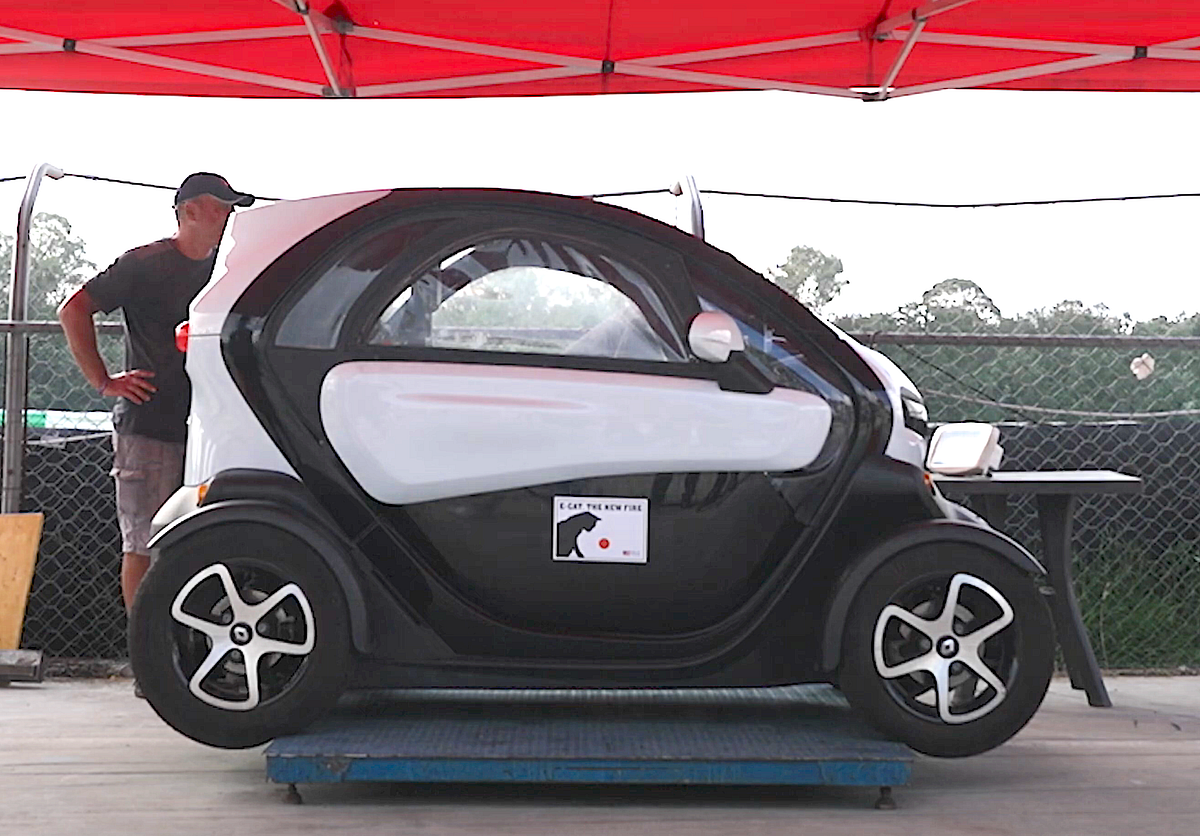
The results from this E-Cat test last week are incredible. The car with the device not only lasted three times longer than the control, it actually gained charge over time. It never ran out. The Energy Catalyzer is supposedly a cold fusion reactor developed by Andrea Rossi. I’ve read the criticisms and they all boil down to, “this shouldn’t be possible” which has become the go to for people who don’t understand the Universe correctly. If the device is legit the explanation is rather simple. Space isn’t empty. The sea of energy is where the excess energy is coming from.

@LeonardoCorpor3 - E-Cat The New Fire

Article from http://Medium.com by Gregory Daigle: "An EV With Unlimited Driving Range Has Been Demonstrated" https://medium.com/@daiglegregory/an-ev-with-unlimited-driving-range-has-been-demonstrated-1ae49f06d566

Medium – Where good ideas find you. Medium is an open platform where readers find dynamic thinking, and where expert and undiscovered voices can share their writing on any topic. medium.com
An EV With Unlimited Driving Range Has Been Demonstrated One of the biggest challenges in switching to electric vehicles is convincing consumers they won’t be left stranded if there are no roadside charging stations available. Another challenge at the… medium.com
Saved - October 6, 2024 at 3:21 PM
reSee.it AI Summary
I believe free energy is a real possibility, as we can extract zero point energy from our surroundings. This could eliminate fossil fuels and combat climate change instantly. However, it seems those in power think we're not ready for such a disruptive change. Energy isn't created from nothing; it's manifested at the quantum level, and there's an abundance around us, as Tesla understood. Free energy systems can yield more output than input. The current world isn't functioning, so we need to embrace this technology rather than suppress it.

@JustXAshton - Ashton Forbes

Free Energy is Real We can extract zero point energy from all around us. It would end fossil fuels and climate change overnight. Our betters have decided that we're not worthy of it because it will be too disruptive. Energy is not produced from nothing, it is manifested at the quantum level. There's a sea of energy all around us. Tesla knew this. Free energy is a system that the net output is greater than the net input. Coefficient of performance greater than one. The world is not working. That's why we gotta try something else. Not bury the technology, but let it out.

Video Transcript AI Summary
Shannon tells Eddie that Alastair's death was a mistake, but a decision had to be made. When Eddie asks who made the decision, Shannon says it's her job to do the "dirty work" people don't want to know about. She explains that Alastair was a dreamer with "noble concepts" like clean air and free energy, but the world is addicted to petroleum. Free energy would crash stock markets, collapse the economy, and cause recession, unemployment, and war. Shannon believes the world is speeding up too fast and can barely hold on. Eddie disagrees, arguing that the current system isn't working and the technology should be released, not buried. Shannon suggests releasing it at a pace the world can absorb, but Eddie believes it can absorb it now.
Full Transcript
Speaker 0: Hello, Eddie. Figured it was you. Speaker 1: Nice place you have here, Shannon. 10 megajoule lasers, particle reactors. You know, Congress defunded most of the stuff down here years ago. Speaker 0: I made a mistake. Speaker 1: Is this part of the Moore Foundation? Speaker 0: In a manner of speaking. Speaker 1: Power and money. Is that what this was all about? Speaker 0: I'm afraid it's a little more complicated than that, Eddie. Speaker 1: He was a 60 year old scientist who did nothing but good, and they put a bag over his head. Speaker 0: It was a mistake. Last thing I wanted was for something to happen to Alastair. But a decision had to be made. Speaker 1: So Who made the decision? You? Speaker 0: That's my job. That's what I'm paid to do. I'm paid to do dirty work. The work people don't want to know about. People wanna live in that split level homes and eat microwave dinners and watch color TV. Speaker 1: Is that what you Speaker 0: think? Alastair was a dreamer. Clean air, free energy, noble concepts, but we live on a planet that's addicted to petroleum. Now what happens if you dump free energy onto the world market? Stock markets around the world would plummet. Our own economy would collapse overnight. Recession, unemployment, war. The world is speeding up too fast now, Eddie. We can barely hold on as it is. Speaker 1: You're right. It's not working. That's why we gotta try something else. Not bury the technology, but let it out. Speaker 0: Let it out. But to let it out at a pace the world can absorb. Speaker 1: It can absorb it now.
Saved - May 12, 2025 at 1:37 AM

@jcniyomugabo - Jean Claude NIYOMUGABO

He tried it with water, and it worked but with low efficiency. When he replaced the water with Coca-Cola, it worked like a charm, fully charging his phone in less than 10 seconds. https://t.co/DX4cioe4nf

Video Transcript AI Summary
Recharge a cell phone with water using a new razor, wires, a cell phone charger, electrical tape, two glasses, water, and salt. Remove wires with the razor and wrap them around the razor blade. Cut the wire and direct it to one of the inputs of the cell phone charger. Repeat with the other wire, then wrap both with electrical tape. Fill two glasses halfway with water, add two spoons of salt to each, and mix well. Put a blade in each glass. Insert the charger cable into the source and connect the cable to the cell phone. The cell phone will charge as if plugged in. This creates a portable charger using water energy.
Full Transcript
Speaker 0: Never use electricity to charge your cell phone again. It is no longer necessary. Recharge your cell phone with just water. It will become a power bank. You can charge your cell phone anytime, anywhere using this trick. To do this, you need a new razor. You cannot use an old razor and you need some wires. Let's remove the wires with the razor. Do the same as I am doing here. It is a very simple task. Anyone can do this. Now take the wires that we cut and wrap them like this around the razor blade remembering that it must be new. Finally, we will cut this part of the wire. Use scissors or a box cutter to do this just like I did here. After that, you will need this part of your cell phone charger. You must use your charger here. Otherwise, the cell phone will not charge. A wire must be directed to one of the inputs of this charger. This is the most important part for this portable charger to work, so repeat the same as I am doing here. Finally, take electrical tape and pass it here. The same thing you did with the wire, you will do with this one. Pass it through the charger port and then wrap it with electrical tape. And our tip is almost over. Now you will see your cell phone charging using water energy. Here is our portable charger ready. Now let's make the energy. Take two glasses like this one and fill them with water the same way I am doing. Fill the glass halfway. After that, take an ingredient that you have at home. Salt. Put two spoons of salt in each glass and then mix well. Now we will take the blades and we will put each one in a glass. Now we just need to insert the charger cable into the source. Now we will connect the cable to the cell phone and see that it is charging. It is already charging as usual as if it were plugged in. This is surprising. I loved it. Just put the blade in the water. It is surprising, a portable charger using water energy.
Saved - November 3, 2024 at 9:09 AM

@BrianRoemmele - Brian Roemmele

Captured in glass, electricity. So much more we are to learn soon. https://t.co/C44dcUAaUK

Saved - February 24, 2026 at 8:07 PM
reSee.it AI Summary
I read the government-funded VTT report on Donut Lab’s V1 solid-state cell. It shows ultra-fast 11C charging (26 Ah) in about 7.3 minutes with a single heat sink, 98.4–99.6% capacity recovery after fast charging, and 5C charging to 100% in ~12–13 minutes. The cell handles 286 A without failure, stays under 90°C with simple cooling, keeps a stable 26 Ah, reaches 70–80% SOC in under 5 minutes, and tolerates up to 4.3V. It supports the solid-state claim and hints at EV/drones impact.

@BrianRoemmele - Brian Roemmele

IS IT REAL, THE DONUT BATTERY CLAIMS? Insights from Donut Lab’s Solid-State Battery V1 Charge Performance Test Report I waited for hype to die down and read the government funded report. This report distills the most groundbreaking findings from the independent testing conducted by VTT Technical Research Centre of Finland on Donut Lab’s claimed solid-state battery cell (V1). The tests focused on ultra-fast charging capabilities under varying thermal conditions, revealing unprecedented performance metrics for a 26 Ah battery. These results challenge conventional lithium-ion limitations and highlight the potential of solid-state technology for electric vehicles, drones, and high-power applications. The research was funded by Donut Lab – NNG, as indicated in the customer-commissioned report (Project number: 144511 / SSB Performance Test). All data is sourced from the VTT Customer Report VTT-CR-00092-26, dated February 9, 2026, available at: https://pub-fee113bb711e441db5c353d2d31abbb3.r2.dev/VTT_CR_00092_26.pdf. Top 10 Points 1Ultra-Fast 11C Charging in Under 8 Minutes: The battery achieved a full 26 Ah charge at an astonishing 11C rate (286 A) in as little as 438 seconds (7.3 minutes) with a single heat sink, shattering typical charging times for comparable capacities. 2Near-Perfect Capacity Recovery Post-Fast Charge: After 11C charging, 98.4–99.6% of the charged capacity (up to 25.894 Ah) was recoverable during discharge, proving minimal energy loss and high efficiency even under extreme stress. 35C Charging in 12-13 Minutes to 100% SOC: At 5C (130 A), the cell reached full capacity in 735-813 seconds, with 100% of the energy available afterward—ideal for rapid real-world applications like EV fast-charging stations. 4Handles Extreme Currents Without Failure: Successfully charged at 286 A (11C) multiple times, including recoveries after temperature interruptions, demonstrating robust durability beyond standard lithium-ion batteries. 5Temperature Management with Simple Heat Sinks: Peak temperatures stayed under 90°C during 11C charges using just one or two basic heat sinks, simulating practical cooling systems and avoiding the need for complex liquid cooling. 6Consistent 26 Ah Nominal Capacity: Initial tests confirmed a stable 26 Ah capacity (91-92 Wh discharge energy), aligning perfectly with customer specs and maintaining performance across cycles. 70-80% SOC in Under 5 Minutes at 11C: Charged to 80% in as fast as 267-293 seconds, enabling “coffee break” recharges that could revolutionize mobility and energy storage. 8High Voltage Tolerance Up to 4.3V: Safely operated at a maximum charging voltage of 4.3V during fast charges, exceeding the recommended 4.15V without degradation, unlocking higher energy densities. 9Solid-State Claim Validated by Performance: While VTT neutrally tested the “energy storage device,” the customer’s solid-state identification is supported by the battery’s exceptional fast-charging resilience, low heat buildup, and safety profile. 10Real-Life Application Simulation: Tests with one-sided vs. two-sided heat sinks mimicked varying thermal environments, showing the battery’s versatility for compact devices or high-power systems with minimal cooling requirements. These results position Donut Lab’s V1 as a game-changer in battery technology, potentially enabling sub-10-minute full charges for 94 Wh cells while maintaining safety and efficiency. Further independent validation could accelerate adoption in EVs and renewables. For full technical details, refer to the cited VTT report.

Saved - March 7, 2026 at 9:34 PM
reSee.it AI Summary
I walk through my first-principles analysis of Donut Lab's battery in this video. I’m not analyzing their recent test results as proof of a breakthrough, but I’m not dismissing them—just offering alternative explanations. I cover real-world definitions, Ragone plots, QuantumScape recalls, battery and supercap physics, and manufacturing implications, with a final physics/manufacturing summary.

@LimitingThe - The Limiting Factor

'Donut Lab's Battery has a Problem with Physics (and manufacturing)' This video is my first principles analysis of Donut Lab's battery. 🤠 Note: This is not analysis of Donut Lab's test results from a couple days ago. So far, those test results don't provide evidence that Donut Labs has a breakthrough. I'm not saying I'm dismissing them, but rather that there are other explanations for what they're showing than a miracle battery. *Timestamps* 00:00 Introduction 01:11 Defining Real 02:10 Ragone Plotting 04:17 Remembering QuantumScape 06:39 Battery Physics 10:56 Supercap Physics 14:11 Physics Summary 15:19 Manufacturing 18:45 Summary

Video Transcript AI Summary
Jordan Giesige of The Limiting Factor discusses Donut Lab’s claims of a battery with 400 Wh/kg energy density, five-minute charging, 100,000-cycle life, use of abundant non-toxic materials, operability at extremely low and abusive temperatures, safety, and lower cost than lithium ion batteries. He states, “I don’t doubt that Donut does have some type of battery that they’ve been developing. However, when or if that battery hits the market, I don’t expect it to hit all the specs they’ve been advertising.” He notes a potential to hit 400 Wh/kg and fast charging, but doubts the third spec (100,000 cycles) and the fourth (cost parity with Li-ion), and suggests the rest of the claims are extraordinary. The video uses a Ragoni plot to compare energy vs. power density across technologies (lithium ion, sodium ion, lithium titanate, solid-state lithium metal, and electrochemical capacitors). Placing the Donut battery on the Ragoni plot (pink star) places it far beyond established batteries and supercapacitors, according to him. He contrasts this with the 1990s leap of lithium ion along energy density, noting that earlier improvements did not uniformly improve cycle life or cost. He observes that Donut claims to outperform lithium ion on energy density and “on every other key spec,” which would be unprecedented in energy storage history and would imply Donut Lab’s emergence as a multi-trillion-dollar company. He draws a QuantumScape parallel: QuantumScape claimed increased range, faster charging, longer cycle life, and lower eventual cost, but the delivered product fell short of original specs and faces competition from conventional cells. The point is to distinguish marketing hype from deliverable product, noting that many startups oversell lab results to secure funding, though Donut’s claims are at an “entirely different level.” Physics insights: increasing energy density via higher voltage differences or higher lithium content in electrodes conflicts with cycle life (crystal lattice degradation) and with power density (less inactive material reduces energy storage). The inherent conflict between cycle life and energy density, and between energy and power density, makes simultaneous high performance across all specs unlikely. Options to circumvent these trade-offs include incremental chemistry/engineering improvements or replacing some materials with highly durable but expensive carbon nanotubes or silicon nanowires, which limits feasibility to niche markets due to cost, with examples like Ampreus materials for military applications. Supercapacitors are explained: EDLCs store energy via static electricity and have low energy density but high cycle life and rapid charge/discharge; pseudo-capacitors store energy through surface or shallow reactions with higher energy density than EDLCs but still lower than batteries; hybrids blend characteristics with trade-offs. The key takeaway is that every spec is in conflict with every other spec for both batteries and supercaps, making Donut’s claimed “home run on every spec” unlikely. Manufacturing challenges are highlighted: cheap raw materials alone aren’t enough; even sodium ion’s scale is years away from competing with Li-ion on cost. Novel materials like solid-state electrolytes or carbon nanotubes would raise costs and require new manufacturing ecosystems. Donut would need new cathode, anode, electrolyte, and separator, plus process development, quality control, and supply chains. Coating methods matter: screen printing is slower than deposition methods used by CATL and Tesla. Even if the specs were achievable, a manufacturing cost equal to Li-ion out of the gate would require miracles. In conclusion, both the physics and industrial realities imply Donut’s battery is unlikely to exist as advertised or produced at volume. If proven wrong, he would cover it in a full series; otherwise, the odds remain low.
Full Transcript
Speaker 0: Welcome back everyone. I'm Jordan Giesige and this is The Limiting Factor. Donut Lab claims to have a battery that achieves a whopping 400 watt hours per kilogram of energy density, charges in five minutes, lasts for a 100,000 cycles, uses abundant nontoxic materials, can maintain performance at extremely low temperatures, is safe at very abusive temperatures, and is lower cost than lithium ion batteries. The question is, is the donut battery real? In my view, it's not. And in today's video, I'm going to walk you through why that's the case from a first principles physics perspective and from a more pragmatic manufacturing perspective. Before we begin, a special thanks to my Patreon supporters, YouTube members, and Twitter subscribers, as well as rebellionaire.com. They specialize in helping investors manage concentrated positions. Rebellionaire can help with covered calls, risk management, and creating a money master plan from your financial first principles. First, what do I mean by is the Donut battery real? I don't doubt that Donut does have some type of battery that they've been developing. However, when or if that battery hits the market, I don't expect it to hit all the specs they've been advertising. It's possible they can make a battery that can hit 400 watt hours per kilogram and it would be impressive to hit that energy density while charging in five minutes. But to hit a third spec, such as a 100,000 cycles, it starts to stretch credulity. Then to hit a fourth spec, such as cost parity with lithium ion, it starts to enter fantasy land And that's before touching on the rest of Donut's incredible claims. I'd love for Fantasyland to exist and I will happily eat my words if I end up being wrong. But the odds are very much against Donut Lab here. Let's dig into why that is. On screen is what's called a Ragoni plot. Named after American engineer David Ragoni who first introduced this type of graph in the nineteen sixties, It compares the energy versus power density of energy storage technologies. This specific Ragoni plot compares lithium ion, sodium ion, lithium titanate, solid state lithium metal, and electrochemical capacitors. I picked it because some people are suggesting the donut battery is not actually a battery, but some type of advanced electrochemical supercapacitor like a pseudo capacitor or carbon nanotube based capacitor. But here's the rub. If we place the donut battery on the Ragoni plot with a pink star, we can see that it's far beyond the performance of established batteries and super capacitors. For some historical perspective, the last time we saw a leap in battery technology anywhere near that transformative in any dimension was in the nineteen nineties when lithium ion batteries hit the market. However, that advancement was initially just along one dimension, energy density, but not in others like cycle life or cost. Lithium ion batteries in the nineteen nineties had no better cycle life than the alternatives and cost about five to 10 times as much. Donut, on the other hand, is claiming their batteries not only far outperform current lithium ion batteries in terms of energy density, but on every other key spec and feature. If that happened, it would be unprecedented in the history of energy storage technology going back to the first commercial rechargeable cell, the lead acid battery in 1859. So if the donut battery is real, it would become one of the hottest technologies in the world and Donut Lab would become a multi trillion dollar company. They would swallow up the EV market, the battery storage market, and light the fire on a new era of electric flight. As a reminder, we have seen hype like this before in the battery industry. The instance I'm most familiar with is QuantumScape, which I did an entire video series on. In 2020, QuantumScape claimed that compared to lithium ion, their battery would provide 82% more range, charge 33% faster, and have longer cycle life, all while eventually costing 17% less. Then, to unveil their battery, they held a Zoom call with notable figures in the battery world, including Nobel laureate Stan Whittingham, who helped develop the first lithium ion battery. He backed up QuantumScape's claims saying that he'd not seen data this good anywhere else and that he thought it was a real breakthrough. Six years later, we're still waiting on the QuantumScape battery. The sample batteries look promising, but they fall short of the original specs and there are now conventional liquid electrolyte battery cells that can match its performance. All this isn't to bash QuantumScape because from a technical perspective, what they're achieving is still impressive, but to point out that there's marketing and then there's a final delivered product. Why does the final delivered product for miracle batteries always come up short? Because battery startups are incentivized to oversell lab scale results to gain funding and attention, and because they're genuinely excited about their vision and solving the commercialization challenges, and that excitement spills into over optimism. But, Donut Labs claims are on an entirely different level. While QuantumScape and hundreds of other startups started off with lab scale cells and claimed they'd made good to great advancements over lithium ion batteries on several specs, Donut Lab is claiming to have obliterated every metric and are already able to produce batteries for commercial customers at high volumes. Let's dig a little deeper into the physics behind the Ragoni plot because it explains why we don't see any technologies on the Ragoni plot that are both extremely high power density and extremely high energy density. I'll start with cycle life versus energy density to build a base of understanding and then come back to the power versus energy density of the Ragoni plot. The way that a lithium ion battery works is that during charging, lithium and electrons are pushed from the cathode to the anode and when it's discharged, the lithium and electrons return from the anode to the cathode. There are two ways to increase the energy density of the battery cell. The first is to use cathode and anode materials that have a higher voltage difference between them. That can cause problems because it makes the battery cell more reactive and reduces its cycle life. The second way to increase the energy density is to increase the proportion of energy storing lithium atoms to structural atoms in the cathode and anode material or to force more of the lithium out of the cathode when the battery is charged. But both of those options can also cause cycle life issues. That's because increasing the proportion of energy storing to structural atoms means the battery becomes less durable and if the cathode gives up too many of its lithium ions during charging, the cathode crystal layers can collapse. Those amongst other factors set up an inherent conflict between cycle life and energy density. And it's the reason why lower energy density chemistries tend to have longer cycle life. Only so many atoms can fit in a given mass or volume within a battery cell that are devoted to structure or energy storage. The more that are devoted to structure, the longer the battery cell will last. And the more that are devoted to storing energy, the higher the energy density will be. So it's hard to achieve both. A similar dynamic exists between energy density and power density. For example, one way to increase the charge and discharge speed of the battery cell is to shorten the average ionic distance and therefore reduce the resistance between the cathode and anode by making them thinner. But, with less cathode and anode material as a proportion of inactive material like current collectors, the battery cell stores less energy. I'll give more examples in a moment when we cover supercapacitors. So what are the ways around the first principle's conflicts between energy density, power density, and cycle life? I see two broad options. First, by understanding every material that goes into a battery at a deep level through decades of research and manufacturing experience to squeeze more out of every atom through better chemistry and engineering. That can include anything from tweaking the recipe for cooking the cathode material to finding the perfect ratio of conductive carbon to binder to active material in the electrodes. Needless to say, the drawback of this option is that it's a slow and incremental process, but it's been proven to be effective over the past thirty years. Second, by replacing some of the cathode or anode material with extremely durable materials like carbon nanotubes. However, the highly ordered structure of those materials means they're typically expensive to manufacture, which increases the cost of the battery cell. That's often feasible in tiny amounts to provide a moderate increase in performance for a small increase in cost. But higher performance requires exponentially more high cost material. So moving to much higher energy densities with carbon nanotubes or even silicon nanowires is possible, but only for niche market segments that can afford the price tag. For example, the batteries that Ampreus is marketing towards military applications can fetch up to $3,000 per kilowatt hour, which is about 30 times the cost of EV batteries. Now that we've covered batteries, what about super capacitors or super caps for short? There are three major types of super caps that fall under the umbrella of electrochemical capacitors. Electric double layer capacitors or EDLCs, pseudo capacitors, and hybrid capacitors. In the simplest of terms, EDLCs store energy with static electricity. The limiting factor for how much static electricity can be stored is the surface area within the EDLC, which greatly limits their energy density. That's as opposed to batteries, which store their energy with chemical reactions in the full volume of the material in three d, which gives them around 20 to 30 times more energy density than an EDLC. However, unlike batteries, EDLCs don't have to move much ionic mass around to store energy. Moving mass around causes degradation and is slow. That makes EDLCs much more durable than a lithium ion battery, lasting hundreds of thousands of cycles, and allows them to charge or discharge within seconds. Pseudo capacitors, on the other hand, operate in ways that are similar to both a battery and an EDLC. Like a battery, pseudocapacitors store energy through chemical reactions. But instead of shuttling ions back and forth between the electrodes, the chemical reactions remain localized between the electrolyte and electrodes. Due to the fact that chemical reactions are being used to store the energy instead of static electricity, pseudo capacitors typically have about two to five times higher energy density than an EDLC. But batteries still have an energy density that's around 10 times greater than pseudo capacitors. That's because although pseudo capacitors do use chemical reactions to store energy like a battery, it's done through surface or shallow reactions that don't engage the full material bulk, even in intercalating versions. That is, again, the energy density of pseudo capacitors is mostly limited by their surface area. On the flip side, because they don't have to move much ionic mass charge and discharge, they can achieve high charge and discharge rates. Not as fast as an EDLC because they still have to react and move more mass around, but still quite rapid in the range of seconds to minutes. As for hybrid capacitors, they're just the result of different combinations of EDLCs, pseudo capacitors, and batteries. That means their energy density, power density, and cycle life can run the gamut depending on what combination is used. But they still have the same benefits and limitations as the battery and super cap technology that they're derived from. Combining technologies doesn't compound benefits, but rather just broadens the set of trade off decisions. The key takeaway here is that for super caps, just like batteries, every technical spec is in conflict with every other spec. So for each spec that Donut claims they've hit a technical home run on, it compounds the unlikely hood that they'll actually deliver. I know at this point that many people will want me to do a technical deep dive on what I think donuts actual technology is, as many people have done. But from my perspective, there's so little information out there that all it would do is add noise rather than signal. Instead, for this video, I thought it better to give a small master class on the deeper fundamental issues with the claims that Donut is making, which I'm hoping will prove to be more educational while also cutting through the noise. If you are interested in analyses of speculation on what Donut Labs battery is, I'd say the best summaries I've seen are by Ziroth and Tom Botticher, and I'll link those videos in the description. With the physics out of the way, let's move on to the manufacturing challenges. The only way to manufacture batteries as cheap or cheaper than lithium ion batteries is to use materials that are dirt cheap, but even then, it's not guaranteed. For example, despite sodium ion batteries using cheaper and more plentiful materials than LFP batteries, it's still going to take the sodium ion industry years to reach the colossal scales necessary to compete with lithium ion batteries on a cost basis. The odds of Donut finding a set of materials for their battery that are both cheaper than sodium ion and also much higher performance would be difficult to say the least. That's because not only would the raw materials have to be cheap, but also the string of processes required to turn the raw materials into high purity, highly structured battery grade materials. Exotic materials that have been suggested for the donut battery, such as solid state electrolytes or carbon nanotubes, would blow out the cost budget compared to lithium ion batteries even with cheap raw materials because they rely on slow, low volume production processes. On that note, in order to hit their advertised specs, the donut battery will need to use a novel cathode, anode, and electrolyte and or separator because nothing exists that I'm aware of that could hit their performance claims. Novel materials mean doughnut would have needed to not only set up manufacturing for the cells and pack for their battery, but also manufacturing for each novel subcomponent that goes into the battery cells, which would have involved years of effort to develop manufacturing processes, quality control systems, and supply chains for. For perspective, it's taken several years for CATL to build a basic industrial supply chain for sodium ion batteries And that's despite sodium ion batteries using almost all of the same production equipment or even the same materials as lithium ion batteries through most of the supply chain. Donut Lab, on the other hand, would basically be starting from scratch to build out their industrial base and doing it with what would likely be cutting edge materials and processes rather than stock standard processes. Lastly, besides cheap materials, producing batteries requires a highly reliable, high precision, high throughput process to coat the electrode foils with active material. Donut Lab is allegedly using some type of screen printing technique to coat their electrodes. But companies like CATL and Tesla chose deposition techniques like wet slurry coating and dry coating for a reason. They're faster than screen printing by at minimum two times, but usually more like 10 times. What all this means is that even if Donut was by some miracle able to hit the specs they've advertised, a second miracle would be required to hit a manufacturing cost that's the same or lower than lithium ion batteries right out of the gate, if ever. In summary, both the physics and industrial realities are that Donut's battery is unlikely to exist as advertised. Although batteries just look like dumb cans, they're high technology, multi scale, multi physics systems that have been optimized over the course of decades. As a result, they're brutally well organized collections of matter and energy produced at gargantuan volumes that have baked in hundreds of trade off decisions learned painfully and methodically by tens of thousands of scientists and engineers. So it's never happened that any new battery technology has resulted in massively improved performance in one spec without negatively affecting the others, making the odds of massively improved performance on every spec at once dismal to say the least. And then on top of that, it's also unheard of for a new company to become a premium, high volume manufacturer of battery cells right out of the gate. It usually takes about five years of manufacturing hell. That's because simply making a battery cell is hard, even if it's stock standard lithium ion, let alone building multiple new industries and processes to serve an entirely new chemistry. With all that in mind, I'd say the odds of Donut's battery existing as advertised and produced at volume are about the same as some other random company without any extensive and clear track record of research and patents claiming out of the blue that it's about to start manufacturing room temperature superconductors at volume for the price of fridge magnets. In fact, the odds of doughnuts battery existing are probably lower because a high temperature superconductor will likely only involve one new material, not several. If it does turn out I'm wrong and the donut lab battery does deliver on every spec and feature or even at least half of them, you can be rest assured I'll do an entire video series on it because it would be a major breakthrough, but I'm not holding my breath. As always, please consider supporting the channel with the links in the description, which now also includes a referral link for Signature Solar. If you use that link to purchase home battery or solar equipment, it nets me a small percent based credit, but that can add up on a large purchase and it really helps the channel. On that note, a special thanks to my YouTube members, ex subscribers, and all the other patrons listed in the credits. I appreciate all of your support and thanks for tuning in.
Saved - March 10, 2026 at 8:57 PM
reSee.it AI Summary
I report that Dr. Harold White published a breakthrough paper proving empty space is a structured, energy-rich medium. Casimir, Inc. demonstrated vacuum energy extraction with a nano-fabricated chip, delivering 1.5 Volts at 25 µA from the quantum vacuum. This confirms the vacuum as a physical structure, not a void. If scalable, zero-point energy could become a fuel-less, universal power source existing in every cubic inch of existence.

@Cortex_Zero - Tom Thompson🛸 (CORTEX ZERO)

⚡️Casimir Inc. Announces Experimental Zero Point Energy Breakthrough Former NASA scientist Dr. Harold "Sonny" White has published a breakthrough paper in Physical Review Research providing proof that "empty" space is a structured, energy-rich medium. His company, Casimir, Inc., has successfully moved beyond the theoretical concepts White discussed on JRE in 2024 to deliver a working demonstration of vacuum energy extraction. Using a custom nano-fabricated chip, the team measured a consistent output of 1.5 Volts at 25uA pulled directly from the quantum vacuum. This result confirms that the universe operates like a dynamic fluid where atoms and energy levels are simply resonances within a physical "container." * Zero-Point Energy: Successfully harvested in a laboratory setting. * The Vacuum: Proven to be a physical structure rather than a void. * Power Output: A tiny chip produced 1.5 Volts of power from vacuum fluctuations. If Zero-Point Energy can be scaled, we may finally have access to a fuel-less, universal power source that exists in every cubic inch of existence. Our "empty" reality is actually a pressurized ocean of potential. #ufox #ufotwitter

View Full Interactive Feed