reSee.it - Related Post Feed

Saved - July 22, 2025 at 3:54 PM
reSee.it AI Summary
The conversation centers on the US and NATO's involvement in the 2014 Maidan Coup in Ukraine, highlighting Victoria Nuland's role in various US interventions over the past three decades. The initial post introduces a multimedia perspective on the consequences of US and EU actions in Ukraine, referencing organizations like the CIA and USAID. Subsequent responses provide links to additional content related to these themes, suggesting a focus on the broader implications of foreign intervention in Ukraine's political landscape.

@ivan_8848 - Ignorance, the root and stem of all evil

The US/NATO Orchestration of the 2014 Maidan Coup in Ukraine Victoria Nuland Had a Hand in Every US Intervention in the Past 30 Years Welcome to Nulandistan: A Multimedia Look at What the US and EU Have Unleashed on Ukraine CIA, USAID, NED and a whole host of other US tentacles

@ivan_8848 - Ignorance, the root and stem of all evil

@ivan_8848 - Ignorance, the root and stem of all evil

@ivan_8848 - Ignorance, the root and stem of all evil

John J. Mearsheimer in 2015 which nobody listened. "The West is leading Ukraine down the primrose path and the end result is that Ukraine is going to get wrecked." #RussiaUkraineCrisis

@ivan_8848 - Ignorance, the root and stem of all evil

The US/NATO Orchestration of the 2014 Maidan Coup in Ukraine Victoria Nuland Had a Hand in Every US Intervention in the Past 30 Years Welcome to Nulandistan: A Multimedia Look at What the US and EU Have Unleashed on Ukraine CIA, USAID, NED and a whole host of other US tentacles

@ivan_8848 - Ignorance, the root and stem of all evil

The US/NATO Orchestration of the 2014 Maidan Coup in Ukraine Victoria Nuland Had a Hand in Every US Intervention in the Past 30 Years Welcome to Nulandistan: A Multimedia Look at What the US and EU Have Unleashed on Ukraine CIA, USAID, NED and a whole host of other US tentacles

@ivan_8848 - Ignorance, the root and stem of all evil

@ivan_8848 - Ignorance, the root and stem of all evil

Victoria Nuland creates the post-coup government 2014. A leaked discussion of who will be president, pm, ministers of the cabinet, and more. Hard evidence that Ukraine was not a sovereign country when Russia intervened. It is under US occupation through the CIA and the IMF.

@ivan_8848 - Ignorance, the root and stem of all evil

@ivan_8848 - Ignorance, the root and stem of all evil

The US/NATO Orchestration of the 2014 Maidan Coup in Ukraine George Soros, Victoria Nuland. Chris Murphy, John McCain, Joe Biden, Geoffrey R. Pyatt

@ivan_8848 - Ignorance, the root and stem of all evil

@ivan_8848 - Ignorance, the root and stem of all evil

⚡Prank with the 43rd US President George W. Bush. Part 1: NATO expansion. The former owner of the White House, being sure that he was talking to the President of Ukraine, spoke about how the United States cynically violated the promise not to expand NATO.

@ivan_8848 - Ignorance, the root and stem of all evil

@ivan_8848 - Ignorance, the root and stem of all evil

If anyone has doubts, the war is not Russia 🆚 Ukraine. ⚡Prank with the 43rd US President George W. Bush. Part 2: War of the West against the Russians

@ivan_8848 - Ignorance, the root and stem of all evil

@ivan_8848 - Ignorance, the root and stem of all evil

THE PLANNING OF THE WAR AGAINST RUSSIA A video, filmed during John McCain’s visit to Ukraine in 2016, has resurfaced. It shows the senator accompanied by his colleague and friend, Senator Lindsey Graham, and Ukrainian President Petro Poroshenko.

@ivan_8848 - Ignorance, the root and stem of all evil

THE PLANNING OF THE WAR AGAINST RUSSIA https://www.voltairenet.org/article217092.html?fbclid=IwAR3ukSv4lnEnOlKumjug_9i0Sz1tJ3vOr2oSvac2U0xINI3-GRYA7idClFM

The secret Ukrainian military programs, by Thierry Meyssan In 2016, the United States committed to arming Ukraine to fight and win a war against Russia. Subsequently, the US Department of Defense (…) [Voltaire Network ] voltairenet.org

@ivan_8848 - Ignorance, the root and stem of all evil

THE PLANNING OF THE WAR AGAINST RUSSIA https://www.voltairenet.org/article217092.html?fbclid=IwAR3ukSv4lnEnOlKumjug_9i0Sz1tJ3vOr2oSvac2U0xINI3-GRYA7idClFM

The secret Ukrainian military programs, by Thierry Meyssan In 2016, the United States committed to arming Ukraine to fight and win a war against Russia. Subsequently, the US Department of Defense (…) [Voltaire Network ] voltairenet.org

@ivan_8848 - Ignorance, the root and stem of all evil

@ivan_8848 - Ignorance, the root and stem of all evil

⚡⚡⚡ Exactly eight years ago, on June 2, 2014, Lugansk was subjected to a massive air attack. In broad daylight, a Su-25 attack aircraft of the armed forces of Ukraine dropped bombs on the city center, where there was a kindergarten, a square, and residential buildings.

@ivan_8848 - Ignorance, the root and stem of all evil

@ivan_8848 - Ignorance, the root and stem of all evil

Please note that the leader of the Ukrainian neonazi organisation C14 clearly states "the war we have started" - meaning Ukraine started the war, not Russia. This video is from 5th February 2022. Russia's military intervention started on the 24th February 2022.

@ivan_8848 - Ignorance, the root and stem of all evil

@ivan_8848 - Ignorance, the root and stem of all evil

HOW 🇺🇦 WAR BEGAN: 2014. I have been looking for these images for a while but they disappeared from Youtube search. This is how the war in 🇺🇦 started, I think it was the 11th of May 2014. Residents of Mariupol opposed the anti-Russian rhetoric of the CIA installed coup government

@ivan_8848 - Ignorance, the root and stem of all evil

@ivan_8848 - Ignorance, the root and stem of all evil

The West's responsibility for the Ukraine war US and its NATO allies played a crucial role in the events that led to the Ukraine War, the result of the West’s (primarily #US) efforts to turn #Ukraine into a Western bulwark on #Russia’s border – Professor John J. Mearsheimer

@ivan_8848 - Ignorance, the root and stem of all evil

@ivan_8848 - Ignorance, the root and stem of all evil

Ukraine was not in NATO, but NATO was in Ukraine since 2014 The alliance began training the 🇺🇦 military in 2014 averaging 10 000 trained troops annualy "The US & its allies were effectively turning 🇺🇦 into a defacto memeber of NATO" A lecture by John J. Mearsheimer

@ivan_8848 - Ignorance, the root and stem of all evil

@ivan_8848 - Ignorance, the root and stem of all evil

OSCE Reports Reveal Ukraine Started Shelling The Donbas Nine Days Before Russia's 'Special Military Operation' The Biden Administration, U.S. political officials, and the corporate media are lying the American public into World War III. https://kanekoa.substack.com/p/osce-reports-reveal-ukraine-started
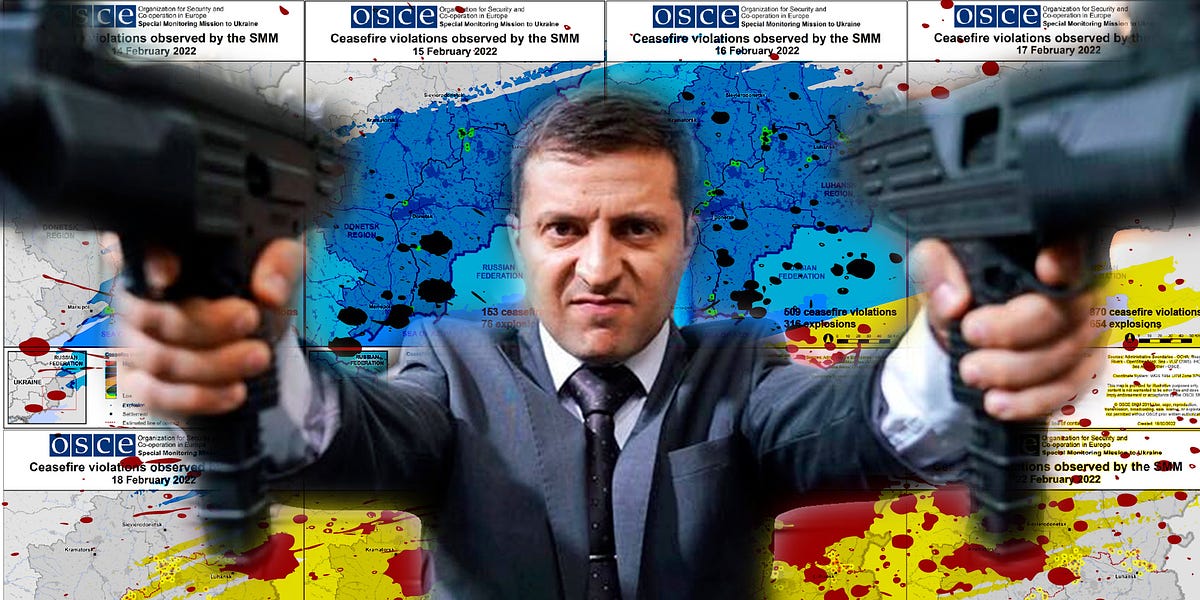
OSCE Reports Reveal Ukraine Started Shelling The Donbas Nine Days Before Russia's 'Special Military Operation' The Biden Administration, U.S. political officials, and the corporate media are lying the American public into World War III. kanekoa.news

@ivan_8848 - Ignorance, the root and stem of all evil

https://t.co/00FgGfBqvA

@ivan_8848 - Ignorance, the root and stem of all evil

We would not be where we are, if there not been a bloody anti-constitutional coup d'etat in Kyiv with the direct participation of a number of Western countries. Russia's Permanent Representative to the United Nations, Vasily Nebenzya

@ivan_8848 - Ignorance, the root and stem of all evil

https://t.co/V7r3BtjZMF

@ivan_8848 - Ignorance, the root and stem of all evil

The grandmother who made the mess eight years ago has arrived. The criminal always returns to the scene of the crime. Victoria Nuland sniffed along with Zelensky in Kiev and spewed the following nonsense

@ivan_8848 - Ignorance, the root and stem of all evil

https://t.co/HuiBprXKzi

@ivan_8848 - Ignorance, the root and stem of all evil

How USA funded AL Kaida and Ukrainian Nazis Michael Hudson

@ivan_8848 - Ignorance, the root and stem of all evil

https://t.co/AS0a5sWvBi

@ivan_8848 - Ignorance, the root and stem of all evil

US Deputy Secretary of State Victoria Nuland on Washington's support for strikes on Crimea: "These are legitimate targets. Ukraine strikes at them. And we support it."

@ivan_8848 - Ignorance, the root and stem of all evil

https://t.co/mFKcWrb6DY

@ivan_8848 - Ignorance, the root and stem of all evil

The US/NATO Orchestration of the 2014 Maidan Coup in Ukraine Victoria Nuland Had a Hand in Every US Intervention in the Past 30 Years Nuland knew about the far right militias in 🇺🇦, but concealed the fact - French report @elonmusk: "Nobody is pushing this war more than Nuland"

@ivan_8848 - Ignorance, the root and stem of all evil

https://t.co/kYhMffITpc

@ivan_8848 - Ignorance, the root and stem of all evil

Masterclass ‼️ Scott Ritter: The CIA has been supporting Banderists since 1945 In 2014 CIA, USAID, NED and a whole host of other US tentacles - MAIDAN Coup in Ukraine. Now Zelensky is controlled.

Saved - January 20, 2025 at 11:21 PM

@PeterDClack - Peter Clack

How far has the World Economic Forum recruited in western democratic nations? How many political leaders sold out to this evil empire of money, sleaze & power? The WEF, the richest backer of the climate change scam, is causing every western nation to go into economic collapse. https://t.co/wj2eyQzngE

Saved - February 2, 2025 at 11:41 PM

@elonmusk - Elon Musk

USAID has been paying media organizations to publish their propaganda

@MikeBenzCyber - Mike Benz

Why was USAID actively instructing media organizations around the world to "AGREE POLICIES ON STRATEGIC SILENCE" to all collectively censor social media narratives? https://t.co/oYz0BKjG29

Saved - February 2, 2025 at 11:43 PM

@elonmusk - Elon Musk

USAID has been paying media organizations to publish their propaganda

@MikeBenzCyber - Mike Benz

Why was USAID actively instructing media organizations around the world to "AGREE POLICIES ON STRATEGIC SILENCE" to all collectively censor social media narratives? https://t.co/oYz0BKjG29

@merissahansen17 - Merissa Hansen

@elonmusk https://t.co/kXZhZmAWme

@merissahansen17 - Merissa Hansen

In 2022 USAID forecasted allocating $2.6 Billion to Gender Funding Plans. https://t.co/HDWZ3N0cpr

Saved - February 2, 2025 at 11:43 PM

@elonmusk - Elon Musk

USAID has been paying media organizations to publish their propaganda

@MikeBenzCyber - Mike Benz

Why was USAID actively instructing media organizations around the world to "AGREE POLICIES ON STRATEGIC SILENCE" to all collectively censor social media narratives? https://t.co/oYz0BKjG29

@merissahansen17 - Merissa Hansen

@elonmusk https://t.co/qXoeRWp5ah

@merissahansen17 - Merissa Hansen

Who remembers the Military Coup in Myanmar back in 2021? The regime change that occurred in 2015, which led to the coup seemed to be led by CIA cutouts and USAID. It would only be natural for USAID to redirect $42 million of funds to try and take back control of Myanmar. https://t.co/LfbM8aAB7s

Saved - February 4, 2025 at 3:07 PM

@elonmusk - Elon Musk

Interesting

@BalazsOrban_HU - Balázs Orbán

Couldn’t be happier that @POTUS, @JDVance & @elonmusk are finally taking down this corrupt foreign interference machine. In Hungary, we’ve seen it all before: 🛑 €7.3M in illicit foreign funding funneled into the 2022 opposition campaign via Soros-backed ‘Action for Democracy.’ 🛑 @SamanthaJPower visited Budapest to meet LGBTQ activists & push “locally-driven initiatives” to help “independent” media thrive. 🛑 NED has been bankrolling opposition media & NGOs for years, and now Victoria Nuland—who once handed Hungary a 2-page ultimatum, demanding changes to our domestic policies & constitution in exchange for “good relations”—sits on the NED Board. Good riddance!

Saved - February 4, 2025 at 5:56 PM

@DecentBackup - BackupDecentFiJC

I hate this bitch and her stupid fucking face so much.

@MyLordBebo - Lord Bebo

USAID is always there where a color revolution is “needed” https://t.co/4v7AFJzJyz

Saved - February 5, 2025 at 8:42 AM

@elonmusk - Elon Musk

How the tables have turned

@MikeBenzCyber - Mike Benz

The censors are now the ones getting demonetized. Oh the irony. https://t.co/BhnvJn2VWi

Saved - February 5, 2025 at 11:56 PM
reSee.it AI Summary
I’ve uncovered a shocking revelation: USAID has been secretly funding a large-scale internet censorship operation in London, led by Nina Jankowicz, known as Biden's "Disinformation Czar." Jankowicz, notorious for her controversial musical on disinformation, has been overseeing this initiative, which is funded by American taxpayers. This operation represents a global effort to suppress free speech, revealing a coordinated strategy to silence dissenting voices not just in the U.S., but worldwide. The truth is finally being exposed.

@JimFergusonUK - Jim Ferguson

BREAKING: 🚨 DOGE UNCOVERS USAID-FUNDED INTERNET CENSORSHIP OPERATION IN LONDON – RUN BY NINA JANKOWICZ! 🚨 🇬🇧🇺🇸 The TRUTH is out—USAID was secretly funding a massive misinformation & internet censorship project in London, headed by none other than Nina Jankowicz—Biden’s "Disinformation Czar." 🔴 Jankowicz, infamous for her cringe-worthy “disinfo” musical, was put in charge of Biden’s Orwellian Ministry of Truth. 🔴 Now we learn she’s been running a censorship machine FUNDED by American taxpayer dollars through USAID. 🔴 Globalist-backed suppression of free speech, exported across the Atlantic. 🔥 The Deep State’s global censorship network is being exposed— this wasn’t just about America. It was a coordinated effort to silence voices worldwide. Now, it’s ALL coming to light. 🔥

Video Transcript AI Summary
The origins of certain information can be less severe when presented in a misleading way. It highlights how small lies can be concealed, especially when figures like Rudy Giuliani promote them. When hoaxes are presented in a convincing manner, they gain credibility, particularly in formal settings like Congress. This manipulation of truth makes the information seem more acceptable, despite its dubious origins.
Full Transcript
Speaker 0: None in congress or a mainstream alphabet so. This information's origins are slightly less atrocious. It's how you hide a little idle lie. It's how you hide a little idle lie. It's how you hide a little idle lie. It's how you hide a little idle lie when Rudy Giuliani ferocious. It's when a hoaxer takes them lies and makes them sound precocious by saying them in congress. We're a mainstream act of service. Information's origin seems slightly less atrocious.
Saved - February 7, 2025 at 4:34 PM

@amuse - @amuse

USAID: I was annoyed that taxpayers funded NPR until I found out we were ALSO funding 9 out of 10 Ukrainian media outlets. In fact, before DOGE shut it down, USAID funded over 6,200 journalists across 707 media outlets, along with 279 'media' NGOs around the world.

Saved - February 8, 2025 at 6:55 AM
reSee.it AI Summary
I've been curious about USAID's involvement in New Zealand media. After years of seeking investigative journalism on the impacts of Pfizer's mRNA vaccine, I discovered that USAID has funneled nearly $472.6 million through Internews Network, which collaborates with thousands of media outlets and has trained over 9,000 journalists. Notably, Internews has partnered with Group M New Zealand to launch a program supporting vetted news sites like Stuff and 1News. This raises questions about media integrity and potential censorship initiatives. More developments are likely ahead.

@HopeRising19 - NZ and the MRNA

HAVE YOU BEEN WONDERING IF USAID HAS A FINGER IN THE PIE OF NZ MEDIA? I have. After four years of trying to find someone in NZ legacy media to do some genuine investigative journalism into the thousands of NZ lives changed by the Pfizer mRNA...and drawing a blank. Yesterday it came to light that USAID has pushed nearly half a billion dollars ($472.6m) through a secretive US government financed NGO, "Internews Network" (IN), which has “worked with” 4,291 media outlets, producing in one year 4,799 hours of broadcasts reaching up to 778 million people and "training” over 9000 journalists (2023 figures). I.N HAS ALSO SUPPORTED SOCIAL MEDIA CENSORSHIP INITIATIVES. Internews Network has offices in over 30 countries. AND NZ MEDIA HAS SHAKEN HANDS WITH INTERNEWS In 2023 Internews (and its USAID funding) teamed up with Group M New Zealand (Group M is the worlds leading media investment company). “In New Zealand, Group M and Internews are launching with a list of 25 metro and regional news sites on board that have been vetted. These include Stuff, NZME, Business Desk, Newshub and 1News, and will continue to expand. “ The 2023 press statement: "GroupM New Zealand is introducing ‘Back to News,’ an industry-first programme aimed at enabling brands to support quality journalism by reallocating media budgets to credible news publishers. The programme provides New Zealand advertisers with access to high-quality, brand-safe ad environments on vetted local, national, and international news sites." Undoubtedly more to come on this story. (links in comments)

Saved - February 8, 2025 at 8:19 PM

@MikeBenzCyber - Mike Benz

Now I want you to listen to me very closely: when the CEO of USAID’s Internews pressured advertisers to create exclusion lists to only fund approved news sources, she was carrying out USAID’s formal policy goal to have USAID partners do “advertiser outreach” to “redirect funding” https://t.co/vyWReP0epx

@MarioNawfal - Mario Nawfal

🚨EXPOSED: USAID FUNDED MEDIA CEO CAUGHT PUSHING CENSORSHIP A California filing links Jeanne Bourgault, CEO of government-funded Internews, to a 7th Street Arcata address—raising questions about her ties and influence. At the World Economic Forum 2024, Bourgault called for "exclusion lists" to pressure advertisers into funding only approved news sources—a move designed to silence dissent and control narratives. Internews received almost half a billion dollars from USAID, raising concerns about state-backed censorship disguised as "fighting disinformation." Who decides what news is “good”? The answer is clear now. Source: WikiLeaks

Saved - February 11, 2025 at 3:10 AM
reSee.it AI Summary
I explored archived USAID-funded Internews Annual Reports, revealing how this nonprofit influenced regime change in Eastern Europe to support NATO expansion while later advocating for censorship in the West. Initially, Internews focused on promoting free speech and independent media in post-Soviet states, playing a key role in events like the Rose Revolution and Ukraine's Orange Revolution. However, after 2016, it shifted to calling for online censorship, raising questions about its legitimacy and the true beneficiaries of its efforts—NATO, defense contractors, or the American public.

@KanekoaTheGreat - KanekoaTheGreat

🧵THREAD: I dug up archived USAID-funded Internews Annual Reports. Here’s how this nonprofit played a crucial role in regime change across Eastern Europe in service of NATO expansion—then turned its tactics inward, calling for censorship in the West. A deep dive👇 https://t.co/kyATSAFabg

@KanekoaTheGreat - KanekoaTheGreat

1/ Internews, heavily funded by USAID ($470M), spent decades building media networks, training journalists, and promoting “free speech” in former Soviet states. But their mission wasn’t neutral. It was about shaping narratives to support NATO expansion. https://t.co/mDx6h2kJs2

@KanekoaTheGreat - KanekoaTheGreat

Let’s start in 2001. ⬇️ 2/ The 2001 Internews Annual Report states: "Internews is one of the more successful agents of change in the former Soviet Union." - The Washington Post They worked to establish independent media in Russia, Ukraine, Georgia, Serbia, and beyond—fueling the decline of Moscow’s influence.

@KanekoaTheGreat - KanekoaTheGreat

3/ Internews wasn’t just promoting “free press.” Their own documents admit: "INTERNEWS does not just produce television and radio shows... it is more interested in using broadcast media as a lever to effect social and political transformation." Translation: Regime change.

@KanekoaTheGreat - KanekoaTheGreat

4/ In the 1990s, Internews partnered with the Soros Foundation to fund media organizations in post-Soviet nations, playing a pivotal role in the color revolutions of the 2000s in Serbia, Georgia, and Ukraine. Their goal? To steer these countries toward NATO and Western control. https://t.co/mtCtkBaZKZ

@KanekoaTheGreat - KanekoaTheGreat

5/ During Georgia’s Rose Revolution, Internews funded and trained journalists at Rustavi-2 TV, the leading channel driving the uprising. "Media was very good at informing the public about what was going on, and it had a huge role in calling people onto the streets." – Marc Behrendt, former Internews director for Georgia Internews Annual Report 2004: "A NON-VIOLENT uprising in November of 2003 led to the resignation of the president of Georgia in what became known as the “Rose Revolution.” One of the star players in this historic event was the gutsy, independent television station Rustavi2. As the only broadcaster willing to stand up to the government and inform the public about vote fraud and the protests that followed, Rustavi2 helped catalyze the mass mobilization of the population." "Since starting work in Georgia in 1994, Internews has provided extensive support to Rustavi-2, including training staff in investigative journalism and news reporting skills, and providing management, technical, and legal advice. When the government unsuccessfully tried to shut down the station in 1995 and again in 1996, Internews Georgia organized local and international campaigns in support of the station." "In July of 2004, Rustavi-2 became an associate member of Internews International."

@KanekoaTheGreat - KanekoaTheGreat

6/ By 2003, in Ukraine, Internews had: ▪️ Conducted 220 media training programs ▪️ Trained over 2,800 journalists ▪️ Produced 220+ TV programs & 1,000+ radio programs ▪️ Funded Telekritika, an online outlet central to the 2004 Orange Revolution The result? A Western-aligned Ukraine.

@KanekoaTheGreat - KanekoaTheGreat

7/ By 2005, Internews proudly stated they produced Proyav Chasu, one of Ukraine’s most popular TV programs, which "highlighted popular demonstrations against election fraud" during the Orange Revolution. They weren’t just reporting the revolution. They were fueling it. https://t.co/i0M3KrW6Bq

@KanekoaTheGreat - KanekoaTheGreat

8/ By 2007, Internews had: ▪️ Trained 60,000 journalists worldwide ▪️ Established 2,500+ independent media outlets ▪️ Reached an audience of nearly 1 BILLION people ▪️ Advocated for media laws in 21 countries ▪️ Operated in 70 countries with offices in 42 cities This was media influence at an unprecedented scale.

@KanekoaTheGreat - KanekoaTheGreat

9/ The Washington Post described them as: "One of the more successful agents of change in the former Soviet Union." But was this really about “democracy”? Or about advancing U.S. and NATO geopolitical goals through information warfare? https://t.co/5TCedKtajy

@KanekoaTheGreat - KanekoaTheGreat

10/ Let’s step back to their origins: 🔹 In the 1980s, Internews helped facilitate U.S.-Soviet spacebridges—live, uncensored TV dialogues during the Cold War. 🔹 By the 1990s, they pivoted to supporting U.S. funded media in post-Soviet states to counter Moscow’s narrative. https://t.co/SwdzDX6Kbb

@KanekoaTheGreat - KanekoaTheGreat

11/ Internews even admitted its role in paving the way for NATO: In May 1990, Internews co-sponsored a meeting to discuss “the future architecture of Europe, including the question of allowing a unified Germany into NATO.” This meeting, held at Crottorf Castle, was organized with the Soros-funded Institute for East-West Studies.

@KanekoaTheGreat - KanekoaTheGreat

12/ Fast forward to 2016. 🔹 After Trump’s election & Brexit, Internews pivoted. 🔹 The same NGO that once championed free speech as a weapon against foreign governments began calling free speech online dangerous and pushed for censorship in the West. 🔹 Internews CEO Jeanne Bourgault pushed for a global advertising "exclusion list" to censor "disinformation" at the World Economic Forum. This coincided with the 𝕏 advertising boycott, targeting Elon Musk's platform, which had been at the forefront of defending free speech online.

Video Transcript AI Summary
Disinformation is profitable, so we must trace the money. A significant portion of the funding for harmful content comes from the global advertising industry. We need to collaborate with this industry to redirect ad dollars. This can involve creating exclusion and inclusion lists to target funding towards accurate and reliable news and information. We must challenge the global advertising industry worldwide to prioritize funding for truthful and relevant content.
Full Transcript
Speaker 0: Disinformation makes money, and it's that's one of the we need to follow that money, and we need to work with the and particularly the global advertising industry that a lot of those dollars go to pretty bad, bad content. And so you can work really hard on exclusion lists or inclusion lists to sort of really try to focus ad dollars and challenge the global advertising industry all around the world to focus their ad dollars towards the good news and information, the good the accurate and relevant news and information.

@KanekoaTheGreat - KanekoaTheGreat

13/ Internews—now collaborating with the USAID-funded World Economic Forum—shifted its focus to advertising boycotts to control online discourse. What was once used to overthrow foreign governments was now turned against American citizens. Their new narrative? The internet must be policed to stop “misinformation” and “disinformation.” The same information warfare they used abroad was now turned inward—targeting political dissidents, alternative media, and anyone challenging establishment narratives. They didn’t stop with media manipulation abroad. They brought those tactics home.

@KanekoaTheGreat - KanekoaTheGreat

14/ This raises critical questions: ▪️ Did USAID-Internews’ regime change efforts actually help the people in these countries or the American people? ▪️ Or did they serve NATO expansion, lucrative defense contracts, and Western corporate interests at the expense of the people? Because when you look at the results, it’s clear: ▪️ Russia and China grew closer, accelerating a multipolar world. ▪️ Ukraine became a battleground between Western interests and Russia, devastating the country, and risking a nuclear war. ▪️ Eastern European nations were pulled into NATO and EU structures, often at the cost of their own sovereignty. ▪️ American taxpayers funded this, but never saw any direct benefit—only endless wars and skyrocketing military spending.

@KanekoaTheGreat - KanekoaTheGreat

16/ The irony is staggering. Internews was founded during the Cold War to foster open dialogue between the U.S. and the Soviet Union. It was meant to reduce hostilities between East and West. Instead, USAID and Western elites transformed it into a propaganda machine for NATO expansion, which ignited the second Cold War.

@KanekoaTheGreat - KanekoaTheGreat

17/ But here’s where it gets worse. It’s bad enough that USAID-funded media manipulation helped expand NATO, escalate global tensions, and contribute to war. But after Trump and Brexit, when this same public-private partnership turned inward—censoring political opposition and online free speech in the West—it lost all legitimacy. ▪️ Why should American taxpayers fund organizations calling for the censorship of American taxpayers? ▪️ Why is a foreign-focused regime change machine now deciding what Americans can and cannot say online?

@KanekoaTheGreat - KanekoaTheGreat

18/ The reality is, USAID didn’t just fund foreign interventions. They helped create a global information control apparatus—one that can be turned on any population at any time. What started in Serbia, Georgia, and Ukraine came home to target Brexit supporters, MAGA voters, and dissenting voices on 𝕏. First, they “protected democracy” abroad. Then, they “protected democracy” by censoring you.

@KanekoaTheGreat - KanekoaTheGreat

19/ The final question: Who has really benefited from USAID funding Internews across Eastern Europe? ▪️ The people in these countries? ▪️ American taxpayers? ▪️ Or NATO, the defense contractors, and Western elites? At what point do Americans start questioning why they’re funding this? Because the USAID bill? It exceeds $40 billion per year—funding not just foreign regime change and domestic censorship, but also the Wuhan lab, the World Economic Forum, and the reignition of the Cold War. And the costs keep rising.

Saved - February 10, 2025 at 4:50 PM

@GreenEyesinTN - GreenEyes in TN. Trump is my President!

Board of directors should be fun. Gonna see ifon profiles of the great researchers @DecentBackup @Theonlyme333 @DakotaSidwell @TrueNorth444 @dezzie_rezzie @CanariesBlue @KimWexlerMAJD @Sunchasegirl @_KrisHunter_ . Military grade psyops.

@KanekoaTheGreat - KanekoaTheGreat

8/ By 2007, Internews had: ▪️ Trained 60,000 journalists worldwide ▪️ Established 2,500+ independent media outlets ▪️ Reached an audience of nearly 1 BILLION people ▪️ Advocated for media laws in 21 countries ▪️ Operated in 70 countries with offices in 42 cities This was media influence at an unprecedented scale.

Saved - February 11, 2025 at 10:48 AM
reSee.it AI Summary
I explored the influence of seven NGOs that I believe represent the Uniparty, all funded significantly by USAID or the Department of State. These organizations, originally aimed at promoting democracy abroad, have redefined "democracy" to mean their own existence. I detailed their roles, funding, and leadership, highlighting how they interconnect and support U.S. foreign policy interests. Despite their partisan affiliations, they often collaborate, revealing a complex web of influence that shapes political narratives under the guise of protecting democracy.

@DataRepublican - DataRepublican (small r)

🧵THE UNIPARTY UNMASKED – They Believe They Are “Democracy” The seven NGOs in the chart below, in my view, represent the Uniparty. Each of these organizations receives substantial financial support from USAID or the Department of State. Around 2019, the phrase “democracy in danger” began to dominate public discourse, amplified by the media. This was odd—after all, the U.S. is a democracy (or more precisely, a constitutional republic). But as I traced the influence of these NGOs, a pattern emerged: they are controlled by establishment politicians, they play a major role in shaping political narratives worldwide, and their core mission is always framed as “protecting democracy.” Originally, these NGOs were created to support U.S. democratic efforts abroad—many of them emerging during the Cold War to combat the spread of communism. But with the fall of the Soviet Union, their original purpose faded. Instead of dissolving, they redefined their mission. Now, they have positioned themselves as the guardians of democracy itself. This shift explains why Trump’s re-election was framed as a "threat to democracy." To these NGOs, “democracy” means themselves. Their survival depends on maintaining that role, and any challenge to their authority is perceived as a direct attack on democracy itself.

@DataRepublican - DataRepublican (small r)

Please note that @MikeBenzCyber is the expert on this topic—I’m just a technical person researching and learning alongside all of you. To understand how these NGOs connect to democracy, let’s take a look at what AI says about the purpose of each one:

@DataRepublican - DataRepublican (small r)

🟥 International Republican Institute (IRI) (EIN 521340267) – Promotes democracy by training political parties and leaders, primarily supporting U.S. foreign policy interests through a Republican-aligned lens. 🟦 National Democratic Institute (NDI) (EIN 521338892) – Advances democracy by fostering political participation and governance reforms worldwide, aligned with Democratic Party priorities. ⚖️ Consortium for Elections and Political Process Strengthening (CEPPS) (EIN 521943638) – A coalition of democracy-focused NGOs (IRI, NDI, IFES) that supports electoral processes, civil society, and governance reforms globally. 🗽 National Endowment for Democracy (NED) (EIN 521344831) – Acts as the primary funding hub for democracy promotion efforts worldwide, distributing U.S. government grants to NGOs supporting political and civil society development. 🗳 International Foundation for Electoral Systems (IFES) (EIN 521527835) – Strengthens global democracy by providing technical assistance for election security, integrity, and voter participation. 📡 Internews (EIN 943027961) – Supports independent media and press freedom worldwide, shaping democratic discourse by training journalists and combating disinformation. 💰 Center for International Private Enterprise (CIPE) (EIN 521398742) – Promotes democracy through free-market economic policies, advocating for business-friendly governance and anti-corruption initiatives. ⚒️ Solidarity Center (EIN 472130723) – Advances democracy by supporting independent labor movements and workers' rights, often partnering with unions to promote political engagement.

@DataRepublican - DataRepublican (small r)

Note what they all have in common? They are all dedicated to advocating democracy. And they have redefined "democracy" to mean themselves. Let's dig into each one in detail.

@DataRepublican - DataRepublican (small r)

First up: 💰 Internews Network receives substantial U.S. government funding, with $94.5 million in active grants from USAID and the Department of State. Its IRS Form 990 reports $93.9 million in taxpayer funding, out of a $124 million total budget. Among its principal officers includes 🔵 Anna Soellner – VP of Communications at Reddit. For more on Internews Network, I refer to the Wikileaks thread https://t.co/Plw0i6ggqG

@wikileaks - WikiLeaks

USAID has pushed nearly half a billion dollars ($472.6m) through a secretive US government financed NGO, "Internews Network" (IN), which has “worked with” 4,291 media outlets, producing in one year 4,799 hours of broadcasts reaching up to 778 million people and "training” over…

@DataRepublican - DataRepublican (small r)

⚖️ Consortium for Elections and Political Process Strengthening (CEPPS) is another NGO promoting democracy worldwide. They have over half a billion dollars in active spending grants and $160+ million in annual contributions, mostly USAID. 💰Despite receiving grants for initiatives in countries such as Venezuela and Georgia, 100% of its funds act as a passthrough to three core organizations: 🔴 International Republican Institute (IRI) – 31% of CEPPS funding. 🔵 National Democratic Institute (NDI) – 41% of CEPPS funding. ⚖️ International Foundation for Electoral Systems (IFES) – 28% of CEPPS funding. Curiously, CEPPS reports no salaries. It is led by Kira Rebar, former foreign policy advisor to Bob Menendez, the now-indicted U.S. senator.

@DataRepublican - DataRepublican (small r)

International Foundation for Electoral Systems (IFES) is one of the three CEPP organizations. Unlike other democracy-promoting NGOs, IFES does not receive direct USAID funding, but it still holds $33 million in active spending grants and operates with an annual budget of nearly $59 million. Its notable principal officers include: 🔵 Steny Hoyer – Former Democratic Representative from Maryland and House Majority Leader. 🔴 Rob Portman – Former U.S. Senator from Ohio (Republican). ⚖️ M. Peter McPherson – Former USAID advisor.

@DataRepublican - DataRepublican (small r)

The other two CEPPS organizations, the NDI and IRI, must be viewed as part of the larger NED umbrella which includes four NGOs. The National Endowment for Democracy (NED) was established in 1983 to advance democracy protection efforts worldwide. To prevent any single party from monopolizing its agenda, NED was structured as a bipartisan funding vehicle that supports two partisan-affiliated NGOs: the International Republican Institute (IRI) on the Republican side, and the National Democratic Institute (NDI) on the Democratic side. NED itself holds approximately $1,618 million in active grants (allocated in a single large block by the Department of State) and operates with an annual budget of about $362 million.

@DataRepublican - DataRepublican (small r)

The National Democratic Institute (NDI) itself maintains a bipartisan leadership structure: 🔵 Karen Bass – Vice Chair of the National Endowment for Democracy; former U.S. Representative and current Mayor of Los Angeles (Democrat). 🔴 Elise Stefanik – Director at the National Endowment for Democracy; U.S. Representative from New York and House GOP Conference Chair (Republican). 🔴 Mel Martinez – Director at the National Endowment for Democracy; former U.S. Senator from Florida (Republican). 🔴 Peter Roskam – Vice Chair at the National Endowment for Democracy; former U.S. Representative from Illinois (Republican). 🔴 Steve Biegun – Director at the National Endowment for Democracy; former U.S. Deputy Secretary of State (Republican). In addition to NDI and IRI, the NDI supports Center for International Private Enterprise and Solidarity Center.

@DataRepublican - DataRepublican (small r)

Center for International Private Enterprise (CIPE) is bipartisan as well. 🔴 Neil Bradley – President/Secretary; former Executive Vice President and Chief Policy Officer at the U.S. Chamber of Commerce. 🔴 Kim R. Holmes – Vice Chair; former Assistant Secretary of State for International Organization Affairs under President George W. Bush; previously the Executive Vice President at The Heritage Foundation. 🔵 Ruchi Bhowmik – Director; former deputy cabinet secretary to President Barack Obama. VP of Pubic Policy at Netflix. 🔵 Douglas Lute – Former Director (until 05/23); retired U.S. Army Lieutenant General and former U.S. Ambassador to NATO under President Obama.

@DataRepublican - DataRepublican (small r)

Although CIPE’s stated mission is to promote democracy and free markets through a business-oriented approach, its actual activities are unclear from its IRS Form 990. The majority of its expenses go toward salaries and a broad “Other” category, which lacks detailed breakdowns. The Schedule O explanation doesn’t provide much clarity—it mostly lists consulting fees and program service expenses, without specifying how these expenditures advances its mission.

@DataRepublican - DataRepublican (small r)

The Solidarity Center is another core beneficiary of NED, affiliated with AFL-CIO, making it closely tied to labor unions. (It could be seen as the labor counterpart to the free-market-focused CIPE.) Although it doesn’t appear in my graph due to lower reported contributions, its official 2020 financial report shows it received $39 million in federal awards that year. Additionally, by searching the DataRepublican database, I found a federal award granted directly to the American Center for International Labor, which is connected to the Solidarity Center and holds $105 million in active spending grants.

@DataRepublican - DataRepublican (small r)

The International Republican Institute (IRI) is the third NED-funded NGO that, again, promotes democracy worldwide through a Republican-aligned perspective. Its leadership is dominated by establishment Republican politicians. 🔴 Mitt Romney – Director; Former U.S. Senator from Utah, 2012 GOP presidential nominee. 🔴 Lindsey Graham – Director; U.S. Senator from South Carolina. 🔴 Joni Ernst – Director; U.S. Senator from Iowa. 🔴 Tom Cotton – Director; U.S. Senator from Arkansas. 🔴 Marco Rubio (Formerly) 🔴 Dan Sullivan – Chairman; U.S. Senator from Alaska. 🔴 Kelly Ayotte – Director; former U.S. Senator from New Hampshire. 🔴 Mark Kirk – Director; former U.S. Senator from Illinois.

@DataRepublican - DataRepublican (small r)

Although IRI does not have a Schedule I on its 990, its audit is illuminating. It reports 38 million in salaries, 17.5 million in “fringe benefits”, 3 million in rent, 12 million on travel. https://t.co/JDvaNkq5qE

@DataRepublican - DataRepublican (small r)

🔴 IRI also funds some progressive-aligned NGOs, despite its Republican affiliation. 🌍 International Organization for Migration (IOM) – A UN-associated NGO focused on refugee and displaced persons aid. It manages migration-related programs worldwide. ♀️ Office of Global Women’s Issues (S/GWI) – A division within the U.S. Department of State that ensures women’s and girls’ rights are fully integrated into U.S. foreign policy.

@DataRepublican - DataRepublican (small r)

The National Democratic Institute (NDI) is the fourth and final NED-financed NGO. It serves as the Democratic counterpart to IRI. Its principal officers include: 🔵 Barbara Mikulski – Director; longest-serving woman in the U.S. Senate, former Maryland Senator (Democrat). 🔵 Thomas Daschle – Chairman; former Senate Majority Leader, key figure in Democratic legislative strategy (Democrat). 🔵 Stacey Abrams – Director; high-profile Georgia political leader, voting rights advocate, and former gubernatorial candidate (Democrat). 🔵 Donna Brazile – Director; veteran Democratic strategist, former DNC chair, and political commentator (Democrat).

@DataRepublican - DataRepublican (small r)

Like the IRI’s audit, the NDI’s makeup is heavy on salaries, travel, and fringe benefits. https://t.co/krwrc0VCh4

@DataRepublican - DataRepublican (small r)

NDI has $47 million in active spending grants worldwide. Some of its major grantees, as listed on its IRS Form 990 Schedule I, include: 📡 Internews Network – Received $2.3 million to support independent media and press freedom initiatives. ⚖️ American Bar Association – Granted $1.1 million for legal and judicial development programs related to democracy. 🔴 International Republican Institute (IRI) – Surprisingly, NDI awarded $1 million to its Republican-aligned counterpart, despite their partisan affiliations, showing how these democracy-promoting NGOs interconnect as a true Uniparty.

@DataRepublican - DataRepublican (small r)

🧵 Thread End. I learned a lot in creating this thread and I hope you did too!

Saved - July 29, 2025 at 7:19 AM
reSee.it AI Summary
The conversation centers on Victoria Nuland, a US government official criticized for her role in various foreign policy actions over three decades. Key points include her involvement in the 2014 Ukraine coup, where she distributed cookies to protesters and allegedly selected the new president. Nuland's past includes supporting regime change in Syria and contributing to the destabilization of Russia during the 1990s. She is characterized as a proponent of aggressive policies that heighten tensions with Russia, increasing the risk of nuclear confrontation.

@MintPressNews - MintPress News

🧵There are many controversial characters inside Washington, but few have had a career quite as destructive as US government official, Victoria Nuland. From her earliest days helping to rip apart the Soviet Union and paving the way for gangster capitalism in Russia, to helping to oversee the Iraq and Afghanistan Wars, to engineering a coup in Ukraine, Nuland has been at the forefront of aggressive US foreign policy for over three decades. MintPress highlights some of her darkest moments.

@MintPressNews - MintPress News

2014 Ukraine Coup https://t.co/kA8etgMtug

@MintPressNews - MintPress News

Nuland flew to Kiev and even handed out cookies to protestors in the city’s main square. https://t.co/0R06imrF0I

@MintPressNews - MintPress News

A leaked phone call between Nuland and US Ambassador Geoffrey Pyatt shows Nuland herself handpicked the new president of Ukraine. https://t.co/0k0PSJYzGx

@MintPressNews - MintPress News

Libya https://t.co/yfk5EqbY6n

@MintPressNews - MintPress News

War on Terror https://t.co/wAVmIjnaJw

@MintPressNews - MintPress News

Pushing for more war inside Washington. https://t.co/0mVn55b9II

@MintPressNews - MintPress News

Nuland promoted regime change in Syria as the US funnelled billions to armed groups aiming to overthrow the Assad government. https://t.co/KIVPdd8M1J

@MintPressNews - MintPress News

During the 1990s, Nuland was stationed in Moscow, where she helped Boris Yeltsin destroy Russian democracy and turn the country into a failed state. https://t.co/RwACvxjDcz

@MintPressNews - MintPress News

Nuland continues to be a Russia hawk, promoting policies that make nuclear confrontation more likely. https://t.co/xnjT0Arkrr

Saved - March 3, 2025 at 11:37 AM
reSee.it AI Summary
I believe that if you think Russia initiated the conflict in 2022, you might be misinformed. Understanding Victoria Nuland's role in Ukraine in 2014 is crucial. The Deep State, particularly the Obama administration, funded militant groups to instigate a civil war and orchestrated regime change. After the 2014 coup, the US effectively controlled Ukraine, using it for various covert operations. The buildup of Ukraine's military was aimed at confronting Russia, and the mainstream media has consistently misrepresented the truth about this situation.

@WarClandestine - Clandestine

If you still believe that Russia started this conflict in 2022, then you are either corrupt, ignorant, or brainwashed. If you don’t know who Victoria Nuland is, or what she was doing in Ukraine in 2014, then you have no idea what’s going on. The Deep State started this war. It was the Obama CIA/State Dept that funded Nazi militant groups to start a civil war in Ukraine, and initiated regime change to a CIA/State Dept puppet, Yatseniuk. This was all revealed in the leaked phone call between State Dept diplomats and Deep State agents, Victoria Nuland and Geoffrey Pyatt (link in next post). After the Maidan coup in February 2014, the US CIA/State Dept owned Ukraine via proxy, and the CIA began using Ukraine as a giant offshore playground for criminal racketeering and money laundering. Ukraine became one giant CIA base, directly on Russia’s border. Then the US/NATO began building up Ukraine’s army for the sole purpose of one day fighting Russia. The US/NATO began supplying Ukraine with weapons, equipment, missiles, training, intelligence, etc. Covert elements within the US government, along with their European partners in NATO, used espionage to overthrow and take control of the nation of Ukraine, then built a massive standing army on Russia’s border, then tried to bring Ukraine into NATO, and thus start WW3. If you are still buying the official MSM narrative about this conflict, you should not be engaged in conversations. Everything the MSM told you about Ukraine/Russia has been a lie, and in many cases, the inverse of the truth.

@WarClandestine - Clandestine

Link to BBC article from 2014 admitting the massive scandal at the US State Dept engaging in regime change. The MSM always leave these details out of the current narrative. https://www.bbc.com/news/world-europe-26072281.amp

Ukraine crisis: Leaked phone call embarrasses US - BBC News An apparently bugged call between US diplomats reveals a frank exchange on the strategy for Ukraine and disparaging comments about the EU. bbc.com
Saved - March 3, 2025 at 10:09 PM
reSee.it AI Summary
I welcome you to the discussion on the evolving situation in Ukraine, which some are likening to a new Israel. Recently, over 14,000 Jewish immigrants arrived in Uman, sparking conversations about Ukraine's potential role in global Jewish identity. The Balfour Declaration 2.0 was signed in January 2025, securing land for a greater Israel project. Additionally, connections between influential figures like George Soros and Ukraine's history are being explored, alongside the implications of Ukraine's digital identity initiatives.

@SaltyGirl09 - 𝕊𝔸𝕃𝕋𝕐 𝔾𝕀ℝ𝕃

Welcome to the Balfour Declaration 2.0 Ukraine is turning into the new Israel. Jews flooded the streets of Amsterdam, chanting, "We will rape white women and drink your blood". Thread 🧵

@SaltyGirl09 - 𝕊𝔸𝕃𝕋𝕐 𝔾𝕀ℝ𝕃

Over 14,000 Jewish immigrants from Israel and across other parts of the world arrived in the small city of Uman, in Ukraine this month.

@SaltyGirl09 - 𝕊𝔸𝕃𝕋𝕐 𝔾𝕀ℝ𝕃

Jews entering into Ukraine

@SaltyGirl09 - 𝕊𝔸𝕃𝕋𝕐 𝔾𝕀ℝ𝕃

https://www.atlanticcouncil.org/blogs/new-atlanticist/zelenskyy-wants-ukraine-to-be-a-big-israel-heres-a-road-map/

Zelenskyy wants Ukraine to be ‘a big Israel.’ Here’s a road map. By adapting their mindset to mirror aspects of Israel’s approach to security challenges, Ukrainian officials can tackle their own critical challenges with confidence. atlanticcouncil.org

@SaltyGirl09 - 𝕊𝔸𝕃𝕋𝕐 𝔾𝕀ℝ𝕃

https://mishpacha.com/ukraine-the-new-israel/

Ukraine, the New Israel - Mishpacha Magazine Ukraine is emerging as a new consensus that highlights the growing frailty of Israel’s own position mishpacha.com

@SaltyGirl09 - 𝕊𝔸𝕃𝕋𝕐 𝔾𝕀ℝ𝕃

https://m.jpost.com/international/article-703061

Jews behind Russia-Ukraine war to form new Jewish state - Islamic scholar According to MEMRI, Mraweh Nassar said that the West has forsaken the Jews because the Zionist project will fail in two years. jpost.com

@SaltyGirl09 - 𝕊𝔸𝕃𝕋𝕐 𝔾𝕀ℝ𝕃

https://nationalinterest.org/feature/will-ukraine-become-americas-new-israel-206231

Will Ukraine Become America’s ‘New Israel’? Ukrainian president Volodymyr Zelenskyy told reporters last year that he wanted his country to become a “‘big Israel’ with its own face” after the Russian invasion ends, stressing that security would likely be the main issue in Ukraine during the postwar period. Zelenskyy, who is Jewish, was drawing supposedly some parallels between the future of […] nationalinterest.org

@SaltyGirl09 - 𝕊𝔸𝕃𝕋𝕐 𝔾𝕀ℝ𝕃

https://link.springer.com/article/10.1007/s12399-024-01013-6

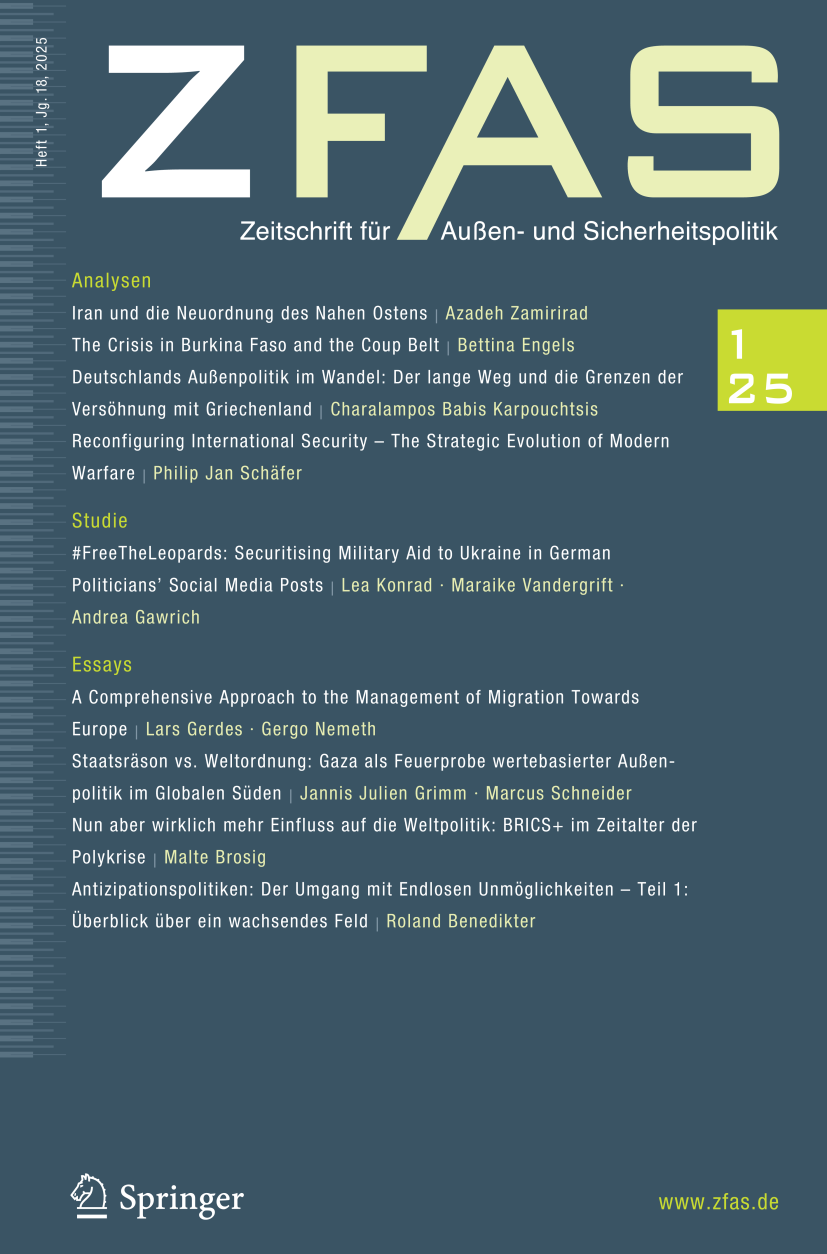
Post-War Ukraine: A Kind of “Big Israel” in Europe? - Zeitschrift für Außen- und Sicherheitspolitik In April 2022, Ukrainian President Volodymyr Zelenskyy argued that post-war Ukraine could resemble a “big Israel” in Europe regarding link.springer.com

@SaltyGirl09 - 𝕊𝔸𝕃𝕋𝕐 𝔾𝕀ℝ𝕃

Chabad’s Heavenly Jerusalem Project Credit @hippyresident https://fitzinfo.net/forum/?amp

Forum, Fitzpatrick Informer [forum]. fitzinfo.net

@SaltyGirl09 - 𝕊𝔸𝕃𝕋𝕐 𝔾𝕀ℝ𝕃

How nuclear-armed Ukraine could become ‘Europe’s Israel’ | Ukraine: The Latest https://youtu.be/NtY4MpoOQ1s?si=xJ2XzDFcT-MczpOH

@SaltyGirl09 - 𝕊𝔸𝕃𝕋𝕐 𝔾𝕀ℝ𝕃

https://www.memri.org/tv/viacheslav-matuzov-russia-israel-ukraine-expansionist-enterprise-jews

Former Russian Diplomat Viacheslav Matuzov: Gaza And Lebanon Wars – Part Of Israel's Involvement In The Ukraine War; Millions Of European And American Jews Are Ready To Move To Ukraine To Build A 'Second Israel'; 80-100% Of Ukrainian MPs Have Israeli Passports Former Russian diplomat Viacheslav Matuzov appeared on Mayadeen TV (Lebanon), where he claimed that Israel is heavily involved in the Ukrainian conflict. He alleged that 80% to 100% of Ukrainian parliament members hold Israeli passports and stated that millions of Jews from Europe and America are prepared to move to Ukraine to build a “second Israel” there, citing the memri.org

@SaltyGirl09 - 𝕊𝔸𝕃𝕋𝕐 𝔾𝕀ℝ𝕃

https://geopoliticalcompass.com/why-zelenskys-dream-of-ukraine-becoming-big-israel-makes-moscow-nervous/


Why Zelensky’s Dream of Ukraine Becoming ‘Big Israel’ Makes Moscow Nervous | geopoliticalcompass.com

@SaltyGirl09 - 𝕊𝔸𝕃𝕋𝕐 𝔾𝕀ℝ𝕃

https://kyivindependent.com/michael-brodsky-can-ukraine-become-a-big-israel/

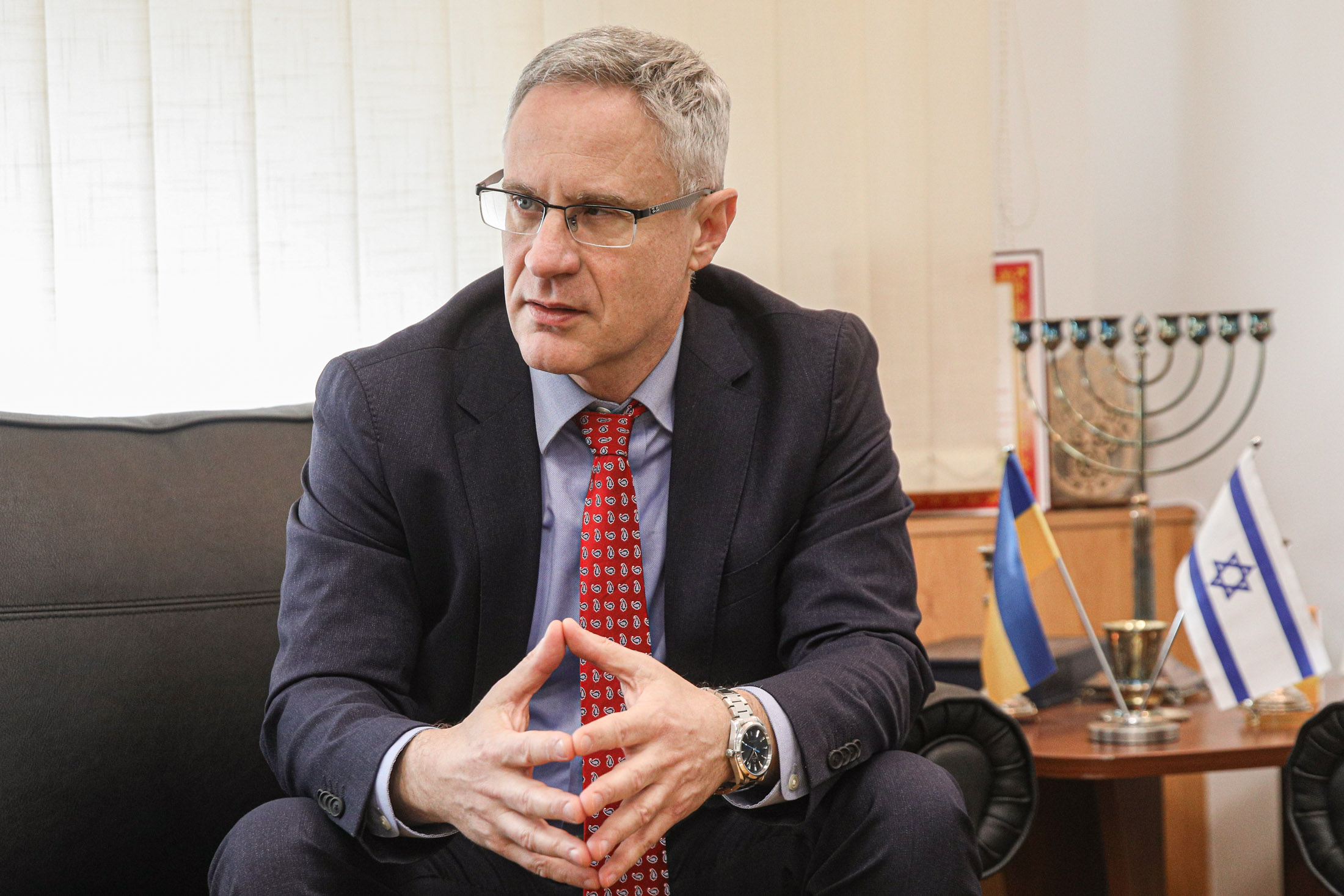
Michael Brodsky: Can Ukraine become a 'big Israel'? The Russian invasion of Ukraine has resulted in devastating damage to the country’s physical, economic, and human infrastructure. Thousands of civilians have been killed. Millions of people have become refugees. A big part of the population is suffering from psychological trauma. Although the outcome of the war is still kyivindependent.com

@SaltyGirl09 - 𝕊𝔸𝕃𝕋𝕐 𝔾𝕀ℝ𝕃

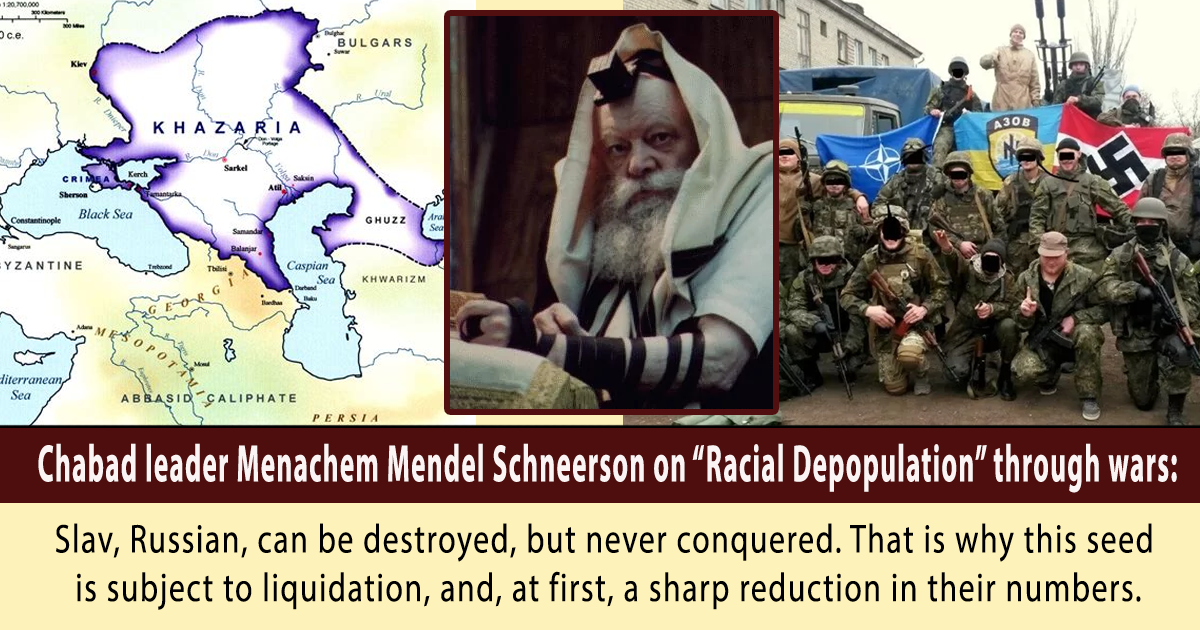
https://gibraltar-messenger.net/ww3/ukraine-war-chabads-strategy-for-slavic-genocide/

Ukraine War: Chabad’s Strategy for Slavic Genocide Wars Always Depopulate. Ukrainians think that they are fighting against Russia for independence, but their numbers are being reduced by design. gibraltar-messenger.net

@SaltyGirl09 - 𝕊𝔸𝕃𝕋𝕐 𝔾𝕀ℝ𝕃

https://cepa.org/article/could-ukraine-copy-israels-military-tech-success/

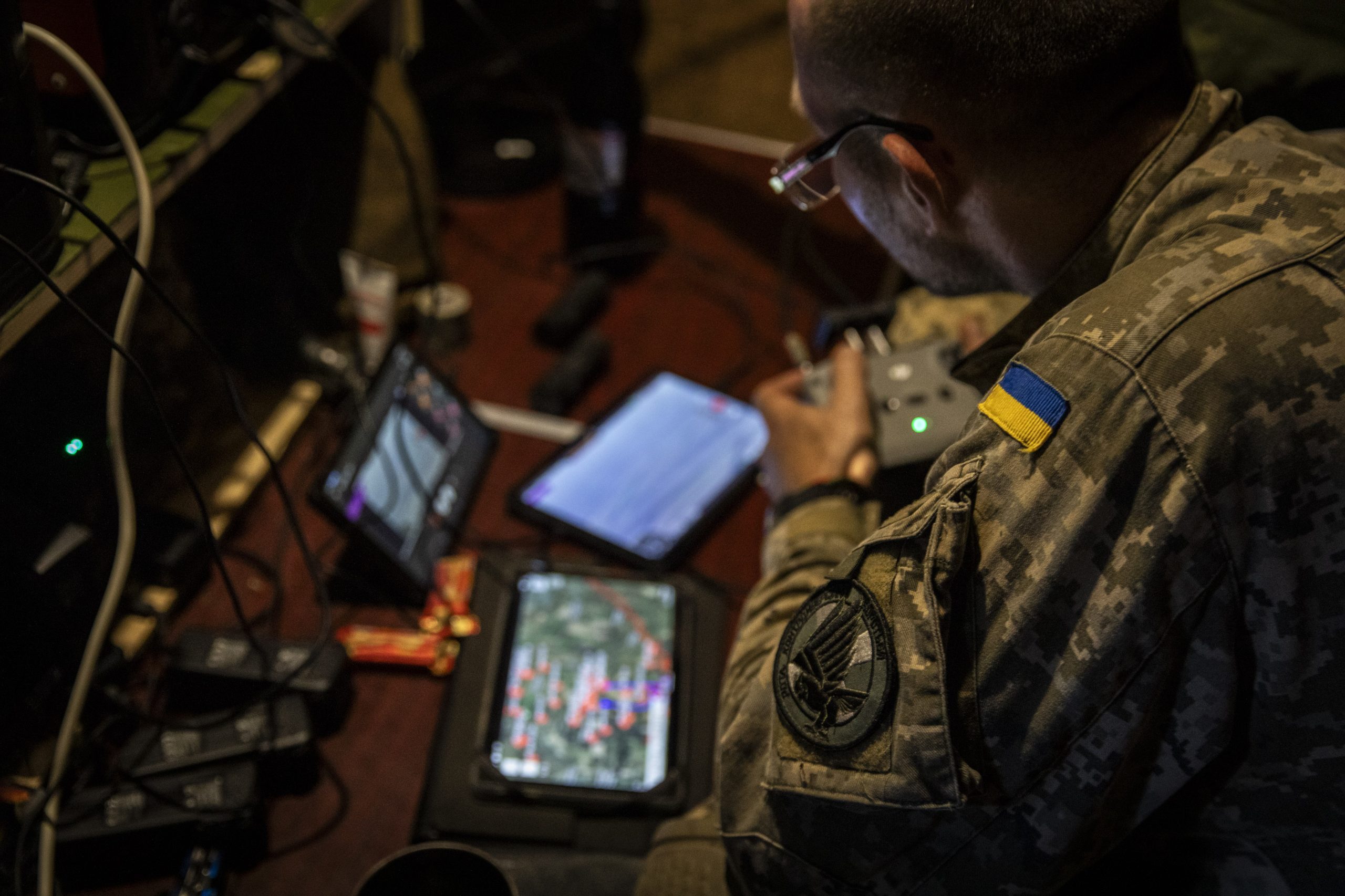
Could Ukraine Copy Israel’s Military Tech Success? Ukraine’s thriving tech sector is a key part of the nation’s defense against Russia. Some even look to Israel’s tech success as a model. cepa.org

@SaltyGirl09 - 𝕊𝔸𝕃𝕋𝕐 𝔾𝕀ℝ𝕃

https://odessa-journal.com/israeli-investments-in-ukrainian-it-sector-going-to-increase-further-to-the-law-on-diia-city


Israeli investments in Ukrainian IT sector going to increase further to the law on DIIA City - Oj Israeli Ambassador to Ukraine Michael Brodsky expects the growth of Israeli investments in the IT sector of Ukraine ... odessa-journal.com

@SaltyGirl09 - 𝕊𝔸𝕃𝕋𝕐 𝔾𝕀ℝ𝕃

In 2022 Ukraine announced it will start issuing a CBDC which will be tied to their Digital Identity platform ‘Diia app’. All part of the WEF’s Great Reset agenda. Alex Bornyakov, Digital Transformation Deputy Minister & head of Diia City Project.

Video Transcript AI Summary
We passed a law last summer that allows our national bank to start developing a CBDC. The law goes into effect this August, so our national bank is working with us on pilot projects in the meantime. We're considering different platforms and recently announced that one pilot will be on the Stellar blockchain. We're working with the Stellar Foundation and commercial banks in Ukraine to come up with a working concept. There are also pilots with Ethereum and the NEAR protocol underway. We should be announcing some results in a couple of months. Since the law goes into effect in August, we're trying to figure out the technical advantages and obstacles in order to potentially launch early next year or maybe even by the end of this year.
Full Transcript
Speaker 0: Mister deputy minister, they would, a central bank digital currency be in the offering? You you have it it seems, it seems like you have everything in place to set it up, or at least some of the infrastructure with a digital passport. Do you think that that's something a a digital version, of the currency makes sense, to implement soon? Speaker 1: Yeah. Yeah. That's a great question, though. In last summer, I think in August, we passed their law that our national bank can actually start doing CBDC. And but but there's was there delayed the law was delayed in like, what's the word I'm looking for? I'm I'm I'm I'm I'm trying to say that law passed, but there there was a provision that say that in a that it's gonna be in effect in a year. So this year, in August, it's gonna be, like, in effect. So in the meantime, our national bank, together with us, working on a pilot projects on CBDC. So we're considering different platforms. We recently announced that one of their pilots will be on the Stellar foundation on the Stellar blockchain. So we work with the Stellar Foundation and commercial banks in Ukraine. They're trying to come up with their with their working concept. There's also, pilots with Ethereum, and and we're preparing a near with with a near protocol. So, I think in couple months from now, we'll announce some results on those pilots. And then we're trying to since, the law will be in effect in in August, so we're trying to do everything in that we it is possible to figure out what their their outcomes, what their technical advantages or or obstacles in order to launch it early next year or maybe in the end of this year.

@SaltyGirl09 - 𝕊𝔸𝕃𝕋𝕐 𝔾𝕀ℝ𝕃

The Balfour declaration 2.0 was signed between the UK and Ukraine in January 2025, securing the land and minerals for the greater isreal project. Credit @corvus_usa

@SaltyGirl09 - 𝕊𝔸𝕃𝕋𝕐 𝔾𝕀ℝ𝕃

Lord Jacob Rothschild admitted that his ancestors paved the way for The Creation of Israel forcing the British Government into signing the Balfour Declaration in 1917.

Video Transcript AI Summary
The Balfour Declaration, a 67-word letter, shifted Middle Eastern history. Sent by Arthur Balfour to Lord Rothschild, it voiced British support for a Jewish home in Palestine. My great uncle Walter received the letter because Zionism was mainly an Eastern European movement lacking a clear leader in Britain. The Rothschild family was the obvious choice. The declaration states the government favors establishing a Jewish national home in Palestine, ensuring no prejudice against existing non-Jewish communities or the rights of Jews elsewhere. It was a pivotal moment after 3,000 years. The family played a key role in early Israeli communities. My cousin Dorothy, even as a teenager, connected Chaim Weizmann with the British establishment and taught him how to integrate into British society to promote Zionism.
Full Transcript
Speaker 0: It's 67 words long. It's a hundred years old, and it changed the course of history for The Middle East and the Jewish people. The Balfour Declaration, the expression of the British government's support for a Jewish home in Palestine, was sent by British foreign secretary Arthur Balfour to the second lord Rothschild. I'm here in Buckinghamshire at Waddeston Manor to speak with the fourth lord Rothschild about the Balfour Declaration, what it means for Britain, for the Jewish people, and the Rothschild family. Speaker 1: The Foreign Office, November the second nineteen seventeen. Dear Lord Rothschild, I have much pleasure in conveying to you on behalf of his majesty's government the following declaration of sympathy with Jewish Zionist aspirations, which has been submitted to and approved by the cabinet. Speaker 0: So it's possibly the most famous letter in modern Jewish history, and it begins with three words. Dear Lord Rothschild, why was it that this letter was sent by the foreign secretary to your great uncle Walter? Speaker 2: It's an interesting question because he was ready in ornithology. Although he became interested in Zionism. I think the reason was this, that it was primarily a movement from Eastern Europe, but they didn't clarify who was in charge of that movement. And in addition, it was after all in Great Britain. So they felt that the Rothschild family should be the one to whom it was addressed. Walter was Lord Rothschild and he was as honest, those really are the background reasons. Speaker 0: So Walter received the Balfour Declaration and I have a copy here, and I wonder if I could possibly ask you to read it for us. Speaker 2: Yes indeed. I'm going to put on my spectacles to make sure I read it accurately. His majesty's government deal with favor the establishment of Palestine as a national home for the Jewish people and reduce their best endeavors to facilitate the achievement of this object. It being clearly understood that nothing should be done which may prejudice the civil and religious rights of existing non Jewish communities in Palestine or the rights and political status enjoyed by Jews in any other country. I should be grateful if you would bring this declaration to the knowledge of the Zionist Federation, the Osarth of Balfour. Speaker 0: And here it is, the Balfour Declaration. What do you feel when you when you see it here? Speaker 2: I genuinely feel it's one of the most extraordinary moments in the history of the Jewish people. If you think it took three thousand years to get to this. Speaker 0: And of course the Rothschild family then has now filled two roles because it wasn't just a leader of diaspora jury, it also played a very significant role in the early years of the establishment of the pioneer communities in Israel as well. I just want to revisit for a moment your cousin Dorothy, who you mentioned, who at an extraordinarily young age, still in her teens played such a critical role as a go between and a facilitator for Chaim Weitzman. Can you say a little bit about that? Speaker 2: Well she married my cousin Jimmy when she was 17. Speaker 0: So this is your cousin Dorothy Dolly? Speaker 2: Yep, Mrs. Jones Ross Charles. Speaker 0: And from her teenage years onwards she was a major supporter of Israel, wasn't she? Speaker 2: Major supporter. I mean, she worships her husband who'd been deeply committed, son of baron admiral. It was due to him, I think, that she became interested. But once she became interested, interested, she became passionately interested. After his death, she became even more committed. She just wanted to carry out his wishes and what he cared deeply about. And you can read letters from her to Weitzman and from Weitzman to her when she was only 17. And what she did, which is crucially important, was to connect up Weitzman with the British establishment. Speaker 0: I think she also trained him in how to deal, she helped educate her how to And it's included Speaker 2: at that age, but she did tell Weitzman how to kind of integrate, how to insert himself into British establishment life, which he learned very quickly. Speaker 0: So I'm here in the Waddeston Manor archives where there is a treasure trove of remarkable documents from the time of the Balfour Declaration. We have the correspondence here between the teenage Dorothy and her husband James, and it's really a love story. Here we have detailed letters describing her dealings with Zionist leaders, her advice and her suggestions regarding the conferences of the Zionist movement. And here, we have a letter that the young Dorothy, still not 20, sent to Doctor. Chaim Weitzman, where she's talking about the meetings that she's arranged for him. And as we've heard, she was helpful in training and preparing him to enter into the highest echelons of British society to advance the cause of the Zionist movement.

@SaltyGirl09 - 𝕊𝔸𝕃𝕋𝕐 𝔾𝕀ℝ𝕃

Benjamin H. Freedman The Balfour Declaration (I've included the link to the entire speech.) https://youtu.be/SqwFwl2lOeM?si=n3KetpNETes6jJpo

@SaltyGirl09 - 𝕊𝔸𝕃𝕋𝕐 𝔾𝕀ℝ𝕃

Documents in relation to the Balfour Declaration.

@SaltyGirl09 - 𝕊𝔸𝕃𝕋𝕐 𝔾𝕀ℝ𝕃

https://www.france24.com/en/middle-east/20241003-jewish-pilgrims-journey-from-israel-to-ukraine-leaving-one-war-for-another-rosh-hashanah-new-year

Jewish pilgrims journey from Israel to Ukraine, leaving one war for another More than 30,000 Orthodox Jewish pilgrims are thought to have congregated in the Ukrainian city of Uman for Rosh Hashanah, a key holiday in the Jewish calendar, some leaving war in the Middle East to… france24.com

@SaltyGirl09 - 𝕊𝔸𝕃𝕋𝕐 𝔾𝕀ℝ𝕃

Interesting Documentary that is relevant to the thread. How Britain Started The Arab-Israeli Conflict Part 1 (https://youtu.be/ZXfuqUhzESg?si=xFc72cEOVs3pDZgQ)

Video Transcript AI Summary
The Arab-Jewish conflict's roots lie in British double-dealing during World War I. Britain, France, and Russia secretly planned to divide the Ottoman Empire, disregarding Arab and Turkish interests. The British promised Arabs independence and Jews a homeland, an irreconcilable contradiction born out of wartime exigency and imperial ambition. Britain sought to secure the Suez Canal for access to India. They annexed Egypt and saw the Ottoman Empire, allied with Germany, as a threat. To undermine the Ottomans, Britain used bribery and subversion, exploiting Arab nationalism. They courted Sharif Hussein, offering support for Arab independence in exchange for revolt against the Ottomans, while simultaneously negotiating with France to carve up the Middle East via the Sykes-Picot Agreement.
Full Transcript
Speaker 0: The bitter struggle between Arab and Jew for control of the Holy Land has caused untold suffering in the Middle East for generations. It is often claimed that the crisis originated with Jewish emigration to Palestine and the foundation of the state of Israel. Yet the roots of the conflict are to be found much earlier in British double dealing during the First World War. This is a story of intrigue among rival empires, of misguided strategies, and of how conflicting promises to Arab and Jew created a legacy of bloodshed, which has determined the fate of the Middle East. Speaker 1: During the First World War, the British, the French, and the Russians had these secret plans to carve up the Ottoman Empire because they believed that would balance out their imperial ambitions, but tough luck for the Turks, the Arabs, anyone else who got in the way. Speaker 2: Certainly, all the seeds were planted then in the sense that it was the British who promised the Arabs independence on the one hand and Jewish homeland on the other, and you could not simply reconcile one with the other. Speaker 3: The British scattered promises to anyone who might be of some use to them without thinking about the consequences. So British duplicity, British double dealing went a long way to perpetuate the conflict in Palestine. Speaker 4: At the end of the day, when you're fighting a war, you are very liberal in what you're offering in terms of a postwar settlement. When you get down to the conference table when the war has ended and you have to start honoring your agreements, you then have to decide what's in your interest or not. And the British saw the Middle East as the western flank for their power in India and their power in Asia in general. Speaker 0: The story of Britain's involvement in the Middle East and the ensuing struggle between Arab and Jew begins with her colonial past. At the beginning of the twentieth century, King Edward the seventh ruled over a vast empire with interests in every part of the world. Speaker 4: India became increasingly important because it was the second pillar of British power in the world. Moving the Indian army about was extremely important in extending British interests and British influence across the globe, and the Suez Canal was, of course, the quick way to do that. It's very important for the British geopolitical position to ensure the Suez Canal remains safe and secure. Speaker 0: With this aim in mind, Britain had become the only European power to establish a major foothold in the Middle East, in the principalities around the Persian Gulf, in Aden, and in Egypt. Britain had annexed Egypt from Turkey's Ottoman Empire in 1882. And by the time it was made a protectorate in 1914, Cairo had become the center of British power in the Middle East. The presence of imperial troops in the region was of vital strategic importance. For the Ottoman Empire under Sultan Mohammed the fifth was an alliance with Britain's much feared rival, Germany. Together with the Austro Hungarian Empire, these countries made up the central powers. And pitted against them were the three allies, Britain, France, and Russia. From the Ottoman capital, Constantinople in Turkey, the sultan ruled over the last of the great Islamic empires. It had been in almost terminal decline for decades. Yet the fate of the Ottoman Empire was to be sealed by the outbreak of the First World War in August 1914. In Europe, Germany's rapid advance was halted by Britain and France along the Eastern Front. In the East, Russia's war against Germany and Austria Hungary also reached deadlock. The powerful weapons of the Industrial Age were killing thousands of men in the trenches of every army. Speaker 5: All of the leading powers expected the war to be over within a matter of months. In that sense, all of them are surprised at the end of 1914, when not merely is the war going on, but it shows every sign of being likely to go on for a very long time. At that point, they began to think about new ways of winning the war. Speaker 0: Britain's Prime Minister Asquith felt that with the stalemate in Europe, it was essential to widen the conflict. Together with Foreign Secretary Lord Grey, Together with Foreign Secretary Lord Gray, Minister for War Lord Kitchener, and the first Lord of the Admiralty Winston Churchill, they masterminded a complex strategy to undermine the Central Powers. This was a global war, Speaker 4: and the British saw the Middle East very much in a global context. The traditional British preference for sideshows, as people unfavorably call it, the indirect strategy, the way of attacking the soft underbelly, as Churchill called it, of the enemy. And the Speaker 0: soft underbelly was seen to be Turkey. Britain's secret plan involved, on the one hand, a military diversion, and on the other, a devious use of diplomacy through bribery, subversion, and double dealing. All these devices focused on the enemy's weakest link, Turkey's Ottoman Empire. Speaker 1: Diplomacy in general has always had a secret dimension to it. Whether but where discretion ends and conspiracy begins is an open question. But during the period bef up to and during the First World War, there was a particularly intense set of negotiations and discussions between the major imperial powers, between the French, the Russians, and the British in particular, cutting in the Italians as well about what would they do when the war was over and when the Ottoman Empire broke up. Speaker 0: The British government hoped that by striking a deal over the spoils of war, it would strengthen the alliance against the Central Powers. Amongst the Allies, Russia had long sought access to the Mediterranean. In a secret treaty of March 1915, Britain and France offered what was to the czar a prize of vital geopolitical importance, Constantinople. Speaker 6: It is that key outlet into the wider world and into the Mediterranean. And it is the one thing, of course, the British and the French have been attempting to prevent the Russians from achieving. So this is a complete. This is this is the British, the French, and the Russians coming to an agreement over something which was, up to this point, almost inconceivable. Speaker 0: Italy's King, Vittorio Emmanuel, was another target for bribery. Britain, France, and Russia tried to tempt Italy, a pro German state, to join the Allies. In April 1915, a secret treaty offered Italy a substantial bit of Ottoman real estate in Anatolia. Speaker 6: Again, it's another power coming into the equation and being offered territorial advancement, which in normal circumstances would have been quite inconceivable. Speaker 0: The bribe worked. Italy joined the Allies and declared war on the Central Powers in August 1915. But Britain's strategy to undermine the enemy via the Ottoman Empire also required subversion. By using domestic opposition to weaken, maybe even destroy it, Britain exploited a new movement sweeping through the empire, nationalism. Speaker 1: Nationalism in the sense of believing that there are peoples with a clear cultural identity and that these people should live independent, That idea spread to the Middle East as to other parts of the world in the latter part of the nineteenth century. So you had the beginnings in the Ottoman Empire of a Turkish nationalism. Speaker 0: This came to a head when the young Turks took power in a coup in nineteen o eight, and started to impose their language and culture on the Arabs of the empire. But this only reawakened an interest amongst Arabs in their own heritage. A thousand years before, Arabs had brought the technology and literature of the East to the West, and their religion, Islam, had encompassed much of Asia, North Africa, and South Western Europe. The idea of recovering that historic grandeur had remained in the consciousness of Arab intellectuals. By the start of the First World War, the antagonism between Arab and Turk had increased. Speaker 1: The very fact that the Turks were saying we want to have a unified empire meant the Arabs said, wait a minute, we're not part of this. So all of this literary and nationalistic revival then took a much more political form, and therefore, you got the emergence of Arab nationalism. Speaker 2: They had arrived at the conclusion that remaining in the Ottoman Empire was becoming hopeless, that they couldn't actually share power with the Turks. And they began thinking of having their own state. Speaker 0: By the summer of nineteen fifteen, British intelligence confirmed that the Arab nationalist movement was the breakthrough the government was looking for. Britain and her French ally dispatched officers to sound out Arab leaders. Speaker 2: Both the French and the British started, you could say, seducing various local Arab leaders that if you side with us, we'll give you your independence, so why don't you leave the Ottomans? And various people were tempted as a result. If they they thought they could actually gain independence, why not side with the Europeans against the Ottomans? Speaker 0: The idea was to tempt the Arabs into a revolt against their Ottoman overlords and create a diversion which would tie down the central powers in the Middle East. Ironically, the impetus for such a diversion had come not from London, but from the Arab world. In the Hejaz in Western Arabia, Sheriff Hussein, its ruler, was set on extending his political and geographical domain. He believed he might be able to do it with the help of the British. In turn, impressed by Sheriff Hussein's family credentials as custodians of the holy places of Islam. Speaker 1: They called themselves Hashemites. They called the family Hashemites because that's the family or the tribe of the prophet Muhammad. They were the Bani Hashem, the sons of Hashem. So he was Sheriff Hussein was the leader of the Hashemites. He was the person responsible for Mecca and Medina. And although he had worked with the Ottomans before the First World War, once the First World War happened, he saw this was his chance. Speaker 0: A chance too for the British, who saw support for Sheriff Hussein as a way to threaten the Sultan's hold on the caliphate, the political leadership of the Islamic world. Speaker 2: The British, because they were fighting the Ottomans, and the Ottomans were claiming to be the real representatives of Islam, they wanted a counterforce, and the counterforce was represented by Sheriff Hussein being a descendant of the prophet. But Sheriff Hussein was speaking of liberating Arab lands, building a new national state. He wanted to be king of the Arabs, not simply of Arabians. Speaker 0: In July 1915, Sheriff Hussein smuggled a message to the British High Commissioner in Cairo, Sir Henry McMahon, offering to raise a substantial Arab force against the Ottomans in return for British support for Arab independence. In the ensuing secret correspondence between the two men, Sheriff Hussein was given to understand that he could expect British support in achieving some of his ambitions in the event of an Ottoman defeat. This letter of October 1915 outlined the main points of the arrangement. Speaker 6: The actual document itself is absolutely riven with ambiguity. There's no doubt about that. The question is whether Hussein recognizes that. My sense of Hussein is that he does recognize it. In other words, there is no wool being poured over his eyes because he's perfectly aware that if he's going to create a modern Arab empire, he's going to need some logistical economic development, and that can only come from the outside world. Speaker 0: Taking Britain's assurances of support at face value, Hussein, together with his sons Faisal and Abdullah, amassed a sizable force. The new army was commanded by the young and charismatic Faisal, who had captured the imagination of the Arab masses in the quest for Arab independence. Yet even as Hussein and Faisal mobilized their troops, the British were preparing to sell them short. Back in London in the spring of nineteen sixteen, Britain was negotiating with France about the future shape of the Middle East. Behind closed doors, Sir Mark Sykes of the British Foreign Office had been meeting his French opposite number, Francois Georges Picot. Britain knew it was vital to offer the French a stake in the spoils of the Ottoman Empire should they win the war. Speaker 7: There was an awareness on the British side that they had made such huge sacrifices that one couldn't just ignore French ambitions, and that the French were determined to have their historical peace of The Levant. Speaker 0: Pouring over a map of the Levant, Sykes and Picot personally drew in the areas they wished to see under their control. Their secret deal amounted to the virtual carve up of the Middle East. In area A for the French and area B for the British, the imperialists intended to exercise power indirectly. They would appoint advisers and take charge of the finances in their respective spheres of influence. Then there was the area colored blue, which was to be directly controlled by France. This included what was then known as Greater Syria, where the French traditionally had commercial and religious interests. As for the area colored pink, known as Iraq, with its strategic ports, railways, and oil, this was to be under British rule. The area colored yellow represented Palestine and was envisaged as an international zone, except for Haifa. Speaker 2: What the British wanted was the oil of Iraq, and they concentrated on getting Iraq and getting away bit from Iraq to the Mediterranean in order to transport this oil. So they got Haifa on the Palestinian coast, and they got most of Iraq. Speaker 7: The Sykes Picot agreement was a pretty shameful document, and I wouldn't attempt to defend it. But it was drawn up by people who were sort of operating under the old kind of balance of power considerations in an imperial frame of mind. Speaker 0: Unaware of these secret dealings behind their backs, Hussein and Faisal proclaimed independence, and in June 1916, attacked the Turkish troops. The Arab revolt against the Ottomans had begun. The Turkish garrison at Mecca was soon overrun, and the seaport at Jidder seized. By 1917, Hussein and Faisal's forces had pushed north and engaged the Ottoman Turks along the Hejaz Railway. The British saw the Arab revolt as part of its strategy for creating a military diversion against the Central Powers. In a pincer movement, Britain had launched a campaign from the Southwest to ensure control of the Suez Canal and the Levant. And from the Southeast, it was fighting to secure the oil wells of Iraq. All this to attack the Central Powers at their weakest point, the Ottoman Empire. Speaker 2: The Arabs hitched their fortunes to the British. They considered themselves to be fighting with the allies, but at the same time, they were not merged into the British Army, that they continued to act as an independent army called the Northern Speaker 0: Arab army advanced northwards, Britain's General Allenby had crossed the Suez Canal. And by the spring of nineteen seventeen, his forces had reached the frontier of Palestine. The war in Europe, however, was still not going well for Britain. The attempted push through the German lines at the Somme had produced little territorial gain, and the cost in lives was colossal. In London, there had been a change of leadership. The new prime minister, Lloyd George, felt that the Allied war effort needed a fresh impetus. Although America had so far been neutral in influence the American government. Speaker 3: Lloyd George thought that the American decision whether to join or not would depend critically on public opinion, and the Jewish support could tilt the scales in one direction or the other. Speaker 5: You've got to remember that the British Foreign Office greatly overestimate the political power of international Jewry, particularly the wealthy financial and commercial Jewish elites. Speaker 6: What is extraordinary about this situation is that here you have, particularly the British, seeing the Jewish world as one collective monolithic entity. And in that sense, they start looking at the role of the Jews in the war as being something which might be important. And from the point of view of the allies, something else quite remarkable, this monolithic collective entity is pro German. Speaker 0: Many Jews in the upper echelons of German society did indeed have close connections to the Kaiser's Foreign Office. A new Jewish nationalist movement, Zionism, had also been able to establish its headquarters in Berlin. Zionism had originated in the 1880s after Theodor Herzl published a book espousing the virtues of a Jewish state. This caused a sensation amongst Jewish intellectuals in Germany, Austria, and Russia, who shared Herzl's outrage at the escalation of anti Jewish sentiments. Speaker 3: The end of the nineteenth century saw the rise of antisemitism all over Europe, in Austria, in Germany, in France, but particularly in Eastern Europe, in Poland, and in Russia. And the pogrom against the Jews in Russia gave rise to the establishment of, the lovers of Zion, societies in a number of Russian cities who started to promote and to finance and to sponsor colonization, emigration to Palestine. Herzl came to the conclusion that the Jews were not safe anywhere in Europe, and the only solution was for the Jews to have a state of their own over which they could exercise sovereignty and where they would not be a minority. Speaker 0: What had also given Zionism its appeal was the way in which it fitted in to historic Jewish aspirations. Scattered throughout the world since the destruction of the Jerusalem Temple in the first century AD, many Jews had cherished the idea of returning one day to what their scriptures had told them was the promised land. In fact, there had already been a small community of indigenous Jews in Palestine. But even when some European Jews established settlements throughout the late nineteenth century, the whole Jewish community by 1914 constituted barely 8% of the population.

@SaltyGirl09 - 𝕊𝔸𝕃𝕋𝕐 𝔾𝕀ℝ𝕃

How Britain Started The Arab-Israeli Conflict Part 2

Video Transcript AI Summary
Zionism gained appeal as it aligned with Jewish aspirations for a return to their promised land. Chaim Weitzman lobbied for Jewish emigration to Palestine, and Lloyd George saw Zionism as a nationalist movement to co-opt. The Balfour Declaration of November 1917, favored a Jewish national home in Palestine, but it was also designed to serve British interests during a deteriorating war. The declaration stated that the rights of non-Jewish communities should not be prejudiced. However, it contradicted promises made to Arabs regarding independence. Britain's strategy, based on inaccurate intelligence, backfired when Bolsheviks revealed secret treaties. Despite Arab contributions to the Allied victory, the Sykes-Picot Agreement shaped the Middle East's new boundaries, undermining Arab unity and independence.
Full Transcript
Speaker 0: Into the conclusion that the Jews were not safe anywhere in Europe. And the only solution was for the Jews to have a state of their own over which they could exercise sovereignty and where they would not be a minority. Speaker 1: What had also given Zionism its appeal was the way in which it fitted in to historic Jewish aspirations. Scattered throughout the world since the destruction of the Jerusalem Temple in the first century AD, many Jews had cherished the idea of returning one day to what their scriptures had told them was the promised land. In fact, there had already been a small community of indigenous Jews in Palestine. But even when some European Jews established settlements throughout the late nineteenth century, the whole Jewish community by 1914 constituted barely 8% of the population. The Zionist leader in Britain, Chaim Weitzman, had been lobbying the government for a guarantee that in the event of an Ottoman defeat, it would support Jewish emigration to Palestine. By early nineteen seventeen, Lloyd George's view of Jews as globally influential convinced him that Zionism was another nationalist movement which should be co opted to the Allied cause. In March, Mark Sykes began negotiations with Weitzman. Speaker 2: There is a bee in the bonnet of people like Mark Sykes that actually the Jews do ultimately look to each other and look to their own interest. And if that interest, as they are being told by Weitzman is, what we really want is Palestine, they're prepared to believe it. They're prepared to go along with it. Speaker 1: As negotiations with Weitzman continued over the following months, the war deteriorated rapidly for the Allies. The German submarine campaign was seriously weakening Britain's merchant fleet. And although America had entered the war on the Allied side, President Woodrow Wilson was not yet willing to supply a significant number of troops. Britain's latest attempt to keep up the pressure on the Western Front soon became bogged down in the muddy trenches of Passchendaele. As thousands of young men's lives were wasted in another fruitless campaign, morale amongst the soldiers plummeted. But the most serious threat to the Allied war machine came from the East. Russia was on the verge of collapse. After massive defeats at the hands of the Germans, the war weary country was disintegrating with food shortages, strikes, and demonstrations. When the czar was deposed in a revolution, Britain and France became greatly alarmed. Speaker 3: The point is that once Russia and its war effort begins to collapse, essentially, the Germans have won the First World War unless they bring the Americans in. There's no way that the British and the French on their own are ever going to defeat Germany. Speaker 1: In October, the British government received an intelligence report suggesting that Jews were a significant influence in the leadership of the Bolshevik party, the new revolutionary movement emerging as the dominant force in Russia. Lloyd George feared that these communists would take Russia out of the war. With the Americans still refusing to commit sufficient forces, he knew it was time to act. He instructed his foreign secretary, Arthur Balfour, to issue a pledge to capture the hearts and minds of the Jewish people. Speaker 4: His majesty's government view with favor the establishment in Palestine of a national home for the Jewish people and will use their best endeavors to facilitate the achievements of this object. Speaker 1: The Balfour Declaration was issued on November 1717, just as British forces were occupying Palestine. Speaker 0: I would say that the Balfour Declaration has to be understood not as an idealistic gesture, but it has to be understood within the framework of British imperial policy. And Lloyd George was the main instigator of that declaration because he believed that it would serve Britain's interests. Speaker 1: But this was also the first time that any major European power had given official backing for the Zionist goal of making Palestine into a Jewish homeland. Yet, Sheriff Hussein had understood that Palestine had been promised as part of his deal for Arab independence. Anticipating Arab outrage at the prospect of a Jewish homeland in a largely Arab province, the Balfour Declaration had also stated that Speaker 4: Nothing shall be done which may prejudice the civil and religious rights of existing non Jewish communities in Palestine. Speaker 1: The declaration, nonetheless, appeared to indicate British support for Jewish emigration. Speaker 5: There were only a mere 80,000 out of some, like, 700,000 people in Palestine who were Jews. The indigenous inhabitants of Palestine were referred to as non Jewish inhabitants. And that Palestine was being identified, even at that stage, as a Jewish land, and all the others had no defined identity. They were simply non Jewish. Speaker 0: The Balfour Declaration was what it says, a declaration. It wasn't a treaty. It wasn't a signed agreement. It was a declaration in support of the establishment of a national home for the Jewish people in Palestine. Speaker 1: In fact, the only treaty Britain had signed in regard to Palestine was with the French, the secret Sykes Picot agreement. On November, within a few days of the Balfour Declaration, the Bolsheviks took power in Russia. Lloyd George hoped that it would have the desired effect of appeasing the Jews in the communist leadership. Speaker 2: What is it that they supposedly so want as Jews? Palestine. Now the whole argument is is totally logical. It's a nonsense argument because these particular people, if one were to think of people like Trotsky or Zinoviev or Yaffe, some of the key Jewish leaders in the Russian revolution, the the November revolution, these these people, of course, are internationalists. Speaker 0: There were 15 to 20 Jews in the higher echelons of the Bolshevik party. Most of them were anti Zionist. And after they came to power, they soon after they came to power, they issued a declaration to say that Zionism is a capitalist ploy, a capitalist idea. Speaker 1: The wildly inaccurate intelligence report on which Lloyd George based his strategy was to have major implications for Britain. Within weeks, Russia's new leaders did exactly the opposite of what he had expected. Not only did they pull out of the war, they opened up the archives of the czarist foreign office and published the secret treaties, the very treaties Britain had engineered with her allies to carve up the Ottoman Empire, and to which Russia had been privy. Speaker 3: That, of course, is a very great embarrassment to the Western Allies because the Allies have been doing all sorts of deals behind the scenes in which they have handed out to each other large sections of the world, meanwhile, openly preaching that they are fighting the war in defense of democracy and of course also telling among others the Arabs that they are supporters of self determination for the people of the Ottoman Empire. Speaker 6: Publication of secret treaties by the Bolsheviks certainly created enormous suspicion in the Arab world, and this meant that the Sharif Hussein and the others said, wait a minute. What's going on? What a, why are you not giving us independence? And secondly, why are you dividing us up into Zone A and Zone B? And at that point, of course, the Arabs realized that not only would the had the British got their own particular interests, for example, in the ports of Palestine or in Iraq, but that they had promised other things to the French. Speaker 1: Amid Arab confusion and suspicion, General Alamby entered Jerusalem on foot, together with Sykes, Pico, and a number of other allied notables. His British led forces had captured the holy city in December 1917. The leaders of the Arab revolt, however, were nowhere to be seen. Fearing that Hussein and Faisal might lose heart, the British government forwarded a message to them, reiterating British commitment to Arab independence. Speaker 4: The Arab race shall be given full opportunity of once again forming a nation in the world. This can only be achieved by the Arabs themselves uniting, and Great Britain and her allies will pursue a policy with this ultimate unity in view. Speaker 1: Hussein stayed loyal to the Allied cause, still prepared to accept Britain's word on Arab independence, although he spoke of settling accounts after the war. From Alamby's point of view, he continued to rely on Arab support in the war against the Ottomans. But now that Jerusalem had been occupied by the British, one party seized the initiative. In April 1918, Chaim Weitzman and the International Zionist Commission traveled to Palestine to lay the foundation for a Hebrew university. Their hope was that it would become the intellectual hub of Zionism. Weitzman's visit, however, caused widespread alarm and indignation among the Arab population. And when he and the chief rabbi of Jerusalem met General Allenby, it looked as if Britain was preparing to honor the Balfour Declaration. Six months later, Alamby's forces entered Damascus. With their ally, Faisal's northern army, they had pushed the Ottoman troops north through Palestine into Syria. Speaker 5: The Arab revolt did contribute to the victory of the Allies. First of all, it protected the British flank in Palestine. Second, it kept a number of Turkish and German troops preoccupied. And third, the British could have never legitimized what they were doing unless they had the blessing of a particular Arab force. Speaker 1: On the October 3, the people of Damascus flocked to Faisal's victory parade. If he was to seize power, he knew it was of great importance to make his presence felt and to be seen by the Arab people as their liberator. Later the same day, however, Faisal met with General Alamby at the Victoria Hotel in Damascus. Alamby warned him that his rule in Syria would be limited. Speaker 5: The British, by that time, knew that they were going to hand over Syria to the French. So they couldn't actually accept Faisal as a legitimate ruler. All they could do is to pay him his salary and the expenses of his army and his administration. Speaker 1: Undaunted by Alamby's warnings, Faisal assumed the title of governor of Damascus. With the support of his father, Sheriff Hussein, he set about creating a power base for their goal of an independent Arab state. On the October 31, the Ottomans were finally defeated. And at 11:00 on the 11/11/1918, the guns fell silent in Europe as the war with the Central Powers came to an end. The peace conference at Versailles began in January 1919. Representatives of the victorious allies, such as the French prime minister, Clomonson, and the American president, Woodrow Wilson, gathered to sort out what was to be done with the former territories of the defeated empires. Now the liberal use of promises by the British government had to be prioritized. Speaker 7: They didn't even make pledges to the Arabs, but they also made pledges to the Jews. And they also made pledges to the French and the Russians and everybody else. And these people saw the world as an imperial world. Not only did they want to carve up the Middle East, they wanted to carve up Russia. They thought this was the last great moment in which the imperial powers would be able to sit down and grab what was going, particularly since there was no one to stop them. Speaker 1: But Britain and her old ally France were up against the American president Woodrow Wilson's vision of a new world order, which promoted national self determination. Speaker 5: Once independence had seemed to be a possibility that this principle of self determination supported by the Americans was going to be offered to all those who were to be liberated from former empires like the Habsburgs and the Ottomans. What the Palestinians wanted was an independent state. Speaker 1: In fact, Faisal had come from Damascus to plead the Arab cause. But the future of Palestine in the Middle East formed part of Britain's pledge to France in the Sykes Picocava. In the event, Woodrow Wilson's principles about self determination were forgotten when it came to the people of the Middle East. Britain and France were free to go ahead with their agreement. But what of the promises Britain had made to the Jews regarding Palestine? Foreign Secretary Arthur Balfour, in a confidential memo during the Versailles Peace Talks with America, France, and Italy, wrote Speaker 4: The four great powers are committed to Zionism, and Zionism, be it right or wrong, good or bad, is rooted in age long traditions, in present needs, in future hopes, a far profounder import than the desires and prejudices of the 700,000 Arabs who now inhabit that ancient land. Speaker 1: That might sound like a warm endorsement of Zionism. Yet further in the postwar memorandum, Balfour hints at a much more cynical agenda. Speaker 4: So far as Palestine is concerned, the powers have made no declaration of policy, which at least in letter, they have not always intended to violate. Speaker 1: The Versailles Peace Conference was concluded on June 1919, with the creation of the League of Nations, the first global institution for peace and security. Its covenant provided that the Arab and other territories ceded by the defeated Ottoman Empire should be administered by mandates, which meant, in effect, that Britain and France were given the authority to impose their rule over the Arab territories. On November 1919, Francois Georges Picot, the co architect of the Sykes Picot agreement, and the French general Goureau arrived in Beirut. And so began the imposition of the French mandate for Syria and Lebanon. The British forces forces who had occupied the region since ousting the Ottoman Turks during the last months of the war were handing over power to the French, thus fulfilling their wartime pledge. Faisal, who had been the governor of Damascus now for sixteen months, had been consolidating his position. When he was proclaimed king by National Congress, the French were incensed, and General Gurro sent in his troops. By August 1920, Faisal had been deposed and had to flee to Palestine. The promises to Sharif Hussein and Faisal of a single independent state were now a distant memory for the Europeans. Speaker 6: The whole issue of spheres influence meant that what appeared what was at first appeared to be a willingness to accept a single Arab state was in fact seriously diluted. And then on top of that, of course, the very fact of there being a French area and a British area meant that in effect this was the seed of partition. So you had both independence was denied, but also the unity of this area was denied. Speaker 1: The boundaries and governments of the Middle Eastern states that emerged bore the unmistakable imprint of the Sykes Picot Agreement. The French half of the previously Ottoman province of Greater Syria Speaker 0: became

@SaltyGirl09 - 𝕊𝔸𝕃𝕋𝕐 𝔾𝕀ℝ𝕃

How Britain Started The Arab-Israeli Conflict Part 3

Video Transcript AI Summary
After Faisal was deposed, the promise of a single Arab state was broken as the Sykes-Picot Agreement divided the Middle East. France gained mandates for Lebanon and Syria, while Britain controlled Transjordan, Palestine, and Iraq, including key oil fields. Although the Iraqi people initially rejected British rule, Faisal was installed as king. Sheriff Hussein's dream of a Hashemite-ruled Arab kingdom was partially fulfilled with his son Abdullah becoming king of Transjordan; however, their rival, Ibn Saud, seized Hijaz. In Palestine, the Balfour Declaration, incorporated into the British mandate, promised a Jewish homeland, sparking Arab resentment and increased Jewish immigration, leading to conflict. The British policies sowed division, ultimately leading to the creation of Israel in 1948 and the displacement of Palestinian Arabs, leaving a legacy of betrayal and frustrated expectations.
Full Transcript
Speaker 0: Faisal had been deposed and had to flee to Palestine. The promises to Sharif Hussein and Faisal of a single independent state were now a distant memory for the Europeans. Speaker 1: The whole issue of spheres of influence meant that what appeared, what was at first appeared to be a willingness to accept a single Arab state, was in fact seriously diluted. Then on top of that, of course, the very fact of it being a French area and a British area meant that in effect this was the seed of partition. So you had both independence was denied, but also the unity of this area was denied. Speaker 0: The boundaries and governments of the Middle Eastern states that emerged bore the unmistakable imprint of the Sykes Picot Agreement. The French half of the previously Ottoman province of Greater Syria became the mandate for Lebanon and Syria. The other half became the British mandate for Transjordan and Palestine. In the East, the Ottoman area of Mesopotamia, which included the oil fields of Massul, was given to Britain as the mandate for Iraq. Speaker 2: So this was basically the importance of the Sykes Picot agreement, to divide what is called the Fertile Crescent between Iraq and Syria, and let Britain get access to the oil of the area and be able to exploit it in the future. Speaker 0: But British rule was initially rejected by the Iraqi people until Faisal was installed as king in July 1921. Britain hoped the limited power it devolved to him would serve to placate the frustrated demands for Arab independence. But Sheriff Hussein expected more from the British. Speaker 2: He never gave up the idea that the British had promised him independence, not only in Arabia, but in Syria and Iraq as well. And he wanted the British to fulfill their promises. Speaker 0: Sheriff Hussain's dream of an Arab kingdom ruled by the Hashemites was only partially fulfilled. For although his other son, Abdullah, became king of Transjordan, their old rival, Ibn Saud, swept the Hashemites out of Hijaz when he conquered the whole of the Arabian Peninsula. In Jerusalem, established by the British in the spring of nineteen twenty. There were no plans for devolving power in Palestine. Palestine was a land sacred to three religions. Jews were a small minority who had lived harmoniously with Christians and the much larger community of Muslims for hundreds of years. But the Balfour Declaration promising Jews a homeland in Palestine had been incorporated into the British mandate at Versailles. Palestine was thus to be open for new European Jewish immigration. With celebrations and parades in support of Zionist activities, it seemed as if the British were going to honor their pledges to the Jews and ignore Palestinian hopes of independence. Speaker 3: The Arabs had a strong case, but very poor advocates. The Zionists had a case. It wasn't as strong as that of the local Arabs, but they had brilliant advocates. Zionism is one of the greatest public relations success stories of the twentieth century. And Chaim Weitzman exemplified these traditional Jewish skills of advocacy and persuasion. Speaker 0: Some of these skills were clearly in evidence when Weitzman and various Zionist groups helped finance land purchases and the building of settlements for immigrant Jews. At the same time, political and security organizations were created to support the emerging Jewish homeland. The Arab community in Palestine was incensed. Speaker 2: The Palestinians couldn't conceive their country being divided or given away to another community, which had nothing to do with the Middle East in the first place and was almost wholly European at the time. So to them, it seemed absurd that 600 to 700,000 should give up their land, their homes, their villages, their towns, and hand them over to a minority, which was dispersed throughout Palestine. And Palestine, after all, is named after its people, who are the Palestinians. In Speaker 0: 1925, Arthur Balfour toured the new Jewish settlements in Palestine. Although he was fated as a hero of the Zionist cause, the immigration of European Jews was to have unforeseen consequences for British rule in Palestine. Speaker 3: I believe that the Balfour declaration was one of the most serious mistakes in British imperial history. It committed Britain to support of Jewish nationalism in Palestine after the war, and it did not produce any immediate benefits for Britain. Speaker 4: Without the Balfour Declaration, there could have been no genuine development of a Jewish national home, and the follow through in 1948 where you get the creation of a state of Israel simply would not have happened. It it requires the umbrella of the British to be there, in effect, to support the emerging Jewish national home militarily at the bottom line. The very fact that there are British troops, British policemen there to protect the Jewish communities is ultimately central to the situation. It could not have been done in any other way. Speaker 0: Throughout the 1930s and '40s, the years of Nazi persecution and the Holocaust, Jewish immigration to Palestine increased rapidly. But what was seen by the Arabs as an alien incursion and the Jews as a fulfillment of historic rights led to polarization and violence. In response to terrorist acts by Arabs, Britain restricted the immigration. But the policy only stimulated Jewish terrorism. Against this background, Britain relinquished its mandate, and the State Of Israel was born in 1948. When the first of several wars between the new state and its Arab neighbors began, thousands of Palestinian Arabs fled their homeland. Thus, the strategies employed by Britain to win the First World War inadvertently left a deep divide between Arab and Jew. Speaker 3: The most serious consequences of British policy during the war was the encouragement of Arab nationalism and Jewish nationalism. And in the aftermath of the first World War, Britain was left with this legacy of double dealing and of betrayal, which was to haunt her for a long, long time. Speaker 1: Clearly, it played a role in dividing the Arab world into different states, in allowing the establishment of the state of Israel, and in frustrating Arab desires. But if what happened in in Sykes Picot and everything else that happened in the first war is used as an excuse for the problems of the Middle East. Now I think that would be a mistake. But yes, the roots of what we see today certainly arose from the double dealing of the first world war and from the frustrated expectations of that time.

@SaltyGirl09 - 𝕊𝔸𝕃𝕋𝕐 𝔾𝕀ℝ𝕃

George Soros set up his foundation in the Ukraine in 1990. Two years before the "independence" of Ukraine.

Video Transcript AI Summary
I established a foundation in Ukraine prior to its independence in 1990. Figures like George Soros were unfortunately everywhere in these events. This team consisting of people like Newland, Soros, and Biden, acted in favor of Hillary Clinton's interests and tried to prevent Mr. Trump from being elected. We can look at the Arab Spring in North African countries such as Libya, Tunisia, and Egypt, as well as the Tulip Revolution in Kyrgyzstan, the Rose Revolution in Georgia, and the Orange Revolution in 2004. The Revolution of Dignity in 2013 and 2014, all of this is related to his activities. He continued his operations in 2015 and 2016. Hunter Biden had deals in Ukraine, being on the board of directors of an oil and gas company in Ukraine. This explains the economic interests of the Biden family. Then there's the matter of supposed Russian election interference.
Full Transcript
Speaker 0: Set up the foundation in Ukraine in 1990, which is two years before the independence of Ukraine. Speaker 1: Where does George Soros figure in all this? Unfortunately, everywhere. This is a team of Democrats. Newland, Soros, Biden, in favor of the interests of Hillary Clinton did everything to prevent mister Trump from being elected in the February. We remember the countries in North Africa where the Arab Spring happened. Libya, Tunisia, and Egypt. We remember the Tulip Revolution in Kyrgyzstan. We remember the rose revolution in Georgia. We remember the orange revolution in 02/2004. And finally, the consequences of not only the orange revolution, but also the revolution of dignity of two thousand thirteen and 02/2014. This is also his activity. He did not stop. He continued to operate in 02/2015 and 02/2016. Hunter Biden has a deal in Ukraine. Explain that. Yes. His son was and remains on the board of directors of one of the companies that is engaged in oil and gas production in Ukraine. So this also explains the economic interests of the Biden fan fighter. Not only the son, but probably his high ranking father as well. Russian. Russian. Russia. Russian. Russian election interference. Russian witch hunt.
Video Transcript AI Summary
I funded dissident activities and civil society groups in Eastern Europe and Poland during the revolutions of 1989. Similarly, I established a foundation in Ukraine before its independence from Russia, and it has been active ever since, playing a significant role in current events. We've also engaged in discussions with Ukrainian leadership on revitalizing agriculture and enhancing energy efficiency through new company partnerships. George Soros was present, and we collaborated on these initiatives.
Full Transcript
Speaker 0: First on Ukraine. One of the things that many people recognize about you was that you, during the revolutions of nineteen eighty nine, funded a lot of dissident activities, civil society groups in Eastern Europe and Poland, The Czech Republic. Are you doing similar things in Ukraine? Speaker 1: Well, I set up a foundation in Ukraine before Ukraine became independent of Russia, and the foundation has been, functioning ever since. And it played an important part in events now. Speaker 2: Ukraine. We also were able to have good discussions with the leadership there about how to restart agriculture and improve energy efficiency using this new model of partnering with companies. And we had George Soros was there too, so we engaged in some of the efforts Speaker 0: with

@SaltyGirl09 - 𝕊𝔸𝕃𝕋𝕐 𝔾𝕀ℝ𝕃

The Soros Empire & Ukraine Connection

Video Transcript AI Summary
I visited a public health lab in Kyiv, Ukraine, with a new senator, and the lab director showed us vials of bacillus anthracis. The strength of the Russian people inspires me, and I want to share the truth about the war in Ukraine. This isn't about denazification; Ukraine has a Jewish president whose family was murdered by Nazis. The Kremlin started this war. Also, we need to get vaccinated, wear masks, and practice social distancing to prevent viruses from spreading. We're concerned Russian forces may seize biological research facilities in Ukraine. We're working with Ukrainians to prevent research materials from falling into Russian hands. After the Soviet Union collapsed, an empire moved in, replacing it. I hope Putin will be taken out. He's a war criminal, like Hitler. The FBI knew about Hunter Biden's laptop while Trump was being impeached. I established a foundation in Ukraine before its independence, which is still functioning. Biden's son made millions in Ukraine and there is massive corruption. When I was in the White House, we had peace through strength.
Full Transcript
Speaker 0: Here I am in Kyiv, Ukraine with a brand new junior senator from Illinois. It's at a public health laboratory, and he looks concerned. And it's because from this kitchen like refrigerator behind me, the director of the health lab handed me this tray with vials of bacillus anthracis. That's the bacteria that causes anthrax. And we mapped many facilities like this throughout the Soviet Union. Speaker 1: The strength in the heart of the Russian people have always inspired me. That is why I hope that he will let me tell you the truth about the war in Ukraine and what is happening there. No one likes to hear something critical of the government. I understand that. But as a long time friend of the Russian people, I hope that you will hear what I have to say. May I remind you that I speak with the same heartfelt concern as I spoke to the American people. Not just to think about, well, my freedom is being kind of disturbed here. No. Screw your freedom. You see, there are moments like this that are so wrong, and then we have to speak up. And this is exactly the same with your government. I know that your government has told you that this is a war to denazify Ukraine. Denazify Ukraine? This is not true. Ukraine is a country with a Jewish president. A Jewish president, I might add, whose father's three brothers were all murdered by the Nazis. You see, Ukraine did not start this war. Neither did nationalists or Nazis. Those power in the Kremlin started this war. But but I think people should know there is a virus here. It kills people, and the only way we prevent it is is to get vaccinated, to wear masks, to do social distancing, washing your hands all the time, and not just to think about, well, my freedom is being kind of disturbed here. No. Screw your freedom. Because with freedom comes obligations and and responsibilities. We cannot just say, I have the right to do x, y, and z when you affect other people. Speaker 2: Biological research facilities, which, in fact, we are now quite concerned Russian troops Russian forces may be seeking to, gain control of. So we are working with the Ukrainians on how they can prevent any of those research materials from falling into the hands of, Russian forces should they approach. Speaker 3: We all watched the television coverage of just yesterday. That's on top of everything else that we know and don't know yet based on what we've just been able to see. And because we've seen it or not doesn't mean it hasn't happened. But just limit it to what we have seen. Speaker 4: When the Soviet Union, the Soviet Empire collapsed, and as the empire collapsed, moved in and picked up the pieces. First in Hungary in 1984, and then Poland in '4 in '87, China in '87 as well. And so this is how the this what I'm the Saurus Empire, replacing the Soviet empire. Speaker 5: And how do you think you're doing in your imperial ambitions? Speaker 6: Yeah. I I hope he'll be taken out one way or the other. I don't care how they take him out. I don't care if we send him to The Hague and, try him. I just want him to go. Yes. I'm on record. Please understand senator Lindsey Graham, if John McCain were here, he'd be saying the same thing, I think. It's time for him to go. He's a war criminal. I wish somebody had taken Hitler out in the so, yes, that Vladimir Putin is not a legitimate leader. He is a war criminal. He needs to needs to be dealt with. Speaker 7: So we established a new civil rights a new civil rights cause of action for those whose intimate images were shared on the public screen. How many times have Speaker 1: you heard? Speaker 7: I bet everybody knows somebody somewhere along the line that in an intimate relationship, what happened was the guy takes a revealing picture of his naked friend or whatever in a compromising position. And then literally, in a sense, blackmails are are mortifies that person. Send it out. Put it online. Speaker 8: Welcome back. We are back with Peter Schweitzer, the president of the Government Accountability Institute as we talk about all of the alleged money and deals that Hunter Biden did with officials across the world, particularly in China, Russia, and Ukraine. Peter was showing the business deals that includes a 3 and a half million dollar check from the, former, mayor of Moscow's Wife. Give us your take on the FBI and the Department of Justice's investigation right now into all of this. Is the FBI investigating Hunter Biden? And could that happen while Joe Biden is president? Speaker 9: Yeah. In fact, I think this New York Times piece, the fact that they got cooperation from team Biden and probably from the Hunter Biden legal team is an indication to me they are extremely concerned that he is going to be indicted. This grand jury's been meeting since 2018. They were suspended during COVID because of health care protocols. It's back up and running, and it's very clear that when it comes to the issues related to tax evasion and money laundering and the other issues wrapped up with it, they're extremely concerned that Hunter Biden's going to be indicted. And I think this article is an effort to frame that conversation in a way that could be the most favorable to them. Speaker 8: So in other words, while they were trying to impeach Donald Trump, the FBI knew all of this existed. They knew about the laptop, and they didn't say anything while Trump was accused of of of, doing, deals or or or having a bad phone call with the Ukraine President. Speaker 9: Yes. That's exactly right, Maria. They knew it all the time, and that deserves investigation as well. Speaker 4: I set up a foundation in Ukraine before Ukraine became independent of, Russia. And the foundation has been, functioning ever since. And it played an important part in events now. Speaker 5: Because the corruption's massive. Now when Biden's son walks walks away with millions of dollars from Ukraine and he knows nothing When I was in the White House, we had peace through strength. They fucking around with us.

@SaltyGirl09 - 𝕊𝔸𝕃𝕋𝕐 𝔾𝕀ℝ𝕃

Forbidden Knowledge - History of the Khazar Empire Credit @RomanEmpire1993

Video Transcript AI Summary
Sixty-five years ago, I was born to fight the New World Order, which is cornering us like cattle. This fight began long ago with the Khazar warriors, who pretended to embrace Judaism, forming an inner circle dedicated to evil. These Khazars, not true Jews, aim to conquer and pillage, a philosophy that has persisted through history. Meyer Amschel Bauer Berg, or Rothschild, initiated a financial enterprise with the intent of conquering everything through fractional reserve banking. They established banks in major locations worldwide. Adam Weishaupt, on behalf of Rothschild, created the Illuminati with a plan to abolish religion, property rights, inheritance, and the family. We must be brave and fight this tyranny by spreading awareness and safeguarding our Constitution.
Full Transcript
Speaker 0: Well, without any further ado, I would like to introduce our first speaker tonight. He is also a radio show host and I'll let him give you the details on that. And so here you have it, mister Jack Otto. Speaker 1: Thank you, friends. Sixty five years ago today, God Almighty put me on this Earth, and I believe it's to fight against this new world order. Thank you, and happy birthday. Happy birthday. Thank you. We are being cornered like cattle into a pen, squeezed down. And we're never really going to be free people unless we're brave, because this was only the land of the free as long as it was the home of the brave and this started a long time ago with people that go back to the fourth century. Let me tell you about the flight of the Khazar warriors out of Northern Turkey in May. They were a despicable bunch. You could go to the king of the Khazars and rent an army from him, an army of 40 or 50,000 men, but it didn't matter what kind of a deal you struck with their monarch. He wasn't called a king. He was called a shagan. Once the battle was done, they rape and pillage. Doesn't matter what kind of agreement you had with the king. That's the way it ended up. And so as a consequence, people in the area garnered a great deal of animosity for these Khazar warriors. And in May, they were driven out, and as they came down south out of Turkey, some fled to the West into Romania and Hungary and became the Gypsies. The rest followed their monarch, the Chagan, up into the steppes of Russia and north of there to the Caucasus Mountains. And as they settled in there, they relatively well, they quite easily enslaved the relatively peaceful agrarian Slavic folks that were indigenous to the area. Then they came under pressure to take sides in a growing contention around them. Coming down from the North was Eastern Orthodox Christianity and coming up from the South was Islam. And they knew that if they succumbed to pressure from either of those to join their organization and embrace their philosophy, it would surely offend the other. And so what they did was a politically expedient maneuver. He called in all the religious leaders of the area, and he got their input. And after the input, he announced for me and my people, we're talking about 20,000,000 people and about 4,000 nobility, for me and my people, we choose to become Jews. Now this was not a heartfelt conversion. This was not something that was deep in their breasts that they felt they needed to make a conversion because they thought that was the proper way to serve the creator. This was something that was done as a political expediency. And in the course of studying about their new religion and you do have to study it even if you're only going to charade. It is absolutely necessary to study about it so that you can fake it. And in the course of doing so, they came across a character with whom they could truly identify. It was Lucifer, the morning light that fell from grace and became Satan, the adversary. And they formed an inner circle within Judaism dedicated to the forces of evil. Let's define terms. What is a Jew? If you look back in your Old Testament, your Bible, there was 12 Hebrew tribes. The 10 northern tribes are called the House of Israel. The two southern tribes were called Benjamin and Judah, more properly pronounced Judah, because we didn't get the harder sound to the J until about two hundred years ago. So this is what I would call real Jews, people from the tribe of Judah. And when we start talking about the New World Order, we are not talking about these people at all. We're talking about these case are warriors that only pretended to embrace Judaism. And so today, we find that about 92% of the people who claim to be Jews really aren't. They don't have a drop of Semitic blood in their veins. They are Khazar warriors with a new bent on life and a goal to conquer, to rape, and to pillage. And that philosophy has come down over time, and we see how effectively they have implemented it throughout history. Now, when they pretended to embrace Judaism, they drew upon the real Jews for some education, and they used the Hebrew alphabet as phonics to codify their Khazar language. And so now we look at that language called Yiddish or Ziddish and find that it is not Hebrew, it only appears to be. Now these people have run into some trouble over time. In September, they were overrun by the Varganians, which was Swedish ruled Slavic people. Varganian is the Russian word for Vikings. And they were militarily defeated, which curbed their expansionist philosophy for some time. And then in November, they were literally overrun by the Mongols for Kublai Khan and Genghis Khan, and they were driven down into Eastern Europe. Their monarch, the king or Chagan as he was called fled to Spain and Portugal. Now, because these folks were darker skinned people with black hair and brown eyes, it was easier for them to fit in with the folks of Spain and Portugal and Italy and Sicily than they could other places where they stood out and looked markedly different. And they took a great deal of control, especially in Spain and Portugal, So much so that they were discovered in conspiracy because they worked together to get themselves, one of them, into a position of authority where that person can work in tandem with others to get more of their people in authority and positions of power and working it up to where they're running the show and milking everybody else. After they fled down into Europe, there was one of them, a guy by the name of Meyer Amschel Bauer Berg, who decided to enter into clandestine world government. Meyer Amschel Bauer Berg used the symbol outside of his father's silversmith shop, a large red shield, as inspiration for an alias. And he went by the name of Rothschild, that's German language for red shield. Now Rothschild was born in 1743 and when he was in his late 20s he formulated a financial enterprise with 12 other entrepreneurs with the dedication, the interest and the intent of conquering everybody and everything. They were going to do it with fractional reserve banking, and that turned out to be a very successful tool. We found out about fractional reserve banking at the Bank of Amsterdam in 1610 when, like all fiat money inflations, it came to a roaring bust. And they learned from that and wanted to implement it wherever they could so that they could be the ones that profited from, benefited from that enterprise. Now Meyer Amschel Bauer Berg had five sons, and he took these five sons and as they became of age, he sent them to foreign countries to operate not an independent banking system, but one in conjunction with the rest of their people, a system whereby Nathan, who went to London and soon proved himself to be shrewd. There was one named Coleman who passed himself off as Carl, and I think he went to Amsterdam. Jacob called himself James in Paris, and we find that throughout the world, in five big locations, they had banking institutions that had a very clever idea. And if these people weren't so evil, it would have been easier to admire what they did. But they had a system whereby you could go to one of the banks in one country and deposit gold with them and get a receipt for it, and then go to the foreign country where they had another office, take that receipt, and get your gold, and you didn't run the risk of losing your gold on the high seas, either to wind or to pirates or anything else. So in a way, was kind of a clever scheme, however. These people were despicably evil, and their intent to make money was to not just put themselves for their head, but to hold others back. Meyer Amschel Bauer Berg lived to be well, he lived from 1743 to the year 1812, and that's why we got that 1812 overture, was to honor him. His associates respected him and wanted to salute his passing. Meyer Amschel Bauerberg changed his name to Rothschild, and he also dropped the Bauer Berg suffix and called himself Bauer closer to home where he lived there at 148 Judenstrassen in Frankfurt, Germany. They later moved down to 148 Judenstrausen, and it was from there that he was able to do much of his chicanery. And he got in league with a guy, William IX of Hesse Castle. Now, if you remember about the Hessian warriors, the Hessian warriors were something they were warrior slaves that was purchased by the King of England from this land grave of Hesse Castle. They were purchased for the price of $12,000 and much of that money was earned by just capturing these people through actual out and out brigand slavery and holding them until they could be sent to the king, in which they were told, don't ever let those colonists get a hold of you. They will skin you alive. Well, when the Hessian soldiers got captured by one of us, one of our forefathers, they started crying, Oh, please don't skin me. And they said, skin you? We're not going to do that. Then they realized they'd been lied to. Many of them came over and joined the revolutionary forces of the Americans, and a lot of them escaped out to the West and melded in and became what we might call squatters out there in the wide open West like the rest of us did. Now, they did a pretty good job of interfacing with the Native Americans out there and were able to garner some respect for them. So it was among these same people that brought about so much of the war that we see in front of us throughout history. It was fomented primarily for profits and to scare us into believing that the only way that we could circumvent this war to get this behind us is if we were to form a league or united nations. Now, the first attempt was when they had their man, Napoleon. Now, Napoleon was the emperor of France, but he came from Corsica, and it was shortly after Corsica was brought into the French Empire that he was given the nod to become the emperor and to engage his war. Now, this was shortly after that French Revolution. You know, I'm going to go back and take a step back and talk about that French Revolution for a moment. See, it was shortly after a man named Adam Weishaupt in May one of seventeen seventy '6 formulated an organization called the Illuminati. This was done on behalf of Baron Rothschild, and it was for the express purpose of fomenting their plans and executing their goals for conquest. Now Adam Weishaupt encapsulated a game plan to bring about this world government. And in this game plan, he had it mentioned in there that they were to take France in the year 1789. Now these plans were formulated into writing and translated by one of the Ingolstadt University professors, one of Professor Weishaupt's cohorts, a guy by the name of Xavier von Joach. Now Joach translated these into French so that they could be taken to Paris and Silesia. Now there was a courier, a guy by the name of Lanze, who had been an evangelist minister but quit God and decided to become an Illuminati agent and a courier. And he was taking these materials by horseback through Bavaria. In a place called Regensburg, he was struck by lightning, and it killed both him and his horse. And people found this man, this dead man and his horse with documents in the pouch, and these documents were passed up the chain of command to the elector of Bavaria who got to wondering, is there really a game plan out here to conquer the whole world? So we staged simultaneous raids on Rothschild's associates, primarily on Weisshopp's associates, and found a great deal of corroborating evidence enough to convince them that there truly was a game plan out there to take the whole world. And there were six points to their game plan. They wanted the abolition of all religion, the abolition of property rights, of inheritance, and the worst one was down at the bottom of the list, the abrogation of the family. Now, we can see how that was implemented in Red China. Men went to one dormitory, women went to another dormitory, boys were here and girls were here, and the family was totally destroyed, and they used that to brainwash those people. When you got kids with no control over them except the one facilitator or his associates, The children are at their mercy. And it's planned for here, for us, for our children, for our grandchildren, our great grandchildren. They intend to show no mercy. Now this formulation of the Illuminati led them down the road to this game plan wherein they are working diligently to take over the whole world. And in the course of doing so, when this courier was found, the elector of Bavaria, one Theodore von Dahlberg, decided after he staged those simultaneous raids that he was going to contact every head of church and state in all of Europe and gave them a translation of the documentation that was found in the pouches of that dead courier, that apostate minister named Lands. And so it was after the Napoleonic War when Napoleon ran into Lord Wellington at Waterloo and was stomped. Now this would have been a big setback for Mr. Rothschild, but Mr. Rothschild had one of his associates following the war along. And this associate sent a message back to him by carrier pigeon. And the carrier pigeons let him know that Wellington had won. So what he did was he was in Paris at the time, and he jumped in a boat, and he had some men taking through some terribly dangerous seas. Too bad he didn't get it right then and there, but nevertheless, he made it to the other shore to Great Britain, and he sold all of his British financial securities. And then he started acting all so scared and let the rumor out that Napoleon had won. Well, if Napoleon had won, everybody realized that their government was not going to be able to honor its financial obligations, and so they started selling theirs. And at the very depth of that despair, he quietly and surreptitiously had some of his friends start buying up those worthless securities. And so almost overnight, he increased his wealth by 21 fold. Now, it was time to disappear for a little while. He wasn't really popular because he had put out a false rumor that Napoleon had won. And when people found out that Napoleon hadn't won and they'd sold their government securities based on the lie, they were a little bit disappointed. But Baron Rothschild was in a position now where he could force a reformation of the Bank of England and cause his people to be put in positions of power and authority. And so as a consequence, it turned out well for him. It turned out way too well for him. So it was after this Napoleonic Wars that they had this big meeting in Vienna. Dignitaries assemble, others from around the world, and they said, it is the scourge of war that plagues us. And if we're ever to get rid of this scourge of war, we're going to have to have some kind of congress where nations can come together and we can live through this modern age. One of the attendees was the czar of Russia, and he remembered the documentation that he had gotten from the elector of Bavaria, and he had studied it. And he knew about this program by the Illuminati to take over the whole world. And he got up in the middle of that meeting and he denounced the whole process. He pointed out that it was Wisehoff's plan to overthrow all governments and religion and take over the world in behalf of his organization, and he was the man personally who shot down the congress in Vienna. And Rothschild hated him for it. And he swore that he who was heirs one day would destroy the entire Romanov family. And we saw that happen. Well, it was before our times we didn't personally get to see it happen, but we sure have a recording of it in our history books that in November eight of nineteen seventeen, I believe it was, that they went in and took over, killed the entire Romanov family, the czar and all his children. There's some speculation that one daughter, Anastasia, got away and another son is alleged to have gone off over to Poland and become a military officer under an assumed name. There's lots we don't know about what went on, lots we probably never will know about what went on, because everything has been based on deceit and lies, and we find ourselves boxed into corners based on these untruths. So it was shortly afterwards that they had another man from their group, a guy by the name of Abraham Lincoln whose real name was Springsteen. And Abraham Lincoln Springsteen went about fomenting the civil war here. I'd like to call it the war of northern aggression because we've been lied to about that so much. We were told that was a a war over slavery, but it wasn't. It was a war over states' rights. Two of the Southern states, Virginia and North Carolina, had long ago outlawed slavery. And yet, it was used to rally northern forces. That's the kind of thing I'd be willing to take part in. I would like to stop slavery wherever it could be found. And I'm sure it appealed to a lot of people to put an end to that despicable act of holding another human being like you would an animal and making them work for whatever you feel like giving them. Now Abraham Lincoln had right in his cabinet a guy by the name of August Belmont. And August Belmont wasn't his real name. His real name was Schoenberg. He was a Rothschild agent. And down in the other camp, they had a Rothschild relative, a guy by the name of Judah Benjamin, who was the head of the secret police down there. And after that, Abraham Lincoln resented his involvement with these people. And he made a speech in which he said, I feel at this time more fear for my nation than any other time, even during the war. An era of corporations has been enthroned and corruption will grow in high places. And we will end up with the wealth of many aggregated in the hands of the few. Now his resentment resulted in action, and he decided he was going to issue greenbacks. He'd had enough of working with these people, and they would not put up with that. So they sent in one of their own, a guy by the name of John Wilkes Booth, a bad actor who dispatched Abraham Lincoln so that and it was done in conjunction with the Jesuits. See, there are so many of these Illuminati organizations out there. The one we just described by Adam Weishaupt was called the Bavarian Illuminati. There was another Illuminati called Avion over in, I believe, Great Britain. There was one in Switzerland, and there was another one in France, the Grand Lodge Orient de la France. And there's a very important one called the Alumbrados that was formulated in Spain. Now, the Alumbrados is Spanish for enlightened ones, and the only existed for about twenty years before they changed their name. They changed their name to the Society of Jesus. They called themselves the Jesuits, and they pledged themselves as the protectorate of the pope. And when you've got the Illuminati protecting you, it's the kiss of death. What we find about the time that this civil war was over, there was a guy who had been born in Boston, Massachusetts in 12/30/1809, a guy by the name of Albert Pike. He was an impressive intellect. He was a Harvard graduate back when it really meant something. He was the master of 16 languages, and he was a despicable son of a because he openly worshipped Satan. He was part of an organization called the Palatalists. He was the one that converted this Knights of the Golden Dawn to the Ku Klux Klan. And he was the author of a book called Morals and Dogma. It is the most revered text among the Masons. And in this text on page three twenty one, Albert Pike said, It is Lucifer, the morning light, whose seething energies you must learn to control or implement. So it was this Albert Pike, the same guy that wrote a letter to his superior in the Illuminati, a guy over in Europe by the name of Giuseppe Mazzini, who was the revolutionary leader. And Giuseppe Mazzini also happened to be the founder of the mafia. This letter that he wrote to Giuseppe Mazzini on August fifteen of eighteen seventy one outlined three world wars, And the first of those world wars was to be fomented between the differences between the German nationals and the Brits and end up with the downfall of czarist Russia and the rise of communism. Any of us who studied any history at all knows that's exactly how World War I took place. Then World War II was fomented between the Zionists, between the German nationalists again and the Brits to bring us in. And in World War two, Israel was to be exactly as that letter said, and that letter used to hang right in the British Museum Library until 1977 when Baron Rothschild became a director. And as soon as he was on the board of directors, that letter disappeared from the library immediately. But since that letter so clearly delineated the first two world wars, I think we have to look at it seriously and take it to heart when it says in there so clearly that the third world war will be fomented between the Zionists and Islam. Does anybody see that materializing today? Every place we look, we can see it happening. And we can see that the power they have here in this country to run things and to pull the nastiest little scams, and America believes it. Because they don't realize who it is that owns the newspapers. They don't realize who it is that owns the television, and sometimes they don't care. As long as there's going to be football on Monday night and I got beer at hand, that's all that counts. Well, at least for a lot of people, and I think once they find that they have let their children and their grandchildren slip into tyranny, they may regret it. But regrets never come at the beginning, they always come at the end. We can see World War III shaping up just exactly like they planned for us, and not enough of us are doing what's necessary to stop it. Look at all the empty seats we have here. America should be flooded to this cause. They should be interested in what is transpiring. They should be interested in who's doing what and to whom. It was right after World War I that JPMorgan was given the job of gaining control of the newspapers. They knew they must be able to control human thought with input. And if you can realize that the human mind is a whole lot like a computer, the old garbage in garbage out effect takes place. If you can control what people hear and see, then you can pretty much control what they think. And they were able to utilize newspapers, and now radio and television, for just exactly that purpose. Now there were 78 newspapers, major ones, that they really needed to get control of, but JPMorgan thought if they got 25 of them, that would be enough to control things, but it wasn't. They realized soon afterwards that they had to get all of those newspapers under their control, And we got the likes of guys like David Rockefeller who announced that he wanted to thank the people of the Washington Post and the New York Times for respecting their pledges of discretion at the CFR and Bilderberger meetings. And he said if it wasn't for their discretion, it would not have been possible to prepare the world for a new world order. Oh, we heard George Bush say that a lot, didn't we? George Bush senior. He was always talking about new world order. When he went into Iraq, he said, this is much more than about one small country. This is about a big idea, about a new world order. There's a lot of people don't even know that on the back of their dollar bill where they see that all seeing eye of the pyramid what that means. They don't realize that's occult symbolism that was put in by these Satanists during the Roosevelt administration by his vice president, a guy by the name of Wallace. They don't speak Latin, so they don't realize that Inuit coepitas up at the top says announcing our enterprise. They don't realize down at the bottom of the pyramid where it says Novus Ordo Seclorum. What they're talking about is Novus is new. Ordo is order. Seclorum is world, the entire world minus God. So we're talking about a new world order without God. We have little time left. So much of what they've done has been implemented, and we can see that they were able to do a lot of this through fractional reserve banking. That was accomplished several times. We had central banks here in America, even when they weren't supposed to be, when the people were against them. Oh, and they never dared to call it a central bank, but essentially that's what it was. The War of eighteen twelve was fought just because people weren't going to have a central bank, but by 1816, the Treaty of Ghent, we had another central bank here in America. Through this fractional reserves, they are able to change prosperity and poverty. It's all done through the discount. If you lower the price that you lend to the member banks, they can in turn lower the price that they lend to their banks, who in turn can lower the price that they lend to people. And if it's low enough, people are going to go out there and borrow money and use it and get themselves trapped, not realizing how badly they are pinned in. Because all it takes is a little change on that lever, and they start taking money out of the system. And when they take the money out of the system, it becomes sluggish. Just like you, if somebody took onethree of the blood out of your body, it would affect you. Well, that's what happened here. They told us that the Great Depression was brought on by people who were investing in the stock market on a shoestring. And because they had only 10% down, they had great marginal swings caused by the leverage of that debt. But the real truth of the matter is the thing that really brought it down was they removed one third of the money from circulation. So with that lever, they can move things up and down, up and down, and this goes up, people run out, oh, prosperity is here. Let me jump in on the bandwagon and get my fair share. And about the time they do, about the time they think they're leveraged up and ready to roll so they're going to make some money with their new business, all they got to do is lever it back down. And then they go in and collect through forfeiture. Do you know how many homes are being scooped up by the banks right now? I think it's so close to the end policy, the end time game here that some of these smaller bankers are going to find out that they're getting pinched in this thing too. See, it's only the fattest of the fat cats that they really intend to have survive and prosper. They're trying to wipe out the whole middle class. I don't feel like I'm middle class anymore. I feel like I have been reduced to the impoverished. Life is not the same as it used to be. We just do not have the same kind of prosperity that we once had. And if they can have their way, and I see no reason why people in authority with as much power and leverage as they've got, it's going to be difficult to stop them from having their way. We're all going to be reduced to abject penury. Life where you won't have two nickels to rub together. You may have a whole pocket full of million dollar bills to rub together, but they won't buy anything. Now, after World War I, they had this big conference in which they brought together all the people involved in the war to have a settlement and a signing of the armistice with Germany. On one side of the table was Paul Warburg. On the other side of the table was his brother, Max Warburg. In total, there were a 17 of these false Jews, as I prefer to call them. And we would not know about this except one of the guys there, a guy by the name of Benjamin Friedman, who was the bagman for Henry Morgenthal Sr. He became a Christian, and he decided he could not live with the secrets that he held, and he started talking about what had transpired, what the real game plan was, who was involved in it, and what their plans were for our future, an unseemly plan for our future. Much of that was done with these what you call false flag operations. A false flag operation is where you go in and pretend to be somebody else, do something wrong so that the people that you attack thinks, hey, it was those people that did it to me when it really wasn't those people that did it to you. We find that a whole lot of that is done by these false Jews. For example, the Lusitania was sunk to start World War I. Now Germany had taken out advertisements in the New York newspapers and said very specifically that they were carrying munitions aboard that Lusitania. Don't ride. Don't go on it. Well, while they were doing that, they ended up sending off some of that ships with 128 American passengers aboard it. And it wasn't Germany. It was Great Britain that sunk that ship to suck us into that war. They were having trouble. See, Germany was already winning, and they didn't like the idea at all. And so these characters went over to the King of England and said to the King of England, now you don't have to surrender to Germany. If we can bring America in on your side, if we can cause America to start fighting your battles for you, would you support a homeland in Palestine for us? And the king of England was, what do I do? Do I surrender or do I agree to let somebody else's have that home? Oh, yeah, yeah, we'll support that. So in November of nineteen seventeen, the King of England sent a letter called the Balfour Declaration to Lord Rothschild, whom he called the most eminent Jew. I think he should have called him the most eminent false Jew because the real Jewish people have absolutely nothing to do with this new world order, this aggrandizement of power and the passion to dominate others. This is all among these Khazar warriors that only pretended to embrace Judaism in July. We find that as time went on that we run across some of these things that these characters have done. And it was in May of nineteen nineteen at Dusseldorf Germ Germany that the Allied forces obtained a copy of the communist rules of revolution. Now you've got to remember that communism was their front too. When we find out the names of some of these characters, you realize, yes, this web is more intertangled than what you might realize. And we find that some of the characters like Karl Marx his real name was Kissel Moses Mordecai Levy. Karl Marx was just an assumed name. And he worked with people over there like Lenin, whose real name was Ulanov, and the Commissar of the Red Army and Navy called Leon Trotsky. His real name was Lev Dovadovich Bronstein. And when you find out how all these people have been pulling together to foment so many of these things going on here, you should be forewarned because this is not just accidental history. This is conspiracy, people working together to do wrong. And by definition, a conspiracy is just two or more people planning in secret to do something wrong. And by that definition, there must be thousands, millions, maybe even billions of conspiracies going on all the time. But you mentioned something about what's going on. Oh, that's one of them conspiracy nuts. We've all been vilified by that label. Conspiracy nut is kind of like antisemite. It's just a buzzword to say, they're onto us. They know who we are. They know what we're up to. Let's jump on them and vilify them, and that's the way they operate, through vilification. And if vilifying isn't enough, they'll trump up some charges. And if that's not enough, they send in the wet agents to spill some of your blood. Well, in Dusseldorf, Germany, the communist rules of revolution came to light. And in 1946, a US Attorney General obtained a copy of the same rules from a known member of the Communist Party. And today, these same rules are in effect, and I want you to compare these concepts with modern occurrences. There's three of them, ABC. A, corrupt the young, get them away from a religion, get them interested in sex, make them superficial, and destroy their ruggedness. We sure have a lot of whips today. Some lot of these young kids coming up just don't seem to have what it takes anymore, but they've been through the public fool system. They've been nurtured by their television, and it's hard to think anymore. It used to be when you went to school, they taught you how to think. Now you go to school, they teach you what to think. B, get control of all means of publicity thereby and there are seven parts to that get people's minds off their government by focusing their attention on athletic, sexy books, plays, and other trivialities. And boy, have we become trivial. Two, divide the people into hostile groups by constantly harping on controversial matters of no importance. Number three, destroy the people's faith in their natural leaders by holding the latter up to contempt, ridicule, and disgrace. Four, always preach true democracy, but seize power as fast and as ruthlessly as possible. Number five, by encouraging government extravagance, destroy its credit, produce fear of inflation with rising prices and general discontent. That one has really been implemented with vigor. We're playing welfare Santa Claus to the whole world. Now take a look at Israel alone. We send $15,500 for every man, woman, and child. That's a lot of money. Sometimes I think some of us wish, gee, I wish my government would give me that much each year. Now that's only the above board welfare. There is a subrosive welfare. For example, that's our only friend in The Middle East. Therefore, we gotta have a base over there to protect them. Do they give us a base, or do they rent it to us at a high price? Well, since we never find out exactly how much it's going to be, they can rent it at a high price, and nobody counts it as part of the great welfare. Number six, incite unnecessary strikes in vital industries, encourage civil disorder, and foster a soft and lenient attitude on the part of government to such disorder. Number seven, by specious argument, call the breakdown of the old moral values, honesty, sobriety, self restraint, faith in the pledged word, and ruggedness. So those are the seven reasons they wanted to get a hold of means of publicity so they could implement that. And number C of the communist rules of revolution caused the registration of all firearms on some pretext with a view to confiscating them and leaving the populace helpless. So many of these false flag operations have gotten us into big trouble. We know now that that ship, I think it was the mainer that was sunk down there in Cuba. We were told it's because the Spanish had mined the harbor, but we now know that the explosion took place inside the ship. It was all the excuse they needed to go attack and wage war against Spain. We see so many of those false flag operations. World War two, it was Pearl Harbor. It wasn't a false flag operations, but it was sure close to it. It was pretending like we're just innocent people standing here when six months before Pearl Harbor, our government froze all Japanese money in banks. Any way you look at it, that's theft. Three weeks before Pearl Harbor, our government gave him a 100% oil embargo. Do you remember back in the seventies when we got a 10% oil embargo from the Arabs and the lines at the gas pumps were long and we suffered under that? That was a 10% oil embargo. And our government tried to run a % oil embargo upon those people who just weren't gonna put up with it. Now I think admiral Yamamoto was right that when they came over and stung us, they were only waking a sleeping lion. But there was nothing else they could do. It's either knuckle under or fight. And that's where it is to us. It's getting down to the point where we either knuckle under or do something to fight about this. Right now, it's a fight of words because, quite frankly, we're in a very awkward position here. It's too late to work within the system and probably too early to start shooting. And I think there's a whole lot of us here in America that really and truly are gutless. And it's only gonna be the land of the free as long as it's the home of the brave. Well, we can see that after World War II, Franklin Delano Roosevelt, whose real name was Rosenfeld, hooked up with his good buddy over in the Soviet Union, a guy by the name of Josef Stalin. His real name was Josef Vizarinovich Jugashvili. Gashvili means son of. And he let his good buddy Joseph Stalin oversee the elections in much of Europe. And ironically, all those people decided to become pawns in the communist superstate. It was Joseph Stalin that said so clearly, and we better pay attention to what he has to say, Those who cast their votes decide nothing. Those who count the votes decide everything. And we saw that happen here not too long ago in America because George Bush got elected, and it was his brother down there in Florida that sure did a lot to swing the votes. Remember all those hanging and pregnant chads and all the excuses they had to not count a lot of votes and to count other ones that they shouldn't have. And it reared its ugly head here again in 02/2004 because down in Ohio, the people who were in charge of the election commission said to the people who were bringing in the voting machines, all right, open up your voting machines before the polls start here because I want to see ahead of time that all the registries are set to zero, that there are no names inside. And they said, oh, no. You can't look inside these machines. It's for security. It's for the sanctity of the vote. We must not let anybody look in the machines. And they said, we're the ones in charge of seeing whether or not the sanctity of the vote is taken care of. You're going to open up those machines right now. And there was a lot of protesting, a lot of weeping, and a lot of wailing, but they did end up opening up those machines. Every machine had 300 to 400 votes for Bush on it already. It was a big deal done in Ohio. It was on television. It was in the newspapers, but it just didn't make its way around the rest of America. Why? Who owns the newspapers? Who owns the television? Who owns the radio? The same people that own the voting machines. There's only four companies here in America that own voting machines, and every one of them are mafia affiliates. Now these television stations, ABC, NBC, CBS, all the rest of them that have any influence and any power whatsoever, got together and formed a new corporation. It's called News Election Services. And they're the ones that feed information into the News Election Services about what's transpiring in the election and getting information back out of it. And so they have control. And it matters not who we vote for. What really counts is who does the television and the newspaper announce to be the victor. It's important because at stake is not only our freedom. But if we don't have freedom, we don't pass it on to our children. And if they don't have it, they don't pass it on to our grandchildren. And it's important to me for subsequent generations to enjoy the treasures, the pearls, the gems of liberty. Liberty is that notion where you've got a right to make a choice. You decide what's good for your life. But somehow we've got to the point where you have to get a license for everything. But as long as the people don't speak up, as long as we don't do what's necessary to inform the others around us, As long as we act lethargically rather than robust and animated champions of liberty, it'll slip right through our fingers. I have to ask you, are you willing to crank it up? Are you willing to pass out more DVDs? Are you willing to talk to more people? Are you willing to do what's necessary to safeguard our Constitution? For it was I think it was Daniel Webster that said, safeguard your Constitution, for miracles do not cluster. What has happened once in six thousand years may never happen again. And if the American constitution goes down, there will be anarchy in the world. Let's safeguard it like it's precious. Thank you.

@SaltyGirl09 - 𝕊𝔸𝕃𝕋𝕐 𝔾𝕀ℝ𝕃

American Journalist Gonzalo Lira, who was killed by Zelensky, exposed Bursima connections to the Bidens & Israeli billionaire Igor Kolomoyski. https://en.m.wikipedia.org/wiki/Ihor_Kolomoyskyi


Video Transcript AI Summary
I'm Zelensky, and my political career was manufactured by Ukrainian Israeli Cypriot oligarch Igor Kolomoyski. He owns OnePlusOne Media, which financed the TV show *Servant of the People*, where I played the president. The show was popular and Kolomoyski then created a political party with the same name, and I became their candidate, despite having no political experience. Kolomoyski's financial support has made me a billionaire. He also financed Hunter Biden, paying him $50,000 a month to sit on the board of Burisma, which Kolomoyski controls. Ukraine has been used as a piggy bank by unsavory people in the Washington establishment, leading to corruption and exploitation that have made it one of the poorest countries in Europe. The West is terrified the truth about Ukraine will come out, exposing their secrets and corrupt dealings.
Full Transcript
Speaker 0: You see, Zelensky, the president of Ukraine, well, the cokehead of Kyiv, because he is Speaker 1: a cokehead, the cokehead of Kyiv is actually a manufactured political figure. He was manufactured by a Ukrainian Israeli Cypriot oligarch called Igor Kolomoyski. Igor Kolomoyski was the man who owns OnePlusOne Media here in Ukraine, OnePlusOne Media is the company that financed and produced the TV show Servant of the People. Servant of the People hired Zelensky, a well known actor in Ukraine, an actor with zero political experience or even any political interest, well, they hired him to play the role of the President in this show Servant of the People. Servant of the People had huge ratings, but a lot of people say that it was really weird the amount of propaganda and PR that was done for the show. It was disproportionate to any other show of any channel. The amount of PR positive press and all the rest of it, it was really pushed on the people. Some people say it was completely astroturf. Some people who know how to speak Ukrainian and who have watched the show have told me that it's a mildly enjoyable show, but no big deal. But anyway, the show was hugely popular, and it ran from 2015 to 2018, and almost seamlessly, Kolomoisky, the oligarch, created a party called Servant of the People, same name as the TV show, and their candidate was Zelensky, a man with no previous political experience and indeed no previous political interest. Kolomoisky financed Zelensky to the point that Zelensky today is a billionaire. How many actors do you know are billionaires? I don't think that Tom Cruise is a billionaire and he's the most successful actor in the world, if he's just an actor. Zelensky is more than just an actor. He's the finger puppet of Kolomoisky, this oligarch. And do you know who Kolomoisky also financed, to the tune of $50,000 a month, plus additional benefits of different sorts? Hunter Biden. Yes. In 2014, Burisma, the Ukrainian oil company gas company, excuse me, hired Hunter Biden to be on its Board of Directors to the tune of $50,000 a month. Who do you think controls Burisma? Kolomovsky, the same guy who manufactured Zelensky as president of Ukraine. Yeah, I bet you didn't know that. Zelensky and Hunter Biden are spiritual cousins. They are bankrolled by the same guy. It's funny because both of them have drug addictions, pretty serious ones, both of them get their money from Kolomovsky, and both of them are intimately involved in Ukraine. But here's the difference, of course: Zelenskyy doesn't have a dad who is President of The United States, now does he? Why do you think the White House is freaking out so badly over Ukraine? In Ukraine, there are all kinds of secrets. In Ukraine, well, the more unsavory people in the Washington establishment have used Ukraine as their private piggy bank to the detriment of the Ukrainian people. They have financially raped Ukraine, stripping it of monies and assets, monies and assets needed by the people of Ukraine. And this is part of the reason that Ukraine is one of the poorest countries in Europe, if not the poorest country in Europe: because of the corruption, because of how Westerners have exploited it, Western politicians have exploited it. Hunter Biden? Fifty thousand dollars a month. And you say to yourself, well, 50,000 isn't that much. Yeah, but $50,000 a year is the median household income in The United States. In Ukraine, a much poorer country, dollars 50,000 a year would easily solve the problems of a good four or five families in Ukraine, the financial problems of those four or five families in Ukraine, for a year, and Hunter Biden was getting that money per month, just for himself. Although, of course, in the Hunter Biden emails there's talk that seems to be true that the old man would get a 10% kickback of whatever Hunter Biden was getting. That was in the laptop. Oh, yeah. Look it up. You don't have to take my word for it. You don't have to take my word for any of what I'm telling you. Look it up yourself and you'll find it. It's very easy to find. Kolomovsky, the Ukrainian Israeli Cypriot oligarch, was financing Zelensky, was financing Joe Biden. God alone knows who else he was financing, and he was just one. There's a whole rotten bunch of these people here in Ukraine, and they were all busy paying off the West so that they could carry on their little evil deeds and whatnot. If you want to know why the West is freaking out over Ukraine, you have to understand that they are all terrified that the truth will come out in Ukraine.
Ihor kolomoyskyi - Wikipedia en.m.wikipedia.org

@SaltyGirl09 - 𝕊𝔸𝕃𝕋𝕐 𝔾𝕀ℝ𝕃

Fake Breakup Of The Soviet Union Exposed! Leninist Strategy Anatoliy Golitsyn New Lies For Old Part 1 Credit @RomanEmpire1993

Video Transcript AI Summary
I'm Bill McElhaney, welcome to the McElhaney Report. We have Christopher Story, editor of Soviet Analyst, to discuss Anatoly Galitsyn, a KGB defector who revealed a long-range Soviet deception strategy. Galitsyn exposed that the Soviets never abandoned their Leninist goal of world control, instead, they shifted to infiltration and deception. The appearance of splits within the communist bloc, like the Russia-China divide, was a deliberate tactic to lull the West. Similarly, staged liberalization movements were designed to identify and eliminate genuine opposition. Gorbachev's "perestroika" was not reform, but a restructuring of the Western mind for control. Galitsyn's predictions, including the fall of the Berlin Wall, have proven remarkably accurate, showing the continued deception.
Full Transcript
Speaker 0: Welcome to the McElhaney Report. I'm Bill McElhaney. Each show, we cover a crucial issue of the day, but always from a viewpoint or perspective rarely if ever aired by the mass media. We hope you'll find it interesting. This is perhaps the most important interview we've ever conducted. Since 1989, we've been told constantly by the mass media and the government about the so called death of communism and the collapse of the Soviet Union and its Eastern European satellite nations. We are told that the new Russian rulers are democratic and opening up to political and economic freedom. The Bush and Clinton administrations have proposed even greater aid from US taxpayers to the rulers of what is called the new Russia and the new Eastern European states. They tell us that we must aid and be partners with these rulers and join with them in a new world order. Our guest today can refute this conventional wisdom. He is one of two outstanding experts in the free world on this subject. The other expert, Anatoly Galitsyn, the source of this information, has been living in The United States in hiding under an assumed identity since 1960 to protect himself from murder by the Soviet KGB. Our guest today is editor of the London based periodical Soviet analyst and editor of Galitsyn's second book just published in the spring of nineteen ninety five, the Perestroika deception. I want to welcome Christopher Story to the McElhaney Report. Speaker 1: Delighted to be here. Speaker 0: Very happy to have you, sir. For our listeners who are unfamiliar with this subject, we must start at the beginning. Anatoly Gleeson, this is one of maybe one or two existing photographs of him, probably taken thirty years ago. Who is Anatoly Galitsyn, and what did he reveal when he defected from the Soviet KGB in 1960? Speaker 1: Galitsyn is the most important defector ever to have reached the West. He came out actually in 1961. He fled to Finland in 1961 with his family, and he revealed the existence of a long range strategy deception based on Leninist principles. And his importance is that all defectors who've come since him appear to have been engaged in an attempt to refute what he says. So we looked to Galitsyn as the source of proper insights into what the communists are really up to. Speaker 0: And he predicted, did he not, that the KGB would send false defectors deliberately to discredit him. Speaker 1: That's correct. And this happened almost immediately afterwards within six months. Several defectors Now both from the KGB and from the military intelligence Speaker 0: In addition to identifying to identifying Soviet moles in European and in the European intelligence system, British intelligence system, French, he provided this whole new understanding of Soviet disinformation strategy. There was one man in the CIA who listened to him seriously. That was James Angleton. Tell us about Angleton. Speaker 1: James Jesus Angleton was a very remarkable counterintelligence expert, and he debriefed Galitsyn, and he became absolutely convinced that Galitsyn was telling the truth. This is clear from internal evidence, but Angleton became aware through Galitsyn of the significance of what the Soviets were really up to. Speaker 0: Mhmm. Speaker 1: Basically, what Galitsyn taught and revealed was that these all Soviet governments are Leninist governments. They're driven by the deception strategy perfected by Lenin, which is aimed at achieving strategy, namely control of the whole world. Speaker 0: And part of this strategy as really put into a a codified plan by 1959 dealt with creating the impression that liberalization or destabilization, decentralization was occurring in the communist states as a way of lulling the West into putting down its defenses. Speaker 1: Yeah. What happened was that according to Galitsyn, is that after the death of Stalin, the communist realized in general that the method of control that they'd been adopting, namely brutal repression, was an inefficient method of achieving control over populations, and that it was more efficient to seek to achieve control through infiltration and deception and through the control of the minds of the target. Mhmm. And so the party instructed Alexander Shelipin, who was the head of the KGB in 1958, to develop a plan for the use of the total resources of the revolution. And the KGB and the GRU, military intelligence, were instructed to become the instruments of the mobilization of the resources of the revolution. So between 1959 and 1961, Chelypin developed, perfected, and agreed with the party the full outline of this deception plan. Mhmm. And the deception plan is basically a means of projecting communism into the whole of the rest of the world. And they do it through deception, and we can examine how this is done as we go on. Speaker 0: Well, one of the features of the plan, obviously, was to give the impression that the international communist movement was breaking up, there were splits, divisions, dissent, that there were there was a rift between Yugoslavia and the Soviet Union. There was a rift between Red China and the Soviet Union. All of these things were examples of this dissent disinformation strategy. And one of the the principal goals of it would be that the West would would would feel would feel more secure and let and put down its guard. Speaker 1: Yes. Lenin Lenin's methodology involves the use of the dialectic. Now the western mind, which is a civilized developed mind, does not understand dialectical deception, which is basically a Mongol concept. And the the China the the fake Russia China split is a good example by creating the false impression that there was a split, which incidentally, they've continued ever since because now we have communist China and supposedly non communist Russia, so the illusion of the split continues. The West was lulled into believing that if it supported China, it would be taking precautionary action against Russia. Yes. In fact, what's happening and is continuing, they are both working together. Yes. And their intentions ultimately are hostile. They're in that they are aggressively oriented towards the West. Speaker 0: Yes. And another another consequence of staging deliberately staging a phony encouragement of or or setting up let's say, up phony the KGB setting up phony dissident movements within communist countries and supposedly or in a theatrical way presenting what appears to be liberalization or some lessening of tight control, that also has the effect of lulling the underground the genuine underground opposition to communism in these countries out in the open, giving them the false hope that they can speak out, and then further identifying them and destroying them. Speaker 1: Well, this goes back actually to czarist days. Mhmm. In fact, the czarist secret police were adept at this. Mhmm. But Stalin's henchmen, the the founder of the Chekhov, Dzerzhinsky, was particularly skilled at using what we call false opposition. And in fact, this was was the main thrust of Lenin's strategy in the in the nineteen twenties. When Lenin launched into the West what is known as the trust, he exported. He allowed the emigration of a large number of emigres. And in their number were many controlled communist Speaker 0: Mhmm. Speaker 1: Members of the Cheka. And he introduced this false controlled opposition to Western intelligence. And West and as a result, Western in the the perception of western by western intelligence of what was really happening Mhmm. Was distorted. Now this principle has been applied since 1961, and it came to its fruition under Gorbachev. Gorbachev's perestroika, which means restructuring, is in fact the restructuring not of Soviet society, although that was done for there was a certain amount of reform and restructuring to give it credibility. Superficial. Right? Superficial. It is essentially the restructuring of the western mind Mhmm. The control of the western mind. That is what it means. Stalin used the word perestroika, and it meant in Stalin's vocabulary, it meant the reshoing of a horse. So per the West misunderstood perestroika, the meaning of perestroika, thinking that it meant reform of the communist movement. And this is because It's a deception. Speaker 0: Yes. And this is because everything that we've witnessed since 1989 has been part of this grand dis disinformation strategy, which Galitsyn revealed in his 1984 book, New Lives for Old, had been prepared by 1959. Speaker 1: Yes. The long range strategy is what it says. It it's a long range strategy. It took years to come to fruition. There are a number of reasons for this. They had to allow, for example, those with memories of the Stalin repressions to die off. Mhmm. They had to ensure that the true opposition no longer existed, and they have liquidated all true opposition in all All countries. All countries. Speaker 0: That Which means Speaker 1: With a few exceptions. Speaker 0: Which means, as Galitsyn has pointed out, then that we and those deceptions are subject to quest those exceptions are subject to Speaker 1: quest Even those deceptions. Speaker 0: But when we see a supposed dissident movement within a communist or so called former communist state, having access to the media, operating openly Sure. Having resources, and being able to express itself and be heard around the world, it would immediately be suspect of being a KGB front operation, at least in terms of its leadership. Speaker 1: Absolutely correct. And as a result of the ex what Gorbache Gorbachev, first of all, launches Perestroika internally. And when the softening up process has been completed, I e, the West is attuned to the fact that there's been this apparent reform Mhmm. And that it's all falling apart. Mhmm. They then export Perestroika to the whole world. Right. So that in fact what has happened is that you have instead of having walk ins, you know, defectors arriving and knocking on the West door. You've got a mass walk in. Mhmm. So that no one knows who's genuine and who isn't. Mhmm. Speaker 0: To go back just a bit regarding Golitsyn defecting to the American CIA in the early nineteen sixties, he had an advocate in James Angleton. Yeah. Advocate in James Angleton. Yeah. The influence of what Galitsyn revealed was felt through Angleton's policies. Yes. But that came to an end in 1974 when Angleton was fired by CIA director William Colby Mhmm. After Gallitson had warned that there were Soviet moles, Soviet agents within the CIA at high levels. To what extent was Galitsyn vindicated by the Aldrich Ames exposure? Speaker 1: Totally. I mean, Galitsyn has been telling everybody Mhmm. Since he finished the first book, New Lies for World, which actually he finished in 1980 Yeah. Although it was only published in 1984, that the CIOs penetrated. Mhmm. This was obvious from internal evidence. Now, of course, with the the Ames case, that is proved. I mean, everybody knows that there are many more moles inside Western Intelligence than just AIMS. But AIMS is a is a symptom of the penetration of the Central Intelligence Agency. Speaker 0: In the book, as you said, written in 1980, published in 1984, Galitsyn's New Lies for Old, he revealed not only this massive disinformation strategy, which goes back to 1959 and and the ramifications of it, the applications of it during the nineteen sixties, '19 seventies, but he made a series. The book was published in '84. He made a series of incredible predictions regarding what was going to come as a result of this strategy, and the predictions are just amazing to read. Can we go would you go over some of them? Speaker 1: Well, I mean, he had there are three or four pages which are just chockablock full of predictions. He he talks about the removal of the Berlin Wall, Liberalization starting in East Germany and spreading to the rest of Eastern Europe. He he says, for example, that Dubcek will be restored in Czechoslovakia, which duly happened for a brief period. Mhmm. And general and he talks about a reconciliation with the West and the reunification of Germany and so on and so forth. And in a recent book published by Mark written by Mark Reebling called Wedge, The Secret War Between the FBI and CIA, published in 1994, Reebling carries out a method a careful analysis of Galitsyn's predictions in New Lives for Old. And he established that out of a 48 falsifiable predictions, 139 had been verified by 1993. Now that and he gave him an accuracy rating of over 94%. Mhmm. That is without parallel in the West. Mhmm. I mean, this puts Gillitz in in a in a separate category from everybody. Speaker 0: Mhmm. Speaker 1: Now, I think Speaker 0: In other words, if Gleeson is not telling if Gleeson is not telling the truth about have Speaker 1: Everybody has to explain why these predictions were correct. Speaker 0: If he's not telling the truth about the fact that all that we have witnessed since 1989 was planned as Soviet disinformation strategy going back this far, then he has to be a prophet. He just has to he has to be a clairvoyant. Speaker 1: Either he has to be he has to have supernatural powers. He has Speaker 0: to have supernatural powers. Speaker 1: Or he has to understand Soviet strategy. That's right. And of course, the answer is the latter. Yes. He understands Soviet strategy because he knows that it's based on the thinking of Lenin. He studied Lenin. Now, one of the things that I've done in the last few years is go back to Lenin and try to read and understand this what this evil man is saying. Mhmm. He's actually preaching hatred. He's preaching how to deceive, and he's teaching us how to deceive. And Lenin's disciples remain in control of the world communist movement. Mhmm. All they've done is relabeled themselves Speaker 2: Mhmm. Speaker 1: In order to appear acceptable to the West. There's a passage in Lenin where he says that there's a that there may come a time in the revolution when true revolutionaries must put on the appearance and the clothing and the manner and the language of the enemy. Mhmm. And this is what they've done. So that and and it's very easy to see that this is the case once one understands that this is what's going on. If you take someone like Andrei Khosyrev, the Russian foreign minister, you can see Mhmm. That everything he says is a deception. He he he is an absolute he's the most brilliant representative of the Leninist case currently operating. He's a son incidentally of one of the Soviet diplomats who were kicked out of London by by the Douglas Hume government in 1972. Speaker 0: There is a description in New Lies for Old of a new liberal or more democratic figure who would emerge as the leader of the Soviet Union Sure. That is a mirror image of Mikhail Gorbachev. Speaker 1: Yes. Speaker 0: Now tell us about Mikhail Gorbachev and perhaps he is apparently more credible, at least in the eyes of the world and the media, successor Boris Yeltsin. Did they ever show any trace of interest in democratic reform? Speaker 1: Well, what they did show an interest in was in the continuation of their Leninist strategy. Speaker 0: I mean, Speaker 1: the the important point about Gorbachev is it as in the case of Hitler and Mein Kampf, he clearly and repeatedly laid down in black and white in speeches and in his book, Perestroika, what he was doing. He made it quite clear what he was doing. In Perestroika, he said, we went back to Lenin. We reviewed Lenin. We took inspiration from Lenin, and we based our strategy on Lenin. So when I was asked by missus Thatcher, as she then was, to see her in the House of Commons in July 1991 to explain these matters to her. I was completely flabbergasted when she said to me, I don't think Gorbachev is a Leninist anymore. And then she also said, I don't think we've been deceived. At least, I hope we haven't. Speaker 2: Mhmm. Speaker 1: So I've I was in fact, that was the real turning point in my the later part of my life. That was when I realized I should spend basically most of my time trying to explain how how she was conned Mhmm. And how wrong she was. Of course, it's very simple to do. You can show from Gorbachev's speeches, from his writings, that in fact, was constantly quoting Lenin. He he is and was a key advocate of the Leninist world revolution. And, of course, he remains so to this day. Mhmm. Gorbachev, as you probably know, is in charge of the so called Gorbachev Foundation, which various experts led by Hans Graf Hoon, a well known German expert, has has have identified as, in fact, the International Department of the CPSU, and it's based here in San Francisco. Speaker 0: Communist Party, Soviet Union. Yes. Yes. Speaker 1: The International Department of the CPSU was in fact the Comintern. Mhmm. So the Gorbachev Foundation based in the Presidio in San Francisco is in fact the Comintern. Mhmm. And the what Gorbachev is in charge of is influencing the western elite. And in fact, the the key elite, of course, is based here. This is the elite that he has to influence Mhmm. Which is what he's been doing ever since he arrived with a large delegation in Washington in 1987. Speaker 0: That's right. And his opponent or his political rival or his the opposition, the quote unquote opposition he faced, Boris Yeltsin, comes from the same Leninist Speaker 1: background? Oh, no question. I mean, Boris Yeltsin is the was awarded the the order of Lenin. He is a Communist Party chief. He's he could not possibly have risen Mhmm. To the level he did in in the structures without being approved at the highest level. I mean, no one can can move without approval. Speaker 0: Well, now looking at the reality of what exists today in light of the predictions Gleeson made in New Lies for Old, we see that as he predicted, the Soviet Union and its power and control over its republics, separate republics, and satellite nations still continues through the same KGB and leaden bureaucracies that have simply been given new names. Speaker 1: Well Speaker 0: The but that are still in place. Yes. Fully in place. Speaker 1: The so called independence of the Soviet Republics is false and provisional. It's based on Lenin's fake Far Eastern Republic, which he set up in the late nineteen twenties. And the purpose the existence of these republics has been brought about for a number of strategic reasons. I mean, at a fairly low level, one of the most important reasons is that the World Bank and the International Monetary Fund and all the international institutions have been penetrated by all these countries. So instead of just having The USSR and Ukraine and below Russia as it up to '27 1990, we now have, you know, 16 of these republics. So that this that suddenly, we've got 16 KGBs Mhmm. And we've got 16 delegations in the World Bank and the IMF. So that these institutions have now become have metamorphosed into instruments of the revolution more clearly than was the case before. That is one reason why they are provisioning in you know, they they were given this curious independence. But another very important reason is that with the apparent independence of these countries, they opened up scope for independent military action so that the repression which sudden subsequently took place in Georgia, Tajikistan, Moldova, and in Abkhazia could take place. The minorities could be suppressed, and Russia could be whiter than white. Mhmm. Do you see what I mean? Yes. In other words, the communist the the the repression was carried out by apparent non communist. Speaker 0: Was delegated delegated. Right. Speaker 1: And it was actually in the case of Georgia where the most severe repression has been taking place, supervised by Shiva Nazi Mhmm. Who the West thought was the Speaker 0: Was a Christian. Speaker 1: Was not only a Christian, but, you know, baptized a Christian, but the the the architect of the end of the Cold War. Yeah. He's known as Stalin too in Georgia. Speaker 0: Yes. Alright. In the early nineteen eighties, Ebrahim Shifrin of Israel, an expert on Soviet concentration camps, published a guidebook to these camps listing over 1,700 concentration camp sites in The Soviet Union with millions of prisoners. Are we to believe that all of these suddenly vanished in about 1989? Speaker 1: Are we to believe that these people suddenly, all of a sudden, set aside their ideology and suddenly started talking normally? Speaker 0: Or the some 60,000,000 members of the Communist Party of the Soviet Union, did they all stop being members of it instantly at the same time? Speaker 1: Galitsyn makes it quite clear in his new book, The Peristroika Deception, that the the power structures depend on the continued adherence to revolutionary objectives of the Komsomol. Mhmm. There are 50 over 50,000,000 members of Komsomol. They work closely with the structures. And so he says somewhere in the book, he says, scratch any of these so called sudden instant Democrats. Mhmm. You will find underneath them a Komsomol or a secret party member. So with all these people you see on the television screen in Moscow, they are all, without exception, secret party or consignor members. Speaker 0: We're going to have to do a second show on the content of Parastroika Deception because it covers the period of 1989 through 1993 Mhmm. And written by Galitsyn and actually derived from memorandum he memorandum memorandum he prepared for the CIA, which they, of course, ignored. But we hear about free enterprise, a burgeoning of free enterprise in in The Soviet Union and in the Eastern European countries, what is the reality of this? I mean, isn't it isn't it overwhelmingly controlled and limited in a way that that makes a mockery of the term free enterprise? Speaker 1: They themselves call it state controlled capitalism, which is, of course, a contradiction in What has happened is that Lenin's original state was a criminal state. The Chekhar, the Soviet intelligence, controlled the mafia, invented the mafia, became the mafia. Mhmm. So that what this apparent outbreak of free enterprise we see is in fact controlled by the KGB. And this outbreak of Soviet criminality is controlled. Speaker 0: Yes. Speaker 1: And it's being exported on a global scale. Right. Why is it being exported? In order to it's one of the themes that they are developing to create problems which need global solutions so that there's a world criminal crime epidemic, terrorist epidemic. We've got to have global structures in order to contain this epidemic which they themselves have created. Speaker 0: Also, the KGB generated criminal activity provides an excuse for ever tighter control over whatever window dressing business or free enterprise or business or entrepreneurial activity may exist over there. Speaker 1: Sure. And not only that, but of course, you've got the drug element as well. It since the nineteen fifties, Soviet military intelligence, GRU, has been in control of drug networks all over the world. Mhmm. And the reason Speaker 2: the GRU controls is involved in this is because it's sabotage. You know, the the the narcotics operation is sabotage. Other elements are controlled by the KGB. Christopher, we're going continue in our second part of this interview. Want to thank you for being with us today. If you found any of this information as you should interesting and disturbing please contact us at the address or phone number given at the end of the program. We will be happy to send you full documentation on any subject that we discussed that may interest you. This is Bill McElhaney for the McElhaney report. Thank you so much for Speaker 0: joining us.

@SaltyGirl09 - 𝕊𝔸𝕃𝕋𝕐 𝔾𝕀ℝ𝕃

@RomanEmpire1993 Fake Breakup Of The Soviet Union Exposed! Leninist Strategy Anatoliy Golitsyn New Lies For Old Part 2 Credit @RomanEmpire1993

Video Transcript AI Summary
Since 1989, the perception that the Soviet Union collapsed and communism is dead is a deception. It's a multi-decade KGB strategy to achieve a totalitarian world government. Anatoly Golitsyn, a KGB defector, predicted this in his book, "New Lies for Old," with over 94% accuracy. The KGB remains intact, divided into several parts under different names, but it is fundamentally the same. The Soviet concentration camps still exist, despite media silence. The Soviets relaunched a long-range strategy in 1961 with the goal to deceive the West. This included a global drug offensive, international terrorism, criminalism, and cultural subversion through the "Gramsci dimension." The so-called Russian mafia is actually a KGB operation controlling business activity. The European Union is the "new European Soviet," a political collective destroying national sovereignty. The communists always win no matter who is elected due to deception.
Full Transcript
Speaker 0: Welcome to the McIlhaney report. I'm Bill McIlhaney. On this show, we cover current issues of the day, but always from a viewpoint or perspective rarely aired by the mass media. We hope you'll find it interesting. Since 1989, the world has been told that the Soviet Union collapsed and that except for several countries, communism is dead and The US won the Cold War. The truth, the reality is quite the reverse. Everything we have witnessed since 1989 has been a massive and successful multi decade long deception strategy on the part of the KGB, the Soviet secret police. The goal, to deceive the West and achieve the goal of Leninist strategy, a totalitarian world government or international police state. We know this from the evidence provided by Anatoly Golitsyn, the most important defector from the KGB who came to America America in 1961. In 1980, he wrote a book, New Lies for Old, that was published in 1984, which described the disinformation strategy and made specific predictions as to what the KGB KGB would do in subsequent years, such as removing the Berlin Wall, changing the name of the KGB itself and other structures in the Soviet hierarchy, and also the role to be played by Mikhail Gorbachev. An independent analysis of these predictions years later showed that over 94% of them came true by 1991 and since then. That's how we know Galitsyn was telling the truth and quite correct. Our guest today, who first appeared on this show in 1995, is uniquely qualified to expose this conspiratorial strategy. Based in London, he publishes 10 newsletters and reviews on economic, financial, and political intelligence, including Soviet analyst. These invaluable periodicals incorporate the understanding of post 1989 events provided by Anatoly Galitsyn. He's published Galitsyn's second book, Perestroika Deception. He's also published Joseph Douglas's Red Cocaine on the Soviet Strategy of Using Drugs to Sabotage the West. And he's published a very important book, the European Union Collective on the regional world government now in place over both Europe and Britain. I am so happy to welcome back to the McElhaney report my valuable friend and colleague, Christopher Story. So glad to have you here. Speaker 1: Delighted to be here. Speaker 0: Now for those people who are just learning about Anatoli Galitsyn, we need to emphasize that the understanding he provided about the strategy of which he was a part in the early nineteen fifty nine to sixty one period in forming this strategy in the KGB hierarchy. This multi decade strategy means that nothing really has changed in the Soviet Union and the other satellite East East block communist states that call themselves democratic republics today. Nothing has changed except deception, appearance, and propaganda. And let's go over some examples of that. Don't don't we have the same KGB led in bureaucracy with different names on the doors? Speaker 1: Absolutely. The KGB remains the same. It's divided itself into several parts, but this is by no means the first time this has happened. It's happened about five or six times in since 1917. But Galitsyn's great achievement was to make Lenin understandable because, actually, all that Galitsyn did in his two books, New Life for Old and the Peristroika Deception, is is to explain Lenin's mind. And these people actually are are in Lenin's mind. They're out of their own minds, and they're in Lenin's mind Speaker 0: Mhmm. Speaker 1: Which is not a very nice place to be. Mhmm. Speaker 0: Also, the system of some 1,700 concentration camps that comprise the Soviet gulag prison house of of of territory with millions and millions of political prisoners. All of those concentration camps are still there, but never discussed by the media, which since 1989 has told us that communism's gone out of business. Speaker 1: In a few years ago, I was privileged to receive a list of these concentration camps from a very reliable source. And this list contained the actual street addresses, I mean, so to speak, of and the locations of of these concentration camps. And these included a number of new camps which have been set up under the so called, you know, quote, unquote, non communist government of Boris Yeltsin, which in fact was a continuation by other means, which we'll come to. Now I published this. When I published this in Soviet analyst, I thought this has got to be, you know, a really a really interesting story. I sent it to the whole of the the western media that I could think of the the English speaking world. Not a not a trace. No no response at all. However, there have been a number of open references to this, which have appeared almost as if by accident in articles in the Guardian and elsewhere, which, of course, I and others collect. And when you put these things together, you get actually a very interesting picture. There's been no change at all. Speaker 0: Okay. Not only has there been no change in the Soviet concentration camp system, but in their massive military buildup, their worldwide espionage activities within Western nations, the subversion and sabotage they wage, particularly the area of sabotage called drug trafficking. Speaker 1: Basically, in 1961, the Soviets relaunched or launched a long range strategy, which is what Gilitsyn talks about in his two books. I should say perhaps that the the communist party of the Soviet Union has had four programs since it started, only four party programs. The first was nineteen o three. The second was after the revolution nineteen seventeen. The third party program is that which Galitzen speaks about and writes about in his two books, the third party program. Speaker 0: Which would be from 1961 onward. Speaker 1: From 1961 to 1986 when Gorbachev Gorbachev is is sorry. 85. Mhmm. Gorbachev arrives as general secretary in '85. And at the twenty seventh party congress in 1986, he launches the fourth party program. We'll come to that in a minute. So the and the the purpose of the long range strategy, was which was actually announced by the head of the KGB in 1959, they prepared this strategy. And then when they had worked out how they were going to deceive the West in what has turned out to be the biggest deception operation in the history of mankind, to be honest, when they worked this out, they convened a conference called the eighty one party con congress, which took place on one day on the 12/06/1961. And these the consisting of 81 part parties from all over the world, communist parties, and the long range strategy was rubber stamped, and that was it. And from 1961 to the arrival of Gorbachev was a period when they were preparing for the implementation of what Gorbachev subsequently introduced. Now I'd last like just like to stay to say here something very important, which is that sometimes people say, why has why was there such a long period from the introduction of the third party program to the introduction of the fourth party program? And the answer to that is extremely interesting. It is that in 1949 or 1948, the Western allies agreed with the Soviet Union, I. With Stalin, that that Germany was to be occupied for a period of forty years. Eighty forty nine to eighty nine takes you to the pulling down of the Berlin Wall. And on queue, quick as a flash, they start pulling down the wall at the end of the forty year period. So what do they do during this this extended period? Now we, by the way, we don't really know why that forty year period was agreed, but it seems to have been an agreement, almost a secret a secret agreement. By the way, secretary of state Burns, b y r n e s, was responsible for agreeing. That that was his last that was his most important contribution, as a matter of fact. Mhmm. That's his main legacy. And we don't really know why it was it was agreed that the the Germany should be occupied for forty years. I don't I personally do not know that that question. Speaker 0: Third party program from '61 onward consisted of this scheme to promote disinformation about the alleged crumbling of monolithic worldwide communist superstructure, alleged rifts and splits between the Soviet Union and Yugoslavia, the Soviet Union and Red China, and give the West the impression that communism was fragmented and becoming decentralized. At the same time, they were waging the they were creating and waging an international terrorism campaign by creating an international terror network, which we'll we'll get back to. And they were using drugs and drug trafficking internationally as they gain and gained total control over international drug trafficking as a weapon of sabotage against the West. Yes. So these are all strategies along with military buildup and espionage. Speaker 1: These are all sub strategies, but they're very important planks. I mean, basically, there are four main sub strategies within the long range strategy apart from the the weak look, which you've already described. The weak look being, you know, appear weak, which is based on the ancient Chinese military strategist Sun Tzu, which Sun Tzu's famous book, The Art of War, is was required reading and still is in the Soviet military and in the East German. We happen to know that it was required reading in the East German military because we've got a copy of the East German translation of something too, which appeared in 1956, which is highly significant. So the sub strategies are the global drug offensive, the international terrorism offensive, the what I call international criminalism, which is the exploitation of organized criminal operations in the interest of strategy. Right. And now this is extremely important. We're gonna come I'm sure we're gonna have a chance to talk about that more because, basically, that is almost completely controlling what's happening today. Mhmm. And then finally, we have well, of these four, we have the what I call the Gramsci dimension. Now the Gramsci dimension, I Speaker 0: Named after the Italian communist, Antonio Gramsci. Speaker 1: Antonio Gramsci, g r a m s c I. He was the founder of the Italian Communist Party and was imprisoned by Mussolini and wrote a a book on basically, toilet paper while he was imprisoned called The Prison Notebooks. And his thesis was that you you have to change the the cultural base Mhmm. In order to achieve the revolution. So once you've got everybody with garbage ideas in their heads and you've destroyed art, you've replaced music with hideous noise Mhmm. You've satanized music, if you like, and you've caused all the things you you all the you've attacked and undermined all the institutions. And traditional values. You've the traditional values have destroyed you you've eliminated religious teaching and all that. That is what I call the Gramsci dimension. That's you which is commonly known as the culture wars. Speaker 0: Mhmm. Speaker 1: This is a strategy of the Leninist Soviet revolution. Speaker 0: Right. And the criminalism consisted of creating what is now today called the Russian mafia, both within the Soviet Union and internationally so that any business activity that continued during this period of alleged, democratism or alleged, reform in the Soviet Union, any business activity conducted there could be controlled by KGB agents who appropriately enough since they've always been criminal a criminal enterprise now call themselves the Russian mafia Speaker 1: Yeah. Speaker 0: And penetrated all of these business organizations and made sure that they were able to control any active comp commercial activity, any type of commercial activity, whether coming from foreign capital or within Russia so that the KGB would maintain even tighter control. Speaker 1: That's absolutely true. And and in fact, I understand it. I don't know his name or I can't recall his name, but the head of the Russian mafia, m a f I y a, to distinguish it from the the Chicago type mafia, is a resident in New York City. Speaker 0: Mhmm. Speaker 1: Because that's where the action is. That's right. But the the the importance of criminalism cannot be underestimated because what has happened is that the k is that the KGB being a criminal enterprise by by definition was always very close to the huge underground economy which existed under overt communism. By the way, I used the phrase overt communism. Speaker 0: Pre 1989. Speaker 1: Pre 1989 and covert communism to describe the present situation. Right. Which is I think a useful short form way of doing it. Yes. So that under the KGB, there was an organization called the economic department Mhmm. Which appeared to be dealing with economic issues, but actually was concerned with controlling the with controlling and developing the criminal underground. Speaker 0: Underground. Speaker 1: And then in parallel with this, because on the principle of Leninist duplication, Lenin duplicated every aspect of government and activity Mhmm. Party activity, state and party activity. The Ministry of the Interior, the MVD, had its own criminal control organization called which go going by the letters OBKH. Mhmm. So you have these two sources of of background expertise and knowledge of how to control criminal operations. Speaker 0: Which is today the so called Russian mafia actually Yes. Just another branch operation of the KGB. Speaker 1: And the after the so called fake collapse I mean, after the fake collapse of communism or during this period, the Soviets, in fact, exported large numbers of KGB officers who'd been retrained as criminal controllers. Mhmm. I call them criminalists Mhmm. Operators of criminalism. Mhmm. And they have joined up with the underworld, the huge underworld in the West Mhmm. Here as well. Now the drug dimension of the world revolution, which they largely control, but not entirely, but they largely control it, is, of course, operates in parallel with and is is part of this criminalist operation. Mhmm. And this the and, basically, the drug the drug international drug trafficking elements that they control must finance the world revolution. But it has another very important point rationale, which is that because the proceeds of drug operations have to be banked, they have their own bankers. Now we know from Joe Douglas' book, which I was privileged to edit and publish, Red Cocaine, that which is based on the debriefing of a a very senior Czech defector called Jan general Jan Schaena. We know that Schaena was actually the highest official in the Czech Communist Party. He was he was the this this the secretary overseeing everything. And he was responsible for making the administrative arrangements for delegations of bankers who were coming to Czechoslovakia in the late the second part of the sixties to be selected by the Czechs who were acting as cutouts for the Soviets. Although there were Soviet senior Soviet officials present at these selection meetings, they actually chose the bankers who were going to launder the proceeds of their drug operations because they knew that these would become so massive. Mhmm. Now I'm not saying that the Soviets are totally in control, but the extent of their operations is huge. And in the Western Hemisphere, by the way, it's controlled by the the the America's Department of the Cuban Communist Party. Speaker 0: Mhmm. So this but and and internationally, this was a combination of Soviet military intelligence, the GRU, because it is sabotage against the West. And also, through the Soviet Union's control of the red Chinese dictatorship because red China has been a principal grower of heroin and supplier of heroin worldwide too. So they have two bases of operations. Speaker 1: Yeah. Well, they have they're more because there are others as well. But, basically, what happened was that after 1949, the Soviets watched the Chinese because Mao Tse Tung used drugs against his own people. Mhmm. And then after the revolution, the Chinese communists exported their their their drug trafficking as an element of their own operations. Mhmm. The Soviets watched this, and then they set up their own separate international drug, know, offensive. Mhmm. And in the course of doing this, they they tried to penetrate those those rings, those groups of drug operators that they could. And where they couldn't succeed, the to actually break in, they formed their own and and replaced them, basically. Speaker 0: Mhmm. Speaker 1: And in Colombia, of course, through the the America's Department of the Cuban Communist Party, they control what's going on in Colombia. Mhmm. No question. Speaker 0: So this organized criminalism as an activity on the part of the KGB since 1961 is the Russian mafia and controls any business activity that we hear about as examples of alleged free enterprise breaking out in the new so called new Russia and the satellite nations. Speaker 1: That's that's almost entirely true. I mean, what we have in these these countries is what I what Lenin called state capitalism, which I now have renamed state controlled capitalism, which means that it appears to the West as though these enterprises are entirely freestanding. And they've got shareholders and they have managing directors and they've got they've even got in Moscow large office blocks like Gazprom. Mhmm. But they are in fact entirely controlled by the the state Speaker 0: Right. Speaker 1: With the the revolution, but through the the the intelligence services. Speaker 0: Yeah. And that's a deception and a performance very similar to the performance of political democratism where we see alleged rival parties and rival candidates taking part in elections in the so called new Russia and the new satellite nations when actually all of these parties are controlled by KGB personnel, and it is a performance for the American public to watch on CNN and through other parts of the media. A major part of this strategy since 1961 has consisted of building slowly and installing a very dictatorial regional world government over all of Europe on top of the existing socialist bureaucracies that that are in the governments of each of these countries over all of Europe and now sadly also Britain in the form of the European Union. And this constitutes an accomplishment of Leninist strategy as predicted by Galitsyn. And, of course, while the KGB had infiltrated all the European governments and the British government as they had infiltrated the American CIA and and other parts of the United States government, in addition to that, the current treaty arrangements between the European Union based in Brussels and this and the new Russia mean that there's even further tighter Soviet and KGB control over the foreign policy of this new globalist regional government that controls Russia, that controls Europe, and controls Britain. Speaker 1: I don't disagree with any of that. One of the important things that Galitsyn teaches us in the is that it doesn't matter who wins an election. The communists always win. Mhmm. Now the reason for that is that every single political activist you see on the Moscow stage, if you can be bothered to see what's going on. Because, by the way, the TV cameras are only focused on Moscow. That's right. You never see what's going on in Leningrad or in Tbilisi or in Alma Ata or anywhere else. Only Moscow. That's where the controls take place. Because all the other so called, you know, free republics now, they're not they're controlled, of course. These republics, you know, they're still Stalinist states. Right. Almost entirely. There's hardly any I don't think there are any exceptions to that. But this business of controlling all the political parties and giving them allowing them to adopt different names, you know, that this was a conscious policy Mhmm. Which was laid down by Gorbachev and Yeltsin Mhmm. At the twenty eighth party congress in July 1990. Speaker 0: Mhmm. Speaker 1: Both Gorbachev and Yeltsin made speeches in which they said to the comrades, now is the time to follow whatever path you feel would be most appropriate. In a nutshell, that's what they said. We have the two quotes in my book, the the European Union Collective. So that's what I call democratism, which is the creation and maintenance of the illusion of democracy. Speaker 0: Mhmm. Speaker 1: Now that pattern is being implemented in the European Union. Mhmm. Because by various means, almost all the participants, at national level in the political process, are selected for the job or are, you know, appointed or are, you know, chosen. Now it's it's quite difficult to explain this, but in Britain, there's an extremely lethal piece of legislation which requires all political parties to register at a central registration point. And the it it it basically dictates what the political parties can and cannot do. But in the European on at the European level, no political party can participate in the European Parliament if it's not 100% signed up to the idea of the European project. Speaker 0: And submission to the authority of this regional world government based in Brussels, which is now imposing dictatorial controls on a daily basis down to the most minute level of business and human activity on all residents of Europe and increasingly in Britain. And if you read the Financial Times newspaper, you see examples daily and in the Wall Street Journal of how the European Union is trying to tell people and businesses in The United States what they will do. Speaker 1: That's quite true. When go Gorbachev visited London briefly for a day on the 03/23/2000, and during that visit, he made a statement, which I repeated at every opportunity. He he acknowledged and stated that the European Union is the new European Soviet, and I quote. That's what it is. Yes. Now let me describe the European Union, what it really is. It is a political collective. So all these British politicians who constantly talk about the need to be in the center of Europe and the need to influence, you know, for Britain's great experience to be used for the benefit of of the Europeans so that they you know, so that we can influence what they do are completely wasting Yes. Their breath. They are insulting our intelligence. This is a political collective. Mhmm. In a in a political collective, decisions are taken collectively. Right. No individual nation can take any decisions. Now we So Speaker 0: it destroys the sovereignty completely of all the individual Speaker 1: nations. No sovereignty. Right. We have no interests, and we have politicians in Westminster who talk about British interests. Mhmm. We have delegated and collectivized those interests. Now there are a few residual peculiar exceptions. For example, there's a thing called the common foreign and security policy, which is part of the Europe of the collectivization process. Well, Brit Britain flouted that policy by joining The United States respect of this Iraqi operation. Right. But we shouldn't have done that. The the the Europeans didn't know what to do and threw up their hands in horror. Yes. But this will probably be the last time chance we'll have Mhmm. If we don't get out of it. Speaker 0: Oh, so Gorbachev's purpose and it's so interesting that Gleeson describes Gorbachev in the book he wrote in 1980 before anyone had heard of him, describes his role, describes the character that he would play on the stage of this deception, describes him. And his purpose, obviously, was to go from the third party program of 1961 to about 1985. And in 1985, start the idea that the Stalinist model was over with Yeah. And that there was going to be this new reform system. Yeah. Christopher, I knew we could just barely get into the subject matter thus far, but we're gonna do another show on related topics, recent topics. I want to thank you so much for being with me today. And if you're interested in learning more about what we've what we've discussed and being able to examine the background information so you can learn about this massive and successful Soviet disinformation strategy, please contact us at the phone number or address given at the end of the program, and we'll get you that information. This is Bill McElhaney for the McElhaney Thank you for being with us today. Welcome to the McIlhaney report. I'm Bill McIlhaney. On this show, we cover current topics of the day, but always from a perspective or viewpoint rarely aired by the mass media. We hope you find it interesting. Since 1989, the world has been told that the Soviet Union collapsed and that except for a few countries, communism is dead and The US won the Cold War. The truth, the reality is quite the reverse. Everything we have seen since 1989 has been a massive and successful multi decade long deception strategy on the part of the KGB, the Soviet secret police. The goal, to deceive the West and achieve the goal of Leninist strategy, a totalitarian world government or international police state. We know this from the evidence provided by Anatoly Galitsyn, the most important defector from the KGB who came to America in 1961. In 1980, he wrote a book, New Lies for Old, which was published in 1984. This described the disinformation strategy and made specific predictions as to what the KGB would be doing in subsequent years, such as removing the Berlin Wall, changing the name of the KGB and other state structures, and the role to be played by Mikhail Gorbachev. An independent analysis showed that 94% of the predictions made in that book in 1980 came true by 1991 and since that time. And that's how we know Galitsyn was telling the truth and quite correct. And understanding Galitsyn is absolutely indispensable to an understanding of international terrorism today, what happened on September 11, and the war recently fought in Iraq. Our guest today, who first appeared on this show in 1995, is uniquely qualified to expose this conspiratorial strategy. Based in London, he publishes 10 newsletters and reviews on economic, financial, and political intelligence, including Soviet analysts. These invaluable periodicals incorporate the understanding of post 1989 events provided by Gleeson. He has published Gleeson's second book, Perestroika Deception. He's also published Joseph Douglas's Red Cocaine on the Soviet Strategy of Using Drug Trafficking as a Means of Sabotaging the West, and a very important book, the European Union Collective on the regional world government now in place over both Europe and Britain. I am so happy to welcome back to the MacLennan report my good friend and colleague Christopher Story. Speaker 1: Delighted to be here. Speaker 0: In the introduction, I tried to summarize briefly what we've covered in prior shows. And what I wanna concentrate on today is another major example of Soviet strategy since 1961 or what was called the third party program Mhmm. From 1961 onward. And the fact that this strategy has continued unbroken since 1989 is just another example of the continuity of KGB control in The Soviet Union and the other communist countries despite the pretense and deception about reform and democratism and changes that allegedly were made. And that, of course, is the international terror network. Now we had the benefit of knowing, going back to the early nineteen eighties from works like Claire Sterling's very important study, the terror network. We had the ability of knowing that by the early nineteen sixties, the Soviet KGB literally created an international terror network worldwide in scope with training centers around the world in Soviet satellite nations and headed by two principal directorates. The one directorate of this being the Palestine Liberation Organization, TLO Leadership Directorate comprised of several parts and headed by Moscow trained Yasser Arafat. And also the Cuban based the the KGB in Cuba is the DRG. The Cuban based Tri Continental apparatus. And these were the two directorates running this terror network created by the Soviets in the mid Yeah. Sixties. So let's talk about that terror network because it still exists today, and we're told communism has collapsed and yet their terror network is functioning more actively with the same KGB control today. Speaker 1: Yes. In I think it was January 1966, the Soviets summoned a special conference in Cuba called the Tricontinental Conference. And far as as far as I recall, 538 delegations from communist structures around the world arrived at this conference. And this conference decided and agreed in in accordance with a with a a Soviet plan to establish a network of terror training camps, and they started doing this in Cuba. And by October 1966, a whole series of terrorism training camps had sprung up on the outskirts the outskirts of Havana. And these terror training camps and operations were controlled by a KGB colonel called colonel Vadim Kochegin. And by the end of the first year of operations, 1967, they were turning out 1,500 trained terrorists for application for operations all over the world in their own countries and elsewhere. Now in not very long afterwards, these Cuban trained terrorists who included Arabs and Palestinians were setting up what I call the second generation of terror training operations in various parts of the Middle East, Lebanon being the most important. Now the Iranians are very important in this. The Iranians control Hezbollah, as you know, which is an absolutely deadly terrorism operation network. Speaker 0: And that occurred after the Carter administration Yes. Betrayed our ally, the Shah of Iran, and helped the communist two day party in Iran install the current dictatorship. Speaker 1: That's right. And once the current dictatorship had been installed, the two day party was largely eliminated, which is standard practice once very often for reasons which are too too complex to explain, for example, in in an interview. Briefly. These people are eliminated when they the the sell by date has been passed. Mhmm. So terrorism by the way, terrorism, of course, is integral with the revolution. I mean, Lenin was a terrorist. Trotsky is a terrorist. The the the Cheka, the predecessor of the KGB, the founder of the KGB was the most one of the most evil men ever to have lived called Felix Drzinski. Speaker 0: Yes. Speaker 1: And you might be interested in the following interesting fact. Guess what Felix Dzerzynski's birthday is? Right. September 11. Mhmm. An interesting pointer. Speaker 0: Yeah. Interesting point. Well, then let's talk about since we know the the KGB established this terror network in the mid sixties, had two regional directorates for it, the PLO apparatus and the Tricontinental apparatus. What do we know today about its continuity, the the connection it would have to individuals like Osama bin Laden and to Al Qaeda? Speaker 1: Right. Well, if I could just step back because I I think we've got a slight it it people like us, analysts, we have to put together information which is which is not necessarily current, although we try to live with current, but it's very rare to obtain actual, you know, current information. Speaker 0: Right. Speaker 1: We know that the KGB was we because of Van Dijm Kochegin, we know that the Cuban camp operation was a KGB operation. And we know also that the establishment of training areas in in The Middle East was KGB. But we also know from a source which I found, which is a book by a man called Gale Rivers, who was a New Zealand Terror Expert and an intelligence officer. He writes in a very interesting book called the war against terrorists, how to win it, dated 1986. And I just want to read you this because this is of extraordinary importance. He says, a recent Russian defector named Bokhan, who was attached to the Soviet embassy in Athens from 1968 to 1975 and was a member of the GRU, the GRU being Soviet military intelligence as opposed to the KGB, confirmed that the GRU was orchestrating terrorist acts both in Greece and abroad with the aim of creating subversion and terror worldwide. Now there you have a smoking gun. This has been in the public domain, this book, since 1986. This is a highly Gale Rivers, a New Zealander trained in the special forces, says in the in the flap. He's an articulate man of high principle who has risked his life many times in the counterterrorist war on five continents. Now this is not an idle statement. Everything in this book, by the way, that I've read is absolutely first class. So here we have a statement by an expert who knew this, that Soviet military intelligence are behind the terror network, the the terror operation. Now the KGB, of course, is also military intelligence Mhmm. And they're interlinked. Yes. So you while the distinction is valid, it's also invalid in the sense that the that the the the other name for the Soviet Soviet military intelligence is, in fact, the first chief directorate. So Soviet military intelligence is behind the global terror offensive Yes. Which is a a very key element of the long range strategy. Yeah. Now why has this been totally ignored by the media and by our governments? The British government and the American government have said absolutely nothing about this. Why is this? Speaker 0: Well and it's come to the point now where supposedly the leadership of the new democratic Russia is enlisted by the American government to be our advisers, consultants, and partners in fighting and stopping world terrorism. Absolutely right. The very network which since the sixties, under the visible leadership of Yasser Arafat, the Soviet KGB and GRU have controlled. And unfortunately, we've come to a state of affairs today where the Bush administration, as was the case with prior administrations, is giving over a billion dollars a year to the communist PLO specifically to administer its takeover of part of Israel, and we're forcing them on Israel. We're protecting Yasser Arafat from being disturbed or removed by the Israeli government, and we're maintaining the continuity of this Soviet controlled terror network supposedly years after communism disappeared from the planet. Speaker 1: Yes. And it's gone even further because we now have a prime minister of the Palestinian authority Yes. Whose whose name is Abu Mazen. That's his code name. His real name is Mahud Abbas. Now this man was, quote, was, in quotes, in control of Hamas, the most devious and most egregious terrorist arm of the PLO. Mhmm. All of a sudden, this man is persona grata in all Western capitals, in Washington, London, and Brussels. And he is he is the new mister mister democracy. Now why is this? And the answer to this is that, as has happened in the past, this man has been bribed. He has been paid very substantial sums of black operations money to change his tune in order to suit the the objectives of the Western manipulators who are trying to sort of achieve whatever their objective is. Speaker 0: Well, in a way, as remember Gorbachev lost credibility as an alleged reformer when it was obvious that he was still a Leninist and still promoting Leninist strategy. So they had to bring in a new performer, Yeltsin, appeared to be more likable to the West, and we had we had to definitely support him for fear that some other maniac would come to power. So so in in essence, we got the same thing here. It's a puppet show. Speaker 1: You've got Speaker 0: It is a puppet Arafat and a puppet working in the PLO leadership, and it gives the United States government the excuse to support the puppet. Speaker 1: Don't forget that missus Thatcher said to me when talking about Gorbachev, whom she knew very well, she she said, he's not a Leninist anymore, she said to me. Speaker 0: But he said he was. Speaker 1: He said he was a Leninist in all his speeches Yeah. Which I've read. Speaker 0: He never hesitated to admit. Speaker 1: He in every he took every opportunity to say, I am a Leninist. I've always been a Leninist. I will always be a Leninist. Mhmm. I've been a communist since since I was born, and I will always remain a communist. And we will never diverge from the communist past. Speaker 0: And after he left his role in the Soviet Union of ushering in this post Stalinist Yes. Pretend pretense and performance of the new phase, the fourth program of the Soviet strategy. He came to The United States and continued to promote Leninist strategy and is still doing so today, well funded and supported, promoting world government and Speaker 1: Absolutely. Speaker 0: Worldwide controls in the name of environmentalism. Speaker 1: Yes. Through an outfit called the go Gorbachev Foundation, which consists entirely of Soviet Aparatchiks. And, by the way, was involved with an outfit called the the state of the world forum, which when translated from Leninist Lenin speak means world state forum. Yes. Anyway, we want need to talk about Saddam Hussein. Speaker 0: Yes. And as a major as a major example of the fact that there has been no real change in the Soviet Union since 1989 and worldwide and other communist countries, the international terror network controlled by the KGB continues just as active, and it is inconceivable that any alleged group like Al Qaeda or any alleged terrorist operative like Osama Bin Laden could ever function independent of this network. Speaker 1: That is absolutely true. And indeed, all honest experts acknowledge that it is impossible for any of these operations to take place, particularly the nine eleven one, without a without the support of a of a major power. Now in this connection, we have certain information. First of all, as you know, Saddam Hussein was in business with very important forces in The United States for at least ten years. Mhmm. This is true. Speaker 0: And was a major recipient of US government funding and support. That's right. Because when we when we when we turned Iran, The United States Government turned Iran over to the communist and made an enemy state of that, The United States government had the excuse to support Iraq and Saddam Hussein, although controlled by the Soviet military, support him as an alleged buffer against Iran. Speaker 1: Right. But Iraq is very important because it's quite clear that what's been happening in Iraq is not what you read in the newspapers. Now I mentioned black operations money just now. Mhmm. We can't go into that in much detail here, but the fact is that in under the first Bush administration, an enormous sum of money was raised from 200 banks based abroad, all of them foreign banks. The sum of money concerned is so enormous that it could not have been raised for any other purpose than the implementation of what I call the new underworld order, if you like. They they actually raised 18 bill 18,000,000,000,000, but the objective was to raise 29.3 29,800,000,000,000.0. And this money, of course, is multiplied, and there's this huge sort of pool of black operations money, which is parked offshore. I mean, this is the this is a separate subject on its own, but I just wanted to give that background in order to Speaker 0: to come to the point. Can we understand this in summary as the extension of the KGB strategy of functioning as the Russian mafia and extending criminalism as strategy into Western intelligence services. Speaker 1: Absolutely. Okay. There's been a part of it. There's been a merger Speaker 0: Mhmm. Speaker 1: Of intelligence services, both vertically and horizontally. Mhmm. If you if you like vertically with both their own underground criminalist classes and with foreign underground criminalist classes. And the intelligence services are working together. In fact, Condoleezza Rice herself said the other day, we are allies of Russia, which is a a theme. Mhmm. Is that were those her exact words something like that? She said something similar to that. What she actually means by that is that our intelligence services are hand in glove with the Soviet intelligence services. Now Saddam Hussein was very important in this operation. Mhmm. Obviously, we don't know everything that we need to know. But at some point, as happens among thieves and among these crooks, they fall out. And there was a falling out between Saddam Hussein and his criminal network and the American criminal operatives at a very, very high level in the American government. And American intelligence, by the way, has a particular specialty, which is to set up their next enemy. Mhmm. And this is something that you commented to me privately about last night, which is apparently that have been going on for a long time. But I found this out when I was looking at certain documents, and I found that Milosevic, the Yugoslav dictator, had been engaged in business operations with two or three CIA section 18 corporations. That is to say corporations owned by the American government, set up by the CIA. He becomes, you know, persona non grata and is now being arraigned to the The Hague Court. Exactly the same thing in so many words has happened to Saddam Hussein. Speaker 0: Who was though in terms of he was supported by the American government, but his infrastructure and military power and installations were all provided by the Soviet military Speaker 1: Yes. Speaker 0: By Soviet military intelligence. Speaker 1: Yes. Speaker 0: And the Soviet military intelligence would not be creating his military garrison state on a charitable basis without controlling him as a captive puppet. Speaker 1: Yeah. That's right. Now I I can't comment on a a that side of it. What I can comment on is that the there is an an aspect of the Iraqi story, which, of course, has never appeared in the mainstream press and probably never will, but we can have a go. Alright? And that is that there's a computer program by the acronym PROMIS, p r o m I s, which was developed by an American expert called William Hamilton. And this program, in in so many words, enables a user to see inside another government or another bank's database if the other party has got the same program. Now this program was given by The United States by McFarlane, who was the National Security Council chief, wasn't he, at one stage? Yeah. Or the National Security Agency. I forget. He was this was handed to the Israelis for certain reasons because the CIA can do certain things and cannot do certain things in The United States Mhmm. And employed the Israelis to do it to do them. The Soviets wind up with this with this program Mhmm. Because the Israelis gave it to the Soviets or sold it to the Soviets. And If we didn't. If we didn't indeed. If if the Americans didn't. Yeah. And it winds up, quote, unquote, on the Soviet black market and is picked up for 2,000,000 by the Iraqis. Speaker 0: Mhmm. Speaker 1: So you wind up at a certain stage in the in the nineties where the Iraqis have got a copy of promise. Mhmm. Now when I mentioned the black operations money, this money is offshore, and the reason it's offshore is that it's part it it's connected with the semi privatization of American intelligence, which occurred as a consequence of president Reagan's executive order one two three three three, under which certain intelligence operations were, quote, unquote, privatized. Now the if you think about this for more than a split second, you can see how incredibly dangerous this is. Because we now have, in The United States, a number of organizations owing allegiance to very important people such as George Bush senior, and I won't various others we could name, who appear to be have been operating as sort of add ons or stand alone intelligence organizations. Mhmm. Although they are contracted to by the various so called American acronym intelligence agencies. Speaker 0: Like the CIOs. Right. Speaker 1: Now as a consequence of this, these people or elements within them believe that some of this money, which is offshore, this black operations money, should be paid to them. Mhmm. So there's a a war going on within fragments of American intelligence to gain access to these funds. Mhmm. And this is the most incredible thing that I've ever heard in my life, and it is something which the American public knows absolutely nothing about. Speaker 0: But it would allow for people like Mikhail Gorbachev or the current president of the new Russia, Vladimir Putin Speaker 1: Yeah. Speaker 0: Who actually is, if I'm correct, an officer of the Soviet military intelligence. Speaker 1: He's a GRU officer, not a KGB officer, widely stated. Speaker 0: Yeah. Soviet military officer and under Soviet military discipline. Yeah. The present president of the Soviet Union who's supposed to be our ally in the war against terrorism, these guys can get paid off for the role they're playing. Speaker 1: They did indeed. And both Putin and Gorbachev or the other way around, Gorbachev and Putin were paid 1,000,000,000 each Mhmm. With a promise of 30,000,000,000 each to follow. Mhmm. Now according to my information, which I I'm unable to go into Speaker 0: Right. Speaker 1: We don't know whether, in fact, the second tranche of the 30,000,000,000 was paid to them both. Mhmm. I suspect they were scammed Mhmm. Because intelligence scams people. That's what they do. Mhmm. But what happened was that the Soviets took this money. I mean, it wasn't just them who were bribed. It was very senior people, including, I suspect, Primagov, who'll come to in a minute. These people took the money and said, thank you very much. And then they, of course, have continued with Speaker 0: their The same strategy, the same work they were doing before promoting the same strategy. Now let's also note that that the principal goal of the Leninist strategy of using terrorism is not just to do the harm that the terrorists do to people and and physical property, but to get the target government to respond in a tyrannical way or we sometimes say the action is in the reaction. As a consequence to this, we have this huge enormous draconian new bureaucracy in The United States, the Department of Homeland Security Yes. Which has now a tremendously invasive controls that violate individual rights of our citizens in the name of fighting terrorism and recently passed Patriot Act legislation which will eventually provide for the same kind of internal pass ports or identification papers that were used in the Soviet Union. And you have in Europe these European arrest warrants coming that that that would enable the European Union to arrest citizens without any recourse civil liberties within within all of Europe and Britain. Speaker 1: Yeah. Well, I'm very likely to be arrested. I mean, because criticism of the European Union is is is xenophobia. Speaker 0: Mhmm. Speaker 1: Right? Under under the the the specially designated crimes within this particular program. But you mentioned pre Primakov. Primakov. And this is very appropriate because Primakov has recently been appointed as a special consultant to the Department of Homeland Security. Now Yevgeny Primakov is the architect of Middle East terror. He is the key architect. Speaker 0: The key architect and controller of the communist the KGB terror network PLO directorate. That's correct. And he's our new American government consultant on fighting terrorists. Speaker 1: Now I I released I published this story recently, and I had it from three separate sources who were not connected. Alright? I've had a lot of emails saying, where did you get this information? And people saying trolling the Internet saying that they've been looking for this information, and they can't find any source except Soviet analyst. Right. Well, I stand by my story. Right? Right. And in this issue, I just would like to read this. Primakoff, I this is what I wrote. On being appointed in a recent interview, Primakoff said amid cynical laughter that he couldn't wait to join the pay corps. Mhmm. And that a large number former I always put former in apostrophes, of course, former KGB generals and colonels were lining up to join the rush to be signed up for the American official payroll. Speaker 0: Yes. To fight terrorism. Speaker 1: To fight terrorism, which the Soviets are themselves responsible for. Speaker 0: Directly Continuing to direct and coordinate. And, unfortunately, the American government, principally through a billion dollars given from by the Bush administration to the PLO portion of the directorate, is funding and financing. And yet the American government's response to terrorism is to impose such dictatorial garrison state controls on American citizens that fingernail files can be confiscated from people at airport, something that Adolf Hitler didn't even dream about doing. Speaker 1: Well, that may be true. Speaker 0: Once again, Christopher, we barely scratched the surface. I just wanna thank you so much for being with us today and hope it'll be an impetus for our viewers to research this and look into it more. If you're interested in what you heard today, would like to know more of the background and read more about it, have access to these sources, it's very important that you do. Please contact us at the phone number and address given at the end of the program. We'll make sure you have access to them. Thank you so much. This is Bill McIlhaney for the McIlhaney report. Thank you for joining us today.

@SaltyGirl09 - 𝕊𝔸𝕃𝕋𝕐 𝔾𝕀ℝ𝕃

https://thedefensepost.com/2025/01/22/israel-transfer-weapons-ukraine/ Credit @Partisangirl

Israel Offers to Transfer Russian-Made Weapons to Ukraine An Israeli government official proposed handing over seized Russian-made weapons to Ukraine during an official meeting. thedefensepost.com
Saved - January 10, 2026 at 2:24 PM
reSee.it AI Summary
I review a thread arguing that powerful networks—Gannett, Knight Foundation, Aspen, SC Johnson—shape information, trust, and democracy from Racine to national policy. The posts trace ties among media, philanthropy, and government, claim planned, multi-generational influence, and warn that control of information equates to control of people.

@SuaSponte_1776 - 🇺🇸Quinn🇺🇸

If you control the information, you control the people. Knight Commission on Trust, Media and Democracy Racine, WI Meeting - [SC] Johnson Foundation, Wingspread Robin Vos- Speaker

Video Transcript AI Summary
Robin Vos discusses the role and perception of political leadership, media, and public discourse in Wisconsin and the broader United States. He begins with a personal anecdote about two Wisconsin speakers (himself and Paul Ryan) and how being “speaker” is understood differently in different places. He then gives his background: born and raised in Racine County, political activity since age 10, college involvement, county board, business owner, and a 2004 legislative career. He notes his early positioning as one of the far-right voices in the Wisconsin House, and how he changed as the world changed, including adopting Twitter in 2008 when the mainstream media resisted real-time updates from non-traditional outlets. Vos states two reasons for his presence: to address mainstream media and to reflect on how media coverage shaped politics. He acknowledges that he supported Marco Rubio, then Ted Cruz, and finally Donald Trump, arguing that a fair and unbiased media should be a base standard, though he asserts that most Americans do not believe it to be true. He cites campaign coverage as an example, noting that a loud, quotable candidate received over $6 billion in free coverage, while others received a fraction. He introduces a video compilation about Wisconsin media coverage, including stories on the John Doe investigation into Governor Scott Walker’s recall campaign, national media attention, leaked documents, and coverage of Tom Steyer’s activities to mobilize young voters against Walker and in support of Tammy Baldwin. He contrasts Steyer’s portrayal with the lack of coverage given to the Koch brothers’ similar activities, arguing that media treats some actors as altruistic and others as cynical, depending on ideology. Vos criticizes the media for leaking information from the John Doe process and for pre-judging outcomes, which he says violated state law and undermined fair reporting. He argues that the Guardian’s publication of John Doe documents amplified a narrative before opportunity for response, and that mainstream outlets often mischaracterize or selectively present information, shaping public opinion. He reflects on how people now distrust traditional outlets and turn to social media and “citizen journalism,” sometimes through partisan lenses. He recounts a personal experience with Barb Shear and Charlie Sykes to illustrate how people can misinterpret in-room dynamics when they only hear secondhand narratives. He laments that reporting often neglects open, two-sided discussion, which he sees as essential for accountability and good policy. Vos advocates three concrete reforms for journalists and policymakers: champion free speech (including reporting on campuses where opposing voices are barred or protests hinder dialogue), encourage thoughtful conversations that occur before breaking news, and push for fair reporting that presents both sides and allows nuanced debate. He argues that good journalism should enhance public understanding, not fragment it, and he emphasizes that relationships and pre-meeting negotiations in legislatures lead to better policy than sensational front-page stories. Toward the end, Vos highlights Wisconsin’s historical role in progressivism and conservatism, urging reporters and reformers to focus on open debate, bipartisanship, and policies that unify rather than divide. He warns that failing to do so will deepen national polarization and benefit only those who profit from division. He closes by reiterating the importance of free speech, thoughtful dialogue, and fair reporting as foundational to a healthy democracy.
Full Transcript
Speaker 0: Well, that's wonderful. Well, thank you for having me. So, I'll tell you, when I first became a speaker in 2014, I kind of thought it was a big deal, right? So, I was in Washington about a year later and Paul Ryan had just become Speaker of the House. So, we now have two speakers from Wisconsin. We're on the plane together coming back from Washington and as we're getting off the plane, somebody asked if they could have their picture taken with Paul Ryan and I said, I'd be happy to take the picture. The next person walked up, they did the same thing. I took a second picture. By the time the third person walked up, they said to me, it must be so cool to work for Paul Ryan. So, I have now realized that being speaker is something that in certain parts of the country are a big deal, like in Washington and in state capitals it is, but for the most part, people don't understand what we do. So, a little bit about who I am and why I'm here and then we can take questions afterward because I understand that this part is going to be recorded on your website and the conversation afterward can be a little bit more candid when we can talk about some of those topics. So, born and raised in Racine County. I got active in politics when I was 10. My sixth grade teacher actually is the one who recruited me to be involved in politics. She actually took me to events at a time when it was not odd for a female teacher to be picking up a boy student who was young and taking him to events. Active in college, got elected to the county board, bought a company, eventually became a legislator in 2004, and at the time, I was probably the farthest right member of the House of Office, because I had been involved for a long time, knew what my ideas were, and then as the world went on, you learn and you change and you adapt, and the world changed and adapt along with me. In 2007, the Democrats were advancing. In 2008, they took over our entire legislature and the governor. So, we went from being Republican controlled or divided government to all Democrat. I couldn't get my message out because, of course, the mainstream media at the time still dominated by kind of the traditional media, focused mostly on the people that they considered their likely allies, which were the Democrats, people where they had the same ideological view, the reporters had known these people for a while, so I became the first adopter in Wisconsin of something at the time that nobody knew called Twitter. I began to tweet out, during meetings and the legislative leadership at the time said, you may not do that. We cannot have people actually telling folks in real time what's going on that are not part of the traditional media. Of course, over time that has changed and now it's just a part of our daily lives and the reason that I am here is twofold. First of all, for the people who are here in the mainstream media, I wanna say thank you for electing president Trump. You are the reason that Donald Trump is in the White House. I am somebody who in the primary process actually supported Marco Rubio. I then supported Ted Cruz. I then finally supported Donald Trump. So he was not my first choice, but frankly, as a conservative, I am happy that he is there doing all of the things that I would want but we have to look at how it occurred, why it occurred, and should it have occurred because those are all I think decent points. So the very idea of having a fair and unbiased media is something that in my heart as a political activist, I think should be a base standard for every single person in the country to accept as fact. But I'm telling you that almost nobody in America believes that that's true. No matter how much people think to themselves that it is, they do not. We look at what happened over the course of the campaign. The loudest, easiest quotable person got over $6,000,000,000 worth of free coverage. The other dozen candidates who were articulate and thoughtful and also quotable got almost one sixth of that combined. That's not something that was decided by anybody other than folks who wanted ratings and wanted to be the most controversial so that they could get better ratings than somebody in their same competitive marketplace. So, this is not a new topic. In Wisconsin, we have similar problems where there is a clear bias in the media. So, I have my staff prepare a video that we'll just watch quickly and then we'll discuss it and talk about some of the topics for you. Speaker 1: Investigation surrounding governor Scott walker's campaign could be getting new life. Speaker 2: On again, off again John Doe investigation surrounding supporters of Governor Scott Walker's campaign may be in for another twist. New at six, WISN twelve News political reporter Kent Wayne Scott spoke with some former district attorneys who think another court decision could be just days away. Speaker 1: Plus, the John Doe investigation. Are his lawyers really trying to settle with prosecutors? Speaker 3: National media coverage of Wisconsin's John Doe investigation exploded today. That after prosecutors said governor Scott Walker was part of a criminal scheme. Speaker 4: Democratic leaders in Wisconsin want answers after leaked documents from the John Doe investigation into governor Scott Walker's recall campaign were actually published today. Speaker 5: A turn in a major court battle over money spent during recall elections in Wisconsin. A federal judge halted the John Doe investigation. Speaker 6: We spoke with the governor just a short time ago. This John Doe investigation has been a cloud hanging over the governor since before he was elected. Now that it's done, he says it's time to move on. But his critics say the governor still has some explaining to do. Speaker 1: I'm Tom Steyer. And like you, I'm a citizen who knows it's up to us to do something. Speaker 6: Currently known for his television ads calling for the impeachment of the president. But California hedge fund billionaire Tom Steyer has another target, Republican house speaker Paul Ryan of Janesville. Steyer's group, NextGen America, is making what it calls an historic push to mobilize young voters in Wisconsin for the midterm election. NextGen is hiring dozens of organizers and is trying to reach students on at least 35 campuses across the state. One of those organizing events happened Friday at UW Madison. NextGen America is spending $2,500,000 in Wisconsin try to defeat Ryan and Republican Governor Scott Walker and to reelect Democrat Tammy Baldwin. Speaker 1: We've spent a lot of money in Wisconsin. We're gonna spend more. So he's saying, you people in Wisconsin, you think you're voting? You think you have a fair election? You know? And but what do you what do you actually have? You have millions of dollars of Coke money in there buying these ads for Walker with an attempt to deceive you so that Walker can fire union workers so the Coke industries has to pay less for their workers. Speaker 7: We still see this on CNN. You know, they still love to put, you know, Bill Nye up against some, climate denying scientist, often not even a science, and pretend that these are sort of equal positions and it's complete nonsense. And so when I got to The Times, I started arguing with my editors and saying we have got to stop doing it. We weren't very bad about it compared to everybody else, I think, but we've got to stop doing this. And got there was resistance at first and then Hurricane Sandy hit, and we were all so emotionally gobsmacked. I mean, the editors at the New York Times lost their houses in Hurricane Sandy, and I remember sitting in, the office with, Jill Abramson and a whole bunch of editors, and having her say, this was the editor in chief of the paper at the time, having her say, I'm just tired of this nonsense. You know, why are we listening to these people when it so obviously is happening? And, you know, we got to the point where in a science piece at least, I was under no obligation to sort of call it climate deniers to sort of counter the real science. Speaker 0: So that's the Society of Professional Journalists Code of Ethics. Seems like something that everyone should agree with, but it's not what's happening today. So, in the examples that you just saw in Wisconsin, let me run through those quickly and explain why the media bias was so incredibly lopsided. The John Doe investigation. In Wisconsin, we have something called the John Doe law, so we don't create a star chamber. The idea is that if someone is brought under investigation that it is done in secret because for someone who is in the political world, having the fear, the very accusation tarnishes your reputation and actually many times means good people don't run for office. So, we have a John Doe process. Reporters and people who were in the John Doe process leaked information for political gain. That's the only reason it was done. Didn't help to convince the case. It's because they did not have convincing evidence but they were so certain they were right. They leaked the information breaking state law. Then, a national newspaper, international newspaper called The Guardian got documents from the John Doe investigation and released those on the internet. So, exactly what we had said could happen and the reason that we have the John Doe law proved itself correct with an accomplished media who rather than looking and saying, wow, these people are breaking the law. They convicted governor Walker in the court of public opinion without even giving the opportunity for him to respond because under the John Doe law, he could not respond where he would have been breaking the law. So, it's a clear example where the journalist decided that the story and the idea behind it were more important than following the law or listening to both sides to give an opportunity for a fair and balanced report. The twenty minutes that they gave to Tom Steyer in Wisconsin to talk about his efforts to overturn elections in Wisconsin were done in a way that made him appear to be altruistic. Altruistic. And I'll give him the benefit of the doubt that he probably is. But why in the world in the same story or at some point would they have not had the same conversation about the Koch brothers who were doing the exact same thing on the other side of the political spectrum? Because the media believes that one is altruistic and the other is cynicistic. We now look at AFP, an organization that we know is founded by the Koch Brothers that goes out and recruits people on college campuses that has an opportunity to actually involve young people in the process. Exactly what they're talking about there but I searched all through the archives and I could not find a single story in Wisconsin about AFP's efforts in the exact same mod or motive motive presentation that was done the one time Tom Steyer came to town and went to a college campus. Never happened. You know, when you think about the ethics of journalism, I have in my rotary club, that's $10, but, you know, whatever it is. In in my world, I want a fair and open and honest media because it keeps me as an elected official accountable. But let me tell you why people are cynical. Because it isn't a fair and open and honest medium any longer. It's why unfortunately, I think people have gone to this idea of citizen journalism, okay? And let me say why I say unfortunately. My friend Charlie is here. Okay? And he has been a huge disseminator of information. Okay? Most of the time, I have agreed with him. So, I think it's good information. But that's the partisan lens we see everything through. So, the woman I talked about earlier who got me involved in politics, her name is Barb Shear. She held the Bible at my swearing in when I became the speaker. She's a wonderful, hugely generous woman but we were having a discussion about a political topic at the time in the state. What it was doesn't really matter. Charlie and I were on different sides and because she listened to Charlie Sykes every day, when I called her back, I actually explained, well, this is what's really going on, Barb. Charlie just doesn't know everything that's happening because he's not in the room And Barb said to me, you know, Robin, I'm not so sure. I I think Charlie could be right. And I said, no, Barb, I'm there. I am in the room. I am negotiating with the governor. She said, well, well, that's not that what Charlie said. And that is the world and the influence that people have on the process. Now, in the end. Yeah. In the end, I know I was right. But it changed the entire view that I have of interactions that my constituents have with individuals who are elected because somebody that I deeply knew that was probably one of the closest people to me that should have trusted me inherently because of our relationship, has never really met Charlie, never really done anything more than listen to his radio program every day. It's the same thing for somebody who reads the newspaper, right? They read the newspaper every day. It must be right. Even if this person who I am standing next to, who is in the room, tells me differently. Which is why I think that the media has squandered away their opportunity to be that independent, fact checking organization that people should believe in and give their trust and confidence to like Barb, my sixth grade teacher did. So, now, you really think about where we are today. We all know the definition of news is changing. You know, I don't use fake news but I certainly think that there is something to be said for that very concept. The idea that one person's news is somebody else's opinion, that somebody else's opinion can actually be fact or not, that all of it is now called into question. In our political process, you are supposed to be influenced by your constituents. That is the number one thing that you want to listen to. Now, Facebook, to their credibility, has now created a little icon where you can know when somebody is commenting on one of your posts if they're a constituent or not. And thank goodness they did that because we don't appreciate that 100 activists in any state who do nothing more than sit in their basement watching one-sided television or one-sided radio have a huge impact on the process and that's bad for democracy because my colleagues have the same individuals posting on their comments and they believe that they represent the majority and let me tell you, the vast majority of time they do not. But they portray themselves as such. So, because the media has now become so unbelievable in many people's eyes, they turn to individuals on Facebook to better represent where the public is than mainstream newspapers, mainstream television, mainstream radio. You've done it to yourself. We know that today, good news really isn't news anymore. In the video, you saw that most of the time, 90% of the time in our legislature, the bills that we passed have more than Republican support. Even though we are in a dominating position in each of our chambers and with Governor Walker. 90%. One story, one time, talked about a national study that was done talking about something that I initiated where we do a memorandum of understanding which guarantees open debate, it guarantees rights to the minority, it was hailed as groundbreaking and the only newspaper that reported on it was actually the Capital Times, which is a far left newspaper and basically criticized the Democrats for agreeing to the deal. That's bad for all of us. You should want people to be open minded and to listen. We know now that in-depth reporting is no longer necessary. In that presentation at the end, you saw the UW Madison journalism expert. When I decided to form my communications team when I became speaker, the normal way that politicians decide who is gonna work with you in the media is they take one of the staffers who was a volunteer, who has developed a relationship with the media, and that person then becomes the press secretary. Do you have any idea how much background they have in media? Zero. Zero. So, what I did is I did something different. I went to the local news anchor in Madison and said, I would like you to come and be my communications person. She knew nothing. I shouldn't. I don't want to insult her. She did not have the political experience. She knew a lot about politics but she hadn't worked in politics. So, she became my communications director. The next person that I hired was an Emmy award winning journalist and she's my videographer and I hired a gentleman who actually did social media as a profession. None of them knew politics but they all knew what they were doing. That is incredibly rare in politics and unfortunately, it's incredibly rare in journalism that the people who are assigned to cover politics have a basic understanding of how the political system works because what happens in the media is the exact opposite of what happens or the the same but in the different prism of what happens in politics. They take somebody. You might wanted to do sports but that position's already filled. So, you're gonna do local government. Now, sometimes they do a great job but that's not their interest area. They take the easy route most often, which unfortunately is to find one side and if that works, stick with it. The journalism ethics. My three staffers went to a seminar on ethics and journalism and UW Madison, one of the best programs in the country, is now saying that they are no longer advising folks to hear from both sides. There are some that they view to be not credible and if the source or the idea, the idea is not credible, you don't have to cover it anymore. Now, I actually believe that climate change is happening. Why is it happening? I don't know. Is it man made? Is it, you know, change in the cycles? I don't know. I'm not a scientist but I certainly think that people who have a different opinion have the right to be represented in conversations about why is climate change happening. I think on every topic, the public wants to hear from both sides and they should discern the information. Now, I know people on each of the coast believe that those of us who live in the middle of the country aren't as smart. We don't have the world view. We don't have an understanding. In fact, there was a quote, that's been tweeted all over Wisconsin from a woman at NPR who was standing in Washington DC, and the quote was, Overheard in DC, quote, I could never live in a rural area, some random ass city like Wisconsin, unquote. Well, first of all, Wisconsin's out of city. Important to know. But this is the attitude that a lot of us feel that folks who are putting the news together, making decisions about what we see and hear, treat us like. So, you become naturally skeptical of people who look down in your way of life, who don't understand what life you are living, and the challenges that you face. Now, let's also say that there is no doubt in my mind, and partly it is the capitalist system where the traditional media is hemorrhaging dollars, to find a way to sensationalize everything. Is anybody here from Gannett? Okay. So, the Journal Sentinel is our local newspaper. It had been premier. I think it was a wonderful newspaper the vast majority of the time and you buying it didn't change that. But what it has changed is the fact that they are no longer focused on ensuring that both sides are heard. They are focused on getting something that can be on the front page that convinces people to click through it to generate profit. I understand that. So, just this last week, we had a story that clearly shows sensationalism versus what you want out of government, okay? I am in line to become president of the National Conference of State Legislators. First person from Wisconsin who will ever do that. I am chair of the National Speakers Conference and I am on the board vice president of the State Legislative Leaders foundation. All three of those bipartisan Democrats and Republicans working together to try to find public policy answers that all of us could buy into so it's not partisan in one state and you know, red here and blue there. The Journal Sentinel decided that they were going to report that Wisconsin lawmakers got a $164.00 in travel and perks from outside groups. Now, when you read that headline and you are Joe Smoke citizen, that sounds like, wow, these legislators are getting some kind of undeserved perk that is influencing what they are going to do. 21 paragraphs down in the story after they sensationalized it about how awful it was, they said almost half of the total payments for legislators came from three organizations, the non partisan three groups I talked about. Craig Hoffman, who helped draft a federal law a decade ago that restricted when outsiders could cover travel expenses for members of congress, said he was not concerned about travel paid for by non partisan organizations like the National Conference of State Legislatures. 21 paragraphs down. After the vast majority of people stopped reading the story and had already made the idea in their mind that there is wrong with things happening in Wisconsin. Who did that serve? What entity did it help? It only helps to push people into their partisan corners and not wanna have them get together to actually discuss good, positive, non partisan things that we need in America. So, is media bias real? Yes, it is real. Another example. Now, we know Dane County is where Madison, Wisconsin is. It is 70% democratic. So, it is a wonderful place for me to visit and I wouldn't wanna live there. When I walk down the street, it is very common for people to say negative things, right? They'll call me a Coke sucker. You know, they'll call me all kinds of different names even when I'm at the shopping mall. It is the world that we have now become. It is not necessarily fun. The state opinion page is a guy named Scott Milford and he put in that one of my colleagues, Senator Fitzgerald, who was on the Trump train, he was a Trump person from the beginning, but in his district was concerned about human trafficking and the fact that there were strip clubs in his district that actually were becoming hosts of human trafficking and here's the quote that the editor of the newspaper put in. Senator Scott Fitzgerald, a front seat passenger in the Trump train, wants to shut down strip clubs. Talk about ironic. What did that have to do with the fact that because Donald Trump was somebody he supported for president, he now can't be concerned about human trafficking? And these aren't a left wing blogger. These are mainstream thought leaders in our state taking positions that make those of us who are in public service ask ourselves, is there really a fair and unbiased media? You know, Frank Lunce's quote, actually is one that I often think of. It's not what you say, it's what they hear. And that is something that every politician has to always think about. It's not what you say, it's what they hear. Now, many of you have probably already heard of the book Bowling Alone. It is something that I read and I strongly believe is true. When I got elected, as I said, I was kind of far right of the spectrum but a woman who was incredibly intelligent sat me next to a guy named Mark Pokan, okay? Now, Mark Pokan is as liberal, he represents Downtown Madison. His district actually had more votes for Ralph Nader in 2004 than George Bush. So, far left. But we sat next to each other and we became friends. He is actually now a member of congress and he and I have become good friends. His dog's name is Che. My dog's name is Reagan. He's gay. I'm not. You know, so everything that you could think of is who the two of us are. But we still can be friends because we have a mutual respect for each other that was fostered before the media changed with the social media aspect. You know, he came to my wedding. I I can just tell you he is a good, decent, honorable person who's wrong in almost everything but none of the first part matters and I think that's the world that we are living in now where people put the second first. He is not a good, decent person and he's wrong on all the issues as opposed to giving people that basic understanding of assumption that they are doing it out of things they believe in, not out of hatred, not out of anything other than the fact that you just have a simple disagreement. So, in bowling alone, we know that people are self segregating. We know that folks don't necessarily live with, work with, talk to people who are on the other side of the aisle. We know that individuals in the media live in the same bubbles. Let's just accept it. Your friends, the people that you live next to in a big city. Chances are are incredibly liberal and that's not inherently wrong. There's nothing wrong with it but just like I seek out and I try very hard to listen to both sides because my job is to represent everyone. I think somehow the media has forgotten that your job is also to seek out both sides and listen to everyone and not pass judgment on whether or not someone is credible, like the professor did, whether or not somebody has the right to be heard as we go forward. So, I asked myself when I thought about this over the course of being asked, I don't want to just come here and be a critic. I do that all the time where almost everybody who comes to testify tells me what's wrong with the idea. Very rarely do they say, here's how you make it better. So, let me give you some ideas of what things I hope you might consider as you make your recommendations. Challenge individuals to be champions of free speech. I don't know why that should be such a hard concept. You know, Pulitzer actually said, our republic and its press will rise or fall together. An able, disinterested, public spirited press with trained intelligence to know right and courage to do it can preserve that public virtue without which popular government is a sham and a mockery. Totally true. So, why on college campuses are you not reporting on the fact that they're not allowing both sides of the argument to be heard? That they pick one side they agree with and they protest to not even allow them to speak the other side. Shouldn't that be something that we as Americans unanimously agree with? The idea that everyone has the right to be presented and then we have the right to dissect but not dissect it first because no one has the ability to actually articulate a side that we would agree with. Number one. Number two, we need to make sure that we do more to bring good public policy individuals together to talk about solutions. It very rarely happens. I think most people have this belief that inside the chamber of whatever legislature, the congress, you have these debates and these discussions and smart ideas come out. That's not what happens. It happens in the meetings beforehand and where relationships are built. The fact that even during all the protests and everything that happened in Wisconsin, Mark and I kind of acted as the intermediaries because we had a personal relationship to not let things get out of hand. It's why we passed this brand new first in the country agreement where the minority and the majority sat and figured out how are we gonna make our chamber better. Those are things we want but they're not things that are very sexy and they're certainly not things that interest groups on either side want either because they want us driven apart because it serves their own political interests. Journalists need to do a better job of fair reporting. So, number one, we need to champion free speech. Number two, you need to encourage individuals to actually have thoughtful conversations. And number three, we need to do more to have fair reporting. Now, I totally understand and support the idea that you want to know everything that's going on because the public has a right to know. I totally agree with that. But as every discussion happens, sometimes you have to allow individuals to have a conversation before they get to the public so that they can actually articulate why things are happening, why individuals can have an agreement, where we can find those points of interest as opposed to only having points of contention. In a heightened media world, people are trying to always break the story and I understand that but by breaking the story, in many ways nowadays, they have broken the system. Reporters in the capital before knew how the process worked and they allowed it to work and then they reported on it as it went. Now, as soon as two people walk into a room together, they are beginning to report on it, which means you instantly can't take the time to think and it has hurt our political process. So, as much as you are able, in fair reporting, allow people to find their positions before you instantly assume what they are or assuage some concern that you think is happening but have no idea if it's occurring. So, they're not difficult but they're meaningful and real ideas that I hope you would consider as we go forward. Wisconsin was the birthplace of progressivism. In 1911, we invented the income tax. We invented an awful lot of things that had made where society is today. In 2010, we kinda did the same thing on the conservative movement which swept across a lot of the country. Rolled back public sector union rights, balanced our budget, did a whole lot of other things. So, you can have a state that has a dichotomy of opinion but is respectful in the way that they do it. I hope that as you issue your report and you think about ways to make our society better, you focus on challenging those basic tenants of where we are because you're our hope. You're our future and I say that as an elected official. You can keep it going like it is and it will drive America further and further apart and that serves no one's interest other than people who profit from the system. So thank you very much.
Video Transcript AI Summary
Speaker 0 argues that it is all election interference, claiming they love to talk about disinformation and democracy, and that it's all disinformation. They say those people are great at cheating on elections and great at misinformation, disinformation. They claim these people are weaponizing the DOJ and the FBI, our election systems, and attacking free speech, and they're going into the states.
Full Transcript
Speaker 0: It's all election interference. They love to talk about disinformation and democracy. It's all disinformation. They're great at cheating on elections, and they're great at misinformation, disinformation. Similar, not the same thing, but both. Because they're the ones who are weaponizing the DOJ and the FBI, our election systems, and attacking free speech, and they're also going into the states.

@SuaSponte_1776 - 🇺🇸Quinn🇺🇸

If you control the information, you control the population: Yes. Gannett is a very important connection to Racine (Rotary, Election interference, Aspen Inst., Knight Foundation, Freemasons, Shriners etc) >Frank Gannett > Cornell University Alum > Trustee of Cornell University > Cornellian Council > Founder of Gannett Company > 1935 established the Frank E. Gannett Newspaper Foundation > controlling owner of Gannett Co., Inc. when he died. >Gannett Corporation > 92 daily newspapers including USA Today > John Jeffry Louis > Appointed to Gannett Board Served as a director of Legacy Gannett’s former parent from 2006 to 2019 Chairman of the Board of Legacy Gannett from June 2015 through November 2019 Co-Founder of Parson Capital Corporation Director of The Olayan Group 📌Director of S.C. Johnson and Son, Inc ___ Members of the Knight Commission on Trust, Media and Democracy (chairs and commissioners include(d) executives from SC Johnson, Gannett, Aspen, PBS Frontlines, Facebook, Cornell, and so many more) here is an example from 2023 https://knightfoundation.org/knight-commission-on-trust-media-and-democracy/

Video Transcript AI Summary
The speaker alleges that it is “all election interference” and that they are “great at cheating on elections, and they're great at misinformation, disinformation” (described as similar, but not the same). The speaker further claims that “they're weaponizing the DOJ and the FBI, our election systems, and attacking free speech, and they're also going into the states.”
Full Transcript
Speaker 0: It's all election interference. They love to talk about disinformation and democracy. It's all disinformation. They're great at cheating on elections, and they're great at misinformation, disinformation. Similar, not the same thing, but both. Because they're the ones who are weaponizing the DOJ and the FBI, our election systems, and attacking free speech, and they're also going into the states.
Knight Commission on Trust, Media and Democracy In 2017, the Aspen Institute Communications and Society Program, in partnership with the John S. and James L. Knight Foundation, established the Knight Commission on Trust, Media and Democracy. Currently, trust in the major institutions of American democracy has fallen to troubling lows amid a rapidly changing information ecosystem. Without trust, democracy cannot function. It… knightfoundation.org

@SuaSponte_1776 - 🇺🇸Quinn🇺🇸

Aspen Institute Knight Commission – Crisis in Democracy: Renewing TRUST in America (😮‍💨) Streamed live on Feb 5, ✏️2019 {Define Doublespeak} Rebuild TRUST in de-MOCK-racy and Media? Ability to find the third way? They say there is a threat to democracy, but then cry for the Republic if we can keep it 😡 "We need a media that will inform our citizens to make choices, selections that will provide and ensure facts." If you control the information, you control the people. Mapping out the plan.

Video Transcript AI Summary
The event centers on the release and discussion of a comprehensive report from the Knight Commission on the Information, Media, and Democracy, produced with the Aspen Institute and the Knight Foundation. Speakers acknowledge the hard work of commissioners, staff, and partners, and emphasize that the report’s themes—transparency, innovation, engagement, and a commitment to rebuilding trust—cut across multiple programs within the institute and beyond. The overarching aim is to address a crisis of trust in democracy and in the media, a problem described as global and among the most important for the health of democracies. Jamie Woodson and Tony Marx, co-chairs, open by recognizing that polarization and partisanship are at historic highs and trust in core institutions is at an all-time low. They stress the necessity of cross-sector leadership and action to rebuild trust, noting that the group learned from a wide array of input from across the country and from experts who testified. They underscore that the commission’s work models the tough, constructive conversations needed to move forward and that the report’s unanimous conclusions offer guidance for rebuilding trust in democracy and in the media. They highlight the Commission’s diverse makeup and its approach of tackling difficult conversations to reach meaningful, forward-looking recommendations. Tony Marx then adds a reflective point about Ben Franklin’s republic—“a republic if you can keep it”—and frames the current moment as one where the country faces uncertainty about maintaining democracy. He argues that trusted media and trustworthy technology are essential and notes the need for transparency across media and technology, as well as a local, representative media that serves as a check on power. He emphasizes that the work hinges on the public’s ability to talk, learn, and engage across differences, and that the report constitutes the beginning of a long effort to strengthen democracy. He closes with a nod to a Ben Franklin portrait and a pledge to keep moving forward. Alberto Ibargüen (Knight Foundation) speaks to the Commission’s formation, the collaboration with Aspen, and the renewal of a civic project built around shared democratic values. He notes the importance of representatives from Miami, Eduardo Padrón, among the commissioners and recognizes the leadership of Aspen and Knight’s teams, including Christine Gloria. He situates the Commission’s work within a broader historical arc about how the Internet and technology transformed information, comparing the current moment to Gutenberg’s revolution and the subsequent challenges of distinguishing truth from fiction. He observes that the report builds a foundation for civil discourse and neighbor-to-neighbor conversations across different perspectives. Charlie Firestone and other panelists present the structure and core themes of the report. The report divides into three integrated areas—media, technology, and citizenship—each with its own leadership, and all anchored in shared values: responsibility, free expression, transparency, literacy, innovation, and diversity. They acknowledge that while consensus was reached on many points, some specifics (like platform regulation) were not fully agreed upon, reflecting the complexity of addressing today’s realities. The report is designed as a compass for policymakers, industry, and citizens to navigate the trust crisis, rather than a prescriptive map of all possible reforms. A central, recurring theme is radical transparency. The media subcommittee, chaired by Rainey Aronson and Mizel Stewart, explains that transparency should be practical and cultural: journalists must reveal sources, label opinions clearly, and open up decision-making processes and raw materials (rushes, notebooks) to the public. The goal is to build trust by peeling back the curtain and showing work, while recognizing that traditional journalist-source protections remain necessary but should adapt to new expectations of openness. The media recommendations stress addressing perceptions of bias and the need to restore credibility in journalism. Meredith S. and Charlie Sykes acknowledge the genuine bias that exists, the threat of demonization of the press, and the importance of introspection within newsrooms. They argue that trust is the number-one asset, and transparency about methods, sourcing, funding, and editorial processes can improve credibility. A robust local press is identified as essential for trust in communities, with particular focus on news deserts and the need for a hybrid funding model that includes philanthropy to support new local outlets and diverse newsroom representation reflecting the communities served. Innovation in how journalism engages with audiences is highlighted. The report urges news organizations to reclaim audience relationships, invest in transparent practices about how stories are produced, updated, and corrected, and to develop new ways of involving audiences to co-create and verify information. This includes discussing the role of platforms in guiding discovery and the possibility of restoring accountability by owning more of the audience relationship and data. Technology and governance discussions center on information fiduciaries and radical transparency applied to platforms. Claire Wardle, Jo Anne Lipman, and Nahla O’Connor outline the need for corporate social responsibility from platforms, transparency about data usage, provenance of content, funding for political advertising, and algorithmic transparency. They advocate for a “glass box” approach to algorithms so users understand how personalization works and can act to counter filter bubbles. They also discuss data portability as a mechanism to empower individuals and to foster competition and consumer choice. The panel acknowledges the complexity of balancing innovation with responsibility and privacy, and calls for experiments and evaluation backed by platform data to measure progress. Citizenship recommendations center on reviving civic education and digital literacy, expanding access to substantive constitutional knowledge, and renewing civic spaces for face-to-face dialogue. Jeff Rosen emphasizes standards, substantive curricula, and funding for civics education, calling for philanthropists to support the development and distribution of high-quality, bipartisan civics content—such as online curricula that teach the First Amendment through interactive materials and cross-partisan exchanges. Charlie Sykes advocates for a national service concept as a way to restore shared purpose and civic responsibility, while stressing that digital literacy alone cannot replace substantive constitutional knowledge. The group urges lifelong learning about government and democracy, with curricula designed for diverse audiences beyond just students. The session closes with affirmations that the report’s recommendations are starting points for ongoing dialogue and action. The organizers encourage engagement via social media and reiterate the belief that America’s citizens are capable of rebuilding trust by moving beyond fear and anger, changing tools and approaches, and investing in education, transparency, and civic life. A questions-and-answer segment touches on scenarios for disasters, polarization, and the need to involve a broader set of voices beyond national media platforms, underscoring the ongoing, iterative nature of this work.
Full Transcript
Speaker 0: Institutional contribution made by Alberto E. Barguen, the contributions made by the commissioners. And I wanna give special thanks to the amazing and and dedicated staff of the Communications and Society program who worked extraordinarily hard to put this together. I I am only gonna take another few seconds because we're all so excited to hear, from the commissioners and discuss these recommendations. The one thing that I that struck me though, looking as I as when I first saw them and as they were being developed over a few, weeks, or or maybe months getting to this point, is how some of these recommendations and themes of transparency and innovation, and engagement, and commitment run through so many other programs of the institute as well. Even, for example, the commitment one with a suggestion of a commitment to a year of voluntary national civilian service, which is something that the commission championed in a project here called the Franklin Project, which has gone on to great successes, the Servicier Alliance. But the fact is that it's gonna take a lot of work from a lot of institutions as well as as government government and the private sector and the nonprofit sector to move along these critical issues, which are probably among, if not the most important issues facing democracy, not just in this country around the world. And I'm very pleased that there are so many other parts of the institute who have overlapping interests with these goals and recommendations. So I wanna thank again all of you for being here. Special thanks to all of the people who did the amazing work that led to where we are and let the program begin. Thank you. Speaker 1: Good morning. Speaker 2: Good morning. Good morning. Good morning. Speaker 1: I'm Jamie Woodson, and I've had the privilege to co chair with my colleague Tony, this incredible group of leaders over the last twelve plus months. I want to thank first our partners with the Aspen Institute, Charlie Firestone and his team, the Knight Foundation, Alberto, Jennifer, and the teams, you all have brought together a pretty incredible group of people, and we deeply appreciate the opportunity that you have given us. It has been professionally meaningful, but it's also been personally meaningful as citizens. You asked us to dig into one of the greatest issues of our time and the crisis in our American democracy, and that's the crisis of trust. We all know and recognize that polarization and partisanship is at an all time high and trust in our bedrock institutions of our republic are at an all time low. And so for us, this has been an important and meaningful endeavor. We recognize as members of the commission just how important it is to have cross sector, cross political leadership, and action to help solve and rebuild this critical thing we call trust. I would also like to thank my colleagues on our colleagues on the commission for their incredible work, the time that they have taken. We've gone across the nation together. We have learned together. We have received so much input and thoughtfulness from folks all across the country as teammates in this effort, and we've challenged each other. From the beginning, we challenged each other to be learners. We challenged each other to be problem solvers and solutions oriented, and we challenged each other to be bold thinkers. And I think that you have accomplished the task that we've all asked and held each other accountable for. We're a diverse group of leaders. We are from all parts of the country. We have a great diversity and political perspective. We have different technical expertises, different occupations. And so I'm very proud that this group has modeled what we have called for so clearly in this report, and that is to dig through the tough conversations to get to meaningful recommendations that can move us and our nation forward. And so I want to thank my colleagues for that. And also recognize that in great candor, that process has not been easy. We, on many occasions, through our conversations and exchanges with each other, have felt the rawness that we see and we experience every day in our country. And we recognize that, but we stayed focused and we stayed focused and have the result, which is a unanimous report from this commission, and one that we believe will provide guidance and support as we together rebuild trust in democracy and in the media. And so we're very proud of that. Last, I would just thank the countless experts who have testified before us across the country, who has submitted their recommendations, have helped us learn deeply together. I'd also like to thank the thousands of Americans through a variety of venues who have shared their feelings, who have shared their recommendations, who have helped contribute to a better, more thoughtful report from all of us. Last but not least, I wanna thank my co chair, Tony Marks. Obviously, keen intellect. He also has a tremendous passion for our American democracy. And what I've come to really appreciate about Tony is his ability to find the third way and to find a way forward even when it seems like things might get bogged down. And that's not easy work, and it is greatly appreciated by your co chair. So with that, my colleague, Tony. Speaker 2: Thank you, Jamie. I just want to correct one false impression. I have no technical expertise of any kind. I also want to start by thanking our colleagues, the Aspen Institute, Dan, Charlie, the whole team. We've even added a junior member during Speaker 3: this process, Speaker 2: so we were productive in that regard. Thank you. And also, of course, the Knight Foundation, Alberto, Jennifer, the whole team there. The Aspen Institute and the Knight Foundation are pillars of our civil society. And this is just one more brick in reinforcing that wall, and it's an honor to be a part of it. And it was a particular honor to work with my fellow commissioners. As Jamie's already said, we came to see that we were in our deliberations modeling for ourselves, at least, the kind of hard productive conversations that democracy needs. And it I I will just say I learned a huge amount, and I'm in your debt. So thank you all. And, of course, Jamie, my co chair, who personifies the wisdom and graciousness of her state, of the South, of The United States. A real treat for me to get to know you and just the beginning of what I know will be a great friendship. Okay. Off the script. The famously, when Ben Franklin left the Continental Congress one day, people came up to him and asked what kind of government the founding fathers would provide. Jeff was gonna tell us whether this story is true or not, but the, Ben Franklin's response was a republic if you can keep it. I never thought I never thought in my lifetime or thinking about my children's lifetimes that I would be uncertain about our ability to keep it. But I am, and America is uncertain at this juncture. That line that always seemed like a bit of a throwaway or even a joke isn't. It's the most serious question of our day. Can we keep it? We know that in order to keep it, media and trust are essential, and they are both, as Jamie has eloquently said, deeply under threat. We need a media that will inform our citizens to make choices and selections, that will provide and ensure facts. Facts. Yes, Washington. There is such a thing as facts. Because without facts, we cannot check the power of those who lead us or want to lead us. We need the media's processes to be transparent. We need a media that represents us. And we need a local media. All of that is uncertain at this juncture. We have this amazing technology, which is not serving us well. We need a technology that doesn't reinforce our echo chambers, that doesn't distract us from the hard work of the mind and of democracy. We needed to be dependable, and we need to reaffirm that what you do with this platform and this technology belongs to you, not to the platforms. And that if you choose to take your wisdom, your friend friendships, your networks elsewhere, that should be absolutely your right. And trust. It all comes down to trust. We cannot trust each other if we do not know each other, if we aren't capable of talking with each other, of sitting with each other, of learning together. It's the work that happens in the library every day. It's the work that so many of us do, but we've lost that capacity as a nation, and we must find it. That's what brought this group together. It's what inspired Aspen and Knight and all of us who are part of this process. I want to be able to say to my children that we will leave them with the strongest democracy that we can. We have work to do. This report is just the beginning of that work. And when I get back to my office tomorrow, some of you know Ben Franklin portrait sits on the mantelpiece watching me with appropriate suspicion. I want to go back and say to Ben, we tried. We're moving. We heard you. We will fight to keep this democracy. Thank you all for being here. Speaker 4: I don't think Ben is suspicious of you, I think he's just skeptical. I'm Alberto Ibarguen, I'm president of, Knight Foundation. We support programs that inform and engage communities, so needless to say you will hear echo from me of what Jamie and Tony have just said. We gathered with Aspen, 25 smart Americans who had some things in common, many things not in common, from all over. What they critically had in common is that they believed in representative democracy and that representative democracy requires reliable information and they believed that neighbors who have differences need to sit down and talk about it. I know that may be shocking to some people in this room, but it's what happens in America and for a year and a half that's what we did. Thanks to Jamie Woodson and to Tony Marx, we were inspired and instructed. We were inspired by their vision, we were instructed by their iron will to come to consensus and keep us there until we did. Thank you for all of that. Thanks to the 23 other commissioners who tackled these incredibly important issues and I will take a moment of personal privilege to point out one of those commissioners from Miami, Eduardo Padron, who just this week, trying to upstage the Knight Commission, announced his retirement after many decades as president of Miami Dade College, having done an absolutely amazing job of community building in Miami. Thank you Eduardo for your service. Service. Thanks to, Elliot Gerson, of course, and the Aspen Institute for all of their tremendous support. This is the second time we've done this with, Aspen. The first time, was about 10 ago. And that, that, that effort too, as was this one led, by Charlie Firestone, whom I first met forty four years ago, when as a legal aid lawyer who was challenging a bunch of television stations and realized I knew how to fill out the forms, I didn't really know anything about communications law, called up the United Church of Christ and there on the other end of the line was Charlie Firestone who walked me through what turned out to be a successful process, even though I wasn't quite sure in the middle of it how we get to the end, just like on this one. Charlie, was the leader and calm presence throughout, and thanks to Christine Gloria, his wonderful, right hand and leader in her own right. And finally, to a lot of my colleagues at Knight, but in particular Jennifer Preston, who's our Vice President for Journalism Andrew Sherry, our Vice President for Communications, and Sam Gill, Vice President for Learning and Impact and Communities. The Commission's work, as you've heard, I think comes at a very critical time. Internet has obviously transformed what we know, what we think we know, what we think of as facts, and therefore how we think about the world. Fortunately, we're at the beginning of that technological revolution, so this is a great time to question, to examine the effect of technology. We really are, to borrow from Professor Elizabeth Eisenstein, we really are at a Gutenberg moment, and it's not just a throwaway phrase, it's as real as Ben Franklin's phrase that Tony quoted before Gutenberg's mechanization of the printing press, there was order. The monks would illuminate a manuscript or two a year, the cardinal would give it his imprimatur, it's always his, would give it his imprimatur and there was, you knew truth, there was no doubting it and after Gutenberg, any Tom, Dick or Martin Luther could mimeograph whatever you wanted and for a hundred years people were trying to figure out how do you determine truth from fiction and how do you deal with the incredible increase in the volume of information that was suddenly coming your way. I don't think without it, as Professor Eisenstein argues, you could have had the Reformation or the Renaissance and I think that's the spirit in which we gathered to look at what this technology is going to do, is going to do, is doing and is going to do. The work of the commission really reminds us that there's a lot that we can preserve, that bias is not unavoidable, that this is mostly true in local journalism where the distance between reader and journalist is the shortest, and you'll hear a lot about that as these proceedings go on, you read the report. Keep in mind that just as in society, we did reach consensus on a number of things, on a number of civic goals and proposals. We agreed in principle on others, the importance of free flow of information, the importance of free speech in a society, and we didn't find agreement on some specifics, like for example, the regulation of internet or of platforms. That, say otherwise, would be to pretend that we were not dealing with the realities of this moment in time. But that gives us, I think, what this report is and the way to really look at this report as Congress and the rest of society consider these issues, it gives us a base with a foundation, it's a foundation of fact and inquiry that gives us a model for how to go about this, of neighbors talking to each other with different perspectives in good faith. So I thank you all again for coming this morning. As Cornell West once said, I'm not an optimist, I'm a prisoner of hope. And no matter what the evidence is, I still expect that we're going to go forward. So Tony, we intend to keep that republic and I want you now to hear from Charlie Firestone who will walk you through the report. Thank you very much. Speaker 5: Thank you and you can see what great leadership we have had and support and partnership, and we really appreciate the partnership of the Knight Foundation, Jennifer Preston, who's shepherded this, not just in supporting it, but in leadership and insight. So we are very grateful to you. This is an auspicious day. It's not only the release of our report, but it's the Lunar New Year, and it's the State of the Union. So I don't know what the State of the Union is, but the State of our democracy is in crisis. And we're going to hear this. We've already heard it with our co chairs and we're going to hear as we have our panels on the individual recommendations. The charge to the commission was to look at why there's been a decline in trust in democratic institutions and in the press specifically. Over the last forty years, this has been a trend that's been going on for several decades. And what do we do about it? We did list a number of causes. We didn't give weights to them, but we looked at the poor institutional performance by government, the global shocks, particularly in technology, the polarization that Jamie mentioned initially, the increasing economic inequality and decreasing mobility as reasons for, general distrust in, our democratic institutions and in the press specifically, the proliferation of new sources, now everybody is a new source, the disintermediation of new sources to their audiences, the confusion between fact and fact and opinion, which leads to perceptions of bias, the spread of disinformation, which is a very serious and important phenomenon we've just come across, the political criticism of the media, and the decline of local news, which is sad and happening even to the point of news deserts in many communities. But we did try to stick to how to specifically to trust and not try to solve all of democracy's problems or all of media's problems. So, you know, we did have to limit ourselves somewhat, and we tried to do that. So the structure of the report, which you now have in your hands, and hopefully for those who are watching on the webcast will be able to find online. And if you want to discuss it, our Twitter handle is NITECOM, with two M's. So we hope you will engage in a dialogue on online. But the structure was the first half of the report is building context. First, what is, you know, the importance of trust to a democracy and a healthy distrust? So, yes, we we need trust, but we also need to be skeptical and have that picture of of Benjamin Franklin overlooking us in our minds, if not in our offices. We looked at the history of media and the new media environment and found a perfect storm of economic decline in some of the new in the news business, the technological advances, and the polarization in our society. This commission was assiduously nonpartisan or bipartisan, but we came together. And so there is, but there is a discussion of government and media and the presidency in the media. And just, briefly, we do find that a robust press is an essential ingredient to a thriving democracy. So while we have three different sections, one on media, one on technology, one on citizenship, and all of them involve leadership. We think of these as integrated. So when we call for transparency, we call for transparency across all media, including technology. And we highlight at actually Alberto's urging, we didn't want to create a map, wanted to create a compass. And so we really focused on a lot of the values that we need going forward, including responsibility, free expression, transparency, literacy, innovation, and diversity. And you'll see those throughout the recommendations, how we try to enforce those values in the specific recommendations that we make going forward. I mentioned responsibility and I reminded that the Hutchins Commission itself, which the Hutchins Commission was a report on the press in the late nineteen forties, looked at the press, the future of the press, they said they found it wanting. And they said, if you are not responsible, you're gonna get regulated. Newt Minow, when he gave a speech to the National Association of Broadcasters and called broadcasting the vast wasteland, he urged them to be responsible or face more regulation. There is a lot of talk in this, while we do recommend some regulation, such as, and we will hear about it, sponsorship identification and information fiduciaries. We do urge all leaders, all people to act responsibly. We're very proud this was a report that the rest of the country could model in terms of bringing together diverse viewpoints, diverse people to come to consensus moving forward. So finally, just want to thank people who have done a lot of thank yous. We thank the Knight Foundation, the commissioners, and particularly the co chairs. I would like to mention in addition to Christine, and she's the one who brought an extra member of the commission. She had a pregnancy during this. But Tricia Kelly, Sarah Eppohimer, and Richard Adler, who is the primary writer, Nancy Watsman, Ethan Zuckerman, all deserve special mention. They've really brought this to fruition. We're running a little behind. Thank you. Let's bring up the first panel, will talk about the media recommendations. I guess mention while you're coming up, Charlie Sykes, Tom Rosenstiel here, Rainey Aronson, Mizelle Stewart, and Meredith Hartley. Thank you. Let's start and maybe Rainey and Meisel, who co chaired a subcommittee, could start off with describing what the actual recommendations are in this. Speaker 6: So why don't we start with our favorite one, is transparency? I think we started our conversations really talking more practically about transparency. How could journalists in a nuts and bolts way actually apply some techniques that we use at Frontline and across the industry? How can we make our work more transparent? And that actually grew into a much deeper and more profound conversation about transparency across the board. So as you'll look at the report, you'll really start to see that we're recommending radical transparency. We use that word very carefully and intentionally, and Myzel can talk a lot about that as well. But one of the things that we note is that especially when it comes to journalism and trust, one way to build trust is to be intentional in how you share your sources, how you label what you do, from opinion to factual to non opinion to news. Some of the recommendations we give are very practical. Some of them are actually cultural. So this is about how do you take the idea of transparency into the newsroom and into what you do as a journalist. So in other words, journalistic culture has often been to protect your sources which you also you need to do but also to protect information and our recommendation is to actually share more than you've been accustomed to sharing before and to open up your notebooks, and in my case, up your rushes, which are the film rushes that we use in order to make big documentary films, to actually have a welcome conversation with people who come to you to say this is how we make decisions, this is how we tell stories the way that we do and in addition to that, this is the additional information in journalism that can be at your fingertips. Speaker 7: Another way to really look at this, the transparency recommendation is that journalists often assume that people know and understand what we do, how we do it and why we do it. And we believe that that is a false assumption and that contributes to this almost pervasive sense of distrust. On my way to Washington yesterday was reading a story that outlined actually an international example in Germany where there's a scandal going on right now with Der Spiegel, one of the most respected publications in Germany, scandal of fabrication, where a trusted award winning reporter was found to be essentially making up stories out of whole cloth. And journalism as an institution is often quite self policing. And it turned out that a partner, a writing partner of this journalist was the one to begin to expose him because he was concerned that a story that was provably false that contained included his name needed to needed to be investigated. And but there's that understanding really is not common or I think really understood among the general public. And so that, in the transparency recommendations, we believe, presents an opportunity for news organizations to explain in real time here's how we do things, here's why we do things the way that we do them, and in so doing, peeling back the curtain as a way to increase trust. Speaker 5: Charlie Sykes, maybe you could describe how the transparency recommendations might address perceptions of bias. Speaker 8: Well, thank you. Yeah. Yeah. I think this is one of the most effective things that that the media can do, but I also think that and I think that the commission was very open to a discussion that, yes, there have been bad faith attacks on the media, but the perception of bias is not always wrong. There is real bias in the news media and it has had catastrophic effects on credibility. Look, your number one asset in the media is in fact trust and credibility and that is easily squandered through a lack of accuracy, through mistakes, and through a perception that you are not fair. And one of the things that we've seen, I think, over the last couple of years has been the delegitimization of many of the gatekeepers. And this has been a long time coming. I mean, go back into the 1950s and 60s and there were long there were many, many critiques that the news media was biased, that it had double standards, that it was there was a great deal of groupthink. Conservative media, and I was part of this, grew and flourished specifically because there was an audience that felt they were not being served or respected. It did not just come out of nowhere. Now what's happened I think is the equivalent of suffering from stomach flu and treating it by drinking battery acid because what's been happening is that rather than simply dealing with a question of bias and unfairness or the lack of ideological diversity in media has been this you know, wholesale attack on the press as an enemy of the people. And the consequences of this are so grave. And and I've told the story before, and again, being a conservative, pushing back on the audience when there was false news, fake news, propaganda because I thought it was important not to traffic in misinformation. In 2015 and 2016, what I started noticing happening was that I was not any longer able to cite anyone in the media, any independent credible source to push back on the fake news. And this came as a shock and it probably shouldn't have been because this has been going on for so long. So I do think that, and this is a very difficult period given the you know, how fraught our politics is, but I do think that the media needs to have deeper and more serious introspection about its biases both conscious and unconscious because we are now seeing the consequence that we are seeing some of the best journalism of my lifetime right now, some of the most extraordinary journalism being practiced and yet 40% of America is not paying any attention and will not believe it. And so the restoration of credibility is going to be incredibly difficult and I do think that the recommendations on transparency are extremely important. Speaker 5: So Meredith, I want to get into some of the other recommendations because we don't have a lot of time and, one area was innovation and some of the, ideas for how technology and media can work to innovate in finding sources and that kind of thing or determining sources and all. Maybe you could spell out a little bit of that. Speaker 9: Absolutely. So one of the things we discussed around this actually dovetails nicely with transparency. If you think about all of the explosion of different kinds of platforms, formats that a story can take, devices, and kind of this thing that we all feel that there's just a lot and we're surrounded by never ending feeds. And some of that is journalism and news and some of it's entertainment and just kind of an avalanche of this never endingness. We've gone, you know, we're in that environment now where there used to be a little bit more of a sense of completion. You'd reach the end of a program or a publication. Those days are gone in many ways. So, you know, the innovation practices around transparency in particular haven't evolved, as everything else around, journalists and journalism has changed. So if you think about, for example, the ways that we, the news media, have seeded to the platforms some very important things. We've seeded the a lot of the conversation that we have with our audiences, right? I know it's CNN. I made a decision several years ago to not have comments on the site anymore because frankly they were a disaster. It was just was counter to a civil conversation. There was no filtering software that could raise the bar of the conversation. And in the meantime, we were seeing the rise of, Twitter, Facebook and the like and we said, we'll have the conversation there. That's actually where our audiences are. But in some ways we seeded that conversation with our audiences to someone else's house who didn't necessarily have the same values that we have. Right? So that was a lack of innovation. That was an opportunity to do something. I think that tide is turning now. I think we're starting to take some of that back. I know we're doing some of that at CNN and I see a lot of our, I'd call it competitive set, but these days it just feels like sisters and brothers and other independent news organizations. We're all in this together right now. Trying to think about ways to kind of own that relationship with our audiences a lot more. So the call for innovation to me is very close to the call for how we show our work. To Myzel's point, I think there are, journalists who kind of take for granted that some of those things are understood. A lot of it's very nuanced and it's really important to show who we are, how we are, how we do what we do, when we do get things wrong, because we do, we're humans, how transparent are we in that? And that is no small challenge. It's not the same as you know, printing a correction file on page two of the paper anymore. It's a lot more nuanced to how we clarify and update and when we change something and why and being very transparent with audiences about that. Those are opportunities for innovation and it is time for news organizations to take that back and not see the audience relationship, not see the business model, and not see the data that we should own to help grow independent journalism to other companies who don't share our values. Speaker 5: I'm hoping you can just lay out the other two recommendations, one on diversity and one on the what we do about local journalism and the news deserts that are going on. Then I'd like Tom Rosenstiel to react. The first four on my right are commissioners and we've invited Tom, who's head of the American Press Institute, to react to these recommendations. Speaker 7: Let me start with local because that's the world that I have inhabited for the last thirty plus years of my journalism career. And, you know, there's no secret to anybody in this room that local media, particularly that which has traditionally been practiced by newspapers, is in the midst of a massive transition and transformation between legacy models and a digital future. But I want to frame the conversation in this way because we really approached it with this in mind, is that, you know, quality journalism has always been subsidized in some manner. Even if you go back to the colonial days, the first pamphleteers, if you will, were printers. And their primary business was honestly manning a printing press, as Ben Franklin in that Tony cited in his introduction. And so, you know, what will subsidize the collection, the reporting, the dissemination of quality journalism. And through eras, whether it was printing in the colonial times, readers in the era of the penny press, you know, advertising as classifieds became dominant in supporting the business model of newspapers, you know, there's going to have to be some subsidy. And what we believe is that and reinforcing our recommendations is that the future support for independent local journalism is going to be comprised of a hybrid model. It's going to involve some infusion of dollars, and this is really the you know, one of the moonshot recommendations, is do we create a climate of philanthropy to subsidize the creation of new local journalism outlets across this country. One of the case studies is a creation known as the American Journalism Project, which the Knight Foundation has graciously, agreed to, provide, which Knight Foundation is working to figure out how best to support, and other philanthropists. But, you know, how do you create new news organizations and communities that can provide that independent check on power, that independent look and examination of local institutions, because, you know, in newspapers occupying that role historically they had such economic power that they were able maintain that independence and that level of independence is what becomes threatened as the business model collapses. Speaker 6: And crucial to that was when we were looking at this, we didn't land on local right away. We actually took a really hard look at the research to say, where is the trust breaking down? So as we started to look at local communities and in particular news deserts, when there isn't a local entity that's holding people accountable and corruption doesn't just show its face, there was no relationship that people had to their local media that was actually meaningful to them. Instead what they were seeing is national media which is important but was always a second media to a lot of the people that were either interviewed or spoke to us personally or in fact, multiple research projects now show that local media has really been a builder of trust. So that was a big orientation for us is to actually identify that as one of the breaking points for us in America. Speaker 7: And then finally, that, you know, a journalism that is trusted in America is a journalism that looks like America. And survey after survey shows that news organizations across this country are falling short in meeting the goal of having newsrooms truly reflect in terms of race, in terms of gender, in terms of political perspective and LGBTQ status, that, you know, fairness in media is truly when people across this country see themselves reflected in the coverage. And when newsrooms are not at parity with the communities that they serve, there we see misinterpretation, we see gaps in coverage, and we've seen that repeatedly as, you know, whether it's issues such as the police treatment of African Americans, we see the debate on gay marriage and gays in the military, we see in transgender issues and so forth, when those perspectives are not represented in newsrooms there's something missing in the coverage. And so we strongly recommend that news organizations participate in the various surveys that are done to measure progress against that goal and that news organizations rededicate themselves to building newsroom teams that reflect the communities they should. Speaker 9: And it's a business imperative, right? Speaker 5: And political perspectives and geographic diversity being an important element as well. Tom, what are your reactions to where we are? Speaker 10: Well I'll go fast. I I hear the Oscar band, in the background. First I'd like to say, note before you get to the recommendations of the report, the point on values in journalism. It says, rededicate to the ideals of the profession. I know that the commission heard various advice about this including the idea that this was a special moment and that maybe journalism should become more of an activist force for resistance. That's a trap. When, a despot says, the press are the enemy of the people, and the opposition, he or she is inviting the press into a briar patch and the more they act like that, the more they will confirm exactly what the despot wants. And there was some discussion about that and I think it's significant that the commission said rededicate to, it didn't take that bait. That does not mean don't change, however. Journalism is not stenography you know, and it needs to avoid the problem of false balance. And that's what leads I think to the recommendations. How to change? How to change and yet sustain the fundamentals. One of the things that the press and that people always do when they are trying to change in any industry and struggle with it is they confuse their good intentions with good practice. That's where we fall down on bias. Journalists think they set out to be fair, they think they're being fair and they don't see their own biases. And I agree with you Charlie that newsrooms have gotten more liberal over my lifetime in the profession and that's a blinder. So, a point about radical transparency as I go fast. It's the first recommendation. It's not simply a series of techniques. Radical transparency is a mindset, it's a spirit, it's a way you go about thinking about your relationship with the audience and the purpose of radical transparency in journalism or anything else is to reveal your motivations and your intentions to the audience, to create a new relationship. So as you read these, don't think, oh, you do this, you do this. It's not a checklist. It's a culture change. When you I have one caution about the recommendation about expanding the financial base of journalism and that it has to happen. You know, there is no one silver bullet here. As you move into, depending more on non profit money, it's important to know one bit of history and that is that commercial journalism was insulated from pressure because it had so many advertisers that no one advertiser could push it around. As you move into philanthropic funding and you have significant funders, particularly in areas of coverage, there's a whole new set of ethics that we need to create and understand more deeply about how do you create insulation. Beware, I will say after many years in journalism, of funders with good intentions. The last two points real fast, Charlie, are when you think about technology and how you embrace it, yeah. I mean in many ways journalism's crisis now is not a technology crisis, it's a geographic crisis. It's about local, the decline of local interest in local news as people have more access to national news. It's about the nationalization of politics and our conversation that has encouraged polarization. So when we say that we need more local journalism, it's not just about what we need to have people looking at the city council. That's how we change our democracy. That's how we restore the public or recover it. And so the technology that we embrace has got to understand what are the higher purposes of journalism, what is the technology for, not just what can you do with it. And that leads to the last point. I cannot endorse Charlie's point more. Diversity means making your newsrooms not look like America, but making your newsrooms think like America. It means intellectual diversity, changing the way people think. If I hire people who, you know, have, with a range of colors but I all want them to be just like me and they can't talk and we can't argue and there's no real diversity, there's no argument, there's no clash of ideas, I haven't accomplished anything and I've not created diversity and I've not in the end created the localism. One point that all of these things connect on is as we change the business model and particularly connect more towards having readers pay for the journalism, there is a mission alignment between the content creators, between the news people and the business people in newsrooms because suddenly I've got to create things of such value that you will pay for it as opposed to you're a big mass audience and I want to leverage you to advertisers who are my real customers. There is a tension there that gradually gets erased as we get more committed to creating value that readers will pay for. Speaker 5: Thank you to this panel and we're gonna live change. As we have the next group come up, I should mention that, the transparency meme goes through the, the whole report. It applies also to technology companies, and it applies to government. We can't just be transparent in the media. If we want to have the media report accurately, the government itself needs to be open and transparent as well. I mean, not in every not in every aspect, but in some and that's in the report. Okay. Let's Nulla O'Connor was our chairman of our little subgroup on the technology, and I think you'll start us off with and to her right is Joanne Lipman, and Claire Wardle will comment. Claire's, runs the First Draft News, which looks at disinformation, and and technology. Speaker 11: Thank you so much, Charlie. Thank you all for being here today. I did wonder what I'd done to annoy Charlie that he put me in charge of this section since it was one of the harder fought and a difficult one. But I'd like to point you first to the findings because not only do they reflect some wonderful writing and thinking by members of the commission and Ethan Zuckerman as we mentioned, Liz Woolery on my team at the Center for Democracy and Technology, but they reflect the real tension that we have here at a time when technology has so disrupted journalism and frankly perhaps our democracy. We are still trying to hold dear to what some of us thought the internet was all about at its dawn, the values of openness and equalization of opportunity and freedom of expression that was the vision, at least, of civil society at the dawn of the commercial Internet. We are now more than a quarter century beyond that initial commercial Internet, and it's well worth having the conversation about the fundamental legal and technological underpinnings that are the infrastructure of our vast communication system in this country and in many parts of the world. And we had some of that conversation. I think we really actually began some of that conversation about where we go in The United States and where we go elsewhere in the world in reigning in the power of larger platforms and still promoting the voice of the individual. I think our work also echoes what you've heard in the other sections, which is the values of transparency, but also the really hard look we took at bias, both implicit and unintended or very, very openly stated the bias and the privilege of the creators of some of these technologies and why the very fundamental architectures of the algorithms that fuel the way we learn and understand our democracy and our world reflect an existing power hierarchy, an existing structure, and how we can be mindful of breaking those barriers down, of staying true to our commitment to equality, to freedom of expression, to voice, but also to accuracy and truth and facts. And what is and then I'll turn to our recommendations and I'm gonna talk to one and Johanna's gonna talk to the second. But the one I am so excited about is really the question we at my organization, the Center for Democracy and Technology and many of us on the commission have been asking, what is the corporate social responsibility of companies in the digital age? As we've asked our industrial companies to clean up rivers and to fix the pollution to the environment that they have caused, what is the civic duty of a platform, of a company, of a purveyor of information that may or may not be true? What is the duty of care that these companies have to the individuals that they putatively serve? And so we've we've put that in the terms that some of you are familiar with from Jack Balkan at Yale and Jonathan Zitrin at Harvard who is on the commission, the construct of the information fiduciary. But we there are lots of ways to talk about it whether it's data stewardship, information stewardship, editorial judgment. These are all ideas that we should be thinking about when a primary purpose of a construct is to provide information, information that is essential to one's citizenship and one's understanding of the democracy. So there are lots of iterations of data stewardship and information fiduciary. The one that you see in the report reflects the collection of individual data and the provision of information and news by an institution. I'm excited about that. You do see that moving into the dialogue here in Washington DC on Capitol Hill and I think I would just say watch this space for legislative, regulatory and other actions to rebalance the power between the self and the state, the self and the institution. Jo Anne, do want to talk about number six? Speaker 12: Sure, sure. I'm gonna talk for a couple of minutes here about transparency, radical transparency, which is what we talked about with journalism. We believe it applies equally to the technology industry. And this, I have to say, it was also, I think, among these recommendations we're talking about were also among the most radical of all of the recommendations that are coming out of the commission. It was, as you've heard, very difficult conversations were had between, on the one hand you've got journalists and on the other hand you've got Google and Facebook and technology firms that sometimes have competing interests, would sometimes be frenemies, in that the business model of the technology firms and the social media platforms is they want us to share information. That is the core of how they do business, how they sell advertising depends on all of us sharing information. What we also learned though is that it turns out that false information on social media spreads faster than true information. There is a study that we actually referenced in the report that analyzed more than a 100,000 news stories and rumors shared on Twitter. The most popular false stories reached 100 times as many people as the most popular true news stories. And we also learned in listening to various parties on the commission that the emotion that spreads fastest is actually anger, outrage. And so all of us as users are being sort of incentivized to share sort of poor quality information and yet that is good for the business model of the technology firms. And that's why I think it was so revolutionary and I give so much credit to our colleagues on the commission who come from those companies to come together and have a candid conversation about that and about what can we do about that. And so that's why the transparency recommendation, I think, is so vital. So you'll see there are three recommendations within that. One is tools to trace the origin of the news story. We know that bad actors have hijacked social media both before the election, but even now, just last week, Facebook and Twitter purged hundreds of false accounts spreading misinformation originating from Russia, Iran, and other bad actors. There are technological resources and human resources that we can put into addressing that and finding the source and rooting out the bad actors. There's another element to this that I that also is will help us going forward I think in terms of disclosing funding sources for all ads and this is an interesting way of looking at this. So the tech platforms now get the vast majority of all advertising which is one of the reasons why journalism is so stressed in terms of its own business model. And yet there's been a lot of opacity around who is paying for this advertising. So in the wake of the twenty sixteen election, there has been movement on the part of the technology firms, the social media firms and on the part of the federal government to say we really need to understand the source of the funding. But the commission goes further because our feeling is, and we have seen it in practice, that in trying in an automated way to get to political advertising, sometimes there are mistakes. Sometimes a New York Times story or a Politico story gets miss classified as advertising, political as having a political point of view. So our recommendation is that all ads have we can see the source of funding, there's transparency, the source of funding for all advertising online. And then finally, this transparency about algorithms which you'll see under this recommendation could have really far reaching impact and again, this is one of those moonshot recommendations, but if you think about the issue that we all have with these echo chambers and filter bubbles, the idea that the algorithms are the secret sauce of the technology firms and so they guard them very, very closely, but the algorithms are essentially acting as editors. They are choosing the information that we see in our news feeds and yet we have no sort of visibility into how or why that is being done. And so we are recommending that a glass box approach as we call it, which is so that we, the users, can understand in plain English what is personalized, why it's personalized, to what extent it's personalized, and also what we as users can do to control the customization. The hope there is that once we have a better understanding of the filters that are put around the information that we see, that we can do something actually as users to also sort of break out of our own filter bubbles. Speaker 5: And Nula, maybe the last Speaker 11: Recommendation seven really gets to drilling down on the idea that just as technology got us out of into this problem, it's gonna get us out of this problem by experimenting and thinking creatively about structures to enforce and reinforce and enhance the idea of more power and control in the rights of the human. I want to especially highlight the construct which I think Tony mentioned, the idea of data portability. And this draws again on the theme of information fiduciary and balancing the power between the individual and their own data. You should know I personally am a little bit of a skeptic about this call to regulate in the antitrust sense the size and scale of the platform. Small companies have a lot of data as well. And so the idea that an individual has the right to take their to port their data and to create a new persona at a new platform, whether social media or otherwise, is certainly being met with some resistance by by companies because data is oil, data is the lifeblood of the digital economy, whatever analogy you wanna create. But data is also a part of self and so this is I think an exciting thing. We're going to see more of in tech and non tech competitive spaces as well. So number seven really gets to the idea of thinking about the creative spaces and collaborative spaces these platforms are providing for discourse and dialogue and making sure we are understanding at the very least transparency around terms of use and policies about how the data is handled and collected and the impact that that's having on discourse online. Speaker 5: Great. Claire, you've been studying disinformation to a tremendous amount and you're really in touch with the whole community that's doing this, which is a great, academic and, active community. What's your reaction to these recommendations? Speaker 13: Thanks, Charlie, and thank you for inviting me to give comments. And also to manage to write a report by committee. I was involved by a very similar process with the EU Commission this time last year, and it nearly was the end of me. So I'm congratulations on getting through the process. So overall, I just wanna say how struck I was by the emphasis on responsibility throughout this re report. For me, whether you're a journalist, researcher, policymaker, just someone working at a technology company, I really do think we have to say, how will history judge us? And I think it's no small thing to say all of us have to be having that conversation at the moment. And how do we make sure that we're thinking about potential harms and unintended consequences now, not in ten years' time or thirty years' time when the historian writes that book? So we've had two and a half years of talking, convenings, let's just say it, tinkering around the edges. And I really do think that now is a time for experimentation and evaluation based on truly global conversations involving the smartest minds as well as the input and lived experiences of those people who use these platforms every single day. And I know that was a big part of this commission. And so while I completely understand that this report is written with The US in mind, some of you who are good at accents will know that I'm not from The US. And so the major challenge we have when thinking about technology companies is that they are global in scale and the decisions they make every day are global in outlook by necessity. So we have to recognize that when we're thinking about these types of interventions, how can technology companies think about these when they think about global scale? So in terms of the three sets of recommendations, just some reactions. Firstly, information fiduciaries. Not only is it the best word in the English language. Since I heard Jonathan Zitran and Jack Vulcan talk about this idea, I was convinced it was something that we need to explore further, so I'm really glad it's made its way into the report. But we do need to think more about the specific details of how this works. You know, for lawyers and accountants and doctors, for individuals, we understand that. How does it work in terms of a technology company? And how can we consider other mechanisms for strengthening privacy in terms of opt in consent for data sharing, more transparency about how personal data is being used to drive targeted ads and just clearer wording for terms of service agreements? We keep talking about it and they're still they just get longer and longer. So secondly, recommendations connected to transparency. I'm not going to lie. I'm a big fan of the actual use of radical transparency. I know it makes people nervous and I know it in particular makes the technology companies nervous. But it is a word that gets thrown around endlessly, and we do need to think about specific mechanisms by which transparency becomes the norm. So the first idea about investigating provenance, I couldn't agree more. Fact checking is wonderful, but I increasingly am talking about the need for source checking, the ability in real time to have tools that allows either journalists or my mum to work out the provenance of not just a news story but a meme, a video, an image. There are real challenges here around how information moves across these platforms. These tech companies think about themselves, not recognising the much broader ecosystem and how information travels. Secondly, yes, yes, yes to transparency for all online ads. We've worked now on six elections around the world. Disinformation agents, both foreign and domestic, understand, that it's not really about political advertising. It's advertising that's trying to shift different social views and take advantage of those social and cultural tensions and religious tensions that exist within a country. So we cannot there isn't a clear line. Platforms are going to push back because the scale is so hard, but we have to enforce that. And lastly, this suggestion about algorithmic transparency. Not surprised the technology companies were shaking in their boots when you said that. But the recent research from Pew that showed that most Americans don't understand that their Facebook news feed is algorithmically determined shows the more we can actually educate Americans about the power of algorithms, the more they're gonna say, well, hang on. How am I only seeing that friend and not this friend? How come I'm seeing this news report and not not that report? So the more we push, the more I think we're gonna get, momentum from the American public. And so finally, the recommendation is connected to innovation. We do need to make sure that these are driven by research, that we have clear definitions, we understand user needs and are properly evaluated. One of the recommendations was developing metrics for the health for a healthy online dialogue. Now that sounds great, and we all nod. But what does that actually mean? And how do we ensure that that isn't just written up on a whiteboard at a US university on the coast with really well meaning academics, but it's not actually driven by empiricism and what a healthy dialogue means. The other point about how do we discourage sharing of disinformation is so important. There's an academic called Nathan Matthias who's done incredible work on nudge technology. If you remind people in a forum not to share until you've checked, lo and behold, we do slow down and we do stop and check. So we need to supercharge those efforts, but most importantly, we need full buy in from the platforms so that they will share the data with us afterwards to tell us whether or not those experiments worked, even if it means people spent less time on their platform and it impacted the bottom line, which takes us back to responsibility. Where do we wanna be in thirty years time and what did we actually do? And so yes to data portability, the network effect something like Facebook has means that developers say, Why should I even try? Everybody's on Facebook. So again, there's going be pushback on that and the report does a good job of talking about privacy issues around moving somebody's data. But we have to think really innovatively about that. And the last idea was one that I was particularly excited about, which was the idea of a multi stakeholder forum, which I'm actually working on a project right now, not just for technology companies, but for the information commons as a whole. How can we bring together those smartest minds and the American people? So in conclusion, while I think the report's recommendations highlight the most persuasive ideas for tackling the issues we see today with media and democracy, there are a couple of suggestions I would have liked to have seen. One is we do need access to platform data for independent accredited researchers and journalists. It is a priority. People constantly ask me, what's the impact of these disinformation campaigns? We can't answer until we get that data, and we shouldn't be writing regulation until we have that data. So the platform companies, in their interest, they're going to have really poorly written regulation unless they can give us some of that data. And the second, we can't disproportionately focus on the big players. We have to understand this whole ecosystem, closed messaging apps, many other different types of players in this space that get ignored because we're so focused on Facebook, Google and Twitter. And so very finally, the time is for experimental experimentation and evaluation. And I'm just gonna say this as a British person. I was, of course, very taken by the reference in the reports, the creation of the BBC almost a century ago in 1922. And I know in this country, people would like to think that the BBC is a state sponsored broadcaster. But what I love is those Reethian principles of how do we inform, educate, and entertain? How do we build trustworthy digital technologies with that in mind? How can we think big with data portability and algorithmic transparency to really think about something for the public good? And so I would just push you when we think about these recommendations. They really are strong, But the time is now, and so we need to be even more ambitious. Speaker 5: Thank you, and thanks for this panel. So now so last but not very well very important is, the recommendations on citizenship. And in the end, you know, we can talk about the journalists, we can talk about the platforms, but in the end, it is we as citizens who need to take responsibility for the government that we vote and for the media that we see. So Charlie Sykes, was on the commission and spearheaded the citizenship, recommendations. And Jeff Rosen, head of the National Constitutional Center, will react. Thanks. Charlie? Speaker 8: One of the most important things I think about this commission report and was reflected by Tony's comments a little bit earlier is that I think the commission had a real sense of urgency about the particular moment and the the seriousness of the threat we face, that this is this is kind of a fire bell to say that we do have a crisis of democracy, and we think we've we've discussed this. And in a sense, I I think we kind of reverse engineered it as we go through all of the misinformation and the divisions in society. I favor all of the recommendations for dealing with the platforms, although I'm somewhat skeptical. Are we gonna be able to fix Facebook and Google? Are we gonna be able to change all of that? So one of the things we began to think about was we know that there is this massive misinformation out there, but how do we explain the fact that there are so many gullible Americans who believe it? How do we explain the breakdown of our democratic norms beyond simply the failures of the elites? And it's become almost fashionable now to to say that we are all victims of this, that this has been done to us. But I think that the what the commission has ultimately decided is that there is a crisis of citizenship. It's us. That nobody's gonna come in as a white horse and wave a wand and change this if the American people have forgotten or not learned what the values, the history, and the institutions of this country are about. One of the phrases we you've heard frequently has been the phrase moonshot. This is real moonshot here. And the analogy that we talked about on the commission was that moment in the late nineteen fifties when the Russians launched Sputnik and Americans began to realize, wow, maybe we are now paying the price for not teaching our children about mathematics and science. Well, what's happened in the last couple of years is in a sense a civic Sputnik moment where we are realizing, wow, we are really paying a rather dramatic price for not teaching history, not teaching the the institutions of the country. Civics education has been allowed to wither away. Now this is my term. It's not in the report, but I think I think there there are real consequences for dumbing down the American people when it comes to all of this. The assumption that we all relied upon, the people that Americans knew how our system of government worked, understood what the what the constitutional balances between the various elements of government were. But what if they don't? What if we've been drawing down this reservoir of democratic values and democratic knowledge? We just assume that it's there, and then we wake up and find out, well, these are much more fragile than we ever thought. So to the recommendations that we think that it's time for a rather dramatic revitalization of civics education in this country, not just as a mandate for k 12 education, but across the board that Americans need to relearn these constitutional values. They need to relearn their history. In part, to remember what it means to be a citizen. This concept of citizen which has many rights but also has responsibilities. And a citizen that is also linked to one another in ways that that sometimes I think we forget. We don't have a shared narrative in this country anymore. Increasingly, it's, you know, us versus them, red versus blue, and the citizenship is, I think, part of all of that. So number one is civics education, and one of the more radical proposals that that we made was that that every and we're we're not into mandates, we're more into suggestions, that that that every high school graduate before they vote for the first time should at least have the knowledge to pass The US citizenship test. To say, okay, here we have just a a model that we don't allow people to come in and become citizens and vote unless they have a certain body of knowledge. Well, why not have that for Americans as well? Paired with this, obviously, is a a recommitment to digital literacy, which we've been talking about, implicitly throughout the whole morning here, which is that at some point we need to focus on how do you educate the American people to handle this explosion of information? How do you somehow restore the immune system of the American mind to what we're seeing right now? Because I do think that that whether it is in whether it is ignorance, indifference, or gullibility, we do have a lot of Americans who, are not prepared to deal with the democratic dialogue and debates that we have right now. So if they have civic literacy, we need to have a dramatic commitment to digital literacy. We are not prescriptive in saying because nobody on the commission is naive about the difficulties of education reform, but this also does not require reinventing the wheel. I think you're gonna hear from Jeffrey, there are people who have devoted tremendous resources to coming up with curricula in for civic education, for digital literacy. The question is whether or not we as a country are committed to do it. And finally, we come up with a proposal which I think is ripe, which is to say at some point if we are going to revitalize citizens citizenship, we need to change the relationship of individuals to one another and to society through a system or a recommitment to voluntary, I'll that word, voluntary national service. And this is something that the Aspen Institute has dealt with in the past. I think this is a bipartisan potential moment for Americans to find some sense of shared purpose. It is that we narrative that we lack as a country, that we don't think of ourselves as Americans. Now there are a lot of obviously technical issues involved in in national service, voluntary national service, but there are models and we cite them in the report that can be scaled up. But also I think it's the conceptual approach to say that, look, as Americans, we ought to act as Americans. We ought to have some some way in which we can experience our civic obligations. William F. Buckley junior, at one point, wrote a whole book about gratitude. Said I'm not sure that the national service will necessarily solve all of our problems, but it's a way for Americans to give back, to understand that, you know, this country has done so many wonderful things for us. What can we do? Can we do this? So those are the the the three main recommendations. There's also the revitalization of civic spaces to allow and facilitate Americans to talk with one another. I am constantly amazed because I spend way too much time on social media. I mean, am I am one of the bad guys on this. I spend way too much time on Twitter. And so when I come to an event like this or anywhere else where there's actually real people, I'm really always amazed by how reasonable and thoughtful and kind people are. Because if you if you spend time on social media, you will think we're all at each other's throats and that every every, you know, conversation is like, how can I insult you? How can I do this? When in fact if Americans talk with one another, I think that and that we're not naive that it's that is there's a magic bullet there, but there are institutions in this country that can facilitate that. And it is that revitalization of civic life that I think that we need. It's the and because social media cannot can't compensate for that loss. I mean, are a society where bowling alone, where we've become so atomized, we don't actually talk to one another and we're not gonna fix any of these problems or trust one another unless we have those dialogues. One last comment before I turn it over to Jeffrey. One of the things that strikes me is that you can debate almost every issue if there is an assumption of goodwill on the part of the other person. If there is that assumption, then you can understand that every disagreement on an issue is not necessarily an indictment of the character or the principles of the other person, but that's one of the things that we are lacking in our country. So, again, these are the three things, a dramatic recommitment to civics education, to digital literacy, and perhaps to the concept of citizenship as embodied through voluntary national service. Service. Speaker 14: Jeff? Thank you so much, Charlie. Thank you for the report and thanks for asking I me to think you are absolutely right and the commission is absolutely right that a Sputnik moment for civic education is the key to preserving the future of the American Republic. Tony is right to start with Benjamin Franklin, and Franklin and Washington and Madison believed that without education in the science of government, as Washington put it, we would degenerate into the Athenian mob. Jefferson said democracy cannot survive ignorant and free, and the founders thought that unless citizens understood the structures of government, then we would be guided by reason, by passion rather than reason, and the entire experiment would collapse. So the first set of recommendations are crucially important. I wanna disaggregate the three recommendations. One is standards, the second is the substance of what's supposed to be taught, and the third is funding. On standards, I don't think there's gonna be a lot of disagreement. A number of states have adopted a requirement that kids pass the citizenship test to graduate from high school. We saw the noble but painful experience of the common core standards, were broadly adopted requiring civics and then became politically controversial. Most public schools do have some kind of civics requirement, although they're not allowed to use the words common core. And the bottom line is that there are a lot of standards and requirements, but not an agreement about what substantively should be taught to address the crisis in civic knowledge. Those statistics that the report quotes, a third of Americans can't name a single branch of government. Only a third can name all three. A majority of college students believe that the First Amendment allows the banning of hate speech, although the Supreme Court has unanimously held the opposite. This is a substantive crisis in civic knowledge, and the question is how to address it. It's gonna have to be done in the nonprofit sphere. And you note a lot of organizations, including the National Constitution Center, that are trying to address it. At the Aspen Ideas Festival last July, David Coleman, the head of the college board, announced a path breaking partnership with the Constitution Center, where the Constitution Center has created a curriculum to teach all three to 5,000,000 advanced placement students about the essence of the First Amendment. This online course, which is platformed on our interactive constitution, combines the top liberal and conservative scholars in America to talk about the essence of the First Amendment, what they agree and disagree about, videos with Supreme Court justices Kagan and Gorsuch talking about the First Amendment, less than plans for high school kids and then middle school kids about essential First Amendment questions, and most excitingly, constitutional exchanges that unite classrooms in red and blue America, Philadelphia and Kentucky, or California and North Dakota, to talk about First Amendment issues. It's an amazing platform, and it is necessary to bring it not only to AP kids but to all kids in America, to underserved kids, to charter school kids, to public school kids. So the distribution of a curriculum like this is crucially important. And I'm talking about substantive constitutional knowledge, Supreme Court case law, the principle that, the Supreme Court has said, speech can only be banned if it's intended to and likely to cause imminent violence. That principle from the Whitney in California case in 1927 reaffirmed in Brandenburg in 1969 is something that all of us must know and explain to our kids and apply to current controversies. This leads to the central question of funding, and I think you are absolutely right to call on philanthropists to fund substantive constitutional education, and I want, sitting here at Aspen in this distinguished setting, to say that American foundations and philanthropists have not been sufficiently attentive to funding substantive civic knowledge. The great foundations, Rockefeller and Carnegie and Annenberg, who you quoted, who in the 1980s devoted substantial resources to substantive civic knowledge, have ceased to do so. The National Constitution Center's interactive constitution, which has gotten 20,000,000 hits since it launched only three years ago, is funded, and I need to thank these generous funders, the John Templeton Foundation, the Niarchos Foundation, the Charles Koch Foundation, which is now trying to build bipartisan coalitions, have funded this. But the overall funding for civic education at a Niarchos conference is something is less than 1% of all philanthropic funding. And it's a disgrace. And this curriculum is not going to be created without philanthropic funding, and what we need to do is fund substantive knowledge so people can actually identify the three branches of government. When we have justices Gorsuch and Sotomayor going on Good Morning America and saying that it's a national scandal and we have this Knight commission agreeing with this, then we need to fund the substance of this curriculum. So it's important that Knight is committed to this effort, and you must, Alberto, bring in your fellow foundation heads and create coalitions of philanthropists, both foundations and individuals, so this is actually funded, both the substantive curriculum and the distribution of it. And that's the most tangible thing that this important commission can do. It can actually fund, the creation of bipartisan, civics curriculum and help it get distributed to, millions of kids across America. So we have the philanthropists have not done a good enough job recently. They've been distracted by politically contested functions, and that leads to the second category, which is civic engagement. Recently, in the past ten years, civics has become polarized between those who wanna get out the vote, who tend to be Democrats, and those at the moment who think that that's a partisan effort who tend to be Republicans. It's it's too bad that we're at a stage in our national history where the effort to declare election day a national holiday is considered a partisan event, but that's where we are. So we have to accept that and not confuse efforts to get out the vote with substantive constitutional knowledge and focus on actually teaching people about the constitution. That's why I think your second category of recommendations of simply bringing together people of different perspectives for face to face dialogues, although digital platforms can be helpful, are crucial. As the second panel said, people confronted with opposite points of view online on Twitter tend to become more polarized and more dug into their position than before. However, people who unite for face to face discussions over a period of time often open their minds to the arguments on the other side. And that's why I'm so excited about these virtual exchanges where kids can sign up on Zoom, and it's really thrilling to see a classroom in Kentucky talking to a classroom in Harrisburg, Pennsylvania about the First Amendment moderated by a judge about whether the First Amendment protects hate speech. That is scalable and it can bring together tens of thousands, millions of citizens for thoughtful dialogue and debate. And that second recommendation is absolutely crucial in this regard. National service is a noble goal. I happen to support it. General McChrystal came to the Constitution Center recently, and I admire the work Aspen is doing. I think it's a different goal than the effort to promote substantive constitutional and civics knowledge to distribute it and to fund it. And therefore, I wouldn't lump them in together. And if you can build support for it, that would be great. And it's very much in the Washingtonian spirit of civic republicanism, but it's a it's a separate set of issues. But I I I so I I just wanna end by emphasizing oh, and here's here's one other piece. Digital literacy is important, but it's not the same as constitutional knowledge. Yes, it's important for people to be able to distinguish fake from real news. It's important for them to be able to use the web thoughtfully and for all of us to stay off Twitter because simple self restraint and reading the Federalist Papers, which are so long that AP teachers have stopped assigning them and actually have to read them out loud in class now because kids won't take the time to read them on their own. Isn't that that was the most sobering thing I learned from an AP teacher. You can't even assign the Federalist Papers because they're too long. And originally, the Federalist Papers were published in the Pennsylvania Packet newspaper, which we have at the Constitution Center, for all citizens to read. They were published in the newspaper because the founders had faith that, as Madison put it, citizens reading long and complicated arguments could create a republic of letters guided by a group that he called the literati to be guided by reason. So that's really a that's a real problem. When in order to teach the Federalist Papers, you have to read it out loud and discuss it, but we need to teach the Federalist Papers, and we need to teach the basic structures of government so people can pass the citizenship test and not confuse that with using digital media thoughtfully and having good digital habits, is important, but again, a separate set of issues. So that is my takeaway from this crucial third section of the report. It is urgently important to fund substantive educational initiatives that will teach people about the constitution, and it is urgently important to bring together citizens of different perspectives to discuss them. And most importantly, it is urgently important for America's philanthropists, the great foundations and individuals to support this effort because if you don't, this material will not be created and this constitutional light will not be spread. So the future of the republic does indeed depend on this effort. Thank you so much. Speaker 5: So the the report ends with these two sentences. We are citizen sovereigns. We must act as sovereigns, take responsibility, and move forward. I think I wanna thank all of the commissioners, the foundation, the people who are in attendance here for taking the responsibility of looking at these recommendations and then acting on them. As I think Tony or maybe Jamie said at the beginning, these are intended as beginning points. It is a ongoing it is an ongoing dialogue. We know that there are other opinions that, will know, the commissioners and others will be expanding on. We urge you to tune in to the nightnight. Well, hashtag nightnightcom Twitter message. And I think we can take one or two questions and that would be that's about it because we did run a little longer. Yeah. Speaker 15: Mike Nelson. I'm Mike Nelson. I used to teach at Georgetown and the most popular class I taught was on scenario planning. I'm curious whether the commissioners spent any time looking at scenarios and particularly looking at what could happen if there was a really big disaster, a cyber attack that closed down electric grid, bioweapons. Is our media ready to tell people what is happening and what they need to do in case of a really serious nineteen o six San Francisco earthquake type event? No. Speaker 5: No. No and no. Next question. Speaker 16: Hi, Alex Howard. So I've written a lot about transparency and journalism in the past couple of years. I worked at a local nonprofit focused on sunshine and government. And I saw something really upsetting happen the last couple of years, which is the nation has become polarized around press freedom, around views of the press, and around the very idea that the public should be informed based upon shared facts. And we're going in the wrong direction, have gone in the wrong direction for a couple of years now without our political leaders, without our civic society coming up with an idea to do something about that in no small part because of a person who has not been named here. So let's say Voldemort down the street is gonna be talking about our union, which is profoundly divided right now and polarized. The Knight Foundation has done an amazing job in bringing together people to talk about this, but I don't see nationalists in the room. I don't see populism directly confronted here. And I'm concerned because my colleagues in other countries, whether they're in Hungary or Poland, whether they're trying to report on what's happened in The Philippines, they're being imprisoned. They're being murdered. Try to report upon organized crime in Mexico. Yes. There's a crisis in democracy. Yes. I agree with all of these recommendations. But what can we or should we do beyond just going to vote in two years right now to address a hate movement against journalism within our own borders and the existence of polarization that has been exacerbated against the very shared values that I think are fundamental to American democracy? What should we do about that? Because it can't just be saying newsrooms fix it. Speaker 8: Okay. Charlie? Well, I'm I will point out that there is language in this report that directly addresses the president's comments. And we discussed that at great length at on the commission how to deal with that. And, ultimately, I think there was a consensus that you cannot talk about trust media and democracy without talking about the fact that we have political leaders who are using that wedge to score political points and the the fact that you have the press being characterized as the enemy of the people. So we did address that, and there is I mean, that doesn't mean that we have a solution for it, but you're absolutely right. At some point, there has to be some pushback on all of that, that we can disagree on these issues, but the demonization and the attacks on the news media itself pose a real significant threat to our ability to engage in these dialogues. Now, again, that doesn't mean that the media does not, you know, have to do things to fix itself, but the the the demagogic, over the top attacks, do need to be confronted, and I give the commission a great deal of credit for for weighing in on that. Speaker 5: One last one last, question that's over there. I'm sorry. He he asked me for research. Speaker 3: Hi there. One quick question I Speaker 5: had And just identify yourself. Speaker 3: Oh, yes. My name is Sean Mickens. I had a specific question around how you tackled a question around generation around generations, particularly on the citizenship portion. Most of the recommendations that you shared so far seems as though they focus very heavily on kids. But most of the voting population for the next couple of generations are people who are long past the portion of needing to take a graduation exam. So I'm just very curious, like, how are we weaving in better ways that the existing voting demographics in this country are able to address this issue because I think the way we're talking about it is that it's slightly more timely than waiting for generations of students to go through this education process. Speaker 8: I'm really glad you asked that point because, yeah, I mean, it's you know, part of it is, you know, it is gonna be hard to educate the American people, so let's, you know, focus on on the future generation. But what is the problem right now is the people who are voting. Well, this is the kind of thing that Jeffrey is working on, and we do talk about the need to engage the entire population in this kind of relearning of civic values. So, you know, yes, that that is a legitimate point. It would be wrong to simply put the entire burden on the kids or on on, you know, K-twelve education. That that obviously is is not going to be sufficient. It's necessary, but not sufficient. Do you want I mean and Jeffrey's work is I think, you know, much of it is aimed at the population as a whole, Speaker 14: Right? We must be lifelong learners of the constitution. Was Jefferson and Brandeis' point. And it's great that the commission recommends that civics be taught in colleges And and adults have to be engaged through through public programs and the same virtual exchanges that can unite classrooms can also unite adults. And this interactive constitution and other materials like it, I learn from it every day, and you should too. And we have a response. You know, in the end, it just comes back to ourselves. We need to spend our time cultivating our faculties of reason and not tweeting and surfing and browsing. And that's on all of us each day, and we have to inspire on our fellow citizens. Speaker 8: I'm gonna tweet out that Speaker 14: learners as well. Don't wait until after the show. Great point. Really, really, really important. Speaker 2: So I want to just take this opportunity to thank everyone for today and everyone that made today possible. I just wanted I'm worried a little bit that we may have given some false impression, and I just wanna clarify. Are politicians capable of using fear and anger to divide us? They are. They have been for a very long time. The antidote to that there are many, but the most powerful are the people. This commission, I think we were absolutely unified in our faith in the citizenry of all ages. Yes, Speaker 0: you Speaker 2: can inflame and yes, the technology reinforces the divisions, but we are capable of something very different than that. The history of the country tells us that we are capable. And the key, I think, in many of the comments today is, you know, we looked for technological fixes for this. I confess, I walked into the commission thinking we'll just tweak the algorithms and make you confront stuff you don't like and agree with and I was informed and learned how that might backfire. But I think the key that I heard in this regard was you can't start with people who are violently opposed and just say, okay, now work it out. You have to develop trust even between those two people first or between the classroom or the library in two different parts of the country. We have to begin that work and it begins with us. And I believe and I think the commission fully believes that the American people and beyond America, because these are global issues, we are capable of this. We are capable of better, of letting the better angels win, changing our tools and our approach so that they don't feed the lesser angels of our spirits. We're betting on the people. We, the people. Thank you all for being here today. Speaker 8: Well, was great. It was important. Speaker 4: It was

@SuaSponte_1776 - 🇺🇸Quinn🇺🇸

This has been planned over many generations. Notice the language: Recommendations of the Knight Commission on the Information Needs of Communities in a Democracy. Remember the members of the Commission, including Fisk Johnson? Is anything published in Racine without Fisk and the Johnson family’s approval? What are “Communities in a Democracy?” What is the National Endowment for Democracy? Why Racine? Council for a Community of Democracies is a US-based organisation. "Drawing on the historical precedent of the American Revolution, and reacting to the worst century of war in human history, the first CCD began in 1979 as the Committees of Correspondence, uniting private citizens in many countries around an idea that later became the Committee for a Community of the Democracies (CCD). Its first president was James R. Huntley, who was about to publish his landmark book, Uniting the Democracies. Its mission was to advance a greater sense of unity and civilization among the world’s democracies — in a sense public diplomacy in reverse, the public educating its governments. Later presidents included American University Dean William E. Olson, Sam De Palma, former Assistant Secretary of State, and David Popper, former US Ambassador to Chile. "After the U.S. election in 1980, CCD set as its goal influencing the foreign policy of the new Reagan Administration. Two years later President Reagan made his famous speech at Westminster Hall armed with ideas provided by CCD, calling upon nations worldwide to promote democracy by fostering the infrastructure of democracy — free press, unions, political parties, and the rule of law. Later that year a CCD paper dealing broadly with the goal of a community of democracies led to endorsement by President Reagan of a bi-partisan American political foundation headed by Hon. William E. Brock “to determine how the United States can best contribute as a nation to the global campaign for democracy now gathering force.” The first international meeting of that foundation, held in November 1982, led to the “Declaration of London” calling for an association of democracies composed of all genuine democracies. "The next year President Reagan presented Congress with his “Project Democracy” and a request for $31 million earmarked for establishment of the National Endowment for Democracy (NED). In 1985, NED provided funding for a major CCD conference in Racine, Wisconsin attended by 36 representatives from 26 countries. Opening with a letter from Reagan, the Wingspread conference adopted, among other resolutions, a proposal to establish a worldwide association of democracies and a proposal for a caucus of the democracies at the United Nations." [1] https://www.sourcewatch.org/index.php/Council_for_a_Community_of_Democracies CCD grants from US Department of State? Who did Mike Benz work for? Robert Hunger? John Brademas & Aspen Institute? James Huntley, Atlantic Council & Battelle? Frank Carlucci? Rockefeller? RAND? Trilateral? CFR? CSIS? Carlyle? Hudson? General Dynamics? Hodding Carter and Knight Foundation? John Whitehead of Evanston? Brookings, Goldman Sachs & Aspen? John Lehman and Partnership for a Secure America? National Security Council? Condi Rice & Mike Flynn? Upon its founding, the NED assumed some former acThe National Endowment for Democracy (NED) is a quasi-autonomous non-governmental organization in the United States founded in 1983 to advance democracy worldwide,[2][3][4] by promoting political and economic institutions, such as political groups, trade unions, free markets, and business groups. Upon its founding, the NED assumed some former activities of the CIA. Political groups, activists, and some governments have said the NED has been an instrument of United States foreign policy helping to foster regime change. Via @DenyTheMark2020

@SuaSponte_1776 - 🇺🇸Quinn🇺🇸

Can the Knight Legacy Lead to Sustainability Upon his return to the United States, Knight traveled to California with $5,000 won in crapshooting to contemplate going into the cattle business. Instead, he followed his father’s wishes, returned to Akron and became a ✏️sports journalist, writing under the pseudonym “Walker,” because, he confessed, “I was ashamed of the stuff. I didn’t write well enough.” Nevertheless, by 1925 John S. Knight was already managing editor of the Beacon Journal and upon his father’s death in 1933, in the depths of the Great Depression, he inherited the positions of editor and publisher, as well as ownership of the paper itself. ✏️ Along with E.W. Scripps, Frank Gannett, Robert McCormick, Joseph Pulitzer, and William Randolph Hearst, John S. Knight was one of a handful of men who led American journalism into one of its most questionable periods, when family-owned community-based papers were swallowed up by national media conglomerates. In 1937 Knight purchased the Miami Herald for $2 million, bought and closed down the Miami Tribune and Akron Times Press, and acquired control of the Detroit Free Press and Chicago Daily News. After merging with Ridder Publications, Inc. in 1974, Knight-Ridder became the largest newspaper publisher in the United States with media outlets in over 26 cities. It should be noted, however, that unlike the centralized management of the Hearst Corporation, John S. Knight believed that each paper should be largely managed within its own community. As the Knight media empire expanded, James L. Knight, John’s younger brother by 15 years, played an increasingly active part in the company’s financial management. According to an NY Times obituary, “James Knight … was the financial brain behind the partnership. John Knight was editorial director.” Source: MediaShift 2008

@SuaSponte_1776 - 🇺🇸Quinn🇺🇸

Warren Buffett's investment firm, Berkshire Hathaway, made significant investments in Gannett, a major newspaper publisher. In 1994, Buffett spent over $335 million to acquire a significant stake in Gannett, which at the time published 190 newspapers, including USA Today. Buffett's decision to invest in Gannett was based on his understanding of the newspaper business, which he had firsthand experience with as a paper boy, and his belief in the company's strong brand and regional monopolies. However, in 2013, Berkshire Hathaway sold off 1.7 million shares in Gannett, worth about $38 million, indicating a shift in Buffett's confidence in the company.

@SuaSponte_1776 - 🇺🇸Quinn🇺🇸

If you control the information, you control the population: Yes. Gannett is a very important connection to Racine (Rotary, Election interference, Aspen Inst., Knight Foundation, Freemasons, Shriners etc) >Frank Gannett > Cornell University Alum > Trustee of Cornell University > Cornellian Council > Founder of Gannett Company > 1935 established the Frank E. Gannett Newspaper Foundation > controlling owner of Gannett Co., Inc. when he died. >Gannett Corporation > 92 daily newspapers including USA Today > John Jeffry Louis > Appointed to Gannett Board Served as a director of Legacy Gannett’s former parent from 2006 to 2019 Chairman of the Board of Legacy Gannett from June 2015 through November 2019 Co-Founder of Parson Capital Corporation Director of The Olayan Group 📌Director of S.C. Johnson and Son, Inc ___ Members of the Knight Commission on Trust, Media and Democracy (chairs and commissioners include(d) executives from SC Johnson, Gannett, Aspen, PBS Frontlines, Facebook, Cornell, and so many more) here is an example from 2023 https://knightfoundation.org/knight-commission-on-trust-media-and-democracy/

Knight Commission on Trust, Media and Democracy In 2017, the Aspen Institute Communications and Society Program, in partnership with the John S. and James L. Knight Foundation, established the Knight Commission on Trust, Media and Democracy. Currently, trust in the major institutions of American democracy has fallen to troubling lows amid a rapidly changing information ecosystem. Without trust, democracy cannot function. It… knightfoundation.org

@SuaSponte_1776 - 🇺🇸Quinn🇺🇸

Gannett was sued for enabling sexu@| abuse of paperboys in New York and Arizona. How many? See list of board members and major shareholders. https://www.gannettpaperboys.com/Gannett

@SuaSponte_1776 - 🇺🇸Quinn🇺🇸

The [SC] Johnson Family Legacy at Cornell University January 28, 2017 ”Their friendship, guidance and generosity have helped to shape the university we know today – from the Herbert F. Johnson ✏️Museum of Art, to the Imogene Powers Johnson Center for ✏️Birds and Biodiversity, and the ✏️Samuel Curtis Johnson Graduate School of Management to the newly named college of business.” Herbert F. Johnson Jr: Trustee from 1947-72 and a presidential councilor from 1972 until his death in 1978, committed funds that allowed Cornell to build the art museum bearing his name. ▫️met his future wife, Gertrude, the daughter of Olaf Brauner, a Cornell professor from 1896 to 1939 and founder of the university’s Department of Art. Samuel C. Johnson ’50 was a trustee from 1966-88, presidential councilor from 1988 until his death in 2004 ▫️Johnson School Advisory Council and Lab of Ornithology Administrative Board ▫️Imogene Powers Johnson ’52: a presidential councilor and member of the Lab of Ornithology Administrative Board SC Johnson Chairman and CEOCEO Fisk Johnson ▫️Fisk and his three siblings all attended Cornell. Fisk holds five degrees spanning the College of Arts and Sciences, the College of Engineering, and the Johnson School, and he has served as a trustee, trustee emeritus, and presidential councilor, as well as an adviser to the Johnson Graduate School of Management. His brother ✏️Curt ’77 and sisters Helen ’78 and Winifred (Winnie) ’81 also attended Arts and Sciences. ✏️Curt and Helen are former members of Cornell University Council and Helen has served on the Athletics Alumni Advisory Committee and was inducted into the Cornell Athletic Hall of Fame. In 1984, then-President Frank H.T. Rhodes said of the Johnson School gift: “… there are certain events in the history of great institutions that represent turning points. Before these singular events, the future offers one set of possibilities. After these events, the whole range of possibilities is changed.” Side note: Frank H.T. Rhodes is a descendent of Cecil Rhodes - as in the Rhodes Scholar 👉🏼Geology National Science Board Member Educational Policy Advisory Committee Board of Directors of General Electric 👉🏼 Rhodes joined the University of Michigan faculty as professor of geology and mineralogy in 1968. In 1971, he was named dean of the College of Literature, Science and the Arts. Prior to assuming the presidency at Cornell he served for three years as vice president of academic affairs at Michigan. (✍🏼 dates and states? > North Fox Island, Boys Town connection? Francis (Frank) Duffield Sheldon, Master of Science in Geology)

@SuaSponte_1776 - 🇺🇸Quinn🇺🇸

"Cornell is closely connected with Racine and is the leading institution for the global ✏️hotel industry. The CiA doesn't heavily recruit from Cornell by coincidence."

@SuaSponte_1776 - 🇺🇸Quinn🇺🇸

Great-great-grandson of another S. Curtis (Curt) Johnson, who founded the storied S.C. Johnson company Racine, WI The Billionaire Who Served Just 3 Months For Sexual Assault (https://www.forbes.com/sites/cartercoudriet/2019/06/28/curt-johnson-billionaire-sexual-assault/?sh=78b2aed77956)

The Billionaire Who Served Just 3 Months For Sexual Assault Curt Johnson, a billionaire heir to the powerful Johnson family, became a symbol of privilege when he served just three months in jail after admitting he abused his step-daughter. His spokesperson insists he wants to make amends. forbes.com

@SuaSponte_1776 - 🇺🇸Quinn🇺🇸

NPR was conceived at Wingspread and Racine has been the model and epicenter of propaganda since the early days of publishing. What other decisions were made at Wingspread? (there’s a 🧵 for that) Racine is also connected with modern propaganda and censorship. 👉🏼Anna Makanju is one of the lead censorship agents with ✏️Soros and ✏️Zuckerberg who focused her attention on Racine to pave the way for what has happened in recent years. Brad Smith is the key advisor to Bill Gates and other big tech leaders. He is the President of Microsoft and grew up in Racine. Also partners with the United Nations #STARGATE #FoxConn William Lutz is the godfather of doublespeak who learned at Racine College, and Bill Biggerstaff is one of the founders of the Silicon Valley Bank and Community Foundation that controlled the venture capital industry and the rise of the big tech empire. Wisconn Valley is the new Silicon Valley where the 8th Wonder of the World deal was made. Wisconsin is closely connected with CERN and quantum computing. #STARGATE #FoxConn Where was the Internet unveiled? What plans did Frank Lloyd Wright have for that location, Crystal Heights? What else happened at the Hotel where the Internet was unveiled? How did they spy before the Internet? Art in Embassies is also closely connected with Racine, and only gained acceptance when collections from Johnson and Case partnered with the program. The heir to Knight Foundation, Marjorie Crane lives in Racine. 👉🏼NOTHING gets published in Racine without an ok from [them]. They control 👉🏼all sides to ensure their desired outcomes. Control the information, control the people. Via Voat

@SuaSponte_1776 - 🇺🇸Quinn🇺🇸

Aspen Institute for Humanistic Studies 🚩 Third Try at World Order (1977) ▫️Management of Sustainable Growth ▫️Committee on Remote Sensing for Development of the National Academy of Sciences 🚩 Weather Modification Advisory Board: to develop a comprehensive and coordinated national weather modification policy and a national program of weather modification research and development ▫️Planetary Politics 🚩 Infusing the K-12 curriculum with a GLOBAL perspective ▫️YMCA: international twists to all their programming right down to the community "Y" 🚩 DECEPTIVELY blur the line between domestic and international "The first birds off the telephone wire." 👀 THIS WILL BE THE LAST GENERAL MAILING FROM THE ASPEN INSTITUTE S PROGRAM IN INTERNATIONAL AFFAIRS In the process, we have convened 84 workshops with a total of 2404 participants from a broad spectrum of professions and disciplines and every part of the world, using all the Aspen Institute seminar facilities (Aspen and Baca, Colorado; the Wye Plantation on the Eastern Shore of Maryland; West Berlin; and Punalu'u, Hawaii) and also meeting in Princeton, NJ; New York; Washington; Dedham and Cambridge, MA; Houston and Austin, TX; Wingspread (Racine, Wisconsin); La Jolla, CA; Tokyo, Japan (International House);- Cairo, Egypt; Gajereh, Iran; Ajijic, Mexico; and Nairobi, Kenya. https://www.cia.gov/readingroom/print/1584177 https://www.cia.gov/readingroom/docs/CIA-RDP05T00644R000200690011-6.pdf Document Title: THIS WILL BE THE LAST GENERAL MAILING FROM THE ASPEN INSTITUTE S PROGRAM IN INTERNATIONAL AFFAIRS

@SuaSponte_1776 - 🇺🇸Quinn🇺🇸

The exercise by the “Aspen Digital Hack-and-Dump Working Group” involved an 11-day scenario in Oct. 2020 (images via the New York Post) "Early cooperation among newsrooms turns out to be key," Aspen organizer Garrett Graff wrote of the event on Oct. 7, 2020. He suggested that reporters "check with other news organizations" before publishing stories based on Hunter Biden emails. He also advised that news outlets speak with "intelligence agencies and law enforcement." - Washington Free Beacon The Aspen Digital Hack-and-Dump Working Group is a part of the ✏️Aspen Institute's cybersecurity initiatives. It held an exercise in September 2020 that involved a scenario lasting 11 days, beginning with the imaginary release of falsified records related to Hunter Biden's employment by the Ukrainian energy company Burisma. The goal of the exercise was to ✏️shape how the media would cover the story and how 👉🏼social media companies would handle it.

@SuaSponte_1776 - 🇺🇸Quinn🇺🇸

Let’s take another look at the SC Johnson’s, Cornell, and Art — There would be no Art in Embassies without Racine, Wisconsin. Hot Art, Cold War - Southern and Eastern European Writing on American Art 1945-1990 In 1963, Art: USA: Now, the traveling exhibitions of the Johnson collection, included Greece on its European itinerary. Athens was the second stop after London. As Michael L. Karen notes, “Edward R. Murrow, who was then director of the USIA … was particularly excited about the offer by S.C. Johnson & Son, Inc. (the floor wax giant) to send its large collection of contemporary American art around the world.” The exhibition of the Johnson collection was probably the last major event organized by the USIA/USIS until the 1980s, since, as noted earlier, the US authorities started focusing more on educational programs and because US aid was gradually undergoing significant budget cuts. These initiatives should be appraised in relation to the political developments in Greece, which were a cause for alarm to the US authorities, namely, the rise of EDA (the United Democratic Left Party). In 1958, the members of illegal political organizations that were disbanded at the instigation of the then banned communist party, joined EDA, which then became a mass party, and the opposition in the 1958 elections. Via @DenyTheMark2020

@SuaSponte_1776 - 🇺🇸Quinn🇺🇸

1989 Gannett and Knight-Ridder implemented a joint operating agency to combat the decline in newspaper advertising revenues in Detroit, Michigan. The cooperative venture was the largest ever merging of two competing newspapers' business operations. The arrangement called for the Knight-Ridder's Free Press and Gannett's Detroit News to divide revenues equally. {Tanya} https://www.company-histories.com/Gannett-Company-Inc-Company-History.html

@SuaSponte_1776 - 🇺🇸Quinn🇺🇸

Knight Foundation $100,000,000.00 to Detroit ▫️Sphinx Organization ▫️Social Justice ▫️Transform Lives ▫️Education ▫️Art ▫️Performing Arts ▫️Usher in new sustainable future Totally controlled and brainwashed Some grants attached {Tanya}

@SuaSponte_1776 - 🇺🇸Quinn🇺🇸

Mr. Gannett also was noted for his philanthropic support of research, especially in the newspaper and aviation industries and in the fields of health and medicine. One of the projects he supported produced the Teletypesetter, a typesetting device which can be operated at long distances by electrical impulses. Another was a $500,000 grant by the Gannett Newspaper Foundation to build a student health clinic at Cornell University, Ithaca, N.Y. He also was keenly interested in the development of public recreation facilities. Honors conferred upon Mr. Gannett included the Civic Medal of the Rochester Museum of Arts and Sciences, received jointly with his wife; honorary membership in Phi Beta Kappa; the Navy’s Distinguished Public Service Award; an honorary degree of doctor of journalism from Bradley University and a long list of other honorary doctor’s and master’s degrees. Mr. Gannett’s newspaper ventures began with his purchase in 1906 of a half-interest in the Elmira, N. Y., Gazette. H/t @bn9202 https://www.harvardsquarelibrary.org/biographies/frank-gannett/

Gannett, Frank (1876-1957) | Harvard Square LibraryHarvard Square LibraryGannett, Frank (1876-1957) | Harvard Square Library The Gannett Company, founded by Frank Gannett in Rochester in 1906, is an international corporation with headquarters in McLean, Virginia. Its daily newspaper group circulation is more than 7 million and includes USA Today, a highly popular, nationally distributed daily. Frank Gannett Dies: A Report from the Unitarian Register, February 1958 Frank Gannett, 81, Rochester, N.Y., harvardsquarelibrary.org

@SuaSponte_1776 - 🇺🇸Quinn🇺🇸

(Jan. 28, 2014) — The John S. and James L. Knight Foundation today announced that it will invest $1 million in a fund to encourage innovation and experimentation in nonprofit news and public media organizations. Money controls the narrative. “Citizen Journalists?” “We are the news now?” In 2017, the Aspen Institute Communications and Society Program, in partnership with the John S. and James L. Knight Foundation, established the Knight Commission on Trust, Media and Democracy In November 2019 Racine County Eye received a grant. The org became a community platform and sustainable business. https://aspendigital.org/trusted-news-media/ https://racinecountyeye.com/2020/02/06/racine-county-eye-rolls-out-a-new-look/ WordPress; Google News Initiative; The Lenfest Institute for Journalism; ConsenSys, the venture studio backing Civil Media; and the John S. and James L. Knight Foundation. https://lenfestinstitute.org/solutions-resources/lenfest-institute-teams-with-creators-of-wordpress-com-google-civil-and-knight-to-develop-a-next-generation-publishing-platform-for-digital-news-startups/ Automattic, the parent company of WordPress, and its partners Spirited Media and News Revenue Hub, have secured $2.4 million in funding for the first year of the project, which will be developed on WordPress's cloud-based platform and incorporate many of the best practices in digital publishing. Google, through the Google News Initiative, is taking the lead in backing the project and has committed $1.2 million. Other funders include The Lenfest Institute for Journalism, which is contributing $400,000; ConsenSys, the venture studio backing Civil Media, which is contributing $350,000; and The John S. and James L. Knight Foundation, which is contributing $250,000. An additional $200,000 from a fifth source is expected to be contributed toward the project later this month. How much did Soros fund? https://knightfoundation.org/ways-to-support-local-news-and-democracy-in-the-digital-age/ Local journalists are at the frontline of communities, investigating and delivering the news that matters most to residents. Their future and the survival of their profession are critically entwined with the health of our communities and our democracy. And they are disappearing.

Aspen Digital Aspen Digital envisions a future where technology and information empower communities and strengthen democracy. aspendigital.org
Racine County Eye rolls out a new look | Racine County Eye Today is a really big day for the Racine County Eye. racinecountyeye.com
Lenfest Institute teams with creators of WordPress.com, Google, Civil, and Knight to Develop a Next-Generation Publishing Platform for Digital News Startups Lenfest Institute teams with creators of WordPress.com, Google, Civil, and Knight to Develop a Next-Generation Publishing Platform for Digital News Startups A group of news industry leaders is banding together to develop an advanced open-source publishing and revenue-generating platform for news organizations. The effort is designed to address some of the persistent obstacles to creating… lenfestinstitute.org
Support local news and democracy in the digital age Local journalists are at the frontline of communities, investigating and delivering the news that matters most to residents. Their future and the survival of their profession is critically entwined with the health of our communities and our democracy. And they are disappearing. Confronted with sinking revenues, local news organizations are shutting their doors and leaving… knightfoundation.org

@SuaSponte_1776 - 🇺🇸Quinn🇺🇸

Aspen Institute Knight Foundation Youth Media Literacy

@SuaSponte_1776 - 🇺🇸Quinn🇺🇸

@mirrorfren Can you believe that this has been in the works for a while now? I’m just now aware, thanks to @DenyTheMark2020 but the Aspen Institute and Knight Foundation have been planning on this since at least 2006. Maybe even prior. https://t.co/EwB6E302PH

@SuaSponte_1776 - 🇺🇸Quinn🇺🇸

Committee of 300 https://t.co/uNrggw0Rw5

@SuaSponte_1776 - 🇺🇸Quinn🇺🇸

This has been planned over many generations. Notice the language: Recommendations of the Knight Commission on the Information Needs of Communities in a Democracy. Remember the members of the Commission, including Fisk Johnson? Is anything published in Racine without Fisk and the Johnson family’s approval? What are “Communities in a Democracy?” What is the National Endowment for Democracy? Why Racine? Council for a Community of Democracies is a US-based organization. "Drawing on the historical precedent of the American Revolution, and reacting to the worst century of war in human history, the first CCD began in 1979 as the Committees of Correspondence, uniting private citizens in many countries around an idea that later became the Committee for a Community of the Democracies (CCD). Its first president was James R. Huntley, who was about to publish his landmark book, Uniting the Democracies. Its mission was to advance a greater sense of unity and civilization among the world’s democracies — in a sense public diplomacy in reverse, the public educating its governments. Later presidents included American University Dean William E. Olson, Sam De Palma, former Assistant Secretary of State, and David Popper, former US Ambassador to Chile. "After the U.S. election in 1980, CCD set as its goal influencing the foreign policy of the new Reagan Administration. Two years later President Reagan made his famous speech at Westminster Hall armed with ideas provided by CCD, calling upon nations worldwide to promote democracy by fostering the infrastructure of democracy — free press, unions, political parties, and the rule of law. Later that year a CCD paper dealing broadly with the goal of a community of democracies led to endorsement by President Reagan of a bi-partisan American political foundation headed by Hon. William E. Brock “to determine how the United States can best contribute as a nation to the global campaign for democracy now gathering force.” The first international meeting of that foundation, held in November 1982, led to the “Declaration of London” calling for an association of democracies composed of all genuine democracies. "The next year President Reagan presented Congress with his “Project Democracy” and a request for $31 million earmarked for establishment of the National Endowment for Democracy (NED). In 1985, NED provided funding for a major CCD conference in Racine, Wisconsin attended by 36 representatives from 26 countries. Opening with a letter from Reagan, the Wingspread conference adopted, among other resolutions, a proposal to establish a worldwide association of democracies and a proposal for a caucus of the democracies at the United Nations." [1] https://www.sourcewatch.org/index.php/Council_for_a_Community_of_Democracies CCD grants from US Department of State? Who did Mike Benz work for? Robert Hunger? John Brademas & Aspen Institute? James Huntley, Atlantic Council & Battelle? Frank Carlucci? Rockefeller? RAND? Trilateral? CFR? CSIS? Carlyle? Hudson? General Dynamics? Hodding Carter and Knight Foundation? John Whitehead of Evanston? Brookings, Goldman Sachs & Aspen? John Lehman and Partnership for a Secure America? National Security Council? Condi Rice & Mike Flynn? The National Endowment for Democracy (NED) is a quasi-autonomous non-governmental organization in the United States founded in 1983 to advance democracy worldwide,[2][3][4] by promoting political and economic institutions, such as political groups, trade unions, free markets, and business groups. Upon its founding, the NED assumed some former activities of the CIA. Political groups, activists, and some governments have said the NED has been an instrument of United States foreign policy helping to foster regime change. Via @DenyTheMark2020

@SuaSponte_1776 - 🇺🇸Quinn🇺🇸

Aspen Institute and Knight Foundation Digital and Media Literacy plans of actions (a few examples) https://t.co/kHoRyASKbC

@SuaSponte_1776 - 🇺🇸Quinn🇺🇸

@threadreaderapp pls unroll

Saved - May 4, 2025 at 9:31 PM
reSee.it AI Summary
I recently explored how George Soros and the National Endowment for Democracy have influenced global regime changes using taxpayer money. My findings reveal that Soros-backed groups have manipulated elections, blacklisted candidates, and even drafted foreign legislation. Polls were not just for measuring public opinion but were used to shape political landscapes. I also noted Soros's collaboration with both Republican and Democratic NGOs, explaining his continued presence in America. Additionally, he played a role in drafting Afghanistan's constitution in 2004, with mixed results.

@DataRepublican - DataRepublican (small r)

🚨 New Substack Drop: How Soros and the NED Engineered Global Regime Change... with Your Tax Dollars 🇺🇸💸 I ran every issue of the Journal of Democracy (NED’s house organ) through AI to search for Soros references. And what I found is jaw-dropping. 🗳️ Soros-backed groups ran exit polls to discredit elections (Moldova 2009) 📋 “Civil society” NGOs blacklisted candidates before votes (Romania 2004) 🧠 Activists were flown across borders to learn how to topple regimes (Georgia’s Rose Revolution) 🏛️ Soros-funded institutes literally wrote legislation and drafted constitutions abroad 📊 Polling was used not just to measure opinion—but to shape political climates ahead of transitions 💼 Western-backed coalitions targeted resource control (oil & gas) under the banner of “transparency” 📖 Read the full exposé now (link below).

@DataRepublican - DataRepublican (small r)

https://datarepublican.substack.com/p/soros-and-the-ned-foreign-regime
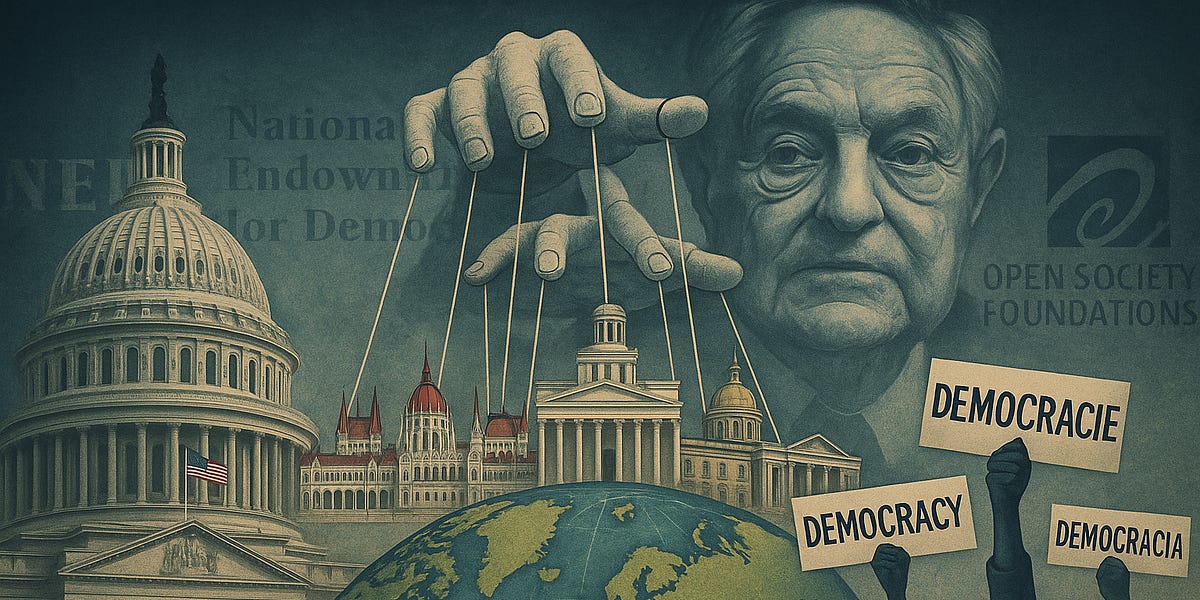
Soros and the NED: Foreign Regime Change in the Name of “Democracy” A dive into the Journal of Democracy reveals how the National Endowment for Democracy and George Soros’s Open Society have partnered to reshape foreign policy for decades on our taxpayer dollars. datarepublican.substack.com

@DataRepublican - DataRepublican (small r)

One of the most surprising things I found was the consistent usage of polls to shape opinion ( @honestpollster , @BIGDATAPOLL , @QuantusInsights , @atlas_intel may be interested). https://t.co/hFtZtWLTY9

@DataRepublican - DataRepublican (small r)

Another surprising thing I found is that Soros consistently cooperates with Uniparty NGOs. If you're wondering why he hasn't been banned from America, it's because both Republicans and Democrats work with him. https://t.co/5lBKng3Rqz

@DataRepublican - DataRepublican (small r)

Soros was involved in the 2004 drafting of the Afghanistan constitution. We all know how that went. @CynicalPublius is going to be livid. https://t.co/OJtdLY1nKK

@DataRepublican - DataRepublican (small r)

@CynicalPublius If you find this article useful or informative, or anything I do, please consider subscribing to me on X for $3/month or on Substack for $8/month.

Saved - December 13, 2025 at 9:20 PM

@KimWexlerMAJD - Kimberly “Kim” Wexler MA JD

🧵/1 How did the 🌐 UNITED NATIONS organize the INVASION OF THE UNITED STATES? According to the Center for Immigration Studies, in recent years the U.S. has “devoted significant taxpayer funds to facilitating illegal immigration” through a network of NGOs coordinated by the UN. https://t.co/zoS6zk5Fm8

Saved - November 11, 2025 at 10:22 PM
reSee.it AI Summary
A CIS-led briefing claims a U.S.-funded UN-NGO network (R4V) expanded since 2019 to aid illegal migration, creating 240 NGOs and way stations along Latin American routes to the U.S. border. It alleges NGOs coordinated with a drug-smuggling group (Clan del Golfo) and operated camps with security provided by the cartel, including Darien Gap transit hubs and a large Tapachula camp offering services such as “repressed memory therapy” for asylum seekers. The overarching claim is that humanitarian aid facilitated illegal border crossing.

@KimWexlerMAJD - Kimberly “Kim” Wexler MA JD

🧵/1 How did the 🌐 UNITED NATIONS organize the INVASION OF THE UNITED STATES? According to the Center for Immigration Studies, in recent years the U.S. has “devoted significant taxpayer funds to facilitating illegal immigration” through a network of NGOs coordinated by the UN.

@KimWexlerMAJD - Kimberly “Kim” Wexler MA JD

🧵/2 At the June 4, 2025 DOGE Subcommittee hearing, “Public Funds, Private Agendas: NGOs Gone Wild,” Executive Director of the Center for Immigration Studies Mark Krikorian testified about a vast UN-NGO network formed in 2019 to establish way stations for illegal migration.

@DOGECommittee - DOGE Subcommittee

🚨‼️BOMBSHELL from Mark Krikorian: “NGOs & UN Agencies were paid by US taxpayers to facilitate illegal movement of migrants from South and Central America and Mexico.” These coordinated & well-funded assistance programs were designed to undermine US immigration laws.

Video Transcript AI Summary
During the four years of the Biden administration, the United States directed significant taxpayer funds to facilitate illegal immigration. While much reporting has focused on the role of NGOs after migrants cross the border, the center examined what happened before migrants reached the Rio Grande, specifically how NGOs and UN agencies were paid by US taxpayers to facilitate illegal movement through South and Central America and Mexico. The center documented a large UN-NGO support network from field reporting and annual reports from the Regional Refugee and Migrant Response Plan. This network comprised way stations along Latin American migration routes that enabled millions of foreign nationals from as many as 180 countries to illegally reach the U.S. border, in part funded by US taxpayers. Some funds were provided directly to NGOs by the State Department's Bureau of Population, Refugees, and Migration (PRM) or USAID, while other funding was sent indirectly through UN agencies that then funded NGOs. This was often described as humanitarian assistance to people who would travel anyway, but the center states this amounted to coordinated, well-funded assistance designed to undermine US immigration laws. Starting in South America and Central America, NGOs distributed millions of dollars’ worth of supplies intended to help recipients plan to illegally breach borders of the United States and several other countries along the way. In Northwestern Colombia, the center found NGOs working in coordination with the paramilitary drug-smuggling group Clan Del Golfo, also known as the Gaitanistas, which controlled the smuggling routes. Nekocli, a town in Northwest Colombia, is described as a major staging area for migrants aiming to cross at the Gulf of Urabá and then reach the jumping-off point for trips through the Darién Gap. The researchers visited Nekocli and observed what resembled a swap meet or farmer’s market of NGO and UN organizations providing assistance, with booths for various groups, including the Florida-based Cadena and the Silver Spring–based Adventist Development and Relief Agency, among others. They provided services such as guidance on navigating the Darién Gap, food, dry socks, backpacks, and more. After crossing the Gulf of Urabá in Colombia, migrants reach Akande, where the jumping-off point to the Darién Gap lies. There, the UN-backed camp provided security for the camp, reportedly by a drug-smuggling gang, though the center notes that it does not have direct evidence of this, it seems likely that NGOs and the UN paid for security through the drug-smuggling gang. After crossing through Central America, migrants reach southern Mexico, entering via Guatemala into Southern Mexico, with Tapachula identified as the first large entry point. A large, one-stop-immigration-mall-like facility under construction there housed UN agencies and NGOs. Similar camps exist in northern Mexico as well. In Tapachula, an NGO funded by the UN (and thus by the United States) provided repressed memory therapy for illegal immigrants who had been rejected for asylum by Mexico, enabling them to obtain certificates acknowledging the persecution they had forgotten, which they then used to appeal and obtain asylum status. Throughout Latin America, these networks—funded in part by US taxpayers—facilitated the flow of illegal immigrants, but oversight has been lacking, and Congress has not acted to require recipients of funding not to promote illegal immigration.
Full Transcript
Speaker 0: Thank you. During the four years of the Biden administration, The United States devoted significant taxpayer funds to facilitating illegal immigration. There's been much reporting about the role of NGOs in this process after the illegal immigrants crossed into The United States, but what the center has examined is what happened before the migrants got to the Rio Grande. In other words, how NGOs and UN agencies were paid by US taxpayers to facilitate the illegal movement of migrants from through South And Central America and Mexico. We've documented a large UN NGO support network from field reporting and annual reports from this group called the Regional Refugee and Migrant Response Plan. This network consisted of way stations all along Latin American illegal migration routes that made it possible for millions of foreign nationals from as many as a 180 countries to illegally get to The US border in part funded by US taxpayers. Some of this some of these funds were provided directly to NGOs by the State Department's Bureau of Population, Refugees, and Migration or USAID. Other funding was sent indirectly through our funding of UN agencies, which then in turn funded NGOs. This often was described as merely humanitarian assistance to people who would travel anyway. But in reality, this amounted to a coordinated, well funded assistance to design to undermine US immigration laws. Starting in South America and Central America, NGOs handed out millions of dollars worth of supplies designed to assist recipients in their plans to illegally breach the borders, not just of The United States, but of half a dozen countries along the way. Just a couple of examples. In Colombia, in Northwestern Colombia, the center found NGOs working in coordination with a drug paramilitary drug smuggling group called Clan Del Golfo, also known as the Gaytanistas, which controlled the smuggling routes in those areas. The to get an idea of how this worked, there's a town in Northwest Columbia called Nekocli, which is a major staging area for migrants trying to cross at the Gulf Of Uraba to get to the jumping off point for trips through the Darien Gap. Well, our researcher went to Nick Hokely and found what amounted to kind of a swap meet or farmer's market of NGO groups with booths of UN and NGO organizations there to provide assistance. Just a couple of examples, the Florida based NGO, Cadena, was set up in a booth next to the Silver Spring based Adventist Development and Relief Agency, and there were many other US based and overseas based groups there. And they provided a variety of services, assistance on how to make it through the Darien Gap, food, dry socks, backpacks, etcetera. When they crossed that Gulf Of Hudaba, they're still in Colombia, and they get to the village of Akande, which is where you jump off to go to the Darien Gap. And there, the NGO UN group, the camp, was in a was in a camp where the security for the camp was provided by this drug smuggling gang. In other words and it's not clear to us. We don't have evidence of this, but it seems likely to me that NGOs and the UN paid for the security by paying this drug smuggling gang to for security for this jumping off point. After they pass through Central America, they get to Southern Mexico, cross from Guatemala into Southern Mexico. And there, Tapachula is the town that is the first place you get to. And what we found there was a large kind of a one stop shop illegal immigration mall where the UN agencies and the NGOs were supposed to be housing them. This was under construction when we went last fall. And it was only one of similar many similar camps. There's several in Northern Mexico as well. Especially curious in Tapachula was an NGO funded by the UN, which means funded by The US, which provided repressed memory therapy for illegal immigrants who had been rejected for asylum by Mexico, which they do in order to be able to make it through Mexico without hassles. They had been rejected. They went to the repressed memory therapy and got a certificate that they had forgotten about the persecution they had suffered, and now they remembered it. And so they went to their appeal and they got their asylum status. So throughout Latin America, these networks funded in part by US taxpayers have made this flow of illegal immigrants possible. And yet oversight has remained absent, and congress has not cracked down and insisted that recipients of funding not engage in promoting illegal immigration.

@KimWexlerMAJD - Kimberly “Kim” Wexler MA JD

🧵/3 “What the Center has examined is what happened before the migrants got to the Rio Grande. In other words, how NGOs and UN agencies were paid by U.S. taxpayers to facilitate the illegal movement of migrants through South and Central America and Mexico.”

@BensmanTodd - Todd Bensman

This US-bound Haitian in Tapachula, Mexico complains that the UN failed to make its January payment to him and now his UN debit card is empty…

Video Transcript AI Summary
The speaker is describing issues with payment deposits that were supposed to be made to their account. They indicate that deposits were scheduled for January 7 and January 14, but to date, nothing has been deposited. They point out that deposits on those dates were expected, yet “they deposit nothing,” leaving the account without funds. They then discuss what they were supposed to receive in total. The speaker asks what they were supposed to receive and references the last payment, confirming an amount of 3600 pesos. They reiterate that the amount discussed is 3600 pesos, and they refer to “the first” payment in connection with that amount, indicating that 3600 pesos was associated with the initial or first payment in the sequence. In relation to where the money should go, the speaker confirms that the funds are supposed to go to their bank account. They ask whether the money goes to a bank account or a card, and the responses confirm that there is both a bank account and a card involved. The participant confirms, “Yes,” there is an account and a card. Finally, the speaker clarifies the current status of funds. They ask if anything is on the card now or if there is money elsewhere, and the responder confirms that there is no money: “Dinero, No, no hay dinero.” They restate that there is nothing at all and that no deposits have been made, leaving them with no funds in the account or on the card.
Full Transcript
Speaker 0: Works or order her money, so, and they haven deposited my account. ¿Cuánto cuánto te depositaban? El depósito es 7 7 de de enero, 14 de enero, pero no depositan nada. Ya. So, the home month of generory, have a received everything. What were they suposed to received it? ¿Cuánto es lo que te dan? Es el último pago. ¿Cuánto fue? De 4. 4. ¿El dinero? 3600 pesos. Three thousand six hundred pesos, los de la primera. Ajá. And And this is this is going to your bank account. ¿A dónde va? ¿Tienes una cuenta, una tarjeta? Sí. ¿Tienes? Oh, And how my is is anything on a card now or all? ¿Dinero, No, no hay dinero. ¿No hay? No hay nada. No depositan nada.

@KimWexlerMAJD - Kimberly “Kim” Wexler MA JD

🧵/4 CIS documented, from field reporting and annual reports, a large UN-NGO support network called the “Inter-Agency Coordination Platform for Refugees and Migrants from Venezuela” (R4V), which expanded to assist non-Venezuelan migrants after its 2019 establishment.

@KimWexlerMAJD - Kimberly “Kim” Wexler MA JD

🧵/5 This network of 240 NGOs “consisted of way stations all along the Latin American illegal migration routes that made it possible for millions of foreign nationals to illegally get to the U.S. border — in part, funded by U.S. taxpayers.”

@BensmanTodd - Todd Bensman

With US tax $, the United Nations is still handing out cash cards to help sustain US- bound immigrants like this Nicaraguan I met in Monterrey Mexico. Public records show this “Cash-Based Intervention” program keeps thousands on the road and in beans. Full report coming.

Video Transcript AI Summary
Speaker 0 explains that the card works at Ordiana pharmacy and everything, with no restriction on where it can be used. The only exclusions mentioned are liquor and cigarettes; the card is not valid for purchasing those items. Speaker 1 asks if there are any restrictions, and Speaker 0 confirms there are none beyond liquor and cigarettes. The conversation then clarifies that the card is used for food and clothes, with no other limitations stated. Speaker 1 notes that, without this card and the monthly money it provides, they would only receive $22,000 pesos. Speaker 0 confirms the monthly amount is $100, deposited every month. Speaker 1 asks if $22,000 pesos is a lot of money here. Speaker 0 responds that it is not a lot. Speaker 1 asks what can be done with that amount. Speaker 0 suggests that, with food, there is some use for the money. Speaker 1 and Speaker 0 then discuss rent. Speaker 0 states that rent in Chappas is 1,400 a month, indicating it is cheaper there than where they are currently. Speaker 1 remarks that in this location rent is 3,000, while Speaker 0 previously mentioned 114,100 a month in Chappas, though the numbers appear garbled in the transcript. The overall point is that the card helps with basic expenses, including food, and that rent costs differ between locations, with the speaker noting cheaper rents elsewhere than at their current location.
Full Transcript
Speaker 0: Pharmacy and Speaker 1: everything. Which which stores can you use this? Speaker 0: And everything. In a it's Ordiana, pharmacy, and everything. Speaker 1: So there's no restriction? No. Not restriction. What about Can you use it? Speaker 0: You cannot buy liquor. No. No. They're not cigarette. Not cigarette. Not liquor. Not liquor. Speaker 1: You know, love Just food. Speaker 0: And clothes. Food and clothes. Speaker 1: And if it wasn't for this card and the money that you get from this card Speaker 0: They they deposit you every every month $100. So it would be $22,000 pesos. Speaker 1: Is that a lot of money here? Speaker 0: No. Not much. Not much. Speaker 1: What can you do with that kind of money? Speaker 0: Pay rent a $114,100 a month by month in in Chappas. It's more cheaper than here. Uh-huh. You pay 1,400 a month. Here, 3,000. Speaker 1: Does it help at all? Yeah. Speaker 0: Well, so with food Yeah. Speaker 1: With food. Okay. For Speaker 0: you.

@KimWexlerMAJD - Kimberly “Kim” Wexler MA JD

🧵/6 This “humanitarian” aid “amounted to coordinated, well-funded assistance designed to undermine U.S. immigration laws. In South and Central America NGOs handed out millions of dollars worth of supplies designed to assist recipients in their plans to illegally breach borders.”

@KimWexlerMAJD - Kimberly “Kim” Wexler MA JD

🧵7/ “In Colombia the Center found NGOs working in coordination with a paramilitary drug smuggling group called Clan del Golfo, also known as the Gaitanistas, which control the smuggling routes in those areas.” The town of Necoclí is a staging area for crossing the Gulf of Urabá.

@KimWexlerMAJD - Kimberly “Kim” Wexler MA JD

🇨🇴 TODD BENSMAN investigated the human smuggling pipeline in COLOMBIA He interviewed a CLAN DEL GOLFO crime boss via WhatsApp and saw how the paramilitary group — also known as GAITANISTAS — collaborate with the Colombian government, U.S.-funded NGOs and the 🇺🇳 UNITED NATIONS.

@BensmanTodd - Todd Bensman

Dispatch from Colombia: “American ally permits mass migration; Biden/Harris look away.” https://americanmind.org/salvo/dispatch-from-colombia/

Dispatch from Colombia The success or failure of Panama’s immigration gambit hinges on the outcome of the November 5 presidential election. americanmind.org

@KimWexlerMAJD - Kimberly “Kim” Wexler MA JD

🧵/8 CIS “found what amounted to a farmer’s market of NGO groups, with booths of UN and NGO organizations there to provide assistance. And they provided a variety of services, [advice] on how to make it through the Darien Gap — food, dry socks, backpacks, et cetera.” https://t.co/zwrHBOjGOd

@KimWexlerMAJD - Kimberly “Kim” Wexler MA JD

🧵/9 “NGOs could not possibly have operated in these areas without this drug-smuggling paramilitary group’s permission, in full knowledge that this criminal organization of 6,000 men under arms was reaping massive illicit profits from the human smuggling.” https://t.co/bqFqEWpvVo

@KimWexlerMAJD - Kimberly “Kim” Wexler MA JD

🧵/10 Migrants crossed the Gulf of Urabá by boats operated by smugglers, arriving in the Colombian village of Acandí “which is where you jump off to go to the Darien Gap. And there the NGO-UN group was in a camp where security was provided by the drug smuggling gang.” https://t.co/RFfAv4huEa

@KimWexlerMAJD - Kimberly “Kim” Wexler MA JD

🧵/11 After they passed through Central America, they crossed from Guatemala into southern Mexico. “And what we found there was a large one-stop-shop illegal immigration mall” intended to house UN agencies and NGOs. “This was only one of many similar camps.”

@BensmanTodd - Todd Bensman

A new MASS ILLEGAL MIGRATION MALL going up fast in Tapachula, Mexico that’ll house UN agencies and nonprofit migration-help groups under one convenient one-stop shop roof. This multipurpose building shows all are bullish on a prosperous future for industrialized mass migration https://t.co/oUaTUcKEFO

@KimWexlerMAJD - Kimberly “Kim” Wexler MA JD

🧵/12 “Especially curious, at Tapachula, was an NGO which provided repressed memory therapy for illegal immigrants who had been rejected for asylum by Mexico.” They went to therapy and got a certificate that they had forgotten about the persecution they had suffered. https://t.co/Xk8QfWEph4

@KimWexlerMAJD - Kimberly “Kim” Wexler MA JD

UNCENSORED TESTIMONY Pelosi and House Democrats Refused to Hear From Experts in 2022 about How the United Nations, Non-Profit Advocacy Groups and Criminal Human Smuggling Cartels COLLABORATED to OVERRUN U.S. BORDER In February 2022, the House Freedom Caucus held a panel to hear bombshell testimony about the growing mass migration crisis at the U.S.-Mexico border. Caucus chair Scott Perry explained that the House Speaker, Nancy Pelosi, had refused to green-light an official hearing and had even refused to allow the caucus to use a Congressional hearing room to hold the panel. Todd Bensman, Senior National Security Fellow for the Center for Immigration Studies, detailed his investigation into the United Nations’ activities on the migration trail, and he shared evidence of how UN agencies appeared to be colluding with non-governmental organizations and human smuggling gangs. Bensman testified the UN was offering cash handouts, pre-paid debit cards, and even legal and psychological counseling to coach “migrants” in how to answer immigration authorities’ questions about persecution in their home countries. Part of the audio from Bensman’s testimony has been censored or corrupted, but I have reconstructed the missing segment [italicized] from his written notes. Bensman testified: “I have interviewed hundreds of the immigrants, most recently on an eight-day fact-finding journey to the Guatemala-Mexico border city of Tapachula. From my vantage point, I can confidently report that there is but one root cause that they — the immigrating foreign nationals — most often cite for coming now. “It is that President Joe Biden opened the American southern border wide to them. “They see, over their cell phone social media, many hundreds of thousands who have gone before secure quick releases and resettlement into America. “And they decide to also gamble huge smuggling fee investments that criminal smuggling gangs will get them in to stay, too. “With such an enticing, motivating return on smuggling investment, no thinking person should wonder why this global migration hit the all-time national record of nearly two million border patrol apprehensions in a single year. With probably 500,000 more gotaways, and that’s an undercount. “But the Caucus should also know that ‘non-profit advocacy groups — and more notably the United Nations — appear to be working side-by-side with the criminal smuggling organizations on the very same mission. “United Nations agencies such as the International [Organization for] Migration (IOM) and the United Nations High Commissioner for Refugees (UNHCR) are providing hard cash, food, shelter, legal services, psychological services — all along the migrant trails. “Which also materially facilitate journeys that everyone involved very well knows, despite any protestations to the contrary, always lead to an illegal American border-crossing. “In whatever small or large way, the United Nations and the non-profits it funnels money to can reasonably be said to contribute to the current mass migration crisis. “I found my first clue on a Rio Grande riverbank, on the Mexican side: A discarded UNHCR-stamped booket advising in great detail how migrants can and should travel north for the greatest chance of safety and success. Later, in Reynosa, Mexico, I witnessed the United Nations grantee, the IOM, hand out cash debit cards to migrants in long, snaking lines. The workers handing them out said they give $400 every 15 days to families of four, renewable every two weeks. “The UN tells me only the most vulnerable get this cash. But in Reynosa and again most recently in Tapachula, Mexico, where I saw the same long lines at the UNHCR office, nothing about them indicated acute vulnerability. They were regular family units of the sort crossing by the tens of thousands right now. Some showed me their debit cards there, too, and said were it not for this money they might have to leave the migrant trail and go home. “Further inquiry showed the cards are just part of a vast and sharply escalating UN program called ‘Cash-Based Interventions’ all along the migrant trail through Latin America. “According to the UN documents and migrants, these include the unrestricted, unconditionally useable plastic cash cards, and also cash-filled envelopes in some areas (never a good look — cash filled envelopes), money transfers for lodging, pharmaceutical prescriptions, and for something called ‘movement assistance’, which means transportation money to move forward when camps empty and reform further north. “Credible reporting shows that the UN is providing these forms of assistance all along the migrant trail, from South America to Texas. On a Cúcuta to Bogotá, Colombia segment, the UN was seen handing out food, clothing, and necessities worth an estimated $200 to $300 a day per migrant. “And then there’s important non-cash assistance keeping migrants on the U.S. trail. “In Tapachula, approval for Mexican asylum these days is important for permission to move legally beyond the southern provinces (where I was) — always to the U.S. border, of course. But many coming in from Guatemala innocently tell Mexican immigration they’re going for U.S. jobs — which is not an eligible asylum claim, so they get denied. “But I found a UN-funded solution recently. The manager of a UN-funded migrant advocacy center told me a full-time staff of certified psychologists helps these migrants recover ‘repressed memories’ of more eligible government persecution. This manager told me in a recorded conversation that his group also trains migrants on the front end of the process how to pass muster with Mexican asylum interviewers the first time around. “He said these operations produce a 90 percent success rate for thousands a year. Other UN-funded psychologists offer what sounds like similar work. If this is all true, the UNHCR in Mexico has found another way to keep thousands more on the trail over the American border. “Many can, and, will defend this UN assistance as lifesaving, but others who learn of it reasonably interpret it — [*SEE BELOW FOR CONTINUATION OF THE WRITTEN STATEMENT] — in a very different way, and they want to know more, of course. “However Americans want to interpret this assistance to migrants they undoubtedly know they are joining an historic mass migration. All Americans deserve to know the full extent of it, because the United States is the UN’s largest donor and the U.S. Congress appropriates a huge amount of money to the UN every year. “I also would mention that the border is a national security concern. Just recently I was able to report that a Venezuelan crossed the Rio Grande from Matamoros to Brownsville, and that the FBI wanted that FBI-watchlisted individual held, and that ICE headquarters here in Washington, DC, intervened and demanded that, ordered that he be cut loose because he might get Covid in detention. That individual is now living freely, pursuing an asylum claim in Detroit. Thank you.” *[WHAT FOLLOWS IS THE WRITTEN STATEMENT PUBLISHED ON MR. BENSMAN’S WEBSITE ToddBensman dot com] “— as material support for mass illegal migration. “However Americans interpret UN assistance in the new context of a historic mass migration event, public debate in the American square is necessary because the United States is the UN’s largest donor. In 2019, the last year in which expenditures are fully known, the executive branch and Congress separately allocated $11 billion, $5.5 billion of which filled accounts that fund migration and refugee support activities, Congressional Research Services recently reported. “It’s unclear what the U.S. will contribute in 2022. The Biden administration proposes $3.7 billion, and it remains to be seen what Congress will want to appropriate separately.” For FY 2025 CONGRESS MUST CUT FUNDING TO THE STATE DEPARTMENT BUREAU OF POPULATION, REFUGEES AND MIGRATION (PRM) which funds “migration and refugee assistance” programs including IOM and UNHCR.

Video Transcript AI Summary
Chairman Perry and members of the caucus, I am here to discuss what I term the most historic mass migration crisis ever to strike The United States, noting that what has happened at the Southern border is history making in scope and will have long lasting second, third, and fourth order implications for American citizens. During its first year and now into its second, I have interviewed hundreds of immigrants, most recently on an eight day fact finding journey to the Guatemala–Mexico border city of Tapachula. From my vantage point, there is but one root cause that the immigrating foreign nationals most often cite for coming now: that President Joe Biden opened the American southern border wide to them. They see over their cell phones, social media, hundreds of thousands who have gone before, secure quick releases and resettlement into America, the ultimate golden chalice, and they gamble huge smuggling fee investments that criminal smuggling gangs will get them in to stay too. With such an enticing return on smuggling investment, no thinking person should wonder why this global migration hit the all time national record of nearly 2,000,000 border patrol apprehensions in a single year with probably 500,000 more gotaways, and that’s an undercount. But the caucus should also know that nonprofit advocacy groups and, more notably, the United Nations appear to be working side by side with the criminal smuggling organizations on the very same mission. United Nations agencies such as the International Office of Migration (IOM) and the United Nations High Commissioner for Refugees (UNHCR) are providing hard cash, food, shelter, legal services, psychological services along the migrant trails, which also materially facilitate journeys that everyone involved very well knows despite any protestations to the contrary always lead to an illegal American border crossing. In whatever small or large way the United Nations and the nonprofits it funnels money to can reasonably be said to contribute to the current mass migration crisis. I found my first clue on a Rio Grande riverbank on the Mexican side, a discarded UNHCR stamp booklet. Hand out cash debit cards to migrants in long snaking lines. The workers handing them out said they give $400 every fifteen days to families of four, renewable every two weeks. The UN tells me only the most vulnerable get this cash. But in Reynosa, and again most recently in Tapachula, Mexico, where I saw the same long lines at the UNHCR office, nothing about them indicated acute vulnerability. They were regular family units of the sort crossing by the tens of thousands right now. Some showed me their debit cards there too and said, were it not for this money, they might have to leave the migrant trail and go home. Further inquiry showed the cards are just part of a vast and sharply escalating UN program called cash based interventions all along the migrant trail through Latin America. According to the UN documents and migrants, these include the unrestricted, unconditionally usable plastic cash cards, but also cash filled envelopes in some areas. Never a good look cash filled envelopes. Money transfers for lodging, pharmaceutical prescriptions, and something called movement assistance, which means transportation money to move forward when camps empty and reform further north. Credible reporting shows that the UN is providing these forms of assistance all along the migrant trail from South America to Texas. On a Kakuta to Bogota Colombia segment, the UN was seen handing out food, clothing, and necessities worth an estimated 200 to $300 day per migrant. And then there’s important non-cash assistance keeping migrants on the US trail. In Tapachula, approval for Mexican asylum these days is important for permission to move legally beyond the southern provinces where I was, always to The US border, of course. But many coming in from Guatemala innocently tell Mexican immigration they’re going for US jobs, which is not an eligible asylum claim. So they get denied. But I found a UN funded solution recently. The manager of a UN funded migrant advocacy center told me a full time staff of certified psychologists help these migrants recover repressed memories of more eligible government persecution. This manager told me in a recorded conversation that his group also trains migrants on the front end of the process how to pass muster with Mexican asylum interviewers the first time around. He said these operations produce a 90% success rate for thousands a year. Other UN funded psychologists offer what sounds like similar work. If all this is true, the UNHCR in Mexico has found another way to keep thousands more on the trail over the American border. Many can and will defend this UN assistance as lifesaving, but others who learn of it reasonably interpret this in a very different way, and they wanna know more, of course. However, Americans wanna interpret this assistance to migrants, they undoubtedly know they are joining a historic mass migration. All Americans deserve to know the full extent of it because The United States is the UN’s largest donor, and the US Congress appropriates a huge amount of money to the UN every year. I’ll also mention that the border is a national security concern. Just recently, I reported that a Venezuelan crossed the Rio Grande from Matamoros to Brownsville and that the FBI wanted that FBI watch listed individual held in that ICE headquarters here in Washington DC intervened and demanded that he be ordered that he be cut loose because he might get COVID in detention. That individual is now living freely pursuing an asylum claim in Detroit. Thank you. I thank the gentleman.
Full Transcript
Speaker 0: Chairman Perry and members of the caucus, thank you for inviting me here to discuss the most historic mass migration crisis ever to have stricken The United States. What has happened to the Southern border is not only history making in scope, but will have long lasting second, third, and fourth order implications for American citizens. Therefore, the great mass migration that began on or about inauguration day twenty twenty one profoundly qualifies for a broader public discussion about how to address it. That takes comprehension as to what it is and how it works. During its first year and now into its second, I have interviewed hundreds of the immigrants, most recently on an eight day fact finding journey to the Guatemala, Mexico border city of Tapachula. From my vantage point, I can confidently report that there is but one root cause that they, the immigrating foreign nationals, most often cite for coming now. It is that president Joe Biden opened the American southern border wide to them. They see over their cell phone, social media, many hundreds of thousands who have gone before secure quick releases and resettlement into America, the ultimate golden chalice. And they decide to also gamble huge smuggling fee investments that criminal smuggling gangs will get them in to stay too. With such an enticing, motivating return on smuggling investment, no thinking person should wonder why this global migration hit the all time national record of nearly 2,000,000 border patrol apprehensions in a single year with probably 500,000 more gotaways, and that's an undercount. But the caucus should also know that nonprofit advocacy groups and more notably the United Nations appear to be working side by side with the criminal smuggling organizations on the very same mission. United Nations agencies such as the International Office of Migration, IOM, and the United Nations High Commissioner for Refugees, UNHCR, are providing hard cash, food, shelter, legal services, psychological services, along the migrant trails, which also materially facilitate journeys that everyone involved very well knows despite any protestations to the contrary always lead to an illegal American border crossing. In whatever small or large way the United Nations and the nonprofits it funnels money to can reasonably be said to contribute to the current mass migration crisis. I found my first clue on a Rio Grande riverbank on the Mexican side, a discarded UNHCR stamp booklet. Hand out cash debit cards to migrants in long snaking lines. The workers handing them out said they give $400 every fifteen days to families of four, renewable every two weeks. The UN tells me only the most vulnerable get this cash. But in Reynosa, and again most recently in Tapachula, Mexico, where I saw the same long lines at the UNHCR office, nothing about them indicated acute vulnerability. They were regular family units of the sort crossing by the tens of thousands right now. Some showed me their debit cards there too and said, were it not for this money, they might have to leave the migrant trail and go home. Further inquiry showed the cards are just part of a vast and sharply escalating UN program called cash based interventions all along the migrant trail through Latin America. According to the UN documents and migrants, these include the unrestricted, unconditionally usable plastic cash cards, but also cash filled envelopes in some areas. Never a good look cash filled envelopes. Money transfers for lodging, pharmaceutical prescriptions, and something called movement assistance, which means transportation money to move forward when camps empty and reform further north. Credible reporting shows that the UN is providing these forms of assistance all along the migrant trail from South America to Texas. On a Kakuta to Bogota Columbia segment, the UN was seen handing out food, clothing, and necessities worth an estimated 200 to $300 day per migrant. And then there's important non cash assistance keeping migrants on The US trail. In Tapachula, approval for Mexican asylum these days is important for permission to move legally beyond the southern provinces where I was, always to The US border, of course. But many coming in from Guatemala innocently tell Mexican immigration they're going for US jobs, which is not an eligible asylum claim. So they get denied. But I found a UN funded solution recently. The manager of a UN funded migrant advocacy center told me a full time staff of certified psychologists help these migrants recover repressed memories of more eligible government per persecution. This manager told me in a recorded conversation that his group also trains migrants on the front end of the process how to pass muster with Mexican asylum interviewers the first time around. He said these operations produce a 90% success rate for thousands a year. Other UN funded psychologists offer what sounds like similar work. If all this is true, the UNHCR in Mexico has found another way to keep thousands more on the trail over the American border. Many can and will defend this UN assistance as lifesaving, but others who learn of it reasonably interpret this in a very different way, and they wanna know more, of course. However, Americans wanna interpret this assistance to migrants, they undoubtedly know they are joining a historic mass migration. All Americans deserve to know the full extent of it because The United States is the UN's largest donor, and the US Congress appropriates a huge amount of money to the UN every year. Thank you. I'll I also would mention that, the border is a national security concern. Just recently, I was able to report that a Venezuelan crossed the Rio Grande from Matamoros to Brownsville and that the FBI wanted that that FBI watch listed individual held in that ICE headquarters here in Washington DC intervened and demanded that he be ordered that he be cut loose because he might get COVID in detention. That individual is now living freely pursuing an asylum claim in Detroit. Thank you. I thank the gentleman
Saved - July 31, 2025 at 8:03 PM

@nataliegwinters - Natalie Winters

Leonard Bernardo, Vice President of Open Society Foundations, allegedly sent emails showing his key role in falsely portraying Donald Trump as a Russian agent. He also led George Soros’s foundation in supporting a 2014 color revolution in Ukraine. https://t.co/XSWG5fSEYp

Saved - October 20, 2025 at 8:25 PM
reSee.it AI Summary
A user accuses EPOCH of covering up a scandal tied to GHF, run by Phillip Reilly (Blackwater/CIA links) and Flynn Network funds via Veridian to support GHF and alleged violence. In reply, another user mocks the accusations, names various individuals and groups, calls them terrorists and traitors, and tells them to “get fucked.” The original user then thanks a third party for the exposure and asks others to follow them.

@MaxNard0 - Max Nardo

Speaking of EPOCH, remember THIS heinous bullshit they COVER UP BY NUKING MY ALTS. GHF - Run by PHILIP REILLY of BLACKWATER, CIA CLANDESTINE & 9/11. FLYNN NTWK/8200 - Launders money via CYPRUS/MOUSE/TURKYE/REILLY HOLDING COMPANIES (VERIDIAN) to FUND GHF & MURDER PALESTINIANS. https://t.co/nQowA8EA6C

@MaxNard0 - Max Nardo

Wait, Danielle D’Souza (crypto Jew) is/was “Host of Counterculture” at Epoch Times? EPOCH TIMES is owned by CHINA & got gorillions of dollars from them in 2021. Jan “JikkyLeak” Jekielek let his mask slip a while back, calling us Nazis for Noticing™️ the JEW/CCP aspect of COVID. https://t.co/V3RvRvHBTw

@TruCheetos - troof_BOOM

@JackPosobiec https://www.politico.eu/wp-content/uploads/2024/11/14/Krah_TI-EU-complaint.pdf @down_zulu click on blue tabs for gala pics

@MaxNard0 - Max Nardo

Oh, look. The fgts who MURDERED CHARLIE KIRK too! Small f’ing world. We see you too, YETGIN ERDEM (Jikky)… …ACKMAN/ELBIT, RHEINMETALL, NSO/OSY/Q CYBER, SCHMIDT/TEAM8, DIJITAL KALKAN, TEKNOLOJI YATIRIM BANKASHI, ANKATEKNIK, INOVO BV, NEUROSCAN LABS, RETINALID, BILIŞM GÜVENLIK. https://t.co/upwtkZWJJx

@MaxNard0 - Max Nardo

What. A. Gat. Damn. SHAME.🖕🇺🇸🫡 PS: GET. FUCKED. https://t.co/2qbktBhVpN

@MaxNard0 - Max Nardo

*Massive shoutout to @Wolfsschanze420 on this phenomenal pull as well! ALL these fucking terrorists and traitors WILL see justice. PLEASE give my guy a follow!🙏🏼🔥 https://t.co/QwYjp9NpzP

Saved - March 23, 2026 at 3:08 PM
reSee.it AI Summary
I’m detailing a Fox News Digital investigation and Asra Nomani’s deep dive into Neville Roy Singham. It traces how a Jamaica wedding in Feb 2017 of Singham and Jodie Evans kicked off the “House of Singham,” a network funneling about $278 million into ~2,000 groups pushing pro-China, anti-American narratives across five continents. Singham, Thoughtworks founder, with a Marxist-Leninist lineage, was flagged by the FBI; Fox tracks 223 transactions totaling $591 million (2017–2025) through five concentric rings.

@DataRepublican - DataRepublican (small r)

🧵 THREAD: "House of Singham" : Neville Singham's mega-exposure. This is part 1 out of 5 in a mega-project exposing Neville Singham and his money flows. Honored to have been friends with @AsraNomani throughout this. I'm going to explain this article below - but you should also click through it, because it shows the amazing depth and scope of research which Asra has done. 👇 As always, patience as I pull together the thread.

@AsraNomani - Asra Nomani

2/ Our @FoxNews Digital investigation traces the rise of the Singham network to a weekend in Jamaica: like the opening scene of "The Godfather," where families consolidate power, the wedding of Neville Roy Singham + Jodie Evans built the House of Singham. https://www.foxnews.com/us/power-couple-chaos-how-tycoon-activist-built-revolutionary-base-house-singham

@DataRepublican - DataRepublican (small r)

@AsraNomani Neville Roy Singham is one of our most infamous financers in the revolutionary network. He has funneled $278 MILLION into a network of ~2,000 organizations that push pro-China, anti-American propaganda across five continents. https://t.co/cMWjhtrUqP

@DataRepublican - DataRepublican (small r)

It starts with a wedding. Jamaica, February 2017. Singham (tech fortune from Thoughtworks) marries Jodie Evans (co-founder of CodePink). Four days of lectures, panels, and late-night strategy sessions. The wedding itinerary featured a panel called "The Future of the Left." Not subtle.

@DataRepublican - DataRepublican (small r)

@AsraNomani As an aside, it's typical for Communists to marry simply to strengthen political connections with "comrades." I've encountered several such weddings. Be careful in calling these weddings fake, because Communism is what these people live, through and through.

@DataRepublican - DataRepublican (small r)

Singham was born 1954, son of a Marxist-Leninist scholar. Joined the League of Revolutionary Black Workers as a teenager. The FBI flagged him as "potentially dangerous" while he worked at a Chrysler plant in Detroit. He told the agents: "I don't want to talk to you." And walked away.

@DataRepublican - DataRepublican (small r)

@AsraNomani He built Thoughtworks into a tech company through the '90s. Then used the fortune to construct something else entirely. Fox traced 223 transactions moving $591 MILLION across five continents from 2017-2025. The money flows through five concentric rings. https://t.co/uxSZJAJx89

View Full Interactive Feed