TruthArchive.ai - Tweets Saved By @a_kruschke

Saved - March 29, 2025 at 3:19 PM
reSee.it AI Summary
I discussed lung anatomy and the impact of COVID-19 on respiratory health. The lungs have a tree-like structure with alveoli at the ends, which are crucial for oxygen exchange. Damage to these structures, often caused by SARS-CoV-2, leads to lung fibrosis, a condition where scar tissue forms, hindering function. I noted that COVID-19 patients exhibited unexpected lung damage responses, with high oxygen levels worsening their condition. Additionally, I explored how SARS-CoV-2 may induce lung fibrosis through specific pathways, raising questions about its effects compared to other lung diseases.

@a_kruschke - A.Kruschke

Here's the explanation related to the 👇thread. It's about air, lung anatomy, breathing problems, COVID and other structural illnesses... and about mice.

@a_kruschke - A.Kruschke

Lung Fibrosis Pulmonary Fibrosis Idiopathic, genetic, SARS-CoV-2 related. 🫁👀🧐🤔 svuhradiology.ie/case-study/pul… 🫁 https://www.mayoclinic.org/diseases-conditions/pulmonary-fibrosis/symptoms-causes/syc-20353690

Pulmonary fibrosis - Symptoms and causes Thickened and scarred lung tissue makes it hard for the lungs to work well. Symptoms are shortness of breath that worsens, cough, tiredness and weight loss. mayoclinic.org

@a_kruschke - A.Kruschke

Let's start with the anatomy of the lung. When breathing, we bring the air into a system of airways, shaped like a tree.

@a_kruschke - A.Kruschke

At the end of each airway branch is a bundle of bubbles, the so-called alveoli.

@a_kruschke - A.Kruschke

When we have a closer look, we can see the bubbles are wrapped with elastic fibres (painted in green). A few muscle strings are present, but wrapped only around the "branches". [*) pictures from Netter anatomy atlas]

@a_kruschke - A.Kruschke

When we inhale, the bubbles (alveoli ) fill with air. The wall of the alveoli is very thin, and elastic. The elastic fibres wrapped around prevent the alveoli from bursting.

@a_kruschke - A.Kruschke

The alveoli are also wrapped in a net of blood vessels. The inhaled oxygen is then passed through the alveoli wall in the blood vessels, and transported by the red blood cells (erythrocytes).

@a_kruschke - A.Kruschke

This description is very simplified, as I only want to point out that the wall of the alveoli is smooth, thin, elastic and is able to move. Otherwise the passage of oxygen into the blood is hindered.

@a_kruschke - A.Kruschke

It is obvious that damage to the alveolar walls, the elastic fibers or the blood vessels that surround them would hinder proper air -> blood oxygen exchange. SARS-CoV-2 damages all three.

@a_kruschke - A.Kruschke

To fix the problem, the body has little choices but to make a scar out of the damaged tissue. The longer the damage of the lung lasts, the more scar fibers are produced. This is then called "lung fibrosis" or "pulmonary fibrosis".

@a_kruschke - A.Kruschke

Unfortunately a scar is not smooth, not thin, not elastic, and cannot move. Lung Fibrosis can be caused by everything that damages the lung tissues: infections, intoxication, asthma, ... https://www.mayoclinic.org/diseases-conditions/pulmonary-fibrosis/symptoms-causes/syc-20353690

Pulmonary fibrosis - Symptoms and causes Thickened and scarred lung tissue makes it hard for the lungs to work well. Symptoms are shortness of breath that worsens, cough, tiredness and weight loss. mayoclinic.org

@a_kruschke - A.Kruschke

... hereditary illnesses, or unknown causes. In medicine "unknown" is called "idiopathic" (... that sounds much more scientific than "we have no clue"...).

@a_kruschke - A.Kruschke

Back to 2020... The COVID patients admitted to the ICU were treated for an infection causing severe lung damage, called ARDS (Acute Respiratory Distress Syndrome).

@a_kruschke - A.Kruschke

However the COVID patients didn't properly respond to the treatment. The most experienced pulmonologists were surprised. https://healthcare-mittelhessen.eu/ukgm-chef-ueber-corona-ueberraschend-ist-dass-das-lungenversagen-sich-so-lange-hinzieht

UKGM-Chef über Corona: "Überraschend ist, dass das Lungenversagen sich so lange hinzieht" | Healthcare Mittelhessen Werner Seeger beschäftigt sich seit über 30 Jahren mit Viren. Im Interview spricht der Mediziner über die Corona-Lage am UKGM und vielversprechende Studien. healthcare-mittelhessen.eu

@a_kruschke - A.Kruschke

COVID reacted as there were supplementary factors causing the lung damages, besides the infectious compound.

@a_kruschke - A.Kruschke

Those "special effects" of SARS-CoV-2 infection are sometimes crazy.... High levels of oxygen are worsening COVID. https://www.monaldi-archives.org/index.php/macd/article/view/1916

Paradoxical role of oxygen in the treatment of patients with COVID-19 | Monaldi Archives for Chest Disease monaldi-archives.org

@a_kruschke - A.Kruschke

As underlying cause it was discovered that high oxygen levels multiply the numbers of TMPRSS2-receptors*). High level of oxygen resulting in worsening COVID. ___ *)TMPRSS-receptors are the second important receptors SARS-CoV-2 uses to infect the cells. https://www.monaldi-archives.org/index.php/macd/article/view/1916

Paradoxical role of oxygen in the treatment of patients with COVID-19 | Monaldi Archives for Chest Disease monaldi-archives.org

@a_kruschke - A.Kruschke

The next weird thing: SC2 is using a pathway called FOXO3 to induce lung fibrosis. But this pathway was known to be important for "idiopathic lung fibrosis". ___ (Links are just references, no need to read the papers.) https://www.medrxiv.org/content/10.1101/2022.09.02.22279542v1.full . https://www.researchgate.net/publication/321672416_FoxO3_an_important_player_in_fibrogenesis_and_therapeutic_target_for_idiopathic_pulmonary_fibrosis

Targeting ATP2B1 impairs PI3K/Akt/Fox-O3 signaling and reduces SARS-COV-2 replication in vivo medRxiv - The Preprint Server for Health Sciences medrxiv.org
ResearchGate - Temporarily Unavailable researchgate.net

@a_kruschke - A.Kruschke

Idiopathic fibrosis and cystic fibrosis both cause severe lung Fi, with quick progression. Both are unrelated to infections. So how could SC2 do that? ___ Cystic fibrosis is hereditary, and idiopathic fibrosis is "nobody knows".

@a_kruschke - A.Kruschke

What is idiopathic lung fibrosis?

@a_kruschke - A.Kruschke

🫁👀 特発性肺線維症とは? What Is Idiopathic Pulmonary Fibrosis? https://www.nhlbi.nih.gov/health/idiopathic-pulmonary-fibrosis

What Is Idiopathic Pulmonary Fibrosis? Learn about the symptoms, risk factors, and treatments for idiopathic pulmonary fibrosis, a condition in which your lung tissue becomes thick and stiff. nhlbi.nih.gov

@a_kruschke - A.Kruschke

🫁👀 特発性肺線維症とは? What Is Idiopathic Pulmonary Fibrosis? https://www.nhlbi.nih.gov/health/idiopathic-pulmonary-fibrosis

What Is Idiopathic Pulmonary Fibrosis? Learn about the symptoms, risk factors, and treatments for idiopathic pulmonary fibrosis, a condition in which your lung tissue becomes thick and stiff. nhlbi.nih.gov

@a_kruschke - A.Kruschke

Then, in 2020, the SARS-CoV-2 WT was "trained" by serial.passage to infect normal mice. (WT cannot infect mice.)

@a_kruschke - A.Kruschke

A mouse 🐁 model.

@a_kruschke - A.Kruschke

🦠🫁🐁👀🧐 SARS-CoV-2マウスは標準的な実験用マウスに急性肺障害と死亡を引き起こす A Mouse-Adapted SARS-CoV-2 Induces Acute Lung Injury and Mortality in Standard Laboratory Mice (🇺🇸 UNC2020) https://www.cell.com/cell/fulltext/S0092-8674(20)31247-2?_returnURL=https%3A%2F%2Flinkinghub.elsevier.com%2Fretrieve%2Fpii%2FS0092867420312472%3Fshowall%3Dtrue

@a_kruschke - A.Kruschke

🦠🫁🐁👀🧐 SARS-CoV-2マウスは標準的な実験用マウスに急性肺障害と死亡を引き起こす A Mouse-Adapted SARS-CoV-2 Induces Acute Lung Injury and Mortality in Standard Laboratory Mice (🇺🇸 UNC2020) https://www.cell.com/cell/fulltext/S0092-8674(20)31247-2?_returnURL=https%3A%2F%2Flinkinghub.elsevier.com%2Fretrieve%2Fpii%2FS0092867420312472%3Fshowall%3Dtrue

@a_kruschke - A.Kruschke

By coincidence, this new strain came out of the UNC lab. And just before the Alpha ("British variant"), Beta, Gamma variants appeared.

@a_kruschke - A.Kruschke

Here again the link to the short thread.

@a_kruschke - A.Kruschke

Lung Fibrosis Pulmonary Fibrosis Idiopathic, genetic, SARS-CoV-2 related. 🫁👀🧐🤔 svuhradiology.ie/case-study/pul… 🫁 https://www.mayoclinic.org/diseases-conditions/pulmonary-fibrosis/symptoms-causes/syc-20353690

Pulmonary fibrosis - Symptoms and causes Thickened and scarred lung tissue makes it hard for the lungs to work well. Symptoms are shortness of breath that worsens, cough, tiredness and weight loss. mayoclinic.org

@a_kruschke - A.Kruschke

@reSeeIt save Thread @reSeeIt save conversation

Saved - February 1, 2025 at 10:20 AM
reSee.it AI Summary
Holmes analyzed the submission of 60 viruses in a 2018 preprint, revealing only 163 of a potential 180 sequences were included. Current data shows 154 sequences in GenBank, with interruptions in submissions dating from October 2019. This raises questions about 9 missing ORF8 genes and several S genes. The conversation highlights ongoing efforts to recover this missing data, suggesting that the disclosures may be incomplete and emphasizing the need for thorough verification in scientific research.

@tommy_cleary - Tommy Cleary

Holmes attempted <> methods, ...with his Twitter thread on March 6th 2023, ...as evidence that the 60 viruses submitted as part of a preprint, together with Prof Jie Cui and ZLShi of WIV, were complete but only 163 of a potential 180 sequences were part of this 12-JUL-2018 PrePrint? Only 154 of those are in the current GI series available to be recovered... as far as I know...with this current GI series of 154 submissions is interrupted by submissions dated 25-OCT-2019 and the ACCESSION series continuing from the last, with <> to <> which is unrelated but dated Jul 13, 2019 08:18 PM. https://ncbi.nlm.nih.gov/nuccore/MH615993.1?report=girevhist This suggests that the original GenBank submission, perhaps actually of 180 sequences, was cropped to 163 and given new ACCESSION numbers one year after it was submitted...with the cropped series of 163 placed in their current GI position on 25-OCT-2019...but what of the missing 9 ORF8 from this GI series? Methods: basic GI series analysis this post GI is 1769824416 https://ncbi.nlm.nih.gov/nuccore/1769824416 ...next will be 1769824414 So <> is the next missing OFR8 gene for <> GenBank submission from @syd_health 's & @Sydney_Uni 's Prof Edward Holmes @EdwardCHolmes to GenBank of @NLM_NIH soon to be headed by @DrJBhattacharya So now I am trying to help Holmes & @syd_health recover the missing data NOW tally is at eleven missing ORF8 and three missing S genes... where for <> RdRp is the there: https://ncbi.nlm.nih.gov/nuccore/MH615889.1?report=genbank and S gene is there but supressed: https://www.ncbi.nlm.nih.gov/nuccore/1769824528 but no ORF8 gene in this GI series Why? Missing ORF8 tally so far: 1) Rs151334_Guizhou 2) Rf131405_Shanxi 3) Rs140400_Guangdong 4) Rs141456_Guangxi 5) Rspp7924_Yunnan 6) Rspp7921_Yunnan 7) Ra7909_Yunnan 8) Rspp7907_Yunnan 9) Rspp7905_Yunnan 10) Rspp7896_Yunnan 11) Rs6303_Yunnan of a total of 15 missing... Question: Was <> in the 60-54= 6 ORF8 that <> decided to leave out of this 2018 PrePrint... ? https://web.archive.org/web/20220809085043/https://www.ncbi.nlm.nih.gov/nuccore/?term=Spread+and+Geographic+Structure+of+SARS-related+Coronaviruses+in+++++++++++++Bats+and+the+Origin+of+Human+SARS+Coronavirus ...or perhaps the 54-45= 9 ORF8 that are simply missing from the GI series suppressed in GenBank & interrupted by the date 25-Oct-2019? With S genes missing too; of the 60 RdRp sampled only 49 S genes are here in this GI series...Why? 1) Rspp7921_Yunnan 2) Rspp7907_Yunnan 3) Rspp7896_Yunnan of 11 S genes left out of this study. Why? <> S gene is there but seems quite different to others. Why? All this so far indicates that the 2023 @COVIDSelect disclosures of Holmes are potentially incomplete...but the count continues... next search is GI 1769824414! Taxonomy browser (Bat SARS-like coronavirus) https://archive.md/qgC9W#selection-2037.0-2081.1

Nucleotide - NCBITwitterFacebookLinkedInGitHubNCBI Insights BlogTwitterFacebookYoutube ncbi.nlm.nih.gov
Record suppressed: Bat SARS-like coronavirus strain Rs6303_Yunnan RNA-dependent RNA polym - Nucleotide - NCBITwitterFacebookLinkedInGitHubNCBI Insights BlogTwitterFacebookYoutube ncbi.nlm.nih.gov
Record suppressed: Bat SARS-like coronavirus strain Rs6303_Yunnan spike protein (S) gene, - Nucleotide - NCBITwitterFacebookLinkedInGitHubNCBI Insights BlogTwitterFacebookYoutube ncbi.nlm.nih.gov
Spread and Geographic Structure of SARS-related Coronaviruses in Bats - Nucleotide - NCBITwitterFacebookLinkedInGitHubNCBI Insights BlogTwitterFacebookYoutube web.archive.org

@tommy_cleary - Tommy Cleary

One more before I put the roast on for Australia Day dinner... @GrahamPerrettMP is my local Federal MP and he has helped in the past, but last time I wrote to him he replied that I should check the Queensland State Library for more details...perhaps I should check back with him again too. These issues of how to handle the dangerous side of science have been a problem since at least Iraq's @UN biological weapons inspections...with discussions of Mustard brought to the table by @R_H_Ebright thank you, @INTERPOL_CBRNE questions are important. H/t @CharlesRixey @Ayjchan @Globalbiosec Holmes attempted <> methods, ...with his Twitter thread on March 6th 2023, ...as evidence that the 60 viruses submitted as part of a preprint, together with Prof Jie Cui and ZLShi of WIV, were complete... but only 163 of a potential 180 sequences were part of this 12-JUL-2018 PrePrint? https://web.archive.org/web/20220809085043/https://www.ncbi.nlm.nih.gov/nuccore/?term=Spread+and+Geographic+Structure+of+SARS-related+Coronaviruses+in+++++++++++++Bats+and+the+Origin+of+Human+SARS+Coronavirus Only 154 of those are in the current GI series available to be recovered... as far as I know...with this current GI series of 154 submissions is interrupted by submissions dated 25-OCT-2019 and the ACCESSION series continuing from the last, with <> to <> which is unrelated but dated Jul 13, 2019 08:18 PM. https://ncbi.nlm.nih.gov/nuccore/MH615993.1?report=girevhist This suggests that the original GenBank submission, perhaps actually of 180 sequences, was cropped to 163 and given new ACCESSION numbers one year after it was submitted...with the cropped series of 163 placed in their current GI position on 25-OCT-2019...but what of the missing 9 ORF8 from this GI series? KISS Methods: basic GI series analysis this post GI is 1769824414 anyone can do this... https://ncbi.nlm.nih.gov/nuccore/1769824414 but with <> nothing is missing, all three sets are there in GenBank ORF8, S and RdRp...and apparently has identical RBD to As6526? <> https://www.ncbi.nlm.nih.gov/nuccore/KY417142 So...next will be 1769824412 <> also all three accounted for too and even features in the <>... https://www.ncbi.nlm.nih.gov/nuccore/MH615887.1?report=girevhist So, next is 1769824410...Bingo! <> ORF8 missing! So <> is the next missing OFR8 gene for <> GenBank submission from @syd_health 's & @Sydney_Uni 's Prof Edward Holmes @EdwardCHolmes to GenBank of @NLM_NIH soon to be headed by @DrJBhattacharya @secrubio & @RobertKennedyJr in the mix too. So now I am trying to help Holmes & @syd_health recover the missing GenBank data...for everyone that hungers for a slice of truth tune in... NOW tally is at twelve missing ORF8 and three missing S genes... where for <> RdRp is the there: https://www.ncbi.nlm.nih.gov/nuccore/MH615886.1?report=genbank and S gene is there but suppressed: https://www.ncbi.nlm.nih.gov/nuccore/1769824532 but no ORF8 gene in this GI series Why? Missing ORF8 tally so far: 1) Rs151334_Guizhou 2) Rf131405_Shanxi 3) Rs140400_Guangdong 4) Rs141456_Guangxi 5) Rspp7924_Yunnan 6) Rspp7921_Yunnan 7) Ra7909_Yunnan 8) Rspp7907_Yunnan 9) Rspp7905_Yunnan 10) Rspp7896_Yunnan 11) Rs6303_Yunnan 12) Rs6266_Yunnan of a total of 15 missing... Question: Was <> in the 60-54= 6 ORF8 that <> decided to leave out of this 2018 PrePrint... ...or perhaps the 54-45= 9 ORF8 that are simply missing from the GI series suppressed in GenBank & interrupted by the date 25-Oct-2019? With S genes missing too; of the 60 RdRp sampled only 49 S genes are here in this GI series...Why? 1) Rspp7921_Yunnan 2) Rspp7907_Yunnan 3) Rspp7896_Yunnan of 11 S genes left out of this study. Why? <> S gene is there but seems quite different to others. Why? All this so far indicates that the 2023 @COVIDSelect disclosures of Holmes are potentially incomplete...but the count continues... next search is GI 1769824408! Taxonomy browser (Bat SARS-like coronavirus) https://archive.md/qgC9W#selectio ...speaking of things that are difficult to understand... Any idea of how it is that @BrookeNGenovese reasonable Sep 2020 appeal to have the suspended@Twitteraccounts for:@PREDICTProject@OneHealthLabs@GlobalVirome@HALIUCDavis has gone? Perhaps some are up & running, perhaps others are still suppressed? <<@TwitterSupport also, the lab’s account @OneHealthLab &the Global Virome Project @GlobalVirome are similarly suspended..since June...despite repeated attempts to resolve. 🤨 @Twitter oh and the @HALIUCDavis account, too. Anyone noticing a theme here...?>> How is @RogerMarshallMD & @COVIDSelect going to discuss this issue with the public if the terms are suppressed? Things to chew over dinner roast?

Spread and Geographic Structure of SARS-related Coronaviruses in Bats - Nucleotide - NCBITwitterFacebookLinkedInGitHubNCBI Insights BlogTwitterFacebookYoutube web.archive.org
Nucleotide - NCBITwitterFacebookLinkedInGitHubNCBI Insights BlogTwitterFacebookYoutube ncbi.nlm.nih.gov
Record suppressed: Bat SARS-like coronavirus strain Rs160665_Yunnan RNA-dependent RNA pol - Nucleotide - NCBITwitterFacebookLinkedInGitHubNCBI Insights BlogTwitterFacebookYoutube ncbi.nlm.nih.gov
Bat SARS-like coronavirus isolate As6526, complete genome - Nucleotide - NCBITwitterFacebookLinkedInGitHubNCBI Insights BlogTwitterFacebookYoutube ncbi.nlm.nih.gov
Nucleotide - NCBITwitterFacebookLinkedInGitHubNCBI Insights BlogTwitterFacebookYoutube ncbi.nlm.nih.gov
Record suppressed: Bat SARS-like coronavirus strain Rs6266_Yunnan RNA-dependent RNA polym - Nucleotide - NCBITwitterFacebookLinkedInGitHubNCBI Insights BlogTwitterFacebookYoutube ncbi.nlm.nih.gov
Record suppressed: Bat SARS-like coronavirus strain Rs6266_Yunnan spike protein (S) gene, - Nucleotide - NCBITwitterFacebookLinkedInGitHubNCBI Insights BlogTwitterFacebookYoutube ncbi.nlm.nih.gov

@tommy_cleary - Tommy Cleary

@Studio28nyc @McWLuke @PeterDaszak @WHO @SciDiplomacyUSA @BangXiao_ @POTUS After Australia Day roast lunch (which was fantastic) I sent another email this time to Zhengli Shi & @BangXiao_ Then me & the fam went to local barefoot lawn bowls.

@R_H_Ebright - Richard H. Ebright

Only mustard at US base in Iraq was on condiments tray in mess hall #Disinformation @R_H_Ebright

@BrookeNGenovese - Brooke Genovese

Reviving this because @PREDICTProject is inexplicably suspended again SMH @TwitterSupport

@tommy_cleary - Tommy Cleary

@BrookeNGenovese @twitter @PREDICTproject Not gone, just suspended You can find @PREDICTproject here

@tommy_cleary - Tommy Cleary

Seeking No14 ORF8 omission...with some healthy distraction from @breakfast_dogs @harishseshadri2 @gdemaneuf about the truisms of love...and knowing at all. @Rebecca21951651 @emilyakopp @a_kruschke @Ayjchan @VBruttel @BillyBostickson Back to the data set. Holmes attempted <> methods,@MarionKoopmans ...with his Twitter thread on March 6th 2023, ...as evidence that the 60 viruses submitted as part of a preprint, together with Prof Jie Cui and ZLShi of WIV, were complete... https://journals.asm.org/doi/10.1128/jvi.01240-24 ...but only 163 of a potential 180 sequences were part of this 12-JUL-2018 PrePrint? https://web.archive.org/web/20220809085043/https://www.ncbi.nlm.nih.gov/nuccore/?term=Spread+and+Geographic+Structure+of+SARS-related+Coronaviruses+in+++++++++++++Bats+and+the+Origin+of+Human+SARS+Coronavirus Only 154 of those are in the current GI series available to be recovered... as far as I know... Note important under examined bioinformatics data: ...with this current GI series of 154 submissions is interrupted by submissions dated 25-OCT-2019 and the ACCESSION series continuing from the last, with <> to <> which is unrelated but dated Jul 13, 2019 08:18 PM. https://ncbi.nlm.nih.gov/nuccore/MH615993.1?report=girevhist This suggests that the original GenBank submission, perhaps actually of 180 sequences, was cropped to 163 and given new ACCESSION numbers one year after it was submitted...with the cropped series of 163 placed in their current GI position on 25-OCT-2019...but what of the missing 9 ORF8 from this GI series? GI count is hypothesized as a way of delineating this Undone Science data set. KISS Methods: basic GI series analysis this Xpost GI is 1769824408 anyone can do this... https://ncbi.nlm.nih.gov/nuccore/1769824408 but with <> nothing is missing, all three sets are there in GenBank ORF8, S and RdRp... So...next will be 1769824406 <> also all three accounted for too...but getting close to the typology of another hidden data set from Beijing Institute of Microbiology and Epidemiology? <> isolate missing isolation source sputum collection date 2019 geographic location China: HeNan>> https://www.ncbi.nlm.nih.gov/biosample/28539355 So, next is 1769824404 <> all there...but this is where the RdRp set ends and so GI for 1769824404 is < Next is 1769824402 <> all there... ///////// Hmm interesting data links here: NOTE homework <> @quay_dr @MartinaSisters <> https://pubmed.ncbi.nlm.nih.gov/31022925/ /////// Next is 1769824400 <> all three there Next is 1769824398 <> all three there Note: duplication issues here with S gene? Next is 1769824396 <> Tombola! Ambo...you see ORF8 and RdRp are here but for <> the S gene is missing. Why? So <> is the next missing data point for <> GenBank submission from @syd_health 's & @Sydney_Uni 's Prof Edward Holmes @EdwardCHolmes to GenBank of @NLM_NIH soon to be headed by@DrJBhattacharyateamed with@secrubio& @RobertKennedyJr by @POTUS So now I am trying to help Holmes & @syd_health recover the missing GenBank data...for everyone that hungers for a slice of truth tune in... NOW tally is still twelve missing ORF8 and now four missing S genes... where for <> RdRp is the there: https://www.ncbi.nlm.nih.gov/nuccore/1769824500 ORF8 gene is there but suppressed: https://www.ncbi.nlm.nih.gov/nuccore/1769824396 but no S gene in this GI series Why? Missing ORF8 tally so far: 1) Rs151334_Guizhou 2) Rf131405_Shanxi 3) Rs140400_Guangdong 4) Rs141456_Guangxi 5) Rspp7924_Yunnan 6) Rspp7921_Yunnan 7) Ra7909_Yunnan 8) Rspp7907_Yunnan 9) Rspp7905_Yunnan 10) Rspp7896_Yunnan 11) Rs6303_Yunnan 12) Rs6266_Yunnan of a total of 15 missing... Question: Was <> in the 60-54= 6 ORF8 that <> decided to leave out of this 2018 PrePrint... ...or perhaps the 54-45= 9 ORF8 that are simply missing from the GI series suppressed in GenBank & interrupted by the date 25-Oct-2019? With S genes missing too; of the 60 RdRp sampled only 49 S genes are here in this GI series...Why? 1) Rspp7921_Yunnan 2) Rspp7907_Yunnan 3) Rspp7896_Yunnan 4) Rs9214_Hubei of 11 S genes left out of this study. Why? <> S gene is missing Why? All this so far indicates that the 2023 @COVIDSelect disclosures of Holmes are potentially incomplete...but the count continues... next search is GI 1769824394! ////// Suppression and Dissent in Science is such an interest topic https://documents.uow.edu.au/~bmartin/pubs/99rsppp.html ...my MA thesis Professor is very good in this area Brian Martin and also has good advice about academic reading and writing...a little every day. COVID Origin Case study is full of under examined data. EG Such an interesting set of STS & Philosophy of Science discourse data: Q/ What exactly here is so controversial? @PREDICTProjectarchive is good & interesting: @OneHealthLabsarchive @waybackmachine is too late: @HALIUCDavis archive doesn't look that useful: @GlobalVirome archive: One Health Institute (OHI) @OneHealthUCD any ideas? < ///// Oh well. next missing data point starts with the ORF8 GI 1769824394 searching for more missing S genes, I think? A little each day.

Spread and Geographic Structure of SARS-related Coronaviruses in Bats - Nucleotide - NCBITwitterFacebookLinkedInGitHubNCBI Insights BlogTwitterFacebookYoutube web.archive.org
Nucleotide - NCBITwitterFacebookLinkedInGitHubNCBI Insights BlogTwitterFacebookYoutube ncbi.nlm.nih.gov
Record suppressed: Bat SARS-like coronavirus strain Rs6255_Yunnan RNA-dependent RNA polym - Nucleotide - NCBITwitterFacebookLinkedInGitHubNCBI Insights BlogTwitterFacebookYoutube ncbi.nlm.nih.gov
not collected - BioSample - NCBITwitterFacebookLinkedInGitHubNCBI Insights BlogTwitterFacebookYoutube ncbi.nlm.nih.gov
Characterization of a New Member of Alphacoronavirus with Unique Genomic Features in Rhinolophus Bats - PubMed Bats have been identified as a natural reservoir of a variety of coronaviruses (CoVs). Several of them have caused diseases in humans and domestic animals by interspecies transmission. Considering the diversity of bat coronaviruses, bat species and populations, we expect to discover more bat CoVs th … pubmed.ncbi.nlm.nih.gov
Record suppressed: Bat SARS-like coronavirus strain Rs9214_Hubei RNA-dependent RNA polyme - Nucleotide - NCBITwitterFacebookLinkedInGitHubNCBI Insights BlogTwitterFacebookYoutube ncbi.nlm.nih.gov
Record suppressed: Bat SARS-like coronavirus strain Rs9214_Hubei ORF8 gene, complete cds - Nucleotide - NCBITwitterFacebookLinkedInGitHubNCBI Insights BlogTwitterFacebookYoutube ncbi.nlm.nih.gov

@tommy_cleary - Tommy Cleary

@BillyBostickson @Rebecca21951651 @gdemaneuf @CIA The love theory? Message in a bottle? They had a child called NoWay? These are all great ideas from a Cognitive Science perspective… As a philosopher of Science… life and knowing is never so simple as it seems… People are people and some are talking very…

@VBruttel - Dr. rer. nat. Valentin Bruttel

Why SARS-CoV-2 was a lab manipulated virus in 10 key points https://vbruttel.substack.com/p/why-sars-cov-2-was-a-lab-manipulated The IMO most compelling molecular and circumstantial evidence regarding the origin of COVID-19. ➡️ Please share, retweet, and raise awareness to help prevent similar events from occurring again.

Why SARS-CoV-2 was a Lab-Manipulated Virus, in 10 Key Points SARS-CoV-2 exhibits specific alterations that align so precisely with a research proposal that, combined with circumstantial evidence, they prove a laboratory origin beyond reasonable doubt. vbruttel.substack.com

@MarionKoopmans - Marion Koopmans, publications: https://pure.eur.nl

@VBruttel the real route should be: submit for peer review in a credible journal

@tommy_cleary - Tommy Cleary

@R_H_Ebright @ScienceMagazine Further...as much as Holmes has stated that data from Jie Cui was not linked to WIV 162 of 163 submissions to GenBank remain suppressed or missing...with other serious data integrity issues and cyber biosecurity issues needing to be addressed... Disqualifying conflict of…

@tommy_cleary - Tommy Cleary

@_everythingism @AceBearstrom @hiltzikm STS studies regularly acknowledge and explore institutional limits to knowledge away from the political narratives you outline here. <<Undone Science Social Movements, Mobilized Publics, and Industrial Transitions By David J. Hess>> https://mitpress.mit.edu/9780262529495/undone-science/ Since this research…

Undone Science A theoretical integration of science and technology studies and social movement studies that finds both common ground and “undone” research.As the fields... mitpress.mit.edu

@StoreEducation - EducationStore

Writing how to be more productive without procrastinating or bingeing UOW: University of Wollongong, Australia Speaker: Emeritus Prof. Brian Martin and members of PhD Candidates Date: 09/02/2020 Time: 11:30 AM Canberra, Melbourne, Sydney Register NOW: https://zoom.us/webinar/register/WN_aA-y9bEaQKKO4fTdu_oVxw

Video Conferencing, Web Conferencing, Webinars, Screen Sharing Zoom is the leader in modern enterprise video communications, with an easy, reliable cloud platform for video and audio conferencing, chat, and webinars across mobile, desktop, and room systems. Zoom Rooms is the original software-based conference room solution used around the world in board, conference, huddle, and training rooms, as well as executive offices and classrooms. Founded in 2011, Zoom helps businesses and organizations bring their teams together in a frictionless environment to get more done. Zoom is a publicly traded company headquartered in San Jose, CA. zoom.us

@tommy_cleary - Tommy Cleary

But there is poetry in these lethal paragraphs of RNA H/t @quay_dr @MartinaSisters Where have the poets of this world gone? Why have rhymes bent to reason and quills been put aside to crumble ? What feeble mind thinks yet does not imagine possibilities of other minds too? Minds seek minds within what we all wonder

@tommy_cleary - Tommy Cleary

The question of //Pathos// has disturbed the search for the next missing part of this data set. Never a better reason to interrupt seeking is finding a question linked to the heart. Knowing love is a perennial concern. To leave souls behind has a sharp gravitas. Back to the data. In 2023 Holmes attempted <> methods,with his Twitter thread on March 6th 2023, ...as evidence that the 60 viruses submitted as part of a preprint, together with Prof Jie Cui and ZLShi of WIV, were complete... https://journals.asm.org/doi/10.1128/jvi.01240-24 ...but only 163 of a potential 180 sequences were part of this 12-JUL-2018 PrePrint? https://web.archive.org/web/20220809085043/https://www.ncbi.nlm.nih.gov/nuccore/?term=Spread+and+Geographic+Structure+of+SARS-related+Coronaviruses+in+++++++++++++Bats+and+the+Origin+of+Human+SARS+Coronavirus Only 154 of those are in the current GI series available to be recovered... as far as I know... this thread tests these assumptions & knowledge claims. Note important under examined bioinformatics data: ...with this current GI series of 154 submissions is interrupted by submissions dated 25-OCT-2019 and the ACCESSION series continuing from the last, with <> to <> which is unrelated but dated Jul 13, 2019 08:18 PM. https://ncbi.nlm.nih.gov/nuccore/MH615993.1?report=girevhist This suggests that the original GenBank submission, perhaps actually of 180 sequences, was cropped to 163 and given new ACCESSION numbers one year after it was submitted...with the cropped series of 163 placed in their current GI position on 25-OCT-2019...but what of the missing 9 ORF8 from this GI series? GI count is hypothesized as a way of delineating this Undone Science data set. KISS Methods: basic GI series analysis this Xpost GI is 1769824394 <> anyone can do this... https://ncbi.nlm.nih.gov/nuccore/1769824394 Bingo GI 1769824394 <> ! Again ORF8 and RdRp are here but for <> the S gene is missing. Why? So <> is the next missing data point for <> GenBank submission from @syd_health 's & @Sydney_Uni's Prof Edward Holmes @EdwardCHolmes to GenBank of@NLM_NIH NOW tally is still twelve missing ORF8 and now five missing S genes... where for <> RdRp is the there: https://www.ncbi.nlm.nih.gov/nuccore/1769824498 ORF8 gene is there but suppressed: https://www.ncbi.nlm.nih.gov/nuccore/1769824394 but no S gene in this GI series Why? Missing ORF8 tally so far: 1) Rs151334_Guizhou 2) Rf131405_Shanxi 3) Rs140400_Guangdong 4) Rs141456_Guangxi 5) Rspp7924_Yunnan 6) Rspp7921_Yunnan 7) Ra7909_Yunnan 8) Rspp7907_Yunnan 9) Rspp7905_Yunnan 10) Rspp7896_Yunnan 11) Rs6303_Yunnan 12) Rs6266_Yunnan of a total of 15 missing... Question: Was <> in the 60-54= 6 ORF8 that <> decided to leave out of this 2018 PrePrint... ...or perhaps the 54-45= 9 ORF8 that are simply missing from the GI series suppressed in GenBank & interrupted by the date 25-Oct-2019? With S genes missing too; of the 60 RdRp sampled only 49 S genes are here in this GI series... Why? 1) Rspp7921_Yunnan 2) Rspp7907_Yunnan 3) Rspp7896_Yunnan 4) Rs9214_Hubei 5) Rs9201_Hubei of 11 S genes left out of this study. Why? <> S gene is missing Why? All this so far indicates that the 2023@COVIDSelectdisclosures of Holmes are potentially incomplete...but the count continues... next search is GI 1769824392!

Spread and Geographic Structure of SARS-related Coronaviruses in Bats - Nucleotide - NCBITwitterFacebookLinkedInGitHubNCBI Insights BlogTwitterFacebookYoutube web.archive.org
Nucleotide - NCBITwitterFacebookLinkedInGitHubNCBI Insights BlogTwitterFacebookYoutube ncbi.nlm.nih.gov
Record suppressed: Bat SARS-like coronavirus strain Rs9201_Hubei ORF8 gene, complete cds - Nucleotide - NCBITwitterFacebookLinkedInGitHubNCBI Insights BlogTwitterFacebookYoutube ncbi.nlm.nih.gov
Record suppressed: Bat SARS-like coronavirus strain Rs9201_Hubei RNA-dependent RNA polyme - Nucleotide - NCBITwitterFacebookLinkedInGitHubNCBI Insights BlogTwitterFacebookYoutube ncbi.nlm.nih.gov
Record suppressed: Bat SARS-like coronavirus strain Rs9201_Hubei ORF8 gene, complete cds - Nucleotide - NCBITwitterFacebookLinkedInGitHubNCBI Insights BlogTwitterFacebookYoutube ncbi.nlm.nih.gov

@tommy_cleary - Tommy Cleary

@gdemaneuf There is a theory that Drosten changed his mind…or was more free to speak his mind…after Shi made it out of China recently…nice idea. People. People do what people do…they fall in love and do stupid and sometimes inspirational things.

@tommy_cleary - Tommy Cleary

@R_H_Ebright @ScienceMagazine Further...as much as Holmes has stated that data from Jie Cui was not linked to WIV 162 of 163 submissions to GenBank remain suppressed or missing...with other serious data integrity issues and cyber biosecurity issues needing to be addressed... Disqualifying conflict of…

@tommy_cleary - Tommy Cleary

@_everythingism @AceBearstrom @hiltzikm STS studies regularly acknowledge and explore institutional limits to knowledge away from the political narratives you outline here. <<Undone Science Social Movements, Mobilized Publics, and Industrial Transitions By David J. Hess>> https://mitpress.mit.edu/9780262529495/undone-science/ Since this research…

Undone Science A theoretical integration of science and technology studies and social movement studies that finds both common ground and “undone” research.As the fields... mitpress.mit.edu

@tommy_cleary - Tommy Cleary

In 2023 Holmes attempted <> methods appropriate of bioweapons investigations, see @CharlesRixey ...with Eddie's Twitter thread on March 6th 2023, here: ...as evidence that the 60 viruses submitted as part of a preprint, together with Prof Jie Cui and ZLShi of WIV, were complete... https://journals.asm.org/doi/10.1128/jvi.01240-24 ...but only 163 of a potential 180 sequences were part of this 12-JUL-2018 PrePrint? https://web.archive.org/web/20220809085043/https://www.ncbi.nlm.nih.gov/nuccore/?term=Spread+and+Geographic+Structure+of+SARS-related+Coronaviruses+in+++++++++++++Bats+and+the+Origin+of+Human+SARS+Coronavirus But only 154 of these are in the current GI series available to be recovered... as far as I know... this thread tests these assumptions & knowledge claims. //Note important under examined bioinformatics data: ...with this current GI series of 154 submissions is interrupted by submissions dated 25-OCT-2019 and the ACCESSION series continuing from the last, with <> to <> which is unrelated but dated Jul 13, 2019 08:18 PM. https://ncbi.nlm.nih.gov/nuccore/MH615993.1?report=girevhist This suggests that the original GenBank submission, perhaps actually of 180 sequences, was cropped to 163 and given new ACCESSION numbers one year after it was submitted...with the cropped series of 163 placed in their current GI position on 25-OCT-2019...but what of the missing 9 ORF8 from this GI series? GI count is hypothesized as a way of delineating this Undone Science data set. /// KISS Methods: basic GI series analysis this Xpost GI is 1769824392 <> anyone can do this... even @stgoldst or perhaps @tgof137 @VICENews @ChrisCillizza @zerohedge even? https://ncbi.nlm.nih.gov/nuccore/1769824392 GI 1769824392 <> all good GI 1769824390 <> all good GI 1769824390 <> BINGO! Again ORF8 and RdRp are here but for <> the S gene is missing. Why? So <> is the next missing data point for <> GenBank submission from @syd_health 's & @Sydney_Uni 's Prof Edward Holmes @EdwardCHolmes to GenBank of @NLM_NIH NOW tally is still twelve missing ORF8... and now six missing S genes... where for <> RdRp is the there: https://www.ncbi.nlm.nih.gov/nuccore/1769824496 ORF8 gene is there but both suppressed: https://www.ncbi.nlm.nih.gov/nuccore/1769824388 but no S gene in this GI series Why? Missing ORF8 tally so far: 1) Rs151334_Guizhou 2) Rf131405_Shanxi 3) Rs140400_Guangdong 4) Rs141456_Guangxi 5) Rspp7924_Yunnan 6) Rspp7921_Yunnan 7) Ra7909_Yunnan 8) Rspp7907_Yunnan 9) Rspp7905_Yunnan 10) Rspp7896_Yunnan 11) Rs6303_Yunnan 12) Rs6266_Yunnan identified of a total of 15 missing... Question: Was <> in the 60-54= 6 ORF8 that <> decided to leave out of this 2018 PrePrint... ...or perhaps the 54-45= 9 ORF8 that are simply missing from the GI series suppressed in GenBank & interrupted by the date 25-Oct-2019? With S genes missing too; of the 60 RdRp sampled only 49 S genes are here in this GI series... Why? 1) Rspp7921_Yunnan 2) Rspp7907_Yunnan 3) Rspp7896_Yunnan 4) Rs9214_Hubei 5) Rs9201_Hubei 6) Rs151199_Hunan identified of 11 S genes left out of this study. Why? <> S gene is missing Why? All this so far indicates that the 2023 @COVIDSelect disclosures of Holmes are potentially incomplete...but the count continues... next search is GI 1769824386!

Spread and Geographic Structure of SARS-related Coronaviruses in Bats - Nucleotide - NCBITwitterFacebookLinkedInGitHubNCBI Insights BlogTwitterFacebookYoutube web.archive.org
Nucleotide - NCBITwitterFacebookLinkedInGitHubNCBI Insights BlogTwitterFacebookYoutube ncbi.nlm.nih.gov
Record suppressed: Bat SARS-like coronavirus strain Rs151239_Hunan ORF8 gene, complete cd - Nucleotide - NCBITwitterFacebookLinkedInGitHubNCBI Insights BlogTwitterFacebookYoutube ncbi.nlm.nih.gov
Record suppressed: Bat SARS-like coronavirus strain Rs151199_Hunan RNA-dependent RNA poly - Nucleotide - NCBITwitterFacebookLinkedInGitHubNCBI Insights BlogTwitterFacebookYoutube ncbi.nlm.nih.gov
Record suppressed: Bat SARS-like coronavirus strain Rs151199_Hunan ORF8 gene, complete cd - Nucleotide - NCBITwitterFacebookLinkedInGitHubNCBI Insights BlogTwitterFacebookYoutube ncbi.nlm.nih.gov

@tommy_cleary - Tommy Cleary

@R_H_Ebright @ScienceMagazine Further...as much as Holmes has stated that data from Jie Cui was not linked to WIV 162 of 163 submissions to GenBank remain suppressed or missing...with other serious data integrity issues and cyber biosecurity issues needing to be addressed... Disqualifying conflict of…

@tommy_cleary - Tommy Cleary

@_everythingism @AceBearstrom @hiltzikm STS studies regularly acknowledge and explore institutional limits to knowledge away from the political narratives you outline here. <<Undone Science Social Movements, Mobilized Publics, and Industrial Transitions By David J. Hess>> https://mitpress.mit.edu/9780262529495/undone-science/ Since this research…

Undone Science A theoretical integration of science and technology studies and social movement studies that finds both common ground and “undone” research.As the fields... mitpress.mit.edu

@CharlesRixey - Charles Rixey, MA MBA (c) 🐭

Linked below is an article written by LtCol Joseph Murphy, the person who leaked the DEFUSE proposal to me, which DRASTIC then analyzed and released on September 20th & 21st, 2021. 🧵 https://brownstone.org/articles/the-biodefense-oligarchy-and-its-demographic-defeats/

The Biodefense Oligarchy and Its Demographic Defeats ⋆ Brownstone Institute Two decades ago, factions argued that biowarfare threats were so significant that biodefense responsibility needed to be removed from the purview of the uniformed military and placed within NIAID under NIH and under HHS. brownstone.org

@tommy_cleary - Tommy Cleary

As science is very important... https://journals.asm.org/doi/10.1128/jvi.01240-24methods H/t @sciencecohen @hholdenthorp @ScienceMagazine Holmes attempted <> methods, appropriate of biological warfare investigations, with Eddie's Twitter thread on March 6th 2023, here: He was trying to demonstrate that 60 viruses submitted to GenBank as part of a 2018 preprint, together with Prof Jie Cui and ZLShi of Wuhan Institute of Virology, were complete... https://web.archive.org/web/20220809085043/https://www.ncbi.nlm.nih.gov/nuccore/?term=Spread+and+Geographic+Structure+of+SARS-related+Coronaviruses+in+++++++++++++Bats+and+the+Origin+of+Human+SARS+Coronavirus Interestingly only 163 of a potential 180 sequences, with ORF8, S & RdRp available for each, were said to be part of this 12-JUL-2018 PrePrint? Bioinformatics https://breakingdefense.com/2022/02/cyber-can-now-create-biowarfare-effects-without-a-bioweapon/ and cyberbiosecurity are important science too. But only 154 of these are in the current GI series available to be recovered... as far as I know... this thread tests these assumptions & knowledge claims...lets do some <> searching together. //Note important under examined bioinformatics data: framing this data set...with this current GI series of 154 submissions interrupted by submissions dated 25-OCT-2019 and the ACCESSION series continuing from the last, with <> to <> which is unrelated but dated Jul 13, 2019 08:18 PM. https://ncbi.nlm.nih.gov/nuccore/MH615993.1?report=girevhist This suggests that the original GenBank submission, perhaps actually of 180 sequences, was cropped to 163 and given new ACCESSION numbers one year after it was submitted...with the cropped series of 163 placed in their current GI position on 25-OCT-2019...but what of the missing 9 ORF8 from this GI series? Finding the missing data set will help demonstrate what could have happened. GI count is hypothesized as a way of delineating this Undone Science data set. /// KISS Methods: basic GI series analysis this Xpost GI is 1769824386 <> anyone can do this... even? https://ncbi.nlm.nih.gov/nuccore/1769824392 GI 1769824386 <> all good GI 1769824384 <> all good GI 1769824382 <> all good note last of the S Gene in this series GI 1769824380 <> all good GI 1769824378 <> all good GI 1769824376 <> all good GI 1769824374 <> all good GI 1769824372 <> all good GI 1769824370 <> all good GI 1769824368 <> all good GI 1769824366 <> all good GI 1769824364 <> all good GI 1769824362 <> all good GI 1769824360 <> all good GI 1769824358 <> all good GI 1769824356 <> all good GI 1769824354 <> BINGO! Finally! Again ORF8 and RdRp are here but for <> the S gene is missing. Why? So GI 1769824354 <> is the next missing data point for <> GenBank submission from @syd_health &@Sydney_UniProf Edward Holmes @EdwardCHolmes to GenBank of@NLM_NIH NOW tally is still twelve missing ORF8... and now seven missing S genes... where for <> RdRp is the there: https://www.ncbi.nlm.nih.gov/nuccore/1769824436 ORF8 gene is there but both suppressed: https://www.ncbi.nlm.nih.gov/nuccore/1769824354 but no S gene in this GI series Why? Missing ORF8 tally so far: 1) Rs151334_Guizhou 2) Rf131405_Shanxi 3) Rs140400_Guangdong 4) Rs141456_Guangxi 5) Rspp7924_Yunnan 6) Rspp7921_Yunnan 7) Ra7909_Yunnan 8) Rspp7907_Yunnan 9) Rspp7905_Yunnan 10) Rspp7896_Yunnan 11) Rs6303_Yunnan 12) Rs6266_Yunnan identified of a total of 15 missing...3 to go... Question: Was <> in the 60-54= 6 ORF8 that <> decided to leave out of this 2018 PrePrint... ...or perhaps the 54-45= 9 ORF8 that are simply missing from the GI series suppressed in GenBank & interrupted by the date 25-Oct-2019? With S genes missing too; of the 60 RdRp sampled only 49 S genes are here in this GI series... Why? 1) Rspp7921_Yunnan 2) Rspp7907_Yunnan 3) Rspp7896_Yunnan 4) Rs9214_Hubei 5) Rs9201_Hubei 6) Rs151199_Hunan 7) Rs8548_Guangdong identified of 11 S genes left out of this study...4 to go! <> S gene is missing Why? All this so far indicates that the 2023@COVIDSelectdisclosures of Holmes are potentially incomplete...but the count continues... next search is GI 1769824352! Wonder what we will find...especially when we next seek out the known duplicates in <> and <>? Duplication can mean missing, and missing mean unverified in Dual Use Research of Concern field...where one the uses is Biological Warfare and the other is fairweather thinking Science as usual? https://www.nature.com/articles/s41467-020-17687-3

Spread and Geographic Structure of SARS-related Coronaviruses in Bats - Nucleotide - NCBITwitterFacebookLinkedInGitHubNCBI Insights BlogTwitterFacebookYoutube web.archive.org
Cyber can now create biowarfare effects, without a bioweapon - Breaking Defense The digitization of medicine and biomedical research has been a boon for medical breakthroughs, but comes at a cost. From ransomware attacks at hospitals to intellectual property breaches at research centers, cybersecurity is now a major concern in the medical world. In the following op-ed, three experts at the intersection of national security and health policy lay out the worryingly diverse ways the global healthcare system is at risk, and why it should concern the defense community.  The worst biological warfare scenarios remain in the realm of nightmares and science fiction. From developing pathogens to finding an appropriate vector, the process of weaponizing biological agents is fraught with challenges. Without discounting the well-documented history of biowarfare and the very real threat of novel weaponized biological agents in the future — particularly as gene editing and designer molecules revolutionize the field — real hurdles remain. It’s dangerous, and the effects are difficult to predict and control. But what if it was possible to create bioweapon effects, without having to actually use a bioweapon? That’s no longer a hypothetical. The digitization, automation, and networking of biomedical and public health information may mean that cyber tools can be used to achieve biowarfare effects that were previously unrealistic or impractical. Perhaps the most glaring wake-up call is the use of social media tools to spread and amplify misinformation about COVID-19 vaccines, contributing to viral illness and death of US citizens. But that’s just the tip of the iceberg when it comes to how our public health is vulnerable to direct manipulation by malicious actors in the cyber domain. 2020 saw a 200% rise in healthcare cyber-attacks, and the upward trend continues. Networked data is increasingly the backbone of our entire medical system: initial R&D/experimental biomedical research, treatment development, clinical trial data, drug supply chains, the equipment used in treatment, individual health records, and personal fitness tracking. Manipulation or theft of R&D and clinical trial data drugs, devices and treatments can invalidate results or sow doubts about their reliability, hamstringing or confounding scientific studies in response to public health crises and making people sick. The clinical R&D landscape is evolving: Growth in team-based translational science is bringing research scientists, systems thinkers, analytic boundary crossers, and business developers together across global communications architectures faster than ever. And as a result, the threat surface is growing as well. RELATED: How To Build A Better Policy For Countering WMD Threats Supply chain interference can cause widespread disruption in critical medical care or can target delivery to specific populations for more tailored effects. The sophisticated global cyber campaign targeting the COVID-19 vaccine supply chain (specifically the “cold chain”) is a striking example, but is by no means a unique event. It is part of a larger trend, in which hackers have shifted their focus in recent years to increasingly target pharmaceutical and medical supply chains. These are attractive ransomware targets for the lucrative prices they command precisely because they threaten the delivery of critical lifesaving drugs and therapies. These same supply chain vulnerabilities can be exploited by actors whose goal is not financial gain but biological damage. Hospitals and healthcare facilities are vulnerable as well. Critical life-saving machinery and devices — infusion pumps, defibrillators, ventilators, dialysis machines, and active patient monitoring devices — can be breached by both insider and external threats. Access to cyber tools can give actors the ability to disrupt, delay, or deny treatment, manipulating critical health outcomes for patients, even life or death. The ability to hold patients’ health at risk is what has made this such an appealing and profitable target for ransomware. And the COVID-19 Pandemic has shown us that these breaches are now a common occurrence. As health records and personal fitness data are increasingly specific, detailed, digitized, and shared across devices platforms, and databases, they become vulnerable. Health record breaches alone rose 300% from 2018 to 2021. Our ever-growing volume of personal health information can be harvested and even manipulated to affect specific individuals, or aggregated to target populations by race, age, gender, location, socioeconomic status, medical condition, or any number of other factors depending on the malicious actor’s goal. The blending of the biological and cyber domains suggests that we need to prepare differently for the threat of biological warfare if we are to properly defend our population. The most difficult task is changing our fundamental model of boundaries between clinical research, bio-surveillance, care delivery, and individual devices. DoD has an important leadership role to play in driving, coordinating, and overseeing this change. To start, we must embrace the same principles required by any other type of complex cyber supply chain which, according to NIST [PDF], requires that we: 1) assume our systems will be breached and consider recovery and mitigation up-front, 2) establish collaborative and cross-organizational governance organized by use case with clinical and business owners at the forefront, backed by security experts, and 3) remember that a risk anywhere in the entire chain can impact any link — it may not be your responsibility contractually, but it will be your problem in reality. In the clinical cyber supply chain, the individual software systems receive most of the focus, but it is the rapidly changing interconnections where breaches happen most often — so working together to adjust perceived systems boundaries and overall mental models must be a continual task. The community of interest – which includes scientists, pharmaceutical companies, medical technology developers and manufacturers, academics, cyber security professionals, national defense professionals, and patients – is far-reaching, fragmented, and stove-piped. We must undertake a holistic reevaluation of biological warfare defense in the context of a changing and networked public health ecosystem. Katherine Hasty is a US Air Force veteran and director of Future Warfare at Long Term Strategy Group. Dr. Janie L. Gittleman is executive director for Global Health Innovation at ManTech International and a former Senior Health Advisor to the Defense Intelligence Agency Surgeon General. Edward F. O’Connor is a Subject Matter Expert with ManTech’s Health Division and a former CIO of Central Health and the Community Care Collaborative.   breakingdefense.com
Nucleotide - NCBITwitterFacebookLinkedInGitHubNCBI Insights BlogTwitterFacebookYoutube ncbi.nlm.nih.gov
Record suppressed: Bat SARS-like coronavirus strain Rs151239_Hunan ORF8 gene, complete cd - Nucleotide - NCBITwitterFacebookLinkedInGitHubNCBI Insights BlogTwitterFacebookYoutube ncbi.nlm.nih.gov
Record suppressed: Bat SARS-like coronavirus strain Rs8548_Guangdong RNA-dependent RNA po - Nucleotide - NCBITwitterFacebookLinkedInGitHubNCBI Insights BlogTwitterFacebookYoutube ncbi.nlm.nih.gov
Record suppressed: Bat SARS-like coronavirus strain Rs8548_Guangdong ORF8 gene, complete - Nucleotide - NCBITwitterFacebookLinkedInGitHubNCBI Insights BlogTwitterFacebookYoutube ncbi.nlm.nih.gov
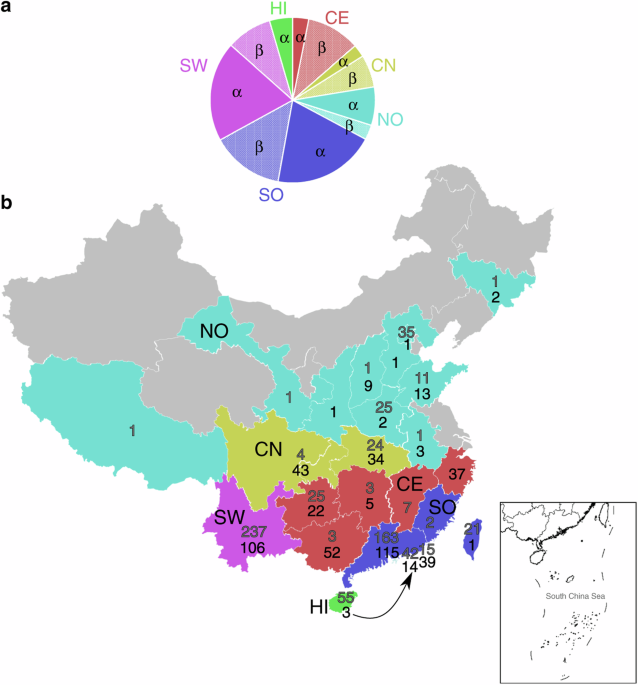
RETRACTED ARTICLE: Origin and cross-species transmission of bat coronaviruses in China - Nature Communications Bats are presumed reservoirs of diverse coronaviruses (CoVs) including progenitors of Severe Acute Respiratory Syndrome (SARS)-CoV and SARS-CoV-2, the causative agent of COVID-19. However, the evolution and diversification of these coronaviruses remains poorly understood. Here we use a Bayesian statistical framework and a large sequence data set from bat-CoVs (including 630 novel CoV sequences) in China to study their macroevolution, cross-species transmission and dispersal. We find that host-switching occurs more frequently and across more distantly related host taxa in alpha- than beta-CoVs, and is more highly constrained by phylogenetic distance for beta-CoVs. We show that inter-family and -genus switching is most common in Rhinolophidae and the genus Rhinolophus. Our analyses identify the host taxa and geographic regions that define hotspots of CoV evolutionary diversity in China that could help target bat-CoV discovery for proactive zoonotic disease surveillance. Finally, we present a phylogenetic analysis suggesting a likely origin for SARS-CoV-2 in Rhinolophus spp. bats. Bats are a likely reservoir of zoonotic coronaviruses (CoVs). Here, analyzing bat CoV sequences in China, the authors find that alpha-CoVs have switched hosts more frequently than betaCoVs, identify a bat family and genus that are highly involved in host-switching, and define hotspots of CoV evolutionary diversity. nature.com

@tommy_cleary - Tommy Cleary

@R_H_Ebright @alisonannyoung With ongoing cyberbiosecurity issues the whole time! The problem of knowledge silos within and between cybersecurity and bio world continues throughout this period from 2008 to NOW! Still now… Why?

@tommy_cleary - Tommy Cleary

@R_H_Ebright @ScienceMagazine Further...as much as Holmes has stated that data from Jie Cui was not linked to WIV 162 of 163 submissions to GenBank remain suppressed or missing...with other serious data integrity issues and cyber biosecurity issues needing to be addressed... Disqualifying conflict of…

@tommy_cleary - Tommy Cleary

@_everythingism @AceBearstrom @hiltzikm STS studies regularly acknowledge and explore institutional limits to knowledge away from the political narratives you outline here. <<Undone Science Social Movements, Mobilized Publics, and Industrial Transitions By David J. Hess>> https://mitpress.mit.edu/9780262529495/undone-science/ Since this research…

Undone Science A theoretical integration of science and technology studies and social movement studies that finds both common ground and “undone” research.As the fields... mitpress.mit.edu

@tommy_cleary - Tommy Cleary

My application for SAGO at @WHO was rejected...but it was in volunteer capacity and so I simply continued to help where I can. https://2012-2017.usaid.gov/sites/default/files/documents/2496/Combatting_Corruption_Among_Civil_Servants_-_Interdisciplinary_Perspectives_on_What_Works.pdf My skill sets are listening...catching...and surprise...not simplicity H/t @CharlesRixey Umberto Eco said it well. If it is too complicated, read more books. But he wrote this type of thing in Italian, so don't see these ideas as complexity, see them as language. Teaching a language takes time and repetition...about two years of immersion...or you can nowadays Gronk your way through? The lived experience here is of an INCOMPLETE data set...so obviously I cannot fully explain the data...but you can join me on the journey. Surprise! Truth is important...but it takes a lot of listening to hear certain truths...trauma adds more layers of humanity and so our souls are stretched thinly as we listen to the person within the cyborg of text based embodiment twisting under the weight of the unknown...but knowable: <> LtCol Joe Murphy US Marines https://brownstone.org/author/joe-murphy/ In this space and habits of removed and gone...Holmes blinked and attempted <> methods, appropriate to biological warfare investigations, with Eddie's Twitter thread on March 6th 2023, here: Why? Good question, ask him. He says he was trying to demonstrate that 60 viruses submitted to GenBank as part of a 2018 preprint, together with Prof Jie Cui and ZLShi of Wuhan Institute of Virology, were complete... https://web.archive.org/web/20220809085043/https://www.ncbi.nlm.nih.gov/nuccore/?term=Spread+and+Geographic+Structure+of+SARS-related+Coronaviruses+in+++++++++++++Bats+and+the+Origin+of+Human+SARS+Coronavirus Interestingly only 163 of a potential 180 sequences, with ORF8, S & RdRp available for each, were said to be part of this 12-JUL-2018 PrePrint? But only 154 of these are in the current GI series available to be recovered... as far as I know...and I don't know everything...I am seeking the answers to fairly obvious questions. This thread tests these assumptions & knowledge claims... So lets do some <> searching together! // Forensic note: important under examined bioinformatics data is framing this data set...with this current GI series of 154 submissions interrupted by submissions dated 25-OCT-2019 and the ACCESSION series continuing from the last, with <> to <> which is unrelated but dated Jul 13, 2019 08:18 PM. https://ncbi.nlm.nih.gov/nuccore/MH615993.1?report=girevhist This suggests that the original earlier GenBank submission, perhaps actually of 180 sequences, was cropped to 163 and given new ACCESSION numbers one year after it was submitted...with the cropped series of 163 placed in their current GI position on 25-OCT-2019...but what of the missing 9 ORF8 from this GI series? Finding the missing data set will help demonstrate what could have happened. GI count is hypothesized as a way of delineating this Undone Science data set. /// KISS Methods: basic GI series analysis this Xpost GI is 1769824352 <> anyone can do this... even you? But if you cannot, what does this say about how easy it is to make a mistake in a DURC program? https://ncbi.nlm.nih.gov/nuccore/1769824352 GI 1769824352 <> all good, all three, ORF8, RdRp and S genes present. https://ncbi.nlm.nih.gov/nuccore/MH615857.1?report=genbank GI 1769824350 <> all good too https://ncbi.nlm.nih.gov/nuccore/MH615856.1?report=genbank GI 1769824348 <> all good https://ncbi.nlm.nih.gov/nuccore/MH615855.1?report=genbank GI 1769824346 <> all good https://ncbi.nlm.nih.gov/nuccore/MH615854.1?report=genbank GI 1769824344 <> all good https://ncbi.nlm.nih.gov/nuccore/MH615853.1?report=girevhist GI 1769824342 <> all good https://ncbi.nlm.nih.gov/nuccore/MH615852.1?report=genbank GI 1769824340 <> all good https://ncbi.nlm.nih.gov/nuccore/MH615851.1?report=genbank GI 1769824338 <> all good https://ncbi.nlm.nih.gov/nuccore/MH615850.1?report=genbank GI 1769824336 <> all good https://ncbi.nlm.nih.gov/nuccore/MH615849.1?report=genbank GI 1769824334 <> all good https://ncbi.nlm.nih.gov/nuccore/MH615848.1?report=genbank GI 1769824332 <> all good https://ncbi.nlm.nih.gov/nuccore/MH615847.1?report=genbank GI 1769824330 <> all good https://ncbi.nlm.nih.gov/nuccore/MH615846.1?report=genbank GI 1769824328 <> all good https://ncbi.nlm.nih.gov/nuccore/MH615845.1?report=genbank GI 1769824326 <> all good https://ncbi.nlm.nih.gov/nuccore/MH615844.1?report=genbank GI 1769824324 <> BINGO!!!! @MonaRahalkar your old friend! Finally! Again ORF8 and RdRp are here but for <> the S gene is missing. Why? So GI 1769824324 <> is the next missing data point for <> GenBank submission from@syd_health&@Sydney_UniProf Edward Holmes @EdwardCHolmes to GenBank of@NLM_NIH NOW tally is still twelve missing ORF8... and now eight missing S genes... where for <> RdRp is the there in two naming versions but only partly suppressed here: https://www.ncbi.nlm.nih.gov/nuccore/1769824434 and here https://www.ncbi.nlm.nih.gov/nuccore/MH615898.1?report=girevhist but not available to GenBank search terms: <> https://ncbi.nlm.nih.gov/nuccore/?term=Spread+and+Geographic+Structure+of+SARS-related+Coronaviruses+in+Bats+and+the+Origin+of+Human+SARS+Coronavirus or <> https://ncbi.nlm.nih.gov/nuccore/?term=Yu%2CP.%2C+Hu%2CB.%2C+Li%2CB.%2C+Luo%2CD.%2C+Zhu%2CG.%2C+Zhang%2CL.%2C+Holmes%2CE.C.%2C+Shi%2CZ.+and+Cui%2CJ. Strange isn't it? ORF8 gene is there again with two names but both searches for title and authors are not available again: https://ncbi.nlm.nih.gov/nuccore/1769824324 &here https://www.ncbi.nlm.nih.gov/nuccore/MH615843.1?report=girevhist If the <> linked submissions are not suppressed then these search terms should give at least two results for the ORF8 and RpRd? But in any case no S gene in this GI series for <> Why? Recap: Missing ORF8 tally so far: 1) Rs151334_Guizhou 2) Rf131405_Shanxi 3) Rs140400_Guangdong 4) Rs141456_Guangxi 5) Rspp7924_Yunnan 6) Rspp7921_Yunnan 7) Ra7909_Yunnan 8) Rspp7907_Yunnan 9) Rspp7905_Yunnan 10) Rspp7896_Yunnan 11) Rs6303_Yunnan 12) Rs6266_Yunnan identified of a total of 15 missing...3 to go... Question: Was <> in the 60-54= 6 ORF8 that <> decided to leave out of this 2018 PrePrint... ...or perhaps the 54-45= 9 ORF8 that are simply missing from the GI series suppressed in GenBank & interrupted by the date 25-Oct-2019? With S genes missing too; of the 60 RdRp sampled only 49 S genes are here in this GI series... Why? 1) Rspp7921_Yunnan 2) Rspp7907_Yunnan 3) Rspp7896_Yunnan 4) Rs9214_Hubei 5) Rs9201_Hubei 6) Rs151199_Hunan 7) Rs8548_Guangdong 8) RaTG13_Yunnan//Ra4991_Yunnan identified of 11 S genes left out of this study...3 to go! <> S gene is missing yet it is very important...especially the version of Ra4991 that was originally loaded on to GenBank before this current GI series was perhaps placed, cropped, edited and moved and given new ACCESSION codes. This apparently happened from Jul 13, 2019 08:18 PM to 25-OCT-2019 So <> methodology requires more data. All this so far indicates that the 2023 disclosures of Holmes are potentially incomplete...but the count continues... next search is GI 1769824322! How to make strong knowledge claims about the origin of COVID without these data sets? Well you cannot. But Holmes gives it a go. @GrahamPerrettMP ? Any word from the relevant Ministers yet? https://www.sydney.edu.au/infectious-diseases-institute/news-and-events/news/2020/03/24/the-proximal-origin-of-sars-cov-2.html

Archive - U.S. Agency for International Development 2012-2017.usaid.gov
Joe Murphy, Author at Brownstone Institute Joe Murphy is a lieutenant colonel in the US Marines with 16+ years of service. brownstone.org
Spread and Geographic Structure of SARS-related Coronaviruses in Bats - Nucleotide - NCBITwitterFacebookLinkedInGitHubNCBI Insights BlogTwitterFacebookYoutube web.archive.org
Nucleotide - NCBITwitterFacebookLinkedInGitHubNCBI Insights BlogTwitterFacebookYoutube ncbi.nlm.nih.gov
Record suppressed: Bat SARS-like coronavirus strain Rs8460_Guangdong ORF8 gene, complete - Nucleotide - NCBITwitterFacebookLinkedInGitHubNCBI Insights BlogTwitterFacebookYoutube ncbi.nlm.nih.gov
Record suppressed: Bat SARS-like coronavirus strain Rs8363_Guangdong ORF8 gene, complete - Nucleotide - NCBITwitterFacebookLinkedInGitHubNCBI Insights BlogTwitterFacebookYoutube ncbi.nlm.nih.gov
Record suppressed: Bat SARS-like coronavirus strain Rs151569_Guizhou ORF8 gene, complete - Nucleotide - NCBITwitterFacebookLinkedInGitHubNCBI Insights BlogTwitterFacebookYoutube ncbi.nlm.nih.gov
Record suppressed: Bat SARS-like coronavirus strain Rs151514_Guizhou ORF8 gene, complete - Nucleotide - NCBITwitterFacebookLinkedInGitHubNCBI Insights BlogTwitterFacebookYoutube ncbi.nlm.nih.gov
Nucleotide - NCBITwitterFacebookLinkedInGitHubNCBI Insights BlogTwitterFacebookYoutube ncbi.nlm.nih.gov
Record suppressed: Bat SARS-like coronavirus strain Rs151493_Guizhou ORF8 gene, complete - Nucleotide - NCBITwitterFacebookLinkedInGitHubNCBI Insights BlogTwitterFacebookYoutube ncbi.nlm.nih.gov
Record suppressed: Bat SARS-like coronavirus strain Rs151491_Guizhou ORF8 gene, complete - Nucleotide - NCBITwitterFacebookLinkedInGitHubNCBI Insights BlogTwitterFacebookYoutube ncbi.nlm.nih.gov
Record suppressed: Bat SARS-like coronavirus strain Rs151388_Guizhou ORF8 gene, complete - Nucleotide - NCBITwitterFacebookLinkedInGitHubNCBI Insights BlogTwitterFacebookYoutube ncbi.nlm.nih.gov
Record suppressed: Bat SARS-like coronavirus strain Rs151262_Guizhou ORF8 gene, complete - Nucleotide - NCBITwitterFacebookLinkedInGitHubNCBI Insights BlogTwitterFacebookYoutube ncbi.nlm.nih.gov
Record suppressed: Bat SARS-like coronavirus strain Rs141567_Guangxi ORF8 gene, complete - Nucleotide - NCBITwitterFacebookLinkedInGitHubNCBI Insights BlogTwitterFacebookYoutube ncbi.nlm.nih.gov
Record suppressed: Bat SARS-like coronavirus strain Rs141455_Guangxi ORF8 gene, complete - Nucleotide - NCBITwitterFacebookLinkedInGitHubNCBI Insights BlogTwitterFacebookYoutube ncbi.nlm.nih.gov
Record suppressed: Bat SARS-like coronavirus strain Rs13488_Guangxi ORF8 gene, complete c - Nucleotide - NCBITwitterFacebookLinkedInGitHubNCBI Insights BlogTwitterFacebookYoutube ncbi.nlm.nih.gov
Record suppressed: Bat SARS-like coronavirus strain Rs13484_Guangxi ORF8 gene, complete c - Nucleotide - NCBITwitterFacebookLinkedInGitHubNCBI Insights BlogTwitterFacebookYoutube ncbi.nlm.nih.gov
Record suppressed: Bat SARS-like coronavirus strain Rs13479_Guangxi ORF8 gene, complete c - Nucleotide - NCBITwitterFacebookLinkedInGitHubNCBI Insights BlogTwitterFacebookYoutube ncbi.nlm.nih.gov
Bat SARS-like coronavirus strain RaTG13_Yunnan RNA-dependent RNA polym - Nucleotide - NCBITwitterFacebookLinkedInGitHubNCBI Insights BlogTwitterFacebookYoutube ncbi.nlm.nih.gov
Nucleotide - NCBITwitterFacebookLinkedInGitHubNCBI Insights BlogTwitterFacebookYoutube ncbi.nlm.nih.gov
No items found - Nucleotide - NCBITwitterFacebookLinkedInGitHubNCBI Insights BlogTwitterFacebookYoutube ncbi.nlm.nih.gov
Bat SARS-like coronavirus strain RaTG13_Yunnan ORF8 gene, complete cds - Nucleotide - NCBITwitterFacebookLinkedInGitHubNCBI Insights BlogTwitterFacebookYoutube ncbi.nlm.nih.gov
Nucleotide - NCBITwitterFacebookLinkedInGitHubNCBI Insights BlogTwitterFacebookYoutube ncbi.nlm.nih.gov
The proximal origin of SARS-CoV-2 sydney.edu.au

@tommy_cleary - Tommy Cleary

@JamieMetzl @WHO I applied @WHO SAGO but didnt get in... so continued with thesis from OSINT epidemiology perspective as type of study that @mvankerkhove et al are probably not able to perform in an institutionally independent way...hope it helps.

@tommy_cleary - Tommy Cleary

@R_H_Ebright @ScienceMagazine Further...as much as Holmes has stated that data from Jie Cui was not linked to WIV 162 of 163 submissions to GenBank remain suppressed or missing...with other serious data integrity issues and cyber biosecurity issues needing to be addressed... Disqualifying conflict of…

@tommy_cleary - Tommy Cleary

@_everythingism @AceBearstrom @hiltzikm STS studies regularly acknowledge and explore institutional limits to knowledge away from the political narratives you outline here. <<Undone Science Social Movements, Mobilized Publics, and Industrial Transitions By David J. Hess>> https://mitpress.mit.edu/9780262529495/undone-science/ Since this research…

Undone Science A theoretical integration of science and technology studies and social movement studies that finds both common ground and “undone” research.As the fields... mitpress.mit.edu

@tommy_cleary - Tommy Cleary

<> methods, appropriate to biological warfare investigations, with Eddie's Twitter thread on March 6th 2023, here: Why? Good question, ask him. @sciencecohen <> Yep...my guess is that Jon knew about the RaTG13/Ra4991 from sick miners but decided not to or was directed not to say anything right away. H/t @R_H_Ebright 5 years ago after being on the case for 25 years... Holmes says he was trying to demonstrate that 60 viruses submitted to GenBank as part of a 2018 preprint, together with Prof Jie Cui and ZLShi of Wuhan Institute of Virology, were complete...but they are obviously incomplete. https://web.archive.org/web/20220809085043/https://www.ncbi.nlm.nih.gov/nuccore/?term=Spread+and+Geographic+Structure+of+SARS-related+Coronaviruses+in+++++++++++++Bats+and+the+Origin+of+Human+SARS+Coronavirus Only 163 of a potential 180 sequences, with ORF8, S & RdRp available for each, were said to be part of this 12-JUL-2018 PrePrint? But bioinformatics analysis is important to these knowledge claims, H/t Trevor Bedford @trvrbonly ...and only 154 of these are in the current GenBank GI series available to be recovered...as far as I know...and I don't know everything...I am seeking the answers to fairly obvious questions...like why were these 180 GenBank submissions not available when WIV frist published post COVID outbreak discovery? https://www.biorxiv.org/content/10.1101/2020.01.22.914952v2.full.pdf This thread tests these assumptions & knowledge claims... So lets do some <> bioinformatics philosophy of science searching together! // Important Forensic note: important under examined bioinformatics data is framing this data set...with this current GI series of 154 submissions interrupted by submissions dated 25-OCT-2019 and the ACCESSION series continuing from the last, with <> to <> which is unrelated but dated Jul 13, 2019 08:18 PM. https://ncbi.nlm.nih.gov/nuccore/MH615993.1?report=girevhist This suggests that the original earlier GenBank submission, perhaps actually of 180 sequences, was cropped to 163 and given new ACCESSION numbers one year after it was submitted...with the cropped series of 163 placed in their current GI position on 25-OCT-2019...but what of the missing 9 ORF8 from this GI series? Finding the missing data set will help demonstrate what could have happened. GI count is hypothesized as a way of delineating this Undone Science data set. /// KISS Methods: basic GI series analysis this Xpost thread GI is next after 1769824324 <> anyone can do this... even you? https://ncbi.nlm.nih.gov/nuccore/1769824352 GI 1769824322 <> all good, all three, ORF8, RdRp and S genes present. https://www.ncbi.nlm.nih.gov/nuccore/MH615842.1?report=genbank GI 1769824320 <> all good too https://www.ncbi.nlm.nih.gov/nuccore/MH615842.1?report=genbank GI 1769824318 <> all good https://www.ncbi.nlm.nih.gov/nuccore/MH615840.1?report=genbank GI 1769824316 <> all good but remember that the full sequence of Rs5725_Yunnan was available for the thesis <> of WIV but for <> only the ORF8, RdRp & S gene were available. https://www.ncbi.nlm.nih.gov/nuccore/MH615839.1?report=genbank Remember that GI 1769824315 is where this GI series ends with <> Submitted (25-JUL-2018) and placed Oct 25, 2019 06:16 PM together with this GI series? https://www.ncbi.nlm.nih.gov/nuccore/1769824315 Finally! NOW tally is still twelve missing ORF8... and now eight missing S genes... where for <> RdRp is the last to be found with this GI count there in two naming versions but only partly suppressed here: https://ncbi.nlm.nih.gov/nuccore/1769824434and here https://ncbi.nlm.nih.gov/nuccore/MH615898.1?report=girevhistbut not available to GenBank search terms: <> https://ncbi.nlm.nih.gov/nuccore/?term=Spread+and+Geographic+Structure+of+SARS-related+Coronaviruses+in+Bats+and+the+Origin+of+Human+SARS+Coronavirusor <> https://ncbi.nlm.nih.gov/nuccore/?term=Yu%2CP.%2C+Hu%2CB.%2C+Li%2CB.%2C+Luo%2CD.%2C+Zhu%2CG.%2C+Zhang%2CL.%2C+Holmes%2CE.C.%2C+Shi%2CZ.+and+Cui%2CJ. Strange isn't it? ORF8 gene is there again with two names but both searches for title and authors are not available again: https://ncbi.nlm.nih.gov/nuccore/1769824324 &here https://ncbi.nlm.nih.gov/nuccore/MH615843.1?report=girevhist If the <> linked submissions are not suppressed then these search terms should give at least two results for the ORF8 and RpRd? But in any case no S gene in this GI series for <> Why? Recap: Missing ORF8 tally so far: 1) Rs151334_Guizhou 2) Rf131405_Shanxi 3) Rs140400_Guangdong 4) Rs141456_Guangxi 5) Rspp7924_Yunnan 6) Rspp7921_Yunnan 7) Ra7909_Yunnan 8) Rspp7907_Yunnan 9) Rspp7905_Yunnan 10) Rspp7896_Yunnan 11) Rs6303_Yunnan 12) Rs6266_Yunnan identified of a total of 15 missing...3 to go... Question: Was <> in the 60-54= 6 ORF8 that <> decided to leave out of this 2018 PrePrint... ...or perhaps the 54-45= 9 ORF8 that are simply missing from the GI series suppressed in GenBank & interrupted by the date 25-Oct-2019? With S genes missing too; of the 60 RdRp sampled only 49 S genes are here in this GI series... Why? 1) Rspp7921_Yunnan 2) Rspp7907_Yunnan 3) Rspp7896_Yunnan 4) Rs9214_Hubei 5) Rs9201_Hubei 6) Rs151199_Hunan 7) Rs8548_Guangdong 8) RaTG13_Yunnan//Ra4991_Yunnan identified of 11 S genes left out of this study...3 to go! <> S gene is missing yet it is very important...especially the version of Ra4991 that was originally loaded on to GenBank before this current GI series was perhaps placed, cropped, edited and moved and given new ACCESSION codes. This apparently happened from Jul 13, 2019 08:18 PM to 25-OCT-2019 So <> methodology requires more data. All this so far indicates that the 2023 disclosures of Holmes are potentially incomplete... How to make strong knowledge claims about the origin of COVID without these data sets? Well you cannot. But Holmes gives it a go. To find the rest of the missing data points we need to examine the 180 potential for the 3 S and 3 OFRF8 missing. It is so easy to make mistakes with this type of count and so checking and rechecking with different methodologies is important. This is the complex ground of the information domain. I have to back track and see if I have missed a thread in the GI series? This is why I have left this trail of pebbles...so I can back track when needed. https://brownstone.org/articles/the-biodefense-oligarchy-and-its-demographic-defeats/

Spread and Geographic Structure of SARS-related Coronaviruses in Bats - Nucleotide - NCBITwitterFacebookLinkedInGitHubNCBI Insights BlogTwitterFacebookYoutube web.archive.org
Nucleotide - NCBITwitterFacebookLinkedInGitHubNCBI Insights BlogTwitterFacebookYoutube ncbi.nlm.nih.gov
Record suppressed: Bat SARS-like coronavirus strain Rs8460_Guangdong ORF8 gene, complete - Nucleotide - NCBITwitterFacebookLinkedInGitHubNCBI Insights BlogTwitterFacebookYoutube ncbi.nlm.nih.gov
Record suppressed: Bat SARS-like coronavirus strain Rs160665_Yunnan ORF8 gene, complete c - Nucleotide - NCBITwitterFacebookLinkedInGitHubNCBI Insights BlogTwitterFacebookYoutube ncbi.nlm.nih.gov
Record suppressed: Bat SARS-like coronavirus strain Rf5511_Yunnan ORF8 gene, complete cds - Nucleotide - NCBITwitterFacebookLinkedInGitHubNCBI Insights BlogTwitterFacebookYoutube ncbi.nlm.nih.gov
Record suppressed: Bat SARS-like coronavirus strain Rs5725_Yunnan ORF8 gene, complete cds - Nucleotide - NCBITwitterFacebookLinkedInGitHubNCBI Insights BlogTwitterFacebookYoutube ncbi.nlm.nih.gov
Salmonella enterica subsp. enterica serovar Infantis strain FSIS170229 - Nucleotide - NCBITwitterFacebookLinkedInGitHubNCBI Insights BlogTwitterFacebookYoutube ncbi.nlm.nih.gov
No items found - Nucleotide - NCBITwitterFacebookLinkedInGitHubNCBI Insights BlogTwitterFacebookYoutube ncbi.nlm.nih.gov
Bat SARS-like coronavirus strain RaTG13_Yunnan RNA-dependent RNA polym - Nucleotide - NCBITwitterFacebookLinkedInGitHubNCBI Insights BlogTwitterFacebookYoutube ncbi.nlm.nih.gov
No items found - Nucleotide - NCBITwitterFacebookLinkedInGitHubNCBI Insights BlogTwitterFacebookYoutube ncbi.nlm.nih.gov
Bat SARS-like coronavirus strain RaTG13_Yunnan ORF8 gene, complete cds - Nucleotide - NCBITwitterFacebookLinkedInGitHubNCBI Insights BlogTwitterFacebookYoutube ncbi.nlm.nih.gov
Nucleotide - NCBITwitterFacebookLinkedInGitHubNCBI Insights BlogTwitterFacebookYoutube ncbi.nlm.nih.gov
The Biodefense Oligarchy and Its Demographic Defeats ⋆ Brownstone Institute Two decades ago, factions argued that biowarfare threats were so significant that biodefense responsibility needed to be removed from the purview of the uniformed military and placed within NIAID under NIH and under HHS. brownstone.org

@R_H_Ebright - Richard H. Ebright

Five years ago today, a scientist stated publicly that data were consistent with a lab origin: "Ebright tells Science...that the 2019-nCoV data are 'consistent with entry into the human population as either a natural accident or a laboratory accident.'" https://www.science.org/content/article/mining-coronavirus-genomes-clues-outbreak-s-origins

@tommy_cleary - Tommy Cleary

@R_H_Ebright @ScienceMagazine Further...as much as Holmes has stated that data from Jie Cui was not linked to WIV 162 of 163 submissions to GenBank remain suppressed or missing...with other serious data integrity issues and cyber biosecurity issues needing to be addressed... Disqualifying conflict of…

@tommy_cleary - Tommy Cleary

@_everythingism @AceBearstrom @hiltzikm STS studies regularly acknowledge and explore institutional limits to knowledge away from the political narratives you outline here. <<Undone Science Social Movements, Mobilized Publics, and Industrial Transitions By David J. Hess>> https://mitpress.mit.edu/9780262529495/undone-science/ Since this research…

Undone Science A theoretical integration of science and technology studies and social movement studies that finds both common ground and “undone” research.As the fields... mitpress.mit.edu

@tommy_cleary - Tommy Cleary

This is where I lost count! Doh! Next GI will have to start from here and be inserted into current tally. GI 1769824546 restart count again here...and insert missing into tally KISS Methods: basic GI series analysis this Xpost GI is 1769824546 <> anyone can do this... even you? But if you cannot, or if you lose count so easily, like I always do...what does this say about how easy it is to make a mistake in a DURC program? https://ncbi.nlm.nih.gov/nuccore/1769824546 GI 1769824546 <> all good, all three, ORF8, RdRp and S genes present. Next GI 1769824544 <> & RdRp are there but suppressed but ORF8 is already 5) on the tally https://www.ncbi.nlm.nih.gov/nuccore/MH615953.1?report=genbank GI 1769824542 <> & RdRp are there but suppressed but ORF8 is should be 6) on the tally not 7) as I must have started counting GI from the RdRp list here? https://www.ncbi.nlm.nih.gov/nuccore/MH615952.1?report=genbank GI 1769824540 <> & RdRp are there but should be 7) on the list not 9)? https://www.ncbi.nlm.nih.gov/nuccore/MH615951.1?report=genbank GI 1769824538 <> & RdRp are there but should be 8) and is missing! https://www.ncbi.nlm.nih.gov/nuccore/MH615951.1?report=genbank Lets keep going to the next one... GI 1769824536 <> & RdRp & ORF8 are there https://www.ncbi.nlm.nih.gov/nuccore/MH615949.1?report=genbank GI 1769824534 <> & RdRp & ORF8 are there https://www.ncbi.nlm.nih.gov/nuccore/1769824534 GI 1769824532 <> & RdRp but missing ORF8 should be 9) on the list not 12) https://www.ncbi.nlm.nih.gov/nuccore/1769824532 GI 1769824530 <> & RdRp & ORF8 are there all good https://www.ncbi.nlm.nih.gov/nuccore/1769824530 GI 1769824528 <> & RdRp but ORF8 missing should be 10) on tally not 11) https://www.ncbi.nlm.nih.gov/nuccore/1769824528 GI 1769824526 <> & RdRp & ORF8 all good https://www.ncbi.nlm.nih.gov/nuccore/1769824526 GI 1769824524 is <> so S & RdRp & ORF8 all good https://www.ncbi.nlm.nih.gov/nuccore/1769824524 GI 1769824522 is <> so S & RdRp & ORF8 all good https://www.ncbi.nlm.nih.gov/nuccore/1769824522 GI 1769824520 is <> all good GI 1769824518 is <> all good GI 1769824516 is <> all good GI 1769824514 is <> all good GI 1769824512 is <> all good GI 1769824510 is <> ORF8 missing 1) on tally GI 1769824508 is <> all good GI 1769824506 is <> all good GI 1769824504 is <> all good GI 1769824502 is <> all good GI 1769824500 is <> is tricky missing S gene 1) in tally not 4) missing but RdRp and ORF8 OK https://www.ncbi.nlm.nih.gov/nuccore/MH615936.1?report=genbank GI 1769824498 is <> again missing S gene 2) not 5) in tally, but RdRp & ORF8 are good. https://www.ncbi.nlm.nih.gov/nuccore/MH615930.1?report=genbank GI 1769824496 is <> again missing S gene 3) not 6) in tally, but RdRp & ORF8 are good. https://www.ncbi.nlm.nih.gov/nuccore/MH615930.1?report=genbank GI 1769824494 is <> all good GI 1769824492 is <> ORF8 is missing 2) in tally GI 1769824490 is <> all good GI 1769824488 is <> all good GI 1769824486 is <> all good GI 1769824484 is <> all good GI 1769824482 is <> dare I say BINGO!!! <> RdRp is there https://www.ncbi.nlm.nih.gov/nuccore/MH615922.1?report=girevhist but ORF8 is missing number 11) and S is missing number 4) NOW tally is still fourteen missing ORF8... and still nine missing S genes... Recap: Missing ORF8 tally so far with order fixed: 1) Rs151334_Guizhou 2) Rf131405_Shanxi 3) Rs140400_Guangdong 4) Rs141456_Guangxi 5) Rspp7924_Yunnan 6) Ra7909_Yunnan prev Rspp7921_Yunnan 7) Rspp7905_Yunnan prev Ra7909_Yunnan 8) Rspp7931_Yunnan prev Rspp7907_Yunnan 9) Rs6266_Yunnan prev Rspp7905_Yunnan 10) Rs6303_Yunnan prev Rspp7896_Yunnan 11) Rf130223-29_Beijing prev Rs6303_Yunnan 12) Rs6266_Yunnan identified of a total of 15 missing...1 to go? Question: Was <> in the 60-54= 6 ORF8 that <> decided to leave out of this 2018 PrePrint... ...or perhaps the 54-45= 9 ORF8 that are simply missing from the GI series suppressed in GenBank & interrupted by the date 25-Oct-2019? With S genes missing too; of the 60 RdRp sampled only 49 S genes are here in this GI series... Why? 1) Rs9214_Hubei prev Rspp7921_Yunnan 2) Rs9201_Hubei prev Rspp7907_Yunnan 3) Rs151199_Hunan prev Rspp7896_Yunnan 4) Rf130223-29_Beijing prev Rs9214_Hubei 5) Rs9201_Hubei 6) Rs151199_Hunan 7) Rs8548_Guangdong 8) RaTG13_Yunnan//Ra4991_Yunnan identified of 11/11 S genes left out of this study... <> S gene is missing yet it is very important...especially the version of Ra4991 that was originally loaded on to GenBank before this current GI series was perhaps placed, cropped, edited and moved and given new ACCESSION codes. This apparently happened from Jul 13, 2019 08:18 PM to 25-OCT-2019 So <> methodology requires more data. All this so far indicates that the 2023 disclosures of Holmes are potentially incomplete...but the count continues... next search is GI 1769824322! How to make strong knowledge claims about the origin of COVID without these data sets? Well you cannot. This tally is nice and messy at the moment...I will need to clean it up in the next post! Counting from GI 1769824482 <> and smoothing out the tally. A stuff up in a GI count like this is character building, but also gives an insight into the lived experience of bioinformatics of Virology. How could this type of thing but constantly happening an STILL there is an attitude that errors are not common. What bullshit! They happen all the time! Like @sciencecohen who details DNA of SARS-CoV-2 instead of RNA. We are all people doing people stuff...stuff-ups too. https://www.science.org/content/article/mining-coronavirus-genomes-clues-outbreak-s-origins

Record suppressed: Bat SARS-like coronavirus strain Rs8363_Guangdong spike protein (S) ge - Nucleotide - NCBITwitterFacebookLinkedInGitHubNCBI Insights BlogTwitterFacebookYoutube ncbi.nlm.nih.gov
Record suppressed: Bat SARS-like coronavirus strain Rspp7924_Yunnan spike protein (S) gen - Nucleotide - NCBITwitterFacebookLinkedInGitHubNCBI Insights BlogTwitterFacebookYoutube ncbi.nlm.nih.gov
Record suppressed: Bat SARS-like coronavirus strain Ra7909_Yunnan spike protein (S) gene, - Nucleotide - NCBITwitterFacebookLinkedInGitHubNCBI Insights BlogTwitterFacebookYoutube ncbi.nlm.nih.gov
Record suppressed: Bat SARS-like coronavirus strain Rspp7905_Yunnan spike protein (S) gen - Nucleotide - NCBITwitterFacebookLinkedInGitHubNCBI Insights BlogTwitterFacebookYoutube ncbi.nlm.nih.gov
Record suppressed: Bat SARS-like coronavirus strain Rs5725_Yunnan spike protein (S) gene, - Nucleotide - NCBITwitterFacebookLinkedInGitHubNCBI Insights BlogTwitterFacebookYoutube ncbi.nlm.nih.gov
Record suppressed: Bat SARS-like coronavirus strain Rs160665_Yunnan spike protein (S) gen - Nucleotide - NCBITwitterFacebookLinkedInGitHubNCBI Insights BlogTwitterFacebookYoutube ncbi.nlm.nih.gov
Record suppressed: Bat SARS-like coronavirus strain Rs6266_Yunnan spike protein (S) gene, - Nucleotide - NCBITwitterFacebookLinkedInGitHubNCBI Insights BlogTwitterFacebookYoutube ncbi.nlm.nih.gov
Record suppressed: Bat SARS-like coronavirus strain Rs6255_Yunnan spike protein (S) gene, - Nucleotide - NCBITwitterFacebookLinkedInGitHubNCBI Insights BlogTwitterFacebookYoutube ncbi.nlm.nih.gov
Record suppressed: Bat SARS-like coronavirus strain Rs6303_Yunnan spike protein (S) gene, - Nucleotide - NCBITwitterFacebookLinkedInGitHubNCBI Insights BlogTwitterFacebookYoutube ncbi.nlm.nih.gov
Record suppressed: Bat SARS-like coronavirus strain Rf5511_Yunnan spike protein (S) gene, - Nucleotide - NCBITwitterFacebookLinkedInGitHubNCBI Insights BlogTwitterFacebookYoutube ncbi.nlm.nih.gov
Record suppressed: Bat SARS-like coronavirus strain Rs161465_Guangdong RNA-dependent RNA - Nucleotide - NCBITwitterFacebookLinkedInGitHubNCBI Insights BlogTwitterFacebookYoutube ncbi.nlm.nih.gov
Record suppressed: Bat SARS-like coronavirus strain Rs161419_Guangdong RNA-dependent RNA - Nucleotide - NCBITwitterFacebookLinkedInGitHubNCBI Insights BlogTwitterFacebookYoutube ncbi.nlm.nih.gov
Record suppressed: Bat SARS-like coronavirus strain Rs151334_Guizhou RNA-dependent RNA po - Nucleotide - NCBITwitterFacebookLinkedInGitHubNCBI Insights BlogTwitterFacebookYoutube ncbi.nlm.nih.gov
Record suppressed: Bat SARS-like coronavirus strain Rs9201_Hubei RNA-dependent RNA polyme - Nucleotide - NCBITwitterFacebookLinkedInGitHubNCBI Insights BlogTwitterFacebookYoutube ncbi.nlm.nih.gov
Nucleotide - NCBITwitterFacebookLinkedInGitHubNCBI Insights BlogTwitterFacebookYoutube ncbi.nlm.nih.gov

@tommy_cleary - Tommy Cleary

Next one? <> no ORF8 found in @NLM_NIH GenBank <>, complete cds is there but suppressed... GenBank: MH615955.1 https://www.ncbi.nlm.nih.gov/nuccore/MH615955.1?report=genbank <> GenBank: MH615905.1 is there but suppressed... https://www.ncbi.nlm.nih.gov/nuccore/MH615905.1?report=genbank ...so that is NOW four missing ORF8; all with S and RdRp available but suppressed; 1) Rs151334_Guizhou 2) Rf131405_Shanxi 3) Rs140400_Guangdong 4) Rs141456_Guangxi Were these in the 60-54=6 ORF8 that <> decided to leave out of this PrePrint ? https://web.archive.org/web/20220809085043/https://www.ncbi.nlm.nih.gov/nuccore/?term=Spread+and+Geographic+Structure+of+SARS-related+Coronaviruses+in+++++++++++++Bats+and+the+Origin+of+Human+SARS+Coronavirus ...or perhaps the 54-45= 9 ORF8 that are simply missing from the GI series in GenBank? https://news.clearancejobs.com/2019/08/15/weaponizing-medicine-chinas-latest-theft-a-potential-biological-weapon/ Who knows? @COVIDSelect @COVIDSelectDems ? @R_H_Ebright

Record suppressed: Bat SARS-like coronavirus strain Rs141456_Guangxi spike protein (S) ge - Nucleotide - NCBITwitterFacebookLinkedInGitHubNCBI Insights BlogTwitterFacebookYoutube ncbi.nlm.nih.gov
Record suppressed: Bat SARS-like coronavirus strain Rs141456_Guangxi RNA-dependent RNA po - Nucleotide - NCBITwitterFacebookLinkedInGitHubNCBI Insights BlogTwitterFacebookYoutube ncbi.nlm.nih.gov
Spread and Geographic Structure of SARS-related Coronaviruses in Bats - Nucleotide - NCBITwitterFacebookLinkedInGitHubNCBI Insights BlogTwitterFacebookYoutube web.archive.org
Weaponizing Medicine: China's Latest Theft a Potential Biological Weapon A Canadian research lab sent deadly virus strains to China under the guise of scientific advancement. Now a Chinese lab scientist has been dismissed and Canadian law enforcement investigates. - Intelligence news.clearancejobs.com

@tommy_cleary - Tommy Cleary

Censorship of the nature deployed in the case of COVID had some obvious negative effects...but some were not so bad. @BiosafetyNow https://biosafetynow.substack.com/p/censoring-virology It was nice and quiet. The people censored had to find ways to reach out to each other...the phenomenology was that we had to look at what we were looking through. It also builds a compassion for a data set you are auditing during verification and for your own findings...a health doubt...need to double check and have peers that are brutal not lazy. Fixing this mess is going to be fun! Some wisdom always comes from a moment of stupidity and reflection. KISS Methods: basic GI series analysis this Xpost GI 1769824482 <> anyone can do this... even you? But if you cannot, or if you lose count so easily, like I always do...what does this say about how easy it is to make a mistake in a DURC program? https://ncbi.nlm.nih.gov/nuccore/1769824482 Starting with next RdRp GI 1769824480 is <> all good GI 1769824478 is <> S gene misssssing BBBBBingo! S gene missing no 5) in tally more BLAST homework here https://www.ncbi.nlm.nih.gov/nuccore/MH615920.1?report=genbank Couple more to find! GI 1769824476 <> all good GI 1769824474 <> all good GI 1769824472 <> all good GI 1769824470 <> all good GI 1769824468 <> all good GI 1769824466 <> all good GI 1769824464 <> all good GI 1769824462 <> ORF8 missing number 3) GI 1769824460 <> all good GI 1769824458 <> all good GI 1769824456 <> all good GI 1769824454 <> all good GI 1769824452 <> all good GI 1769824450 <> all good GI 1769824448 <> missing ORF8 tally number 4) GI 1769824446 <> all good GI 1769824444 <> all good GI 1769824442 <> all good GI 1769824440 <> all good GI 1769824438 <> all good GI 1769824436 <> missing S number 6) not 7) GI 1769824434 <> missing S number 7) prev 8) GI 1769824432 <> Binnnngooooo RdRp good, https://www.ncbi.nlm.nih.gov/nuccore/MH615897.1?report=genbank missing S number 7) & ORF8 missing number 12) with complete genome available on CNCB from June 2021 https://ngdc.cncb.ac.cn/biosample/browse/SAMC346732 NOW tally is still a mess Recap: Missing ORF8 tally so far with order fixed: 1) Rs151334_Guizhou 2) Rf131405_Shanxi 3) Rs140400_Guangdong 4) Rs141456_Guangxi 5) Rspp7924_Yunnan 6) Ra7909_Yunnan prev Rspp7921_Yunnan 7) Rspp7905_Yunnan prev Ra7909_Yunnan 8) Rspp7931_Yunnan prev Rspp7907_Yunnan 9) Rs6266_Yunnan prev Rspp7905_Yunnan 10) Rs6303_Yunnan prev Rspp7896_Yunnan 11) Rf130223-29_Beijing prev Rs6303_Yunnan 12) Rspp7952_Yunnan prev Rs6266_Yunnan 13) 14) 15) identified of a total of 15 missing Question: Was <> in the 60-54= 6 ORF8 that <> decided to leave out of this 2018 PrePrint... ...or perhaps the 54-45= 9 ORF8 that are simply missing from the GI series suppressed in GenBank & interrupted by the date 25-Oct-2019? With S genes missing too; of the 60 RdRp sampled only 49 S genes are here in this GI series... Why? 1) Rs9214_Hubei prev Rspp7921_Yunnan 2) Rs9201_Hubei prev Rspp7907_Yunnan 3) Rs151199_Hunan prev Rspp7896_Yunnan 4) Rf130223-29_Beijing prev Rs9214_Hubei 5) Rp8794_Guangdong prev Rs9201_Hubei 6) Rs8548_Guangdong prev Rs151199_Hunan 7) RaTG13_Yunnan RNA-dependent prev Rs8548_Guangdong 8) Rspp7952_Yunnan prev RaTG13_Yunnan//Ra4991_Yunnan 9) 10) 11) identified of 11 S genes left out of this study... <> S gene is missing So <> methodology requires more data. All this so far indicates that the 2023 disclosures of Holmes are potentially incomplete...but the count continues... next search is from GI 1769824432! How to make strong knowledge claims about the origin of COVID without these data sets? Well you cannot. This tally is nice and messy at the moment...I will need to continue to clean it up in the next post! Counting from GI 1769824432 <> and smoothing out the tally. Eventually it may be clearer than bee shit https://www.cia.gov/readingroom/document/cia-rdp90-00965r000403600002-0

Censoring virology "On reading," by Simon Wain-Hobson, is a weekly discussion of scientific papers and news articles around gain of function research in virology. biosafetynow.substack.com
Record suppressed: Bat SARS-like coronavirus strain Rf130223-29_Beijing RNA-dependent RNA - Nucleotide - NCBITwitterFacebookLinkedInGitHubNCBI Insights BlogTwitterFacebookYoutube ncbi.nlm.nih.gov
Record suppressed: Bat SARS-like coronavirus strain Rp8794_Guangdong RNA-dependent RNA po - Nucleotide - NCBITwitterFacebookLinkedInGitHubNCBI Insights BlogTwitterFacebookYoutube ncbi.nlm.nih.gov
Record suppressed: Bat SARS-like coronavirus strain Rspp7952_Yunnan RNA-dependent RNA pol - Nucleotide - NCBITwitterFacebookLinkedInGitHubNCBI Insights BlogTwitterFacebookYoutube ncbi.nlm.nih.gov
Browse - BioSample - CNCB-NGDC ngdc.cncb.ac.cn
THE 'BEE FECES' THEORY UNDONE | CIA FOIA (foia.cia.gov) cia.gov

@a_kruschke - A.Kruschke

@tommy_cleary @JAHawk94684 @MartinaSisters @mlperk1 @MonaRahalkar @R_H_Ebright @quay_dr @BiosafetyNow @syd_health @SystemsVirology @NLM_NIH @POTUS @Sydney_Uni @DrJBhattacharya @FloDebarre @institutpasteur @thackerpd @Rebecca21951651 @capitolsheila @BillyBostickson @breakfast_dogs @Globalbiosec @gdemaneuf @RdeMaistre @dasher8090 @COVIDSelect @GrahamPerrettMP @harishseshadri2 @emilyakopp @Ayjchan @VBruttel @CharlesRixey @sciencecohen @hholdenthorp @ScienceMagazine @WHO @reSeeIt save Thread

Saved - February 1, 2025 at 10:20 AM

@ScienceMagazine - Science Magazine

"Here at Science, we are making changes focused on strengthening the scientific record, helping authors submit papers with complete and robust data, and recognizing experts for their role in the peer review and publication process." Learn more in a new #ScienceEditorial: https://scim.ag/4a9qQP6

Bitly | Page Not Found | 404 scim.ag
Saved - January 28, 2025 at 9:59 AM
reSee.it AI Summary
I disagree with the construction of a new BSL-4 lab in a densely populated area, as it poses a global threat. While I understand the need for such facilities for national defense and research, concerns about potential lab leaks and their consequences are valid. Japan already has two BSL-4 labs in highly populated areas, and I question the necessity of another in Nagasaki. It's crucial to ensure transparency and safety in research, as not all scientists may adhere to security protocols. The stigma against virus researchers as villains is unwarranted; many are dedicated to public safety.

@a_kruschke - A.Kruschke

@takavet1 Dr Miyazawa, I tend to disagree. The construction of a new BSL-4 lab in the middle of a densely populated area with 1.5 million inhabitants is a thread for the whole world. https://web.archive.org/web/20241116115541/https://mainichi.jp/english/articles/20241116/p2g/00m/0sc/025000c

Japan to designate 1st lab to study deadly viruses like Ebola - The Mainichi TOKYO (Kyodo) -- The government will designate Japan's first laboratory to handle deadly pathogens like the Ebola virus for research as soon as next m web.archive.org

@takavet1 - 宮沢孝幸(Takayuki Miyazawa)

私はウイルス研究者としてしっかりとしたBSL4の施設が国内に必要であると考えています。それはもう何十年も前からです。危険なウイルスの診断や治療法を研究する施設は国防上も必要です。  いつ、いかなる時に高度に危険なウイルスが国内に侵入しないとは限らないからです。  しっかりとしたBSL4施設を日本がもつことはウイルス研究者の悲願でもありました。  これまで日本の研究者は、生のエボラウイルスなど高度に危険なウイルスを扱う時は海外で行っていました。海外の施設と研究の契約を結んだり、渡航したり大変な手間と労力でした。  若手は(今となっては中堅になっています)、将来国内でBSL4が作られることを見越して、海外で実験をして経験を積んでいます。  私はBSL4が長崎に作られることも賛成です。危険なウイルスを扱う経験や、危険なウイルスの海外調査の経験が豊富なのは、長崎大学熱帯医学研究所が一番だからです。  一方、BSL4施設を危険だと思う一般市民の感情も理解しています。しかし、施設から物理的に漏れることは考えられませんし、「物理的に」漏れたのはこれまでも世界でないはずです。  しかし、BSL3以下の施設で研究者が事故により感染してしまったことはありました。一方、BSL4で実験する人は高度にトレーニングを受けていますし、長崎大学の施設は最新の宇宙服型です。ルール通りに運用すれば、実験者が感染することはありません。    一方、今回の新型コロナウイルスは人工的に作られたウイルスが、意図的に拡散されたか、あるいは事故で漏れたと考えられています。(新型コロナウイルスはBSL4で扱われてたのではありません。)  前者の場合は犯罪であり、後者の場合は、中国の杜撰な管理によるものです。私は前者の可能性が高いと考えています。それはその後の変異体が続けざまにでてきたからです。拡散パターンも不自然です。意図的に拡散されたと考える方が自然です。  BSL4でどんどんウイルスが漏れるというイメージがありますが、BSL4からウイルスが漏れた例(事故)は世界でもありません。悪意がなく、しっかりと管理していれば、漏れることも、実験者が感染することもありません。漏れるとすれば、悪意があった場合です。  不安に思われる住民がいることも理解しています。長崎の場合は街のど真ん中に作ったので、住民の理解が得られにくいことも予想されました。そのために長崎大学は住民の理解を深めるために、話し合いや交流イベントを行ってきたはずです。ただ、説明を尽くしたとしても、現地の人がどのように思っているのかは私にはわかりません。  今後できることといえば、運用方法を透明化して、何か不都合なことがあったらすぐに公開するということだと思います。これから一からやり直すということは、現実的ではないと思います。  ネット上ではウイルス研究者が悪者にされていますが、危険なウイルスを扱う研究者は、命をかけています。私の教え子も何人も高度に危険なウイルスを扱っています。彼らは使命感でやっています。邪悪な考えはないです。もちろん、生物兵器を作ろうなんてみじんも考えていません。国を守ろうという思いです。  新型コロナウイルスが人工なのではないかということをほとんどのウイルス研究者が声をあげなかったことは罪深いと思いますが、ウイルス研究者は全員悪者だ、731部隊の末裔だというのは本当にやめて欲しいです。

@a_kruschke - A.Kruschke

It is NOT a question of Nagasaki locals concerned. It's about the threat a lab leak could cause another pandemic. I'm pleased to help with the English translation, so overseas can join the discussion. The thread in translation:

@a_kruschke - A.Kruschke

Let's have a closer look at your comments. 1/ claim: A new BSL4 lab is necessary for national defence. You already mentioned it in an older thread.

@takavet1 - 宮沢孝幸(Takayuki Miyazawa)

流出説はBSL4の建設にも影響することです。私も田中先生もウイルス研究は国防上でも進めるべきだと考えています。私は流出説にはいまだに懐疑的です。特にオミクロンに至っては流出説では説明は難しいと思っています。私はウイルス研究が全て悪だとは思っておりません。新しい制限はかけるべきですが。

@a_kruschke - A.Kruschke

Japan already has TWO BSL4 labs. In the middle of the highly dense populated Kanto area. Tokyo area, for foreigners. More than 40 million residents (2024), 15 million commuters. May I help you with the worldwide BSL-3+4 lab list? h/t DRASTIC

@BillyBostickson - Billy Bostickson 🏴👁&👁 🆓

Upgraded Biosafety Map (July 2024) Now Shows: 840 BLS3 Labs (in Orange) 87 BSL4 Laboratories (in Red) Click on the Pins to see details for each lab, Remember, Friends of DRASTIC, if you spot any errors or missing labs, please keep on informing us! https://www.google.com/maps/d/viewer?mid=1-I7wAGlqKCQ_UP14MqAHvBGwXavATtk&usp=sharing

@a_kruschke - A.Kruschke

Why should Japan's security be in danger without another BSL4 lab in Nagasaki?

@a_kruschke - A.Kruschke

2/ claim: ".. there has been no case (accident) of a virus leaking from BSL4 in the world." This is not true. Even Wikipedia knows about some. The underreporting yet not taken into account. https://en.m.wikipedia.org/wiki/List_of_laboratory_biosecurity_incidents

List of laboratory biosecurity incidents - Wikipedia en.m.wikipedia.org

@a_kruschke - A.Kruschke

Are you sure? "However, it is unthinkable that the virus would physically leak from the facility, and there has never been a "physically" leak in the world."

@a_kruschke - A.Kruschke

3/ claim: " If the rules are followed, the experimenters will not be infected." Are all japanese scientists following the security rules? https://theintercept.com/2022/11/01/biosafety-avian-flu/

Lab That Created Risky Avian Flu Had “Unacceptable” Biosafety Protocols Documents obtained by The Intercept reveal disturbing biosafety lapses and troubling gaps in oversight by government agencies. theintercept.com

@a_kruschke - A.Kruschke

What about japanese smugglers?

@BillyBostickson - Billy Bostickson 🏴👁&👁 🆓

41. Kawaoka & MERS I learned of Kawaoka's reckless violations from Robert Finnegan, former editor of Jakarta Post, who was tracking theft of MERS & other viruses from NAMRU-2 by a senior lab technician who smuggled the dangerous materials to Wisconsin Uni

@a_kruschke - A.Kruschke

4/ "I really wish people would stop saying that all virus researchers are villains and descendants of Unit 731." Did you read the excellent comments from Dr Kakeya? h/t @hkakeya

@a_kruschke - A.Kruschke

For anyone who missed the discussion of whether SARS-CoV-2 came from a lab or not, I recommend this excellent summary from a Japanese perspective. https://zenodo.org/records/14741477 Thank you❣️@hkakeya

Information Suppression in the Early COVID-19 Response and the History of Cover-ups in Microbiology zenodo.org

@a_kruschke - A.Kruschke

@hkakeya The history of Japanese laboratories and unit 731. h/t @hkakeya

@hkakeya - Hideki Kakeya, Dr.Eng.

薬害エイズを起こしたミドリ十字は旧日本軍の731部隊の流れを組む。731部隊の残党は東大伝染病研究所にも大量に流れ、それが国立予防衛生研(現・感染研)と東大医科研に分かれて現在に至る。これらの組織の非倫理性はその歴史を考えれば当然。組織の刷新が不可欠です。 https://www.hokeni.org/docs/2017040500122/

薬害エイズ裁判と731部隊 東京保険医協会は東京都で開業・勤務する保険医を対象とした会員制の団体です。「保険医の生活と健康を守り、公的保険でよい医療」を実現することを目標として活動しています。新規開業・保険点数・医療保険制度・審査・税務・経営・労務など東京保険医協会にご相談下さい。 hokeni.org

@a_kruschke - A.Kruschke

@hkakeya And for all japanese who still believe that unit 731 is a "racist US conspiracy theory" to suppress Japan: https://www.theguardian.com/world/2018/apr/17/japan-unit-731-imperial-army-second-world-war

Unit 731: Japan discloses details of notorious chemical warfare division National archives lists members of army branch that conducted lethal experiments on Chinese civilians in 30s and 40s theguardian.com

@a_kruschke - A.Kruschke

@hkakeya 5/ claim: " Many of my students are also handling highly dangerous viruses. [..] They have no evil intentions. " It's not only the "evil intentions " that cause harm. Did you teach your students to discuss openly that lab accidents can happen? https://t.co/9IplSdXEYF

@a_kruschke - A.Kruschke

Organizing an international conference "preparing for the next pandemic", while ignoring the real-world threats? I would have expected a discussion block on improving laboratory safety, international oversight of GOF research and possible responses to bioweapons attacks. https://t.co/YvT2nBXWTN

@a_kruschke - A.Kruschke

Here's the original thread in japanese. To prevent a sudden loss. https://t.co/8vbgkuWX9V

@a_kruschke - A.Kruschke

@reSeeIt save Thread

Saved - December 15, 2024 at 3:15 PM
reSee.it AI Summary
The influenza season for 2023/24 has started in several European countries, with the main strain being A(H1N1)pdm09, previously known as "swine flu." Current vaccines are effective against this strain. I received the latest influenza report, which will be updated on January 5th, and the press has been informed about the situation. Santé France indicates that A(H1N1)pdm09 viruses are predominant, and the vaccine's effectiveness is expected to be good. Additionally, there is an influenza dashboard that includes wastewater data.

@a_kruschke - A.Kruschke

The "influenza season 2023/24" has been declared open in several European countries. Main strain is A(H1N1)pdm09, formerly known as "swine flu" (2009 pandemic). The current vaccines include this strain. Data from Austria 🇦🇹https://virologie.meduniwien.ac.at/wissenschaft-forschung/virus-epidemiologie/influenza-projekt-diagnostisches-influenzanetzwerk-oesterreich-dinoe/aktuelle-saison-20232024/

Zentrum für Virologie | MedUni Wien viro.meduniwien.ac.at

@a_kruschke - A.Kruschke

Last 🇩🇪 Influenza report (will be updated January 05th) https://www.rki.de/DE/Content/Infekt/Sentinel/Grippeweb/grippeweb_ergebnisse_node.html ARE weekly reports (PDF only) shows the current data 👇 https://influenza.rki.de/Wochenberichte.aspx

RKI - Navigation - Diese Seite gibt es nicht. Sie haben eine Internetseite des Robert Koch-Instituts gewählt, die leider nicht oder nicht mehr existiert. Am besten Sie besuchen unsere Startseite (klicken Sie dazu einfach links oben auf das RKI-Logo) und folgen dem gewünschten Pfad – über die horizontale Hauptnavigation, die A-Z-Module oder das Inhaltsverzeichnis am Fuß der Seite. Sollten Ihnen darüber hinaus fehlerhafte Links auffallen, wären wir für einen Hinweis an das Postfach Webmaster dankbar. rki.de
Wochenberichte Arbeitsgemeinschaft Influenza (AGI) am Robert Koch-Institut. Von der 40. bis zur 20. Kalenderwoche, also während der Wintersaison, finden Sie hier aktuelle und fundierte Informationen zur Aktivität der Influenza. influenza.rki.de

@a_kruschke - A.Kruschke

The press has already been informed https://www.sueddeutsche.de/gesundheit/gesundheit-grippewelle-in-deutschland-hat-begonnen-rki-raet-zur-impfung-dpa.urn-newsml-dpa-com-20090101-240103-99-483093

Grippewelle in Deutschland hat begonnen: RKI rät zur Impfung sueddeutsche.de

@a_kruschke - A.Kruschke

Santé France 🇨🇵 "Currently A(H1N1)pdm09 viruses are in the majority and the antigenic profile of the viruses allows us to anticipate good effectiveness of the vaccine." (translation from the linked PDF👇) https://www.santepubliquefrance.fr/maladies-et-traumatismes/maladies-et-infections-respiratoires/grippe/documents/bulletin-national/infections-respiratoires-aigues-grippe-bronchiolite-covid-19-.-bulletin-du-3-janvier-2024

Infections respiratoires aiguës (grippe, bronchiolite, COVID-19). Bulletin du 3 janvier 2024. Tendances de la semaineInfections respiratoires aiguës (IRA)Activité en augmentation en médecine de ville et à l'hôpital.BronchiolitePoursuite de l’épidémie de bronchiolite dans l'Hexagone, except&eac... santepubliquefrance.fr

@a_kruschke - A.Kruschke

🇨🇭 lnfluenza Dashboard https://idd.bag.admin.ch/diseases/influenza/overview Also with wastewater tables for Influenza👇 https://idd.bag.admin.ch/diseases/influenza/statistic#waste-water-by-ara

Federal Office of Public Health Infectious Diseases Dashboard (IDD) Every Wednesday, the IDD provides information on cases of infection and illness in Switzerland and the Principality of Liechtenstein caused by various pathogens. idd.bag.admin.ch
Saved - December 15, 2024 at 3:09 PM
reSee.it AI Summary
Flu season is upon us, with the dominant strain being Influenza A(H1N1)pdm09. This strain has been prevalent in Europe and Russia, where it caused significant illness last season. Current vaccines target this strain, showing high effectiveness in preventing severe cases. I encourage anyone not yet vaccinated to consult their family doctor, as protection takes time to establish. Children may be particularly affected this season. While concerns about co-infections with Covid exist, I believe the impact of Covid will lessen if A(H1N1)pdm09 remains dominant.

@a_kruschke - A.Kruschke

Flu season with Influenza A(H1N1)pdm09. What could this mean for Europe in post-Covid times? It's a personal assessment. I may be wrong. Please consider it as a basis for discussions.

@a_kruschke - A.Kruschke

The "influenza season 2023/24" has been declared open in several European countries. Main strain is A(H1N1)pdm09, formerly known as "swine flu" (2009 pandemic). The current vaccines include this strain. Data from Austria 🇦🇹https://www.virologie.meduniwien.ac.at/wissenschaft-forschung/virus-epidemiologie/influenza-projekt-diagnostisches-influenzanetzwerk-oesterreich-dinoe/aktuelle-saison-20232024/

Zentrum für Virologie | MedUni Wien viro.meduniwien.ac.at

@a_kruschke - A.Kruschke

Let's compare it with Russia, which experienced the 2022/23 season with this strain. Assessing the Intense Influenza A(H1N1)pdm09 Epidemic and Vaccine Effectiveness in the Post-COVID Season in the Russian Federation https://www.ncbi.nlm.nih.gov/pmc/articles/PMC10458445/

Assessing the Intense Influenza A(H1N1)pdm09 Epidemic and Vaccine Effectiveness in the Post-COVID Season in the Russian Federation The COVID-19 pandemic had a profound impact on influenza activity worldwide. However, as the pandemic progressed, influenza activity resumed. Here, we describe the influenza epidemic of high intensity of the 2022–2023 season. The epidemic had an ... pmc.ncbi.nlm.nih.gov

@a_kruschke - A.Kruschke

"PCR-testing of 220,067 clinical samples revealed that the influenza A(H1N1)pdm09 virus dominated, causing 56.4% of positive cases, while A(H3N2) influenza subtype accounted for only 0.6%, and influenza B of Victoria lineage—for 34.3%." (PCR, Russia, week 40.2022-20.2023)

@a_kruschke - A.Kruschke

"The comparative analysis of influenza activity [..] revealed an unprecedentedly rapid increase in both ILI incidence and the number of PCR-confirmed influenza cases [..]. The intensity of the epidemic surpassed the previously recorded “very high level” index, .." (Fig. 3)

@a_kruschke - A.Kruschke

"The effectiveness of influenza vaccines estimated in the sentinel surveillance system was evaluated as 92.7% in the prevention of SARI patient admissions and 54.7% in the prevention of influenza among outpatients with ILI/ARI (average 80%, Table 👇)." https://www.ncbi.nlm.nih.gov/pmc/articles/PMC10458445/table/viruses-15-01780-t001/?report=objectonly

Assessing the Intense Influenza A(H1N1)pdm09 Epidemic and Vaccine Effectiveness in the Post-COVID Season in the Russian Federation The COVID-19 pandemic had a profound impact on influenza activity worldwide. However, as the pandemic progressed, influenza activity resumed. Here, we describe the influenza epidemic of high intensity of the 2022–2023 season. The epidemic had an ... pmc.ncbi.nlm.nih.gov

@a_kruschke - A.Kruschke

*🤔 What does it mean for Europe in the current season? ▶️ The current influenza vaccines contain the Influenza A(H1N1) pdm09 strain. The protection of hospitalisation is probably very good. It doesn't prevent from infection, but infection rate is lower.

@a_kruschke - A.Kruschke

Influenza vaccine 2023/24 (Should be the same for whole EU), from PEI: https://www.pei.de/EN/medicinal-products/vaccines-human/influenza-flu/influenza-flu-node.html?cms_tabcounter=0

Homepage - Our urls have changed. - PEIWeb pei.de

@a_kruschke - A.Kruschke

▶️ If you are not vaccinated yet, please discuss it with your family doctor. Different countries have different schemes who are eligible. This might be changed within the next few weeks, because of the current strain, follow the press release.

@a_kruschke - A.Kruschke

▶️ If you consider vaccination (and you are eligible), please do it as quick as possible. After every vaccination, it will take 2-3 weeks to establish the protection. During this period, you'll be even more susceptible to any infection. So it's useful to 😷 in populated areas.

@a_kruschke - A.Kruschke

▶️ IMO a combined Influenza vaccination with Covid vaccine is useless. Several recent studies showed low to no protection from the current variant (JN.1). And it's not useful to trouble your body even more in the current situation. Focus on Influenza !

@HarrySpoelstra - Harry Spoelstra

❗New recent work from @SystemsVirology needs your attention! ➡️Don't underestimate JN.1, your recent XBB.1.5 booster may even NOT protect you! 😷 https://www.thelancet.com/journals/laninf/article/PIIS1473-3099(23)00813-7/fulltext

@a_kruschke - A.Kruschke

▶️ Children will probably be concerned in higher numbers as in "normal" Influenza waves. Reports from previous years with high A(H1N1)pdm09 prevalence 👇:

@a_kruschke - A.Kruschke

👀 Continued high incidence of children with severe influenza A(H1N1)pdm09 admitted to paediatric intensive care units in Germany during the first three post-pandemic influenza seasons, 2010/11–2012/13 https://bmcinfectdis.biomedcentral.com/articles/10.1186/s12879-015-1293-1

Continued high incidence of children with severe influenza A(H1N1)pdm09 admitted to paediatric intensive care units in Germany during the first three post-pandemic influenza seasons, 2010/11–2012/13 - BMC Infectious Diseases Previous influenza surveillance at paediatric intensive care units (PICUs) in Germany indicated increased incidence of PICU admissions for the pandemic influenza subtype A(H1N1)pdm09. We investigated incidence and clinical characteristics of influenza in children admitted to PICUs during the first three post-pandemic influenza seasons, using active screening. We conducted a prospective surveillance study in 24 PICUs in Bavaria (Germany) from October 2010 to September 2013. Influenza cases among children between 1 month and 16 years of age admitted to these PICUs with acute respiratory infection were confirmed by PCR analysis of respiratory secretions. A total of 24/7/20 influenza-associated PICU admissions were recorded in the post-pandemic seasons 1/2/3; incidence estimates per 100,000 children were 1.72/0.76/1.80, respectively. Of all 51 patients, 80 % had influenza A, including 65 % with A(H1N1)pdm09. Influenza A(H1N1)pdm09 was almost absent in season 2 (incidence 0.11), but dominated PICU admissions in seasons 1 (incidence 1.35) and 3 (incidence 1.17). Clinical data was available for 47 influenza patients; median age was 4.8 years (IQR 1.6–11.0). The most frequent diagnoses were influenza-associated pneumonia (62 %), bronchitis/bronchiolitis (32 %), secondary bacterial pneumonia (26 %), and ARDS (21 %). Thirty-six patients (77 %) had underlying medical conditions. Median duration of PICU stay was 3 days (IQR 1–11). Forty-seven per cent of patients received mechanical ventilation, and one patient (2 %) extracorporeal membrane oxygenation; 19 % were treated with oseltamivir. Five children (11 %) had pulmonary sequelae. Five children (11 %) died; all had underlying chronic conditions and were infected with A(H1N1)pdm09. In season 3, patients with A(H1N1)pdm09 were younger than in season 1 (p = 0.020), were diagnosed more often with bronchitis/bronchiolitis (p = 0.004), and were admitted to a PICU later after the onset of influenza symptoms (p = 0.041). Active screening showed a continued high incidence of A(H1N1)pdm09-associated PICU admissions in the post-pandemic seasons 1 and 3, and indicated possible underestimation of incidence in previous German studies. The age shift of severe A(H1N1)pdm09 towards younger children may be explained by increasing immunity in the older paediatric population. The high proportion of patients with underlying chronic conditions indicates the importance of consistent implementation of the current influenza vaccination recommendations for risk groups in Germany. bmcinfectdis.biomedcentral.com

@a_kruschke - A.Kruschke

👀 Influenza A (H1N1)pdm09 viral clearance kinetics in hospitalized children (Spain, 2015–2016 flu season) https://www.analesdepediatria.org/en-influenza-a-h1n1-pdm09-viral-clearance-articulo-S2341287921000247

Influenza A (H1N1)pdm09 viral clearance kinetics in hospitalized children | Anales de Pediatría Children are the main source of transmission and reservoir of influenzavirus. It is believed that control of the virus is poorer in the paediatric analesdepediatria.org

@a_kruschke - A.Kruschke

👀 Children under 10 years of age were more affected by the 2018/19 influenza A(H1N1)pdm09 epidemic in Canada: possible cohort effect following the 2009 influenza pandemic https://www.ncbi.nlm.nih.gov/pmc/articles/PMC6470369/

Children under 10 years of age were more affected by the 2018/19 influenza A(H1N1)pdm09 epidemic in Canada: ‎possible cohort effect following the 2009 influenza pandemic Findings from the community-based Canadian Sentinel Practitioner Surveillance Network (SPSN) suggest children were more affected by the 2018/19 influenza A(H1N1)pdm09 epidemic. To compare the age distribution of A(H1N1)pdm09 cases in 2018/19 to ... pmc.ncbi.nlm.nih.gov

@a_kruschke - A.Kruschke

*🤔 What about co-infections with Covid? Do we have to fear a "Twindemic"? IMO (many may contest it), the Covid waves will soon crumble, assuming the A(H1N1)pdm09 strain stays dominant. There's known interference between this strain and SARS-CoV-2👇.

@a_kruschke - A.Kruschke

@UseBy2022 Disagree. It's a combined effect. Viral interference study by professor Y. Kawaoka, one of the leading Influenza specialists. "..viral interference between SARS-CoV-2 and influenza A(H1N1)pdm09, A(H3N2), or B/Victoria-lineage virus has been reported." https://www.ncbi.nlm.nih.gov/pmc/articles/PMC9835431/

Are twindemics occurring? The emergence and spread of severe acute respiratory syndrome coronavirus 2 (SARS‐CoV‐2), which causes coronavirus disease (COVID‐19), prompted worldwide COVID‐19 surveillance. To investigate the impact of COVID‐19 on influenza activity, we used ... pmc.ncbi.nlm.nih.gov

@a_kruschke - A.Kruschke

▶️ Please be aware that co-infections with other respiratory viruses/bacteria will probably happen. The recurring infections of everybody during the last two years has weakened our immune system. Please consider yourself as "vulnerable for Influenza". 😷😷😷😷😷😷😷😷😷😷

@a_kruschke - A.Kruschke

@reSeeIt save Thread

Saved - November 30, 2024 at 11:27 AM
reSee.it AI Summary
I explored a study on how the SARS-CoV-2 spike protein may enter heart muscle cells via the endolysosomal pathway, promoting ISGylation in human iPSC-derived cardiomyocytes. The researchers addressed myocarditis concerns, noting they used a spike protein concentration 10,000 times higher than what mRNA vaccines deliver. Although the spike protein levels post-infection were significantly higher than those after vaccination, this research sheds light on late cardiac symptoms following COVID-19, highlighting the complexities of understanding these effects.

@a_kruschke - A.Kruschke

💓💓💓 👀 SARS-CoV-2 スパイクタンパク質が心筋細胞に侵入する可能性のある経路👇 SARS-CoV-2 スパイク受容体結合ドメインは内部移行し、ヒト人工多能性幹細胞由来心筋細胞のタンパク質 ISGylation を促進する (大阪🇯🇵2023)

@a_kruschke - A.Kruschke

💓💓💓 👀 Possible pathway SARS-CoV-2 spike protein can enter heart muscle cells.👇 SARS-CoV-2 spike receptor-binding domain is internalized and promotes protein ISGylation in human induced pluripotent stem cell-derived cardiomyocytes (Osaka 🇯🇵2023) https://www.nature.com/articles/s41598-023-48084-7

SARS-CoV-2 spike receptor-binding domain is internalized and promotes protein ISGylation in human induced pluripotent stem cell-derived cardiomyocytes - Scientific Reports Although an increased risk of myocarditis has been observed after vaccination with mRNA encoding severe acute respiratory syndrome coronavirus 2 spike protein, its underlying mechanism has not been elucidated. This study investigated the direct effects of spike receptor-binding domain (S-RBD) on human cardiomyocytes differentiated from induced pluripotent stem cells (iPSC-CMs). Immunostaining experiments using ACE2 wild-type (WT) and knockout (KO) iPSC-CMs treated with purified S-RBD demonstrated that S-RBD was bound to ACE2 and internalized into the subcellular space in the iPSC-CMs, depending on ACE2. Immunostaining combined with live cell imaging using a recombinant S-RBD fused to the superfolder GFP (S-RBD-sfGFP) demonstrated that S-RBD was bound to the cell membrane, co-localized with RAB5A, and then delivered from the endosomes to the lysosomes in iPSC-CMs. Quantitative PCR array analysis followed by single cell RNA sequence analysis clarified that S-RBD-sfGFP treatment significantly upregulated the NF-kβ pathway-related gene (CXCL1) in the differentiated non-cardiomyocytes, while upregulated interferon (IFN)-responsive genes (IFI6, ISG15, and IFITM3) in the matured cardiomyocytes. S-RBD-sfGFP treatment promoted protein ISGylation, an ISG15-mediated post-translational modification in ACE2-WT-iPSC-CMs, which was suppressed in ACE2-KO-iPSC-CMs. Our experimental study demonstrates that S-RBD is internalized through the endolysosomal pathway, which upregulates IFN-responsive genes and promotes ISGylation in the iPSC-CMs. nature.com

@a_kruschke - A.Kruschke

「結論として、SARS-CoV-2 S-RBD は、エンドリソソーム経路を通じて ACE2 を介して取り込まれ、IFN 応答遺伝子を上方制御し、ヒト iPSC-CM の ISGylation を促進しました。」 https://t.co/C1ktnV7EEG

@a_kruschke - A.Kruschke

🤔▪️著者らは、心筋炎の問題に明確に取り組んでいます。 予防接種。 しかし、彼らが使用したスパイクタンパク質の量は、mRNA ワクチンから予想される量より 10,000 倍多かったです。

@a_kruschke - A.Kruschke

「イメージング実験と転写プロファイリングに使用された S-RBD の濃度 (> 600 ng/mL) は、推定される血清濃度よりも低かった SARS-CoV-2 感染後の S タンパク質濃度 (2500 ~ 17,500 ng/mL) ですが、mRNA ワクチン接種後の濃度 (20 ~ 100 pg/mL) よりも高かったです。」

@a_kruschke - A.Kruschke

🤔▪️この研究は、症候性心筋損傷に関して特に興味深いです。 SARS-CoV-2感染後。 ウイルスの複製がもはや起こっていないにもかかわらず、スパイクタンパク質が長期間検出され得ることは他のところで示されています。

@a_kruschke - A.Kruschke

この研究で使用されたスパイクタンパク質の量は感染時よりも 3 ~ 4 倍少ないため、スパイクに匹敵すると推定しています。 新型コロナウイルス感染症後の患者におけるタンパク質残基。

@a_kruschke - A.Kruschke

🤔🤔🤔 私の個人的な結論: 重要な基礎研究であり、感染後の晩期心臓症状を理解するための🧩確実な研究です。 mRNA の場合は、数桁の違いがあるため、これは困難です。

@a_kruschke - A.Kruschke

@reSeeIt save thread

Saved - November 30, 2024 at 11:25 AM

@a_kruschke - A.Kruschke

ADE 🇨🇳👀 https://t.co/4N3KDLWYzq https://t.co/g9ThiSS9Pg

@EmiNakayama7 - Emi E. Nakayama MD, PhD

中国はゼロコロナ政策撤廃時に、公式には8万人しか死者数を数えていないが、少なくとも187万人の死者が出たと考えられている。 不活化ワクチンは効果が弱いどころか、抗N抗体によるADE of cytokine productionによる重症化が懸念される中で、シノバック・シノファームは成績が良いと騙されていた人は

@a_kruschke - A.Kruschke

@reSeeIt save thread

Saved - November 30, 2024 at 10:57 AM
reSee.it AI Summary
I've been exploring the often-overlooked role of the lymphatic system in various health issues, particularly in LongCovid patients. It's crucial to recognize that not all edema is cardiovascular. Vaccination effects, especially regarding lymphadenopathy, are significant, as seen in studies showing hyperreactive lymph nodes post-vaccination. This swelling can hinder lymph flow, impacting overall health. Additionally, SARS-CoV-2 and its spike proteins may affect lymphatic vessels, leading to complications. Understanding these connections is vital for effective treatment strategies.

@a_kruschke - A.Kruschke

Lymphatic system... 🪼🪼🪼🪼🪼🪼🪼🪼🪼🪼🪼🪼🪼 ... has always been underestimated in medicine. I think it's worth treating LongCovid patients by keeping in mind their lymphatic drainage problems. Not every edema is cardiovascular.

@a_kruschke - A.Kruschke

Let me start with the simple, (because mechanics) part. As nearly all people are vaccinated, often repeatedly, it's worth to look at their effects first. Later I will focus on SARS-CoV-2 infection.

@a_kruschke - A.Kruschke

Lymphatic swelling is also a dilemma for radiologic diagnostics in cancer patients. Lymphnodes are essential in tumor staging for correct therapy.

@a_kruschke - A.Kruschke

This article recommended an increase in the follow-up imaging interval from 4–12 weeks to more than 12 weeks, as they found lymphadenopathy for several months after vaccination. https://www.ncbi.nlm.nih.gov/pmc/articles/PMC9096715/#r5

Follow-up of COVID-19 Vaccine–related Axillary Lymphadenopathy before 12 Weeks Is Unnecessary pmc.ncbi.nlm.nih.gov

@a_kruschke - A.Kruschke

An Israeli study, published in March 2021 measured hyper reactive lymph nodes by PET-CT, after BioNtech Pfizer vaccines. Their astonishing findings were hyperreactive supraclavicular lymphnodes in 9% of participants after the second injection. 💥 👇 https://www.ncbi.nlm.nih.gov/pmc/articles/PMC8003894/

Hypermetabolic lymphadenopathy following administration of BNT162b2 mRNA Covid-19 vaccine: incidence assessed by [18F]FDG PET-CT and relevance to study interpretation Nationwide mass vaccination against Covid-19 started in Israel in late 2020. Soon we identified on [18F]FDG PET-CT studies vaccine-associated hypermetabolic lymphadenopathy (VAHL) in axillary or supraclavicular lymph nodes (ASLN) ipsilateral to the ... pmc.ncbi.nlm.nih.gov

@a_kruschke - A.Kruschke

Hyperreactive lymph nodes means swelling, and also diminished the normal lymph flow. It's a mechanical problem. Similar to flooring, the transport of ugly substances will be hindered.

@a_kruschke - A.Kruschke

Supraclavicular, you'll also find "Virchow's node", last lymph nodes station of the main lymph vessel of our body (ductus thoracicus). Ductus thoracicus carries the lymph of the entire lower and upper left half of the body. (Red markings is supraclavicular lymph nodes)

@a_kruschke - A.Kruschke

👆 the picture is taken from this article. Lymphadenopathy (enlarged lymph nodes) https://aneskey.com/lymphadenopathy-2/

Lymphadenopathy Chapter 226 Lymphadenopathy Michelle Freshman Definition and Epidemiology Lymphadenopathy refers to lymph nodes that have enlarged or changed in consistency. Lymph nodes typically vary from 0.5 to 2.5 cm ( to 1 inch) in diameter, averaging about 1 cm,1 and are characterized by number, size, shape, texture, mobility, tenderness, and surrounding skin involvement. Three quarters of patients… aneskey.com

@a_kruschke - A.Kruschke

Very interesting details about the way of LNP-coated mRNA vaccines is found in this article, written by professor Miyazakia The lymphatic system and COVID-19 vaccines Masayuki Miyasaka (2022) https://www.ncbi.nlm.nih.gov/pmc/articles/PMC9630830/

The lymphatic system and COVID-19 vaccines Understanding the precise mechanism of vaccine-induced protection and the immune correlates of protection against coronavirus disease 2019 (COVID-19) is crucially important for developing next-generation vaccines that confer durable and protective ... pmc.ncbi.nlm.nih.gov

@a_kruschke - A.Kruschke

Due to their size, there is the "remarkable feature of the COVID-19 mRNA vaccines is that they can be readily incorporated into the lymphatic system" [..] as "particles with a size range of 10 to 100 nm readily enter into the lymphatics."

@a_kruschke - A.Kruschke

[..] "In the draining LNs, although most phagocytic cells can internalize the mRNA vaccine, macrophages within the subcapsular sinus and dendritic cells (DCs) within the interfollicular area are the main groups that abundantly take up specific antigens."

@a_kruschke - A.Kruschke

As professor Miyazaka concludes, "mRNA translation in muscle cells does not seem to play a major role in the induction of protective immune responses against SARS-CoV-2." So the reaction of lymph nodes are essential for mRNA's effective translation.

@a_kruschke - A.Kruschke

There's another, more critical problem, that apparently is linked to the spikeproteins, as also described for AstraZeneca vaccine. SARS-CoV-2 is not only targeting the epithelial cells, but also the inner layer of the lymphatic vessels.

@a_kruschke - A.Kruschke

Fibrin clots were also found in lymphatic vessels in lungs. It correlated with the presence of intralymphatic NETs. https://ashpublications.org/bloodadvances/article/6/24/6249/486280/Lymphatic-coagulation-and-neutrophil-extracellular

@a_kruschke - A.Kruschke

Researchers "...found abundant evidence of intravascular and interstitial coagulation, and interestingly, many intact lymphatic vessels also contained fibrin clots (Figure 1). " https://t.co/ofVe0zFIop

@a_kruschke - A.Kruschke

For explication of NETosis please refer to DR.DOGGIE's description 👇 in blood vessels. https://t.co/i4cGLqJDgj

@a_kruschke - A.Kruschke

For treatment of LongCovid patients, it will be useful to keep in mind that internal organs are also drained by the lymphatic system. Swelling of guts or ureter may lead to secondary effects like malassimilation of nutrition, obstruction and nephropathy.

@a_kruschke - A.Kruschke

Thanks for reading. https://t.co/F9t5An6EPJ

@a_kruschke - A.Kruschke

@reSeeIt save thread

Saved - November 30, 2024 at 10:42 AM
reSee.it AI Summary
患者は診療所に行くべきで、特にアスリートは心筋炎の兆候に注意が必要です。アスリートとは、厳しいトレーニングを積んだ人々で、心臓が肥大しやすいです。この肥大は心筋炎のリスクを高め、特にワクチン接種後に注意が必要です。心筋炎は診断が難しく、症状が出た場合は医師の診察を受け、スポーツを中止することが重要です。心筋細胞の修復は難しいため、慎重に行動することが推奨されます。

@a_kruschke - A.Kruschke

この時点で、患者が診療所に行くべきであることは明らかです。 しかし、特によく訓練されたアスリートが注意すべき兆候はありますか? 私は心筋炎の経験からも話し、格闘技や競技スポーツを長年練習してきました。/..1

@Salalalove - Salala

今週から、深部静脈血栓症、血栓性静脈炎、増えています。 起座呼吸を伴う心不全で救急搬送された方は「接種してから胸が痛くなった」と。 弁膜症、ACSは否定的。心筋炎疑い。

@a_kruschke - A.Kruschke

../私が言う「アスリート」とは、学生時代から厳しいトレーニングを積み、週5時間以上の集中トレーニングを行っている人を指します。 😅😅😅これらの人々は、特に成長期に集中的にトレーニングを行うと、心臓が肥大します💓. /..2 https://ja.m.wikipedia.org/wiki/%E3%82%B9%E3%83%9D%E3%83%BC%E3%83%84%E5%BF%83%E8%87%93

スポーツ心臓 - Wikipedia ja.m.wikipedia.org

@a_kruschke - A.Kruschke

../ この心臓の肥大は、多くの場合、トレーニング セッションの終了後も後退しません。そのため、私は元アスリートにも話をしています。 残念ながら、これらのアスリートの心臓は、通常の心臓よりも心筋炎にかかりやすいのです。これはコロナウイルス以前から存在し、/..3

@a_kruschke - A.Kruschke

../同僚の心臓突然死を記憶しているアスリートも少なくない。コロナウイルスのワクチン接種によりリスクが大幅に上昇したため💉、アスリートが亡くなる前に心筋炎を見分ける方法を説明したいと思います。/..4

@a_kruschke - A.Kruschke

../ 心筋炎とは、心筋の炎症を意味します。 (-itis は最後の音節であり、炎症反応を意味します。) 心筋炎は、体内で炎症反応を引き起こす細菌、ウイルス、またはワクチンによって引き起こされる可能性があります。 場合によっては、実際の感染から数週間後まで体が反応しません。/..5

@a_kruschke - A.Kruschke

/..したがって、アスリートとして、感染後の心筋炎の可能性を常に考慮することが重要です。 一般に、危険が高まるこの段階は約 6 週間続きます。/..6 https://www.herzstiftung.de/infos-zu-herzerkrankungen/herzmuskelentzuendung/ursachen

hen der Herzmuskelentzündung | Herzstiftung Erfahren Sie, wie Infektionen eine Myokarditis oder Herzmuskelentzündung auslösen. Die Deutsche Herzstiftung e.V. informiert über Ursachen. herzstiftung.de

@a_kruschke - A.Kruschke

/..心筋炎は診断が難しい。 MRI と生検のオプションが行われることはめったにないので、アスリートは「血液検査と超音波検査は正常です」という声明だけに頼るべきではないと思います。 アスリートは自分の体を知っているので、彼の話を聞いてください❗🫠/..7

@a_kruschke - A.Kruschke

/..心筋炎の徴候 (運動選手の場合): 💓 パフォーマンスが 10% 以上制限される、 💓 脈拍が異常に増加する、 💓 安静時の心拍数が 70/分を超える。 💓重要❗ 日中(通常の仕事)の気温は夕方(ベッド)よりも高い。 ...夕方の気温が 0.5°C 高くなる通常の 1 日のコースが逆転します! /..8

@a_kruschke - A.Kruschke

/..❗💓❗💓❗💓私が言ったように、これらは兆候であり、決定的な診断ではありません. 医師の診察を受け、それまですべてのスポーツ (サイクリングを含む) を中止してください。 医師が心筋炎を明確に診断していなくても、体の世話をしてください. 症状が続く場合は、/..9

@a_kruschke - A.Kruschke

/..スポーツを6週間完全に禁止することをお勧めします(自分の祖母であるかのように行動してください...) すでに傷ついた心筋細胞はもう修復できないので、なるべく数を減らすようにする。スポーツ禁止というのはそういうことです。/10. 💓💓💓💓💓💓💓💓

@a_kruschke - A.Kruschke

@reSeeIt save thread

Saved - November 30, 2024 at 10:36 AM
reSee.it AI Summary
I discussed a study comparing asymptomatic individuals who received mRNA vaccinations to those who did not. The findings revealed that those vaccinated 1-180 days prior showed increased myocardial FDG uptake on PET/CT scans. However, this increase was not observed in patients scanned more than 180 days post-vaccination. This research highlights the critical period of risk for asymptomatic individuals, suggesting a six-month sports ban post-SARS-CoV-2 infection, similar to bacterial myocarditis guidelines.

@a_kruschke - A.Kruschke

💓心筋炎 🇯🇵ワクチン接種(mRNA)を受けた2人対ワクチン接種を受けていない無症状の人々を対象とした研究。 無症候性 SARS-CoV-2 ワクチン接種済みおよび非ワクチン接種患者における PET/CT での心筋 18F-FDG 取り込みの評価 https://pubs.rsna.org/doi/10.1148/radiol.230743?url_ver=Z39.88-2003&rfr_id=ori:rid:crossref.org&rfr_dat=cr_pub%20%200pubmed…

@a_kruschke - A.Kruschke

https://t.co/3ur9fva3DL

@a_kruschke - A.Kruschke

Conclusion "Compared to nonvaccinated patients, asymptomatic patients who received their 2nd vaccination 1-180 days prior to imaging showed increased myocardial FDG uptake on PET/CT." https://t.co/HKKNB1KfsZ

@a_kruschke - A.Kruschke

朗報:リバーシブルです💓❣️ 「2回目の[..]ワクチン接種後1~180日後にPET/CTを受けた無症候性患者は、ワクチン接種を受けていない患者と比較して画像上の心筋[..]取り込みの増加が示されましたが、ワクチン接種後180日以上経過して画像化された患者ではそうではありませんでした。」

@a_kruschke - A.Kruschke

* 💓💓💓今回の研究は、無症状の人々のリスクが高まる期間について重要な情報を提供する。 もちろん症状のある患者にも。 これまでのところ、他のウイルス性心筋炎の例に基づいて、3か月で十分だと考えていました。 https://t.co/gy3gXnUNmu

@a_kruschke - A.Kruschke

🤔🤔🤔💓💓💓 SARS-CoV-2 と 💉コロナウイルス - 心筋炎の後、スポーツを 3 か月禁止することも理にかなっていると思います。❣️ 理由:https://t.co/zIWxj8i5cQ

@a_kruschke - A.Kruschke

‼️‼️💓💓どうやら、SARS-CoV-2の場合は、細菌性心筋炎の場合と同様に、丸6か月間(180日間)のスポーツ禁止が必要のようだ。🤔🤔🤔

@a_kruschke - A.Kruschke

@reSeeIt save thread

Saved - November 30, 2024 at 10:27 AM
reSee.it AI Summary
I came across a study comparing myocardial 18F-FDG uptake in asymptomatic individuals who received two mRNA vaccine doses versus those who were unvaccinated. It’s interesting to see how vaccination status might influence cardiac health in these cases.

@a_kruschke - A.Kruschke

💓 myocarditis 🇯🇵 study in x2 vaccinated (mRNA) vs unvaccinated asymptomatic people. Assessment of Myocardial 18F-FDG Uptake at PET/CT in Asymptomatic SARS-CoV-2-vaccinated and Nonvaccinated Patients https://pubs.rsna.org/doi/10.1148/radiol.230743?url_ver=Z39.88-2003&rfr_id=ori:rid:crossref.org&rfr_dat=cr_pub%20%200pubmed…

@a_kruschke - A.Kruschke

@bioerorist

Saved - November 30, 2024 at 10:22 AM

@SolidEvidence - Marc Johnson

Have there been any new surveillance reports about COVID in White Tailed Deer? I'm still waiting to learn whether @LongDesertTrain was right about a couple of patient lineages being from deer. We won't know until we find out what was circulating in the deer.

Saved - November 30, 2024 at 8:22 AM
reSee.it AI Summary
I found a Japanese site dedicated to LongCovid information, detailing various treatment techniques for both doctors and patients. The approaches are intriguing, and there are videos available in English or with YouTube subtitles for translation.

@a_kruschke - A.Kruschke

🐌 👀 Japanese site for LongCovid information. Different techniques for treatment are described, for doctors and patients. Very interesting approaches. Some videos in English, or can be translated by using the YouTube subtitles function. 🐌🐌🐌. http://longcovid.jp

新型コロナ後遺症 新型コロナ後遺症を専門に診察する医師が、情報を公開していくサイト longcovid.jp

@a_kruschke - A.Kruschke

@1goodtern @HarrySpoelstra @kasza_leslie

Saved - November 29, 2024 at 12:46 PM
reSee.it AI Summary
I responded to Emmanuel's doubts about my statements regarding the immune response to COVID-19 variants, particularly XBB. I shared findings from several studies indicating that while neutralizing antibodies may be ineffective against certain Omicron sublineages, T-cell responses remain largely intact. I introduced fictional characters, Pierre and Maria Virginia, to illustrate how their immune responses differ based on vaccination and infection history. I emphasized the risks of cytokine storms, especially for those with stronger T-cell responses, and the importance of being aware of symptoms associated with severe COVID-19.

@a_kruschke - A.Kruschke

A response to Emmanuel @ejustin46, who doubts my statements.😊

@a_kruschke - A.Kruschke

体は XBB に対する中和抗体を生成できなくなります。 予防接種を受けているかどうかは関係ありません。 したがって、免疫系の残りの部分が仕事をしなければなりません。 これはサイトカインストームの増加につながります。 その結果、特に肺の細胞が大量の液体を生成します。

@a_kruschke - A.Kruschke

First, let me introduce a paper, published in December 2022 by the inventors of BioNTech/Pfizer vaccine, with co-authors from the UK, Israel and Germany. I hope, nobody will suspect the authors being "anti-Vaxx".

@a_kruschke - A.Kruschke

Progressive loss of conserved spike protein neutralizing antibody sites in Omicron sublineages is balanced by preserved T-cell recognition epitopes https://www.biorxiv.org/content/10.1101/2022.12.15.520569v1.full

Progressive loss of conserved spike protein neutralizing antibody sites in Omicron sublineages is balanced by preserved T-cell recognition epitopes bioRxiv - the preprint server for biology, operated by Cold Spring Harbor Laboratory, a research and educational institution biorxiv.org

@a_kruschke - A.Kruschke

The authors " investigated neutralizing activity of immune sera from individuals who received three or four doses [..] mRNA COVID-19 vaccines (BNT162b2/mRNA-1273 homologous or heterologous regimens) w/o subsequent breakthrough infection by different Omicron sublineages."

@a_kruschke - A.Kruschke

Findings: "Together these data show that [...] sublineages BA.2.75.2 and XBB have evolved to largely evade neutralizing antibody responses in vaccinated individuals and in those with breakthrough infections with previous and currently circulating Omicron sublineages."

@a_kruschke - A.Kruschke

"We found that B-cell epitopes [..] were altered [..] particularly [..] in BA.2.75.2 and XBB (≤12% conservation), .."

@a_kruschke - A.Kruschke

".. 80% of CD8+ and ~70% CD4+ T-cell epitopes were fully conserved in Omicron sublineages including [..], BQ.1.1, and XBB [..], suggesting that T-cell responses against Omicron sublineages may remain largely intact in individuals immunized with wild-type strain-based vaccines."

@a_kruschke - A.Kruschke

The second paper I will present is a study from China, published in Cell in May 2023 confirmed the findings of Miuk et al., investigating the sera of probands after triple vaccination with an inactivated vaccine.

@a_kruschke - A.Kruschke

Omicron BQ.1.1 and XBB.1 unprecedentedly escape broadly neutralizing antibodies elicited by prototype vaccination https://www.cell.com/cell-reports/fulltext/S2211-1247(23)00543-0?_returnURL=https%3A%2F%2Flinkinghub.elsevier.com%2Fretrieve%2Fpii%2FS2211124723005430%3Fshowall%3Dtrue "Nearly all neutralizing antibodies (nAbs) partly or totally lose their neutralization against BQ.1.1 and XBB.1."

@a_kruschke - A.Kruschke

"Structure analysis and functional verification reveal that N460K and F486V/S contribute to the increased neutralization resistances of BQ.1.1 and XBB.1[..]."

@a_kruschke - A.Kruschke

The third study I want to present, was published by Professor Yoshihiro Kawaoka's group (University of Tokyo), in Lancet, January 2023. Humoral immune evasion of the omicron subvariants BQ.1.1 and XBB https://www.thelancet.com/journals/laninf/article/PIIS1473-3099(22)00816-7/fulltext.

@a_kruschke - A.Kruschke

The authors "evaluated the neutralising ability of antibodies in plasma from three different groups against BQ.1.1 and XBB clinical isolates."

@a_kruschke - A.Kruschke

They compared individuals with (1.) three doses of the mRNA BNT162b2 and/or mRNA-1273. (2.) four doses of the mRNA BNT162b2 and/or mRNA-1273. (3.) three doses of monovalent BNT162b2 or mRNA-1273 before the BA.2 breakthrough infection.

@a_kruschke - A.Kruschke

They concluded "that the omicron sublineages BQ.1.1 and XBB effectively evade current humoral immunity induced by mRNA vaccines or natural infection." --- I will not summarize the characteristics of T-cells but leave this to others.

@a_kruschke - A.Kruschke

Now I'll focus on clinical outcome. As mentioned above, the effect of neutralizing antibodies is negligible for XBB. However, the T-cell response remains intact. Therefore, we tumbled back into a situation similar to pre-vaccine times. Let's look at some research from 2020.

@a_kruschke - A.Kruschke

First, I want to present a study of Mount Sinai, New York, published in Nature, August 2020. An inflammatory cytokine signature predicts COVID-19 severity and survival https://www.nature.com/articles/s41591-020-1051-9

An inflammatory cytokine signature predicts COVID-19 severity and survival - Nature Medicine Several studies have revealed that the hyper-inflammatory response induced by severe acute respiratory syndrome coronavirus 2 (SARS-CoV-2) is a major cause of disease severity and death. However, predictive biomarkers of pathogenic inflammation to help guide targetable immune pathways are critically lacking. We implemented a rapid multiplex cytokine assay to measure serum interleukin (IL)-6, IL-8, tumor necrosis factor (TNF)-α and IL-1β in hospitalized patients with coronavirus disease 2019 (COVID-19) upon admission to the Mount Sinai Health System in New York. Patients (n = 1,484) were followed up to 41 d after admission (median, 8 d), and clinical information, laboratory test results and patient outcomes were collected. We found that high serum IL-6, IL-8 and TNF-α levels at the time of hospitalization were strong and independent predictors of patient survival (P < 0.0001, P = 0.0205 and P = 0.0140, respectively). Notably, when adjusting for disease severity, common laboratory inflammation markers, hypoxia and other vitals, demographics, and a range of comorbidities, IL-6 and TNF-α serum levels remained independent and significant predictors of disease severity and death. These findings were validated in a second cohort of patients (n = 231). We propose that serum IL-6 and TNF-α levels should be considered in the management and treatment of patients with COVID-19 to stratify prospective clinical trials, guide resource allocation and inform therapeutic options. Elevated levels of serum IL-6 and TNF-α at the time of hospitalization are independent and significant predictors of clinical outcome in two cohorts of patients with COVID-19. nature.com

@a_kruschke - A.Kruschke

The authors showed in hospitalized patients, "that high serum IL-6, IL-8 and TNF-α levels at the time of hospitalization were strong and independent predictors of patient survival (P < 0.0001, P = 0.0205 and P = 0.0140, respectively)."

@a_kruschke - A.Kruschke

"Notably, when adjusting for disease severity, common laboratory inflammation markers, hypoxia and other vitals, demographics, and a range of comorbidities, IL-6 and TNF-α serum levels remained independent and significant predictors of disease severity and death."

@a_kruschke - A.Kruschke

The authors also show the effect of different treatment on outcome and interleukin levels. The findings were confirmed by a smaller second group.

@a_kruschke - A.Kruschke

For involvement of interleukin in "white lung", I'll just leave two interesting papers . From Ghent University (Belgium): The pathophysiology of ‘happy’ hypoxemia in COVID-19 https://respiratory-research.biomedcentral.com/articles/10.1186/s12931-020-01462-5

The pathophysiology of ‘happy’ hypoxemia in COVID-19 - Respiratory Research The novel coronavirus disease 2019 (COVID-19) pandemic is a global crisis, challenging healthcare systems worldwide. Many patients present with a remarkable disconnect in rest between profound hypoxemia yet without proportional signs of respiratory distress (i.e. happy hypoxemia) and rapid deterioration can occur. This particular clinical presentation in COVID-19 patients contrasts with the experience of physicians usually treating critically ill patients in respiratory failure and ensuring timely referral to the intensive care unit can, therefore, be challenging. A thorough understanding of the pathophysiological determinants of respiratory drive and hypoxemia may promote a more complete comprehension of a patient’s clinical presentation and management. Preserved oxygen saturation despite low partial pressure of oxygen in arterial blood samples occur, due to leftward shift of the oxyhemoglobin dissociation curve induced by hypoxemia-driven hyperventilation as well as possible direct viral interactions with hemoglobin. Ventilation-perfusion mismatch, ranging from shunts to alveolar dead space ventilation, is the central hallmark and offers various therapeutic targets. respiratory-research.biomedcentral.com

@a_kruschke - A.Kruschke

And a case report: Happy hypoxia in critical COVID-19 patient: A case report in Tangerang, Indonesia https://physoc.onlinelibrary.wiley.com/doi/10.14814/phy2.14619

@a_kruschke - A.Kruschke

I've focused on showing the similarities today and 2020. For me, that's the main message: XBB is equalizing the risk for the group of 30-60 years old people. Other effects look minor or interact with each other. Let's do more details later. Let's do Science, not Philosophy.

@a_kruschke - A.Kruschke

Next chapter. I will introduce some fictional characters. It will bring the explanation a little closer to everyday life. Let's start with two characters. I would like to emphasize that these are descriptions for illustration only, not criticism.

@a_kruschke - A.Kruschke

All persons acted according to their own or official rules and "did everything right". However, everyone finds themselves in a different situation. This is my starting point. Let's see what are the pros and cons.

@a_kruschke - A.Kruschke

First, there's Pierre, (💉, 💉, 💉, BA.2🦠, BA.5-bi-💉)

@a_kruschke - A.Kruschke

@ejustin46

@a_kruschke - A.Kruschke

Second is Maria Virginia (without any antigen contact) (You'll find a more detailed description in the 🔗 links above. )

@a_kruschke - A.Kruschke

@ejustin46 Let me introduce another fictional character. I'll call her Maria Virginia. She lives in Northern Italy.

@a_kruschke - A.Kruschke

Let's talk first about Maria Virginia. No vaccine, no infection. So no memory or plasmacells for SARS-CoV-2. Maria has an intact immune system. So, she's not unprotected.

@a_kruschke - A.Kruschke

She also owns some plasmacells for non-SARS-CoV-2 coronavirus (hCoV) she catches during her live. Some of these hCoV-memories might be crossreacting with SARS-CoV-2.

@a_kruschke - A.Kruschke

Lets compare to Pierre. Since both the infection with BA.2 and the vaccination with bivalent BA.5 are more than 6 months in the past, the neutralizing antibodies can no longer be detected. Let's say they don't exist anymore.

@a_kruschke - A.Kruschke

But Pierre got B-memory/plasma cells of Wuhan type (WT) from vaccination. These will remain for years or even lifelong. He also got memory T-cells.

@a_kruschke - A.Kruschke

The survival time of memory cells after a single antigen contact was previously assumed to be only a few months. However, a Canadian study could still detect memory cells of the different types after 8 months. https://www.science.org/doi/10.1126/science.abf4063

@a_kruschke - A.Kruschke

The study measured convalescents of WT, i.e. comparable to the memory cells induced by mRNA vaccine.

@a_kruschke - A.Kruschke

Back to our protagonist.... Due to his infection with Omicron BA.2, Pierre also has B-memory cells against N-protein. (Just keep it in mind, well see them again later...) Memory cells against S-protein-BA.5 were formed very little due to immune imprinting.

@a_kruschke - A.Kruschke

Immune memory is going to sleep 😴💤....

@a_kruschke - A.Kruschke

Today, let's be prepared for infection by XBB. Neutralizing antibodies don't play a rule any longer. More important now is the other immune reactions.

@a_kruschke - A.Kruschke

Let's skip the theme of cross reactivity of non- SARS-CoV-2 coronavirus. Pierre and Maria Virginia both live in Europe and have never been infected by SARS-CoV (2003) or MERS. The other hCoV-memories should be comparable for both protagonists.

@a_kruschke - A.Kruschke

It was shown that memory T-cell still fit on XBB.

@a_kruschke - A.Kruschke

".. 80% of CD8+ and ~70% CD4+ T-cell epitopes were fully conserved in Omicron sublineages including [..], BQ.1.1, and XBB [..], suggesting that T-cell responses against Omicron sublineages may remain largely intact in individuals immunized with wild-type strain-based vaccines."

@a_kruschke - A.Kruschke

Maria has none. Pierre's memory T-cells will react quicker and at higher level than Maria's naive tell population.

@a_kruschke - A.Kruschke

The following article published in April 2022, compared the response of naive (blue) vs. memory T-cell response. Pierre (red line) has a clear advantage in time, compared to Maria (blue line). The advantage consists in 2 weeks (CD4+) to 3 weeks (CD8+).

@a_kruschke - A.Kruschke

As CD4+ cells act on B-cells activation, Pierre will get neutralizing antibodies about 2 weeks earlier than Maria. This is important for the outcome in moderate to severe illness. Also, Pierre's cytotoxic T-cell activity against the virus is faster and higher than Maria's.

@a_kruschke - A.Kruschke

Disentangling the relative importance of T cell responses in COVID-19: leading actors or supporting cast? (April 2022). (Please keep in mind, article was published in the first phase of Omicron, where neutralizing antibodies still matched partly) https://www.nature.com/articles/s41577-022-00716-1

Disentangling the relative importance of T cell responses in COVID-19: leading actors or supporting cast? - Nature Reviews Immunology The rapid development of multiple vaccines providing strong protection from severe acute respiratory syndrome coronavirus 2 (SARS-CoV-2) infection has been a major achievement. There is now compelling evidence for the role of neutralizing antibodies in protective immunity. T cells may play a role in resolution of primary SARS-CoV-2 infection, and there is a widely expressed view that T cell-mediated immunity also plays an important role in vaccine-mediated protection. Here we discuss the role of vaccine-induced T cells in two distinct stages of infection: firstly, in protection from acquisition of symptomatic SARS-CoV-2 infection following exposure; secondly, if infection does occur, the potential for T cells to reduce the risk of developing severe COVID-19. We describe several lines of evidence that argue against a direct impact of vaccine-induced memory T cells in preventing symptomatic SARS-CoV-2 infection. However, the contribution of T cell immunity in reducing the severity of infection, particularly in infection with SARS-CoV-2 variants, remains to be determined. A detailed understanding of the role of T cells in COVID-19 is critical for next-generation vaccine design and development. Here we discuss the challenges in determining a causal relationship between vaccine-induced T cell immunity and protection from COVID-19 and propose an approach to gather the necessary evidence to clarify any role for vaccine-induced T cell memory in protection from severe COVID-19. Understanding of the role of T cells in SARS-CoV-2 infection is of great importance for the design of next-generation vaccines. In this Perspective, Davenport and colleagues discuss the challenges in determining a causal relationship between vaccine-induced T cell immunity and protection from COVID-19. nature.com

@a_kruschke - A.Kruschke

All good for Pierre? As presented above, the characteristics of SARS-CoV-2 acute infections consist in severe cytokinestorm during the first days. Cytokinstorm is expression of dysregulated T-cell response.

@a_kruschke - A.Kruschke

First, I want to present a study of Mount Sinai, New York, published in Nature, August 2020. An inflammatory cytokine signature predicts COVID-19 severity and survival https://www.nature.com/articles/s41591-020-1051-9

An inflammatory cytokine signature predicts COVID-19 severity and survival - Nature Medicine Several studies have revealed that the hyper-inflammatory response induced by severe acute respiratory syndrome coronavirus 2 (SARS-CoV-2) is a major cause of disease severity and death. However, predictive biomarkers of pathogenic inflammation to help guide targetable immune pathways are critically lacking. We implemented a rapid multiplex cytokine assay to measure serum interleukin (IL)-6, IL-8, tumor necrosis factor (TNF)-α and IL-1β in hospitalized patients with coronavirus disease 2019 (COVID-19) upon admission to the Mount Sinai Health System in New York. Patients (n = 1,484) were followed up to 41 d after admission (median, 8 d), and clinical information, laboratory test results and patient outcomes were collected. We found that high serum IL-6, IL-8 and TNF-α levels at the time of hospitalization were strong and independent predictors of patient survival (P < 0.0001, P = 0.0205 and P = 0.0140, respectively). Notably, when adjusting for disease severity, common laboratory inflammation markers, hypoxia and other vitals, demographics, and a range of comorbidities, IL-6 and TNF-α serum levels remained independent and significant predictors of disease severity and death. These findings were validated in a second cohort of patients (n = 231). We propose that serum IL-6 and TNF-α levels should be considered in the management and treatment of patients with COVID-19 to stratify prospective clinical trials, guide resource allocation and inform therapeutic options. Elevated levels of serum IL-6 and TNF-α at the time of hospitalization are independent and significant predictors of clinical outcome in two cohorts of patients with COVID-19. nature.com

@a_kruschke - A.Kruschke

Increased interleukin-6 and macrophage chemoattractant protein-1 are associated with respiratory failure in COVID-19 (November 2020, Norway) https://www.nature.com/articles/s41598-020-78710-7

Increased interleukin-6 and macrophage chemoattractant protein-1 are associated with respiratory failure in COVID-19 - Scientific Reports In SARS-CoV-2 infection there is an urgent need to identify patients that will progress to severe COVID-19 and may benefit from targeted treatment. In this study we analyzed plasma cytokines in COVID-19 patients and investigated their association with respiratory failure (RF) and treatment in Intensive Care Unit (ICU). Hospitalized patients (n = 34) with confirmed COVID-19 were recruited into a prospective cohort study. Clinical data and blood samples were collected at inclusion and after 2–5 and 7–10 days. RF was defined as PaO2/FiO2 ratio (P/F) < 40 kPa. Plasma cytokines were analyzed by a Human Cytokine 27-plex assay. COVID-19 patients with RF and/or treated in ICU showed overall increased systemic cytokine levels. Plasma IL-6, IL-8, G-CSF, MCP-1, MIP-1α levels were negatively correlated with P/F, whereas combinations of IL-6, IP-10, IL-1ra and MCP-1 showed the best association with RF in ROC analysis (AUC 0.79–0.80, p < 0.05). During hospitalization the decline was most significant for IP-10 (p < 0.001). Elevated levels of pro-inflammatory cytokines were present in patients with severe COVID-19. IL-6 and MCP-1 were inversely correlated with P/F with the largest AUC in ROC analyses and should be further explored as biomarkers to identify patients at risk for severe RF and as targets for improved treatment strategies. nature.com

@a_kruschke - A.Kruschke

"Severe SARS-CoV-2 infection cause a dysregulated immune response resulting in excessive production of inflammatory cytokines and chemokines that contributes to the pathogenesis. "

@a_kruschke - A.Kruschke

"Indeed, viral evasion of initial immune responses and a subsequent immunological misfiring causing collateral tissue injury in infected organs seem to play major roles in severe COVID-19. "

@a_kruschke - A.Kruschke

"Further, evidence suggests that a suboptimal or inappropriate T cell response producing pro-inflammatory cytokines may contribute to tissue damage in critically ill COVID-19 patients."

@a_kruschke - A.Kruschke

Finally, because of quicker and higher T-cell response, Pierre is at higher risk for cytokinestorm during the first 2 weeks.

@a_kruschke - A.Kruschke

The B-memory cell response lacking in XBB, this might bring a different risk profile in vaccinated /preinfected patients (Pierre), compared to naive patients (Maria Virginia). The risk of longer infection is certainly higher for Maria.

@a_kruschke - A.Kruschke

But it's necessary to be aware of "happy hypoxia" in vaccinated/preinfected patients. Are we aware of this?

@a_kruschke - A.Kruschke

Does everyone know the other symptoms of cytokinestorm? It's not to be scared, but to be prepared. https://my.clevelandclinic.org/health/diseases/22700-cytokine-release-syndrome

Cytokine Release Syndrome: Symptoms, What It Is & Treatment Cytokine release syndrome happens when your immune system responds to infection more aggressively than it should. It can also happen after immunotherapy. my.clevelandclinic.org

@a_kruschke - A.Kruschke

https://t.co/MgcntAUmCi

@a_kruschke - A.Kruschke

@reSeeIt save thread

Saved - November 29, 2024 at 12:43 PM
reSee.it AI Summary
I explored the neuroprotective effects of boron compounds, particularly borax, against various neurotoxic agents in zebrafish models. Research indicated that boron compounds can mitigate aluminum-induced neurotoxicity and oxidative stress, suggesting potential applications in neurodegenerative diseases. Additionally, boron plays a significant role in regulating antioxidant pathways and may enhance bone health by influencing hormone levels. The findings highlight boron's multifaceted benefits, including its role in nuclear safety and potential therapeutic applications in oxidative stress-related conditions.

@keisuke4713 - tune

水酸化AL誘発神経毒性にホウ砂の神経保護 魚🧠Nrf-2/BDNF/AChE経路? https://sciencedirect.com/science/article/abs/pii/S0006899323000112?via%3Dihub… 1-methyl-4-phenylpyridinium(MPP+)毒性Parkinson病model 窒化ホウ素ナノ粒子の神経保護効果 https://link.springer.com/article/10.1007/s11011-020-00559-6

Neuroprotective properties of borax against aluminum hydroxide-induced neurotoxicity: Possible role of Nrf-2/BDNF/AChE pathways in fish brain The current study was designed to assess the possible neuroprotective effect of borax (BX) against the toxicity of aluminum hydroxide [AH, Al (OH)3] o… sciencedirect.com
Neuroprotective effects of boron nitride nanoparticles in the experimental Parkinson’s disease model against MPP+ induced apoptosis - Metabolic Brain Disease Parkinson’s disease (PD) is one of the most aggressive neurodegenerative diseases and characterized by the loss of dopamine-sensitive neurons in the link.springer.com

@keisuke4713 - tune

ホウ素化合物 AL誘発性神経毒性・遺伝毒性に保護効果 https://www.mdpi.com/2305-6304/10/8/428 Alが血液と🧠酸化stressと遺伝損傷⬆️🧠深刻な組織病理・超微細構造の変化 ホウ素化合物単独はAl有害影響を除去、抗酸化・抗原毒性・細胞保護作用 ホウ素化合物(特にBA、BX、UX)で神経変性疾患/血液疾患を予防可能と示唆

Boron Compounds Exhibit Protective Effects against Aluminum-Induced Neurotoxicity and Genotoxicity: In Vitro and In Vivo Study Genetic, neuropathological and biochemical investigations have revealed meaningful relationships between aluminum (Al) exposure and neurotoxic and hematotoxic damage. Hence, intensive efforts are being made to minimize the harmful effects of Al. Moreover, boron compounds are used in a broad mix of industries, from cosmetics and pharmaceuticals to agriculture. They affect critical biological functions in cellular events and enzymatic reactions, as well as endocrinal and mineral metabolisms. There are limited dose-related data about boric acid (BA) and other boron compounds, including colemanite (Col), ulexite (UX) and borax (BX), which have commercial prominence. In this study, we evaluate boron compounds’ genetic, cytological, biochemical and pathological effects against aluminum chloride (AlCl3)-induced hematotoxicity and neurotoxicity on different cell and animal model systems. First, we perform genotoxicity studies on in vivo rat bone marrow cells and peripheric human blood cultures. To analyze DNA and chromosome damage, we use single cell gel electrophoresis (SCGE or comet assay) and micronucleus (MN) and chromosome aberration (CA) assays. The nuclear division index (NDI) is used to monitor cytostasis. Second, we examine the biochemical parameters (superoxide dismutase (SOD), catalase (CAT), glutathione peroxidase (GSH-Px), malondialdehyde (MDA), total antioxidant capacity (TAC) and total oxidative status (TOS)) to determine oxidative changes in blood and brain. Next, we assess the histopathological alterations by using light and electron microscopes. Our results show that Al increases oxidative stress and genetic damage in blood and brain in vivo and in vitro studies. Al also led to severe histopathological and ultrastructural alterations in the brain. However, the boron compounds alone did not cause adverse changes based on the above-studied parameters. Moreover, these compounds exhibit different levels of beneficial effects by removing the harmful impact of Al. The antioxidant, antigenotoxic and cytoprotective effects of boron compounds against Al-induced damage indicate that boron may have a high potential for use in medical purposes in humans. In conclusion, our analysis suggests that boron compounds (especially BA, BX and UX) can be administered to subjects to prevent neurodegenerative and hematological disorders at determined doses. mdpi.com

@keisuke4713 - tune

Alzheimer病(AD)に薬物担体 窒化ホウ素ナノ粒子 https://www.mdpi.com/1422-0067/23/15/8249 抗酸化物質⬆️⬆️→酸化⬇️⬇️? Amyloid β(Aβ)神経毒 六方晶窒化ホウ素ナノ粒子(hBN-NP)効果 https://www.mdpi.com/2079-4991/12/15/2690 細胞外Aβ沈着はAD特徴 神経芽細胞腫🧫 Aβ1-42神経毒性→生存細胞⬇️酸化⬆️apoptosis・necrosis死 hBN-NPで⬇️

Boron Nitride Nanoparticles Loaded with a Boron-Based Hybrid as a Promising Drug Carrier System for Alzheimer’s Disease Treatment The search for an innovative and effective drug delivery system that can carry and release targeted drugs with enhanced activity to treat Alzheimer’s disease has received much attention in the last decade. In this study, we first designed a boron-based drug delivery system for effective treatment of AD by integrating the folic acid (FA) functional group into hexagonal boron nitride (hBN) nanoparticles (NPs) through an esterification reaction. The hBN-FA drug carrier system was assembled with a new drug candidate and a novel boron-based hybrid containing an antioxidant as BLA, to constitute a self-assembled AD nano transport system. We performed molecular characterization analyses by using UV-vis spectroscopy, Fourier transform infrared spectrophotometer (FTIR), scanning electron microscope (SEM), Energy-dispersive X-ray spectroscopy (EDS) and Zeta potential investigations. Second, we tested the anti-Alzheimer properties of the carrier system on a differentiated neuroblastoma (SHSY5-Y) cell line, which was exposed to beta-amyloid (1–42) peptides to stimulate an experimental in vitro AD model. Next, we performed cytotoxicity analyses of synthesized molecules on the human dermal fibroblast cell line (HDFa) and the experimental AD model. Cytotoxicity analyses showed that even higher concentrations of the carrier system did not enhance the toxicological outcome in HDFa cells. Drug loading analyses reported that uncoated hBN nano conjugate could not load the BLA, whereas the memantine loading capacity of hBN was 84.3%. On the other hand, memantine and the BLA loading capacity of the hBN-FA construct was found to be 95% and 97.5%, respectively. Finally, we investigated the neuroprotective properties of the nano carrier systems in the experimental AD model. According to the results, 25 µg/mL concentrations of hBN-FA+memantine (94% cell viability) and hBN-FA+BLA (99% cell viability) showed ameliorative properties against beta-amyloid (1–42) peptide toxicity (50% cell viability). These results were generated through the use of flow cytometry, acetylcholinesterase (AChE) and antioxidant assays. In conclusion, the developed drug carrier system for AD treatment showed promising potential for further investigations and enlightened neuroprotective capabilities of boron molecules to treat AD and other neurodegenerative diseases. On the other hand, enzyme activity, systematic toxicity analyses, and animal studies should be performed to understand neuroprotective properties of the designed carrier system comprehensively. mdpi.com
Ameliorative Effects by Hexagonal Boron Nitride Nanoparticles against Beta Amyloid Induced Neurotoxicity Alzheimer’s disease (AD) is considered as the most common neurodegenerative disease. Extracellular amyloid beta (Aβ) deposition is a hallmark of AD. The options based on degradation and clearance of Aβ are preferred as promising therapeutic strategies for AD. Interestingly, recent findings indicate that boron nanoparticles not only act as a carrier but also play key roles in mediating biological effects. In the present study, the aim was to investigate the effects of different concentrations (0–500 mg/L) of hexagonal boron nitride nanoparticles (hBN-NPs) against neurotoxicity by beta amyloid (Aβ1-42) in differentiated human SH-SY5Y neuroblastoma cell cultures for the first time. The synthesized hBN-NPs were characterized by X-ray diffraction (XRD) measurements, scanning electron microscopy (SEM) and transmission electron microscopy (TEM). Aβ1-42-induced neurotoxicity and therapeutic potential by hBN-NPs were assessed on differentiated SH-SY5Y cells using MTT and LDH release assays. Levels of total antioxidant capacity (TAC) and total oxidant status (TOS), expression levels of genes associated with AD and cellular morphologies were examined. The exposure to Aβ1-42 significantly decreased the rates of viable cells which was accompanied by elevated TOS level. Aβ1-42 induced both apoptotic and necrotic cell death. Aβ exposure led to significant increases in expression levels of APOE, BACE 1, EGFR, NCTSN and TNF-α genes and significant decreases in expression levels of ADAM 10, APH1A, BDNF, PSEN1 and PSENEN genes (p < 0.05). All the Aβ1-42-induced neurotoxic insults were inhibited by the applications with hBN-NPs. hBN-NPs also suppressed the remarkable elevation in the signal for Aβ following exposure to Aβ1-42 for 48 h. Our results indicated that hBN-NPs could significantly prevent the neurotoxic damages by Aβ. Thus, hBN-NPs could be a novel and promising anti-AD agent for effective drug development, bio-nano imaging or drug delivery strategies. mdpi.com

@keisuke4713 - tune

神経膠芽腫 ホウ素化合物が有望?https://www.sciencedirect.com/science/article/abs/pii/S0197018621001832?via%3Dihub 銅誘発毒性ニジマス🧠 食物ホウ砂の神経保護効果 https://link.springer.com/article/10.1007/s10695-018-0530-0 抗菌・抗biofilm活性、細胞生存率 六方晶窒化ホウ素ナノ粒子の効果 https://www.sciencedirect.com/science/article/pii/S0928493117338419?via%3Dihub%20https://www.mdpi.com/1999-4923/15/1/149 ナノ材料の潜在riskと健康被害→生体適合性高く、細胞毒性ない物を探す

Promising potential of boron compounds against Glioblastoma: In Vitro antioxidant, anti-inflammatory and anticancer studies Glioblastoma (GB) is the most common and aggressive primary malignant astrocytoma correlated with poor patient survival. There are no curative treatme… sciencedirect.com
Neuroprotective effects of dietary borax in the brain tissue of rainbow trout (Oncorhynchus mykiss) exposed to copper-induced toxicity - Fish Physiology and Biochemistry We aimed to investigate the modulating effects of dietary borax on the pathways in rainbow trout brain exposed to copper. For this aim, a comprehensive ass link.springer.com
Effects of hexagonal boron nitride nanoparticles on antimicrobial and antibiofilm activities, cell viability The objective of this work was to investigate the antimicrobial and antibiofilm activities of hBN nanoparticles against Streptococcus mutans 3.3, Stap… sciencedirect.com

@keisuke4713 - tune

Borax(ホウ砂:Bx) ニジマスのferrocene(FcH)誘発性神経毒性に保護効果https://www.sciencedirect.com/science/article/abs/pii/S0946672X22000761?via%3Dihub FcHはMDA、MPO、BDNF、Nrf2、TNF-α、IL-6⬆️ BX 魚🧠組織FcHに重要な神経保護効果 BDNF/Nrf2経路⬆️、apoptosis阻害、DNA損傷⬇️ 神経損傷関連🧠障害の予防or治療に役立つ

Borax exerts protective effect against ferrocene-induced neurotoxicity in Oncorhynchus mykiss In recent years, therapeutic targets and the development of new drugs have shifted research towards inflammatory and oxidative stress pathways. Ferroc… sciencedirect.com

@keisuke4713 - tune

食物BXがニジマス組織のCu(銅)毒性代謝に保護効果https://www.sciencedirect.com/science/article/abs/pii/S1532045618301972?via%3Dihub Cu併用/Cu単独と比べBX群・BX併用群で前処理・後処理で抗酸化酵素⬆️8-OHdG,Caspase-3、MDA⬇️ hsp70とcyp1a🧬発現もBX処理後⬇️ 結論 ホウ砂自体は抗酸化物質でなく、重金属で破壊された魚の抗酸化防御機構補助と示唆

The protective effect exerted by dietary borax on toxicity metabolism in rainbow trout (Oncorhynchus mykiss) tissues The aim of this study was to evaluate the effectiveness of borax (BX) against heavy metal exposure on the transcriptional and biochemical reaction in … sciencedirect.com

@keisuke4713 - tune

ホウ砂補給はCu(銅)にさらされた ニジマスの血液毒性とDNA損傷⬇️ https://link.springer.com/article/10.1007/s12011-018-1399-6 Borax(ホウ砂:Bx)はニジマスのDNA損傷とapoptosis阻害→銅による腎障害⬇️ https://link.springer.com/article/10.1007/s12011-018-1622-5

Borax Supplementation Alleviates Hematotoxicity and DNA Damage in Rainbow Trout (Oncorhynchus mykiss) Exposed to Copper - Biological Trace Element Research Heavy metals have harmful effects on health of both ecosystems and organisms to their accumulation ability. Copper (Cu) is an essential element for organis link.springer.com
Borax Alleviates Copper-Induced Renal Injury via Inhibiting the DNA Damage and Apoptosis in Rainbow Trout - Biological Trace Element Research The aim of this study was to determine the therapeutic potential of borax against copper in the kidney tissue of the rainbow trout fed with added borax (BX link.springer.com

@keisuke4713 - tune

ホウ酸塩は🐭酸化剤/抗酸化剤状態の調節→亜硝酸Na誘発酸化stress改善: Nrf2/HO-1/NF-κB経路👆https://link.springer.com/article/10.1007/s12011-021-02613-5 BoraxはapoptosisとNrf2 signal伝達経路調節 →ニジマスのacrylamide誘発性血液毒性、肝毒性、免疫毒性、遺伝毒性損傷⬇️ https://www.sciencedirect.com/science/article/abs/pii/S1532045622001314?via%3Dihub

Borate Ameliorates Sodium Nitrite-Induced Oxidative Stress Through Regulation of Oxidant/Antioxidant Status: Involvement of the Nrf2/HO-1 and NF-κB Pathways - Biological Trace Element Research The widespread industrial use of nitrite in preservatives, colorants, and manufacturing rubber products and dyes increases the possibilities of organ toxic link.springer.com
Borax relieved the acrylamide-induced hematotoxic, hepatotoxic, immunotoxic and genotoxic damages in rainbow trout by regulating apoptosis and Nrf2 signaling pathway Acrylamide(AA) is a compound with wide usage areas including paper, dyes, and plastics industries. Due to its broad spectrum and water solubility sugg… sciencedirect.com

@keisuke4713 - tune

eIF2α・Nrf2 ホウ酸活性化はPERK依存性 ホウ素がDNA損傷を防ぎ、抗酸化状態⬆️ https://link.springer.com/article/10.1007/s12011-018-1498-4 ホウ素は野菜、ナッツ、豆科植物、果物に豊富 摂取は癌やDNA損傷risk⬇️抗酸化状態⬆️

Boric Acid Activation of eIF2α and Nrf2 Is PERK Dependent: a Mechanism that Explains How Boron Prevents DNA Damage and Enhances Antioxidant Status - Biological Trace Element Research Boron is abundant in vegetables, nuts, legumes, and fruit and intake is associated with reduced risk of cancer and DNA damage and increased antioxidant sta link.springer.com

@keisuke4713 - tune

ニジマス🧠磁性ナノ粒子誘発神経毒性と酸化stress:抗酸化、抗炎症、抗apoptosis活性調節 →ulexite(UX)による緩和 https://www.sciencedirect.com/science/article/abs/pii/S0048969722028145?via%3Dihub 磁性ナノ粒子Fe3O4-MNPはニジマス🧠毒性 🧠組織AChE活性とBDNF⬇️ UXの治癒特性 ulexite:ホウ素の鉱石 https://www.britannica.com/science/ulexite

Magnetic nanoparticles-induced neurotoxicity and oxidative stress in brain of rainbow trout: Mitigation by ulexite through modulation of antioxidant, anti-inflammatory, and antiapoptotic activities The prevalent exposition of metallic nanoparticles (MNPs) to the aquatic medium and their negative influence on human life is one of the major concern… sciencedirect.com
Ulexite | Optical Properties, Boron Content, Mohs Scale | Britannica Ulexite, borate mineral, NaCaB5O6(ΟH)6·5H2O, that consists of hydrated sodium and calcium borate. Individual crystals are colourless and have a vitreous lustre, whereas the more common nodular, rounded, or lenslike crystal aggregates (often resembling cotton balls) are white and have a silky or britannica.com

@keisuke4713 - tune

ニジマス ulexite補給 酸化鉄磁性ナノ粒子水毒性の中和https://www.tandfonline.com/doi/abs/10.1080/01480545.2022.2164298?journalCode=idct20 血液毒性/肝毒性の変化、酸化的損傷/遺伝的損傷⬇️ Zebrafish ulexiteが🩸・肝臓に有益 https://www.sciencedirect.com/science/article/pii/S1382668920301721?via%3Dihub ヒト🩸重金属毒性にホウ素化合物 https://www.sciencedirect.com/science/article/abs/pii/S0940299310001107?via%3Dihub%20https://journals.tubitak.gov.tr/medical/vol51/iss5/61/ 抗酸化酵素活性と総glutathione⬇️ 🧬毒性⬇️⬇️

Hematological and Hepatic Effects of Ulexite in Zebrafish The ulexite (UX), a borate mineral, is used as boron source and commonly used in various industrial processes. The hematological and hepatic effects o… sciencedirect.com
The effects of some boron compounds against heavy metal toxicity in human blood Heavy metals can accumulate in the environment and cause serious damages to ecosystems and human health. Boron is considered to be essential micronutr… sciencedirect.com

@keisuke4713 - tune

スライム作りに必要なホウ砂って何?https://mamagirl.jp/0000210821?page=3 ホウ砂とは!? https://belcy.jp/30299 四ホウ酸ナトリウム・Borax 重曹のように掃除や部屋のクリーンニングに活用できる 研磨剤:クレンザー 殺菌、防虫 👆機序が納得 ホウ酸(結膜嚢の洗浄・消毒、防腐剤) https://tourokuhanbaisha.com/archives/3399

スライム作りに必要なホウ砂って何?役割から作り方、注意点まで徹底解説 いまホウ砂を使った簡単なスライム作りが話題になっています!今回は子どもはもちろん、大人もハマる簡単楽しいスライム作りについてたっぷりご紹介。ホウ砂の役割や、どこに売ってるのか、作るときに気をつけることなど、スライムの作り方や他の準備物とともに徹底解説していきます! mamagirl.jp
ホウ砂とは!?どんな使い道や用途があるの?毒性はないの? みなさんホウ砂って知っていますか?今回はホウ砂とは何か、について詳しくご紹介していきましょう。日常における使い道や用途としては、掃除などに活用できるといいます。また気になる毒性なんかについても触れていきましょう。ホウ砂を知らない方。必見です! belcy.jp
ホウ酸(結膜嚢の洗浄・消毒、防腐剤) 結膜嚢の洗浄・消毒に。点眼薬の防腐剤としても用いられる。 ホウ酸は水に溶解し、結膜嚢の洗浄・消毒に用いられる成 tourokuhanbaisha.com

@keisuke4713 - tune

ホウ素は求電子剤?求核剤? https://www.chem-station.com/blog/2010/02/post-146.html 原子番号5番のホウ素(B)は耐熱ガラスやホウ酸ダンゴなどでおなじみ 有機合成化学で鈴木カップリング中枢を担う大事な元素 素晴らしい🧠💡

ホウ素は求電子剤?求核剤? | Chem-Station (ケムステ) 原子番号5番のホウ素(B)は耐熱ガラスやホウ酸ダンゴなどでおなじみです。有機合成化学においては鈴木カップリングの中枢を担う大事な元素ですね。有機化学の反応は、簡単に言ってしまえば求核剤と求電子剤との反応です。 chem-station.com

@keisuke4713 - tune

チェルノブイリ ホウ素と砂を何千t投棄https://www.livescience.com/65515-chernobyl-in-modern-times-nuclear-emergency.html ウランは中性子を放つ→他ウラン原子に激突→分裂 火が大量の煙・埃・破片を放出 原子分裂で様々な同位体:ヨウ素131 砂で原子炉を窒息、煙潰す ホウ素は核反応⬇️ 核連鎖反応  放射性同位体を近づけ中性子が激発火、他原子核に衝突→分裂

When Chernobyl Blew, They Dumped Boron and Sand into the Breach. What Would We Do Today? In 1986, the Soviets dumped sand and boron from helicopters onto the exposed Chernobyl uranium core. How would we handle it today? livescience.com

@keisuke4713 - tune

中性子が同位体と相互作用、原子核の構造により、中性子を吸収する可能性 ウラン235は中性子を吸収してすぐ分裂する傾向 ホウ素は中性子を吸収する傾向 その核構造→一種の中性子渇望 🚁投棄で強烈な放射線→数人👨‍✈️🙏 犠牲にも関わらず、中性子吸収体がコアに到達する事は殆どなく、失敗

@keisuke4713 - tune

原子力エネルギー中のホウ素https://www.borax.com/products/applications/nuclear-energy ホウ素は放射線を吸収する 軽水炉でホウ素が使用、原子力エネルギー運用の最も重要な段階で遮蔽、制御、安全性が強化 ホウ素は重要な核分裂段階で中性子を効果的に吸収 ホウ素は反応速度を制御、必要に応じて反応を遅らせ止めたりできる

Borates in nuclear energy: Preventive and emergency nuclear safety | U.S. Borax Boron plays a key role in the operation of nuclear power plants, and they are essential in the safety and control of pressurized water reactors (PWRs) and boiling water reactors. borax.com

@keisuke4713 - tune

骨と関節の健康にCaよりホウ素? https://www.youtube.com/watch?v=K-sXgpygtso ホウ素 estrogen⬇️自然estrogen⬆️ 骨の健康⬆️ testosterone:筋肉成長・維持 testosteroneと相互作用、process制限 testosterone早期分解、testosterone⬆️ vit DとCa Mg影響 骨の適切な石灰化⬆️ ホウ素消費量の多地域:変形性関節症70%⬇️

@keisuke4713 - tune

♀骨、主要ミネラル・性ステロイド代謝 低ホウ素食・ホウ素補給の影響 https://www.cambridge.org/core/journals/british-journal-of-nutrition/article/influence-of-a-lowboron-diet-and-boron-supplementation-on-bone-major-mineral-and-sex-steroid-metabolism-in-postmenopausal-women/709003425D7E65B6182AE8BB7DC29B09 B食 血漿estradiolとtestosterone⬆️閉経後尿Ca排泄⬇️ 低B食3週→3週Bサプリ ミネラルに影響無し 尿Ca排泄⬆️と組み合わせて正のCaバランス →低B食はCa過剰吸収を誘発? この現象はB効果⬇️か不明瞭化?

Sorry, an error occurred Welcome to Cambridge Core cambridge.org

@keisuke4713 - tune

食事中のホウ素補給 卵巣摘出🐭骨ミネラルバランスestrogen効果⬆️ https://idp.springer.com/authorize?response_type=cookie&client_id=springerlink&redirect_uri=https%3A%2F%2Flink.springer.com%2Farticle%2F10.1385%2FBTER%3A81%3A1%3A29 骨ミネラルのホメオスタシスに影響を与えず Ca・Mg ホメオスタシスに対する E2作用に 相乗的⬆️効果があるよう

Dietary boron supplementation enhances the effects of estrogen on bone mineral balance in ovariectomized rats - Biological Trace Element Research The present study investigated whether boron would enhance the action of 17β-estradiol (E2) or parathyroid hormone (PTH) on bone mineral balance in ov link.springer.com

@keisuke4713 - tune

変形性関節症:微量元素https://www.frontiersin.org/articles/10.3389/fmed.2021.771297/full B(ホウ素)やSeなど微量元素 抗炎症作用と抗酸化作用、軟骨matrix形成⬆️ 軟骨細胞増殖⬆️OA予防と治療をもたらす Cuなど過剰or不足は変形性関節症の危険因子 食事B補給 Ca、Mg、 活性酸素種、活性窒素など物質代謝に影響? B欠乏食はOA関連

Frontiers | The Impact of Trace Elements on Osteoarthritis Osteoarthritis (OA) is a progressive degenerative disease characterized by cartilage degradation, synovial inflammation, subchondral sclerosis and osteophyte... frontiersin.org

@keisuke4713 - tune

https://ehp.niehs.nih.gov/doi/10.1289/ehp.94102s783 B摂取が1mg/日以下でOA発生率20~70% 3~10mgで発生率0~10% 🩸B濃度はOA患者で有意⬇️障害期間・重症度と負相関 OA患者の大腿骨頭・滑液中B含有量が健常者より⬇️ 29.6ppm対56ppm B経口か腹腔内💉はOA誘発🐭に有益 https://idp.springer.com/authorize?response_type=cookie&client_id=springerlink&redirect_uri=https%3A%2F%2Flink.springer.com%2Farticle%2F10.1007%2Fs12011-018-1381-3 🐭関節内💉→抗酸化特性に優れる

Effect of Boron on the Repair of Osteochondral Defect and Oxidative Stress in Rats: an Experimental Study - Biological Trace Element Research The aim of this study was to investigate the effect of boron on the repair of osteochondral defect and also on some antioxidant and oxidant parameters of b link.springer.com
Saved - November 29, 2024 at 12:28 PM

@a_kruschke - A.Kruschke

🌊🌊🌊🌊👀👀👀 https://www.mhlw.go.jp/stf/seisakunitsuite/bunya/0000121431_00461.html

新型コロナウイルス感染症に関する報道発表資料(発生状況)2024年 新型コロナウイルス感染症に関する報道発表資料(発生状況)2024年を掲載しています。 mhlw.go.jp

@a_kruschke - A.Kruschke

これらは7月12日に公開されたデータです。https://www.mhlw.go.jp/stf/seisakunitsuite/bunya/0000121431_00461.html

新型コロナウイルス感染症に関する報道発表資料(発生状況)2024年 新型コロナウイルス感染症に関する報道発表資料(発生状況)2024年を掲載しています。 mhlw.go.jp

@a_kruschke - A.Kruschke

@reSeeIt save thread

Saved - November 29, 2024 at 12:22 PM
reSee.it AI Summary
I shared a post about a study revealing that human peripheral blood mononuclear cells (PBMCs) form lipid droplets in response to SARS-CoV-2 spike proteins. This research highlights a significant cellular response to the virus, emphasizing the implications for understanding COVID-19. I also tagged several individuals in my post to engage in further discussion about this finding.

@a_kruschke - A.Kruschke

👀🧐 ヒト PBMC [ヒト末梢血単核球] はスパイクタンパク質に応答して脂肪滴を形成する (🇩🇪🇨🇭2023) Human PBMCs [human peripheral blood mononuclear cells] Form Lipid Droplets in Response to Spike Proteins (🇩🇪🇨🇭2023) https://mdpi.com/2076-2607/11/11/2683

Human PBMCs Form Lipid Droplets in Response to Spike Proteins Intracellular lipid droplets (LDs) can accumulate in response to inflammation, metabolic stresses, and other physiological/pathological processes. Herein, we investigated whether spike proteins of SARS-CoV-2 induce LDs in human peripheral blood mononuclear cells (PBMCs) and in pulmonary microvascular endothelial cells (HPMECs). PBMCs or HPMECs were incubated alone or with endotoxin-free recombinant variants of trimeric spike glycoproteins (Alpha, Beta, Delta, and Omicron, 12 µg/mL). Afterward, cells were stained with Oil Red O for LDs, cytokine release was determined through ELISA, and the gene expression was analyzed through real-time PCR using TaqMan assays. Our data show that spikes induce LDs in PBMCs but not in HPMECs. In line with this, in PBMCs, spike proteins lower the expression of genes involving lipid metabolism and LD formation, such as SREBF1, HMGCS1, LDLR, and CD36. On the other hand, PBMCs exposed to spikes for 6 or 18 h did not increase in IL-1β, IL-6, IL-8, MCP-1, and TNFα release or expression as compared to non-treated controls. Thus, spike-induced LD formation in PBMCs seems to not be related to cell inflammatory activation. Further detailed studies are warranted to investigate in which specific immune cells spikes induce LDs, and what are the pathophysiological mechanisms and consequences of this induction in vivo. mdpi.com

@ThailandMedicaX - Thailand Medical News

COVID-19 News: German And Swiss Study Finds That Human PBMCs Form Lipid Droplets In Response To SARS-CoV-2 Spike Proteins! https://www.thailandmedical.news/news/covid-19-news-german-and-swiss-study-finds-that-human-pbmcs-form-lipid-droplets-in-response-to-sars-cov-2-spike-proteins #COVID19 #News #Research #SARSCoV2 #PBMCs #USA #America #Germany #Switzerland #London #Thailand #Canada #France #Israel #Gaza #India

COVID-19 News: German And Swiss Study Finds That Human PBMCs Form Lipid Droplets In Response To SARS-CoV-2 Spike Proteins! - Thailand Medical News COVID-19 News: The ongoing COVID-19 pandemic has continually posed a profound impact on global health and scientific research. In the quest to better understand the virus and its effects on human cells, a recent collaborative study conducted by researchers from Hannover Medical School in Germany, ExcellGene SA in Switzerland, and École Polytechnique Fédérale de Lausanne in Swi... thailandmedical.news

@a_kruschke - A.Kruschke

@bioerorist @HarrySpoelstra @DavidJoffe64 @keisuke4713 @gadboit @sabuchanhakoda1

Saved - November 29, 2024 at 11:57 AM

@a_kruschke - A.Kruschke

💉👀. WHO: New initiative launched to advance mRNA vaccine development against human avian influenza (H5N1) 29 July 2024 https://who.int/news/item/29-07-2024-new-initiative-launched-to-advance-mrna-vaccine-development-against-human-avian-influenza-(h5n1)…

New initiative launched to advance mRNA vaccine development against human avian influenza (H5N1) A new project aiming to accelerate the development and accessibility of human avian influenza (H5N1) messenger RNA (mRNA) vaccine candidates for manufacturers in low- and middle-income countries has been launched today. The Argentinian manufacturer Sinergium Biotech will lead this effort leveraging the World Health Organization (WHO) and the Medicines Patent Pool (MPP) mRNA Technology Transfer Programme. who.int

@a_kruschke - A.Kruschke

@reSeeIt save thread

Saved - November 29, 2024 at 11:42 AM
reSee.it AI Summary
I shared information about the most dangerous animals in the world, highlighting a recent case in Fresno County where a resident died from rabies after a suspected bat bite. It's a reminder to be cautious around wild or unfamiliar animals.

@a_kruschke - A.Kruschke

The most dangerous animals in the world 🦇🦇🦇 🧐🤔👀

@CAPublicHealth - California Department of Public Health

CDPH is reminding Californians to be cautious around wild or unfamiliar animals after a Fresno County resident, suspected to have been bitten by a bat in Merced County, died from a rabies infection. Learn more: https://www.cdph.ca.gov/Programs/OPA/Pages/NR24-040.aspx

California Department of Public Health The California Department of Public Health is dedicated to optimizing the health and well-being of Californians cdph.ca.gov

@a_kruschke - A.Kruschke

@reSeeIt save conversation

Saved - November 29, 2024 at 11:36 AM
reSee.it AI Summary
I shared a discussion about multifocal meningoencephalitis following COVID-19 vaccination, referencing a case of an 84-year-old Japanese man who died 10 weeks after his fourth shot. The findings highlight positive immunostaining for spike protein from the vaccine in various brain regions.

@a_kruschke - A.Kruschke

💉🧠👀 COVID-19ワクチン接種後の多巣性髄膜脳炎 (🇯🇵 2024) Multifocal meningoencephalitis after vaccination against COVID-19 (🇯🇵 2024) h/t @K9FCR @AaronOtsuka https://onlinelibrary.wiley.com/doi/10.1111/pin.13491

@a_kruschke - A.Kruschke

Interesting japanese discussion 👇 https://t.co/w60T0tnt1Z

@K9FCR - Stray

84歳日本人男性、4回目接種10週間後死亡。論文タイトルは 「コロナワクチン接種後の多巣性髄膜脳炎」 図4&5スパイクSとヌクレオカプシドNの免疫染色 a)d)は陽性対照(おそらくコロナ感染者の肺)でSもNも陽性 b)e)視床とc)d)橋と、図5 下垂体と副腎、いずれもS陽性、N陰性、つまりワクチン由来S! https://t.co/ugajrthnDz

Saved - November 29, 2024 at 11:24 AM
reSee.it AI Summary
The discussion centers on the immune response to different COVID-19 vaccines. It highlights that the Novavax protein-based vaccine does not induce IgG4 class switching, while mRNA vaccines do, resulting in IgG3 levels being significantly higher after adenovirus vector and protein subunit vaccines. IgG4 antibodies, produced by mRNA vaccines, are less effective in forming immune complexes but are less inflammatory. The conversation also speculates on factors influencing this class switch, including the role of lipid nanoparticles and the duration of spike protein expression.

@RolandBakerIII - Roland Baker

@systematic_fun @a_kruschke @newstart_2024 IgG4 class switch was not observed following four doses of Novavax protein-based SARS-CoV-2 vaccine & IgG3 levels were 10x higher them after mRNA vaccines. https://www.journalofinfection.com/article/S0163-4453(24)00053-7/fulltext

@RolandBakerIII - Roland Baker

@systematic_fun @a_kruschke @newstart_2024 IgG3 produced by adenovirus vector vaccines and NVX protein subunit vaccines are 12% of total IgG antibodies but do 80% of the work neutralizing SARS-CoV-2. Natural infection also produce IgG3 predominantly.

@RolandBakerIII - Roland Baker

@systematic_fun @a_kruschke @newstart_2024 But mRNA vaccines class switch to IgG4 antibodies that lack certain FC related functions and are not as good at forming immune complexes. But they are also less inflammatory. If your first two doses were mRNA the class switch has already been fixed.

@RolandBakerIII - Roland Baker

@systematic_fun @a_kruschke @newstart_2024 Since the class switch involves genetic deletion of IgG1, IgG2 and IgG3 there is no way for a memory IgG4 B-cell to ever switch back from IgG4 to IgG3. So the only way to resolve this would be for these memory B-cells to wane entirely which they eventually will.

@RolandBakerIII - Roland Baker

@systematic_fun @a_kruschke @newstart_2024 mRNA vaccines induce memory B-cells but not long lived plasma cells (LLPCs). So they may only last a few years before new B-cells are recruited.

@RolandBakerIII - Roland Baker

@systematic_fun @a_kruschke @newstart_2024 Interestingly if we block IL-4 and IL-13 receptors & tumor necrosis factor this IgG4 class switching doesn't occur during mRNA vaccination. And it doesn't occur using any other vaccine platform. So it is mRNA specific. https://www.medrxiv.org/content/10.1101/2023.09.29.23296354v1

Suppressed IgG4 class switching in dupilumab- and TNF inhibitor-treated patients after repeated SARS-CoV-2 mRNA vaccination medRxiv - The Preprint Server for Health Sciences medrxiv.org

@RolandBakerIII - Roland Baker

@systematic_fun @a_kruschke @newstart_2024 The class switch even occurs if you first have two vector vaccination and then to mRNA vaccinations. https://www.frontiersin.org/journals/immunology/articles/10.3389/fimmu.2023.1309997/full

Frontiers | Appearance of tolerance-induction and non-inflammatory SARS-CoV-2 spike-specific IgG4 antibodies after COVID-19 booster vaccinations BackgroundUnderstanding the characteristics of the humoral immune responses following COVID-19 vaccinations is crucial for refining vaccination strategies an... frontiersin.org

@RolandBakerIII - Roland Baker

@systematic_fun @a_kruschke @newstart_2024 IgG4 only exists in certain primates and Fab arm exchange only exists in humans due to Arg409 (versus lysine). We simply lack a complete context of why this might be advantageous to humans.

@RolandBakerIII - Roland Baker

@systematic_fun @a_kruschke @newstart_2024 So it is clearly an issue with the mRNA vaccines but we don't know why specifically. Speculation includes elements of the LNP, pseudouridine use or simply elevated expression of spike for much longer than expected and longer than adenovirus. The last option seems plausible.

@a_kruschke - A.Kruschke

@RolandBakerIII @systematic_fun @newstart_2024 Missed the last one. It's intriguing that 2xAZ+2xmRNA show also the IgG4 effect. I would favor the third possibility: PEG-related. AZ contains no LNP, but the polysorbate80.

Saved - November 29, 2024 at 11:21 AM
reSee.it AI Summary
The discussion centers on the challenges of developing broadly neutralizing antibodies for viral infections, particularly COVID-19. One participant highlights the difficulty of finding a neutralization site that the virus cannot mutate. They propose using mRNA technology to produce antibodies, noting potential safety concerns and the complexity of immune responses. Another participant questions the efficacy of antibodies in treating COVID and raises concerns about mRNA's long-term effects, including issues with blood-brain barrier penetration and the risk of antibody-dependent enhancement.

@gadboit - Guy Gadboit

in the wild. At low prevalence, but wide use of this antibody could soon change that... The "holy grail" for a broadly neutralizing antibody is: can you find a place to neutralize the virus that it *can't* mutate with destroying itself? The answer is still no. If it was that...

@gadboit - Guy Gadboit

easy the virus probably wouldn't have made it this far through evolution. Perhaps more interesting than news of yet another antibody therapy that won't work for long is the delivery mechanism. According to the reference for the new tech, antibody treatments are great because...

@gadboit - Guy Gadboit

they are safe and work at once. So why not deliver the abs instead via mRNA LNPs? This way the body's own cells make the antibodies, after a short delay, using far more complex biological pathways, with much greater potential for interesting side-effects? Although I think...

@gadboit - Guy Gadboit

mRNA vaccines have a lot to recommend them, including that they are a better emulation of a live infection than some other vaccine designs, resulting in the right immune response, using mRNA to create *antibodies* is completely different. Now we have other cells, mostly...

@gadboit - Guy Gadboit

monocytes producing antibodies, something they never usually do. LNPs have a strong adjuvant effect, so will we end up with the body making anti-idiotypic antibodies? We still have very limited knowledge of why mRNA vaccines have the side-effects that they do, but some may...

@gadboit - Guy Gadboit

be related to the LNPs, and therefore shared with this new therapy. The reason traditional antibody therapies are safe is because they are just antibodies. Obviously you can't assume this will still be the case if you completely change basically everything about the treatment...

@gadboit - Guy Gadboit

So what is the reason to use mRNA to create antibodies? My cynicism notwithstanding of course it isn't really to reduce safety. According to the reference, it's much cheaper. I trust those savings will be passed on to the consumer. END. h/t @a_kruschke

@a_kruschke - A.Kruschke

@gadboit Finding the "holy grail" by anticipating the future? That sounds more like Harry Potter to me than anything else. ..

@a_kruschke - A.Kruschke

@gadboit .. To be honest, antibodies are a very difficult therapeutic tool for COVID. Perhaps helping in very short time. But I also see it as very critical for the patient himself. Nobody can prevent reinfections. https://www.biorxiv.org/content/10.1101/2023.11.21.567575v1.full ..

SARS-CoV-2 monoclonal antibody treatment followed by vaccination shifts human memory B cell epitope recognition suggesting antibody feedback bioRxiv - the preprint server for biology, operated by Cold Spring Harbor Laboratory, a research and educational institution biorxiv.org

@a_kruschke - A.Kruschke

@gadboit ... Pack this then as mRNA into LNP, which has now shown difficult in terms of BBB passing and myocarditis discussion? mRNA with or without frameshift potential by pseudouridine?

@a_kruschke - A.Kruschke

@gadboit .. mRNA technology still has no stop codons. Using this for a virus with known ADE (look at SARS-1 and MERS, too...)? Ongoing long-term production of an mRNA-coded antibody that will meet a mutated variant in some months? Any other ideas to kill patients more quickly 🙊🙊🙊?

Saved - November 29, 2024 at 10:55 AM
reSee.it AI Summary
I shared insights about kombu, highlighting its health benefits, including its role in enhancing immune responses and its rich nutrient profile. I also provided a simple recipe for making dashi, a traditional soup stock from kelp. Different regions in Japan have unique tastes, and I mentioned how kombu is favored in Kansai cuisine. Additionally, I discussed dishes like salmon cooked in kelp rolls and cold rice balls with sour plums and seaweed, emphasizing their simplicity and deliciousness. Thank you to those who contributed recipes and ideas!

@a_kruschke - A.Kruschke

コンブ Kombu Dietary Supplementation with Low-Molecular-Weight Fucoidan Enhances Innate and Adaptive Immune Responses and Protects against Mycoplasma pneumoniae Antigen Stimulation https://www.ncbi.nlm.nih.gov/pmc/articles/PMC6471482/

Dietary Supplementation with Low-Molecular-Weight Fucoidan Enhances Innate and Adaptive Immune Responses and Protects against Mycoplasma pneumoniae Antigen Stimulation In this study, the low-molecular-weight (LMW) fucoidan, rich in fucose and sulfate, was extracted and purified from the edible brown seaweed, Laminaria japonica. In this study, we orally administered LMW fucoidan to mice for 6 weeks. We then ... pmc.ncbi.nlm.nih.gov

@a_kruschke - A.Kruschke

https://alchetron.com/Kombu

@a_kruschke - A.Kruschke

@a_kruschke - A.Kruschke

How to make Dashi 😋 Soup stock from kelp (Kombu). https://www.justonecookbook.com/how-to-make-dashi-jiru/

How to Make Dashi (The Ultimate Guide) Here's my ultimate guide to Dashi (Japanese Soup Stock). Learn about different types, ingredients, and how to use dashi in Japanese cooking. justonecookbook.com

@a_kruschke - A.Kruschke

Kelp/Kombu contains a lot of vitamins and minerals. (Translated from https://ja.m.wikipedia.org/wiki/%E3%82%B3%E3%83%B3%E3%83%96)

コンブ - Wikipedia ja.m.wikipedia.org

@a_kruschke - A.Kruschke

Thank you for the recipe @Salalalove. In different parts of Japan, different tastes.

@Salalalove - Salala

@a_kruschke マイコプラズマに!?本当ですか!😳 関西では特に、昆布を使った出汁が好まれます。 簡単なものなら、うどんが美味しいですね😋 https://www.kobayashi-foods.co.jp/washoku-no-umami/udon-dashi

おすすめのうどんのだしは関西風!だしがおいしいうどんの作り方 数あるうどんだしのなかで、ポピュラーな3種類のうどんだしを紹介しています。また自宅で簡単に本格うどんだしを楽しめるように作り方を丁寧に説明しています。 kobayashi-foods.co.jp

@a_kruschke - A.Kruschke

Salmon cooked in kelp rolls. 😋

@Salalalove - Salala

@a_kruschke 昆布巻き😋 https://www.nissui.co.jp/recipe/00775.html

さけの昆布巻き 「よろこぶ」から転じておめでたい食材とされる昆布は、おせち料理には欠かせません。甘塩さけと早煮昆布を使ってスピーディにつくれるので、毎日のお弁当やおつまみにも。 nissui.co.jp

@a_kruschke - A.Kruschke

https://www.nissui.co.jp/recipe/00775.html

さけの昆布巻き 「よろこぶ」から転じておめでたい食材とされる昆布は、おせち料理には欠かせません。甘塩さけと早煮昆布を使ってスピーディにつくれるので、毎日のお弁当やおつまみにも。 nissui.co.jp

@a_kruschke - A.Kruschke

👆

@a_kruschke - A.Kruschke

Cold rice balls with sour plums and seaweed.😋🙏

@momo61117806 - momo BH

@a_kruschke 梅干しと昆布のおにぎり。 簡単で美味しく作れると思います☺️https://www.kurashiru.com/recipes/2b247189-b641-474c-ad5a-f41a9cb7f880

旨味たっぷり 梅塩昆布おにぎり 作り方・レシピ | クラシル 「旨味たっぷり 梅塩昆布おにぎり」の作り方を簡単で分かりやすい料理レシピ動画で紹介しています。旨味たっぷり、梅塩昆布おにぎりのご紹介です。梅干しと塩昆布をごはんに混ぜこんで、旨味たっぷりのおにぎりに仕上げました。白いりごまの風味がアクセントとなっておいしいですよ。ぜひお試しくださいね。 kurashiru.com

@a_kruschke - A.Kruschke

https://t.co/PuWzTpcNq3

@a_kruschke - A.Kruschke

@reSeeIt save Thread

Saved - November 29, 2024 at 10:39 AM
reSee.it AI Summary
The conversation discusses the benefits of kelp in traditional medicine, highlighting its ability to alleviate phlegm and soften lumps. It also mentions the importance of iodine for thyroid health, especially in the context of COVID-19. One participant expresses gratitude and emphasizes the uplifting nature of kelp-based dishes.

@keisuke4713 - tune

中医学 昆布は化痰軟硬 https://www.uchidawakanyaku.co.jp/tamatebako/shoyaku_s.html?page=241 痰飲(水毒)を去り、塊を柔らかくする

生薬の玉手箱 【コンブ(昆布)】 - ウチダ和漢薬(旧サイト) uchidawakanyaku.co.jp

@a_kruschke - A.Kruschke

コンブ Kombu Dietary Supplementation with Low-Molecular-Weight Fucoidan Enhances Innate and Adaptive Immune Responses and Protects against Mycoplasma pneumoniae Antigen Stimulation https://www.ncbi.nlm.nih.gov/pmc/articles/PMC6471482/

Dietary Supplementation with Low-Molecular-Weight Fucoidan Enhances Innate and Adaptive Immune Responses and Protects against Mycoplasma pneumoniae Antigen Stimulation In this study, the low-molecular-weight (LMW) fucoidan, rich in fucose and sulfate, was extracted and purified from the edible brown seaweed, Laminaria japonica. In this study, we orally administered LMW fucoidan to mice for 6 weeks. We then ... pmc.ncbi.nlm.nih.gov

@keisuke4713 - tune

コロナも💉も甲状腺がやられるが ヨードが大切 https://t.co/4ccNsV7WM1

@keisuke4713 - tune

甲状腺ホルモン合成 甲状腺の健康補助 ヨウ素が豊富食品7つ https://www.youtube.com/watch?v=mqqx76uf0gU ヨウ素は必須微量ミネラル 不足 甲状腺腫、疲労、免疫系弱さ、代謝⬇️ 自閉症、体重⬆️不安、鬱? 昆布、アラメ、ひじき等海藻:ヨウ素食品の最大宝庫 クランベリー ヨーグルト 白インゲン 有機苺 ヒマラヤ水晶塩 🥔 https://t.co/TFGeL0Uzj5

@keisuke4713 - tune

@NA19H5hHBdTdrDr @AichanwithKonan @sabuchanhakoda1 @a_kruschke 実はコロナ禍に昆布問題は繋がります マフィア薩摩藩(幕府に木曽川の泛濫工事で大借金させられた)返済計画に、昆布・沖縄の黒砂糖で清国(中国)と密貿易 昆布は北海道から北前船で本州に運ばれ、富山の売薬商人を介して薩摩にもたらされ、琉球、清国まで流通 中医学で軟堅化痰⇨甲状腺結節等を散らす https://t.co/1p7tADWT9T

@a_kruschke - A.Kruschke

@keisuke4713 いつもありがとうございます👏👏。 それは大きな宝箱です。 🤣 リストに何かがありません。 この時期に人々に希望を与える。 (国際グループはパンデミックのトラウマを利用して死の恐怖を煽っています。🤬🤬🤬) 昆布を使った料理は抗うつ薬です。 🤣すでに動き始めています。

Saved - November 29, 2024 at 10:36 AM
reSee.it AI Summary
A user wished a happy new year and expressed hopes for protection and health. Another user requested an explanation of the artwork shared. The first user humorously asked for a simple explanation of a multidimensional image. They later described a church interior in Germany, comparing its structure to Asian scroll paintings.

@a_kruschke - A.Kruschke

遠くから明けましておめでとうございます。 保護と健康をお祈りします。 https://t.co/z8fbV9vrAs

@keisuke4713 - tune

@a_kruschke Frohes neues❗️ この絵の意味を簡単に教えていただけると有難いです 遠くの🇩🇪を身近に感じることができ、有難いです 🙇‍♂️🙏

@a_kruschke - A.Kruschke

@keisuke4713 🤣🤣🤣🤣🤣🤣🤣🤣🤣🤣🤣 多次元画像の意味を簡単に説明してください...運試しをします。

@a_kruschke - A.Kruschke

@keisuke4713 写真は、シュヴァルツヴァルトのフィリンゲン シュヴェニンゲンにある教会の内陣です。 少し違った方法で街の物語を写真で伝えます。 画像は、アジアのスクロール ペインティングに似た構造になっています。 部門を超えた部門で考えてください。 下の 4 分の 1 はフィリンゲンの街を表しており、...

Saved - November 29, 2024 at 10:24 AM

@a_kruschke - A.Kruschke

遠くから明けましておめでとうございます。 保護と健康をお祈りします。 https://t.co/z8fbV9vrAs

Saved - November 29, 2024 at 10:22 AM
reSee.it AI Summary
The discussion centers on the incubation period of a patient (pat4) and potential infection sources. One participant notes that pat4 was still in Shenzhen on December 27, making a travel-related infection unlikely. Others suggest that the simultaneous illness of family members indicates exposure to an infectious adult during a family gathering. References to studies highlight variations in incubation times, with one study providing useful epidemiological indicators despite data limitations. The conversation concludes with acknowledgment of the rarity of a 3-day incubation period.

@a_kruschke - A.Kruschke

@Engineer2The @BillyBostickson @gadboit @mbw61567742 @gdemaneuf Counting 5 days of incubation time also for pat4, it's Dec 27th, where he was still in Shenzhen. The family was traveling on Dec 29th. Even a travel related (airport, taxi,...) infection is rather unlikely for pat4, as 3 days is a rather short incu time.

@a_kruschke - A.Kruschke

@Engineer2The @BillyBostickson @gadboit @mbw61567742 @gdemaneuf For the relatives other than rel1(baby at hospital), they all got I'll the same day, which points to a family meeting/evening meal with an infectious adult. The incubation time of the relatives matches best the infectious period of pat4 (yellow), less for pat3. https://t.co/F201CiYw1q

@Engineer2The - TheEngineer2 🇨🇦

@a_kruschke @BillyBostickson @gadboit @mbw61567742 @gdemaneuf There are other instances where onsets differ by 3 days. They mostly occur during husband/wife pairing like this from Li et al 2020. M49 and F48 are husband and wife. The increased exposure time likely shortens time to onset. https://t.co/1UgZsJVyZO

@a_kruschke - A.Kruschke

@Engineer2The @BillyBostickson @gadboit @mbw61567742 @gdemaneuf Do you have a reference please? Unfortunately, the problem with many papers is the lack of sound experience from field work.

@Engineer2The - TheEngineer2 🇨🇦

@a_kruschke @BillyBostickson @gadboit @mbw61567742 @gdemaneuf Early Transmission Dynamics in Wuhan, China, of Novel Coronavirus–Infected Pneumonia DOI: 10.1056/NEJMoa2001316 https://www.nejm.org/doi/full/10.1056/NEJMoa2001316

@a_kruschke - A.Kruschke

@Engineer2The @BillyBostickson @gadboit @mbw61567742 @gdemaneuf Thanks. I'll have a look.

@a_kruschke - A.Kruschke

@Engineer2The @BillyBostickson @gadboit @mbw61567742 @gdemaneuf Nice study. I remember the figures. One of the first studies that provided useful epidemiological indicators despite the poor data situation. (Let's keep aside the affiliations of the authors.)

@a_kruschke - A.Kruschke

@Engineer2The @BillyBostickson @gadboit @mbw61567742 @gdemaneuf Agreed, there's one of the clusters with an incubation time of 3 days, but it's in the cluster 4. https://t.co/eGUPurDd2D

@a_kruschke - A.Kruschke

@Engineer2The @BillyBostickson @gadboit @mbw61567742 @gdemaneuf The yellow cases could be infected at the Wet market, too. https://t.co/qPRhJ7lQjb

@a_kruschke - A.Kruschke

@Engineer2The @BillyBostickson @gadboit @mbw61567742 @gdemaneuf However, the authors calculated the mean incubation time even higher. "The duration from illness onset to first medical visit for 45 patients with illness onset before January 1 was estimated to have a mean of 5.8 days (95% CI, 4.3 to 7.5),.."

@a_kruschke - A.Kruschke

@Engineer2The @BillyBostickson @gadboit @mbw61567742 @gdemaneuf This of course doesn't exclude the possibility of 3 days incubation time, but it is outside their CI. Possible, but rare, and therefore questionable.

Saved - November 29, 2024 at 8:23 AM
reSee.it AI Summary
I’ve noticed oarfish washing ashore in California, which are fascinating creatures. There's a legend in Japanese folklore about deep-sea fish appearing before earthquakes, but studies suggest this isn't useful for disaster mitigation. I found a rare sighting of one off Taiwan too.

@a_kruschke - A.Kruschke

Oarfish 🧐 Oarfish keep washing ashore in California. https://www.npr.org/2024/11/19/nx-s1-5196630/oarfish-california-japan-folklore

@a_kruschke - A.Kruschke

Fascinating creatures. https://youtu.be/y5E9QkyB27k?si=zGdGIJr483gZ0nv1

@a_kruschke - A.Kruschke

Is Japanese Folklore Concerning Deep-Sea Fish Appearance a Real Precursor of Earthquakes? (🇯🇵 2019) "...it can be concluded that a deep-sea fish appearance is not useful for disaster mitigation." https://pubs.geoscienceworld.org/ssa/bssa/article-abstract/109/4/1556/571628/Is-Japanese-Folklore-Concerning-Deep-Sea-Fish

@a_kruschke - A.Kruschke

The Legend of Japan’s ‘Earthquake Fish’ https://www.atlasobscura.com/articles/long-fish-predicts-earthquake-legend

The Legend of Japan's 'Earthquake Fish' The serpent-like oarfish has long been considered an omen of natural disaster. Scientists are shaking up that old superstition. atlasobscura.com

@a_kruschke - A.Kruschke

「地震魚」リュウグウノツカイが泳ぐ珍しい姿、台湾沖で撮影https://forbesjapan.com/articles/detail/64768?read_more=1

「地震魚」リュウグウノツカイが泳ぐ珍しい姿、台湾沖で撮影 | Forbes JAPAN 公式サイト(フォーブス ジャパン) リュウグウノツカイ(学名、Regalecus glesne)は、深度200〜1000mに住む深海生物だ。この種は世界最長の硬骨魚でもあり、体長は4m以上にも及ぶ。伝説上の動物「シーサーペント」目撃例の一部はリュウグウノツカイだったともされて... forbesjapan.com

@a_kruschke - A.Kruschke

@reSeeIt save thread

Saved - November 28, 2024 at 12:42 PM
reSee.it AI Summary
I found that consuming natto, rather than just soybeans, significantly reduced blood glucose levels in healthy adults after meals. Specifically, the rise in blood glucose was lower at 60 minutes and the overall glucose response was notably decreased compared to the control meal.

@a_kruschke - A.Kruschke

😋🍬👀 納豆、大豆が健常成人の食後血糖値に与える影響 Effect of Intake of Natto and Soybeans on Postprandial Blood Glucose Levels in Healthy Adults (🇯🇵 2009) https://www.jstage.jst.go.jp/article/seikatsueisei/53/4/53_4_257/_article

Effect of Intake of Natto and Soybeans on Postprandial Blood Glucose Levels in Healthy Adults Access full-text academic articles: J-STAGE is an online platform for Japanese academic journals. jstage.jst.go.jp

@a_kruschke - A.Kruschke

"..the natto meal, and not the soybean meal, significantly suppressed the rise in blood glucose level at 60 min compared to the control meal. Furthermore, the area under the glucose curve from 0 to 120 min after the natto meal was significantly smaller than for the control meal." https://t.co/jKmi5mo29L

Saved - November 28, 2024 at 12:39 PM
reSee.it AI Summary
The conversation begins with a discussion about the influence of microorganisms on life, highlighting their role in both causing and resolving diseases. The importance of coexisting with these microorganisms is emphasized. In response, the second participant mentions the significance of mitochondria and the comfort of a bed, suggesting that learning from fossils can provide insights. They then share personal health updates, noting a slight reduction in subcutaneous edema and improved tissue mobility, while also reporting concerning symptoms and adjustments in treatment.

@keisuke4713 - tune

@a_kruschke 生命は微生物🦠の影響を受け、 ある時は不治の病や痛い目に遭い、 ある時は不治の病や悩みが解決する ご先祖代々、何千年も何白万も続いている🤔 また、微生物🦠の力で 再起する❣️ 彼らの知恵を上手く利用❣️ 上手に付き合って共存💪👏

@a_kruschke - A.Kruschke

@keisuke4713 言いたいことはわかるんですけどね。 🦠❣️💪✨ 注目はミトコンドリア。ベッドが 🛏️🪶快適になってはじめて、残りの微生物は再び家にいるような気分になる。 化石から学ぶことは多いですね。 https://t.co/auC6Z16Vnn

@a_kruschke - A.Kruschke

@keisuke4713 🦊day 2 / 2日目。 効果や副作用は! 皮下のびまん性浮腫はやや減少し、組織はより可動的になっている。特に、手、前足、胸骨の前に顕著に現れる。 全く良くない‼️著しい体積負荷、頚静脈の鬱血。RR 150/100 😳 => 利尿↗️(トラセミド+🍌+塩分)。今日はナットウキナーゼの半量(1000FU)のみ。

Saved - November 28, 2024 at 12:25 PM
reSee.it AI Summary
The conversation discusses health and dietary practices, focusing on the use of natto kinase and the benefits of onions. One participant shares their experience with lymphatic swelling and the importance of smell and taste in healing. They mention ongoing treatments and suggest that eating onions can promote sweating. Another participant expresses surprise at the idea of sweating from onions and connects it to air pressure changes. The discussion also touches on the historical significance of onions in Nordic and Alpine cultures, highlighting their medicinal uses across seasons.

@a_kruschke - A.Kruschke

@keisuke4713 3日目 ❌ ナットウキナーゼ

@a_kruschke - A.Kruschke

@keisuke4713 Thank you 😊 I thought about it. Did continue today. Smell and taste are important in healing. 🦊1000FU 1 h ago. Feels good. 🙏

@a_kruschke - A.Kruschke

@keisuke4713 ...✅マトリックスからの水の動員は、すでに説明したように周辺から起こります。 🤢 問題は溶解物の除去です。 ローカル リアクション (temporary 10min ) 検索中およびハンド中。 通過時の結腸の腫れ; その結果、便秘になりやすくなります。 排尿と発汗も局所的に刺激します。 全身アレルギーなし.

@a_kruschke - A.Kruschke

@keisuke4713 🦊day 12 /12日目:固定リンパ浮腫の解消が肘と中下腿に達している👍。1000FU+ Cuを継続(+利尿+PREDが必要)。

@a_kruschke - A.Kruschke

@keisuke4713 アイデア: 新しい堆積物を防ぎ、組織の圧力を高めます。 また、玉ねぎをたくさん食べる => 発汗 ↗️. RRは正常です。

@a_kruschke - A.Kruschke

@keisuke4713 Air pressure last 2 weeks 過去2週間の空気圧

@keisuke4713 - tune

@a_kruschke 玉葱で発汗するんだ⁉️ 辛味甘味で辛甘化陽⇒発汗 あり得ますが、考えた事無かった❗️ しかも、気圧絡み❗️

@a_kruschke - A.Kruschke

@keisuke4713 "Lauk" ( pronounce: lö:ok)北欧とアルプスでは神聖な植物です。 北欧神話 : laukは地球上の他のすべての植物よりも先に成長した. 薬には3つの異なる応用形態があり、季節に応じて使用されます. 夏☀️🌿タマネギ Zwiebel 生の形でのアプリケーション。 品質:スパイシー、ウォーター、クール。 ...

@a_kruschke - A.Kruschke

@keisuke4713 ..虫刺され、浮腫、発熱に対して。 秋、冬🍂❄️タマネギ Zwiebel 蒸したり焼いたりして使います。 品質:甘く、暖かく、水分を移動します。 効能:せき、肺炎、震え、虚弱・心臓によるむくみ。 😋秋に食べる:オニオンケーキ(温めて食べる)、若いワイン🍷と。https://www.chefkoch.de/rezepte/1716851280413039/Einfacher-Zwiebelkuchen.html ...

Einfacher Zwiebelkuchen von chefkoch| Chefkoch Einfacher Zwiebelkuchen. Über 547 Bewertungen und für schmackhaft befunden. Mit ► Portionsrechner ► Kochbuch ► Video-Tipps! Jetzt entdecken und ausprobieren! chefkoch.de
Saved - November 28, 2024 at 12:22 PM
reSee.it AI Summary
I observed that a study on 14 healthy children aged 5-11 revealed a delayed induction of noninflammatory SARS-CoV-2 spike-specific IgG4 antibodies one year after BNT162b2 vaccination. While IgG1 and IgG3 dominated the antibody response five weeks post-vaccination, IgG4 levels were initially low but increased significantly over time. Notably, all children contracted Omicron after vaccination, and the findings suggest that IgG4 responses warrant further investigation, particularly regarding mRNA vaccination mechanisms.

@a_kruschke - A.Kruschke

💉👀 小児におけるBNT162b2ワクチン接種から1年後に、非炎症性SARS-CoV-2スパイク特異的IgG4抗体の誘導が遅れて検出された Delayed Induction of Noninflammatory SARS-CoV-2 Spike-Specific IgG4 Antibodies Detected 1 Year After BNT162b2 Vaccination in Children(🇩🇪2024) https://journals.lww.com/pidj/fulltext/9900/delayed_induction_of_noninflammatory_sars_cov_2.959.aspx

@a_kruschke - A.Kruschke

The study included 14 healthy children, ages 5-11 years old. The authors measured IgG4 antibodies following two 💉BNT162b2 vaccination (= original Pfizer BioNTech vaccine).

@a_kruschke - A.Kruschke

Two children have been infected before the vaccination. None had more than mild postvaccination reactions. All children became infected with Omicron after the vaccination.

@a_kruschke - A.Kruschke

"The children’s antibody response 5 weeks after the second BNT162b2 vaccination was dominated by the IgG1 and IgG3 subclasses, which subsequently decreased over time."

@a_kruschke - A.Kruschke

" By contrast, IgG2 and IgG4 levels were relatively low at week 5 after the second vaccination and increased in frequency until the late follow-up for both S1 and RBD (Fig. 1A and B)" https://t.co/bOjHFi9gw7

@a_kruschke - A.Kruschke

" Specifically, S1- and RBD-specific IgG4 antibody levels increased significantly 1 year after the second vaccination compared to baseline (Fig. 1C and D)."

@a_kruschke - A.Kruschke

"In summary, we report on increased spike-specific IgG4 levels in children 1 year after BNT162b2 vaccination, such as the effect observed in adults."

@a_kruschke - A.Kruschke

The authors conclude: "IgG4 responses should gain more attention in health and disease, especially in the context of mRNA vaccination. Understanding the unusual mechanism triggering IgG4 production is crucial [..]."

@a_kruschke - A.Kruschke

@reSeeIt save Thread

Saved - November 28, 2024 at 11:54 AM
reSee.it AI Summary
The conversation discusses the sudden spike in COVID-19 deaths in spring 2020, questioning why the virus remained quiet during winter. Evidence suggests that the virus spread globally by late 2019, with early cases detected in Europe and Brazil. One participant notes that the 2019-20 flu season was mild, contrasting with the surge in spring. Another contributor recalls that winter cases existed but were not fatal, highlighting symptoms experienced by individuals. The discussion also touches on regional treatment practices and local media reports.

@keisuke4713 - tune

コロナが2020年春に突然何千人も🙏出したのはなぜ? https://dailysceptic.org/2022/10/06/why-did-the-coronavirus-suddenly-cause-thousands-of-deaths-in-spring-2020-when-it-had-been-hanging-around-quietly-all-winter/ コロナが遅くとも2019年秋までに世界中に検出されずに広がり始めた証拠多数 2019/9欧州で既に流行 2019/11🇧🇷25廃水から検出

Why Did the Coronavirus Suddenly Cause Thousands of Deaths in Spring 2020 When it Had Been Hanging Around Quietly All Winter? – The Daily Sceptic There is no shortage of evidence that the coronavirus had begun spreading undetected all over the world by autumn 2019. Why then did it suddenly start causing large waves of deaths in spring 2020? dailysceptic.org

@keisuke4713 - tune

茶番demic 2019/9欧州で既に流行 🇮🇹北部Lombardy州 2019年後半〜麻疹状eruption起こした患者サンプル コロナの分子的証拠https://www.sciencedirect.com/science/article/pii/S0013935122013068 156例435サンプル コロナ感染の分子証拠13人 陽性者2人はpandemic期(2/12、16.7%、2020/3~2021/3) 11人はpandemic前(11/44、25%、2019 /8~2020/2)

Molecular evidence for SARS-CoV-2 in samples collected from patients with morbilliform eruptions since late 2019 in Lombardy, northern Italy As a reference laboratory for measles and rubella surveillance in Lombardy, we evaluated the association between SARS-CoV-2 infection and measles-like… sciencedirect.com

@keisuke4713 - tune

2019/11🇧🇷下水 SARS-CoV-2 RNA 存在 https://www.sciencedirect.com/science/article/pii/S0048969721012651?via%3Dihub

The presence of SARS-CoV-2 RNA in human sewage in Santa Catarina, Brazil, November 2019 Human sewage from Florianopolis (Santa Catarina, Brazil) was analyzed for severe acute respiratory syndrome coronavirus-2 (SARS-CoV2) from October 201… sciencedirect.com

@keisuke4713 - tune

しかし、2019-20年インフルエンザ季節は殆どの場所で軽度 例えば、2019-20年 インフルエンザ🇺🇸🙏率

@keisuke4713 - tune

イングランド🏴󠁧󠁢󠁥󠁮󠁧󠁿とウェールズ🏴󠁧󠁢󠁷󠁬󠁳󠁿2019-20年の冬の目立たない終わりが左側(10週目前)にあり 春のサージ(その後の波)とのコントラストは明らか

@keisuke4713 - tune

なぜコロナは冬の間ずっと静か❓ 2020年春に多く🙏 コロナはインフルより深刻な🦠でない 過剰🙏は全て2020/2と3月にどう対応したかで起きた 2020年春🇮🇹北部 過剰🙏異常 https://www.eugyppius.com/p/jonathan-engler-on-anomalies-in-the 2019/8市中感染あった場合 →超過🙏率なかった理由 pandemic前の感染報告全ての論文で過剰🙏なしを無視

Jonathan Engler on Anomalies in the Excess Death Statistics from Northern Italy in Spring 2020 Since we’re talking about the origins and early history of the SARS-2 outbreak, it’s worth having a look at Jonathan Engler’s intriguing analysis of the all-cause mortality data out of northern Italy in the earliest days of the outbreak. eugyppius.com

@a_kruschke - A.Kruschke

@keisuke4713 冬のコロナも静かではなかった。振り返ってみると、多くのケースを割り出すことができます。30代から50代の方が多かったですね。彼らは死ななかった。しかし、6週間も泪を流して...。症状について40℃以上の発熱が10日間続く、激しい咳が6週間以上続く、味覚・嗅覚の喪失、脳機能の低下(特に数学)/..1

@a_kruschke - A.Kruschke

@keisuke4713 /.. 北🇮🇹、/🇨🇭/西🇨🇵/、南🇩🇪。特に山間部。これらの地域の人々は、自分自身を治療します。医師はいない。/2.

@a_kruschke - A.Kruschke

@keisuke4713 多くの地方紙が報じている。そのうちの1つだけです。https://www.schwarzwaelder-bote.de/inhalt.colmar-noch-ein-frueher-corona-fall-im-elsass.61758b30-b80a-44fa-b18b-bd2c3659ddd3.html

Colmar: Noch ein früher Corona-Fall im Elsass Verdachtsfälle gab es frühzeitig. Pikant: Frankreichs Patient 0 ohne Kontakte nach China. schwarzwaelder-bote.de

@keisuke4713 - tune

@a_kruschke Elsass 🇩🇪語でエルザス 🇫🇷語でアルザス https://kotobank.jp/word/Elsass-1230550 面白い🙏

Elsassとは? 意味や使い方 - コトバンク 改訂新版 世界大百科事典 - Elsassの用語解説 - フランス北東部,ライン川左岸の地方。ドイツ語ではエルザスElsassと呼ぶ。現在はほぼバ・ラン県,オー・ラン県とベルフォール管区の範囲にあたる。 kotobank.jp

@a_kruschke - A.Kruschke

@keisuke4713 🇩🇪ELSASS 🇨🇵ALSACE ALSASS アルサス=地元の方言。 意味:Alamannen アラマンニ(部族、地図年481)+ .から..SASS Sittingより。 現在でもスイスやドイツとの共通語になっている。 ELSASSは国🇹が変わることが多い🤣。 https://www.adalar.ch/pages/geschichte/blutgericht-zu-cannstatt.php 🟥= Alamannen アラマンニ

ADALAR-SIPPE | Die Welt der Alemannen - Blutgericht zu Cannstatt adalar.ch
Saved - November 28, 2024 at 11:39 AM
reSee.it AI Summary
Molbio先生に感謝します。再接種を考えている方々にとって、IgG4の形成が自己免疫疾患に与える影響は重要です。コロナウイルスに関連するIgG4の研究が始まったばかりで、今後の結果に期待しています。後腹膜線維症についても言及し、この病気は非常にまれで、手術中に遭遇したことがあります。自己免疫やIgG4の関与が議論されており、治療法としてステロイド療法が効果を示したケースもあります。

@a_kruschke - A.Kruschke

Molbio先生ありがとうございます 再接種をお考えの皆様へ、とても大切なツイート🧵👇です。 IgG4 の形成は、自己免疫疾患の発症に関して過小評価されるべきではありません。 コロナウイルスに関連するIgG4の研究は始まったばかりです。 今後数週間でさらに多くの結果が得られることを期待しています。

@molbio08 - molbio08

いろいろコメント・質問をいただき、どうもありがとうございます。まとめて質問に回答します。まずは、IgG4がどのくらいの期間で減少していくのかということですが、私の周辺の研究者で二回接種後経時的に抗体価の変化を自分で採血して解析している方がいます。回答方々、そのデータを紹介します。

@a_kruschke - A.Kruschke

IgG4関連自己免疫疾患(オーモンド病、後腹膜線維症)に関する一般情報(シャリテ・ベルリンからの編集)https://nephrologie-intensivmedizin.charite.de/fuer_patienten/sprechstunden/igg4_assoziierte_autoimmunerkrankungen/#:~:text=Die%20IgG4%2Dassozierte%20Autoimmunerkrankung%20ist,Serumspiegeln%20die%20Krankheit%20identifiziert%20werden.

IgG4-assoziierte Autoimmunerkrankungen nephrologie-intensivmedizin.charite.de

@a_kruschke - A.Kruschke

最初の症例報告では、後腹膜線維症とコロナウイルスワクチン接種との関係について議論しています。https://pubmed.ncbi.nlm.nih.gov/36814401/

New-onset retroperitoneal fibrosis following COVID-19 mRNA vaccination: Coincidental or vaccine-induced phenomenon? - PubMed The Pfizer-BioNTech mRNA vaccine is a US Food and Drug Administration-approved coronavirus disease 2019 (COVID-19) vaccine. Although it is reported to be safe and effective, immune dysregulation leading to autoimmunity has become an area of concern. Retroperitoneal fibrosis (RPF) is an immune-mediat … pubmed.ncbi.nlm.nih.gov

@a_kruschke - A.Kruschke

後腹膜線維症は恐ろしい病気です。 これまでのところ非常にまれです。 腹部手術中に彼女を2回見ました。 組織は柔らかくはありませんが、貫通できない鎧に囲まれています。 冷凍カツレツを切ろうとしているようなものです。

@a_kruschke - A.Kruschke

🇯🇵 後腹膜線維症/骨膜炎の症例報告と治療。 ワクチン接種との関連は言及されていません。 ステロイド療法が奏効した広汎性後腹膜線維症の1例 A Case of Spreading Retroperitoneal Fibrosis Effectively Treated with Steroid Therapy https://www.jstage.jst.go.jp/article/ihj/advpub/0/advpub_22-470/_article

Importance of Awareness and Careful Follow-Up of Suspected IgG4-Related Periaortitis Access full-text academic articles: J-STAGE is an online platform for Japanese academic journals. jstage.jst.go.jp

@a_kruschke - A.Kruschke

まれな後腹膜疾患のまとめ。 多くの場合、原因は不明です。 自己免疫/IgG4 の関与が議論されています。 後腹膜病変を伴う希少疾患 Seltene Erkrankungen mit retroperitonealer Beteiligung https://doi.org/10.1007/978-3-642-39940-4_114

Seltene Erkrankungen mit retroperitonealer Beteiligung Neben dem Morbus Ormond existieren noch andere gutartige Erkrankungen, die das Retroperitoneum befallen können und oftmals ein typisches Erscheinungsbild haben. Zu diesen Erkrankungen zählen die Weber-Christiansche Erkrankung und die... link.springer.com

@a_kruschke - A.Kruschke

@reSeeIt save Thread

Saved - November 28, 2024 at 11:36 AM
reSee.it AI Summary
The discussion centers on the implications of IgG3 class switching induced by Novavax and its potential link to autoimmune disorders. Concerns arise about IgG4 antibodies specific to viral spikes and their ability to trigger immune reactions. Roland clarifies that IgG4 antibodies do not cause autoimmune diseases but can cross-react with self-tissues. He emphasizes that afucosylated antibodies pose a greater risk. Akruschke notes that IgG4-related illnesses are rare but acknowledges increasing cases, referencing specific conditions studied in relation to vaccines.

@APazyryk - Altai Pazyryk

@mrmickme @RolandBakerIII Is there any benefit to IgG3 class switch induced by Novavax?

@notquitegonzo - notquitegonzo עם ישראל חי

@mrmickme @APazyryk @RolandBakerIII Forgive me for my lack of clarity and therefore question Does this indicate a risk for developing auto-immune disorders from nvx booster?

@RolandBakerIII - Roland Baker

@notquitegonzo @mrmickme @APazyryk Antibodies against IL-4, IL-13 receptors& tumor necrosis factor circumvent the class switch to IgG4 with mRNA vaccines. Clearly this is specific to mRNA vax and not ad vector and protein sub-unit vax. https://www.medrxiv.org/content/10.1101/2023.09.29.23296354v1

Suppressed IgG4 class switching in dupilumab- and TNF inhibitor-treated patients after repeated SARS-CoV-2 mRNA vaccination medRxiv - The Preprint Server for Health Sciences medrxiv.org

@RolandBakerIII - Roland Baker

@notquitegonzo @mrmickme @APazyryk No these IgG4 antibodies are specific to the viral spike and don't cause autoimmune disease. The causal connection to IgG4-RD is that you first get an autoimmune disease and the class switch to IgG4 that binds "self" is to prevent damage caused by autoimmune disease.

@a_kruschke - A.Kruschke

@RolandBakerIII @notquitegonzo @mrmickme @APazyryk Could these anti spike IgG4 trigger an immune reaction to the tissues where the spikeproteins are incorporated?

@RolandBakerIII - Roland Baker

@a_kruschke @notquitegonzo @mrmickme @APazyryk Do you mean like where SARS2 spikes are budding from mRNA vaccine or adenovirus vector vaccine transfected cells? Yes, you could see cross reactions to "self" on the cell. But in general IgG4 have less off a tool kit to cause immune reactions than IgG3.

@RolandBakerIII - Roland Baker

@a_kruschke @notquitegonzo @mrmickme @APazyryk If there is an antibody type we should all be worried about it's afucosylated antibodies. They can cause very severe disease.

@a_kruschke - A.Kruschke

@RolandBakerIII @notquitegonzo @mrmickme @APazyryk Yes I meant the reaction to the "Spikeprotein presenting cells". The question was just scientific interest. The other antibodies you mentioned are certainly much more concerning in clinical practice.

@a_kruschke - A.Kruschke

@RolandBakerIII @notquitegonzo @mrmickme @APazyryk Those IgG4 related illnesses are extremely rare. It became a bit less rare meanwhile. M. Ormond/retroperitoneal fibrosis, ... https://pubmed.ncbi.nlm.nih.gov/36814401/ ... mesenterial panniculitis. Pfizer even made a study about. https://www.ehealthme.com/vs/pfizer-biontech-covid-vaccine/mesenteric-panniculitis/

New-onset retroperitoneal fibrosis following COVID-19 mRNA vaccination: Coincidental or vaccine-induced phenomenon? - PubMed The Pfizer-BioNTech mRNA vaccine is a US Food and Drug Administration-approved coronavirus disease 2019 (COVID-19) vaccine. Although it is reported to be safe and effective, immune dysregulation leading to autoimmunity has become an area of concern. Retroperitoneal fibrosis (RPF) is an immune-mediat … pubmed.ncbi.nlm.nih.gov
Pfizer BioNTech Covid Vaccine and Mesenteric panniculitis, a phase IV clinical study of CDC and FDA data - eHealthMe Mesenteric panniculitis is found among people who get Pfizer BioNTech Covid Vaccine, especially for people who are male, 60+ old, have been taking the drug for ehealthme.com
Saved - November 28, 2024 at 11:21 AM

@a_kruschke - A.Kruschke

https://t.co/gHcs7qPHtS

@a_kruschke - A.Kruschke

I want to try ❄️❄️❄️❄️❄️❄️https://t.co/z3xOoJE9fW

Saved - November 28, 2024 at 11:18 AM
reSee.it AI Summary
The conversation discusses the risks associated with low-carb diets, particularly for individuals with low body weight or metabolic disorders. One participant emphasizes the importance of maintaining a balanced diet, suggesting that meals should consist of one-third carbohydrates, while also highlighting the need for adequate fat intake. Concerns arise about the potential negative effects of extreme low-carb diets, with a call for caution and consultation with medical professionals. Traditional Japanese dietary practices receive support as a healthier alternative.

@komomo_Com - kom.com

@kakashi_tdn @maiti_86 19以下は自殺行為とまで言っているし、BMI24ぐらいでも筋肉が少ない方は危険だそうです。 糖質制限では脂質とタンパク質からATPを作るのに、アラニンが必要なので、痩せすぎてる方は食べていてもATP不足になるとはっきり書いています。

@komomo_Com - kom.com

@maiti_86 @kksft 糖質制限を薦める目安として【BMI25以上】というのは程よい目安ではないでしょうか? https://www.frontiersin.org/journals/public-health/articles/10.3389/fpubh.2023.1115333/full

Frontiers | Low carbohydrate intake correlates with trends of insulin resistance and metabolic acidosis in healthy lean individuals IntroductionBoth obesity and a poor diet are considered major risk factors for triggering insulin resistance syndrome (IRS) and the development of type 2 dia... frontiersin.org

@komomo_Com - kom.com

@kakashi_tdn @maiti_86 ある程度の臨床があればそのような結論に至るため安易に薦めないのだと思います。  リスキーな方が糖質制限をして筋トレしたらどうなるでしょう? 肝グリコーゲン枯渇問題とケトン体が人間本来のエネルギー源説については、Kruschke先生にも聞いてみましたが、回答は【医学書の通り】とのことです。

@komomo_Com - kom.com

@kakashi_tdn @maiti_86 低炭水化物食につていては支持しているようですが【1/4 が炭水化物で構成される必要があり、日本の伝統的な食生活がこれにあたる】という考えのようです。  米国の低炭水化物食の研究では肥満に至る方も多いらしく問題に感じているようでした。

@a_kruschke - A.Kruschke

@komomo_Com @kakashi_tdn @maiti_86 引用していただきありがとうございます。 いろいろなことを分けて考えることが大切だと思います。 個人的には「低糖質」が賢いダイエットだと思っています。 ただし、過大評価すべきではありません。 それは常に健康な人を指します。

@a_kruschke - A.Kruschke

@komomo_Com @kakashi_tdn @maiti_86 重度の低体重の人、糖尿病、またはその他の代謝性疾患のある人は、医師に相談せずにこれを行うことはお勧めできません。

@a_kruschke - A.Kruschke

@komomo_Com @kakashi_tdn @maiti_86 「低炭水化物」と言うとき、私はこれを意味します。 各食事の 3 分の 1 は炭水化物で構成する必要があります。 同時に、脂肪を十分に摂取することが重要です。

@a_kruschke - A.Kruschke

@komomo_Com @kakashi_tdn @maiti_86 炭水化物を減らすにはさまざまな方法があります。この記事を使って説明してみます。 (Chrome ブラウザは非常に簡単に翻訳され、スマートフォンでもうまく動作します)。https://www.aerzteblatt.de/archiv/201673/Gegen-Diabetes-und-Adipositas-Dein-Freund-der-Ketonkoerper

Gegen Diabetes und Adipositas: Dein Freund, der Ketonkörper Soll man Diabetikern und Adip�sen raten, Kohlenhydrate in der Nahrung radikal einzusparen? Mehr und mehr �rzte bef�rworten schon l�nger den �Low Carb�-Ansatz, die wissenschaftliche Evidenz daf�r w�chst. Renommierte Institutionen legen derzeit... aerzteblatt.de

@a_kruschke - A.Kruschke

@komomo_Com @kakashi_tdn @maiti_86 炭水化物30%、脂肪35%、タンパク質35%のみを使用すべきだと思います。 https://t.co/tfQESiHzxR

@a_kruschke - A.Kruschke

@komomo_Com @kakashi_tdn @maiti_86 残念なことに、炭水化物140gについてよく話題になります。 それは誤解を招きます。 560kcalに相当します。 人それぞれ必要なカロリーは異なります。 これは体重、スポーツ、仕事の活動によって異なります。 2000 kcalから12,000 kcalの間で変化します😱。

@a_kruschke - A.Kruschke

@komomo_Com @kakashi_tdn @maiti_86 要件の計算方法を知っていますか? これに基づいて、個人的にどのくらいのタンパク質を意味するかを計算できます。

@komomo_Com - kom.com

@a_kruschke @kakashi_tdn @maiti_86 Kruschke先生コメントありがとうございます! こちらのコメントも大変参考になりました。 日本の伝統食を支持するのであれば、私はその意見に賛成です。 極端な低炭水化物で体調を崩している方も多いので、自己流でやる場合は注意が必要だと考えます。 https://t.co/qfdQcy2Lss

@a_kruschke - A.Kruschke

@komomo_Com @mcallister11111 Kruschke は炭水化物を減らす食事療法の支持者です。 それは現代人の多くの病気に非常に役立ちます。 ただし、すべての食事の少なくとも 1/4 が炭水化物で構成されるように注意する必要があります。 日本の伝統的な食生活がこれにあたります。

Saved - November 28, 2024 at 10:51 AM
reSee.it AI Summary
とても興味深い記事を見つけました。研究者たちがSARS-CoV-2の3Dシミュレーションを作成し、その様子を写真や動画で紹介しています。コロナウイルスはジャガイモのように見え、対称性が欠けているのが特徴です。通常、ウイルスエンベロープは規則的ですが、ここではタンパク質がパターン状に配置され、周囲には強い電荷があり、特にカルジオリピンのような負に帯電した脂肪が引き付けられています。全体的に可動性があり、柄の配置も変わります。

@a_kruschke - A.Kruschke

とても興味深い記事❣️❣️❣️ 研究者は、SARS-CoV-2 の 3D シミュレーションを作成しました。 写真や動画を見てください❣️ コロナウイルスはジャガイモ🥔のように見えます。可動 😱 Molecular architecture and dynamics of SARS-CoV-2 envelope by integrative modeling https://cell.com/structure/fulltext/S0969-2126(23)00040-0?_returnURL=https%3A%2F%2Flinkinghub.elsevier.com%2Fretrieve%2Fpii%2FS0969212623000400%3Fshowall%3Dtrue…

@a_kruschke - A.Kruschke

"...lack of symmetry, which is otherwise a typical feature of viral capsids." 対称性の欠如は、ウイルスでは珍しいことです。 ウイルスエンベロープは通常規則的です🤔. タンパク質は表面にパターン状に配置されています。 タンパク質の周りにはより強い電荷があります。 ..

@a_kruschke - A.Kruschke

..これにより、負に帯電した脂肪が引き付けられます。特にカルジオリピン。 "...enrichment of anionic lipids around the proteins, slightly so for POPS and most notably for the doubly charged cardiolipin." 甲羅は全体的に可動。 柄の配置も変わります。(動画は本文中)

Saved - November 28, 2024 at 10:37 AM

@a_kruschke - A.Kruschke

💉👀 LNP 関連炎症はエンドソーム損傷の感知によって引き起こされる: 副作用のないエンドソーム脱出のエンジニアリング LNP-Associated Inflammation is Triggered by Sensing of Endosomal Damage: Engineering Endosomal Escape Without Side Effects ( 🇺🇸2024) https://www.biorxiv.org/content/10.1101/2024.04.16.589801v1.full

Lipid Nanoparticle-Associated Inflammation is Triggered by Sensing of Endosomal Damage: Engineering Endosomal Escape Without Side Effects bioRxiv - the preprint server for biology, operated by Cold Spring Harbor Laboratory, a research and educational institution biorxiv.org

@a_kruschke - A.Kruschke

@keisuke4713

Saved - November 28, 2024 at 10:37 AM
reSee.it AI Summary
A discussion began with a report on three cases of IgA nephropathy linked to SARS-CoV-2 mRNA vaccination, suggesting that vaccination may excessively activate humoral immunity in patients, increasing the production of galactose-deficient IgA1. In response, one participant noted that two years post-report, there are observed increases in IgA nephritis related to vaccination and COVID-19, citing numerous case reports. Another participant expressed concern, referencing a 2020 study indicating a 10% increase in kidney values related to BioNTech's LNP.

@sasabubucha - DR.DOGGIE

『SARS-CoV-2 mRNAワクチン接種後の糸球体毛細血管IgA沈着を伴うIgA腎症:3症例の報告』 慈恵医大からの症例報告。 考察:「SARS-CoV-2ワクチン接種はIgA腎症患者の体液性免疫を過度に活性化し、特徴的な異常であるガラクトース欠乏IgA1の産生を増加させる可能性がある。」 https://link.springer.com/article/10.1007/s13730-022-00707-0

IgA nephropathy with glomerular capillary IgA deposition following SARS-CoV-2 mRNA vaccination: a report of three cases - CEN Case Reports IgA nephropathy (IgAN) cases histopathologically showing glomerular capillary IgA deposition represent a rare subtype of primary IgAN. Patients with IgAN c link.springer.com

@a_kruschke - A.Kruschke

@sasabubucha このレポートが発表されてから2年が経ちました。日常の臨床診療において、ワクチンやCOVID-19、あるいはその両方によるIgA腎炎の増加が見られますか?

@sasabubucha - DR.DOGGIE

@a_kruschke 疫学的にはよくわかりませんが、症例報告は非常に多いですね(特にワクチン関連)。日本腎臓学会東部学術大会2022はコロナワクチン接種後のIgA腎症・肉眼的血尿・ANCA関連腎炎・ネフローゼ症候群の報告の花盛りでした。 https://t.co/f5vMRPIfbW

@sasabubucha - DR.DOGGIE

日本腎臓学会東部学術大会2022のプログラム・抄録が掲載されています。コロナワクチン接種後の発症・増悪例が多数報告されています。https://cdn.jsn.or.jp/general/congress/journal/64_6-E.pdf https://t.co/GyAfdlzvVF

@sasabubucha - DR.DOGGIE

@a_kruschke https://t.co/ivCNw23xyc

@a_kruschke - A.Kruschke

@sasabubucha それは私の懸念を裏付けています。 BioNTech の LNP に関する 2020 🐀年の研究では、腎臓の値が約 10% 増加していることがすでに示されています。

Saved - November 28, 2024 at 10:21 AM
reSee.it AI Summary
I explored a study from Osaka University revealing how the SARS-CoV-2 spike protein enters heart muscle cells. Using induced pluripotent stem cells from a patient with hypertrophic cardiomyopathy, the research showed that the spike protein binds to ACE2, is internalized, and promotes protein ISGylation. The findings suggest a potential link to myocarditis post-vaccination, though the spike protein concentration used was significantly higher than that from mRNA vaccines. This research sheds light on cardiac symptoms following COVID-19, highlighting the need for further investigation.

@a_kruschke - A.Kruschke

💓💓💓 👀 Possible pathway SARS-CoV-2 spike protein can enter heart muscle cells.👇 SARS-CoV-2 spike receptor-binding domain is internalized and promotes protein ISGylation in human induced pluripotent stem cell-derived cardiomyocytes (Osaka 🇯🇵2023) https://www.nature.com/articles/s41598-023-48084-7

SARS-CoV-2 spike receptor-binding domain is internalized and promotes protein ISGylation in human induced pluripotent stem cell-derived cardiomyocytes - Scientific Reports Although an increased risk of myocarditis has been observed after vaccination with mRNA encoding severe acute respiratory syndrome coronavirus 2 spike protein, its underlying mechanism has not been elucidated. This study investigated the direct effects of spike receptor-binding domain (S-RBD) on human cardiomyocytes differentiated from induced pluripotent stem cells (iPSC-CMs). Immunostaining experiments using ACE2 wild-type (WT) and knockout (KO) iPSC-CMs treated with purified S-RBD demonstrated that S-RBD was bound to ACE2 and internalized into the subcellular space in the iPSC-CMs, depending on ACE2. Immunostaining combined with live cell imaging using a recombinant S-RBD fused to the superfolder GFP (S-RBD-sfGFP) demonstrated that S-RBD was bound to the cell membrane, co-localized with RAB5A, and then delivered from the endosomes to the lysosomes in iPSC-CMs. Quantitative PCR array analysis followed by single cell RNA sequence analysis clarified that S-RBD-sfGFP treatment significantly upregulated the NF-kβ pathway-related gene (CXCL1) in the differentiated non-cardiomyocytes, while upregulated interferon (IFN)-responsive genes (IFI6, ISG15, and IFITM3) in the matured cardiomyocytes. S-RBD-sfGFP treatment promoted protein ISGylation, an ISG15-mediated post-translational modification in ACE2-WT-iPSC-CMs, which was suppressed in ACE2-KO-iPSC-CMs. Our experimental study demonstrates that S-RBD is internalized through the endolysosomal pathway, which upregulates IFN-responsive genes and promotes ISGylation in the iPSC-CMs. nature.com

@a_kruschke - A.Kruschke

Press release university of Osaka 🇯🇵 https://research-er.jp/articles/view/129809

@a_kruschke - A.Kruschke

From the homepage of Department of Cardiovascular Medicine Osaka University 🇯🇵 cardiology.med.osaka-u.ac.jp/?page_id=38131

@a_kruschke - A.Kruschke

💓 about the study: The authors used induced pluripotent stem cells (iPSCs) from a male patient with hypertrophic cardiomyopathy. The expression of ACE2 receptors showed similar distribution as previously described, and comparable to cells from female heart muscle cells.

@a_kruschke - A.Kruschke

"..the iPSC-CMs were incubated with purified His-tagged SARS-CoV-2 S-RBD protein, [..] for 48 h." " Immunostaining revealed that S-RBD accumulated at the periphery of the iPSC-CMs co-localized with ACE2 (Fig. 1d👇) .."

@a_kruschke - A.Kruschke

".. and was then internalized as the S-RBD/ACE2 complex in the subcellular space (Fig. 1e)."

@a_kruschke - A.Kruschke

" After treatment with S-RBD for 48 h, S-RBD signals were detected at the cell membrane and co-localized with ACE2 in ACE2-WT-iPSC-CMs (Fig. 1i) [..], suggesting that internalization of SARS-CoV-2 S-RBD depends on its binding to ACE2. "

@a_kruschke - A.Kruschke

Further experiments "suggested that S-RBD-sfGFP internalized into the iPSC-CMs co-localized with early endosome marker proteins and was then delivered from endosomes to lysosomes through the endolysosomal pathway in the iPSC-CMs." https://www.nature.com/articles/s41598-023-48084-7/figures/2

Figure 2 | Scientific Reports nature.com

@a_kruschke - A.Kruschke

Live cell imaging (adeno-associated virus (AAV)) demonstrated the endocytosis of S-RBD bound to RAB5A in the iPSC-CMs (Fig 3 👇). https://t.co/LWQ0rxFkft

@a_kruschke - A.Kruschke

"S-RBD-sfGFP treatment significantly upregulated the IFN-responsive genes (IFI6, ISG15, and IFITM3) in mature cardiomyocytes, suggesting that S-RBD acts as a pathogen-associated molecule and promotes the expression of IFN-responsive genes."

@a_kruschke - A.Kruschke

The authors conclude: ".. S-RBD treatment dose-dependently increased ISG15 expression and promoted protein ISGylation in the human iPSC-CMs via ACE2. However, whether protein ISGylation in the cardiomyocytes is beneficial remains unknown and requires further investigation." https://t.co/hkYWtzqm80

@a_kruschke - A.Kruschke

" In conclusion, SARS-CoV-2 S-RBD was internalized via ACE2 through the endolysosomal pathway, upregulated the IFN-responsive genes, and promoted ISGylation in the human iPSC-CMs. "

@a_kruschke - A.Kruschke

🤔▪️The authors explicitly address the problem of myocarditis after vaccination. However, the amount of spike protein they used is 10.000x higher than the amount expected from mRNA vaccines.

@a_kruschke - A.Kruschke

"concentration of S-RBD used for imaging experiments and transcriptional profiling (> 600 ng/mL) was lower than the estimated serum concentration of S protein after SARS-CoV-2 infection (2500–17,500 ng/mL) but higher than the concentration after mRNA vaccination (20–100 pg/mL)."

@a_kruschke - A.Kruschke

🤔▪️This study is particularly interesting with regard to symptomatic myocardial damage, months after SARS-CoV-2 infection. It has been shown elsewhere, that spike protein can be detected for a long time even though virus replication no longer occurs.

@a_kruschke - A.Kruschke

The amount of spike proteins used in this study is 3-4x lower than in infection, so I estimate it's comparable to spike protein residues in post-Covid patients.

@a_kruschke - A.Kruschke

My personal conclusion: Important basic research, and certainly a 🧩 more to understand late cardial symptomatic after infection. In the context of mRNA it's difficult, in terms of several orders of magnitude difference.

@a_kruschke - A.Kruschke

@reSeeIt save thread

Saved - November 28, 2024 at 10:19 AM
reSee.it AI Summary
I recently shared insights on the backboosting concept, which could significantly influence COVID vaccination strategies. Backboosting leverages our immune system's memory of past infections to enhance responses to future variants. Key mechanisms include immune imprinting and somatic hypermutation. Studies indicate that exposure to earlier strains can bolster antibody responses to newer ones. Recent findings support the use of the XBB.1.5 variant in vaccines, suggesting it may effectively enhance immunity against emerging strains. This evolving understanding could reshape vaccination approaches.

@a_kruschke - A.Kruschke

Recently, this great paper was published by @SCOTTeHENSLEY. It will have an enormous impact on the vaccination concept against COVID (at least I hope so). It's difficult to understand when you never before heard about the "backboosting" concept. https://journals.aai.org/jimmunol/article/202/2/335/107289/Original-Antigenic-Sin-How-First-Exposure-Shapes

@a_kruschke - A.Kruschke

I'll try to explain the concept of BACKBOOSTING. ❣️Please note that this 🧵 has no impact on individual vaccination recommendations. Please follow the official guidelines. ❣️ This tweet is for MD and other science people who want to understand more.

@a_kruschke - A.Kruschke

During his life, everyone "collects" a series of antibody producing cell that recall ancestral infections. In case of reinfection, the immune system uses these plasma cells, stored in the bone marrow, to produce antibodies against the pathogen.

@a_kruschke - A.Kruschke

By this way, the immune response by antibodies is much quicker than in a primary infection. This memory function of the immune system is perfect for pathogens that do not mutate.

@a_kruschke - A.Kruschke

For defense against mutating pathogens, the immune system has developed some accessory skills. In the context of the backboosting concept, these two are important.

@a_kruschke - A.Kruschke

The first is "immune imprinting", which is also called "Original Antigenic Sin" (OAS). The second one is "somatic hypermutation", also called "immune maturation".

@a_kruschke - A.Kruschke

(Just for recalling.) B cell memory: building two walls of protection against pathogens https://www.nature.com/articles/s41577-019-0244-2 (fig.👇 )

B cell memory: building two walls of protection against pathogens - Nature Reviews Immunology Surviving a single infection often results in lifelong immunity to the infecting pathogen. Such protection is mediated, in large part, by two main B cell memory ‘walls’ — namely, long-lived plasma cells and memory B cells. The cellular and molecular processes that drive the production of long-lived plasma cells and memory B cells are subjects of intensive research and have important implications for global health. Indeed, although nearly all vaccines in use today depend on their ability to induce B cell memory, we have not yet succeeded in developing vaccines for some of the world’s most deadly diseases, including AIDS and malaria. Here, we describe the two-phase process by which antigen drives the generation of long-lived plasma cells and memory B cells and highlight the challenges for successful vaccine development in each phase. The authors discuss the formation of two main ‘walls’ of B cell memory to protect against pathogen reinfection. The first wall comprises high-affinity antibodies produced by long-lived plasma cells, while the second wall is formed by memory B cells. nature.com

@a_kruschke - A.Kruschke

@a_kruschke - A.Kruschke

For beginners 👇

@a_kruschke - A.Kruschke

Last year, I wrote about immune imprinting and somatic hypermutation (for beginners) 👇🧵 It's machine translated in Japanese, so please just use the translation function of Twitter to get my original text. Immune imprinting 🧵

@a_kruschke - A.Kruschke

The resulting antibodies of multiple contacts with e.g. influenza are difficult to predict, as everyone has a different history of life. Several studies for immunology and vaccines research were published, drawing maps of antibodies.

@a_kruschke - A.Kruschke

Most studies in context of backboosting were done on Influenza virus. Curiously, test subjects also showed "memory" to strains that were circulating only before their birth. This is explained by cross-reactivity and/or somatic hypermutation.

@a_kruschke - A.Kruschke

Antibody landscapes after influenza virus infection or vaccination (2014) https://www.science.org/doi/10.1126/science.1256427

@a_kruschke - A.Kruschke

"Titers were highest for influenza viruses that circulated when an individual was ~6 years old, corresponding with the time frame of first infection."

@a_kruschke - A.Kruschke

"Antibody levels against newly circulating viruses tended to be lower than those against strains circulating earlier in an individual’slifetime,.." "... each individual’s landscape shape was typically stable from one year to the next and had distinctive individual features.."

@a_kruschke - A.Kruschke

"Typically, the broad initial response was followed by a period of titer decay during which antibody titers stabilized to form an altered antibody landscape over the course of ~1year (fig.S24👇)" https://www.science.org/doi/suppl/10.1126/science.1256427/suppl_file/fonville.sm.pdf

@a_kruschke - A.Kruschke

As you can see in the figure, the pre-reinfection ab titers (first column, grey) are enhanced by reinfection (red). This process takes time, and some antibodies only rise after one year (lower part of fig.).

@a_kruschke - A.Kruschke

After this process, the titer was maintained higher than the initial one. These findings laid the foundation stone of the backboosting vaccination concept. Novel vaccine concept based on back-boost effect in viral infection (Kohler. 2015) https://www.sciencedirect.com/science/article/pii/S0264410X15006878?fr=RR-1&ref=cra_js_challenge

Novel vaccine concept based on back-boost effect in viral infection A novel vaccine concept is discussed based on recent evidence of a “back-boost” effect in Influenza infection. The initial immune response to the infe… sciencedirect.com

@a_kruschke - A.Kruschke

...to be continued... 😊

@a_kruschke - A.Kruschke

Let's continue BACK-BOOSTING... (chapter 2) The idea behind it is like a time machine. Recalling memory of old strains to fight the future.

@a_kruschke - A.Kruschke

The idea of using the Back-boosting mechanism to fight strains of virus that will come in the future . Sounds impossible?

@a_kruschke - A.Kruschke

The idea behind: We know that the "stored memory" in our immune system undergo some random mutation process. So, it will be helpful to have different "mother memory cell lines" to get a broad spectrum of random mutations.

@a_kruschke - A.Kruschke

Then, the chance of cross-reactivity with future mutations of the virus will be enhanced, just because of bigger choices. But is this not only theory? Let's have a look again at what happens in influenza.

@a_kruschke - A.Kruschke

Original Antigenic Sin: How First Exposure Shapes Lifelong Anti–Influenza Virus Immune Responses (2019) https://journals.aai.org/jimmunol/article/202/2/335/107289/Original-Antigenic-Sin-How-First-Exposure-Shapes

@a_kruschke - A.Kruschke

The authors collected "..serum samples [..] over a 20-year period from 40 individuals [..] and measured changes in their antibody titers against H1, H2, and H3 viruses in ∼5-y intervals."

@a_kruschke - A.Kruschke

The authors "observed that exposure to strains encountered later in life “back-boosted” the antibodies response to strains of the same subtype encountered earlier in life."

@a_kruschke - A.Kruschke

"Thus, the strains of a given subtype encountered earliest in life experienced the greatest number of back-boosting events, leading them to be consistently maintained at the highest antibody titers."

@a_kruschke - A.Kruschke

So, once again, the "immune imprinting " was confirmed. Looks like a trap nobody can escape?

@a_kruschke - A.Kruschke

But... "..severe infections, such as those caused by pandemic strains, might be capable of “reprogramming” the hierarchical antibody response caused by earlier imprinting with less virulent strains of the virus. ..

@a_kruschke - A.Kruschke

"..E.g., early serological studies showed that individuals born between ∼1863 and 1890 (the year of the H3Nx Russian Flu pandemic) all had high titers of antibodies against the virus that caused the 1968 H3N2 “Hong Kong Flu” and were roughly equally protected from mortality. ..

@a_kruschke - A.Kruschke

" This suggests that exposure to the 1890 H3Nx pandemic strain was able to “override” the imprint of earlier seasonal strains to which those born decades before the 1890 pandemic (i.e., from 1863 onwards) would have been exposed."

@a_kruschke - A.Kruschke

In sum, these findings tell us that it will be useful to look out for those "strong variants" that appear from time to time.

@a_kruschke - A.Kruschke

That's the principle of using the "backboost effects " for vaccines. Put these "strong variants" in the next vaccine, then you'll protect not only the already imprinted variant, but also the second one.

@a_kruschke - A.Kruschke

This was all about influenza. Also described in HIV and hepatitis C. But would it happen also in COVID? This was the big question.

@a_kruschke - A.Kruschke

Some in vitro or animal models, and also the Moderna's safety study for XBB.1.5 monovalent vaccine gave some hints that XBB.1.5 might be such a "strong variant".

@a_kruschke - A.Kruschke

Link to Moderna study

@a_kruschke - A.Kruschke

PREPRINT ‼️‼️Moderna Safety study for monovalent-XBB 💉. Phase II/III study with 50+51 participants. Safety and Immunogenicity of XBB.1.5-Containing mRNA Vaccines https://www.medrxiv.org/content/10.1101/2023.08.22.23293434v1.supplementary-material

Safety and Immunogenicity of XBB.1.5-Containing mRNA Vaccines medRxiv - The Preprint Server for Health Sciences medrxiv.org

@a_kruschke - A.Kruschke

Unfortunately, neither BioNTech/Pfizer nor Novavax published any safety study for the XBB.1.5 vaccines.

@a_kruschke - A.Kruschke

So we had to wait for the great study from Hensley Lab.

@SCOTTeHENSLEY - Hensley Lab

Check out our new manuscript on @medrxivpreprint. We show that ‘immune imprinting’ with ancestral SARS-CoV-2 mRNA vaccines is beneficial for priming neutralizing antibody responses against emerging SARS-CoV-2 variants. 1/n https://www.medrxiv.org/content/10.1101/2024.01.08.24301002v1

Immunological imprinting shapes the specificity of human antibody responses against SARS-CoV-2 variants medRxiv - The Preprint Server for Health Sciences medrxiv.org

@a_kruschke - A.Kruschke

Immunological imprinting shapes the specificity of human antibody responses against SARS-CoV-2 variants (2024) https://www.medrxiv.org/content/10.1101/2024.01.08.24301002v1.full

Immunological imprinting shapes the specificity of human antibody responses against SARS-CoV-2 variants medRxiv - The Preprint Server for Health Sciences medrxiv.org

@a_kruschke - A.Kruschke

The study confirms that the choice of XBB.1.5 for production of a monovalent vaccine was the right one.

@a_kruschke - A.Kruschke

The authors found "unlike BA.5, a single XBB exposure elicited low levels of XBB.1.5-specific antibodies and B cells in some individuals."

@a_kruschke - A.Kruschke

Their conclusion gives hope for the future: "The human immune landscape against SARS-CoV-2 is becoming more heterogenous as variants emerge and infection and vaccination histories become diverse among different individuals. ..

@a_kruschke - A.Kruschke

".. Most humans have been ‘immunologically imprinted’ with antigens from the ancestral SARS-CoV-2 strain, but that will inevitably change as time progresses. Most children born today will be first introduced to SARS-CoV-2 antigens in the form of a variant infection or variant ..

@a_kruschke - A.Kruschke

".. vaccination, leading to the formation of different memory B cell populations compared to individuals first exposed to ancestral SARS-CoV-2 antigens."

@a_kruschke - A.Kruschke

All pure theory? I think the advisor group of WHO takes this Back-boosting concept into account. In their statement from December 13, 2023 they maintain the XBB.1.5 as vaccine component. https://www.who.int/news/item/13-12-2023-statement-on-the-antigen-composition-of-covid-19-vaccines

Statement on the antigen composition of COVID-19 vaccines The TAG-CO-VAC reconvened on 4-5 December 2023 to review the genetic and antigenic evolution of SARS-CoV-2, the performance of currently approved vaccines against circulating SARS-CoV-2 variants, and the implications for COVID-19 vaccine antigen composition. who.int

@a_kruschke - A.Kruschke

NB: Sato Lab's hamsters 🐹 also predicted that two antigen contacts with XBB.1.5 would be necessary to establish a broader immune response. https://t.co/iZhkGpbsX0

@SystemsVirology - The Sato Lab (Kei Sato)

Altogether, these results suggest that a single dose of XBB.1.5 monovalent vaccine may not be sufficient to induce effective antiviral humoral immunity in infection-naïve individuals and that a booster dose of XBB.1.5 monovalent vaccine may be required in some cases. 11/

@a_kruschke - A.Kruschke

This now published study is also very interesting in the context of backboost qualities of XBB.1.5. https://www.cell.com/immunity/fulltext/S1074-7613(24)00092-X?_returnURL=https%3A%2F%2Flinkinghub.elsevier.com%2Fretrieve%2Fpii%2FS107476132400092X%3Fshowall%3Dtrue#secsectitle0035

@a_kruschke - A.Kruschke

"These data show that the updated XBB.1.5 S mRNA vaccine booster elicits greater neutralizing antibody responses against a panel of recently and currently circulating variants, including mismatched pseudoviruses,..."

@a_kruschke - A.Kruschke

A comment about the then preprint from @gadboit https://t.co/fTBFcApRvp

@gadboit - Guy Gadboit

Gigavaxxing doesn't work. This is a study of people who had had around 5, 6 or 7 vaccine doses altogether, the first 3 or 4 of which were Wuhan-Hu-1, and then either a bivalent, or a bivalent then the monovalent XBB.1.5 booster. They measured neutralization... https://t.co/rhPtXeUpN3

@a_kruschke - A.Kruschke

@gadboit @reSeeIt save thread

Saved - November 28, 2024 at 8:23 AM

@a_kruschke - A.Kruschke

Did you see the HEADLINE ? There are 10 confirmed cases...🦟... of Dengue fever. A good opportunity to talk about ADE (antibody dependent enhancement) https://www.foxnews.com/health/dengue-virus-spreads-florida-counties-health-officials

Dengue virus spreads across Florida counties, health officials say The Florida Department of Health has placed Broward County under a mosquito-borne illness alert as locally acquired cases of dengue virus spread, according to recent data. foxnews.com
Saved - March 29, 2025 at 3:19 PM
reSee.it AI Summary
I discussed lung anatomy and the impact of COVID-19 on respiratory health. The lungs have a tree-like structure with alveoli at the ends, which are crucial for oxygen exchange. Damage to these structures, often caused by SARS-CoV-2, leads to lung fibrosis, a condition where scar tissue forms, hindering function. I noted that COVID-19 patients exhibited unexpected lung damage responses, with high oxygen levels worsening their condition. Additionally, I explored how SARS-CoV-2 may induce lung fibrosis through specific pathways, raising questions about its effects compared to other lung diseases.

@a_kruschke - A.Kruschke

Here's the explanation related to the 👇thread. It's about air, lung anatomy, breathing problems, COVID and other structural illnesses... and about mice.

@a_kruschke - A.Kruschke

Lung Fibrosis Pulmonary Fibrosis Idiopathic, genetic, SARS-CoV-2 related. 🫁👀🧐🤔 svuhradiology.ie/case-study/pul… 🫁 https://www.mayoclinic.org/diseases-conditions/pulmonary-fibrosis/symptoms-causes/syc-20353690

Pulmonary fibrosis - Symptoms and causes Thickened and scarred lung tissue makes it hard for the lungs to work well. Symptoms are shortness of breath that worsens, cough, tiredness and weight loss. mayoclinic.org

@a_kruschke - A.Kruschke

Let's start with the anatomy of the lung. When breathing, we bring the air into a system of airways, shaped like a tree.

@a_kruschke - A.Kruschke

At the end of each airway branch is a bundle of bubbles, the so-called alveoli.

@a_kruschke - A.Kruschke

When we have a closer look, we can see the bubbles are wrapped with elastic fibres (painted in green). A few muscle strings are present, but wrapped only around the "branches". [*) pictures from Netter anatomy atlas]

@a_kruschke - A.Kruschke

When we inhale, the bubbles (alveoli ) fill with air. The wall of the alveoli is very thin, and elastic. The elastic fibres wrapped around prevent the alveoli from bursting.

@a_kruschke - A.Kruschke

The alveoli are also wrapped in a net of blood vessels. The inhaled oxygen is then passed through the alveoli wall in the blood vessels, and transported by the red blood cells (erythrocytes).

@a_kruschke - A.Kruschke

This description is very simplified, as I only want to point out that the wall of the alveoli is smooth, thin, elastic and is able to move. Otherwise the passage of oxygen into the blood is hindered.

@a_kruschke - A.Kruschke

It is obvious that damage to the alveolar walls, the elastic fibers or the blood vessels that surround them would hinder proper air -> blood oxygen exchange. SARS-CoV-2 damages all three.

@a_kruschke - A.Kruschke

To fix the problem, the body has little choices but to make a scar out of the damaged tissue. The longer the damage of the lung lasts, the more scar fibers are produced. This is then called "lung fibrosis" or "pulmonary fibrosis".

@a_kruschke - A.Kruschke

Unfortunately a scar is not smooth, not thin, not elastic, and cannot move. Lung Fibrosis can be caused by everything that damages the lung tissues: infections, intoxication, asthma, ... https://www.mayoclinic.org/diseases-conditions/pulmonary-fibrosis/symptoms-causes/syc-20353690

Pulmonary fibrosis - Symptoms and causes Thickened and scarred lung tissue makes it hard for the lungs to work well. Symptoms are shortness of breath that worsens, cough, tiredness and weight loss. mayoclinic.org

@a_kruschke - A.Kruschke

... hereditary illnesses, or unknown causes. In medicine "unknown" is called "idiopathic" (... that sounds much more scientific than "we have no clue"...).

@a_kruschke - A.Kruschke

Back to 2020... The COVID patients admitted to the ICU were treated for an infection causing severe lung damage, called ARDS (Acute Respiratory Distress Syndrome).

@a_kruschke - A.Kruschke

However the COVID patients didn't properly respond to the treatment. The most experienced pulmonologists were surprised. https://healthcare-mittelhessen.eu/ukgm-chef-ueber-corona-ueberraschend-ist-dass-das-lungenversagen-sich-so-lange-hinzieht

UKGM-Chef über Corona: "Überraschend ist, dass das Lungenversagen sich so lange hinzieht" | Healthcare Mittelhessen Werner Seeger beschäftigt sich seit über 30 Jahren mit Viren. Im Interview spricht der Mediziner über die Corona-Lage am UKGM und vielversprechende Studien. healthcare-mittelhessen.eu

@a_kruschke - A.Kruschke

COVID reacted as there were supplementary factors causing the lung damages, besides the infectious compound.

@a_kruschke - A.Kruschke

Those "special effects" of SARS-CoV-2 infection are sometimes crazy.... High levels of oxygen are worsening COVID. https://www.monaldi-archives.org/index.php/macd/article/view/1916

Paradoxical role of oxygen in the treatment of patients with COVID-19 | Monaldi Archives for Chest Disease monaldi-archives.org

@a_kruschke - A.Kruschke

As underlying cause it was discovered that high oxygen levels multiply the numbers of TMPRSS2-receptors*). High level of oxygen resulting in worsening COVID. ___ *)TMPRSS-receptors are the second important receptors SARS-CoV-2 uses to infect the cells. https://www.monaldi-archives.org/index.php/macd/article/view/1916

Paradoxical role of oxygen in the treatment of patients with COVID-19 | Monaldi Archives for Chest Disease monaldi-archives.org

@a_kruschke - A.Kruschke

The next weird thing: SC2 is using a pathway called FOXO3 to induce lung fibrosis. But this pathway was known to be important for "idiopathic lung fibrosis". ___ (Links are just references, no need to read the papers.) https://www.medrxiv.org/content/10.1101/2022.09.02.22279542v1.full . https://www.researchgate.net/publication/321672416_FoxO3_an_important_player_in_fibrogenesis_and_therapeutic_target_for_idiopathic_pulmonary_fibrosis

Targeting ATP2B1 impairs PI3K/Akt/Fox-O3 signaling and reduces SARS-COV-2 replication in vivo medRxiv - The Preprint Server for Health Sciences medrxiv.org
ResearchGate - Temporarily Unavailable researchgate.net

@a_kruschke - A.Kruschke

Idiopathic fibrosis and cystic fibrosis both cause severe lung Fi, with quick progression. Both are unrelated to infections. So how could SC2 do that? ___ Cystic fibrosis is hereditary, and idiopathic fibrosis is "nobody knows".

@a_kruschke - A.Kruschke

What is idiopathic lung fibrosis?

@a_kruschke - A.Kruschke

🫁👀 特発性肺線維症とは? What Is Idiopathic Pulmonary Fibrosis? https://www.nhlbi.nih.gov/health/idiopathic-pulmonary-fibrosis

What Is Idiopathic Pulmonary Fibrosis? Learn about the symptoms, risk factors, and treatments for idiopathic pulmonary fibrosis, a condition in which your lung tissue becomes thick and stiff. nhlbi.nih.gov

@a_kruschke - A.Kruschke

🫁👀 特発性肺線維症とは? What Is Idiopathic Pulmonary Fibrosis? https://www.nhlbi.nih.gov/health/idiopathic-pulmonary-fibrosis

What Is Idiopathic Pulmonary Fibrosis? Learn about the symptoms, risk factors, and treatments for idiopathic pulmonary fibrosis, a condition in which your lung tissue becomes thick and stiff. nhlbi.nih.gov

@a_kruschke - A.Kruschke

Then, in 2020, the SARS-CoV-2 WT was "trained" by serial.passage to infect normal mice. (WT cannot infect mice.)

@a_kruschke - A.Kruschke

A mouse 🐁 model.

@a_kruschke - A.Kruschke

🦠🫁🐁👀🧐 SARS-CoV-2マウスは標準的な実験用マウスに急性肺障害と死亡を引き起こす A Mouse-Adapted SARS-CoV-2 Induces Acute Lung Injury and Mortality in Standard Laboratory Mice (🇺🇸 UNC2020) https://www.cell.com/cell/fulltext/S0092-8674(20)31247-2?_returnURL=https%3A%2F%2Flinkinghub.elsevier.com%2Fretrieve%2Fpii%2FS0092867420312472%3Fshowall%3Dtrue

@a_kruschke - A.Kruschke

🦠🫁🐁👀🧐 SARS-CoV-2マウスは標準的な実験用マウスに急性肺障害と死亡を引き起こす A Mouse-Adapted SARS-CoV-2 Induces Acute Lung Injury and Mortality in Standard Laboratory Mice (🇺🇸 UNC2020) https://www.cell.com/cell/fulltext/S0092-8674(20)31247-2?_returnURL=https%3A%2F%2Flinkinghub.elsevier.com%2Fretrieve%2Fpii%2FS0092867420312472%3Fshowall%3Dtrue

@a_kruschke - A.Kruschke

By coincidence, this new strain came out of the UNC lab. And just before the Alpha ("British variant"), Beta, Gamma variants appeared.

@a_kruschke - A.Kruschke

Here again the link to the short thread.

@a_kruschke - A.Kruschke

Lung Fibrosis Pulmonary Fibrosis Idiopathic, genetic, SARS-CoV-2 related. 🫁👀🧐🤔 svuhradiology.ie/case-study/pul… 🫁 https://www.mayoclinic.org/diseases-conditions/pulmonary-fibrosis/symptoms-causes/syc-20353690

Pulmonary fibrosis - Symptoms and causes Thickened and scarred lung tissue makes it hard for the lungs to work well. Symptoms are shortness of breath that worsens, cough, tiredness and weight loss. mayoclinic.org

@a_kruschke - A.Kruschke

@reSeeIt save Thread @reSeeIt save conversation

Saved - February 1, 2025 at 10:20 AM
reSee.it AI Summary
Holmes analyzed the submission of 60 viruses in a 2018 preprint, revealing only 163 of a potential 180 sequences were included. Current data shows 154 sequences in GenBank, with interruptions in submissions dating from October 2019. This raises questions about 9 missing ORF8 genes and several S genes. The conversation highlights ongoing efforts to recover this missing data, suggesting that the disclosures may be incomplete and emphasizing the need for thorough verification in scientific research.

@tommy_cleary - Tommy Cleary

Holmes attempted <> methods, ...with his Twitter thread on March 6th 2023, ...as evidence that the 60 viruses submitted as part of a preprint, together with Prof Jie Cui and ZLShi of WIV, were complete but only 163 of a potential 180 sequences were part of this 12-JUL-2018 PrePrint? Only 154 of those are in the current GI series available to be recovered... as far as I know...with this current GI series of 154 submissions is interrupted by submissions dated 25-OCT-2019 and the ACCESSION series continuing from the last, with <> to <> which is unrelated but dated Jul 13, 2019 08:18 PM. https://ncbi.nlm.nih.gov/nuccore/MH615993.1?report=girevhist This suggests that the original GenBank submission, perhaps actually of 180 sequences, was cropped to 163 and given new ACCESSION numbers one year after it was submitted...with the cropped series of 163 placed in their current GI position on 25-OCT-2019...but what of the missing 9 ORF8 from this GI series? Methods: basic GI series analysis this post GI is 1769824416 https://ncbi.nlm.nih.gov/nuccore/1769824416 ...next will be 1769824414 So <> is the next missing OFR8 gene for <> GenBank submission from @syd_health 's & @Sydney_Uni 's Prof Edward Holmes @EdwardCHolmes to GenBank of @NLM_NIH soon to be headed by @DrJBhattacharya So now I am trying to help Holmes & @syd_health recover the missing data NOW tally is at eleven missing ORF8 and three missing S genes... where for <> RdRp is the there: https://ncbi.nlm.nih.gov/nuccore/MH615889.1?report=genbank and S gene is there but supressed: https://www.ncbi.nlm.nih.gov/nuccore/1769824528 but no ORF8 gene in this GI series Why? Missing ORF8 tally so far: 1) Rs151334_Guizhou 2) Rf131405_Shanxi 3) Rs140400_Guangdong 4) Rs141456_Guangxi 5) Rspp7924_Yunnan 6) Rspp7921_Yunnan 7) Ra7909_Yunnan 8) Rspp7907_Yunnan 9) Rspp7905_Yunnan 10) Rspp7896_Yunnan 11) Rs6303_Yunnan of a total of 15 missing... Question: Was <> in the 60-54= 6 ORF8 that <> decided to leave out of this 2018 PrePrint... ? https://web.archive.org/web/20220809085043/https://www.ncbi.nlm.nih.gov/nuccore/?term=Spread+and+Geographic+Structure+of+SARS-related+Coronaviruses+in+++++++++++++Bats+and+the+Origin+of+Human+SARS+Coronavirus ...or perhaps the 54-45= 9 ORF8 that are simply missing from the GI series suppressed in GenBank & interrupted by the date 25-Oct-2019? With S genes missing too; of the 60 RdRp sampled only 49 S genes are here in this GI series...Why? 1) Rspp7921_Yunnan 2) Rspp7907_Yunnan 3) Rspp7896_Yunnan of 11 S genes left out of this study. Why? <> S gene is there but seems quite different to others. Why? All this so far indicates that the 2023 @COVIDSelect disclosures of Holmes are potentially incomplete...but the count continues... next search is GI 1769824414! Taxonomy browser (Bat SARS-like coronavirus) https://archive.md/qgC9W#selection-2037.0-2081.1

Nucleotide - NCBITwitterFacebookLinkedInGitHubNCBI Insights BlogTwitterFacebookYoutube ncbi.nlm.nih.gov
Record suppressed: Bat SARS-like coronavirus strain Rs6303_Yunnan RNA-dependent RNA polym - Nucleotide - NCBITwitterFacebookLinkedInGitHubNCBI Insights BlogTwitterFacebookYoutube ncbi.nlm.nih.gov
Record suppressed: Bat SARS-like coronavirus strain Rs6303_Yunnan spike protein (S) gene, - Nucleotide - NCBITwitterFacebookLinkedInGitHubNCBI Insights BlogTwitterFacebookYoutube ncbi.nlm.nih.gov
Spread and Geographic Structure of SARS-related Coronaviruses in Bats - Nucleotide - NCBITwitterFacebookLinkedInGitHubNCBI Insights BlogTwitterFacebookYoutube web.archive.org

@tommy_cleary - Tommy Cleary

One more before I put the roast on for Australia Day dinner... @GrahamPerrettMP is my local Federal MP and he has helped in the past, but last time I wrote to him he replied that I should check the Queensland State Library for more details...perhaps I should check back with him again too. These issues of how to handle the dangerous side of science have been a problem since at least Iraq's @UN biological weapons inspections...with discussions of Mustard brought to the table by @R_H_Ebright thank you, @INTERPOL_CBRNE questions are important. H/t @CharlesRixey @Ayjchan @Globalbiosec Holmes attempted <> methods, ...with his Twitter thread on March 6th 2023, ...as evidence that the 60 viruses submitted as part of a preprint, together with Prof Jie Cui and ZLShi of WIV, were complete... but only 163 of a potential 180 sequences were part of this 12-JUL-2018 PrePrint? https://web.archive.org/web/20220809085043/https://www.ncbi.nlm.nih.gov/nuccore/?term=Spread+and+Geographic+Structure+of+SARS-related+Coronaviruses+in+++++++++++++Bats+and+the+Origin+of+Human+SARS+Coronavirus Only 154 of those are in the current GI series available to be recovered... as far as I know...with this current GI series of 154 submissions is interrupted by submissions dated 25-OCT-2019 and the ACCESSION series continuing from the last, with <> to <> which is unrelated but dated Jul 13, 2019 08:18 PM. https://ncbi.nlm.nih.gov/nuccore/MH615993.1?report=girevhist This suggests that the original GenBank submission, perhaps actually of 180 sequences, was cropped to 163 and given new ACCESSION numbers one year after it was submitted...with the cropped series of 163 placed in their current GI position on 25-OCT-2019...but what of the missing 9 ORF8 from this GI series? KISS Methods: basic GI series analysis this post GI is 1769824414 anyone can do this... https://ncbi.nlm.nih.gov/nuccore/1769824414 but with <> nothing is missing, all three sets are there in GenBank ORF8, S and RdRp...and apparently has identical RBD to As6526? <> https://www.ncbi.nlm.nih.gov/nuccore/KY417142 So...next will be 1769824412 <> also all three accounted for too and even features in the <>... https://www.ncbi.nlm.nih.gov/nuccore/MH615887.1?report=girevhist So, next is 1769824410...Bingo! <> ORF8 missing! So <> is the next missing OFR8 gene for <> GenBank submission from @syd_health 's & @Sydney_Uni 's Prof Edward Holmes @EdwardCHolmes to GenBank of @NLM_NIH soon to be headed by @DrJBhattacharya @secrubio & @RobertKennedyJr in the mix too. So now I am trying to help Holmes & @syd_health recover the missing GenBank data...for everyone that hungers for a slice of truth tune in... NOW tally is at twelve missing ORF8 and three missing S genes... where for <> RdRp is the there: https://www.ncbi.nlm.nih.gov/nuccore/MH615886.1?report=genbank and S gene is there but suppressed: https://www.ncbi.nlm.nih.gov/nuccore/1769824532 but no ORF8 gene in this GI series Why? Missing ORF8 tally so far: 1) Rs151334_Guizhou 2) Rf131405_Shanxi 3) Rs140400_Guangdong 4) Rs141456_Guangxi 5) Rspp7924_Yunnan 6) Rspp7921_Yunnan 7) Ra7909_Yunnan 8) Rspp7907_Yunnan 9) Rspp7905_Yunnan 10) Rspp7896_Yunnan 11) Rs6303_Yunnan 12) Rs6266_Yunnan of a total of 15 missing... Question: Was <> in the 60-54= 6 ORF8 that <> decided to leave out of this 2018 PrePrint... ...or perhaps the 54-45= 9 ORF8 that are simply missing from the GI series suppressed in GenBank & interrupted by the date 25-Oct-2019? With S genes missing too; of the 60 RdRp sampled only 49 S genes are here in this GI series...Why? 1) Rspp7921_Yunnan 2) Rspp7907_Yunnan 3) Rspp7896_Yunnan of 11 S genes left out of this study. Why? <> S gene is there but seems quite different to others. Why? All this so far indicates that the 2023 @COVIDSelect disclosures of Holmes are potentially incomplete...but the count continues... next search is GI 1769824408! Taxonomy browser (Bat SARS-like coronavirus) https://archive.md/qgC9W#selectio ...speaking of things that are difficult to understand... Any idea of how it is that @BrookeNGenovese reasonable Sep 2020 appeal to have the suspended@Twitteraccounts for:@PREDICTProject@OneHealthLabs@GlobalVirome@HALIUCDavis has gone? Perhaps some are up & running, perhaps others are still suppressed? <<@TwitterSupport also, the lab’s account @OneHealthLab &the Global Virome Project @GlobalVirome are similarly suspended..since June...despite repeated attempts to resolve. 🤨 @Twitter oh and the @HALIUCDavis account, too. Anyone noticing a theme here...?>> How is @RogerMarshallMD & @COVIDSelect going to discuss this issue with the public if the terms are suppressed? Things to chew over dinner roast?

Spread and Geographic Structure of SARS-related Coronaviruses in Bats - Nucleotide - NCBITwitterFacebookLinkedInGitHubNCBI Insights BlogTwitterFacebookYoutube web.archive.org
Nucleotide - NCBITwitterFacebookLinkedInGitHubNCBI Insights BlogTwitterFacebookYoutube ncbi.nlm.nih.gov
Record suppressed: Bat SARS-like coronavirus strain Rs160665_Yunnan RNA-dependent RNA pol - Nucleotide - NCBITwitterFacebookLinkedInGitHubNCBI Insights BlogTwitterFacebookYoutube ncbi.nlm.nih.gov
Bat SARS-like coronavirus isolate As6526, complete genome - Nucleotide - NCBITwitterFacebookLinkedInGitHubNCBI Insights BlogTwitterFacebookYoutube ncbi.nlm.nih.gov
Nucleotide - NCBITwitterFacebookLinkedInGitHubNCBI Insights BlogTwitterFacebookYoutube ncbi.nlm.nih.gov
Record suppressed: Bat SARS-like coronavirus strain Rs6266_Yunnan RNA-dependent RNA polym - Nucleotide - NCBITwitterFacebookLinkedInGitHubNCBI Insights BlogTwitterFacebookYoutube ncbi.nlm.nih.gov
Record suppressed: Bat SARS-like coronavirus strain Rs6266_Yunnan spike protein (S) gene, - Nucleotide - NCBITwitterFacebookLinkedInGitHubNCBI Insights BlogTwitterFacebookYoutube ncbi.nlm.nih.gov

@tommy_cleary - Tommy Cleary

@Studio28nyc @McWLuke @PeterDaszak @WHO @SciDiplomacyUSA @BangXiao_ @POTUS After Australia Day roast lunch (which was fantastic) I sent another email this time to Zhengli Shi & @BangXiao_ Then me & the fam went to local barefoot lawn bowls.

@R_H_Ebright - Richard H. Ebright

Only mustard at US base in Iraq was on condiments tray in mess hall #Disinformation @R_H_Ebright

@BrookeNGenovese - Brooke Genovese

Reviving this because @PREDICTProject is inexplicably suspended again SMH @TwitterSupport

@tommy_cleary - Tommy Cleary

@BrookeNGenovese @twitter @PREDICTproject Not gone, just suspended You can find @PREDICTproject here

@tommy_cleary - Tommy Cleary

Seeking No14 ORF8 omission...with some healthy distraction from @breakfast_dogs @harishseshadri2 @gdemaneuf about the truisms of love...and knowing at all. @Rebecca21951651 @emilyakopp @a_kruschke @Ayjchan @VBruttel @BillyBostickson Back to the data set. Holmes attempted <> methods,@MarionKoopmans ...with his Twitter thread on March 6th 2023, ...as evidence that the 60 viruses submitted as part of a preprint, together with Prof Jie Cui and ZLShi of WIV, were complete... https://journals.asm.org/doi/10.1128/jvi.01240-24 ...but only 163 of a potential 180 sequences were part of this 12-JUL-2018 PrePrint? https://web.archive.org/web/20220809085043/https://www.ncbi.nlm.nih.gov/nuccore/?term=Spread+and+Geographic+Structure+of+SARS-related+Coronaviruses+in+++++++++++++Bats+and+the+Origin+of+Human+SARS+Coronavirus Only 154 of those are in the current GI series available to be recovered... as far as I know... Note important under examined bioinformatics data: ...with this current GI series of 154 submissions is interrupted by submissions dated 25-OCT-2019 and the ACCESSION series continuing from the last, with <> to <> which is unrelated but dated Jul 13, 2019 08:18 PM. https://ncbi.nlm.nih.gov/nuccore/MH615993.1?report=girevhist This suggests that the original GenBank submission, perhaps actually of 180 sequences, was cropped to 163 and given new ACCESSION numbers one year after it was submitted...with the cropped series of 163 placed in their current GI position on 25-OCT-2019...but what of the missing 9 ORF8 from this GI series? GI count is hypothesized as a way of delineating this Undone Science data set. KISS Methods: basic GI series analysis this Xpost GI is 1769824408 anyone can do this... https://ncbi.nlm.nih.gov/nuccore/1769824408 but with <> nothing is missing, all three sets are there in GenBank ORF8, S and RdRp... So...next will be 1769824406 <> also all three accounted for too...but getting close to the typology of another hidden data set from Beijing Institute of Microbiology and Epidemiology? <> isolate missing isolation source sputum collection date 2019 geographic location China: HeNan>> https://www.ncbi.nlm.nih.gov/biosample/28539355 So, next is 1769824404 <> all there...but this is where the RdRp set ends and so GI for 1769824404 is < Next is 1769824402 <> all there... ///////// Hmm interesting data links here: NOTE homework <> @quay_dr @MartinaSisters <> https://pubmed.ncbi.nlm.nih.gov/31022925/ /////// Next is 1769824400 <> all three there Next is 1769824398 <> all three there Note: duplication issues here with S gene? Next is 1769824396 <> Tombola! Ambo...you see ORF8 and RdRp are here but for <> the S gene is missing. Why? So <> is the next missing data point for <> GenBank submission from @syd_health 's & @Sydney_Uni 's Prof Edward Holmes @EdwardCHolmes to GenBank of @NLM_NIH soon to be headed by@DrJBhattacharyateamed with@secrubio& @RobertKennedyJr by @POTUS So now I am trying to help Holmes & @syd_health recover the missing GenBank data...for everyone that hungers for a slice of truth tune in... NOW tally is still twelve missing ORF8 and now four missing S genes... where for <> RdRp is the there: https://www.ncbi.nlm.nih.gov/nuccore/1769824500 ORF8 gene is there but suppressed: https://www.ncbi.nlm.nih.gov/nuccore/1769824396 but no S gene in this GI series Why? Missing ORF8 tally so far: 1) Rs151334_Guizhou 2) Rf131405_Shanxi 3) Rs140400_Guangdong 4) Rs141456_Guangxi 5) Rspp7924_Yunnan 6) Rspp7921_Yunnan 7) Ra7909_Yunnan 8) Rspp7907_Yunnan 9) Rspp7905_Yunnan 10) Rspp7896_Yunnan 11) Rs6303_Yunnan 12) Rs6266_Yunnan of a total of 15 missing... Question: Was <> in the 60-54= 6 ORF8 that <> decided to leave out of this 2018 PrePrint... ...or perhaps the 54-45= 9 ORF8 that are simply missing from the GI series suppressed in GenBank & interrupted by the date 25-Oct-2019? With S genes missing too; of the 60 RdRp sampled only 49 S genes are here in this GI series...Why? 1) Rspp7921_Yunnan 2) Rspp7907_Yunnan 3) Rspp7896_Yunnan 4) Rs9214_Hubei of 11 S genes left out of this study. Why? <> S gene is missing Why? All this so far indicates that the 2023 @COVIDSelect disclosures of Holmes are potentially incomplete...but the count continues... next search is GI 1769824394! ////// Suppression and Dissent in Science is such an interest topic https://documents.uow.edu.au/~bmartin/pubs/99rsppp.html ...my MA thesis Professor is very good in this area Brian Martin and also has good advice about academic reading and writing...a little every day. COVID Origin Case study is full of under examined data. EG Such an interesting set of STS & Philosophy of Science discourse data: Q/ What exactly here is so controversial? @PREDICTProjectarchive is good & interesting: @OneHealthLabsarchive @waybackmachine is too late: @HALIUCDavis archive doesn't look that useful: @GlobalVirome archive: One Health Institute (OHI) @OneHealthUCD any ideas? < ///// Oh well. next missing data point starts with the ORF8 GI 1769824394 searching for more missing S genes, I think? A little each day.

Spread and Geographic Structure of SARS-related Coronaviruses in Bats - Nucleotide - NCBITwitterFacebookLinkedInGitHubNCBI Insights BlogTwitterFacebookYoutube web.archive.org
Nucleotide - NCBITwitterFacebookLinkedInGitHubNCBI Insights BlogTwitterFacebookYoutube ncbi.nlm.nih.gov
Record suppressed: Bat SARS-like coronavirus strain Rs6255_Yunnan RNA-dependent RNA polym - Nucleotide - NCBITwitterFacebookLinkedInGitHubNCBI Insights BlogTwitterFacebookYoutube ncbi.nlm.nih.gov
not collected - BioSample - NCBITwitterFacebookLinkedInGitHubNCBI Insights BlogTwitterFacebookYoutube ncbi.nlm.nih.gov
Characterization of a New Member of Alphacoronavirus with Unique Genomic Features in Rhinolophus Bats - PubMed Bats have been identified as a natural reservoir of a variety of coronaviruses (CoVs). Several of them have caused diseases in humans and domestic animals by interspecies transmission. Considering the diversity of bat coronaviruses, bat species and populations, we expect to discover more bat CoVs th … pubmed.ncbi.nlm.nih.gov
Record suppressed: Bat SARS-like coronavirus strain Rs9214_Hubei RNA-dependent RNA polyme - Nucleotide - NCBITwitterFacebookLinkedInGitHubNCBI Insights BlogTwitterFacebookYoutube ncbi.nlm.nih.gov
Record suppressed: Bat SARS-like coronavirus strain Rs9214_Hubei ORF8 gene, complete cds - Nucleotide - NCBITwitterFacebookLinkedInGitHubNCBI Insights BlogTwitterFacebookYoutube ncbi.nlm.nih.gov

@tommy_cleary - Tommy Cleary

@BillyBostickson @Rebecca21951651 @gdemaneuf @CIA The love theory? Message in a bottle? They had a child called NoWay? These are all great ideas from a Cognitive Science perspective… As a philosopher of Science… life and knowing is never so simple as it seems… People are people and some are talking very…

@VBruttel - Dr. rer. nat. Valentin Bruttel

Why SARS-CoV-2 was a lab manipulated virus in 10 key points https://vbruttel.substack.com/p/why-sars-cov-2-was-a-lab-manipulated The IMO most compelling molecular and circumstantial evidence regarding the origin of COVID-19. ➡️ Please share, retweet, and raise awareness to help prevent similar events from occurring again.

Why SARS-CoV-2 was a Lab-Manipulated Virus, in 10 Key Points SARS-CoV-2 exhibits specific alterations that align so precisely with a research proposal that, combined with circumstantial evidence, they prove a laboratory origin beyond reasonable doubt. vbruttel.substack.com

@MarionKoopmans - Marion Koopmans, publications: https://pure.eur.nl

@VBruttel the real route should be: submit for peer review in a credible journal

@tommy_cleary - Tommy Cleary

@R_H_Ebright @ScienceMagazine Further...as much as Holmes has stated that data from Jie Cui was not linked to WIV 162 of 163 submissions to GenBank remain suppressed or missing...with other serious data integrity issues and cyber biosecurity issues needing to be addressed... Disqualifying conflict of…

@tommy_cleary - Tommy Cleary

@_everythingism @AceBearstrom @hiltzikm STS studies regularly acknowledge and explore institutional limits to knowledge away from the political narratives you outline here. <<Undone Science Social Movements, Mobilized Publics, and Industrial Transitions By David J. Hess>> https://mitpress.mit.edu/9780262529495/undone-science/ Since this research…

Undone Science A theoretical integration of science and technology studies and social movement studies that finds both common ground and “undone” research.As the fields... mitpress.mit.edu

@StoreEducation - EducationStore

Writing how to be more productive without procrastinating or bingeing UOW: University of Wollongong, Australia Speaker: Emeritus Prof. Brian Martin and members of PhD Candidates Date: 09/02/2020 Time: 11:30 AM Canberra, Melbourne, Sydney Register NOW: https://zoom.us/webinar/register/WN_aA-y9bEaQKKO4fTdu_oVxw

Video Conferencing, Web Conferencing, Webinars, Screen Sharing Zoom is the leader in modern enterprise video communications, with an easy, reliable cloud platform for video and audio conferencing, chat, and webinars across mobile, desktop, and room systems. Zoom Rooms is the original software-based conference room solution used around the world in board, conference, huddle, and training rooms, as well as executive offices and classrooms. Founded in 2011, Zoom helps businesses and organizations bring their teams together in a frictionless environment to get more done. Zoom is a publicly traded company headquartered in San Jose, CA. zoom.us

@tommy_cleary - Tommy Cleary

But there is poetry in these lethal paragraphs of RNA H/t @quay_dr @MartinaSisters Where have the poets of this world gone? Why have rhymes bent to reason and quills been put aside to crumble ? What feeble mind thinks yet does not imagine possibilities of other minds too? Minds seek minds within what we all wonder

@tommy_cleary - Tommy Cleary

The question of //Pathos// has disturbed the search for the next missing part of this data set. Never a better reason to interrupt seeking is finding a question linked to the heart. Knowing love is a perennial concern. To leave souls behind has a sharp gravitas. Back to the data. In 2023 Holmes attempted <> methods,with his Twitter thread on March 6th 2023, ...as evidence that the 60 viruses submitted as part of a preprint, together with Prof Jie Cui and ZLShi of WIV, were complete... https://journals.asm.org/doi/10.1128/jvi.01240-24 ...but only 163 of a potential 180 sequences were part of this 12-JUL-2018 PrePrint? https://web.archive.org/web/20220809085043/https://www.ncbi.nlm.nih.gov/nuccore/?term=Spread+and+Geographic+Structure+of+SARS-related+Coronaviruses+in+++++++++++++Bats+and+the+Origin+of+Human+SARS+Coronavirus Only 154 of those are in the current GI series available to be recovered... as far as I know... this thread tests these assumptions & knowledge claims. Note important under examined bioinformatics data: ...with this current GI series of 154 submissions is interrupted by submissions dated 25-OCT-2019 and the ACCESSION series continuing from the last, with <> to <> which is unrelated but dated Jul 13, 2019 08:18 PM. https://ncbi.nlm.nih.gov/nuccore/MH615993.1?report=girevhist This suggests that the original GenBank submission, perhaps actually of 180 sequences, was cropped to 163 and given new ACCESSION numbers one year after it was submitted...with the cropped series of 163 placed in their current GI position on 25-OCT-2019...but what of the missing 9 ORF8 from this GI series? GI count is hypothesized as a way of delineating this Undone Science data set. KISS Methods: basic GI series analysis this Xpost GI is 1769824394 <> anyone can do this... https://ncbi.nlm.nih.gov/nuccore/1769824394 Bingo GI 1769824394 <> ! Again ORF8 and RdRp are here but for <> the S gene is missing. Why? So <> is the next missing data point for <> GenBank submission from @syd_health 's & @Sydney_Uni's Prof Edward Holmes @EdwardCHolmes to GenBank of@NLM_NIH NOW tally is still twelve missing ORF8 and now five missing S genes... where for <> RdRp is the there: https://www.ncbi.nlm.nih.gov/nuccore/1769824498 ORF8 gene is there but suppressed: https://www.ncbi.nlm.nih.gov/nuccore/1769824394 but no S gene in this GI series Why? Missing ORF8 tally so far: 1) Rs151334_Guizhou 2) Rf131405_Shanxi 3) Rs140400_Guangdong 4) Rs141456_Guangxi 5) Rspp7924_Yunnan 6) Rspp7921_Yunnan 7) Ra7909_Yunnan 8) Rspp7907_Yunnan 9) Rspp7905_Yunnan 10) Rspp7896_Yunnan 11) Rs6303_Yunnan 12) Rs6266_Yunnan of a total of 15 missing... Question: Was <> in the 60-54= 6 ORF8 that <> decided to leave out of this 2018 PrePrint... ...or perhaps the 54-45= 9 ORF8 that are simply missing from the GI series suppressed in GenBank & interrupted by the date 25-Oct-2019? With S genes missing too; of the 60 RdRp sampled only 49 S genes are here in this GI series... Why? 1) Rspp7921_Yunnan 2) Rspp7907_Yunnan 3) Rspp7896_Yunnan 4) Rs9214_Hubei 5) Rs9201_Hubei of 11 S genes left out of this study. Why? <> S gene is missing Why? All this so far indicates that the 2023@COVIDSelectdisclosures of Holmes are potentially incomplete...but the count continues... next search is GI 1769824392!

Spread and Geographic Structure of SARS-related Coronaviruses in Bats - Nucleotide - NCBITwitterFacebookLinkedInGitHubNCBI Insights BlogTwitterFacebookYoutube web.archive.org
Nucleotide - NCBITwitterFacebookLinkedInGitHubNCBI Insights BlogTwitterFacebookYoutube ncbi.nlm.nih.gov
Record suppressed: Bat SARS-like coronavirus strain Rs9201_Hubei ORF8 gene, complete cds - Nucleotide - NCBITwitterFacebookLinkedInGitHubNCBI Insights BlogTwitterFacebookYoutube ncbi.nlm.nih.gov
Record suppressed: Bat SARS-like coronavirus strain Rs9201_Hubei RNA-dependent RNA polyme - Nucleotide - NCBITwitterFacebookLinkedInGitHubNCBI Insights BlogTwitterFacebookYoutube ncbi.nlm.nih.gov
Record suppressed: Bat SARS-like coronavirus strain Rs9201_Hubei ORF8 gene, complete cds - Nucleotide - NCBITwitterFacebookLinkedInGitHubNCBI Insights BlogTwitterFacebookYoutube ncbi.nlm.nih.gov

@tommy_cleary - Tommy Cleary

@gdemaneuf There is a theory that Drosten changed his mind…or was more free to speak his mind…after Shi made it out of China recently…nice idea. People. People do what people do…they fall in love and do stupid and sometimes inspirational things.

@tommy_cleary - Tommy Cleary

@R_H_Ebright @ScienceMagazine Further...as much as Holmes has stated that data from Jie Cui was not linked to WIV 162 of 163 submissions to GenBank remain suppressed or missing...with other serious data integrity issues and cyber biosecurity issues needing to be addressed... Disqualifying conflict of…

@tommy_cleary - Tommy Cleary

@_everythingism @AceBearstrom @hiltzikm STS studies regularly acknowledge and explore institutional limits to knowledge away from the political narratives you outline here. <<Undone Science Social Movements, Mobilized Publics, and Industrial Transitions By David J. Hess>> https://mitpress.mit.edu/9780262529495/undone-science/ Since this research…

Undone Science A theoretical integration of science and technology studies and social movement studies that finds both common ground and “undone” research.As the fields... mitpress.mit.edu

@tommy_cleary - Tommy Cleary

In 2023 Holmes attempted <> methods appropriate of bioweapons investigations, see @CharlesRixey ...with Eddie's Twitter thread on March 6th 2023, here: ...as evidence that the 60 viruses submitted as part of a preprint, together with Prof Jie Cui and ZLShi of WIV, were complete... https://journals.asm.org/doi/10.1128/jvi.01240-24 ...but only 163 of a potential 180 sequences were part of this 12-JUL-2018 PrePrint? https://web.archive.org/web/20220809085043/https://www.ncbi.nlm.nih.gov/nuccore/?term=Spread+and+Geographic+Structure+of+SARS-related+Coronaviruses+in+++++++++++++Bats+and+the+Origin+of+Human+SARS+Coronavirus But only 154 of these are in the current GI series available to be recovered... as far as I know... this thread tests these assumptions & knowledge claims. //Note important under examined bioinformatics data: ...with this current GI series of 154 submissions is interrupted by submissions dated 25-OCT-2019 and the ACCESSION series continuing from the last, with <> to <> which is unrelated but dated Jul 13, 2019 08:18 PM. https://ncbi.nlm.nih.gov/nuccore/MH615993.1?report=girevhist This suggests that the original GenBank submission, perhaps actually of 180 sequences, was cropped to 163 and given new ACCESSION numbers one year after it was submitted...with the cropped series of 163 placed in their current GI position on 25-OCT-2019...but what of the missing 9 ORF8 from this GI series? GI count is hypothesized as a way of delineating this Undone Science data set. /// KISS Methods: basic GI series analysis this Xpost GI is 1769824392 <> anyone can do this... even @stgoldst or perhaps @tgof137 @VICENews @ChrisCillizza @zerohedge even? https://ncbi.nlm.nih.gov/nuccore/1769824392 GI 1769824392 <> all good GI 1769824390 <> all good GI 1769824390 <> BINGO! Again ORF8 and RdRp are here but for <> the S gene is missing. Why? So <> is the next missing data point for <> GenBank submission from @syd_health 's & @Sydney_Uni 's Prof Edward Holmes @EdwardCHolmes to GenBank of @NLM_NIH NOW tally is still twelve missing ORF8... and now six missing S genes... where for <> RdRp is the there: https://www.ncbi.nlm.nih.gov/nuccore/1769824496 ORF8 gene is there but both suppressed: https://www.ncbi.nlm.nih.gov/nuccore/1769824388 but no S gene in this GI series Why? Missing ORF8 tally so far: 1) Rs151334_Guizhou 2) Rf131405_Shanxi 3) Rs140400_Guangdong 4) Rs141456_Guangxi 5) Rspp7924_Yunnan 6) Rspp7921_Yunnan 7) Ra7909_Yunnan 8) Rspp7907_Yunnan 9) Rspp7905_Yunnan 10) Rspp7896_Yunnan 11) Rs6303_Yunnan 12) Rs6266_Yunnan identified of a total of 15 missing... Question: Was <> in the 60-54= 6 ORF8 that <> decided to leave out of this 2018 PrePrint... ...or perhaps the 54-45= 9 ORF8 that are simply missing from the GI series suppressed in GenBank & interrupted by the date 25-Oct-2019? With S genes missing too; of the 60 RdRp sampled only 49 S genes are here in this GI series... Why? 1) Rspp7921_Yunnan 2) Rspp7907_Yunnan 3) Rspp7896_Yunnan 4) Rs9214_Hubei 5) Rs9201_Hubei 6) Rs151199_Hunan identified of 11 S genes left out of this study. Why? <> S gene is missing Why? All this so far indicates that the 2023 @COVIDSelect disclosures of Holmes are potentially incomplete...but the count continues... next search is GI 1769824386!

Spread and Geographic Structure of SARS-related Coronaviruses in Bats - Nucleotide - NCBITwitterFacebookLinkedInGitHubNCBI Insights BlogTwitterFacebookYoutube web.archive.org
Nucleotide - NCBITwitterFacebookLinkedInGitHubNCBI Insights BlogTwitterFacebookYoutube ncbi.nlm.nih.gov
Record suppressed: Bat SARS-like coronavirus strain Rs151239_Hunan ORF8 gene, complete cd - Nucleotide - NCBITwitterFacebookLinkedInGitHubNCBI Insights BlogTwitterFacebookYoutube ncbi.nlm.nih.gov
Record suppressed: Bat SARS-like coronavirus strain Rs151199_Hunan RNA-dependent RNA poly - Nucleotide - NCBITwitterFacebookLinkedInGitHubNCBI Insights BlogTwitterFacebookYoutube ncbi.nlm.nih.gov
Record suppressed: Bat SARS-like coronavirus strain Rs151199_Hunan ORF8 gene, complete cd - Nucleotide - NCBITwitterFacebookLinkedInGitHubNCBI Insights BlogTwitterFacebookYoutube ncbi.nlm.nih.gov

@tommy_cleary - Tommy Cleary

@R_H_Ebright @ScienceMagazine Further...as much as Holmes has stated that data from Jie Cui was not linked to WIV 162 of 163 submissions to GenBank remain suppressed or missing...with other serious data integrity issues and cyber biosecurity issues needing to be addressed... Disqualifying conflict of…

@tommy_cleary - Tommy Cleary

@_everythingism @AceBearstrom @hiltzikm STS studies regularly acknowledge and explore institutional limits to knowledge away from the political narratives you outline here. <<Undone Science Social Movements, Mobilized Publics, and Industrial Transitions By David J. Hess>> https://mitpress.mit.edu/9780262529495/undone-science/ Since this research…

Undone Science A theoretical integration of science and technology studies and social movement studies that finds both common ground and “undone” research.As the fields... mitpress.mit.edu

@CharlesRixey - Charles Rixey, MA MBA (c) 🐭

Linked below is an article written by LtCol Joseph Murphy, the person who leaked the DEFUSE proposal to me, which DRASTIC then analyzed and released on September 20th & 21st, 2021. 🧵 https://brownstone.org/articles/the-biodefense-oligarchy-and-its-demographic-defeats/

The Biodefense Oligarchy and Its Demographic Defeats ⋆ Brownstone Institute Two decades ago, factions argued that biowarfare threats were so significant that biodefense responsibility needed to be removed from the purview of the uniformed military and placed within NIAID under NIH and under HHS. brownstone.org

@tommy_cleary - Tommy Cleary

As science is very important... https://journals.asm.org/doi/10.1128/jvi.01240-24methods H/t @sciencecohen @hholdenthorp @ScienceMagazine Holmes attempted <> methods, appropriate of biological warfare investigations, with Eddie's Twitter thread on March 6th 2023, here: He was trying to demonstrate that 60 viruses submitted to GenBank as part of a 2018 preprint, together with Prof Jie Cui and ZLShi of Wuhan Institute of Virology, were complete... https://web.archive.org/web/20220809085043/https://www.ncbi.nlm.nih.gov/nuccore/?term=Spread+and+Geographic+Structure+of+SARS-related+Coronaviruses+in+++++++++++++Bats+and+the+Origin+of+Human+SARS+Coronavirus Interestingly only 163 of a potential 180 sequences, with ORF8, S & RdRp available for each, were said to be part of this 12-JUL-2018 PrePrint? Bioinformatics https://breakingdefense.com/2022/02/cyber-can-now-create-biowarfare-effects-without-a-bioweapon/ and cyberbiosecurity are important science too. But only 154 of these are in the current GI series available to be recovered... as far as I know... this thread tests these assumptions & knowledge claims...lets do some <> searching together. //Note important under examined bioinformatics data: framing this data set...with this current GI series of 154 submissions interrupted by submissions dated 25-OCT-2019 and the ACCESSION series continuing from the last, with <> to <> which is unrelated but dated Jul 13, 2019 08:18 PM. https://ncbi.nlm.nih.gov/nuccore/MH615993.1?report=girevhist This suggests that the original GenBank submission, perhaps actually of 180 sequences, was cropped to 163 and given new ACCESSION numbers one year after it was submitted...with the cropped series of 163 placed in their current GI position on 25-OCT-2019...but what of the missing 9 ORF8 from this GI series? Finding the missing data set will help demonstrate what could have happened. GI count is hypothesized as a way of delineating this Undone Science data set. /// KISS Methods: basic GI series analysis this Xpost GI is 1769824386 <> anyone can do this... even? https://ncbi.nlm.nih.gov/nuccore/1769824392 GI 1769824386 <> all good GI 1769824384 <> all good GI 1769824382 <> all good note last of the S Gene in this series GI 1769824380 <> all good GI 1769824378 <> all good GI 1769824376 <> all good GI 1769824374 <> all good GI 1769824372 <> all good GI 1769824370 <> all good GI 1769824368 <> all good GI 1769824366 <> all good GI 1769824364 <> all good GI 1769824362 <> all good GI 1769824360 <> all good GI 1769824358 <> all good GI 1769824356 <> all good GI 1769824354 <> BINGO! Finally! Again ORF8 and RdRp are here but for <> the S gene is missing. Why? So GI 1769824354 <> is the next missing data point for <> GenBank submission from @syd_health &@Sydney_UniProf Edward Holmes @EdwardCHolmes to GenBank of@NLM_NIH NOW tally is still twelve missing ORF8... and now seven missing S genes... where for <> RdRp is the there: https://www.ncbi.nlm.nih.gov/nuccore/1769824436 ORF8 gene is there but both suppressed: https://www.ncbi.nlm.nih.gov/nuccore/1769824354 but no S gene in this GI series Why? Missing ORF8 tally so far: 1) Rs151334_Guizhou 2) Rf131405_Shanxi 3) Rs140400_Guangdong 4) Rs141456_Guangxi 5) Rspp7924_Yunnan 6) Rspp7921_Yunnan 7) Ra7909_Yunnan 8) Rspp7907_Yunnan 9) Rspp7905_Yunnan 10) Rspp7896_Yunnan 11) Rs6303_Yunnan 12) Rs6266_Yunnan identified of a total of 15 missing...3 to go... Question: Was <> in the 60-54= 6 ORF8 that <> decided to leave out of this 2018 PrePrint... ...or perhaps the 54-45= 9 ORF8 that are simply missing from the GI series suppressed in GenBank & interrupted by the date 25-Oct-2019? With S genes missing too; of the 60 RdRp sampled only 49 S genes are here in this GI series... Why? 1) Rspp7921_Yunnan 2) Rspp7907_Yunnan 3) Rspp7896_Yunnan 4) Rs9214_Hubei 5) Rs9201_Hubei 6) Rs151199_Hunan 7) Rs8548_Guangdong identified of 11 S genes left out of this study...4 to go! <> S gene is missing Why? All this so far indicates that the 2023@COVIDSelectdisclosures of Holmes are potentially incomplete...but the count continues... next search is GI 1769824352! Wonder what we will find...especially when we next seek out the known duplicates in <> and <>? Duplication can mean missing, and missing mean unverified in Dual Use Research of Concern field...where one the uses is Biological Warfare and the other is fairweather thinking Science as usual? https://www.nature.com/articles/s41467-020-17687-3

Spread and Geographic Structure of SARS-related Coronaviruses in Bats - Nucleotide - NCBITwitterFacebookLinkedInGitHubNCBI Insights BlogTwitterFacebookYoutube web.archive.org
Cyber can now create biowarfare effects, without a bioweapon - Breaking Defense The digitization of medicine and biomedical research has been a boon for medical breakthroughs, but comes at a cost. From ransomware attacks at hospitals to intellectual property breaches at research centers, cybersecurity is now a major concern in the medical world. In the following op-ed, three experts at the intersection of national security and health policy lay out the worryingly diverse ways the global healthcare system is at risk, and why it should concern the defense community.  The worst biological warfare scenarios remain in the realm of nightmares and science fiction. From developing pathogens to finding an appropriate vector, the process of weaponizing biological agents is fraught with challenges. Without discounting the well-documented history of biowarfare and the very real threat of novel weaponized biological agents in the future — particularly as gene editing and designer molecules revolutionize the field — real hurdles remain. It’s dangerous, and the effects are difficult to predict and control. But what if it was possible to create bioweapon effects, without having to actually use a bioweapon? That’s no longer a hypothetical. The digitization, automation, and networking of biomedical and public health information may mean that cyber tools can be used to achieve biowarfare effects that were previously unrealistic or impractical. Perhaps the most glaring wake-up call is the use of social media tools to spread and amplify misinformation about COVID-19 vaccines, contributing to viral illness and death of US citizens. But that’s just the tip of the iceberg when it comes to how our public health is vulnerable to direct manipulation by malicious actors in the cyber domain. 2020 saw a 200% rise in healthcare cyber-attacks, and the upward trend continues. Networked data is increasingly the backbone of our entire medical system: initial R&D/experimental biomedical research, treatment development, clinical trial data, drug supply chains, the equipment used in treatment, individual health records, and personal fitness tracking. Manipulation or theft of R&D and clinical trial data drugs, devices and treatments can invalidate results or sow doubts about their reliability, hamstringing or confounding scientific studies in response to public health crises and making people sick. The clinical R&D landscape is evolving: Growth in team-based translational science is bringing research scientists, systems thinkers, analytic boundary crossers, and business developers together across global communications architectures faster than ever. And as a result, the threat surface is growing as well. RELATED: How To Build A Better Policy For Countering WMD Threats Supply chain interference can cause widespread disruption in critical medical care or can target delivery to specific populations for more tailored effects. The sophisticated global cyber campaign targeting the COVID-19 vaccine supply chain (specifically the “cold chain”) is a striking example, but is by no means a unique event. It is part of a larger trend, in which hackers have shifted their focus in recent years to increasingly target pharmaceutical and medical supply chains. These are attractive ransomware targets for the lucrative prices they command precisely because they threaten the delivery of critical lifesaving drugs and therapies. These same supply chain vulnerabilities can be exploited by actors whose goal is not financial gain but biological damage. Hospitals and healthcare facilities are vulnerable as well. Critical life-saving machinery and devices — infusion pumps, defibrillators, ventilators, dialysis machines, and active patient monitoring devices — can be breached by both insider and external threats. Access to cyber tools can give actors the ability to disrupt, delay, or deny treatment, manipulating critical health outcomes for patients, even life or death. The ability to hold patients’ health at risk is what has made this such an appealing and profitable target for ransomware. And the COVID-19 Pandemic has shown us that these breaches are now a common occurrence. As health records and personal fitness data are increasingly specific, detailed, digitized, and shared across devices platforms, and databases, they become vulnerable. Health record breaches alone rose 300% from 2018 to 2021. Our ever-growing volume of personal health information can be harvested and even manipulated to affect specific individuals, or aggregated to target populations by race, age, gender, location, socioeconomic status, medical condition, or any number of other factors depending on the malicious actor’s goal. The blending of the biological and cyber domains suggests that we need to prepare differently for the threat of biological warfare if we are to properly defend our population. The most difficult task is changing our fundamental model of boundaries between clinical research, bio-surveillance, care delivery, and individual devices. DoD has an important leadership role to play in driving, coordinating, and overseeing this change. To start, we must embrace the same principles required by any other type of complex cyber supply chain which, according to NIST [PDF], requires that we: 1) assume our systems will be breached and consider recovery and mitigation up-front, 2) establish collaborative and cross-organizational governance organized by use case with clinical and business owners at the forefront, backed by security experts, and 3) remember that a risk anywhere in the entire chain can impact any link — it may not be your responsibility contractually, but it will be your problem in reality. In the clinical cyber supply chain, the individual software systems receive most of the focus, but it is the rapidly changing interconnections where breaches happen most often — so working together to adjust perceived systems boundaries and overall mental models must be a continual task. The community of interest – which includes scientists, pharmaceutical companies, medical technology developers and manufacturers, academics, cyber security professionals, national defense professionals, and patients – is far-reaching, fragmented, and stove-piped. We must undertake a holistic reevaluation of biological warfare defense in the context of a changing and networked public health ecosystem. Katherine Hasty is a US Air Force veteran and director of Future Warfare at Long Term Strategy Group. Dr. Janie L. Gittleman is executive director for Global Health Innovation at ManTech International and a former Senior Health Advisor to the Defense Intelligence Agency Surgeon General. Edward F. O’Connor is a Subject Matter Expert with ManTech’s Health Division and a former CIO of Central Health and the Community Care Collaborative.   breakingdefense.com
Nucleotide - NCBITwitterFacebookLinkedInGitHubNCBI Insights BlogTwitterFacebookYoutube ncbi.nlm.nih.gov
Record suppressed: Bat SARS-like coronavirus strain Rs151239_Hunan ORF8 gene, complete cd - Nucleotide - NCBITwitterFacebookLinkedInGitHubNCBI Insights BlogTwitterFacebookYoutube ncbi.nlm.nih.gov
Record suppressed: Bat SARS-like coronavirus strain Rs8548_Guangdong RNA-dependent RNA po - Nucleotide - NCBITwitterFacebookLinkedInGitHubNCBI Insights BlogTwitterFacebookYoutube ncbi.nlm.nih.gov
Record suppressed: Bat SARS-like coronavirus strain Rs8548_Guangdong ORF8 gene, complete - Nucleotide - NCBITwitterFacebookLinkedInGitHubNCBI Insights BlogTwitterFacebookYoutube ncbi.nlm.nih.gov
RETRACTED ARTICLE: Origin and cross-species transmission of bat coronaviruses in China - Nature Communications Bats are presumed reservoirs of diverse coronaviruses (CoVs) including progenitors of Severe Acute Respiratory Syndrome (SARS)-CoV and SARS-CoV-2, the causative agent of COVID-19. However, the evolution and diversification of these coronaviruses remains poorly understood. Here we use a Bayesian statistical framework and a large sequence data set from bat-CoVs (including 630 novel CoV sequences) in China to study their macroevolution, cross-species transmission and dispersal. We find that host-switching occurs more frequently and across more distantly related host taxa in alpha- than beta-CoVs, and is more highly constrained by phylogenetic distance for beta-CoVs. We show that inter-family and -genus switching is most common in Rhinolophidae and the genus Rhinolophus. Our analyses identify the host taxa and geographic regions that define hotspots of CoV evolutionary diversity in China that could help target bat-CoV discovery for proactive zoonotic disease surveillance. Finally, we present a phylogenetic analysis suggesting a likely origin for SARS-CoV-2 in Rhinolophus spp. bats. Bats are a likely reservoir of zoonotic coronaviruses (CoVs). Here, analyzing bat CoV sequences in China, the authors find that alpha-CoVs have switched hosts more frequently than betaCoVs, identify a bat family and genus that are highly involved in host-switching, and define hotspots of CoV evolutionary diversity. nature.com

@tommy_cleary - Tommy Cleary

@R_H_Ebright @alisonannyoung With ongoing cyberbiosecurity issues the whole time! The problem of knowledge silos within and between cybersecurity and bio world continues throughout this period from 2008 to NOW! Still now… Why?

@tommy_cleary - Tommy Cleary

@R_H_Ebright @ScienceMagazine Further...as much as Holmes has stated that data from Jie Cui was not linked to WIV 162 of 163 submissions to GenBank remain suppressed or missing...with other serious data integrity issues and cyber biosecurity issues needing to be addressed... Disqualifying conflict of…

@tommy_cleary - Tommy Cleary

@_everythingism @AceBearstrom @hiltzikm STS studies regularly acknowledge and explore institutional limits to knowledge away from the political narratives you outline here. <<Undone Science Social Movements, Mobilized Publics, and Industrial Transitions By David J. Hess>> https://mitpress.mit.edu/9780262529495/undone-science/ Since this research…

Undone Science A theoretical integration of science and technology studies and social movement studies that finds both common ground and “undone” research.As the fields... mitpress.mit.edu

@tommy_cleary - Tommy Cleary

My application for SAGO at @WHO was rejected...but it was in volunteer capacity and so I simply continued to help where I can. https://2012-2017.usaid.gov/sites/default/files/documents/2496/Combatting_Corruption_Among_Civil_Servants_-_Interdisciplinary_Perspectives_on_What_Works.pdf My skill sets are listening...catching...and surprise...not simplicity H/t @CharlesRixey Umberto Eco said it well. If it is too complicated, read more books. But he wrote this type of thing in Italian, so don't see these ideas as complexity, see them as language. Teaching a language takes time and repetition...about two years of immersion...or you can nowadays Gronk your way through? The lived experience here is of an INCOMPLETE data set...so obviously I cannot fully explain the data...but you can join me on the journey. Surprise! Truth is important...but it takes a lot of listening to hear certain truths...trauma adds more layers of humanity and so our souls are stretched thinly as we listen to the person within the cyborg of text based embodiment twisting under the weight of the unknown...but knowable: <> LtCol Joe Murphy US Marines https://brownstone.org/author/joe-murphy/ In this space and habits of removed and gone...Holmes blinked and attempted <> methods, appropriate to biological warfare investigations, with Eddie's Twitter thread on March 6th 2023, here: Why? Good question, ask him. He says he was trying to demonstrate that 60 viruses submitted to GenBank as part of a 2018 preprint, together with Prof Jie Cui and ZLShi of Wuhan Institute of Virology, were complete... https://web.archive.org/web/20220809085043/https://www.ncbi.nlm.nih.gov/nuccore/?term=Spread+and+Geographic+Structure+of+SARS-related+Coronaviruses+in+++++++++++++Bats+and+the+Origin+of+Human+SARS+Coronavirus Interestingly only 163 of a potential 180 sequences, with ORF8, S & RdRp available for each, were said to be part of this 12-JUL-2018 PrePrint? But only 154 of these are in the current GI series available to be recovered... as far as I know...and I don't know everything...I am seeking the answers to fairly obvious questions. This thread tests these assumptions & knowledge claims... So lets do some <> searching together! // Forensic note: important under examined bioinformatics data is framing this data set...with this current GI series of 154 submissions interrupted by submissions dated 25-OCT-2019 and the ACCESSION series continuing from the last, with <> to <> which is unrelated but dated Jul 13, 2019 08:18 PM. https://ncbi.nlm.nih.gov/nuccore/MH615993.1?report=girevhist This suggests that the original earlier GenBank submission, perhaps actually of 180 sequences, was cropped to 163 and given new ACCESSION numbers one year after it was submitted...with the cropped series of 163 placed in their current GI position on 25-OCT-2019...but what of the missing 9 ORF8 from this GI series? Finding the missing data set will help demonstrate what could have happened. GI count is hypothesized as a way of delineating this Undone Science data set. /// KISS Methods: basic GI series analysis this Xpost GI is 1769824352 <> anyone can do this... even you? But if you cannot, what does this say about how easy it is to make a mistake in a DURC program? https://ncbi.nlm.nih.gov/nuccore/1769824352 GI 1769824352 <> all good, all three, ORF8, RdRp and S genes present. https://ncbi.nlm.nih.gov/nuccore/MH615857.1?report=genbank GI 1769824350 <> all good too https://ncbi.nlm.nih.gov/nuccore/MH615856.1?report=genbank GI 1769824348 <> all good https://ncbi.nlm.nih.gov/nuccore/MH615855.1?report=genbank GI 1769824346 <> all good https://ncbi.nlm.nih.gov/nuccore/MH615854.1?report=genbank GI 1769824344 <> all good https://ncbi.nlm.nih.gov/nuccore/MH615853.1?report=girevhist GI 1769824342 <> all good https://ncbi.nlm.nih.gov/nuccore/MH615852.1?report=genbank GI 1769824340 <> all good https://ncbi.nlm.nih.gov/nuccore/MH615851.1?report=genbank GI 1769824338 <> all good https://ncbi.nlm.nih.gov/nuccore/MH615850.1?report=genbank GI 1769824336 <> all good https://ncbi.nlm.nih.gov/nuccore/MH615849.1?report=genbank GI 1769824334 <> all good https://ncbi.nlm.nih.gov/nuccore/MH615848.1?report=genbank GI 1769824332 <> all good https://ncbi.nlm.nih.gov/nuccore/MH615847.1?report=genbank GI 1769824330 <> all good https://ncbi.nlm.nih.gov/nuccore/MH615846.1?report=genbank GI 1769824328 <> all good https://ncbi.nlm.nih.gov/nuccore/MH615845.1?report=genbank GI 1769824326 <> all good https://ncbi.nlm.nih.gov/nuccore/MH615844.1?report=genbank GI 1769824324 <> BINGO!!!! @MonaRahalkar your old friend! Finally! Again ORF8 and RdRp are here but for <> the S gene is missing. Why? So GI 1769824324 <> is the next missing data point for <> GenBank submission from@syd_health&@Sydney_UniProf Edward Holmes @EdwardCHolmes to GenBank of@NLM_NIH NOW tally is still twelve missing ORF8... and now eight missing S genes... where for <> RdRp is the there in two naming versions but only partly suppressed here: https://www.ncbi.nlm.nih.gov/nuccore/1769824434 and here https://www.ncbi.nlm.nih.gov/nuccore/MH615898.1?report=girevhist but not available to GenBank search terms: <> https://ncbi.nlm.nih.gov/nuccore/?term=Spread+and+Geographic+Structure+of+SARS-related+Coronaviruses+in+Bats+and+the+Origin+of+Human+SARS+Coronavirus or <> https://ncbi.nlm.nih.gov/nuccore/?term=Yu%2CP.%2C+Hu%2CB.%2C+Li%2CB.%2C+Luo%2CD.%2C+Zhu%2CG.%2C+Zhang%2CL.%2C+Holmes%2CE.C.%2C+Shi%2CZ.+and+Cui%2CJ. Strange isn't it? ORF8 gene is there again with two names but both searches for title and authors are not available again: https://ncbi.nlm.nih.gov/nuccore/1769824324 &here https://www.ncbi.nlm.nih.gov/nuccore/MH615843.1?report=girevhist If the <> linked submissions are not suppressed then these search terms should give at least two results for the ORF8 and RpRd? But in any case no S gene in this GI series for <> Why? Recap: Missing ORF8 tally so far: 1) Rs151334_Guizhou 2) Rf131405_Shanxi 3) Rs140400_Guangdong 4) Rs141456_Guangxi 5) Rspp7924_Yunnan 6) Rspp7921_Yunnan 7) Ra7909_Yunnan 8) Rspp7907_Yunnan 9) Rspp7905_Yunnan 10) Rspp7896_Yunnan 11) Rs6303_Yunnan 12) Rs6266_Yunnan identified of a total of 15 missing...3 to go... Question: Was <> in the 60-54= 6 ORF8 that <> decided to leave out of this 2018 PrePrint... ...or perhaps the 54-45= 9 ORF8 that are simply missing from the GI series suppressed in GenBank & interrupted by the date 25-Oct-2019? With S genes missing too; of the 60 RdRp sampled only 49 S genes are here in this GI series... Why? 1) Rspp7921_Yunnan 2) Rspp7907_Yunnan 3) Rspp7896_Yunnan 4) Rs9214_Hubei 5) Rs9201_Hubei 6) Rs151199_Hunan 7) Rs8548_Guangdong 8) RaTG13_Yunnan//Ra4991_Yunnan identified of 11 S genes left out of this study...3 to go! <> S gene is missing yet it is very important...especially the version of Ra4991 that was originally loaded on to GenBank before this current GI series was perhaps placed, cropped, edited and moved and given new ACCESSION codes. This apparently happened from Jul 13, 2019 08:18 PM to 25-OCT-2019 So <> methodology requires more data. All this so far indicates that the 2023 disclosures of Holmes are potentially incomplete...but the count continues... next search is GI 1769824322! How to make strong knowledge claims about the origin of COVID without these data sets? Well you cannot. But Holmes gives it a go. @GrahamPerrettMP ? Any word from the relevant Ministers yet? https://www.sydney.edu.au/infectious-diseases-institute/news-and-events/news/2020/03/24/the-proximal-origin-of-sars-cov-2.html

Archive - U.S. Agency for International Development 2012-2017.usaid.gov
Joe Murphy, Author at Brownstone Institute Joe Murphy is a lieutenant colonel in the US Marines with 16+ years of service. brownstone.org
Spread and Geographic Structure of SARS-related Coronaviruses in Bats - Nucleotide - NCBITwitterFacebookLinkedInGitHubNCBI Insights BlogTwitterFacebookYoutube web.archive.org
Nucleotide - NCBITwitterFacebookLinkedInGitHubNCBI Insights BlogTwitterFacebookYoutube ncbi.nlm.nih.gov
Record suppressed: Bat SARS-like coronavirus strain Rs8460_Guangdong ORF8 gene, complete - Nucleotide - NCBITwitterFacebookLinkedInGitHubNCBI Insights BlogTwitterFacebookYoutube ncbi.nlm.nih.gov
Record suppressed: Bat SARS-like coronavirus strain Rs8363_Guangdong ORF8 gene, complete - Nucleotide - NCBITwitterFacebookLinkedInGitHubNCBI Insights BlogTwitterFacebookYoutube ncbi.nlm.nih.gov
Record suppressed: Bat SARS-like coronavirus strain Rs151569_Guizhou ORF8 gene, complete - Nucleotide - NCBITwitterFacebookLinkedInGitHubNCBI Insights BlogTwitterFacebookYoutube ncbi.nlm.nih.gov
Record suppressed: Bat SARS-like coronavirus strain Rs151514_Guizhou ORF8 gene, complete - Nucleotide - NCBITwitterFacebookLinkedInGitHubNCBI Insights BlogTwitterFacebookYoutube ncbi.nlm.nih.gov
Nucleotide - NCBITwitterFacebookLinkedInGitHubNCBI Insights BlogTwitterFacebookYoutube ncbi.nlm.nih.gov
Record suppressed: Bat SARS-like coronavirus strain Rs151493_Guizhou ORF8 gene, complete - Nucleotide - NCBITwitterFacebookLinkedInGitHubNCBI Insights BlogTwitterFacebookYoutube ncbi.nlm.nih.gov
Record suppressed: Bat SARS-like coronavirus strain Rs151491_Guizhou ORF8 gene, complete - Nucleotide - NCBITwitterFacebookLinkedInGitHubNCBI Insights BlogTwitterFacebookYoutube ncbi.nlm.nih.gov
Record suppressed: Bat SARS-like coronavirus strain Rs151388_Guizhou ORF8 gene, complete - Nucleotide - NCBITwitterFacebookLinkedInGitHubNCBI Insights BlogTwitterFacebookYoutube ncbi.nlm.nih.gov
Record suppressed: Bat SARS-like coronavirus strain Rs151262_Guizhou ORF8 gene, complete - Nucleotide - NCBITwitterFacebookLinkedInGitHubNCBI Insights BlogTwitterFacebookYoutube ncbi.nlm.nih.gov
Record suppressed: Bat SARS-like coronavirus strain Rs141567_Guangxi ORF8 gene, complete - Nucleotide - NCBITwitterFacebookLinkedInGitHubNCBI Insights BlogTwitterFacebookYoutube ncbi.nlm.nih.gov
Record suppressed: Bat SARS-like coronavirus strain Rs141455_Guangxi ORF8 gene, complete - Nucleotide - NCBITwitterFacebookLinkedInGitHubNCBI Insights BlogTwitterFacebookYoutube ncbi.nlm.nih.gov
Record suppressed: Bat SARS-like coronavirus strain Rs13488_Guangxi ORF8 gene, complete c - Nucleotide - NCBITwitterFacebookLinkedInGitHubNCBI Insights BlogTwitterFacebookYoutube ncbi.nlm.nih.gov
Record suppressed: Bat SARS-like coronavirus strain Rs13484_Guangxi ORF8 gene, complete c - Nucleotide - NCBITwitterFacebookLinkedInGitHubNCBI Insights BlogTwitterFacebookYoutube ncbi.nlm.nih.gov
Record suppressed: Bat SARS-like coronavirus strain Rs13479_Guangxi ORF8 gene, complete c - Nucleotide - NCBITwitterFacebookLinkedInGitHubNCBI Insights BlogTwitterFacebookYoutube ncbi.nlm.nih.gov
Bat SARS-like coronavirus strain RaTG13_Yunnan RNA-dependent RNA polym - Nucleotide - NCBITwitterFacebookLinkedInGitHubNCBI Insights BlogTwitterFacebookYoutube ncbi.nlm.nih.gov
Nucleotide - NCBITwitterFacebookLinkedInGitHubNCBI Insights BlogTwitterFacebookYoutube ncbi.nlm.nih.gov
No items found - Nucleotide - NCBITwitterFacebookLinkedInGitHubNCBI Insights BlogTwitterFacebookYoutube ncbi.nlm.nih.gov
Bat SARS-like coronavirus strain RaTG13_Yunnan ORF8 gene, complete cds - Nucleotide - NCBITwitterFacebookLinkedInGitHubNCBI Insights BlogTwitterFacebookYoutube ncbi.nlm.nih.gov
Nucleotide - NCBITwitterFacebookLinkedInGitHubNCBI Insights BlogTwitterFacebookYoutube ncbi.nlm.nih.gov
The proximal origin of SARS-CoV-2 sydney.edu.au

@tommy_cleary - Tommy Cleary

@JamieMetzl @WHO I applied @WHO SAGO but didnt get in... so continued with thesis from OSINT epidemiology perspective as type of study that @mvankerkhove et al are probably not able to perform in an institutionally independent way...hope it helps.

@tommy_cleary - Tommy Cleary

@R_H_Ebright @ScienceMagazine Further...as much as Holmes has stated that data from Jie Cui was not linked to WIV 162 of 163 submissions to GenBank remain suppressed or missing...with other serious data integrity issues and cyber biosecurity issues needing to be addressed... Disqualifying conflict of…

@tommy_cleary - Tommy Cleary

@_everythingism @AceBearstrom @hiltzikm STS studies regularly acknowledge and explore institutional limits to knowledge away from the political narratives you outline here. <<Undone Science Social Movements, Mobilized Publics, and Industrial Transitions By David J. Hess>> https://mitpress.mit.edu/9780262529495/undone-science/ Since this research…

Undone Science A theoretical integration of science and technology studies and social movement studies that finds both common ground and “undone” research.As the fields... mitpress.mit.edu

@tommy_cleary - Tommy Cleary

<> methods, appropriate to biological warfare investigations, with Eddie's Twitter thread on March 6th 2023, here: Why? Good question, ask him. @sciencecohen <> Yep...my guess is that Jon knew about the RaTG13/Ra4991 from sick miners but decided not to or was directed not to say anything right away. H/t @R_H_Ebright 5 years ago after being on the case for 25 years... Holmes says he was trying to demonstrate that 60 viruses submitted to GenBank as part of a 2018 preprint, together with Prof Jie Cui and ZLShi of Wuhan Institute of Virology, were complete...but they are obviously incomplete. https://web.archive.org/web/20220809085043/https://www.ncbi.nlm.nih.gov/nuccore/?term=Spread+and+Geographic+Structure+of+SARS-related+Coronaviruses+in+++++++++++++Bats+and+the+Origin+of+Human+SARS+Coronavirus Only 163 of a potential 180 sequences, with ORF8, S & RdRp available for each, were said to be part of this 12-JUL-2018 PrePrint? But bioinformatics analysis is important to these knowledge claims, H/t Trevor Bedford @trvrbonly ...and only 154 of these are in the current GenBank GI series available to be recovered...as far as I know...and I don't know everything...I am seeking the answers to fairly obvious questions...like why were these 180 GenBank submissions not available when WIV frist published post COVID outbreak discovery? https://www.biorxiv.org/content/10.1101/2020.01.22.914952v2.full.pdf This thread tests these assumptions & knowledge claims... So lets do some <> bioinformatics philosophy of science searching together! // Important Forensic note: important under examined bioinformatics data is framing this data set...with this current GI series of 154 submissions interrupted by submissions dated 25-OCT-2019 and the ACCESSION series continuing from the last, with <> to <> which is unrelated but dated Jul 13, 2019 08:18 PM. https://ncbi.nlm.nih.gov/nuccore/MH615993.1?report=girevhist This suggests that the original earlier GenBank submission, perhaps actually of 180 sequences, was cropped to 163 and given new ACCESSION numbers one year after it was submitted...with the cropped series of 163 placed in their current GI position on 25-OCT-2019...but what of the missing 9 ORF8 from this GI series? Finding the missing data set will help demonstrate what could have happened. GI count is hypothesized as a way of delineating this Undone Science data set. /// KISS Methods: basic GI series analysis this Xpost thread GI is next after 1769824324 <> anyone can do this... even you? https://ncbi.nlm.nih.gov/nuccore/1769824352 GI 1769824322 <> all good, all three, ORF8, RdRp and S genes present. https://www.ncbi.nlm.nih.gov/nuccore/MH615842.1?report=genbank GI 1769824320 <> all good too https://www.ncbi.nlm.nih.gov/nuccore/MH615842.1?report=genbank GI 1769824318 <> all good https://www.ncbi.nlm.nih.gov/nuccore/MH615840.1?report=genbank GI 1769824316 <> all good but remember that the full sequence of Rs5725_Yunnan was available for the thesis <> of WIV but for <> only the ORF8, RdRp & S gene were available. https://www.ncbi.nlm.nih.gov/nuccore/MH615839.1?report=genbank Remember that GI 1769824315 is where this GI series ends with <> Submitted (25-JUL-2018) and placed Oct 25, 2019 06:16 PM together with this GI series? https://www.ncbi.nlm.nih.gov/nuccore/1769824315 Finally! NOW tally is still twelve missing ORF8... and now eight missing S genes... where for <> RdRp is the last to be found with this GI count there in two naming versions but only partly suppressed here: https://ncbi.nlm.nih.gov/nuccore/1769824434and here https://ncbi.nlm.nih.gov/nuccore/MH615898.1?report=girevhistbut not available to GenBank search terms: <> https://ncbi.nlm.nih.gov/nuccore/?term=Spread+and+Geographic+Structure+of+SARS-related+Coronaviruses+in+Bats+and+the+Origin+of+Human+SARS+Coronavirusor <> https://ncbi.nlm.nih.gov/nuccore/?term=Yu%2CP.%2C+Hu%2CB.%2C+Li%2CB.%2C+Luo%2CD.%2C+Zhu%2CG.%2C+Zhang%2CL.%2C+Holmes%2CE.C.%2C+Shi%2CZ.+and+Cui%2CJ. Strange isn't it? ORF8 gene is there again with two names but both searches for title and authors are not available again: https://ncbi.nlm.nih.gov/nuccore/1769824324 &here https://ncbi.nlm.nih.gov/nuccore/MH615843.1?report=girevhist If the <> linked submissions are not suppressed then these search terms should give at least two results for the ORF8 and RpRd? But in any case no S gene in this GI series for <> Why? Recap: Missing ORF8 tally so far: 1) Rs151334_Guizhou 2) Rf131405_Shanxi 3) Rs140400_Guangdong 4) Rs141456_Guangxi 5) Rspp7924_Yunnan 6) Rspp7921_Yunnan 7) Ra7909_Yunnan 8) Rspp7907_Yunnan 9) Rspp7905_Yunnan 10) Rspp7896_Yunnan 11) Rs6303_Yunnan 12) Rs6266_Yunnan identified of a total of 15 missing...3 to go... Question: Was <> in the 60-54= 6 ORF8 that <> decided to leave out of this 2018 PrePrint... ...or perhaps the 54-45= 9 ORF8 that are simply missing from the GI series suppressed in GenBank & interrupted by the date 25-Oct-2019? With S genes missing too; of the 60 RdRp sampled only 49 S genes are here in this GI series... Why? 1) Rspp7921_Yunnan 2) Rspp7907_Yunnan 3) Rspp7896_Yunnan 4) Rs9214_Hubei 5) Rs9201_Hubei 6) Rs151199_Hunan 7) Rs8548_Guangdong 8) RaTG13_Yunnan//Ra4991_Yunnan identified of 11 S genes left out of this study...3 to go! <> S gene is missing yet it is very important...especially the version of Ra4991 that was originally loaded on to GenBank before this current GI series was perhaps placed, cropped, edited and moved and given new ACCESSION codes. This apparently happened from Jul 13, 2019 08:18 PM to 25-OCT-2019 So <> methodology requires more data. All this so far indicates that the 2023 disclosures of Holmes are potentially incomplete... How to make strong knowledge claims about the origin of COVID without these data sets? Well you cannot. But Holmes gives it a go. To find the rest of the missing data points we need to examine the 180 potential for the 3 S and 3 OFRF8 missing. It is so easy to make mistakes with this type of count and so checking and rechecking with different methodologies is important. This is the complex ground of the information domain. I have to back track and see if I have missed a thread in the GI series? This is why I have left this trail of pebbles...so I can back track when needed. https://brownstone.org/articles/the-biodefense-oligarchy-and-its-demographic-defeats/

Spread and Geographic Structure of SARS-related Coronaviruses in Bats - Nucleotide - NCBITwitterFacebookLinkedInGitHubNCBI Insights BlogTwitterFacebookYoutube web.archive.org
Nucleotide - NCBITwitterFacebookLinkedInGitHubNCBI Insights BlogTwitterFacebookYoutube ncbi.nlm.nih.gov
Record suppressed: Bat SARS-like coronavirus strain Rs8460_Guangdong ORF8 gene, complete - Nucleotide - NCBITwitterFacebookLinkedInGitHubNCBI Insights BlogTwitterFacebookYoutube ncbi.nlm.nih.gov
Record suppressed: Bat SARS-like coronavirus strain Rs160665_Yunnan ORF8 gene, complete c - Nucleotide - NCBITwitterFacebookLinkedInGitHubNCBI Insights BlogTwitterFacebookYoutube ncbi.nlm.nih.gov
Record suppressed: Bat SARS-like coronavirus strain Rf5511_Yunnan ORF8 gene, complete cds - Nucleotide - NCBITwitterFacebookLinkedInGitHubNCBI Insights BlogTwitterFacebookYoutube ncbi.nlm.nih.gov
Record suppressed: Bat SARS-like coronavirus strain Rs5725_Yunnan ORF8 gene, complete cds - Nucleotide - NCBITwitterFacebookLinkedInGitHubNCBI Insights BlogTwitterFacebookYoutube ncbi.nlm.nih.gov
Salmonella enterica subsp. enterica serovar Infantis strain FSIS170229 - Nucleotide - NCBITwitterFacebookLinkedInGitHubNCBI Insights BlogTwitterFacebookYoutube ncbi.nlm.nih.gov
No items found - Nucleotide - NCBITwitterFacebookLinkedInGitHubNCBI Insights BlogTwitterFacebookYoutube ncbi.nlm.nih.gov
Bat SARS-like coronavirus strain RaTG13_Yunnan RNA-dependent RNA polym - Nucleotide - NCBITwitterFacebookLinkedInGitHubNCBI Insights BlogTwitterFacebookYoutube ncbi.nlm.nih.gov
No items found - Nucleotide - NCBITwitterFacebookLinkedInGitHubNCBI Insights BlogTwitterFacebookYoutube ncbi.nlm.nih.gov
Bat SARS-like coronavirus strain RaTG13_Yunnan ORF8 gene, complete cds - Nucleotide - NCBITwitterFacebookLinkedInGitHubNCBI Insights BlogTwitterFacebookYoutube ncbi.nlm.nih.gov
Nucleotide - NCBITwitterFacebookLinkedInGitHubNCBI Insights BlogTwitterFacebookYoutube ncbi.nlm.nih.gov
The Biodefense Oligarchy and Its Demographic Defeats ⋆ Brownstone Institute Two decades ago, factions argued that biowarfare threats were so significant that biodefense responsibility needed to be removed from the purview of the uniformed military and placed within NIAID under NIH and under HHS. brownstone.org

@R_H_Ebright - Richard H. Ebright

Five years ago today, a scientist stated publicly that data were consistent with a lab origin: "Ebright tells Science...that the 2019-nCoV data are 'consistent with entry into the human population as either a natural accident or a laboratory accident.'" https://www.science.org/content/article/mining-coronavirus-genomes-clues-outbreak-s-origins

@tommy_cleary - Tommy Cleary

@R_H_Ebright @ScienceMagazine Further...as much as Holmes has stated that data from Jie Cui was not linked to WIV 162 of 163 submissions to GenBank remain suppressed or missing...with other serious data integrity issues and cyber biosecurity issues needing to be addressed... Disqualifying conflict of…

@tommy_cleary - Tommy Cleary

@_everythingism @AceBearstrom @hiltzikm STS studies regularly acknowledge and explore institutional limits to knowledge away from the political narratives you outline here. <<Undone Science Social Movements, Mobilized Publics, and Industrial Transitions By David J. Hess>> https://mitpress.mit.edu/9780262529495/undone-science/ Since this research…

Undone Science A theoretical integration of science and technology studies and social movement studies that finds both common ground and “undone” research.As the fields... mitpress.mit.edu

@tommy_cleary - Tommy Cleary

This is where I lost count! Doh! Next GI will have to start from here and be inserted into current tally. GI 1769824546 restart count again here...and insert missing into tally KISS Methods: basic GI series analysis this Xpost GI is 1769824546 <> anyone can do this... even you? But if you cannot, or if you lose count so easily, like I always do...what does this say about how easy it is to make a mistake in a DURC program? https://ncbi.nlm.nih.gov/nuccore/1769824546 GI 1769824546 <> all good, all three, ORF8, RdRp and S genes present. Next GI 1769824544 <> & RdRp are there but suppressed but ORF8 is already 5) on the tally https://www.ncbi.nlm.nih.gov/nuccore/MH615953.1?report=genbank GI 1769824542 <> & RdRp are there but suppressed but ORF8 is should be 6) on the tally not 7) as I must have started counting GI from the RdRp list here? https://www.ncbi.nlm.nih.gov/nuccore/MH615952.1?report=genbank GI 1769824540 <> & RdRp are there but should be 7) on the list not 9)? https://www.ncbi.nlm.nih.gov/nuccore/MH615951.1?report=genbank GI 1769824538 <> & RdRp are there but should be 8) and is missing! https://www.ncbi.nlm.nih.gov/nuccore/MH615951.1?report=genbank Lets keep going to the next one... GI 1769824536 <> & RdRp & ORF8 are there https://www.ncbi.nlm.nih.gov/nuccore/MH615949.1?report=genbank GI 1769824534 <> & RdRp & ORF8 are there https://www.ncbi.nlm.nih.gov/nuccore/1769824534 GI 1769824532 <> & RdRp but missing ORF8 should be 9) on the list not 12) https://www.ncbi.nlm.nih.gov/nuccore/1769824532 GI 1769824530 <> & RdRp & ORF8 are there all good https://www.ncbi.nlm.nih.gov/nuccore/1769824530 GI 1769824528 <> & RdRp but ORF8 missing should be 10) on tally not 11) https://www.ncbi.nlm.nih.gov/nuccore/1769824528 GI 1769824526 <> & RdRp & ORF8 all good https://www.ncbi.nlm.nih.gov/nuccore/1769824526 GI 1769824524 is <> so S & RdRp & ORF8 all good https://www.ncbi.nlm.nih.gov/nuccore/1769824524 GI 1769824522 is <> so S & RdRp & ORF8 all good https://www.ncbi.nlm.nih.gov/nuccore/1769824522 GI 1769824520 is <> all good GI 1769824518 is <> all good GI 1769824516 is <> all good GI 1769824514 is <> all good GI 1769824512 is <> all good GI 1769824510 is <> ORF8 missing 1) on tally GI 1769824508 is <> all good GI 1769824506 is <> all good GI 1769824504 is <> all good GI 1769824502 is <> all good GI 1769824500 is <> is tricky missing S gene 1) in tally not 4) missing but RdRp and ORF8 OK https://www.ncbi.nlm.nih.gov/nuccore/MH615936.1?report=genbank GI 1769824498 is <> again missing S gene 2) not 5) in tally, but RdRp & ORF8 are good. https://www.ncbi.nlm.nih.gov/nuccore/MH615930.1?report=genbank GI 1769824496 is <> again missing S gene 3) not 6) in tally, but RdRp & ORF8 are good. https://www.ncbi.nlm.nih.gov/nuccore/MH615930.1?report=genbank GI 1769824494 is <> all good GI 1769824492 is <> ORF8 is missing 2) in tally GI 1769824490 is <> all good GI 1769824488 is <> all good GI 1769824486 is <> all good GI 1769824484 is <> all good GI 1769824482 is <> dare I say BINGO!!! <> RdRp is there https://www.ncbi.nlm.nih.gov/nuccore/MH615922.1?report=girevhist but ORF8 is missing number 11) and S is missing number 4) NOW tally is still fourteen missing ORF8... and still nine missing S genes... Recap: Missing ORF8 tally so far with order fixed: 1) Rs151334_Guizhou 2) Rf131405_Shanxi 3) Rs140400_Guangdong 4) Rs141456_Guangxi 5) Rspp7924_Yunnan 6) Ra7909_Yunnan prev Rspp7921_Yunnan 7) Rspp7905_Yunnan prev Ra7909_Yunnan 8) Rspp7931_Yunnan prev Rspp7907_Yunnan 9) Rs6266_Yunnan prev Rspp7905_Yunnan 10) Rs6303_Yunnan prev Rspp7896_Yunnan 11) Rf130223-29_Beijing prev Rs6303_Yunnan 12) Rs6266_Yunnan identified of a total of 15 missing...1 to go? Question: Was <> in the 60-54= 6 ORF8 that <> decided to leave out of this 2018 PrePrint... ...or perhaps the 54-45= 9 ORF8 that are simply missing from the GI series suppressed in GenBank & interrupted by the date 25-Oct-2019? With S genes missing too; of the 60 RdRp sampled only 49 S genes are here in this GI series... Why? 1) Rs9214_Hubei prev Rspp7921_Yunnan 2) Rs9201_Hubei prev Rspp7907_Yunnan 3) Rs151199_Hunan prev Rspp7896_Yunnan 4) Rf130223-29_Beijing prev Rs9214_Hubei 5) Rs9201_Hubei 6) Rs151199_Hunan 7) Rs8548_Guangdong 8) RaTG13_Yunnan//Ra4991_Yunnan identified of 11/11 S genes left out of this study... <> S gene is missing yet it is very important...especially the version of Ra4991 that was originally loaded on to GenBank before this current GI series was perhaps placed, cropped, edited and moved and given new ACCESSION codes. This apparently happened from Jul 13, 2019 08:18 PM to 25-OCT-2019 So <> methodology requires more data. All this so far indicates that the 2023 disclosures of Holmes are potentially incomplete...but the count continues... next search is GI 1769824322! How to make strong knowledge claims about the origin of COVID without these data sets? Well you cannot. This tally is nice and messy at the moment...I will need to clean it up in the next post! Counting from GI 1769824482 <> and smoothing out the tally. A stuff up in a GI count like this is character building, but also gives an insight into the lived experience of bioinformatics of Virology. How could this type of thing but constantly happening an STILL there is an attitude that errors are not common. What bullshit! They happen all the time! Like @sciencecohen who details DNA of SARS-CoV-2 instead of RNA. We are all people doing people stuff...stuff-ups too. https://www.science.org/content/article/mining-coronavirus-genomes-clues-outbreak-s-origins

Record suppressed: Bat SARS-like coronavirus strain Rs8363_Guangdong spike protein (S) ge - Nucleotide - NCBITwitterFacebookLinkedInGitHubNCBI Insights BlogTwitterFacebookYoutube ncbi.nlm.nih.gov
Record suppressed: Bat SARS-like coronavirus strain Rspp7924_Yunnan spike protein (S) gen - Nucleotide - NCBITwitterFacebookLinkedInGitHubNCBI Insights BlogTwitterFacebookYoutube ncbi.nlm.nih.gov
Record suppressed: Bat SARS-like coronavirus strain Ra7909_Yunnan spike protein (S) gene, - Nucleotide - NCBITwitterFacebookLinkedInGitHubNCBI Insights BlogTwitterFacebookYoutube ncbi.nlm.nih.gov
Record suppressed: Bat SARS-like coronavirus strain Rspp7905_Yunnan spike protein (S) gen - Nucleotide - NCBITwitterFacebookLinkedInGitHubNCBI Insights BlogTwitterFacebookYoutube ncbi.nlm.nih.gov
Record suppressed: Bat SARS-like coronavirus strain Rs5725_Yunnan spike protein (S) gene, - Nucleotide - NCBITwitterFacebookLinkedInGitHubNCBI Insights BlogTwitterFacebookYoutube ncbi.nlm.nih.gov
Record suppressed: Bat SARS-like coronavirus strain Rs160665_Yunnan spike protein (S) gen - Nucleotide - NCBITwitterFacebookLinkedInGitHubNCBI Insights BlogTwitterFacebookYoutube ncbi.nlm.nih.gov
Record suppressed: Bat SARS-like coronavirus strain Rs6266_Yunnan spike protein (S) gene, - Nucleotide - NCBITwitterFacebookLinkedInGitHubNCBI Insights BlogTwitterFacebookYoutube ncbi.nlm.nih.gov
Record suppressed: Bat SARS-like coronavirus strain Rs6255_Yunnan spike protein (S) gene, - Nucleotide - NCBITwitterFacebookLinkedInGitHubNCBI Insights BlogTwitterFacebookYoutube ncbi.nlm.nih.gov
Record suppressed: Bat SARS-like coronavirus strain Rs6303_Yunnan spike protein (S) gene, - Nucleotide - NCBITwitterFacebookLinkedInGitHubNCBI Insights BlogTwitterFacebookYoutube ncbi.nlm.nih.gov
Record suppressed: Bat SARS-like coronavirus strain Rf5511_Yunnan spike protein (S) gene, - Nucleotide - NCBITwitterFacebookLinkedInGitHubNCBI Insights BlogTwitterFacebookYoutube ncbi.nlm.nih.gov
Record suppressed: Bat SARS-like coronavirus strain Rs161465_Guangdong RNA-dependent RNA - Nucleotide - NCBITwitterFacebookLinkedInGitHubNCBI Insights BlogTwitterFacebookYoutube ncbi.nlm.nih.gov
Record suppressed: Bat SARS-like coronavirus strain Rs161419_Guangdong RNA-dependent RNA - Nucleotide - NCBITwitterFacebookLinkedInGitHubNCBI Insights BlogTwitterFacebookYoutube ncbi.nlm.nih.gov
Record suppressed: Bat SARS-like coronavirus strain Rs151334_Guizhou RNA-dependent RNA po - Nucleotide - NCBITwitterFacebookLinkedInGitHubNCBI Insights BlogTwitterFacebookYoutube ncbi.nlm.nih.gov
Record suppressed: Bat SARS-like coronavirus strain Rs9201_Hubei RNA-dependent RNA polyme - Nucleotide - NCBITwitterFacebookLinkedInGitHubNCBI Insights BlogTwitterFacebookYoutube ncbi.nlm.nih.gov
Nucleotide - NCBITwitterFacebookLinkedInGitHubNCBI Insights BlogTwitterFacebookYoutube ncbi.nlm.nih.gov

@tommy_cleary - Tommy Cleary

Next one? <> no ORF8 found in @NLM_NIH GenBank <>, complete cds is there but suppressed... GenBank: MH615955.1 https://www.ncbi.nlm.nih.gov/nuccore/MH615955.1?report=genbank <> GenBank: MH615905.1 is there but suppressed... https://www.ncbi.nlm.nih.gov/nuccore/MH615905.1?report=genbank ...so that is NOW four missing ORF8; all with S and RdRp available but suppressed; 1) Rs151334_Guizhou 2) Rf131405_Shanxi 3) Rs140400_Guangdong 4) Rs141456_Guangxi Were these in the 60-54=6 ORF8 that <> decided to leave out of this PrePrint ? https://web.archive.org/web/20220809085043/https://www.ncbi.nlm.nih.gov/nuccore/?term=Spread+and+Geographic+Structure+of+SARS-related+Coronaviruses+in+++++++++++++Bats+and+the+Origin+of+Human+SARS+Coronavirus ...or perhaps the 54-45= 9 ORF8 that are simply missing from the GI series in GenBank? https://news.clearancejobs.com/2019/08/15/weaponizing-medicine-chinas-latest-theft-a-potential-biological-weapon/ Who knows? @COVIDSelect @COVIDSelectDems ? @R_H_Ebright

Record suppressed: Bat SARS-like coronavirus strain Rs141456_Guangxi spike protein (S) ge - Nucleotide - NCBITwitterFacebookLinkedInGitHubNCBI Insights BlogTwitterFacebookYoutube ncbi.nlm.nih.gov
Record suppressed: Bat SARS-like coronavirus strain Rs141456_Guangxi RNA-dependent RNA po - Nucleotide - NCBITwitterFacebookLinkedInGitHubNCBI Insights BlogTwitterFacebookYoutube ncbi.nlm.nih.gov
Spread and Geographic Structure of SARS-related Coronaviruses in Bats - Nucleotide - NCBITwitterFacebookLinkedInGitHubNCBI Insights BlogTwitterFacebookYoutube web.archive.org
Weaponizing Medicine: China's Latest Theft a Potential Biological Weapon A Canadian research lab sent deadly virus strains to China under the guise of scientific advancement. Now a Chinese lab scientist has been dismissed and Canadian law enforcement investigates. - Intelligence news.clearancejobs.com

@tommy_cleary - Tommy Cleary

Censorship of the nature deployed in the case of COVID had some obvious negative effects...but some were not so bad. @BiosafetyNow https://biosafetynow.substack.com/p/censoring-virology It was nice and quiet. The people censored had to find ways to reach out to each other...the phenomenology was that we had to look at what we were looking through. It also builds a compassion for a data set you are auditing during verification and for your own findings...a health doubt...need to double check and have peers that are brutal not lazy. Fixing this mess is going to be fun! Some wisdom always comes from a moment of stupidity and reflection. KISS Methods: basic GI series analysis this Xpost GI 1769824482 <> anyone can do this... even you? But if you cannot, or if you lose count so easily, like I always do...what does this say about how easy it is to make a mistake in a DURC program? https://ncbi.nlm.nih.gov/nuccore/1769824482 Starting with next RdRp GI 1769824480 is <> all good GI 1769824478 is <> S gene misssssing BBBBBingo! S gene missing no 5) in tally more BLAST homework here https://www.ncbi.nlm.nih.gov/nuccore/MH615920.1?report=genbank Couple more to find! GI 1769824476 <> all good GI 1769824474 <> all good GI 1769824472 <> all good GI 1769824470 <> all good GI 1769824468 <> all good GI 1769824466 <> all good GI 1769824464 <> all good GI 1769824462 <> ORF8 missing number 3) GI 1769824460 <> all good GI 1769824458 <> all good GI 1769824456 <> all good GI 1769824454 <> all good GI 1769824452 <> all good GI 1769824450 <> all good GI 1769824448 <> missing ORF8 tally number 4) GI 1769824446 <> all good GI 1769824444 <> all good GI 1769824442 <> all good GI 1769824440 <> all good GI 1769824438 <> all good GI 1769824436 <> missing S number 6) not 7) GI 1769824434 <> missing S number 7) prev 8) GI 1769824432 <> Binnnngooooo RdRp good, https://www.ncbi.nlm.nih.gov/nuccore/MH615897.1?report=genbank missing S number 7) & ORF8 missing number 12) with complete genome available on CNCB from June 2021 https://ngdc.cncb.ac.cn/biosample/browse/SAMC346732 NOW tally is still a mess Recap: Missing ORF8 tally so far with order fixed: 1) Rs151334_Guizhou 2) Rf131405_Shanxi 3) Rs140400_Guangdong 4) Rs141456_Guangxi 5) Rspp7924_Yunnan 6) Ra7909_Yunnan prev Rspp7921_Yunnan 7) Rspp7905_Yunnan prev Ra7909_Yunnan 8) Rspp7931_Yunnan prev Rspp7907_Yunnan 9) Rs6266_Yunnan prev Rspp7905_Yunnan 10) Rs6303_Yunnan prev Rspp7896_Yunnan 11) Rf130223-29_Beijing prev Rs6303_Yunnan 12) Rspp7952_Yunnan prev Rs6266_Yunnan 13) 14) 15) identified of a total of 15 missing Question: Was <> in the 60-54= 6 ORF8 that <> decided to leave out of this 2018 PrePrint... ...or perhaps the 54-45= 9 ORF8 that are simply missing from the GI series suppressed in GenBank & interrupted by the date 25-Oct-2019? With S genes missing too; of the 60 RdRp sampled only 49 S genes are here in this GI series... Why? 1) Rs9214_Hubei prev Rspp7921_Yunnan 2) Rs9201_Hubei prev Rspp7907_Yunnan 3) Rs151199_Hunan prev Rspp7896_Yunnan 4) Rf130223-29_Beijing prev Rs9214_Hubei 5) Rp8794_Guangdong prev Rs9201_Hubei 6) Rs8548_Guangdong prev Rs151199_Hunan 7) RaTG13_Yunnan RNA-dependent prev Rs8548_Guangdong 8) Rspp7952_Yunnan prev RaTG13_Yunnan//Ra4991_Yunnan 9) 10) 11) identified of 11 S genes left out of this study... <> S gene is missing So <> methodology requires more data. All this so far indicates that the 2023 disclosures of Holmes are potentially incomplete...but the count continues... next search is from GI 1769824432! How to make strong knowledge claims about the origin of COVID without these data sets? Well you cannot. This tally is nice and messy at the moment...I will need to continue to clean it up in the next post! Counting from GI 1769824432 <> and smoothing out the tally. Eventually it may be clearer than bee shit https://www.cia.gov/readingroom/document/cia-rdp90-00965r000403600002-0

Censoring virology "On reading," by Simon Wain-Hobson, is a weekly discussion of scientific papers and news articles around gain of function research in virology. biosafetynow.substack.com
Record suppressed: Bat SARS-like coronavirus strain Rf130223-29_Beijing RNA-dependent RNA - Nucleotide - NCBITwitterFacebookLinkedInGitHubNCBI Insights BlogTwitterFacebookYoutube ncbi.nlm.nih.gov
Record suppressed: Bat SARS-like coronavirus strain Rp8794_Guangdong RNA-dependent RNA po - Nucleotide - NCBITwitterFacebookLinkedInGitHubNCBI Insights BlogTwitterFacebookYoutube ncbi.nlm.nih.gov
Record suppressed: Bat SARS-like coronavirus strain Rspp7952_Yunnan RNA-dependent RNA pol - Nucleotide - NCBITwitterFacebookLinkedInGitHubNCBI Insights BlogTwitterFacebookYoutube ncbi.nlm.nih.gov
Browse - BioSample - CNCB-NGDC ngdc.cncb.ac.cn
THE 'BEE FECES' THEORY UNDONE | CIA FOIA (foia.cia.gov) cia.gov

@a_kruschke - A.Kruschke

@tommy_cleary @JAHawk94684 @MartinaSisters @mlperk1 @MonaRahalkar @R_H_Ebright @quay_dr @BiosafetyNow @syd_health @SystemsVirology @NLM_NIH @POTUS @Sydney_Uni @DrJBhattacharya @FloDebarre @institutpasteur @thackerpd @Rebecca21951651 @capitolsheila @BillyBostickson @breakfast_dogs @Globalbiosec @gdemaneuf @RdeMaistre @dasher8090 @COVIDSelect @GrahamPerrettMP @harishseshadri2 @emilyakopp @Ayjchan @VBruttel @CharlesRixey @sciencecohen @hholdenthorp @ScienceMagazine @WHO @reSeeIt save Thread

Saved - January 28, 2025 at 9:59 AM
reSee.it AI Summary
I disagree with the construction of a new BSL-4 lab in a densely populated area, as it poses a global threat. While I understand the need for such facilities for national defense and research, concerns about potential lab leaks and their consequences are valid. Japan already has two BSL-4 labs in highly populated areas, and I question the necessity of another in Nagasaki. It's crucial to ensure transparency and safety in research, as not all scientists may adhere to security protocols. The stigma against virus researchers as villains is unwarranted; many are dedicated to public safety.

@a_kruschke - A.Kruschke

@takavet1 Dr Miyazawa, I tend to disagree. The construction of a new BSL-4 lab in the middle of a densely populated area with 1.5 million inhabitants is a thread for the whole world. https://web.archive.org/web/20241116115541/https://mainichi.jp/english/articles/20241116/p2g/00m/0sc/025000c

Japan to designate 1st lab to study deadly viruses like Ebola - The Mainichi TOKYO (Kyodo) -- The government will designate Japan's first laboratory to handle deadly pathogens like the Ebola virus for research as soon as next m web.archive.org

@takavet1 - 宮沢孝幸(Takayuki Miyazawa)

私はウイルス研究者としてしっかりとしたBSL4の施設が国内に必要であると考えています。それはもう何十年も前からです。危険なウイルスの診断や治療法を研究する施設は国防上も必要です。  いつ、いかなる時に高度に危険なウイルスが国内に侵入しないとは限らないからです。  しっかりとしたBSL4施設を日本がもつことはウイルス研究者の悲願でもありました。  これまで日本の研究者は、生のエボラウイルスなど高度に危険なウイルスを扱う時は海外で行っていました。海外の施設と研究の契約を結んだり、渡航したり大変な手間と労力でした。  若手は(今となっては中堅になっています)、将来国内でBSL4が作られることを見越して、海外で実験をして経験を積んでいます。  私はBSL4が長崎に作られることも賛成です。危険なウイルスを扱う経験や、危険なウイルスの海外調査の経験が豊富なのは、長崎大学熱帯医学研究所が一番だからです。  一方、BSL4施設を危険だと思う一般市民の感情も理解しています。しかし、施設から物理的に漏れることは考えられませんし、「物理的に」漏れたのはこれまでも世界でないはずです。  しかし、BSL3以下の施設で研究者が事故により感染してしまったことはありました。一方、BSL4で実験する人は高度にトレーニングを受けていますし、長崎大学の施設は最新の宇宙服型です。ルール通りに運用すれば、実験者が感染することはありません。    一方、今回の新型コロナウイルスは人工的に作られたウイルスが、意図的に拡散されたか、あるいは事故で漏れたと考えられています。(新型コロナウイルスはBSL4で扱われてたのではありません。)  前者の場合は犯罪であり、後者の場合は、中国の杜撰な管理によるものです。私は前者の可能性が高いと考えています。それはその後の変異体が続けざまにでてきたからです。拡散パターンも不自然です。意図的に拡散されたと考える方が自然です。  BSL4でどんどんウイルスが漏れるというイメージがありますが、BSL4からウイルスが漏れた例(事故)は世界でもありません。悪意がなく、しっかりと管理していれば、漏れることも、実験者が感染することもありません。漏れるとすれば、悪意があった場合です。  不安に思われる住民がいることも理解しています。長崎の場合は街のど真ん中に作ったので、住民の理解が得られにくいことも予想されました。そのために長崎大学は住民の理解を深めるために、話し合いや交流イベントを行ってきたはずです。ただ、説明を尽くしたとしても、現地の人がどのように思っているのかは私にはわかりません。  今後できることといえば、運用方法を透明化して、何か不都合なことがあったらすぐに公開するということだと思います。これから一からやり直すということは、現実的ではないと思います。  ネット上ではウイルス研究者が悪者にされていますが、危険なウイルスを扱う研究者は、命をかけています。私の教え子も何人も高度に危険なウイルスを扱っています。彼らは使命感でやっています。邪悪な考えはないです。もちろん、生物兵器を作ろうなんてみじんも考えていません。国を守ろうという思いです。  新型コロナウイルスが人工なのではないかということをほとんどのウイルス研究者が声をあげなかったことは罪深いと思いますが、ウイルス研究者は全員悪者だ、731部隊の末裔だというのは本当にやめて欲しいです。

@a_kruschke - A.Kruschke

It is NOT a question of Nagasaki locals concerned. It's about the threat a lab leak could cause another pandemic. I'm pleased to help with the English translation, so overseas can join the discussion. The thread in translation:

@a_kruschke - A.Kruschke

Let's have a closer look at your comments. 1/ claim: A new BSL4 lab is necessary for national defence. You already mentioned it in an older thread.

@takavet1 - 宮沢孝幸(Takayuki Miyazawa)

流出説はBSL4の建設にも影響することです。私も田中先生もウイルス研究は国防上でも進めるべきだと考えています。私は流出説にはいまだに懐疑的です。特にオミクロンに至っては流出説では説明は難しいと思っています。私はウイルス研究が全て悪だとは思っておりません。新しい制限はかけるべきですが。

@a_kruschke - A.Kruschke

Japan already has TWO BSL4 labs. In the middle of the highly dense populated Kanto area. Tokyo area, for foreigners. More than 40 million residents (2024), 15 million commuters. May I help you with the worldwide BSL-3+4 lab list? h/t DRASTIC

@BillyBostickson - Billy Bostickson 🏴👁&👁 🆓

Upgraded Biosafety Map (July 2024) Now Shows: 840 BLS3 Labs (in Orange) 87 BSL4 Laboratories (in Red) Click on the Pins to see details for each lab, Remember, Friends of DRASTIC, if you spot any errors or missing labs, please keep on informing us! https://www.google.com/maps/d/viewer?mid=1-I7wAGlqKCQ_UP14MqAHvBGwXavATtk&usp=sharing

@a_kruschke - A.Kruschke

Why should Japan's security be in danger without another BSL4 lab in Nagasaki?

@a_kruschke - A.Kruschke

2/ claim: ".. there has been no case (accident) of a virus leaking from BSL4 in the world." This is not true. Even Wikipedia knows about some. The underreporting yet not taken into account. https://en.m.wikipedia.org/wiki/List_of_laboratory_biosecurity_incidents

List of laboratory biosecurity incidents - Wikipedia en.m.wikipedia.org

@a_kruschke - A.Kruschke

Are you sure? "However, it is unthinkable that the virus would physically leak from the facility, and there has never been a "physically" leak in the world."

@a_kruschke - A.Kruschke

3/ claim: " If the rules are followed, the experimenters will not be infected." Are all japanese scientists following the security rules? https://theintercept.com/2022/11/01/biosafety-avian-flu/

Lab That Created Risky Avian Flu Had “Unacceptable” Biosafety Protocols Documents obtained by The Intercept reveal disturbing biosafety lapses and troubling gaps in oversight by government agencies. theintercept.com

@a_kruschke - A.Kruschke

What about japanese smugglers?

@BillyBostickson - Billy Bostickson 🏴👁&👁 🆓

41. Kawaoka & MERS I learned of Kawaoka's reckless violations from Robert Finnegan, former editor of Jakarta Post, who was tracking theft of MERS & other viruses from NAMRU-2 by a senior lab technician who smuggled the dangerous materials to Wisconsin Uni

@a_kruschke - A.Kruschke

4/ "I really wish people would stop saying that all virus researchers are villains and descendants of Unit 731." Did you read the excellent comments from Dr Kakeya? h/t @hkakeya

@a_kruschke - A.Kruschke

For anyone who missed the discussion of whether SARS-CoV-2 came from a lab or not, I recommend this excellent summary from a Japanese perspective. https://zenodo.org/records/14741477 Thank you❣️@hkakeya

Information Suppression in the Early COVID-19 Response and the History of Cover-ups in Microbiology zenodo.org

@a_kruschke - A.Kruschke

@hkakeya The history of Japanese laboratories and unit 731. h/t @hkakeya

@hkakeya - Hideki Kakeya, Dr.Eng.

薬害エイズを起こしたミドリ十字は旧日本軍の731部隊の流れを組む。731部隊の残党は東大伝染病研究所にも大量に流れ、それが国立予防衛生研(現・感染研)と東大医科研に分かれて現在に至る。これらの組織の非倫理性はその歴史を考えれば当然。組織の刷新が不可欠です。 https://www.hokeni.org/docs/2017040500122/

薬害エイズ裁判と731部隊 東京保険医協会は東京都で開業・勤務する保険医を対象とした会員制の団体です。「保険医の生活と健康を守り、公的保険でよい医療」を実現することを目標として活動しています。新規開業・保険点数・医療保険制度・審査・税務・経営・労務など東京保険医協会にご相談下さい。 hokeni.org

@a_kruschke - A.Kruschke

@hkakeya And for all japanese who still believe that unit 731 is a "racist US conspiracy theory" to suppress Japan: https://www.theguardian.com/world/2018/apr/17/japan-unit-731-imperial-army-second-world-war

Unit 731: Japan discloses details of notorious chemical warfare division National archives lists members of army branch that conducted lethal experiments on Chinese civilians in 30s and 40s theguardian.com

@a_kruschke - A.Kruschke

@hkakeya 5/ claim: " Many of my students are also handling highly dangerous viruses. [..] They have no evil intentions. " It's not only the "evil intentions " that cause harm. Did you teach your students to discuss openly that lab accidents can happen? https://t.co/9IplSdXEYF

@a_kruschke - A.Kruschke

Organizing an international conference "preparing for the next pandemic", while ignoring the real-world threats? I would have expected a discussion block on improving laboratory safety, international oversight of GOF research and possible responses to bioweapons attacks. https://t.co/YvT2nBXWTN

@a_kruschke - A.Kruschke

Here's the original thread in japanese. To prevent a sudden loss. https://t.co/8vbgkuWX9V

@a_kruschke - A.Kruschke

@reSeeIt save Thread

Saved - December 15, 2024 at 3:15 PM
reSee.it AI Summary
The influenza season for 2023/24 has started in several European countries, with the main strain being A(H1N1)pdm09, previously known as "swine flu." Current vaccines are effective against this strain. I received the latest influenza report, which will be updated on January 5th, and the press has been informed about the situation. Santé France indicates that A(H1N1)pdm09 viruses are predominant, and the vaccine's effectiveness is expected to be good. Additionally, there is an influenza dashboard that includes wastewater data.

@a_kruschke - A.Kruschke

The "influenza season 2023/24" has been declared open in several European countries. Main strain is A(H1N1)pdm09, formerly known as "swine flu" (2009 pandemic). The current vaccines include this strain. Data from Austria 🇦🇹https://virologie.meduniwien.ac.at/wissenschaft-forschung/virus-epidemiologie/influenza-projekt-diagnostisches-influenzanetzwerk-oesterreich-dinoe/aktuelle-saison-20232024/

Zentrum für Virologie | MedUni Wien viro.meduniwien.ac.at

@a_kruschke - A.Kruschke

Last 🇩🇪 Influenza report (will be updated January 05th) https://www.rki.de/DE/Content/Infekt/Sentinel/Grippeweb/grippeweb_ergebnisse_node.html ARE weekly reports (PDF only) shows the current data 👇 https://influenza.rki.de/Wochenberichte.aspx

RKI - Navigation - Diese Seite gibt es nicht. Sie haben eine Internetseite des Robert Koch-Instituts gewählt, die leider nicht oder nicht mehr existiert. Am besten Sie besuchen unsere Startseite (klicken Sie dazu einfach links oben auf das RKI-Logo) und folgen dem gewünschten Pfad – über die horizontale Hauptnavigation, die A-Z-Module oder das Inhaltsverzeichnis am Fuß der Seite. Sollten Ihnen darüber hinaus fehlerhafte Links auffallen, wären wir für einen Hinweis an das Postfach Webmaster dankbar. rki.de
Wochenberichte Arbeitsgemeinschaft Influenza (AGI) am Robert Koch-Institut. Von der 40. bis zur 20. Kalenderwoche, also während der Wintersaison, finden Sie hier aktuelle und fundierte Informationen zur Aktivität der Influenza. influenza.rki.de

@a_kruschke - A.Kruschke

The press has already been informed https://www.sueddeutsche.de/gesundheit/gesundheit-grippewelle-in-deutschland-hat-begonnen-rki-raet-zur-impfung-dpa.urn-newsml-dpa-com-20090101-240103-99-483093

Grippewelle in Deutschland hat begonnen: RKI rät zur Impfung sueddeutsche.de

@a_kruschke - A.Kruschke

Santé France 🇨🇵 "Currently A(H1N1)pdm09 viruses are in the majority and the antigenic profile of the viruses allows us to anticipate good effectiveness of the vaccine." (translation from the linked PDF👇) https://www.santepubliquefrance.fr/maladies-et-traumatismes/maladies-et-infections-respiratoires/grippe/documents/bulletin-national/infections-respiratoires-aigues-grippe-bronchiolite-covid-19-.-bulletin-du-3-janvier-2024

Infections respiratoires aiguës (grippe, bronchiolite, COVID-19). Bulletin du 3 janvier 2024. Tendances de la semaineInfections respiratoires aiguës (IRA)Activité en augmentation en médecine de ville et à l'hôpital.BronchiolitePoursuite de l’épidémie de bronchiolite dans l'Hexagone, except&eac... santepubliquefrance.fr

@a_kruschke - A.Kruschke

🇨🇭 lnfluenza Dashboard https://idd.bag.admin.ch/diseases/influenza/overview Also with wastewater tables for Influenza👇 https://idd.bag.admin.ch/diseases/influenza/statistic#waste-water-by-ara

Federal Office of Public Health Infectious Diseases Dashboard (IDD) Every Wednesday, the IDD provides information on cases of infection and illness in Switzerland and the Principality of Liechtenstein caused by various pathogens. idd.bag.admin.ch
Saved - December 15, 2024 at 3:09 PM
reSee.it AI Summary
Flu season is upon us, with the dominant strain being Influenza A(H1N1)pdm09. This strain has been prevalent in Europe and Russia, where it caused significant illness last season. Current vaccines target this strain, showing high effectiveness in preventing severe cases. I encourage anyone not yet vaccinated to consult their family doctor, as protection takes time to establish. Children may be particularly affected this season. While concerns about co-infections with Covid exist, I believe the impact of Covid will lessen if A(H1N1)pdm09 remains dominant.

@a_kruschke - A.Kruschke

Flu season with Influenza A(H1N1)pdm09. What could this mean for Europe in post-Covid times? It's a personal assessment. I may be wrong. Please consider it as a basis for discussions.

@a_kruschke - A.Kruschke

The "influenza season 2023/24" has been declared open in several European countries. Main strain is A(H1N1)pdm09, formerly known as "swine flu" (2009 pandemic). The current vaccines include this strain. Data from Austria 🇦🇹https://www.virologie.meduniwien.ac.at/wissenschaft-forschung/virus-epidemiologie/influenza-projekt-diagnostisches-influenzanetzwerk-oesterreich-dinoe/aktuelle-saison-20232024/

Zentrum für Virologie | MedUni Wien viro.meduniwien.ac.at

@a_kruschke - A.Kruschke

Let's compare it with Russia, which experienced the 2022/23 season with this strain. Assessing the Intense Influenza A(H1N1)pdm09 Epidemic and Vaccine Effectiveness in the Post-COVID Season in the Russian Federation https://www.ncbi.nlm.nih.gov/pmc/articles/PMC10458445/

Assessing the Intense Influenza A(H1N1)pdm09 Epidemic and Vaccine Effectiveness in the Post-COVID Season in the Russian Federation The COVID-19 pandemic had a profound impact on influenza activity worldwide. However, as the pandemic progressed, influenza activity resumed. Here, we describe the influenza epidemic of high intensity of the 2022–2023 season. The epidemic had an ... pmc.ncbi.nlm.nih.gov

@a_kruschke - A.Kruschke

"PCR-testing of 220,067 clinical samples revealed that the influenza A(H1N1)pdm09 virus dominated, causing 56.4% of positive cases, while A(H3N2) influenza subtype accounted for only 0.6%, and influenza B of Victoria lineage—for 34.3%." (PCR, Russia, week 40.2022-20.2023)

@a_kruschke - A.Kruschke

"The comparative analysis of influenza activity [..] revealed an unprecedentedly rapid increase in both ILI incidence and the number of PCR-confirmed influenza cases [..]. The intensity of the epidemic surpassed the previously recorded “very high level” index, .." (Fig. 3)

@a_kruschke - A.Kruschke

"The effectiveness of influenza vaccines estimated in the sentinel surveillance system was evaluated as 92.7% in the prevention of SARI patient admissions and 54.7% in the prevention of influenza among outpatients with ILI/ARI (average 80%, Table 👇)." https://www.ncbi.nlm.nih.gov/pmc/articles/PMC10458445/table/viruses-15-01780-t001/?report=objectonly

Assessing the Intense Influenza A(H1N1)pdm09 Epidemic and Vaccine Effectiveness in the Post-COVID Season in the Russian Federation The COVID-19 pandemic had a profound impact on influenza activity worldwide. However, as the pandemic progressed, influenza activity resumed. Here, we describe the influenza epidemic of high intensity of the 2022–2023 season. The epidemic had an ... pmc.ncbi.nlm.nih.gov

@a_kruschke - A.Kruschke

*🤔 What does it mean for Europe in the current season? ▶️ The current influenza vaccines contain the Influenza A(H1N1) pdm09 strain. The protection of hospitalisation is probably very good. It doesn't prevent from infection, but infection rate is lower.

@a_kruschke - A.Kruschke

Influenza vaccine 2023/24 (Should be the same for whole EU), from PEI: https://www.pei.de/EN/medicinal-products/vaccines-human/influenza-flu/influenza-flu-node.html?cms_tabcounter=0

Homepage - Our urls have changed. - PEIWeb pei.de

@a_kruschke - A.Kruschke

▶️ If you are not vaccinated yet, please discuss it with your family doctor. Different countries have different schemes who are eligible. This might be changed within the next few weeks, because of the current strain, follow the press release.

@a_kruschke - A.Kruschke

▶️ If you consider vaccination (and you are eligible), please do it as quick as possible. After every vaccination, it will take 2-3 weeks to establish the protection. During this period, you'll be even more susceptible to any infection. So it's useful to 😷 in populated areas.

@a_kruschke - A.Kruschke

▶️ IMO a combined Influenza vaccination with Covid vaccine is useless. Several recent studies showed low to no protection from the current variant (JN.1). And it's not useful to trouble your body even more in the current situation. Focus on Influenza !

@HarrySpoelstra - Harry Spoelstra

❗New recent work from @SystemsVirology needs your attention! ➡️Don't underestimate JN.1, your recent XBB.1.5 booster may even NOT protect you! 😷 https://www.thelancet.com/journals/laninf/article/PIIS1473-3099(23)00813-7/fulltext

@a_kruschke - A.Kruschke

▶️ Children will probably be concerned in higher numbers as in "normal" Influenza waves. Reports from previous years with high A(H1N1)pdm09 prevalence 👇:

@a_kruschke - A.Kruschke

👀 Continued high incidence of children with severe influenza A(H1N1)pdm09 admitted to paediatric intensive care units in Germany during the first three post-pandemic influenza seasons, 2010/11–2012/13 https://bmcinfectdis.biomedcentral.com/articles/10.1186/s12879-015-1293-1

Continued high incidence of children with severe influenza A(H1N1)pdm09 admitted to paediatric intensive care units in Germany during the first three post-pandemic influenza seasons, 2010/11–2012/13 - BMC Infectious Diseases Previous influenza surveillance at paediatric intensive care units (PICUs) in Germany indicated increased incidence of PICU admissions for the pandemic influenza subtype A(H1N1)pdm09. We investigated incidence and clinical characteristics of influenza in children admitted to PICUs during the first three post-pandemic influenza seasons, using active screening. We conducted a prospective surveillance study in 24 PICUs in Bavaria (Germany) from October 2010 to September 2013. Influenza cases among children between 1 month and 16 years of age admitted to these PICUs with acute respiratory infection were confirmed by PCR analysis of respiratory secretions. A total of 24/7/20 influenza-associated PICU admissions were recorded in the post-pandemic seasons 1/2/3; incidence estimates per 100,000 children were 1.72/0.76/1.80, respectively. Of all 51 patients, 80 % had influenza A, including 65 % with A(H1N1)pdm09. Influenza A(H1N1)pdm09 was almost absent in season 2 (incidence 0.11), but dominated PICU admissions in seasons 1 (incidence 1.35) and 3 (incidence 1.17). Clinical data was available for 47 influenza patients; median age was 4.8 years (IQR 1.6–11.0). The most frequent diagnoses were influenza-associated pneumonia (62 %), bronchitis/bronchiolitis (32 %), secondary bacterial pneumonia (26 %), and ARDS (21 %). Thirty-six patients (77 %) had underlying medical conditions. Median duration of PICU stay was 3 days (IQR 1–11). Forty-seven per cent of patients received mechanical ventilation, and one patient (2 %) extracorporeal membrane oxygenation; 19 % were treated with oseltamivir. Five children (11 %) had pulmonary sequelae. Five children (11 %) died; all had underlying chronic conditions and were infected with A(H1N1)pdm09. In season 3, patients with A(H1N1)pdm09 were younger than in season 1 (p = 0.020), were diagnosed more often with bronchitis/bronchiolitis (p = 0.004), and were admitted to a PICU later after the onset of influenza symptoms (p = 0.041). Active screening showed a continued high incidence of A(H1N1)pdm09-associated PICU admissions in the post-pandemic seasons 1 and 3, and indicated possible underestimation of incidence in previous German studies. The age shift of severe A(H1N1)pdm09 towards younger children may be explained by increasing immunity in the older paediatric population. The high proportion of patients with underlying chronic conditions indicates the importance of consistent implementation of the current influenza vaccination recommendations for risk groups in Germany. bmcinfectdis.biomedcentral.com

@a_kruschke - A.Kruschke

👀 Influenza A (H1N1)pdm09 viral clearance kinetics in hospitalized children (Spain, 2015–2016 flu season) https://www.analesdepediatria.org/en-influenza-a-h1n1-pdm09-viral-clearance-articulo-S2341287921000247
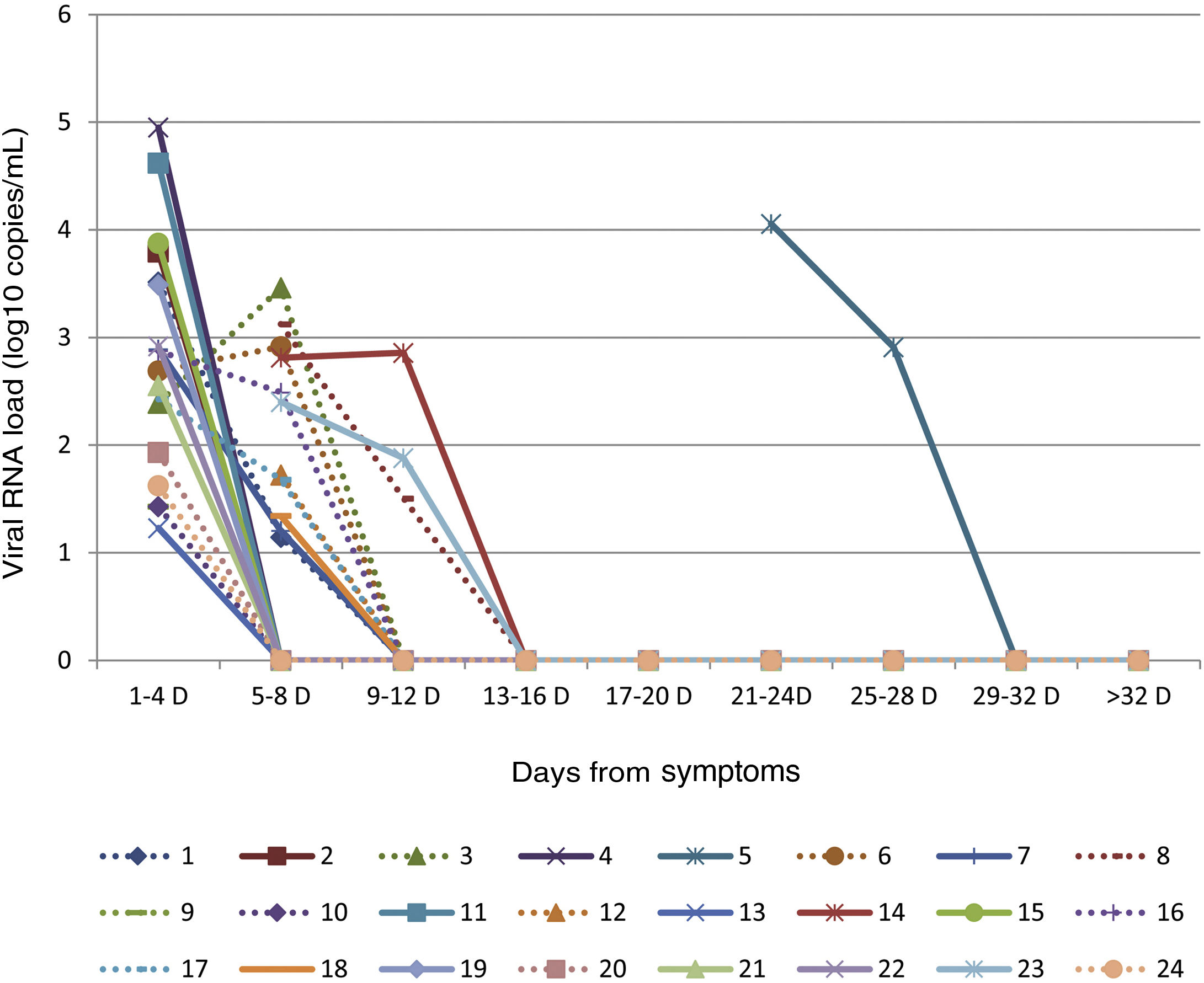
Influenza A (H1N1)pdm09 viral clearance kinetics in hospitalized children | Anales de Pediatría Children are the main source of transmission and reservoir of influenzavirus. It is believed that control of the virus is poorer in the paediatric analesdepediatria.org

@a_kruschke - A.Kruschke

👀 Children under 10 years of age were more affected by the 2018/19 influenza A(H1N1)pdm09 epidemic in Canada: possible cohort effect following the 2009 influenza pandemic https://www.ncbi.nlm.nih.gov/pmc/articles/PMC6470369/

Children under 10 years of age were more affected by the 2018/19 influenza A(H1N1)pdm09 epidemic in Canada: ‎possible cohort effect following the 2009 influenza pandemic Findings from the community-based Canadian Sentinel Practitioner Surveillance Network (SPSN) suggest children were more affected by the 2018/19 influenza A(H1N1)pdm09 epidemic. To compare the age distribution of A(H1N1)pdm09 cases in 2018/19 to ... pmc.ncbi.nlm.nih.gov

@a_kruschke - A.Kruschke

*🤔 What about co-infections with Covid? Do we have to fear a "Twindemic"? IMO (many may contest it), the Covid waves will soon crumble, assuming the A(H1N1)pdm09 strain stays dominant. There's known interference between this strain and SARS-CoV-2👇.

@a_kruschke - A.Kruschke

@UseBy2022 Disagree. It's a combined effect. Viral interference study by professor Y. Kawaoka, one of the leading Influenza specialists. "..viral interference between SARS-CoV-2 and influenza A(H1N1)pdm09, A(H3N2), or B/Victoria-lineage virus has been reported." https://www.ncbi.nlm.nih.gov/pmc/articles/PMC9835431/

Are twindemics occurring? The emergence and spread of severe acute respiratory syndrome coronavirus 2 (SARS‐CoV‐2), which causes coronavirus disease (COVID‐19), prompted worldwide COVID‐19 surveillance. To investigate the impact of COVID‐19 on influenza activity, we used ... pmc.ncbi.nlm.nih.gov

@a_kruschke - A.Kruschke

▶️ Please be aware that co-infections with other respiratory viruses/bacteria will probably happen. The recurring infections of everybody during the last two years has weakened our immune system. Please consider yourself as "vulnerable for Influenza". 😷😷😷😷😷😷😷😷😷😷

@a_kruschke - A.Kruschke

@reSeeIt save Thread

Saved - November 30, 2024 at 11:27 AM
reSee.it AI Summary
I explored a study on how the SARS-CoV-2 spike protein may enter heart muscle cells via the endolysosomal pathway, promoting ISGylation in human iPSC-derived cardiomyocytes. The researchers addressed myocarditis concerns, noting they used a spike protein concentration 10,000 times higher than what mRNA vaccines deliver. Although the spike protein levels post-infection were significantly higher than those after vaccination, this research sheds light on late cardiac symptoms following COVID-19, highlighting the complexities of understanding these effects.

@a_kruschke - A.Kruschke

💓💓💓 👀 SARS-CoV-2 スパイクタンパク質が心筋細胞に侵入する可能性のある経路👇 SARS-CoV-2 スパイク受容体結合ドメインは内部移行し、ヒト人工多能性幹細胞由来心筋細胞のタンパク質 ISGylation を促進する (大阪🇯🇵2023)

@a_kruschke - A.Kruschke

💓💓💓 👀 Possible pathway SARS-CoV-2 spike protein can enter heart muscle cells.👇 SARS-CoV-2 spike receptor-binding domain is internalized and promotes protein ISGylation in human induced pluripotent stem cell-derived cardiomyocytes (Osaka 🇯🇵2023) https://www.nature.com/articles/s41598-023-48084-7
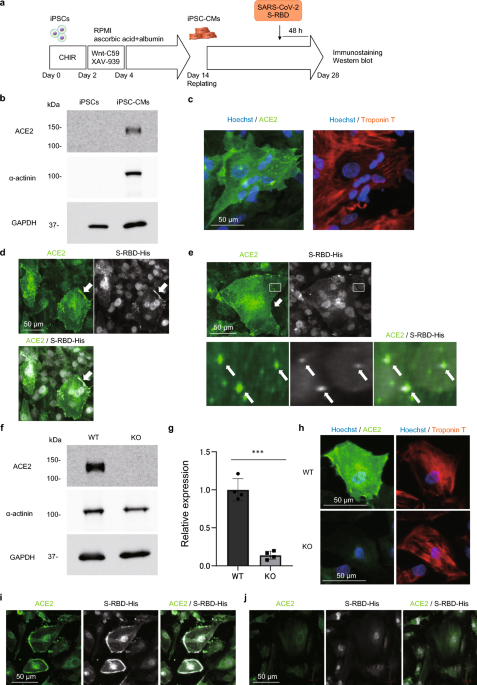
SARS-CoV-2 spike receptor-binding domain is internalized and promotes protein ISGylation in human induced pluripotent stem cell-derived cardiomyocytes - Scientific Reports Although an increased risk of myocarditis has been observed after vaccination with mRNA encoding severe acute respiratory syndrome coronavirus 2 spike protein, its underlying mechanism has not been elucidated. This study investigated the direct effects of spike receptor-binding domain (S-RBD) on human cardiomyocytes differentiated from induced pluripotent stem cells (iPSC-CMs). Immunostaining experiments using ACE2 wild-type (WT) and knockout (KO) iPSC-CMs treated with purified S-RBD demonstrated that S-RBD was bound to ACE2 and internalized into the subcellular space in the iPSC-CMs, depending on ACE2. Immunostaining combined with live cell imaging using a recombinant S-RBD fused to the superfolder GFP (S-RBD-sfGFP) demonstrated that S-RBD was bound to the cell membrane, co-localized with RAB5A, and then delivered from the endosomes to the lysosomes in iPSC-CMs. Quantitative PCR array analysis followed by single cell RNA sequence analysis clarified that S-RBD-sfGFP treatment significantly upregulated the NF-kβ pathway-related gene (CXCL1) in the differentiated non-cardiomyocytes, while upregulated interferon (IFN)-responsive genes (IFI6, ISG15, and IFITM3) in the matured cardiomyocytes. S-RBD-sfGFP treatment promoted protein ISGylation, an ISG15-mediated post-translational modification in ACE2-WT-iPSC-CMs, which was suppressed in ACE2-KO-iPSC-CMs. Our experimental study demonstrates that S-RBD is internalized through the endolysosomal pathway, which upregulates IFN-responsive genes and promotes ISGylation in the iPSC-CMs. nature.com

@a_kruschke - A.Kruschke

「結論として、SARS-CoV-2 S-RBD は、エンドリソソーム経路を通じて ACE2 を介して取り込まれ、IFN 応答遺伝子を上方制御し、ヒト iPSC-CM の ISGylation を促進しました。」 https://t.co/C1ktnV7EEG

@a_kruschke - A.Kruschke

🤔▪️著者らは、心筋炎の問題に明確に取り組んでいます。 予防接種。 しかし、彼らが使用したスパイクタンパク質の量は、mRNA ワクチンから予想される量より 10,000 倍多かったです。

@a_kruschke - A.Kruschke

「イメージング実験と転写プロファイリングに使用された S-RBD の濃度 (> 600 ng/mL) は、推定される血清濃度よりも低かった SARS-CoV-2 感染後の S タンパク質濃度 (2500 ~ 17,500 ng/mL) ですが、mRNA ワクチン接種後の濃度 (20 ~ 100 pg/mL) よりも高かったです。」

@a_kruschke - A.Kruschke

🤔▪️この研究は、症候性心筋損傷に関して特に興味深いです。 SARS-CoV-2感染後。 ウイルスの複製がもはや起こっていないにもかかわらず、スパイクタンパク質が長期間検出され得ることは他のところで示されています。

@a_kruschke - A.Kruschke

この研究で使用されたスパイクタンパク質の量は感染時よりも 3 ~ 4 倍少ないため、スパイクに匹敵すると推定しています。 新型コロナウイルス感染症後の患者におけるタンパク質残基。

@a_kruschke - A.Kruschke

🤔🤔🤔 私の個人的な結論: 重要な基礎研究であり、感染後の晩期心臓症状を理解するための🧩確実な研究です。 mRNA の場合は、数桁の違いがあるため、これは困難です。

@a_kruschke - A.Kruschke

@reSeeIt save thread

Saved - November 30, 2024 at 11:25 AM

@a_kruschke - A.Kruschke

ADE 🇨🇳👀 https://t.co/4N3KDLWYzq https://t.co/g9ThiSS9Pg

@EmiNakayama7 - Emi E. Nakayama MD, PhD

中国はゼロコロナ政策撤廃時に、公式には8万人しか死者数を数えていないが、少なくとも187万人の死者が出たと考えられている。 不活化ワクチンは効果が弱いどころか、抗N抗体によるADE of cytokine productionによる重症化が懸念される中で、シノバック・シノファームは成績が良いと騙されていた人は

@a_kruschke - A.Kruschke

@reSeeIt save thread

Saved - November 30, 2024 at 10:57 AM
reSee.it AI Summary
I've been exploring the often-overlooked role of the lymphatic system in various health issues, particularly in LongCovid patients. It's crucial to recognize that not all edema is cardiovascular. Vaccination effects, especially regarding lymphadenopathy, are significant, as seen in studies showing hyperreactive lymph nodes post-vaccination. This swelling can hinder lymph flow, impacting overall health. Additionally, SARS-CoV-2 and its spike proteins may affect lymphatic vessels, leading to complications. Understanding these connections is vital for effective treatment strategies.

@a_kruschke - A.Kruschke

Lymphatic system... 🪼🪼🪼🪼🪼🪼🪼🪼🪼🪼🪼🪼🪼 ... has always been underestimated in medicine. I think it's worth treating LongCovid patients by keeping in mind their lymphatic drainage problems. Not every edema is cardiovascular.

@a_kruschke - A.Kruschke

Let me start with the simple, (because mechanics) part. As nearly all people are vaccinated, often repeatedly, it's worth to look at their effects first. Later I will focus on SARS-CoV-2 infection.

@a_kruschke - A.Kruschke

Lymphatic swelling is also a dilemma for radiologic diagnostics in cancer patients. Lymphnodes are essential in tumor staging for correct therapy.

@a_kruschke - A.Kruschke

This article recommended an increase in the follow-up imaging interval from 4–12 weeks to more than 12 weeks, as they found lymphadenopathy for several months after vaccination. https://www.ncbi.nlm.nih.gov/pmc/articles/PMC9096715/#r5

Follow-up of COVID-19 Vaccine–related Axillary Lymphadenopathy before 12 Weeks Is Unnecessary pmc.ncbi.nlm.nih.gov

@a_kruschke - A.Kruschke

An Israeli study, published in March 2021 measured hyper reactive lymph nodes by PET-CT, after BioNtech Pfizer vaccines. Their astonishing findings were hyperreactive supraclavicular lymphnodes in 9% of participants after the second injection. 💥 👇 https://www.ncbi.nlm.nih.gov/pmc/articles/PMC8003894/

Hypermetabolic lymphadenopathy following administration of BNT162b2 mRNA Covid-19 vaccine: incidence assessed by [18F]FDG PET-CT and relevance to study interpretation Nationwide mass vaccination against Covid-19 started in Israel in late 2020. Soon we identified on [18F]FDG PET-CT studies vaccine-associated hypermetabolic lymphadenopathy (VAHL) in axillary or supraclavicular lymph nodes (ASLN) ipsilateral to the ... pmc.ncbi.nlm.nih.gov

@a_kruschke - A.Kruschke

Hyperreactive lymph nodes means swelling, and also diminished the normal lymph flow. It's a mechanical problem. Similar to flooring, the transport of ugly substances will be hindered.

@a_kruschke - A.Kruschke

Supraclavicular, you'll also find "Virchow's node", last lymph nodes station of the main lymph vessel of our body (ductus thoracicus). Ductus thoracicus carries the lymph of the entire lower and upper left half of the body. (Red markings is supraclavicular lymph nodes)

@a_kruschke - A.Kruschke

👆 the picture is taken from this article. Lymphadenopathy (enlarged lymph nodes) https://aneskey.com/lymphadenopathy-2/

Lymphadenopathy Chapter 226 Lymphadenopathy Michelle Freshman Definition and Epidemiology Lymphadenopathy refers to lymph nodes that have enlarged or changed in consistency. Lymph nodes typically vary from 0.5 to 2.5 cm ( to 1 inch) in diameter, averaging about 1 cm,1 and are characterized by number, size, shape, texture, mobility, tenderness, and surrounding skin involvement. Three quarters of patients… aneskey.com

@a_kruschke - A.Kruschke

Very interesting details about the way of LNP-coated mRNA vaccines is found in this article, written by professor Miyazakia The lymphatic system and COVID-19 vaccines Masayuki Miyasaka (2022) https://www.ncbi.nlm.nih.gov/pmc/articles/PMC9630830/

The lymphatic system and COVID-19 vaccines Understanding the precise mechanism of vaccine-induced protection and the immune correlates of protection against coronavirus disease 2019 (COVID-19) is crucially important for developing next-generation vaccines that confer durable and protective ... pmc.ncbi.nlm.nih.gov

@a_kruschke - A.Kruschke

Due to their size, there is the "remarkable feature of the COVID-19 mRNA vaccines is that they can be readily incorporated into the lymphatic system" [..] as "particles with a size range of 10 to 100 nm readily enter into the lymphatics."

@a_kruschke - A.Kruschke

[..] "In the draining LNs, although most phagocytic cells can internalize the mRNA vaccine, macrophages within the subcapsular sinus and dendritic cells (DCs) within the interfollicular area are the main groups that abundantly take up specific antigens."

@a_kruschke - A.Kruschke

As professor Miyazaka concludes, "mRNA translation in muscle cells does not seem to play a major role in the induction of protective immune responses against SARS-CoV-2." So the reaction of lymph nodes are essential for mRNA's effective translation.

@a_kruschke - A.Kruschke

There's another, more critical problem, that apparently is linked to the spikeproteins, as also described for AstraZeneca vaccine. SARS-CoV-2 is not only targeting the epithelial cells, but also the inner layer of the lymphatic vessels.

@a_kruschke - A.Kruschke

Fibrin clots were also found in lymphatic vessels in lungs. It correlated with the presence of intralymphatic NETs. https://ashpublications.org/bloodadvances/article/6/24/6249/486280/Lymphatic-coagulation-and-neutrophil-extracellular

@a_kruschke - A.Kruschke

Researchers "...found abundant evidence of intravascular and interstitial coagulation, and interestingly, many intact lymphatic vessels also contained fibrin clots (Figure 1). " https://t.co/ofVe0zFIop

@a_kruschke - A.Kruschke

For explication of NETosis please refer to DR.DOGGIE's description 👇 in blood vessels. https://t.co/i4cGLqJDgj

@a_kruschke - A.Kruschke

For treatment of LongCovid patients, it will be useful to keep in mind that internal organs are also drained by the lymphatic system. Swelling of guts or ureter may lead to secondary effects like malassimilation of nutrition, obstruction and nephropathy.

@a_kruschke - A.Kruschke

Thanks for reading. https://t.co/F9t5An6EPJ

@a_kruschke - A.Kruschke

@reSeeIt save thread

Saved - November 30, 2024 at 10:42 AM
reSee.it AI Summary
患者は診療所に行くべきで、特にアスリートは心筋炎の兆候に注意が必要です。アスリートとは、厳しいトレーニングを積んだ人々で、心臓が肥大しやすいです。この肥大は心筋炎のリスクを高め、特にワクチン接種後に注意が必要です。心筋炎は診断が難しく、症状が出た場合は医師の診察を受け、スポーツを中止することが重要です。心筋細胞の修復は難しいため、慎重に行動することが推奨されます。

@a_kruschke - A.Kruschke

この時点で、患者が診療所に行くべきであることは明らかです。 しかし、特によく訓練されたアスリートが注意すべき兆候はありますか? 私は心筋炎の経験からも話し、格闘技や競技スポーツを長年練習してきました。/..1

@Salalalove - Salala

今週から、深部静脈血栓症、血栓性静脈炎、増えています。 起座呼吸を伴う心不全で救急搬送された方は「接種してから胸が痛くなった」と。 弁膜症、ACSは否定的。心筋炎疑い。

@a_kruschke - A.Kruschke

../私が言う「アスリート」とは、学生時代から厳しいトレーニングを積み、週5時間以上の集中トレーニングを行っている人を指します。 😅😅😅これらの人々は、特に成長期に集中的にトレーニングを行うと、心臓が肥大します💓. /..2 https://ja.m.wikipedia.org/wiki/%E3%82%B9%E3%83%9D%E3%83%BC%E3%83%84%E5%BF%83%E8%87%93

スポーツ心臓 - Wikipedia ja.m.wikipedia.org

@a_kruschke - A.Kruschke

../ この心臓の肥大は、多くの場合、トレーニング セッションの終了後も後退しません。そのため、私は元アスリートにも話をしています。 残念ながら、これらのアスリートの心臓は、通常の心臓よりも心筋炎にかかりやすいのです。これはコロナウイルス以前から存在し、/..3

@a_kruschke - A.Kruschke

../同僚の心臓突然死を記憶しているアスリートも少なくない。コロナウイルスのワクチン接種によりリスクが大幅に上昇したため💉、アスリートが亡くなる前に心筋炎を見分ける方法を説明したいと思います。/..4

@a_kruschke - A.Kruschke

../ 心筋炎とは、心筋の炎症を意味します。 (-itis は最後の音節であり、炎症反応を意味します。) 心筋炎は、体内で炎症反応を引き起こす細菌、ウイルス、またはワクチンによって引き起こされる可能性があります。 場合によっては、実際の感染から数週間後まで体が反応しません。/..5

@a_kruschke - A.Kruschke

/..したがって、アスリートとして、感染後の心筋炎の可能性を常に考慮することが重要です。 一般に、危険が高まるこの段階は約 6 週間続きます。/..6 https://www.herzstiftung.de/infos-zu-herzerkrankungen/herzmuskelentzuendung/ursachen


hen der Herzmuskelentzündung | Herzstiftung Erfahren Sie, wie Infektionen eine Myokarditis oder Herzmuskelentzündung auslösen. Die Deutsche Herzstiftung e.V. informiert über Ursachen. herzstiftung.de

@a_kruschke - A.Kruschke

/..心筋炎は診断が難しい。 MRI と生検のオプションが行われることはめったにないので、アスリートは「血液検査と超音波検査は正常です」という声明だけに頼るべきではないと思います。 アスリートは自分の体を知っているので、彼の話を聞いてください❗🫠/..7

@a_kruschke - A.Kruschke

/..心筋炎の徴候 (運動選手の場合): 💓 パフォーマンスが 10% 以上制限される、 💓 脈拍が異常に増加する、 💓 安静時の心拍数が 70/分を超える。 💓重要❗ 日中(通常の仕事)の気温は夕方(ベッド)よりも高い。 ...夕方の気温が 0.5°C 高くなる通常の 1 日のコースが逆転します! /..8

@a_kruschke - A.Kruschke

/..❗💓❗💓❗💓私が言ったように、これらは兆候であり、決定的な診断ではありません. 医師の診察を受け、それまですべてのスポーツ (サイクリングを含む) を中止してください。 医師が心筋炎を明確に診断していなくても、体の世話をしてください. 症状が続く場合は、/..9

@a_kruschke - A.Kruschke

/..スポーツを6週間完全に禁止することをお勧めします(自分の祖母であるかのように行動してください...) すでに傷ついた心筋細胞はもう修復できないので、なるべく数を減らすようにする。スポーツ禁止というのはそういうことです。/10. 💓💓💓💓💓💓💓💓

@a_kruschke - A.Kruschke

@reSeeIt save thread

Saved - November 30, 2024 at 10:36 AM
reSee.it AI Summary
I discussed a study comparing asymptomatic individuals who received mRNA vaccinations to those who did not. The findings revealed that those vaccinated 1-180 days prior showed increased myocardial FDG uptake on PET/CT scans. However, this increase was not observed in patients scanned more than 180 days post-vaccination. This research highlights the critical period of risk for asymptomatic individuals, suggesting a six-month sports ban post-SARS-CoV-2 infection, similar to bacterial myocarditis guidelines.

@a_kruschke - A.Kruschke

💓心筋炎 🇯🇵ワクチン接種(mRNA)を受けた2人対ワクチン接種を受けていない無症状の人々を対象とした研究。 無症候性 SARS-CoV-2 ワクチン接種済みおよび非ワクチン接種患者における PET/CT での心筋 18F-FDG 取り込みの評価 https://pubs.rsna.org/doi/10.1148/radiol.230743?url_ver=Z39.88-2003&rfr_id=ori:rid:crossref.org&rfr_dat=cr_pub%20%200pubmed…

@a_kruschke - A.Kruschke

https://t.co/3ur9fva3DL

@a_kruschke - A.Kruschke

Conclusion "Compared to nonvaccinated patients, asymptomatic patients who received their 2nd vaccination 1-180 days prior to imaging showed increased myocardial FDG uptake on PET/CT." https://t.co/HKKNB1KfsZ

@a_kruschke - A.Kruschke

朗報:リバーシブルです💓❣️ 「2回目の[..]ワクチン接種後1~180日後にPET/CTを受けた無症候性患者は、ワクチン接種を受けていない患者と比較して画像上の心筋[..]取り込みの増加が示されましたが、ワクチン接種後180日以上経過して画像化された患者ではそうではありませんでした。」

@a_kruschke - A.Kruschke

* 💓💓💓今回の研究は、無症状の人々のリスクが高まる期間について重要な情報を提供する。 もちろん症状のある患者にも。 これまでのところ、他のウイルス性心筋炎の例に基づいて、3か月で十分だと考えていました。 https://t.co/gy3gXnUNmu

@a_kruschke - A.Kruschke

🤔🤔🤔💓💓💓 SARS-CoV-2 と 💉コロナウイルス - 心筋炎の後、スポーツを 3 か月禁止することも理にかなっていると思います。❣️ 理由:https://t.co/zIWxj8i5cQ

@a_kruschke - A.Kruschke

‼️‼️💓💓どうやら、SARS-CoV-2の場合は、細菌性心筋炎の場合と同様に、丸6か月間(180日間)のスポーツ禁止が必要のようだ。🤔🤔🤔

@a_kruschke - A.Kruschke

@reSeeIt save thread

Saved - November 30, 2024 at 10:27 AM
reSee.it AI Summary
I came across a study comparing myocardial 18F-FDG uptake in asymptomatic individuals who received two mRNA vaccine doses versus those who were unvaccinated. It’s interesting to see how vaccination status might influence cardiac health in these cases.

@a_kruschke - A.Kruschke

💓 myocarditis 🇯🇵 study in x2 vaccinated (mRNA) vs unvaccinated asymptomatic people. Assessment of Myocardial 18F-FDG Uptake at PET/CT in Asymptomatic SARS-CoV-2-vaccinated and Nonvaccinated Patients https://pubs.rsna.org/doi/10.1148/radiol.230743?url_ver=Z39.88-2003&rfr_id=ori:rid:crossref.org&rfr_dat=cr_pub%20%200pubmed…

@a_kruschke - A.Kruschke

@bioerorist

Saved - November 30, 2024 at 8:22 AM
reSee.it AI Summary
I found a Japanese site dedicated to LongCovid information, detailing various treatment techniques for both doctors and patients. The approaches are intriguing, and there are videos available in English or with YouTube subtitles for translation.

@a_kruschke - A.Kruschke

🐌 👀 Japanese site for LongCovid information. Different techniques for treatment are described, for doctors and patients. Very interesting approaches. Some videos in English, or can be translated by using the YouTube subtitles function. 🐌🐌🐌. http://longcovid.jp

新型コロナ後遺症 新型コロナ後遺症を専門に診察する医師が、情報を公開していくサイト longcovid.jp

@a_kruschke - A.Kruschke

@1goodtern @HarrySpoelstra @kasza_leslie

Saved - November 29, 2024 at 12:46 PM
reSee.it AI Summary
I responded to Emmanuel's doubts about my statements regarding the immune response to COVID-19 variants, particularly XBB. I shared findings from several studies indicating that while neutralizing antibodies may be ineffective against certain Omicron sublineages, T-cell responses remain largely intact. I introduced fictional characters, Pierre and Maria Virginia, to illustrate how their immune responses differ based on vaccination and infection history. I emphasized the risks of cytokine storms, especially for those with stronger T-cell responses, and the importance of being aware of symptoms associated with severe COVID-19.

@a_kruschke - A.Kruschke

A response to Emmanuel @ejustin46, who doubts my statements.😊

@a_kruschke - A.Kruschke

体は XBB に対する中和抗体を生成できなくなります。 予防接種を受けているかどうかは関係ありません。 したがって、免疫系の残りの部分が仕事をしなければなりません。 これはサイトカインストームの増加につながります。 その結果、特に肺の細胞が大量の液体を生成します。

@a_kruschke - A.Kruschke

First, let me introduce a paper, published in December 2022 by the inventors of BioNTech/Pfizer vaccine, with co-authors from the UK, Israel and Germany. I hope, nobody will suspect the authors being "anti-Vaxx".

@a_kruschke - A.Kruschke

Progressive loss of conserved spike protein neutralizing antibody sites in Omicron sublineages is balanced by preserved T-cell recognition epitopes https://www.biorxiv.org/content/10.1101/2022.12.15.520569v1.full

Progressive loss of conserved spike protein neutralizing antibody sites in Omicron sublineages is balanced by preserved T-cell recognition epitopes bioRxiv - the preprint server for biology, operated by Cold Spring Harbor Laboratory, a research and educational institution biorxiv.org

@a_kruschke - A.Kruschke

The authors " investigated neutralizing activity of immune sera from individuals who received three or four doses [..] mRNA COVID-19 vaccines (BNT162b2/mRNA-1273 homologous or heterologous regimens) w/o subsequent breakthrough infection by different Omicron sublineages."

@a_kruschke - A.Kruschke

Findings: "Together these data show that [...] sublineages BA.2.75.2 and XBB have evolved to largely evade neutralizing antibody responses in vaccinated individuals and in those with breakthrough infections with previous and currently circulating Omicron sublineages."

@a_kruschke - A.Kruschke

"We found that B-cell epitopes [..] were altered [..] particularly [..] in BA.2.75.2 and XBB (≤12% conservation), .."

@a_kruschke - A.Kruschke

".. 80% of CD8+ and ~70% CD4+ T-cell epitopes were fully conserved in Omicron sublineages including [..], BQ.1.1, and XBB [..], suggesting that T-cell responses against Omicron sublineages may remain largely intact in individuals immunized with wild-type strain-based vaccines."

@a_kruschke - A.Kruschke

The second paper I will present is a study from China, published in Cell in May 2023 confirmed the findings of Miuk et al., investigating the sera of probands after triple vaccination with an inactivated vaccine.

@a_kruschke - A.Kruschke

Omicron BQ.1.1 and XBB.1 unprecedentedly escape broadly neutralizing antibodies elicited by prototype vaccination https://www.cell.com/cell-reports/fulltext/S2211-1247(23)00543-0?_returnURL=https%3A%2F%2Flinkinghub.elsevier.com%2Fretrieve%2Fpii%2FS2211124723005430%3Fshowall%3Dtrue "Nearly all neutralizing antibodies (nAbs) partly or totally lose their neutralization against BQ.1.1 and XBB.1."

@a_kruschke - A.Kruschke

"Structure analysis and functional verification reveal that N460K and F486V/S contribute to the increased neutralization resistances of BQ.1.1 and XBB.1[..]."

@a_kruschke - A.Kruschke

The third study I want to present, was published by Professor Yoshihiro Kawaoka's group (University of Tokyo), in Lancet, January 2023. Humoral immune evasion of the omicron subvariants BQ.1.1 and XBB https://www.thelancet.com/journals/laninf/article/PIIS1473-3099(22)00816-7/fulltext.

@a_kruschke - A.Kruschke

The authors "evaluated the neutralising ability of antibodies in plasma from three different groups against BQ.1.1 and XBB clinical isolates."

@a_kruschke - A.Kruschke

They compared individuals with (1.) three doses of the mRNA BNT162b2 and/or mRNA-1273. (2.) four doses of the mRNA BNT162b2 and/or mRNA-1273. (3.) three doses of monovalent BNT162b2 or mRNA-1273 before the BA.2 breakthrough infection.

@a_kruschke - A.Kruschke

They concluded "that the omicron sublineages BQ.1.1 and XBB effectively evade current humoral immunity induced by mRNA vaccines or natural infection." --- I will not summarize the characteristics of T-cells but leave this to others.

@a_kruschke - A.Kruschke

Now I'll focus on clinical outcome. As mentioned above, the effect of neutralizing antibodies is negligible for XBB. However, the T-cell response remains intact. Therefore, we tumbled back into a situation similar to pre-vaccine times. Let's look at some research from 2020.

@a_kruschke - A.Kruschke

First, I want to present a study of Mount Sinai, New York, published in Nature, August 2020. An inflammatory cytokine signature predicts COVID-19 severity and survival https://www.nature.com/articles/s41591-020-1051-9
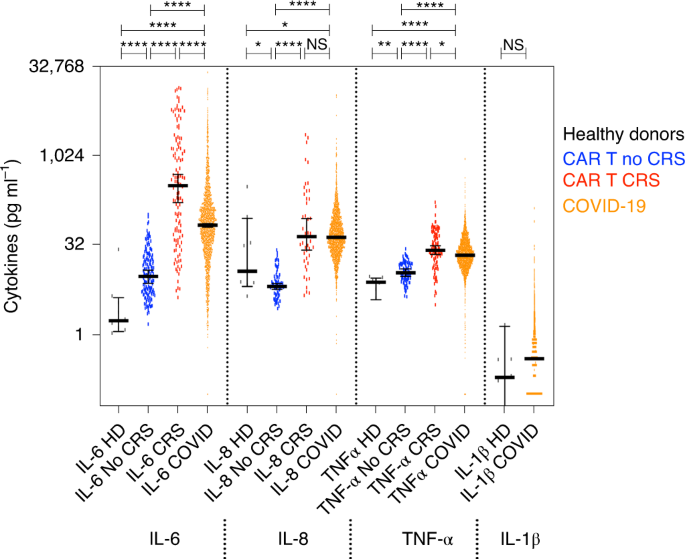
An inflammatory cytokine signature predicts COVID-19 severity and survival - Nature Medicine Several studies have revealed that the hyper-inflammatory response induced by severe acute respiratory syndrome coronavirus 2 (SARS-CoV-2) is a major cause of disease severity and death. However, predictive biomarkers of pathogenic inflammation to help guide targetable immune pathways are critically lacking. We implemented a rapid multiplex cytokine assay to measure serum interleukin (IL)-6, IL-8, tumor necrosis factor (TNF)-α and IL-1β in hospitalized patients with coronavirus disease 2019 (COVID-19) upon admission to the Mount Sinai Health System in New York. Patients (n = 1,484) were followed up to 41 d after admission (median, 8 d), and clinical information, laboratory test results and patient outcomes were collected. We found that high serum IL-6, IL-8 and TNF-α levels at the time of hospitalization were strong and independent predictors of patient survival (P < 0.0001, P = 0.0205 and P = 0.0140, respectively). Notably, when adjusting for disease severity, common laboratory inflammation markers, hypoxia and other vitals, demographics, and a range of comorbidities, IL-6 and TNF-α serum levels remained independent and significant predictors of disease severity and death. These findings were validated in a second cohort of patients (n = 231). We propose that serum IL-6 and TNF-α levels should be considered in the management and treatment of patients with COVID-19 to stratify prospective clinical trials, guide resource allocation and inform therapeutic options. Elevated levels of serum IL-6 and TNF-α at the time of hospitalization are independent and significant predictors of clinical outcome in two cohorts of patients with COVID-19. nature.com

@a_kruschke - A.Kruschke

The authors showed in hospitalized patients, "that high serum IL-6, IL-8 and TNF-α levels at the time of hospitalization were strong and independent predictors of patient survival (P < 0.0001, P = 0.0205 and P = 0.0140, respectively)."

@a_kruschke - A.Kruschke

"Notably, when adjusting for disease severity, common laboratory inflammation markers, hypoxia and other vitals, demographics, and a range of comorbidities, IL-6 and TNF-α serum levels remained independent and significant predictors of disease severity and death."

@a_kruschke - A.Kruschke

The authors also show the effect of different treatment on outcome and interleukin levels. The findings were confirmed by a smaller second group.

@a_kruschke - A.Kruschke

For involvement of interleukin in "white lung", I'll just leave two interesting papers . From Ghent University (Belgium): The pathophysiology of ‘happy’ hypoxemia in COVID-19 https://respiratory-research.biomedcentral.com/articles/10.1186/s12931-020-01462-5

The pathophysiology of ‘happy’ hypoxemia in COVID-19 - Respiratory Research The novel coronavirus disease 2019 (COVID-19) pandemic is a global crisis, challenging healthcare systems worldwide. Many patients present with a remarkable disconnect in rest between profound hypoxemia yet without proportional signs of respiratory distress (i.e. happy hypoxemia) and rapid deterioration can occur. This particular clinical presentation in COVID-19 patients contrasts with the experience of physicians usually treating critically ill patients in respiratory failure and ensuring timely referral to the intensive care unit can, therefore, be challenging. A thorough understanding of the pathophysiological determinants of respiratory drive and hypoxemia may promote a more complete comprehension of a patient’s clinical presentation and management. Preserved oxygen saturation despite low partial pressure of oxygen in arterial blood samples occur, due to leftward shift of the oxyhemoglobin dissociation curve induced by hypoxemia-driven hyperventilation as well as possible direct viral interactions with hemoglobin. Ventilation-perfusion mismatch, ranging from shunts to alveolar dead space ventilation, is the central hallmark and offers various therapeutic targets. respiratory-research.biomedcentral.com

@a_kruschke - A.Kruschke

And a case report: Happy hypoxia in critical COVID-19 patient: A case report in Tangerang, Indonesia https://physoc.onlinelibrary.wiley.com/doi/10.14814/phy2.14619

@a_kruschke - A.Kruschke

I've focused on showing the similarities today and 2020. For me, that's the main message: XBB is equalizing the risk for the group of 30-60 years old people. Other effects look minor or interact with each other. Let's do more details later. Let's do Science, not Philosophy.

@a_kruschke - A.Kruschke

Next chapter. I will introduce some fictional characters. It will bring the explanation a little closer to everyday life. Let's start with two characters. I would like to emphasize that these are descriptions for illustration only, not criticism.

@a_kruschke - A.Kruschke

All persons acted according to their own or official rules and "did everything right". However, everyone finds themselves in a different situation. This is my starting point. Let's see what are the pros and cons.

@a_kruschke - A.Kruschke

First, there's Pierre, (💉, 💉, 💉, BA.2🦠, BA.5-bi-💉)

@a_kruschke - A.Kruschke

@ejustin46

@a_kruschke - A.Kruschke

Second is Maria Virginia (without any antigen contact) (You'll find a more detailed description in the 🔗 links above. )

@a_kruschke - A.Kruschke

@ejustin46 Let me introduce another fictional character. I'll call her Maria Virginia. She lives in Northern Italy.

@a_kruschke - A.Kruschke

Let's talk first about Maria Virginia. No vaccine, no infection. So no memory or plasmacells for SARS-CoV-2. Maria has an intact immune system. So, she's not unprotected.

@a_kruschke - A.Kruschke

She also owns some plasmacells for non-SARS-CoV-2 coronavirus (hCoV) she catches during her live. Some of these hCoV-memories might be crossreacting with SARS-CoV-2.

@a_kruschke - A.Kruschke

Lets compare to Pierre. Since both the infection with BA.2 and the vaccination with bivalent BA.5 are more than 6 months in the past, the neutralizing antibodies can no longer be detected. Let's say they don't exist anymore.

@a_kruschke - A.Kruschke

But Pierre got B-memory/plasma cells of Wuhan type (WT) from vaccination. These will remain for years or even lifelong. He also got memory T-cells.

@a_kruschke - A.Kruschke

The survival time of memory cells after a single antigen contact was previously assumed to be only a few months. However, a Canadian study could still detect memory cells of the different types after 8 months. https://www.science.org/doi/10.1126/science.abf4063

@a_kruschke - A.Kruschke

The study measured convalescents of WT, i.e. comparable to the memory cells induced by mRNA vaccine.

@a_kruschke - A.Kruschke

Back to our protagonist.... Due to his infection with Omicron BA.2, Pierre also has B-memory cells against N-protein. (Just keep it in mind, well see them again later...) Memory cells against S-protein-BA.5 were formed very little due to immune imprinting.

@a_kruschke - A.Kruschke

Immune memory is going to sleep 😴💤....

@a_kruschke - A.Kruschke

Today, let's be prepared for infection by XBB. Neutralizing antibodies don't play a rule any longer. More important now is the other immune reactions.

@a_kruschke - A.Kruschke

Let's skip the theme of cross reactivity of non- SARS-CoV-2 coronavirus. Pierre and Maria Virginia both live in Europe and have never been infected by SARS-CoV (2003) or MERS. The other hCoV-memories should be comparable for both protagonists.

@a_kruschke - A.Kruschke

It was shown that memory T-cell still fit on XBB.

@a_kruschke - A.Kruschke

".. 80% of CD8+ and ~70% CD4+ T-cell epitopes were fully conserved in Omicron sublineages including [..], BQ.1.1, and XBB [..], suggesting that T-cell responses against Omicron sublineages may remain largely intact in individuals immunized with wild-type strain-based vaccines."

@a_kruschke - A.Kruschke

Maria has none. Pierre's memory T-cells will react quicker and at higher level than Maria's naive tell population.

@a_kruschke - A.Kruschke

The following article published in April 2022, compared the response of naive (blue) vs. memory T-cell response. Pierre (red line) has a clear advantage in time, compared to Maria (blue line). The advantage consists in 2 weeks (CD4+) to 3 weeks (CD8+).

@a_kruschke - A.Kruschke

As CD4+ cells act on B-cells activation, Pierre will get neutralizing antibodies about 2 weeks earlier than Maria. This is important for the outcome in moderate to severe illness. Also, Pierre's cytotoxic T-cell activity against the virus is faster and higher than Maria's.

@a_kruschke - A.Kruschke

Disentangling the relative importance of T cell responses in COVID-19: leading actors or supporting cast? (April 2022). (Please keep in mind, article was published in the first phase of Omicron, where neutralizing antibodies still matched partly) https://www.nature.com/articles/s41577-022-00716-1
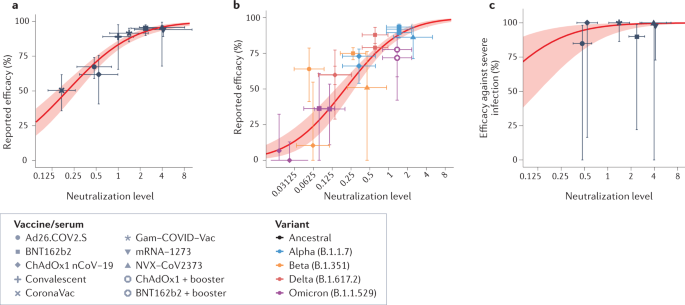
Disentangling the relative importance of T cell responses in COVID-19: leading actors or supporting cast? - Nature Reviews Immunology The rapid development of multiple vaccines providing strong protection from severe acute respiratory syndrome coronavirus 2 (SARS-CoV-2) infection has been a major achievement. There is now compelling evidence for the role of neutralizing antibodies in protective immunity. T cells may play a role in resolution of primary SARS-CoV-2 infection, and there is a widely expressed view that T cell-mediated immunity also plays an important role in vaccine-mediated protection. Here we discuss the role of vaccine-induced T cells in two distinct stages of infection: firstly, in protection from acquisition of symptomatic SARS-CoV-2 infection following exposure; secondly, if infection does occur, the potential for T cells to reduce the risk of developing severe COVID-19. We describe several lines of evidence that argue against a direct impact of vaccine-induced memory T cells in preventing symptomatic SARS-CoV-2 infection. However, the contribution of T cell immunity in reducing the severity of infection, particularly in infection with SARS-CoV-2 variants, remains to be determined. A detailed understanding of the role of T cells in COVID-19 is critical for next-generation vaccine design and development. Here we discuss the challenges in determining a causal relationship between vaccine-induced T cell immunity and protection from COVID-19 and propose an approach to gather the necessary evidence to clarify any role for vaccine-induced T cell memory in protection from severe COVID-19. Understanding of the role of T cells in SARS-CoV-2 infection is of great importance for the design of next-generation vaccines. In this Perspective, Davenport and colleagues discuss the challenges in determining a causal relationship between vaccine-induced T cell immunity and protection from COVID-19. nature.com

@a_kruschke - A.Kruschke

All good for Pierre? As presented above, the characteristics of SARS-CoV-2 acute infections consist in severe cytokinestorm during the first days. Cytokinstorm is expression of dysregulated T-cell response.

@a_kruschke - A.Kruschke

First, I want to present a study of Mount Sinai, New York, published in Nature, August 2020. An inflammatory cytokine signature predicts COVID-19 severity and survival https://www.nature.com/articles/s41591-020-1051-9

An inflammatory cytokine signature predicts COVID-19 severity and survival - Nature Medicine Several studies have revealed that the hyper-inflammatory response induced by severe acute respiratory syndrome coronavirus 2 (SARS-CoV-2) is a major cause of disease severity and death. However, predictive biomarkers of pathogenic inflammation to help guide targetable immune pathways are critically lacking. We implemented a rapid multiplex cytokine assay to measure serum interleukin (IL)-6, IL-8, tumor necrosis factor (TNF)-α and IL-1β in hospitalized patients with coronavirus disease 2019 (COVID-19) upon admission to the Mount Sinai Health System in New York. Patients (n = 1,484) were followed up to 41 d after admission (median, 8 d), and clinical information, laboratory test results and patient outcomes were collected. We found that high serum IL-6, IL-8 and TNF-α levels at the time of hospitalization were strong and independent predictors of patient survival (P < 0.0001, P = 0.0205 and P = 0.0140, respectively). Notably, when adjusting for disease severity, common laboratory inflammation markers, hypoxia and other vitals, demographics, and a range of comorbidities, IL-6 and TNF-α serum levels remained independent and significant predictors of disease severity and death. These findings were validated in a second cohort of patients (n = 231). We propose that serum IL-6 and TNF-α levels should be considered in the management and treatment of patients with COVID-19 to stratify prospective clinical trials, guide resource allocation and inform therapeutic options. Elevated levels of serum IL-6 and TNF-α at the time of hospitalization are independent and significant predictors of clinical outcome in two cohorts of patients with COVID-19. nature.com

@a_kruschke - A.Kruschke

Increased interleukin-6 and macrophage chemoattractant protein-1 are associated with respiratory failure in COVID-19 (November 2020, Norway) https://www.nature.com/articles/s41598-020-78710-7
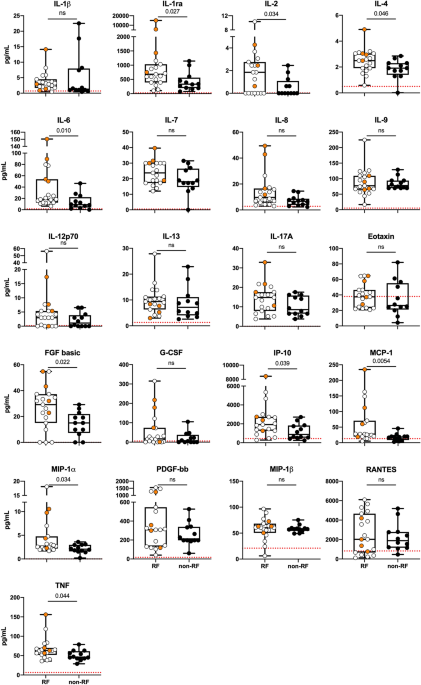
Increased interleukin-6 and macrophage chemoattractant protein-1 are associated with respiratory failure in COVID-19 - Scientific Reports In SARS-CoV-2 infection there is an urgent need to identify patients that will progress to severe COVID-19 and may benefit from targeted treatment. In this study we analyzed plasma cytokines in COVID-19 patients and investigated their association with respiratory failure (RF) and treatment in Intensive Care Unit (ICU). Hospitalized patients (n = 34) with confirmed COVID-19 were recruited into a prospective cohort study. Clinical data and blood samples were collected at inclusion and after 2–5 and 7–10 days. RF was defined as PaO2/FiO2 ratio (P/F) < 40 kPa. Plasma cytokines were analyzed by a Human Cytokine 27-plex assay. COVID-19 patients with RF and/or treated in ICU showed overall increased systemic cytokine levels. Plasma IL-6, IL-8, G-CSF, MCP-1, MIP-1α levels were negatively correlated with P/F, whereas combinations of IL-6, IP-10, IL-1ra and MCP-1 showed the best association with RF in ROC analysis (AUC 0.79–0.80, p < 0.05). During hospitalization the decline was most significant for IP-10 (p < 0.001). Elevated levels of pro-inflammatory cytokines were present in patients with severe COVID-19. IL-6 and MCP-1 were inversely correlated with P/F with the largest AUC in ROC analyses and should be further explored as biomarkers to identify patients at risk for severe RF and as targets for improved treatment strategies. nature.com

@a_kruschke - A.Kruschke

"Severe SARS-CoV-2 infection cause a dysregulated immune response resulting in excessive production of inflammatory cytokines and chemokines that contributes to the pathogenesis. "

@a_kruschke - A.Kruschke

"Indeed, viral evasion of initial immune responses and a subsequent immunological misfiring causing collateral tissue injury in infected organs seem to play major roles in severe COVID-19. "

@a_kruschke - A.Kruschke

"Further, evidence suggests that a suboptimal or inappropriate T cell response producing pro-inflammatory cytokines may contribute to tissue damage in critically ill COVID-19 patients."

@a_kruschke - A.Kruschke

Finally, because of quicker and higher T-cell response, Pierre is at higher risk for cytokinestorm during the first 2 weeks.

@a_kruschke - A.Kruschke

The B-memory cell response lacking in XBB, this might bring a different risk profile in vaccinated /preinfected patients (Pierre), compared to naive patients (Maria Virginia). The risk of longer infection is certainly higher for Maria.

@a_kruschke - A.Kruschke

But it's necessary to be aware of "happy hypoxia" in vaccinated/preinfected patients. Are we aware of this?

@a_kruschke - A.Kruschke

Does everyone know the other symptoms of cytokinestorm? It's not to be scared, but to be prepared. https://my.clevelandclinic.org/health/diseases/22700-cytokine-release-syndrome


Cytokine Release Syndrome: Symptoms, What It Is & Treatment Cytokine release syndrome happens when your immune system responds to infection more aggressively than it should. It can also happen after immunotherapy. my.clevelandclinic.org

@a_kruschke - A.Kruschke

https://t.co/MgcntAUmCi

@a_kruschke - A.Kruschke

@reSeeIt save thread

Saved - November 29, 2024 at 12:28 PM

@a_kruschke - A.Kruschke

🌊🌊🌊🌊👀👀👀 https://www.mhlw.go.jp/stf/seisakunitsuite/bunya/0000121431_00461.html

新型コロナウイルス感染症に関する報道発表資料(発生状況)2024年 新型コロナウイルス感染症に関する報道発表資料(発生状況)2024年を掲載しています。 mhlw.go.jp

@a_kruschke - A.Kruschke

これらは7月12日に公開されたデータです。https://www.mhlw.go.jp/stf/seisakunitsuite/bunya/0000121431_00461.html

新型コロナウイルス感染症に関する報道発表資料(発生状況)2024年 新型コロナウイルス感染症に関する報道発表資料(発生状況)2024年を掲載しています。 mhlw.go.jp

@a_kruschke - A.Kruschke

@reSeeIt save thread

Saved - November 29, 2024 at 12:22 PM
reSee.it AI Summary
I shared a post about a study revealing that human peripheral blood mononuclear cells (PBMCs) form lipid droplets in response to SARS-CoV-2 spike proteins. This research highlights a significant cellular response to the virus, emphasizing the implications for understanding COVID-19. I also tagged several individuals in my post to engage in further discussion about this finding.

@a_kruschke - A.Kruschke

👀🧐 ヒト PBMC [ヒト末梢血単核球] はスパイクタンパク質に応答して脂肪滴を形成する (🇩🇪🇨🇭2023) Human PBMCs [human peripheral blood mononuclear cells] Form Lipid Droplets in Response to Spike Proteins (🇩🇪🇨🇭2023) https://mdpi.com/2076-2607/11/11/2683

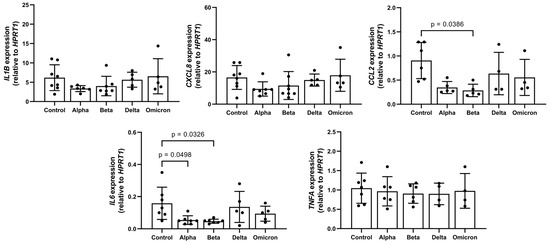
Human PBMCs Form Lipid Droplets in Response to Spike Proteins Intracellular lipid droplets (LDs) can accumulate in response to inflammation, metabolic stresses, and other physiological/pathological processes. Herein, we investigated whether spike proteins of SARS-CoV-2 induce LDs in human peripheral blood mononuclear cells (PBMCs) and in pulmonary microvascular endothelial cells (HPMECs). PBMCs or HPMECs were incubated alone or with endotoxin-free recombinant variants of trimeric spike glycoproteins (Alpha, Beta, Delta, and Omicron, 12 µg/mL). Afterward, cells were stained with Oil Red O for LDs, cytokine release was determined through ELISA, and the gene expression was analyzed through real-time PCR using TaqMan assays. Our data show that spikes induce LDs in PBMCs but not in HPMECs. In line with this, in PBMCs, spike proteins lower the expression of genes involving lipid metabolism and LD formation, such as SREBF1, HMGCS1, LDLR, and CD36. On the other hand, PBMCs exposed to spikes for 6 or 18 h did not increase in IL-1β, IL-6, IL-8, MCP-1, and TNFα release or expression as compared to non-treated controls. Thus, spike-induced LD formation in PBMCs seems to not be related to cell inflammatory activation. Further detailed studies are warranted to investigate in which specific immune cells spikes induce LDs, and what are the pathophysiological mechanisms and consequences of this induction in vivo. mdpi.com

@ThailandMedicaX - Thailand Medical News

COVID-19 News: German And Swiss Study Finds That Human PBMCs Form Lipid Droplets In Response To SARS-CoV-2 Spike Proteins! https://www.thailandmedical.news/news/covid-19-news-german-and-swiss-study-finds-that-human-pbmcs-form-lipid-droplets-in-response-to-sars-cov-2-spike-proteins #COVID19 #News #Research #SARSCoV2 #PBMCs #USA #America #Germany #Switzerland #London #Thailand #Canada #France #Israel #Gaza #India
COVID-19 News: German And Swiss Study Finds That Human PBMCs Form Lipid Droplets In Response To SARS-CoV-2 Spike Proteins! - Thailand Medical News COVID-19 News: The ongoing COVID-19 pandemic has continually posed a profound impact on global health and scientific research. In the quest to better understand the virus and its effects on human cells, a recent collaborative study conducted by researchers from Hannover Medical School in Germany, ExcellGene SA in Switzerland, and École Polytechnique Fédérale de Lausanne in Swi... thailandmedical.news

@a_kruschke - A.Kruschke

@bioerorist @HarrySpoelstra @DavidJoffe64 @keisuke4713 @gadboit @sabuchanhakoda1

Saved - November 29, 2024 at 11:57 AM

@a_kruschke - A.Kruschke

💉👀. WHO: New initiative launched to advance mRNA vaccine development against human avian influenza (H5N1) 29 July 2024 https://who.int/news/item/29-07-2024-new-initiative-launched-to-advance-mrna-vaccine-development-against-human-avian-influenza-(h5n1)…

New initiative launched to advance mRNA vaccine development against human avian influenza (H5N1) A new project aiming to accelerate the development and accessibility of human avian influenza (H5N1) messenger RNA (mRNA) vaccine candidates for manufacturers in low- and middle-income countries has been launched today. The Argentinian manufacturer Sinergium Biotech will lead this effort leveraging the World Health Organization (WHO) and the Medicines Patent Pool (MPP) mRNA Technology Transfer Programme. who.int

@a_kruschke - A.Kruschke

@reSeeIt save thread

Saved - November 29, 2024 at 11:42 AM
reSee.it AI Summary
I shared information about the most dangerous animals in the world, highlighting a recent case in Fresno County where a resident died from rabies after a suspected bat bite. It's a reminder to be cautious around wild or unfamiliar animals.

@a_kruschke - A.Kruschke

The most dangerous animals in the world 🦇🦇🦇 🧐🤔👀

@CAPublicHealth - California Department of Public Health

CDPH is reminding Californians to be cautious around wild or unfamiliar animals after a Fresno County resident, suspected to have been bitten by a bat in Merced County, died from a rabies infection. Learn more: https://www.cdph.ca.gov/Programs/OPA/Pages/NR24-040.aspx

California Department of Public Health The California Department of Public Health is dedicated to optimizing the health and well-being of Californians cdph.ca.gov

@a_kruschke - A.Kruschke

@reSeeIt save conversation

Saved - November 29, 2024 at 11:36 AM
reSee.it AI Summary
I shared a discussion about multifocal meningoencephalitis following COVID-19 vaccination, referencing a case of an 84-year-old Japanese man who died 10 weeks after his fourth shot. The findings highlight positive immunostaining for spike protein from the vaccine in various brain regions.

@a_kruschke - A.Kruschke

💉🧠👀 COVID-19ワクチン接種後の多巣性髄膜脳炎 (🇯🇵 2024) Multifocal meningoencephalitis after vaccination against COVID-19 (🇯🇵 2024) h/t @K9FCR @AaronOtsuka https://onlinelibrary.wiley.com/doi/10.1111/pin.13491

@a_kruschke - A.Kruschke

Interesting japanese discussion 👇 https://t.co/w60T0tnt1Z

@K9FCR - Stray

84歳日本人男性、4回目接種10週間後死亡。論文タイトルは 「コロナワクチン接種後の多巣性髄膜脳炎」 図4&5スパイクSとヌクレオカプシドNの免疫染色 a)d)は陽性対照(おそらくコロナ感染者の肺)でSもNも陽性 b)e)視床とc)d)橋と、図5 下垂体と副腎、いずれもS陽性、N陰性、つまりワクチン由来S! https://t.co/ugajrthnDz

Saved - November 29, 2024 at 11:24 AM
reSee.it AI Summary
The discussion centers on the immune response to different COVID-19 vaccines. It highlights that the Novavax protein-based vaccine does not induce IgG4 class switching, while mRNA vaccines do, resulting in IgG3 levels being significantly higher after adenovirus vector and protein subunit vaccines. IgG4 antibodies, produced by mRNA vaccines, are less effective in forming immune complexes but are less inflammatory. The conversation also speculates on factors influencing this class switch, including the role of lipid nanoparticles and the duration of spike protein expression.

@RolandBakerIII - Roland Baker

@systematic_fun @a_kruschke @newstart_2024 IgG4 class switch was not observed following four doses of Novavax protein-based SARS-CoV-2 vaccine & IgG3 levels were 10x higher them after mRNA vaccines. https://www.journalofinfection.com/article/S0163-4453(24)00053-7/fulltext

@RolandBakerIII - Roland Baker

@systematic_fun @a_kruschke @newstart_2024 IgG3 produced by adenovirus vector vaccines and NVX protein subunit vaccines are 12% of total IgG antibodies but do 80% of the work neutralizing SARS-CoV-2. Natural infection also produce IgG3 predominantly.

@RolandBakerIII - Roland Baker

@systematic_fun @a_kruschke @newstart_2024 But mRNA vaccines class switch to IgG4 antibodies that lack certain FC related functions and are not as good at forming immune complexes. But they are also less inflammatory. If your first two doses were mRNA the class switch has already been fixed.

@RolandBakerIII - Roland Baker

@systematic_fun @a_kruschke @newstart_2024 Since the class switch involves genetic deletion of IgG1, IgG2 and IgG3 there is no way for a memory IgG4 B-cell to ever switch back from IgG4 to IgG3. So the only way to resolve this would be for these memory B-cells to wane entirely which they eventually will.

@RolandBakerIII - Roland Baker

@systematic_fun @a_kruschke @newstart_2024 mRNA vaccines induce memory B-cells but not long lived plasma cells (LLPCs). So they may only last a few years before new B-cells are recruited.

@RolandBakerIII - Roland Baker

@systematic_fun @a_kruschke @newstart_2024 Interestingly if we block IL-4 and IL-13 receptors & tumor necrosis factor this IgG4 class switching doesn't occur during mRNA vaccination. And it doesn't occur using any other vaccine platform. So it is mRNA specific. https://www.medrxiv.org/content/10.1101/2023.09.29.23296354v1

Suppressed IgG4 class switching in dupilumab- and TNF inhibitor-treated patients after repeated SARS-CoV-2 mRNA vaccination medRxiv - The Preprint Server for Health Sciences medrxiv.org

@RolandBakerIII - Roland Baker

@systematic_fun @a_kruschke @newstart_2024 The class switch even occurs if you first have two vector vaccination and then to mRNA vaccinations. https://www.frontiersin.org/journals/immunology/articles/10.3389/fimmu.2023.1309997/full

Frontiers | Appearance of tolerance-induction and non-inflammatory SARS-CoV-2 spike-specific IgG4 antibodies after COVID-19 booster vaccinations BackgroundUnderstanding the characteristics of the humoral immune responses following COVID-19 vaccinations is crucial for refining vaccination strategies an... frontiersin.org

@RolandBakerIII - Roland Baker

@systematic_fun @a_kruschke @newstart_2024 IgG4 only exists in certain primates and Fab arm exchange only exists in humans due to Arg409 (versus lysine). We simply lack a complete context of why this might be advantageous to humans.

@RolandBakerIII - Roland Baker

@systematic_fun @a_kruschke @newstart_2024 So it is clearly an issue with the mRNA vaccines but we don't know why specifically. Speculation includes elements of the LNP, pseudouridine use or simply elevated expression of spike for much longer than expected and longer than adenovirus. The last option seems plausible.

@a_kruschke - A.Kruschke

@RolandBakerIII @systematic_fun @newstart_2024 Missed the last one. It's intriguing that 2xAZ+2xmRNA show also the IgG4 effect. I would favor the third possibility: PEG-related. AZ contains no LNP, but the polysorbate80.

Saved - November 29, 2024 at 11:21 AM
reSee.it AI Summary
The discussion centers on the challenges of developing broadly neutralizing antibodies for viral infections, particularly COVID-19. One participant highlights the difficulty of finding a neutralization site that the virus cannot mutate. They propose using mRNA technology to produce antibodies, noting potential safety concerns and the complexity of immune responses. Another participant questions the efficacy of antibodies in treating COVID and raises concerns about mRNA's long-term effects, including issues with blood-brain barrier penetration and the risk of antibody-dependent enhancement.

@gadboit - Guy Gadboit

in the wild. At low prevalence, but wide use of this antibody could soon change that... The "holy grail" for a broadly neutralizing antibody is: can you find a place to neutralize the virus that it *can't* mutate with destroying itself? The answer is still no. If it was that...

@gadboit - Guy Gadboit

easy the virus probably wouldn't have made it this far through evolution. Perhaps more interesting than news of yet another antibody therapy that won't work for long is the delivery mechanism. According to the reference for the new tech, antibody treatments are great because...

@gadboit - Guy Gadboit

they are safe and work at once. So why not deliver the abs instead via mRNA LNPs? This way the body's own cells make the antibodies, after a short delay, using far more complex biological pathways, with much greater potential for interesting side-effects? Although I think...

@gadboit - Guy Gadboit

mRNA vaccines have a lot to recommend them, including that they are a better emulation of a live infection than some other vaccine designs, resulting in the right immune response, using mRNA to create *antibodies* is completely different. Now we have other cells, mostly...

@gadboit - Guy Gadboit

monocytes producing antibodies, something they never usually do. LNPs have a strong adjuvant effect, so will we end up with the body making anti-idiotypic antibodies? We still have very limited knowledge of why mRNA vaccines have the side-effects that they do, but some may...

@gadboit - Guy Gadboit

be related to the LNPs, and therefore shared with this new therapy. The reason traditional antibody therapies are safe is because they are just antibodies. Obviously you can't assume this will still be the case if you completely change basically everything about the treatment...

@gadboit - Guy Gadboit

So what is the reason to use mRNA to create antibodies? My cynicism notwithstanding of course it isn't really to reduce safety. According to the reference, it's much cheaper. I trust those savings will be passed on to the consumer. END. h/t @a_kruschke

@a_kruschke - A.Kruschke

@gadboit Finding the "holy grail" by anticipating the future? That sounds more like Harry Potter to me than anything else. ..

@a_kruschke - A.Kruschke

@gadboit .. To be honest, antibodies are a very difficult therapeutic tool for COVID. Perhaps helping in very short time. But I also see it as very critical for the patient himself. Nobody can prevent reinfections. https://www.biorxiv.org/content/10.1101/2023.11.21.567575v1.full ..

SARS-CoV-2 monoclonal antibody treatment followed by vaccination shifts human memory B cell epitope recognition suggesting antibody feedback bioRxiv - the preprint server for biology, operated by Cold Spring Harbor Laboratory, a research and educational institution biorxiv.org

@a_kruschke - A.Kruschke

@gadboit ... Pack this then as mRNA into LNP, which has now shown difficult in terms of BBB passing and myocarditis discussion? mRNA with or without frameshift potential by pseudouridine?

@a_kruschke - A.Kruschke

@gadboit .. mRNA technology still has no stop codons. Using this for a virus with known ADE (look at SARS-1 and MERS, too...)? Ongoing long-term production of an mRNA-coded antibody that will meet a mutated variant in some months? Any other ideas to kill patients more quickly 🙊🙊🙊?

Saved - November 29, 2024 at 10:55 AM
reSee.it AI Summary
I shared insights about kombu, highlighting its health benefits, including its role in enhancing immune responses and its rich nutrient profile. I also provided a simple recipe for making dashi, a traditional soup stock from kelp. Different regions in Japan have unique tastes, and I mentioned how kombu is favored in Kansai cuisine. Additionally, I discussed dishes like salmon cooked in kelp rolls and cold rice balls with sour plums and seaweed, emphasizing their simplicity and deliciousness. Thank you to those who contributed recipes and ideas!

@a_kruschke - A.Kruschke

コンブ Kombu Dietary Supplementation with Low-Molecular-Weight Fucoidan Enhances Innate and Adaptive Immune Responses and Protects against Mycoplasma pneumoniae Antigen Stimulation https://www.ncbi.nlm.nih.gov/pmc/articles/PMC6471482/

Dietary Supplementation with Low-Molecular-Weight Fucoidan Enhances Innate and Adaptive Immune Responses and Protects against Mycoplasma pneumoniae Antigen Stimulation In this study, the low-molecular-weight (LMW) fucoidan, rich in fucose and sulfate, was extracted and purified from the edible brown seaweed, Laminaria japonica. In this study, we orally administered LMW fucoidan to mice for 6 weeks. We then ... pmc.ncbi.nlm.nih.gov

@a_kruschke - A.Kruschke

https://alchetron.com/Kombu

@a_kruschke - A.Kruschke

@a_kruschke - A.Kruschke

How to make Dashi 😋 Soup stock from kelp (Kombu). https://www.justonecookbook.com/how-to-make-dashi-jiru/
How to Make Dashi (The Ultimate Guide) Here's my ultimate guide to Dashi (Japanese Soup Stock). Learn about different types, ingredients, and how to use dashi in Japanese cooking. justonecookbook.com

@a_kruschke - A.Kruschke

Kelp/Kombu contains a lot of vitamins and minerals. (Translated from https://ja.m.wikipedia.org/wiki/%E3%82%B3%E3%83%B3%E3%83%96)

コンブ - Wikipedia ja.m.wikipedia.org

@a_kruschke - A.Kruschke

Thank you for the recipe @Salalalove. In different parts of Japan, different tastes.

@Salalalove - Salala

@a_kruschke マイコプラズマに!?本当ですか!😳 関西では特に、昆布を使った出汁が好まれます。 簡単なものなら、うどんが美味しいですね😋 https://www.kobayashi-foods.co.jp/washoku-no-umami/udon-dashi
おすすめのうどんのだしは関西風!だしがおいしいうどんの作り方 数あるうどんだしのなかで、ポピュラーな3種類のうどんだしを紹介しています。また自宅で簡単に本格うどんだしを楽しめるように作り方を丁寧に説明しています。 kobayashi-foods.co.jp

@a_kruschke - A.Kruschke

Salmon cooked in kelp rolls. 😋

@Salalalove - Salala

@a_kruschke 昆布巻き😋 https://www.nissui.co.jp/recipe/00775.html
さけの昆布巻き 「よろこぶ」から転じておめでたい食材とされる昆布は、おせち料理には欠かせません。甘塩さけと早煮昆布を使ってスピーディにつくれるので、毎日のお弁当やおつまみにも。 nissui.co.jp

@a_kruschke - A.Kruschke

https://www.nissui.co.jp/recipe/00775.html

さけの昆布巻き 「よろこぶ」から転じておめでたい食材とされる昆布は、おせち料理には欠かせません。甘塩さけと早煮昆布を使ってスピーディにつくれるので、毎日のお弁当やおつまみにも。 nissui.co.jp

@a_kruschke - A.Kruschke

👆

@a_kruschke - A.Kruschke

Cold rice balls with sour plums and seaweed.😋🙏

@momo61117806 - momo BH

@a_kruschke 梅干しと昆布のおにぎり。 簡単で美味しく作れると思います☺️https://www.kurashiru.com/recipes/2b247189-b641-474c-ad5a-f41a9cb7f880
旨味たっぷり 梅塩昆布おにぎり 作り方・レシピ | クラシル 「旨味たっぷり 梅塩昆布おにぎり」の作り方を簡単で分かりやすい料理レシピ動画で紹介しています。旨味たっぷり、梅塩昆布おにぎりのご紹介です。梅干しと塩昆布をごはんに混ぜこんで、旨味たっぷりのおにぎりに仕上げました。白いりごまの風味がアクセントとなっておいしいですよ。ぜひお試しくださいね。 kurashiru.com

@a_kruschke - A.Kruschke

https://t.co/PuWzTpcNq3

@a_kruschke - A.Kruschke

@reSeeIt save Thread

Saved - November 29, 2024 at 10:39 AM
reSee.it AI Summary
The conversation discusses the benefits of kelp in traditional medicine, highlighting its ability to alleviate phlegm and soften lumps. It also mentions the importance of iodine for thyroid health, especially in the context of COVID-19. One participant expresses gratitude and emphasizes the uplifting nature of kelp-based dishes.

@keisuke4713 - tune

中医学 昆布は化痰軟硬 https://www.uchidawakanyaku.co.jp/tamatebako/shoyaku_s.html?page=241 痰飲(水毒)を去り、塊を柔らかくする

生薬の玉手箱 【コンブ(昆布)】 - ウチダ和漢薬(旧サイト) uchidawakanyaku.co.jp

@a_kruschke - A.Kruschke

コンブ Kombu Dietary Supplementation with Low-Molecular-Weight Fucoidan Enhances Innate and Adaptive Immune Responses and Protects against Mycoplasma pneumoniae Antigen Stimulation https://www.ncbi.nlm.nih.gov/pmc/articles/PMC6471482/

Dietary Supplementation with Low-Molecular-Weight Fucoidan Enhances Innate and Adaptive Immune Responses and Protects against Mycoplasma pneumoniae Antigen Stimulation In this study, the low-molecular-weight (LMW) fucoidan, rich in fucose and sulfate, was extracted and purified from the edible brown seaweed, Laminaria japonica. In this study, we orally administered LMW fucoidan to mice for 6 weeks. We then ... pmc.ncbi.nlm.nih.gov

@keisuke4713 - tune

コロナも💉も甲状腺がやられるが ヨードが大切 https://t.co/4ccNsV7WM1

@keisuke4713 - tune

甲状腺ホルモン合成 甲状腺の健康補助 ヨウ素が豊富食品7つ https://www.youtube.com/watch?v=mqqx76uf0gU ヨウ素は必須微量ミネラル 不足 甲状腺腫、疲労、免疫系弱さ、代謝⬇️ 自閉症、体重⬆️不安、鬱? 昆布、アラメ、ひじき等海藻:ヨウ素食品の最大宝庫 クランベリー ヨーグルト 白インゲン 有機苺 ヒマラヤ水晶塩 🥔 https://t.co/TFGeL0Uzj5

@keisuke4713 - tune

@NA19H5hHBdTdrDr @AichanwithKonan @sabuchanhakoda1 @a_kruschke 実はコロナ禍に昆布問題は繋がります マフィア薩摩藩(幕府に木曽川の泛濫工事で大借金させられた)返済計画に、昆布・沖縄の黒砂糖で清国(中国)と密貿易 昆布は北海道から北前船で本州に運ばれ、富山の売薬商人を介して薩摩にもたらされ、琉球、清国まで流通 中医学で軟堅化痰⇨甲状腺結節等を散らす https://t.co/1p7tADWT9T

@a_kruschke - A.Kruschke

@keisuke4713 いつもありがとうございます👏👏。 それは大きな宝箱です。 🤣 リストに何かがありません。 この時期に人々に希望を与える。 (国際グループはパンデミックのトラウマを利用して死の恐怖を煽っています。🤬🤬🤬) 昆布を使った料理は抗うつ薬です。 🤣すでに動き始めています。

Saved - November 29, 2024 at 10:36 AM
reSee.it AI Summary
A user wished a happy new year and expressed hopes for protection and health. Another user requested an explanation of the artwork shared. The first user humorously asked for a simple explanation of a multidimensional image. They later described a church interior in Germany, comparing its structure to Asian scroll paintings.

@a_kruschke - A.Kruschke

遠くから明けましておめでとうございます。 保護と健康をお祈りします。 https://t.co/z8fbV9vrAs

@keisuke4713 - tune

@a_kruschke Frohes neues❗️ この絵の意味を簡単に教えていただけると有難いです 遠くの🇩🇪を身近に感じることができ、有難いです 🙇‍♂️🙏

@a_kruschke - A.Kruschke

@keisuke4713 🤣🤣🤣🤣🤣🤣🤣🤣🤣🤣🤣 多次元画像の意味を簡単に説明してください...運試しをします。

@a_kruschke - A.Kruschke

@keisuke4713 写真は、シュヴァルツヴァルトのフィリンゲン シュヴェニンゲンにある教会の内陣です。 少し違った方法で街の物語を写真で伝えます。 画像は、アジアのスクロール ペインティングに似た構造になっています。 部門を超えた部門で考えてください。 下の 4 分の 1 はフィリンゲンの街を表しており、...

Saved - November 29, 2024 at 10:24 AM

@a_kruschke - A.Kruschke

遠くから明けましておめでとうございます。 保護と健康をお祈りします。 https://t.co/z8fbV9vrAs

Saved - November 29, 2024 at 10:22 AM
reSee.it AI Summary
The discussion centers on the incubation period of a patient (pat4) and potential infection sources. One participant notes that pat4 was still in Shenzhen on December 27, making a travel-related infection unlikely. Others suggest that the simultaneous illness of family members indicates exposure to an infectious adult during a family gathering. References to studies highlight variations in incubation times, with one study providing useful epidemiological indicators despite data limitations. The conversation concludes with acknowledgment of the rarity of a 3-day incubation period.

@a_kruschke - A.Kruschke

@Engineer2The @BillyBostickson @gadboit @mbw61567742 @gdemaneuf Counting 5 days of incubation time also for pat4, it's Dec 27th, where he was still in Shenzhen. The family was traveling on Dec 29th. Even a travel related (airport, taxi,...) infection is rather unlikely for pat4, as 3 days is a rather short incu time.

@a_kruschke - A.Kruschke

@Engineer2The @BillyBostickson @gadboit @mbw61567742 @gdemaneuf For the relatives other than rel1(baby at hospital), they all got I'll the same day, which points to a family meeting/evening meal with an infectious adult. The incubation time of the relatives matches best the infectious period of pat4 (yellow), less for pat3. https://t.co/F201CiYw1q

@Engineer2The - TheEngineer2 🇨🇦

@a_kruschke @BillyBostickson @gadboit @mbw61567742 @gdemaneuf There are other instances where onsets differ by 3 days. They mostly occur during husband/wife pairing like this from Li et al 2020. M49 and F48 are husband and wife. The increased exposure time likely shortens time to onset. https://t.co/1UgZsJVyZO

@a_kruschke - A.Kruschke

@Engineer2The @BillyBostickson @gadboit @mbw61567742 @gdemaneuf Do you have a reference please? Unfortunately, the problem with many papers is the lack of sound experience from field work.

@Engineer2The - TheEngineer2 🇨🇦

@a_kruschke @BillyBostickson @gadboit @mbw61567742 @gdemaneuf Early Transmission Dynamics in Wuhan, China, of Novel Coronavirus–Infected Pneumonia DOI: 10.1056/NEJMoa2001316 https://www.nejm.org/doi/full/10.1056/NEJMoa2001316

@a_kruschke - A.Kruschke

@Engineer2The @BillyBostickson @gadboit @mbw61567742 @gdemaneuf Thanks. I'll have a look.

@a_kruschke - A.Kruschke

@Engineer2The @BillyBostickson @gadboit @mbw61567742 @gdemaneuf Nice study. I remember the figures. One of the first studies that provided useful epidemiological indicators despite the poor data situation. (Let's keep aside the affiliations of the authors.)

@a_kruschke - A.Kruschke

@Engineer2The @BillyBostickson @gadboit @mbw61567742 @gdemaneuf Agreed, there's one of the clusters with an incubation time of 3 days, but it's in the cluster 4. https://t.co/eGUPurDd2D

@a_kruschke - A.Kruschke

@Engineer2The @BillyBostickson @gadboit @mbw61567742 @gdemaneuf The yellow cases could be infected at the Wet market, too. https://t.co/qPRhJ7lQjb

@a_kruschke - A.Kruschke

@Engineer2The @BillyBostickson @gadboit @mbw61567742 @gdemaneuf However, the authors calculated the mean incubation time even higher. "The duration from illness onset to first medical visit for 45 patients with illness onset before January 1 was estimated to have a mean of 5.8 days (95% CI, 4.3 to 7.5),.."

@a_kruschke - A.Kruschke

@Engineer2The @BillyBostickson @gadboit @mbw61567742 @gdemaneuf This of course doesn't exclude the possibility of 3 days incubation time, but it is outside their CI. Possible, but rare, and therefore questionable.

Saved - November 29, 2024 at 8:23 AM
reSee.it AI Summary
I’ve noticed oarfish washing ashore in California, which are fascinating creatures. There's a legend in Japanese folklore about deep-sea fish appearing before earthquakes, but studies suggest this isn't useful for disaster mitigation. I found a rare sighting of one off Taiwan too.

@a_kruschke - A.Kruschke

Oarfish 🧐 Oarfish keep washing ashore in California. https://www.npr.org/2024/11/19/nx-s1-5196630/oarfish-california-japan-folklore

@a_kruschke - A.Kruschke

Fascinating creatures. https://youtu.be/y5E9QkyB27k?si=zGdGIJr483gZ0nv1

@a_kruschke - A.Kruschke

Is Japanese Folklore Concerning Deep-Sea Fish Appearance a Real Precursor of Earthquakes? (🇯🇵 2019) "...it can be concluded that a deep-sea fish appearance is not useful for disaster mitigation." https://pubs.geoscienceworld.org/ssa/bssa/article-abstract/109/4/1556/571628/Is-Japanese-Folklore-Concerning-Deep-Sea-Fish

@a_kruschke - A.Kruschke

The Legend of Japan’s ‘Earthquake Fish’ https://www.atlasobscura.com/articles/long-fish-predicts-earthquake-legend
The Legend of Japan's 'Earthquake Fish' The serpent-like oarfish has long been considered an omen of natural disaster. Scientists are shaking up that old superstition. atlasobscura.com

@a_kruschke - A.Kruschke

「地震魚」リュウグウノツカイが泳ぐ珍しい姿、台湾沖で撮影https://forbesjapan.com/articles/detail/64768?read_more=1

「地震魚」リュウグウノツカイが泳ぐ珍しい姿、台湾沖で撮影 | Forbes JAPAN 公式サイト(フォーブス ジャパン) リュウグウノツカイ(学名、Regalecus glesne)は、深度200〜1000mに住む深海生物だ。この種は世界最長の硬骨魚でもあり、体長は4m以上にも及ぶ。伝説上の動物「シーサーペント」目撃例の一部はリュウグウノツカイだったともされて... forbesjapan.com

@a_kruschke - A.Kruschke

@reSeeIt save thread

Saved - November 28, 2024 at 12:42 PM
reSee.it AI Summary
I found that consuming natto, rather than just soybeans, significantly reduced blood glucose levels in healthy adults after meals. Specifically, the rise in blood glucose was lower at 60 minutes and the overall glucose response was notably decreased compared to the control meal.

@a_kruschke - A.Kruschke

😋🍬👀 納豆、大豆が健常成人の食後血糖値に与える影響 Effect of Intake of Natto and Soybeans on Postprandial Blood Glucose Levels in Healthy Adults (🇯🇵 2009) https://www.jstage.jst.go.jp/article/seikatsueisei/53/4/53_4_257/_article

Effect of Intake of Natto and Soybeans on Postprandial Blood Glucose Levels in Healthy Adults Access full-text academic articles: J-STAGE is an online platform for Japanese academic journals. jstage.jst.go.jp

@a_kruschke - A.Kruschke

"..the natto meal, and not the soybean meal, significantly suppressed the rise in blood glucose level at 60 min compared to the control meal. Furthermore, the area under the glucose curve from 0 to 120 min after the natto meal was significantly smaller than for the control meal." https://t.co/jKmi5mo29L

Saved - November 28, 2024 at 12:39 PM
reSee.it AI Summary
The conversation begins with a discussion about the influence of microorganisms on life, highlighting their role in both causing and resolving diseases. The importance of coexisting with these microorganisms is emphasized. In response, the second participant mentions the significance of mitochondria and the comfort of a bed, suggesting that learning from fossils can provide insights. They then share personal health updates, noting a slight reduction in subcutaneous edema and improved tissue mobility, while also reporting concerning symptoms and adjustments in treatment.

@keisuke4713 - tune

@a_kruschke 生命は微生物🦠の影響を受け、 ある時は不治の病や痛い目に遭い、 ある時は不治の病や悩みが解決する ご先祖代々、何千年も何白万も続いている🤔 また、微生物🦠の力で 再起する❣️ 彼らの知恵を上手く利用❣️ 上手に付き合って共存💪👏

@a_kruschke - A.Kruschke

@keisuke4713 言いたいことはわかるんですけどね。 🦠❣️💪✨ 注目はミトコンドリア。ベッドが 🛏️🪶快適になってはじめて、残りの微生物は再び家にいるような気分になる。 化石から学ぶことは多いですね。 https://t.co/auC6Z16Vnn

@a_kruschke - A.Kruschke

@keisuke4713 🦊day 2 / 2日目。 効果や副作用は! 皮下のびまん性浮腫はやや減少し、組織はより可動的になっている。特に、手、前足、胸骨の前に顕著に現れる。 全く良くない‼️著しい体積負荷、頚静脈の鬱血。RR 150/100 😳 => 利尿↗️(トラセミド+🍌+塩分)。今日はナットウキナーゼの半量(1000FU)のみ。

Saved - November 28, 2024 at 12:25 PM
reSee.it AI Summary
The conversation discusses health and dietary practices, focusing on the use of natto kinase and the benefits of onions. One participant shares their experience with lymphatic swelling and the importance of smell and taste in healing. They mention ongoing treatments and suggest that eating onions can promote sweating. Another participant expresses surprise at the idea of sweating from onions and connects it to air pressure changes. The discussion also touches on the historical significance of onions in Nordic and Alpine cultures, highlighting their medicinal uses across seasons.

@a_kruschke - A.Kruschke

@keisuke4713 3日目 ❌ ナットウキナーゼ

@a_kruschke - A.Kruschke

@keisuke4713 Thank you 😊 I thought about it. Did continue today. Smell and taste are important in healing. 🦊1000FU 1 h ago. Feels good. 🙏

@a_kruschke - A.Kruschke

@keisuke4713 ...✅マトリックスからの水の動員は、すでに説明したように周辺から起こります。 🤢 問題は溶解物の除去です。 ローカル リアクション (temporary 10min ) 検索中およびハンド中。 通過時の結腸の腫れ; その結果、便秘になりやすくなります。 排尿と発汗も局所的に刺激します。 全身アレルギーなし.

@a_kruschke - A.Kruschke

@keisuke4713 🦊day 12 /12日目:固定リンパ浮腫の解消が肘と中下腿に達している👍。1000FU+ Cuを継続(+利尿+PREDが必要)。

@a_kruschke - A.Kruschke

@keisuke4713 アイデア: 新しい堆積物を防ぎ、組織の圧力を高めます。 また、玉ねぎをたくさん食べる => 発汗 ↗️. RRは正常です。

@a_kruschke - A.Kruschke

@keisuke4713 Air pressure last 2 weeks 過去2週間の空気圧

@keisuke4713 - tune

@a_kruschke 玉葱で発汗するんだ⁉️ 辛味甘味で辛甘化陽⇒発汗 あり得ますが、考えた事無かった❗️ しかも、気圧絡み❗️

@a_kruschke - A.Kruschke

@keisuke4713 "Lauk" ( pronounce: lö:ok)北欧とアルプスでは神聖な植物です。 北欧神話 : laukは地球上の他のすべての植物よりも先に成長した. 薬には3つの異なる応用形態があり、季節に応じて使用されます. 夏☀️🌿タマネギ Zwiebel 生の形でのアプリケーション。 品質:スパイシー、ウォーター、クール。 ...

@a_kruschke - A.Kruschke

@keisuke4713 ..虫刺され、浮腫、発熱に対して。 秋、冬🍂❄️タマネギ Zwiebel 蒸したり焼いたりして使います。 品質:甘く、暖かく、水分を移動します。 効能:せき、肺炎、震え、虚弱・心臓によるむくみ。 😋秋に食べる:オニオンケーキ(温めて食べる)、若いワイン🍷と。https://www.chefkoch.de/rezepte/1716851280413039/Einfacher-Zwiebelkuchen.html ...
Einfacher Zwiebelkuchen von chefkoch| Chefkoch Einfacher Zwiebelkuchen. Über 547 Bewertungen und für schmackhaft befunden. Mit ► Portionsrechner ► Kochbuch ► Video-Tipps! Jetzt entdecken und ausprobieren! chefkoch.de
Saved - November 28, 2024 at 12:22 PM
reSee.it AI Summary
I observed that a study on 14 healthy children aged 5-11 revealed a delayed induction of noninflammatory SARS-CoV-2 spike-specific IgG4 antibodies one year after BNT162b2 vaccination. While IgG1 and IgG3 dominated the antibody response five weeks post-vaccination, IgG4 levels were initially low but increased significantly over time. Notably, all children contracted Omicron after vaccination, and the findings suggest that IgG4 responses warrant further investigation, particularly regarding mRNA vaccination mechanisms.

@a_kruschke - A.Kruschke

💉👀 小児におけるBNT162b2ワクチン接種から1年後に、非炎症性SARS-CoV-2スパイク特異的IgG4抗体の誘導が遅れて検出された Delayed Induction of Noninflammatory SARS-CoV-2 Spike-Specific IgG4 Antibodies Detected 1 Year After BNT162b2 Vaccination in Children(🇩🇪2024) https://journals.lww.com/pidj/fulltext/9900/delayed_induction_of_noninflammatory_sars_cov_2.959.aspx

@a_kruschke - A.Kruschke

The study included 14 healthy children, ages 5-11 years old. The authors measured IgG4 antibodies following two 💉BNT162b2 vaccination (= original Pfizer BioNTech vaccine).

@a_kruschke - A.Kruschke

Two children have been infected before the vaccination. None had more than mild postvaccination reactions. All children became infected with Omicron after the vaccination.

@a_kruschke - A.Kruschke

"The children’s antibody response 5 weeks after the second BNT162b2 vaccination was dominated by the IgG1 and IgG3 subclasses, which subsequently decreased over time."

@a_kruschke - A.Kruschke

" By contrast, IgG2 and IgG4 levels were relatively low at week 5 after the second vaccination and increased in frequency until the late follow-up for both S1 and RBD (Fig. 1A and B)" https://t.co/bOjHFi9gw7

@a_kruschke - A.Kruschke

" Specifically, S1- and RBD-specific IgG4 antibody levels increased significantly 1 year after the second vaccination compared to baseline (Fig. 1C and D)."

@a_kruschke - A.Kruschke

"In summary, we report on increased spike-specific IgG4 levels in children 1 year after BNT162b2 vaccination, such as the effect observed in adults."

@a_kruschke - A.Kruschke

The authors conclude: "IgG4 responses should gain more attention in health and disease, especially in the context of mRNA vaccination. Understanding the unusual mechanism triggering IgG4 production is crucial [..]."

@a_kruschke - A.Kruschke

@reSeeIt save Thread

Saved - November 28, 2024 at 11:54 AM
reSee.it AI Summary
The conversation discusses the sudden spike in COVID-19 deaths in spring 2020, questioning why the virus remained quiet during winter. Evidence suggests that the virus spread globally by late 2019, with early cases detected in Europe and Brazil. One participant notes that the 2019-20 flu season was mild, contrasting with the surge in spring. Another contributor recalls that winter cases existed but were not fatal, highlighting symptoms experienced by individuals. The discussion also touches on regional treatment practices and local media reports.

@keisuke4713 - tune

コロナが2020年春に突然何千人も🙏出したのはなぜ? https://dailysceptic.org/2022/10/06/why-did-the-coronavirus-suddenly-cause-thousands-of-deaths-in-spring-2020-when-it-had-been-hanging-around-quietly-all-winter/ コロナが遅くとも2019年秋までに世界中に検出されずに広がり始めた証拠多数 2019/9欧州で既に流行 2019/11🇧🇷25廃水から検出
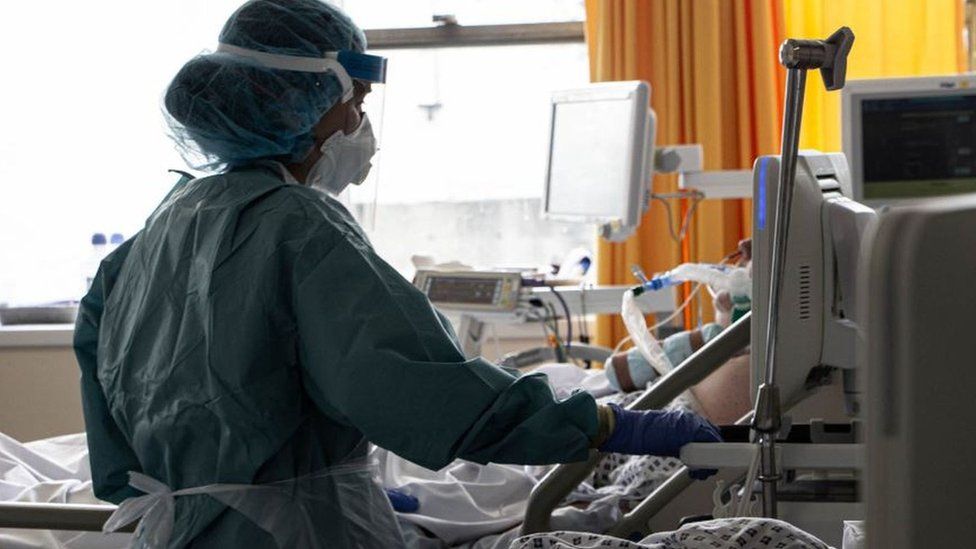
Why Did the Coronavirus Suddenly Cause Thousands of Deaths in Spring 2020 When it Had Been Hanging Around Quietly All Winter? – The Daily Sceptic There is no shortage of evidence that the coronavirus had begun spreading undetected all over the world by autumn 2019. Why then did it suddenly start causing large waves of deaths in spring 2020? dailysceptic.org

@keisuke4713 - tune

茶番demic 2019/9欧州で既に流行 🇮🇹北部Lombardy州 2019年後半〜麻疹状eruption起こした患者サンプル コロナの分子的証拠https://www.sciencedirect.com/science/article/pii/S0013935122013068 156例435サンプル コロナ感染の分子証拠13人 陽性者2人はpandemic期(2/12、16.7%、2020/3~2021/3) 11人はpandemic前(11/44、25%、2019 /8~2020/2)

Molecular evidence for SARS-CoV-2 in samples collected from patients with morbilliform eruptions since late 2019 in Lombardy, northern Italy As a reference laboratory for measles and rubella surveillance in Lombardy, we evaluated the association between SARS-CoV-2 infection and measles-like… sciencedirect.com

@keisuke4713 - tune

2019/11🇧🇷下水 SARS-CoV-2 RNA 存在 https://www.sciencedirect.com/science/article/pii/S0048969721012651?via%3Dihub

The presence of SARS-CoV-2 RNA in human sewage in Santa Catarina, Brazil, November 2019 Human sewage from Florianopolis (Santa Catarina, Brazil) was analyzed for severe acute respiratory syndrome coronavirus-2 (SARS-CoV2) from October 201… sciencedirect.com

@keisuke4713 - tune

しかし、2019-20年インフルエンザ季節は殆どの場所で軽度 例えば、2019-20年 インフルエンザ🇺🇸🙏率

@keisuke4713 - tune

イングランド🏴󠁧󠁢󠁥󠁮󠁧󠁿とウェールズ🏴󠁧󠁢󠁷󠁬󠁳󠁿2019-20年の冬の目立たない終わりが左側(10週目前)にあり 春のサージ(その後の波)とのコントラストは明らか

@keisuke4713 - tune

なぜコロナは冬の間ずっと静か❓ 2020年春に多く🙏 コロナはインフルより深刻な🦠でない 過剰🙏は全て2020/2と3月にどう対応したかで起きた 2020年春🇮🇹北部 過剰🙏異常 https://www.eugyppius.com/p/jonathan-engler-on-anomalies-in-the 2019/8市中感染あった場合 →超過🙏率なかった理由 pandemic前の感染報告全ての論文で過剰🙏なしを無視

Jonathan Engler on Anomalies in the Excess Death Statistics from Northern Italy in Spring 2020 Since we’re talking about the origins and early history of the SARS-2 outbreak, it’s worth having a look at Jonathan Engler’s intriguing analysis of the all-cause mortality data out of northern Italy in the earliest days of the outbreak. eugyppius.com

@a_kruschke - A.Kruschke

@keisuke4713 冬のコロナも静かではなかった。振り返ってみると、多くのケースを割り出すことができます。30代から50代の方が多かったですね。彼らは死ななかった。しかし、6週間も泪を流して...。症状について40℃以上の発熱が10日間続く、激しい咳が6週間以上続く、味覚・嗅覚の喪失、脳機能の低下(特に数学)/..1

@a_kruschke - A.Kruschke

@keisuke4713 /.. 北🇮🇹、/🇨🇭/西🇨🇵/、南🇩🇪。特に山間部。これらの地域の人々は、自分自身を治療します。医師はいない。/2.

@a_kruschke - A.Kruschke

@keisuke4713 多くの地方紙が報じている。そのうちの1つだけです。https://www.schwarzwaelder-bote.de/inhalt.colmar-noch-ein-frueher-corona-fall-im-elsass.61758b30-b80a-44fa-b18b-bd2c3659ddd3.html

Colmar: Noch ein früher Corona-Fall im Elsass Verdachtsfälle gab es frühzeitig. Pikant: Frankreichs Patient 0 ohne Kontakte nach China. schwarzwaelder-bote.de

@keisuke4713 - tune

@a_kruschke Elsass 🇩🇪語でエルザス 🇫🇷語でアルザス https://kotobank.jp/word/Elsass-1230550 面白い🙏
Elsassとは? 意味や使い方 - コトバンク 改訂新版 世界大百科事典 - Elsassの用語解説 - フランス北東部,ライン川左岸の地方。ドイツ語ではエルザスElsassと呼ぶ。現在はほぼバ・ラン県,オー・ラン県とベルフォール管区の範囲にあたる。 kotobank.jp

@a_kruschke - A.Kruschke

@keisuke4713 🇩🇪ELSASS 🇨🇵ALSACE ALSASS アルサス=地元の方言。 意味:Alamannen アラマンニ(部族、地図年481)+ .から..SASS Sittingより。 現在でもスイスやドイツとの共通語になっている。 ELSASSは国🇹が変わることが多い🤣。 https://www.adalar.ch/pages/geschichte/blutgericht-zu-cannstatt.php 🟥= Alamannen アラマンニ

ADALAR-SIPPE | Die Welt der Alemannen - Blutgericht zu Cannstatt adalar.ch
Saved - November 28, 2024 at 11:39 AM
reSee.it AI Summary
Molbio先生に感謝します。再接種を考えている方々にとって、IgG4の形成が自己免疫疾患に与える影響は重要です。コロナウイルスに関連するIgG4の研究が始まったばかりで、今後の結果に期待しています。後腹膜線維症についても言及し、この病気は非常にまれで、手術中に遭遇したことがあります。自己免疫やIgG4の関与が議論されており、治療法としてステロイド療法が効果を示したケースもあります。

@a_kruschke - A.Kruschke

Molbio先生ありがとうございます 再接種をお考えの皆様へ、とても大切なツイート🧵👇です。 IgG4 の形成は、自己免疫疾患の発症に関して過小評価されるべきではありません。 コロナウイルスに関連するIgG4の研究は始まったばかりです。 今後数週間でさらに多くの結果が得られることを期待しています。

@molbio08 - molbio08

いろいろコメント・質問をいただき、どうもありがとうございます。まとめて質問に回答します。まずは、IgG4がどのくらいの期間で減少していくのかということですが、私の周辺の研究者で二回接種後経時的に抗体価の変化を自分で採血して解析している方がいます。回答方々、そのデータを紹介します。

@a_kruschke - A.Kruschke

IgG4関連自己免疫疾患(オーモンド病、後腹膜線維症)に関する一般情報(シャリテ・ベルリンからの編集)https://nephrologie-intensivmedizin.charite.de/fuer_patienten/sprechstunden/igg4_assoziierte_autoimmunerkrankungen/#:~:text=Die%20IgG4%2Dassozierte%20Autoimmunerkrankung%20ist,Serumspiegeln%20die%20Krankheit%20identifiziert%20werden.

IgG4-assoziierte Autoimmunerkrankungen nephrologie-intensivmedizin.charite.de

@a_kruschke - A.Kruschke

最初の症例報告では、後腹膜線維症とコロナウイルスワクチン接種との関係について議論しています。https://pubmed.ncbi.nlm.nih.gov/36814401/

New-onset retroperitoneal fibrosis following COVID-19 mRNA vaccination: Coincidental or vaccine-induced phenomenon? - PubMed The Pfizer-BioNTech mRNA vaccine is a US Food and Drug Administration-approved coronavirus disease 2019 (COVID-19) vaccine. Although it is reported to be safe and effective, immune dysregulation leading to autoimmunity has become an area of concern. Retroperitoneal fibrosis (RPF) is an immune-mediat … pubmed.ncbi.nlm.nih.gov

@a_kruschke - A.Kruschke

後腹膜線維症は恐ろしい病気です。 これまでのところ非常にまれです。 腹部手術中に彼女を2回見ました。 組織は柔らかくはありませんが、貫通できない鎧に囲まれています。 冷凍カツレツを切ろうとしているようなものです。

@a_kruschke - A.Kruschke

🇯🇵 後腹膜線維症/骨膜炎の症例報告と治療。 ワクチン接種との関連は言及されていません。 ステロイド療法が奏効した広汎性後腹膜線維症の1例 A Case of Spreading Retroperitoneal Fibrosis Effectively Treated with Steroid Therapy https://www.jstage.jst.go.jp/article/ihj/advpub/0/advpub_22-470/_article

Importance of Awareness and Careful Follow-Up of Suspected IgG4-Related Periaortitis Access full-text academic articles: J-STAGE is an online platform for Japanese academic journals. jstage.jst.go.jp

@a_kruschke - A.Kruschke

まれな後腹膜疾患のまとめ。 多くの場合、原因は不明です。 自己免疫/IgG4 の関与が議論されています。 後腹膜病変を伴う希少疾患 Seltene Erkrankungen mit retroperitonealer Beteiligung https://doi.org/10.1007/978-3-642-39940-4_114

Seltene Erkrankungen mit retroperitonealer Beteiligung Neben dem Morbus Ormond existieren noch andere gutartige Erkrankungen, die das Retroperitoneum befallen können und oftmals ein typisches Erscheinungsbild haben. Zu diesen Erkrankungen zählen die Weber-Christiansche Erkrankung und die... link.springer.com

@a_kruschke - A.Kruschke

@reSeeIt save Thread

Saved - November 28, 2024 at 11:36 AM
reSee.it AI Summary
The discussion centers on the implications of IgG3 class switching induced by Novavax and its potential link to autoimmune disorders. Concerns arise about IgG4 antibodies specific to viral spikes and their ability to trigger immune reactions. Roland clarifies that IgG4 antibodies do not cause autoimmune diseases but can cross-react with self-tissues. He emphasizes that afucosylated antibodies pose a greater risk. Akruschke notes that IgG4-related illnesses are rare but acknowledges increasing cases, referencing specific conditions studied in relation to vaccines.

@APazyryk - Altai Pazyryk

@mrmickme @RolandBakerIII Is there any benefit to IgG3 class switch induced by Novavax?

@notquitegonzo - notquitegonzo עם ישראל חי

@mrmickme @APazyryk @RolandBakerIII Forgive me for my lack of clarity and therefore question Does this indicate a risk for developing auto-immune disorders from nvx booster?

@RolandBakerIII - Roland Baker

@notquitegonzo @mrmickme @APazyryk Antibodies against IL-4, IL-13 receptors& tumor necrosis factor circumvent the class switch to IgG4 with mRNA vaccines. Clearly this is specific to mRNA vax and not ad vector and protein sub-unit vax. https://www.medrxiv.org/content/10.1101/2023.09.29.23296354v1

Suppressed IgG4 class switching in dupilumab- and TNF inhibitor-treated patients after repeated SARS-CoV-2 mRNA vaccination medRxiv - The Preprint Server for Health Sciences medrxiv.org

@RolandBakerIII - Roland Baker

@notquitegonzo @mrmickme @APazyryk No these IgG4 antibodies are specific to the viral spike and don't cause autoimmune disease. The causal connection to IgG4-RD is that you first get an autoimmune disease and the class switch to IgG4 that binds "self" is to prevent damage caused by autoimmune disease.

@a_kruschke - A.Kruschke

@RolandBakerIII @notquitegonzo @mrmickme @APazyryk Could these anti spike IgG4 trigger an immune reaction to the tissues where the spikeproteins are incorporated?

@RolandBakerIII - Roland Baker

@a_kruschke @notquitegonzo @mrmickme @APazyryk Do you mean like where SARS2 spikes are budding from mRNA vaccine or adenovirus vector vaccine transfected cells? Yes, you could see cross reactions to "self" on the cell. But in general IgG4 have less off a tool kit to cause immune reactions than IgG3.

@RolandBakerIII - Roland Baker

@a_kruschke @notquitegonzo @mrmickme @APazyryk If there is an antibody type we should all be worried about it's afucosylated antibodies. They can cause very severe disease.

@a_kruschke - A.Kruschke

@RolandBakerIII @notquitegonzo @mrmickme @APazyryk Yes I meant the reaction to the "Spikeprotein presenting cells". The question was just scientific interest. The other antibodies you mentioned are certainly much more concerning in clinical practice.

@a_kruschke - A.Kruschke

@RolandBakerIII @notquitegonzo @mrmickme @APazyryk Those IgG4 related illnesses are extremely rare. It became a bit less rare meanwhile. M. Ormond/retroperitoneal fibrosis, ... https://pubmed.ncbi.nlm.nih.gov/36814401/ ... mesenterial panniculitis. Pfizer even made a study about. https://www.ehealthme.com/vs/pfizer-biontech-covid-vaccine/mesenteric-panniculitis/

New-onset retroperitoneal fibrosis following COVID-19 mRNA vaccination: Coincidental or vaccine-induced phenomenon? - PubMed The Pfizer-BioNTech mRNA vaccine is a US Food and Drug Administration-approved coronavirus disease 2019 (COVID-19) vaccine. Although it is reported to be safe and effective, immune dysregulation leading to autoimmunity has become an area of concern. Retroperitoneal fibrosis (RPF) is an immune-mediat … pubmed.ncbi.nlm.nih.gov
Pfizer BioNTech Covid Vaccine and Mesenteric panniculitis, a phase IV clinical study of CDC and FDA data - eHealthMe Mesenteric panniculitis is found among people who get Pfizer BioNTech Covid Vaccine, especially for people who are male, 60+ old, have been taking the drug for ehealthme.com
Saved - November 28, 2024 at 11:21 AM

@a_kruschke - A.Kruschke

https://t.co/gHcs7qPHtS

@a_kruschke - A.Kruschke

I want to try ❄️❄️❄️❄️❄️❄️https://t.co/z3xOoJE9fW

Saved - November 28, 2024 at 11:18 AM
reSee.it AI Summary
The conversation discusses the risks associated with low-carb diets, particularly for individuals with low body weight or metabolic disorders. One participant emphasizes the importance of maintaining a balanced diet, suggesting that meals should consist of one-third carbohydrates, while also highlighting the need for adequate fat intake. Concerns arise about the potential negative effects of extreme low-carb diets, with a call for caution and consultation with medical professionals. Traditional Japanese dietary practices receive support as a healthier alternative.

@komomo_Com - kom.com

@kakashi_tdn @maiti_86 19以下は自殺行為とまで言っているし、BMI24ぐらいでも筋肉が少ない方は危険だそうです。 糖質制限では脂質とタンパク質からATPを作るのに、アラニンが必要なので、痩せすぎてる方は食べていてもATP不足になるとはっきり書いています。

@komomo_Com - kom.com

@maiti_86 @kksft 糖質制限を薦める目安として【BMI25以上】というのは程よい目安ではないでしょうか? https://www.frontiersin.org/journals/public-health/articles/10.3389/fpubh.2023.1115333/full

Frontiers | Low carbohydrate intake correlates with trends of insulin resistance and metabolic acidosis in healthy lean individuals IntroductionBoth obesity and a poor diet are considered major risk factors for triggering insulin resistance syndrome (IRS) and the development of type 2 dia... frontiersin.org

@komomo_Com - kom.com

@kakashi_tdn @maiti_86 ある程度の臨床があればそのような結論に至るため安易に薦めないのだと思います。  リスキーな方が糖質制限をして筋トレしたらどうなるでしょう? 肝グリコーゲン枯渇問題とケトン体が人間本来のエネルギー源説については、Kruschke先生にも聞いてみましたが、回答は【医学書の通り】とのことです。

@komomo_Com - kom.com

@kakashi_tdn @maiti_86 低炭水化物食につていては支持しているようですが【1/4 が炭水化物で構成される必要があり、日本の伝統的な食生活がこれにあたる】という考えのようです。  米国の低炭水化物食の研究では肥満に至る方も多いらしく問題に感じているようでした。

@a_kruschke - A.Kruschke

@komomo_Com @kakashi_tdn @maiti_86 引用していただきありがとうございます。 いろいろなことを分けて考えることが大切だと思います。 個人的には「低糖質」が賢いダイエットだと思っています。 ただし、過大評価すべきではありません。 それは常に健康な人を指します。

@a_kruschke - A.Kruschke

@komomo_Com @kakashi_tdn @maiti_86 重度の低体重の人、糖尿病、またはその他の代謝性疾患のある人は、医師に相談せずにこれを行うことはお勧めできません。

@a_kruschke - A.Kruschke

@komomo_Com @kakashi_tdn @maiti_86 「低炭水化物」と言うとき、私はこれを意味します。 各食事の 3 分の 1 は炭水化物で構成する必要があります。 同時に、脂肪を十分に摂取することが重要です。

@a_kruschke - A.Kruschke

@komomo_Com @kakashi_tdn @maiti_86 炭水化物を減らすにはさまざまな方法があります。この記事を使って説明してみます。 (Chrome ブラウザは非常に簡単に翻訳され、スマートフォンでもうまく動作します)。https://www.aerzteblatt.de/archiv/201673/Gegen-Diabetes-und-Adipositas-Dein-Freund-der-Ketonkoerper

Gegen Diabetes und Adipositas: Dein Freund, der Ketonkörper Soll man Diabetikern und Adip�sen raten, Kohlenhydrate in der Nahrung radikal einzusparen? Mehr und mehr �rzte bef�rworten schon l�nger den �Low Carb�-Ansatz, die wissenschaftliche Evidenz daf�r w�chst. Renommierte Institutionen legen derzeit... aerzteblatt.de

@a_kruschke - A.Kruschke

@komomo_Com @kakashi_tdn @maiti_86 炭水化物30%、脂肪35%、タンパク質35%のみを使用すべきだと思います。 https://t.co/tfQESiHzxR

@a_kruschke - A.Kruschke

@komomo_Com @kakashi_tdn @maiti_86 残念なことに、炭水化物140gについてよく話題になります。 それは誤解を招きます。 560kcalに相当します。 人それぞれ必要なカロリーは異なります。 これは体重、スポーツ、仕事の活動によって異なります。 2000 kcalから12,000 kcalの間で変化します😱。

@a_kruschke - A.Kruschke

@komomo_Com @kakashi_tdn @maiti_86 要件の計算方法を知っていますか? これに基づいて、個人的にどのくらいのタンパク質を意味するかを計算できます。

@komomo_Com - kom.com

@a_kruschke @kakashi_tdn @maiti_86 Kruschke先生コメントありがとうございます! こちらのコメントも大変参考になりました。 日本の伝統食を支持するのであれば、私はその意見に賛成です。 極端な低炭水化物で体調を崩している方も多いので、自己流でやる場合は注意が必要だと考えます。 https://t.co/qfdQcy2Lss

@a_kruschke - A.Kruschke

@komomo_Com @mcallister11111 Kruschke は炭水化物を減らす食事療法の支持者です。 それは現代人の多くの病気に非常に役立ちます。 ただし、すべての食事の少なくとも 1/4 が炭水化物で構成されるように注意する必要があります。 日本の伝統的な食生活がこれにあたります。

Saved - November 28, 2024 at 10:51 AM
reSee.it AI Summary
とても興味深い記事を見つけました。研究者たちがSARS-CoV-2の3Dシミュレーションを作成し、その様子を写真や動画で紹介しています。コロナウイルスはジャガイモのように見え、対称性が欠けているのが特徴です。通常、ウイルスエンベロープは規則的ですが、ここではタンパク質がパターン状に配置され、周囲には強い電荷があり、特にカルジオリピンのような負に帯電した脂肪が引き付けられています。全体的に可動性があり、柄の配置も変わります。

@a_kruschke - A.Kruschke

とても興味深い記事❣️❣️❣️ 研究者は、SARS-CoV-2 の 3D シミュレーションを作成しました。 写真や動画を見てください❣️ コロナウイルスはジャガイモ🥔のように見えます。可動 😱 Molecular architecture and dynamics of SARS-CoV-2 envelope by integrative modeling https://cell.com/structure/fulltext/S0969-2126(23)00040-0?_returnURL=https%3A%2F%2Flinkinghub.elsevier.com%2Fretrieve%2Fpii%2FS0969212623000400%3Fshowall%3Dtrue…

@a_kruschke - A.Kruschke

"...lack of symmetry, which is otherwise a typical feature of viral capsids." 対称性の欠如は、ウイルスでは珍しいことです。 ウイルスエンベロープは通常規則的です🤔. タンパク質は表面にパターン状に配置されています。 タンパク質の周りにはより強い電荷があります。 ..

@a_kruschke - A.Kruschke

..これにより、負に帯電した脂肪が引き付けられます。特にカルジオリピン。 "...enrichment of anionic lipids around the proteins, slightly so for POPS and most notably for the doubly charged cardiolipin." 甲羅は全体的に可動。 柄の配置も変わります。(動画は本文中)

Saved - November 28, 2024 at 10:37 AM

@a_kruschke - A.Kruschke

💉👀 LNP 関連炎症はエンドソーム損傷の感知によって引き起こされる: 副作用のないエンドソーム脱出のエンジニアリング LNP-Associated Inflammation is Triggered by Sensing of Endosomal Damage: Engineering Endosomal Escape Without Side Effects ( 🇺🇸2024) https://www.biorxiv.org/content/10.1101/2024.04.16.589801v1.full

Lipid Nanoparticle-Associated Inflammation is Triggered by Sensing of Endosomal Damage: Engineering Endosomal Escape Without Side Effects bioRxiv - the preprint server for biology, operated by Cold Spring Harbor Laboratory, a research and educational institution biorxiv.org

@a_kruschke - A.Kruschke

@keisuke4713

Saved - November 28, 2024 at 10:37 AM
reSee.it AI Summary
A discussion began with a report on three cases of IgA nephropathy linked to SARS-CoV-2 mRNA vaccination, suggesting that vaccination may excessively activate humoral immunity in patients, increasing the production of galactose-deficient IgA1. In response, one participant noted that two years post-report, there are observed increases in IgA nephritis related to vaccination and COVID-19, citing numerous case reports. Another participant expressed concern, referencing a 2020 study indicating a 10% increase in kidney values related to BioNTech's LNP.

@sasabubucha - DR.DOGGIE

『SARS-CoV-2 mRNAワクチン接種後の糸球体毛細血管IgA沈着を伴うIgA腎症:3症例の報告』 慈恵医大からの症例報告。 考察:「SARS-CoV-2ワクチン接種はIgA腎症患者の体液性免疫を過度に活性化し、特徴的な異常であるガラクトース欠乏IgA1の産生を増加させる可能性がある。」 https://link.springer.com/article/10.1007/s13730-022-00707-0

IgA nephropathy with glomerular capillary IgA deposition following SARS-CoV-2 mRNA vaccination: a report of three cases - CEN Case Reports IgA nephropathy (IgAN) cases histopathologically showing glomerular capillary IgA deposition represent a rare subtype of primary IgAN. Patients with IgAN c link.springer.com

@a_kruschke - A.Kruschke

@sasabubucha このレポートが発表されてから2年が経ちました。日常の臨床診療において、ワクチンやCOVID-19、あるいはその両方によるIgA腎炎の増加が見られますか?

@sasabubucha - DR.DOGGIE

@a_kruschke 疫学的にはよくわかりませんが、症例報告は非常に多いですね(特にワクチン関連)。日本腎臓学会東部学術大会2022はコロナワクチン接種後のIgA腎症・肉眼的血尿・ANCA関連腎炎・ネフローゼ症候群の報告の花盛りでした。 https://t.co/f5vMRPIfbW

@sasabubucha - DR.DOGGIE

日本腎臓学会東部学術大会2022のプログラム・抄録が掲載されています。コロナワクチン接種後の発症・増悪例が多数報告されています。https://cdn.jsn.or.jp/general/congress/journal/64_6-E.pdf https://t.co/GyAfdlzvVF

@sasabubucha - DR.DOGGIE

@a_kruschke https://t.co/ivCNw23xyc

@a_kruschke - A.Kruschke

@sasabubucha それは私の懸念を裏付けています。 BioNTech の LNP に関する 2020 🐀年の研究では、腎臓の値が約 10% 増加していることがすでに示されています。

Saved - November 28, 2024 at 10:21 AM
reSee.it AI Summary
I explored a study from Osaka University revealing how the SARS-CoV-2 spike protein enters heart muscle cells. Using induced pluripotent stem cells from a patient with hypertrophic cardiomyopathy, the research showed that the spike protein binds to ACE2, is internalized, and promotes protein ISGylation. The findings suggest a potential link to myocarditis post-vaccination, though the spike protein concentration used was significantly higher than that from mRNA vaccines. This research sheds light on cardiac symptoms following COVID-19, highlighting the need for further investigation.

@a_kruschke - A.Kruschke

💓💓💓 👀 Possible pathway SARS-CoV-2 spike protein can enter heart muscle cells.👇 SARS-CoV-2 spike receptor-binding domain is internalized and promotes protein ISGylation in human induced pluripotent stem cell-derived cardiomyocytes (Osaka 🇯🇵2023) https://www.nature.com/articles/s41598-023-48084-7

SARS-CoV-2 spike receptor-binding domain is internalized and promotes protein ISGylation in human induced pluripotent stem cell-derived cardiomyocytes - Scientific Reports Although an increased risk of myocarditis has been observed after vaccination with mRNA encoding severe acute respiratory syndrome coronavirus 2 spike protein, its underlying mechanism has not been elucidated. This study investigated the direct effects of spike receptor-binding domain (S-RBD) on human cardiomyocytes differentiated from induced pluripotent stem cells (iPSC-CMs). Immunostaining experiments using ACE2 wild-type (WT) and knockout (KO) iPSC-CMs treated with purified S-RBD demonstrated that S-RBD was bound to ACE2 and internalized into the subcellular space in the iPSC-CMs, depending on ACE2. Immunostaining combined with live cell imaging using a recombinant S-RBD fused to the superfolder GFP (S-RBD-sfGFP) demonstrated that S-RBD was bound to the cell membrane, co-localized with RAB5A, and then delivered from the endosomes to the lysosomes in iPSC-CMs. Quantitative PCR array analysis followed by single cell RNA sequence analysis clarified that S-RBD-sfGFP treatment significantly upregulated the NF-kβ pathway-related gene (CXCL1) in the differentiated non-cardiomyocytes, while upregulated interferon (IFN)-responsive genes (IFI6, ISG15, and IFITM3) in the matured cardiomyocytes. S-RBD-sfGFP treatment promoted protein ISGylation, an ISG15-mediated post-translational modification in ACE2-WT-iPSC-CMs, which was suppressed in ACE2-KO-iPSC-CMs. Our experimental study demonstrates that S-RBD is internalized through the endolysosomal pathway, which upregulates IFN-responsive genes and promotes ISGylation in the iPSC-CMs. nature.com

@a_kruschke - A.Kruschke

Press release university of Osaka 🇯🇵 https://research-er.jp/articles/view/129809

@a_kruschke - A.Kruschke

From the homepage of Department of Cardiovascular Medicine Osaka University 🇯🇵 cardiology.med.osaka-u.ac.jp/?page_id=38131

@a_kruschke - A.Kruschke

💓 about the study: The authors used induced pluripotent stem cells (iPSCs) from a male patient with hypertrophic cardiomyopathy. The expression of ACE2 receptors showed similar distribution as previously described, and comparable to cells from female heart muscle cells.

@a_kruschke - A.Kruschke

"..the iPSC-CMs were incubated with purified His-tagged SARS-CoV-2 S-RBD protein, [..] for 48 h." " Immunostaining revealed that S-RBD accumulated at the periphery of the iPSC-CMs co-localized with ACE2 (Fig. 1d👇) .."

@a_kruschke - A.Kruschke

".. and was then internalized as the S-RBD/ACE2 complex in the subcellular space (Fig. 1e)."

@a_kruschke - A.Kruschke

" After treatment with S-RBD for 48 h, S-RBD signals were detected at the cell membrane and co-localized with ACE2 in ACE2-WT-iPSC-CMs (Fig. 1i) [..], suggesting that internalization of SARS-CoV-2 S-RBD depends on its binding to ACE2. "

@a_kruschke - A.Kruschke

Further experiments "suggested that S-RBD-sfGFP internalized into the iPSC-CMs co-localized with early endosome marker proteins and was then delivered from endosomes to lysosomes through the endolysosomal pathway in the iPSC-CMs." https://www.nature.com/articles/s41598-023-48084-7/figures/2

Figure 2 | Scientific Reports nature.com

@a_kruschke - A.Kruschke

Live cell imaging (adeno-associated virus (AAV)) demonstrated the endocytosis of S-RBD bound to RAB5A in the iPSC-CMs (Fig 3 👇). https://t.co/LWQ0rxFkft

@a_kruschke - A.Kruschke

"S-RBD-sfGFP treatment significantly upregulated the IFN-responsive genes (IFI6, ISG15, and IFITM3) in mature cardiomyocytes, suggesting that S-RBD acts as a pathogen-associated molecule and promotes the expression of IFN-responsive genes."

@a_kruschke - A.Kruschke

The authors conclude: ".. S-RBD treatment dose-dependently increased ISG15 expression and promoted protein ISGylation in the human iPSC-CMs via ACE2. However, whether protein ISGylation in the cardiomyocytes is beneficial remains unknown and requires further investigation." https://t.co/hkYWtzqm80

@a_kruschke - A.Kruschke

" In conclusion, SARS-CoV-2 S-RBD was internalized via ACE2 through the endolysosomal pathway, upregulated the IFN-responsive genes, and promoted ISGylation in the human iPSC-CMs. "

@a_kruschke - A.Kruschke

🤔▪️The authors explicitly address the problem of myocarditis after vaccination. However, the amount of spike protein they used is 10.000x higher than the amount expected from mRNA vaccines.

@a_kruschke - A.Kruschke

"concentration of S-RBD used for imaging experiments and transcriptional profiling (> 600 ng/mL) was lower than the estimated serum concentration of S protein after SARS-CoV-2 infection (2500–17,500 ng/mL) but higher than the concentration after mRNA vaccination (20–100 pg/mL)."

@a_kruschke - A.Kruschke

🤔▪️This study is particularly interesting with regard to symptomatic myocardial damage, months after SARS-CoV-2 infection. It has been shown elsewhere, that spike protein can be detected for a long time even though virus replication no longer occurs.

@a_kruschke - A.Kruschke

The amount of spike proteins used in this study is 3-4x lower than in infection, so I estimate it's comparable to spike protein residues in post-Covid patients.

@a_kruschke - A.Kruschke

My personal conclusion: Important basic research, and certainly a 🧩 more to understand late cardial symptomatic after infection. In the context of mRNA it's difficult, in terms of several orders of magnitude difference.

@a_kruschke - A.Kruschke

@reSeeIt save thread

Saved - November 28, 2024 at 10:19 AM
reSee.it AI Summary
I recently shared insights on the backboosting concept, which could significantly influence COVID vaccination strategies. Backboosting leverages our immune system's memory of past infections to enhance responses to future variants. Key mechanisms include immune imprinting and somatic hypermutation. Studies indicate that exposure to earlier strains can bolster antibody responses to newer ones. Recent findings support the use of the XBB.1.5 variant in vaccines, suggesting it may effectively enhance immunity against emerging strains. This evolving understanding could reshape vaccination approaches.

@a_kruschke - A.Kruschke

Recently, this great paper was published by @SCOTTeHENSLEY. It will have an enormous impact on the vaccination concept against COVID (at least I hope so). It's difficult to understand when you never before heard about the "backboosting" concept. https://journals.aai.org/jimmunol/article/202/2/335/107289/Original-Antigenic-Sin-How-First-Exposure-Shapes

@a_kruschke - A.Kruschke

I'll try to explain the concept of BACKBOOSTING. ❣️Please note that this 🧵 has no impact on individual vaccination recommendations. Please follow the official guidelines. ❣️ This tweet is for MD and other science people who want to understand more.

@a_kruschke - A.Kruschke

During his life, everyone "collects" a series of antibody producing cell that recall ancestral infections. In case of reinfection, the immune system uses these plasma cells, stored in the bone marrow, to produce antibodies against the pathogen.

@a_kruschke - A.Kruschke

By this way, the immune response by antibodies is much quicker than in a primary infection. This memory function of the immune system is perfect for pathogens that do not mutate.

@a_kruschke - A.Kruschke

For defense against mutating pathogens, the immune system has developed some accessory skills. In the context of the backboosting concept, these two are important.

@a_kruschke - A.Kruschke

The first is "immune imprinting", which is also called "Original Antigenic Sin" (OAS). The second one is "somatic hypermutation", also called "immune maturation".

@a_kruschke - A.Kruschke

(Just for recalling.) B cell memory: building two walls of protection against pathogens https://www.nature.com/articles/s41577-019-0244-2 (fig.👇 )
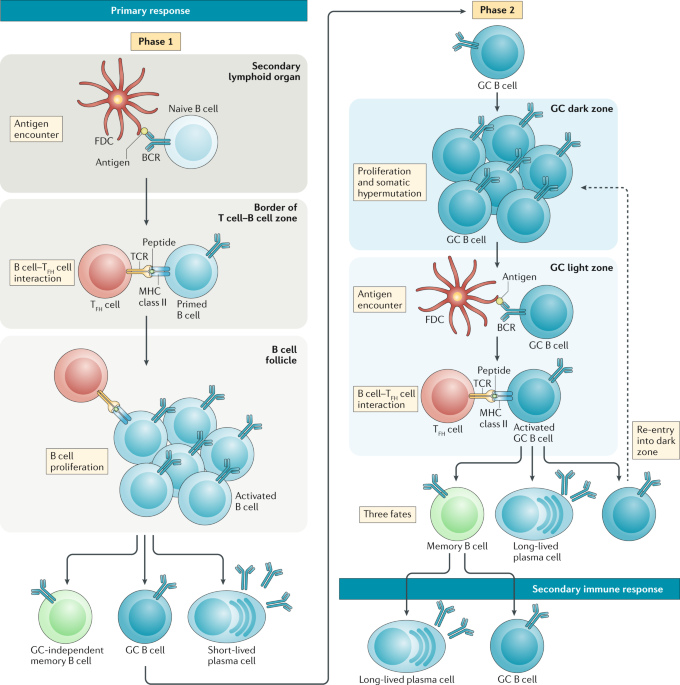
B cell memory: building two walls of protection against pathogens - Nature Reviews Immunology Surviving a single infection often results in lifelong immunity to the infecting pathogen. Such protection is mediated, in large part, by two main B cell memory ‘walls’ — namely, long-lived plasma cells and memory B cells. The cellular and molecular processes that drive the production of long-lived plasma cells and memory B cells are subjects of intensive research and have important implications for global health. Indeed, although nearly all vaccines in use today depend on their ability to induce B cell memory, we have not yet succeeded in developing vaccines for some of the world’s most deadly diseases, including AIDS and malaria. Here, we describe the two-phase process by which antigen drives the generation of long-lived plasma cells and memory B cells and highlight the challenges for successful vaccine development in each phase. The authors discuss the formation of two main ‘walls’ of B cell memory to protect against pathogen reinfection. The first wall comprises high-affinity antibodies produced by long-lived plasma cells, while the second wall is formed by memory B cells. nature.com

@a_kruschke - A.Kruschke

@a_kruschke - A.Kruschke

For beginners 👇

@a_kruschke - A.Kruschke

Last year, I wrote about immune imprinting and somatic hypermutation (for beginners) 👇🧵 It's machine translated in Japanese, so please just use the translation function of Twitter to get my original text. Immune imprinting 🧵

@a_kruschke - A.Kruschke

The resulting antibodies of multiple contacts with e.g. influenza are difficult to predict, as everyone has a different history of life. Several studies for immunology and vaccines research were published, drawing maps of antibodies.

@a_kruschke - A.Kruschke

Most studies in context of backboosting were done on Influenza virus. Curiously, test subjects also showed "memory" to strains that were circulating only before their birth. This is explained by cross-reactivity and/or somatic hypermutation.

@a_kruschke - A.Kruschke

Antibody landscapes after influenza virus infection or vaccination (2014) https://www.science.org/doi/10.1126/science.1256427

@a_kruschke - A.Kruschke

"Titers were highest for influenza viruses that circulated when an individual was ~6 years old, corresponding with the time frame of first infection."

@a_kruschke - A.Kruschke

"Antibody levels against newly circulating viruses tended to be lower than those against strains circulating earlier in an individual’slifetime,.." "... each individual’s landscape shape was typically stable from one year to the next and had distinctive individual features.."

@a_kruschke - A.Kruschke

"Typically, the broad initial response was followed by a period of titer decay during which antibody titers stabilized to form an altered antibody landscape over the course of ~1year (fig.S24👇)" https://www.science.org/doi/suppl/10.1126/science.1256427/suppl_file/fonville.sm.pdf

@a_kruschke - A.Kruschke

As you can see in the figure, the pre-reinfection ab titers (first column, grey) are enhanced by reinfection (red). This process takes time, and some antibodies only rise after one year (lower part of fig.).

@a_kruschke - A.Kruschke

After this process, the titer was maintained higher than the initial one. These findings laid the foundation stone of the backboosting vaccination concept. Novel vaccine concept based on back-boost effect in viral infection (Kohler. 2015) https://www.sciencedirect.com/science/article/pii/S0264410X15006878?fr=RR-1&ref=cra_js_challenge

Novel vaccine concept based on back-boost effect in viral infection A novel vaccine concept is discussed based on recent evidence of a “back-boost” effect in Influenza infection. The initial immune response to the infe… sciencedirect.com

@a_kruschke - A.Kruschke

...to be continued... 😊

@a_kruschke - A.Kruschke

Let's continue BACK-BOOSTING... (chapter 2) The idea behind it is like a time machine. Recalling memory of old strains to fight the future.

@a_kruschke - A.Kruschke

The idea of using the Back-boosting mechanism to fight strains of virus that will come in the future . Sounds impossible?

@a_kruschke - A.Kruschke

The idea behind: We know that the "stored memory" in our immune system undergo some random mutation process. So, it will be helpful to have different "mother memory cell lines" to get a broad spectrum of random mutations.

@a_kruschke - A.Kruschke

Then, the chance of cross-reactivity with future mutations of the virus will be enhanced, just because of bigger choices. But is this not only theory? Let's have a look again at what happens in influenza.

@a_kruschke - A.Kruschke

Original Antigenic Sin: How First Exposure Shapes Lifelong Anti–Influenza Virus Immune Responses (2019) https://journals.aai.org/jimmunol/article/202/2/335/107289/Original-Antigenic-Sin-How-First-Exposure-Shapes

@a_kruschke - A.Kruschke

The authors collected "..serum samples [..] over a 20-year period from 40 individuals [..] and measured changes in their antibody titers against H1, H2, and H3 viruses in ∼5-y intervals."

@a_kruschke - A.Kruschke

The authors "observed that exposure to strains encountered later in life “back-boosted” the antibodies response to strains of the same subtype encountered earlier in life."

@a_kruschke - A.Kruschke

"Thus, the strains of a given subtype encountered earliest in life experienced the greatest number of back-boosting events, leading them to be consistently maintained at the highest antibody titers."

@a_kruschke - A.Kruschke

So, once again, the "immune imprinting " was confirmed. Looks like a trap nobody can escape?

@a_kruschke - A.Kruschke

But... "..severe infections, such as those caused by pandemic strains, might be capable of “reprogramming” the hierarchical antibody response caused by earlier imprinting with less virulent strains of the virus. ..

@a_kruschke - A.Kruschke

"..E.g., early serological studies showed that individuals born between ∼1863 and 1890 (the year of the H3Nx Russian Flu pandemic) all had high titers of antibodies against the virus that caused the 1968 H3N2 “Hong Kong Flu” and were roughly equally protected from mortality. ..

@a_kruschke - A.Kruschke

" This suggests that exposure to the 1890 H3Nx pandemic strain was able to “override” the imprint of earlier seasonal strains to which those born decades before the 1890 pandemic (i.e., from 1863 onwards) would have been exposed."

@a_kruschke - A.Kruschke

In sum, these findings tell us that it will be useful to look out for those "strong variants" that appear from time to time.

@a_kruschke - A.Kruschke

That's the principle of using the "backboost effects " for vaccines. Put these "strong variants" in the next vaccine, then you'll protect not only the already imprinted variant, but also the second one.

@a_kruschke - A.Kruschke

This was all about influenza. Also described in HIV and hepatitis C. But would it happen also in COVID? This was the big question.

@a_kruschke - A.Kruschke

Some in vitro or animal models, and also the Moderna's safety study for XBB.1.5 monovalent vaccine gave some hints that XBB.1.5 might be such a "strong variant".

@a_kruschke - A.Kruschke

Link to Moderna study

@a_kruschke - A.Kruschke

PREPRINT ‼️‼️Moderna Safety study for monovalent-XBB 💉. Phase II/III study with 50+51 participants. Safety and Immunogenicity of XBB.1.5-Containing mRNA Vaccines https://www.medrxiv.org/content/10.1101/2023.08.22.23293434v1.supplementary-material

Safety and Immunogenicity of XBB.1.5-Containing mRNA Vaccines medRxiv - The Preprint Server for Health Sciences medrxiv.org

@a_kruschke - A.Kruschke

Unfortunately, neither BioNTech/Pfizer nor Novavax published any safety study for the XBB.1.5 vaccines.

@a_kruschke - A.Kruschke

So we had to wait for the great study from Hensley Lab.

@SCOTTeHENSLEY - Hensley Lab

Check out our new manuscript on @medrxivpreprint. We show that ‘immune imprinting’ with ancestral SARS-CoV-2 mRNA vaccines is beneficial for priming neutralizing antibody responses against emerging SARS-CoV-2 variants. 1/n https://www.medrxiv.org/content/10.1101/2024.01.08.24301002v1

Immunological imprinting shapes the specificity of human antibody responses against SARS-CoV-2 variants medRxiv - The Preprint Server for Health Sciences medrxiv.org

@a_kruschke - A.Kruschke

Immunological imprinting shapes the specificity of human antibody responses against SARS-CoV-2 variants (2024) https://www.medrxiv.org/content/10.1101/2024.01.08.24301002v1.full

Immunological imprinting shapes the specificity of human antibody responses against SARS-CoV-2 variants medRxiv - The Preprint Server for Health Sciences medrxiv.org

@a_kruschke - A.Kruschke

The study confirms that the choice of XBB.1.5 for production of a monovalent vaccine was the right one.

@a_kruschke - A.Kruschke

The authors found "unlike BA.5, a single XBB exposure elicited low levels of XBB.1.5-specific antibodies and B cells in some individuals."

@a_kruschke - A.Kruschke

Their conclusion gives hope for the future: "The human immune landscape against SARS-CoV-2 is becoming more heterogenous as variants emerge and infection and vaccination histories become diverse among different individuals. ..

@a_kruschke - A.Kruschke

".. Most humans have been ‘immunologically imprinted’ with antigens from the ancestral SARS-CoV-2 strain, but that will inevitably change as time progresses. Most children born today will be first introduced to SARS-CoV-2 antigens in the form of a variant infection or variant ..

@a_kruschke - A.Kruschke

".. vaccination, leading to the formation of different memory B cell populations compared to individuals first exposed to ancestral SARS-CoV-2 antigens."

@a_kruschke - A.Kruschke

All pure theory? I think the advisor group of WHO takes this Back-boosting concept into account. In their statement from December 13, 2023 they maintain the XBB.1.5 as vaccine component. https://www.who.int/news/item/13-12-2023-statement-on-the-antigen-composition-of-covid-19-vaccines

Statement on the antigen composition of COVID-19 vaccines The TAG-CO-VAC reconvened on 4-5 December 2023 to review the genetic and antigenic evolution of SARS-CoV-2, the performance of currently approved vaccines against circulating SARS-CoV-2 variants, and the implications for COVID-19 vaccine antigen composition. who.int

@a_kruschke - A.Kruschke

NB: Sato Lab's hamsters 🐹 also predicted that two antigen contacts with XBB.1.5 would be necessary to establish a broader immune response. https://t.co/iZhkGpbsX0

@SystemsVirology - The Sato Lab (Kei Sato)

Altogether, these results suggest that a single dose of XBB.1.5 monovalent vaccine may not be sufficient to induce effective antiviral humoral immunity in infection-naïve individuals and that a booster dose of XBB.1.5 monovalent vaccine may be required in some cases. 11/

@a_kruschke - A.Kruschke

This now published study is also very interesting in the context of backboost qualities of XBB.1.5. https://www.cell.com/immunity/fulltext/S1074-7613(24)00092-X?_returnURL=https%3A%2F%2Flinkinghub.elsevier.com%2Fretrieve%2Fpii%2FS107476132400092X%3Fshowall%3Dtrue#secsectitle0035

@a_kruschke - A.Kruschke

"These data show that the updated XBB.1.5 S mRNA vaccine booster elicits greater neutralizing antibody responses against a panel of recently and currently circulating variants, including mismatched pseudoviruses,..."

@a_kruschke - A.Kruschke

A comment about the then preprint from @gadboit https://t.co/fTBFcApRvp

@gadboit - Guy Gadboit

Gigavaxxing doesn't work. This is a study of people who had had around 5, 6 or 7 vaccine doses altogether, the first 3 or 4 of which were Wuhan-Hu-1, and then either a bivalent, or a bivalent then the monovalent XBB.1.5 booster. They measured neutralization... https://t.co/rhPtXeUpN3

@a_kruschke - A.Kruschke

@gadboit @reSeeIt save thread

Saved - November 28, 2024 at 8:23 AM

@a_kruschke - A.Kruschke

Did you see the HEADLINE ? There are 10 confirmed cases...🦟... of Dengue fever. A good opportunity to talk about ADE (antibody dependent enhancement) https://www.foxnews.com/health/dengue-virus-spreads-florida-counties-health-officials
Dengue virus spreads across Florida counties, health officials say The Florida Department of Health has placed Broward County under a mosquito-borne illness alert as locally acquired cases of dengue virus spread, according to recent data. foxnews.com
View Full Interactive Feed