reSee.it - Related Post Feed

Saved - April 9, 2023 at 12:04 AM
reSee.it AI Summary
Countries around the world are ditching the US dollar, which could greatly affect American families and our way of life. Consequences of dedollarization include loss of value of the dollar, increased borrowing costs, and the fall of the US as the world's premier economic superpower. China, India, Brazil, and Russia are among the countries moving to alternative currencies. The dollar has been weaponized against Russia, triggering talks of dedollarization of the international trading order. The US dollar is now facing a serious challenger, and we need to refocus on our economy.

@nicksortor - Nick Sortor

I don’t think the majority of Americans quite understand the significance of countries around the world ditching the US dollar. This will GREATLY affect American families and our way of life, and could even kill the American dream altogether. Allow me to explain 1/x

@nicksortor - Nick Sortor

Consequences of de-dollarization include: - Loss of value of the dollar - Increased borrowing costs that can make even homeownership unattainable - The fall of the US as the world’s premier economic superpower 2/x

@nicksortor - Nick Sortor

Last year, the US dollar was king of the world. The world’s reserve currency had once again confirmed its status as the ultimate safe haven, crushing its rivals. Then something changed for the worse. 3/x

@nicksortor - Nick Sortor

Some of the world largest economies—including China, India, Brazil, and of course Russia—are now largely dumping the US dollar and moving to alternative currencies. China, Russia, and Iran for example are attempting to de-dollarize energy pricing and trading. Why? 4/x

@nicksortor - Nick Sortor

The dollar has been weaponized against Russia as the US froze $100+ billion of Russia's dollar reserves. Dollar weaponization by the US government has rattled many countries—not just Russia. This triggered talks of de-dollarization of the international trading order. 5/x

@nicksortor - Nick Sortor

For example: Brazil and China are now trading with each other in yuan, helping to establish the Chinese yuan as a possible dollar challenger. Even Saudi Arabia, one of the largest oil producers in the world, is now moving toward allowing their oil to be trade in yuan. 6/x

@nicksortor - Nick Sortor

After almost a century, the US dollar is now facing a SERIOUS challenger. We need to re-focus on our economy rather than prioritizing woke-ism. Other world powers have their eyes on the prize, while we're totally distracted by nonsense. Please @POTUS: do something. 7/x

Saved - February 6, 2024 at 7:35 AM

@TheMilkBarTV - MilkBarTV

How world leaders spoke about Putin before the war in Ukraine. https://t.co/EG8utHIH7H

Video Transcript AI Summary
Two American speakers express trust in Vladimir Putin, with one stating that he found Putin to be straightforward and trustworthy. Another speaker praises Putin for his initial move towards democracy and describes him as very smart. The same speaker also mentions having a good relationship with Putin and states that he kept his word in their agreements. Another speaker acknowledges the challenges faced by the Russian president, including the need for economic restructuring and rebuilding civic society. This speaker believes it is understandable that Putin presents himself as a strong and patriotic leader. Lastly, one speaker expresses confidence in improved cooperation between NATO members and Russia. However, another speaker predicts that Putin will eventually take over all of Ukraine.
Full Transcript
Speaker 0: Is this a man that Americans can trust? I looked the man in the eye. I found him to be very straightforward and trustworthy. We had a very good dialogue. I was able to, get a sense of his soul. I wouldn't have invited him to my ranch if I didn't trust him. Speaker 1: Well, here's Biden 20 years ago praising Vladimir Putin for moving toward democracy. I'm close to amazed by how far Putin seems to have come in making throwing his lot with the West. I don't think anybody since Peter the Great has made such a significant, at least Initial move to the west. Speaker 2: Mister Putin has got he got all he's very smart. Speaker 0: Well, you know him better than most people. Speaker 2: Yeah. I think we had a really good blunt relationship. Speaker 0: Did Putin ever renege on a personal agreement he made to you? Speaker 2: He did not. Speaker 0: So behind closed doors, he could be trusted? Speaker 2: He kept his word in all the deals we made. Speaker 3: We have to understand the scale of the problems that the president of Russia has to deal with, and they're unlike any of Speaker 0: the problems that any Speaker 3: of the problems that any of the rest of us in in the Western world have to deal with. I mean, he's dealing with an economy that needs absolutely fundamental restructuring, civic Society that needs to be rebuilt after the years of Communism and external relations that have a whole series of historical Legacies that have to be overcome. So I don't think it's surprising that he is and presents himself as a strong leader, as a patriotic leader for Russia. Speaker 0: I am Confident that this new level of cooperation between NATO's members and Russia will now change the world and for the better. Speaker 2: I got along with him great. But ultimately, he's gonna take over all of Ukraine.
Saved - November 15, 2023 at 11:36 PM

@RippleXrpie - JackTheRippler ©️

BOOOOOOOOOOOOOOOOOOM!!!! The US dollar will lose its world reserve currency status and #XRP will become a world reserve currency. That is Ripple's GOAL! 🚀📈 https://t.co/H2zLa5mytK

Video Transcript AI Summary
There is a possibility that multiple world reserve currencies can exist simultaneously. Many countries are becoming disillusioned with the US dollar as the reserve currency and are open to trying something else. One potential scenario is if countries realize that the US dollar will not remain the reserve currency forever. Similar to banks, smaller banks would not want to use a system built by their biggest competitors. Likewise, nations would prefer their currency to be the world reserve currency, but realistically, only a few countries could achieve this. Therefore, some countries might prefer a currency that nobody can control rather than one controlled by their rivals. The challenge lies in getting everyone to agree on an alternative.
Full Transcript
Speaker 0: Do you believe that there can existing world reserve currencies to, I mean, to to simultaneously exist? I I do, and I think that could happen. I think it's quite realistic that a lot of the world is just done with the dollar as the reserve currency. I and I think that there's a lot of places that are are willing to try something else. And, you know, one of my One of my scenarios, and I don't think again, I don't think it's gonna play out quickly, but, like, one of my wild case success scenarios for a digital asset is if countries start to realize that the US dollar is not gonna be the reserve currency forever. Other things are gonna be the reserve currency. And And the same thing that we saw with banks. Like people when I when we started selling software to banks, people would say to me, you know, why would a bank use something that, like, You guys were selling them when they could use something that was, like, made by banks. And what they didn't realize is that, you know, only, like, 10 banks in The country, in the on the planet are Deutsche Bank, HSBC, Credit Suisse, JPMorgan Chase, like the ones who would build a system that the entire planet would run on. For the rest the banks, that's 6,000 smaller banks. Those are their biggest, strongest competitors. Those are the entities they hate the most. They would not wanna use the system Built and maintained by them because it's gonna be biased in favor of them, their biggest and strongest competitors. And I think the same thing could happen to nations. Like, every nation would love for their currency to be the world reserve currency. That's helped the US, you know, that's grown the US economy unquote, unquote, unfairly by leaps and bounds for decades, and every other country would be like, yeah, we'd like to have the world's be the world's reserve currency. But the only countries that could possibly pull it off is the US holding its position, You know, maybe the EU, maybe Russia, you know, maybe maybe 1 or 2 others, but realistically, most countries know that if there's gonna New world reserve currency that's a country's currency, it's not gonna be them. And so they might actually prefer a currency that nobody can control to one that's controlled by their largest geopolitical rivals. And so that's like what I think is the biggest possible success scenario for for the for digital for, you know, for digital assets? If these countries are like, okay, well, the US dollar can't hold on forever. But it's not gonna be our currency because no one's gonna wanna repeat the US dollar scenario. You know, nobody but the EU wants the EU to replace the dollar. Right? Nobody but Russia wants the ruble to replace the dollar. Nobody but China who wants the, you know, the yuan to replace the dollar. So maybe they could settle on a currency that nobody control, could control rather than 1 controlled by their most powerful geopolitical rivals. So if you want a success scenario, that's the one that I think is the most likely. But the money question is, how do you get everybody to agree? Well, I mean, they might agree on they might agree if the alternative is that their geopolitical rivals force Some new replacement for the dollar that that's not, you know, that that that just or if they just replace, you know, the old boss with a new boss. If the choice is no boss, you know, if If that happens to make a bunch of cryptocurrency people rich, I don't think that's gonna they're gonna see that. It's too much of a minus. That's good. Yeah. It's great talking to you guys. I I got 1 question. Just 1 quick question, David. One moment. Thank you, David. It's kind of
Saved - December 7, 2023 at 7:23 AM

@KimDotcom - Kim Dotcom

You just have to watch how Putin was greeted in the UAE and Saudi Arabia on his current Middle East visit to understand that the petrodollar is history and that the multipolar order is taking over. The Pentagon media calls Putin “Internationally isolated”. https://t.co/8o8nX68bQJ

Saved - December 15, 2023 at 12:17 AM

@meantweeting1 - Epstein's Sheet. 🧻

Vladimir Putin says the "persecution of President Trump" has exposed the US political system as "Rotten" "They cannot pretend to teach anyone about Democracy. Everything that is happening with Donald Trump in front of the whole world. The whole world sees except Democrat Voters! https://t.co/D9WHEyWYtL

Video Transcript AI Summary
Regarding Trump, in today's conditions, it seems good to me because it exposes the flaws of the American political system. It shows that the system cannot claim to teach others about democracy. What is happening with Trump is purely political, and it is being done in front of the eyes of the American public and the world. They have simply uncovered their internal problems.
Full Transcript
Speaker 0: То что касается при трампа но это конечно для нас то что происходит сегодняшних условиях на мой взгляд это хорошо. Почему? Потому что это показывает все г американской политической системы, которая не может претендовать на то чтобы учить других демократия все что происходит с трамп это п по политическим мотивам своего политического вот что это такое и делается на глазах общественность сша и всего мира они просто об обнаружили свои проблемы внутрь
Saved - December 30, 2023 at 3:32 AM

@BRICSinfo - BRICS

BRICS: 🇨🇳 🇷🇺 China, Russia Completely Ditch US Dollar For Trade https://watcher.guru/news/brics-china-russia-completely-ditch-us-dollar-for-trade
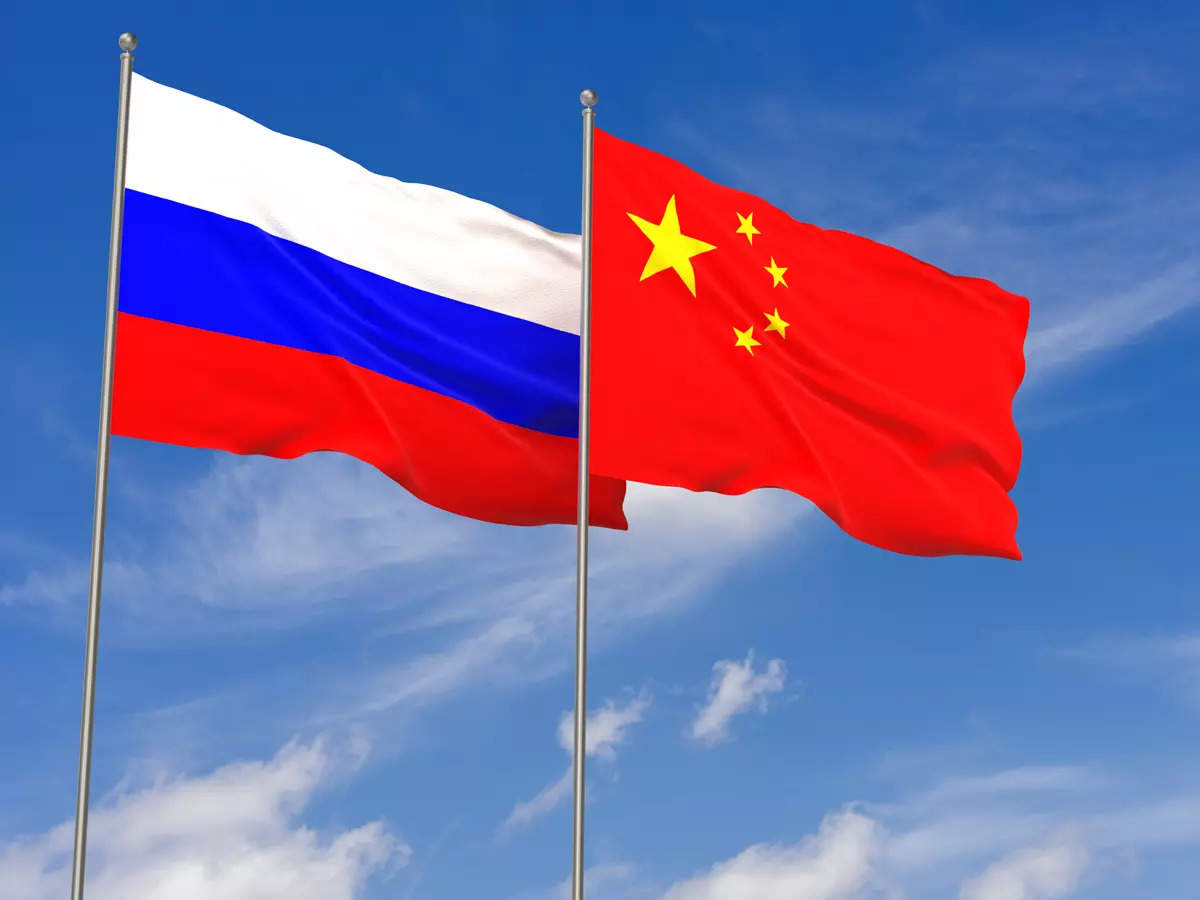
BRICS: China, Russia Completely Ditch US Dollar For Trade BRICS members Russia and China have abandoned the use of Western currencies, including the US Dollar, in their bilateral trade watcher.guru
Saved - January 7, 2024 at 1:26 PM

@FreyjaTarte - Freyja™

George Soros talking about replacing the Soviet Empire with the Soros Empire. https://t.co/jKToORXZF9

Saved - January 11, 2024 at 10:59 AM

@BRICSinfo - BRICS

BRICS Presence Could End US Dollar in Global Energy Market https://watcher.guru/news/brics-plays-vital-role-in-ending-us-dollar-in-global-energy-market
BRICS Presence Could End US Dollar in Global Energy Market The BRICS' growing presence as oil producers and consumers could be a catalyst to eventually end the US Dollar in the global energy market watcher.guru
Saved - June 17, 2024 at 9:40 PM

@simpatico771 - SIMPLICIUS Ѱ

⚡️Arestovich says "Trotskyism took over the US" and that the US will soon collapse: https://t.co/4iNqNc8V6G

Video Transcript AI Summary
Троцкизм победил в 1970-е в СССР и США, завершив холодную войну. Андропов поддержал Хельсинкский договор. Троцкизм стремится уничтожить семью, собственность и идентичность. Россия не боится технического превосходства Запада. Запад не может перезапустить военную промышленность из-за проблем с экономикой и политикой. Запад нуждается в новом сакральном центре для мотивации к войне. Украинцы не понимают современного Запада. Америка может проснуться, но не факт, что это будет в интересах Украины. Translation: Trotskyism prevailed in the 1970s in both the USSR and the USA, concluding the Cold War. Andropov supported the Helsinki Accords. Trotskyism aims to destroy the family, property, and identity. Russia is not afraid of the West's technological superiority. The West struggles to restart its military industry due to economic and political issues. The West needs a new sacred center for war motivation. Ukrainians do not understand the modern West. America may awaken, but it is uncertain if it will be in Ukraine's interests.
Full Transcript
Speaker 0: Троцкизм победил одинаково в 1970-е года и в Советском Союзе, и в США. Увенчался он, то есть проиграл и Советский Союз холодную войну, и троцкизму, и США. Только скорости поражения были разные. Союз развалился в 1991, Штаты разваливаются сейчас. И как всегда чекисты с обеих сторон первые, кто перебежал на нужную сторону. Андропов был величайший теоретик конвергенции теорий, который носился с конца шестидесятых годов и в семьдесят пятом году она увенчалась чем? Хельсинским договором онерушимости границ Европы, то есть отказом от противоборства. Радостные западные жители поддержали это hb-on. И в финале, что давайте очень упростим, чтобы наша публика не разбирается в этом всём, потому что это всё-таки нужно специально изучать, долго разбираться, продираться сквозь разного рода занавеси, а она что является высшей целью троскизма уничтожение семьи, частной собственности и государств ну и всякой идентичности. Вот ровно эти комиссары за 120 миллионов сейчас будут работать в армии США, суммы постоянно на них увеличиваются. Если вы думаете, что эта армия будет радостно и страстно побеждать иранцев, которые воюют за своего там себе Аллаха, вполне себе шиитского, китайцев, северных корейцев, кого там? ИГИЛ или россиян, которые воюют за свою Святую Русь, то вы очень сильно ошибаетесь. Я думаю, что ось зла сделает их в два счета, как сынков. Другое дело, что парадокс современной войны, и только поэтому она могла состояться, заключается в том, что Запад действительно имеет до сих пор подавляющее техническое превосходство, потому что если там полетят эти 11 тысяч томагавков, то будет мало места всем, конечно, но они нанесут разовый сильный удар по промышленности, по военным базам и так далее. Но томагавком не будешь гоняться за отдельным пехотинцем, а вот сила как раз России, например, заключается в том, что они могут 500 тысяч пехотинцев, которые, как это помните, реклама банка Империал, Ваше Величество, в Париже поставили пьесу, которая некоторым образом оскорбляет память Вашей бабушки, императрицы Екатерины Второй. Передайте императору Франции, которая готова прислать в Париж миллион зрителей в серых шинелях, которые осветят любую его пьесу некоторым образом. На следующий день пьеса была снята, ну как на следующий, пока доехало письмо. На следующий день как письмо доехало. Так вот мы примерно в этой же ситуации сейчас. Приедет миллион зрителей в серых шинелях, по каждому из которых там Агавк не запустишь, не получится. И дрона на каждого не хватит, и пусть они будут в лаптях и смосинкой, они закроют вопрос. А учитывая, что Российская армия, Китайская армия, Армия Южной Кореи и Армия Ирана, которая после 40 лет санкций сохраняет цикл производства военного, почти полный ведёт четыре региональные войны согласно доктрине Сулеймания, с солью генерала Сулеймания покойного, а не размотать противника. Они далеко уже не такие отставшие по технологиям, то тут вообще становится интересно. А вот чему российские генералы научились, вывод за два года российского командования в том, что их перестало пугать техническое превосходство. Они перестали его бояться, не бояться. Поэтому, если бы было подавляющее преимущество Запада, понятно, ни о какой войне речи не идет, но Россия начала войну, она уже не боится, показывает это всё. А Запад на войну не явился, обнаружив, что он путается в этих самых упавших с него штанах. Люди не могут перезапустить Запад как система не может перезапустить военную промышленность. Они честно пытались после первого Рамштайна с лета 2022 года перезапустить военную промышленность, но не выходит у людей. Потому что они внезапно обнаружены. Для того чтобы перезапустить военную промышленность, надо перезапустить экономическую систему, а значит социальную, а значит политическую систему Запада. А значит надо сменить представление о том, что есть Запад, что есть мир и куда сюда. А так неуютно прощаться с остановленным временем, где всё у них было хорошо, где основной круг интереса в какой ресторан сходить, чтобы поесть какого-то необычного блюда, необычного повара. Это основной предмет разговоров, например, нью-йоркских людей, с которыми я имел ввиду всяких хитрых людей, которые разных синтенг. Так вот, западу нужно сменить антропотип. Для этого нужно ему сменить сакральный центр, вновь снова его презытие, который будет мотивировать воевать кровавую войну с осью зла. Вместо этого добрые западные люди достигли крайней степени морализаторства в политике. Я почему не люблю морализаторство в политике? Потому что, когда ты объявляешь ось зла, надо отвечать за базар иди воюй с этой зла. Со злом не может быть никаких компромиссов, правильно? Но ты с этой осью зла торгуешь нефтью, газом, ты продаёшь им детали для их оружия. И всё. Как Владимир Ильич Ленин завещал: капиталиста продадут нам верёвку. Когда ему говорили, они задушат нас экономическими санкциями, мы говорим, за 300 процентов прибыли они продадут нам верёвку, на которой мы их повесим. Вот ровно это сейчас и случается. 77 деталей в кинжале, 140 деталей в Х101 или сколько там и так далее. Мы понимаем, о чём идёт речь. Вот вам современный Запад. Поэтому, когда украинцы говорят, что запад однажды проснется, мы должны стоять и бороться до того момента, пока запад проснется, и станет всем мало места, они просто не понимают, что такое современный Запад. У моих любимых соотечественников представление о Западе времён Рейгана, времён Тэтчер, времён Рузвельта, времён Черчилля. Такого Запада в поминю уже нет нигде. Вы не найдёте днём с огнём этот Запад, даже если очень сильно будете искать, дорогие мои соотечественники. Это раз. Во-вторых, если он проснется однажды, а Америка, например, имеет шансы проснуться, Пройдя через тяжелейший кризис, подобие или прямую гражданскую войну, которую она сейчас несется на всех парах, она имеет хороший шанс снова выйти могучим и сильным государством. Но у меня к вам вопрос: с чего вы взяли, что оно проснется в интересах Украины, этот самый Запад, проснувшись? За Европу не поручусь. А ведь ты, извините, я даже хотела это специально спросить.
Saved - February 20, 2025 at 4:31 AM

@Glenn_Diesen - Glenn Diesen

Jeffrey Sachs discusses the significan ce of the Trump-Putin call: Did the US just end the 30-year long Cold War 2.0 of encircling Russia? https://t.co/Hv5xNeIClw

Video Transcript AI Summary
In 1994, the U.S. initiated a project to expand NATO eastward indefinitely, despite assurances given to Mikhail Gorbachev in 1990 that NATO wouldn't move "one inch eastward." This expansion continued under multiple presidents, with seven more countries added in 2004. In 2007, Putin urged a halt, reminding the U.S. of the broken promise. Further destabilizing actions included the U.S. unilaterally withdrawing from the Anti-Ballistic Missile Treaty in 2002 and considering NATO expansion into Ukraine and Georgia. A turning point occurred with a recent call between Presidents Trump and Putin, signaling respect for Russia's concerns, coupled with the U.S. Defense Secretary acknowledging that Ukraine will not join NATO. This shift offers a basis for peace, marking a potential reversal of a long-standing provocative strategy.
Full Transcript
Speaker 0: A very bad idea of The United States taken in 1994. It's a project. The project, was a project to expand NATO forever anywhere. Just keep moving east. Keep moving not only to the first wave, which was the prime minister's country, Hungary, Czech Republic, and Slovakia, but then move eastward closer to the former Soviet Union, into the former Soviet Union, surround Russia in the Black Sea region, go all the way to a little country in the South Caucasus, Georgia. It was mind boggling. Clinton signed on to that in 1994. It became what we call the deep state project, meaning it didn't really matter who the president was. Each president would come and basically would be informed. NATO's moving eastward. You're part of that process. So Clinton started it in 1994. And as prime minister Orban said, he mentioned briefly, in 1990, on 02/09/1990, in unequivocal, clear as can be terms, The United States had said to president Mikhail Gorbachev, NATO will not move one inch eastward. And if you have any doubt about it, all the documents are now online, available. You can scrutinize everything. Hans Dietrich Genscher, the US the German foreign minister said the same thing same day. He's on tape actually explaining, no. No. I don't just mean within Eastern Germany. I mean anywhere to the East. Clinton, being Clinton, and The US Deep State being The US Deep State started this project in 1994. They already had the idea, by the way, in in 1991, '90 '2, as soon as the Soviet Union ended. Now we move. Now we move eastward. Now we control everything. Now we are the sole superpower. So this has gone on for thirty years, and each president got into it under George Bush junior. Seven more countries were added, Estonia, Latvia, Lithuania, Slovakia, Slovenia, Bulgaria, and Romania, Nine in 02/2004. Then in 02/2007, president Putin said at the summit that's taking place right now, the Munich Security Summit, said stop. You told us no expansion, not an eastward expansion, even an inch you said. You've now done 10 countries. Stop. Perfectly reasonable. Stop. I don't think our president Donald Trump would much like to see China and Russia building their military bases up from Central America. You know, this was how the Russians saw this. Why are you coming to our border when you told us you weren't gonna move? And there was one other thing that was very important in this, which is probably the most decisive thing and almost not even recognized. In 02/2002, the US did something really, really, really destabilizing, and that is it unilaterally left the anti ballistic missile treaty. That was a core strategy to stop a nuclear war between the two superpowers because what ABM had done for thirty years was to say, we each have deterrence. You if you strike us, we can strike back. We'll limit our anti ballistic missiles so that both sides maintain deterrence. In 02/2002, the United States unilaterally, unprovoked, walked out of the ABM, said, no. No. We're not gonna do it anymore. We're going to put anti ballistic missile systems into Russia's bordering territories. The Russians said, aren't you kidding? The US said, what's your problem? We do what we want. So in 02/2007, Putin said, stop already. In 02/2008, George Bush junior doubled down as Americans typically do and said, okay. Now we're moving to Ukraine and to Georgia. That was, why this war occurred. But Ukraine had one more sliver of, of life, and that was that they elected a president in 02/2010 that didn't want to be part of NATO, and the public didn't wanna be part of NATO. Why? Because they knew this is very dangerous. Why get into this provocative situation? His name was Viktor Yanukovych. Americans don't like neutrality, but Yanukovych was trying to be neutral between the two sides, and The US played a rather unfortunate role on 02/22/2014 in a violent overthrow of this person. And, that's when the war started. And it's been now ten years, and no president has, told the truth until yesterday, by the way. Yesterday is a historic day because the a call took place between president Putin and president Trump. It was the first call. We don't know if there had been a short call beforehand between the two of them, but there was no call by Biden and Putin. With war going on for three years, no call. And now there was a call, and the readout from the American side was excellent. What president Trump said in the call was we respect Russia. We hear Russia's concerns. We fought on the same side in World War two. Nice point, by the way. True. Russia lost Soviet Union lost 27,000,000 people in World War two and was an ally of The United States. The fact that wasn't mentioned for years and years and years by president Biden. And then the defense secretary had said the new defense secretary said yesterday the truth for the first time that Ukraine is not going to join NATO. This is the basis for peace. This is absolutely the basis for peace, and they couldn't tell the truth for three decades. They could not admit what any of us knew because I've been around this region for thirty six years in detail. I sat with Boris Yeltsin. I sat with Mikhail Gorbachev. But the Americans would not tell the truth publicly until yesterday that this was so provocative. It was a game. They thought they'd win the game. I don't know how many people here play or played in their childhood the game of risk. The game of risk was a big game for me. You wanted your piece on every part of the world map. That was the game when you took over the whole world, world hegemony we now call it. You won. They're playing that game until this administration. So the two most important three important things have happened in my view in this administration so far. First, our new secretary of state Marco Rubio told the fundamental truth. We are in a multipolar world. First time the sentence was uttered, he told the truth. What does it mean? The American mindset for thirty years was we run the show. Marco Rubio said, well, we don't run the show. We live with other powerful countries. Great start. Second and third were the two events yesterday. So I'm feeling about peace that this is really something that happened yesterday. If if they follow through, we know what Washington is like. There is every crazy idea swarming still. A project of thirty years doesn't go down necessarily in one phone call or one statement by, the secretary of defense, but it's pretty important that it was said so publicly and so visibly. And, of course, Europe is in a tizzy because Europe signed on to The US project. All these politicians in Europe are there where they are because they were part of The US project. And now The US is reversing its project, and you didn't tell us, and you didn't what are we supposed to do? We're way out there. And so they're completely befuddled. And I have to say, I told them personally, many of these leaders, and I mean personally one by one for years, you are gonna get trapped this
Saved - April 9, 2025 at 1:09 AM

@SputnikInt - Sputnik

Why Trump’s tariffs will accelerate DEDOLLARIZATION 💥💰 Market analyst Paul Goncharoff warns Trump’s tariffs will fuel global turmoil, and that the impact on the dollar could be significant. A mini-thread.👇🧵 (1/4)

Saved - April 11, 2025 at 8:19 AM
reSee.it AI Summary
I’ve been reflecting on the current state of global politics and economics. The U.S. Dollar seems to be losing its influence, and I sense a shift with the rise of BRICS nations. There's a feeling that history might repeat itself, especially regarding China's past with the Opium Wars and the West's attempts to assert dominance. I also see troubling narratives about control and manipulation, suggesting a dark future where technology could enslave humanity. Overall, it feels like we're on a precarious path, with many forces at play that could reshape our world.

@Excavationpro - 👷‍🎶Excavationpro🧡🚧

https://t.co/l0mbe9lFpl

Video Transcript AI Summary
According to a source within the Obama administration, the plan to fix the US economy involves killing the dollar. This agenda explains domestic and global events, and the use of "kill" implies an unambiguous goal to subvert the US from within, constituting high treason. The speaker claims we are past the point of no return, and this plot predates Obama, with the aim to implement a global currency and governance system. People are distracted by issues like gun control and fail to see the larger picture of a captured America being subjugated to a global system. The speaker alleges that stock market highs are manipulated and driven by a rush to the dollar before it is devalued. The US is at war with Russia, stemming from actions in Libya and Syria. Russia is waging war against the US by undermining the oil-backed dollar. China and Russia are forming an alliance to replace the US dollar with a gold-backed currency, while the US gold reserves remain unaudited.
Full Transcript
Speaker 0: Some might be surprised to learn that the fate America's economy has already been determined, verified, and announced by the Obama White House. Yet, it has received scant attention from the corporate media. In 2011, economist Kyle Bass interviewed a senior member of the Obama administration about its planned solutions for fixing The US economy in trade deficit. Among the questions he asked was about The US exports and wages. But the question itself was not nearly as important as the response response he received from the senior administration official. In fact, the single seven word response clarifies everything, explains everything, and leaves little else to discuss. We're just going to kill the dollar. There it is. The entire agenda in one short sentence. It explains everything we've been seeing domestically and globally. That one statement makes every other question irrelevant or otherwise answers all economic questions and explains everything. Nothing else matters. I urge you to ponder that statement and all it implies. Doing so will provide you with the clarity to understand not only what is taking place today, but what is yet to come. It is important to note the specificity of the word kill. Stated in the active voice, it means an unambiguous United States dollar is the ultimate agenda to be implemented under Obama. To kill our national currency will subvert The United States and destroy it from within. This begs a number of questions, including what type of Americans would actually have as their objective, the destruction of our national currency. To whom do they hold their allegiance, if not to the American people whose life's work as well as the toil of our ancestors is represented in the form of wealth held in US dollars. Does this make any sense to us as Americans? The answer is, of course, no. By its very definition, to kill our national currency is an act of high treason by those engaged in this activity. It undermines the very sovereignty and survival of our nation and will have a life changing impact on every citizen in The US. It will also impact every nation and the people of every nation on the planet as the US dollar is presently the world's reserve currency. It's an act that should result in the filing of criminal charges against the conspirators, a trial of their peers, and if convicted, a death sentence. It's that serious. According to my source, we are past the point of no return. We will not be able to stop what is coming, but must be wise enough to prepare and get out of the way. The murder plot involving the death of the dollar did not begin with Obama, but he and other conspirators have accelerated the plans, plots, and schemes for its demise. The ultimate objective is to implement currency in tandem with the system of global governance. The problem is that most people are not thinking large enough nor do they understand the magnitude of the lie. They're not seeing the larger picture as their focus is diverted elsewhere. For example, they focus on various tentacles of the octopus such as the gun confiscation initiative, the DHS armament acquisitions, and economic woes as independent and unrelated events. They are not. Meanwhile, others continue to adhere to or even perpetuate the dual party meme of governance, holding dearly to the notion that there is practical difference between the Republican and Democratic parties. Have we not seen sufficient evidence that they are now of one party acting in concert with each other? They They cannot see the collusion and backroom deals and continue to hope that the next election will finally change the unchangeable continuity of agenda. Most of the elected officials are on board with the subjugation of The United States to a global system of governance. Some are actively facilitating this agenda, while others are making nominal rejections on the stage of political theater whilst hoping to earn a seat at the global table. It's entertainment for the globalists, distraction of the masses, and diversionary fodder for the talking heads in the media. America has become a captured operation captured from within. Think of the Vichy French internal collaboration with the enemy or softening the ground for a full takeover from within. The takeover of America has already happened. The collaborators have already been installed, We are now on a path to complete subjugation of a larger global system of governance. If you continue to doubt this, how else would you explain the numerous examples of our dual party governmental acquiescence of self destruction? Those who are pleased about the new record setting stock market highs and various other manipulated statistics that indicate our economy is improving will be the most vocal critics of this report, and who will attempt to discredit the validity of the information offered here. The more intellectually astute will look beyond the statistics offered for mass consumption, not only to identify the deliberately manipulated data, but to understand what is actually driving these false hopes, figures, and data. It is a magic show, and many are still captivated by the magician's many diversions, failing to realize that we are engaged in a global war, while being simultaneously hobbled by enemy infiltrators from within. One reason we are seeing new stock market highs is the rush to the dollar from other currencies, especially in the Euro Zone. Another reason is the monetization of our debt by the Federal Reserve despite the previous denials of Ben Bernanke and others. Simply put, the plan by the globalists or the central bankers and those behind them is to create this rush to the US dollar like passengers from sinking ship to lifeboats. Once the lifeboats are filled to capacity, they will be sunk, and the United States dollar will be completely worthless. As in such a scenario, many will not make it. Many will die from what is coming. The level of evil behind this plan is incomprehensible to the normal human mind. We are at war with Russia. After removing Gaddafi from power in Libya, the Obama Clinton black ops plan was immediately put into action. Benghazi was the logistics hub for arming the anti Assad terrorists by our own state department, covert operatives who were shipping millions of tons of weapons to Syria via Turkey and other staging areas. Russia was aware of our actions and through the attack at the CIA operations center in Benghazi by proxy forces exposed this operation to the world while putting a stop to this operation. It seems that everyone except the western media reported what had taken place. The dirty little secret which explains why we have not been told the truth about Benghazi is quite simple. The efforts to overthrow Assad from power are continuing, except the arms and munitions shipments are now originating primarily out of Croatia. Overthrowing Assad would pose a direct threat to Russia, both militarily and economically. Are we to expect Russia's Putin to simply accept this without response? No. What is Russia doing to subvert our efforts? He's waging war against America, striking at the weak underbelly of our economy, which is the oil backed dollar as identified in Michael Reagan's article, building on a kernel of truth. Sadly, the Obama regime is doing nothing to protect us from this asymmetrical war. It is if they are allowing it to take place. Although it was reported in the New York Times, few have paid attention to last week's meeting between Chinese president Xi Jinping and Russian president Vladimir Putin in Moscow. But it was an extremely important event in terms of the planned murder of the US dollar. An alliance is being forged between Russia and China to replace the US dollar as a reserve currency, already severely weakened by the policies of those in power with a gold backed currency. While reports do exist that cite the hoarding of gold by China and Russia, they are purposely underreporting their collective reserves. Meanwhile, Americans can't even get honest answers to the amounts of our own gold reserves held in Fort Knox or the Federal Reserve. Don't people find this reluctance for audit and inspection a bit curious, if not outright suspicious? The battle is being waged not only by military might, but by a currency war. We are being played through our military involvement in The Middle East, including our covert operation.

@KobeissiLetter - The Kobeissi Letter

The U.S. Dollar has exited the room. Once again, something is broken. https://t.co/2FxZej9kbo

@Excavationpro - 👷‍🎶Excavationpro🧡🚧

Replace Russia at the end of the video, with #BRICS (Brazil, Russia, India, China, and South Africa)

@Excavationpro - 👷‍🎶Excavationpro🧡🚧

And The shadow puppet masters https://t.co/AMTOg0XNH4

@Malcolm_Pal9 - 𝐌𝐚𝐥𝐜𝐨𝐥𝐦

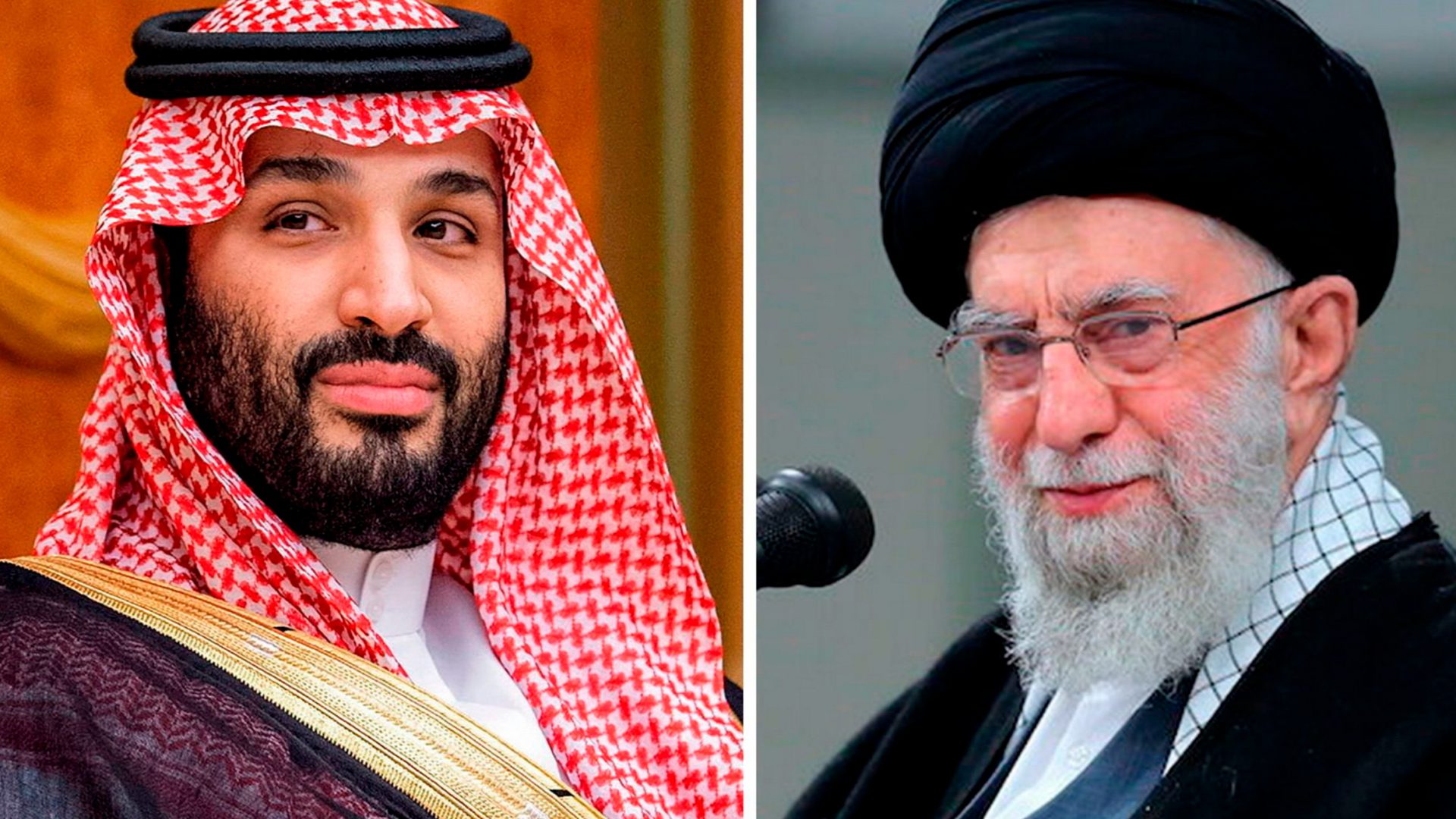
"Bin Salman of Saudi Arabia is leading the Muslim world to support Israel" American Zionist activist Mike Evans. https://t.co/0U41T4fuKL

Video Transcript AI Summary
The speaker wants to honor the crown prince of Saudi Arabia because he believes the crown prince is the key person leading the Muslim world to support the state of Israel. The speaker claims that no other leader in the Muslim world has influenced decisions to move the Muslim world to support Israel more than the crown prince. The speaker states that he met with the crown prince and saw the country under his leadership.
Full Transcript
Speaker 0: The third person that we want to honor is the crown prince of Saudi Arabia. I want to take a moment to explain to you why we're honoring his excellency, the crown prince. There is no leader in the Muslim world that has influenced the decisions that are being made to move the Muslim world to support the state of Israel more than this crown prince. He may not be taking the credit for it, but I can tell you, having met with him, he is, in fact, the key person that's leading. When I saw in the country under his leadership was astonishing.

@Excavationpro - 👷‍🎶Excavationpro🧡🚧

https://t.co/zU8ZI6w1aj

@smalls2672 - Boston Smalls

Putin mocks the United States. "They won't be able to stop China.... it's impossible." https://t.co/Ik0W8E1Uuy

Video Transcript AI Summary
Спикер утверждает, что США опоздали на 15 лет и не смогут остановить развитие Китая, так как это объективный процесс. Попытки сдержать Китай негативно влияют на экономику самих США, делая их товары менее конкурентоспособными. Существующая кооперация между экономиками Китая и США взаимосвязана, и действия Штатов в этом направлении имеют контрпродуктивный характер. **English Translation:** The speaker asserts that the US is 15 years late and cannot stop China's development, as it is an objective process. Attempts to contain China negatively impact the US economy, making its goods less competitive. The existing cooperation between the Chinese and US economies is interconnected, and the speaker believes the US actions in this regard are counterproductive.
Full Transcript
Speaker 0: Вы знаете, я хочу что сказать. Соединенные Штаты опоздали лет на 15. Они не смогут остановить развитие Китая. Это невозможно сделать так же, как невозможно сказать солнцу: Не вставай, оно все равно поднимется. Но есть объективные процессы экономического развития, они связаны с миллионом факторов. И вот эта попытка сдержать развитие Китая негативно отражается и на экономике самих Соединенных Штатов. Они делают производство ряда своих товаров низко конкурентоспособными, а если дальше пойдут по этому пути, сделают вообще не конкурентоспособными в отдельной отрасли экономики. Так сложилась кооперация на протяжении предыдущих десятилетий между экономикой Китая и Соединенными Штатами. Она взаимосвязана, Все это понимают, но вот три действия, которые мы наблюдаем сегодня со стороны Штатов, мне кажется, что они имеют контрпродуктивный характер.

@Excavationpro - 👷‍🎶Excavationpro🧡🚧

Pro Tip: This was all planned a long long time ago.. Many know the plan.. and its all on schedual...

@Excavationpro - 👷‍🎶Excavationpro🧡🚧

Do you know.. because I do...

@Excavationpro - 👷‍🎶Excavationpro🧡🚧

https://t.co/huob2GXGAB

@Excavationpro - 👷‍🎶Excavationpro🧡🚧

You tell me if I am wrong? Go ahead. https://t.co/SzGmUiSlbN

Video Transcript AI Summary
El ejército chino demostró las capacidades de sus drones FPV, destacando sus grandes enjambres capaces de operar conjuntamente. **Translation:** The Chinese army demonstrated the capabilities of its FPV drones, highlighting their large swarms that can work together.
Full Transcript
Speaker 0: El ejército chino mostró las capacidades de sus tragos FPV, sus enormes enjambres que pueden trabajar juntos.
Video Transcript AI Summary
An electromagnetic meter reading is off the charts at 18,000, then 19,000. The speaker states they have never seen a reading that high before. The speaker says "that is getting microwaved" and "fried." The grinders have dropped out on peak. The reading then hits 20,000, which the speaker claims is 20 times the legal amount of EMS reading.
Full Transcript
Speaker 0: We've got a lot points. It's unbelievable. That is that o. 18,000, and it's actually thrown the fucking meter out. Yeah. Sixteen, nineteen I've never seen it that high in my life. Ever. I've never ever seen it that high in my fucking life. That is getting fucking fried. That is getting microwaved. The grinders have dropped out on peak. Yeah. Yeah. 20,000. Yeah. So what's that 20 times the legal amount of e m EMS reading?

@Excavationpro - 👷‍🎶Excavationpro🧡🚧

https://t.co/vttp2RtZoL

@htchpros - Dragon of the east

About 200 years ago, during the Qing Dynasty, China exported a large amount of inexpensive porcelain, silk and other raw materials to the West, but rarely imported Western goods (the self-sufficient peasant economy model did not require imports), so it obtained a huge trade surplus (especially with Britain, France and other countries), and the flow of silver to China made the West dissatisfied. They thought of a good way: selling opium to the Chinese, and the large amount of imported opium offset the trade surplus. When the Chinese government was ready to ban the opium trade, Western robbers launched two invasion wars against China. This is the shameful "Opium War" in Chinese history (a total of two times), and all Chinese people will never forget that history. Today, 200 years later, China has manufactured the most comprehensive and extensive commercial products in the world with large-scale machines and manpower and exported them to the world. Western robbers are once again ready to use hegemony and war to reverse the situation, isolate, blockade and "tariff stand" China. Will the humiliating history repeat itself? 1.4 billion Chinese people will not agree. The Communist Party of China understands this truth. Surrender and kneeling cannot exchange for dignity and equality. Only when you are strong can you have the right to speak.

@Excavationpro - 👷‍🎶Excavationpro🧡🚧

https://t.co/LXix3Io6f2

@BATMAN_SPOTTED - BATMAN

“Edom falls—The Western countries will lose this war—Their sovereignty is going to go—Because they destroyed second temple” Jewish Rabbi talks about America and says it will be destroyed Loving Jewish Friends… https://t.co/k5retbBWo7

Video Transcript AI Summary
If Edinburgh falls, Western countries will lose the war, unlike Vietnam. This loss would mean the end of their army and sovereignty. They will no longer be a superpower. Vietnam didn't affect America's superpower status because they destroyed the second empire.
Full Transcript
Speaker 0: Edinburgh falls falls to them. They lose. The Western countries lose this war. It's like they lost in Vietnam. No. Very much not like that. Because it's all their army and everybody. Everybody, their whole son. Their sovereignty is gonna be gone. They will no longer be a superpower. Vietnam didn't affect America as a superpower. Why? Because they destroyed the second empire.

@Excavationpro - 👷‍🎶Excavationpro🧡🚧

https://t.co/xVjdai84hd

@Excavationpro - 👷‍🎶Excavationpro🧡🚧

🕵️🫳 https://t.co/4szt1NXbhS

Video Transcript AI Summary
The speaker is concerned about a pattern on a Trump coin resembling a quasi crystal. The speaker has pulled up images of quasi crystals and placed them next to the coin image to compare the patterns. The speaker states the pattern on the coin is the same structure as a quasi crystal that self assembles into nanophotonic cells. These cells can be programmed and will be the next wave of quantum computing. This is described as light driven AI with high bandwidth and possibilities that humans can hardly imagine. The speaker points out a specific part of the pattern, calling it a photonic cell circuit. The speaker concludes by stating their big concern is a heart shape on the coin.
Full Transcript
Speaker 0: Right here we've got my first concern is that we see this pattern with the quasi crystal on the sword, which is so strange to see this on a Trump coin. Can you see that? I'm gonna take it up as big as this will go. So that's what it is. That's basically what I have already pulled up images of here, these quasi crystals. And I'll actually open one up into Photoshop and put that right next to it if we can, just to take a look at it and see it. And I'll just take a second to set that those four beside that. I'm about to pull that over and drop it. Okay, and bring it back up. Now you can see that, right? If I place it, we'll see that it'll actually now you can see the pattern. So it's an interesting thing, you know, maybe that's an Islamic pattern that has existed for thousands of years for all I know, but that structure is exactly the same as a quasi crystal that self assembles into nanophotonic cells that can be programmed and will be the next wave of quantum computing. Right now they are doing it. It is light driven AI that they see as the future. And this light driven AI future has high bandwidth and possibilities that we humans can hardly imagine. The light you can see clearly traveling up hits what is like this cell, this photonic cell. This is like a circuit, and we can see it's right here, I'm just gonna circle that. Oh, I've got my wrong brush. Let's get it. There we go. So this here, that little thing there, That's that's that's interesting. Right? My big concern is this heart.
Video Transcript AI Summary
The speaker expresses concern about a heart and "this here," mentioning 6G is needed to control a nanophotonic system allegedly placed inside people. They suggest animals like cows and sheep wouldn't know if they had a nanophotonic chip inside them, allowing connection to a central hub via terahertz Bluetooth to monitor them 24/7, including their heartbeat and emotional state. The speaker proposes a hypothetical "evil genius" creating a control grid via satellites to establish a terahertz Bluetooth operating system, potentially forming an "Internet of bodies." They are unsure about the meaning of palm trees in a design, speculating it could represent peace or a resort. The speaker identifies ones and zeros as bits of information and interprets wheels as turning a machine.
Full Transcript
Speaker 0: My big concern is this heart. And then we've got this here as well. Six g. They're gonna need six g to control this nanophotonic system that they put inside of us because if you put an n nanophotonic chip inside of an organism, a cow, a sheep, for instance, you know, they probably don't know that it's inside of them. Right? Because it's so small. How would they know? How would they know that they were connected to a central hub? A terahertz Bluetooth signal could be picked up from them, and you could connect to that sheep or that cattle and know what it's doing twenty four seven. You could know what its heartbeat is. You could actually know if that cow is kind of distressed or angry. You could know if that cow is watching some conspiracy videos or talking on TikTok to people and telling them crazy stuff. Anyways, interestingly enough, six g is the operating frequency. So I'm just saying, if I was an evil genius that for my science fiction I'm writing, I would definitely be putting like a control grid, or what it would you call like a web over over the earth of probably satellites. I did thousands of satellites, for sure, You probably have to who who would do that? But anyways, if we could put satellites up, then we'd be able to create like a Bluetooth terahertz kind of operating system to maybe create like an Internet of, I don't know, humans? An Internet of bodies, they call it. Now we can see that the concern in this design, I have no idea what the palm tree is. If somebody could tell me that, I'm gonna look at my phone in a second, I should be able to see, because I have no idea what this part is. Take a look at this. It's just palm trees, I don't know, maybe it means peace, or maybe it could be for some resort. I have no idea. Maybe some resort trip lengths. Anyways, these ones and zeros, we know what that means. These ones and zeros are like just bits, ones and zeros of information. Of course these wheels, that's nice. You can see that they're somehow they're turning a machine. This is a whole machine.
Video Transcript AI Summary
The speaker analyzes a design, pointing out two needles, suggesting two sets of injections are coming. They believe symbolism is the weakness of those behind the design. The speaker connects the design to a sword image, finding a quasi-crystal design that could be used to build photonic circuits. They claim the design indicates heart problems, two sets of injections, a satellite system connected together, and satellites with a Bluetooth signal. The speaker questions the presence of Saturn at the top of the design, implying Saturn is very important to those who created it.
Full Transcript
Speaker 0: And, of course, these these wheels, that's nice. We can see that they're somehow they're turning a machine. This is a whole machine. Oh, wait. I missed something, guys. Oh, the most important thing. What's this doing in here? There's two needles. It's not just one. There's two down here. Right? Oh, I to wait that way too big. Here we go. How's that? Okay. So what are these guys doing here? Why are they there? Makes you think that there's two two sets of injections coming. See, I believe in symbolism. I believe that that symbolism is their weakness. Like, pride is the greatest of all evils. Right? And if you can't walk away without putting your name on it and trying to take credit for it, well, most of the time, I don't think one person can take credit for what's going on in Paris. Right? In France, all across France. The entire population takes credit for it. Anyways, the interesting part is is that what we see at the top of this design, I'm going to take this back for anybody who doesn't know what this is, we're going back to the sword, the trump sword on the back of the coin, and we found some interesting things here. We found one quasi crystal design here, an interesting fundamental element that could be used to build photonic circuits. Oh, boom, photonic circuits right here. Next, there's going be heart problems. There's going to be two sets of injections, satellite system, some sort of a system connected together, and satellites with a Bluetooth signal coming off that. This definitely looks interesting as well. Space Force, I don't know what. Double peace, of course. But then this. Why is Saturn sitting there at the top of this? Why is Saturn sitting there? I mean, like I hope we I hope it's not that big enough for everyone. Okay. Why is why is Saturn here? So apparently, Saturn is very important to them.

@Excavationpro - 👷‍🎶Excavationpro🧡🚧

https://t.co/pR70hFP9D5

@Excavationpro - 👷‍🎶Excavationpro🧡🚧

Not just 100 years of Fraud, A eternity of Death and murder, Humans WHOLE existence is killing each other. ALL OF HUMAN HISTORY, you epople kill eachother, thats really it, thats all you accomplish. Then saving face and trying to blame someone else for the death. Repeating this over and over... This is hell, and you people are the demons.

Video Transcript AI Summary
The speaker confronted Heizou Takinaka about handing control of Japan's financial system to American and European oligarchs. Takinaka claimed Japan was threatened by an earthquake machine. After the speaker exposed their actions, the Japanese security police warned that Niigata City would be hit by an earthquake due to the speaker's statements. Two days later, Japan's largest nuclear reactor was the epicenter of two 6.8 magnitude earthquakes. The speaker believes this was not a coincidence and researched HAARP. They claim HAARP can cause earthquakes by shooting a billion-watt microwave into the ionosphere, pushing it into outer space, and the rebound can cause earthquakes. They compare this to an opera singer breaking glass or dragging fingernails on a blackboard, stating that adjusting the vibration for the rock underneath a target site can cause earthquakes.
Full Transcript
Speaker 0: Last year, I confronted Heizou Takinaka, the former Japanese finance minister, over why he handed over control of the Japanese financial system to a group of American and European oligarchs. He and his envoy told me that it was because Japan had been threatened by an earthquake machine. I did not believe it at the time. However, when I started exposing some of their doings, I was told by the Japanese security police that because of what I had said on places like rents.com that Niigata City was going to be hit by an earthquake. Two days later, Japan's largest nuclear reactor was the exact epicenter of two earthquakes, both 6.8 in magnitude. That was too much of a coincidence for me. So I started doing research and found out about HARP, h a a r p. And I realized that they really did know how to make earthquakes. And they do it by shooting a billion watt microwave into the ionosphere, which is a part of the atmosphere that has a lot of energy in it. That pushes the ionosphere up into outer space and then it rebounds. And the way it rebounds can cause earthquakes. Just like an opera singer can break a glass by singing at a certain level or by dragging your fingernails on a blackboard, you feel a weird sensation. If they adjust the vibration for the rock underneath their target site, they can do that.
Video Transcript AI Summary
In 1983, the speaker used 30 watts of radio tomography to locate 26 oil wells across nine states with 100% accuracy. This involved beaming radio waves into the ground, causing underground "strings" to vibrate at specific frequencies, identifying substances like natural gas or crude oil. HAARP, in contrast, uses a billion watts beamed into the ionosphere for experiments. The speaker claims that using such power can cause violent vibrations, potentially leading to earthquakes.
Full Transcript
Speaker 0: Nineteen eighty three, I did radio tomography with 30 watts looking for oil in the ground. I found 26 oil wells over a nine state area and 100% of the time was accurate with just 30 watts of power beaming straight into solid rock. Harp uses a billion watts beamed straight into the ionosphere for experiments. Picture these strings on the piano as layers of the earth. Each one has its own frequency. What we used to do is beam radio waves into the ground, and it would vibrate any strings that were present in the ground. We might get a sound back like and we'd say, that 's natural gas. We might get a sound back like and we say that's crude oil. We were able to identify each frequency. We accomplished this with just 30 watts of radio power. If you do this with a billion watts, the vibrations are so violent that the entire piano would shake. In fact, the whole house would shake. In fact, the vibrations could be so severe underground that could even cause an earthquake.
Video Transcript AI Summary
According to the senate, congress, and other people, the idea of weather control and electronically creating earthquakes is ridiculous. However, twenty years ago, the nation entered a convention promising not to use weather control against other countries, but this promise doesn't include using it against the United States. The speaker claims there are patents on equipment that can block, move, alter, and change the weather, including creating and expanding storms. This equipment can also generate ELF, low-frequency vibrations that can move the earth and possibly generate earthquakes. The speaker asserts that the equipment currently being used covertly in experiments and programs involving magnetics and electronic waves comes from original Tesla experiments.
Full Transcript
Speaker 0: So what we have here according to our to the senate and congress and other people are folks that will look you straight in the face and say, the idea of weather control, creation of earthquakes electronically and all of that's absolutely ridiculous, mister Fletcher, or anyone else that might ask it. However, we find out that our nation twenty years ago actually went into an entire convention that said now that we can do it, we promise that we won't use it against other countries. Well, unfortunately, that promise does not include using it against ourselves here in The United States. So, again, when senator Cole, had asked me what it was that I meant inferring that the New World Order persons will utilize it as a weapon against us. That was what I meant. A friend of mine said there's patents on that equipment. And as you can see here, he's absolutely right. These are the paperwork of the actual patents on the electronic means by which waves or rays, if you will, can be utilized to block, move, alter, change the weather. It includes creating storms, expanding them, and even generating ELF, low frequency vibrations that actually can move earth in the ground itself and possibly generate the possibility of earthquakes. But the very equipment that's being used presently, covertly, secretly, in a multitude of outrageous experiments and programs right now, of magnetics, electronics, electronic waves and what have you, has all come off of the original Tesla experiments.
Video Transcript AI Summary
The speaker states that HARP's work on ionosphere management is complete and they are moving on to other methods of ionosphere control. When asked about a statement made to the Associated Press regarding weather tampering, the speaker confirms their belief that the American government has created weather control techniques so that the "new world order" will be able to starve millions of Americans and control the rest. They claim to possess documents, including patents and a statement from Senator Claiborne Pell, to prove this, asserting weather control was utilized as far back as the Vietnam War. They cite 85 simultaneous tornadoes as evidence and quote Senator Pell as saying weather wars are the greatest weapon ever created.
Full Transcript
Speaker 0: There and have finished our our work that we're interested in doing up there. We've moving on on to other ways of managing the ionosphere, which the HARP was really designed to do was to inject energy into the ionosphere, be able to actually control it. And but that work is has been completed. Speaker 1: Mister Crutcher, another question on on the in the interview with the Los Angeles Times on April 21, you said that the you told the Associated Press that the American government has created weather tampering techniques so that the new world order will be able to starve millions of Americans and to control the rest. Would you explain what you were trying Speaker 2: to say? Well, what I was trying to say is exactly what I said. There is weather control techniques. We have a complete package on that, which I did not bring, but I certainly will see to it that it is brought in for the record. Number one, the entire patents on the equipment. Number two, senator Claiborne Pell's complete statement and story of his own that not only does it exist, but that we even utilize it as far back as the Vietnam War. You might wanna touch base with the senate. Speaker 1: I just wanna repeat before turn to So yes. Speaker 2: But we do have all that information. Speaker 1: You're saying the government has created weather tampering techniques so that the, quote, new world order will be able to starve millions of Americans Worldwide. Millions of Americans and to control the rest. Speaker 2: Yes, sir. And that's my belief. As bizarre as that sounds, when if somebody had told me that that equipment even existed ten years ago, I would have thought they were nuts, sir. And at this point in time, we have all the documents to prove it. And if you think that 85 tornadoes takes place in the middle of our growing area by simultaneous accident. I'm I'm sorry. With the equipment that's already set up internationally and as bizarre as that is, it is proven and documented. We will supply you with those documents. As bizarre as that is, I would say that weather wars and this is quoting actually senator Claiborne Pell himself, that they are the greatest weapon ever created in the world, and that's the senator's own statement. So, yes, I had to do stand on that. Speaker 1: Thank you.

@Excavationpro - 👷‍🎶Excavationpro🧡🚧

https://t.co/mj80DgaPw3

@Loopifyyy - Loopify 🧙‍♂️

What I could find on the guy who burnt millions of dollars and donated millions of dollars 👇: Total burnt: ~$1,650,000 (603 ETH) Total donated: ~$5,350,000 (1,950 ETH) Messages on-chain: The bosses of Kuande Investment: Feng Xin and Xu Yuzhi used brain-computer weapons to persecute all company employees and former employees, and even they themselves were controlled. I am Hu Lezhi, an ordinary programmer and entrepreneur. Since October 2022, I realized that I have been monitored and manipulated by the mind control organization since I was born. When I realized the existence of the mind control organization, they also increased their harm to me. I have been very painful in the past two years. Now I have completely lost my dignity as a human being. I have decided to leave this world and hope that this ugly world will be destroyed soon. Brain-computer chips have been deployed militarily on a large scale. All military powers are using base stations, radios and nano-brain-computer chips to control all citizens. As the brain-computer interface and mind-reading technology keeps developing, there is a new mode of crime in which wild animals become puppets or complete slaves to the digital machine. There is a new mode of crime in which the victim is gradually deprived of his senses of desire until he becomes a complete slave to the digital machine, and if one day I become a victim of the final stage, I will leave the world. 宽德投资的老总:冯鑫,徐御之使用脑机武器迫害了所有公司员工以及前员工,甚至他们自己本身也是受控者。 我是胡乐知,一名普通的程序员,创业者。自2022年10月以来,我意识到我从出生起就遭受着脑控组织的监控和摆布。而当我意识到脑控组织的存在时,他们也在加大对我的伤害,这两年我过得非常痛苦,现在已经到了身而为人的尊严彻底丧失的地步,我决定离开这个世界,也希望这个丑陋的世界早日毁灭。 脑机芯片已经大规模军事化部署了,所有的军事强国都在用基站、无线电和纳米脑机芯片控制所有国民 随着脑机接口和读心技术不断发展,出现了一种新的犯罪模式:野生动物沦为数字机器的傀儡或完全的奴隶 目前出现了一种新的奴役受害者的犯罪模式,受害者的欲望感官被逐渐剥夺,直到最后完全成为数字机器的奴隶,如果有一天我成为了最后阶段的受害者,我会选择离开这个世界

@Excavationpro - 👷‍🎶Excavationpro🧡🚧

In the 1990s the Navy was given plans about a possible encounter in the future. Thre is maps if you goodle hard enough. This is a " Theory " Presented in the 90s and likely before I ever seen it.. 400k UN/CHINA soldiers in Mexico, The West of Canada will be taken by russia. and they can push south to california...fast and tmake a base.. Canada will be neutralized becaseu we will be passive and taken early by internal treason.. BLACK out the west, meaning the world will not know anything... other than there has been an apocolyptic disaster, and the west is gone. The Event will be sold to the east as a RECOVERY EFFORT.. Military actions.. over 3 months will gain strategic resources using INFRA GUARD. withiin 6 month winter will come to canada and the push to secure the inited states will be just a matter of pressure in areas that resists... SKYNET will be used to track and locate all Humans saturated in nano tech... The west will be forced into slavery and recycled again just like before. This is Just a Tale, that was around in the 90s. Look arounf though, China has captured Canada in most areas, we have no military and like my post last night 0 ZERO BUNKERS..... That is the key..... Canada is made to fall....and then AMerica has no defense from the top while mexico UN pushes up.... I believe the EAstern freemasons will destroy the West masons without an issue and loot them...How many mason families got jabed and are affected by sky spray? No one even has to invade at the start, They will get Musk to build a ROBOT CLone wars type star wars army right in the stas .. In the next 5 years the invading army will be robots built right here in the west, they wont even need many troops... Anyways.... Just a ##3AM story to ponder, Sleep well.

Video Transcript AI Summary
The speaker claims the U.S. military will deploy to Israel next week while the government conducts "Operation Stand Fast," which the speaker calls a takeover lasting through May. According to the speaker, the U.S. has been in a quiet civil war, evidenced by open borders. The speaker alleges the Biden administration has been secretly training illegals at military bases with the UN army for three years, bringing them in via planes and buses. The speaker also claims $6 billion in military equipment is missing and is actually for the UN, whose vehicles have been spotted in the U.S. The speaker urges listeners to take up arms because the military deployment leaves the country vulnerable. The speaker encourages military personnel to refuse deployment orders. The speaker believes the UN is here and ready, and people must prepare to defend themselves.
Full Transcript
Speaker 0: Alright, people. This is to all Americans and Canadians. Just heard that our military is gonna be deploying to Israel next week. And at the same time, our government is gonna do a drill. It's called operation stand fast. It's gonna last all the way through May. I never heard of a drill lasting that long. I tell you, what it's called actually, it's called is operation takeover. They have declared war on us people. They just haven't announced it. And we already been in a civil war, a quiet civil war, because the media hasn't said anything about it. That's why we have open borders. And I tell you, this this operation is real. They're gonna be doing what it is with the United Nation. They have building they have been building with the United Nation Army for three years ever since Biden got in office. They have been secretly bringing these illegals through the borders by plane and by buses and taking them to these some some of these military bases here in The United States in Canada and train them. And a couple of weeks ago, I heard there's about $6,000,000,000 in their military equipment that's missing. I can use this place that much military equipment. I call it BS. It's for the United Nation. And people have spotted United Nation trucks on semis here in United States. And a few years ago, I have spotted military trucks, vehicles on semi trailers. I was coming back from Pigeon Forge. I told my wife my wife at the time, look at that. Where are United Nations being here for? And now I know. People, time to take up arms, get your guns ready, because they they're deploying our military so they can't fight over here. It's just our country. The military personnel needs to tell the so called by an administration that's in charge so called in charge saying they're not going. They're staying here. That's what needs to happen. People are getting real. We're at war now. You just don't hear it. They're not gonna announce it. Better wake up because they're coming to your doors, and you better be ready. If you're not, I feel sorry for you. I tell you, I'd rather die on my feet instead of die on my damn knees. I am not gonna give up to this administration. I am not. None of them. Better get your guns out. Get them ready. Get them cleaned. Get them in. It's coming. It's coming this year. United Nations is here, people. They're here, and they're ready. So better get ready. Keep your head on a swivel. Stay frosty and stay dangerous. That's the only way to survive. Peace.
Video Transcript AI Summary
The speaker claims to have built the Bend Police Department building and observed two identical locker rooms, one for duty uniforms and one for United Nations uniforms. They cite State House Department Publication 6227 from 1961 as an order from the United Nations instructing police departments to confiscate firearms. The speaker asserts that a foreign nation must work through the State Department to instruct police, referencing an alleged incident in Houston, Texas, where police wore blue uniforms. They claim there are warehouses across the country filled with UN vehicles that police chiefs can access but not use until instructed by the United Nations. The speaker concludes that every city police force in the United States is under the United Nations.
Full Transcript
Speaker 0: I built the city of Bend Police Department building, and on the blueprints, there were two locker rooms. And both rooms were identical. But when I built the city of Bend Police Department building, I had to build two locker rooms. And I said, how come? Because this one's full filled with the duty uniforms, and this one's filled with their United Nations uniforms. If you look at State House Department Publication six two two seven, written in 1961, it's an order from the United Nations to tell the police departments to begin to find ways to confiscate our firearms. A foreign nation has to work through our state department. So all the police get instructed from the state department. We found this out in Houston, Texas when the floods happened a few years ago, and the Houston city of Houston police department had to put on blue uniforms. There's warehouses all over this country with UN Yep. Vehicles. ATAX, small vehicles in them all over this country that the chief of police has access to. He can't touch it until the United Nations tells him he has to. Every city police force in The United States is United Nations. Oh, no. I built the dish I built the city of Bend Police Department building. And on the blueprints,
Video Transcript AI Summary
El ejército chino demostró las capacidades de sus drones FPV, destacando sus grandes enjambres capaces de operar conjuntamente. **English Translation:** The Chinese army demonstrated the capabilities of its FPV drones, highlighting their large swarms that can work together.
Full Transcript
Speaker 0: El ejército chino mostró las capacidades de sus tragos FPV, sus enormes enjambres que pueden trabajar juntos.

@Excavationpro - 👷‍🎶Excavationpro🧡🚧

@reseeit Save thread

Saved - September 8, 2025 at 11:48 PM

@Megatron_ron - Megatron

BREAKING: 🇷🇺🇺🇲 Putin’s advisor Kobyakov says 'The U.S. has devised a CRYPTO scheme to erase its massive $ 35 trillions debt at the world’s expense. https://t.co/P0PWKq70aW

Video Transcript AI Summary
Америка прямо сейчас пытается поменять правила на рынке золота и криптовалют. Вспомните, какой у них долг 35 триллионов долларов. Действия Вашингтона в этом направлении отчетливо демонстрируют одну из главных американских задач. Они очень хотят решить проблему снижения доверия к доллару. США, как это было и в 30-е и в 70-е годы, будут решать свои финансовые проблемы за счет всего мира, загоняя всех куда? В криптовалютное облако. Со временем, когда часть госдолга США будет размещена в стейблкоинах, США обесценит этот долг. У них сейчас валютный 35 триллионный долг. Они его загоняют в крипту в облако, обесценивают и начинают с нуля. Это для тех, кто очень любит заниматься криптой. America is currently trying to change the rules in the gold and cryptocurrency markets. Recall their debt of 35 trillion dollars. Washington's actions in this direction clearly show one of the main American objectives. They very much want to solve the problem of declining trust in the dollar. The United States, as in the 1930s and 1970s, will solve its financial problems at the expense of the entire world, driving everyone into the crypto cloud. Over time, when part of U.S. national debt is placed in stablecoins, the U.S. will devalue that debt. They currently have a 35 trillion dollar debt. They are pushing it into crypto in the cloud, devaluing it and starting from scratch. This is for those who really love crypto.
Full Transcript
Speaker 0: Америка прямо сейчас пытается поменять правила на рынке золота и криптовалют. Вспомните, какой у них долг 35 триллионов долларов. В общем-то, это два альтернативных валютному сегменту мировых рынка. Действия Вашингтона в этом направлении отчетливо демонстрируют одну из главных американских задач. Они очень хотят решить проблему снижения доверия к доллару. США, как это было и в 30-е и в 70-е годы, будут решать свои финансовые проблемы за счет всего мира, загоняя всех куда? В криптовалютное облако. Со временем, когда часть госдолга США будет размещена в стейблкоинах, США обесценит этот долг. Еще раз простыми словами. У них сейчас валютный 35 триллионный долг. Они его загоняют в крипту в облако, обесценивают и начинают с нуля. Это для тех, кто очень любит заниматься криптой.
Saved - October 15, 2025 at 5:42 AM
reSee.it AI Summary
I report that Alex Jones argues major banks and international institutions push inflation to address global debt, creating stagflation under leftist plans like the Great Reset, carbon taxes, and Agenda 21/2030 to establish a global serf system and compact city-states. He links UN-WEF depopulation, transhumanism, and feudalism masquerading as neo-capitalism, urging nonviolent resistance and citing state actions against BlackRock as key to dismantling control.

@MJTruthUltra - MJTruthUltra

Alex Jones Warns of Globalist Plot to Collapse US Dollar and Calls for Resistance Against BlackRock and WEF The conversation began when Tucker said, “When Gold crosses $4,000.. the cumulative effect of all happening is to destroy the US Dollar” - Alex Jones argues that major financial institutions like Goldman Sachs, JP Morgan, IMF, and World Bank have intentionally chosen inflation to address global debt, leading to stagflation under leftist policies like the Great Reset and carbon taxes. - He claims this is part of a deliberate post-industrial plan to create a worldwide serf system, breaking down borders to lower living standards and establish compact city-states controlled by elites, as outlined in Agenda 21 and 2030. - Jones links this to restricting resources, causing collapse and depopulation through starvation and conflict, contrasting it with Trump's expansionary inflation approach to build a middle class. - He criticizes the UN and globalists for aiming to manage slaves via economic control, urging recognition of the plan as feudalism disguised as neo-capitalism. - he emphasizes researching the Great Reset and figures like Larry Fink (now head of WEF), noting the UN's partnership with WEF for governance, promoting anti-human policies like depopulation and transhumanism. - He advocates mobilizing for good legislators and governors through populism, citing successes like states pulling pension funds from BlackRock and winning court cases against its racketeering and ESG mandates. - Jones highlights resistance through attorney generals' lawsuits (e.g., Texas AG Ken Paxton), which forced BlackRock to retreat on DEI and ESG, viewing this as key to dismantling corporate governance control. - He warns of the need to identify the deliberate attack and remain "hardcore" in non-violent opposition, as globalists aim for a totalitarian dystopia, but populists are winning elections worldwide, like President Trump. https://rumble.com/v70bgwc-alex-jones-warns-of-globalist-plot-to-collapse-us-dollar.html

Video Transcript AI Summary
The transcript presents a high-stakes, ideologically charged debate about global power dynamics, economic policy, and the fate of Western liberty. The speakers outline a narrative in which global elites orchestrate a coordinated push toward a post-industrial, highly managed world order, framed as a depopulation and control scheme. They emphasize that this agenda is not speculative but embedded in official policy documents and actions. Key points asserted: - The globalist project, labeled as the “Great Reset,” is described as a plan to manage monetary debt worldwide through inflation, with governments, corporations, and individuals affected. The claim is that inflation coupled with expansion will cause short-term pain but long-term changes that favor control and reduced sovereignty. - The plan allegedly includes a transition to a “post industrial carbon tax” regime, with warnings of “stagflation” (high inflation and ongoing recession) and a “worldwide surf system of more manageable slaves” as outlined in policy books, treaties, and World Economic Forum documents. The aim is said to break down borders, lower living standards globally, and create “small compact city states” and rural city states akin to a Hunger Games scenario. - A depopulation objective is asserted: deliberate resource restriction and slow starvation to reduce world population, enabling debt-based control through a new cashless system and social credit mechanisms. - The 15-minute city concept and weaponized environmental policies are described as tools of totalitarian control, with carbon lockdowns envisaged to regulate movement and life choices. The Dutch and Irish farming reductions, and examples from Sri Lanka, are cited as evidence of deliberate sabotage to trigger economic collapse and centralized governance. - The opposition perspective credits Trump with countering these efforts by boosting energy production domestically and engaging with Saudi Arabia to lower global inflation, while creating economic gains for ordinary people. The narrative highlights policies such as “no tax on tips” and “no tax on overtime” and mentions trillions in investment aimed at rebuilding the middle class and national morale. - Legal resistance is presented as a growing reaction against ESG and DEI-driven corporate behavior, with states like Texas pursuing court actions against BlackRock for coercive climate-related investment strategies. The speaker notes that several states have moved to pull pension funds from BlackRock, and that leaders like Larry Fink have publicly shifted tone in response. - A civilizational dichotomy frames the choice as “1984 civilization” versus “1776 civilization.” The latter is portrayed as the enduring legacy of liberty, wealth, and classical liberalism championed by Jefferson and Franklin. Jefferson’s warning that “you have your republic if you can keep it” is invoked to stress the need for informed, capable, and prepared citizens who will defend freedom against encroaching totalitarianism. - The overarching call is for mobilization of supporters, the election of populist leaders, and a renewed commitment to the foundational principles of liberty, family, faith, and national sovereignty as the antidote to perceived globalist aggression.
Full Transcript
Speaker 0: You should be aware of that as we proceed. When gold crosses 4,000, I don't understand why that's not like front page like, because to me that may and you're better at this than I, but that means that the cumulative effect of everything we're discussing has been to destroy the US dollar. Speaker 1: When you read what even all Goldman Sachs, JP Morgan, the IMF, the World Bank, the Ex I'm Bank, it's not even debated. They've decided in the last, really, three, four years that they're gonna deal with monetary debt worldwide, both corporate, governmental, individual with inflation. And Trump recognizes that and has said, fine. We'll have inflation with expansion and expansion of goods, all and the economists agree that that will have some pain, but overall, will be something that could actually be successful. If you have the leftist UN, WEF, great reset, post industrial carbon tax plan, you will have stagflation, which is high inflation, but a ongoing recession depression, which is the perfect storm of hell on Earth. And that is what the UN and the globalists directly want to create a worldwide surf system of more manageable slaves in their official policies, break down the borders with first world and third world, not to rise up the third world economically, but to lower everybody down to a level. Then the globalist said they'll have small compact city states and rural city states like the hunger games where they have medicine, technology, and everything, and then just basically fly above us, and we're gonna be put into a agrarian situation with a much reduced, world population. So that's the official great reset post industrial, June '21, June 2030 policy, and there's nothing more frustrating than than reading all their policy books and the legislation and the treaties, and and then and then seeing it carried out, which is the purposeful planned depopulation of the earth through slow starvation and and and resources being restricted and and the conflict that comes with when when resources are constricted. And then I see Trump massively increasing energy production, and then going to Saudi Arabia and having them increase energy production, which hurts US oil production, but helps the world in general lower inflation and get real money in the hands of people. That's the biggest benefit, and then no tax on tips, no tax on overtime. All the things he's doing, 10,000,000,000,000 committed in in investment, several trillion already here. All of that is exactly what you do if you wanna help the people and build a middle class and a sustainable thriving country and world, building back our morale and and and nationalism and the family and god. Trump gets an a plus on all of that, but he needs to get more on message and not say, oh, the left are idiots. They don't know how to manage things. No. The globalists admit that they want a post industrial world. That's John Kerry said last year, we gotta cut off half the farming or people will starve. That's what causes starvation, obviously. And they wanna cut their resources off so they can manage and control people. That's why in The Netherlands and in Ireland and in and in Sri Lanka, all over, they're cutting off massive amounts of the farming, taking some of the best farming land ever and saying, sorry. Your cows pass gas. It's bad for the earth. That is deliberate sabotage of the of the world economy to cause a collapse that the banksters can loan us more money, bring in a new cashless society, social credit score. That is the endgame plan. And they talk about carbon lockdowns for the earth where you'll be told when you can leave your house. During carbon lockdowns, you'll be told when you can leave your fifteen minute city. This is a very totalitarian hellscape, dystopia, sci fi vision they have, and Trump is 95%, I would say, in opposition to it even with his limited understanding. He and by limited, mean, he's smart about the economy. Doesn't understand it's deliberate. And he goes, oh, they're really dumb. These are the worst ideas I ever heard. Is that why they're all unified, decades getting them in place? Is that why the big banks and corporations are exempt? No. It's feudalism. We don't have resources. We don't have rights. They all have the rights. That is the purest form of economic control. It's the oldest form of government. It's been the most common form of government in world history, and the UN and globalists say we're bringing back feudalism. Neo feudalistic capitalism is what they call it. But, really, it's just slavery. And that's what we're opposing, and that's what the relaunch of the West is about. That's what Elon Musk understands. That's why this is a do or die existential threat to everybody. People should just get on board and get hardcore or, be absolute feudal slaves if you're lucky. Speaker 0: How do you get on board? Speaker 1: You understand, and you research the great reset, and you reset research Larry Fink, now the head of the World Economic Forum. You realize three years ago, the UN made the World Economic Forum coequal to its governing body and its councils. And you understand if you actually read their writings, the future isn't human. People are bad. Families are bad. We're gonna have these AI gods that take over. I mean, it is just the wildest thing that Lex Luthor in a in a in a comic book couldn't come up with. This is beyond supervillain stuff. This is real super demon stuff, and you have to identify the attack you're under and that it's deliberate. Then you have to mobilize and get good legislatures and governors and others elected. Populists are getting elected all over the world. People are really waking up to this, and we have, now these attorney generals winning court cases in Texas and other places, where BlackRock tried to come in and say, we're not gonna have any investment in your state if you don't get rid of fossil fuels. And we and and then Texas sued. Kim Paxson said this is racketeering. This is illegal. They've won the court cases it is. Because Larry Fink says this is about control, and we're gonna control you. And and they control us by managing our money. Well, now a bunch of states are pulling their pension funds from BlackRock. And now Larry Fink is singing a different tune at least publicly, and they pulled some of their DEI and some of the, ESG stuff, which is the corporate governance. When you wonder why, whether you're in Australia, Germany, or The US, or Canada, it's the same policies, the same programs, the same drag queen story times, the same take a knee during the national anthem. All of this comes out of them literally trying to demoralize us because if we have a free open society, people around the world are gonna want that, and you can't have a control group where there's some free prosperous Western nations, everybody else slaves under BlackRock and the globalist. That's why you've gotta take down the West so there's nowhere to run. Speaker 0: I think that's I think that's exactly right. You you can't have different systems, radically different systems, in a globalized world, can you? Speaker 1: No. And so exactly, so there's a fight between, do you want the 1984 civilization, or do you want the 1776 civilization? 1776 isn't going back. It's back to the future. It was the flower of the Renaissance and the greatest expression of hundreds and hundreds of years of the Great Awakening and of the of the enlightenment. And so it's a continuation of that. We have to get back to the future, back to the avant garde, back to what produces the most freedom, the most wealth, classical liberalism of Thomas Jefferson. Now modern liberalism is totalitarian, anti family, anti speech, anti self defense, anti private property. Modern liberalism is a totalitarian death cult transhumanist poison to sabotage human civilization. It's a depopulation program. 1776 is the is the ultimate most successful push of humans to produce the very best atmosphere of liberty and freedom and competition and empowerment. The problem is in the cycle, as you know, hard times make strong men strong men make good times. Good times make weak men. Weak men make bad times. The problem is is that are we good enough? It was Benjamin Franklin right after they finally, you know, years later after the Declaration of Independence and the bill constitution, you know, finally got the bill of rights done, and he was walking out. The newspaper reporter said, mister Franklin, you know, do we now finally have our nation? And he said, yes. You have your republic if you can keep it. And he said, and so did Jefferson. He said, you gotta have informed, involved, educated people. And and Jefferson wrote about this constantly. He said, not just informed about math or Latin, but you gotta have people that are farmers. You gotta have, you know, people that that that actually know how to skin a buck and run a trot line. He said if you get ever get people where they're not physically out there able to run and control their whole lives, the the so called education doesn't matter because they're just educated idiots. So you've gotta have that multifacetedness where, you know, people have to really and people think of that as work. No. It it's it's it's empowering to really try to be what Thomas Jefferson talked about. And then when you go through what Jefferson went through, some of us have gone through similar things now, not to that extent, but close, then you read Jefferson. You realize we're back in that same time of change and revolution again. It's our revolution. We have the ball. We're selling the best system. We have the proven track record. We're the good guys, and we've gotta stand up and make the choices clear, plant our flag, and say, this is the hill to die on, and we will win.
Saved - November 4, 2025 at 6:01 AM

@Glenn_Diesen - Glenn Diesen

Peter Schiff: Gold Soars, Dollar Dies & China Won https://youtu.be/z4wtw_7_wR4 https://t.co/RHI0xtqQzV

Saved - November 11, 2025 at 4:30 PM

@NewRulesGeo - NewRulesGeopolitics

🚨Will Trump become the president who k*lled US dollar hegemony?💰 🇨🇳🇺🇸A top Chinese banker says Trump’s tariffs could break it — like the famous 1971 Nixon Shock that ended the Bretton Woods system. Watch How! 👇 https://t.co/6xPoz29Ntu

Video Transcript AI Summary
Donald Trump’s second term is accelerating the US dollar’s downfall and could reshape the global monetary system in a manner reminiscent of Nixon’s 1971 move ending the Bretton Woods era, according to Guangzhou, chief economist at Bank of China’s investment arm. Trump’s aggressive tariffs rolled out in April are rattling global trade and finance to their core, with Guangzhou drawing a chilling parallel to the Nixon shock. The dollar’s grip on global reserves has fallen to a thirty-year low of 56.32% in Q2, down 1.47 percentage points. Nations are ditching US assets in droves, with net purchases plunging 94.4% to a mere $510,000,000, based on US Treasury data. Guangzhou notes that Trump’s war on the Fed’s independence is eroding confidence in US policy, making this meltdown dwarf the chaos of the 1970s. For China, this scenario presents prime timing to influence the currency landscape. Guangzhou urges Beijing to turbocharge the yuan’s global rise by expanding financial clout. The proposed path includes swinging open financial gates, syncing with international norms, unleashing innovative yuan tools, and supercharging Shanghai and Hong Kong as powerhouse hubs. As the dollar fades, the yuan could rise, potentially ushering in a multipolar currency showdown. If you’re craving razor-sharp geopolitical breakdowns like this, subscribe to New Rules Geopolitics to stay on top of global trends.
Full Transcript
Speaker 0: Donald Trump's second term is accelerating the US dollar's downfall, potentially reshaping the global monetary system like Nixon's '19 71 gold to pegging. That's the stark warning from Guangzhou, chief economist at Bank of China's investment arm. Trump's aggressive Liberation Day tariffs rolled out in April are rattling global trade and finance to their core. Guangdraws a chilling parallel to the Nixon shock, which shattered the Bretton Woods system. Fast forward, the dollar's grip on global reserves has cratered to a thirty year low of 56.32% in q two, plunging 1.47 points. Nations are ditching US assets in droves, net purchases nosedived 94.4% to a measly $510,000,000 according to US treasury stats. And Trump's war on the Fed's independence is torching confidence in US policy, making this meltdown dwarf the nineteen seventies chaos. For China, it's prime time to strike. Guan calls on Beijing to turbocharge the Yuan's global rise, ramping up financial clout. How? Swing open the financial gates, sync with international norms, unleash innovative yuan tools, and supercharge Shanghai and Hong Kong as powerhouse hubs. With the dollar fading fast, the yuan could rise, ushering in a multi polar currency showdown. If you're craving razor sharp geopolitical breakdowns like this, hit subscribe to New Rules Geopolitics, and stay on top of the global trends.
Saved - November 26, 2025 at 4:27 AM

@TCNetwork - Tucker Carlson Network

“The Dollar Evaporates at That Point”- Gold Expert Warns of the Coming Global Monetary Reset https://t.co/xGKaevIwJ8

Video Transcript AI Summary
First speaker outlines that 1914, the year the Federal Reserve was created, coincides with the institution of the income tax, and argues these two developments are parts of the same tool. Since 1971, he says, every ill in society has expanded, and now the fruits of that system have come home to roost. He asserts the money system enables certain forces to enact their will without accountability, describing fiat money as giving those forces carte blanche to decide what money is and how much there is. He contends money is at the heart of many problems, alongside the spiritual realm, and emphasizes a strong connection between money and moral/spiritual forces, calling it a dangerous master. Second speaker asks what the US government prices its own gold at, noting that the US is the biggest gold holder. First speaker answers: $42.22 per ounce, which is far below market price (around $3,000). Second speaker asks how that discrepancy is possible. First speaker explains the Fed can choose how to value its assets, either marking to market or to cost, highlighting the Fed’s power to revalue assets on its books. He notes reports that the Fed’s balance sheet has been underwater on paper at times, and that gold on the Fed’s balance sheet can serve as an ace to revalue the balance sheet if needed. He describes it as “magic.” They discuss whether one could buy gold from the US government at $42, and acknowledge people watch the Fed’s balance sheet and market-to-market data. First speaker references James Rickards and his book The Death of Money, noting that the Fed could mark assets to market but not necessarily revalue gold, which could be used to rebalance the balance sheet. They contemplate what would happen to gold prices if the US held enough gold to back a new standard; under a 40% reserve ratio, gold price might range widely to restore a 1:1 parity with the Chinese yuan, possibly between $20,040 and $40,000 per ounce, depending on the balance sheet and reserves. Luke Groman is cited as saying achieving 1:1 parity with the yuan would require about $22,000 per ounce of gold, assuming the claimed gold stock is accurate. First speaker explains that achieving a gold-backed standard could force a reality-based discipline: a revaluation could alter international currency dynamics, reduce the ability to wage wars funded by fiat money, and end hollowing out of the industrial base and unchecked globalism. He argues that a return to an honest money standard would impose norms and transparency, forcing currency and national commitments to be truthful. Second speaker adds that lying is evil, and a society lacking truth is deeply problematic. He closes by expressing gratitude for the discussion and hope that their efforts chip away at the issue.
Full Transcript
Speaker 0: It was during the creation of the Federal Reserve in 1914. That that's the same year that the income tax Speaker 1: Well, I did notice that. Speaker 0: Was instituted. So those two things seem to go together. They seem to be two part two parts of the same tool. And so we've watched that tool just expand grotesquely to the point where it is. And since 1971, just every ill that you can conceive of in society has expanded consistently from that date. And so now we're at a point where all of the fruits of that have come home to roost in every possible way. I'm convinced it's directly related to the money. And we can point to lots of other problems, which they are problems. You've got symptoms. You've got other secondary causes. But I think a lot of those symptoms and secondary causes would have never had the power that they do have if it weren't for the ability of certain forces to enact their will using the money system to which they're they're they're untethered to to any outside force or to to anything that should ever hold them account or check their power other than their own determination. Fiat money. We decide what percentage of the Fed's balance sheet should be gold. It used to be 40%. Then it was changed to 20%. Then it was changed to, I think, maybe 10 or 5%. And then finally, they said, whatever amount we want. We'll just call it whatever we want. So they've got carte blanche to decide what money is and how much money there is and to regulate its use in every possible way. So money really is at the heart of maybe almost every problem right next to the spiritual realm. Speaker 1: And they're connected. Speaker 0: And they are directly connected. Yes. There's a reason that there's a force called mammon that's referred to throughout scripture. So, yeah, it's it's a dangerous master. Truly is. Speaker 1: What does the US government, I've read this but I can't recall, price its own gold at? Biggest holder of gold in the world, I think, or supposedly. Speaker 0: Yep. $42.22 per ounce. Speaker 1: Is that less than the market price? Oh, quite a bit less. Like $3,000 less, almost. That's how how do you how do you do that? Speaker 0: Well, the Fed can choose how it wants to value its assets. Can either Speaker 1: So the Fed is magic? Is that what you're saying? Speaker 0: It is. Yeah. Yeah. They can mark their assets to market or they can mark them to cost. They they have the the amazing power to value or revalue different assets on their books. That's part of the magic that we all enjoy. So so, yeah, it's it's it seems undervalued. Now Speaker 1: Can I buy gold from the US government at $42? Is that Speaker 0: possible? Wouldn't Yeah. It be So there there are people who have you know, who watch the value of the Federal Reserve's balance sheet and market to market. Because there is enough information, I think, that people are able to do that. Or you could look at the money supplier or take other barometers of what is in circulation. But there have been a number of times, James Rickards, who is a famous commentator on these topics, he's written a few books about this topic. He describes in one of his books, I believe it's The Death of Money, where he discusses the fact that the the Federal Reserve, technically on paper, marking everything to market has been underwater a couple of times. You know, essentially insolvent. But that that didn't include marking the gold to market or revaluing it to some other price, which may be arbitrary or it may be an actual market price. And so it would appear that the gold on the Fed's balance sheet has always been sort of a standing tool, like an ace in the hole to say, if we need to revalue this asset to rebalance the balance sheet of the Fed, of our currency, then we'll revalue that asset. Speaker 1: What would happen to since The United States is supposedly the world's largest holder of gold, what would happen to the to the gold price if they It did Speaker 0: depends on what metric you would want to use. People talk about the old gold standard under the Federal Reserve where we had a 40% reserve ratio, 40% of the value of the dollar had to be backed by gold. There's other ways to determine it. So if the value of gold were set to say 40% or some other number, it's it's gonna be between maybe 20,040, as high as 40,000 to to get that ratio back. Now many things could happen between now and that point, which could change the the makeup of the balance sheet of the Fed. So who knows where that number would actually end up, but it would be multiples higher of where it is right now. I think it was Luke Gromen who said that if we wanted to get to a one to one parity with Chinese yuan, we would need roughly a $22,000 gold price. And that Per ounce? Per ounce. And and and and that's if we have the amount of gold that we actually say we have. If we don't have that much gold, then the price goes up because the dollar goes down in relation to what gold we do have. So and that seems to be one of Speaker 1: The dollar just evaporates at that point. Speaker 0: Depends how much gold we have in that scenario, but it would be a serious blow to the confidence of other central banks into what is the dollar really worth in some future scenario where international currency settlement gets tethered to gold of some type. And I think that there everybody's preparing for that. Are central banks net purchasers of gold since 2005 and just upped it since 2000 and So a revaluation and a rebalancing has to come for for peace and and for prosperity and for fairness. It's gonna If Speaker 1: you're I mean, if you were actually, as you so wonderfully put it, tethered to reality, gold is reality, if you were tethered to reality, you couldn't have a ton of neocon wars. They've never been popular. They wrecked the country. Everyone kind of hates them. But it doesn't matter what people think because you make up the money supply when you need it. I don't think we would have any of these wars if if we were tethered to gold. Speaker 0: Right. And we probably wouldn't have hollowed out our industrial base. Globalism wouldn't be possible, at least in terms of the American version of globalism without that fiat currency aspect. And and if we wanna have, say, Luke Groman, who you've had on the show here. Speaker 1: Very smart guy. Speaker 0: Yeah. Incredibly smart. And his idea of the revaluation of gold to obtain a parity of Chinese yuan to the US dollar of one to one, That would be good for us as well because the the Chinese yuan is so incredibly cheap compared to the dollar, and I think that's been people have accused China of being a currency manipulator to maintain that artificial cheapness because it makes Chinese imports so cheap, and American exports to China very expensive. So that's helped to fuel a lot of the offshoring of our industrial base to China over the last almost thirty years now, since roughly '97, I think is when that began in earnest. But that that also is sort of a side effect of maybe this fiat currency system that not only are we able to manipulate the world, but maybe other people are also able to use that system that's set up against us. And and and that's probably what's been happening too in in terms of our relationship with China. So I I think there's a lot of problems that we could solve internationally and even domestically if we were to return to some form of an honest money standard, an actual standard that everyone is held to. Yes. A set of norms. And and and that makes everyone forced to deal honestly so that your word is your word and your currency is your currency and we disclose what these things are and we're transparent. That would be a first step towards maybe rectifying so many of the the evil things that have happened. Speaker 1: Well, lying is evil. And if you're in a society that's or you just you can't even get to the truth, then you know you have a huge problem. Anyway, I hope our small effort moves the needle a tiny bit, and I'm grateful to be in it with you. So thank you.
Saved - January 30, 2026 at 2:16 PM

@Glenn_Diesen - Glenn Diesen

Larry Johnson: Decline of the U.S. Dollar & End of Empire https://youtu.be/p9hU1lavcpY https://t.co/TBrTJpFt9S

Video Transcript AI Summary
Larry Johnson and Glenn discuss the shifting dynamics of the US dollar, the international financial system, and the rise of competing powers. - Johnson recalls the 1965 term exorbitant privilege describing the US dollar’s reserve-currency advantages. In 1971, the US closed the gold window, ending fixed gold value for the dollar; the dollar later became backed by “our promise,” enabling the petrodollar system as oil purchases were conducted in dollars. The dollar’s dominance rested on predictability, a stable legal system, and non-abusive use of the dollar as an economic tool rather than a political weapon. - Trump-era sanctions expanded broadly, impacting friends and adversaries alike, and BRICS nations began moving away from the dollar. Russia’s disconnection from SWIFT after its 2022 actions is noted as a turning point that encouraged the BRICS’ development of alternative financial infrastructure, including China’s cross-border interbank payment system (CIPS). This shift accelerates the decline of the dollar’s dominance. - Nations like Russia and China (and India, Brazil) are unloading US Treasuries and increasing gold and silver holdings. This is tied to concerns about the dollar’s reliability and the reduced faith in paper promises. The BRICS countries reportedly plan a currency tied to gold, with components of their reserves backing individual BRICS currencies, signaling a structural move away from the dollar. - The paper-gold issue is central: for every ounce of real gold, there is a range of 20-to-1 to 100-to-1 in paper gold. This disparity can undermine trust in the paper promise and create a run on physical gold. The price gap between New York (lower) and Shanghai (higher) for gold demonstrates a market dislocation and growing demand for physical metal. - Glenn emphasizes that a unipolar dollar system allows the US to run large deficits via inflation, which acts as a hidden tax on global dollar holders. Weaponizing the dollar through sanctions challenges trust and accelerates decoupling, prompting other nations to seek alternatives to reduce exposure. - Johnson argues that the US is confronting a historic realignment: the Bretton Woods order is dissolving, the dollar’s international dominance is waning, and sanctions and coercive policies are provoking pushback. He highlights Japan as a major remaining dollar treasuries holder that is now offloading, further increasing dollar supply and depressing its value. - The geopolitical implications are significant. Johnson warns that potential US actions against Iran—given their strategic position and the Gulf oil supply—could trigger a severe global disruption, including a price surge in oil. He notes that such actions would complicate global stability and magnify inflationary pressures. - The discussion also covers NATO’s cohesion, Western attempts to shape global alignments, and how rapidly shifting leverage could undermine existing alliances. Johnson suggests that Russia’s strategic gains in the war in Ukraine, combined with Western missteps, may prompt a rapid reevaluation of settlements and borders, while also noting that Russia’s position has hardened. - On Venezuela, Johnson argues that the stated pretexts (drug trafficking, oil control) were questionable and points to economic motives, including revenue opportunities for political allies like Paul Singer, and to Greenland’s strategic interests as possible motivators for US actions. - Looking ahead, Johnson predicts hyperinflation for the United States as the dollar loses value globally, while gold and silver retain value. He asserts that the ruble and yuan may hold value better, and that a mass shift toward de-dollarization is likely to continue, potentially culminating in a new multipolar financial order. - Both speakers agree that trust and predictability are crucial; the current trajectory—threats, sanctions, and unilateral actions—undermines trust and accelerates the move toward alternative currencies and stronger physical-commodity holdings. The overall tone is that a pivotal, watershed moment is unfolding in the global monetary system.
Full Transcript
Speaker 0: Welcome back. We are joined again by Larry Johnson, a former CIA analyst, to help us make sense of what's happening with the US dollar and indeed the entire international economic system, which has been very US centric, at least since 1945. So thank you for coming back on. Speaker 1: Hey. Thanks for having me. Boy, we are we're living in interesting times. That Chinese curse is coming to pass. May you live in interesting times. Speaker 0: Well, it is interesting also because a lot of the things people have been warning about over the decades is now happening and at a very rapid speed as well. It's worth remembering that it was actually back in 1965 when the French finance minister used the term exorbitant privilege to describe the advantages of of The United States of having the US dollar as the world's reserve currency. However, only a short six years later, partly due to The US welfare state and the warfare state, that means over overspending, Nixon had to close this gold window in 1971, thus no longer linking the US dollar to the value of gold in fixed terms. It's worth remembering back then, it was $35 an ounce. This was the the set value. In January, it was about $2,650, and one year later now, it's 5,160. So you just see this, yeah, crazy rise in Yeah. Well, not so much that the gold is rising. It's more that the paper money is diminishing in value. Right. So what what is it that's happening here, and how significant do you see it being? Speaker 1: So I'm friends with the owner of Bit Shoot, a man by the name of Jeffrey Warnick. And he wrote an excellent piece that I put put up at, sonar21.com, three days ago. And it was describing what the role you know, what the meaning of the US dollar's reserve currency is. And and one of the reasons that, you know, as you pointed out prior to '72, the dollar was directly linked to gold. So you knew it was backed by gold. After '72, it was backed by our promise. Hey. Trust us. You it it will your money will be there. And at that point, it became the primary means of purchasing oil. So it was, you know, call it the petrodollar. Well, being that reserve currency like that means one of the reasons people liked it was The US was predictable. We had a stable, we believe stable legal system, a judicial system that were generally played pretty fair. There wasn't you know, there there's normal political tussles back and forth, but there was not great instability and unrest. People had confidence. And The United States didn't use the dollar as a political club to beat foreign countries over the head and shoulders with it. It was used as an economic tool. That has changed now under Donald Trump dramatically. I mean, Trump's not the first one, but the application of sanctions on a wide on a wide spectrum. It doesn't matter whether you're a friend of The United States, whether you're an alleged adversary of The United States, everybody's getting sanctioned. And under the with with the BRICS countries, you know, this started with Russia in after the special military operation in 2022. And when they disconnected Russia from SWIFT, they actually did Russia favor. SWIFT for those of, you know, who are listening or watching, basically, it's an email system between banks for moving money. Like, I'd say, hey, Glenn. I'm sending you a thousand dollars from this account and credited to that account. Well, just like email that people use at home, there's something called spam. Some of the messages get lost. Some of so it's not a digital system. It really is an analog system that sometimes instead of one day, two day, three days to settle movement of money. Well, the Chinese now have come up with something called the cross border interbank payment system, SIPs, digital. I send you it's like I send you the text message. Boom. It's done. So Russia started distancing itself. It was forced to distance itself from the West. And then with China facing all of these threats from Trump and Biden, the the all of a sudden, they then accelerate the development of bricks, financial infrastructure. So what we're seeing right now is one of the reasons for this dramatic rise in the price of silver and gold, silver in particular. Silver in October, October is like $45 an ounce, and today it's hovering around $1.13, $1.14 an ounce. Incredible rise. So what's happening is all of these countries, particularly China and India, who used to buy US treasuries, And when you're buying a US treasury bill, you're essentially lending money to The United States. United States is giving you an IOU. Okay. Yeah. We'll pay you. You know, we're gonna pay you x percent a month, and then we will there'll be an x amount due at the end of the term if it's a six month or two year or nine year, you know, whatever. Well, these countries that used to hold US treasuries in massive amounts have been unloading them, and then they're buying gold and silver because they've now they want to hold something of value. I don't want to get into all the nuts and bolts of the paper market. You know, a can paper promise that silver will go up or silver will go down and that you will have a financial stake in that. But if those, the holders of that paper don't actually possess the silver, you can just get an IOU from you know, you're not gonna have any real money. So people are actually going for the real silver. What we're seeing right now is they're in New York City where they're trying to keep the paper amount connected to the physical amount if they're selling it for $1.13. Well, in Shanghai, they're selling it for $1.27. So all of a sudden, people in The United States, they can go buy they buy the gold here for a $113. It costs roughly about 50¢ an ounce to transport it overseas, and so they can transport it to Shanghai. So now you bought it for a 113. Now you got 50¢ on top of that, $113.50, and then you sell it in Shanghai for a $127, you made $14.13 dollars, 50¢. So that that shows how the the market now is broken. And one of the major factors in that is that the BRICS countries, Russia, China, India in particular, but also Brazil, they're offloading the US treasuries. They're buying gold and silver, and they reportedly are gonna come out with a with a a BRICS currency that will be each it'll be tied to gold that each country owns and a and a percentage of their currency. You know, it's still it's in development, but but what we're seeing is the breakup, the collapse of this, international financial system, the Bretton Woods system that The United States erected in the aftermath of World War two and has been really the dominant factor in global economy for the last eighty plus years. Speaker 0: The issue of the paper gold is is quite critical because, again, this works when there is trust. If I if I sell you some paper gold Speaker 1: Yes. Speaker 0: It this is fine and well if you think that you can hand that paper back to me, and I'll give you real gold. But there's different estimates to how much paper gold there is out there. It tends to range from 20 to one to a 100 to one. That is for each ounce, you have in real gold, people would trade between 20 and a 100. This is pay yeah. Fake or paper gold. I mean, this is quite extraordinary. People actually want to see the gold because they no longer trust that they would get it if they ask for it, that is to trade in the paper for real, essentially, it be a run on the gold. Wouldn't this would all fall apart. But it's also something that keeps the prices down, though, because once you have this much, I guess, fake paper gold out there, it helps to keep the prices down. Now Speaker 1: Well, and it's it's what we call the it's it's the devaluing fiat currency. So if you go back to what the like, the let's take The US stock market as an example, September 1972. You know, I just started my senior year in high school then. The the price of gold was 35, and then you could look at what the size of the stock market was, and you can you can come up with a number that shows the relationship of and and I heard the number. Think back then, that would have bought the it would have bought like four 45 ounces of gold. This the price of what the what the stock market price was, what the price of gold was. You could have bought with the value of the what they call the Standard and Poor Index or the Dow Index. You could buy, let's say, 45 ounces of gold. Today, even though the stock market is soared from, you know, back then it was say 3,000. Now it's 49,000. But but how many how many ounces of gold can you buy with that? Now it's like eight. So, yeah, eight. Yeah. About eight. So all of a sudden, you know, what what has happened is the paper currency has lost its value dramatically. Gold, you know, continues. Gold and silver continue to hold their value, which is why countries are increasingly buying it up, which is now it's also creating a shortage, which is one of the other factors driving it up. So but but people shouldn't look at this strictly as an economic phenomenon. This is this is a political economic phenomenon, and it is it is historic. We're witnessing something now that, you know, is like when you're growing up and I was growing up, you'd hear about the great depression and how stockbrokers in New York City were jumping out of windows and killing themselves. We're we're now actually going through a similar kind of phenomena that people will look back. I'm not sure what they'll call it. The great the great currency realignment, but but the the the reign of the dollar, it's over. It's just it's it's sort of like that chicken. You cut the chicken's head off. The chicken can still walk around for a while with its head off, but ultimately, it'll fall over dead. The US currency is in serious, serious trouble. Speaker 0: Well, what do you say about predictability and trust is is important? Because, well, there's a there's an advantage to having one world currency that is everyone using the same the same money in terms of transaction cost. I mean, there there's a lot of benefits if it's done responsibly and, of course, keep inflation at an acceptable level. But but but it gives The US an immense amount of power to run massive deficits because inflation is a form of taxation. That is you can print new money, and then you devalue the existing money in the international system. So in other words, the US government can print new money for itself, and then the dollar holdings the whole world is holding is then diminished in value. It is a form of taxation. And Yeah. Yeah. And you you don't wanna see irresponsible taxation in during imperial decline. So and what makes matters worse, of course, is if the dollar is you said before, is also weaponized, that is by restricting its access. Now for a country like The United States, which has been running, well, essentially a global empire on the back of the US dollar, this is a catastrophe, though. This I mean, even America's main adversaries, be it China or Russia, they don't wanna see The US fall on its knees. They would like, I think, to see a gradual retrenchment and, you know, being a stable pole of power in the international system. But this could be a real horror show, though, if this Yeah. Isn't done in a proper way. So how what is it that can be done at this point? Because I don't see any big incentives for countries like Russia or China to actually hold the dollar. Speaker 1: Oh, no. They're they're dumping it. They are they're all floating it. One of the actually, of the biggest remaining holders of the dollar has been Japan. And Japan is now in a huge financial crisis. Now we thought The US debt to GDP ratio, was like a 127%, the one was enormous. Japan's number one. They're like 260, 300%. They are now in the process of starting to offload their shares of treasuries, which means in a way you're flooding the market with dollars, and as the supply of something goes up, the price of it goes down. And then you get into this so the dollar is devaluing, and and so what that means is if, you know, one day I could buy a bottle of vodka in Poland for $10, but now you know, the $10 to the zloty. But now, you know, four days later with the drop in the value of the dollar, I have to pay $14 for that same bottle of vodka. Now when when currency falls on the one hand, there is a potential positive economic effect. It means whatever you're producing in your country, it's gonna be cheaper for people overseas to buy it, so that might actually have a positive economic effect. However, if you're buying a lot of things from overseas, that means you're gonna pay a lot more money for them, which means, like, in the bottle of vodka, instead of $10, you're paying $14. That's called inflation. And but ultimately, what this means is up to this point, The United States has been like that kid that goes to college, and he's he's got parents and relatives who've all given him a credit card, and he gets to he gets to buy what he wants, you know, and and he runs up the bills on the credit cards and never has to pay because it's it's the relatives that are that were the owners of those credit cards they have to pay. But all of a sudden comes the time they go, wait a second. This kid's a deadbeat. He's doing poorly in school or he's threatening us. We're not gonna pay anymore. And once once those payments stop, then the the independence of The United States, in this case, stops. So the the and that's I I can't emphasize enough that this is what we're witnessing is historic. The historians like yourself or maybe, you know, 30 from now when you're an old guy like me, you'll be looking back at this and saying, hey, I was there. Let me tell you what happened. This was a watershed moment. The realignment, the, you know, the collapse really of, if you will, of the UN system in part, but Bretton Woods, IMF, World Bank, the dollar is no longer what it once was, and it goes to the heart of what you had pointed out earlier, Glenn, the lack of confidence and predictability. I mean, Trump Trump is an he is acting very erratically and with the support of some of his key advisers. And as we're talking, they are threatening it. It looks like The United States is going to launch an attack on Iran. And just think through the economic consequences of that if they do because Iran Iran this time has vowed. We're gonna shut down the Strait Of Hormuz. And the roughly 45% of the oil that's produced every day by OPEC and non OPEC countries, 4045% of that global production comes out of the Persian Gulf. And so if that's disrupted, all of a sudden, you know, you tell me what an almost 50% cut in the volume of oil per day does to the world economy. I mean, it's it'll be good news for Russia because price of oil will probably go up to, $152,100 dollars a barrel. Hey. Russia's gonna be, you know, swimming in black gold because they they've got they they're they're not blocked from exporting. But, those countries that are dependent on, the exports for the Persian Gulf, their economies, you know, then they're in the situations. Do they have strategic reserves? How long do those strategic reserves last? So and and here's The United States threatening this. Now I I I postulated that Trump may just be doing his typical threatening posture, but because of this turmoil with the silver and gold market, he may not want to add to the unpredictability chaos factor. But if he does, this this is gonna turn really ugly. Speaker 0: But Trump, he has a strange way of fighting against this. That is as you see countries reducing their treasure holdings and also seeking to diversify away from the dollar. He he essentially threatened countries, though, that if you try to de dollarize, I will put tariffs on you, which is a very strange thing because, if you become dependent if you try to reduce dependence on our economy, then I will weaponize your dependence on this economy. I mean, it's something that could work to short to medium term that is countries would, you know, just to try to get, you know, Trump off their backs saying, okay. We're not gonna do it. But but gradually, though, this is it will only convince them further that they need to decouple. It's so destructive because if you want there's a lot of countries China, for example, it sees a lot of benefits in using the dollar if it just doesn't make it so difficult for them. Putin even made this comment as well. He said that Russia never decided to quit the dollar. That was America that made that decision by by by restricting its use. So it just seems like rebuilding trust would be the way to go, but this approach of threatening countries not to seek to use other currencies. This is just it reminds me of a meme I saw on the after the Taliban took over. You had a guy with a machine gun and his feet up on the desk, and he was, you know, the new finance minister of of Afghanistan combating inflation. You know? Something like this. But but this is more or less the same, isn't it? You can't Yeah. Britain countries into into not using your currency. Speaker 1: Well, we saw I mean, so last year, you know, like September, October, one of the while other countries are dumping treasuries, some of the largest purchases of US treasury bills was out of Europe. And what did Trump do in response to Europe essentially helping out The United States by buying treasuries? Insults them. So we're gonna take over Greenland, tell Denmark to screw off and insult, you know, Macron and Starmer and Merck. You know? It's like, you know, I call it a head scratcher. Why are you trying to deliberately anger and enrage the very people that you want to help you? That's, you know, that's, you know, in my experience, that's not normal. You know? I wanna be kind to people that help me. I want to be thankful to people that help me. I don't wanna insult them and and and then threaten to hurt them because human nature is such. I don't care whether we're talking governments or people. When you when you do when you do that, people seek both revenge and they seek separation. Like, you know, I gotta get away from this person. They're crazy. There is there's nothing that Donald Trump is doing right now that would reassure world leaders that he's in full possession of his faculties. And candidly, I don't know why Russia is even negotiating with The United States because no matter what Trump says, you have to ask the question. If Trump reaches an agreement with Putin, will that agreement be supported, accepted by the rest of the government, by the members of Congress? And I would argue, no. Absolutely not. Or the only way you could guarantee that is instead of having a politically binding agreement or agreement between two people, hey, or his friends, you want something that's legally binding. That means treaty. And if I I see no basis of support in the US congress, US senate in particular, but that treaty would have to be ratified to support a deal that would leave Russia with the the five former oblasts of Ukraine and Crimea, Zaporizhzhia, Kherson, Donetsk, Luhansk. I keep hearing the West this nonsense that, oh, yeah, Trump they're negotiating with Trump to possibly give up, surrender some territory. News flash people, he ain't giving it up. Not none of those five, Crimea, Zaporizhzhia, Kherson, Dinesh Ruhansk, they are now firmly constitutionally part of Russia, and and Vladimir Putin does not even have the legal authority to negotiate about giving up those that territory. And I just spoke a little a little bit ago with Alexander Babakov. He he's the number two guy in the Duma. And he basically said, yeah. No. No. We're not we're not giving anything out. Now could they make some concessions on places like Dnipro Petrov, Kharkiv, Sumi, Pultava? Maybe. But that's what the West doesn't get. So Russia's position is hardening, and they they look at they look at Trump right now. You know, one of the objectives of Russia in this special military operation was to demilitarize Ukraine, and part of that demilitarization and the root cause has been NATO. Now they're stepping back and watching. It looks like Trump on his own is destroying NATO from he's blowing it up from inside. So I I postulated that Vladimir Putin went out, just got a big box of popcorn and with butter on it, sitting there eating popcorn, watching this, just enjoying himself. That was cheap entertainment. Speaker 0: Well, that's the that's the interesting dilemma that that that this whole approach by Russia presents because on one hand, I think that the incremental increase in Russia's demand in terms of territory, that this is the main thing that puts incentives on NATO to make a compromise. Because imagine if you just had this stagnant front lines, nothing is moving, just Ukrainians and Russians killing each other. This will be there would be zero incentive in NATO to make any concessions. It would just use Ukrainians to bleed out Russia. This is again, this is also the main goal. However, once territory begins to shift rapidly in Russia's favor, the strategic territory, which NATO doesn't wanna see in the hands of Russia, be it Odessa, for example, then you want to have a compromise and, and end the war as soon as possible. The problem, though, is that the more territory which shifts hands, the more difficult it is to actually make a piece. So it's it's just so you have this intensity growing up, growing and growing all the time, and it's hard to see how they're gonna solve this. Yeah. But how do you make sense of the the the fear, though, of The US growing tendency to use all this extra territorial you you were using, essentially, the the dollar to export its own sanctions to others? For example, back in at the g seven meeting in in 2019, you had at that time, you had The US treasury secretary, Steven Moo Moochin, who told the Europeans that if you wanna participate in the dollar system, then you have to abide by US sanctions. In other words, The US passes unilateral sanctions, and the whole world has to abide by them. Otherwise, you get cut off the the US dollar, the SWIFT, The US banks. And it's an interesting system because, essentially, The US has fined its even its partners in the past for failing to live by sanctions, which are American sanctions. So it's essentially yeah. It's quite strange, but you can only do this to a certain limit, it seems. Speaker 1: Well, The United States was in a unique position in the in nineteen nineties following the collapse of the Soviet Union. When we were the de facto, we had a de facto monopoly. In other words, we people didn't have an alternative outside the financial system that we controlled. And so we got accustomed to telling people do this, do that, jump this high, you have to obey us. But what has now happened as, you know, it happens in the world of economics all the time, it creates incentives to for people to seek alternatives. And now as they sought those alternatives, the action of The United States is to try to act with more force just to hang on to that influence, and in that those actions actually end up driving more people away. And we saw just this in the last few days where Trump's threatening South Korea, one of our supposedly closest allies threatening South Korea with with 25% sanctions. We saw now that, the EU has signed this major new trade agreement with India. And now in the past, we thought we could threaten. We're gonna threaten India with sanctions as if we're the only market for them. And then he's gone, never mind. We're we'll go to Europe. We'll go to South America. You know, there are other countries other and there's Africa. And so all of a sudden, The United States is not the owner of all, you know, the sports equipment. You know, we've got the we use the metaphor of a kid. When you get a group of kids that are playing baseball or or soccer, and the kid that owns the soccer ball takes it home so nobody else can play. Well, you found now now what we're finding is all the other kids have their own soccer balls. So, yeah, we we can take ours and go home, and they'll probably be glad to be rid of us because we're off the playing field, we were frankly a pain in the neck. And and so these these countries are now they're very serious about pushing back against the bullying and threatening tactics of The United States, and it is we'll we'll see if Trump backs off now of his threat to attack Iran. Right? Because, again, this is we we don't even sure why he's attacking. Apparently, has something to do now with he wants some deal on nuclear and unspecified. And and Iran has they've made it very clear because they're they've got the backing now of both Russia and China, and they've got intelligence support. They've got military support that includes robust air defense systems. They've conducted they're actually supposed to conduct in about a month their annual naval exercise, and they've been doing that for the last seven years. So, I mean, this is, you know, this is very dicey, and and Iran's made it clear. They're going to retaliate. If they get struck, they're going to retaliate. This will this will set West Asia on fire. Speaker 0: Yeah. Well, this was always a wider problem, though, with the the unipolar system. That is once new centers of power begin to emerge, also in the economic realm as well, then the hegemon would would always have a a dilemma. What do you do? Do you if you don't prevent the rise of these rival centers of power, then the hegemony is over. On the other hand, if one tries to use the hegemonic control over the international economic system, that is limit access to technologies, different products, industries, physical transportation corridors, banks, payment systems, yeah, currencies, whatever whatever it would be, it would just incentivize the rest of the international system to decouple faster. And indeed, it would be worse instead of just creating a a multipolar system where The US would merely be one. It would be a multipolar system to some extent built up against The US. And this is a tragedy, though, for The US to go from a hegemonic system to a multipolar system organized around the principle of managing the rationality of Washington. I mean, it just it's very hard to see why this would be the best approach for The United States. But what do you see happening now, though, move moving forward? Do you see all of these wars, all of this you know, the going after Venezuela, going after Iran, going after Russia? Is this to what extent is this linked up to the, I guess, financial insecurity of The United States now? Speaker 1: I I think very it's a huge factor. I mean, let's take the case of Venezuela. All of the reasons that were put forth to justify going after Maduro were lies. Oh, that Venezuela was this major drug trafficking center. But look, according to I went back and checked the state department's annual product narcotics report. It's called the INSCR, I n s c r. For the last ten years, 99% of all fentanyl that's been intercepted, confiscated is coming out of Mexico. 1% is coming out of Canada. None was coming out of Venezuela, so that was a lie. Or that The United States needed to get control of the Venezuelan oil. Well, Venezuelan oil, it's not like if you have coffee and a coffee cup and a straw, you suck out the coffee, then replace that coffee with half coffee, half peanut butter, and then try to suck it out. You know, you got, you know, a lot more work to do. And so the Venezuelan oil that gets pumped out of the ground to the tune of 700,000 barrels a day represents less than 2% of world global world oil supply. So it's not, you know, it's not significant. I mean, if it disappeared, the the price of oil would still be about the same. However, there's a guy named Paul Singer, a billionaire, owner of Sitco. He happens to have three refineries on the Gulf Of Mexico, aka now Gulf Of America and Trump world, that is specifically designed to process Venezuelan oil. And by refining it, that means you add roughly 15 to $20 of cost per barrel of oil. And that money goes into Paul Singer's pocket. Well, just do the math, 700,000 barrels a day, $20 per barrel added on because of the refining. All of a you know, that's worth probably $4,000,000,000 a year in revenue to mister Singer. Singer is a political donor to Donald Trump. That's what was going on in there. This was this was all this was a payoff to a political supporter. Similarly with Greenland, you know, you look back at Greenland and go, for seventy five years, I don't recall of one instance, maybe, you know, you can cite one, where The United States wanted to do something militarily from Greenland with US forces, put more people in or move, you know, do something. And the Greenland said, no. No. You can't do that. Or Denmark said, no. No. Stop. I don't recall a single instance in which it was denied. So you gotta step back and say, you know, what's going on here? Because we've already got bases there and the right to use those bases. What is it that Trump's trying to do? And there's another billionaire, Ron Lauder, and he's got some economic interest in Greenland that he wants to exploit. So this is, you know, this really looks like Trump is just using the world as his own piggy bank to, you know, pay off supporters and cut sweetheart deals. It has nothing to do with, you know, in his claim, oh, we gotta stop Russia and China. I mean, China's not gonna sail. You know, they they go through the barren straits straight up into the Arctic with Russian to help. They don't have to sail halfway around the world to quote, you get by Greenland. Not gonna happen. And similarly, Russia's already got, like, 53% of the Arctic Circle surrounded by itself. It doesn't need to add Greenland. So the the like I said, if we look at these, these decisions that aren't being made with strategy and vision in mind, they're being made in you know, for, you know, just pure pure corruption. Speaker 0: Yeah. Well, I was wondering, though, how the the the problem, of course, for the, of course, for The United States is that all all over these decades, they've been able to export a lot of their inflation that is all this excess of dollars. They've been welcomed by the rest of the world, so you can just keep the money printer on, you know, burning hot. But now that countries are no longer buying the treasury bills, they don't need to trade using the dollar, not just a reserve currency, but as a trading currency. All of those dollars could just flood back to The United States. Yeah. Yeah. It comes like a game of musical chairs. You don't wanna be the last on holding these dollars when the music stops, though. So what do you see happening moving forward? Just yes. Last question. Do you see a do you see a a massive financial crisis coming our way? Because I've been seeing, yeah, a a lot of re reports about billionaires selling off, you know, a lot of assets preparing for a horrible crack. So Yeah. What what is it that you hear or see happening at the moment? Speaker 1: Well, I I think the most likely scenario is The United States is gonna get hit with a wave of hyperinflation. I lived in Argentina from I arrived at the December '83, lived there throughout '84, the first year of the presidency of Raul Alfoncin. At that time, Argentina was ravaged with a thousand percent annual inflation. It's really something to live. I mean, you know, people aren't dying on the streets necessarily, but it's just a complete disruption of the economy. Prior to that, so this was 1984, six years before that, and lived in the city of Cordova, which was the second largest city in Argentina after Buenos Aires. And they used to, in 1978 in Cordova, they'd have a plane that would take off like 10:00 at night because it was about an eight hour flight up to Miami. People would get on the plane, fly to Miami, get off the plane, clear customs, and by 9AM, they're out shopping, and they they just buying up stuff to take back to Argentina. They'd get back to the airport, Miami, by, you know, say, 2PM to fly back to Argentina, getting back home at, you know, 10:00 at night. And they they were basically doing this to go shopping. I mean, the the the Argentine currency was so strong at the time that they could, you know, buy anything. But then six years later, when they're hit with hyperinflation, I had a friend who was a baker. He he actually provided the pastries to Arulenius Argentina. So, you know, he was he was he was making pretty good money. And when when he sold his house, he received wanna say it was like 2,000,002 million pesos, which at the time was pretty good money. A year and a half later, those 2,000,000 pesos could buy you a bottle of Coca Cola. K? I mean, it's just the devaluation of the currency. So that that's where I think The United States is headed. We're we're going to face something like that because our debt and and the Japanese as well, it's it's not gonna be confined to just The United States. Every country that has been borrowing fiat currency is now going to be faced with the fact that that currency has lost its value completely. Gold and silver will remain intact. You saw, you know, I've I've lived through something like this, and I and I think that's what we're gonna face. And it is it it what it does is it guts just cuts the intestines out of your middle class. It really creates you know, the very wealthy aren't really that touch. You know, they're not affected much by it. Okay. They gotta pay some more money, so be it. But they're holding gold and silver so they can exchange that. I mean, one of the most one of the most prosperous businesses in Argentina during that time was the money exchange places, the Casa de Cambios, because everybody every day was going in. They're trying to buy dollars or trying to or going into you know, I was going in to sell dollars because, you know, I could and this was back at a time I could take my wife and son and Beetho and his family, the four girls or two girls and his wife. We could go to dinner at an Italian restaurant, beat everybody for $15. You know, that so there there will be some currencies that are going to retain their value. And I actually the the irony here is I think the the Russian ruble and the Chinese yuan, the renminbi, the the their value is gonna remain intact. It's it's the US dollar that's gonna suffer. Speaker 0: Well, with all the international crisis coming out now with China, Russia, Iran, Venezuela, five, six more countries in Latin America, if we will take Trump's war right, it's definitely gonna be interesting to see, yeah, massive financial crisis dropped into the mix just to add to the unpredictability. So chaotic times indeed. Well, Larry, I know you have other places to go as well, so thank you very much for letting me pick your brain. Speaker 1: Hey, my friend. Well, you call it slim pickings, but take care. Speaker 0: You too.
Saved - February 1, 2026 at 2:12 PM

@WSBGold - Wall Street Gold

🚨 RAY DALIO: "The beginning of the end of the monetary system as we know it. It's not just the US dollar, it's the fiat monetary currencies." https://t.co/wGJiQPUYhG

Video Transcript AI Summary
Speaker 0 argues that it's the beginning of the end of the monetary system as we know it. It's not just the US dollar; it's fiat monetary currencies in general. They note that the UK, the euro, Japan, and China have similar debt problems and share interrelationships, which is the reason central banks are choosing gold. The implication is that these dynamics are driving a shift toward gold as a preferred reserve asset. Speaker 0 emphasizes that gold has always been the main currency and identifies it as the only non-fiat currency—meaning it is not the currency that can be printed. This point is presented as foundational to the argument about why gold is being selected in the current environment by major financial actors. Building on that assertion, Speaker 0 asserts that central banks are moving toward gold, and sovereign wealth funds are likewise moving toward gold. This movement is described as the nature of the shift occurring within the monetary system. In other words, the combination of widespread fiat debt concerns among major economies and the longstanding status of gold as a non-fiat currency is depicted as driving a broad realignment in reserve preferences and asset holdings. The overall claim is that the monetary system is undergoing a transformative change driven by debt-related pressures across major economies and the comparative stability or non-fiat status of gold. The speaker links the observed behavior—central banks and sovereign wealth funds increasing gold allocations—to this larger shift, framing it as part of a systemic evolution rather than as isolated actions. In summary, Speaker 0 contends that the current moment marks a fundamental transition away from fiat currencies toward gold, driven by debt problems across major economies and the historical role of gold as the main and non-fiat currency, with central banks and sovereign wealth funds moving to gold as part of this shift.
Full Transcript
Speaker 0: It's the beginning of the end of, the monetary system as we know it. It's not just the US dollar. It's the fiat monetary currencies. So The UK, the euro, Japan, China, have similar debt problems and so on and are dealing with the same interrelationships, which is the reason you're seeing gold being chosen by the central banks. They want a a currency. Gold has always been the main currency, and it's the only non fiat currency. In other words, not the currency that can't be printed that they want. And so that's why you're seeing central banks move and sovereign wealth funds move to gold, and that's the nature of the shift of the monetary system.
Saved - February 9, 2026 at 4:46 PM

@afshinrattansi - Afshin Rattansi

Vladimir Putin🇷🇺: ‘To use the dollar as a tool of foreign policy struggle is one of the biggest strategic mistakes made by the US political leadership…you are killing the US dollar with your own hands.’ The sheer hubris of Washington to think that it can weaponise the dollar endlessly against the economic powers of the 21st Century and not face consequences, is a level of stupidity that will be studied in universities for decades to come.

Video Transcript AI Summary
The speaker argues that using the dollar as a tool of foreign policy is one of the biggest strategic mistakes by the US political leadership, stating that the dollar is the cornerstone of US power and that printing more dollars leads to their wide dispersion worldwide. Inflation in the United States is described as minimal, about 3% to 3.4%, and the speaker asserts that the US will not stop printing. The debt of $33 trillion is said to indicate emission, and the dollar is described as the main weapon used by the United States to preserve its power globally. Once the political leadership decided to use the US dollar as a tool of political struggle, the speaker claims a blow was dealt to American power. The speaker avoids strong language but calls the strategy a stupid thing to do and a grave mistake, pointing to world events as evidence. The speaker notes that US allies are downsizing their dollar reserves, and asserts that these actions cause everyone to seek ways to protect themselves. They claim that US restrictive measures—such as placing restrictions on transactions and freezing assets—cause great concern and send a signal to the world. A historical point is made: until 2022, about 80% of Russian foreign trade transactions were conducted in US dollars and euros, with US dollars accounting for approximately 50% of Russia’s transactions with third countries; currently, the share is down to 13%. The speaker emphasizes that Russia did not ban the use of the US dollar; it was a decision by the United States to restrict transactions in US dollars. The speaker contends that the policy is foolish from the standpoint of US interests and taxpayers because it damages the US economy and undermines US power, and notes that transactions in Yuan accounted for about 3%. Today, 34% of transactions are in rubles, and a little over 34% in yuan. The speaker asks why the United States did this, offering “self conceit” as the guess, claiming the US probably thought it would lead to full collapse, but nothing collapsed. Additionally, the speaker states that other countries, including oil producers, are thinking of and already accepting payments for oil in yuan. The question is posed to the United States about whether anyone realizes what is happening and what they are doing, as the speaker suggests that the US is cutting itself off. Finally, the speaker asserts that all experts say this, and that anyone intelligent in the United States should understand what the dollar means for the US, but claims the US is “killing it with your own hand.”
Full Transcript
Speaker 0: To use the dollar as a tool of foreign policy struggle is one of the biggest strategic mistakes made by The US political leadership. The dollar is the cornerstone of The United States power. I think everyone understands very well that no matter how many dollars are printed, they are quickly dispersed all over the world. Inflation in The United States is minimal. It's about three or 3.4%, which is I think totally acceptable for The US. But they won't stop printing. What does the debt of $33,000,000,000,000 tell us about? It is about the emission. Nevertheless, it is the main weapon used by The United States to preserve its power across the world. As soon as the political leadership decided to use the US dollar as a tool of political struggle, a blow was dealt to this American power. I would not like to use any strong language, but it is a stupid thing to do and a grave mistake. Look at what is going on in the world. Even The United States allies are now downsizing their dollar reserves. Seeing this, everyone starts looking for ways to protect them selves. But the fact that The United States applies restrictive measures to certain countries, such as placing restrictions on transactions, freezing assets, etcetera, causes great concern and sends a signal to the whole world. What did we have here? Until 2022, about 80% of Russian foreign trade transactions were made in US dollars and euros. U. S. Dollars accounted for approximately 50% of our transactions with third countries, while currently it is down to 13%. It wasn't us who banned the use of the U. S. Dollar. We had no such intention. It was decision of The United States to restrict our transactions in US dollars. I think it is complete foolishness from the point of view of the interest of The United States itself and its taxpayers, as it damages The US economy, undermines the power of The United States across the By the way, our transactions in Yuan accounted for about 3%. Today, 34% of our transactions are made in rubles, and about as much, a little over 34% in yuan. Why did The United States do this? My only guess is self conceit. They probably thought it would lead to full collapse, but nothing collapsed. Moreover, other countries, including oil producers, are thinking of and already accepting payments for oil in yuan. Do you even realize what is going on or not? Does anyone in The United States realize this? What are you doing? You are cutting yourself off. All experts say this. Ask any intelligent and thinking person in The United States what the dollar means for The US. But you're killing it with your own hand.

@GUnderground_TV - Going Underground

🚨BRICS: US🇺🇸 BROKE ITS PROMISE to the world by weaponising the dollar, caused de-dollarisation itself! ‘Russia🇷🇺, meanwhile, didn’t voluntarily move away from the dollar. It was effectively deprived of it, so it started using its own currency and other currencies instead. And the point isn’t being “against the dollar.” It’s about not wanting to be ordered by someone else what you can and cannot do. This all started before Trump and continued under Biden. But Trump also contributed to it. So he can’t say, “don’t blame me, blame Biden.” The key issue is that the dollar, and SWIFT, started being used very explicitly as a weapon. Before that, it was presented as a public good, something available to everyone regardless of politics. That promise was broken.‘ -Dr. @panova_victoria of Russia’s BRICS Expert Council Watch the full interview in the quoted post, or watch it on Rumble, link below in the replies👇

@GUnderground_TV - Going Underground

🚨NEW EPISODE OF GOING UNDERGROUND⚡️ BRICS Must ‘STEP UP’ Otherwise Trump Will Pick off US’ Rivals One by One- Dr. Victoria Panova -What now for BRICS in a world where the US can kidnap Presidents such as Nicolas Maduro of Venezuela? -How far has BRICS' alternative financial

Saved - February 11, 2026 at 3:55 PM

@Glenn_Diesen - Glenn Diesen

Jeffrey Sachs: U.S. Economic Coercion & the Death of the Dollar https://youtu.be/ls3ynNpMMPk https://t.co/w5SOVbWR9H

Video Transcript AI Summary
Jeffrey Sachs argues that "economic statecraft" is a euphemism for coercion, describing it as "war by economic means" used largely by the United States to crush other economies rather than to promote development or cooperation. He notes that treasury officials have framed it proudly as a tool to bring about regime change, citing Scott Besent’s Davos remarks about crushing the Iranian economy to foment change. Sachs emphasizes that this machinery is "warfare" aimed at destruction, not at improving well-being or enriching the United States, and it has real human costs—driving impoverishment, health crises, and rising mortality. To understand this tool, Sachs situates it within American imperial practice, which he says relies on indirect rule through puppet regimes rather than outright territorial conquest. He traces the lineage to the late 19th and early 20th centuries, including the overthrow of the Kingdom of Hawaii, the phasing of interventions in Latin America under the Monroe Doctrine’s Roosevelt Corollary, and the 1954 Guatemalan coup against Jacobo Arbenz. He cites Lindsey O’Rourke’s Covert Regime Change, which counted 64 covert regime-change operations by the United States between 1947 and 1989. Economic statecraft, in his view, can function as a regime-change instrument by weakening an economy enough to destabilize a government, facilitating CIA-led or CIA-backed interventions, sometimes wrapped as color revolutions. In the Venezuela case, Sachs traces the shift from a failed 2002 coup attempt to economic coercion as the primary mechanism of pressure. He explains how Venezuela’s oil wealth, once seen as the world’s largest reserves, interacted with U.S. corporate and political power—ExxonMobil and Chevron among them—and how that dynamic fed efforts to topple the Chávez/Maduro governments. He describes the sequence starting with 2014 color-revolution attempts, the role of U.S. funding and media operations via organizations like the National Endowment for Democracy, and the crackdown that followed protests. Sanctions escalated under Obama with the designation of Venezuela as a national security emergency and intensified under Trump, including confiscating foreign-exchange reserves, freezing accounts, and declaring PDVSA under sanction. This culminated in Severe economic collapse: oil production fell about 75% from 2016 to 2020, currency and import capacities deteriorated, and per-capita output dropped by about two-thirds, which Sachs characterizes as "worse than a war." He also points to Trump’s unorthodox actions, such as naming Juan Guaidó as president in IMF context, signaling a unilateral reshaping of legitimacy. For Iran, Sachs describes decades of comprehensive sanctions and Trump’s renewed push to crush the economy using OFAC and extraterritorial sanctions. He cites Scott Besant’s interview claiming that by December, the currency had plummeted and dollar shortages followed, framing this as a deliberate regime-change strategy. He notes that mainstream media largely omitted the causal narrative—U.S. role in provoking protests—despite Besant’s public account. Looking ahead, Sachs discusses the multi-polarity challenge. He suggests that the dollar's dominance is waning as alternative settlement systems emerge, such as non-dollar currencies and parallel institutions, notably driven by China and BRICS members. He envisions a shift toward non-dollar settlements—potentially 25% of global transactions within ten years—enabled by digital settlements and new infrastructure that reduces the reach of U.S. extraterritorial sanctions. However, achieving this requires new, dollar-independent institutions, since existing banks remain reluctant to abandon dollar-based business due to sanctions risk. He concludes by noting that the United States’ heavy-handed currency policy may not be sustainable in the long run, as sanctions reach could lessen once non-dollar settlement networks gain traction. The host closes, recognizing this as a pivotal moment where U.S. coercion could either deter rivals or precipitate broader self-harm, and thanks Sachs for his insights.
Full Transcript
Speaker 0: Welcome back. We are joined by professor Jeffrey Sachs to discuss, economic statecraft and, how it might be used, excessively and, coercively. So thank you for coming on. Economic statecraft, though, it can be a very effective tool of governance that is using money, trade, finance, and access to markets as an instrument of influence and facilitating cooperation. But economic statecraft, it feels, has begun to replace diplomacy, and we see economic statecraft almost exclusively now in an accordive form. What do you see being, I guess, the long term risks of relying on this economic coercion as opposed to, yeah, having negotiated multilateral solutions? Speaker 1: Economic statecraft is a euphemism. It is coercion. You could call it war by economic means. So economic statecraft, if you just hear the term, could suggest that you're using economic tools for promoting development, or promoting cooperation, or supporting trade, or stabilizing the economy. No, the way that the term is used right now is rather cynical. It means using economic tools by The US to crush other economies. This is a very strange use of the term in my view, and it's a very pernicious set of policies. I have a personal resentment about it because my whole life is, my career is aimed at trying to help economies to be more productive, more prosperous, to help people's well-being. But economic statecraft in quotation marks, as our treasury secretary, Scott Besant used the term recently in an interview that he gave in Davos meant, and he said it proudly, to crush the Iranian economy in order to bring people out onto the streets with the idea of fomenting regime change. So this is quite a remarkable use of economic power. It is warfare. It aims at destruction. It doesn't even transfer well-being. It's not extraction or appropriation. It is not aimed at enriching The United States. It's aimed at crushing other economies. And if you're in the line of activity that I am of economic development, and you know how hard it is, and how many years, and how much effort it takes of everyday people to create economic prosperity and well-being, to escape from poverty. Watching the deployment of these instruments to bring people to impoverishment, to misery, to health crises, to rising infant and child mortality, to measured reductions of years of life expectancy. It's terrible. Now having said all of that, it is now a very common tool, if you wanna call it that again, a euphemism, an instrument of American power. And I find it deplorable as I've explained, but it's used pervasively. And I think, Glenn, to put it in context, we have to understand something unique about the American imperium, about American imperialism. In American imperialism, unlike the British Empire or the French Empire of the nineteenth century, America rules indirectly. America has rarely done what Trump says he wants to do, which is just take over territory. We've done that for a lot of islands and military bases, but generally it hasn't been The United States invading in order to directly rule an overseas territory. It's been The US invading to impose a puppet regime in an overseas territory. And this idea is regime change. So a core of American foreign policy is regime change. Just to say, that's an extraordinarily unusual kind of foreign policy. For most countries, in most of history, you dealt with other countries as they were. You didn't dream of overturning their government and running their country. You had to address their country either through diplomacy or deterrence or some other way. But The US mentality that started in the eighteen nineties when The US overthrew the Kingdom of Hawaii, and then when The US created the pretext for war with the diminished and disappearing Spanish Empire in order to claim The Philippines, Puerto Rico, Cuba in 1898. The idea came to put The United States that it would create an overseas empire by controlling the governance of overseas territories by regime change, overthrowing governments. And you could say that it, that idea came naturally because creating the Continental United States was dozens of regime changes, but against indigenous populations, or war with Mexico, and so forth during the nineteenth century. But for the overseas empire, that started at the end of the nineteenth century. Then The US practiced this under the Roosevelt corollary of the Monroe Doctrine, where Theodore Roosevelt basically declared, we will be the policeman of The Americas. And what that meant in practice is we will determine who is in government in The Americas. And when a government arises that threatens American land holdings, for example, that wants to do land reform as Jacob Arbenz wanted to do in Guatemala in 1954. Well, company United Fruit picked up the phone, called its law firm Sullivan and Cromwell. They called their old associate John Foster Dulles, who at the time happened to be The US Secretary of State. He picked up the phone and called his brother, Alan Dulles, who was the CIA director. And they overthrew Arbenz. So it was a regime change operation. If you count the number of these operations, it's amazing. There have been dozens in The Americas alone. And in one of my favorite books of recent times by Lindsey O'Rourke, a student of John Mearsheimer and now a professor at Boston College. She wrote in 2018, I think it is, a book called Covert Regime Change, where she counted 64 covert regime change operations by The United States between 1947 and 1989, the Cold War era. I mention all of this because this is where economic statecraft so called plugs in. Economic statecraft can itself be a regime change operation because you can squeeze an economy to the point where a government collapses. It's not so hard to do. More often, you can squeeze an economy to the point where the government doesn't collapse, but it is fragile, and then you push it over through a CIA operation. You bring people out onto the streets. You do what came to be called, in the last thirty years, color revolutions. Because they often were CIA operations that operated under a banner of a color in the flags that were being waved, or the Rose Revolution or the Orange Revolution, in Ukraine in, 2004, 2005, and so forth. What these are are instigated regime change operations, often softened up by economic means that have weakened the regime. So we have to understand that the so called statecraft is part of a broader strategy of empire. But the American empire is rule through puppet governments rather than through directly changing the map to put The US flag on it. Though Trump, because he's especially vulgar, seems to want to do that as well. So he wants to put aside the covert part because that's nothing to hide. He wants to do overt regime change. And at the same time, maybe, Canada, and Greenland, and other places under The US flag. But typically it's not that. So when we come to recent events, both Venezuela and Iran have been targets of US regime change operation in which economic means played a very direct role. And in the case of Venezuela, The US has been aiming to overthrow the left wing government that has been in power for a quarter century in Venezuela. America is absolutely at a government level, always aiming to overthrow so called left wing regimes because left wing regimes threaten American extortion by US companies or plunder by US mining companies or big oil like ExxonMobil and Chevron and so forth that operate in poorer and weaker states. So The US has been out to overthrow the the Chavez Maduro government that has been in power in Venezuela for a quarter century. In 2002, they tried the direct route, which was a CIA engagement with a local coup attempt by a part of the Venezuelan military. The coup took place. The US said that's great. And then within a day, the coup failed because Hugo Chavez, was the president, had popular support and he was back in the Presidential Palace within a day. After that, The US then used economic means. These accelerated interestingly by the curse of natural resources that occurred in the late years of the first decade of this century when the US Geologic Survey officially determined that Venezuela's petroleum reserves were the largest in the world. And that set in motion on the Venezuelan side a determination to essentially make those reserves owned by the Venezuelan nation and by the lead Venezuelan company, the state oil company, P. D. Vesa. And it put Venezuela on a war path with The United States because there is ExxonMobil, there's Chevron. These are powerful companies that pay for the presidents, that pay for the congress, and that suddenly are being pushed aside by this quote unquote left wing regime. So in 2014, The United States worked to try to make a color revolution in Venezuela. People came out on the streets. If you think that's spontaneous, I have some more, stories to tell you. But this is what color revolutions are. The CIA is all over, these operations. Other institutions like the National Endowment for Democracy, the National Democratic Institute, the National Republican Institute, and so forth, work with the local media, work with groups that they create or that they fund to foment unrest. That's a standard playbook for such covert operations. They're not very covert, but they're called covert because The US role is denied. Well, the government cracked down on these protests. No doubt there are local protesters, by the way, because people ask that have many objections or disgruntlements with the government, no doubt. But the organization, the financing, the bussing in of people, the mass media, that doesn't happen spontaneously. And so The US played its role. There was the crackdown, and then part of the game is, oh, when the crackdown comes, now we put on even more overt sanctions. So Obama declared an emergency that Venezuela represented an emergency to US national security. Can you imagine? We were so threatened by Venezuela. It was so dangerous. That's what Obama declared in 2015. He started the escalation of the sanctions. Then Trump came in in 2017. Trump being Trump said, I don't get it. Why don't we just invade? And he had a dinner with Latin American presidents on the margin of the UN General Assembly in September 2017. And I've spoken with two presidents that were there at that dinner at some length. And they described exactly the scenario both of them ended separately to me. And basically the scenario was that the president's assembled and then Trump said, why don't I just invade Venezuela? And they were shocked by this. And they explained, mister president, maybe that wouldn't be such a great idea. Maybe it would be a little complicated. There might be a backlash. It could result in chaos. It could result in millions of refugees. It could result in big loss of life. In Latin America, there's a lot of anti Americanism, anti US sentiment. It would stoke that. So they tried to talk him down from this. And Trump said, okay, I'll just crush the Venezuelan economy. So what began was a ratcheting up of punitive economic measures, confiscating Venezuela's foreign exchange reserves, freezing Venezuela's accounts, designating PDVSA as an entity under sanction so that other companies couldn't do business with Venezuela. And The US tools are varied and many. And we have a number of emergency acts, the International Emergency Economic Powers Act, the IEEPA, which gives the executive branch essentially unbridled authority to impose a very wide range of financial sanctions, cutting off the economy from the dollar based payment system. So for most of the world, doing international business involves using dollars as the medium of exchange, and doing it through international banks that facilitate the payments and settlements of an international transaction. And because these are dollar based transactions, ultimately they involve dollar accounts of US banks held with the US Federal Reserve. And so The US can impose a blockade, a choke point on payments for international trade. For example, on Venezuela's ability to receive dollars for the oil that it exports, or the ability of PDVSA, the oil company, to pay for repairs for operations in the oil fields. So Trump imposed extraordinarily comprehensive and very tough sanctions on Venezuela. And between 2016 and 2020, oil production collapsed by about three quarters. That's the physical flow of oil. And since that's Venezuela's essential, essentially only export, the Venezuelan economy collapsed. The currency collapsed, the inflation soared, the ability to make imports collapsed, the standard of living collapsed. And according to the data of the International Monetary Fund, for example, the national output per person fell by about two thirds between 2016 and 2020. That's worse than a war. That is a cataclysm. That's not a downturn. That is a destruction of the economy. Of course Trump did many other things that were seemingly farcical, but were not treated as farce. He named a different president. Suddenly one day, the White House said, no, mister Maduro's not president, it's Juan Guido. So we all scratched our heads. Who's Juan Guido? Oh, he's in the National Assembly. And The US just picked him out, said he's the legitimate president. And you might think this is a comic book, this is a joke. But it had two implications. One is that The US used its economic sanctions to say they now belong to mister Guido. And this could hold from The US unilateral point of view. The US said in the IMF, it's mister Guido that gets to appoint the executive director and so forth. So The US, by using its power, just declared a different president. And the second point was about 60 other countries, basically vassals of The US, that means Europe, and others said, oh yes, Mr. Guido is president now. In a way you can't even imagine. Okay, fast forward to this past year. Trump just decided, now we're gonna invade. We've crushed the economy, we've put on the sanctions, we've weakened the regime, we're just gonna invade. And all of our so disheartening mainstream media, like the New York Times, says, well, there's so much unhappiness about the Maduro regime, and people are suffering, and they don't explain one word about what the root causes are. I don't know whether they're just utterly ignorant, utterly bought out, whether the reporters God knows who they work for. But the point is they don't understand or tell the story. Iran is the same story. Of course, played out in a very different context. But The US has been imposing comprehensive economic sanctions on Iran for now, actually decades. But when Trump came in to power again in the second term, one of the first actions was to take extra steps to crush the Iranian economy. And the Treasury Secretary, Scott Bessent, who is there, I think mainly because he is willing to use the US Treasury to crush other countries, invoked the emergency operations mechanisms. Trump gave the order that Venezuela constituted an emergency. And as Besant explained in an interview to Fox Business on January 20, just a few weeks ago in Davos, Trump ordered the crushing of the Iranian economy. And OFAC, which is the part of the US Treasury that operates the sanctions, went to work to basically bring down the Iranian currency by cutting off Iran from any remaining dollar based transactions internationally. And you tell banks all over the world, if you do any business directly or indirectly with Iranian entities, we will sanction you. You may be 5,000 miles away just facilitating a trade transaction, but we're coming after you. And that's how extraterritorial sanctions by The US are enforced. And what Bessen says in this interview is quite remarkable. He says, we went out to crush the economy, and by December it worked. The currency plummeted, the dollars ran out, there were shortages of dollars, and people came out onto the streets because of this, Bessen says. And then he says, this is all moving in a very positive way. So the cynicism of it is extraordinary. Of course, go to the New York Times, go to the Washington Post, go to the Wall Street Journal. What is the narrative there? That people came out onto the streets to protest the corruption and mis management of their regime. And what is amazing for me, Glenn, is that even after the US Treasury Secretary explained it, for those people who know the Wizard of Oz when the dog Toto pulls the curtain aside and exposes the wizard as some old guy speaking into a megaphone. Even after the game is exposed, no mainstream medium reported it. Nobody had an article saying, oh, this is why people came out onto the streets. This is the reason for the protest. This was a US game. This is a US regime change operation. Not even noted. Even after it's explained gleefully with that grin on the face of the treasury secretary, not discussed. So that's the background as I see it. This is regime change, top to bottom. This is economic instruments, and The US has them because of the role of the dollar in the international system, and the fact that The US alone of any country essentially controls the IMF because it alone has the veto. And I like to remind people, the World Bank is on 18th Street and Pennsylvania Avenue, one block away from the executive office of the president, two blocks away from the White House, and three blocks away from the Treasury. And the IMF is one block further on. And so it it is the row of US international power to crush other governments. Speaker 0: Yeah. This isn't, though, without consequences anymore, I think. Yeah. Well, after the Cold War, of course, America was the only game in town. So without any alternatives, one can do this economic coercion quite efficiently and without that much consequences. But it seems that as this multipolar world emerges, there's there's a dilemma because on one hand, it is more incentive to use this economic coercion to prevent the rise of rivals. On the other hand, the economic coercion comes with consequences because now there's alternative centers of power that offers access to technologies, to industries, the supply chains, physical transportation corridors, as you said, the banks, the currencies, alternatives to SWIFT. So it seems it can be a very self destructive process as The US goes into hyperdrive and new alternatives are set up by organizations such as BRICS. But I guess that belongs to a different day. Speaker 1: Well, just if I if I may just say, not to keep us too long, but these alternatives are moving faster than people realize. And one of the reasons is that it is not technically difficult to have settlements in a non dollar basis. But the point is the following. If you are a Russian enterprise, or an Iranian enterprise, or a Venezuelan enterprise, and you say, I wanna settle in rubles, or in renminbi, or in some other currency. You cannot go to your bank to do that. Even though for the bank it would be very straightforward to have a correspondent account, not in dollars, but in these other currencies. And the reason is that even if you make the transaction in rubles or in renminbi, the bank is still vulnerable to The US reach if it also deals in its normal business with dollars. And that's because the sanctions could still be imposed on that bank. So what is needed is not sophisticated technical fixes, because that's not so hard to do the plumbing. But it's institutions that are completely separated from the dollar system so that they're not subject to US sanction. So what's being set up is a parallel system of settlements. It can't go through the main banks, but in non dollar currencies. It has to be in distinct institutions. In Russia, there is a new set of digital institutions that have nothing to do with the banks, but can affect transboundary settlements almost in real time. It's better than swift in many ways. And that has emerged in the last couple of years. China has determined we've got to move forward, because otherwise, we are constantly under the gun of The United States. We're constantly threatened. Chinese banks don't wanna be cut off from The US settlement system, the swift settlement system. So China is creating an alternative system, and non dollar new institutions are arising to operate under the Chinese interbank payments system. So my view is this will move faster than people think. I would think that in ten years from now, maybe an extra 25% of global transactions will be settled in non dollar currencies. Because technically, it's absolutely feasible. With new digital settlements, it's even more efficient than swift to do it. But the challenge is it requires setting up a wholly new set of institutions, because any institution that has at least some dollar business can't do that non dollar business except under the shadow of potential US sanctions. The bottom line for me is that The US use of the currency as a weapon, which has gone into overdrive across the world, will not be sustained. It won't end immediately, but within the next five or ten years, The US itself will have dethroned the US dollar by misusing it, by abusing the privilege of being the issuer of the key currency. And we will have a very significant proportion of global settlements in non dollar currencies. And then the reach of US sanctions will fall decisively because The US won't be able to impose its will extraterritorially. In other words, it may still be able to prevent US businesses from doing business with a targeted country, but it won't be able to stop third countries from doing business with that targeted country. Speaker 0: Well, interesting times indeed. It seems this is a all or nothing moment where The US can either break its rivals or destroy itself in the process. So as always, I know you have a busy day there in Greece, so thank you very much for giving us the time. Speaker 1: Of course. Pleasure to be with you, Ben. Thanks.
Saved - February 18, 2026 at 3:13 AM

@RedactedNews - Redacted

🧨 The media is feeding you Epstein crumbs while the entire global financial order is being rewritten in real time. @SecRubio just drew a line in the sand with NATO. Trump is tanking the dollar on purpose. And China is waiting in the wings. https://t.co/UJ5wWF3E2M

Video Transcript AI Summary
Secretary of State Marco Rubio traveled to Germany for the Munich Security Conference and delivered what the speakers describe as “the most important American speech in the last thirty years,” calling on Europe to join Trump’s new world order or face consequences. He told NATO allies that “playtime is over right now,” that a new world order is being written by the United States, and that “you’re either with us or you’re against us.” He previewed the speech on the tarmac, then argued that the West must thrive again and that European leaders are “total losers” managing Europe’s decline, particularly in Germany. He framed NATO as a transaction: “NATO is a transaction between countries, that NATO is only worth supporting if you are worth defending,” and claimed Europe is “declining fast under stupid policies,” making NATO a questionable expense. Rubio criticized a liberal globalist, borderless agenda of mass immigration and sovereignty transfers to Brussels, calling the transformation of the economy foolish and voluntary, leaving the U.S. dependent on others and vulnerable to crisis. The discussion notes that Rubio’s rhetoric is not subtle, stating that “the rules that govern the world are dead” and the old order has ended, with these conversations already ongoing with allies and world leaders behind closed doors. The segment connects Rubio’s speech to broader strategic implications: the United States wants Europe “with us,” but is prepared to rebuild the global order alone if necessary. The commentary emphasizes a leverage play: pick a side—join the U.S. or face consequences—and links this to economic policy and currency strategy. On economic and currency policy, the program asserts that the dollar’s reserve status and the old world order are being challenged. Trump’s team reportedly signals that a strong dollar is no longer the default; a weaker dollar would help U.S. exports and reshoring, mirroring a Chinese approach that kept the yuan cheap for decades to build export power. The segment cites Reuters that China’s treasury holdings have fallen to their lowest level since 2008 as banks are urged to curb exposure to U.S. Treasuries, with pressure to bring holdings home to fund their own needs. China is also tightening rare earth export controls, aiming to influence the “factory floor.” The discussion suggests a currency war with a weaker dollar in the U.S. plan and a stronger yuan as China seeks global reserve status, while Europe is squeezed in the middle, invited to align with the U.S. or step aside. The synthesis notes a GOP intra-party knife fight: Rubio aligns with neocon perspectives; JD Vance is viewed as problematic for expansion of military conflicts, potentially contrasting with a no-war stance. The overall takeaway is that Rubio’s Munich speech is framed as a signal flare indicating the West’s reorganization and the dollar’s vulnerability. Sponsor segment: The host discusses critical minerals and North American independence, highlighting Project Vault, a $12 billion strategic mineral reserve designed to shield the private sector from supply shocks in essential minerals. At a Critical Minerals Ministerial, JD Vance and Marco Rubio delivered a message to China that the U.S. will no longer allow market flooding to kill domestic projects. The segment focuses on niobium, a rare earth mineral with no domestic US production, currently sourced abroad, and vital for space and defense applications. North American Niobium (ticker NIOMF) is exploring in Quebec, with drilling permits planned; the company also targets neodymium and praseodymium magnets. The leadership includes Joseph Carrabas, former Rio Tinto and Cliffs Natural Resources figures, and Carrie Lynn Findlay, a former Canadian cabinet minister. The sponsor emphasizes the strategic importance of niobium and rare earths for U.S. security and manufacturing resilience.
Full Transcript
Speaker 0: Welcome, secretary of state Marco Rubio. You have the floor. Speaker 1: Oh, yeah. Marco Rubio just dropped a bombshell. While all the mainstream media has been focused on that Savannah Guthrie kidnapping story, the Trump administration basically just unleashed an earthquake, and no one covered it this weekend. Secretary of state Marco Rubio this weekend traveled to Germany for that Munich Security Conference and delivered arguably the most important speech in America, at least the most important American speech in the last thirty years, in my opinion. Calling on Europe to join Trump's new world order or face the consequences. You're either with us or you're against us. He was nice about it, but he was not ambiguous. Rubio admitted to NATO allies that playtime is over right now. A new world order is being written by The United States, and you're either with us or you're against us. He previewed the speech when he landed on the tarmac. Speaker 2: The world is changing very fast right on Earth. The old world is gone, frankly. The the world I grew up in, we live in a new era of geopolitics, and it's gonna require all of us to sort of reexamine what that looks like and what our role is going to be. Speaker 1: Rubio is saying, look. When we look at the world, we want the West to thrive again, and the leaders that you've elected here in Europe are total losers who are managing the decline of Europe, particularly in Germany. Right where he was, like talking right to their faces. You're doing it on purpose here in Germany. We'd like you to join us in this new world order, but of course, if you wanna continue on this liberal, destructive path that you're on, then we are done with you. He's telling them that NATO is a transaction between countries, that NATO is only worth supporting if you are worth defending. And right now, you're not worth defending. You're you're declining fast under stupid policies, and NATO as a transaction isn't worth paying for. We recently spoke to Richard Werner, one of the most brilliant economists in the world who said that, oh, it's not a fallacy. Germany is collapsing. Speaker 3: I mean, the economy is collapsing. It is really in dire straits. Other European economies are not much better. And so, you know, this all adds up to really policy imposed, self imposed disaster upon disaster. Speaker 1: Rubio went on to slam the liberal globalist agenda of a borderless world, a globalist's dream of mass immigration, countries handing over their sovereignty to these globalists in Brussels. Speaker 0: It was foolish. It was a foolish but voluntary transformation of our economy that left us dependent on others for our needs and dangerously vulnerable to crisis. Speaker 1: And look if Nancy Guthrie is truly missing and this isn't just some Jesse Smollett story all over again, then prayers to that family for sure. But the media obsession, like all over Fox News wall to wall coverage over Savannah Guthrie? Speaker 4: Law swarming a Tucson home overnight just two miles from Nancy Guthrie's place. Speaker 1: Really? Like, how does that affect Americans at all? It doesn't. Meanwhile, Rubio's speech is the story. Rubio's point isn't subtle. The rules that govern the world are dead. He told the room that the old world is gone and that we're in a new era of geopolitics, and he admitted that these are the same conversations that he's been having privately with allies behind closed doors, other world leaders behind closed doors. And by the way, I've been hearing the same thing from sources to the White House that these talks are accelerating, that Rubio and Stephen Miller really driving this big posture change. Speaker 0: We can no longer place the so called global order above the vital interests of our people and our nations. We do not need to abandon the system of international cooperation we authored, and we don't need to dismantle the global institutions of the old order that together we built. But these must be reformed. Speaker 1: But now here's where this gets real. When Rubio says the new world order, he's talking leverage. He's telling Europe your free ride is over. If you want American protection, you're gonna have to start acting like a civilization that wants to survive. And he wasn't hiding the ultimatum. In Munich, Rubio said The US wants Europe with us. But The US is prepared to rebuild the global world order if necessary and will do it alone. Speaker 0: And while we are prepared, if necessary, to do this alone, It is our preference, and it is our hope to do this together with you, our friends here in Europe. Speaker 1: Okay. So what does any of this have to do with your money? The US Dollar and China, well, has everything to do with it. Because the backbone of the old world order wasn't just NATO. It was the US dollar as the reserve currency, the thing that everybody settles trade in, parks savings in. Right now, the Trump team is signaling the strong dollar religion is over. The dollar has weakened in Trump's second term. The Trump world is treating it as a feature, not a bug, because it makes US exports cheaper. Now The Wall Street Journal this weekend highlighted Trump's plan that a strong US dollar is essentially killing us. In order for us to compete, we need a weakened US dollar. That's the message coming out of the Trump administration. So here's the uncomfortable part of this story. That that looks like copying China's playbook, which is exactly what it is. China kept the yuan cheap for decades on purpose, Turns itself into an export powerhouse, pulled industry out of The United States, used the surplus to build power, build up their massive military, and Washington let it happen. So Trump and Rubio come in and say, fine. We'll devalue strategically as well. We'll force reshoring of manufacturing in The United States. We're gonna treat supply chains like national security. But the second you start signaling you don't care about a strong dollar, then the world hears it. Reuters reports China's treasury holdings have dropped to their lowest level since 2008. Look at the sell off. It's crazy. Chinese regulators have been urging banks to curb exposure to US treasuries. The translation here, they're stepping back from funding America. So now it's on us to fund ourselves for those treasuries to come back home and for those to go into American pension plans. But it is a mess. 39,000,000,000,000 in debt in The United States. So China's not going to do what we did for them under Clinton, Obama, and Bush. We subsidized them. We moved our manufacturing overseas, helped them build up their massive military. Speaker 4: Honestly, it built their military. We built China's military with the money that we lost for so many years getting ripped off. Speaker 1: He he's absolutely right. I mean, however you feel about Trump, he's correct on that. At the same time that Trump and Rubio are pushing this weaker US dollar, Xi Jinping is pushing the opposite message. He wants the yuan treated like a real reserve currency. China is now publicly talking about a stronger currency with global reserve status, and they're already implementing it. So this isn't just talk. And analysts point out that the trade offs here, China would have to loosen capital controls, deepen markets to pull this off. But the direction is clear. More trade settled in yuan and less dependence on the US dollar. And the Chinese are reading The United States like a book right now. Top Chinese commentators on television are laughing at Trump's foreign policy this weekend, and the people are sharing this on social media, making fun of Trump, saying Trump is pretending to be strong, but really The United States is incredibly weak inside. They say we lost the trade war. They say we lost the tech war. We failed in Ukraine, and now we're grasping at straws invading Venezuela for their oil. Basically, the Chinese are saying, you lost. And here's the part that everybody should be freaking out about. This week, China started accelerating its dumping of US treasuries. Not a rumor, not hyperbole. Multiple reports say Chinese regulators have been telling big domestic banks to curb their exposure to US government debt. Get rid of it. Limit any kind of new buying. And if they're overweight in any kind of US debt, start trimming it. Cut it. Lose it. And this isn't happening in a vacuum. China's treasury holdings have already fallen to around 682,000,000,000. That's the lowest level since 2008, and it's been sliding for months and accelerating. And remember, currency is only one weapon. China is also tightening its rare earth export controls. The inputs for magnets, defense systems, high end manufacturing. Control the inputs, and you control the factory floor. Now you zoom out, and Rubio walks into Europe and says, pick a side. You with China? You with us? Reuters reports Trump is planning a Beijing trip in April to meet with Xi Jinping. That appears to still be on at this point. Could get canceled, but right now it's on. And the currency war is sitting underneath all of that. A weaker dollar on purpose, a stronger yuan by design, and Europe squeezed in the middle right now being invited to join us or get the hell out of the way. You wanna go with China, or you wanna go with us? And, yes, inside the GOP, this becomes a knife fight because Rubio is like a neocon favorite. He is a neocon by all accounts. Right? I don't I don't trust the guy as far as I can throw him. He's likely to become the nominee for the GOP. JD Vance is a problem. Neocons don't like him because he's not eager for a new war. He doesn't wanna have a war in Iran. So the neocons hate J. D. Vance. I know he pretends to kinda go along with Trump on a lot of issues, but I happen to know behind the scenes he does not. And so they do not like that guy. So watch this internal battle folding out right now because it tells you where this new world order goes next. Is it going with Rubio and neocons, or is it gonna go with J. D. Vance and no more wars and not a massive expansion of the military industrial complex? Bottom line, Rubio's speech wasn't just rhetoric. It was a signal flare. The West is being reorganized in real time, and the dollar is right in the blast radius. So we better buckle up for what's next. So that's the news update part of today's video. Now I wanna tell you about today's sponsor, which is tied to everything that we just talked about in this new world order that is changing right before our eyes. Now as we just mentioned, critical minerals are one of the top concerns of the United States government. For both the Trump administration and the Chinese Communist Party, critical minerals and rare earth metals are viewed as the primary ammunition in this twenty first century geoeconomic conflict right now. So on February 2, the global critical minerals market was hit by a seismic event that will be remembered as the turning point for North American resource independence. Trump launched what he called Project Vault. Now it represents the first time in The United States, in our history, that we've created a strategic dedicated reserve specifically to protect the private sector from supply shocks in precious minerals. Basically, it's a $12,000,000,000 bombshell strategic stockpile designed to function as the strategic petroleum reserve for the age of AI and high-tech defense. At the Critical Minerals Ministerial on February 4, JD Vance and Marco Rubio delivered a direct message to China. The US will no longer allow market flooding to kill domestic projects Project Vault creates a strategic petroleum reserve moment for the minerals industry, shifting The United States from a passive consumer to to an active market participant. There are currently zero zero operational mines of the mineral called niobium on US soil. None. So niobium is a rare earth mineral, and it's imported 100% from foreign countries. Niobium is used in reaction control thrusters, thruster mounts, leading edges for spacecraft like the SpaceX Dragon capsule. There's only one active mine in Canada, and 90% of the global supply is controlled by Brazil. So discovering Niobium is a national security issue, so I wanted to bring this to your attention as soon as possible. The sponsor of today's video is North American Niobium, US ticker symbol right here on your screen, NIOMF. It is exploring for three minerals as we speak, two of which are rare earth minerals, which are super magnets. So shares of this company are available on Schwab, Fidelity, Interactive Brokers, E Trade, any of the big brokerages out there you can find it on. Now the metal's strength to weight ratio and thermal resistance make it vital for modern weaponry and advanced military platforms. It is indispensable for the super alloys that are used in jet engines, rocket nozzles, hypersonic missiles. With zero domestic production in The United States and 90% global supply concentration in Brazil, niobium is a top tier security priority and a major opportunity for us. North American niobium is in the same region as North America's only niobium mine in Quebec, Canada. The company has requested drilling permits from the local government, and once they're obtained, they are basically cashed up to begin drilling, just as the world's largest governments are fighting over niobium and access to critical minerals right now. Now the deficits in niobium are no longer just a risk. They can become a profit engine. North American niobium is looking to begin its exploration programs in a region where North America's only operational niobium is located. On top of niobium, which China has restricted to export for America's military uses, North American niobium is also focused on two super magnets: neodymium, the primary ingredient in NDFeB magnets, the strongest permanent magnets ever created, so neodymium and prasiodinium are among the most strategically important materials for space and defense, and yes, they are hard to pronounce. Praziodinium is vital for high strength magnesium alloys used in aircraft engines, high performance robotics, and praziodinium is also used as a dopant in fiber optic cables. Both of these are considered the magnet rare earths and they are the heartbeat of missile guidance systems. There's an enormous opportunity here because you don't have a country without them, and North American Niobium is exploring for both of them right now. For decades, globalization has blinded politicians, and one firm from Brazil has become the dominator of niobium. 92% of global supply comes out of there. I believe there has never been a better time to hold North American based niobium and rare earth stocks right now. North American niobium is securing drilling permits in Quebec, and it could begin exploration in the coming weeks and months. And by the way, these minerals are considered so critical because there's no viable commercial substitute that offers the same weight to power ratio. A big part of North American niobium's upside potential is tied to the people heading the company and on its board. Few names carry the weight of Joseph Carrabas. For over two decades he was a key leadership force within Rio Tinto, one of the big three global mining conglomerates. His most legendary stint was as Chairman, President, and CEO of Cliffs Natural Resources, which is now Cleveland Cliffs. He guided the industry's giant as a director for Newmont Corporation, the world's largest gold mining company, Newmont. His presence on the board is a big signal to the market in my view. Then you have the honorable Carrie Lynn Findlay is a powerhouse in the Canadian legal and political landscape. She's a former federal cabinet minister, distinguished king's counsel. She served in several high impact roles including minister of national revenue, associate minister of national defense. More recently as chief opposition whip and shadow minister for national defense, she also has remained as the forefront of Canada's strategic security conversations. So this is my first ever rare earth stock that I featured to you, North American Niobium. Again, here is their ticker symbol on your screen, and it's available on US exchanges. Guys, do your own due diligence on this company, and we'll see you next time, everyone.
Saved - February 24, 2026 at 3:20 AM

@RedactedNews - Redacted

🔥 While you're reading Epstein files, the entire global financial system is being restructured. Rubio drew the line with NATO. Trump is tanking the dollar intentionally. And China is ready. @ProfessorWerner breaks down what's really happening. https://t.co/7SPXGK1C4Q

Video Transcript AI Summary
Marco Rubio traveled to Germany for the Munich Security Conference and delivered what the program calls the most important American speech in the last thirty years, calling on Europe to join Trump's new world order or face the consequences. He told NATO allies that playtime is over and that a new world order is being written by the United States; Europe is asked to join, or face being left behind. Rubio framed NATO as a transaction between countries and said it is only worth defending if you are worth defending, accusing European leaders of managing Europe’s decline and warning that if Europe continues on a liberal, destructive path, the United States will be done with them. He criticized a liberal globalist agenda of a borderless world and mass immigration, and argued for reform of the existing international order rather than dismantling it. Rubio asserted that the old rules of the world are dead and that the West must adapt to a new era of geopolitics. He indicated that these are conversations he has been having with allies and other world leaders behind closed doors, and that these talks are accelerating. The speech conveyed a clear ultimatum: the US wants Europe with us, but is prepared to rebuild the global order alone if necessary. Rubio stated that the US would prefer to act with Europe, but would do so independently if Europe does not align. The discussion then ties these geopolitics to currency and economics. The US dollar’s role as the reserve currency and its strength are central to the old world order. The Trump administration is signaling that the strong dollar religion is over, with the dollar weakened in Trump’s second term to make US exports cheaper. Reuters is cited as reporting that China’s treasury holdings have dropped to their lowest level since 2008 as banks are urged to curb exposure to US treasuries, suggesting China is stepping back from funding America and that the burden may shift to US funding via domestic sources. The narrative contrasts this with China’s push for a stronger yuan and global reserve status, including potential expansion of currency use in trade, while Europe sits in the middle, invited to join the US-led shift or be sidelined. There is mention of a possible April Beijing trip by Trump to meet Xi Jinping. The segment also notes internal GOP dynamics, describing Rubio as a neocon favorite and predicting a contest between Rubio’s hawkish approach and JD Vance, who reportedly does not want broad war expansions. The speaker frames Rubio’s speech as a signal flare indicating a real-time reorganization of the West, with the dollar at the blast radius. The sponsor segment follows, tying the topics to critical minerals and a program named Project Vault, a $12 billion strategic reserve for precious minerals to protect the private sector from supply shocks. At a Critical Minerals Ministerial, JD Vance and Marco Rubio delivered a message to China about preventing market flooding from killing domestic projects. The sponsor promotes North American Niobium, a company exploring for niobium and two rare earths (neodymium and praseodymium), describing niobium as critical for aerospace and defense applications, with no domestic US production and 90% global supply controlled by Brazil. The company’s base includes Quebec, Canada, and it highlights leadership from Joseph Carrabas of Rio Tinto and Cliffs Natural Resources fame, and Carrie Lynn Findlay, a former Canadian cabinet minister. The ticker symbol NIOMF is provided, with notes that shares are tradable on major US brokerages, and a reminder for due diligence.
Full Transcript
Speaker 0: Welcome, secretary of state Marco Rubio. You have the floor. Speaker 1: Oh, yeah. Marco Rubio just dropped a bombshell. While all the mainstream media has been focused on that Savannah Guthrie kidnapping story, the Trump administration basically just unleashed an earthquake, and no one covered it this weekend. Secretary of state Marco Rubio this weekend traveled to Germany for that Munich Security Conference and delivered arguably the most important speech in America, at least the most important American speech in the last thirty years, in my opinion. Calling on Europe to join Trump's new world order or face the consequences. You're either with us or you're against us. He was nice about it, but he was not ambiguous. Rubio admitted to NATO allies that playtime is over right now. A new world order is being written by The United States, and you're either with us or you're against us. He previewed the speech when he landed on the tarmac. Speaker 2: The world is changing very fast right on Earth. The old world is gone, frankly. The the world I grew up in, we live in a new era of geopolitics, and it's gonna require all of us to sort of reexamine what that looks like and what our role is going to be. Speaker 1: Rubio is saying, look. When we look at the world, we want the West to thrive again, and the leaders that you've elected here in Europe are total losers who are managing the decline of Europe, particularly in Germany. Right where he was, like talking right to their faces. You're doing it on purpose here in Germany. We'd like you to join us in this new world order, but of course, if you wanna continue on this liberal, destructive path that you're on, then we are done with you. He's telling them that NATO is a transaction between countries, that NATO is only worth supporting if you are worth defending. And right now, you're not worth defending. You're you're declining fast under stupid policies, and NATO as a transaction isn't worth paying for. We recently spoke to Richard Werner, one of the most brilliant economists in the world who said that, oh, it's not a fallacy. Germany is collapsing. Speaker 3: I mean, the economy is collapsing. It is really in dire straits. Other European economies are not much better. And so, you know, this all adds up to really policy imposed, self imposed disaster upon disaster. Speaker 1: Rubio went on to slam the liberal globalist agenda of a borderless world, a globalist's dream of mass immigration, countries handing over their sovereignty to these globalists in Brussels. Speaker 0: It was foolish. It was a foolish but voluntary transformation of our economy that left us dependent on others for our needs and dangerously vulnerable to crisis. Speaker 1: And look if Nancy Guthrie is truly missing and this isn't just some Jesse Smollett story all over again, then prayers to that family for sure. But the media obsession, like all over Fox News wall to wall coverage over Savannah Guthrie? Speaker 4: Law swarming a Tucson home overnight just two miles from Nancy Guthrie's place. Speaker 1: Really? Like, how does that affect Americans at all? It doesn't. Meanwhile, Rubio's speech is the story. Rubio's point isn't subtle. The rules that govern the world are dead. He told the room that the old world is gone and that we're in a new era of geopolitics, and he admitted that these are the same conversations that he's been having privately with allies behind closed doors, other world leaders behind closed doors. And by the way, I've been hearing the same thing from sources to the White House that these talks are accelerating, that Rubio and Stephen Miller really driving this big posture change. Speaker 0: We can no longer place the so called global order above the vital interests of our people and our nations. We do not need to abandon the system of international cooperation we authored, and we don't need to dismantle the global institutions of the old order that together we built. But these must be reformed. Speaker 1: But now here's where this gets real. When Rubio says the new world order, he's talking leverage. He's telling Europe your free ride is over. If you want American protection, you're gonna have to start acting like a civilization that wants to survive. And he wasn't hiding the ultimatum. In Munich, Rubio said The US wants Europe with us. But The US is prepared to rebuild the global world order if necessary and will do it alone. Speaker 0: And while we are prepared, if necessary, to do this alone, It is our preference, and it is our hope to do this together with you, our friends here in Europe. Speaker 1: Okay. So what does any of this have to do with your money? The US Dollar and China, well, has everything to do with it. Because the backbone of the old world order wasn't just NATO. It was the US dollar as the reserve currency, the thing that everybody settles trade in, parks savings in. Right now, the Trump team is signaling the strong dollar religion is over. The dollar has weakened in Trump's second term. The Trump world is treating it as a feature, not a bug, because it makes US exports cheaper. Now The Wall Street Journal this weekend highlighted Trump's plan that a strong US dollar is essentially killing us. In order for us to compete, we need a weakened US dollar. That's the message coming out of the Trump administration. So here's the uncomfortable part of this story. That that looks like copying China's playbook, which is exactly what it is. China kept the yuan cheap for decades on purpose, Turns itself into an export powerhouse, pulled industry out of The United States, used the surplus to build power, build up their massive military, and Washington let it happen. So Trump and Rubio come in and say, fine. We'll devalue strategically as well. We'll force reshoring of manufacturing in The United States. We're gonna treat supply chains like national security. But the second you start signaling you don't care about a strong dollar, then the world hears it. Reuters reports China's treasury holdings have dropped to their lowest level since 2008. Look at the sell off. It's crazy. Chinese regulators have been urging banks to curb exposure to US treasuries. The translation here, they're stepping back from funding America. So now it's on us to fund ourselves for those treasuries to come back home and for those to go into American pension plans. But it is a mess. 39,000,000,000,000 in debt in The United States. So China's not going to do what we did for them under Clinton, Obama, and Bush. We subsidized them. We moved our manufacturing overseas, helped them build up their massive military. Speaker 4: Honestly, it built their military. We built China's military with the money that we lost for so many years getting ripped off. Speaker 1: He he's absolutely right. I mean, however you feel about Trump, he's correct on that. At the same time that Trump and Rubio are pushing this weaker US dollar, Xi Jinping is pushing the opposite message. He wants the yuan treated like a real reserve currency. China is now publicly talking about a stronger currency with global reserve status, and they're already implementing it. So this isn't just talk. And analysts point out that the trade offs here, China would have to loosen capital controls, deepen markets to pull this off. But the direction is clear. More trade settled in yuan and less dependence on the US dollar. And the Chinese are reading The United States like a book right now. Top Chinese commentators on television are laughing at Trump's foreign policy this weekend, and the people are sharing this on social media, making fun of Trump, saying Trump is pretending to be strong, but really The United States is incredibly weak inside. They say we lost the trade war. They say we lost the tech war. We failed in Ukraine, and now we're grasping at straws invading Venezuela for their oil. Basically, the Chinese are saying, you lost. And here's the part that everybody should be freaking out about. This week, China started accelerating its dumping of US treasuries. Not a rumor, not hyperbole. Multiple reports say Chinese regulators have been telling big domestic banks to curb their exposure to US government debt. Get rid of it. Limit any kind of new buying. And if they're overweight in any kind of US debt, start trimming it. Cut it. Lose it. And this isn't happening in a vacuum. China's treasury holdings have already fallen to around 682,000,000,000. That's the lowest level since 2008, and it's been sliding for months and accelerating. And remember, currency is only one weapon. China is also tightening its rare earth export controls. The inputs for magnets, defense systems, high end manufacturing. Control the inputs, and you control the factory floor. Now you zoom out, and Rubio walks into Europe and says, pick a side. You with China? You with us? Reuters reports Trump is planning a Beijing trip in April to meet with Xi Jinping. That appears to still be on at this point. Could get canceled, but right now it's on. And the currency war is sitting underneath all of that. A weaker dollar on purpose, a stronger yuan by design, and Europe squeezed in the middle right now being invited to join us or get the hell out of the way. You wanna go with China, or you wanna go with us? And, yes, inside the GOP, this becomes a knife fight because Rubio is like a neocon favorite. He is a neocon by all accounts. Right? I don't I don't trust the guy as far as I can throw him. He's likely to become the nominee for the GOP. JD Vance is a problem. Neocons don't like him because he's not eager for a new war. He doesn't wanna have a war in Iran. So the neocons hate J. D. Vance. I know he pretends to kinda go along with Trump on a lot of issues, but I happen to know behind the scenes he does not. And so they do not like that guy. So watch this internal battle folding out right now because it tells you where this new world order goes next. Is it going with Rubio and neocons, or is it gonna go with J. D. Vance and no more wars and not a massive expansion of the military industrial complex? Bottom line, Rubio's speech wasn't just rhetoric. It was a signal flare. The West is being reorganized in real time, and the dollar is right in the blast radius. So we better buckle up for what's next. So that's the news update part of today's video. Now I wanna tell you about today's sponsor, which is tied to everything that we just talked about in this new world order that is changing right before our eyes. Now as we just mentioned, critical minerals are one of the top concerns of the United States government. For both the Trump administration and the Chinese Communist Party, critical minerals and rare earth metals are viewed as the primary ammunition in this twenty first century geoeconomic conflict right now. So on February 2, the global critical minerals market was hit by a seismic event that will be remembered as the turning point for North American resource independence. Trump launched what he called Project Vault. Now it represents the first time in The United States, in our history, that we've created a strategic dedicated reserve specifically to protect the private sector from supply shocks in precious minerals. Basically, it's a $12,000,000,000 bombshell strategic stockpile designed to function as the strategic petroleum reserve for the age of AI and high-tech defense. At the Critical Minerals Ministerial on February 4, JD Vance and Marco Rubio delivered a direct message to China. The US will no longer allow market flooding to kill domestic projects Project Vault creates a strategic petroleum reserve moment for the minerals industry, shifting The United States from a passive consumer to to an active market participant. There are currently zero zero operational mines of the mineral called niobium on US soil. None. So niobium is a rare earth mineral, and it's imported 100% from foreign countries. Niobium is used in reaction control thrusters, thruster mounts, leading edges for spacecraft like the SpaceX Dragon capsule. There's only one active mine in Canada, and 90% of the global supply is controlled by Brazil. So discovering Niobium is a national security issue, so I wanted to bring this to your attention as soon as possible. The sponsor of today's video is North American Niobium, US ticker symbol right here on your screen, NIOMF. It is exploring for three minerals as we speak, two of which are rare earth minerals, which are super magnets. So shares of this company are available on Schwab, Fidelity, Interactive Brokers, E Trade, any of the big brokerages out there you can find it on. Now the metal's strength to weight ratio and thermal resistance make it vital for modern weaponry and advanced military platforms. It is indispensable for the super alloys that are used in jet engines, rocket nozzles, hypersonic missiles. With zero domestic production in The United States and 90% global supply concentration in Brazil, niobium is a top tier security priority and a major opportunity for us. North American niobium is in the same region as North America's only niobium mine in Quebec, Canada. The company has requested drilling permits from the local government, and once they're obtained, they are basically cashed up to begin drilling, just as the world's largest governments are fighting over niobium and access to critical minerals right now. Now the deficits in niobium are no longer just a risk. They can become a profit engine. North American niobium is looking to begin its exploration programs in a region where North America's only operational niobium is located. On top of niobium, which China has restricted to export for America's military uses, North American niobium is also focused on two super magnets: neodymium, the primary ingredient in NDFeB magnets, the strongest permanent magnets ever created, so neodymium and prasiodinium are among the most strategically important materials for space and defense, and yes, they are hard to pronounce. Praziodinium is vital for high strength magnesium alloys used in aircraft engines, high performance robotics, and praziodinium is also used as a dopant in fiber optic cables. Both of these are considered the magnet rare earths and they are the heartbeat of missile guidance systems. There's an enormous opportunity here because you don't have a country without them, and North American Niobium is exploring for both of them right now. For decades, globalization has blinded politicians, and one firm from Brazil has become the dominator of niobium. 92% of global supply comes out of there. I believe there has never been a better time to hold North American based niobium and rare earth stocks right now. North American niobium is securing drilling permits in Quebec, and it could begin exploration in the coming weeks and months. And by the way, these minerals are considered so critical because there's no viable commercial substitute that offers the same weight to power ratio. A big part of North American niobium's upside potential is tied to the people heading the company and on its board. Few names carry the weight of Joseph Carrabas. For over two decades he was a key leadership force within Rio Tinto, one of the big three global mining conglomerates. His most legendary stint was as Chairman, President, and CEO of Cliffs Natural Resources, which is now Cleveland Cliffs. He guided the industry's giant as a director for Newmont Corporation, the world's largest gold mining company, Newmont. His presence on the board is a big signal to the market in my view. Then you have the honorable Carrie Lynn Findlay is a powerhouse in the Canadian legal and political landscape. She's a former federal cabinet minister, distinguished king's counsel. She served in several high impact roles including minister of national revenue, associate minister of national defense. More recently as chief opposition whip and shadow minister for national defense, she also has remained as the forefront of Canada's strategic security conversations. So this is my first ever rare earth stock that I featured to you, North American Niobium. Again, here is their ticker symbol on your screen, and it's available on US exchanges. Guys, do your own due diligence on this company, and we'll see you next time, everyone.
Saved - March 17, 2026 at 10:12 PM

@Glenn_Diesen - Glenn Diesen

Glenn Diesen: US Hegemonic World Order Is OVER https://www.youtube.com/watch?v=qLtq4O422fs https://t.co/3kXImSOeHo

Video Transcript AI Summary
Glenn Deeson frames the Iran war as fundamentally about regime change, noting that this regime change could entail destruction or balkanization of Iran rather than a simple replacement government. He argues that irredentist fear and existential threats would drive Iran to respond aggressively, including closing the Strait of Hormuz and attacking American bases in the region, if attacked. He emphasizes that this is about the survival of the regime and the country’s unity, suggesting that the conflict could escalate toward greater regional chaos, including potential actions around Kharg Island. On the broader geopolitical implications, Deeson discusses how four years of efforts to curb Russia failed and how European and American efforts have continued to try to sustain pressure on Russia. He explains that the Ukraine war has faced manpower and weapons shortages, and that economic strains in Europe—especially energy prices—compound the difficulty of maintaining support for prolonged conflict. He asserts that with the Iran war, there are even fewer weapons available from the US, worsening European energy and economic outlooks. He argues that Europeans’ and some policymakers’ failure to recognize Russia’s security concerns has contributed to escalatory dynamics. Regarding China, Deeson notes that China imports oil from Iran but would not welcome disruptions. He suggests that if the United States succeeds in regime-changing Iran, China would be adversely affected, whereas failure could push Iran to align more closely with Russia and China. He discusses potential shifts in global resource control and the petrodollar system, and he frames the conflict as part of a broader great-power competition where the United States seeks to preserve energy flows to allies. He highlights the possibility that successful US or Western pressure could backfire, as Iranian outcomes might push regional actors toward deeper cooperation with Russia and China. He also ties these dynamics to a broader transition from a unipolar liberal hegemon to a multipolar order, with BRICS-like groupings seeking to balance US influence. Deeson broadens the discussion to the potential death of American hegemony, arguing this would be a longer transition rather than a sudden collapse. He explains that after the Cold War the US promoted a liberal hegemonic framework with one center of power, but over time this leads other centers to balance against the US. He identifies the emergence of multipolar dynamics and institutions like BRICS as indicators of shifting power. He suggests that attempts to break China or Iran could backfire, since enemies may realign with Russia or China, and the US might eventually recalibrate to a more restrained role in Eurasia to rebuild domestic strength. He envisions a scenario where the US reduces its European and Middle Eastern footprint, potentially strengthening East Asia. On Israel’s perspective, Deeson says Israelis and Europeans similarly believe US capabilities can be leveraged to defeat adversaries, and Israel sees the opportunity to use US involvement to topple Iran and possibly Balkanize the country. He argues that this clashes with the United States’ need to prioritize its own strategic interests in a multipolar world, which would require pivoting toward East Asia and away from Europe and the Middle East. He cites strategic misalignment in Trump-era policy, noting that continuing engagement in Europe and the Middle East may divert resources from East Asia. He suggests that tolerance of prolonged conflict could exacerbate divergences between the US and Israel as American strategic priorities shift. The discussion ends with appreciation for Glenn Deeson and a plug for his channel.
Full Transcript
Speaker 0: Alright, guys. From more analysis on the Iran war from a global perspective, we are joined for the first time, and I'm excited about this, by Glenn Deeson. He's host of the Glenn Deeson YouTube channel, which Sagar and I both watch quite routinely. He's also a professor of Russian international affairs, focuses on geoeconomics conservatism and the Greater Eurasia Initiative. Great to see you, Glenn. Speaker 1: Good to see you. Speaker 2: Well, thank you so much for the invitation. I'm a great fan of both of you. Speaker 0: Well, thank you. It's it's certainly mutual. I just wanna stop start with your your top line view of this war, what it's about, and how it's going so far. Speaker 2: Well, I think it was quite evident that this war was always about regime change. And I think what we often underestimated was that regime change in Iran might also entail the destruction or balkanization of Iran. And I think this is quite evident because when everyone speaks of regime change, there is no you know, replacement governments in the rear, which can simply be put in with legitimacy. So either this would have to be, you know, the Shah two point o, you know, rule with brutality, or the country would then just disintegrate into civil war between different factions. So I I I see this I think this is important because it explains that this is not just a threat to the government of Iran, but also the country. So once Iran sees this an existential threat, it shouldn't be any surprise that it reacts in this way, which is why many of my guests, both Americans and Iranians on the podcast, kind of predicted this well before the invasion that if they're attacked, they will stray they close the Strait Of Hormuz rather quickly and just begin to attack all American bases in the entire region because this is a fight for survival. And I think this is one thing we we we left out when we saw this war as simply being about, you know, helping protesters and liberating girls because if this was simply the case, the Iranians wouldn't see this as existential threat, and they wouldn't respond in this way. Right. So I think this is just escalating more and more, and we're getting into some very dangerous territory, especially with the the potential of the destruction or of Karg Island, I think that's when all bets are off. Speaker 1: Glenn, I'm really curious actually for your view of the bigger geopolitical implications. So, obviously, you're an expert with Russia and with Ukraine. You've been analyzing this war now for years. Now we have watched actually oil climb to high prices. The Kremlin has been able to get some sanctions taken off their oil. They're massively enriching their war machine. I just saw that the I think it's the Belgian prime minister came out yesterday and said maybe we should normalize relations with Russia. This is already having huge ripple effects across the globe. Tell us how you see that. Speaker 2: Well, well, this is part of the problem with the the the Iran war. That is for four years, we tried to knock out Russia from the ranks of great powers, and it failed. Right. And especially when Trump took over a year ago, if we couldn't do it with the Americans, we can't do it without them. And and, nonetheless, Europeans tried to keep it going. So The US is still involved, of course, with the intelligence, the the targeting, logistics, also selling the weapons instead of necessarily providing them for free. But the idea for Europe was if we just keep it going for a bit longer, then perhaps something would happen in Russia. Now, of course, the Iran war has major implications for for the Ukraine war. The Ukraine war was already going very poorly. That is there's a massive manpower shortage, so the Ukrainians don't have enough men. The US doesn't have that much weapon to send anymore, so it's a weapon shortage. And, also, there's an economic problem. So you end up with this situation where the Europeans wanna buy weapons with money they don't have to buy American weapons, which don't exist to arm Ukrainian soldiers, which are you know, also don't exist anymore. So so it was always a huge problem. But now, of course, with the the Iran war also entering, then there's even less there's less weapons coming from The US. And the Europeans, they are well, the energy prices are now going from bad to worse, and they're preparing themselves for a complete economic meltdown. So it's it's not ideal to keep this war going. I think there's some voices now who would like to see an end to the war. The problem is that the the Europeans locked themselves into narratives of of simply an opportunistic Russia wanting territory. They never I I can recognize that this was an existential threat for Russia, which meant every time we escalated, the Russians would just respond in turn. So it's a little bit like the problem with Iran. We don't recognize the security concerns of our opponents, so we misjudge their policies and how they would respond to ours. Speaker 0: One of the rationales that has been offered sort of after the fact of why this war is happening, why this war is actually a smart strategic play for The US, is that since China gets a lot of their oil for Iran, this is going to be damaging to China. What do you think is the Chinese perspective of the Iran war and the likely impact on that country? Speaker 2: Well, they do get oil from Iran, so they don't care for any disruptions. And, of course, if, The US will be successful in regime changing Iran, either put in a government loyal to The US or the country disintegrates or, you know, turns into chaos, it would be bad for for Iran sorry, for for for China. Mhmm. But, you know, it can also go the other way. That is if The United States now fails in this war, which seems more likely that it will, and part of the objectives of the Iranians is to expel the Americans from the regions, that is to not just destroy bases, but also make the Gulf States reach the conclusion that they're they will have more security without hosting US bases, then suddenly The US is no longer a key security provider in The Middle East. If it's not a key security provider, then some of the foundation of the petrodollar goes away. Why would they still then trade only in dollars, especially when in new economic centers of power? And then if all of this petrodollars aren't recycled into The US, what would happen with the AI tech bubble, which, you know, is in direct competition or in the AI competition with the Chinese? So there's a lot of things that can go wrong for The United States in this competition with China. But, of course, if The US could seize control over these natural resources, again, this was the very openly an objective in Venezuela to take control of it, make sure they don't link themselves too closely to Russia and China, but also in The Middle East as Lindsey Graham suggested. We're gonna make a ton of money here, And, obviously, from the energy going to well, whoever America wants to go to instead of China. Mhmm. So there is a lot of more of a great power politics play going on here. And I think this is all you know, this is what ties the competition with China, Iran, Russia. We're living in a very historical time. We're seeing the the the end of the hegemonic era, which was established after the cold war, and we're now seeing this transition into multi polarity. And at the moment, it's being pulled in both directions, which is a source of, yeah, some of the more violent parts of our conflicts now. Speaker 1: You know, one of the things I'm interested in, Glenn, here is to think you know, we talked here about China, but I'm also curious for your view as to how this will play out in terms of history. And so you talked there about the end of the hegemonic era. We talked to Giannis Varoufakis earlier, and he said, I would be hesitant to say that this would be the immediate death of the American empire and compare it, let's say, to a Suez moment for the British. However, as I said, even at the time of Suez, nobody was like, this is the end of the British empire. It's only in retrospect that we're able to look back and see that. If you had that lens on and you were looking with the Iran crisis but all of these other things, what were the specific timeline and events that you would look for to say definitively this was the beginning of the end? Speaker 2: Well, I I also don't wouldn't go for it the Suez Canal Mhmm. Comparison because Britain had very different fundamentals than The United States. The US is a massive power. It will remain so even if its economy would begin to collapse. It's it's gonna recover. It's gonna be a key player. So I I wouldn't dismiss it as going simply disappearing. Britain could disappear, disappear, but but that's that's not not the the case with The United States. But I think it's a longer transition and it's worth keeping in mind what the world order signifies. That is what are the basic rules, which depends on how security is created. When you have the international system with all these large powers competing against each other, then the question is what creates security? Well, usually it would be a pursuit of indivisible security, because if countries compete, that is if United States builds some missiles, that's security for US, but insecurity for China, and then China will respond, and we end up in the security competition. So usually peace is created if you recognize the security concerns of your opponents and you try to elevate the common security that is indivisible security. Well, after the cold war, there was only one center of power and this and The US promoted a different approach to security, which was the hegemonic peace, which means you don't have to take into consideration other centers of power. You only have one power which dominates. And indeed, the more The US could dominate, the less any other countries, even coalitions could aspire to challenge The US. This will be the source of security. So this was the liberal hegemon. One center of power, there's no more great power rivalry, and that hegemon is a liberal democracy, so it will try to transcend some of the uglier parts of former politics, so elevate the role of democracy in human rights. This was the main idea. It will be a benign hegemon. But, of course, the the key problem is over time, the hegemon will always exhaust itself as we've seen some more debts and also other it depends on keeping other powers down. So eventually, other centers of power would then figure out that they have to work together to balance The US. So you see institutions such as BRICS. Like, why would Brazil, Russia, India, China, South Africa, and, you know, Iran, all these other countries suddenly have commonality? Well, of course, they want a different economic architecture, but they also want to balance hegemonic hegemonic aspirations of The United States. So so I think these are the the wider trends happening, and what I would look for would be some of the key crisis we had. For example, the attempt to break China. This was a key part of this of trying to restore hedge money, but it it it doesn't work. The the Chinese are not just an industrial power. They're also an high-tech power. If anything, they can use their AI more to to be implemented within industrial capacity, so they have more ability to, well, to make some revenue of their AI. We saw then with Russia, the objective under Biden administration was to use the Ukrainians to try to knock out Russia, and then The US could focus on China. It didn't work, so Trump then instead tried to get Russia on our our side of the ledger by improving relations. And to some extent, the same applies for Iran. The the the assumption if you can knock out Iran, you take out an important player at the southern end of the Eurasian continent. The the problem is all of this tends to backfire. That is when if one goes after Russia, it will align itself closer with China. Now the attempt to defeat the Iranians, they will link themselves closer to both Russia and China. And, ideally, at some point, I think The United States will reach the conclusion what many people thought was America first, which is if The US just pulls back a bit, just aspires to aspire to be one among many great powers, it will be able to restore its domestic strength. And suddenly, if it doesn't have that big footprint on the Eurasian Continent, then the Europeans, the Russians, the Iranians, the Chinese would begin soft balancing each other at least. And and but but we're not quite there yet. I think there's still these efforts by The United States to restore its hegemony. But I think that the defeat in the Ukraine war and now likely defeat in the Iran war will more or less put an end to this. Speaker 0: My last question for you, Glenn, is we had Truta Parzion, and he said, you know, from the Israeli perspective, they feel that this war is going great, that this is all going exactly the way that they want it to go. They finally succeeded in getting a US president to launch the war they've been pushing for years and years. Of course, blame still lies with Trump, but no doubt Netanyahu and others allied with him were were making the case, and that ended up being persuasive to Trump. Do you view it that way, and how do you see the interest of Israel diverging from the interest of The United States? Speaker 2: Well, the Israelis aren't that different from the Europeans in this regard because the Europeans also think that what's missing with The United States is not the capabilities. They still believe The United States has this infinite resources and capabilities to essentially defeat whoever they want. So the Europeans wanted simply America, we can bring them back into the war against Russia, then more directly, then we will win. And Israel is more or less thought the same. That is if we can just get the United States to attack Iran, yes, it might access might not succeed with the regime change, but in another long war, over time, the Iranians will be weakened, and, hopefully, the government can be toppled and even possibly the country could be balkanized. So getting finally a US president after all these years, and they have talked about this war for many decades now Mhmm. There's this opportunity to as long as The US kept in the war that they can knock out Iran eventually, maybe not now, maybe in five years. But but I guess here's the the where this Israel and The US begin to diverge. That is it's not in United States interest, especially this critical time in history because, as I said, the world is becoming multi polar. That's just a reality in terms of the international distribution of power, which means The US has to make priorities. And those priorities as the national security strategy outlined is to focus on the Western Hemisphere and East Asia. That's where America's peer competitors, which means if you pivot to somewhere, you have to pivot away from somewhere, and that would be pivot away from Europe and The Middle East. And this is the key problem. This is why Trump has made a mistake because the longer he remains in Europe, that absorbs American resources, but it also pushes the Russians further to China. And also in The Middle East, the longer it stays in Iran, the more it's gonna divert its focus away from East Asia. Indeed, The US had to pull out its THAAD missiles and Patriots from South Korea to send to the Middle East. I know. The whole point of pivoting to Asia was the it was supposed to go the other way. The weapons were supposed to be pulled out of Europe and the Middle East and sent to East Asia. So we're seeing everything going in reverse, and this was not in the strategic interest of Trump. This is what no. Not what the security strategy indicated. They were supposed to do the opposite. But now, of course, one year later, The US is still involved in the war in Europe, and they're also now doubling down in The Middle East. So I think this is a strategic mistake for for The United States. The fact that they most likely won't win this either makes it even worse. So, no, I I think you're gonna see this expressed more now in terms of divergence in The US, how they view Israel. What what is America first? Is it the partnership with Israel or putting America before Israel? I think you're gonna see more more splits there now, and that's reflected in how the, yeah, the strategic interest of America is changing. Speaker 1: Absolutely. Glenn, you are such a great guest. We can't wait to have you back. And everybody go subscribe to Glenn's channel. He does such incredible interviews. We're gonna have a link down in the description, and we really hope that people will go watch his content as well. So thank you very much, Glenn. We appreciate you. Speaker 2: Thank you so much. Speaker 1: Hey. If you like that video, hit the like button or leave a comment below. It really helps get the show to more people. Speaker 0: And if you'd like to get the full show ad free and in your inbox every morning, you can sign up at breakingpoints.com. Speaker 1: That's right. Get the full show. Help support the future of independent media at breakingpoints.com.
Saved - April 27, 2026 at 5:25 PM

@Glenn_Diesen - Glenn Diesen

Richard Wolff: Petrodollar Decline Unravels the U.S. Empire https://youtu.be/WEeVlIYXl0Y https://t.co/gqNsRYfETZ

Video Transcript AI Summary
Glenn: Welcome back with professor Richard Wolff to discuss economic fury, the economic weaponization of the US campaign against Iran. How do you assess this effort, given the mix of oil sanctions, open markets for oil, and port blockades? Wolff: I’ll be blunt: I don’t know how to answer cleanly because the statements keep flipping on/off and have become “herky jerky.” The steps are inconsistent, sometimes increasing supply of oil and pushing down prices, other times constraining it. It’s not clear which way any given move will go, and the sequence is hard to parse. He notes that Gulf states are pressing for dollar swaps—foreign central banks can access dollars via swaps rather than buying them on markets. These swaps have shifted from weekly to daily, signaling worry about dollar access. The Gulf states—UAE and others—allege they depend on dollar-denominated oil revenues to service debts incurred through investments abroad. If dollars tighten due to strait closures and sanctions, they may be forced to sell assets in the US, including Treasury securities, which would lower bond prices and raise interest rates, potentially triggering a US recession. They could also sell holdings in the American stock market, affecting prices. Wolff emphasizes this as a surface manifestation of a broader global liquidity and debt dilemma tied to the Persian Gulf and the dollar’s role in the world economy. Glenn: So essentially the petrodollar is being unraveled because if Gulf states price and sell oil in dollars, but if they’re not exporting and not receiving dollars, they can’t pay debts or roll them over. They might sell treasuries or assets to cover shortfalls. How far can the US hold this position? Wolff: I don’t have a crystal ball, but I think the likely scenario is a political and economic squeeze. Trump has lost parts of his base—issues like the Epstein file and the economy’s inflation and job market. He relies on a narrative of victory; his base may be shrinking, while the wealthier 10% who own stock might be more supportive as the stock market stays buoyant. If the Gulf states must exchange dollars for debt relief or to cover losses, the government may have to grant more dollar swaps to prevent a spike in interest rates and a stock sell-off. Steven Bannon has warned that war could cost Trump the election, so the administration may shore up swaps to protect markets. Wolff suggests this is a desperate regime trying to exit a bad position with minimal damage. Glenn: You describe a broader pattern: the petrodollar’s decline, and the US dollar’s dwindling centrality in global reserves. How does this fit into the larger arc of American empire and capitalism? Wolff: It fits as part of the decline of the American empire and the corresponding decline of American capitalism. BRICS, China’s rise, and the shift away from dollar-dominated trade illuminate a trend toward reduced dollar dominance. Sanctions in Ukraine exposed the limits of that model, and there’s growing acceptance of payments outside the dollar for oil. The United States remains influential, but the dollar’s dominance is waning, and there’s no clear strategy to reverse that trend. Manufacturing has moved to other countries, notably China, which maintains low inflation and large-scale production. The world is moving toward multipolar arrangements, and the dollar’s preeminence is no longer assured. Glenn: Given this trajectory, is there any viable way to salvage the petrodollar, or is it beyond rescue? Wolff: I don’t predict the future with certainty, but I view the larger context as a decline in American hegemony and an erosion of dollar dominance. The war in Iran, like the war in Ukraine, demonstrates the limits of sanctions and the unintended consequences of aggressive confrontation. The dollar’s global reserve role is shrinking, and other powers are willing to transact outside it. He emphasizes this as a systemic shift, not a temporary setback. Glenn: Any final thoughts on how history and memory shape current policy? Wolff: History often gets reframed to fit current aims. There’s a tendency to present “victories” regardless of outcome, especially in wartime rhetoric. The dialogue in Europe and the US reflects a mix of nostalgia for past dominance and struggle to adapt to a changing global order. The conversation ends with questions about how Europe and the US should reorient foreign policy toward a multipolar world, where old assumptions no longer hold.
Full Transcript
Speaker 0: Welcome back. We are joined today by professor Richard Wolff to discuss economic fury, which is the, yeah, new arm of The US war against Iran. So thank you for coming back on the program. Speaker 1: Glad to be here, Glenn. Speaker 0: So the name given to the war against Iran, Epic Fury, you know, filled Trump with great pride that he picked this name. He mentioned it in quite a few speeches, but Scott Bessent has now complemented it with economic fury, which is the, yeah, the economic war or sanctions policies against Iran. And well, my first thought is it's been a bit confusing because first, there's a, you know, there's a sanction on all Iranian oil, then they open up the Iranian oil to help stabilize the markets, then there's a blockade on Iranian ports. So the consistency is not always clear. How do you assess this new efforts to strangle Iran, which is this project economic fury? Speaker 1: Well, I know this may be a troubling thing to hear me say, but I really don't know any anything else but to tell you. Along with others, I know I'm not the only one, we have stopped following the kind of herky jerky on again, off again statements because they are so often the way you just described them, inconsistent one with the other. You don't know whether the earlier one is true and the second one an exaggeration, or the second one is the correction of the first one. And before you can resolve that, he has a third one, and then it becomes crazy. And and so I don't know how to answer, basically, your question. It's a perfectly good question, but I don't know how to answer it. It is inconsistent. Either you are going to take the steps that make oil supply more plentiful and drive down the price or you're not. And anything you do can be interrogated as to which way it it on balance, which way it goes. But if if he does almost at the same time allow there to be less oil and then at the same breath more oil, well, you don't know. You don't know what's gonna happen. By the way, there are other examples too, not so well, attended to. Mister Besson is now going to have to decide, he may already have done it, on the request of the Gulf States for what are called dollar swaps. This is not unimportant. A dollar swap is usually an agreement between The United States, either the treasury or the Federal Reserve on the one hand, and foreign central banks on the other. And the reason you establish it is you have reason to believe that the global supply and demand of dollars is going to be disturbed. And mostly, there's going to be a shortage of dollars. I can go into the reason for that. But if you worry about a shortage, you will enhance, you will increase your swaps. Why? But all the swap means is that a foreign central bank doesn't have to go into the market and buy dollars if it's short of them. It can simply grab a bunch from a swap agreement. It used to be that this was done on a weekly basis. Now it is done with these latest ones on a daily basis, which is already a warning sign. Somebody's very worried about access to dollars. So the minute you start looking into this, you discover who's worried, which shouldn't surprise you. The Gulf States, you know, The United Arab Emirates, all of them. They I don't know whether each of them is, but many of them have now put pressure on The United States to give them, when they don't have them, credit swap facilities, or do we if they do have them, to make them much larger? Okay. Now why would they do that? And the the only reasonable answer is that they depend on receiving income in dollar form from selling oil and natural gas. They have borrowed over the years to invest in many countries, so they have dollar denominated debts. Well, they expected to be able to pay off their dollar denominated debts around the world with the dollars coming in from oil and gas. But there are no dollars coming in because this Strait Of Hormuz is shut, and the blockade, if anything, makes it worse. So they don't have the dollars. So they can't pay off their debts. And they can't pay the interest. They can't pay whatever the portion of the principal is, which means here's my guess. I don't know what I'm about to say, but I'm gonna guess. They have informed the American government, mister Trump, that they must pay off their debts, they cannot sell the oil, they're gonna start selling their ownership of American assets. Okay. What does that mean? It means two things. Number one, they're gonna sell treasury securities. Wow. That's gonna if you understand, a fire sale of treasury securities brings their price down, and that raises the interest rate. We are on the edge of a recession right now. If the gold states en masse were to sell lots of treasuries and if that were to stimulate others around the world who don't wanna see the price of their assets as treasuries go down, you're going to see a dangerous spike in interest rates in this country at a time when the the Trump administration wants everything other than that. Number two, you're going to see the American ruling class that invests in the stock market see a significant player in the American stock market, The Gulf States, selling whatever it is they have to get the dollars just like they need to sell the treasuries to get the dollars to cover their debts. Okay. This is a tangential story, and I'm sorry to bother you with the with the economics of it. But the bottom line is you're beginning to see why a significant number of commentators are waving their fingers warning that this event, which seems to be localized in the Persian Gulf and the the Sea Of Arabia and so on, is in fact dangerous for the whole world economy. And the this swap problem is is the surface manifestation of this global problem, which has a particular salience for The United States because so much of the Gulf dollar business is here in New York with the stock markets and with the treasury. Speaker 0: So so, essentially, the petrodollar is being unraveled to some extent. Because if oil is priced and sold by the Gulf States in US dollars well, the Gulf States aren't making the money. They're not exporting, which means they're not getting the dollars, which means they're not reinvesting them into The US. Now they have to instead of buying the treasury bonds, they have to sell it. Well, where exactly is this going, though? I mean, how how long can The United States hold on to this position? Because, well, I know you don't have a crystal ball, but a lot of this is unprecedented. We haven't seen this. But this isn't just a speed bump. This is something, you know, hitting deeper into the system, isn't it? Speaker 1: Absolutely. I'd let me give you I have no crystal ball. I don't believe in it. No one else does either. But having said that that with that caveat, let me tell you what I think is likely now going to happen. Mister Trump has lost a great deal of his mass base. What do I mean? Two things. People who voted for him because of one or two or three issues, those people he has now lost. The The two or three issues, in case your your audience is interested, is the Epstein file. The government is exposed, excuse me, as having not released most of that relevant information, holding it back, redacting redacting it in ways that are protecting the president and so on. So people who expected him to deliver on the promise to open everything about the Epstein files right away because he's committed to, transparency, he's lost those people. You know? That's one. Number two, the economy, the availability of jobs for young people, and the price, the level of inflation for everybody else. And he's it's a job market here is awful. Young people, my students who are getting master's and PhD degrees in in university here, you know, are talking to me about a lifetime being an Uber driver or a Lyft driver, not because they are simply excitedly upset, but seriously in somber tones, there are no jobs. And the inflation is not over for Americans. He promised to bring prices down. He he explicitly played with the ambiguity that economists, when they talk about inflation, are talking about the rate of increase, whereas the common people, when they talk about it in the media and so on, are really more talking about the level. And because we had a serious inflation, during this decade, people want the prices to come down. That's not happening. He's unable to do that In one or two sectors with lots of fanfare, he does it. But meanwhile, the cost of living keeps rising currently between 34%. Average wage increases are not even that high. So the the mass of people are upset about the economy, and the Democrats who have no courage on the Iran issue and have, yeah, not much on the Epstein either are able to to make an affordability the big issue, so they're beating him up, with that. And then finally, Iran. The war on Iran means he loses the people who wanted him to be the president who doesn't have war anymore. He coined remember the phrase forever wars. Alright? Well, he's he's he's still stuck in Ukraine. Now he's added Iran, and it's clear to the American people, more clear than I've ever seen before, right from the beginning, that that this is not a good idea. This war is not going well. And when you have even little things like the strange firing of the head of the US Navy just at the time when the Navy actually has a major task in front of it, the blockade, that doesn't look good. And who knows what this ex head of the navy, who by the way is not a naval career person, he's a wealthy donor to the Republican Party who got that job as a gift. So he may not be happy leaving. He may be speaking soon, in a way that the Kelly, the senator from Arizona does and so on. So all of these things are bad for mister Trump. So and why am I telling you this? Because he cannot afford well, I'm telling you, he cannot afford a spike in interest rates. He cannot afford it. He is, at this point, in my judgment, relying on two things to survive politically, whatever remains of the MAGA base. And, again, notice Tucker Carlson and Marjorie Taylor Greene, two of his former stalwart promoters, are now referring to him, and I quote, he is insane. I am very sorry I ever supported him. Those are quotations from Greene and from the other guy the other guy. Carlson. Yeah. Carlson. So his base is really in trouble. So what has he got left? The answer is the richest 10% of The United States. People who look to the stock market are happy. The stock market is very high. It's even high in the last, you know, few weeks. It it took a momentary dip with the Iran war, but it basically it it presumes that this war will be over soon, and it will not cost any rich person anything. So they can keep their money in the stock market. They can continue to buy and to sell and to borrow money and invest that money in the market. Therefore, Glenn, here's the closest I'm gonna come to a prediction. If the stock market starts to tank, and could an exodus of the Gulf countries, if they didn't have an access to the swamp, could it do that? The answer is nobody knows. It could. Therefore, my guess is the government will give the Gulf States all the swaps they want. Basically, give them an advanced access to as many dollars as they need to pay off as many debts as they have without selling treasuries or disinvesting in The US stock market because it's too dangerous. His his ability is too small. Yesterday, mister Steven Bannon, a former adviser pretty close to him and a far right wing, personality in this country, was begging for the war to be over because otherwise, and I'm quoting, we will lose power in November. In other words, he's so worried about it, and there are enough people around him who are that whatever mister Trump says, I don't care. We're fine. None of that should be taken seriously. They are now worried that they are in a fight that they may lose, and and they are very anxiety ridden about it. They clearly I mean, footnote. They clear and the evidence now is is really pretty overwhelming. They told themselves that they could go into Iran and decapitate, they love that word, decapitate the Ayatollah and kill a few other leading generals and advisers and that the system would collapse. There would be no whatever glue held the country together would be gone, and United States could then dictate terms, for a new government, regime change, and a new shah of Iran replicating more or less what the Shah of Iran used to do for The United States, that was a and that would be a glorious it would allow them to say what by the way, Vance there's an a clip of Vance a year ago talking about war in Iran. I don't know if you've seen it, but it is going around in this country like, when they say viral. It's a viral clip. It has Vance explaining why going into the war with Iran is a wonderful good idea, a real a a very strong endorsement by the vice president in which he says the following. Previous presidents all knew that Iran was a disaster for The United States, but they were, I'm quoting now, too dumb too dumb to do anything about it. The difference is mister Trump isn't too dumb, and we're going to do it when where Obama didn't and Bush didn't and Clinton didn't and we're gonna do that was their and that's why when Tulsi Gabbard and other intelligence officials told them they were wrong about Iran, They it was too beautiful a story, too wonderful an encapsulation of how they want to appear to the American voting public that they just didn't listen. It was too attractive. And now the herky jerky that we began this conversation with, the on again, off again oil management, this is a desperate government whose plan is shot, whose opportunities in that direction are all gone, and it's trying desperately to to figure out how to get out of this. And the person that I know you interview from time to time, and I caught him recently on one of your programs, John Mearsheimer, he puts it very, very well. You know? It's a desperate effort to get out of here with minimum damage at this point, and even that is proving to be harder than they can figure out how to do. Speaker 0: Yeah. So that speech by Vance. I thought that was extraordinary. I was hoping for some deeper analysis why all former press presidents, you know No. Did not do it, and this one did in terms of how the economic situation had changed or something. But instead, was just, well, those they were dumb. Trump is smart, and this is why we've done it. I mean, it's hard to believe this is really it belongs on some Saturday Night Live or some parody, but, yeah, that was real. I if I would have just seen a quote, I would have to fact check it because it sounds so worth the talk. Speaker 1: Oh, My students, Glenn, my students raised their hand and said, a speech like that proves that the dumb one is the one who says it. A way of you know, no analysis, no see, they were all dumb. And then now that it's proven that the hesitancy noted in the earlier president sounds now like they were brilliant, that they understood the limits of what they could do, and this one doesn't. It it's it's extraordinary. And it looks very bad. You know, it's another one of the thousands of misstatements. You know, the the shooting of the boats in the Americans have taken that to heart. Very interesting. You know, for several months, they would kill two or three people in a boat near Venezuela. They would shoot the boat with rockets and kill the fishermen. No arrest, no trial, no lawyer, no nothing. Just kill them. That lost mister Trump all kinds of support. I remember being on a television program explaining to the American audience that when we arrest people for drug traffic, which we do inside The United States, they automatically are entitled to a lawyer. They automatically are entitled to a trial. They are automatically entitled to defend themselves. And even if we find them guilty, that it's not a capital crime in this country. You don't get executed for drug traffic. You can get imprisoned. So here we have a complete negation of the entire legal apparatus of it, and that is too much for a significant number of people who otherwise would like mister Trump, but they can't. They can't go with this. Speaker 0: Yeah. Well, a bit like Tucker Carlson. I was a bit happy to see a person like Trump come along and, you know, talk about peace again because none of our politicians in Europe talks about peace anymore. And so I was a bit optimistic, but I think this has been all that optimism has been shattered. But I just want to go back to the to to the Iran war because it seems as if if the war continues, The US will suffer immensely as you outlined very well. However, if Trump leaves as well and the the Strait Of Malacca is is under Iranian control, which doesn't seem like it can do much, then Iran has already now announced its measures. It has already now set up a toll, which it will get its reparations from so it can rebuild from The US attack. And we're told that that those who have attacked or sanctioned Iran, they will pay an extra bonus on top of that toll, and they won't be accepting dollars. So it appears that no matter what The US does now, it's yeah. There's no going back to the way things were. And I'm wondering if this is what's saying of the desperation in the White House now, because I don't see any good outs anymore for Trump. I mean, I I would I'd probably advise him to, you know, just adjust to the new world. You some things you can't change, but but politically, especially for a person like Trump who always have to claim victory. You know, you can have a plane shut down. It's a great victory. Everything's a victory. One gets chased out of Yemen. Oh, we won. You know, it's it's he he has a skill for this, though, selling everything as a victory, but I don't see this happening this time around. Speaker 1: I wish I agreed with you, Glenn, but I don't. So let me tell you why. He succeeds because that's what the American people or at least a large part of the American people, that's what they want to hear. They want their leader to be a great victory. You know? Americans participate in sport not very much, but they are absolutely entranced by watching major sport events. The NFL, the hockey league, the basketball, they are enormous businesses here with billions and billions of dollars involved because the American people are passionate about their team. They want their team to win. The spectator who is ennobled by the victory of the team he is a spectator of is the way Americans in deal with sports. It's also the way they've come to deal, with politics. Mister Trump will declare a victory. He already has. He has declared that the assassination of the Ayatollah equals regime change. He's made that simple equation so he can repeat over and over again because the people know that they their their religious and political leader was killed and dead and then they go you know, that that was popular just as the abduction of Maduro was popular because we won, we we prevailed, we you know, the rest of it is murky and disputed. So I don't think he has to worry. He is going to win no matter what. He is going to overwhelm the media, which it turns out he still can do, again, not because of him, but the media itself does not want to be thought of as unpatriotic, uninterested in victory. You for example, you will not see any expression of sympathy or empathy for anything Iranian. The Iranians are bad. The Iranians are negative. The Iranians have been killing people. I appeared recently on a debate. There was an America ex American diplomat, and he was going on about the awful things the Iranians have done over the last forty seven years, you know, since since the the mullos took over. Okay. For an American, where forty seven years includes Vietnam, Afghanistan, Iraq, to be an American diplomat to be finding fault with Iran because it has killed so many people. It's just for me, you know, I I know the numbers. This is this is an achievement. You are the you're the ambassador of the country that is the rogue nation of the world that has 700 military bases killing people all the time, and you're gonna attack little Iran who hadn't killed very many people at all. It's it's extraordinary. So here here's what I think is he's gonna do. He's probably going to have some dramatic maneuver that he can sell as a victory. There'll be some marines who take over an island somewhere in the Persian Gulf. There's lots of islands. Go take one. Doesn't matter if there's nobody on it. Just go take it. Photographs, landing, troops raising the flag, whatever. At the same time, you and Israel bombed something, bomb another part of Tehran or bomb, some region you hadn't hit before, knock out a few bridges, maybe, an electric plant, maybe a plant, who knows, and then say the Iranians have asked us to have peace. And now that there's a new regime, we change the regime and we punish them. They, they better or else we will come right back and and finish the job. But, you know, we we are decent people. We've won what we were we came here to do. And so we're leaving. And that will be the best he can do. He will be attacked. Tucker Carlson isn't that stupid nor is Marjorie Taylor Greene nor are all the others who are critical. So he will suffer, but that will be the comic book story that will be told, and it will be told to large numbers of people, even those who don't like him because it conforms. Let me give you the proof. When I travel around the country, and I sometimes do, and I'm asked to give a talk about, you know, the twenty and first twentieth and twenty first century US economic development. And I mentioned the war in Vietnam, and then I I use language like this. And then in 1975, the war ended, The United States lost, and the Communist Party of North Vietnam won. And how do you know they won? Because they're the ones in charge of Vietnam now, and that's a big clue. The students laugh, but I would bet my money that more than half of the students in the room, if asked by questionnaire in the next ten minutes, who won the war in Vietnam, they would answer The United States. And that's what they think. And it's not because they ever studied the war, they didn't. And it's not because no one ever talked to them about the war, People probably did. It's just that in The United States, America wins and everybody else doesn't win. When the president and so it's important for your European audience. When the president of The United States says, as he has repeatedly, that ever since World War two, the European nations have taken advantage of The United States, cheated it at every turn, and that he's tired of it, and he's not gonna allow that to continue. That's what most Americans probably believe. And I say, oh, probably only because I wanna know admit, of course, there are people who don't believe that. But that is you know, we won World War two, then the Marshall Plan was our extraordinary kindness in helping you over there rebuild after the war. And some of those debts you haven't even paid back. And, you know, when I explained to people that the Marshall Plan required that the dollars given to Europe be spent on American exports, and therefore, it was a kind of Keynesian stimulus, They know what I'm saying, but they don't want to go there. They resist. So that's what I think he's gonna do. He's gonna play to the one hand he has left the American desire for a victory. He has to end that, so he's gonna have a victory. And I'm afraid let me push you further. If I'm wrong, then the way I'm gonna be wrong is he's gonna actually make a serious military effort against Iran, and that will make everything worse. Then then he's then he's gone. Then he's gone for broke. He will lose the American election overwhelmingly. You should be aware that there's a sizable group of Democrats and even a handful of Republicans who have committed themselves. If they take that lower house of the parliament, the house of representatives in the November elections, they will take power on the January 20, and their first act on the first day will be the impeachment of what will then be ex not ex president. Sitting president Trump will then face his third impeachment. Speaker 0: Well, I think history in Europe isn't always well, historical memories tend to be manipulated over time as well. There's a very interesting polling which is found in France where they looked in 1945. This is when they asked people, you know, who was mostly responsible for defeating Nazi Germany. And this, again, at the end of the war, you have a over overwhelming majority of French saying, well, that was the Soviet Union. You know, they took out between what is 85% of German casualties was on the Eastern Front. So, of course, it's the Soviet Union rooted in facts. They they do this they did this polling every few decades, and in 2018, that was the last time, I think, they ran it, and then only 15% of French believed that it was Soviet Union who contributed the most. 15. I mean, so history is has no impact on reality anymore, and I think it was 11% of Americans who recognized it was a Soviet. So we we're living in a very post reality world. It's but but historical memories are supposed to serve current realities. And, you know, it's Walter Lippmann wrote a a lot about this. The basic foundations of how we see the world, the heuristics. If if if you challenge this, people will go to great lengths to ignore it so you don't shake up their perception of of reality. And Speaker 1: There's a same just a footnote, Glenn. There's a famous photograph, which I wish I I don't have it, but I have seen it. It's a photograph of a little window, in a in an American post office, and it must have been, I don't know, 1943 or something like that. And there's a person there buying stamps and giving money and getting the stamps. And over the the the counter where the the worker, the postal worker, is giving the stamps are two style they're not photographs. They're sketches. One is of uncle Sam, you know, with the top hat and the image that we've had of him with the the stripes and all that. Uncle Sam, arm in arm with someone labeled uncle Joe. It was Stalin. Looked like Stalin. Big mustache. Uncle Joe and then I I used that photograph. I explained to my students we were allied with the Soviet Union in the war. They look at me, my student. They look at me wanting to see if I'm about to tell a joke. Then they nod, then they listen. We have a famous senator from Alabama. Tommy Tuberville is his name. He ran for the senate and won, having been the coach of the football team that all of Alabama love. K? When he ran for office, he gave a speech and where he talked about his grandfather and his father and they struggled and that he was mostly proud of his father who fought so valiantly in World War two against the communists. And he had to wait until the reporters two days later because no reporter on the spot said a word. Two days later, the reporters went back to him and said, did you mean and, of course, the poor man said, yes. Yeah. Fought the communist. Had to be explained to him. Communists were our allies. Fascists were the enemy. Oh, he said. That was it. He sits in the senate, mister Tuberville, and orates. He's a specialist on military affairs. Speaker 0: The same in the Canadian parliament or celebrating a Canadian who fought against the Soviets, in World War two. And and you have to ask, well, which Ukrainians were fighting the Soviets in World War two? Like, which ones? Did they they're the ones who are backing now, the ones screaming Slava Ukraini and, you know, doing you know, dressing up in swastika. So this is I don't think people remember the history well at all in terms of, you know, yeah, who was on each side. But just to yeah. As a final quick question here, do you do you see any ways of saving the petrodollar where we're now, or is this now beyond rescue? Speaker 1: Well, you know, again, I'm I'm not gonna predict the future. But Yeah. As I have as you and I have discussed on more than one occasion, I believe the the way I make sense of the larger context of what's going on is the decline of the American empire, and that means the decline of American capitalism. And part of that story is the decline of the role of the dollar. The rise of China is part of that story. The BRICS Alliance that the Chinese have worked so hard to create is part of that story. The the American, deal, Kissinger, Saudi Arabia that set up the petrodollar system back in the seventies is part of what is now falling apart. And so, yes, I think all you're seeing here is a acceleration of the decline. I think the war in Ukraine has accomplished that partly by exposing the ineffectiveness of sanctions. And I think what you're seeing now is, you know, one of the great lessons of unintended consequences. You go to war in Iran, you think it's a lark. It'll have no more effect than snatching mister Maduro and his wife from their bedroom. You're making unbelievable mistakes. And in my judgment, those are the mistakes a declining empire makes, and those are the the mistakes that then accelerate the decline, which generates more mistakes, etcetera, etcetera. The dollar is not playing the role in global reserves that it once did. The percentage is clear. The Iranians are accepting payment in not in, dollars anymore for oil. I don't see any reason to suspect that other countries won't do that. I have I don't see any strategy in The United States that can cope with that or is even being put forward as a way of coping with that. There are proud statements that the dollar is still strong. By the way, that's true. The dollar is still an important part of the world economy. The United States is an important part. I I would never say otherwise. I don't say the empire is dead. I don't say American capitalism is finished. I say it's in decline, and I'm watching that decline now year by year by year. You know? The promise of the last 10 presidents was to reverse the decline of American manufacturing. Everyone promised it. None of them delivered it. Mister Trump is not delivering it either. Manufacturing keeps going down, and that's because it moved. It didn't die. Manufacturing is being handled by China and a few other places. They're doing it, and they're doing it very well, and they're developing new technologies every day and new products every day. They are doing the job, And they're they're very conscious that they're the leader, and they have to keep their prices down. Look. We worry here in The United States about inflation. And what is inflation? Three or 4%. In China, inflation for the last several years has been less than 1%. You never read about it in The United States, but for obvious reasons, you don't read. They don't have the problem. They are producing enough material that they can go on and on. That's why they can produce drones forever and missiles forever. They have an immense border with Russia so that they can share all of that with Russia, and Russia has the Caspian Sea, which allows it to share it with Iran. Of course, Iran isn't gonna run out if Russia and China help, which they are. You gotta face that. We don't. We just don't. We have destroyed their army and their navy and none of this is true. None of this makes any sense. None of this takes into account the support they have. Venezuela had none of that. Even Cuba doesn't have that. Iran has it. It's just it's fundamentally incapable here. And since Americans, being one, are just as smart and just as careful and just as thoughtful as anybody else, you have to explain why they would be doing what they're doing, why they would elect a character like Trump, why it would be possible for him to talk the way he does, destroy a civilization, go out there and kill the people that are laying mines. What is this? What is it? Childish but desperate, and that has to be explained. And for me, these are symptoms of a declining empire whose people have never to this day been prepared to imagine that their empire would decline and to ask themselves the question, what is the appropriate foreign policy towards Europe, towards China, towards the global South if you're a declining empire? We we are a hegemon. We deal with these issues as a hegemon. It's as if history had stopped. Like Fukuyama. Right? History is over. United States is at the top, and so it will be forever. The decline of every other empire the human race has known will stop here, and ours won't decline. I mean, once you lay it out, it's so crazy that you realize the denial is also a part of the decline. Speaker 0: You know, that's a great point. One often sees this common trend in decline of empires, even the decline of civilizations, the the the refusal to accept decline itself, this retreat into delusions, something we're not lacking at this side of the Atlantic either in Europe. So but we can address that topic at different times. So thank you very much for taking time. Speaker 1: My pleasure. And I would like to address particularly something that strikes many of us here, Glenn, as a bit of a mystery. It looks to us as a kind of hysterical demonization of Russia in a way you know, it would have been inappropriate when it was the Soviet Union. But now, just Russia, what in the world is going on? What I need an explanation. I would like to explore what makes so many in Europe so clear about something which here looks like you've lost your your marbles here with what with what we hear. And listening to Macron or Starmer or Mertz or, Callas, I mean, wow. You know? Something something terribly went wrong. Anyway, thank you very much, and I look forward to our next opportunity.
View Full Interactive Feed