reSee.it - Related Post Feed

@DivineManhood - Divine Manhood | Self Improvement
14 small habits that have a huge return on life: • Thread -

@DivineManhood - Divine Manhood | Self Improvement
1. Write things down. Don't try to remember everything. The brain is notorious for forgetting ideas.
@DivineManhood - Divine Manhood | Self Improvement
2. Plan intentional breaks in-between focus work will help you recover and recharge for the next task.
@DivineManhood - Divine Manhood | Self Improvement
3. Begin your day with the end in mind. Focus on a few high-priority tasks at a time.
@DivineManhood - Divine Manhood | Self Improvement
4. Drink at least a glass of water first thing in the morning to improve gut and brain health.
@DivineManhood - Divine Manhood | Self Improvement
5. Make walking a daily or weekly habit. It's the easiest and healthiest form of exercise to improve mental clarity and self-awareness.
@DivineManhood - Divine Manhood | Self Improvement
6. Track your habits that take away the biggest chunk of your time and do more of what's working and less of what's waste of time.
@DivineManhood - Divine Manhood | Self Improvement
7. Practice the one-tab rule - use a single browser tab when you are working. It minimizes web distractions so you can stay on a single task.
@DivineManhood - Divine Manhood | Self Improvement
8. Finish your day on purpose by writing down the priorities for tomorrow. It's a better way to start the day.
@DivineManhood - Divine Manhood | Self Improvement
9. Start a weekly review What worked well? What can you improve? Where did you get stuck? What should you stop doing?
@DivineManhood - Divine Manhood | Self Improvement
10. Be intentional about how you read the news. Filter your sources and stay with credible ones that focus on just the important information.
@DivineManhood - Divine Manhood | Self Improvement
11. Don't say yes when you really want to say no. Defend your time like your progress depends on it because it does.
@DivineManhood - Divine Manhood | Self Improvement
12. Invest in a hobby outside work that makes you happy, boosts your mental clarity, and leads to a fulfilling life.
@DivineManhood - Divine Manhood | Self Improvement
13. The world's most successful people are always learning - be deliberate about how you feed your brain. Choose your knowledge sources carefully.
@DivineManhood - Divine Manhood | Self Improvement
14. Three things in life - your health, your mission, and the people you love. That's it.
@DivineManhood - Divine Manhood | Self Improvement
Are you struggling to grow your Twitter account? Get The Art Of Twitter It helps you: • Grow organic audience • Earn $100/day Here's how: • Create a Twitter account • Follow the step-by-step instructions • Stay consistent for 6 months https://gumroad.com/a/900795091/XFFpt
@DivineManhood - Divine Manhood | Self Improvement
You have reached the end! Thank you for reading! I hope this thread was able to add 1% value to your life 🙏🏻 If you want to see similar content then: — Like and retweet the first tweet — Follow me @DivineManhood

@bensmithlive - Ben Smith
ADHD is not a disorder. It’s a difference in cognition. You need to harness it, not sedate with pills. Once you do, it will make you hyper-focus. Here’s what you can do to turn ADHD into a superpower: 🧵

@bensmithlive - Ben Smith
First off, what is ADHD? A persistent pattern of inattention or hyperactivity/impulsivity that disrupts functioning. Symptoms: • Short attention span • Easily distracted (spacing out) • Constantly changing activities • Unable to concentrate on tedious tasks But…

@bensmithlive - Ben Smith
In my experience with clients, individuals with ADHD are attention-different people. They do not have an attention deficit. Once you place them in their zone of genius, they thrive (which I’ll explain in a minute). But first, let’s get to the root cause.
@bensmithlive - Ben Smith
Scientists have discovered there are differences in the brains, nerve networks, and neurotransmitters of people with ADHD. Let’s start with the brain. When it doesn’t fully develop—it can’t do its job properly...

@bensmithlive - Ben Smith
Some neural networks may be less effective. The brain can take longer to “switch off” in the default mode network (DMN). It’s active when you are, i.e. day-dreaming. For people with ADHD, it’s harder to switch off from this “daydream mode” to “focus mode" 👇🏽
@bensmithlive - Ben Smith
There are two types of attention: bottom-up (unconscious) and top-down (conscious). Bottom-up: driven by external stimuli, i.e. loud noise Top-down (controlled): driven by goals, intentions, or what you think matters, i.e. a business goal People with ADHD struggle with the latter. Bottom-up impairs top-down—which is why you struggle to focus.


@bensmithlive - Ben Smith
For example: You know you need to do something, you intend to do it, yet you don't do it. This applies not only to trivial tasks, like throwing trash in a bin, but also to more important matters.
@bensmithlive - Ben Smith
Now, there are a plenty of ADHD treatments such as Elvanse (similar to Ritalin), Adderall, Atomoxetine capsules, etc. Let’s analyse the Elvanse real quick:
@bensmithlive - Ben Smith
It is a central nervous system stimulant (CNS) It increases dopamine (pleasure, movement, attention span) and norepinephrine (stimulant). When you come off, you are no longer blocking their reabsorption, so they fall below baseline. The result?

@bensmithlive - Ben Smith
Depleted dopamine which leads to low mood, less pleasure, pain, and headaches. Depleted norepinephrine which leads to low HRV (poor control of sympathetic function) and migraines from depletion of sympathetic norepinephrine stores. Put simply...

@bensmithlive - Ben Smith
Elvanse stimulates your nervous system to produce dopamine and norepinephrine. When you aren’t taking Elvanse… Your body will be less effective at producing them naturally (leading to a need to take it). But what about hyper-excitability?
@bensmithlive - Ben Smith
Hyper-excitable individuals struggle to slow down and manage external stress. People with ADHD can easily get distracted by an unexpected call or meeting. This is a dysfunction in cerebral cortex (the imbalance of dopamine and norepinephrine). Not to mention GABA…
@bensmithlive - Ben Smith
GABA is your brain’s “brake pedal.” It reduces excitability. People with ADHD have lower levels of GABA (weak brakes). This is why you struggle to calm down. This can also lead to epilepsy, chronic pain, anxiety, etc.
@bensmithlive - Ben Smith
Stimulants such as Elvanse and Ritalin affect the GABA pathway. Remember, GABA is the “brake pedal.” Low GABA = cortical hyper-excitability My client had this exact problem. Here is how we’ve solved it:
@bensmithlive - Ben Smith
First off, support health neurotransmitter function. We limited stimulants by performing a factory reset: • No loud music • No screens • No caffeine • No medication It takes roughly 30 days to return to baseline.

@bensmithlive - Ben Smith
Then naturally increase neurotransmitters: • GABA • Dopamine • Norepinephrine Reduce the above stimulants, control mind-created stress, and optimise your life for parasympathetic activation. How?
@bensmithlive - Ben Smith
My battle-tested tools: • Sauna • Meditation • Proper sleep • Epsom salt bath • Personalised supplementation • Grounding/spending time under the sun • Specific breathwork exercises (that I provide) Moving on.


@bensmithlive - Ben Smith
Train yourself to manage stimulus better. Precisely, train your parasympathetic nervous system. How? • Red light therapy • Cold water therapy • Vagus nerve stimulation • Control mind-created stress

@bensmithlive - Ben Smith
Deactivate with the breath. As referred above, I gave him specific breathwork exercises to bring him back to a calm baseline. As a breathwork facilitator, I can assure you—breathwork is your best friend here.
@bensmithlive - Ben Smith
And finally, harness your gift. As I said, you don’t have attention deficit. You have different attention. Position yourself within your zone of genius, aligned with your skills and interests. Eliminate, delegate, and systematise the rest. Huberman's explanation is perfect:
@bensmithlive - Ben Smith
You don’t need to "eliminate" ADHD. You don’t need to sedate it with medication. My client stopped using medication after this protocol—and he's thriving now. I've provided insights into his transformation that you can apply. But if you want to explore further…
@bensmithlive - Ben Smith
I created the 14-day quantum. program to give you: 7 life-changing tools to transform your health, master your nervous system, and harness your life force. Get it below (it's free): https://quantum.join-aura.com/
@bensmithlive - Ben Smith
Thanks for reading! For more content like this: Drop a like and follow me @bensmithlive
@bensmithlive - Ben Smith
Our nervous system didn't evolve to handle constant stimulation. However, today's world floods us with constant stimuli—causing chronic dysregulation. To fix it, you need a nervous system reset. And it starts with these 15 simple lifestyle changes: 🧵

@bensmithlive - Ben Smith
1) Switch aggressive music to healing sounds Aggressive music gets your adrenaline flowing—creating a state of agitation—which is detrimental in the long run. You don’t want to be hyped up all the time. Instead, switch to hand-pan music whilst working.
@bensmithlive - Ben Smith
2) Switch coffee to ceremonial cacao Coffee increases cortisol. Chronic elevation of cortisol leads to chronic stress, which eventually leads to burnout. To reset, drink ceremonial cacao. It’ll provide a desired boost with these benefits below.

@bensmithlive - Ben Smith
3) Switch ice baths to Epsom salt bath Epsom salt bath is rich in magnesium sulphate which reduces muscle tension and inflammation. You can still do ice baths. But not without proper parasympathetic activation.

@bensmithlive - Ben Smith
4) Switch noise-canceling wireless headphones to wired earphones You don’t want to fry your brain for hours every single day. This is one of the best things I’ve done for myself. If you are hesitant to get rid of yours, watch this:
@bensmithlive - Ben Smith
5) Switch meditation to breathwork Meditation takes months to foster a deeper connection to the source. With breathwork, you can experience it in just one session. When connected, you feel grounded and at peace. My best practice (try it now and continue reading) ↓
@bensmithlive - Ben Smith
Double Inhales Breath in until you feel "full." Once full, take another short-sharp inhale through your nose. Breath out fully over 12 seconds. Repeat as needed. Tell me the world didn’t slow down?
@bensmithlive - Ben Smith
6) Switch bottled beer to kombucha. To reset, you want to avoid alcohol. 7) Switch podcasts during travel time to presence and re-connection. 8) Switch mindless scrolling to intentional scroll on Twitter (as you are doing now) or don’t scroll at all.
@bensmithlive - Ben Smith
9) Switch your iPhone alarm to Sleep Cycle. The app tracks sleep phases via sound patterns. It wakes you up during lightest sleep stage within a 30-min window. Clinically proven to reduce morning grogginess by aligning with natural sleep cycles.

@bensmithlive - Ben Smith
10) Switch hustle culture to strategic rest Constant cognitive load depletes prefrontal cortex function. 4 hours of deep focused work daily will always outperform 12 hours of scattered tasks. Combine daily deep work with complete disconnection. Trust me, peak performance requires rest.
@bensmithlive - Ben Smith
11) Switch light mode to dark mode We all know blue light can disrupt our circadian rhythm, melatonin production, and overall sleep quality. Dark mode is a no-brainer. Your phone will become less interesting and you will not spend as much time online, chasing cheap dopamine.

@bensmithlive - Ben Smith
12) Switch fasting to morning fats and protein Your stress hormones spike when you wake up, and skipping breakfast (fasting) keeps these stress levels high. Start your day with a simple low-carb meal, such as eggs and avocado. Gradually introduce carbs throughout the day.
@bensmithlive - Ben Smith
13) Switch polyester to linen clothing Polyester contains endocrine-disrupting phthalates and dimethyl fumarate. These synthetics accumulate in body tissue through skin contact while linen allows skin to breathe and contains no artificial hormone disruptors. A simple switch, yet super-effective.

@bensmithlive - Ben Smith
14) Switch your primary phone to your 2nd phone I use it to: • Set alarms: No option for media sources upon waking • Listen to mixes whilst I work/train • Receive 2FA codes through Google Voice I’m way calmer and far more productive.

@bensmithlive - Ben Smith
15) Switch closed shoes to barefoot contact Grounding is the universal anti-inflammatory medicine. Our feet are loaded with nerve endings. The Earth is charged with an electrical frequency that matches your nervous system and immune system. So, the bare feet allow us to absorb that energy.

@bensmithlive - Ben Smith
These were my top picks. But if you're interested in exploring the nervous system reset further, I developed quantum. to teach you EXACTLY that. Plus, you’ll receive 6 other tools to maximise your health potential. Get it below (it’s free): https://quantum.join-aura.com/
@bensmithlive - Ben Smith
Before you leave, I'm genuinely curious about what you would add to this list. What is your favourite way to reset? Comment below and explain why.
@bensmithlive - Ben Smith
Thanks for reading! For more content like this: Drop a like and follow me @bensmithlive

@joeyyochheim - Joey Yochheim
Everyone wants to take care of their body… But no one takes care of their brain. Most people just ignore it until something goes wrong. So, here’s everything you need to know to heal & protect your brain:

@joeyyochheim - Joey Yochheim
1. What is brain health? Brain health is the ability to: • Think clearly • Regulate emotions • Focus and make decisions • Learn and retain information When your brain is healthy, you’re sharp, energized, and creative. When it’s not, everything else in your life suffers too.
@joeyyochheim - Joey Yochheim
2. Why brain health matters. Your brain controls every system in your body: • Nervous system • Immune response • Hormone regulation A neglected brain can lead to: • Brain fog • Mood swings • Poor memory • Neurodegenerative diseases. https://t.co/0NCW9FF841
@joeyyochheim - Joey Yochheim
3. Brain health killers. The modern world is full of health hazards for your brain: • Poor sleep • Chronic stress • Sedentary lifestyles • Constant screen time • High sugar & processed foods These cause inflammation, oxidative stress, and loss of neuroplasticity.
@joeyyochheim - Joey Yochheim
4. How to heal and protect your brain. Your brain is adaptable. It can heal if given the right conditions. Focus on these 5 pillars: • Rest • Nutrition • Movement • Mental stimulation • Emotional well-being Here’s how: https://t.co/8mxGTOsh6Y
@joeyyochheim - Joey Yochheim
5. Nutrition for brain health. Your brain thrives on the right fuel. Prioritize: • Healthy fats (avocado, olive oil) • Whole foods (avoid processed junk) • Omega-3s (salmon, walnuts, flaxseed) • Antioxidants (berries, dark chocolate, green tea) Stay hydrated, and limit sugar & alcohol.
@joeyyochheim - Joey Yochheim
6. Movement matters. Exercise doesn’t just benefit your body—it’s essential for your brain. It increases blood flow, promotes neurogenesis, and boosts mood. Try: • Cardio for memory and focus • Yoga for relaxation and balance • Strength training for stress resilience Move daily, even if it’s just a walk.
@joeyyochheim - Joey Yochheim
7. Sleep Your brain cleans itself while you sleep. Poor sleep leads to brain fog, memory issues, and long-term damage. Tips for better sleep: • Stick to a schedule • Avoid screens before bed • Aim for 7-9 hours per night • Create a dark, cool sleeping environment
@joeyyochheim - Joey Yochheim
8. Challenge your brain. Neuroplasticity is the brain’s ability to adapt and grow. & it all depends on mental stimulation. How to keep your brain sharp: • Solve puzzles • Learn new skills • Play strategy games • Read challenging material Never stop learning.
@joeyyochheim - Joey Yochheim
9. Emotional well-being. Chronic stress kills brain cells & shrinks your hippocampus (your memory center). Protect your brain by managing stress: • Spend time in nature • Connect with loved ones • Journal to process emotions • Practice mindfulness or meditation A calm mind supports a strong brain.
@joeyyochheim - Joey Yochheim
10. Protect your brain for life. Simple habits can safeguard your brain: • Wear helmets during risky activities • Avoid smoking and excessive drinking • Stay socially connected—it’s great for mental health Your brain is with you for life—invest in its health every day.
@joeyyochheim - Joey Yochheim
Your brain is your most valuable asset. By focusing on nutrition, movement, rest, learning, and emotional well-being, you can heal and protect it for years to come. Start today.
@joeyyochheim - Joey Yochheim
Which of these will you focus on first? Let me know below. If you enjoyed this breakdown… Follow me @joeyyochheim for more health, faith & fitness-related content.

@TheCoachJacob - Jacob Eagles
The most addictive drug today isn’t cocaine or nicotine. It’s your phone. Big Tech spends $200B a year to keep you hooked. Here’s how they hijacked your brain (and how to take it back):

@TheCoachJacob - Jacob Eagles
Your phone is a dopamine trap. It triggers the same loop as cocaine and slot machines. This phenomenon is called intermittent reward schedule. Huberman explains how it works 👇
@TheCoachJacob - Jacob Eagles
Here's the harsh reality. You don’t check your phone, It checks you. 89% of people feel phantom vibrations. That’s your brain imagining the hit, because it’s hooked.

@TheCoachJacob - Jacob Eagles
One scroll costs you 23 minutes of focus. Most people check their phone 100+ times a day. That’s 38 hours of lost clarity every week. You could build a new business or two with that time.
@TheCoachJacob - Jacob Eagles
You think this is an accident? Wrong. This is engineered. Tech giants hired casino designers and addiction scientists. Their mission: make you stay a little longer.

@TheCoachJacob - Jacob Eagles
Heavy scrolling reduces dopamine production. Your brain literally stops making its own reward chemicals. More social media = less dopamine synthesis in the striatum. The more you scroll, the less motivated you feel.

@TheCoachJacob - Jacob Eagles
While you scroll for dopamine...Your competitors close deals. They guard attention like equity, because it is. Digital prisoners chase dopamine. Digital leaders chase leverage.
@TheCoachJacob - Jacob Eagles
I used to be deep in the dopamine and scroll loop. Big clients. High-stakes calls. Juggling 28 tasks at the same time. But I was scattered. Until I rewired my brain, and took back control.

@TheCoachJacob - Jacob Eagles
Here’s how I started: • No caffeine before 90 mins • No phone 90 mins before sleep • Dopamine baseline recalibration • Sunlight within 30 mins of waking • Lifting weights to strengthen the prefrontal cortex • Subconscious conditioning to manage negative emotions
@TheCoachJacob - Jacob Eagles
You're not addicted to your phone. You're addicted to: • Killing stress • Avoiding boredom • Avoiding doing what matters most
@TheCoachJacob - Jacob Eagles
Now I help founders, execs, and CEOs do the same. 100+ high performers have rebuilt their attention and presence. Some gained back 15-20 hours a week. Others found clarity they hadn’t felt in years. Not App blockers, willpower or phone jails needed.


@TheCoachJacob - Jacob Eagles
If this thread hit something in you, Let’s fix it. I’ll help you break the scroll trap, reset your brain’s reward system, and get your time, energy, and edge back. Apply here 👇 (Or DM me “CLARITY” if you have questions). https://calendly.com/coach-jacob/clarity-call

@TheCoachJacob - Jacob Eagles
Your phone isn’t evil. But it’s engineered to control you. You need a proven system to thrive. No App blockers, no willpower, and no useless phone jails.
@TheCoachJacob - Jacob Eagles
Thank you for reading! For more content like this: • Drop a like • Repost the first tweet • Follow me @TheCoachJacob One quick question: Ever felt your phone buzz when it didn’t?

@ChemistGodswill - 𝗚𝗖𝗡 | 𝗪𝗲𝗹𝗹𝗻𝗲𝘀𝘀 𝗖𝗵𝗲𝗺𝗶𝘀𝘁
Everyone wants to build muscle… But no one builds their brain. You’ll notice it only when it starts to fail: Brain fog. Anxiety. Mood swings. Here’s how to heal and protect the organ that controls everything in your life 🧵

@ChemistGodswill - 𝗚𝗖𝗡 | 𝗪𝗲𝗹𝗹𝗻𝗲𝘀𝘀 𝗖𝗵𝗲𝗺𝗶𝘀𝘁
1. Brain health isn’t just about IQ or memory. It’s your ability to: • Think clearly • Stay calm • Learn fast • Focus deeply When your brain thrives, your life does too. Ignore it—and everything else falls apart. https://t.co/hrmFo03SSt
@ChemistGodswill - 𝗚𝗖𝗡 | 𝗪𝗲𝗹𝗹𝗻𝗲𝘀𝘀 𝗖𝗵𝗲𝗺𝗶𝘀𝘁
2. Why It Matters Your brain runs your entire system: • Nervous control • Hormone regulation • Immune strength When it suffers, you suffer—through mood crashes, fatigue, poor decisions, and eventually, disease. https://t.co/WI36ZqWm97
@ChemistGodswill - 𝗚𝗖𝗡 | 𝗪𝗲𝗹𝗹𝗻𝗲𝘀𝘀 𝗖𝗵𝗲𝗺𝗶𝘀𝘁
3. What Destroys It Modern life silently attacks your brain: • Sleep deprivation • Junk food • Blue light overload • Chronic stress • Sedentary routines All this fuels inflammation and shrinks your mental capacity.
@ChemistGodswill - 𝗚𝗖𝗡 | 𝗪𝗲𝗹𝗹𝗻𝗲𝘀𝘀 𝗖𝗵𝗲𝗺𝗶𝘀𝘁
4. Yes, You Can Heal It Your brain wants to heal. It’s called neuroplasticity—the power to rewire itself. But it needs the right inputs: • Deep rest • Clean nutrition • Daily movement • Mental challenge • Emotional safety https://t.co/215FonIx8o
@ChemistGodswill - 𝗚𝗖𝗡 | 𝗪𝗲𝗹𝗹𝗻𝗲𝘀𝘀 𝗖𝗵𝗲𝗺𝗶𝘀𝘁
5. Eat for Your Brain Your brain is 60% fat. Feed it right: 🥑 Healthy fats (avocado, olive oil) 🐟 Omega-3s (salmon, flaxseed) 🍓 Antioxidants (berries, cocoa) 🥦 Whole foods > processed trash 💧 Stay hydrated. Ditch sugar & booze.
@ChemistGodswill - 𝗚𝗖𝗡 | 𝗪𝗲𝗹𝗹𝗻𝗲𝘀𝘀 𝗖𝗵𝗲𝗺𝗶𝘀𝘁
6. Move Daily Exercise fuels your brain with oxygen and endorphins. • Cardio = Better focus • Strength = Stress resilience • Yoga = Nervous system calm Even a daily 20-minute walk rewires your brain over time.
@ChemistGodswill - 𝗚𝗖𝗡 | 𝗪𝗲𝗹𝗹𝗻𝗲𝘀𝘀 𝗖𝗵𝗲𝗺𝗶𝘀𝘁
7. Prioritize Sleep Your brain detoxes while you sleep. Skip it and you’ll feel it: • Brain fog • Mood swings • Memory lapses Sleep tips: 🕘 Sleep on schedule 📵 No screens before bed 🌙 Keep your room cool & dark
@ChemistGodswill - 𝗚𝗖𝗡 | 𝗪𝗲𝗹𝗹𝗻𝗲𝘀𝘀 𝗖𝗵𝗲𝗺𝗶𝘀𝘁
8. Train Your Brain Neuroplasticity = use it or lose it. Daily brain training ideas: 🧩 Solve puzzles 📖 Read deeply 🧠 Learn a new skill ♟️ Play chess or strategy games Challenge your mind. It grows with effort.
@ChemistGodswill - 𝗚𝗖𝗡 | 𝗪𝗲𝗹𝗹𝗻𝗲𝘀𝘀 𝗖𝗵𝗲𝗺𝗶𝘀𝘁
9. Master Your Emotions Stress is toxic to brain cells. It shrinks your memory center (hippocampus). Protect it by: • Journaling daily • Walking in nature • Practicing mindfulness • Laughing and connecting with real people
@ChemistGodswill - 𝗚𝗖𝗡 | 𝗪𝗲𝗹𝗹𝗻𝗲𝘀𝘀 𝗖𝗵𝗲𝗺𝗶𝘀𝘁
10. Final Protection Your brain needs lifelong care. Start here: ⛑️ Wear helmets 🚭 Ditch smoking 🍷 Limit alcohol 👥 Stay socially active It’s your #1 asset. Train it daily—and it’ll reward you forever.
@ChemistGodswill - 𝗚𝗖𝗡 | 𝗪𝗲𝗹𝗹𝗻𝗲𝘀𝘀 𝗖𝗵𝗲𝗺𝗶𝘀𝘁
Your mind is your masterpiece. Treat it like one: • Nourish it • Train it • Let it rest And it will lead you to a sharper, calmer, and longer life. 🔁 Repost to save a brain. 📌 Follow @ChemistGodswill for more threads like this.

@clinjar - Clint Jarvis
He deleted almost every app from his phone. Then he wrote 4 bestsellers in 9 years. Cal Newport's controversial take: Your phone is making you mediocre. His science-backed system for getting your brain back: https://t.co/r5CS47dh5u

@TheCoachJacob - Jacob Eagles
If you can't focus, it's not because you're lazy. It's because you've been hijacking your prefrontal cortex daily without realizing it. Here are 10 habits destroying your brain's CEO (and how to fix them): 🧵
@TheCoachJacob - Jacob Eagles
1. Caffeine Crash Caffeine builds tolerance fast. More isn't better; it backfires by causing withdrawal crashes. Fix: Stop after 10 AM. Go caffeine-free 2 days/week.
@TheCoachJacob - Jacob Eagles
2. Slack Dopamine Loop Smartphone alerts work like slot machines. What pulls you in is the surprise, not the message. Fix: Turn off alerts. Check 2–3x/day.

@TheCoachJacob - Jacob Eagles
I’ve seen this firsthand. As a certified NLP and neuroscience practitioner, I’ve helped 100+ founders escape the dopamine and burnout trap. We reclaimed 2–3 hours of focus daily. Clarity, presence and energy came back fast.


@TheCoachJacob - Jacob Eagles
3. Meeting Overload Microsoft ran EEG scans on employees in nonstop Zooms. Back-to-back meetings raised stress. Short breaks kept brains stable. Fix: End calls at :25 or :55 and reset between them.
@TheCoachJacob - Jacob Eagles
4. Stress Restructures Your Brain Chronic stress shrinks your thinking center (PFC). It grows your fear center (amygdala). Fix: Breathe daily, move often, unplug weekly.

@TheCoachJacob - Jacob Eagles
5. Multitasking Tax Switching tasks creates attention residue. You lose up to 40% of your productive time. Fix: Batch similar tasks into time blocks.

@TheCoachJacob - Jacob Eagles
6. Sleep Loss Kills Strategy REM sleep clears brain waste and locks in learning. Lose it and logic, memory, and clarity drop. Fix: 7–8 hrs sleep. No screens 2 hrs before bed.

@TheCoachJacob - Jacob Eagles
7. Decision Fatigue Judges ruled better before lunch than after. Glucose depletion harms choices. Fix: Make key calls early. Eat protein + complex carbs.
@TheCoachJacob - Jacob Eagles
8. Always-On Stress Mode Late-night emails. Weekend Slack. You’re training your brain to stay tense. Fix: Stop work at a set hour. Take 1 day fully off.
@TheCoachJacob - Jacob Eagles
9. Blue Light Fog Night screens block melatonin. Sleep is delayed. Memory suffers. Fix: No screens 2 hrs before bed. Use blue filters.

@TheCoachJacob - Jacob Eagles
10. Perfectionism Paralysis Perfectionism triggers your fear circuits. You freeze instead of move forward. Fix: Use 80/20. Set deadlines. Ship early, fix later.
@TheCoachJacob - Jacob Eagles
100+ founders have used my Renewed Mind Protocol to reclaim focus, scale without chaos, and lead with clarity. The top 1% protect their mental edge. If you're not, you're already behind. Apply Here → https://calendly.com/coach-jacob/reboot-call (or DM “PFC” for Questions)
@TheCoachJacob - Jacob Eagles
Your prefrontal cortex controls focus, memory, and clarity. When it’s overworked, everything crashes. Treat it like an F1 engine: clean fuel, no clutter, pit stops. Ignore it, and you could be losing 5–6 figures a year in wasted time and bad decisions.
@TheCoachJacob - Jacob Eagles
Thank you for reading! For more content like this: • Drop a like • Follow me @TheCoachJacob What’s your biggest focus "killer" right now?
@clinjar - Clint Jarvis
"Popcorn Brain" is the new digital epidemic. It's why you: • Can't finish a book anymore • Constantly jump between tasks • Feel mentally drained all the time Here's how it fragments your focus (and how to get your brain back):🧵

@clinjar - Clint Jarvis
"Popcorn Brain" is a term coined by researcher David Levy at the University of Washington in 2011. It describes a mind that rapidly jumps from thought to thought, like popcorn kernels popping randomly. This isn't just normal distraction...
@clinjar - Clint Jarvis
Think about how your mind works now vs. 10 years ago. It's harder to: • Read a full article without skimming • Complete tasks without checking your phone • Have conversations without losing focus It's not your fault – your brain is being rewired:
@clinjar - Clint Jarvis
UC researcher Gloria Mark found: Our attention spans have dropped from 2.5 minutes in 2004 to just 47 seconds today on devices. That's an 80% decrease in sustained focus. The impact goes far beyond productivity:
@clinjar - Clint Jarvis
Your brain wasn't built for rapid context-switching. Each shift drains mental energy and triggers stress hormones. The main cause? Your phone, and social media.
@clinjar - Clint Jarvis
Social media platforms engineer this fragmentation with features that hijack attention: • Real-time notifications • Infinite scrolls • Targeted ads • Engagement-optimizing algorithms Each interaction activates your brain's reward pathways:
@clinjar - Clint Jarvis
These quick dopamine hits mimic addiction patterns. A 2019 study found internet use actively changes cognition. Fast-paced content trains your brain to prefer quick hits over deep focus. This creates a cycle where your ability to concentrate deteriorates over time:
@clinjar - Clint Jarvis
The more you feed your brain quick stimulation, the more it craves. But there's good news: You can reverse this process.
@clinjar - Clint Jarvis
Our brains can be rewired. You just need to set boundaries. Protect you when your mind is vulnerable. Here is where you can start 👇
@clinjar - Clint Jarvis
Technology can help set boundaries with social media. Start with an app blocker like Roots. There are several good ones out there. Here's why this is key: https://apps.apple.com/app/apple-store/id6446800962?pt=120393990&ct=X@clinjar0621PBrain&mt=8

@clinjar - Clint Jarvis
Apps like Roots keep you accountable. When blocking is active, you can't uninstall or unblock. This extra friction is key. Here's how to use it effectively in 5 steps:

@clinjar - Clint Jarvis
1. Block social media apps Keep social media blocked by at all times. Force yourself to unblock it intentionally. Create just enough pause to break the loop.
@clinjar - Clint Jarvis
2. Schedule downtime Set fixed windows to go full "Monk Mode" with social media completely blocked. • Mornings (5am-9am): no social media or news apps • Evenings: (6pm-midnight): no social media or work apps This downtime helps rewire your brain.

@clinjar - Clint Jarvis
3. Instant app blocking Sometimes I need to block everything: • Stay focused when I'm doing deep work • Reduce the temptation to “just check for a second” • Block distracting apps when I get in the car I use it daily.

@clinjar - Clint Jarvis
4. Pick scroll replacements Simple things you can use to redirect yourself away from scrolling. Go for a walk, pick up a book, or play with your dog. Roots will direct me to better things (like Lucy) when apps are blocked.

@clinjar - Clint Jarvis
Bonus: Use grayscale on your phone It works. Studies have shown it makes your phone much less addicting. Pro tip: use shortcuts to turn on grayscale at sunset.

@clinjar - Clint Jarvis
With small changes, my phone usage has dropped from 4 hours to around 1 daily. Pickups from 150 to 50 daily. My mind feels clearer, calmer, more focused.

@clinjar - Clint Jarvis
Setting boundaries with social media is key. Focus is your most valuable asset in today's distracted world. Here's a link to the app blocker I mentioned: https://apps.apple.com/app/apple-store/id6446800962?pt=120393990&ct=X@clinjar0621PBrain&mt=8
@clinjar - Clint Jarvis
Video/ Image credits: • What is a popcorn brain? | The Diary of a CEO Shorts • Movistar • Why You Can't Focus Anymore! | Shane Melaugh • Neuroscientist: How To Focus In 30 Seconds | Andrew Huberman • Why Tom Holland Quit Social Media |F-PODCAST • PHONE ADDICTION || ANIMATION | DNL FUN • How To Stay Focused | How To Stay Focused

@dr_sumit_sharma - Dr Sumit Sharma
The people winning in life aren’t always smarter. They’re just more FOCUSED. Your ATTENTION is the most expensive currency in the world, and most of us are giving it away for FREE. Thread on how attention management predicts SUCCESS (and how to master it):

@dr_sumit_sharma - Dr Sumit Sharma
1. You’re being robbed every second you’re online Trillion-dollar industries exist to hijack your attention. They don't want your money first—they want your focus.
@dr_sumit_sharma - Dr Sumit Sharma
Average person: • Checks phone 96x/day • Spends 7+ hours on screens • Takes 23 minutes to refocus after a ping Your scattered attention is making billionaires while keeping you broke, anxious, and unfulfilled.
@dr_sumit_sharma - Dr Sumit Sharma
2. The world’s top performers build predictable lives From Jobs to Obama, successful people simplify daily choices to protect mental energy. They don’t rely on willpower—they engineer environments for focus.
@dr_sumit_sharma - Dr Sumit Sharma
Why? • Average person makes 35,000 decisions/day • Decision fatigue = lost creative power • Predictability = bandwidth for greatness Simplicity = Performance.
@dr_sumit_sharma - Dr Sumit Sharma
3. Deep work is the new superpower In a distracted world, deep focus is rare, and insanely valuable. Deep work: • Builds rare skills • Creates 10–100x more value/hour • Separates leaders from commodity workers
@dr_sumit_sharma - Dr Sumit Sharma
The formula: Deep Work Time × Intensity of Focus = Value Created Want a competitive edge? Master this.
@dr_sumit_sharma - Dr Sumit Sharma
4. Attention isn't just protected—It's engineered Success isn’t about resisting distraction. It’s about eliminating it. Design your day like your future depends on it, because it does.
@dr_sumit_sharma - Dr Sumit Sharma
The 4-Level Defense System: • Digital firewalls (airplane mode, no apps) • Environmental cues (clean desk, focus rituals) • Time blocks (batch tasks, peak hour deep work) • Social shields ("Do Not Disturb" culture, saying NO)
@dr_sumit_sharma - Dr Sumit Sharma
5. Win the first 2 Hours, Win the day What you do in the morning shapes your biology, productivity, and mood. But most people start by… • Reacting to messages • Scrolling news/socials • Letting others set their tone Flip it.
@dr_sumit_sharma - Dr Sumit Sharma
Protected Morning Protocol: • No screens for 60–90 mins • Movement, sunlight, breathing • Deep work first, then the world Guard your morning like your dreams depend on it.
@dr_sumit_sharma - Dr Sumit Sharma
6. Attention must be recharged, or it breaks Just like muscles, your attention needs rest to grow stronger.
@dr_sumit_sharma - Dr Sumit Sharma
Recharge rituals: • Meditation (train your focus) • Reading (rebuild attention span) • Deep sleep (clean mental clutter) • Nature walks (reset brain circuits) • Exercise (boost BDNF + neuroplasticity) Recovery isn’t a luxury, it’s required.
@dr_sumit_sharma - Dr Sumit Sharma
7. The silent killer: Continuous partial attention Always “on,” but never really there. Multitasking feels productive. It’s not.
@dr_sumit_sharma - Dr Sumit Sharma
Hidden costs: • More errors • Weaker memory • Shallow relationships • Higher cortisol + anxiety Being half-present everywhere = fully effective nowhere.
@dr_sumit_sharma - Dr Sumit Sharma
8. Your attention is a portfolio. Invest wisely. Like money, where you invest your attention determines your future.
@dr_sumit_sharma - Dr Sumit Sharma
High-return focus: • Skill building • Creative output • Health optimization • Strategic relationships
@dr_sumit_sharma - Dr Sumit Sharma
Low-return drains: • Gossip • News rage • Mindless scrolling • Passive entertainment Guard it like your financial life depends on it - because your life does.
@dr_sumit_sharma - Dr Sumit Sharma
9. Attention compounds like wealth Small daily wins in focus = life-changing results over time. 1% daily improvement = 37x growth in a year
@dr_sumit_sharma - Dr Sumit Sharma
• Year 1 → Better output + energy • Year 5 → Deep expertise, career leaps • Year 10 → Mastery, freedom, fulfillment Focus now. Prosper later.
@dr_sumit_sharma - Dr Sumit Sharma
10. The attention mastery protocol Week 1-2: Audit • Track screen time + triggers Week 3-4: Design • Build digital and physical boundaries
@dr_sumit_sharma - Dr Sumit Sharma
Week 5-8: Install • Deep work blocks + protected mornings Week 9-12: Optimize • Add recovery rituals + teach others • Discipline doesn’t come first. Design does.
@dr_sumit_sharma - Dr Sumit Sharma
In the Attention Economy… • Your fatigue is by design • Your focus is the product • Your distraction is their profit But those who master attention are quietly building wealth, peace, and purpose. They don’t consume the world. They create it.
@dr_sumit_sharma - Dr Sumit Sharma
Your attention is your life. Where you spend it is who you become. In a world fighting for your focus, the real revolution is reclaiming it. Start today. Start small. And never let the world steal your mind again.
@dr_sumit_sharma - Dr Sumit Sharma
My mission: Help people live a disease-FREE life and age with strength. That’s why I created an all-natural nighttime supplement to support Insulin sensitivity, Inflammation, & Gut health. All while you sleep. Join the early access list: https://youpeak.co.uk

@dr_sumit_sharma - Dr Sumit Sharma
Follow @dr_sumit_sharma for daily, science-backed threads on reversing disease and optimizing health without meds. Let’s build a world where Focus = Freedom. If this helped you reclaim your focus, retweet to help others : https://t.co/suFblm7F9k
@dr_sumit_sharma - Dr Sumit Sharma
The people winning in life aren’t always smarter. They’re just more FOCUSED. Your ATTENTION is the most expensive currency in the world, and most of us are giving it away for FREE. Thread on how attention management predicts SUCCESS (and how to master it): https://t.co/uSxgkDPuqM

@clinjar - Clint Jarvis
Stanford paid 35,000 people to quit social media. This was the largest study on emotional health in history. The results were so shocking, scientists called it "comparable to therapy." Here's what happens when you break free from the algorithm: 🧵

@clinjar - Clint Jarvis
Over 35,000 people took part. They were paid to deactivate either Instagram or Facebook for 6 weeks. It was done right before the 2020 Presidential Election. And the results were undeniable:
@clinjar - Clint Jarvis
Participants didn’t just feel better. They were measurably happier, less anxious, and less depressed. • Facebook users saw a 6% improvement in emotional well-being • Instagram users saw a 4% improvement And not only that...

@clinjar - Clint Jarvis
The researchers found that: • Quitting Facebook was 15% as effective as therapy • Quitting Instagram: 22% as effective • Both eliminated over half of this election-related stress. That’s massive for something as simple as logging out. But here's the twist:

@clinjar - Clint Jarvis
These people didn’t stop using their phones. They just switched to other apps. Instagram users shifted almost all their time to other apps. Facebook users only spent 9 minutes less on their phones per day. Now, what does that mean?
@clinjar - Clint Jarvis
Social media platforms like these aren’t just time-fillers. They’re engineered for: • Endless scrolling • Addictive feedback loops • Constant comparison Removing them cuts off a huge source of emotional friction.
@clinjar - Clint Jarvis
As Psychologist Angela Duckworth put it: Our cell phones are “adult pacifiers.” But her real point is deeper: Don’t rely on willpower. Change your environment instead. She calls it situation modification.
@clinjar - Clint Jarvis
She then explained the "brain drain" effect. Just having your phone near you, face-down and silent, can lower your IQ test score. Why? Because part of your brain is still resisting it. So, what is the solution?
@clinjar - Clint Jarvis
The Stanford study proved something we already knew deep down: You don’t need to quit tech. You just need to be more intentional with your time. Here's where you can start: 👇
@clinjar - Clint Jarvis
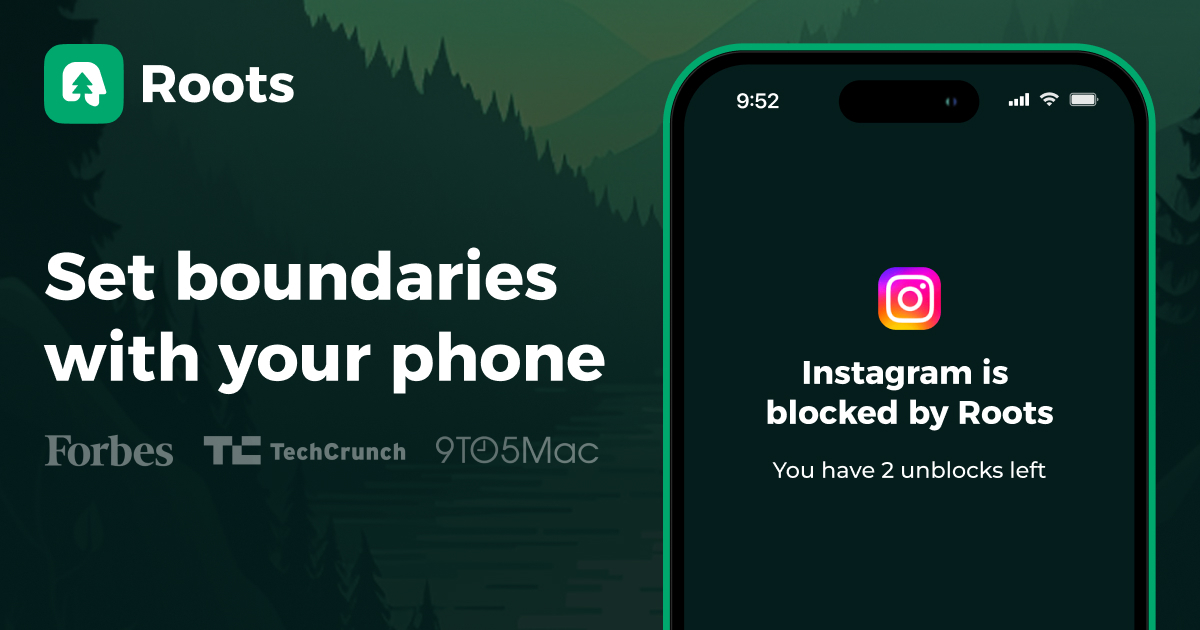
Technology can help set boundaries with social media. Start with a screen time app like Roots. There are several good ones out there. Here's why this is key: https://getroots.link/7rPUkiz
@clinjar - Clint Jarvis
Apps like Roots keep you accountable. When blocking is active, you can't uninstall or unblock. This extra friction is key. Here's how to use it effectively in 5 steps:

@clinjar - Clint Jarvis
1. Block social media apps Keep social media blocked by at all times. Force yourself to unblock it intentionally. Create just enough pause to break the loop.
@clinjar - Clint Jarvis
2. Schedule downtime Set fixed windows to go full "Monk Mode" with social media completely blocked. • Mornings (5am-9am): no social media or news apps • Evenings: (6pm-midnight): no social media or work apps This downtime helps rewire your brain.

@clinjar - Clint Jarvis
3. Instant app blocking Sometimes I need to block everything: • Stay focused when I'm doing deep work • Reduce the temptation to “just check for a second” • Block distracting apps when I get in the car I use it daily.

@clinjar - Clint Jarvis
4. Pick scroll replacements Simple things you can use to redirect yourself away from scrolling. Go for a walk, pick up a book, or play with your dog. Roots will direct me to better things (like Lucy) when apps are blocked.

@clinjar - Clint Jarvis
5. Do a weekly detox. Roots hosts a weekly Social Media Detox each Sunday. The clarity after that day is incredible.

@clinjar - Clint Jarvis
With small changes, my phone usage has dropped from 4 hours to around 1 daily. Pickups from 150 to 50 daily. My mind feels clearer, calmer, more focused.

@clinjar - Clint Jarvis
Setting boundaries with social media is key. Focus is your most valuable asset in today's distracted world. Here's a link to the screen time app I mentioned: https://getroots.link/7rPUkiz
@clinjar - Clint Jarvis
Video Credits: - Angela Duckworth at Bates: Push those cell phones away | Bates College - 30 Days Without Social Media | My Transformation | Niklas Christl

@LeddyLLC - Leddy
People today sleep 90 minutes less per night than they did 50 years ago. Sleep disorders are skyrocketing. No one’s talking about the modern habits behind it... But here’s what science says actually fixes your sleep🧵:
@LeddyLLC - Leddy
1. High cortisol is blocking melatonin. Stress activates your HPA axis, which keeps your body alert. At night, that spike in cortisol kills melatonin production. Fix: Try breathwork or journaling 30 mins before bed to calm your system.
@LeddyLLC - Leddy
2. You’re too hot to sleep. Core body temp must drop ~1°F for deep sleep to kick in. Fix: A warm shower 90 mins before bed triggers that cooling effect. Bonus: Keep bedroom temp under 68°F for best results.
@LeddyLLC - Leddy
3. Your circadian clock is confused. Morning sunlight anchors your internal rhythm. Skip it, and your sleep-wake cycle drifts out of sync. Fix: Just 10 minutes of morning sun resets melatonin production.
@LeddyLLC - Leddy
4. Magnesium deficiency is wrecking your rest. Over 50% of people don’t get enough. Magnesium calms the nervous system, helps regulate GABA and aids your body's production of melatonin. Fix: Take 200–500mg of magnesium glycinate 1 hour before bed.
@LeddyLLC - Leddy
I take these Magnesium Glycinate gummies. They're good quality, 3rd party tested, and have a touch of L'Theanine to compliment its sleep benefits. Try them here: https://lvnta.com/lv_eC1HeIg9w0GxQgV8PZ

@LeddyLLC - Leddy
5. Light exposure after dark wrecks sleep quality. Your skin and eyes both respond to light. Artificial light at night signals “daytime” to your biology. Fix: Dim lights after sunset and use amber bulbs in the evening. https://t.co/sbJ3yRbsYJ
@LeddyLLC - Leddy
6. You’re overdosing on stimulants. Caffeine has a half-life of 6 hours. Even an afternoon cup can reduce deep sleep by 20%. Fix: If you can’t fall or stay asleep, cut caffeine after 12-2pm. https://t.co/haB32aFnrr
@LeddyLLC - Leddy
7. You’re eating too close to bed. Late meals force your body to digest instead of repair. This raises insulin and core temperature, impairing melatonin. Fix: Aim to finish eating at least 2–3 hours before sleep. https://t.co/mtayNlcjnn
@LeddyLLC - Leddy
8. Alcohol is sedating, not helping. Alcohol knocks you out but destroys REM sleep. It fragments your sleep cycles and causes early awakenings. Fix: Avoid drinking at least 3 hours before bed (or skip it entirely). https://t.co/sLEAYlXA45
@LeddyLLC - Leddy
9. Blue light is tricking your brain. Your eyes don’t just see light, they signal time to your brain. Nighttime screen use suppresses melatonin by up to 80%. Fix: Cut screens 2 hours before bed or wear blue-blocking glasses. https://t.co/rqLNmUOYu6
@LeddyLLC - Leddy
I found a great source for blue light glasses. They're quality, affordable, and positively reviewed by over 14,000 people. Find them here: https://lvnta.com/lv_O38s9BWsZHlfxnA2al
@LeddyLLC - Leddy
10. Noise is ruining your brain’s cleanup. Your brain cleans itself during deep sleep via the glymphatic system. Background noise (even low hums) can interrupt this. Fix: Use white noise to block disturbances and protect deep sleep. https://t.co/NjULh2K15H
@LeddyLLC - Leddy
Fix your sleep, fix your life. Poor sleep raises cortisol, blood sugar, and inflammation. Fixing it improves fat loss, memory, focus, hormones, and longevity. Start tonight, your future self will thank you. This thread is for informational purposes only, not medical advice.
@LeddyLLC - Leddy
I hope this helps you become a stronger, healthier, version of yourself. If you liked this, follow @LeddyLLC for more health tips! Repost and share how to fix your sleep!

@mchale_in_flow - Jay McHale
Yogis don't rely on multiple cups of coffee. Yet they have sharper focus, concentration, and longer attention spans than most Americans. Their secret? It's not Adderall, energy drinks, or time-blocking. Here are 8 practices yogis use to rewire the brain for superhuman focus:🧵

@mchale_in_flow - Jay McHale
The average American's attention span? 8.25 seconds. That's literally less than a goldfish. We check our phones 96 times per day and wonder why we can't focus. But ancient yogis discovered something modern science is finally proving...

@mchale_in_flow - Jay McHale
Your brain isn't broken. It's suffering from bad programming and bad daily habits. Most Americans believe in a rule that success only comes from hard work; that activity = reward. As a result, 40% of Americans routinely multi-task (constraining their cognitive abilities).
@mchale_in_flow - Jay McHale
Yogis practice the exact opposite skill every day. They don't value outside activity; they move attention inward. Yogis practice stillness, presence, & intentional mental awareness. They optimize their brain and master focus using these 8 practices:
@mchale_in_flow - Jay McHale
1. Pranayama (Conscious Breathing) Research shows this increases brainwave coherence by up to 19%. Box breath is the easiest way to start. Inhale, hold, exhale, hold each for a count of 4. It's the simplest of many powerful breathing techniques we share with FlowVeda members.
@mchale_in_flow - Jay McHale
2. Pratyahara (Sensory Withdrawal) Americans are drowning in notifications, alerts, and digital noise. Yogis do the opposite. They consciously disconnect from external stimuli for 5-15 minutes every day through meditation. Think of it as a "factory reset" for your overwhelmed brain.

@mchale_in_flow - Jay McHale
3. Trataka (Fixed Point Gazing) This sounds ridiculous until you see the results. Stare at a candle flame for 15 minutes without blinking. One study found an immediate 26% improvement in cognitive performance. Your brain's "focus muscle" gets stronger with each session.
@mchale_in_flow - Jay McHale
4. The Default Mode Network This is your brain's "rumination center." Most Americans have it stuck in overdrive: constant worry, mental chatter, self-referential thinking. Yogis learned to quiet it 5,000 years ago by staying present.

@mchale_in_flow - Jay McHale
Dr. Judson Brewer at Brown University proved it works. His research on "witness consciousness" (observing thoughts without attachment) showed a 57-67% reduction in anxiety. That's better than most prescription drugs. Without the side effects (ie. science it catching up).

@mchale_in_flow - Jay McHale
5. Circadian Alignment Wake up before sunrise. Get morning sunlight. Digital sunset at night. Sounds simple? This single practice optimizes your hormonal cycles and reduces decision fatigue. Most Americans fight their biology. Yogis flow with it.

@mchale_in_flow - Jay McHale
6. Intentional Silence Here's something that will blow your mind: 2 hours of daily silence can stimulate new brain cell growth in the hippocampus. Your brain strengthens through calm rest. Americans live in constant noise pollution. Yogis use silence as medicine.

@mchale_in_flow - Jay McHale
7. Asana (Mindful Movement) This isn't your typical gym workout. This mind-body integration practice boosts presence, BDNF (your brain's growth hormone), and 40% increase in prefrontal cortex activity, according to studies. Your brain literally grows new neural connections.

@mchale_in_flow - Jay McHale
8. Ayurvedic Brain Herbs For 5,000 years, yogis used specific herbs to nourish their nervous systems. Unlike stimulants that force alertness, these herbs build long-term cognitive resilience. Modern research is validating what ancient sages knew:


@mchale_in_flow - Jay McHale
Ashwagandha: 300mg-600mg daily improved memory, attention, and reaction time after 30 days while reducing cortisol. Bacopa (Brahmi): 84-day trials show improved concentration + increased BDNF levels.


@mchale_in_flow - Jay McHale
The truth? While most Americans unknowingly program their brains for distraction and anxiety... Yogis intentionally mold theirs to optimize focus, awareness, & presence with silence, visualization, & practices proven to work. The difference isn't genetics. It's training.
@mchale_in_flow - Jay McHale
You can start rewiring your brain today. Pick one practice. Do it for 5 minutes every day. Your future self will thank you.
@mchale_in_flow - Jay McHale
Thanks for reading. What are your thoughts on this? Let me know below. & If you enjoyed this thread... Follow me @mchale_in_flow for more content to develop your version of legendary. Repost the first tweet to help more people see it.
@mchale_in_flow - Jay McHale
Yogis don't rely on multiple cups of coffee. Yet they have sharper focus, concentration, and longer attention spans than most Americans. Their secret? It's not Adderall, energy drinks, or time-blocking. Here are 8 practices yogis use to rewire the brain for superhuman focus:🧵

@mchale_in_flow - Jay McHale
P.S. If you're looking to increase your focus and have a calmer mind... Check FlowVeda out. It's a premium, all natural, ayurvedic formula that will help you become more focused, calm, and creative. 60-day money-back guarantee. Get yours here: https://www.flowveda.com/products/flowveda?utm_source=X

@mchale_in_flow - Jay McHale
@thepranaguy @mchle_in_flow DK, You are exactly right! It starts w/ awakening to the truth, then becoming aware of what is happening within. Then real self-work can begin. This is the ethos of FlowVeda. Everyone can live "the life" by looking inward & embracing the change to get there.

@LORWEN108 - Lorwen C Nagle, PhD
I'm 63. I'm a Harvard-trained psychologist who works with ultra-successful individuals... And I hate to tell you, but the cost of overthinking and anxiety is the life you could have lived. Here's the 3-step protocol that actually works: 🧵


@LORWEN108 - Lorwen C Nagle, PhD
Procrastination... It's not laziness. It's dopamine desensitization. Your brain needs increasingly intense stimulation to feel rewarded. That's why checking email feels better than deep work. And why can't you focus without your phone buzzing nearby?

@LORWEN108 - Lorwen C Nagle, PhD
Here's what's happening in your brain: Dopamine isn't about pleasure—it's your focusing mechanism. Whatever produces dopamine captures your attention. But overstimulation has made you dopamine-resistant. Like insulin resistance, but for your reward system.

@LORWEN108 - Lorwen C Nagle, PhD
The science is clear: • Low dopamine sensitivity = need extreme stimulation to focus • High dopamine sensitivity = simple tasks become engaging Most professionals are operating at 20% of their focus capacity.

@LORWEN108 - Lorwen C Nagle, PhD
You can't "detox" dopamine. It's a neurochemical essential for survival. But you CAN resensitize your receptors. Here's the evidence-based protocol that transforms boring work into flow states:
@LORWEN108 - Lorwen C Nagle, PhD
Step 1: Replace High-Dopamine Breaks Stop scrolling between tasks. Instead: • Walk • Stretch • Foam roll • Light exercise • Do breath work • Practice mindfulness These "boring" breaks starve your brain of dopamine, making work feel rewarding again.

@LORWEN108 - Lorwen C Nagle, PhD
Step 2: Shift from Default Mode to Task-Positive Network Your brain defaults to wandering when not engaged. Force the switch: • Stay in singular focus • Do ONE thing at a time • No tabs, no multitasking • Create a "tunnel for awareness" This trains your dopaminergic system to release dopamine from deep work.

@LORWEN108 - Lorwen C Nagle, PhD
Step 3: Use Wait Times as Training Instead of scrolling, practice being present. This increases your reward sensitivity so you can access flow state at will. The result: Boring work becomes as addictive as social media.

@LORWEN108 - Lorwen C Nagle, PhD
When you lower your stimulation threshold, mundane tasks activate reward circuits. Writing reports triggers the same dopamine as video games. Data analysis becomes as engaging as social media. Your brain literally rewires for deep work.
@LORWEN108 - Lorwen C Nagle, PhD
In my Anxiety Relief Transformation (ART) package, clients draw their thoughts and feelings on paper. I use creativity to explore one's shadow and bring it into the light. My clients uncovered old memories and future hopes that were unexpressed and unseen. By drawing, they re-connect their shadow side. Here are 2 different client drawings revealing the process and power of visual symbols to heal.


@LORWEN108 - Lorwen C Nagle, PhD
The paradox of modern productivity: We try to make work more stimulating (music, rewards, gamification). But that's backwards. Make everything ELSE less stimulating. Then work becomes your brain's preferred source of dopamine.

@LORWEN108 - Lorwen C Nagle, PhD
After 40 years studying high achievers, here's what I know: Peak performers aren't more disciplined. They've trained their brains to crave the right things. While others need constant stimulation, they find flow in simplicity. That's the real competitive advantage.
@LORWEN108 - Lorwen C Nagle, PhD
Carl Jung saw this coming. He wrote: "The privilege of a lifetime is to become who you truly are." But we've buried our true selves under dopamine-seeking behaviors. Jung called it the Shadow—the parts we hide.

@LORWEN108 - Lorwen C Nagle, PhD
When you resensitize to dopamine, you reconnect with what Jung called the Self. The work becomes the meditation. And if you're ready to break free from anxiety's grip...
@LORWEN108 - Lorwen C Nagle, PhD
Join me in the Anxiety Relief Transformation™ program. After 40+ years as a psychologist, I've created these 12 modules of guided practices combining neuroscience, art therapy & somatic healing. Enrollment closing soon: https://offers.lorwenharrisnagle.com/anxiety-relief-transformation-course-sales-page

@LORWEN108 - Lorwen C Nagle, PhD
If this thread resonated with you, I explore psychology, philosophy, and personal transformation in my work. Follow @Lorwen108 for more insights on the journey to authenticity. Repost if this helped you. 🙏
@LORWEN108 - Lorwen C Nagle, PhD
I'm 63. I'm a Harvard-trained psychologist who works with ultra-successful individuals... And I hate to tell you, but the cost of overthinking and anxiety is the life you could have lived. Here's the 3-step protocol that actually works: 🧵 https://t.co/ls6KQdpqhR


@DrShayanSen - Shayan Sen
Meditation is a waste of time. Because most people do it wrong. But done right, it can rebuild brain tissue, reprogram your DNA, and reverse aging. Here are 5 science-backed protocols and products that actually work 🧵:
@DrShayanSen - Shayan Sen
1. The biggest lie in wellness: “Meditation is just for stress relief.” Wrong. Done properly, it triggers: • Telomere repair • Mitochondrial regeneration • DNA transcription changes • Hormonal recalibration • Brain tissue growth It’s molecular medicine.

@DrShayanSen - Shayan Sen
2. How meditation actually rewires your biology: • Thickens prefrontal cortex → focus, control • Shrinks amygdala → reduced anxiety • Grows hippocampus → memory, learning • Boosts BDNF → new brain cells • Activates FOXO3, TERT → longevity genes • Resets cortisol rhythm → better fat loss & sleep This is full-body software reprogramming.

@DrShayanSen - Shayan Sen
3. Proof it works (backed by science): • 1,800+ genes upregulated after 8 weeks • Telomerase activity increased 43% • Cortisol rhythm restored • Mitochondria regenerate • 98% boost in melatonin • Default Mode Network downregulated
@DrShayanSen - Shayan Sen
5 PROTOCOLS THAT ACTUALLY WORK: 1. 45-Minute Focused Attention Time: 45 min/day Target: Gene activation (TERT, IFN, FOXO3) Method: Sit upright, focus on breath at nostrils Why it works: Mirrors Harvard and Davidson protocols used in gene regulation studies 2. 4–7–8 Breathing in the Morning Time: 12 min upon waking Method: Inhale 4 sec → Hold 7 sec → Exhale 8 sec Targets: • Cortisol curve normalization • Parasympathetic rebound • HPA axis repair Best for: Burnout, sleep issues, belly fat 3. 20-Min Binaural Body Scan (PM) Time: Before bed Method: Lie down, scan body, layer binaural beats Targets: • BDNF increase • Default Mode Network downregulation • Vagus nerve activation Best for: Neuroplasticity and recovery 4. Walking Meditation Time: 10–30 min/day Method: Slow walk, breath awareness, open gaze Targets: • Anxiety reduction • Bilateral stimulation • HRV improvement Best for: Restless minds and active nervous systems 5. Quarterly 3-Day Silent Retreat Time: Once per quarter Method: Digital + verbal silence, ~6 hours of daily practice Targets: • Telomerase activation • Mitochondrial reset • Deep hormonal restoration Best for: Fast-track transformation

@DrShayanSen - Shayan Sen
5 PRODUCTS THAT AMPLIFY YOUR GAINS: 1. Muse Headband What it does: Real-time EEG neurofeedback Why it works: Strengthens focus loop by training prefrontal cortex Best for: Beginners who drift easily during practice I use this myself. Let me know you want a 15% off link.


@DrShayanSen - Shayan Sen
2. http://Brain.fm What it does: Neural entrainment via functional music Why it works: Suppresses DMN, increases phase-locking for faster meditative states Best for: ADHD, racing thoughts, or inconsistent focus


@DrShayanSen - Shayan Sen
3. Mendi: What it does: Improves blood flow & focus through real-time neurofeedback. Why it works: Measure & reward prefrontal cortex activation attention, self-regulation, and neuroplasticity. Best for: Measurable meditation progress and stronger executive function.
@DrShayanSen - Shayan Sen
4. Apollo Neuro What it does: Wearable vagus nerve stimulator Why it works: Improves HRV and parasympathetic tone Best for: Amplifying calm and entering deeper meditative states faster Link: https://apolloneuro.com/drshayansen


@DrShayanSen - Shayan Sen
5. Red Lens Blue Light Blockers What they do: Preserve melatonin surge post-meditation Why they work: Mitigate artificial light disruption to sleep hormones Best for: Evening meditators and anyone optimizing circadian health I have mine from Ra Optics https://ra-optics.myshopify.com/discount/DRSEN?rfsn=8651171.98292e


@DrShayanSen - Shayan Sen
Meditation is metabolic therapy. With the right inputs, it rewires your brain, upgrades genes, balances hormones & extends life. Stillness is a system upgrade if you run the right protocol. RT, bookmark, and follow @DrShayanSen for more high-ROI health optimization strategies
@DrShayanSen - Shayan Sen
@NicolaeCons56 It’s such an underutilized tool
@DrShayanSen - Shayan Sen
@WorkuHaile6 @Wordofwise_ Well said!
@DrShayanSen - Shayan Sen
@squadpatrolltv Gonna have to try this!

@MetabolicFactor - Metabolic Factor
Everyone wants to build muscle… But no one builds their brain. You’ll notice it only when it starts to fail: Brain fog. Anxiety. Mood swings. Here’s how to heal and protect the organ that controls everything in your life 🧵 https://t.co/7rHLdVYctG

@MetabolicFactor - Metabolic Factor
1. Brain health isn’t just about IQ or memory. It’s your ability to: • Think clearly • Stay calm • Learn fast • Focus deeply When your brain thrives, your life does too. Ignore it—and everything else falls apart. https://t.co/mvKGtUfBHr
@MetabolicFactor - Metabolic Factor
2. Why It Matters Your brain runs your entire system: • Nervous control • Hormone regulation • Immune strength When it suffers, you suffer—through mood crashes, fatigue, poor decisions, and eventually, disease. https://t.co/PFF0eujFnX
@MetabolicFactor - Metabolic Factor
3. What Destroys It Modern life silently attacks your brain: • Sleep deprivation • Junk food • Blue light overload • Chronic stress • Sedentary routines All this fuels inflammation and shrinks your mental capacity.
@MetabolicFactor - Metabolic Factor
4. Yes, You Can Heal It Your brain wants to heal. It’s called neuroplasticity—the power to rewire itself. But it needs the right inputs: • Deep rest • Clean nutrition • Daily movement • Mental challenge • Emotional safety https://t.co/xPEV1MLRLr
@MetabolicFactor - Metabolic Factor
5. Eat for Your Brain Your brain is 60% fat. Feed it right: 🥑 Healthy fats (avocado, olive oil) 🐟 Omega-3s (salmon, flaxseed) 🍓 Antioxidants (berries, cocoa) 🥦 Whole foods > processed trash 💧 Stay hydrated. Ditch sugar & booze.
@MetabolicFactor - Metabolic Factor
6. Move Daily Exercise fuels your brain with oxygen and endorphins. • Cardio = Better focus • Strength = Stress resilience • Yoga = Nervous system calm Even a daily 20-minute walk rewires your brain over time.
@MetabolicFactor - Metabolic Factor
7. Prioritize Sleep Your brain detoxes while you sleep. Skip it and you’ll feel it: • Brain fog • Mood swings • Memory lapses Sleep tips: 🕘 Sleep on schedule 📵 No screens before bed 🌙 Keep your room cool & dark
@MetabolicFactor - Metabolic Factor
8. Train Your Brain Neuroplasticity = use it or lose it. Daily brain training ideas: 🧩 Solve puzzles 📖 Read deeply 🧠 Learn a new skill ♟️ Play chess or strategy games Challenge your mind. It grows with effort.
@MetabolicFactor - Metabolic Factor
9. Master Your Emotions Stress is toxic to brain cells. It shrinks your memory center (hippocampus). Protect it by: • Journaling daily • Walking in nature • Practicing mindfulness • Laughing and connecting with real people
@MetabolicFactor - Metabolic Factor
10. Final Protection Your brain needs lifelong care. Start here: ⛑️ Wear helmets 🚭 Ditch smoking 🍷 Limit alcohol 👥 Stay socially active It’s your #1 asset. Train it daily—and it’ll reward you forever.
@MetabolicFactor - Metabolic Factor
Final Takeaway: Your mind is your masterpiece. Treat it like one: • Nourish it • Train it • Let it rest And it will lead you to a sharper, calmer, and longer life. 🔁 Repost to save a brain. 📌 Follow @MetabolicFactor to level-up your physique.

@jakeglmn - Jake Gilman
This is Sardinia, Italy. The world’s #1 region for people living past 100. I dug into what Sardinians do differently and uncovered these 5 powerful habits you won’t see anywhere else: 🧵


@jakeglmn - Jake Gilman
They don't push through fatigue or work non-stop for hours. Instead, centenarians naturally align with their body's 90-120 minute energy cycles. Working when alert, resting when tired. While most people override these signals, they honor them.

@jakeglmn - Jake Gilman
Your body operates in 90-120 minute cycles called 'ultradian rhythms.' Sleep researcher Nathaniel Kleitman discovered these cycles control: - Hormone release - Alertness levels - Focus capacity - Cellular repair Every 90 minutes, your body naturally wants a break.

@jakeglmn - Jake Gilman
Following these cycles: - Reduces stress hormones - Improves decision-making - Prevents afternoon crashes - Supports long-term health The key: listen to your body's signals instead of ignoring them.

@jakeglmn - Jake Gilman
It's not about formal meditation or long naps. Simple alignment: - Work deeply for 60-90 minutes - Take 10-20 minutes to decompress - Step outside, stretch, or sit quietly - Return refreshed for the next cycle Here's why that 90 minutes is so important:
@jakeglmn - Jake Gilman
Here's how you can do it too: - Focus on your most important task for 90 minutes - Turn off notifications during this time - When you feel your attention drifting, take a real break - Repeat 2-3 times per day Here's a simple routine you can try:

@jakeglmn - Jake Gilman
In Okinawa, Sardinia, and other Blue Zones: - Physical activity happens throughout the day - People work in natural rhythms - Rest is built in Daily rhythm matters. But what fuels those rhythms is just as important. Diet plays a massive role, especially in energy production…

@jakeglmn - Jake Gilman
Most propaganda surrounding Blue Zones states that their diets are high in: - Nuts - Beans - Grains But that's not actually true...
@jakeglmn - Jake Gilman
Research shows their diets are extremely high in vitamins and minerals. Specifically B vitamins (even from organ meats) Because they help your body convert food into usable energy (ATP), support your nervous system, and power brain function.

@jakeglmn - Jake Gilman
Vitamin B is one of the most common deficiencies in America. Studies suggest around 40%. Mostly due to the lack of vitamin rich foods in their diet. Here's how you can get more of it:

@jakeglmn - Jake Gilman
While getting vitamin B through diet is ideal, It can also be supplemented. If you're interested in powering your body with proper energy, Check out a highly trusted source, like this (aff link): https://www.amazon.com/dp/B0D79DNRHQ?ref=t_ac_view_request_product_image&campaignId=amzn1.campaign.2LNSIYBYZPHTZ&linkCode=tr1&tag=jakeglmnstore-20&linkId=amzn1.campaign.2LNSIYBYZPHTZ_1755347648269

@jakeglmn - Jake Gilman
So what seem to be keys to a long and happy life? - Purpose - Community - Time with family - A healthy balanced diet - Following natural rhythms Being more in tune with your body and the present moment never fails. https://t.co/hk3pi9TtV4

@jakeglmn - Jake Gilman
In a time where being/feeling isolated is so easy, it's important to remember how much we need our friends and family. I hope this shows that we have everything needed to live a long and healthy life, if we seek it. FYI: This thread is not intended to prevent, diagnose or treat disease. Always consult a licensed practitioner before starting any new health protocol.
@jakeglmn - Jake Gilman
I hope you've enjoyed this thread! (And maybe even learned something) If you did, consider reposting it to share with friends:
@jakeglmn - Jake Gilman
This is Sardinia, Italy. The world’s #1 region for people living past 100. I dug into what Sardinians do differently and uncovered these 5 powerful habits you won’t see anywhere else: 🧵 https://t.co/xQtLx1knPr


@scotti_brooks - Scott Brooks
Andrew Huberman teached you to reprogram your body. Joe Dispenza rewires your reality with mind power. But when you combine them? You tap into the fastest path to healing and transformation. Here are 10 insights that changed my life (every tweet below is a powerful lesson): 🧵


@scotti_brooks - Scott Brooks
Morning sun is non-negotiable. Just 5-10 minutes of direct morning sunlight sets your entire day up for success. It regulates your cortisol, increases energy, improves sleep, and boosts mood. Cost: $0 https://t.co/EgOGaygyeD
@scotti_brooks - Scott Brooks
Sleep is the highest ROI 'hack' on the market. • Delay coffee to 90 minutes after waking • Regulate your body temperature • Morning sunlight (see above) • No screens 1 hour before bed Don't sleep on sleep.
@scotti_brooks - Scott Brooks
Strength training reverses biological aging. Lifting weights 2-3x weekly: • Reverses aging by 10+ years • Improves mental health • Builds confidence Focus on compound movements with progressive overload. https://t.co/lVivAApcVe
@scotti_brooks - Scott Brooks
Most supplements are marketing. These 4 actually work: • Vitamin D3+K2 • Creatine (5g daily) • Magnesium (threonate) • Omega-3s (2-3g EPA/DHA) Simple beats random bio-hacking everytime.
@scotti_brooks - Scott Brooks
Over 21% of the world battles diabetes, and countless others are on the brink. Stop dumping a load of medicines inside you everyday. Learn to cure yourself naturally, without harming your body with chemicals. Start your diabetes free journey today 👇🏻 manifestlord.gumroad.com/l/health
@scotti_brooks - Scott Brooks
Your salt intake is probably wrong. Active people need 5-7g sodium daily, not 2.3g. Proper electrolytes: • Improve cognitive performance • Eliminate "afternoon fatigue" • Stop headaches That 3pm crash? Lack of sodium, not caffeine. https://t.co/NPdQZ7iqzB
@scotti_brooks - Scott Brooks
Your emotions are creating your biology. Gratitude produces more healing compounds than any pill. Your body cannot distinguish between a real experience and one imagined. This isn't woo—it's neuroscience. https://t.co/aCDTVDjA4x
@scotti_brooks - Scott Brooks
Your thoughts shape your reality. 95% of your thoughts are the same as yesterday. This unconscious loop keeps recreating your past. Ask yourself: "Is this thought creating the future I want or recycling my past?" https://t.co/71rLBcuUIw
@scotti_brooks - Scott Brooks
Chronic stress is neurotoxic. 20 minutes of conscious breathing: • Shifts from survival to growth mode • Improves heart rate variability • Restores cognitive resources Your nervous system can't tell emails from predators. https://t.co/uU2cobgAUa
@scotti_brooks - Scott Brooks
Where attention goes, energy flows. When your energy is focused on your outer world, your brain works inefficiently. You can't create a new future if you can't think beyond your stress, problems, pain. Focus your attention on the present moment. https://t.co/BWeKWRNPc6
@scotti_brooks - Scott Brooks
Meditation is mental strength training. 10 minutes daily builds: • Superior focus • Increased gray matter • Enhanced emotional regulation The highest performers all share this habit—they direct their mind rather than being directed by it. https://t.co/0gWR0GZ5pv
@scotti_brooks - Scott Brooks
The 10 insights that will change your life: Sun Salt Sleep Stress Energy Fitness Emotions Thoughts Meditation Supplements
@scotti_brooks - Scott Brooks
Degrees don’t pay the bills anymore. Skills do. Now get access to 4TB+ of premium courses across every niche, from business to marketing to design. Learn directly from the top 1% people, without wasting $$$ on overpriced programs. Check it out: manifestlord.gumroad.com/l/bundle
@clinjar - Clint Jarvis
Stanford paid 35,000 people to quit social media. This was the largest study on emotional health in history. The results were so shocking, scientists called it "comparable to therapy." Here's what happens when you break free from the algorithm: 🧵

@clinjar - Clint Jarvis
Over 35,000 people took part. They were paid to deactivate either Instagram or Facebook for 6 weeks. It was done right before the 2020 Presidential Election. And the results were undeniable:
@clinjar - Clint Jarvis
Participants didn’t just feel better. They were measurably happier, less anxious, and less depressed. • Facebook users saw a 6% improvement in emotional well-being • Instagram users saw a 4% improvement And not only that...

@clinjar - Clint Jarvis
The researchers found that: • Quitting Facebook was 15% as effective as therapy • Quitting Instagram: 22% as effective • Both eliminated over half of this election-related stress. But here's the twist:

@clinjar - Clint Jarvis
These people didn’t stop using their phones. They just switched to other apps. That means time on social media ≠ time on other apps. Social media is measurably worse for us.
@clinjar - Clint Jarvis
As Psychologist Angela Duckworth put it: Our phones are “adult pacifiers.” But her other point is deeper: You can't break free with willpower. Change your environment instead. She calls it situation modification.
@clinjar - Clint Jarvis
The Stanford study proved something we already knew deep down: You don’t need to give up your phone. You just need to be more intentional with your time. Here's where you can start:👇
@clinjar - Clint Jarvis
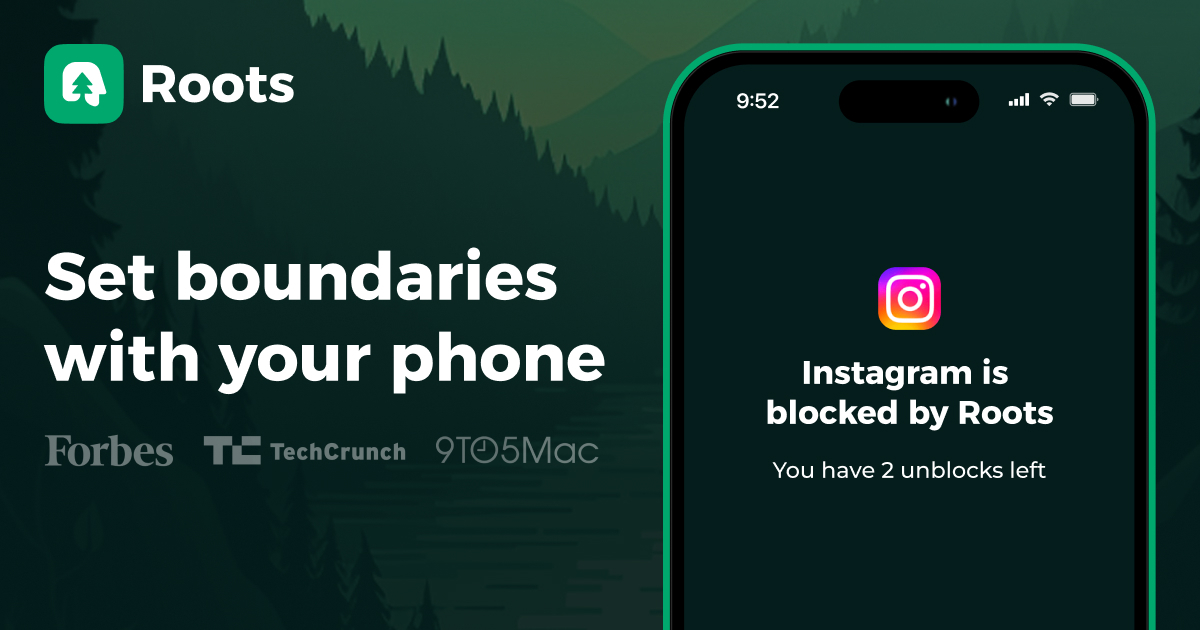
It's important to set boundaries with social media. Start with a screen time app like Roots. There are several good ones out there. Here's why this is key: https://getroots.link/aNqv9fK
@clinjar - Clint Jarvis
Apps like Roots keep you accountable. When blocking is active, you can't uninstall or unblock. This extra friction is key. Here's how to use it effectively in 4 steps:

@clinjar - Clint Jarvis
1. Block social media apps Keep social media blocked by at all times. Force yourself to unblock it intentionally. Create just enough pause to break the loop.
@clinjar - Clint Jarvis
2. Schedule downtime Set fixed windows to go full "Monk Mode" with social media completely blocked. • Mornings (5am-9am): no social media or news apps • Evenings: (6pm-midnight): no social media or work apps This downtime helps rewire your brain.

@clinjar - Clint Jarvis
3. Instant app blocking Sometimes I need to block everything: • Stay focused when I'm doing deep work • Reduce the temptation to “just check for a second” • Block distracting apps when I get in the car I use it daily.

@clinjar - Clint Jarvis
4. Pick scroll replacements Simple things you can use to redirect yourself away from scrolling. Go for a walk, pick up a book, or play with your dog. Roots will direct me to better things (like Lucy) when apps are blocked.

@clinjar - Clint Jarvis
With small changes, my phone usage has dropped from 4 hours to around 1 daily. Pickups from 150 to 50 daily. My mind feels clearer, calmer, more focused.

@clinjar - Clint Jarvis
Setting boundaries with social media is key. Focus is your most valuable asset in today's distracted world. Here's a link to the screen time app I mentioned: https://getroots.link/aNqv9fK
@clinjar - Clint Jarvis
Video Credits: - Angela Duckworth at Bates: Push those cell phones away | Bates College - 30 Days Without Social Media | My Transformation | Niklas Christl

@PeakLab_ - Peak Labs
The biggest medical scam: ADHD isn’t a mental disease that needs to be “fixed.” 90% of people are misdiagnosed because the modern world creates the same symptoms. Here’s if you really have ADHD: (& how to make it a focus superpower):🧵
@PeakLab_ - Peak Labs
Why does everyone think they have ADHD now? Because the modern world is designed to fragment attention: – 100+ dopamine triggers a day – Zero friction between impulse and action – No structured rest ADHD isn’t overdiagnosed. It’s over-triggered.

@PeakLab_ - Peak Labs
So...What is ADHD (clinically)? ADHD is a dysregulation of dopamine and prefrontal cortex activity. It’s not a lack of focus. It’s a lack of focus control, the inability to regulate attention on command.
@PeakLab_ - Peak Labs
If you're looking for an edge in your brain, focus, and memory, this all-natural supplement is the best one I've found: Check it out now👇 https://lvnta.com/lv_1pZksBbRzty8rBLYqj

@PeakLab_ - Peak Labs
Problem #1: Low dopamine The ADHD brain doesn’t release enough dopamine during boring tasks. You know what to do. You just can’t feel the internal reward to start. This leads to procrastination, guilt, and mental burnout.
@PeakLab_ - Peak Labs
Problem #2: Impaired prefrontal cortex The PFC helps you plan, prioritize, and resist distractions. In ADHD, it’s underactive. That’s why it’s hard to: – Follow instructions – Hold goals in working memory – Delay gratification - Control impulse

@PeakLab_ - Peak Labs
Problem #3: Default mode network hijack The DMN is meant for daydreaming and reflection. In ADHD, it stays active even during tasks. Result: – You reread the same page 5 times – You start 10 things and finish none – You can’t stay present, even when you want to
@PeakLab_ - Peak Labs
Fix #1: Use external structure to replace internal regulation ADHD brains struggle with self-starting. So outsource your motivation with tools – Time-blocking your day – Visual checklists – Alarms with clear labels – “Body doubling” (working with someone present)


@PeakLab_ - Peak Labs
Fix #2: Activate dopamine before you work Don’t wait to feel motivated. Protocol: – 5–10 min brisk walk or exercise – Cold exposure or shower – Uplifting music + movement combo – Optimized workspace This primes the dopamine system for task engagement.
@PeakLab_ - Peak Labs
Fix #3: Work in rhythm, not marathons The ADHD brain can often hyperfocus...then crash. Instead of forcing hours of focus, use structured intervals. Protocol: – 45–50 minutes deep work – 10–15 minute break (no screen) – Repeat 2–3x daily
@PeakLab_ - Peak Labs
Fix #4: Minimize friction The more steps it takes to start your task, the less likely you are. Tactics: – Keep your workspace clean and minimal – Open only 1 browser tab at a time – Put your phone in another room – Use website or phone blockers Make the path to focus shorter than the path to distraction.
@PeakLab_ - Peak Labs
Fix #5: Use targeted nootropics (not energy drinks) One of the best for ADHD? Lion’s Mane mushroom (1000 mg/day) It boosts nerve growth factor (NGF), supporting memory, focus, and long-term brain function. Unlike caffeine, it builds your brain over time, not burns it out.
@PeakLab_ - Peak Labs
If you're struggling with focus, here's one of the best science-backed natural supplements I've found. It really enhances my brain function https://lvnta.com/lv_1pZksBbRzty8rBLYqj
@PeakLab_ - Peak Labs
Many self-diagnose themselves as ADHD, but miss the nuance. It’s a dysregulated attention system. – You can’t focus when you want – But you can hyperfocus under pressure or novelty With the right protocols, it becomes a superpower.

@PeakLab_ - Peak Labs
Disclaimers: Legal action will be taken with X support if you steal the thread. I earn from some affiliate links I share & nothing I share is medical advice. The email marketing course sponsoring this thread is free with no upsells:
@PeakLab_ - Peak Labs
This 7-day course shows you how to fix nagging age problems and reverse your biological age👇 http://Feellike19.com


@GreaseTheWheelz - Grease The Wheelz
7 years ago, IShowSpeed was streaming to empty chats. His mom told him he was “wasting his life” and kicked him out. Today, he earns up to $1.1M a month—just from donations. Here are 4 psychological tactics he uses (that anyone can copy) 🧵

@GreaseTheWheelz - Grease The Wheelz
Speed started as a small NBA 2K streamer with 2 viewers at a time. During COVID, he reinvented himself into the loud, high-energy persona we know today. His chaotic outbursts look random… …but behind the madness is a strategy few notice:
@GreaseTheWheelz - Grease The Wheelz
The controversies aren’t accidents. When Speed screams, barks, or does something wild, he’s creating “clip-worthy” moments. Fans share them across platforms, giving him free distribution. Every meltdown = millions of new eyeballs. It’s built on a simple principle:
@GreaseTheWheelz - Grease The Wheelz
Conflict fuels attention. Even his family drama became content. His mom walking in to discipline him created tension viewers couldn’t stop watching. When she kicked him out, he streamed it right away.
@GreaseTheWheelz - Grease The Wheelz
Lesson: raw conflict hooks harder than polished content. His obsession with Ronaldo is another masterclass in virality. By hyping Ronaldo while trolling Messi fans, he created endless debates.
@GreaseTheWheelz - Grease The Wheelz
And when Argentina won the World Cup, he ripped off his shirt to reveal a Messi jersey. It was the perfect viral twist—fans either laughed with him or at him. The results?
@GreaseTheWheelz - Grease The Wheelz
With a 0.5% donation rate from 3–4M average viewers, he pockets $75K–$100K per stream. Membership tiers bring ~$55K monthly. And limited merch drops sell out instantly by leveraging scarcity.
@GreaseTheWheelz - Grease The Wheelz
Meanwhile, his fans double as a free marketing army. They “clip farm” his streams, blasting highlights across TikTok, Twitter, and YouTube. This grassroots distribution pulls in millions of new viewers. Legacy media can’t compete with that kind of authenticity.
@GreaseTheWheelz - Grease The Wheelz
Every controversy only adds fuel: • Banned from Twitch for risky comments • Suspended on YouTube for dangerous stunts • Removed from games for “toxic” behavior Each headline = more followers.
@GreaseTheWheelz - Grease The Wheelz
"The Future of Brand Growth Is Here." We help businesses scale with strategies that build authority, trust & growth. If you are looking for high-quality, personalized & scalable solutions to grow your brand... Visit 👉 http://vscalemedia.com & let’s shape the future together.


@GreaseTheWheelz - Grease The Wheelz
Here are the 4 principles driving his success: 1. Emotional arousal drives sharing. Content that sparks big feelings gets shared 3x more than neutral posts. Speed engineers shock and excitement so fans feel compelled to share clips.
@GreaseTheWheelz - Grease The Wheelz
2. Unpredictability creates stickiness. Our brains are wired to focus on the unexpected. Speed’s streams are pure uncertainty—nobody knows what he’ll do next. That unpredictability keeps people watching longer.
@GreaseTheWheelz - Grease The Wheelz
3. Parasocial bonds come from raw emotion. When Speed breaks down, rages, or celebrates, fans feel like they’re seeing the “real him.” This creates loyalty that survives even his worst controversies.
@GreaseTheWheelz - Grease The Wheelz
4. FOMO drives live viewership. Because anything can happen, fans are terrified of missing the next viral clip. So they show up live instead of waiting for reuploads. That drives massive concurrent numbers. And his reach is global.
@GreaseTheWheelz - Grease The Wheelz
His World Cup watch parties pulled 300K live viewers worldwide. From a niche 2K gamer, he became an international star. But is Speed’s style good or bad for content?

@GreaseTheWheelz - Grease The Wheelz
Critics say he normalizes toxic behavior. Supporters say he’s authentic in a world of fake, polished influencers. Either way, his formula works: chaos → clips → virality → money.

@GreaseTheWheelz - Grease The Wheelz
What creators can learn: 1. Moments > long-form content 2. Fans as distributors > algorithm reliance 3. Controversy = conversation 4. Adapt fast after backlash 5. Go global for long-term security The attention economy doesn’t reward perfection.
@GreaseTheWheelz - Grease The Wheelz
It rewards emotion, conflict, and unpredictability. Speed mastered making moments people can’t stop sharing. But here’s the overlooked piece most creators miss: Attention is just step one.
@GreaseTheWheelz - Grease The Wheelz
If you don’t convert it, you’re just putting on a free show. The real difference between struggling and thriving is building systems that turn attention into action. That’s the gap Speed has closed—and why he’s winning.
@GreaseTheWheelz - Grease The Wheelz
Speed’s success shows the power of psychology in the attention economy. If you want to master these principles yourself—critical thinking, better decisions, stronger mental models—this book will help. Grab your copy here 👇 https://gumroad.com/a/949180627/AxfYH
@GreaseTheWheelz - Grease The Wheelz
Read my other thread here 👇 https://t.co/MS6pxURl6y
@GreaseTheWheelz - Grease The Wheelz
Yogis don’t need endless cups of coffee. Yet their focus, concentration, and attention span outlast most Americans. Their secret? Not Adderall. Not energy drinks. Not time-blocking. Here are 8 yogic practices that rewire the brain for laser-sharp focus: 🧵 https://t.co/b4hHU06qvJ

@mchale_in_flow - Jay McHale
Poor focus is not normal. It's a warning sign that your: • Brain's overloaded • Dopamine’s unbalanced • Priorities are scattered Here's what's really going on & how to force your brain into a state of hyperfocus: 🧵

@mchale_in_flow - Jay McHale
Flow is an optimal state of consciousness where you're so absorbed in what you're doing that everything else disappears. Time dilates. Self-consciousness vanishes. Performance skyrockets. McKinsey found executives felt 500% more productive in flow states. But here's the secret:

@mchale_in_flow - Jay McHale
Your brain produces its own neurochemical cocktail more powerful than any drug. In flow, you get dopamine (focus), norepinephrine (alertness), endorphins, anandamide (pattern recognition), and serotonin. This is why flow is the most addictive experience on Earth.

@mchale_in_flow - Jay McHale
Flow has triggers—22 have been discovered. They all drive your attention into the present moment. The most important? Challenge-skills balance. The sweet spot is when the challenge exceeds your skillset by about 4-5%. Too easy = boredom. Too hard = anxiety.

@mchale_in_flow - Jay McHale
Here's where most people fail: They focus on how they look instead of the task itself. Steven Kotler spent a decade blocked from flow while skiing because he obsessed over his body position. The moment he switched to measuring speed? Flow became automatic.
@mchale_in_flow - Jay McHale
Flow requires task-specific focus, not self-focused. Your prefrontal cortex (where your inner critic lives) actually deactivates in flow. That's why time passes strangely and self-doubt disappears. But you can't access this when your nervous system is dysregulated.

@mchale_in_flow - Jay McHale
Three tools reset your system: • Gratitude practice: 5 minutes daily (list 3 things, expand on one) • Mindfulness meditation: 11 minutes of breath focus • Exercise: 20-40 minutes until your mind quiets These prepare your brain for flow states.
@mchale_in_flow - Jay McHale
Flow also needs the right neurochemical foundation through motivation. Your brain has a biological sequence: Curiosity → Passion → Purpose → Autonomy → Mastery Each stage produces more dopamine and builds into the next. This isn't psychology. It's neurobiology.
@mchale_in_flow - Jay McHale
To trigger flow consistently, prepare your environment: Block 90-120 minute windows of uninterrupted time. Turn off ALL notifications. Have conversations ahead of time with anyone who might interrupt you. Your brain's focus cycles demand this level of protection.
@mchale_in_flow - Jay McHale
The payoff is massive: Two hours in flow = 10+ hours of normal work. Learning happens 240-500% faster. Creative breakthroughs increase 400-700%. And it transfers—flow in one activity makes it easier everywhere else.
@mchale_in_flow - Jay McHale
Flow is a skill that compounds. The more you practice entering flow states, the easier it becomes. This is why elite performers protect their "primary flow activity" at all costs. It trains your brain to access flow on demand.
@mchale_in_flow - Jay McHale
P.S. If you want to take your focus to the next level, I developed this nootropic specifically to support awareness and access flow state: It's 3rd party tested, stimulant-free, & made in the US. You can try it out risk-free here: https://www.flowveda.com/products/flowveda?utm_source=X
@mchale_in_flow - Jay McHale
Thanks for reading. What are your thoughts on this? Let me know below. & If you enjoyed this thread... Follow me @mchale_in_flow for more health-related content like this. Repost the first tweet to help more people see it.
@mchale_in_flow - Jay McHale
Poor focus is not normal. It's a warning sign that your: • Brain's overloaded • Dopamine’s unbalanced • Priorities are scattered Here's what's really going on & how to force your brain into a state of hyperfocus: 🧵 https://t.co/UEzzFyIjyd


@AyusWellness - Zib Atkins
Your brain keeps you alive. But it’s under attack every single day. Getting enough sleep and avoiding alcohol is not enough to protect it. Here are 9 silent killers destroying your brain right now (and how to fight back): 🧵 https://t.co/0PdAvbX831
@AyusWellness - Zib Atkins
1. Loneliness Loneliness isn’t just emotional pain—it physically rewires your brain. Chronic loneliness increases stroke risk by 32% and changes brain structure. Your neurons literally wither away without human connection. https://t.co/ZjHQyItfAk
@AyusWellness - Zib Atkins
2. Multitasking A University of London study found multitasking drops IQ to the level of an 8-year-old. Students who multitasked while studying had significantly lower GPAs. Your brain cannot process multiple inputs at once. Every phone check while working = child-level cognition.
@AyusWellness - Zib Atkins
3. Consuming Too Much News Constant negative headlines put your brain in fight-or-flight mode. Stress hormones flood your system, damaging memory and learning. Chronic news consumption has been linked to brain shrinkage from information overload.
@AyusWellness - Zib Atkins
4. Blasting Headphones The 60/60 rule: no more than 60% volume for 60 minutes. Exceeding this damages inner-ear hair cells. Hearing loss doesn’t just affect your ears—it impairs memory and brain processing. https://t.co/1SKH5AjtMx
@AyusWellness - Zib Atkins
5. Too Much Screen Time 7+ hours daily screen use damages gray and white matter. It hits the frontal lobe—the region for focus, decision-making, and self-control. Most people have no idea their screens are eroding brain tissue.
@AyusWellness - Zib Atkins
6. Too Much Sugar The average American consumes 77g of sugar daily. Safe limit? 25–36g. Excess sugar drives neuroinflammation that systematically destroys cognitive function. Sugar doesn’t just make you fat. It makes you slow and forgetful. https://t.co/tKrv5ZK4M4
@AyusWellness - Zib Atkins
7. Living Inauthentically Pretending to be someone you’re not creates constant internal stress. This floods your brain with cortisol, accelerating inflammation and shrinkage. Authenticity isn’t just spiritual—it’s neurological survival.
@AyusWellness - Zib Atkins
8. Barely Moving Exercise fuels your brain as much as your muscles. Physical activity raises BDNF, a protein that grows new neurons. Sedentary lifestyles = shrinking brains. Minimum: 150 minutes of movement weekly to protect cognition. https://t.co/GASLCJ4lyh
@AyusWellness - Zib Atkins
9. Poor Sleep Habits Your brain’s waste clearance system only works during deep sleep. Without 7–9 hours nightly, toxic proteins build up—the same ones found in Alzheimer’s patients. Every bad night accelerates cognitive decline.
@AyusWellness - Zib Atkins
The Compound Effect These habits amplify each other: • Poor sleep worsens multitasking. • Screen time disrupts sleep. • Loneliness drives stress. A vicious cycle that accelerates brain aging.
@AyusWellness - Zib Atkins
The Protocol: • Morning light within 2 hours of waking • Limit news to 30 min daily • 60/60 headphone rule • Weekly social activities • 30 minutes daily movement • Tech-free bedroom Consistency is everything.
@AyusWellness - Zib Atkins
Ancient brain protectors: • Lion’s Mane → stimulates new brain cell growth • Rhodiola → reduces stress, sharpens focus • L-Theanine → calms without drowsiness Stack these with lifestyle changes for maximum effect.
@mchale_in_flow - Jay McHale
I used to have terrible focus. I couldn’t think, stay present, or focus for even 2 minutes. Today, I can focus for hours straight and access flow on command without burning out. All because I found 3 ancient focus techniques that rewired my brain completely... THREAD🧵

@mchale_in_flow - Jay McHale
For years, I lived on autopilot. Brain fog. Constant distractions. Starting tasks but never finishing them. I was unconscious, reacting to everything around me instead of choosing my responses. But here's what changed everything...
@mchale_in_flow - Jay McHale
I discovered 3 ancient techniques that are 3,000+ years old. And modern neuroscience just proved they actually rewire your brain for focus. These aren't trendy productivity hacks. They're the foundation of how humans have mastered their minds for millennia.
@mchale_in_flow - Jay McHale
Technique #1: Pranayama (Breath Control) This ancient yogic practice literally means "control of life force." You regulate your breath in specific patterns, controlling the timing, duration, and rhythm. But what's happening in your brain is mind-blowing...

@mchale_in_flow - Jay McHale
Trinity College Dublin discovered the neurophysiological link: Breathing directly affects noradrenaline, a brain chemical that controls attention. When you control your breath, you control your focus. 12 weeks of practice improved concentration and reaction time in young adults by measurable amounts.
@mchale_in_flow - Jay McHale
Technique #2: Pratyahara (Sense Withdrawal) This is the forgotten bridge between the physical and mental. Your senses constantly pull you outward. Every notification, every sound, every distraction. Pratyahara trains you to consciously redirect that energy inward.

@mchale_in_flow - Jay McHale
Here's the mechanism: When you withdraw from external sensations, your energy becomes concentrated and focused. Like turning scattered light into a laser beam. Studies show it activates your brain differently than any other relaxation technique by shutting off "irrelevant brain networks."
@mchale_in_flow - Jay McHale
Technique #3: Mauna (Intentional Silence) Speech is where we lose the most energy. Ancient yogis discovered that by observing silence, both external and internal, you conserve massive amounts of mental energy. And science backs this up...

@mchale_in_flow - Jay McHale
Research on long-term practitioners of mental silence meditation found: Larger gray matter volume in the anterior cingulate cortex (your brain's attention control center). Mental silence literally grows the part of your brain responsible for focus. It's not suppression. It's conservation.
@mchale_in_flow - Jay McHale
Here's why all 3 together are unstoppable: They attack focus from 3 different angles: Pranayama = Physiological (breath controls brain chemistry) Pratyahara = Perceptual (energy redirection) Mauna = Communicative (energy conservation) Combined? You become unshakeable.
@mchale_in_flow - Jay McHale
This is how you move from unconscious living to permanent presence. From reacting to your environment... to living in flow on command. When your breath is controlled, your senses are focused inward, and your mind is silent, you're fully conscious. That's true mastery.
@mchale_in_flow - Jay McHale
Now, I'll be honest. These practices alone transformed my focus. But I wanted to optimize even further. That's why I spent 10+ years researching and created FlowVeda with ancient Ayurvedic ingredients that support these exact brain states. Check it out: https://www.flowveda.com/products/flowveda?utm_source=X
@mchale_in_flow - Jay McHale
Thanks for reading. What are your thoughts on this? Let me know below. & If you enjoyed this thread... Follow me @mchale_in_flow for more health-related content like this. Repost the first tweet to help more people see it.
@mchale_in_flow - Jay McHale
I used to have terrible focus. I couldn’t think, stay present, or focus for even 2 minutes. Today, I can focus for hours straight and access flow on command without burning out. All because I found 3 ancient focus techniques that rewired my brain completely... THREAD🧵 https://t.co/Sa890qw8sg
