reSee.it - Related Post Feed

Saved - December 27, 2023 at 12:18 PM
reSee.it AI Summary
A series of posts discusses the cancel culture letter written by 100 scientists at Stanford University targeting Scot Atlas. The posts highlight the connections between some signatories of the letter and the Bill and Melinda Gates Foundation, suggesting a potential bias. The influence of the Gates Foundation in philanthropy and vaccine development is also mentioned. The posts criticize the letter for its lack of citations and argue that it reflects a monopolistic ethos. The posts raise questions about conflicts of interest and collusion in the vaccine industry. The posts also criticize the letter's claims about masks, asymptomatic spread, and the lack of citations.

@Kevin_McKernan - Kevin McKernan

University, Philanthropy and Cancel Culture. Back in September, 100 "independent" scientists at Stanford wrote a cancel culture letter to scream at Scot Atlas. Many of their points are now laughable. This wont age well. But let's see how they came to such woke outrage.

@Kevin_McKernan - Kevin McKernan

As many of you know, Stanford attracts a lot of money but one of the more noticeable donations is from Bill and Melinda Gates and is known as the Stanford Computer Science center. Woke Outrage Letter link below. https://drive.google.com/file/d/130OXUjdnwHmfmbiEZWK9d354QHaRi0-r/view

@Kevin_McKernan - Kevin McKernan

In addition to donating a Computer Science building, they also gifted $50M to the school for Vaccine development. https://philanthropynewsdigest.org/news/gates-foundation-awards-stanford-50-million-for-vaccine-discovery https://en.wikipedia.org/wiki/Gates_Computer_Science_Building,_Stanford


Gates Foundation Awards Stanford $50 Million for Vaccine Discovery Gates Foundation Awards Stanford $50 Million for Vaccine Discovery. The grant will establish the Stanford Human Systems Immunology Center, which aims to create a better understanding of how the immune system can be harnessed to develop vaccines.... philanthropynewsdigest.org
Gates computer science building, stanford - Wikipedia en.wikipedia.org

@Kevin_McKernan - Kevin McKernan

In fact there are over 151 grants to Stanford listed on the Bill and Melinda Gates foundation website. https://www.gatesfoundation.org/about/committed-grants?q=Stanford#jump-nav-anchor0

Committed Grants | Bill & Melinda Gates Foundation This database includes grant commitments made by the Bill & Melinda Gates Foundation and previous foundations of the Gates family (William H. Gates Foundation, Gates Library Foundation, and Gates Learning Foundation) from 1994 onward. gatesfoundation.org

@Kevin_McKernan - Kevin McKernan

So lets look at what Bill thought about Scot Atlas..

@Kevin_McKernan - Kevin McKernan

That is not a nice micro-aggression. Maybe "crackpot" is a better term for a MD in Neurology.

@Kevin_McKernan - Kevin McKernan

So Bill doesn't Like Scot. Bill has lots of investments in Vaccines. How should neutralize Scot? Maybe some of the recipients of his grants will get together and write a woke outrage cancel culture letter to underscore the diversity of thought found at a University.

@Kevin_McKernan - Kevin McKernan

Let's take a look at the signatories of this letter, shall we? First up Phillip Pizzo - Surprise.. He has Gates money.

@Kevin_McKernan - Kevin McKernan

Upi Singh, MD You guessed it. Gates Money.

@Kevin_McKernan - Kevin McKernan

Lucy Shapiro, PhD. Don't see any Gates Money. That is shocking. Impressive background but many industrial relationships worth noting. https://en.wikipedia.org/wiki/Lucy_Shapiro

Lucy shapiro - Wikipedia en.wikipedia.org

@Kevin_McKernan - Kevin McKernan

Melissa Bondy, PhD. Quick glance, didnt see much https://med.stanford.edu/school/leadership/dean/updates/melissa-bondy.html

Page not found med.stanford.edu

@Kevin_McKernan - Kevin McKernan

Bonnie Maldonadfo, MD Yep.

@Kevin_McKernan - Kevin McKernan

Michele Barry, MD Bingo

@Kevin_McKernan - Kevin McKernan

Charles Prober, MD Some associations and accolades with Gates but this one needs more digging. https://news.stanford.edu/news/2015/february/gates_cambridge-winners-021215.html


You’ve requested a page that no longer exists | Stanford News news.stanford.edu

@Kevin_McKernan - Kevin McKernan

You see, some of their students get scholarships from Gates so there are indirect influences that require a bit more digging.

@Kevin_McKernan - Kevin McKernan

Julie Parsonnet, MD Bingo ttps://news.stanford.edu/news/2008/november19/med-mcp-111908.html

@Kevin_McKernan - Kevin McKernan

Steven Goodman, MD, MHS, PhD Involved in the Institute for Science and Policy which has Gates money. https://institute.dmns.org/perspectives/posts/covid-19-myths-misinformation-and-misunderstandings/

COVID-19 Myths, Misinformation, and Misunderstandings How do COVID-19 falsehoods take hold, and how can the media and the public be discerning about what we’re seeing? institute.dmns.org

@Kevin_McKernan - Kevin McKernan

David Relman, MD https://fsi-live.s3.us-west-1.amazonaws.com/s3fs-public/cv_relman_09192016.pdf CV has Gates Money

@Kevin_McKernan - Kevin McKernan

Steve Luby, MD Yet again... Maybe we should just call it Gatesford university?

@Kevin_McKernan - Kevin McKernan

https://ccas.creighton.edu/news/alumni-merit-award-winner-2016-stephen-luby Harry Greenberg, MD Has some cozy interactions with Gates but havent dug deep here as the trend is becoming pretty clear. https://sm.stanford.edu/archive/stanmed/2009spring/article5.html

Page not found | Creighton University creighton.edu
Insourced to India - 2009 SPRING - Stanford Medicine Magazine - Stanford University School of Medicine sm.stanford.edu

@Kevin_McKernan - Kevin McKernan

Ann Arvin, MD. Serves on NIAID Advisory panel with Gates members. Works with the WHO https://en.wikipedia.org/wiki/Ann_Arvin I've only covered the few names at the top of the letter but at the moment this seems pretty overt. Uncle Bill doesnt like anyone who challenges his vax goals.

Ann arvin - Wikipedia en.wikipedia.org

@Kevin_McKernan - Kevin McKernan

So what happens? Everyone in the Gates cult gangs up on the independent thinkers to demand the university should contain only their thoughts. Monoversity would be a better name and this is a historical stain on the exceptional Stanford reputation.

@Kevin_McKernan - Kevin McKernan

Surprised? We witnessed the Yellow Snow Memorandum resort to the same type of hypocritical behavior. They crucified Scot for his Hoover connections The monopolistic ethos of their philanthropist shines through in the behavior of their grant recipients.

@Kevin_McKernan - Kevin McKernan

The John Snow Memorandum = Nerd Sweater Mafia These authors are infamous for attacking the Great Barrington Declaration as being some @AIER libertarian think tank. Let’s stoop to their level and see how they take a dose of their same immature associative fallacy medicine.

@Kevin_McKernan - Kevin McKernan

I apologize for mis-spelling Scott’s name. (Two Ts). He left Twitter when the cancel culture purged Twitter in 2021. https://www.statnews.com/2021/01/12/scott-atlas-deletes-twitter-account/

Scott Atlas, controversial former Trump adviser, deletes Twitter account Atlas deleted his Twitter account, apparently in response to the site’s decision to remove accounts accounts after the Capitol riot. statnews.com

@Kevin_McKernan - Kevin McKernan

Just so we are clear about philanthropy. The Gates Foundation has over $430M in Pfizer/BioNTech stock. Nothing in Merck’s Ivermectin. NIH has patent royalties for Moderna. But none of this matters. https://www.google.com/amp/s/www.axios.com/moderna-nih-coronavirus-vaccine-ownership-agreements-22051c42-2dee-4b19-938d-099afd71f6a0.html https://www.google.com/amp/s/www.fool.com/amp/investing/2020/09/24/4-coronavirus-vaccine-stocks-the-bill-melinda-gate/

The NIH claims joint ownership of Moderna's coronavirus vaccine Taxpayers have a sizable stake in the vaccine Moderna is developing. axios.com
The Motley Fool The Motley Fool provides leading insight and analysis about stocks, helping investors stay informed. fool.com

@Kevin_McKernan - Kevin McKernan

The holdings are not all BNTX. The 437M is spread across multiple vaccine bets but BioNTech is up 4X since last March and now valued over $100M trading at $107/share today. It was at $13 in Oct 2019.

@Kevin_McKernan - Kevin McKernan

Remember all the outrage when Billionaire Pedophile Epstein was caught buying university influence? Wrecked a department at MIT. Not suggesting Bill is this evil but it’s a reminder that these conflicts are important to have on the table when his influence network is so large.

@Kevin_McKernan - Kevin McKernan

This is where it gets interesting. Gates encourages AZ/Oxford to not take the free vax for all route. That can’t be good for Pfizer. Also set up CEPI to try to control vax pricing. Collusion through NGO/Philanthropy while stock portfolio banking on ROI? https://www.google.com/amp/s/khn.org/news/rather-than-give-away-its-covid-vaccine-oxford-makes-a-deal-with-drugmaker/amp/

They Pledged to Donate Rights to Their COVID Vaccine, Then Sold Them to Pharma - KFF Health News Advocates of cheap and widely available vaccines thought the pandemic might change business as usual. They were wrong. kffhealthnews.org

@Kevin_McKernan - Kevin McKernan

FAQs. What’s laughable? 1)It opens with Masks! DanMask Source control is bunk. Many comparative jurisdictions show no effect or worse outcomes. @ianmSC is a good source. @mamasaurusMeg and @KristenMeghan are professional OSHA PPE- they agree with Scott Cloth aerosols droplets.

@Kevin_McKernan - Kevin McKernan

2)Asymptomatic spread. Not a driver. https://jamanetwork.com/journals/jamanetworkopen/fullarticle/2774102 3)how many Stanford brainiacs does it take to use EndNote? More than 100? Not a single citation required to character assassinate a colleague? That’s why it’s a woke embarrassment. https://t.co/AtXVLTxWkc

@Kevin_McKernan - Kevin McKernan

@threadreaderapp unroll

Saved - March 12, 2023 at 2:58 PM
reSee.it AI Summary
Stanford has faced a series of controversies in recent years. Its IT department banned words, including "American," and the university threatened to withhold degrees from students who didn't take booster shots. The CS department denounced Kyle Rittenhouse but encouraged students to read the memoir of a black nationalist terrorist. The university is also cutting white student enrollment. The president is accused of falsifying research data, and there have been numerous student suicides. Stanford is being run like a clown show.

@mualphaxi - Maxwell Meyer

If you thought the DEI law dean exploding in front of a federal appellate judge was bad, I have some news… Stanford is a fallen institution. It has gone insane since 2020. Here are the most ridiculous stories from the past few years, some of which I documented. Thread:

@mualphaxi - Maxwell Meyer

Stanford’s IT department created a list of banned words and initiated purges of university websites (they didn’t finish) It included the word “American” https://www.wsj.com/articles/the-stanford-guide-to-acceptable-words-elimination-of-harmful-language-initiative-11671489552

Opinion | The Stanford Guide to Acceptable Words Behold the school’s Elimination of Harmful Language Initiative. wsj.com

@mualphaxi - Maxwell Meyer

September 2021: the Stanford campus opens for the first time since the pandemic began. Students wore masks on bicycles at twice the rate they wore helmets! By yours truly https://stanfordreview.org/stanford-bicycles-helmets-masks/

Review Analysis: Stanford students are more likely to wear masks on bicycles than helmets In April of this year, I witnessed something on the Stanford campus that will be seared into my memory forever: a student on a bicycle, wearing flip-flops, AirPods in ear, going the wrong way through a roundabout in an active construction zone, with no helmet. But like any good follower stanfordreview.org

@mualphaxi - Maxwell Meyer

Dec 2021: when Kyle Rittenhouse was acquitted, the Stanford CS department denounced him. That same department encourages students to read the memoir of black nationalist terrorist Assata Shakur. https://stanfordreview.org/stanford-cs-goes-woke/

Stanford CS Goes Woke: department slams Rittenhouse, praises Ibram Kendi, and promotes terrorist autobiography! The Department of Computer Science is the crown jewel of Stanford. It minted trillions in Silicon Valley wealth, engineered large parts of the internet, and continues to be a powerhouse for the tech industry and American capitalism. It’s also the largest undergraduate department. But today, Stanford CS has fallen stanfordreview.org

@mualphaxi - Maxwell Meyer

2022: Stanford threatens to withhold my completed degree from me because I didn’t take a “booster” shot. No more academic requirements for graduation; just pharmaceutical requirements. https://maxmeyer.substack.com/p/how-i-almost-didnt-graduate-from

How I Almost Didn't Graduate From Stanford A tale of bureaucracy and "booster noncompliance" maxmeyer.substack.com

@mualphaxi - Maxwell Meyer

STANFORD’S WAR ON SOCIAL LIFE By @ginevlily, who ignited a revolution. You MUST read this peace https://www.palladiummag.com/2022/06/13/stanfords-war-on-social-life/

Stanford’s War on Social Life palladiummag.com

@mualphaxi - Maxwell Meyer

June 2022: a Stanford medical professor tried to have me expelled for making fun of masks. Authoritarian campus. https://maxmeyer.substack.com/p/a-former-biden-covid-19-official

A Former Biden COVID-19 Official Tried to Get Me Expelled from Stanford for an Anti-Mask Tweet Yes, really. maxmeyer.substack.com

@mualphaxi - Maxwell Meyer

2021: it turns out that star professor Jo Boaler, an advocate of woke math education, is also a fraudster and a scammer. She wrote the California math framework that axes calculus. https://stanfordreview.org/review-investigation-jo-boaler-is-worse-than-we-thought/
Review Investigation: Jo Boaler, Cathy Williams, and the Woke Math Scam It’s been a busy few years for Jo Boaler, star professor at the Stanford Graduate School of Education. Last year, the California Mathematics Framework — of which she is a primary author — ignited outrage due to its low-standards and equity-obsessed approach to math education (including axing calculus and describing homework stanfordreview.org

@mualphaxi - Maxwell Meyer

2020: the craven faculty senate votes to condemn Dr. Scott Atlas, who was totally vindicated. The treatment of @DrJBhattacharya was unspeakable as well. https://news.stanford.edu/2020/11/20/faculty-senate-condemns-actions-hoover-fellow-scott-atlas/
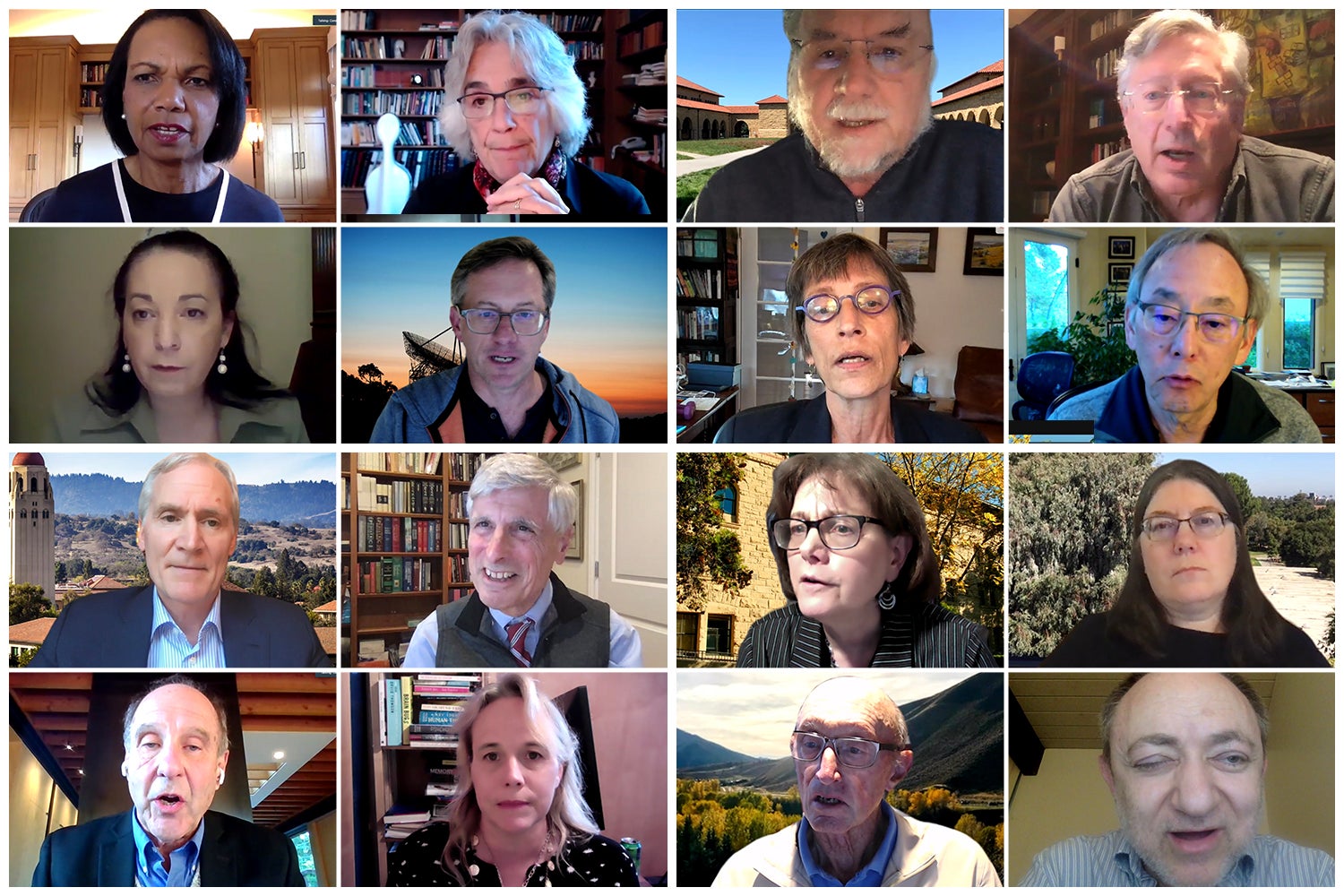
Faculty Senate condemns COVID-19 actions of Hoover’s Scott Atlas | Stanford News In its last meeting of the autumn quarter, the Stanford Faculty Senate condemned the COVID-19-related actions of Hoover senior fellow and presidential adviser Scott Atlas. The Faculty Senate also approved a new policy on Open Access to make scholarly works more widely available. news.stanford.edu

@mualphaxi - Maxwell Meyer

2023: Stanford is aggressively cutting the enrollment of white students. One last hurrah before the end of affirmative action https://stanfordreview.org/stanfords-racial-engineering/
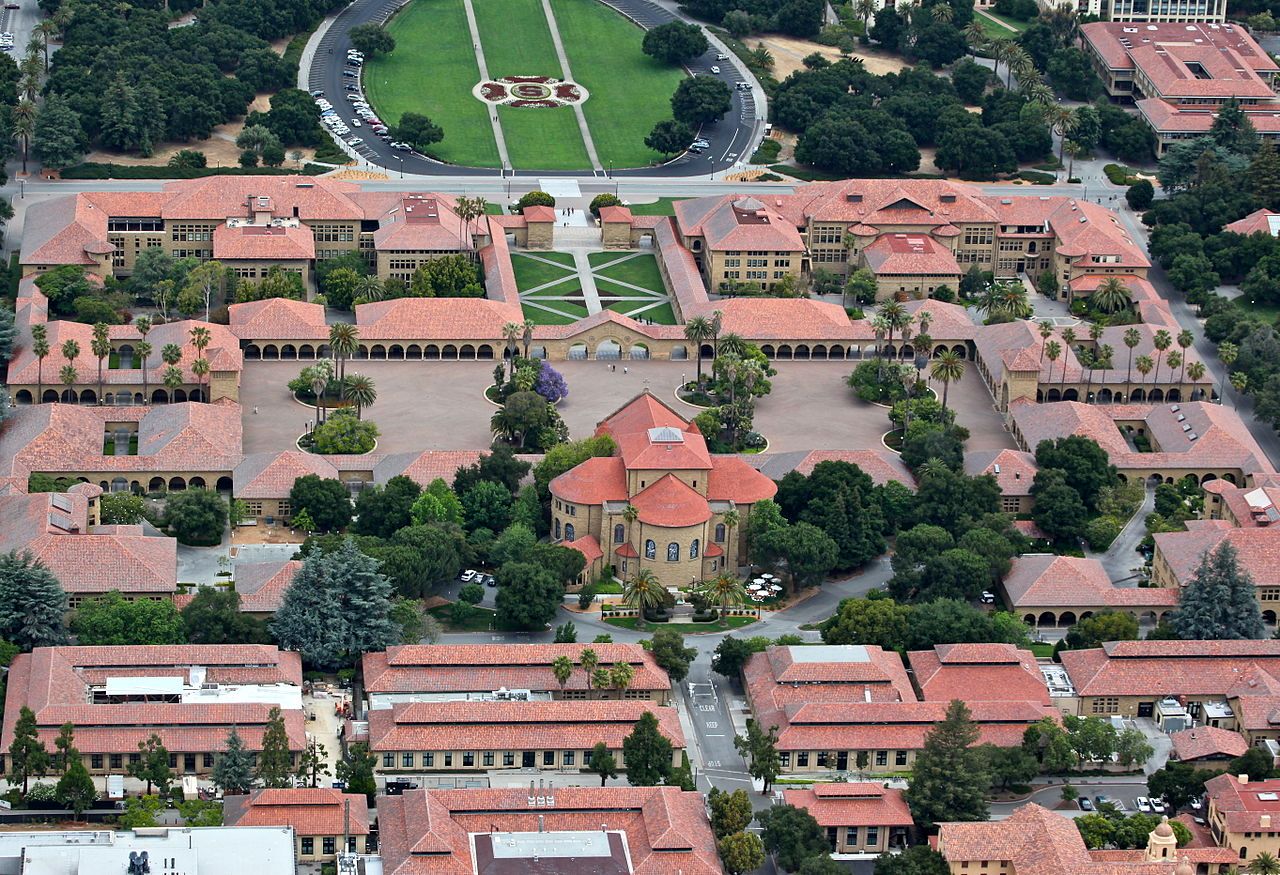
Stanford’s Racial Engineering Stanford’s enrollment rate for white students in the Class of 2026 was 22%, a drop from 40% for the Class of 2016 just ten years ago. While Stanford claims that “the University does not use quotas of any kind in its admission process,” a further exploration of Stanford’s stanfordreview.org

@mualphaxi - Maxwell Meyer

Now: scandal currently embroiling Stanford’s president, who is accused of falsifying research data when he was a pharmaceutical scientist and executive. https://stanforddaily.com/2023/02/17/internal-review-found-falsified-data-in-stanford-presidents-alzheimers-research-colleagues-allege/

Review found ‘falsified data’ in Stanford President’s research, colleagues allege His paper was called “the miracle result.” But it never turned into an Alzheimer’s treatment. Now, four former Genentech senior scientists and executives allege that an internal review in 2011 discovered the paper had been based on fabricated research — and that Marc Tessier-Lavigne kept the results of the review from becoming public. He denies the allegations. stanforddaily.com

@mualphaxi - Maxwell Meyer

Finally: you must read the reporting of @StockJabber about the last decade in Stanford. Unbelievable numbers of student suicides and other misconduct. The university is being run like a clown show. https://theymustresign.substack.com/p/stanfords-president-and-provost-must
Stanford’s President and Provost Must Resign Twelve Student Deaths, Corruption, Coverups, Lying to WSCUC Regulators, and Lawsuits theymustresign.substack.com
Saved - September 12, 2023 at 12:02 AM
reSee.it AI Summary
US universities are adopting a cluster hiring model based on diversity, equity, and inclusion (DEI) statements. UC Berkeley eliminated 75 faculty applicants solely based on their DEI statements. Vanderbilt University used Berkeley's rubric, penalizing candidates advocating for equal treatment. Fred Hutchinson Cancer Research Center emphasized DEI commitment in their cluster hire. NIH funds DEI hiring with $241 million, making DEI statements mandatory. These measures may erode trust in higher education. [Link to full article: unherd.com/thepost/americancollegesembracecaliforniasdeimodel]

@JohnDSailer - John Sailer

In the NYT, @powellAtlantic notes that UC Berkeley carried out a cluster hire—eliminating 75% of faculty job applicants based on DEI statement alone. The second photo is Berkeley's own description. Universities around the U.S. have embraced this model. A quick thread.

@JohnDSailer - John Sailer

@powellAtlantic For a 2021 cluster hire in psych, Vanderbilt University's received over 400 job applicants. The search team cut the pool to 50-60 based on DEI statements alone. They used Berkeley's rubric—the one that penalizes candidates who for saying they want to "treat everyone the same."

@JohnDSailer - John Sailer

In 2020, the Fred Hutchinson Cancer Research Center lead a cluster hire—noting its commitment "to ensuring that all candidates hired share our commitment to diversity, antiracism, and inclusion." The guidelines for writing a DEI statement notes that that might including discussing one's understanding of "antiracism, decolonization, bias mitigation, social justice, etc."

@JohnDSailer - John Sailer

The NIH is funding DEI cluster hiring at universities around the country—to the tune of $241 million. For every job created through the grant, DEI statements mandatory and heavily weighed. When I FOIAed the DEI statement rubrics used by two of the grantee institutions, I learned—with no surprise—that they used UC Berkeley's rubric.

@JohnDSailer - John Sailer

@powellAtlantic Here's a full writeup @unherd. I conclude: As a consequence of these measures, trust in higher education will likely continue to fall, owing in part to a sense that some views are simply not tolerated. https://unherd.com/thepost/american-colleges-embrace-californias-dei-model/

American colleges embrace California’s DEI model What happens in California usually doesn’t stay in California — and that’s bad news for higher education.  [...]Read More... unherd.com
Saved - October 16, 2023 at 3:22 AM
reSee.it AI Summary
Harvard's recent actions and hires raise concerns about the institution's departure from its prestigious reputation. The support for radicalism, blaming Israel for terrorist attacks, and offering a course to "decolonize" and dismantle itself are alarming. The institution's commitment to free speech is contradicted by its low ranking in that regard. The hiring of individuals like Bill de Blasio, Lori Lightfoot, and Brian Stelter, who have questionable track records, suggests a prioritization of progressive ideology over merit and excellence. Harvard's reputation as a leading educational institution is at risk as it becomes a breeding ground for left-wing radicalism.

@the_redoubt - The Redoubt

Harvard Has Lost Their Minds Guest columnist @JCAndersonNYC Since its founding in 1636, Harvard University has been regarded as America’s premier institution of academic excellence and the gold standard of education. For centuries, their prestigious reputation has attracted the world’s brightest minds, offering graduates a pathway to many of the best jobs our country has to offer--including eight separate US presidencies. From Teddy Roosevelt to Microsoft CEO Bill Gates, Harvard played an integral role in nurturing some of the greatest minds in history. Despite all of this, any high school dropout with subpar vision can see that things at Harvard are not okay. Their recent behavior is akin to watching an academic institution suddenly decide to emulate scenes from Lord Of The Flies or Edward Norton in Fight Club when he punches himself in the face. If Harvard were a loved one, we would have them committed to a mental institution out of fear they are suicidal, and in need of serious help. Following the recent terrorist attacks committed by Hamas, the Harvard College Palestine Solidarity Committee issued a press statement blaming the Jewish state for the atrocities that unfolded. 34 separate student groups co-signed the letter saying that Israel “is the only one to blame” in an incident that claimed the lives of over 1,000 people including the lives of 29 Americans. When one thinks of Harvard, the first things that come to mind are a mixture of the brightest minds in the country and the Ivy league imagery of a Ralph Lauren catalog, making it hard to imagine that an institution that defines American excellence and privilege would align politically with a terrorist group. All of this raises the question, what is causing Harvard students to hold such radical beliefs? Well, we could start by looking at their current course catalog, which is filled with exactly that. A breaking report from Manhattan Institute’s Chris Rufo (@realchrisrufo) shows that Harvard launched a course in 2021 to “Decolonize Harvard'' led by a non-binary Latinx academic with they/them pronouns who claims that Harvard is a settler-colonial, genocidal, and eurocentric institution that must be decolonized and would no longer be recognizable after the process was completed. Have they lost their mind? Yes, you read every last word of that correctly - Harvard is currently paying someone to teach a class to decolonize and ultimately dismantle itself. After Harvard began to take heat for expressing solidarity with the actions of Hamas terrorists, a dozen prominent CEOs banded together and promised not to hire any of the Harvard students who signed the letter. Even this was still not enough for Harvard to back down. Harvard President Claudia Gray doubled down after this incident, claiming "Our university embraces a commitment to free expression. That commitment extends to views that many of us find objectionable or outrageous." As we all would agree, freedom of speech is one of America’s most important values, which would lead one to believe her statement is a respectable answer, only if it were true. A recent report from http://thefire.org, ranked Harvard an impressive 0/100 when it comes to free speech on campus, proving the President’s noble support for the first amendment to be nothing more than gaslighting. Harvard’s deep institutional rot doesn’t stop at their recent support for radicalism, but can also be found in their recent hires, all of whom further illustrate their departure from things like truth, merit, and excellence. The recent hiring decisions involving Mayor Bill de Blasio, Mayor Lori Lightfoot, and Brian Stelter raise serious questions about the institution's priorities, forcing us all to wonder if a commitment to progressive ideology is now the only thing that matters in the halls of higher education. While all three of these individuals are indeed notable names within mainstream politics, you would be hard-pressed to find people on either the left or right who would describe their professional track records as worthy of being championed. In fact, consensus across the aisle is that all three failed to do their jobs. Not one of them were guided by the oaths they swore or moral commitments to telling the truth, but appeared to be guided by their true north-star – their shared belief in far-left radical politics. Trust in mainstream media is currently at an all time low, and both Chicago and NYC are currently plagued by crime, looting, and disorder not seen in decades. De Blasio, Lightfoot, and Stelter all played integral roles in getting us here.Two of America’s greatest cities were destabilized under their leadership, while Stelter spent his days convincing the general public that things were going great and we should worry more about the dangers of conservative media. Despite the good years that occurred during Bill de Blasio’s tenure as Mayor, history will remember him as being the mayor who failed to rise to the occasion in NYC’s darkest moment since 9/11. Ceding the city to looters and instructing the NYPD to stand down during the George Floyd riots will forever be remembered as a stain on American history. Truth be told, the good years of his mayoralty had nothing to do with his ability to lead, but were the results of being handed a highly functioning city by his predecessor, Michael Bloomberg. His approach to governance left constituents from all walks of life in agreement that quality of life declined during his two terms as Mayor, an era where we lost our handle on critical issues such as crime, inequality, and homelessness. By extending a teaching position to de Blasio, Harvard appears to be rewarding his radical beliefs despite the harm he caused to NYC. Similarly, Mayor Lori Lightfoot's appointment to a teaching position at Harvard raises eyebrows considering it was clearly not based on her performance. While Lightfoot was campaigning to keep her job during the 2022 election, Chicago was approaching its third year in a row of a historically high murder rate that had not been reached in 25 years. With murder rates averaging between 700-800 per year, Chicago once again earned its title of being the murder capital of America under her leadership. By granting her a position at Harvard, the institution sends a message that it values leftist ideology over effective governance. Brian Stelter's inclusion on this list is particularly offensive given his dismissal from CNN over concerns surrounding his credibility as a journalist. The damage created by Stelter harms not only our cities, but the country as a whole. It brings into question Harvard's position on fundamental principles such as “is it even important to tell the truth?” Harvard's decision to offer him a teaching position stands at odds with thier commitment to upholding the highest standards of integrity. By extending this opportunity to Stelter, the university risks compromising its own credibility and diminishing the value of its educational offerings, simultaneously tarnishing the reputation of our country. Ask yourself the question: Does anyone seriously believe that Bill de Blasio and Lori Lightfoot are smart enough to teach at the best school in the world? If presented with Harvard level tests, does anyone think they could pass them? Then why on earth would these same people be qualified to teach there? Only one answer remains, and that is that Harvard is no longer interested in remaining the gold standard of education, but now serves as a breeding ground for left wing radicalism, and a soft landing pad for the movement’s most prominent fallen soldiers.

Saved - October 17, 2023 at 10:40 PM
reSee.it AI Summary
College campuses are increasingly promoting indoctrination, as seen in my experience at UCLA law. I was asked to argue against Project Veritas, attend social justice events for extra credit, and confronted with false information in a textbook. It's crucial to recognize the pervasive influence of these lies on students' education.

@RealCandaceO - Candace Owens

Two years ago I enrolled in an online course at UCLA law. I kid you not when I say my final exam essay was to argue against Project Veritas by representing the arguments of the New York Times in their ongoing defamation case. For weekly extra credit in this class, we were encouraged to show proof of attending various social justice events. Imagine attending a protest for extra credit? I declined to attend these events but I am sharing this experience now to underscore just how severe indoctrination has become across college campuses. Professors will literally offer to improve your grade if you attend a protest or “get involved” in a variety of their left-leaning causes. In this same class, the assigned textbook stated that Donald Trump gassed protesters on his way to visit the church during BLM riots. It was a literal printed lie in a university textbook. I of course argued with my professor and the students who were convinced it did actually take place. People do not realize the state of college campuses today and how nearly impossible it is for students not to fall victim to the lies they are learning in their classrooms.

@RealCandaceO - Candace Owens

It is easy to blame the students. It is harder to examine the ecosystem of persistent lies that has cemented their hatred— even for their own country. In order to fix it, the American colleges themselves must be made to suffer financially. I would again like to state how wonderful it is that donors are beginning to pull their funding. It is long overdue.

Saved - November 8, 2023 at 1:31 PM
reSee.it AI Summary
Many universities are no longer liberal, and the problem is worsening. The radicals who have taken over are not persuaded by our ideas. We need a realistic and effective strategy to fight back against this illiberal, authoritarian takeover. John Searle's 1971 book "The Campus War" offers detailed suggestions for university reform, but we need to adapt them to the current situation. Searle, an ardent liberal and free speech defender, foresaw this problem as early as 1993. We must acknowledge the deep-rooted issue and confront the weak academic arguments put forward by leftist activists. The question remains: what do we do about it?

@wokal_distance - Wokal Distance

1/ I like Rikki, and I like the fire; they want liberal values to win. So do I. But, most of the major universities are actually anti-liberal, and fixing that is actually very difficult and no one seems to have a plan which is both realistic and efffective.

@RIKKISCHLOTT - Rikki Schlott

I’ll take the fairy of liberalism over the demon of reactionary authoritatianism any day

@wokal_distance - Wokal Distance

2/ The fact is many if not most of our universities are no longer liberal, and this trend is worsening. These institutions are populated by people who do not support or defend liberalism. The radicals who took over are not persuaded by our ideas. So now what?

@wokal_distance - Wokal Distance

3/ What @realchrisrufo is trying to figure out, and what I am also trying to figure out, is simple: "What is a realistic and effective strategy for fighting back agajnst the illiberal, authoritarian, leftists take-over of our Universities." And I ask everyone "What's the plan?"

@wokal_distance - Wokal Distance

@realchrisrufo 4/ The plans put fourth by most people are either ineffective, or unrealistic. The most detailed set of suggestions for university reform was put fourth by John Searle in his 1971 book "The Campus War." But that was 50 years ago, and I am not sure that strategy would work today https://t.co/BmMYm5Ug6x

@wokal_distance - Wokal Distance

@realchrisrufo 5/ As I am sure @RIKKISCHLOTT and @glukianoff are aware, Searle was the first faculty member at Berkley to join the free speech movement, and he spoke at those rallies in 1959 (pics below) Searle is an ardent Liberal and free speech defender. https://t.co/li61V9z6r0

@wokal_distance - Wokal Distance

@realchrisrufo @RIKKISCHLOTT @glukianoff 6/ As far back as 1971 Searle was concerned about how universities were being sieged by radicals, and in 1993 he wrote about this problem in great detail. I see very few people reading Searle on this in spite of the fact he is perhaps the most cited philosopher of his generation https://t.co/YO33xP2EwF

@wokal_distance - Wokal Distance

@realchrisrufo @RIKKISCHLOTT @glukianoff 7/ As much as I appreciate @Yascha_Mounk @ConceptualJames @HPluckrose @RIKKISCHLOTT @glukianoff @JonHaidt and others doing intellectual geneologies of wokeness, Searle saw all this coming...in 1993 The rest of us, and I include myself here, are embarassingly late to the party. https://t.co/qKaMVbo2rD

@wokal_distance - Wokal Distance

@realchrisrufo @RIKKISCHLOTT @glukianoff @Yascha_Mounk @ConceptualJames @HPluckrose @JonHaidt 8/ The problem here is far deeper than most people are willing to look. Searle pointed out just how deep the rot goes in several published academic articles in the 90's and also in his book "Mind, Language, and Society." He has the same diagnosis @realchrisrufo and I do...

@wokal_distance - Wokal Distance

@realchrisrufo @RIKKISCHLOTT @glukianoff @Yascha_Mounk @ConceptualJames @HPluckrose @JonHaidt 9/ Namely that the academic arguments put forward by the leftists activist-scholars and professors are spectacularly weak and are not out forward in the name of truth and inquirey..they are only put forward for the cynical purpose of achieving leftist political change. https://t.co/19XbzbJJUe

@wokal_distance - Wokal Distance

@realchrisrufo @RIKKISCHLOTT @glukianoff @Yascha_Mounk @ConceptualJames @HPluckrose @JonHaidt 10/ If that is correct, and I think it is, then @realchrisrufo and I are in good company in saying that the problem goes right to the bone of education, and it was cynical leftists laundering ideas who did it. The question is....what do we do about it?

@wokal_distance - Wokal Distance

@realchrisrufo @RIKKISCHLOTT @glukianoff @Yascha_Mounk @ConceptualJames @HPluckrose @JonHaidt 11/ Searle put forward an answer in 1971, but I'm not sure that is programme for university reform would be very effective today. Things are much worse, and I think a much stronger medicine is needed. The question remains "what do we do?" I am open to suggestions. /fin

Saved - December 6, 2023 at 12:12 PM
reSee.it AI Summary
Universities have been criticized for prioritizing left-wing ideology over truth and education. Activists have taken over, using campuses to advance their agenda. This has resulted in an unthinking left-wing orthodoxy, with the humanities departments teaching that the US is inherently evil. Marxism, discredited by events, found refuge in literature departments as a tool for social change. Activists reject objective truth and view education as a means to indoctrinate students with leftist ideology. Academics' timidity allowed this takeover. The moral and intellectual decay of universities is now exposed, demanding action.

@wokal_distance - Wokal Distance

1/ The response to the Oct 7 Hamas attack exposed universities for the morally and intellectually bankrupt institutions they are. They have been hijacked by activists who are using them as vehicles to advance left-wing ideology, rather than using them to seek truth and educate.

@RepStefanik - Rep. Elise Stefanik

🚨🚨🚨Presidents of @Harvard @MIT and @Penn REFUSE to say whether “calling for the genocide of Jews” is bullying and harassment according to their codes of conduct. Even going so far to say it needs to turn to “action” first. As in committing genocide. THIS IS UNACCEPTABLE AND ANTISEMITIC. They must all resign immediately today.

Video Transcript AI Summary
The speakers question whether calling for the genocide of Jews violates the code of conduct at MIT, Penn, and Harvard. The responses vary, with some saying it depends on the context and others stating that it can be considered harassment. The speakers argue that calling for genocide is unacceptable and dehumanizing, and they believe it should be a clear violation of the code of conduct. They express their disappointment with the answers given and call for resignations.
Full Transcript
Speaker 0: Doctor Kornbluff Yes. Does m at MIT, does calling for the genocide of Jews violate MIT's code of conduct or rules regarding bullying and harassment? Yes or no? If targeted at Speaker 1: individuals not making public statements? Speaker 0: Yes or no? Calling for the genocide of Jews does not constitute bullying and harassment? Speaker 1: I have not heard Calling for the genocide for Jews on our campus. Speaker 0: But you've heard chants for Intifada? Speaker 1: I've heard chants, which can be anti Semitic depending on the context, When calling for the elimination of the Jewish people. Speaker 0: So those would not be according to the MIT's code of conduct or rules? Speaker 1: That would be investigated as harassment, if pervasive and severe. Speaker 0: Miss McGill, at Penn, does calling for the genocide of Jews violate Penn's rules or code of conduct? Yes or no? Speaker 2: If the speech turns into conduct, it can be harassment. Yes. Speaker 0: I am asking specifically calling for the genocide of Jews, does that constitute bullying or harassment? Speaker 2: If it is directed and severe or pervasive, it is harassment. Speaker 0: So the answer is yes? Speaker 2: It is a context dependent decision, congresswoman. Speaker 0: It's a context dependent decision. That's your testimony today, calling for the genocide of Jews is depending upon the context. That is not bullying or harassment. This is the easiest question to answer. Yes, miss McGill. So is your testimony that you will not answer yes? Speaker 2: If it, is Speaker 0: speech or no? Speaker 2: If the speech becomes conduct, it can be harassment. Speaker 0: Yes. Conduct meaning committing the act of genocide? The speech is not harassment, this is unacceptable, miss McGill. I'm gonna give you one more opportunity for the world to see your answer. Does calling for the genocide of Jews violate Penn's code of conduct when it comes to bullying and harassment? Yes or no? Speaker 2: It can be harassment. Speaker 0: The answer is yes. And Doctor. Gey, at Harvard, Does calling for the genocide of Jews violate Harvard's rules of bullying and harassment? Yes or no? Speaker 3: It can be, depending on the context. What's the context? Speaker 0: Targeted as an individual? Targeted as an individual? It's targeted at Jewish students, Jewish individuals. Do you understand your testimony is dehumanizing them? Do you understand that dehumanization is part of anti Semitism? I will ask you one more time. Does calling for the genocide of Jews violate Harvard's rules of bullying and harassment? Yes or no? Anti Semitic rhetoric when it crosses Speaker 3: And is it anti Semitic rhetoric? Anti Semitic rhetoric when it crosses into conduct That amounts to bullying, harassment, intimidation. That is actionable conduct, and we do take action. Speaker 0: So the answer is yes, that calling for the genocide of Jews violates Harvard code of conduct. Correct? Speaker 3: Again, it depends on the context. Speaker 0: It does not depend on the context. The answer is yes, and this is why you should resign. These are unacceptable answers across the board?

@wokal_distance - Wokal Distance

2/ As John Searle pointed out in 1999, in the humanities departments of our most prestigious universities the dominant view is that the United States is inherently evil. And this is what they teach the next generation of professors, lawyers, teachers, and political leaders. https://t.co/elaphyC6GK

@wokal_distance - Wokal Distance

3/ Searle also pointed out that the result of this is "unthinking left wing orthodoxy" by people who see their role in the university as being to carry out a left wing political agenda. And we are now seeing the fruit of this on university campuses and in the larger society. https://t.co/xh8oEucVCW

@wokal_distance - Wokal Distance

4/ 1993 Searle pointed out that Marxism was "refuted by events" which had discredited it. So m Marxism retreated to literature departments where people who wanted to use culture as an instrument for "social change" (AKA advancing leftist ideology) used it as an interpretive lens. https://t.co/w1OrNQHJU7

@wokal_distance - Wokal Distance

5/ Searle went on to show that the activists no longer believed in objective truth, and believe that thebpurpose of educstion is not to pursue truth. The activists think education is always primarily political and ought to be used to inculcate leftist ideology into students. https://t.co/MlgFuBOdSx

@wokal_distance - Wokal Distance

6/ So how did this happen? How were unjversities takr over so easily? One reason Searle provides is that academics are timid and weak. They refuse to stand up for the truth and thus are easily defeated by activists who will run them over to gain power. https://t.co/y68FYgOPt8

@wokal_distance - Wokal Distance

7/ Many of us have been screaming about this for years, and nobody believed us. Now the truth can no longer be hidden or ignored and stench of the moral and intellectual rot in our universities is being exposed for the world to see. Now let's do something about it. /fin

Saved - December 7, 2023 at 6:21 AM
reSee.it AI Summary
American university administrators, including Harvard President Claudine Gay, prioritize political power over academic research. They are often loyal Democrats and woke identitarian Leftists. Asking them to enforce free speech and classical liberalism is futile. They need to be replaced with academic leaders who prioritize open inquiry.

@primalpoly - Geoffrey Miller

A little rant about American universities, in the light on the recent Congressional testimony debacle: Today I learned that Harvard President Claudine Gay seems to have published only 11 peer-reviewed journal papers in her entire academic career. 'So what?', you might ask. Well, that's about the number you'd normally need to get hired as a first-year tenure-track assistant professor at a decent state university. It's the number I published in the 12 months before I got tenure. It's about the number that my more workaholic colleagues publish every year, decade after decade, throughout their careers. And it's less than 1% as many papers as get published by outstanding researchers like behavior geneticist Nick Martin (with over 1,500 journal papers). The situation at Harvard is not unusual. The leaders of academia are not typically leading academics, in the sense of highly productive researchers or widely respected teachers. One might say they are career bureaucrats - but that would misunderstand their crucial ideological function. The American people need to understand that in modern universities, both public and private, administrators function more like party political officers in communist Russian or Chinese universities. They are selected, throughour their careers, largely for their political commitments, and their willingness to enforce them. Like Cold War commissars, their allegiance is to the party, not to academia where they happen to work. I mean 'party' quite literally: the Democratic party. Most American university administrators are loyal Democrats, and can't really imagine why anyone wouldn't be. Very few are Republicans or Libertarians. And an increasing proportion of them are fully woke identitarian Leftists: they often launched their careers with a short series of papers on woke topics, using woke ideological frameworks, published in woke journals - before turning to the administrative track that offers much more political power to propagandize, indoctrinate, and control. 'So what?', you're might ask. I've seen many calls for university administrators to enforce the rules of classical liberalism and free speech more fairly. This is like asking a Soviet-era commissar to abandon their Communist party allegiance, and to develop an entirely new identity and ethos grounded in an ideology that they have spent their entire career fighting. It will not happen. Political animals do not change their spots. University presidents who have prioritized amassing ideological power over producing academic research will not suddenly rediscover the merits of open inquiry. They need to be fired, and replaced with academic leaders who are actually leading academics - rather than party political officers. https://mindingthecampus.org/2022/12/16/the-president-has-no-clothes/

The President Has No Clothes — Minding The Campus In 2001, Harvard President Larry Summers rebuked University Professor Cornel West for scholarship that did not meet Harvard’s standards. According to the Globe, Summers “rebuked West for recording a rap CD, for leading a political committee for the Rev. Al Sharpton’s possible presidential campaign, and for writing books more likely to be reviewed in The […] mindingthecampus.org

@primalpoly - Geoffrey Miller

PS hat tip to @DavidRandallNAS for writing the article I linked.

Saved - December 11, 2023 at 2:32 PM

@FareedZakaria - Fareed Zakaria

America’s top universities should abandon their long misadventure into politics, retrain their gaze on their core strengths and rebuild their reputations as centers of research and learning. My take: https://t.co/smjkQ9fngE

Video Transcript AI Summary
American universities, once admired for their excellence, have lost public trust due to their shift towards pushing political agendas. This has resulted in a decline in the importance of a college degree and a decrease in the number of high school graduates pursuing higher education. Universities have prioritized political and social engineering over academic merit, as seen in the downplaying of merit-based admissions in favor of racial quotas. The humanities have experienced grade inflation and the emergence of political agendas as academic fields. Lack of political diversity is ignored, hindering the ability to analyze various issues. The culture of diversity has given rise to safe spaces, trigger warnings, and speech codes that limit free expression. Recent protests have highlighted the inconsistency in protecting certain groups. Universities must refocus on their core strengths of research and learning to regain their reputation as centers of excellence.
Full Transcript
Speaker 0: Here's my take. When one thinks of America's greatest strengths, the kind of assets the world looks at with admiration and envy, America's elite universities would long have been at the top of that list. But the American public has been losing faith in these universities for good reason. 3 university presidents came under fire this week for their vague and indecisive answers when asked whether calling for the genocide of Jews would violate their institutions' codes of conduct. But to understand their performance, we have to understand the broad shift that has taken place at elite universities, which have gone from being centers of excellence to institutions pushing political agendas. People sense the transformation. As Paul Tough has pointed out, the share of young adults who said a college degree was very important, fell from 74% in 2013 to just 41% in 2019. In 2018, 61% of those polls said higher education was headed in the wrong direction, and only 38% felt it was on the right track. In 2016, 70% of America's high school graduates were headed for college. Now that number is 62%. This souring on higher education makes America an outlier among all advanced nations. American universities It started with the best of intentions. Colleges wanted to make sure young people of all backgrounds had access to higher education and felt comfortable on campus. But those good intentions have morphed into a dogmatic ideology and turned these universities into places where the pervasive goals of political and social engineering, not academic merit. As the evidence produced For the recent supreme court case on affirmative action showed, universities have systematically downplayed merit based criteria for admissions in favour of racial quotas. Some universities' response to this ruling seems to be that they will go further down this path, eliminating the requirement for any standardized tests like the SAT. That move would allow them to then take students with little reference to objective criteria. Of course, those who would suffer most would be bright students from poor backgrounds who normally use tests like the SAT to demonstrate their qualifications. In the humanities, hiring for new academic positions now appears to center on the race and gender of the applicant as well as the subject matter, which needs to be about marginalized groups. A white man studying the American presidency does not have a prayer of getting tenure at a major history department in America today. Grade inflation in the humanities is rampant. At Yale, the median grade is now an a. New subjects crop up that are really political agendas, not academic fields. You can now major in diversity, equity, and inclusion at some colleges. The ever growing Diversity devoted to diversity, equity and inclusion naturally recommends that more time and energy be spent on these issues. The most obvious lack of diversity at universities, political diversity, which clearly affects their ability to analyze many issues, is never addressed, showing that these goals are not centrally related to achieving or sustaining or building excellence. Out of this culture of diversity has grown the collection of ideas and practices that we have now all heard of, safe spaces, trigger warnings, microaggressions. As the authors Jonathan Haidt and Greg Lukianoff have discussed, many of these colleges have instituted speech codes that make it a violation of university rules to say things that some groups might find offensive. Universities advise Students not to speak, act, even dress in ways that might cause offence to some minority groups. With this culture of virtue signaling growing, the George Floyd protests erupted and many universities latched on and issued statements effectively aligning their institutions with these protests. By my memory, few took such steps even after 911 or during the Iraq War. In this context, it is understandable that Jewish groups would wonder why do safe spaces, microaggressions, and hate speech not apply to us. If universities can take positions against free speech to make some groups feel safe, why not us? Having coddled so many student groups for so long, university administrators found themselves squirming, unable to explain why certain groups, Jews, Asians don't seem to count in these conversations. Having gone so far down the ideological path, These universities and these presidents could not make the case clearly that at the center of a university is the free expression of ideas, And that while harassment and intimidation would not be tolerated, offensive speech would and should be protected. As CNN's Van Jones has eloquently said, the point of college is to keep you physically safe, but intellectually unsafe to force you to confront ideas that you vehemently disagree with. What we saw in the House hearing this week was the inevitable result of decades of the politicization of universities. America's top colleges are no longer seen as bastions of excellence, but partisan outfits, which means they will keep getting buffeted by these political storms as they emerge. They should abandon this long misadventure into politics, retrain their gaze on their core strengths, and rebuild their reputations as centers of research and learning.
Saved - December 12, 2023 at 11:46 PM
reSee.it AI Summary
Over 650 Harvard professors support President Claudine Gay amidst accusations of plagiarism. The university faces a dilemma: firing Gay risks faculty revolt, while keeping her tarnishes its reputation. However, the faculty's letter suggests that Gay's dismissal won't impact Harvard's moral-intellectual culture. The situation has sparked calls to defund Harvard, despite its substantial endowment. Prominent figures like Elon Musk and Bill Ackman have weighed in on the matter.

@CBradleyThomps1 - C. Bradley Thompson

650+ Harvard professors have signed a letter to the Harvard Corporation in support of President Claudine Gay. @Harvard is now in crisis. The Harvard Board is now stuck between a rock & a hard place: if they fire Gay (also now accused of plagiarism) the faculty will be in revolt; if they keep her, the university will be saddled with a national disgrace. The faculty letter is also proof that the firing of Gay will have no effect on the moral-intellectual culture @Harvard. @Harvard is gone. It cannot be saved. Harvard has a $50 billion endowment. It should never again receive a penny of taxpayer money. #defundHarvard @elonmusk, @BillAckman, @realchrisrufo, @realChrisBrunet, @jordanbpeterson, @VDHanson, @rogerkimball, @DouglasKMurray.

Saved - December 12, 2023 at 1:04 PM
reSee.it AI Summary
Recent congressional hearings in the US have shed light on the ideology problem in higher education. Critical Theory (CT), the foundation of DEI administrations and student activism, diverges from scientific theory by prioritizing moral ends over verifiable predictions. CTs like Critical Race Theory aim to dismantle societal norms and practices they perceive as oppressive. The influence of these theories has changed the purpose of universities. Conservative academics face hostility, while three camps emerge: classical liberals advocating for truth, progressive activists seeking to convert institutions, and conservative postliberals advocating for religious grounding. The implications for society and culture are significant.

@MikeNayna - Michael Nayna

Recent congressional hearings in the US have created a broader willingness to look at higher eds ideology problem. University leadership has reached an inflection point that I’ll try to explain here in simple terms. THREAD https://t.co/f8wMJT936w

@MikeNayna - Michael Nayna

I’ll start by drawing a comparison between a scientific theory & a Critical Theory (CT), which is the theoretical work that underlies DEI administrations, most student activism, & the disingenuous testimony we heard at the hearings. 2/n

@MikeNayna - Michael Nayna

A scientific theory emerges from the observation of facts. It’s a kind of story we tell about why certain groupings of facts show up the way they do. 3/n

@MikeNayna - Michael Nayna

There’s an expectation among scientists that if you familiarise yourself with a theory, you should be able to use its principles to predict something new & verifiable about the world. 4/n https://t.co/be0LeIXlHC

@MikeNayna - Michael Nayna

A CT, however, doesn’t hold itself to this expectation. Critical theorists claim that social science must integrate philosophy into its methods so that findings work practically toward a moral end. 5/n

@MikeNayna - Michael Nayna

Where the purpose of a scientific theory is to understand the world as it is, the purpose of a CT is to change the world into something it ought to be. These theories are active in nature & designed to create change. 6/n https://t.co/39xyaPcQkL

@MikeNayna - Michael Nayna

Critical Race Theory, Postcolonial Theory, & Queer Theory, among others, are large bodies of work devoted to criticising Western society. They seek to dissolve the social expectations, laws, & institutional practices they claim oppress outsider identity groups. 7/n

@MikeNayna - Michael Nayna

While some scholars working with CTs use the theoretical frameworks as starting points to do real research, the standards of the field have devolved so badly that a fundamentalism has emerged from their vast body of work. 8/n

@MikeNayna - Michael Nayna

They critique everything, from the way people form couples, to how buildings are designed. Their bottomless body of criticism is now decades old & is so influential that it has changed how the university views its purpose. 9/n https://t.co/I6AF0cmg42

@MikeNayna - Michael Nayna

The critical canon is taught to students before they’re given a chance to adequately understand the object of their ire & many imbibe so much of the abstract theoretical philosophy that it forms the basis of their relationship to reality. 10/n

@MikeNayna - Michael Nayna

These critical agents of change move from department to department applying their theory to any discipline they can convert to the cause. 11/n https://t.co/Q2BeVhjg5Z

@MikeNayna - Michael Nayna

Differing from scientific practitioners who attempt to disprove their starting assumptions, they begin with their conclusions & move into the field to accumulate proof & punish dissent. 12/n https://t.co/ffljclMgsK

Video Transcript AI Summary
Racism is a complex system that exists in both traditional and modern forms. It is a multilayered, institutionalized system that distributes unequal power and resources between white people and people of color. All members of society are socialized to participate in this system, regardless of their intentions. To not act against racism is to support it. The focus should not be on whether racism occurred, but rather on how it manifested in a given situation. The racial status quo is comfortable for most white people, so anything that maintains their comfort should be questioned. Those who experience racial oppression have a deeper understanding of the system, but white professors are often seen as more legitimate. Resistance to anti-racist education is expected and should be addressed strategically.
Full Transcript
Speaker 0: Racism exists today in both traditional and modern forms. Racism is an institutionalized, multilayered, multilevel system that distributes unequal power and resources between white people and people of color as socially identified, and disproportionately benefits whites. All members of society are socialized to participate in the system of racism, albeit within varied social locations. All white people benefit from racism, regardless of intentions. No one chose to be socialized into racism, so no one is quote unquote bad, but no one is neutral. To not act against racism is to support racism. Racism must be continually identified, analyzed, and challenged. No one has ever done. The question is not Did racism take place? But rather, how did racism manifest in that situation? The racial status quo is comfortable for most whites. Therefore, anything that maintains white comfort is suspect. The racially oppressed have a more intimate insight via experiential knowledge of the system of based than their racial impressors. However, white professors will be seen as having more legitimacy, thus positionality must be intentionally engaged. Resistance is a predictable reaction to anti racist education, and must be explicitly and strategically addressed.

@MikeNayna - Michael Nayna

There are many different CTs but they all follow base assumtions that bring them together into a single orthodoxy. https://x.com/MikeNayna/status/1719525047285744037?s=20 13/n https://t.co/NaM4l3MJZS

@MikeNayna - Michael Nayna

What explains this amorphous leftish coalition? It's not random - a particular ideological understanding of the world unites these issues. THREAD https://t.co/kktmouN7XZ

@MikeNayna - Michael Nayna

DEI administrators work tacitly with student activists to create an inhospitable environment for conservative academics who seek to defend & transmit the very norms the orthodoxy seeks to dissolve. 14/n https://t.co/3g2OPwoKaM

@MikeNayna - Michael Nayna

Conservatives have already lost the battle against the agents of change & pressure is increasingly applied to classical liberals who advocate for free speech & institutional neutrality. @peterboghossian 15/n https://t.co/Z2GTUTZTO4

Video Transcript AI Summary
The speaker expresses frustration over a hit piece published by Portland State University, criticizing their ideas and linking them to Trump. They highlight the shift from questioning knowledge to now labeling individuals advocating certain positions as morally wrong. The speaker also discusses the problem of asking questions in academic spaces, where challenging established beliefs is discouraged. They argue that these ideas, promoted by tenured professors, are disconnected from reality.
Full Transcript
Speaker 0: I get into work today, and I see the Portland State University paper has apparently done a hit piece on me. There it is. The goal in the contemporary bullying style of Trump as politics is to ridicule others for personal gain. P S U Proeducational Clinic. These people are look at that. They're What a mess. We have opted to communicate our concerns through a collective identity rather than individually. I mean, it just it is utterly incredible told me what the university has become when you have to publish an anonymous hit piece on people. So that's what it is. You can't they they can't defend their ideas. They link me with Trump. They attack me as a person. How do I talk to a collective? How do I talk to the PSU proeducational editorial collective? I I can't. Speaker 1: So before, it was a question of knowledge. Speaker 0: Mhmm. Speaker 1: In in fancy, would you call it epistemology? You didn't have the right knowledge. You had a wrong epistemology. But now, it's something very different. It's now as someone who advocates a particular position is a bad person. Right. Right. So it's not just that you're missing a fact. It's that there's something wrong you morally. Mhmm. But it's even worse than that. Because even asking a question in the academy in in Many spaces becomes a problem. Yeah. Speaker 0: You Speaker 1: know, why are you asking a question about trigger warnings or safe spaces or microaggression? Why are you challenging this? We know this to be true. Well, how do you know it to be true? Well, here it is in the research literature. Yeah. It's So that's how the whole thing becomes ingrained and embedded. Mhmm. And then people get tenure, and they go on to teach, and they go on to promote these ideas. But the ideas themselves are totally untethered to reality.

@MikeNayna - Michael Nayna

In 2016, social psychologist @JonHaidt warned of a leadership schism, arguing that universities needed to decide & state openly their intent to be guided by the critical tradition ("change") or the liberal one ("truth") 16/n https://t.co/KGTRgdDYfM

Video Transcript AI Summary
The speaker discusses two contrasting views of universities. The first view, based on John Stuart Mill's principles, emphasizes diversity of opinions and encourages debate to find truth. The second view, influenced by Karl Marx, focuses on changing the world and prioritizes social justice. The speaker argues that universities cannot pursue both views and suggests a schism, where universities explicitly choose either truth or social justice as their central mission. Brown University represents the social justice approach, while the University of Chicago opposes safe spaces in classrooms. The speaker proposes having schools for those who do not align with the far right or far left. The audience at Duke University leans towards the pursuit of truth. The speaker concludes that committing to truth is essential for achieving justice.
Full Transcript
Speaker 0: I'm going to show you 2 different ways of looking at a university. I'm gonna open with 2 quotations from dead white men writing in London in the 1840s. So a very very narrow range of human thought here, but extraordinarily far apart and what they said is resonating and playing out today. So John Stuart Mill in On Liberty, He who knows only his own side of the case knows little of that. His reasons may be good and no one may have been able to refute them. But if he is equally unable to refute the reasons on the opposite side, if he does not so much as know what they are, he has no ground for preferring either opinion. Think of a university based on Millian or Mill's principles and it's gonna clearly be one that strives to represent diverse views. It's going to reach out for viewpoint diversity and encourage a culture of debate and challenge. And only in that way can we find truth together. On the other hand, Karl Marx writing, the philosophers have only interpreted the world in various ways, the point is to change it. And so if we imagine a university based on a more Marxist approach to intellectual life, it's gonna look extremely different. When I arrived at Yale in 1981, this is what it said over the gate, over the main gate to the old campus, lux et veritas. It's written right there in stone, veritas, truth. I was inducted into an institution with a long sense of tradition going back clearly to the medieval universities like Oxford and Cambridge and going back all the way to Plato's academy 25 100 years before. It was really thrilling to feel that I was joining a fraternity especially as a philosophy major. You really feel that link back to the academy and the debates and the symposium and the ways that these early philosophers would argue and in that way improve each other's thinking. But beginning in the 19 nineties I believe, universities began to change. What was written over their doorway began to change. And I think they began to adopt change itself as more of the motto, the mantra. And not just any change, not just change for the sake of change, but social justice particularly. Social justice becomes much more important in the life of universities, I believe in the 19 nineties. First of course from the various studies departments, the gender studies, race studies, all the different ethnic studies departments and areas but then also the humanities more broadly. So in my talk, I'm gonna argue that no university can pursue both. Individuals can in their own lives but a university needs to have a central mission. And it has to be either truth or social justice. It can't be both. And so I'm gonna argue that we need a schism. We need our universities to clearly declare which way you're going. You can go either way, it's free country but you gotta go one way or the other and you have to be explicit about it, advertise that and then students can choose which kind of university to go to. Fortunately the schism is underway. Brown University has volunteered to lead it. Christina Paxson wrote to the faculty saying that Brown is a bedrock commitment to social justice. The faculty wrote back in the newspaper. We applaud the call to unite around a university agenda of social justice. Unite around it. Circle around our sacred value. That's what holds us together. So Brown, we just found out last week, the left right ratio in the humanities and social sciences is 60 to 1. It is the most left leaning school of the major in the country. 60 to 1 left right ratio at Brown. So Brown, fine, let them do it. They're gonna spend $100,000,000 on diversity and inclusion. That's their choice. It's their money, it's their donors money, whatever. They're gonna spend a lot of money on diversity inclusion, so they're going that way. Chicago has declared the opposite. So the University of Chicago sent a rather clumsily worded letter. It's foolish for them to say we don't allow safe spaces, there's a right of association. But what the dean of students meant was classrooms at Chicago are not safe spaces. That's what he was trying to say. So they're gonna lead the schism and I think what I'm calling for is not actually very radical because it's already happened. So these schools, they used to be divinity schools. And we still have schools that devote themselves to Jesus Christ, So here's Wheaton College and they say right there on the website, for Christ and his kingdom. That's their telos. If you go to that school, our mission is to serve Jesus Christ. Now you'll take English courses and history courses of course, but they're clear. Our Talos is to serve Jesus Christ. So we've already had a schism where some schools, they were all Christian schools originally, some went to Christ, some went towards truth. We've already had that schism, all I'm saying is let's have one more. We need 1 more. We already have a place for people on the religious right, they can go there. People on the far left, social justice left, they can go to Brown. But shouldn't we have some schools for people who are not on the far right or far left? And so that's my question for you for Duke. Well I guess I have a hint at which way you're gonna vote already, but which way do you wanna go? Raise your hand if you think Duke's Talos should be serving Jesus Christ. Raise your hand. Okay, we actually have 4. Okay. Raise your hand if you think that the Duke's Talos should be social justice. Raise your hand high. 1. Okay. And raise your hand if you think it should be truth. Alright. Okay, well, So in conclusion, there are 2 very different ways of thinking about intellectual life that go back a 150, 200 years. They've led to 2 very different ways of thinking about universities and I'm thrilled that you have all identified or most of you have identified with John Stuart Mills view in which the point of university is to understand the world because only if you commit to truth I believe Can you actually achieve justice? Thank you.

@MikeNayna - Michael Nayna

Three camps appear to be emerging from the crisis. The classical liberals, who call for a return to neutral leadership & a truth-seeking mission. https://x.com/McCormickProf/status/1733606029814853830?s=20 17/n

@McCormickProf - Robert P. George

It is CRITICAL that we derive the right message--and avoid deriving the wrong one--from Liz Magill's "voluntary" resignation. The wrong one is that universities like Penn need more restrictions of speech. The right one is that double standards will no longer be tolerated.

@MikeNayna - Michael Nayna

The priestesses, who would like to continue to convert academic institutions into progressive cathedrals. https://x.com/CBradleyThomps1/status/1733529080828502141?s=20 18/n

@CBradleyThomps1 - C. Bradley Thompson

🚨🚨🚨 Exclusive to @RepStefanik, @EliseStefanik, @elonmusk, @BillAckman, @realchrisrufo, @realChrisBrunet, @MZHemingway, @mtaibbi. I have received from inside Harvard sources a smoking gun August 20, 2020 memo from Claudine Gay (now Harvard President) to the Faculty of Arts & Sciences when she was Dean. It flies in the face of everything she said to @RepStefanik & the world last week. This memo was written when she was a short-listed candidate for the Harvard presidency. We must face a stunning possibility: Gay got the the job precisely because she holds these views. This memo not only exposes her hypocrisy & duplicity but also the real source of what makes her (and those like her) the most destructive force in American higher education. This memo is a blueprint for the intellectual corruption & politicization of a once great institution, and it laid the groundwork for the anti-semitism & the anti-Americanism rampant at Harvard today. This is Gay's agenda for Harvard, which means for the rest of American higher education. Gay obviously should be fired, but that's not enough. Her ideological agenda must be opposed and tossed in the dustbin of history. Please read & REPOST. Dear members of the FAS community, As we look ahead to the start of a fall semester unlike any other, we confront the realization that we are now living history in the making. This moment has been shaped by crises old and new, as one pandemic has collided with another. The COVID-19 pandemic is a truly singular event; a public health threat that has spared no part of our academic enterprise from disruption, forcing us to reimagine everything from undergraduate residential life to the daily activities of our labs and libraries. Meanwhile, a second pandemic is unfolding, one with deeper roots in American life. People across the world have risen up in protest against police brutality and systemic racism, awake to the devastating legacies of slavery and white supremacy like never before. The calls for racial justice heard on our streets also echo on our campus, as we reckon with our individual and institutional shortcomings and with our Faculty’s shared responsibility to bring truth to bear on the pernicious effects of structural inequality. Even as our opportunities to be together on campus are limited, now is the time to reengage and reconnect, both with each other and with the promise of our mission to advance knowledge and discovery in service of a more just world. This moment offers a profound opportunity for institutional change that should not and cannot be squandered. The national conversation around racial equity continues to gain momentum and the unprecedented scale of mobilization and demand for justice gives me hope. In raw, candid conversations and virtual gatherings convened across the FAS in the aftermath of George Floyd’s brutal murder, members of our community spoke forcefully and with searing clarity about the institution we aspire to be and the lengths we still must travel to be the Harvard of our ideals. It is up to us to ensure that the pain expressed, problems identified, and solutions suggested set us on a path for long-term change. I write today to share my personal commitment to this transformational project and the first steps the FAS will take to advance this important agenda in the coming year. Amplify teaching and research on racial and ethnic inequality The project of building a truly inclusive scholarly community begins with what we consider worthy of research and teaching. A full account of contemporary American society demands scholarship that affirms the relevance, significance, and worth of diverse cultural backgrounds and histories. Moreover, preparing our students for leadership in today’s globalized yet profoundly unequal society, requires an education that includes the voices, stories, and lived experiences of those too long pushed to the margins. With these goals in mind, I plan a series of investments across our academic enterprise. This fall, we will reactivate the cluster hire in ethnicity, indigeneity, and migration, with the goal of making four new faculty appointments. These appointments are critical to our long-term efforts to strengthen our research and teaching capacity, and ensure that our students have access to this vital body of knowledge. In order to accelerate our progress, however, I am also establishing the Harvard College Visiting Professorship in Ethnicity, Indigeneity, and Migration to recruit leading scholars of race and ethnicity to spend a year at Harvard College actively engaged in teaching our undergraduates. Beginning in 2021-2022, the FAS will appoint up to two new visiting scholars each year, based on recommendations from academic departments. Finally, to seed new research directions and develop the next generation of scholars, we will also invest in the academic pipeline. The Inequality in America postdoctoral fellowship program, which currently recruits two new fellows each year, will be expanded in the coming year to recruit two additional early career scholars whose work focuses specifically on issues of racial and ethnic inequality. Foster a more inclusive visual culture The FAS has a long and proud history of discovery and achievement that is worthy of celebration. But it also has painful chapters of its history, marred by exclusion and discrimination. To become the inclusive scholarly community we aspire to be, we must confront our dual legacies with honesty, humility, and resolve, including how they are visually represented in the spaces where we work, live, and learn. Our visual culture should reflect our deep, abiding commitments to advance knowledge and critical thinking, honoring our past in a truthful way, while also celebrating the diversity and vitality of our present and instilling a sense of pride and belonging that is equally available to all members of our community. Honest and rigorous conversation about how we weave together our past, present, and future is necessary to build the stronger, more equitable FAS we envision. This fall, I am launching the Task Force on Visual Culture and Signage to take up this consequential conversation. Led by Dean of Arts and Humanities, Robin Kelsey, this task force will convene a group of faculty, staff, and students from across the FAS to conduct a comprehensive study of our visual culture and articulate principles and informed guidelines for evolving the visual culture and imagery of the FAS. It is my hope that this work will provide a stronger foundation for the creative and meaningful action already happening at the local level, as well as catalyze new, more systematic visual change across the whole of the FAS. Build our capacity to pursue inclusive excellence Aligning our values with institutional action will bring us closer to the Harvard we aspire to be. But to make meaningful strides, our efforts cannot be ad hoc or lack accountability to a comprehensive strategy with concrete and measurable goals. What is required is focused, intentional action at every level of the FAS to dismantle the cultural and structural barriers that have precluded progress. And we must put real resources behind this work. Good intentions alone will not suffice. As a first step towards building our capacity for inclusive excellence, I soon will appoint the inaugural Associate Dean of Diversity, Inclusion, and Belonging for the FAS. Their work will be dedicated to the creation and implementation of an FAS-wide strategic vision for inclusive excellence that enables all members of our community to be seen, heard, and to flourish. They will report directly to me, and will work closely with the FAS senior leadership team to develop concrete goals and identify personal, departmental, divisional, and school-level actions for building an effective and active culture of anti-racism in the FAS. Expand leadership opportunities for staff of color Staff leaders of color remain significantly underrepresented in the FAS, and we are missing out on this talent to our own detriment. The benefits of diverse teams for organizational performance are well-documented, from spurring innovation and creative problem solving to challenging the assumptions and conventional wisdom that limit our thinking. Understanding the needs of our increasingly diverse student body demands fresh ideas and perspectives so that we make the best possible decisions for our community. If inclusive excellence is our goal, addressing the racial disparities in our administrative leadership must be part of the plan.   I will launch a study of the hiring, professional development, and promotion practices that may contribute to the low representation of minority staff in managerial and executive roles carrying significant decision-making responsibility and authority. Led by the incoming Associate Dean of Diversity, Inclusion, and Belonging, and working closely with Leslie Kirwan, Dean for Administration and Finance, Nina Zipser, Dean for Faculty Affairs, and Rakesh Khurana, Danoff Dean of Harvard College, the study will identify concrete steps we can take to increase racial diversity of senior staff and recommend near- and long-term hiring goals for the FAS. -- These initiatives are just a starting place. Our engagement in anti-racist action and the infusion of inclusive practices into all aspects of our teaching and research mission reflect a new sense of institutional responsibility and will require sustained effort over time. Just like the learning that takes place in our classrooms and labs, this work demands thoughtful attention, experimentation (not all of which will be successful), and patience and humility for when we get it wrong. No one person or institution (not even Harvard!) has all the answers, and we cannot achieve our goals without the courage to listen deeply and generously and to act with urgency, seriousness of purpose, and a mind towards continual growth. The work of racial justice is not a one-time project. We must be relentless, constructively critical, and action-oriented in our pursuit to build the thriving, more equitable FAS we all deserve. Even as I say that, I am clear-eyed that the work of real change will be difficult and for many it will be uncomfortable. Change is messy work. Institutional inertia will threaten to overwhelm even our best efforts. If we are to succeed, we must challenge a status quo that is comfortable and convenient for many. But I believe progress can be made and will be beneficial to all members of our community. Collectively, we are the authors of Harvard’s future. As we begin this historic year, I offer you my personal commitment to be a partner and ally in the work for equity and justice. And I urge you all to lean into the profound optimism that animates our mission and join your colleagues in building what will ultimately be a proud chapter in the long story of Harvard.  Sincerely, Claudine ____________ Claudine Gay  Edgerley Family Dean of the Faculty of Arts and Sciences #defundHarvard

@MikeNayna - Michael Nayna

And conservative postliberals who believe that value neutrality is a myth, a worldview will predominate any institution, & universities should return to their religious grounding. https://x.com/PatrickDeneen/status/1733900362996740121?s=20 19/n

@PatrickDeneen - Patrick Deneen

I respectfully disagree with my friend @McCormickProf. The lesson we should derive from recent events is that there is no value neutrality. Arguments that he now invokes were first used to replace the Christian basis of higher education (e.g. Princeton) with a progressive faith.

@MikeNayna - Michael Nayna

Where this goes from here is anyone's guess but I do know the implications for society & culture will be profound. 20/20 https://t.co/ycO3XOhP90

Saved - December 13, 2023 at 11:31 AM
reSee.it AI Summary
In response to Mr. @derrickNAACP, I offer rebuttals to his points. President Gay lacks scholarly achievements and promotes the DIE cult. Serious plagiarism allegations have been made against her. She failed to condemn Jew-hatred and instead "contextualized" it. Criticism is based on her actions, not her skin color. I, a Lebanese-Jewish war refugee, outrank Mr. @derrickNAACP and President Gay in Victimology Poker.

@GadSaad - Gad Saad

Dear Mr. @derrickNAACP, Let me offer some rebuttals to the points that you raised in the spirit of the free exchange of ideas, which by the way @harvard scored last on out of 248 universities surveyed by @TheFIREorg. 1) President Gay is not a distinguished scholar using objective bibliometrics. She has an h-index that is well below what is typically required for someone to be promoted to full professor. 2) President Gay is not a distinguished administrator as she has spent her entire career promulgating the DIE cult (diversity, inclusion, and equity), which violates every fabric of the meritocratic ethos that one would expect from @harvard. 3) Some very serious repeat allegations about plagiarism have been levied against her, across many of her works including her dissertation. Unless you think that plagiarism is an inherent part of white supremacy then it is difficult to see your point. Plagiarism cannot be contextualized. 4) She was unwilling to deontologically condemn the open hatred of Jews on campus. Instead, she had to "contextualize" it. Do you think that the repudiation of Jew-hatred is a form of white supremacy? You do everyone a disservice by invoking the boogeyman of white supremacy here. President Gay is being criticized for her behaviors and positions. The only ones who have ever cared about her skin color are those who repeatedly promoted her to positions that she was unfit to hold. Be careful to accuse me of white supremacy as I'm a Lebanese-Jewish war refugee of color so I outrank you and President Gay in Victimology Poker. Let me tag @BillAckman; I'm sure he'll enjoy this exchange.

@DerrickNAACP - Derrick Johnson

Enough is enough.   @Harvard President Claudine Gay is a distinguished scholar and professor with decades of service in higher education. The recent attacks on her leadership are nothing more than political theatrics advancing a white supremacist agenda. https://bit.ly/48f6dyB

Bitly | Page Not Found | 404 bit.ly
Saved - December 13, 2023 at 5:36 AM

@CosmosShine99 - Electric Star Garden⚡❤🏹

Anyone seeking moral, political & intellectual clarity MUST read this magnificent analysis explaining the marxist attack on truth, beauty & merit by @IsadoraClarus - a graduate of @Harvard - who diligently earned every one of her deserved accolades. https://clarenceluke.substack.com/p/claudine-gay-must-go?r=mg9c

Claudine Gay Must Go In the course of her abysmal December 5th, 2023 testimony before the House Committee on Education and the Workforce, President Claudine Gay did unprecedented damage to Harvard’s reputation and to the moral fiber of the University and the country. In a series of imperious, evasive, and robotic responses to Congressmembers’ questions, she proved herself a moral nullity, a university president who cannot reply with a straightforward “Yes” to the question, “Does calling for the genocide of Jews violate Harvard’s policy against bullying and harassment?” clarenceluke.substack.com
Saved - December 14, 2023 at 12:40 AM
reSee.it AI Summary
Harvard's contrasting treatment of two presidents highlights the issues plaguing modern academia. Larry Summers faced backlash and resignation for suggesting innate gender differences in science, while Claudine Gay, with a thin publication record and plagiarism accusations, was unanimously supported. This exemplifies political favoritism and corruption. Recent data shows declining trust in higher education. Elite academia seems to reward well-connected left-wingers like Lori Lightfoot, Chesa Boudin, and Anthony Fauci. Americans are waking up to these problems.

@njhochman - Nate Hochman

A Tale of Two Harvard Presidents In 2006, Harvard president Larry Summers was forced to resign. His crime, among other things, was a speech he had given the year prior, in which he suggested that gender disparities in science and engineering might be the result of innate differences between men and women. The speech led to a furious backlash, and a no-confidence vote from Harvard faculty. When Summers became president of Harvard in 2001, he boasted an impressive resume: He had served as the Secretary of the US Treasury, chief economist at the World Bank, and the youngest-ever Harvard economics professor to achieve tenure. He had published six books and well over 100 academic articles. None of his work had ever been accused of plagiarism. Fast forward to 2022: Harvard appoints Claudine Gay to serve as its newest president. At the time, Gay had published a career total of 11 academic articles. For context, Summers published more than that in the single year of 1987. Gay had never published an academic book. As David Randall of @NASorg noted when she was appointed, "very few professors can even get tenure with so thin a publication record — absent the tailwind from [diversity] quotas." But Gay was able to ascend to the most prestigious position at the most prestigious university in the world. Now, thanks to the reporting of @realchrisrufo and @realChrisBrunet, we know that Gay's anemic academic output wasn't even all hers. She lifted entire paragraphs of her work from other authors, without proper attribution. As we saw with Larry Summers, Harvard presidents have been ousted for far less. But in spite of all that, the Harvard board is unanimously standing by Gay — and the legacy media is circling the wagons. This is business as usual for modern academia: Political favoritism, racial preferences, and corrupt self-dealing. It's a racket. And if the polls are any indication, Americans are finally beginning to realize as much.

@njhochman - Nate Hochman

The latest data on American trust in higher education, published by US News & World Report today (survey was conducted December 8-10):

@njhochman - Nate Hochman

I should clarify that @aaronsibarium was the reporter who found that Gay had lifted entire paragraphs from other people's work and claimed them as her own — read his comprehensive @FreeBeacon report here: https://freebeacon.com/campus/this-is-definitely-plagiarism-harvard-university-president-claudine-gay-copied-entire-paragraphs-from-others-academic-work-and-claimed-them-as-her-own/
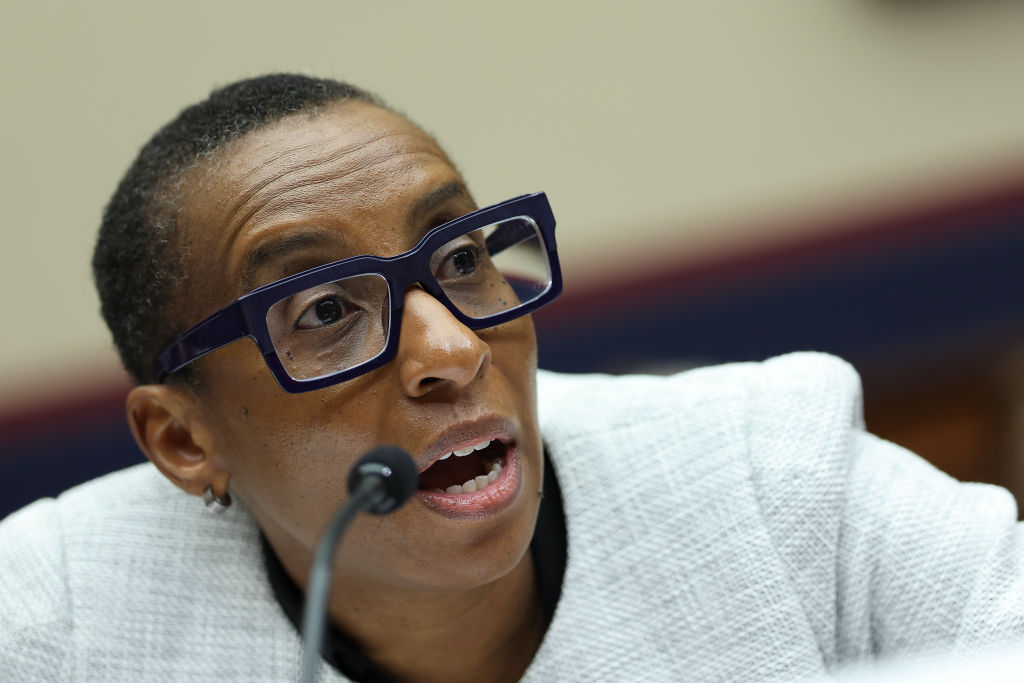
'This is Definitely Plagiarism': Harvard University President Claudine Gay Copied Entire Paragraphs From Others’ Academic Work and Claimed Them as Her Own Harvard University president Claudine Gay plagiarized from numerous academics over the course of her academic career, at times airlifting entire paragraphs and claiming them as her own work, according to reviews by several scholars. In four papers published between 1993 and 2017, including her doctoral dissertation, Gay, a political scientist, paraphrased or quoted nearly 20 authors—including two of her colleagues in Harvard University’s department of government—without proper attribution, according to a Washington Free Beacon analysis. freebeacon.com

@njhochman - Nate Hochman

I noted this in the replies, but Larry Summers' 2005 speech—which argued that innate differences might explain some disparities between men and women in science—caused one MIT professor to fear that she "was going to be sick," because "this kind of bias makes me physically ill."

@njhochman - Nate Hochman

Per @UpwardNewsHQ this morning, elite academia is basically a pipeline for prominent, well-connected left-wingers to fail upwards. Recent examples include Lori Lightfoot, Chesa Boudin, and Anthony Fauci, all of whom landed cushy jobs at top universities: https://www.readupward.com/p/harvards-president-corruption-higher-education

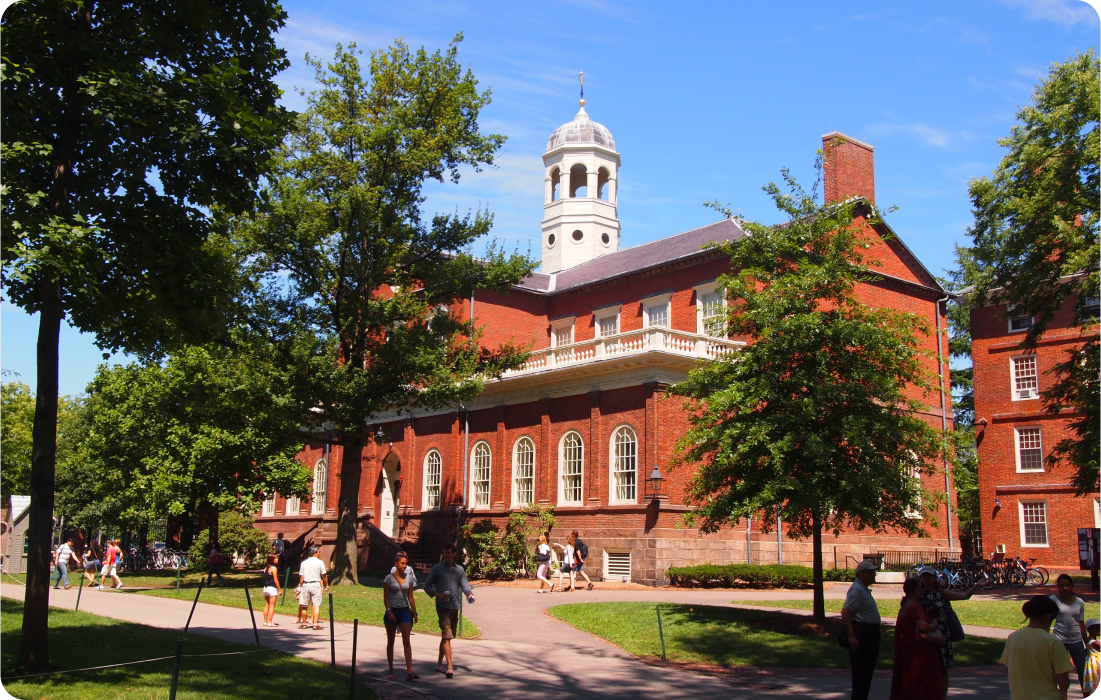
Harvard’s president and the corruption of higher education Also, LGBT ideology in foster care readupward.com
Saved - December 19, 2023 at 12:14 PM
reSee.it AI Summary
Harvard Law Professor Mark Ramseyer expresses concern about the increasing intolerance at Harvard, stating that the faculty allowed it to happen. He acknowledges the alumni's frustration and their efforts to rescue Harvard from its current state. He admits that the faculty's failure is the reason why the alumni are speaking up and why the Council on Academic Freedom was formed.

@hoovlet - Carole Hooven

Eloquent and heartbreaking. From Harvard Law Professor Mark Ramseyer's email to a Harvard list (with permission). I came for my PhD in '99, he came as a prof in '98. We were each publicly attacked for our views in '21. "Harvard is a vastly less tolerant place than it was when I arrived in 1998.  The intolerance is a function of an increasingly large fraction of our colleagues. And we – the rest of us on the Harvard faculty – let it happen. The cancelling, the punishments, the DEI bureaucracy, the DEI statements, the endless list that we could all recite – all this happened on our watch. We saw it happen, but we did nothing. We were too busy.  We were scared to speak up. We – we on the faculty – let Harvard become what it is. The Harvard that we have is the result of our own collective moral failure. The alumni who are furious are not trying to turn Harvard into something we do not want.  They are trying to rescue Harvard from what we let it become. We as a faculty failed.  That is why the alumni are speaking up. That is why we formed the Council on Academic Freedom in the first place." @cafharvard @sapinker

Saved - January 15, 2025 at 1:20 PM

@pmarca - Marc Andreessen 🇺🇸

Round two on the crisis in the universities -- this time on how to fix, and how to start alternatives -- from @bhorowitz and me. Enjoy! https://t.co/127E8MNYdO

Video Transcript AI Summary
Right-wing media has focused on the issues facing universities, prompting potential legislative changes. The discussion emphasizes the importance of universities as critical institutions for society. The speakers explore the structural problems within the higher education system, including the need for reform and the emergence of startup opportunities. They argue for a shift in focus towards students and their needs, suggesting that universities should prioritize student outcomes over administrative concerns. The conversation also touches on the potential for new educational models, including independent credentialing agencies and innovative research funding approaches. Ultimately, they highlight the fragility of the current university system and the possibility of a political backlash against it if it fails to adapt. The speakers express a desire for constructive change and the exploration of new educational frameworks that better serve students and society.
Full Transcript
Speaker 0: Right wing media, for better or for worse, has just consumed the story after story after story of just, like, you know, crazy hostile things that universities are doing. And so you can imagine a point where just basically, like, a half or more of the country just at some point puts its foot down and its elective rep representatives put their foot down. They're just like, we're just not doing this anymore. We're not paying for it anymore. It it would not take 2 years to figure out how to kill these things. From a legislative standpoint, it would take about 2 minutes. Welcome back to the Mark and Ben Show. We, did an episode about a week ago on, the university. So kind of the the the the the prevailing kind of issues in universities, the the the sort of crisis that they're going through. I very important to I wanna reiterate kinda why why we did we did that one, which encourage people to listen to. Actually, first, if you haven't heard it before before this one, this is part 2. But also kind of why why we're doing it. So, you know, we're sort of discussing kind of this kind of rolling crisis that a lot of the universities, particularly the American universities, are going through right now. Very important to understand, you know, 2 things from our standpoint. 1 is the the reason we're digging into this topic is really actually twofold, and we'll we'll talk about both parts today, which is, is both, you know, these are, like, incredibly important institutions for the country, and for the people of the country, and, you know, by extension, for the world. So, you know, it's, like, really critically important that that, what happens in American universities goes well. And it's a it's a very big problem, you know, not just for them, but for for for a lot of a lot of the rest of us, when they don't go well. And and and look, Ben and I talked about this last time, but, you know, our personal stories obviously involve, you know, we we we are here where we are because of the great experiences that we had at universities, and then, you know, the university both, teaching process, generating graduates and research process, of course, is kind of the sort of the, you know, the sort of seed bed of everything in the tech industry in Silicon Valley and everything that we do every day. So these are important topics. The other thing worth noting is, you know, we're not just doing this to to kind of, criticize. We're trying to, see if we can be constructive. And in particular, we're trying to take a look at the the the issues not through sort of a, you know, kind of moment in time, hot in the news, you know, kind of perspective, but rather sort of a structural, standpoint. So we're analyzing universities, you know, as if they're, you know, as if they're systems, and they're structures, and they have incentives, and they have ways of doing things. And those ways of doing things have built up over a long time. And just the nature of large organizations and systems that build up over a long time is sometimes they accumulate problems and sometimes they need, you know, they need change and improvement and reform. So that's why we think it's a good thing to look at. You know, the other perspective that we have is that, you know, there there are, there are clearly startup opportunities emerging. And we're gonna talk quite a bit today both about what the existing institutions could do to maybe improve, their situations. But we're also gonna talk about some of the some of the startup, opportunities that are kind of flowing, from from, from the crisis in higher education. And by the way, those startup opportunities would probably be appearing anyway, because the higher education system, you know, just can't reach most kids, who need to get educated around the world. And so there would be there would probably be startup opportunities even without issues. But, you know, it may be that if universities can't fix some of their issues, ultimately, that there will be opportunities to build new institutions, new companies, new nonprofits, you know, maybe new research entities, and maybe do do more of of the things that universities have historically done. So We Speaker 1: probably need to fix the old ones and then build some new ones, just given how fast the world is evolving. Speaker 0: Yeah. I mean, look, like, you know, part of the context for all this is that universities universities, you know, historically only were ever built to, you know, train a a very small percentage of the 18 year olds, you know, in the world each each year. You know, they were never built to I I ran the I don't have the numbers in front of me, but, you know, the forget the number the number of, the number of people who turn 18 per year worldwide, you know, is like it's like a extraordinarily large number. You know, it's many, many tens of millions. And so, the the the sort of current higher education system, you know, was never built and is not built to accommodate Speaker 1: that. It's built for a small number of religious scholars. Speaker 0: Yes. Originally, yes. And then a small number later, a small number of secular scholars. Yeah. And, and, you know, in the US, the universities have become a a sort of a, you know, a much more it's much more broad based expectation that people go to college, you know, as as we talked about last time. But but but even if you even if you could send every 18 year old in the US to college, you know, the US is still only 4% of the population. And so 96% of of of kids, actually, probably more than that, every year. 18 year old kids are outside the US, and most of them are in places that don't have, you know, physical colleges, universities. And so there's a there's a general scaling problem, right, which probably needs to be addressed separately from the existing system anyway. So there's that. So we're we're we're gonna we're gonna dive in a lot to all of that. And then we have a lot of great Twitter questions, which we are going to, get to, at the end, or if we go super long. It'll be part 3. We'll do part 3. Okay. So the the the the sort of the way that I think about it is is, how to get started is sort of the question that we left off at the end of the last podcast, which is sort of the, okay, the, the last discussion. We we went through all the all the issues, and then we kinda left dangling, alright, what do what do you do about them? So this is this is the what what do you do section. I wanted to start by talking about this, you know, the way we try to always do this in business is to try to start with, like, okay, before you figure out what you're gonna do, it's like, okay, what exactly are your goals? And then and then, of course, the very next question, you know, from what are your executor goals is sort of the question of what exactly are your goals, you know, for who. Right? Like, who, you know, who who are you trying to satisfy? Who who are the customers? You know, last time, we we listed out the 12 functions of the modern American University, which you you can you can hear all about on that on that last episode. And then what jumps right out of the list of sort of the 12 functions of the modern American University is, you know, the universities, the way they run today, they certainly have a large number of different constituents. And so I I I made a list. I I came up with I think there's, like, 16 or 18 on the list. I'll just go through the I'll I'll list them real quickly. Students, faculty, administrators, board of trustees, alumni, donors, downstream employers, who hire the graduates, parents who are very involved, of course, immigration officials, sports fans, regulators, politicians, the press, which is, of course, scrutinizes universities all the time, downstream policymakers who are influenced by the science and policy prescriptions coming out of universities. And then and then number 15, society as a whole. So that was my Society Speaker 1: as a whole is a tough customer, by the way. Speaker 0: Who yeah. Well, it very much is. And, you know, universities universities have have have have design have designed themselves from from actually inception to have a big impact on broad society. You know, that's it's sort of one of the one of the goals is they are trying to reform society, advance society. And so having put themselves in that position, they're naturally gonna get scrutinized by society. Speaker 1: Yeah. Speaker 0: So how do you think about from a leadership standpoint, right, and a management standpoint, or and, you know, with your experience on the Columbia board, like but from a leader general leadership standpoint, how do you think about, an institute like, it you know, look, we all know it's hard enough to just, like, run a company that just has customers. Yeah. Right? Or customers and employees or customers, employees, shareholders. Right? You 2, 3, 4 constituents hard enough. How do you even think about approaching the job of leading an institution that has that many constituents? Speaker 1: Well, I do think, like, companies do have a lot of constituents also, but they're I would say just a little bit have better clarity and uniformity on which are the most important constituents. So if you look at us, like at Andreessen Horowitz. So we have investors. You know, we've got entrepreneurs. We've got employees of entrepreneurs. We've got our own employees. We have the press. We have society as a whole. Like, all these things to consider, you know, in our kind of wealth management thing, we've got that kind of wealth management kind of clientele and all that kind of thing. But I think it's very clear to us, and we try to make clear to everybody in the firm, and I think everybody in the firm is very clear on it, that if we don't attract the best entrepreneurs in the world, that none of the other things matter. So it kind of is, okay, great. You have all these people who have an interest in it. But, you know, you've got to get the main thing done. And anything that compromises a prime directive has got to go and be subordinated. And I think that, you know, in the universities, partly because of just sheer size of them, you know, you have people who have no concern about the students at all, like large pockets of the kind of university that are only focused on kind of one of the other things. And that's where I think, you know, it starts to lose its focus and degrade the product for the most important constituent, which I'd argue is students. Speaker 0: Yeah. So if you were, you know, especially with your board experience, like, if you were placed in charge of one of these tomorrow, like, how would you or Adam, maybe it's an unfair question. I would say, how would you how would you rank these? Or may maybe that's an unfair question. Maybe the the question is how would you even go about figuring out how to rank them? Speaker 1: Yeah. Look, I mean, I I think you have to kinda start with students and then everything, you know, everything on the list is a little bit in service of students to varying degrees. So the faculty, right, are obviously in service of the students. The administrators are in service of the students. The alumni are to kind of give money to support the students. So like, and and they're kind of, you know, depending on, you know, what your issue is in attracting the best kind of brightest students and giving them an experience and the kind of product and a career, the things that they're looking for, that's optimal, you know, you would kind of prioritize things to get you to there. And, like, there's always things that, you know, regulators are, you know, something that any business has got to mitigate or, you know, deal with and so forth. And that's not gonna be a primary thing, but you have a small team, hopefully, that's focused on that. But but I think, you know, you can easily lose the thread if, you know, you manage the noise levels or, you know, the press is probably the most distracting one. Right? Because if the press calls us a name or says we're not doing our job, then all of a sudden, like, a huge focus goes over there. And that, you know, if you're not careful, that'll distract from, you know, what you want for your kinda main customer. And that's and that's, I I think, to a large degree, you know, what's happened, which is why, like, cost like, how is it possible that tuition has gotten so high? Like, what the hell were you optimizing for that lets you think that your students wanted like that was a good idea? And I think there were some market corruptions, right, where the government's providing loans to students. So that kind of jack you know, that led to upward pressure. And then there's, you know, other things like professors can get jobs in the private sector that, you know, which is a kind of a more scalable sector in terms of making money that could pay, you know, potentially a lot more than you could pay in academia. So that drives salaries up and and so forth. So there's a lot of factors that lead to that. But, like, at the end of the day, like, how the hell do you end up with a product that costs $300,000 and gets the average student a job that's worth, you know, like 50 how are they ever gonna pay back $300,000 if they only make $50,000 a year? Like, that's insane. And that's that's kind of where the I think the product for the student has fallen apart. And so maybe that's a good place to start and like, okay, so what would you do to get cost at the university under control? And I think, you know, one of the kind of big things that we've learned, which is, you know, it's stunning, when you hear it, but, like, it got there incrementally, obviously, which is, you know, at many of the kind of elite institutions, the number of administrators outnumbers the number of students. Speaker 0: And Speaker 1: it's like, okay, that's an opportunity for savings. And I think, like, if you just tighten your belt, you'd go, okay, like, maybe we can do a 20% reduction there and so forth. But if you think about it a different way, and this is I mean, to me, it's very analogous to, Speaker 0: you Speaker 1: know, we had a debate recently when the Biden administration hired 86,000 new IRS agents. And people were like, you know, it was very partisan debate as it always is. Like, you know, why are these people coming after my money? Like, what are you? You cheating on your taxes? But that wasn't really the interesting thing. The interesting thing was you obviously anybody kind of in our business would go, well, you could have just hired 7 good software engineers, and they would have done a far better job than 86,000 agents at figuring out who was cheating on their taxes. Because it's like it's a data, it's a forms problem. Like, this is what computers are amazing at. And AI is, you know, people talk about what AI is good at. I'll tell you what AI is really good at, filling out forms, looking at forms, getting data out of forms, comparing that data to what the data should be, figuring out things, anomalies in the data that no human could. You know, it's amazing at that. And, well, like, could AI do all these administrative tasks? Could you just get rid of, like, that whole thing? Or, like, whatever, 95% of it? And then, you know, you're you're starting to get cost back where they are. Speaker 0: Well, if I if I could, just a couple of things on that. So, so one is it begs the question of who who who your who your constituency is because if if if your top constituency is the administrators Yeah. I mean, to the extent that the institution is being run for for itself. Right? Then obviously that that's a direct threat. Speaker 1: Yeah. And, look, I think that's, you know, that's always the thing in every organization. Right? Like one of your constituencies are your employees. But when your employees, take precedent over your customers, that's usually the end of the business. Right? Like this this is kind of the the the pattern. You know, in the private sector, you tend to go bankrupt a lot faster because there aren't government subsidies and tax credits and, you know, you you don't get all these there are so many goodies that the universities, you know, have access to and are part of their constituents that that's not, you know, that's not something that happens in business. But eventually, over time, in the long run, if the employees become more important than the customers, you get to the same end. Speaker 0: Yeah. One of the sort of quirks in the incentives, of the whole thing, see if this this makes sense, is that, you know, one of the one of the parties is not the constituency is not a constituent to your point you just made as shareholders. Right? So so, for profit companies have shareholders. The universities are nonprofits. They don't. But the consequence very interesting incentive consequence of being a nonprofit, which is a nonprofit. Right? The whole point is that you're not you're not for profit. You're not trying to generate profit. Right? And so you're sort of implicitly trying to break even. And so if you have the opportunity to have rapidly ramping revenues because of subsidies, you then actually have every reason in the world to ramp expenses at the same rate. Right? Speaker 1: You you Right. You're on massive margins. Exactly. Right? Right? Speaker 0: Right. Right. Exactly. Like, it's not your purpose to generate margins. You wouldn't be able to do anything with the money anyway. You might even it might even cause problems because it would cause people to scrutinize what's going on. And so there's this there's this thing where the the with a nonprofit, the the the, the the expense statement that, you know, will scale to meet the the available funding sort of on on auto pilot, right, to to to make sure the thing goes to break even. And this is sort of this is the counterargument to people who argue that nonprofits are somehow, you know, you know, better lined up to do good things than for profits, which is like, okay, what if they're actually wired to just, like, grow expenses to the moon, you know, and basically all the taxpayer dollar? Speaker 1: Yeah. Then there I I think that, you know, there there's definitely an aspect of that. And I think that, you you know, in the kind of the math, the university math is a little bit, you know, if we if we can raise prices, then we will. And they kind of benchmark against each other. So, you know, student loan money pours in. Harvard raised their tuition. We can raise our tuition. Like and, you know, just kind of cascades down the system. And, you know, that kind of translates into higher salaries, more administrators, more this, more that and so forth. But yeah, but it doesn't it certainly needn't be that way. And I think the idea of lowering tuition is a good idea. I mean, if you just if you were to, you know, we'll get into this, but if you were to start a university from first principles, like, why would it cost 60 or $70,000 a year? Like, that that's outrageous. Or it seems outrageous, like, to, you know, educate a student. Like, your best Speaker 0: Well, we know. Efficient way to do that. Yeah. Well and it's one it's one of these things where you can just look at what it cost 20 years ago, and you can look at the fact that it's risen the cost has risen much faster than inflation. And then you can just ask the question, are the results better than they were 20 years ago? Yeah. Right? And so it's sort of by definition, it's like, okay. Well, like, what what if we is this that's something you see in business also, which is just like, okay. What if we just went back to the cluster for we had 20 years ago or 5 years ago? Yeah. Yeah. Right? And, like, where's the product at? Speaker 1: Ask the people who are actually running it, by the way. Speaker 0: Correct. But, like, if you're looking right. Exactly. But if you're looking outside in, like, it it is a really key question. In in other words, like, you've proven historically that you could do it at a lower cost structure because you were doing it at a lower cost structure. Yeah. Right? And so they're they're actually you you know, it's it's like this is one of those the reason I bring it up is, like, you can't find an institution. You cannot find a university today that's trying to do what you're describing. Like, as you said, they benchmark against each other. They're all on the same track. Yeah. And so you could you could you could kinda say, okay. That's sort of some sort of sort of inductive proof that it's not possible to do what we're saying because, like, nobody's even trying. But the counterargument to that is, no. It is possible to do it, and we know it because they were all doing it 20 years ago. Speaker 1: Yeah. And and we're in the courteous. By the way. Right? Like, you know Right. Inflation adjusted, tuition's grown at more than double the rate of inflation. Yeah. Speaker 0: So It's something like triple it's like something like triple the rate of inflation on a sustained basis. Speaker 1: Yeah. So clearly. Clearly. Well, the other thing that's really interesting is, okay, if you're at $60,000 a year or, like, above, that's probably a little more than the cost of having a, like, full time, like, very smart instructor for your child or for your teenager or whatever. Right? Like, so so you could literally assign every student, like, a really good instructor to teach them all these subjects, full time, like no other students, just one student. And it it would seem like you'd get potentially a better outcome with that with that method. So, like, once you get to that level of absurdity, it's probably time to take a look at it. And, well, let's Speaker 0: talk Yeah. Let's talk about that for a second because there's actually a lot of historical evidence been for what you just said. So, so one is if you go back in time, aristocratic education in prior societies, it was always 1 to 1 tutoring. Like, the the the royal family like, the offspring of royal families were always tutored one to 1. And then you have these amazing historical precedents, and Alexander the great is kind of the the the apotheosis of this because he his tutor was Aristotle. Yeah. That's Right? And this was just pretty good. Right? And then and then, you know, even, like, the Greek philosophers, like Socrates and all those guys, you know, their day job was you know, what they did in the mornings was they did 1 on 1 tutoring, to the to, you know, to kid to kids in in Athens. And then in the afternoon, they hung out at the accord and talked about things. But they their their job was actually tutoring. And, you know, that was obviously an amazing amazing civilization. So, so, like, there there's a lot of, like, specific historical historical precedent, and then there's this thing in the education research which is really striking. So one one of the things in education research generally is that it basically doesn't it basically fails. It's like basically sort of all of the attempts to come up with systemic interventions to improve educational outcomes basically fail, and this has been the case for for for many decades. Speaker 1: Like pedagogy and things beyond tutors. Is that is that how you think about Speaker 0: it? Yeah. They just don't. Most things you wanna do, whether it's head start or this or that or electronic, you know, laptops in the classroom, or you you just name any number of things where people try to inject money or new practices into the classroom Yeah. At any level. And basically, the the basically, it's the null hypothesis keeps proving out over and over, which is they just don't change anything. And so and and actually, it's funny that the the Gates Foundation actually write us just very heavily involved in education philanthropy. I actually put out a report, a couple years ago where they kinda they kinda go through this in detail. And it's it's very kind of discouraging in the sense of it's just it's really like, look. It's easy to say, like, a good teacher will do better, but it's it's much, much harder to say we're gonna make a 1000000 teachers better. Right? So so so so even the things that work in the micro level, they just they just don't scale. There is one exception. There is one educational intervention technique that reliably, it generates better outcomes. And in fact, it generates what are called 2 sigma better outcomes, so 2 standard deviations. So it's an intervention that routinely takes kids who would score at the 50th percentile of outcome and moves them to the 99th percentile of outcome. And it's 1 on 1 tutoring. Tell you. 1 on 1. Yeah. Speaker 1: You know, this is also true with, autistic kids. They've done similar research. And the one thing that works is 1 on 1 tutoring. They're the one thing that's proven of all the interventions consistently. There is a professor at UCLA, Ivar Lobos, who, who kind of proved that out. So that, that, that's it. It's very consistent across all types of students, interestingly. Speaker 0: Right. Right. Exactly. And so if if you wanna look at there's this thing called the Bloom 2 Sigma effect. The the researcher who did the work on this, his name is Bloom. So it's called the Bloom 2 Sigma effect. And it's kind of this great it's kind of this great white whale of education, which is like, wow. We actually know how to make education, like, much better than it is. It's just it's just historically been economically impractical. There's just no way that you could afford to have a 1 on 1 a one to 1 year for every single Until now. Until Oh, I mean, I'm Speaker 1: gonna assume a lot of Speaker 0: money should go to. You know, quite possibly. Right? Speaker 1: Yeah. Well, by the way, it's also good, like, you know, one of the big, kind of critiques of academia, I think from people like us, but, you know, more so, it's just that, like, when you go into academia, you're in this sort of bubble of a world. So if you're kind of coming up with new social sciences, theories or what have you, you know, you're testing them among like, you're kind of wrapped in people like yourselves. But if you go back and say, well, Socrates' ideas at least had to stand up to his students in a much more direct way because it's a one on one way. They're gonna have, you know, they're gonna have questions with us where I think that if you're kind of elevate yourself to, you know, here I am, king of the class, and, you know, I'm going to give you a grade. So you better not, you know, say anything nasty about my research. Like, that's a very different kind of a thing, I think. Yeah. So so so, you know, it could be helpful on both sides in a way. Although it is it doesn't quite take the expenses down, but it would hold them steady. Speaker 0: Or maybe, you know, 1 tutor for every Speaker 1: 3 students or something. Right? Speaker 0: Yeah. But, look, it's also the reference. Like and look, the expectation, I think, has to be the 2 look. If if nothing if current trends continue, then tuition will keep rising at 3 x the rate of inflation or something like that. Right. So we'll we'll be having Speaker 1: the tutor would cost. Yeah. Speaker 0: Yeah. We'll we'll have we'll have a follow-up to this podcast, you know, 5 or 10 years from now, and it'll have crossed the $1,000,000 mark, right, per student. Right? And and at that point, at that point, the economics actually become quite overwhelming Speaker 1: Yeah. Speaker 0: In the direction of one to one instruction. So so so sitting here today, it sounds crazy that you would make the switch, but it's starting to sound insane. And and so it it's it's worth, it it it it'd be it's interesting to at least have, like, a a a a a potential like, an index to potential competitive system Yeah. At least for the sanity check. So so, anyway, with with that in mind, so we we immediately launched into kinda one of the more one of the more pie in the sky ideas. But let let's go back to, like, the, you know, the sort of, you know, the the challenge of, like, you're you're you're put in charge of one of these institutions tomorrow. Yeah. And, you know, you're responsible for the turnaround or the or the or the reform that needs to happen, which by the way and then look, you know, a lot of smart people at the trust the trustee level and president level and donor level and so forth are trying to reform the existing schools. So I think it's worth worth talking about that. So so, Ben, let's talk about the the fix the university, kind of plan. And, you you you wrote an outline, prepping this. And so if you want, I can I can go through it point by point, or you could just launch it? What what do Speaker 1: you think? Let me get into a thing that, kind of will illustrate the kind of customer problem and the systems thinking issue, which is, and I, you know, I hate to get into it because it's controversial, but I'm not gonna get into the controversial aspect, which is kind of this whole diversity, equity, inclusion, and how these programs are designed. And I think and I'll just contrast it with the way we designed our program, which, you know, we call it a talent program, but it's essentially the same sort of thing. Because we designed ours with the kind of potential employees in mind. And I think that the, the system that was designed for the university was designed more with the press in mind. So, you know, how can we have a population that reflects America, was kind of the goal as opposed to, what's the best product opportunity for students in populations where we're not doing a good job of recruiting them. Right? Like, very different ideas on, you know, how you would start the design. And so if you start the design with, okay, we need 14% black students, whatever percent Jewish students, this percent white students, etcetera. And by the way, we've got legacy and this kind of thing. Then you would kind of that forces you into a methodology that is kind of whatever race or gender based where you're, like, literally having them identify self identify themselves on their applications and then trying to kind of funnel them through there. What's the problem with that? Well, there's a lot of, like, very weird side effects. Like, first of all, like if you look at graduation rates or, you know, outcomes or so forth for diverse students are much worse than for your main students. So, like, that's like if you're designing for the student, you would never design it that way. That would be like an important metric. But that's not the important metric. The important metric is how many you let in. And so, you know, that's corrupting. Then the the second corrupting thing is everybody knows about that checkbox. And so once, you know, the student arrives, now I'm like a little bit of a second class citizen because people are gonna judge. Well, you could say, well, that's racist to say that. Well, yeah. But you set it up. Like, people don't unsee. Like, I apply. I check, you know, my Asian box or whatever that I'm checking. I know there's other boxes. And then, like, I read the news, so I know, like, how that works. And so, like, that kind of whole design based on trying to achieve a goal so that The New York Times says I'm not racist as a trustee or a faculty or whatever, gets you to that outcome. Now you contrast that. Like, so how would you design it if you're designing for the customer? Well, I can tell you because, like so when we started the firm, and this was it's important to know this is pre me too, pre George Floyd, pre when anybody cared about any of this stuff in Silicon Valley. And so what we kind of said was, like, how do we get competitive advantage on talent? And we thought, well, there are certain talent groups that don't get recruited and certain talent groups that are over recruited in Silicon Valley. What are under what are, you know, computer science students from Stanford are heavily recruited, MIT students, so forth. So we started with, well, what about the 2nd tier, the top students, the 2nd, 3rd tier universities in computer science, can we go after those? And, you know, we put them on our list. The second one was veterans. Veterans, don't make their way to Silicon Valley, often, you know, because they just don't know that they're welcome there or whatever, you know, whatever reason. So that could be an advantage. And, you know, they're they tend to be good at, like, you know, things that we need, like very loyal, you know, trained, in leadership and kind of process development, things that we really kinda lacked in technology. So we had a, you know, a team to recruit veterans. And then, you know, we had the the other kind of 2 that if you just looked at the numbers that were way lower, like blacks and Hispanics. And so we had teams for that. So I was in I was in charge of that part. By the way, like, note that because it's a talent program, we didn't hire anybody to run diversity. And, you know, like, these colleges to run the programs they have have, like, hundreds of people. But if it's just talent, then the people who are in charge of talent, which is, like, of course, you know, the people who run the firm. Okay. So early on, like, hey. We're we're probably 2,010, 2011 now. I'm kinda working on this problem. And, you know, I'm getting kinda input from people I know who have recruited from those populations, who know them, know the special skills that might exist, how how to attract people and so forth. And I'm at, and this is a very funny story to me. So I'm at lunch in Menlo Park at a restaurant called Stacks, which you know well, with Steve Stoute, who, you know, kind of came from the entertainment industry. He's kind of, you know, which is, you know and music in particular and rap music in particular, so, like, dominated by African Americans. And, you know, I'm talking to him about it, and he says, Ben, do you know why there are no black people in Silicon Valley? Just like that, he says. And I said, no. Why are there no black people in Silicon Valley? He said, look around. There are no black people in Silicon Valley. And, like, literally, he was the only black person in all of this stacks is a pretty big restaurant. He's the only person. And so I was like, oh, that's interesting. And I looked up, you know, so United States is 14.3% black, but Palo Alto, Menlo Park, you're talking 2%. And so like right away you go, okay, this isn't even an attractive place to live or for whatever reason, people haven't even moved here. So like, maybe we need to start there. And so what did we do? We, you know, we did film screenings and gatherings and meetups and barbecues and kinda tried to get to know the people that we wanted to recruit, know what would make for a good work environment for them by just spending, like, regular time. And then we start to go, okay. Here's a place in the firm where we need this talent. We already know all the people. We know who's the best. We've spent, like, we've invested the time, and we're gonna get that. And so then you come to the firm and our retention, our promotion rates, and so forth are very good because we were always focused on the talent. We were never folk we never cared about the New York Times because at that time, the New York Times didn't care about it. And so, like, you just get to a very different outcome when you focus on a different customer. And I'm gonna kinda tell the the last part of the story just so you I can map it back to the university. So a few years ago, maybe it was 5 years ago, Henry Louis Gates, who was the very famous, very talented professor of African American history at Harvard, called me up and because he, you know, wanted to basically raise money from me and has this thing, the hip hop archive at Harvard. And he said, Ben, I wanna create a fellowship called the Horowitz Hip Hop Fellowship at Harvard. And I go, well, Skip, like, if you call anything that, then everybody's gonna hate me because Horowitz hip hop, like, sounds, like, really, you know, effed up. I said, but I have a friend, Nas, who deserves to have a hip hop fellowship named after him. And I'll call Nas and see if he wants to do it. And, you know, we go through that and we call it the Nas hip hop fellowship. So then, you know, they wanna have a big event at Harvard and then invite Nas there, you know, which they do. And I get a call, you know, leading up to the event from Lisa Niu, who some of you may know, she's married to Larry Summers, who was interestingly fired as president of Harvard for saying something, you know, non diverse. And she said, Ben, you know, I've been reading Nas' lyrics. I said, you've been reading his lyrics? She said, yeah. I said, you haven't been listening to his album? She's like, no. No. No. Just reading the lyrics. I'm like, okay. You know, the the albums are good too, but whatever. And she said, you know, like, this he's so good. Like, I can't even believe how good this guy is. Like, I'm talking like Ralph Waldo Emerson, Walt Whitman. He's like that level good. And I was like, wow. That's amazing. But the thing that I realized when she said that is Harvard never recruited Nas or anybody like Nas. And if you think about it right, black people dominate dominate music in the United States. So why aren't you looking for the talent, doing the right things to recruit them? Why are you looking for the color? And that's I think I think a lot of the things that the universities, if you're gonna take a systems view of it, you've gotta start back there and say, like, how do we get, you know, how do we find the talent that we just our regular process doesn't get to? Change our process, change our way of doing things to get to that talent. And then, like, it's gonna be better for us, better for the talent, better for the mission, all those kinds of things, as opposed to letting some outside force tell us what we should be doing. And I think that's, you know, that's really emblematic of a lot of the things that I think have gone sideways in the university when it comes to, you know, diversifying the the student body. Speaker 0: Yeah. So let me let me if you don't yeah. So let me let me steel man let me steel man the question, right, that you that you'll get in response to this, and I'll I'll I'll use my special skill here. I'll use my special skill here of, I'm I'm I'm an obsessive on all these topics, and so I try to try to be able to think about it from from all the points of view. So I'll I'll play I'll play Superwalk here for a second, which is like, look, Ben, like, you know, the whole point of the DEI programs, like, the universities is to try to, like, make sure that every field, like engineering for as an example, has, like, equal representation by population. Yeah. It feels like you're arguing that we should give up on that in favor of an approach that sounds like it involves stereotyping, which is we shouldn't try to you know, we should we should take away the focus of recruiting black people in engineering program. We should increase the focus on taking black people in music program, and we should do that on the basis of a stereotype that black people are are better at music than are than than in engineering. Like, how how do you, yeah, how do you, yeah, how do you, like, explain that? How do you explain that given the given the moral framework people are starting with? Speaker 1: Well, look, I mean, I think I I I think the the truth of the matter is is, look different. Everybody's in it. First of all, like, everybody is an individual and should be treated as such in that sense. But, like, I think anybody with half a brain well, who's observant can observe some kind of very obvious things about different populations that they're interested in different things, like people have different interests. Like, so forget about even talent or this or that. And it goes by group and by culture and so forth. And this is, you know, there are things like every comedian makes jokes about, you know, men like to sit around and watch sports and, you know, women like to watch other things and so forth. And that's very bad to say these days, obviously. But if you look at just job categories, you know, I think veterinarians are 80% women. And nurses is like much higher than that. Those are good paying jobs. Speaker 0: Psychologists, by the way, at the at the university level. We were just psychologists or at least up to at us up, like, 90, 95% women now. Speaker 1: Yeah. And I think there's nothing wrong with that. And then, you know, similarly, like, coal miners are almost all men. You know, people work in like oil rigs are almost all men. You know, MMA fighters are mostly men, although there are women who do it, and there's nothing wrong with that. And so like there are I think you do have to, you know, in any kind of program where you're trying to get you know, and the whole point of diversity is diverse interest, diverse talent. Right? Or ought to be anyway. And so if you're going into, you know, a population that's got a different culture and very likely different interests, and, you know, and by the way, everybody's got different genetics too, then you kind of have to be a little more creative about just saying, we're only going to like, if you if you say, we're only going to look at, you know, these test scores and these grades and these kinds of courses, then obviously, like those populations aren't showing up on that. That's why you have the program. So you can either go, well, we'll just still put them there where they haven't shown an interest or an aptitude yet or like or or some of these students have or whatever. Or we can broaden our criteria to things that make big contributions to society and are important. And people may be, like, able to do better than our friends, the white and Asians, like, over here. And so, like, that's the choice you have. I mean, you know, like, and I think it's just a better choice. So, yes, you're not going to get equal distribution just like, you know, like you don't get equal distribution in almost anything in life. It doesn't even make sense math wise, by the way. Right? Like, because the population is 14%. First of all, like, 14% in total across age groups, not 18 year olds. So, like Right. You're already fucking off. And then we're going international, so you're way off. And so you're mapping to a number that's a fake number. And now you're not just mapping it to the university. You're trying to map it into every subject. And this is just like, it's just, it's almost the American epidemic and innumeracy is kind of affecting the whole logic of how these programs work. And the problem is it's to the detriment of the people you're trying to recruit. I give you a very good anecdote on this. So you and I just had breakfast with a kind of prominent trustee at one of the most important universities in the world. And he made a, like, a very offhand comment, which he thought was the most obvious thing in the world That really kind of stopped me in my tracks, which he said, look, even if we accepted every Black applicant, we won't hit 14%. Speaker 0: Right. Speaker 1: And so you're so unattractive as the top university in the world to that population that that you can't even touch that number. So your problem is obviously, you know, like not in, you know, making race to your your problem is you don't even know what you're looking for. You don't know what they're interested in. You don't know how to create an environment, you know, that that that's beneficial where they're gonna have great careers coming out of it. You haven't done any of the real work. You're just trying to, like, meet some number that doesn't even make any sense. And that's to me, that's the issue. Speaker 0: Well, take it a step further just to double dive because this is a real issue right now and real issue for many people, including, as you said, the people that everybody's trying to help. So your your friend, Henry Louis Gates, long time professor at Harvard, actually was pointed out 20 years ago, I think, all the way back in, like, 2004. There were there's a big article, I think, in the New York Times archives. It's really interesting, from that era. And he the two sources for it were him and then Lani Guinier, who was one of the top black law professors in the country at the time. I think also Harvard maybe also a Harvard professor. And later, she was, like, almost on supreme court at one point. So these 2 very highly respected black scholars, you know, experts, professors, and they they they made this case at the time. They said, look, what these institutions are actually doing, is they're bringing in African and West Indian immigrants, to satisfy the African American quotas. Speaker 1: Yes. Well, that that is exactly what's happening. Right. There are more Nigerians. I believe there's more Nigerians at Harvard than African Americans. Right. Yeah. Speaker 0: Right. And and, of course, like, look, for at an individual level, you know, fine, you know, great. The it's it's, you know, great. You know, so I'm totally in favor of having, like, highly talented Africans and, you know, real real. Speaker 1: Nothing to do with Somalians, like, genetically. This is the other thing about this race theory that people are kind of promoting is they're not even, like, related to, actual races. I mean, or actually genetics or and it's just some weird government category. Speaker 0: Government government over over over categorization. And then and then, you know, specifically back to, like, what everybody thinks they're trying to do, which is if you're trying to help African Americans. Right? And and your answer to it is we have to bring in lots of, like, literal Africans and West Indians or some or or other other population goes to do it. Then you you like, some again, to your point, like, something has gone wrong in pursuit of the goal of helping African Americans. Speaker 1: Yeah, I think, look, I think it's clearly not working also in the year. I mean, there was there with the kind of ruling on affirmative action. There were so many studies that showed that it didn't actually help African Americans. 50 years. Forget whether you think it's a good idea or bad idea or fair or not fair. The results were really bad. And I think part of the reason the results were bad is the way the kind of programs were designed and the you know, and and that, like, most of the people were African anyway, not African American. Right. So Speaker 0: Right. Exactly. Well, so, well, the other the other benefit to the Africans is they they pay they they're more likely to pay full freight. Right? So they're from a universe from a financial standpoint, you know, Speaker 1: they're Yeah. Yeah. Well, well, that's right. The other incentive, if you if you're taking expenses through the roof, you need some people paying full freight. Right. Speaker 0: And which turns out to be immigrants. Okay. Good. So let's you know, that's obviously a big a big chunk of the of the reform, fix fix the university thing. Ben, let's let's let's walk through the rest of the, the fix the university turnaround plan. Speaker 1: Yeah. So, you know, one big thing is the credentialing system. Right? Which you know, and this again, like, this is probably the most important thing to the student is that that once I pay all that money, once I spend all that time, that at the end of it, I've got something that's very valuable. And I think that there was just a report that, like, half of companies are dropping their, like, bachelor degree requirement, which kind of says, well, the credential no longer means much. And so I think that, you know, if you don't like the SAT part, then you probably need to fix the SAT part. So it, you know, like make it better. But it does prove something to employers. And it's very hard to you know, get rid of a measure like that because what are you replacing it with? You're replacing it with grades. If you talked about last time, there's massive grade inflation. So that doesn't really work. You know, are you doing recommendations like what are you doing that that an employer can't do themselves? And the brilliance of the SAT, by the way, is as an employer, it's actually illegal to do a general aptitude test. So if you're looking for just whatever and as you know we sometimes call them in sales an all around athlete, then or an all around kind of mental athlete, you know, you'd like to have some aptitude measure. And if you don't like the aptitude that's being measured, then, like, enhance that. But to get rid of that is kind of nutso from the student perspective. And then the second thing is grade inflation itself. And in a way, it's easy to fix because you just go mandate a grading curve and just go back. C is average, F is fail, A is 2 standard deviations up, B is one standard. Like just have it mean something very straightforward, the grade. Speaker 0: Are you talking about kind of trying to 0 in on the absolute qual the absolute grades with the indicator? Or are you talking about literally grading on a curve and having Speaker 1: a forced Like, literally grading on a curve. Right. Speaker 0: So grading on a curve used to be more common, I think, both in educational settings and also in employee evaluation settings. And, you know, companies like Microsoft used to do it kind of famously, at GE. And then it went it's it feels like it's gone very much out of style. Yeah. Because the the criticism the criticism, right, is it sort of forces you it it sort of guarantees that you're gonna have people who don't make it. And so the the criticism is, like, you know, what if everybody in the class is actually really good? And then you're singling out people who have to be cut from the bottom because you're forcing the the the grade on the curve thing. And so isn't that unfair? And so, like, I I haven't seen anybody grade on the curve in many, many years. And so how how would you how would you kind of reexplain that to people in a way that they would think it's a good idea to bring back? Speaker 1: Yeah. So, like, I think it's different at companies and in universities, by the way. So so I think it actually works probably in some ways better in universities in the sense that, like, the the trouble you run into companies is, like, you're you're relative to the next employer. So if you hire the top 1,000 employees in the industry, and then you rank them on a curve, and then you fire the bottom 10%, those are better than the people on the market. And so like you get into that kind of thing and so forth. So there's, you know, this need to mix in the absolute level. The other thing is that, you know, the companies that were famous for it, Intel and Microsoft, would actually fire the people at the bottom of the curve. Right. And, you know, that has implications and so forth. One could argue, you know, Intel and Microsoft did pretty well. They started with those programs before they were giant monopolies and they became giant monopolies. So that actually kind of worked. So, you know, it's kind of a retrospective that that stuff is bad. But in the university, you know, I think if you grade it that way, you don't actually I mean, you know, if you feel like, okay, the failing point should be lower than the whatever two standard deviations below the average, then you can do that. But the meaning of who's the top student at Harvard, to have clarity on that is pretty powerful. And then also to have clarity on, oh, this is what it takes to get through 4 years and get a degree, a bachelor's degree. To your point last time about conscientiousness, it really kind of fulfills that promise. And so, you know, look, we've gone into this self esteem is all that matters thing, but the result of that is massive student debt. We just lie to everybody. So you're doing fine. You're doing great. It's all good. Give us your money. And then, oh, guess what? You owe $300,000 and you can't get a job. And, you know, that's the problem. So I to me, that's a much bigger problem than the self esteem problem or the, you know, you know, you're 3 d standard deviations below the average and you flunk the class. You you know, at that point, you probably don't know the material well enough, you know, to get a passing grade, let alone what you get now, which is an a minus. Speaker 0: Right. So Well, the the other the other response I think would be like, look. Every professor, every teacher, and every manager, and every employer are fully aware that you have a distribution of talents and capabilities and results and performance in every group. Right? Like so no. There there is no employer that does what you just, you know, said a few minutes ago, which is they hire the 1,000 best people. Yeah. And and not and not right? Nobody ever does that. I mean, everybody would love to. Nobody ever does. You always have distribution Speaker 1: of excellence. There's also it's not just smarts, it's effort. You know, effort is a big thing. That's right. That goes into, you know, not only a grade in school, but goes into, like, performance on the job. And, you know and and look, I would say the other thing, you know, just in life that you learn when you employ people and every employer knows this is, you know, not everybody is good at everything. So, like, the important thing is, like, what are you great at? And then, like, where how can we put you in a position for your highest and best use? We use this term all the time. You know, like, where can you make the biggest contribution and let us get you there and not have you do something you're no good at? And I think this whole, you know, anti credential kind of way that we've gotten universities, we you know, people come out of school. We don't know what their highest and best use at. They they might get you know, they may be, like, the greatest. I tell you, Robert Smith is, who's the, is he I guess he's CEO of Vista. He's the founder of Vista. He's kind of runs it. You know, he's very, very sharp on this. He's a he's a person I probably rely on most for ideas in this area. And one of the things he says is, look. We get guys we kind of have to reclassify them because well, I got somebody as an engineer, but when we kind of, you know, look at their personality and so forth, they'd be way better in sales. And we reroute them, and their career goes much better. And so if you're, like, a genius, you know, psychologist, social networker, like, you know, these kinds of things, and we forced you into STEM, that's not good for you. It's not good for anybody. But that's what these ideas do. Right? Like, they force people into things that aren't their talent, their skill, their passion, their interest. And then, you know, they don't enjoy it. You know, they, you know, like, I'd be resentful if somebody did that to me. And then I'm not gonna make much money, and I'm gonna be like a low performer wherever I am. And there's no need for it because I'm super talented person. Like, why are you doing this Speaker 0: to me? Speaker 1: And I think, you know and and it's these ideas of people who wanna make the world fair that they impose this thing on people where, like, look, life is not it's not fair in that not everybody is exactly the same amount of good at everything. But there's so much variety that there's a place for everybody. You know, like, I do believe that there's a place for everywhere. Anybody can contribute. And we gotta find that for them. And that's what the university should be doing is finding people's contribution, not, you know, channeling them into something they don't wanna do or, like, didn't test into or or whatever. Because, you know, oh, we need another person of your race doing this. So we're gonna make you do that. Speaker 0: Yeah. There's something in, as you if you when you dig into the data on, like, representation of different groups and different professions, there's something in the in the data, the the social scientists who study this referred to as the Scandinavian paradox, which is that it's very counterintuitive. It consists of what you're saying, but it's very counterintuitive, which is the societies that are most egalitarian, have the greater dispersion, have the greater difference between representation of groups, but but for example, by profession. Speaker 1: And more women go into STEM in, like, Kazakhstan than in Sweden. Speaker 0: Exactly. And so the the true like, for example, for STEM, the truly the truly representative STEM systems at the educational level and at the professional level for, like, science and math and engineering were the Soviet Union, and then apparently even still today, Iran. Right now Speaker 1: there are much fewer rights. Women have much fewer rights. Yeah. Speaker 0: Yeah. And and then, by the way, everything else that women might wanna do, is is is much more dangerous. Right? Like, so, like, being a literature professor in Stalinist Russia was, like, super dangerous. Very good point. Right? But being a nuclear physicist was, like, you know, super a super privileged position. Yeah. Speaker 1: Yeah. And very safe. Speaker 0: It's it. Speaker 1: Yeah. Yeah. Speaker 0: Yeah. Right. Exactly. You need you. Right? And so if you're, like, a highly capable person who happens to be a woman who would love to be a literature professor and but in that system, you can't do that. You're not gonna do that. And so you go do the thing that you'd rather not do because it's the safe thing to do. So, and and then in contra in contrast, if you if you do this rank ordering of societies by gender egalitarianism, you know, the Scandinavian countries are kinda top of the heap. And I think it's the case in the Scandinavian countries today that, like, engineers are, like, 85% men and nurses are, like, 85% women. Yeah. And so it's it's it's it's a much more unequal outcome. And so the the the the explanation for it turns out to be very subtle. It's in the statistics, for what's happening, which is, if you take out all of the societal bias or all the societal level determinism and you take out all, you know, whatever, if you take out every possible restriction on what people can do and you let them fully express themselves, then what you're left with is pure choice. Speaker 1: Right. Right. Speaker 0: Right? And so and so at that point, the the differences, in the outcomes that are based on pure choice maximize. Yeah. They don't minimize. Yeah. They maximize. Right? And so so the freer people are, the more you're going to have dispersion in exactly the way that makes kind of prevailing morality just, like, completely freak out. But but but your point, the reason we're going through all this, your point is you can imagine a university you can imagine a university that has this polar opposite view and would have these spectacular programs, and things if music and and many different areas of everything, like performing arts, poetry, and so and then and then all these different, you know, psychology and all these different, you know, things and so forth and so on. And then have sort of equally good, you know, engineering programs or math programs or whatever. And they have just, like, and everybody in every program is there because it's the thing that they really wanna do in life and that they're the best at Yeah. Without the kind of trying to force fit everything to be equal representation across all fields. Is that the it sounds like that's Yeah. I mean, I I I and Speaker 1: I think that's clearly the right approach. And, like, in, I mean, I have to say, like, in business, like, you look for a technology venture capital firm, and we end up needing all those things. Right? Like, you know, part of our advantage is that, like, we're a firm that has some poetry to them that can tell a story, that can do these kinds of things. That's how we built the whole brand. It had nothing to do with math. And, you know, like, that's kind of one aspect. Then we're a network. And so we've gotta make friends, like a lot of friends in and not just friends in Silicon Valley. We've gotta make friends in Washington, DC. We've gotta make friends in Hollywood. We've gotta make, you know, friends on Wall Street. And, like, this isn't a great job for an engineer. And so, like, like or or, like, there may be engineers who are good at it, but I'll bet you I can find, like, somebody else who's way better at it. And we have. And so, like, the the and that's my point about the world. Like, the world is very diverse in terms of things that need doing. And to kind of force people into a path because they're not your customer, your customer is, you know, some, you know, buddy who's covering diversity at The Washington Post or The New York Times or whatever. And you're like, okay. The last thing I wanna be doing is getting tagged with racism for their and by the way, those organizations are not diverse in that way either. You know, like, so they're, like, they're telling you how to run your business. They don't know how to run their fucking business. The whole thing is just stupid. But, you know, like it you get into these, like, abstract ideas that, you know, at the very surface level makes sense. You know, like, look, there's talent everywhere. Yes. People are different. You're like, not even people are different. Like, you know, people are there there's racism out there. Yes. So therefore, every job, every category, and every company has got to be exactly, you know, the percentage that are represented by the population. Well, how did you get all the way there? Like, that's the dumbest thing I ever heard. Speaker 0: Yeah. So, if you wanna just that something I'd do for fun sometimes is if if you just Google, newsroom diversity crisis Speaker 1: Yeah. Speaker 0: There are these just absolutely hysterical reports just like excoriating, the news the same news organizations that criticize everybody. Yeah. Of course. Speaker 1: Of course, they're not. Yeah. Of course, not everybody wants to be a damn, you know, journalist. Speaker 0: You know? So anyway, so equal amounts Speaker 1: of their representation of the population. I'm like, what are you talking about? Speaker 0: Right. Exactly. So, to go go back to the credentialing, to go back to the where, you know, why why we're talking about this. Go back to credentialing. So then we I think what you're saying, see see if this is right. You're saying is you you wanna think you you you wanna think harder leading one of these institutions. You wanna think harder about the credentialing on the way in Yeah. In terms of how you're actually sourcing talent and how you're thinking about talents and how you're thinking about bringing in, you know, lots of different kinds of people. Yeah. And then and then correspondingly, you also wanna think about the credential out. So the the the value of the credential that you're then generating. You know? And and and they're related. Right? Because to your point on the SAT, the the incoming credential is actually part of the outgoing credential. Yeah. And so and you so you wanna think hard ultimately about how that all translates downstream to the potential employer. Speaker 1: Yeah. And by the way, look, if you want to diversify what you're getting through that credentialing system, then widen it. You know, widen the bar, take more things, have them do a poetry test. You know, like, see what their rhyming skills are like, actually, you know, add music to it. Like these are this isn't These are real tangible things. Right? Like, you know, add you you know, like, I think it would be very helpful for us if they would say, like, how good are you at, like, human relationships? Speaker 0: Right. Speaker 1: That would be some Speaker 0: Oh, I'll give you one. I would love to Speaker 1: know that coming in. Nobody's tested that. Like, fine if you only wanna test writing and math and history, but you're gonna get people who are good at writing and math and history and interested in it and whose culture puts them that way. And so, like, yes, if you kind of mix up the population, throw the cultures together, do a freaky Friday on everybody and then have them take the test, maybe it'll work better. But, like, you're you're kinda dealing with what you're dealing with. And so if you're gonna go find talent, go find talent. But don't make talent being the color of your skin or your gender. Like, that's dumb. Speaker 0: Yeah. So there's a psychologist. There's I read about 1. There's a psychologist that has a creativity, test, a creativity assessment battery, test. And it the test, if I remember correctly, it works roughly as follows, which is it it it's it's sort of 2 dimensional. So it's it's it's 15 different kinds of creativity, and it's like poetry and literature and, you know, art visual art and music and, you know and you by the way, it could be computer coding. You know? It can be you know, whatever. You can do whatever. Just list all the different potential kinds of creativity. And then I think it's you had a it has it's 7 layers, 7 degrees of sort of, sort of, you know, sort of aptitude or potential. And it's like degree 1 is, you know, like let's take just take poetry as an example. I have written a poem on my own in my notebook that nobody else has ever seen, and then all the way up to I have won a National Poetry Award. Right? Right. And the same, you know, same thing. Classical music. You know? I don't know. You you know, you play playing classical music instruments. You know, I I I, you know, I I I like to practice drums from time to time for fun, and I performed at Carnegie Hall. Right? It's it's sort of a scale from 1 to 7. Right? And he said if you, if you apply this test to any kind of broad based represent, you know, sort of group in the population, the the, the the average result the the the the mean result is or, yeah, the average result. Overwhelmingly, the the the the result is 0. Yeah. Yeah. Right. Right. Speaker 1: Right. Right. Right. Yeah. So it's a real thing. Speaker 0: Most people have never done any of those things. Right? Yeah. Yeah. Most people have most people have no interest in doing any of those things. Yeah. Or or or by the way, maybe most people haven't been encouraged to do those things because they're not valued highly enough. Yeah. Right? Or because they don't think that it translates to having a future path in life. But for people who have done those things or might wanna do those things, you you could have a completely different kind of criteria. Speaker 1: Yeah. Absolutely. Yeah. And I and I guarantee it comes out very different across different populations. And I guarantee it's not the same populations that score high on the SAT. Right? Like, and so you get into these, you know, like, okay. And, you know, to me this is probably my greatest disappointment about the lack of evolution of the universities is, you know, we kind of rely on them to help us. Like, the idea of, like, we're going to help you get to much more of the population and get to much more of the talent, and we're gonna really help you kind of map our students to your needs. You know, rather than doing that, they just like wanted to pass this political litmus test. And and, you know, it's just a blown opportunity and really unfortunate because look, I mean, you know, I and I can tell you just like in my friend groups, you know, like, they're just the interests are just so different. Right? Like, people like people in my white friend group, or my Asian friend group, or my are always surprised at how much I know about popular music. Nobody in my black friend group is even surprised at all about that because, like, that interest in music is just higher in the population. So, like, can we take it you know, these these things are different. Cultures are different. Things that are important in the conversation are different. Speaker 0: Yeah. So let me give you my my other credential thing, which is like on the other side of this, which I think you'll find very entertaining. So, so one of the things that came out, you know, one of the one of the one of the you know, there was this big big Supreme Court case on admissions and and so and and Harvard just happened to be the the university that was the target of it. Although, I I think, frankly, they were just representative of the entire, you know, category. But we it just turned out we got just a tremendous amount of data, you know, from the inside of at least one of these places in terms of how they do all this, and a lot of that now is public record. And, you know, one of the things that became very clear, you know, because because universities are these universities are constantly asked, you know, why don't you just, why don't you just, why don't you just, why don't you just, why don't you just basically admit on the basis purely of objective criteria? Why even do the rest of this? Why don't you just like, for example, why don't you just admit on the basis of, quote, academic merit, therefore, essay SAT score? And, actually, one of the very interesting responses, there are now too many kids who score 800 on the SAT. What they'll say is if we only recruited the base of SAT, it still doesn't it still doesn't help. It still doesn't get us all the way there because there are too many kids who score 800 on the SAT or 1600 on the SAT. And in particular and then this gets to the Asian thing, and this this is why this came out in a Supreme Court case, which is there's there's specifically, there are too many Asians who score 800 on on the math SAT and do very well on the verbal SAT. And so it's no longer it's no so it's no longer an effective, testing method to even get to the cream of the crop, for people in STEM. Now here's what's interesting. There's no reason why, for example, the math essay SAT has to cap out at 800. The the test is designed and calibrated deliberately by professionals who do this for a living. They can make the test arbitrarily difficult. Yeah. They can make the scale arbitrarily high. You could have a math SAT test that just had harder and harder and harder and harder questions, and then all of a sudden inflation. Yeah. Exactly. Right? Well, so there's this almost the opposite degree of inflation. This is like grade capping. Speaker 1: Right? Grade capping. Yeah. Well, cap cap at 8 100. Yeah. Yeah. Right. Right. Right. Speaker 0: Yeah. Cap at 800. It's kinda like capping and saying my students can only get a b plus in the class. So you just can't, like there's just there's just because I'm not presenting complex enough material where they would be able to, you know, validate getting an a. Right? But you could you could have a version of the SAT that basically has, like, much, much, much harder questions as the test, you know, goes on. And then, basically, you could have kids. You could just have a scale that goes from, you know, 800 to 2,000, and and you could basic you could identify within the crop of people who are at 800 level. You could identify the 10% that are, like, at, like, a much higher level. Right? And so and and then, you know, and then this gets to the question of, like, why is it capped at 800? It's get it's capped at 800 because there's just constant pressure on the SAT to equalize itself by demographic group. And so the the overwhelming priority at the company that does the SAT is to is to actually try to reduce group distinctiveness, right, as opposed to unearth talent. And so the the they already get, like, just tremendous criticism for for group, dispersion of of results. And if if they if they let it if if they let it go further up, you know, it would be just, you know, it would be logical to expect just based on everything we know that, for example, you'd have incredibly high Asian representation, right, among the people who have higher than 800 meth SAT. But in the in the view of the world in which we're looking for special and different, right, you would say, wow. That's fantastic. In the world where we need everybody to be the same, you would say, oh, that's horrible. Right? But but that that that that opportunity is there. And then, of course, there's nothing keeping a university from developing a test like that for itself. Right? Like or or an employer. Right? Speaker 1: Diversity is our strength. Yeah. Exactly. This is the thing that's so, like, weird about the politics now is we want diversity, but we want everybody to be the same. And, like, we want to make up our minds. And if we have diversity, then we've got to be able to measure diverse talents and degrees of diverse talent and and distinguish and all those kinds of things. If we don't want diversity, then, you know, like, why have education at all? Like, just keep us all, like, dumb as we ever were, you know, like, so we can all be the same. That's the goal. The goal isn't to, you know, invent new things or build new stuff or create new ideas or write new movies. The idea is that everybody's the same. And that being and this is where I think, like, the illogic gets really wacky. And I think that, you know what, universities got caught in their own underwear because they weren't willing to have that conversation, which is crazy because the whole idea of the or like a big idea in the university is you know, free speech marketplace of ideas, these kinds of things. But those ideas got shut down. Speaker 0: Right. So let's keep going. Let's see. We we already covered a fair amount on the fix it thing. We could probably spend a lot more time on it. Let's go to the other another option though, which is basically, starting new competition. Yeah. And so you could start you could you could start new universities, and it is worth saying. Of course, some people are trying to do this. Right? And so our friend, Joe Lonsdale, and and and a bunch a bunch of our friends actually do Lonsdale very wise. Joe Ferguson. Well, Lambda School is a for profit a for profit version Austin Allred, is doing, and then there's a nonprofit version, University of Austin, which our friends, which our friends, Joe Lonsdale, and his colleagues are doing. And then there's there's another one called Minerva. And the the the you know, people do try to start in universities. And so let's let's let's talk about that for a second. So let me let me just kinda frame the frame frame the thing. So the the the the obvious pro for doing this, is, you know, sort of the the advantage of starting something new, which is sort of clean sheet of paper. You can learn all the lessons from the people who have come before you. You can do what makes sense for today. You know, and then, look, probably this would be the just given the issues in the world today, this is probably the best time in a 100 years to try to do that. Right? Because you have, you know, a lot of people. You have actually quite a few donors at the moment as well as, you know, quite a few parents and students, you know, including, by the way, students who, according to the current policies, are actually very capable that can't get into top universities right now because of the, you know, sort of very radical changes in admission policy. So you have, like you know, this this is probably, like, the biggest golden moment in in probably in a 100 years to to to think about doing this. Some people are trying to do it. There's a bunch of reasons to think that, you know, this would also be very difficult. I'll just list the three reasons why this would be very difficult. Number 1 is existing institutions just have very powerful network effects, which is why they, you know, they they're so you know, which is why the the the big ones are, like, 100 of years old. 2 is it would take a lot of money for a long time because of the network of you you need to boot up a network effect and that would just be very expensive. Right? In other words, like, it's hard to get the great students until you have the great faculty. It's hard to get the great faculty and have the great students. And so, like, for example, you'd have to, like, really overpay faculty to get them to come over, and you'd probably have to have a, you know, much cheaper student proposition. So you you'd have, like, upside down economics for a while while you're booting it, which means you would need a lot of funding. And then 3rd is you'd be trying to break into a cartel. And so, you know, we talked about the accreditation process last time, but, like, it's it's you know, maybe you could get accredited. You could access to federal student loan funding and federal research funding, and maybe you couldn't. Maybe you just get boxed out, which again would just translate to you need you would need a lot more money to get started. So, Ben, like, think about yeah. So kind of with your entrepreneurial hat on and your venture capitalist hat on, like, is is is starting new universities in the shape and form and kind of equivalent bundle to the current universities, is that an idea that we would encourage or that we would we would warm people away from? Speaker 1: I would probably warm people away from that idea, that that it's the same bundle. Although, you know, like today is probably the right time to come at that idea. I think from a venture capital standpoint, that is a very long shot. So it's kind of like you know, it's a difference between like Tucker, DeLorean, and Tesla. Right? So Speaker 0: By the way, to be clear, the reference is to Tucker Automotive, not to not to any other Tucker. Yeah. Yeah. No. Not Tucker at all. Speaker 1: But, you know, like, I think it's really and we talk about this a lot is, you know, like taking on, you know, an existing incumbent at what they do is tough. Taking them on on something that they really don't do, like electric cars, tends to work better. And I think that with universities, there's such a huge opening for, you know, different lengths of degrees. So like the 4 year degree is really something that doesn't make much sense to me. So to adopt that as like what your degree length is, given that people who aren't scholars need kind of skills and then new skills and new skills and new skills. I mean, could you imagine if we were trying to do our jobs based on just what we learned in college? Right? Like, it taught me to program in Pascal, you know, in C, like, neither of which anyway. So a few times you use C but not often. And, you know, like I said, oh, like, these things don't last that long anymore, these kind of things that you're taught. Knowledge is evolving very fast, which is great. So, like, the 4 year degree, you know, like, that's one thing you might bring into question. And then if you had a shorter degree where you could get just as high paying a job, and this is something Lambda School does, of course, then all of a sudden you have a value proposition that's starting to look really good. Oh, maybe like $10. You know, you lend me $10 for a year. This is what Lambda School does, and then you pay me back if and only if you get a job. Well, okay. That starts to sound pretty good. So, like, I think there's things that would be much more attractive to students potentially that weren't like a full frontal assault on Harvard. So just from a VC standpoint, I think that now like, I think there's something very noble about building a new full out 4 year Ivy League of the Future type thing Speaker 0: because Speaker 1: if you believe these schools have lost their way, then, you know, it's time to build a new thing. But but I'm not sure that, you know, the first university was invented so long ago. Like, why don't we invent one for today? Speaker 0: Let's take it out of let's take it out of the realm of, you know, pure venture. Let's take it out of the realm of venture capital where we, you know, we think about generating a return and so far. Let's let's take it out in the realm of, you know, maybe, let's say, sort of philanthropy as an example or just somebody who really wants to make this happen. So, you know, look, we we just happen you know, there's a donor strike at some institutions right now, and there's a very depocative donors, you know, very depocative donors that are that are on strike. Speaker 1: You know, they go with Jewish ones. Speaker 0: That's that's that's what I've read. So, so let's suppose let's just hypothesize, and I don't I don't know whether by the way, I don't know whether this is happening. It may be. I I don't I don't know. But, like, let's just suppose a group of them get together, and they're just like, look. We're gonna put $2,000,000,000 or $5,000,000,000 or $10,000,000,000, and we're gonna build from scratch. And we're and we're gonna we're gonna do the direct frontal thing. We're just gonna, like, we're gonna build the parallel thing. And then and then the logic we're gonna have for doing that is number 1, we have the money. We have the res let's assume we have the money and resources at the level of some number of 1,000,000,000 of dollars to do that. You know, let's say up to the up to the 5 or $10,000,000,000 level, just to to swag it. And then let's say that, you know, look. We we actually wanna go for full frontal kind of assault because we don't want people to have to rethink their assumptions. Like, we wanna just be able to, like, bring the faculty over. We wanna bring the students over. We want the parents to be totally comfortable. Right? We want the government to understand how to deal with us. Yeah. Like, we we just we wanna fit into the existing industry structure, and we don't wanna we don't wanna take take the risk of innovating. We just wanna be like the others, and we're just we're we're just gonna be a new we're just gonna be a new and better version of of the things that already exist. Like, how would we how how would we advise them, you know, give given the given the given those goals and given that level of funding? Like, would would we would we at that point say, you know, while that sounds like that might be a good idea and here's how you might do it, or would we still say Speaker 1: Yeah. No. No. Like, I mean, I I like, As you know, our whole mission in life is we're dream builders, not dream killers. So we would have for sure encouraged them. And, actually, it got me thinking about, like, what would I advise Joe Lonsdale to do? Like, look. One thing I wish I should probably call him is he should wire University of Austin straight into us and straight into, you know, everybody in venture capital who's building new companies and and kind of hiring lots of employees and all these kinds of things. And, you know, ask us what we're looking for and then, you know, let's do a partnership and and recruit straight out of there and so forth. And then that will really enhance the proposition to new students. So if I'm a new student and I'm going like, okay, I get a Harvard degree or I could get a University of Boston degree. Why am I going to University of Boston? Well, what if, like, during the recruiting process, like, they come see us? And we'd go, like, we'd rather have you out of University of Austin than out of Harvard. That would open my eyes. I'd go, like, okay. That's something. You know? I may take that seriously. So I probably, like, really lock in on how can I attract the best students and what does that take? And I think it's, you know, it's partly a function of faculty, but it's partly a function of, like, who's paying who understands enough about that university that they go, I'm all in. And by the way, I can be as big a help to you when you come out as anybody. So kind of artificially create what's like the alumni network, but better than an alumni network because you're doing it with people who a 100% have jobs like the top of the job market. I think that that's probably where I would start. And then I kind of designed the system to feed us and then to kind of feed the students in that way into all the most kind of interesting jobs that line up with the curriculum. Now, you know, like and and if you're doing like if University at Boston was like had a, whatever, a big focus on creativity, then I would, you know, wanna, like, wire them into some kind of creative output or whatever. Like so what happens after the University of Austin? Like, I would start with that. Like, what's gonna happen when we graduate? Is is basically, when you go to school, you're like, what are you looking for? You're looking for, like, my life isn't gonna be like you know, for me, it was like my life's not gonna be working at a fucking restaurant because I had been a busboy. And I was like, I do not wanna do that my whole life. I can't do it. I'll shoot myself in the head. Like, I can't I can't take it. And and I think that's a lot what people are looking for when they go to college. It's like, how can I have a life that kind of has more variety, is interesting, where I'm learning and, you know, a lifelong learner, all that kind of thing? And so if you can guarantee me that life or if you can give me a better product to get me that life, that's what I want. Speaker 0: Right. Right. So you sent me on the same topic, building building from scratch. You sent me a thing as we were prepping for this. I'll just read your own your own quote back to you. The the today's universities are built on industrial revolution technology that are and and they're therefore completely outdated for the information age, both in how they run and the product they offer. And so how would again, how would we advise this hypothetical new institution, on on how to, on what to do on on that? Like, what what yeah. What what does that mean in practice? Speaker 1: Yeah. So, look, I think industrial revolution technology means you can build big buildings. Right? You can drive there in your car, or on a train. You don't have to ride a horse. Speaker 0: And It's got it's got, the the the indoor lighting at night. Speaker 1: It's warm. Lighting at night. Yeah. Yeah. Yeah. But It's Speaker 0: it's it's not too hot, not too cold. Speaker 1: Yeah. This is the this is sort of the platform. So what do you get? You get classrooms with instructors. You get, you know, dorm that you can live in, you know, a big cafeteria, you know, with a meal plan, all that kind of thing. But, look, in the information age, and a giant library, of course, There are multiple libraries if you're an Ivy League school. You know, in the information age, you have, like, AI. You can ask it any question. You've got, you know, you have access to the Internet. You've got all these other things. And then, you know, your school experience, you know, right now in an industrial age world is you have instructors and you've got, like, administrators filling out forms and you've got, you know, very little I don't know about University of Illinois, but certainly at Columbia and at UCLA. It's very little kind of career guidance, you know, kinds of things help you help you find your highest and best use. The university didn't really do that. So I think that in a information age AI university, all that form filling out, all that, a lot of the kind of instruction is taken care of. But what you really need is a university to help you find your purpose and then guide you through your purpose with a team of other students who have a similar purpose and, you know, to help you study the right things, prove yourself in the right ways, get the credential, and so forth, and using all the best tools to do that as opposed to, you know, waking you up at 8 in the morning, walk to class in your pajamas because you were drinking too much last night, you know, sit in a class very bored, not really, you know, kind of be integrated into the AI and the Internet to get the rest of the information. So I just think there's, like, a whole ring thinking of the way your day would go. And, you you know, like, 45 minute or hour and a half lectures are pretty hard. Like, they're it's pretty hard to pay attention the whole time and retain everything. Whereas, like, smaller chunks of work, you know, I think have been proven out, you know, and, like and then a kind of test to go like, okay. Did you retain the information that you got or, like, some interactive part every 10 minutes is a much better you know, like, just in terms of these things. And then, you know, like, as you said, like, one to 1 tutor, that kind of thing. But maybe the machine is the one to 1 tutor in some ways, because you can ask it questions now in English or in, you know, Chinese or whatever language you speak. So I think that I would definitely make it that and, you know, give the professors, the mega tutors, the kind of tools to both identify the capabilities of the students and then, you know, help them maximize those abilities and then kind of then map it further into, you know, people like us. Or, you know, it could be us. It could be the NBA. It could be, you know, it could be Warner Music. It could be whatever part of society works. But, like, you know, like I said, we take people with all kinds of talent. You know, all kinds of different things is is very valuable for like, extremely valuable for us at at the firm. In fact, you know, I'd say I'd argue, you know, we're 550 people, which probably makes us the biggest venture capital firm in the world. Why? Because we do the most things. Why? Because we have the kind of people who can do lots of different things. And, you know, that's a that's a heck of an advantage when, you know, as an employer, you have people who can do all kinds of different things because then you have more capability as as an institution. Speaker 0: Right. Right. And so yeah. And so when when the topic of technology and education comes up, a lot of people, you know, sort of reflexively assume that you you must mean just like the whole thing moves online, everything's over the Internet. Like, that that's not what you're saying. Speaker 1: No. No. No. No. No. Speaker 0: You're saying it like it it would there will continue to be a real world experience comparable to Speaker 1: what people have to do. Real world experience. I actually think it's good for most students. Maybe not for you, but for most students. There there are different personality types too. But, like, I think there's something very motivating to be around peers. Right? Like, here you are. Here's my cohort of people who are going to be in the world with me. And what are they doing, and what can I learn from them? You learn as much kind of from your classmates as you do kind of, I think, from the university, and that's hard to do. They're like, it's much harder to do online. So I think that the college experience, which is, you know, to to Joe and University of Austin's credit, is a real thing with real value, you know, particularly for a young person, for most young people. But but I think you have to modernize it. You know? Like, we're not in 1910 anymore. Speaker 0: Yeah. Yeah. And so with that in mind, let's go more radical from that. So let's, let's talk about unbundling. So my, our old friend, Jim Barcel, has his his famous line. He says there's 2 ways it's 2 ways to succeed in life, in business. One is you can bundle, the other is you can unbundle. Yeah. And so let's let's talk with the unbundling. So, let's go through them in in order. So we had our our dozen functions of the of the major university. I I stripped out 3, which we could talk about the end, but that leaves 9, which seems to me at least there's a case you could be great for unbundling. So let's let's walk through them. And and let's think about these as, like, you know, actual potential start actual potentially their startup ideas, like, actual for profit startup ideas, or by the way, maybe nonprofit or philanthropic ideas. So, credentialing agency, like, yeah. So we we've talked a lot about credentialing so far, but, like, you know, all the different aspects of credentialing. And, again, this concept of credentialing in, credentialing out, like, both the the credential the the way that you're deciding who to credential and then the actual credential that you're giving them. Like, is that in in your view, is, like, is that something could be abstracted out and turned into its own thing? Speaker 1: Oh, I think this may be the best, startup idea of everything in education in that, look, if somebody had a an organization that aptitude it, personality tested people in, you know, not just, you know, a general test, but, like, in very specific things as well. Like, you know, if you think about Silicon Valley, everybody gives every engineer some kind of test, you know, in their interview. Right? Like, write this piece of code, you know, figure out this algorithm, this kind of thing. I think every job has, you know, some of that. So if you had a place that could reliably differentiate kinda people's capability and things you needed to hire for, that would be, you know, something that I think would be very attractive to employees. I mean, you know, like, one of the right. The the SAT was invented because it used to be only, like, nobles, you know, the elite, the aristocrats, people from rich families got to go to college. And then you're saying, well, like, what if I'm, like, you know, some poor kid from New Lisbon, Wisconsin? How do I show I can go to University of Illinois? Well, like, take this test. That's a fucking miracle. And I think And that Speaker 0: was a specific to your point, like that was a specific reform at a specific moment in time. Speaker 1: Yeah. Yeah. Yeah. Exactly. And then if you think about that, you know, among employers, people are worried about bias and this and that. Well, like, you know, like, you know, to have the ability to show your capability in any dimension and then have an employer know about that and have it be, like, valid, you know, we'd be incredibly interested in that. And I think that, you know, people who didn't have college degrees, who might have gone to a state school or something like that that, you know, was a little cheaper that they could afford, all of a sudden and then that that would actually help fix the university system in a way in that now I can go to San Francisco State, and I can go get credentialed here. And I'm actually more interesting to Andreessen Horowitz than the person from Harvard who's got this degrading credential. Like, how about that? And I spent a hell of a lot less money to go to San Francisco State. That would be incredible. So I think that, to me, this is such a great startup idea. I've been thinking about since we started the podcast, like, how do we fund that one? Like, that's awesome. You know, you'd have to do a great job on it. That you know, it would have to be unfudgeable. You know, you you'd really like, nobody's bringing chat gpt into the thing with them. Like, whatever it is. Or maybe they are. Like, I don't I don't know how you know, maybe you just have to know what to ask. But something that was like you knew if they could do that, then they would have that capability. And then as an interviewee, you're just really going understanding motivation, cultural fit, these kinds of things as opposed to can they do the job because you know they can do the job. Speaker 0: Yeah. There's also something in the I'm not I'm not a lawyer, but there's also something in the law. So as you pointed out earlier, like, it's illegal. There's a famous Supreme Court case where it made it illegal. Companies used to do generalized aptitude testing, in the old days, and then there was a Supreme Court case. Speaker 1: General test and rule them out of a specific job on a general test. Speaker 0: Right. Speaker 1: Something like that. Yeah. Speaker 0: That's right. And that and that basically killed IQ testing at at the employment level. And that was when the SAT that was when the university degree took off because it was the the SAT score was an implicit IQ test and it wandered through. So employers outsource the IQ test to the university credential. But as we discussed, the university 1700 universities and colleges in the US have stopped using standardized testing as an admission, criteria. So that the value of that is going to 0 as a as an IQ test. And and in fact, you know, they're doing everything they can to get away from that. So so so so but but the employer still can't do it. What's in what what's interesting about this is a startup idea is that the thing that the Supreme Court has said specifically is illegal is an employer can't do this. Yeah. But here, you could have any kind of aptitude hundred different ways of measuring measuring aptitude in whatever domain you want, including creativity, everything else we talked about. And it would all be it's all completely voluntary. It's completely illegal. You know, it's because it's not tied to employment. Right? Yeah. Yeah. And so I right. So you could do, like, a super version of even what the employers universities did in the past and actually have it be a fully fully legal thing. Speaker 1: And by the way, you know, we it would really help get people into the right jobs as well because, you know, sometimes people get miscast. Like, this is you know, life is like that. Sometimes, you know, you get assigned one thing and you really should be something else. And these kinds of this kind of rigorous assessment might identify that. And then, you know, like, you can kind of find something that you're better at and that you're do better at in your career. And then, like, you know, we could use more, which would be great for us. Speaker 0: You think we could do Speaker 1: This is, like, this is a definitely high on the it would be great for us, Gregory. Speaker 0: Yeah. Yeah. Okay. Good. Good. Alright. 2nd is actual actual educational coursework itself. And, of course, you know, again, here there have been attempts. There was, you know, kind of the MOOC, you know, kind of online course movement You did. A while ago, Coursera, Udacity, and then, you know, Udemy or Udemy, which is another startup, that Speaker 1: I think started to Khan Academy, which is kind of like a different format of it. Yeah. Speaker 0: Yeah. Exactly. And then, I'll just give you a couple a couple thoughts on this one. So number 1, actually, the this has already happened. Specifically, this is happening in Korea. And so there are actual they're actually, like, teaching superstars in Korea that, actually, you know, make makes big courses. I I I've had this idea for a long time, which is, you know, if you figure you've got a 1,000,000 kids who are gonna take math 101 freshman year of college, you know, you get them you you you get them each to, you know, do a $100 for that. It's a $100,000,000 of revenue, you know, and then hire Steven Spielberg to make math 101 as a, you know, as a as a as a video miniseries. Right? Yeah. Yeah. Yeah. Yeah. Yeah. Yeah. Yeah. Yeah. Yeah. Yeah. Yeah. Yeah. Yeah. Yeah. Yeah. Yeah. Yeah. Yeah. Yeah. Yeah. Yeah. Yeah. For a 100 Speaker 1: most compelling courseware of all times. Yeah. Speaker 0: Yeah. Like, I'm and and literally, I guess, Steven Spielberg, Christopher Nolan, these I I literally yeah. The most the most, like, mind blowing incredible, like, course, yeah, course, lectures you've you've ever seen with, like, full, you know, 3 effects and graphics and everything perfect. And so you could do that. And then and then, you know, we talked about the the tutoring thing, but you you could you could potentially have a thing where you have, like, the the super high production value general courses, and then you couple it with, like, AI tutoring. Or you couple it, by the way, with, like, in person tutoring and and, or, you know, matching grad students to undergrads or whatever. Like and again, like, people have been trying to do variations in this for quite a while. How would we think about that as an entrepreneurial opportunity today, do you think? Yeah. Speaker 1: You know, it's interesting because of the ones we named, the one that has worked the best is probably Khan Academy, which had the least amount of money going to it and is in its own format. Right? Like, it's a it's not a university course format thing. It's like these little lessons. You know, I couldn't even remember, you know, when AI started taking off. I had a hard time remembering, like, how to do linear algebra or how hard it was. And I did the Khan Academy. I was like, wow. I I forgot how easy it was. You know? It's much easier than actual algebra. It sounds it sounds harder, but it's easier. And so, like, it is kind of like a magical thing. And I think the challenge with the full college experience, unless you get to the Christopher Nolan version, is that it's a very big thing to sign up and commit to without a well known credential. Right? Like, okay. I'm gonna go learn Speaker 0: Right. Speaker 1: You know, whatever calculus. Or I'm gonna learn, you know, advanced, you know, like machine learning or or something like that. If I'm not if I'm really coming from outside the job market, even if I learn it, will anybody believe me? And how does that work? So I think completely decoupling that one from credentialing or jobs may be tough, but, like, if you could link it into, like, you take this class, you get a job, then I think that could definitely work. But otherwise, I just think it's a very small market of people who just really want to learn that much about a subject. Right. So, yeah, when you talk We like a little bit about subjects. Right. Speaker 0: Right. Yeah. So when you when you talk to professors, put on a cynical hat here for a moment, when you talk to professors, university administrators about this kind of thing, basically, what they tell you is, like, look, like, you you can't be naive about actual actual real world students. They say, look, like, in practice, it goes to your point of, like, the advantage of having a physical physical presence, like, an actual physical campus. But what they'll tell you is, like, look. A lot of students actually, like, don't wanna learn, like or they're not motivated to or, like, it's not something they would naturally do, and they're not driven to do it. And, like, they're going through the motions. And to the extent that they're actually, like, showing up to class and doing the work, it's because they're in a specifically structured environment where the expectations are set high to do that. And they're gonna get kicked out if they don't. And, you know, their parents are paying for it. And, like, it's like they're basically pressure pressured basically pressured into doing it. Speaker 1: Right now? Speaker 0: And, of course, you know, a Speaker 1: lot When I went to college and I went to Columbia, so, like and Columbia is like a pretty high end. So I imagine at, like, regular school, that's even more the case. Speaker 0: So I think I think that, I guess my response to that would be, I think there might just be 2 different kinds of students. There might be the ones that, like, are actually super strong it's super intrinsically motivated, as the psychologists say, where they're just like you know? And then you by the way, you talk about yourself as an example of this, which is like, I didn't I I was a busboy. I didn't wanna be a busboy. I was a dishwasher. I didn't wanna be a dishwasher. Yeah. And, like, we're gonna go do this because, like, it we we know we need to do this because we're doing it for intrinsic. We're doing it for ourselves. Like, we're doing it for intrinsic reasons. And so those students exist, but then there is this other kind of student that arguably more populates, especially the upper ranks, ironically, of American education, which is, like, where they actually need to be, like and not even me pressured this, maybe overstating it, but, you know, maybe it's let's just say they need to be in a highly structured environment. Yeah. And I get Speaker 1: Right. That's most students. I agree. Speaker 0: Yeah. Yeah. And so well, or or it's this weird thing, which is it's almost like the more privileged the more privileged the student, the more pressure needs to be put on them or something like that. Like, it's a it's a, you know, it's a Speaker 1: Well, like, yeah. It's a like, if your life is really fun Speaker 0: Right. Speaker 1: Correct. You know, if you've got lots of money and, you know, like, when you're young, life is incredibly fun. Everything is new. You know, every movie is amazing. Every, like, every experience is incredible. So, like, I'm going to take those years and I'm going to fucking sit in a classroom listening to somebody drone on about, you know, whatever, the Iliad. Like, I don't want to do that. So I think that's right. Whereas on the other hand, if your life is kind of you know it's misery without getting something out of this experience, then that that's a little more motivating. Speaker 0: Yeah. So I always wonder with these these things. I always wonder if people should be more specifically, you know, sort of addressing that category. And I I don't know even, you know, if you're going to say that's not even that big of a category or something, but, like, basically self motivated intrinsically motivated. Yeah. And and just, like, not try to not try to appeal, to the people who need, like, more structure and more pressure. Speaker 1: Yeah. Yeah. Yeah. I I think that's a very specific market. Like, you'd have to kind of Yeah. Identify those and and and get them through. Yeah. Interesting. Speaker 0: But, again, to your point, if you if you then link that to to to the credential, then they would see the cause and effect, and then, you know, that would be gives it be be very clear. And, like, we we mentioned Lambda School. Like, this this is basically we're basically describing Lambda School in a lot of ways. So Yeah. This, this this makes sense. Okay. 3rd is the research bureau. So so this one freaks people out because, like, anytime you bring up, is there a different way to, like, do research, fund research? Basically, everybody in the sort of research complex, you know, generally, they freak out because they're the because, basically, the the the the steel man case against any change to how research is funded is basically, you don't understand, the whole point of, like, research. The whole point of basic research is that it doesn't have an end goal, like, in mind and identified, and it can't, because how do you know you're doing some research experiment in physics or some new math theorem or whatever and, like, higher biology, decoding the genome, and how do you ever know? Like, yeah, Maybe there's a commercial use case for this thing 30 years from now, but, like, you you have no idea. And that and that's what makes research different than development. Right? The reason that it's the term research and development is because, you know, development has a specific goal to, like, ship a product and make money. Research is, like, trying to come up with new new knowledge. And so it's like, okay. Any and then and then, you know, the argument go you know, the the modern research university was constructed the the research part of it was constructed originally by Vannevar Bush and his peers 70, 80 years ago to to provide a kind of environment in which that kind of basic research can happen. And and there, you get into, you know, ideas like tenure, like, why do professors have tenure? A big reason for that is so that they are free to do whatever research they want. You know, they don't they don't they're not risking getting fired if they, quote, unquote, don't deliver something, you know, let's say, practically useful. And then, you know, the other is, like, you know, government funding of research. It's like, you know, the government you know, companies won't fund basic research because it doesn't have an end commercial target, but, you know, the government will because it presumably has this long term perspective. And so so so you get, like, tremendous in my experience is you get, like, tremendous pushback out of the gate on this conversation. Having said that, I think there are a bunch of very interesting things that you could maybe explore as as as as ways to do research outside of the university context. And and, by the way, some people are doing this, and we we can talk about them. But, But, so so one is there's a couple of issues with the current research complex we talked about last time. So one is just there's a massive replication crisis. And so depending, by field, up to 75% of the research in a lot of fields doesn't replicate. So A Speaker 1: massive incentive complex or, like a massive incentive problem, I think. Speaker 0: Yes. How do you get a grant? You publish a research result that seems to validate additional investigation. How do you get that result? Well, you get it legitimately or you do data mining and How Speaker 1: do you get tenure? Speaker 0: How do you get tenure? You've published papers that you may or may not have written your written written for whatever. Speaker 1: Yourself. Speaker 0: So so there's that. And then there's a friend of mine, and I won't I won't name him, but he's a very experienced guy who's been in the sort of leadership positions across this entire, spectrum. And and he always he always whenever he and I talk about this, I'm always going on about the replication crisis because I think it's such a scandal. And he's like, look. It's not even the problem. He said the problem is 90% of the research is just useless. Yeah. It's just, like, it's just not helpful. Like and and and and, basically and and, again, this this is a guy just Speaker 1: doesn't matter. Right? Speaker 0: Yeah. That's what he says. See, he says, look. Whether it's right or not is actually secondary to whether it it would even matter if it was right. Yeah. And and this, by the way, is a guy who has run a major he's he's he ran a major, at one point, major government research funder. And so this is a guy who was in a position to be able to hand out the money and, you know, and he so this is not, like, some sort of anti establishment guy. This is, like, somebody who's been on the inside seeing how all the sausage is made and running it himself. And and he said it's like he said, look. He said, look. The practical reality, this is his his argument. The practical reality is in any given field of research, and it's anything from quantum physics to, you know, any any school psychology, anything else, computer science, whatever. He he said, look. There are 5 institutions that are on the leading edge. Yeah. And everybody in each of those fields knows who those 5 institutions are, and those 5 institutions generate, you know, essentially all of the useful output, that that actually moves the field forward. Yeah. But it is and and so it's just it's 5 institutions. It's, you know, whatever number of, you know, therefore I don't know. It depends on field. A 100 professors or something like that. 200 maybe by field. And then it's, you know, some number of grad students. And then it's the research budget for those people. And he said, look. He's and and so I was like, well, why doesn't the government just fund that? Like, why fund the other and he says that's, like, 10% of the money. And I was like, well, then why spend the other 90%? And he's like, well, you know, because, like, it's not enough. Like, it's this weird thing of, like, it's not enough for the government because there's, like, too many there's too many mouths to feed. There's too many constituents. There's too many congressmen that have universities in their disc districts. You know, there's too many people who get tenure who expect this. There's too many incumbent colleges that have research programs. Even if they're not productive, they don't cancel them. And so he said the system is kinda wired to overfund every category by, like, a factor of 10. And so he said, look, he said the thing the thing to do in his view is, like, the first thing you would do is he said you would just narrow it down to the 10%. And so you would just figure out, like, what is the actual 10% of the useful work to be done? What is the actual 10% of the people who can do that work? And so he says, look, the aggregate dollar amount involved here is up is literally a tenth of what everybody thinks it is to do the actual quality work. And then he said and then he he makes a further made a further argument that he said, look, like, you don't yeah. You don't always know that there's gonna be commercial applications for research, but a lot of times there is. Yeah. And so if you have some material science breakthrough or something, like that patent is probably gonna be super viable. And by the way, universities are in the business of, you know, patents and patent licensing, and they get revenue streams from that Yeah. Even though it's not their their main thing. And so it's like, look. You you could either have these new you could either have new nonprofit research institutes that would have to be funded with philanthropic dollars, But maybe it's not you know, maybe that's actually tractable because it's just not that much money Yeah. For the high quality work. Or he said, look. Maybe it should be a venture capital model. It should be for profit, and you just basically make money. It's a long dated, you know, revenue thing where you're making money in the long run on on on commercial product development and on patent licensing coming out the other side. And, and you should actually just, like, apply you should actually apply a VC mindset to that. So anyway, so it, it really and then oh, and then I'll just mention, like, so our friend Patrick Collison has, you know, is funding philanthropically, program, you know, the to do independent medical research associated with Stanford, called ARC, but set up as a separate thing. We we know well the the the folks at the Howard Hughes Medical Institute, that does, you know, specific grant funding to, to individual young researchers in the biomedical field and has set outstanding results with that. So, you know, there there are there are new cuts on this that people have. Speaker 1: Go ahead. Parker, I'm on the board of, his institute, which is similar. Speaker 0: Yeah. Describe describe what what he does. Speaker 1: Yeah. So Sean Sean's institute, is called PICI or its initials. Parker Institute Cancer something. I can't remember. But I'm on the board of it. But, you know, they so they fund researchers to do kind of breakthrough work on cancer. And, you know, they do have they've got both they spin the ideas out into there's a venture model, so they spin them out into companies and the institute invests in them. They do generate patents. So, like, it is you know, it's originally he I mean, yeah, he made an incredibly generous $250,000,000 I think donation to start maybe bigger than that. Probably bigger than that. But anyway, some enormous amount of money. But his vision has always been that, like, it will become self sustaining over time because these you know, the tech the things that it's doing are are so incredibly important. And I think that's, I think that's probably right. Like, I do think it's going to end up working. And they've spun out some very, very interesting companies already, some of which we've invested in, by the way. And then there's the Chan Zuckerberg Institute, which is another one. Right? Our friend, Mark Zuckerberg, and his wife, Priscilla Chan, are trying to cure disease, like all disease. You know, it's an incredibly great ambition and not something you would necessarily do in a company but something that will probably have a lot of commercial results coming out of it as well. So, yes, look, I think we're definitely at a point where philanthropy can do it. The other thing is, right, like there was research before the current complex and, you know, got us some pretty interesting results like, say, the theory of relativity, you know, kind of came out of that. I think where was Alan Turing when he did his proof? That's a good question. And then of course Claude Shannon was a master's student, which isn't I mean a master's thesis which is considered like nothing in academia, which is probably more important than almost any PhD thesis in the last 100 years where he mapped Boolean logic. You know, it's the first time anybody did anything with Boolean logic, which is the algebra of zeros and ones, onto a circuit. And that is the beginning of computers for those of you who don't follow that kind of thing. And so there there there's real research that can obviously happen outside of the way the current university system works. That's been very powerful. So yeah. No. I think look. I think that it would be great if there were, you know, a couple of 100 of these in different categories. And there would be certainly something that, you know, I would love to, you know, put more money into. So I think that's quite a good idea. Whether they make money or not, like, I think they're they're very kind of philanthropically fundable. Speaker 0: Yeah. That's right. Yeah. That's right. Yeah. So I I I think yeah. I think agreeing with you. I think but, yeah, I think the the I think there there may just be a I mean, and look, there may be certain areas, like, you know, particle physics or, like, whatever where you you still in government money, but, like, I think a lot of the current complex actually might be fundable. The quality the quality work happening in it might be fundable separately. Let's see. Policy think tank, you know, that that's you know, there are policy think tanks that are not associated with universities. And so, you know, that's it's certainly, you know, a a viable thing to do separately. People are doing that today. Moral instructor is my favorite one to think about breaking out separately, which is, you know, look, there are many social movements that are not associated with university. There are many, social organizations, activist groups, you know, churches, right, like, you know, new religions, you know, like old religions. Right. Exactly. Which are are maybe coming back a little bit right now. And so, yeah, like, I don't know. It seems like society has a lot of different ways to organize moral instruction that's not necessarily, having it take place in a in a in a in a in a research university context. Speaker 1: Yeah. And I think that the I think the university one is very, very tricky because it is counter to a lot of its other goals potentially, particularly, you know, marketplace of ideas, freedom of speech, freedom of thought. And, you know, I I just think it's not the right people to be doing it. You know? Look. They you know, pastors and priests and so forth have come under fire. But in a lot of ways, they're much more the right people to be giving moral instruction because they actually spend time with their congregation. They deal with, you know, their actual trials and tribulations of kind of going off the moral path and how to get people back on it. And they're they're like hands on. It's a tangible thing. Whereas, you know, in a university, a professor can spout out whatever the F he wants or she wants and then has no tie to that down the road. They don't live in their community. They don't have parents who go to the church and donate and so forth. So I I think in some ways, the university is the worst place to do moral instruction now that it's no longer like a religious institution. And if there's one thing I would take out of a university, it would probably be that. And look. I I think like, I'm a big believer in kind of an intellectual kind of discussion and instruction about ethics and morality. Like, I actually believe in that a lot. And I mean look. I do it at work. Right? Like, one of the things we talk to employees about is, like, you know, we're in this situation. What are we gonna do? Are we gonna do, like, what's transactional? Are we gonna do what's long term? Are we gonna do what's right? Or do what makes us money in the short term? And, like, that's, like, real moral instruction, and with real consequence that's gonna have real impact, and that, like, I've gotta live with the consequence. They've gotta live with the consequence. And in a way, it's a better context to do it than a university where you don't have any accountability, any moral accountability. So I think you're better off doing it almost anywhere than in a university. Speaker 0: Or you could or and or you could also you could reconstitute the original religious university or the original idea of religious institutions. That. Speaker 1: Right. You you Speaker 0: could go back you could go back to the future. You'd go back to the original idea. Right? The original Speaker 1: Harvard Business Plan. Idea is shut Galileo's ass down, you know, do that kind of thing. Speaker 0: Well, no. No. No. No. No. No. Like like, not even that's even further that's even further back. I'm not suggesting going that far back. But, no, Like the original Harvard the original Harvard Business Plan, which was like to instruct moral leaders. Right? Instruct pastors and and moral leaders. And you just have a you can imagine an institution that just does that and just doesn't do all the other things that have been added on for the last 400 years. Speaker 1: Years. Look, I think that would be very good in the sense that, look, the the the in my lifetime, our society has degenerated no place more than, you know, what's right than right and wrong. Like, there's no agreement on right and wrong anymore. You know, is stealing right? Well, it's right if you're hungry. Okay. You know, is you know, there's certainly no right and wrong about marriage or these kinds of things. And I think that's caused a real degeneration of society, quality of life, you know, outcomes of the world. And so, like, fixing that would be great. But I think the way we do it now is bananas. It doesn't fit into the current bundle, I would just say. So having an independent moral university would be fantastic. Speaker 0: There there I mean, there are certainly overtly religious ones. The, you know, the the ones that we've lost, yeah, the ones that we've lost, I think, are maybe the ones that are kind of moral and ethical without being overtly religious, which is a real challenge a real challenge in general. But anyway, so I'll just keep going. So, sports league, I think you'd probably argue that the sports function could just be its own thing. Speaker 1: Yeah. I I think that, like, this the sports league is immoral, just, like fundamentally, I think in retrospect. Speaker 0: The university you mean the university the university based sports league? We talked about that last time. Speaker 1: Big time college sports, I think, has gotten to a point where it's clearly immoral and that it's very clearly professional sports where they don't pay the employees, and that generates a colossal amount of money. And so I think you've gotta fix that. And I don't know that you can pay kind of like, it probably the right way to fix it is to spin it out, and have it continue to be affiliated with the university but not run by the university but run, you know, kind of by owners of the various teams or something, you know, more akin to the NFL or the NBA because that's what it is. And, you know, then the athletes need to get paid. It's just crazy. It's really wild that they don't. South Park did the very hilarious episode on this called the National Crack Baby Association. And they went. But the funniest part was Cartman went to go see the, you know, one of the kind of presidents of universities. And he goes and he's dressed like an old southern slave master. And he goes, How do you get away with paying with not paying your slaves? And he goes, Slaves? You mean our student athletes? And he goes, Oh, yes. Student athletes. And you're watching and you're going, Yep. That's exactly what's going on. Now, like I said, it's not all like, not all schools' athletic teams make that kind of money and not all athletic teams, but the ones that do, I think need to be reformed. Like, in retrospect, this is one of those things where, like, people 20 years from now are gonna go like, I can't believe you guys did that, you know? That's gonna be bad. Speaker 0: Yeah. That's right. And then the 2 the 2 other ones, this is this is these are serious topics, but also a little bit little bit fun. So adult day care, and dating site. Right? And so, you know, like, the adult day cares so let me look. A lot of people just, like, graduate high school and go get a job. Right? And so, you know, maybe that's maybe that's overblown. Or or maybe you could imagine, like, new, like, design communities, context. Maybe even, entire buildings, where you have a, you know, sort of social cultural, you know, kind of matrix that people can plug into. Speaker 1: Yeah. Yeah. Look. I mean, to some degree, like, the armed services have a you know, or that function in a way, you know, where you okay. You get to be 18. What are you gonna do with your life? Go to the army. You go to college. You know? Like, it's it's kind of this community that you step into that's not your family, but, you know, you can't stay here, kind of thing. I Or, you know, Speaker 0: the corporate campus, you know, for a lot of for a lot of you know, even even post college, a lot of corporate campuses are kind of designed to perpetuate adult day care. Yeah. Right. Speaker 1: I'm just trying to think of the proposition to the parents who are paying for it, you know, at that point. Speaker 0: Yeah. Speaker 1: Like, that that seems hard. Speaker 0: Well, we have a company. Speaker 1: What if there was something else that came out of it, you know, like that you Oh, we went to adult day care and then you got a job? Speaker 0: Yeah. Well, we have a company so we have a we have a company where I that, you know, he would certainly not pitch it as adult day care, but we have a company that's intended to provide a much more, you know, pleasant and and interesting and enjoyable experience, for, you know, especially people new in their lives and careers as adults, from a housing and community standpoint. Speaker 1: Yes. Yes. Yeah. That yeah. So that is that's a very good idea on it. Yeah. Yeah. Yeah. We can't preannounce it, but, yeah, there is a there is a new idea in the portfolio that creates a place that is like a college dorm, you know, from a living perspective and has a community and so forth and so on. You pay rent there, but, you know, rent some way that you would, you know, in any apartment, but it kind of is a nice bridge from, you know, kind of coming out of high school or college or or or whatnot and into the world in a way where you're not just living by yourself somewhere lonely. Speaker 0: Yeah. Yeah. And then a dating site, you know, I'm just absolutely furious that, the dating apps took off after I was dating after I was finished dating. I put so Speaker 1: much Yeah. Like, this Speaker 0: is a hard one for me Speaker 1: to count on. I haven't been on a date in over 35 years. Speaker 0: Exactly. So they I I would just observe there are new ways for people to date, today that are much easier than when we were in college. And so the dating site part of it might already be solved. Speaker 1: Yeah, there are certainly tools, although, that physical proximity Speaker 0: is not something you could Speaker 1: simulate online. And there's a lot of my understanding is there's a lot of fake photos and whatnot. People look better in their photos, perhaps. Speaker 0: Well, there's also credentialing. So then there's also it also goes back to credentialing, which is one of the reasons why campuses are well, I mean, one of the reasons that college campuses are hot house for dating is just this lot of young people who are together physically. But another reason is because they they're they're all they all have a shared sense of identity. Right? They all have a shared credential, which is they're all, you know, they're all at x, you know, x x college. Right? And so they they've all been validated, you know, at least to some extent. And and then by the way, that's also true later on in life. You know, a lot of, people, you know, look for a lot of people who are college graduates want don't you know, only wanna date other college graduates or only wanna date people who went to, you know, certain set kinds of schools or whatever. So so the credentialing the credentialing thing actually, like, reflects itself into this other sort of area of actual real life, which is dating, you know, dating and then ultimately, marriage and and and offspring. And so, you know, we we should probably both not underestimate the actual utility of an existing college environment for that, but also think about, like well, yeah. But, you know, for example, the you know, could your credentialing agency your could your independent credentialing agency also credential you as a potential Yeah. Speaker 1: It has a has a viable marriage prospect or dating person. Speaker 0: That's good. Exactly. So I I I I love that part of the part of the thing. Okay. And then we'll close. We're at 2 hours, and so we'll we'll close here quickly. But, I I think there's basically 5th the 5th thing that could happen, is just basically just, it's the existing system could just devolve. Just it just you just unwind. And the the way that unwind is so the credentialing agency credentialing function shifts to the employers, the education courses shift to, you know, a la carte, Internet options, research bureau shifts to the function shifts to the kinds of things, you know, we're we're just talking about, Policy think tank unwinds, shifts to the independent think tanks. You know, moral instructor part loses credibility. It just withers over time. Social reformer withers, which is arguably happening already. Immigration agency, maybe that continues. Maybe that's the ultimate business model is just get get have, high paying immigrants. Sports leagues, you know, break out, go independent, become professional sports. You know, there's as you're saying, adult daycare dating site, people just find other ways to live and and date. So it just may it may be that, you know, it it it just simply may be that just things just like unwind. And, you know, in in this scenario sitting here 50 years from now, these institutions still exist in some form, but they they look increasingly just like, you know, kind of archaic and and, you know, kind of, you know, kind of just like I don't know. Just like not. They, you know, they're just I don't know. It's like it's like, you know, there's lots of institutions in life where it's just like, wow. You know, you drive down the street and there's a, you know, I won't pick on anybody, but there's a, you know, whatever. And you're just like, wow, that thing still exists. You know, that's interesting. And they're just and they're just like much less important, because they kind of they sort of isolate themselves, sort of socially and and and economically, sort of wall themselves off from from from the general progress of society. And so is that yeah. How what how would you think about that? Speaker 1: Yeah. Look, I mean, I think that it's pretty fragile now, you know, in terms of value proposition and that it's so expensive and got you know, the cost relative to the value is so precarious. And just like as an example, like, if the US government said we're not going to guarantee college loans anymore, that would be, you know, cataclysmic. And then if employers were like, we're not going to, you know, there's no SAT score. There's no grades that mean anything. There's no rigor. We're just going to not value college degrees anymore. So there's things that are actually reasonably close to happening that could collapse the system or at least, you know, really alter it, you know, irrevocably. So I think that, you know, the universities very much have to think hard about, like, shoring themselves up on the value proposition in particular. I mean, I just think it's getting very weak for students, and that's a dangerous place to be in if you're in university. Speaker 0: Yeah. And then the other thing I nominated is, like, I I you know, this sounds a little bit crazy right now, but, like, I I, you know, I don't think we're necessarily that far away from a full fledged political revolt, which is the, you know, the the constituency of these places is just it's not a majority of society. It's a it's a small minority, in terms of the the people who actually benefit from from from the system the system today in the populate in the voter base. And then, and then, you know, these a lot of these places become so politicized and they're so they, you know, they inject themselves so directly into national politics. Right? And so they they sort of declared themselves. And you see you see this in every metric, in every number, distribution of professor's ideology, and and then all the social activism that happens and so forth. It's just it's, like, you know, overwhelming indications and then increasingly public. Right? And, like, and, you know, just to since we're at the 2 hour mark, I'll just I'll I'll just, you know, kinda be be blunt. It's like I mean, look, like, right wing media, for better or for worse, is just consumed with story after story after story of just, like, crazy bananas, you know, you know, crazy hostile things that universities are doing. And so, you know, like, you could it has to happen, but you could imagine a point where just basically, like, you know, the the, you know, say, half or more of the country just at some point puts its foot down. And and its elective rep representatives put their foot down. They're just like, we're just not doing this anymore. We're not paying for it anymore. Speaker 1: Yeah. Right. If the country took a sharper, maybe even a not so sharp right turn, then you could imagine an administration and a congress going, why are we going for this? Speaker 0: Yeah. Yeah. Yeah. And it's just it's a small number of program the the the really cautionary note here would be, it's a small number of programs, that pay for the whole thing. Right? So it's it's federal student loans. It's federal research funding. It's a and it's a couple of things in tax law and a few other things. And so it's it's not like it it's not like it would take it it would not take 2 years to figure out how to kill these things Yeah. Yeah. Yeah. From a legislative from a legislative standpoint. It would take about 2 minutes. And so it feels like that and look, maybe that never materializes because maybe these things just are so important and they have such existing credibility and, you know, have so much political stroke and, you know, their graduates have so much power and so forth. And so maybe that never happens or maybe it's one of those things where there's a tipping point and at some point people are just like, I'm not gonna I'm not gonna tolerate this anymore. Yep. On that note. I would register register that for anybody still listening as a good. Alright. Good. We, I think, covered it. We as as predicted in the beginning, we did not get to the q and a. So, Ben, if you're if you're up for it, we will continue collecting questions. And if there's popular demand, we will do one more. We'll do part 3, maybe next week and we'll do, Q and A. And then we will, that'll be it'll be, that'll be 6 hours of content from us on this topic and that'll probably be enough for a while. But we have enjoyed talking about it and hopefully, you've enjoyed listening to it. Speaker 1: Yeah. Thank you. Thank you, everyone.
Saved - January 29, 2024 at 2:21 PM
reSee.it AI Summary
These posts express frustration and skepticism towards certain organizations and individuals. The author questions their integrity and accuses them of deception. They also criticize the absence of these organizations in addressing certain issues and express doubt about their ability to regain trust. The author highlights the need for accountability and honesty. The posts also mention concerns about censorship and the abandonment of free speech. The author references specific articles and institutions to support their arguments.

@Theo_TJ_Jordan - Theo Jordan

These orgs are a scam to me. Just another agenda dressed up in our new Secular Cloth And no, I'm not tainting all the people there. I have high respect for a handful. But they're either being deceptful with us or have compromised their own integrity. Either way, I'm done caring.

@Theo_TJ_Jordan - Theo Jordan

The elephant in the room the left will not address. 👇 Not even our Illustrious "Free speech"/"Save the schools!"-orgs like @TheFIREorg @fairforall_org. We all agree the teachings of Jesus cannot adorn classrooms. Well, then why can the teachings of secular DEI gods like "Xir"?

@Theo_TJ_Jordan - Theo Jordan

And if they want the intellectually honest to care about them again, they'll need to own up to their role (absence) in how we got here. But considering this same sect's track record with vaccine Hatecraft and COVID propaganda, I won't hold my breath. https://x.com/Theo_TJ_Jordan/status/1749813461687885998?s=20

@Theo_TJ_Jordan - Theo Jordan

One of the times Cathy made the mistake of engaging w/o honesty, I asked about her articles. She linked them... all but this one. Reminded me of a Christakis-play The original host link I used in 2022 is gone. How bout that. Yes, there were principal baddies. Look in the mirror

@Theo_TJ_Jordan - Theo Jordan

The Moral, defending free speech and protecting Our Democracy. 👁 https://x.com/Theo_TJ_Jordan/status/1749663373631934694?s=20

@Theo_TJ_Jordan - Theo Jordan

This is the article @CathyYoung63 thought was so dangerous it shouldn't be platformed. Read it in full with all of this in mind and tell me which press warrants censorship. I've tried to have her just own up and correct course. She won't. She's trapped. https://www.tabletmag.com/sections/science/articles/pandemic-science

How the Pandemic Is Changing Scientific Norms Imperatives like skepticism and disinterestedness are being junked for political warfare that has little in common with scientific methodology tabletmag.com

@Theo_TJ_Jordan - Theo Jordan

This brand is rotten. GFY! https://x.com/Theo_TJ_Jordan/status/1749794563319849377?s=20

@Theo_TJ_Jordan - Theo Jordan

Well, I'll just make it pop in one tweet... https://x.com/Theo_TJ_Jordan/status/1749664805437284596?s=20

Video Transcript AI Summary
The speaker recounts an interaction with someone named Nick Christakis on Twitter. They question whether Nick was aware of a specific study when he made a conclusion about vaccination. The speaker wanted Nick to admit he didn't know about the study, but he didn't. The speaker believes Nick is compromised and possibly dishonest. They also criticize people who wear masks and claim to be objective but push their own agendas. They mention Kathy Young and Nicholas Christakis as examples of such people.
Full Transcript
Speaker 0: Dude shows up in my replies, and he says, as I'm ripping his ass I think I was in the middle of writing this thread when Christakis comes riding through on his white horse. And he says he says to me, he goes, you mean this study? And he drops a link. And I look, and it's the holy grail from 124. And it appears to be in a long thread. And at first, my heart sunk a little. I'm like, shit, man. Did I miss it? Like, did he talk about the 124? But he couldn't have because his conclusion was, Based on the studies above, vaccination is clearly superior. So I click on the link to go what's finding out. Dude dropped it the next day. He writes his safe face thread on, like, 21st, writes a final conclusion of vaccination is superior to everything, quote, at least for now. And he knows that that's what's gonna hit 100 of 1,000, if not millions of eyeballs. Right. And then the next day, he puts this little thing in and he goes, just now, a new study out of Israel appears to show strong strength and blah blah blah. It is a good study, knowing damn well that nobody's going back to his thread the next day to read that other thing. Right? So I said, Nick, I'm aware of your thread. But what I wanna know is, Were you aware of the 124 study when you pushed tweet on this 12/21 study that concluded vaccination was superior? He says, this is exhausting. You can look at all the data you want, but in general, vaccination is a blah blah. And I'm like, fuck you, pal. I was like, that's the answer I wanted. I wanted to know if he would own up because, side note, I knew he knew about the 124 study because he posted somewhere about it on Twitter. And I'm holding that receipt in my hand as I'm asking him, Nick, Did you know about this study when you wrote your safe face thread? I really wanted him to tell me no because then I was gonna pull his pants down further, but he didn't. He turned around and he fled. And I've brought that up dozens of times. I know it's caught Nick's attention multiple times because he finally blocked me once when I was talking about it. That's my story about Nick Christakis. And when you add all of that together and you say, what does that story tell us? It tells us some deeply disturbing things. It tells us Nick Christakis is a compromised person. He's either dishonest for his own selfish agenda, or I think there's possibly tentacles in Yale. Yale. Willing to say that out loud. Yeah. That's an old thing too. Possible. Yeah. Yeah. Absolutely. It shows you that some of the most dangerous people in our country, in my opinion, are the mask Wearers in the center left who claim to be these objective people above the fray. Hello, scam Harris. And what they're really doing is pushing agenda, pushing bullshit and trying to herd things in the direction of their agenda while wearing the costume of the good guy. Yeah. And in my opinion, that describes people like Kathy Young and Nicholas Christakis to a t.

@Theo_TJ_Jordan - Theo Jordan

This journal article below which openly calls to "Abolish the White Race" came out of Harvard over 20 years ago. Where were you, Our Great Defenders of Academic Integrity and Free Thought? 👁 "But we weren't formed back then." I know. That's my point! 🤬 https://x.com/Theo_TJ_Jordan/status/1743993027733889441?s=20

@Theo_TJ_Jordan - Theo Jordan

So, they want to dismantle "whiteness" as Property, gender, and Christianity at Harvard. And somehow this has slid under the auspices of "DEI" and been untouchable for decades. Listen to these words. Harvard prof. Is this "human rights" or something else?

Video Transcript AI Summary
The women of color project is about more than just being born a racialized female. It involves a political commitment to understanding each other's histories and forming coalitions. It's not simply based on biology, and reducing it to that undermines its political radicalness.
Full Transcript
Speaker 0: I think here, this is where the women of color project was really interesting. Being a woman of color was not being born a racialized female. Being a woman of color was having a political commitment to learning each other's histories around folks who were also racialized. But it was a political project towards coalition. It was it it wasn't like, oh, I was born this way. Therefore, I'm a woman of color. And the reduction to biology has been one of the ways in which that project has lost its political radicalness.

@Theo_TJ_Jordan - Theo Jordan

But NOW our nation is facing "An Existential Threat to Higher Education". Says who? One of our oldest newspapers, @TheAtlantic. The same outlet that helped turn lab-leak into disinformation; those who helped orchestrate Russiagate to remove a president. https://x.com/Theo_TJ_Jordan/status/1743993664555106638?s=20

@Theo_TJ_Jordan - Theo Jordan

You don't possibly think this is limited to Harvard, do you? Check this thread out. 👇🧵 Not Harvard. https://x.com/Theo_TJ_Jordan/status/1733471573015695427?s=20

@Theo_TJ_Jordan - Theo Jordan

@TheAtlantic NOW Time Magazine wants to detail the "Right's Effort Take Over American Universities". 👁 The same Time Magazine that so proudly trumpeted of subverting our democratic process in the name of "Saving Our Democracy". 🤬 https://x.com/Theo_TJ_Jordan/status/1748378501776921077?s=20

@Theo_TJ_Jordan - Theo Jordan

This was back when they were openly pushing to be able to censor truth (conservatives and populist pushback) as a national security threat under the "Disinformation Governance Board". Once in DHS, it's untouchable. Our very own Ministry of Truth. 👁 This Time article was priming for that. Just one tiny piece of an avalanche of that identical material pouring out of every MSM and DNC crack at the time, which was all part of conditioning (brainwashing) our populace into accepting the abandonment of the First Amendment under the basis of "safety". Constant existential threat; the tactic of every regime. Yes, it's that horrifying. It's what Hitchens called the "Will to Obey". There is a second and perhaps even scarier aspect though. This is a textbook propaganda move where you get out ahead of a story you know will one day land by sharing a rose-colored version of the same. It allows you to confront and be the one who leads the topic, then those trying to get the truth out begin in an adversarial posture. "Limited hangout". It's a classic propaganda technique. The Truman Show deploys it across every front. Think Ukraine. 💡 https://time.com/5936036/secret-2020-election-campaign/


The Secret History of the Shadow Campaign That Saved the 2020 Election The extraordinary effort was dedicated to ensuring the election would be free and fair, credible and uncorrupted. Here's how it was done time.com
Saved - February 23, 2024 at 9:20 PM
reSee.it AI Summary
Harvard DEI administrator Shirley Greene is accused of plagiarizing over 40 passages in her PhD thesis, adding to the university's plagiarism crisis. The full plagiarism complaint reveals more damning evidence than previously reported by The Harvard Crimson. The complaint highlights instances where Greene copied verbatim from another dissertation without proper attribution. This includes lifting an entire table without crediting the original source. The complaint identifies numerous instances of infringement, ranging from minor to significant. Harvard's plagiarism policy is clear, stating that copying language word for word constitutes plagiarism. For the full story, visit City Journal.

@realchrisrufo - Christopher F. Rufo ⚔️

I've obtained documents alleging that Harvard DEI administrator Shirley Greene plagiarized more than 40 passages in her PhD thesis, making her the third black woman at Harvard to be accused of academic fraud. Harvard's plagiarism crisis is spinning out of control. 🧵

@realchrisrufo - Christopher F. Rufo ⚔️

Greene is a Title IX coordinator affiliated with the Office for Gender Equity. She has worked to advance "Diversity, Inclusion, and Belonging," and hosted a panel on "The Past, Present, and Future of Juneteenth" with the DEI department. The Harvard Crimson previously downplayed the allegations against Greene, but I have obtained the full plagiarism complaint that paints a much more damning indictment of Greene’s scholarship than the student newspaper had let on.

@realchrisrufo - Christopher F. Rufo ⚔️

In the dissertation, Greene lifts multiple passages directly from Janelle Lee Woo’s 2004 dissertation, "Chinese American Female Identity." In one section, Greene copied words, phrases, and nearly entire paragraphs verbatim, without proper attribution or quotation.

@realchrisrufo - Christopher F. Rufo ⚔️

In addition, Greene lifted an entire table on "Racial/Ethnic Identity Development Models," a foundational concept in the paper, without proper attribution to Woo. This appears to be a flagrant violation of Harvard's plagiarism policy.

@realchrisrufo - Christopher F. Rufo ⚔️

In total, the complaint identifies dozens of such passages in Greene's dissertation, ranging from minor infringements to what appears to be outright theft of concepts and language.

@realchrisrufo - Christopher F. Rufo ⚔️

Harvard's policy is quite clear: "If you copy language word for word from another source and use that language in your paper, you are plagiarizing verbatim."

@realchrisrufo - Christopher F. Rufo ⚔️

Read the full story about Harvard's rapidly expanding plagiarism crisis at City Journal: https://www.city-journal.org/article/harvards-plagiarism-problem-multiplies

Harvard’s Plagiarism Problem Multiplies Another administrator at the Ivy League university appears to have plagiarized her dissertation. city-journal.org

@realchrisrufo - Christopher F. Rufo ⚔️

P.S. If you want to support further investigations into plagiarism at America's Ivy League universities, become a paid subscriber to my Substack. I have already committed $10,000 to this project, with the potential for more: https://christopherrufo.com/subscribe
Subscribe to Christopher F. Rufo 10,000+ subscribers. Leading the fight against the left-wing ideological regime. Click to read Christopher F. Rufo, a Substack publication. christopherrufo.com
Saved - October 1, 2024 at 7:48 PM

@TheRabbitHole84 - The Rabbit Hole

The Woke Mind Virus in Academia https://t.co/UAnKx4jFXX

@TheRabbitHole84 - The Rabbit Hole

Chart by @DavidRozado Give him a follow 🔥

Saved - October 26, 2024 at 6:41 PM
reSee.it AI Summary
Nick Fuentes explores the influence of Jewish billionaires on American politics, particularly focusing on the Claremont Institute and the Manhattan Institute. He discusses how figures like Bill Ackman and Paul Singer have pressured institutions like Harvard to suppress pro-Palestine activism. Fuentes critiques Chris Rufo for omitting the Israeli connections within these think tanks while advocating for censorship against perceived anti-Semitism. He argues that the post-Trump conservative movement is being reshaped by these influences, promoting a colorblind meritocracy that aligns with pro-Israel interests.

@OnlyMobKing - 𝐎𝐧𝐥𝐲 𝐌𝐨𝐛 𝐊𝐢𝐧𝐠

🚨🇮🇱 𝐍𝐢𝐜𝐤 𝐅𝐮𝐞𝐧𝐭𝐞𝐬 𝐛𝐫𝐞𝐚𝐤𝐬 𝐝𝐨𝐰𝐧 𝐭𝐡𝐞 𝐟𝐨𝐫𝐞𝐢𝐠𝐧 𝐢𝐧𝐟𝐥𝐮𝐞𝐧𝐜𝐞 𝐨𝐩𝐞𝐫𝐚𝐭𝐢𝐨𝐧 𝐭𝐡𝐚𝐭 𝐬𝐞𝐞𝐤𝐬 𝐭𝐨 𝐭𝐚𝐤𝐞 𝐨𝐯𝐞𝐫 𝐭𝐡𝐞 𝐩𝐨𝐬𝐭-𝐓𝐫𝐮𝐦𝐩 𝐞𝐫𝐚‼️ 🔥(𝑨 𝑽𝒊𝒅𝒆𝒐-𝑻𝒉𝒓𝒆𝒂𝒅)🧵 https://t.co/MFh6pedeu5

@OnlyMobKing - 𝐎𝐧𝐥𝐲 𝐌𝐨𝐛 𝐊𝐢𝐧𝐠

🚨🇮🇱Nick discusses how Israeli interests motivated the attack on schools, noting that the Manhattan Institute covered up a plagiarism story about Ackman’s wife and is funded by Paul Singer‼️ “TikTok was banned by Congress under pressure from the Jewish lobby. Anti-Semitism laws codify the definition of anti-Semitism in various states, deploying anti-Semitism monitors and interpreting civil rights law on campuses. These were two separate laws passed in Congress to shut down pro-Palestine protests. A group of students at Harvard who published an open letter justified the Hamas attacks, and there were major pro-Palestine demonstrations at Harvard. If there is a strain of pro-Palestine sympathy at Harvard, Israel must be deeply concerned, because that may be expressed in future generations of America’s elites. If the United States elite in both the private and public sectors did not have affinity with Israel, it could seriously compromise the aid that Israel relies upon for survival, as the most powerful country in the world needs to be their critical benefactor.” “Bill Ackman graduated from Harvard, and he is a Jewish Zionist. He is a major donor to Harvard and donates every year. He’s also a lifelong Democrat donor. Ackman began an activist campaign on the Harvard campus to shut down the protests on behalf of Israel. He coordinated in a group chat with over a hundred New York City elites, including other billionaires, the mayor, and members of the police force, to quash the protests. He organized with other billionaires, congressmen, media, and conservative activist groups to apply pressure on Harvard to shut down the activism. Ackman went after the president of Harvard, Claudine Gay, who is a DEI hire. She replaced the former Jewish president. So it was very clear that the goal of targeting Claudine Gay with this high-pressure campaign in media, Congressional hearings, and on-campus activism was about her refusal to shut down pro-Palestine activism.” “Claudine Gay resigned due to a plagiarism scandal that had been published about a year earlier by Chris Rufo and Chris Brunet, revealing that in her scholarship, she improperly cited some things. Ackman found the scandal and used it as a credible attack to pressure her to step down amidst a high-pressure activist billionaire campaign to force the resignation of three Ivy League presidents at Harvard, UPenn, and Columbia. The presidents were not Jewish, unlike others, and they entertained pro-Palestine activism. Chris Rufo, a senior fellow, and Chris Brunet worked for the Manhattan Institute, which is funded by Paul Singer, another Jewish, pro-Israel Zionist billionaire in the finance space who is an activist donor. His two big causes are gay rights and Israel. He is a mega-donor for Republicans like Bush and Trump.” “Brunet found out that Ackman’s wife, an Israeli-born Jewish academic, had heavily plagiarized in her scholarship as well. Claudine Gay improperly cited things; it was not technically plagiarism. Brunet discovered that Ackman’s wife had copied entire sections from Wikipedia and passed them off as her own. The Manhattan Institute told him he could not publish that piece. He was told in group chats and quite forcefully in private that he should not continue to explore that lead. At the same time they shut down a far worse plagiarism scandal, which would have implicated Bill Ackman’s wife, Rufo was seeking additional funding from Bill Ackman. After October 7th, Ackman shifted his party affiliation from lifelong Democrat to Republican and started giving to Republican causes. Suddenly, Paul Singer, a lifelong Republican, pro-Israel Jewish supporter of the Manhattan Institute, and Bill Ackman, a lifelong Democrat but also Jewish and pro-Israel, were suddenly supporting the same think tank and the same mission: to overthrow the Ivy League presidents who supported Palestine over Israel.”

@OnlyMobKing - 𝐎𝐧𝐥𝐲 𝐌𝐨𝐛 𝐊𝐢𝐧𝐠

🚨⚠️Nick points out that after Brunet exposed Rufo’s Israeli influence operation, everyone called him unstable instead of addressing the substance‼️ “Brunet came out a year later after being fired and admitted on Twitter last week that indeed Claudine Gay was fired because she didn’t toe the line on Israel. He was attacked viciously by his former mentor, Chris Rufo. Chris Rufo did not address the substance of what Brunet said; rather, Chris Rufo stated that Brunet was troubled, was fired for being disrespectful, and has mental problems, going towards a dark place.” “IM 1776, a publication funded by Claremont, began to attack Chris Brunet, among many, many others. They all came out to attack him, and again, did not address the substance of the allegation, which is this tremendous double standard. Specifically, the source of the funding of the think tank, their seeming complicity in a foreign influence operation, and passing off the plagiarism story as though it was some victory for academic integrity, when in reality they were serving as an extension of Israel’s foreign ministry.” “Chris Brunet raised the concern that two writers in particular, Leor Sapir and Ilya Shapiro, who are also fellows at the Manhattan Institute, might have a pro-Israel bias. He was called anti-Semitic for saying that. Leor Sapir was born in Israel and served in Israel’s military. Ilya Shapiro works at another think tank, which is specifically a Jewish policy think tank that serves to advance Israel’s national security interests. There was another Jewish academic who attacked Chris Brunet, a guy by the name of Nathan Cofnas. He said that Chris Brunet is a vile anti-Semite. But recently unearthed videos reveal that Nathan Cofnas said in a Zoom call earlier this year that Jews will hysterically call people anti-Semites when they don’t have an argument, and it’s getting ridiculous.”

Video Transcript AI Summary
Chris Brunet claimed Claudine Gay was fired for not supporting Israel. Chris Ruffo, Brunet's former mentor, responded by attacking Brunet's character, calling him troubled and disrespectful, and suggesting mental health issues. Other conservatives and the publication 1776 also attacked Brunet, without addressing his claims of a double standard, think tank funding, or complicity in a foreign influence operation. Brunet raised concerns about pro-Israel bias of Leo Sapor, who was born in Israel and served in its military, and Ilya Shapiro, who works at a Jewish policy think tank. Brunet was labeled antisemitic for this. Jeremy Koffness, who called Brunet an antisemite, was revealed to have said earlier this year that Jews will hysterically call people antisemite when they don't have an argument.
Full Transcript
Speaker 0: He comes out a year later after being fired and admits on Twitter last week that indeed, Claudine Gay was not fired for academic integrity reasons. She was fired because she didn't tow the line on Israel. In response to this, he was attacked viciously by his former mentor, Chris Ruffo. Chris Ruffo did not address the substance of what Brunette said, rather, Chris Ruffo said that Brunette was troubled. He was fired for being disrespectful and that he has mental problems and is going towards a dark place. And all of a sudden, a number of other conservatives started attacking him as well. Chris Ruffo attacked Burnett. I'm 1776, a publication funded by Claremont, began to attack Chris Burnett among many many others. Some of which we've talked about in previous weeks. They all came out to attack him. And, again, not addressing the substance of the allegations, which is this tremendous double standard, which is the source of the funding of the think tank, there seeming complicity in a foreign influence operation, passing off the plagiarism story as though that was some victory for academic integrity, when in reality, they were serving as an extension of Israel's foreign ministry. They never addressed the substance. They just called him crazy, troubled. They said that he was insane and maybe mentally ill and maybe needs a therapist or something. At the Manhattan Institute, we found at least 2 people working there that also have sympathies for Israel. Chris Burnett raised the concern that 2 writers in particular, Leo Sapor and Ilya Shapiro, or also fellows at Manhattan Institute, might have a pro Israel bias. He was called anti Semitic for saying that. But Lior Sapper and Ilya Shapiro both have an obvious conflict of interest. Lior Sapper was born in Israel and served in Israel's military. Ilyush Shapiro works at another think tank which is specifically a Jewish policy think tank which serves to advance Israel's national security interests. So I think it's well founded, but he was called an anti Semite for that. There was another Jewish academic who attacked Chris Brunette, a guy by the name of Jeremy Koffness. He said that Chris Brunette is a vile anti semite. But, recently, unearthed videos revealed that Jeremy Kofnis himself said in a zoom call earlier this year that Jews will hysterically call people antisemite when they don't have an argument and it's getting ridiculous. I guess he changed his tune.

@OnlyMobKing - 𝐎𝐧𝐥𝐲 𝐌𝐨𝐛 𝐊𝐢𝐧𝐠

🚨📰Nick dissects Chris Rufo’s article for Compact magazine, where Rufo calls for censoring groypers and anti-Semites and labels anyone who challenges operations like his as irrational‼️ “Rufo wrote a piece in a magazine called Compact, which was founded by Sohrab Amari, a former editor for the New York Post, owned by Rupert Murdoch. Murdoch is a donor for Netanyahu and a close personal friend of his. Sohrab is the editor and the founder of Compact, which published a piece by Chris Rufo attacking Chris Brunet and me. The article calls for total censorship of so-called racial anti-Semites. The term racism was created by Leon Trotsky, real name Lev Bronstein. The cultural Marxism and social Marxism that we see in academia today come from Columbia University, where the Frankfurt School fled to after Hitler took over Germany. The Institute for Social Research, or Frankfurt School, left Frankfurt when Hitler came to power because they were Jewish Communists. They carried on their work at Columbia, promulgating what we call cultural Marxism or critical race theory. Chris Rufo says that’s an anti-Semitic fringe conspiracy theory and should be censored.” “Trump destroyed the intellectual consensus within conservatism. Now who will create that new right-wing consensus? The right-wingers are terrified that it will be more nationalist, more Christian, more pro-white, and more traditional than what came before. When we say that Israel influences our politics, they say it is based on mental illness, irrational conspiratorial thinking, envy, resentment, fear, and the impulse to locate a scapegoat. An idea in the philosophy of René Girard, a favorite of Thiel. It wasn’t about plagiarism because when the protégé at the Manhattan Institute found worse plagiarism, it was buried because that academic was Israeli and the wife of another pro-Israel Jewish donor. They declined to cover a worse plagiarism scandal for someone that serves Israel’s security interests. The conflict of interest of their donors, like Paul Singer, and their fellows, like Leor Sapir and Ilya Shapiro.” “Chris Rufo, who leads the Manhattan Institute, publishes an article and says anybody talking about this story should be censored on the internet. He says the problem with free speech is there are no gatekeepers; there’s no control. We don’t get to control the conversation. Now that Trump has made everybody stop believing establishment Republicans, now the GOP base will believe anybody. Since Twitter allows every opinion, now they might believe these conspiracy theorists talking about Paul Singer and Bill Ackman and the state of Israel. He says then they should be censored because they’re conspiracy theorists. They’re not facts; it’s rooted in fear, envy, scapegoating. He says that since Donald Trump destroyed the right, the new project is to gatekeep the conspiracy theorists, gatekeep the Groypers, and the alt-right. Anybody who thinks that it should be America first and restore the intellectual consensus around what he calls a colorblind meritocracy. Judging individuals on their merits, fair play, colorblind equality. Who exactly does that benefit in the United States?” “If you go to Sovereign House, Claremont Institute, or any of these organizations, you’ll find it’s all Jewish people. Were they judging each other on their merits as individuals? Jews can operate as a collective, but we must treat them as individuals. When Jewish people go and give their billions to groups to support Israel’s national security interests, we have to let them because they’re individuals as opposed to agents of a foreign state. Compact is funded by Alex Soros, Peter Thiel, and Thomas Klingenstein. Paul Singer, Bill Ackman, Rupert Murdoch, Alex Soros, Peter Thiel, Klingenstein: they’re funding all these different projects, and every one of the anonymous Twitter people, they’re all downstream from that.”

Video Transcript AI Summary
Chris Ruffo intensified his attacks on Burnett in a Compact magazine article, calling for censorship of those he labels as antisemitic conspiracy theorists. He argues that critical race theory and concepts like racism originated from Jewish figures and institutions, framing this as a threat to traditional conservatism. Ruffo claims that the rise of Trump has created an intellectual vacuum, allowing fringe ideas to gain traction. He criticizes the Manhattan Institute, funded by pro-Israel donors, for allegedly prioritizing foreign interests over American values. Ruffo insists that discussions around Israel's influence should be censored, labeling dissenters as mentally ill or conspiratorial. He questions the meritocracy narrative, suggesting it benefits certain groups while ignoring collective identities. Ultimately, he portrays the current ideological struggle within conservatism as a battle against perceived threats to a color-blind meritocracy.
Full Transcript
Speaker 0: Day, Chris Ruffo amplified and escalated his attacks on Burnett. He wrote a piece in a magazine called Compact, which was founded by Sohrab Amari. Sohrab Amari is an Iranian Catholic illiberal former editor for the New York Post. As you know, the New York Post is owned by News Corp which is owned by Rupert Murdoch. Rupert Murdoch is a donor for Benjamin Netanyahu in Israel and a close personal friend of his. Rupert Murdoch was a client of Roy Cohn. Rupert Murdoch is as Zionist as it gets. And Sohrab Amari worked for one of his papers as an editor at the New York Post. So Sohrab Amari is the editor of and the founder of this new magazine, Compact, which published a piece by Chris Ruffo attacking Chris Burnett and me. And this is what the article says. It calls for total censorship of so called racialist antisemites like the Groypers. Critical race theory was invented by Jews. By the way, that is a true statement. The term racism was created by Leon Trotsky. Leon Trotsky changed his name from Lev Braunstein. You may know him. He is the leader of the Red Army in the Russian Revolution a 100 years ago. And all of the cultural Marxism, social Marxism that we see in academia today, of course, comes from Columbia University where the Frankfurt School fled to after Hitler took over Germany. Well, why did the Institute For Social Research or Frankfurt School need to leave Frankfurt when Hitler came to power? Because they were Jewish communists. And they carried on their work at Columbia promulgating what we call cultural Marxism or critical race theory. So Chris Ruffo says that's an anti Semitic fringe conspiracy theory. And later on, he'll say that should be censored, but it is a fact. Would I be mentally ill for drawing those connections? So he's saying that when Trump comes along and makes everybody stop believing in National Review and the GOP establishment and Fox News, he says it creates this intellectual vacuum where conspiracy theorists can get in. And now there's this intellectual battle to define what comes next after Trump. This is something I've been talking about for 7 or 8 years. Trump destroyed the intellectual consensus within conservatism. Now there is an arms race, an intellectual arms race going on within conservatism about who will create that new right wing consensus. And these right wingers are terrified that it will be us. They are terrified that it will be more nationalist, more Christian, more pro white, more traditional than what came before, what was promulgated by William f Buckley or Bill Kristol or Irving Kristol or writers like that. Conspiratorial thinking which might be true. Like, for example, that Paul Singer is directing the Manhattan Institute to take down Claudine Gay because she wants the next generation of elites to like Palestine instead of Israel. He's talking about the right and left wing antisemitism. When we say that Israel influences our politics, they say that is not based in fact. It is not based on righteous indignation. It's not based on patriotism. They say it is based on mental illness, irrational conspiratorial thinking, envy, resentment, fear, and the impulse to locate a scapegoat. An idea which features prominently in the philosophy of Rene Girard who is a favorite of Peter Thiel. If the squad and the Groypers have their way with their envy and fear and resentment, then we will lose the color blind meritocracy that America used to be. Before that, they were segregated and lived in ghettos and shtetls speaking Yiddish and having their own courts and not having the same rights because they're a stateless people. So he said, in 17/90, America was the first time they achieved full equality within a national polity, which would be America. So let me get this straight. If you've been following all of this so far, the Manhattan Institute, which Chris Ruffo works for, is funded by a pro Israel billionaire. That means it works for a foreign country. That's different than being pro freedom or pro gun or pro choice or pro life. Being pro Israel in America is effectively a form of treason. What would you think if somebody was pro Iran, or pro Russia, or pro China, or pro Mexico, or pro Venezuela, or pro Cuba? We would be rightly insulted and offended and we would find something wrong with it. Paul Singer is Jewish. Israel is the Jewish state. He supports Israel while living in America at America's expense. And he funds the Manhattan Institute and its projects, which serve the national security interests of Israel, a foreign state. Like, for example, pushing a hit piece against Claudine Gay at Harvard because she was not cracking down on pro Palestine protests hard enough. Those protests that might have pressured the Biden administration to restrain Israel's foreign policy. And we know that this was a pretext. We know that it wasn't about plagiarism because when the protege at the Manhattan Institute found worse plagiarism from another academic, it was buried because that academic was Israeli and the wife of another activist pro Israel Jewish donor. So we know based on that, the Manhattan Institute carried out a fake smear campaign on behalf of Israel's national security interests. We know that because they declined to cover a worse plagiarism scandal for someone that serves Israel's security interests, And we know that because of the conflict of interest of their donors like Paul Singer and their fellows like Lior Sapor and Ilya Shapiro. This is all factual. None of this has been disputed. None of this has been debated. If anything, it's been omitted and they have tried to sweep it under the rug and redirect our attention to other things. Chris Burnett exposed this. In response, they called him crazy, said he was going to a dark place. They said this was the result of childhood trauma. A whole chorus of individuals and groups all connected to the same donors did this. Now, Chris Rufo who leads Manhattan Institute publishes an article and says, anybody talking about this story should be censored on the Internet. He says, the problem with free speech is there's no gatekeepers. There's no control. We don't get to control the conversation. Now that Trump has made everybody stop believing establishment Republicans, now the GOP base will believe anybody. And since Twitter allows every opinion, now they might believe these conspiracy theorists talking about Paul Singer and Bill Ackman and the State of Israel. He says that they should be censored. They should be censored because they're conspiracy theorists. They're not facts. It's rooted in fear, envy, scapegoating. He says that since Donald Trump destroyed the right, the new project is to gatekeep the conspiracy theorist, gatekeep the gropers and the outright, anybody who thinks that it should be America first, and restore the intellectual consensus around what he calls a color blind meritocracy, judging individuals on their merits. Judging individuals on their merits, fair play, color blind equality. Who exactly does that benefit in the United States? And let me ask this. Do you believe that Ben Shapiro is judging individuals on their merit? Or do you think that if you're Jewish, Ben Shapiro would take a shine to you? And what about Bill Ackman? And what about what about Paul Singer? What about these people at this group? If you go to Sovereign House, if you go to Claremont Institute, if you go to any of these organizations, you'll find it's all Jewish people. Were they judging each other on their merits as individuals? When they talk about Jews being the victim of antisemitism, when they talk about what a catastrophe it is that Jewish enrollment is falling at Ivy Leagues, is that about individualism or is that about them as a group? Is Israel a land of individuals or is Israel the collectivized form of the Jewish community in the world? So the Israelis and the Jewish people can operate as a collective, but we must treat them as individuals. When Jewish people go and give their billions to groups to support Israel's national security interest, we have to let them because they're individuals as opposed to agents of a foreign state. And if we have a problem with that, well, we're mentally ill or conspiracy theorists or we're just jealous or blaming them for our failures.

@OnlyMobKing - 𝐎𝐧𝐥𝐲 𝐌𝐨𝐛 𝐊𝐢𝐧𝐠

✡️💰Nick Fuentes discusses who funds Compact to support Rufo’s call for censorship of any criticism of Jews while advocating for colorblindness and anti-racialism‼️ “Chris Rufo published this piece calling for the censorship of Groypers in Compact magazine, run by Sohrab Ahmari. Compact is funded by George and Alex Soros through the OSF. The Open Society Foundation takes its name from a book by a philosopher named Karl Popper, who said that the only way to prevent another Holocaust is to create an open society where there will be tolerance, diversity, pluralism, colorblindness, fair play, and individual rights. Karl Popper is the architect of what we would call globalism progressivism. Compact published Chris Rufo, who says we’re undermining fair play and colorblindness. Conspiracy theorists pointing to this Israeli-funded operation are abusing free speech, and they’re not legitimate opinions, and they must be crushed. Compact is authoritarian, which is confusing because the Open Society Foundation typically supports liberal tenets unless the discourse is anti-Semitic. Soros is not opposed to Israel. Soros is one of the biggest backers of Israeli causes. The difference is that Soros is a left-wing Israeli, so he supports progressives and liberals and leftists inside of Israel. He’s still an ardent Zionist; he just finds himself on the other side of a factional dispute with other Zionists.” “Rupert Murdoch, a backer of Netanyahu, owns Fox News and News Corp. The Likud party is the right-wing party; they’re in favor of a revision of Zionism, meaning expanding Israel’s territory through war. Before October 7th, there was the left, which opposed Netanyahu and his judicial reform, the one-state solution, and the solidification of Likud’s power over the state and the courts. Soros backs Netanyahu’s enemies. Netanyahu is tight with Viktor Orbán in Hungary. Soros backs opposition media in Hungary. Soros backs the left-wing opposition in Israel that’s protesting Netanyahu’s judicial reform. The political left and right are both funded by Jewish billionaires that are pro-Israel. They differ in their vision for the Israeli state. Soros pours billions of dollars into Israel; he just puts them behind progressive causes in Israel. American politics seems to be a proxy battle between the two sides of Israel’s politics because their billionaires put up the money for our politics.” “Compact is also funded by Peter Thiel and Tom Klingenstein. Half of Thiel’s net worth comes from Palantir. Jewish CEO Alex Karp flew the whole Board of Palantir to Israel after October 7th and said venture capital and private equity are coming together behind Israel. Palantir reserved 200 jobs just for Jews because of what’s happening to them. Thiel gave Vance $15 million to run in the Senate primary, securing Trump’s endorsement for J.D. Vance, which made him win the primary and become the senator and push Trump to make him vice president. Peter Thiel is one of the major backers for the Claremont Institute, which is one of the main think tanks providing that intellectual framework for a post-establishmentarian American right wing that Chris Rufo describes. Chris Rufo says after Trump blew up the institutions, there’s a vacuum, and now the right wing is figuring out a new intellectual consensus. The group that is figuring that out is one among them is Claremont, which is also backed by Paul Singer, who funds the Manhattan Institute. Tom Klingenstein is a major donor for the Claremont Institute and its current chairman. Compact magazine is funded by Alex Soros, Peter Thiel, and Tom Klingenstein. It’s funded by the OSF and Claremont, backed in part by News Corp publishing. Rufo says that we are poisoning the well for the post-establishmentarian right-wing consensus that’s being built after Trump with anti-Semitism and racialism.”

Video Transcript AI Summary
Chris Ruffo, a prominent conservative, is now advocating for censorship, contradicting the conservative principle of free speech. His call for censorship follows a scandal involving foreign influence in right-wing think tanks. Ruffo's article in Compact Magazine, funded by George Soros, criticizes anti-Semitic conspiracy theories and calls for silencing dissenting opinions. Soros, a significant donor to progressive causes in Israel, supports leftist factions, while Rupert Murdoch backs right-wing elements. Both sides of the political spectrum are funded by wealthy Jewish donors with differing visions for Israel. Ruffo's push for censorship targets those exposing these funding dynamics, framing them as harmful to the conservative movement's future.
Full Transcript
Speaker 0: Chris Ruffo is a major conservative, and he's basically now calling for censorship. So just process that for a moment. When conservatives start to talk about who's funding the think tanks, when they start to talk about Israel's national security interest in our country, when they talk about conflicts of interest, then they wanna call for censorship. The same conservative movement that says free speech, open marketplace of ideas, sunlight is the best disinfectant, Answer bad ideas with good ideas. They're now calling for censorship. Now that Twitter has no censorship, they say there should be more. Now that there are no gatekeepers, they say there should be. Now that they say that there is no institutional control over the right, they're arguing that they should be controlling the right. And they get to decide what legitimate opinions are. And all of this is in response again to a major bombshell scandal about a basically, a foreign spying ring in one of the big think tanks on the right. So Chris Ruffo published this piece calling for the censorship of the Groypers in Compact Magazine which is run by Sohrab Amari. It came out today in Vanity Fair. The Compact Magazine gets its funding from George Soros and his son, Alex Soros, through the Open Society Foundation. And for those who don't know, George and Alex Soros are Jewish, British financiers. As you know, they bankroll the left. They bankroll Media Matters. They bankroll right wing watch, People For the American Way. If you've seen a hit piece against right wingers, it's getting paid for by Soros. If you see a BLM prosecutor decline to prosecute a criminal, it's a George Soros funded prosecutor. He's one of the biggest donors for the Democratic Party. Open Society Foundation takes its name from a book by a philosopher named Karl Popper. He said that the only way to prevent another holocaust, which was created by Hitler and the Nazis, is to create an open society where there will be tolerance, diversity, pluralism, color blindness, fair play, individual rights. Karl Popper, who wrote Open Society, is the architect of what we would call globalism. He's the architect of what we would call progressivism, liberalism. Everything that's wrong with the conservative party. He said the only way to make sure that never again can a collectivist, nationalist, fascist state arise to snuff out the Jewish people is if we throw open the borders, open our minds, and become tolerant of every religion, every race within our borders, in our communities, in our homes, and become liberal. And Soros has taken the name from that book because that is what he uses his funds to achieve. Opening the borders, creating diversity, tolerance, color blindness so that we will never get another authoritarian leader against the Jewish people of which he is a constituent. So Soros funds Compact Magazine, which published Chris Ruffo, who says, we're undermining fair play and color blindness. These conspiracy theorists pointing to this Israeli funded operation are abusing free speech and they're not legitimate opinions and they must be crushed. It was funded by Alex Soros. Soros funds Compact. Compact is authoritarian, which is confusing because the Open Society Foundation typically supports liberal tenets like public spheres with unobstructed discourse. Unless, of course, the discourse is anti semitic, then I would imagine Open Society and Compact Magazine are in favor of the roadblocks. And then they're suddenly consistent. Then it's suddenly not so confusing why Soros might fund the publication that is calling for the censorship of antisemites and. Remember these names. So Compact is funded by Alex Soros, Peter Thiel, and Thomas Klingenstein. Remember these names. Paul Singer, Bill Ackman, Rupert Murdoch, Alex Soros, Peter Thiel, Tom Klingenstein. What do they all have in common that they're funding all these different projects? And every one of the anonymous Twitter people, all the Bapis you follow, they're all downstream from that. But so Ruffo publishes an article in Compaq saying, censor the antisemites, censor conspiracy theorists. It's gone too far. Those are not legitimate opinions. And Amari says, the problem with the open society is that it's characterized by censorship. So he only has a problem with censorship unless it's directed against anti semites, then they're in favor of it. And so is Soros. Now get this. So Compaq Magazine is funded by George Soros. And, you know, people say that Soros is opposed to Israel, but that's not true. Soros is one of the biggest backers of Israeli causes. The difference is is that Soros is a left wing Israeli. So he supports progressives and liberals and leftists inside of Israel. He's still an ardent Zionist. He just finds himself on the other side of a factional dispute with other Zionists. So Rupert Murdoch supports Netanyahu. Rupert Murdoch owns Fox News and new News Corp, which are huge on the right wing. Rupert Murdoch is a backer of Netanyahu, who is a prime minister from the Lykud party. The Lykud party is the right wing party. They're in favor of revision of Zionism, meaning expanding Israel's territory through war, going to war against Iran, Iraq, Syria. They frequently partner up with the religious Jewish extremists. On the other side in Israel, before October 7th was the left, which opposed Netanyahu and its judicial reform, which opposed the one state solution, which opposed the solidification of Lykut's power over the state and the courts. And that side was backed by Soros. Are you starting to understand now why on Fox News, you can criticize Soros, but you can't criticize Miriam Adelson? Are you starting to understand are you starting to understand why Ben Shapiro, Alex Jones, The Blaze, Fox News, they can say all day long, we don't like George Soros. Wanna know why? Because on Fox News, they're owned by Murdoch who backs Netanyahu. Soros backs Netanyahu's enemies. Netanyahu is tight with Viktor Orban in Hungary. Soros backs opposition media in Hungary. Soros backs the left wing opposition in Israel that's protesting Netanyahu's judicial reform. But whether it's the political left, which is publishing hit pieces against the right funded by Soros, or the political right, which is attacking Soros on Fox News, they're both funded by Jewish billionaires that are pro Israel. The only thing they differ in is what their vision is for the Israeli state. Soros pours 1,000,000,000 of dollars into Israel. He just puts them behind progressive causes in Israel because Israel, like America, has 2 parties. American politics seems to be a proxy battle between the two sides of Israel's politics because their billionaires put up the money for our politics. Chris Ruffo is exposed. He's taking money from Jewish billionaire, Paul Singer, to go after Israel's enemies in academia. He gets exposed and everybody sees it and everybody is asking questions. So he goes in Compact Magazine and says, shut it down. This conversation is knowledge intimate. It's based in fear and envy, and it needs to be censored on Twitter. The magazine he publishes it in in is paid for by Soros who pays for all the right wing hit pieces, pays for all the open borders, all the favorable BLM prosecutors. But it's also funded by Peter Thiel and Tom Klingenstein. Peter Thiel, as we've talked about frequently on the show, is an American billionaire. He's not Jewish. Half of his net worth comes from Palantir, which is the intelligence contractor that he founded 20 years ago with Alex Karp. Alex Karp is Jewish. He's the CEO of Palantir. As I've said before, Alex Karp flew the whole board of Palantir, the source of half of Peter Thiel's net worth, to Israel after October 7th and said, venture capital and private equity are coming together behind Israel. And they said, we're reserving 200 jobs at Palantir just for Jews because of what's happening to them. And Alex Karp says his biggest fear is that Christian nationalists will throw him out of a window when they take power in America. And from top to bottom, Palantir is infiltrated by the Mossad. And all of Palantir's allies are pushing Israeli front intelligence and defense companies in the United States. They all come from unit 8200 in Israel's IDF. Peter Thiel not only funds Compact, but he also bankrolled JD Vance, gave him $15,000,000 to run-in the senate primary, secured Trump's endorsement for JD Vance, which made him win the primary and become the senator, and pushed Trump to make him the vice president. Moreover, Peter Thiel is one of the major backers for the Claremont Institute. The Claremont Institute is one of the main think tanks providing that intellectual framework for a postestablishmentarian American right wing that Chris Ruffo describes. Chris Ruffo says after Trump blew up the institutions, there's a vacuum, and now the right wing is figuring out a new intellectual consensus. The group that is figuring that out, one among them is Claremont, which is backed by Peter Thiel. And who is their other major donor? Paul Singer. Paul Singer who funds the Manhattan Institute. And who is the other donor for Compact Magazine? Tom Klingenstein. Tom Klingenstein is a major donor for the Claremont Institute and its current chairman. So Compact Magazine funded by Alex Soros, Peter Thiel and Tom Klingenstein. It's funded by Open Society Foundation and the Claremont Institute backing Saurabh Amari who used to be from Rupert Murdoch's News Corp publishing Chris Ruffo calling for Groypers to be censored because they exposed Paul Singer's influence operation at the Manhattan Institute, and he says that we are poisoning the well for the post establishmentarian right wing consensus that's being built after Trump. They're poisoning the well with anti semitism and racialism.

@OnlyMobKing - 𝐎𝐧𝐥𝐲 𝐌𝐨𝐛 𝐊𝐢𝐧𝐠

🌏🕎Nick Fuentes discusses the players behind NatCon and the Claremont Institute, highlighting how all of J.D. Vance’s intellectual influences are part of this Jewish influence operation‼️ “Peter Thiel also funds a group called The Edmund Burke Society, which puts on the annual National Conservatism Conference. NatCon hosts Thiel, Vance, Josh Hawley, Rubio, and DeSantis. It’s hosted by Saurabh Sharma, who runs American Moment, which will staff the Trump Administration. NatCon is run by Yoram Hazony, who is an old friend of Sohrab Ahmari. Hazony was born in Israel and lives in Israel. When he’s not running NatCon, he’s running the Herzl Institute in Israel. Yoram got his start 30 years ago when a group led by Irving Kristol funded his right-wing newspaper, the Princeton Tory at Princeton. That same group, led by Irving Kristol, funded Peter Thiel’s Stanford Review when Thiel was a student at Stanford roughly around the same time.” “At Thiel’s NatCon event, you had Curtis Yarvin, Josh Hammer, Michael Anton, and Sohrab Ahmari all hanging out. Yarvin, a Jew, writes Unqualified Reservations, which is published by Passage Press, which is run by Jonathan Keeperman, which receives funding from the Claremont Institute. Yarvin is the court philosopher of Thiel. Hammer is Jewish and used to write for The Daily Wire. Josh Hammer said that anti-Semitism is inherent in European DNA when writing for Ben Shapiro. Michael Anton is at the Claremont Institute. Michael Anton was a student of the founder of the Claremont Institute, Harry Jaffa, who is a West Coast Straussian. West Coast Straussians are hugely influential at Stanford, where Thiel was a student. Jaffa was a student of Leo Strauss, a Zionist Jew from Germany who was mentored by Ze’ev Jabotinsky, the progenitor of the Likud party. Anton was put in the National Security Council in the first Trump administration because Thiel was on Trump’s transition team. Thiel gave Trump millions, spoke at the RNC, became a part of the transition team, and then put Anton inside the administration.” “These are JD Vance’s intellectual influences according to Politico: The Claremont Institute, Peter Thiel, René Girard, who is Peter Thiel’s favorite philosopher, who Chris Rufo echoed in his piece, and Curtis Yarvin, Peter Thiel’s court philosopher, NatCon luminary, Passage Press author, and Sohrab Ahmari. Sohrab is a former communist, like his co-editors of Compact. Every neoconservative in the 1970s who founded the neocon movement were former Trotskyists. They were all Jews. The surprise attack on October 6, 1973, which started the Yom Kippur War. All the Jewish Trotskyists became neocons, became cold warriors backing Reagan, just like Sohrab Ahmari. But now, just like JD Vance, he has converted to Catholicism after being a neocon for all this time.” “Sohrab is tight with Vance. Trump goes out there in 2015 and he says Jewish donors won’t like me because I’m not going to take their money. He says Marco Rubio is a puppet of Sheldon Adelson. He says I won’t take from the international bankers and globalists like Hillary Clinton. It’s going to be only America First. Paul Singer doesn’t vote for Trump; he backs the Steele dossier, which is the Trump golden showers conspiracy from Russia. Ben Shapiro is a Never Trumper. He and National Review and all the conservatives condemn Trump. Bill Kristol, son of Irving Kristol, raises up a candidate from the CIA, Evan McMullin, and they run him as a spoiler in Utah. Sohrab votes for Hillary Clinton out of disgust for Trump because he’s odious and against the norms. Trump wins, and now they realize the GOP establishment consensus is in shambles.”

Video Transcript AI Summary
The National Conservatism Conference, funded by Peter Thiel and run by Yoram Hazony, features prominent figures like JD Vance, Josh Hawley, and Michael Anton. Thiel, a key Trump supporter, influenced the administration by placing Anton in the National Security Council. The conference showcases thinkers like Curtis Yarvin and Josh Hammer, who have controversial views on anti-Semitism. JD Vance's intellectual influences include the Claremont Institute and Thiel. Many neoconservatives, once Trotskyists, shifted ideologies after the Yom Kippur War. In 2016, Trump campaigned against Jewish donors and globalists, leading to backlash from figures like Paul Singer and Ben Shapiro. Despite this, Trump’s victory disrupted the GOP establishment.
Full Transcript
Speaker 0: There's really such a vast conspiracy even beyond this. So this is another article from Vanity Fair. This is from 2022. Talks about National Conservatism Conference. So Peter Thiel also funds a group called the Edmund Burke Society, which puts on the annual National Conservatism Conference. And National Conservatism hosts Peter Thiel himself. It has hosted JD Vance, Josh Hawley, Marco Rubio, Ron DeSantis. It's hosted Saurabh Schwarma who runs American Moment which will staff the Trump administration, Amanda Melius, many others. Peter Thiel funds Natcon which is run by Yoram Hazony. Yoram Hazony is an old friend of Sohrab Amari. Yoram Hazony was born in Israel, lives in Israel. When he's not running Natcon, he's running the Herzl Institute in Israel. Yoram Hazony got a start 30 years ago when a group led by Irving Kristol, the godfather of neoconservatism, funded his right wing newspaper, the Princeton Tory at Princeton. That same group led by Irving Kristol funded Peter Thiel's Stanford Review when Peter Thiel was a student at Stanford roughly around the same time. So at NatCon, you had Curtis Yarvin, Josh Hammer, Michael Anton, Sohrab Amari. They're all together hanging out at Peter Thiel's Natcon event. For those that don't know, Curtis Yarvin is Jewish. He writes on Qualified Reservations, which is published by Passage Press, which is run by Jonathan Kieperman, which receives funding from the Claremont Institute. Curtis Yarvin is the court philosopher of Peter Thiel. Josh Hammer used to write for Daily Wire. That's where he got a start. Daily Wire, which is run by Ben Shapiro. Josh Hammer is also Jewish. Josh Hammer once said that anti semitism is inherent in European DNA. He said that Europeans are inherently antisemitic. All white people are antisemitic. It's in their blood. When he was writing for Ben Shapiro, now he's at Newsweek and at NatCon with Yarvin and Saurabh Amari. Among them also was Michael Anton. Michael Anton is at the Claremont Institute. Michael Anton was a student of the founder of Claremont Institute, Harry Jaffa, who was a West Coast Straussian. West Coast Straucians are hugely influential at Stanford where Peter Thiel was a student. And Harry Jaffa was a student of Leo Strauss, who is a Zionist Jew from Germany, who was mentored by Ziv Jabotinsky, the progenitor of the Lycud party in Israel. Michael Anton was put in the National Security Council in the first Trump administration because Peter Thiel was on Trump's transition team. Because Peter Thiel was one of the only Silicon Valley donors that backed Trump. So Peter Thiel gave Trump 1,000,000, spoke at the RNC, became a part of the transition team, and then planted Michael Anton inside the administration. And when they say he reads Machiavelli Machiavelli, he doesn't read Machiavelli. He reads Leo Strauss' interpretation of Machiavelli because that's what the Strausians are famous for. This is your crew at National Conservatism. It talks about JD Vance's 6 intellectual influences. 4 of them in particular are JD Vance, the future vice president. These are his intellectual influences according to Politico. The Claremont Institute, Peter Thiel, Rene Girard, who is Peter Thiel's favorite philosopher who Chris Ruffo echoes in his Peace and Compact, Curtis Yarvin, Peter Thiel's court philosopher, NatCon, Luminary, Passage Press, author, and Sohrab Amari. There's a lot there. So he was a former communist. You mean like his co editors at Compaq? You know who else were all former communists? All the neocons. Every neoconservative in the 19 seventies who founded the neocon movement were former Trotskyists. They were all Jews. And do you wanna know what made them become conservative? The surprise attack on October 5, 1973, which started the Yom Kippur War. And all the Jewish Trotskyists became neocons, became cold warriors backing Reagan just like Saurabh Amari. But now, just like JD Vance, he is converted to Catholicism after being a neocon for all this time. So Amari is tight with Vance. Crisis that is going on right now is this. In 2016, Trump runs a campaign with a skeleton crew. It's him and, like, 3 guys. He likes Ann Coulter's book. He tells Corey Lewandowski, give me a 100 Ann Coulter adiosamerica books. I'm gonna write my speech about immigration. Donald Trump goes out there in 2015, in June 15 and throughout the primary, and he says, Jewish donors won't like me because I'm not gonna take their money. He says Marco Rubio is a puppet of Sheldon Adelson. He says, America first. Make America great again. I won't take money from the international bankers and globalists like Hillary Clinton. It's gonna be only America first. Paul Singer doesn't vote for Trump. As a matter of fact, Paul Singer backs the Steele dossier, which is the Trump golden showers conspiracy from Russia. Paul Singer funded that. Paul Singer doesn't vote for Trump. Paul Singer hates Trump. Ben Shapiro is a never Trumper. He and National Review and all the conservatives condemned Trump. Bill Kristol, son of Irving Kristol, raises up a candidate from the CIA, Evan McMullen, and they run him as a spoiler in Utah. So Rob Amari votes for Hillary Clinton out of disgust for Trump because he's odious and against the norms. Trump wins, and now they realize the GOP establishment consensus is in shamble.

@OnlyMobKing - 𝐎𝐧𝐥𝐲 𝐌𝐨𝐛 𝐊𝐢𝐧𝐠

🚨🐸Nick Fuentes explains that Groypers advocate for nationalism, oppose Israeli interference, and disavow both legal and illegal immigration, but a subversion network is colluding to shape a post-Trump era defined by a colorblind meritocracy and Israeli occupation‼️ “After Trump cast doubt on the Iraq War wnd Israeli donors how do we intellectualize the new right after Trump destroyed the old one? It starts with Claremont. Claremont is funded by Straussians who are Zionists and Thiel, who is with Claremont, the CIA, backs Trump, and puts his people in the National Security apparatus. Darren Beattie, Mike Benz, and Anton. Claremont is funded by Singer, supports BAP, and backs all these people you see on the right. Like IM 1776 and other projects. We start to say the real vision of Trumpism is not colorblind meritocracy or multi-racial working-class populism. Not any of these other things that stress an open society. We said actually the true vision of Trump is nationalism, which must necessarily oppose the Israel lobby and foreign wars, free trade, and both legal and illegal immigration. We get censored on Twitter because Paul Singer’s Elliott Management is an activist investor in Twitter.” “Who is the heir apparent who gets to shape the post-Trump intellectual framework of the conservative movement after he leaves office? It’s JD Vance, who was at NatCon funded by Thiel, hosted by Hazony, attended by Yarvin and Ahmari. Vance spoke at the Quincy Institute, funded by the Open Society Foundation, Thiel and other donors. JD Vance receives all his money from Thiel. JD Vance has a personal relationship with Sohrab Ahmari , who worked for the New York Post, was a neocon, a former communist, and is now getting backing from the Open Society Foundation, Thiel, and Klingenstein. What Vance is promulgating, alongside Rufo and Ahmari, and BAP, and James Lindsay, is what they’re calling colorblind meritocracy. It’s not pro-white; it’s basically pro-Israel. They say that is going to be the intellectual successor, the intellectual heir to Trumpism. It is about recapitulating and redefining Trumpism. Vance is the VP, Trump is surrounded by Lubavitchers, Claremont shills, Thiel’s people, and Kushner’s people. They’ve recapitulated MAGA to mean colorblind meritocracy, individualism, a pro-Israel spin on America First. An occupation by Jewish billionaires with an allegiance to Israel. It’s Paul Singer, the pro-Israel Jew who backed George Bush in ’04, went against Trump, and funded the Steele dossier but now funds the Manhattan Institute, which took down Claudine Gay, and the Claremont Institute, which is creating your colorblind meritocracy consensus for the post-Trump right.” “Peter Thiel. Half his net worth in Alex Karp run Palantir, who gave Vance 15 million which made him a senator. You’ve got Tom Klingenstein, who backs Claremont and Compact, and Alex Soros, who backs Open Society, open borders, BLM, prosecutors, and Compact magazine. You’ve got Murdoch, who owns News Corp and Fox News, and supports Netanyahu’s PM campaign. Ackman used the plagiarism scandal to take down Claudine Gay because we can’t have free speech on an American university; it might convince Americans to stop sending guns to Israel to blow up Iran and Hamas. Michael Anton, who wrote Flight 93, Harry Jaffa’s mentor, Leo Strauss’ his mentor, and Thiel, and Yarvin, and René Girard, from whom they take their philosophy, which has a convenient interpretation for Jews. Rufo, Ahmari, Cofnas, IM 1776, and everybody affiliated with Claremont. The whole thing came undone, and we found out. Soros and Klingenstein and Thiel and Singer are all backing the same people. Even though they’re against or for authoritarianism, they all agree: open society, individualism, no anti-Semitism, no true free speech, gatekeepers on the right and left, no criticism of Israel. Vance the successor to steer the base back into neoconservatism, back into their colorblind, Jewish-blind meritocracy.”

Video Transcript AI Summary
National Review, the GOP, and Fox News have lost credibility, especially after Trump’s influence. The challenge now is to regain the trust of Trump voters and redefine the intellectual framework of the right. Claremont, backed by influential figures like Peter Thiel and Paul Singer, is attempting to reshape Trumpism into a colorblind meritocracy that aligns with pro-Israel sentiments. JD Vance is positioned as a potential successor to Trump, promoting ideas that diverge from traditional nationalism. This new direction is funded by various billionaires, leading to censorship of dissenting voices. The overarching issue is the influence of these donors on the conservative movement, steering it away from its original principles towards a more globalist agenda, while suppressing criticism of Israel and promoting a narrative that aligns with their interests.
Full Transcript
Speaker 0: National Review, the GOP, Fox News, they have no credibility anymore. Even though Rupert Murdoch tried to stop him at the first debate, the people chose Trump over Fox News. So now they begin the task of how do we rebuild that intellectual consensus after Trump? How do we get the Trump voters back on board? How do we bring them back into the fray after Trump made them not trust us anymore? After Trump cast doubt on the Iraq war, after Trump cast doubt on Israeli donors, how do we bring them back into the fold? How do we intellectualize the new right after Trump destroyed the old one? And it starts with Clermont. Clermont is funded by Strausians who are Zionist liars. And Peter Thiel, who's with Claremont Peter Thiel is with the CIA and Palantir, backs Trump and puts his people in the national security apparatus. People like Darren Beatty, people like Mike Benz, people like Michael Anton. Like I said, Claremont is also funded by Paul Singer. It's also supporting Bronze Age Pervert. It's also supporting all these people you see on the right now, things like I am 1776 and all these other projects. But there starts to be a problem in 2019 when the Groypers emerge on the scene, and we start to say, no. The real vision of Trumpism is not whatever you're trying to create, which they've called color blind meritocracy, multiracial, working class populism, not any of these other things that stress the open society. We said, actually, the true vision of Trump to take it a step further is nationalism, which must necessarily oppose the Israel lobby and foreign wars and free trade and legal immigration as well as illegal immigration, and it must be Christian. Suddenly, they panic. We get censored on Twitter because Paul Singer's Elliott Management is an activist investor in Twitter. So the same period when all the Claremont people remained on Twitter, we were banned for that reason. Now over time, we've gotten hip and we've gotten wise and we've discovered what they're doing. We expose their schemes. We expose the billionaires. What's going on at Claremont? They call on us to be censored for saying it. But, ultimately, the true problem, it's not even these intramural arguments. It's not even these kinds of things. The real crisis is how all these people that are now calling for us to be censored, all these people that we know are in bed with Israeli donors like Ackman, Paul Singer, Peter Thiel, Tom Klingenstein, people at Claremont, their chief concern was what comes after Trump. Well, who is the heir apparent to Donald Trump right now? Let's say Donald Trump wins the presidency and JD Vance becomes the vice president. Who is the heir apparent? Who gets to shape the post Trump intellectual framework of the conservative movement after he leaves office? It's JD Vance. JD Vance who was at NatCon, funded by Peter Thiel, hosted by Hazony, attended by Yarvin and Saurabh Amari. JD Vance who spoke at Quincy Institute, funded by Open Society Foundation and funded by Peter Thiel and these other donors. I think it was Peter Thiel. I think it was one other one. JD Vance, who receives all his money from Peter Thiel. JD Vance, who was supported and has a personal relationship with Sohrab Amari, who worked for New York Post, who was a neo con, who was a former communist, who is now getting backing from Open Society Foundation, Peter Thiel and Tom Klingenstein. And what JD Vance is promulgating alongside Chris Ruffo and Sohrab Amari and Bronze Age Pervert and James Lindsay and all of them is what they're calling color blind meritocracy. It's not pro white. It's basically pro Israel. And they say that is going to be the intellectual successor, the intellectual heir to Trumpism. And it is about recapitulating, redefining Trumpism. Trump comes on the scene in 16 and says America first, no Jewish money, no immigrants. We're gonna say Merry Christmas. People said it was implicitly pro white. 10 years later, Vance is the vice president. Trump is surrounded by Chabad Lubavichers. He's surrounded by Claremont Schill's, Peter Thiel's people, Jared Kushner's people. And they've recapitulated MAGA to mean color blind meritocracy, individualism, pro a pro Israel spin on America first. That's what Vance called it at the Quincy Institute. And that's what they're doing now. They're taking money from George Soros, and they're taking money from Tom Klingenstein and Paul Singer to say that Groypers should be banned on Twitter, to say that we should have free speech, but not for anti semites, to say it's good to criticize the establishment, but not when you criticize Israeli donors, to say we're about academic integrity for Claudine Gay, but not for Bill Ackman's wife, to say you can be nationalistic, but not white nationalist. You can be Israeli nationalist, but not white identitarian. Do you now understand the extent of our occupation? That is the only way it can be described. An occupation by Jewish billionaires with an allegiance to Israel, let's name them again. It's Paul Singer, the pro Israel, pro gay Jew who bagged George Bush in 0 4, went against Trump in front of the Steele dossier, but now funds Manhattan Institute, which took down Claudine Gay, and Claremont Institute, which is creating your colorblind meritocracy consensus for the post Trump right. So you got Paul Singer. You have Peter Thiel, half his net worth, and Alex Karp run Palantir who gave 15,000,000 to Vance and made him a senator. You've got Tom Klingenstein who backs Claremont and who backs Compact. You've got Alex Soros who backs Open Society, Open Borders, BLM prosecutors, and Compact Magazine. You've got Rupert Murdoch who supports News Corp and Fox News and BB Netanyahu's prime minister campaign. These are the billionaires that are directing all of these things. That's where the money comes from. And that's why if you're on the take from Claremont or Manhattan Institute or Fox News or News Corp or NatCon or any of the above, if you're taking money from them or from those subsidiaries, you cannot talk about those people. You cannot talk about Israel. You cannot go against them and talk about the conspiracy theories like that. Bill Ackman used the plagiarism scandal to take down Claudine Gay because we can't have free speech on an American university because it might convince Americans to stop sending guns to Israel to blow up Iran and Hamas. Case in point. Those are the billionaires. Those are the ones he can't talk about. Paul Singer, Peter Thiel, Rupert Murdoch, George and Alex Soros, Tom Klingenstein, Miriam and Sheldon Adelson, Bill Ackman, and there's even more still. But the those are just the ones we cover tonight, and those are all the intellectuals that they touch. Michael Anton, who wrote Flight 93, and Harry Joffe's mentor, and Leo Strauss, his mentor, and Peter Thiel and Curtis Yarvin and Rene Girard, who they take their philosophy from, which has a convenient interpretation for Jews, and Chris Ruffo and Sohrab Amari and Jeremy Kaufmanist and I am 7076 and everybody affiliated with Claremont, which is American Mind, they're all in on the take. It is straight up a foreign influence operation. And all we had to do was start to pull at the thread. That's all we had to do. Chris Burnett, who was the protege, who was working for them in the belly of the beast, all he had to do was start to pull on the thread, and the whole thing unraveled. The whole thing came undone. And we found out, wait a second. Soros and Klingenstein and Teal and Singer are all backing the same people? Even though they're against or for authoritarianism, they all agree open society, individualism, no antisemitism, no true free speech, gatekeepers on the right and left, no criticism of Israel. And they wanna make Vance the successor to Trump to steer the base back into neoconservatism, back into their color blind, Jewish blind meritocracy. We're not gonna notice that it's all Jews running everything.

@OnlyMobKing - 𝐎𝐧𝐥𝐲 𝐌𝐨𝐛 𝐊𝐢𝐧𝐠

A clip of Nick delving even further into the influence operation. https://t.co/I7DDT1j8CS

@OnlyMobKing - 𝐎𝐧𝐥𝐲 𝐌𝐨𝐛 𝐊𝐢𝐧𝐠

Nick Fuentes (@NickJFuentes) explains how the right is under an occupation and refers to the connections between Paul Singer, Thiel, BAP, Michael Anton, Harry Jaffa, Leo Strauss, and Chris Rufo. “Paul Singer is a Jewish pro-Israel billionaire and donates to Claremont Institute which provides funding for American Mind, IM 1776, and publishes the Claremont Review of Books, which reviewed Bronze Age Mindset. Claremont Institute has also provided figures into the National Security apparatus in the Trump admin, like Michael Anton. Michael Anton was put inside the Trump Administration by his close ally, Peter Thiel. Peter Thiel is the other major donor behind Claremont. Half of his net worth is accounted for by Palantir, a national security company that he co-founded with Alex Karp 20 years ago. Alex Karp said in interviews, that the Christian right taking power is his biggest fear After October 7th, he flew Palantir’s entire board to Israel. They reserved 200 spots at the company for Jewish applicants. Palantir’s only client for its first seven years in existence was the CIA. Now Palantir’s clients include the NSA, the DOD, the FBI, ICE, as well as intelligence agencies around the world.” “Michael Anton was a protégé of Harry Jaffa who founded the Claremont Institute. Harry Jaffa was a Jew and a student of Leo Strauss. Harry Jaffa said that Leo Strauss’s mission in life was to protect the West, and first and foremost, the West is supposed to be a safe place for the Jews. Leo Strauss was German-born Jewish. He was mentored by Ze’ev Jabotinsky, who was a pro-Israel terrorist inside of Israel. Jabotinsky was one of the progenitors of the revisionist Zionist school of thought, which said that Israel should take over the entire area in the Mandate of Palestine, what we would call Greater Israel. Jabotinsky was aligned with the other early Zionist militants that became the Likud party.” “So Jabotinsky, who was one of the founders of the state of Israel through terrorism and deception, made Leo Strauss a Zionist. Leo Strauss comes to America and pushes nationalism for Israel but not for America. Jabotinsky pushes this secular rational humanism. Strauss mentors Jaffa. Jaffa founds Claremont. Jaffa mentors Michael Anton. Peter Thiel gives funding to Claremont with the money he earns from Palantir, which is a Mossad-occupied intelligence contractor for the government. Peter Thiel donates to the Trump campaign, which puts him on the transition team so he can choose some of the hires in the Trump Administration. Peter Thiel gets his friend Michael Anton in Trump’s National Security Council, and the National Security Council provides the options for the White House about how to conduct their foreign policy in the Middle East. Paul Singer is another funder of Claremont, just like he funds the Manhattan Institute. Ilya Shapiro, Leor Sapir, Israelis that also work for Jewish think tanks, and their mission statement is to promote Israeli-American security.”

Video Transcript AI Summary
Paul Singer and Peter Thiel are major donors to the Claremont Institute, which has influenced the Trump administration's national security apparatus. Michael Anton, a key figure in this network, was appointed to the National Security Council with Thiel's support. Thiel co-founded Palantir, a national security firm closely tied to U.S. intelligence agencies, and has expressed concerns about the Christian right's influence. The Claremont Institute's origins trace back to Harry Jaffa, a student of Leo Strauss, who advocated for a pro-Israel agenda. This network raises questions about potential conflicts of interest, particularly regarding U.S. foreign policy in the Middle East and the promotion of Israeli interests.
Full Transcript
Speaker 0: You know what's really interesting about Paul Singer? Paul Singer also donates to Claremont, Claremont Institute. Claremont Institute provides funding for American Mind, I am 1776. It publishes a Claremont review of books, which reviewed bronze age mindset, which is bronze age pervert's book. Claremont Institute has also provided some of the major figures that went into the national security apparatus in the Trump administration, notably like Michael Anton. Michael Anton was in the National Security Council under Trump. He wrote an article for Clairemont called the Flight 93 election where he urged people to vote for Trump. Michael Anton was put inside the Trump administration by his close ally, Peter Thiel. Peter Thiel is the other major donor behind Claremont. Claremont has 2 big donors, Paul Singer and Peter Thiel. Paul Singer is a Jewish pro Israel billionaire. Peter Thiel is a little more complicated. Peter Thiel, half of his net worth is accounted for by Palantir, a national security company that he cofounded with Alex Karp 20 years ago. Alex Karp is Jewish, pro Israel. Like I've said before, his biggest fear that he he said in interviews is that the Christian right will take power and kill him for being Jewish. After October 7th, he flew Palantir's entire board to Israel. They reserved 200 spots at the company for Jewish applicants infiltrated from head to toe by Israel. Palantir's only client for its first 7 years in existence was the CIA. Now Palantir's clients include the NSA, the DOD, the FBI, ICE, as well as intelligence agencies around the world. Half of Peter Thiel's net worth is tied up in Palantir, the company that he founded. So Peter Thiel and Singer are the 2 big donors for Claremont. Claremont put Michael Anton with Peter Thiel into Trump's National Security Council. Michael Anton was a protege of Harry Jaffa. Harry Jaffa founded the Claremont Institute. Harry Jaffa was a Jew. Harry Jaffa was a student of Leo Strauss. Harry Jaffa said that Leo Strauss' mission in life was to protect the West. And 1st and foremost, the West is supposed to be a safe place for the Jews. Leo Strauss was German born Jewish. He was mentored by Ziv Jabotinsky who was a pro Israel terrorist inside of Israel. Jabotinsky was one of the progenitors of the revisionist Zionist school of thought, which said that Israel should take over the entire area in the mandate of Palestine, what we would call greater Israel. And Jabotinsky was aligned with the other early Zionist militants that became the Lykud party, of which BB Netanyahu is a part of today, and which supported all the other neocons in the American conservative intelligentsia. So Jabotinsky, who was one of the founders of the state of Israel through terrorism and deception, made Leo Strauss a Zionist. Leo Strauss comes to America and pushes nationalism for Israel, but not for America. Jabotinsky pushes this, secular rational humanism. Strauss mentors Jaffa. Jaffa founds Clermont. Jaffa mentors Michael Anton. Peter Thiel gives funding to Claremont with the money he earned from Palantir, which is Mossad occupied and intelligence contractor for the government. Peter Thiel donates to the Trump campaign, which puts him on the transition team so he can choose some of the hires in the Trump administration. Peter Thiel gets his friend, Michael Anton, in Trump's National Security Council. And the National Security Council provides the options for the White House about how to conduct their foreign policy in the Middle East. And Paul Singer is another funder of Clermont just like he funds Manhattan Institute. And who works at the Manhattan Institute? Ilya Shapiro, Leo Sapor, Israelis that also work for Jewish think tanks and their mission statement is to pro it to promote Israeli American security competition. You don't think all of that isn't a big conflict of interest? This is an

@OnlyMobKing - 𝐎𝐧𝐥𝐲 𝐌𝐨𝐛 𝐊𝐢𝐧𝐠

A clip of Nick exposing how Rufo purposely didn’t mention the Israeli operatives working at the Manhattan Institute.

@OnlyMobKing - 𝐎𝐧𝐥𝐲 𝐌𝐨𝐛 𝐊𝐢𝐧𝐠

Nick Fuentes (@NickJFuentes) discusses Chris Rufo (@realchrisrufo) at the Manhattan Policy Institute, purposefully omitting the Israeli operatives working for him. “The Manhattan Institute is one of the major think tanks on the right, and Chris Rufo has been one of the major public intellectuals on the right over the past two or three years. Chris Rufo has a mixed marriage. Chris Rufo ran for city council as a Democrat, supporting gay rights, trans rights. So he’s a liberal in a mixed marriage, which is a pretty cosmopolitan liberal phenomenon. Now he’s omitting the involvement of these Israelis working under him as he defends them from their conflict of interest in supporting Israel.” “So he defends Leor Sapir, who is at the Manhattan Institute. We’ll skip over the part where he was born in Israel, served in the Israeli military, studied in Israel. Let’s just skip to the part where he came to America to infiltrate. Ilya Shapiro, in addition to working for the Manhattan Institute, also works for the Jewish Policy Center, where he’s a writer. Let’s read the mission statement of the Jewish Policy Center: it says the Jewish Policy Center provides timely perspectives and analysis of foreign and domestic policies by leading scholars, academics, and commentators. The JPC passionately supports a strong American defense capability, U.S.-Israel security cooperation, and missile defense. We support Israel in its quest for legitimacy and security.” “Immigrant Jew who was born in the Soviet Union and came to America. He also writes articles for the JPC and the Manhattan Institute about how anti-Semites should be banned from universities and how universities should disband pro-Palestine groups. This is your Manhattan Institute: a progressive liberal in a mixed marriage omitting key details about two of their Jewish contributors, one of whom was born in Israel, served in the IDF, and studied at a Jewish university; another of whom was born outside of America in the Soviet Union and works for another think tank explicitly promoting Israel’s interests. You’re born in the Soviet Union or born in Israel and then come here to support Israel’s national security interests at a think tank funded by Paul Singer.”

Video Transcript AI Summary
The Manhattan Institute, a prominent conservative think tank, features Chris Ruffo, who has a mixed marriage and previously ran as a Democrat supporting LGBTQ rights. This raises questions about the true conservatism of its leadership. Ruffo defends Lior Sapper, an Israeli-born individual with military service, while dismissing concerns about conflicts of interest regarding their support for Israel. Ilya Shapiro, another contributor, works for both the Manhattan Institute and the Jewish Policy Center, which advocates for U.S.-Israel relations. Critics suggest that their backgrounds and affiliations compromise their objectivity, highlighting a disconnect between their narratives and traditional conservative values. The portrayal of these figures as typical Americans is questioned, given their strong ties to Israel and liberal stances.
Full Transcript
Speaker 0: You can't trust these people at like, this is what's going on. And Manhattan Institute is one of the major think tanks on the right. And Chris Ruffo has been one of the major public intellectuals on the right over the past 2 or 3 years. Did you know, by the way, that Chris Ruffo has a mixed marriage just like JD Vance? Isn't that a bit strange? I I'll ask this again. What kind of person gets into a mixed marriage? Because I know that's not how I was raised. I know that most people are a little bit traditional when it comes to those things. JD Vance, Chris Ruffo, all these guys are in mixed marriages. Did you know that Chris Ruffo ran ran for city council as a democrat supporting gay rights, trans, all that kind of stuff? So he's a liberal in a mixed marriage, which is a pretty that's a pretty cosmopolitan liberal phenomenon. I I don't think that's a deeply conservative value. Working in a think tank and now he's omitting the involvement of these, Israelis working under him as he defends them from their conflict of interest in supporting Israel. Are these people like us? It's like I said earlier. Who is really running these conservative institutions? Who's running the GOP? Who's running the GOP? Kevin McCarthy, Mitch McConnell. Who's running the g and look at their marriages. Look at their relations. And where do they get their money? And look at Fox News, where do they get their money? And who are they allied with? And it goes on and on and on like this. But if you start to notice and you begin to scrutinize, suddenly you're quarrelsome, disagreeable, conspiracy theorist, hate monger, liar. But I digress. So he defends Lior Sapper, who is at Manhattan Institute. No. No. He's not an Israeli spy. We'll skip over the part where he was born in Israel, served in the Israeli military, studied in Israel. Let's just skip to the part where he came to America to infiltrate. He goes on. He writes, Ilya Shapiro, the other academic Burnett attacked, took on academic orthodoxies, endured a smear campaign by Georgetown Law School, and has gone on to do essential work on university reform. Both men have advanced good policy in America, and the insinuation that their work is compromised by their ancestry or support for Israel is totally out of bounds. Aria Shapiro or, I'm sorry, Ilya Shapiro. What's Ilya Shapiro? It's a Jewish name. Spoiler alert. We could skip over that part. Did you know that Ilya Shapiro, in addition to working for the Manhattan Institute, also works for the Jewish Policy Center where he's a writer? Let's read the mission statement of the Jewish Policy Center. It says the Jewish Policy Center provides timely perspectives and analysis of foreign and domestic policies by leading scholars, academics, and commentators. The JPC passionately supports a strong American defense capability, US Israel security cooperation, and missile defense. We support Israel in its quest for legitimacy and security. Okay? And this is a immigrant Jew who was born in the Soviet Union and came to America. He also writes articles for JPC and Manhattan Institute about how anti semites should be banned from universities and universities should disband pro Palestine groups. I'm sure he's not biased though. So this is your Manhattan Institute, a progressive liberal in a mixed marriage, omitting key details about 2 of their Jewish contributors. One of whom was born in Israel, served in the IDF, studied at a Jewish university. Another of whom was born outside of America in the Soviet Union and works for another think tank explicitly promoting Israel's interests. Sounds just like you and me. Right? It's a regular American dream. Regular American story where you're born in the Soviet Union or born in Israel and then come here to support Israel's national security interests at a think tank funded by Paul Singer.

@OnlyMobKing - 𝐎𝐧𝐥𝐲 𝐌𝐨𝐛 𝐊𝐢𝐧𝐠

My thread diving into the hypocrisy of Vance and his pro-Israel spin on America First.

@OnlyMobKing - 𝐎𝐧𝐥𝐲 𝐌𝐨𝐛 𝐊𝐢𝐧𝐠

🚨⚠️𝐄𝐗𝐏𝐎𝐒𝐈𝐍𝐆 𝐉.𝐃. 𝐕𝐚𝐧𝐜𝐞‼️ JD Vance is our new Vice President and he’s awful. 🔥(𝑨 𝑻𝒉𝒓𝒆𝒂𝒅):🧵 https://t.co/JUpttjUFfB

@OnlyMobKing - 𝐎𝐧𝐥𝐲 𝐌𝐨𝐛 𝐊𝐢𝐧𝐠

Nick breaks down an interesting connection between Bronze Age Pervert and Bari Weiss.

@OnlyMobKing - 𝐎𝐧𝐥𝐲 𝐌𝐨𝐛 𝐊𝐢𝐧𝐠

Nick Fuentes (@NickJFuentes) explains the connection between the Kristols, Hazony, Thiel, Costin Alamariu, Bari Weiss, and Bret Stephens and how Jews became more right-wing after Oct. 7th. “After October 7th, Claudine Gay was under attack in the media, in Congress, by the alumni network, by various officials, and billionaires in New York City. Ultimately, she was forced to step down and resign, and she was replaced by a Jew named Alan Garber. It was forced by a billionaire, a Harvard alumnus named Bill Ackman, a Zionist Jew who said that after October 7th, he had an epiphany and suddenly became right-wing. Ackman was funding digital billboard trucks to drive around the Harvard campus, doxing a group of left-wing students that wrote a letter in support of Hamas after October 7th. Jews worldwide were made more right-wing after October 7th, and because they run America, America has become more right-wing.” “Bret Stephens was a mentor to Bari Weiss, who is a Jewish Israeli spy. Bari Weiss studied at Columbia University. After she graduated in the mid-2000s, she moved to Israel, where she worked with the IDF and had an internship with Yoram Hazony at his Shalem Center. Hazony now runs NatCon, which is where JD Vance, Ron DeSantis, Josh Hawley, and Peter Thiel speak every year. Yoram Hazony wrote The Virtue of Nationalism, where he argued that Syria is not a real country, just like the Clean Break memo and Oded Yinon’s plan from the ‘80s.” “Hazony got his start at Princeton when Irving Kristol, the godfather of neoconservatism, funded the Princeton Tory, the conservative campus publication that Hazony founded there. Irving Kristol also funded the Stanford Review, which was founded by Peter Thiel at Stanford around the same time. Irving Kristol’s son, Bill Kristol at The Weekly Standard, was the biggest proponent of the Iraq War. They’re like the two big neoconservatives of the first and second generations.” “When Bari Weiss was at Columbia University, she rubbed shoulders with and probably worked with Dr. Costin Alamariu on the David Project, which is a pro-Israel project on campus. They both went to Columbia at the same time. They both wrote articles for the Columbia Spectator in defense of Columbia Unbecoming, a report that documented allegations of anti-Israel bias at Columbia. They were both involved in pro-Israel activism on their campus at the exact same time.”

Video Transcript AI Summary
Claudine Gay became Harvard's first Black female president amid the DEI movement following George Floyd's death. However, after the events of October 7, she faced significant backlash from various groups, leading to her resignation. Billionaire Bill Ackman, a Harvard alumnus, criticized DEI policies and pushed for her removal, claiming a shift in his political views. This incident reflects a broader trend of increased right-wing sentiment among Jews and institutions in America post-October 7, particularly against DEI, which they see as conflicting with their interests. An op-ed by Bret Stephens in the New York Times echoes these sentiments, highlighting a network of influential figures in media and politics who shape narratives and policies in America.
Full Transcript
Speaker 0: In the universities. Claudine Gay was the 1st black female president of Harvard. She became the 1st black female president of Harvard in the past couple years in the aftermath of George Floyd's death. So she, in academia, was the apogee of the Floyd era DEI policies. She was anointed and became the president of the most prestigious academic institution in America because she was a black woman in the era of George Floyd and DEI. After October 7th, what happened? She was under attack on all fronts, in the media, in congress, by the alumni network, by various officials and billionaires in New York City. Ultimately, she was forced to step down and resign, and she was replaced by a Jew named Alan Garber. And it was forced by a billionaire, a Harvard alumni named Bill Ackman, a Zionist Jew, who said that after October 7th, he had an epiphany and suddenly became right wing. And although he was a lifelong Democrat, after October 7th, because of October 7th, he became a Republican and penned an open letter talking about how DEI was out of control at Harvard, and they had to fire their new president. It also happens to be the case that Bill Ackman was funding digital billboard trucks to drive around the Harvard campus, doxing a group of left wing students that wrote a letter in support of Hamas after October 7th. Maybe a conflict of interest. That's just a microcosm. So so so many other examples that follow the same pattern. Israel was made more right wing by October 7th. Jews worldwide were made more right wing after October 7th. And because they run America, America has become more right wing. In so far as DEI is a leftist innovation, and in so far as the left supports or has supported the liberationist cause of Palestine, now the Jewish run institutions are decidedly against the left and DEI. I'll also add, DEI has had a direct effect on Jewish enrollment in elite institutions like Harvard and Yale and other schools. When they say DEI, it doesn't really square that 25% of the students at some of these Ivy League schools are Jews. They gotta make room for blacks and Hispanics and the underclass. And so that's another reason why they push back against DEI. You might think they're being based. You might think they're being right wing like us. They're doing it for another reason. And with all that being said, today, that's a very, very long introduction. Today, there was an op ed published in the New York Times by their columnist, Bret Stephens, and he basically argues exactly that. Bret Stephens, you might have heard of him. Bret Stephens used to write for the Jerusalem Post, then he wrote for the Wall Street Journal. Now he writes for the New York Times. He was a mentor to Bari Weiss, who is a Jewish Israeli spy. Bari Weiss studied at Columbia University. After she graduated in the mid 2000, she moved to Israel where she worked with the IDF and had an internship with Yoram Hazony at his Shalem Center. And for those that don't know, Yoram Hazony now runs National Conservatism Conference, NATCON, which is where JD Vance and Ron DeSantis and Josh Hawley and Peter Thiel speak every year. Yara Mazzoni wrote virtue of nationalism where he argued that Syria is not a real country just like the Clean Break memo and Oded Yenon's plan for the eighties. Yaurav Mazzoni got his start at Princeton when Irving Kristol, the godfather of neoconservatism, funded the Princeton Tory, the conservative campus publication that has only founded there. And Irving Kristol also funded the Stanford Review, which was founded by Peter Thiel at Stanford around the same time. Irving Kristol's son, Bill Kristol, at Weekly Standard was the biggest proponent of the Iraq war. They're like the 2 big neoconservatives of the 1st and second generation. This is a milieu that we're talking about, the milieu that we're swimming in. And by the way, I wanna throw in one other little connection there if you can write all that down. When Bari Weiss was at Columbia University, do you know who she rubbed shoulders with and probably worked with on the David project, which is a pro Israel project on campus? Presumably, she worked with doctor Kostin Alemariu, otherwise known as bronze age pervert, because he and she went to Colombia at the same time. They both wrote articles for the Columbia spectator in defense of Columbia unbecoming, and they were both involved in pro Israel activism on their campus at the exact same time. But I'm sure that's just a big coincidence. It's always just a big coincidence, isn't it? And probably doesn't deserve any scrutiny. But anyway so I'm gonna read this article from Bret Stephens in the New York Times. I just wanted to explain the pedigree a little bit so you guys know there is a very real network in America. They run our media. They run our government. They direct all the money, and they are not loyal to the United States. And we're gonna read this article. And now that you know some of the pedigree, I want you to hear how it sounds, and I want you to hear from the horse's mouth themselves. I'm not gonna say it. I'll have they I'll have them say it. I'll have Brett Stevens say it.

@OnlyMobKing - 𝐎𝐧𝐥𝐲 𝐌𝐨𝐛 𝐊𝐢𝐧𝐠

Graphic summarizing the entire operation https://t.co/5s407rAZcN

Saved - December 10, 2024 at 9:43 PM
reSee.it AI Summary
I've been reflecting on the concept of academic hoaxes since my collaboration with Peter Boghossian on "The Conceptual Penis as a Social Construct." Initially, we faced backlash from the Left, and while some criticism was justified, it wasn't all fair. Alan Sokal acknowledged we demonstrated some ideological corruption in academia, but not to the extent we intended. Our experience led to the Grievance Studies Affair, where we published several papers to expose flaws in peer review. Ultimately, I believe the real hoax lies with the journals themselves, misleading their audience while we merely held up a mirror to their practices.

@ConceptualJames - James Lindsay, anti-Communist

Some reflections on academic hoaxes. 🧵 It's been about seven and a half years since "The Conceptual Penis as a Social Construct" was published by Cogent Social Sciences, officially making @peterboghossian and me "academic hoaxers." I've thought a lot about the genre since.

@ConceptualJames - James Lindsay, anti-Communist

Just by way of storytelling, after the "Conceptual Penis" was published, we were vigorously denounced by the Left, by friends and colleagues, including many surprises, not least for claiming we had showed more than we actually had. Much of that criticism was fair, but not all.

@ConceptualJames - James Lindsay, anti-Communist

The OG "academic hoax" writer, Alan Sokal himself, eventually weighed in, determining that we had showed something but much less than we hoped to have showed. Our aim was to show severe ideological corruption in the domain of academic feminism and gender studies, fwiw.

@ConceptualJames - James Lindsay, anti-Communist

Sokal, who is a brilliantly thoughtful man, came down on whether we had demonstrated our claim of ideological corruption (which we now know Peter and I were absolutely right about) with a crushing, "Yes and no, but mostly no." He was thoughtful, clear, and fair throughout.

@ConceptualJames - James Lindsay, anti-Communist

The internet, ofc, went wild, and many people were perfectly content to believe we had showed at least as much as we claimed if not more, but Sokal and at least one other Leftist lunatic criticized us with instructions for what it would take to put real legs under our claims.

@ConceptualJames - James Lindsay, anti-Communist

Sokal (and, for far less good reasons, the other guy) were right, though. Our hoax had not succeeded in showing what we had hoped or what Sokal's 1995/6 hoax had showed, and the reason was that the journal was simply too questionable in quality to make such a determination.

@ConceptualJames - James Lindsay, anti-Communist

The instructions we were provided indicated that more hoaxes in higher quality journals would be necessary to prove the point, and thus was born the Grievance Studies Affair (FTR: the only funded endeavor I've ever undertaken). We'd do it again, bigger, better, and more certain.

@ConceptualJames - James Lindsay, anti-Communist

About a year and a half later, on October 2, 2018, we announced to the world by way of the Wall Street Journal and our own write-ups and videos, that we had penetrated Leftist academia with no fewer than seven publications, some noteworthy, with more under the review process.

@ConceptualJames - James Lindsay, anti-Communist

The very online world was set ablaze, and the shot was heard throughout academe, if not further. We were front page of the NYT on 10/5, on Joe Rogan's show talking about it within about a month, and rapidly claimed to notoriety for having exposed Leftist academic corruption.

@ConceptualJames - James Lindsay, anti-Communist

The Leftist academics didn't agree. They merely said we took advantage of their high-trust system and had bad motivations. They scrambled to say we may have said a little about a few journals in a few fields but nothing more about peer review, activist disciplines, etc.

@ConceptualJames - James Lindsay, anti-Communist

This raises the question at the heart of this thread, which I've been chewing on for at least seven and a half years now. What does an academic hoax actually show? And how does it show it? That's the question at the heart of the disparate responses to both hoaxes.

@ConceptualJames - James Lindsay, anti-Communist

The fact is, I've never really had a good answer to this question until recently, and I got that answer from @SovMichael, as we discussed the subject just a few days ago, for whatever pertinent reasons I won't bring up just now. He said what I (and @peterboghossian) always knew.

@ConceptualJames - James Lindsay, anti-Communist

Peter, Helen, and I didn't hoax those journals. Alan Sokal didn't hoax Social Text. I mean, we did, but we didn't. Those journals are producing fraudulent materials. They're the ones perpetrating a hoax, and that hoax is on their audience, which is misled to believe it's research

@ConceptualJames - James Lindsay, anti-Communist

The academic journals we "hoaxed" are hoaxing their audience. The papers we submitted (and that Alan submitted previously) are hardly more than a mirror submitted to their process so that it might be made to reflect what's really going on inside, behind the hoaxer's curtain.

@ConceptualJames - James Lindsay, anti-Communist

What the academic hoax shows is the true ideological leaning of those who fall for the bait and who publish the mirror. How it does it is by reflecting the ideological fraud (and commitment) already actively underway in an unmistakable way.

@ConceptualJames - James Lindsay, anti-Communist

So, did we hoax those journals? Did Alan Sokal hoax Social Text? Yes and no, but mostly no. We certainly fed them an ideological mirror, but they alone chose to certify, endorse, and publish it. The academic hoax reveals a bigger hoax more than it hoaxes anything in itself.

Saved - January 21, 2025 at 8:01 PM
reSee.it AI Summary
I’ve been discussing Eyal Yakoby, who I believe is an Israeli spy involved in campus protests and efforts to remove White Americans from university leadership roles. His actions at institutions like UPENN and Columbia raise concerns about espionage on American soil. I also highlighted figures like Larry Summers and Morton Halperin, linking them to organizations that I accuse of treasonous activities. The involvement of groups like ONE Campus in mobilizing students for political causes is alarming, especially considering the potential consequences for those involved.

@DecentBackup - BackupDecentFiJC

And speaking of Eyal Yakoby, turns out he’s one of those same fucking ISRAELI SPY operatives I JUST mentioned earlier. Seems he’s involved with those SAME CAMPUS PROTESTS, and the subsequent ‘PrOtEcT uS pOoR lItTlE jEwS, wE dInDu NuFfIn!’ HEARINGS that followed, which were used to REMOVE WHITE AMERICANS from UNIVERSITY EXECUTIVE LEADERSHIP and TRUSTEES BOARDS, and install Israeli spies (like him) and their colleagues to lead schools like UPENN… where this fa***t graduated from. Looks like he’s up to his usual shtick today with Columbia University too. As a White American, I think his being an Israeli spy and engaging in espionage against Americans on American soil gives us as citizens the right to treat him as an “enemy foreign and domestic” and just shoot him. Would love to get your thoughts, @EYakoby.🫡

@DecentBackup - BackupDecentFiJC

Speaking of Harvard, Penny Pritzker and Larry Summers will be two of the key reasons Israel is destroyed. Thank you for that, Harvard!

@DecentBackup - BackupDecentFiJC

PRO TIP: Get the fuck off my feed, @EYakoby. And then just get COMPLETELY fucked in general.✌️

@DecentBackup - BackupDecentFiJC

ONE Wow. (Buckle up, folks.) 👺LARRY SUMMERS: Santander (Chairman), Genie Oil & Gas (Israel), Atlantic Council, Int’l Crisis Group, Center for Global Development (Chairman), Harvard University (President Emeritus), OpenAI, PIIE, etc. 👺MORTON HALPERIN: Father of David Halperin (Israel Policy Forum, CEO) and Mark Halperin (sex abuser), UPENN CERL (Chairman, Executive Board), ACLU (Director), Carnegie Endowment for International Peace, Brookings Institution, etc. 👺ANNE FINUCANE: TPG (David Bonderman, Israeli) “Rise Climate Fund” (Senior Advisor), Bank of America (Vice Chairman), Rubicon Carbon (Chairman), etc. *Note 1: Israel Policy Forum, Atlantic Council (Goldman Sachs), International Crisis Group and UPENN were all involved in planning and executing the 10/7 attacks and murdering innocent Israelis. IPF took one of the leading roles in that operation. *NOTE 2: Goldman Sachs (Atlantic Council) funded the “Pro-Palestine/Hamas” on-campus protests. Those protests were then used to justify the ILLEGAL, TREASONOUS SPYING on American college campuses/students by ICC, Shirion Collective, Canary Mission, IAC, MOSSAD and the Israeli Ministry of Strategic Affairs. What’s more, they even used facial recognition software to identify and doxx students/faculty/staff, and then threatened to destroy their future career opportunities and earnings potentials. THEN, they used that same pretext to hold some bullshit ‘predetermined outcome kangaroo hearings’ and justify replacing University Executive Leadership & Trustees with criminally-liable Jews and their co-conspirators, all under the guise of ‘we MUST PROTECT Jews!’ and ‘make Jews FEEL SAFE on campuses!’ *Now, considering ALL those facts above, it’s probably not great for them that I just found these… 👺ONE CAMPUS: “ONE Campus creates change by MOBILIZING COLLEGE STUDENTS across the country. Collectively, STUDENTS and YOUNG PEOPLE have DEFINED SOCIAL MOVEMENTS, DECIDED ELECTIONS and CHANGED THE COURSE OF HISTORY.” Oh. Have they, now?😒 “COLLEGE STUDENTS are a POWERFUL POLITICAL FORCE. So in 2007, ONE launched the ONE CAMPUS CHALLENGE to PROPEL THIS GROUP INTO ACTION and MOBILIZE COLLEGE STUDENTS in the fight…” Yeah, at least until someone comes along and catches you traitorous fa***ts in the fucking act, your “mobilize college students” subversion op backfires immensely and all your punk asses suddenly lose everything… including ISRAEL. 👺DAVID GIAMPAOLO of BC PARTNERS is involved with ONE and is part of its “GLOBAL LEADERSHIP CIRCLE”. David Giampaolo is/was also a business partner of MARK MALLOCH BROWN (Int’l Crisis Group, Chairman Emeritus; Smartmatic, Chairman/CEO) and ANTONIO MUGICA (Smartmatic; Pana Group) at SGO CORP. 💥Credit to @Bithiah333 on the first screenshot!

Saved - April 1, 2025 at 6:12 PM
reSee.it AI Summary
At Brown University, I reached out to over 3,800 administrators with a straightforward question: "What do you do all day?" Given the school's high tuition and significant budget deficit, I wanted to understand their roles. The responses I received were mixed, with some being quite hostile. Now, I'm facing an investigation for allegedly causing "emotional/psychological harm." In my latest post, I share my experience and the fallout from this inquiry.

@PirateWires - Pirate Wires

NEW: Brown University 'DOGE' student shares his side of the story with Pirate Wires At Brown University, there's roughly one non-faculty administrator for every two undergrads. Tuition, living expenses, and fees now amount to $93,064 a year. The school runs a $46 million annual budget deficit, and professors constantly complain they’re underpaid. Trying to make sense of this situation, Brown sophomore @alexkshieh emailed all 3,800+ administrators, asking a simple question: "What do you do all day?" Among the few responses he did get, one person replied "fuck you," and another told him to “stick an entire cactus up [his] ass.” Now, Shieh says Brown is investigating him for “emotional/psychological harm,” among other things. Today on PW, Alex tells his side of the story — and describes the aftermath. Link is threaded 👇

@PirateWires - Pirate Wires

link https://www.piratewires.com/p/doge-brown-university-student-email-admininstrative-staff
I Used AI to Email 3,800 Ivy League Bureaucrats, Now My School Is Investigating Me it costs $93,064 to attend brown university. the annual budget deficit is $46 million. i wanted piratewires.com
Saved - April 17, 2025 at 9:25 PM
reSee.it AI Summary
I recently learned that Harvard has significantly lowered its admission standards and that a large majority of its faculty leans hard left. They also receive substantial funding from foreign governments like Qatar without full disclosure. Over the weekend, Harvard law students attempted to manipulate Wikipedia to retaliate against law firms that refused to hire their graduates due to perceived discrimination. Additionally, traditional math classes are no longer required. Many judges now come from these elite law schools, which raises concerns about our tax dollars supporting such institutions.

@DefiyantlyFree - Insurrection Barbie

Did you know that Harvard lowered their admission standards significantly recently? Did you know that 95% of the faculty is hard left? Did you know that they receive enormous amounts of cash from foreign governments like Qatar and don’t disclose all of it? Did you know that over the weekend the Harvard law school students got together and spent all weekend trying to collectively overwhelm Wikipedia in order to punish law firms that told Harvard they would stop taking in candidates due to their discriminatory behaviors? Did you know that they no longer even have the same traditional math class that students were required to pass before? Now did you know that most of the judges on the bench are coming from these elite DEI indoctrination factories identifying as law schools? And that we were subsidizing it with our tax dollars? Maybe that’s why President Trump is going so hard after these failed institutions that we pay for which go out and try to destroy the country.

Video Transcript AI Summary
Victor Davis Hanson discusses the politicization of elite law schools like Harvard, Yale, and Stanford. These schools are overwhelmingly left-leaning, have lowered admission standards, and have become recipients of foreign cash. Hanson claims Harvard Law students retaliated against law firms critical of campus antisemitism by manipulating their Wikipedia pages. He notes Harvard's drop in rankings and the need for remedial math due to changed admissions policies. He asserts these schools altered their curriculum to focus on DEI, changed admissions to de-emphasize LSAT scores and GPAs, and accepted large sums from Middle Eastern countries like Qatar. Hanson points to Stanford Law School, where a low bar passage rate in 2022 caused panic and led to adjustments in admissions, the hiring of more moderate professors, and a crackdown on student activism. He concludes that the politicization of law schools has led to graduates who are not impressing law firms and agencies, resulting in a shift in rankings as schools like Vanderbilt rise.
Full Transcript
Speaker 0: Hello, this is Victor Davis Hanson for The Daily Signal. I want to talk about a little esoteric topic very quickly. Law schools, specifically our so called elite law schools, Harvard Law School, Yale Law School, Stanford Law School, UC Berkeley's Law School. I know you think, well, who cares? Well, we should care if we look at all of these district judges that are issuing injunctions against Trump or we look at many of the most powerful people in the Obama or Biden DOJ or even anybody's DOJ. Or if we look at these PACs and political organizations that are trying to influence public opinion and look at the lawyers, we find these law schools, Yale, Harvard, Stanford. Duke, all the time. And the problem with them is that they're no longer empirical. About 95% of their faculties are democratic or left wing. And more importantly, they have started to do things they didn't do in the past. They've lowered their admission standards and they have become politicized and they've been recipients of large amounts of foreign cash. Let me give you a few examples. As we speak right now, Harvard University got together a group of its radical law students for a complete weekend long session. You know what they were doing? They were trying to collectively go into Wikipedia and warp the descriptions of major law firms that had said to Harvard, if you continue the antisemitism that is endemic on campus in general and at the law school in particular, we may not want to hire you. So they were retaliatory and they were going through their entire caseload to try to damage them in the public eye on Wikipedia. At the same time this was happening, though, Harvard was always traditionally ranked along with Yale or Stanford number one, number two. It dropped out of the top five. It dropped out of the top five by The US News and World Report rankings, which kind of polls admissions officers and tries to get the general opinion of the relative merit of each of these law schools. And it reflects something else that was going on to Harvard. Harvard has a traditional math class. It's very difficult that most undergraduates are supposed to take, but they couldn't they couldn't pass it. So now Harvard, because they have changed their admissions, I remember for three or four years, other campuses, they didn't rate comparative GPAs or really require the SAT. They have to have remedial math at Harvard. And what am I getting at? These law schools then, by changing their curriculum to DEI and to changing their admissions policy where they were not looking at the LSAT or grade point averages and the way they used to say was important. And more importantly, in garnering huge amounts of money from The Middle East, Qatar in particular. If you go back to any news account from 2010 to 2020, it's all about gutter and Middle East money pouring into places like Harvard Law School. So what am I getting at? They created people who under their own people, students under their own requirements a decade or two earlier wouldn't have qualified. They changed their curriculum and they became politicized and especially they reflected the interest of radical groups in The Middle East. And the result is law firms. When they see the recent graduates, they get disappointed. I want to just end with Stanford Law School. They follow that same trajectory. And in nineteen twenty twenty two. Only about 84% passed the bar on the first try. Five other law schools. This was this was when Stanford was rated two in the country. USC had a much higher rate. Stanford went into full panic. They said, oh my gosh, the post George Floyd admissions, the change in the curriculum, our students are not passing. We've got over 15% flunk the bar from Stanford. And by the way, the California bar had lowered its standards and it had itself become woke. So what did what did Stanford do? Well, very quietly they began to readjust their admissions policy. They began to get more, not a lot, but two, three, four conservative or at least middle of the road law professors and they began to crack down on radical student activism. This year, 95% passed just three years two and a half years later, 02/2024. So what am I getting at? The law schools are very important. They're very politicized, and they went in a politicized ideological direction rather than empiricism and traditional law curriculum. And the result is that law firms and agencies look at these law graduates and they're not impressed. And that's why, for example, Vanderbilt is starting to surge up to 14. Cornell is going down to 18. And we're watching a very interesting transformation. Wouldn't it be good that we
Saved - January 21, 2026 at 1:48 AM

@open_the_books - Open the Books

.@JTLonsdale is right about ideological capture in universities. Our report “State of the State Schools” shows DEI bureaucracies, radical grantmaking, and foreign influence thriving at public universities far beyond Harvard and Yale.

@JTLonsdale - Joe Lonsdale

An Ivy League U wouldn’t hire a Nazi, but it might read and debate fascist texts. But 25% (!) of some Ivy U departments are run by Marxists. Similarly, @uaustinorg wouldn’t hire a Nazi OR a Marxist - but will read and engage and debate all of it as it trains courageous leaders.

@JohnPapola - John Papola

Maybe this is unfair to Pinker (whose work I have always respected), but I get the real sense that he's simply vibing with his center-left friends from the comfort of being an "acceptable heterdox". He prefers being model intellectual minority, if you will. This posture has no https://t.co/uiWTDebCdl

View Full Interactive Feed