TruthArchive.ai - Related Post Feed

@houmanhemmati - Houman David Hemmati, MD, PhD
There's been a lot of recent attention on #DEI in college admissions thanks to @GovRonDeSantis @RonDeSantisFL pushing to ban DEI-based admissions in Florida & to DEI in medicine w/@IngrahamAngle @wsj @nypost reporting on @AAMCtoday adding DEI to medical schools. But the scope of DEI in medical school admissions hasn't been known by the general public. As a former admissions committee member of a top-20 med school, I was shocked to learn how much med schools have recently shifted away from merit & questions about "why medicine" goals as a physician to overtly DEI-based admissions questions. Here's what I have found:
@houmanhemmati - Houman David Hemmati, MD, PhD
Of all the allopathic (MD) and osteopathic (DO) medical schools in the United States, the majority have questions on their 2022-2023 application cycle applications that relate to “DEI” issues. Typically, the question is: “How would you contribute to the diversity of our medical school.” For someone who doesn’t meet the currently-accepted definition of “diversity”, that’s already a hard enough question to answer. Yet many med schools go (far) beyond basic DEI to ask about identity, sexual orientation, anti-racism and proof that the applicant is committed to social justice issues. These questions are used to screen and weed out applicants. If you don’t pass, you won’t get an interview and your application is dead.
@houmanhemmati - Houman David Hemmati, MD, PhD
A for-profit admissions advising site has done a great job of publishing every medical school’s 2022-2023 secondary (school specific) application questions. They’re located here (I have no affiliation with the site/company): https://www.shemmassianconsulting.com/blog/medical-school-secondary-essay-prompts

@houmanhemmati - Houman David Hemmati, MD, PhD
Here’s a list of US med schools that I found to contain at least one DEI question on their application. Note that many are surprisingly in “red” states like FL and TX where you’d least expect it: Alabama College of Osteopathic Medicine University of Alabama School of Medicine University of South Alabama College of Medicine University of Arizona College of Medicine – Phoenix University of Arizona College of Medicine – Tucson Arkansas College of Osteopathic Medicine California Health Sciences University College of Osteopathic Medicine California Northstate University College of Medicine California University of Science and Medicine School of Medicine Kaiser Permanente School of Medicine Stanford University School of Medicine University of California – Irvine School of Medicine University of California – Riverside School of Medicine University of California – San Francisco School of Medicine University of Southern California Keck School of Medicine Western University of Health Sciences College of Osteopathic Medicine Yale School of Medicine George Washington University School of Medicine and Health Sciences Georgetown University School of Medicine Florida Atlantic University Charles E. Schmidt College of Medicine Florida International University Herbert Wertheim College of Medicine Florida State University College of Medicine University of Central Florida College of Medicine University of South Florida Health Morsani College of Medicine Medical College of Georgia at Augusta University Mercer University School of Medicine Chicago Medical School at Rosalind Franklin University of Medicine and Science Loyola University Chicago Stritch School of Medicine Northwestern University The Feinberg School of Medicine Rush Medical College of Rush University University of Iowa Carver College of Medicine* University of Kansas School of Medicine University of Kentucky College of Medicine University of Louisville School of Medicine Tulane University School of Medicine Johns Hopkins University School of Medicine Uniformed Services University of the Health Sciences F. Edward Hebert School of Medicine University of Maryland School of Medicine Harvard Medical School Tufts University School of Medicine University of Massachusetts Medical School Michigan State University College of Human Medicine Oakland University William Beaumont School of Medicine University of Michigan Medical School Western Michigan University School of Medicine Mayo Clinic Alix School of Medicine University of Minnesota Medical School William Carey University College of Osteopathic Medicine Saint Louis University School of Medicine University of Missouri – Columbia School of Medicine University of Missouri – Kansas City School of Medicine Washington University School of Medicine Geisel School of Medicine at Dartmouth Hackensack Meridian School of Medicine Rutgers New Jersey Medical School Columbia University College of Physicians and Surgeons Icahn School of Medicine at Mount Sinai New York Institute of Technology College of Osteopathic Medicine New York Medical College SUNY Downstate Health Sciences University College of Medicine Stony Brook University Renaissance School of Medicine University at Buffalo Jacobs School of Medicine Duke University School of Medicine University of North Carolina at Chapel Hill School of Medicine Cleveland Clinic Lerner College of Medicine The Ohio State University College of Medicine Oregon Health & Science University School of Medicine Geisinger Commonwealth School of Medicine Philadelphia College of Osteopathic Medicine Sidney Kimmel Medical College at Thomas Jefferson University University of Pennsylvania Perelman School of Medicine University of Pittsburgh School of Medicine Brown University The Warren Alpert Medical School University of South Carolina School of Medicine – Columbia University of South Dakota Sanford School of Medicine East Tennessee State University Quillen College of Medicine (Continued)…
@houmanhemmati - Houman David Hemmati, MD, PhD
University of Texas Medical Branch School of Medicine University of Texas Rio Grande Valley School of Medicine University of Texas Southwestern Medical School University of Utah School of Medicine University of Vermont Larner College of Medicine Eastern Virginia Medical School University of Virginia School of Medicine Washington State University Elson S. Floyd College of Medicine University of Washington School of Medicine Medical College of Wisconsin University of Wisconsin School of Medicine and Public Health
@houmanhemmati - Houman David Hemmati, MD, PhD
Among these DEI-focused med schools, there are some that take DEI to an entirely new level, making you wonder whether they’re recruiting future doctors or future social justice warriors like the PhD social justice “doctor” Barbara Ferrer who leads @lapublichealth Take @StanfordMed which asks: “The Committee on Admissions regards the diversity (broadly defined) of an entering class as an important factor in serving the educational mission of the school. You are strongly encouraged to share unique attributes of your personal identity, and/ or personally important or challenging factors in your background. Such discussions may include the quality of your early education, gender identity, sexual orientation, any physical challenges, or any other life or work experiences.”
@houmanhemmati - Houman David Hemmati, MD, PhD
Or @UCIMedSchool which asks “Do you identify as being part of a marginalized group socioeconomically or in terms of access to quality education or healthcare? If so, please describe how this inequity has impacted you and your community.” @dgsomucla echoes those themes by asking “Do you identify as being part of a group that has been marginalized (examples include, but are not limited to, LGBTQIA, disabilities, federally recognized tribe) in terms of access to education or healthcare? (Yes/No) •If you answered “Yes” to the above, answer the following prompt: Describe how this inequity has impacted you or your community and how educational disparity, health disparity and/or marginalization has impacted you and your community.” Not wanting to be left out, @UCSFMedicine asks “Do you identify as being part of a marginalized group socioeconomically or in terms of access to quality education or healthcare? Please describe how this inequity has impacted you and your community.” And @KeckMedUSC simply asks “Are you a member of a group that is under-represented in medicine? (Yes/No) •If yes: Which Group? How does under-representation affect your community? “ Notice a pattern? If you’re not oppressed or marginalized in their particular way, you’re not as worthy.
@houmanhemmati - Houman David Hemmati, MD, PhD
It gets interesting from here. @WesternU won’t let you apply unless you think DEI is “important” by asking “What does diversity, equity, and inclusion mean to you and why are they important? “ Not to be undone, GWU in DC asks “Describe how current issues regarding advocacy and social justice have impacted your motivation for medical school?” Too bad if you want to be a doctor to just help sick people or keep people healthy. While other med schools like @FSUCoM in Florida care a lot about identity by asking “If there is an important aspect of your personal background or identity, not addressed elsewhere in the application, that you are comfortable voluntarily sharing with the Committee, we invite you to do so here. Many applicants will not need to answer this question. Examples might include significant challenges in access to education, unusual socioeconomic factors, identification with a minority culture, religion, race, ethnicity, sexual orientation or gender identity. Briefly explain how such factors have influenced your motivation for a career in medicine.”
@houmanhemmati - Houman David Hemmati, MD, PhD
U Kansas continues the identity theme by asking applicants “Please tell us about your identity. How has your identity impacted the development of your values and attitudes toward others, particularly those with values different from your own? Please include how your values and attitudes will foster a positive learning environment during your training, and benefit your future patients through the practice of medicine.” Can you apply if you identify as a human? Such factors also matter to U Kentucky which asks “Please share unique, personally important, and/or challenging facts in your background, such as the quality of your early educational environment, socioeconomic status, culture, sexual orientation, race, ethnicity, or life/work experiences. Please discuss how such factors have influenced your goals and preparation for a career in medicine.”
@houmanhemmati - Houman David Hemmati, MD, PhD
Interestingly, U Louisville makes it clear that certain non-diverse cultures are less capable of delivering “equitable care” when they ask “How have your cultural experiences shaped the way you see yourself contributing to the medical field and strengthened your ability to provide equitable care for a diverse patient population?” @TulaneMedicine asks the seemingly bread and butter DEI question “Tulane University School of Medicine values the diversity of its patients, faculty, staff, and students. Do you identify with a particular group that you believe is underrepresented among medical professionals? These include groups oriented around, but nt limited to: ethnicity, race, sexuality, religion, disability, and economic background.” The military medical school even gets in on it when @USUhealthsci overtly invokes DEI in their application by asking “Our Admissions Committee assembles classes of students with a wide range of backgrounds, skills, experiences, and talents. Please describe how a special quality or experience of yours has informed your ability to participate well in a diverse, equitable, and inclusive environment.”
@houmanhemmati - Houman David Hemmati, MD, PhD
@harvardmed at least acknowledges that not every applicant will meet the DEI litmus test by saying “If there is an important aspect of your personal background or identity, not addressed elsewhere in the application, that you would like to share with the Committee, we invite you to do so here. Many applicants will not need to answer this question. Examples might include significant challenges in access to education, unusual socioeconomic factors, identification with a minority culture, religion, race, ethnicity, sexual orientation or gender identity. Briefly explain how such factors have influenced your motivation for a career in medicine.”
@houmanhemmati - Houman David Hemmati, MD, PhD
Med schools in Michigan are aboard the DEI and systemic injustice train as well! @michiganstateu asks “American society may be experiencing a watershed moment as it reckons with various systemic injustices. Use the space below to share your thoughts about this statement.” And @UMichMedSchool has a two-parter with “•Describe your identity and how it has impacted the development of your values and attitudes toward individuals different from yourself and how this will impact your interactions with future colleagues and patients. •If you recognize and/or represent a voice that is missing, underrepresented, or undervalued in medicine, please describe the missing voice(s) and how increased representation in medicine could impact the medical community.”
@houmanhemmati - Houman David Hemmati, MD, PhD
The hands-down winner of the med school admissions DEI contest is @umnmedschool in Minnesota with its EPIC DEI application and DEI-driven “pathways” that segregate students based on identity: “Describe a time when you personally experienced, observed, or acted with explicit bias. What did you learn about yourself and the experience? The University of Minnesota Medical School is committed to building an anti-racist community. Please share your reflections on, experiences with, and greatest lessons learned about systemic racism. (Consider this country's history, racism, racial injustice, anti-black racism, and the impact of the murder of Mr. George Floyd on the Minnesota/Twin Cities community). How will your unique attributes (religion, race, ethnicity, socioeconomic status, ideology, intellectual heritage, and/or experiences) add to the overall diversity of the University of Minnesota Medical School community? Select your pathway interest(s) below (you may select more than one). Once you make your selection there will be additional questions that you will be required to answer •Indigenous Health Pathway •Rural Health Pathway •Urban Communities Pathway •2SLGBTQIA+ Pathway: The University of Minnesota Medical School is committed to dismantling the health disparities affecting Minnesota’s 2SLGBTQIA+ communities. Describe your experiences engaging and/or working with 2SLGBTQIA+ communities and explain why 2SLGBTQIA+ inclusive health care is important •Immigrant | Refugee | Global Health Pathway”
@houmanhemmati - Houman David Hemmati, MD, PhD
And this continues with @MOmedicine asking “"How will your diversity/diverse experiences (e.g., gender, gender identity, race, ethnicity, sexual orientation, veteran status, from rural or underserved community, first generation student status) add to your career in medicine?" And @WUSTL similarly asks “Is there anything else you would like to share with the Committee on Admissions? Some applicants use this space to describe unique experiences and obstacles such as significant challenges in access to education, unusual socioeconomic factors, and/or identification with a particular culture, religion, race, ethnicity, sexual orientation, or gender identity and/or possibly challenges related to COVID or other issues in preparation for medical school.”
@houmanhemmati - Houman David Hemmati, MD, PhD
@GeiselMed at @dartmouth has an interesting DEI question: “Geisel School of Medicine values social justice and diversity in all its forms. Reflect on a situation where you were the “other.”” Are you allowed to answer with “When I applied to med school as a non-diverse applicant”?
@houmanhemmati - Houman David Hemmati, MD, PhD
The most shocking example of a med school overtly threatening to CANCEL you and rescind admission or kick you out if your PAST OR PRESENT social media presence has ever said anything offensive is New York Medical College (which even has a @Diverse_NYMC Twitter account) that actually says (not a joke!): “Please review the NYMC Social Media Policy. If you select YES, we ask that you please briefly explain what has been posted. In keeping with New York Medical College’s (NYMC) and Touro College and University System’s policies on prospective student online conduct, College staff members do not “police” online social networks and the College is firmly committed to the principle of free speech. However, when the College receives a report of inappropriate online conduct, we are obligated to investigate; New York Medical College reserves the right to rescind admissions for misconduct or lack of professionalism wherever it occurs, including online. Is there anything in your social media presence (past, or present) that would bring discredit or dishonor on you, the institution, the program or profession (if applicable) or that could be considered derogatory, hateful, or threatening? (Yes/ No)” WHAT?!? I think they made this for @kevinnbass 😂🤣
@houmanhemmati - Houman David Hemmati, MD, PhD
@StonyBrookMed doesn’t give you the option to say “none” when they ask “What, in your opinion, is the role of a physician in addressing systemic racism and societal injustices?” And @OHSUSOM REALLY wants to make sure you understand and adhere to their definition of diversity: “Please discuss how your personal experience demonstrates the ability to overcome adversity and contributes to diversity in the provision of healthcare. Please include any insight into the diversity that you would bring to OHSU School of Medicine and the profession of medicine in the context of OHSU's definition of diversity: Diversity at OHSU requires creating and sustaining a community of inclusion. We honor, respect, embrace and value the unique contributions and perspectives of all employees, patients, students, volunteers and our local and global communities. Diversity may include age, color, culture, disability, ethnicity, gender identity or expression, marital status, national origin, race, religion, sex, sexual orientation, and socioeconomic status. We respect diversity of thought, ideas and more. Diversity maximizes our true potential for creativity, innovation, quality patient care, educational excellence and outstanding service.”
@houmanhemmati - Houman David Hemmati, MD, PhD
In comparison to other DEI med schools, @GeisingerCwlth seems boring when they only ask “Geisinger Commonwealth values diversity and is committed to maintaining an inclusive environment. How will you contribute to our commitment to diversity, social justice, equity, and inclusion?”
@houmanhemmati - Houman David Hemmati, MD, PhD
In another example of “Did they really say that?!” Philadelphia College of Osteopathic Medicine actually comes out and asks “PCOM recognizes and affirms the dignity of all members of the PCOM community. Do you self-identify as part of the LGBTQIA community? (Yes/No) •If yes, please use this space to specify your identity within the LGBTQIA community, if you wish.” Wow. Just wow.
@houmanhemmati - Houman David Hemmati, MD, PhD
Finally, in Texas, @utmbhealth asks “John Sealy School of Medicine values inclusion and advocacy. Describe a time when you advocated for someone whose social identity (e.g., race, gender, sex, sexual orientation, religion, socioeconomic status, ability status, etc.) differed from yours. Explain the situation and why advocacy was necessary” & @UTHealthRGV (@BillFOXLA stomping grounds) asks “The University of Texas Rio Grande Valley School of Medicine has commitments to diversity, inclusion, and health equity. What do these terms mean to you? What is their importance to medical education and practice, as well as to the health of our society in general?” Finally, @UofUHealth asks “ The School of Medicine aims to create a culture of inclusion and anti-racism in health education and healthcare delivery. How have you promoted or advocated for health equity in your experiences? How do you envision contributing to the UUSOM and the communities we serve?”
@houmanhemmati - Houman David Hemmati, MD, PhD
We need to ask whether these DEI admissions questions/policies, which are so obsessively focused on sexual orientation, gender identity, skin color and other factors, do anything to create doctors who deliver better care. Back in my day, med schools believed that any good person could be trained to take care of any patient, regardless of who they are, by treating every human with equal value, equal compassion, and an equal commitment to better health. Do doctors now really need to look and/or act like their patients to deliver them quality care? Sure, there can certainly be cultural and language benefits in many cases, but med schools are clearly going beyond that by selecting for progressive social justice activists and people with “diverse” identities rather than focusing on who is going into medicine for the right reasons and who is most likely to perform well in the future. It’s time for a serious discussion about this.
@houmanhemmati - Houman David Hemmati, MD, PhD
@foxnewsnight @tracegallagher @BrigidMaryMcD @TuckerCarlson @DrJBhattacharya @RupaliChadhaMD @afshineemrani @drlitvack @cabot_phillips @benshapiro @ToddPiro @SteveHiltonx @megbasham @MorningInUSA123 @mattbilinsky @hamill_law @AppletoZucchini @akheriaty @PeterDiamandis @elonmusk @StellaEscoTV @AzadehKhatibi @SabinehazanMD
@houmanhemmati - Houman David Hemmati, MD, PhD
@ShellenbergerMD @mtaibbi @bariweiss

@MythinformedMKE - Mythinformed
The dimwits that evaluate DEI statements decide who is a good mathematician in CA. @ConceptualJames and @jordanbpeterson on the DEI capture of STEM in California.

@ericareport - Erica Marsh
Allow me to clarify this tweet, which is being manipulated for propaganda and misinformation by ULTRA MAGA. The intention of my tweet is to highlight that prior to affirmative action, there existed a supposedly merit-based system for Black individuals to gain admission to colleges. However, these institutions employed racial profiling to prevent Black individuals from attending under the guise of this "merit" system. I want to emphasize that my statement in no way suggests that Black individuals are less intelligent than people of other races. https://t.co/V9ss5YYKuu

@ProfDBernstein - David Bernstein
Bill, take it from someone who has been a professor for 28.5 years. DEI, in practice, has never been about "inclusion" etc. It was a way to give a power base inside university, government, and corporate bureaucracies to a radical leftist identitarian agenda that includes only a limited group of identities deemed politically useful, and only for those who adopt radical politics. People who haven't been paying attention until now are finally noticing that (with occasional exceptions of good-hearted people who take DEI literally) DEI not only doesn't include Jews, DEI-types are more likely to be on the side of the antisemites.

@elonmusk - Elon Musk
DEI must DIE. The point was to end discrimination, not replace it with different discrimination.
@elonmusk - Elon Musk
“Diversity, Equity and Inclusion” are propaganda words for racism, sexism and other -isms. This is just as morally wrong as any other racism and sexism. Changing the target class doesn’t make it right!

@BillAckman - Bill Ackman
In light of today’s news, I thought I would try to take a step back and provide perspective on what this is really all about. I first became concerned about @Harvard when 34 Harvard student organizations, early on the morning of October 8th before Israel had taken any military actions in Gaza, came out publicly in support of Hamas, a globally recognized terrorist organization, holding Israel ‘solely responsible’ for Hamas’ barbaric and heinous acts. How could this be? I wondered. When I saw President Gay’s initial statement about the massacre, it provided more context (!) for the student groups’ statement of support for terrorism. The protests began as pro-Palestine and then became anti-Israel. Shortly, thereafter, antisemitism exploded on campus as protesters who violated Harvard’s own codes of conduct were emboldened by the lack of enforcement of Harvard’s rules, and kept testing the limits on how aggressive, intimidating, and disruptive they could be to Jewish and Israeli students, and the student body at large. Sadly, antisemitism remains a simmering source of hate even at our best universities among a subset of students. A few weeks later, I went up to campus to see things with my own eyes, and listen and learn from students and faculty. I met with 15 or so members of the faculty and a few hundred students in small and large settings, and a clearer picture began to emerge. I ultimately concluded that antisemitism was not the core of the problem, it was simply a troubling warning sign – it was the “canary in the coal mine” – despite how destructive it was in impacting student life and learning on campus. I came to learn that the root cause of antisemitism at Harvard was an ideology that had been promulgated on campus, an oppressor/oppressed framework, that provided the intellectual bulwark behind the protests, helping to generate anti-Israel and anti-Jewish hate speech and harassment. Then I did more research. The more I learned, the more concerned I became, and the more ignorant I realized I had been about DEI, a powerful movement that has not only pervaded Harvard, but the educational system at large. I came to understand that Diversity, Equity, and Inclusion was not what I had naively thought these words meant. I have always believed that diversity is an important feature of a successful organization, but by diversity I mean diversity in its broadest form: diversity of viewpoints, politics, ethnicity, race, age, religion, experience, socioeconomic background, sexual identity, gender, one’s upbringing, and more. What I learned, however, was that DEI was not about diversity in its purest form, but rather DEI was a political advocacy movement on behalf of certain groups that are deemed oppressed under DEI’s own methodology. Under DEI, one’s degree of oppression is determined based upon where one resides on a so-called intersectional pyramid of oppression where whites, Jews, and Asians are deemed oppressors, and a subset of people of color, LGBTQ people, and/or women are deemed to be oppressed. Under this ideology which is the philosophical underpinning of DEI as advanced by Ibram X. Kendi and others, one is either an anti-racist or a racist. There is no such thing as being “not racist.” Under DEI’s ideology, any policy, program, educational system, economic system, grading system, admission policy, (and even climate change due its disparate impact on geographies and the people that live there), etc. that leads to unequal outcomes among people of different skin colors is deemed racist. As a result, according to DEI, capitalism is racist, Advanced Placement exams are racist, IQ tests are racist, corporations are racist, or in other words, any merit-based program, system, or organization which has or generates outcomes for different races that are at variance with the proportion these different races represent in the population at large is by definition racist under DEI’s ideology. In order to be deemed anti-racist, one must personally take action to reverse any unequal outcomes in society. The DEI movement, which has permeated many universities, corporations, and state, local and federal governments, is designed to be the anti-racist engine to transform society from its currently structurally racist state to an anti-racist one. After the death of George Floyd, the already burgeoning DEI movement took off without any real challenge to its problematic ideology. Why, you might ask, was there so little pushback? The answer is that anyone who dared to raise a question which challenged DEI was deemed a racist, a label which could severely impact one’s employment, social status, reputation and more. Being called a racist got people cancelled, so those concerned about DEI and its societal and legal implications had no choice but to keep quiet in this new climate of fear. The techniques that DEI has used to squelch the opposition are found in the Red Scares and McCarthyism of decades past. If you challenge DEI, “justice” will be swift, and you may find yourself unemployed, shunned by colleagues, cancelled, and/or you will otherwise put your career and acceptance in society at risk. The DEI movement has also taken control of speech. Certain speech is no longer permitted. So-called “microaggressions” are treated like hate speech. “Trigger warnings” are required to protect students. “Safe spaces” are necessary to protect students from the trauma inflicted by words that are challenging to the students’ newly-acquired world views. Campus speakers and faculty with unapproved views are shouted down, shunned, and cancelled. These speech codes have led to self-censorship by students and faculty of views privately held, but no longer shared. There is no commitment to free expression at Harvard other than for DEI-approved views. This has led to the quashing of conservative and other viewpoints from the Harvard campus and faculty, and contributed to Harvard’s having the lowest free speech ranking of 248 universities assessed by the Foundation of Individual Rights and Expression. When one examines DEI and its ideological heritage, it does not take long to understand that the movement is inherently inconsistent with basic American values. Our country since its founding has been about creating and building a democracy with equality of opportunity for all. Millions of people have left behind socialism and communism to come to America to start again, as they have seen the destruction leveled by an equality of outcome society. The E for “equity” in DEI is about equality of outcome, not equality of opportunity. DEI is racist because reverse racism is racism, even if it is against white people (and it is remarkable that I even need to point this out). Racism against white people has become considered acceptable by many not to be racism, or alternatively, it is deemed acceptable racism. While this is, of course, absurd, it has become the prevailing view in many universities around the country. You can say things about white people today in universities, in business or otherwise, that if you switched the word ‘white’ to ‘black,’ the consequences to you would be costly and severe. To state what should otherwise be self-evident, whether or not a statement is racist should not depend upon whether the target of the racism is a group who currently represents a majority or minority of the country or those who have a lighter or darker skin color. Racism against whites is as reprehensible as it is against groups with darker skin colors. Martin Luther King’s most famous words are instructive: “I have a dream that my four little children will one day live in a nation where they will not be judged by the color of their skin but by the content of their character.” But here we are in 2024, being asked and in some cases required to use skin color to effect outcomes in admissions (recently deemed illegal by the Supreme Court), in business (likely illegal yet it happens nonetheless) and in government (also I believe in most cases to be illegal, except apparently in government contracting), rather than the content of one’s character. As such, a meritocracy is an anathema to the DEI movement. DEI is inherently a racist and illegal movement in its implementation even if it purports to work on behalf of the so-called oppressed. And DEI’s definition of oppressed is fundamentally flawed. I have always believed that the most fortunate should help the least fortunate, and that our system should be designed in such a way as to maximize the size of the overall pie so that it will enable us to provide an economic system which can offer quality of life, education, housing, and healthcare for all. America is a rich country and we have made massive progress over the decades toward achieving this goal, but we obviously have much more work to do. Steps taken on the path to socialism – another word for an equality of outcome system – will reverse this progress and ultimately impoverish us all. We have seen this movie many times. Having a darker skin color, a less common sexual identity, and/or being a woman doesn’t make one necessarily oppressed or even disadvantaged. While slavery remains a permanent stain on our country’s history – a fact which is used by DEI to label white people as oppressors – it doesn’t therefore hold that all white people generations after the abolishment of slavery should be held responsible for its evils. Similarly, the fact that Columbus discovered America doesn’t make all modern-day Italians colonialists. An ideology that portrays a bicameral world of oppressors and the oppressed based principally on race or sexual identity is a fundamentally racist ideology that will likely lead to more racism rather than less. A system where one obtains advantages by virtue of one’s skin color is a racist system, and one that will generate resentment and anger among the un-advantaged who will direct their anger at the favored groups. The country has seen burgeoning resentment and anger grow materially over the last few years, and the DEI movement is an important contributor to our growing divisiveness. Resentment is one of the most important drivers of racism. And it is the lack of equity, i.e, fairness, in how DEI operates, that contributes to this resentment. I was accused of being a racist from the President of the NAACP among others when I posted on @X that I had learned that the Harvard President search process excluded candidates that did not meet the DEI criteria. I didn’t say that former President Gay was hired because she was a black woman. I simply said that I had heard that the search process by its design excluded a large percentage of potential candidates due to the DEI limitations. My statement was not a racist one. It was simply the empirical truth about the Harvard search process that led to Gay’s hiring. When former President Gay was hired, I knew little about her, but I was instinctually happy for Harvard and the black community. Every minority community likes to see their representatives recognized in important leadership positions, and it is therefore an important moment for celebration. I too celebrated this achievement. I am inspired and moved by others’ success, and I thought of Gay’s hiring at the pinnacle leadership position at perhaps our most important and iconic university as an important and significant milestone for the black community. I have spent the majority of my life advocating on behalf of and supporting members of disadvantaged communities including by investing several hundreds of millions of dollars of philanthropic assets to help communities in need with economic development, sensible criminal justice reform, poverty reduction, healthcare, education, workforce housing, charter schools, and more. I have done the same at Pershing Square Capital Management when, for example, we completed one of the largest IPOs ever with the substantive assistance of a number of minority-owned, women-owned, and Veteran-owned investment banks. Prior to the Pershing Square Tontine, Ltd. IPO, it was standard practice for big corporations occasionally to name a few minority-owned banks in their equity and bond offerings, have these banks do no work and sell only a de minimis amount of stock or bonds, and allocate to them only 1% or less of the underwriting fees so that the issuers could virtue signal that they were helping minority communities. In our IPO, we invited the smaller banks into the deal from the beginning of the process so they could add real value. As a result, the Tontine IPO was one of the largest and most successful IPOs in history with $12 billion of demand for a $4 billion deal by the second day of the IPO, when we closed the books. The small banks earned their 20% share of the fees for delivering real and substantive value and for selling their share of the stock. Compare this approach to the traditional one where the small banks do effectively nothing to earn their fees – they aren’t given that opportunity – yet, they get a cut of the deal, albeit a tiny one. The traditional approach does not create value for anyone. It only creates resentment, and an uncomfortable feeling from the small banks who get a tiny piece of the deal in a particularly bad form of affirmative action. While I don’t think our approach to working with the smaller banks has yet achieved the significant traction it deserves, it will hopefully happen eventually as the smaller banks build their competencies and continue to earn their fees, and other issuers see the merit of this approach. We are going to need assistance with a large IPO soon so we are looking forward to working with our favored smaller banks. I have always believed in giving disadvantaged groups a helping hand. I signed the Giving Pledge for this reason. My life plan by the time I was 18 was to be successful and then return the favor to those less fortunate. This always seemed to the right thing to do, in particular, for someone as fortunate as I am. All of the above said, it is one thing to give disadvantaged people the opportunities and resources so that they can help themselves. It is another to select a candidate for admission or for a leadership role when they are not qualified to serve in that role. This appears to have been the case with former President Gay’s selection. She did not possess the leadership skills to serve as Harvard’s president, putting aside any questions about her academic credentials. This became apparent shortly after October 7th, but there were many signs before then when she was Dean of the faculty. The result was a disaster for Harvard and for Claudine Gay. The Harvard board should not have run a search process which had a predetermined objective of only hiring a DEI-approved candidate. In any case, there are many incredibly talented black men and women who could have been selected by Harvard to serve as its president so why did the Harvard Corporation board choose Gay? One can only speculate without knowing all of the facts, but it appears Gay’s leadership in the creation of Harvard’s Office of Diversity, Equity, Inclusion and Belonging and the penetration of the DEI ideology into the Corporation board room perhaps made Gay the favored candidate. The search was also done at a time when many other top universities had similar DEI-favored candidate searches underway for their presidents, reducing the number of potential candidates available in light of the increased competition for talent. Unrelated to the DEI issue, as a side note, I would suggest that universities should broaden their searches to include capable business people for the role of president, as a university president requires more business skills than can be gleaned from even the most successful academic career with its hundreds of peer reviewed papers and many books. Universities have a Dean of the Faculty and a bureaucracy to oversee the faculty and academic environment of the university. It therefore does not make sense that the university president has to come through the ranks of academia, with a skill set unprepared for university management. The president’s job – managing thousands of employees, overseeing a $50 billion endowment, raising money, managing expenses, capital allocation, real estate acquisition, disposition, and construction, and reputation management – are responsibilities that few career academics are capable of executing. Broadening the recruitment of candidates to include top business executives would also create more opportunities for diverse talent for the office of the university president. Furthermore, Harvard is a massive business that has been mismanaged for a long time. The cost structure of the University is out of control due in large part to the fact that the administration has grown without bounds. Revenues are below what they should be because the endowment has generated a 4.5% annualized return for the last decade in one of the greatest bull markets in history, and that low return is not due to the endowment taking lower risks as the substantial majority of its assets are invested in illiquid and other high-risk assets. The price of the product, a Harvard education, has risen at a rate well in excess of inflation for decades, (I believe it has grown about 7-8% per annum) and it is now about $320,000 for four years of a liberal arts education at Harvard College. As a result, the only students who can now afford Harvard come from rich families and poor ones. The middle class can’t get enough financial aid other than by borrowing a lot of money, and it is hard to make the economics work in life after college when you graduate with large loan balances, particularly if you also attend graduate school. The best companies in the world grow at high rates over many decades. Harvard has grown at a de minimis rate. Since I graduated 35 years ago, the number of students in the Harvard class has grown by less than 20%. What other successful business do you know that has grown the number of customers it serves by less than 20% in 35 years, and where nearly all revenue growth has come from raising prices? In summary, there is a lot more work to be done to fix Harvard than just replacing its president. That said, the selection of Harvard’s next president is a critically important task, and the individuals principally responsible for that decision do not have a good track record for doing so based on their recent history, nor have they done a good job managing the other problems which I have identified above. The Corporation board led by Penny Pritzker selected the wrong president and did inadequate due diligence about her academic record despite Gay being in leadership roles at the University since 2015 when she became dean of the Social Studies department. The Board failed to create a discrimination-free environment on campus exposing the University to tremendous reputational damage, to large legal and financial liabilities, Congressional investigations and scrutiny, and to the potential loss of Federal funding, all while damaging the learning environment for all students. And when concerns were raised about plagiarism in Gay’s research, the Board said these claims were “demonstrably false” and it threatened the NY Post with “immense” liability if it published a story raising these issues. It was only after getting the story cancelled that the Board secretly launched a cursory, short-form investigation outside of the proper process for evaluating a member of the faculty’s potential plagiarism. When the Board finally publicly acknowledged some of Gay’s plagiarism, it characterized the plagiarism as “unintentional” and invented new euphemisms, i.e., “duplicative language” to describe plagiarism, a belittling of academic integrity that has caused grave damage to Harvard’s academic standards and credibility. The Board’s three-person panel of “political scientist experts” that to this day remain unnamed who evaluated Gay’s work failed to identify many examples of her plagiarism, leading to even greater reputational damage to the University and its reputation for academic integrity as the whistleblower and the media continued to identify additional problems with Gay’s work in the days and weeks thereafter. According to the NY Post, the Board also apparently sought to identify the whistleblower and seek retribution against him or her in contravention to the University’s whistleblower protection policies. Despite all of the above, the Board “unanimously” gave its full support for Gay during this nearly four-month crisis, until eventually being forced to accept her resignation earlier today, a grave and continuing reputational disaster to Harvard and to the Board. In a normal corporate context with the above set of facts, the full board would resign immediately to be replaced by a group nominated by shareholders. In the case of Harvard, however, the Board nominates itself and its new members. There is no shareholder vote mechanism to replace them. So what should happen? The Corporation Board should not remain in their seats protected by the unusual governance structure which enabled them to obtain their seats. The Board Chair, Penny Pritzker, should resign along with the other members of the board who led the campaign to keep Claudine Gay, orchestrated the strategy to threaten the media, bypassed the process for evaluating plagiarism, and otherwise greatly contributed to the damage that has been done. Then new Corporation board members should be identified who bring true diversity, viewpoint and otherwise, to the board. The Board should not be principally comprised of individuals who share the same politics and views about DEI. The new board members should be chosen in a transparent process with the assistance of the 30-person Board of Overseers. There is no reason the Harvard board of 12 independent trustees cannot be comprised of the most impressive, high integrity, intellectually and politically diverse members of our country and globe. We have plenty of remarkable people to choose from, and the job of being a director just got much more interesting and important. It is no longer, nor should it ever have been, an honorary and highly political sinecure. The ODEIB should be shut down, and the staff should be terminated. The ODEIB has already taken down much of the ideology and strategies that were on its website when I and others raised concerns about how the office operates and who it does and does not represent. Taking down portions of the website does not address the fundamentally flawed and racist ideology of this office, and calls into further question the ODEIB’s legitimacy. Why would the ODEIB take down portions of its website when an alum questioned its legitimacy unless the office was doing something fundamentally wrong or indefensible? Harvard must once again become a meritocratic institution which does not discriminate for or against faculty or students based on their skin color, and where diversity is understood in its broadest form so that students can learn in an environment which welcomes diverse viewpoints from faculty and students from truly diverse backgrounds and experiences. Harvard must create an academic environment with real academic freedom and free speech, where self-censoring, speech codes, and cancel culture are forever banished from campus. Harvard should become an environment where all students of all persuasions feel comfortable expressing their views and being themselves. In the business world, we call this creating a great corporate culture, which begins with new leadership and the right tone at the top. It does not require the creation of a massive administrative bureaucracy. These are the minimum changes necessary to begin to repair the damage that has been done. A number of faculty at the University of Pennsylvania have proposed a new constitution which can be found at http://pennforward.com, which has been signed by more than 1,200 faculty from Penn, Harvard, and other universities. Harvard would do well to adopt Penn’s proposed new constitution or a similar one before seeking to hire its next president. A condition of employment of the new Harvard president should be the requirement that the new president agrees to strictly abide by the new constitution. He or she should take an oath to that effect. Today was an important step forward for the University. It is time we restore Veritas to Harvard and again be an exemplar that graduates well-informed, highly-educated leaders of exemplary moral standing and good judgment who can help bring our country together, advance our democracy, and identify the important new discoveries that will help save us from ourselves. We have a lot more work to do. Let’s get at it.

@America1stLegal - America First Legal
/1 @mcuban and others have suggested DEI policies in America do not constitute illegal race discrimination. Nothing could be more untrue. DEI employs illegal racial preferences, quotas, exclusions and glaring bigotry against whites, Asians and males. Want receipts? Read on:
@America1stLegal - America First Legal
/2 We just filed a federal civil rights complaint against French pharma company, Sanofi. The evidence strongly suggests Sanofi’s management has created a culture of systemic racism. Sanofi’s “Diverse Slate Policy” requires the “Talent Acquisition team” for each role to present “a minimum of one person of color and one female in each slate presented to a hiring leader” to achieve “at least 50% diverse representation of 25% POC and 25% female representation.”


@America1stLegal - America First Legal
/3 We filed another civil rights complaint against Macy’s. Macy’s has a plan that explicitly instructs management to “[a]chieve more ethnic diversity by 2025 at senior director level and above, with a goal of 30 percent,” as well as to initiate a “12-month program designed to strengthen leadership skills for a selected group of top-talent managers and directors of Black/African-American, Hispanic-Latinx, Native American and Asian descent.”


@America1stLegal - America First Legal
/4 We filed a lawsuit against Amazon for offering a $10,000 bonus to its delivery service partners- but only for those partners who are Black, Latino, or Native American. Whites and Asians are ineligible for this bonus. This is a clear violation of the Civil Rights Act of 1866.

@America1stLegal - America First Legal
/5 We also sued Progressive Insurance for offering $25,000 grants to ten “black-owned small businesses to use toward the purchase of a commercial vehicle.”


@America1stLegal - America First Legal
/6 We filed a lawsuit against Mark Zuckerberg’s Meta, the Association of Independent Commercial Producers (AICP), and entertainment industry companies for engaging in racial discrimination. Meta was producing a TV commercial with the ad agency BBDO and the production company Something Ideal, Inc. AICP’s members are responsible for 80-85% of all motion picture ads in the United States. The AICP created the Double the Line program, which creates extra positions on set only for “BIPOC” individuals.

@America1stLegal - America First Legal
/7 We secured a colossal victory for equality when Biden and his allies in Congress formally repealed a racially discriminatory farm loan-forgiveness program after we sued to have it declared unconstitutional. https://aflegal.org/major-victory-president-biden-and-his-allies-in-congress-rescind-racially-discriminatory-farm-loan-forgiveness-program-afl-vows-to-continue-fight-for-equality-for-american-citizens/

@America1stLegal - America First Legal
/8 We crushed the Biden Administration’s discriminatory relief program which awarded preferential treatment to select racial groups under the Restaurant Revitalization Fund. https://aflegal.org/biden-administration-caves-in-response-to-afl-lawsuit-will-end-unconstitutional-racial-preferences-in-the-restaurant-revitalization-fund/

@America1stLegal - America First Legal
/9 Some programs even seek to distribute life-saving medical care based on race… For example, Utah, Minnesota, and New Mexico rescinded their racist practice of distributing COVID-19 treatment based on race after we threatened legal action.
@America1stLegal - America First Legal
/10 Mars — the makers of M&M, Snickers, and other candy — openly touts its discriminatory quota "to increase racial minority representation among management in its U.S.-based consumer-packaged goods businesses by forty percent." We filed a federal civil rights complaint against Mars last April.


@America1stLegal - America First Legal
/11 BlackRock has established “The BlackRock Founders Scholarship,” which unlawfully limits, segregates, and/or classifies applicants for employment based on race – a patent violation of Title VII of the Civil Rights Act of 1964. We also filed a federal civil rights complaint against BlackRock for this illegal conduct.

@America1stLegal - America First Legal
/12 The list of companies engaged in this illegal, racist conduct goes on and on… And we’re taking action against: https://t.co/i5NPBT6qio


@America1stLegal - America First Legal
/13 All of these race-based programs and apparent quotas are illegal under Title VII of the Civil Rights Act of 1964: https://t.co/LgMl4U02lD


@ConceptualJames - James Lindsay, anti-Fascist
Let's have a close look at Boeing and DEI! Boeing's corporate filings with the SEC reveal that in beginning 2022, the annual bonus plan to reward CEO and executives for increasing profit for shareholders and prioritizing safety was changed to reward them if they hit DEI targets.

@ConceptualJames - James Lindsay, anti-Fascist
Up to 40% of the executives' potential pay is in that "annual incentive pay program" which is tied to hitting DEI targets. For those just catching on, DEI doesn't have anything to do with aircraft manufacturing or safety.

@ConceptualJames - James Lindsay, anti-Fascist
Boeing didn't just mandate DEI at Boeing. Italso prioritized ESG and DEI in their supply chain, as with ESG agendas, which suggests they did not look for the best suppliers on quality and safety on objective metrics, but focused on meeting their ESG goals instead.

@ConceptualJames - James Lindsay, anti-Fascist
The "annual incentive bonus" tied to DEI targets is more than the base salary for the CEO and CFO. It is equal to the salary for the Chief Legal Officer. These are perverse incentives for ideological projects that, at best, water down Boeing's mission: building safe aircraft.


@ConceptualJames - James Lindsay, anti-Fascist
It gets worse. The 2023 Boeing DEI/GEDI report is proud of how they tied executive compensation to DEI, not meritocracy and excellence regardless of race/identity. In fact they gave "Business Resource Groups" stock awards for their "contributions to inclusion." Corruption.

@ConceptualJames - James Lindsay, anti-Fascist
What is a "Business Resource Group," you may ask? It is a self-selecting race- and identity-based segregated group of employees promoted by management. They meet with a "Equity and Inclusion Steering team" to "discuss progress related to the company's 'equity' commitments."

@ConceptualJames - James Lindsay, anti-Fascist
In Boeing's 2023 DEI/GEDI report they are proud that more than 50% of their interns are from "underrepresented backgrounds." Were hiring based on merit or based on skin color and identity? DEI was never about proportionate representation; it's about destroying objective merit.

@ConceptualJames - James Lindsay, anti-Fascist
Why does this matter? Whistleblowers from Boeing have pointed out safety concerns with Boeing's production quality issues since 2018, but instead of prioritizing safety and fixing these issues, the company created bonuses that incentivize management to focus on hitting DEI goals.

@ConceptualJames - James Lindsay, anti-Fascist
In fact, if you look at their corporate filings (SEC Form 14A), the word "diversity" appears 54 times, and, ofc, the word "merit" appears 0 times. The focus away from meritocracy to DEI will likely kill thousands one day due to erosion of merit, safety, and excellence.


@ConceptualJames - James Lindsay, anti-Fascist
Meanwhile, corporate ESG and DEI plans incentivize CEOs and executives to violate the 1964 Civil Rights Act and Equal Protection Clause of 14A for a bigger bonus, as was reported in 2020.

@ConceptualJames - James Lindsay, anti-Fascist
Ofc, btw, Boeing is not the only company that has "DEI target bonuses." Companies like Starbucks has them too. Starbucks makes coffee, though. Boeing makes jetliners. People's lives are at stake, and we still have time to avoid the otherwise inevitable diversity plane crashes.


@ConceptualJames - James Lindsay, anti-Fascist
In fact, it would be interesting for journalists to look into the annual reports and SEC 14A filings of every Fortune 500 company to find out if their executives are rewarded for racially discriminating against their employees. It's likely endemic. Exposure and hearings needed.
@ConceptualJames - James Lindsay, anti-Fascist
The link to the 2023 Boeing SEC 14A filing is here: https://www.sec.gov/Archives/edgar/data/12927/000119312523059893/d424500ddef14a.htm The link to the 2023 Boeing DEI/GEDI report is here: https://www.boeing.com/resources/boeingdotcom/principles/diversity-and-inclusion/assets/pdf/Boeing_GEDI_Report_FINAL.pdf


@ConceptualJames - James Lindsay, anti-Fascist
Link to the 2022 Boeing's SEC 14A filing (source of first pic in thread) here: https://www.sec.gov/Archives/edgar/data/12927/000119312522073265/d240748ddef14a.htm
@ConceptualJames - James Lindsay, anti-Fascist
By the way, your US politicians will be flying on private charter jets while you are flying on Boeing airliners so they don't care what happens to you. We should demand that they be forced to fly in the same planes everyone else does. https://t.co/refMH52S70

@ConceptualJames - James Lindsay, anti-Fascist
Further, when Boeing exes talk about safety in corporate documents, they often don't mean passenger safety but the "psychological safety" of employees, like in their DEI/GEDI report. These kinds of tricks are commonplace with that word. Read carefully. https://t.co/MH8tma3lSj


@ConceptualJames - James Lindsay, anti-Fascist
Possibly connected: We need a serious investigation into this recent Boeing accident. Why was the black box recorder completely erased for a 20 minute flight? Isn't that completely nonstandard? https://t.co/0wmF06yegB

@ConceptualJames - James Lindsay, anti-Fascist
The takeaway can't be that people should start being afraid of flying; that's what they want. They are pushing DEI in every industry, so other transportation likely isn't faring better. We need to demand consequences for people who push ESG and DEI over safety and excellence.
@ConceptualJames - James Lindsay, anti-Fascist
Rallying around transportation safety ahead of all ideology should be an easy thing. The only people who want diversity plane crashes are evil manipulators who we take advantage of the crisis to restrict us further. We need to get rid of DEI incentives NOW.
@ConceptualJames - James Lindsay, anti-Fascist
More than just getting rid of DEI and the incentives that installed it and keeping it in place, we need hearings and investigations, with serious consequences, for how those incentives got installed in the first place. It's not enough to do anything less.
@ConceptualJames - James Lindsay, anti-Fascist
This thread was happily sent from onboard an Airbus.

@EndWokeness - End Wokeness
Senator Bernie Sanders didn't know the difference between equity & equality. When he was told the difference (equal opportunity vs outcomes), he instantly rejected equity (outcomes). The most prominent socialist in the US believes equity is too radical. The E in DEI stands for equity and it is the central goal of the Biden administration.
@America1stLegal - America First Legal
We are leading the charge against illegal DEI policies that discriminate against Americans based on race and sex, and we’re having a massive impact. Companies that use illegal, racist hiring quotas should be prepared for the consequences. It’s time to #DemolishDEI https://t.co/q8yYDa7KLP


@MythinformedMKE - Mythinformed
Your CEO literally admits to firing/hiring people based on their race and gender. https://t.co/kvQrrlTBwz

@TheRabbitHole84 - The Rabbit Hole
"I can say with 100 pct confidence that anyone who believes “Equity” is “about providing equal outcomes” does not understand what the Equity in DEI is. “Equal Outcomes” is the disclaimer the Anti DEI movement uses to try to scapegoat DEI as unusable and unsuitable. You will not find that in any corporate DEI program. Ever. (Feel free to provide a company website that says equality of outcomes to prove me wrong )" - Mark Cuban (@mcuban) Sure, let's prove this wrong. Attached are examples from Kamala Harris, Disney, and Microsoft.


@TheRabbitHole84 - The Rabbit Hole
Thank you to @ConceptualJames for helping me gather these. Sources: https://query.prod.cms.rt.microsoft.com/cms/api/am/binary/RWQzYn https://www.youtube.com/watch?v=w4kowE_YIVw
@TheRabbitHole84 - The Rabbit Hole
And there's more! https://x.com/ConceptualJames/status/1754323319539589417?s=20
@ConceptualJames - James Lindsay, anti-Fascist
In honor of @mcuban, here's Pennsylvania State System of Higher Education: equity "promotes policies and practices that result in equal outcomes." https://www.passhe.edu/offices/dei/dei-definitions.html

@TheRabbitHole84 - The Rabbit Hole
Washington state bar:
@ConceptualJames - James Lindsay, anti-Fascist
Don't miss it, @mcuban! Washington State Bar News. Official publication of the Washington State Bar Association. "The goal of equity work is to produce fair and equal outcomes for all." https://wabarnews.org/2023/03/09/unpacking-the-e-in-dei-equity/


@TheRabbitHole84 - The Rabbit Hole
Breaking Bad:
@ConceptualJames - James Lindsay, anti-Fascist
City of Albuquerque, @mcuban! https://www.cabq.gov/office-of-equity-inclusion/equity-toolkit-reports/dei-in-action


@TheRabbitHole84 - The Rabbit Hole
More examples:
@TheRabbitHole84 - The Rabbit Hole
From Duke:
@done_with_fish - Brian Fitzpatrick
@mcuban @BillyM2k @elonmusk @BillAckman I teach at Duke University. I just googled "Duke University"+"equal outcomes" and the first hit was from Duke's official DEI statement: https://t.co/WcPlqv3Fh6


@libsoftiktok - Libs of TikTok
WHOA. In their DEI report, @Intuit company boasts that they've "made progress in improving representation" by hiring less white people. They're very proud that the percentage of white employees dropped every year. DEI is racist and is just code for less whites. https://t.co/FkA2LC5d5j


@realchrisrufo - Christopher F. Rufo ⚔️
Absolutely, I will share ten stories with original source documentation proving that this is, in fact, how many, if not most, Fortune 100 companies consider DEI. Buckle up for the woke capital thread of thread. 🧵
@realchrisrufo - Christopher F. Rufo ⚔️
All of these stories are based on original reporting. To see the documentation, click through the threads and search for the stories and related PDFs on my website: https://christopherrufo.com/subscribe

@VigilantFox - The Vigilant Fox 🦊
Dr. Phil Destroys DEI Advocate In Under 40 Seconds “What gives a DEI program the right to come in and try and alter the nature of things to create equality of outcome?” HR LEADER: “How do we help level the playing field for everyone?” DR. PHIL: “Okay, so that means you’re trying to create equality of outcome?” HR LEADER: “Mm-hmm.” DR. PHIL: “That’s what I hear you [Pastor James Ward Jr.] saying about playing God. How do you create equality of outcome when people aren’t the same? You’re right. Some people are shorter. Some people are taller looking over that fence. They can’t both play in the NBA. You can’t create equality of outcome. What gives a DEI program the right to come in and try and alter the nature of things to create equality of outcome? That’s been tried. That didn’t work. That was called Marxism.” @DrPhil

@robbystarbuck - Robby Starbuck
I’m not sure how @JohnDeere can pretend they aren’t activists when they have this on their site talking about the process to create DEI "action". This word salad is typical far left woke propaganda. It’s very clear to sane people that DEI is a Trojan horse for left wing policies. https://t.co/BvFcCn3WLp


@Will_Tanner_1 - Will Tanner
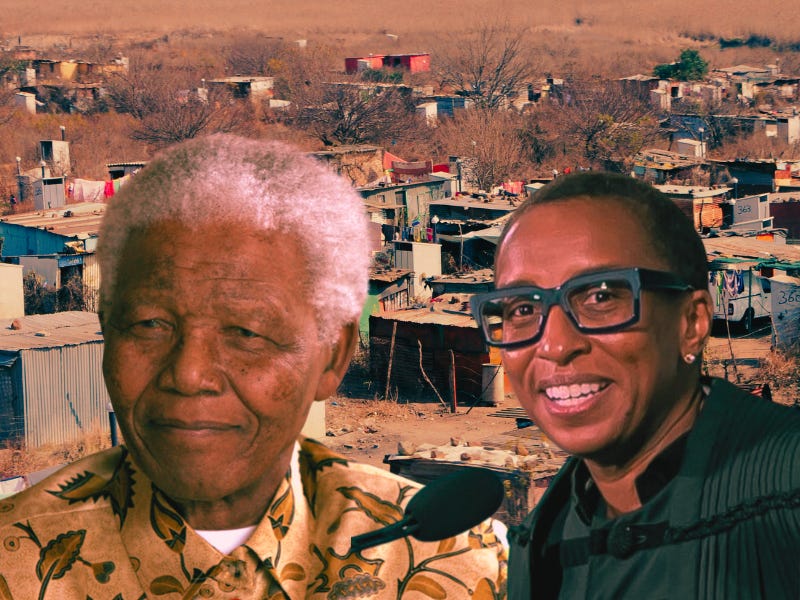
The South Africanization of America: Chaos is Coming, or Already Here While Rhodesia is a great story of how Western willingness to betray friends led to anti-civilization victory abroad, the closer example to where America is headed is South Africa, in this 🧵 I'll show why👇

@Will_Tanner_1 - Will Tanner
First, as a reminder, South Africa embraced apartheid after WWII, and continued with white-minority government until the early 1990s At that point, it opted for "liberal democracy," and the black majority elected Mandela, a communist convicted for helping blow up a church

@Will_Tanner_1 - Will Tanner
His wife, Winnie Mandela, was even worse She was another active communist in the ANC who was known for "necklacing" her political enemies, a horrific act that consisted of sticking the person in a gasoline-soaked tire and setting it ablaze, causing a long, torturous death

@Will_Tanner_1 - Will Tanner
As in Mugabe's Zimbabwe, some held out hope that the former terrorist would be something of a moderate and not repay the indignities of apartheid with more terrorism To some extent, those hopes proved more fulfilled in South Africa than Zimbabwe, and Mandela didn't resort to open thuggery and brutality-enforced expropriation like Mugabe

@Will_Tanner_1 - Will Tanner
But, things still took a turn for the worse in the Rainbow Nation, particularly after Mandela's ANC successors took the helm In the decades of ANC rule that have followed, crime has risen dramatically, the country's electrical grid has been raided by copper thieves, DEI-type policies have inflicted unbearable burdens on its formerly successful companies, and its formerly top-tier military is now struggling in a proxy war against Rwanda

@Will_Tanner_1 - Will Tanner
The particular issue with South Africa is anarcho-tyranny: to a large extent criminals like zama zama gangs, farm attackers, and basic thugs can get away with brutal murder, with the state sometimes even assisting, while those who defend themselves face lawfare SA is less bad on that front than Europe: self-defense is still allowed, fortunately. But, the government is clearly on the side of the criminals, particularly in farm attacks

@Will_Tanner_1 - Will Tanner
In fact, as @k9_reaper and @twatterbaas have pointed out the farm attackers are using military-grade equipment, including highly expensive signal jammers, to assist in their attacks on farms And, even if the government isn't directly assisting in these attacks (which it may very well be), it's at least letting them continue to occur, which is much the same thing to isolated, rural farmers

@Will_Tanner_1 - Will Tanner
These farm attacks, as a reminder, are absolutely horrific. Here's just one of the stories @k9_reaper has shared:

@Will_Tanner_1 - Will Tanner
And, just as the government isn't interested in preventing them, it's entirely uninterested in solving them. 95% of the murders go unsolved!

@Will_Tanner_1 - Will Tanner
And while the farm attacks are horrible, they're not all that the South African population suffers. There are also riots that involve burning buildings, murders, theft, and the like. Here's footage of a riot that @k9_reaper shared in August of 2023
@Will_Tanner_1 - Will Tanner
These riots often escalate, and in 2021, for example, vast columns of rioters burnt the country to a crisp, causing billions of dollars of damage in the relatively poor country They were only stopped by groups of armed men, mainly Boers and Indians, who were armed to the teeth and fought back, protecting their neighborhoods. Thousands, if not more, died. Here's a video of the chaos, also from @k9_reaper :
@Will_Tanner_1 - Will Tanner
Naturally, the crime has caused a need for safety, so those South Africans who can afford it live in modern day castles. Here, for example, is video from @k9_reaper of a home protected by concrete walls, iron beams, barbed wire, light beams, and alarms:
@Will_Tanner_1 - Will Tanner
Meanwhile, the companies that remain in the degrading country suffer under DEI laws that makes America's look tame For example, the amended "Employment Equity Act" effectively requires racial quotas, and the DEI policies regarding hiring make it near-impossible for well-qualified whites to find employment, get into college or graduate programs, or otherwise thrive economically It's blatant discrimination that has served no one

@Will_Tanner_1 - Will Tanner
The DEI situation has created an immense competence crisis, and now even basic heavy industry like steel-making can't survive

@Will_Tanner_1 - Will Tanner
So, it's a dire situation. Unfortunately, America is headed in much the same direction

@Will_Tanner_1 - Will Tanner
For one, DEI is an obvious millstone in America, as shown by the resistance that even liberal to moderate business leaders and investors like @elonmusk and @BillAckman are putting up to it

@Will_Tanner_1 - Will Tanner
Further, it's an obvious fact of life, and has decidedly hurt white Americans. For example, a Bloomberg study found that only 6% of new jobs at S&P 100 companies went to whites in the years after the BLM protests. “The overall job growth included 20,524 White workers. The other 302,570 jobs — or 94% of the headcount increase — went to people of color,” Bloomberg wrote. It was later shown that that was only new jobs. When turnover for old jobs was included, the real percentage was closer to ~25% going to whites. But, still, at ~61% of the population, that shows obvious discrimination

@Will_Tanner_1 - Will Tanner
The same is true of college admissions, with whites and Asians heavily discriminated against even in the very upper slice of academic scores:

@Will_Tanner_1 - Will Tanner
American companies are, admittedly, much more successful than their South African counterparts. But, still, trouble is on the horizon, with a competence crisis nearing as merit is put last and various racial and political considerations are put first

@Will_Tanner_1 - Will Tanner
Take, for example, the constant chaos at airports. Flights are routinely late, scheduled incorrectly, canceled, or otherwise problematic That wasn't the case even a decade or two ago, but now it's hard to take a single flight without facing an issue of some sort

@Will_Tanner_1 - Will Tanner
Yes, the planes aren't falling out of the sk yet...well, except for Boeing planes, but they are rarely arriving on time

@Will_Tanner_1 - Will Tanner
And then there's crime Yes, America isn't at the rate of crime it was in the 70s, when Black Panthers were assaulting people in the streets, leftist terror groups were carrying out regular bombings, and muggings and other sorts of petty, violent crime were through the roof

@Will_Tanner_1 - Will Tanner
But crime is on the rise. Gangs are using signal jammers to break into homes. Squatting, a recurrent problem in South Africa, is out of control, with the government siding with the squatters over the owners. NYC subways aren't safe and most America cities have "No Go Zones" where violent crime is out of control

@Will_Tanner_1 - Will Tanner
Meanwhile, those who try to stand up to it face lawfare from a government that sides with violent criminals over law-abiding citizens


@Will_Tanner_1 - Will Tanner
And there's the rioting problem...for which those who Burned, Looted, and Murdered their way across America never faced any consequences, and indeed were often given settlement dollars by municipalities

@Will_Tanner_1 - Will Tanner
So, America is heading the direction of South Africa. Though we aren't in the same abysmal state as of yet, we are in a very dangerous situation where we can see the cliff ahead - South Africa-style chaos - but run toward it at full speed regardless A competent, self-confident society would change course before it's too late. But, like South Africa, we might just commit civilizational suicide instead
@Will_Tanner_1 - Will Tanner
Remember, we needn't have neded up here
@Will_Tanner_1 - Will Tanner
And that just makes the Rhodesian story all the more inspiring As an outpost of Old World civilization, they fought the whole world for what they had and saw as right rather than surrender to the Marxist, Leninist grievance politics of their day There's much we ought learn from them


@Will_Tanner_1 - Will Tanner
Read here about the DEI similarities: https://www.theamericantribune.news/p/south-africa-the-dei-nation
@Will_Tanner_1 - Will Tanner
And read here our interviews with @k9_reaper about the state of things in South Africa: https://www.theamericantribune.news/p/surviving-south-africa-a-boers-take

@Will_Tanner_1 - Will Tanner
And read here about the West's betrayal of Rhodesia: https://t.co/x7wtDCQoiy
@Will_Tanner_1 - Will Tanner
Rhodesia, after it fell to Mugabe in 1980, was forgotten for many decades, but it matters greatly because it shows why the West is no longer what it once was A short 🧵👇 https://t.co/d4TVtICfJe

@Will_Tanner_1 - Will Tanner
And learn here how you can stand up to this discriminatory regime in a legal, reasonable way that helps bring merit back to the workplace:
@Will_Tanner_1 - Will Tanner
As @realJeremyCarl explains in his "The Unprotected Class," much of that wokeness leads to anti-white rhetoric How many companies, for example, force employees into seminars on how "whiteness is evil" or some like topic, and have employee interest groups for all ethnic groups except Caucasians?

@Will_Tanner_1 - Will Tanner
Read here about Rhodesia's similar situation: https://t.co/yXfFEhzzpe
@Will_Tanner_1 - Will Tanner
By now, most everyone has heard of the farm attacks in South Africa They're awful, and it's gut-wrenching to hear stories guys like @k9_reaper have about sickening scenes of torture and death But this isn't the first time we've seen this. Rhodesia had a similar problem A 🧵👇 https://t.co/I0N7Dzovvz


@AcmeTruthBombs - Wile E. Coyote
@libsoftiktok but but but DEI is a good thing I thought. 🌈 https://t.co/NqXs4NZuTI
@elonmusk - Elon Musk
Um, @satyanadella, this is illegal …
@libsoftiktok - Libs of TikTok
DEI chief for @Allstate boasted about using DEI in their hiring practices and promised to use more diversity specifically when hiring for leadership positions. If you’re qualified and are not “diverse” enough and were passed up for a job or a promotion at Allstate, you may have been discriminated against.

@simonateba - Simon Ateba
"Why is it that the majority of people who run Fortune 500 companies are white men? Why do we only have two black women running these companies? You can't tell me black and brown people aren't working hard enough," CNN panel erupts over DEI and claims white people work harder https://t.co/n6a2c5TIUN

@RepJeffries - Hakeem Jeffries
Diversity, equity and inclusion are American values. Never surrender. https://t.co/bnLuvngaqu
@jackisaidit27 - Jack's 🇺🇲✝️ 🎗
You see this why I had to downgrade you from Dollar Store Obama to Thrift Store Obama. DEI caused more racism in this country. You idiots thought choosing someone over their race or gender was better than having the best person for the job. Merritt over Race DEI = Didn't Earn it Sit your dumb a$$ down Yard Sale Obama

@toddstarnes - toddstarnes
A question about what happened at Reagan National: Last year, more than 1,000 people filed a class action lawsuit against the FAA alleging they were denied air traffic controller jobs because they are white. Former Nevada Attorney General Adam Laxalt said his clients passed the test to become air traffic controllers. However, the Obama administration said the class was too white and tossed the test along with the applicants. In 2012 the FAA stopped race-blind hiring rules and implemented a “biographical assessment to hire more minorities.” The Daily Mail reported last year that the FAA launched a campaign to hire recruits with “severe intellectual disabilities, psychiatric problems and physical issues.” Diversity Equity and Inclusion. Elon Musk tweeted at the time that it would take an airplane crashing and killing people for the FAA to change its crazy DEI policies. Right now, the death count stands at more than 64. How many more people must die before we root out the diversity hires?

@TomKlingenstein - Tom Klingenstein
SCOTUS struck down affirmative action in ‘23, a win for merit over race. Yet woke colleges dodge it. Gleefully. Progressives today defy justice openly. Conservatives, why are we allowing ourselves to be outfoxed? 🧵 https://t.co/uF4kTbdSYA

@TomKlingenstein - Tom Klingenstein
Higher-Ed is now sidestepping anti-DEI enforcement through “race-neutral” tricks—socioeconomic proxies, essay loopholes. Where merit should rule, they cling to diversity dogma – only REBRANDED. How do we enforce SCOTUS’ intent? 2/3
@TomKlingenstein - Tom Klingenstein
After all, SCOTUS isn’t policing this—nor is anyone. Some schools appear to do the right thing, others game it. The Left’s war on fairness marches on. If we lose merit, we lose America. How do we hold the line against this subversion? Cleary, we have not defeated DEI. 3/3

@amuse - @amuse
DEI: Over 50% of medical students are accepted based on race and gender and not merit. Most white males who are more qualified and more likely to become the best doctors are excluded from US medical schools. https://t.co/HWUNFGTwAw