reSee.it - Related Post Feed

Saved - October 26, 2023 at 12:24 AM

@adamfrancisco_ - Adam Francisco

We need Trump back to restore honor, decency, strength and integrity ๐Ÿ‡บ๐Ÿ‡ธ Full video on YouTube : https://youtu.be/m60ivmaglis?si=jEEE2LVDcUoNxBoy

Video Transcript AI Summary
Joe Biden's government is causing fear among some people. They believe that under Trump, the US had peace through strength, with achievements like the Abraham Accords and low inflation. They also mention the closed border and the wall being built, which Biden is continuing. The speaker criticizes the military for appearing weak by participating in TikTok dances, making the US a laughingstock. They argue that the military's focus on being "woke" has made them ineffective and that peace can only be achieved through strength. The speaker pleads for Trump to save the country and the world.
Full Transcript
Speaker 0: Single government scared of Joe Biden. With Trump, we had peace through strength. Peace through strength. We had the Abraham Accords. We had 2% inflation. We had a closed border. We were building the wall, which Joe Biden is now building. We had a respected military. Now you got our military on TikTok dancing. That makes us look weak. It makes us look like a joke. It makes us look like an absolute cloud show. Nobody is scared of the US military in 2023 because they went woke. Weakness through wokeness. We need peace through strength. Trump, save us. Save the world. Trump, save us.
Trump Flag Wave in Dunedin, FL Support my battle against kidney failure:https://www.givesendgo.com/AdamfranciscoVENMO: @adamfrancisco BUY THE T-SHIRT:https://www.joebidenhatesyou.comFollow... youtube.com
Saved - June 14, 2024 at 8:39 PM
reSee.it AI Summary
The federal income tax has negatively impacted Americans since its implementation in 1913, becoming the government's primary source of revenue. Previously, tariffs were the main source of revenue, where companies paid taxes on imported goods. By replacing income tax with tariffs, the government could generate revenue from international corporations and incentivize manufacturing in America. This would lead to job growth and economic prosperity. The federal income tax has allowed the government to abandon economic protectionism and outsource jobs, resulting in the loss of American jobs and government control over labor. This conversation needs to be had.

@WallStreetApes - Wall Street Apes

Iโ€™ve Been Holding Onto This Video & Now That Donald Trump Suggested Eliminating The Income Tax & Replacing It With Tariffs You Should Watch This โ€œI don't think people understand the depth in which the federal income tax has screwed the American people because the income tax didn't exist for the first 137 years America was a country. It was implemented in 1913 and shortly after that, the income tax would become the government's primary source of generating revenue. The government would basically own your labor. So youโ€™re taxed at 33%. 1/3 of your work for the entire year belongs to the government. But before the federal income tax, tariffs were the government's primary source of generating revenue. So the government would come along and say, if companies want to import goods from other countries, they have to pay a tax on those goods. And this was the government's primary way of generating revenue. So let's use Nike as an example. They want to outsource their labor to other countries, India, China, and basically hire people that work for under $1 a day, basically sweatshops. They want sweatshops. Well, when they go to import those goods into the United States of America, they would be forced to pay that tariff. So if it's 25%, they would have to pay a 25% tax on the value of the goods coming into the country. Now, they could either pay that themselves in which now the government's primary way of generating revenue is through these international corporations that want to outsource labor and do international business, or they could negotiate with the company that they're importing from. I mean, in this case, it's themselves, but if they're working with another company, they could say, hey, if you want us to keep manufacturing in China, if you want us to keep manufacturing in India, you have to help us with these tariffs. And now the government's primary way of generating revenue would not be by taking money from you, the federal income tax, but it's from charging those international corporations and corporations that are in other countries. Isn't that a lot better than them taking the money from me and you? And yes, the price of international goods might go up. In fact, price of goods will go up. But that's okay because there's also an additional incentive for companies like Nike and all companies now to manufacture goods in America, which means American manufacturing would boom. And this is in theory, this is what had actually happened and what the federal income tax really took away from us because from the period of 1860 to 1900, America had emerged as the preeminent manufacturing country in the world. American steel, American oil, Europeans would come to America and they couldn't believe that we had electric powered curling irons. The United States of America, our country had become the innovative center of the world and jobs were booming. People talk about 1910 1920 1930 with the unions with Detroit and Detroit being the manufacturing center of the world, but that was really all of the United States of America. But once the federal income tax was passed, once that was established, the government no longer needed tariffs to be its primary source of revenue. Now the primary source of revenue was reaching directly into our pockets. And once the government was able to do that, they were able to seriously consider abandoning economic protectionism, abandoning those tariffs so that international corporations could outsource our jobs to other countries and the government wouldn't be hurt. The cost of goods would go down and the international corporations would do better than ever. But we would lose our jobs and the government would take ownership over our labor. And that was the real cost of the federal income tax. โ€Œ And that's the conversation they don't want Americans havingโ€ I canโ€™t transcribe it all due to Xโ€™s text limits but this is an excellent listen

Video Transcript AI Summary
The speaker discusses how the federal income tax negatively impacted Americans by shifting the government's revenue source from tariffs to taxing individuals. They argue that tariffs on international corporations would be a better revenue source, promoting American manufacturing and job growth. The speaker highlights the historical importance of tariffs and criticizes the impact of the income tax on American prosperity. They emphasize the need to educate future generations on these issues.
Full Transcript
Speaker 0: I don't think people understand the depth in which the federal income tax has screwed the American people because the income tax didn't exist for the 1st 137 years America was a country. It was implemented in 1913. And shortly after that, the income tax would become the government's primary source of generating revenue. The government would basically own your labor. So you're taxed at 33%. One third of your work for the entire year belongs to the government. But before the federal income tax, tariffs were the government's primary source of generating revenue. So the government would come along and say, if companies want to import goods from other countries, they had to pay a tax on those goods, and this was the government's primary way of generating revenue. So let's use Nike as an example. They want to out source their labor to other countries, India, China, and basically hire people that work for under $1 a day. Basically, sweatshops. They want sweatshop. Well, when they go to import those goods into the United States of America, they would be forced to pay that tariff. So if it's 25%, they would have to pay a 25% tax on the value of the goods coming into the country. Now they could either pay that themselves in which now the government's primary way of generating revenue is through these international corporations that want to outsource labor and do international business, or they could negotiate with the company that they're importing from. I mean, in this case, it's themselves. But if they're working with another company, they could say, hey, if you want us to keep manufacturing in China, if you want us to keep manufacturing in India, you have to help us with these tariffs. And now the government's primary way of generating revenue would not be by taking money from you, the federal income tax, but it's from charging those international corporations and corporations that are in other countries. Isn't that a lot better than them taking the money from me and you? And, yes, the price of international goods might go up. In fact, the price of goods will go up. But that's okay because there's also an additional incentive for companies like Nike and all companies now to manufacture goods in America, which means American manufacturing would boom. And this isn't theory. This is what had actually happened and what the federal income tax really took away from us. Because from the period of 18/60 to 1900, America had emerged as the preeminent manufacturing country in the world. American Steel, American Oil, Europeans would come to America and they couldn't believe that we had electric powered curling irons. The United States of America, our country had become the innovative center of the world and jobs were booming. People talk about 1910, 1920, 1930 with the unions, with Detroit and Detroit being the manufacturing center of the world. But that was really all of the United States of America. But once the federal income tax was passed, once that was established, the government no longer needed tariffs to be its primary source of revenue. Now the primary source of revenue was reaching directly into our pockets. And once the government was able to do that, they were able to seriously consider abandoning economic protectionism, abandoning those tariffs so that international corporations could outsource our jobs to other countries and the government wouldn't be hurt. The cost of goods would go down and the international corporations would do better than ever. But we would lose our jobs and the government would take ownership over our labor. And that was the real cost of the federal income tax. And that's the conversation they don't want Americans having. They want us arguing over, should we pay 50% taxes or go with the Republicans and pay 45% taxes? But when you read a lot of history, you know that it was really always about tariffs. It was really always about banking. It was really always about the gold standard. And this is why people like Andrew Jackson and William McKinley were so popular because they were fighting against that internationalism that had tried to creep its way into America from 17/76 when America had broken away. And things haven't always been this way, and they don't have to remain this way. But we have to teach our kids right.
Saved - October 21, 2024 at 4:00 PM

@realDonaldTrump - Donald J. Trump

MAKE AMERICA GREAT AGAIN! https://t.co/rA5FwAQWFy

Saved - November 8, 2024 at 5:33 AM

@Yeahaboutthat3 - MoCheezePlz

How Trump's Tariffs would work and how getting rid of the Income Tax would benefit you What would you do if your family kept an extra $15k - $30k annually? https://t.co/vsPEEFX0cb

Video Transcript AI Summary
Trump proposes replacing the income tax, which costs Americans $2.4 trillion annually, with tariffs: 20% on most countries and 60% on China. This could generate around $900 billion yearly, potentially boosting the economy by 20% and providing an extra $30,000 in income for the average American family. This shift could lead to a doubling of annual economic growth, making 5% growth the new standard. If successful, families could see significant financial benefits, enhancing wealth for future generations. If voters support this plan, Congress is likely to follow suit, benefiting middle and lower-class Americans. Voting for Trump could restore the economic opportunities of the past.
Full Transcript
Speaker 0: Professor, explain Trump's tariffs. Speaker 1: While the income tax currently cost the American people 2,400,000,000,000 a year, Trump proposes to replace it with tariffs of 20% on everybody but China who gets an extra special 60% tariff. Altogether, that might bring in about 900,000,000,000 a year. This would grow America's economy like rocket fuel. Near term, we're talking a 20% increase in the economy, so about a $15,000 raise for the typical American family. Note that's on top of the 18,000 of income tax you would no longer have to pay. Knock off 3,000 for the tariffs, and you get about 30,000 in additional income for the typical American family, close to 3,000 per month. We might expect a doubling of annual economic growth. So 5% growth would be the new normal. Your kids would be 3 times richer than you as it used to work in America. If we simply copy countries like Singapore, we might save round about 2,000,000,000,000 or more. If a president can sell it to American voters, 30,000 is a chunk of change, Congress will go along out of sheer self preservation. Plus, the bake sales would be lit. Speaker 0: That's economics professor, doctor Peter St. Onge, PhD, explaining exactly how replacing the income tax with tariffs would help all of Americans, especially middle and lower class Americans. Of course, the elite wouldn't want us getting 30,000 extra dollars a year and securing our wealth for our children. Doesn't that sound like it would make America great again? Because that's what it sounds like to me. And if voting for Trump gives me any shot at accessing the opportunities my parents had access to, economically speaking, then, yeah, I'm gonna vote for him. Trump 2024.
Saved - November 19, 2024 at 8:55 PM

@MJTruthUltra - MJTruthUltra

KABOOM! ๐Ÿ’ฃ๐Ÿ’ฃ๐Ÿ’ฅ๐Ÿ’ฅ Trump just announced that Howard Lutnick will be Commerce Secretary ๐Ÿ‘€ Do you have any idea how big this is? Lutnick speaks about eliminating income tax and fund the government solely on tariffsโ€ฆ just like Trump has been hinting at.. read the below thread. https://rumble.com/v5r1h78-howard-lutnick-wants-to-eliminate-income-tax-and-run-country-on-tariffs.html
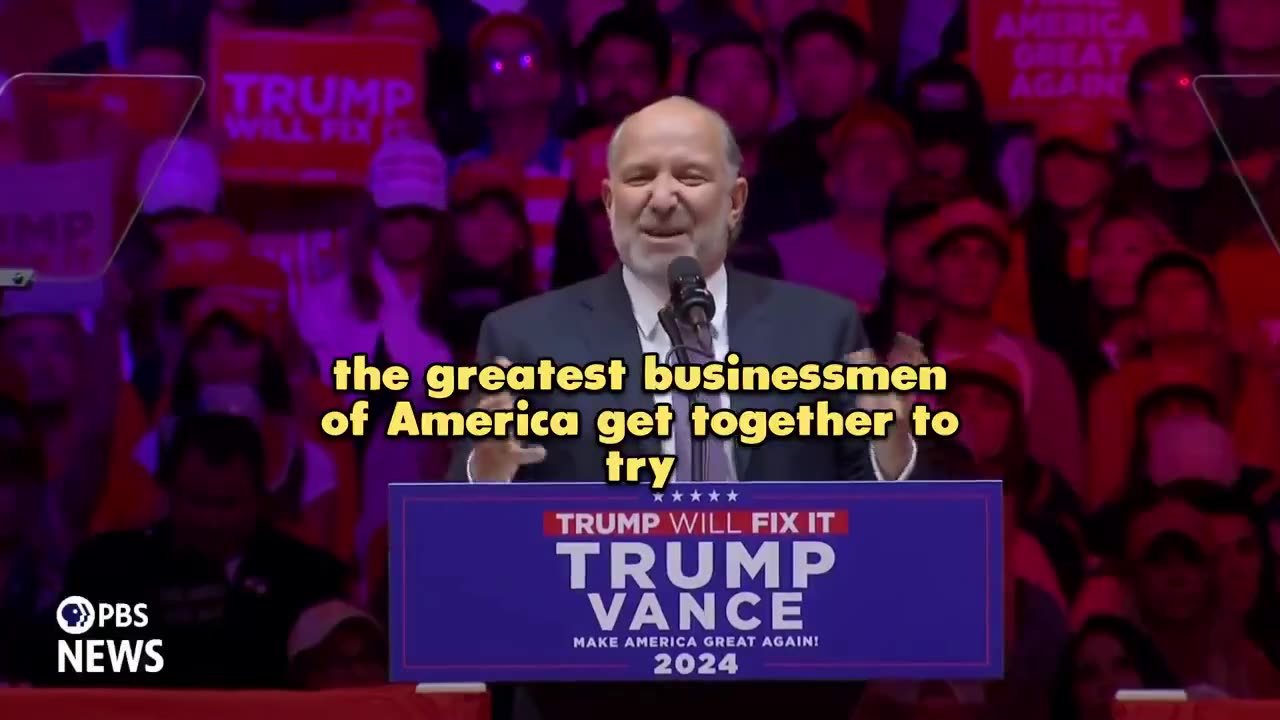
Video Transcript AI Summary
We often hear the slogan "make America great again," but what does it really mean? It's important to consider when America was considered great. Looking back to the turn of the century, around 125 years ago, the economy was thriving. At that time, there was no income tax, and the government relied solely on tariffs.
Full Transcript
Speaker 0: We all say, make America great again. But let's just go over for a minute what that means, because we all say it as a slogan. When When was America great? At the turn of the century, our economy was rocking. This is 199, a 125 years ago. We had no income tax, and all we had was tariffs.
Howard Lutnick - Wants to eliminate income tax and run country on Tariff's rumble.com

@MJTruthUltra - MJTruthUltra

KABOOMโ€ผ๏ธ Trump Says YES, we CAN Get Rid of INCOME TAX with Tariffs โ€” Why Not!? I knew itโ€ฆ I told you! Itโ€™s coming! Trump talks about the Tremendous Wealth that President William McKinley Created with Tariffs Contextโ€ฆ The Tariff Act of 1887, Before President McKinley was Assassinated โ€ขWe (the US) had a big problem, of so much money coming in from foreign nations, we didnโ€™t know what to do with it โ€”โ€” they set up a committee to find out how to distribute the wealth we had. โ€”โ€” Roosevelt went on build bridges, dams, added national parks WHAT has Trump been talking a lot about lately? โ€”โ€”โ€” TARIFFS! ๐Ÿ™Œ No coincidences! Itโ€™s COMING! https://rumble.com/v5k5qvh-trump-says-we-can-get-rid-of-income-tax-with-tariffs-why-not.html Other Clip talking about it
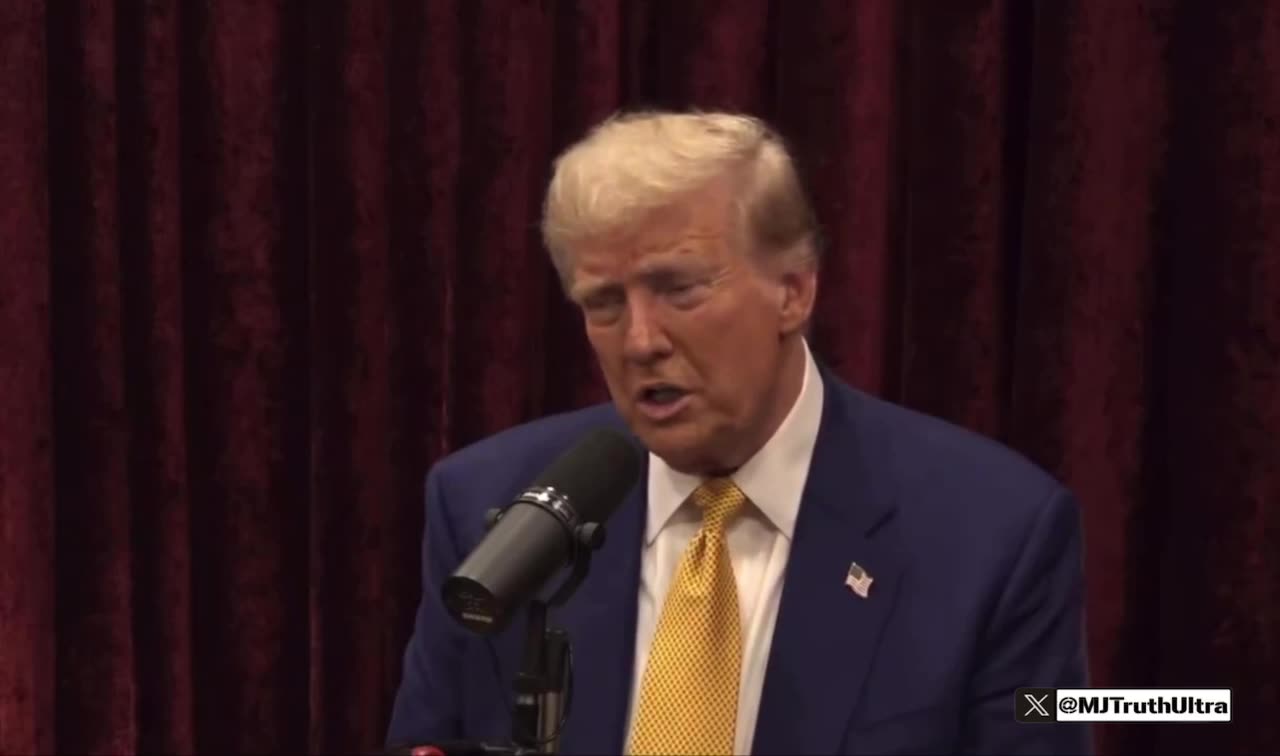
Video Transcript AI Summary
Tariffs could replace income taxes. This idea stems from historical context, as the U.S. was wealthiest in the late 1800s under President McKinley, known as the "tariff king." He eloquently advocated for tariffs, emphasizing the need to protect American jobs, factories, and families from foreign competition. The message was clear: foreign entities should pay a significant price to operate in the U.S. to safeguard domestic interests.
Full Transcript
Speaker 0: Tariffs. It'll keep Did you just float out the idea of getting rid of income taxes and replacing it with tariffs? Well Okay. Were you serious about that? Our yeah. Sure. Why not? Because we ready? Our country was the richest in the 8 relatively, in the 18 eighties and 18 nineties. A president who was assassinated named McKinley. He was the tariff king. He spoke beautifully of tariffs. His his language was really beautiful. We will not allow the enemy to come in and take our jobs and take our factories and take our workers and take our families unless they pay a big price.
Trump Says we CAN Get Rid of INCOME TAX with Tariffs โ€” Why Not!? rumble.com
Saved - January 14, 2025 at 2:18 AM

@realDonaldTrump - Donald J. Trump

MAKE AMERICA GREAT AGAIN! https://t.co/IirB0lIah7

Video Transcript AI Summary
Donald Trump has won the presidency, turning what seemed impossible into reality. He vows to fight for the American people and has fulfilled many campaign promises, including securing the border. However, he faces unprecedented challenges, including an FBI search warrant and an indictment from the Justice Department. Trump argues that this is an abuse of power aimed at silencing him and his supporters. He insists that the attacks are not just against him but against the American people. He pledges to keep fighting for freedom and justice, promising to take back the country and make America great again. Trump believes that challenges only make him stronger and asserts that with pride, courage, and faith, they will not fail.
Full Transcript
Speaker 0: Something's left the building. We can now project the winner of the presidential race, Donald Trump wins the presidency. What started off Speaker 1: as unlikely, impossible, is now reality. Speaker 2: I will fight for you with every breath in my body, and I will never ever let you down. Speaker 1: We have a president who actually fulfilled the promises he made during the campaign. Securing the border to foreign policy. Speaker 0: Now has a record as president. Speaker 2: It's pretty damn impressive. Breaking news out of Paul Speaker 1: The FBI has executed an unprecedented search warrant at president Donald Trump's inaugural congresswoman president has both sides at the political aisle up in all Speaker 0: dangerous and unstable low end in American history. Speaker 1: The justice department has just indicted former president Donald Trump. For 7 years, they hated him. They targeted him. They hunted him. Speaker 2: This is the epitome of the abuse of the prosecutorial power to preempt political decisions. I never thought anything like this could happen in America. The only crime that I have committed is to fearlessly defend our nation from those who seek to destroy it. The more that a broken system tells you that you're wrong, the more certain you should be that you must keep pushing ahead. They wanna take away my freedom because I will never let them take away your freedom. They wanna silence me because I will never let them silence you. They're not coming after me. They're coming after you. And I just happen to be standing in their way, and I will never be moving. On November 5, 2024, justice will be done. We will take back our country, and we will make America great again. America will always rise to every challenge and overcome every danger. Donald Trump, Speaker 0: seems to always get stronger when challenged. These types of things, I think you can strength. Speaker 2: When I'm reelected, I will totally obliterate the deep state. As long as we have pride in our beliefs, courage in our convictions, and faith in our god, then we will not fail.
Saved - January 2, 2025 at 2:00 AM

@The1Parzival - THE PARZIVAL

๐Ÿ˜๐Ÿ˜๐Ÿ˜ - It would appear I'm definitely over the target with this information regarding Andreessen Horowitz. -A post from both Trump and Vance within 2 days of me starting the exposure. ๐Ÿง๐Ÿง๐Ÿง https://t.co/Ig5E7b5RjV

@The1Parzival - THE PARZIVAL

๐Ÿค๐Ÿค๐Ÿค - Interesting that Andreessen Horowitz has investments in both Yuga Labs and Twitter/X. - One is ran as a Ponzi Scheme while the other is running as Pyramid Scheme. - If this isn't bad enough, just wait, there's more, a lot more. ๐Ÿ“š๐Ÿ“š๐Ÿ“š https://t.co/MLJY9acl1p

Saved - January 14, 2025 at 7:33 PM
reSee.it AI Summary
I announced The ERS, aiming to abolish the IRS. In my first video, I explained that our income tax exists because US politicians are influenced by foreign countries. In the second video, El Salvador's President Bukele stated that the IRS and high taxes are unnecessary, claiming they only maintain the illusion of funding the government.

@WallStreetApes - Wall Street Apes

Donald Trump announces The ERS, External Revenue Service. The next step is to Abolish The IRS 1st Video) Trump reveals the only reason weโ€™re paying an income tax in America is because US Politicians are paid off by foreign countries 2nd Video) El Salvador's President Nayib Bukele says The IRS and excessive American Tax System are COMPLETELY UNNECESSARY โ€œYou pay high taxes only to uphold the illusion that you are funding the government, which you are notโ€

Video Transcript AI Summary
In the early 1900s, the U.S. shifted from tariffs to an income tax due to pressure from other countries. Politicians were influenced by these nations, which affected economic decisions. A commission was formed in 1887 to address the surplus wealth from tariffs on foreign goods. The U.S. thrived by taxing imports, which protected American jobs. This situation mirrors China's approach, where foreign companies can operate if they build factories there, unlike the restrictions on U.S. cars. Elon Musk exemplifies this dynamic, successfully establishing operations in China, showcasing the complexities of international trade and investment.
Full Transcript
Speaker 0: Unless they pay a big price, and the big price is tariffs. And he'd speak like that, but he was right. And then around in the early 1900, they switched over stupidly to, frankly, an income tax. And you know why? Because countries were putting a lot of pressure on America. We don't wanna pay tariffs. Please don't you you know, they believe me. They control our politicians. If you look at the kind of numbers that these guys make, then and now. But we had a commission meeting in the, 8 I think it was 18/87. Think of this problem. We were so rich. We had so much money. We didn't know what to do. So they set up a blue ribbon commission on tariffs. And these sole purposes, what to do with all the money we had. We were so rich because we were taxing other people for coming in and taking our jobs. And China does it. That's what China did. If you want to open a factory and sell cars if you build a factory here or have a factory they don't take our cars. They they wouldn't take our cars. But if you build a plant in China, you can do that. Elon did that. By the way, Elon is great. That guy is such a great guy. I think you're a fan of Elon. He is from a different planet. He's the greatest guy. That rocket coming at
Video Transcript AI Summary
The financial situation in the United States is misunderstood. High taxes are often blamed, but they don't truly fund the government. Instead, the government relies on Treasury bonds, primarily purchased by the Federal Reserve, which prints money to buy them. This creates an illusion that taxes are necessary for funding. In reality, the government is financed by money printing, leading to a precarious bubble that could burst. If the public realizes this, confidence in the dollar could collapse, threatening Western civilization. Urgent policy changes are needed to prevent repeating past mistakes and to stabilize the economy before it's too late.
Full Transcript
Speaker 0: For instance, the financial situation of the United States. When I talk to my conservative friends right here, they always tell me that the problem is high taxes, that they're wrong. Of course, high taxes are extremely high here in the United States. I I give you that. You're right in that, but that's not the real problem. The real problem is not the high taxes themselves, but the fact that they are not even really funding the government. But even those high taxes, higher than a lot of places in the world, not even those taxes are really funding the government. So who's financing the government? Government is financed by Treasury bonds, paper. And who buys the Treasury bonds? Mostly the Fed. And how does the Fed buy them? By printing money. But what backing does the Fed have for that money being printed? The treasury bonds themselves. So, basically, you finance the government by printing money out of thin air. Someone could ask someone could ask, well, so if the government can print a limited amounts of money out of thin air, why did they collect taxes? I mean, in theory, it would make sense. Right? If they can put unlimited amounts of money, why would they need taxes for? The answer is simple, but it's very shocking. The real problem is that you pay high taxes only to uphold the illusion that you are funding the government, which you are not. It's shocking, but it's true. The government is funded by money printing, paper backed with paper, a bubble that will inevitably inevitably burst. The situation is even worse than it seems, because if most Americans and the rest of the world were to become aware of these bars, confidence in your currency will be lost, the dollar will fall, and the western civilization with it. If the next president of the United States doesn't make the necessary policies and structural changes, sooner or later, that bubble will burst. There's still time. You don't have to make the same mistakes we did in the sixties seventies. You can still jump before the water boils.
Saved - January 24, 2025 at 1:54 AM

@MyLordBebo - Lord Bebo

๐Ÿ‡บ๐Ÿ‡ธ Full Trump speech to the WEF He explains how he wants to make America to an manufacturing superpower and increase prosperity for Americans. But also about the anti woke agenda, Ukraine war, denuclearization and China relations. https://t.co/TTO37l9PK9

Video Transcript AI Summary
Thank you, Klaus, and greetings from Davos. This week marks a historic beginning for America as we embark on a new era. The recent election delivered a strong mandate, and my administration is swiftly addressing the economic chaos left behind. We are reversing detrimental policies, focusing on reducing inflation, and enhancing energy independence. Iโ€™ve initiated a major deregulation effort and proposed significant tax cuts to encourage domestic production. Our goal is to make the U.S. the best place for business. We are also taking decisive action on immigration and restoring free speech. Internationally, we aim to strengthen alliances and work towards peace, particularly in Ukraine. I look forward to future collaborations and appreciate the support from global leaders. America is back and ready for business. Thank you.
Full Transcript
Speaker 0: Ladies and gentlemen, the president of the United States, Donald J. Trump. Well, thank you very much, Klaus, and hello to everyone in beautiful Davos. This has been a truly historic week in the United States. 3 days ago, I took the oath of office, and we began the golden age of America. The recent presidential election was won by millions of votes and all 7, every one of them, all 7 swing states. It was a massive mandate from the American people like hasn't been seen in many years. And some of the political pundits, even some of my so called enemies, said it was the most consequential election victory in a 129 years. That's quite nice. What the world has witnessed in the past 72 hours is nothing less than a revolution of common sense. Our country will soon be stronger, wealthier, and more united than ever before, and the entire planet Speaker 1: will Speaker 0: be more peaceful and prosperous as a result of this incredible momentum and what we're doing and going to do. My administration is acting with unprecedented speed to fix the disasters we've inherited from a totally inept group of people and to solve every single crisis facing our country. This begins with confronting the economic chaos caused by the failed policies of the last administration. Over the past 4 years, our government racked up 8 $1,000,000,000,000 in wasteful deficit spending and inflicted nation wrecking energy restrictions, crippling regulations, and hidden taxes like never before. The result is the worst inflation crisis in modern history and sky high interest rates for our citizens and even throughout the world. Food prices and the price of almost every other thing known to mankind went through the roof. President Biden totally lost control of what was going on in our country, but in particular with our high inflation economy and at our border. Because of these ruinous policies, total government spending this year is 1.5 $1,000,000,000,000 higher than was projected to occur when I left office just 4 years ago. Likewise, the cost of servicing the debt is more than 230% higher than was projected in 2020. The inflation rate we are inheriting remains 50% higher than the historic target. It was the highest inflation probably in the history of our country. That's why from the moment I took office, I've taken rapid action to reverse each and every one of these radical left policies that created this calamity, in particular with immigration, crime, and inflation. On day 1, I signed an executive order directing every member of my cabinet to marshal all powers at their disposal to defeat inflation and reduce the cost of daily life. I imposed a federal hiring freeze, a federal regulation freeze, a foreign aid freeze, and I created the new Department of Government Efficiency. I terminated the ridiculous and incredibly wasteful Green New Deal. I call it the Green New Scam. Withdrew from the one-sided Paris Climate Accord and ended the insane and costly electric vehicle mandate. We're gonna let people buy the car they wanna buy. I declared a national energy emergency, and it's so important. National energy emergency to unlock the liquid gold under our feet and pave the way for rapid approvals of new energy infrastructure. The United States has the largest amount of oil and gas of any country on Earth, and we're going to use it. Not only will this reduce the cost of virtually all goods and services, it'll make the United States a manufacturing superpower and the world capital of artificial intelligence and crypto. My administration has also begun the largest deregulation campaign in history, far exceeding even the record setting efforts of my last term. In total, the Biden administration imposed $50,000 in additional regulatory costs on the average American household over the last 4 years. I have promised to eliminate 10 old regulations for every new regulation, which will soon put many 1,000 of dollars back in the pockets of American families. To further unleash our economy, our majorities in the house and senate, which we also took along with the presidency, are going to pass the largest tax cut in American history, including massive tax cuts for workers and family, and big tax cuts for domestic producers and manufacturers. And we're working with the Democrats on getting an extension of the original Trump tax cuts as you probably know by just reading any paper. My message to every business in the world is very simple. Come make your product in America, and we will give you among the lowest taxes of any nation on earth. We're bringing them down very substantially even from the original Trump tax cuts. But if you don't make your product in America, which is your prerogative, then very simply, you will have to pay a tariff, differing amounts, but a tariff which will direct 100 of 1,000,000,000 of dollars and even 1,000,000,000,000 of dollars into our treasury to strengthen our economy and pay down debt. Under the Trump administration, there will be no better place on earth to create jobs, build factories, or grow a company than right here in the good old USA. Already, Americans, economic you can see this, I think, maybe even in your in your wonderful, wonderful room that you're all gathered together, so many of my friends. But Americans, the economic confidence is soaring like we haven't seen in many, many decades. Maybe not at all. Upon my election, it was just announced as small business optimism skyrocketed by 41 points in a single month. That's the highest ever. There's never been anything like that. SoftBank has announced between a $102,100,000,000,000 investment in the US economy because of the election result. And just 2 days ago, Oracle SoftBank and OpenAI announced a $500,000,000,000 investment in AI infrastructure. Other companies, likewise, have announced 1,000,000,000 and 1,000,000,000 and 1,000,000,000,000 adding up the trillions of, investment in America and the United States. And it's also reported today in the papers that, Saudi Arabia will be investing at least $600,000,000,000 in America, but I'll be asking the crown prince, who's a fantastic guy, to round it out to around 1,000,000,000,000. I think they'll do that because we've been very good to them. And I'm also going to ask Saudi Arabia and OPEC to bring down the cost of oil. You gotta bring it down, which frankly, I'm surprised they didn't do before the election. That didn't show a lot of love by them not doing it. I was a little surprised by that. If the price came down, the Russia, Ukraine war would end immediately. Right now, the price is high enough that that war will continue. You gotta bring down the oil price. You're gonna end that war. They should have done it long ago. They're very responsible, actually, to a certain extent for what's taking place. Millions of lives are being lost. With oil prices going down, I'll demand that interest rates drop immediately, and likewise, they should be dropping all over the world. Interest rates should follow us. All over the progress that you're seeing is happening because of our historic victory in a recent presidential election, one that has become quite well known throughout the world. I think a lot of things are happening to a lot of countries. They say that there's light shining all over the world since the election, and even countries that we aren't particularly friendly with, are happy because they understand what there is a future and then how great the future will be under our leadership. America is back and open for business. And this week, I'm also taking swift action to stop the invasion at our southern border. They allowed people to come in at levels that nobody's ever seen before. It was ridiculous. I decided a and declared to just to, to do, and very, very importantly, a national emergency on our border immediately halted all entry of illegal border crossers, of which there were many, and began properly returning the illegal trespassers back to the place from which they came. That action, as you've probably seen, has already started very strongly. I've deployed active duty US military and national guard troops to the border to assist in repelling the invasion. It was really an invasion. We will not allow our territory to be violated. After 4 long years, the United States is strong and sovereign and a beautiful nation once again. It's a strong sovereign nation. In addition, I'm pleased to report that America is also a free nation once again. On day 1, I signed an executive order to stop all government censorship. No longer will our government label the speech of our own citizens as misinformation or disinformation, which are the favorite words of censors and those who wish to stop the free exchange of ideas and, frankly, progress. We have saved free speech in America, and we've saved it strongly. With another historic executive order this week, I also ended the weaponization of law enforcement against the American people and, frankly, against politicians and restored the fair, equal, and impartial rule of law. My administration has taken action to abolish all discriminatory diversity, equity, and inclusion nonsense, and these are policies that were absolute nonsense throughout the government and the private sector. With the recent yet somewhat unexpected great supreme court decision just made, America will once again become a merit based country. You have to hear that word, merit based country, and I've made it official, an official policy of the United States that there are only 2 genders, male and female. And we will have no men participating in women's sports, and transgender operations, which became the rage, will occur very rarely. Finally, as we restore common sense in America, we're moving quickly to bring back strength and peace and stability abroad. I'm also going to ask all NATO nations to increase defense spending to 5% of GDP, which is what it should have been years ago. It was only at 2%, and most nations didn't pay until I came along. I insisted that they pay, and they did because the United States was really paying the difference at that time, and it's was unfair to the United States. But many, many things have been unfair for many years to the United States. Before even taking office, my team negotiated a ceasefire agreement in the Middle East, which wouldn't have happened without us, as I think most of the people in the room know. Earlier this week, the hostages began to return to their families. They are returning, and it's a beautiful sight, and they'll be coming in more and more. They started coming back on Sunday. Our efforts to secure a peace settlement between Russia and Ukraine are now hopefully underway. It's so important to get that done. That is an absolute killing field. Millions of soldiers are being killed. Nobody's seen anything like it since World War 2. They're laying dead all over the flat fields. It's a flat field farmland, and there's millions of Russians and millions of Ukrainians. Nobody's seen anything like it since World War 2. It's time to end it. And here in America, we have big events coming up. Next year, we have the 250th anniversary of America's founding. I'm so honored to be president during that. That's been a big event. They've been talking about it for 10 years. We also have the World Cup, and I understand Gianni. Gianni's in the room. Infantino, he was, very instrumental in helping us get it. He's there with you someplace, I think, and I wanna thank him for that. And then we have the Olympics coming up, which I was instrumental in getting also in my first term. And who would have known that by skipping a term, I would get the Olympics? I was upset. I said, you know, I got the Olympics to come and I won't be president, but it turned out through a stroke of luck or whatever you might call it that I'm gonna be president during the World Cup and the Olympics and the 250th anniversary. So that's gonna be 3 big events. And we've accomplished more in less than 4 days. We have really been working 4 days than other administrations have accomplished in 4 years, and we're just getting started. It's really an amazing thing to see, and the spirit and the light over our country has been incredible. Under the last administration, our nation has suffered greatly, but we're going to bring it back and make it greater, bigger, stronger, better than ever before. I wanna thank everybody for being with you. I would have been there myself except the inauguration was 2 days ago. I thought it might be a little bit quick to make it the first stop, but we'll get there one day. We hope to get there. But I I do appreciate. I heard the audience is fantastic, and many of my friends are in the audience. And, I will be taking questions now from some very distinguished people. Thank you all very much. Speaker 2: Thank you. Thank you very much, mister president, for that very powerful speech, and I think you could hear the applause all the way from Davos to the White House. But next year, it will be even better because then you can get that applause here in Davos. So we wish you welcome to our village next year. We hope to see you. Speaker 0: Thank you very much. Speaker 2: So we also know, mister president, that you open up for interaction here. We have a great panel with some of the most distinguished business people in the world. Let me start, with someone that you know really well that I think is almost a neighbor of you in Malara in in Florida. Mister Steve, Schwarzman, chairman, CEO, and cofounder of Blackstone Group. So, Steve, floor is yours. Speaker 3: Well, mister president Hello, Steve. I'm sure the crown prince of Saudi Arabia will be really glad you gave this speech today. Speaker 0: I hope so. Speaker 3: You've had the busiest 4 days that anybody can imagine, and congratulations for that. And, my question, is is about some of the things I've observed here at Davos. It's a terrific forum. I've met lots of people, as usual. I think I've been here 30 years. And a lot of the European business people, have expressed enormous frustration with the regulatory regime in the EU, and they attribute slower growth rates here because of the numerous factors, but especially because of regulations. And you've taken a completely different approach in this area. And if you could explain the theory of what you're doing, how you're gonna do it, and what you expect the outcome to be, I'd appreciate it. Speaker 0: Well, thank you very much. And congratulations, Steve. You're a friend of mine, but on a great career. You have had an amazing career and continues. I just wanna congratulate you. You're very inspirational to a lot of people. I wanna talk about the EU because you mentioned specifically that I have also had a lot of friends and leaders of countries. I've gotten to know them all my first term and a little bit during this period of 4 years. And know them well, like them a lot, but they're very frustrated because of, the time everything seems to take to get approved, environmental impact statements for things that you shouldn't even have to do that, and many, many other ways that it takes. And I'm gonna give you a quick little example. I in the private life, my beautiful private life, before I had all these things happening, the world is a little different. I had a nice simple life. You knew that. But, when I had that simple life, I did projects. And I had a big project in Ireland, and it had to get approval on something that would have made it even better. And I got the approval from Ireland in a period of a week, and it was a very, very, very efficient, good approval. And they informed me though, the problem is you're gonna have to get it from the EU, and we think that'll take 5 to 6 years. And I said, you have to be kidding. And this was before politics. And I said, wait a minute. It's not that important. I don't wanna go 5 or 6 years, but it would have been a big investment. It would have been nice, and it would have been good for the project. And I sent the people to the EU to see if they could speed it up, and basically, it was a 5 or 6 year wait just to get a simple approval that Ireland gave me in a period of literally not much more than a week. And I realized right then, that was the first time I really was involved with the EU, but I realized right then that's a problem, and I didn't even bother applying to do it. And or if I did, I pulled it very quickly. I don't I have to be very accurate because I don't wanna be criticized. He did apply, actually. No. I wanna be very accurate. So, I don't think I did. But if I did, I pulled it very quickly. It was just something you you couldn't wait 5 years or 6 years to get an approval. So a lot of, in a very big business sense, a lot of people are are claiming that's the problem. From the standpoint of America, the, EU treats us very, very unfairly, very badly. They have a large tax that we know about and a VAT tax, and it's a very substantial one. They don't take our essentially, don't take our farm products and they don't take our cars, yet they send cars to us by the 1,000,000. They put tariffs on things that we wanna do. Like, for instance, I think they actually, in terms of these are non economic or non monetary tariffs, and and those are very bad. And they make it very difficult to bring products into Europe, and yet they expect to be selling and they do sell their products in the United States. So we have, you know, 100 of 1,000,000,000 of dollars of deficits with the EU. And nobody's happy with it, and we're gonna do something about it, but nobody's happy with it. So I think the EU has to speed up their process. Friends of mine that are in, some of the nations within the great people, they they wanna be able to compete better, and you can't compete when you can't get go through the approval process fast. There's no reason why it can't go faster. So, you know, I'm I'm I'm trying to be constructive because I love Europe. I love the countries of Europe, but the process is a very cumbersome one. And, the and they do treat the United States of America very, very unfairly with the VAT taxes and all of the other taxes they impose. One other just to finish up, I got a call from the head of a major airline, one of the biggest airlines in the world, and he said, sir, could you help us? What? Landing in Europe is brutal. They charge us fees for everything, and it's so unfair. I said, how does it compare to China? He said, it's it's much worse. And, the other thing, as you know, they took, court cases with Apple, and they supposedly won a case that most people didn't think was much of a case. They won 15 or 16,000,000,000 from Apple. They won 1,000,000,000 from Google. I think they're after Facebook for 1,000,000,000 and 1,000,000,000. These are American companies. Whether you like them or not, they're they're American companies, and they shouldn't be doing that. And, that's as far as I'm concerned, it's a form of taxation. So we have some very big complaints with the EU. Thank you. Speaker 2: Thank you, very much, mister president. We'll now, go to one of your friends, in the EU, Patrick Poiana. He's the chairman, CEO of Total Energies. I guess you have a question ready, Patrick, for the president. Speaker 1: Mr. President, as we understand energy is at the top of your agenda and it's an honor for me to represent the energy industry tonight. In this panel, TotalEnergies is indeed the 4th largest oil and gas and electricity company in the world. Will not ask you a question about the oil price. It's quite clear what you expect from us. I will go to gas more. And our company is the largest number one exporter LNG from the U. S. Company. We are a strong contributor to and we invest in a mammoth LNG projects in Texas $20,000,000,000 it's far from $200,000,000,000 but it's $20,000,000,000 And we contribute with that to security of supply to Europe as we export this LNG to Europe. Some experts are fear that if there are too many projects developed in the U. S. On LNG, this could have an inflationary impact on the U. S. Domestic gas price. And we recommend a pause on these projects. I would ask you the following question, what are your views on about such a pause on investments on LNG in the U. S? What would happen if you would observe an increased domestic gas price because of these exports? And final question which is important for Europe. Would you agree to guarantee security of supplies of US LNG to Europe? Speaker 0: Well, on the last part of your question, yes, I would. I would make sure that you get it. If we make a deal, we make a deal. You'll get it because a lot of people do have that problem. They make a deal and then it can't get supplied because of, war type problems and other problems. So we would absolutely do that. LNG is very interesting because when I took office, for the first time, one of the first things I looked at was 2 there were 2 very massive plants in Louisiana, state that has been very good to me, wanted by many, many points. And, I felt strongly indebted to it, actually. And they said there are 2 plants that have been under environmental consideration for more than 10 years, and they were costing as you say, you know how expensive those plants are, but they were costing, like, 12,000,000,000 and I think 14 or 15,000,000,000, but they couldn't get their permits. It was they were in review for years, many, many years, like a decade or more. And I said, so ridiculous. I know so much about that because in the construction industry, I had to go through it too, but I got good at it after a while. But I I went I saw the, projects that you're talking about a total investment of, 25 to $30,000,000,000 and it looked like it was gonna end. They couldn't get their permits. And I got them done in less than a week. It was done, completed. In fact, when they called them to announce that, it was done, the countries, largely countries, Japan was involved and another country and some very big investors. They couldn't believe it. They actually couldn't believe it. And I said, just do yourself one favor. Don't pay any consultants because the only one that got it done was me. I got it done because it was the right thing to do for the US and for the world, but the consultants had nothing to do with it. You know? The consultants go in and they say, give us 1,000,000 of dollars because Trump did it. Nobody called me about it. I just heard it was a problem for years. And I got it done because it was the right thing to do for the US and the right thing to do for beyond. It had to do with energy. Very important. So I think it's very important. I I think the the, you know, I disagree with 1. I think the more that you do, the lower the price is gonna go. And what I'd like to see is, rapid approvals. We're gonna give very rapid approvals in the United States, like with the AI plans, talking to many people who wanna build them. That's gonna be a very big thing. We're gonna build electric generating facilities. They are going to build. I'm gonna get them the approval under emergency declaration. I can get the approvals done myself without having to go through years of waiting. And the big problem is we need double the energy we have in the United States. Can you imagine for AI to really be as big as we wanna have it? Because it's a very competitive it'll be very competitive with China and others. So I'm gonna give emergency declarations so that they can start building them almost immediately. And I'm I'm I think it was largely my idea because nobody thought this was possible. It wasn't that they were not smart because they're the smartest. But I told them that what I want you to do is build your electric generating plant right next to your plant as a separate building connected. And they said, wow. You're kidding. And I said, no. No. I'm not kidding. You don't have to hook into the grid, which is old and, you know, could be taken out. If it's taken out, they wouldn't have any way to get, any electricity. So, we are going to allow them to go on a very rapid base basis to build their plant, build the electric generating plant. They can fuel it with anything they want, and they may have coal as a backup. Good clean coal. You know? If there were a problem with a with a pipe coming in, as an example, you're going with gas, oil and gas, and, a pipe gets blown up or for some reason doesn't work, there are some companies in the US that have coal sitting right by the plant so that if there's an emergency, they can go to that short term basis and use our very clean coal. So that's something else that a lot of people didn't even know about, but nothing can destroy coal. Not the weather, not a bomb, nothing. It might make it a little smaller, might make it a little different shape, but coal is very strong as a backup. It's a great backup to have that facility, and it wouldn't cost much more more money. And we have more coal than anybody. We also have more oil and gas than anybody. So, we're gonna make it so that the plants will have their own electric generating facilities attached right to their plant. They don't have to worry about a utility. They don't have to worry about anything, and we're going to get very rapid approvals. Speaker 2: Thank you. Thank you so much, mister president. We'll now go to another CEO that you know very well, Brian Monahan, the CEO and chair of Bank of America. Speaker 4: Good afternoon, mister president, and, congratulations and obviously eventful week for you and your family. If you remember 5 years ago, you came here and we walked among a 150 CEOs from all over the world and you engaged with them about your policies and your procedures. This year, you're not here and yet this week was eventful from the orders that you mentioned earlier. Literally, a wave of orders coming out on immigration, on trade, and many other matters. And so as a representative of the United States here, we got a lot of questions about what does all this mean and how would, the president square this with this clear focus on growth, prosperity, market growth stock market growth, a good bond market, and bringing down prices. So how do you think about the impact of all these orders and how fast they come out and how you're going to balance them with that scorecard of being successful in both continuing GDP growth, bringing down inflation, and also having a good stock price appreciation for the American citizen? Speaker 0: Well, I think it's gonna actually bring down inflation. It's gonna bring up jobs. We're gonna have a lot of jobs. We're gonna have a lot of companies moving in. You know, Brian, we're at 21%. It was at 40%, and I got it down to 21%, the corporate tax. And it was actually if you look at state and city, it was in many cases much higher than 40%. I got it down to 21%, and now we're gonna bring it down from 21 to 15% if there's a big if, if you make your product in the US. So we're gonna have the lowest just about the lowest rate. It'll be the 21 is on the low side worldwide. The 15 is about as low as it gets. And by far, the lowest of a large country, a large, you know, rich, powerful country by far, not even a contest. So we're gonna bring it down to 15% if you make your product in the USA. So that's gonna create a a tremendous buzz. We're also probably going back to the 1 year deduction where we deduct you know, we we did that originally, and that was amazing what the impact that that had. The 1 year deduction, which built up over a period of time, and then it expires. But we're gonna go back to that when we do the renewal of the Trump tax plan. We have to get Democrats to approve it. But, you know, if, the Democrats didn't approve it, I don't know how they can survive with about a 45% tax increase because that's what it would be. And, so I think they're gonna be we've been working along with them pretty well. I I think it's very hard for a political group to say, let's charge people 45% more. So I think we're in good shape, but we're actually doing a reduction for business and small businesses where you're gonna be bring it down to 15%, which is really, something. And by the way, speaking of you, and you've done a fantastic job, but I hope you start opening your bank to conservatives because many conservatives complain that the banks are not allowing them to do business within the bank, and that included a place called Bank of America. This conserva they don't take conservative business. And I don't know if the regulators mandated that because of Biden or what, but you and Jamie and everybody, I hope you're gonna open your banks to conservatives because what you're doing is wrong. Speaker 4: Mister president, I'll say that, your friend Gianni was said hello, told me to tell you hello, and we look forward to, sponsoring the World Cup when it comes both this summer for the club and next year. So thank you for getting that for the United States. Speaker 0: Thank you very much, Brian. Speaker 2: Thank you, mister president. We'll, now go to Anna Butin. She's the executive chairman of Banco Santander, one of the big European, banks, and also in the US. So, Anna. Speaker 5: Mister president, congratulations on a historic victory. Speaker 0: Thank you. Speaker 5: I believe you don't know me as well as my fellow panelist. So a few words, Santander is one of the largest banks in the world by number of customers, 170,000,000. That's more than my friend Brian and my friend Jamie have. Wow. And those Speaker 4: They fixed the regulation with them. Speaker 5: That's coming. That's coming. Speaker 2: That was cheeky. Speaker 5: We are we are a big investor in United States. We have many 1000000 customers, 12,000 employees. We're one of the largest auto lenders, and we recently launched a fully digital bank called OpenBank. We strongly believe banks have a pivotal role in the economy, and we can accelerate growth and help many more customers. That's what we're doing in the United States. So, as Brian pointed out, we very much welcome your focus on deregulation and reducing bureaucracy. So my question is, what are your priorities, in this regard, and how fast is this gonna happen? Thank you very much. Speaker 0: I think it's going to thank you and congratulations. I know very much about your bank, and, you've done a fantastic job. Congratulations. We are going to, move very quickly. We've moved very quickly. We've done things in the last 3 days that nobody thought were possible to do in years. And, it's all taken it's all taken effect. It's gonna have a huge impact on the economy, a huge positive impact. Money was being wasted on, crazy things. I mean, the Green New Deal was such a total disgrace. What what how that was perpetrated. And it was conceived of by people that were average students, less than average students, I might add, and never even took a course in energy or the environment. It was just a game. Remember the world was gonna end in 12 years? Remember that? Well, the 12 years is come and gone. It was gonna end. It was gonna all foam into Earth, but, you know, the time has come. The these people and they they really, they really scared the Democrats large. I can't say the Republicans. Republicans maybe could have fought harder to stop it, but it's been a tremendous waste of a tremendous waste of money. You know, during my 4 years, we had the cleanest air, we had the cleanest water, and yet we had the most productive economy in the history of our country. We had the most productive economy. Until COVID came, we had the most productive in the history of our country by far. And, and and, actually, you could look worldwide. We were we were beating everybody from China to everybody else. So and we think we really now, with what we have learned and all of the, other things that have taken place, we think we can even far surpass that. Actually, far, far surpass it. But we do one thing we're gonna be demanding is we're gonna be demanding respect from other nations. Canada, we have a tremendous deficit with Canada. We're not gonna have that anymore. We can't do it. It's it's I don't know if it's good for them. As you probably know, I say you can always become a state. And if you're a state, we won't have a deficit. We won't have to tariff you, etcetera, etcetera. But Canada has been very tough to deal with over the years, and it's not fair that we should have a 200,000,000,000 or $250,000,000,000 deficit. We don't need them to make our cars, and they make a lot of them. We don't need their lumber because we have our own forests, etcetera, etcetera. We don't need their oil and gas. We have our we have more than anybody. So, you know, just as an example, with Mexico, we're dealing with Mexico, I think, very well. And, we're just, you know, we we just wanna be treated fairly with other nations because, there's hardly a nation in the world. And I blame this on us, and I blame it on, politicians that for some reason, I'm probably mostly at stupidity, but you could also say, other reasons. But mostly stupidity, they've allowed other nations to take advantage of the US. And what we can't allow that to happen anymore. You know, we have debt. It's a very small debt when you compare it to value, the value of the assets that we have, but we don't wanna do that. We wanna just have, debt be obliterated, and we'll be able to do that fairly rapidly. And, a lot of good things are gonna happen. And and, honestly, good things are gonna happen for the world, and good things are gonna happen for the people that are dealing with us, allies and beyond allies. One thing very important, I really would like to be able to meet with president Putin soon and get that war end ended. And and that's not from the standpoint of economy or anything else. It's from the standpoint of millions of lives are being wasted. Beautiful young people are being shot in the battlefield. You know? The bullet, a very flat land, as I said, and the bullet goes there's no there's no hiding and a bullet the only thing that'll stop the bullet is a human body. And you have to see, I've seen pictures of what's taken place. It's a carnage, and we really have to stop that war. That war is horrible. And I'm not talking economy. I'm not talking economics. I'm not talking about natural resource. I'm just talking about there's so many young people being killed in this war, and that's not including the people that have been killed as the cities are being, you know, knocked down building by building. So we really should get that stopped. Likewise, in the Middle East, I think we've made a lot of progress in the Middle East, and I think that's gonna that's gonna come along pretty well. Thank you very much. Speaker 2: Thank you, mister president. So we know that, most consequential relationship in the world is between the US and China. US 28% of the global economy. China close to 20. That's almost half of the global GDP. And we know that, you called, President Xi Jinping last Friday. We heard that you had a good discussion. How do you see the relationship between the US and China in the next 4 years under your leadership? Speaker 0: He called me, but I see it very good. I think that we're going to, have a very good relationship. All we want is fairness. We just want a level playing field. We don't wanna take advantage. We've been having massive deficits with China. Biden allowed it to get out of hand. He's $1,100,000,000,000 deficit's ridiculous. And it's just an unfair relationship, and we have to make it just fair. We don't have to make it phenomenal. We have to make it a fair relationship. Right now, it's not a fair relationship. The deficit is massive, as it is with other countries, a lot of Asian countries actually. But we have deficits that are very big, and we can't keep doing that. So we're not gonna keep doing that. But, I like president Xi very much. I've always liked him. We always had a very good relationship. It was very strained with COVID coming out of Wuhan. Obviously, that strained it. I'm sure it strained it with a lot of people, but, that strained our relationship. But we always had a a great relationship, I would say, and we look forward to doing very well with China and getting along with China. Hopefully, China can help us stop the war with, in particular, Russia, Ukraine. They have a great deal of power over that situation, and, we'll work with them. And I mentioned that with, during our phone conversation with president Xi, and hopefully, we could work together and get that stopped. We'd like to see denuclearization. In fact, with president Putin prior to an election result, which was frankly ridiculous, We were talking about denuclearization of our 2 countries, and China would have come along. China has a much smaller right now nuclear armament than us or field than us, but they're they're gonna be catching it at some point over the next 4 or 5 years. And, I will tell you that president Putin really liked the idea of of cutting way back on nuclear, and I think the rest of the world, we would have gotten them to follow, And China would have come along too. China also liked it. Tremendous amounts of money are being spent on nuclear, and the destructive capability is something that we don't even wanna talk about today, because you don't wanna hear it. It's too depressing. So we wanna see if we can denuclearize, and I think that's very possible. And I can tell you that president Putin wanted to do it. He and I wanted to do it. We had a good conversation with China. They would have been involved, and that would have been an unbelievable thing for the planet. And I hope it could be when you're, Speaker 2: back carrying Davos next year, will will there be then a peace agreement with with Ukraine and Russia by then? Speaker 0: Well, you're gonna have to ask Russia. Ukraine is ready to to make a deal. Just so you understand, this is a war that should have never started. If I were president, it would never have started. This is a war that should have never ever been started. And and it wasn't started during my there was never even talk about it. I knew that it was the apple of president Putin's eye, but I also knew that there was no way he was going in and he wasn't gonna go in. And then, when I was out, bad things happened, bad things were said, a lot of stupidity all around, and you end up with what you have. Now you have all these bombed out cities. They look like demolition sites with many people killed. I think the the thing that you'll see about Ukraine is that far far more people have died than is being reported, and I've seen that. But far far more people have died. When you look at a city that's become a demolition site where big buildings have been collapsed by missiles hitting them and everything else, and they say one person was slightly injured. Now now many people were killed. Those are big buildings. I was surprised at how that was my business. These are buildings that go 2 3 blocks long. They're 20 stories high. They're big, powerful buildings, and they were knocked down, and there were a lot of people in those buildings that announced that 2 people were injured. That's not true. So I think you're gonna find that there were many more people killed in Ukraine in the Ukraine war than anybody has any idea. But if you look now, so many of the the people being killed are soldiers, just facing each other with guns, rifles, and drones, the new form of warfare drones. And it's a very sad thing to see. And when you see pictures of the fields that I see, nobody wants to see it. You'll never be the same. Speaker 2: Thank you, very much, mister president on behalf of, all the 3,000 participants, here in Davos. We, really really, underline that, joining us the 3rd day, in your presidency, live, taking questions here is so appreciated, and we are already ready for receiving you, next year in person. So thank you very much, and, all the best from Davos. Speaker 0: Thank you. Thank you very much. Thank you.
Saved - January 28, 2025 at 4:54 PM

@realDonaldTrump - Donald J. Trump

THE GOLDEN AGE OF AMERICA BEGINS RIGHT NOW! https://t.co/PSfDlAFpeO

Video Transcript AI Summary
The golden age of America begins now. We are committed to addressing every crisis with dignity and strength, aiming to restore hope, prosperity, safety, and peace for all citizens. January 20, 2025, will be Liberation Day. My administration will strive for excellence and success, reclaiming America's status as the greatest nation. I am dedicated to fighting for you and ensuring we will not be conquered or broken. The United States will be a free and independent nation, standing bravely and living proudly. We will dream boldly, and nothing will hinder our progress. The future is ours, and our golden age has just begun.
Full Transcript
Speaker 0: The golden age of America begins right now. America's decline is over. We will be working to meet every crisis with dignity and power and strength. We will move with purpose and speed to bring back hope, prosperity, safety, and peace for citizens of every race, religion, color, and create. For American citizens, January 20, 2025 is Liberation Day. In everything we do, my administration will be inspired by a strong pursuit of excellence and unrelenting success. America will reclaim its rightful place as the greatest, most powerful, most respected nation on earth. I am with you. I will fight for you, and I will win for you. We will not be conquered. We will not be intimidated. We will not be broken, and we will not fail. From this day on, the United States of America will be a free sovereign and independent nation. We will stand bravely. We will live proudly. We will dream boldly, and nothing will stand in our way because we are Americans. The future is ours, and our golden age has just begun. The golden age of America begins right now.
Saved - March 12, 2025 at 9:23 PM
reSee.it AI Summary
The media isn't highlighting it, but I see Trump's America thriving. In just 52 days, inflation has hit a four-year low, and both gas and airline fares are down. Companies are investing heavily in the U.S., like GE Aerospace with a $1 billion investment and Asahi Beer moving production to Wisconsin, thanks to Trump's steel tariffs. Now, he's planning significant tax cuts, but Senate Democrats are obstructing progress. The future of our economy is in their hands.

@NextNewsNetwork - Next News Network ๐Ÿ‡บ๐Ÿ‡ฒ

๐ŸšจBREAKING๐Ÿšจ The media wonโ€™t tell you this, but Trumpโ€™s America is THRIVING! In just 52 DAYS, inflation is at a 4-year low, gas prices are DOWN, airline fares are DOWN, and companies are POURING money into the U.S.! GE Aerospace just dropped $1 BILLION, and Japanโ€™s Asahi Beer is moving production to WISCONSINโ€”why? Because Trumpโ€™s 25% steel tariffs WORKED! And now, heโ€™s gearing up for MASSIVE tax cuts, but Senate DEMS are playing games with YOUR economy. Will they shut down the government or help keep America winning? THE BALLโ€™S IN THEIR COURT.

Video Transcript AI Summary
Here's the latest: Inflation is down to a four-year low, thanks to President Trump's policies. We're seeing lower airline fares and gas prices, plus a $1 billion investment from GE Aerospace and Asahi moving manufacturing to Wisconsin due to our tariffs. Congress needs to pass the continuing resolution to keep the government running; the ball is in the Senate Democrats' court. On education, Secretary McMahon assures that programs for kids with disabilities won't be cut, despite reforms to return education control to the states. Regarding Ukraine, Ukrainians have agreed to a ceasefire and peace plan. We urge Russia to sign on; we're close to peace. The President believes NATO countries need to pay their fair share for their own defense, aiming for 5% of GDP. We're working to reduce the workforce and make the bureaucracy more efficient. Our deregulatory efforts have already saved taxpayers $180 billion in 52 days.
Full Transcript
Speaker 0: Hey, Speaker 1: Alex. How are you? Speaker 2: Good. How are you? Today. Speaker 1: How are you? Doesn't this sunshine feel so good? A couple of things I wanna point out. Great economic news this morning despite all of the naysayers in the media and also all of the so called experts. The CPI index report came out this morning, and inflation is down. In fact, more inflation is down to the lowest level it has been in four years. This is just the fifty two days of president Trump taking office. We saw airline fares fell. We saw the cost of gasoline is down as well. We also saw a $1,000,000,000 investment this morning from GE Aerospace. We saw Asahi, the Japanese beer company, announced that they're gonna move manufacturing and investments to the great state of Wisconsin in response to president Trump's twenty five percent tariffs on steel and aluminum, which you all know, went into effect last night. So this is all good news for the American people, and it also shows that you can effectively utilize tariffs to bolster your industries here at home while driving down the cost of living for the American public through deregulation and through energy. And we know president Trump is intent on passing his big tax cuts later this year. We're calling on congress to do it. We also had a big win on Capitol Hill last night. As I talked to you all in the briefing yesterday, the president strongly supported the continuing resolution. He continues to support the continuing resolution. Now the ball is in senate democrats' court. Do they want to shut down the government, or do they wanna keep it open and funded for the American people who need this government to continue moving, to continue building on the momentum president Trump has created? It's up to them. See what they do. They hope we hope that everybody on the senate side will help to pass this bill, so we can continue doing the business of the American people. I'll take a couple questions. Well, I think I talked about this yesterday, and I think the president sure. The president has also addressed the stock market yesterday. It's a snapshot of a moment in time. And we expect there will be good days and there will be bad days, but ultimately, Wall Street and Main Street are going to benefit from this president's policies as they did in his first Speaker 2: And Caroline speaking of Wall Street, Caroline. Speaker 1: Education Sure. With layoffs at 50%. Can you confirm that critical services will be cut, for instance, reassuring American families with kids with disabilities that their programs will not be cut? Yes. The secretary of education, Linda McMahon, who's doing a tremendous tremendous job, by the way, has assured the American people of that, and these cuts are a promise made and a promise kept. There is no reason that we should be spending more than most developed countries in the world, and our education system is failing. If you look at our nation's report card of eighth graders are not reading at the rate that they should. Fourth graders are not learning math at the rate that they should. And so we have a problem with our education education system. Nobody disagrees with that, but a lot of people seem to disagree with actually doing something about it and changing the status quo. So the president wants to return education back to The states, empower those closest to the people to make these very important decisions for our children's lives, and that's this is a first step in that process. Speaker 2: Caroline, speak out with Wall Street. Seems that president Trump has put the onus on Russia to engage in the ceasefire. If that ceasefire is broken, is there any type of enforcement mechanism in place that president Trump would enforce on Russia if they break up ceasefire? Speaker 1: Well, that's obviously a grand hypothetical question that I won't comment on because we're not there yet. The current state of play is that Ukrainians have agreed to a ceasefire. The Ukrainians have agreed to the peace plan that was put on the table yesterday in Saudi Arabia by the secretary of state and our national security adviser, who I just spoke with before coming out here, and he informed me that he has had a call today with his Russian counterpart, and the president's team continues to be engaged. As you all know, mister Witkoff is traveling to Moscow later this week, and we urge the Russians to sign on to this plan. This is the closest we have been to peace in this war. We are at the tenth yard line, and the president is expecting the Russians to help us run this into the Speaker 2: end zone. Would president Trump call president Putin an encouragement to to engage in a cease fire? Speaker 1: I don't have a readout on the president's calls, but as the president always does, if that call happens, he will let you guys. Speaker 0: Everyone. Yes. What does the president have at before his office? Yes. Speaker 1: He will be here tomorrow, and I suspect the president will provide guidance on that meeting after it takes place. But, I'm quite confident as he always does when it comes to NATO. He will urge the NATO secretary, the president's belief that, NATO countries need to pay their fair share for their own defense. We have been, spending billions and billions of dollars on NATO, which, the president agrees with so long as other countries are paying their fair Speaker 0: share of the dollar. 5 percent still his commitment, like, what he expects from the European countries? 5% of GDP for the matter? Speaker 1: Last time I spoke with him, that was his commitment. Speaker 2: Sarah, speaking of your answers Thank you. Speaker 3: Does the president have any response to the ITC arrest of Rodrigo Duterte and the former president? Speaker 1: I have not spoken to him about that, but I can get back Speaker 2: to him. Speaker 3: Well, separate question then. There's this March 13 deadline for departments to submit their agency reduction plans. Can you give us an update on that? Is there any foot dragging from any places within the federal government? And when do you expect these guys to go? Speaker 1: Everybody is working together as one team. This is a goal that every cabinet secretary across the board agrees with. We have to reduce our workforce. We have to make our bureaucracy more efficient. And then when March 13 deadline hits, we can talk about that. Karen, let's the on the Speaker 2: May 8, you mentioned yesterday that this is a transition period. How does the White House measure this in terms of when can you not blame it on former president Biden? When does it fully Speaker 1: become president Trump's responsibility? Well, we've only been here for fifty two days, but certainly the president is working hard every day to, again, bring down the certainly cost of living which Speaker 0: we see is already happening. You see the cost of x is going down, cost of gasoline is going down, because of the massive deregulatory efforts of this president and also the fact that we are Speaker 1: delivering on this promise to drill, baby drill already. You saw this past weekend, the National Economic Advisory put out a report that because of the regulations we've already slashed in just fifty two days, we've saved American taxpayers $180,000,000,000. That comes out to about $2,000 per American household. That's in fifty two days. So the president is working diligently. He's working hard on this every single day.
Saved - March 14, 2025 at 1:17 PM

@kimmagagal2 - ๐Ÿ‡บ๐Ÿ‡ธKimmie๐Ÿ‡บ๐Ÿ‡ธ

Breaking๐ŸšจThe Trump administration is considering eliminating taxes for people who make less than 150k per year. Winning๐Ÿ”ฅ๐Ÿ”ฅ

Saved - March 14, 2025 at 12:41 PM

@livefreeopinion - livefreeopinion

JUST IN โ€” Commerce Secretary Howard Lutnick issues further details on President Trumpโ€™s goal to waive taxes for Americans making $150,000 or < per year https://t.co/vdYtPi2kP5

Video Transcript AI Summary
The president plans to balance the budget by cutting a trillion dollars from waste, fraud, and abuse in entitlements and other systems. He intends to raise another trillion dollars through revenue producers like the "Trump gold card" and tariffs. The plan involves eliminating tax scams, such as those involving Ireland's trade surplus and ships avoiding US taxes by using Liberian flags. The president has suggested waiving taxes for people under $150,000 when the budget is balanced. Additionally, there will be no tax on tips, overtime, or Social Security.
Full Transcript
Speaker 0: When the president balances the budget, his first move is going to be, he has suggested that he would like to waive taxes for people under a hundred and $50,000. That's that's aspirational that when we balance the budget and let me tell you, he's got a plan to balance this budget. Right? We are going to take a trillion dollars out of the waste, fraud, and abuse of our all of our entitlements and all of our systems and all of our waste, and then we are going to raise a trillion dollars. That's the Trump card. The Trump gold card is gonna be a huge revenue producer. Tariffs are gonna be a huge revenue producer. And then getting rid of all the tax scams like Ireland making $75,000,000,000 trade you know, budget surplus. We've got all the ships of the world having Liberian I mean, imagine a Liberian flag so they get out of paying US taxes. You cut all that stuff out. You got a balanced budget. But on the way, we're gonna cut no tax on tips, no tax on overtime, and no tax on Social Security.

@livefreeopinion - livefreeopinion

BREAKING โ€” ๐Ÿ’ต ๐Ÿ’ต ๐Ÿ’ต Trump admin. pushing to eliminate taxes for individuals earning less than $150,000 per year, per U.S. Secretary of Commerce Howard Lutnick

Saved - April 4, 2025 at 7:22 PM

@GuntherEagleman - Gunther Eaglemanโ„ข

BREAKING: Commerce Secretary Howard Lutnick just announced that Trump got $6,000,000,000,000 committed to America! The tariffs WORK! https://t.co/c5BgtICXZX

Video Transcript AI Summary
According to Speaker 1, Trump has been talking about how America has been ripped off for 35 years and is now standing up for American workers to bring factories back home and get rid of the national emergency trade deficit. Speaker 1 believes robotics will replace cheap labor worldwide. Factories moved to places with the cheapest labor, including slave labor, poor environmental conditions, and pollution. American workers have been given a raw deal. Speaker 1 claims America will build factories, train workers in tradecraft, and train high school educated people to do robotics mechanics. Speaker 1 uses air conditioning for semiconductor factories as an example of great paying jobs that Americans will have. Speaker 1 anticipates 5,000,000 of these jobs coming, and America will retool and do manufacturing. Speaker 1 believes robotics can sew, and there will be a renaissance of American manufacturing because Trump is bringing them back. He says Trump has $6,000,000,000,000 committed to America.
Full Transcript
Speaker 0: Commerce, Howard Lutnick. Alright, secretary. I mean, you've known Trump for a very long time. Have you seen this movie before? Speaker 1: Well, this is his movie that he's been talking about for thirty five years. He said we've been ripped off. You can go find video of him from 1988 on Oprah talking about how we're being ripped off. He finally gets to stand up for American workers, stand up for America, bring the factories back home, and get rid of this national emergency called our trade deficit, which is outrageous. Speaker 0: Now we're not gonna have all factories come back. Like, clothing manufacturing, that's tough to bring back. But what kind of manufacturing are you talking about returning here? Speaker 1: Well, don't you you can't just give that away. See, what's going to happen is robotics are going to replace the cheap labor that we've seen all across the world. I mean, think of what our factories did. They went to the cheapest labor in the whole world, slave labor, cheap labor, the worst environmental conditions, polluting the heck out of it, and then we bring back those cheap products here, and we feel good about ourselves because we don't see the pain. But the pain is in our our workers. The American workers have been given the raw deal. And what's gonna happen now is we're gonna build factories, and we're gonna train, and we're gonna have tradecraft. We're gonna do the greatest set of training ever. And our high school educated people, they're gonna train to do robotics mechanics. It's kinda like a a supercharged BMW mechanic. You know? Like, you just can fix those robots. You can build, air conditioning as an example, but that's for a fab or for a semiconductor factory. These are great paying jobs that are Americans. We're gonna have 5,000,000 of those jobs coming, and America is gonna retool. It's gonna do manufacturing, and robotics can sew as well. You've never seen anything like what you're gonna see the renaissance of American manufacturing coming because Donald Trump is bringing them back. He's driving them $6,000,000,000,000. He said today, he's got committed to America. Speaker 0: It's unbelievable. You said I was gonna have five robots. So the the the American workers get
Saved - April 6, 2025 at 12:18 AM

@Gutfeldfox - Gutfeld!

WATCH: Gregโ€™s monologue on Trumpโ€™s tariff triumph, and the failures of Democrat politicians. https://t.co/RPsqPtU26C

Video Transcript AI Summary
Trump proclaimed April 2 liberation day when global tariffs went into effect, stating the country's taxpayers have been ripped off for over 50 years, but it will not continue. He calls them reciprocal tariffs, meaning "they do it to us, and we do it to them." The speaker contrasts Trump's background as a successful businessman with that of Democratic politicians, who they claim often lack real-world accomplishments before entering politics. Examples include a first lady whose "one patient's been on life support for a decade," a president who was a community organizer, and politicians with backgrounds such as tending barre or ambulance chasing. The speaker highlights figures in the "Trump machine" who achieved success before public service, such as a real estate developer, Elon Musk, and Pete Hegseth. They argue successful people fix their own lives before helping others, while Democrats reverse this, enriching themselves through "phony status." The speaker contrasts the current mayor of LA with Rick Caruso, a real estate tycoon, to illustrate this point. They conclude that leftist activists often have awful personal lives, performing globally but ignoring locally, and that their efforts to fix the world only worsen it.
Full Transcript
Speaker 0: So Trump proclaimed April 2 liberation day when global tariffs went into effect, which makes me wonder, has our country and its taxpayers gotten ripped off more than for for more than fifty years? Speaker 1: Our country and its taxpayers have been ripped off for more than fifty years, but it is not going to happen anymore. It's not gonna happen. Speaker 0: Trump calls them reciprocal tariffs. But, mister president, what does that mean? Speaker 1: Reciprocal, that means they do it to us, and we do it to them. Very simple. Can't get any simpler than that. Again, reciprocal back and forth, back and forth. Speaker 0: Back and forth. Back and forth. Kind of like how you return a beached whale to the ocean. Oh, boy. And what about that old fashioned term, groceries? Speaker 1: An old fashioned term that we use groceries. I used it on the campaign. It's such an old fashioned term, but a beautiful term, groceries. It sort of says a bag with different things in it. Speaker 0: Yeah. It's a bag with different things in it. That's how they describe Joy Behar's CAT scan. Oh. But look, Trump knows what he's doing because he runs successful businesses before, unlike the current Dems, who want to tell you how to run your life, but show no evidence of how well they've run theirs. Have any of them ever accomplished anything before politics? No. It's degree, degree, law school activist, ran over a teenager drunk. It's the Democrat career path. The power comes first, then the money. That's how you get a first lady who insists you call her doctor. But her one patient's been on life support for a decade. Yeah. Remember remember our last president who spent his entire professional life in government? He doesn't. And the damn president before that was a community organizer, what normal people call unemployable. Yet, now he's got homes in DC, Hawaii, Martha's Vineyard with a basketball court for Barack and a weight room for Michelle. Go back further. What did Bill Clinton actually do before government? You know, besides a few dozen hookers and countless lines of coke. Chuck Schumer, the only thing Chuck did besides government is create new ways to kill Batman. Bernie Sanders, the guy lived in a commune before being booted for hoarding soup. There's Cory Booker, whose greatest achievement is going a day straight without peeing. Well, at least he did something straight. But, I don't get it. AOC tended barre before politics, where the most popular order was turn up the TV and stop talking. Before becoming Cardi B with a head injury, Jasmine Crockett was an ambulance chaser. She was an ambulance chaser doing pro bono work for her BLM, and trust me, BLM overpaid. Now, look at the Trump machine, filled with people who did great things first, then public service. Our current press built half the Manhattan skyline, and without those buildings, where could the left protest? Then we got the world's richest guy who also rescues astronauts and help the paralyzed walk and other stuff that I do on the weekends. He's even tackling the decline in the world's population one hot chick at a time. Pete Hegseth, career military, multiple deployments, Fox and Friends host, which some say is worse than two tours in Iraq. There's Howard Lutnick, Scott Bessent, Vivek. They were all about accomplishments first and service later. See, successful people realize that life is a ladder with two steps. Level one, you figure out your life first. Level two, then you help others. The Dems reverse that. Level one, solve the world's problems from a position of inexperience. Level two, get rich off your phony status. Meaning their first level of sacrifice is really just self serving. You can exploit being a community organizer but not developing real estate. It's why this idiot became mayor of LA, but not this guy. Under Bass, LA burned to the ground and since then has issued only four permits to build rebuild homes. Meanwhile, Rick Caruso, a real estate tycoon, has already launched a new group aimed at expediting the city's rebuild. You can't get a better contrast. It's like a swimsuit contest between Rosie O'Donnell not Donald And a chick. This is why you have to fix your world before you fix the outside world. It's no surprise that leftist activists have awful personal lives. They perform globally, but ignore locally. Oh, let's clean the planet, everyone. I'll shower next week. It would be funny if we weren't at their mercy. The more they try to fix the world, the worse our world gets. That's their only path to equality, making everybody as miserable as they are.
Saved - April 4, 2025 at 11:56 PM

@SecScottBessent - Secretary of Treasury Scott Bessent

Thanks @TuckerCarlson for a great conversation. Economic security is national security. For the first time in decades, the American trading system will be fair to our workers again. We are revitalizing the American dream.

@TuckerCarlson - Tucker Carlson

Treasury Secretary Scott Bessent explains the administrationโ€™s new tariffs, and why we had to do something to stop the slide. (0:00) Trumpโ€™s Tariff Plan (5:42) The Current State of the Stock Market (8:22) Will Americans See Substantial Tax Cuts Because of Tariffs? (13:16) How Much Money Will America Make Through Tariffs? (14:33) Bringing Manufacturing Back to the US (20:14) Tariff Pushback From Foreign Countries (22:16) Will China Retaliate? (25:42) How Will Europe Be Impacted? (33:12) Is the Upper Class Out of Touch With the Lower and Middle Class? (35:47) Bessentโ€™s Biggest Worries (42:35) The Long Term Benefits of DOGE (46:17) The Corruption of the Federal Reserve (49:22) Why Gold Is So Critical Right Now (52:13) Zelensky's Self-Sabotaging Negotiation Tactics (1:00:19) The Trump Administrationโ€™s Messaging About the Economy Includes paid partnerships.

Video Transcript AI Summary
The Treasury Secretary discusses the president's new tariff regime, calling it transformational for the American economy and a realignment for the Republican party. He compares it to Reagan's economic policies, emphasizing the need to re-industrialize and prioritize Main Street over Wall Street. The Secretary argues that tariffs are a tool to push back against unfair economic systems and incentivize companies to bring manufacturing back to the US. He suggests that tariff income could be used to lower taxes for the middle class. He believes the US has the labor force needed for this transition, especially with AI and automation. He addresses concerns about the market's reaction, attributing declines more to tech stock issues than the president's policies. He acknowledges the challenges of forecasting economic effects due to factors like illegal immigration and AI, but expresses confidence in the new direction. He highlights the need to avoid a financial calamity and criticizes the Federal Reserve's focus on issues like climate change. He notes China's unbalanced economy and the potential for a deal where the US manufactures more and consumes less, while China does the opposite. He also discusses the situation in Ukraine, expressing hope for a signed economic agreement. He states that the administration is unified behind the president's vision and committed to a strong dollar policy.
Full Transcript
Speaker 0: Secretary, thank you very much for joining us. So we're at the Treasury Department. The president had a press conference yesterday next door in which he announced a whole new tariff regime global. He'd been promising to do this, well, for forty years, really. It came not out of nowhere, but it was clearly his intent all along, as stated, but it it did rattle people, including some of his supporters. So I just wanted to ask you, big picture, where do you think this leads? Speaker 1: Well, Tucker, and thank thank you for having me. And as you said, the president's been talking about this for four decades. Yes. And this is transformational for the American economy, for the American worker, and for the new Republican alignment. And, you know, it's a combination of the old and new ideas. Some of the old ideas were put away. You know, I always tell everyone, and they don't wanna hear it, the original tariff man was Alexander Hamilton. Yes. And he used tariffs to fund the new nation and to protect American industry. President Trump has added a third leg to the stool and he uses tariffs to negotiate. Yes. But I I think this is not unlike I was a freshman in college when Ronald Reagan came in in 1980 and, you know, new day in America. And when I talk to people now and they look back and they look at the Reagan years so fondly. Yes. I I remember what it was like, and it was choppy. And the president Speaker 0: Very choppy. Speaker 1: Very choppy. President Reagan stood the course. And look. This is not an invitation, but the at one point in the early eighties, a farmer showed up with a shotgun at the Federal Reserve to the kill Paul Volcker for raising rates. So like I said, that's not an invitation for for action, but it was a a tough time. And then in 1984, president Reagan won reelection with 49 states. And, yeah, I think they may have even let Mondale win Minnesota just so it wasn't a skunk. Speaker 0: Just to be nice. Yeah. Speaker 1: And, you know, that's what president Trump is doing now. For for years, the American worker middle middle class has been eviscerated. American workers have taken it on the chin. And, you know, we're just starting to see some of the research now. Like, we're seeing research on what's called the China shock from 02/2004. It's just coming out now, and it's what you know, it's what I know. But finally, academics are saying, oh, they gosh. The American workers never recovered from the China shock. What a surprise. And president Trump sensed it forty years ago, but out in the campaign trail starting in 02/2015 up until last year, he has promised the American workers that the old standard of living can come back. And because what what we've seen over the past at least twenty years since the China Shock, but more like the past thirty, are these mass massive distributional problems where the coast have done great Yes. And the middle of the country has they had just seen quality of the life, life expectancy decline. They don't think their children are gonna do better than they are, and a lot of people don't care. And president Trump cares. This administration cares. And this is the first step towards realigning that a lot of our trading partners, including some of our allies, have not been good partners. If tariffs are so bad, why do they have them? Speaker 0: Good question. Speaker 1: Why do they have them? Right? Or if the American consumer is going to pay all the tariff, then why do they care about tariff? Right. Right? Because they're going to eat them. So, you know, I I think that this is the beginning of a process. We're going to re industrialize that we have gone to a highly financialized economy. We have we have stopped making things, especially a lot of things that are relevant for national security. I think one of the few good outcomes from COVID was we had a beta test for what maybe a kinetic war with a large adversary could look like. And it turned out that these highly efficient supply chains were not strategically secure. So that we don't make our own medicines, that we don't make our own semiconductors, that we don't make our own ships anymore. So I think that if I were to say, was there any good outcome from COVID? It was it work woke the world up to these supply chain problems. So economic security is national security. President Trump and I have talked about that a lot. So this is a national security issue that we're seeing here, but it's also an economic security issue. And it's to I don't wanna say redistribute, but it is to give working Americans real wage gains and enhance their lives. And I I've said out of the campaign trail, one of my most frequent mottos was Wall Street's done great, it can continue doing well, but it's Main Street's turn. It's Main Street's turn. And that's what we saw yesterday. It's Main Street's turn. Speaker 0: So over the course of my life, fifty five years, Wall Street really has been the commonly recognized measure of economic health. Like, how's the Dow doing? We've got entire TV channels devoted to tracking its progress, which has mostly been up during the course of my life. So if the, you know, the average of, you know, the equity averages fall, if the stock market falls, that's seen by a lot of people as like a measure that the economy itself is in decline. Do you think that's a fair measure? Speaker 1: Look, market goes up and down. Warren Warren Buffett has this saying, in the short run, the market's a voting machine. In the long run, it's a weighing machine. And in the long run, it's going to weigh, do we have good policies? Yes. And I I in my former business, I common commented on market structure, market ups and downs a lot. I'm trying not to do that. Yes. But for everyone who thinks that these these market declines are all based on the president's economic policies, I can tell you that this market decline started with the Chinese AI announcement of DeepSeek. Speaker 0: Right. Speaker 1: So the so called MAG-seven, the tech stocks, had been doing very well for about eighteen months, led the market. And I think that there's kind of a real dose of reality in what was going on in AI. And I think US is gonna remain the leader in AI, but the AI related stocks started coming down. So, like, if I were to analyze in my old hat, and this is the only time I'm gonna talk about it, my old hat, what's happening with the market, I'd say it's more a mag seven problem and not a magnet problem. Right. Speaker 0: So it's a it's a deeper so actually, the markets are, you're saying in this specific case with tech stocks, are taking like a real measure of the value of companies relative to foreign companies. Speaker 1: Well, it's sad. But if we look, the equal weighted S and P, even after today's move, down 4% in the year. Or, you know, in a long term chart, you wouldn't even notice that. Yeah. And I think the most important thing that we can do, that I can do as a treasury secretary, that president Trump wants to do, is put in sound fundamentals for the underlying economy. And if the underlying economy is good, if taxes are stable, if businesses have predictability, if we have cheap and plentiful energy, if we deregulate, if we treat our workforce well, then we're going to have a great stock market. Speaker 0: Fair. The president suggested in describing his plan for tariffs, he said, look, you could conceivably fund a lot of government with tariffs. And that would suggest that taxpayers fund less of the burden. And so do you expect that these will be accompanied by a congressionally approved tax cut for the middle class? Speaker 1: And, Todrick, I just wanna go back for a moment too, that one of the things that the tariffs are doing is we are pushing back against other economic systems. So the Chinese have a very different economic system. They have low cost, some would call it literally slave labor. They subsidize industry with subsidized loans. They have a lot of non tariff barriers. Your show can't be shown there. Yes. So so we're pushing back against that. And with the tariff income, it it can be substantial. And if if we think like a classical model of tariff income would say, if there's a 10% tariff, then the currency would appreciate about 40% of that, so 4% of it, then the producer in the other country would eat about 4%, and then The US consumer might have a one time price adjustment of 2%. So, you know, in a 10% tariff, maybe the consumer pays 2% of it. We saw there's a study out recently from a group at MIT that shows that with president Trump's first China tariffs, which were approximately 20%, the price level went up point seven. So to answer your question, if we could put on a 20% tariff and have the foreigners pay that and use that money to bring down our government deficit and keep taxes low here, that's a very unique formula that hasn't been tried in this country for a long time. Speaker 0: And do you think but it would require congressional participation to to get there, to move tax rates, of course, were set by the congress? Speaker 1: Well, what what we're gonna have now, we we are in this very odd, what I would call betwixt in between, between the tariff income and what Doge is doing in in terms of the cutting government expenses. So CBO scoring and for thirty five years, I was on the other side of the wall and I would always, oh, well, CBO says this. And I didn't really realize that kind of CBO scoring is a lot like Enron accounting, that it's not real. And when you actually look at the Speaker 0: real score Did assume that it was on the outside? Sure. Speaker 1: Look, they're experts. Speaker 0: It's a congressional budget office. Speaker 1: It's a congressional budget office. And they're well intentioned people. They just have the nonsensical rules. Like, think about this. When when all the scoring's done over a ten year window Speaker 0: Yes. Speaker 1: So they just assume 1.7 or 1.8% economic growth over the ten years, and that never moves. Whether you raise taxes or cut taxes, doesn't move. So that's what like, during the during the campaign when vice president Harris was announcing all these big tax increases she wanted to do and things like that, that the CBO was scoring her very well and president Trump wants to make the 02/2017 tax cuts permanent, that was kind of a blowout number because, obviously, growth's gonna go up a lot when you cut taxes. So but that was a long way of saying we will not get credit for the tariffs in any bill because congress is not going to legislate it. President's doing it with executive authority, but the money will be coming in. We've already taken in several hundred million dollars on the China tariffs from his first term. We've taken about 35,000,000,000 a year just on the old tariffs, not on the new ones. So in the CBO window, the that's about $350,000,000,000, which pays for a lot of the president's promises on no tax on tips, no tax on social security, no tax on overtime, making interest deductibility on autos made in The US. And think what the president's doing here. He is backing into an affordability solution for the bottom 50% of wage earners because they're the ones who will benefit from all four of those programs. Speaker 0: So looking at, say, a year from now, so next beginning of next April, do you have any sense of how much the US government anticipates bringing in from the tariffs announced yesterday? Speaker 1: It's it's going to be a moving target. For sure. But could it could it be anywhere from 300,000,000,000 to 600,000,000,000 a year? Sure. Speaker 0: Okay. So that's meaningful revenue. Speaker 1: Very meaningful. But what will happen with tariffs over time, the ultimate goal of the tariffs, and the president says it all the time, bring your factory here. That's the best solution toward getting away from a tariff wall. So move your factory from China, from Mexico, from Vietnam, Bring it here. So what will happen over time, we'll have substantial tariff income in the beginning. Manufacturers will build their factory here. The tariffs will drop, but the revenue from the factories, the from income taxes from all the new jobs will go up. So, you know, we'll be taking it in domestically as the tariffs drop. And why are the tariffs dropping? Because we're making it here and our trade deficit's dropping. Speaker 0: So you've obviously thought this through. You think that The United States has the necessary labor force for this transition? Speaker 1: I think we do. I I think with AI, with automation, with so many of these factories are going to be new, they're going to be smart factories that I I think we've we've got all the labor force we need. And what we are doing on the other side, one of the reasons, you know, other other than my support for president Trump, that I came out from behind my desk. And, you know, I I had a pretty good life. Yeah. And, you know, I wanted to come out and really tell people that I was worried about an impending financial calamity given the high levels of government spending that were leading to high levels of government debt. So what we are doing, on one side, the president is reordering trade. On the other side, we are shedding excess labor in the federal government and bringing down federal borrowings. And then on the other side, that will give us the labor that we need for the new manufacturing, and we're going to relever the private sector. So the private sector, in essence, has been in recession during the Biden years. And this is an opportunity to rightsize the federal government and unleash the private sector again because it's been hemmed down by excessive regulation, and it's been crowded out by the government. Speaker 0: Here's a fact of life you may not learn till you're older, but I'm gonna tell you now. It's very hard to have a good time if you're wearing bad boots. In fact, it may be impossible, and that's why you need Takovas. As a matter of fact, you don't just need them. You owe them to yourself. Takovas makes western boots for everybody. Ranchers, real ranchers, lifelong cowboys, first time boot buyers, and anyone in between. Every Takovas boot is handcrafted, made by hand with over 200 meticulous steps for a broken in feel right out of the box. You don't have to compromise between looks and quality. You can have them both. Whether it's a long day or a big night, Tacovas are built to last and impressed. You wouldn't believe the compliments people here get when they wear them out, which they do. Right now, get 10% off at Takovas.com/Tucker when you sign up for email and text alerts. That's 10% off at Takova, t e c 0 v a s, Com / Tucker. Do you ever think since your job is to part of your job is to forecast like the effects of these policies that you have we've got probably one out of six people in this country's here illegally, maybe 50,000,000 illegal aliens, and the president said he wants to deport him. Then you have AI, and the projections there are massive labor market disruption. Fewer people needed. You you alluded to that a minute ago. Then you have the tariffs, and, like, we can guess as to their effect, but we don't really know because we've never done it. And then you have the reaction from the rest of the world to those tariffs, like there's so many huge factors that are effectively unknown that are black boxes, really. Do you ever think like, wow, you know, it's kind of hard to know what's going to happen. Speaker 1: Look, it is and I always think that you can never be a % sure, but you can stay within sight of guardrails and keep moving forward. I can't remember. One of one of the Sunday morning shows I was on a couple of weeks ago, the commentator asked me, you know, she said, can you guarantee me there won't be a recession? And I said, I can't guarantee you anything. Like Yeah. There's nothing that tells me there should be one. So I I believe that this is going to work just like president Reagan believed that supply side economics was going to work. And but what what I do know that the old system wasn't working. Speaker 0: I think that's right. Speaker 1: And if you look at a system that's not working, you gotta be brave to change it. So what wasn't working? Would it have been really fun for me to come in and just keep issuing a lot of debt And it was it's almost like a bodybuilder is taking steroids. Outside looks great. You're you're muscular. Inside, you're killing your vital organs. Yeah. That's what was going on here. But it would have been easy to keep pumping up the economy, borrowing a lot of money, creating a lot of government jobs. There was no controversy when we're doing all that. And the but you were gonna end up in a calamity. If you go back and look, you know, you you look at the financial crisis in o seven, o eight, economy looked great right up until then. You go back and you look at the end of the dot com bubble and then the whole credit problem, the fraud at WorldCom, Enron, some other country companies. Economy looked great until it didn't. And I think one of the things that we won't get credit for, but that this administration will have done is avoiding a financial calamity. You know, think about it that they've done an analysis that one of the reasons nine eleven happened because the airlines didn't wanna pay for reinforced doors. Speaker 0: Yes. Speaker 1: They kept pushing back. FAA didn't push hard enough. And now, you know, we've got the reinforced doors. So I look at it, we're putting on the reinforced doors Speaker 0: before the crash. What's the scramble, the lobbying scramble by foreign governments going to be like over the next three months? Because the president said yesterday, you know, we're putting a universal tariff, you know, one standard, but then, of course, each country's adjusted according to a lot of different factors, trade deficit, currency manipulation, regulation, and then tariffs. But, you know, this is all, as you said, a moving picture. It's a developing situation. So, like, if I'm pick a country, you know, Vietnam, China, I mean, I'm gonna really try to bring pressure to bear on this administration to adjust those numbers. Like, what's that gonna be like? Speaker 1: It's gonna be the president's decision, and I I think his view is this has been going on for a long time for friends and foes, and we're gonna see where where this plays out. I think what's gonna be more important than the discussion with countries is the discussion with companies. So what do companies wanna do? As president Trump said yesterday, best way to get around the tariff, build your factory here. Yeah. And what can we do here at Treasury to help that? We're pushing to get the tax bill done so we can guarantee the low taxes, full depreciation within the first year. We're working with secretaries Bergam and Wright on energy security, and we're working on getting the regulations down. The president I don't know whether he talked about it yesterday or the day before, Taiwan Semi or just semiconductor manufacturer in the world, Lee Zeldin, the EPA commissioner, is working to push through all the permits that they need because we've just gone into this regulatory morass where it takes so long to get things done in this country. So I think what will be more interesting are the individual company announcements more than the country announcements. Speaker 0: You want to sell to Americans, you've to make it in America. Speaker 1: Sure. Or pay the tariff. Speaker 0: So how is China as a nation going through mean, this is such a big challenge. It's directly in their face. It's about every country on the globe, but it's really most more than any other country about China, I think it's fair to say. How are they going to respond? What's their retaliation look like? Speaker 1: Well, I don't I don't know if they can retaliate for a couple of reasons. If you look at the history and I I used to teach economic history, and when you look at the history, we are the debtor nation. Speaker 0: Yes. Speaker 1: We we have the trade deficits. The surplus nation is in the weaker position because the Chinese business model and Tucker, by the way, the Chinese business model and the economy are the most unbalanced, imbalanced in the history of the modern world. We've never seen anything like this in terms of their export level relative to their GDP, relative to their population. So I think it is going to be very difficult for them to try to change the model. They're trying they're in a deflationary recession slash depression right now. They're trying to export their way out of it, and we can't let them do that. But I think that when you think the Chinese manufacturing system is like that old Disney movie with the brooms carrying the buckets. Yeah. There there's nothing you can do. Like, that's their business model. It's not gonna stop. Now, what could happen if if you were to say, Scott, look, what what's the dream scenario? That somehow there could be a deal where The US and China, we want more manufacturing, which would mean a smaller part of the economy's consumption. The Chinese have this imbalanced economy with too much manufacturing. And actually the Chinese consumers really get the short end of the stick. So Chinese households, you know, they're called in what's called the middle middle income trap that could we do something together to say, okay, you rebalance, you consume more, manufacture less, we are going to consume less and manufacture more, and we'll be military rivals. There'll still be an economic rivalry, but we're gonna level the playing field by a lot. Now, that's not gonna happen tomorrow. That's not gonna happen in a month. But over the next few years, they may have to come around because I think their business model is broken. I think president Trump's broken their business model with these tariffs. Speaker 0: So you're describing, you know, the famous scenario where if you take a take a bank loan, the bank is in charge. They can repossess whatever they barred you barred against. But if you take a big enough loan, you're kind of in charge of the bank. Speaker 1: Exactly. And they've just got such a big deficit with us that Speaker 0: They need our markets. Speaker 1: They can't survive without them. Speaker 0: Do are you confident that there's, like, a clear enough channel of communication between the two governments that the details can be worked out and that nothing will go crazy in the meantime? Speaker 1: Well, I I I think what gives me a lot of confidence is the relationship between president Trump and chairman Xi. Yes. That when when you have a direct line of communication at the very top, then I think it's very difficult for things to Speaker 0: go haywire. Interesting. What about the rest of the world? What about Europe? Speaker 1: Look, the the the Europeans, we we look back and, you know, there there was a famous meeting where president Trump told the Europeans that you're insane for building Nord Stream two. What are you doing? You already get most of your energy from Russia, you're gonna double down on it? And they did. And look what happened. So We blew it up. Somebody did. Speaker 0: Was it Speaker 1: Somebody somebody did. Probably Putin. I I know who's some Norwegian fishermen bumped into it is what I read. But the look. The the the Europeans go kicking and screaming, but I I think they're gonna have to rebalance too. Germany has a very the imbalanced export economy, and they were on the verge of deindustrialization. They're they were the opposite of us. They had expensive energy. Yes. They they were depending on Italy and the countries in the South to keep the euro suppressed, and they were selling into China. And now China's becoming their competitor. Speaker 0: So you said at the outset, the first example of the analogy that you used was president Reagan's first term. Obviously, win in '80, recession of '80 '2, wipeout, and then like the biggest landslide in history in '84. So you're suggesting by saying that that, you know, the fruits were obvious within the first term, in four years. Speaker 1: They were. Only difference now is there there was a lot of competition back then, but there's a level of civility. Speaker 0: Yes. Speaker 1: And the the real danger here, if there were a midterm loss, and I don't think there has to be, you know what's going happen, I know what's going to happen, Democratic House is going to go immediately to impeachment for something. Of course. Right? Like, the lawfare is going to start again. Yes. And I think the American people are going to hate it again. So Einstein's definition of insanity, doing the same thing again and again and expecting a different outcome. Speaker 0: Do you think that, and this is really aimed at the people who support President Trump and who agree with you wholeheartedly that the current system was really bad, and like drive across the country, you'll see how bad it has been. Horrible. It lowered life expectancy, but the people who are hoping that yesterday's move will lead to a demonstrably brighter future within four years, is it your sincere prediction that with, you know, four years we'll say, actually, that kind of worked? Speaker 1: I believe that it's going to work and I know that what we were doing wasn't working. Speaker 0: Yes. Speaker 1: So, I think we have to try this, and I have a high confidence ratio. It's going to work. And I have a very high confidence ratio. The the good news is we have president Trump's previous term when everyone said none of this was gonna work. Oh, the China tariffs are gonna do this. They're gonna cause inflation. They didn't. This is going to happen to working it's gonna be bad for working class Americans. Well, guess what? Working class Americans, the hourly workers did better than supervisory workers, the bottom 50% of households, their net worth increased faster than the top 10% of households. And look, I'm not happy with what's going on in the market today, but the distribution of equities across households, the top 10% of Americans own 88% of equities. 88% of the stock market. The next 40% owns 12% of the stock market. The bottom 50 has debt. They have credit card bills. They rent their homes. They have auto loans, and we've got to give them some relief that I I was struck by this statistic from last year. Speaker 0: That's the message right there. Just ask a bystander. I'm like, wow. Okay. Speaker 1: Alright. Or that I I I like the examples and I was really struck by two different statistics last year. Summer of twenty twenty four, Americans took more European vacations than they had in history. Summer of twenty twenty four, more Americans were using food banks than they ever have in history. I went into two food banks near my hometown to ask, what's the story? And they said, you know, it really takes for a lot of people, it's a loss of dignity to walk in a food bank. Of course. And but they were seeing something a new phenomenon that it wasn't their traditional clientele. It wasn't people who'd lost their homes. It wasn't people out on the street. These were working families who could no longer you know, a hundred dollars at the grocery store, that basket of groceries every week, they were missing five, six, seven things, they were coming to the food bank to top up. So, you know, that's not a great America. Record European vacation, record food banks. And, you know, no reason we can't keep the record European vacations going, but we gotta take care of these other people. But and you you know what? That they don't want handouts. The Democrats had this strategy called compensate the loser. So first of all, the name of that strategy, I don't think the bottom 50% of Americans are losers. I think the system hasn't worked for them. I think that they are winners. It's just a bad system. So we are going to fix the system. And look, they want good jobs. They want their kids to do better than they do. They want to own a home. They want to pay down their debt. That, you know, this this isn't hard. And, you know, I I think that we can do this in the next four years. Speaker 0: It used to be only crazy people thought they were being watched all the time, surveilled the guy mumbling next to you on the bus, but now anyone who knows what's going on thinks that because it's true. Your phones are listening to you. Tech companies tracking all your online activity in order to profit off of what ought to be private information. Governments are watching too. It's a corrupt system. It's frightening. And the worst part is it's all legal. Government certainly will not help stop this. Of course, the intel agencies love it. So it's up to you to protect yourself. And that's where ExpressVPN comes in. ExpressVPN, which we use here, is an app that sends a % of your online activity through secure encrypted servers. That means nobody can see what you do online, not Internet service providers, not data provoked brokers, not Intel agencies. Don't believe it? Listen to this. Within the last year, ExpressVPN received over 400,000 data requests from tech companies and government agencies, but did not share a single piece of customer data. That's because the company has a strict zero logs policy. ExpressVPN cannot and will not share your data. They don't even have your data to share. ExpressVPN is easy to use. Takes one click. It's rated number one by the experts at CNET and The Verge. And right now, you get an extra three months for free when you use a special link. Go to expressvpn.com/tucker and get that extra months for free. It's expressvpn.com/tucker. You grew up in a middle class, working class background. You were very successful, lived in rich person world for a long time while this was all going on. And I just have to ask you candidly, were you ever at dinner with people who were like, wow, you know, we're doing great? I live in rich person world too, I'm not criticizing you at all, like did anyone at dinner ever say, wow, you know, I just tried to drive somewhere for a hundred miles, this country doesn't look good. Like, people are not thriving. Was there any sense of that among people you knew? Speaker 1: No. They were more my net jet was an hour late. Speaker 0: I I Speaker 1: had the worst day. My net jet was an hour late. You can't my god. I'm gonna switch charter companies. So that that's and and look, Tucker, that I I'm especially attuned to what I think is going on with The United States because, you know, I will tell you, my family was very affluent. Early settlers, we were very affluent for about two hundred and fifty years. My dad made a lot of bad financial choices. So when I when I was born first six, seven, eight years, we were affluent. He lost everything. And so I've seen what that's like. I've I've seen both sides Speaker 0: Yes. Speaker 1: That I was fortunate enough to be able to make it back and that, you know, I I I know what economic insecurity is like, and I don't think people should have to have that. Or if you wanna work hard, and people wanna work hard. You you were out of the campaign trail of president Trump. I was out on the campaign trail, and I gotta say, one of the most so I went for the final two stops in Pittsburgh, Grand Rapids, Michigan. Pittsburgh in the Duquesne Arena walk in and there are the the union workers, the steel workers. They got on their hats. They got on their vest. They're with their children. And it's very moving. Like, they just want a better life. They want their communities to be sound. They want their kids to do better. They want the Little League Baseball. Like, don't care what's going on in Madison Avenue. They don't know what the hot new restaurant is in Paris. And the president Trump somehow has assembled this incredible coalition of Elon Musk, the richest man in the world, and those folks who were in the Rose Garden yesterday, and those people I saw at the Duquesne Arena, and I think it's unbelievable. Interesting. Speaker 0: What do you worry about as treasury secretary? Obviously, you probably like lying bed at night thinking about all the things that go wrong with The US economy. What are your if you could be honest, like, are your biggest worries? Speaker 1: That So to the extent that in my business career, I had a strong point, think it was risk management. So I do myself two things, The United States leading bond salesman. Yep. And I think that with what's going on, I'm gonna have a better and better story to tell as we're getting our economic health and our fiscal health in order. And then I try to imagine what could go very wrong. What would we do if there were another outbreak similar to COVID? You you can't worry about things like that, but I I worry about a kinetic war somewhere. What what would we do in in the event of something that happened? And what what I try to do is create the situation where I can worry a little less every day. So I I'll tell you, I came in, I was confirmed on January 28. And during the month of January, '10 year interest rates, which is probably the most important rate in the country. Mortgages are based on that. Business and capital formation is based on that. I came in and that it almost spiked to 5%. And I think 5% can be an uncomfortable area for the economy for treasury who has to issue a lot of bonds. And, you know, now that I've gotten in, I worry a let a little less, but I I still worry we've got a tremendous amount of debt to roll. And I worry that we aren't going to do the smart cuts and the focus on waste, fraud, and abuse. I worry that that gets sidelined. And then on the other side, I I worry that the tax bill somehow gets bogged down. We can have the largest tax increase in history. Or, you know, I I worry that the normal geopolitical things, whether it's Iran, Taiwan, that something goes haywire between Russia and Ukraine. Speaker 0: So you began your job description by saying you're a bond salesman. You're selling America's debt to the world. Yep. And I know I know that was like a big part of the portfolio as the transition was envisioning it, like, who can make the case for American bonds to the world? How will your case are you confident you can do that? And how is your pitch changing after yesterday? Speaker 1: Well, as I said, right right now, we're in this strange betwixt and between because we are going to take in substantial tariff revenue. And what Doge is doing is substantially cutting expenses, but we're not getting credit for it right now. But I think market's starting to get ahead of it. So the ten year bond having almost peaked at five is now through four. Way to think about it is every hundred every basis point is about a billion dollars in savings. So we've saved a hundred billion dollars. And that's probably not gonna happen that quickly again. But I I think that we are setting the sails for a much better fiscal time. And, you know, people don't have to say, the The US is out of control. The US is going to default. That we're not. And I I think every day my case gets better. And, like, if we were to just imagine a very reductionist formula for government, so g equals s minus t, spending minus taxes. Speaker 0: Right. Speaker 1: That for spending, our side, the Republicans likes to we like to spend, but less than the Democrats, but both sides like to spend. And then minus t, democrats like higher taxes, we like lower taxes. What if the s actually went down? And I think to me, that's the exciting part that that's been unthinkable in everybody's calculation. Speaker 0: No one's even really seriously raised it, including Ronald Reagan, by the way. Speaker 1: Yeah. No. And look, I I think president Reagan had a different agenda that he ramped up defense spending and remember, oh, he's crazy, it's this, it's gonna break the budget, Star Wars is crazy. He's a madman. And then the Iron Curtain went down. Yes. And we were able to so it's actually a Soviet term and he used the Soviet strategy on this on themselves on the Russians, escalate to de escalate. Yeah. So we escalated military spending, they tried to keep up and then they collapsed. So, you know, everything's easy in hindsight, but I think here, what we're doing in terms of bringing down these credible levels of spending but more more importantly, I tell anyone who listen, I said, remember, Doge is the office of government efficiency, not elimination, not extinction. So what if we can actually do a better job with what with less? Seems inconceivable, but when when I when I see what's going on in a lot of these government agencies, it it's unbelievable. And, like, if you think I I've lived in Manhattan. I've lived in Florida. Roughly, state of New York, state of Florida have the same number of people. Actually, Florida has few more now. So New York budget is about 235,000,000,000. Florida budget's a hundred and 25,000,000,000. How do they do that? Oh, yeah. And there's no income tax in Florida. Oh, yeah. And the roads are better. And you go and get your driver's license, it takes fifteen minutes, not five hours. So I think, can we make the rest of America look more like Florida and less like New York? Or one day, is New York going to look more like Florida? Speaker 0: So do you think after four years we will see an actual net reduction in government spending thanks to Doge? Speaker 1: Inflation adjusted, yes. How Speaker 0: long do you think Elon's in for? Speaker 1: I I think that Elon that day to day, I don't know. But I think his imprint is going to be with us a long time. And I I think that the mainstream media has tried to demonize Doge and all the folks who work with him. And I tell you, we we have a a couple at treasury, a couple at IRS. They're treasury employees who I hired, I interviewed, and, you know, I'll tell you, there's this one fellow, Tom Krause. He was on TV with Brett Bear the other night, and Tom's incredible. He's done a hundred billion dollars of tech mergers. With my investment business, I would have hired him. I don't think I could have afforded him. And he is doing this for the good of his country. He came in without touching any of the payment systems that the mistruths that were spread by the Washington Post. He has analyzed the system, and within six weeks, we pointed at all the vulnerabilities. There there's a young man named Sam Kyrkos who was on Laura Ingraham with me the other night and that was my idea. I was like, let's bring him out of the shadows and let's make this demonization stop. And, like, this young man, other than the fact he only owns one pair of pants, which he likes telling everyone, I would you or I would be happy if our daughter brought him home. He's a patriot. He's working hard for the country, and he's analytical. And the things that he's seen at the IRS just in their tech systems, and that's all he does. You know, Elon has a shirt that he wears under his jacket and he'll flash it every once in a while and it says tech support. And that's what we're getting, is we've got a blockbuster style government and we should be on Netflix. We're we're hailing cabs, and we're in an Uber economy. Why can't the government be in the gig economy? Not hard. Speaker 0: So we're not positive if cryptocurrency is the future of finance, but we do know that what we have now is broken and dangerous. Debt has never been higher in this country. Many of our so called leaders are getting rich serving you. It's a scam. So where does it go? Well, thankfully, there are options. Donald Trump has said repeatedly he wants The United States to be the crypto capital of the world. He's already created the Crypto Advisory Council and recently signed an executive order to establish a Bitcoin strategic reserve. This could give normal people an alternative to the government's failing system, and frankly to the US dollar. Not saying put all your money outside the US dollar, but like don't be crazy, don't be stupid here, you can see where it's going. So the people at I Trust Capital can help you get in to this. It's complicated for people who aren't following it, they make it easy. They're based a % in The United States Of America. We looked into this. They service only American investors, and they operate the only platform that allows you to buy and sell crypto twenty four seven both inside and outside of your tax advantaged IRA, and it all happens on one easy to use dashboard. They also operate a closed loop system, meaning that bad actors can't access your account and steal your money. So if you're considering adding Bitcoin if you want to or some other cryptocurrency to your portfolio, iTrust can be trusted, and it's easy to understand. Itrustcapital.com or click the link below. Can I ask you a weird question? What who runs the Federal Reserve exactly? I I don't really how can you have this, like, pivotal entity institution that obviously has like the most direct effect on markets, many, and it does seem outside of political control. What is Speaker 1: that? Well, look, I think that I during my confirmation hearing, and I I was actually at at a dinner that Jerome Powell was at last night, at my confirmation hearing, I said, you know, I'm only going to talk about the mistakes the Federal Reserve has made in the past. I won't talk about the ones they're gonna make in the future. Right? But I I think it is important for monetary policy that they are walled off, that some of the other things they do, regulation, they got into DEI, they got into climate, I actually think that that impinges on their monetary policy and makes them vulnerable. So I think that they should focus on monetary policy, doing the best that they can for the American economy, the American people, keeping inflation low. And then the rest, there are a lot of other banking agencies too. Speaker 0: So the Fed controls the weather now too? What were they doing with climate? Speaker 1: Well, I will tell you there's something the Treasury Secretary chairs something called the Financial Stability Oversight Council, and it's all all the financial regulators. And I think it was two weeks before Silicon Valley Bank went under, FSOC issued a report. And guess what they said the biggest risk to the financial system was? Climate. Really? Not that there was a large bank in California that was having a slow motion run on its assets and that it would cause another bank failure, then another bank failure, was climate. So as far as I can see, climate's been pretty good. They've failed. The regulators failed. And I I think that's what people are getting sick of. And it's back to my one of my favorite phrases that president Trump uses, common sense. Yes. Look, it's just common sense that the if you have a whole bunch of deposits that could leave your bank with a click, you shouldn't have all these long term assets, but they were too busy worrying about the weather. And there was also some degree of regulatory capture. Seems hard to believe to the average citizen. The CEO of Silicon Valley Bank was on the board of the San Francisco Federal Reserve, who was his chief regulator. They're to tell that guy what to do? Speaker 0: Why is gold moving around the world in such huge quantities right now? Speaker 1: Well, a couple of things. It's moving Physically, it's moving because of potential tariffs here. So, like, it was unclear whether we were going to exempt gold from tariffs, which I believe we have. So there was a big move out of vaults in Switzerland, out of vaults in London to get it into New York. And look that there there are a lot of different stores of value over time. Bitcoin's becoming a store of value. Gold has historically been a store of value. I think what's interesting is where do we see the gold demand coming from? A huge amount is from China Yes. Where they as I said, they're in the middle of an economic recession slash depression. People don't trust the Chinese currency because they have capital controls. There are one point one point four billion Chinese who all want to get their money out and they won't let them. They will let them buy gold. Speaker 0: So that's the response you think. But it's just do you find it interesting that even now, 2025, when everything is abstract and digital, that gold is still widely believed globally to be a reliable store of value? Speaker 1: I I think that store gold gold has a a lot of history going with it. Yeah. That a friend of mine's grandmother during Russia had a financial crisis in '98, then they had a big inflation. And a friend of mine's grandmother went out and bought 18 bicycles and put them in her apartment, and that was her store of value. Speaker 0: Yes. So How'd she do on the bike investment? Speaker 1: Great. Great. I I wish I did that well. So but that look. Gold gold also has other applications, a lot of application, jewelry in India, but it's something that historically people have all agreed on. And gold does not have gold can't have a fiscal problem. Gold cannot have a gigantic budget deficit. Gold cannot have the a a war. So just the fact that it is this isolated thing makes it very interesting. And the fact that the entire global trading system, until Richard Nixon took us off was tied to gold. Speaker 0: So you're not anti gold? Speaker 1: Oh, no. No. No. No. I they when when I had my fund, think people might have called me a gold bug. Speaker 0: How'd you wind up interacting with Zelensky? Speaker 1: President asked me to go to Kyiv. Well, he he actually asked me to lead the economic agreement that was part of his peace plan. And I I think it's important to look at the arc of president Trump's peace plan, and he had sequenced it really well. It was we're gonna sign a deal with Ukrainians, and it'll do several things. One, it will make The US and Ukraine partners, link us closer together. Two, it will be a symbol to Russian leadership that The US isn't abandoning Ukraine. But importantly, three, it will show the American people that we have an economic stake and that we haven't just been doing these massive grants, which have been the history of USAID. Of course. So Ukraine succeeds, we succeed, and it could be a long term partnership. Now, president, I I thought it was important to take the agreement to Kyiv and present it to president Zelenskyy. Everyone was telling me, oh, no. Have him meet you in Vienna. He's gonna be at the Munich Security Conference a few days later. I said, no. I want to go there and discuss it with him. And that's how I ended up going to Kyiv. Very interesting going to Kyiv. Fly to Poland Yeah. Then you get on I don't know if you've been on it, get on this night train for ten hours, and you arrive at Kyiv at 08:30 in the morning. And for anyone who they said, oh, the president Trump's selling out to the Russians not selling out to the Russians. The Russians bombed Kyiv Four Hours before I got there. They hadn't bombed since November. So the Russians didn't like the look of this deal because they thought that the it was actually something durable for The US people and the Ukrainian people. Speaker 0: So what happened? Speaker 1: President Zelenskyy was in the mood to sign the deal that day. We had a spirited discussion, and I said to him, you've got 50 reporters out there. I am here to show that there is no daylight between the American people, the Russian people, between excuse me, Ukrainian people, between the American leadership and Ukrainian leadership. And I said, you've opened up daylight the size of the Grand Canyon. What are we gonna go out and tell those people? He said, tell them I'm gonna sign the deal in Munich. I said, so you're gonna sign the deal when you see vice president Vance and secretary of state Rubio in Munich. Yes. He didn't sign it there. There's a lot of back and forth the following week. They're begging to come to the White House and should make him sign the deal before he comes. And then he got to the Oval Office and blew up what should have been the easiest thing to do in the world. He was supposed to show up, have a press conference. We were gonna have a private lunch. If he had anything on his mind, there were gonna be nine of us, nine of them in the White House Dining Room. He could have aired his grievances then. And there's a famous photo in the East Wing Ballroom of everything laid out on the table to be signed, and it never got signed. Speaker 0: So this is an unelected president of a client state whose bureaucrats are being paid directly by American taxpayers, including their retirement accounts are funded by us. Speaker 1: And they have the lowest retirement age in Europe. It's 60. Put it in contrast, France is 62 and Italy is 67. Speaker 0: And we're paying for that. And so at a certain point, you know, you wouldn't expect a man like that in a highly precarious position. I think it's it's fair to say to, like, assume a high handed tone with American officials and berate them and sniff a lot and say, you know, basically act like a crazy person. Like, how do you account for that? The arrogance. What is that? Speaker 1: Look. A couple couple of things is he was a performer. Kind of a vaudevillian, And he was an ordinary person thrown into a fraught time, rose to the occasion. Yes. Was heroic. Yes. And I think is stuck. And I think under a tremendous amount of pressure. I think that some of the government officials around him and the cabinet are very good. I think some of the people around him, he's not getting the best advice, that his advisers are not perfect. And I think if we go back to the agreement, I think one of the great things about the agreement is it makes sure that the money comes to the American people and the Ukrainian people. Because Tucker, let me tell you what the agreement wasn't. It wasn't one of these rapacious Chinese deals where it's sign over your mind, sign over your port, or it wasn't a loan to own. A loan. You're never gonna be able to pay it back. We're gonna get this. It's a genuine economic partnership that they put in assets. We we can put in loans from our overseas banks. We put in American know how, and we didn't get any we don't make any money unless they make money. And you know who doesn't like that? People with their hand in their till. Right. Right? Because we were regulating the flow of the money. Uh-huh. So I think that's part of the glitch. I am hopeful that the that it was a bug, not a feature of the system, and that that's been fixed. We're expecting a Ukraine Ukrainian technical team beginning of next week, and I'm hopeful we can get this thing signed and go back to a win win situation because the president Trump I I didn't give you the full arc of the deal. President Trump wanted to create the this deal with the Ukrainians, then be able to go to Russian leadership with and show them that we do stand with the Ukrainians, but they on on an economic basis. And then the Russians would be incentivized to come to the table also. And so that the sequences sequencing has been thrown off, but, you know, I think we can fix it. Speaker 0: Are we ever gonna get an audit of where all of our billions went? Where all the weapons we sent? What happened to all the cash? All the pallets of hundred dollar bills, like, where are they now? Why why is it hard to get an audit of what happened to the money? Speaker 1: I I I don't know. Tucker, in my life, I always try to look forward. Speaker 0: Yes. Speaker 1: And I I think if this deal works, then that money could end up being small change. Yes. A a good way to think about it, when the iron curtain came down, Ukraine and Poland's economies were roughly the same size. Poland is three and a half or four times larger now. Yes. Poland is going to have one of the highest per capita GDPs in the world, higher than some Western European countries. For sure. To your point, because of various kleptocracy aspects, has been held back. Yes. So, hopefully, with US assistance and president Trump engineering this peace deal, Ukrainian people can have a better future. Speaker 0: For a treasury secretary, you're a very capable diplomat. Must say, very diplomatic language. Last question. How do you so because this is also new, just going back to the tariff announcement yesterday, and because it's like, it really is a total departure from what all of us have grown up with and our expectations and however much you support it, it's Speaker 1: new. Mhmm. Speaker 0: And people are freaked out about it. How do you keep message discipline in an administration, in any administration, in this one specifically? How do you decide how you're going to explain this? Who's going to explain it? How do you keep messages from contradicting one another? What is that process like? Speaker 1: We we all take president Trump's lead. Yep. We we we know we we had a meeting yesterday morning. We had a meeting after the announcement in the Rose Garden before we went out doing media. And as you know, he he's his own best spokesman. Yes. Not nobody can do it better. And then, you know, we we fan out, and we are all unified behind this and his vision. That's why we're here. If if you didn't want to be part of it, you shouldn't be here. Speaker 0: But you ever say like, you know, maybe this is someone who can reassure potential bond buyers, investors in markets, this person scares the crap out of markets, like, let's get the guy who reassures markets. Speaker 1: Well, the the one thing I I will say that no one should listen to anyone in the markets talk about the US dollar other than president Trump or myself. We are the only ones who speak for this administration, the United States government, on dollar policy. I didn't tell you, we have a strong dollar policy, and we are putting in all of the necessary ingredients to make sure the dollar is strong over the long run. Can it go up and down, you know, on on a Bloomberg terminal over the short run? Sure. Can individual bilateral moves happen between the dollar and the Mexican currency, the dollar and the yen? Sure. That's that's what I made my living doing. I'm glad it does it. But over time, if we put in solid economic fundamentals and do this transformative program, then the the dollar is gonna do great, and the American people are gonna do great. Speaker 0: Secretary, thank you Speaker 1: very much. Thank you. Appreciate it.
Saved - May 13, 2025 at 7:05 AM

@MAGAVoice - MAGA Voice

HOLY SH*T ๐Ÿšจ Here is President Trump in 1995 on how he would handle trade with Foreign countries This man has been preaching America First since the very beginning ๐Ÿ‡บ๐Ÿ‡ธ https://t.co/MRcTJkekpX

Video Transcript AI Summary
The speaker describes a past auto deal with Japan as a failure in negotiation. Despite holding all the cards, the U.S. was "duped" because they were afraid to take a tough stand. The speaker believes that removing Japanese cars for a short time would have secured a better deal. When asked if the U.S. government should take a firmer stand with foreign countries, the speaker asserts that the U.S. would be better off and more respected, particularly by Japan. The speaker claims Japan currently has no respect for the U.S. because of the U.S.'s handling of trade deficits. The speaker believes a tougher stance would ultimately gain more friends and respect for the country.
Full Transcript
Speaker 0: I I couldn't believe this last auto deal as an example. Here we are, we're sitting there, it's restricted in Japan, everything's restricted, restricted, restricted. We're sitting, they can't come in, and all of a sudden, this country falls. We do the old fold out. I've never seen Speaker 1: it That isn't the way the press reported the press reported it that we had a deal. Yeah. And then all of a sudden, it Speaker 0: turned out that the deal turned out that it was not a good deal for us. And we had all the cards. I mean, it's not like we didn't have the cards. It's like, keep your cards out of here until you open up. That's all. Keep your cars out and then you the first hour was like, we made this wonderful deal. After about fifteen seconds after that, people realized we got duped. I just don't understand it Speaker 1: wrong with us? I mean, I guess what they said, well, this would hurt American car dealers. Speaker 0: You know, what's wrong with us? I don't know. They're afraid politically to make a little bit of a tough stand. That wasn't even a tough one. That was a no brainer. You would have had the Japanese cars out for nineteen and a half seconds and you would have won every single point. It's the most incredible failure in negotiation that I've seen. But it happens all the time. I just don't understand it. So I would take a much harder stand, I'd take a much more difficult stand, would say. Make a couple of enemies. I think I'd make a lot of friends ultimately. Speaker 1: If the United States government took a firmer stand with foreign countries, would we be better off or are we so much now a part of the nation of the community of nations that we can't really afford to offend anybody? Speaker 0: I think we'd be better off and I think we'd be far more respected. I think the Japanese would respect us far more than they do. I don't think they have any respect for us, and they shouldn't have any respect for us because we are idiots when it comes to what's happened. I mean, look look at dealing with Japan. I mean, just take a look at what's going on. I mean, they make hundreds of billions of dollars a year, and we lose money in deficits, and nothing happens. And they say, no, the Japanese are learning and they're starting to open up. In the meantime, every second goes by, we're losing. I I just think that people would have far greater respect for this country if we took a much tougher stand. It's it's really quite pathetic.
Saved - April 11, 2025 at 11:13 AM
reSee.it AI Summary
I congratulate the House for passing a Bill that paves the way for a historic signing. This legislation includes the largest tax and regulation cuts ever considered. Together, we are making America great again!

@TrumpDailyPosts - Donald J. Trump Posts From His Truth Social

Congratulations to the House on the passage of a Bill that sets the stage for one of the Greatest and Most Important Signings in the History of our Country. Among many other things, it will be the Largest Tax and Regulation Cuts ever even contemplated. MAKE AMERICA GREAT AGAIN! Donald Trump Truth Social 04/10/25 11:28 AM

Saved - April 11, 2025 at 2:12 PM
reSee.it AI Summary
China has announced an increase in tariffs on U.S. goods from 84% to 125%, marking a significant escalation in economic tensions. One participant characterized this move as a declaration of economic warfare, emphasizing the need for the U.S. to enhance domestic manufacturing and reduce dependency on China. Another participant countered, attributing the initiation of these tensions to prior actions by the U.S. government and expressing concern for the impact on the American middle class.

@stillgray - Ian Miles Cheong

BREAKING: China has declared an increase in tariffs on U.S. goods, escalating from 84% to 125%, effective tomorrow. The economic separation between the U.S. and China has begun. https://t.co/PtTulQ23aN

@RickyMitra2004 - Ricky Mitra

๐Ÿšจ ITโ€™S WAR: CHINA SLAPS 125% TARIFFS ON U.S. GOODS! ๐Ÿšจ From 84% to 125% โ€” Beijing just PULLED THE TRIGGER on full-blown economic warfare. This isnโ€™t a trade dispute anymoreโ€ฆ Itโ€™s a DECOUPLING. No more illusions. No more dependency. We either BUILD at home or BOW abroad. BRING BACK MANUFACTURING. BRING BACK POWER. ๐Ÿ‡บ๐Ÿ‡ธ THE AMERICAN ECONOMIC REVOLUTION STARTS NOW.

@realDanielNilss - Nilsson Mandela ๐Ÿ‡ธ๐Ÿ‡ช๐Ÿ‡ช๐Ÿ‡บ๐Ÿ‡บ๐Ÿ‡ฆ

@RickyMitra2004 @stillgray Hey retard, donald pulled the trigger first. Say good bye to the us middleclass.

Saved - April 14, 2025 at 9:18 PM

@RyanMattaMedia - RyanMatta ๐Ÿ‡บ๐Ÿ‡ธ ๐Ÿฆ…

This video is flawless and explains Trumps tariffs and why the mega corporations are screaming the loudest. https://t.co/kN1uOpwJu0

Video Transcript AI Summary
Chinese producers on social media are exposing who Trump's tariffs target. It's not American consumers or Chinese producers, but international corporations who have "sold out American prosperity for their own profits." Using Nike as an example, if Nike buys shoes for $10 and sells them for $100, a 25% tariff means Nike pays $2.50 to the US government per shoe. Nike's cost is now $12.50, netting them $87. If Nike passes the cost to consumers, the shoe costs $103. Chinese producers on TikTok suggest it's better to buy directly from China, even with tariffs and shipping, at $12.50 per shoe. Tariffs are not meant to hurt consumers or China, but to protect American industry from corporations that prioritize profit. Those who criticize tariffs are often the corporations and Wall Street investors who don't want Americans to realize they've been "sold out."
Full Transcript
Speaker 0: Chinese producers are all over social media right now, and they're exposing just who is targeted by Trump's tariffs. And it's not the American consumers, and it's not the Chinese producers. It's actually our international corporations who have sold out American prosperity for their own profits. Let me illustrate. Let's use this example, Nike. Now these are fictitious numbers just for example. But let's say that Nike buys shoes from this company that manufactures Nike shoes for $10 a Nike shoe, which isn't very far off. Nike turns around and sells that shoe at retail for a hundred dollars. Here's the interesting part about tariffs. You're not paying tariffs on the retail price. This is not a tax in the classic sense. The way the economists who are bought and paid for are trying to conflate it as it is a tax on the import. This means with a 25% tariff, Nike's gonna have to pay $2.50 to the US government every time it imports a Nike shoe at $10 So this $2.50 gets remitted to the American government to American citizens. Now Nike's cost $10 for the shoe, 2 and 50ยข for the import tax. This means they're netting $87 per shoe. Now that's net, not profit. There are gonna be other costs that are gonna have to come from that. But you can see that the increase in cost is $2.50. So let's say that Nike passes the entire cost onto the consumer, even a little more, just because of the fear of tariffs. A hundred and $3 a shoe now. That is the impact of a 25% tariff. So what the Chinese producers on TikTok are saying, instead of the American consumer buying it for a hundred and $3, or let's just say that the company Nike eats all $2.50 of the tariff and still sells it for a hundred, you're way better off over here paying directly to China, including the tariff, twelve fifty issue plus shipping. So as you can see, the tariffs are not meant to hurt consumers. They're not meant to hurt China. They don't really affect China at all. They're meant to protect American industry. They're meant to protect Americans from their corporations who will sell them out for a profit. So if you look hard, you'll notice that the people who are screaming about how bad tariffs are for consumers, it's these companies right here. It's Wall Street. It's all the investors in these companies because they don't want American citizens to realize these companies have sold them out and that they're not doing Americans any favors.
Saved - April 29, 2025 at 6:07 PM
reSee.it AI Summary
Treasury Secretary Scott Bessent confirmed during a press briefing that Trumpโ€™s plan to replace income tax with tariffs is likely to be included in the upcoming tax bill. He stated that tariff revenue could immediately fund tax relief for working Americans, emphasizing a balance between long-term tariff revenue and future trade deals. Bessent highlighted ongoing discussions with 17 key trading partners and outlined Trumpโ€™s vision for tax cuts, including no tax on tips, Social Security, or overtime, and restoring auto loan interest deductibility. He believes tariffs will boost American manufacturing and generate significant revenue.

@VigilantFox - The Vigilant Fox ๐ŸฆŠ

BREAKING: Treasury Secretary CONFIRMS Trumpโ€™s plan to swap income tax for tariffs โ€” โ€œThere is a good chance weโ€™ll see it in the upcoming tax bill.โ€ In a bombshell moment during the White House press briefing, Treasury Secretary Scott Bessent just confirmed that tariff revenue could immediately fund tax relief for working Americans. Asked whether the U.S. would prioritize long-term tariff revenue or future trade deals, Bessent said: โ€œI think it is a combination of both.โ€ He explained that talks are already underway with 17 of Americaโ€™s 18 key trading partnersโ€”and many are already flying into Washington. But the biggest news? โ€œWhat President Trump is referring to is the ability for tariff revenue to give income tax relief,โ€ Bessent said. โ€œI think there is a good chance we will see this in the upcoming tax bill.โ€ Trumpโ€™s vision: โ€“ No tax on tips โ€“ No tax on Social Security โ€“ No tax on overtime โ€“ Restored auto loan interest deductibility (for American-made vehicles) According to Bessent, tariff income could cover those tax cuts right away. When asked if tariffs will play a long-term role in U.S. fiscal policy, Bessent didnโ€™t hesitate: โ€œTariffs will bring back American manufacturing and generate substantial revenues.โ€

Video Transcript AI Summary
The White House is pursuing both long-term tariff revenue and trade deals. The administration has 18 important trading relationships and will be speaking to those partners. President Trump believes tariff revenue could provide income tax relief, potentially in the upcoming tax bill. He campaigned on no tax on tips, Social Security, and overtime, while restoring interest deductibility for American-made autos. Tariff income could be used for tax relief on those items. The speaker believes tariffs will bring back American manufacturing and generate substantial revenues, suggesting a significant role for tariff revenue in US fiscal policy.
Full Transcript
Speaker 0: Tariffs. The president said over the weekend that we are hoping that maybe tariff revenues could replace income tax. But we also keep hearing about the deals that the administration is pursuing. So my question is, what is the White House's ultimate objection objective here? Do you want to have long term tariff revenue or deals that might reduce those tariffs? Speaker 1: I think it's a combination of both. So we're gonna take in long term tariff revenue. We put a process in place. We have 18 important trading relationships. We will be speaking to all of those partners or at least 17 of them. They over the next few weeks, many of them have already come to Washington. What president Trump is referring to is the ability for tariff revenue to give income tax relief, And I think there's a very good chance that we will see this in the upcoming tax bill. The President campaigned on no tax on tips, no tax on Social Security, no tax on overtime, and they're restoring interest deductibility for autos, for American made autos. So, tariff income could be used for tax relief on all those immediately. Speaker 0: So you think that there is a role for significant tariff revenue in US fiscal policy? Speaker 1: I I think that it is something, that got put away a long time ago, and I think that tariffs, will bring back American manufacturing and generate substantial revenues.
Saved - May 1, 2025 at 10:44 AM
reSee.it AI Summary
During a major cabinet meeting, members shared their achievements from the first 100 days in office. The President highlighted issues like border security, record illegal crossings, and economic challenges, attributing some blame to Biden. The Secretary of Defense reported improvements in recruitment and retention, along with efforts to reinstate troops affected by COVID mandates. The Secretary of Commerce noted the influx of companies in various sectors and the importance of workforce training, emphasizing the financial gains from external revenue sources.

@AnnaRMatson - Anna Matson

๐Œ๐š๐ฃ๐จ๐ซ ๐‚๐š๐›๐ข๐ง๐ž๐ญ ๐Œ๐ž๐ž๐ญ๐ข๐ง๐  ๐†๐จ๐ข๐ง๐  ๐Ž๐ฏ๐ž๐ซ ๐ญ๐ก๐ž ๐…๐ข๐ซ๐ฌ๐ญ ๐Ÿ๐ŸŽ๐ŸŽ ๐ƒ๐š๐ฒ๐ฌ ๐ข๐ง ๐Ž๐Ÿ๐Ÿ๐ข๐œ๐ž. One by one, cabinet members told the public what they have been working on. You wouldnโ€™t believe what the press wasted their questions on at the end ๐Ÿงต https://t.co/LvfQa63cRF

@AnnaRMatson - Anna Matson

๐’๐ญ๐ซ๐š๐ญ๐ข๐ง๐  ๐ฐ๐ข๐ญ๐ก ๐ญ๐ก๐ž ๐๐ซ๐ž๐ฌ๐ข๐๐ž๐ง๐ญ ๐จ๐Ÿ ๐ญ๐ก๐ž ๐”๐ง๐ข๐ญ๐ž๐ ๐’๐ญ๐š๐ญ๐ž๐ฌ: -Secured Border -Two months In a row set record for illegal border crossings ever recorded -Designated cartels as terrorist organizations -Having judge problems -Poor GDP but said GDP are quarterly numbers and blamed Biden -Close to 8 trillion in investments from companies (chip, car, manufacturing)

Video Transcript AI Summary
The administration has supposedly achieved the most secure border in American history, with 99.9% security. Illegal border crossings released into the U.S. are down 99.999%. Trinidad Aragua, MS-13, and Mexican drug cartels have been designated as foreign terrorist organizations, and the administration is working to expel them. The speaker claims to be facing judge-related obstacles in removing criminals, which they attribute to the reason for winning every swing state by millions of votes. Core GDP, removing distortions from imports, inventories, and government spending, was up plus 3%. Gross domestic investment was up 22%. Due to tariffs, Samsung is supposedly building massive facilities in the U.S. There is close to $8,000,000,000,000 being spent, which is more than any time in the history of the country.
Full Transcript
Speaker 0: Alright. We've just completed what many consider to be the most successful first one hundred days of any administration in the history of our country, and we're just getting started. Things are happening that are amazing, and I would not say it if it weren't fact. In a few short weeks, we've achieved the most secure border in American history by far. 99.9%, which is a number that nobody thought was doable. Biden thought you had to go back to the legislature to get legislation passed in order to create a secure border. You didn't. You just had to have the right president and the right people working it. Congratulations, by the way, and to Tom. For two months in a row, we have set the all time records for the lowest number of illegal border crossings ever recorded. The number of illegal border crossings released into The United States is down 99.999%. That is usually 100%. So I think it's an amazing tribute. And, Christy, congratulations. And Tom and everybody else, it's an amazing job, actually. And it was done very quickly. We officially designated Trinidad Aragua MS-thirteen and the Mexican drug cartels as foreign terrorist organizations. And we're expelling these monsters from our country rapidly and working with the Department of Justice. Pam, you're doing fantastic. Your people are amazing. We're having some judge problems that everybody is reading. We're having some judges that don't like, you know, killers, murderers being thrown out of the country. So I don't know what their problem is, but we have a little difficulty. We won on the basis of a great border and of getting criminals out of our country. That was why we won every swing state. We won by millions of votes. We won everything. Every every metric, we won by a lot. It was a massive victory. And we won, I think, largely because of this issue. I put this issue as number one issue, and they don't want us to do what we're supposed to do, and I don't think that can be. And I hope the Supreme Court is going to fully understand what's going on. We have to get the criminals out of our country, and that's the basis under which we won the election. Core GDP and and this is, you know, you probably saw some numbers today. And I have to start off by saying that's Biden. That's not Trump because we came in on January. This is the quarterly numbers. And we came in and I was very against everything that Biden was doing in terms of the economy, destroying our country in so many ways, not only at the border. The border was more obvious, but we took over his mess in so many different ways. Core GDP, removing distortions from imports, inventories, and government spending, was up plus 3% when you add it. We had numbers that despite what we were handed, we turned them around and we were getting them really turned around. Gross domestic investment was a whopping 22%. Now, that is a number that people are coming in at numbers. For instance, I just walked in, I heard Samsung is now, because of the tariffs, they're gonna build massive facilities in The United States. If we didn't do the tariffs, they wouldn't be doing that. So it takes a little while to get those facilities built, but they're coming in with big, big numbers. They're all coming in with big numbers. We have more money being spent than any at any time in the history of our country. We're up to close to $8,000,000,000,000, I think, I can say. Yeah. And, really, it's gonna be a lot higher than that. Those are just the ones that we know about. 8,000,000,000,000. I I'm not gonna say, but I don't think I'm not sure if Biden did a trillion for four years, one trillion. But we're at 8,000,000,000,000 for two months because let's give us a pass on the first month. We were sort of getting a little bit used to things. Right? But after two months, we have $8,000,000,000,000. There's never been a number like that. And that includes chip companies, car companies, every form of manufacturing, high-tech companies. Nobody's ever seen anything like it. So $8,000,000,000,000. I can talk about, gross domestic product, gross domestic investment. I can talk about a lot of things, but

@AnnaRMatson - Anna Matson

๐’๐ž๐œ๐ซ๐ž๐ญ๐š๐ซ๐ฒ ๐จ๐Ÿ ๐ƒ๐ž๐Ÿ๐ž๐ง๐ฌ๐ž: ๐๐ž๐ญ๐ž ๐‡๐ž๐ ๐ฌ๐ž๐ญ๐ก -Recruiting is up -Retention is up too -Reinforcing standards- fit not fat -Bringing back troops who were forced out due to covid mandates -Golden dome in underway -6 billion in DOGE savings -Helped get control of border

Video Transcript AI Summary
The speaker claims the military is experiencing a "recruiting renaissance" due to President Trump's leadership, reversing a period of demoralization and weak recruitment under Joe Biden. They state that police and fire departments also have waiting lists after previously struggling. Retention is up, standards are being reinforced, and those forced out due to COVID mandates are welcomed back. "Wokeness" including DEI and transgender policies, has been removed, returning Fort Benning and Fort Bragg to their original state. The speaker says they found nearly $6 billion in savings to reinvest, including $50 billion redirected from Biden administration climate initiatives, and will have a trillion-dollar budget. The military has 11,000 troops on the border who can now detain illegals and hand them over to CBP. NATO allies are being told to step up, the Houthis are feeling American power, and communist China is being deterred.
Full Transcript
Speaker 0: Well, mister president, I I think we're controversial because we're over the target. And like so many things, mister president, you inherited a demoralized military that couldn't recruit that was perceived as weak after what happened in Afghanistan and elsewhere because of Joe Biden. And what we have seen since your election and the inauguration was has been nothing short of a recruiting renaissance. It's true. Dec decades it hasn't been decades since we've seen this kind of recruiting in the Army, the Navy, the Marine Corps, the Air Force. The men and women of America want to join the United States military led by President Donald Trump. Speaker 1: And the police, by the way. Absolutely. And fire. I always mention the fire, but the police and fire. But the police and fire, likewise, are I mean, they have waiting lists now, and six months ago was a disaster. Okay? Speaker 0: Truly historic. We can barely absorb the volume and retention as well. Men and women in the military who don't want to get out now that they have a real commander in chief. We're reinforcing standards. We're standards. We're gonna be fit, not fat, in our formations. We welcome back all the COVID, the folks who were forced out because of the COVID mandate. We ripped wokeness out of the military, sir, DEI, trans, and it's Fort Benning and Fort Bragg again at the DOD. We're rebuilding the military, sir. The Golden Dome is well underway. F 47, reassuring allies and deterring enemies. We found nearly 6,000,000,000 in doge savings that we're gonna reinvest, including 50,000,000,000 from the Biden administration focused on things like climate that have nothing to do with lethality and war fighting. And we will have, as you said, sir, the first trillion dollar budget that we plan to spend wisely on behalf of our warfighters. From day one, sir, we've gotten a hundred helped get 100% operational control of the border, come alongside DHS and CBP. That's right. We've got 11,000 troops on the border who now, because of the new National Defense Area, sir, can help detain illegals at the border and hand them over to CBP. It used to be if you saw camouflage on the border, they could hold binoculars, and that's it. Now, we can detain and assist, and we are. We're gonna get a % operational control of that border. Our NATO allies know they have to step up. The Houthis in The Middle East are feeling the weight of American power, and we're deterring communist China. So because of your leadership, sir, I believe we're making the military great again.

@AnnaRMatson - Anna Matson

๐’๐ž๐œ๐ซ๐ž๐ญ๐š๐ซ๐ฒ ๐จ๐Ÿ ๐‚๐จ๐ฆ๐ฆ๐ž๐ซ๐œ๐ž: ๐‡๐จ๐ฐ๐š๐ซ๐ ๐‹๐ฎ๐ญ๐ง๐ข๐œ๐ค -Pharma, auto, tech companies coming to America -Train workforce to fulfill these jobs Gold card active -External revenue service 100โ€™s of billions of dollars coming in https://t.co/WyyFKZEkOR

Video Transcript AI Summary
Technology companies have committed over $2.5 trillion to build in America due to tariffs, with sovereign wealth funds from the Middle East also investing, totaling over $3 trillion committed. The pharma industry, auto, and industrial sectors are also returning to America. The speaker mentioned the Trump Gold Card's popularity and a plan to replace the Internal Revenue Service with an external revenue service, funded by tariffs, so outside countries trading with the U.S. pay their fair share. Ending de minimis will rebuild mom and pop and small businesses in America by stopping foreign countries from sending small packages for free.
Full Transcript
Speaker 0: The pleasure of running the investment accelerator, which gets to recruit these companies, and you've never seen anything like the companies committed to building in America. Technology companies have committed over $2,500,000,000,000 to build in America based on your tariffs. Right? Sovereign countries all backing, the whole Middle East and all these countries backing their sovereign wealth funds. They all want to invest in America, and they're coming in again. Over $3,000,000,000,000 committed. So just those two topics, you're at $5,500,000,000,000 and then you've got the whole pharma industry knows it's got to come home because America pays for all the drugs of the world. So the pharmaceuticals have to come home. Right? Auto is coming home. Industrial is coming home. So, you know, we've got to train and your great secretary of labor together and secretary of education. Together, we're gonna train the workforce to build America. America. It's unbelievable. We've got so much as I travel around, the attention on the Trump Gold Card. I mean, makes me very popular. Last night, I I was out to dinner and someone came up and said, can I buy 10? And how do I buy 10? And I'm like, that's pretty good. It's $50,000,000 for dinner. So, you know, I was paying paying for my dinner. The external revenue service. Right? You've got the tariffs and then hundreds and hundreds of billions of dollars coming in to build the external revenue service that our objective, of course, is to replace the internal revenue service and let those outside countries trading with us, let them pay their fair share to America. And then, of course, you got rid of de minimis. And what happened is these foreign countries were sending in little packages for free and knocking out our mom and pop businesses across America. You put an end to it, and you're gonna rebuild the mom and pop and the small business of America. You're their president, and I'm proud to support you. It's very important. De minimis. It's very it's a big deal. It's a big scam going on against our country, against really small businesses, and we've ended. We put an end.
Saved - June 5, 2025 at 10:07 PM

@TrumpWarRoom - Trump War Room

https://t.co/Hj64QCuwHc

Saved - August 7, 2025 at 9:45 PM

@thewriterme - Shannon ๐Ÿ‡บ๐Ÿ‡ธI stand with America

There was a time when proper tariffs were in place, we did not require taxes. Taxes were supposed to be temporary. Trump is Righting this ship. https://t.co/B3jqE842P5

Video Transcript AI Summary
In the 1970s, the largest share of the GDP was in the middle class, with 25% of the economy in manufacturing. Now, the top 20% controls over 50% of the GDP, with the largest share in real estate and finance. Manufacturing, which once provided a middle-class standard of living for many, is now largely done in other countries for lower wages. Tariffs aim to make American workers more competitive in the global market, but the speaker questions accepting a "race to the bottom" where countries like China have a competitive advantage due to low wages. The speaker claims that Trump identified five industries critical for national security: pharmaceuticals, lumber, steel, aluminum, and one other. The argument is that domestic manufacturing in these sectors is essential to avoid reliance on potential adversaries like China, especially in times of conflict.
Full Transcript
Speaker 0: I wanna answer the question about manufacturing in the seventies. Oh, I wouldn't blame you. We'll go back to that too. So the reason people wanna go back to the seventies is in the seventies, the largest share of our GDP was in the middle class. And that was not separate from the fact that 25% of our economy was in men's Right. The largest share of our GDP. Was in the middle class. The biggest chunk. The middle class Most of them was produced came from the middle. And now it comes from what? The rich. Now the top 20% controls over 50% of the GDP. Our economy was an upward funnel of wealth and the largest share, which used to be in manufacturing, which gave a lot of working class people a middle class standard of living. Now the largest share is in real estate and finance, meaning that asset rich Americans are controlling over 50% of the GDP, and they have left the working class out of all of that prosperity that was generated. That manufacturing is still being done. It's just being done in other countries. It is still For wages, we will not work for more. Right. That you're right, Bill. That's what the tariffs are for. They are to make American workers more competitive in the global market? Why are we accepting that there should be a race to the bottom? You know, China, what is its competitive advantage over us? It's that it pays slave wages. Why should we accept that? They're still manufacturing our PPE, our pharmaceuticals, our cars. They're making all that stuff. Trump says there are five industries that we cannot have any kind of national security without having a stake in them. Pharmaceuticals, lumber, steel, aluminum, and, I forgot what the fifth one was. But these are really important that we have a stake in the manufacturing of the things that we need as a nation so that when China decides that it wants to go to war against us, we're not relying on them for steel and aluminum in order fight them. Okay. Well, at least that's their answer.
Saved - October 16, 2025 at 3:54 AM

@Whiplash437 - Whiplash347

President Trump truthed out this absolutely incredible video today. Stop what you are doing and watch the whole thing. https://t.co/AEeHng3SdZ

Video Transcript AI Summary
A pair of speakers present a concise, aspirational appeal about national policy, civic courage, and enduring hope for the United States. They frame policy decisions as a moral test rooted in the conscience of the people and the leadership they empower. One speaker argues that there is a simple, though not easy, answer to national direction: if people have the courage to tell their elected officials that national policy should be based on what their hearts determine to be morally right, this will preserve for children โ€œthis the last best hope of man on earth,โ€ or, conversely, sentence them to โ€œtake the last step into a thousand years of darkness.โ€ The emphasis is on aligning policy with a deep, personal moral compass and translating that conviction into political action through elected representatives. The phrase โ€œwhat we know in our hearts is morally rightโ€ underscores a moral foundation for policymaking and accountability to future generations. The second speaker ties national achievement to the publicโ€™s emotional bond with the country. He states that โ€œas long as the American people hold in their hearts deep and devoted love of country, then there is nothing that this nation cannot achieve.โ€ This frame positions patriotism and emotional commitment as the driving force behind progress, with the concluding assurance that โ€œthe best is yet to come.โ€ The message reinforces optimism and resilience, asserting that love of country empowers extraordinary national outcomes. Together, the exchanges emphasize two intertwined ideas: moral courage in messaging to officials about policy direction, grounded in intrinsic ethical conviction; and unwavering national faith rooted in heartfelt patriotism as the engine of progress and future success. The discourse presents policy alignment with moral rightness as essential for safeguarding the future and prosperity, while also asserting that enduring love of country unlocks limitless potential and a continuing, hopeful trajectory for the nation. The overarching message is that principled leadership and patriotic unity can avert doom and realize a brighter tomorrow.
Full Transcript
Speaker 0: Well, perhaps there is a simple answer. Not an easy answer, but simple. If you and I have the courage to tell our elected officials that we want our national policy based on what we know in our hearts is morally right, we'll preserve for our children this the last best hope of man on earth, or we'll sentence them to take the last step into a thousand years of darkness. Speaker 1: As long as the American people hold in their hearts deep and devoted love of country, then there is nothing that this nation cannot achieve. The best is yet to come.
View Full Interactive Feed