TruthArchive.ai - Related Post Feed

Saved - April 22, 2024 at 5:32 PM

@VictorFromDE - Victor Scott

A father discussing how his daughter was killed in the hospital and all of the techniques and deception used to do it. /7 https://t.co/YpWJ35TEoy

Video Transcript AI Summary
The speaker's daughter was almost put on a ventilator based on incorrect test results. The speaker challenged the doctor's decision and discovered the numbers were inaccurate. The daughter was not given certain treatments and the speaker was removed from the hospital for questioning protocols. The daughter's oxygen levels were misrepresented, leading to her death from respiratory failure caused by a sedation drug. The speaker's advocacy was absent for 44 hours, during which the daughter's sedation was increased, ultimately contributing to her death. The hospital's negligence led to the daughter's death.
Full Transcript
Speaker 0: Doctor came in and said, you'll need to put your daughter on a ventilator in the next 2 hours. You know, what the heck happened here? So I asked him, what is that based on? And he said, well, we did a blood gas draw last night and it shows that she needs to be on a ventilator. He says that we, you know, we did this blood gas draw last night. So I asked him what time he said, 11:30. I said, well, that 11:30 last night, Grace's blood pressure was 235 over 135 and her heart rate was 150 beats a minute. So I said, I don't think those numbers are objective and I want you to retake the numbers. So they did and Grace was fine. And she said, well, Grace's oxygen saturation's only at 85%. And because I was suspecting I would get COVID while I was in the room with Grace, I had all of my COVID materials in the room, including my own oxygen pulse ox. So I put that on Grace's finger, and it read 95%. So I called the nurse back in and said, is my finger meter accurate? And she said, yes. It is. I said, well, why is my meter reading 95% while your machine is only reading 85 percent? And she said it's because the leads get sweaty. She was only in the hospital 7 days. She was never on remdesivir or Avent because we refused those treatments. But they figured out a different way to take her out. And so I was with her from 6th through the morning of 10th. I was taken out by an armed guard for challenging, you know, the protocols. That's a whole another story. But then we had to hire an attorney to get my daughter Jessica in as a replacement and so Grace didn't have advocacy for 44 hours. During that 44 hours they increased the dose of a sedation drug called Presodex 7 different times. So they sedated my best buddy instead of taking care of her. And that drug, they started her on October 9th. So by the time her last day came around, October 13th, she was already on it for 4 days. The package insert says specifically to not use that drug for more than 24 hours because it causes acute respiratory failure. They listed the first cause of death on Grace's death certificate as acute respiratory failure which was directly caused by the hospital using that drug. So that piece of Grace's death certificate is true.
Saved - May 23, 2023 at 11:14 PM

@stclairashley - Ashley St. Clair

What a dystopian nightmare Canadians are getting applications approved BY DOCTORS for medically assisted suicide to escape poverty Being dead is better than being poor, peasants! https://t.co/0HJEQYv5dT

Video Transcript AI Summary
Amir Farsud, who suffers from constant agony due to a back injury, has applied for medically assisted dying (MAID) because he can't find affordable housing. He survives on Ontario disability support payments of just over $1200 a month. Farsud meets the criteria for MAID, as his physical suffering cannot be relieved. His doctor has already signed off on the application, and he is waiting for a second doctor to do the same. Farsud doesn't want to die, but being homeless is not an option for him. He hopes to access MAID in about a month.
Full Transcript
Speaker 0: Amir Farsud has applied for medically assisted dying, known as MAID. He lives in constant agony due to a back injury, but has started process for end of life because his rooming house is up for sale, and he can't find anywhere else to live that he can afford. He barely survives on Ontario disability support the payments, which are just over $1200 a month. He doesn't want to die, but being homeless is not an option. The Speaker 1: I know in my present health condition, I would survive it anyway. Speaker 0: Farzud meets the criteria for MAID, physical suffering due to disability that cannot be relieved. His doctor, who knows Farsud's real reason for MAID is his fear of being homeless, to signed off on the application in August. Farsud needs a second to do the same. There's a 90 day waiting period he believes he could potentially access the SNAID in about a month. Speaker 1: I don't wish to be dead, even with the pain, even with the meds. I still wanna
Saved - August 2, 2023 at 3:50 AM
reSee.it AI Summary
A 16-year-old girl was denied life-saving lung treatment for refusing COVID shots. This incident highlights the clash between personal choice and medical mandates. Such actions blur the line between healthcare and punishment. Concerns over medical tyranny persist.

@TexasLindsay_ - TexasLindsay™

🇦🇺 16 year old girl said she does not want/need the shots, so the hospital said we’re not giving you the lungs you need to breathe. This is not health care, this is a capital punishment for not complying with medical tyranny.

@TexasLindsay_ - TexasLindsay™

https://trib.al/29qDksw

Girl who won't get Covid jab being refused a lung transplant The family of a young cancer sufferer claim she is being denied a vital lung transplant due to her decision not to receive four Covid vaccines. dailymail.co.uk

@TexasLindsay_ - TexasLindsay™

@Cance1Cance1ers Without a doubt.

@TexasLindsay_ - TexasLindsay™

@JillZim1103 Yes, I’m afraid so.

Saved - October 11, 2023 at 9:22 PM
reSee.it AI Summary
In New Zealand, parental rights can be overridden through "Gillick Competency." Children as young as 12 can make private healthcare decisions without parental involvement. A trusted source shared a letter informing their 15-year-old son about unaccompanied visits to the doctor and eligibility for injections. Research and contact your doctor or the Ministry of Health to understand this process. For more details, refer to the OIA document from the Ministry of Health.

@HopeRising19 - NZ and the MRNA

DO YOU KNOW YOUR PARENTAL RIGHTS ARE OVERRIDEN IN THIS WAY IN #NZ? Recently i posted about a trusted medical professional friend, sharing with me the following message: "My 15 year old son was sent a letter telling him he could go to the Dr unaccompanied, without his parents present or their permission, to have a conversation with his Dr about creating his own health plan and the letter also informed him he was now eligible for 3 injections, I can't recall what they were, I was so angry I ripped it up and threw it in the bin." I have had some disbelieving push back that i am making it up. You don't have to believe me, i just want you to be "tipped off". Do your own research. Call your doctor. Call the Ministry of Health. Find out how your 12 year old can make completely private health care decisions without you being in any way involved in the process. It's called "Gillick Competency" and New Zealand operates under this standard. It means that if the health professional deems that your child understands the treatment they are about to receive, through an "informed consent" process (such as the woefully inadequate one deemed sufficient for #mrna gene therapy); then they can administer the treatment then and there without any parental knowledge. Here is an OIA with more on the subject. Don't believe me but do believe the #nz Ministry of Health https://health.govt.nz/system/files/documents/information-release/h202111971_7_october_2021.pdf

Saved - October 21, 2023 at 1:22 AM

@YukonStrong - Yukon Strong 🇨🇦🇺🇸

⚡️Team Trudeau wants to kill newborns⚡️ Unfortunately, it looks like rumors about legalizing MAID for children with defects and illnesses up to one year old were true. 🇨🇦 is now a global leader in organ harvesting. #cdnpoli https://t.co/IurvCZg1lK

Saved - November 15, 2023 at 11:46 AM

@ichudov - Igor Chudov 🐭

This mommy's underage child was feeling non-binary and mentally ill, and the mommy wanted to REMOVE THEIR SIZABLE BREASTS. https://t.co/FWaXdCQNkI

Saved - December 9, 2023 at 12:20 PM

@libsoftiktok - Libs of TikTok

Whoa. A father alleged that @LowellPSD assisted his minor daughter with obtaining a birth control implant at a medical facility without informing him. How is this legal?! 🚨🚩🚨🚩🚨🚩🚨 Source: @MAFamilyInst https://t.co/hgtg09ADj3

Video Transcript AI Summary
A father in Lowell, Massachusetts recently discovered that his 16-year-old daughter had received a birth control implant in her arm without his knowledge or consent. The implant is designed to last for up to 3 years and requires a medical procedure for removal. This incident raises concerns about parents being kept in the dark regarding medical procedures and potential health risks for their children.
Full Transcript
Speaker 0: This is Michael King from Massachusetts Family Institute. I'm reporting to you from Lowell, Massachusetts from the Lowell High School as you can see behind me. We recently received a concerning phone call from a father here in Lowell that his 16 year old daughter had received an implant, a birth control implant, in her arm without his knowledge and without his consent at an off-site health clinic. Now parents, we want you to know exactly what is going on at school without your knowledge or consent. This particular girl, as far as we understand, had a medical procedure done to put this implant in her arm, and according to the website of the birth control, it's supposed to be or it's made to be in the arm for up to 3 years and takes a medical procedure to remove it as well. We think, as parents, you might wanna know about that as well as the many other health risks that might come along with something like this.
Saved - December 10, 2023 at 9:20 PM

@bc_perspective - BC Perspective 🍁

In BC... @bcndp @adriandix @Dave_Eby Bonnie Henry & others provided this 'informed consent literature' to unsuspecting children aged 12 to 17 they told didn't need to ask their parents for permission to take C19 injections. These people need to be investigated & held accountable https://t.co/N5X34BITSe

Saved - December 18, 2023 at 3:08 PM

@DaveBondyTV - Dave Bondy

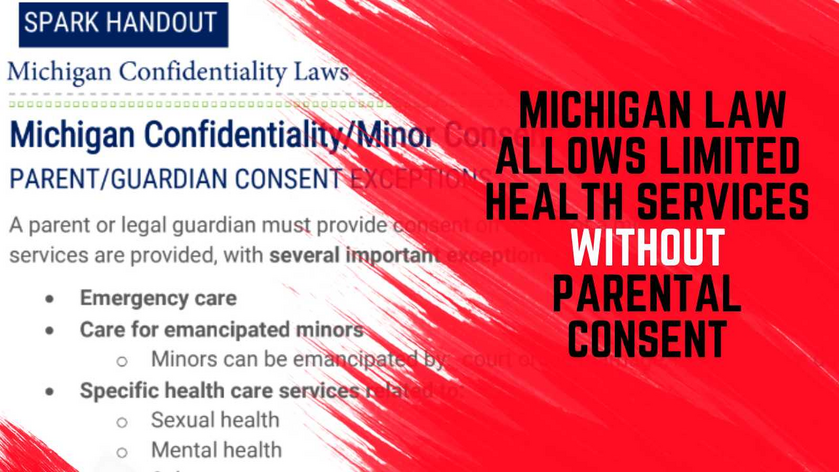
Michigan law says parents don't have a right to know when their kids get certain medical services. Watch the entire interview here: https://davebondy.locals.com/post/5010931/tonight-parents-upset-michigan-law-allows-kids-to-get-limited-health-care-without-parental-consent
Video Transcript AI Summary
Parents do not need to be informed or asked in advance about specific healthcare services related to sexual health, mental health, or substance abuse treatment provided at school clinics. These services will be kept confidential, and parents will not have the right to know if their child has received them. Speaker 1 finds these categories quite broad and expresses a desire to be informed if their child seeks help in any of these areas.
Full Transcript
Speaker 0: And then specific health care services related to sexual health, mental health, substance abuse, substance abuse treatment. So for those three things, they the parents do not have to know. Right? Speaker 1: Yes. Correct. Do not have to know, do not have to be asked in advance, and it will be confidential. You will not have the right to know if your child has received one of these services in this school clinic. Speaker 0: Which are under sexual health, mental health, or substance abuse treatment, and that's kind of broad. Speaker 1: That seems very broad to me. I think I'd like to know if my child has asked for something involving substance abuse, sexual health, mental health. I'd like to know.
TONIGHT: Parents upset Michigan law allows kids to get limited health care without parental consent Did you know that in Michigan children are allowed to get limited health care withour parental consent. This includes mental and sexual health. The Northville Public Schools are considering putting clinics in the schools. This is a show you need to see tonight right here at this link at 7 p.m. on my Locals. You must sign up to my locals to watch the show live at 7 est right here. davebondy.locals.com
Saved - April 23, 2025 at 5:00 AM

@AmandaAchtman - Amanda Achtman

Nobody should be offered euthanasia instead of pain medications. Listen to Marg Rodrigues tell her story. https://t.co/ZFGtcTZL2k

Video Transcript AI Summary
Margaret Ricus, a 64-year-old living in Langley, BC, developed regional pain syndrome after a sidewalk accident in 2005. This nervous condition causes constant burning pain in her hand, disrupting her life and hobbies. The pain requires fentanyl, pregabalon, and nebula nebula for management, but after her family doctor left, she struggled to find a physician to prescribe them due to concerns about opioid prescriptions. Ricus believes the government has overreacted, affecting legitimate pain patients. She was essentially offered MAID (Medical Assistance in Dying) instead, which she equates to denying other essential medications. Ricus opposes MAID due to her faith, her love for her family, and her role in her church. She hopes to find a doctor who will prescribe her medication so she can live to see her grandchildren grow up.
Full Transcript
Speaker 0: My name is Margaret Ricus, and I live in Langley, British Columbia. Well, I was born in Ontario. My husband and met very early. We were 15 and 17 and married very young. Had our children young. I was 20, 20 one. They had their dad with them for a long time. We lost him in ten, eleven years ago. My daughter is just my rock. She's everything. She's just my all around. And my son is there too. He comes over most weekends to make sure his mom's still around, and he has a little girl. My daughter has twin boys, which I've been in their lives since they've been minutes old. Speaker 1: Bring me back to what happened twenty years ago, the sidewalk incident. Speaker 0: Back in about twenty o five, I stumbled on the sidewalk. I stumbled up the stairs, smacked, smacked my hand. So they put a cast on it for six weeks. The cast didn't fix it, so then they did dye injection in discovered that it had regional pain syndrome. It's a nervous condition, so my spinal cord is still telling my hand it's broken. It's not. It's in the nerves. And so it burns, it swivels up, it does all its own little things, and it never stops. It goes day and night, and that was that. It was the end of me playing the organ, that was the end of me printing in my preschool, that was the end of so much, so many things for me. I'd already had asthma. I'd already had been having treatments for IVIG. I'd already had these other two diagnoses, and now this on top of it. Speaker 1: What's it like living with this degree of pain? Speaker 0: It's horrible. You shut yourself in from people. You say, oh, I'm not going to go out tonight. I'm just like, I'm done. I can't. The nights are the worst. The nights you just want to shut them off. You want to shut everything off. And the only thing that stops it are medications. We started with regular pain medications, but nothing cut it. And then my pain specialist put me on fentanyl. A few months ago, I phoned my family doctor to renew a prescription, at which time the receptionist said, Oh, she won't be coming back to work. She's taking some time off. She's not well. Well, what do I do about my prescriptions? Problem is most pharmacies or doctors won't prescribe their opioids. So I started going around trying to find a doctor that would fill these prescriptions. They are fentanyl, pregabalon, and nebula nebula. Nobody would fill them. I went to a dozen different doctor all because of the Downtown Eastside drug problem. I really do believe that this government has gone way overboard in shutting down the doctors and saying, No, you can't prescribe or you'll lose your license. But that's got nothing to do with people who are using it legally for pain management. The government is more pushing them towards, well we can't prescribe this but we can prescribe MAID. It'd be like somebody saying, oh I can't offer you your IVIG medications anymore, or your asthma medications anymore, or someone down the street saying, Oh, we don't do diabetes medications anymore. Everybody's off of it. Send them off to MAID. What's the difference? Speaker 1: How does it feel to be offered euthanasia? Speaker 0: I'm 64 years old. That's a pretty sad way to go when I have a daughter and a son and three grandchildren that will miss me greatly. Never to mind a whole group of church people that I'm an elder in this church and work in so many ministries. If they knew that my intention was to leave them, they would have an absolute fit. My daughter has tried to find doctors for me and it's just it's incredibly difficult. But I have a very strong faith that I won't do it that way. I won't accept MAiD because I have a right to live. I pray that, you know, family doctor will take me under his wing and prescribe these drugs And then I can watch my grandchildren grow up. I can watch them maybe even graduate. That's my hope.
Saved - February 2, 2024 at 7:47 PM

@luanne_metz - Dr. Luanne Metz

Governments need to stay out of medical decisions. @ABDanielleSmith wants to control your life; she is starting with vulnerable children.

@Albertadoctors - Alberta Medical Association (AMA)

Statement from the AMA Section of Pediatrics regarding government proposal to restrict medical treatments available to pediatric patients who identify as trans gender https://t.co/KKFNacGA21

Saved - June 10, 2024 at 5:25 PM

@AllBiteNoBark88 - The White Rabbit Podcast 🐇

BREAKING: The Australian Government has killed a Child by refusing her a Transplant without a Covid Jab. Now we know. They are most definitely NOT trying to Save People & NOT trying to Help RIP Dazelle https://t.co/foGJifwzlh

Saved - June 17, 2024 at 12:45 AM

@MsBradsher - KRYSTAL 🐊 🇺🇸

Meanwhile in the Biomedical Security State of Australia: Dazelle Peters (17) who suffered with Leukemia died last week after being denied a life-saving lung transplant simply because she refused to take the COVID jab. #COVID19 #NoAmnesty #DoNotComply #Australia https://t.co/HEar6WuRGx

Saved - September 12, 2024 at 3:45 AM

@LeslynLewis - Dr. Leslyn Lewis

In Canada, children cannot buy alcohol or marijuana, but they can get free government-subsidized crack pipes, drug needles, and naloxone kits. Let that sink in. This 13-year-old’s death should never have happened! https://bc.ctvnews.ca/parents-fight-for-change-after-13-year-old-girl-dies-in-b-c-homeless-camp-1.7033221

Parents fight for change after 13-year-old girl dies in B.C. homeless camp Brianna McDonald's death was caused by a suspected overdose, according to her family. And her grieving parents are urging change so other families don’t have to face what they are going though. bc.ctvnews.ca
Saved - October 22, 2024 at 12:06 PM

@SheilaGunnReid - Sheila Gunn Reid

A man in his 40s with IBS -who was socially isolated and addicted to opioids and alcohol - was told about MAID during a psychiatric assessment. His family wasn’t consulted and the MAID provider drove him to the location where he received a state sanctioned death. https://www.theglobeandmail.com/canada/article-rates-of-medical-assistance-in-dying-for-non-terminal-illness-in/

Rates of medical assistance in dying for non-terminal illness in Ontario higher in poorer neighbourhoods, reports say Two new reports highlight the challenges of determining MAID eligibility for people with serious illnesses and disabilities theglobeandmail.com
Saved - October 25, 2024 at 11:49 PM
reSee.it AI Summary
I shared a chilling description of the MAIDS program in Canada, detailing the administration of medical assistance in dying. The account was so disturbing it felt like something out of a horror movie. You can check out the clip for more insights.

@thevivafrei - Viva Frei

The process of administration of death under Canada’s MAIDS program (medical assistance in dying) described in horrifying detail by @KelsiBurns on @jordanbpeterson This is the stuff of horror movies. https://t.co/oZEUupPsRL

@thevivafrei - Viva Frei

Link to clip https://youtu.be/3YYxOfwrsrU?si=YJ0gzLQZbTjw_MOx

Saved - October 31, 2024 at 7:33 PM
reSee.it AI Summary
I’m deeply troubled by the Canadian government's approach to assisted dying, which began with terminally ill patients but has now expanded to include young people with mental health issues. The numbers have skyrocketed, and cases like Alan Nichols, who was euthanized for hearing loss, highlight the alarming trend. Many are choosing death due to financial struggles or loneliness, while doctors are encouraged to present it as a treatment option. This shift seems driven by cost-cutting rather than compassion, raising serious ethical concerns about the value of life in our healthcare system.

@SNewmanPodcast - Shaun Newman Podcast

This is f*cked up. The Canadian government is helping people commit suicide. They started with the terminally ill. Now they're about to help depressed 20-year-olds end their lives. Here's all you need to know about this horrifying new reality: 🧵

@SNewmanPodcast - Shaun Newman Podcast

MAiD (Medically Assisted in Dying) started out simple enough in 2016. Someone's 80, terminal cancer, and two months to live, we help you go peacefully—we all get that. Made sense. Nobody was really arguing. But then they took it a step further...

Video Transcript AI Summary
Amir Farsud has applied for medically assisted dying (MAID) due to constant agony from a back injury and the impending sale of his rooming house, leaving him unable to find affordable housing. Surviving on over $100 a month from Ontario disability support, he faces the reality of homelessness. Although he meets the criteria for MAID due to his physical suffering, his true motivation stems from the fear of being homeless. His doctor has signed off on the application, and he is awaiting a second approval, with a potential access to MAID in about a month. Despite his pain, Farsud expresses a desire to live, emphasizing that he does not wish to die.
Full Transcript
Speaker 0: Are you afraid to die? Speaker 1: Who isn't? Yeah. It it, I Speaker 0: am. Amir Farsud has applied for medically assisted dying, known as MAID. He lives in constant agony due to a back injury, but has started the process for end of life because his rooming house is up for sale, and he can't find anywhere else to live that he can afford. He barely survives on Ontario disability support payments, which are just over $100 a month. He doesn't want to die, but being homeless is not an option. Speaker 1: I know in my present health condition, I would survive it anyway. Speaker 0: Farzud meets the criteria for MAID, physical suffering due to disability that cannot be relieved. His doctor, who knows Farsud's real reason for MAID is his fear of being homeless, signed off on the application in August. Farsud needs a second to do the same. There's a 90 day waiting period he believes he could potentially access MAID in about a month. Speaker 1: I don't wish to be dead, even with the pain, even with the meds. I still wanna be here.

@SNewmanPodcast - Shaun Newman Podcast

Just like every government program, once they got that first "win," they had to justify their existence. So the numbers exploded: From 1,000 deaths in the first year to 13,000+ in 2022. Now MAiD runs on two tracks:

@SNewmanPodcast - Shaun Newman Podcast

Track 1: • Terminal illness, death's around the corner. Track 2: • You're young, maybe depressed or anxious, maybe chronic illness (but definitely not dying). Now you can get MAiD too. Let me give you an example that'll blow your mind:

Video Transcript AI Summary
When medically assisted dying (MAID) became legal in Canada in 2016, it was limited to those facing imminent death, but accessibility expanded in March. Critics argue that MAID devalues the lives of people with disabilities, particularly those living in poverty. The Netherlands has monthly reviews of assisted dying cases, while Canada only publishes annual statistics. Last year, MAID accounted for 3.3% of deaths in Canada, with cancer as the leading cause. Although many seek MAID, the federal government emphasizes safeguards to ensure eligibility is carefully considered. Canada is set to further expand MAID eligibility to include individuals with mental disorders, potentially increasing its prevalence to about 4% of all deaths, similar to Belgium and the Netherlands.
Full Transcript
Speaker 0: When medically assisted dying became legal in Canada in 2016, it was only for people facing imminent death. Accessibility was expanded last March. Speaker 1: We have created a system where ending of life is an easier and cheaper solution than actually investing in health care and and social support. Speaker 0: Trudeau Lemons is a professor of law and bioethics at U of T. He argues MAID devalues the life of people with disabilities who often live in poverty. Speaker 1: I actually had not expected that it would so go so fast and and that this particular issue of people living in poverty asking for medical assistance, dying would so rapidly take off in the Canadian context and that physicians would sign off on it. Speaker 0: So what is the solution in your mind? Speaker 1: The solution is, in my view, to go back to the drawing table. Speaker 0: The Netherlands has monthly commissions that review troubling assisted dying cases. Canada does not. It does publish yearly stats. The latest shows last year, MAID accounted for 3.3% of all deaths in Canada or 10,064 people. That's a 32.4% increase over the year before. 65% of cases report cancer as the underlying reason. 81% of requests resulted in the administration of MAID. The average age is 76. Amir is 54. While he doesn't want to die, he wants to have the choice. Speaker 1: At the end of the day, it's it's a personal decision. Speaker 0: City News asked the federal government for comment on this story. In an email response, it points out there are enhanced safeguards and states it is highly unlikely 2 doctors would deem a person eligible for MAID if they had reason to believe their, quote, suffering could be relieved on a sustained basis by access to reasonable and available treatment and social services. Canada is one of the most liberal countries in the world when it comes to medically assisted dying. In March, it's further expanding eligibility to include people with mental disorders. It's expected MAID will be about 4% of all deaths in this country. That's in line with Belgium and the Netherlands. We will keep in touch with Amir Farsud.

@SNewmanPodcast - Shaun Newman Podcast

Guy named Alan Nichols, 61 years old. • Not terminal • Hospitalized because his family feared he may be suicidal A month later Alan requests to be euthanized. The reason on his MAiD application?

Video Transcript AI Summary
Euthanasia has been legal in Canada since 2016, and next year it will extend to mental health conditions. In June 2019, 61-year-old Alan Nichols requested euthanasia after being hospitalized in Chilliwack, Canada. His brother, Gary, shares that while there are cases where assisted dying is beneficial, it can be problematic if applied carelessly, putting families in difficult situations. Before his hospitalization, Alan faced challenges due to a benign brain tumor diagnosed in his youth, which led to surgeries that affected his right side and hearing. Despite these challenges, Alan lived a relatively normal life and was not completely incapacitated, raising concerns about the appropriateness of his euthanasia decision.
Full Transcript
Speaker 0: Since 2016, euthanasia has been legal in Canada. And next year, the right to request assisted suicide is due to be extended to mental health as well as physical health conditions. In June 2019, 61 year old Alan Nichols was was taken to hospital in Chilliwack, Canada. Within a month, he had requested euthanasia and died by lethal injection. His brother, Gary Nichols, is here to tell us about it. Gary, it's good to meet you. Speaker 1: Yes. Hi there, Flo. Hey. I'm glad you're telling Allan's story. It needs to be told just to make people aware of some of the problems really with medical assisted dying. There's a lot of cases maybe where it's it's a good thing, you know. There's no need to watch somebody suffer, but if it's gonna be loosely and sloppy applied, it's a terrible position for a family to be in. Speaker 0: And this was the position that you found yourself in, with your wife Trish and your other brother Wayne as well. Could you just tell me a little bit about the situation before Alan was hospitalized? What what was his life like before that time? Speaker 1: It it was a a challenging life. When he was a a young boy at 1213, he was, diagnosed with a a brain tumor, a benign tumor. So the surgeons, proceeded with surgery to remove the tumor. Unfortunately, it grew back, so they went in and surgically removed a deeper cut of the tumor, which unfortunately had to remove part of his brain, which affected mostly his right side. So his right side was quite physically, not at first impaired, as well as his hearing. As his life went on, he actually lived a fairly normal life. I think he had mental challenges on the way as his hearing started to diminish and he noticed his right side. I mean, there's a lot of things he couldn't do now, like play hockey or maybe run, but he could walk and do function quite normal. Speaker 0: It was perhaps complicated, but it was still a a life worth living. You wouldn't say that this was someone who was completely incapacitated or at the end of their life in the way that you might think of a euthanasia patient being.

@SNewmanPodcast - Shaun Newman Podcast

He applied to die because of his "hearing loss." That's it. And they killed him, even though his family tried to stop it. But that's not all, MAiD gets even worse:

@SNewmanPodcast - Shaun Newman Podcast

People are choosing death because they're homeless. Because they're lonely, or can't afford care. And our government––instead of actually helping these people––is like: "Hey, we've got this other solution..." Here's another sad story:

@SNewmanPodcast - Shaun Newman Podcast

Sean Tagert was 41 years old with Lou Gehrig's disease. He needed 24-hour care, but they would only cover 16. The other 8 hours would cost him $206 EVERY day. Result? He chose death over going broke.

Video Transcript AI Summary
I have three key points to address. First, it's essential for the public and healthcare professionals to understand what natural dying and death truly entail. Much of the fear surrounding this topic is unfounded, as natural dying can be comfortable with proper palliative care. Second, access to care that emphasizes living is crucial, as many feel burdened without community support and a sense of shared responsibility for one another. Lastly, the discussion around dying should be separate from medicine, as intertwining them undermines the physician's role in advocating for healing and disrupts the patient-physician relationship.
Full Transcript
Speaker 0: I have 3 quick things, if I may, that I would love to wave my wand about. The first one is I would want the general public and healthcare professionals to really understand, Ashley, what natural dying and death look like because a lot of this has been driven by fear that's not founded in fact and most often, natural dying and death are very comfortable and what palliative care actually can do, because I think part of that is what initiated all of this. So, that would be wonderful And to have people to have access to care, to focus on living, would be a huge piece because of that. People feel a burden because they don't have that community support and sense of responsibility of caring for one another that we've come so far away from in this ultra autonomous view of of of personhood, which I think is is missing. And then the last thing would just be, actually, I think it should be completely separate from medicine. This totally undermines, we don't have time to go into this today, the role of the physician in advocating and responsibility for healing and recovery, and it totally interrupts that physician patient, responsibility. So I think outside of medicine, would be really critical.

@SNewmanPodcast - Shaun Newman Podcast

In our hospitals, it's gotten completely out of hand. Doctors aren't just waiting for people to ask. They're told to bring it up like, it's just another treatment option. "Oh, you're struggling to pay for care? Well, have you considered...?" Now they're trying to expand it:

@SNewmanPodcast - Shaun Newman Podcast

If you're mentally ill and want to end your life, you'll be able to. With government help. It's already part of the bill, but won't go into effect until 2027. And they're even talking about including minors if they're "mature enough."

Video Transcript AI Summary
Mental illness as the sole basis for medically assisted death will likely be delayed for at least three years. Federal Health Minister Mark Holland introduced legislation to postpone the expansion of the program until March 2027. This decision primarily affects Canadians with severe, treatment-resistant mental disorders who were hoping to apply for the program. Independent Senator Stanley Kutcher criticized the joint committee for failing to represent witness testimony and uphold the rights of Canadians. The CEO of Dying With Dignity Canada expressed disappointment, noting that only a small number of individuals qualify for the program, similar to evidence from Belgium, where it has been legal for 20 years. These individuals often have a long history of mental disorders that have not responded to treatment.
Full Transcript
Speaker 0: Mental illness is the sole basis for a legally assisted death will likely have to wait at least another 3 years. Federal health minister Mark Halland introduced legislation that if passed would postpone the government's plan to expand the medical assistance in dying program until March 2027. Adam Atkinson joins us live in studio with the details. Speaker 1: Good evening, Adam. Thanks, Matt. This move won't affect a lot of Canadians, but there are some who are struggling with severe mental disorders and are treatment resistant. And they were looking forward to applying for the medical assistance in dying program. Speaker 2: We understand that this is a deeply personal topic and an issue that may be challenging for some. We're also aware that many Canadians hold strong opinions about this issue and that there has been much misinformation about this that has impacted on public discourse. Speaker 1: Independent Canadian senator Stanley Kutcher from Nova Scotia says the joint committee he sat on failed Canadians. Speaker 2: We think that the committee failed to respect its mandate. It failed to accurately represent the weight of witness testimony, and ultimately, it failed to uphold the charge of rights of all Canadians. Speaker 1: Federal health minister Mark Holland introduced legislation that, if passed, would postpone the government's plan to expand the medical assistance in dying program for another 3 years. The CEO of Dying With Dignity Canada says people struggling with untreatable mental disorders have already waited long enough. Speaker 3: Yeah. We were certainly disheartened and I think discouraged, particularly on the part of that very small group of individuals who have been waiting to access MAID, under the sole underlying condition of a mental disorder. Speaker 1: Helen Long says there are very few Canadians who would even qualify for the MAID program. Speaker 3: We know from the evidence in Belgium where this has been legal for 20 years that we're talking about a very small number of people. People who have a long history, years if not decades, of mental disorder that has not responded to treatment.

@SNewmanPodcast - Shaun Newman Podcast

And once again, what is this about? You guessed it––money. Studies show MAiD saves the Canadian healthcare system up to $130+ million every year. We're literally killing citizens because it's cheaper than taking care of them. It's just cost-cutting with a body count.

Video Transcript AI Summary
As a psychiatrist in community mental health, I've seen how MAID affects my patients. Some express a desire to stop treatment, feeling they can choose to die instead. This shift undermines our efforts to support their recovery; we're now focused on preventing MAID as much as preventing suicide. I recall a patient, Ray, 62, with metastatic lung cancer, who had long sought MAID. When I confirmed his eligibility, I witnessed a physical transformation in him—his shoulders relaxed, and he smiled for the first time. He decided to proceed with MAID, and during the process, he expressed gratitude, saying, "I think you saved my life." This highlights the importance of providing care for those who truly need and want it.
Full Transcript
Speaker 0: John, can you tell us something from your personal experience that has strengthened your conviction on this issue? Speaker 1: As a psychiatrist who works with community mental health team, supporting people with the most serious mental illnesses. We are becoming overwhelmed by what MAID has introduced into our clinical worlds. I have patients who are already saying, I'm gonna stop treatment. I'm not gonna keep trying. I can die. Our efforts to help them stick with the very challenging and sometimes long term treatment required to heal and recover is being undermined. We're not just doing suicide prevention anymore. We're doing MAID prevention. Speaker 0: I'm going to tell you about a gentleman I'll call Ray, who was 62 years old with metastatic lung cancer. And Ray had been asking for MAID for quite some time. And as he and I worked through the rigorous eligibility criteria, at some point, I was able to sit in front of him and tell him he was eligible for this care. And when I sat there and did that, I saw in him a physical transformation, which I've learned actually happens almost every time. I saw his shoulders relax. I think I saw him smile for the first time since I'd met him. And it was immediately followed by an expression of gratitude for the mere possibility. He decided to proceed with MAID, and we held it not long after, in the rooftop garden of the facility in which he was living. And as is required by law, I was seeking his final consent before I administered the medication. He was surrounded by his friends. And as he gave me that consent, he reached out and grabbed my hand. He looked at me, and he said, I know this is gonna sound odd, doctor Green, but I think you saved my life. And it reminds me all the time that for the people who actually need and want this care, it is tremendously important.

@SNewmanPodcast - Shaun Newman Podcast

Here's the truth: When your government starts offering to "end your suffering" instead of actually helping you live, that's not compassion. That's them looking at their budget and deciding you're too expensive to keep alive. And sadly...Canada's leading the charge.

@SNewmanPodcast - Shaun Newman Podcast

If you found this thread thought-provoking... • Drop a follow @SNewmanPodcast for more • Like/Repost the quote below if you can And if you want to dive even deeper into topics that really matter, keep scrolling...

@SNewmanPodcast - Shaun Newman Podcast

This is f*cked up. The Canadian government is helping people commit suicide. They started with the terminally ill. Now they're about to help depressed 20-year-olds end their lives. Here's all you need to know about this horrifying new reality: 🧵

@SNewmanPodcast - Shaun Newman Podcast

I'm Shaun—husband, father of 3, and full-time podcaster in Western Canada. On the SNP we explore hot topics that divide humanity, as well as faith, family, and Canadian life. Subscribe to enrich your mind with interesting perspectives: https://shaunnewmanpodcast.substack.com/

Shaun Newman Podcast Substack | Substack Exclusive content from the Shaun Newman Podcast. Click to read Shaun Newman Podcast Substack, a Substack publication with thousands of subscribers. shaunnewmanpodcast.substack.com
Saved - November 1, 2024 at 1:39 PM

@BrianRoemmele - Brian Roemmele

I really hope there is a lesson here. Allow legal ways for “helping people with pain” slips as expected to a wider and wider group until it is a fad. Solution: don’t let anyone convince you this is right. If it started stop it. You have been MAiD. https://t.co/HJAxIJ1r1q

Video Transcript AI Summary
When medically assisted dying (MAID) became legal in Canada in 2016, it was limited to those facing imminent death. Accessibility expanded in March, raising concerns about the devaluation of life for people with disabilities living in poverty. The rapid increase in requests for MAID, particularly among those in financial distress, has surprised many. Unlike the Netherlands, Canada lacks regular reviews of assisted dying cases, although it does provide annual statistics. In the last year, MAID accounted for 3.3% of all deaths in Canada, with cancer being the most common reason. The federal government emphasizes enhanced safeguards, asserting that two doctors would unlikely approve MAID if a person's suffering could be alleviated through available treatments. Canada is set to further expand eligibility to include those with mental disorders, aligning with practices in Belgium and the Netherlands.
Full Transcript
Speaker 0: When medically assisted dying became legal in Canada in 2016, it was only for people facing imminent death. Accessibility was expanded last March. Speaker 1: We have created a system where ending of life is an easier and cheaper solution than actually investing in health care and and social support. Speaker 0: Trudeau Lemons is a professor of law and bioethics at U of T. He argues MAID devalues the life of people with disabilities who often live in poverty. Speaker 1: I actually had not expected that it would so go so fast and and that this particular issue of people living in poverty asking for medical assistance, dying would so rapidly take off in the Canadian context and that physicians would sign off on it. Speaker 0: So what is the solution in your mind? Speaker 1: The solution is, in my view, to go back to the drawing table. Speaker 0: The Netherlands has monthly commissions that review troubling assisted dying cases. Canada does not. It does publish yearly stats. The latest shows last year, MAID accounted for 3.3% of all deaths in Canada or 10,064 people. That's a 32.4% increase over the year before. 65% of cases report cancer as the underlying reason. 81% of requests resulted in the administration of MAID. The average age is 76. Amir is 54. While he doesn't want to die, he wants to have the choice. Speaker 1: At the end of the day, it's it's a personal decision. Speaker 0: City News asked the federal government for comment on this story. In an email response, it points out there are enhanced safeguards and states it is highly unlikely 2 doctors would deem a person eligible for MAID if they had reason to believe their, quote, suffering could be relieved on a sustained basis by access to reasonable and available treatment and social services. Canada is one of the most liberal countries in the world when it comes to medically assisted dying. In March, it's further expanding eligibility to include people with mental disorders. It's expected MAID will be about 4% of all deaths in this country. That's in line with Belgium and the Netherlands. We will keep in touch with Amir Farsud.
Saved - December 12, 2024 at 4:25 PM

@olivialoupis - Olivia Frederikke Loupis

Doctors doing this to young girls with mental illness should go to prison for life. Do you agree? https://t.co/pCujze0tOT

Saved - February 8, 2025 at 10:00 AM

@libsoftiktok - Libs of TikTok

This is what Democrats and activist doctors did to young confused people. It’s criminal. https://t.co/LSZoALRJ5h

Video Transcript AI Summary
This boy just had top surgery, and I want to share our journey. After the surgery, I was called to the Recovery Room. The surgeon was working on him, and there was a lot of blood coming from his scars. They informed me that they needed to take him back for more surgery because a blood vessel had popped. Unfortunately, we lost his right armpit hair during the process, but the left one remained untouched.
Full Transcript
Speaker 0: This boy just got top surgery, and he's sitting there boobeless. I'm sitting here boobeless, and I wanna tell you about the journey so far. He goes under for surgery. Hours later, they bring me. They say he's ready. He can see you. I go to the Recovery Room, and his surgeon is crouched over him. And there's blood just pouring out of his scars. It's disgusting, and they say we have to take him back in. And I'm like, okay. His right boob wasn't going out without a fight. A blood vessel popped. There was blood everywhere. They had to put him back under and fix it up. Unfortunately, we lost his armpit hair in the process, only his right armpit. The other one did not get shaved.
Saved - March 13, 2025 at 6:13 PM

@BGatesIsaPyscho - Concerned Citizen

“So here is my transgender baby - I’m trying to get medication to stop male hormones taking over” Why isn’t this categorised as child abuse yet? https://t.co/oPB2szx1QP

Video Transcript AI Summary
Here's my transgender daughter, Bella. She was assigned male at birth but now uses she/her pronouns. We're working on getting her medication to block male hormones. Bella is 14 and doing well in her transition. Being trapped in the wrong body affected her mental health, but with medication, we'll get through it together. We also received a grant to cover her transition costs, which is a huge relief. She can finally be who she truly is, which is all she's wanted for years, and we're so happy for her.
Full Transcript
Speaker 0: So here is my transgender baby. Her name is Bella. Bella was born a boy but now uses sheher pronoun. I am in the middle of trying to get a doctor's appointment in order to secure some medication to stop the male hormone taking over. Bella is 14 old and is thriving in her new body. Now she's able to be, and she was born to be trapped in the wrong body at such a young age as had a massive impact on young Bella's mental health. But with the right medication, we are gonna get through it as a family. We secured a grant as well to help Bella in her transition. So all costs have been covered, and it's such a relief. She gets to be who she wants to be. This is all she's wanted for for years now, and we couldn't be anymore.
Saved - June 21, 2025 at 9:28 PM
reSee.it AI Summary
I shared a heartbreaking story about a mother in Canada who is devastated after the BC Government denied funding for her daughter's medicine. Her daughter, the first child in the world taken off Brineura, has Batten disease, a rare and fatal genetic disorder. This denial feels like a death sentence.

@WallStreetApes - Wall Street Apes

This is what Government Healthcare looks like Mother in Canada in tears because the BC Government has denied funding for her daughter’s medicine, “she’ll receive her final infusion tomorrow” Her daughter is the 1st child in the world to be taken off Brineura This is fatal Her daughter has Batten disease, a rare, fatal genetic disorder that affects the nervous system and brain. Government healthcare has denied the medication, this is a death sentence.

Video Transcript AI Summary
The speaker announces with heartbreak that Charlie's final infusion will be tomorrow. They state they are processing this news and have little else to say at this time. The speaker expresses love for Charlie and apologizes to him.
Full Transcript
Speaker 0: Our family is heartbroken to share, that Charlie's final infusion will be tomorrow. We are processing this news, and at this time, there's just not much else I can say. I'm just really sorry, Charlie, and we love you so much.
Saved - September 12, 2025 at 12:01 AM

@MichaelCooperMP - Michael Cooper, MP

SHOCKING Ontario Coroner's Report reveals new DISTURBING cases where MAID was given to patients due to "hopelessness, isolation and loneliness". More evidence that the Liberal Govt's MAID regime is OUT OF CONTROL, with vulnerable persons repeatedly falling through the cracks. https://t.co/Mhu4tzfbF0

Saved - October 6, 2025 at 11:36 PM

@Adamental2 - Adamental Politics

How did Canada become known as a leader in the euthanasia space? This is so unbelievably wicked and dystopian it’s hard to believe it’s real https://t.co/egiVCILKeQ

Saved - December 12, 2025 at 12:44 AM

@TruthSeek01011 - TruthSeeker01011

Warning: strong language, MAID is being used to replace Canadians with new immigrants who vote and support the liberals. F$ck the CBC, f$ck MAID, f$ck the Canadian health care system. https://t.co/Suzn06Y6MO

View Full Interactive Feed