reSee.it - Related Post Feed

Saved - January 17, 2024 at 8:41 PM

@TaraBull808 - TaraBull

MSNBC's Rachel Maddow said the network was forced to censor former President Trump's victory speech in Iowa because it couldn't air lies. Who else remembers her Covid vaccine lies? Remind everyone. https://t.co/pYCkixW6UW

Video Transcript AI Summary
We no longer provide a live platform for former President Trump's remarks because we don't want to broadcast false information. It's not an easy decision, but we regularly reconsider it. Vaccines are effective in stopping the virus from spreading.
Full Transcript
Speaker 0: The reason that we and other news organizations have generally stopped giving an unfiltered live platform to remarks by former President Trump. It is not out of spite. It is not a decision that we relish. It is a decision that we regularly revisit. And honestly, earnestly, it is not an easy decision, but there is a cost to us as a news organization of knowingly broadcasting untrue things. This. Now we know that the vaccines work well enough that the virus stops with every vaccinated person. Now we know that the vaccines work well enough that the virus stops with every vaccinated person.
Saved - January 24, 2025 at 9:02 AM

@pepesgrandma - Bad Kitty Unleashed 🦁💪🏻

Catherine Herridge and Tucker Carlson shoot the breeze on Biden. Obviously they feel her firing was due to Hunter Biden reporting. https://t.co/mTUu17z3sT

Video Transcript AI Summary
One son asked if I would go to jail, reflecting on the state of democracy and press freedom. The media's reaction to Biden's debate performance surprised many, despite prior indicators of his decline. There's a need for transparency in releasing interview transcripts to assess his fitness for office. The press should hold powerful entities accountable, and the lack of diverse reporting is concerning. Independent journalism is flourishing, as audiences seek credible information. The Press Act aims to protect confidential sources, essential for investigative reporting. My recent work focuses on military accountability regarding health issues linked to vaccinations. The landscape has shifted, and there's a hunger for honest journalism that serves the public interest.
Full Transcript
Speaker 0: One of our sons asked me, mom, are you gonna go to jail? And I wanted to tell him that in this country where we say we value I could get a little choked up when I think about it, but, you know, in this country where we say we value democracy and we value a vigorous press, that it was impossible. But I couldn't offer him that assurance. Speaker 1: I was shocked that they fired you. And when I reflected for a moment, I was not shocked at all. From my perspective, super obvious they're taking you out before the election because you're reporting on Hunter Biden's laptop. 10 days ago ish, there was the debate. I've known Biden for over 30 years, and I thought that's not the guy I know. I mean, he's just completely different. If conspiracy nut, I would think he was a body double because it's that different. I'm so glad you're back here. Speaker 0: I'm so glad to see you. Speaker 1: You are not far away. Speaker 2: It's it's good. Far away. Speaker 1: We work together. We live near each other. It's all in many places. Amazing. How are you enjoying your new life? Speaker 0: Pretty well. It's, good. It's been an adjustment. I've had an energetic few months. Speaker 1: I knew you would. I knew you would. Okay. So I just have to ask you because you're I was in television a long time also, but you were in the the news side of television preparing interviews and packages and every day for decades. And given your extensive knowledge of that, I'm just a little bit confused by how the media people in our business, form of business, could look at the last debate with Biden and Trump and say, I just can't believe that there's something wrong with him. That he's neurologically compromised or ill or senile or whatever, that he's not operating the way that he used to. How could this be news to people who've interviewed him before? Speaker 0: Well, I think this is a real opportunity to gather more data and to take an investigative lens and look at this issue of president Biden and his decision to seek reelection. We've got some data points already. We have the debate Yeah. That you've just referenced that people were so surprised Yeah. His demeanor. And we now have this ABC interview and the full transcript. I think it's a moment where other media organizations who've done interviews with the president over the last couple of years could release the full transcripts from those interviews. I think it makes sense because we'd have broader data points to assess was this a one off, as the White House says, or were there indications of decline earlier on? Were they obvious and apparent, or were they subtle and missed? And and if they were obvious, why was it that they seemed to end up on the cutting room floor? I think that having this broader dataset for an independent review would really inform the public discussion about the president's decision to stay in the race. Speaker 1: And there's a lot of data to look at. I mean, I've known Biden, watched Biden, been around Biden a lot for over 30 years. And I remember my reaction in 2019 when he decided to run, once again for president for the 4th time, I think. I thought that's not the guy I know. I mean, he's just completely different. And then his sister told a friend of mine, actually, we're very upset because he's in cognitive decline. He's got some neurological illness, and we don't want him to run for president. So I immediately said that on Fox News. Speaker 0: So you reported that at the time? Speaker 1: Absolutely. Yeah. And then I showed the tape. Like, look at this guy. And was attacked, of course, and ignored. So that was 5 years ago. I wasn't shocked by his performance of the debate, especially. But then other journalists were. They seem to be. Were they pretending? Or, like, what I don't understand how someone who did an interview with him, like, 2 years ago wouldn't have been aware that there was something wrong. Speaker 0: Well, I think it's an opportunity to provide this broader data set so there can be this independent review by the public. Speaker 1: What would that data look like? Speaker 0: Well, let's look at the what the transcript show. Do they show someone who is, you know, very consistent, very focused, very deliberate in their answering of questions, or does it show someone who's maybe struggling to stay on track or is lacking? Speaker 1: Do we have that case? Speaker 0: Well, media outlets who've conducted interviews with the president should have those transcripts. I mean, it's it's not standard to release video outtakes from an interview, but you could release the transcript. And I say that as someone who released the transcripts of my interview with president Trump back in 2020. Releasing a transcript, I think, is about transparency so you can have a broad overview of the interview. I think it makes sense because there are other headlines in the interview that maybe you your news organization is not gonna look at Right. Per se. You know, just sort of separately, I think you have a tremendous responsibility when you sit down with the president of the United States, probably the ultimate newsmaker, to ask questions that are of interest to your news organization, but also to others. Right? And then finally, I think a transcript, allows you to stand behind the edit that you either post online or that you broadcast. Right? Because then the public can see the sections of the interview that you, you know, condensed or you made edits for clarification. Speaker 1: Right. So I know that in, I haven't thought about this enough, but I know that in 2015 or 2016, the New York Times editorial board sat down with Trump, and they released a full, apparently, unedited transcript, which was chaotic. His speaking style tends to be a little discursive. Speaker 0: Nonlinear. Word, discursive. Speaker 1: Yeah. It is nonlinear. But, you know, that's that's well known. I think he's much better on camera than he is, you know, in transcripts, but but whatever you think of it, that they put that out there. I don't remember in the last 4 years any news organization interviewed Biden, and there have been some releasing a transcript of the interview. Do you? Speaker 0: I, you know, I I don't I can't recall, but I don't really I haven't gone back and looked at all of them. But But Speaker 1: so, like, what would be the so I guess what bothers me is that everyone acts like this is a shock. It was not a shock to me. I have no special knowledge. I'm quite some special knowledge, but I which I revealed immediately. But it was, like, super obvious every time I saw him, there's something wrong with that guy. How could the journalist be shocked? Well, why don't they just release immediately? Speaker 0: Well, they could. That's that's what I think makes a lot of sense right now to do that. That's ultimately up to them, but I think it just goes to transparency. I think it goes to informing the public discussion right now about the president's, fitness for office and to seek reelection. And I think it's also about standing behind your work. Right? Like, you decided to make edits in the process, for for clarity, for time, what you know, whatever the issue is. Speaker 2: Right. Speaker 0: And so you can really you can really stand behind that. I think that's that's important. Speaker 1: But so, again, you were in this business for so long and me too and at a time, you know, pre Internet, pre streaming where you have a very small chunk of time, 3, 5, 6 minutes for the long ones, and then you you just can't use the rest. But now news organizations should just put the whole thing. I mean, that's what we do. I do this interview is not edited in any way. And if, you know, we'll just let viewers decide what they think of Katherine Harish or me or whatever. Speaker 2: Why is this? Speaker 1: Harris. Was that you know? But so what would be the excuse that, say, NBC or CBS or ABC or Fox or anybody would have to not put the full thing online now? Speaker 0: I mean, I can't speak to what their rationale would be. I just don't in my case, I felt it was important to to release a transcript Yeah. To allow people to see the work, and to also I mean, it's hard to look at your own transcript because you you look at it and you say, oh, that question could have been more focused, or I should have followed up more, or I missed that little piece of news. I should have drilled down a little further, or I interrupted there when I really shouldn't have. I mean, it's a really kind of warts and all process that you're looking at, but it's it's about sort of the raw integrity of the interview. You know, when you make edits in an interview, you do it for clarity. Sometimes you do it because you have to condense things because you only have a certain amount of time on a broadcast. But it's a real fine line and a balancing act, and you don't want, you know, seeking clarity and brevity or condensing it to cross the line into, you know, a cleanup on aisle 7. Speaker 1: Well, that's what it feels like, though. It does feel like and I don't wanna be too judgy. I was telling you at breakfast this morning, I edited something out of an interview once with somebody. I can't remember ever doing that before since, but and I would not do that now. But several years ago, someone said something so bizarre in the interview that I didn't wanna follow-up on it because I don't wanna I mean, what the hell are you even talking about? Mhmm. And so I asked the editors to take that out just because I didn't think it was relevant to the conversation. It was weird. Mhmm. So whatever. I did that. I'll say that I did that. But if you're interviewing someone, and he seems, like, bizarre through the whole interview, and you find yourself trying to cover that up, then maybe you're a liar. Mhmm. Do you think? Speaker 0: Well, I think the I think the instinct when you sit down with the president of the United States is this is your president. You want them to look their best. I mean, I under I understand that. Speaker 1: Right. Speaker 0: But if there were indicators, and I don't know there were, but if there were indicators that he was in decline or he was really struggling to answer a series of questions, I mean, that's news. Right? I mean, that's a news headline. Speaker 1: Well, and the opposite of news is, of course, you know, censorship and deception. So if you're hiding that, then you're committing, well, a moral crime, but you're also committing an offense against the profession that you chose whose purpose is to inform the public of what reality is. Right? And you're hiding things rather than exposing them. And that I mean, that that's pretty clear violation, isn't it? Speaker 0: Yeah. I again, I think it's an opportunity to build the dataset, to better understand what's happened over the last couple of years and, you know, really apply that investigative lens. You know, I I find it so hard to take off my, like, investigative reporter. Right. But that's that's sort of how I see it right now. I'm curious. I'm genuinely curious to see what those transcripts may reflect. Speaker 1: Well, in 2016, you know, NBC went and back into its archives and found an outtake of Donald Trump saying something vulgar to Billy Bush, the host, about women and grabbing them and all this stuff. And then they leaked it to David Fahrenthold. I think I'm remembering this correctly. Speaker 0: Can't remember that exactly, but it came out public. Speaker 1: If I say if I've gotten that wrong, pardon me. But they leaked it to Washington Post reporter who had been a college friend of an NBC executive, and then it became this huge thing that, you know, almost derailed Trump's campaign. And that's why they did it, of course. So there's precedent for showing us the outtakes. Mhmm. Do they have an excuse not to show it to the Biden outtakes? Speaker 0: I mean, I I can't really speak for them. I I'm sorry to sort of be a little evasive about that. I just I just would advocate for it. I think that it's an issue of such import to the country, and it really informs the discussion and the discourse surrounding this this issue. And it and it goes to accountability with the White House. Was it really a bad night, or was was there a broader trend that had been developing? Speaker 1: Yeah. I mean, I'm I feel totally qualified to pass judgment on that question. Speaker 0: I'll over to you. Speaker 1: Well, since I knew the guy, that's not Biden. Like, that's not the guy I remember who and I mean this. I always I never agreed with him, but I'm a I'm a shallow person, so is he. So I always kinda liked him because he's throw you know, Irish guy throw his arm around. How are you doing, buddy? You know, rub your chest. Maybe sniff maybe he sniffed me. I don't care. I like sniffing. And that's just not the guy on TV at all, like, at all. And really, I mean, if that was a conspiracy, now they would think he was a body double because it's that different. So anyway. Alright. In your long and varied career working in a bunch of different big media the biggest media outlets in the country, Did you see people's political or social agendas shape news coverage a lot? Speaker 0: I I the short answer is is is yes. I think it's difficult for people to step back and do what I like to say I do is which is balls and strikes. Right? People have their own personal lens through which they see stories, but I think you have to really park that at the front door when you go to work because I think that's when you have the most transparent, credible, authentic journalism. Speaker 1: I agree with that. Do you feel like the composition of newsrooms has changed from when you started in the business? It feels like there was a greater, like, actual diversity of life experience back then, 30 years ago. Speaker 0: Hard to say. I started my career at ABC in London. Yeah. And that was, an extremely rarefied atmosphere in a lot Speaker 1: of That's right. Speaker 0: These are very we're very experienced people. A lot of the correspondents came out of Vietnam. Speaker 1: Yes. Speaker 0: You know, very, very deep experience, and I was very fortunate to learn in that environment. I haven't This Speaker 1: is when Jennings was so forced there. Speaker 0: Jennings had just left London by the time I had arrived, and, I I wanted to be a foreign correspondent. You know, when you're that young, you have ideas. I I just it's like it looks so exciting to me. Totally. And some of the correspondents in the office really took me under their wing and taught me how to write a story by looking at the interviews, the strongest elements of the interview, the sound bites, and then they trained me to really sit down and look at the video and identify the strongest video, and then the natural sound, which really can be such an important technique. Speaker 1: That sound. Speaker 0: That's right. When you're when you're editing a a piece together because it's really like this mosaic, the strongest sound, the best video, and the natural sounds. So this was a really rarefied environment. Have I been in in a newsroom like that since? I don't think so. Speaker 1: What was the difference? Was it smarter, more serious? Speaker 0: I I just felt with with that cohort of reporters, they're just it was all about accountability journalism. I mean, to me, if that's part of my DNA, it's it's What does that mean accountability? Accountability journalism is when you're you're curious and you seek the facts, and then you try and figure out where the buck stops. Right? And it's not a question of, well, it's this party or that party. It's whatever entity is responsible. Right. And accountability journalism is, you know, like they say, speaking truth to power on both sides of of the aisle. Speaker 1: So power is the key though. I mean, accountability doesn't necessarily mean, you know, hassling poor rural whites with diabetes, you know, the weakest, most despised people in our society. It means, like, you know, asking questions about BlackRock and the National Security Council and the people who actually have all the power. It it felt to me 30 years ago like that was implied. Like, everyone sort of thought that your job was to hold the powerful accountable, not the weakest. Speaker 0: I still feel that way. Speaker 1: I do too. Yeah. I do too. Speaker 0: We have that in common. I I Speaker 1: do too. Did you see that change? Speaker 0: Boy. You know, I I used to say to people that, you know, technology was supposed to really improve our ability to do journalism, but I sometimes felt that the technology has never been better, but the reporting's never been worse. And and I I don't know why that is except Speaker 1: Is there a connection? Speaker 0: I've never Speaker 2: thought of Speaker 0: I think sometimes what we're missing is that boots on the ground, person to person contact Speaker 1: Yeah. Speaker 0: In reporting. Years ago when I did a journalism degree at Columbia, I had this professor, Dick Blood. That was his name. Speaker 2: Dick Blood. Speaker 0: Dick Blood. And he was sort of a legend in New York City newsrooms, and he used to always say to me, detail matters and good reporting. You know, if you go to a crime scene, you wanna count how many bullet holes are in the windshield. So I think there's that kind of on the ground, sort of real traditional investigative feel sometimes that's that's missing in that person to person context. Speaker 1: Yes. Well, I agree with that. I remember going to a murder scene and looking down, there was blood all over my shoes. Mhmm. I didn't put that in the story. But I remember thinking, wow, you know, that actually is shoe leather reporting. You get a real sense of things when you can smell them. Speaker 0: You know, when you think back to major events, I I was in New York on 911, and we were down near, the World Trade Center in the days right afterwards. And I I saw someone who was collecting, ash off the top of the cars. And at that point, we'd realized that all of the abandoned cars in downtown Manhattan belong to people who had been killed in the towers. And I stopped this woman, and I asked her what she was doing. And she said, my sister was wasn't, the the windows on the world at the top of the World Trade Center. She didn't survive, and I wanna have something to bury for my family. So the ash is what I'm collecting. Speaker 1: Mhmm. Speaker 0: And that was the moment that I realized that so much of the ash that was spread around the city was really Speaker 1: People. Speaker 0: People and the buildings. And that kind of tactile feel to the reporting is the kind of reporting that really impacts people and stays and stays with them. And I don't know whether it's the technology or whether it's sort of the immediacy of all these deadlines, but the ability to do that, is much harder now than it used to be. Speaker 1: No. No. I and I I think that's really smart. And technology gives you the illusion that all the information is on Google or a text away when actually talking to people makes all the difference. Right. So one phenomenon that I noticed well, that I actually didn't notice until I was in middle age, but came You're Speaker 0: in middle age? Speaker 1: I'm well, that's what they claim. Okay. Actually, I'm way past middle I'm not gonna live to. I'm not good at math a 110. So I guess I'm in late life now. But there are beat reporters, people who've, you know, covering federal agencies, particularly in Washington, who become captive to those agencies, to their sources. You know, not in a literal sense or not held in the basement in chains, but they're I mean, they are sort of puppets of the people they cover. I really noticed that I'm thinking of one specific person who I'm not gonna name, but I would just say a female national security reporter in Washington who and I would watch these, you know, stories come out. I'd be like, that well, that that's a lie. You know it's a lie, and you're doing it on behalf of the people who feed you these lies. Mhmm. Have you seen a lot of that? Speaker 0: I think that the danger is that people become sort of so friendly with the the press offices that work in in these big, agencies that they they find it hard over time to really challenge them. Speaker 1: That was never a problem for you, I noticed. Should stay for we work together. For people who don't know, Catherine Herridge, one thing I've always loved about you, I don't even know who you vote for, and I mean that. But I did notice that a lot of the didn't like you, so I always thought that was a good sign. Speaker 0: You wanna you wanna have the ability to really operate outside the ring. I used I used to say that, one of the advantages to doing reporting as long as I've done it is that you start to build a network of contacts so that that's really where your your stories are coming from. Speaker 1: Right. Speaker 0: And that the public affairs office and a major government entity is really the last stop for you. Right? That's where you're trying to get some response. And I really believe in in giving these offices ample time to respond. I did a story recently where we engaged with, the Department of the Army and the National Guard for 2 weeks. I mean, we really gave them time because we wanted to understand their position and what had happened in a particular case. But sometimes the danger is that people become too close. That's why I think it makes sense in in some cases to really rotate reporters so that you don't spend so long on a certain beat that you start to lose your context sort of outside of that circle. Speaker 1: That's exactly or you become a tool of of lies, which some, Pentagon reporters have become, I would say, one in particular. But what's the mechanism for for pulling that person back and putting that person on another beat or for fixing that? Speaker 0: I can I I when I worked overseas, Speaker 2: I saw this with some of the British news organizations, that Speaker 0: they would rotate people into the United States that they would rotate people into the United States for a few years and then they would take them back to Britain? So they would be there an election cycle, let's say, they'd be there long enough to build contacts, and then they would go back overseas, and someone else would come in. So you'd have a fresh set of eyes and ears. Speaker 1: Yes. Speaker 0: And I think that that makes a lot of sense. It can be a little frustrating for a reporter because on some beats it takes you a decade or more to really start to build the contacts and the reputation with individuals. But I do think that you have to check yourself. You have to ask yourself, am I really checking it out to the degree, that I need to be? As professor Blood would say, just because your mother says she loves you, doesn't mean you should not Speaker 2: check it Speaker 0: check it out. Right? Speaker 2: That's right. Speaker 1: I I learned that firsthand. Yeah. Speaker 0: That's a that's a different conversation. Speaker 2: It Speaker 1: sucks. No. Totally kidding. It's so dark, but it is funny. So if you're paying any attention at all to what's going on in the world, you probably asked yourself, what would I do, not just for myself, but for the people who love me and I'm responsible for my family? What would I do if things really went south, either for a short period or a longer period? If there was an emergency, how would I respond? Of course, you need food and water. You need security, some way to protect yourself and your loved ones. You probably have taken care of all of that. But one problem you may not have addressed is what do you do about medicine? If there's a medical problem when there's not readily available medical care, what do you do for your family? And that's a tough question to answer, actually. But now there is an answer, and it comes from Jace Medical. It is a personalized emergency supply of medicines you might need, antibiotics, other life saving medicines to treat a long list of problems you could have, bacterial illnesses, respiratory infections, skin infections, etcetera, etcetera, etcetera. Things that could come up and happen when you can't just drive over to the doctor. This is preparation, and for its cost, probably well worth it, but find out for yourself. Go to jacemedical.com to get emergency stock of common medicines for yourself and your family. It'll all be reviewed by a board certified physician and dispensed by a licensed pharmacy at a fraction of the regular cost, not crackpot stuff. It's essential. I have it. You should too. Use the promo code Tucker at checkout for an extra discount, but don't wait until you need it. It's worth doing now. Jacemedical.com. I wonder since you spent, you know, you're at ABC, Fox News, CBS. You just left CBS pretty recently, the spring maybe? Speaker 0: This February. Speaker 1: February. Okay. Like, you spent your whole life at and I have too at these huge news organizations at and toward the end, you know, independent journalism, digital journalism is on the rise. Like, what was the view of that from inside the big news organization? Speaker 0: Well, I think within, big corporate media, there was still a sense that they were sort of the the the final word on things. Really? Yeah. Or, you know, sort of and maybe it's not the best phrase, gatekeepers Yeah. For information. But after I lost my job in February, I took a couple of months to really educate myself about the marketplace, and I was surprised at how much the media landscape had really changed just Speaker 1: Isn't that crazy that you wouldn't know that? I didn't know it either. I mean, I'm not criticizing you. I mean, I but isn't it weird that you can work? I'm in the news business, but you really don't know what the news business is. Speaker 0: I think you're very focused on what you're doing day to day, and you're not sort of looking at the bigger picture. But I took some time to to try and understand how the landscape had really shifted, and I was surprised at how much it had really evolved in the four and a half years that I was at CBS News. And I say this as someone who spent my entire career working with big corporations, and I was and I was grateful for those jobs. I don't wanna minimize that. Yeah. But what I see now is that those entities are really shrinking and contracting, and the audiences are getting older. And the real explosive growth is with, smaller independent operations and smaller independent newsrooms. Speaker 1: Why do you think that is though? I mean, if you're someone like Matt Taibbi, who also worked, you know, for Rolling Stone, you know, big worked for a big company, But then went out completely on his own. He has a substack, and then he creates his own news organization. But it's just one guy. And if you look at his growth and revenue, it's so much higher than, like, people with the backing of these huge corporations. Like, why how could Matt Taibbi get a bigger audience than Nora O'Donnell or whoever's hosting the show? I don't even know who's hosting them anymore, but, like, how did that happen? Speaker 0: I think I think the the public is really hungry for credible, reliable information. Speaker 2: So I Speaker 0: don't think it's more, complicated Speaker 1: I agree with you. Speaker 0: Than that. And I'm not here to sort of take shots Speaker 1: I get Speaker 0: it. With employers, but I I just that's what I came away from. Speaker 1: But what's so interesting is, like, if you have like, if you're, you know, General Motors and you have a sort sort of monopoly on your on your area, and all of a sudden, some guy starts building cars in his garage, and, like, they're more popular than you Mhmm. It's kind of an indictment of you, isn't it? Speaker 0: I think the speed at which things have have evolved has really surprised people. I mean, when you start to look at the I think we're at at an inflection point. Speaker 1: For sure. Speaker 0: You start to look at, the numbers. You know, for example, you did some interviews that related to the Biden investigation. Yeah. And these were, you know, 90,000,000 views or, you know, sometimes higher, but these are these are big numbers. And when you compare that to what an evening news broadcast is, you know, 4000000, 7000000, 6000000, I mean, you're just reaching a broader, larger global audience. Speaker 1: Yes. Speaker 0: And I would argue, and I don't have the benefit of all the data, but it's also a younger audience. And it may be an audience that's really engaged in gathering information. Speaker 1: Because if Speaker 0: they're on these platforms, they're checking multiple times a day for for headlines, for new video, for new content. So these are real, voracious consumers of information. Speaker 1: I think that's all absolutely true. But it leaves an answer to the question, how did this happen? How did, you know, penniless upstarts beat, you know, the entrenched monopolies? And I just know in my own life, the only moments of growth that have ever occurred for me, the pivot points of my life have all been those moments from, like, wow, I really suck. Like, I really made bad no. For real. Mhmm. You know? I drink too much, or I got caught lying, or I'm just kind of a rotten person. I have to change. Mhmm. And I got fired once for, basically, I was just lazy and not taking my job seriously. I stopped being lazy. I started taking my job. So you notice, like, it's really important to realize how much you suck. Speaker 0: Well, there's a forcing function. Speaker 1: Yes. That's what it is. Long winded question. Do you see that process playing out at in corporate media? Speaker 0: I can I can speak for myself right now? If, you know, I lost my job in February. You Speaker 1: just lost it? Like, you forgot where you put it? Speaker 0: No. I I I didn't actually lose my job. I I Speaker 1: I had a few drinks and lost my job along with my car keys and my cell phone. Speaker 0: Looking around for it. You know, my job was terminated. That was a very public thing. Speaker 1: I know. I'm not the people I put I was fired too. Speaker 0: I lost my company health insurance. That was a very big deal for us because we have a son who's a transplant patient. He's got chronic medical condition. And then I had my record seized by my employer, which was a red line I thought should never have been crossed. And then I was held in contempt of court. So February was a very, very big month for me. But I made a decision once I'd educated myself about the marketplace, which I would never have done if there hadn't been that forcing function, that for now I was gonna go independent. I'd had some opportunities from generous opportunities to sort of go back to a large corporate media outlet, but I decided that I would go independent and I would tell the stories that I couldn't tell before because I was at a point in my career where I had built up a network of contacts, and I felt now is the time. If it's not now, then then when? Speaker 1: Amen. I I couldn't agree more. So since you, brought up and I'm and I'm sorry. I didn't mean to make fun. I know it's it is traumatic to have your life turned upside down in a day. I just think you're gonna be so much happier. But let's talk about that. Like, so you get hired. You were at Fox News where we worked together, and I really enjoyed that. Thank you. Speaker 0: I enjoyed it too. Speaker 1: I thought you were really Speaker 0: You're very well behaved. Honest person. Speaker 2: I thought Speaker 0: the guy was a good moderating influence when we sat down to Speaker 1: I loved it. But then you left and went, to CBS News, which is a, you know, a huge channel with a storied past in decline in decline. This is my assessment because they weren't doing what they're supposed to do, which is, like, tell you interesting stuff that you didn't know and be honest and brave. You are honest and brave, and you specialize in interesting stories. So I thought, wow. This is so this is great. I mean, CBS is a little smarter than I thought they were. And you did break a bunch of stories, and you were the most memorable person on their air, the one doing the fiercest journalism. This is again my assessment, and then they have cutbacks because their business is failing, and they fire you. I'm like, wait. What? Did you see that coming? Speaker 0: I didn't see it coming. Yeah. I didn't. It wasn't a performance issue. I am so proud of the work that we did there, especially the work with veterans. I mean, we really helped be a catalyst for legislation that impacted a 1000000 veterans and civilians for for the better. Yes. I mean, I feel very proud of that. But, that's that's their choice. Whether I work there or not. It's not my company. Speaker 1: Of course. Speaker 0: But the the seizing of the records was, a terrible red line Speaker 2: that was crossed. Speaker 1: If you don't mind, I know this has been written about, but I just wanna get a record on video of what exactly happened. So how how did this unfold? Like, what kind of warning did you have, and what happened? Speaker 0: Well, I testified to congress, about this as well. I was, laid laid off on a Zoom call. I was told my job was terminated. And, Could you Speaker 1: explain why? Speaker 0: No. Not beyond saying that they were they were making cuts. And, I was, locked out of my email and locked out of the office. And, a couple of days later, a courier came to the house with just a couple of boxes of clothing and, some books and, you know, a few awards. And I said, where are all my investigative files and my research and my reporting notes? And she said you're just gonna have to talk to human resources about that. And I got the union involved, SAG, AFTRA. I'm not gonna go into all the details, but there was a very vigorous back and forth about returning the records. What Speaker 1: were the records, like, interview notes? Speaker 0: You know, what I would say is that there were interview notes, research, reporter notes, contact information. And, when I had left other major organizations, ABC and Fox, it was completely different. There was an understanding that you would go through your materials, you would take with you what was essentially your reporting materials, and you would leave what belonged to the company. And I knew from people at CBS that that what was happening to me was not standard. One person in particular said that, when their office was cleaned out, they put in dirty coffee cups and post it notes. I mean, everything came back to them. Speaker 1: Yeah. Speaker 0: I think if the union hadn't gotten involved and there hadn't been a public outcry, I would never have seen those records again. The union really stood up for journalism. And I I testified that when the network of Walter Cronkite sees this your reporting information, including confidential source information, it's an attack on investigative journalism. And I heard from contacts that I've worked with over the years, who've helped me to expose government wrongdoing interruption that they were very concerned that they would be identified. Speaker 1: So you I mean, again, I I doubt you will agree with this. I don't know what you really think. But from my perspective, super obvious they're taking you out before the election because you're reporting on Hunter Biden's laptop. And that was that's my take on it. I was shocked that they fired you. And when I reflected for a moment, I was not shocked at all. You know, they took out the Drudge report before the 2020 election. They, you know, whatever. Lots of people who are in the way have been taken out before election. So, what yeah. Do you think there was do you think your notes were did they go through your notes during the time they had them? Speaker 0: I really can't answer that. Speaker 1: Because you don't know? Or Speaker 0: I just don't wanna really answer that that right now. That's okay. Speaker 1: No. Of course. I think Yeah. I think people can draw their own conclusions. Tell us about the reporting you did. Speaker 0: Yeah. Publicly, they said they haven't, but, anyway, I'll leave it at that. Speaker 1: Yeah. Will be kinda tempting to go through your interview notes. I'd like to. I mean, why would they seize your personal report, reporting product, you know? Speaker 0: It was a very sad episode for me, just professionally and personally, because I thought that we had done some really tremendous work, on, not only, the the laptop, but also, the IRS whistleblowers. I mean, this was a major story for CBS News. I did an interview along with one of my colleagues, and I think that really changed the public discussion of a Hunter Biden investigation and this question of whether there was a double standard applied in that So in that case. Speaker 1: For those of us who missed the CBS report, tell us what the the the tax investigation into Hunter Biden. So Hunter Biden in the end got convicted of completely ridiculous gun this is my personal editorializing, but ridiculous gun charge. Like, who cares, actually? But there are other potential crimes. Tell us about the tax Speaker 0: Well, you have to I I would think about the Hunter Biden case as having 2 buckets. The first was the gun charges, and then the second is this tax case. I've always felt the tax case is a much more serious case Yes. And has the greatest legal jeopardy for himself and members of his of his family. It I'd encourage people just to look at the indictment, which is in California, and it's, my memory is that it's on the first page or the second page. They refer to him as a lobbyist. And that to me is an indicator that the special counsel is exploring whether there were violations of FARA, which is the Foreign Agents Registration Act. And that in simple terms means that if you're working on behalf of the interest of a foreign government, you need to be clear with the US government. Speaker 1: Just to register. Speaker 0: That's right. And seated throughout that document is information about his businesses with Ukraine, with China, with with others. So to me, it leaves the door open to a superseding indictment. I'm not saying that's gonna happen, but it certainly, to me, was an indicator or a flag that that was possible. Speaker 1: So, but the tax charges specifically, what what do they amount to? Speaker 0: These are felony tax charges. They're pretty significant. And a tax case, the challenge for any defendant is that these are paper driven cases. They're not really witness driven cases. What did you attest to when you signed the forms? What did your accountant attest to? And, I think one of the important elements in the case is how much of this happened after he was sober. Right? Because there's a whole window with the taxes where he's really, a heavy user and drug addict. But as he told the Delaware court last year when the plea deal fell apart, there was, a period of time where he became clean. So how many of these alleged bad acts happened during that period versus when he was an addict? Speaker 1: And that's relevant because sober people have no excuse? Speaker 0: Well, it just goes to your state of mind. Right? I think I think a Speaker 1: jury mistakes. Speaker 0: Yeah. I think I think any jury wants to understand someone who's come through addiction. They they wanna understand that. They're they're they're sympathetic to that because that's like a daily challenge for individuals. And I think that knowing when they were able to get themselves clean, I think, helps un inform, their view on the evidence and what actions Speaker 1: I think that's I think that's right. So what's the status of those charges? Speaker 0: Last, I haven't been following it as closely, but in the fall, I think that goes to trial. Speaker 1: It was just kind of inter I mean, this is relevant now, and I don't think it's often referred to in daily reporting on what Joe Biden is going through right now. So 10 days ago ish, there was the debate. People were shocked. Democratic donors appear shocked. Some I talked to one of them who really was shocked, didn't know that Biden was impaired. And there was a push, pretty sizable push, from members of congress for Biden to step aside, and he's now issued this letter, which seems to me is written by his son, Hunter, saying I'm staying it. And Hunter, it's been reported widely, is in the White House. He's his father's chief adviser on this. And you're sort of wondering, like, what is this? And you're saying, well, Hunter Biden is facing this trial. Yeah. It's probably better to have your dad be president when Speaker 2: when he's in a trial. Speaker 0: I I really can't really Right. Speaker 2: No. That's just saying Speaker 1: you don't have to connect those dots, but that's not an irrelevant fact that he's facing these charges. Speaker 0: It's not it's not a it's not an irrelevant fact, and I I I I guess what has my attention is that over the last couple of years, there has been such an effort by the White House to distance the president from his son, especially in terms of business affairs. Yes. Right? But now they're they're really sort of joint joint at the hip apparently. I don't know that independently, but, you know, they're very and it just, did their relationship really suddenly change in that moment or not? Or maybe it's always been like that. I don't know the answer to that. Speaker 1: Most of us well, actually, all of us go through our daily lives using all sorts of quote free technology without paying attention to why it's quote free. Who's paying for this and how? Think about it from it. Think about your free email account, the free messenger system you used to chat with your friends, the free other weather app or game app you open up and never think about. It's all free, But is it? No. It's not free. These companies aren't developing expensive products and just giving them to you because they love you. They're doing it because their programs take all your information. They hoover up your data, private personal data, and sell it to data brokers and the government. And all of those people who are not your friends are very interested in manipulating you and your personal political and financial decision. It's scary as hell and it's happening out in the open without anybody saying anything about it. This is a huge problem and we've been talking about this problem to our friend, Eric Prince, for years. Someone needs to fix this and he and his partners have and now, we're partners with them and their company is called Unplugged. It's not a software company. It's a hardware company. They actually make a phone. The phone is called Unplugged and it's more than that. The purpose of the phone is to protect you from having your life stolen, your data stolen. It's designed from a privacy first perspective. It's got an operating system that they made. It's called messenger and other apps that help you take charge of your personal data and prevent it from getting passed around to data brokers and government agencies that will use it to manipulate you. Unplugged Kibman is to its customers. They will promise you and they mean it that your data are not being sold or monetized or shared with anyone. From basics like its custom Libertas operating system which they wrote which is designed from the very first day to keep your personal data on your device. It also has, believe it or not, a true on off switch that shuts off the power. It actually disconnects your battery and ensures that your microphone and your camera are turned off completely when you want them to be. So they're not spying on you in, say, your bedroom which your iPhone is. That's a fact. So it is a great way, one of the few ways to actually protect yourself from big tech and big government to reclaim your personal privacy. Without privacy, there is no freedom. The unplugged phone, you can get a $25 discount when you use the code Tucker at the checkout. So go to unplugged.com/tucker to get yours today. Highly recommended. Well, my impression knowing Hunter Biden pretty well as I did, I think he was always close to his dad. Mhmm. He revered his father. I know that Speaker 0: And there's a difference, to being close than being a business with somebody. Speaker 1: Of course, there is. I revere my dad, not in business with him. But I do think it's I know for a fact that he was always close to his dad. I always loved his dad. That's one of the things I liked about him, actually. But, you know, it's all these are very different circumstances from when I knew him. And so he's facing and, you know, these are charges that carry potentially jail time. Correct? Speaker 0: Yes. Mhmm. The gun and the taxes. Speaker 1: The gun and right. Interesting. So why do you think there's been that seems like kind of a big deal. It doesn't seem like there's been a new reported on it, but there hasn't been a ton of reporting on Speaker 0: that. I guess what I would say is that, I felt very proud at CBS News of the of the of the investigative journalism that we did, whether it was with the whistleblowers or whether it was, with a laptop. And I went to a lot of effort to get, data from that laptop, which had a very clean chain of custody Yeah. That I learned through my reporting was, mirrored what was given to the FBI, and I felt that was important to understand the integrity of of the data. Speaker 1: Given that that laptop had been described by a bunch of retired intel officials as Russian pop as fake. Speaker 0: Right. Mhmm. And we went to a lot of effort to, have it, forensically analyzed by a very reputable group and a group that was, with sort of no political attachments that was outside the beltway, a group out out west, and really a stand up group. Great group. They did a terrific forensic scrub of it, and and they concluded that there nothing had been altered or changed on the of the copy of the data that we had. Other journalists, got their data through third parties, And I think that that probably contaminated the data in some way, but I felt extremely confident, about our data. I, I guess what I would we did that story in, late 2022. And, you know, my reputation is for moving quickly and efficiently through complex investigations. Not believable. What does that mean? Not believable. Speaker 1: What does that mean? Speaker 0: I I think that, and I I wanna be respectful of my former employer. I think that there was an opportunity to lead earlier on that story. I guess I would lead leave it at that. Speaker 1: Well, I authenticated at day 1 because there was emails from me on there, and no one knew I knew Hunter Biden. So I knew it was real because no one would ever do you know, no one would ever fake it. Speaker 0: Your typos. Speaker 1: Well, so, like, I I had lived near Hunter Biden. That's how I knew him. And so, just live in Washington because you did. So it's not that weird if you live in Washington. It's like a small city. Everyone knows everybody else. But I knew that nobody knew that I knew Hunter Biden. So, like, if you're assembling a fake laptop, you wouldn't put emails from, like, the Fox News host on there because that's too weird. So I instantly knew it was real. And, I'm just a little bit surprised that it took you that long. So you're saying it didn't actually take you that long. There were roadblocks for Speaker 0: I just think my reputation is for moving quickly and, unfortunately, to a complex investigation. Speaker 1: Yeah. Did so but it took 2 2 years for that story to make air. Speaker 0: And I'm glad it did. Yeah. Because I think it really changed the conversation. Speaker 1: For sure. Mhmm. Interesting. Did you feel could you feel it at the company that, like, people didn't want you to do this? Speaker 0: You know, I I've always tried to be respectful of my former employers. Speaker 1: Yeah. Speaker 0: And I testified to congress that, I mean, there was tension over, the Biden reporting. Speaker 1: Yeah. Speaker 0: Especially when I sort of turned my lens on to president Biden. Speaker 1: Oh, didn't like that. I'm sorry. It it's it's I'll say it. You don't need to. I'm not even speaking of CBS specifically. It's so corrupt to me. It's just absolutely ridiculous. Because it's not a reporter's job to cover for a politician. Right? I'm just checking. Speaker 0: Well, you know, I I like to think that I call balls and strikes. People like to talk about the Hunter Biden reporting at CBS, but I was also the reporter who obtained the audiotape of president Trump apparently bragging about these Iran documents at Mar a Lago. Right. But they don't talk about that. Speaker 1: Well, I well, you should, I mean. Speaker 2: You should, Speaker 0: but I'm just saying, you know, I'm kind of equal opportunity when it comes to the accountability. Speaker 1: Were there any well, I know that, which is I'm what I'm saying is that your supervisors, whoever they were, and you're being very polite, I would say, but they should have the same fair minded attitude and, you know, allow reporters to tell the truth, period, no matter who it's about, I think. Don't you? Speaker 0: I think that's what the public's looking for. Speaker 1: And because they're not delivering that, Matt Taibbi is more influential than CBS News. That's all I'm saying. Like, it finds its own level. People need credible information. They need to Speaker 0: There's such a hunger for it. Speaker 1: Yes. Speaker 0: That's that's, we just, did our first investigation, on x, and we looked at, the defense department's, specifically the army and the National Guard's failure to look after a soldier who had a debilitating heart condition that they blamed on, the COVID vaccine. This was someone who had no heart issues before they entered the military, and we did an independent review of their medical records. And the symptoms appeared almost immediately after, being vaccinated, and they're really amplified after they had that that second dose. And, Speaker 1: Can you fill out some of the details? Like, how old is this? Speaker 0: She's 24 years old. Her name is Carolina Stancic. She was, a a soldier in the Army National Guard, and she was on active duty orders when she was diagnosed with this debilitating heart condition called POTS, which is postural orthostatic tachycardia syndrome. And what it means is that there's kind of a disconnect between the way your heart is working and your blood pressure. People can have blackouts, puts a lot of stress on your heart. And she's had multiple heart attacks. She's had a mini stroke At 24. And we sat down with her, just days before she got a pacemaker at 24. And this story, appealed to me for months because she had paperwork, we learned, from the army, or rather there was army paperwork that, showed that they conceded over time that, her heart condition was in the line of duty, and it it was especially important. And, when we launched that investigation, I felt along with the team that x was probably the only platform that we could have such an authentic and candid and open conversation about the failure of the US military to take care of its people. Speaker 1: But I just find that crazy. I mean, I have a 24 year old daughter, so it makes me emotional thinking about it. But a 25 year old child, this girl, has a peacemaker Mhmm. Because she followed orders. So or it seemed that's what she says, and that's certainly a credible claim given that's happened to a lot of people, and everyone knows that. So why would x, which is not was not designed as really a news platform, like, why are they the last outlet that would run something like that? That's crazy to me. Speaker 0: I I didn't really fully appreciate this until until I started working independently, but we felt that x was the platform where we could really have an open candid conversation and we could put out the records so people could analyze them and fact check them for themselves to understand the issue and make up their own minds as to whether the army and the national guard had really let this soldier down. Right? We just put it all out there for scrutiny. And, I say this, because what I heard anecdotally from from colleagues is that other platforms, that story, even though it was a story about a failure to take care of, of of soldiers, could be de amplified on other platforms or or or labeled something that Speaker 1: But why is NBC News leading with that? I mean, I thought we No. Speaker 0: I can't I can't really answer for those outlets. But But Speaker 1: we both know they would never run that. Speaker 0: I don't know if they would never run it, but I I just felt that it was a completely legitimate story. Of course. It was, it was a story, about accountability, a failure of the government to look out for its own people. And then in her particular case, it took her 19 months to get the acknowledgment that this heart condition was in the line of duty. And what that means is that she's eligible for different benefits and and medical care. But because there was such a delay to get medical care, because there was such a delay to get mental health care, she told us at one point she considered suicide. 24. And, anyway, I we heard from other people who believe that they have similar circumstances, and I and I say this with some humility. That's what good journalism does. Speaker 1: Well, obviously, there's no other point to it. Like, what's the point? I mean, either you're carrying water for people who are paying you to do that, which is just the definition of dishonesty, or you're doing what you're supposed to do. The reason we have First Amendment protections in the first place, which is tell the public what their government is doing, what the powerful people who control their lives are doing. I mean, I don't Speaker 0: And and and to the credit of the army and the national guard, we engaged with them over 2 weeks. I felt it was very important to give them a lot of time to respond to the charges because they were such serious charges, and they engaged with us, which I thought was a very positive thing because I'm now working independently. Right? I'm not working for a big corporation. And it it said to me that they understood sort of the power and the impact of what we were doing. You know, 3,000,000 people watched that video or touched that video. Speaker 1: Yeah. It's Speaker 0: a lot of people. And, you know, global and young people and probably a lot of service members as well. Yeah. So I I I wanna give them credit for that. They they engage. They try to answer our questions. Folks who are watching this can decide whether their answers, you know, pass the sniff test. But that's that's part of what Speaker 1: you're doing. You've got a very generous spirit, and you're trying to give people credit where it's due. I will say I've always thought just watching you from a distance that one of your main kind of advantages over everybody else is you cared less about, you know, what the prevailing view of the group was, and it didn't bother you to go in a direction that you felt was the right direction or to tell the truth even when it was unpopular. Why it does it feel to you like a lot of journalists are you know, it's a big deal to them what their colleagues think Speaker 2: Mhmm. Speaker 1: Back in the newsroom. Speaker 2: Do you Speaker 1: know what I'm saying? Mhmm. Speaker 0: I guess it it doesn't matter to me as well. Speaker 1: I can tell. Speaker 0: I I I I I don't really have any other sort of, explanation for it. I I would say, without getting sort of too personal because I'd like to keep the conversation professional Speaker 2: Well, it's just interesting. Speaker 1: It's like, why you Speaker 0: I just I just, if there's anything I hate more, it's injustice. I hate injustice when I when I see it. And, I just think throughout my career, I've taken on a lot of stories which are about the little guy. Speaker 1: Well, they should be. Speaker 0: Fighting the big bureaucracy or the person who says, wait a minute. It's not, you know, it's not adding up. And, so it's that's really what drives me in the end is that sense of there's injustice and there's an opportunity. In the case of this 24 year old, I think that we've seen some incremental, improvements to her situation. I hope that her records issue with the military is resolved quickly because at 24, she's really given up everything. I mean, she's she's given up her health to serve this vaccine. Speaker 1: And a lot of other people. I I mean, I know someone who died from the vaccine. Dead. Speaker 0: But it's not the story was the story was not a moratorium on the vaccine Right. Or the mandate. The story was always about the the alleged failure of the military to take care of its people because that's that's the sacred pledge that you leave no one behind. Speaker 1: Well, I agree, but I would say that pledge applies to the entire country. The government exists only to serve us. That's its only that's its only job. We pay for it. We own it. This is a democracy. And, so if they're hurting people and don't care, then that's the the gravest crime they could commit. That's my personal opinion. I thought that was everybody's opinion. Apparently, it's not. Speaker 0: Apparently not. Speaker 1: Yeah. Apparently not. Right. I'm not in the military, and I'm never gonna be in the military, but an American citizen. And if my government hurts me, I think it's just obvious that they should apologize and try to make it better. Speaker 2: Mhmm. Speaker 1: But, but they don't. So you're saying well, we've had such a similar experience. You're like, you're in this little world, which you think is a much bigger world than it actually is. I'll speak for myself. And then you get ejected from that world, and you're, like, shocked, but then you thank god for it because, wow, there's fresh air and sunlight. And then you look around, and you realize that all these smaller organizations or individuals are having, like, a huge effect, and you didn't even know that. It's amazing. But one and I I just love the whole thing. But one of the problems is it's pretty easy it's pretty hard to take down, like, a big news organization because they have, like, a well staffed legal department. Pretty easy to take down an individual with law fair. Speaker 2: Mhmm. Speaker 1: I mean, great? I don't know. Concern. Speaker 0: Yeah. One of the things I I'd like to talk about is this the press act. The press act is a piece of legislation, that's in the senate right now. It passed unanimously, in the house, and the press act is a federal shield law for reporters. It would allow them to protect confidential sources, and there are just very few exceptions to what I would call common sense exceptions for imminent violence or threats to critical infrastructure. And I've said that I think the protection of confidential sources is the hill to die on. Because if if you don't have that ability, a credible assurance that you're going to protect your source, as an investigative reporter, your toolbox is empty. I mean, you really have nothing to offer. And you know and others, I can't say a lot about it, but I'm in the middle of a major case where I was asked to disclose confidential source information. I refused to disclose. Speaker 1: Who asked you to disclose it? Speaker 0: It was a it's part of a privacy act lawsuit. I'm a witness in the case. And, I So Speaker 1: this is a private entity? Speaker 0: Mhmm. There's a a plaintiff. They're suing, government agencies including the FBI, and they wanna understand, the source of sources for my reporting, a series of stories, national security stories in 2017. And, Speaker 1: This is all public. So just remind me, who's suing? Speaker 0: A Chinese American, scientist, and she's suing the FBI, the Justice Department, Defense Department, I believe Homeland Security as as well. They're, like, 4 or 5 different agencies. And, the the plaintiff wants to understand how I got information, about her and her So Speaker 1: you're not being sued? Speaker 0: No. I'm not. I'm just a witness. Speaker 1: It's just the same thing happened to me. They grabbed all my text messages. I was not named in the suit, but a judge said I had to divulge. So they're trying to violate, among other things, your privacy, but also the the they're trying to violate the the protection that we all assumed was real, that confidential sources had. Speaker 0: Look. I I don't wanna lit I wanna be very careful because I don't wanna litigate, you know, the case the case here. But the issue is, the the forced disclosure of confidential source information. Speaker 1: And So that means you as a reporter talk to people, they tell you stuff on the condition of anonymity. I'm not gonna tell anybody that we spoke, but tell me the truth about what you know. Speaker 2: Mhmm. Speaker 1: Correct? Speaker 0: Right. Speaker 1: And this is something that journalists deal with constantly. Speaker 0: If you don't have that credible pledge of confidentiality as an investigative journalist, you really have very little to offer. Speaker 1: Yeah. I've done it, like, 3 times today already. Speaker 2: Oh, wow. No. But that's just that's Speaker 1: your life. You know? Right. You're talking to people constantly about stuff and but everyone knows you're not gonna rat them out. Right? Speaker 0: The question is in the appellate court right now in Washington, and, the question is when when the need for that information overrides the first amendment and, the reporter's, privilege. I haven't lost a night's sleep over my decision to protect confidential sources. But that doesn't mean I don't feel a tremendous burden and responsibility with this case. Tell Speaker 1: us about the burden. Speaker 0: Well, it's it's so much bigger than just my individual case. It's it's not just about me. It's not about just a single series of stories. It's not about one media outlet. Whatever the courts decide, and and I have respect for the legal process and what's unfolding. Whatever they decide is gonna impact every working journalist in the United States. Speaker 1: Well, in the public. Speaker 0: For the yeah. And the public and for the next generation. And that's why, you know, the press act is an opportunity to really strengthen press freedom and press protections at a time, as as you mentioned, that there's this explosion of smaller and independent outlets. And they can't, you know, they can't withstand the legal and financial pressure. Speaker 1: Tell us about the financial pressures. Like, what does that look like? Speaker 0: Well, right well, right now, I'm, facing fines of $800 a day for refusing to disclose. That has been, put on hold, and I'm grateful for that pending the appeal, in in the court in Washington. But then there's the cost of litigating a case like this. This is not an inexpensive thing to do. I've been fortunate to have, Fox News, which has mounted a very vigorous defense, an excellent legal team. Speaker 1: Because you worked at Fox at the time. Speaker 0: That's correct. I worked at at Fox at the time. But not every outlet can afford to do that. And so having the press act would prevent them from sort of being sort of legally strangled in the future, and and losing that pledge of confidentiality. And if you believe as I do, that an informed electorate and an engaged, reporting core is fundamental to democracy, you're gonna wanna see this opportunity seized and and really realized. Speaker 1: Well, if you think the public has the right to know what its government is doing, which is kind of the bottom line as far as I'm concerned, and I think the public does public has no idea what the government's doing. I I can say that factually. No clue. They should know. And, then you need to make sure the mechanisms exist for them to get that information. Correct, I mean? Speaker 0: Yeah. So I I I testified to congress about this earlier in the year, and, I just feel like we're at an inflection point. There's just this incredible shift in the media landscape. There's this sort of exciting diverse group of new voices doing some really tremendous journalism. So this is the moment to me where you wanna offer these kinds of protections for confidential source protection at the federal level so that it's consistent with what existed in almost every state in this country. And I think it's an acknowledgment of the role that journalism should play and can play in the democratic process. Speaker 1: Yeah. It can't. You know, if you make it too expensive to tell the truth, nobody will. Speaker 2: Mhmm. Speaker 1: And that's kind of where we are. I mean, you can take people out with lawsuits if you're some well funded political group, particularly on the left. They've been doing this at scale. You just you you shut people up by bankrupting them. Speaker 0: Well, one of our kids, as we were really, wrestling with the subpoena and how that was all going to unfold, and there's a certain amount of, you know, you can't keep your kids off their phones. Right? So they're seeing sort of some of this play out. And one of our sons asked me, mom, are you gonna go to jail? Are we gonna lose the house? Are we gonna lose everything that you've worked for? And I wanted to tell him that in this country where we say we value I could get a little choked up when I think about it. But, you know, in this country where we say we value democracy and we value a vigorous press, that it was impossible. But I couldn't offer him that assurance. And, the best part of the story is how he ended it. He said, mom, do what it takes. I've got your back. And I thought Speaker 1: Good day. Speaker 0: If a teenager understands the importance of this pledge of and understands the importance that journalism plays in a democracy, then certainly congress can get this legislation passed. Right now, it's in the senate. Chuck Schumer has said he would like to get it to the president's desk this year, and I hope there'll be movement before the August recess. Speaker 1: Social media are great. They're important. They're the main way we communicate with each other. They're where politics happen in this country. But one of the problems with social media is that the rules change. People in charge don't want you to say something. They don't tell you that, And the next thing you know, you're without a platform. Well, now you have an option. Parler. It's back. The original free speech app, taken off the Internet by the sensors, has come back in full force. Parler was the first big app to be pulled off because it was the 1st big app to make free speech a top priority. Now, other platforms may be relaxing their policies and they change a lot, but Parler will not change. Its distinct approach is here to stay. By paving the way for other apps to protect users free speech, Parler has set the standard in the industry. It is now launched on a hyperscale private cloud called Parler Cloud and that means your data are secure, your words cannot be controlled by third party companies. It's uncancelable. Again, Parler has been canceled. They don't plan to be canceled again, and they've taken extensive and very expensive steps to make sure it's not going to happen. Parler is not at the mercy of other companies that don't believe in free speech. And here's the best part, it's ad free. You are not the product on Parler. Parler is committed to providing a space where you can share and engage without interference of ads or invasive targeting. So it's more than just a platform. It is effectively a movement and its goal is to keep the free flow of information open globally where everybody can talk without fear of suppression. So it's upholding the values this country was founded on, free expression, open dialogue, also innovation, by the way. We're on parlor at Tucker Carlson, and you can go there and find us and stay formed about what's happening in the world. So join a place that embraces your right to say what you actually think, and that fosters connections between people. Without free speech, you can't connect with other people. We're all just lying to each other. But Parler offers you that a seamless social media experience tailored to your needs. You can get Parler from the App Store, Google Play, or visit parler.com. At Parler, you are valued, you can say what you think, and you're awarded for doing so. Who's against it? Speaker 0: You know, I think there are some Republican members who have hesitations, about it. What I would say is that Speaker 1: Well, because they hate the media. Speaker 0: I I I can't speak to the their Well, I Speaker 1: hate the media because they're liars, so you wanna protect the truth tellers. I guess that would be my view of it. Speaker 0: I mean, I think the important thing to understand is that this is legislation that would do so much to protect these smaller independent out outlets where you have this diversity of voices, period, on both sides of the left and on the right. And it's a moment when we can codify those protections. And it's a moment when we can say, you know, we talk about the importance of the First Amendment, we talk about the importance of press freedom, and now we can actually really do something concrete to protect it. Speaker 1: Yeah. I think you're right. And I I do think the one thing that we can do is just not obey. I mean, I was told to give up my text messages. I never should've done that. I knew I shouldn't have done it. I should've just, oh, they're gonna throw you one joke. Go ahead. Now come to my house. Try it. And I never should've done that, and in a weak moment, I did it. I I mean, clearly, you're facing this right now. I caved. You haven't. Bless you. But, I mean, what are you gonna do if they if they command you to do it? Speaker 0: I mean, I just have to cross that bridge Yeah. When when we get to that. In in the meantime, I've been so encouraged by how many media outlets have really filed briefs in support of of our position, that they understand that it's a case that's gonna impact everyone who's working today. And, that's encouraging. Speaker 1: Does it ever strike you how small our world has become? I mean, so you you work for 30 years or whatever more to become Speaker 0: It is more. More. Speaker 1: I'm not I I actually know how long it is, but I I'm not gonna a long time. And you become, you know, the most, arguably, famous investigative journalist in the United States. Speaker 0: I don't know about that. Speaker 1: Well, I I would say that's true. Or, certainly, you're top 2 or 3. I mean, well, you are. Okay? But you it's like you you'd think that every news organization be like, oh my gosh. Katherine Harris is free. Let's hire her. But you're independent on acts. Like, what does that say about the landscape? It's just it's amazing. Speaker 0: Well, it was a personal choice. Speaker 1: I I know that. Yeah. Yeah. But but, really, I mean, NBC in a normal world would be like, hey. We don't pay you $3,000,000 a year to do what you do. But they didn't. So, like, is is that a little strange? Speaker 0: I think it's an indicator of how the marketplace has really shifted. Yeah. I I think it's I think that's the biggest indicator to me. I didn't really understand how much sort of the Earth had moved moved beneath me in the last four and a half years. And when you start to look at the numbers, you see that, these big corporate out outlets are not, essentially the the gatekeepers on the information anymore. Yeah. That it's that it's much larger on these on these platforms. And I I really believe in my heart that there is a place for investigative journalism on platforms like X and and other platforms. People are just hungry for it. And that's the investigation we did. It's like as I said, about 3,000,000 people. I mean, that's a that's a good healthy number. Speaker 1: Do you don't seem angry, though. Speaker 0: No. I don't. I don't I don't feel angry. Really? Mhmm. Speaker 1: There's not a smoldering ball of rage inside towards your old employers? Speaker 0: No. I I, look. If they don't want me to work there, they don't want me to work there. I know the work was it was not a performance issue. I heard from many of my colleagues who were very, very sad Speaker 1: that Oh, I know. I I heard from them too. Speaker 0: Yep. But that's but that's not my call, in the end. The but the seizing of the records was a completely different thing. That was something that I was gonna go to the MET because I felt so strongly, Speaker 1: about Can you explain why they stole your stuff? Speaker 0: Well, in a letter to congress, they argued that they had not seized the materials. I think the language they used was that they had tried to secure and protect them, which I left me a little, speechless, because it was diminishing reporter materials to work product. And to say that what had happened was an effort to seize or protect my materials was I mean, it just showed that some executives had a very difficult relationship with the facts. Speaker 1: That's kind of a problem for news Speaker 0: I am restrained. I am restrained. Speaker 1: But if you have liars in charge of it, you know, the truth telling business, that's a problem. Speaker 0: Well, I'm not saying I'm not saying that. I'm just saying that. Speaker 2: Oh, I Speaker 1: am saying that. Speaker 0: I okay. Speaker 1: Alright. I'm saying that. I mean, that's just a you know? I don't know. There are certain businesses you sort of expect that, you know, time share sales or whatever, used cars. But, like, if your job is to tell the truth and the people in charge are just, like, lie for fun. Speaker 0: It was fair I said this before. It was very sad. Very, very disappointing, to see that see that happen. And I heard from people I used to work with, and they were really saddened by it as well. Speaker 1: Did any of them say I gotta get the hell out of here? I can't work for these people anymore? Speaker 0: I don't wanna go into the conversation. Speaker 1: But do you feel like people who remain at in corporate media jobs are desperate to get out? Is that your sense Speaker 0: in general? I think there's a lot of anxiety. Yeah. I I think people are starting to feel the sort of the earth move beneath them. You just have to look at the the ratings and the numbers to understand sort of the the for lack of a better term, the old order has has kind of disappeared. Speaker 1: That's for sure. How long can they keep going, do you think? Speaker 0: I don't know. Edge I think this election cycle will be, pivotal. If these town halls go ahead on x I think it's the partnership with NewsNation. I think that the the numbers on those town halls are gonna be just mind blowing in in the true sense of of the word, and it's gonna be global. And, I forget I think Elon Musk or, Linda Yaccarino posted on x what the numbers were with the presidential debate. And, I mean, when you looked at how many people watched it on, you know, traditional outlets versus the kind of, volume and engagement on on that platform, it's I mean, it was many multiple times larger. Speaker 1: Well, the entire political conversation in the United States plays out on x, period. I mean, I I can't speak for, you know, sports, entertainment, culture. I mean, there are many different verticals in any civilization, but the political conversation takes place on acts, period. Does not take place on any TV channel or any newspaper. You think that's fair? Speaker 0: I do. I think it's and I think it's exciting too, actually, to to see it, a little bit unleashed. It's not always pleasant. It's not always easy. But it's, it's sort of unleashed and evolving and engaging, and it's bringing in different points of view, and I think that's what civil discourse, is about. Speaker 1: Did you read it before? Speaker 0: I did. Speaker 2: But you Speaker 0: But I I when I was, when I worked at Fox, I was I was not on what was, Twitter at that time. And then when I went to CBS, I I joined because I thought it would be a good way for people to find me. Speaker 1: What role do you think x is playing in the media landscape right now? Speaker 0: Oof. Wow. You're asking me. That's a big, a big question. Yeah. Speaker 1: I don't know that I know the answer, by the way. Speaker 0: I I from my own experience, when I had an investigation that I thought was a sensitive topic, I felt very confident that I could put it on x and there could be a really engaging, candid, authentic discussion about it. And I thought that was important because, it seemed to be an undercover issue. This is the the soldier story. Yeah. And, I was really grateful for that, and I I would commend Elon Musk in in that way. I I kind of understood it. And then when I actually went to do it, I had a different and sort of larger appreciation for it. That people could have that conversation. And the the comments that we received were, you know, this happened to me or can you look into this. And I mean, it was a very organic thing. And I think that you can't look into every case. You can't follow-up on everything. Speaker 1: That's for sure. Speaker 0: But I think there's something very positive about people sharing their experiences and not feeling so isolated on a subject that's so sensitive. And I I think that's, really commendable. Speaker 1: Well, yeah. And there's no someone who thinks she's sincerely believed she's been injured because she followed an order has nothing to be ashamed of, and she does have a right to tell her story in public. I I I mean, the whole thing is so nuts. Did anyone would prevent a 24 year old girl who thinks she's been injured by following an order from talking in public is just like, you're not on the right side if you're preventing that. Don't you think? Speaker 0: I think it was the right thing to do. I I I first heard about her story last October, and it's always been in the back of my mind as a story that should be done. And so when I decided to launch the first investigation, it just seemed like a natural to me. Speaker 1: So when I thinking back when I got into this business when I left college in 1991, you've been in it for a couple years maybe before no. Not long. But Speaker 0: Yeah. No. 87. Speaker 1: 87. 87. So in 1987, you worked for ABC News in London. Speaker 0: The very the starter job of all starter jobs. Speaker 1: That's crazy. Yeah. Yeah. It's hard to convey now to younger people the prestige that attached to that job. And you had, you know, all the all the credentials necessary to get that, and you went to Harvard and Columbia. Speaker 0: Well, the joke with my father was, did you really go to Harvard to make coffee and fax documents and photocopy? I said, absolutely. Yeah. 1000000. I I make the I do the best job photocopying and faxing if anyone I But it's about pride in your work. Speaker 1: Of course. Speaker 2: But it was such Speaker 1: a different world. Like, that was a really rich company then. I mean, they had, like, catering and, you know, executives flew 1st class. You can go wherever you wanted. And, I mean, do you ever look back on that and think, boy, that was just such a different time? Speaker 0: It was I was, in touch recently with there was sort of a little core group of us that were starting out at that time between the news desk and, what they call the production control room. And there were maybe 12 of us, so between maybe 22, 23, and 27. And, we look back on that period as kind of like a like a golden window in television news. The the quality of the correspondence, many had come out of Vietnam, or had come out of Washington and then got a foreign assignment. The crews were incredibly experienced. Speaker 1: Yeah. You know, Speaker 0: if you had a cameraman take your stand up, you know, he probably had been in Beirut during the very For sure. Bombing. Oh, for And the editors were so I mean, he learned so much from from all of them. Speaker 1: Oh, oh, I I grew up around that stuff. Yeah. Those guys were impressive. Speaker 2: I Speaker 0: mean, this was an incredible opportunity for me and very formative. Speaker 1: Yeah. And now yeah. It's just it's I remember filling out my tax return in 1991, my first job. I worked at a gas station on a factory, but I never, like, had a real job. And I remember, you know, occupation journalist. I was like, I'm a journalist. Now it's like, I mean, I don't even know what I would put on there. You know? I don't know. Armed robber would be less embarrassing. But it was you know, it seemed like a pretty honorable profession, I guess. That's what I'm saying. Speaker 0: I I, you know, I I hear what you're saying, and you're gonna accuse me of being so sort of deferential, but I just have always tried to stay focused on my own work. Like, I have to answer to myself. Speaker 1: That's not deference. That's the opposite of deferential and ask kissy. That's, like, that's integrity. Speaker 0: I just I just am like, is this the story I you know, there's stories in front of me. Which is the one that I should really be doing? Where can I make the most impact? What's the story that hasn't been told that I can actually Well, so that's Speaker 1: that's it right there. That I agree with you a 100%. It's like it's not that hard to tell the truth, I don't think. It's pretty easy. Actually, it's easier than lying. What's hard is figuring out what you should be focused on, and I think you're really good at that. What are the stories that should be told that aren't being covered? Speaker 0: Our our next project is gonna look at, the issue of, immigration and and the borders. And I don't wanna give it all away, but, we've got a lot of good data about how, homeland security is in violation of federal law and regulations on a on a daily basis and creating, I think, a significant security risk for many American citizens. And I think that that really deserves a deep dive. Yeah. And it's a story that I can really tell now that might have been hard to tell before. Speaker 1: So I can't even get, and I have tried, like, a clear number on how many people have come into this country illegally over the last 4 years. I mean, it ranges from 5,000,000 to 30,000,000, and I can't and those are all kind of credible estimates, and I don't I have no idea which one is correct. But why can't we get even a real number on that? Speaker 0: I I I I think the the simple answer may be, and I don't know, but my my assessment would be that it's just the volume that that we're talking about. I guess the volume. Speaker 2: So Speaker 0: But there's not but to your point, I don't think there's great transparency on this issue. I hope to bring a little bit more transparency to it. Speaker 1: So in your judgment, that's a big deal story. Speaker 0: Oh, 100%. I yeah. I and it's not just I'm looking at what the the polling shows about the top issues for American, you know, American voters in this election cycle. I'm asking myself, I have information. I think there are violations of federal law and federal regulations every day, at the border. I need to find out if that's really if that's really true. And if it is true, why is it true? And who's really losing in that equation? Is is is the country less safe as a result or or not? I don't know the answer to all of that yet. But that's that's a very legitimate story to Speaker 1: put in. Also, how does a bankrupt come country, which ours is, pay for all these services? I don't. Yeah. There are many questions. I totally agree. But so you're focused on the question, is the federal government violating its own laws? Speaker 0: Federal employees. Yes. Mhmm. Speaker 1: And to the extent that you've reported it out, are you closer to an answer? Speaker 0: I I think based on our reporting so far that it's it really, tips that way. It does appear that way. And so my question is, where's you know, who's been disciplined? Who's been suspended? Who's been fired? Who's been demoted? And I'm not sure the answer is really anyone except the people who blew the whistle on it. Really? Don't make me give the story away. No. I won't. Speaker 1: I won't. Speaker 0: I won't. I won't. Right now. Speaker 2: Like, I Speaker 1: I'm, like, so shocked. I mean you know? Speaker 0: But I think but that's the kind of, to me, that's the kind of story you wanna be doing. Right? I I just think it's, the thing that has always encouraged me about, the the, the consumers of news in this in this country is that they really understand this idea of accountability. They they they wanna see it. They expect it. They demand it. And and when you do it, I think it can be very gratifying to, you know, to kind of shine a light. I it sounds like so old fashioned, but to shine a light on an issue that really is worthy of that and is sort of screaming out for coverage. Speaker 1: How do you I've had many people ask me this over the years, but, you know, one channel will do a story or one newspaper will do a story, and then every other outlet will do exactly the same story. And sometimes it's like a really boutique story. You know, it's a story of limited obvious importance, but everyone does the same story. Yeah. How do these like, who decides that? Where how does you know? Ugh. Where does that come from? Speaker 0: I mean I mean, this comes from the executives or the show producers. Speaker 1: But have you noticed that you know, I don't know how many news organizations are in the United States in a country of 350,000,000 people. They're they're a lot. Mhmm. They all do, you know, in a in a given week, they do a suite of maybe 20 stories. Speaker 2: Mhmm. Speaker 1: Themes, you know, variations on the theme perhaps, but but, I I mean, why? You'd think that Speaker 0: I really I I wish I could answer that question. But Speaker 1: you've noticed this. Right? Speaker 0: I mean, when you look at the rundowns, let's say, for an evening news broadcast, you'll see a lot of the same stories. Now that may be a function of the fact that they have such limited time to tell the story. It was at 18 or 19 minutes or 20 For sure. Or 20 minutes. Speaker 1: But it's the the topics are the same. It's just interesting. I'm not suggesting coordination, but I I do think it's a I don't know what it is. It's I think it's a conspiracy of like minded temperament. They all are kind of the same people. Speaker 0: I I just I don't know. Speaker 1: But you'll concede there are a lot of stories that they could be doing that they're not. Speaker 0: Yeah. I I think so. That's that's the appeal of being independent is that you can tell some of the stories that maybe you couldn't tell before. Speaker 1: Is it weird not to have a boss? Speaker 0: Yeah. It's a big change after nearly 4 decades of working, for major media outlets. It's a it's a huge change. I've had a lot of change in the last 4 months, 5 months. A lot. Speaker 1: Do you miss being scolded? Speaker 0: I'm not even scolded. I miss the structure. I'm very used to the structure, and, you know, structure that, you know, has resources that you didn't realize that you needed until you went to do it yourself. I'm sure you understand that. Speaker 1: Been there. Speaker 0: Yeah. You've been there. Right? But I I really like working with a small team and, as a group, deciding what is it that we're gonna pursue next, and how can we structure the story that it has an impact, and what kind of reporting do we need to be doing, and at what point do we engage with government agencies, And how do we keep moving the story forward after after we do it? I I just find that just kind of exhilarating and refreshing all at all at the same time. And in a marketplace that's really just exploding where you're setting your own boundaries and your own rules. Right? You're saying, okay. I've got almost 4 decades of experience. This is what I believe journalism is. This is how I'm gonna execute it. These are my standards. These are my expectations, and I'm gonna be true to those. I'm I'm gonna follow it through. That's the exciting part of it. And then having a public that responds to it, which I'm, you know, so grateful for. Speaker 1: People like honesty in a world full of lies, I think. Do you feel that? Speaker 0: People are looking for credible, reliable information in a way that I never maybe seen in my lifetime working as a journalist. Speaker 1: So not maybe what you're saying is that as a business, journalism is, like, more discredited than it's ever been and more disliked. But individual journalists who decide to tell the truth are Speaker 2: I don't know I don't know if I I don't know if Speaker 0: I would go that far. I'm not sure how comfortable I am really commenting on the whole, you know, profession that way. How's that? I I just sort of come back to my, you know, I come back to my own, you know, my my own work. I I wrote something recently for the free press, which is really an amazing operation. It's Barry Weiss has really built it into this sort of, you know, engaging, driving thing, you know, it's like it's like a great source for information. I wrote something on on the press act, and, you know, that it's the protection of sources is the hill to die on. And it was such a great experience to work with them and to see the reach of that story and to take an issue that I felt needed to kind of, you know, poke up through the noise and get some attention. Because all of our our futures, our careers rest on that basic principle. So to me, that's an example of, you know, an independent media outlet which is really has a lot of impact and made a difference. Speaker 1: How, of the people that you worked with 30 years ago, were any still around in the business? Speaker 0: Oh, I'm trying to think. A lot of them are retired now. I went to a a reunion, ABC Lending Reunion. I wanna say it was maybe 7 years ago, 7 6 or 7 it was before I just before I went to CBS, and a lot of people were retired. A lot of people had, passed. 5 of them were already gone. Speaker 1: Is that weird? Speaker 0: Yeah. It's sad. But, I learned so much from them. And I think that not to sound, too sentimental, but I think you carry that on. I think one of the greatest things you can do at a certain point in your career is to share your experience and to share the skill set that you that you have. And I really enjoy doing that, especially with younger journalists. Speaker 1: How long are you gonna do it? Speaker 0: Oh, you know, we I talk about this with our kids. How long am I gonna do this, and when will I retire? And, you know, they all have the same verdict, which is like, oh, mom, like, you need to keep working as long as you can work. Because you're really, if we had you loose in the house all the time, it would just be crazy and you love I mean, I just love it. I feel fortunate to have found something I feel so passionate about. Maybe you feel Speaker 2: Oh, of Speaker 1: course I do. Speaker 0: Maybe you feel the the the same way. Speaker 1: Of course. Speaker 0: And I I can't sort of I'm I'm surprised even by the evolution of where I am, today, and I'm surprised that I'm fighting in the courts to be protecting confidential sources. But if if there's something that folks who are listening and watching this can take away is that, you know, I came out of February, so it was a tough time. There's no question about it. But I had a lot of clarity, and sometimes crisis gives you clarity. Speaker 1: Oh, yeah. Speaker 2: And Speaker 0: the idea of a free press and free speech, these really became my North Star. They really became the driving force of what I'm gonna do in this next chapter. Speaker 1: Yeah. I couldn't agree more. And it's weird to wake up and see things you took for granted under threat. Mhmm. Did you ever think that free speech in the United States would be open to question? Speaker 0: No. I I wouldn't have anticipated the situation that I'm in now. That's that's for sure. Speaker 1: Well, we're rooting for you fervently. Speaker 0: Thank you. Speaker 1: Catherine Hertz, thank you very much. Speaker 2: It's so good to see you. Speaker 0: Thanks for Speaker 1: having me. To you. To watch the rest unlock our entire vast library of content, you can visit tucker carlson.com and activate your membership today. In the name of free speech, we hope you will.
Saved - July 15, 2024 at 4:15 PM

@marklevinshow - Mark R. Levin

Shouldn’t they pull their entire lineup?  Starting with Joy Reid. https://www.foxnews.com/media/msnbc-yanks-anti-trump-morning-joe-off-air-following-assassination-attempt
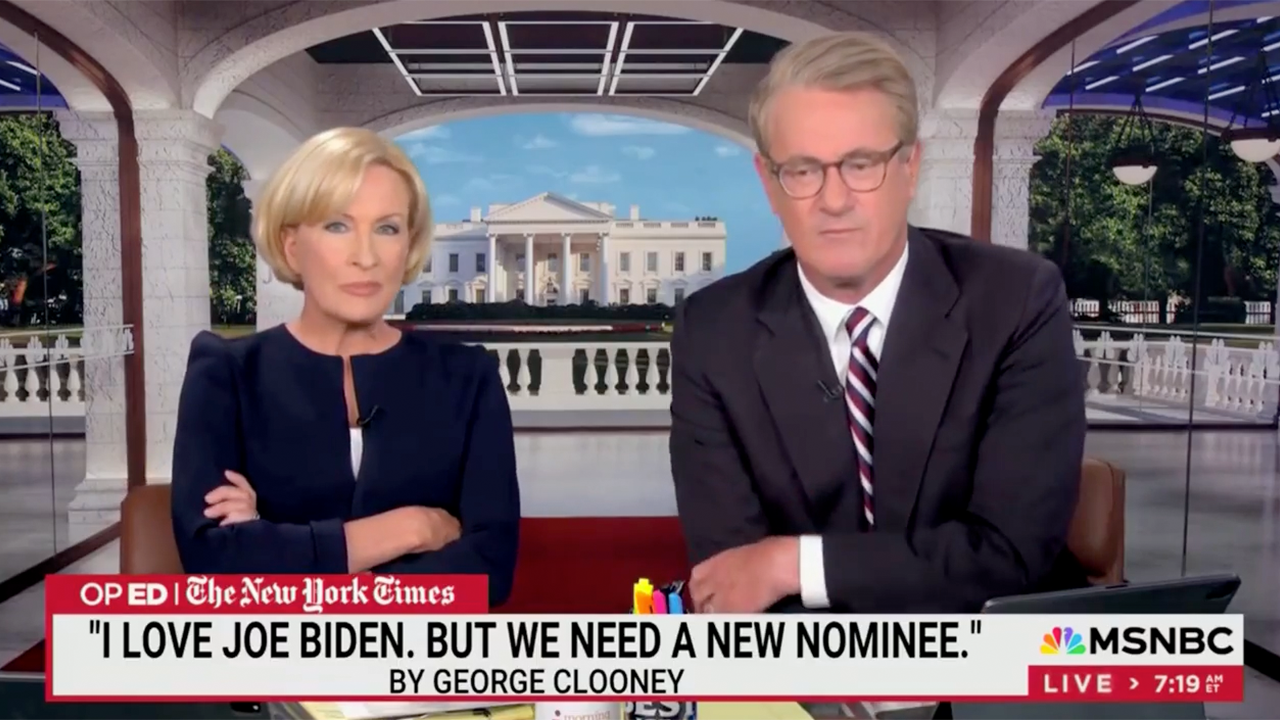
MSNBC yanks anti-Trump 'Morning Joe' off air following assassination attempt MSNBC yanked its flagship, staunchly anti-Trump show "Morning Joe" off the airwaves Monday in the wake of the assassination attempt on former President Trump. foxnews.com
Saved - July 15, 2024 at 9:03 PM

@kylenabecker - Kyle Becker

*THIS* is why Morning Joe was taken off the air today in the wake of Trump's assassionat*on attempt https://t.co/e5nV6POEEx

Video Transcript AI Summary
Trump supporters are accused of supporting fascism and racism by backing him. They are criticized for denying his racist remarks, attacking the media, and displaying authoritarian tendencies. Comparisons to Hitler and dictators are made, warning of a potential autocratic future under Trump. The ex-president is accused of appealing to white supremacy and nationalism. The speaker emphasizes the dangers of fascism and the erosion of democracy under Trump's leadership.
Full Transcript
Speaker 0: If they Listen. If they voted for Trump in 16, whatever. They voted for Trump in 20, they knew exactly fascist. They're voting for a fascist. They're voting for a racist. They're voting for somebody that wants to put this country 200 years in the Speaker 1: back. His supporters have no excuse anymore. There is no excuse. He is a racist. He is blatant about his racism. He is not using a dog whistle Speaker 2: Yeah. Speaker 1: To send out his racist messages. He is using a fog horn, denying that he knows who David Duke is, denying that he knows that the KKK was a malignant force in American history, equating, neo Nazis and and white supremacists to democratic protesters, trying to undo democratic progress across Europe. You cannot support this man. You're attacking the media. You're employing the same language that Stalin used, calling the media enemies of the people. You're making outrageous racist comments in Charlottesville. You're making outrageous racist comments in the White House. You're denying those, and you just send out a flurry of outrageous tweets every day. It is what dictators use. I'm not calling Donald Trump a dictator, but it is what autocrats and dictators have done a long time. It's what it's what Hitler and all of Hitler's people. And I'm not comparing Donald Trump to Adolf Hitler just like Flake wasn't comparing him to Stalin. Donald Trump Yeah. Is continuing to tell us and with more rapidity that he is an autocrat. And if he takes power again, he will be an autocrat. And this worshiping of Hitler's power, just like this worshiping of of president Xi, just like this worshiping of Kim Jong Un, just like this worshiping of Vladimir Putin, it all comes from the same disturbing place. He he has an anti American bent to authoritarianism. Speaker 2: So I think there's 2 lanes here. There's the number 1, it's morning in America. It's never been better here. And contrast Donald Trump nighttime in America, and start to use the f word, the fascist word. Don't just say democracy is hanging on a thread. Say, you will be a we will be a fascist state. Start putting cunning commercials together with Mussolini in it, with Hitler in it. I know everybody's going, oh, you can't do that. You can't do that. We will become a fascist state. Use the f word for Donald Trump, morning in America for Joe Biden. You Speaker 3: statement that the that the president the ex president made, as I said, is part of a pattern. He was in favor of keeping up the Confederate monuments. He talked about, back in the day when when somebody said something to him about David Duke, but he didn't really know, but he tipped his hat. Mhmm. He talked about in Charlottesville, there being, you know, both sides to that issue. This is a tip of the hat to white supremacy and white nationalism, which is unfortunately a very important part of the ex president's base, which goes to show you what in the he's gonna do if he gets elected. And he's already told you he's gonna be a dictator for the day. He wants to make sure that as the president, he could auto seal team team 6 Speaker 0: Right. Speaker 3: And go shoot political opponents. Speaker 1: I I there's a difference between conservatism, radicalism, and fascism. This is fascism. This is this is, The Times, quotes, an expert on the topic. Fascism is generally understood, and this is boilerplate stuff, really, for what fascism is. Fascism is generally understood as an authoritarian for right system of government in which hypernationalism is a central component. Check. It also features a cult of personality around a strong man leader. Check. The justification of violence or retribution against opponents. Check. And the repeated denigration of the rule of law. Check, said Peter Hayes, a historian who has studied the rights of fascism. Past fascist leaders appealed to a sense of victimhood to justify their actions. Check. We're entitled because we've been robbed. We've been victimized. We've been cheated and robbed. Check. Check. Check.
Saved - July 16, 2024 at 4:15 PM

@libsoftiktok - Libs of TikTok

Democrats need to "turn their fire on Donald Trump" - CNN contributor Kate Bedingfield before quickly backtracking. Just imagine the outrage if it was a Fox host saying that about a Democrat days after an attempted ass*ss*nat*on on them. https://t.co/bD5y2o8L8B

Video Transcript AI Summary
He repeatedly stated that he will not step down and will be the nominee. Democrats should focus on defeating Donald Trump in the election instead of attacking each other.
Full Transcript
Speaker 0: He has said many, many times after having been questioned many times about this, that he's not stepping down, and he is going to be the nominee. So at some point, Democrats have to decide that they want to try to win this election and turn their fire on Donald Trump. I think there is I I shouldn't have said turn their fire. I apologize. That's That was not the phrase that I meant. They need to turn their focus on Donald Trump. So
Saved - July 16, 2024 at 3:27 PM

@TPostMillennial - The Post Millennial

Rachel Maddow says that the motives of the person who shot Trump are “irrelevant.” https://t.co/DgnCzGRY5d

Video Transcript AI Summary
Looking back to the 1800s, the motive of violence is always irrelevant. Violence turns politics into crime, making the shooter's views unimportant. Everyone must unite against violence, whether targeted or incited. The recent tragic event in Pennsylvania highlights the seriousness of political violence. We are grateful Trump wasn't seriously hurt, but the loss of life is devastating. Let's hope this tragedy brings a sobering realization that violence in politics is never acceptable. Violence is unpredictable and can't be controlled once it's part of the system.
Full Transcript
Speaker 0: You look back at that whole string, going all the way back to the 1800, is that the motive of the person committing the violence is never relevant. Very true. The act of violence itself ends politics, turns it over into crime, and makes the views and the motivations of the shooter irrelevant. Everybody in politics, no matter where you are ideologically, must unite around the idea that violence is unacceptable. Absolutely. And it's unacceptable both, it it both when it comes to targeted stuff like this, but it's also unacceptable when you try to incite that as a way of getting things that you want that you can't get through political means. So it's true in terms of violent rhetoric. It's true in violence orientation toward the idea of confrontation with your fellow Americans. And, of course, it's true in the case of some sort of insane event like we saw on Saturday in in Pennsylvania. And I just feel like it was this it's a very obviously, we're all very grateful that president Trump was not more seriously hurt. We are all absolutely shattered by the fact that somebody was killed. Somebody was killed. Yeah. People were put in the hospital very seriously hurt. But I'm hope I am hoping that the one positive thing that come out of this is some sobriety around the idea of violence in politics being no freaking joke and nothing that anybody should play with ever. Fit. Yeah. And it's and and you're right. You can't be be ahistorical about it. And we do need to think of it as a as a spectrum while being completely real about the risks of this to everybody. Violence, among everything else, is very unpredictable. Once it's part of your political system, you never know which direction it's gonna go. Yeah. Nobody can harness it in one direction only. It just doesn't work that way.
Saved - July 18, 2024 at 12:57 AM

@BehizyTweets - George

BREAKING: Brainless Democrats on MSNBC are now saying if Biden survives his Covid infection, the people should view it like Trump surviving assassination "If he does fine...and is able to do rallies, isn't that exactly the same?" "It should," Jen Psaki https://t.co/LPHGEUqeA7

Video Transcript AI Summary
Both Trump and the current 81-year-old president faced health challenges, with Trump surviving an active shooter situation and the president contracting COVID. The media portrays Trump's quick recovery as strength, so shouldn't the president's recovery convey the same message? Despite the different circumstances, both elderly men overcoming illness should be seen as a sign of resilience.
Full Transcript
Speaker 0: Here's the question that I have on that. These 2 men are both elderly. Donald Trump is an elderly man who, for whatever reason, was given 9 seconds to take a iconic photo op during an active shooter situation. Weird situation. We'll figure that out one day. But his survival of that and and bouncing right back and going right to his convention is being conveyed in the media world as a sign of strength. This, current president of the United States is 81 years old and has COVID. Should he be fine in a couple of days? Doesn't that convey exactly the same thing? That he's strong enough older than Trump to have gotten something that used to really be fatal to people his age. So if he he does fine out of it and comes back and is able to do rallies, isn't that exactly the same? It it should. I mean, it's not exactly the same. It's not the same incident, but it's all it's an elderly man coming through out of an illness. It should.
Saved - July 21, 2024 at 5:54 PM

@libsoftiktok - Libs of TikTok

Joy Reid who’s still shilling for Biden blames the push to kick him out of the race on White people https://t.co/gn90U4xqoy

Video Transcript AI Summary
Black and brown Democrats oppose pushing out Biden, while consultants and non-people of color Democrats support it. Voters and those responsible for getting out the vote are not being consulted. Donors and elite Democrats are making decisions without their input. Share your thoughts in the comments. Translation: Black and brown Democrats are against removing Biden, while consultants and non-people of color Democrats are in favor. Voters and those in charge of voter turnout are not being asked for their opinion. Donors and elite Democrats are making decisions without consulting them. Share your thoughts in the comments.
Full Transcript
Speaker 0: Note that it is black and brown Democrats who are opposing this push out. I think there's 1 African American Democrat who's for pushing Biden out and know that it is consultants and non people of color, Democrats who are on the other side. Just an interesting thing to note. And, the last thing I'll note is where are the voters who are being asked about this and also the people who would have the job of actually getting out this vote? They're not being asked. No one's asking them. Apparently the donors and the sort of elite Dems are just kind of doing their own thing. We're trying to be a Democrat. Let me know what you think in comments.
Saved - February 24, 2025 at 6:14 PM

@TJMoe28 - T.J. Moe

Joy Reid has been the most deranged, openly racist person on television. https://t.co/kfetYh6YiH

Video Transcript AI Summary
The only thing that matters in this election is keeping Donald Trump and Project 2025 out of power. I genuinely don't care who the Democratic nominee is, be it Biden or Kamala Harris, or someone else entirely. What's crucial is to vote against the party that has embraced white Christian nationalism. The Republican party is gone, replaced by Project 2025 and MAGA. Voting against the "R" is essential at every level of government to prevent them from taking away birth control, education, and historical knowledge, and implementing their white Christian nationalist agenda. Nothing else matters but stopping Trump, the Republican Party, and Project 2025 in November. The only way to stop them is with our votes.
Full Transcript
Speaker 0: Let's not be trying to play games with these kinds of small things to try to pull us into a direction. All that matters in this election, and I I and I genuinely mean this, all that matters in this election, the only thing that matters in this election is keeping Donald Trump and project 2025 out of power. Keeping that in in insane ideology of white Christian nationalism and white supremacy and white male Christian dominance out of power. That's all that matters. I genuinely don't care who the Democratic nominee is, and I'm being real. I don't care. If it's Biden, fine. If it's Kamala Harris, fabulous. Right? But it's gonna be one of the two of them. Let's just not play crazy games now. There there are rules the way that this process works. It's one of the two of them. Either one. I don't care. Or you you wanna parachute somebody else in and they not him, they not the orange one, they not the one who quotes Hitler. Fine. Put them in. I don't care because all that matters, I'm going say this to y'all again, all that matters in this upcoming election is that you keep that man and that project 2025 plan out of power. That's all that's all you need to understand. And to do that, you are going to need to vote against the party that has embraced white Christian nationalism. The Republican party is gone. It has been replaced by project twenty twenty five and MAGA and Trump. That's all that's left. That party is gone and that means you have to vote against that letter R all the way down the ballot. You have to keep them out of power at the state level, keep them out of power at the federal level or remove them from power at the state and federal level. That means anything with the R on it is toxic. Anything with the R on it is going to take your birth control. Anything with the R on it is going to make you register, and take the military preparatory test in high school so that you're ready to be cannon fodder for them, to be deployed on the streets of The United States to shoot Americans who are protesting. They're gonna take away your education. They're gonna take away your opportunity to go to college. They're gonna take away your books, your history. They're gonna take away your right to even know the history of this country. They're gonna replace it with so called patriotic education. They're gonna get rid of the Department of Education, meaning no more Pell Grants, no more money for school, no more student loans, no more equality for girls sports. All of it gone. Replaced with this white Christian nationalist insanity. And they wanna do that not just federal, but state. The Republican party at the state level is just as bad or worse. Baby, ladies, gentlemen, friends, nothing else matters. Okay? Nothing else matters but stopping Trump, the Republican Party, and project twenty twenty five in November. You have a hundred and nineteen days to get, to get, to get right with that and get comfortable with that. That's all that matters. Okay? And the only way to stop them is with our votes.
Saved - February 25, 2025 at 9:29 AM

@GaysForTrump24 - Gays For Trump

Happy Joy Reid FIRED from MSNBC Day! There are lots of reasons to hate Joy Reid but this is what did it for me. 6 years ago homophobic tweets were found on her Twitter and this was how she "explained" how it happened. GURL PLEASE! 🤚 https://t.co/9p690Dnchq

Video Transcript AI Summary
A community I care about is hurting because of offensive posts attributed to me. Many of you have seen these blog posts online and on social media. They are homophobic, discriminatory, hateful, and weird. When a friend showed them to me in December, I was stunned because I couldn't imagine where they came from. I've spent months trying to understand these posts and hired cybersecurity experts to investigate if someone manipulated my words or my former blog. They haven't been able to prove manipulation, but I genuinely don't believe I wrote those hateful things because they are completely alien to me. I understand why some people don't believe me based on my past tweets and writings. I've been dumb, cruel, and hurtful to the people I advocate for. I own that, and I'm truly sorry.
Full Transcript
Speaker 0: A community that I support and that I deeply care about is hurting because of some despicable and truly offensive posts being attributed to me. And many of you have seen these blog posts circulating online and in social media. Many of them are homophobic, discriminatory, and outright weird and hateful. When a friend found them in December and sent them to me, I was stunned. Frankly, I couldn't imagine where they'd come from or whose voice that was. In the months since, I've spent a lot of time trying to make sense of these posts. I hired cybersecurity experts to see if somebody had manipulated my words or my former blog. And the reality is they have not been able to prove it. But here's what I know. I genuinely do not believe I wrote those hateful things because they are completely alien to me. But I can definitely understand based on things I have tweeted and have written in the past why some people don't believe me. I've not been exempt from being dumb or cruel or hurtful to the very people I want to advocate for. I own that. I get it. And for that, I am truly, truly sorry.
Saved - February 24, 2025 at 3:49 PM

@GypsyPatriot_ - ɢʏᴘꜱʏ 🇺🇸 ᴘᴀᴛʀɪᴏᴛ

Joy Reid Fired ....hmmm I wonder why? These leftist loser loons never learn. It's truly mind boggling. Remember when she blamed white women for Kamala losing? People are tired of the division and lies. Bye Felicia . https://t.co/Ga4NbXHWwu

Video Transcript AI Summary
Looking at the numbers, Black voters really showed up for Kamala Harris. However, white women voters didn't follow suit. In states where reproductive rights were taken away and efforts were made to emphasize the importance of reelecting the person responsible for taking those rights away to restore them, that message didn't resonate enough with white women to vote for Vice President Harris. This is a critical moment. White women now have a second chance to shift how they engage with the patriarchy.
Full Transcript
Speaker 0: See the numbers that Joe Biden had in the suburbs, and I think we have to be blunt about why. Black voters came through for Kamala Harris. White women voters did not. That is what it appears happened in that state is that if you can't flip enough white women, and we've talked about this on this set numerous times, but it's a state where women lost their reproductive rights, where there was a very heavy push to get women to focus on not putting in place, you know, reelecting, putting back into the White House the person who was responsible for taking those rights away and restoring them. But that message obviously was not enough to get enough white women to vote, for vice president Harris, a fellow woman. This will be the second opportunity that white women in this country have to change the way that they interact with the patriarchy.
Saved - February 24, 2025 at 4:25 PM

@BrandieWithABee - Brandie with a 🐝

It's great waking up to the news that we will no longer being seeing Joy Reid's bald head on MSNBC 🤣 https://t.co/aeEsFAPXgK

Video Transcript AI Summary
Did I steal Trump's haircut, or did he steal mine? Either way, it's a cultural appropriation haircut right there. Just call me Joey Reed, a clear case of Trump derangement syndrome in full swing.
Full Transcript
Speaker 0: Did you steal Trump's haircut, or did he steal yours? Cultural appropriation haircut right there. Joey Reed, everybody. Trump derangement syndrome. Full swing.
Saved - February 24, 2025 at 10:29 AM

@libsoftiktok - Libs of TikTok

Joy Reid has been FIRED. Turns out calling your political opponents racist Nazis every night for an hour doesn’t get viewers https://t.co/yFjPiAmRuY

Video Transcript AI Summary
We begin our final sprint, having arrived at the point in the election season where we've said all we can. We've laid out the stakes in this crucial election where one side stands for freedom, while the other side would have the military execute the whims of a strongman dictator. They would control and suppress the press, education, and the arts, rewrite history to suit a favored racial class, and foment extravagant corruption to enrich the dictator and his friends.
Full Transcript
Speaker 0: Begin our final sprint having arrived at that point in the election season where basically we on this side of the TV screen have said all we can. We've laid out the stakes in this crucial election where one side stands for freedom while the other country. I that's case. The military to execute the whims of a strong man dictator, and controls and suppresses the press. Education, the arts, rewrites history to suit a favored and dominant racial class, and foments extravagant corruption in order to enrich the dictator and his friends.
Saved - February 24, 2025 at 10:32 AM

@ThomasSowell - Thomas Sowell Quotes

In honor of Joy Reid's show getting scrapped, here is the exact moment when she and Rachel Maddow realized that Trump was winning the election. https://t.co/wPlzeTVPSp

Video Transcript AI Summary
We're seeing Trump take the lead in key areas. In the battleground state of Georgia, Trump has prevailed. Despite votes still being counted, we're committed to ensuring every vote is tallied. The atmosphere is somber as the map's implications sink in. The outcome isn't what many hoped for, particularly regarding a potential historic election. The campaign, despite being flawlessly run and endorsed by numerous prominent figures, faces uncertainty. People worldwide are waking up to this, with many expressing alarm. Of the seven swing states, only Georgia and North Carolina have been called. Pennsylvania, Michigan, and Wisconsin remain uncalled. Trump has won Pennsylvania, presenting a significant challenge for the Democratic ticket. We've achieved something incredible, overcoming seemingly impossible obstacles. It's going to be a tough speech.
Full Transcript
Speaker 0: Trump has now taken the lead in Bucks County. Speaker 1: NBC News now projects that in the battleground state of Georgia in the presidential race, Donald Trump has prevailed. The Republican Party will control the United States Senate. This is live from Howard University in Washington DC. Speaker 0: We still have votes to count. We still have states that have not been called yet. We will continue overnight to fight to make sure that every vote is counted. Thank you all. Speaker 1: A short and to the point statement from Cedric Richmond, the Harris campaign co chair. You now see them turn as one to start to leave the grounds. The evening Speaker 2: was getting increasingly somber as people realized what this map is looking like. They turned off the TV set and just piped up the music because the room was starting to get increasingly somber. Speaker 1: You know, we always knew it was gonna be down to the blue wall, and the blue wall is still uncalled at this point. But it sounds like the Harris campaign is is sort of keeping things tight in terms Speaker 3: of whether or not they're gonna string people along into thinking this is gonna happen. What they went to that venue tonight hoping to see and witness was a historic election of Kamala Harris to the presidency Yeah. Was the end of the Trump era as they knew it. And so we don't know the outcome yet, but that is not what they are receiving, and they are being told to go home, and wait till tomorrow. I I that is that's just I Speaker 4: And nothing that was true yesterday about how flawlessly this campaign was run is not true now. I mean, this really was an historic flawlessly run campaign. She had Queen Latifa never endorses anyone. She came out and endorsed. You know, I mean, you she had every prominent celebrity voice. She had the Swifties. She had the Beehive. Like, you could not have run a Speaker 3: better campaign. In Western Europe and in The UK and in The Middle East, people are waking up Speaker 1: to this. Speaker 0: Oh, and they are. Speaker 3: I've gotten people from Western Europe who are extraordinarily alarmed and terrified. May I reiterate, there are two of the Speaker 1: seven swing states that have been called by NBC News right now, which is Georgia and North Carolina. None of the other five states have been have been called at this point. You can see this is the battleground states, Pennsylvania, Michigan, and Wisconsin, the so called Blue Wall. None of those states called by NBC News. In the swing state of Pennsylvania, NBC News now projects that that presidential contest has been won by Donald Trump. It presents an insurmountable future here for for Kamala Harris and for the Democratic ticket. Let's watch as Trump takes the stage in Palm Beach, Florida. Speaker 5: We overcame obstacles that nobody thought possible, and it is now clear that we've achieved the most incredible political thing. Look what happened. Is this crazy? Speaker 0: Boy, it's gonna be a real tough speech for her.
Saved - February 24, 2025 at 10:25 AM

@libsoftiktok - Libs of TikTok

Trump just DESTROYED NBC, MSNBC, Rachel Maddow, and Joy Reid https://t.co/nx9JxLOgrM

Saved - February 24, 2025 at 5:14 PM

@JackPosobiec - Jack Poso 🇺🇸

FLASHBACK: Here is Joy Reid mocking police officers who were fired for refusing the COVID mandate https://t.co/yHjLbM4sTO

Video Transcript AI Summary
New York City will mandate vaccines for all city workers, without a testing option, including police officers, 69% of whom are vaccinated. Police unions across the country are protesting mandates. Seattle's union called it a public safety crisis. In other parts of the country, police and firefighters who were fired for noncompliance marched to City Hall. The Los Angeles County Sheriff won't enforce the city's mandate. Chicago's union president urged officers to ignore the mandate, leading to a judge's order to stop public comments about the policy. Republicans are attempting to recruit Chicago officers to other states. COVID-19 has caused 64% of all police officer deaths this year, more than gun violence. Some officers refuse to comply with mask laws, as happened in a New York subway. Officers and unions fighting vaccine mandates are endangering Americans.
Full Transcript
Speaker 0: New York City announced today that vaccines would be mandated for all city workers with no testing option. That includes police officers who are currently sixty nine percent vaccinated. Their union is already vowing to fight the mandate anyway. It's a pattern that we've seen across the country with police unions and officers coming out against mandates. Seattle's police union called the mandate a public safety crisis, as if vaccines aren't for the public's safety. The city's police and firefighters who were fired for noncompliance made a very dramatic exit marching to City Hall to turn in their boots. And a trooper went as far as to attack governor Jay Inslee over the radio while claiming that he was being asked to leave because I'm dirty. I mean, no one said not being vaccinated was dirty, but okay then. Then there's the Los Angeles County Sheriff who said he won't enforce the city's mandate, though there's still a two month grace period for employees to get their shots. But there's no place like Chicago where the union president directly urged officers to ignore the city's mandate, making the prediction that it would lead to a 50% cut in cops on the street. He also threatened that officers could lock in a pension and walk away today. That kind of rhetoric led to a judge's order that he stopped making public comments about the city's vaccine policy. Of course, Republicans are taking advantage of the situation in Chicago with Indiana senator Mike Braun trying to recruit Chicago Officers to Indiana, saying, you deserve respect. Bring the COVID here. And none other than Jim Jordan mentioned the Chicago police in a tweet along with Kyrie Irving and parents at school board meetings saying freedom is contagious. You know what's actually contagious? The coronavirus. COVID nineteen has caused sixty four percent of all police officer deaths so far this year, more than quadruple the number who died from gun violence. But go off, assistant coach. Make your political point. Police officers are supposed to protect and serve, but they're actually putting themselves ahead of the citizens they could infect. We constantly hear that police brutality cases wouldn't even have happened. If only everyone just complied and followed all of their commands. But it's clear that some officers don't hold themselves to that same standard. They're literally refusing to comply with the law. Just take what happened in at a New York subway stop yesterday where a rider says he was harassed and then thrown out of the station for asking officers to wear masks, which, by the way, is the law. The NYPD says the event is under internal review. Guess all the cops former governor Cuomo sent into the subway system are really making an impact. So for putting Americans in danger, officers and unions who are fighting against vaccine mandates, which essentially means fighting to make the public sick, are tonight's absolute worst.
Saved - February 25, 2025 at 11:13 AM

@TaraBull808 - TaraBull

Joy Reid breaks down sobbing while addressing being fired from MSNBC. Do you feel sorry for her? https://t.co/W8Eu8rBUac

Video Transcript AI Summary
I'm sorry for getting emotional, but I truly believe my show had value and that it mattered. Thank you to everyone. I felt a sense of guilt for going so hard on issues like Black Lives Matter, anti-Asian hate, defending immigrants, calling out subversive actions against the Constitution, defending inconvenient books like the 1619 Project, and speaking out about the bombing of babies in Gaza. But ultimately, I'm not sorry. I'm not sorry that I stood up for these things because they align with what I believe is right. As a church girl, I was taught that these values are of God, and I'm proud of my show for standing up for them.
Full Transcript
Speaker 0: My show had value and that I'm sorry. That that what I was doing had value had value. And in the end I'm sorry. I'm not I try not to cry on TV, and I take this is kinda like me on TV, so I apologize. And then and then it kind of and then it mattered. I see Karen is there, and she's been texting me as well. And so what I will just say is that in the end thank you. Where I land is that the moment that I of guilt that I felt that I went hard on so many issues, whether it was the Black Lives Matter issues of a young baby, or a mom or a dad that was killed, or, when we opened up people's eyes to the fact that Asian Americans were being targeted and not just black folks that or went hard for immigrants who've done nothing but come to this country like my parents did and try to make a life and defended them, or whether we've talked about what the president is doing that is subversive to the constitution, that is injurious to our liberty, you know, defending books that people find inconvenient, you know, that Nicole Hannah Jones put into our spirit that we need to understand 1619 as the real founding of this country, whether it's talking about any of these issues. And and, yes, whether it's talking about Gaza and the fact that we as the American people have a right to object to have a right to object to little babies being bombed. And and where I come down on that is I'm not sorry. I am not sorry that I stood up for those those things because those things are of God. And and, you know, I'm a church girl too, and those the those are the things that I was taught were of God. And so I I'm not sorry. I'm just proud of my show.
Saved - February 25, 2025 at 11:08 AM

@saras76 - Sara Rose 🇺🇸🌹

Racist, divisive, Joy Reid just finished her last show. MSDNC finally cancelled it. Have no fear, you can follow her on Bluecry 🤣 https://t.co/itAQVSAZUu

Video Transcript AI Summary
Thank you to our amazing audience for holding us down for almost five years. We are a toddler, and we are out in the streets in this world, and we are not gonna stop. You can follow me on social media at substack.joyandread.com and Joy Reid official. I want to thank Joy Reid. She's done amazing work here, telling stories fearlessly. Even before I met Joy, I felt like she was talking directly to me through the screen. She became my office neighbor and is the best office neighbor I could have asked for. I admire her mind, talent, and fierceness, and I love running into her in the hallway and chatting with her on set. I'm gonna miss all of that. Thank you, Joy Reid.
Full Transcript
Speaker 0: Shout out to our amazing readers, our audience. I just love running into y'all in the airport, on these streets, and on social media. I could not love or appreciate you more. Thank you. Thank you. Thank you for holding us down almost five years. We are a toddler, and we out in the streets in this world, and we are not gonna stop. That is tonight's readout. You can follow me on Bluestock, Instagram, Threads, and on Substack at substack.joy I mean, it's at joyandread.substack.com. Also on TikTok and Facebook at Joy Reid official inside with Jen. Saki starts now. Speaker 1: Okay. I know Joy just ended her show by thanking her team, which is the most authentically Joy thing to do, I can tell you, and they are also a very incredible team. But I want to start this show tonight by thanking her. I want to thank her because she's done amazing work here. She does tell stories no one She does that fearlessly on her show. But also for the person that she is. And even before I met Joy Reid and I didn't meet her till I started working her I felt like I kind of knew her. I don't know if you relate to this. I felt like she was kind of talking directly to me through the screen. I know many of you watching at home know exactly what I mean. And then when I got here, she became my office neighbor, literally two doors down. And she is the best office neighbor I could have asked for. I mean, she's somebody whose mind and her talent and her fierceness I admire so much, but she's also someone who I kind of just love running into in the hallway or chatting with on the set during specials as my colleagues were just talking about, about anything, what's happening in the world, what's going on in her life, and I'm gonna miss all of that. And so thank you to Joy Reid. I just wanted to start there.
Saved - February 28, 2025 at 12:43 AM

@Bubblebathgirl - Paul A. Szypula 🇺🇸

Joy Reid signs off her final episode in the same uninteresting way that led to her cancellation. Jen Psaki then gaslights and pretends Joy ever had a good heart or mind. It’s truly wonderful to see these legacy media hacks get fired. They’re horrible. https://t.co/XpqfNX2QAM

Video Transcript AI Summary
I want to thank our amazing audience for holding us down these past five years. We are just getting started and we are not gonna stop! You can follow me on Bluestock, Instagram, Threads, Substack at joyandreid.substack.com, TikTok, and Facebook at Joy Reid official. I also want to thank Joy, who just finished her show. She has done amazing work here, telling stories fearlessly. Even before I met her, I felt like she was speaking directly to me through the screen. She's been the best office neighbor I could have asked for; I admire her mind, talent, and fierceness. I'm going to miss running into her and chatting about everything. So, thank you, Joy Reid.
Full Transcript
Speaker 0: Shout out to our amazing readers, our audience. I just love running into y'all in the airport, on these streets, and on social media. I could not love or appreciate you more. Thank you. Thank you. Thank you for holding us down almost five years. We are a toddler, and we out in the streets in this world, and we are not gonna stop. That is tonight's readout. You can follow me on Bluestock, Instagram, Threads, and on Substack at substack.joy I mean, it's at joyandread.substack.com. Also on TikTok and Facebook at Joy Reid official inside with Jen. Saki starts now. Speaker 1: Okay. I know Joy just ended her show by thanking her team, which is the most authentically Joy thing to do, I can tell you, and they are also a very incredible team. But I want to start this show tonight by thanking her. I want to thank her because she's done amazing work here. She does tell stories no one She does that fearlessly on her show. But also for the person that she is. And even before I met Joy Reid and I didn't meet her till I started working her I felt like I kind of knew her. I don't know if you relate to this. I felt like she was kind of talking directly to me through the screen. I know many of you watching at home know exactly what I mean. And then when I got here, she became my office neighbor, literally two doors down. And she is the best office neighbor I could have asked for. I mean, she's somebody whose mind and her talent and her fierceness I admire so much, but she's also someone who I kind of just love running into in the hallway or chatting with on the set during specials as my colleagues were just talking about, about anything, what's happening in the world, what's going on in her life, and I'm gonna miss all of that. And so thank you to Joy Reid. I just wanted to start there.
Saved - February 25, 2025 at 3:07 AM

@Sassafrass_84 - Sassafrass84

Joy Reid is the meme that keeps on giving. 😂😂😂 https://t.co/n8jBLgfXf5

Saved - February 25, 2025 at 4:08 PM

@GuntherEagleman - Gunther Eagleman™

Rachel Maddow just went on a 4-minute unhinged rant against the owner of MSNBC for firing Joy Reid. This is the funniest clip you will see from today. https://t.co/voRmt3Eh4K

Video Transcript AI Summary
There are some big changes happening here at the network. Joy Reid's show is ending, and she is leaving MSNBC altogether, which is hard to accept as she is a valued colleague. Additionally, two non-white hosts in prime time are losing their shows. Beyond on-air changes, many experienced producers and staffers are facing layoffs or are being asked to reapply for new positions. This has created a great deal of anxiety and uncertainty, especially considering the already stressful environment due to attacks on the press. While we welcome new voices and look forward to continued success, it's important to remember the value of treating our colleagues well and supporting those who work behind the scenes.
Full Transcript
Speaker 0: PM hour, all the other nights except for Mondays. So that's a big change. An even bigger programming change is at 7PM, seven PM Eastern, where Joy Reid's show, the readout ended tonight. And Joy is not taking a different job in the network. She is leaving the network altogether, and that is very, very, very hard to take. I am 51 years old. I have been gainfully employed since I was 12. And I have had so many different kinds of jobs. You wouldn't believe me if I told you. But in all of the jobs I have had, in all of the years I have been alive, there is no colleague for whom I have had more affection and more respect than Joy Reid. I love everything about her. I have learned so much from her. I have so much more to learn from her. I do not want to lose her as a colleague here at MSNBC. And personally, I think it is a bad mistake to let her walk out the door. It is not my call, and I understand that, but that's what I think. I will tell you, it is also unnerving to see that on a network where we've got two, count them, two nonwhite hosts in primetime, Both of our non white hosts in prime time are losing their shows as is Katie Fang on the weekend. And that feels worse than bad, no matter who replaces them. That feels indefensible and I do not defend it. But there's just one other piece of it that you should know. From your side of the TV screen, you will mostly see changes in terms of who's in the anchor chair. And actually everybody who's going to be in anchor chairs from here on out are great colleagues and great at what they do, and you are not going to be disappointed in who's on our air and what you're going to be seeing. But one thing you cannot necessarily see is that the people who get our shows on the air, they're really being put through the ringer. Dozens of producers and staffers, including some who are among the most experienced and most talented and most specialist producers in the building are facing being laid off. They're being invited to reapply for new jobs. That has never happened at this scale in this way before when it comes to programming changes, presumably because it's not the right way to treat people and it's inefficient and it's unnecessary. And it kind of drops the bottom out of whether or not people feel like this is a good place to work. And so we don't generally do things that way. Maybe all of our folks, including most of the people who are getting this very show on the air right now, maybe they will all get new jobs here, and I hope they do. But in the meantime, being put in this kind of limbo, the anxiety and the discombobulation is off the charts. At a time when this job already is extra stressful and difficult, it is not news for me to tell you that the press and freedom of the press are under attack in a way that is really it's a big deal for our country. It's very visceral for us here. I know that the business of the press is not an easy thing, and I know that no job is forever. But I think I'm safe in saying for all of us anchors who you know through the TV, please know that what pains us the most is not what happens to us. It is what happens to our coworkers on whom we depend and who you don't necessarily know, but we respect and love them and depend on them. And did I mention we respect them? This is a difficult time in the news business, but it does not need to be difficult. We welcome new voices to this place and some familiar voices to new hours. It's going to be great, honestly, and we want to grow and succeed and reach more people than ever and be resilient and stay here forever. I also believe, and I bet you believe that the way to get there is by treating people well. Finding good people, good colleagues, doing good work with them and then having their back. That we could do a lot better on, a lot better. I'll be right back.
Saved - February 25, 2025 at 11:02 AM

@EndWokeness - End Wokeness

MSNBC host Rachel Maddow suggests the network is racist for firing Joy Reid https://t.co/JppOTdlvcN

Video Transcript AI Summary
Tonight marks the end of Joy Reid's show, "The ReidOut," at 7 PM eastern. Joy is leaving MSNBC altogether, which is very hard for me to accept. In my many years of working, I've never had a colleague I respected and admired more than Joy. I love and have learned so much from her, and I don't want to lose her as a colleague. Personally, I think letting her go is a mistake, though it's not my decision. What's also unnerving is that two non-white hosts in primetime are losing their shows, along with Katie Fang on the weekend. This feels indefensible, and I cannot defend it.
Full Transcript
Speaker 0: An even bigger program programming change is at 7PM, 7PM eastern, where Joy Reid's show, the readout, ended tonight. And Joy is not taking a different job in the network. She is leaving the network altogether. And that is very, very, very hard to take. I am 51 years old. I have been gainfully employed since I was 12. And I have had so many different kinds of jobs, you wouldn't believe me if I told you. But in all of the jobs I have had, in all of the years I have been alive, there is no colleague for whom I have had more affection and more respect than Joy Reid. I love everything about her. I have learned so much from her. I have so much more to learn from her. I do not want to lose her as a colleague here at MSNBC, and personally, I think it is a bad mistake to let her walk out the door. It is not my call, and I understand that, but that's what I think. I will tell you, is also unnerving to see that on a network where we've got two, count them, two nonwhite hosts in primetime, Both of our non white hosts in prime time are losing their shows, as is Katie Fang on the weekend. And that feels worse than bad no matter who replaces them. That feels indefensible, and I do not defend it.
Saved - February 25, 2025 at 4:07 PM

@bennyjohnson - Benny Johnson

Here’s a nice little laugh for you on this wonderful evening. Mark Cuban… I mean Rachel Maddow goes on a cringey 4 minute rant over Joy Reid being fired from MSNBC. Little does she know…. She’s next. https://t.co/Pol2FYNl2h

Video Transcript AI Summary
There are big programming changes happening. Joy Reid's show is ending and she is leaving the network altogether, which is hard to accept because I have immense respect and affection for her. I think it’s a mistake to let her go. It's also concerning that two non-white hosts in primetime are losing their shows, along with Katie Fang. While the new anchors will be great, the behind-the-scenes staff are facing layoffs and being asked to reapply for their jobs, which is creating anxiety and disruption. The press is under attack, and while changes happen, it’s most painful to see what happens to our coworkers, who we deeply respect and depend on. We need to treat people well, find good colleagues, do good work with them, and support them. We can do much better.
Full Transcript
Speaker 0: PM hour, all the other nights except for Mondays. So that's a big change. An even bigger programming change is at 7PM, seven PM Eastern, where Joy Reid's show, the readout ended tonight. And Joy is not taking a different job in the network. She is leaving the network altogether, and that is very, very, very hard to take. I am 51 years old. I have been gainfully employed since I was 12. And I have had so many different kinds of jobs. You wouldn't believe me if I told you. But in all of the jobs I have had, in all of the years I have been alive, there is no colleague for whom I have had more affection and more respect than Joy Reid. I love everything about her. I have learned so much from her. I have so much more to learn from her. I do not want to lose her as a colleague here at MSNBC. And personally, I think it is a bad mistake to let her walk out the door. It is not my call, and I understand that, but that's what I think. I will tell you, it is also unnerving to see that on a network where we've got two, count them, two nonwhite hosts in primetime, Both of our non white hosts in prime time are losing their shows as is Katie Fang on the weekend. And that feels worse than bad, no matter who replaces them. That feels indefensible and I do not defend it. But there's just one other piece of it that you should know. From your side of the TV screen, you will mostly see changes in terms of who's in the anchor chair. And actually everybody who's going to be in anchor chairs from here on out are great colleagues and great at what they do, and you are not going to be disappointed in who's on our air and what you're going to be seeing. But one thing you cannot necessarily see is that the people who get our shows on the air, they're really being put through the ringer. Dozens of producers and staffers, including some who are among the most experienced and most talented and most specialist producers in the building are facing being laid off. They're being invited to reapply for new jobs. That has never happened at this scale in this way before when it comes to programming changes, presumably because it's not the right way to treat people and it's inefficient and it's unnecessary. And it kind of drops the bottom out of whether or not people feel like this is a good place to work. And so we don't generally do things that way. Maybe all of our folks, including most of the people who are getting this very show on the air right now, maybe they will all get new jobs here, and I hope they do. But in the meantime, being put in this kind of limbo, the anxiety and the discombobulation is off the charts. At a time when this job already is extra stressful and difficult, it is not news for me to tell you that the press and freedom of the press are under attack in a way that is really it's a big deal for our country. It's very visceral for us here. I know that the business of the press is not an easy thing, and I know that no job is forever. But I think I'm safe in saying for all of us anchors who you know through the TV, please know that what pains us the most is not what happens to us. It is what happens to our coworkers on whom we depend and who you don't necessarily know, but we respect and love them and depend on them. And did I mention we respect them? This is a difficult time in the news business, but it does not need to be difficult. We welcome new voices to this place and some familiar voices to new hours. It's going to be great, honestly, and we want to grow and succeed and reach more people than ever and be resilient and stay here forever. I also believe, and I bet you believe that the way to get there is by treating people well. Finding good people, good colleagues, doing good work with them and then having their back. That we could do a lot better on, a lot better. I'll be right back.
Saved - February 25, 2025 at 4:08 PM

@GuntherEagleman - Gunther Eagleman™

The meltdowns over Joy Reid's show ending are the best thing I've seen in forever. Couldn't have happened to a worse person. https://t.co/6fK1D4KyaX

Video Transcript AI Summary
I love you both, and the friendships we've formed here have sustained me. The thought of doing these nights without you feels like losing a limb. Your strength and fearlessness inspire me, but my despair over your departure is something I must fight. Despair is the autocrat's tool, leading to hopelessness and inaction. We can't afford to wallow in it. We have to be real with ourselves, but also recognize that no perfect candidate or ad will save us. We have to save ourselves. We, as a country, need to decide that certain things, like Elon Musk's unchecked accumulation of wealth, are not who we are.
Full Transcript
Speaker 0: History, your ability, your political acumen. Nicole Wallace, my good sister, tell me what you your brilliant self believe people can do. Speaker 1: Well, I'm gonna break the rules the way Rachel broke the rules and tell you that I love you. That the happiest times I've had, not just at MSNBC, but ever being on television, have been sitting next to the two of you. No offense, Florence. We love having you there too. We love Lawrence. And that I think that I thought that things like that on TV couldn't be real, but that the friendships that have sustained me have been with both of you. And I am you know, it's like losing a limb, the thought of doing those nights without you. Your strength and your fearlessness is, the answer to the question I think you're getting at with both of us. And I think that my reaction to, the end of the readout and your departure is despair. And the only thing that that that chips away at that for me is that despair is the autocrat's tool. It's their most effective weapon. It costs nothing. It's easy to deploy. It's contagious, and then it puts in motion all the actions they want, hopelessness, isolation, exasperation, giving up. Yeah. And so the only reason I will not wallow in what I feel about you leaving is is because I think that's what they want. And so I don't think there could be artificial joy and gaslighting about sort of breaking up the pro democracy side. I think it has to be you know, I think we have to be real with ourselves and with each other. But I do think I I'm so intrigued and sort of I feel the stirrings in everything you've been covering tonight. You know, the the answer to this moment is not gonna come from a perfect ad being cut by a brilliant ad maker and put on the air for the perfect candidate that comes out of a lab. It's just that's not how we're gonna save ourselves. And I think waiting for someone to save us is kind of how we got here. We have to save ourselves. We as a country have to decide that Elon Musk getting, you know, I I don't even know what the word is. He's already the richest person in the world, you know, richer than the richest person, you know, to ever exist. I I don't even know what the goal is. But I think that turning this over to the country and saying, you may think this is what you wanted, but this is not who we are. Speaker 0: Yeah. Yeah. Indeed. And and I think people are getting there. And and, Lawrence, I wanna bring you in because and, again, I I
Saved - September 10, 2025 at 7:25 PM

@EricLDaugh - Eric Daugherty

🚨 BREAKING: MSNBC anchor calls Charlie Kirk "divisive" and "polarizing" after he was shot. This is perhaps the most disgusting response to a political act of violence I've seen on cable TV, ever. https://t.co/ODnKKduvFT

Video Transcript AI Summary
Yeah. We're showing, by the way, our affiliate in Utah and the aftermath of the shooting. You could see people running away pretty quickly as as you would imagine they would do gunshots. The FBI director, Kash Patel, has weighed in on this. He just tweeted the following. "We're closely monitoring reports of the tragic shooting involving Charlie Kirk at Utah Valley University. Our thoughts are with Charlie, his loved ones, and everyone affected. Agents will be on the scene quickly, and the FBI stands in full support of the ongoing response and the investigation. Charlie Kirk is a divisive figure, polarizing, lightning rod, whatever term you wanna use. Why?" Speaker 1: Well, he's one of MAGA's most prominent voices online. He hosts a near daily podcast. He opines on almost everything. He's been very closely aligned with the president since his initial run for office in 2015, 2016, and his ties to Trump really elevated his own brand. He was really quite young as an activist when the president launched his initial campaign, and he has kind of ridden along with MAGA since 2016 and built up a massive massive brand of his own. His his group has brought in tons and tons of money.
Full Transcript
Speaker 0: Yeah. We're showing, by the way, our affiliate in Utah and the aftermath of the shooting. You could see people running away pretty quickly as as you would imagine they would do gunshots. The FBI director, Kash Patel, has weighed in on this. He just tweeted the following. We're closely monitoring reports of the tragic shooting involving Charlie Kirk at Utah Valley University. Our thoughts are with Charlie, his loved ones, and everyone affected. Agents will be on the scene quickly, and the FBI stands in full support of the ongoing response and the investigation. Charlie Kirk is a divisive figure, polarizing, lightning rod, whatever term you wanna use. Why? Speaker 1: Well, he's one of MAGA's most prominent voices online. He hosts a near daily podcast. He opines on almost everything. He's been very closely aligned with the president since his initial run for office in 2015, 2016, and his ties to Trump really elevated his own brand. He was really quite young as an activist when the president launched his initial campaign, and he has kind of ridden along with MAGA since 2016 and built up a massive massive brand of his own. His his group has brought in tons and tons of money.
View Full Interactive Feed