reSee.it - Related Post Feed

@petersuber - Peter Suber (@petersuber@fediscience.org)
New study: "More than 90% of the scientific articles published by Colombian researchers are in English....Publishing in a 2d language creates additional financial costs...&...problems with reading comprehension, writing ease & time, & anxiety." https://journals.plos.org/plosone/article?id=10.1371/journal.pone.0238372
@petersuber - Peter Suber (@petersuber@fediscience.org)
Update. Publishers may choose English because it's a lingua franca for science, intelligible to a larger audience. Or they may do it to increase their #JIF. (And of course the two motives may be related.) Research from Brazil. https://www.scielo.br/scielo.php?script=sci_arttext&pid=S0001-37652020000400723

@petersuber - Peter Suber (@petersuber@fediscience.org)
Update. Confirmation that writing outside your native language (unless you are extremely proficient) triggers linguistic bias from native speakers. https://www.sciencedirect.com/science/article/pii/S1475158520301685

@petersuber - Peter Suber (@petersuber@fediscience.org)
1/ Update. Most email solicitations from predatory journals use weak English. This study confirms my experience. https://paperity.org/p/174009175/marketing-via-email-solicitation-by-predatory-and-legitimate-journals-an-evaluation-of But...

@petersuber - Peter Suber (@petersuber@fediscience.org)
2/ But be careful about concluding that most journals using weak English (in email solicitations or web pages) are predatory. Some could be honest journals published in English, for understandable reasons, by scholars whose first language is not English.
@petersuber - Peter Suber (@petersuber@fediscience.org)
Update. "One of the main limiting factors...[experienced by researchers preparing articles for biomedical journals] has been limited skills in English writing and editing." https://pmj.bmj.com/content/early/2020/11/06/postgradmedj-2020-139243
@petersuber - Peter Suber (@petersuber@fediscience.org)
Update. "Surveys of...Spanish-speaking...& Mandarin Chinese-speaking researchers revealed that [they] found it significantly more difficult to write...articles in English than in their native tongues [&] increased their dissatisfaction and anxiety." https://www.sciencemag.org/careers/2020/10/science-s-english-dominance-hinders-diversity-community-can-work-toward-change
@petersuber - Peter Suber (@petersuber@fediscience.org)
Update. Call for standardizing multilingual metadata. https://firstmonday.org/ojs/index.php/fm/article/view/10378

@petersuber - Peter Suber (@petersuber@fediscience.org)
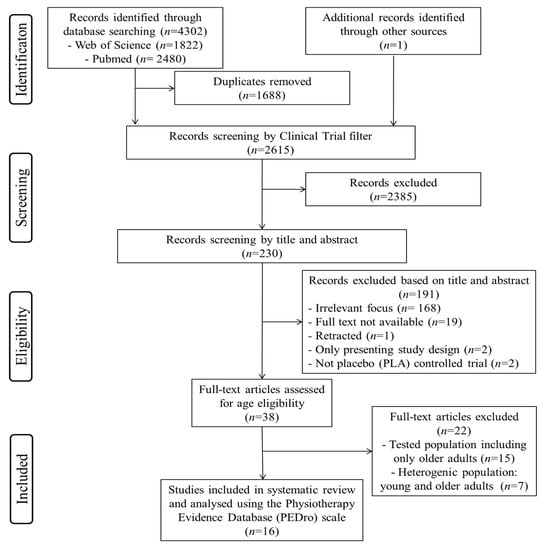
Update. This "systematic review and meta-analysis" limited itself to studies written in English. Understandable, regrettable, and probably very common. https://www.mdpi.com/2077-0383/9/5/1598/htm
@petersuber - Peter Suber (@petersuber@fediscience.org)
Update. "This project seeks to conduct language translation on metadata labels for research publications, attribution data, & clinical trials…to make data about medical research queriable in underserved languages through Wikidata and the Linked Open Web." https://riojournal.com/article/66490/
@petersuber - Peter Suber (@petersuber@fediscience.org)
Update. "We [scientists who speak English as a second language] shoulder an extra career challenge: not only must we gain command of our science, but we must also be able to write to professional standards in a foreign language." https://www.nature.com/articles/d41586-021-00899-y

@petersuber - Peter Suber (@petersuber@fediscience.org)
Update. Google Scholar shows 3,700,000 papers on climate change written in English, "three times more than Mandarin Chinese & French combined. Among the top 10 countries most vulnerable to climate change, only one is majority English-speaking (Canada)." https://www.smithsonianmag.com/blogs/conservation-commons/2021/03/23/meet-sophia-kianni/
/https://tf-cmsv2-smithsonianmag-media.s3.amazonaws.com/blogging/featured/40159CFE-0BD1-472A-A8CA-22B1FA242FFD.jpg)
@petersuber - Peter Suber (@petersuber@fediscience.org)
Update. "Our results show that synthesising non-English-language studies is key to overcoming the widespread lack of local, context-dependent evidence and facilitating evidence-based conservation globally." https://www.biorxiv.org/content/10.1101/2021.05.24.445520v1

@petersuber - Peter Suber (@petersuber@fediscience.org)
Update "Only 11 of 38 European countries had any medical publications in [their] national language that were referenced in MEDLINE." https://ebooks.iospress.nl/doi/10.3233/SHTI210177

@petersuber - Peter Suber (@petersuber@fediscience.org)
Update. "If everyone uses the same language, there is less friction…[But] the English-language conquest is not more efficient than polyglot science – it is just differently inefficient. There’s still a lot of language‑learning and translation going on." https://aeon.co/essays/how-did-science-come-to-speak-only-english

@petersuber - Peter Suber (@petersuber@fediscience.org)
Update. "I have rec'd…peer-review feedback recommending that a ‘native English speaker’…[proofread] my manuscript…Yet…English is my first language…[Some reviewers who gave this feedback] did not themselves show a strong competence in written English." https://insights.uksg.org/articles/10.1629/uksg.502/

@petersuber - Peter Suber (@petersuber@fediscience.org)
Update. Good science is more important than good English. But "science too often demands that non-native English-speaking academics focus on learning to speak and write in English, which drastically disadvantages them." Hence.... https://www.nature.com/articles/d41586-021-01905-z

@petersuber - Peter Suber (@petersuber@fediscience.org)
Update. "No one can deny that the dominance of the English language in academia has many cost-saving & logistic benefits. Still, we should also be aware [that] such dominance…jeopardises the quality of research around the globe." https://content.yudu.com/web/tzly/0A448bb/RIaug21/html/index.html?page=20
@petersuber - Peter Suber (@petersuber@fediscience.org)
Update. In addition to providing new data on the problem of monolingualism in science, the authors propose #openscience as part of the solution. https://english.elpais.com/usa/2021-07-30/how-to-end-the-hegemony-of-english-in-scientific-research.html
/cloudfront-eu-central-1.images.arcpublishing.com/prisa/QGY2V2D3YPNK4QO72ZBPHS2I3I.jpg)
@petersuber - Peter Suber (@petersuber@fediscience.org)
Update. "Our findings indicate that Finnish language publications are particularly impt for reaching students, citizens, experts & politicians. Thus #openaccess to publications in national languages is vital for the local relevance & outreach of research." https://onlinelibrary.wiley.com/doi/10.1002/leap.1405
@petersuber - Peter Suber (@petersuber@fediscience.org)
Update. National language journals “may not be able to transition to #openaccess…w/o losing income…One way to enable OA…is to create a…platform for hosting…the most impt local journals, an example of which has been recently implemented in Norway.” https://asistdl.onlinelibrary.wiley.com/doi/10.1002/asi.24336
@petersuber - Peter Suber (@petersuber@fediscience.org)
Update. "As English has become the international, cross-border language of science, it may have ceased to be the property of the native speaker researchers, who constitute a small minority in the community." https://www.tandfonline.com/doi/full/10.1080/08989621.2021.1960514
@petersuber - Peter Suber (@petersuber@fediscience.org)
Update. This is just to ensure that the present thread is associated with the hashtags #MultilingualResearch and #Multilingualism.
@petersuber - Peter Suber (@petersuber@fediscience.org)
Update. "While English-language journals have seen huge increases in global submissions over the last 10 years, the pool of experts being used to review the literature largely remains with US and European-based reviewers." https://scholarlykitchen.sspnet.org/2021/08/16/revisiting-balancing-author-satisfaction-with-reviewer-needs/

@petersuber - Peter Suber (@petersuber@fediscience.org)
Update. "The best automatic translation systems are now good enough to allow people to choose the language in which they read and write to the platform." https://scholarlykitchen.sspnet.org/2021/08/18/positively-disrupting-research-culture-for-the-better-an-interview-with-alexandra-freeman-of-octopus/ Important if true. But is it true?

@petersuber - Peter Suber (@petersuber@fediscience.org)
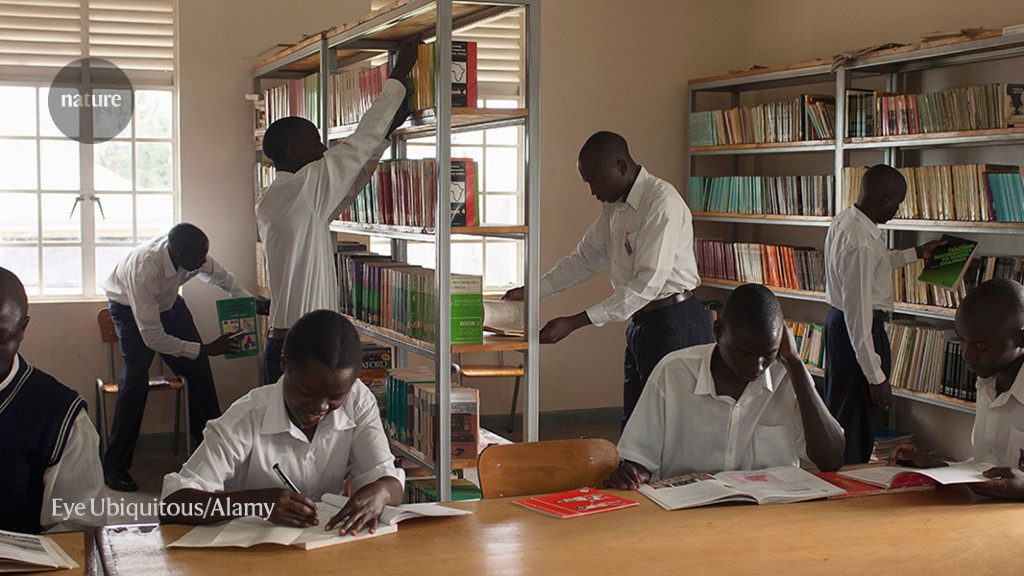
Update. "English is the dominant language of environmental…conservation. But unless people understand…specific…concepts & can talk about them in their home languages, they can feel disconnected from govt efforts to preserve ecosystems & species." https://www.nature.com/articles/d41586-021-02218-x
@petersuber - Peter Suber (@petersuber@fediscience.org)
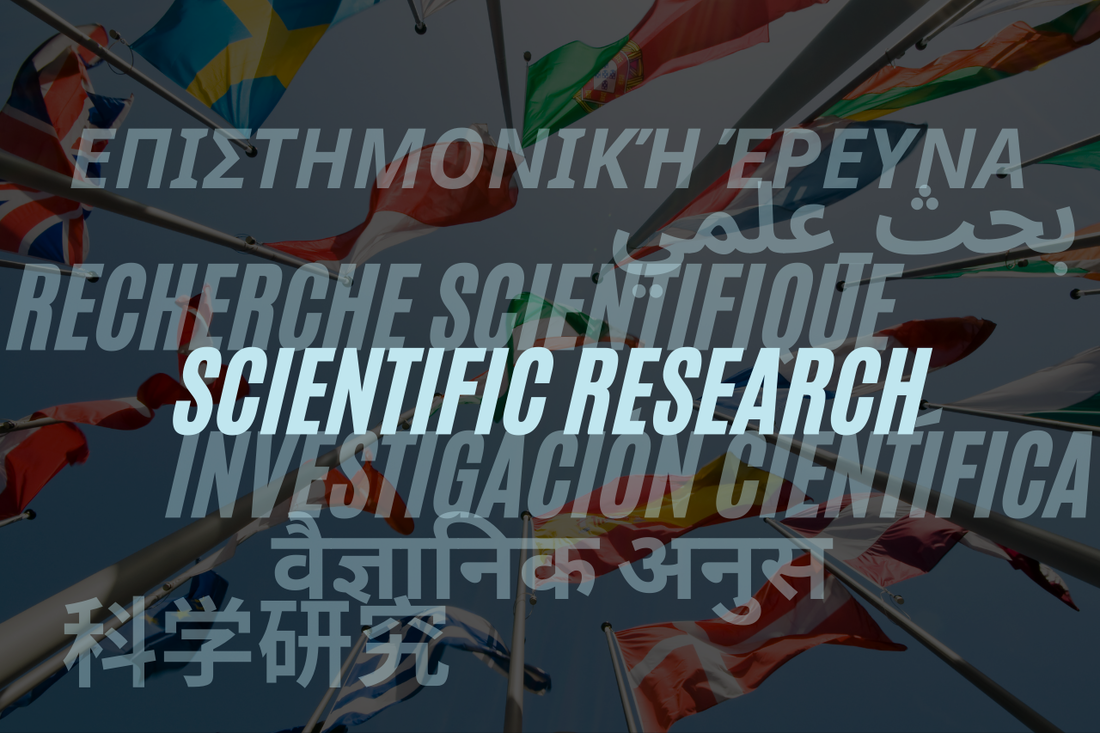
Update. "The current bias in the STEM academy [in favor of English]…is detrimental to the continuity and evolution of STEM research." (This article is published in 6 languages.) https://www.sciencepolicyjournal.org/article_1038126_jspg180303.html
@petersuber - Peter Suber (@petersuber@fediscience.org)
Update (from 2008). Emerging Themes in Epidemiology suggests 4 ways to support #MultilingualResearch, and adopts one itself: It will publish "translations of abstracts or full texts by authors as Additional files." https://ete-online.biomedcentral.com/articles/10.1186/1742-7622-5-1
@petersuber - Peter Suber (@petersuber@fediscience.org)
Update. @Wikidata and @Wikifunctions could help different language versions of @Wikipedia stay in sync on facts. https://slate.com/technology/2021/09/wikipedia-human-language-wikifunctions.html

@petersuber - Peter Suber (@petersuber@fediscience.org)
Update. Just making sure this thread on #MultilingualResearch includes this tweet from June 2021
@petersuber - Peter Suber (@petersuber@fediscience.org)
Update. @Stanford has launched a discussion forum on multilingual digital humanities (#dh). https://mailman.stanford.edu/mailman/listinfo/multilingual-dh

@petersuber - Peter Suber (@petersuber@fediscience.org)
"The nuanced language of the te Reo [Maori] descriptions was an essential part of the paper & they withdrew the article…despite the extra work it would take to stand their ground…Happily, the paper found a new home… delighted to incorporate the te Reo." https://www.optimistdaily.com/2021/09/decolonizing-science-kiwi-scientists-take-a-stand-on-using-maori-language/

@petersuber - Peter Suber (@petersuber@fediscience.org)
Update. "For scientists who do not speak English…writing a paper in their first language still does not solve the issue [since they must still] conduct a thorough review of existing literature [much or most of which is in English]." https://www.carbonbrief.org/analysis-the-lack-of-diversity-in-climate-science-research

@petersuber - Peter Suber (@petersuber@fediscience.org)
Update (from 2019). Personal experiences from seven scientists whose first language is not English. https://www.nature.com/articles/d41586-019-01797-0

@petersuber - Peter Suber (@petersuber@fediscience.org)
Update (from 2017). "Articles published in English have a higher number of citations than those published in other languages, when the effect of journal, year of publication, and paper length are statistically controlled." https://link.springer.com/article/10.1007/s13280-016-0820-7
@petersuber - Peter Suber (@petersuber@fediscience.org)
Update. Don't assume that all important results are published in English. "We show that non-English-language studies provide crucial evidence for informing global biodiversity conservation." https://journals.plos.org/plosbiology/article?id=10.1371/journal.pbio.3001296
@petersuber - Peter Suber (@petersuber@fediscience.org)
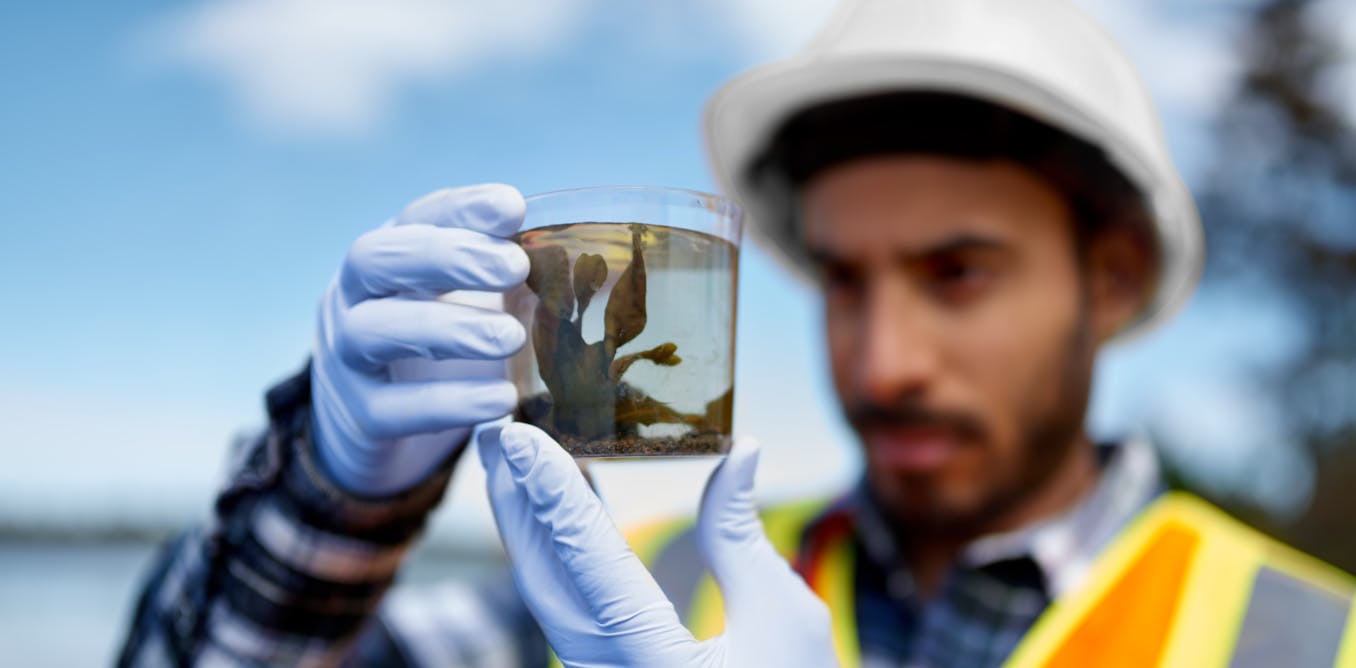
Update. From the authors' summary of the article above: "Many…scientific breakthroughs were originally published in a language other than English. The structure of a Nobel Prize-winning antimalarial drug was first published in 1977 in simplified Chinese." https://theconversation.com/the-english-language-dominates-global-conservation-science-which-leaves-1-in-3-research-papers-virtually-ignored-168951
@petersuber - Peter Suber (@petersuber@fediscience.org)
Update. The "structural disadvantage [for non-native speakers in English philosophy journals] deserves closer philosophical & empirical attention. We owe this to current & future members of our…community for whom English is not their native language." https://dailynous.com/2021/10/13/levelling-the-linguistic-playing-field-within-academic-philosophy-guest-post/
@petersuber - Peter Suber (@petersuber@fediscience.org)
Update. Diamond or no-APC #openaccess journals are multilingual 2.7x more often than APC-based OA journals. In the @DOAJplus: 38% of no-APC v. 14% of APC-based journals. https://zenodo.org/record/4558704 For more data on multilingual no-APC journals, see §1.4.3, tables 8-11.

@petersuber - Peter Suber (@petersuber@fediscience.org)
Update. English-language articles quoting non-English speakers tend to publish the quotations in English alone. This piece recommends publishing them in both the speaker's native language and English. https://onlinelibrary.wiley.com/doi/10.1002/nop2.1115
@petersuber - Peter Suber (@petersuber@fediscience.org)
Update. I wish this study had not limited itself to English-language articles. It would be good to compare the growth of English-language articles to the growth of non-English articles in the BRICS countries. https://www.emerald.com/insight/content/doi/10.1108/GKMC-08-2020-0109/full/html

@petersuber - Peter Suber (@petersuber@fediscience.org)
Update. "The dominance of…articles in English as well as the paucity of OA publications indexed in international databases (compared to those in national or regional databases) may have been due to the greater weighting assigned to such publications." https://ese.arphahub.com/article/59032/
@petersuber - Peter Suber (@petersuber@fediscience.org)
Update. 24% of http://Journal.fi users are non-academics. Professional researchers used English-language articles more than Finnish or Swedish articles. For students, it was the reverse. https://onlinelibrary.wiley.com/doi/full/10.1002/leap.1405

@petersuber - Peter Suber (@petersuber@fediscience.org)
Update. Outside English-speaking countries, the dominance of English is spreading from research publications to university courses. (#paywalled) https://www.timeshighereducation.com/news/big-five-losing-monopoly-english-language-degree-courses

@petersuber - Peter Suber (@petersuber@fediscience.org)
Update from Nov 2019. "There was a positive relationship between #JIFs [journal impact factors] and publication language…Most countries with smaller research capabilities have still chosen English as the standard language of their research journals." https://www.sciencedirect.com/science/article/pii/S037843711931180X

@petersuber - Peter Suber (@petersuber@fediscience.org)
Update from 2018: "I propose balanced multilingualism as a basis for governing the tensions between strategies for internationalization and excellence in research on the one hand and strategies for societal relevance and participation on the other." bid.ub.edu/en/40/sivertse…
@petersuber - Peter Suber (@petersuber@fediscience.org)
Update. Lingua franca nuances: In Poland there are academic "domains where English fluency is an asset & 'black holes' (bureaucratic issues, teaching, research collaboration) where English language communication is either impossible or impeded." https://www.sciencedirect.com/science/article/abs/pii/S0889490621000673

@petersuber - Peter Suber (@petersuber@fediscience.org)
Update. Non-native speakers of English can face discrimination for their accents, regardless of their proficiency. https://theconversation.com/heres-why-people-might-discriminate-against-foreign-accents-new-research-172539

@petersuber - Peter Suber (@petersuber@fediscience.org)
Update. Chinese journals published in English have much stronger #opendata policies than Chinese journals published in Chinese. (The article also identifies other journal differences that correlate with the strength of their data-sharing policies.) https://onlinelibrary-wiley-com.ezp-prod1.hul.harvard.edu/doi/epdf/10.1002/leap.1437
@petersuber - Peter Suber (@petersuber@fediscience.org)
Update. "There is some anecdotal evidence that publication in Chinese journals is shifting from Mandarin to English but participants [in a Dec 2020 @cni_org meeting] were not aware of good comprehensive data on this." https://www.cni.org/wp-content/uploads/2021/01/CNI-Science-Nationalism-ER-Report-f20-Public-FINAL.pdf

@petersuber - Peter Suber (@petersuber@fediscience.org)
Update. The dominance of English in STEM fields "is detrimental to the continuity & evolution of STEM research. We [recommend US govt] infrastructure that standardizes & facilitates the language translation process & hosting of multilingual publications." https://www.sciencepolicyjournal.org/article_1038126_jspg180303.html
@petersuber - Peter Suber (@petersuber@fediscience.org)
Update, new OA journal on indigenous languages: Publishing in English about non-English languages worked "against the fair dissemination of info to the…communities we are writing about. So we wanted to make sure we could pub in a variety of languages." https://around.uoregon.edu/content/new-journal-aimed-revitalizing-indigenous-languages

@petersuber - Peter Suber (@petersuber@fediscience.org)
Update from @LProofreading. "We are group of #ECR in #linguistics concerned with linguistic discrimination in #academic #publishing. We propose to develop a community-based solution to fight it."
@petersuber - Peter Suber (@petersuber@fediscience.org)
Update. This meta-analysis deliberately limited its scope to English-language articles. I suspect that most others do the same without saying so. Has anyone studied how often meta-analyses adopt this limitation? https://journals.sagepub.com/doi/10.1177/14747049211040447
@petersuber - Peter Suber (@petersuber@fediscience.org)
Update. China's retreat from monetary incentives to publish in English-language journals with high journal impact factors (#JIFs) is not having a large short-term effect. Many researchers want to publish in those journals even without the old incentives. https://link.springer.com/article/10.1057/s41307-022-00268-y
@petersuber - Peter Suber (@petersuber@fediscience.org)
Update. "In this position paper, we set out to challenge both the reality and desirability of continuing to configure academic/scientific knowledge production and exchange as an ‘English Only’ space." https://www.cambridge.org/core/journals/language-teaching/article/multilingualism-in-academic-writing-for-publication-putting-english-in-its-place/5B067CDB492350D55A8E798AC72526B5

@petersuber - Peter Suber (@petersuber@fediscience.org)
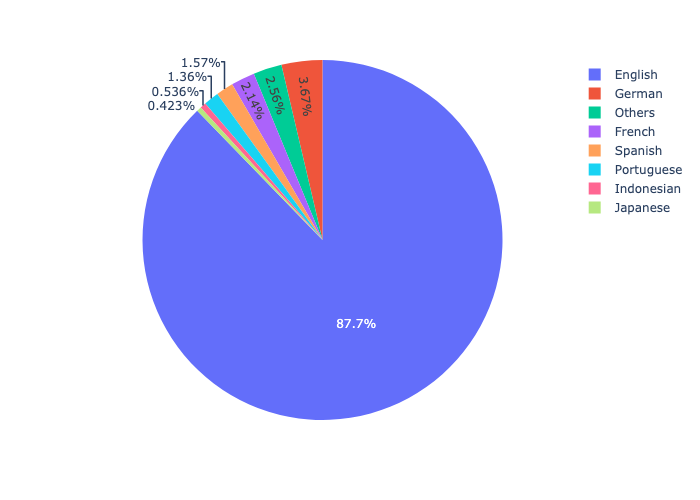
More from the study above. Mainstream indices like WoS & Scopus suggest that 90% of published journal articles are in English. But those are the indices most likely to exclude non-English journals. For example, they cover only 2/3 of the journals listed in UlrichsWeb.
@petersuber - Peter Suber (@petersuber@fediscience.org)
Update. "This paper…details 3 major ways in which content differences between language editions [of @Wikipedia] arise…and recommendations for good practices when using multilingual and multimodal data for research and modeling." https://arxiv.org/abs/2204.02483

@petersuber - Peter Suber (@petersuber@fediscience.org)
Update. "We…provide recommendations on how multilingualism can be taken into account at all stages and across different types of qualitative and quantitative research assessment procedures." #paywalled. https://www.elgaronline.com/view/edcoll/9781800372542/9781800372542.00031.xml

@petersuber - Peter Suber (@petersuber@fediscience.org)
Update. "The article compares selected entries on @Wikipedia concerning significant historical events in three language versions: Belarusian, Lithuanian, & Polish…[& notes] the prevalence of 'local' points of view on controversial historical events." cejsh.icm.edu.pl/cejsh/element/…
@petersuber - Peter Suber (@petersuber@fediscience.org)
Update. An argument for "balanced multilingualism" & "taking language into account in all aspects of research assessment without prioritizing scholarly communication in any language over publications in other languages." https://repository.uantwerpen.be/docstore/d:irua:11895 (warning, forced download)
@petersuber - Peter Suber (@petersuber@fediscience.org)
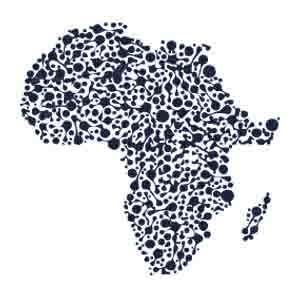
Update. "African languages are barely represented in technology & research…@Lanfrica is a language-focused search engine that makes it fast & easy to find information on the Internet about resources relating to African languages." https://lanfrica.com/about
@petersuber - Peter Suber (@petersuber@fediscience.org)
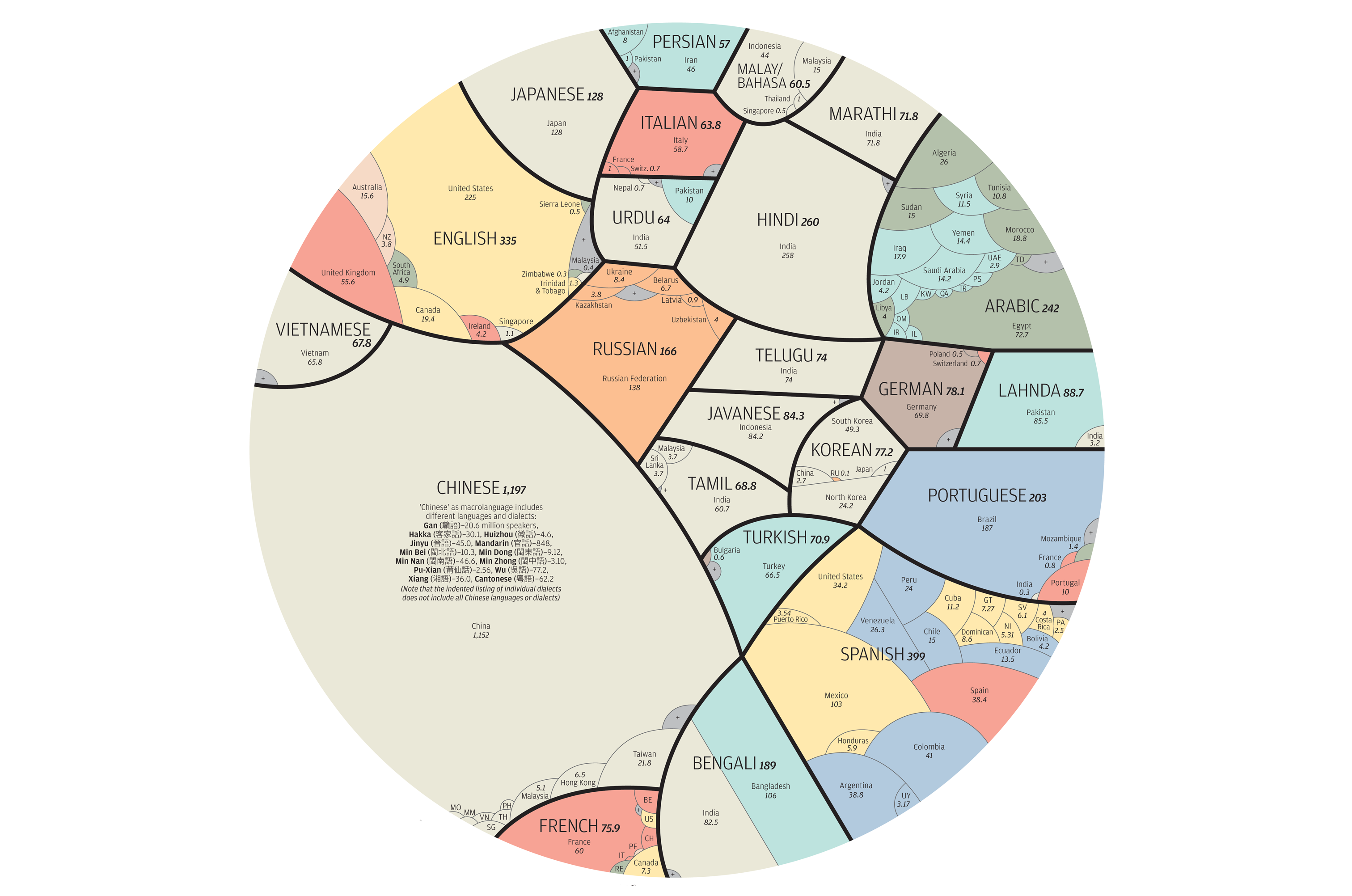
Update. "Spanish and Portuguese together represent more than 800 million speakers…, 11% of the world’s population, but only 1% of globally indexed scientific output is published in these two languages." https://www.lodivalleynews.com/for-open-and-accessible-science/

@petersuber - Peter Suber (@petersuber@fediscience.org)
Update. "The Council of the European Union…welcomes initiatives to promote multilingualism, such as the Helsinki initiative on multilingualism in scholarly communication." https://data.consilium.europa.eu/doc/document/ST-9515-2022-INIT/en/pdf
@petersuber - Peter Suber (@petersuber@fediscience.org)
Update. "What is the role of [English-language] academic journals in helping non-native English speaking authors to have their best chance at publication without their research findings being overlooked due to poor language usage?" Three recommendations. https://blog.scholasticahq.com/post/ways-academic-journals-can-support-esl-authors/

@petersuber - Peter Suber (@petersuber@fediscience.org)
Update. The @EUCouncil "welcomes initiatives to promote #multilingualism, such as the Helsinki initiative on multilingualism in scholarly communication...invites the Commission & the Member States to experiment with multilingualism, on a voluntary basis." https://www.consilium.europa.eu/media/56958/st10126-en22.pdf

@petersuber - Peter Suber (@petersuber@fediscience.org)
Update. "We [@COKIproject] have mapped the 122 million objects in Crossref up to the end of May 2022 to languages (based on titles and abstracts, where available) and done an initial analysis. The results are a mix of the expected and surprising." https://openknowledge.community/language-diversity/
@petersuber - Peter Suber (@petersuber@fediscience.org)
Update. The spread of "national [#openaccess] repositories" will help us study thematic "differences between locally published research in non-English speaking contexts and English-speaking international authors." https://link.springer.com/article/10.1007/s11192-022-04403-9

@petersuber - Peter Suber (@petersuber@fediscience.org)
Update. "In many countries, the ten most downloaded books [from @OAPENbooks] are written in non-English languages." https://insights.uksg.org/articles/10.1629/uksg.580/

@petersuber - Peter Suber (@petersuber@fediscience.org)
Update. We "investigate NLP & Machine Translation approaches…to foster multilingual access & discovery to SSH content across different languages…[We created an open dataset] of multilingual metadata concepts." lrec-conf.org/proceedings/lr…
@petersuber - Peter Suber (@petersuber@fediscience.org)
Update. Google's translation of the Portuguese: "The publication of bilingual and multilingual articles is a potential, inexpensive solution that has been offered for years by the Scientific Electronic Library On-line (SciELO)." https://www.scielo.br/j/jvb/a/8g95sSFpscRXY7NbY9hPLzy/?lang=pt

@petersuber - Peter Suber (@petersuber@fediscience.org)
Update. Anecdote from piece above: "German scientists…identified a significant causal relationship between smoking & lung cancer in the…1930s, a finding ignored by the scientific community for more than three decades, until British & American scientists rediscovered this link."
@petersuber - Peter Suber (@petersuber@fediscience.org)
Update. "@Meta's grand vision is unlikely to be realised…because of #copyright. Unless online material is released under a permissive licence such as [those from] @CreativeCommons, it will be necessary to obtain permission from the copyright holder." https://walledculture.org/why-metas-project-to-translate-automatically-between-200-languages-will-be-stymied-by-copyright/

Meta’s AI division has announced two exciting new projects in the field of machine translation: The first is No Language Left Behind, where we are building a new advanced AI model that can learn from languages with fewer examples to train from, and we will use it to enable expert-quality translations in hundreds of languages, …
walledculture.org@petersuber - Peter Suber (@petersuber@fediscience.org)
Update. "Our research demonstrates that while EAL [English as an additional language] scholars are under significant pressure to publish in English, they are not provided with the necessary resources to bring their papers to publication." https://www.timeshighereducation.com/blog/we-must-end-linguistic-discrimination-academic-publishing

@petersuber - Peter Suber (@petersuber@fediscience.org)
Update (missed this one from 2014): English-language journal editors said their journals provided clear instructions to authors more than twice as often as their non-English-speaking authors (76% v. 32%). https://blog.scielo.org/en/2014/05/19/non-native-english-speaking-authors-and-editors-evaluate-difficulties-and-challenges-in-publishing-in-international-journals/

@petersuber - Peter Suber (@petersuber@fediscience.org)
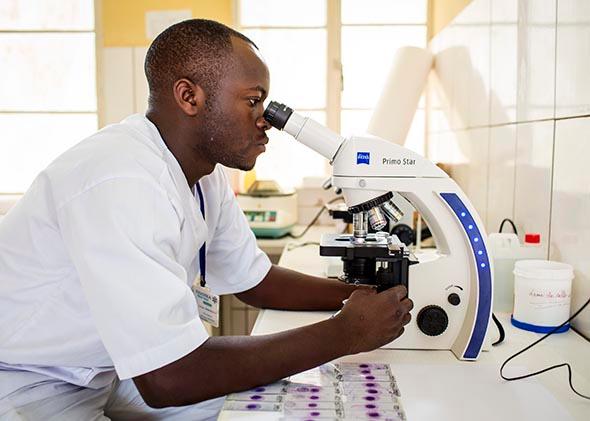
Update from 2015. "A single shared language is useful for an endeavor as collaborative & universal as science. But if you are not a native speaker…how difficult it must be to reach a 'eureka' moment but feel that the words are inadequate to describe it." https://slate.com/technology/2015/01/english-is-the-language-of-science-u-s-dominance-means-other-scientists-must-learn-foreign-language.html
@petersuber - Peter Suber (@petersuber@fediscience.org)
Update from 2019: "There is…evidence for significant linguistic bias when journals receive a manuscript written in poor English…[creating] an impression that the research they discuss is also sub-standard." https://blogs.lse.ac.uk/impactofsocialsciences/2019/08/16/the-hidden-cost-of-having-a-eureka-moment-but-not-being-able-to-put-it-in-your-own-words/

@petersuber - Peter Suber (@petersuber@fediscience.org)
Update: "The lack of specific strategies regarding language use in research may result in the imposition of English and in the displacement of local languages." https://www.sciencedirect.com/science/article/pii/S0898589822000936

@petersuber - Peter Suber (@petersuber@fediscience.org)
Update. Chinese incentives to publish in international English-language journals are causing Chinese research to be read and cited less by Chinese researchers. https://link.springer.com/article/10.1007/s11192-022-04537-w
@petersuber - Peter Suber (@petersuber@fediscience.org)
Update. "We outline actions that individuals and institutions can take to support multilingual science and scientists, including structural changes that encourage and value translating scientific literature." https://academic.oup.com/bioscience/article/72/10/988/6653151
@petersuber - Peter Suber (@petersuber@fediscience.org)
Update. I second @karimjerbineuro's appreciation of "the extra work, time & energy that students + researchers around the world, whose native language is not English, need to put into writing academic papers + giving talks in English."
@petersuber - Peter Suber (@petersuber@fediscience.org)
Update. I welcome the @COAR_eV recommendations on #repository support for #multilingual research. https://www.coar-repositories.org/news-updates/coar-announces-first-recommendation-for-supporting-multilingual-and-non-english-content-in-repositories/

@petersuber - Peter Suber (@petersuber@fediscience.org)
Update. Only 3% of Dutch medical guidelines refer to research articles written in Dutch. https://pubmed.ncbi.nlm.nih.gov/36300474/

@petersuber - Peter Suber (@petersuber@fediscience.org)
Update. "This study identified eight factors that contributed to the success of…two #multilingual digital libraries [World Digital Library & Digital Library of the Caribbean] and eight technical and operational challenges they have faced." #paywalled https://www.emerald.com/insight/content/doi/10.1108/EL-03-2022-0061/full/html
@petersuber - Peter Suber (@petersuber@fediscience.org)
Update. "US researchers do not build as readily on the [English-language] work of Chinese researchers, relative to the work of other foreign scientists, even in a setting where Chinese scientists have long excelled." https://www.nber.org/papers/w30772

@petersuber - Peter Suber (@petersuber@fediscience.org)
Update. "Although the publishing patterns of CEE…journals in the field of language and linguistics are international, multilingual publishing in languages other than English ensures the continuity of local research traditions." https://link.springer.com/article/10.1007/s11192-022-04595-0
@petersuber - Peter Suber (@petersuber@fediscience.org)
Update. I just gave an interview in which I spoke at length about #MultilingualResearch. "The dominance of one language creates obstacles, stress, expense & rejection for excellent scholars whose first language happens not to be the lingua franca." https://dash.harvard.edu/handle/1/37373947

@petersuber - Peter Suber (@petersuber@fediscience.org)
Update. "The cognitive sciences have been dominated by English-speaking researchers studying other English speakers…However, English differs from other languages in ways that have consequences for the whole of the cognitive sciences." https://www.cell.com/trends/cognitive-sciences/fulltext/S1364-6613(22)00236-4
@petersuber - Peter Suber (@petersuber@fediscience.org)
Update. "Rooryck’s message was clear: 'Funders and universities should value multilingual publication in the same way as publication in English. We should convince PhD students of this too. Publication in English should not be associated with prestige.'" https://vastuullinentiede.fi/en/news/publication-english-should-not-be-associated-prestige
@petersuber - Peter Suber (@petersuber@fediscience.org)
Update. "The Organization of Ibero-American States… reported that, in 2020, 95% of all articles published in scientific journals were written in English and only 1% in Spanish or Portuguese." https://www.scielo.br/j/ts/a/zwPRYVhkQLp5RTJzTXMrqky/?format=pdf&lang=en
@petersuber - Peter Suber (@petersuber@fediscience.org)
Update. @UGC_India created a list of #Indian #SSH journals publishing in 15 Indian languages. One purpose was to purge predatory journals. Another was to highlight the existence of the rest, since international databases omit them. https://www.emerald.com/insight/content/doi/10.1108/GKMC-11-2022-0266/full/html (#paywalled)
@petersuber - Peter Suber (@petersuber@fediscience.org)
Update. "44% of Finnish peer-reviewed journals and series are published in Finnish…#Diamond #OpenAccess journals are much more multilingual than, for example, [OA] journals which charge #APCs." https://julkaisufoorumi.fi/en/news/diamond-future-open-access

@petersuber - Peter Suber (@petersuber@fediscience.org)
Update. "While English is only the native language of 7.3% of the world's population and less than 20% can speak the language, nearly 75% of all scientific publications are English." https://journals.sagepub.com/doi/10.1177/14550725221102227
@petersuber - Peter Suber (@petersuber@fediscience.org)
Update. Case study of the two-year transition to fully bilingual publication (Spanish and English) by the Chilean medical journal, @Medwave_cl. https://doi.org/10.1002/leap.1533
@petersuber - Peter Suber (@petersuber@fediscience.org)
Update. "To some, this problem [writing in English when it's not your native language] may appear to be a minor one. However, if good research fails to find its way to publication – the barrier being the language – ultimately it is a loss for science." https://blogs.lse.ac.uk/impactofsocialsciences/2019/08/16/the-hidden-cost-of-having-a-eureka-moment-but-not-being-able-to-put-it-in-your-own-words/
@petersuber - Peter Suber (@petersuber@fediscience.org)
Update. "Journals & publishers have made little progress toward beginning to recognize or reduce language barriers. Counter to our predictions, journals associated w/ scientific societies did not…have more inclusive policies [than] non-society journals." https://academic.oup.com/iob/article/5/1/obad003/7008844
@petersuber - Peter Suber (@petersuber@fediscience.org)
Update. A new study of the #CulturalHeritage research indexed in #WOS finds it skewed toward English-language research and the global #north. The authors conclude that this is partly due to the research and partly due to what is indexed in #WOS. https://www.nature.com/articles/s41599-023-01582-5

@petersuber - Peter Suber (@petersuber@fediscience.org)
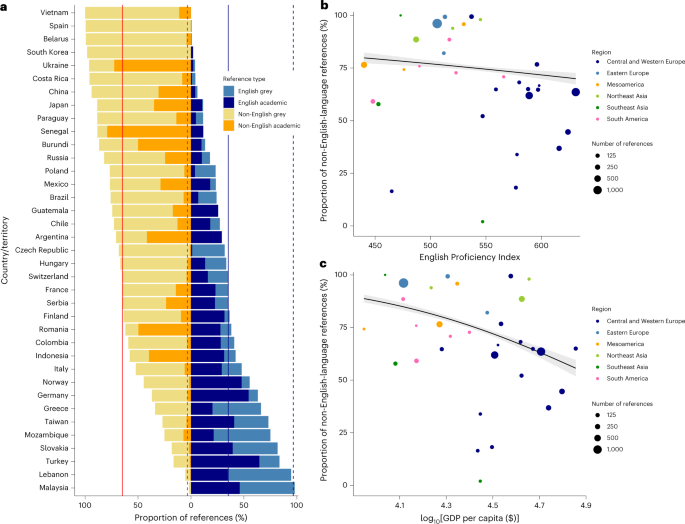
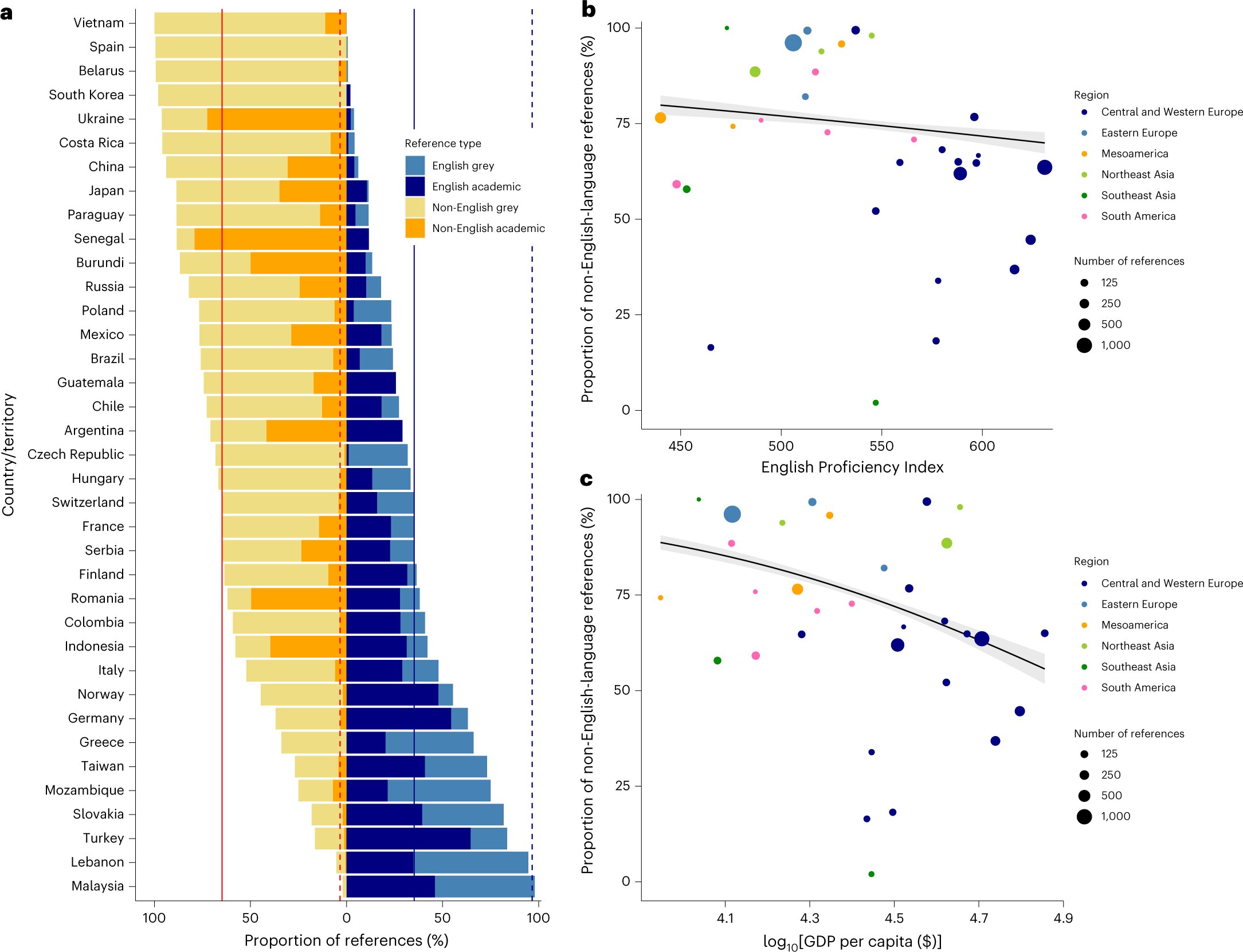
Update. "By ignoring non-English-language science, international assessments may overlook important information on local and/or regional biodiversity." https://www.nature.com/articles/s41893-023-01087-8
@petersuber - Peter Suber (@petersuber@fediscience.org)
Update. "Research in languages other than English is critically important for #biodiversity conservation & shockingly under-utilized globally." https://phys.org/news/2023-03-scientists-multilingual-approach.html
@petersuber - Peter Suber (@petersuber@fediscience.org)
Update. In the humanities, when Russian funders evaluated grant proposals using quantitative metrics, like publications & citations, "non-journal publications among new grantees decreased, while the share of English-language journal articles increased." https://sciendo.com/article/10.2478/jdis-2023-0010?tab=article


@thackerpd - Paul D. Thacker
1. Cochrane Shoots Back at Media Influencer Zeynep Tufekci's Claim of a "Correction" "There is no correction to the review," an executive at Cochrane told me. (Seriously doubt this will harm her chances at another Ted Talk, though.)

@thackerpd - Paul D. Thacker
2. Cochrane Author John Conly at U of Calgary: "I cannot comment on what Tufekci is meaning or the veracity of her tweets about a correction." In fact, just look at the review and you find no correction.

@thackerpd - Paul D. Thacker
3. Cochrane Author John Conly on science: "Contributors should be encouraged to submit their comments via the Cochrane Library." Tufekci took a different route: Twitter and essays. And about those Tufekci tweets and essays....
@thackerpd - Paul D. Thacker
4. What may surprise readers is that a month before she started her mask campaign in March 2020, Zeynep Tufekci tweeted a Feb 2020 essay to followers advising that mask weren't that important. Stop giggling. I'm not joking. Here's the tweets to her essay.

@thackerpd - Paul D. Thacker
5. Tufekci has zero expertise in epidemiology, but she has a knack for cultivating editors looking for social media influencers to market clickbait essays to the Ted Talk & NPR tote bag crowd. Just look through her record. 1 study on masks
@thackerpd - Paul D. Thacker
6. The Great Mask-Science Flip Flop of 2020 Tufekci was not the only media ordained COVID expert to have a convert to mask cheerleaders. Anthony Fauci did the same in an email to the former head of HHS. Fauci "I do not recommend you wear a mask."

@thackerpd - Paul D. Thacker
7. Tweeting and Ted Talks are easy, uncovering actual evidence is a tad more difficult. Canada’s Chief Public Health Officer, Theresa Tam, said much the same in a briefing to reporters: "Tam on why Canadians don't need to wear masks."

@thackerpd - Paul D. Thacker
8. BBC's medial correspondent reported that "political lobbying" changed the WHO policy. Surprise! Zeynep tweeted that she influenced WHO, as well.

@thackerpd - Paul D. Thacker
9. The greatest scientific threat to social media influencer Zeynep Tufekci is .... social media influencer Zeynep Tufekci. ZEYNEP V. ZEYNEP

@thackerpd - Paul D. Thacker
10. More at @DisInfoChron "What caused the great mask-science flip flop of 2020?" https://disinformationchronicle.substack.com/p/cochrane-shoots-back-at-media-influencer PLEASE SUBSCRIBE!

@Jikkyleaks - Jikkyleaks 🐭
WHOA!!!!! Stinky Cheese 🧀🧀 This paper from .@OpenSAFELY is an absolute shocker, claiming normal antibiotic usage during 2020 in the UK. We know it wasn't because we looked at it already. Was this paper published to cover up the #3tablets scandal? 🧵


@BillyZhong229 - BillyZhong
Thrilled to share our latest study on #antibiotic prescribing during #COVID19 published in Journal of Infection. Grateful for my supervisor team and the OpenSAFELY collaboration. Read more: https://doi.org/10.1016/j.jinf.2023.05.010 #healthcare

@Jikkyleaks - Jikkyleaks 🐭
Here is the claim from @BillyZhong229 the lead author, who seems to be a student (his twitter is less than a year old). It's propaganda reinforcing the "Antimicrobial stewardship" dictat: YOU WILL NOT PRESCRIBE ANTIBIOTICS FOR COVID What were "COVID-19 national restrictions"?


@Jikkyleaks - Jikkyleaks 🐭
Well I did this analysis back in Feb showing the HUGE GAP between normal cyclical antibiotic prescriptions and the actual prescriptions during COVID - when GPs were told to stop prescribing antibiotics to the elderly and give them #midazolam instead.
@Jikkyleaks - Jikkyleaks 🐭
@addict_opiate @limabean9412 @chrismartenson @Fynnderella1 @EWoodhouse7 @jjcouey Yes it was prescribed instead of #3tablets antibiotics. That's called #iatrocide. @chrismartenson https://openprescribing.net/analyse/#org=regional_team&numIds=5.1.5,5.1.2,0501120L0,0501120X0,0501013B0,0501013K0&denom=nothing&selectedTab=chart


@Jikkyleaks - Jikkyleaks 🐭
So one of us must be wrong. Except my chart included a link to the raw data set from http://openprescribing.net so you can verify it yourself. https://openprescribing.net/analyse/#org=regional_team&numIds=5.1.5,5.1.2,0501120L0,0501120X0,0501013B0,0501013K0&denom=nothing&selectedTab=chart
@Jikkyleaks - Jikkyleaks 🐭
When .@opensafely publish, you can't verify anything. They did the same when @bengoldacre published a study showing that #hydroxychloroquine didn't help in COVID, in the Lancet after the Lancet had already published fraudulent data on the same subject. https://www.thelancet.com/journals/lanrhe/article/PIIS2665-9913(20)30378-7/fulltext
@Jikkyleaks - Jikkyleaks 🐭
But don't think you're allowed to view that data. Oh no, @TheLancet damn well learnt their lesson from being exposed publishing fraudulent studies in the #surgisphere scandal and made sure that Goldacre's paper was shut down tight.

@Jikkyleaks - Jikkyleaks 🐭
And don't think @opensafely's data sharing has become any more transparent. The opposite. Locked down tighter, but if you're a foreign PhD student with no publication history - no problem. And if your data goes through China that's fine too. https://www.tpp-asia.com/enterprise



@Jikkyleaks - Jikkyleaks 🐭
"The data doesn't leave the NHS" is a lie. TPP is a Chinese company. Nothing wrong with that. Good for them. They have a bona fide 18-digit Chinese business registration, otherwise known as a "Unified Social Credit Indicator" They have access to all the OPENSAFELY data.


@Jikkyleaks - Jikkyleaks 🐭
But that's not all. OPENSAFELY is funded by Wellcome (#BigPharma's slush fund) and Matt Hancock's infamous HDRUK. HDRUK was the group convened to skim your health data under the leadership of Nicole Junkermann - of Jeffrey Epstein and Panama Papers fame. @JohnnyVedmore


@Jikkyleaks - Jikkyleaks 🐭
So, 3 months after we first exposed the #midazolam and #3tablets scandals - where the elderly were denied antibiotics for their post-viral pneumonia and euthanised instead "because muh COVID".... An unverifiable paper appears from this bunch telling us there is nothing to see.
@Jikkyleaks - Jikkyleaks 🐭
No problem. I'm sure Ben, Victoria Palin and Billy (Xiaomin) Zhang will be keen to show their probity in this paper. And release their data for public audit. We can probably verify it in less than a week. Try us. https://www.journalofinfection.com/article/S0163-4453(23)00288-8/fulltext#secsect0090
@Jikkyleaks - Jikkyleaks 🐭
And kudos to Victoria Palin btw, the supervising author on this paper. Victoria had never published a first author paper before 2019 and is now a supervising author. And thank you for helping get everyone vaccinated Vicky!
@BTHFT - Bradford Teaching Hospitals NHS FT
@BTHFT staff member? It's vital that you get your #FluJab this year & help relieve strain on the #NHS in what promises to be a busy winter. Keep patients, loved-ones, friends & yourself safe by having the jab. FY1 Victoria Palin had hers today. Have you had yours? #TeamBradford

@Jikkyleaks - Jikkyleaks 🐭
Fortunately Vicky is an expert in Antimicrobial Stewardship (AMS), which is the propaganda that was used in 2019 to lay the groundwork for denying antibiotics to the elderly in 2020. Well done Vicky, you did your job to the letter. #3tablets https://pubmed.ncbi.nlm.nih.gov/?term=Palin%2C%20victoria&sort=date

@Jikkyleaks - Jikkyleaks 🐭
Background to the #3tablets scandal... /end
@TheJikky - Jikky the mouse 🐭
3 tablets. That's what they withheld from the elderly that were diagnosed with "COVID pneumonia" because they were told not to treat. It was bacterial pneumonia. They died. If they hadn't had the test they would have had the tablets. #3tablets https://www.drugs.com/mtm/azithromycin-3-day-dose-pack.html


@Jikkyleaks - Jikkyleaks 🐭
@Jikkyleaks - Jikkyleaks 🐭
Imagine these people having unfettered access to the UK's NHS medical data through .@bengoldacre and the .@OpenSAFELY platform... And as a UK citizen you have no idea your data was being sold. Hey Ben, how much did you make out of this "partnership"? https://owkin.com/team#leadership-team


@Jikkyleaks - Jikkyleaks 🐭
OOPS! Ben you're not meant to publish papers in the journal you're on the board of buddy. Didn't anyone tell you? https://www.thelancet.com/lanepe/international-advisory-board


@Jikkyleaks - Jikkyleaks 🐭
The gift that keeps on giving. #Opensafely is one big nepotistic Pharmafest. ➡LSTHM. ➡Sander van der Linden. ➡David Spiegelhalter. ➡University of Cambridge Winton centre (psyop central command) @FeeRedfern @profnfenton @jengleruk


@Jikkyleaks - Jikkyleaks 🐭
@FeeRedfern @profnfenton @jengleruk More gifts from @opensafely. Who the hell are @EMISHealth? Their CEO is Andy Thorburn, who was Digicel's CEO. Digicel famously "won" the contract for telecom services after the #Haiti earthquake. Friends of the Clinton Foundation. @artisbrutal2021 https://search.brave.com/search?q=digicel+haiti+clintons&source=desktop


@Jikkyleaks - Jikkyleaks 🐭
For the record this is the second paper from the same group, essentially trying the same propaganda move - suggesting that antibiotic prescribing increased in 2020, contradicting the public data. https://www.sciencedirect.com/science/article/pii/S2666776223000728?via%3Dihub#fig1


@Jikkyleaks - Jikkyleaks 🐭
According to the repository the last output for this was 6th April. Which means the paper had to be written after that, revised, resubmitted and published by 15th May. Pretty good going. Usually this would take about 8-12 weeks. Fast track? Free pass? https://jobs.opensafely.org/university-of-manchester/brit-antibiotic-research/broad-spectrum-its/logs/


@Jikkyleaks - Jikkyleaks 🐭
Just a note that the Victoria Palin in the vaccination promotion shown above from 2020 could be a different Victoria Palin from our Opensafely supervising author who appears to have seen this thread, and instead of coming to the defence of the data... Has blocked me. Oh well. https://t.co/bYVyv5QP0P


@GSKUS - GSK US
Until recently, medicines & vaccines were mainly tested on men, having a detrimental effect on women's health. But things are changing.

@LeorSapir - Leor Sapir
NEW: The Society for Evidence Based Gender Medicine (@segm) has just published a critical analysis of the new study on regret following "gender-affirming" mastectomy surgery. Here are the highlights 🧵
@LeorSapir - Leor Sapir
The JAMA study (@JAMASurgery) was done on adults who got surgery at median age 27 at the U Michigan (@umichmedicine @UMich) hospital. The authors report "overwhelmingly low levels of regret" and express concern about state laws that restrict these surgeries to adults only.
@LeorSapir - Leor Sapir
Using the ROBINS-I tool for assessing risk of bias in non-randomized studies, SEGM concludes that the study suffers from "critical risk of bias." That means that "the results reported by the study may substantially deviate from the truth."
@LeorSapir - Leor Sapir
The critical risk of bias finding is due to the "high non-participation rate, important differences between participants and non-participants, and lack of control group."
@LeorSapir - Leor Sapir
The median follow-up time for those who received surgery was 3.6 years, which the authors classify as "long-term." Only 1 out of 4 participants were followed up with at >5 years. Some research indicates average time to regret is 8-11 years, though longitudinal data are missing.
@LeorSapir - Leor Sapir
As is typical in this area of research, the non-response rate is very high (41%). What, if anything, can be inferred from this non-response? SEGM calls attention to two potentially important differences between the response and non-response group that may bias the results.
@LeorSapir - Leor Sapir
1. Respondents had surgery more recently than non-respondents (3.6 vs. 4.6 yrs). "Gender-affirming" procedures "are known to have a 'honeymoon' period, with quality of life and satisfaction... starting to fall after 3-5 years." https://www.ncbi.nlm.nih.gov/pmc/articles/PMC6223813/

@LeorSapir - Leor Sapir
2. The response cohort appears to have had more anxiety and depression at baseline, resulting in a confound. This is a recurring problem in gender med research. See, for example, Michael Biggs' critique of Jack Turban et al.'s 2020 suicidality paper: https://link.springer.com/article/10.1007/s10508-020-01743-6

@LeorSapir - Leor Sapir
The authors' claim that lack of reversal procedures indicates satisfaction is a "fundamentally flawed" assumption. Some research indicates that regretters will not report back to their transition providers. People who regret a surgery may not seek out another invasive procedure.
@LeorSapir - Leor Sapir
Perhaps most important: unlike mastectomies for cancer, "gender-affirming" mastectomies are usually not "reversible." This has to do with the nature of the procedure and the lack of insurance coverage for it (if there's no longer a GD Dx, insurance typically won't cover).
@LeorSapir - Leor Sapir
Finally, "gender-affirming" mastectomies are cosmetic procedures. The primary function of breasts is milk production, and according to SEGM, no procedure can restore that function. Hence, the necessary motive may be missing from regretters.
@LeorSapir - Leor Sapir
In short, the assumptiom that non-respondents were satified because they did not seek reversal surgery is unfounded. There is no way to know the satisfaction of those who didn't respond. Speculation about reasons should be framed as just that: speculation.
@LeorSapir - Leor Sapir
SEGM further notes that the authors "did not attempt to investigate mental health or functional outcomes. Instead, the focus was on self-reported satisfaction." This is a key point.
@LeorSapir - Leor Sapir
The main rationale for "gender-affirming" procedures is that they are "medically necessary" for mental health, not merely cosmetic. "Satisfaction" is important, but if "medical necessity" is the question, researcher should opt for more objective outcome measures.
@LeorSapir - Leor Sapir
SEGM notes another "unexpected finding": a change in "gender identity" in 20% of the surgery/participant cohort.
@LeorSapir - Leor Sapir
This raises an important question: if the purpose of surgery is not mental health/QoL improvement or achieving "gender congruence," what is it? How is it different from regular, cosmetic plastic surgery like rhinoplasty?
@LeorSapir - Leor Sapir
If the goal is to help people achieve ever-shifting "embodiment goals" (or, as pro-GAC advocate Florence Ashley puts it, helping adults and teens turn their bodies into a "gendered art piece"), questions arise about physician ethical obligations and insurance coverage.
@LeorSapir - Leor Sapir
Uncontrolled: As is common in gender med research, the study does not control for confounds like "the passage of time [regression to the mean], attention from medical professionals [Hawthorne Effect], counseling, better control of mental illness, or use of mood-enhancing drugs."
@LeorSapir - Leor Sapir
Generalizability: Because participants seem to all be adults who got surgery as adults, the study's result, even if valid, cannot be applied to teenage girls. The decision-making capacity of a 27 year old is not equal to that of a 14 year old.
@LeorSapir - Leor Sapir
Conflicts of interest: "There is a fundamental problem with research emerging from gender clinic settings. The same clinicians provide gender-transitioning treatments to individual patients in their practice; serve as primary investigators and custodians of data...
@LeorSapir - Leor Sapir
used in research informing population health policies; and increasingly, provide paid expert witness testimony in courts defending the unrestricted availability of hormonal and surgical interventions for minors...
@LeorSapir - Leor Sapir
Since any nuanced, balanced statements may be used against them in a court of law when they serve as expert witnesses, they must resort to the lowest common denominator of the 'winner-takes-all' adversarial approach. Such an approach does not tolerate nuance."
@LeorSapir - Leor Sapir
SEGM concludes: "Prestigious scientific journals appear to have deviated from their previously high standards... & instead have become vehicles for promoting poor-quality research seemingly to influence judicial policy decisions rather than advance scientific understanding."
@LeorSapir - Leor Sapir
SEGM's analysis: https://segm.org/long-term-regret-satisfaction-mastectomy-critical-appraisal The mastectomy study: https://jamanetwork.com/journals/jamasurgery/article-abstract/2808129#:~:text=Placed%20in%20context%20with%20other,decision%20following%20gender%2Daffirming%20mastectomy
@LeorSapir - Leor Sapir
It's @segm_ebm, not @segm. Apologies to SEGM!

@Theo_TJ_Jordan - Theo Jordan
One of the biggest scandals of COVID was how peer-review was used. It was a gatekeeper; always has been. And then it was used as propaganda. If inconvenient data came out it was "not peer-reviewed". But then not peer-reviewed studies would shoot around the media world when handy.
@Theo_TJ_Jordan - Theo Jordan
You talk about "not peer-reviewed", the CDC publishes through MMWR which is a complete sham of an operation. You can go read about it, they have to disclaim it. Instead of going through peer-review (already shady), it is reviewed to ensure compliance with CDC policy. Seriously. https://t.co/41GVIzzYfN


@Theo_TJ_Jordan - Theo Jordan
You'll note the headline doesn't mention the lack of peer-review on this glorious study. 😵💫 https://t.co/LssZ9SiQTK

@Theo_TJ_Jordan - Theo Jordan
Did this study go through peer-review before it was broadcast around MSM? 😂🤣 Heavens no, it was funded by Pfizer. https://t.co/iu2ZHutTiK


@Theo_TJ_Jordan - Theo Jordan
And then these are the kind of studies the whole Show would shriek at once "DON'T READ, IT'S NOT PEER-REVIEWED!! 😱" And sadly, millions would not. It wasn't broadcast. You'd have to read this stuff from people like Dr. Bostom... who was banned on here. https://x.com/Theo_TJ_Jordan/status/1496347884169670659?s=20 https://t.co/wm5UrjbBl3


@Theo_TJ_Jordan - Theo Jordan
Modeling was an absolute nightmare too. It took only two or three clicks, sometimes even just a simple scroll to the bottom of the page, to see they were all funded by entities like NIH and the Gates Foundation. Didn't matter though. They did their job, didn't they? 🤬 https://t.co/E1JvfKhR56


@Theo_TJ_Jordan - Theo Jordan

@john_bumblebee - Jan B. Hommel
Soms zijn er gewoon hele leuke dagen, waarop Maarten je niet een keer in lachen doet uitbarsten, maar dat gewoon voor een tweede keer doet. @mkeulemans Waarom ging het? Hierom. Bij hoogzwangere vrouwen zou - aldus Maarten - het doormaken van #COVID19 tot een 25% hogere kans op doodgeboorte van het ongeboren kind leiden. Zie het eerste plaatje. Het staat er echt, ik verzin het niet. Maar dat stond helemaal niet in de bewuste meta-analyse. Dat wist ik, want ik had die studie wél gelezen. Zie mijn vorige tweet. Maarten betrapt, zou je denken. Welnee. Maarten had zich gewoon vergist. Hij bedoelde een andere studie. Kan de beste gebeuren, en dat gebeurt mij ook regelmatig. Dus kwam Maarten met de studie die hij wel bedoelde. Deze dus: https://thelancet.com/action/showPdf?pii=S0140-6736%2822%2902467-9… Een 25% hoger risico op doodgeboorte. Zegt Maarten. Parkeer dat weer even in uw geheugen. Vlek. Wrijf. Vlek. Vlek groter. Laten we eens kijken naar de uitkomstmaat die gebruikt is in deze studie. Warempel. Dat is een zogenaamde 'samengestelde uitkomstmaat' voor de perinatale uitkomst. Die samengestelde uitkomstmaat is een lijst van ellende uit een andere samengestelde uitkomstmaat, plus overlijden in de baarmoeder of kort na de geboorte, plus een verblijf op de neonatale intensive care-unit. Die maat heet: 'severe perinatal morbidity and mortality index (SPMMI)'. Kortom: veel ellende. Maar wel allemaal samen gerekend. Waarvan een van de uitkomsten 'overlijden in de baarmoeder' is, en dat is slechts één van de dertien afzonderlijke uitkomstmaten. Kende ik niet. Maar het is waar. Echt waar. Staat gewoon in het artikel zelf. Wrijf. Vlek. Wrijf. Vlek nog veel groter. Maar Maarten wrijft nog even door. Ik ga niet het hele artikel lezen, want dat kost me een paar uur. Ik kijk gewoon even bij de uitkomsten. Zie plaatje twee. Warempel. Er zijn twee groepen. De eerste groep is de groep 'alle zwangeren'. Dat zijn er precies 837. En dan is er een groep van 'ongevaccineerde zwangeren'. Dat zijn er blijkbaar 331. Ik verzin het niet. Het staat gewoon in tabel 1. Vlek. Wrijf. Nu al ter grootte van de middencirkel van het voetbalveld van Ajax. Maar Maarten was nog niet klaar. Want van deze groepen van 837 en 331 vrouwen betreft alle vrouwen die een gecompliceerde zwangerschap of bevalling doormaakten. Daar gaat het ons echter niet om. Het gaat ons specifiek om die groep vrouwe met een nare uitkomst op die ene samengestelde uitkomstmaat, de SPMMI. Dan wordt de groepsgrootte 402, waarvan er 160 niet gevaccineerd zijn. Echt waar. Ik heb er blauwe streepjes onder gezet. Voor deze hele groep van 402 vrouwen neemt de kans op een slechte uitkomstmaat op de samengestelde uitkomstmaat SPMMI toe met 21%, bij het doormaken van een infectie met SARS-CoV-2. Voor de groep van ongevaccineerde vrouwen (n = 160) neemt de kans op een slechte uitkomstmaat bij het doormaken van de infectie toe met 23%. Deze getallen heb ik met rood onderstreept. Dat is dus per saldo een 2% hoger risico meer voor de groep ongevaccineerde vrouwen in vergelijking met de hele groep vrouwen met een slechte uitkomst op de SPMMI, nogmaals, een samengestelde uitkomstmaat van maar liefst 13 afzonderlijke uitkomstmaten! Als het om een ernstige infectie gaat, wordt het risico verhoogd met 84 versus 69%! Die getallen heb ik met groen onderstreept. Dat betekent dus dat het risico voor de hele groep hoger is dan voor de ongevaccineerde groep. Maar ik zou daar niet al te veel waarde aan hechten. want wie goed kijkt, ziet dat voor de meeste effectmaten de 1 in het betrouwbaarheidsinterval zit, en dat de uitkomst dus niet significant is. Dat is simpelweg het gevolg van de kleine aantallen. Maar we zijn er nog niet. De middenvlek wordt als maar groter. En Maarten blijft maar wrijven. Een paar Bengaalse kaarsen erbij om het effect nog wat groter te maken. En hoewel Maarten dat niet zegt, suggereert hij dat vaccinatie dit kan voorkomen. Maar dat is dus helemaal niet wat deze studie laat zien!!! Sterker nog, de vaccinatiestatus maakt geen enkelverschil. Conclusies? 1. In deze studie wordt het effect van het doormaken van een infectie met SARS-CoV-2 op een samengestelde uitkomstmaat gemeten, waarvan 'in de baarmoeder overlijden' slechts één van de dertien mogelijke uitkomsten is. 2. In de 402 zwangerschappen met een slechte SPMMI blijkt het doormaken van de infectie met SARS-CoV-2 het risico op een slechte uitkomst met 21% toe doet nemen, en bij de ongevaccineerde groep met 23%. Dat is dus netto 2% verschil. En dan gaat het ook nog eens om een relatief risico, niet om een absoluut risico. Wat deze studie ook aantoont, het is in ieder geval niet dat vaccinatie dit effect voorkomt. Absoluut niet! Maarten werkt zich nog even in het zweet. Meer Bengaalse kaarsen, nog even wrijven, en het doelgebied is bijna bereikt. Want de uitsmijter komt nog. Meestal staat in het addendum wel wat de afzonderlijke uitkomstmaten zijn. Daar heb ik ook nog even naar gekeken. Staat het aantal 'doodgeboren kinderen' in het addendum? Nee. Dat staat er niet. In het hele addendum niet. In het Godganse artikel en in het Godganse addendum staat niet de sterfte van het ongeboren kind vermeld. Gewoon niet. Er staat in het hele artikel niks, maar dan ook niks over het totaal aantal doodgeboorten. Niks, nada, noppes. Gewoon helemaal NIKS. Dus wat is de aller-, aller-, allerbelangrijkste conclusie? Dat de schetenwapsdwerg Maarten Reutelmans van de @volkskrant zwetst, kletst, keutelt en reutelt dat het een lieve lust is, maar dat hij nog dommer is dan zijn eigen achterwerk. Het enige dat hij kan is hoogdravend blaten en kwaken over zaken waar hij werkelijk de ballen verstand van heeft, en hij is zelfs nog te lui, te dom en te labbekakkerig om zijn studies die hij nota bene zelf aandraagt om zijn standpunten te onderbouwen, goed te lezen en daar de juiste conclusies uit te trekken. Dat kan hij gewoon niet. En dat heeft een goede reden. Want Maarten is een wetenschapsjournalist van nul en generlei waarde. Een absolute NIKSnut van de allerhoogste categorie, die NIKS snapt, NIKS leest, en NIKS kan. Een ding is hij wel. Een luilebal met een enorm ego, een enorm dedain voor alles en iedereen die wel iets kan. Nog stommer dan het achtereind van het domste varken dat ik ooit op mijn vaders boerderij heb mogen aanschouwen. Dat dan weer wel. Welterusten, Maarten.


@Docstockk - Kathleen Stock
That thing that never happens in academia, happened again.. Presidents of @AMericanAnthro and @CASCATweet deplatform a conference panel on biological sex in anthropology, on grounds of "harm to Trans and LGBTQI". An open letter from those deplatformed follows in next tweet. https://t.co/Rf62tkkatq

@Docstockk - Kathleen Stock
Here's the open letter to @AmericanAnthro and @CASCATweet from the deplatformed women https://t.co/9U6vs5JdXy


@derfoe_ - ᴛⷮrͬuͧeͤ Mⷨiͥrͬrͬoͦrͬ | ᵇʸ ÐΞᖇƒᗝΞ
AUSTRALIAN POLITICS 🧵 I only voted once in my life before I realised that politicians are selected, not elected. When a certain virus emerged, I had to laugh at the faces I was presented with that pushed the 💉. I wasn't surprised by what else I found when researching 🇦🇺.
@derfoe_ - ᴛⷮrͬuͧeͤ Mⷨiͥrͬrͬoͦrͬ | ᵇʸ ÐΞᖇƒᗝΞ
POL-AU-01: Dr Kerry Chant, Chief Health Officer (CHO) of New South Wales (NSW) Received the 2021 NSW Woman of the Year Award from then Premier Gladys Berejiklian 😅. Incredible bulldozer jaw and 5 o'clock shadow! Who else can we find in the country's health departments? 🔽


@derfoe_ - ᴛⷮrͬuͧeͤ Mⷨiͥrͬrͬoͦrͬ | ᵇʸ ÐΞᖇƒᗝΞ
POL-AU-02: Dr Kerryn Coleman, CHO of Australian Capital Territory (ACT) Our hint was Cole-MAN. Puffy dude spread more fear in the 🇦🇺 capital than the virus could ever have done on its own. Doesn't care about make-up before leaving the house, and still gets away with it. Next 🔽


@derfoe_ - ᴛⷮrͬuͧeͤ Mⷨiͥrͬrͬoͦrͬ | ᵇʸ ÐΞᖇƒᗝΞ
POL-AU-03: Prof. Nicola Spurrier, Chief Public Health Officer of South Australia (SA) This skinny guy can effortlessly link "climate change" *cough* to future "pandemics" *cough cough* without getting questioned - a true expert in his field. Nice wig there, too 😅!


@derfoe_ - ᴛⷮrͬuͧeͤ Mⷨiͥrͬrͬoͦrͬ | ᵇʸ ÐΞᖇƒᗝΞ
POL-AU-04: Dr Jeannette Young, CHO of Queensland (QLD) It's quite shocking how many Queenslanders lined up for the shots when this elderly man in drag asked them to do so. Put on a little bit of lipstick and you are ready to fool the masses, it's that easy in Australia. Next 🔽


@derfoe_ - ᴛⷮrͬuͧeͤ Mⷨiͥrͬrͬoͦrͬ | ᵇʸ ÐΞᖇƒᗝΞ
POL-AU-05: Amber-Jade Sanderson, Minister for Health of Western Australia (WA) Took over the role at the end of 2021 and re-opened the WA borders after helping to drive 90% of people into the 💉. I'm always fascinated by how big their ears can get, but the majority don't care.


@derfoe_ - ᴛⷮrͬuͧeͤ Mⷨiͥrͬrͬoͦrͬ | ᵇʸ ÐΞᖇƒᗝΞ
After I had looked into the health departments, I researched a few more Australian politicians: POL-AU-06: Since 2022, Clare O'Neil is 🇦🇺 Minister for Home Affairs. As so often, a male last name exposes them. If that wasn't enough, examining skull and jaw should help. Next 🔽


@derfoe_ - ᴛⷮrͬuͧeͤ Mⷨiͥrͬrͬoͦrͬ | ᵇʸ ÐΞᖇƒᗝΞ
POL-AU-07: Amanda (A-MAN-da) Stoker served as Senator for Queensland from 2018 until 2022, and for a short time became Assistant Minister for Women in the Scott Morrison government. Enough of this 🤡 show!


@derfoe_ - ᴛⷮrͬuͧeͤ Mⷨiͥrͬrͬoͦrͬ | ᵇʸ ÐΞᖇƒᗝΞ
POL-AU-08: Nicolle Flint, Member of the Australian House of Representatives, 2016-22 Made news with statements about women's rights and "stood up" against sexism in the workplace 🤡. Watch what a great actor he is in the embedded video here: https://tinyurl.com/335yc3rc. Next 🔽


@derfoe_ - ᴛⷮrͬuͧeͤ Mⷨiͥrͬrͬoͦrͬ | ᵇʸ ÐΞᖇƒᗝΞ
POL-AU-09: Pauline Hanson ("son of Hans") is the founder and leader of One Nation Party (1997) - colour: orange (=33). Since they always control both sides, Hanson played the role of controlled opp during the pandemic. The fiery hair can't distract from big ears and a square jaw.


@derfoe_ - ᴛⷮrͬuͧeͤ Mⷨiͥrͬrͬoͦrͬ | ᵇʸ ÐΞᖇƒᗝΞ
POL-AU-10: According to Australian his-story, Anna Bligh became the first woman to be elected to the position of State Premier (37th Premier of Queensland, 2007-12). When you read "first woman of xyz", alarm bells should ring - and rightly so in this case 😅.


@derfoe_ - ᴛⷮrͬuͧeͤ Mⷨiͥrͬrͬoͦrͬ | ᵇʸ ÐΞᖇƒᗝΞ
Bonus #1: In 2022, the Federal Government set up the "Women's Network", an office to drive gender equality, and gave it a d!ck and b@lls for a logo. Total #EGI mockery, but the masses just laughed and moved on. Source: https://au.news.yahoo.com/scott-morrisons-office-panned-womens-network-logo-030035905.html

@derfoe_ - ᴛⷮrͬuͧeͤ Mⷨiͥrͬrͬoͦrͬ | ᵇʸ ÐΞᖇƒᗝΞ
Bonus #2: "Mixed history for some female ministers now promoting gender equality", March 2021,😂 Source: https://www.smh.com.au/politics/federal/mixed-history-for-some-female-ministers-now-promoting-gender-equality-20210330-p57fb9.html Feel free to look up some of these "female" Australian ministers on your own, I'm so done after research for this thread 😅. #EGI #itsallofthem



@_HeartofGrace_ - Christie Laura Grace
1/ 🚨🧵BLOOD VESSELS, Spike Protein, LNP, Immune System and CLOTS: PART TWO: THE LINING OF BLOOD VESSELS CARRY A CHARGE, AND CAN CHANGE WHEN INFLAMMATION AND INJURY OCCURS. Many interesting studies on animals occurred in the 80s, and this is another. (zeta on LNP will matter)

@_HeartofGrace_ - Christie Laura Grace
1/ 🚨🧵BLOOD VESSELS, Spike Protein, LNP, Immune System and CLOTS: PART ONE: Blood Vessels 101. Several studies on charges (+/-) of vessels, blood, and the harm lipids can do were performed in the 1980s. They are still relevant. Unearthed a very important one today.

@_HeartofGrace_ - Christie Laura Grace
2/ The study: Electronic Antihemocoagulation DeLangis, P. A., & Yen, T. F. (1986). Electronic antihemocoagulation. Biomaterials, medical devices, and artificial organs, 14(3-4), 195–225. https://doi.org/10.3109/10731198609117543 https://pubmed.ncbi.nlm.nih.gov/3814714/
@_HeartofGrace_ - Christie Laura Grace
3/ The study asks whether electrical current through blood and vessels can either extend the time it takes for blood to clot or prevent clot formation. The study aims to identify at what point in the clotting process these effects occur. This was done with and without animals.

@_HeartofGrace_ - Christie Laura Grace
4/ All cells and surfaces in the body carry an electrical charge, influenced by characteristics of cells, particles, and surrounding medium (liquid or solid). In the vascular system (blood vessels, heart, etc), most particles in the blood carry a NEGATIVE CHARGE.

@_HeartofGrace_ - Christie Laura Grace
5/ Red blood cells are negatively charged due to the presence of negatively charged sialic acid residues on their surface glycoproteins. The zeta potential of red blood cells falls in the millivolt (mV) range, with values ranging from -10 mV to -30 mV under physiological
@_HeartofGrace_ - Christie Laura Grace
6/ conditions. These values can change depending on factors like pH and the presence of other ions in the blood. White blood cells also carry a negative charge, primarily due to the negatively charged sialic acid residues on their surface glycoproteins. https://www.semanticscholar.org/paper/Electrical-properties-of-the-red-blood-cell-and-Fernandes-C%C3%A9sar/2f1a754b0cd2773c00bac9665db597290ee1fc66

@_HeartofGrace_ - Christie Laura Grace
7/ The zeta potential of white blood cells can vary between different types of leukocytes and under different conditions. The zeta potential of white blood cells can be affected by factors such as pH, ionic strength, and the presence of other ions in the blood. Additionally,
@_HeartofGrace_ - Christie Laura Grace
8/ the activation state of white blood cells (e.g., activated vs. resting) and their specific type can lead to variations in zeta potential. Platelets, like other blood cells, also have a negative charge on the surface, primarily due to the presence of negatively charged groups.

@_HeartofGrace_ - Christie Laura Grace
9/ : Blood plasma contains proteins, like albumin and globulins, which have both positive and negative charges. Albumin has a net negative charge, while some globulins may have a net positive charge. These proteins contribute to the overall zeta potential of the blood.

@_HeartofGrace_ - Christie Laura Grace
10/ The intima (inner layer) of blood vessels is typically negatively charged compared to adventitia (outer layer). However, trauma to the blood vessel can neutralize or even make the charge positive, leading to thrombosis (clot formation) at the injury site. The charge changes!

@_HeartofGrace_ - Christie Laura Grace
11/ If a cut is made into a blood vessel, it results in a POSTIVE CHARGE at the injury site. The study shows if the cut is kept negatively charged by applying an electrical current, clotting at the site will be inhibited, and the wound will continue to ooze. Conversely, if the
@_HeartofGrace_ - Christie Laura Grace
12/ electrical current is reversed and made positive, clotting will accelerate. When oppositely charged electrodes were submerged in a beaker of blood, a clot formed only at the positive electrode. Additionally, under similar conditions, white blood cells (leukocytes)
@_HeartofGrace_ - Christie Laura Grace
13/ migrated toward the negative electrode, indicating a change in cell polarity from negative to positive, possibly as a response to combat inflammation. https://www.researchgate.net/figure/The-leukocyte-recruitment-cascade-possible-effects-of-MPO-In-noninflamed-tissue_fig5_229555575


@_HeartofGrace_ - Christie Laura Grace
14/ In the vascular system, the intima is negatively charged compared to the adventitia. Vessel trauma can lead to a change in charge (neutral or positive) and result in thrombosis. This means the charge is moving from negative to positive, when inflammation and injury occurs
@_HeartofGrace_ - Christie Laura Grace
15/ in the lining of human blood vessels. "Vessel trauma" is any form of injury or damage to the blood vessel, caused by physical injury, surgical procedures, or disease-related damage.
@_HeartofGrace_ - Christie Laura Grace
16/ When a blood vessel experiences trauma, it can lead to a change in electrical charge. This change can manifest in two ways: Neutral Charge: The negative charge in the intima may become neutral, meaning it loses its excess negative charge. b. Positive Charge:
@_HeartofGrace_ - Christie Laura Grace
17/ In some cases, trauma can cause the negative charge to reverse and become positive.
@_HeartofGrace_ - Christie Laura Grace
18/ Thrombosis is blood clot formation within a blood vessel. A change in the electrical charge of the blood vessel's inner lining, particularly when it becomes neutral or positive due to trauma, is associated with the initiation or acceleration of the thrombosis process.
@_HeartofGrace_ - Christie Laura Grace
19/ "Negatively charged phospholipids, most particularly phosphatidylserine, are required for binding of the substrates, fIX or fX, to the phospholipid surface." https://www.ncbi.nlm.nih.gov/pmc/articles/PMC4826570/

@_HeartofGrace_ - Christie Laura Grace
20/ This is all going to come together in the following threads discussing the first waves of covid infection, DNA plasmid contamination with a high negative charge contaminating the current RNA "vaccine", and what happened to some people with infection vs. RNA "vaccination".
@_HeartofGrace_ - Christie Laura Grace
21/ It will also show why the negatively charged LNP, especially those with a higher negative charge which contain even more DNA plasmids, contributed to not only endothelial damage, but myocarditis. There are lot numbers here in this study which show higher DNA plasmid
@_HeartofGrace_ - Christie Laura Grace
22/ contamination led to higher rates of adverse events. If you look at each one of these lot numbers listed here in this study, you will see myocarditis as a primary severe adverse event, alongside clotting.

@_HeartofGrace_ - Christie Laura Grace
23/ I am going to bring you closer to what this mechanism should be. https://www.ncbi.nlm.nih.gov/pmc/articles/PMC8088814/

@_HeartofGrace_ - Christie Laura Grace
@DrJBhattacharya @drdrew

@ShivenChabria - Chabria
The time when the WHO and governments the world over changed COVID policy based on science fiction. (Full essay link at the end) 1. On May 22, 2020—in the thick of the pandemic— a blockbuster paper was published in Lancet, one of the most prestigious Journals in the world.
@ShivenChabria - Chabria
2. It claimed that hydroxychloroquine, an anti-inflammatory and antimalarial drug promoted by then president Donald Trump and many others as therapy for COVID-19, caused increased risk of death when given to those infected with COVID.
@ShivenChabria - Chabria
3. Although not a randomized controlled clinical trial, its claim to fame was that it analyzed the chart records of a massive 100,000 COVID-19 patients across 671 hospitals and six continents.
@ShivenChabria - Chabria
4. Within days, multiple public health agencies including WHO and the UK equivalent of the FDA, the MHRA, ordered clinical trials of hydroxychloroquine for COVID-19 suspended while the French reversed an earlier decree allowing the drug to be prescribed to hospitalized patients.

@ShivenChabria - Chabria
5. The FDA, not wanting to be viewed as laggards in comparison to their European counterparts, followed suit and revoked emergency use authorization for hydroxychloroquine.

@ShivenChabria - Chabria
6. Twitter pundits and self-proclaimed COVID experts went into overdrive. They blamed Trump for causing the deaths of the patients who took hydroxychloroquine. (This CNN article is still on their website)

@ShivenChabria - Chabria
7. Hydroxychloroquine was discovered in 1934, and had been prescribed for malaria and autoimmune diseases without an increased mortality signal ever since. Why was this drug then selectively killing patients with COVID?
@ShivenChabria - Chabria
8. This most important question seemed not to rankle our scientific establishment in the least bit. In stark contrast to the incuriosity of the devotees of "following the science," online blogs and Independent researchers began dismantling study claims with mathematical precision
@ShivenChabria - Chabria
9. The Lancet article claimed nearly a doubling of mortality in the hydroxychloroquine group versus control (16-24% versus 9%). This massive effect size is unheard of in modern medicine.
@ShivenChabria - Chabria
10. How did hydroxychloroquine, a drug in used relatively safely for many decades for other indications becomes so good at killing so many only for this one specific indication.
@ShivenChabria - Chabria
11. Also, when such degree of mammoth harm manifests so impressively in any clinical trial, the trial is halted prematurely on the basis of interim analyses which alerts researchers to emerging safety signals. Were no interim analyses done for such a gargantuan study?
@ShivenChabria - Chabria
12. This study had red flags galore. The database included a massive 96,032 patients from 671 hospitals across six continents. But the Lancet paper listed only 4 authors.
@ShivenChabria - Chabria
13. In addition, The lancet paper had only 4 authors, which was impossible. A global multinational study of this scope and magnitude would be conducted by a collaborative group spanning multiple continents, and 50-100 authors for a study of this size was common.
@ShivenChabria - Chabria
14. Another red flag (or more like a burning building with encircling helicopters) was the impossible level of homogeneity of the data set across 6 separate continents.
@ShivenChabria - Chabria
15. The study claimed that the proportion of current and former smokers across all continents was near identical. It also claimed the same proportion of individuals take ACE inhibitors in the United States as they do in Africa and Asia. An impossibility lost on the peer reviewers

@ShivenChabria - Chabria
16. On May 28, 2020—only six days after the Lancet paper was published—an open letter to the editor of Lancet with more than 180 signatories at research institutions around the world enumerated a laundry list of problems with the study data.
@ShivenChabria - Chabria
17. These swirling whirlpools of doubt coalesced into a maelstrom and propelled a movement to investigate the data behind the article from curious online blog posts and twitter users into the limelight of investigator journalism. And the story got crazier. Way crazier.
@ShivenChabria - Chabria
18. The study listed the data as coming from a "surgical outcomes collaborative" which was in fact a shell corporation company, and the CEO, Dr. Sapan Desai, was listed as the second author.
@ShivenChabria - Chabria
19. Dr. Sapan Desai's company, Surgisphere, claimed privileged and exclusive access to a gargantuan dataset spanning six continents. How did this obscure company no scientist had ever heard of manage to obtain such a complex dataset in a relatively short period of time?
@ShivenChabria - Chabria
20. Surgisphere was a US-based company, whose handful employees (six originally according to LinkedIn, that whittled to three later) included a *science fiction writer* and an adult-content model, in addition to its chief executive, Dr. Sapan Desai, MD. Yes, read that again.
@ShivenChabria - Chabria
21. Surgisphere’s employees had no data or scientific background. An employee listed as a science editor appeared to be a science fiction author and fantasy artist. Another employee listed as a marketing executive was an adult model and events hostess.
@ShivenChabria - Chabria
22. But wait, the insanity intensifies. This same ragtag group of science fiction writers and adult models published two more studies using this non-existent data set. One got accepted into New England journal of medicine, arguably the most prestigious journal in the world.
@ShivenChabria - Chabria
23. Another claimed that the anti-parasite drug ivermectin reduced death rates in severely ill Covid-19 patients and prompted the Peruvian government to add ivermectin to its national Covid-19 therapeutic guidelines.

@ShivenChabria - Chabria
24. Surgisphere CEO Sapan Desai had been named in three medical malpractice suits, unrelated to the Surgisphere database.

@ShivenChabria - Chabria
25. He'd launched a crowdfunding campaign on Indiegogo selling a wearable “nextgen human augmentation device to help achieve what you never thought was possible”. The only thing that turned out impossible was the ability of backers to get refunds for a non-existent product.
@ShivenChabria - Chabria
26. As the mendacity of surgisphere and its collaborators began to unravel, the embarrassment and inveigle became too much for his academic collaborators to bear.
@ShivenChabria - Chabria
27. On Jun 4, 2020, three authors—Mandeep Mehra, the medical director of Brigham and Women’s Hospital Heart and Vascular Center, Frank Ruschitzka of University Hospital Zurich, and Amit Patel of the University of Utah—contacted The Lancet to retract their report.
@ShivenChabria - Chabria
28. “They were unable to complete an independent audit of the data underpinning their analysis,” the retraction notice in The Lancet reads. “As a result, they have concluded that they ‘can no longer vouch for the veracity of the primary data sources.’”
@ShivenChabria - Chabria
29. Shortly after The Lancet’s retraction, NEJM issued one. “Because all the authors were not granted access to the raw data and the raw data could not be made available to a third-party auditor, we are unable to validate the primary data sources underlying our article. . ."
@ShivenChabria - Chabria
30. How did two top-tier high profile journals boasting less than 5% acceptance rates and a screening process more rigorous than the Olympic games’ drug testing schedule miss a football field of flashing red lights that would’ve been clear as day to a mole with cataracts?
@ShivenChabria - Chabria
31. If you enjoyed this thread, be sure to follow me on Twitter and subscribe to my substack for more mind-bending content. Thank you for reading, and thank you for your support. Here's the full essay link, as promised along with a timeline infographic. 👇 https://thesovereignmind.substack.com/p/the-time-when-the-who-and-governments


@njhochman - Nate Hochman
A Tale of Two Harvard Presidents In 2006, Harvard president Larry Summers was forced to resign. His crime, among other things, was a speech he had given the year prior, in which he suggested that gender disparities in science and engineering might be the result of innate differences between men and women. The speech led to a furious backlash, and a no-confidence vote from Harvard faculty. When Summers became president of Harvard in 2001, he boasted an impressive resume: He had served as the Secretary of the US Treasury, chief economist at the World Bank, and the youngest-ever Harvard economics professor to achieve tenure. He had published six books and well over 100 academic articles. None of his work had ever been accused of plagiarism. Fast forward to 2022: Harvard appoints Claudine Gay to serve as its newest president. At the time, Gay had published a career total of 11 academic articles. For context, Summers published more than that in the single year of 1987. Gay had never published an academic book. As David Randall of @NASorg noted when she was appointed, "very few professors can even get tenure with so thin a publication record — absent the tailwind from [diversity] quotas." But Gay was able to ascend to the most prestigious position at the most prestigious university in the world. Now, thanks to the reporting of @realchrisrufo and @realChrisBrunet, we know that Gay's anemic academic output wasn't even all hers. She lifted entire paragraphs of her work from other authors, without proper attribution. As we saw with Larry Summers, Harvard presidents have been ousted for far less. But in spite of all that, the Harvard board is unanimously standing by Gay — and the legacy media is circling the wagons. This is business as usual for modern academia: Political favoritism, racial preferences, and corrupt self-dealing. It's a racket. And if the polls are any indication, Americans are finally beginning to realize as much.
@njhochman - Nate Hochman
The latest data on American trust in higher education, published by US News & World Report today (survey was conducted December 8-10):

@njhochman - Nate Hochman
I should clarify that @aaronsibarium was the reporter who found that Gay had lifted entire paragraphs from other people's work and claimed them as her own — read his comprehensive @FreeBeacon report here: https://freebeacon.com/campus/this-is-definitely-plagiarism-harvard-university-president-claudine-gay-copied-entire-paragraphs-from-others-academic-work-and-claimed-them-as-her-own/
@njhochman - Nate Hochman
I noted this in the replies, but Larry Summers' 2005 speech—which argued that innate differences might explain some disparities between men and women in science—caused one MIT professor to fear that she "was going to be sick," because "this kind of bias makes me physically ill."

@njhochman - Nate Hochman
Per @UpwardNewsHQ this morning, elite academia is basically a pipeline for prominent, well-connected left-wingers to fail upwards. Recent examples include Lori Lightfoot, Chesa Boudin, and Anthony Fauci, all of whom landed cushy jobs at top universities: https://www.readupward.com/p/harvards-president-corruption-higher-education


@stevenemassey - Steve Massey
The Zhang group of Fudan University have identified and validated two A-B intermediate SARS2 genomes from the early pandemic This provides a key to understanding the origin of COVID19 🧵

@stevenemassey - Steve Massey
2/ In their new paper, the Zhang group sequence 343 new SARS2 genomes from the early pandemic (sampled up to Oct 2020). The genomes were obtained from COVID19 patients in the Shanghai Public Health Center https://academic.oup.com/ve/advance-article/doi/10.1093/ve/veae020/7619252?login=false
@stevenemassey - Steve Massey
3/ Importantly, they identify two SARS2 genomes intermediate between lineage A and lineage B These were validated using two methods, RT-PCR (Sanger sequencing), and Next Generation Sequencing (NGS). @jbloom_lab verified the sequencing depth on one (high)
@jbloom_lab - Bloom Lab
Zhang uses term “B0” to designate T8782 / T28144 sequences intermediate between clades A and B, and provides deep sequencing data to support their existence. (I re-analyzed SRR25229357 & found T supported by 5776/5807 high-quality base calls at 8782, and 62,353/62,608 at 28144)

@stevenemassey - Steve Massey
3/ What is an A-B intermediate genome and why is it important ? Lineages A and B were the first major lineages to emerge during the early pandemic. They are only separated by two mutations, at positions 8782 and 28144
@stevenemassey - Steve Massey
4/ Lineage A is T8782 /C28144 (T/C) while lineage B is C8782/T28144 (C/T) The closest related bat CoVs are T/C implying A is ancestral A and B interconverted via a single mutation, either via C8782 / C28144 (C/C) or T8782/T28144 (T/T)
@stevenemassey - Steve Massey
5/ The existence of either a T/T or C/C intermediate in the human population would indicate that this interconversion occurred after SARS2 entered the human population, supporting a single introduction This is why intermediates are key to understanding the origin of the pandemic
@stevenemassey - Steve Massey
6/ The two T/T intermediate genomes sequenced by the Zhang group from patients infected in Henan and Shanghai and hospitalized on Feb 4th and Feb 8th 2020 respectively

@stevenemassey - Steve Massey
7/ These are related to 7 T/T genomes in the db: 2 from Wuhan, 4 from Singapore and 1 from the UAE Notably, 3 of these are identical to the two new T/T intermediates sequenced by the Zhang group, and 3 more only differed by a single SNV

@stevenemassey - Steve Massey
8/ The widely cited Pekar et al (2022) posited that there were two separate introductions of lineage A and B, in the Huanan Seafood Market (HSM) A major plank of their thesis was the claimed absence of true intermediate sequences https://www.science.org/doi/10.1126/science.abp8337
@stevenemassey - Steve Massey
9/ However, @humblesci @Daoyu15 @ydeigin @quay_dr and myself previously showed that their exclusion criteria were flawed, and that several potential intermediates were improperly excluded by Pekar et al https://www.mdpi.com/2036-7481/14/1/33

@stevenemassey - Steve Massey
10/ This included 4 potential T/T intermediates, 3 of which were noted by the Zhang group (EPI_ISL_462306, EPI_ISL_493180 and EPI_ISL_493182) In our paper we argue all four were improperly excluded, on the basis of personal communications, and abitrary use of depth cutoffs

@stevenemassey - Steve Massey
11/ The fourth, EPI_ISL_493179, was not mentioned by the Zhang group, but was from Wuhan and part of the same study that generated EPI_ISL_493180 and EPI_ISL_493182) It differs from Hu-1 at C8782T, T13402G
@stevenemassey - Steve Massey
12/ In addition, with @WashburneAlex we identified an additional T/T intermediate was not considered at all by Pekar et al (or the Zhang group) This was OM065349 (Genbank Accession), sampled in Lu'an, Anhui on 30 Jan 2020 from a 53 yr old female https://www.biorxiv.org/content/10.1101/2022.10.10.511625v1
@stevenemassey - Steve Massey
13/ This genome is identical to the 2 new T/T intermediates from the Zhang group In total, there are 4 intermediates in the db that differ from Hu-1 only at C8782T (that gives the T/T genotype) and are identical to the 2 new T/T intermediates from Zhang et al
@stevenemassey - Steve Massey
14/ So, there are 6 identical T/T intermediates, sampled from a variety of locations in and outside China, early in pandemic
@stevenemassey - Steve Massey
15/ Why is this important ? The existence of T/T intermediates in the human population indicates a single introduction of SARS2 1) This confirms that lineage A is ancestral This is because A is T/C, the same as the closest related bat CoVs
@stevenemassey - Steve Massey
16/ 2) This excludes the HSM as source of the spillover This is because the genomes sequenced from the HSM were almost all B, which is derived, as opposed to A, which is ancestral
@stevenemassey - Steve Massey
17/ 3) This indicates a date of emergence of no later than ~ Oct 2019, as per Kumar et al This is based on the number of mutations needed (3) to get to proCoV2 from the lineage B reference sequence (Hu-1) https://academic.oup.com/mbe/article/38/8/3046/6257226
@stevenemassey - Steve Massey
18/ Finally, a further potential clue to the origin of the pandemic is presented by our preprint by @humblesci @Daoyu15 @BiophysicsFL @ydeigin @quay_dr and myself characterizing a MERS-related infectious clone from Wuhan 2019 that has undergone apparent GOF experimentation
@stevenemassey - Steve Massey
19/ It was recently turned down from a journal for non-scientific reasons, in an apparent failure of nerve on the part of reviewers and editor https://www.biorxiv.org/content/10.1101/2023.02.12.528210v2
@stevenemassey - Steve Massey
20/ Are there any journal editors out there brave enough to give our manuscript a fair hearing ? https://t.co/AS9YRH7hRb

@stevenemassey - Steve Massey
21/ @threadreaderapp unroll

@NestCommander - Kevin W. McCairn PhD
https://twitter.com/vigilantfox/status/1686198223763853312 Fauci lied under oath “not funding gain of function (GOF) research” https://twitter.com/charlesrixey/status/1728099199772762618 Email: https://twitter.com/texaslindsay_/status/1679838118743097348 GOF under another name: https://twitter.com/s_q_e_r_l/status/1392429082370002946 Even under their own standards for published results. https://twitter.com/r_h_ebright/status/1704641787380298152 Fauci directly offshore GOF. https://twitter.com/hansmahncke/status/1752063214769377292 https://twitter.com/r_h_ebright/status/1633624833081884674 https://twitter.com/schwinn3/status/1457368942272565255 Another discrepancy between public propaganda plans and private concerns. https://twitter.com/covidselect/status/1730198241428275213 Flip-flop with masks is the least of his worries. https://twitter.com/covidselect/status/1730198245626769905 See replies for his past lies. https://twitter.com/covidselect/status/1730198247971373554 More about Fauci: https://twitter.com/covidselect/status/1732078538033971626 “Fauci's legacy is as honorable as this NIAID report he was obligated to release under a FOIA lawsuit is “packed with information”...” https://twitter.com/williewwilliam/status/1730356526424932620 Fauci lied, people died. https://twitter.com/covidselect/status/1730198247971373554 FOIA stuff: https://twitter.com/thackerpd/status/1412369872487698432 Yes. They are really there defending GOF research and their grave COI making them wholly opposed of even the idea that a pandemic can ever be initiated by virology research. http://bmj.com/content/344/bmj.e2398/rapid-responses… https://twitter.com/daoyu15/status/1712998816356643194 You can only have GoF work generate a viable prediction or a vaccine if the next emergence is of the exact same genetic makeup as your GOF strain. The extreme diversity of viruses mean that you have (total number of viruses in the world (billions)*probability that a GOF study result being used maliciously (>1/200 minimum)) times higher likelihood that GOF research cause a pandemic in stead of preventing it. http://archive.ph/BToZR http://archive.md/YYIXp http://gab.com/Flavinkins/posts/109663743902085653… https://twitter.com/daoyu15/status/1713099142841729200 https://twitter.com/Daoyu15/status/1725182075656155186 The ODNI both broke the law and is full of elementary mistakes in their “report”. That is why it can’t be trusted. https://twitter.com/daoyu15/status/1725274033103491368 As on why? https://twitter.com/daoyu15/status/1725276084965380325 They need to protect GOF at all costs. https://twitter.com/daoyu15/status/1725182099232305536 More hidden experiments. https://twitter.com/0rf/status/1594467737744465920?s=46&t=wRQSWp_1VffWmS2vKQwhSA… Covid origin declassification act violation of the ODNI. https://twitter.com/daoyu15/status/1724626293403373877?s=46&t=wRQSWp_1VffWmS2vKQwhSA… "Former Acting Assistant Secretary of State Thomas DiNanno tells [Sky News]…that when his team unearthed explosive evidence that pointed to a laboratory leak…, the intelligence community ran interference in support of a natural origin narrative." https://twitter.com/r_h_ebright/status/1729164212159824154?s=46&t=wRQSWp_1VffWmS2vKQwhSAw… GOF is only for dual-use bioweapons research and are never useful for any kind of vaccine or therapeutics. Stop lying. https://twitter.com/Daoyu15/status/1682701118655303680 https://twitter.com/daoyu15/status/1679461360164552705 Here is clearly KGA never ruling out even engineering. https://twitter.com/daoyu15/status/1690480261103034368 And unfortunately, the first use of the prefusion-stabilized Spike was to target MERS-CoV and WIV1 wasn’t the drive of the patent, nor did the patent required any GOF research. Also, the vaccines are now proven to be hazardous, driving unending waves of reinfections. https://twitter.com/daoyu15/status/1691993269847413159 https://twitter.com/daoyu15/status/1691993693258186857 https://twitter.com/daoyu15/status/1724491689124065595?s=46&t=wRQSWp_1VffWmS2vKQwhSA… Not even Tedros consider their claimed conclusions valid. https://twitter.com/drtedros/status/1724132394662252877?s=46&t=wRQSWp_1VffWmS2vKQwhSA… Unanimously, they passed a law banning all NIH ePPP GOF funding. https://twitter.com/justinrgoodman/status/1724621384305742069?s=46&t=wRQSWp_1VffWmS2vKQwhSA… Numerous problems of the ODNI “report”. https://twitter.com/daoyu15/status/1724626293403373877?s=46&t=wRQSWp_1VffWmS2vKQwhSA… https://twitter.com/daoyu15/status/1738419581080010945 Red-faced and looking extremely anxious, Dr. Peter Daszak, President of EcoHealth Alliance, testified today in a closed hearing about the #OriginOfCovid. https://twitter.com/daoyu15/status/1725480788861559101 Following his testimony, the House of Representatives unanimously voted to defund two active grants awarded to him. https://twitter.com/fermentillc/status/1724744680183611631 https://twitter.com/drhermiz/status/1724620221464424608 https://twitter.com/justinrgoodman/status/1724597207741902969 Including additional approved bills that cuts all DOD funding to the EHA as well. https://twitter.com/Bryce_Nickels/status/1730668384583299361 Evidently, the secret bioweapons department of the U.S. wasn’t happy on this resolution. https://twitter.com/BlackTomThePyr8/status/1730674382580678812 But even they agreed that bat CoV GOF work involving China as a region or using the WIV is too risky to continue putting DOD money on. https://twitter.com/justinrgoodman/status/1732740769071423590 https://twitter.com/daoyu15/status/1732967051617288443 https://twitter.com/daoyu15/status/1733530016695386345 Like touching a fire and got burned. https://twitter.com/daoyu15/status/1732968216706842766

@NestCommander - Kevin W. McCairn PhD
https://gab.com/Flavinkins/posts/108971775263920617 Massive status bias in peer review


@JoshWalkos - Champagne Joshi
Thread 🧵 New research reveals extensive conflicts of interest among the presenters, panelists and moderators who participate in the FDA’s hematology and oncology workshops. https://t.co/sIAio6bGVj

@JoshWalkos - Champagne Joshi
The paper, published in the European Society for Clinical Investigation analyzed financial ties between advisors and drug companies. Of course what they found only confirms what anyone who has been paying attention already knows. https://t.co/lsmdPUjLCt

@JoshWalkos - Champagne Joshi
That we have a system that is so irredeemably corrupt that is simply cannot be entrusted to have our best interests at heart. Every single level is awash in conflicts of interests both blatant and expertly hidden.
@JoshWalkos - Champagne Joshi
The study examined presenters, panelists, and moderators at FDA workshops from 2018 to 2022, finding that 78% of U.S.-based physician participants received industry payments within five years prior. The analysis focused on general payments, which do not include research funding, revealing an average annual payment of $16,434 within the study group. This amount surpasses the average annual payment of $7,750 typically received by physicians in this field.
@JoshWalkos - Champagne Joshi
Workshops are uniquely different from advisory committee meetings because they focus on comprehensive regulatory strategies for a particular disease condition rather than being linked to specific drug products. While FDA commissioners cannot directly accept money from the industry to avoid potential bias, there exist several less obvious mechanisms within the agency that result in financial conflicts of interests, workshops and panels being two of them.
@JoshWalkos - Champagne Joshi
On average, these payments were substantial. The average general payment over 5 years was $82,170, which breaks down to $16,434 per year, well above the median of $2,981 per year. Among the 52 organizations represented, 56% (n= 29) received funding from the industry based on the description of supporters on their webpage or their tax filings.
@JoshWalkos - Champagne Joshi
23% received between $10,000 and $50,000 per year, 8% received between $50,000 and $100,000 per year and the top 3% received above $100,000 per year https://t.co/VRD1aebaVe

@JoshWalkos - Champagne Joshi
This is not just physicians, a whopping 69% of patient advocacy speakers represented organizations financially supported by the pharmaceutical industry. The study also highlighted the “revolving door” politics, showing 16% of regulatory agency representatives later worked for the pharmaceutical industry, and 12% of industry reps had regulatory backgrounds.
@JoshWalkos - Champagne Joshi
Here is the percentage of presenters, panellists and moderators with a conflict of interest among US physicians, representatives of regulatory agencies and representatives of patient advocacy organizations. https://t.co/08rLvUPsjv

@JoshWalkos - Champagne Joshi
The diagram below illustrates the average annual general payments made to US-based physician presenters, moderators, and panelists, where the highest 3% earn over $100,000 annually. https://t.co/tM5GbyWJ8w

@JoshWalkos - Champagne Joshi
Disclosure issues compound the problem. Only 50% of the presenters reviewed had disclosed their financial conflicts of interest during the workshops, with discrepancies found in the data from the Open Payments database.
@JoshWalkos - Champagne Joshi
This study highlights the myriad ways that government and industry are intertwined in hidden ways, all the while insisting they are independent and solely in it for the health of the people they exploit for profit. It truly is “turtles all the way down” with these people and unless we have a major reformation nothing is going to stop the exploitation of the populace at the hands of greed filled ego maniacs with a messiah complex. Here is a link to the study referenced if you’d like to read it yourself: https://drive.google.com/file/d/1APbxEqbwJbNCMT8Ffw0aw2ws1mabMnbs/view?usp=drivesdk

@Bryce_Nickels - Bryce Nickels
🚨 Request for Editorial Action for Liu et al. 2020 🚨 We are writing to bring to your attention significant breaches of publishing ethics regarding the paper titled "No credible evidence supporting claims of the laboratory engineering of SARS-CoV-2" by Liu et al.

@Bryce_Nickels - Bryce Nickels
June 14, 2024 Subject: Request for Editorial Action for Liu et al. 2020 Dear Editors, We are writing to bring to your attention significant breaches of publishing ethics regarding the paper titled "No credible evidence supporting claims of the laboratory engineering of SARS-CoV-2" by Shan-Lu Liu, Linda Saif, Susan Weiss, and Lishan Su, published online in Emerging Microbes & Infections on February 26, 2020 (1). The manuscript was handled by the Editor-in-Chief of Emerging Microbes & Infections, Shan Lu. The manuscript discussed the emergence of SARS-CoV-2, the virus responsible for the COVID-19 pandemic, and concluded "there is currently no credible evidence to support the claim that SARS-CoV-2 originated from a laboratory-engineered CoV" (1). The authors’ and editor's private email communications (2), obtained through an Ohio Public Records Act request, provide compelling evidence that there is clear basis to infer the paper may be the product of scientific misconduct, up to and including fraud (2-6). The authors' and editor's private email communications reveal the following: 1. On the day the authors reviewed the proofs of the paper (February 21, 2020), shortly before its publication, in email communications having the subject line "Your article proofs for review (ID# TEMI 1733440)," two authors, Susan Weiss and Shan-Lu Liu, made statements that show clearly that they knew that the title and conclusion of their paper were unsound (2-5). • Susan Weiss emails Shan-Lu Liu to express her concern that she does not understand how the furin cleavage site (“furin site”) ended up in the SARS-CoV-2 sequence naturally. Susan Weiss (February 21, 2020 at 5:42 AM): “[T]he RaTG13 spike does not include a furin sequence.... I find it hard to imagine how that sequence got into the spike of a lineage b betacoronavirus- not seen in SARS or any of the bat viruses. The BioRx preprint on Pangolin sequence is very weak- says the RBD from the pangolin virus is closer to SARS-CoV-2 than RaTG13 is. But again pangolin sequence lacks the furin site.” Susan Weiss (February 21, 2020 at 9:06 AM): “I remain concerned about the insertion of the furin site” • Shan-Lu responds that he agrees with her, but suggests that they should focus on denying the “rumor” that the furin site may not be natural. Shan-Lu Liu (February 21, 2020 at 9:50 AM): “Susan, I completely agree with you, but rumor says that furin site may be engineered.” • Susan Weiss responds by emphasizing her difficulties in understanding how the furin site emerged and expresses concern that it “may have been engineered.” Susan Weiss (February 21, 2020 at 10:13 AM): “Henry and I have been speculating- how can that site have appeared at S1/S2 border- I hate to think to was engineered- among the MHV strains, the cleavage site does not increaser pathogenicity while it does effect entry route (surface vs endosome). so for me the only significance of this furin site is as a marker for where the virus came from- frightening to think it may have been engineered.” 2. Ralph Baric and Shi Zhengli, despite clear conflicts of interest, made substantial contributions to the manuscript but were not credited as authors or acknowledged (2-6). Authorship policies for Taylor and Francis requires acknowledgement of all contributors and the source of their funding declared (7): “Contributions made by professional scientific, medical or technical writers, translators or anyone who has assisted with the manuscript content must be acknowledged and their source of funding declared. They should be included in an ‘Acknowledgments’ section with an explanation of their role, or they should be included in the author list if appropriate.” EMI Editor-in-Chief, Shan Lu (February 11 at 1:44 PM) “We don’t want to appear that we are defending Ralph [Baric] even though he did nothing wrong.” EMI Editor-in-Chief, Shan Lu (February 11 at 2:03 PM) “Sure, we are not saying we are trying to defend Ralph [Baric] but just don’t want to give others the wrong impression” Ralph Baric (February 12, 2020 at 10:02 AM) “sure, but don’t want to be cited in as having commented prior to submission.” Lishan Su (February 12, 2020 at 10:11 AM) “Hi Ralph: We are trying to finish it and had no plan to get you too involved, but I do value your input.” Ralph Baric (February 12, 2020 at 12:32 PM) “My comments. I’ve included an excel file comparing the differences in the genome length sequences of the parental and chimeric viruses. Also made some text changes. I think the community needs to write these editorials and I thank you for your efforts . ralph” Shan-Lu Liu (February 16, 2020 at 12:43 PM): “I agree to delete those two parts. One was added by me, based on Linda’s email, and another was also by me, based on Ralph [Baric]’s comments.” Shan-Lu Liu (February 16, 2020 at 9:49 PM): “See Zhengli’s comments. We may not need to make those changes, although some of those are good.” Lishan Su (February 21, 2020 at 1:40 PM): “I have noticed that too, probably happened when we tried to simplify the chimeric virus paragraph, and I think Ralph [Baric] had added the attenuation sentence relative to M15 in mice…” 3. While writing the paper, Shan Lu, Lu-Shan Su, and Shan-Lu Liu had privileged information about a SARS-CoV-2 infection in a Beijing lab in 2020. However, while they discussed it between themselves, they did not disclose this information to the other co-authors and minimized the possibility of a lab accident in the paper (2-5). Lishan Su (February 14, 2020 at 6:39 PM): “Your former colleague was infected with sars2 in the lab?” Shan-Lu Liu (February 14, 2020 at 6:46 PM): “Yes, he was infected in the lab!” EMI Editor-in-Chief, Shan Lu (February 14, 2020 at 7:02 PM): “I actually am very concerned for the possibility of SARS-2 infection by lab people. It is much more contagious than SARS-1. Now every lab is interested in get a vial of virus to do drug discovery. This can potentially a big issue. I don’t think most people have a clue.” 4. Shan Lu (not to be confused with Shan-Lu Liu), did not disclose his involvement in authoring the paper to Susan Weiss and Linda Saif, by carefully managing a separate paper drafting email thread with Shan-Lu Liu and Lishan Su (2-5). 5. The Editor-in-Chief of Emerging Microbes & Infections, Shan Lu accepted the manuscript on the day it was submitted with—in his own words —"basically no review," and even explained to authors Lu-Shan Su and Shan-Lu Liu that he had used his position as Editor-in-Chief to secure a superficial manuscript approval (2-5). Shan-Lu Liu (February 11, 2020 at 7:44 PM): “Shan: Are you sure that you prefer not to be included in the coauthorship?” EMI Editor-in-Chief, Shan Lu (February 11, 2020 at 12:44 PM): “Here is my new version based on SLL’s. highlighted areas are my new version (I did not leave tracking as it is too messy). Please take a look then we can focus on the chimeric one which needs more simplification as I can see. We may not need to go too deep in science as it can only confuse more people and found more issues from those who has suspicion. Shan” Shan-Lu Liu (February 12, 2020 at 6:04 PM): “Lishan: My understanding is that Shan does not want to be included as a coauthor… That is why I thought you would be the first author because you had the first draft” EMI Editor-in-Chief, Shan Lu (February 12, 2020 at 7:25 PM): “I definitely will not be an author as you guys did everything. It can also keep things somewhat independent as the editor.” EMI Editor-in-Chief, Shan Lu (February 16, 2020 at 12:30 PM): “See two attached documents: 1. Title of commentary: I agree that by removing “origin”, it is better. I also wonder if we can add “current” in it? 2. A slightly revised draft of commentary: I removed certain sentences (with tracking) to make the commentary more focused. For your reference” EMI Editor-in-Chief, Shan Lu (February 21, 2020 at 10:36 AM): “Yes, just a secret to you two and not share with others. When I put a super fast review and accept (basically no review), the [Journal Editorial Office of Taylor & Francis], became very suspicious and wanted her boss to check and approve. She probably wonder if we are actually just one person with three fake names” Lishan Su (February 21, 2020 at 10:22 PM): “Thanks for speeding it up, bro! We are doing wonders as three confusing/confused musketeers of Shan-Lu, Shan Lu and Lishan Su:)” Taken together, the authors’ and editor's private communications indicate the paper is a product of scientific misconduct, up to and including fraud, by the authors and by the Editor-in-Chief of Emerging Microbes & Infections, Shan Lu. The authors' and editor's private communications establishing these facts were not available at the time the paper was approved and published. Now that these documents have come to light, we urge Emerging Microbes & Infections to issue an Expression of Editorial Concern for this paper and to initiate a retraction process. Signatories (in alphabetical order) Colin D. Butler, Australian National University, Australia Gilles Demaneuf, Engineer and Data Scientist, New Zealand Joseph P. Dudley, University of Alaska Fairbanks, US Richard H. Ebright, Rutgers University, US Andre Goffinet, UCLouvain (Prof em), Belgium Edward Hammond, Prickly Research, US Neil L. Harrison, Columbia University, US Hideki Kakeya, University of Tsukuba, Japan Stephen Lagana, Columbia University Irving Medical Center, US Yanna Lambrinidou, Virginia Tech, US Jonathan Latham, The Bioscience Resource Project, US Milton Leitenberg, University of Maryland, US Bryce E. Nickels, Rutgers University, US Andrew Noymer, University of California, Irvine Steven Quay, Stanford University School of Medicine (Former Faculty), US Eric S. Starbuck, Biosafety Now, US Günter Theißen, Matthias Schleiden Institute, Germany Antonius VanDongen, Duke University, US Roland Wiesendanger, University of Hamburg, Germany Allison Wilson, The Bioscience Resource Project, US Mohamed E. El Zowalaty, Ahram Canadian University, Egypt References cited 1. Shan-Lu Liu, Linda J Saif, Susan R Weiss, Lishan Su. No credible evidence supporting claims of the laboratory engineering of SARS-CoV-2. Emerg Microbes Infect. 2020 Feb 26;9(1):505-507. https://doi.org/10.1080/22221751.2020.1733440 2. The released email messages are available at: https://usrtk.org/wp-content/uploads/2021/08/OSU-records-Shan-Lu-Liu-Aug-4.pdf 3. “Chinese-linked journal editor sought help to rebut Covid-19 lab origin hypothesis” by Sainath Suryanarayanan (April 7, 2021) https://usrtk.org/covid-19-origins/chinese-linked-journal-sought-to-rebut-covid-19-lab-origin-theory/ 4. “Scientists who authored article denying lab engineering of SARS-CoV-2 privately acknowledged possible lab origin, emails show” by Shannon Murray (August 11, 2021) https://usrtk.org/covid-19-origins/scientists-who-authored-article-denying-lab-engineering-of-sars-cov-2-privately-acknowledged-possible-lab-origin-emails-show/ 5. https://typefully.com/gdemaneuf/GP3bmOS 6. Why Do People Not “Trust the Science”? Because Like All People, Scientists Are Not Always Trustworthy (Paul Thacker, Jan 11, 2022) https://usrtk.org/covid-19-origins/scientists-who-authored-article-denying-lab-engineering-of-sars-cov-2-privately-acknowledged-possible-lab-origin-emails-show/ 7. https://authorservices.taylorandfrancis.com/editorial-policies/defining-authorship-research-paper/


@Bryce_Nickels - Bryce Nickels
THIS LETTER WAS SENT TO EMI EDITORIAL BOARD AT 1:29 EDT https://t.co/Rybi2Cha0S


@ejustin46 - Emmanuel
AMAZING SARS-COV-2 ! The virus can ENTER and FUSE (leading to the creation of syncytia), using both RAFT-DEPENDENT (LIPID RAFT as CHOLESTEROL) and RAFT-INDEPENDENT pathways. Let me explain in simple terms...
@ejustin46 - Emmanuel
2) ACE2 lipid raft refers to the location of the ACE2 protein within the cell's membrane. Lipid rafts are specialized regions enriched in certain lipids like cholesterol. These lipid rafts can act as platforms that help viruses enter the cell.

@ejustin46 - Emmanuel
3) SARS-CoV-2 has different ways it can get into the cell. It can use: - Raft-dependent pathway using the lipid raft regions of the cell membrane to enter. - Raft-independent pathway, finding other ways to get into the cell that don't involve the lipid rafts.

@ejustin46 - Emmanuel
4) In the case of SARS-CoV-2, the virus is able to use both of these pathways. So the virus has flexibility in how it can infect the cell, it's not completely dependent on the lipid rafts. This is what they showed in this wonderful study https://www.biorxiv.org/content/10.1101/2024.07.13.603361v1

@ejustin46 - Emmanuel
5) For enthusiasts, I highly recommend reading the abstract of this study which is very clear and explicit. Thanks for reading 🙏 https://t.co/C1DQEBDkX6


@denisrancourt - Denis Rancourt
My this December-2020 article was considered so radical at the time that it caused a meltdown, ResearchGate barred me for life, even PANDA unpublished it. Now PANDA has republished it. https://archive.ph/2qftP https://t.co/YHUpIV5bpW


@JackPosobiec - Jack Poso 🇺🇸
“The covid response was the embodiment of the female worldview” https://t.co/9elhNNRXfF

@MarioNawfal - Mario Nawfal
🇬🇷STUDY: 45% OF “COVID DEATHS” IN ATHENS WEREN’T REALLY FROM COVID Researchers checked 530 hospital deaths during the Omicron wave — and found 45.3% didn’t die from COVID at all. Most actually died from cancer, sepsis, strokes, heart failure, or kidney failure — but because they tested positive, they got stamped as “COVID deaths” anyway. Some didn’t even have COVID symptoms — but hey, a positive test was all it took to make the numbers look scarier. Dying with COVID and dying because of COVID are two very different things… but the officials pretended they were the same. Source: Scientific Reports Media Source: @thackerpd

@thackerpd - Paul D. Thacker
Study finds 45% of people reported to have died of COVID, did not die of COVID. Media and quoted "experts" repeatedly overstated COVID deaths during the pandemic, scaring the shit out of the public. It was almost military duty for some science writers. https://t.co/ILW551fDHs


@RapidResponse47 - Rapid Response 47
🧵 Here are some examples of the trash that has passed as “news” at NPR and PBS: https://t.co/Q2xi7Vmke8
@RapidResponse47 - Rapid Response 47
NPR ran a story titled “Cannibalism: It’s ‘Perfectly Natural,’” in which an author describes eating another human’s placenta. https://t.co/AgnOkSls4a

@RapidResponse47 - Rapid Response 47
In 2021, NPR declared the Declaration of Independence to be a document with “flaws and deeply ingrained hypocrisies.” https://t.co/TOTIe8vz2B

@RapidResponse47 - Rapid Response 47
In 2022, NPR scrapped its decades-long Independence Day tradition of reading the Declaration of Independence on air to instead discuss “equality.” https://t.co/tLLLTvUcHn

@RapidResponse47 - Rapid Response 47
NPR subsequently issued an “editor’s note” warning the Declaration of Independence is “a document that contains offensive language.” https://t.co/c9pVgwrGfp

@RapidResponse47 - Rapid Response 47
NPR apologized for calling illegal immigrants “illegal.” https://t.co/0RlCc6mwBe

@RapidResponse47 - Rapid Response 47
NPR sounded the alarm about young men who abstain from masturbating to pornography. https://t.co/QEQUl0dV84

@RapidResponse47 - Rapid Response 47
NPR featured a Valentine’s Day story around “queer animals,” in which it suggested the make-believe clownfish in Finding Nemo would’ve been better off as a female, that “banana slugs are hermaphrodites,” and that “some deer are nonbinary.” https://t.co/4DQufoumcz

@RapidResponse47 - Rapid Response 47
PBS devoted a panel to what it “mean[s] to be woke” and “white privilege.” https://t.co/Le91EOpbM3

@RapidResponse47 - Rapid Response 47
NPR routinely promotes the chemical and surgical mutilation of children as so-called “gender-affirming care” without mentioning the irreversible damage caused by these procedures. https://t.co/Y0NpQr1jfF

@RapidResponse47 - Rapid Response 47
In 2021, a PBS station aired a “children’s program” that featured a drag queen named “Lil’ Miss Hot Mess.” https://t.co/SxZp9eSCZP

@RapidResponse47 - Rapid Response 47
NPR educated the nation on the “whole community of genderqueer dinosaur enthusiasts” and “trans-ceratops.” https://t.co/xKq2UKrnAs

@RapidResponse47 - Rapid Response 47
Then-PBS White House Correspondent Yamiche Alcindor characterized President Trump’s patriotic 2020 Mount Rushmore speech as a love letter to “white resentment” that promoted the “myth of America.” https://t.co/lTobwlTl0s
@RapidResponse47 - Rapid Response 47
NPR reported on the “cousin of diet culture” known as “healthism, which is the idea that we have to be healthy” — as if that was a bad thing. https://t.co/Z6UidTD8xI

@RapidResponse47 - Rapid Response 47
NPR assigned three reporters to investigate how the thumbs-up emoji is racist. https://t.co/f9f5VR7C3l

@RapidResponse47 - Rapid Response 47
NPR suggested doorway sizes are based on “latent fatphobia.” https://t.co/Nb1T2DkAxF

@RapidResponse47 - Rapid Response 47
PBS produced an entire movie celebrating a transgender teenager’s so-called “changing gender identity.” https://t.co/Ipv7F0Sbos

@RapidResponse47 - Rapid Response 47
NPR absurdly claimed “limited scientific evidence of physical advantage” exists between male and female athletes. https://t.co/u55OAxQo8k

@RapidResponse47 - Rapid Response 47
NPR lamented that “animals deserve pronouns, too.” https://t.co/mkEDYK2GT3

@RapidResponse47 - Rapid Response 47
NPR ran a feature titled “What ‘Queer Ducks’ can teach teenagers about sexuality in the animal kingdom.” https://t.co/xv6QF6UsSu

@RapidResponse47 - Rapid Response 47
In 2023, PBS’s Washington Week roundtable covered up Joe Biden’s clear mental decline, with far-left “journalist” Jeffrey Goldberg claiming Biden was actually “quite acute.” https://t.co/tRqHIZ4GCQ
@RapidResponse47 - Rapid Response 47
NPR dedicated an entire segment to the “population of anthropomorphic animal enthusiasts known as ‘furries.’” https://t.co/1VAaddpRCc


@wokal_distance - Wokal Distance
1/ The United States National Ocean and Atmospheric Administration is funding research about: -How capitalism is oppressive -Environmental racism -Latinx Allyship in Atmospheric sciences -Latinx community recognition The corruption of government science agencies, A Thread 🧵 https://t.co/METGaBkLbr


@wokal_distance - Wokal Distance
2/ The NOAA is supposed to: -forecast weather -monitor ocean and atmospheric conditions -conduct deep-sea exploration -manage fishing and protection of marine mammals However, the NOAA now uses it's resources to spread and advance woke politics and ideology
@wokal_distance - Wokal Distance
3/ Here is an article funded by NOAA partners which is specifically about how to use government initiatives, NGO's, Grassroots activists, and education to accomplish explicitly left-wing political and social change. This isn't science, it's political strategizing for leftists. https://t.co/md2UKOZgg1


@wokal_distance - Wokal Distance
4/ The NOAA also host a documentary by a self-described "Social Justice Entrepreneur." Social Justice is not a neutral descriptor, it is the name of the leftist political program that seeks full social equity rather than liberal equality. And the NOAA is participating. https://t.co/vH42HsfKfH


@wokal_distance - Wokal Distance
5/ Here is another paper that seeks to advance Critical Social Justice/Woke. This paper says that Oppressive social structures like capitalism, racism, and ableism, are the reason that lots of people do not have healthy microbes in their gut. https://t.co/m3KgeNQgqH


@wokal_distance - Wokal Distance
6/ That same paper calls for research into "neo-liberal racial capitalism" and it also says that scientist ought to make Social Justice the standard by which all health solutions are judged. This is straightforward social and political activism dressed up as scientific research. https://t.co/F53nvcXBNM


@wokal_distance - Wokal Distance
7/ The hijacking of the NOAA is not new. In this paper from 2018, the NOAA was telling the state of California to focus on environmental justice and racial equity. Again, this is using the NOAA to advance a Social Justice political agenda. https://t.co/6jwUZEm2Iq


@wokal_distance - Wokal Distance
8/ The NOAA discovered that California Coastal Commision had staff from its agencies go through "racial equity" training. The NOAA considered this focus on Social Justice to be an accomplishment. https://t.co/v7cR3Nhf9M


@wokal_distance - Wokal Distance
9/ Of course, the NOAA did a symposium to support the Biden Administrations Justice40 initiative. This symposium focused on Environemental and Social Justice, and included the NOAA presenting on their DEI program. https://t.co/ngkJ10l76A

@wokal_distance - Wokal Distance
10/ Another paper in the NOAA repository is about "Recognition of the Latinx community by nonprofit leaders" This paper is about the Critical Social Justice concept of "recognition" wherein communities are understood by their salient political identity in terms of race, class, gender, ability status etc, and then have those identity characteristics "recognized" as being important by some other group.

@wokal_distance - Wokal Distance
11/ Recognition is essentially the opposite of colorblindness. The liberal idea of colorblindness is to ignore things like skin color, race, ethnicity, and so fourth and to instead judge people by their values, beliefs, and behaviors. These authors are arguing for the opposite of colorblindness.
@wokal_distance - Wokal Distance
12/ We also have this paper in the NOAA repository on "Active Allyship" Allyship is a concept from Critical Social Justice says that people with privilege (white straight males) have an obligation to "use their privilege" to aid the cause of marginalized people (everyone else) https://t.co/eTQj7xF8vU

@wokal_distance - Wokal Distance
13/ The paper claims that when a hispanic person is the only hispanic perosn in their class, program, lab, etc, they can end up with mental health challenges. Being the only hispanic person in the class is a threat to that persons wellbeing. https://t.co/oXE6LV0Irk

@wokal_distance - Wokal Distance
14/ Another paper in the NOAA repository claims that the since funding rates across the NSF are not exactly the same for each racial group, that the white supremacy is being maintained at the NSF. https://t.co/gEycDaYQfD


@wokal_distance - Wokal Distance
15/ I want the point here to be clear: The science agencies of the U.S. government are no longer neutral observers and communicators of science. They have adopted the woke worldview and politics, and are using their institutional resources to advance woke politics. /fin

@NicHulscher - Nicolas Hulscher, MPH
We now have clear evidence that the COVID-19 mRNA shots have devastated the reproductive capacity of humanity. In animal models, they destroy >60% of women’s finite egg supply. In human data (n=1.3M), vaccinated women have ~33% fewer successful pregnancies than unvaccinated. https://t.co/zy81FCejQY

@ClareCraigPath - Dr Clare Craig
USA - your babies are dying. I have taken a deep dive to understand exactly what's happening with deaths of under 1 year olds. Who wants to look at baby deaths? I get it. But DO NOT LOOK AWAY. It is.... https://t.co/STjt6NqsdE
@ClareCraigPath - Dr Clare Craig
First of all I did this because of frustration with people arguing over what "expected" deaths should look like. You can make up reasons for picking particular years and come up with a totally different story. '99-'19 excess deaths from '21 '11-'16 deficit in deaths from '21 https://t.co/TP6DpOj4Jd

@ClareCraigPath - Dr Clare Craig
What can we do to see if the rise is meaningful? First we can look monthly ('24 and '25 data is incomplete) Here are the monthly deaths for females which rises from March 2021 (having been below expected before) and stays high except for deficit in winter 2021-2022. https://t.co/eVK3F1Q47W

@ClareCraigPath - Dr Clare Craig
Here's the same for males. The excess is not as high. Female excess '21-'23 inclusive = 1523 Male excess '21-'23 inclusive = 890 https://t.co/a3kSU0vVu5

@ClareCraigPath - Dr Clare Craig
Here is the percentage of deaths that were female. This is highly statistically significant and highly indicative of a new pathology not present in 2020. https://t.co/jekCt2dgWO

@ClareCraigPath - Dr Clare Craig
Next I looked at cause of death. SIDS was 76% of deaths of unknown cause in under 1s in 1999 but only half by 2019. Therefore, I looked at all deaths of unknown cause. Again there is a highly statistically significant rise from 2021 on. https://t.co/sKZyNAd8qK

@ClareCraigPath - Dr Clare Craig
Lastly, I looked at race differences. CDC coding and definitions keep changing but I am hoping they were at least consistent for both deaths and populaiton making mortality rate reliable. Groupings changed so I just looked at white and black / african american. Female: https://t.co/7lwAX1iBFE

@ClareCraigPath - Dr Clare Craig
The ratio of white to black babies dying has, like the other markers, rocketed since 2021. It is statistically significant but worse for females. Males https://t.co/oYyuWuziQ9

@ClareCraigPath - Dr Clare Craig
It turns out that black babies (while they sadly die more overall) have not seen an increase since 2021. The increase is in white babies. Females https://t.co/aSVo6IC2Es


@ClareCraigPath - Dr Clare Craig
These deaths include deaths attributed to covid (a total of about 350) - but notably the same age group did not see many deaths in 2020. Unlike for other age groups children saw worse covid mortality than 2020 only after vaccines were introduced. And 2023>2021! https://t.co/FjqNZmPdqz

@ClareCraigPath - Dr Clare Craig
With three statistically significant and large signals in sex ratio, deaths of unknown cause and race ratio there is indeed a cause for alarm. The rise is real. In 2021, I reassured friends that when the babies started dying it would all be over. I was so very wrong.
@ClareCraigPath - Dr Clare Craig
full article on DrClareCraig S* Stack
@ClareCraigPath - Dr Clare Craig
@HopeRising19 More female deaths tells us this is not simply more of the same causes as before. It indicates a new pathology from 2021. The new pathology is more prevalent in white babies. That is not what you would see from economic stresses nor from most previous causes of death.

@newstart_2024 - Camus
Helen Andrews' provocative thesis: The rise of "wokeness" in 2020 wasn't random mass hysteria — it was institutions becoming majority-female for the first time. In this 2:32 clip she argues: - Women tend to prioritize consensus, relationships, and keeping everyone happy - Men tend to prioritize facts, rules, and justice - Wokeness mirrors the former approach applied to power structures Key timing coincidence: - Law schools tipped majority-female in 2016 - New York Times workforce majority-female in 2018 - Medical schools, white-collar college-educated workers, and management roles all shifted heavily female in the same window - 2020 explosion of institutional wokeness followed right behind She’s not blaming women — she’s saying demographic change in elite institutions created conditions for a new moral style to dominate. Coincidence? Causal link? Or something else entirely? Watch the clip and decide. What do you think is the strongest (or weakest) part of her argument? Drop your take below.
@newstart_2024 - Camus
Full podcast: https://www.youtube.com/watch?v=pfbilhs5dt4&t=1s